


Abstract
Textile jewellery is a type of jewellery that has a structure or texture similar/identical to textile products. Although the practice of textile jewellery is evident, there is a lack of a comprehensive overview of the techniques, methods, and materials involved. The confusion on how to apply different fabrication techniques creates difficulty in making metal textile jewellery. The review, therefore, summarises, classifies, and compares the types, techniques, materials, and structures used to make metal textile jewellery. The analysis results show that it is essential to understand the effects produced by different processes. Textile jewellery structures with similar styles can be produced by very different processes, which can be easily confused. This paper clarifies the differences between the processes to help designers more quickly and accurately select the right process for making jewellery.
1. Introduction
Many forms of textile jewellery are diverse in structure, texture, and material, including different fibres and metals [1]. Metal textile jewellery is made of metals such as gold, silver, and copper that can be made into wire or sheets to imitate the structure and texture of textiles with metalwork. They can also be made directly with textile fabrication techniques. Although there have been mentions of textile metal jewellery in previous studies, it is often classified with other types of jewellery. It lacks depth in the breakdown of the fabrication process. To resolve this research gap, this review critically analyses the techniques used to make textile jewellery by comparing different fabrication methods.
The history of metal textile jewellery and metalworking and textile fabrication techniques are reviewed through a comprehensive search of academic databases. The criteria for citing literature were (a) the history and techniques of metal textile jewellery. (b) documented insights into the creation and practice of metal textile jewellery pieces. (c) original publications and papers. The literature was excluded if the classification of the metal textile jewellery process presented was unclear. The literature review compares the techniques in a matrix table including their textures, applicable tools, and materials. The matrix can help designers better understand the advantages and limitations of these techniques in the creative process.
The integration of existing research shows that metal textile jewellery techniques can be divided into two categories: metalworking, which includes twisting, filigree, casting, openwork, repoussé, and chasing, and secondly, textile fabrication techniques, such as knitting, crochet, weaving, basketry, and knotting. The results of these studies can help designers better understand the styles of metal textile jewellery and distinguish the processes to aid them in the design process.
2. Common Fabrication Techniques of Metal Textile Jewelry
There are many different techniques used in metal textile jewellery, and some of them are often confused. In many literatures, all metal textile jewellery techniques are often called “woven” without explaining the specific technique. For example, Mary Hettmansperger’s “Fabulous Woven Jewelry: Plaiting, Coiling, Knotting, Looping & Twining with Fiber & Metal” classifies Knotting as Basketry, and Arline M. Fisch’s “Textile Techniques in Metal: For Jewelers, Textile Artists & Sculptors” Knotting is a separate process category. Therefore, this review examines the specific production methods of each technique and classifies them more accurately by understanding the historical overview of the process and comparing the characteristics of the process jewellery. According to the literature, metal textile jewellery techniques can be divided into two categories. The first category is the process of imitating the texture and structure of textiles with metalwork, such as twisting, filigree, casting, openwork, repoussé, and chasing. The second category is textile fabrication techniques, mainly including knitting, crocheting, weaving basketry, and knotting [2].
2.1. Metalwork
2.1.1. Twisting
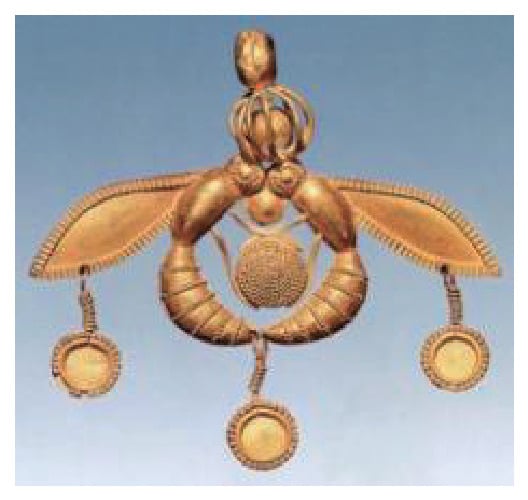
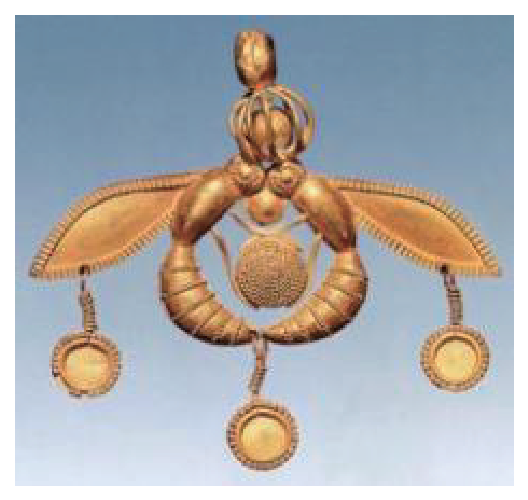
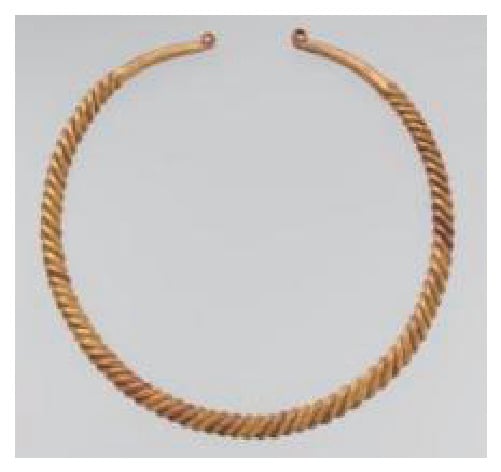
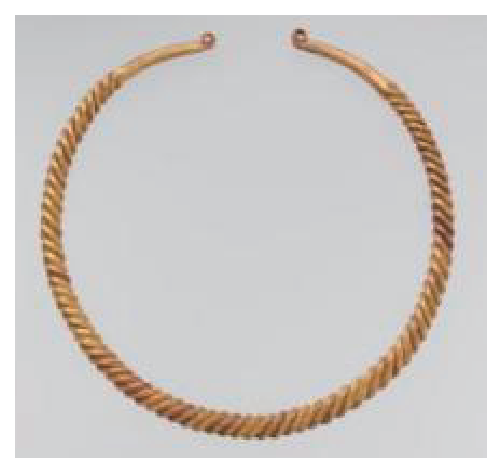
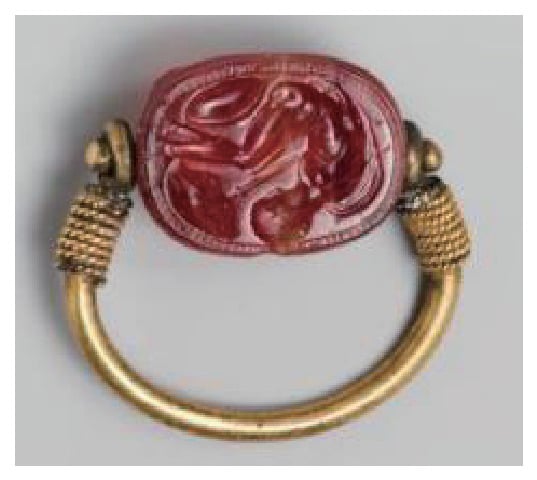
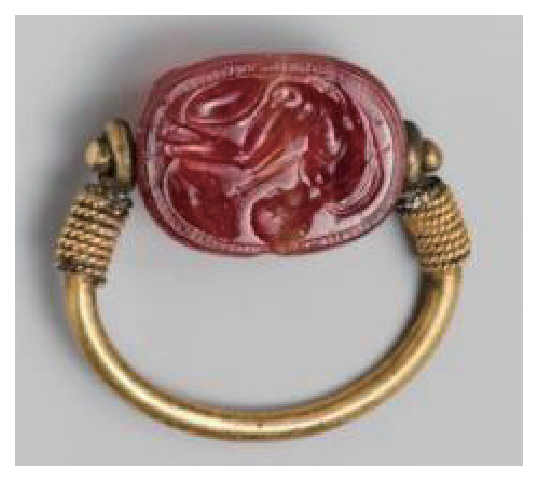
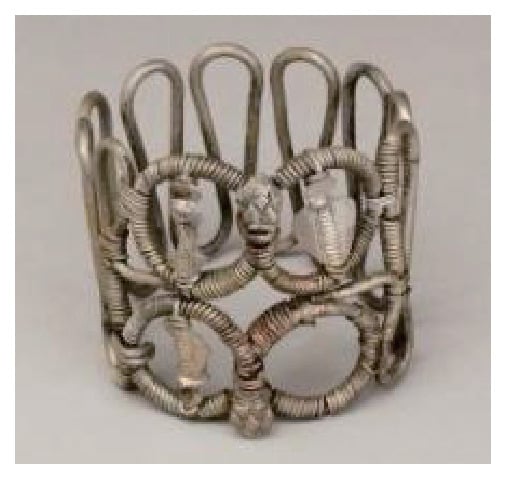
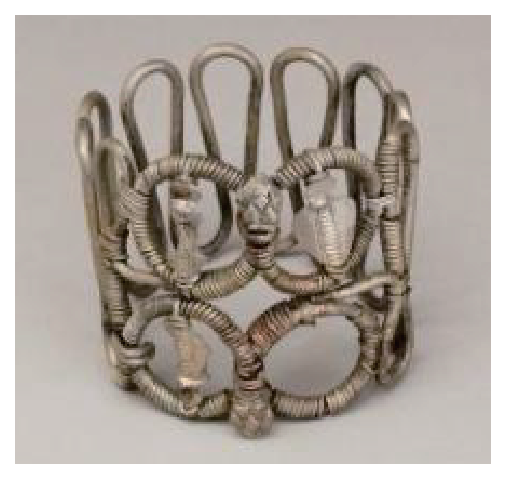
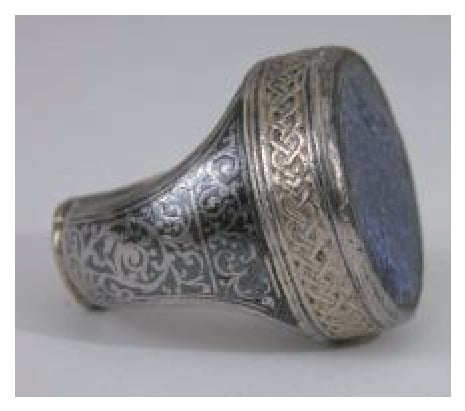
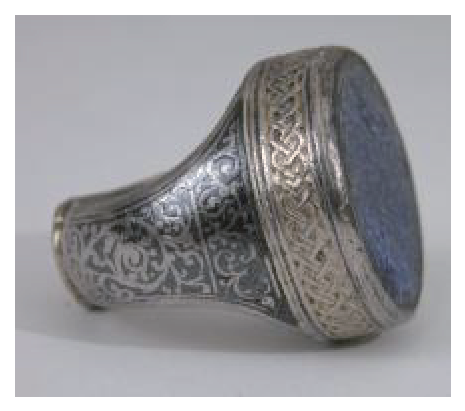
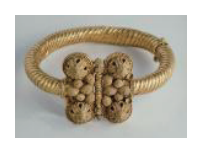
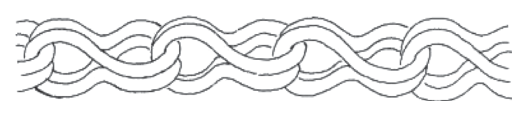
Twisting uses a single wire or different thicknesses and numbers of wires to form a shape through multiple twisted knots. It is the earliest metalworking process to imitate the texture and structure of textiles with metal wires [3]. The number of strands of wire changes the specific shape. Twisted wire can be used to make a whole piece of jewellery or decorate a part. A typical example is the Malia gold pendant, produced between 1 800 and 1 650 B.C., Crete, the bee’s head in a ball shape knotted with gold wire twisted (Figure 1). From the 6th to 4th centuries B.C.E., four squares of twisted gold wire are typical examples of gold textile jewellery from Iron Age Europe (Figure 2). A variety of cultures used this technique of single or multiple strands of gold in the 1st millennium B.C.E. and was especially common in the Celtic cultures of Western Europe. The twisted wire technique was also used in the most popular rings of Etruscan in the 4th century B.C. These rings had a metal spindle in the centre with a reversible metal frame on top, and a thin wire was often wrapped around the metal spindle next to the reversible frame to hold them in place (Figure 3). The silver wire bracelet from the Roman period, 30 B.C.-A.D. 364, was found in the Egyptian Delta, consists of two thick silver wires with a finer wire wrapped around them, which means that the two thick wires can be connected and also form a circular decorative pattern (Figure 4). These styles and the spiral decoration are the most common styles in twisted jewellery, which have been used in several countries in various periods. According to the literature, the most used material is gold, followed by silver and copper, and in contemporary jewellery, this technique is often used to make parts of jewellery or to produce simple jewellery. Due to the high price of gold, silver and copper were used more often [8].
Figure 1.
Malia Pendant [4].
Figure 2.
Gold Neck Ring [5].
Figure 3.
Etruscan ring [6].
Figure 4.
Silver wire bracelet [7].
2.1.2. Filigree
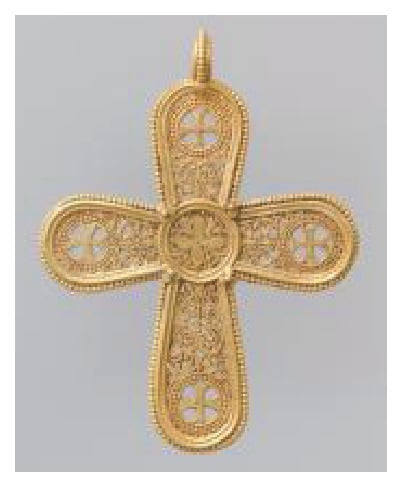
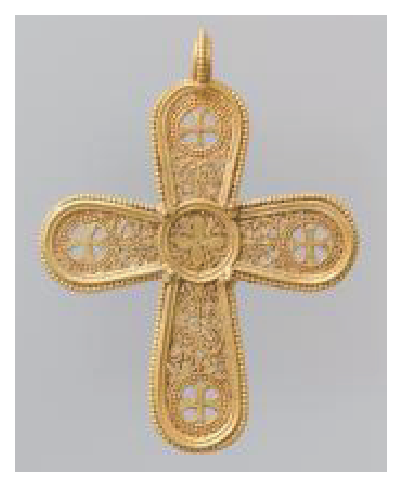
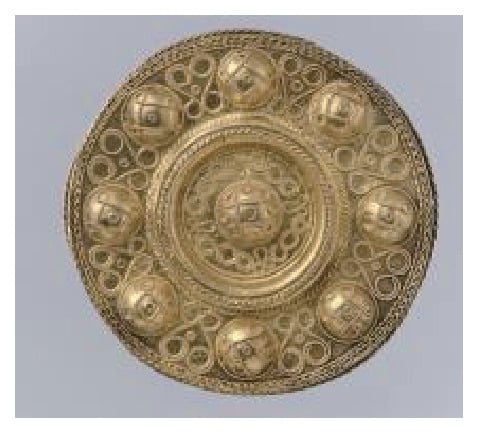
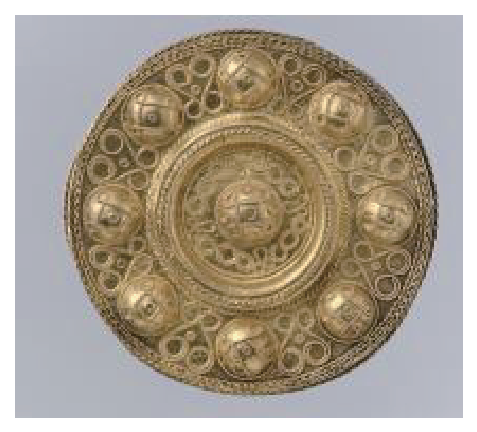
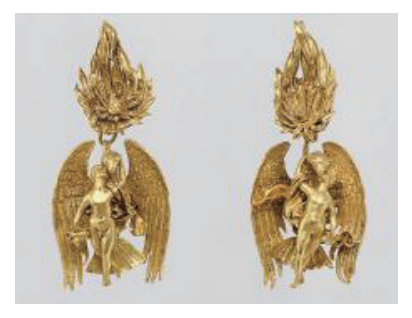
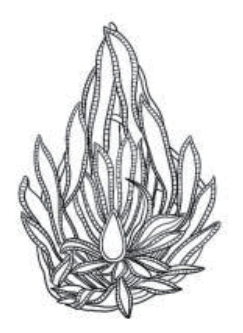
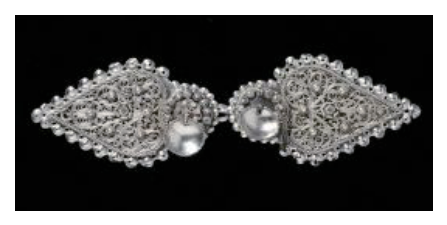
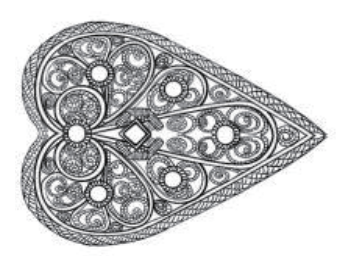
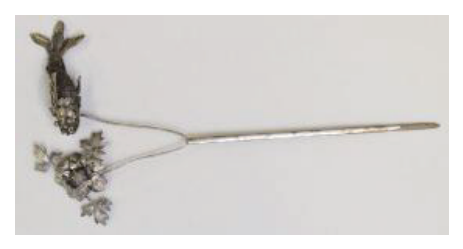
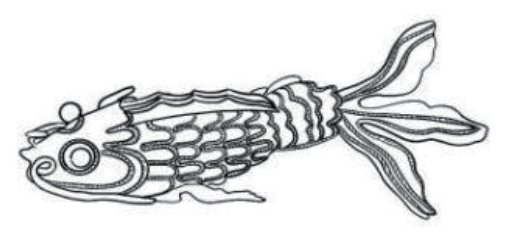
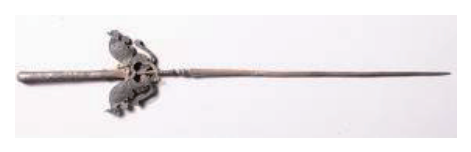
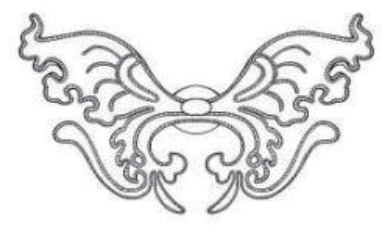
Filigree is a complex metalworking technique used for jewellery or small metalwork. It is usually made of gold, silver, and a little copper and is made of tiny beads or twisted threads or a combination of both, soldered together or welded to the same metal surface [9]. It is also a metalworking process that uses metal wires to imitate the texture and structure of textiles. This ancient craft was first traced in Mesopotamian archaeology in 3 000 B.C. By 2000 B.C., Filigree work in Egypt, Crete, and Greece already had a high artistic standard. In the 4th century B.C., during the Etruscan civilisation, metallurgy and precious metal technology developed to a very high level, and the weaving of metals also reached an unprecedented level at this stage. Filigree jewellery of this period perfectly combines beauty with sophisticated technology. Gold filigree jewellery with spirals, braids and curls is the typical filigree pattern of this period. Filigree is also an intangible cultural heritage of China. It originated from the production of bronzes during the Shang and Zhou Dynasties and reached its peak during the Ming and Qing Dynasties. Chinese Filigree has a similar technique to Western Filigree jewellery, especially braiding, which is generally one or more strands of different types of metal wires braided into patterns according to the warp and weft. The shapes and patterns of Chinese Filigree jewellery are mostly traditional patterns with auspicious meanings, the shapes are mostly figurative, the materials are usually gold and silver, and they like to be set with precious stones [10] [11]. In the West, the materials are mainly gold, occasionally silver, sometimes with precious stones, and the shapes and patterns have local ethnic characteristics. Still, they are invariably very flamboyant and exquisite (Table 1).
Table 1.
The sample of filigree patterns.
2.1.3. Casting
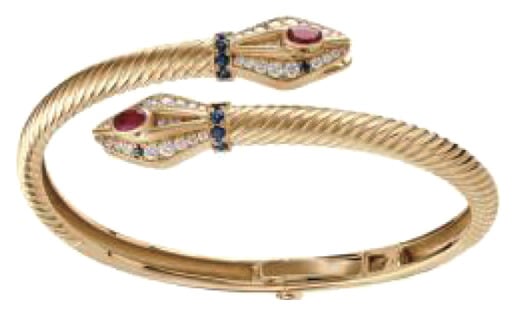
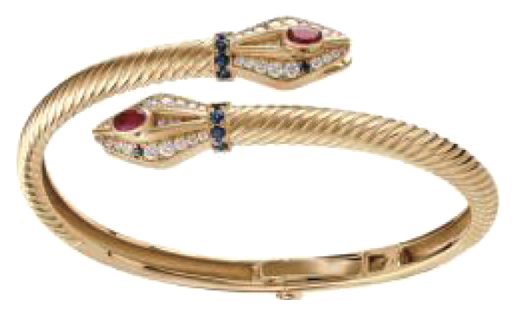
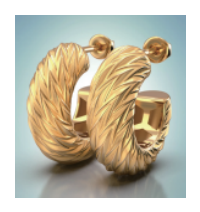
Casting is hardening and moulding molten metal after pouring it into a mould. It originated in the 4th millennium BC and evolved from a simple one-piece mould to a three-dimensional two-piece mould, the most commonly used moulding process for jewellery [17]. Simple cast textile jewellery is similar to twisting jewellery, mostly mimicking the style of twisting and weaving metal (Figure 5 and Figure 6). This style is most common in ancient cast textile jewellery. Complex cast textile jewellery is required to carve the shape in wax and then cast in lost wax-casting. Due to the complexity of the structure, superior wax carving skills and a high level of craftsmanship are required. This type of jewellery is usually produced by fine jewellery brands or goldsmiths with high levels of craftsmanship (Figure 7). Its advantage is that it can be freely carved with wax in all kinds of shapes, but it is necessary to have high skills and a precise grasp of the shape, the disadvantage is that the wax mould can not be too thin, and it needs to be three-dimensional with a certain thickness. Otherwise, it will not be able to be shaped during the casting process. In addition to manual moulding, JewelCAD is also used in modern times for mould casting, but the complex and detailed places still need to be handmade for better results.
Figure 5.
Mimicking twisting bangle [18].
Figure 6.
Mimicking weaving ring [19].
Figure 7.
Lost wax-casting bangle [20].
2.1.4. Openwork
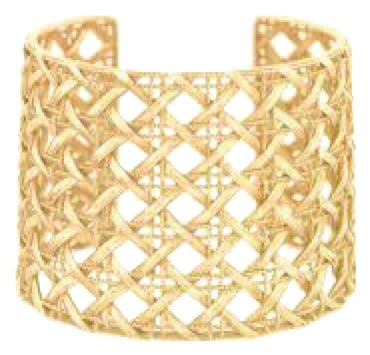
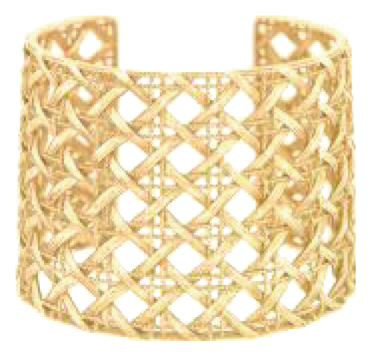
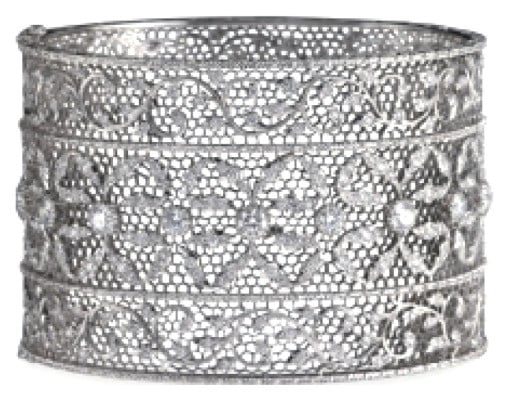
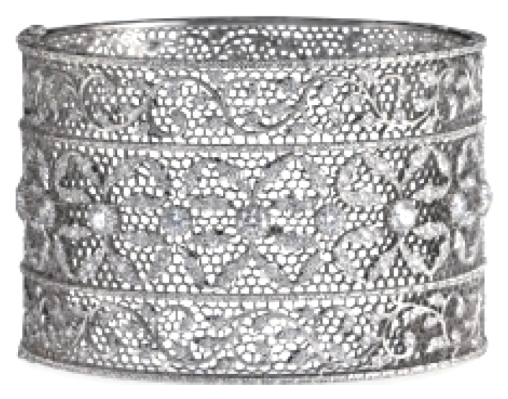
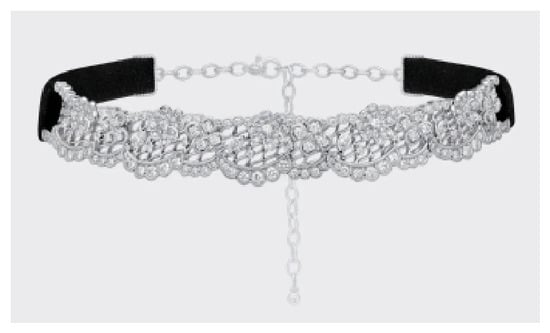
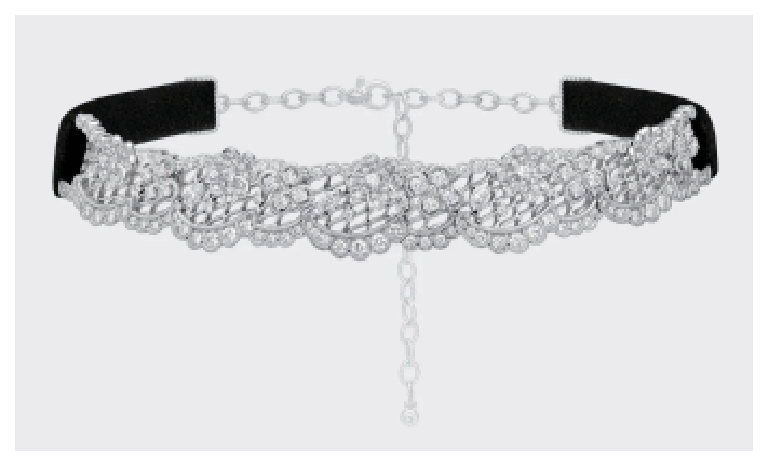
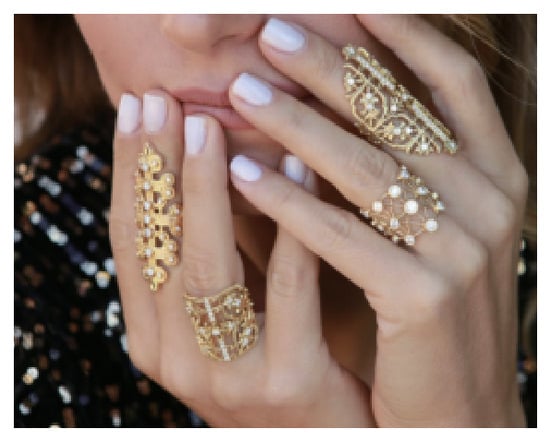
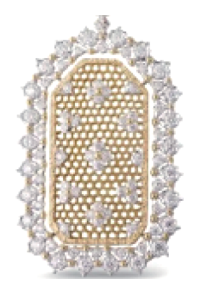
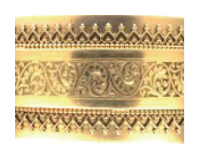
Jewellery is usually pierced by punching holes in a metal plate and then passing a saw through the holes to create the desired shape [21]. Most of the openwork textile jewellery imitates the effect of lace. Typical examples are the jewellery collections of Buccellati and Dior (Figure 8 and Figure 9). These jewels are usually double-layered, with a honeycomb pattern of openwork on the bottom layer and a delicate floral pattern on the top layer, superimposed to create the effect of metallic lace. They are complex, and the honeycomb on the bottom layer had to be sawn out of shape by hand, which was a very demanding process.
Figure 8.
Openwork bangle [22].
Figure 9.
Openwork bangle [23].
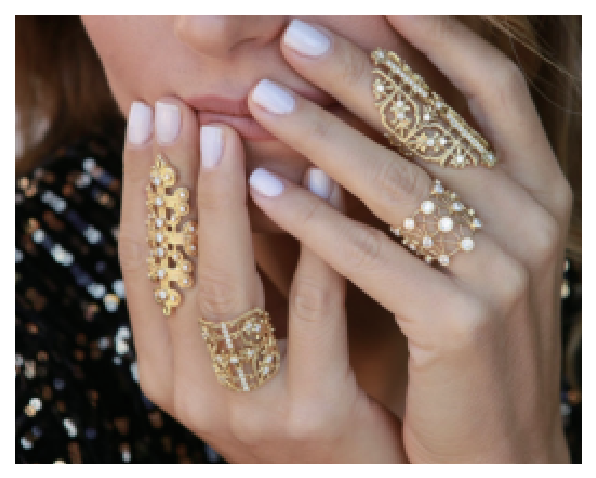
A special form of openwork, Opus interrasile, is documented in “7000 Years of Jewelery” and “An Antique Gold Bracelet in Opus Interrasile” at the St. Louis Art Museum. Opus interrasile comes from the Latin opus (work) and interrasile (openings) [24] [25]. A style of openwork decoration was created by piercing metal plates with a chisel or other sharp tool. This style became popular in the Etruscan period. It was further developed by the Roman goldsmiths, where metalworkers used it to make a pattern and other similar designs [26] (Figure 10). This style continued to flourish in jewellery. The opus interrasile was usually executed in two ways: hollowing the gold sheet with an awl, then engraving or carving only on it, or cutting the gold sheet with a small chisel [26]. It may be imitated in attice patterns, openwork gold jewelry, and so on (Figure 10). This process is known in Japan as assukashibori and is found in Buddhist art [28]. It is not very common in contemporary jewelry to find textile jewelry of this craft, with only a few independent designer labels adapting the use of opus interrasile, and the pieces are presented in a lace-like style (Figure 11).
Figure 10.
Opus interrasile pendant [27].
Figure 11.
Contemporary Opus interrasile rings [29].
To summarise the difference between ordinary openwork and opus interrasile, metal size and ductility are not many limitations for ordinary openwork. On the other hand, Opus interrasile needs high ductility and thin metal. Secondly, the tools are different: whereas ordinary openwork requires a drill and a saw, Opus interrasile uses a chisel or other sharp tool.
2.1.5. Repoussé and Chasing
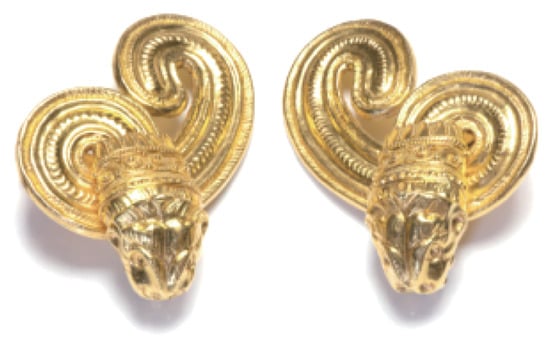
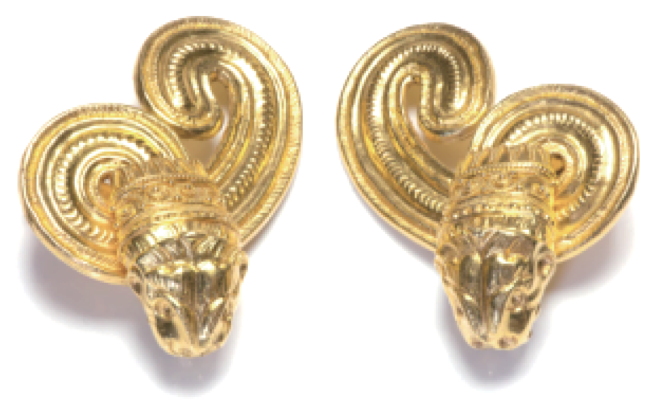
Repoussé is a metalwork technique in which the back of a malleable metal is hammered to create an embossed design. Chasing is a similar technique in which the metal is hammered from the front, causing it to sink. The two techniques were often used in combination [30]. Repoussé instead of chasing was used in the Middle East as early as the 3rd millennium BC. Textile jewellery made by repoussé and chasing can also be traced in historical documents. They were often combined with filigree and granulation, where patterns were burled into the wire to mimic those of a twisted or knotted cord (Figure 12). Repoussé and chasing are still commonly used in contemporary jewellery. They can represent multi-layered patterns and three-dimensional shapes well, reflecting the craftsmen’s high level of craftsmanship. Still, the cases of textile metal jewellery are relatively rare, which is attributed by the author to the fact that modern aesthetics tends to be more towards simple shapes and patterns and that textile jewellery made with repoussé and chasing is more time-consuming and relatively more efficient with casting. Some artists fascinated by vintage jewellery have modified Repoussé and chasing; some textile jewellery can be found in their work (Figure 13).
Figure 12.
Repoussé Brooch [31].
Figure 13.
Contemporary Repoussé Earrings [32].
Literature research has shown that Twisting, a textile jewellery technique made by goldsmiths, is the simplest and oldest, with twisted filigree being the predominant style, while filigree is the most complex, with a wide range of applications in both the East and West and with beautifully intricate jewellery. Casting, repoussé and chasing are mainly imitations of metal twisting and weaving styles and are less complex than filigree. Although openwork is a relatively simple process, in contemporary times, many fine jewellery brands use it to imitate lace patterns, which are no less exquisite than filigree (Table 2).
Table 2.
Comparative analysis of metalwork.
2.2. Textile Fabrication Techniques
2.2.1. Knitting
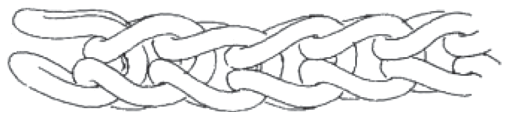
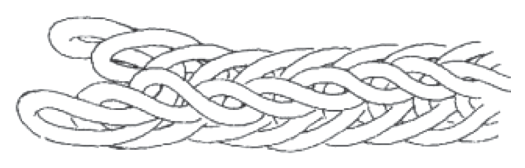
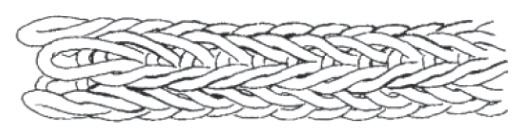
Knitting is the technique of using two or more needles to pull thread or wire into interconnected rings to make a garment or fabric. In the Ptolemaic period of the 3rd century B.C., the knitting motif was found in a fine gold strap chain, which consists of two or more loop-in-loop chains fixed side by side [37]. Similar jewellery was also found in Greece during this period. There is no record in the relevant historical sources of how they were made, and the technique is similar to knitting. Still, a literature review reveals that the oldest knitting artefacts are socks from 11th-century Egypt. Earlier pieces with knitting or crochet are confirmed to be from N˚alebinding, an ancient technique of making fabric by creating multiple loops with one needle and thread, similar to sewing. The oldest known single-needle knitted garments are the shawls and hats from Peru’s Paracas and Nazca cultures from 300 B.C. to 300 A.D. They appear simultaneously as this gold Strap chain from Egypt, so it is assumed that nålebinding was used [38]. With the development of history, this loop-in-loop form gradually developed various types of woven structures. They look similar to loop-in-loop chains and are more time- and material-efficient, but there are questions that they lack the chain’s flexibility and solidity when worn (Table 3). Knitting is widely used in contemporary jewellery. The materials used are mainly gold, silver, and copper, and the main techniques are needle knitting, machine knitting and spool knitting.
Table 3.
The four major types of loop-in-loop chain.
2.2.2.1. Needle Knitting
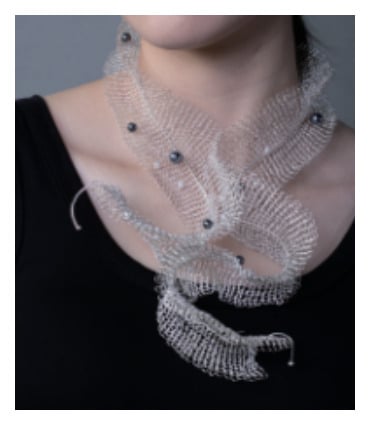
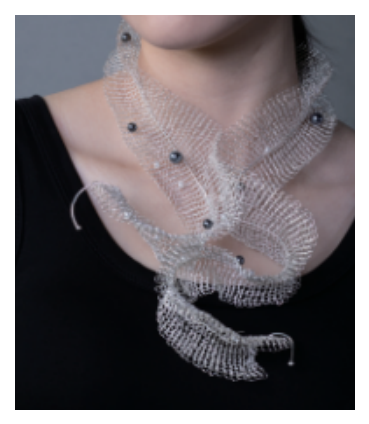
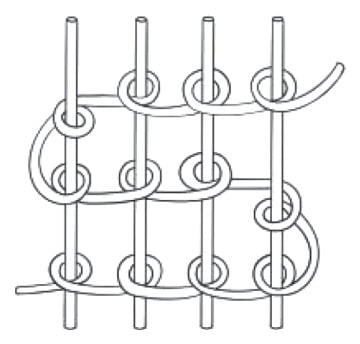
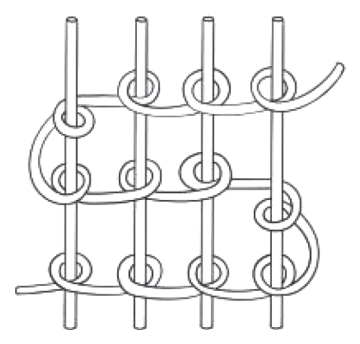
Needle knitting is the most common form of knitting. It can be done with two knits to create a flat surface, four knits to create a tube, or multiple auxiliary needles to create reliefs and threedimensional shapes. The specific stitches can be referred to as the steps of the textile knitting technique, and the appropriate method of making knitted jewellery can be chosen according to the pattern (Figure 14).
Figure 14.
Knitting necklace.
2.2.2.2. Machine Knitting
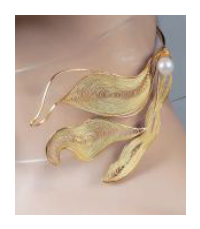
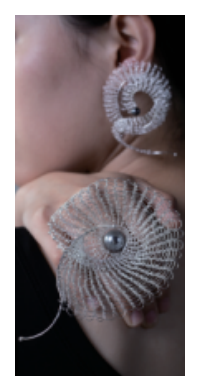
Machine knitting is a method of producing knitting by machine in a semi-automatic or fully automatic way. The production method involves fixing metal wires to the hook frame and crochet hooks of the loom and interspersing the knitting in a sequence. Adjusting the density of the crochet hook arrangement changes the sparseness of the fabric pattern. Ordinary knitting machines have both flat and fancy patterns. The method of making flat patterns is to apply the wire on flat needles, which are arranged with equal spacing of crochet needles. Only the sparseness is different. The materials used in contemporary machine knitting jewellery are mainly silver and copper (Figure 15).
Figure 15.
Machine knitting ring.
2.2.2.3. Spool Knitting
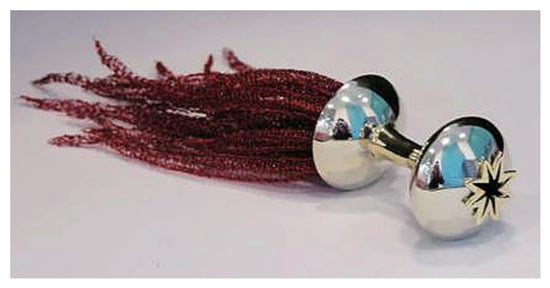
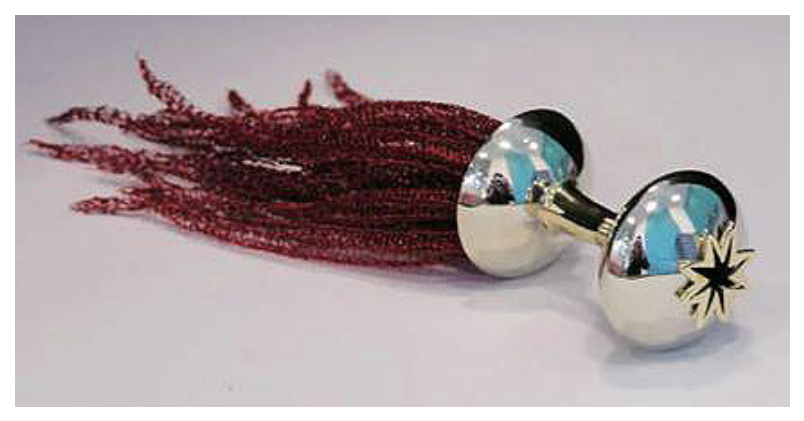
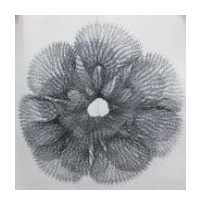
Spool knitting is a method of making tubular fabric, and spool knitting was first taught as a toy for children. They started as a hollow spool frame with four or five nails, but now the number of nails can exceed one hundred. They are made by passing one end of the wire through the hollow spool and wrapping the other end around the pegs sequentially, creating two layers of loops and then turning the bottom loop over the top loop, thus creating a tubular knitted structure [40]. Contemporary knitted jewellery artist Arline Fisch often uses this technique, such as in her famous jewellery piece Aquatic Bloom, which produces very three-dimensional knitted jewellery, and depending on the size of the bobbin, it can be made like sculpture-like art jewellery [41].
2.2.2. Crochet
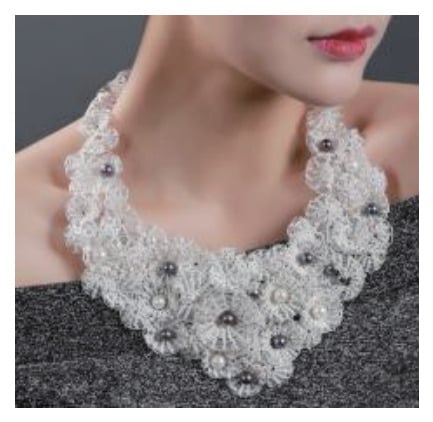
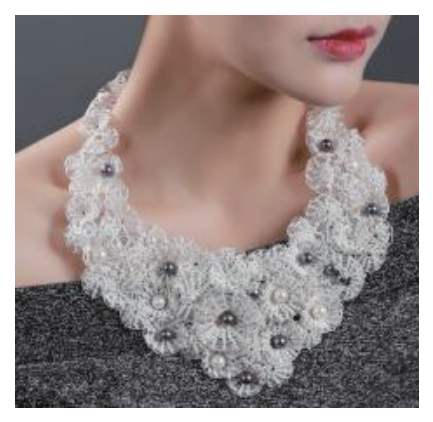
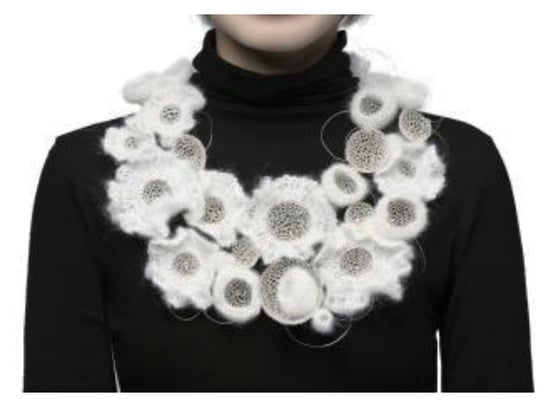
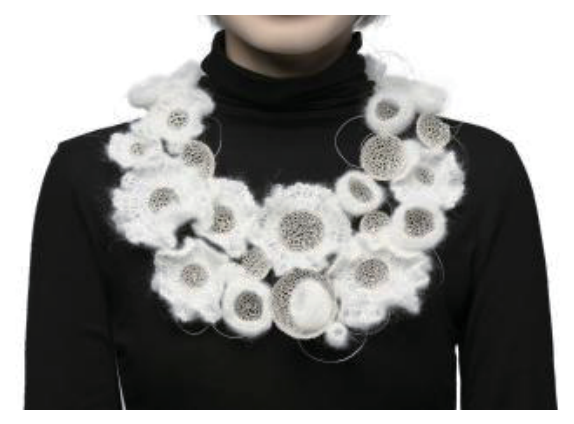
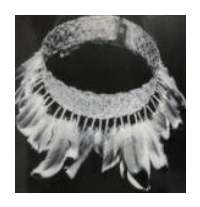
The crochet tool used on embroidery bandages in 18th century France was the earliest crochet needle, suggesting that the technique was very late in its application to metal textile jewellery. In contemporary jewellery, crochet is one of the common techniques used to create flat and three-dimensional jewellery forms. Crochet stitches are divided into basic stitches and modelling stitches, and the stitches determine the final appearance of the knitted item [42]. The main materials for metal crochet jewellery are gold, silver and copper wire, but they can also be combined with linear materials such as wool, cotton and lace threads (Figure 16 and Figure 17). Blending different threads can reflect the different effects presented by the same technique, increasing the contrast of texture and visual effects. Metal crochet is generally made of 0.3 or 0.4 mm pure silver wire. The size of the material, the tool and the stitching method will present a very different final effect, so it is important to practice with the material and the handicraft before the formal production.
Figure 16.
Crochet necklace.
Figure 17.
Crochet necklace.
2.2.3. Weaving
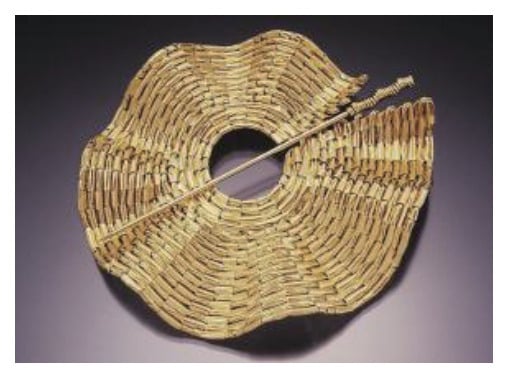
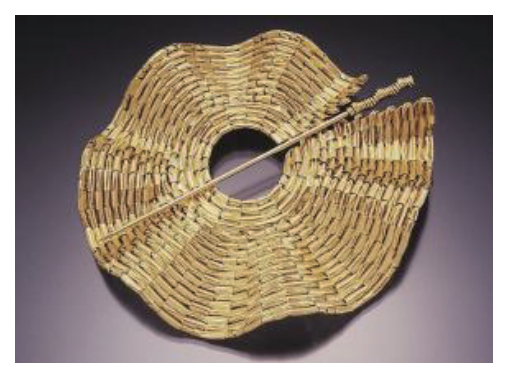
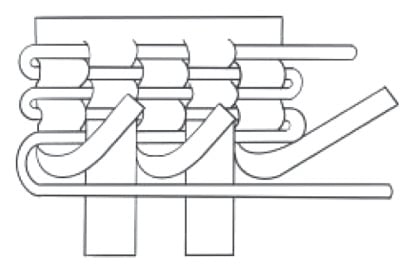
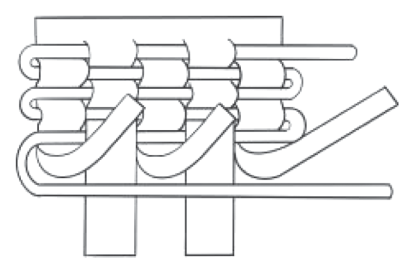
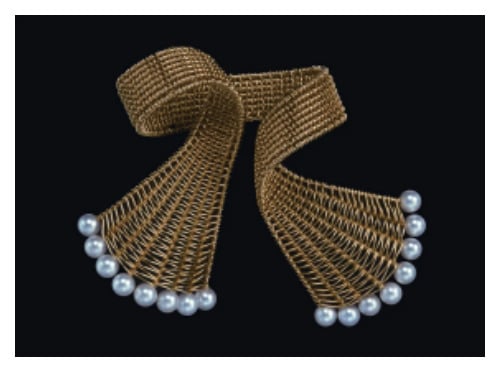
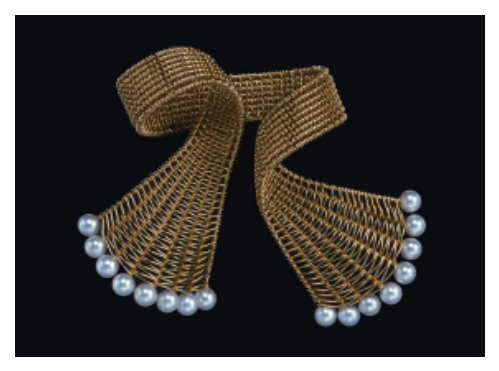
Weaving is a fabric formed by interweaving two different sets of threads, the warp and the weft, at right angles. Although weaving has been traced to the Paleolithic era, the literature reviewed has not found this technique used in ancient jewellery [43]. It is one of the common forms of contemporary textile metal jewellery and can be made in various ways. In one method, a metal that has been cut into strips or sheets is used as the warp and multiple twisted strands of fine wire are used as the weft. The warp and weft are interwoven to form a plain weave pattern (Figure 18 and Figure 19) [44]. Another method is a fine silk weft and a thick silk warp, with the weft travelling on both warp wires and then returning around one warp wire, wrapping each warp wire in turn. This pattern, called Soumak, originates from an ancient carpet weaving technique (Figure 20 and Figure 21). Other common methods are Loom weaving, Card weaving, Shaped weaving, etc. Weaving commonly used materials are gold, silver, and copper.
Figure 18.
Ruffle Brooch [45].
Figure 19.
Diagram of Plain Weave.
Figure 20.
Bow Brooch [45].
Figure 21.
Diagram of Soumak.
2.2.4. Basketry
Basketry is the technique of weaving or sewing pliable materials into three-dimensional objects, often used for furniture or household items. Not found in the ancient history of jewellery, it emerged due to the rise of contemporary jewellery, where people think about jewellery without boundaries and apply many other fields of craftsmanship to jewellery. The techniques of Basketry are Plaiting, Twining, Coiling, etc [46].
2.2.4.1. Plaiting
Plaiting can produce various shapes: round, oval, square, etc. Flat bands of metal are tightly interlaced to form a solid structure. It has various patterns, including cross, twill, hexagon, triangle, etc.
2.2.4.2. Twining
The technique of twining is similar to weaving. Both warp and weft are used. In basketry structure, the warp comprises posts or spokes in the shape of radial plan or parallel sequence, mostly equally spaced weft, sometimes called lacing, usually two weft threads. They can be manipulated in various ways as they move in and out of the warp structure. This technique is ideal for creating three-dimensional forms and is one of the most common techniques used in contemporary woven metal jewellery. Several classic pieces by well-known jewellery artists Mary Lee Hu, Arline Fisch, and others use this technique.
2.2.4.3. Coiling
Coiling is the technique of repeatedly winding a single element around a core. The core determines the volume and size of the shape, and the winding element controls the structure and shape. This is the third common technique in basetry, and the common materials used are copper and silver [47].
2.2.5. Knotting
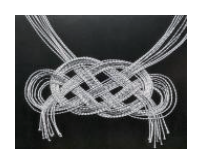
There are many types of knots, such as Macramé, Nautical knots, Chinese knotting and Mizuhiki. Macramé is the art of combining multiple single knots to form a fabric or decorative tassel. It is widely used in jewellery made of cotton, linen and silk [48] [79]. Nautical knots are used for holding lines and shrouds in place, but they are also ornamental and are used to make belts, bags and decorative items [50]. There are also decorative knots that can be used individually or in combination, such as the Chinese knot and the Japanese “Mizuhiki”. The Chinese knot is made by braiding a silk thread, and each basic knot is named according to its shape and meaning. Mizuhiki art is a special knot made for special occasions and gifts, and it is made of washi paper, which is twisted into a thin awaji knot. It is the most basic knot in mizuhiki and can be made into various creations depending on the size of the ring, the number of ropes and knots [51]. The above processes are used in contemporary examples of metal textile jewelry, such as Arline Fisch, Marcie Zelmanoff, Bob lee and other jewelry pieces, where the common materials are still gold, silver and copper. Metal knotted jewellery must pay attention to the choice of material, especially for jewellery that needs to be knotted repeatedly, the softness and toughness of the chosen metal will determine the overall effect of the jewelry. In addition, it was mentioned in the previous article that there is an ambiguity in two different literatures as to whether Knotting should be classified as Basketry. Based on the above research on knotting, the authors believe that knotting has a wide range of applications and encompasses a variety of processes. Knotting can be used in braided blue, but knotting should not be classified as Basketry.
A study of the literature reveals that Twisting is the simplest and have the longest history; Filigree is the most complex. Weaving and Basketry are similar in use warp and weft weaving methods. Twisting and Filigree are the most common in traditional textile jewellery, followed by handcrafted Knitting, and these techniques are found in contemporary metal textile jewellery but differ in style. Contemporary styles are simpler, more three-dimensional and spatial, and although current artistic trends can influence them, they are more of an expression of the artist’s philosophy (Table 4).
Table 4.
Comparative analysis of textile fabrication techniques.
3. Discussion
Through a comprehensive study of the literature, the most important feature of metal textile jewellery is that it has a similar or identical structure and texture to textiles, and they are distinguished from other metal jewellery by having a hard metallic texture but also by having some soft and flexible characteristics of textiles. They can either imitate the texture of textiles with metalwork or be made directly from textiles. The literature shows that in the past, the techniques of metal textile jewellery were often poorly categorised and easily confused. This literature review examines and summarises some of the commonly used techniques and divides them into two parts: metalwork and textile fabrication techniques, which have distinctly different production methods. The metalwork category requires welding the bond of the wire or sheet to fix and using metalwork to complete the overall shape. Textile fabrication techniques can be done by hand or with auxiliary tools and can also be combined with metalwork to complete the whole piece of jewellery. There are major differences in the production process.
Although studies in the literature have provided insights into the current state of knowledge of metal textile jewellery, certain limitations still exist. Most of the existing literature focuses on the personal practice of contemporary jewellery artists, and the process and works are interpreted and analysed from an artistic perspective, lacking the connection with the fashion industry and the integration with the clothing field. Although contemporary jewellery expressions are more diverse, they are more explored for their artistic value and the esteem of handcrafted production, mostly deviating from the scope of clothing and becoming more of an artwork lacking in commercial exploration. The connection between jewellery and clothing has always been inseparable, and it is possible to combine elements of fashion and cultural trends in the design of metal textile jewellery and to think more about the wearability of the jewellery and its compatibility with clothing. There are many beautiful works in the literature of traditional metal textile jewellery, and it is possible to consider redesigning traditional elements to make them more in line with modern aesthetics. In addition, the literature lacks suggestions for improving materials and techniques and the application of new metal materials and technologies and overall lacks innovation. For example, despite the previously mentioned application of JewelCAD, not many examples can be found. Therefore, more research is needed on the application of computer-aided technology in metal textile jewellery to solve the difficulties of making new metal materials and to consider how to better apply the unique characteristics of new materials in metal textile jewellery.
4. Conclusion
Metal textile jewellery has a similar or identical structure and texture to textiles, which makes their appearance significantly different from other jewellery, and it is an art that combines traditional and modern techniques. This literature review takes fabrication techniques as the starting point and examines the development overview and characteristics of metal textile jewellery in more depth. This review sorts out the multiple processes of metal textile jewellery and classifies them by process type by studying specific production methods. Previous literature has referred to many different types of metal textile jewellery processes collectively as weaving or subdivided them inaccurately, and this review solves the problem of unclear process classification. Studying the above issues can help designers understand the characteristics of metal textile jewellery, distinguish the easily confused processes, and provide references for the choice of materials and processes when they create.
In addition, there are directions for future research in this field. First, it is necessary to broaden the design direction of metal textile jewellery. Contemporary metal textile jewellery is mostly an expression of the artist’s philosophy or a demonstration of complex craftsmanship, which lacks wearability and commercial value, is more display-oriented and cannot be mass-produced. They all exist independently and rarely combine with the fashion and clothing fields. The design can combine fashion and cultural elements, redesign and develop traditional patterns to align with modern aesthetics and think more about the relevance between them and clothing. Second, increase the research on new technologies and materials. Although computer-aided technology is often applied in the jewellery field, the application of metal textile jewellery is rare, and it may solve the problem that this type of jewellery cannot be mass-produced and lacks commerciality. Some materials widely used in industrial design also have good characteristics, and it is necessary to study how to solve the difficulties of their processes when making jewellery. and perhaps their unique characteristics will add more interest and ornamentation to metal textile jewellery.
References
- Keay, S. Design & Make Jewellery using Textile Techniques. Bloomsbury Publishing PLC: 2009.
- Information on https://www.ganoksin.com/article/textile-techniques-jewelry-making/.
- Stefano, C. Knitted, Knotted, Twisted, and Twined: The Jewelry of Mary Lee. Bellevue Art Museum: 2012.
- Information on https://www.meetcrete.com/minoan-palace-malia/.
- Information on https://www.metmuseum.org/art/collection/search/476552.
- Information on https://www.metmuseum.org/art/collection/search/253717.
- Information on https://www.metmuseum.org/art/collection/search/551846.
- Anastasia, Y. The workbench guide to jewelry techniques. Thames & Hudson: 2010.
- Maria, M. Silver Wonders from the East Filigree of the Tsars [M]. Ashgate Pub Co 2006.
- Li, S. Comparison for Exported Filigree Between China and India from the 17th Century to the 19th Century. Shanghai Arts Crafts 2022, 4, 72. [Google Scholar]
- Yan, J.C.; Zhang, M.F. The Application of Filigree Craft and Its Patterns on Ancient Relics. J. GuangXi Univ. Natl. (Natural Science Edition) 2019, 1, 35. [Google Scholar]
- Information on https://www.metmuseum.org/art/collection/search/246035.
- Information on https://www.metmuseum.org/art/collection/search/253525.
- Information on https://www.britishmuseum.org/collection/object/H_2013-8034-78-a-b.
- Information on https://collections.vam.ac.uk/item/O41060/hairpin/.
- Information on https://collections.vam.ac.uk/item/O126053/hairpin/.
- Information on https://www.langantiques.com/university/cast-2/.
- Information on https://www.thejewelleryeditor.com/jewellery/article/azza-fahmy-wonders-of-nature-jewellery-collection/.
- Information on https://www.metmuseum.org/art/collection/search/450413?pos=4.
- Information on https://www.thejewelleryeditor.com/jewellery/article/the-new-my-dior-collectionreaches-into-the-past-for-the-women-of-today/.
- Ralf, D. Jewelry design. Daab Gmbh: 2008.
- Information on https://www.buccellati.com/en_us/rinascimento-bracelet-jaubra005854xxx180.html.
- Information on https://www.dior.com/en_gb/fashion/products/JDEN94007_0000-couture-dior-neck-lace-white-gold-and-diamonds.
- Hugh, T.; Zhu, Y.F. 7000 Years of Jewelry. You Yi Publishing Ltd.: 2019.
- Gustavus, A.E. An Antique Gold Bracelet in Opus Interrasile. St. Louis Art Museum Explore The Issue: 1925; 10, 4,53–58.
- Guo, H.X. Analysis of Jewelry Styles in Medieval Europe. Shanghai Arts Crafts 2022, 4, 61. [Google Scholar]
- Information on https://www.metmuseum.org/art/collection/search/473126.
- Information on https://www.langantiques.com/university/opus-interrasile/.
- Information on https://www.thejewelleryeditor.com/shop/product/lalaounis-opus-interlassile-rings/.
- Information on https://www.ganoksin.com/article/goldsmithing-repousse-chasing/.
- Information on https://www.metmuseum.org/art/collection/search/468388.
- Information on https://dsfantiquejewelry.com/products/lalaounis-22k-yellow-gold-lion-dragon-earrings.
- Information on https://www.metmuseum.org/art/collection/search/451447?pos=7.
- Information on https://www.etsy.com/listing/1343800809/open-hoop-earrings-in-14k-18k-genuine.
- Information on https://www.buccellati.com/en_us/mosaico-earrings-jauear021664xxx000.html.
- Information on https://www.antiquejewellerycompany.com/us/shop/victorian-15ct-gold-wide-bangle/.
- Information on https://www.metmuseum.org/art/collection/search/551356.
- Information on http://www.scarlette.net/sigridkitty/.
- Marilyn, J.; Manuel, K. Islamic Jewelry in The Metropolitan Museum of Art. Hagop Kevorkian Fund: 1983.
- Arline, M.F. Textile Techniques in Metal: For Jewelers, Textile Artists & Sculptors. Echo Point Books & Media: 1996.
- Information on https://alliedcraftsmen.org/member/arline-fisch.
- Arline, M.F. Crocheted Wire Jewelry: Innovative Designs & Projects by Leading Artists. Union Square & Co.: 2009.
- Mary, H. Fabulous Woven Jewelry: Plaiting, Coiling, Knotting, Looping & Twining with Fiber & Metal. Lark Books: 2006.
- Elizabeth, H. Hex Weave & Mad Weave: An Introduction to Triaxial Weaving. Schiffe: 2014.
- Information on https://www.ganoksin.com/article/introduction-weaving-metal/.
- Information on https://www.britannica.com/art/basketry.
- Information on http://coilinggizmo.com.
- Information on https://www.thesprucecrafts.com/basic-macrame-knots-4176636.
- Information on https://www.wikihow.com/Macrame.
- Information on https://www.animatedknots.com/boating-knots.
- Information on https://www.utsuwa-ny.com/post/mizuhiki-the-art-of-tying-knots.

© 2023 Textile Bioengineering and Informatics Society. This article is an open access article distributed under the terms and conditions of the Creative Commons Attribution (CC BY) license (https://creativecommons.org/licenses/by/4.0/).