


Abstract
In the context of an ageing population, the research and development of elderly women’s clothing has been widely discussed, and its clothing market has a good prospect. However, research on the design of T-shirts is mainly aimed at young people, and there is still a lack of research on the design of spring and autumn T-shirts specifically for elderly women. This paper conducts on-site research to understand the physical characteristics and clothing needs of elderly women and selects elderly obese women as the research object. The spring and autumn T-shirts are designed using a fake two-piece structural style combined with imitation woven, knitted fabric, and the rationality of the spring and autumn T-shirt design is verified through 3D virtual trial wear.
1. Introduction
1.1. Definition of Population
With the ageing population, the increasing number of elderly brings new problems to society. To face the challenges brought by the ageing population and realise the healthy development of society, we need to accelerate the development of elderly care services, promote science and technology for elderly care, and provide living security for the elderly [1]. In 2017, the World Health Organization made new regulations on age classification: young people under 44 years old, middle-aged people aged 45-59, young, elderly people aged 60-74, old people aged 75-89, and long-lived people aged over 90 [2].
In China’s ageing blue book, people over 60 years old are called the elderly, people aged 60-69 years old are young, elderly people, people aged 70-79 years old are middle-aged people, and people over 80 years old are elderly people [2,3]. The elderly women in this article refer to those over 60.
1.2. Current Situation of the Clothing Market for Elderly Women
In China, the index of more than 10% of the elderly population is used to delimit whether it belongs to the ageing society. By the end of 2007, statistics show that the elderly population of 60 and above had reached 153 million, accounting for 11.6% of the total population, qualifying the population as an ageing society. By 2030, the country’s elderly population has reached 300 million. By the mid-21st century, the Chinese elderly population will exceed 400 million [4], suggesting the Chinese elderly market has huge potential [5]. From the world’s perspective, there is a large proportion of the ageing population in many countries, especially in Europe, Japan, South Korea and other developed countries [6,7,8]. The elderly clothing market has a good prospect. These countries entered the ageing society earlier, and their research on clothing for the elderly was earlier than that of China, which is relatively more comprehensive and in-depth.
In China, for example, according to the Research Center on Aging of the Chinese Academy of Social Sciences, by 2025 and 2050, the potential market purchasing power of the elderly is expected to reach 1.4 trillion billion yuan and 5 trillion billion yuan. Clothing consumption spending is expected to reach 470 billion yuan and 500 billion yuan. The elderly clothing market has huge potential; the rise of the elderly economy and the silver hair economy has been the trend of The Times [4,9].
According to relevant literature, older women’s life expectancy is longer than older men’s. With the increase of age, the proportion of the elderly women population gradually increases, so the ageing problem of the women population is more prominent [10]. With the rapid development of the economy, the living standard of the elderly is constantly improving, and the consumption demand for clothing is also gradually rising. In terms of clothing, elderly women spend more than elderly men. Therefore, elderly women are expected to become more potential consumers in the elderly clothing market [11].
1.3. Research Status of T-shirts for Elderly Women
The researches on T-shirts are very rich at home and abroad, and they started early. Through the literature research on T-shirts in recent years, the research objects on T-shirts are mainly for young people. At present, it is very limited to research T-shirts specifically for elderly women.
In 2013, Huang Huibiao et al. [12] developed a T-shirt textile fabric suitable for the elderly. The fabric can achieve an ideal state of air permeability, moisture permeability, moisture absorption, wettability, dryness, strength and elongation. And it isn’t easy to wrinkle and deform. In 2014, Li Qiongzhou et al. [13] designed a health care old age silk T-shirt in response to the serious simplification of T-shirts for the elderly, the inability of materials to meet diversified needs, the lack of functional design and other problems. In 2016, Qiao Fei et al. [14] designed an elderly care T-shirt and its mobile terminal based on intelligent wear. The elderly care T-shirt includes a T-shirt body, a function detection device and a master controller. The elderly care T-shirt is designed with human body parts, more reasonable location, convenient detection, high efficiency and accuracy, more comprehensive detection functions, convenient wearing and carrying, good comfort, strong applicability, safety, and reliability.
In 2015, Kim Young Soon et al. of Korea [15] put forward the key points of T-shirt design reflecting the needs of the elderly based on the analysis of different body shape characteristics and various sports types for the elderly, providing the best sports environment for their physical activities. In 2017, M Takatera et al. of Japan [16] studied the influence of air gap on the apparent temperature and measured the temperature distribution of the measurement clothing caused by the size change of the T-shirt using the thermocouple fabric and a thermal manikin.
Through the analysis of relevant domestic and foreign literature on T-shirts for elderly women, it is found that the current T-shirts for elderly women have a single style structure, materials can not meet the needs of elderly women, and they have poor fitness and lack a sense of design. Therefore, it is necessary to design and improve elderly women’s spring and autumn T-shirts to meet their wearing needs.
2. Physical Characteristics and Wearing Needs of Elderly Women
2.1. Field Research
Through actual interviews, questionnaire surveys, and body data measurements of elderly women in Beijing, we can understand their physical characteristics and clothing needs. Through practical communication with elderly women to understand their consumption concepts, living conditions, and clothing needs and to record their subjective feelings towards long-sleeved T-shirts in the form of a questionnaire, 31 valid questionnaires were collected, with a total of 7 questions set. Do you like to wear a long-sleeved T-shirt? Are you satisfied with the current long-sleeved T-shirt styles on the market? What style of long-sleeved T-shirt do you prefer? What colour do you like to wear a long-sleeved T-shirt? Do you have any requirements for long-sleeved T-shirt fabric? What other needs would you like a long-sleeved T-shirt to meet? Do you think there are any shortcomings in the current long-sleeved T-shirts on the market?
According to the survey results, 93.55% of elderly women prefer to wear long-sleeved T-shirts, while 6.45% of elderly women do not like to wear long-sleeved T-shirts. 51.61% of elderly women have average satisfaction with the current long-sleeved T-shirt styles on the market, 35.48% of elderly women have low satisfaction, and only 12.9% of elderly women are satisfied. Most elderly women prefer loose-fitting T-shirts and have no special requirements for the colour of the T-shirts. They hope that the T-shirt fabric has good dimensional stability and straightness and is not easily deformed, so it can appear thin and modify the body shape. Meanwhile, elderly women also hope the fabric has a certain degree of elasticity, good moisture absorption and breathability. They point out some problems with elderly women’s T-shirts, such as a single-style structure, average materials, and a lack of design sense.
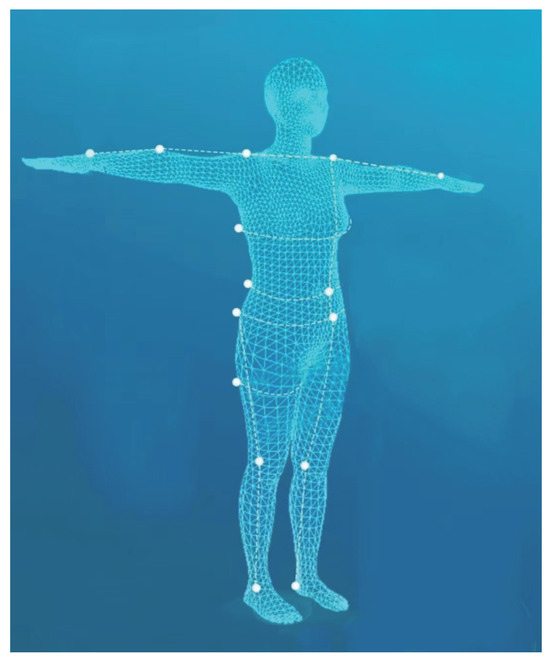
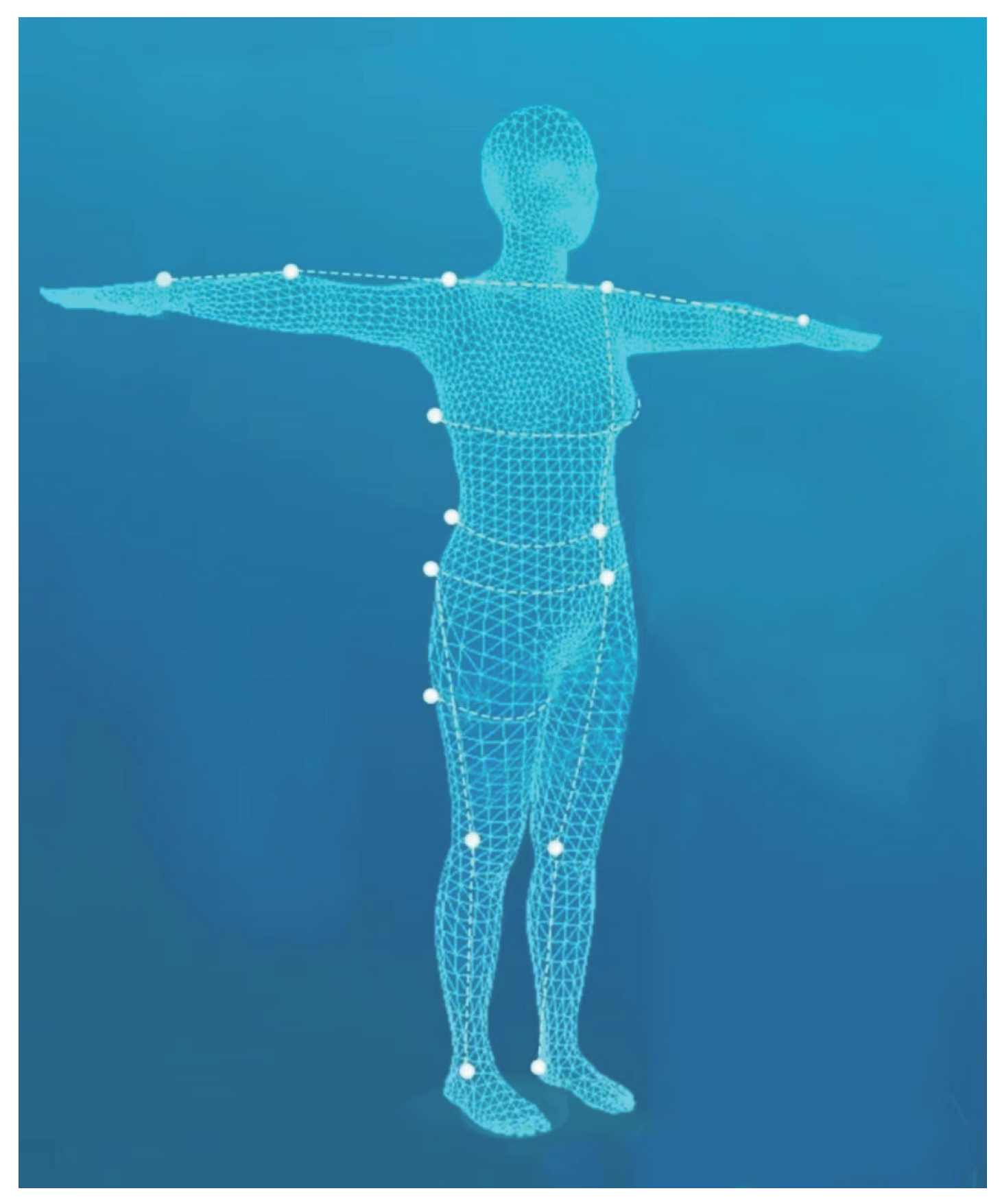
Elderly women stand in the posture shown in Fig. 1. This study uses intelligent measurement software to take photos and measure their bodies [17], collecting body data from multiple elderly women to better understand their body characteristics.
Figure 1.
Measurement of body data for elderly women.
2.2. Findings
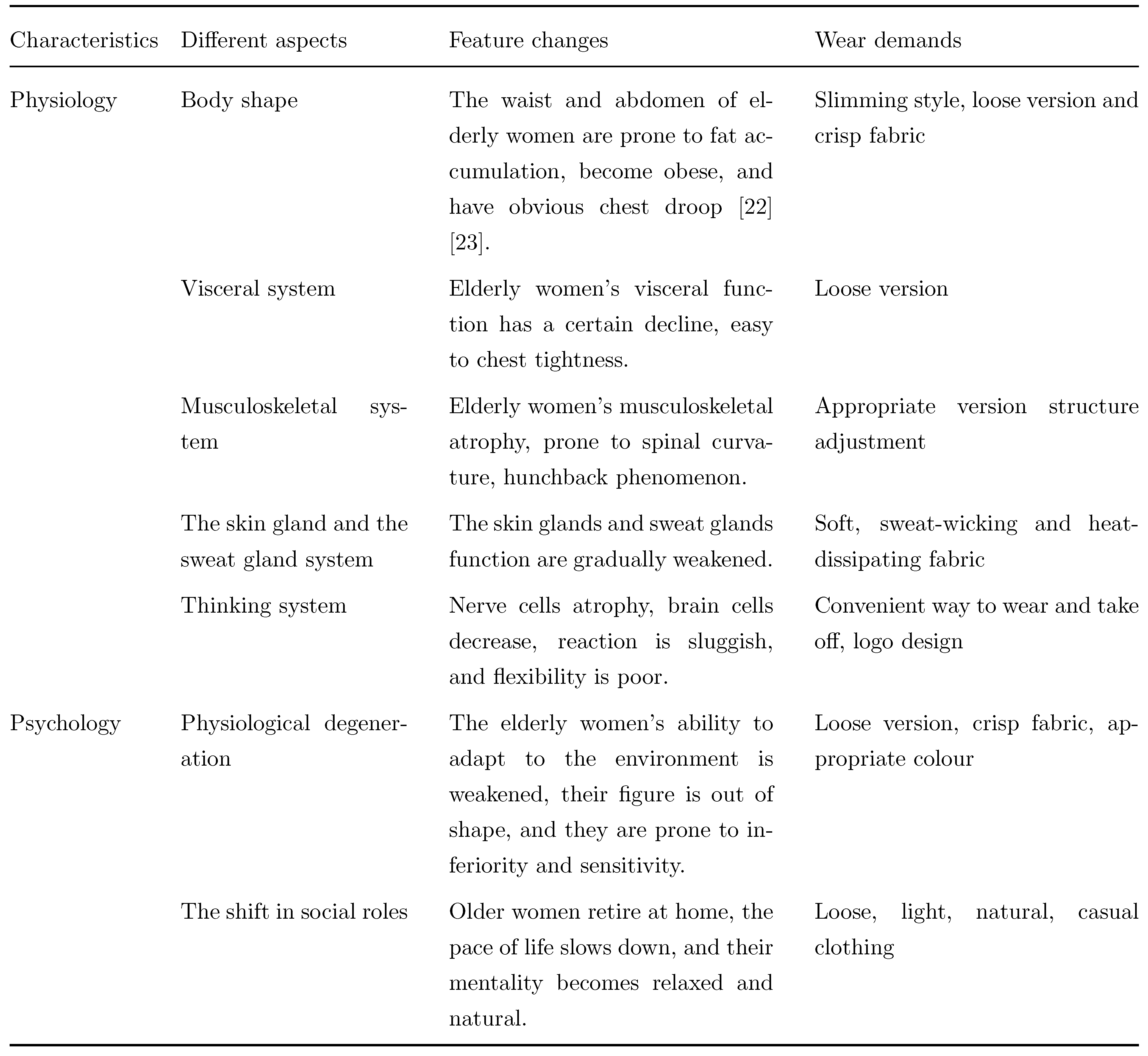
At present, there has been a great change in the aesthetic and consumption views of elderly women. The pursuit of fashion, leisure health and other modern consumption methods have been accepted by many elderly women, who play an increasingly important role in consumption. The existing women’s wear market mainly focuses on young women, while the elderly women’s wear market cannot meet the needs of elderly women. The physical characteristics of elderly women differ from those of young women, and their clothing needs are also different, as shown in Table 1 [18]. With ageing, elderly women are prone to obesity [19,20] due to their reduced height, fat accumulation and weight gain. Some will gradually lose weight. Their common point is that their bones are gradually atrophied and hunchbacked. In particular, elderly women are very different from young women in their breasts and waist, and it is difficult to buy comfortable clothes in the market. In addition, elderly women of this age group have retired at home, the pace of life has slowed, and their mentality has become relaxed and natural. This is reflected in the fact that elderly women are more willing to accept loose, light and natural clothes, which can make them look younger and more natural [21]. At the same time, the functions of sensory perception, touch, vision and hearing of elderly women gradually declined, the functions of skin glands and sweat glands gradually weakened, and the functions of perspiration and heat dissipation and body immunity gradually declined. Therefore, elderly women need clothing structural styles that conform to their body shape and materials that are soft and close to the skin and have a certain sense of crispiness to ensure the comfort of clothing and have a certain role in decoration.
Table 1.
Analysis of physical characteristics and wearing needs of elderly women [18].
Elderly women prefer casual clothing, and most prefer to wear long-sleeved T-shirts. This paper mainly designs spring and autumn T-shirts for elderly women, combining the two aspects of clothing structure design and material selection to design spring and autumn T-shirts for elderly women that meet their physical characteristics and wearing needs.
3. Design of Fake Two-Piece T-shirts
3.1. Structural Design
The structural design of the old women’s spring and autumn T-shirts needs to consider the special body shape of the elderly women. Some elderly women have sagging breasts, fat accumulation in the waist and abdomen, etc. [24], which requires a relatively loose style. The design of the style split line should not be too cumbersome to modify the body shape; For the obesity of elderly women, the waist, abdomen and cuffs can be designed with appropriate looseness to reduce the bondage caused by activities; There are also some elderly people with hunchback, so the back length and armhole depth of the back should be increased.
This study specifically designs the structural style of spring and autumn T-shirts for elderly obese women, using a fake two-piece silhouette. The so-called “fake two-piece” refers to the visual sense that one piece of clothing can wear two pieces. For elderly women with obesity in the waist, abdomen, and limbs, the T-shirt version is relatively loose, with more looseness in the waist, abdomen, and sleeves. The fake two-piece design on the front of the T-shirt can cover up and modify the waist and abdomen obesity of elderly women while also making the T-shirt more straight and formal in leisure.
3.1.1. Collar Type Design
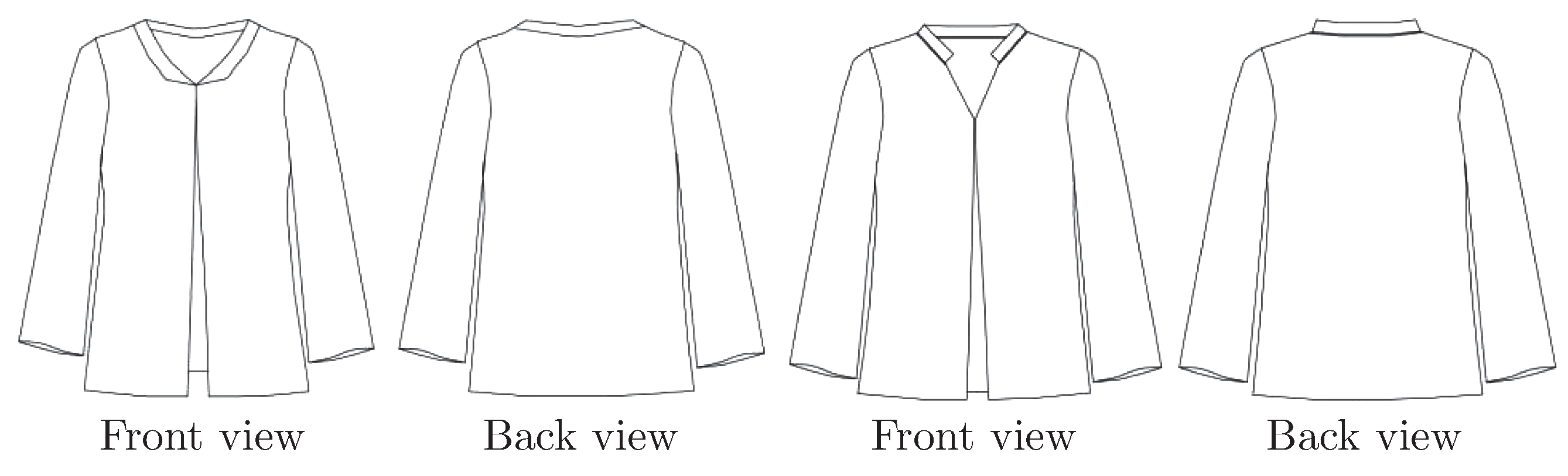
Considering that many elderly women of this type may experience facial obesity, styles 1, 2, and 3 use a large round collar, a large square collar, and a large V collar, respectively, which visually elongates the neck and is suitable for elderly women with thick and short necks. The large square collar and collarbone are in a parallel state, which can visually extend the neckline and have a slimming effect, while the line feeling of the large V collar can weaken the round face line [25]. The collar designs of styles 4, 5, and 6 add to the T-shirts’ crisp and formal feel.
Figure 2.
Style 1 and Style 2 (left: style 1, right: style 2).
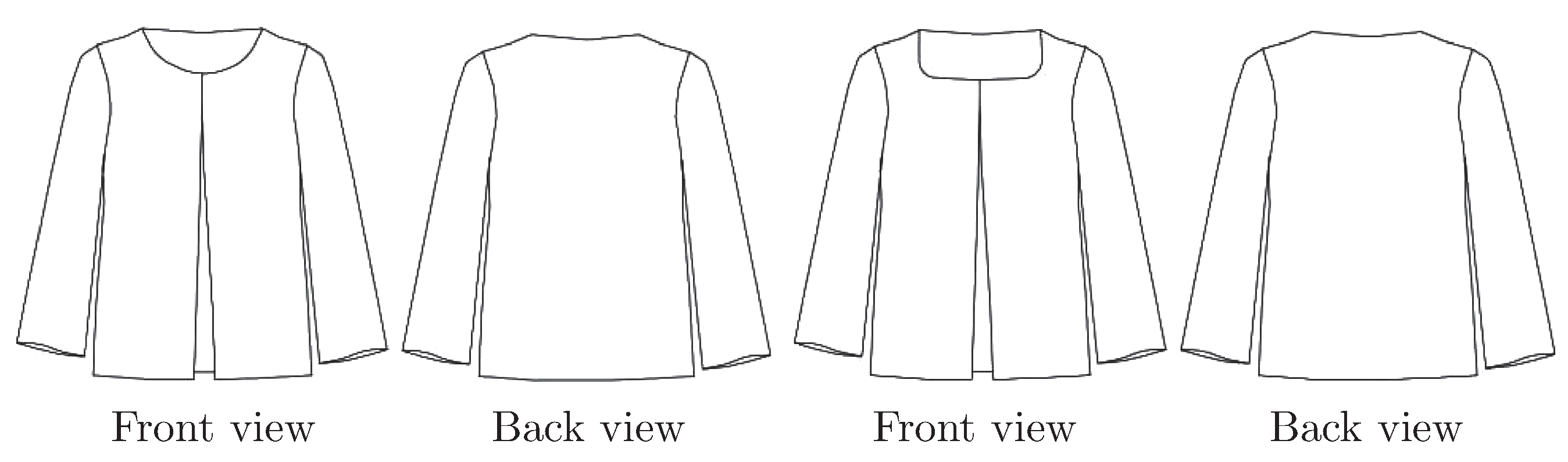
Figure 3.
Style 3 and Style 4 (left: style 3, right: style 4).
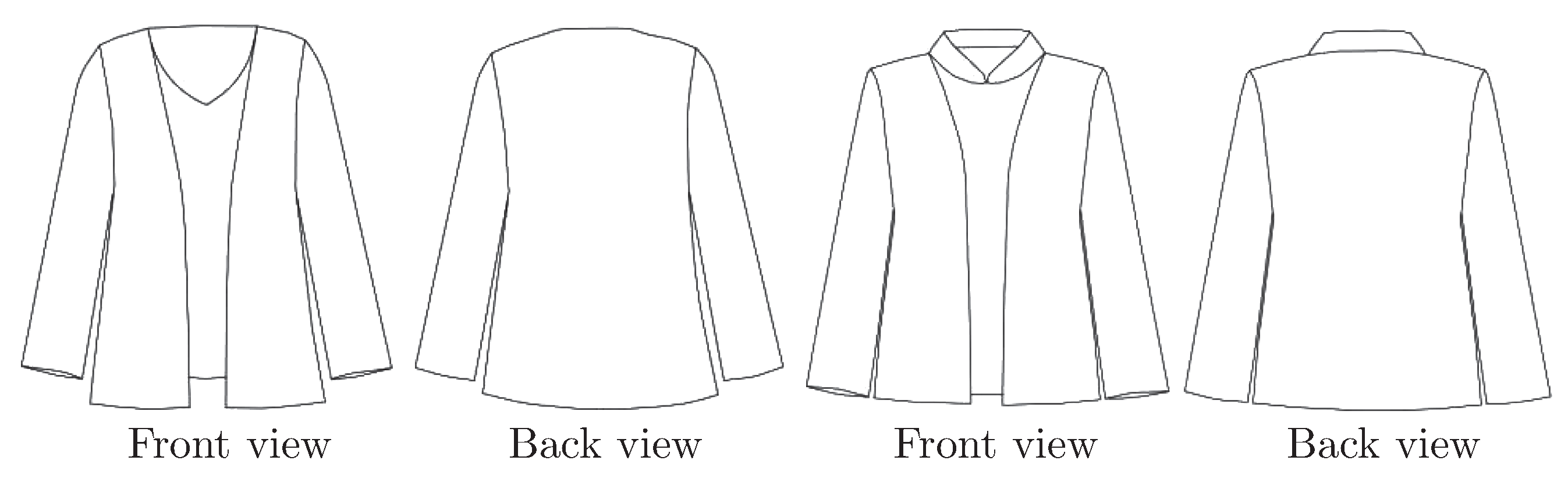
Figure 4.
Style 5 and Style 6 (left: style 5, right: style 6).
3.1.2. Detachable Design
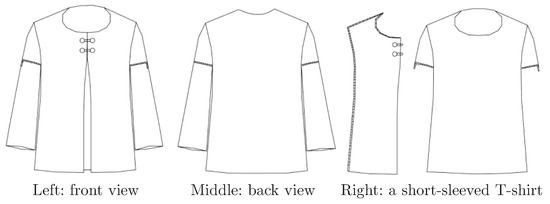
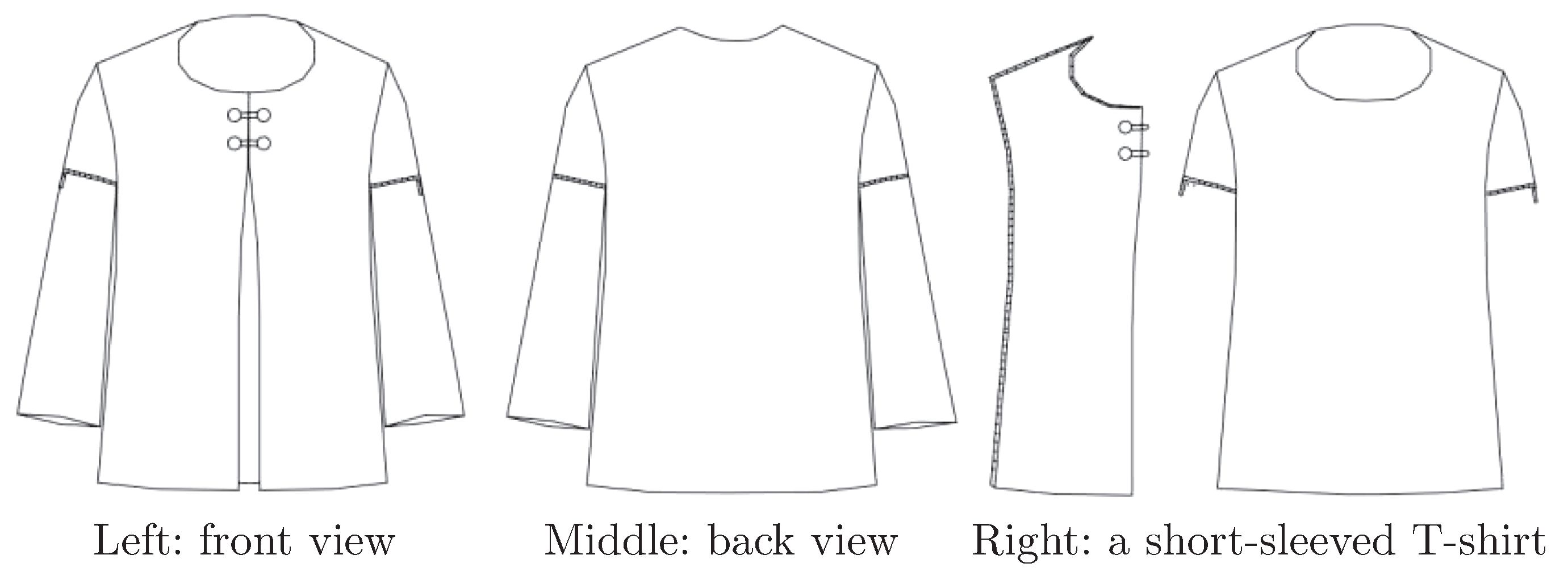
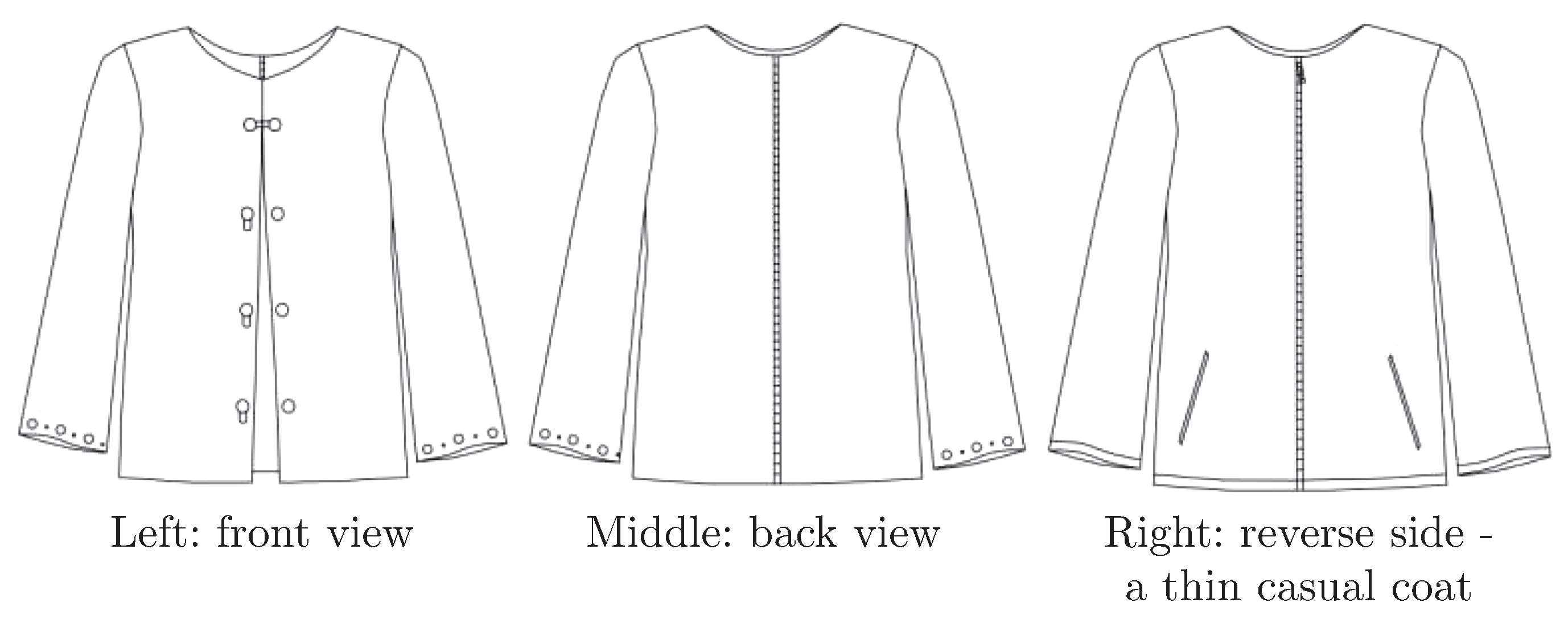
Fig. 5 shows the detachable design of a fake two-piece T-shirt style designed for this kind of elderly woman in this research. Detachable design refers to using zippers, buttons, ribbons, magic buttons and other connection methods to split and combine clothing components to diversify clothing styles and functions. There is also a small amount of hot weather in spring and autumn. With the detachable design of the front and sleeves, elderly women can adjust their T-shirts according to the weather and temperature changes. When exercising, they can also remove the front and sleeves to keep their bodies warm, wet and comfortable. At the same time, the front and sleeve of the T-shirt are easy to get dirty, and the detachable design is convenient for washing and care.
Figure 5.
Style 7: detachable design of fake two-piece T-shirt.
3.1.3. Reversible Design
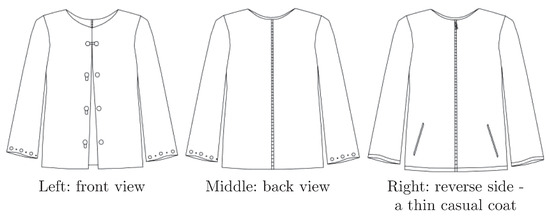
Reversible design of a fake two-piece T-shirt of this research, as shown in the left picture of Fig. 6. Reversible design refers to the fact that both sides of a garment can be worn. One garment has the effect of two clothes, which is innovative and can prolong the dressing time and reduce the laundry cost. Buttons are added at the front of the fake two-piece T-shirt, and circular patterns are added at the cuffs. As shown in the right picture of Fig. 6, the reverse side of the fake two-piece T-shirt is another way to wear it, which can be turned over as thin casual coats. The reversible design increases the functionality and design sense of the elderly women’s spring and autumn T-shirts and the multiple wearing and fun of one garment.
Figure 6.
Style 8: reversible design of fake two-piece T-shirt.
3.2. Material Selection
Considering the special body shape of elderly women, especially those who have just retired in their 60 s, they are more likely to be obese. The design of the Spring and Autumn T-shirts not only needs the structural style design that conforms to the body shape of elderly women but also needs the fabric to have a good touch, elasticity, and sweat-wicking and heat dissipation function to ensure the comfort of wearing the fabric. The fabric should also have a certain straightness to appear slim and slim and play a role in modifying the body shape.
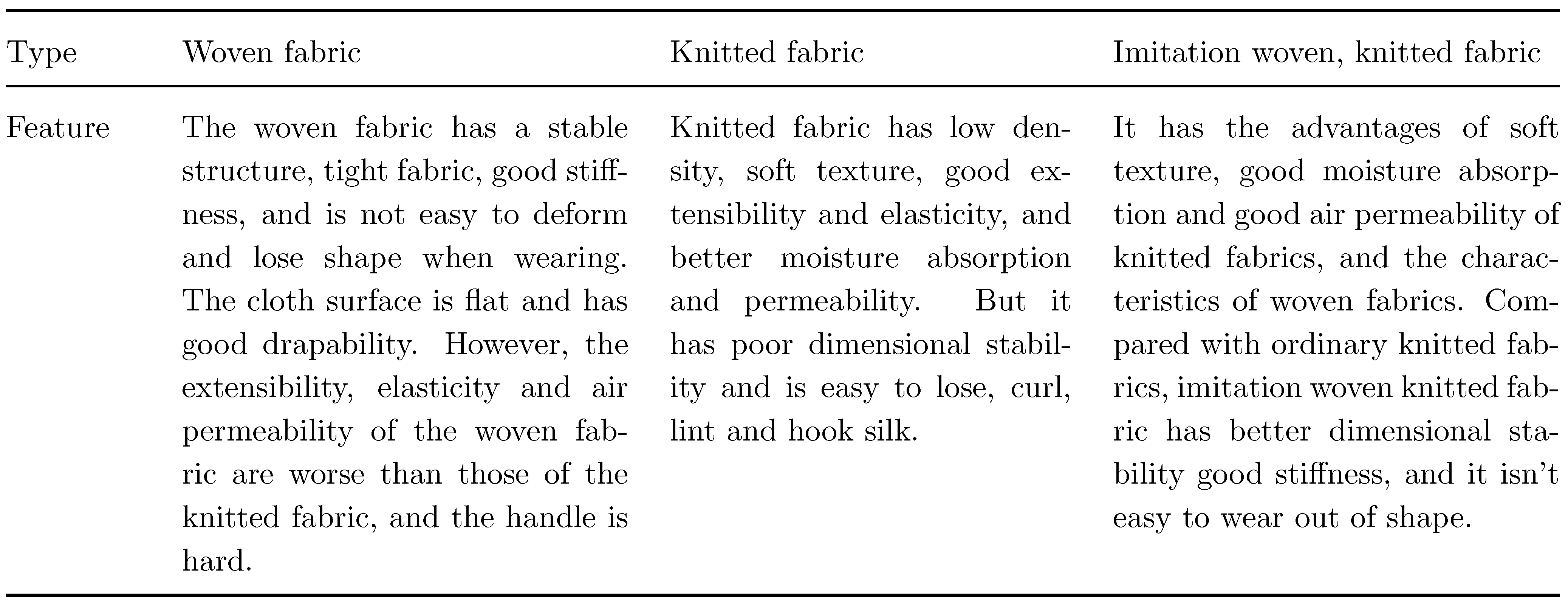
The rise of imitation woven, knitted fabric in recent years is a kind of knitted fabric that imitates and realises the appearance and performance of woven fabric using the knitting organisation process and post-finishing [26]. It has the appearance structure and texture of woven fabric and a smooth, dense and slightly elastic texture [27,28], which is better than knitted fabric in shape retention. The fabric characteristics are shown in Table 2, which can better meet the wearing needs of elderly women.
Table 2.
Comparison of Fabric Characteristics.
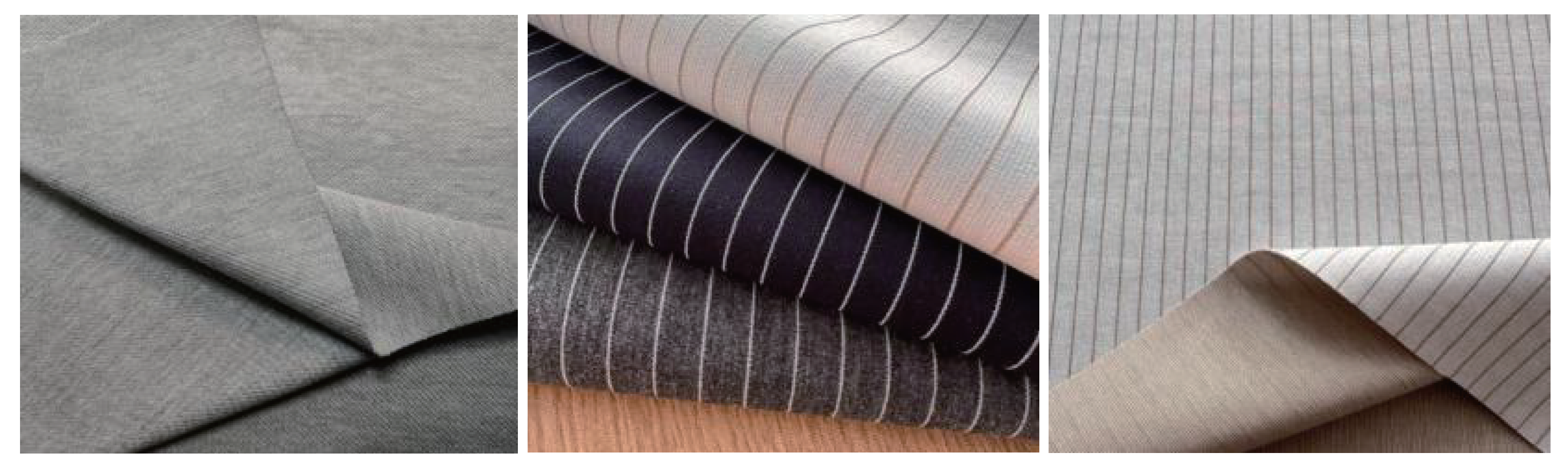
Therefore, the imitation woven, knitted fabric is selected as the material of the old women’s spring and autumn T-shirts. As shown in Fig. 7, the left side is mercerised twill imitation woven knitted fabric, and the right is mercerised stripe imitation woven knitted fabric [29]. These two imitation woven knitted fabrics come from a company in Shanghai. After mercerising, their lustre is improved, and their elasticity, moisture absorption and permeability are enhanced. The fabric is soft, comfortable to wear, and has good crisp and shape retention. It is suitable for loose, detachable, and split-line designs of fake two-piece T-shirts.
Figure 7.
Mercerized twill and mercerised stripe imitation woven knitted fabric. (from https://qr.1688.com/s/dAYUGwwZ).
3.3. Virtual Fitting Experiment
3.3.1. Using CAD to Draw T-shirt Plates
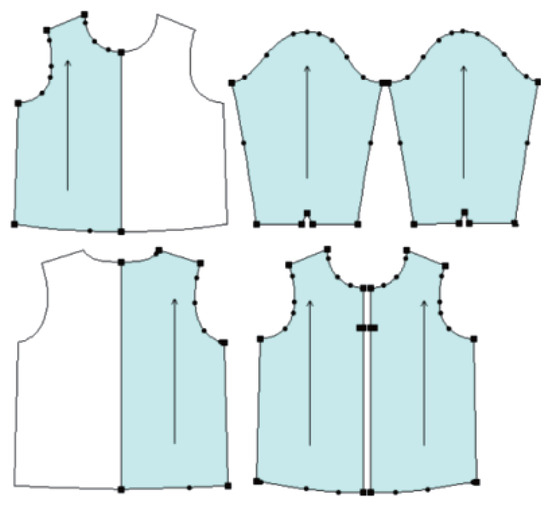
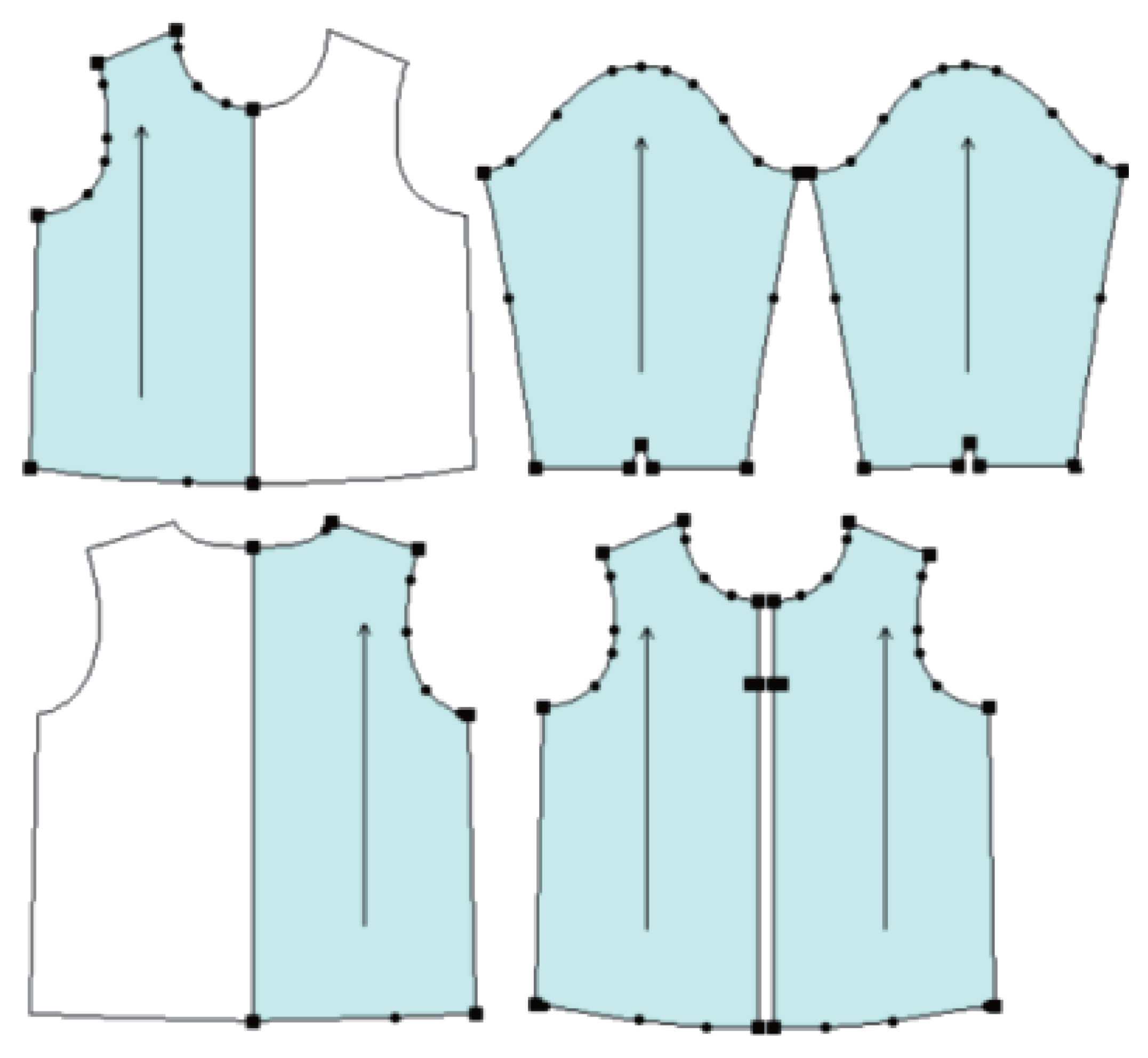
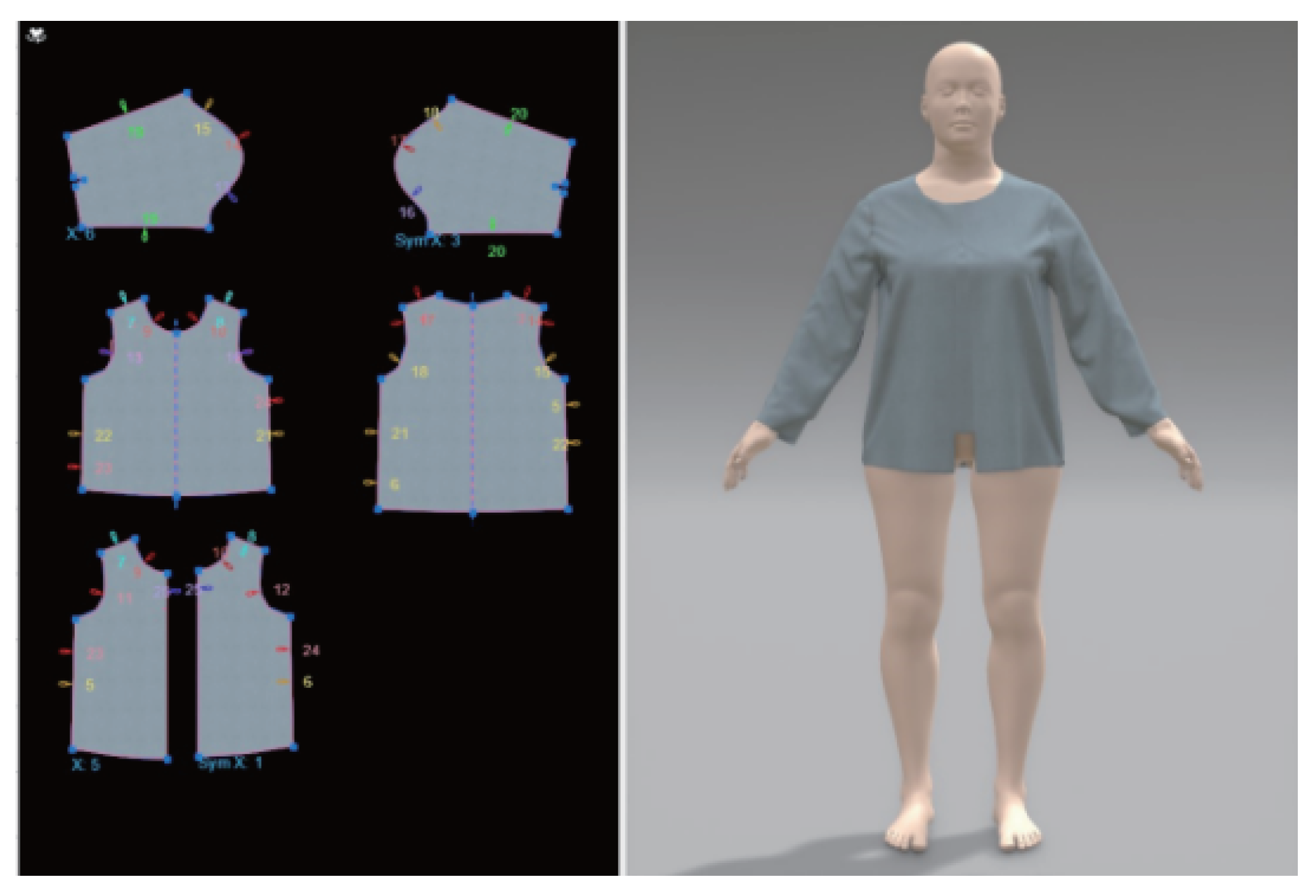
Taking style 1 as an example, the anthropometric data of an obese elderly woman in the sample is selected as the size basis. The weight of the elderly woman is 70 kg, and the body size data is shown in Table 3. This study uses Fuyi CAD board-making software to draw structural diagrams, and the style 1 structural diagram is shown in Fig. 8.
Table 3.
Comparison of Fabric Characteristics.
Figure 8.
Structure diagram of style 1.
3.3.2. Virtual Fitting
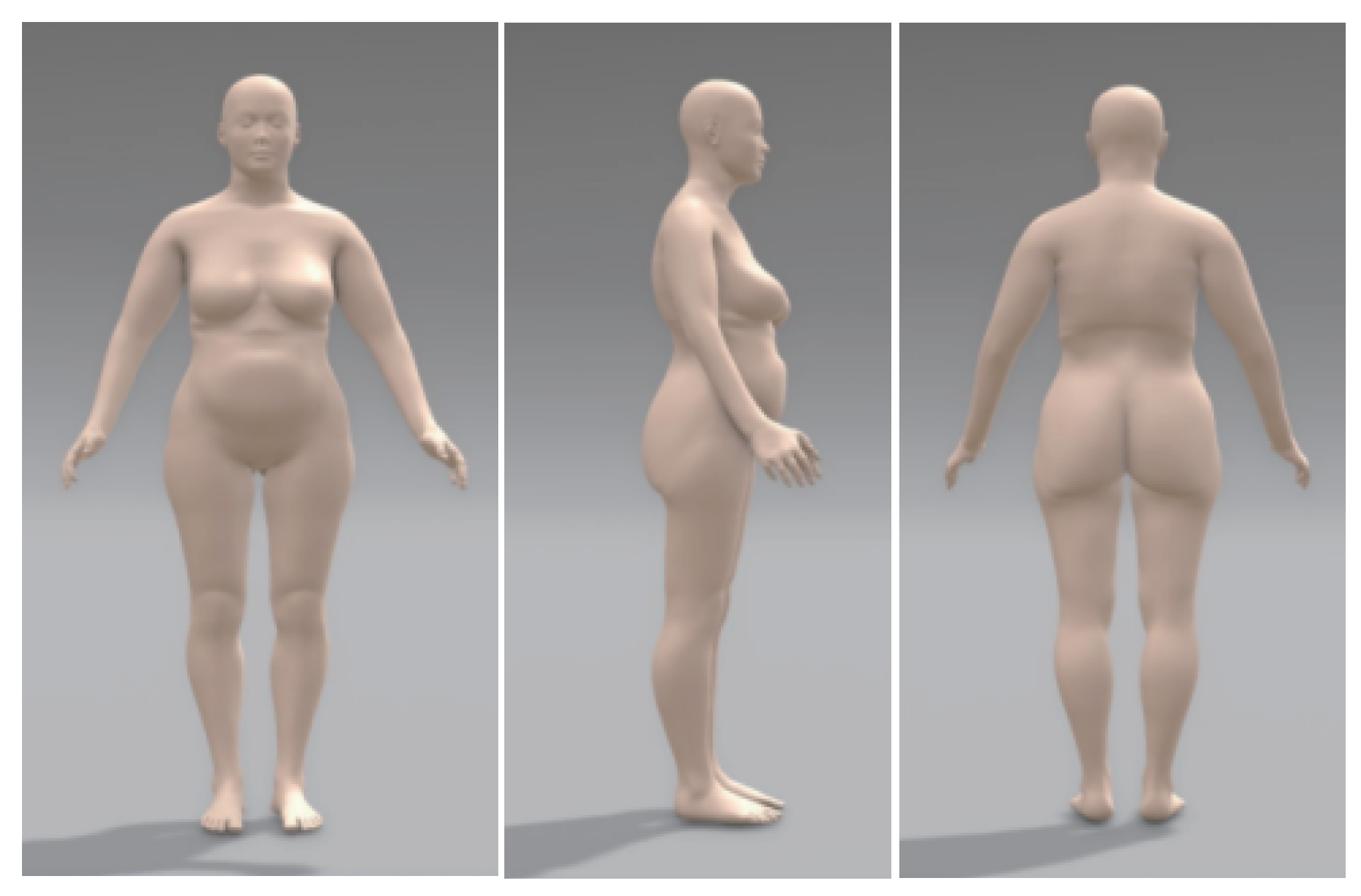
Based on the above human body data, this study establishes a human model in the virtual fitting software V Stitcher. It appropriately adjusts the shape of the model’s waist, abdomen, chest, etc, to better fit the physical characteristics of elderly obese women. As shown in Fig. 9, the mannequin exhibits obvious chest sagging, waist and abdomen obesity, and spinal curvature.
Figure 9.
Virtual Model.
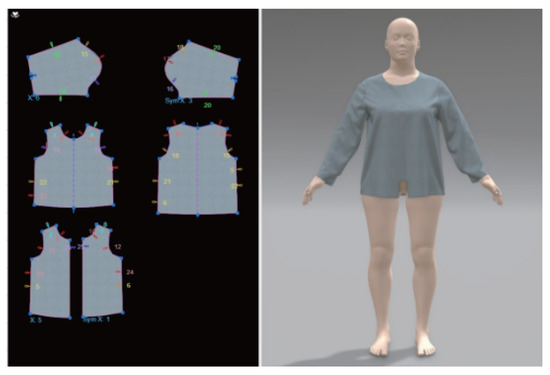
In this research, the drawn structure diagram is saved in dxf format, the virtual fitting software V Stitcher is opened, the structure diagram is imported into the 2D window, the plate position is adjusted in the 2D window, and the 2D plates are sewn with 3D virtual stitching technology for 3D virtual fitting of the T-shirt. Based on the fitting effect of the 3D window, this study adjusts the size of the board appropriately, and optimises and adjusts the structure of the T-shirt to make the clothes more suitable for the human model, as shown in Fig. 10.
Figure 10.
Virtual fitting diagram of style 1.
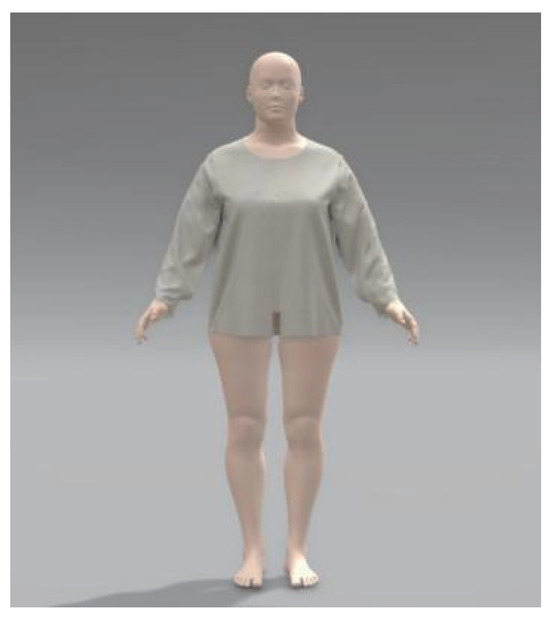
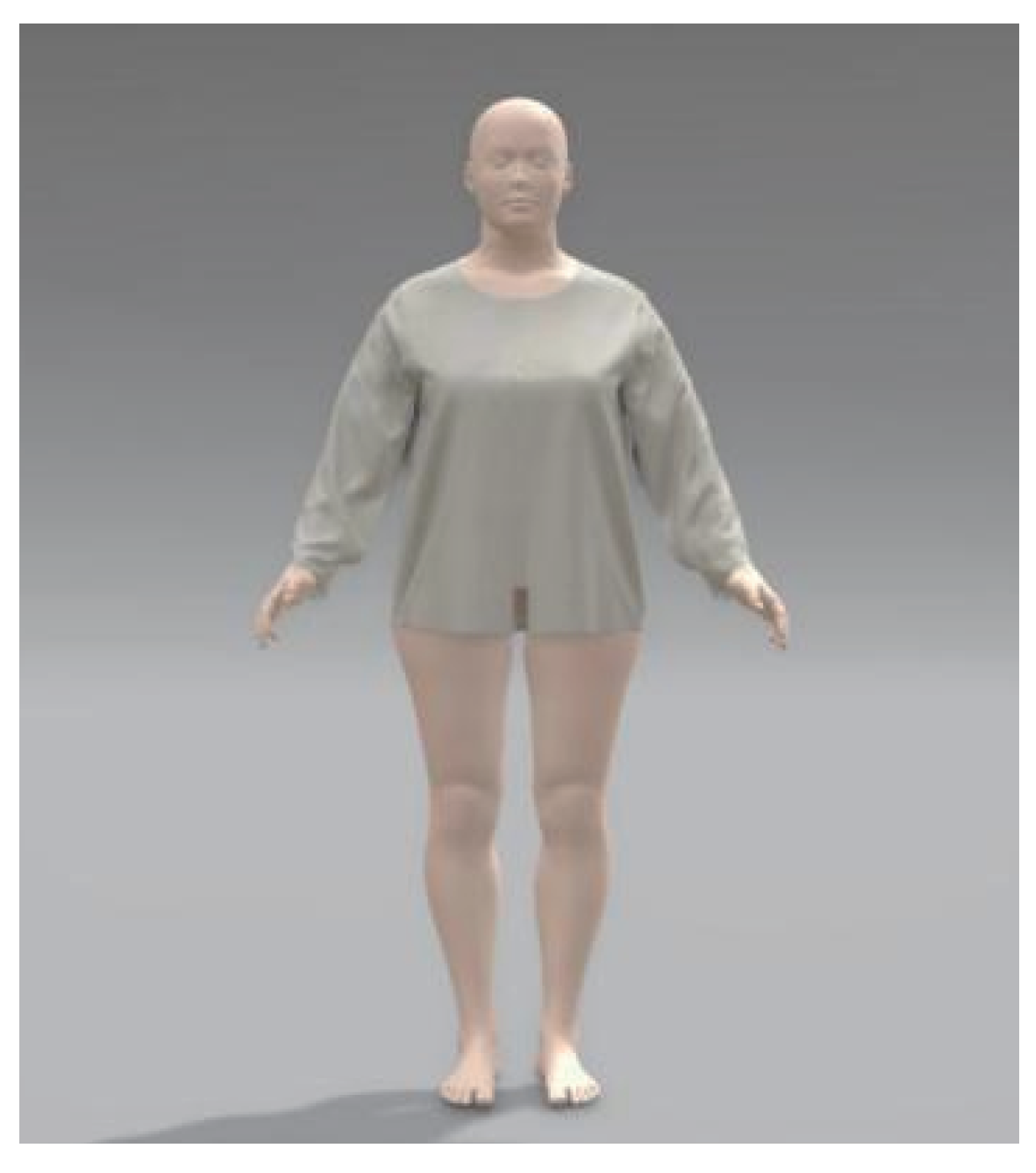
This research uses Browzwear DB Admin 1.5 software to connect a fabric tester for fabric physical performance testing. The test results are saved in the fabric library, and a fabric scanner is used to take photos to form fabric maps. It imports fabric maps into the fabric material of the virtual fitting software V Stitcher, sets relevant information for the imported fabric, and selects the corresponding fabric’s physical performance test results to complete the fabric’s physical property setting. Then, the virtual fitting effect is obtained by adjusting the fabric on the human model in the 3D window, as shown in Fig. 11.
Figure 11.
Virtual trial effect of style 1.
3.3.3. Virtual Fitting Evaluation
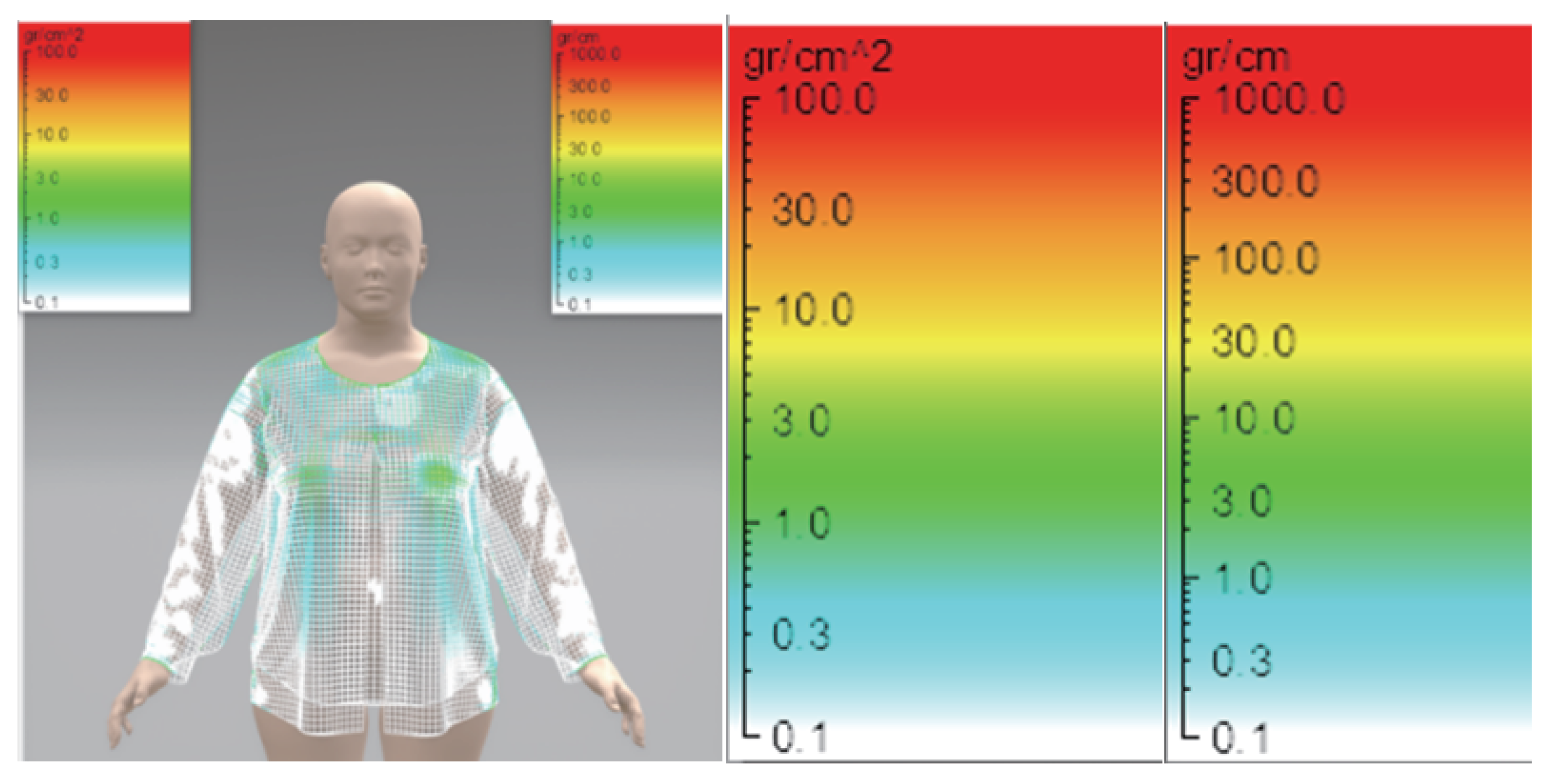
This research utilises the virtual fitting software V Stitcher’s clothing pressure and tension diagram display function to conduct a static and dynamic virtual fitting evaluation of a T-shirt.
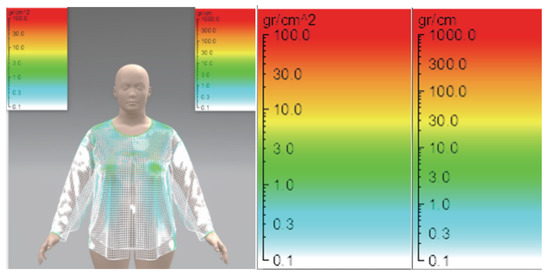
As shown in Fig. 12, it combines the T-shirt pressure and tension diagram. According to the pressure and tension diagram in the V Stitcher software, it is divided into four grades according to the color: red, yellow, green and blue [30]. Blue and green indicate low clothing pressure and tension, while yellow and red indicate high clothing pressure and tension. According to the pressure diagram, the pressure value is between 0.1∼100.0 gr/cm2, and the blue color is defined as low pressure, which is roughly 0.1∼0.8 gr/cm2; Green is medium and low pressure, which is roughly 0.8∼5.0 gr/cm2; Yellow is medium pressure, which is roughly 5.0∼40 gr/cm2; Red is high pressure, which is roughly 40∼100 gr/cm2. According to the tension diagram, the tension value is between 0.1∼1000.0 gr/cm, and the blue color is defined as low tension, which is roughly 0.1∼1.5 gr/cm; Green is medium and low tension, which is roughly 1.5∼2.0 gr/cm; Yellow is medium tension, which is roughly 2.0∼300.0 gr/cm; Red is high tension, which is roughly 300.0∼1000.0 gr/cm.
Figure 12.
Combination diagram of pressure and tension diagram (Middle: Pressure diagram and range of pressure values; Right: Tension diagram and range of tension values).
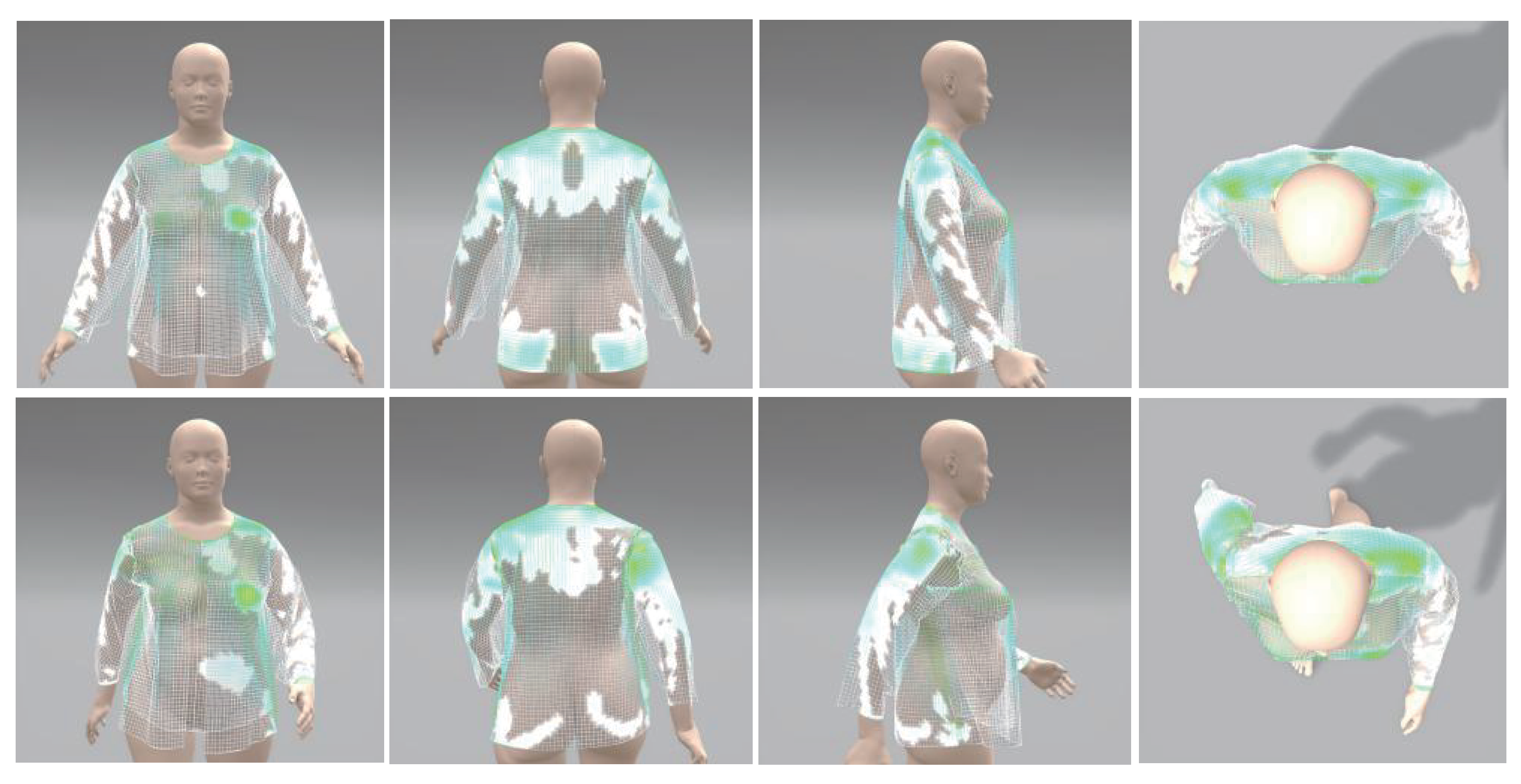
Based on the clothing pressure and tension diagrams of the virtual model in both static and moving states, it conducts a virtual T-shirt fitting evaluation. If there is a situation of high pressure and tension in the picture, it is necessary to adjust the plate appropriately to reduce the pressure and tension of the T-shirt. After adjusting to Fig. 13, it can be observed that the static and dynamic fitting pressure and tension of the T-shirt are both small and within a reasonable range. It can be concluded that the structure of this T-shirt is relatively reasonable, and its appearance is comfortable. The T-shirt conforms to the size of a mannequin and can meet the wearing needs of the human body while standing still, as well as the looseness requirements during normal walking, which can meet the basic activity needs of the human body.
Figure 13.
Static and dynamic pressure and tension diagrams.
4. Conclusion
This research follows the ageing population trend and conducts field research to analyse the physical characteristics and clothing needs of elderly women. Elderly obese women are selected as the research object, and T-shirts are designed by combining fake two-piece structural styles with imitation woven knitted fabrics. It utilises three-dimensional virtual fitting to adjust and optimise T-shirt panels and conducts static and dynamic virtual fitting evaluations on T-shirts. Using the colours displayed on the T-shirt pressure and tension diagrams, the ability of the Tshirt to meet basic human activity needs is evaluated. The results show that after adjusting and optimising the plate structure of the style one fake two-piece T-shirt, the clothing pressure and tension remain within a small range. It can meet the wearing needs of the human body when standing still and the clothing looseness requirements during normal walking, and it can meet the basic activity needs of elderly obese women. It enriches the study of elderly women’s clothing and lays the foundation for further in-depth research in the future.
Acknowledgement
Thanks for the support of the R&D Program of Beijing Municipal Education Commission (KM202210012001), and the project name is Research on the Structure and Function of Beijing Women’s Clothing Aged 60-69.
References
- Hu, J.; Chen, L.Y.; Ma, H.M. Design, application and development trend of intelligent clothing for the middle-aged and elderly. Knitt. Ind. 2018, (05), 53–57. [Google Scholar]
- Huang, Q. Research on the matching between the elderly population and community home-based elderly care facilities. Chongqing University, 2021. [Google Scholar] [CrossRef]
- Wu, Z.G. Dictionary of Population Science; Southwestern University of Finance and Economics Press, 1997. [Google Scholar]
- Yu, J.X. Research on Aged Clothing and Its Market Development. Tianjin University of Technology, 2008. [Google Scholar]
- Jun, Y. Investigation and Analysis of Consumption Potential of Clothing Functional Market of Chinese Elderly [C]//Proceedings of 2015 International Conference on Economics, Social Science, Arts, Education and Management Engineering (ESSAEME 2015). 2015; pp. 617–621.
- Liu, Q.Z. Experience of the United States, Japan and South Korea in coping with population aging and its enlightenment. Northwest Popul. 2009, 04, 73–75. [Google Scholar]
- Ieva, M.K.; Gitana, D.; Nijolė, M.; et al. The relation between aging of population and sustainable development of EU countries [J]. Entrep. Sustain. Issues 2020, 7(3). [Google Scholar] [CrossRef] [Scilit] [PubMed]
- das Neves, Érica P.; Brigatto, Aline C.; Medola, Fausto O.; Paschoarelli, Luis C. Biomechanics and´ Fashion: Contributions for the Design of Clothing for the Elderly [J]. Procedia Manuf. 2015, 3(C). [Google Scholar] [CrossRef] [Scilit][Green Version]
- Yan, L.L. Opportunities and business strategies of the elderly clothing market [J]. China Fiber Insp. 2014, (12), 50–52. [Google Scholar] [CrossRef]
- Wang, J.J. Research on the impact of intergenerational interaction and child structure on the health of elderly women [D]. Northeast University of Finance and Economics, 2019. [Google Scholar] [CrossRef]
- Kim, J.H.; Lee, Y.J. A Study on Clothing Purchasing Behavior and Preference Images of the Fashion Items according to the Age Groups of the Elderly Woman [J]. Fash. Text. Res. J. 2010, 12(3). [Google Scholar] [CrossRef] [Scilit]
- Huang, H.B.; Liu, X.G. A textile fabric for aged T-shirts [P] Jiangsu: CN103720093A, 2014-04-16.
- Li, Q.Z.; Wang, G.S. Thinking about the design of health care old silk T-shirts [J]. Silk 2014, 51(02), 47–50. [Google Scholar]
- Qiao, F.; Zhang, H.J.; Huang, G.C.; et al. An elderly care T-shirt based on intelligent wear and its mobile terminal [P] Guangdong: CN205725733U, 2016-11-23.
- Kim, Y.S.; Koo, Y.S. Design Suggestion of Active T-shirt According to the Exercise Types in the Silver Generation [J]. Fash. Text. Res. J. 2015, 17(6). [Google Scholar] [CrossRef] [Scilit][Green Version]
- Takatera, M.; Uchiyama, E.; Zhu, C.; et al. Effect of air gap on apparent temperature of body wearing various sizes of T-shirt [J]. IOP Conf. Ser. Mater. Sci. Eng. 2017, 254(18). [Google Scholar] [CrossRef] [Scilit]
- Xiao, Y. Design and Development of A Clothing and Human Body Size Measurement System Based on Photography [D]. Zhejiang University, 2019. [Google Scholar]
- Liu, J.; Shi, L.M.; Ren, J.H. Review of the Progress on Clothing Research on the Elderly [C]// Textile Bioengineering and Informatics Symposium Proceedings (TBIS 2022). 2022; pp. 116–127.
- Minstry of Health & Welfare.(2010). 2009 National Health Statistics [Korea Health Statistics 2009: Korea National Health and Nutrition Examination Survey (KNHANESIV-3)]. Retrieved July 10, 2015, from http://www.mohw.go.kr/front new/jb/sjb030301vw.jsp.
- Seong, O.J. Study on a clothes-sizing system for elderly obese women for the activation of the silver clothing industry [J]. Res. J. Costume Cult. 2016, 24(2). [Google Scholar] [CrossRef] [Scilit]
- Zhao, M.X. A Brief Talk on the Market Demand and Design Essentials of Women’s Leisure Wear for the Elderly [J]. Shandong Text. Sci. Technol. 2013, 54(03), 39–42. [Google Scholar]
- Yang, M. Study on body size characteristics and structure design of clothing in Guanzhong region [D]. Xi’an Engineering University, 2016. [Google Scholar]
- Mu, L.; Wang, L.J. Sports Bra Design Based on Dynamic Elder Women Avatar. J. Fiber Bioeng. Inform. 2021, 14(1), 1–12. [Google Scholar] [CrossRef] [Scilit]
- Wang, C.; Li, W.X. Material Selection and Design of Middle aged and Aged Garments [J]. Pop. Lit. Art. 2018, (15), 74. [Google Scholar]
- Li, Z.Y.; Tian, B.H. The Application of Functional Design of Collars in Clothing [J]. Chem. Fiber Text. Technol. 2022, 51(04), 157–159. [Google Scholar]
- Zhang, Q. Design of Imitation Woven Knitted Fabrics Based on Local Culture [J]. Res. Art. Des. 2020, (06), 63–67. [Google Scholar]
- Li, J.H.; Guo, R.P. Innovative Design of Imitation Woven Knitted Fabrics [J]. Knitt. Ind. 2017, (02), 73–77. [Google Scholar]
- Feng, B.Y.; Chen, Y.Y.L.; Liu, X.G. Design and Development of “Imitation Woven” Style Knitted Clothing [J]. Woolen Text. Technol. 2022, 50(10), 9–13. [Google Scholar] [CrossRef]
- https://qr.1688.com/s/dAYUGwwZ.
- Xiao, J.R. Evaluation of the Comfort of Fitting Pants Wearing Activities Based on Virtual Fitting [D]. Donghua University, 2023. [Google Scholar] [CrossRef]


© 2023 Textile Bioengineering and Informatics Society. This article is an open access article distributed under the terms and conditions of the Creative Commons Attribution (CC BY) license (https://creativecommons.org/licenses/by/4.0/).