1. Introduction
Carbonised archaeological wood recovered from waterlogged deposits represents one of the most challenging materials for anatomical and dendrochronological investigation [
1,
2]. Prolonged burial under water-saturated conditions promotes physical, chemical, and biological degradation processes that progressively alter the original wood structure. Microbial activity, prolonged exposure to moisture, and interactions with surrounding sediments may result in tissue collapse, increased porosity, loss of cell-wall integrity, and pronounced structural heterogeneity, while partial carbonisation may further modify the physical properties of the material and complicate anatomical examination [
3,
4].
In addition to biological deterioration, archaeological wood commonly undergoes burial-related chemical alteration. Interactions with surrounding sediments and associated artefacts may induce localised pH changes, ion migration, and the accumulation of inorganic compounds within the wood structure [
5]. Mineral deposition, including calcium carbonate and iron oxides, can produce adjacent zones of increased hardness and severely degraded tissue, resulting in heterogeneous mechanical behaviour that complicates specimen preparation and anatomical analysis [
6,
7].
Anatomical identification of severely degraded or very small wood specimens may require an embedding or supporting medium to permit handling and sectioning while limiting further disruption of preserved structures [
8,
9,
10]. Archaeological wood is nevertheless prepared in several ways, including direct hand sectioning of water-saturated material, freezing, polyethylene-glycol support, paraffin embedding, and embedding in acrylic, methacrylate, epoxy, or LR White-type resins. Each approach has advantages and limitations, and no single method is appropriate for every preservation state. Successful embedding requires the most complete penetration practicable, together with sufficient mechanical support during cutting; neither complete penetration nor successful sectioning should be assumed solely from the external appearance of a block [
8,
9].
Paraffin was selected in this study because it was compatible with the routine histological equipment available in our laboratory, comparatively inexpensive, removable before staining, and suitable for serial rotary-microtome sectioning. It is not presented as superior to resin embedding: harder polymeric media may provide better support for some highly heterogeneous specimens but require different processing, blades, and sectioning procedures. Conventional plant microtechnique recommends gradual dehydration and staged replacement of solvents to reduce abrupt diffusion gradients and improve support [
8,
9,
11]. The Prislan et al. [
11] protocol for fresh wood and microcores was used as a methodological starting point, but substantial caution was required because the present specimens were larger, carbonised, severely altered, and recovered from waterlogged deposits.
Advanced imaging techniques, including micro-computed tomography (micro-CT) and scanning electron microscopy (SEM), can provide valuable structural information from degraded archaeological wood [
12]. Their analytical advantages do not remove the practical need for accessible preparations for routine taxonomic identification. Direct observation of prepared wood surfaces and the use of different embedding and section-support media are already established practices. The narrower contribution evaluated here is an explicit decision pathway that preserves orientation, tests whether thin sections retain diagnostically useful spatial relationships, and switches to conservative block-face examination when further sectioning would consume material without improving identification.
The archaeological material originated from Early Medieval pit features at Ba-binci near Ljutomer, northeastern Slovenia. Persistent waterlogging and oxygen limitation slowed complete mineralisation and permitted long-term survival of organic remains. Degradation nevertheless continued over centuries, producing severe and spatially heterogeneous biological, chemical, and physical alteration.
To address these challenges, this study proposes an adaptive preparation workflow integrating prolonged paraffin infiltration, systematic preservation of anatomical orientation, paraffin embedding, conventional microtomy, and selective block-face trimming. Rather than relying on a single preparation pathway, the workflow was adapted according to the behaviour of individual specimens during preparation. When paraffin sectioning produced suitable thin sections, anatomical identification was based on conventional light microscopy; when sectioning proved unsuccessful, diagnostically informative block surfaces were prepared and examined by stereomicroscopy.
The aim of this case study was to document and critically evaluate an adaptive workflow for recovering diagnostic anatomical information from severely degraded, carbonised archaeological wood from waterlogged deposits. The individual preparation techniques are established; the workflow tests their complementary use and defines when block-face examination may preserve useful information after trial microtomy fails to yield diagnostically usable sections.
2. Materials and Methods
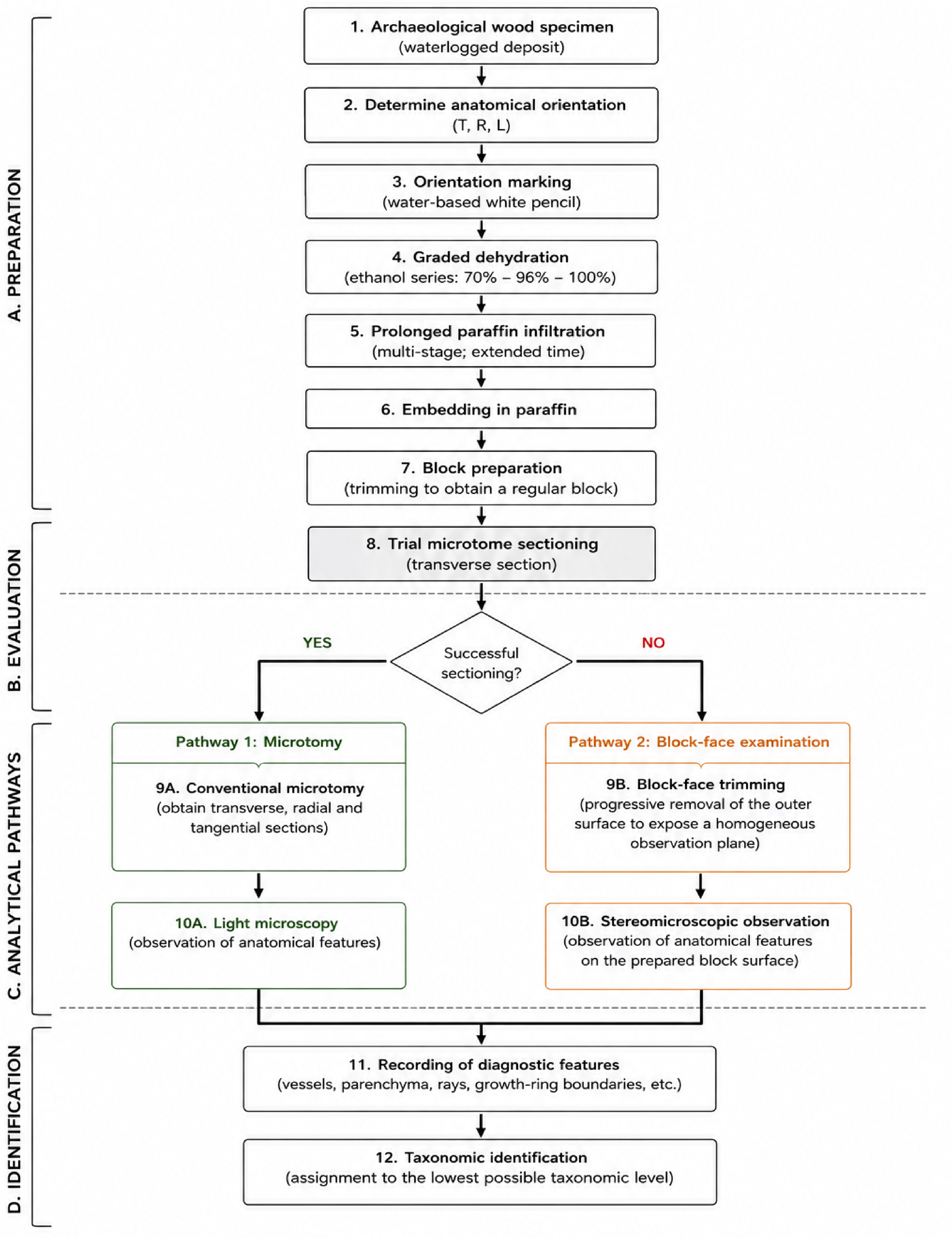
The adaptive preparation workflow adopted in this study is summarised in
Figure 1. A ‘diagnostically usable section’ was defined as an intact section, or a set of alignable fragments, preserving sufficient spatial relationships among vessels, rays, growth-ring boundaries and/or pitting for taxonomic interpretation. Section continuity across the full block was not required.
2.1. Sample Collection and Preparation
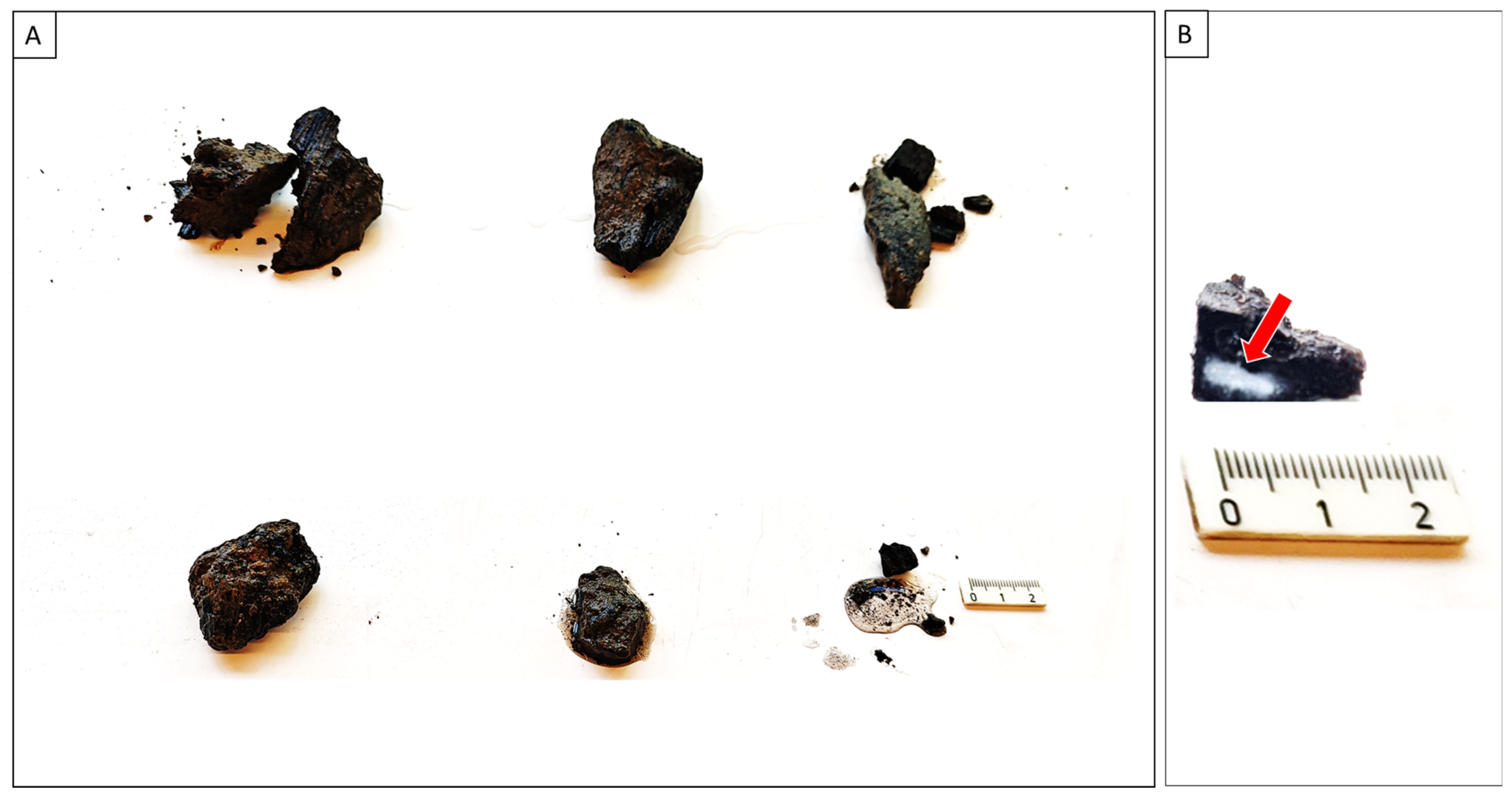
Six heavily degraded, carbonised archaeological wood fragments were recovered during archaeological excavations conducted in 2025 at Babinci near Ljutomer, northeastern Slovenia (
Figure 2). Persistent waterlogging and oxygen limitation slowed complete loss of organic material, while centuries of degradation produced severe and spatially heterogeneous alteration. After excavation, adhering sediment was gently removed without brushing or chemical cleaning; the fragments were photographed, documented, and assessed. Six specimens were selected for detailed anatomical analysis, whereas the remaining material was used only for preliminary assessment and was not included in the specimen-level success calculation. The analysed specimens comprised one subsequently identified as
Populus sp. and the other identified as
Quercus sp.
Particular attention was devoted to the determination and preservation of anatomical orientation prior to sample processing.
Accurate determination and preservation of anatomical orientation are important for wood identification but are difficult in darkened, degraded material. Although a reference plane can sometimes be recovered by progressive facing after embedding, doing so consumes irreplaceable material. Loss of orientation was therefore considered highly undesirable rather than impossible to correct.
Before processing, each specimen was marked with a French manicure tip pencil (water-reactive formula; essence cosmetics), a high-contrast white cosmetic pencil (
Figure 2B). The mark remained visible during the solvent sequence used here. This empirical observation is specific to the tested product and processing conditions and should not be generalised to other water-based marking products. Subsamples were selected to retain the largest diagnostically useful surface compatible with the cassette and mould. Thickness was limited to 5 mm to reduce diffusion distance, but this operational limit did not ensure complete paraffin penetration.
2.2. Paraffin Infiltration and Embedding
Preliminary exploratory attempts based on conventional paraffin schedules [
8,
9,
11] used shorter processing times and produced blocks that fragmented or detached during facing and cutting, behaviour consistent with inadequate internal support. These trials were not designed as a quantitative control experiment, and infiltration depth was not measured. The revised schedule in
Table 1 therefore extended staged dehydration, repeated clearing, and two molten-paraffin steps while retaining subsamples up to 5 mm thick to maximise observable anatomical area.
Given the altered and mechanically heterogeneous material, the extended schedule shown in
Table 1 was applied. Ethanol was used at the stated aqueous concentrations, followed by two changes of a limonene-based clearing agent, Bio-Clear (Bio-Optica, Milan, Italy), and two changes of molten histological paraffin (Paraplast, Leica) with a melting point of 56 °C.
Gradual solvent replacement was intended to limit abrupt diffusion gradients that can promote cracking or tissue collapse. However, no untreated-control or pre-/post-processing three-dimensional measurement was available; consequently, cellular collapse observed after processing cannot be attributed exclusively to archaeological degradation. Samples were allowed to cool gradually at room temperature after embedding.
2.3. Embedding and Block Preparation
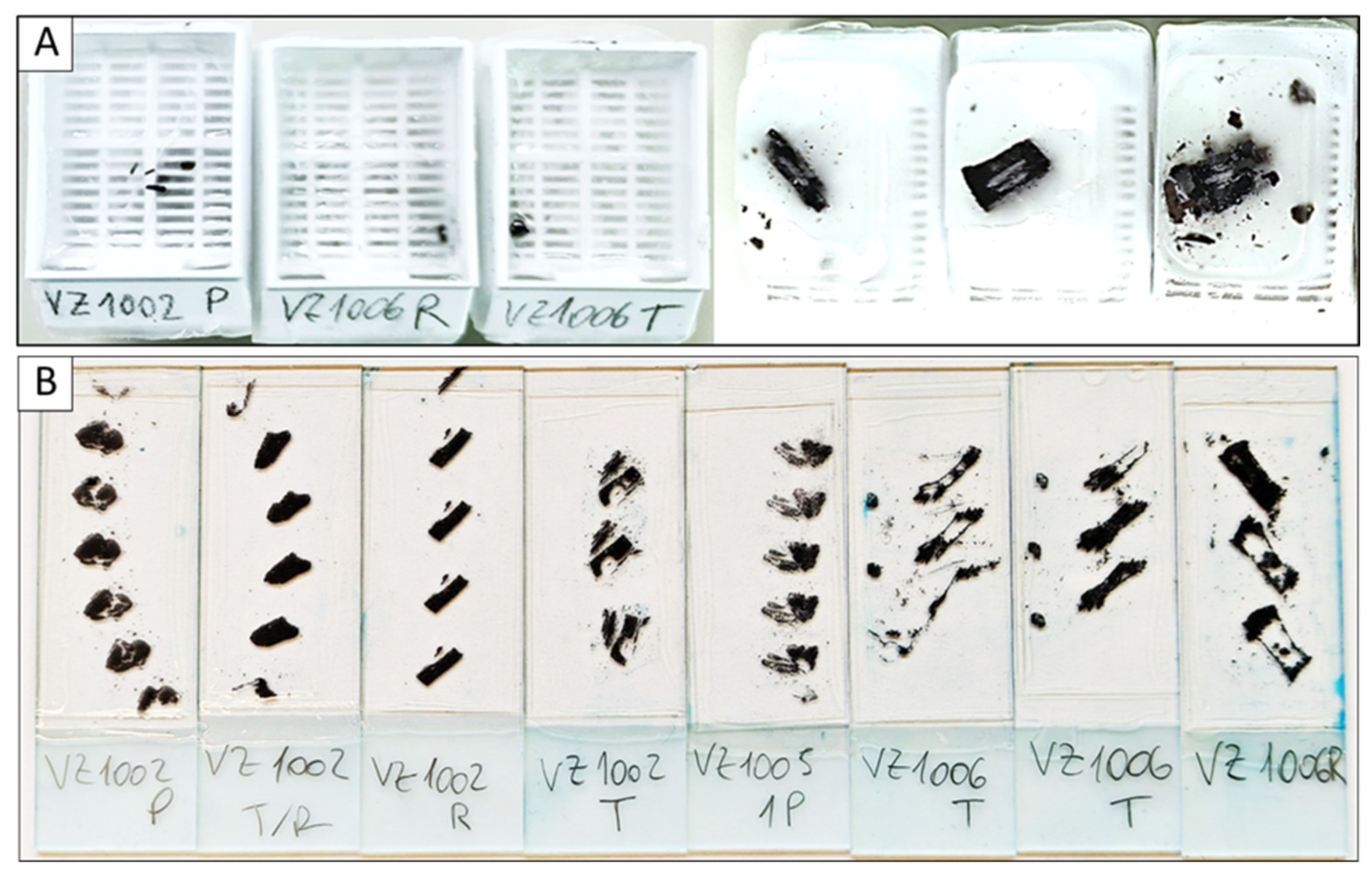
After infiltration, the samples were transferred to metal embedding moulds filled with molten paraffin. Particular attention was paid to maintaining the previously established anatomical orientation (transverse, radial, tangential) during transfer to the embedding moulds. The blocks were then allowed to solidify gradually at room temperature (
Figure 3A). Controlled cooling was critical for maintaining structural integrity and preventing the formation of internal stresses or cracks within the paraffin matrix.
Embedding supplied external support during handling and facing. The need for support and the likelihood of incomplete penetration depend on specimen thickness, retained water, permeability, occlusions or mineral deposits, carbonisation, and spatial heterogeneity, rather than on degradation severity alone.
2.4. Block-Face Trimming and Surface Preparation
Following embedding, the blocks were allowed to harden in a freezer at −18 °C for 20 min and subsequently stabilised at room temperature. The blocks were then trimmed using a semi-automatic rotary microtome (RM 2245, Leica Microsystems, Nussloch, Germany) to expose the specimen surface. Preliminary sections approximately 12 µm thick were removed. The trimmed blocks were subsequently immersed in distilled water at room temperature for approximately 24 h to soften the exposed wood and reduce cutting resistance before sectioning. Facing removed excess paraffin and irregular or mechanically damaged superficial material to expose a flatter observation surface; it was not intended to remove poorly infiltrated outer tissue. Surface refinement was performed manually on the rotary microtome through a limited series of consecutive cuts; no separate polishing machine was used. Potential support problems were expected to become more consequential toward the specimen interior.
In specimens that could not be sectioned successfully, the prepared block face itself served as the primary surface for anatomical examination under stereomicroscopy.
2.5. Sectioning and Staining
Prepared blocks were sectioned with a semi-automatic rotary microtome (RM 2245, Leica Microsystems) equipped with disposable, low-profile blades (DB80LX, Leica Microsystems). Sections were cut at 9 µm. Alternative oblique block orientations relative to the blade, as recommended for resistant wood tissues by Prislan et al. [
11], were not tested systematically and should be evaluated in future applications.
One of the three analysed specimens produced diagnostically usable transverse, radial, and tangential sections. Sections were floated on a water bath at approximately 40 °C, placed on albumin-coated slides, dried at 70 °C for 20 min, and deparaffinised with Bio-Clear (Bio-Optica, Milan, Italy) followed by 100% ethanol rinsing. Slides were stained with Safranin–Astra blue solution followed by 100% ethanol rinsing.
Safranin–Astra blue staining was weak and uneven under the applied conditions. This cannot be attributed solely to archaeological degradation: incomplete deparaffinisation or residual paraffin may have impeded stain uptake. Identification therefore relied primarily on tissue morphology and natural contrast under transmitted and reflected light.
The slides were permanent-mounted with Euperal mounting medium.
All slides (
Figure 3B) were examined using a Zeiss Axio Imager A2 light microscope (Carl Zeiss Microscopy, White Plains, NY, USA), and images were acquired with a Zeiss Axiocam 712 colour digital camera (Carl Zeiss Microscopy GmbH, Jena, Germany).
The other analysed specimens exhibited pronounced mechanical heterogeneity. None yielded a diagnostically usable transverse thin section: cutting produced separated fragments that could not be reliably realigned to preserve growth-ring-scale relationships. Identification therefore relied primarily on direct stereomicroscopic examination of the trimmed transverse block faces. Radial and tangential planes occasionally yielded diagnostically usable thin sections; when sectioning was unsuccessful, their trimmed block faces were also examined stereomicroscopically, provided that their anatomical orientation could be unequivocally established.
3. Results
3.1. Paraffin Infiltration and Block Stability
The extended schedule produced blocks that were more cohesive during handling and facing than the exploratory shorter schedules. This observation demonstrates improved block-level support, not complete infiltration. Penetration depth was not measured, and in the Quercus specimens, paraffin may have remained concentrated in peripheral tissues and around the specimen. All blocks could be faced and examined, but only one of three analysed specimens, namely Populus sp., yielded diagnostically usable thin sections in all three anatomical planes.
3.2. Block-Face Preparation as an Alternative Analytical Strategy
Controlled facing provided interpretable observation surfaces when trial sectioning failed. It removed irregular material and exposed vessel and ray patterns on the block face. This is an established analytical practice rather than a newly invented technique. In this case study, its value was operational: including it as a predefined alternative reduced repeated cutting and retained taxonomic information from the two specimens that did not yield usable transverse thin sections.
3.3. Anatomical Identification and Preparation Outcomes
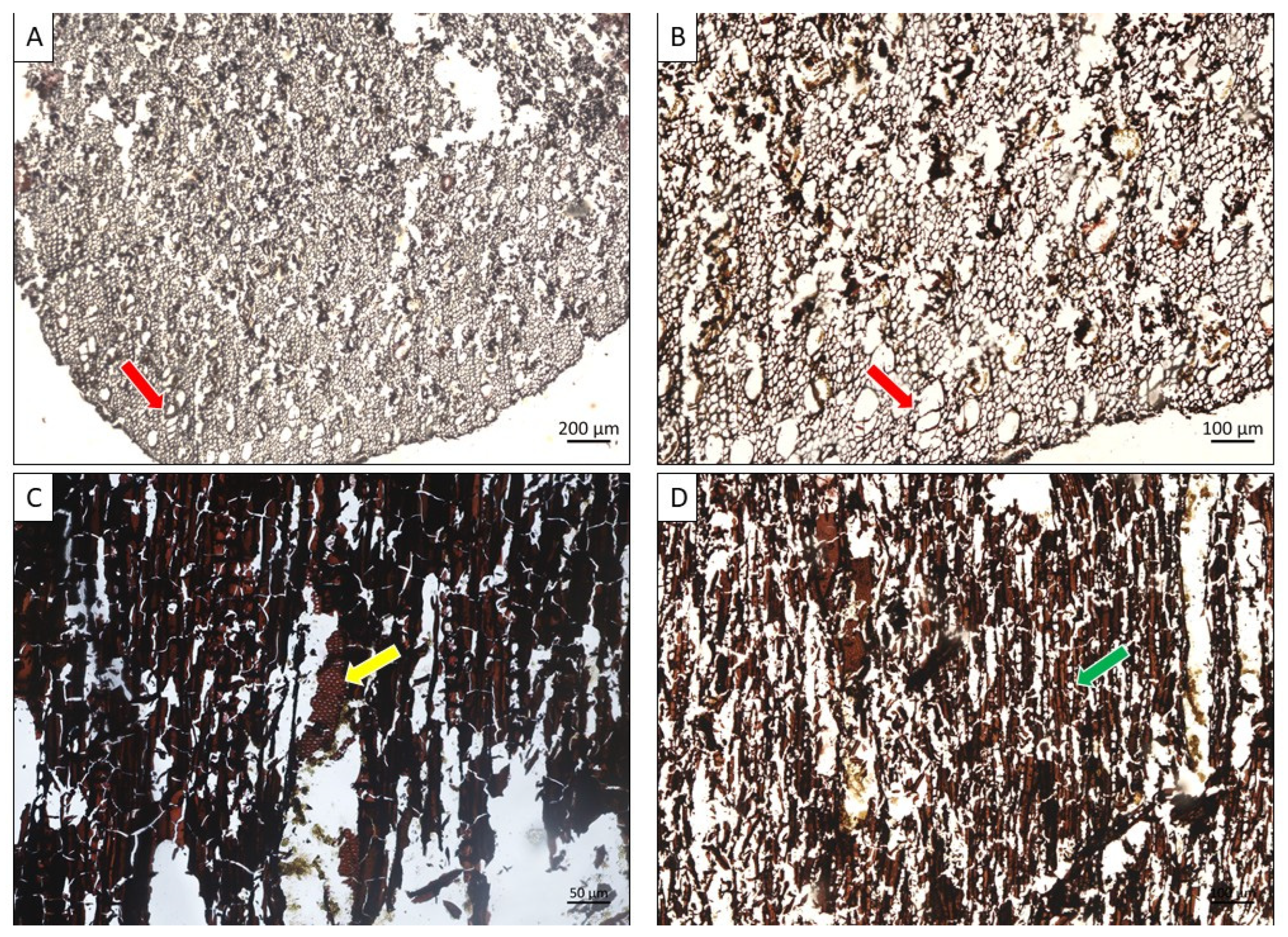
The analysed specimens all yielded genus-level identifications, but through different evidence. One specimen yielded diagnostically usable thin sections in transverse, radial, and tangential planes (
Figure 4) and was identified as
Populus sp. The other specimens did not yield usable transverse thin sections and were identified as
Quercus sp. principally from trimmed transverse block faces. Identification followed the IAWA hardwood features [
13] and Schweingruber [
10].
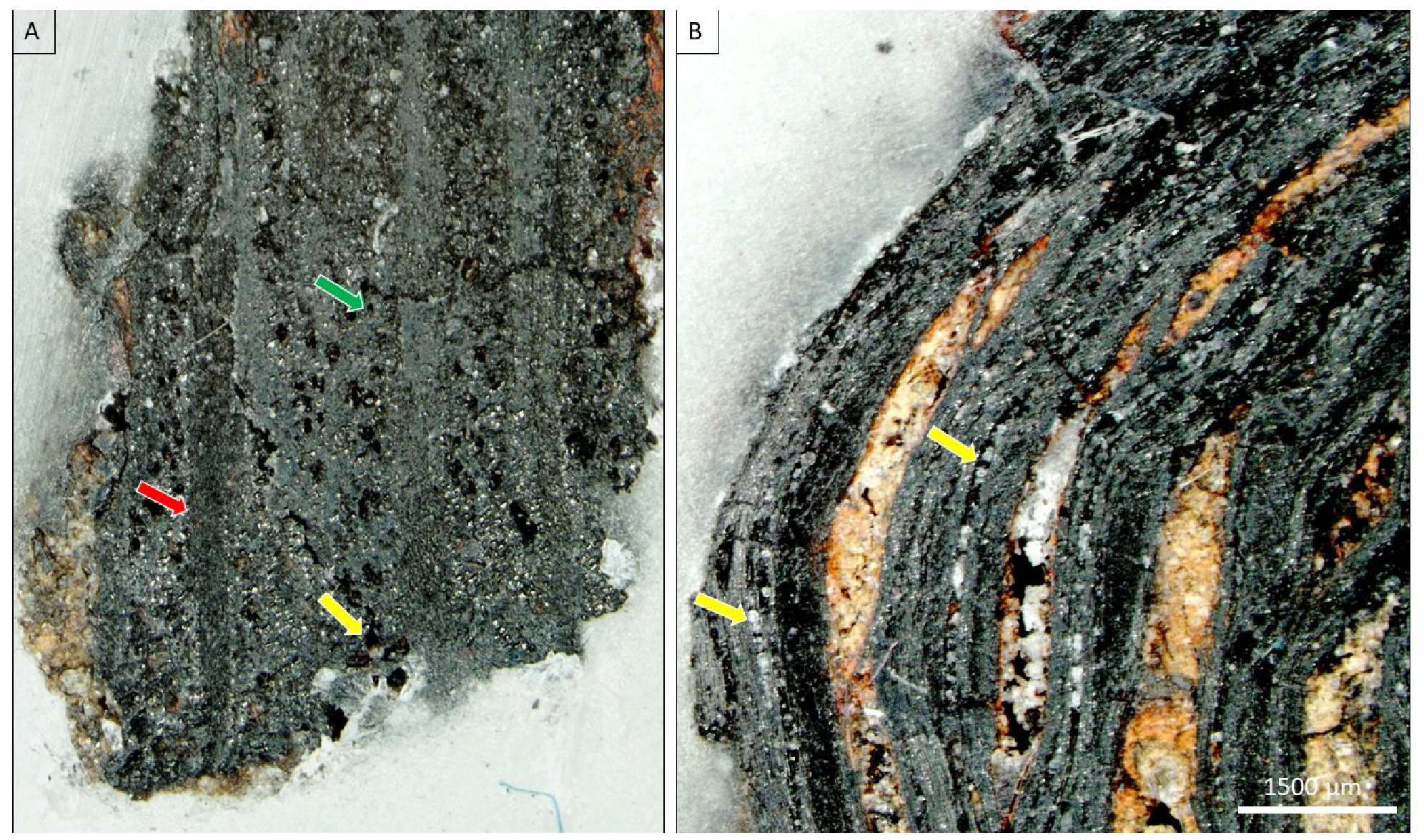
The other specimens were assessed primarily on prepared transverse block faces (
Figure 5). The overview and detail views showed a ring-porous pattern, large earlywood vessels, much smaller latewood vessels, and conspicuous broad multiseriate rays crossing growth rings. These transverse-plane characteristics were consistent with
Quercus sp.
4. Discussion
This case study shows that information recovery from severely degraded, carbonised archaeological wood depends primarily on the state and spatial pattern of degradation. Taxon-specific anatomy may influence how that degradation and cutting resistance are distributed, but it should not be treated as an equivalent independent cause. Specimens from the same deposit cannot be assumed to have identical preservation because permeability, tissue composition, natural durability, microbial accessibility, carbonisation, and mineral accumulation differ among fragments and taxa [
3,
6,
7,
14,
15].
The extended schedule improved block cohesion and facilitated handling and surface preparation compared with the exploratory shorter schedules. Although infiltration depth was not quantified and a controlled comparison was not performed, paraffin embedding provided sufficient mechanical support for facing and block-face examination of all specimens and enabled the preparation of diagnostically usable thin sections from one specimen. Thus, while extended paraffin processing did not ensure successful sectioning of every sample, it enhanced specimen stability and supported the recovery of diagnostic anatomical information through complementary thin-section and block-face examination.
Only the Populus specimen yielded diagnostically usable sections in all three planes. The Quercus specimens fragmented during transverse sectioning and were evaluated primarily from block trimmed faces. This difference most directly reflects contrasting preservation states and spatial heterogeneity. Ring-porous anatomy may have accentuated local changes in cutting resistance, but the present sample size cannot isolate anatomy from degradation.
Wood anatomy can nevertheless modulate preparation behaviour [
16]. Large earlywood vessels and dense latewood in ring-porous oak create a spatially heterogeneous substrate, whereas diffuse-porous poplar distributes vessels more uniformly [
10,
13]. After uneven burial alteration, these pre-existing contrasts may be amplified. This interpretation remains a plausible mechanism rather than a demonstrated causal effect.
Burial-related alteration probably contributed to the hard–friable transitions observed in the oak specimens. Mineralogical analyses were not performed, so mineral accumulation remains a hypothesis supported by reports on waterlogged archaeological oak [
6,
17,
18,
19]. Block-face examination is already established in wood identification [
20,
21,
22]; here it served as the prespecified second route when further microtomy risked specimen loss without producing alignable anatomical information.
Rather than replacing existing techniques, the proposed workflow integrates complementary preparation approaches. The principal characteristics of the available methods are summarised in
Table 2.
The proposed workflow does not replace existing preparation techniques but provides a flexible framework for selecting the most appropriate analytical pathway according to specimen behaviour.
The workflow should be understood as a case-based decision framework. Its practical contribution is to link orientation preservation, trial microtomy, an explicit criterion for diagnostic usability, and conservative block-face examination. This sequence recovered information from all analysed specimens while avoiding repeated destructive sectioning of the two mechanically unstable specimens.
The essence French manicure tip pencil provided a practically useful high-contrast orientation mark that remained visible during the tested processing sequence. This result is product- and protocol-specific and should not be generalised to all cosmetic pencils.
Application of the workflow to additional taxa, preservation states, deposits, and embedding media is required.
5. Conclusions
This case study documents an adaptive decision strategy combining gradual paraffin processing, preservation of orientation, trial microtomy, and trimmed block-face examination for severely degraded, carbonised archaeological wood from waterlogged deposits. The constituent techniques are established; the contribution is their explicit integration and the criterion used to change analytical route.
Of analysed specimens, one Populus specimen yielded diagnostically usable sections in three anatomical planes, whereas four Quercus specimens were identified mainly from transverse block faces after trial sectioning failed. Paraffin improved handling and facing, but complete penetration was not demonstrated.
The observations support treating thin-section microscopy and block-face examination as complementary sources of evidence. Preservation state and its spatial heterogeneity were the principal constraints, while anatomy may have modulated cutting behaviour.
The workflow should be considered a reproducible case-based framework requiring broader validation rather than a universally improved protocol.
Author Contributions
Conceptualization, A.B., M.M.; methodology, A.B., L.K., M.M.; software, M.M.; validation, A.B., L.K., M.N., M.M.; formal analysis, A.B.; investigation, A.B., L.K., M.M.; resources, M.M.; data curation, A.B.; writing—original draft preparation, A.B.; writing—review and editing, A.B., L.K., M.M.; visualisation, A.B., L.K., M.N., M.M.; supervision, M.M. All authors have read and agreed to the published version of the manuscript.
Funding
This research received no external funding.
Data Availability Statement
The data supporting the findings of this study are contained within the article. No additional datasets were generated or analysed beyond those presented in the manuscript.
Acknowledgments
This research was supported by the Slovenian Research and Innovation Agency (ARIS). under research programme P4-0015. The authors gratefully acknowledge ARHEJ d.o.o. for providing access to the archaeological material and for supporting this research. During the preparation of this manuscript, the authors used ChatGPT (OpenAI, GPT-5) for language editing, text refinement, and assistance with manuscript organisation. The authors reviewed, edited, and validated all generated content and take full responsibility for the content of this publication.
Conflicts of Interest
Author Matjaž Novšak was employed by the company Arhej d.o.o. The remaining authors declare that the research was conducted in the absence of any commercial or financial relationships that could be construed as a potential conflict of interest.
References
- Caple, C. Introduction: The Challenges of Archaeological Conservation. In Studies in Archaeological Conservation; Routledge: Abingdon-on-Thames, UK, 2020; pp. 3–28. [Google Scholar]
- Broda, M.; Hill, C.A. Conservation of Waterlogged Wood—Past, Present and Future Perspectives. Forests 2021, 12, 1193. [Google Scholar] [CrossRef] [Scilit]
- Blanchette, R.A. A Review of Microbial Deterioration Found in Archaeological Wood from Different Environments. Int. Biodeterior. Biodegrad. 2000, 46, 189–204. [Google Scholar] [CrossRef] [Scilit]
- High, K.E.; Penkman, K.E. A Review of Analytical Methods for Assessing Preservation in Waterlogged Archaeological Wood and Their Application in Practice. Herit. Sci. 2020, 8, 83. [Google Scholar]
- Rowell, R.M.; Barbour, R.J. (Eds.) Archaeological Wood: Properties, Chemistry, and Preservation; Advances in Chemistry; American Chemical Society: Washington, DC, USA, 1989; Volume 225, ISBN 978-0-8412-1623-5. [Google Scholar]
- Sidoti, G.; Antonelli, F.; Galotta, G.; Moscatelli, C.; Kržišnik, D.; Vinciguerra, V.; Tamantini, S.; Marabottini, R.; Macro, N.; Romagnoli, M. Mineral Compounds in Oak Waterlogged Archaeological Wood and Volcanic Lake Compartments. EGUsphere 2023, 2023, 1–13. [Google Scholar]
- Humar, M.; Balzano, A.; Kržišnik, D.; Lesar, B. Assessment of Wooden Foundation Piles after 125 Years of Service. Forests 2021, 12, 143. [Google Scholar] [CrossRef] [Scilit]
- Kiernan, J. Histological and Histochemical Methods; Scion Publishing Ltd: Witney, UK, 2015. [Google Scholar]
- Ruzin, S.E. Plant Microtechnique and Microscopy; Oxford University Press: New York, NY, USA, 1999; Volume 198. [Google Scholar]
- Schweingruber, F.H. Anatomy of European Woods; Paul Haupt: Bern, Switzerland, 1990. [Google Scholar]
- Prislan, P.; del Castillo, E.M.; Skoberne, G.; Špenko, N.; Gričar, J. Sample Preparation Protocol for Wood and Phloem Formation Analyses. Dendrochronologia 2022, 73, 125959. [Google Scholar] [CrossRef] [Scilit]
- Balzano, A.; Merela, M.; Čufar, K. Scanning Electron Microscopy Protocol for Studying Anatomy of Highly Degraded Waterlogged Archaeological Wood. Forests 2022, 13, 161. [Google Scholar] [CrossRef] [Scilit]
- Wheeler, E.A.; Baas, P.; Gasson, P.E. IAWA List of Microscopic Features for Hardwood Identification; IAWA Leiden: Leiden, The Netherlands, 1989; Volume 10. [Google Scholar]
- Björdal, C.G.; Nilsson, T.; Daniel, G. Microbial Decay of Waterlogged Archaeological Wood Found in Sweden Applicable to Archaeology and Conservation. Int. Biodeterior. Biodegrad. 1999, 43, 63–73. [Google Scholar] [CrossRef] [Scilit]
- Pedersen, N.B.; Łucejko, J.J.; Modugno, F.; Björdal, C. Correlation between Bacterial Decay and Chemical Changes in Waterlogged Archaeological Wood Analysed by Light Microscopy and Py-GC/MS. Holzforschung 2021, 75, 635–645. [Google Scholar] [CrossRef] [Scilit]
- Balzano, A.; Čufar, K.; Krže, L.; Merela, M. Critical steps and troubleshooting in sample preparation for wood and phloem formation: From sampling to microscopic observation: Kritični koraki in reševanje težav pri pripravi vzorcev za spremljanje nastajanja lesa in floema: Od vzorčenja do opazovanja pod mikroskopom. Les/Wood 2022, 71, 47–56. [Google Scholar]
- Zborowska, M.; Niedzielski, P.; Budka, A.; Enenche, J.; Mleczek, M. Content of Elements in Contemporary and Archaeological Wood as a Marker of Possible Change in Physico-Chemical Parameters. J. Cult. Herit. 2023, 63, 90–100. [Google Scholar] [CrossRef] [Scilit]
- KILIÇ, N. Determining the Condition of Waterlogged Archaeological Woods and Iron Nails from the Yenikapı 17 Shipwreck Using Multiple Analytical Techniques. NPJ Herit. Sci. 2025, 13, 64. [Google Scholar] [CrossRef] [Scilit]
- Newsom, L.A. Wood in Archaeology; Cambridge University Press: Cambridge, UK, 2022. [Google Scholar]
- Caple, C.; Williams, E. Conservation Skills for the 21st Century: Judgement, Method, and Decision-Making; Routledge: Abingdon-on-Thames, UK, 2023. [Google Scholar]
- Ruffinatto, F.; Crivellaro, A. Atlas of Macroscopic Wood Identification; Springer: Cham, Switzerland, 2019. [Google Scholar] [CrossRef] [Scilit]
- García Esteban, L.; de Palacios de Palacios, P.; Gasson, P.; García-Fernández, F.; de Marco Blanco, A.; García-Iruela, A.; García-Esteban, L.; González de Vega Buenaventura, D. Early Warning Macroscopic Guide to Timbers Listed in CITES; Ministry for the Ecological Transition and the Demographic Challenge: Madrid, Spain, 2020. [Google Scholar]
| Disclaimer/Publisher’s Note: The statements, opinions and data contained in all publications are solely those of the individual author(s) and contributor(s) and not of MDPI and/or the editor(s). MDPI and/or the editor(s) disclaim responsibility for any injury to people or property resulting from any ideas, methods, instructions or products referred to in the content. |