Systematic Review

Evolving Conservation Trends for Earthen Heritage: A Systematic Review of Terra Conference Proceedings (1972–2022)

1
Getty Conservation Institute, Los Angeles, CA 90049, USA
2
Independent Researcher
*
Author to whom correspondence should be addressed.
Heritage 2026, 9(8), 299; https://doi.org/10.3390/heritage9080299
Submission received: 29 May 2026 / Revised: 3 July 2026 / Accepted: 19 July 2026 / Published: 1 August 2026
(This article belongs to the Section Cultural Heritage)

Abstract

Earthen heritage constitutes a significant yet vulnerable component of the world’s cultural legacy, encompassing archeological sites, historic monuments, vernacular buildings, and living cultural landscapes. Over the past five decades, approaches to its conservation have evolved in response to changing heritage paradigms. Since their inception in 1972, the international Terra events have played a pivotal role in shaping this field by providing a recurring platform for international exchange, knowledge production, and methodological development. This study aims to examine the shifts in research and practice through the lens of the Terra gatherings. Using a systematic review methodology conducted in accordance with the PRISMA 2020 guidelines, 638 papers from thirteen Terra proceedings (1972–2022) were analyzed and classified by geographic focus, disciplinary background, knowledge area, heritage type, construction techniques, deterioration factors, and intervention methods. The findings reveal a clear transition from early material and monument-centered approaches toward more holistic, interdisciplinary, and people-centered frameworks, with increasing attention to vernacular heritage, cultural landscapes, heritage management, and capacity building. The analysis also identifies persistent regional imbalances, a strong link between conference location and geographic representation, and a growing focus in recent decades on sustainability, disaster risk reduction, and climate change. Overall, the study demonstrates how trends reflected within the Terra proceedings have evolved and contributed to the discourse in earthen heritage conservation.

1. Introduction

The conservation of earthen heritage has evolved significantly over the past 50 years, reflecting a growing awareness of its cultural significance and legacy. Earthen structures have long been integral to cultural landscapes across various regions, yet their formal recognition as a vital component of cultural heritage has been a gradual and ongoing process. This growing acknowledgment owes much to the work of pioneering practitioners, scholars, and institutions whose collaborative efforts have advanced both theoretical frameworks and practical methodologies [1]. Organizations such as the International Council on Monuments and Sites (ICOMOS), the International Center for the Study of the Preservation and Restoration of Cultural Property (ICCROM), the International Center for Earth Construction (CRAterre), the World Heritage Earthen Architecture Program of UNESCO (UNESCO-WHEAP), and the Getty Conservation Institute (GCI), among others, have been instrumental in this progression, promoting research, training programs, and field-based conservation projects [2]. Their combined actions have fostered global knowledge sharing and helped establish earthen conservation as a distinct, interdisciplinary field of heritage practice.
Among these global efforts, the Terra events have played a pivotal role in fostering international collaboration, sharing critical knowledge, and setting global conservation priorities [3]. Since 1972, these gatherings have generated a substantial body of published proceedings that collectively offer a broad perspective on the field’s development. Recognizing these significant contributions, the Earthen Architecture Initiative (EAI) team of the GCI conducted a systematic analysis of the past thirteen Terra proceedings, comprising 638 published papers, to trace the evolution of research themes, conservation approaches, and the broader discourse surrounding earthen heritage.
While this scope inevitably excludes many other contributions to the field, it allows for a systematic and coherent analysis of a single dataset. Other important events—such as the RESTAPIA congress on rammed earth conservation, the Mediterra meetings, and the Iberian American PROTERRA network—have enriched the discourse in vital ways [4]. In addition, the ICOMOS Scientific Committees on Earthen Architectural Heritage (ISCEAH) and on Vernacular Architecture (CIAV) also organized symposia and collaborative initiatives like the VerSus project [5], which highlights conservation practices while connecting earthen heritage with sustainable design principles. More recently, they have contributed to events such as the AFRICA24 Conference, focused on the conservation of built heritage across the continent, where numerous earthen sites are found.
The analysis presented in this paper builds directly on earlier research on the analysis of the Terra proceedings, particularly on the work by Cooke [6] and Cancino and Matero [7]. The latter offered an important synthesis focused primarily on earthen archeological sites. The present study seeks to expand and update that work by incorporating more recent publications and exploring how the field has evolved beyond the archeological domain. It examines the diversification of research themes and conservation practices, highlighting emerging trends such as community engagement, sustainability, risk preparedness, and the integration of intangible heritage into conservation strategies.

Context: Evolution of the International Terra Events from 1972 to 2022

International interest in the conservation of earthen heritage began to take shape in the mid-20th century, driven by growing recognition of the vulnerability and cultural value of earthen structures, especially in western Asia [8]. This momentum led to the organization of two influential symposia in Yazd, Iran, in 1972 and 1976. These initial symposia, though modest in scale, aimed to define the study of earthen heritage, establishing a systematic approach to its conservation, encompassing both physical-chemical considerations focused on material protection and a broader perspective that included social, human, and architectural dimensions, advocating for its integration into contemporary urban and cultural contexts [9].
The following conference, held in Ankara, Turkey, in 1980, addressed a range of pressing issues considered essential for the long-term preservation of earthen structures in both archeological and urban contexts. These included the development of more efficient surface protection methods, the use and evaluation of chemical treatments and capping systems, the design of protective shelters, and the establishment of standardized testing procedures. Importantly, in addition to technical considerations, the conference underscored the need to improve the overall quality of life and living conditions in urban earthen settlements. This emphasis signaled that social, economic, and environmental dimensions had always been deeply intertwined with the technical aspects of earthen architecture conservation.
In the Introduction of the 1980 conference proceedings, Giorgio Torraca [10], who was then in charge of the ICCROM laboratory and later its Deputy Director, emphasized the importance of sponsorship from international agencies and support from local governments or institutions for the successful organization of such gatherings. Consequently, international collaboration began to take shape, leading to the Fourth International Symposium and Training Workshop on the Conservation of Adobe in Lima and Cusco, Peru, in 1984, organized by ICOMOS in collaboration with UNDP/UNESCO and ICRROM. This event also marked a shift in focus to practical training associated with the conservation of earthen structures. The emphasis on educational efforts is also tied to the successful experience of the four courses on the conservation of monuments developed between 1975 and 1978 in Cusco [11]. These courses were promoted and sponsored by the Regional Project for Cultural Heritage and Development and were facilitated by PNUD/UNESCO in collaboration with the National Institute of Culture of Peru. They laid the foundation for a regional model of conservation education that bridged theoretical, conceptual, and technical dimensions. The accompanying publication included contributions from leading specialists in conservation, studies on historic centers, and key reference texts such as the Venice Charter (1964) [12] and the Conclusions of the Quito Colloquium (1967) [13]. Notably, some of the instructors of these courses had been previously invited to the seminars in Yazd, and several participants later became key figures in advancing the conservation of earthen sites worldwide, creating a global network of expertise [1] (p. 6).
This commitment to practical training within the Terra framework was further institutionalized through strengthened collaboration between ICCROM and CRAterre-ENSAG in the mid-1980s. This partnership, devoted to exploring earthen materials, heritage, and training initiatives, led to the organization of the fifth meeting of experts on the conservation of earthen architecture in Rome, Italy, in 1987 [14]. Despite its specialized and intimate nature, with only twelve papers presented, the meeting held considerable importance. It formalized the collaboration between ICCROM and CRAterre-ENSAG, giving rise to the GAIA project. Moreover, the conference prompted the start of a collaboration between the Museum of New Mexico State Monuments and the GCI to conduct a study on chemical consolidants and testing for historic adobe structures at Fort Selden.
The preliminary results of this research [15] were presented at the following sixth International Conference on the Conservation of Earthen Architecture (Adobe 90) held in Las Cruces, New Mexico. This event was organized by the GCI in collaboration with the National Museum of the American Indian and the National Park Service, with additional support from ICCROM and CRATerre-EAG. This conference marked a turning point in both attendance and the publication of papers, totaling 77 in all, reflecting the growing institutional collaboration in its organization.
The conference proceedings were structured around nine distinct themes, covering a wide range of topics from history and tradition, which received the highest number of papers, to seismic mitigation and mechanical behavior of earthen materials. Notably, Adobe 90 also emphasized the pressing need for specialized knowledge and skills in earthen heritage conservation, leading to the creation of formal training programs and educational opportunities. Among them were the international Preservation of Earthen Architecture (PAT) courses developed under the GAIA project and promoted by ICCROM and CRATerre-EAG between 1989 and 1994 [3] (p. 463). Subsequently, with the support of the GCI, similar courses were conducted in Peru during the second half of the nineties [16].
The Seventh International Conference in Silves, Portugal, featuring over 100 published papers, underscored the importance of terminology in the field. The word “Terra” was used for the first time, reflecting a broader scope of research that extended beyond earth-brick construction to include a wide range of earthen building techniques.
The subsequent conference, held in Torquay (UK) in 2000, sought to create an international platform for exchanging ideas and strategies to support the continued relevance and preservation of earthen architecture into the 21st century. A central focus was safeguarding traditional skills and crafts, viewed as essential to the long-term conservation of heritage earthen structures. The themes explored in the conference proceedings also reflected an increasing concern with sustainability, particularly the integration of vernacular knowledge into contemporary construction practices. Notably, a dedicated section titled “Continuity of Tradition: New Earth Buildings” highlighted the potential of earthen architecture not only as a heritage asset but as a living, adaptable building tradition suited to present and future needs. The conference organization benefitted from the support of the scientific committee provided by ICOMOS UK, who advised the development of conference themes and the choice of papers and posters, as well as the curation of conference tours [17].
In 2003, the conference returned to Yazd for the third time. While the articles published in the proceedings did not follow a clearly articulated set of themes, the conference presentation session was organized around three broad themes, which included “Changes and environmental continuity of earthen heritage”, “Architectural monuments”, and “Archeological and cultural sites”. In addition, the event played a key role in advancing further international collaborations, such as the relaunch of ISCEAH, originally established in 1987 but inactive until its formal reactivation in 2005, when John Hurd was elected president [18].
The Tenth International Conference on the Study and Conservation of Earthen Architectural Heritage, organized by the GCI through a partnership with the Ministry of Culture of Mali in 2008, was the first Terra event held in Africa. The country of Mali, renowned for its rich earthen heritage deeply intertwined with living traditions, hosted the conference, with 450 attendees from 65 countries, and 64 articles presented, reflecting extensive organizational and institutional efforts. This conference, which fostered interaction among committees, contributed to integrating tangible and intangible aspects of heritage conservation, emphasizing community involvement and living heritage practices. Between Terra 2003 and 2008, a series of regional meetings and networks of professionals started to proliferate, such as the PROTERRA network, which was launched by the Seminar of Earthen Architecture and Construction (SIACOT) [2].
The Eleventh International Conference on the Study and Conservation of Earthen Architectural Heritage was organized by the Pontifical Catholic University of Peru (PUCP) in collaboration with ISCEAH, the Ministry of Culture of Peru, UNESCO World Heritage Center, CRAterre, and the GCI in 2012. Drawing over 500 heritage professionals from more than 50 countries, this event marked the 40th Anniversary of the Terra events and the adoption of the World Heritage Convention. While only 49 papers were published in the proceedings, organized into 9 themes, the conference sessions featured a significantly larger number of presentations (240 in total), which were made available to participants in digital format. As noted by the members of the chair committee [19], Terra 2012 focused on natural disasters, such as earthquakes, and climate change, including El Niño effects, reflecting the expertise of the professionals working in the host country. The conference saw, for the first time, the participation of members from the International Scientific Committee on the Analysis and Restoration of Structures of Architectural Heritage (ISCARSAH) and included hands-on workshops.
The transition to the term “World Congress” for the Twelfth Terra event held in Lyon, France, in 2016, marked a significant increase in both participation and scale for this series of gatherings. Terra 2016, organized by CRAterre under the auspices of ISCEAH and UNESCO World Heritage Center, successfully brought together 775 participants from 5 continents and 70 nationalities. The meeting centered on new dynamics (such as contemporary use of earthen materials), innovation, and societal challenges.
The thirteenth and most recent event, Terra 2022, was held in Santa Fe, New Mexico, USA, and hosted by the GCI, the National Park Service–Vanishing Treasures Program, and the University of Pennsylvania–Stuart Weitzman School of Design, under the aegis of ICOMOS–ISCEAH. It became the first hybrid Terra World Congress following the COVID pandemic. Pre-congress workshops were organized for the first time, allowing attendees to engage in hands-on exercises. Terra 2022 brought together over 350 professionals and practitioners from 52 countries, both in person and remotely. The 64 articles published in the proceedings were organized into 15 themes, reflecting both the increasing complexity of research in the field of earthen heritage conservation and the multidisciplinary specialist participation. The most recent conferences, such as Terra 2016 in Lyon and Terra 2022 in Santa Fe, reflect an increased focus on global challenges, including climate change and community participation. These shifts highlight the evolving understanding of heritage as a dynamic interplay between physical structures, landscapes, and cultural practices (see Appendix A).

2. Materials and Methods

The study was designed to capture the evolving priorities and approaches in the field of earthen heritage conservation, as presented at the Terra events, through a systematic review of the past thirteen conference proceedings. As discussed above, the methodology builds on the framework established by Matero and Cancino [7], who analyzed the initial seven Terra proceedings to identify trends in archeological conservation and general conservation approaches. Their findings revealed an early and sudden increase in conference participation over time, emphasizing a notable shift towards a more integrated approach to studying and preserving earthen architecture and sites. They also noted a significant geographical imbalance, with European projects being overrepresented.
The present research expands this work by analyzing Terra proceedings published between 1972 and 2022 and by incorporating additional criteria to capture the growing complexity and interdisciplinarity of the field.

2.1. Data Source

The study followed the PRISMA 2020 guidelines for systematic reviews [20]. The dataset consisted of published papers from the Terra conference proceedings spanning the period from 1972 to 2022. The present study systematically reviewed 638 published papers from the conference proceedings. These were identified through officially published volumes and digital repositories associated with organizing institutions such as the Getty Conservation Institute (GCI), ICCROM, CRAterre, and ICOMOS. Because the study was based on a predefined and closed corpus of conference proceedings, no bibliographic database searches were conducted. All records originated from this single source.

2.2. Eligibility Criteria

The following inclusion and exclusion criteria were applied to define the study sample.
Inclusion criteria:
  • Full papers published in official Terra proceedings;
  • Contributions addressing earthen heritage conservation;
  • Papers with sufficient content for classification and analysis.
Exclusion criteria:
  • Non-research content (e.g., conference introductions, keynote texts, presentation summaries, resolutions, and conclusions).
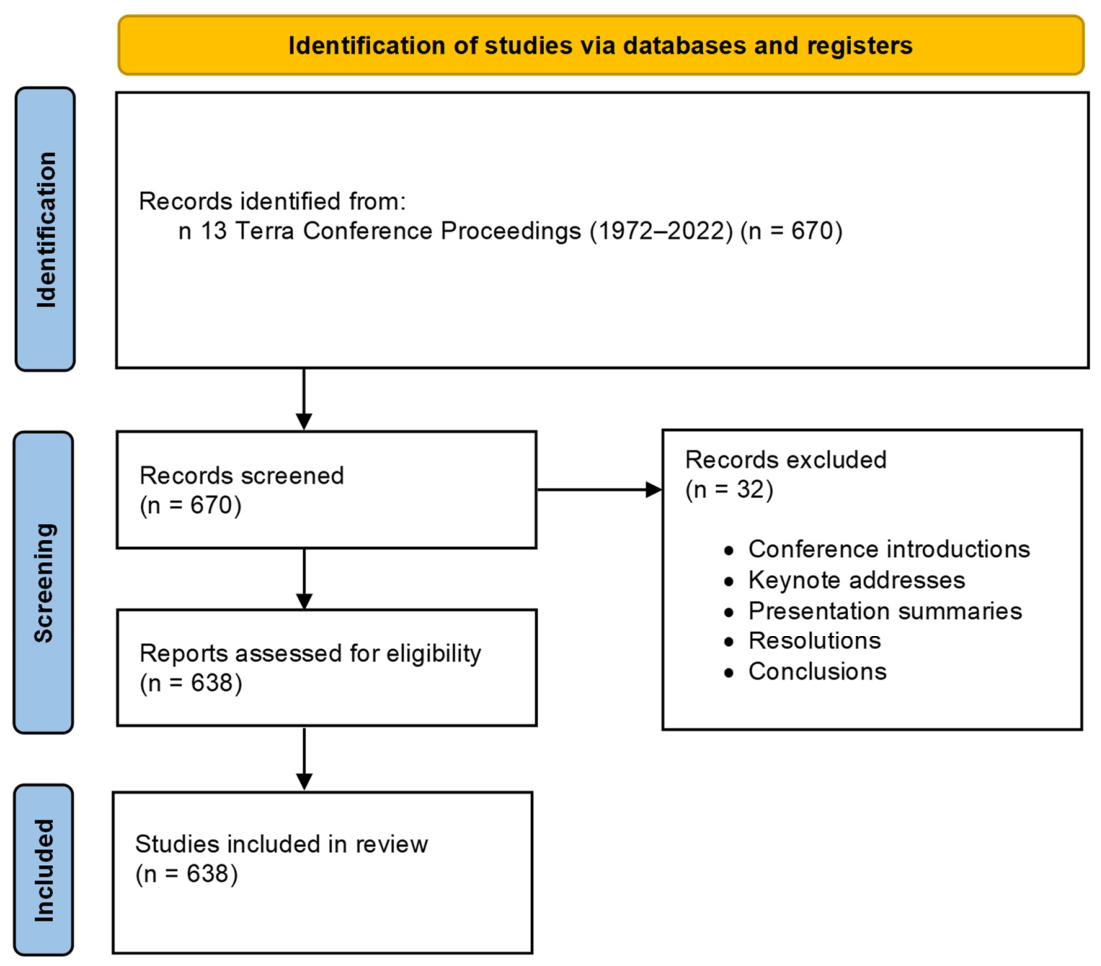
A total of 670 records were identified from the Terra conference proceedings published between 1972 and 2022. All records were screened for eligibility. Thirty-two records were excluded because they consisted of non-research content, including conference introductions, keynote addresses, presentation summaries, resolutions, and concluding statements. The remaining 638 papers were assessed for eligibility and included in the final analysis. No records were excluded after the eligibility assessment (see the PRISMA 2020 flow diagram illustrating the study selection process in Appendix B).

2.3. Data Extraction and Classification Framework

Each paper was systematically reviewed and coded using a classification framework derived from the study by Matero and Cancino and expanded to address additional dimensions of earthen heritage conservation. The original categories retained from the earlier study included:
Geographic location of the project or research;
Heritage type;
Construction technique;
Conservation interventions.
To capture more recent developments in the field, additional categories were introduced:
Authors’ professional background;
Area of knowledge and thematic focus;
References to intangible heritage;
Causes of deterioration.
These additional variables enabled the investigation of relationships between heritage types, deterioration processes, conservation responses, and the disciplinary perspectives represented within the proceedings. The main analytical categories used in the study are summarized in Table 1.

2.4. Coding and Data Analysis

The classification process used verbatim coding and grounded theory [21] to ensure accuracy and alignment with the language used in the analyzed documents. The coding process was conducted by the authors through iterative review of the proceedings. Initial categories were developed using grounded theory principles and refined through repeated examination of the papers. Ambiguous cases were discussed among the researchers until a consensus was reached. Given the exploratory and descriptive nature of the study, formal inter-rater reliability metrics were not calculated; however, periodic cross-checking of classifications was undertaken to ensure consistency in category assignment. The resulting dataset was normalized to account for variations in the number of papers across events, allowing for proportional representation and facilitating trend analysis. Since some papers contained relevant information fitting several of the identified criteria, each of them was classified into as many sub-categories as needed to retain maximum information.

2.5. Data Organization

The classification process for this analysis began by sorting each paper based on the geographic location of the presented project or research. Countries were grouped according to the geographical areas defined by the United Nations Statistics Division (UNSD), further subdivided into regions such as Central America (including the Caribbean), South America, and Western Asia (including Turkey).
Authors’ expertise was also recorded to track the progression and variation in disciplines contributing to the field. Papers were further classified into thematic subcategories based on their area of knowledge or field of expertise, and type of heritage as outlined by the UNESCO conventions [22]. The identified heritage types underwent additional analysis, considering factors such as construction technique type, causes of damage, and proposed interventions outlined. By incorporating both tangible elements (e.g., construction techniques, causes of damage, proposed interventions) and intangible dimensions (e.g., living cultural traditions, community involvement), this analysis provides a holistic perspective on the development of earthen heritage conservation.

3. Results

3.1. Geographic Location of the Projects

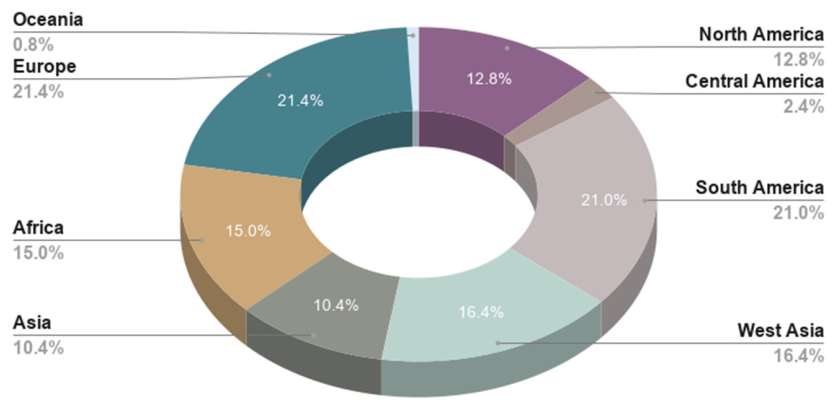
Overall, the analysis of the conference proceedings reveals a geographical concentration of projects, with European-based initiatives constituting the majority at 21.4%, closely followed by South American projects at 21%. Here, geographical concentration refers specifically to the location of the earthen heritage sites or projects being studied, rather than the institutional affiliation or nationality of the authors or sponsors. Western Asia accounted for 16.4%, while African and North American projects represented 15% and 12.8%, respectively, with Asian projects comprising 10.4% (Figure 1). It is important to note that this classification includes only project-based research—that is, studies explicitly focused on specific sites or geographic contexts. Papers focused exclusively on laboratory analysis or material testing without reference to a specific site or region were excluded from the geographic breakdown.
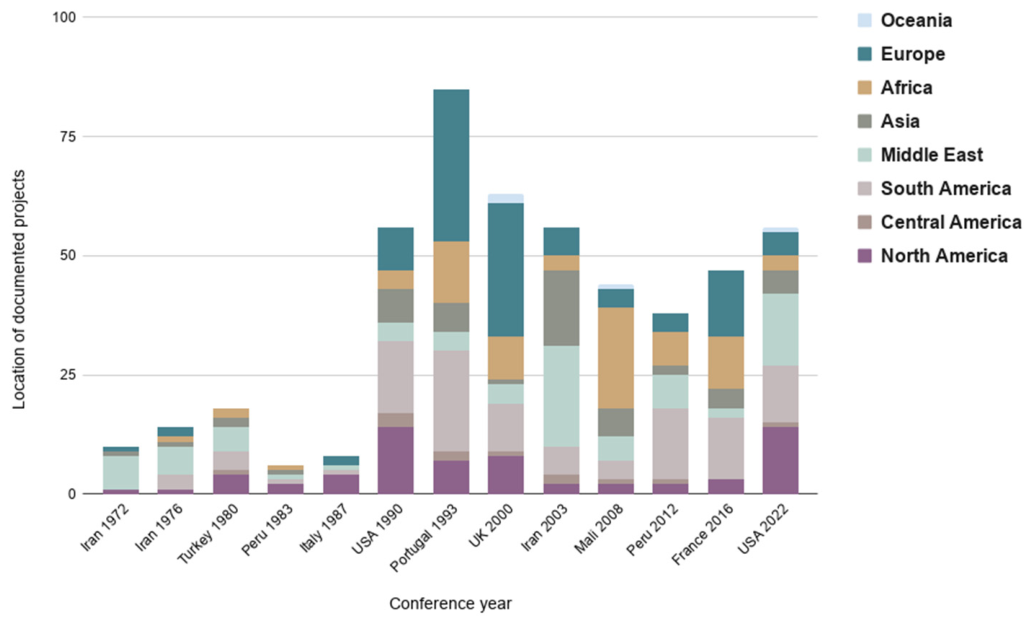
However, a more nuanced picture emerges when examining the trends in the location of the studies presented across individual conferences (Figure 2). The data reveals a strong correlation between the host country of each conference and the regional focus of presented papers, suggesting a localized “hosting effect” on project representation. For instance, the initial three conferences organized in Western Asian countries (Iran and Turkey) saw a predominance of projects from that region. Similarly, North American projects peaked during Adobe 90, held in New Mexico, while European-based articles are widely represented during the conference in Portugal (1993), in the UK (Terra 2000), and in France (Terra Lyon 2016). This pattern continued with Terra 2012 in Peru, where South American projects represented the largest share of contributions, and with Terra 2008 in Mali, where African case studies reached their highest representation (21 out of 64). This marked a significant change, as African heritage, traditionally underrepresented in other Terra events, received substantial attention for the first time.

3.2. Authors’ Professional Background

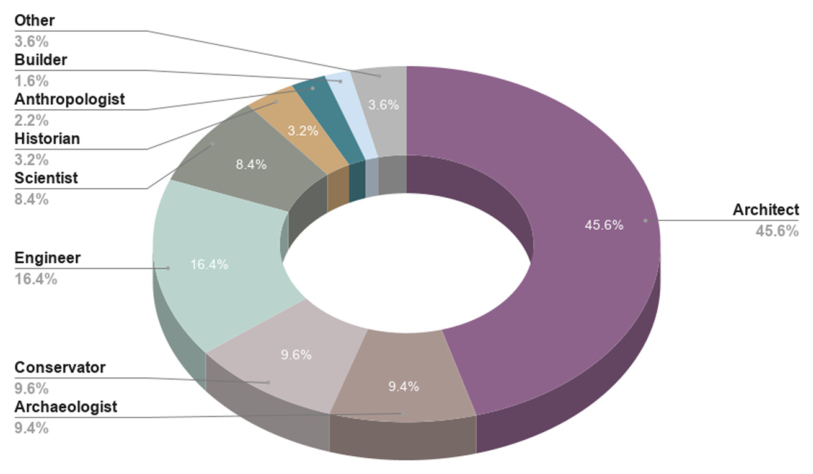
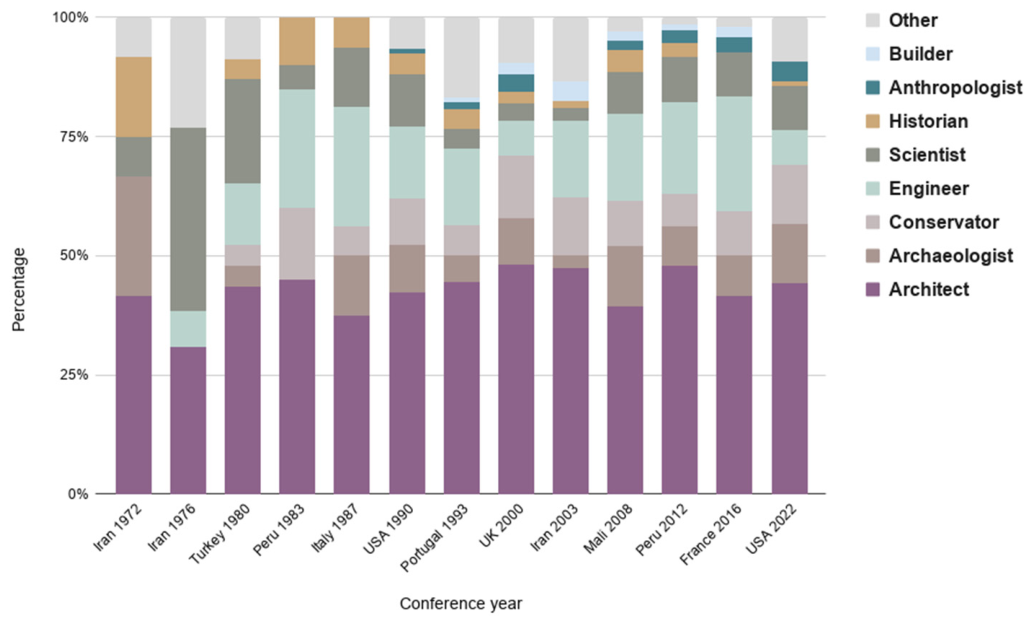
The professional composition of conference contributors underscores the multidisciplinary nature of the field, with architects comprising 45.6% of authors, followed by engineers (16.4%), conservators (9.6%), archeologists (9.4%), and scientists (8.4%) (Figure 3). It is worth noting that all professional disciplines represented by contributing authors were counted for co-authored papers, meaning that a single paper could be associated with multiple disciplines.
Initial events predominantly featured architects and scientists, focusing on material characterization and foundational conservation methodologies (Figure 4). However, post-Adobe 90, the field witnessed an influx of diverse professionals, including builders, anthropologists, philosophers, urban planners, and craftspeople. The increasing number of co-authored papers across fields suggests a growing trend toward collaborative efforts that combine expertise across disciplines.

3.3. Area of Knowledge and Field

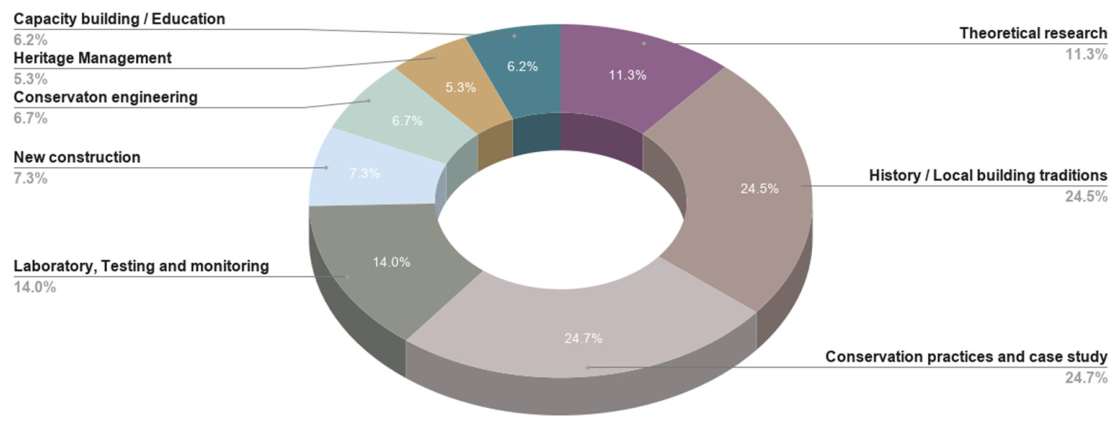
The scholarly focus of the Terra events has evolved, reflecting a transition in the priorities of the earthen heritage community. Conservation practices and case studies, as well as contributions on history/local building traditions dominate, with each category representing approximately half of the distribution of the papers, at 24.7% and 24.5% respectively. Conservation engineering accounts for 14%, while theoretical research constitutes 11.3%. The remaining papers are distributed across laboratory testing and methodology (7.3%), heritage management (6.7%), new construction using earth as material (6.2%), and finally, capacity building and education (5.3%) (Figure 5). These proportions align with the dual objectives of these gatherings: advancing conservation methodologies and elevating the cultural significance of earthen structures.
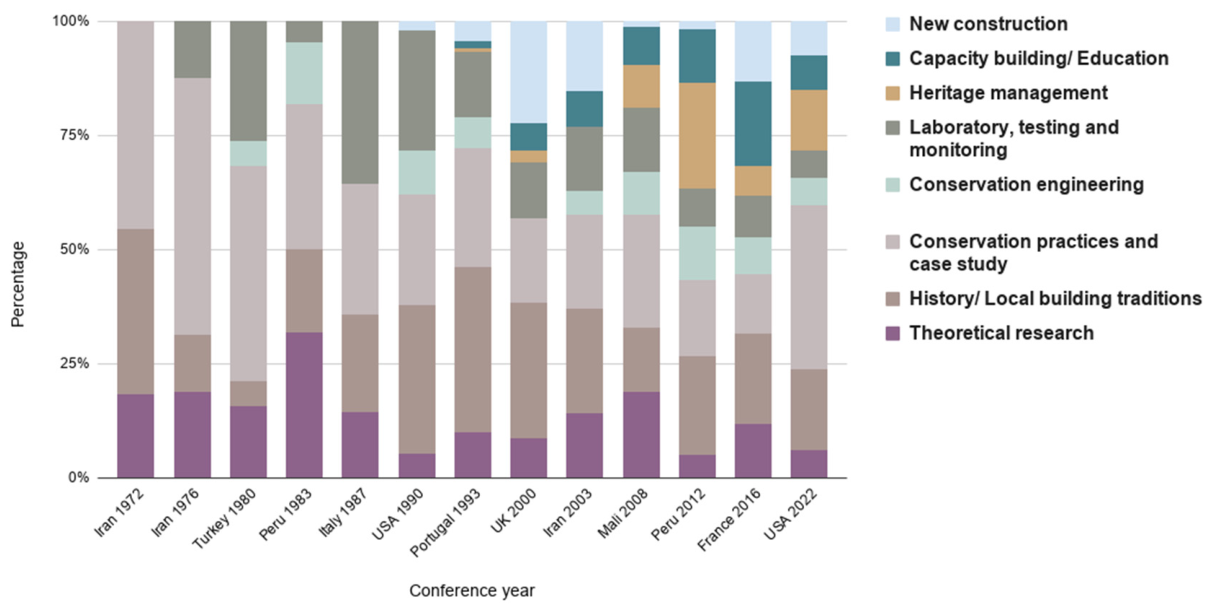
As could be expected, the scope of topics has broadened over time. Early conferences centered on technical and material-focused studies, while later editions incorporated emerging themes such as heritage management, capacity building, and sustainable architecture (Figure 6). For instance, at Terra 2016 in Lyon, two out of six themes in the published proceedings were dedicated to “Research, Experimentation, Innovation” and “New Dynamics”, signaling an increased focus on contemporary applications of earthen materials and their role in sustainable development.

3.4. Cultural Heritage Type

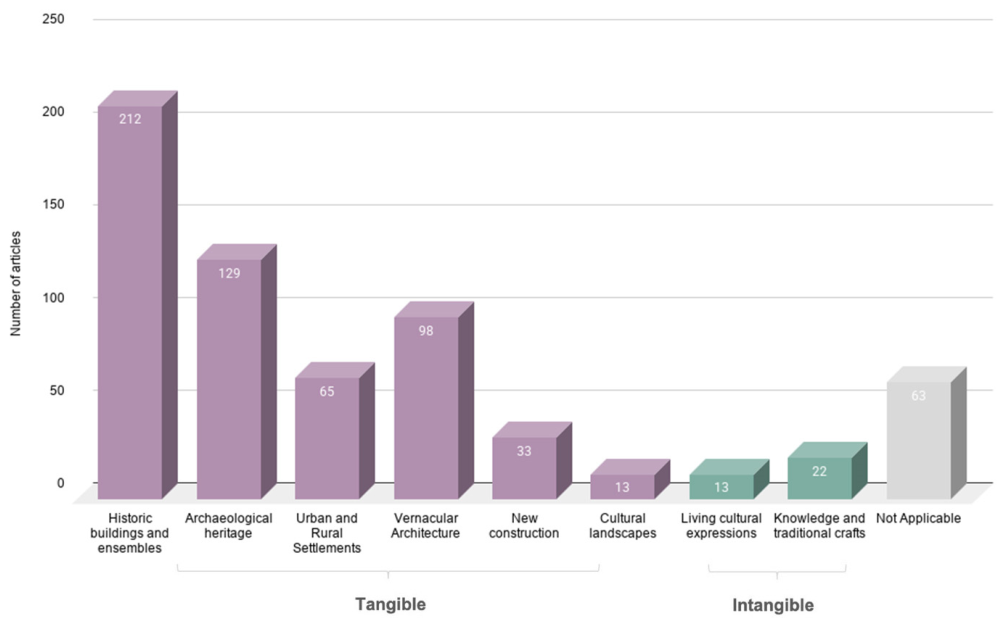
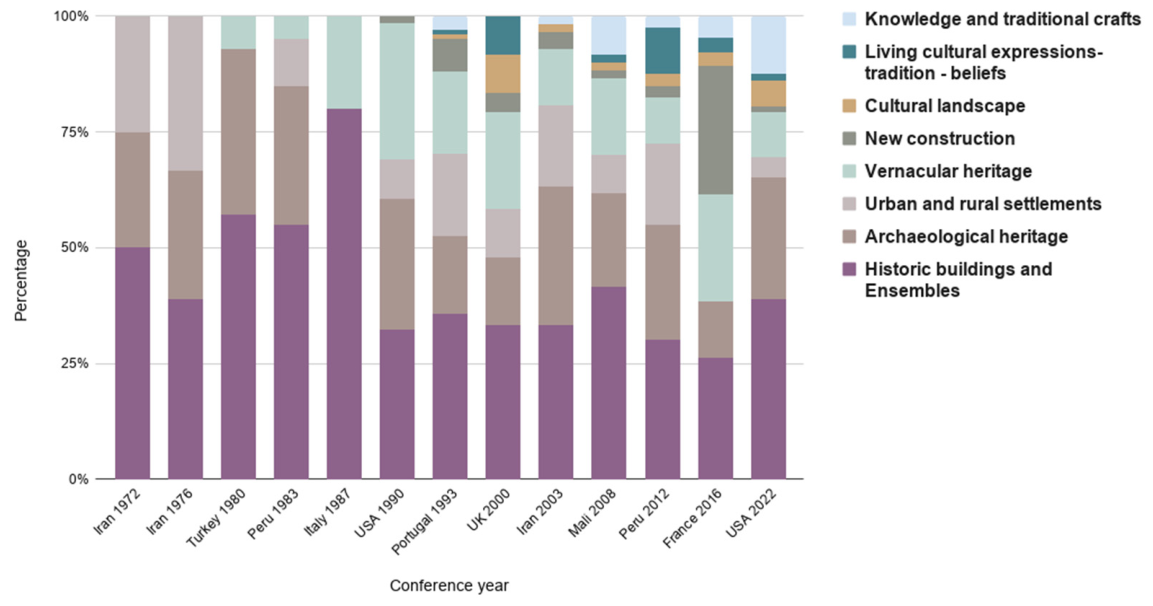
The conceptualization of cultural heritage within the Terra events proceedings has expanded significantly, reflecting broader trends in heritage studies. Initially, the focus was on isolated buildings, archeological sites, and settlements, but later conferences began to address vernacular architecture, cultural landscapes, and intangible aspects (Figure 7).
This shift is particularly evident in the growing attention to vernacular architecture, which began appearing in conference papers as early as the 1980s [23]. Although vernacular architecture was not formally defined in international documents until the adoption of the ICOMOS Charter on the Built Vernacular Heritage in 1999, it was already recognized as a vital component of earthen heritage within the Terra events [24]. This early acknowledgment arguably influenced its subsequent acceptance by the broader international community [25].
Despite the growing diversity of heritage types, tangible heritage remains the primary focus across all conference papers, with 212 papers centered on historic structures and sites, and 129 covering archeological heritage. However, since Terra 2000 in the UK, there has been a noticeable inclusion of papers dedicated to intangible heritage (Figure 8). This interest coincides with the promulgation by UNESCO in 2003 of the Convention for the Safeguarding of the Intangible Cultural Heritage [26]. Notably, the 2022 Terra World Congress in Santa Fe recorded the highest percentage of papers dedicated to living cultural expressions and traditional crafts (14% in total), signaling a growing emphasis on intangible heritage aspects. Another important development is the emergence of papers on earthen cultural landscapes, which first appeared during Terra 1993 in Portugal. This timing corresponds with the World Heritage Convention’s recognition of cultural landscapes as a heritage category in 1992, demonstrating the Terra conferences’ responsiveness to evolving heritage concepts [27].

3.5. Type of Construction

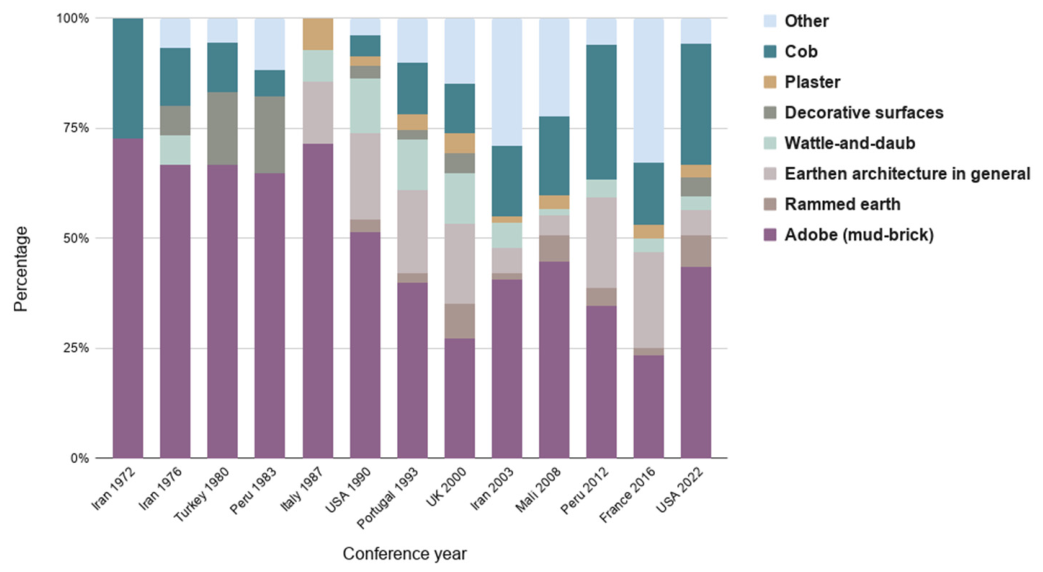
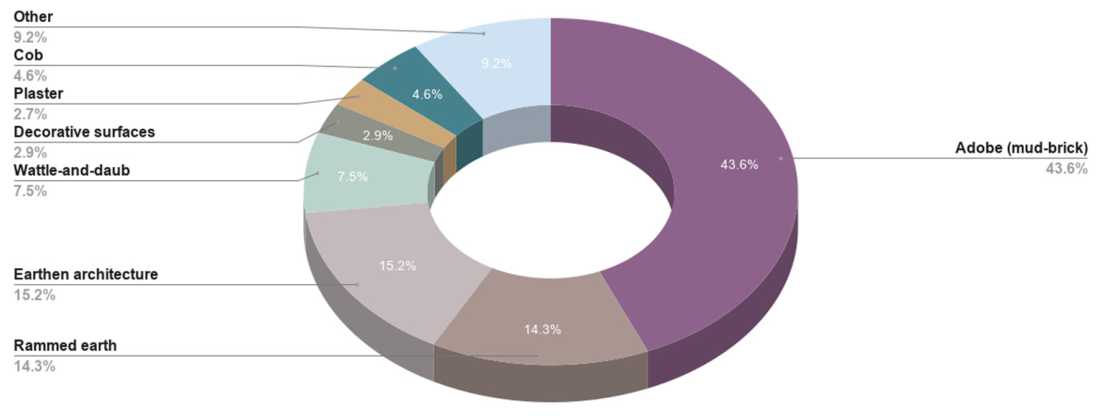
The diversity of construction techniques represented in the proceedings illustrates the breadth of research within the field. During the categorization process, a wide range of regional terms was encountered to describe similar or related building methods, reflecting the rich contextual variation in earthen construction practices worldwide. To ensure consistency and comparability across the dataset, these diverse terms were consolidated into broader categories for the purpose of the analysis. Adobe, or mud bricks as referred to in earlier proceedings, is the most studied technique, accounting for 43.6% of papers, followed by general earthen architecture, which includes papers that do not specify a particular type of construction (15.2%), and then by rammed earth (14.3%) (Figure 9). Less represented construction techniques include wattle and daub, with 7.5% of papers, and cob, with 4.6%. Contributions from decorative surfaces, such as friezes and earthen plasters, comprise 2.9% and 2.7%, respectively. Additionally, a subset of papers explores techniques outside the five construction subcategories listed above, accounting for 9.2% of the total. This includes discussions of stabilized mud block or Compressed Stabilized Earth Block (CSEB), as well as mixed construction methods such as thatching walls with straw, earth roofs, or domes.
Early symposia focused almost exclusively on adobe structures, but subsequent conferences expanded to include other techniques (Figure 10). This evolution is mirrored in the terminology used in the title of these events. For example, the shift from “mud brick” to “earthen architecture” in the Rome meeting in 1987 is reflected in the inclusion of papers on cob, rammed earth, and wattle and daub. Finally, the introduction of the term “Terra” in Portugal in 1993 further confirms this trend of inclusion of diverse construction techniques.

3.6. Cause of Damage

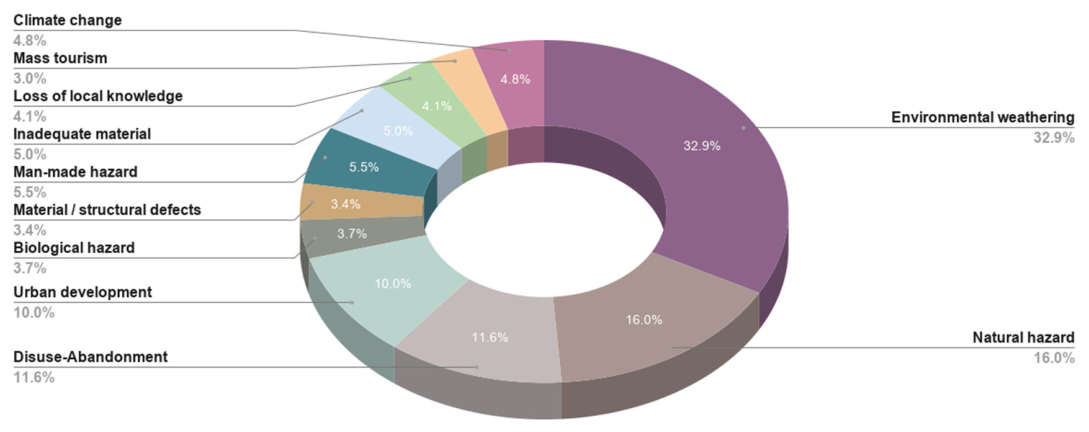
This category includes various natural or anthropogenic causes of damage that can negatively impact earthen heritage. These factors, ranging from sudden catastrophic events to gradual processes, result in a loss of value to earthen heritage assets, affecting both their physical fabric and use. In terms of the most recurrent causes of damage mentioned across all proceedings, environmental weathering, characterized by wind and water damage, occupies a significant percentage (32.9%). This is followed by natural hazards (16.0%), primarily referring to earthquakes and flooding. Additionally, disuse and abandonment of earthen structures (11.6%) and urban development that impacts the integrity and authenticity of earthen heritage (10.0%) are also cited as main causes of damage. Human-made hazards, including vandalism and armed conflicts, the use of inadequate materials, and the impact of climate change on earthen structures, each account for approximately 5% of papers. While less frequently mentioned, factors such as loss of local knowledge (4.1%), biological hazards (3.7%), material and structural defects (3.4%), and mass tourism (3.0%) also contribute to the damage observed in earthen heritage (Figure 11).
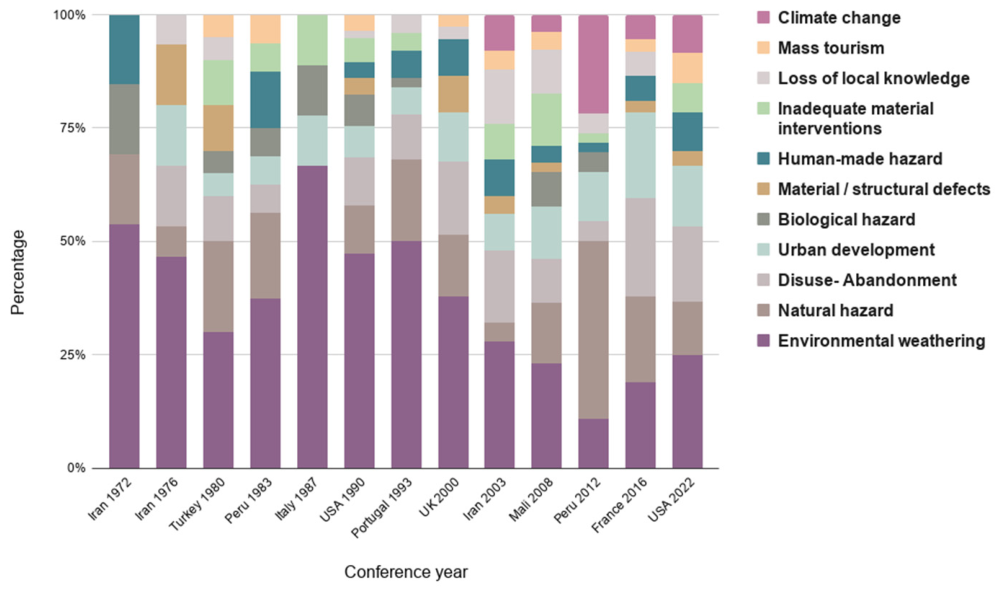
However, over time, studies on the effects caused by environmental weathering diminished significantly (Figure 12). For instance, research on natural hazards and the retrofitting of earthen structures against earthquakes increased over time, with a peak in papers in Terra 2012, especially when the conference was held in seismically active countries such as Peru. Notably, climate change began to be explicitly mentioned in papers from Terra 2003 in Iran, with significant attention given to it in Terra 2012, marking the only instance when it was included as a theme to organize the conference proceedings.

3.7. Methods of Interventions and Conservation Approaches

Intervention methods and conservation approaches discussed in the proceedings reflect evolving conservation strategies. This includes traditional interventions, such as physical actions directly on the earthen fabric, as well as studies and testing of earthen structures. Additionally, these methods and approaches extend to encompass management and policymaking. Other interventions involve engaging communities or implementing educational initiatives to preserve and effectively manage earthen heritage.
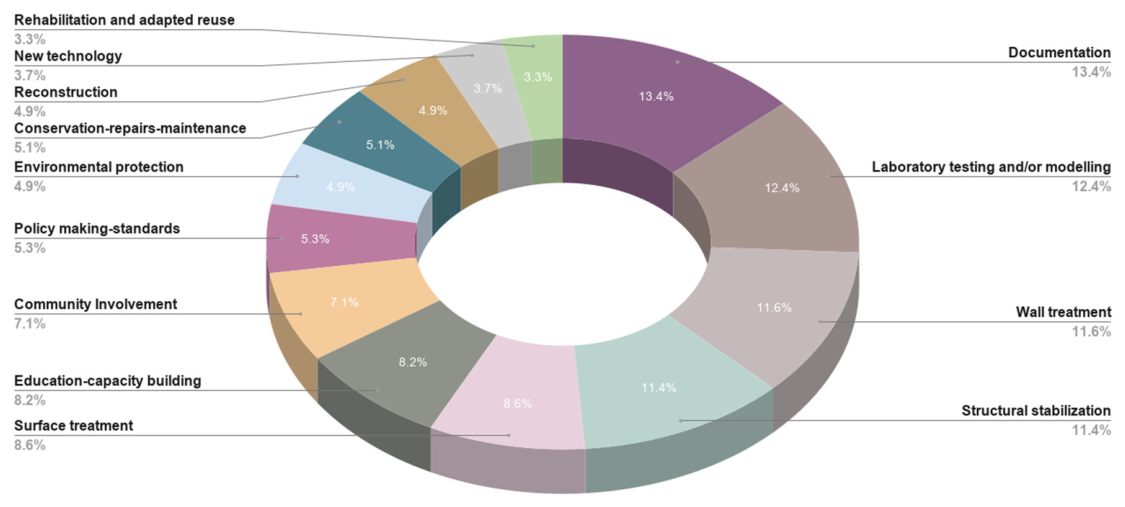
Across all proceedings, documentation and laboratory testing are among the most cited methods, appearing in 13.4% and 12.4% of papers, respectively, while wall treatments and structural stabilization, including capping and coating with sacrificial layers, follow closely (11.6%). Additionally, a considerable number of papers focus on education and training to foster conservation efforts (8.6%), with subsequent attention given to papers on the reconstruction of earthen sites and structures (8.2%), and conservation and maintenance (7.1%). A similar percentage of papers is dedicated to more traditional intervention methods, such as surface treatment with both chemical and natural additives (5.3%) and environmental protection intended as shelters, reburial, and drainage of the site (4.9%) (Figure 13).
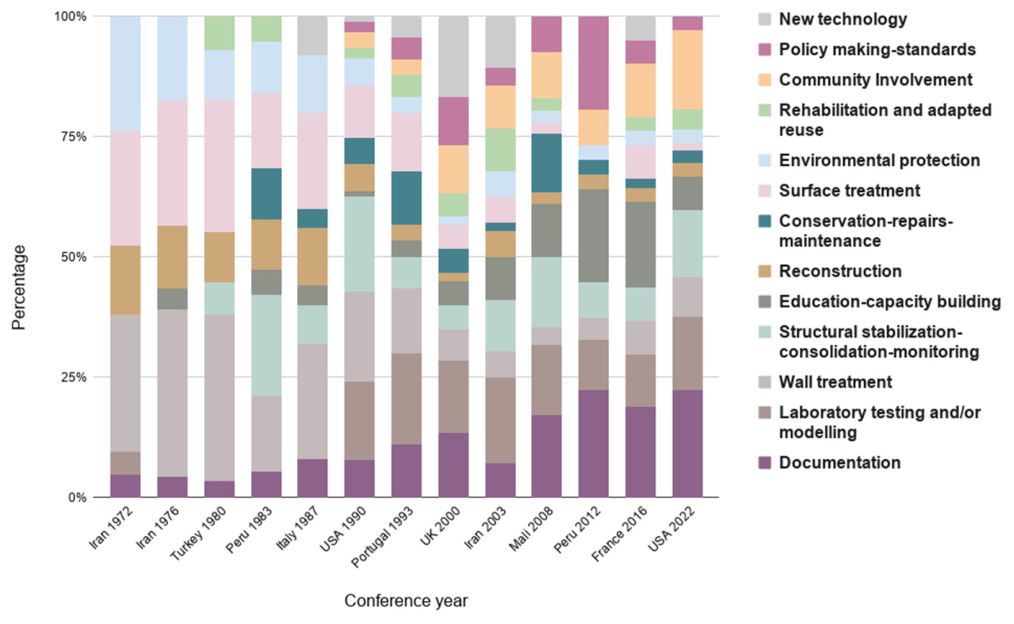
Over the years, there has been a decrease in the number of papers dedicated to material conservation and protection interventions, in favor of approaches such as the rehabilitation and adaptive reuse of earthen buildings (5.1%) and people-centered approaches and community involvement (4.9%). Figure 14 illustrates the growing recognition of the importance of integrating local communities into conservation efforts, a trend that is especially evident in Terra 2022, where 17% of the papers focused on community involvement in the conservation process.

4. Discussion

The systematic review of the Terra conference proceedings over the past five decades reveals a dynamic and evolving discourse that has gradually expanded its scope in response to global challenges, shifting conservation paradigms, and diverse contextual priorities. The findings presented reflect trends in the Terra conference proceedings and should not be interpreted as a comprehensive representation of global developments in the field of earthen heritage conservation. Other influential platforms, including RESTAPIA, PROTERRA, RILEM conferences, ICOMOS scientific committee activities, and specialized journals, have also contributed significantly to the field. Consequently, the results provide insight into the evolution of one major international forum rather than the entirety of professional practice and scholarship. Another limitation of the study concerns the classification of papers. This involved qualitative coding and interpretation, which may introduce a degree of subjectivity despite the use of iterative review and consensus among the authors.
However, this study confirms and extends the earlier findings of Matero and Cancino, demonstrating a consistent trend toward more inclusive and multifaceted approaches to earthen heritage conservation. However, the analysis also reveals persistent thematic, geographic, and professional imbalances that have implications for the future development of the field.

4.1. From Material-Centered Conservation to Holistic Heritage Approaches

While early gatherings focused heavily on material-based preservation and technical experimentation, more recent editions reflect an emerging interest in broader, interdisciplinary approaches—including community engagement, climate resilience, and intangible heritage. This study confirms and extends the earlier findings of Matero and Cancino, demonstrating a consistent trend toward more inclusive and multifaceted approaches to earthen heritage conservation. Yet, despite this change, persistent thematic and geographic imbalances suggest that further efforts are still needed to ensure a more equitable and context-sensitive future for the field.
The data clearly illustrates a transition from material-centric approaches to more holistic frameworks that integrate social, cultural, and environmental dimensions. This shift is particularly notable considering that the earliest gatherings—namely the 1972 and 1976 symposia in Yazd—were titled “International Symposium on the Conservation of Mud Brick Monuments”, reflecting a clear focus on monumental and archeological heritage. These events, primarily organized by institutions engaged in archeological conservation, emphasized material characterization, scientific testing, and physical stabilization of earthen structures. The early proceedings reveal an effort to understand “earth” as a building material to secure its conservation [10] (p. vii). Over time, however, the scope of the Terra conferences broadened to include themes such as community participation, intangible heritage, and sustainability, mirroring a wider shift in global heritage discourse.
Nonetheless, despite this expanded scope, certain areas remain underrepresented. Intangible heritage and community engagement, for example, while increasingly recognized, especially following Terra 2000, still accounted for only 20% of contributions in Terra 2022. This gap underscores the continued dominance of technically driven approaches and reflects the lack of standardized frameworks for meaningfully integrating community knowledge systems, traditional practices, and long-term engagement into conservation strategies.

4.2. Emerging Challenges: Climate Change, Resilience, and Future Risks

Climate change has increasingly been recognized as a critical and escalating threat to earthen heritage, with discussions on climate resilience gaining prominence in the Terra events since 2003. Recent research further demonstrates that earthen structures are particularly sensitive to climate-related pressures, such as extreme weather events, altered precipitation regimes, and rising temperatures, highlighting the necessity of more holistic and cross-disciplinary conservation approaches [28]. Despite this heightened awareness, only 8% of contributions at Terra 2022 explicitly addressed the impacts of climate change on earthen architecture, likely reflecting persistent gaps in reliable data, monitoring systems, and methodological approaches for assessing and mitigating these effects. However, topics related to natural hazards, including earthquakes, flooding, and environmental degradation, have featured prominently in the overarching conference discourse. These issues were first systematically introduced in Adobe 90 and have since remained central to the thematic structure of subsequent proceedings. Notably, Terra 2012 in Lima positioned natural hazards and disaster risk reduction as the primary theme of the conference, reflecting both regional vulnerability and emerging global concerns.
Since Terra 2000, themes of climate justice, sustainable development, and the need to improve housing standards in living earthen settlements have gained greater prominence. While the significance of living heritage—and the socio-economic realities of the communities inhabiting these structures—has long been acknowledged, earlier proceedings often treated these concerns as peripheral. More recent discussions, however, have begun to frame such issues within broader debates on equity, resilience, and sustainability, aligning more closely with global development agendas and calls for integrated, community-centered conservation approaches [29].

4.3. Geographic Imbalances and Inequalities in Knowledge Production

An enduring challenge revealed in the analysis is the regional concentration of case studies, with the majority located in Europe (21.4%) and South America (21%). While these figures partly reflect the richness and diversity of earthen heritage in these regions, they also reveal structural inequalities in the production and dissemination of conservation knowledge. The prominence of South America, particularly Peru, appears closely linked to the long-standing presence of international training initiatives, including the ICCROM-supported conservation programs of the 1970s and 1980s, the later PAT courses, the influence of PUCP, and the activities of networks such as PROTERRA.
These initiatives helped create a sustained professional community that continued to contribute to international conferences and publications. Similarly, the strong representation of European case studies is likely related to the concentration of academic institutions, research funding opportunities, and influential organizations such as ICCROM- CRAterre and ICOMOS scientific committees, which have played a leading role in shaping international conservation discourse.
The data suggest that visibility within the Terra proceedings is not solely determined by the distribution of earthen heritage worldwide, but also by access to institutional networks, specialized training, publication opportunities, and international funding. The strong correlation between conference location and the geographical origin of contributions further supports this interpretation. For example, Terra 2008 in Mali significantly increased the visibility of West African case studies, demonstrating how the location of international events can influence whose heritage is documented and discussed.
The underrepresentation of Central Asia, large parts of Sub-Saharan Africa, and other regions may therefore reflect not only research gaps but also unequal access to the international structures through which knowledge is legitimized and disseminated. A closer examination of individual Terra events further demonstrates how local contexts and the priorities of host institutions have shaped the themes and contributions represented within the proceedings. The meeting in Rome in 1987, co-organized by ICCROM and CRAterre, placed considerable emphasis on environmental weathering and scientific analysis, reflecting both the technical conservation agendas of the organizers and the prevailing concerns of the period. By contrast, Terra 2000 in Torquay and Terra 2016 in Lyon introduced dedicated sections on contemporary earthen construction, sustainability, and innovation, themes that aligned closely with the institutional missions of the University of Plymouth and CRAterre. Similarly, Terra 2012 in Peru emphasized disaster preparedness and the impacts of El Niño, reflecting both regional vulnerabilities and the expertise of the Pontificia Universidad Católica del Perú (PUCP), one of the principal organizers of the event.
These examples suggest that conference themes do not emerge solely from global conservation priorities, but are also influenced by the capacities, research interests, and local challenges of host institutions and regions. While this dynamic has enriched the Terra series by introducing new perspectives and expertise, it may also contribute to uneven thematic and geographic representation within the proceedings. Understanding this relationship is therefore essential when interpreting long-term trends in the dataset.
This pattern raises broader questions about equity in heritage knowledge production. Although international conservation discourse increasingly emphasizes people-centered approaches, local communities, craftspeople, and practitioners from regions where earthen heritage is most prevalent often remain underrepresented in authorship and decision-making processes.
The results also suggest that future Terra congresses should not focus solely on increasing geographic representation but should address the structural factors that contribute to uneven participation. These include unequal access to funding, language barriers, limited publication opportunities, and disparities in technical training and institutional support. Expanding participation from underrepresented regions may therefore require more than hosting conferences in new locations; it may necessitate dedicated travel grants, multilingual dissemination strategies, regional research partnerships, mentoring programs for emerging professionals, and greater inclusion of community practitioners and traditional builders as contributors rather than solely as subjects of study.

4.4. Participation, Traditional Knowledge, and the Practitioner–Academia Divide

A further challenge concerns the relationship between professional expertise and traditional knowledge systems. The composition of authorship across the Terra proceedings reflects a steady increase in interdisciplinary collaboration, with growing co-authorship among architects, engineers, scientists, conservators, and archeologists. This integration of diverse technical expertise has enriched the field’s methodological approaches and strengthened its ability to address complex conservation challenges.
However, despite this progress, the active participation of local artisans, craftspeople, and community advocates in the research and authorship process remains limited. Their underrepresentation, both in formal authorship and in the framing of case study narratives, suggests that traditional and community-based knowledge is still more often referenced than genuinely integrated into the conservation process.
The limited representation of builders and craftspeople in authorship, accounting for only 1.6% in the overall proceedings, raises important questions regarding knowledge production in earthen heritage conservation. While traditional knowledge is frequently referenced as a critical conservation resource, the communities and practitioners responsible for maintaining such knowledge remain marginally represented in conference publications. This imbalance may limit the field’s ability to develop conservation approaches that genuinely integrate local expertise and living traditions.
The increased prominence of education, capacity building, and community participation within the Terra proceedings reflects broader concerns identified across the earthen heritage field. Recent surveys conducted among international earthen heritage practitioners highlighted education, knowledge transmission, local capacity strengthening, and community engagement as among the most important priorities for the future of earthen heritage conservation [30]. The convergence between these findings and the trends observed in the Terra proceedings suggests that the growing emphasis on people-centered approaches is not merely a characteristic of the conference series but reflects wider concerns shared across the international earthen heritage community. However, the results of this study reveal a persistent disconnect between these stated priorities and the composition of conference participation itself. While community-centered approaches are increasingly discussed, local practitioners, builders, and craftspeople remain marginally represented in published discourse. This suggests that although the field increasingly recognizes the importance of collaborative conservation, significant barriers remain to the direct inclusion of the knowledge holders who maintain and transmit earthen building traditions.
A positive transformation, however, was observed at Terra 2022, where community perspectives were not only reflected in papers explicitly focused on engagement but also emerged prominently during plenary discussions and roundtable sessions. These formats, in fact, provided space for local stakeholders to offer alternative viewpoints, enriching the dialogue and broadening the understanding of conservation beyond technical dimensions [31].

5. Conclusions

The analysis of the Terra events proceedings illustrates a remarkable trajectory from the early focus on material preservation to broader, more inclusive themes that address the multifaceted nature of earthen heritage. This evolution mirrors the growing recognition that conservation must transcend the physical preservation of structures to embrace the cultural, social, and environmental dimensions of heritage. Yet challenges remain, such as regional underrepresentation and a persistent gap between heritage practitioners and academia, with local craftspeople and community representation not yet integrated into the conservation process.
While this study does not seek to represent the entirety of global developments in earthen heritage conservation, the trends identified within the Terra proceedings are consistent with broader concerns expressed across the international earthen heritage community, particularly regarding climate change, education, knowledge transmission, capacity building, and community engagement.
Looking ahead, future Terra congresses have an opportunity to play a more active role in addressing these challenges. Beyond serving as forums for the presentation of research, they can contribute to shaping a more inclusive and representative conservation agenda. Four priorities emerge from this study: (1) increasing participation from underrepresented regions through strategic partnerships, funding mechanisms, and multilingual dissemination; (2) strengthening the involvement of builders, craftspeople, and community practitioners as authors, speakers, and collaborators; (3) advancing research on climate adaptation, disaster risk reduction, and long-term monitoring of earthen heritage; and (4) developing methodologies that move beyond documenting traditional knowledge toward its direct integration into conservation decision-making and practice.
Ultimately, the future relevance of the Terra conferences will depend not only on their ability to advance technical knowledge but also on their capacity to foster equitable knowledge exchange, amplify diverse voices, and bridge the longstanding divide between academia, conservation professionals, and the communities that continue to build, maintain, and inhabit earthen heritage. By embracing these priorities, Terra can continue to serve as a leading platform for promoting resilient, inclusive, and socially grounded approaches to earthen heritage conservation.

Author Contributions

Conceptualization, A.S. and C.C.; methodology, A.S. and C.C.; formal analysis, A.S.; investigation, A.S.; data curation, A.S.; writing—original draft preparation, A.S.; writing—review and editing, A.S., C.C., E.M., and B.M.; visualization, A.S.; supervision, C.C. and E.M. All authors have read and agreed to the published version of the manuscript.

Funding

This research received no external funding.

Data Availability Statement

The dataset generated during this study is available from the corresponding author upon reasonable request.

Conflicts of Interest

The authors declare no conflict of interest.

Appendix A

Summary of the Terra events proceedings, from 1972 to 2022, including the full title of each publication, location of the event, number of articles published, number of thematic categories used to structure the proceedings, and primary organizing institutions involved.
Table A1. Overview of the Terra conference proceedings (from 1972 to 2022).
Proceeding TitleYearLocationNumber of ArticlesNumber of ThemesScientific CommitteeOrganizer
Premier colloque international sur la conservation des monuments en brique crue 1972 Iran—Yazd 11 0 No ICOMOS-Iran
Deuxième colloque international sur la conservation des monuments en brique crue 1976 Iran—Yazd 14 0 No ICOMOS-Iran
Third International Symposium on Mud-brick (Adobe) Preservation 1980 Turkey—Ankara 18 0 No ICOM-ICOMOS Turkish National Committees
El Adobe Symposio Internacional—Taller sobre Conservacion del Adobe 1983 Peru—Lima Cusco 16 0 No Regional Project on Cultural Heritage and Development, UNDP/UNESCO and ICCROM
Fifth International Meeting of Experts on the Conservation of Earthen Architecture 1987 Italy—Rome 12 0 No ICCROM and CRATerre, under the aegis of ICOMOS-ISCEAH
Sixth International Conference of Earthen Architecture. Adobe 90 Preprints 1990 USA—Las Cruces 77 9 No Getty Conservation Institute, Museum of New Mexico State Monuments, ICCROM, CRATerre-EAG, and the U.S. National Park Service—Southwest Region, under the aegis of ICOMOS-ISCEAH
Sétima Conferencia Internacional sobre o Estudo e Conservação da Arquitectura de Terra (Terra 93) 1993 Portugal—Silveis 110 6 No Direcção Geral dos Edifícios e Monumentos Nacionais, under the aegis of ICOMOS-ISCEAH
Eighth International Conference on the Study and Conservation of Earthen Architecture (Terra 2000) 2000 United Kingdom—Torquay 74 5 yes English Heritage, University of Plymouth, ICOMOS/UK Earthen Structures Committee, under the aegis of ICOMOS-ISCEAH
Ninth International Conference on the Study and Conservation of Earthen Architecture (Terra 2003) 2003 Iran—Yazd 66 0 * yes Iranian Cultural Heritage, Tehran. With the support of UNESCO, Getty Conservation Institute, and CRATerre-EAG, under the aegis of ICOMOS-ISCEAH
Tenth International Conference on the Study and Conservation of Earthen Architectural Heritage (Terra 2008) 2008 Mali—
Bamako
64 9 yes Getty Conservation Institute and the Ministry of Culture of Mali. With the support of UNESCO, CRATerre-EAG, and under the aegis of ICOMOS-ISCEAH
TERRA 2012 | 12th SIACOT PROCEEDINGS—11th International Conference on the Study and Conservation of Earthen Architectural Heritage 2012 Peru—Lima 48 9 yes Pontificia Universidad Católica del Peru, with the partnership of Universidad Nacional de Trujillo and PROTERRA; With the support of UNESCO; Getty Conservation Institute; CRAterre-ENSAG; and UNESCO Chair-Earthen Architecture, Building Cultures and Sustainable development; under the Aegis of ICOMOS-ISCEAH.
Terra Lyon 2016. XIIth World Congress on Earthen Architecture 2016 France—Lyon 62 6 yes CRAterre, under the aegis of the ICOMOS-ISCEAH International Scientific Committee on Earthen Architectural Heritage, in the framework of the UNESCO World Heritage Earthen Architecture Program (WHEAP) and the UNESCO Chair “Earthen architecture, building cultures and sustainable development”
13th Word Congress on Earthen Architectural Heritage (Terra 2022) 2022 USA—Santa Fe 64 15 yes Getty Conservation Institute, with the US National Park Service Vanishing Treasures Program and the University of Pennsylvania Weitzman School of Design, under the aegis of ICOMOS International Scientific Committee on Earthen Architectural Heritage.
* While the proceedings were not structured in themes, the conference sessions were divided into three subjects.

Appendix B

Figure A1. PRISMA 2020 flow diagram illustrating the identification, screening, eligibility assessment, and inclusion of papers from the Terra conference proceedings (1972–2022).
Heritage 09 00299 g0a1

References

  1. Cancino, C. From Visionary Leadership to a Field of Study: Over Fifty Years of Earthen Architecture Conservation. Conserv. Perspect. GCI Newsl. 2022, 37, 4–9. [Google Scholar]
  2. Jerome, P.; Hurd, J. 40 Years of TERRA Conferences. In Proceedings of the Terra 2012: 12th SIACOT—11th International Conference on the Study and Conservation of Earthen Architectural Heritage; Vargas-Neumann, J., Blondet, M., Torrealva, D., Eds.; PUCP: Lima, Peru, 2012; pp. 16–18. [Google Scholar]
  3. Alva, A.; Doat, P.; Guillaud, H.; Houben, H.; Joffroy, T.; Odul, P.; Teutonico, J.M.; Trappeniers, M. CRATerre-EAG, ICCROM Long-Term Plan for the Preservation of the Earthen Architectural Heritage: The GAIA Project. In Proceedings of the 6th International Conference on the Conservation of Earthen Architecture, Las Cruces, NM, USA, October 1990; The Getty Conservation Institute: Los Angeles, CA, USA, 1990; pp. 461–468. [Google Scholar]
  4. Carlos, G.; Ribeiro, T.; Achenza, M.; Oliveira, C.C.F.; Varum, H. Literature Review on Earthen Vernacular Heritage: Contributions to a Referential Framework. Built Herit. 2022, 6, 15. [Google Scholar] [CrossRef] [Scilit]
  5. Correia, M.; Duarte Carlos, G.; Guillaud, H.; Mecca, S.; Achenza, M.; Vegas López-Manzanares, F.; Mileto, C. VerSus Project: Lessons from Vernacular Heritage for Sustainable Architecture. In Vernacular Architecture: Towards a Sustainable Future; Mileto, M., Vegas, F., García Soriano, L., Cristini, V., Eds.; Taylor & Francis Group: London, UK, 2015; pp. 211–215. [Google Scholar]
  6. Cooke, L. Approaches to the Conservation and Management of Earthen Architecture in Archaeological Contexts. Ph.D. Thesis, University of London, London, UK, 2008. [Google Scholar]
  7. Matero, F.; Cancino, C. The Conservation of Earthen Archaeological Heritage: An Assessment of Recent Trends. In Terra 2000 Postprints: 8th International Conference on the Study and Conservation of Earthen Architecture; James & James: London, UK, 2000; pp. 11–21. [Google Scholar]
  8. Erder, C. Presentations. In Adobe: International Symposium and Training Workshop on the Conservation of Adobe: Final Report and Major Papers, Lima–Cuzco, Peru, 10–22 September 1983; UNESCO: Lima, Peru, 1983; pp. 7–8. [Google Scholar]
  9. Gazzola, P. Discours d’Ouverture. In Premier Colloque International sur la Conservation des Monuments en Brique Crue, Yazd, Iran, 25–30 November 1972; Ministry of Culture and Arts: Tehran, Iran, 1976; pp. 10–14. [Google Scholar]
  10. Torraca, G. Introduction. In Third International Symposium on Mudbrick (Adobe) Preservation, Ankara, Türkiye, 29 September–4 October 1980; METU (Middle East Technical University) Faculty of Architecture: Ankara, Türkiye, 1980; pp. vi–ix. [Google Scholar]
  11. UNDP/UNESCO Regional Project for the Cultural Heritage. Cursos de Restauración de Monumentos: Conservación de Centros-Sitios Históricos; Documento Sumario Cusco 1975–1978; UNDP/UNESCO: Lima, Peru, 1979. [Google Scholar]
  12. ICOMOS. International Charter for the Conservation and Restoration of Monuments and Sites (The Venice Charter 1964). Adopted at the Second International Congress of Architects and Technicians of Historic Monuments, Venice, Italy, 1964. Available online: https://www.icomos.org/images/DOCUMENTS/Charters/venice_e.pdf (accessed on 30 April 2026).
  13. Organization of American States. Conclusions of the Quito Colloquium on the Preservation and Utilization of Monuments and Sites of Artistic and Historic Value; Organization of American States: Quito, Ecuador, 1967. [Google Scholar]
  14. Teutonico, J.M. Tradition, Vision, Partnership: Building an International Community of Practice for the Conservation of Earthen Architecture. In Terra 2022: Proceedings of the 13th World Congress on Earthen Architectural Heritage; Rainer, L., Guerrero Baca, L.F., Matero, F., Meyer, L., Eds.; Getty Conservation Institute: Los Angeles, CA, USA, 2025; pp. 2–8. [Google Scholar]
  15. Oliver, A. Fort Selden Adobe Test Wall Project: Phase I: Final Report; Getty Conservation Institute: Los Angeles, CA, USA, 2000; Available online: http://hdl.handle.net/10020/gci_pubs/fort_selden_project (accessed on 30 April 2024).
  16. Jokilehto, J. ICCROM and the Conservation of Cultural Heritage: A History of the Organization’s First 50 Years, 1959–2009; ICCROM: Rome, Italy, 2011; pp. 112–113. [Google Scholar]
  17. Fidler, J.; Hurd, J.; Watson, L. Introduction. In Terra 2000 Postprints: 8th International Conference on the Study and Conservation of Earthen Architecture; James & James: London, UK, 2000; p. ix. [Google Scholar]
  18. Hurd, J.; Jerome, P. ICOMOS and Earthen Architectural Heritage. World Herit. Rev. 2008, 48, 56–59. Available online: https://unesdoc.unesco.org/ark:/48223/pf0000157411 (accessed on 30 April 2024).
  19. Vargas-Neumann, J.; Blondet, M.; Torrealva, D. TERRA 2012 and Its Main Theme: Conservation of the Earthen-Architectural Heritage in the Face of Natural Disasters and Climate Change. In Proceedings of the Terra 2012: 12th SIACOT—11th International Conference on the Study and Conservation of Earthen Architectural Heritage; Vargas-Neumann, J., Blondet, M., Torrealva, D., Eds.; PUCP: Lima, Peru, 2012; p. 13. [Google Scholar]
  20. Page, M.J.; McKenzie, J.E.; Bossuyt, P.M.; Boutron, I.; Hoffmann, T.C.; Mulrow, C.D.; Shamseer, L.; Tetzlaff, J.M.; Akl, E.A.; Brennan, S.E.; et al. The PRISMA 2020 Statement: An Updated Guideline for Reporting Systematic Reviews. BMJ 2021, 372, n71. [Google Scholar] [CrossRef] [Scilit] [PubMed]
  21. Charmaz, K. Constructing Grounded Theory, 2nd ed.; Sage Publications: London, UK, 2014. [Google Scholar]
  22. Jokilehto, J.; Cleere, H.; Denyer, S.; Petzet, M. The World Heritage List: Filling the Gaps—An Action Plan for the Future; ICOMOS: Paris, France, 2005; p. 189. [Google Scholar]
  23. Vérité, J. La Conservation des Habitats Vernaculaires en Terre: Expériences et Avenir. In Third International Symposium on Mudbrick (Adobe) Preservation, Ankara, Türkiye, 1980; METU (Middle East Technical University) Faculty of Architecture: Ankara, Türkiye, 1980; pp. 87–108. [Google Scholar]
  24. Guerrero Baca, L.F. Vernacular Architecture in the World Heritage List. In From Vernacular to World Heritage; Dipasquale, L., Mecca, S., Correia, M., Eds.; Firenze University Press: Florence, Italy, 2020; pp. 18–23. [Google Scholar]
  25. Sprega, A.; Cancino, C.; Marcus, B.; Macchioni, E. The Role of the Terra Conferences in Promoting and Conserving Vernacular Earthen Architecture. In Earthen and Vernacular Heritage: Conservation, Adaptive Reuse and Urban Regeneration; Mileto, C., Vegas, F., Hueto-Escobar, A., Manzano-Fernández, S., Eds.; edUPV: Valencia, Spain, 2025. [Google Scholar] [CrossRef] [Scilit]
  26. UNESCO. Convention for the Safeguarding of the Intangible Cultural Heritage; UNESCO: Paris, France, 2003; Available online: https://ich.unesco.org/en/convention (accessed on 30 April 2024).
  27. UNESCO World Heritage Committee. Operational Guidelines for the Implementation of the World Heritage Convention; WHC-92/CONF.002/12; UNESCO: Paris, France, 1992; Available online: https://whc.unesco.org/archive/1992/whc-92-conf002-12e.pdf (accessed on 30 April 2024).
  28. Nakhaei Ashtari, M.; Della Ventura, G.; Correia, M. From Drought to Deluge: The Complex Impacts of Climate Change on Earthen Heritage. J. Cult. Herit. Manag. Sustain. Dev. 2025, ahead-of-print. [Google Scholar] [CrossRef] [Scilit]
  29. Avrami, E. Earthen Architecture, Sustainability, and Social Justice. In Terra 2000 Postprints: 8th International Conference on the Study and Conservation of Earthen Architecture; James & James: London, UK, 2000; pp. 328–331. [Google Scholar]
  30. Sprega, A.; Marcus, B.; Macchioni, E.; Cancino, C. Advancing Earthen Heritage Conservation: A Survey on Challenges and Research Priorities in the Field; Getty Conservation Institute: Los Angeles, CA, USA, 2025. [Google Scholar]
  31. Cancino, C. Conclusion. In Terra 2022: Proceedings of the 13th World Congress on Earthen Architectural Heritage; Rainer, L., Guerrero Baca, L.F., Matero, F., Meyer, L., Eds.; Getty Conservation Institute: Los Angeles, CA, USA, 2025; pp. 533–542. [Google Scholar]
Figure 1. Pie chart of the geographical areas represented across Terra events proceedings (from 1972 to 2022).
Heritage 09 00299 g001
Figure 2. Trend in the location of documented projects throughout the 13 Terra events proceedings (from 1972 to 2022), highlighting concentrations in Europe and South America.
Heritage 09 00299 g002
Figure 3. Pie chart of the author’s professional background represented across all Terra events proceedings (from 1972 to 2022).
Heritage 09 00299 g003
Figure 4. Trend of the author’s expertise represented during the Terra events proceedings (from 1972 to 2022).
Heritage 09 00299 g004
Figure 5. Pie chart of the area of knowledge represented across all Terra events proceedings (1972–2022).
Heritage 09 00299 g005
Figure 6. Trend of the area of knowledge represented during the Terra events proceedings (from 1972 to 2022).
Heritage 09 00299 g006
Figure 7. Categorization of heritage types across all Terra events proceedings (from 1972 to 2022).
Heritage 09 00299 g007
Figure 8. Trend of the heritage type represented in the Terra events proceedings (from 1972 to 2022).
Heritage 09 00299 g008
Figure 9. Pie chart of the types of construction represented across all Terra events proceedings (1972–2022).
Heritage 09 00299 g009
Figure 10. Trend of the types of construction represented during the Terra events proceedings (from 1972 to 2022).
Heritage 09 00299 g010
Figure 11. Pie chart of the cause of damage represented across all Terra events proceedings (from 1972 to 2022).
Heritage 09 00299 g011
Figure 12. Trend of the cause of damage represented in the Terra events proceedings (1972–2022).
Heritage 09 00299 g012
Figure 13. Pie chart of the methods of intervention across all Terra events proceedings (from 1972 to 2022).
Heritage 09 00299 g013
Figure 14. Trend of the methods of intervention and conservation approaches represented in the Terra events proceedings (from 1972 to 2022).
Heritage 09 00299 g014
Table 1. Main categories used in the analysis of papers from Terra conference proceedings (1972–2022).
Author(s) Professional BackgroundArea of Knowledge/FieldCultural Heritage Type
  • Conservator
  • Archeologist
  • Engineer
  • Architect
  • Scientist
  • Anthropologist Other
  • Theoretical research
  • History/local building traditions
  • Conservation practices and case study
  • Conservation engineering
  • Laboratory, testing, and monitoring
  • Heritage Management
  • Capacity building/
  • Education
  • New construction
Tangible:
  • Built environment:
    Vernacular heritage
    Historic buildings and ensembles
    Urban and rural settlements
    Archeological heritage New construction
  • Cultural landscape (Archeological—Built)
Intangible:
  • Living cultural expressions (tradition-beliefs)
  • Knowledge and traditional crafts
Type of ConstructionCauses of DamageMethods of Intervention
  • Adobe
  • Cob
  • Rammed earth Wattle-and-daub
  • Decorative surfaces
  • Plaster
  • Earthen architecture in general
  • Environmental weathering
  • Materials defects
  • Human-made hazard
  • Natural hazard
  • Biological hazard
  • Disuse–abandonment
  • Urban development
  • Inadequate material interventions
  • Loss of local knowledge
  • Mass tourism
  • Climate change
  • Documentation
  • Environmental protection
  • Wall treatment and testing
  • Conservation-repairs-maintenance
  • Reconstruction
  • Structural stabilization
  • Surface treatment and testing
  • Laboratory testing and/or modeling
  • Rehabilitation and adaptive reuse
  • Education-capacity building
  • Community involvement
  • Policy making-standards
  • New technology
Disclaimer/Publisher’s Note: The statements, opinions and data contained in all publications are solely those of the individual author(s) and contributor(s) and not of MDPI and/or the editor(s). MDPI and/or the editor(s) disclaim responsibility for any injury to people or property resulting from any ideas, methods, instructions or products referred to in the content.