


Abstract
Against the backdrop of the continuing “museum boom” and increasingly diversified cultural demands, many small and medium-sized museums in China face rigid constraints, including insufficient funding, limited collections, and a shortage of professional personnel. Under such conditions, traditional exhibition models often suffer from weak narratives and limited public appeal. Focusing on the Ancient Ferry Site Museum affiliated with Xianyang Museum as the core case, this study adopts a case-study approach supplemented by comparative analysis. Drawing on exhibition texts, social education activities, visitor statistics, and operational data from recent years, it explores the narrative transformation pathways of resource-constrained museums. The findings show that the museum has gradually transformed from object-centered display to cultural storytelling, and from one-way presentation to two-way interaction, through strategies such as highlighting regional culture, refining a core narrative IP, integrating accessible technologies to create immersive experiences, expanding social education functions, and improving management systems. Based on the case analysis, this paper further proposes a “four-dimensional driving” model for narrative innovation in small and medium-sized museums, emphasizing the synergy among narrative positioning, technological experience, social connection, and management innovation. The core purpose of this model is to transform resource limitations into opportunities for distinctive development through in-depth local cultural narratives and creative transformation. Studies indicate that small and medium-sized museums can develop distinctive development models amid resource constraints via localized cultural narration, resource integration and differentiated positioning, thereby expanding their functions of cultural communication and public service. On this basis, this study argues that limited resources do not necessarily hinder museum development; rather, differentiated development can be achieved through local storytelling and resource integration. The research provides theoretical reference and practical implications for the narrative transformation of resource-constrained museums and the enhancement of public cultural services.
1. Introduction
In recent years, China’s museum sector has witnessed rapid development, with marked progress in the number of museums and amount of public participation, and digital construction. Nevertheless, small and medium-sized museums still face substantial challenges in resource allocation, professional capacity, and public service provision.
Small and medium-sized museums are vital components of national museum systems worldwide, yet their survival and development conditions are different. In developed Western countries, small and medium-sized museums generally maintain a relatively stable operational ecosystem by relying on mature nonprofit governance models, active social foundation funding, extensive volunteer participation, and well-established regional museum cooperation networks [1]. By contrast, although China’s small and medium-sized museums have achieved a quantitative advantage, they still exhibit obvious shortcomings in operational mechanisms, professional capacity, and social resource mobilization, facing the widespread structural contradiction of “large quantity, wide coverage, weak vitality, and insufficient support” [2]. In recent years, the Chinese state has attached growing importance to grassroots public cultural services; with the implementation of the Small and Medium-sized Museums Improvement Plan, innovative practices such as regional museum alliances and central-branch systems have been gradually adopted, rendering the development of small and medium-sized museums profoundly significant to the overall cause of cultural heritage conservation. Proximate to local communities, small and medium-sized museums collect and display cultural relics of specific regions, ethnic groups, industries, or historical periods, preserving the concrete, detailed, and vivid elements that constitute the “unity in diversity” of Chinese culture [3]. Yet, compared with large comprehensive museums, they are more vulnerable to inadequate resource allocation and insufficient professional capacity [4,5].
Despite the rapid overall development of the industry, notable disparities exist across various types of museums. Small and medium-sized museums generally face disadvantages in capital investment, professional talent and operational capacity [6,7,8]. Most small and medium-sized museums rely heavily on local fiscal support, yet after covering basic operations, funds for core tasks such as exhibition renewal and cultural relic conservation remain relatively scarce [9]. Meanwhile, shortages of professional technical staff and imbalanced talent structures are widespread [10,11]. Constrained by multiple resource limitations, many small and medium-sized museums continue to adopt the traditional “cultural relic + label” display model, marked by vague narrative themes, shallow interpretation, monotonous presentation forms, and limited interaction with young audiences. This not only weakens their social influence but also hinders the realization of equal access to public cultural services to a certain extent [12].
Therefore, exploring and summarizing a feasible and universally applicable and instructive path for the innovation of museum narrative mode under resource constraints is an urgent internal demand for the survival and development of small and medium-sized museums. It is also a critical practical issue for China in the new era to build a modern public cultural service system covering urban and rural areas that is convenient, efficient, inclusive and equitable, and to promote the creative transformation and innovative development of fine traditional Chinese culture [13]. However, existing studies still lack systematic theoretical generalization and practical mechanism analysis regarding how small and medium-sized museums achieve differentiated development through narrative reconstruction under resource constraints. In particular, it remains to be further explored how museums can form a sustainable narrative transformation path through local cultural integration, technology adaptation and social connection when facing limited collections, funding and professional capacity.
Based on this, the present study focuses on the following questions: Against the current development context, how can small and medium-sized museums can achieve differentiated development through narrative reconstruction under conditions of resource constraint? How can narrative themes, technological experience, social connection, and management mechanisms jointly shape the transformation of museum narrative models? Can this process provide transferable practical insights for similar museums?
This study selects Xianyang Ancient Ferry Site Museum, affiliated to Xianyang Museum, as an in-depth case which serves as a typical research object for exploring the narrative transformation practice of museums under resource constraints. The history of Xianyang Ancient Ferry dates back to the Shang and Zhou dynasties, and it flourished in the Han and Tang dynasties. As a major water–land transportation hub at the eastern end of the ancient Silk Road, it was also one of the “Eight Scenes of Guanzhong” celebrated by scholars of successive dynasties. Its constraints in development conditions and pressures of public cultural services are prevalent among numerous local small and medium-sized museums worldwide, endowing it with value for comparative research. From 2020 to 2024, the upgrading construction of the museum greatly improved its exhibition quality, public service capability and social influence, with its annual visitor volume soaring by 8.7 times, laying a solid foundation for its promotion from a second-class national museum to a first-class one. Its remarkable development does not stem from a sudden relief of resource shortages. Instead, such progress is achieved through systematic conceptual innovation and practical exploration amid inherent limitations in collection scale, fiscal budget and professional talent reserve. Through an in-depth analysis of the innovative practices of Xianyang Ancient Ferry Site Museum and a comparative study of similar domestic museums, this paper explores the core approaches and operable models for the narrative transformation of small and medium-sized museums in China, so as to offer theoretical support and methodological references for relevant practical work.
2. Research Design and Research Methods
This study takes the Xianyang Ancient Ferry Site Museum, a subsidiary of Xianyang Museum, as its core research object. As a typical small or medium-sized thematic museum, it shares common characteristics of limited funding, relatively small collection scale, and insufficient professional capacity in terms of resource allocation. Meanwhile, relying on the historical theme of “Ancient Ferry” with clear regional cultural identity, it boasts strong potential for narrative integration and exhibition transformation. Given that cultural resources are largely concentrated in large-scale and provincial-level museums, most prefectural small and medium-sized museums suffer from low public attention and inadequate resources, making the Xianyang Ancient Ferry Site Museum a typical example. Furthermore, driven by exhibition renewal and optimized operational strategies in recent years, the museum has witnessed rising visitor numbers and public attention alongside its shift from conventional display to narrative-driven operation, qualifying it as a valuable research case.
This paper explores how small and medium-sized museums can achieve differentiated development via narrative reconstruction given limited collections and space, and examines how narrative themes, technical experience, social bonds and management mechanisms jointly drive the innovation of museum narrative modes. It further summarizes analytical thoughts from practical cases to identify feasible ways for such museums to renovate their narratives under resource shortages.
Relevant data used in this study were primarily drawn from museum annual reports, exhibition texts, social education activity records, visitor statistics, volunteer service archives, and digital platform operation data, as well as related academic literature and news reports produced between 2020 and 2025. By systematically reviewing relevant materials to explore the key practical characteristics presented during the transformation of museum narratives, a thematic analysis method was employed to summarize and categorize the relevant content. During the analysis process, four core themes of narrative positioning, technological application, social participation, and organizational support gradually emerged. At the same time, Yuan Chonghuan Memorial Park and the cluster of rural museums in Zhejiang were introduced as comparative cases to explore the commonalities and differences in different narrative strategies under the constraint of resources. During the process of literature review, thematic analysis, and cross-case comparison, a “four-dimensional driving” analysis model for narrative innovation in small and medium-sized museums was constructed. The statistics presented in this paper, including visitor growth, frequency of public activities, and the scale of volunteer participation, are mainly employed as empirical support for the case analysis, helping to illustrate the phased transformations and broader social impacts that emerged during the museum’s transition toward a narrative-driven development model.
Employing case analysis and comparative research, this paper systematically categorizes the exhibition design, spatial layout, technical application and public services of Xianyang Ancient Ferry Site Museum. It restores the whole process and internal logic of its narrative reform and analyzes its innovative development strategies under resource limits. For better reference, this study also makes comparisons with similar museums including Yuan Chonghuan Memorial Park and Zhejiang rural museums, concluding their similarities and differences in narrative orientation, display tactics and public communication. It finally links individual practices with universal rules, forming a practical analytical framework and empirical evidence to facilitate narrative transformation for resource-limited small and medium-sized museums.
3. Literature Review
In recent years, with the rapid development of digital technologies and the upgrading of visitor experience demands, immersive narrative, digital storytelling, and participatory narrative have emerged as cutting-edge topics in international museum studies. Western museology has witnessed a profound paradigm shift from object-centered to visitor-centered approaches since the mid-to-late 20th century [14]. International museum research has shifted from the traditional logic of collection display toward participatory museum studies that prioritize visitor experience, digital interpretation, community engagement and cultural sustainability. Relevant studies indicate that digital technologies have not only transformed the presentation of cultural heritage, but also reshaped interactions between audiences and historical narratives [15]. Meanwhile, community co-creation, public history practice and participatory curation have gradually become vital approaches to boosting museums’ social value and cultural identity [16]. Some scholars have emphasized that in-depth integration between museums and local communities or schools has also become an important research direction. Through approaches such as workshops, oral history projects, and community curatorship, museum narratives can be more effectively rooted in local knowledge systems and everyday life [17]. Graham Black pointed out that a successful exhibition is essentially effective storytelling, which requires clear logic, emotional resonance and connection with audience experience [18]. Hooper-Greenhill emphasized the role of museums as communication media whose narrative strategies directly affect the reproduction of cultural meanings and the construction of social identity [19].
Many Chinese museum scholars have systematically determined the functional evolution of domestic museums from collection institutions to public cultural service bodies, and affirmed progress made by large museums in narrative concepts, technological integration and international communication in recent years. Lu Jiansong argued that exhibition planning should integrate theme refinement, content construction and formal design, and balance academic value, ideological connotation and artistic expression [20]. From the perspective of museum social functions, Song Xiangguang illustrated the vital role of museum narratives in shaping collective memory and fostering cultural confidence [21].
In summary, specialized and systematic studies on the narrative innovation of small and medium-sized museums in China remain insufficient. Most existing studies focus on high-quality exhibitions held by large-scale leading museums. Discussions concerning small and medium-sized museums are mostly limited to analysis of resource plights, general development strategies and individual case descriptions [22,23]. Few studies have conducted systematic theoretical summarization and practical mechanism exploration on how to realize narrative transformation via local cultural integration, technical adaptation and social connection under resource constraints. Furthermore, some studies merely regard resource shortages as developmental weaknesses, while neglecting the possibility of turning such limitations into advantages in locality, originality and operational flexibility [24].
Against the pervasive resource constraints of China’s small and medium-sized museums, this paper argues that their limited resources should be reconceptualized not merely as a bottleneck but as a vital impetus for narrative innovation and a source of distinctiveness. To enable these museums to break through development limitations, a paradigm shift from resource dependence to a narrative-driven model is proposed. Specifically, integrating and extending existing theories, this study draws on practices such as the Xianyang Ancient Ferry Site Museum to construct an analytical framework for narrative innovation in resource-constrained contexts. Centered on a four-dimensional joint-driving mechanism, the framework emphasizes anchoring narrative themes in local cultural resources by focusing on core regional cultural elements instead of overly comprehensive content; prioritizing appropriate, sustainable, cost-effective, and reliable technologies for narrative expression to enhance visitor experience; extending museum functions into social and educational settings to strengthen sustained cultural communication; and promoting inter-museum and cross-sector collaboration for resource integration to make up for individual institutions’ limitations in collections and research.
4. An Attempt on the Narrative-Driven Development Paradigm of Museum Exhibition Under Resource Constraints
In recent years, some small and medium-sized museums in China have explored differentiated development paths through local cultural narration, thematic IP building, digital experience and community cultural activities. Dongguan Yuan Chonghuan Memorial Park strengthens local cultural identity by centering on historical figure heritage [25], while Zhejiang rural museum clusters build regional cultural narrative spaces relying on ecological culture, local crafts and community participation [26]. Many museums featuring intangible cultural heritage and rural culture have also started to integrate public participation, living heritage display and social education functions. Nevertheless, current studies lack holistic theoretical summarization of the internal logic and systematic mechanism of narrative transformation of such museums under resource constraints. On this basis, this paper takes the Xianyang Ancient Ferry Site Museum as a case to summarize analytical frameworks and practical paths for the narrative transformation of small and medium-sized museums under equivalent conditions.
Traditional museums, especially history-themed ones, have long adopted a resource-dependent paradigm in exhibition narration. The core logic lies in displaying exhibits merely based on available cultural relics. The scale, quality and influence of exhibitions largely hinge on the quantity, grade and rarity of museum collections. Such a pattern serves as a natural advantage for large museums abundant in precious cultural relics [27]. Nevertheless, small and medium-sized museums with limited collections, few high-quality relics and insufficient academic support will easily fall into predicaments if they blindly follow this mode. They fail to form a complete narrative logic due to scarce exhibits, resulting in fragmented and shallow displays. To make the exhibition framework more integrated, they tend to use replicas, auxiliary panels and ordinary relics for supplementation, which leads to vague themes, unfocused highlights and weak appeal, and ultimately fails to attract audiences.
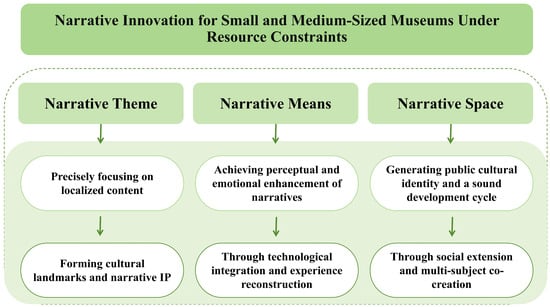
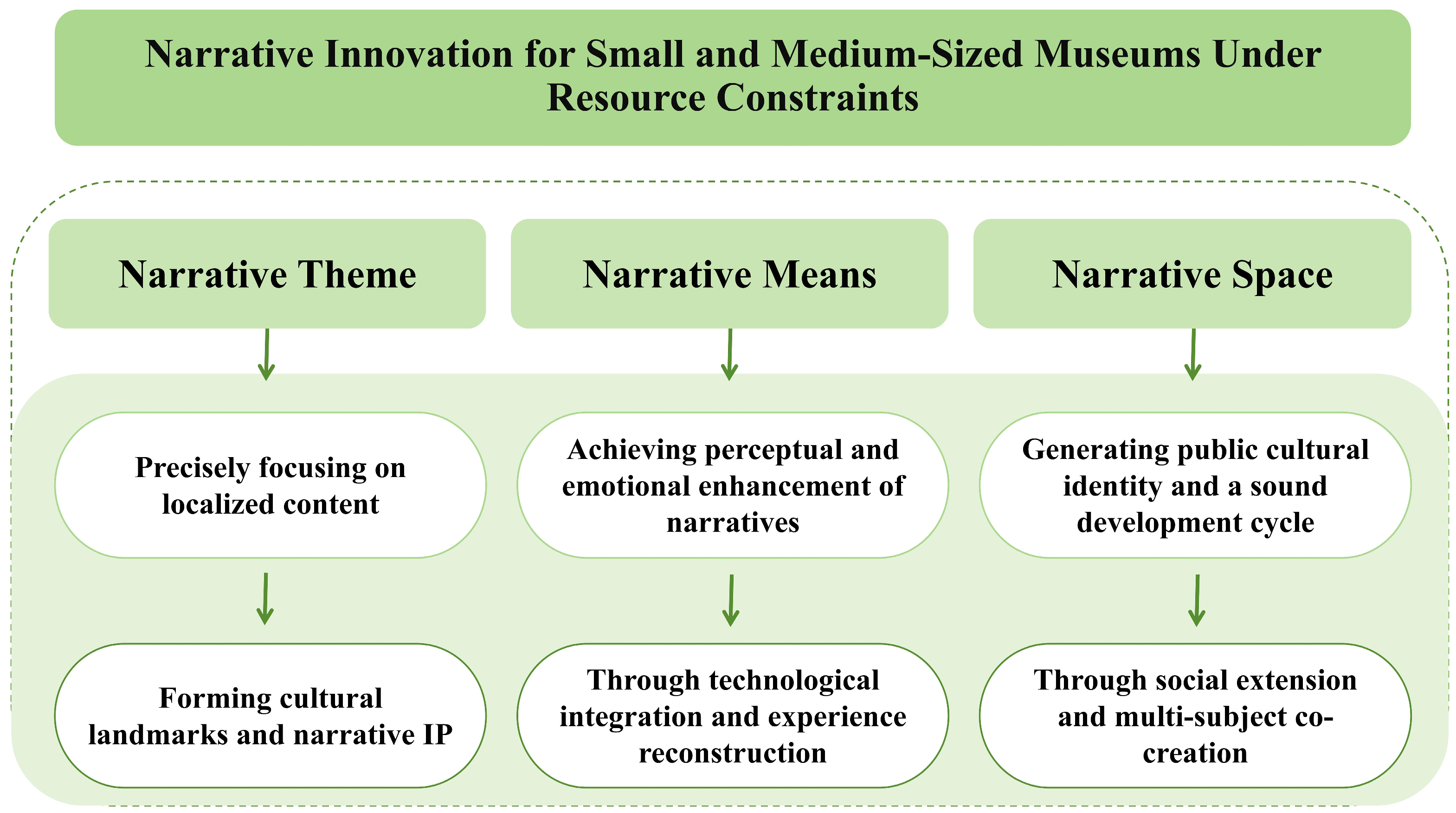
Therefore, to achieve breakthroughs, small and medium-sized museums must undertake a fundamental paradigm shift from resource dependence to narrative-driven development. The core logic of this new paradigm is “define the story first, then explore relevant resources in depth”. The narrative-driven model proposed in this paper is an analytical generalization based on the practical transformation experiences of small and medium-sized museums under conditions of resource constraint, referring to the ways in which narrative reconstruction is employed to achieve resource integration, cultural communication, and social connection. Under this logic, curation no longer takes precious collections as the sole or primary starting point for narration; instead, it places a clear, distinctive, compelling and locally rooted cultural narrative at the heart of exhibition design. Narrative thus becomes the key mechanism coordinating exhibition planning, artifact selection, formal design, educational outreach and other processes. Within this paradigm, even without world-famous national treasures, museums can still craft engaging local stories by creatively interpreting, connecting and reorganizing diverse resources including ordinary cultural relics, historical sites, documents and folk legends. Specifically, the narrative-driven paradigm under resource constraints consists of three interrelated and progressive dimensions: narrative theme, technical experience and social extension. Narrative themes form the core foundation of museum content expression; technical experience strengthens audience perception and interaction; and social extension further expands narrative functions into public cultural spaces. The overall logical relationship is shown in Figure 1. This study holds that for resource-limited small and medium-sized museums, the localization of narrative themes, the suitability of technical experience and the sustainability of social extension jointly determine the effect of narrative transformation and public cultural communication capacity.
Figure 1.
Three-tier theoretical framework of narrative-driven paradigm under resource constraints.
First Level: Precision and Localization of Narrative Themes. Small and medium-sized museums need to shift from grand general-history narratives to focused, place-based content. The core task is to conduct thorough cultural resource surveys and value assessments, identifying the most distinctive, representative, story-rich, and extensible cultural genes or historical episodes of the region. Focus may be placed on a major historical event, characteristic industry, historical figure, important site, or unique folk tradition. For example, Anhui Chu Culture Museum focuses on Shouchun, Capital of the State of Chu; Yunmeng Museum in Hubei explores the Shuihudi Qin Bamboo Slips in depth; and Baizhang Town in Yuhang, Zhejiang, has built a cluster of rural museums centered on bamboo culture. Such concentration allows museums to focus limited human, material, and intellectual resources on the in-depth exploration and presentation of a single theme, forming irreplaceable “cultural landmarks” and “narrative IP”. The positioning of the Xianyang Ancient Ferry Site Museum around “Xianyang Ancient Ferry”—the “First Ferry of the Silk Road”, carrying three thousand years of history—is a typical illustration of this strategy.
Second Level: Technological Integration and Experience Restructuring of Narrative Approaches. After identifying core narrative themes, transforming abstract or static historical and cultural information into perceptible, understandable and resonant exhibition experiences for visitors is critical to boosting the effectiveness of museum narration.
Third Level: Social Extension and Value Co-Creation of Narrative Fields. The ultimate goal of the narrative-driven paradigm is to make museums’ stories go beyond exhibition halls and integrate into local social culture and public daily life. This requires museums to expand narrative fields from physical spaces to social and educational ones: by developing systematic age-specific study courses, holding theme-linked community activities, launching “mobile museums” in campuses and rural areas, conducting online narrative dissemination via new media, and building practice bases with schools and enterprises, they can turn core narratives into sustainable social education resources and community cohesion sources. Through co-creation models—recruiting volunteer interpreters, collecting public stories, and co-developing cultural and creative products—museums can shift from sole cultural authority narrators to catalysts and platform builders for local cultural identity, expanding service radius and social influence, gaining broader social support, and forming a sustainable virtuous cycle. The Xianyang Ancient Ferry Site Museum’s large “Xianyang Museum Red Volunteers” team, rich solar-term social education activities, and in-depth cooperation with multiple universities vividly reflect this social extension.
5. Case Analysis
5.1. Strategic Focus and IP Shaping: Establishing a Narrative Core Based on Local Culture
Faced with limited exhibition space in the Confucian Temple area and the urgent need for distinctive features in the Ancient Ferry Site area, Xianyang Museum made a crucial strategic decision in its overall development plan. It proposed pursuing excellence and implementing a brand-building strategy, marking a fundamental shift from extensive content coverage to emphasizing narrative depth and brand characteristics [23]. This restructured top-level design guided the precise positioning of exhibition themes. Through systematic sorting and value evaluation of Xianyang’s regional cultural resources, the Xianyang Ancient Ferry Site Museum finally anchored its narrative core and spiritual symbol in the unique historical and cultural image of “Xianyang Ancient Ferry”. This choice avoided direct competition with large comprehensive museums in grand general-history narratives, focusing instead on exploring a distinctive field with profound historical heritage, clear geographical identity and rich storytelling connotations. Furthermore, the historical memory of transportation, exchange and integration carried by the “Ancient Ferry” resonates with the connectivity spirit advocated by the Belt and Road Initiative, endowing the exhibition with strong contemporary significance and dialog potential.
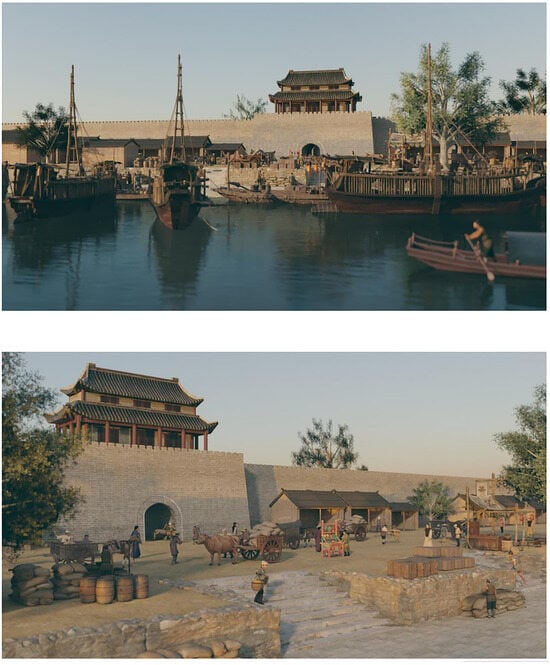
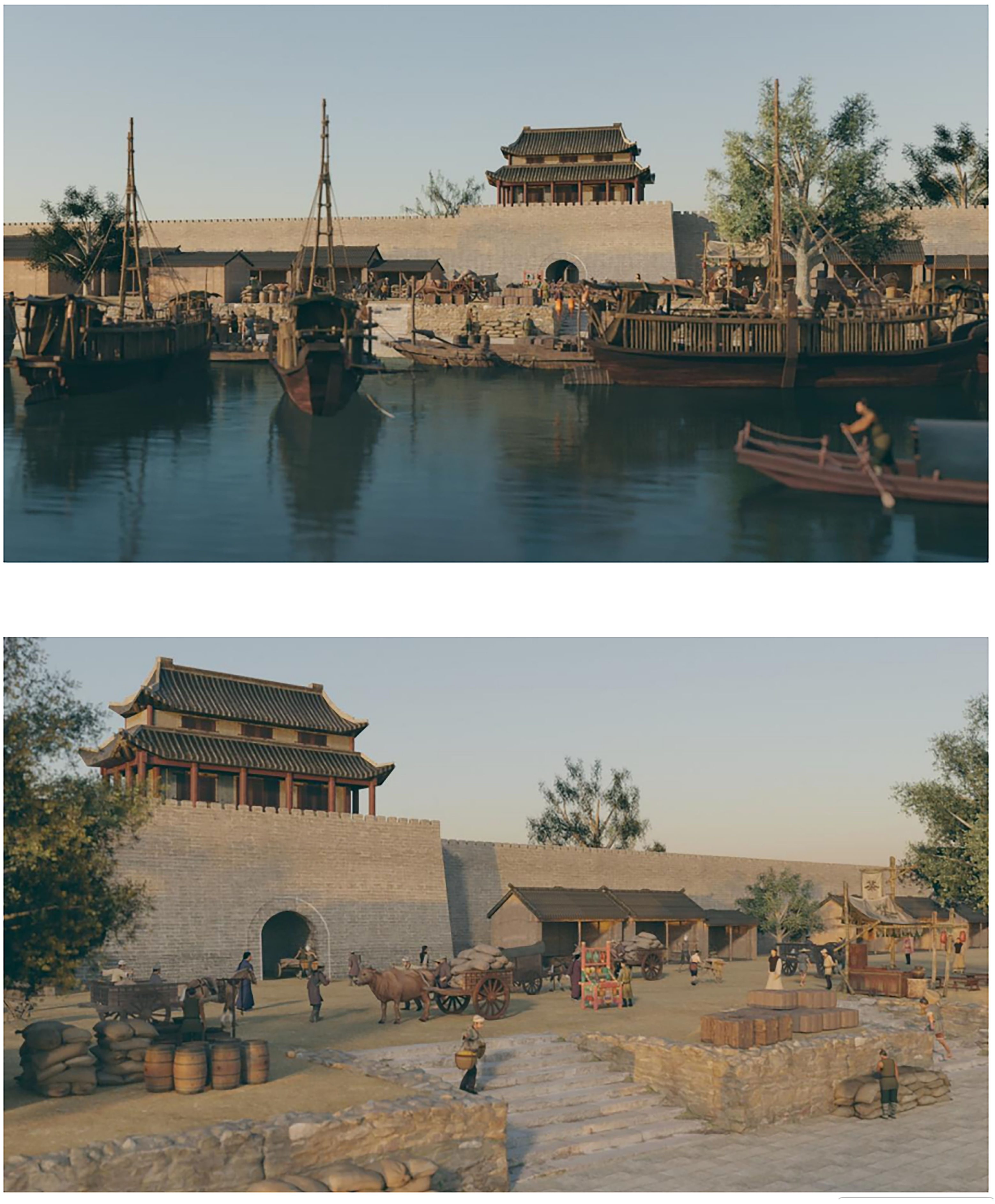
Centered on the core cultural IP of the “Xianyang Ancient Ferry”, the Xianyang Ancient Ferry Site Museum has constructed a logically clear and well-structured narrative system (see Figure 2), which is divided into three major parts: “Memories of the Ancient Ferry”, which traces the historical evolution and significance of the ferry through historical documents, maps, poems and literary works; “Ancient Ferry Site”, which mainly presents archeological finds including coins, daily necessities, architectural components and precious wooden remains of the Ming and Qing river embankments; and “Impressions of the Ancient Ferry”, which collects paintings, poems and other artworks themed on the ancient ferry to show its cultural and artistic influence. Under this narrative framework, curation has completely abandoned the traditional practice of piling up cultural relics and instead takes the “Ancient Ferry” as the core thread, organically connecting unearthed artifacts, documents and artworks to present a comprehensive and vivid historical story of transportation development, trade, military activities, cultural exchange and urban transformation. Such a highly focused and deeply localized narrative strategy not only makes the Xianyang Ancient Ferry Site Museum stand out among similar thematic museums, but also endows it with unique and irreplaceable cultural value and visitor attraction. This highly focused and deeply localized narrative strategy has made the “Xianyang Ancient Ferry” one of the most representative cultural symbols of the museum, achieving prominent recognition in exhibition communication, public education and local cultural cognition. In terms of narrative mechanism, this strategy, centering on local cultural memories, helps small and medium-sized museums to establish distinct and stable cultural recognition amid limited resources and avoid scattered content caused by overly comprehensive narration. Meanwhile, it strengthens the connection between local history and contemporary cultural identity, and enhances audiences’ emotional engagement and understanding of local culture. Nevertheless, such highly focused narration sets higher requirements for continuous content renewal and long-term public interest maintenance. Without subsequent content expansion and diversified communication support, the result may be narrative homogenization and limited audience coverage.
Figure 2.
Immersive experience: impressions of the ancient ferry.
5.2. Technology-Enabled Narration: Constructing Experience Through Multi-Dimensional Immersion and Intelligent Interaction
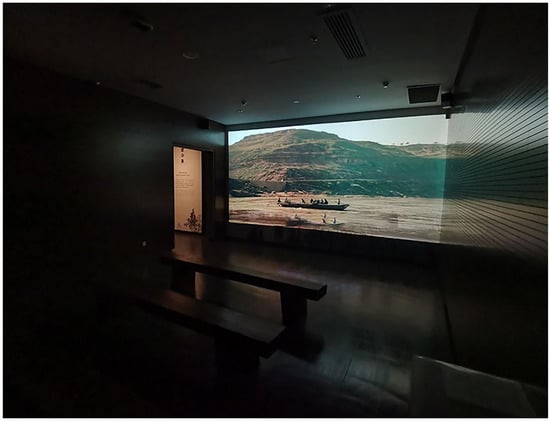
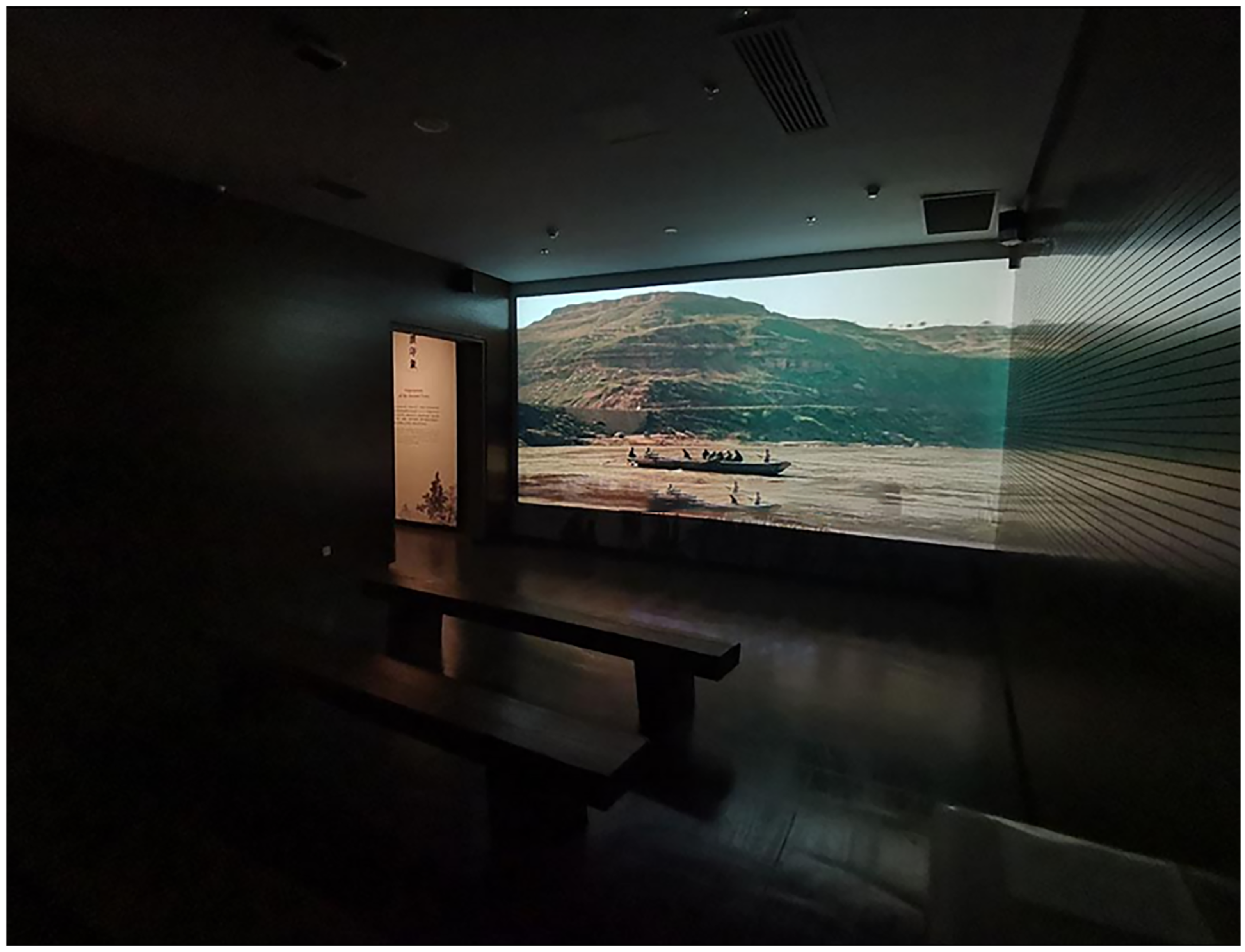
Within the limited exhibition area of approximately 3000 square meters, to vividly interpret the temporal evolution and historical depth embodied in the theme of “Millennium Glory of the Ancient Ferry”, the Xianyang Ancient Ferry Site Museum abandons the high-cost and visually striking digital display modes commonly adopted by large-scale museums. Instead, in light of its own resource conditions, it selectively applies a range of lightweight digital technologies with controllable costs, favorable interactivity and strong narrative expression, laying emphasis on the compatibility between technical investment and historical narrative content to create an in-depth immersive viewing experience. A typical practice is the construction of the naked-eye 3D immersive experience space on the theme of Thousands of Years of Xianyang Ancient Ferry (See Figure 3). Enclosed by four ultra-high-definition LED screens, this space forms an immersive theater requiring no auxiliary wearable devices. Centered on the historical evolution of the ancient ferry, the video vividly presents its prosperity in the Qin and Han dynasties, bustling business exchanges as a key hub on the Silk Road in the Tang Dynasty, and sustained prosperity with numerous vessels gathered in the Ming and Qing dynasties. Combined with surround sound effects, it immerses visitors in the vicissitudes and prosperity of the ancient ferry across thousands of years. By concentrating limited resources on building core immersive experience scenes, this strategy strengthens visitors’ perceptions of the historical continuity and cultural inheritance of the ancient ferry through dynamic temporal and spatial transformation, and effectively enhances the immersive atmosphere and emotional resonance of historical narration.
Figure 3.
Immersive experience space of the Xianyang Ancient Ferry across millennia.
In addition to the core immersive area, the museum uses delicate digital methods to enhance the historical atmosphere. For instance, phantom imaging is applied in corridors to recreate the shimmering waters of the Weihe River, and interactive floor projections trigger dynamic scenes such as flying birds, growing grass, and fish among lotus flowers as visitors walk by. These subtle designs strengthen a sense of historical immersion and complement the main narrative to build a multi-layered, enveloping sensory environment. The digital creation of such ambient atmosphere strengthens visitors’ historical imagination and physical involvement in ancient ferry scenes through continuous spatial perception. Coordinating with core narratives, it jointly builds a multi-layered and all-round perceptual environment.
For intelligent guidance and interaction, the robot docent “Xiao Du” attracts family audiences, especially children, through regular presentations and interactive functions. AR glasses are also available for rent, allowing visitors to access virtual historical information, restored scenes, and 3D models by scanning markers. In addition, the museum launched the “Xianyang Digital Museum” WeChat mini-program, integrating high-definition 3D artifact models and multilingual audio guides to provide convenient and enriched personalized services for visitors. The logic behind these technologies is narrative adaptation: each tool is designed to make the Ancient Ferry story more intuitive, vivid, and engaging, with technology serving narration rather than being the focus.
Practice proves that such technology-enabled strategies effectively enhance visitor appeal and exhibition experience. According to statistics of the Xianyang Museum, the annual visitor volume of the Ancient Ferry Site Museum rose from 38,400 in 2021 to 230,000 in 2024, which reflects that digital narrative strategies have greatly boosted public attention and communication effects. The significant increase in the number of visitors clearly demonstrates that the digital narrative strategy has a notable effect in attracting public attention and enhancing communication effectiveness.
5.3. Educational Extension and Community Connection: Building a Social Communication Network for Museum Narration
The Xianyang Ancient Ferry Site Museum recognizes that static exhibition narration is merely the starting point of cultural communication. The in-depth realization and sustainable inheritance of cultural value largely rely on systematic and innovative social education practices. Accordingly, the museum has built a year-round multi-dimensional communication network covering diverse audiences. By means of in-house exhibitions, mobile educational activities, online publicity and volunteer services, it expands museum narratives in terms of space, audiences and communication forms, extending core cultural stories from exhibition halls to broader social education and public life.
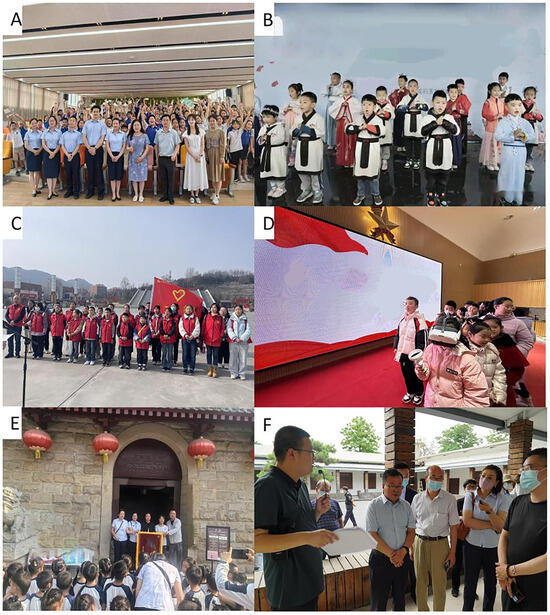
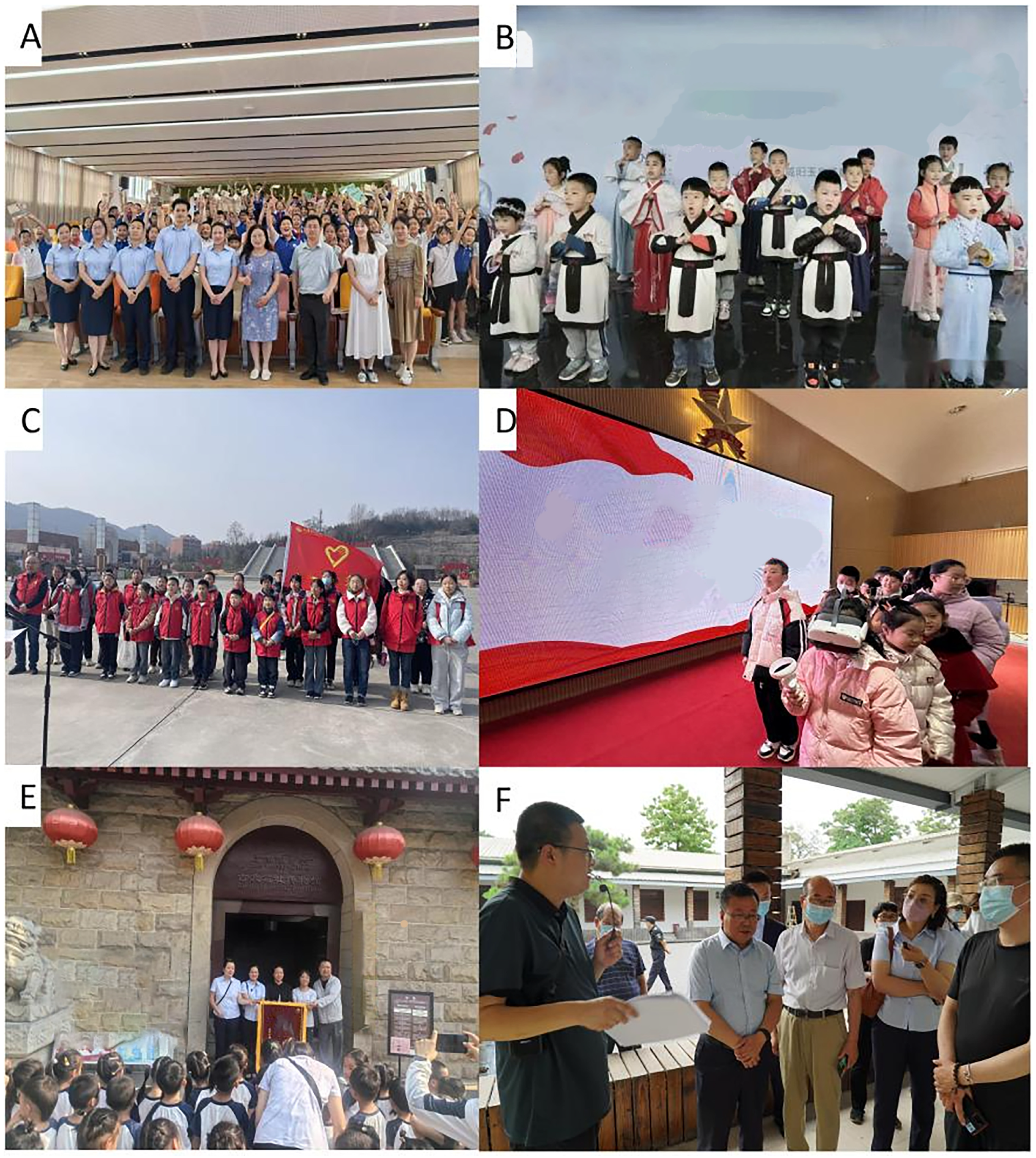
Specifically, it is firstly reflected in the establishment of branded activity systems. Centering on core themes such as the ancient ferry and combining traditional Chinese solar terms and festivals, the museum launches a series of distinctive educational brand activities (see Figure 4). For instance, it holds immersive cultural events including ancient ferry lantern shows and dragon boat-themed activities during the Spring Festival, Dragon Boat Festival and Mid-Autumn Festival. It also regularly carries out themed activities themed on solar terms in cultural relics, with around 28 sessions held all year round, integrating historical knowledge carried by cultural relics with seasonal changes. In terms of communication mechanisms, such life-oriented educational activities convert static historical narratives into participatory daily cultural practices, and strengthen the connection between museum narration and people’s daily lives. Second, it has developed targeted research courses for different age groups. The Research Course on Qin-Han Tile-Rim Making is representative, combining lectures, craftsmanship demonstrations and hands-on practices, with more than 20 sessions and over 600 participants in the 2025 summer vacation alone. This hands-on and context-oriented educational model breaks through the limitations of traditional knowledge-transmission approaches, enabling audiences to develop a more concrete understanding of history and culture through embodied participation and craft-based experience. For teenagers, the children’s painting competition If Cultural Relics Could Talk has been held for three sessions, with the third attracting over 860 works, effectively inspiring children to interpret cultural relics through artistic creation. Such a practice of involving the public in museum narration through re-creation transforms cultural communication from one-way output to interactive expression, and strengthens teenagers’ active cognition and emotional bond with local history and culture.
Figure 4.
Educational extension and community connection practices. (A): Group photo of brand education activity; (B): children’s poetry competition; (C): volunteer team; (D): mobile museum campus tour; (E): student research visit to the museum; (F): research on museum education programs.
To break geographical limitations, the museum has continuously carried out “Mobile Museum” and cultural promotion programs in schools, communities, military barracks, enterprises and villages. By using portable exhibition boards, replicas and interactive teaching aids, it delivers dozens of off-site educational activities each year, extending cultural services to the grassroots. In addition, the development of volunteers forms a dynamic part of the communication network. By the end of 2024, the “Xianyang Museum Red Volunteers” team had 98 registered members, including 47 young docents. After professional training, these volunteers have become a large-scale and enthusiastic narrative communication network. They participate in gallery guiding, event assistance and cultural promotion, conveying the museum’s core narrative in an approachable way and serving as an important bridge between the museum and the public.
Overall, through high-frequency, multi-scenario and audience-targeted communication, these social education activities and public participation practices not only raise people’s exposure to, engagement with and emotional recognition of local history and culture, but also gradually form a sustainable narrative communication mechanism that extends from in-museum displays to social cultural participation. Nevertheless, some publicity modes relying heavily on continuous educational investment and volunteer participation place higher demands on museums’ manpower arrangement, activity innovation and long-term resource coordination. For grassroots museums with scarcer resources, the promotion and replication of such modes need to take local financial support, public participation foundation and operational capacity into full consideration.
5.4. Institutional Foundation and Resource Coordination: A Management System Supporting Narrative Innovation
The sustainability and effectiveness of all narrative innovation and communication practices fundamentally rely on a stable, efficient and flexible internal management system. While promoting the transformation of its narrative model, the Xianyang Ancient Ferry Site Museum has carried out supporting institutional development and resource management reforms to consolidate a solid foundation for innovative concepts and translate creativity into sustainable momentum. This system is built around three core dimensions: institutional governance, talent development and resource operation. It mainly provides steady organizational support and resource guarantees for museum narrative innovation, enabling narrative transformation to evolve from periodic projects into sustainable institutional practices.
In terms of institutional development, the museum has established a standardized operation system covering its entire business process. A series of regulations have been formulated and improved, including Collection Acquisition Standards and Collection Procedures, rules for cultural relic conservation, restoration, exhibition planning, security and public services, and 27 emergency response plans. This ensures clear procedures and responsibilities from collection management to exhibition education and risk prevention, providing a stable environment for bold narrative innovation, reducing trial costs, and safeguarding relic safety and service quality. This institutionalized management framework creates a stable operating environment and clear operational boundaries for narrative innovation, cuts trial-and-error costs, ensures cultural relic safety and service quality, and lays a solid organizational foundation for cross-department collaborative curation, digital technology application and extended social education activities.
Talent is the ultimate carrier of management efficiency and innovation. Facing the common challenge of talent shortage, Xianyang Museum adheres to the strategy of “internal training and external introduction, with echelon development”. Internally, regular training is conducted through platforms such as the “Xianyang Museum Lecture Hall” to enhance professional competence and curatorial abilities. Externally, key staff are sent to industry exchanges and advanced training programs. By 2025, professional and technical personnel accounted for 52% of staff, forming a rational talent team with young and middle-aged backbone members, offering critical human resource support for curation, academic research and technological application.
Under tight funding constraints, the museum implements refined and intensive operation strategies, prioritizing limited funds for core narratives and key businesses. For exhibition budgets, nearly 60% supports the renovation and maintenance of permanent exhibitions to strengthen core narrative quality; about 27% funds original exhibitions to nurture distinctive IP; and 15% supports external exchanges to maintain an open vision. Compared with well-resourced large comprehensive museums, small and medium-sized museums need to centrally allocate limited resources to maintain the sustainability and distinctiveness of core narratives, focusing on targeted investment rather than all-round expansion. Such structured budget allocation embodies the integration of strategic focus and dynamic balance. Meanwhile, the museum actively explores social cooperation, such as jointly building intelligent guidance facilities with enterprises, expanding resource channels and enhancing service sustainability without increasing fiscal pressure. This management mode featured by institutional coordination and resource focus offers valuable references for the narrative transformation of small and medium-sized museums under resource constraints. Museums in different regions can make adaptive adjustments according to their development stages and institutional conditions.
6. Discussion and Implications: Establishing a Four-Dimensional Driving Model for Narrative Innovation in Small and Medium-Sized Museums
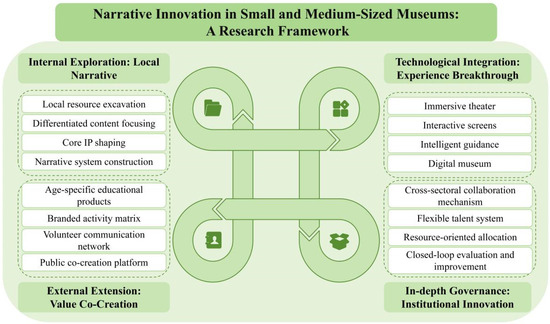
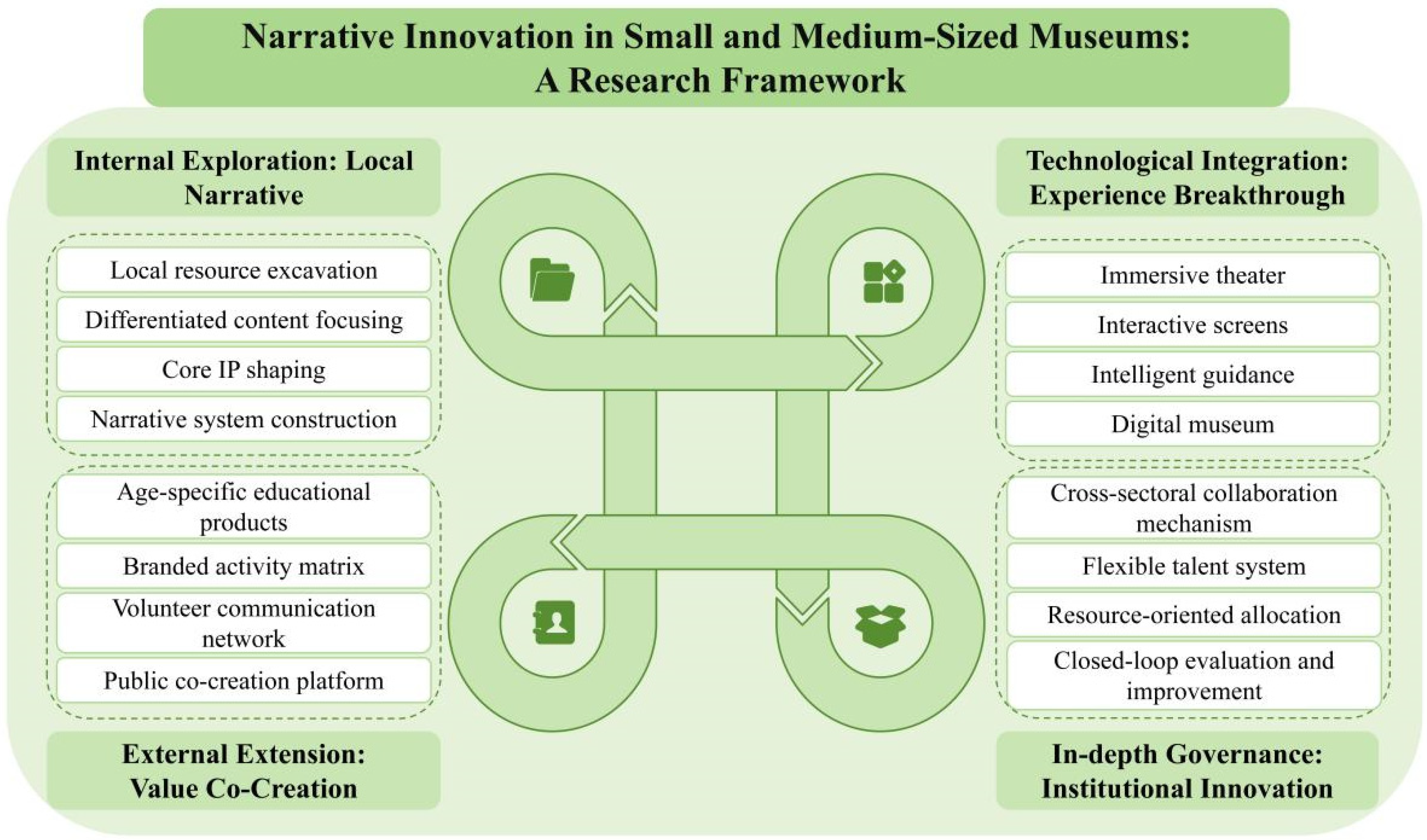
Based on an in-depth analysis of the innovative practices of Xianyang Ancient Ferry Site Museum, combined with comparative studies on other domestic small and medium-sized museums such as Dongguan Yuan Chonghuan Memorial Park and Zhejiang rural museum clusters, as well as recent research on museum narrative transformation, community engagement and digital exhibition, this study further establishes a four-dimensional driving model for narrative innovation of small and medium-sized museums (See Figure 5). In contrast to the aforementioned three-tier theoretical framework of narrative-driven development, this model focuses more on the practical operation mechanism of museum narrative innovation. The former summarizes the basic logic of museum narrative transformation under resource constraints at the theoretical level, while the latter emphasizes the coordination among narrative positioning, technical experience, social connection and management innovation. It aims to provide a systematic practical framework covering strategic concepts and implementation approaches for cultural institutions confronted with similar resource limitations.
Figure 5.
Framework. Four-dimensional driving practical model for narrative innovation of small and medium-sized museums.
The model comprises four interrelated and synergistic core dimensions: narrative orientation, technological experience, social connection, and management innovation. Practices represented by cases such as the Xianyang Ancient Ferry Site Museum demonstrate that these four dimensions are not isolated functional modules but a dynamically integrated, mutually nested whole. As shown in Figure 5, the four-dimensional driving model proposed in this study takes narrative positioning driving as the core to define development orientation and unique identity, serving as the strategic cornerstone and logical starting point of the whole model. Technical experience driving and social connection driving jointly realize the innovative presentation, multi-channel dissemination and in-depth value transformation of core narratives. The former aims to enhance the appeal and interactivity of exhibitions, while the latter expands the social influence and public recognition of narratives. Management innovation driving continuously fuels internal development momentum, ensures cultural relic safety, maintains sound museum operation and guarantees the fulfillment of social functions. These four dimensions form a complete closed loop ranging from internal construction to external linkage and from content creation to value realization, offering a referential theoretical framework and practical blueprint for small and medium-sized museums to achieve systematic narrative innovation and sustainable development under limited resources.
6.1. From Ubiquitous Displays to IP Focus: The Strategic Shift in Localized Narrative
The shift in narrative orientation serves as the strategic starting point and logical origin of narrative innovation for small and medium-sized museums, requiring a fundamental paradigm shift from comprehensive local history displays to in-depth, distinctive localized cultural expression, with the core essence of abandoning superficial pursuit of historical completeness and focusing instead on exploring and interpreting cultural profundity. The practical path begins with a systematic diagnosis of regional cultural genes: a comprehensive survey of local natural resources, historical relics, figures, folk traditions and characteristic industries to identify the most representative core cultural elements with narrative potential and emotional resonance with contemporary audiences, which are then creatively refined into a distinct, memorable, story-rich cultural IP or brand identity such as “The First Ferry of the Silk Road”, “Yuan Chonghuan’s Hometown” or “The Origin of Celadon”. This IP acts as the unifying soul running through all exhibition planning, social education activities, promotion and cultural and creative product development, ensuring every museum’s output continuously strengthens and enriches the core narrative and establishes a unique, irreplaceable cultural cognitive coordinate in visitors’ minds. Judging from the common features of various cases, it has become a major trend for small and medium-sized museums to establish differentiated cultural cognition through highly focused local cultural narration.
6.2. Technology Adaptation and Experience Optimization: Exhibition Tactics Serving the Narrative
Careful design of technological experience is a critical support for the implementation of narrative innovation in small and medium-sized museums. In this dimension, technology application must follow a core principle: technology should always serve narrative; its value lies not in being expensive or cutting-edge, but in optimal effect and cost performance. To achieve this goal, museums should first adopt demand-oriented technology selection, that is, closely centering on the established core narrative theme and specific experience goals intended for visitors—whether to create immersive presence, inspire interactive exploration, or answer specific historical questions—to comprehensively evaluate the implementation cost, expected effect and long-term maintenance requirements of different digital technologies, so as to select a highly cost-effective technical portfolio with synergistic effects. Second, under limited resources, a rational strategy is to concentrate resources on building one or two core experience sites with sufficient impact and appeal, such as a small but exquisite immersive theater or in-depth AR interaction design for key exhibits, so as to form impressive memory highlights rather than evenly distributing resources on a large number of mediocre devices. In addition, the design wisdom of “low technology, high perception” must be emphasized, namely by making good use of traditional but mature technical means such as lighting control, sound design, artistic scene restoration and visual graphic narrative to create an overall atmosphere and emotional tone. In many cases, these well-conceived “low-tech” solutions can often achieve or even exceed the expected narrative effect and emotional resonance at a lower cost with more stable operation. Relevant practices show that small and medium-sized museums should attach greater importance to the compatibility between technology and narrative content, so as to maximize visitor experience and cultural communication effects with limited investment.
6.3. From Education Provision to Community Co-Construction: Extending Narrative Value in Social Connection
The deepening of social connection serves as an important foundation for small and medium-sized museums to realize the social value of narrative innovation and take root in the community. It requires a fundamental shift in the museum’s role from a one-way “cultural education provider” to a diversified and equal “community culture co-builder”. To achieve this transformation, museums must first establish a refined targeted education product system, developing differentiated experiential research courses, themed workshops and lectures tailored to the cognitive characteristics and interests of preschool children, primary and secondary students, family audiences, researchers and the elderly, so as to ensure that the core cultural narrative can reach all audiences in the most appropriate forms and paths for effective communication and internalization. Second, museums should consciously build a branded annual public activity calendar, integrating a rich program of social education activities with traditional festivals such as the Spring Festival and Mid-Autumn Festival, as well as cultural events including International Museum Day and Cultural and Natural Heritage Day, forming regular and predictable community cultural rituals that help cultivate stable public participation and integrate museums into daily life. More importantly, museums should strive to build a “co-creation” platform for in-depth participation by volunteers and the general public. Through systematic training and empowerment, volunteer teams can be turned into active “external” curators, narrative interpreters and activity organizers. Meanwhile, by collecting community stories, old photos, public opinions and even holding exhibitions co-curated by residents, museums return part of the narrative dominance and interpretation rights to the public, transforming them from passive recipients into active narrators and contributors. Such in-depth participation and co-creation are the most effective ways to establish a lasting and profound emotional bond between museums and communities and consolidate their social foundation. Against the backdrop of public cultural services shifting toward social participation and community co-construction, in-depth public engagement and joint creation have made social education a key approach for small and medium-sized museums to strengthen local cultural identity and social bonds.
6.4. Management Innovation and Institutional Construction: Basic Guarantees for Narrative Function
Management innovation and institutional construction provide fundamental support for the sustainable advancement of narrative innovation in small and medium-sized museums. The effective implementation of narrative orientation, technological experience, social connection and open collaboration relies on an internal governance system matching the narrative-driven paradigm. In organizational management, cross-departmental cooperation with narrative coordination as the core should be established, and project teams integrating curation, research, design and education should be formed to embed narrative concepts into the whole process, from topic demonstration to public operation. To address the shortage of professionals, flexible cooperation such as pairing with large museums and joint curation can be adopted to complement internal capacities with external resources. Talent systems should also break rigid restrictions by setting flexible posts including distinguished curators and visiting researchers, and incorporate exhibition quality and public feedback into performance appraisal to encourage innovation and tolerate trials. For resource allocation, a mechanism should be established to prioritize limited resources for core narrative sectors: funding mainly supports exhibition renovation and featured IP cultivation; digitalization and thematic research are used to revitalize limited collections; and regional museum alliances enable collection loans and exhibition sharing. In addition, a complete institutional system covering planning, implementation and evaluation should be built, with regular audience feedback forming a closed-loop management cycle. Only by elevating narrative innovation from one-off exhibitions to systematic institutional arrangements can museums continuously produce high-quality narrative products under resource constraints and achieve sustainable high-quality development. At a deeper level, institutional improvement and resource management serve as vital organizational foundations to ensure the continuous creation, dissemination and upgrading of museum narratives.
7. Conclusions
Against the background of normalized resource constraints, the narrative transformation of Chinese small and medium-sized museums does not merely involve a superposition of technology or an increase in activities, but a systematic and in-depth transformation from concepts to practices, and from internal governance to external relations. Through an in-depth case study of the innovative practices of the Xianyang Ancient Ferry Site Museum, this study demonstrates the necessity and feasibility of a paradigm shift from “resource dependence” to “narrative-driven” approaches.
The research shows that the key starting point for the innovation of small and medium-sized museums lies in re-evaluating and refocusing their own resource endowments and functional positioning. In the future, their competitiveness will no longer mainly depend on the quantity and grade of collections, but on the comprehensive capacity to explore in-depth local stories, build diverse experiential forms, strengthen emotional bonds with communities and integrate external resources. By focusing on the ancient ferry cultural IP, adopting suitable digital technologies, carrying out full-cycle social education and promoting open cooperation, Xianyang Ancient Ferry Site Museum has, to a certain extent, turned resource constraints into opportunities to form distinctive features, achieved remarkable growth in visitor numbers and social influence, and provided valuable practical experience for museums.
The “Four-Dimensional Driving Model” summarized from its experience offers a clear roadmap: establishing a unique identity through in-depth localized narratives, enhancing experience quality with adaptive technology, taking root in community life via social extension, and breaking resource boundaries through open collaboration. Implementing this model requires museum practitioners, especially managers, to have a strong sense of innovation, an open spirit of cooperation, and refined operational capacity.
It should be noted that this study has certain limitations. The research is mainly based on a single case of Xianyang Ancient Ferry Site Museum, so its conclusions are affected by regional cultural background, museum type and operating conditions to some extent. The applicability of the four-dimensional driving model needs further verification through more cases. This framework is mainly interpretive and analytical for the present, and its cross-context applicability needs further verification through multi-case studies in future research. In addition, restricted by available data and research duration, discussions on audience feedback and long-term effects of diverse narrative strategies require continued research combining cross-regional cases. Future studies can conduct comparative analysis on museum practices at home and abroad, and continuously test the applicability and practical effects of this model based on empirical data including audience feedback, public participation and operational outcomes.
Looking ahead, with the further implementation of the national policy of “delivering high-quality cultural resources to the grassroots” and increasingly accessible channels for social participation in museum development, small and medium-sized museums are facing an unprecedented window of opportunity. Only by abandoning the old mindset of homogeneous competition, firmly taking the connotative development path of specialization, refinement, uniqueness and innovation, and integrating grand historical narratives into vivid and affectionate local stories can small and medium-sized museums generate lasting social value in regional cultural communication and local cultural identity construction, and further expand their public cultural service functions. They can truly become key grassroots cultural hubs that revitalize local cultural vitality, meet people’s needs for a better life, and strengthen the sense of community for the Chinese nation, thus making a solid foundational contribution to the prosperity of cultural heritage undertakings with Chinese characteristics and the construction of a great socialist cultural country.
Funding
This research received no external funding.
Institutional Review Board Statement
This article does not contain any data based on experiments on humans or animals.
Data Availability Statement
The data that support the findings of this study are available from the corresponding author upon reasonable request.
Acknowledgments
The authors would like to thank the Xianyang Museum and Ancient Ferry Site Museum for their support, and also thank the team from Northwestern Polytechnical University for their assistance in the English translation of this article and for the help with the framework drawing.
Conflicts of Interest
The author declares no competing interests.
References
- Li, R.; Li, G.; Wang, S. Small Pieces Forming a Whole: An Analysis of the Public Funding System for Small Museums in the United States. Chin. Mus. 2023, 6, 106–111. [Google Scholar]
- Wang, S. A Tentative Exploration on the Path to Improving the Public Cultural Service Quality of Small and Medium-Sized Museums. China Natl. Expo. 2025, 6, 232–234. [Google Scholar]
- Xiong, H.; Chi, C.; Zhang, X. Exploration on the High-Quality Development Path of Small and Medium-Sized Museums: Based on a Thematic Survey of Small and Medium-Sized Museums in Hebei Province. Cult. Relics Spring Autumn 2024, 2, 51–59. [Google Scholar]
- Zhang, S. Insights on Digitalization Empowering the Development of Small and Medium-Sized Museums from the Practice of Xinchang County Museum. Chin. Mus. 2025, 4, 104–108. [Google Scholar]
- Jiao, L. Research on the Development Status and Enhancement Strategies of Small and Medium-Sized Museums in China. Chin. Mus. 2023, 5, 4–11+127. [Google Scholar]
- Bai, N. Reflections on the Development Direction of Small and Medium-Sized Museums. In Regional Characteristics and Small and Medium-Sized Museums: Proceedings of the 2010 Annual Conference of Jiangsu Museum Society; Nanjing Municipal Museum: Nanjing, China, 2010; pp. 10–13. [Google Scholar]
- Wei, J.; Zhang, X. Museum Studies: Contexts, Themes, and Reflections. Bull. Palace Mus. 2025, 5, 4–15+146. [Google Scholar]
- He, X. Reflections on the Development Characteristics of Museums in China in the New Era and the Construction of a Powerful Museum Nation. Chin. Mus. 2024, 2, 16–27+131. [Google Scholar]
- Yu, F.; Guo, Z. Large Key Museums Assisting the High-Quality Development of Small and Medium-Sized Museums: An Important Practice of Promoting High-Quality Cultural Resources Directly to the Grassroots. Theory Pract. Innov. Entrep. 2025, 8, 129–135. [Google Scholar]
- Li, Q. A Brief Discussion on the Development Path of Small and Medium-Sized Museums. Identif. Appreciat. Cult. Relics 2020, 8, 134–135. [Google Scholar]
- Yang, Y. Innovation-Driven and Sustainable Development of Small and Medium-Sized Museums. People’s Trib. 2024, 19, 96–101. [Google Scholar]
- Ma, Y. A Brief Discussion on the Exhibition Operation of Small and Medium-Sized Museums. Chin. Mus. 2020, 3, 90–93. [Google Scholar]
- Gao, X. Exploration of the Role and Status of Museums in the Public Cultural Service System. China Natl. Expo. 2022, 24, 213–216. [Google Scholar]
- Hayde, D.; Weiss, L.; Meyer, J.R. The Role of Visitor Studies in Shaping Visitor-Centered Museums. Curator 2024, 68, 337–355. [Google Scholar]
- Liu, Y. Evaluating visitor experience of digital interpretation and presentation technologies at cultural heritage sites: A case study of the old town, Zuoying. Built Herit. 2020, 4, 14. [Google Scholar] [CrossRef] [Scilit]
- Mutibwa, D.H.; Hess, A.; Jackson, T. Strokes of serendipity: Community co-curation and engagement with digital heritage. Convergence 2020, 26, 157–177. [Google Scholar]
- Yan, S.; Yang, C.; Mai, B.; Cao, J. Cultural Heritage Narrative Innovation and Adaptation Mechanisms: A Case Study of the Intercultural Communication of Chinese Han Dynasty Heritage in Germany. Heritage 2026, 9, 14. [Google Scholar] [CrossRef] [Scilit]
- Black, G. The Engaging Museum: Developing Museums for Visitor Involvement; Routledge: London, UK, 2005. [Google Scholar]
- Hooper-Greenhill, E. Museums and the Interpretation of Visual Culture; Routledge: London, UK, 2000. [Google Scholar]
- Lu, J. Constructing a “Trinity, Integrated from Beginning to End” Disciplinary System for Great Archaeology. Southeast Cult. 2025, 5, 6–12+191–192. [Google Scholar]
- Song, X. Museums Should Strengthen the Construction of Public Cultural Guarantee Capabilities. Chin. Mus. 2020, 2, 27–30. [Google Scholar]
- Zhang, J.; Pan, S. The Constructive Practice of Museum Research in China: A Discussion and Response to the Overseas Perspective of Ma Xiuya and Others. Chin. Mus. 2020, 2, 67–72. [Google Scholar]
- Qin, X.; Zhou, Z.; Zheng, Y. Several Opinions on How Small and Medium-Sized Museums Can Bring Cultural Relics to Life. China Natl. Expo. 2019, 5, 225–226. [Google Scholar]
- Li, Y.; Li, C. Focus Issues and Countermeasure Suggestions on Museum Reform and Development. Southeast Cult. 2020, 4, 133–138+190–192. [Google Scholar]
- Liu, J. How Small and Medium-Sized Museums Can Organize Successful Original Exhibitions: A Case Study of Yuan Chonghuan Memorial Park in Dongguan City. Wenwu Jian Ding Yu Jian Shang 2023, 24, 94–97. [Google Scholar]
- Zhou, J.; Pan, X.; Wu, C. Pathways for Local Cultural Dissemination of Zhejiang Rural Museum Clusters in the Context of Digital Media. Creat. Des. Source 2026, 2, 1–6+13. [Google Scholar]
- Li, W.; Huang, D. The Logic, Practical Dilemmas and Future Approaches to the High-Quality Development of Museum Clusters in China: From the Perspective of Resource Dependence Theory. Chin. Mus. 2025, 4, 71–80. [Google Scholar]
Disclaimer/Publisher’s Note: The statements, opinions and data contained in all publications are solely those of the individual author(s) and contributor(s) and not of MDPI and/or the editor(s). MDPI and/or the editor(s) disclaim responsibility for any injury to people or property resulting from any ideas, methods, instructions or products referred to in the content. |
© 2026 by the author. Licensee MDPI, Basel, Switzerland. This article is an open access article distributed under the terms and conditions of the Creative Commons Attribution (CC BY) license.