


Abstract
China and Italy both possess rich operatic traditions, yet both encounter challenges in sustaining engagement among younger generations. This study investigates how infrastructural conditions influencing young audiences’ willingness to experience with traditional opera through a comparative study of two cultural contexts. Drawing on focus group interviews with participants across both countries, the research examines three interrelated theoretical dimensions: accessibility, experience, and mediation. Through systematic qualitative content analysis, the results indicate that while both Chinese and Italian participants recognized opera as a culturally significant art form, their participation modes differed. In China, attendance was often perceived as a planned and formal activity tied to modern cultural districts, with a strong reliance on media support to reduce entry barriers. In Italy, opera was described as embedded in historical urban environments and social routines, prioritizing the preservation of live performance integrity, maintained through continuity and familiarity. Such findings define opera engagement as a process shaped by interwoven access, experiential, and mediating infrastructures. Overall, this research identifies the needs of young opera audiences in both countries and offers cross-national perspectives for theatrical institutions, aiming to enhance operations and global communication of traditional opera.
1. Introduction
China and Italy both possess long-standing operatic traditions that continue to hold significant cultural value. Traditional Chinese opera, particularly Peking Opera, is widely recognized as one of the most representative performative cultures in China [1], while Italian opera is often regarded as a composite art form that integrates music, drama, and visual spectacle [2]. Both traditions are inscribed by the United Nations Educational, Scientific and Cultural Organization (UNESCO) as Intangible Cultural Heritage [3,4]. Historically rooted in courtly and elite contexts, these performative forms have gradually evolved into publicly accessible performing arts embedded within contemporary cultural systems.
However, opera institutions in both countries face increasing pressures. Financial constraints have intensified in recent years, with reductions in public funding observed in both Italy [2] and China [5], further exacerbated by the impact of COVID-19. At the same time, expanding the viewer base remains a persistent task. Italian opera audiences continue to age, with a loss of broader popular appeal and participation concentrated among established groups and familiar experience modes [6]; in China, younger generations increasingly engage with opera through digital platforms, but less often as regular theatre audiences [7]. The contrast reflects uneven patterns of engagement shaped by the divergence between traditional social settings and digitally mediated exposure. In turn, participation is no longer defined by attendance alone, but depends on how opera aligns with social identity, lifestyles, and the visibility of cultural engagement. This trend therefore underscores the significance of the next generation, who remain essential for ensuring long-term sustainability and transmission of cultural heritage [8]. Against this backdrop, the shared challenge of audience renewal faced by both countries provides a valuable comparative case study for examining how broader social conditions influence participation. In this sense, the comparison does not aim to equate the two traditions at an artistic level, but to investigate how individual behaviour is impacted within respective institutional and infrastructural contexts.
In addition, although prior research has investigated the impact of measures such as economic factors, environmental elements, digital communication, and educational interventions on enhancing the traditional opera experience, they are frequently addressed in isolation, limiting understanding of how multiple conditions jointly affect young audiences’ engagement. Despite recent adaptation and global expansion of opera institutions across Europe and Asia under public investment and cultural policies [2,6], comparative studies between China and Italy remain limited. This gap underscores the need to situate youth participation within broader institutional and policy frameworks.
On the other hand, current discussions have mainly focused on individual or institutional dimensions, while the conditions shaping participation remain less explored. In cultural policy and heritage studies, infrastructure is increasingly regarded as a systemic environment that both organizes the circulation of cultural resources and is experienced by the public [9]. Building on this perspective, the research conceptualizes opera engagement as emerging from a set of infrastructural conditions that enable access to, interpretation of, and sustained engagement. Rather than focusing solely on audience preferences, aesthetic forms, or artistic innovation, the infrastructural lens emphasizes how a series of facilities collectively build the possibility of participation. We thus examine three interconnected aspects: (1) access infrastructure, including spatial and economic accessibility; (2) experiential infrastructure, encompassing environmental and experiential quality; and (3) mediating infrastructure, such as educational and digital mediation.
We adopt an exploratory qualitative design based on focus group interviews with university-aged participants in China and Italy to examine how young audiences engage with opera. By collecting their explorations, expectations, and perceived barriers, it identifies how access, experience, and mediation contribute to participation across cultural systems. Finally, by identifying similarities and differences in attitudes, the comparative analysis reveals shared concerns and context-specific patterns, informing strategies for service provision and audience development worldwide.
The study addresses the following research questions:
- What factors influence young people’s willingness to attend traditional opera performances and theatres?
- How do young audiences in China and Italy perceive opera culture within contemporary urban and media contexts?
- What infrastructural conditions may enhance future opera experiences and support generational renewal?
The remainder of this paper is structured as follows. Section 2 presents a review of relevant research on aspects related to opera engagement. Section 3 explains the preparation and implementation of the focus group interviews. Section 4 illustrates some research results. Section 5 discusses cross-cultural perceptions, infrastructural conditions, and study limitations. Lastly, Section 6 concludes the article.
2. Related Works
2.1. Spatial and Economic Accessibility
Spatial accessibility is one of the primary factors that intervene with opera participation. Attendance decisions are influenced by travel distance, urban location, and the distribution of nearby venues [10]. Especially for younger audiences, time costs and transportation convenience significantly affect whether traditional opera is perceived as an accessible leisure option.
From the perspective of cultural economics, affordability and demographic characteristics determine engagement. Ticket prices are widely regarded as a major element shaping theatre visit frequency, as higher costs can discourage people from experiencing the culture and reduce their positive attitude towards it [11,12]. Empirical evidence further indicates that increased cultural consumption is associated with measurable declines in participation in publicly subsidized theatres, with younger and lower-income groups being particularly sensitive to these fluctuations [13]. In addition, age, socioeconomic background, and cultural capital influence willingness to pay and patterns of performing arts entry [14,15].
2.2. Environmental and Experiential Quality
Beyond the current state of access, the theatre itself plays a crucial role in influencing audience satisfaction. As a multidimensional venue, it covers both the quality of the performance viewing and the surrounding atmosphere [16,17]. In theatre design, seating arrangement, visibility, and functional organization are considered crucial for comfort and overall perceptual evaluation [18,19]. Environmental comfort has also been widely discussed in relation to acoustics, thermal conditions, ventilation, and lighting, all of which may affect audience experience of performance quality and immersive engagement [20,21,22,23]. Since opera relies heavily on the interaction between various stage sets, the attributes of theatrical scene and servicescape directly contribute to the formation of presence and emotional response [24].
In performance production, to maximize the effectiveness of the audience’s experience, actors and the plot need to generate mutual narrative exchange to the greatest extent possible [25]. Such experiential perception is especially relevant for young people, who may evaluate opera through comparisons with other entertainment forms and expect high levels of content satisfaction and knowledge exploration.
2.3. Educational and Digital Mediation
Opera is often considered as culturally complex and requires interpretive support. Early exposure through schools, outreach activities, and institutional programmes can strengthen cultural literacy and reduce comprehension gaps [8,26]. Structured educational curriculum has been shown to cultivate long-term attachment to opera among novice audiences [27].
Digital platforms are also increasingly vital, as they focus on expanding how younger audiences can learn about opera through diverse means. Online platforms and social media lower psychological barriers by deepening familiarity with opera and functioning as “experience hooks” that encourage offline participation [28,29]. For example, digital engagement strategies in European opera institutions have been shown to increase first experience among younger online audiences [30]. Meanwhile, immersive technologies such as virtual reality (VR) and embodied interaction have been explored as tools to extend the viewing way [6,31].
2.4. Cultural Infrastructures and Participation Environments
The focus of cultural management has shifted from artistic production to the role of diverse cultural infrastructure in shaping user participation. Especially with the expansion of the cultural and creative industries, this transformation has become a complex ecosystem comprising educational programmes, media channels, and institutional support systems that enable engagement [9,32]. For instances, platforms like Europeana act as critical policy instruments, upgrading heritage from static records into networked infrastructures that promote cultural citizenship and provide new modes of access [33]. Within the opera sector, the concept of infrastructure could cover physical and social conditions for fostering audience loyalty [24].
Furthermore, this perspective highlights the evolution of participation environments from top-down dissemination to collaborative co-creation [34]. By integrating traditional culture into broader infrastructure systems that allow interaction among communities, institutions, and stakeholders, the social and economic resilience of cultural practices will be strengthened [35]. This underscores the critical nature of a people-centred approach to decision-making in bridging the gap between historical resources and contemporary interests [36]. In this sense, young people also gain a greater voice to express their understanding of cultural heritage.
3. Methodology
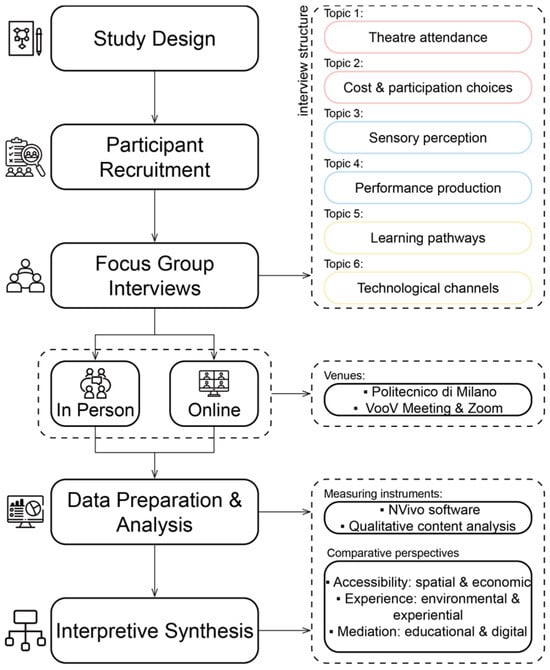
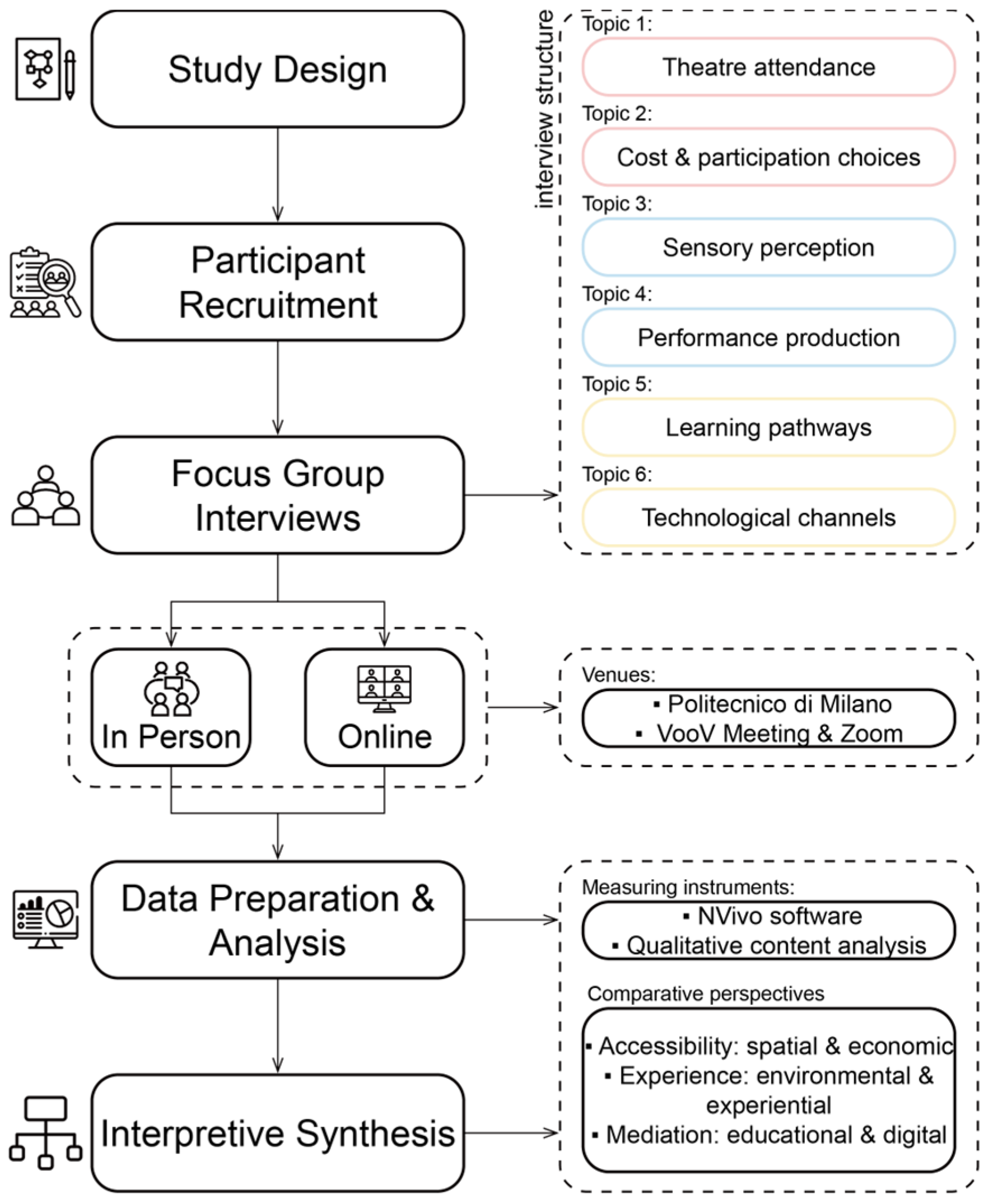
The study employs a qualitative approach to examine young audiences’ perceptions of traditional opera experiences in these two countries. The process is divided into several stages, as shown in Figure 1, and is described in more detail in the following sections.
Figure 1.
Traditional opera survey methodology structure. Source: the author.
3.1. Study Designs
The comparative design examines participation patterns in Chinese and Italian opera, with aesthetic differences not being the primary concern. Focus group interviews were conducted to explore factors influencing willingness to engage [37], and the data were analyzed using content analysis to identify key themes [38].
3.2. Participants
The subjects of the focus group are young people from China and Italy. The inclusion criteria are as follows: participants are between 18 and 30 years old, have received or are currently receiving university education, and are familiar with one another or share similar experiences [39], such as watching operas or attending theatres (concerts, dramas, etc.). The study also focused on participants without reported visual or auditory impairments in order to explore general opera experience under standard perceptual conditions. These requirements are based on the assumption that young participants within an appropriate age range possess sufficient time, cultural awareness, and willingness to express their views, facilitating the implementation of the study. The research therefore further highlights university-educated urban young adults, representing a culturally engaged segment of the potential opera audience. This sampling strategy aims to capture insights from individuals more likely to be exposed to theatre-related environments.
All participants were recruited through social media platforms of Chinese and Italian young people, such as WeChat and WhatsApp. The expansion of samples continued until no new information emerged from the interviews. A total of 8 focus groups finally participated, including 4 groups per country; each group consisted of 4 to 5 young people, totaling 35 participants. They were all urban residents, unmarried and childless, with no stable income. Additionally, 45.71% of them have backgrounds in architecture, art, design, and cultural heritage, while 34.29% indicate a deep understanding of traditional opera. The emphasis on these high-cultural-capital audiences is to maximize effective feedback within limited resources.
We used codes to distinguish the data, including country (CN = China; IT = Italy), focus group (FG), and participant (P). Table 1 summarizes the sample characteristics, while the complete demographic profile of participants is provided in Appendix A.
Table 1.
Summary of sample characteristics.
3.3. Focus Group Interviews
This research adopted a flexible focus group design, allowing participants to choose between virtual meetings and in-person discussions at a pre-agreed venue. In total, 6 groups (3 groups per country) participated online via VooV Meeting (Version 3, Shenzhen Tencent Computer Systems Co., Ltd., Shenzhen, China) and Zoom (Version 6, Zoom Video Communications, Inc., San Jose, CA, USA), while 2 groups (1 group per country) attended in-person interviews at the Piacenza Campus of Politecnico di Milano. Each session lasted approximately 1.5 h.
To ensure procedural consistency and intercultural comparability across both countries, a standardized semi-structured discussion guide was employed. All interviews were facilitated by the same moderator, following the same question sequence and prompts to minimize facilitation bias.
The discussion topics were derived from the three theoretical dimensions identified in the literature review and concretized into six thematic areas: theatre attendance, cost and participation choices, sensory perception, performance production, learning pathways, and technological channels (see Table 2). This structure ensured conceptual alignment between the theoretical framework and the data collection instrument.
Table 2.
Interview topics and guiding questions.
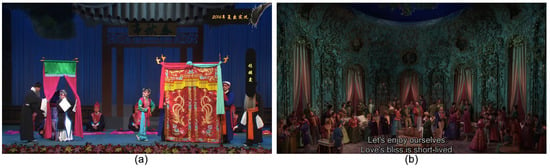
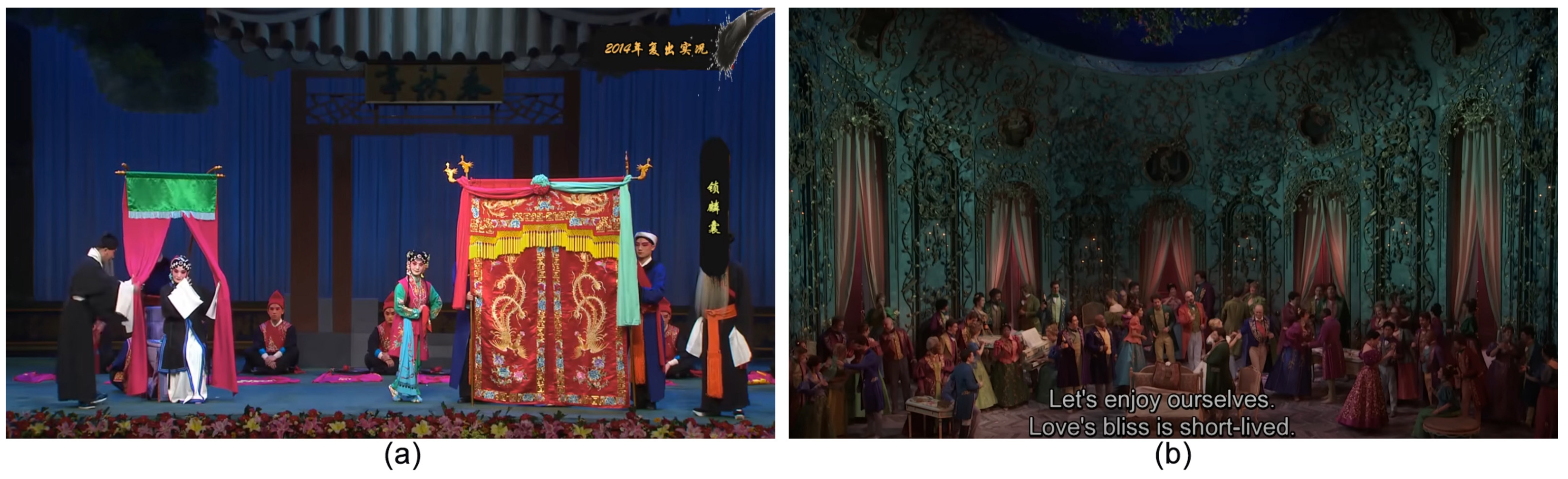
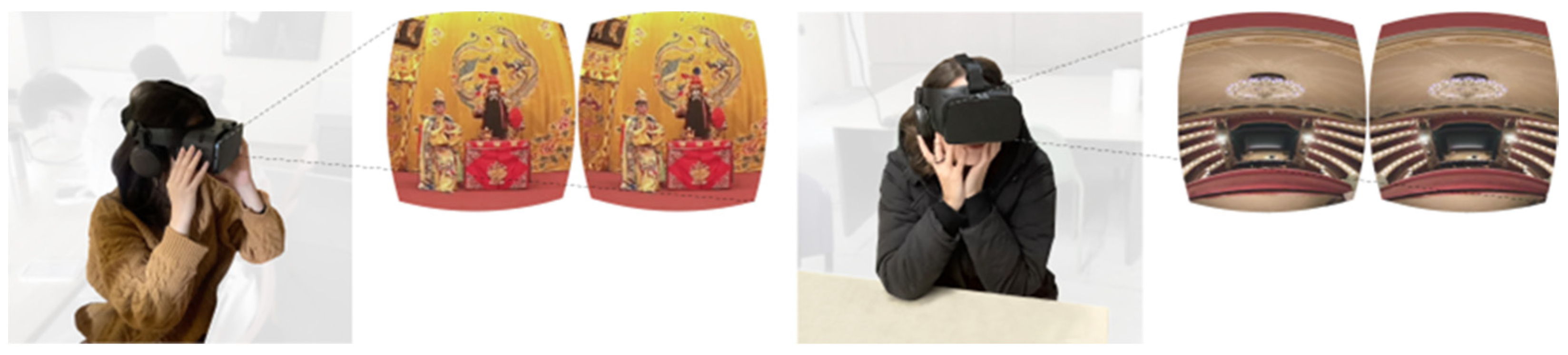
Before formal interviews, short video clips and VR materials (see Figure 2 and Figure 3) were presented as memory prompts to help participants recall relevant experiences. Such digital media were not functioned as experimental interventions, and their effects were neither compared nor evaluated.
Figure 2.
Online respondents watched the two opera clips. Source: (a) https://www.cnpoc.cn (accessed on 22 November 2024); (b) https://www.metopera.org (accessed on 22 November 2024).
Figure 3.
Participants attended in person watched the two opera VR video clips. Source: the author.
During the interviews, participants were encouraged to elaborate on their personal experiences, feelings, and perceptions of traditional opera, theatre spaces, and performance environments. The group format was expected to stimulate shared reflection and mutual insight among participants with similar backgrounds [37].
Interviews with Chinese participants were conducted in Mandarin, and those with Italian participants in English to ensure smooth communication. All sessions were recorded and transcribed verbatim in their original languages immediately after each interview, with transcriptions were manually prepared by the research team and cross-checked for accuracy. For reporting purposes, selected Chinese excerpts were translated into English and verified by bilingual researchers.
At the end, each participant received a gift (or gift money) for their time and contributions.
3.4. Data Analysis
All processed textual data were imported into NVivo (Version 12, Lumivero, Denver, CO, USA) to extract representative statements and nodes for systematic content analysis [40]. It followed a four-stage procedure: decontextualization, recontextualization, categorization, and compilation. When materials meet the following conditions, they are aggregated: (1) appeared across multiple focus groups, (2) represented structurally significant participation conditions rather than isolated opinions, and (3) demonstrated theoretical relevance to infrastructural dimensions.
Open coding was first conducted to identify recurring expanded content, followed by axial coding to cluster related categories and establish thematic relationships, ultimately refining them into distinct domains. Coding decisions were reviewed through peer discussion to enhance analytical reliability. To enhance the transparency of the analysis, this process followed a hierarchical structure linking raw statements, content nodes, categories, thematic domains, and domain. First, interview excerpts were coded into content nodes representing specific participation conditions. These nodes were then grouped into broader categories to reflect recurring patterns in the focus groups. Finally, categories common to both national datasets were synthesized into cross-cultural themes and domains to serve as the basis for comparative interpretation. This stepped procedure ensures that the comparative analysis was grounded in systematically synthesized empirical observations rather than isolated statements.
The analysis focused on cross-cultural differences and intrinsic motivations within audiences’ narratives, advancing an interpretive account of the processes shaping youth participation in opera.
3.5. Informed Consent
Before the focus group interviews, all participants were informed that the online or in-person interviews would be photographed, recorded, and audio-taped, and their verbal consent was obtained. All data were anonymized and maintained confidentiality.
4. Results
Qualitative analysis was conducted on data from eight focus groups in China and Italy. A total of 251 meaningful statements were extracted from the Chinese groups and 213 from the Italian groups. Open coding generated 51 content nodes for China and 39 for Italy. These were further consolidated into 25 categories for the Chinese groups and 23 for the Italian groups.
Ultimately, eight shared themes across three domains were identified through iterative comparison of the Chinese and Italian datasets, highlighting both common participation conditions and context-specific emphases. The findings are presented through three comparative perspectives synthesizing the six interview topics. Although similar thematic structures emerged, differences were observed in the relative emphasis placed on specific themes by Chinese and Italian participants. An overview of the coding structure is presented in Figure 4, with detailed results for each country provided in Appendix B and Appendix C.
Figure 4.
Encoding structure and process. Source: the author.
4.1. Access and Entry Factors
4.1.1. Theatre Setting
The geographical positioning of theatres influences audience attendance choices. Chinese participants frequently mentioned that “Most theatres in China are located on the outskirts of cities,” while Italian youths noted, “I can walk to the theatre; it’s right in the city center.” Young people attributed this difference to the historical location of opera houses within cities. A sense of distance thus changes one’s attitude toward watching a performance. CN_FG1_P4 shared, “I once watched an opera in the UK, and the theatre was in the city center, which was very convenient to reach. But when I return to China and think about having to take several subway transfers to get to the theatre, I lose interest.”
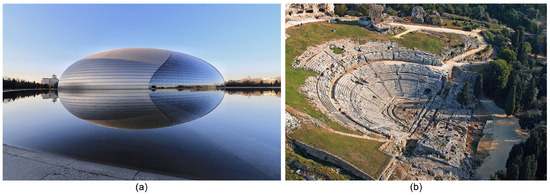
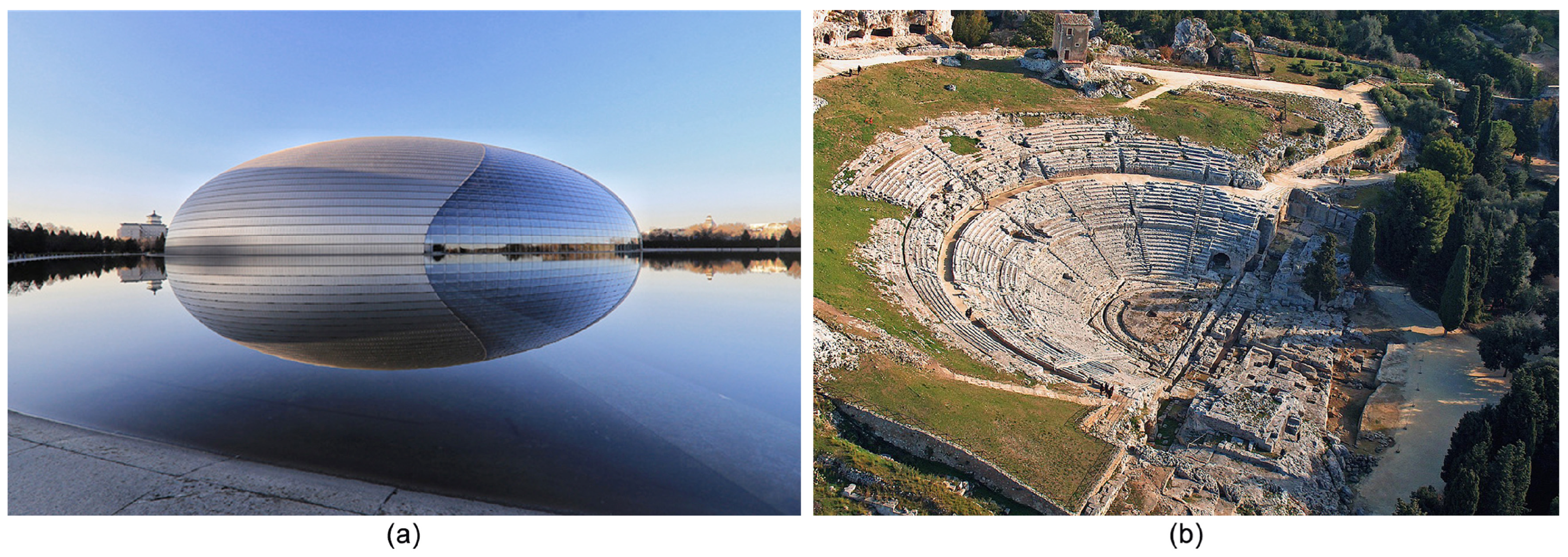
Architectural appearance was also discussed in relation to whether it attracts initial visits. Chinese respondents focused on iconic design. Some remarked, “If the theatre is attractive enough for me to take photos, I might be interested in going inside to watch a performance.” Others such as CN_FG2 noted, “Like the National Centre for the Performing Arts in Beijing (Figure 5a), which was designed by the famous French architect Paul Andreu, I would like to visit this masterpiece by such a great architect.” Italian young people emphasized the renovation quality of historical theatres. Many mentioned that “the majority of theatres in Italy are historical buildings.” IT_FG2_P3 described his experience: “I once watched an opera at the Greek Theatre of Syracuse (Figure 5b), which has a history of 2300 years. Although it’s an open-air theatre, it was incredibly impactful.”
Figure 5.
(a) The National Centre for the Performing Arts; (b) The Greek Theatre of Syracuse. Source: https://www.chncpa.org (accessed on 24 December 2025); https://en.wikipedia.org/wiki/Greek_Theatre_of_Syracuse (accessed on 24 December 2025).
Characteristics of performances in small spaces reflected considerations of accessibility and practicality. CN_FG4 stated that “It can control the number of people while ensuring the atmosphere, I will try it,” and “this kind of performance with short duration, low price, and in the form of theme operas is very suitable for people who need short-term leisure.” On the other hand, IT_FG4 expressed more reserved attitudes, noting that “Although this way can increase intimacy, it seems suitable for the small and less important repertoire.”
In addition, when discussing building space more generally, young people from both China and Italy expressed a desire for well-arranged functional areas and comfortable seating, preferring soft seats arranged in spacious and tiered rows.
4.1.2. Ticket Price
Both Chinese and Italian young people expressed dissatisfaction with high ticket prices, viewing them as barriers to engagement. Although numerous venues offer student benefits, all participants hoped for broader and more accessible discount policies.
Figure 6 illustrates acceptable price ranges. Chinese youths showed a wide range (0–1000¥/0–128.2€), with a turning point around 60€, though most preferred tickets under 10€, indicating limited willingness to spend. Italian youths also showed sensitivity around 60€, but their acceptable range was more concentrated between 20 and 30€, reflecting relatively higher but still cautious spending patterns. Despite cultural differences, respondents from both countries demonstrated limited enthusiasm for ticket prices above 60€.
Figure 6.
The acceptable ticket price range for respondents in (a) China and (b) Italy. Source: the author.
Participants also linked ticket prices to performance type and prior experience. Those with positive previous experiences were more willing to accept higher prices. Both groups stated that higher-priced tickets usually provided better seating. However, mismatches occurred. Some Chinese respondents noted that even expensive tickets did not always guarantee superior seats. IT_FG4_P1 commented similarly, “These special tickets often required inconvenient in-person reservations and came with poor seating.”
4.1.3. Group Attendance
Young audiences in both countries predominantly reported attending opera performances in groups, most commonly with friends or family members. Their motivation lies in sharing the experience and reducing uncertainty through companionship.
Group attendance also functioned as a way to enhance confidence during initial participation. Many respondents preferred to attend with someone more familiar with opera, which reduced the psychological barrier to entry.
4.2. Performance Environment and Audience Experience
4.2.1. Environmental Comfort
In terms of environmental comfort, young people from both China and Italy expressed consistent expectations. They emphasized high-quality sound, good visibility, and comfortable physical conditions, particularly temperature and air circulation. “Immersive feelings, such as the fusion of sound and light” were frequently mentioned.
Italian participants additionally highlighted “spatial balance”. They noted, “The sound at different positions in the space should be balanced well,” and “the indoor temperature, humidity and ventilation should all be maintained in a good state.”
4.2.2. Artistic Presentation
Young people emphasized the importance of actor quality and repertoire background. Chinese participants were more likely to attend if idol actors or renowned production teams were involved. Italian respondents similarly stated that “Excellent artists and high-quality productions bring a sense of satisfaction.” Hence, participants in both groups expressed concern that increasing performance frequency should not reduce artistic quality.
Shorter duration and thematic relevance repertoires were also preferred. Most respondents reported that “Current shows often last over an hour or two, which we find unbearable because our attention spans can’t stay focused for that long.”
Interactive staging was particularly valued by Chinese participants, who mentioned immersive scene interaction. Some respondents from both countries sought a sense of realism through close engagement with performers.
4.3. Interpretive and Mediating Supports
4.3.1. Educational Exposure
Participation motives included temporary escape, knowledge acquisition, and artistic enrichment. Chinese audiences more frequently described social media sharing as a deliberate activity, framing it as personal documentation and cultural display.
Educational exposure emerged as a crucial mediating factor. Both Chinese and Italian respondents mentioned that school-organized opera events helped them obtain information before participating. Some Italian participants attended related courses, while certain Chinese respondents participated in free performances organized by theatres. However, these Chinese performances often featured politically themed operas from the mid-20th century, limiting experience to a broader traditional plot. Participants from China also mentioned the appeal of informative “experiential hooks”. For instance, CN_FG3_P2 noted, “Familiar novels, textbooks, etc. enable us to initially understand the background of a certain play, helping to deepen the experience that follows.”
4.3.2. Communicative Mediation
Interest in digital experiences such as VR was notable. Over half of Chinese participants expressed strong interest, including those who had experienced VR opera. Italian respondents also showed enthusiasm but emphasized preservation of artistic integrity, stating, “When using this method, try to maintain the credibility and integrity of the opera as much as possible.”
Subtitles were widely acknowledged as useful. Although both performances were in native language, Chinese audiences agree that subtitles are indispensable. However, some Italian participants remarked, “Although it’s sometimes difficult to understand, not having subtitles doesn’t really affect our experience.”
Participants from both countries hoped to receive physical souvenirs such as booklets or playbills to enrich engagement. In terms of promotion, Chinese youths preferred platforms like TikTok and WeChat Official Account, while Italian respondents favoured in-person events such as TED speeches or meetings with performers.
4.4. Comparative Synthesis
Table 3 synthesizes the comparative findings across three perspectives. It illustrates how accessibility, experience, and mediation operate differently across contexts, laying the groundwork for subsequent discussions.
Table 3.
Comparative findings of young audiences in China and Italy.
5. Discussion
5.1. Participation Patterns Across Cultural Contexts
The findings show that youth participation in opera is influenced by multiple interrelated factors within specific cultural contexts. Audiences in both China and Italy expressed continued recognition of opera as an art form while emphasizing the necessity of creating favourable conditions to enhance perception.
In the Chinese context, theatre attendance was frequently described as a planned and purposeful activity, often associated with newly developed cultural districts in major cities like Beijing and Shenzhen. This perception may contribute to a heightened sense of formality. Another observation in this regard is that people have a strong interest in photographing theatre buildings, which functions as a form of cultural display. This practice is rooted in cultural capital and social distinction [41], concepts that are now increasingly extended into digital circulation. Such a shift reflects a transition from traditional and attendance-based participation to networked forms of visibility [42].
Moreover, subtitles, background explanations, and digital tools were considered particularly important in facilitating understanding. Trending productions and well-known performers were described as reducing uncertainty and encouraging initial encounter. Price sensitivity and preference for group participation were repeatedly mentioned, suggesting that affordability and social support function as entry-oriented mechanisms.
In Italy, opera houses were described as embedded within historic urban cores and long-standing cultural routines, such as Teatro alla Scala in Milan. Attendance was often associated with family traditions and established social networks. Subtitles were viewed as supportive but not essential, reflecting familiarity with operatic conventions. Participants expressed caution towards extensive digital integration, emphasizing preservation of live atmosphere and performance continuity. Small-scale productions are viewed as supplementary initiatives, not the primary focus. Although Italian participants similarly acknowledged pricing concerns and group attendance patterns, these were framed within habitual participation rather than primary contact.
It should be noted that participants in the Italian group placed particular emphasis on the opera’s credibility, reflecting expectations of authenticity. This may be linked to the long-term institutional stability of opera in Italy [43], where audience engagement has depended on sustained performance quality. As a result, the artistic standard becomes a key condition for participation, affecting attitudes for both performance and innovation.
Taken together, the contemporary comparison suggests two participation modes. In contexts where opera is considered as less embedded in everyday routines, mediation and affordability operate as mechanisms facilitating entry; while in settings where opera is socially integrated, engagement appears preserved through continuity and familiarity. Within this framework, visual documentation and adherence to cultural norms are essential to enhancing the experience.
5.2. Reframing Opera Engagement Through Infrastructural Conditions
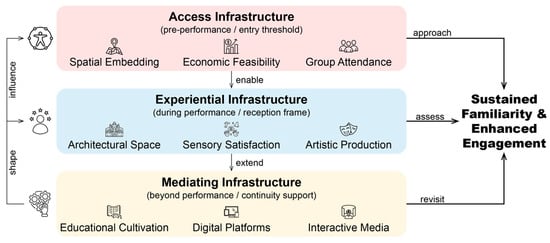
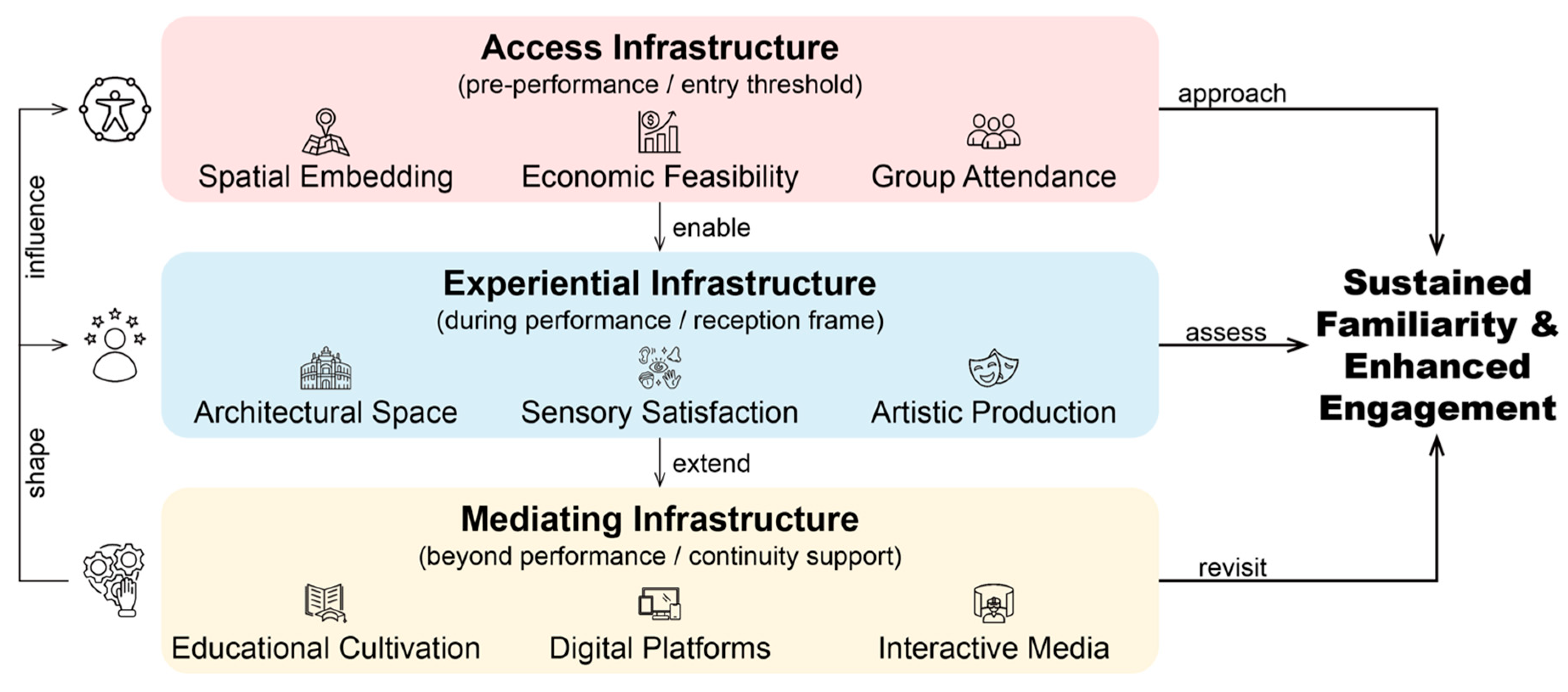
The concept of infrastructural conditions serves as an analytical method that links spatial accessibility, experiential environments, and mediating mechanisms to form a unified system of participation. Engagement unfolds through artistic appreciation alongside embodied spaces and media representations that frame the encounter with opera. These elements operate in combination across different stages of participation, influencing how individuals perceive and evaluate opera, as well as whether they will revisit opera performances over time. In this sense, opera experience operates through the interaction of access, experiential, and mediating infrastructures.
For the access infrastructure, it determines the threshold at which engagement becomes feasible. Venue positioning and investment management influence not only attendance frequency, but also the perceived openness of opera as a cultural practice. Spatial embedding situates opera within broader urban routines, while economic feasibility impacts whether preliminary participation can occur. These entry-related structures form experience before aesthetic interpretation begins, emphasizing that participation is conditioned by material and financial accessibility.
Within the performance context, the experiential infrastructure contributes to how opera is evaluated and remembered. Architectural configuration and staging design form the theatre settings through which live performance is encountered. Audience responses demonstrate that appreciation is closely intertwined with embodied and sensory experience. The atmosphere and artistic expression blend together, developing attentiveness, immersion, and satisfaction. Experiential quality thus establishes an integral dimension of cultural value, building how opera is perceived and remembered.
Interpretation is further supported by the mediating infrastructure that connects operatic conventions with contemporary audiences. Educational exposure, digital platforms, and emerging formats such as interactive media as explanatory tools. These mechanisms reduce uncertainty, facilitate comprehension, and take engagement away from the immediate performance. Mediation ultimately enables engagement to develop gradually, linking early cultural cultivation to sustained familiarity, empowering accessibility and experience.
Overall, engagement with opera appears to be reshaped by infrastructural conditions deployment operating before, during, and beyond the performance event. Accessibility options shape entry, experiential features influence reception, and mediating requirements support interpretation and continuity (see Figure 7). Consequently, continued experience depends on the coordination between these components that embed opera within everyday urban life and contemporary media environments in contrast to traditional cultural display models.
Figure 7.
Infrastructural conditions shaping youth opera engagement. Source: the author.
5.3. Limitations
Several limitations should be acknowledged.
First, the study is based on focus groups with a small sample, which limits statistical generalizability. The findings reflect interpretive patterns within the selected participant groups and do not constitute the broader opera audience. In addition, participants were primarily young adults with relatively similar educational backgrounds, which may not represent wider demographic diversity. These findings should therefore be interpreted as exploratory insights into participation conditions among culturally receptive youth. Variations in age, gender, socioeconomic status, and nationality may significantly influence participation patterns, highlighting the need for future studies to examine more diverse audience groups.
Second, the comparison involves distinct operatic traditions, which complicates formal equivalence. Although the study focuses on current participation conditions rather than aesthetic comparison, cultural and historical differences between Chinese and Italian opera in the past and present inevitably inform audience experience. The results therefore emphasize experiential and structural dimensions, lacking direct comparability at the theatre studies and artistic appreciation level. The next phase of research could extend to examining how today’s audiences challenge traditional theories and operation paradigms of opera.
Third, digital mediation, including subtitles, social media dissemination, and immersive technologies such as VR, was discussed primarily in terms of the audience’s initial experience. While participants expressed interest in such enhancements, the study does not empirically evaluate their long-term effectiveness or potential tensions with the integrity of live performance. Differences in digital literacy and generational familiarity may also influence how such technologies are accepted. Future research may combine quantitative studies with digital experimentation methods to assess how interactive media engages with diverse audience segments.
Finally, the analysis is primarily based on self-reported perceptions, without drawing on observational data or institutional records, and may reflect retrospective interpretations or limited understandings. Future research could incorporate these resources to gain deeper insights into the relationship between audience discussions and cultural policies.
6. Conclusions
This study demonstrated how young audiences in China and Italy experience with traditional opera under contemporary contexts, approaching engagement as a question of infrastructural conditions. By situating this demographic within broader hybrid environments, this study offers exploratory insights into the shift from participatory practices to a conceptual framework for cultural exchange.
Building on this approach, three key conclusions can be drawn.
First, young people’s willingness to attend opera is formed by access and entry factors, performance environment and audience experience, and interpretive and mediating supports. Theatre setting, ticket price, group attendance, environmental comfort, artistic presentation, educational exposure, and communicative mediation collectively create the foundational structures that determine whether engagement becomes feasible, valuable, and repeatable.
Second, cross-national comparison reveals different experience logics. Chinese participants are more dependent on the media source and organized connections, resulting in more occasion-specific participation, while Italian audiences emphasize that opera remains embedded within historical city settings and social continuity, enabling more habitual engagement. These differences stemming from young audiences’ perspectives suggest that opera attendance is conditioned by broader urban and institutional configurations.
Third, infrastructural coordination emerges as a critical framework for institutional reflection. The findings demonstrate that youth participation is shaped by interplay elements operating across accessibility, experience, and mediation. Specifically, access infrastructure facilities whether participation becomes feasible; experiential infrastructure enhances how opera is perceived and evaluated during the event itself; and mediating infrastructure supports interpretation and reduces uncertainty, especially for first-time audiences.
Ultimately, this research examines the determinants influencing young audiences’ engagement with traditional opera. By identifying the infrastructural conditions underlying young people’s engagement, it highlights implications for opera institutions seeking to adapt their operational approaches and inform discussions on developing future audiences. These findings point towards comprehensive frameworks that integrate heritage practices into accessible and inclusive cultural environments within a global media context.
Funding
This research received no external funding.
Data Availability Statement
The original contributions presented in this study are included in the article. Further inquiries can be directed to the corresponding author.
Acknowledgments
The author would like to thank the Piacenza Campus, Politecnico di Milano for providing the research site. The author would also like to thank Chinese and Italian students from several universities such as Politecnico di Milano, Università di Bologna, University of Porto, Shanghai Ocean University, Wuhan University, and Shandong University for their participation. In addition, the author would like to thank the professors from Politecnico di Milano for proofreading the manuscript and providing technical support in this research.
Conflicts of Interest
The author declares no conflicts of interest.
Abbreviations
The following abbreviations are used in this manuscript:
| VR | Virtual Reality |
| CN | China |
| IT | Italy |
| FG | Focus Group |
| P | Participant |
Appendix A
Table A1.
Demographic characteristics of participants.
Appendix B
Table A2.
NVivo summary list of topics for Chinese groups.
Appendix C
Table A3.
NVivo summary list of topics for Italian groups.
References
- Sundberg, J.; Gu, L.; Huang, Q.; Huang, P. Acoustical study of classical Peking opera singing. J. Voice 2012, 26, 137–143. [Google Scholar] [CrossRef] [Scilit] [PubMed]
- Algieri, B. Traviata, Bohéme and the others: Exploring the drivers of demand for opera in Italy. Poetics 2022, 92, 101617. [Google Scholar] [CrossRef] [Scilit]
- UNESCO. Peking Opera. 2010. Available online: https://ich.unesco.org/en/RL/peking-opera-00418 (accessed on 21 December 2025).
- UNESCO. The Practice of Opera Singing in Italy. 2023. Available online: https://ich.unesco.org/en/RL/the-practice-of-opera-singing-in-italy (accessed on 21 December 2025).
- China National Peking Opera Company (CNPOC). 2024 China National Peking Opera Company Annual Budget. 2024. Available online: https://www.cnpoc.cn/cnpoc/ggb/202404/fbb80530af9e45a4a99dfbea3505319d.shtml (accessed on 21 December 2025).
- Bellini, N.; Raglianti, M. Reluctant innovators: Dynamic capabilities and digital transformation of Italian opera houses in the pandemic crisis. Adm. Sci. 2023, 13, 83. [Google Scholar] [CrossRef] [Scilit]
- Yang, Y.; Lei, T.; Zeng, W. The inheritance and future development direction prediction of opera culture based on cloud communication under the background of big data. J. Sens. 2022, 2022, 1910766. [Google Scholar] [CrossRef] [Scilit]
- Chalari, M.; Vryonides, M. Adolescents’ reading habits during COVID-19 protracted lockdown: To what extent do they still contribute to the perpetuation of cultural reproduction? Int. J. Educ. Res. 2022, 115, 102012. [Google Scholar] [CrossRef] [Scilit]
- Bain, A.L.; Podmore, J.A. (Eds.) The Cultural Infrastructure of Cities, 1st ed.; Agenda Publishing: Newcastle upon Tyne, UK, 2023. [Google Scholar] [CrossRef] [Scilit]
- Getzner, M. Spatially disaggregated cultural consumption: Empirical evidence of cultural sustainability from Austria. Sustainability 2020, 12, 10023. [Google Scholar] [CrossRef] [Scilit]
- Zieba, M. Full-income and price elasticities of demand for German public theatre. J. Cult. Econ. 2009, 33, 85–108. [Google Scholar] [CrossRef] [Scilit]
- Wu, J.; Jiang, K.; Yuan, C. Determinants of demand for traditional Chinese opera. Empir. Econ. 2018, 57, 2129–2148. [Google Scholar] [CrossRef] [Scilit]
- Werck, K.; Heyndels, B. Programmatic choices and the demand for theatre: The case of Flemish theatres. J. Cult. Econ. 2007, 31, 25–41. [Google Scholar] [CrossRef] [Scilit]
- Weingartner, S. Führen mehrere Wege in die Oper? Die soziale Strukturierung von Entscheidungsprozessen für den Kulturkonsum. Kölner Z. Soziol. Sozialpsychol. 2019, 71, 53–79. [Google Scholar] [CrossRef] [Scilit]
- Shafranskaya, I.; Potapov, D.; Ozhegov, E. Individual versus companion visitors’ willingness to pay for theatre tickets: The case of Perm opera. J. Philanthr. Mark. 2020, 26, e1698. [Google Scholar] [CrossRef] [Scilit]
- Boerner, S.; Moser, V.; Jobst, J. Evaluating cultural industries: Investigating visitors’ satisfaction in theatres. Serv. Ind. J. 2011, 31, 877–895. [Google Scholar] [CrossRef] [Scilit]
- Radbourne, J.; Johanson, K.; Glow, H.; White, T. The audience experience: Measuring quality in the performing arts. Int. J. Arts Manag. 2009, 11, 16–29. [Google Scholar]
- Haddad, N. Criteria for the assessment of the modern use of ancient theatres and odea. Int. J. Herit. Stud. 2007, 13, 265–280. [Google Scholar] [CrossRef] [Scilit]
- Izenour, G.C.; Knudsen, V.O.; Newman, R.B. Theatre Design, 2nd ed.; Yale University Press: London, UK, 1996. [Google Scholar]
- Jeon, J.Y.; Kim, Y.H.; Cabrera, D.; Bassett, J. The effect of visual and auditory cues on seat preference in an opera theatre. J. Acoust. Soc. Am. 2008, 123, 4272–4282. [Google Scholar] [CrossRef] [Scilit]
- Ricciardi, P.; Ziletti, A.; Buratti, C. Evaluation of thermal comfort in a historical Italian opera theatre by the calculation of the neutral comfort temperature. Build. Environ. 2016, 102, 116–127. [Google Scholar] [CrossRef] [Scilit]
- Bellia, A.; Bevilacqua, A. Rediscovering the intangible heritage of past performative spaces: Interaction between acoustics, performance, and architecture. Heritage 2022, 6, 319–332. [Google Scholar] [CrossRef] [Scilit]
- Wen, M.; Ma, H.; Yang, J.; Yang, L. Main acoustic attributes and optimal values of acoustic parameters in Peking opera theatres. Build. Environ. 2022, 217, 109041. [Google Scholar] [CrossRef] [Scilit]
- Tubillejas-Andrés, B.; Cervera-Taulet, A.; Calderón García, H. How emotional response mediates servicescape impact on post-consumption outcomes: An application to opera events. Tour. Manag. Perspect. 2020, 34, 100660. [Google Scholar] [CrossRef] [Scilit]
- Masura, N. Digital Theatre: The Making and Meaning of Live Mediated Performance; Springer Nature: Berlin/Heidelberg, Germany, 2020. [Google Scholar]
- Chung, F.M.-Y. Safeguarding traditional theatre amid trauma: Career shock among cultural heritage professionals in Cantonese opera. Int. J. Herit. Stud. 2022, 28, 1091–1106. [Google Scholar] [CrossRef] [Scilit]
- Benzecry, C.E. Becoming a fan: On the seductions of opera. Qual. Sociol. 2009, 32, 131–151. [Google Scholar] [CrossRef] [Scilit]
- Mich, L.; Peretta, R. Mobile web strategy for cultural heritage tourism: A study on Italian opera houses. In HCI in Business, Government and Organizations: Interacting with Information Systems; Nah, F.F.-H., Tan, C.-H., Eds.; Springer: Berlin/Heidelberg, Germany, 2017; pp. 194–208. [Google Scholar] [CrossRef] [Scilit]
- Ouazzani, Y.; Calderón-García, H.; Tubillejas-Andrés, B. Opera streaming: Perceived value as an explanatory factor for loyalty and intention to attend an opera in an opera house. J. Mark. Manag. 2023, 39, 414–442. [Google Scholar] [CrossRef] [Scilit]
- De la Vega, P.; Suarez-Fernández, S.; Boto-García, D.; Prieto-Rodríguez, J. Playing a play: Online and live performing arts consumers’ profiles and the role of supply constraints. J. Cult. Econ. 2019, 44, 425–450. [Google Scholar] [CrossRef] [Scilit]
- Chen, S.X.; Wu, H.-C.; Huang, X. Immersive experiences in digital exhibitions: The application and extension of the service theatre model. J. Hosp. Tour. Manag. 2023, 54, 128–138. [Google Scholar] [CrossRef] [Scilit]
- Hesmondhalgh, D.; Pratt, A.C. Cultural industries and cultural policy. Int. J. Cult. Policy 2005, 11, 1–13. [Google Scholar] [CrossRef] [Scilit]
- Capurro, C.; Plets, G.; Verheul, J. Digital heritage infrastructures as cultural policy instruments: Europeana and the enactment of European citizenship. Int. J. Cult. Policy 2024, 30, 304–324. [Google Scholar] [CrossRef] [Scilit]
- Grcheva, O.; Oktay Vehbi, B. From public participation to co-creation in the cultural heritage management decision-making process. Sustainability 2021, 13, 9321. [Google Scholar] [CrossRef] [Scilit]
- Kamran, M. Role of cultural heritage in promoting the resilience of linear/critical infrastructure system with the enhancement of economic dimension of resilience: A critical review. Int. J. Constr. Manag. 2022, 22, 1345–1354. [Google Scholar] [CrossRef] [Scilit]
- Li, J.; Krishnamurthy, S.; Pereira Roders, A.; Van Wesemael, P. Community participation in cultural heritage management: A systematic literature review comparing Chinese and international practices. Cities 2020, 96, 102476. [Google Scholar] [CrossRef] [Scilit]
- Krueger, R.A.; Casey, M.A. Focus Groups: A Practical Guide for Applied Research; SAGE: Thousand Oaks, CA, USA, 2015. [Google Scholar]
- Krippendorff, K. Content Analysis: An Introduction to Its Methodology, 4th ed.; SAGE: Thousand Oaks, CA, USA, 2019. [Google Scholar]
- Rabiee, F. Focus-group interview and data analysis. Proc. Nutr. Soc. 2004, 63, 655–660. [Google Scholar] [CrossRef] [Scilit]
- Jackson, K.; Bazeley, P. Qualitative Data Analysis with Nvivo; SAGE: Thousand Oaks, CA, USA, 2019. [Google Scholar]
- Bourdieu, P. Distinction: A Social Critique of the Judgement of Taste; Nice, R., Translator. Original work published 1979; Harvard University Press: Cambridge, UK, 1984. [Google Scholar]
- Harcourt, B.E. Exposed: Desire and Disobedience in the Digital Age; Harvard University Press: Cambridge, UK, 2015. [Google Scholar]
- Zan, L.; Bonini Baraldi, S.; Gordon, C. Cultural heritage between centralisation and decentralisation: Insights from the Italian context. Int. J. Cult. Policy 2007, 13, 49–70. [Google Scholar] [CrossRef] [Scilit]






Disclaimer/Publisher’s Note: The statements, opinions and data contained in all publications are solely those of the individual author(s) and contributor(s) and not of MDPI and/or the editor(s). MDPI and/or the editor(s) disclaim responsibility for any injury to people or property resulting from any ideas, methods, instructions or products referred to in the content. |
© 2026 by the author. Licensee MDPI, Basel, Switzerland. This article is an open access article distributed under the terms and conditions of the Creative Commons Attribution (CC BY) license.