


Highlights
What are the main findings?
- Recovery performance depends strongly on feedstock characteristics: clean, compositionally consistent NdFeB scrap is suitable for direct recycling and hydrogen decrepitation, while heterogeneous electronic waste and low-grade residues generally require hydrometallurgical, electrochemical, or biological treatment.
- Although several recovery routes are technically promising, collection losses, difficult magnet disassembly, uncertain material composition, and limited cross-study comparability continue to restrict commercial-scale deployment.
What are the implications of the main findings?
- Meaningful comparison of recycling technologies requires standardized, full-process evaluation of elemental recovery, product purity, magnetic-property retention, environmental impacts, and economics.
- A circular REE supply chain will depend on integrating design for recycling, digital product passports, producer responsibility, and feedstock-specific process selection with recovery technology.
Rare earth elements (REEs) underpin a broad range of high-performance technologies central to the global energy transition, yet their supply chains are structurally fragile owing to the geographic concentration of extraction and refining capacity and the substantial environmental burden associated with primary production. This paper reviews innovative recycling technologies for the extraction of critical rare earth elements, specifically neodymium, praseodymium, dysprosium, and terbium, from end-of-life electronic equipment, permanent magnet scrap, and low-grade industrial residues, which can serve as sustainable alternatives to primary mining. Eight major recovery routes are comparatively evaluated in terms of process performance, feedstock suitability, and technology readiness. Conventional hydrometallurgical and pyrometallurgical processes remain the most mature recycling approaches, with reported feedstock- and condition-specific REE recoveries of approximately 70–98% across relevant feedstocks and technology readiness levels of 7–9 and 6–8, respectively. Hydrogen decrepitation and direct magnet recycling offer lower-energy and lower-waste pathways for clean, compositionally consistent NdFeB scrap, while deep eutectic solvents, ionic liquids, electrochemical methods, bioleaching, biosorption, and membrane-based separation remain promising but largely at the laboratory-to-early-pilot stage. Life-cycle assessments further indicate that hydrogen-based recycling of NdFeB scrap can reduce greenhouse-gas emissions to about 12% of those associated with primary production and lower water consumption by approximately 70–80%. Despite technological advances, significant barriers remain, including collection logistics, selective separation challenges, and economic viability at scale. This review consolidates advanced recovery technologies, analyzes strategies for integrating the circular economy, and evaluates the systemic enablers required for scale-up, including extended producer responsibility frameworks, digital product passports, design-for-recycling mandates, and feedstock-specific technology selection criteria. Sustainable recycling of rare earth elements is therefore essential for reducing the environmental burden of primary production, strengthening supply-chain security, and supporting the long-term deployment of clean-energy and advanced technologies.
1. Introduction
Rare earth elements (REEs) are central to the performance of a wide spectrum of clean-energy and advanced technologies, making them linchpins of the global energy transition. The partially filled 4f electron orbitals characteristic of lanthanide series elements give rise to exceptional magnetic anisotropy, luminescent behavior, and catalytic activity. In most cases, these cannot be adequately reproduced by more abundant substitutes without substantial compromise to device efficiency or operational performance. This combination of functional indispensability and constrained natural abundance has placed REEs at the center of ongoing debates over raw material security, technological sovereignty, and the material foundations of decarbonization.
These elements are extensively utilized in renewable energy systems, electric vehicles, wind turbines, high-capacity batteries, catalysts, electronic devices, sensors, and advanced communication technologies [1]. High-coercivity and high-remanence permanent magnets made of neodymium–iron–boron (NdFeB) and samarium–cobalt (SmCo) alloys are deployed in onshore and offshore wind turbine generators, traction motors of hybrid and battery-electric vehicles, and a variety of industrial drives, enabling compact designs with high power densities and low energy losses. Heavy rare earth elements such as dysprosium (Dy) and terbium (Tb) are often added to these magnets to improve high-temperature coercivity, thereby supporting reliable operation in the demanding thermal environments encountered, for example, in automotive powertrains and direct-drive wind turbine generators [2].
Beyond permanent magnets, REE applications span several additional domains. Europium (Eu), terbium (Tb), and yttrium (Y) compounds are used in red and green phosphors for fluorescent lamps and in backlighting systems for liquid-crystal displays, as well as in some white light-emitting diodes where they contribute to color rendering and luminous efficacy. Cerium (Ce)- and lanthanum (La)- containing materials are important constituents in automotive catalytic converters, petroleum-refining catalysts, glass-polishing powders, and optical glasses, while gadolinium (Gd) and holmium (Ho) are used in medical imaging and specialized magnetic applications. Collectively, these applications embed REEs throughout the energy, transport, industrial, and information-technology systems that underpin decarbonization pathways, such that any disruption to REE supply chains carries significant implications for climate and energy policy.
Projections of future demand underscore the strategic importance of REEs. Rapid electrification and renewable-energy deployment across multiple sectors are projected to drive steep increases in the demand for neodymium, praseodymium, dysprosium, and terbium, driven primarily by wind turbines and electric-vehicle traction motors. Under ambitious climate targets, demand for some magnet REEs could multiply several-fold over current levels by 2035–2050, raising concerns about potential supply bottlenecks, price volatility, and competition between end-use sectors [3]. These dynamics underscore the need for robust, diversified, and sustainable supply strategies that combine responsible primary mining with large-scale secondary recovery and circular-economy measures.
Despite their importance, REE supply chains remain highly concentrated and have been repeatedly identified as vulnerable in criticality assessments conducted by national governments and international organizations. For several decades, a dominant share of global REE mining, separation, and refining capacity has been located in a small number of countries, particularly in East Asia, which has enabled competitive pricing but also created exposure to geopolitical risks, trade disputes, and export restrictions [4,5]. These concerns were underscored by export quota implementation and policy shifts that triggered sharp price spikes and supply uncertainties for downstream industries reliant on rare earth magnets, phosphors, and catalysts. In response, major consuming economies including the United States, the European Union, and Japan have formally classified REEs as critical raw materials, reflecting assessments of high functional importance combined with high supply-disruption risk.
The term “critical,” however, carries distinct meanings across jurisdictions and must be explicitly defined for the purposes of this review. The European Commission’s Critical Raw Materials Act (2023) designates all 17 REEs as strategic raw materials, with particular concern for neodymium (Nd), dysprosium (Dy), praseodymium (Pr), and terbium (Tb) owing to their irreplaceable role in high-performance permanent magnets for wind turbines and electric vehicle motors [6]. The U.S. Department of Energy identified neodymium (Nd), dysprosium (Dy), terbium (Tb), europium (Eu), and yttrium (Y) as critical materials based on their supply risk and importance to clean-energy technologies over the short-term period of 2010–2015 and the medium-term period of 2015–2025 [7]. Element-specific analyses further show that cerium (Ce) and lanthanum (La), although generally less supply-constrained than Nd, Dy, and Tb, remain important because of their use in catalysts, alloys, batteries, polishing materials, and emerging transportation technologies [8,9]. China, which contributes approximately 60% of the global refined REE output, further concentrates supply risk through export controls applied preferentially to heavy REEs including Dy and Tb [4,5]. For the purposes of this review, “critical rare earth elements” denotes the subset most exposed to supply disruption risk and demand growth in the energy transition: Nd, Pr, Dy, and Tb in permanent magnet alloys [2,10]; Y, Eu, Tb, and Ce in phosphors and display materials [11,12]; and La, Ce, and Nd in nickel–metal hydride battery electrodes [13]. Where a technology or discussion applies to the broader lanthanide group, the term “rare earth elements (REEs)” is used without the criticality qualifier.
The environmental footprint of conventional REE production further complicates the overall picture. Primary REE ores such as bastnaesite, monazite, and ion-adsorption clays typically contain relatively low concentrations of the target elements, necessitating the processing of large volumes of ore. Beneficiation, cracking, and separation often employ concentrated acids, alkalis, and organic solvents, generating substantial quantities of tailings and process effluents that may contain residual chemicals and naturally occurring radioactive materials [14]. Inadequate management of mine tailings, leaching residues, and process wastewater can contaminate surrounding soil, surface water, and groundwater and may increase health risks for populations living near REE mining and processing sites [15,16]. Even where stringent environmental regulations are in place, the energy intensity and chemical consumption associated with conventional flowsheets contribute significantly to greenhouse gas emissions and other environmental impacts of REE-containing technologies. This mismatch between the natural challenges of individual REEs and industrial demand further intensifies supply issues, mainly for the heavy rare earth elements such as dysprosium (Dy) and terbium (Tb) [8].
Life-cycle assessment (LCA) findings consistently attribute a disproportionate share of the environmental footprint of wind turbines and electric vehicles to REE extraction and separation stages, particularly for heavy REE-containing products where processing intensity is highest. These findings have prompted calls to reduce the environmental intensity of REE supply chains through a combination of improved primary production practices, increased resource efficiency, and the development of secondary sources. Against this background, recycling and broader circular-economy strategies have emerged as promising avenues to alleviate both criticality concerns and environmental impacts by decreasing reliance on primary mining while maintaining the availability of REEs for key applications [10].
REE recycling has evolved from a narrow, high-value scrap recovery activity into a central pillar of critical-material security, clean-energy manufacturing, and circular-economy policy [1,17,18]. The strategic importance of REE recycling is inseparable from the functional roles these elements play in the technologies underpinning the global energy transition. Because these elements are embedded across a broad range of high-technology systems, REE recycling is not merely a waste-management concern but a strategic lever for reducing supply-chain vulnerability, lowering the environmental intensity of clean-energy manufacturing and building resilience against geopolitical disruptions [1,4,19].
The rapid adoption of REE-containing technologies over the past several decades has resulted in substantial in-use and end-of-life REE stocks distributed across a diverse array of products and industrial residues, many of which are now approaching end of life and represent secondary feedstocks that can complement primary mineral deposits [10,11,20]. Major end-of-life product categories include permanent magnets from hard disk drives, loudspeakers, and electric motors; traction motors and generators in electric and hybrid vehicles; wind turbine generators [21,22]; phosphor powders from spent fluorescent lamps and displays [12]; polishing powders from glass and semiconductor manufacturing; NiMH batteries; and a variety of catalysts and specialized electronic components [13,23]. In parallel, industrial residues such as red mud from bauxite processing, phosphorgypsum from fertilizer production, coal fly ash, and metallurgical slags often contain appreciable concentrations of REEs that have historically been regarded as waste rather than as potential resources [24].
Quantifying the REE content of existing devices and industrial residues is challenging owing to data limitations on product composition, lifetimes, and trade flows, but material flow analyses consistently suggest that the total REE content in in-use and end-of-life products is large and growing [10,20]. In some cases, the average REE concentration in certain waste streams such as NdFeB magnet scrap or lamp phosphor powders, exceeds the grades found in many primary ores [11,22], which underscores their attractiveness as secondary resources if efficient collection and processing can be achieved. However, realizing this potential requires overcoming several practical obstacles related to product design, collection infrastructure, and pre-processing operations [11,25].
At the collection stage, REE-containing products are often dispersed across numerous small devices and embedded in complex assemblies, making them difficult to identify, separate, and retrieve once they enter municipal or electronic waste streams [25,26]. Insufficient labeling, limited consumer awareness, and inadequate economic incentives for take-back can lead to low collection rates and high losses of REEs to landfills or incineration [26,27]. Even when products are collected, pre-processing steps such as manual or automated disassembly, shredding, sorting, and concentration are needed to isolate REE-rich fractions from mixed scrap before metallurgical recovery can proceed [22,28]. The efficiency and cost of these pre-processing operations strongly influence the overall feasibility of REE recycling systems and can be improved through design-for-recycling strategies, better information on product composition, and advanced sorting technologies [11].
Industrial residues present distinct opportunities and challenges. Tailings, slags, and process residues can provide large volumes of material with relatively consistent compositions, but REEs are often present in complex mineralogical forms or in association with other elements, which complicates extraction and separation. Nevertheless, integrating REE recovery into existing waste-management and metallurgical operations, an approach consistent with industrial symbiosis and circular-economy principles, could unlock additional secondary supply while mitigating the environmental liabilities of these residues. Recent studies have shown that secondary recovery and circular resource utilization can significantly reduce supply risks and reduce dependency on primary mining resources. Developing diversified supply chains, improving process efficiency, and exploiting alternative REE resources are widely recognized priorities for long-term sustainability and future clean-energy deployment [4,10].
Existing review articles on REE recycling tend to be either technology-centric, focusing on a single process class or feedstock, or application-oriented, with limited effort to connect recovery chemistry to the upstream collection constraints and downstream policy levers that ultimately determine system-level performance. Specific gaps that remain unaddressed include the persistent treatment of collection and pretreatment as logistical afterthoughts rather than rate-limiting steps; the absence of a cross-route quantitative benchmark placing hydrometallurgical, pyrometallurgical, hydrogen-based, green-solvent, and biological routes on common performance metrics; a lack of technology readiness level (TRL)-framed evaluation situating emerging green routes relative to commercial benchmarks; insufficient linkage between policy instruments—EPR fee structures, digital product passports, design for recycling mandates, and measurable collection-rate or supply-security outcomes—and limited integration between upstream collection and pretreatment constraints and downstream recovery-chemistry selection, such that feedstock characteristics rarely inform process choice in existing syntheses. This review addresses these gaps by providing a cascade-structured synthesis that follows the REE secondary supply chain from waste stream characterization and collection through recovery and re-use, underpinned by a standardized benchmarking framework and an integrated life-cycle and techno-economic perspective.
This review is structured to follow a logical cascade from REE applications to resource characterization, collection, recovery, and sustainability assessment. Section 2 describes the methodology underlying this synthesis. Section 3 examines the applications of recovered REEs across the clean-energy, transportation, electronics, biomedical, and defense sectors. Section 4 covers the collection and pretreatment of REE-bearing secondary resources, including end-of-life manufactured products and low-grade industrial residues. Section 5 presents recovery techniques, covering hydrometallurgical, pyrometallurgical, hydrogen-based, green-solvent, electrochemical, bioleaching, membrane-based, and direct recycling routes together with feedstock-specific selection criteria. Section 6 addresses the sustainability challenges associated with REE use. Section 7 synthesizes systems-level perspectives encompassing policy frameworks, life cycle assessment, techno-economic evaluation, and the commercialization pathway toward a circular REE supply chain. Section 8 presents conclusions and targeted directions for future research.
2. Methodology
This review was conducted as a semi-systematic narrative synthesis. Studies were retrieved from Web of Science, Scopus, and Google Scholar using the following primary search strings: (“rare earth element *” OR “REE” OR “lanthanide *”) AND (“recycling” OR “recovery” OR “secondary source *” OR “urban mining”) combined individually with “hydrometallurgy,” “pyrometallurgy,” “hydrogen decrepitation,” “deep eutectic solvent,” “ionic liquid,” “electrochemical,” “bioleaching,” “biosorption,” “membrane separation,” “direct recycling,” “circular economy,” “life cycle assessment,” “techno-economic,” “Extended Producer Responsibility,” and “digital product passport.” The search covered publications from January 2015 to May 2026, with primary emphasis on 2020–2026 to capture the most recent process advances and policy developments.
Inclusion criteria were (i) peer-reviewed journal articles, conference proceedings, or book chapters reporting original experimental data, quantitative process performance, or systematic policy analysis; (ii) review articles providing quantitative meta-analysis or comparative benchmarking; (iii) government and intergovernmental reports (EU, US DOE, IEA) providing supply-chain or criticality data; and (iv) patents. Exclusion criteria were gray literature without traceable methodology, and studies concerned solely with primary REE extraction and containing no secondary-source or recycling component. After deduplication, approximately 1400 candidate records were screened by title and abstract; 150 references met inclusion criteria and are cited in this review. The literature cut-off date is May 2026; relevant work published thereafter is not systematically covered.
3. Sustainable Use of Rare Earth Elements in Advanced Applications
3.1. Renewable Energy Technologies
Rare earth elements are utilized in wind turbines, electric vehicles (EVs), high-efficiency lighting systems, fuel cells, batteries, and advanced photovoltaic devices. Neodymium (Nd) and dysprosium (Dy) are especially important for NdFeB permanent magnets used in EV motors and wind-turbine generators, as these magnets provide high magnetic strength while reducing system size and weight [2,18]. Global demand for Nd and Dy may increase substantially over the next 25 years, with estimated growth rates approaching 700% and 2600%, respectively [15]. Rare earth oxides (REOs) are also critical for advancing energy technologies such as perovskite solar cells, solid oxide fuel cells, hydrogen-production systems, and lithium-ion batteries [29]. Demand for REEs in wind-energy technologies, energy-storage systems, NiMH batteries, and lighting applications is growing at approximately 10% every year [30].
The rapid expansion of renewable-energy infrastructure is increasing the pressure on global REE supply chains. Li et al. estimated that wind-power deployment between 2021 and 2050 may require approximately 460–902 Gg of REEs, primarily Nd, Pr, and Dy, while global production may need to increase by nearly 11- to 26-fold to satisfy future clean-energy demand [31]. Modern permanent magnet synchronous generators (PMSGs) used in wind turbines may contain up to three tons of NdFeB magnets per turbine, and Germany alone had an installed wind-power capacity of approximately 63.551 GW onshore and 9.222 GW offshore by the end of 2024, creating a substantial future stream of end-of-life NdFeB magnets available for recycling [32].
3.2. Electric Vehicles and Transportation
Hybrid electric vehicles (HEVs), plug-in hybrid electric vehicles (PHEVs), battery electric vehicles (BEVs), and fuel-cell electric vehicles (FCEVs) depend heavily on REEs for drive motors, batteries, and catalytic converters. The majority of REE demand in electric vehicles stems from NdFeB permanent magnets used in traction motors. Under the highest-demand scenario examined for automotive electrification in China, cumulative REE demand during 2018–2030 was projected to reach approximately 315 kt. Neodymium accounted for 51% of the projected demand, followed by dysprosium at 20%, cerium at 12%, praseodymium at 9.5%, and lanthanum at 7.7% [9]. Neodymium imparts the high remanence required for efficient motor operation, while dysprosium improves high-temperature coercivity, maintaining magnetic performance under elevated thermal loads. In a separate global material-flow analysis of wind-power systems and electric vehicles, annual Nd demand from these two applications was projected to reach 219.5–348.3 kt by 2050, whereas annual Dy demand was projected to reach 33.1–52.1 kt [33]. Within the two applications modeled, electric vehicles accounted for approximately 91.8–94.7% of Nd demand and 92.3–94.4% of Dy demand in 2050, depending on assumptions regarding technology deployment and declining material intensity [33]. In addition to traction motors, nickel–metal hydride (NiMH) batteries incorporate lanthanum (La) and cerium (Ce) in hydrogen-storage electrodes, while catalytic converters utilize cerium to improve oxygen-storage capacity and reduce exhaust emissions [13].
Despite the benefits of transportation electrification, environmental challenges associated with REE extraction remain a major concern. The cumulative CO2-equivalent emissions associated with the oversupply of co-produced REEs driven by Dy demand could be 5.5–6.4 times those associated with producing the required Nd and Dy alone [33]. Depending on the assumed electricity mix and emissions-reduction scenario, emissions from REE extraction and production were equivalent to approximately 10–29% of the projected CO2-emission reductions resulting from electric-vehicle deployment [33]. Therefore, recycling end-of-life automobile motors, batteries, and catalytic converters is an important strategy to reduce dependence on primary mining resources, mitigate supply-chain vulnerabilities, and minimize the environmental impact of transportation electrification.
3.3. Electronics and Smart Devices
Consumer electronics have become an increasingly important secondary source of rare earth elements owing to rapid technological innovation. Smartphones, laptops, hard disk drives (HDDs), screens, and printed circuit boards (PCBs) contain a broad range of REEs that enable critical magnetic, optical, and electrical features [34]. Among electronic products, hard disk drives represent one of the richest secondary REE sources, owing to their NdFeB permanent magnets, which contain up to 15,000 ppm neodymium, along with significant concentrations of dysprosium and praseodymium [34]. A single HDD can contain up to 48 different metals with an estimated commercial value of approximately $454 per kilogram. REEs are also present in speakers, vibration motors, displays, and semiconductor components in smartphones and laptops, with concentrations of 10–1000 ppm common for elements such as lanthanum, cerium, praseodymium, neodymium, samarium, europium, gadolinium, terbium, dysprosium, and yttrium [26,34]. However, this estimated value represents theoretical contained-metal value under the study’s analytical and price assumptions, rather than the revenue obtainable from an individual HDD after collection and processing [34]. The trend of miniaturization has increased the concentration of valuable materials per unit mass, making e-waste an increasingly attractive urban mining resource.
The resource potential of electronic waste is significant, even though the recycling rates for specialist REEs remain below 1% globally [10,20]. Approximately 98% REE leaching from roasted NdFeB magnet waste using 0.5 M HCl at 368 K, a pulp density of 100 gL−1, and a reaction time of 300 min [35]. Such values represent feedstock- and condition-specific leaching efficiencies rather than universal overall process recoveries. Roasting, smelting, and molten-salt electrolysis provide additional recovery pathways for concentrated REE-bearing electronic wastes, particularly spent permanent magnets and phosphor materials [26,27]. New separation technologies have further increased the potential for sustainable REE recovery from electronic waste. For example, carboxylate-functionalized cellulose has shown selective precipitation of REEs from smartphone-display leachates with a removal capacity of 252 ± 4 mg/g and selectivity of almost 90% within 10 s [36], highlighting the potential of bio-based materials as sustainable alternatives to conventional solvent-extraction processes.
3.4. Biomedical and Healthcare Applications
Rare-earth-based nanomaterials are increasingly used in biomedical applications owing to their high surface-area-to-volume ratios, tunable magnetic behavior, and versatile surface chemistry, properties that underpin a range of diagnostic and therapeutic uses and motivate REE recovery from end-of-life medical devices and diagnostic systems. The most prominent biomedical application is magnetic resonance imaging (MRI). Nanostructures such as superparamagnetic iron oxide nanoparticles (SPIONs), gadolinium-based nanoparticles, and manganese oxide nanomaterials serve as contrast agents that improve soft-tissue resolution and enable early detection of disorder [37]. Several commercially licensed formulations, including Ferumoxtran-10, Sienna+, Ferumoxytol, and Ferristene, have demonstrated clinical success in detecting lymph node metastases and imaging pancreatic islet inflammation in type 1 diabetes [37].
The recovery of REEs from healthcare-related waste could complement broader recycling efforts and reduce environmental releases. In particular, gadolinium may be recovered from unused MRI contrast-agent residues, separately collected patient urine, and hospital effluent, although its low concentration and stable chelated form limit large-scale recovery [38,39,40]. Primary REE production can generate substantial tailings, acidic wastewater, gaseous emissions, and residues containing naturally occurring radioactive materials; however, waste quantities vary with ore composition and processing conditions and should not be treated as universal production factors [13,16]. Therefore, improved collection and recovery from concentrated medical waste streams could conserve valuable materials and reduce gadolinium discharge, but these sources are unlikely to replace a substantial proportion of primary REE production.
3.5. Defense and Aerospace Applications
The defense and aerospace sectors depend on REEs for their magnetic, optical, and high-temperature properties, making supply security a strategic priority for the United States and European Union [41,42]. NdFeB and SmCo permanent magnets containing Nd, Sm, and Dy are used in precision-guided munitions, radar and sonar systems, aircraft components, satellites, and electronic-warfare equipment [42], while yttrium-containing materials are used in laser systems and thermal-barrier coatings [43]. This strategic vulnerability is intensified by the concentration of REE supply chains in China, which accounts for approximately 90–92% of global separation and refining and an even larger share of permanent-magnet production [44]. The EU Critical Raw Materials Act consequently promotes diversification, domestic processing, and recycling to reduce dependence on individual foreign suppliers [6]. This concentration has created significant supply-chain vulnerabilities. In 2010, China strengthened controls on REE production and restricted exports during a period of diplomatic tension with Japan, contributing to severe supply uncertainty and price increases of as much as 2400% within one year [45]. In response, the U.S. Department of Defense has classified REEs as critical to national security and has supported to rebuild domestic production capacity, including the redevelopment of the Mountain Pass mine in California [46]. Similarly, the European Union has identified both light and heavy REEs as critical raw materials and has invested in recycling programs and alternative supply sources to reduce dependence on external suppliers [6,47]. Establishing resilient and diversified REE supply chains has therefore become a strategic priority. Disruptions arising from geopolitical tensions, export restrictions, or trade disputes could directly affect military readiness, technological competitiveness, and national defense capabilities. The versatile application of REEs is illustrated in Figure 1.
Figure 1.
Advanced applications of rare earth elements.
4. Collection and Pretreatment of REE-Bearing Secondary Resources
Collection and pretreatment determine whether the REE value embedded in end-of-life products remains sufficiently concentrated for recovery [20,48]. Low collection rates and destructive comminution can disperse REE-bearing components into bulk ferrous, non-ferrous, glass, or plastic fractions [1,49]. Upstream operations should therefore preserve material identity, separate hazardous constituents, and deliver a feed with a defined composition and particle-size distribution [10,21]. REE-bearing secondary materials fall into two structurally distinct categories. The first comprises end-of-life manufactured products in which REEs are present in relatively concentrated, recoverable forms; the second comprises process residues from primary industries in which REEs occur at lower concentrations within complex mineralogical matrices. The decades-long deployment of REE-containing technologies has created substantial anthropogenic stocks that function as distributed urban mines, particularly where REEs remain concentrated in discrete components such as permanent magnets, phosphors, and battery alloys [18,20,22]. The practical recoverability of these stocks, however, depends strongly on product design, collection efficiency, material composition, and the physical form in which the REEs occur. Discrete products, such as NdFeB magnets and NiMH batteries, therefore require a different pretreatment sequence from low-grade residues such as red mud, coal fly ash, phosphogypsum, and mine drainage [11,24,50].
4.1. Collection Systems, Traceability, and Feedstock Aggregation
The most important product-based secondary streams are NdFeB permanent magnets recovered from hard disk drives, loudspeakers, headphones, household appliances, electric motors, compressors, wind turbine generators, and electric vehicle traction motors [10,11,20,21,22]. These magnets can contain 25–35 wt.% REEs, a concentration that exceeds many primary ore grades. Phosphor powders from spent fluorescent lamps, compact fluorescent lamps (CFLs), and legacy flat-panel displays are another important source, containing yttrium, europium, terbium, cerium, and lanthanum in oxide and phosphate phases [11,12]. Nickel–metal hydride (NiMH) batteries incorporate lanthanum, cerium, praseodymium, and neodymium as mischmetal in the negative electrode alloy [13]. Automotive catalytic converters and petroleum fluid catalytic cracking (FCC) catalysts contain lanthanum and cerium as functional components [51].
Consumer electronics and lighting products are commonly collected through EPR programs, municipal electronic-waste systems, retailer take-back schemes, or voluntary manufacturer programs [1,11,47]. Larger sources, including data-center hard disk drives, electric motors, traction-drive assemblies, wind-turbine generators, and manufacturing scrap, can be aggregated through specialized industrial channels [28]. These channels generally provide larger batches and better chain-of-custody information than mixed municipal electronic waste [26,49]. Collection rates for REE-containing products currently remain low, particularly for consumer electronics, where REEs are present in small quantities per device and are dispersed across millions of units [25,26].
Collection remains a major bottleneck because consumer products contain small REE masses and are geographically dispersed [20]. Conventional recycling may not identify REE-bearing components that are embedded within complex assemblies [1,49]. Shredding whole devices before component removal can disperse magnets and phosphors into mixed metal, glass, dust, or slag fractions [28]. Collection performance should therefore report both the product collection rate and the capture yield of the targeted REE-bearing component [49].
Digital product passports can record the location, grade, coating, alloy chemistry, hazardous constituents, and disassembly route of REE-containing components [52]. This information is particularly important for NdFeB magnets because the concentrations of Dy, Tb, Co, and Pr can vary substantially among applications [10,21]. Application-specific material-flow studies have assumed negligible Dy content for some consumer-electronics magnets and higher Dy contents for selected wind-turbine and vehicle-traction magnets. However, these values represent assumed magnet grades rather than universal compositions for each application [21,22]. Such compositional variability makes upstream identification and sorting important for selecting an appropriate downstream recycling pathway. Traceability enables clean, compositionally consistent magnets to be directed to hydrogen-based recycling [53], while oxidized or mixed fractions can be directed to chemical recovery [49].
4.2. Disassembly, Sorting, and Physical Concentration
Disassembly exposes REE-bearing components before bulk size reduction and separates magnets, battery electrodes, phosphor powders, and catalysts from housings and non-target materials [10,20]. Non-destructive removal is preferred for components suitable for direct reuse or short-loop recycling [16,53]. When intact removal is impractical, controlled dismantling followed by sensor-assisted sorting, magnetic separation, screening, density separation, or selective crushing can enrich the REE-bearing fraction [22,28].
Hard disk drives illustrate the trade-off between security, throughput, and material recovery. Data-security requirements often lead to physical destruction of storage media before disassembly, but indiscriminate shredding can fragment NdFeB magnets and disperse the material into several downstream fractions, causing REE losses [21,28]. A preferable sequence is secure data destruction followed by targeted magnet removal, or controlled shredding combined with magnetic and particle-size separation designed specifically to retain magnet fragments. Electric motors and wind-turbine generators present different challenges because magnets may be deeply embedded, bonded with permanent adhesives, coated with Ni-Cu-Ni or polymer layers, and associated with substantial ferrous mass. Design-for-disassembly, reversible joining, accessible magnet placement, and standardized labeling can reduce labor and improve the purity of recovered magnet streams [18,53,54].
Phosphor powders from spent fluorescent lamps and legacy displays constitute concentrated secondary sources of Y, Eu, Tb, Ce, and La, with some three-band phosphor fractions containing up to approximately 27.9 wt.% rare-earth oxides [11,12]. Pretreatment must isolate the REE-containing phosphor fraction from glass, metals, polymers, and mercury-bearing components [12,55]. Controlled crushing and aspiration can recover the fine phosphor fraction, while enclosed handling and dedicated mercury capture are required to reduce exposure and contamination risks [55]. However, the progressive replacement of fluorescent lighting by LED technologies is expected to reduce the long-term availability of this secondary feedstock [12,55]. NiMH batteries require discharge, casing and separator removal, and concentration of the negative-electrode alloy before chemical or thermal treatment [13]. Representative compositions reported for whole spent NiMH battery scrap include approximately 8–10 wt.% rare-earth-containing mischmetal, 36–42 wt.% Ni, and 3–4 wt.% Co, although the composition varies with battery design, manufacturer, service history, and the inclusion or removal of casing and nonmetallic components [56,57]. Recovery planning should therefore consider REEs, Ni, and Co within an integrated material-valorization strategy because the value of these co-products can strongly influence overall process economics [56].
4.3. Demagnetization, Coating Removal, and Size Reduction
NdFeB magnets require demagnetization before safe handling and comminution. Thermal demagnetization above the Curie temperature is widely used, although the selected temperature and atmosphere should minimize oxidation when the material is intended for direct reprocessing. An opposing magnetic field may also be used in suitable systems. Hydrogen decrepitation can function as both a pretreatment step and a direct recycling route [21,58,59,60,61,62]. Hydrogen absorption in the Nd-rich grain-boundary phase generates differential volumetric expansion, fracturing the magnet into a friable powder and facilitating the release of metallic coatings. The resulting powder can be sieved or physically separated to remove coating fragments and then routed either to alloy reprocessing or to chemical recovery, depending on oxidation and contamination levels.
Crushing, shredding, milling, and classification increase surface area and improve heat and mass transfer during roasting, leaching, and electrochemical dissolution [10]. However, excessive grinding increases energy demand, dust generation, oxidation, and the risk of mixing target material with coatings or housing fragments [21]. Particle-size targets should therefore be selected for the downstream route rather than applied as a universal pretreatment [59,63]. Direct magnet recycling generally benefits from limited, controlled comminution that preserves alloy chemistry, whereas hydrometallurgical treatment may require finer material to achieve acceptable leaching kinetics [60]. Thermal or chemical de-coating may be justified when coatings interfere with hydrogen uptake, leaching selectivity, or product purity [49].
4.4. Pretreatment of Low-Grade Industrial Residues
Residue-based streams originate from primary mining and industrial processing and generally occur in large volumes with lower REE concentrations than end-of-life magnets and other concentrated wastes. Bauxite residue, or red mud, generated during Bayer-process alumina production commonly contains scandium at tens to several hundred milligrams per kilogram, depending on the bauxite source and refinery conditions [64,65]. Phosphogypsum is generated during wet-process phosphoric acid production, with global production commonly estimated at approximately 100–280 million metric tons per year [66]. Its total REE concentration generally ranges from several hundred to a few thousand milligrams per kilogram, although the composition depends strongly on the phosphate-rock source and phosphoric-acid process [67,68]. Coal fly ash and coal mine drainage from coal-fired power plants and mining operations have been identified as significant and geographically accessible REE resources in certain geological settings, particularly in the United States [24,69]. Mine tailings from REE deposits and from other metal mines in which REEs occur as accessory minerals represent additional recovery opportunities, particularly where remediation of legacy contamination creates an incentive for co-recovery. Although acid mine drainage (AMD) is generally treated as contaminated wastewater, its REE and yttrium concentrations can be several orders of magnitude higher than those in naturally occurring water bodies [70]. AMD and its treatment precipitates have therefore been investigated as potential secondary REE resources, with recovery demonstrated through ion exchange and biological sorption [71,72,73].
Low-grade industrial residues are commonly available as powders, slurries, or aqueous streams, but their REEs occur at low concentrations in complex mineral phases [11,25]. Red mud may require classification, magnetic separation, alkaline washing, or selective roasting to reduce major-element interference before leaching [11,69]. Coal fly ash can be beneficiated by size classification, magnetic separation, flotation, or controlled thermal treatment [24,50]. Phosphogypsum may require washing, dewatering, and mineralogical conditioning before extraction [67]. Dilute mine-drainage streams generally require adsorption, biosorption, membrane separation, or precipitation for pre-concentration [74,75,76].
The feasibility of residue processing depends on more than REE grade [11]. Mineralogical accessibility, radionuclides, major-element content, water demand, reagent consumption, residue stability, and opportunities to valorize the remaining bulk material all influence environmental and economic performance [67]. Consequently, pretreatment should be evaluated as part of an integrated residue-valorization strategy rather than as an isolated REE concentration step. A technically viable route may remain impractical if it generates a larger hazardous residue stream or requires intensive treatment of iron-, aluminum-, calcium-, sulfate-, or phosphate-rich by-products [65,67].
5. Recovery Techniques for Rare Earth Elements
Rare earth elements (REEs) co-occur in natural ores in fixed geological abundance ratios that are mismatched with highly concentrated industrial demand: primary mining to satisfy requirements for critical magnet REEs such as neodymium and dysprosium inevitably generates large surpluses of more abundant light rare earths, particularly lanthanum and cerium, for which market demand is comparatively limited [10,19]. Secondary recovery from end-of-life products partially decouples supply from natural abundance ratios, since product-specific waste streams such as NdFeB magnet scrap or fluorescent lamp phosphor powders contain REE mixtures that better align with market demand. In this way, REE recycling carries a unique strategic value beyond simple volume augmentation. It simultaneously reduces the demand for primary ore extraction and helps alleviate the REE balance problem by recovering demand-driven elements from product-specific secondary streams while avoiding the Th- and U-related radiological burdens associated with processing certain primary REE ores [10,16,20,49,77].
Despite the unambiguous strategic importance of a secondary REE supply, functional end-of-life recycling rates remained below 1% as recently as 2013, in stark contrast to recycling rates exceeding 50% for base metals such as iron, copper, and aluminum, and above 95% for platinum-group metals [78]. This gap between theoretical potential and practical achievement reflects a convergence of structural barriers: inefficient and poorly incentivized collection infrastructure, complex multi-material product architectures that embed REE-containing components deep within assemblies, absence of product-level compositional information, insufficient economic incentives for producers and consumers to participate in take-back programs, and the technical difficulty of isolating REE-rich fractions from heterogeneous scrap before shredding or smelting irreversibly destroys or dilutes their value [1,20]. Even where technically mature recovery chemistry exists, it cannot function if upstream collection and preprocessing fail. The modern state of the art is therefore moving away from isolated laboratory leaching studies toward fully integrated circular flowsheets that address the entire value chain from product design and collection through preprocessing, chemical recovery, REE separation, and reintegration into manufacturing supply chains [17,79].
5.1. Historical Development and the Recycling Rate Problem
The systematic investigation of REE recycling traces its origins to the early 1990s, when the first hydrometallurgical processes for recovering samarium and cobalt from SmCo permanent magnet swarf were developed and, in some cases, brought to limited commercial operation [79]. At that time, the economics strongly favored SmCo over NdFeB recycling: samarium and cobalt carried sufficiently high intrinsic value to justify recovery investments, whereas neodymium was a comparatively inexpensive metal. NdFeB recycling during this period was motivated primarily by environmental considerations rather than commercial logic [18].
The late 1990s and early 2000s saw limited industrial progress in REE recycling because low primary-material prices and weak regulatory incentives kept most recovery studies at laboratory scale. The field gained renewed momentum after the 2010–2011 supply disruption, and supply-security concerns remain highly relevant today. Demand for magnet REEs, including Nd, Pr, Dy, and Tb, has doubled since 2015 and is projected to increase by another one-third by 2030 under current policy settings [5,14,79]. The resulting price spikes and supply disruptions revealed the vulnerability of industries that had allowed domestic REE capabilities to atrophy. In response, the European Commission designated REEs as the single most critical raw materials group in its 2010 criticality assessment, and the U.S. Department of Energy identified neodymium, europium, terbium, dysprosium, and yttrium as the five most critical elements in the medium term [4,5]. These formal designations shifted REE recycling from a peripheral environmental topic to a matter of energy security, industrial policy, and manufacturing competitiveness and catalyzed a substantial increase in public and private research investment [1,4].
The transition from laboratory research to commercially operational recycling has proven considerably more difficult than the initial surge of interest might have suggested. Some recent assessments confirm that global end-of-life REE recycling rates remain in the low single-digit percentage range, far below the levels required to make meaningful contributions to primary supply [12,80]. Addressing this gap requires not only improvements to recovery chemistry and process engineering but also systemic changes to product design, collection infrastructure, regulatory frameworks, and market incentive structures [11,47,49]. The key milestones in this historical trajectory are summarized in Figure 2.
Figure 2.
Historical development of REE recycling technologies from 1994 to 2025. Color coding indicates process category: orange = hydrometallurgical/pyrometallurgical/chemical recovery; blue = direct/physical recycling; green = circular systems, sustainability, and policy milestones. The bottom arrow indicates the broad progression from early scrap recovery through advancing technologies to integrated circular supply systems.
5.2. Standardized Recycling Performance Metrics
The performance indicators used across the REE recycling literature refer to different process boundaries and measurement conventions, and they should not be treated as equivalent or combined into composite conclusions without careful attention to what each metric actually captures. This section defines the principal indicators used throughout Section 5.3, Section 5.4, Section 5.5, Section 5.6, Section 5.7, Section 5.8, Section 5.9, Section 5.10 and Section 5.11 and establishes the Technology Readiness Level (TRL) framework applied to assess commercial maturity. In this review, leaching efficiency is defined as the percentage of a target element transferred from the solid feed into the liquid phase:
Leaching efficiency describes only the dissolution step and carries no information about how much of the dissolved REE is subsequently separated, purified, or converted into a usable product. Selective leaching of NdFeB waste may yield a REE-rich solution, but solvent extraction, precipitation, washing, and calcination are still required before purified rare-earth oxides are obtained [81,82]. A high leaching efficiency therefore cannot legitimately be reported as the overall REE recovery of a process unless the mass balance encompasses all downstream unit operations.
Separation efficiency represents the fraction of a dissolved target element transferred into the intended receiving phase during solvent extraction, adsorption, ion exchange, membrane permeation, electrodialysis, or precipitation. For two competing elements, selectivity is expressed through the separation factor:
where DA and DB are the distribution ratios of elements A and B, respectively. Separation efficiency and separation factor should be reported together with the feed composition, equilibrium pH, phase ratio, number of stages, residence time, and concentrations of competing ions because high extraction of one REE does not necessarily produce a pure product [3,4,58,83]. This distinction is particularly important for membrane, ionic-liquid, and deep-eutectic-solvent systems, whose apparent selectivity can decrease considerably when tested with complex waste-derived leachates rather than synthetic single-element solutions [84,85,86].
Overall elemental recovery represents the percentage of the target element originally present in the collected feed that reaches the final recovered product:
This metric must account for losses at every stage—collection, dismantling, pretreatment, leaching, solid–liquid separation, purification, precipitation, washing, and product conversion. Complete process-based techno-economic and life cycle studies therefore provide a more realistic assessment of recovery performance than laboratory investigations reporting only the most favorable individual leaching or separation step [82,87].
Product yield is the total mass of recovered material divided by the mass of feed processed or by the theoretical mass of the intended product. The calculation basis must be stated because product yield is not equivalent to elemental recovery. A precipitated carbonate, oxalate, hydroxide, or oxide contains oxygen, counterions, moisture, and potentially co-precipitated impurities. Consequently, a high product yield can occur even when the recovery or purity of the target REE is comparatively low. Product purity should be reported separately as the mass fraction of the target REE, rare-earth oxide, alloy, or magnet phase in the final material [1,15].
For direct magnet recycling, magnetic-property retention must be distinguished from material or elemental recovery. Material recovery describes the fraction of magnet material physically recovered from the waste stream, whereas magnetic-property retention quantifies how faithfully the recycled magnet preserves the functional performance of the original:
where Precycled and Preference represent the same magnetic property measured for the recycled and original or reference magnets, respectively. The principal magnetic properties are remanence (Br), intrinsic coercivity (Hcj), and maximum energy product (BH) max. Remanence describes the magnetic flux density retained after the external magnetizing field is removed. Intrinsic coercivity measures the magnet’s resistance to complete demagnetization, while the maximum energy product indicates the maximum magnetic energy that the magnet can store and deliver during operation [17,18,19,60,62]. These properties should be evaluated separately because recycling operations can affect each property differently. For example, oxidation and compositional changes can reduce remanence, whereas grain growth, contamination, and changes in the grain-boundary phase can substantially reduce intrinsic coercivity during hydrogen decrepitation, milling, blending, and re-sintering [17,18,19]. Because (BH)max depends on the shape of the demagnetization curve and is strongly influenced by remanence and coercivity, it provides a broader measure of the usable magnetic performance of the recycled magnet. Therefore, material yield, elemental recovery, remanence retention, coercivity retention, and maximum-energy-product retention should be reported separately when evaluating direct magnet recycling.
At the systems level, the end-of-life recycling rate describes the fraction of material in products reaching end of life that is actually recovered and returned to productive use, incorporating collection efficiency, component accessibility, dismantling, and processing losses. The recycled content of a new product, by contrast, is the fraction of its material originating from secondary sources and may include manufacturing scrap; it does not necessarily represent recycling of post-consumer products. These system-level indicators address different stages of the material cycle and should not be used as proxies for laboratory leaching or separation performance.
5.3. Hydrometallurgical Process
Among available secondary REE recovery platforms, aqueous-phase (hydrometallurgical) processing has attracted the broadest research and industrial interest owing to its applicability across the full range of secondary feedstocks, including NdFeB magnet scrap, lamp phosphors, spent catalysts, polishing powder waste, and mixed electronic scrap, and its compatibility with established chemical engineering infrastructure [20,23]. The attractiveness of this strategy is due to the specific chemistry of the REEs that readily form soluble ionic species under regulated aqueous conditions and can then be separated from corresponding metals using selective chemical methods [23,88]. Hydrometallurgical processes, in comparison with pyrometallurgical processing, often work at lower temperatures, requiring fewer energy inputs, and offer more control over the selectivity of the metal [10,58,59]. These properties are particularly advantageous in the recovery of chemically closely related elements such as neodymium (Nd), praseodymium (Pr), dysprosium (Dy), terbium (Tb), lanthanum (La), cerium (Ce), and yttrium (Y) that are very difficult to separate because of their similar physicochemical characteristics [23,59].
Physical pretreatment (as mentioned in Section 4) of the waste stream usually precedes the hydrometallurgical recovery. Depending on the feed composition, oxidative roasting or thermal pretreatment can be used to convert metallic phases to oxides and to improve selective dissolution of REEs with minimum co-dissolution of iron and other contaminants [59,63].
Leaching involves converting rare earth-containing phases into soluble ions or complexes and extracting REEs into an aqueous phase [23,89]. Mineral acids, especially hydrochloric, sulfuric, and nitric acids, are commonly used due to their high dissolving efficiencies and relatively fast reaction kinetics [10,58,63]. However, safety concerns related to reagent use, corrosiveness, and environmental implications have led to rising interest in alternative lixiviants, including organic acids such as citric, acetic, and lactic acids [23,83]. The effectiveness of REE dissolution is highly dependent on operating variables such as acid content, solid-to-liquid ratio, particle size distribution, reaction temperature, contact time, and mixing intensity [59,89]. In the recycling of NdFeB magnets, important elements such as Nd, Pr, and Dy can be readily transported into the leachate, whereas large quantities of Fe and B may also dissolve depending on the selected leaching mechanism [58,63]. Thus, modification of the leaching environment is important to maximize REE recovery while minimizing the transfer of undesirable species into solutions.
The pregnant leach solution obtained in this way generally contains significant amounts of contaminants such as Fe, Co, Ni, Cu, Al, and B, along with the dissolved REEs [23,59]. The removal of iron is of particular importance for magnet recycling since its content is normally much higher than that of the rare earth elements [63]. Purification is usually achieved by controlled pH modification, hydrolysis, selective precipitation, and redox manipulation [10,83]. If conditions are well controlled, the iron can be precipitated as ferric hydroxide or similar compounds, leaving the rare earth ions in solution. By removing impurities efficiently, the efficiency of downstream separations is improved, the purity of the product is increased, and the consumption of reagents in the following recovery steps is reduced [10,23].
The separation and concentration of individual REEs are among the most technically challenging parts of hydrometallurgical recycling due to the chemical similarities across lanthanides [23,59]. Thus, solvent extraction is the most commonly used separation process because of its great selectivity and scalability [10,83]. Organophosphorus extractants, such as di-(2-ethylhexyl) phosphoric acid (D2EHPA), 2-ethylhexyl phosphonic acid mono-2-ethylhexyl ester (PC88A), and Cyanex 272, are frequently utilized because they may take advantage of small changes in the ionic radius and complexation behavior of rare earth ions [54,83]. Light rare earth elements are often extracted with less inclination than heavy rare earth elements so that it is possible to carry out stepwise separation via multistage extraction methods [54,83]. Other separation strategies, such as ion exchange, membrane-assisted extraction, ionic liquids, deep eutectic solvents, and hydrotrope-based systems, have attracted significant research interest due to their potential to offer improved selectivity, lower solvent volatility, and environmental impacts [23,54].
Precipitation processes are the most prevalent means of recovering pure rare earth products [58,63]. Oxalic acid is often used because the solubility of rare earth oxalates is quite low, and they may be readily separated by filtration and washing [83]. Carbonate, hydroxide, and fluoride precipitation techniques have also been examined based on the required product specification [59]. The precipitates are often calcined to yield high-purity, commercially valuable rare earth oxides. These oxides can then be exploited as raw materials to produce permanent magnets, catalysts, phosphors, polishing powders, and numerous advanced functional materials. The recovered compounds can also be converted into chlorides, nitrates, or metallic forms, depending on market requirements, for direct industrial use [20,58]. Recent studies have also demonstrated an alternative acid-free route for the recovery of REEs from Nd-Fe-B and Sm-Co magnet wastes. In this approach, Nd-Fe-B magnet swarf, decrepitated magnets, and shredded electronic wastes are treated with an aqueous CuSO4 solution under ambient conditions. In the presence of dissolved Cu2+ and atmospheric oxygen, the metallic constituents undergo oxidation, leading to the formation of rare earth and iron hydroxides, while boron is immobilized as copper borate. The dissolved rare-earth species are subsequently recovered as rare-earth oxalates via oxalate precipitation. Owing to its ability to recover REEs without the use of strong mineral acids, this process has attracted considerable attention and has progressed from laboratory investigations to pilot-scale commercialization [82,90,91]. Figure 3 shows the recycling of REEs via hydrometallurgical process.
Figure 3.
Recycling of REEs via a hydrometallurgical process.
Ultimately, hydrometallurgical recycling is sustainable when reagents process water and solid wastes are efficiently managed. Recovery and reuse of acids, regeneration of extraction solvents, and construction of closed-loop water systems increase both environmental and economic performance [23,59]. Iron and other non-REE components in residual streams could be subject to stabilization, further processing, or valorization to prevent waste formation [58,63]. In the absence of suitable treatment procedures, hydrometallurgical activities can cause secondary contamination by acidic effluents and metal-bearing waste. Therefore, recent progress in rare earth recycling is focusing more and more on environmentally benign lixiviants, selective recovery processes, integrated leaching–separation systems, and circular process configurations, maximizing resource efficiency and minimizing environmental burdens [10,23,83].
5.4. Pyrometallurgical, Molten Salt and Gas Phase Route
Pyrometallurgical processing is a well-established high-temperature recycling technology for the recovery of rare earth elements (REEs) from secondary resources such as end-of-life NdFeB permanent magnets, spent nickel–metal hydride (NiMH) batteries, polishing residues, metallurgical slags, and industrial scraps [10,20,23]. The process relies on thermal and chemical transformations at high temperatures to separate REEs from accompanying metals and nonmetallic constituents. Pyrometallurgical methods generally consume more energy than hydrometallurgical methods and operate at temperatures ranging from several hundred to over a thousand degrees Celsius. However, they are particularly attractive for the treatment of complex, contaminated, and heterogeneous feedstocks due to their ability to process mixed materials with limited pretreatment requirements and relatively high throughput [23,58]. Rare earth elements have a strong affinity for oxygen and halogens, which allows them to be selectively concentrated in oxide-rich slags or molten salt phases, while transition metals such as iron, nickel, and cobalt tend to partition into metallic phases [20,59].
The recovery process usually starts with the physical pretreatment of the waste stream as discussed in Section 4. End-of-life products are collected, disassembled, and mechanically processed to separate non-target materials, such as plastics, adhesives, coatings, and metallic casings [22,23,58]. NdFeB permanent magnets are generally demagnetized thermally to remove residual magnetic fields and allow safe handling and size reduction [59,92,93]. Subsequent crushing, shredding, or milling operations increase the material’s surface area and promote efficient heat and mass transfer during thermal processing [10]. Depending on the composition of the feed, oxidative roasting can be used to convert metallic phases to oxides and change the phase distribution prior to high-temperature separation processes [23,59].
The first major step in pyrometallurgical recycling is oxidative roasting and thermal treatment. During roasting, rare-earth elements are converted to thermodynamically stable oxides. The oxidation behavior of accompanying metals is controlled by temperature and oxygen potential [59,94]. Neodymium, praseodymium, and dysprosium oxides are formed during NdFeB magnet recycling, allowing further separation from iron-bearing phases. The thermal oxidation also increases the brittleness of the material and promotes selective phase transformations that are favorable to downstream recovery operations [10,95].
Reductive smelting following thermal pretreatment has been widely used to separate rare earth-rich phases from transition metals. In this process, the oxidized feed materials are heated with suitable reductants and fluxing agents to form immiscible metallic and slag phases [23,58]. Metals, such as iron, which can be reduced, are preferentially reduced and coalesced into a metallic phase, while rare earth oxides are concentrated in the slag due to their greater affinity to oxygen and lower tendency for reduction under controlled conditions [59,96]. The efficiency of this separation is highly dependent on the process temperature, the partial pressure of oxygen, the basicity of slag, the residence time, and the composition of the flux materials [20,93]. Proper control of these parameters can significantly increase the concentration of REEs in the slag and reduce their losses to metallic products.
Rare-earth-enriched slags and magnet scrap can undergo selective halogenation to form separable REE salts. In molten MgCl2-KCl or MgCl2-NaCl systems at 1000–1200 °C, Nd, Pr, and Dy dissolve as chlorides in the salt phase while the Fe-B matrix remains largely in the solid or metallic residue, giving extraction efficiencies above 90% under op-timized conditions [93,95]. Fluorination offers a related route: roasting NdFeB waste with ZnF2 at 850 °C for 90 min achieved 95.69% fluorination of the rare-earth constituents, while thermodynamic analysis indicated limited reaction with iron. The resulting fluorides can serve as higher-value products or feedstocks for molten-salt electrolysis [97].
Molten-salt electrolysis is an advanced pyrometallurgical-electrochemical route in which magnet-derived REE oxides or chlorides are dissolved in fluoride- or chloride-based electrolytes and reduced to metallic deposits, including Nd-Pr alloys suitable for reuse in magnet manufacturing [98]. Liquid-metal extraction provides another non-aqueous option: liquid Mg at approximately 800 °C selectively dissolves Nd, while Fe remains nearly insoluble, after which phase separation and vacuum distillation recover the product; Ag has also been investigated as a selective solvent for recovering Nd as Nd2O3 [10]. These routes are mainly applicable to non-oxidized scrap and have not reached commercial scale.
Gas-phase and electrothermal methods, including chlorination through volatile rare-earth chloride complexes and flash Joule heating-assisted chlorination, are emerging approaches that convert REEs into separable chloride species while reducing water and acid use relative to conventional leaching [23,99]. Overall, pyrometallurgical routes are most promising for high-throughput treatment of heterogeneous or contaminated feedstocks, particularly when combined with downstream hydrometallurgical or electrochemical purification [10,13,92,94,96]. Figure 4 depicts the principal pyrometallurgical routes for REE recycling.
Figure 4.
Recycling of REEs through the pyrometallurgical process.
Pyrometallurgical recycling offers many advantages for treating complex, highly contaminated waste streams, yet it faces several challenges. High operating temperatures create high energy requirements and may also contribute to increased greenhouse gas emissions unless suitable energy integration approaches are adopted [23,58]. In addition, incomplete phase separation can lead to loss of rare earth elements to metallic products, secondary slags, or off-gas streams. Also, the separation of individual lanthanides remains difficult, since pyrometallurgical techniques usually recover rare earth elements as mixed concentrates instead of as purified individual species [20,59]. Therefore, current research efforts are increasingly targeting selective chlorination, molten salt technologies, optimized slag designs, and integrated circular process configurations aimed at maximizing resource efficiency and at the same time minimizing the environmental burden and secondary waste generation [10,23,96,100].
5.5. Deep Eutectic Solvents, Ionic Liquids, and Greener Leaching Systems
The environmental limitations of conventional mineral acid leaching and organophosphorus solvent extraction have driven intensive research into alternative solvent platforms offering lower reagent toxicity, reduced waste generation, and improved selectivity [101,102]. Deep eutectic solvents formed by combining a hydrogen bond acceptor such as choline chloride with a hydrogen bond donor such as oxalic acid, malonic acid, or urea and produce tunable coordination environments that interact preferentially with REE ions over iron, enabling selective leaching of NdFeB magnet scrap without mineral acid. As shown in Figure 5, Nd/Fe separation factors have increased by approximately three orders of magnitude over five years: the guanidine hydrochloride–lactic acid (GUC–LAC) DES pioneered by Liu et al. achieved a factor exceeding 1300 at 50 °C with no wastewater generation [85], while the tetraethylammonium chloride–levulinic acid (TEAC–LA) system subsequently reached a factor exceeding 9000 with stable recyclability over multiple leaching cycles [86]. Figure 5 shows the Nd/Fe separation factors for selected leaching system for NdFeB magnet recycling.
Figure 5.
Nd/Fe separation factors (log scale) for selected leaching systems applied to NdFeB magnet recycling. Data from [85,86,101,102].
A choline chloride–malonic acid DES combined with NaOH pretreatment further demonstrated 95.5% Nd leaching at only 1.1% Fe co-dissolution, yielding Nd2O3 of greater than 99.5% purity, a product grade directly suitable for new magnet manufacturing [84]. Hydrophobic DES formulations have additionally been demonstrated for direct extraction of REEs from NdFeB leachates with reduced aqueous waste relative to conventional solvent extraction [103]. The complete closed-loop process pathway from NdFeB scrap to REE oxide product is summarized in Figure 6. Practical limitations shared across all DES systems remain viscosity-related mass transfer constraints, impurity tolerance in real leachates, and the absence of scale-up validation beyond laboratory batch scale [101,102]. The viscosity challenge deserves specific attention. Most effective DES formulations for NdFeB leaching exhibit dynamic viscosities in the range of 50–500 mPa·s at room temperature, one to three orders of magnitude higher than aqueous acid systems which suppresses mass transfer coefficients and requires either elevated operating temperatures (60–80 °C) or dilution with co-solvents, both of which reduce the selectivity advantage that motivates DES use in the first place [101,102]. Real scrap feeds also introduce Fe, Co, Cu, and Ni impurities that accumulate in the DES phase across recycling loops, gradually degrading leaching performance and complicating downstream regeneration; no published study has yet demonstrated stable DES performance beyond five recycling cycles with actual heterogeneous magnet scrap [102,103]. For ionic liquids, synthesis costs of task-specific extractants currently range from USD 50–500 per kilogram, compared to USD 2–5 per kilogram for conventional D2EHPA, and neither the long-term chemical stability of the coordination-active functional group nor the fate of IL degradation products in waste streams has been systematically characterized under continuous operation [102,104]. Until pilot-scale continuous-flow data are available including mass balances, impurity buildup profiles, and DES/IL makeup-consumption rates, the industrial viability of both platforms cannot be rigorously assessed. Figure 6 illustrates the DES based hydrometallurgical recovery of REEs from end-of-life NdFeB permanent magnets.
Figure 6.
Schematic process flowsheet for DES-based hydrometallurgical recovery of rare earth elements from end-of-life NdFeB permanent magnets. Following oxidative roasting, selective DES leaching dissolves REE oxides while leaving Fe2O3 as a solid residue available for iron valorization. The REE-loaded DES is regenerated by water stripping in a closed recovery loop, and REEs are precipitated as oxalates before calcination to yield mixed REE oxide of greater than 99.5% purity at approximately 97% overall REE recovery.
Task-specific ionic liquids functionalized with phosphonate, amide, or carboxylate coordination groups exploit systematic ionic radius differences across the lanthanide series to achieve heavy-to-light REE separation factors exceeding those of conventional D2EHPA or Cyanex 272 extractants in some systems, while producing negligible volatile organic emissions [102,104,105]. Supported liquid membrane configurations further reduce ionic liquid inventory by immobilizing the extractant within a porous membrane support, enabling continuous selective REE transport [102,105]. The principal barrier to deployment remains the substantially higher synthesis cost of task-specific ionic liquids relative to conventional organophosphorus extractants, compounded by the absence of long-term stability data under acidic conditions with real heterogeneous scrap feeds [102,104]. Both DES and ionic liquid platforms are best characterized as rapidly maturing research technologies with demonstrated environmental advantages over conventional solvents, whose industrial viability will depend on the resolution of cost, robustness, and scale-up challenges over the coming decade [101,102].
5.6. Hydrogen Decrepitation and Advanced Hydrogen-Based Processing
Hydrogen decrepitation (HD) is a key direct recycling route for NdFeB permanent magnets, converting intact end-of-life magnets into demagnetized, reprocessable powder without complete acid dissolution or high-temperature metallurgical conversion [21,49,60,62]. During HD, hydrogen is preferentially absorbed by the Nd-rich grain boundary phase, forming neodymium hydride phases such as NdH2.7, while the Nd2Fe14B matrix also forms an interstitial hydride. The resulting differential volume expansion generates internal stresses that fracture the brittle magnet along grain boundaries, producing a coarse powder suitable for separation and reprocessing [10,21,60,62]. Metallic coatings such as Ni can peel away as flakes during this process and be removed by physical separation, lowering contamination in the recovered powder.
Advanced hydrogen-based routes such as hydrogenation–disproportionation–desorption–recombination (HDDR) can further refine the recycled material by converting Nd2Fe14B into NdH2, α-Fe, and Fe2B at elevated temperature under hydrogen, followed by recombination into fine Nd2Fe14B grains during vacuum desorption [21,62]. Electrolytic hydrogen decrepitation has also been demonstrated under ambient conditions, offering a potential route to generate hydrogen directly inside the magnet without conventional gas handling [61]. Recent LCA and energy analyses indicate that hydrogen-assisted magnet-to-magnet recycling can substantially reduce energy use and environmental impacts compared with virgin magnet production, although the magnitude of the benefit depends on process assumptions and system boundaries [60,106].
Despite these advantages, HD-based recycling is not universal. Its success depends on feedstock quality, oxidation state, coating type, adhesive contamination, and compositional consistency, especially for magnets with variable Dy, Tb, Co, or Pr contents [10,21,53,60]. Recent direct-reuse and mechanochemical recycling studies further show that sorted, non-oxidized end-of-life NdFeB magnets can preserve the Nd2Fe14B magnetic phase and be reprocessed through short-loop routes without complete chemical recovery [107]. Therefore, upstream sorting, design-for-recycling, and product-composition traceability remain essential for scaling hydrogen-based and direct magnet-to-magnet recycling beyond clean, well-defined scrap streams [49].
5.7. Electrochemical and Closed-Loop Recovery Routes
Electrochemical approaches have emerged as promising routes for REE recovery because they can couple metal dissolution, impurity control, selective precipitation, co-product recovery, and reagent regeneration within integrated process designs [108,109,110]. Unlike conventional hydrometallurgical routes, which consume mineral acids and generate iron-rich residues as waste, electrochemical systems use applied potential to control oxidation state, dissolution behavior, precipitation chemistry, and acid–base balance without relying on stoichiometric reagent inputs. High-temperature molten salt electrolysis is discussed in Section 5.4; this section focuses on room-temperature and low-temperature electrochemical routes for NdFeB magnet recycling [48,49].
Foundational contributions by Venkatesan and co-workers established three complementary electrochemical room-temperature pathways. In the dual-anode electrolysis pretreatment approach, NdFeB magnet waste serves as one anode alongside an inert anode in an electrochemical reactor, converting magnet constituents into mixed hydroxides while ensuring iron remains predominantly as Fe (III); subsequent HCl leaching selectively dissolves REEs and cobalt, leaving iron in the residue, with oxalate precipitation of REEs regenerating HCl in a closed loop and yielding rare earth oxides of 99.2% purity upon calcination [111]. A membrane-cell variant used partial HCl leaching followed by electrochemical oxidation of Fe (II) to Fe (III) and its precipitation as Fe(OH)3 across an anion exchange membrane, retaining more than 95% of REEs in solution for recovery as oxalates while recycling the HCl generated during oxalate precipitation back to the leaching step, with net inputs of only electricity, NaCl, and oxalic acid [112]. An electro-oxidative route demonstrated selective precipitation of more than 98% of REEs as oxalates following controlled anodic Fe oxidation in HCl leachate, recovering both rare earth oxalates and iron hydroxide as separable products from a single integrated cell [113].
Recent studies have extended these concepts toward more complete valorization of iron as a co-product rather than a waste stream. Haque et al. demonstrated a process in which NdFeB magnets dissolved in H2SO4 undergo electrochemical iron speciation control, complete oxidation or reduction of iron prior to REE precipitation as double salts with sodium sulfate, achieving 90–99% recovery of Nd, Pr, and Tb with near-zero iron co-precipitation and separate recovery of iron in a marketable form, with the H2SO4 regenerated electrochemically for reuse [114]. Xiao et al. combined electrochemical dissolution with hydrometallurgical precipitation to recover neodymium as low-iron neodymium sulfate hydrate while electrodepositing metallic iron at the cathode, demonstrating simultaneous valorization of both the REE and iron fractions from NdFeB waste [115].
The most recent direction moves toward fully electrified and acid-free processing. Venkatesan et al. demonstrated a three-compartment electrochemical reactor in which ammonium sulfamate salt is electrolytically split to generate leaching acid in the anolyte and REE-precipitating hydroxide in the catholyte without any externally supplied acid or base, recovering more than 95% of REEs while removing more than 85% of iron as Fe(OH)3 in a single integrated step [116]. In parallel, Lim et al. developed a room-temperature one-pot non-aqueous electrorefining process that concurrently electroleaches REEs from NdFeB magnet anodes and electrodeposits Nd-Pr metallic alloy at the cathode in a nonaqueous electrolyte system, with selective oxidation and reductive potential used as electrochemical control parameters to suppress iron co-deposition, providing a direct pathway from magnet scrap to metallic REE alloy without an aqueous intermediate [117]. Rabeea et al. further demonstrated that ultrasound-assisted electrochemical dissolution of NdFeB super-magnets in a choline chloride-ethylene glycol deep eutectic solvent with oxalic acid additive achieves approximately a 10-fold increase in current density relative to silent conditions by continuously removing the passivation layer from the electrode surface, with REEs selectively precipitating as oxalates during dissolution while iron remains solubilized [118]. Collectively, these advances establish a coherent trajectory in which electrochemical REE recycling systems progress from selective dissolution and iron management through fully electrified reagent-free operation toward one-pot processes that combine dissolution, separation, and metal deposition in a single cell [108,109,110]. Commercial deployment will require resolution of electrode durability, membrane stability, electrolyte recyclability, current efficiency with real heterogeneous scrap, and energy consumption at industrially relevant throughputs [49,110]. Electrode degradation is the most immediate engineering barrier. In anodic dissolution systems, the NdFeB anode itself is the consumable, but inert counter-electrodes and membrane assemblies suffer from oxide fouling and mechanical stress cracking under the strongly acidic, iron-rich electrolytes used at scale; reported current efficiency losses of 15–30% over extended operation cycles in bench-scale studies indicate that electrode and membrane replacement costs will be a significant component of operating expenditure [108,110]. In molten-salt electrochemical routes, graphite anode oxidation and REE oxide deposition on cathode surfaces progressively increase cell resistance and reduce Faradaic efficiency; operating at lower current densities mitigates degradation but reduces throughput proportionally [109]. Electrolyte management adds further complexity: dissolved iron, boron, and metallic impurities must be selectively removed or managed to prevent co-deposition and product contamination, and no validated continuous electrolyte purification loop has been reported at pilot scale [49,110]. Addressing these challenges will require materials development for corrosion-resistant electrode and membrane systems, combined with process control strategies that maintain electrolyte composition within narrow operating windows.
5.8. Bioleaching, Biosorption, Membrane Separation, and Emerging Technologies
Biological and bio-inspired recovery routes are emerging as lower-energy and lower-chemical-intensity alternatives for REE recovery from secondary resources. Bioleaching uses microorganisms or their metabolites, including organic acids, siderophores, and complexing agents, to solubilize REEs from solid wastes under milder conditions than conventional acid leaching [119,120,121,122,123]. Acidophilic bacteria, heterotrophic fungi, and microalgae have been investigated for REE recovery from NdFeB magnets, lamp phosphors, discarded LED lamps, phosphogypsum, coal fly ash, red mud, and electronic waste [26,119,120,121,124,125,126]. Bioleaching remains limited by slow kinetics, sensitivity to pH and nutrient conditions, low pulp density, microbial inhibition by toxic metals, and the need for downstream purification to produce high-purity REE products [119,120,121,122]. Microbial inhibition is the most significant constraint on bioleaching throughput. Heavy metal co-contaminants in real REE-bearing wastes particularly Cu2+, Pb2+, and Cd2+ from electronic scrap, and Fe3+ at elevated concentrations suppress microbial metabolic activity at concentrations well below those tolerated by abiotic acid leaching systems; reported inhibitory thresholds for Acidithiobacillus species, for example, are as low as 50–100 mg/L Cu2+, while REE-bearing e-waste leachates routinely contain copper at concentrations exceeding 500 mg/L [120,121,122]. This sensitivity forces operation at pulp densities below 5–10 wt.%, compared to 20–40 wt.% for conventional hydrometallurgy, with direct consequences for reactor volume, water consumption, and downstream concentration costs [119,122]. Slow kinetics compound the problem: bioleaching cycles for NdFeB magnets and lamp phosphors typically require 7–30 days to achieve recoveries in the 60–85% range, compared to hours for mineral acid leaching [120,123]. Engineering approaches under active investigation include sequential pre-leaching to remove inhibitory metals before inoculation, adaptive laboratory evolution to develop metal-tolerant strains, and the use of cell-free metabolite extracts (gluconic acid, citric acid, oxalic acid) that decouple organic-acid production from live microbial cultures and thus eliminate sensitivity to metal toxicity altogether [122,123]. None of these approaches has yet been validated beyond laboratory scale with real industrial waste feeds.
Biosorption and engineered biomaterials provide a complementary route for recovering REEs from dilute leachates and industrial wastewaters. Protein-, peptide-, polymer-, and biomass-based sorbents can exploit selective coordination between REE ions and oxygen- or nitrogen-containing functional groups, enabling pre-concentration from low-grade streams before final purification [121,127,128]. Engineered elastin-like polypeptide bio-sorbents have demonstrated highly selective REE capture from coal fly ash leachates, including large enrichment factors and good recyclability over repeated adsorption–desorption cycles [128]. Recent reviews also emphasize that engineered peptides, proteins, and microbial platforms could improve REE selectivity, but practical deployment will require improvements in sorbent stability, regeneration, binding capacity in real leachates, and techno-economic validation [123,127].
Membrane-based separation technologies are also gaining attention because they can reduce organic solvent inventory, enable continuous operation, and improve selectivity for dilute REE-containing streams [49,74,75,101]. Polymer inclusion membranes, supported liquid membranes, nanofiltration membranes, electrodialysis membranes, ion-imprinted membranes, and MOF/COF-based membranes have all been explored for REE separation [75]. Recent ion-imprinted chitosan-based membranes have been demonstrated for selective recovery of REE ions from coal fly ash extracts, while multifunctional hybrid membranes based on ion-imprinted polymers and modified carbon nanotubes have shown improved mechanical stability and high retention of Nd, Pr, and Gd [74,76]. However, membrane systems still face scale-up challenges, including fouling, acid stability, flux decline, membrane lifetime, selectivity loss in complex leachates, and cost competitiveness with conventional solvent extraction [49,75,101].
5.9. Emerging Green and High-Tech Technologies for REE Recycling
In addition to the conventional hydrometallurgical and pyrometallurgical approaches, some emerging technologies have been explored for the recovery of rare earth elements (REEs) from end-of-life magnets, phosphors, and other secondary resources. These techniques are directed toward reducing chemical consumption, decreasing energy demand, enhancing the selectivity of REE recovery, and reducing secondary waste generation.
The flash Joule heating-assisted chlorination is an electrothermal process with a short-duration, high-current pulse in which chlorine-containing gases react with pulverized REE-containing waste. The rapid heating reaches temperatures of several thousand kelvin within milliseconds, thereby favoring the conversion of REEs into volatile chloride species that can be further separated by condensation and collection. A rapid and efficient method for extracting REEs from permanent magnet waste, with substantially reduced water and acid consumption compared with conventional leaching methods, has been demonstrated [129].
Bioleaching mechanisms, operational limitations, and microbial-inhibition challenges are discussed in detail in Section 5.8. The method is included in Figure 7 to show its relationship with other emerging biological, electrothermal, ligand-assisted, supercritical-fluid, and laser-assisted recovery technologies.
Figure 7.
Emerging technologies for REE recycling.
Bioleaching (bio-hydrometallurgy) uses microorganisms and their metabolic products to solubilize REEs from solid waste matrices at relatively mild operating conditions. Acid-producing bacteria and fungi produce organic acids and complexing agents (e.g., citric, oxalic, and gluconic acids) that promote the dissolution of REE-bearing phases and the formation of soluble metal complexes. Bioleaching has been successfully used for NdFeB spent magnets and phosphor waste. The benefits of bioleaching are low energy demand and less use of hazardous reagents. However, the process normally has slower reaction kinetics and is highly sensitive to process parameters such as pH, temperature, and pulp density (concentration of solid material (waste or ore) suspended in the leaching solution) [17,126].
Supercritical fluid extraction (SFE) has also been considered as a greener alternative for REE recovery. The present approach employs supercritical carbon dioxide (scCO2), often in conjunction with chelating agents or organophosphorus extractants, for the selective dissolution and transport of REE complexes. Owing to its gas-like diffusivity and liquid-like solvating properties, scCO2 can effectively penetrate porous solid matrices while producing little solvent residue. The feasibility of recovering REEs from pre-treated waste phosphors, ores, and coal fly ash using supercritical fluid systems has been studied [80,130].
Selective ligand-assisted crystallization and redox precipitation is another promising separation approaches. This process employs specially designed sulfur-containing ligands that selectively interact with target REEs, thereby inducing reduction and crystallization reactions. Europium has recently been selectively recovered from electronic waste containing phosphors using tetra-thiotungstate ligands, which reduce Eu (III) and precipitate it as an insoluble coordination compound, thereby keeping other lanthanides in solution. The possibility of selectively separating individual REEs from complex mixtures is especially attractive for the recycling of lamp phosphors and other multi-component REE waste [131].
Recently, laser-assisted separation technologies have appeared as an alternative route for the recovery and purification of rare earth elements from primary and secondary resources. These methods use focused laser energy to induce highly localized heating, melting, reduction, or vaporization, enabling the selective separation of REEs from complex matrices. Accurate energy delivery by laser systems can reduce the need for reagents, minimize secondary waste generation, and improve process control compared to traditional extraction methods. The technology is still in its early phases, but its ability to selectively process REE-bearing materials under controlled conditions makes it a promising addition to next-generation recycling technologies [99].
5.10. Direct Recycling and Reuse of REEs
Direct reuse and magnet-to-magnet recycling represent the most resource-efficient and circular pathways for recovering NdFeB permanent magnets because they preserve the alloy value already embodied in the magnet rather than converting it back into separated rare earth salts, oxides, or metals. In the most direct form, accessible and compositionally consistent end-of-life magnets are collected, demagnetized, cleaned, sorted, and redeployed in the same or a comparable application with minimal mechanical or surface preparation [18]. When direct redeployment is not feasible, the recovered magnets can be reprocessed into new magnetic powders, bonded magnets, or sintered magnets through routes such as hydrogen decrepitation, controlled milling, powder reprocessing, blending, and re-sintering [18,21,53]. Because the REEs remain within the magnet material, these routes can reduce chemical consumption, processing steps, wastewater generation, and material losses compared with conventional hydrometallurgical or pyrometallurgical recovery routes [21,29].
The practical implementation of direct magnet recycling, however, depends strongly on feedstock quality and traceability. Large, accessible magnets from wind turbine generators, electric-drive systems, and industrial motors are more suitable for direct reuse than small magnets embedded in complex consumer electronics, where adhesives, coatings, corrosion, oxidation, and mixed compositions complicate recovery [10,18,29,54]. If the composition of the recovered magnet powder does not match the target magnet specification, the regenerated magnet may fail to meet required coercivity, remanence, or operating-temperature performance, requiring additional blending, alloy adjustment, or chemical separation [21,29,53]. Therefore, advanced sorting, application-specific collection, automated disassembly, design-for-recycling, and digital product passports are essential to expand direct magnet-to-magnet recycling beyond the narrow stream of clean and easily accessible magnets routes [48,49]. However, its practical application depends strongly on the availability of well-sorted magnet scrap, limited corrosion or coating contamination, and the ability to match recovered magnets with suitable remanufacturing specifications [21,54,90].
5.11. Lamp Phosphors, NiMH Batteries, and Specialized Secondary Sources
Lamp phosphors from end-of-life fluorescent lamps are among the richest secondary sources of Y, Eu, and Tb, although their long-term recycling relevance is declining as fluorescent lighting is replaced by LEDs [10,11,12,55]. Recovery strategies include the direct reuse of phosphor mixtures, physical separation of individual phosphor phases, and chemical recovery through selective leaching and precipitation. Direct reuse is limited by lamp-to-lamp compositional variation, phosphor degradation, and mercury contamination, while physical separation can enrich selected phosphor fractions but often cannot deliver all components at high purity simultaneously [10,12,55]. Therefore, recent work has focused mainly on selective hydrometallurgical recovery. Two-step conventional and microwave-assisted leaching has been used to recover Y–Eu mixed oxides and Tb–La–Ce oxide concentrates from fluorescent lamp waste, while solvent extraction, precipitation, and calcination have enabled production of high-purity Y2O3 and Y–Eu oxide products from fluorescent phosphor waste [132,133]. Mercury removal remains a critical pretreatment or process-control requirement for any fluorescent lamp recycling route [10,55].
Spent NiMH batteries remain an important secondary source of light REEs because their negative electrodes contain mischmetal-type La–Ce–Pr–Nd alloys together with Ni and Co [10,13,56].Conventional hydrometallurgical routes use mineral acid leaching followed by precipitation or solvent extraction, and high REE recoveries have been reported under optimized conditions [10,13]. Recent studies have moved toward more selective and lower-reagent approaches, including subcritical water extraction with citric acid, which recovered REEs from spent NiMH electrode materials under milder organic-acid conditions, and selective sulfation roasting followed by water leaching, which preferentially extracts REEs while leaving much of the Ni and Co in the solid residue [134,135]. System-level LCA and life-cycle costing studies show that the environmental and economic performance of NiMH recycling depends strongly on process design, allocation method, energy mix and whether REEs are recovered as targeted products rather than lost to slag or low-value residues [87].
Other specialized secondary sources require feed-specific recovery strategies. Cerium-rich glass polishing wastes can be treated by physical cleaning, alkaline treatment, reductive leaching, or mechanochemical regeneration to recover or directly regenerate Ce/La-containing polishing powders [10,136,137]. Spent FCC catalysts contain mainly La and Ce; acid leaching followed by oxalate precipitation or solvent extraction can recover these REEs, but economics are limited by relatively low REE value and the complexity of the catalyst matrix [10,51,69]. Optical glass and other La-, Gd-, or Y-rich specialty glasses can contain high REE concentrations and may be processed by alkaline treatment followed by acid dissolution to recover REE salts or oxides. Overall, these specialized streams are important not because they provide a universal recycling route but because each contains relatively concentrated REE fractions that can become viable when paired with tailored collection, pretreatment, and separation strategies.
5.12. Comparative Performance Summary
The recovery routes described in Section 5.3, Section 5.4, Section 5.5, Section 5.6, Section 5.7, Section 5.8, Section 5.9, Section 5.10 and Section 5.11 span a wide range of operating conditions, feedstock requirements, environmental profiles, and commercial maturities, making direct comparison challenging when individual studies are evaluated in isolation. Table 1 consolidates the principal performance characteristics of all eight major route categories reviewed in this section, benchmarked against six criteria: overall REE recovery under optimized conditions, energy intensity, reagent cost, solid waste generated, primary feedstock suitability, and technology readiness level (TRL). Recovery values reflect laboratory-to-pilot-scale results for specific feedstock–process combinations and should not be interpreted as universal guarantees; the quantitative basis for each entry is detailed in the corresponding subsection and associated references.
Table 1.
Comparative performance of major REE recovery routes.
Several patterns emerge from the comparative view. Conventional hydrometallurgy occupies the highest TRL range (7–9) and the broadest feedstock applicability but generates the most significant aqueous waste streams. Pyrometallurgy offers high throughput and feed flexibility at the cost of elevated energy demand and limited individual lanthanide resolution. Hydrogen decrepitation and direct magnet recycling achieve the lowest energy intensities and waste outputs but are restricted to relatively clean, non-oxidized NdFeB feedstocks. Emerging green routes—DES/ILs, electrochemical, bioleaching, and membrane separation—achieve competitive recovery efficiencies under controlled conditions but remain at TRL 2–5, with scale-up barriers specific to each approach. Table 1 shows the performance comparison of major REE recovery routes.
6. Sustainability Challenges Associated with REE Usage
Rare earth elements are essential for renewable-energy systems, advanced electronics, and modern transportation technologies, but their mining and processing present major environmental challenges. Mining and beneficiation processes generate large amounts of toxic and radioactive waste, creating long-term environmental and ecological problems. Traditional extraction methods, especially the ammonium sulfate leaching of ion-adsorption clays, lead to serious soil acidification and water pollution [16,77]. As nitrification reactions occur, hydrogen ions are released that slowly increase soil acidity and damage surrounding ecosystems. Additionally, REE ores contain naturally occurring radioactive elements like thorium and uranium, which accumulate in waste tailings and processing residues after extraction and refining [16,77]. The circular economy of REEs is presented in Figure 8.
Figure 8.
Circular Economy of Rare Earth Elements.
Wastewater created during REE manufacturing often contains high amounts of ammonium, sulfate, and heavy metals such as lead, copper, and cadmium. For example, the manufacture of one ton of rare earth oxides may result in approximately 60,000 m3 of exhaust gases and 200 m3 of acidic wastewater [101]. Although REEs are critical to the development of low-carbon technology, their production has large environmental impacts in terms of energy use, greenhouse-gas emissions, and water use [77,78]. Studies have shown that the increasing use of permanent magnets in green-energy technologies contributed cumulatively to approximately 32 billion tonnes of CO2-equivalent emissions between 2010 and 2020 [8]. Thus, while REEs are essential for a transition to sustainable energy systems, their environmental effects present a clear signal for the need for cleaner extraction technologies, improved waste-management practices, and effective recycling programs. The development of sustainable resource-management systems will be essential to balance the benefits of REE-enabled technology against the environmental challenges of production and use. Table 2 highlights the application, challenges and recycling opportunities from REEs.
Table 2.
REE applications, sustainability challenges, and recycling opportunities by sector.
7. Systems-Level Perspectives: Policy, Sustainability, and the Path to Circular REE Supply
7.1. Policy Landscape, Circular Economy Frameworks, and Product Design
REE recycling is increasingly shaped not only by technical feasibility but also by policy, supply-chain security, and circular-economy regulation. Recent policy frameworks have moved beyond general critical-materials awareness toward measurable targets for extraction, processing, recycling, traceability, and product design. The European Critical Raw Materials Act, for example, establishes 2030 benchmarks for domestic extraction, processing, recycling, and supply diversification of strategic raw materials, creating a stronger policy signal for investment in REE recovery infrastructure [6]. In parallel, the Ecodesign for Sustainable Products Regulation expands product-level requirements for durability, repairability, recyclability, recycled content, and product information, which are directly relevant to REE-containing products such as motors, wind turbine generators, electronics, and permanent magnet assemblies [6,140]. The Eco-design for Sustainable Products Regulation (ESPR) extends product design requirements to cover a wider range of product categories and sustainability criteria including material efficiency, repairability, recyclability, and information requirements alongside energy efficiency [4,78]. For REE-containing products such as electric motors, permanent magnets, and wind turbine generators, the ESPR framework will progressively introduce mandatory requirements for accessible magnet disassembly, minimum recycled REE content, and compositional and disassembly information in machine-readable form [52,78]. Extended producer responsibility (EPR) frameworks, which assign the financial and organizational responsibility for end-of-life product management to producers, are widely recognized as among the most effective policy mechanisms for improving REE collection rates, particularly for consumer electronics where REEs are dispersed across millions of units [1,11,48,78].
A central policy challenge is that many REE-containing products were not designed for recovery. Magnets are often small, embedded, glued, coated, compositionally diverse, and poorly labeled, making collection and disassembly economically difficult. Digital product passports (DPPs) represent a particularly significant emerging instrument for REE recycling traceability [48]. Digital product passports provide a promising solution by linking products and components to machine-readable information on material composition, magnet grade, location, disassembly route, hazardous substances, and recommended recycling pathway [52]. This capability is especially valuable for NdFeB magnet scrap, since the wide variation in dysprosium content across application categories means that knowing the composition of incoming scrap is essential for deciding whether direct alloy reprocessing, selective blending, or full hydrometallurgical dissolution is most appropriate [10,29,48]. Circular economy strategies must also emphasize design for recycling: products containing REE magnets should incorporate accessible magnet assembly mounting, non-permanent adhesives that dissolve at mild temperatures, and standardized compositions compatible with direct reprocessing [18,48,49,53]. Without collection systems, material traceability, and design-for-recycling requirements, even highly efficient laboratory recovery processes will struggle to reach commercial scale. Future REE circularity will therefore depend on aligning regulation, product design, collection logistics, and recycling infrastructure rather than relying on processing chemistry alone [47,141].
Digital product passports are progressing from general policy concepts toward product-level traceability systems, although their implementation remains uneven across regions. In the European Union, the Eco-design for Sustainable Products Regulation establishes the general legal framework for digital product passports, while the EU Battery Regulation requires battery passports for electric-vehicle batteries, light-means-of-transport batteries, and rechargeable industrial batteries with capacities greater than 2 kWh from February 2027 [140,142]. These passports are expected to contain information on battery composition, carbon footprint, recycled content, performance, durability, and end-of-life management. The Global Battery Alliance has also demonstrated battery-passport prototypes using commercial battery supply chains, illustrating how material origin, manufacturing emissions, and selected environmental and social indicators can be linked to an individual battery record [143]. These examples provide an operational model for future passport systems covering REE-containing motors and permanent magnets. However, interoperability, confidential business information, data verification, database maintenance, and access rights remain unresolved implementation challenges.
The EU Critical Raw Materials Act extends traceability requirements to several products containing permanent magnets, including electric motors, wind generators, industrial robots, heat pumps, cooling systems, and motor vehicles [6]. The regulation requires relevant products to provide information on the weight, location, and chemical composition of permanent magnets and establishes provisions for reporting recycled content. These requirements could improve the identification and routing of NdFeB magnets at end of life. Nevertheless, the availability of product information alone does not ensure recycling. The data must be accessible to dismantlers and recyclers, linked to practical disassembly instructions, and supported by collection systems and facilities capable of processing the recovered magnets.
The United States does not currently operate a unified federal EPR program for waste electrical and electronic equipment. Instead, electronics-recycling obligations are established through state legislation, producing substantial differences in covered products, collection targets, producer responsibilities, and financing mechanisms [144,145]. Washington State’s E-Cycle Washington program is one practical example of a producer-financed system in which manufacturers fund the collection and recycling of covered electronic products according to their market share [144,146]. Similar programs operate in several other states, but many exclude electric motors, wind-turbine magnets, small embedded magnets, and some commercial equipment. In addition, most state programs report the mass of electronics collected rather than the quantity of individual critical materials recovered. Therefore, high electronics-collection tonnage should not be interpreted as evidence of high REE recycling.
China has developed an EPR-related system through its Regulation on the Administration of the Recovery and Disposal of Waste Electrical and Electronic Products and its producer-funded WEEE treatment system [147]. Producers and importers contribute to a national fund that supports certified dismantling and treatment enterprises. China has also implemented a national traceability platform for new-energy-vehicle traction batteries, through which battery production, vehicle use, collection, repurposing, and recycling information can be recorded [147]. This system provides an important real-world example of lifecycle tracking, although it is focused primarily on traction batteries rather than permanent magnets. As in the EU and United States, the effectiveness of the system for REE circularity depends on whether collected products undergo selective REE recovery instead of conventional smelting or bulk material recovery.
These regional examples demonstrate that digital traceability and EPR perform different but complementary functions. Digital product passports provide information on material composition, component location, ownership, and recommended treatment, whereas EPR provides financial and organizational responsibility for collection and end-of-life processing. Their combined application could reduce uncertainties in feedstock composition, improve collection, support automated disassembly, and direct suitable magnets toward reuse, hydrogen processing, or magnet-to-magnet recycling. However, reported collection rates should remain separate from component recovery, elemental recovery, and closed-loop recycling rates.
7.2. Life Cycle Assessment and Techno-Economic Evaluation
Life cycle assessment (LCA) and techno-economic analysis (TEA) provide essential quantitative frameworks for evaluating whether proposed REE recycling processes deliver genuine environmental benefits and economic viability relative to primary production and to alternative recycling approaches [8,10]. A process that achieves technically impressive REE recovery rates may still be environmentally inferior to primary production if its reagent, energy, or water consumption creates larger environmental burdens per kilogram of recovered REE than the mining and processing it displaces [8,16,49]. Conversely, direct reuse, hydrogen decrepitation, or closed-loop electrochemical processes may offer significant environmental advantages by preserving material value and reducing the need for complete chemical separation [10,21,53].
High recovery efficiency alone is insufficient; a process must also reduce energy use, reagent consumption, emissions, water demand, waste treatment burden, and cost relative to primary production or alternative recycling pathways [8,16,77,101,106,148]. Studies have shown that increasing use of permanent magnets in green energy technologies contributed cumulatively to approximately 32 billion tonnes of CO2-equivalent emissions between 2010 and 2020 [8]. Comparative LCA of REE recycling routes against primary production shows that secondary supply routes generally offer substantial environmental advantages: life cycle greenhouse gas emissions from HD-processed NdFeB scrap have been estimated at approximately 12% of those from primary production, with water consumption reduced by 70–80% [21]. Hydrometallurgical recycling via selective leaching and solvent extraction also offers significant environmental advantages over primary production, but the magnitude of these advantages is reduced when processing heterogeneous or contaminated scrap requiring more aggressive leaching conditions, larger reagent volumes, and more complex waste treatment [8,10,22,148,149].
TEA of REE recycling must account for the full cost structure of each recycling system: collection and transportation costs, disassembly and preprocessing costs, reagent and energy costs for chemical recovery, capital costs for equipment, the value of all recovered products including base metals alongside REEs, waste treatment costs, and administrative costs of EPR compliance [1,10,48,49]. Economic viability is highly sensitive to REE price volatility, scrap availability, product purity, and policy support; low market prices can make even technically efficient recycling routes uneconomical [3,5,49]. Minimum recycled-content mandates, recycling credits, landfill taxes, and EPR fees can improve competitiveness by internalizing environmental and end-of-life management costs [4,11,48,78].
Recent TEA/LCA studies further show that upstream processing choices, including collection, sorting, and pretreatment, can strongly influence both economic and environmental outcomes, highlighting the need for integrated LCA–TEA assessment with sensitivity analysis under realistic operating conditions [48,148,149].
7.3. Scale-Up, Commercialization, and Future Directions for Circular REE Supply
The translation of REE recycling technologies from laboratory demonstration to commercially operating industrial processes remains a central unresolved challenge in the field [10,11,48,49]. Despite major progress in laboratory and pilot-scale REE recycling, translation to commercial operation remains limited. The main challenge is no longer only recovery chemistry but also the creation of reliable circular supply chains that can deliver sufficient feedstock volume, consistent composition, affordable preprocessing, and certified recycled products acceptable to downstream manufacturers [10,11,48,49]. Only a small number of commercial or near-commercial REE recycling operations have been documented. The Umicore Ultra High Temperature smelting process for NiMH and Li-ion batteries remains one of the most mature examples, demonstrating that pyrometallurgical treatment can be combined with downstream hydrometallurgical recovery when adequate feed volumes and industrial infrastructure are available [10,13]. More recently, hydrogen-decrepitation-based magnet recycling and magnet-to-magnet reprocessing have advanced toward pilot and early commercial deployment, particularly for hard disk drive magnets, manufacturing scrap, electric-drive motors, and wind turbine generators [21,47,53].
Successful scale-up depends on identifying waste streams with high REE concentration, predictable composition, and accessible collection logistics. Hard disk drive magnets have been among the most tractable early targets because they are relatively compositionally consistent, concentrated in data centers and electronics recycling streams, and suitable for direct alloy reprocessing or hydrogen-based recovery [21,28]. Electric vehicle motors and wind turbine generators represent larger future opportunities because they contain higher-value NdFeB magnets, but their long service lives, manufacturer-dependent alloy compositions, coating differences, and complex disassembly requirements create delayed and heterogeneous scrap flows [3,31,53,150]. Therefore, near-term commercialization is likely to rely on manufacturing scrap, data-center HDD scrap, industrial motors, and selected battery or phosphor waste streams before large-scale EV and wind-turbine magnet recycling becomes widely available.
The major barriers to circular REE supply are systemic. Low collection rates, dispersed consumer products, destructive disassembly, permanent adhesives, unknown magnet compositions, coating contamination, and mixed scrap streams all reduce the economic viability of recycling [10,11,49,82]. These barriers are especially severe for consumer electronics, where REE-containing components are small, widely distributed, and often not labeled. Product design is therefore a critical upstream determinant of recycling success. Design-for-disassembly, non-permanent magnet mounting, standardized coatings, accessible component locations, and digital product passports containing information on magnet grade, composition, location, and recycling pathway can significantly improve recovery efficiency and reduce characterization costs [18,48,49,52,53]. Extended producer responsibility, ecodesign regulations, recycled-content targets, and strategic raw-material policies can further support recycling by improving collection rates and creating stable demand for recycled REE products [6,11,78].
Future circular REE systems should match each waste stream with its most suitable recovery route rather than rely on a single universal technology. Clean, compositionally consistent magnets are best suited for direct reuse, hydrogen decrepitation, or magnet-to-magnet recycling, whereas mixed or oxidized scrap may require hydrometallurgical, electrochemical, or hybrid processing. Low-grade residues such as coal fly ash, red mud, phosphor–gypsum, and mine tailings may be better treated through bioleaching, biosorption, membrane separation, or selective adsorption as pre-concentration steps [11,21,22,49]. Although recycling cannot fully replace primary mining in the near term due to rapidly growing demand from EVs, wind power, electronics, robotics, and defense technologies, secondary supply can diversify supply chains, reduce environmental burdens, mitigate the REE balance problem, and strengthen domestic refining and magnet-manufacturing capacity. Realizing this potential will require policy incentives, product passports, automated disassembly, feedstock-specific processing, LCA/TEA-guided technology selection, and strong partnerships across the REE value chain [11,48,49].
8. Conclusions
The recycling of rare earth elements has evolved from a niche laboratory activity to a recognized strategic necessity, driven by increasing demand from clean energy and advanced technology applications, persistent supply chain concentration, and growing recognition of the environmental burdens associated with primary REE production. Proven processes exist for the highest-priority waste streams, environmental benefits relative to primary production are well quantified, and the policy frameworks needed to drive collection and feedstock aggregation are advancing across major consuming economies. What the field now lacks is not further proof of concept but the scale-up, system integration, and standardization needed to convert laboratory performance into industrial supply.
Significant unresolved gaps constrain progress toward large-scale deployment. End-of-life recycling currently meets less than 1% of global REE demand from magnet sources, reflecting not a shortage of process options but a failure of upstream integration [20]. Collection rates for consumer products remain critically low because REE-bearing components are embedded in complex assemblies, lack standardized traceability, and generate insufficient economic return to incentivize targeted recovery. No cross-route benchmarking framework currently exists that applies consistent functional units and life cycle boundaries to hydrometallurgical, pyrometallurgical, hydrogen-based, and emerging green routes simultaneously, making rational process selection for specific feedstocks difficult. For DES and electrochemical systems specifically, viscosity-driven mass transfer losses, electrode degradation under real scrap chemistries, and the absence of continuous-flow pilot data each represent concrete engineering barriers that proof-of-concept laboratory studies have not resolved. For bioleaching, microbial inhibition by co-contaminant metals at concentrations routinely found in electronic waste leachates forces operation at pulp densities that make the process economically marginal at any realistic scale.
Addressing these barriers will require coordinated action across research, industry, and policy. For the academic community, the priority is to shift from demonstrating recovery in synthetic model solutions to systematic comparative evaluation on real heterogeneous feedstocks, using standardized metrics that make cross-route and cross-study comparison meaningful. For industry, the near-term opportunity lies in continuous-flow pilot demonstration of the most promising emerging routes, generating the mass balance, cost, and reliability data that investment decisions and regulatory approvals require. For regulatory bodies, enforceable collection-rate targets, harmonized reporting standards for secondary REE content across product categories, and cross-border data sharing protocols for digital product passports are the instruments most capable of improving feedstock availability before 2030. Design for recycling, including standardized magnet dimensions, accessible disassembly points, and mandatory composition disclosure, addresses the problem further upstream and will yield compounding returns as the volume of end-of-life REE-containing products grows over the coming decade. The realization of a circular REE supply chain commensurate with the demands of the energy transition will depend on closing all of these gaps concurrently rather than treating any one of them as the binding constraint.
Author Contributions
S.P.: conceptualization, methodology, investigation, writing—original draft, writing—review and editing, visualization, validation, and project coordination. M.K.I.: writing—original draft (recycling process section). P.S. (Protap Sarker): writing—original draft (applications section). P.S. (Pranav Shrotriya): writing—review and editing, supervision, funding acquisition. All authors have read and agreed to the published version of the manuscript.
Funding
This review article received no specific financial support. No external funding was provided for the literature review, manuscript preparation, figure development, or submission of this work.
Data Availability Statement
No new data were created or analyzed in this study. Data sharing is not applicable to this article.
Acknowledgments
The authors acknowledge the use of Grammarly (v.1.2.250+) and ChatGPT Instant 5.5 for spell checking and minor language correction. The figures were prepared in Microsoft PowerPoint (version: 2108; Build 14334.20624) using copyright-free icons and Figure labs’ AI-assisted illustration features and were assembled by the authors using PowerPoint’s built-in drawing and text box tools. All content was subsequently reviewed and revised by the authors, who assume full responsibility for the final version of the manuscript.
Conflicts of Interest
The authors declare no conflicts of interest.
References
- Massari, S.; Ruberti, M. Rare earth elements as critical raw materials: Focus on international markets and future strategies. Resour. Policy 2013, 38, 36–43. [Google Scholar] [CrossRef] [Scilit]
- Goodenough, K.M.; Wall, F.; Merriman, D. The Rare Earth Elements: Demand, Global Resources, and Challenges for Resourcing Future Generations. Nat. Resour. Res. 2018, 27, 201–216. [Google Scholar] [CrossRef] [Scilit]
- Wang, P.; Yang, Y.-Y.; Heidrich, O.; Chen, L.-Y.; Chen, L.-H.; Fishman, T.; Chen, W.-Q. Regional rare-earth element supply and demand balanced with circular economy strategies. Nat. Geosci. 2024, 17, 94–102. [Google Scholar] [CrossRef] [Scilit]
- Leal Filho, W.; Kotter, R.; Özuyar, P.G.; Abubakar, I.R.; Eustachio, J.H.; Matandirotya, N.R. Understanding Rare Earth Elements as Critical Raw Materials. Sustainability 2023, 15, 1919. [Google Scholar] [CrossRef] [Scilit]
- Mancheri, N.A.; Sprecher, B.; Bailey, G.; Ge, J.; Tukker, A. Effect of Chinese policies on rare earth supply chain resilience. Resour. Conserv. Recycl. 2019, 142, 101–112. [Google Scholar] [CrossRef] [Scilit]
- Regulation (EU) 2024/1252 of the European Parliament and of the Council. 2024. Available online: https://eur-lex.europa.eu/eli/reg/2024/1252/2024-05-03 (accessed on 1 September 2026).
- Bauer, D.; Diamond, D.; Li, J.; Sandalow, D.; Telleen, P.; Wanner, B. U.S. Department of Energy Critical Materials Strategy; Office of Scientific and Technical Information (OSTI): Oak Ridge, TN, USA, 2010. [Google Scholar] [CrossRef] [Scilit] [PubMed]
- Golroudbary, S.R.; Makarava, I.; Kraslawski, A.; Repo, E. Global environmental cost of using rare earth elements in green energy technologies. Sci. Total Environ. 2022, 832, 155022. [Google Scholar] [CrossRef] [Scilit] [PubMed]
- Li, X.-Y.; Ge, J.-P.; Chen, W.-Q.; Wang, P. Scenarios of rare earth elements demand driven by automotive electrification in China: 2018–2030. Resour. Conserv. Recycl. 2019, 145, 322–331. [Google Scholar] [CrossRef] [Scilit]
- Binnemans, K.; Jones, P.T.; Blanpain, B.; Van Gerven, T.; Yang, Y.X.; Walton, A.; Buchert, M. Recycling of rare earths: A critical review. J. Clean. Prod. 2013, 51, 1–22. (In English) [Google Scholar] [CrossRef] [Scilit]
- Jyothi, R.K.; Thenepalli, T.; Ahn, J.W.; Parhi, P.K.; Chung, K.W.; Lee, J.-Y. Review of rare earth elements recovery from secondary resources for clean energy technologies: Grand opportunities to create wealth from waste. J. Clean. Prod. 2020, 267, 122048. [Google Scholar] [CrossRef] [Scilit]
- Van Loy, S.; Binnemans, K.; Van Gerven, T. Recycling of rare earths from lamp phosphor waste: Enhanced dissolution of LaPO4:Ce3+,Tb3+ by mechanical activation. J. Clean. Prod. 2017, 156, 226–234. [Google Scholar] [CrossRef] [Scilit]
- Omodara, L.; Pitkäaho, S.; Turpeinen, E.-M.; Saavalainen, P.; Oravisjärvi, K.; Keiski, R.L. Recycling and substitution of light rare earth elements, cerium, lanthanum, neodymium, and praseodymium from end-of-life applications—A review. J. Clean. Prod. 2019, 236, 117573. [Google Scholar] [CrossRef] [Scilit]
- Rare Earth Elements. 2026. Available online: https://www.iea.org/reports/rare-earth-elements (accessed on 10 July 2026).
- Alonso, E.; Sherman, A.M.; Wallington, T.J.; Everson, M.P.; Field, F.R.; Roth, R.; Kirchain, R.E. Evaluating Rare Earth Element Availability: A Case with Revolutionary Demand from Clean Technologies. Environ. Sci. Technol. 2012, 46, 3406–3414. [Google Scholar] [CrossRef] [Scilit] [PubMed]
- Zapp, P.; Schreiber, A.; Marx, J.; Kuckshinrichs, W. Environmental impacts of rare earth production. MRS Bull. 2022, 47, 267–275. [Google Scholar] [CrossRef] [Scilit] [PubMed]
- Auerbach, R.; Bokelmann, K.; Stauber, R.; Gutfleisch, O.; Schnell, S.; Ratering, S. Critical raw materials—Advanced recycling technologies and processes: Recycling of rare earth metals out of end of life magnets by bioleaching with various bacteria as an example of an intelligent recycling strategy. Miner. Eng. 2019, 134, 104–117. [Google Scholar] [CrossRef] [Scilit]
- Cherkezova-Zheleva, Z.; Burada, M.; Sobetkii, A.E.; Paneva, D.; Fironda, S.A.; Piticescu, R.-R. Green and Sustainable Rare Earth Element Recycling and Reuse from End-of-Life Permanent Magnets. Metals 2024, 14, 658. [Google Scholar] [CrossRef] [Scilit]
- Depraiter, L.; Goutte, S. The role and challenges of rare earths in the energy transition. Resour. Policy 2023, 86, 104137. [Google Scholar] [CrossRef] [Scilit]
- Jowitt, S.M.; Werner, T.T.; Weng, Z.; Mudd, G.M. Recycling of the rare earth elements. Curr. Opin. Green Sustain. Chem. 2018, 13, 1–7. [Google Scholar] [CrossRef] [Scilit]
- Habibzadeh, A.; Kucuker, M.A.; Gökelma, M. Review on the Parameters of Recycling NdFeB Magnets via a Hydrogenation Process. ACS Omega 2023, 8, 17431–17445. [Google Scholar] [CrossRef] [Scilit] [PubMed]
- Kumari, A.; Sahu, S.K. A comprehensive review on recycling of critical raw materials from spent neodymium iron boron (NdFeB) magnet. Sep. Purif. Technol. 2023, 317, 123527. [Google Scholar] [CrossRef] [Scilit]
- Gkika, D.A.; Chalaris, M.; Kyzas, G.Z. Review of Methods for Obtaining Rare Earth Elements from Recycling and Their Impact on the Environment and Human Health. Processes 2024, 12, 1235. [Google Scholar] [CrossRef] [Scilit]
- Balaram, V. Potential Future Alternative Resources for Rare Earth Elements: Opportunities and Challenges. Minerals 2023, 13, 425. [Google Scholar] [CrossRef] [Scilit]
- Vuppaladadiyam, S.S.V.; Thomas, B.S.; Kundu, C.; Vuppaladadiyam, A.K.; Duan, H.; Bhattacharya, S. Can e-waste recycling provide a solution to the scarcity of rare earth metals? An overview of e-waste recycling methods. Sci. Total Environ. 2024, 924, 171453. [Google Scholar] [CrossRef] [Scilit] [PubMed]
- Liang, B.; Gu, J.; Zeng, X.; Yuan, W.; Rao, M.; Xiao, B.; Hu, H. A Review of the Occurrence and Recovery of Rare Earth Elements from Electronic Waste. Molecules 2024, 29, 4624. [Google Scholar] [CrossRef] [Scilit] [PubMed]
- Ramprasad, C.; Gwenzi, W.; Chaukura, N.; Izyan Wan Azelee, N.; Upamali Rajapaksha, A.; Naushad, M.; Rangabhashiyam, S. Strategies and options for the sustainable recovery of rare earth elements from electrical and electronic waste. Chem. Eng. J. 2022, 442, 135992. [Google Scholar] [CrossRef] [Scilit]
- Xu, Q.; Wu, D.; Hu, W.; Zhang, Z.; Liu, X.; Yang, F.; Wang, Z. Recycling NdFeB Magnets and Rare Earth Fluorescent Materials from Electronic Waste. JOM 2024, 76, 1319–1328. [Google Scholar] [CrossRef] [Scilit]
- Hossain, M.K.; Raihan, G.A.; Akbar, M.A.; Kabir Rubel, M.H.; Ahmed, M.H.; Khan, M.I.; Hossain, S.; Sen, S.K.; Jalal, M.I.E.; El-Denglawey, A. Current Applications and Future Potential of Rare Earth Oxides in Sustainable Nuclear, Radiation, and Energy Devices: A Review. ACS Appl. Electron. Mater. 2022, 4, 3327–3353. [Google Scholar] [CrossRef] [Scilit]
- Patil, A.B.; Paetzel, V.; Struis, R.P.W.J.; Ludwig, C. Separation and Recycling Potential of Rare Earth Elements from Energy Systems: Feed and Economic Viability Review. Separations 2022, 9, 56. [Google Scholar] [CrossRef] [Scilit]
- Li, J.; Peng, K.; Wang, P.; Zhang, N.; Feng, K.; Guan, D.; Meng, J.; Wei, W.; Yang, Q. Critical Rare-Earth Elements Mismatch Global Wind-Power Ambitions. One Earth 2020, 3, 116–125. [Google Scholar] [CrossRef] [Scilit]
- Jäger, A.; Miao, Z.C.; Weyand, S. Recovering Rare-Earth Magnets from Wind Turbines—A Potential Analysis for Germany. Energies 2025, 18, 2436. [Google Scholar] [CrossRef] [Scilit]
- Elshkaki, A. Sustainability of emerging energy and transportation technologies is impacted by the coexistence of minerals in nature. Commun. Earth Environ. 2021, 2, 186. [Google Scholar] [CrossRef] [Scilit]
- Buechler, D.T.; Zyaykina, N.N.; Spencer, C.A.; Lawson, E.; Ploss, N.M.; Hua, I. Comprehensive elemental analysis of consumer electronic devices: Rare earth, precious, and critical elements. Waste Manag. 2020, 103, 67–75. [Google Scholar] [CrossRef] [Scilit] [PubMed]
- Kumari, A.; Sinha, M.K.; Pramanik, S.; Sahu, S.K. Recovery of rare earths from spent NdFeB magnets of wind turbine: Leaching and kinetic aspects. Waste Manag. 2018, 75, 486–498. [Google Scholar] [CrossRef] [Scilit] [PubMed]
- Bose, S.; Ariya, P.A. Sustainable Recovery of Rare Earth Metals from Smartphone Display using Nanoengineered Cellulose. Adv. Sustain. Syst. 2025, 9, 2400887. [Google Scholar] [CrossRef] [Scilit]
- Huang, R.; Zhou, X.; Chen, G.; Su, L.; Liu, Z.; Zhou, P.; Weng, J.; Min, Y. Advances of functional nanomaterials for magnetic resonance imaging and biomedical engineering applications. Wiley Interdiscip. Rev. Nanomed. Nanobiotechnol. 2022, 14, e1800. [Google Scholar] [CrossRef] [Scilit] [PubMed]
- Zanardo, M.; Cozzi, A.; Cardani, R.; Renna, L.V.; Pomati, F.; Asmundo, L.; Di Leo, G.; Sardanelli, F. Reducing contrast agent residuals in hospital wastewater: The GREENWATER study protocol. Eur. Radiol. Exp. 2023, 7, 27. [Google Scholar] [CrossRef] [Scilit] [PubMed]
- Dekker, H.M.; Stroomberg, G.J.; Van der Molen, A.J.; Prokop, M. Review of strategies to reduce the contamination of the water environment by gadolinium-based contrast agents. Insights Into Imaging 2024, 15, 62. [Google Scholar] [CrossRef] [Scilit] [PubMed]
- Ranaweera, R.; Wijesinghe, S.; Weerarathna, U.; Chowdhury, A.; Kajjam, A.B.; Wang, B.; Dittrich, T.M.; Allen, M.J.; Luo, L. Recycling Gadolinium from Hospital Effluent via Electrochemical Aerosol Formation. ACS EST Eng. 2023, 4, 540–549. [Google Scholar] [CrossRef] [Scilit]
- Grasso, V.B. Rare Earth Elements in National Defense: Background, Oversight Issues, and Options for Congress; Congressional Research Service, CRS: Washington, DC, USA, 2013. [Google Scholar]
- Jannah, N.F.; Aritonang, S.; Sunardi, S.; Adiprayoga, S.N.; Rajak, D.D.A. Rare earth metals utilization opportunities in the development of Indonesia defense industry technology. IOP Conf. Ser. Mater. Sci. Eng. 2020, 850, 012050. [Google Scholar] [CrossRef] [Scilit]
- Singh, R.; Srivastava, V.P. Importance Of Rare Earth Elements In Modern Technologies. J. Ultra Sci. Phys. Sci.-Sect. B (Phys. Geol. Nano Technol. Eng. Bio Sci. Mater. Sci. Manag.) 2025, 37, 20. [Google Scholar] [CrossRef] [Scilit] [PubMed]
- International Energy Agency. Global Critical Minerals Outlook 2025; IEA: Paris, France, 2025; Available online: https://www.iea.org/reports/global-critical-minerals-outlook-2025? (accessed on 7 June 2026).
- Park, S.; Tracy, C.L.; Ewing, R.C. Reimagining US rare earth production: Domestic failures and the decline of US rare earth production dominance–Lessons learned and recommendations. Resour. Policy 2023, 85, 104022. [Google Scholar] [CrossRef] [Scilit]
- Torres, J. Geopolitics of Rare Earth Elements: A Descriptive Analysis from the National Security and Defense Framework. Estud. Segur. Def. 2025, 20, 11–36. [Google Scholar] [CrossRef] [Scilit]
- Rizos, V.; Righetti, E.; Kassab, A. Understanding the barriers to recycling critical raw materials for the energy transition: The case of rare earth permanent magnets. Energy Rep. 2024, 12, 1673–1682. [Google Scholar] [CrossRef] [Scilit]
- Chowdhury, M.O.; Talan, D. From Waste to Wealth: A Circular Economy Approach to the Sustainable Recovery of Rare Earth Elements and Battery Metals from Mine Tailings. Separations 2025, 12, 52. [Google Scholar] [CrossRef] [Scilit]
- Fujita, Y.; McCall, S.K.; Ginosar, D. Recycling rare earths: Perspectives and recent advances. MRS Bull. 2022, 47, 283–288. [Google Scholar] [CrossRef] [Scilit]
- Liu, P.; Zhao, S.; Xie, N.; Yang, L.; Wang, Q.; Wen, Y.; Chen, H.; Tang, Y. Green Approach for Rare Earth Element (REE) Recovery from Coal Fly Ash. Environ. Sci. Technol. 2023, 57, 5414–5423. [Google Scholar] [CrossRef] [Scilit] [PubMed]
- Sposato, C.; Catizzone, E.; Blasi, A.; Forte, M.; Romanelli, A.; Morgana, M.; Braccio, G.; Giordano, G.; Migliori, M. Towards the Circular Economy of Rare Earth Elements: Lanthanum Leaching from Spent FCC Catalyst by Acids. Processes 2021, 9, 1369. [Google Scholar] [CrossRef] [Scilit]
- Koppelaar, R.H.E.M.; Pamidi, S.; Hajósi, E.; Herreras, L.; Leroy, P.; Jung, H.-Y.; Concheso, A.; Daniel, R.; Francisco, F.B.; Parrado, C.; et al. A Digital Product Passport for Critical Raw Materials Reuse and Recycling. Sustainability 2023, 15, 1405. [Google Scholar] [CrossRef] [Scilit]
- Ullah, R.; Daza, J.; Wederni, A.; Escoda, L.; Saurina, J.; Suñol, J.-J. A Review on Sustainable Recycling of NdFeB Waste: Methodologies, Challenges, and the Integration of Machine Learning (ML). Materials 2026, 19, 594. [Google Scholar] [CrossRef] [Scilit] [PubMed]
- Yang, Y.; Walton, A.; Sheridan, R.; Güth, K.; Gauß, R.; Gutfleisch, O.; Buchert, M.; Steenari, B.-M.; Van Gerven, T.; Jones, P.T.; et al. REE Recovery from End-of-Life NdFeB Permanent Magnet Scrap: A Critical Review. J. Sustain. Metall. 2017, 3, 122–149. [Google Scholar] [CrossRef] [Scilit]
- Dhawan, N.; Tanvar, H. A critical review of end-of-life fluorescent lamps recycling for recovery of rare earth values. Sustain. Mater. Technol. 2022, 32, e00401. [Google Scholar] [CrossRef] [Scilit]
- Salehi, H.; Maroufi, S.; Mofarah, S.S.; Nekouei, R.K.; Sahajwalla, V. Recovery of rare earth metals from Ni-MH batteries: A comprehensive review. Renew. Sustain. Energy Rev. 2023, 178, 113248. [Google Scholar] [CrossRef] [Scilit]
- Müller, T.; Friedrich, B. Development of a recycling process for nickel-metal hydride batteries. J. Power Sources 2006, 158, 1498–1509. [Google Scholar] [CrossRef] [Scilit]
- Ferron, C.J.; Henry, P. A review of the recycling of rare earth metals. Can. Metall. Q. 2015, 54, 388–394. [Google Scholar] [CrossRef] [Scilit]
- Takeda, O.; Okabe, T.H. Current Status on Resource and Recycling Technology for Rare Earths. Metall. Mater. Trans. E 2014, 1, 160–173. [Google Scholar] [CrossRef] [Scilit]
- Zakotnik, M.; Tudor, C.O.; Peiró, L.T.; Afiuny, P.; Skomski, R.; Hatch, G.P. Analysis of energy usage in Nd–Fe–B magnet to magnet recycling. Environ. Technol. Innov. 2016, 5, 117–126. [Google Scholar] [CrossRef] [Scilit]
- Kaplan, V.; Feldman, Y.; Gartsman, K.; Leitus, G.; Wachtel, E.; Lubomirsky, I. Electrolytic Hydrogen Decrepitation of NdFeB Magnets Under Ambient Conditions. J. Sustain. Metall. 2022, 8, 1290–1298. [Google Scholar] [CrossRef] [Scilit]
- Burkhardt, C.; van Nielen, S.; Awais, M.; Bartolozzi, F.; Blomgren, J.; Ortiz, P.; Xicotencatl, M.B.; Degri, M.; Nayebossadri, S.; Walton, A. An overview of Hydrogen assisted (Direct) recycling of Rare earth permanent magnets. J. Magn. Magn. Mater. 2023, 588, 171475. [Google Scholar] [CrossRef] [Scilit]
- Lorenz, T.; Bertau, M. Recycling of Rare Earth Elements. Phys. Sci. Rev. 2017, 2, 20160067. [Google Scholar] [CrossRef] [Scilit]
- Borra, C.R.; Pontikes, Y.; Binnemans, K.; Van Gerven, T. Leaching of rare earths from bauxite residue (red mud). Miner. Eng. 2015, 76, 20–27. [Google Scholar] [CrossRef] [Scilit]
- Borra, C.R.; Blanpain, B.; Pontikes, Y.; Binnemans, K.; Van Gerven, T. Recovery of Rare Earths and Other Valuable Metals From Bauxite Residue (Red Mud): A Review. J. Sustain. Metall. 2016, 2, 365–386. [Google Scholar] [CrossRef] [Scilit]
- Tayibi, H.; Choura, M.; López, F.A.; Alguacil, F.J.; López-Delgado, A. Environmental impact and management of phosphogypsum. J. Environ. Manag. 2009, 90, 2377–2386. [Google Scholar] [CrossRef] [Scilit] [PubMed]
- Binnemans, K.; Jones, P.T.; Blanpain, B.; Van Gerven, T.; Pontikes, Y. Towards zero-waste valorisation of rare-earth-containing industrial process residues: A critical review. J. Clean. Prod. 2015, 99, 17–38. [Google Scholar] [CrossRef] [Scilit]
- Rychkov, V.N.; Kirillov, E.V.; Kirillov, S.V.; Semenishchev, V.S.; Bunkov, G.M.; Botalov, M.S.; Smyshlyaev, D.V.; Malyshev, A.S. Recovery of rare earth elements from phosphogypsum. J. Clean. Prod. 2018, 196, 674–681. [Google Scholar] [CrossRef] [Scilit]
- Balaram, V. Rare earth elements: A review of applications, occurrence, exploration, analysis, recycling, and environmental impact. Geosci. Front. 2019, 10, 1285–1303. [Google Scholar] [CrossRef] [Scilit]
- Ayora, C.; Macías, F.; Torres, E.; Lozano, A.; Carrero, S.; Nieto, J.-M.; Pérez-López, R.; Fernández-Martínez, A.; Castillo-Michel, H. Recovery of Rare Earth Elements and Yttrium from Passive-Remediation Systems of Acid Mine Drainage. Environ. Sci. Technol. 2016, 50, 8255–8262. [Google Scholar] [CrossRef] [Scilit] [PubMed]
- Stewart, B.W.; Capo, R.C.; Hedin, B.C.; Hedin, R.S. Rare earth element resources in coal mine drainage and treatment precipitates in the Appalachian Basin, USA. Int. J. Coal Geol. 2017, 169, 28–39. [Google Scholar] [CrossRef] [Scilit]
- Felipe, E.C.B.; Batista, K.A.; Ladeira, A.C.Q. Recovery of rare earth elements from acid mine drainage by ion exchange. Environ. Technol. 2021, 42, 2721–2732. [Google Scholar] [CrossRef] [Scilit] [PubMed]
- Viana, T.; Ferreira, N.; Pereira, E.; Henriques, B. Valorisation of acid mine drainage: Studying biosorption and bioaccumulation of rare earth elements by seaweeds. Sci. Total Environ. 2024, 957, 177761. [Google Scholar] [CrossRef] [Scilit] [PubMed]
- Rybak, A.; Rybak, A.; Boncel, S.; Kolanowska, A.; Jakóbik-Kolon, A.; Bok-Badura, J.; Kaszuwara, W. Modern Rare Earth Imprinted Membranes for the Recovery of Rare Earth Metal Ions from Coal Fly Ash Extracts. Materials 2024, 17, 3087. [Google Scholar] [CrossRef] [Scilit] [PubMed]
- Ben-Elijah, A.T.; Lutz-Rechtin, T.M.; Wickramasinghe, S.R.; Wang, X. Membrane Separation for Rare Earth Elements (A Review). Membranes 2026, 16, 69. [Google Scholar] [CrossRef] [Scilit] [PubMed]
- Rybak, A.; Rybak, A.; Boncel, S.; Kolanowska, A.; Kaszuwara, W.; Nyc, M.; Molak, R.; Jaroszewicz, J.; Kolev, S.D. Multifunctional REE Selective Hybrid Membranes Based on Ion-Imprinted Polymers and Modified Multiwalled Carbon Nanotubes: A Physicochemical Characterization. Int. J. Mol. Sci. 2025, 26, 7136. [Google Scholar] [CrossRef] [Scilit] [PubMed]
- Han, Y.-H.; Cui, X.-W.; Zhang, Y.; Zhang, H.; Chen, Z. Environmental impacts of rare earth elements mining and strategies for sustainable management: A comprehensive review. J. Hazard. Mater. 2025, 500, 140400. [Google Scholar] [CrossRef] [Scilit] [PubMed]
- Tkaczyk, A.H.; Bartl, A.; Amato, A.; Lapkovskis, V.; Petranikova, M. Sustainability evaluation of essential critical raw materials: Cobalt, niobium, tungsten and rare earth elements. J. Phys. D Appl. Phys. 2018, 51, 203001. [Google Scholar] [CrossRef] [Scilit]
- Sattar, R.; Ilyas, S.; Bhatti, H.N.; Ghaffar, A. Resource recovery of critically-rare metals by hydrometallurgical recycling of spent lithium ion batteries. Sep. Purif. Technol. 2019, 209, 725–733. [Google Scholar] [CrossRef] [Scilit]
- Sinclair, L.K.; Baek, D.L.; Thompson, J.; Tester, J.W.; Fox, R.V. Rare earth element extraction from pretreated bastnäsite in supercritical carbon dioxide. J. Supercrit. Fluids 2017, 124, 20–29. [Google Scholar] [CrossRef] [Scilit]
- Vander Hoogerstraete, T.; Blanpain, B.; Van Gerven, T.; Binnemans, K. From NdFeB magnets towards the rare-earth oxides: A recycling process consuming only oxalic acid. RSC Adv. 2014, 4, 64099–64111. [Google Scholar] [CrossRef] [Scilit]
- Chowdhury, N.A.; Deng, S.; Jin, H.; Prodius, D.; Sutherland, J.W.; Nlebedim, I.C. Sustainable Recycling of Rare-Earth Elements from NdFeB Magnet Swarf: Techno-Economic and Environmental Perspectives. ACS Sustain. Chem. Eng. 2021, 9, 15915–15924. [Google Scholar] [CrossRef] [Scilit]
- Swain, N.; Mishra, S. A review on the recovery and separation of rare earths and transition metals from secondary resources. J. Clean. Prod. 2019, 220, 884–898. [Google Scholar] [CrossRef] [Scilit]
- Yadav, J.; Sarker, S.K.; Bruckard, W.; Jegatheesan, V.; Haque, N.; Pramanik, B.K. Selective recovery of rare earth elements from NdFeB magnet waste via deep eutectic solvents: Process optimization and DFT insights. Sep. Purif. Technol. 2025, 376, 134176. [Google Scholar] [CrossRef] [Scilit]
- Liu, C.; Yan, Q.; Zhang, X.; Lei, L.; Xiao, C. Efficient Recovery of End-of-Life NdFeB Permanent Magnets by Selective Leaching with Deep Eutectic Solvents. Environ. Sci. Technol. 2020, 54, 10370–10379. [Google Scholar] [CrossRef] [Scilit] [PubMed]
- Cheng, S.; Zhang, Z.; Wang, D.; Zheng, W.; Qi, T.; Wang, Z.; Xiao, W.; Lin, Y.; Li, G. Selective leaching and recovery of rare earth from NdFeB waste through a superior selective and stable deep eutectic solvent. Sep. Purif. Technol. 2025, 353, 128498. [Google Scholar] [CrossRef] [Scilit]
- Korkmaz, K.; Junestedt, C.; Elginoz, N.; Almemark, M.; Svärd, M.; Rasmuson, Å.C.; Forsberg, K.M. System analysis with life cycle assessment for NiMH battery recycling. Philos. Trans. R. Soc. A Math. Phys. Eng. Sci. 2024, 382, 20230243. [Google Scholar] [CrossRef] [Scilit] [PubMed]
- Islam, M.K.; Karati, A.; Nlebedim, I.C.; Shrotriya, P. Recycling of Printed Circuit Boards to Recover Critical Materials. Recycling 2026, 11, 89. [Google Scholar] [CrossRef] [Scilit]
- Meyer, L.; Bras, B. Rare earth metal recycling. In Proceedings of the 2011 IEEE International Symposium on Sustainable Systems and Technology, Chicago, IL, USA, 16–18 May 2011; pp. 1–6. [Google Scholar]
- Ormerod, J.; Karati, A.; Baghel, A.P.; Prodius, D.; Nlebedim, I.C. Sourcing, Refining and Recycling of Rare-Earth Magnets. Sustainability 2023, 15, 14901. [Google Scholar] [CrossRef] [Scilit]
- Prodius, D.; Gandha, K.; Mudring, A.-V.; Nlebedim, I.C. Sustainable Urban Mining of Critical Elements from Magnet and Electronic Wastes. ACS Sustain. Chem. Eng. 2020, 8, 1455–1463. [Google Scholar] [CrossRef] [Scilit]
- Zakeri, A.; Tafaghodi, L. A Review of the Current Progress in High-Temperature Recycling Strategies for Recovery of Rare-Earth Elements from Magnet Waste. J. Sustain. Metall. 2025, 11, 88–113. [Google Scholar] [CrossRef] [Scilit]
- Hua, Z.; Wang, J.; Wang, L.; Zhao, Z.; Li, X.; Xiao, Y.; Yang, Y. Selective Extraction of Rare Earth Elements from NdFeB Scrap by Molten Chlorides. ACS Sustain. Chem. Eng. 2014, 2, 2536–2543. [Google Scholar] [CrossRef] [Scilit]
- Bian, Y.-Y.; Guo, S.-Q.; Xu, Y.-L.; Tang, K.; Lu, X.-G.; Ding, W.-Z. Recovery of rare earth elements from permanent magnet scraps by pyrometallurgical process. Rare Met. 2022, 41, 1697–1702. [Google Scholar] [CrossRef] [Scilit]
- Shirayama, S.; Okabe, T.H. Selective Extraction and Recovery of Nd and Dy from Nd-Fe-B Magnet Scrap by Utilizing Molten MgCl2. Metall. Mater. Trans. B 2018, 49, 1067–1077. [Google Scholar] [CrossRef] [Scilit]
- Chung, H.; Stopic, S.; Emil-Kaya, E.; Gürmen, S.; Friedrich, B. Recovery of Rare Earth Elements from Spent NdFeB-Magnets: Separation of Iron through Reductive Smelting of the Oxidized Material (Second Part). Metals 2022, 12, 1615. [Google Scholar] [CrossRef] [Scilit]
- Liu, Y.; Zhong, Y.; Lei, X.; Wang, J. Mechanism and Experimental Study on the Recovery of Rare Earth Elements from Neodymium Iron Boron Waste Using the ZnF2 Fluorination Method. Materials 2024, 17, 5807. [Google Scholar] [CrossRef] [Scilit] [PubMed]
- Chung, H.; Prasakti, L.; Stopic, S.R.; Feldhaus, D.; Cvetković, V.S.; Friedrich, B. Recovery of Rare Earth Elements from Spent NdFeB Magnets: Metal Extraction by Molten Salt Electrolysis (Third Part). Metals 2023, 13, 559. [Google Scholar] [CrossRef] [Scilit]
- Nlebedim, C.I.; Sarkar, A.; Shrotriya, P.; Prodius, D.; Noh, H.-W.; Lograsso, T. Rare Earth Laser-Assisted Metal Production and Separation. U.S. Patent Application No. 17/803,831, 6 July 2023. [Google Scholar]
- Le, T.H.; Malfliet, A.; Blanpain, B.; Guo, M. Phase Relations of the CaO-SiO2-Nd2O3 System and the Implication for Rare Earths Recycling. Metall. Mater. Trans. B 2016, 47, 1736–1744. [Google Scholar] [CrossRef] [Scilit]
- Xu, T.; Zheng, X.; Ji, B.; Xu, Z.; Bao, S.; Zhang, X.; Li, G.; Mei, J.; Li, Z. Green recovery of rare earth elements under sustainability and low carbon: A review of current challenges and opportunities. Sep. Purif. Technol. 2024, 330, 125501. [Google Scholar] [CrossRef] [Scilit]
- Do-Thanh, C.-L.; Luo, H.; Dai, S. A perspective on task-specific ionic liquids for the separation of rare earth elements. RSC Sustain. 2023, 1, 1168–1176. [Google Scholar] [CrossRef] [Scilit]
- Yu, G.; Ni, S.; Gao, Y.; Mo, D.; Zeng, Z.; Sun, X. Recovery of rare earth metal oxides from NdFeB magnet leachate by hydrophobic deep eutectic solvent extraction, oxalate stripping and calcination. Hydrometallurgy 2024, 223, 106209. [Google Scholar] [CrossRef] [Scilit]
- Alguacil, F.J.; Robla, J.I.; Rodriguez Largo, O. Recent Uses of Ionic Liquids in the Recovery and Utilization of Rare Earth Elements. Minerals 2024, 14, 734. [Google Scholar] [CrossRef] [Scilit]
- Kaim, V.; Rintala, J.; He, C. Selective recovery of rare earth elements from e-waste via ionic liquid extraction: A review. Sep. Purif. Technol. 2023, 306, 122699. [Google Scholar] [CrossRef] [Scilit]
- Accardo, A.; Costantino, T.; Spessa, E. LCA of Recycled (NdDy)FeB Permanent Magnets through Hydrogen Decrepitation. Energies 2024, 17, 908. [Google Scholar] [CrossRef] [Scilit]
- Cherkezova-Zheleva, Z.; Paneva, D.; Fironda, S.A.; Piroeva, I.; Burada, M.; Sabeva, M.; Vasileva, A.; Ivanov, K.; Ranguelov, B.; Piticescu, R.R. Direct Reuse of Spent Nd–Fe–B Permanent Magnets. Materials 2025, 18, 2946. [Google Scholar] [CrossRef] [Scilit] [PubMed]
- Fu, L.; Karimi-Maleh, H. Recent advances in electrochemical recovery of rare earth elements from NdFeB magnets. J. Min. Metall. Sect. B Metall. 2024, 60, 1–14. [Google Scholar] [CrossRef] [Scilit]
- Xu, X.; Jia, X.; Zhao, K.; Xu, P.; Jing, P.; Liu, B.; Zhang, J. Recent progress in electrochemical recycling of waste NdFeB magnets. Chem. Commun. 2025, 61, 2257–2268. [Google Scholar] [CrossRef] [Scilit] [PubMed]
- Ghosh, B.; Vapnik, H.; Kim, H.-E.; Kim, Y.; Birawat, R.; Lu, Y.; Su, X.; Yang, H. Electrochemical Separation and Clean Energy Applications of Rare Earth Elements. Chem. Rev. 2025, 125, 7965–8023. [Google Scholar] [CrossRef] [Scilit] [PubMed]
- Venkatesan, P.; Vander Hoogerstraete, T.; Binnemans, K.; Sun, Z.; Sietsma, J.; Yang, Y. Selective Extraction of Rare-Earth Elements from NdFeB Magnets by a Room-Temperature Electrolysis Pretreatment Step. ACS Sustain. Chem. Eng. 2018, 6, 9375–9382. [Google Scholar] [CrossRef] [Scilit]
- Venkatesan, P.; Vander Hoogerstraete, T.; Hennebel, T.; Binnemans, K.; Sietsma, J.; Yang, Y. Selective electrochemical extraction of REEs from NdFeB magnet waste at room temperature. Green Chem. 2018, 20, 1065–1073. [Google Scholar] [CrossRef] [Scilit]
- Venkatesan, P.; Sun, Z.H.I.; Sietsma, J.; Yang, Y. An environmentally friendly electro-oxidative approach to recover valuable elements from NdFeB magnet waste. Sep. Purif. Technol. 2018, 191, 384–391. [Google Scholar] [CrossRef] [Scilit]
- Haque, A.M.; Alvarez-Pugliese, C.E.; Botte, G.G. A Novel Electrochemical Process for Recovery of Rare Earth Elements and Iron from Neodymium–Iron–Boron Based Magnets. ACS Sustain. Resour. Manag. 2024, 1, 1377–1387. [Google Scholar] [CrossRef] [Scilit]
- Xiao, F.; Hu, W.; Zhang, Z.; Li, B.; Zhu, H. Recovery of neodymium and iron from NdFeB waste by combined electrochemical–hydrometallurgical process. Sep. Purif. Technol. 2025, 353, 128301. [Google Scholar] [CrossRef] [Scilit]
- Venkatesan, P.; Sietsma, J.; Yang, Y. An Acid Free Electrified Process for Recycling Rare-Earth Elements from NdFeB Magnet Waste. ACS Sustain. Resour. Manag. 2025, 2, 624–631. [Google Scholar] [CrossRef] [Scilit]
- Lim, H.-S.; Subban, C.V.; Nguyen, D.T.; Nasoetion, T.S.; Liu, T.; Han, K.S.; Sivakumar, B.M.; Lemmon, T.; Kim, S.; Yu, Z.; et al. Room Temperature Electrorefining of Rare Earth Metals from End-of-Use Nd–Fe–B Magnets. ACS Sustain. Resour. Manag. 2024, 1, 269–277. [Google Scholar] [CrossRef] [Scilit]
- Rabeea, M.A.; Elgar, C.E.; Hartley, J.M.; Walton, A.; Abbott, A.P.; Yang, J.M. Dissolution of rare-earth elements (Nd, Dy and Pr) in end-of-life neodymium magnet by an ultrasound-assisted electrochemical process. Electrochim. Acta 2025, 543, 147579. [Google Scholar] [CrossRef] [Scilit]
- Shanthi Bhavan, J.; Joy, J.; Pazhani, A. Identification and recovery of rare earth elements from electronic waste: Material characterization and recovery strategies. Mater. Today Commun. 2023, 36, 106921. [Google Scholar] [CrossRef] [Scilit]
- Danouche, M.; Bounaga, A.; Oulkhir, A.; Boulif, R.; Zeroual, Y.; Benhida, R.; Lyamlouli, K. Advances in bio/chemical approaches for sustainable recycling and recovery of rare earth elements from secondary resources. Sci. Total Environ. 2024, 912, 168811. [Google Scholar] [CrossRef] [Scilit] [PubMed]
- Vítová, M.; Mezricky, D. Microbial recovery of rare earth elements from various waste sources: A mini review with emphasis on microalgae. World J. Microbiol. Biotechnol. 2024, 40, 189. [Google Scholar] [CrossRef] [Scilit] [PubMed]
- Rasoulnia, P.; Barthen, R.; Lakaniemi, A.-M. A critical review of bioleaching of rare earth elements: The mechanisms and effect of process parameters. Crit. Rev. Environ. Sci. Technol. 2021, 51, 378–427. [Google Scholar] [CrossRef] [Scilit]
- Zhang, S.; Shen, Y. Urban Biomining of Rare Earth Elements: Current Status and Future Opportunities. ACS Environ. Au 2026, 6, 46–65. [Google Scholar] [CrossRef] [Scilit] [PubMed]
- Zhang, J.; Zhang, X.; Su, X.; Du, H.; Lu, Y.; Zhang, Q. Rare Earth Extraction from Phosphogypsum by Aspergillus niger Culture Broth. Molecules 2024, 29, 1266. [Google Scholar] [CrossRef] [Scilit] [PubMed]
- Gonzalez Baez, A.; Muñoz, L.P.; Timmermans, M.J.T.N.; Garelick, H.; Purchase, D. Molding the future: Optimization of bioleaching of rare earth elements from electronic waste by Penicillium expansum and insights into its mechanism. Bioresour. Technol. 2024, 402, 130750. [Google Scholar] [CrossRef] [Scilit] [PubMed]
- Nadi, S.; Pourhossein, F.; Mousavi, S.M. Sustainable bio-extraction of rare earth elements from discarded LED lamps. Sci. Rep. 2025, 15, 21655. [Google Scholar] [CrossRef] [Scilit] [PubMed]
- Ye, Q.; Wang, D.; Wei, N. Engineering biomaterials for the recovery of rare earth elements. Trends Biotechnol. 2024, 42, 575–590. [Google Scholar] [CrossRef] [Scilit] [PubMed]
- Hussain, Z.; Dwivedi, D.; Kwon, I. Recovery of rare earth elements from low-grade coal fly ash using a recyclable protein biosorbent. Front. Bioeng. Biotechnol. 2024, 12, 1385845. [Google Scholar] [CrossRef] [Scilit] [PubMed]
- Xu, S.; Sharp, J.; Deng, B.; Liu, Q.; Eddy, L.; Chen, W.; Shin, J.; Chen, S.; Ye, H.; JeBailey, K.; et al. Sustainable separation of rare earth elements from wastes. Proc. Natl. Acad. Sci. USA 2025, 122, e2507819122. [Google Scholar] [CrossRef] [Scilit] [PubMed]
- Zhu, Y.; Wang, G.; Jun, Y.-S. Supercritical carbon dioxide/nitrogen/air extraction with multistage stripping enables selective recovery of rare earth elements from coal fly ashes. RSC Sustain. 2023, 1, 251–260. [Google Scholar] [CrossRef] [Scilit]
- Perrin, M.A.; Dutheil, P.; Wörle, M.; Mougel, V. Recovery of europium from E-waste using redox active tetrathiotungstate ligands. Nat. Commun. 2024, 15, 4577. [Google Scholar] [CrossRef] [Scilit] [PubMed]
- Bilen, A.; Birol, B.; Sönmez, M.Ş. Selective recovery of yttrium oxide and yttrium–europium oxide particles from fluorescent wastes by solvent extraction, precipitation, and calcination. J. Mater. Cycles Waste Manag. 2025, 27, 193–208. [Google Scholar] [CrossRef] [Scilit]
- Özkan, A.B.; Birol, B.; Sönmez, M.Ş. Selective Recovery of Y-Eu and Tb-La-Ce Oxides from Fluorescent Lamp Waste Using a Two-Step Conventional and Microwave-Assisted Hydrometallurgical Process. J. Sustain. Metall. 2025, 11, 2283–2299. [Google Scholar] [CrossRef] [Scilit]
- Biswas, J.; Esekheigbe, E.; Partinen, J.; Lundström, M.; Jokilaakso, A. Extraction of Rare Earth Metals from NiMH Battery Scrap via Selective Sulfation Roasting. J. Sustain. Metall. 2024, 10, 1354–1368. [Google Scholar] [CrossRef] [Scilit]
- Constantine, J.; Lie, J.; Liu, J.-C. Recovery of rare earth elements from spent NiMH batteries using subcritical water extraction with citric acid. J. Environ. Chem. Eng. 2022, 10, 108000. [Google Scholar] [CrossRef] [Scilit]
- Wu, Y.; Song, M.; Hao, X.; Mu, P.; Zhang, Q. Kilogram-Scale Recovery of La/Ce and Regeneration of Rare-Earth Polishing Powder Products from Ceria-Based Polishing Powder Waste. ACS Sustain. Resour. Manag. 2024, 1, 1408–1420. [Google Scholar] [CrossRef] [Scilit]
- Lu, G.; Liang, H. Review and test on rare earths recovery from polishing powder waste. Heliyon 2024, 10, e40785. [Google Scholar] [CrossRef] [Scilit] [PubMed]
- Hamzat, A.K.; Murad, M.S.; Subeshan, B.; Asmatulu, R.; Asmatulu, E. Rare earth element recycling: A review on sustainable solutions and impacts on semiconductor and chip industries. J. Mater. Cycles Waste Manag. 2025, 27, 3009–3032. [Google Scholar] [CrossRef] [Scilit]
- Zhao, T.-Y.; Li, W.-L.; Kelebek, S.; Choi, Y.; Wu, C.-Q.; Zhang, W.-J.; Wang, C.-Y.; Zhao, Z.-W.; Sadri, F. A comprehensive review on rare earth elements: Resources, technologies, applications, and prospects. Rare Met. 2025, 44, 7011–7040. [Google Scholar] [CrossRef] [Scilit]
- Regulation (EU) 2024/1781 of the European Parliament and of the Council. 2024. Available online: https://eur-lex.europa.eu/eli/reg/2024/1781/oj/eng (accessed on 30 August 2026).
- Popa, D.-C.; Szabó, L. Securing Rare Earth Permanent Magnet Needs for Sustainable Energy Initiatives. Materials 2024, 17, 5442. [Google Scholar] [CrossRef] [Scilit] [PubMed]
- European Parliament; Council of the European Union. Regulation (EU) 2023/1542 of the European Parliament and of the Council of 12 July 2023 concerning batteries and waste batteries, amending Directive 2008/98/EC and Regulation (EU) 2019/1020 and repealing Directive 2006/66/EC. Off. J. Eur. Union 2023, 191, 1–117. [Google Scholar]
- Global Battery Alliance, G.B. Battery Passport; Global Battery Alliance: Geneva, Switzerland, 2023; Available online: https://www.globalbattery.org/battery-passport/ (accessed on 1 September 2026).
- Electronic Waste Recycling. In Proceedings of the National Conference of State Legislatures, Los Angeles, CA, USA, 30 July–2 August 2018; Available online: https://www.ncsl.org/environment-and-natural-resources/electronic-waste-recycling (accessed on 30 August 2026).
- Islam, M.K.; Khatun, M.S.; Mourshed, M. An in-depth analysis and review of management strategies for E-waste in the south Asian region: A way forward towards waste to energy conversion and sustainability. Heliyon 2024, 10, e28707. [Google Scholar] [CrossRef] [Scilit] [PubMed]
- Washington State Legislature. Electronic product recycling. In Revised Code of Washington, Chapter 70A.500; Washington State Statute Law Committee: Olympia, WA, USA, 2024. Available online: https://app.leg.wa.gov/RCW/default.aspx?cite=70A.500&utm (accessed on 2 September 2026).
- State Council of the People’s Republic of China. Regulation on the Administration of the Recovery and Disposal of Waste Electrical and Electronic Products. Vol. State Council Order No. 551. 2009. Available online: https://www.gov.cn/zwgk/2009-03/04/content_1250419.htm (accessed on 2 September 2026).
- Sanchez Moran, E.; Prodius, D.; Nlebedim, I.C.; Mba Wright, M. Rare-Earth Elements Recovery from Electronic Waste: Techno-Economic and Life Cycle Analysis. ACS Sustain. Chem. Eng. 2024, 12, 14164–14172. [Google Scholar] [CrossRef] [Scilit]
- Sharifian, S.; Nili, S.; Vahidi, E. Evaluating Upstream Processing Strategies for Rare Earth Element Recovery from NdFeB Waste Magnets: A Comparative Technoeconomic and Environmental Analysis. ACS Sustain. Chem. Eng. 2025, 13, 7134–7142. [Google Scholar] [CrossRef] [Scilit]
- Junne, T.; Wulff, N.; Breyer, C.; Naegler, T. Critical materials in global low-carbon energy scenarios: The case for neodymium, dysprosium, lithium, and cobalt. Energy 2020, 211, 118532. [Google Scholar] [CrossRef] [Scilit]
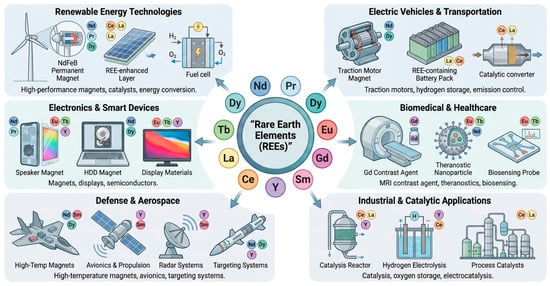
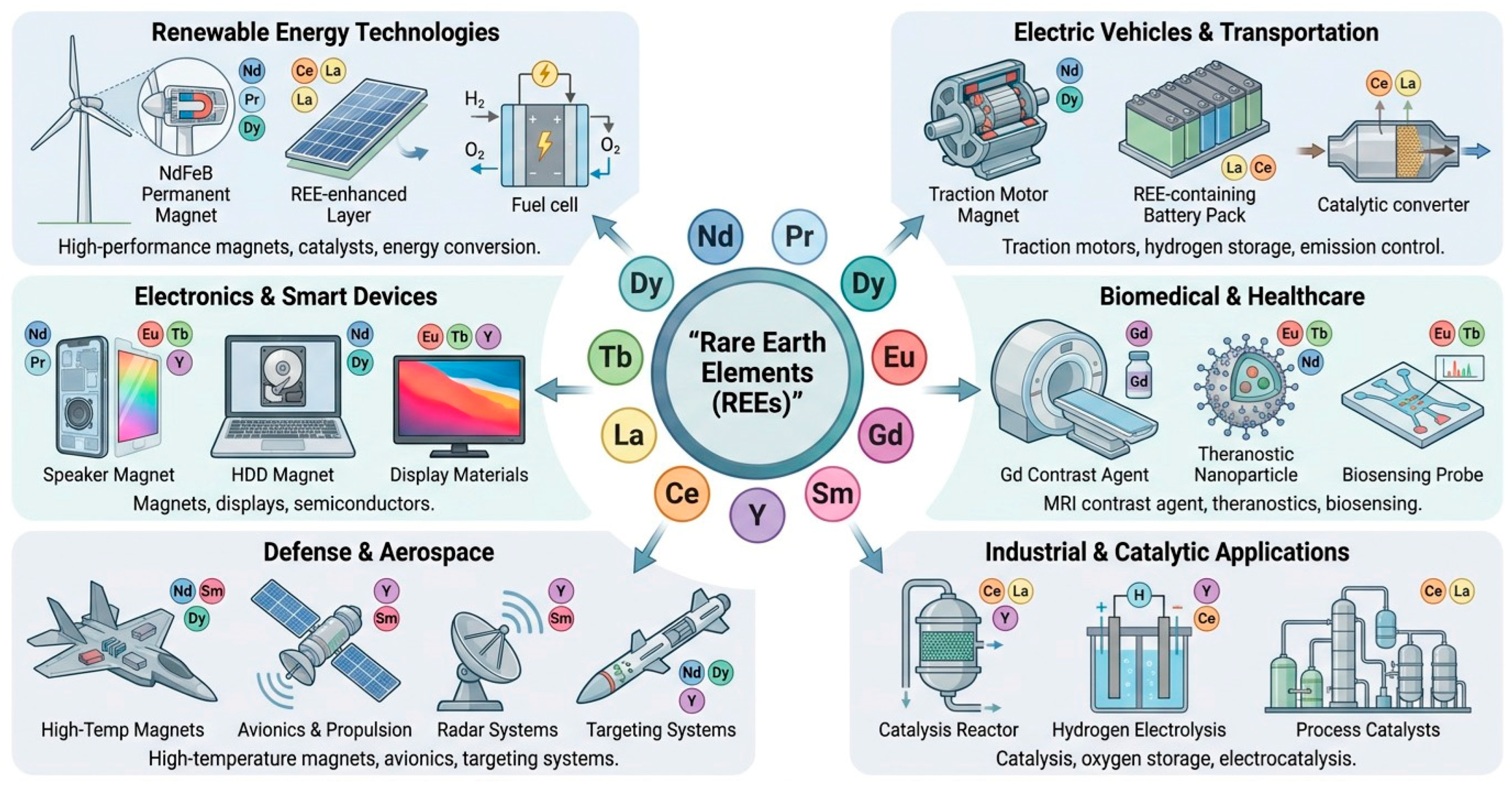
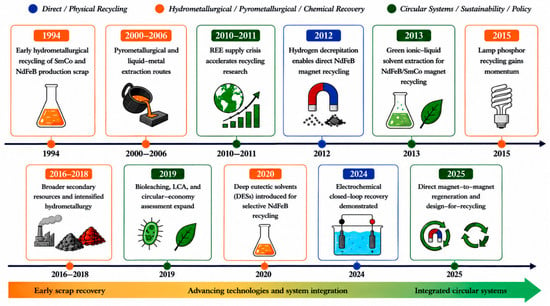
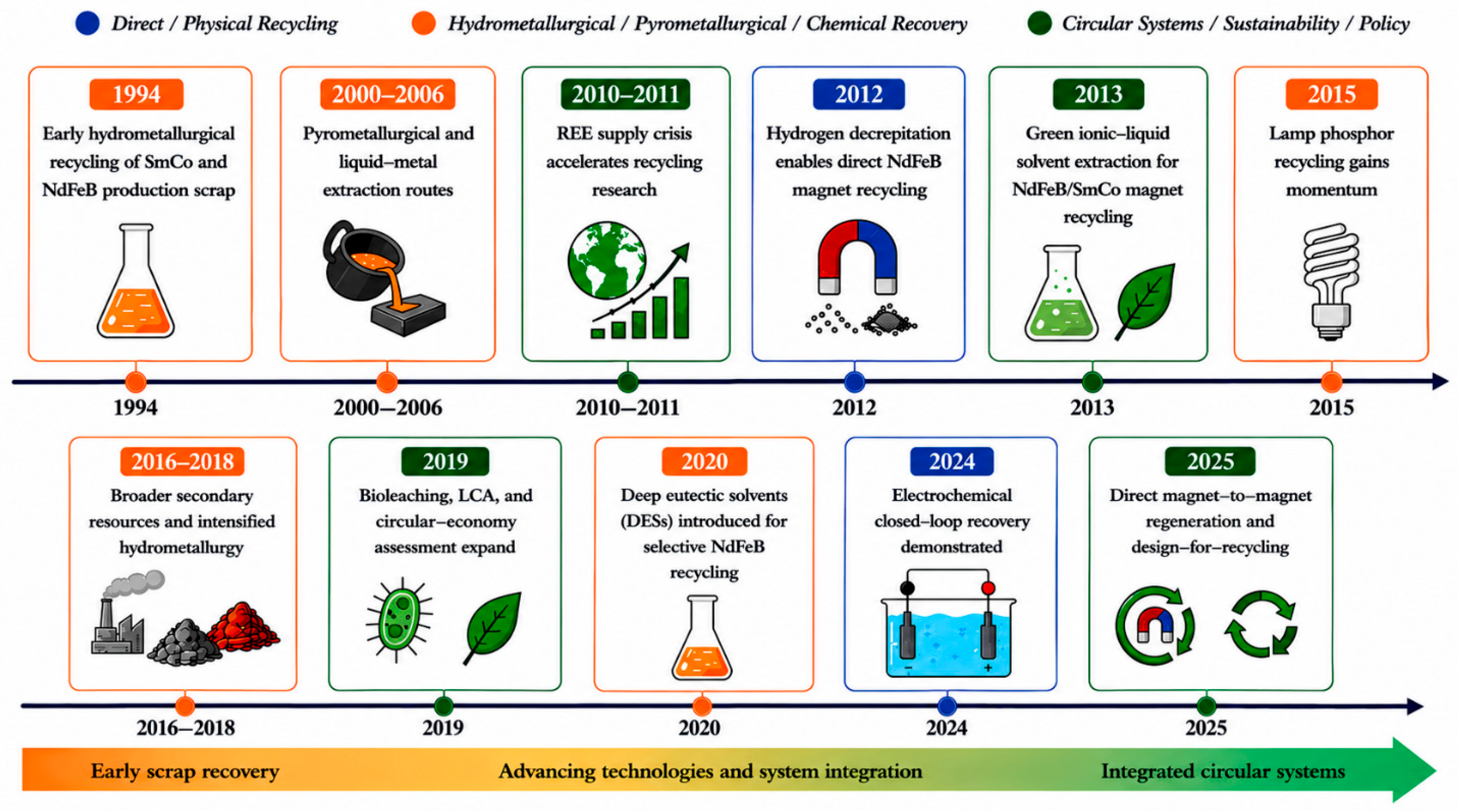
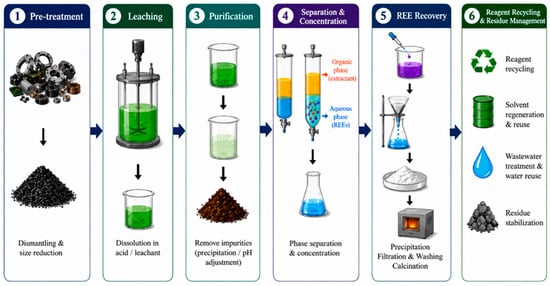
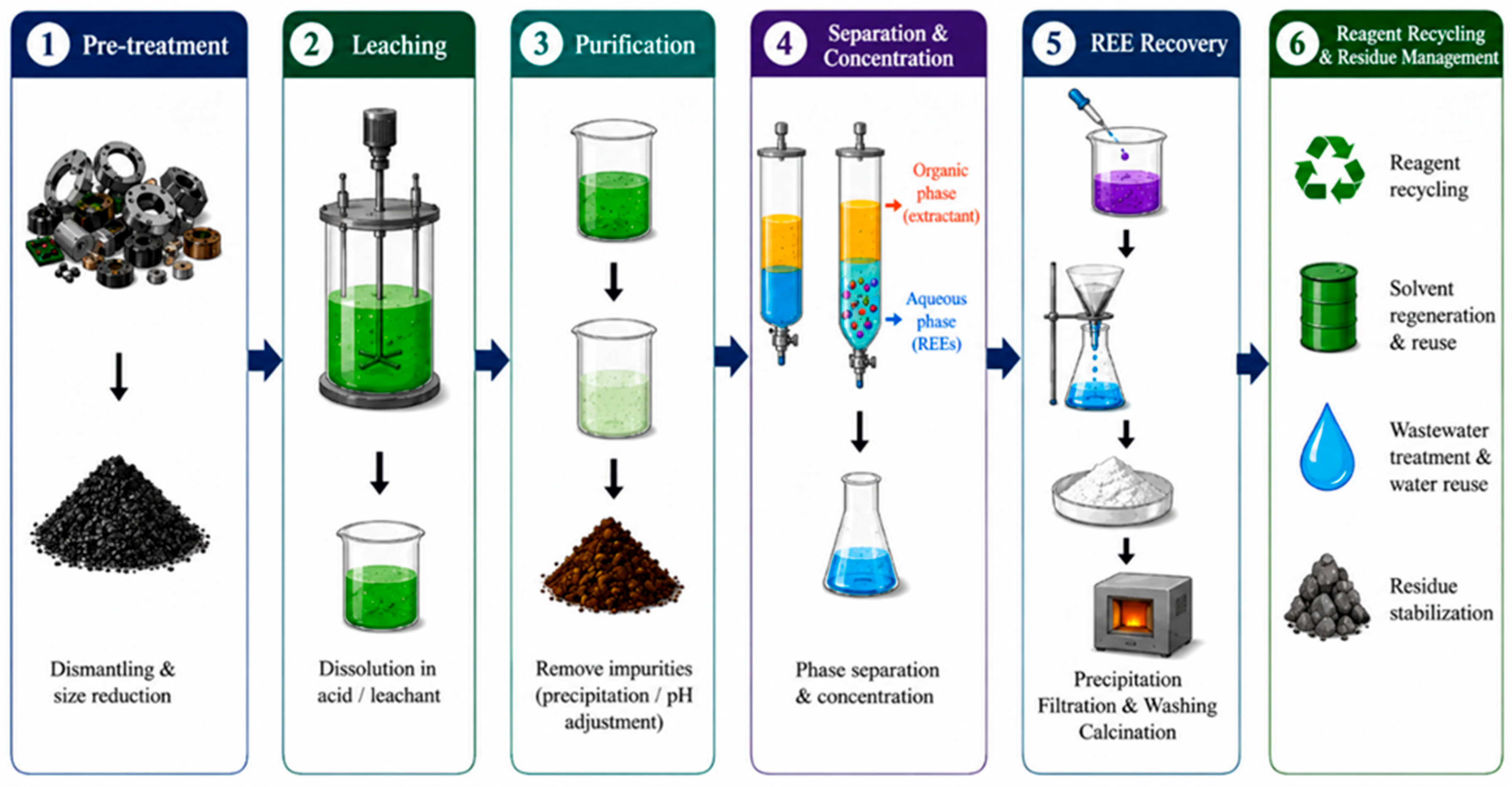
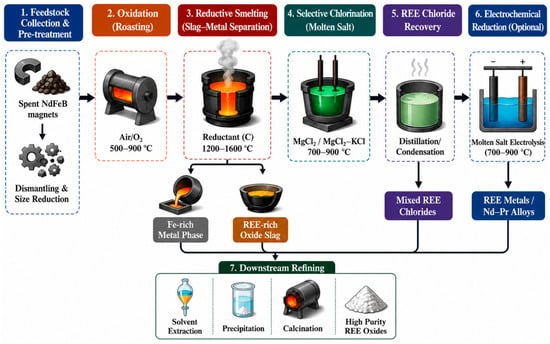
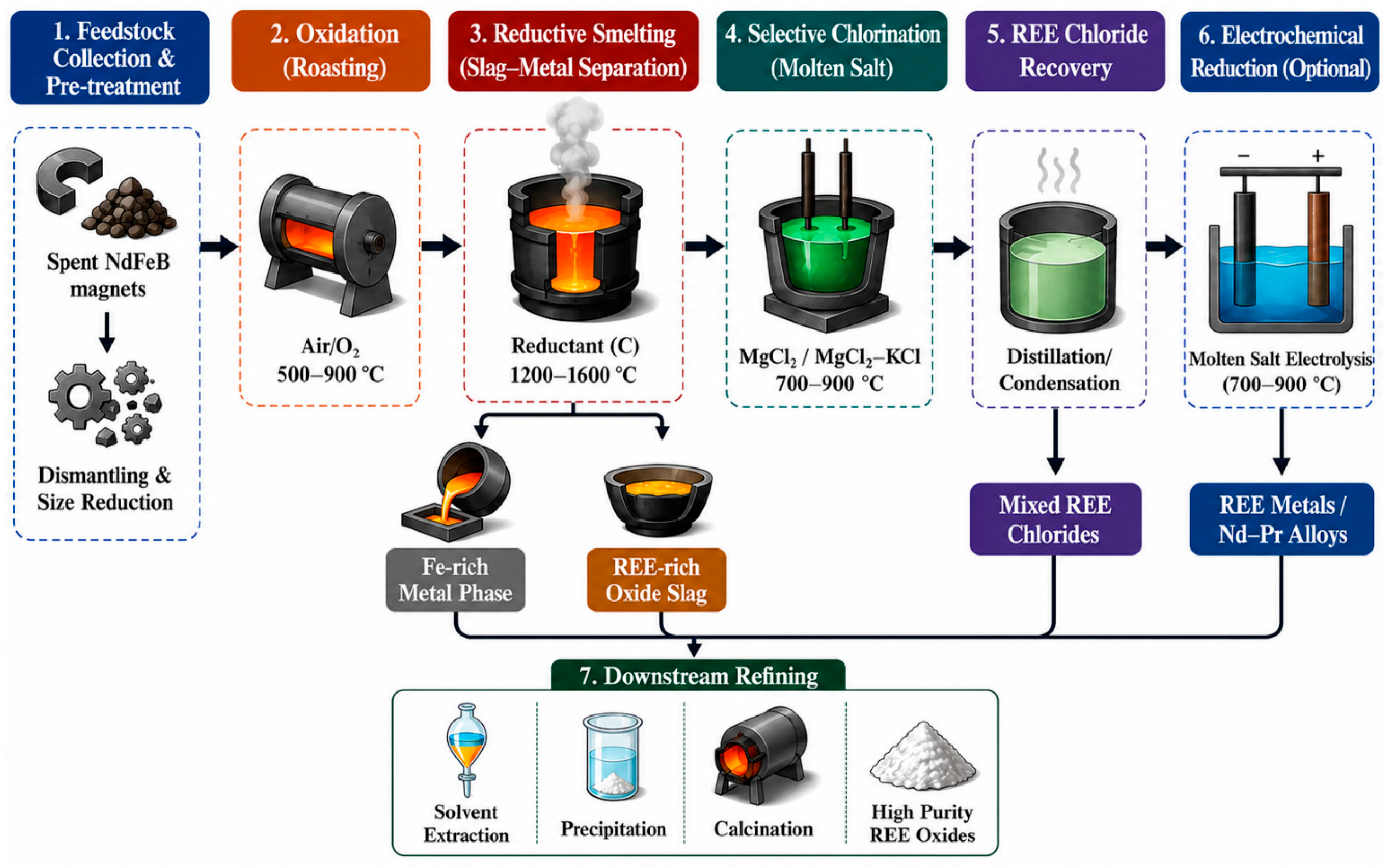
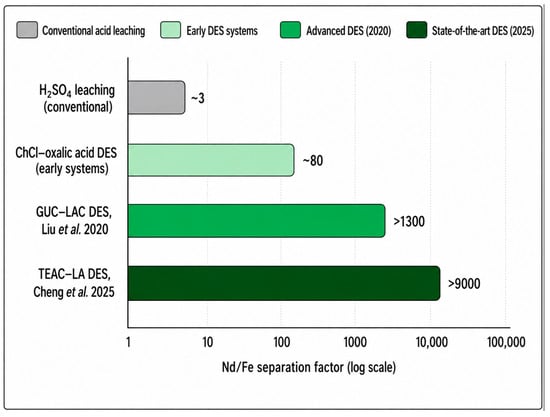
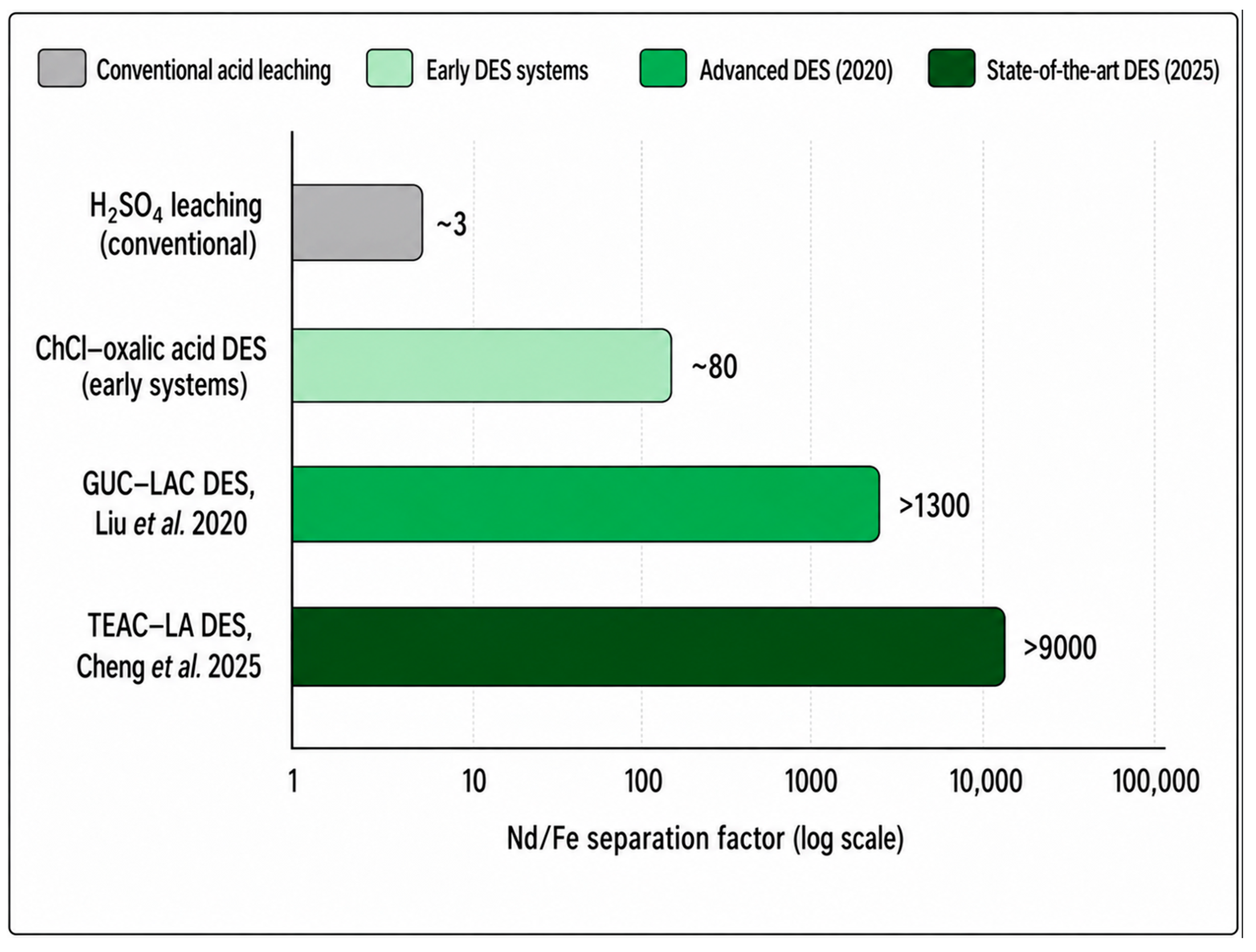
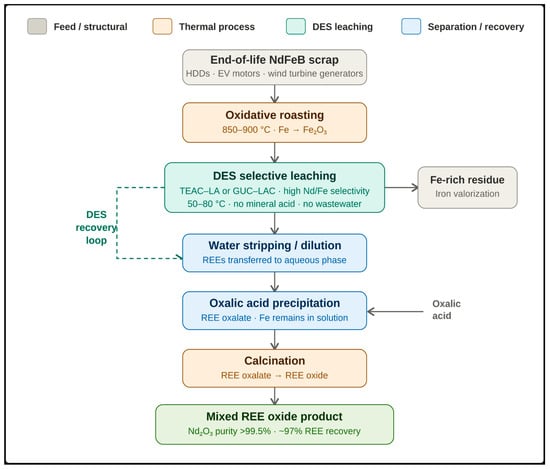
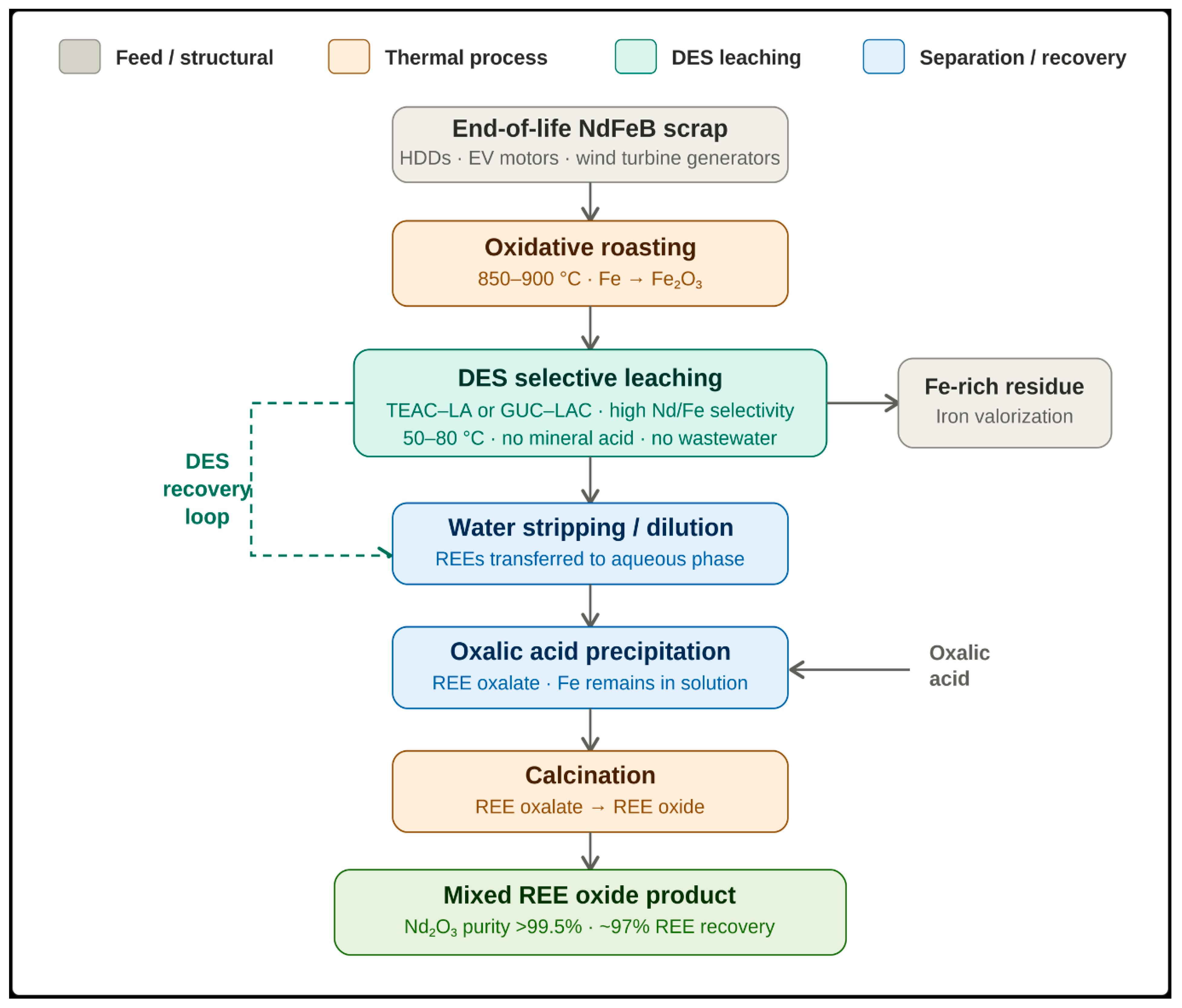
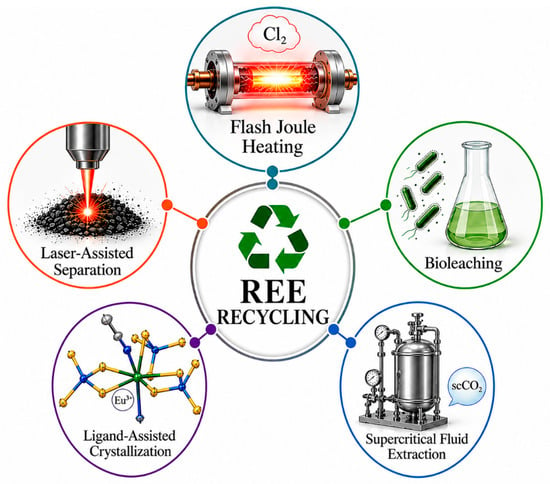
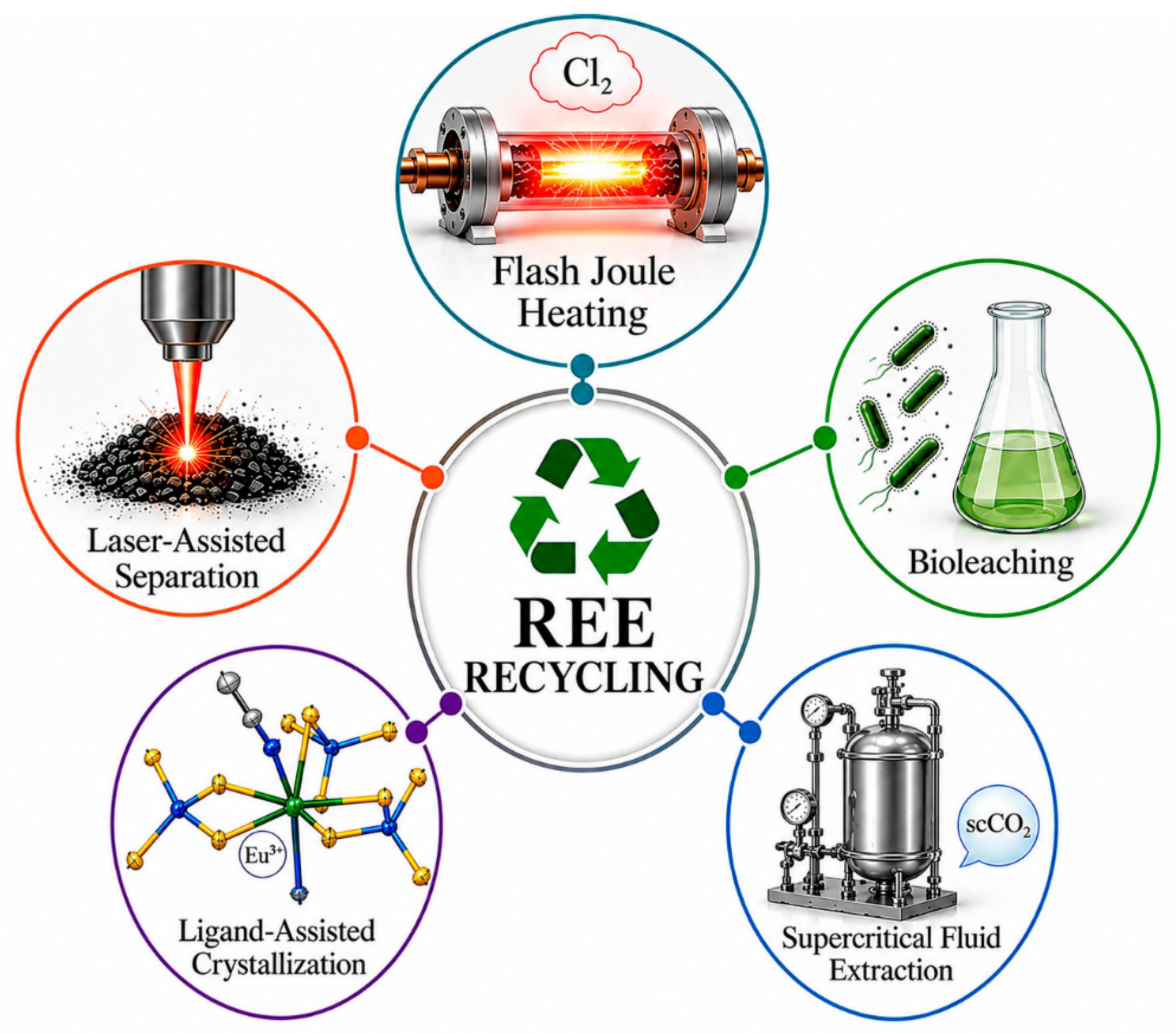
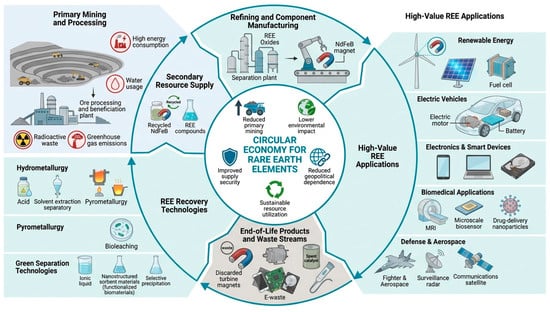
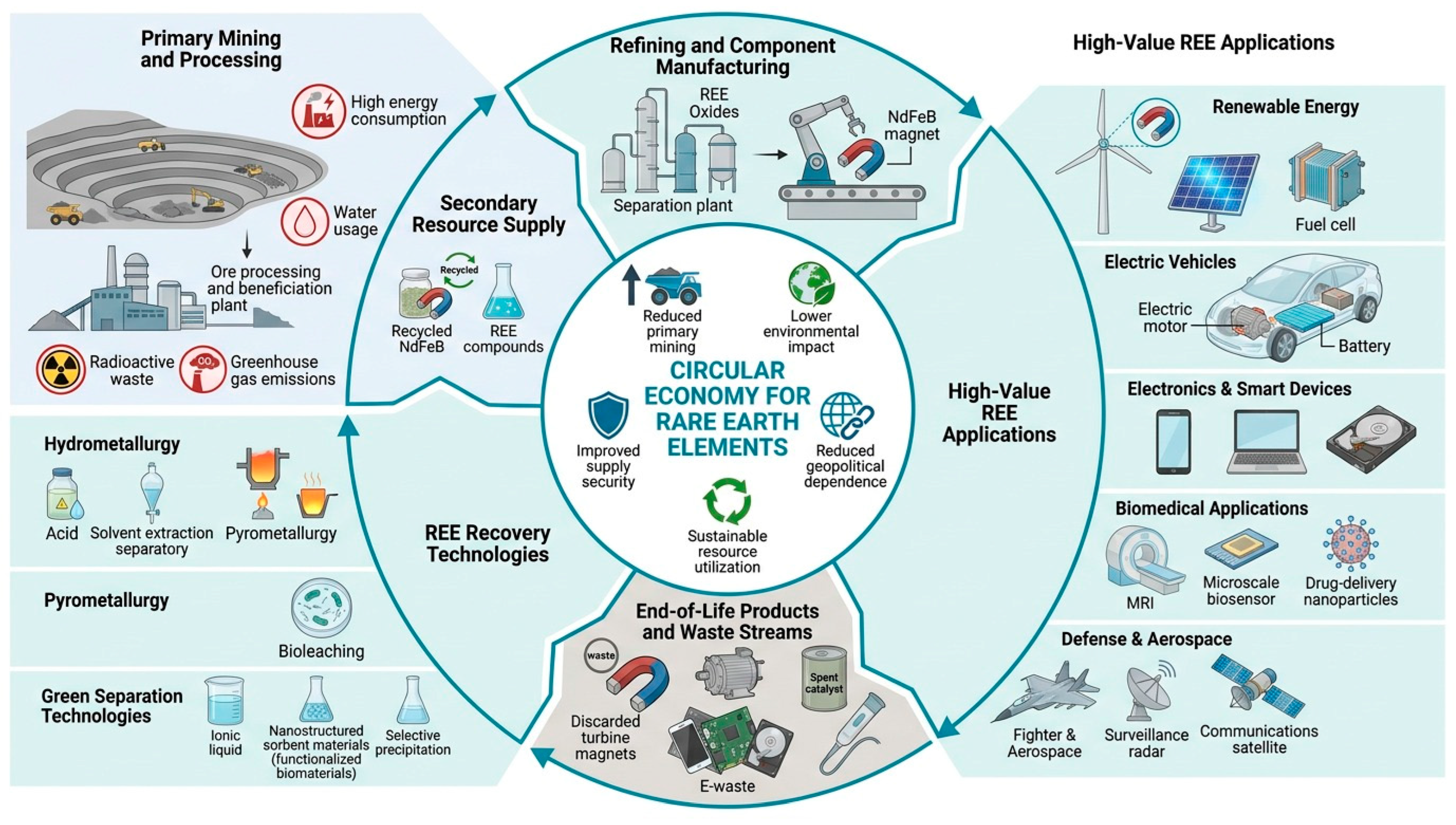

Disclaimer/Publisher’s Note: The statements, opinions and data contained in all publications are solely those of the individual author(s) and contributor(s) and not of MDPI and/or the editor(s). MDPI and/or the editor(s) disclaim responsibility for any injury to people or property resulting from any ideas, methods, instructions or products referred to in the content. |
© 2026 by the authors. Licensee MDPI, Basel, Switzerland. This article is an open access article distributed under the terms and conditions of the Creative Commons Attribution (CC BY) license.