


Abstract
Underground mining environments present elevated occupational health risks, primarily due to substantial exposure to diesel exhaust emissions within confined and poorly ventilated spaces. This study assesses the real-world performance of two advanced retrofit emission control systems—Proventia NOxBuster and Purifilter—installed on underground mining trucks operating in a Spanish mine. Emissions of carbon monoxide (CO), nitric oxide (NO), and nitrogen dioxide (NO2) were quantified using a Testo 350 multigas analyser, while ultrafine particle (UFP) concentrations were measured with an Engine Exhaust Particle Sizer (EEPS-3090) equipped with a thermodiluter. Controlled tests under both idling and acceleration conditions revealed substantial reductions in pollutant emissions: CO decreased by 60–98%, NO by 51–92%, and NO2 by 20–87%, depending on the system and operational phase. UFP concentrations during idling dropped by approximately 90%, from 542,000 particles/cm3 in untreated trucks to below 50,000 particles/cm3 in retrofitted vehicles. Under acceleration, the Proventia NOxBuster achieved reductions exceeding 95%. Conversely, Purifilter-equipped trucks exhibited a counterintuitive increase in UFPs within the 5.6–40 nm range, potentially due to ammonia slip events during selective catalytic reduction (SCR). Despite these discrepancies, both systems demonstrated considerable mitigation potential, albeit highly dependent on exhaust temperature (optimal: 200–450 °C), urea dosing precision, and maintenance protocols. This work underscores the necessity of in situ performance verification, regulatory vigilance, and targeted intervention strategies to protect underground workers effectively. Further investigation is warranted into the long-term health benefits, system durability, and nanoparticle emission dynamics under variable load conditions.
1. Introduction
Underground mining constitutes one of the most complex and hazardous industrial environments, characterised by confined spaces, limited natural ventilation, and an operational reliance on heavy-duty diesel-powered machinery in most of the cases. Diesel engines remain essential to subterranean operations due to their robustness, power output, and adaptability to demanding working conditions. However, diesel exhaust emissions pose considerable occupational and environmental health hazards. These emissions include a complex mixture of gaseous pollutants—such as carbon monoxide (CO), nitric oxide (NO), and nitrogen dioxide (NO2)—and particulate matter (PM), notably ultrafine nanoparticles [1]. Diesel exhaust is recognised as the predominant source of submicron aerosol particles in mining settings [2], with diesel particulate matter (DPM) classified as a Group 1 carcinogen by the International Agency for Research on Cancer [3]. Due to their small aerodynamic diameter, these particles can penetrate deep into the respiratory tract, reaching the alveolar region and contributing to respiratory, cardiovascular, and oncological diseases [4].
In light of the growing body of scientific evidence linking diesel exhaust exposure to adverse health outcomes, the European regulatory framework has progressively tightened occupational exposure limits for diesel-related pollutants. In 2019, Directive 2004/37/EC [5] was amended by Directive (EU) 2019/130 [6] to classify diesel engine exhaust as a carcinogenic agent and to establish a binding occupational exposure limit (OEL) of 0.05 mg/m3, measured as elemental carbon (EC). This limit formally entered into force in February 2023. However, recognising the specific challenges faced by high-exposure sectors such as underground mining and tunnel construction—where technical and logistical constraints complicate rapid compliance—the legislation granted a transitional period of three years. Complementing this regulation, Directive 2017/164/EU [7] introduced stricter indicative exposure limit values for key diesel-related gases, including CO, NO, and NO2, further reinforcing the need for effective emission control strategies in confined occupational environments [8].
In response, mining operations have increasingly adopted mitigation strategies, including transitioning to battery-electric equipment, updating fleets to comply with Stage V emission standards, and retrofitting legacy vehicles with advanced aftertreatment technologies. Although battery-electric machinery offers clear environmental and occupational advantages, its large-scale deployment is often constrained by high capital costs, range limitations, and logistical difficulties in extensive underground layouts [9,10]. Thus, the retrofit of conventional diesel fleets with integrated emission control systems—principally diesel particulate filters (DPFs) and selective catalytic reduction (SCR) units—has emerged as a pragmatic and cost-effective approach to reducing in-mine emissions.
The regulatory evolution of non-road mobile machinery (NRMM) standards from Stage I to Stage V has driven significant reductions in PM emissions. Since the implementation of Stage I in 1999, each subsequent stage has progressively tightened emission limits. Stage III, introduced in 2006, achieved a 63% reduction in PM emissions compared to earlier levels. Stage IV further reduced PM by 90% relative to Stage I. Stage V, which came into effect in 2016, imposed the most stringent limits to date, reducing the PM threshold from 0.025 g/kWh to 0.015 g/kWh and introducing a particle number (PN) limit of 1 × 10¹² particles/kWh for particles > 23 nm. This regulatory tightening has compelled the widespread adoption of DPFs for engines ranging between 19 kW and 560 kW. Additionally, Stage V extended regulatory oversight to include compression ignition engines below 19 kW and above 560 kW, as well as generator sets above 560 kW [11,12].
Among diesel-derived pollutants, ultrafine particles (UFPs; <100 nm) are particularly concerning due to their enhanced surface area-to-mass ratio and high chemical reactivity. UFPs can traverse the alveolar–capillary barrier, enter systemic circulation, and induce oxidative stress, neurotoxicity, inflammation, cardiovascular dysfunction, and cancer [13,14,15]. The World Health Organization (WHO) recommends a limit of 20,000 particles/cm3 for hourly average exposure, highlighting the urgency of effective nanoparticle control in underground environments [16].
Despite regulatory advancements, substantial gaps remain in understanding the toxicological implications of UFPs—particularly in relation to surface chemistry, morphology, and biological interactions [17]. Moreover, toxicity tends to increase as particle size decreases, exacerbating the health risks associated with particles smaller than 30 nm [18].
Studies in underground mining consistently highlight EC as the primary marker of diesel exhaust exposure. In Western Australia (2006–2012), underground miners showed a median EC of 0.069 mg/m3, with concentrations ranging up to 1.00 mg/m3 [19]. In a Swedish iron ore mine, EC exposures were lower, with a geometric mean of 0.007 mg/m3 and peaks of 0.094 mg/m3 [20]. Pre-2001 assessments in U.S. non-metal mines reported underground EC concentrations between 0.04 and 0.384 mg/m3. In Canadian gold mines (2016), mean EC ranged from 0.067 to 0.110 mg/m3, with higher values among load–haul–dump and truck operators, although ventilated cabins substantially reduced exposures [21]. In Ghana, underground gold miners recorded the highest levels, with operators exceeding 0.25 mg/m3 on average, well above occupational exposure limits [22].
While DPF + SCR technologies have demonstrated effectiveness in reducing DPM and NOx emissions, their real-world performance can be inconsistent. For instance, ammonia (NH3) slip events during SCR operation—often caused by dosing imbalances—can increase downstream nanoparticle concentrations, especially in the <23 nm size range [23,24]. Similarly, under certain thermal conditions, DPFs may elevate NO2 levels [25], further complicating emission control in confined environments. These complex dynamics necessitate empirical field assessments, particularly in confined environments like underground mines, where ventilation is restricted and emission accumulation may lead to unintended exposure hazards [26].
A critical determinant of SCR efficacy is exhaust temperature, which must remain within the operational window of approximately 200–450 °C to ensure optimal catalyst activity [27].Variability in load, driving patterns, and ambient conditions often leads to suboptimal exhaust temperatures, thus compromising system efficiency. Consequently, real-world studies are required to determine the operational feasibility of retrofit systems in active mining contexts.
This study evaluates the in situ performance of two integrated retrofit emission control technologies—Proventia NOxBuster and Purifilter—installed on a fleet of Volvo A25 articulated dump trucks operating in an underground mine in northern Spain. Both systems incorporate DPF and SCR units to reduce emissions of CO, NO, NO2, and UFPs. Using a Testo 350 multigas analyser and a high-resolution Engine Exhaust Particle Sizer (EEPS-3090), this research quantifies pollutant concentrations under controlled idling and acceleration cycles. The results contribute to the growing body of evidence supporting emission mitigation technologies in mining environments and offer insights into the operational challenges, technological viability, and occupational health implications of retrofitting legacy diesel fleets.
This research aims to evaluate the real-world effectiveness of retrofit emission control systems (DPF + SCR) installed on underground mining trucks, assessing their potential to support compliance with upcoming EU occupational exposure limits and improve worker health protection.
2. Materials and Methods
2.1. Site Description
The study was conducted in an operational underground mine located in northern Spain, which employs a room-and-pillar extraction method. The mine features an extensive and intricate network of galleries extending for several kilometres and descending to depths exceeding 200 m. Due to the absence of fixed transport infrastructure, diesel-powered vehicles are indispensable for all transport and logistical operations within the underground environment.
2.2. Measurement Equipment
Two advanced analytical instruments were employed to characterise the exhaust emissions from the diesel trucks:
Testo 350 Multigas Analyser (Testo, Lenzkirch, Germany): A portable high-precision analyser used to quantify CO, NO, NO2, SO2, and CO2 concentrations in exhaust gases. The device consists of a control unit with a graphic interface and a measurement module equipped with electrochemical sensors. Its technical specifications are summarised in Table 1.
Table 1.
Technical Characteristics of Testo 350.
EEPS-3090 (TSI Inc., Shoreview, MN, USA): This instrument was used to determine the number concentration and size distribution of UFPs in diesel exhaust, spanning a particle diameter range of 5.6 to 560 nanometres, divided into 32 channels. Its high sampling flow rate (10 L/min) reduces diffusional particle losses, thereby enhancing measurement accuracy. A Rotating Disk Thermodiluter (Model 379020A) (TSI Inc., Shoreview, MN, USA) was used in conjunction to dilute and stabilise the exhaust sample, minimising condensation artefacts and removing volatile fractions. This approach is consistent with established protocols in diesel nanoparticle research [28,29,30].
2.3. Emission Control Systems
Two types of diesel emission reduction systems were evaluated:
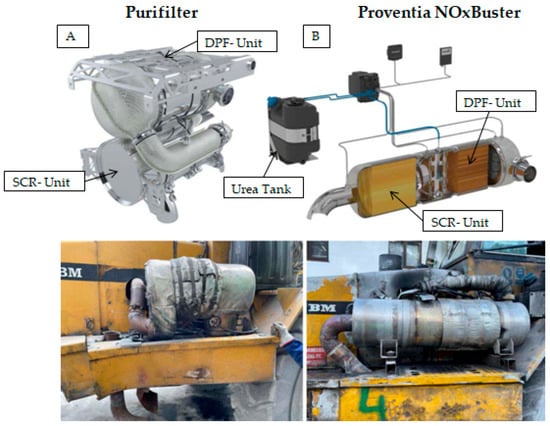
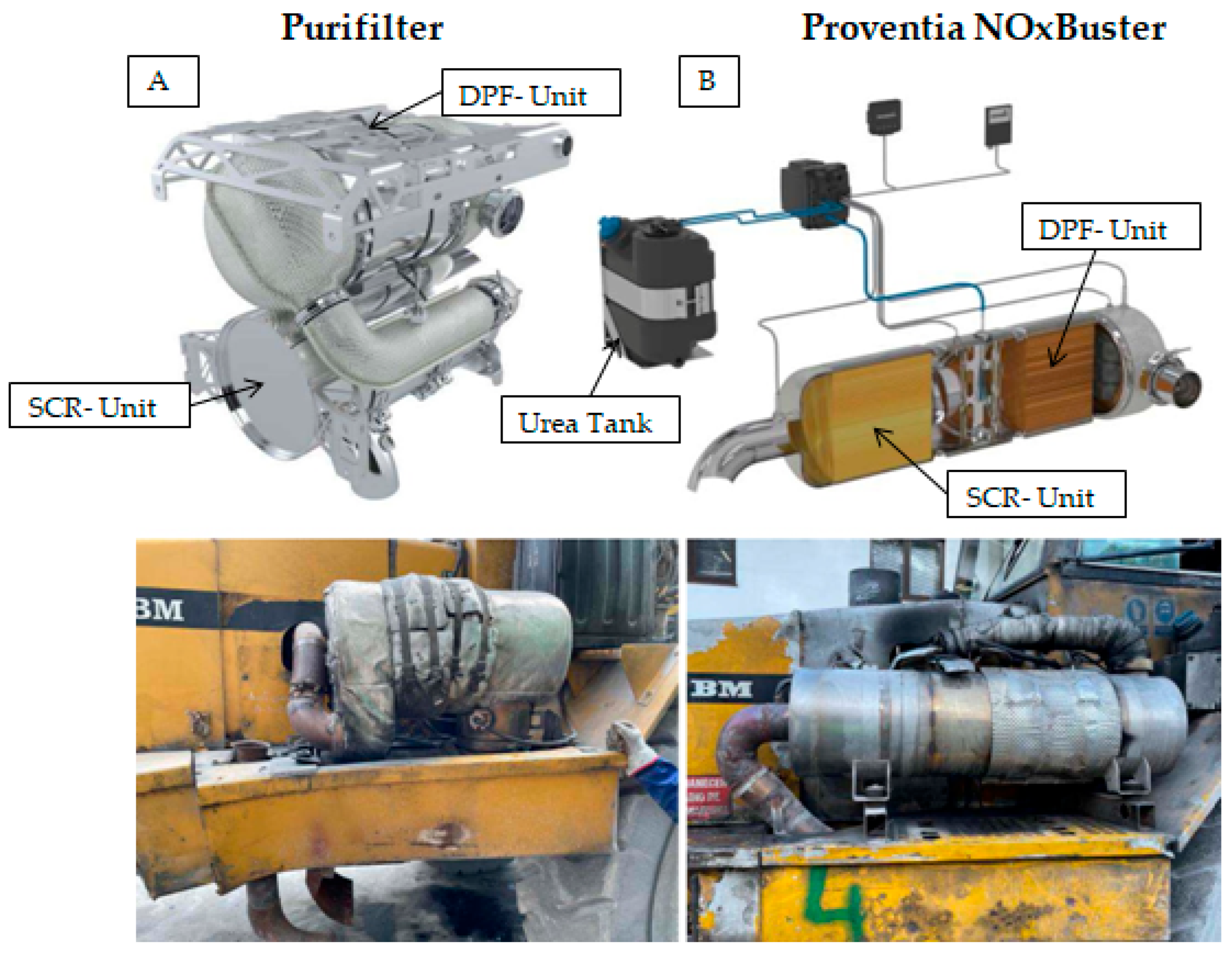
- Proventia NOxBuster: This system integrates a Diesel Oxidation Catalyst (DOC), DPF, and SCR unit. The DOC neutralises CO and unburnt hydrocarbons, while the DPF captures soot and solid particles. Downstream, the SCR system reduces NOx through the injection of aqueous urea (AdBlue). Designed for engines rated between 50 and 383 kW, it operates effectively at exhaust temperatures ranging from 200 to 500 °C [31] (Figure 1).Figure 1. Purifilter (A) and Proventia NOxBuster (B) systems installed on Volvo A25 articulated trucks, showing a side view with the systems mounted on the exhaust train.
- Purifilter: This system also integrates DPF and SCR technologies and is suitable for engines ranging from 75 to 450 kW. Its design and operational principles are similar to the Proventia system but are adapted for specific vehicle configurations.
Both systems were installed on Volvo A25 articulated trucks. Two units were fitted with Proventia NOxBuster, and two with Purifilter. Although both DPF systems support automatic regeneration, underground thermal conditions often prevent sufficient temperature buildup. To address this, manual regeneration was performed by maintenance personnel in the surface workshop. While this method may increase operational costs, it prevents regeneration-induced emissions in the underground environment, thus contributing to improved air quality and occupational health protection. This approach is particularly relevant given that the regeneration process is known to generate a substantial number of particles [32,33].
2.4. Sampling Methodology
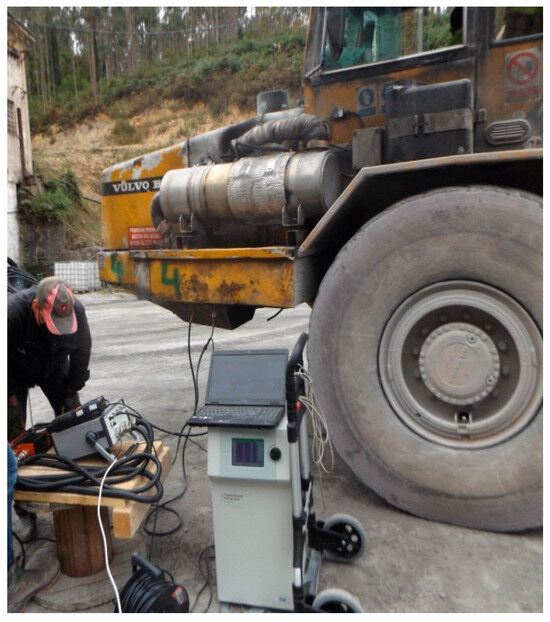
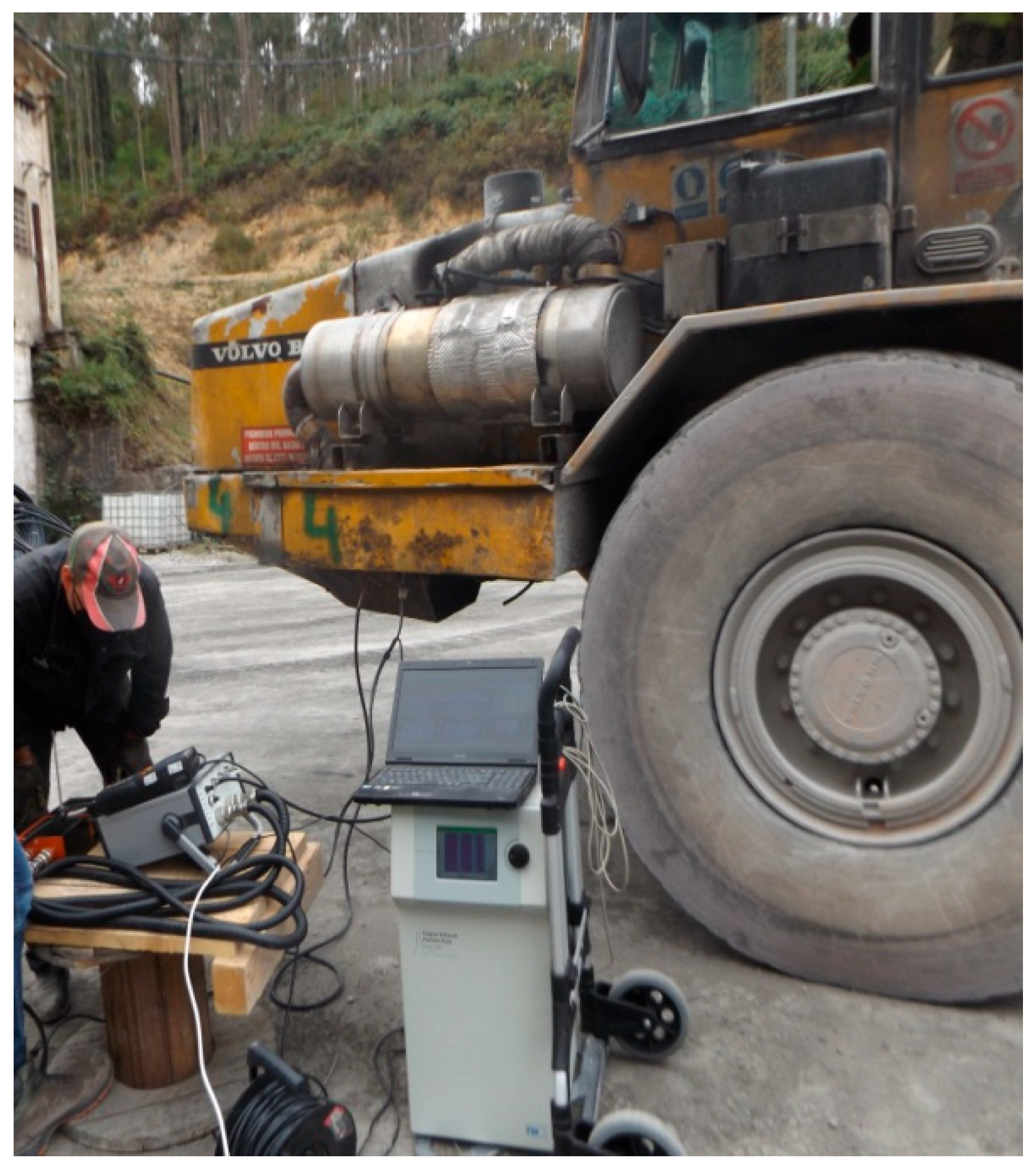
Emission measurements were performed in a designated outdoor testing zone near the mine entrance (Figure 2). All trucks had completed at least one hour of underground operation under full-load conditions before testing commenced. This protocol ensured that engine and aftertreatment components had reached stable thermal operating states, representative of typical real-world conditions.
Figure 2.
Nanoparticle sampling.
The sampling campaign assessed six Volvo BM A25 articulated trucks: two without emission control systems, two retrofitted with the Proventia NOxBuster, and two with the Purifilter.
2.4.1. Gaseous Emissions Testing
Gaseous pollutants were measured using the Testo 350 multigas analyser. Each truck underwent a standardised testing sequence designed to simulate typical duty cycles:
- 0 to 1 min: Idling;
- 1 to 2 min: Acceleration to 3000 rpm;
- 2 to 3.5 min: Idling;
- 3.5 to 4 min: Second acceleration to 3000 rpm;
- 4 min onward: Idling.
This procedure enabled consistent evaluation of emissions during both transient and steady-state conditions.
2.4.2. Nanoparticle Measurement
UFP concentrations and size distributions were measured during both idling and acceleration phases using the EEPS-3090 in combination with the 379020A thermodiluter.
Before each sampling session, all instruments were calibrated in accordance with the manufacturer’s instructions, and daily zero checks were performed to ensure baseline stability. After sampling, all equipment components were thoroughly cleaned, and particle concentrations recorded with the EEPS were cross-validated against a Condensation Particle Counter (CPC 3007, TSI Inc., Shoreview, MN, USA) to verify instrument performance and ensure data reproducibility.
A constant dilution factor of 1:49 was applied across all tests to prevent sensor saturation and to enable accurate detection of particle counts and size distributions across the entire measurement range.
Measurements were conducted outdoors under stable ambient conditions to minimise background variability and ensure consistent airflow and thermal conditions during sampling. Particular attention was paid to minimising cold-start effects, as all trucks had been operating continuously prior to testing. This was essential because cold-start conditions are known to significantly elevate UFP emissions due to incomplete combustion and delayed catalyst activation [34].
By capturing emissions during both low- and high-load scenarios, this methodology provides a comprehensive characterisation of real-world diesel exhaust profiles in underground mining vehicles.
3. Results
3.1. Gaseous Emissions
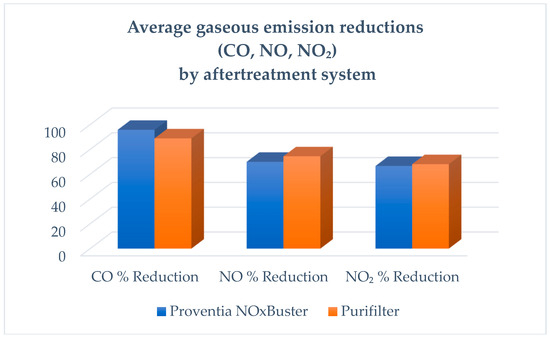
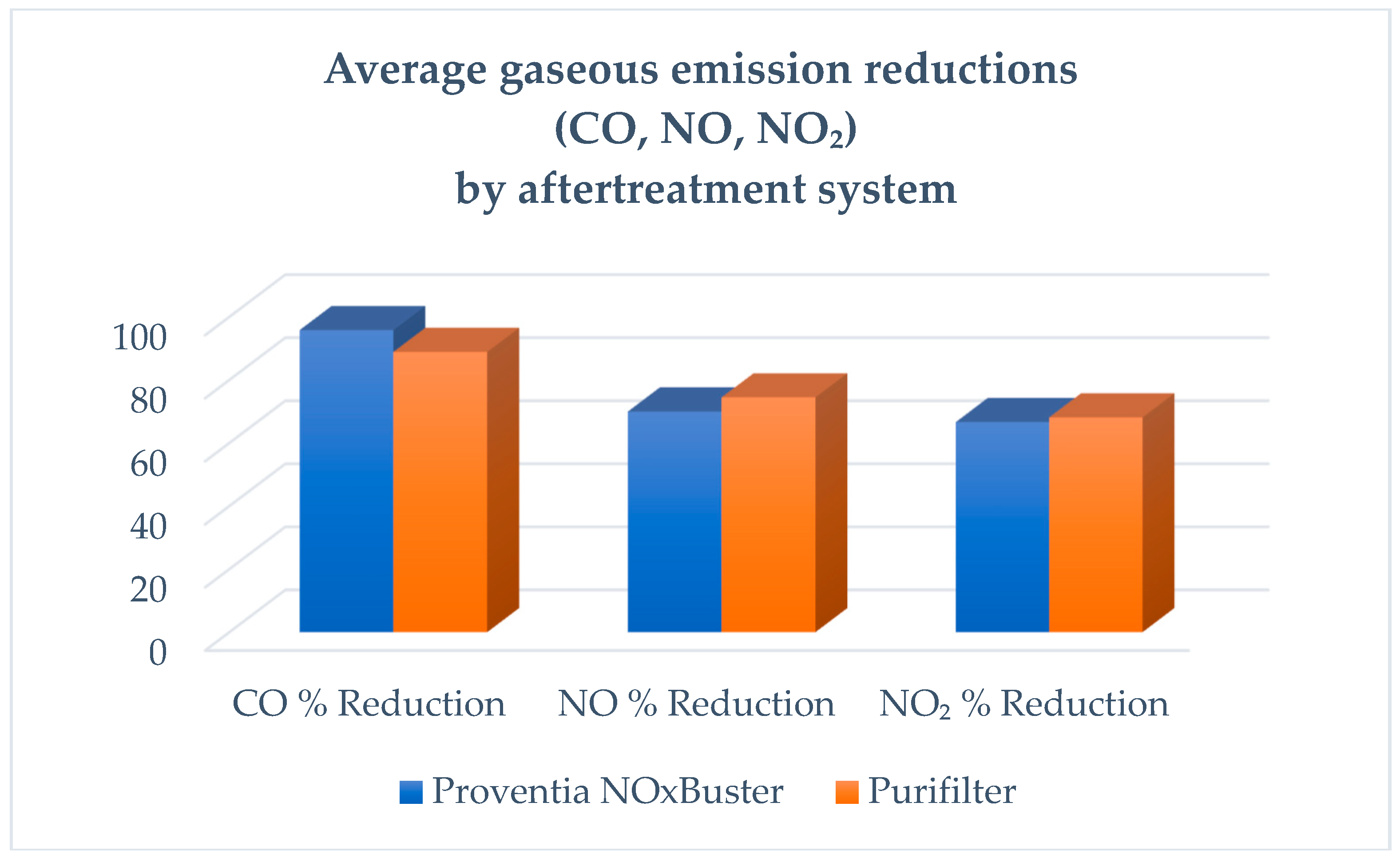
The analysis focused on three priority gaseous pollutants, CO, NO, and NO2, measured under a standardised testing protocol comprising idling and acceleration phases. The results, summarised in Figure 3 and Table 2, reveal notable emission reductions in vehicles equipped with aftertreatment systems, as compared to untreated trucks. Full-time-resolved graphs for each gas are provided in Appendix A.
Figure 3.
Average percentage reductions in carbon monoxide (CO), nitric oxide (NO), and nitrogen dioxide (NO2) emissions for Proventia NOxBuster and Purifilter systems, relative to the baseline Volvo nº6 BM. Data derived from Table 2.
Table 2.
Summary table of gas emissions in trucks without emission control system and trucks with Proventia NOxBuster and Purifilter.
3.1.1. Trucks Without Emission Control Systems
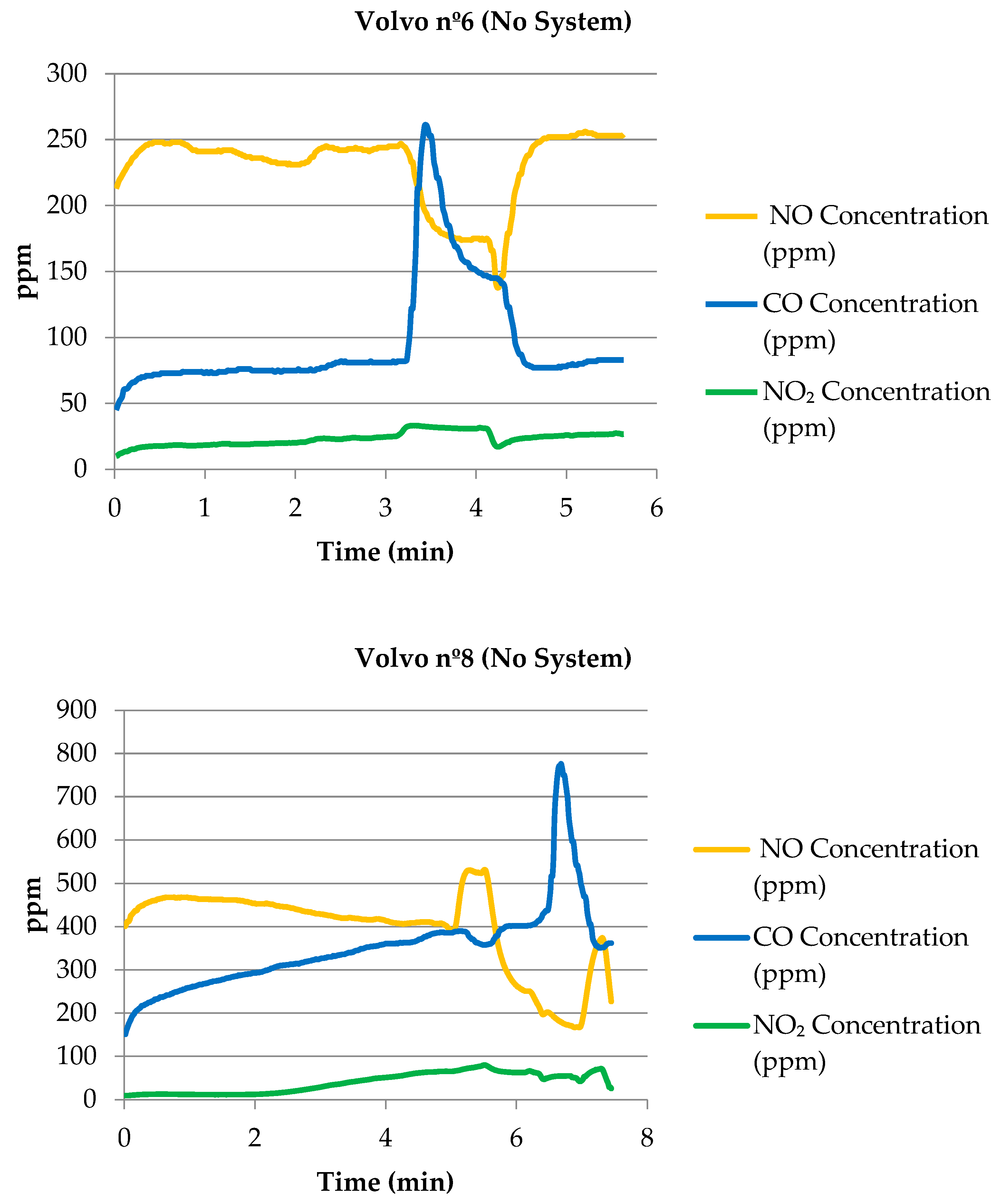
Vehicles operating without emission control systems exhibited the highest concentrations of all target pollutants. CO concentrations ranged from 96 to 350 ppm, with peaks reaching 776 ppm during acceleration (Volvo No. 8). NO levels averaged between 230 and 397 ppm, while NO2 concentrations varied between 23 and 39 ppm, with episodic peaks of 80 ppm. These values represent baseline conditions prior to retrofitting.
3.1.2. Proventia NOxBuster
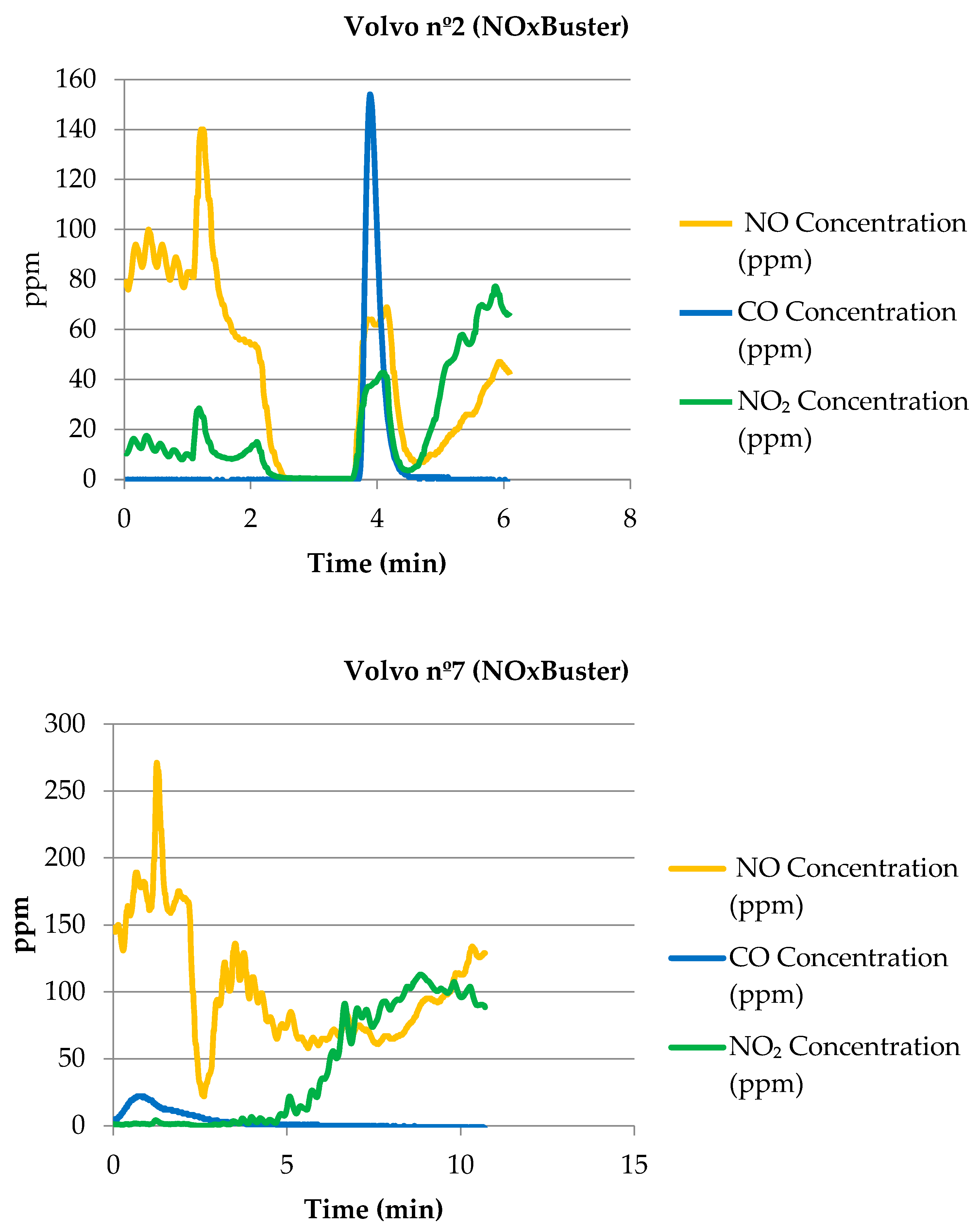
Trucks fitted with the Proventia NOxBuster system demonstrated consistent and substantial reductions across all gaseous species. CO levels were reduced by over 90%, with minimum values approaching 0 ppm and a maximum average of 6 ppm. NO concentrations were reduced by 51–81%, and NO2 emissions declined by up to 83%. These results confirm the system’s effectiveness under real-world operational loads.
These trends reinforce the crucial influence of exhaust temperature on catalytic efficiency. The SCR component operates most effectively between 200 and 450 °C, but during idle or low-load cycles—common in mining—the exhaust temperature may fall below this range, impairing urea decomposition and reducing NOx conversion efficiency [27,35]. This sensitivity to real-world thermal profiles introduces variability even among identically equipped vehicles and highlights the operational challenges of SCR technology in mining.
3.1.3. Purifilter
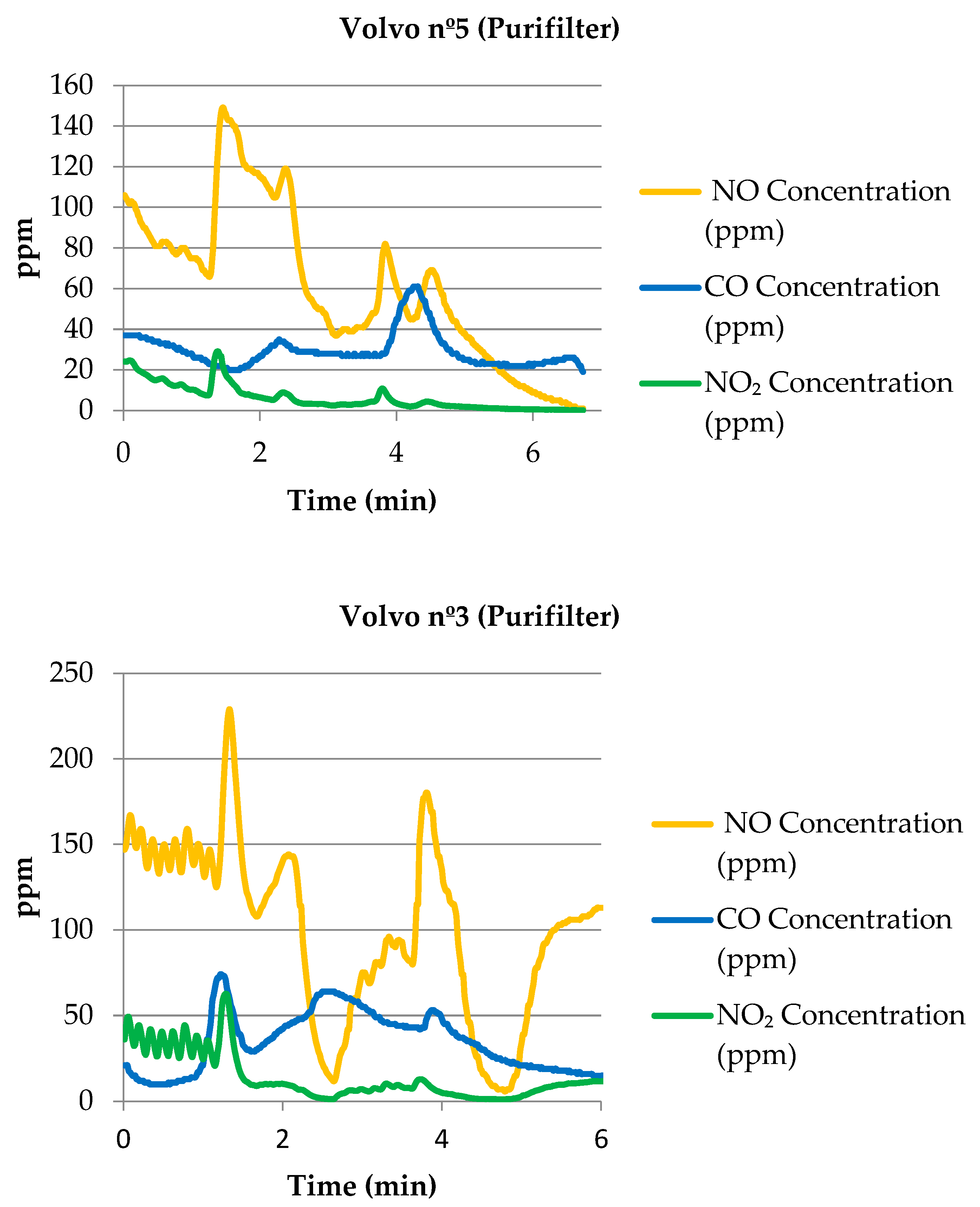
The Purifilter system also showed substantial emission reductions. CO levels dropped by 64–81%, while NO and NO2 reductions ranged from 56 to 91% and 22–87%, respectively. Although effective overall, transient increases in NO concentrations were occasionally observed during acceleration cycles, possibly due to incomplete SCR activation under non-optimal temperature regimes. Nevertheless, pollutant levels stabilised rapidly, suggesting sufficient thermal mass for catalytic recovery during sustained engine load.
3.2. Nanoparticle Emissions
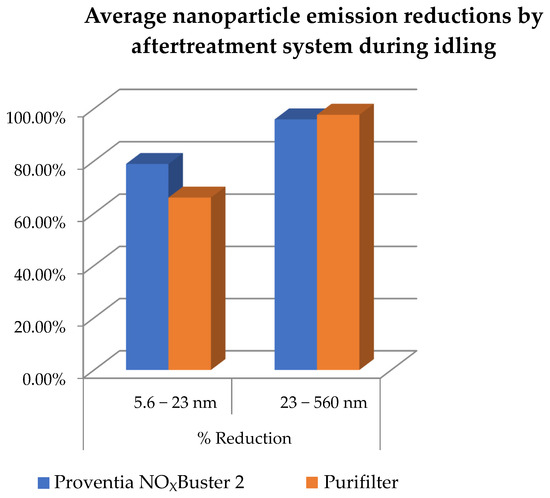
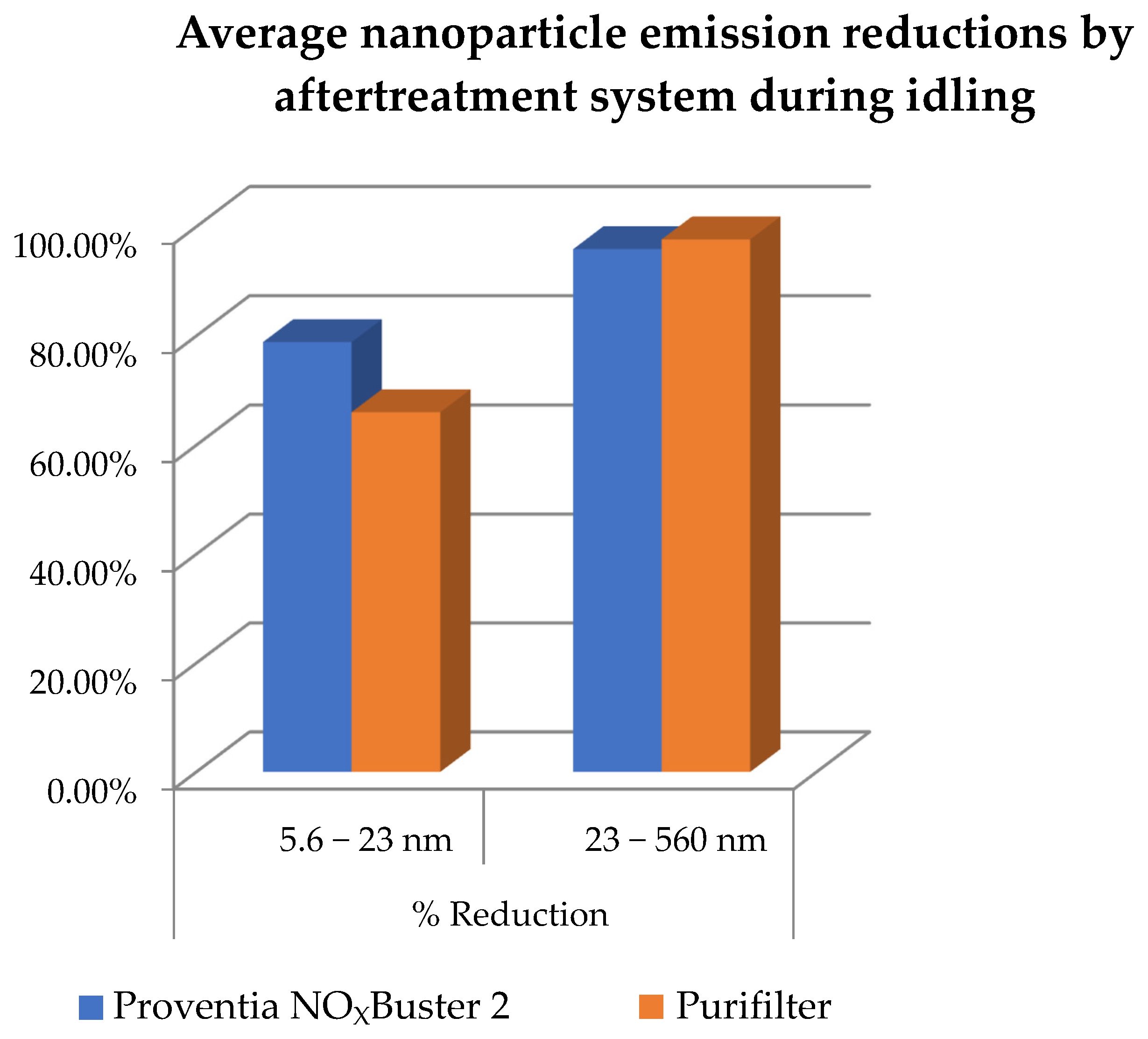
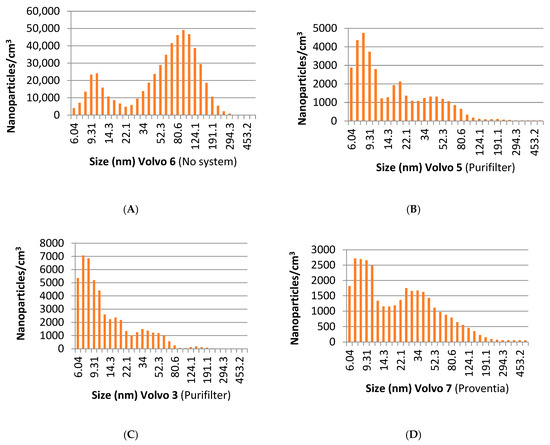
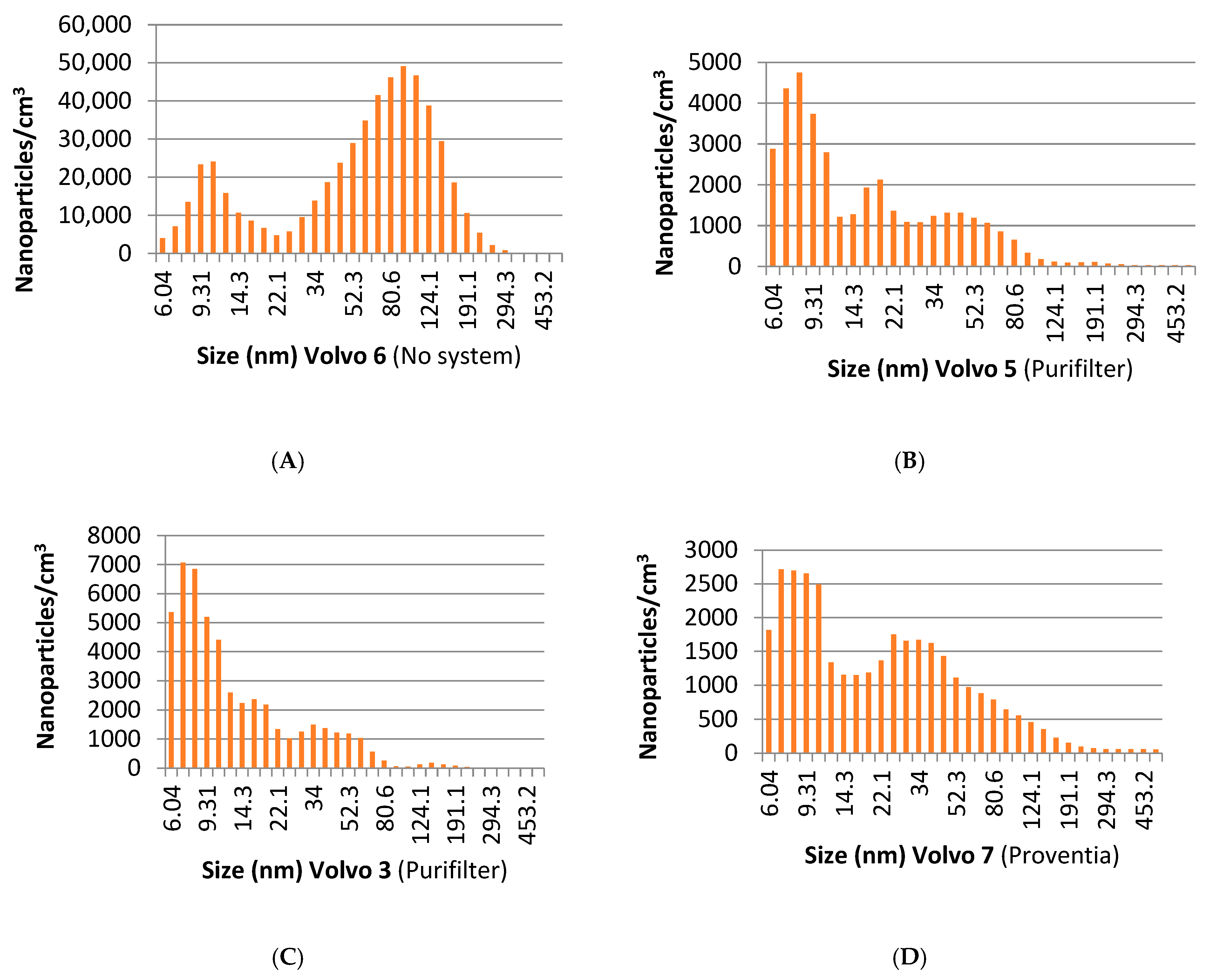
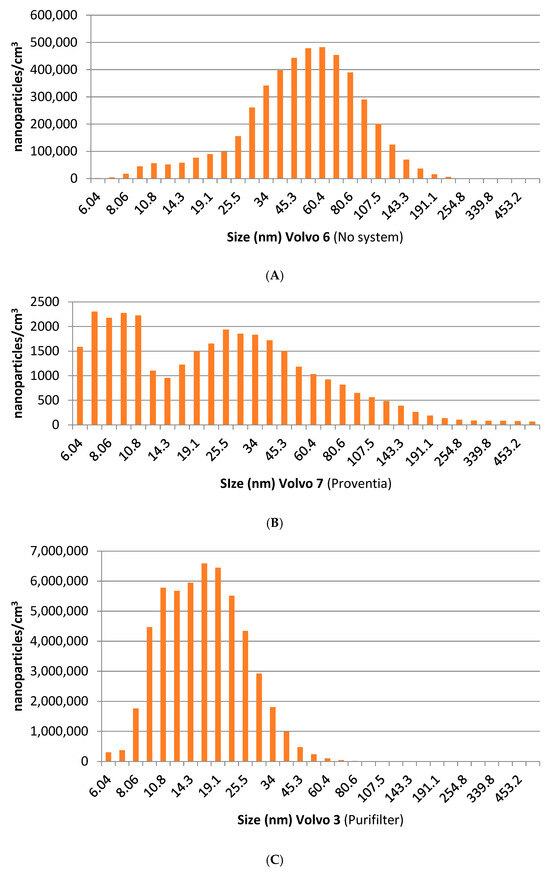
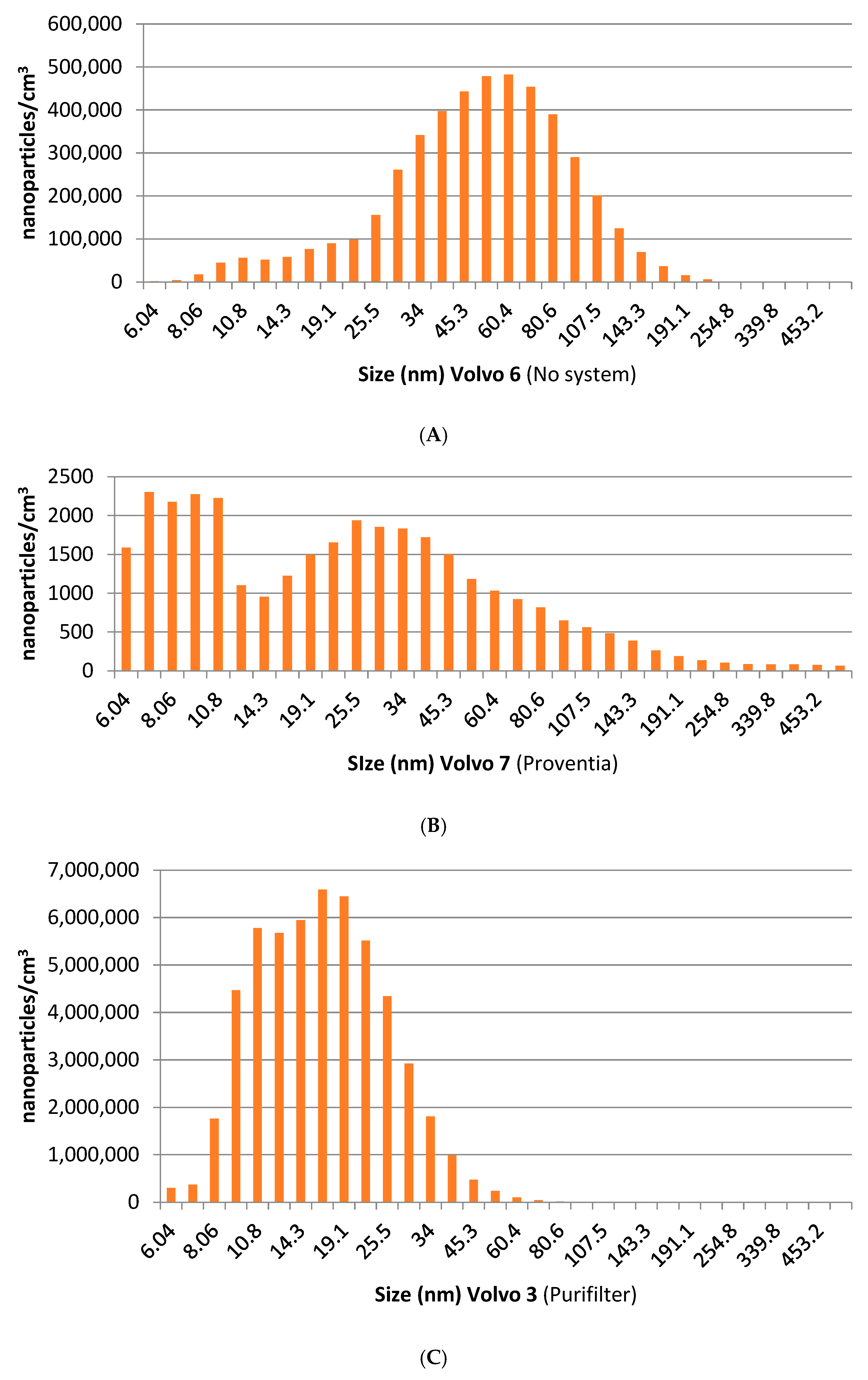
The nanoparticle emissions were assessed across all tested vehicles using the EEPS-3090 spectrometer, which provided high-resolution particle size distribution (PSD) data. The results at idling mode are shown in Figure 4 and detailed in Table 3, while Table 4 presents the nanoparticle emissions from trucks accelerated to 3000 rpm. Representative PSD curves are illustrated in Figure 5 and Figure 6.
Figure 4.
Average percentage reductions in nanoparticle concentrations for two size ranges (5.6−23 nm and 23−560 nm) using Proventia NOxBuster and Purifilter systems, relative to baseline Volvo nº6 BM. Data derived from Table 3.
Table 3.
Nanoparticle emissions from heavy plant machinery during idling mode.
Table 4.
Nanoparticle emissions from heavy plant machinery during acceleration.
Figure 5.
Ultrafine PSD at idling mode. (A) Engine without emission control system, (B,C) engines with emission control system Purifilter, (D) engine with Proventia.
Figure 6.
Ultrafine PSD in accelerated mode. (A) Engine without emission control system, (B) engine with Proventia NOxBuster emission control system, (C) engine with Purifilter emission control system.
3.2.1. Idling Conditions
Under idling, untreated trucks emitted up to 542,000 particles/cm3 (Volvo No. 6), with a bimodal PSD peaking at approximately 10 nm and 95 nm. In contrast, trucks equipped with Proventia NOxBuster exhibited ultrafine particle (UFP) concentrations below 45,000 particles/cm3, corresponding to an average total reduction of 92–94%. Similarly, the Purifilter system reduced total particle counts by approximately 91%, though it was slightly less effective in the sub-23 nm range.
Figure 5 illustrates the PSD for representative vehicles under idle. Trucks with emission control systems exhibit pronounced filtration efficiency for particles > 23 nm, while a smaller but evident UFP mode (<20 nm) persists—consistent with findings in other real-world studies [36,37].
3.2.2. Acceleration Conditions
During acceleration to 3000 rpm, the emission patterns diverged. The Proventia NOxBuster system maintained its efficiency, achieving total UFP reductions exceeding 95% and over 99% for particles within the 40–560 nm range.
Conversely, trucks equipped with Purifilter showed substantial reductions in the 40–560 nm range (up to 97%), yet emitted unexpectedly high concentrations of particles in the 5.6–40 nm range—exceeding those recorded in untreated vehicles. Specifically, Volvo No. 3 and No. 5 exhibited total particle concentrations of 6.9 to 53.8 million particles/cm3 during acceleration, yielding net increases of 49–1058% compared to baseline. These elevated emissions are likely attributable to excess ammonia (NH3) dosing during SCR operation, which can induce nucleation of semi-volatile compounds [24].
Figure 6 shows PSDs under acceleration. The Purifilter-equipped truck exhibited prominent peaks below 20 nm, indicative of nanoparticle formation events linked to thermal or chemical instability in the SCR system.
4. Discussion
Diesel exhaust emissions represent a critical concern in underground mining, particularly given their classification as carcinogenic under the European regulatory framework. To meet occupational exposure limits, such as the 0.05 mg/m3 threshold for EC and the values set by Directive 2017/164/EU for CO, NO, and NO2, diesel-powered machinery must be replaced or retrofitted with efficient emission control systems. The installation of such systems has been shown to significantly reduce levels of CO, NO, and NO2 [38]. The results of this study confirm and reinforce these findings in a real-world underground mining context.
Both the Proventia NOxBuster and Purifilter systems demonstrated substantial pollutant reductions. Proventia NOxBuster-equipped trucks achieved CO reductions greater than 90%, and NO and NO2 emissions were also significantly lowered by up to 81% and 83%, respectively. Purifilter likewise reduced these pollutants, with recorded decreases in CO of up to 81%, NO up to 91%, and NO2 up to 87%, depending on operational conditions. These reductions confirm the relevance and applicability of retrofitting as a transitional strategy for legacy diesel fleets operating in confined environments.
However, the effectiveness of DPF + SCR systems is closely linked to several operational variables, most notably exhaust gas temperature. SCR catalytic activity is highly temperature-dependent, with optimal NOx conversion typically occurring in the 200–450 °C range [10,27,35]. Under mining conditions—where idle phases and low engine loads are common—exhaust temperatures often fall below this threshold, limiting urea decomposition and thereby reducing SCR efficiency. This thermal sensitivity was evident in our results, as variations in NO and NO2 reduction were observed even among trucks fitted with the same system.
The issue of ammonia slip—resulting from excess urea injection during low-temperature or transient engine operation—also emerged as a key concern. This phenomenon has been shown to contribute to the nucleation of sub-40 nm particles in the exhaust stream [23,24]. In our study, Purifilter-equipped vehicles exhibited unexpected increases in UFP concentrations during acceleration, with total particle counts exceeding those of untreated trucks. This trend, most prominent in the 5.6–40 nm range, likely resulted from NH3 slip and condensation of semi-volatile species in the exhaust.
Despite this, both systems proved highly effective in reducing UFPs within the 40–560 nm size range, achieving reductions above 95% during idling and acceleration. These results align with observations from previous studies, where the combination of DPF and SCR technologies yielded high removal efficiencies for soot and accumulation mode particles [39].
Regarding nanoparticle concentrations, idling trucks equipped with emission control systems demonstrated reductions exceeding 90% compared to unfiltered vehicles. Notably, filtration efficiency was observed to decrease for smaller particle sizes, particularly below 23 nm.
In contrast, when trucks were accelerated to 3000 rpm, differing trends emerged between the two types of systems. Trucks fitted with the Proventia NOxBuster system continued to exhibit substantial reductions in nanoparticle emissions across all size ranges (5.6–560 nm), often surpassing the performance observed during idling conditions. Conversely, trucks equipped with the Purifilter system displayed a significant increase in nanoparticle emissions within the 5.6–40 nm range, although a marked reduction was still evident for larger particles (40–560 nm).
This phenomenon of increased nanoparticle emissions from DPF systems under certain operating conditions has been previously documented by various authors, particularly during high-revolution cycles [24], aligning with the findings of this study on mining trucks. Furthermore, research by Amanatidis demonstrated that an excess of ammonia (NH3), required for SCR, can lead to a pronounced increase in nanoparticle emissions, especially under high engine load [23]. Thus, precise regulation of urea injection is critical to prevent unintended increases in nanoparticle emissions from DPF + SCR systems.
DPFs and SCR systems can significantly reduce EC emissions. However, challenges remain in controlling UFPs, especially those smaller than 30 nm, due to limitations in DPF filtration efficiency and potential excess urea from SCR systems. A 2010–2021 study conducted in London revealed disparities in the effectiveness of current technologies. While particles (>30–100 nm), particles > 100 nm, and Black Carbon (BC) concentrations decreased significantly—by 6.2%, 7.3%, and 8.3% annually, respectively, attributable to the growing prevalence of vehicles equipped with DPFs—the reduction in nucleation mode particles (<30 nm) was limited. Despite an 81% reduction in BC between 2014 and 2021, total particle number concentrations fell by only 26%. This highlights the ongoing difficulty in controlling the smallest UFPs, which are less effectively removed by existing technologies [40].
The findings underscore the urgent need for advancements in emission control strategies to address the smallest fraction of UFPs, whose formation appears to be favoured as larger particles are increasingly removed from the exhaust stream. The implementation of emission control systems has proven effective in reducing both gaseous pollutants (CO, NO, and NO2) and nanoparticle emissions in underground mining trucks. DPF + SCR systems are indispensable for achieving compliance with the limits established by Directive 2004/37/EC. However, several challenges and operational considerations must be addressed:
Temperature Dependency: Effective operation of these systems requires maintaining exhaust temperatures within the range of 200 °C to 450 °C. Achieving and sustaining these temperatures throughout the entire work cycle may not always be feasible, potentially limiting system efficiency.
Ammonia Overdosing: Excessive ammonia, often used in SCR processes, can significantly increase nanoparticle emissions, particularly in the sub-40 nm size range. Careful calibration and monitoring of urea dosing are essential to mitigate this risk.
Maintenance Requirements: These systems are inherently complex and rely on sensitive components such as sensors, necessitating rigorous daily maintenance to ensure reliable performance. Also, preventive maintenance planning and mechanic training will be essential to minimise production impacts.
Worker Exposure: While the implementation of emission control systems has reduced overall emissions, the actual impact on worker health remains uncertain and warrants further investigation. Long-term studies are needed to assess the efficacy of these systems in safeguarding miners’ health in real-world conditions.
The rising complexity of engine and exhaust aftertreatment technologies inevitably leads to higher maintenance costs. Advanced engines rely heavily on pressure, temperature, and gas sensors, making their proper operation dependent on these components. Particular attention is required to prevent situations in which underground miners may be overexposed to NO and NO2, especially in cases where SCR systems malfunction and fail to deliver the necessary injections [10].
Study Limitations
This study is subject to some limitations. The small sample size (six trucks) and single mine location restrict statistical representativeness and limit the generalisability of the findings to other mining contexts. In addition, two operating conditions—idling and acceleration—were tested, rather than full duty cycles, which may affect the applicability of the results to real-world scenarios. Although DPF + SCR systems have been used successfully in other sectors such as urban transport, further large-scale and long-term studies in mining environments are required to fully assess their durability, efficiency, and adaptability. Moreover, the abnormal increase in 5.6–40 nm particles observed in Purifilter during acceleration may be related to ammonia slip, which was not directly quantified in this study and should be investigated in future work.
5. Conclusions
This study confirms that retrofitting underground mining trucks with integrated DPF + SCR aftertreatment systems—specifically Proventia NOxBuster and Purifilter—can significantly reduce diesel exhaust emissions, including CO, NO, NO2, and UFPs, particularly in the 40–560 nm range. Proventia NOxBuster consistently delivered high performance under both idling and acceleration, whereas Purifilter exhibited increased nanoparticle emissions below 40 nm during high-load operation, likely due to ammonia slip. These findings highlight the importance of maintaining optimal exhaust temperatures (200–450 °C), ensuring precise ammonia dosing, and conducting surface-level regeneration to avoid particle re-release underground. While tailpipe emission reductions are substantial, the persistence of sub-23 nm particles—currently unregulated—demands careful performance monitoring and ongoing technical refinement. Crucially, it will be necessary to assess, on a site-specific basis, whether the implementation of such systems, in combination with other control strategies such as improved ventilation, is sufficient to comply with the binding OEL of 0.05 mg/m3 for EC established by Directive (EU) 2019/130, which will come into effect in 2026 for underground mining environments. Continued research is required in mining contexts, including trials with a wider range of machinery and long-term performance evaluations, to consolidate evidence of their effectiveness and guide future regulatory and operational decisions.
Author Contributions
H.G.-G. was responsible for writing the original draft. P.M.-C. and H.G.-G. contributed to the review and editing of the manuscript, as well as to the investigation, methodology, sampling, and data curation. P.M.-C. provided supervision. All authors have read and agreed to the published version of the manuscript.
Funding
This research was funded by the Spanish Ministerio para la Transición Ecológica y el Reto Demográfico.
Data Availability Statement
The raw data supporting the conclusions of this article will be made available by the authors on request.
Acknowledgments
This paper and the research behind it would not have been possible without the exceptional support from the Instituto Nacional de Silicosis. We would also like to express our gratitude to the HUCA library for all the reference material and information provided, the Ministerio para la Transición Ecológica y el Reto Demográfico for funding the research, and all the personnel in the mine who allowed us to take measurements.
Conflicts of Interest
The authors declare no conflicts of interest.
Abbreviations
The following abbreviations are used in this manuscript:
| CO | Carbon monoxide |
| NO | Nitric oxide |
| NO2 | Nitrogen dioxide |
| UFP | Ultrafine particle |
| SCR | Selective catalytic reduction |
| PM | Particulate matter |
| DPM | Diesel particulate matter |
| OEL | Occupational exposure limit |
| DPFs | Diesel particulate filters |
| NRMM | Non-road mobile machinery |
| PN | Particle number |
| LHD | Load–Haul–Dump |
| EC | Elemental carbon |
| PSD | Particle size distribution |
| DOC | Diesel Oxidation Catalyst |
| BC | Black Carbon |
Appendix A. Evolution of Gaseous Emissions During Standardised Testing
This appendix provides the complete time-resolved graphs of CO, NO, NO2 concentrations during the standardised testing protocol described in Section 2.4. The objective is to illustrate the dynamic emission profiles of the tested vehicles—both with and without retrofit emission control systems—under simulated operational cycles (idle and acceleration).
Three distinct vehicle groups are presented:
Figure A1: Trucks without any emission control system (baseline condition).
Figure A2: Trucks retrofitted with the Purifilter system.
Figure A3: Trucks retrofitted with the Proventia NOxBuster system.
Each graph captures the complete 5 min test cycle, which includes idling periods and two acceleration phases, allowing direct visual comparison of transient and steady-state pollutant behaviour across the different configurations.
Appendix A.1. Trucks Without Any Emission Control System (Baseline Condition)
These vehicles exhibited the highest pollutant levels recorded during the study. CO peaks reached 776 ppm, while NO and NO2 exceeded 500 ppm and 80 ppm, respectively, during the acceleration phases. Fluctuations are indicative of limited combustion efficiency and the absence of aftertreatment technologies.
Figure A1.
Time-resolved CO, NO, and NO2 concentrations measured in trucks without emission control systems (Volvo units No. 6 and 8).
Appendix A.2. Trucks Retrofitted with the Purifilter System
Emission levels were substantially lower compared to the untreated vehicles. However, transient peaks in NO and NO2 were observed during acceleration events, suggesting sensitivity to real-time thermal conditions and SCR activation dynamics.
Figure A2.
Time-resolved CO, NO, and NO2 concentrations measured in trucks equipped with Purifilter emission control systems (Volvo units No. 3 and 5).
Appendix A.3. Trucks Retrofitted with the Proventia NOxBuster System
These trucks demonstrated the most consistent and sustained reduction in all three gaseous pollutants across both idle and acceleration phases. Notably, NO2 levels remained low throughout, indicating efficient SCR performance and minimal NO-to-NO2 conversion under high-load operation.
Figure A3.
Time-resolved CO, NO, and NO2 concentrations measured in trucks equipped with the Proventia NOxBuster system (Volvo units No. 2 and 7).
References
- Sabanov, S.; Brune, J.; Wang, L.; Korshunova, R.; Qureshi, A.R.; Kuzembayev, N. Analysis of Black Carbon (BC) Concentration Distribution in Relation to Lung-Deposited Surface Area (LDSA) Measured in the Operational Drift of the Underground Metalliferous Mine. J. Hazard. Mater. Adv. 2025, 18, 100672. [Google Scholar] [CrossRef] [Scilit]
- Cantrel, B.; Rubow, K.; Watts, W.; Bagley, S.; Carlson, D. Pollutant Levels in Underground Coal Mines Using Diesel Equipment; Littleton: Salt Lake City, UT, USA, 1993. [Google Scholar]
- World Health Organization. IARC Diesel Engine Exhaust Carcinogenic; World Health Organization: Geneva, Switzerland, 2012.
- Azam, S.; Liu, S.; Bhattacharyya, S.; Zheng, S. Assessing the Hazard of Diesel Particulate Matter (DPM) in the Mining Industry: A Review of the Current State of Knowledge. Int. J. Coal Sci. Technol. 2024, 11, 62. [Google Scholar] [CrossRef] [Scilit]
- Directive 2004/37/EC of the European Parliament and of the Council of 29 April 2004 on the Protection of Workers from the Risks Related to Exposure to Carcinogens or Mutagens at Work (Sixth Individual Directive Within the Meaning of Article 16(1) of Council Directive 89/391/EEC) (Codified Version) (Text with EEA Relevance). 2004, Volume 158. Available online: https://eur-lex.europa.eu/legal-content/EN/TXT/PDF/?uri=CELEX:02004L0037-20220405&from=EN (accessed on 25 October 2025).
- Directive (EU) 2019/130 of the European Parliament and of the Council of 16 January 2019 Amending Directive 2004/37/EC on the Protection of Workers from the Risks Related to Exposure to Carcinogens or Mutagens at Work (Text with EEA Relevance). 2019, Volume 030. Available online: https://eur-lex.europa.eu/legal-content/EN/TXT/PDF/?uri=CELEX:32019L0130 (accessed on 25 October 2025).
- Commission Directive (EU) 2017/164 of 31 January 2017 Establishing a Fourth List of Indicative Occupational Exposure Limit Values Pursuant to Council Directive 98/24/EC, and Amending Commission Directives 91/322/EEC, 2000/39/EC and 2009/161/EU (Text with EEA Relevance). 2017, Volume 027. Available online: https://eur-lex.europa.eu/eli/dir/2017/164/oj/eng (accessed on 25 October 2025).
- Garcia-Gonzalez, H.; Rodriguez, R.; Bascompta, M. Nitrogen Dioxide Gas Levels in TBM Tunnel Construction with Diesel Locomotives Based on Directive 2017/164/EU. Appl. Sci. 2023, 13, 10551. [Google Scholar] [CrossRef] [Scilit]
- Khan, M.U.; Gillies, A.D.S. 11-Diesel Particulate Matter: Monitoring and Control Improves Safety and Air Quality. In Advances in Productive, Safe, and Responsible Coal Mining; Hirschi, J., Ed.; Woodhead Publishing: Cambridge, UK, 2019; pp. 199–213. ISBN 978-0-08-101288-8. [Google Scholar]
- Bugarski, A.D.; Hummer, J.A.; Vanderslice, S.; Barone, T. Retrofitting and Re-Powering as a Control Strategies for Curtailment of Exposure of Underground Miners to Diesel Aerosols. Min. Metall. Explor. 2020, 37, 791–802. [Google Scholar] [CrossRef] [Scilit]
- European Commission. Non-Road Mobile Machinery. Available online: https://single-market-economy.ec.europa.eu/sectors/automotive-industry/environmental-protection/non-road-mobile-machinery_en (accessed on 11 March 2025).
- Hagan, R.; Markey, E.; Clancy, J.; Keating, M.; Donnelly, A.; O’Connor, D.J.; Morrison, L.; McGillicuddy, E.J. Non-Road Mobile Machinery Emissions and Regulations: A Review. Air 2023, 1, 14–36. [Google Scholar] [CrossRef] [Scilit]
- Kumah, E.A.; Fopa, R.D.; Harati, S.; Boadu, P.; Zohoori, F.V.; Pak, T. Human and Environmental Impacts of Nanoparticles: A Scoping Review of the Current Literature. BMC Public Health 2023, 23, 1059. [Google Scholar] [CrossRef] [Scilit] [PubMed]
- Yeom, S.; Kim, H.; Hong, T.; Jeong, K. Analysis of Ways to Reduce Potential Health Risk from Ultrafine and Fine Particles Emitted from 3D Printers in the Makerspace. Indoor Air 2022, 32, e13053. [Google Scholar] [CrossRef] [Scilit]
- Forest, V.; Pourchez, J.; Pélissier, C.; Audignon Durand, S.; Vergnon, J.-M.; Fontana, L. Relationship between Occupational Exposure to Airborne Nanoparticles, Nanoparticle Lung Burden and Lung Diseases. Toxics 2021, 9, 204. [Google Scholar] [CrossRef] [Scilit] [PubMed]
- World Health Organization. WHO Global Air Quality Guidelines: Particulate Matter (PM2.5 and PM10), Ozone, Nitrogen Dioxide, Sulfur Dioxide and Carbon Monoxide; World Health Organization: Geneva, Switzerland, 2021; ISBN 978-92-4-003422-8.
- Kangas, A.; Kukko, K.; Kanerva, T.; Säämänen, A.; Akmal, J.S.; Partanen, J.; Viitanen, A.-K. Workplace Exposure Measurements of Emission from Industrial 3D Printing. Ann. Work Expo. Health 2023, 67, 596–608. [Google Scholar] [CrossRef] [Scilit]
- Garcia-Gonzalez, H.; Lopez-Pola, M.T. Unlocking the Nanoparticle Emission Potential: A Study of Varied Filaments in 3D Printing. Environ. Sci. Pollut. Res. 2024, 31, 31188–31200. [Google Scholar] [CrossRef] [Scilit]
- Rumchev, K.; Hoang, D.V.; Lee, A. Trends in Exposure to Diesel Particulate Matter and Prevalence of Respiratory Symptoms in Western Australian Miners. Int. J. Environ. Res. Public Health 2020, 17, 8435. [Google Scholar] [CrossRef] [Scilit]
- Gren, L.; Krais, A.M.; Assarsson, E.; Broberg, K.; Engfeldt, M.; Lindh, C.; Strandberg, B.; Pagels, J.; Hedmer, M. Underground Emissions and Miners’ Personal Exposure to Diesel and Renewable Diesel Exhaust in a Swedish Iron Ore Mine. Int. Arch. Occup. Environ. Health 2022, 95, 1369–1388. [Google Scholar] [CrossRef] [Scilit]
- Stewart, P.A.; Coble, J.B.; Vermeulen, R.; Schleiff, P.; Blair, A.; Lubin, J.; Attfield, M.; Silverman, D.T. The Diesel Exhaust in Miners Study: I. Overview of the Exposure Assessment Process. Ann. Occup. Hyg. 2010, 54, 728–746. [Google Scholar] [CrossRef] [Scilit]
- Mensah, M.K.; Mensah-Darkwa, K.; Drebenstedt, C.; Annam, B.V.; Armah, E.K. Occupational Respirable Mine Dust and Diesel Particulate Matter Hazard Assessment in an Underground Gold Mine in Ghana. J. Health Pollut. 2020, 10, 200305. [Google Scholar] [CrossRef] [Scilit]
- Amanatidis, S.; Ntziachristos, L.; Giechaskiel, B.; Bergmann, A.; Samaras, Z. Impact of Selective Catalytic Reduction on Exhaust Particle Formation over Excess Ammonia Events. Environ. Sci. Technol. 2014, 48, 11527–11534. [Google Scholar] [CrossRef] [Scilit]
- Herner, J.D.; Hu, S.; Robertson, W.H.; Huai, T.; Chang, M.-C.O.; Rieger, P.; Ayala, A. Effect of Advanced Aftertreatment for PM and NOx Reduction on Heavy-Duty Diesel Engine Ultrafine Particle Emissions. Environ. Sci. Technol. 2011, 45, 2413–2419. [Google Scholar] [CrossRef] [Scilit] [PubMed]
- Karthikeyan, S.; Thomson, E.M.; Kumarathasan, P.; Guénette, J.; Rosenblatt, D.; Chan, T.; Rideout, G.; Vincent, R. Nitrogen Dioxide and Ultrafine Particles Dominate the Biological Effects of Inhaled Diesel Exhaust Treated by a Catalyzed Diesel Particulate Filter. Toxicol. Sci. 2013, 135, 437–450. [Google Scholar] [CrossRef] [Scilit] [PubMed]
- Bugarski, A.D.; Ritter, D.A. Advanced Diesel Powertrains for Underground Mining Mobile Equipment. Min. Metall. Explor. 2025, 42, 449–464. [Google Scholar] [CrossRef] [Scilit] [PubMed]
- Asif, M.; Zhang, Y.; Lin, W. Urea-SCR Temperature Investigation for NOx Control of Diesel Engine. MATEC Web Conf. 2015, 26, 03002. [Google Scholar] [CrossRef] [Scilit]
- Meng, J.; Liu, J.; Sun, P.; Wan, Y.; Fan, Y.; Xiao, X. Experimental Investigation on Particle Number Emission from Diesel Engine with Bipolar Discharge Coagulation. Proc. Inst. Mech. Eng. Part D 2019, 233, 1524–1533. [Google Scholar] [CrossRef] [Scilit]
- Fleischman, R.; Amiel, R.; Czerwinski, J.; Mayer, A.; Tartakovsky, L. Buses Retrofitting with Diesel Particle Filters: Real-World Fuel Economy and Roadworthiness Test Considerations. J. Environ. Sci. 2018, 67, 273–286. [Google Scholar] [CrossRef] [Scilit]
- Zimmerman, N.; Godri Pollitt, K.J.; Jeong, C.-H.; Wang, J.M.; Jung, T.; Cooper, J.M.; Wallace, J.S.; Evans, G.J. Comparison of Three Nanoparticle Sizing Instruments: The Influence of Particle Morphology. Atmos. Environ. 2014, 86, 140–147. [Google Scholar] [CrossRef] [Scilit]
- Proventia. Emission Control, Thermal Components & Batteries; Proventia: Oulu, Finland, 2024. [Google Scholar]
- Kotek, M. Analysis of Particulate Matter Production during DPF Service Regeneration. In Proceedings of the TAE 2019-Proceeding of 7th International Conference on Trends in Agricultural Engineering, Prague, Czech Republic, 17–20 September 2019; Volume 2019, pp. 275–280. [Google Scholar]
- Bhardwaj, O.P.; Lüers, B.; Heuser, B.; Holderbaum, B.; Pischinger, S. Fuel Formulation Effects on the Soot Morphology and Diesel Particulate Filter Regeneration in a Future Optimized High-Efficiency Combustion System. Int. J. Engine Res. 2017, 18, 591–605. [Google Scholar] [CrossRef] [Scilit]
- Guse, D.; Roehrich, H.; Lenz, M.; Pischinger, S. Influence of Vehicle Operators and Fuel Grades on Particulate Emissions of an SI Engine in Dynamic Cycles; SAE International: Warrendale, PA, USA, 2018; p. 2018-01-0350. [Google Scholar]
- Boriboonsomsin, K.; Durbin, T.; Scora, G.; Johnson, K.; Sandez, D.; Vu, A.; Jiang, Y.; Burnette, A.; Yoon, S.; Collins, J.; et al. Real-World Exhaust Temperature Profiles of on-Road Heavy-Duty Diesel Vehicles Equipped with Selective Catalytic Reduction. Sci. Total Environ. 2018, 634, 909–921. [Google Scholar] [CrossRef] [Scilit] [PubMed]
- Kittelson, D.B.; Pipho, M.J.; Ambs, J.L.; Luo, L. In-Cylinder Measurements of Soot Production in a Direct-Injection Diesel Engine. SAE Trans. 1988, 97, 513–530. [Google Scholar]
- Guan, B.; Zhan, R.; Lin, H.; Huang, Z. Review of the State-of-the-Art of Exhaust Particulate Filter Technology in Internal Combustion Engines. J. Environ. Manag. 2015, 154, 225–258. [Google Scholar] [CrossRef] [Scilit]
- Conway, R.; Chatterjee, S.; Naseri, M.; Aydin, C. Demonstration of SCR on a Diesel Particulate Filter System on a Heavy Duty Application; SAE International: Warrendale, PA, USA, 2015. [Google Scholar]
- Noll, J.D.; Mischler, S.; Cauda, E.; Patts, L.; Janisko, S.; Grau, R. The Effects of Passive Diesel Particulate Filters on Diesel Particulate Matter Concentrations in Two Underground Metal/Non-Metal Mines. In Proceedings of the 13th United States/North American Mine Ventilation Symposium, Sudbury, ON, Canada, 13–16 June 2010. [Google Scholar]
- Damayanti, S.; Harrison, R.M.; Pope, F.; Beddows, D.C.S. Limited Impact of Diesel Particle Filters on Road Traffic Emissions of Ultrafine Particles. Environ. Int. 2023, 174, 107888. [Google Scholar] [CrossRef] [Scilit] [PubMed]

Disclaimer/Publisher’s Note: The statements, opinions and data contained in all publications are solely those of the individual author(s) and contributor(s) and not of MDPI and/or the editor(s). MDPI and/or the editor(s) disclaim responsibility for any injury to people or property resulting from any ideas, methods, instructions or products referred to in the content. |
© 2025 by the authors. Licensee MDPI, Basel, Switzerland. This article is an open access article distributed under the terms and conditions of the Creative Commons Attribution (CC BY) license (https://creativecommons.org/licenses/by/4.0/).