


Abstract
Biodegradation is emerging as a promising and sustainable strategy for the removal of polycyclic aromatic hydrocarbons (PAHs) from soil. This approach integrates various strategies, such as bioaugmentation and biostimulation of microbial communities with tolerance and biodegradation capabilities. This study evaluated the biodegradation potential of the fungal isolate Trichoderma harzianum (strain UPS-Y1) in mesocosms of soil contaminated with polycyclic aromatic hydrocarbons present in bunker diesel fuel, which is widely used in thermoelectric power plants. The experimental monitoring was conducted by quantifying these compounds at 30, 60, and 90 days, with three replicates for both the inoculated treatments and the non-inoculated controls at each sampling time. The controls were subjected to the same biostimulation and management conditions but without Trichoderma harzianum inoculation. Statistical analyses, including the Friedman test and multivariate techniques, showed temporal changes in PAH concentrations and differences between the inoculated and non-inoculated mesocosms. At 60 days, the concentrations of several compounds, such as naphthalene, acenaphthene, fluorene, fluoranthene, benzo[a]pyrene, benzo[g,h,i]perylene, and indene, decreased to levels below the analytical detection limit. Following this pattern, at the end of 90 days, 14 of the analyzed compounds showed concentrations below the analytical detection limit. These findings indicate that T. harzianum bioaugmentation was associated with enhanced PAH reduction under the biostimulation conditions applied in this study. However, because abiotic controls were not included, the observed reductions cannot be attributed exclusively to fungal activity.
1. Introduction
Polycyclic aromatic hydrocarbons (PAHs) present in bunker fuel–diesel mixtures are characterized by chemical structures composed of multiple fused aromatic rings, giving them high stability and persistence in the environment. Consequently, they are considered organic compounds of high environmental concern [1,2,3,4,5,6]. Exposure to these types of compounds is associated with adverse effects on the reproductive system [7,8] and the immune system [9], as well as on ecosystems and biodiversity [10,11,12]. In recent years, the development of remediation technologies for soils contaminated with PAHs has become increasingly important. Among the available alternatives, microbial degradation by bacteria and fungi has been widely investigated as a promising and environmentally sustainable approach for the remediation of PAH-contaminated soils [13,14,15,16].
However, a critical limitation in bioremediation processes is the high adsorption of these types of hydrocarbons to the soil matrix, particularly in clayey soils and those with high organic matter content. This behavior is due to their hydrophobic nature and low water solubility, which reduces their bioavailability and promotes their persistence in the environment [17,18,19]. Biodegradation is considered an effective strategy for the removal of PAHs from soils, as it promotes the growth of native microbial populations capable of tolerating and degrading these compounds. Bioaugmentation and bioremediation using Trichoderma reesei and Trichoderma asperellum are considered promising strategies for PAH-contaminated soils [20,21,22,23]. In this context, various species of the genus Trichoderma, particularly T. harzianum, T. koningii, T. viride, T. virens, T. longibrachiatum, and T. lixii, are widely recognized for their potential in the bioremediation of complex hydrocarbon mixtures, due to their metabolic versatility and their ability to produce ligninolytic enzymes [24,25,26,27,28]. Several studies have documented the ability of various microbial groups, bacteria, fungi, and bacterial–fungal consortia to degrade PAHs, with certain fungal isolates standing out for their higher degradation rates due to the production of extracellular enzymes, such as laccases and peroxidases, manganese peroxidases, and other oxidoreductases that act on complex molecules [16,29,30,31,32]. Furthermore, it has been shown that the reduction in hydrocarbon concentrations increases significantly when fungal bioaugmentation is combined with nutrient amendments or biostimulation strategies that enhance microbial activity in contaminated soils [18,33]. These findings highlight the ecological robustness and enzymatic adaptability of Trichoderma spp. under various environmental conditions, including soils affected by petroleum-derived contaminants.
In Ecuador, research on soils contaminated with hydrocarbons both in the Amazonian and Andean regions has intensified in response to the environmental impacts associated with oil extraction and power generation activities [34,35]. Recent mesocosm-scale studies have reported high PAH removal efficiencies using nitrogen-based biostimulation strategies and the use of Trichoderma sp. in loamy-clay soils [36]. Biostimulation is widely recognized as an effective approach for enhancing hydrocarbon biodegradation because it stimulates the metabolic activity of indigenous microorganisms through the supplementation of limiting nutrients, primarily nitrogen and phosphorus. In addition, organic amendments provide bioavailable carbon, improve soil physicochemical properties, and promote co-metabolism and microbial activity, thereby increasing the biodegradation potential of persistent organic pollutants such as PAHs [37,38]. Mesocosm experiments provide an intermediate scale between laboratory microcosms and field trials, allowing a more realistic representation of the interactions among contaminants, soil properties, environmental conditions, and indigenous microbial communities while maintaining experimental control.
Therefore, the objective of this study was to evaluate the biodegradation of PAHs present in a bunker fuel–diesel mixture using an integrated remediation approach combining biostimulation and bioaugmentation in soil mesocosms established in an area adjacent to the El Descanso thermoelectric power plant (Azuay, Ecuador). Biostimulation consisted of nitrogen supplementation (urea) and the incorporation of cocoa leaf litter (Theobroma cacao L.) as an organic amendment, whereas bioaugmentation was performed using Trichoderma harzianum. The performance of the integrated biostimulation–bioaugmentation approach using Trichoderma harzianum was evaluated in terms of PAH removal efficiency and changes in PAH concentrations in soil contaminated with a bunker fuel–diesel mixture. The effect of Trichoderma harzianum bioaugmentation was evaluated by comparing inoculated mesocosms with non-inoculated control mesocosms maintained under the same biostimulation and environmental conditions.
2. Materials and Methods
2.1. Study Area
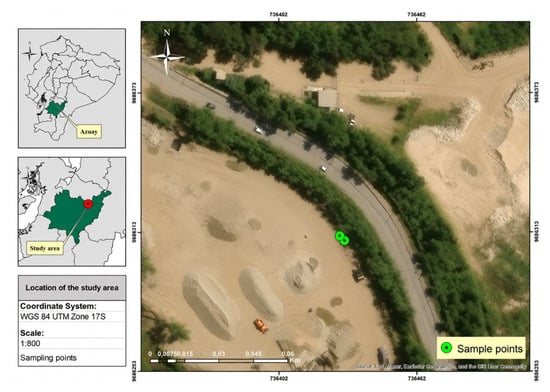
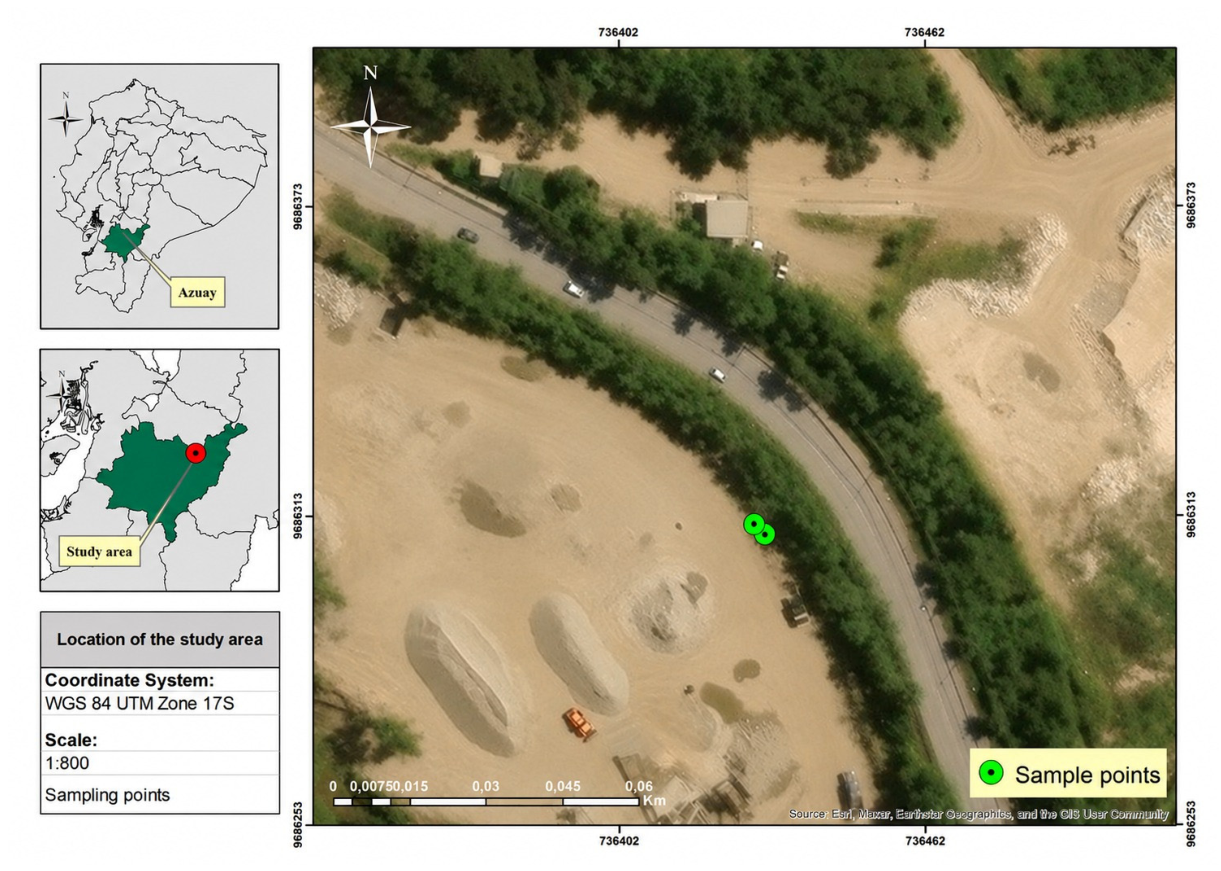
The study area was located 15 km northeast of the city of Cuenca, Province of Azuay, Ecuador. The “El Descanso” Thermoelectric Power Plant is situated at this site, near the confluence of the Cuenca and Burgay rivers, which give rise to the Paute River (Figure 1). The in vitro protocol was developed at the Life Sciences laboratories of the Universidad Politécnica Salesiana, while the field study was conducted in an area adjacent to the “El Descanso” Thermoelectric Power Plant.
Figure 1.
Location of the study area in Azuay, Ecuador. The point (green circle) indicates the georeferenced location within the intervened area. The red circle on the map indicates the study area.
According to regional climatological records from the Instituto Nacional de Meteorología e Hidrología (INAMHI), the study area is characterized by temperate climatic conditions, with an average annual temperature of approximately 18 °C. Annual cumulative precipitation ranges between 700 and 900 mm, with rainfall peaks occurring during March–May and October–November. Relative humidity was monitored using a hygrometer and remained within a range of 70–80% throughout the experimental period.
2.2. Physicochemical Soil Analysis
The determination of pH was carried out using the potentiometric method, following guidelines validated in modern studies that correlate pH measurement with the textural and physicochemical properties of the soil [39]. Electrical conductivity was evaluated using apparent conductivity measurements, a technique widely used for characterizing the physical state and salinity of the soil [39].
Organic carbon content was quantified using the Walkley–Black wet oxidation method, whose recovery, precision, and limitations have been evaluated in recent studies within forest systems [40] and agricultural systems [41]. Likewise, the established relationships between total organic carbon and the values obtained via Walkley–Black were considered, according to comparative analyses reported in previous studies [42,43]. Finally, for the particle size characterization of the soil, especially in soils affected by hydrocarbons, the application of textural determination techniques based on physicochemical parameters directly related to pH and electrical conductivity was taken as a reference [39].
2.3. Morphological Characterization of Trichoderma harzianum
The fungal strain used in this study comes from the culture collection of the Universidad Politécnica Salesiana and is registered under the code UPS-Y1. For its reactivation, it was cultured on potato dextrose agar solid medium (PDA, Difco®,Franklin Lakes, NJ, USA) and incubated at 27 °C for 7 days. After the incubation period, a macroscopic evaluation of the colony was carried out, recording the color, texture, and growth pattern of the mycelium.
The microscopic analysis revealed distinctive features in the hyphae, phialides, and conidia, enabling the identification of the type of conidiogenesis. In this order, microscopic preparations were made using the transparent adhesive tape method, stained with 1% Phloxine. Excess dye was cleared with 10% Potassium hydroxide (KOH). Observations were performed using an Olympus CX23 optical microscope (Olympus Corporation, Tokyo, Japan) at 40× and 100× magnifications. Fungal structures, including conidia, phialides, and hyphae, were measured (n = 30 per structure), with results reported as averages and extreme values (in parentheses). Preliminary morphological identification was performed using the taxonomic keys [44].
2.4. Molecular Characterization of Trichoderma harzianum
Genomic DNA extraction was performed from fresh mycelium using the PureLink™ Plant Total DNA kit (Invitrogen, Carlsbad, CA, USA), following the manufacturer’s recommendations. The ITS-5.8S and partial LSU D1/D2 regions of the ribosomal DNA were amplified by polymerase chain reaction (PCR) using universal primers ITS1 and NL4 [45]. PCR conditions were initial denaturation at 94 °C for 3 min, followed by 35 cycles of denaturation at 94 °C for 30 s, annealing at 55 °C for 30 s, and extension at 72 °C for 2 min, with a final extension of 10 min at 72 °C. The reactions were performed in a 20 µL volume: 18 µL of Platinum™ Taq DNA Polymerase SuperMix (Invitrogen, Carlsbad, CA, USA), 0.2 µL of each primer (10 µM), 0.4 µL of 10% BSA, and 1.4 µL of template DNA. Amplified products were visualized on 1% agarose gels stained with 1X GelRed™ Safe Nucleic Acid Gel Stain solution (Biotium, Hayward, CA, USA) in 1X TBE buffer, running at 128 V and 300 mA for 25 min. A 1 Kb molecular weight marker (Invitrogen, Carlsbad, CA, USA) and 2 µL of the PCR product mixed with bromophenol blue were used. Positive bands were purified using the PureLink™ PCR Purification Kit (Invitrogen) and were sequenced by the Macrogen company (Seoul, South Korea).
The obtained sequences were aligned alongside reference sequences retrieved from GenBank based on high-similarity BLASTn searches and taxonomic relevance. Alignment trimming was performed manually in MEGA [46] to remove ambiguous low-quality terminal regions, resulting in a final alignment length of 910 bp. Phylogenetic reconstruction was performed using the Maximum likelihood method under the Jukes–Cantor model with a Gamma distribution (JC + G), selected as the best-fit substitution model according to the Bayesian Information Criterion (BIC) in MEGA [47]. Branch support was evaluated using bootstrap analysis with 1000 replicates, considering values greater than 50% as significant support.
2.5. In Vitro Tolerance Tests Against Bunker Fuel
A preliminary protocol was developed following methodologies reported for in vitro confrontation assays [48,49]. In Petri dishes (9 cm diameter) containing PDA medium, a 4 mm diameter mycelium of Trichoderma harzianum was placed at 2.5 cm from the edge of the dish. At the same distance, but in the opposite direction, a drop of bunker fuel was placed. A Petri dish with PDA medium and the mycelia under analysis, but without bunker confrontation, was used as a reference control [50]. The radial growth of the colony was expressed as a percentage of inhibition (PI), calculated using the following relationship:
where R1 corresponds to the radial growth of the colony in the control Petri dish and R2 to the radial growth against the bunker sample. In this order, 1 mL of bunker was uniformly distributed over the surface of 9 cm diameter Petri dishes with PDA medium using a sterile spatula. Mycelium disks (4 mm diameter) of the strains under analysis were placed in the center of each dish. All tests were performed in duplicate and incubated for 10 days at 25 °C. The assessment was carried out visually, following growth and tolerance criteria reported in the literature [48,50].
2.6. Mesocosm Experimental Design and Preparation
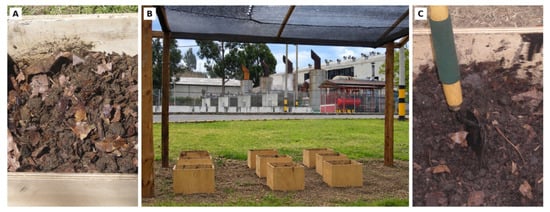
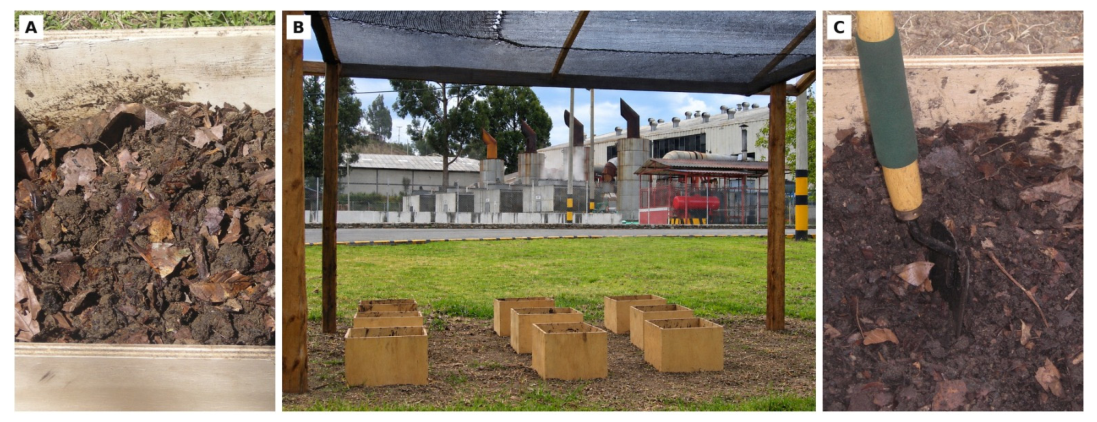
Soil mesocosms were established in an area adjacent to the El Descanso thermoelectric power plant using wooden boxes (30 × 30 × 30 cm; Figure 2). Each mesocosm contained 15 kg of substrate consisting of 10.8 kg of soil (72% w/w), 3.0 kg of crushed cocoa (Theobroma cacao L.) leaf litter (20% w/w), and 1.2 kg of bunker oil (8% w/w). The soil, leaf litter, and bunker oil were thoroughly mixed and homogenized before placement in the mesocosms to ensure uniform distribution of the contaminant and organic amendment.
Figure 2.
Experimental setup and preparation of soil mesocosms under field conditions near the El Descanso thermoelectric power plant (Azuay, Ecuador). (A) Soil mesocosm undergoing biostimulation and bioaugmentation with Trichoderma harzianum. (B) Overview of the nine experimental mesocosms (T30, T60, and T90) established under field conditions. (C) Manual homogenization of soil during mesocosm preparation.
Biostimulation was performed by adding 20.86 g of urea per mesocosm as an inorganic nitrogen source to achieve an approximate C ratio of 100:1, based on the carbon contribution from the bunker oil [51,52]. All mesocosms were prepared under identical conditions regarding substrate composition, bunker oil concentration, cocoa leaf litter content, urea dosage, moisture, and aeration. Treatment and control mesocosms differed only in the inoculation with Trichoderma harzianum, allowing the effect of fungal bioaugmentation to be evaluated under equivalent biostimulation and environmental conditions.
Throughout the experimental period, the mesocosms were maintained under field environmental conditions and protected from direct external disturbances. Moisture was maintained at 60–80% of the estimated field capacity (approximately 30%) by adding 0.4–0.8 L of water every 2–3 days, depending on evaporation losses. Aerobic conditions were maintained by periodic manual mixing of the substrate.
The experimental design comprised a control group and an experimental group, each consisting of nine independent soil mesocosms. In each group, three mesocosms were assigned to each sampling period: 30, 60, and 90 days. The control mesocosms were designated C30, C60, and C90, whereas the experimental mesocosms were designated T30, T60, and T90. In addition, three independent mesocosms were used for the initial characterization, designated T0. Overall, the experimental design included 21 mesocosms.
2.7. Sampling
Soil samples for polycyclic aromatic hydrocarbon (PAHs) analysis were collected using a composite sampling approach. At each sampling time, several subsamples were collected from different locations within each mesocosm and homogenized to obtain a single composite sample representative of each experimental unit. This procedure was used to reduce spatial variability within the mesocosms and improve sample representativeness.
PAH bioavailability was not directly evaluated in this study. Therefore, the potential effects of substrate homogenization, organic amendment, and nitrogen supplementation on PAH bioavailability should be interpreted as plausible mechanisms rather than experimentally demonstrated effects.
2.8. Preparation of Fungal Inoculant
The fungal isolate was cultured for 15 days in 500 mL flasks containing PDA medium, following reported protocols for conidia production in filamentous fungi [53,54]. After sporulation, the cultures were washed five times with 100 mL of sterile distilled water per wash, reaching a final volume of 500 mL; the suspension was then filtered through sterile gauze to remove large mycelial remains [48]. The conidial concentration was determined through direct counting in a Neubauer chamber with a depth of 0.1 mm (depth: 0.100 mm; 1/400 mm2 per small square) under optical microscopy, according to validated techniques for fungal inoculant [27]. Finally, a 5% sucrose solution was added to the suspension to adjust the final volume to 200 mL, emulating nutrient media that favor the stability and viability of the conidia.
2.9. PAH Extraction and Chemical Analysis
Chemical analysis of soil samples was conducted at a laboratory accredited by the Ecuadorian Accreditation Service (SAE) in accordance with the NTE INEN-ISO/IEC 17025:2018 standard. Polycyclic aromatic hydrocarbons (PAHs) were extracted using EPA SW-846 Method 3540 (Soxhlet extraction) and quantified by EPA SW-846 Method 8310. The analysis included 16 PAHs: naphthalene, acenaphthylene, acenaphthene, fluorene, phenanthrene, anthracene, fluoranthene, pyrene, benzo[a]anthracene, chrysene, benzo[b]fluoranthene, benzo[k]fluoranthene, benzo[a]pyrene, dibenzo[a,h]anthracene, benzo[g,h,i]perylene, and indeno [1,2,3-cd]pyrene. The method detection limit (MDL) for all analyzed PAHs was <0.02 mg/kg.
2.10. Statistical Analysis
The normality of the response variables was assessed using the Shapiro–Wilk test. Because the response variables did not follow a normal distribution (p < 0.05), the effect of time on PAH concentrations in the soil mesocosms was evaluated using the Friedman test. Given the limited sample size, no post hoc pairwise comparisons were conducted following the Friedman test; accordingly, interpretation was restricted to the overall test and the descriptive temporal patterns observed in the boxplots, in keeping with a conservative approach to statistical inference. Principal Component Analysis (PCA) was used to visualize temporal patterns in PAH composition within the soil mesocosms. In addition, permutational multivariate analysis of variance (PERMANOVA) was performed to evaluate differences in PAH profiles in relation to the experimental factors. Euclidean distance was used as the dissimilarity measure, and statistical significance was assessed using 9999 Monte Carlo permutations. All statistical analyses were performed using R version 3.2.2 [55].
3. Results
3.1. Physicochemical Soil Analysis
According to the results, the soil pH was 6.33, indicating slight acidity, and the electrical conductivity was 212 µS, reflecting low salinity. The texture is predominantly sandy (92.75% sand, 7.21% clay, and 0.04% silt), with a sandy consistency. Nutrient content showed soluble phosphorus at 8.51 mg/kg, total nitrogen at 0.28%, and exchangeable cations were distributed as follows: calcium 1470.89, magnesium 450.59, sodium 186.31, and potassium 152.66 mg/kg, respectively. The organic matter content was 14.4%. In general, the soil was characterized as being slightly acidic, with a sandy texture, low salinity, and a moderate concentration of nutrients.
The physicochemical characterization of the study soil revealed a slightly acidic pH of 6.3 and an electrical conductivity of 212 μS. The soil exhibited a predominantly sandy texture, composed of 92.75% sand, 7.21% clay, and only 0.04% silt. In terms of nutrient content, the soil contained 8.51 mg/kg of available phosphorus and macronutrient concentrations of 1470.89 mg/kg calcium, 450.59 mg/kg magnesium, 186.31 mg/kg sodium, and 152.66 mg/kg potassium. Additionally, the soil presented a total nitrogen content of 0.28% and an organic matter content of 14.4%, indicating a moderate level of fertility and substantial organic input despite its coarse texture.
3.2. Morpho-Molecular Characterization of Trichoderma harzianum
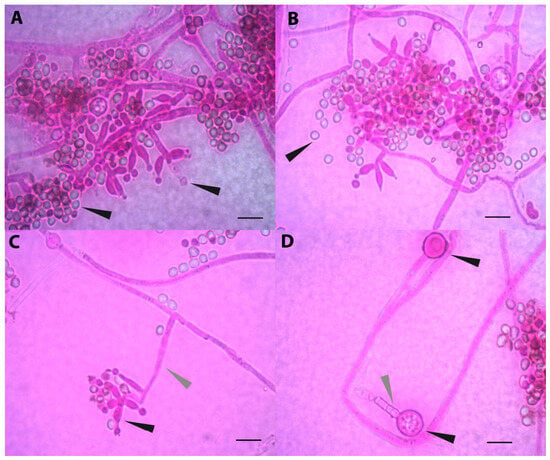
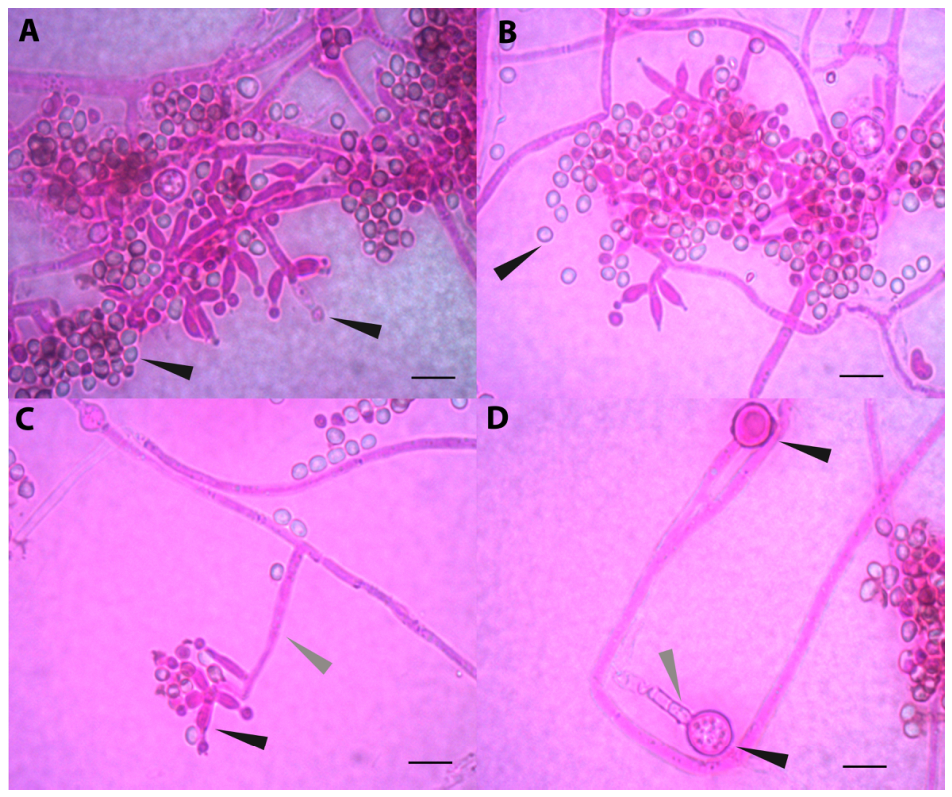
The colonies exhibited very rapid growth (9–10 cm in 5–6 days), showing a dark green color with white lanose mycelium (Figure 3). Conidiophores presented verticillate phialides (2–6), and conidia were subglobose to ellipsoidal in shape (3.0–4.0 × 2.5–3.5 µm).
Figure 3.
Trichoderma harzianum strain UPS-Y1. (A,B) Subglobose to ellipsoidal conidia (black arrowheads). (C) Conidiophores with generative hyphae of phialides (gray arrowhead), featuring verticillate phialides (black arrowhead). (D) Chlamydospores (black arrowhead) and generative hyphae (gray arrowhead).
Morphological evaluation of the analyzed strain revealed characteristics consistent with the genus Trichoderma, including branched conidiophores, inflated phialides, and ellipsoidal conidia, which are typical traits of Trichoderma harzianum (Figure 3).
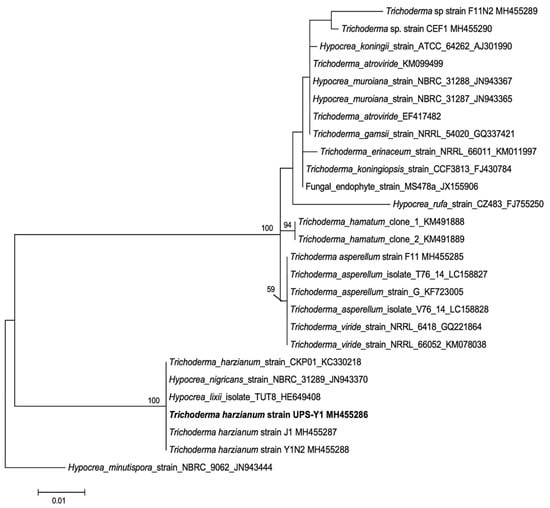
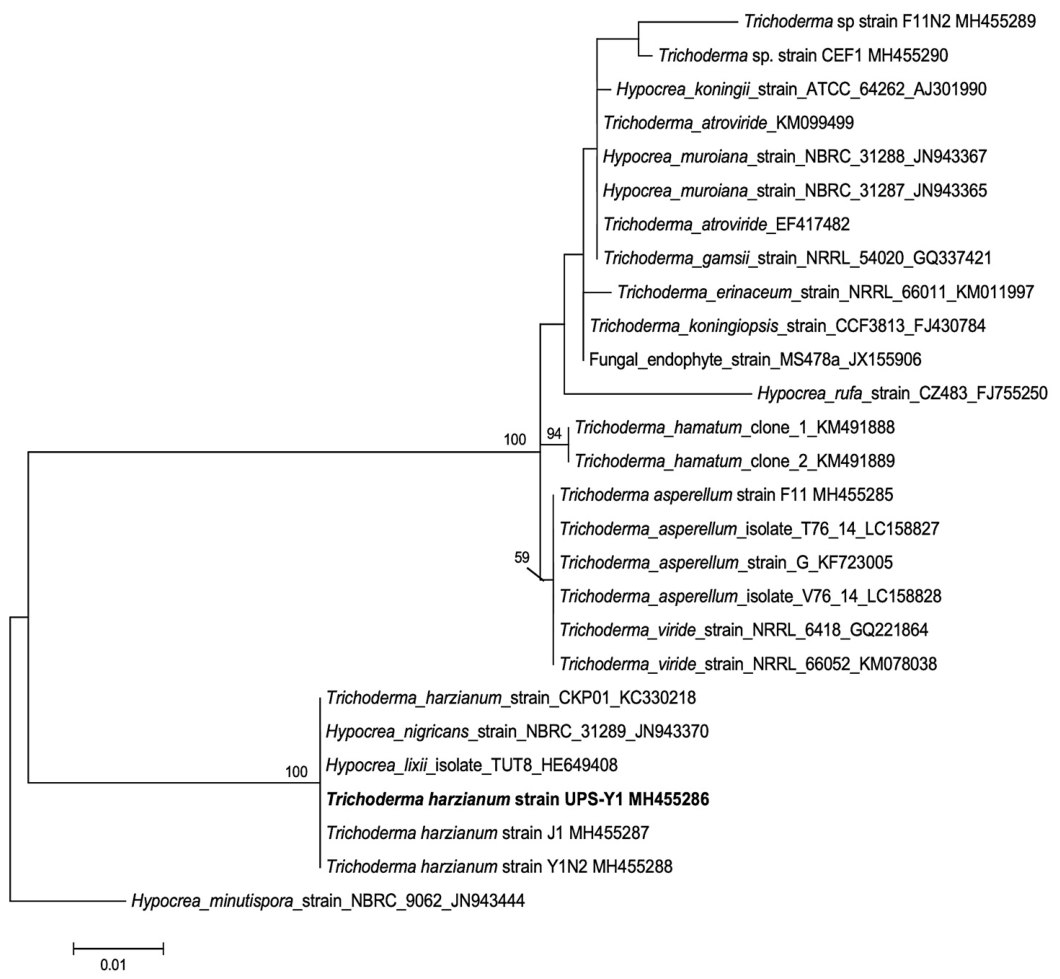
Molecular analysis of the ITS region showed a percentage of identity greater than 99% relative to reference sequences, confirming the preliminary identification based on morphological criteria (Figure 3). Furthermore, the combined phylogenetic analysis of the ITS and LSU regions allowed for a robust taxonomic assignment at the species level. The strain grouped consistently with reference isolates of T. harzianum in the phylogenetic tree, conclusively supporting its identification through both morphological and molecular evidence (Figure 4).
Figure 4.
Concatenated phylogenetic tree of ITS-5.8S and LSU D1/D2 regions with the new sequence (in bold) of Trichoderma harzianum from Southern Ecuador. Values at the nodes correspond to Maximum likelihood bootstrap values. Only values > 50% are shown on nodes. The tree was rooted with Hypocrea minutispora JN943444.
3.3. Tolerance Tests
Although T. harzianum showed a final radial growth equivalent to the control (Table 1), a reduction in the expansion speed was evident. This behavior indicates an absence of spatial inhibition but the presence of sublethal stress attributable to exposure to recalcitrant compounds such as bunker fuel. The fungus’ ability to cross and completely colonize the contaminated substrate supports its suitability as a fungal agent for use in hydrocarbon bioremediation. These results allowed us to plan the field study under the environmental conditions of the testing site. The in vitro assay demonstrated the tolerance and growth capacity of Trichoderma harzianum in the presence of bunker oil, supporting its selection for subsequent evaluation in soil mesocosms.
Table 1.
Tolerance and growth parameters of T. harzianum exposed to bunker fuel.
3.4. Concentration of PAHs in Soil Mesocosms
PAH concentrations in the soil mesocosms varied considerably among compounds and sampling times (Table 2 and Table A1). At T0, the highest concentrations were recorded for benzo[ghi]perylene (8.34 mg/kg) and phenanthrene (8.03 mg/kg), followed by benzo[b]fluoranthene (3.74 mg/kg), dibenzo[a,h]anthracene (1.80 mg/kg), and indeno [1,2,3-cd]pyrene (1.71 mg/kg). Fluorene ranged from 1.01 to 1.80 mg/kg, whereas benzo[a]pyrene and anthracene were detected at 0.91 and 0.54 mg/kg, respectively. Lower initial concentrations were recorded for pyrene (0.52 mg/kg), benzo[k]fluoranthene (0.28 mg/kg), fluoranthene (0.19 mg/kg), benzo[a]anthracene (0.14 mg/kg), and naphthalene and chrysene (0.04 mg/kg each). Acenaphthylene and acenaphthene were below the method detection limit (<0.02 mg/kg).
Table 2.
Concentrations of polycyclic aromatic hydrocarbons (PAHs) in soil mesocosms. Control mesocosms were designated C30, C60, and C90, whereas experimental mesocosms were designated T30, T60, and T90. Three independent mesocosms were used for the initial characterization (T0). Data are presented as mean ± standard deviation (SD) (n = 3).
After 30 days, reductions were observed for most of the initially quantifiable PAHs, although the magnitude of the change varied among compounds. Phenanthrene and benzo[ghi]perylene showed mean concentrations of 6.41 mg/kg, followed by benzo[b]fluoranthene (2.29 mg/kg) and indeno[1,2,3-cd]pyrene (1.29 mg/kg). Fluorene and dibenzo[a,h]anthracene both showed mean concentrations of 0.66 mg/kg. Lower concentrations were recorded for pyrene (0.11 mg/kg), fluoranthene (0.16 mg/kg), benzo[a]anthracene (0.07 mg/kg), benzo[a]pyrene (0.03 mg/kg), and benzo[k]fluoranthene (0.013 mg/kg). Anthracene was below the method detection limit (<0.02 mg/kg) in all three replicates at T30. In contrast to the general decreasing trend, chrysene increased from 0.04 mg/kg at T0 to 0.10–0.17 mg/kg at T30. Acenaphthylene and acenaphthene remained below the method detection limit (<0.02 mg/kg).
By day 60, PAH concentrations showed a pronounced decrease relative to T0. Naphthalene, fluorene, chrysene, benzo[a]pyrene, and dibenzo[a,h]anthracene were below the method detection limit (<0.02 mg/kg) in all three treatment replicates.in all three treatment replicates and were therefore considered below the analytical detection limit (MDL < 0.02 mg/kg), rather than indicative of complete removal. Phenanthrene and benzo[ghi]perylene decreased to concentrations at or below the method detection limit in the treatment replicates by day 60. Benzo[b]fluoranthene and indeno[1,2,3-cd]pyrene decreased to mean concentrations of 0.097 and 0.153 mg/kg, corresponding to reductions of 97.42% and 91.03%, respectively. Lower concentrations were also observed for anthracene, fluoranthene, pyrene, benzo[a]anthracene, and benzo[k]fluoranthene. Acenaphthylene and acenaphthene remained below the MDL throughout this period.
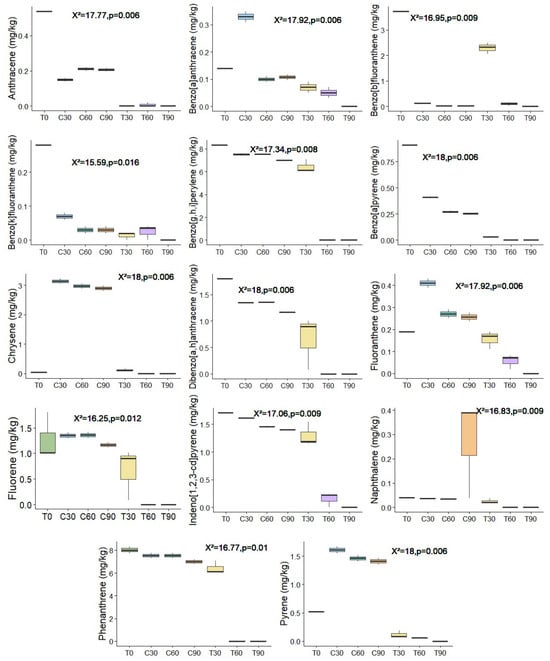
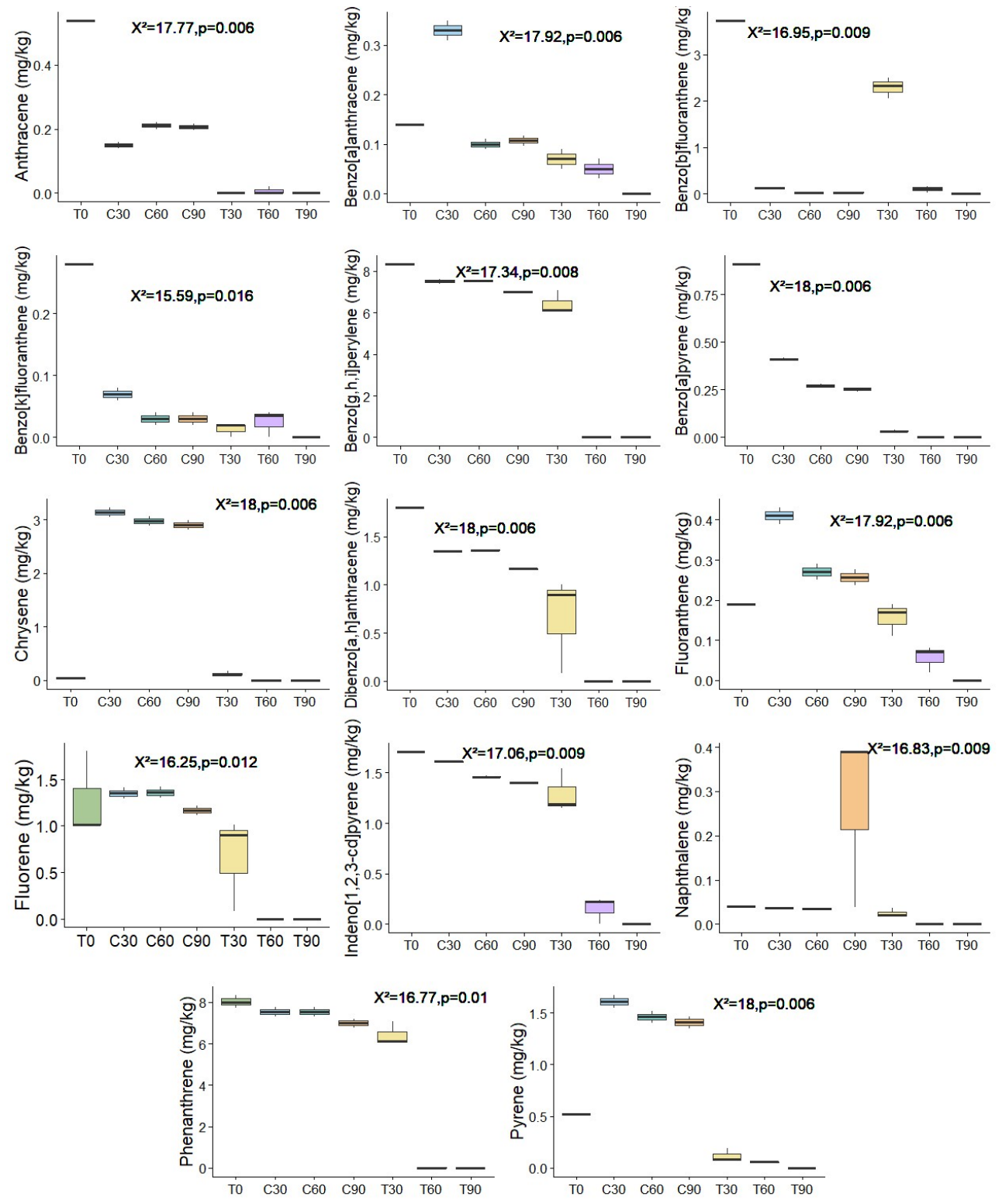
At day 90, all 14 PAHs that were quantifiable at T0 were below the method detection limit (<0.02 mg/kg) across the three treatment replicates. Given the analytical method detection limit (MDL < 0.02 mg/kg), these values indicate that PAH concentrations had decreased to levels below the analytical detection limit and should not be interpreted as evidence of complete removal. Acenaphthylene and acenaphthene, which were already below the MDL at T0, remained below this threshold throughout the experimental period. Overall, the T90 measurements showed that the concentrations of all PAHs initially quantifiable at T0 had declined to levels below the analytical detection limit. The boxplot showed that naphthalene, fluorene, phenanthrene, anthracene, fluoranthene, pyrene, benzo[a]anthracene, benzo[b]fluoranthene, and benzo [k]fluoranthene were present at the highest concentrations in the control and T0 treatments compared with T60 and T90, which showed lower values (Figure 5). Consistent with this pattern, the Friedman test indicated that benzo[k]fluoranthene and chrysene did not show significant differences among treatments, whereas the remaining PAHs in the soil mesocosms showed statistically significant differences (Figure 5). Acenaphthene and acenaphthylene remained below the method detection limit (<0.02 mg/kg).
Figure 5.
Box plots of PAH concentration in soil mesocosms after 30, 60, and 90 days.
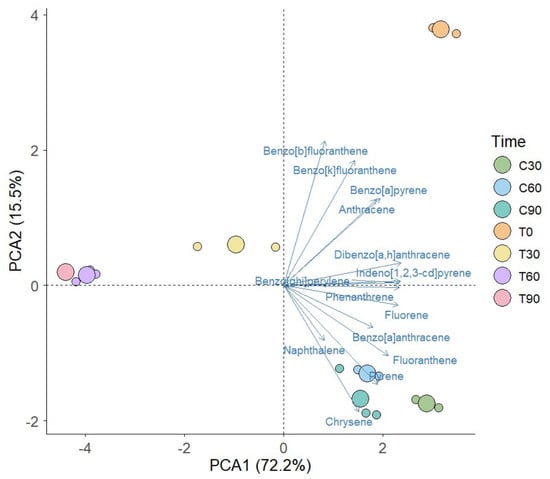
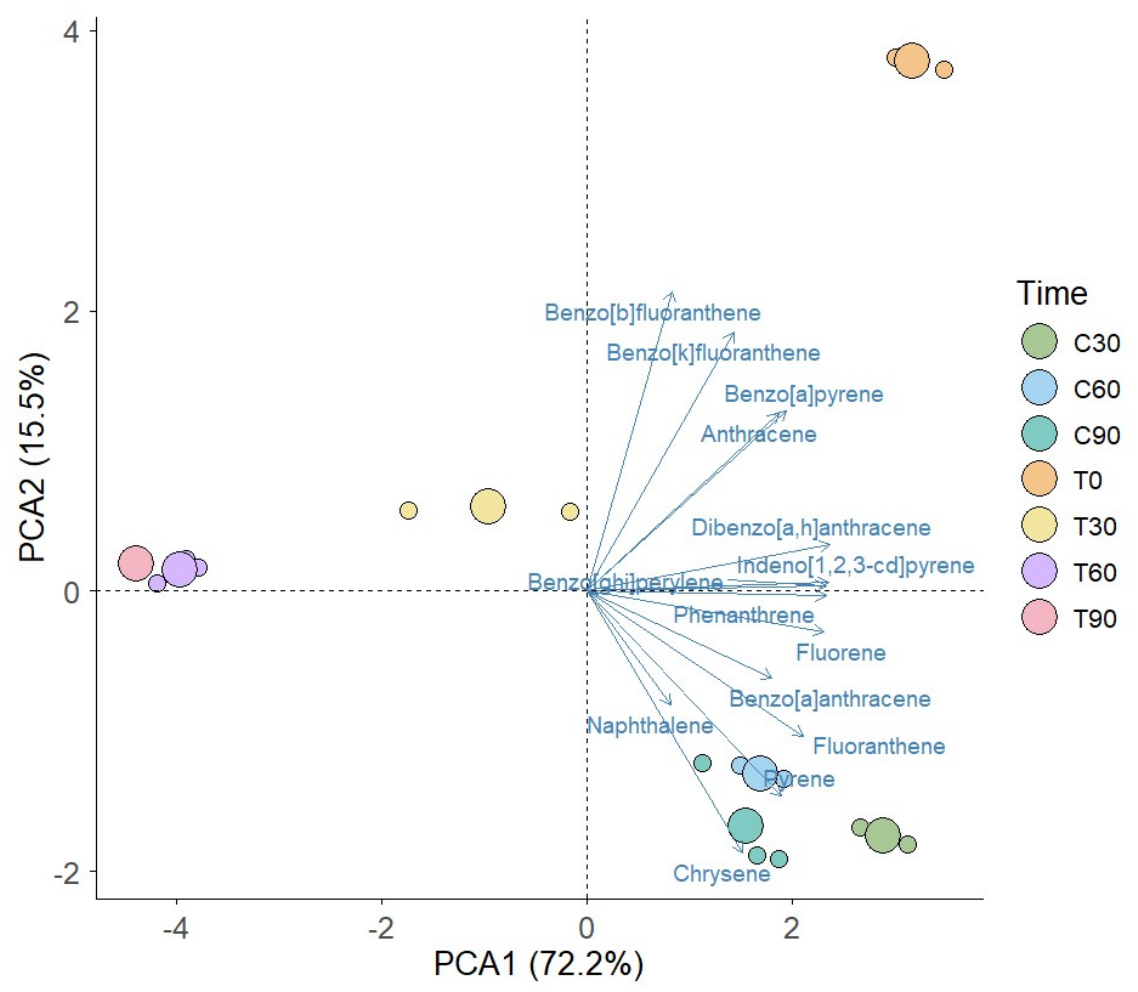
The PCA ordination showed a clear separation between PAHs in the soil mesocosms in the different treatments (Figure 6). The treatments were different compared to both the control and the day zero baseline. This difference was found to be highly significant after 60 and 90 days from the start of the process. PERMANOVA showed that PAHs in the soil mesocosms were structured according to the different treatments, and a large component of the variation was associated with treatment, explaining 99% of the variation in PAHs in the soil mesocosms (F = 351, p = 0.001).
Figure 6.
Principal Component Analysis (PCA) of polycyclic aromatic hydrocarbon (PAH) concentrations in soil mesocosms across the control and treatment groups at 0, 30, 60, and 90 days.
4. Discussion
The findings of this study indicate that the application of the fungal isolate Trichoderma harzianum, the anamorph of Hypocrea lixii, was associated with a significant reduction in polycyclic aromatic hydrocarbon (PAHs) concentrations from day 30 onward compared with the non-inoculated control mesocosms maintained under the same biostimulation conditions and with the initial conditions (day 0). At the end of the experimental period, several PAHs were detected at concentrations below the analytical detection limit. Although these results are consistent with the occurrence of biodegradation-related processes, the absence of abiotic controls prevents the observed reductions from being unequivocally attributed exclusively to fungal activity. Therefore, the contribution of complementary physicochemical processes cannot be completely excluded. PAH transformation may involve multiple metabolic pathways through which parent compounds are converted into intermediate metabolites that can subsequently undergo further transformation into simpler molecules or, under favorable conditions, complete mineralization. However, the specific metabolic pathways involved in PAH transformation were not directly investigated in the present study; therefore, the mechanisms underlying the observed reductions remain to be elucidated.
In vitro assays demonstrated that the T. harzianum isolate maintained sustained growth in the presence of the bunker oil–diesel mixture, indicating its ability to tolerate elevated hydrocarbon concentrations. Similar responses have been reported for species of the genus Trichoderma, which possess physiological and metabolic characteristics that facilitate adaptation and persistence in hydrocarbon-contaminated environments [56]. Furthermore, T. harzianum is widely recognized for its plant growth-promoting properties and its role as a biological control agent [57,58], highlighting its versatility and potential applications in environmental biotechnology.
The present findings are consistent with previous studies reporting the ability of fungal species to reduce PAH concentrations in contaminated soils [27,59,60]. Similar results were reported by Zafra et al. [22], who demonstrated the potential of fungal isolates for PAH removal in contaminated environments. Likewise, Yao et al. [20] described PAH transformation by Trichoderma reesei following bioaugmentation of contaminated soils, further supporting the potential of the genus Trichoderma for hydrocarbon bioremediation applications.
Among the analyzed compounds, benzo[g,h,i]perylene and phenanthrene exhibited the highest concentrations at T0, reaching 8.34 mg/kg and 8.03 mg/kg, respectively. By day 60, both compounds had decreased substantially, reaching concentrations at or below the method detection limit (<0.02 mg/kg) in the treatment replicates. Although these results indicate a substantial reduction in PAH concentrations, they cannot be attributed exclusively to the activity of T. harzianum due to the experimental limitations associated with the absence of abiotic controls. Previous studies have demonstrated that Trichoderma species can produce extracellular oxidative enzymes, including laccases, which are capable of oxidizing a wide range of aromatic compounds, including PAHs [56,61]. These enzymatic systems have been proposed as potential mechanisms involved in fungal-mediated PAH transformation. However, enzyme production and activity were not evaluated in the present study; therefore, their contribution should be considered a plausible explanation rather than direct evidence of the mechanisms involved.
The differences observed in the reduction in individual PAHs were likely influenced by their molecular structures and physicochemical properties. High-molecular-weight PAHs, such as benzo[a]anthracene, benzo[k]fluoranthene, dibenzo[a,h]anthracene, and pyrene, are characterized by greater chemical stability, hydrophobicity, and lower bioavailability, which contribute to their persistence in contaminated soils. Consequently, the effectiveness of fungal bioremediation strategies may depend on the selection of strains capable of producing degradative enzymes and efficiently colonizing contaminated matrices [62]. The important role of fungal enzymatic systems in PAH transformation has been widely documented in previous studies [63,64].
4.1. Potential Contribution of Biostimulation and Native Microbial Activity
The progressive reduction in PAH concentrations observed during the experimental period indicates that transformation processes occurred under the combined bioaugmentation and biostimulation conditions used in the mesocosms. The addition of cocoa leaf litter and urea provided organic matter and nitrogen, respectively, while T. harzianum was introduced as the bioaugmentation agent. Therefore, the observed PAH reductions reflect the overall response of the mesocosm system rather than the activity of the inoculated fungus alone [22].
These findings are consistent with previous studies showing that fungal bioaugmentation can enhance PAH removal in contaminated soils. Yao et al. [20] reported that bioaugmentation of aged PAH-contaminated soil with Trichoderma reesei FS10-C resulted in an approximately 25% reduction in total PAHs after 28 days, with removal efficiencies of 36%, 35%, and 25% for 3-, 4-, and 5(+6)-ring PAHs, respectively. The same study also reported increased soil microbial activity and functional diversity following fungal bioaugmentation, suggesting that the response of the resident microbial community may contribute to the overall remediation process.
The synergistic interactions between bioaugmented fungi and indigenous soil microbial communities play an important role in PAH biodegradation, as fungal inoculation can influence the structure and dynamics of native microbial communities during the remediation process [65,66]. However, in the present study, the composition, abundance, and temporal dynamics of the indigenous microbial communities were not evaluated, limiting our ability to determine their contribution to the observed PAH removal. Consequently, a synergistic interaction between T. harzianum and native microorganisms cannot be demonstrated from the present results; thus, their potential contribution should therefore be regarded as a plausible complementary mechanism rather than a directly demonstrated effect.
4.2. Potential Influence of Abiotic Processes
Although abiotic controls were not included in the experimental design, physicochemical processes such as volatilization, sorption, diffusion, and natural attenuation may have contributed to the observed reductions in PAH concentrations [67]. This contribution is particularly relevant for low-molecular-weight PAHs, which exhibit higher volatility and greater susceptibility to evaporative losses under environmental conditions. Conversely, high-molecular-weight PAHs generally show negligible volatility and greater persistence; therefore, their reduction is consistent with a greater contribution of biological transformation processes. Nevertheless, the relative contribution of biological and abiotic mechanisms could not be independently quantified.
4.3. Limitations, Practical Implications, and Future Research Needs
This study has several limitations that should be considered when interpreting the results. The absence of abiotic controls prevented the independent quantification of the contribution of physicochemical processes, including volatilization, sorption, diffusion, and other abiotic transformations, to the observed reduction in PAH concentrations. In addition, the dynamics and functional activity of indigenous microbial communities were not evaluated, limiting the understanding of their potential interactions with T. harzianum during contaminant transformation. Despite these limitations, an important strength of this study is that the mesocosms were established and monitored under real field conditions in an area adjacent to a thermoelectric power plant, providing environmentally relevant evidence regarding the potential applicability of fungal bioaugmentation for hydrocarbon-contaminated soils. Future studies should incorporate abiotic controls, characterize native microbial communities, evaluate extracellular enzymatic activities, and identify transformation products to better elucidate the mechanisms involved in PAH removal [14,68]. These approaches will strengthen the scientific basis for the application of T. harzianum as a promising biological tool for the remediation of hydrocarbon-contaminated soils under field-relevant conditions.
5. Conclusions
The results obtained in this study demonstrate the potential of Trichoderma harzianum as a bioremediation agent for bunker oil-contaminated soils. The evaluated strain was able to adapt to hydrocarbon-contaminated conditions, tolerate the presence of the pollutant, and contribute to the reduction in polycyclic aromatic hydrocarbons (PAHs) concentrations throughout the experimental period. The observed tolerance, together with the significant decrease in PAH levels, is consistent with the involvement of fungal metabolic processes associated with hydrocarbon transformation.
The application of this strain was associated with a marked reduction in recalcitrant high-molecular-weight PAHs, including benzo[a]pyrene, benzo[b]fluoranthene, dibenzo[a,h]anthracene, and benzo[g,h,i]perylene, which are characterized by high environmental persistence due to their chemical stability and low bioavailability. These findings highlight the potential capacity of T. harzianum to contribute to the remediation of hydrocarbon-contaminated soils, particularly for compounds considered difficult to degrade. However, the metabolic pathways responsible for PAH transformation were not investigated in the present study, and the absence of abiotic controls prevents the observed reductions from being unequivocally attributed exclusively to fungal activity. Physicochemical processes, such as volatilization, sorption, diffusion, and natural attenuation, may also have contributed to the overall decrease in contaminant concentrations, particularly for low-molecular-weight PAHs.
Author Contributions
Conceptualization, E.D.F.; methodology, E.D.F.; software, D.C. and Á.B.; validation, E.D.F., Á.B. and J.R.; formal analysis, R.M. and Á.B.; investigation, R.M.; resources, E.D.F.; data curation, D.C.; writing—original draft preparation, E.D.F., Á.B., writing—review and editing, J.R., E.D.F. and Á.B. visualization, J.R.; supervision, E.D.F.; project administration, E.D.F.; funding acquisition, E.D.F. All authors have read and agreed to the published version of the manuscript.
Funding
This research was funded by the Universidad Politécnica Salesiana (UPS) and did not receive any additional external funding; therefore, no grant number is available. The Article Processing Charge (APC) was funded by the Universidad Politécnica Salesiana (UPS).
Data Availability Statement
All data presented in this study are available in the article.
Acknowledgments
We are grateful to the Universidad Politécnica Salesiana (UPS) for supporting open-access publication.
Conflicts of Interest
The authors declare no conflicts of interest.
Abbreviations
The following abbreviations are used in this manuscript:
| PAHs | Polycyclic Aromatic Hydrocarbons |
| PDA | Potato Dextrose Agar |
| PCR | Polymerase Chain Reaction |
| PCA | Principal Component Analysis |
Appendix A
Table A1.
PAH concentrations (mg/kg) in the control and treatments at 30, 60, and 90 days after the beginning of the experiment.
References
- Nagy, K.; Takács, K.; Németh, I.; Varga, B.; Grolmusz, V.; Molnár, M.; Vértessy, B.G. Polycyclic aromatic hydrocarbon (PAH) biodegradation capacity revealed by a genome-function relationship approach. Environ. Microbiome 2023, 18, 39. [Google Scholar] [CrossRef] [Scilit]
- Srogi, K. Sources, Concentrations, Fate and Effects of Polycyclic Aromatic Hydrocarbons (PAHs) in the Environment. Part A: PAHs in Air. Pol. J. Environ. Stud. 2007, 16, 491–507. [Google Scholar]
- Wei, C.; Li, J.; Zhang, L.; Huang, Q.; Wang, X. Health risk assessment of polycyclic aromatic hydrocarbons (PAHs) in the soil around thermal power plants in southwest China. J. Environ. Sci. Health A 2021, 56, 882–891. [Google Scholar] [CrossRef] [Scilit]
- Adeniji, A.O.; Okoh, O.O.; Okoh, A.I. Polycyclic Aromatic Hydrocarbons: Sources, Toxicity, and Remediation Approaches. Rev. Environ. Contam. Toxicol. 2020, 253, 562813. [Google Scholar]
- Drwal, E.; Rak, A.; Gregoraszczuk, E.L. Polycyclic aromatic hydrocarbons (PAHs)—Action on placental function and health risks in future life of newborns. Toxicology 2019, 411, 133–142. [Google Scholar] [CrossRef] [Scilit]
- Montano, L.; Baldini, G.M.; Piscopo, M.; Liguori, G.; Lombardi, R.; Ricciardi, M.; Esposito, G.; Pinto, G.; Fontanarosa, C.; Spinelli, M.; et al. Polycyclic aromatic hydrocarbons (PAHs) in the environment: Occupational exposure, health risks and fertility implications. Toxics 2025, 13, 151. [Google Scholar] [CrossRef] [Scilit]
- Bolden, A.L.; Rochester, J.R.; Schultz, K.; Kwiatkowski, C.F. Polycyclic aromatic hydrocarbons and female reproductive health: A scoping review. Reprod. Toxicol. 2017, 73, 61–74. [Google Scholar] [CrossRef] [Scilit]
- Rafiee, A.; Hoseini, M.; Akbari, S.; Mahabee-Gittens, E.M. Exposure to polycyclic aromatic hydrocarbons and adverse reproductive outcomes in women: Current status and future perspectives. Rev. Environ. Health 2024, 39, 305–311. [Google Scholar] [CrossRef] [Scilit]
- Yu, Y.Y.; Jin, H.; Lu, Q. Effect of polycyclic aromatic hydrocarbons on immunity. J. Transl. Autoimmun. 2022, 5, 100177. [Google Scholar] [CrossRef] [Scilit]
- Chen, G.; Qin, J.; Shi, D.; Zhang, Y.; Ji, W. Diversity of soil nematodes in areas polluted with heavy metals and polycyclic aromatic hydrocarbons (PAHs) in Lanzhou, China. Environ. Manag. 2009, 44, 163–172. [Google Scholar] [CrossRef] [Scilit]
- Oyibo, J.N.; Wegwu, M.O.; Uwakwe, A.A.; Osuoha, J.O. Analysis of total petroleum hydrocarbons, polycyclic aromatic hydrocarbons and risk assessment of heavy metals in some selected finfishes at Forcados Terminal, Delta State, Nigeria. Environ. Nanotechnol. Monit. Manag. 2018, 9, 128–135. [Google Scholar] [CrossRef] [Scilit]
- Bandowe, B.A.M.; Leimer, S.; Meusel, H.; Velescu, A.; Dassen, S.; Eisenhauer, N.; Hoffmann, T.; Oelmann, Y.; Wilcke, W. Plant diversity enhances the natural attenuation of polycyclic aromatic compounds (PAHs and oxygenated PAHs) in grassland soils. Soil Biol. Biochem. 2019, 129, 60–70. [Google Scholar] [CrossRef] [Scilit]
- Li, X.; Li, P.; Lin, X.; Zhang, C.; Li, Q.; Gong, Z. Biodegradation of aged polycyclic aromatic hydrocarbons (PAHs) by microbial consortia in soil and slurry phases. J. Hazard. Mater. 2008, 150, 21–26. [Google Scholar] [CrossRef] [Scilit]
- Ghosal, D.; Ghosh, S.; Dutta, T.K.; Ahn, Y. Current state of knowledge in microbial degradation of polycyclic aromatic hydrocarbons (PAHs): A review. Front. Microbiol. 2016, 7, 208. [Google Scholar] [CrossRef] [Scilit]
- Shahsavari, E.; Schwarz, A.; Aburto-Medina, A.; Ball, A.S. Biological degradation of polycyclic aromatic compounds (PAHs) in soil: A current perspective. Curr. Pollut. Rep. 2019, 5, 84–92. [Google Scholar] [CrossRef] [Scilit]
- Colmo, C.; Tegelaar, M.; Ayres, P. Bioremediation of polycyclic aromatic hydrocarbons (PAHs) in aqueous environments: A review of biofiltration, biosorption, and biodegradation strategies using living fungal mycelium. Fermentation 2025, 11, 573. [Google Scholar] [CrossRef] [Scilit]
- Weissenfels, W.D.; Klewer, H.J.; Langhoff, J. Adsorption of polycyclic aromatic hydrocarbons (PAHs) by soil particles: Influence on biodegradability and biotoxicity. Appl. Microbiol. Biotechnol. 1992, 36, 689–696. [Google Scholar] [CrossRef] [Scilit]
- Lamichhane, S.; Krishna Bal, K.; Sarukkalige, R. Polycyclic aromatic hydrocarbons (PAHs) removal by sorption: A review. Chemosphere 2016, 148, 336–353. [Google Scholar] [CrossRef] [Scilit]
- Tang, L.; Wang, P.; Yu, C.; Jiang, N.; Hou, J.; Cui, J.; Xin, S.; Xin, Y.; Li, M. Adsorption of polycyclic aromatic hydrocarbons (PAHs) in soil and water on pyrochars: A review. J. Environ. Chem. Eng. 2025, 13, 116081. [Google Scholar] [CrossRef] [Scilit]
- Yao, L.; Teng, Y.; Luo, Y.; Christie, P.; Ma, W.; Liu, F.; Li, Z. Biodegradation of polycyclic aromatic hydrocarbons (PAHs) by Trichoderma reesei FS10-C and effect of bioaugmentation on an aged PAH-contaminated soil. Bioremediat. J. 2015, 19, 9–17. [Google Scholar] [CrossRef] [Scilit]
- Zafra, G.; Cortés-Espinosa, D.V. Biodegradation of polycyclic aromatic hydrocarbons by Trichoderma species: A mini review. Environ. Sci. Pollut. Res. 2015, 22, 19426–19433. [Google Scholar] [CrossRef] [Scilit]
- Zafra, G.; Moreno-Montaño, A.; Absalón, Á.E.; Cortés-Espinosa, D.V. Degradation of polycyclic aromatic hydrocarbons in soil by a tolerant strain of Trichoderma asperellum. Environ. Sci. Pollut. Res. 2015, 22, 1034–1042. [Google Scholar] [CrossRef] [Scilit]
- Silva Monteiro, J.P.; da Silva, A.F.; Delgado Duarte, R.T.; José Giachini, A. Exploring novel fungal–bacterial consortia for enhanced petroleum hydrocarbon degradation. Toxics 2024, 12, 913. [Google Scholar] [CrossRef] [Scilit]
- Daccò, C.; Nicola, L.; Temporiti, M.E.E.; Mannucci, B.; Corana, F.; Carpani, G.; Tosi, S. Trichoderma: Evaluation of its degrading abilities for the bioremediation of hydrocarbon complex mixtures. Appl. Sci. 2020, 10, 3152. [Google Scholar] [CrossRef] [Scilit]
- Kadri, T.; Rouissi, T.; Brar, S.K.; Cledon, M.; Sarma, S.; Verma, M. Biodegradation of polycyclic aromatic hydrocarbons (PAHs) by fungal enzymes: A review. J. Environ. Sci. 2017, 51, 52–74. [Google Scholar] [CrossRef] [Scilit]
- Andreolli, M.; Lampis, S.; Brignoli, P.; Vallini, G. Trichoderma longibrachiatum Evx1 is a fungal biocatalyst suitable for the remediation of soils contaminated with diesel fuel and polycyclic aromatic hydrocarbons. Environ. Sci. Pollut. Res. 2016, 23, 9134–9143. [Google Scholar] [CrossRef] [Scilit]
- Egbewale, S.O.; Kumar, A.; Mokoena, M.P.; Olaniran, A.O. Metabolic biodegradation pathway of fluoranthene by indigenous Trichoderma lixii and Talaromyces pinophilus spp. Catalysts 2023, 13, 791. [Google Scholar] [CrossRef] [Scilit]
- Venice, F.; Davolos, D.; Spina, F.; Poli, A.; Prigione, V.P.; Varese, G.C.; Ghignone, S. Genome sequence of Trichoderma lixii MUT3171, a promising strain for mycoremediation of PAH-contaminated sites. Microorganisms 2020, 8, 1258. [Google Scholar] [CrossRef] [Scilit]
- Silva, Í.S.; dos Santos, E.D.C.; de Menezes, C.R.; de Faria, A.F.; Franciscon, E.; Grossman, M.; Durrant, L.R. Bioremediation of a polyaromatic hydrocarbon contaminated soil by native soil microbiota and bioaugmentation with isolated microbial consortia. Bioresour. Technol. 2009, 100, 4669–4675. [Google Scholar] [CrossRef] [Scilit]
- Balaji, V.; Arulazhagan, P.; Ebenezer, P. Enzymatic bioremediation of polyaromatic hydrocarbons by fungal consortia enriched from petroleum contaminated soil and oil seeds. J. Environ. Biol. 2014, 35, 521–528. [Google Scholar]
- Crittenden, J.; Raudabaugh, D.; Gunsch, C.K. Isolation, characterization, and mycostimulation of fungi for the degradation of polycyclic aromatic hydrocarbons at a Superfund site. Biodegradation 2025, 36, 15. [Google Scholar] [CrossRef] [Scilit]
- Fu, K.; Fan, L.; Li, Q.; Ji, J.; Huang, Z.; Huang, T. Isolation and Characterization of Laccase from Trichoderma asperellum Tasjk65. Biology 2025, 14, 691. [Google Scholar] [CrossRef] [Scilit]
- Sumathi, K.; Manian, R. Bioremediation of polycyclic aromatic hydrocarbons contaminated soils: Recent progress, perspectives and challenges. Environ. Monit. Assess. 2023, 195, 1441. [Google Scholar] [CrossRef] [Scilit]
- Maddela, N.R.; Scalvenzi, L.; Venkateswarlu, K. Microbial degradation of total petroleum hydrocarbons in crude oil: A field-scale study at the lowland rainforest of Ecuador. Environ. Technol. 2017, 38, 2543–2550. [Google Scholar] [CrossRef] [Scilit]
- Lituma-Carriel, S.d.L.R. Bioremediation of hydrocarbon-contaminated soils: Review and perspective for Ecuador in the Latin American context. eVitroKhem 2024, 3, 145. [Google Scholar] [CrossRef] [Scilit]
- Delgado Fernández, E.; Malo, I.; Salinas, J.; Sarmiento, R.; Morales García, F.; Geraud-Aguilar, E. Biodegradation of soil contaminated with polycyclic aromatic hydrocarbons (PAHs) through nitrogen biostimulation. J. Ecohumanism 2024, 3, 2745–2756. [Google Scholar] [CrossRef] [Scilit]
- Hoang, S.A.; Sarkar, B.; Seshadri, B.; Lamb, D.; Wijesekara, H.; Vithanage, M.; Liyanage, C.; Kolivabandara, P.A.; Rinklebe, J.; Lam, S.S.; et al. Mitigation of petroleum-hydrocarbon-contaminated hazardous soils using organic amendments: A review. J. Hazard. Mater. 2021, 416, 125702. [Google Scholar] [CrossRef] [Scilit]
- Gao, D.; Zhao, H.; Wang, L.; Li, Y.; Tang, T.; Bai, Y.; Liang, H. Current and emerging trends in bioaugmentation of organic contaminated soils: A review. J. Environ. Manag. 2022, 320, 115799. [Google Scholar] [CrossRef] [Scilit]
- Medaura, M.C.; Guivernau, M.; Moreno-Ventas, X.; Prenafeta-Boldú, F.X.; Viñas, M. Bioaugmentation of Native Fungi, an Efficient Strategy for the Bioremediation of an Aged Industrially Polluted Soil with Heavy Hydrocarbons. Front. Microbiol. 2021, 12, 626436. [Google Scholar] [CrossRef] [Scilit]
- Kilinc, E.; Orhan, U. Improving the accuracy of soil texture determination using pH and electrical conductivity values with an ultrasound penetration-based digital soil texture analyzer. PeerJ Comput. Sci. 2025, 11, e2663. [Google Scholar] [CrossRef] [Scilit]
- De Vos, B.; Lettens, S.; Muys, B.; Deckers, J.A. Walkley–Black analysis of forest soil organic carbon: Recovery, limitations and uncertainty. Soil Use Manag. 2007, 23, 221–229. [Google Scholar] [CrossRef] [Scilit]
- Meersmans, J.; Van Wesemael, B.; Van Molle, M. Determining soil organic carbon for agricultural soils: A comparison between the Walkley & Black and the dry combustion methods. Soil Use Manag. 2009, 25, 346–353. [Google Scholar] [CrossRef] [Scilit]
- Jha, P.; Biswas, A.K.; Lakaria, B.L.; Saha, R.; Singh, M.; Rao, A.S. Predicting total organic carbon content of soils from Walkley and Black analysis. Commun. Soil Sci. Plant Anal. 2014, 45, 713–725. [Google Scholar] [CrossRef] [Scilit]
- Sangmanee, P.; Dell, B.; Harper, R.J.; Henry, D.J. Quantification of deep soil carbon by a wet digestion technique. Soil Res. 2016, 55, 78–85. [Google Scholar] [CrossRef] [Scilit]
- Seifert, K.A. When should we describe species? IMA Fungus 2017, 8, A37–A39. [Google Scholar] [CrossRef] [Scilit]
- White, T.J.; Bruns, S.L.; Taylor, J.; Lee, S. Amplification and direct sequencing of fungal ribosomal RNA genes for phylogenetics. In PCR Protocols: A Guide to Methods and Applications; Innis, M.A., Gelfand, D.H., Sninsky, J.J., White, T.J., Eds.; Academic Press: San Diego, CA, USA, 1990; pp. 315–322. [Google Scholar]
- Katoh, K.; Yamada, K.D. MAFFT online service: Multiple sequence alignment, interactive sequence editing and visualization. Brief. Bioinform. 2019, 20, 1160–1166. [Google Scholar] [CrossRef] [Scilit]
- Kumar, S.; Stecher, G.; Li, M.; Knyaz, C.; Tamura, K. MEGA X: Molecular Evolutionary Genetics Analysis across computing platforms. Mol. Biol. Evol. 2018, 35, 1547–1549. [Google Scholar] [CrossRef] [Scilit]
- Escudero-Leyva, E.; Alfaro-Vargas, P.; Muñoz-Arrieta, R.; Charpentier-Alfaro, C.; Granados-Montero, M.d.M.; Valverde-Madrigal, K.S.; Pérez-Villanueva, M.; Méndez-Rivera, M.; Rodríguez-Rodríguez, C.E.; Chaverri, P.; et al. Tolerance and biological removal of fungicides by Trichoderma species isolated from the endosphere of wild Rubiaceae plants. Front. Agron. 2022, 3, 772170. [Google Scholar] [CrossRef] [Scilit]
- Jimenez-Quiros, C.; Okechukwu, E.C.; Hong, Y.; Baysal, Ö.; Tör, M. Comparison of antifungal activity of Bacillus strains against Fusarium graminearum in vitro and in planta. Plants 2022, 11, 1999. [Google Scholar] [CrossRef] [Scilit]
- Yang, F.; Scopel, E.F.C.; Li, H.; Sun, L.L.; Kawar, N.; Cao, Y.B.; Jiang, Y.Y. Antifungal tolerance and resistance emerge at distinct drug concentrations and rely upon different aneuploid chromosomes. mBio 2023, 14, e0022723. [Google Scholar] [CrossRef] [Scilit]
- Atlas, R.M.; Bartha, R. Microbial Ecology: Fundamentals and Applications, 4th ed.; Benjamin/Cummings Publishing Company: Menlo Park, CA, USA, 1998. [Google Scholar]
- Vidali, M. Bioremediation. An overview. Pure Appl. Chem. 2001, 73, 1163–1172. [Google Scholar] [CrossRef] [Scilit]
- Goettel, M.S.; Inglis, G.D. Fungi: Hyphomycetes. In Manual of Techniques in Insect Pathology; Lacey, L., Ed.; Academic Press: San Diego, CA, USA, 1997; pp. 213–249. [Google Scholar]
- Tefera, T.; Pringle, K.L. Evaluation of Beauveria bassiana and Metarhizium anisopliae for Controlling Chilo partellus (Lepidoptera: Crambidae) in Maize. Biocontrol Sci. Technol. 2024, 14, 849–853. [Google Scholar] [CrossRef] [Scilit]
- R Development Core Team. A language and Environment for Statistical Computing. In R Foundation for Statistical Computing; R Development Core Team: Vienna, Austria, 2024; Available online: http://www.R-project.org (accessed on 20 May 2024).
- Elsayed, A.M.; Mahmoud, M.; Abdel Karim, G.S.; Abdelraof, M.; Othman, A.M. Purification and biochemical characterization of two laccase isoenzymes isolated from Trichoderma harzianum S7113 and its application for bisphenol A degradation. Microb. Cell Fact. 2023, 22, 1. [Google Scholar] [CrossRef] [Scilit]
- Mukherjee, P.K.; Horwitz, B.A.; Kenerley, C.M. Secondary metabolism in Trichoderma—A genomic perspective. Microbiology 2012, 158, 35–45. [Google Scholar] [CrossRef] [Scilit]
- Harman, G.E. Overview of mechanisms and uses of Trichoderma spp. Phytopathology 2006, 96, 190–194. [Google Scholar] [CrossRef] [Scilit]
- Clemente, A.R.; Anazawa, T.A.; Durrant, L.R. Biodegradation of polycyclic aromatic hydrocarbons by soil fungi. Braz. J. Microbiol. 2001, 32, 255–261. [Google Scholar] [CrossRef] [Scilit]
- Arun, A.; Raja, P.P.; Arthi, R.; Ananthi, M.; Kumar, K.S.; Eyini, M. Polycyclic aromatic hydrocarbons (PAHs) biodegradation by basidiomycetes fungi, Pseudomonas isolate, and their cocultures: Comparative in vivo and in silico approach. Appl. Biochem. Biotechnol. 2008, 151, 132–142. [Google Scholar] [CrossRef] [Scilit]
- Umar, A. Screening and evaluation of laccase produced by different Trichoderma species along with their phylogenetic relationship. Arch. Microbiol. 2021, 203, 4319–4327. [Google Scholar] [CrossRef] [Scilit]
- Wang, X.; Gong, Z.; Li, P.; Zhang, L.; Hu, X. Degradation of pyrene and benzo(a)pyrene in contaminated soil by immobilized fungi. Environ. Eng. Sci. 2008, 25, 677–684. [Google Scholar] [CrossRef] [Scilit]
- Wang, C.; Sun, H.; Li, J.; Li, Y.; Zhang, Q. Enzyme activities during degradation of polycyclic aromatic hydrocarbons by white rot fungus Phanerochaete chrysosporium in soils. Chemosphere 2009, 77, 733–738. [Google Scholar] [CrossRef] [Scilit]
- Szczepaniak, Z.; Cyplik, P.; Juzwa, W.; Czarny, J.; Staninska, J.; Piotrowska-Cyplik, A. Antibacterial effect of the Trichoderma viride fungi on soil microbiome during PAH’s biodegradation. Int. Biodeterior. Biodegrad. 2015, 104, 170–177. [Google Scholar] [CrossRef] [Scilit]
- Haleyur, N.; Shahsavari, E.; Jain, S.S.; Koshlaf, E.; Ravindran, V.B.; Morrison, P.D.; Osborn, A.M.; Ball, A.S. Influence of bioaugmentation and biostimulation on PAH degradation in aged contaminated soils: Response and dynamics of the bacterial community. J. Environ. Manag. 2019, 238, 49–58. [Google Scholar] [CrossRef] [Scilit]
- Balseiro-Romero, M.; Monterroso, C.; Casares, J.J. Environmental Fate of Petroleum Hydrocarbons in Soil: Review of Multiphase Transport, Mass Transfer, and Natural Attenuation Processes. Pedosphere 2018, 28, 833–847. [Google Scholar] [CrossRef] [Scilit]
- Singh, R.K.; Singh, S.K. Persistent polycyclic aromatic hydrocarbons (PAHs) in the soil, its bioremediation, and health effects. Environ. Sci. Eur. 2025, 37, 187. [Google Scholar] [CrossRef] [Scilit]

Disclaimer/Publisher’s Note: The statements, opinions and data contained in all publications are solely those of the individual author(s) and contributor(s) and not of MDPI and/or the editor(s). MDPI and/or the editor(s) disclaim responsibility for any injury to people or property resulting from any ideas, methods, instructions or products referred to in the content. |
© 2026 by the authors. Licensee MDPI, Basel, Switzerland. This article is an open access article distributed under the terms and conditions of the Creative Commons Attribution (CC BY) license.