


Abstract
Appropriate Halon-free fire suppression agents for aircraft cargo compartments are important in civil aviation safety. There are many products available and selecting an appropriate agent for civil aircraft cargo compartments under specific requirements is important and will be discussed. An in-depth analysis of the technical characteristics and updated research achievements of clean fire suppression agents are reviewed first. Advantages, limitations, and application feasibility of clean fire suppression agents for cargo compartments are included with quantitative evaluation of their comprehensive attributes. A ranking system is proposed to select appropriate suppressants by considering their environmental impact, fire extinguishment efficiency, airworthiness, and safety. Two approaches were introduced with the first quantitatively evaluating all four performance areas of agents through weight allocations. The second approach excludes environmental performance as Halon is to be substituted. Only the remaining three areas are included and compared with Halon. The integrated application of a ranking system provides a reference example for selecting fire suppression agents for aircraft cargo compartments. Based on the above selected approaches, the optimal substitute suppression agents are Novec 1230/N2, 2-BTP/CO2, and Novec 1230/(CF3CF2)3N for this example. Future development will also be guided by the dynamically updatable ranking system, which provides a pathway from technical screening to engineering design. Theoretical guidance for selecting suitable clean fire suppression agents can be achieved for aircraft cargo compartments.
1. Introduction
With the growth of civil aviation passenger volume and the increasingly busy air cargo business, the civil aviation transportation industry has continued to develop at a fast rate. As a key space for carrying various goods, luggage and other items, the fire safety of cargo compartment of a civil aircraft directly affects the overall safety of the aircraft and its occupants. However, about 8% of aircraft accidents have been caused by fires in the past five years [1]. Halon, a popular fire suppression agent, has been phased out under the Montreal Protocol due to its environmental impact on ozone depletion and global warming. Based on this, the environmental performance requirements for fire suppression agents are becoming increasingly stringent. Currently, there is no clean fire suppression agent that can be directly applied to aircraft cargo compartments. Clean fire suppression agents have been extensively explored with regard to fire extinguishing performance, environmental friendliness, and controllable decomposition toxicity [2,3]. A safe, efficient, reliable and environmentally friendly clean fire suppression agent substituting Halon for aircraft cargo compartments is an indispensable part of ensuring the green operation of civil aircraft. Technological development and application research of key clean fire suppression agents are critical in achieving the associated safety goals.
Fire suppression agents for civil aircraft cargo compartments are characterized by exploration, optimization and substitution. A systematic approach for selecting appropriate agents is needed. The 2-BTP/CO2 blended agent has successfully passed the cargo compartment Minimum Performance Standard test [4], while environmentally compatible composite gaseous fire suppression agents, represented by fluorinated ketones [5] and hydrofluorocarbons [6], are currently undergoing fire extinguishing efficiency validation. The low-pressure twin-fluid water mist system [7] reduces water consumption and improves fire extinguishing efficiency. Application of novel ultra-fine dry powder fire suppression agents was explored [8,9]. However, most studies [5,6,7] are mainly centered on a single category of fire suppression agents, with different findings. There is no systematic research on fire suppression agents for civil aircraft cargo compartments, and studies on how to select a suitable clean agent are very limited. A gap remains between early-stage research and engineering application, which might not be appropriate for the technological development of clean fire suppression agents.
To address this gap, the current development status, technical characteristics, and advantages and disadvantages, as well as future development trends of cargo compartment fire suppression agents are reviewed first and analyzed in this paper. To select appropriate clean Halon substitute fire suppression agents, a ranking system with two approaches is proposed. The first approach quantitatively evaluates the fire extinguishing efficiency, airworthiness, safety, and environmental performance of agents through five weight allocations. These four areas can more systematically evaluate clean fire suppression agents and provide a basis for selecting suitable agents for aircraft cargo compartments. The second approach excludes environmental performance and considers only the remaining three areas in comparison with Halon. Finally, the integrated application of the ranking system provides a suitable reference example for specific aircraft cargo compartments. The results are of great significance for advancing cargo compartment suppression agent technology across the entire spectrum from technical screening to engineering design, and to select clean fire suppression agents for civil aircraft cargo compartments.
2. Materials and Methods
2.1. Requirements for Fire Suppression Agents in Aircraft Cargo Compartments
The cargo compartment is a key component of civil aircraft with different structural and environmental characteristics along three aspects. Firstly, it has a special geometric structure, presenting as a flat enclosed cabin that is concealed with curved side walls. Secondly, many different types of cargo, including flammable items, electronic products, chemicals, etc., are mixed, resulting in unpredictable fire source locations. Third, the reduced ambient pressure at cruise altitude can cause increased flame height and elevated ceiling temperature [10]. Moreover, since the compartment is unoccupied, early fire detection and manual intervention are impractical, imposing stringent demands on the automatic fire suppression system.
With reference to Technical Guide 1279 and the Chemical List Report published by the National Institute of Standards and Technology (NIST) [11,12,13], following the requirements of the Federal Aviation Administration (FAA) for Halon substitute fire suppression agents and based on the unique characteristics of civil aircraft cargo compartments, an ideal cargo compartment fire suppression agent must meet the following key requirements, as listed in Table 1.
Table 1.
Key requirement.
On this basis, an ideal cargo compartment fire suppression agent must also pass the Minimum Performance Standard for Aircraft Cargo Compartment Halon Replacement Fire Suppression Systems (hereinafter referred to as “CC-MPS”) test. This standard specifies four types of full-scale fire test items for Halon substitute fire suppression agents, including bulk cargo fires, unit load device cargo fires, surface fires, and aerosol can explosion fires. It aims to verify whether new fire suppression agents meet the fire protection requirements of civil aircraft cargo compartments and simultaneously achieve the fire suppression concentration standard required to suppress hydrocarbon explosions [14].
2.2. Clean Fire Suppression Agents
A clean fire suppression agent is defined in NFPA 2001 as an electrically non-conductive, volatile, or gaseous fire suppression agent that does not leave a residue upon evaporation. The development and widespread application of clean fire suppression agents are essentially a product of the global effort to phase out Halon and seek alternative technologies in response to environmental protection requirements.
Since the 1960s, Halon 1301 (CF3Br) has been widely used in civil aircraft engine, cargo and passenger compartments and established as the standard agent for fixed fire suppression systems in civil aircraft cargo compartments. However, its bromine atoms and long Atmospheric Lifetime drive stratospheric ozone depletion via catalytic cycles chain reactions, harming human health. These environmental and health concerns have prompted progressively stringent international regulatory measures. Between 1987 and 1992, the United Nations Environment Programme instituted the Montreal Protocol on Substances that Deplete the Ozone Layer and its subsequent amendments, mandating Halon progressive phase-out [15,16]. Accordingly, China listed Halons as controlled substances in 2010 and is phasing them out. Nevertheless, due to extensive safety validation required for substitutes and strict cargo compartment safety rules, Halon use remains permitted. To facilitate the transition from Halon systems to eco-friendly and safe substitutes, the U.S. Environmental Protection Agency has advanced the implementation of the Significant New Alternatives Policy program. The Halon 1301 substitutes enumerated within this program include fluoroidocarbons, hydrochlorofluorocarbons, inert gases, perfluorocarbons, aerosol-forming compounds, and water mist systems [17,18].
There are many products available on the market. As pointed out years ago [2] effectively, extinguishment of big fires and emission of toxic gases are two important points to consider in selecting the right agent.
To select appropriate clean fire suppression agents for aircraft cargo compartments, popular fire suppression agents currently available are reviewed in Table 2.
Table 2.
Comparative analysis of clean suppression agents.
2.2.1. 2-BTP and Its Blended Fire Suppression Systems
For 2-bromo-3,3,3-trifluoropropene (2-BTP, CF3CBr=CH2), cup burner experiments demonstrate an extinguishing concentration of 2.6% for heptane flames [19]. The core mechanism is chemical inhibition. Br atoms from the agent scavenge H· and OH· radicals, quenching combustion chain reactions [20]. 2-BTP/CO2 can transition to a positive chemical effect [21,22], it also has successfully completed all CC-MPS tests and achieved FAA certification [4].
2.2.2. Novec 1230 and Its Blended Fire Suppression Systems
Perfluorohexanone (Novec 1230, CF3CF2COCF(CF3)2), with a cup burner extinguishing concentration for heptane flames at 4–6%, acts primarily through carbonyl reactions with H· and OH· radicals to interrupt the combustion chain reaction [23]. Novec 1230 has been incorporated into NFPA standards, and is suitable for aviation. Novec 1230/N2 [24] and Novec 1230/(CF3CF2)3N [25] have been proposed to attenuate the combustion-promoting effect of its gaseous phase [26].
2.2.3. HFC-125 and Its Blended Fire Suppression Systems
Pentafluoroethane (HFC-125, C2HF5), with a cup burner extinguishing concentration for heptane of 9.3% [27], acts through fluorine-containing free radicals that effectively scavenge OH· and H· radicals, thereby interrupting the combustion chain reaction [28]. HFC-125/CF3I [6] has been proposed to address the issue of combustion enhancement of HFC-125 at sub-inertness concentrations.
2.2.4. CF3I and Its Blended Fire Suppression Systems
Trifluoroiodomethane (FIC-1311, CF3I), cup burner experiments determine the minimum extinguishing concentration of CF3I at 3–3.5% [29]. It acts through I· radicals from C-I bond dissociation and form an I·/IO· catalytic cycle that rapidly scavenges H· and OH·, interrupting chain reactions [29]. It is certified by the National Fire Protection Association (NFPA 2001) [30]. A CF3I/2-BTP [31] patent and CF3I/CO2 [32,33] have been proposed to address the issue of insufficient thermal stability of CF3I [34].
2.2.5. Nitrogen
Full-scale CC-MPS tests at 11% O2 validate nitrogen as a viable substitute to Halon suppression agents. According to the test report, the nitrogen test data are all lower than the standard values of the CC-MPS test [35].
2.2.6. Low-Pressure Dual-Fluid Water Mist Systems
Reignition of extinguished fire without long discharging time is a concern, as reported. For certain fuel geometries, sustained extinguishment may not be achieved without prolonged application or additional suppression measures [36]. Previous studies have demonstrated the effectiveness of the physical and chemical synergistic mechanisms of water mist and chemical additive fire suppression systems in suppressing polymer fires, thereby validating the ability of the nitrogen/water mist combination to reduce the risk of re-ignition [37,38]. This system employs compressed gas, such as nitrogen, to drive multiple nozzles in coordination with water flow, generating fine water mist with a Dv90 typically below 200 μm. It is characterized by uniform atomization field, short extinguishing time, low water consumption, and clean efficacy [39]. In 2002, the nitrogen/water mist system successfully satisfied CC-MPS requirements [7]. The nitrogen/water mist fire suppression system utilizes a closed-loop control strategy to reduce the oxygen concentration in the cargo compartment to an average of below 10% within approximately 12.5 min. These results indicate a synergistic enhancement between the suffocation effect of nitrogen and the cooling effect of water mist.
2.2.7. Ultra-Fine Dry Powder Fire Suppression Agents
Ultra-fine dry powder consists mainly of sodium or potassium bicarbonate with additives, 90% of the particles by count being ≤20 μm, enabling air dispersion. The extinguishing mechanism relies on the chemical inhibition effect of the fine particles, which scavenge radicals and interrupt chain reactions [40,41]. In recent years, novel ultrafine dry powders KAI(OH)2CO3 (M-UDWP) [8] and HM/DAP [9] (hydromagnesite/diammonium phosphate) were developed to improve fire extinguishing efficiency. Nevertheless, several challenges persist. These include substantial post-discharge residue complicating cleaning and elevated operation, maintenance and development costs.
2.3. Ranking System
Current status and future development directions of various for aircraft cargo compartments are very complicated. It is difficult to select appropriate clean agents for cargo compartments.
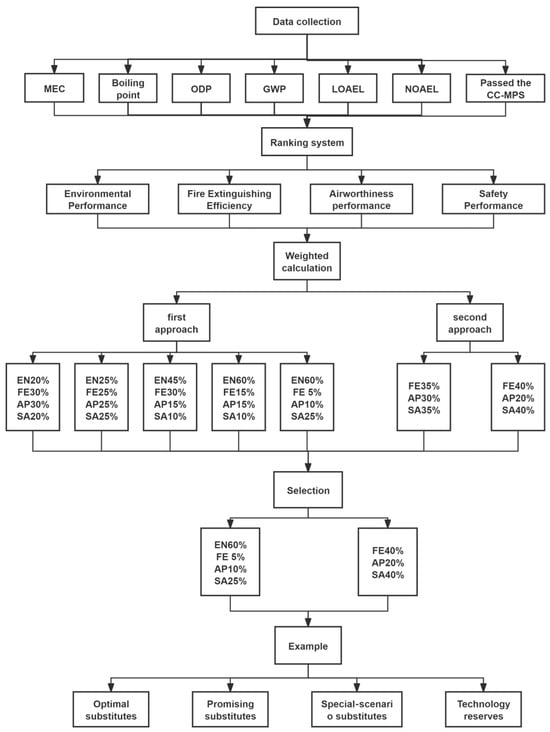
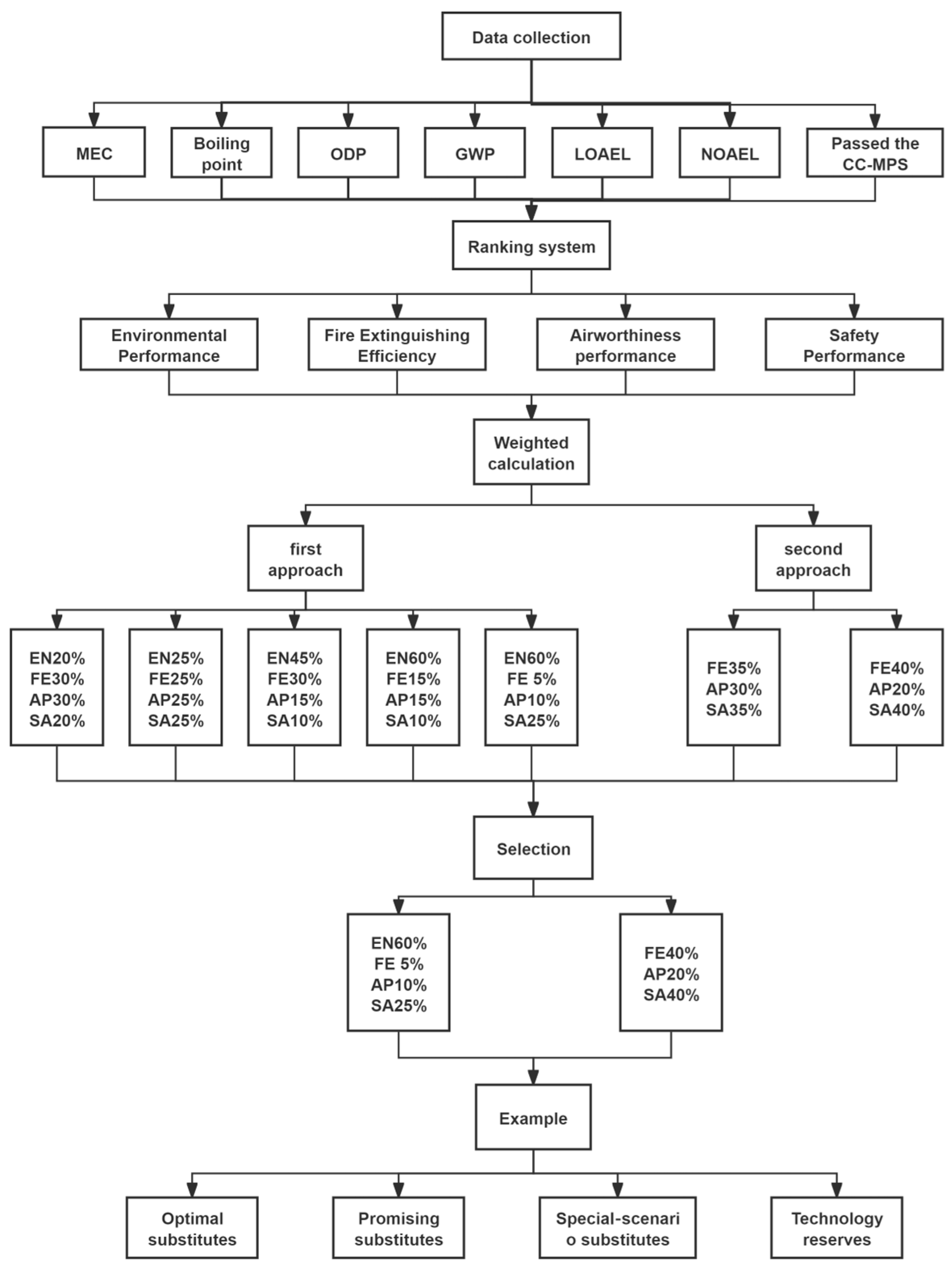
A ranking system similar to those in fire safety ranking systems [42,43] is proposed for quantifying the comprehensive performance of clean, Halon substitute fire suppression agents. A 5-point system will be needed, with attributes divided into four areas: environmental performance, fire extinguishing efficiency, airworthiness performance, and safety performance. The primary objective of the Halon substitute is to eliminate ozone depletion and greenhouse effects, reflecting the essential requirement of prioritizing environmental cleanliness. Fire-extinguishing efficiency constitutes the core function of ensuring rapid fire extinguishing. Airworthiness performance is a necessary condition for engineering application. Only when the airworthiness standards are met can they be put into practical use. Safety performance is a crucial factor in ensuring the safety of personnel and cargo. This paper decomposes the four areas into quantifiable sub-attributes with predefined grading criteria. The comprehensive score for each candidate agent is calculated as a weighted sum. Finally, the performance of the fire suppression agents is evaluated based on the weighted scores in these four areas, with higher scores indicating better performance. The selection flow chart is shown in Figure 1 below.
Figure 1.
The selecting flow chart.
The areas of environmental impact, including ODP and GWP, are selected as part of those evaluation criteria. The chemical safety of agents, including No Observed Adverse Effect Level (NOAEL) and Lowest Observed Adverse Effect Level (LOAEL), indicates whether they may generate highly toxic or corrosive gases under high-temperature fire suppression conditions. Boiling point reflects the physical properties of the agents. The minimum extinguishing concentration (MEC), determined by the cup burner test, is selected as part of the evaluation criteria to directly quantify the fire-extinguishing efficiency of the agent. The CC-MPS test results indicate the airworthiness performance of the agents. Based on these considerations, the boiling point, ODP, GWP, NOAEL, LOAEL, MEC, and CC-MPS status of each candidate agent are summarized in Table 3. These areas serve as the evaluation basis for screening the selected fire suppression agents and provide a foundation for the subsequent establishment of a ranking system.
Table 3.
Performance of Halon substitute fire suppression agents.
The ranking system, as shown in Table 4 below. Environmental performance is evaluated based on ODP and GWP. Fire-extinguishing efficiency is primarily determined by the minimum extinguishing concentration and the synergistic factor. Airworthiness performance is mainly assessed by CC-MPS test pass status and other airworthiness implications. Safety performance is governed by the toxicity of thermal decomposition products, LOAEL, and NOAEL. The system decomposes these four areas into quantifiable sub-attributes and establishes the corresponding scoring criteria in the subsequent sections.
Table 4.
The detail of ranking system.
3. Result and Discussion
3.1. Environmental Performance
In the selecting and evaluation of clean fire suppression agents, environmental performance refers to the potential impact of fire suppression agents on the atmospheric ozone layer, global climate, and air quality, from production and use to final release into the environment. Life-cycle environmental assessment helps select fire suppression agents that neither deplete the ozone layer nor intensify the greenhouse effect. Meanwhile, environmental performance directly affects market access and regulatory compliance, driving innovation in novel inhibitors to ensure high fire suppression efficiency while minimizing ecological risks. An environmental scoring criterion using an area “EN” is established based on two core environmental indicators of the suppression agent: ODP and GWP. The maximum value of EN is 5. A higher score of EN denotes superior environmental friendliness, thereby enabling a quantitative characterization of the environmental performance of Halon substitute fire suppression agents.
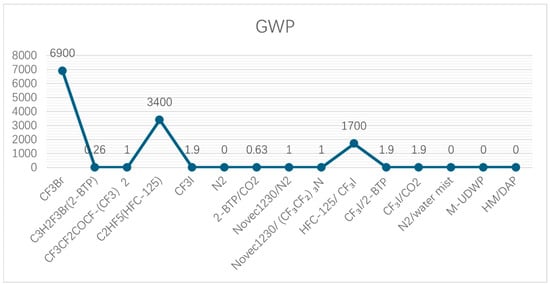
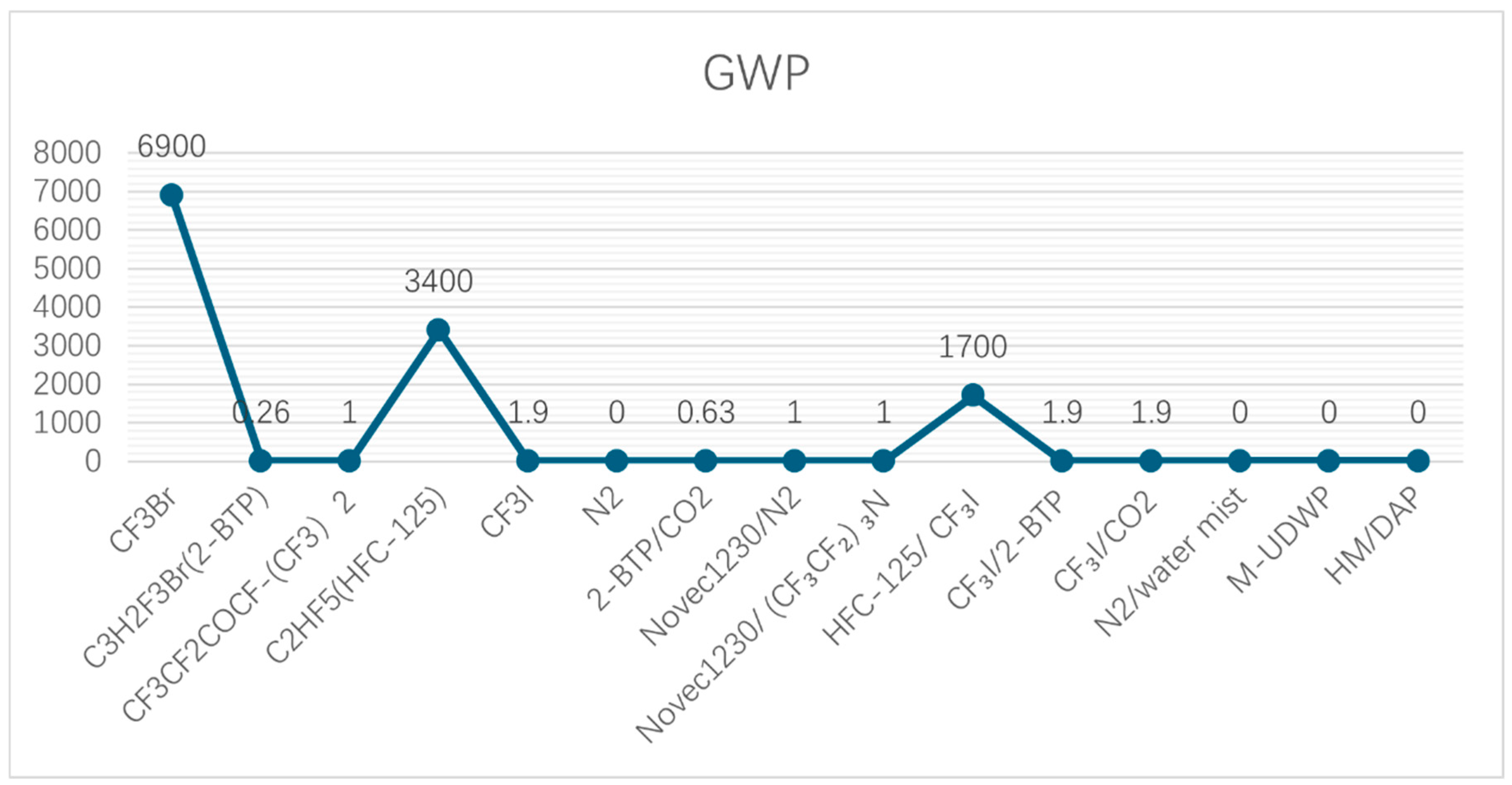
Since all selected agents are clean agents, their ODP values are essentially zero, and only HFC-125 and its blends exhibit a relatively high GWP, as shown in Figure 2. Since accurate GWP values for HFC-125/CF3I are not available, half of their estimated values were used for plotting. This distribution is nonlinear, and the scoring brackets are established based on piecewise intervals derived from the GWP ranking. EN score is 5 when ODP ≤ 0.01 and GWP ≤ 2. EN score is 3 when ODP ≤ 0.01 and 1000 < GWP ≤ 3400. EN score is 1 if ODP > 0.01 or GWP > 3400.
Figure 2.
GWP distribution of fire suppression agents.
Halon 1301 exhibits an ODP of 10 and a GWP of 6900, so a score of 1 is assigned, considering its significant adverse impact on both the ozone layer and the climate [44]. 2-BTP is an unsaturated brominated alkene, and its Br is bonded on unsaturated carbon, limiting stratospheric Br radical release. Furthermore, the C=C double bond promotes rapid oxidation by atmospheric OH· radicals and its GWP is only 0.26 [45]. The CF3I molecule contains neither Cl nor Br, resulting in negligible ODP and GWP [46]. Therefore, the ODP and GWP of blended suppression agents composed of 2-BTP, CF3I, and Novec 1230 are also close to zero. However, HFC-125 functions as a potent greenhouse gas, its GWP is 3400, exhibiting relatively severe environmental drawbacks compared to other agents, thereby receiving a lower score. In particular, the blending of HFC-125 with CF3I effectively lowers the GWP value, thereby qualifying it for an additional 1 point in the EN score. For the nitrogen/water mist combination, nitrogen is an inert gas and water mist consists of water; neither contributes any environmental burden. Modified ultrafine dry powder possesses zero ODP and zero GWP.
Based on the scoring criteria and scientific analysis, the environmental performance scores, labeled as EN, of the fire suppression agents are presented in Table 5 below.
Table 5.
Environmental performance score for fire suppression agents.
Based on the analysis of these blended fire suppression agents, it can be concluded that the environmental performances of all listed Halon substitute agents are superior to Halon 1301, they meet the essential requirement of prioritizing cleanliness.
3.2. Fire-Extinguishing Efficiency
A fire extinguishing efficiency scoring criterion using an area “FE” is established based on two core functional indicators: minimum extinguishing concentration and synergistic factor. Minimum extinguishing concentration and synergistic factors constitute the key areas for assessing the fire-extinguishing efficiency of candidate agents. To quantify the synergistic effect, the synergistic factor “” is introduced [47], defined as:
where and denote the actual concentrations of the respective components in the mixture of the blended system, and and represent the MEC of each component when used individually.
- denotes a positive synergistic effect.
- signifies a negative synergistic effect.
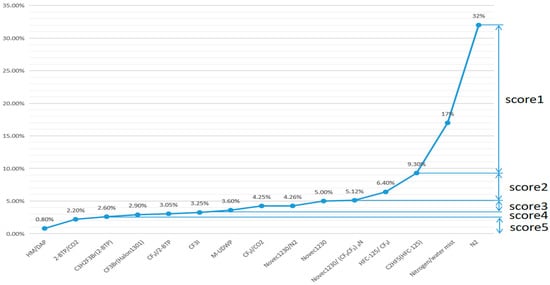
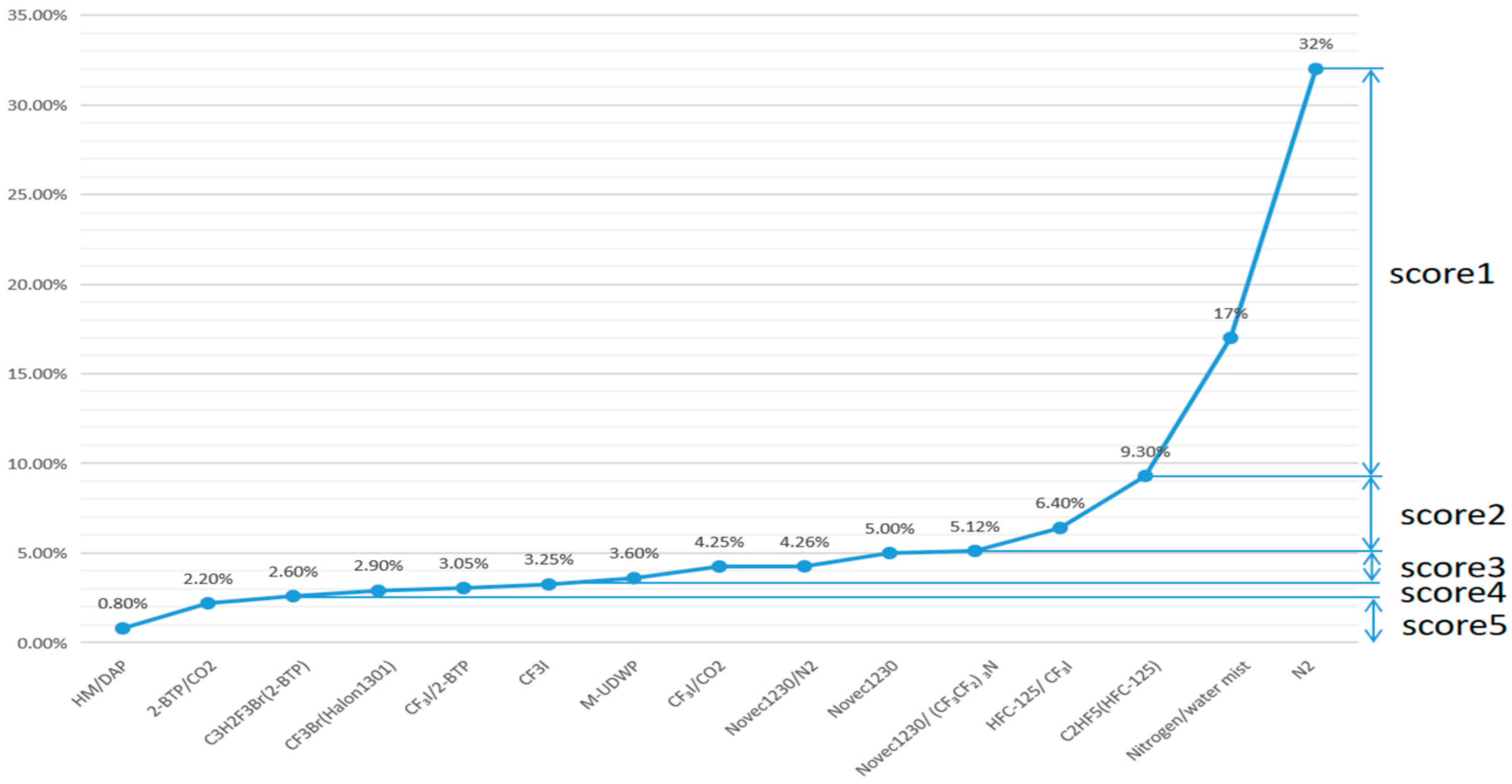
Figure 3 plots the MEC ranking from Table 3, and the scoring rubric is derived from this figure. When a specific MEC value is not given (e.g., HFC-125/CF3I or 2-BTP/CO2 range), the median is used for plotting.
Figure 3.
MEC distribution of fire suppression agents.
Figure 3 shows a nonlinear MEC distribution: widespread at high concentrations, dense at low concentrations. For objective evaluation, FE applies a nonlinear piecewise rule by concentration gradient. The maximum achievable score of FE is 5. The higher the score of FE, the higher the fire-extinguishing efficiency. FE score is 5 when MEC ≤ 2.6% with a positive synergistic effect. FE score is 4 when 2.6% < MEC ≤ 3.5% with a positive synergistic effect. FE score is 3 when 3.5% < MEC ≤ 5.12% with a positive synergistic effect. FE score is 2 when 5.12% < MEC < 9.3%, and a positive synergistic effect. An FE score is 1 when MEC ≥ 9.3% with a positive synergistic effect.
Notably, since the units of minimum extinguishing concentration for HM/DAP and M-UDWP differ and their mass concentrations are low, the extinguishing concentrations were estimated using the formula:
where is the mass concentration (g/m3), is the volume fraction (%), is the molar mass (g/mol), and 22.4 L/mol the molar gas volume. This formula serves only as a numerical equivalent for scoring and does not represent a true volume fraction for solid dry powders. Based on the optimal HM/DAP blend (10 wt% DAP), with g/m3 and , the calculated value is 0.8%. For M-UDWP (main component KAl(OH)2CO3), with g/m3 and , the calculated value is 3.6%.
For 2-BTP/CO2, CO2 physically cools and dilutes the flame. It counteracts the fuel-like reactivity of 2-BTP and enhances radical scavenging. This lowers the extinguishing concentration of 2-BTP by 15–20%, demonstrating a favorable synergistic effect and consequently receiving a high score. For Novec 1230/N2 [24] and Novec 1230/(CF3CF2)3N [25], the physical dilution of N2 enhances the distribution uniformity of Novec 1230 within the cargo compartment, reducing the extinguishing concentration. (CF3CF2)3N promotes Novec 1230 decomposition. Adding 20 mol% (CF3CF2)3N cuts the extinguishing concentration to 5.12%, creating positive synergy. HFC-125/CF3I releases fluorine radicals from HFC-125 and iodine radicals from CF3I, forming a complementary network that resolves combustion enhancement at sub-inertness concentrations [6]. CF3I/2-BTP [31] utilizes the synergistic effect of I· radicals and Br·radicals to scavenge and consume H· and OH· radicals in the flame, thereby interrupting the combustion chain reaction. For CF3I/CO2 [32,33] uses CO2 for physical cooling and dilution, reducing radical concentrations, product formation, and flame temperature, thereby improving efficiency and addressing the thermal stability of CF3I.
Nitrogen/water mist exhibits gas–liquid synergy. Water mist evaporates, absorbing heat for efficient cooling. It also dilutes oxygen. This cuts water consumption and creates a positive effect [48]. Nevertheless, its extinguishing concentration remains higher than that of gaseous agents, leading to a lower score.
For HM/DAP [9], HM’s endothermic decomposition releases H2O/CO2 and forms a MgO layer, while DAP generates P-O radicals to break the combustion chain. Through this synergistic effect, they achieve physical and chemical inhibition at the flame surface and root, providing rapid cooling, oxygen dilution, and re-ignition prevention.
Based on the scoring criteria and scientific analysis, the minimum extinguishing concentration (MEC), synergistic effect (F), and final score on fire extinguishing efficiency labeled as FE of each fire suppression agent are presented in Table 6 below.
Table 6.
Fire extinguishing efficiency score for fire suppression agents.
Considering the extinguishing concentrations and synergistic effects of the candidate agents, the minimum extinguishing concentrations of 2-BTP, 2-BTP/CO2, and CF3I/2-BTP are comparable to that of Halon 1301, and their scores are high, indicating superior fire-extinguishing performance.
3.3. Airworthiness Performance
Airworthiness directly determines whether a Halon substitute technology can be practically implemented in civil aircraft cargo compartments. An airworthiness performance scoring criterion using an area “AP” is established based on two airworthiness indicators of the extinguishing agent: the status of compliance with CC-MPS tests, and other airworthiness implications. Weight gain is treated only as a penalty factor in AP scoring. The maximum score of AP is 5. The higher the score of AP, the better the airworthiness performance. The deduction rules are as follows: “In progress” test status, “condensation risk”, “weight increase”, or “leave residues” each deducts 1 point; “Not fully pass” deducts 2 points; and “Not tested” deducts 3 points; while the combined “severe impact of weight increase and condensation risk” deducts 4 points.
With regard to CC-MPS tests, only the 2-BTP/CO2 and the nitrogen/water mist system have fully satisfied the prescribed requirements, whereas N2 has been demonstrated to pass the test solely under specific experimental conditions. In contrast, the single agents 2-BTP, Novec 1230, HFC-125, and CF3I each failed to complete the full tests, with the first three suffering from combustion enhancement during the aerosol can explosion test and CF3I from insufficient thermal stability in the bulk load fire test. Blended agents, including Novec 1230/N2, Novec 1230/(CF3CF2)3N, and CF3I/2-BTP are currently undergoing CC-MPS testing.
System weight includes agent mass and piping mass. The nitrogen/water mist system weighs 5–6 times more than Halon [49]. This weight penalty increases fuel consumption and CO2 emissions over the aircraft’s life. It also complicates installation, especially for small aircraft with limited space and payload. Since the designed extinguishing concentration of 2-BTP/CO2 is twice that of Halon and the blended system adds piping weight, the overall system weight increases by a factor of 2 to 5 [49]. N2 has a higher extinguishing concentration than Halon, and its storage requires complex piping, which adds to system weight.
Because both air pressure and temperature decrease during aircraft cruise, the influence of both of them must be considered. Nitrogen/water mist presents storage stability issues. The water mist agent is stored as a liquid, requiring anti-freeze protection at low temperatures, which further increases system complexity. The boiling point of 2-BTP is higher than room temperature, making it prone to condensation in the low-temperature environment of a cargo compartment, which may result in poor atomization performance and uneven dispersion. Novec 1230 and its mixtures have high boiling points and are prone to condensation at low temperatures. Nitrogen pressurization is often used to ensure operation, but it adds complexity. In contrast, CF3I, HFC-125, CF3I/CO2, and HFC-125/CF3I exhibit higher vapor pressures at low temperatures, demonstrating favorable adaptability.
Although HM/DAP and M-UDWP have low weight gains, they lack CC-MPS testing and leave residues, raising maintenance costs. Thus, they score lower.
Based on the scoring criteria and scientific analysis, the CC-MPS test compliance status, and other implications, the final scores on airworthiness performance, labeled as AP, of the fire suppression agents are presented in Table 7 below.
Table 7.
Airworthiness performance score for fire suppression agents.
The relatively high scores achieved by 2-BTP/CO2, HFC-125/CF3I, and CF3I/2-BTP can be attributed to their well-balanced performance in both aspects. 2-BTP, Novec 1230 and its blends, receive reduced scores due to condensation at low temperatures. Ratio optimization is needed for better environmental adaptability.
3.4. Safety Performance
Safety scoring criterion using an area SA is established based on the toxicity classification, including LOAEL and NOAEL, for clean fire suppression agents, combining NFPA 2001 [30] with the generation tendency of thermal decomposition products of acidic gases such as hydrogen fluoride (HF) and hydrogen bromide (HBr) when the agent is discharged to flame [50,51].
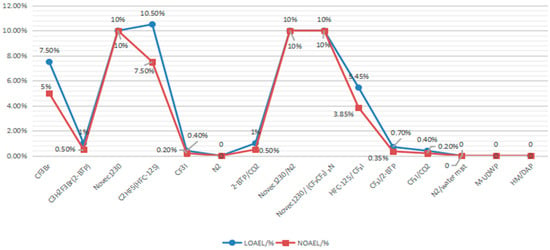
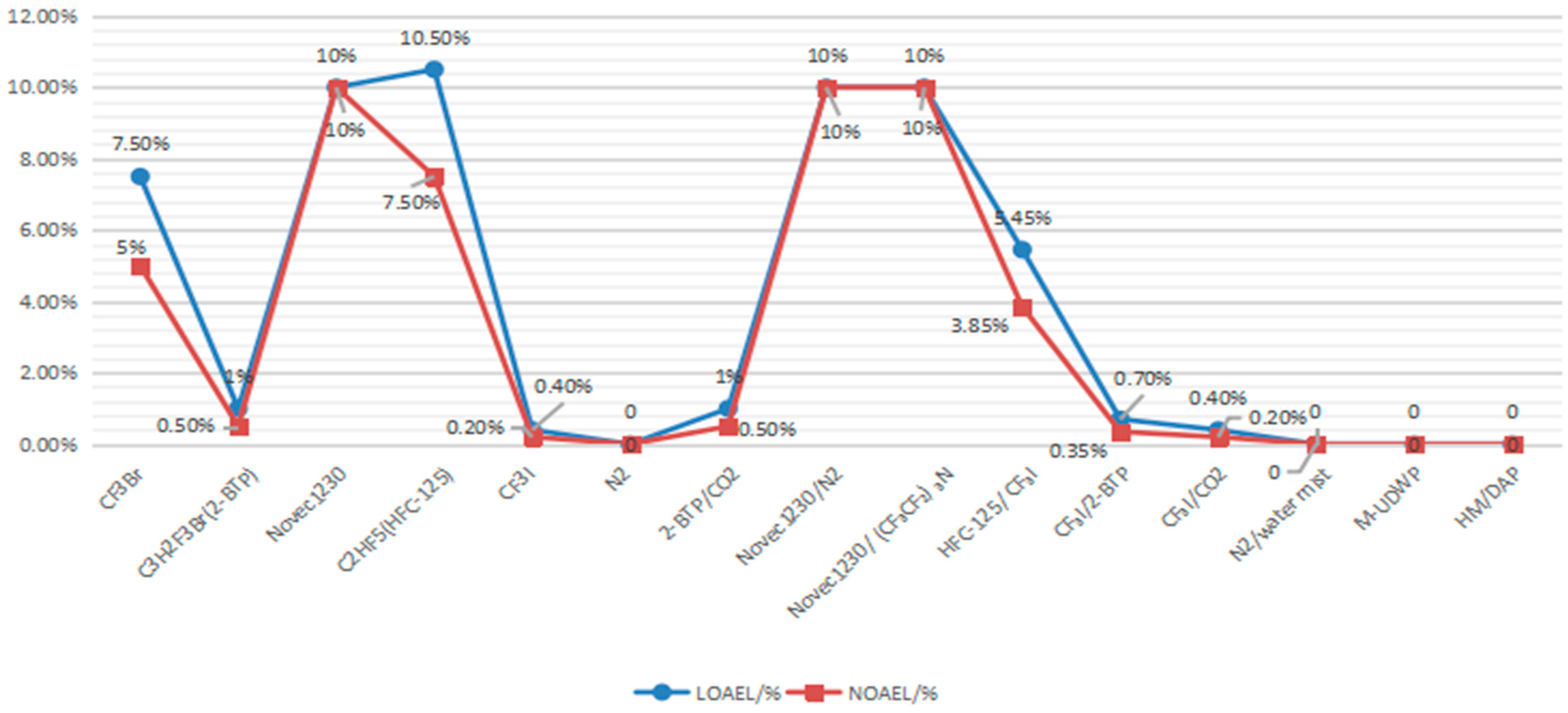
In Figure 4, when data are given as a range (e.g., HFC-125/CF3I, CF3I/2-BTP), the median is adopted. LOAEL and NOAEL values show a nonlinear distribution. Thermal decomposition toxicity of agents is rated by fluorine recovery rate and bromine/chlorine content. The scoring criteria are developed based on the distribution shown in Figure 4 and the thermal decomposition toxicity of the respective suppression agents. The maximum score of SA is 5. The higher the score of SA, the better the safety performance. SA score is 5 when NOAEL and LOAEL = 0. SA score is 4 when NOAEL ≥ 10%, LOAEL ≥ 10%, and fluorine recovery rate < 30%. SA score is 3 when 5% ≤ NOAEL ≤ 9% and LOAEL ≥ 8%, or when 30% ≤ fluorine recovery rate < 60%. SA score is 2 when 0.5% ≤ NOAEL ≤ 1% and 0.5% ≤ LOAEL ≤ 1%, or when 60% ≤ fluorine recovery rate < 85%. SA score is 1 when NOAEL < 0.5% and LOAEL < 1%, or when fluorine recovery rate ≥ 85%.
Figure 4.
LOAEL and NOAEL distribution of fire suppression agents.
A propane diffusion flame coupled with Fourier transform infrared spectroscopy was studied by Andersson [50] to quantitatively analyze the thermal decomposition behavior of multiple fire suppression agents in flame—Halon 1301, HFC-125, and Novec 1230 are included. The study revealed that the HF yield of Halon 1301 is constant at 0.4 g/g, and after discharging it is almost completely recovered as HF and COF2, with fluorine recovery rate exceeding 95%. In contrast, Novec 1230 has an HF yield of 0.3 g/g at low application rates. As the rate rises, most fluorine stays in organic products, with about 25% fluorine recovery. Novec 1230 also exhibits excellent toxicological properties, with NOAEL and LOAEL both exceeding 10%; blending it with N2 or (CF3CF2)3N further reduces toxicity. HFC 125 exhibits an HF yield of 0.7 g/g under low-application-rates. As the rate rises, most fluorine stays in organic products, with about 60% fluorine recovery and high NOAEL and LOAEL. 2-BTP contains bromine but no fluorine, and decomposition yields HBr (no HF). Its fluorine recovery rate is below 30%, meaning most fluorine remains in the parent compound. However, its low NOAEL and LOAEL reduced its safety rating. CF3I has very low NOAEL and LOAEL, and releases HF at high-temperatures, causing high toxicity. CO2 blending dilutes HF and lowers toxicity, reducing peak HF by 30–40% [52]. Notably, blends like CF3I/2-BTP and HFC-125/CF3I combine agents with moderate to high toxicity, increasing safety risks and thus receiving lower scores. Inert gases and water mist produce no acidic decomposition products. M-UDWP and HM/DAP are non-toxic but irritant substances and receive a score of 4.
Based on the scoring criteria and scientific analysis, the safety performance scores, labeled as SA, of the fire suppression agents are presented in Table 8 below.
Table 8.
Safety performance score for fire suppression agents.
Based on the analysis of these blended fire suppression systems, it can be concluded that Novec 1230, N2, Novec 1230/N2, Novec 1230/(CF3CF2)3N, nitrogen/water mist, M-UDWP, and HM/DAP exhibit good safety performance and thus receive relatively high scores. CF3I exhibits relatively high toxicity compared to other fire suppression agents, resulting in a lower score.
3.5. Comprehensive Score and Recommendation Example
Based on the scoring results of each fire suppression agent across different areas, this chapter introduces two approaches. The first approach assigns a score of 1 to 5 to each of the four areas and combines the four scores into a single comprehensive score, R1, using a weighting factor for each area. This chapter proposes five different weight allocation results. The score R1 will be employed to compare and select suitable clean fire suppression agents for aircraft cargo compartments. To select appropriate Halon substitutes, the second approach adopts three areas excluding EN (FE, AP, SA) with two different weight allocations, and compares the scores of the agents with those of Halon. Taking both approaches into account, this chapter provides an appropriate reference example to specific aircraft cargo compartments.
3.5.1. Approach with All Four Areas
A comprehensive score presented mathematically by combining FE, AP, SA, and EN, with different weighting n1, n2, n3, and n4. The formula for calculating R1 is as follows:
Each performance indicator was investigated. Five trials with different weightings with EN 60%, FE 15%, AP 15%, SA 10%; EN 45%, FE 30%, AP 15%, SA 10%; EN 25%, FE 25%, AP 25%, SA 25%; EN 20%, FE 30%, AP 30%, SA 20%; and EN 60%, FE 5%, AP 10%, SA 25% were performed. Each trial yielded different results. The scores of each fire suppression agent for EN, FE, AP, and SA, together with the aggregated results of the five trials, are summarized in Table 9 below.
Table 9.
A ranking system with different weights.
EN weighting of 60% would illustrate a clear substitute to Halon. In the fifth weighting scheme, the environmental advantage of the agents is amplified, with EN accounting for 60%, highlighting the essential requirement of selecting clean Halon substitutes. Since the selected Halon substitute agents all have relatively low extinguishing concentrations and similar fire-extinguishing performance, the weight assigned to FE is only 5%. Although airworthiness performance is a threshold for engineering application, it can be appropriately adjusted through design in practice; therefore, AP is weighted at just 10%. Safety performance takes a 25% share to differentiate toxicity risks and ensure personnel and equipment safety. Ultimately, the fifth weighting scheme successfully produces a clear gradient in the comprehensive scores of the agents, enabling decision-makers to quickly screen out environmentally friendly, safe, and reliable priority candidates, thereby meeting the long-term demand for green fire-extinguishing technologies in civil aircraft cargo compartments.
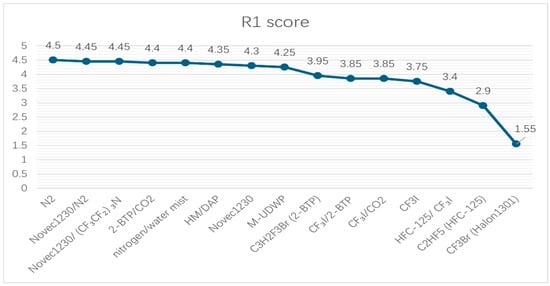
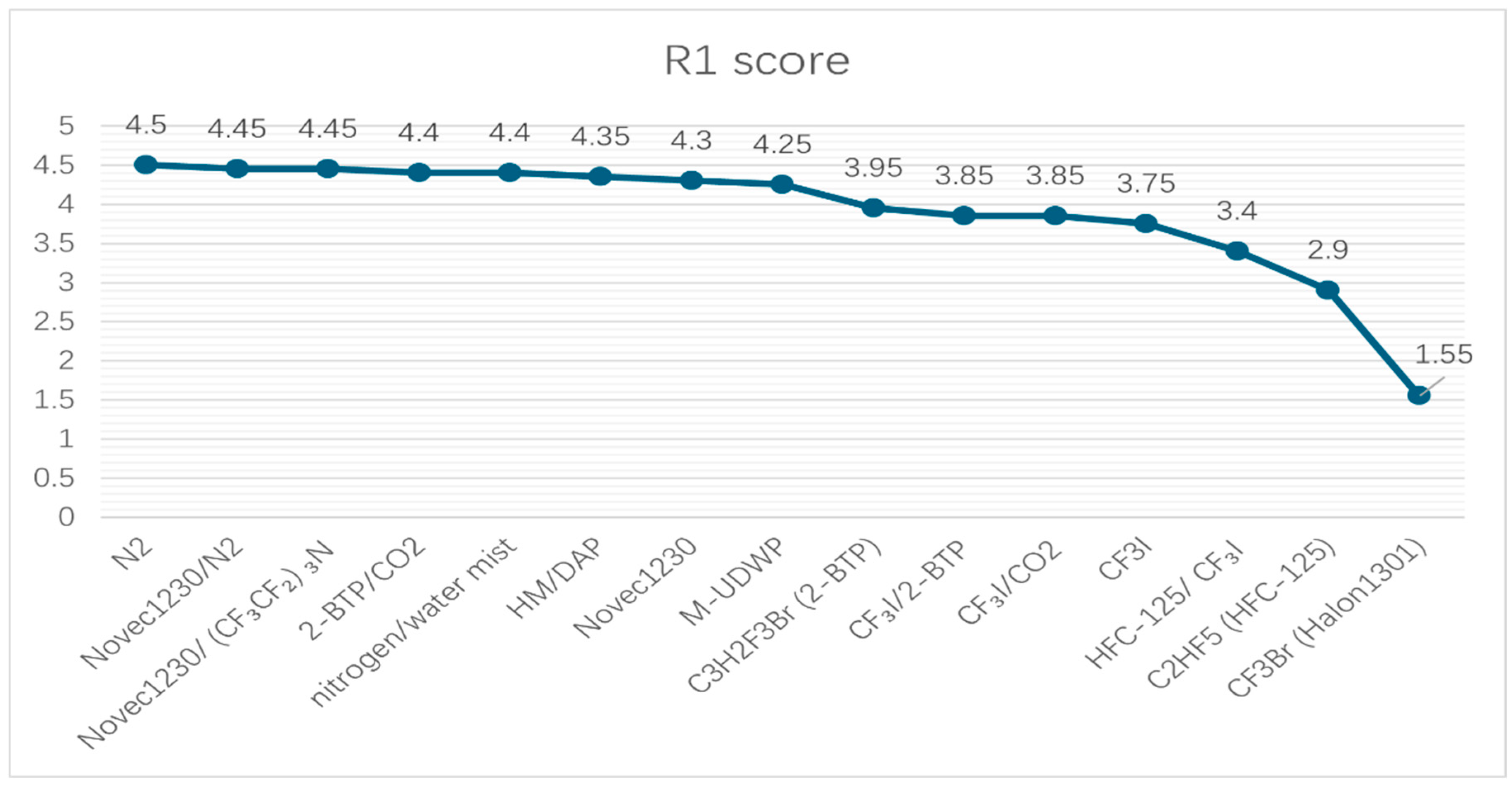
Based on the scores obtained with the fifth weighting scheme (EN 60%, FE 5%, AP 10%, SA 25%), the agents are ranked from highest to lowest score to produce Figure 5 below.
Figure 5.
R1 score rank of fire suppression agents.
3.5.2. Approach with Three Areas Only
To select appropriate Halon substitutes, EN can be excluded to leave only three performance areas. Another comprehensive score, presented mathematically by combining FE, AP, and SA, with different weighting m1, m2, and m3, is denoted as R2.
The ranking results of the two weighting schemes presented in Table 10 below.
Table 10.
Another ranking system.
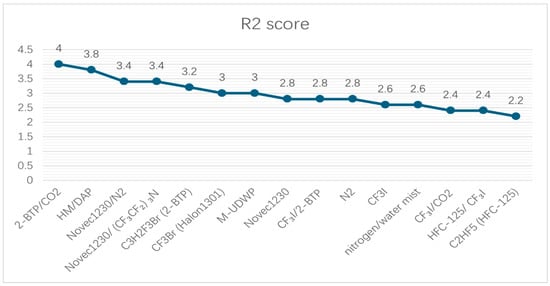
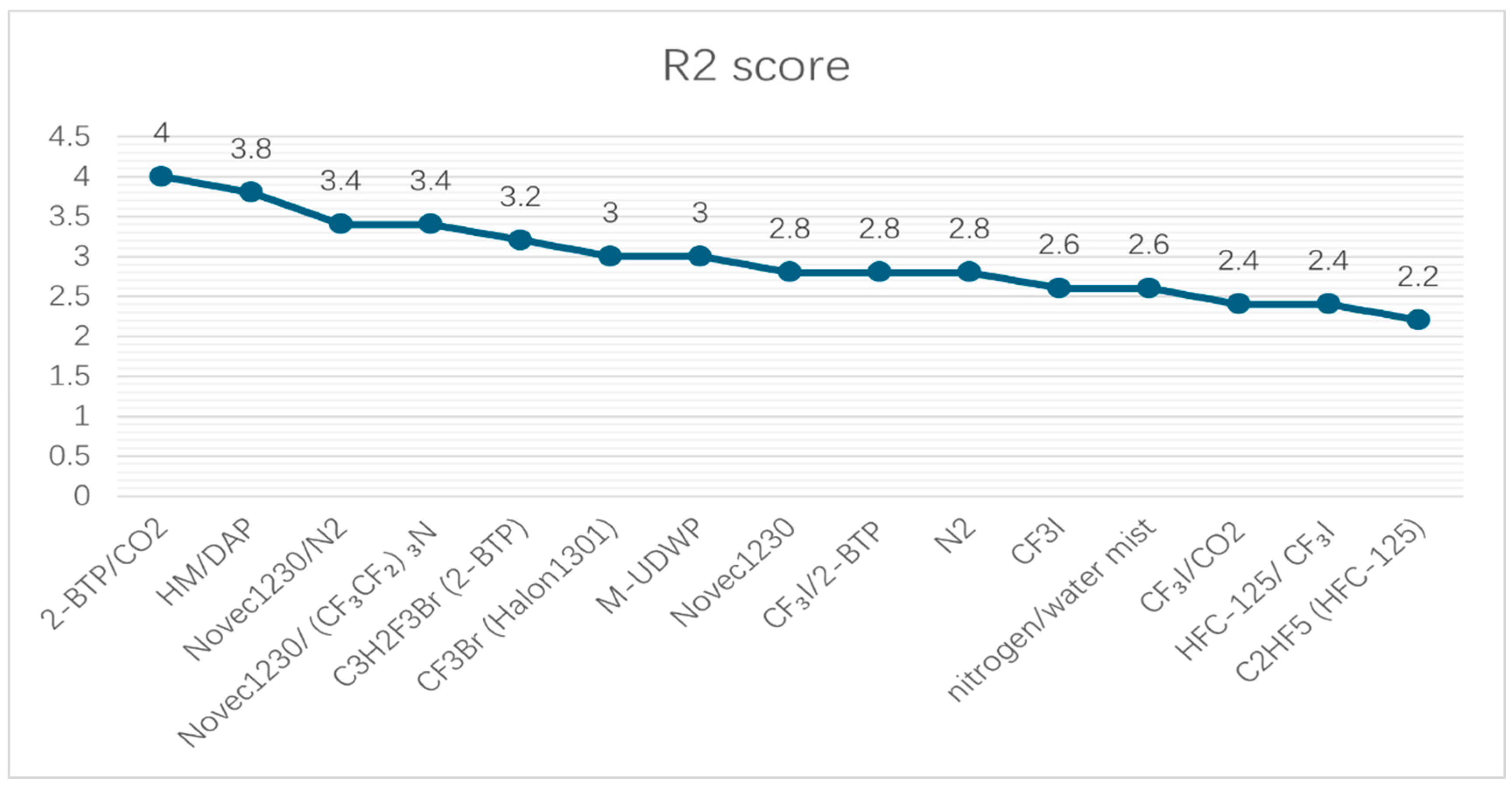
The first weighting scheme (FE 35%, AP 30%, SA 35%) assigns relatively balanced weights to the three areas. In contrast, the second scheme (FE 40%, AP 20%, SA 40%) places greater emphasis on fire-extinguishing and safety performance, treating airworthiness only as a minimum acceptance condition and allowing greater compromises in system weight, low-temperature adaptability, and other aspects. An example selection is on the second ranking system; (FE 40%, AP 20%, SA 40%) is selected to rank the fire suppression agents from best to worst, as shown in Figure 6 below.
Figure 6.
R2 score rank of fire suppression agents.
Based on the two ranking approaches following the classification method of an editor’s ranking model [42,43], a suitable selection example is illustrated for reference. Two ranking approaches, (EN 60%, FE 5%, AP 10%, SA 25%) and (FE 40%, AP 20%, SA 40%), are adopted for comprehensive evaluation, and the agents are classified into four levels: optimal substitutes, promising substitutes, special-scenario substitutes, and technology reserves. The R1 scores lie in the 1.55–4.50 range and the R2 scores in the 2.2–4.0 range, exhibiting a nonlinear distribution. Therefore, the level classification is defined based on the segmented intervals derived from the data. The scores of the two ranking approaches serve as mutual references. When R1 ≥ 4.40 and R2 ≥ 3.40, the agents are designated as “Optimal substitutes”, indicating that they are ready for engineering validation and airworthiness certification. When 3.85 ≤ R1 < 4.40 and 2.80 ≤ R2 < 3.40, the agents are designated as “Promising substitutes”. Their outstanding advantages should be exploited, and the blending components and ratios could be adjusted to overcome existing shortcomings. When 3.40 ≤ R1 < 3.85 and 2.40 ≤ R2 < 2.80, the agents are designated as “Special-scenario substitutes”, suitable only for specific aircraft types or conditions. For thes agents, the formulation and proportion of the blended agents should be tailored to a particular cargo compartment configuration to enhance compatibility with specialized aircraft. When R1 ≤ 2.90 or R2 < 2.40, the agent is designated as “Technology reserves”, indicating an overall low performance level that requires comprehensive improvement and is not yet recommended for use.
3.5.3. Example
Based on the above evaluation criteria, an appropriate example of selecting clean fire suppression agents is as shown in Table 11 below.
Table 11.
An appropriate example of fire suppression agents.
The comprehensive R1 and R2 scores of the fire suppression agents can provide references for engineering selection, airworthiness certification planning, and research and development direction in decision-making. According to the ranking outcomes, the agents 2-BTP/CO2, Novec 1230/N2 and Novec 1230/(CF3CF2)3N are all assigned to the level “Optimal substitutes”, indicating that they exhibit clean, effective, airworthy, and safe extinguishing characteristics. In this example, 2-BTP/CO2 has successfully passed the CC-MPS test, exhibits a low extinguishing concentration, good synergistic effect, and demonstrates favorable environmental performance. Novec 1230/N2 [24] and Novec 1230/(CF3CF2)3N [25] show excellent fire-extinguishing and environmental performance, all supported by solid experimental data and consistent with their actual performance. Consequently, they are deemed ready for airworthiness certification and practical implementation. Such agents warrant priority in CC-MPS testing and should be integrated into cargo compartment fire suppression system design and retrofit schemes to expedite operational deployment. In particular, although N2 and the nitrogen/water mist system achieve high R1 scores because of their excellent environmental performance, nitrogen suffers from low fire-extinguishing efficiency, and the nitrogen/water mist system has a severe weight penalty. Therefore, both are classified as suitable only for special aircraft types, such as wide-body passenger aircraft. The agents 2-BTP, Novec 1230, M-UDWP, HM/DAP, and CF3I/2-BTP are all classified in the “promising substitutes” category, and targeted optimization should be conducted based on their outstanding individual attributes, such as low extinguishing concentration, safety and cleanliness, or favorable airworthiness characteristics, so as to compensate for deficiencies in other aspects. Furthermore, residue issues associated with M-UDWP and HM/DAP remain a critical bottleneck. Resolving this problem would substantially enhance the performance of these ultrafine dry powder agents. The agents nitrogen/water mist, N2, CF3I, CF3I/CO2, and HFC-125/CF3I are categorized as “Special-scenario substitutes” due to specific performance limitations that restrict their applicability to particular aircraft cargo compartments. For instance, nitrogen/water mist systems incur a substantial weight penalty and are thus suitable only for large wide-body aircraft. HFC-125/CF3I exhibits poor environmental performance due to its high GWP. Future research on HFC-125 could prioritize optimizing blend ratios and discharge control to reduce agent concentration and safety risks. HFC-125 and Halon1301 receive low scores and are classified as “Technology Reserves” due to poor environmental performance. Collectively, these formulations constitute a diversified technology portfolio for Halon substitutes in civil aircraft cargo compartments.
The sub-scores for each area within the ranking results can guide the allocation of subsequent research and development resources. For agents that have passed CC-MPS testing and achieved high comprehensive scores, such as 2-BTP/CO2, the certification process may be streamlined. For agents with moderate scores, supplementary validation tests under specific operating conditions should be required. For agents with lower safety performance scores, such as HFC-125/CF3I and CF3I/2-BTP, shortcomings could be addressed by adjusting the blending ratio, incorporating inert components, or developing novel low-toxicity formulations. For fire suppression agents with poor environmental performance, such as HFC-125 and its blends, the formulation ratios could be adjusted or new blended agents developed to mitigate their environmental impact.
The above is only an example for reference. Different aircraft models and different regions may select appropriate clean fire suppression agents by considering various areas such as fire-extinguishing performance, safety performance, economic conditions, and engineering design. This ranking system supports dynamic updating. As new agents emerge or existing formulations improve, scores can be recalculated, enabling a closed loop from technical screening to engineering implementation. It thus provides both quantitative comparison of candidates and a clear pathway for the scientific selection and systematic advancement of cargo compartment fire suppression agents.
The screening judgment is dependent on the scenario. The screening judgment is very important. Erroneous screening may select an improper fire suppression agent, or even give the wrong development schedule. First, an imbalanced weight allocation may lead the research and development direction of fire suppression agents away from actual engineering application needs. If only environmental performance is emphasized while fire-extinguishing and airworthiness performance are neglected, nitrogen/water mist and N2 might be inappropriately regarded as the optimal substitutes, thereby not providing an appropriate selection. In reality, N2 has low fire-extinguishing efficiency, and the nitrogen/water mist system is unsuitable for narrow-body aircraft due to its significant weight increase. Second, using a single area or inaccurate data can block progress on key problems. Ignoring system weight, low-temperature adaptability, and safety could endanger people and flight safety. Finally, not updating data on time may cause inappropriate allocation of resources. Companies might follow wrong rankings and keep working on outdated options, thus missing the chance to develop new fire suppression agents. Therefore, the scientific validity and accuracy of this ranking system are crucial for the development of fire suppression agents.
3.6. Future Work
This section summarizes the limitations of the ranking system and presents future work directions accordingly.
3.6.1. Address the Unresolved Bottlenecks of Current Fire Suppression Agents
To address the weight increase and low-temperature reliability of the nitrogen/water mist system, future work should explore integrated designs. For example, using airframe structural parts as water storage cavities can greatly reduce system weight. To solve the residue problem of HM/DAP and M-UDWP after discharge, future research could develop biodegradable or easily removable modified coatings that lower the adhesion of dry powders to cargo compartment inner walls. Regarding the poor environmental performance of HFC-125 and its mixtures, future studies could investigate, through simulation and experiment, appropriate blending ratios with other fire extinguishing agents to mitigate their environmental impact. For other agents, future research would focus on optimizing agent formulations and application techniques to lower extinguish concentrations, reduce safety risks, and improve adaptability to low-temperature conditions.
3.6.2. Conduct Dedicated Tests on Lithium-Ion Battery Thermal Runaway
Research on lithium-ion battery thermal runaway fires indicates that synergistic fire suppression strategies can effectively control such fires. Novec 1230 combined with intermittent water mist spraying [53] can quickly extinguish flames and prevent thermal runaway propagation. The alternating strategy of water mist and liquid nitrogen [54] can effectively delay thermal runaway. The synergistic strategy of 2-BTP and water [55] successfully prevents reignition and achieves a steady and continuous decrease in battery temperature. However, these fire suppression technologies are still at an early stage of development. Most of the agents have not yet undergone dedicated lithium-ion battery thermal runaway tests, nor have they passed the CC-MPS airworthiness tests. A gap therefore remains between experimental research and engineering application.
Future work might integrate kinetic simulations with cup burner tests and appropriate lithium-ion battery fire experiments. A standardized battery module fire test platform could be designed to evaluate the fire extinguishing time, maximum battery surface temperature, and cooling rate of candidate blended agents after thermal runaway initiation. These data can be incorporated as a sub indicator into the fire Extinguishing Efficiency score.
3.6.3. Provide More Specific Selecting References
This paper illustrates how ranking can be carried out for this example. In future work, based on a specific aircraft type, considering its cargo compartment dimensions, fire suppression requirements, economic conditions, airworthiness standards, etc., appropriate weight ratios for the four evaluation areas can be selected to rank the candidate fire suppression agents, thereby obtaining the most suitable Halon alternative for that aircraft type.
4. Conclusions
This study systematically analyses the technical characteristics and recent advances in clean fire suppression agents for civil aircraft cargo compartments. A ranking system with two approaches is proposed to select appropriate suppressants by considering their fire-extinguishing, airworthiness, safety and environmental performance. The first approach assigns five different weights to these four areas, and the weight combination (EN 60%, FE 5%, AP 10%, SA 25%) is finally selected as the basis for selecting clean fire suppression agents for aircraft cargo compartments. Meanwhile, to select appropriate Halon substitutes, the second approach with only three areas, excluding EN and using (FE 40%, AP 20%, SA 40%), is used and compared with Halon. This ranking system comprehensively considers both ranking approaches and achieves a wider score distribution. An appropriate reference example, for which the optimal substitute suppression agents are Novec 1230/N2, 2-BTP/CO2, and Novec 1230/(CF3CF2)3N, is provided to a specific aircraft cargo compartment. This paper not only provides a reference for selecting suitable clean fire suppression agents for different types of aircraft cargo compartments, but also offers a reference for the technical optimization of clean fire suppression agents in the safety design of civil aircraft cargo compartments.
Author Contributions
Conceptualization, X.H., T.H. and Z.Z.; Methodology, X.H., X.J. and W.C.; Formal analysis, X.H.; Investigation, X.H. and T.H.; Resources, X.J. and W.C.; Data Curation, X.H.; Writing—original draft, X.H.; Writing—review and editing, X.H. and W.C.; Funding acquisition, X.J. and W.C. All authors have read and agreed to the published version of the manuscript.
Funding
This study was supported by the National Natural Science Foundation of China (grant number 52476100), the Sichuan Provincial Science and Technology Plan Project (grant number 2025YFHZ0054).
Data Availability Statement
The original contributions presented in this study are included in the article. Further inquiries can be directed to the corresponding author.
Conflicts of Interest
The authors declare no conflicts of interest.
References
- Ludwig, W. International Civil Aviation Organization (ICAO); Kluwer Law International BV: Alphen aan den Rijn, The Netherlands, 2025. [Google Scholar]
- Choy, R.W.M.; Chow, W.K.; Fong, N.K. Assessing the clean agent heptafluoropropane by the cup burner test. J. Appl. Fire Sci. 2004, 12, 23–40. [Google Scholar] [CrossRef] [Scilit]
- Lee, E.P.F.; Dyke, J.M.; Chow, W.K.; Chau, F.T.; Mok, D.K.W. The heat of formation of 2-H heptafluoropropane by ab initio calculations. Chem. Phys. Lett. 2005, 402, 32–36. [Google Scholar] [CrossRef] [Scilit]
- Dadia, D. Evaluation of VERDAGENT® Against the FAA Minimum Performance Standard for Aircraft Cargo Compartment Halon Replacement Fire Suppression Systems (Report No. DOT/FAA/TC-22/5); U.S. Department of Transportation, Federal Aviation Administration: Washington, DC, USA, 2022. Available online: https://rosap.ntl.bts.gov/view/dot/64764/ (accessed on 27 March 2026).
- Xing, H.; Lu, S.; Yang, H.; Zhang, H. Review on research progress of C6F12O as a fire extinguishing agent. Fire 2022, 5, 50. [Google Scholar] [CrossRef] [Scilit]
- Chattaway, A.; Simpson, T. Fire Suppression Agent Composition. U.S. Patent US 2020/0330810 A1, 22 October 2020. [Google Scholar]
- Reinhardt, J.W. The Evaluation of Water Mist With and Without Nitrogen as an Aircraft Cargo Compartment Fire Suppression System; Federal Aviation Administration, Airport and Aircraft Safety; Research and Development Division, William J. Hughes Technical Center, Atlantic City International Airport: Atlantic City, NJ, USA, 2002; p. 8405. [Google Scholar]
- Wang, Z.; Zhang, Y.; Liu, Y.; Wang, J.; Zhou, X.; Pan, R. Study on the pyrolysis and fire extinguishing performance of high-temperature-resistant ultrafine dry powder fire extinguishing agents for aviation applications. Molecules 2024, 29, 3500. [Google Scholar] [CrossRef] [Scilit]
- Wang, L.; Du, S.; Zhou, Z.; Guo, Y.; Yang, Q.; Yao, S.; Zhang, H. Enhanced fire-extinguishing performance and synergy mechanism of HM/DAP composite dry powder. Materials 2025, 18, 533. [Google Scholar] [CrossRef] [Scilit]
- Wang, J.; Lu, S.; Guan, Y.; Lo, S.; Zhang, H. Experiment investigation on the influence of low pressure on ceiling temperature profile in aircraft cargo compartment fires. Appl. Therm. Eng. 2015, 89, 526–533. [Google Scholar] [CrossRef] [Scilit]
- Pitts, W.M.; Nyden, M.R.; Gann, R.G.; Mallard, W.G.; Tsang, W. NIST Technical Note 1279; National Institute of Standards and Technology, US Department of Commerce: Gaithersburg, MD, USA, 1990; pp. 14–40. [Google Scholar]
- Gann, R.G.; Barnes, J.D.; Davis, S.; Harris, J.S.; Harris, R.H., Jr.; Herron, J.T.; Ricker, R.E. Preliminary Screening Procedures and Criteria for Replacements for Halons 1211 and 1301 (NIST TN 1278); NIST: Gaithersburg, MD, USA, 1990. [Google Scholar]
- Pitts, W.M.; Nyden, M.R.; Gann, R.G.; Mallard, W.G.; Tsang, W. Construction of an Exploratory List of Chemicals to Initiate the Search for Halon Alternatives (No. NISTTN1278); NIST: Gaithersburg, MD, USA, 1991. [Google Scholar]
- Reinhardt, J.W. Minimum Performance Standard for Aircraft Cargo Compartment Halon Replacement Fire Suppression Systems (2012 Update) (No. DOT/FAA/TC-TN12/11); The National Academies of Sciences, Engineering, and Medicine: Washington, DC, USA, 2012. [Google Scholar]
- United Nations Environment Programme. Montreal Protocol on Substances that Deplete the Ozone Layer (1522 UNTS 3; 26 ILM 1550); United Nations Environment Programme: Nairobi, Kenya, 1987. [Google Scholar]
- United Nations Environment Programme. Copenhagen Amendment to the Montreal Protocol on Substances that Deplete the Ozone Layer (32 ILM 874); United Nations Environment Programme: Nairobi, Kenya, 1992. [Google Scholar]
- U.S. Environmental Protection Agency. Fire Suppression and Explosion Protection; Significant New Alternatives Policy (SNAP) Program: Washington, DC, USA, 2026.
- U.S. Environmental Protection Agency. Protection of Stratospheric Ozone: Listing of Substitutes for Ozone-Depleting Substances—Fire Protection (RIN: 2060-AQ84); U.S. Environmental Protection Agency: Washington, DC, USA, 2012.
- Babushok, V.I.; Linteris, G.T.; Burgess, D.R., Jr.; Baker, P.T. Hydrocarbon flame inhibition by C3H2F3Br (2-BTP). Combust. Flame 2015, 162, 1104–1112. [Google Scholar] [CrossRef] [Scilit]
- Bian, H.; Ye, L.; Sun, J. Theoretical kinetic and mechanistic studies on the reactions of CF3CBrCH2 (2-BTP) with OH and H radicals. Molecules 2017, 22, 2140. [Google Scholar] [CrossRef] [Scilit] [PubMed]
- Li, P.; Ke, B.; Zhang, J.; Chen, X. Numerical investigation of the chemical effect and inhibition effect improvement of C3H2F3Br (2-BTP) using the perfectly stirred reactor model. Energies 2018, 11, 2670. [Google Scholar] [CrossRef] [Scilit]
- Babushok, V.I.; Katta, V.R.; Takahashi, F. Equivalence ratio influence on the flame suppressant concentration of 2-BTP and Novec 1230. Combust. Sci. Technol. 2022, 194, 1943–1953. [Google Scholar] [CrossRef] [Scilit]
- Liang, T.; Zhao, S.; Zhang, W.; Zhong, W.; Gao, X.; Fu, H.; Wang, J. Study on the fire extinguishing effect of physical and chemical actions of perfluorohexanone. CIESC J. 2025, 76, 6761–6767. [Google Scholar]
- Ma, J.; Xian, X.; Zhao, Q.; Wang, H. Experimental study on synergistic fire extinguishing efficiency of perfluorohexanone and nitrogen mixture. Fire Sci. Technol. 2024, 43, 850–854, 866. [Google Scholar]
- He, Y.; Guo, R.; Deng, J.; Yi, X.; Xiao, Y.; Feng, J.; Deng, Y. Synergistic fire suppression mechanism of perfluorohexanone and perfluorotriethylamine mixtures: Experimental and quantum chemical insights from a modified cup-burner. Chem. Eng. Sci. 2025, 316, 122029. [Google Scholar] [CrossRef] [Scilit]
- Pagliaro, J.L.; Linteris, G.T.; Sunderland, P.B.; Baker, P.T. Combustion inhibition and enhancement of premixed methane–air flames by halon replacements. Combust. Flame 2015, 162, 41–49. [Google Scholar] [CrossRef] [Scilit]
- ISO 14520-8:2019; Gaseous Fire-Extinguishing Systems—Physical Properties and System Design—Part 8: HFC 125 Extinguishant. International Organization for Standardization: Geneva, Switzerland, 2019. Available online: https://www.iso.org/standard/74523.html (accessed on 27 March 2026).
- Likhnyovskyi, R.; Tsapko, Y.; Kovalenko, V.; Tsapko, O. Research of Fire Extinguishing Efficiency of Binary Mixtures of Pentafluoroethane (HFC-125) and Heptafluoropropane (HFC-227ea) with Nitrogen. In Defect and Diffusion Forum; Trans Tech Publications Ltd.: Bäch, Switzerland, 2025; Volume 438, pp. 89–99. [Google Scholar]
- Yu, R.; Hu, W.; Zhang, X.; Wang, X.; Tan, Z. Thermal decomposition and fire-extinguishing mechanism of CF3I: A combined theoretical and experimental study. Int. J. Quantum Chem. 2022, 122, e26845. [Google Scholar] [CrossRef] [Scilit]
- National Fire Protection Association. NFPA 2001: Standard on Clean Agent Fire Extinguishing Systems, 2025th ed.; National Fire Protection Association: Quincy, MA, USA, 2024. [Google Scholar]
- Chattaway, A.; Simpson, T.; Fazzio, M.P.; Hagge, H.; Papas, P.; Soteriou, M.C.; Baldwin, E.; Liu, Q.E. Fire Suppression Blends of CF3I and 2-BTP. U.S. Patent 17/798,744, 16 February 2021. [Google Scholar]
- Luo, Z.; Nan, F.; Cheng, F.M.; Xiao, Y.; Wang, T.; Shao, J.; Wang, C. Experimental study on CO2/CF3I suppression of methane-air explosion and flame propagation. J. Loss Prev. Process Ind. 2023, 83, 105002. [Google Scholar] [CrossRef] [Scilit]
- Papas, P.; Cao, C.; Kim, W.; Baldwin, E.; Chattaway, A. Fire suppression using trifluoroiodomethane (CF3I)-carbon dioxide (CO2) mixtures. Proc. Combust. Inst. 2023, 39, 3765–3773. [Google Scholar] [CrossRef] [Scilit]
- Shaw, B. Boeing Cargo MPS Alternative Agent (CF3I) Test Results; FAA Fire Safety Conference: Chantilly, VA, USA, 2019. [Google Scholar]
- Diakostefanis, M.; Sampath, S.; Dinesh, A.; Beuermann, R.; Malkogianni, A. Nitrogen as an environmentally friendly suppression agent for aircraft cargo fire safety. J. Fire Sci. 2021, 39, 400–424. [Google Scholar] [CrossRef] [Scilit]
- Chow, W.K.; Gao, Y.; Dong, H.; Zou, G.; Meng, L. Will water mist extinguish a liquid fire rapidly? Archit. Sci. Rev. 2003, 46, 139–144. [Google Scholar] [CrossRef] [Scilit]
- Chow, W.K.; Jiang, Z.; Li, S.F.; Han, D.L. Improving fire suppression of water mist by chemical additives. Polym.-Plast. Technol. Eng. 2007, 46, 51–60. [Google Scholar] [CrossRef] [Scilit]
- Yao, B.; Cong, B.H.; Qin, J.; Chow, W.K. Experimental study of suppressing poly (methyl methacrylate) fires using water mists. Fire Saf. J. 2012, 47, 32–39. [Google Scholar] [CrossRef] [Scilit]
- Tuo, Y.; Huo, Y.; Huang, X.; Zhou, X. Effect of low ambient pressure on spray characteristics of water mist and effectiveness of fire extinguishing. Appl. Therm. Eng. 2025, 283, 128976. [Google Scholar] [CrossRef] [Scilit]
- Yang, D.; Kuang, K.; Zheng, Y.; Ni, X.; Liao, G. Simulation experimental study on extinguishing oil pool fire with refined powder-based medium. China Saf. Sci. J. 2007, 17, 39–44. [Google Scholar]
- GB 46996-2025; National Fire and Rescue Bureau. Ultrafine Dry Powder Fire Extinguishing Agent. China Standards Press: Beijing, China, 2025.
- Watts, J.M. Fire risk ranking. In SFPE Handbook of Fire Protection Engineering; DiNenno, P.J., Ed.; National Fire Protection Association: Quincy, MA, USA, 1995; pp. 5-12–5-26. [Google Scholar]
- Chow, W.K.; Lui, G.C.H. A fire safety ranking system for karaoke establishments in Hong Kong. J. Fire Sci. 2001, 19, 106–120. [Google Scholar] [CrossRef] [Scilit]
- UNEP Ozone Secretariat. Annex A: Controlled substances. In The Montreal Protocol on Substances that Deplete the Ozone Layer; UNEP Ozone Secretariat: Nairobi, Kenya. Available online: https://ozone.unep.org/treaties/montreal-protocol/articles/annex-controlled-substances (accessed on 27 March 2026).
- Fluorocarbons.org. Learn About HCFOS, HBFOS, Stratospheric Ozone and Climate Change [EB/OL]. 2020. Available online: https://www.fluorocarbons.org/wp-content/uploads/2020/09/Learn-About-HCFO-1233zdE-HBFO-1233xfB-Stratospheric-Ozone-and-Climate-Change-Updated-March-2020.pdf (accessed on 11 March 2026).
- Zhao, Y.; Liu, W.; Zheng, Y.; Cheng, L.; Li, D.; Wang, K. Theoretical calculation of GWP value for a new insulating gas CF3I. J. Anhui Univ. (Nat. Sci. Ed.) 2025, 49, 72–81. [Google Scholar]
- Bolshova, T.A.; Shvartsberg, V.M.; Shmakov, A.G. Synergism of trimethylphosphate and carbon dioxide in extinguishing premixed flames. Fire Saf. J. 2021, 125, 103406. [Google Scholar] [CrossRef] [Scilit]
- Ni, X.; Zheng, Z.; Li, G.; Wang, X. Evaluating the suppression effectiveness of hybrid nitrogen and water mist with a cup burner coflowing flame. Fire Mater. 2022, 46, 388–396. [Google Scholar] [CrossRef] [Scilit]
- International Civil Aviation Organization (ICAO). Aircraft Fire Suppression–Halon Replacement (A42-WP/395); ICAO: Montreal, QC, USA, 2025. [Google Scholar]
- Andersson, B.; Blomqvist, P. Experimental study of thermal breakdown products from halogenated extinguishing agents. Fire Saf. J. 2011, 46, 104–115. [Google Scholar] [CrossRef] [Scilit]
- Intergovernmental Panel on Climate Change (IPCC). Climate Change 2013: The Physical Science Basis (Contribution of Working Group I to the Fifth Assessment Report); Cambridge University Press: Cambridge, UK, 2013. [Google Scholar]
- Dong, Q.; Qi, J.; Lu, S.; Shi, L. Synergistic effects of typical clean gaseous fire-extinguishing agents. Fire Saf. J. 2024, 147, 104206. [Google Scholar] [CrossRef] [Scilit]
- Yao, Y.; Jiang, Y.; Chen, F.; Wang, Y.; Zhou, H.; Zhao, J. Experimental study of the strategy of C6F12O and water mist intermittent spray to suppress lithium-ion batteries thermal runaway propagation. J. Loss Prev. Process Ind. 2024, 91, 105407. [Google Scholar] [CrossRef] [Scilit]
- Gao, X.; Kong, D.; Huo, J.; Ping, P.; Gao, W.; Yang, C.; Gong, S.; Wang, G. Experimental study on fire extinguishing of lithium-ion batteries by alternating synergistic strategies of water mist and liquid nitrogen under low-temperature conditions. J. Energy Storage 2025, 134, 117986. [Google Scholar] [CrossRef] [Scilit]
- Zhao, L.S.; Huang, J.P.; Yang, Q.Q. Experimental study on thermal runaway suppression of lithium iron phosphate batteries based on collaborative fire extinguishing strategy. J. Saf. Environ. 2026, 26, 474–482. [Google Scholar]

Disclaimer/Publisher’s Note: The statements, opinions and data contained in all publications are solely those of the individual author(s) and contributor(s) and not of MDPI and/or the editor(s). MDPI and/or the editor(s) disclaim responsibility for any injury to people or property resulting from any ideas, methods, instructions or products referred to in the content. |
© 2026 by the authors. Licensee MDPI, Basel, Switzerland. This article is an open access article distributed under the terms and conditions of the Creative Commons Attribution (CC BY) license.