


Abstract
Fire is a key ecological driver in savanna systems, influencing soil biogeochemical processes by releasing nutrients but also causing potential losses through volatilization and leaching. In this study, we investigated how fire seasonality and soil depth influence both Mehlich-3 extractable nutrients and total elemental concentrations. This study was conducted in a long-term fire experiment consisting of 20 plots subjected to seasonal burning treatments (dry season, late dry season, late wet season, and an unburned control). Soil samples were collected from two different depth horizons (0–15 cm and 15–30 cm) and analyzed for nutrient concentrations. We used two-way PERMANOVA, Scheirer–Ray–Hare tests, and non-metric multidimensional scaling (NMDS) to assess treatment effects and interactions. Results showed that fire seasonality did not significantly affect Mehlich-3 extractable nutrients; in contrast, soil depth strongly structured nutrient profiles, with higher concentrations in the upper soil layer, while total elemental concentrations were consistently enriched in the deeper soil horizon. Fire seasonality influenced total elemental nutrient pools, with late dry season burns enhancing potassium and other cations, likely due to combustion of accumulated dry biomass and subsequent ash deposition. Depth effects were particularly pronounced for TN and OC, which were elevated in deeper layers due to the presence of mineral-associated organic matter OM. Our findings highlight that vertical stratification is the dominant control of nutrient distribution, while fire seasonality modulates specific nutrient dynamics. These results underscore the need to incorporate soil profile depth and fire timing when evaluating post-fire soil fertility and ecosystem resilience in savanna landscapes.
1. Introduction
Soil is a fundamental natural resource that supports key ecosystem services, including nutrient cycling, carbon sequestration, and plant productivity [1,2]. Due to its slow formation and rapid degradation, it is considered a non-renewable resource. However, it is highly vulnerable to degradation during fire events, particularly where soil is heated during combustion processes [3]. Nutrients deposited on the surface are susceptible to rapid leaching, erosion, or uptake by resprouting vegetation. However, deeper layers often reflect longer-term redistribution patterns [4]. Despite this, few studies have investigated how fire timing and soil depth interact to influence nutrient profiles in savanna systems, particularly in Southern Africa. This gap hampers our understanding of nutrient cycling in fire-dependent savannas with frequent burning regimes [5,6].
This study aims to address these knowledge gaps by investigating the effects of repeated seasonal fires on soil chemical properties across multiple depths. Fire treatments were conducted during different seasons: March/April (hereafter referred to as late wet season), June/July (hereafter referred to as dry season), and October/November (referred to as late dry season), and compared with a protected unburned treatment (referred to as control). The primary objective of this study was to assess the impact of different fire seasons on soil chemical properties across various depths. The specific objectives are: (1) To compare the concentrations of key Mehlich-3 extractable nutrients and total elemental concentrations at different soil depths (0–15 cm, 15–30 cm) and across fire seasons (DS, LWS, LDS, and control); (2) to compare soil nutrient composition including organic carbon, total nitrogen, Mehlich-3 extractable P, K, Ca, and Mg between burned and unburned plots across different soil depths.
Given previous findings on the effect of fire, we predicted that repeated seasonal fires would affect soil nutrient concentrations differently throughout soil depths, with late dry season fires creating the most pronounced alterations due to their greater intensities [7,8]. We expected nutrient changes to be greatest in the upper layers and to decrease with depth, suggesting vertical nutrient redistribution processes [4]. Furthermore, because fire behavior differs between early and late season burns, we anticipated a relationship between fire seasonality and soil depth effects. Finally, we predicted cumulative nutrient loss or redistribution in plots subjected to recurrent late dry season burning relative to unburned controls, consistent with long-term effects documented in other savanna fire studies [9,10].
2. Methods
2.1. Study Area
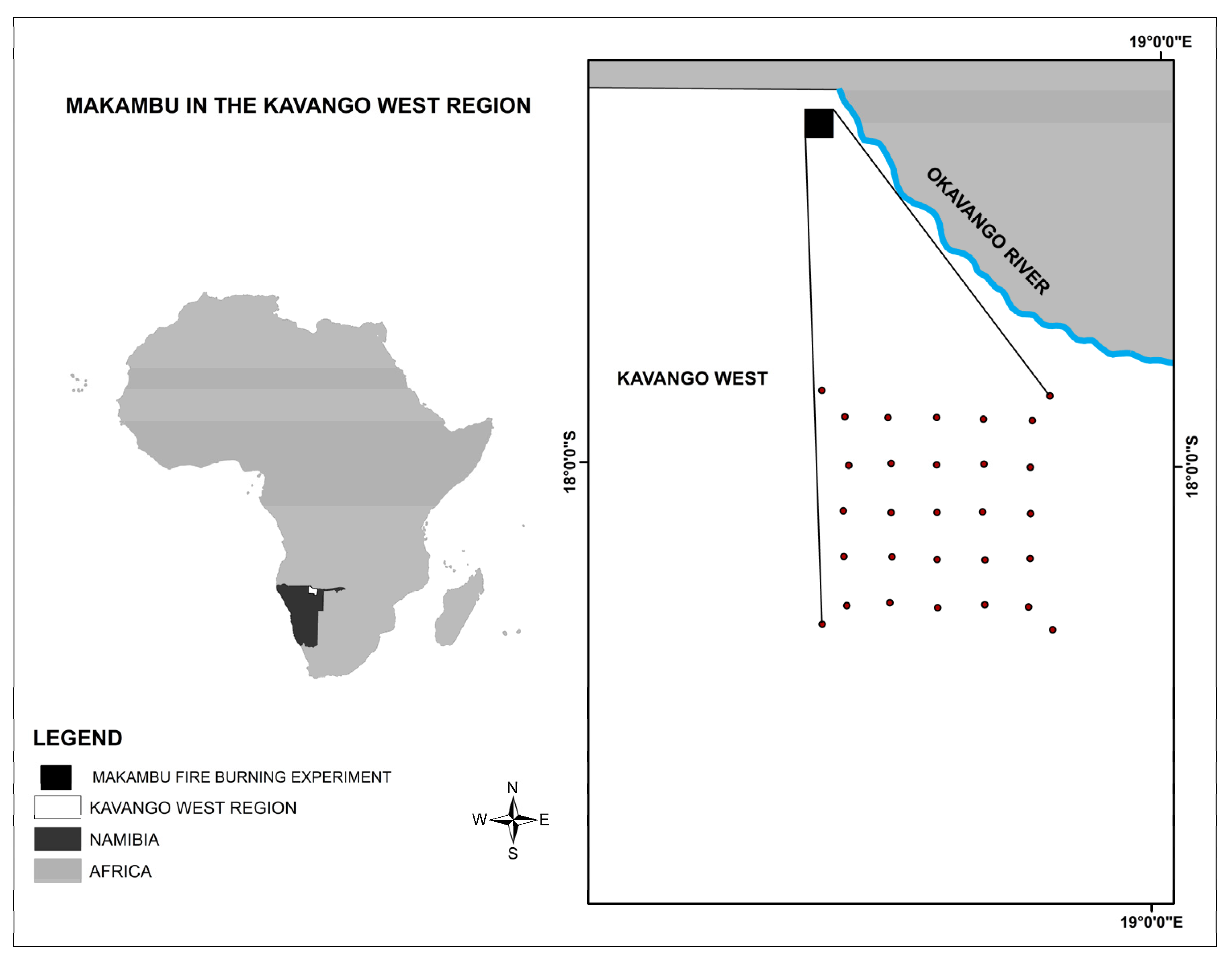
This study was conducted at Makambu Fire Burning Experiment in the Kavango West Region, northeastern Namibia (Figure 1, 18.00° E and 22.00° E, and 17.09 and 18.01° S).
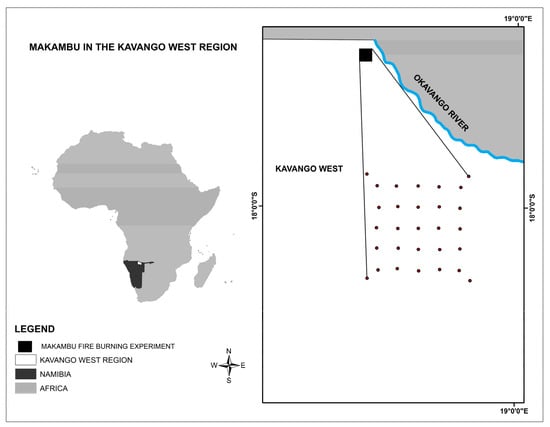
Figure 1.
Study area map showing the location of the Makambu fire-burning experiment in Kavango West Region, Namibia.
The study area has a sub-humid climate, with the summer season occurring from November to January, autumn from February to April, winter from May to July, and spring from August to October. The average annual rainfall is 550 mm, with 80% of it concentrated between December and March, the summer period [11]. The soil is predominantly arenosols (Kalahari sands) [11], which are characterized by poor sandy soils with minimal nutrients [11]. The soil is dark brown, a pedal, with a loose, gradual transition [12]. The study area’s vegetation is classified as Zambezian Baikiaea woodlands [13]. The area is dominated by Pterocarpus angolensis, Guibourtia coleosperma, and Terminalia sericea, as well as Combretum zeyheri, Commiphora angolensis, and Ochna pulchra [11].
2.2. Sampling and Measurements
2.2.1. Experimental Plot
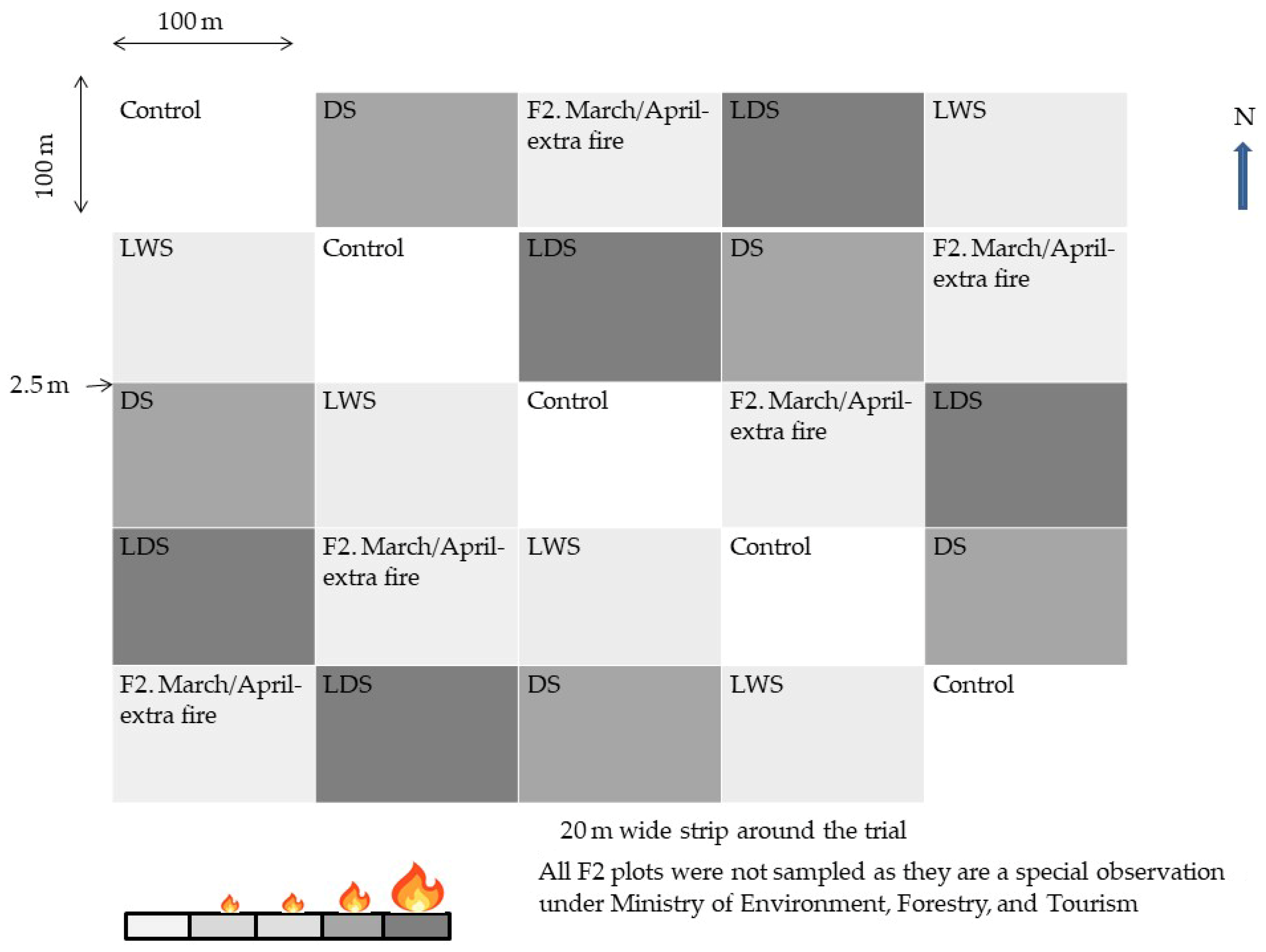
This study employed a quantitative, completely randomized block design with 25 plots, with 5 plots assigned to each of the five treatments, including a control (no fire) (Figure 2). All March/April (with extra fire) plots which are the (F2) plots were excluded because in them fire was intensified by placing dead dried branches around species (with a height of 3m or above and a diameter at breast height (DBH)) of interest to the ministry, and this burning did not fit our scope, leaving this study with only 20 plots. Therefore, we only included March/April (without extra fire) (F1), June/July plots (F3), October/November plots (F4), and the total protection plots (C). Each block is 1 ha in size and separated by 2.5 m of firebreaks. The three distinct fire regimes burn at different times of the year every year. For this study, the burning during F1 is referred to as late wet season (LWS), F3 as dry season (DS), F4 as late dry season (LDS), and C as control. See Figure 2 for the arrangements of the plots.
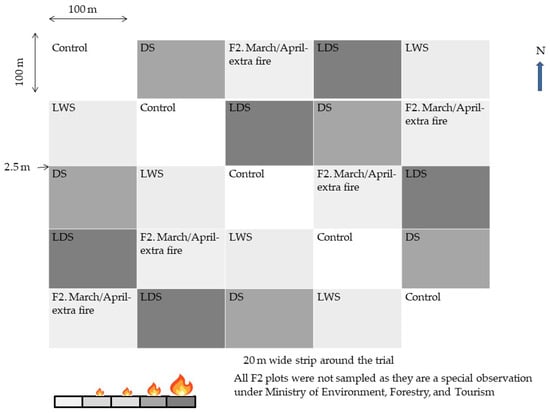
Figure 2.
Experimental plot layout at Makambu fire-trial plot (F1—late wet season, F2—These are plots for a special observation project under the MEFT, F3—dry season, F4—late dry season, and C—control) in Kavango West Region in Namibia.
2.2.2. Fire Regime and Implementation
This experiment was established in 1959 by the then Ministry of Agriculture, Water, and Forestry, which is now the Ministry of Environment, Forestry, and Tourism (MEFT). Their objective was to study the effects of fire across various seasons on vegetation with emphasis on basal area increment and regeneration of the more valuable timber species.
The experimental burn plots were established in 1959 and have been maintained for long-term fire research. Following a temporary interruption during the Angolan war, annual burning resumed in 2004 and has since been applied consistently.
Each plot is subjected to a specific seasonal fire treatment, whereby it is burned once annually during its designated period (March/April—late wet season, June/July—dry season, or October/November—late dry season), while control plots remain unburned.
All burns are conducted as controlled fires by personnel from the MEFT. Burning typically occurs during the morning (08:00–11:00 a.m.) or late afternoon (16:00–18:00) under low wind conditions to ensure controlled fire spread and consistency across treatments.
2.2.3. Soil Sampling
Soil samples were collected from all 20 fire season plots in August 2023. At the time of sampling, plots assigned to the March/April and June/July fire treatments had already burned in 2023 and were therefore sampled shortly after fire, whereas plots assigned to the October/November treatment were sampled nine months after their previous burn in October/November 2022. Hence, observed nutrient concentrations for this treatment reflect those of a post-fire recovery phase, as soil properties are known to vary with time since fire, with measurements taken months after burning representing recovery dynamics rather than immediate fire effects with an example from a study by ref. [14]. Soil was collected from each treatment using an auger at two depth intervals (0–15 cm and 15–30 cm) and from two microsites: beneath tree canopies (UNDER) and inter-canopy open spaces (INTER). A total of 100 soil samples were analyzed, comprising 25 samples from each microsite at each depth interval. Each sample consisted of a single core (30 cm depth), subdivided into the two depth layers (0–15 cm and 15–30 cm). Under-canopy and inter-canopy locations were included to account for potential differences in soil properties associated with canopy cover, as areas beneath trees typically receive greater organic inputs than open interspaces. Soil samples were placed in labeled bags and transported to the laboratory for analysis.
2.2.4. Laboratory Soil Analysis
Soil samples were analyzed using the Lab-in-a-Box system at the GIZ laboratory. Samples were first removed from their labeled zip-lock bags (e.g., 0–15 cm and 15–30 cm), registered, and subsequently air-dried, ground, split, and milled. Prepared samples were then analyzed using two spectrometers (X-ray and mid-infrared). Mehlich-3 extractable nutrients, including P, K, Al, B, Zn, Ca, and Mg, as well as total elemental concentrations including TNa, TK, TSi, TAl, TZn, TMg, TC, OC, cation exchange capacity, and TN, were quantified. Mehlich-3 extractable nutrients represent operationally defined, potentially plant-available pools, whereas total elemental concentrations reflect the overall abundance of elements in the soil. Spectral outputs were converted into soil parameter estimates using prediction models calibrated against the AgroCares Database. The entire processing workflow, from sample preparation to report generation, took approximately two hours, depending on the drying time. No chemical reagents were used in the Lab-in-a-Box analysis. Analytical reports were generated and shared.
2.3. Data Analysis
The soil nutrient datasets were assessed for multivariate normality using Mardia’s test, which indicated significant deviations from the assumptions of multivariate normality (p < 0.001). Given the multivariate nature of the dataset and the interest in comparing nutrient composition across treatments, a two-way PERMANOVA was used to test for differences in nutrient profiles among fire season treatments and sampling depth, as well as their interactions, using the Bray–Curtis dissimilarity index, as the data failed the normality test. Because initial analyses indicated no differences in soil nutrient concentrations between samples collected under tree canopies and in open areas; therefore, these samples were pooled to increase statistical power for subsequent analyses. To assess univariate differences in individual soil nutrients in relation to fire season, depth, and their interaction, a Scheirer–Ray–Hare test was used [15]. This non-parametric method is an extension of the Kruskal–Wallis test for factorial design [15]. Post hoc pairwise comparisons were conducted using Dunn’s test with rank-based adjustments.
Non-metric multidimensional scaling (NMDS) analysis was then used to visualize patterns in multivariate nutrient composition among treatments (in PAST statistical package). The analysis included Mehlich-3 extractable nutrients P, K, Al, B, Zn, Ca, Mg, together with OC, as well as total elemental concentrations TNa, TK, TSi, TAl, TZn, TMg, and TN. Mean values are represented with standard error as a measure of precision. However, interpretation of treatment effects must consider differences in time since fire exposure. Accordingly, all treatments except the late dry season treatment primarily reflect immediate post-fire responses, whereas the late dry season treatment represents a longer post-fire recovery phase. These interpretations are supported by previous studies documenting temporal variability in post-fire dynamics [3,16,17].
3. Results
3.1. Concentration of Mehlich-3 Extractable Nutrients in Different Fire Seasons and Different Soil Profile Depths
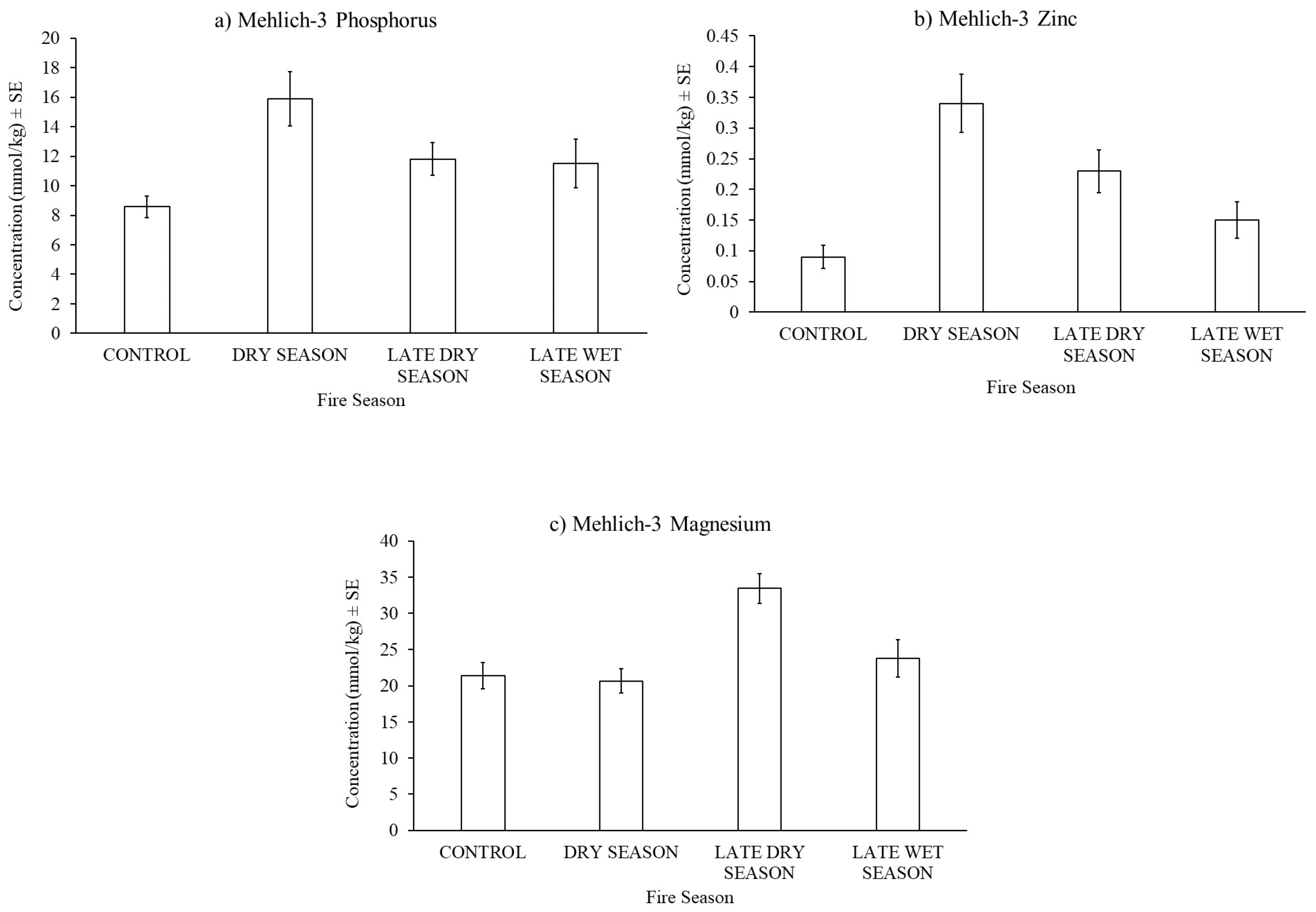
The two-way PERMANOVA indicated no significant differences in Mehlich-3 extractable nutrient concentrations among fire treatments or in their interaction with soil depth (p > 0.05). However, nutrient concentrations varied significantly with soil depth (p < 0.001; Table 1). The Scheirer–Ray–Hare test showed that fire season significantly affected P, Zn and Mg concentrations, but not the other Mehlich-3 extractable nutrients (Table 2). Dunn’s post hoc test showed that P concentration differed between the control and the dry season (p = 0.011), late dry season (p = 0.021), and late wet season (p = 0.047) but did not differ among the other season treatments (Figure 3a). P concentrations were lower in the control plots than in the burned plots (Figure 3a). Dunn’s post hoc test showed that Zn concentration differed between the control and the dry season (p = 0.008) and between the late wet season and the dry season (p = 0.037). Zn concentrations were lower in the control treatment than in the dry and late wet season treatments (Figure 3b). Mg concentration was highest in the late dry season and differed from all other treatments (Figure 3c, Dunn’s post hoc test, p < 0.05).

Table 1.
Two-way PERMANOVA results for Mehlich-3 extractable nutrients data for treatment and depth.
Table 2.
The Scheirer–Ray–Hare test for concentration of Mehlich-3 extractable nutrients.
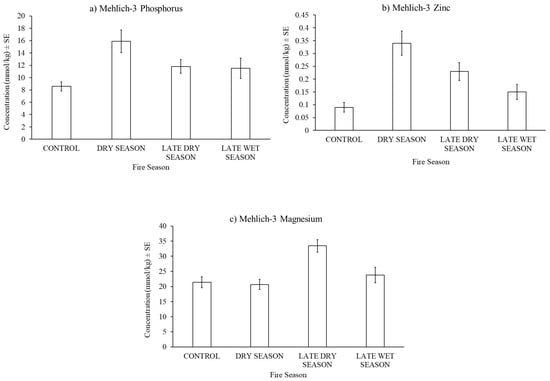
Figure 3.
(a) Phosphorus; (b) Zinc; (c) Magnesium. Mean concentration with standard error bars for Mehlich-3 extractable nutrients in different fire seasons at Makambu fire experimental plots in Kavango West Region in Namibia.
3.2. Concentration of Mehlich-3 Extractable Nutrients in Different Soil Profile Depths
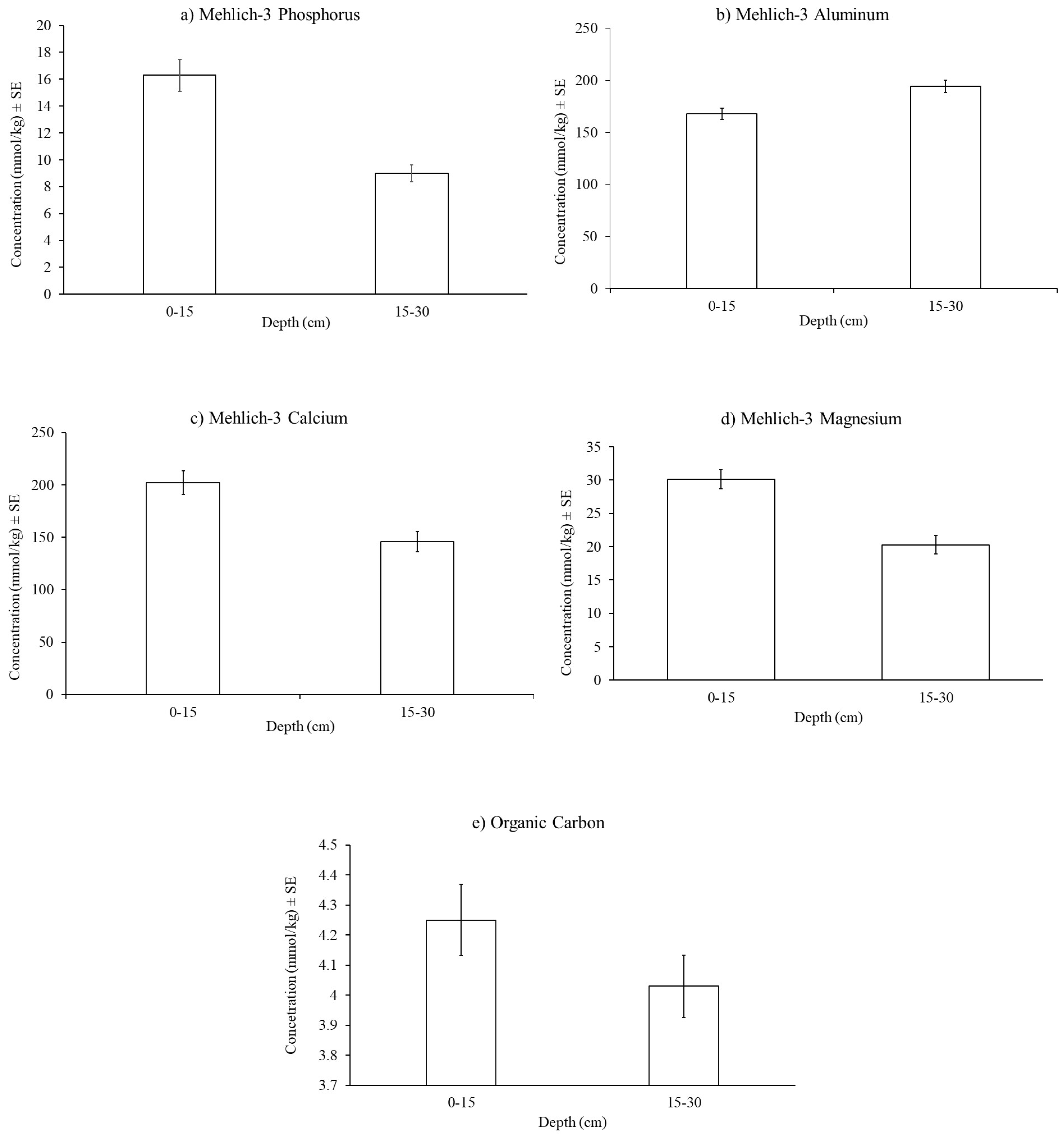
The Scheirer–Ray–Hare test for the concentration of Mehlich-3 extractable nutrients showed that P, Al, C, OC, and Mg differed significantly across soil profile depths (p < 0.01; Figure 4), and only Zn and Mg differed significantly with the interaction between treatment and depth (Table 2). Apart from Al, the concentrations of the other nutrients were higher in the upper soil depth (0–15 cm, Figure 4).
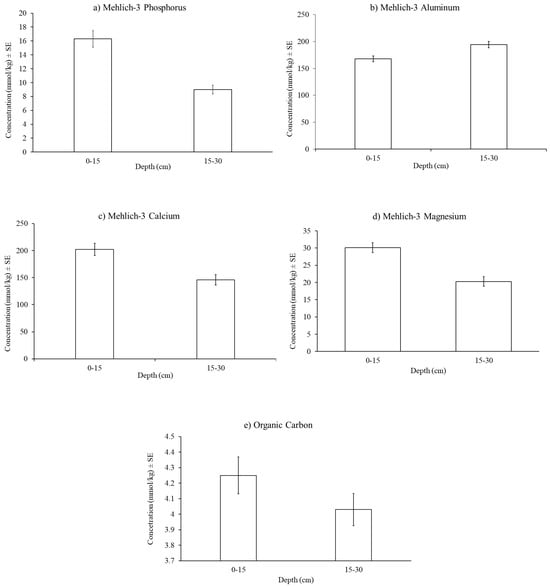
Figure 4.
(a) Phosphorus, (b) aluminum, (c) calcium, (d) magnesium, (e) organic carbon. Mean concentration with standard error bars for Mehlich-3 extractable nutrients in different soil profile depths at Makambu fire experimental plots in Kavango West Region in Namibia.
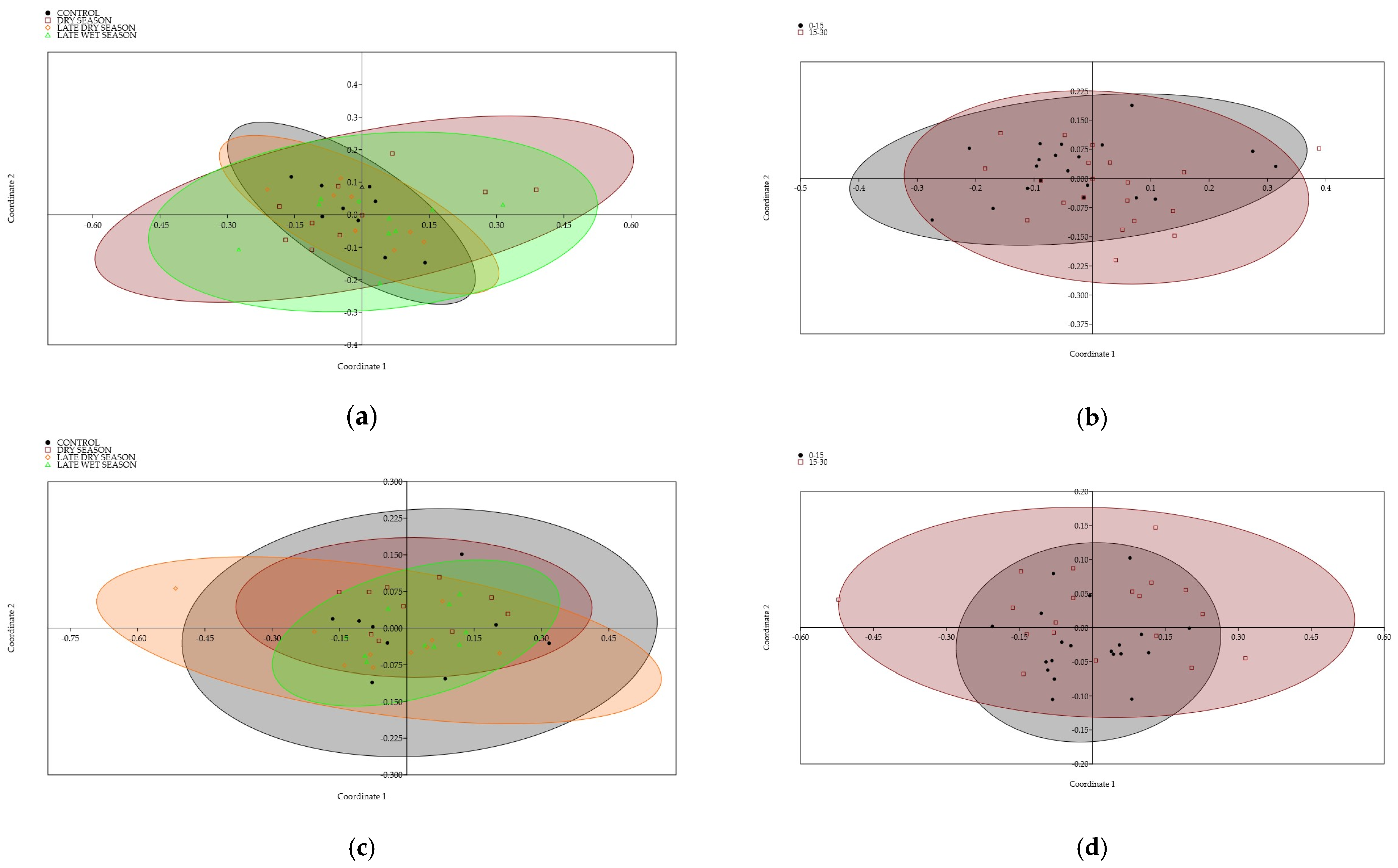
The NMDS ordination plots were characterized by low stress values (0.099–0.118) indicating that the ordination effectively represented the multivariate relationships in the data. The ellipses of the Mehlich-3 extractable and total elemental concentrations showed strong overlap among the four fire season treatments and the two depths (Figure 5). This suggests that there is a minimal separation in soil nutrient composition between soil depths and fire season treatments.
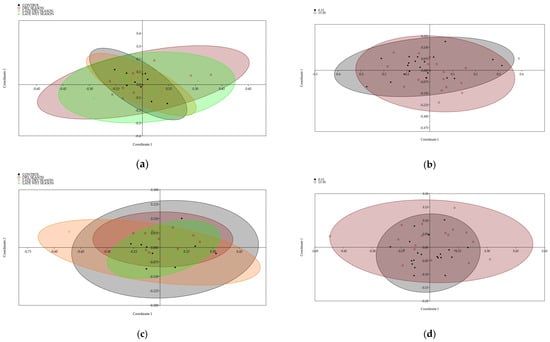
Figure 5.
(a) Stress = 0.099. (b) Stress = 0.099. (c) Stress = 0.118. (d) Stress = 0.118. Non-metric multidimensional scaling (NMDS) ordination of soil nutrient composition by fire season and soil depth. NMDS stress values are interpreted as follows: <0.05 indicates an excellent representation; 0.05–0.10, good; 0.10–0.20, acceptable; 0.20–0.30, poor; and >0.30, very poor.
3.3. Concentration of Mehlicu-3 Extractable Nutrients in Different Soil Profile Depths
The two-way PERMANOVA analysis showed differences in soil profile depth for the concentration of Mehlich-3 extractable nutrients total elemental nutrients (p < 0.01; Table 3). The Scheirer–Ray–Hare showed that the concentrations of five Mehlich-3 extractable nutrients differed significantly across soil depths (Table 2). P and Ca differed significantly at (p < 0.01), while Al, O. Car and Mg differed significantly at (p < 0.05) (Table 2). These Mehlich-3 extractable nutrients were high in the 0–15 cm depth (Figure 4).
Table 3.
A two-way PERMANOVA results for total elemental concentration nutrients.
3.4. Effects of Fire Seasons on the Total Elemental Concentration of Nutrients
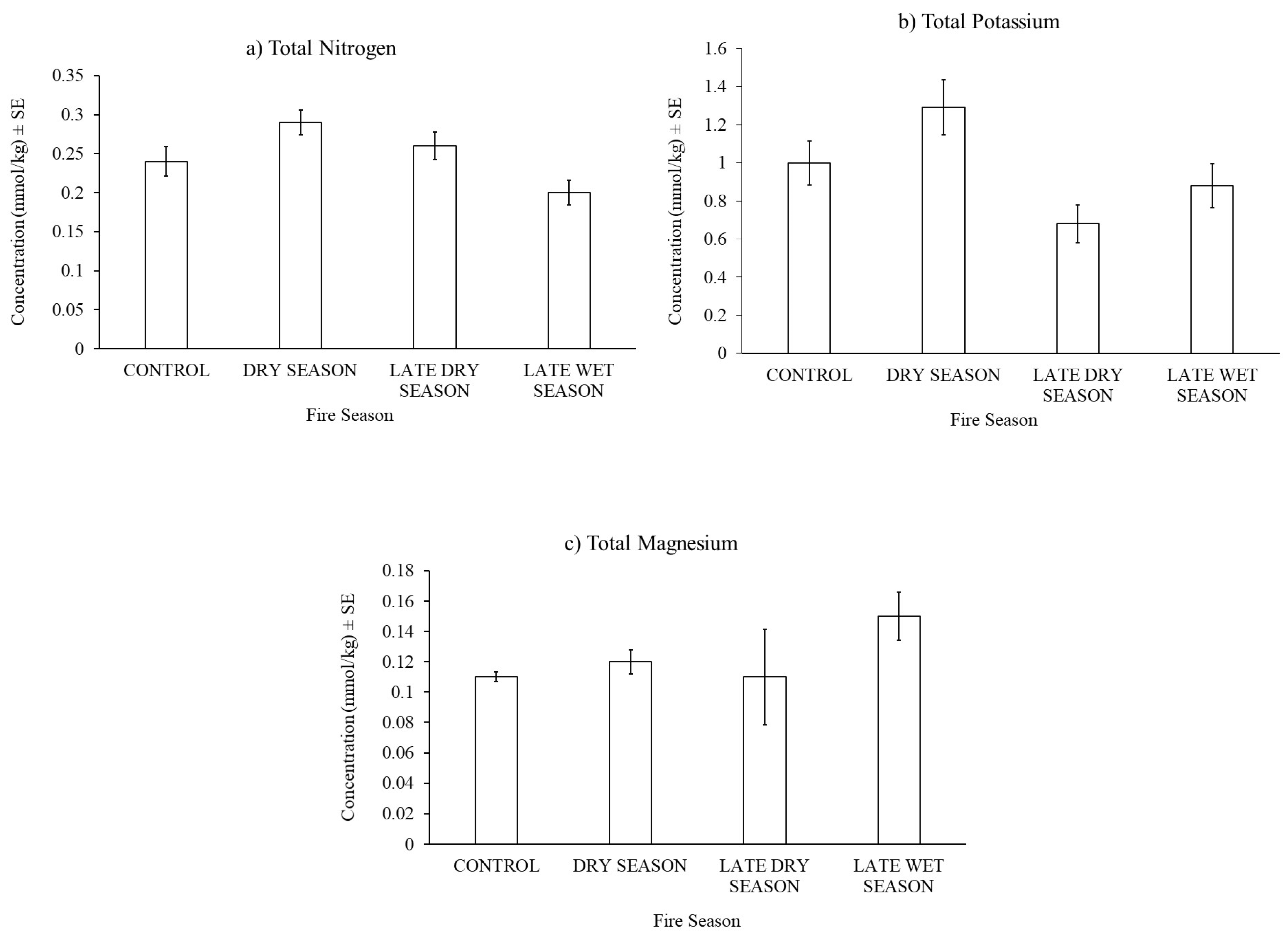
Contrary to Mehlich-3 extractable nutrients, the two-way PERMANOVA showed that the concentration of total elemental nutrients was affected by both fire season (p < 0.05) and depth (p < 0.01) (Table 3). The Scheirer–Ray–Hare test showed significant differences in the concentration for TN, TK and TMg among fire treatments (p < 0.05) which was not the case for the other total elemental nutrients (Table 4, Figure 6). Dunn’s post hoc test showed that N concentration differed between the control and the dry seasons (p < 0.05), between the control and the late wet seasons (p < 0.01), and between the late dry and the late wet seasons (p < 0.05) (Figure 6a). TN concentrations were lower in the late wet season treatments and control, but higher in the dry season plots (Figure 6a). Dunn’s post hoc test showed that K concentration differed between control and late dry season (p ≤ 0.05), between the dry season and the late dry season (p ≤ 0.001), and between the late wet and the late dry seasons (p < 0.05). TK concentrations were higher in the dry season treatment compared to the other treatments (Figure 6b). TMg concentration differed significantly between the control and late wet season (p < 0.01) and between late wet season and late dry season. TMg concentrations were higher in the late wet season compared to the other treatments (p < 0.01) (Figure 6c).
Table 4.
The Scheirer–Ray–Hare test for total elemental concentrations.
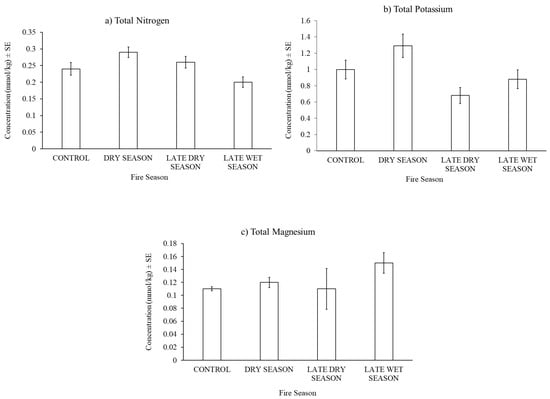
Figure 6.
(a) Total nitrogen. (b) Total potassium. (c) Total magnesium. Mean concentration with standard error for total elemental concentration nutrients in different fire seasons at Makambu fire experimental plots in Kavango West Region in Namibia.
3.5. Concentration of Total Elemental Nutrients in Different Soil Profile Depths
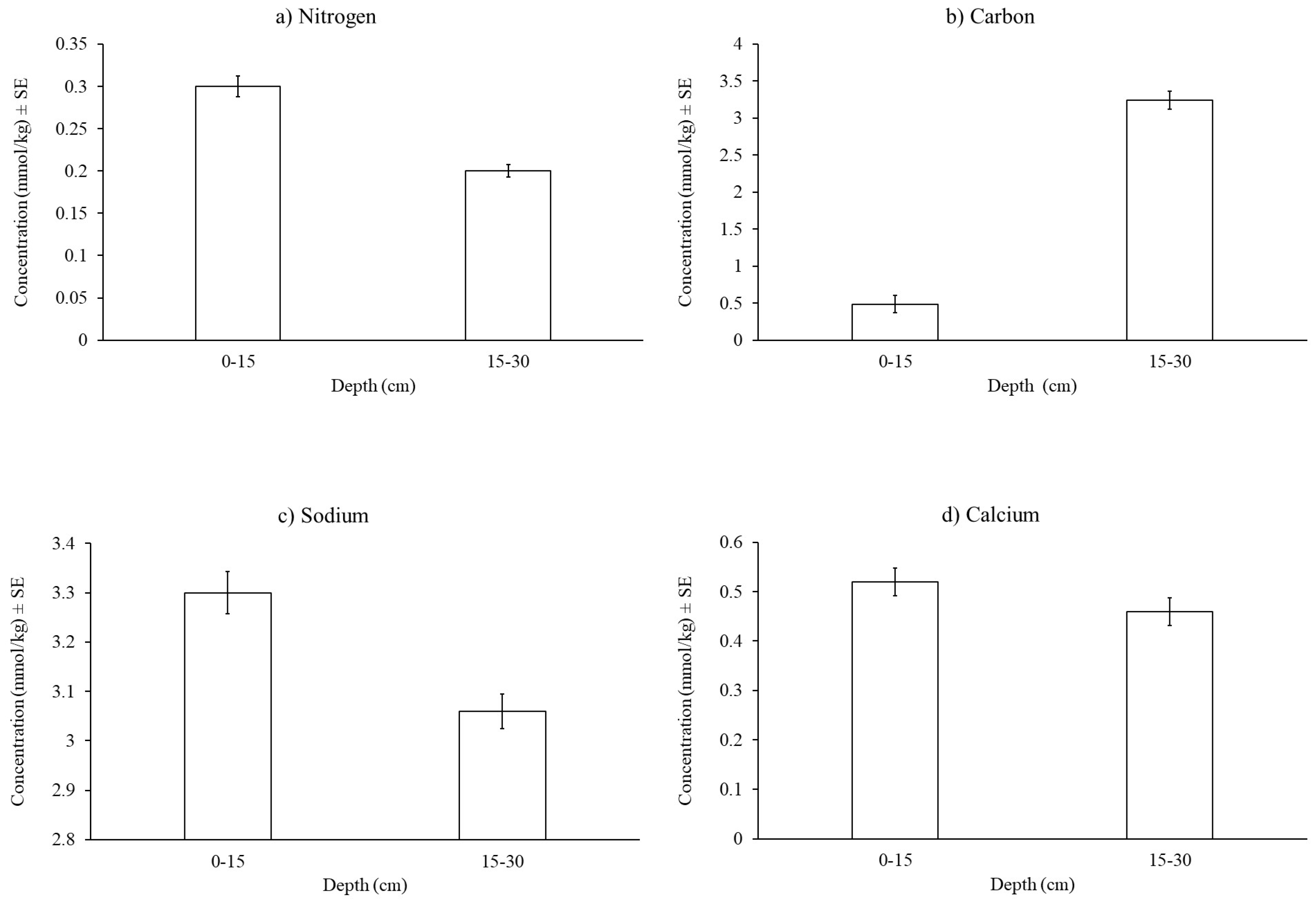
The two-way PERMANOVA indicated significant effects of both treatment (p < 0.05) and soil depth (p < 0.01) on total elemental nutrients (Table 3). Treatment effects were observed for N, K, and Mg (p < 0.05). Soil depth influenced TN, TCar, TNa (p < 0.05), and TCa (p < 0.001), with higher values recorded at 0–15 cm (TN and TNa) and for TCar at 15–30 cm for TCar (Table 4; Figure 7). In contrast, TK and TMg showed no variation with depth. No significant interaction between treatment and depth was detected (Table 3).
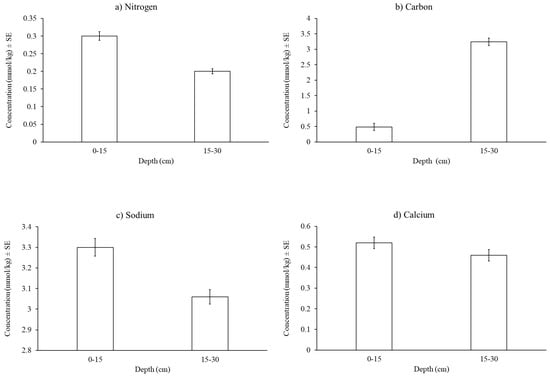
Figure 7.
(a) Nitrogen; (b) carbon; (c) sodium; (d) calcium. Mean concentration with standard error for total elemental concentration nutrients in different soil profile depths at Makambu fire experimental plots in Kavango West Region in Namibia.
4. Discussion
4.1. Soil Depth and Elements
Results revealed no differences in the overall multivariate composition of Mehlich-3 extractable soil nutrients P, Zn, and Mg among fire season treatments, but significant differences were observed between soil depths, with concentrations declining with increasing depth. This vertical stratification is well documented in the literature, with organic matter (OM) and exchangeable cations tending to accumulate in surface horizons [18,19]. This finding is consistent with previous studies conducted in Namibian and Botswana savannas [20,21].
Depth patterns of Mehlich-3 extractable soil nutrients showed that P, Mg, Ca, and SOC were concentrated in the 0–15 cm layer, whereas Al increased toward the 15–30 cm layer. This top soil layer enrichment reflects the accumulation of exchangeable bases and OM [22]. In contrast, the increased concentration of Al with depth, is likely owing to oxide accumulation and enhanced P absorption in subsoil horizons [23], as supported by previous findings [18]. Although SOC typically declined with depth (0–15 cm), elevated SOC in the 15–30 cm layer may be attributable to buried organic horizons or deep root inputs [24].
For total elemental concentrations of nutrients, depth effects were also significant, with TN, Ca, Na, and C exhibiting higher concentrations in the 15–30 cm layer. These patterns confirm that vertical stratification exerts stronger control than fire, consistent with the accumulation of mineral-associated organic matter and salts in deeper horizons [25]. The NMDS ordinations revealed minimal depth-related structuring across both nutrient pools. However, it demonstrated considerable overlap in nutrient composition among fire treatments and soil depths, suggesting minimal differentiation in both Mehlich-3 extractable and total elemental nutrients. The Mehlich-3 extractable nutrients exhibited a notably compact grouping, indicating that the fire season exerted negligible impact on short-term nutrient availability [3,26]. Despite overall elemental concentrations displaying slightly greater variability, no clear differentiation among treatments or depths was evident, suggesting that these nutrient reservoirs are comparatively stable and less reactive to fire influences [1].
4.2. Element-Specific Responses to Fire
Although the overall pool of Mehlich-3 extractable nutrients did not differ by fire season, individual elements showed distinct responses. P concentrations were generally higher in burned plots compared to the control, likely driven by increased ash deposition and temporarily reduced plant uptake [20,27]. This result may on one hand reflect responses to recent burns (i.e., 5 months–1 year), which produced a transient pulse of availability post-fire [3,17]. This observation is supported by previous studies showing that burn severity and time since fire influence post-fire P variability [28,29]. On the other hand, the higher concentrations for P, Zn and Mg observed in the late dry season treatment compared to the control may suggest that the post-fire recovery time was sufficient to allow element concentrations to return to levels prior to the intervention, signaling stability. Additionally, the study period coincided with a drought year, which may also influence nutrient redistribution and retention in post-fire soils [3,17,30].
Zn concentrations were higher in the dry and late wet season burns relative to controls, consistent with ash-mediated enrichment as reported in Brazilian savannas and South African semi-arid thornveld [31,32]. Mg peaked in the late dry season, reflecting combustion of organic matter and the release of exchangeable cations [3,33], as also observed in Namibian and Kruger savannas [20,34].
For total elemental concentrations available for absorption, the fire season influenced TN, K, and Mg. TN was greater in dry season burns than in controls and late wet season burns likely due to enhanced mineralization of N-rich ash during more complete combustion [2,29]. K concentrations were highest in the late dry season, possibly reflecting reduced leaching under drier conditions. Mg peaked in the late wet season, suggesting greater mobility under moist soils [35]. These results demonstrate that fire impacts on nutrient availability are element-specific, likely influenced by combustion, ash deposition, and nutrient mobility.
4.3. Interplay of Fire Seasons on Nutrient Pools
TN was lower in late wet season burns relative to controls, which may reflect increased plant uptake of available nitrogen following fire, as well as reduced nitrogen volatilization under lower-intensity burns associated with higher soil moisture conditions [3,4].
In turn, the higher total K concentration in the dry season is likely the result of accumulation due to reduced leaching; whereas the higher total Mg concentration in the wet season was linked to a greater retention facilitated by higher soil moisture and enhanced mobility [3,4]. Because late dry fires occur when fuel moisture is low and in this case, the subsequent rainy season was delayed (Southern African Science Service Centre for Climate Change and Adaptive Land Management (SASSCAL), 2023 and ref. [36], ash-derived nutrients such as K mostly likely remained near the surface due to limited or slower percolation [4,37].
Fire intensity and seasonal timing jointly influenced nutrient dynamics. Moderate fires promoted nutrient availability through ash deposition, whereas high-intensity burns can volatilize key elements, reducing soil concentrations [2,38]. NMDS ordinations showed compositional shifts by fire treatment, but vertical stratification remained the dominant control. Fire mobilizes some nutrients in surface soils while thermally volatilizing others, such as organic nitrogen, and post-fire rainfall can further enhance downward nutrient movement [18]. These patterns highlight the importance of considering both fire and moisture contexts for understanding nutrient cycling and managing soil fertility in savanna ecosystems.
5. Conclusions
Overall, our results emphasize the importance of soil depth during the fire season in structuring both Mehlich-3 extractable nutrients and total elemental concentrations, corroborating observations from Namibian savannas and similar regional studies. While fire season did not alter the overall nutrient composition, element-specific responses, particularly for P, Zn, Mg, N, and K, highlight the nuanced ways in which fire interacts with soil properties. Seasonal moisture further modulates these patterns, influencing nutrient mobility, retention, and post-fire availability. Late wet season (LWS) fires under wet conditions enhance downward nutrient movement, whereas late dry season (LDS) fires under dry conditions retain nutrients near the surface until leached in the subsequent rainy season. Thus, our study refines the current understanding of fire-soil interactions in Southern African savannas by showing that vertical stratification dominates nutrient distribution. However, fire and seasonal context can create temporary pulses of specific elements. These findings support, extend, and contextualize previous regional work, providing a more detailed picture of how fire regime and moisture conditions jointly shape soil fertility in this ecosystem. While our study highlights soil depth as the primary control on nutrient distribution and fire season as a secondary factor, translating these findings into operational fire management requires caution.
6. Recommendations
Based on our results, we suggest that burns in the late dry season should be minimized, as these fires were associated with higher losses of key soil nutrients, while late wet season burns have comparatively lower impacts. Management and monitoring efforts should focus on the topsoil (0–15 cm), where nutrient changes were most pronounced, and prioritize nutrients of economic and ecological importance, including both Mehlich-3 extractable nutrients (P, Mg, Ca, Zn) and total elemental concentrations (N, K, Mg). While precise operational thresholds for soil moisture, temperature, or fire intensity were not measured in this study, these results provide a framework for seasonally informed, nutrient-sensitive fire management. We recommend that future studies determine specific thresholds to support local implementation. Additionally, we recommend further holistic, long-term research that investigates the long-term effects of repeated seasonal burns on nutrient dynamics and plant productivity.
Author Contributions
Study Conceptualization: E.M.K. and E.C.F. Methodology: E.M.K., L.P.R., F.M., R.S. and E.C.F. Validation: E.M.K. and L.P.R. Formal Analysis: E.M.K. and L.P.R. Investigation: E.M.K., L.P.R. and R.S. Resources: E.C.F. and E.M.K. (BBI); KfW-UNAM. Data curation: E.M.K. and L.P.R. Writing: original draft preparation: E.M.K. Writing review and editing: E.M.K., L.P.R., F.M., R.S. and E.C.F. Visualization: E.M.K. and L.P.R. Supervision: L.P.R. and F.M. All authors have read and agreed to the published version of the manuscript.
Funding
The project data collection was funded through a seed grant, ‘Bio-Bridge Initiative’, from the Secretariat of the Convention on Biological Diversity (supported by EMK and ECF, The PhD study and publication was funded by KfW-UNAM BMZ. 2015.67.015.
Data Availability Statement
Data may be made available on request from the co-responding author.
Conflicts of Interest
The authors declare no conflicts of Interest.
References
- Alcañiz, M.; Outeiro, L.; Francos, M.; Úbeda, X. Effects of prescribed fires on soil properties: A review. Sci. Total Environ. 2018, 613–614, 944–957. [Google Scholar] [CrossRef] [PubMed]
- Agbeshie, A.A.; Abugre, S.; Atta-Darkwa, T.; Awuah, R. A review of the effects of forest fire on soil properties. J. For. Res. 2022, 33, 1419–1441. [Google Scholar] [CrossRef]
- Certini, G. Effects of fire on properties of forest soils: A review. Oecologia 2005, 143, 1–10. [Google Scholar] [CrossRef]
- Neary, D.G.; Klopatek, C.C.; DeBano, L.F.; Ffolliott, P.F. Fire effects on belowground sustainability: A review and synthesis. For. Ecol. Manag. 1999, 122, 51–71. [Google Scholar] [CrossRef]
- Coetsee, C.; Bond, W.J.; February, E.C. Frequent fire affects soil nitrogen and carbon in an African savanna by changing woody cover. Oecologia 2010, 162, 1027–1034. [Google Scholar] [CrossRef]
- Archibald, S. Managing the human component of fire regimes: Lessons from Africa. Philos. Trans. R. Soc. B Biol. Sci. 2016, 371, 20150346. [Google Scholar] [CrossRef]
- Govender, N.; Trollope, W.S.W.; Van Wilgen, B.W. The effect of fire season, fire frequency, rainfall and management on fire intensity in savanna vegetation in South Africa. J. Appl. Ecol. 2006, 43, 748–758. [Google Scholar] [CrossRef]
- Higgins, S.I.; Bond, W.J.; February, E.C.; Bronn, A.; Euston-Brown, D.I.W.; Enslin, B.; Govender, N.; Rademan, L.; O’Regan, S.; Potgieter, A.L.F.; et al. Effects of four decades of fire manipulation on woody vegetation structure in savanna. Ecology 2007, 88, 1119–1125. [Google Scholar] [CrossRef] [PubMed]
- Bond, W.J.; Keeley, J.E. Fire as a global “herbivore”: The ecology and evolution of flammable ecosystems. Trends Ecol. Evol. 2005, 20, 387–394. [Google Scholar] [CrossRef]
- Pellegrini, A.F.A.; Hedin, L.O.; Staver, A.C.; Govender, N. Fire alters ecosystem carbon and nutrients but not plant nutrient stoichiometry or composition in tropical savanna. Ecology 2015, 96, 1275–1285. [Google Scholar] [CrossRef] [PubMed]
- Burke, A. Present vegetation in the Kavango region. J. Namib. Sci. Soc. 2002, 50, 133–145. [Google Scholar]
- Geldenhuys, C.J. The Effect of Different Regimes of Annual Burning on Two Woodland Communities in Kavango. S. Afr. For. J. 1977, 103, 32–42. [Google Scholar]
- De Cauwer, V. Status Quo of Sustainable Forest Management in Namibia; Ministry of Environment Forestry and Tourism: Windhoek, Namibia, 2023; 38p.
- Arunrat, N.; Sereenonchai, S.; Kongsurakan, P.; Iwai, C.B.; Yuttitham, M.; Hatano, R. Post-fire recovery of soil organic carbon, soil total nitrogen, soil nutrients, and soil erodibility in rotational shifting cultivation in Northern Thailand. Front. Environ. Sci. 2023, 11, 1117427. [Google Scholar] [CrossRef]
- Scheirer, C.; Ray, W.S.; Hare, N. The analysis of ranked data derived from completely randomized factorial designs. Biometrics 1976, 32, 429434. [Google Scholar] [CrossRef]
- Pellegrini, A.F.A.; Ahlström, A.; Hobbie, S.E.; Reich, P.B.; Nieradzik, L.P.; Staver, A.C.; Scharenbroch, B.C.; Jumpponen, A.; Anderegg, W.R.L.; Randerson, J.T.; et al. Fire frequency drives decadal changes in soil carbon and nitrogen and ecosystem productivity. Nature 2018, 553, 194–198. [Google Scholar] [CrossRef] [PubMed]
- Beyers, J.L.; Brown, J.K.; Busse, M.D.; DeBano, L.F.; Elliot, W.J.; Ffolliott, P.F.; Jacoby, G.R.; Knoepp, J.D.; Landsberg, J.D.; Neary, D.G.; et al. Wildland Fire in Ecosystems: Effects of Fire on Soil and Water; General Technical Reports RMRS-GTR; U.S. Department of Agriculture (USDA) Forest Service, Rocky Mountain Research Station: Fort Collins, CO, USA, 2005; 42, 250p.
- Pule, H.T.; Tjelele, J.T.; Tedder, M.J. Post-Fire Soil Nutrient Dynamics in Seriphium plumosum L. Encroached Semi-Arid Grassland of Gauteng Province, South Africa. Agriculture 2023, 13, 1971. [Google Scholar] [CrossRef]
- Ketterings, Q.M.; Bigham, J.M. Soil Color as an Indicator of Slash-and-Burn Fire Severity and Soil Fertility in Sumatra, Indonesia. Soil Sci. Soc. Am. J. 2000, 64, 1826–1833. [Google Scholar] [CrossRef]
- Nghalipo, E.; Joubert, D.; Throop, H.; Groengroeft, A. The effect of fire history on soil nutrients and soil organic carbon in a semi-arid savanna woodland, central Namibia. Afr. J. Range Forage Sci. 2019, 36, 9–16. [Google Scholar] [CrossRef]
- Marenga, W.; Mapoka, M.; Ultra, V.U.; Rantong, G.; Nduna, B.; Tsidu, G.M. Short-term impacts of wildfire on vegetation recovery, soil chemical properties and community-level physiological profiling in a savanna ecosystem of Botswana. Front. For. Glob. Change 2025, 8, 1605456. [Google Scholar] [CrossRef]
- Hengl, T.; Mendes de Jesus, J.; Heuvelink, G.B.M.; Ruiperez Gonzalez, M.; Kilibarda, M.; Blagotić, A.; Shangguan, W.; Wright, M.N.; Geng, X.; Bauer-Marschallinger, B.; et al. SoilGrids250m: Global gridded soil information based on machine learning. PLoS ONE 2017, 12, e0169748. [Google Scholar] [CrossRef]
- Agbenin, J.O. Extractable Iron and Aluminum Effects on Phosphate Sorption in a Savanna Alfisol. Soil Sci. Soc. Am. J. 2003, 67, 589–595. [Google Scholar] [CrossRef]
- Zhou, Y.; Bomfim, B.; Bond, W.J.; Boutton, T.W.; Case, M.F.; Coetsee, C.; Davies, A.B.; February, E.C.; Gray, E.F.; Silva, L.C.R.; et al. Soil carbon in tropical savannas mostly derived from grasses. Nat. Geosci. 2023, 16, 710–716. [Google Scholar] [CrossRef]
- Six, J.; Conant, R.T.; Paul, E.A.; Paustian, K. Stabilization mechanisms of SOM implications for C saturation of soils. Plant Soil 2002, 241, 155–176. [Google Scholar] [CrossRef]
- Roshan, A.; Biswas, A. Fire-induced geochemical changes in soil: Implication for the element cycling. Sci. Total Environ. 2023, 868, 161714. [Google Scholar] [CrossRef] [PubMed]
- Van De Vijver, C.A.D.M.; Poot, P.; Prins, H.H.T. Causes of increased nutrient concentrations in post-fire regrowth in an East African savanna. Plant Soil 1999, 214, 173–185. [Google Scholar] [CrossRef]
- Malongweni, S.O.; van Tol, J. Fire, Herbivores, and Vegetation Type Shape Soil Biochemistry in Sodic Patches of a Semi-Arid Savanna Ecosystem. Land 2022, 11, 1148. [Google Scholar] [CrossRef]
- Verma, S.; Singh, D.; Singh, A.K.; Jayakumar, S. Post-fire soil nutrient dynamics in a tropical dry deciduous forest of Western Ghats, India. For. Ecosyst. 2019, 6, 38. [Google Scholar] [CrossRef]
- Raison, R.J. Modifications of soil environment by fire. Plant Soil 1979, 51, 73–108. [Google Scholar]
- Pivello, V.R.; Oliveras, I.; Miranda, H.S.; Haridasan, M.; Sato, M.N.; Meirelles, S.T. Effect of fires on soil nutrient availability in an open savanna in Central Brazil. Plant Soil 2010, 337, 111–123. [Google Scholar] [CrossRef]
- Parwada, C.; Magomani, M.I.; van Tol, J.J. Impacts of different prescribed fire frequencies on selected soil chemical properties in a semi-arid savannah thornveld. Cogent Environ. Sci. 2020, 6, 1868171. [Google Scholar] [CrossRef]
- Fontúrbel, T.; Carrera, N.; Vega, J.A.; Fernández, C. The effect of repeated prescribed burning on soil properties: A review. Forests 2021, 12, 767. [Google Scholar] [CrossRef]
- Shackleton, C.M.; Scholes, R.J. Impact of fire frequency on woody community structure and soil nutrients in the Kruger National Park. Koedoe 2000, 43, 75–81. [Google Scholar] [CrossRef]
- Chaudhry, A.H.; Nayab, S.; Hussain, S.B.; Ali, M.; Pan, Z. Current Understandings on Magnesium Deficiency and Future Outlooks for Sustainable Agriculture. Int. J. Mol. Sci. 2021, 22, 1819. [Google Scholar] [CrossRef] [PubMed]
- Kwembeya, E.G.; Shikangalah, R.N. Towards understanding rainfall variability in Namibia: An analysis of spatial and temporal variations of rainfall from 2010 to 2019. Int. Sci. Technol. J. Namib. 2023, 16, 26–39. [Google Scholar]
- Raison, R.J.; Khanna, P.K.; Woods, P.V. Mechanisms of element transfer to the atmosphere during vegetation fires. Can. J. For. Res. 1985, 15, 132–140. [Google Scholar] [CrossRef]
- Arunrat, N.; Kongsurakan, P.; Solomon, L.W.; Sereenonchai, S. Fire Impacts on Soil Properties and Implications for Sustainability in Rotational Shifting Cultivation: A review. Agriculture 2024, 14, 1660. [Google Scholar] [CrossRef]
Disclaimer/Publisher’s Note: The statements, opinions and data contained in all publications are solely those of the individual author(s) and contributor(s) and not of MDPI and/or the editor(s). MDPI and/or the editor(s) disclaim responsibility for any injury to people or property resulting from any ideas, methods, instructions or products referred to in the content. |
© 2026 by the authors. Licensee MDPI, Basel, Switzerland. This article is an open access article distributed under the terms and conditions of the Creative Commons Attribution (CC BY) license.