


Abstract
While polyurethane acoustic foam is widely used in entertainment settings for sound absorption, it poses a considerable fire risk when exposed to sparks from pyrotechnic devices. Even though fountain-type pyrotechnic devices are often perceived as producing “cold sparks”, the ignition potential of a single incandescent particle remains insufficiently quantified. This study experimentally investigates the ignition capacity of a fountain-type pyrotechnic article on pyramidal polyurethane acoustic foam under controlled conditions. Three dedicated experimental configurations were developed: (i) ignition probability tests at various distances, (ii) scaled configuration tests reproducing realistic installation geometry, and (iii) high-speed visualization of single incandescent particle interaction with the foam surface. For the first two configurations, ignition probabilities of 20% and 22.2% were obtained. High-speed recordings showed two distinct interaction mechanisms: particle fragmentation and ricochet, which did not result in ignition; partial penetration with localized melting, volatile release, and gas-phase ignition when residual thermal energy (about 0.5–1 J) was retained. The results demonstrate that even isolated single incandescent particles generated under realistic conditions can initiate the combustion of polyurethane acoustic foam. These findings challenge the “cold spark” safety perception and provide quantitative evidence that particle–induced ignition represents a significant fire hazard in enclosed environments where combustible acoustic materials and pyrotechnic effects coexist. The findings in this paper have direct implications for safety regulations in entertainment venues.
1. Introduction
Fire safety in the entertainment industry has received significant attention following major nightclub fires such as the Station nightclub fire (USA, 2003; 100 fatalities), Colectiv nightclub fire (Romania, 2015, 64 fatalities), and more recently Crans Montana (Switzerland, 2026, 41 fatalities), where polyurethane acoustic foam contributed to rapid fire growth and severe casualties [1,2,3]. In these locations, soundproofing materials are commonly utilized on the walls and ceilings to improve acoustic quality. Flexible polyurethane foam is a common material for soundproofing purposes since it has a low density, high porosity, and a large surface area to volume ratio, which makes it more effective at sound absorption; however, these characteristics also increase its flammability [4,5,6,7].
Fireworks frequently feature in entertainment events, including fountain-type devices that emit glowing metallic particles at temperatures exceeding 1000 °C [8,9]. These devices are frequently advertised as producing “cold sparks”, indicating a reduced risk of igniting a fire, and they are also promoted as suitable for indoor environments. However, this assumption lacks strong scientific support. The connection between single incandescent particles and combustible porous materials is still not well understood. There has not been sufficient systematic investigation into the capacity of individual particles to ignite polyurethane acoustic foam.
The thermal decomposition of flexible polyurethane foam proceeds through multiple stages: initial loss of labile organics and urethane bond scission at 200–300 °C, followed by oxidative degradation of polyol segments at 300–450 °C, and finally residue oxidation above 450 °C [10,11,12]. Cone calorimeter studies report peak heat release rates (PHRR) of 150–350 kW/m2 for non-flame-retardant flexible PU foams at incident heat fluxes of 35–50 kW/m2, with total heat release (THR) of 25–35 MJ/m2 [13,14]. The critical heat flux for piloted ignition ranges from 10 to 15 kW/m2, corresponding to surface temperatures of 330–370 °C [13,15]. Acoustic foam used in entertainment venues typically lacks flame-retardant treatment, placing it at the higher end of flammability risk. Despite this extensive characterization of bulk combustion behavior, there has not been sufficient systematic investigation into the capacity of individual incandescent particles to initiate ignition in polyurethane acoustic foam.
Previous studies have thoroughly described how polyurethane acoustic foam burns, how quickly it releases heat, and how quickly it spreads under standard ignition sources like radiant panels or gas burners [16]. However, there is not much experimental data on how ignition happens when discrete high-temperature particles from pyrotechnic articles hit something. In these instances, the ignition process encompasses intricate localized heat-transfer phenomena, including particle fragmentation, infiltration into the porous matrix, localized melting, volatile production, and the potential for the gas-phase ignition.
While previous studies have thoroughly characterized hot-particle ignition in cellulose fuel beds using laboratory-prepared metallic spheres [17,18,19,20,21], the present work differs in three critical aspects. First, we employ a commercial fountain–type pyrotechnic device that produces realistic distributions of particle size (1–5 mg, temperatures > 1200 °C) and trajectories, rather than idealized spheres of uniform properties. Second, our target fuel is pyramidal polyurethane acoustic foam (density 25 kg/m3, pore size 2–3 mm) with fundamentally different geometry (pyramidal surface topology), porosity (>95% void fraction), and thermal response compared to cellulose beds. Third, our work addresses a critical fire gap in entertainment venues where ‘cold spark’ devices are marketed without scientific validation of their ignition hazards. These distinctions are essential for translating fundamental hot-particle ignition physics to real-world fire prevention and forensic investigation.
The objective of this study is to experimentally evaluate the ignition capacity of individual incandescent particles from a fountain-type article on pyramidal polyurethane acoustic foam and to elucidate the underlying physical mechanism. Specifically, this work aims to: quantify ignition probability at various distances, characterize the particle-foam interaction dynamics using high-speed visualization, and provide an energetic interpretation of the ignition threshold. The novelty of this work lies in the experimental validation that a single incandescent particle can ignite polyurethane acoustic foam under controlled conditions, supported by a mechanistic interpretation based on energetic considerations and high-speed imaging.
2. Materials and Methods
2.1. Description of the Materials
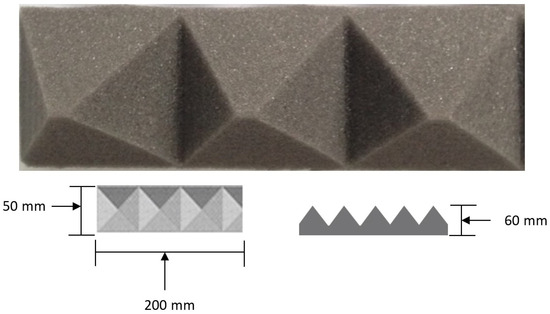
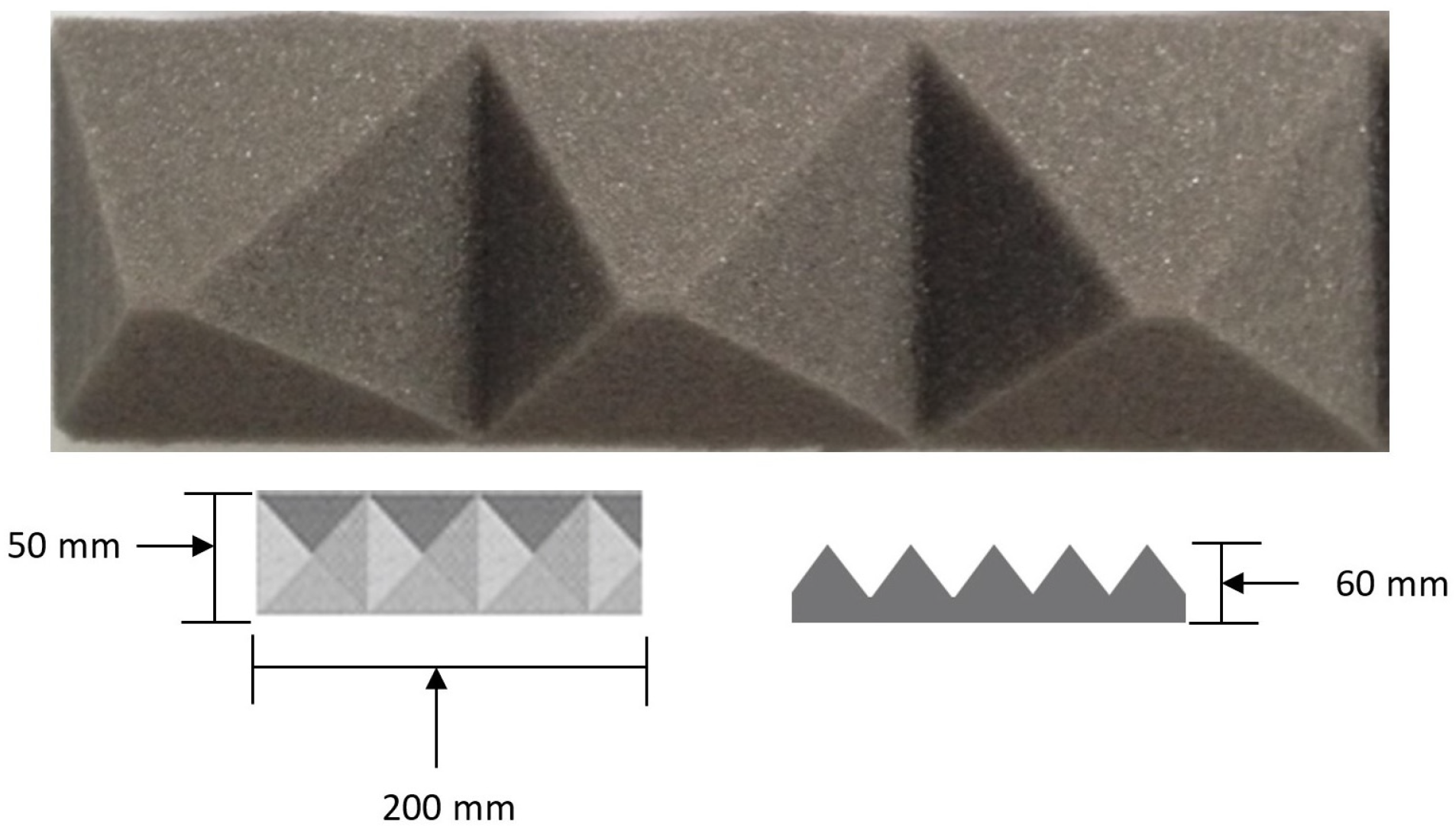
The combustible material examined in this study was pyramidal polyurethane acoustic foam (Type N2138), with a nominal thickness of 50 mm. The foam is an open-cell polyether-based polyurethane with a density of 25 ± 3 kg/m3 (measured gravimetrically) and an average pore size of approximately 2–3 mm. The material was not treated with flame-retardants, according to the material data sheet available. The material is typical of sound-absorbing materials that are used in the entertainment industry. The polyurethane acoustic foam samples were installed on vertical supports to reproduce installation conditions representative of indoor performance spaces. The pyramidal polyurethane acoustic foam used in the experiments is shown in Figure 1, which illustrates the characteristic surface topology and open–cell structure.
Figure 1.
Pyramidal polyurethane acoustic foam (Type N2138, 50 mm thick, density 25 kg/m3, average pore size 2–3 mm) used in experiments, showing characteristic surface topology.
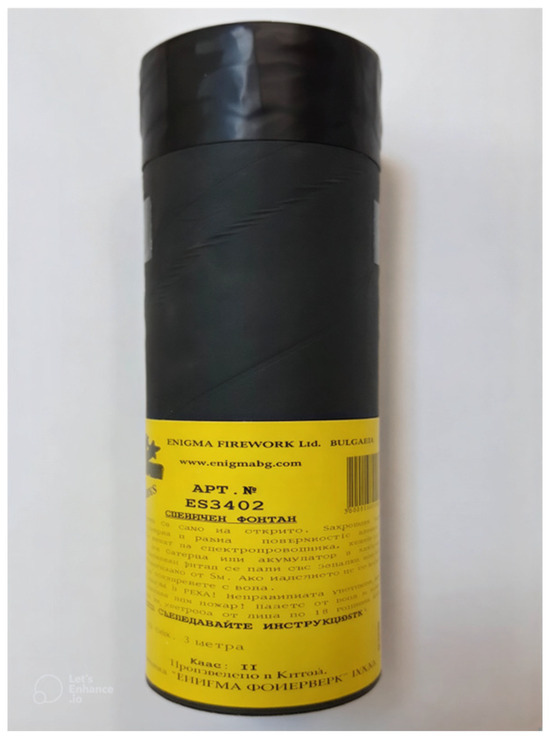
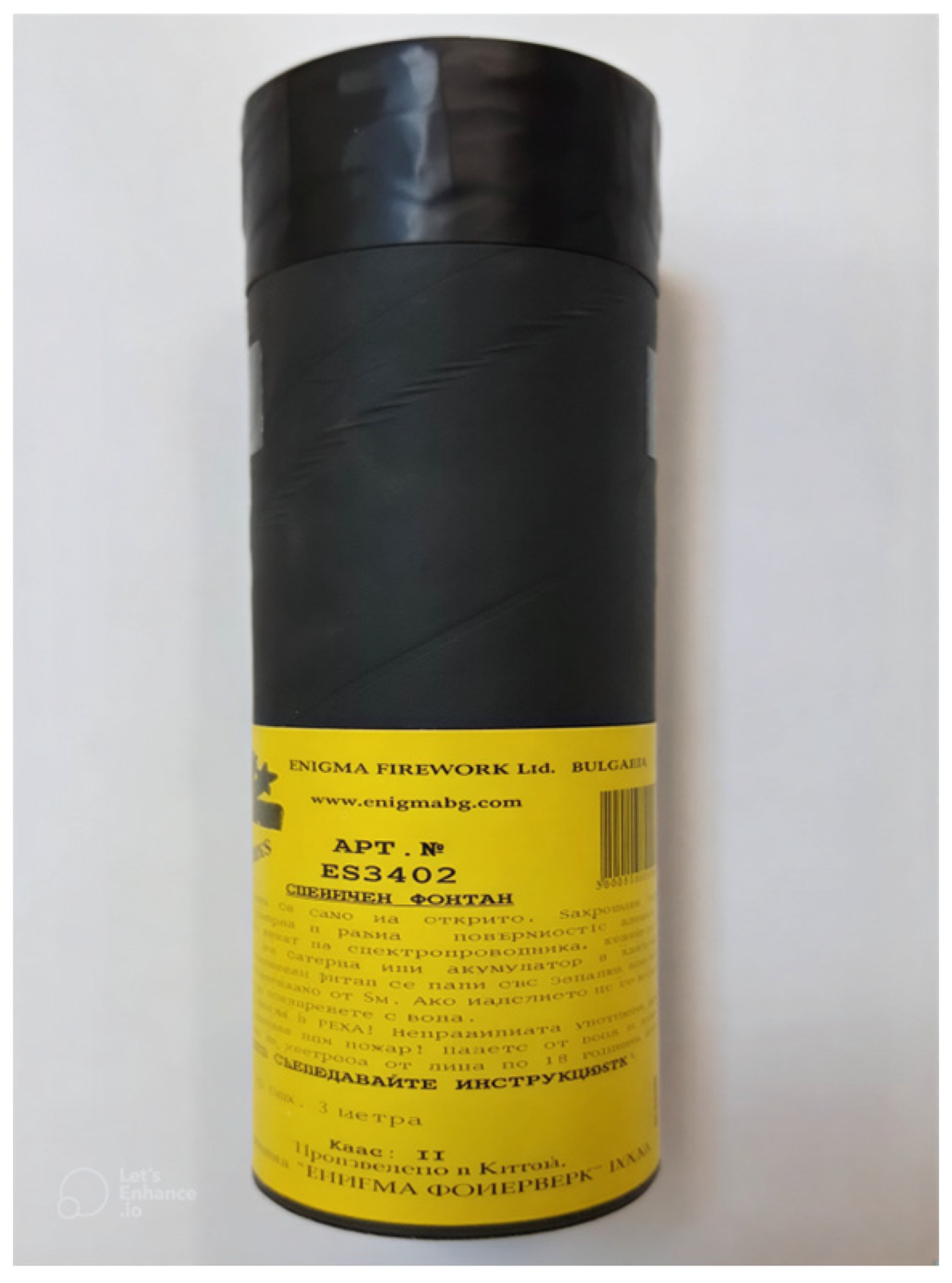
Ignition tests were performed using a commercial fountain-type pyrotechnic article (code ES3402). This type of pyrotechnic article generates a vertical jet of incandescent metallic particles during operation. The nominal operating duration of the article is approximately 30 s. The pyrotechnic composition is titanium-based (typical for fountain effects), producing bright incandescent particles. Based on trajectory analysis from preliminary high-speed recordings, particle ejection velocity was estimated at approximately 5–8 m/s. Individual particle masses ranged from approximately 1 to 5 mg based on collected samples. Particle temperature at ejection was estimated to exceed 1200 °C based on literature data for similar compositions [9,18]. The pyrotechnic article, shown in Figure 2, was mounted on a rigid metallic support to ensure reproducible positioning relative to the polyurethane acoustic foam samples.
Figure 2.
Fountain-type pyrotechnic article used as the incandescent particle source.
The pyrotechnic article (as distinct from pyrotechnic material, which refers only to the chemical composition) is a commercial fountain-type device (code ES3402) consisting of a titanium-based pyrotechnic composition in a cardboard tube with a fuse ignition system. The term “pyrotechnic article” is used throughout this manuscript in accordance with EU Directive 2013/29/EU, which defines it as an assembled device containing pyrotechnic material designed to produce visual and/or audible effects. This distinction is important because our study investigates the ignition hazard of the complete device (including particle-ejection characteristics), not merely the chemical composition.
2.2. Experimental Configuration
2.2.1. Configuration A
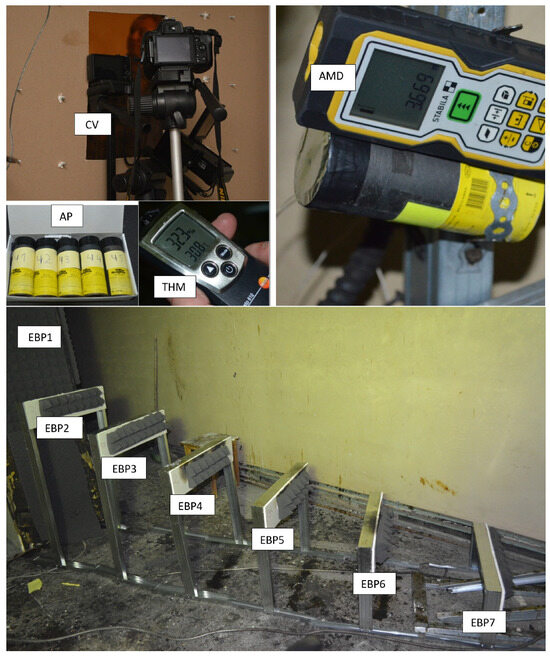
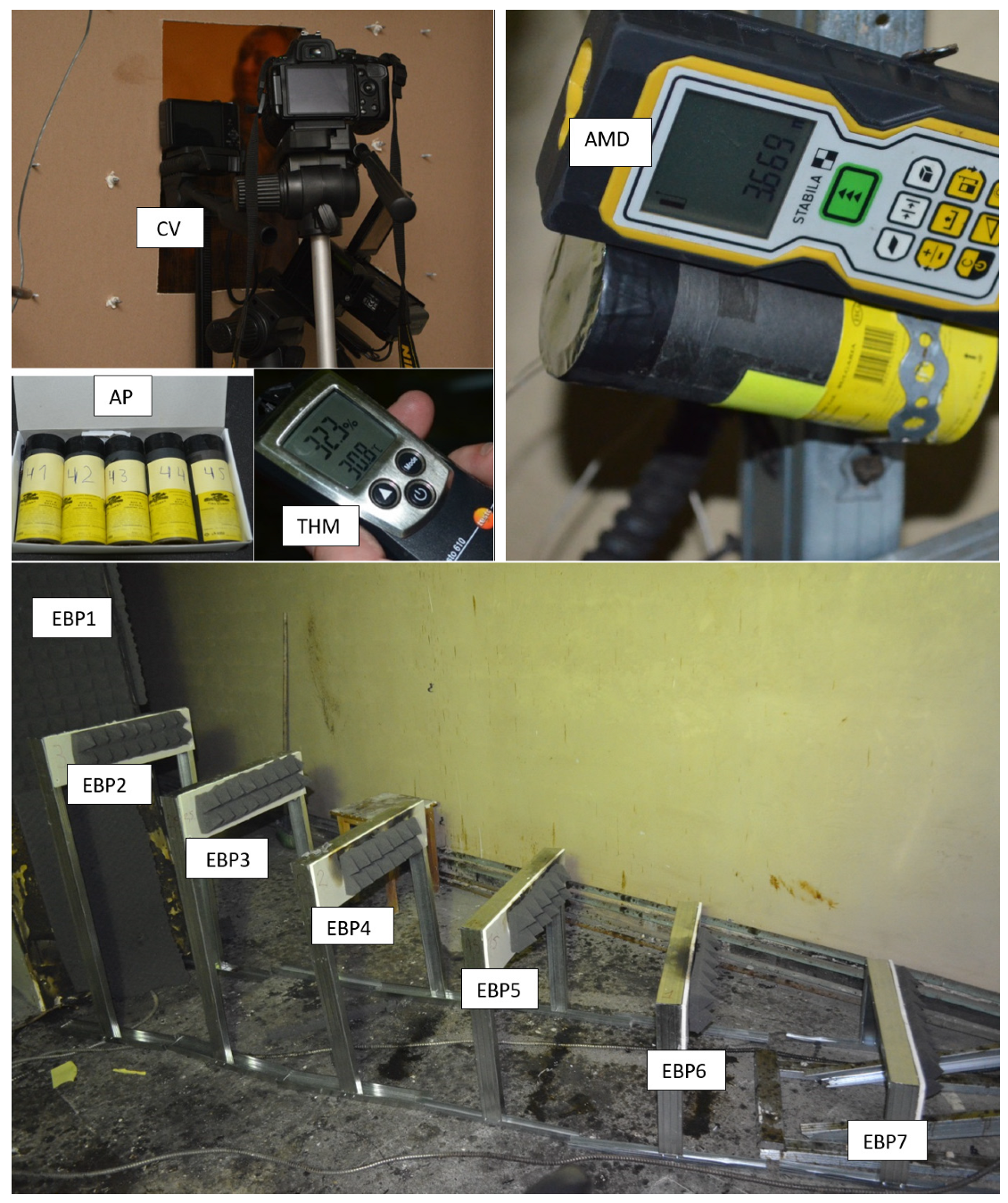
The first experimental configuration was designed to verify the ignition probability of polyurethane acoustic foam exposed to incandescent particles at different distances. The experimental setup was configured from a rigid metallic support simulating a stage lighting pillar, on which the fountain-type pyrotechnic article ES3402 was mounted. Polyurethane acoustic foam samples were positioned along the particle trajectory at distances ranging from 0.7 m to 3.7 m, with intermediate spacing of approximately 0.5 m. The samples were mounted on vertical stands aligned with the pyrotechnic axis to ensure direct particle exposure. The tests were carried out in an enclosed facility with controlled environmental parameters (temperature: 28–30 °C, relative humidity: 45–55%, minimal air movement < 0.2 m/s). The experimental setup for Configuration A (ignition probability tests) is illustrated in Figure 3, showing the vertical positioning of the foam sample above the pyrotechnic device at various distances.
Figure 3.
Configuration A: Experimental set-up components—where the pyrotechnic device is mounted on a central support and the polyurethane acoustic foam samples are positioned at various distances (0.7–3.7 m) along the particle trajectory path. Abbreviations: EBP—Pyramidal foam sample; CV—Video Camera, AP—Pyrotechnic Article; THM—Temperature and Humidity Tester; AMD—Distance Measuring Device.
Ignition criteria: Ignition was defined as the sustained visible flaming of the polyurethane acoustic foam lasting at least 3 s beyond the transient particle impact phase, with flame propagation exceeding 2 cm from the initial impact point.
The sample size (10 tests) was constrained by the availability of forensic evidence: the pyrotechnic devices (code ES3402) were provided by investigating authorities and are no longer commercially available. Alternative commercial devices could not be substituted, as particle emission characteristics (size, temperature, composition) vary between models. Despite these limitations, the sample size is sufficient to: (i) confirm that single incandescent particles can ignite polyurethane acoustic foam, (ii) characterize the underlying physical mechanism through high-speed visualization, and (iii) provide a first-order probability estimate with quantified statistical uncertainty. Ignition probabilities are reported with 95% confidence intervals calculated using the Wilson score method [22,23], which provides accurate coverage for small sample binomial estimation.
2.2.2. Configuration B
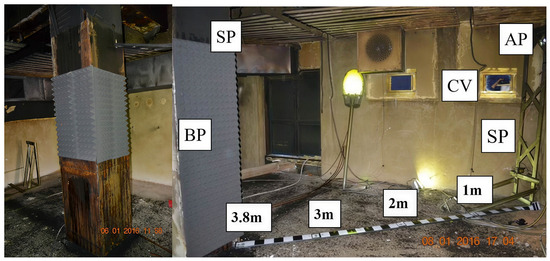
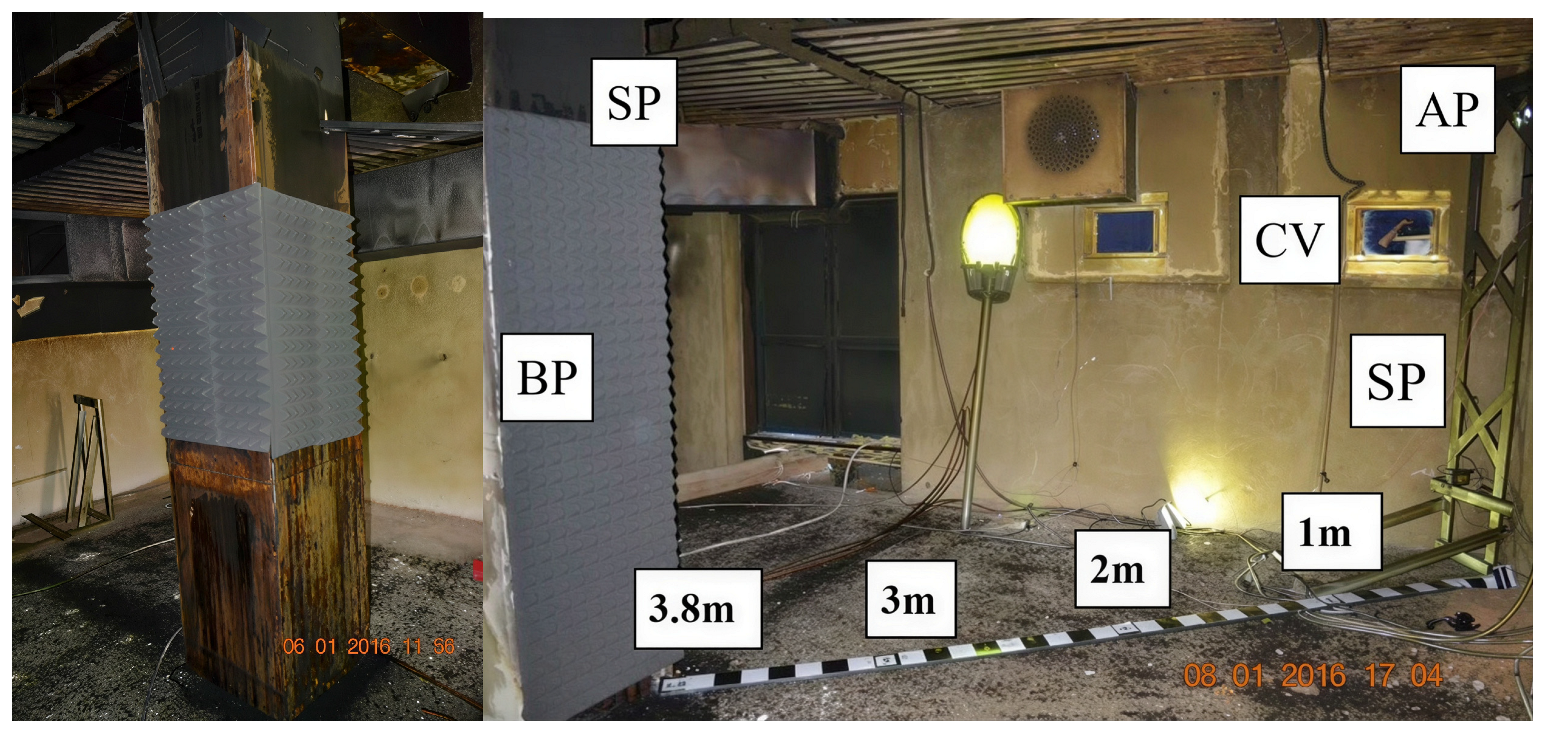
The second setup used a simplified geometric design to mimic indoor installation conditions. Polyurethane acoustic foam was attached to all four sides of a vertical pillar, which had a cross-section of 0.6 m × 0.6 m and a height of 2.5 m. This setup simulated a typical stage pillar installation. In addition, the pyrotechnic device was placed laterally, about 3.8 m away, which was a realistic distance between the stage and the surface. This configuration allowed observation of ignition under conditions closer to practical installations, in which particle dispersion and trajectory variability naturally occur. Nine independent tests were performed under similar ambient conditions to Configuration A.
Ignition was determined based on sustained flame propagation on the polyurethane acoustic foam surface (using the same criteria as Configuration A) rather than isolated glowing or localized charring.
Configuration B (scaled configuration tests) is depicted in Figure 4, which shows the vertical pillar arrangement with foam panels and lateral placement of the pyrotechnic device to simulate realistic indoor installation geometry.
Figure 4.
Configuration B (scaled configuration tests) experimental setup showing vertical pillar (0.6 m × 0.6 m × 2.5 m height) with polyurethane acoustic foam panels. Abbreviations: SP = Stage Pole; BP = Pyramidal Foam; CV = Video Camera; AP = Pyrotechnic Article.
2.2.3. Configuration C
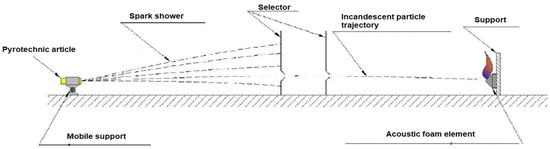
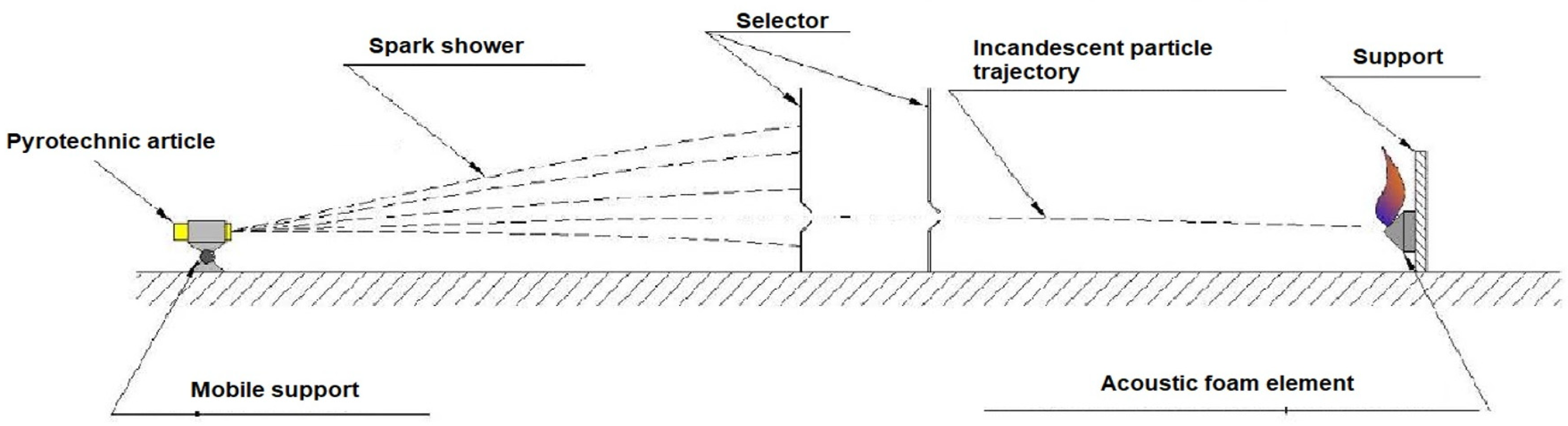
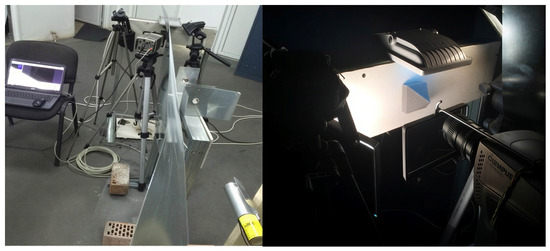
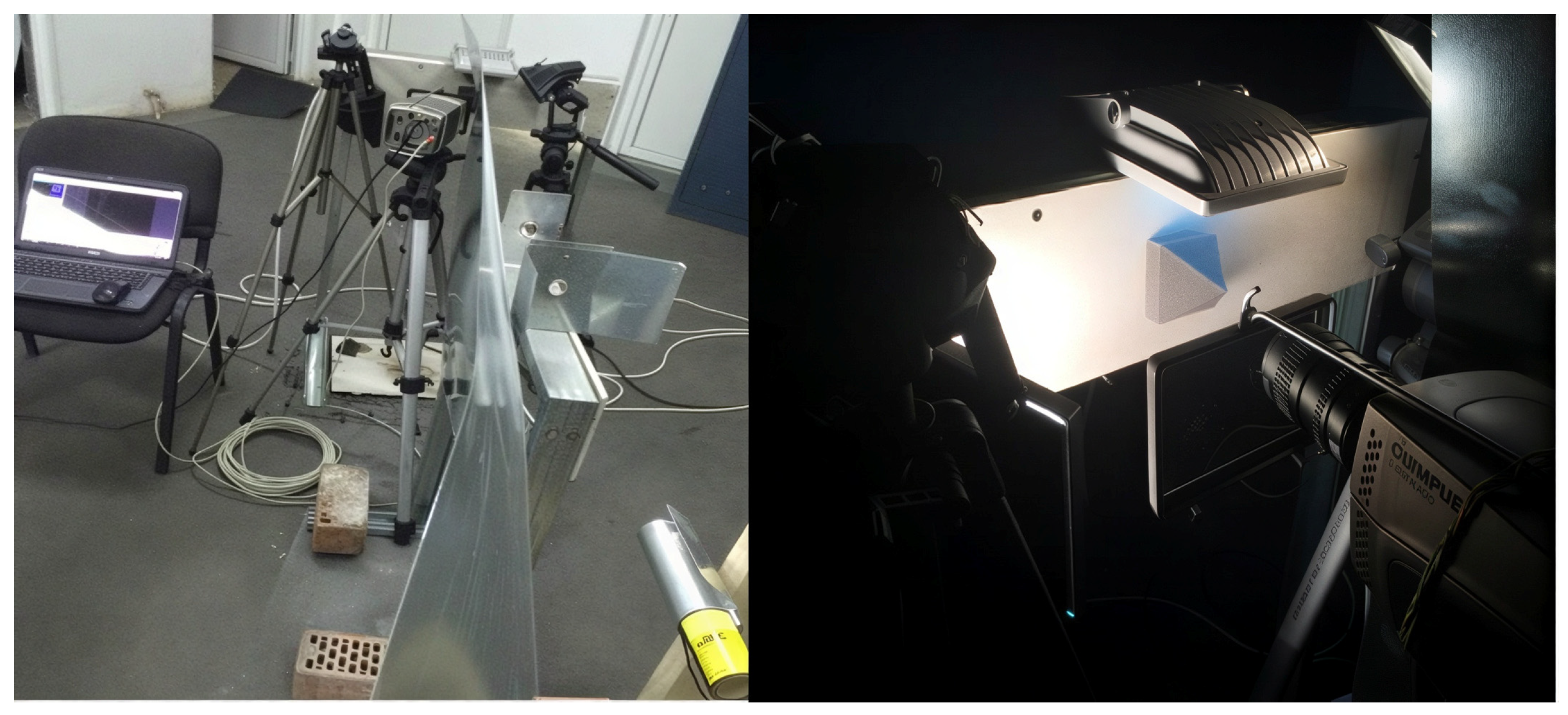
To investigate the micro-scale ignition mechanism, a dedicated setup was developed to isolate the interaction between a single incandescent particle and the polyurethane acoustic foam surface. The setup included a particle selector device positioned between the pyrotechnic source and the foam sample. This component restricted the particle stream, allowing only individual particles to impact a predefined area of the foam surface. The particle selector device and high-speed visualization setup (Configuration C) are shown schematically in Figure 5, illustrating the isolated single-particle interaction geometry and high speed Olympus camera positioning. To improve visibility, the polyurethane acoustic foam sample was mounted on a fixed support and illuminated with additional LED lights, as shown in Figure 6.
Figure 5.
Schematic diagram of Configuration C (single particle high-speed camera analysis) showing particle selector device and camera positioning. This schematic was created by the authors based on the experimental setup developed for this study.
Figure 6.
Configuration C experimental setup overview showing the particle selector, foam sample mounting, and high-speed camera positioning with auxiliary illumination.
2.3. Experimental Uncertainty and Control
All experiments were conducted under controlled laboratory conditions to minimize environmental variability. Ambient temperature was maintained at 28–30 °C (+/− 0.5 °C), relative humidity at 45–55% (+/− 2%), and air velocity below 0.2 m/s, with continuous monitoring throughout each test. Foam samples were conditioned for 24 h at test conditions before experiments to ensure equilibrium moisture content.
The commercial pyrotechnic device produces a distribution of particle sizes (1–5 mg), temperatures (estimated >1200 °C at ejection [9,18]), and trajectories. This particle–to–particle variability is intrinsic to the phenomenon under investigation and represents the realistic hazard scenario in entertainment venues. Our experimental design (10 tests in Configuration A and 9 tests in Configuration B) provides sufficient statistical power to estimate ignition probability with quantified confidence intervals (Section 3.1), acknowledging that the observed variability reflects both the stochastic nature of particle-foam interaction and the inherent heterogeneity of commercial pyrotechnic devices.
2.4. Safety Protocols
All experiments were conducted in a rated laboratory facility equipped with suppression systems and emergency ventilation. Personnel wore appropriate protective equipment, and fire extinguishing equipment was positioned within immediate reach. Tests were conducted under the supervision of qualified fire safety personnel-within the institute, there is specialized personnel that is trained for rescue work in toxic/explosive/flammable environments.
3. Results and Discussion
3.1. Ignition Probability Tests (Configuration A)
Ten independent ignition tests were performed at distances ranging from 0.7 m to 3.7 m between the pyrotechnic source and the polyurethane acoustic foam samples. Ignition occurred in two out of 10 tests (20%), while in the remaining eight tests, no sustained combustion was observed. In the ignition cases, visible flaming developed after particle impact and propagated locally on the polyurethane acoustic foam surface. In non-ignition cases, incandescent particles either ricocheted or produced localized glowing without transition to sustained flame.
The obtained results indicated that the ignition is rather probabilistic, depending on the energy level of each particle and how it interacts with the porous material. Ignition was observed at distances up to 2.7 m, indicating that hazardous conditions may exist beyond the immediate proximity of the pyrotechnic source.
The probabilistic ignition behavior observed in this study is in good agreement with previous experimental investigations of hot particle ignition in porous fuel beds. Hadden et al. [19] demonstrated a hyperbolic relationship between particle size and required temperature for ignition in combustible fuel beds, with ignition probability varying significantly near the threshold conditions. Similarly, Zak et al. [20] reported that particle diameter and temperature are the dominant controls on ignition probability in cellulose fuel beds, with fuel structure influencing whether flaming or smoldering initiates. The 20% ignition rate observed in our tests falls within the transitional regime, consistent with the size–temperature ignition boundaries documented for metal spheres impacting cellulose [21].
The observation that ignition occurred at distances up to 2.7 m, where particles have undergone significant cooling, suggests that particle mass retention is critical for ignition success. Urban et al. [24] identified a size-dependent ignition mechanism in which large particles are controlled by surface temperature while small particles are limited by total energy content and cooling rate. This distinction explains why only a subset of particles—those retaining sufficient mass and thermal inertia after fragmentation–successfully initiated ignition in our experiments. The role of particle melting as an additional heat source, documented for aluminum by Zak et al. [25], may also be relevant for titanium–based particles that undergo phase changes during flight.
Statistical context: To provide statistical context, we calculated the 95% confidence interval for the observed ignition probability using the Wilson score method [22,23], which is specifically designed for small sample binomial estimation and provides more accurate coverage than normal approximations. The resulting interval (2.5% to 55.6%) appropriately reflects the uncertainty inherent in the limited sample size. Importantly, even the lower bound of this interval represents a non–negligible hazard: a single fountain–type device emits hundreds to thousands of particles over its 30-s duration, implying multiple potential attempts per device activation.
The observed ignition probability of 20% (95 CI: 2.5–55.6%) is consistent with the transitional ignition regime reported in prior hot particle studies on cellulose fuel beds [19,20,21], where ignition probability depends strongly on particle mass and temperature. However, direct quantitative comparison is limited by differences in fuel properties: cellulose beds exhibit char formation and smoldering propagation, whereas polyurethane foam undergoes thermoplastic melting and rapid flaming combustion. The critical role of particle mass retention observed in our high-speed visualization (Section 3.3) aligns with the findings of Urban et al. [24] and Zak et al. [25], who demonstrated that particle penetration depth and contact duration govern heat-transfer efficiency in porous media.
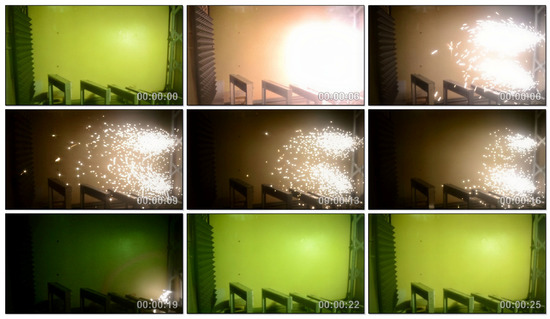
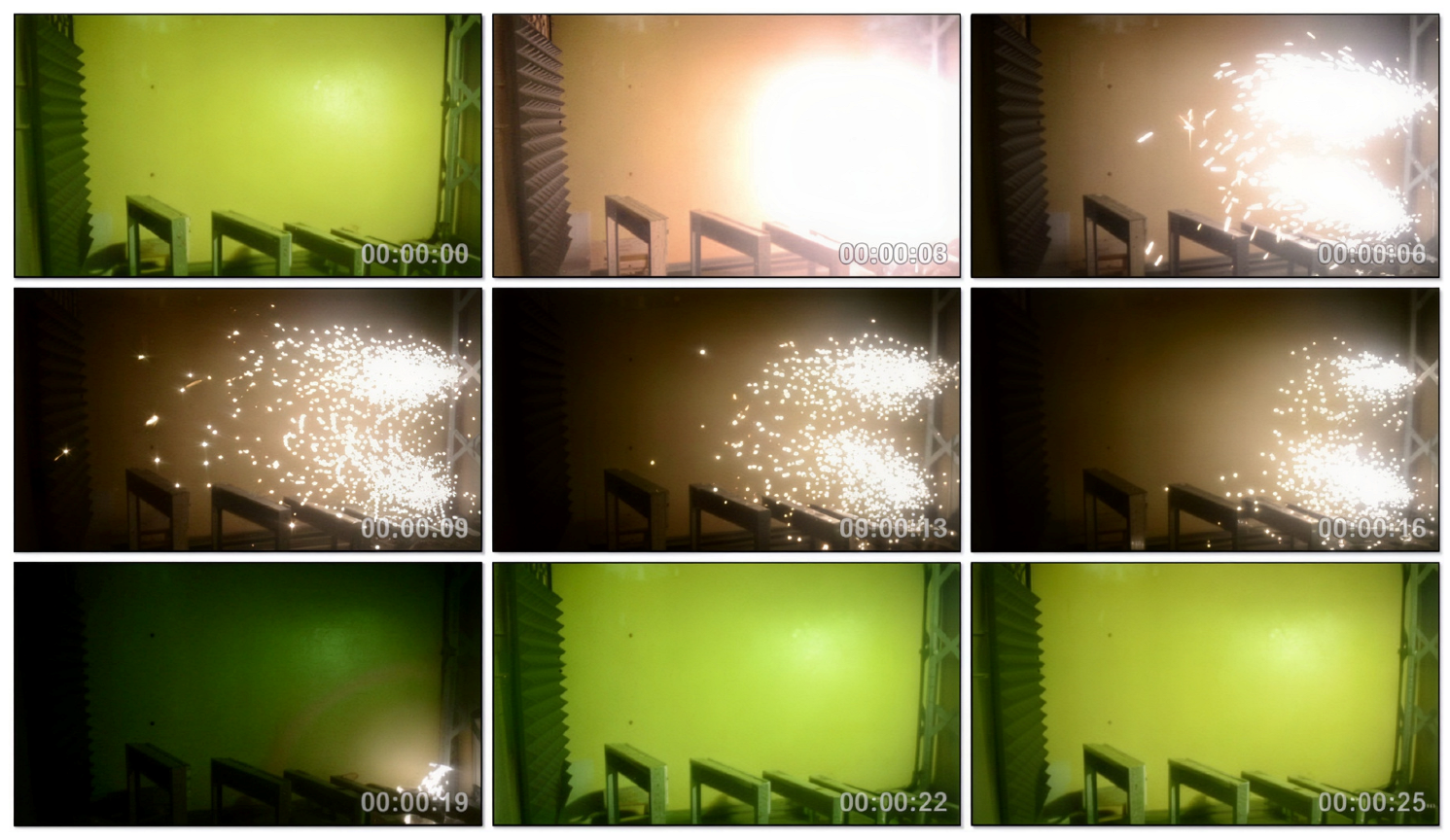
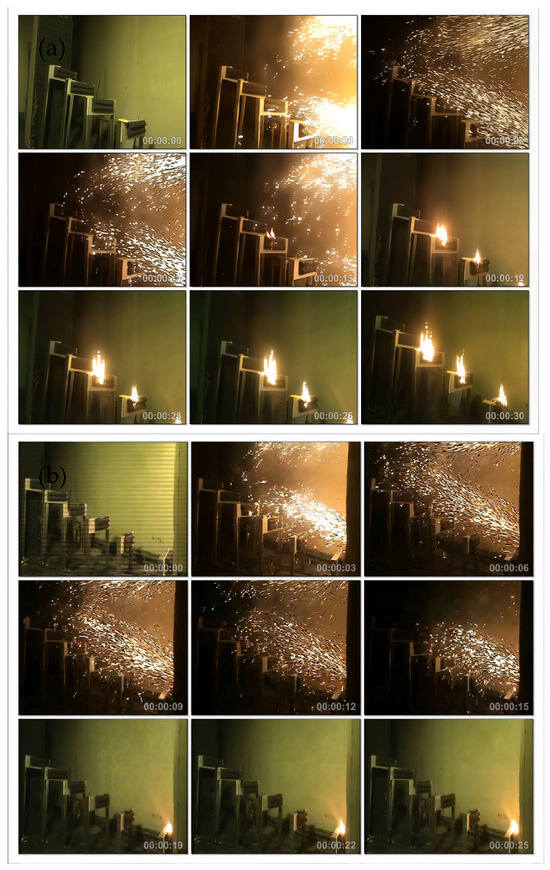
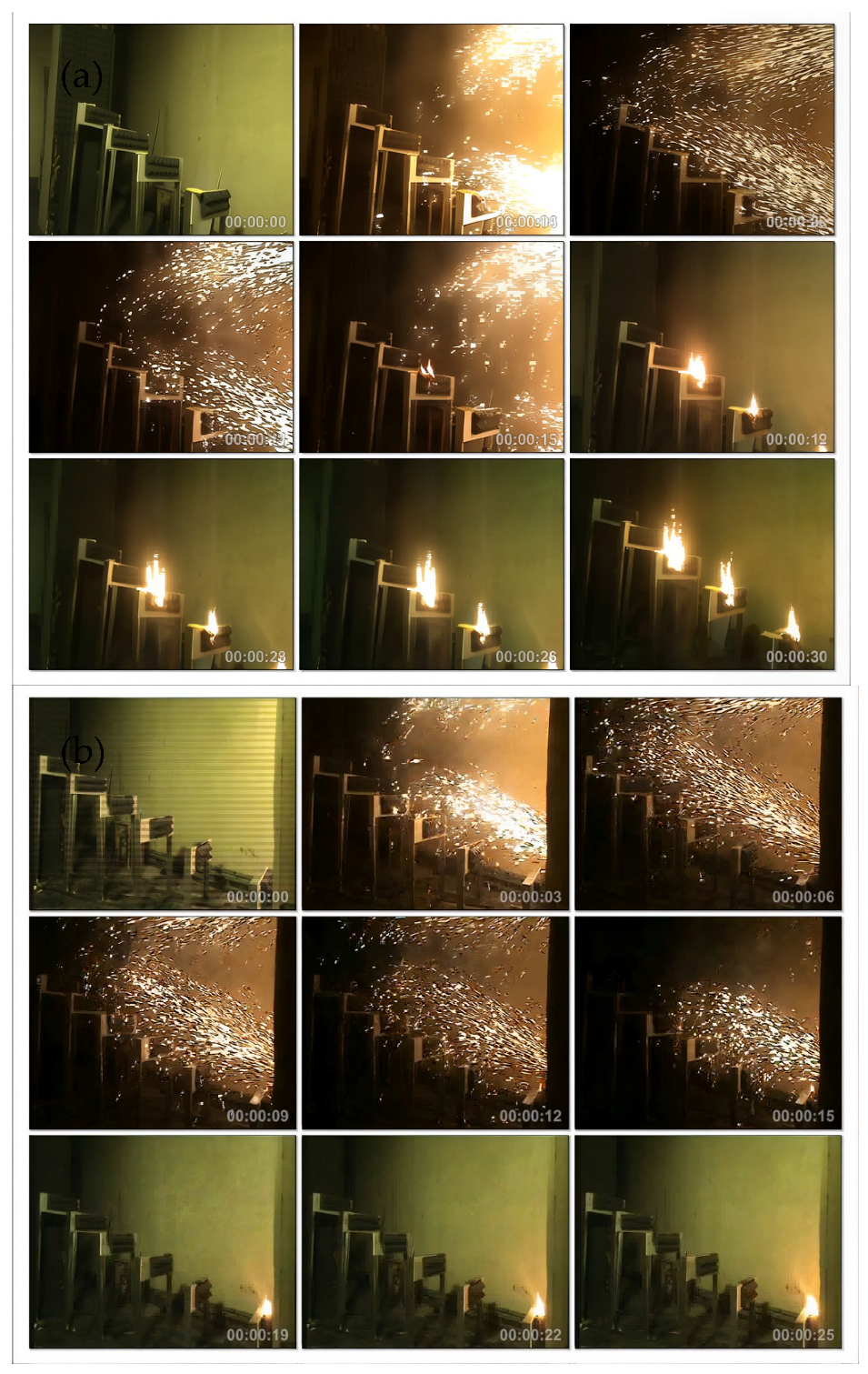
Representative ignition and non-ignition events from Configuration A are shown in Figure 7 and Figure 8, respectively, illustrating the visual differences in particle-foam interaction outcomes.
Figure 7.
Representative images from Configuration A showing a non-ignition event.
Figure 8.
Representative images from Configuration A showing successful ignition events (a,b). The sequences demonstrate particle deposition on the foam-covered samples followed by sustained flame development.
3.2. Scaled Configuration Tests (Configuration B)
Nine tests were conducted under a geometric configuration representative of indoor installation conditions with the polyurethane acoustic foam mounted on a vertical pillar located at 3.8 m from the pyrotechnic device.
Out of nine tests performed, ignition occurred in two cases (22.2%), while the remaining seven tests did not result in sustained combustion. The ignition frequency is consistent with the results obtained in Configuration A, suggesting that the probability of ignition remains significant even under more realistic spatial arrangements.
In the ignition cases, sustained flaming developed on the polyurethane acoustic foam surface following particle deposition, confirming that the interaction mechanism is reproducible across configurations. The 95% confidence interval for Configuration B (2.8–60.0%) overlaps substantially with Configuration A, indicating consistent ignition behavior.
The reproducibility of ignition across different geometric configurations suggests that the fundamental particle–foam interaction mechanism is robust to variations in particle trajectory and impact angle. Glushkov et al. [26] demonstrated through coupled experimental and numerical studies of coal dust ignition by hot particles that successful ignition requires coordinated coupling of multiple physical processes: solid-phase heat-transfer, pyrolysis, volatile generation, and gas-phase ignition. The consistent ignition probability observed between Configurations A and B (20% vs. 22.2%) indicates that these coupled processes proceed similarly regardless of the macroscopic experimental arrangement, provided that particle energy and foam properties remain constant. This finding has important implications for fire risk assessment, as it suggests that ignition probability estimates from controlled laboratory tests are transferable to more complex real-world geometries.
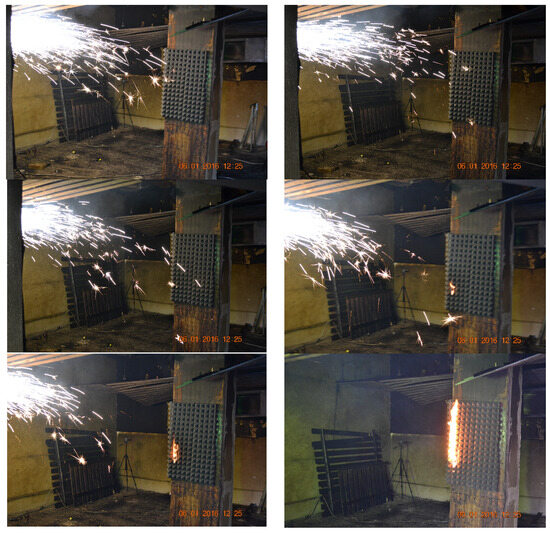
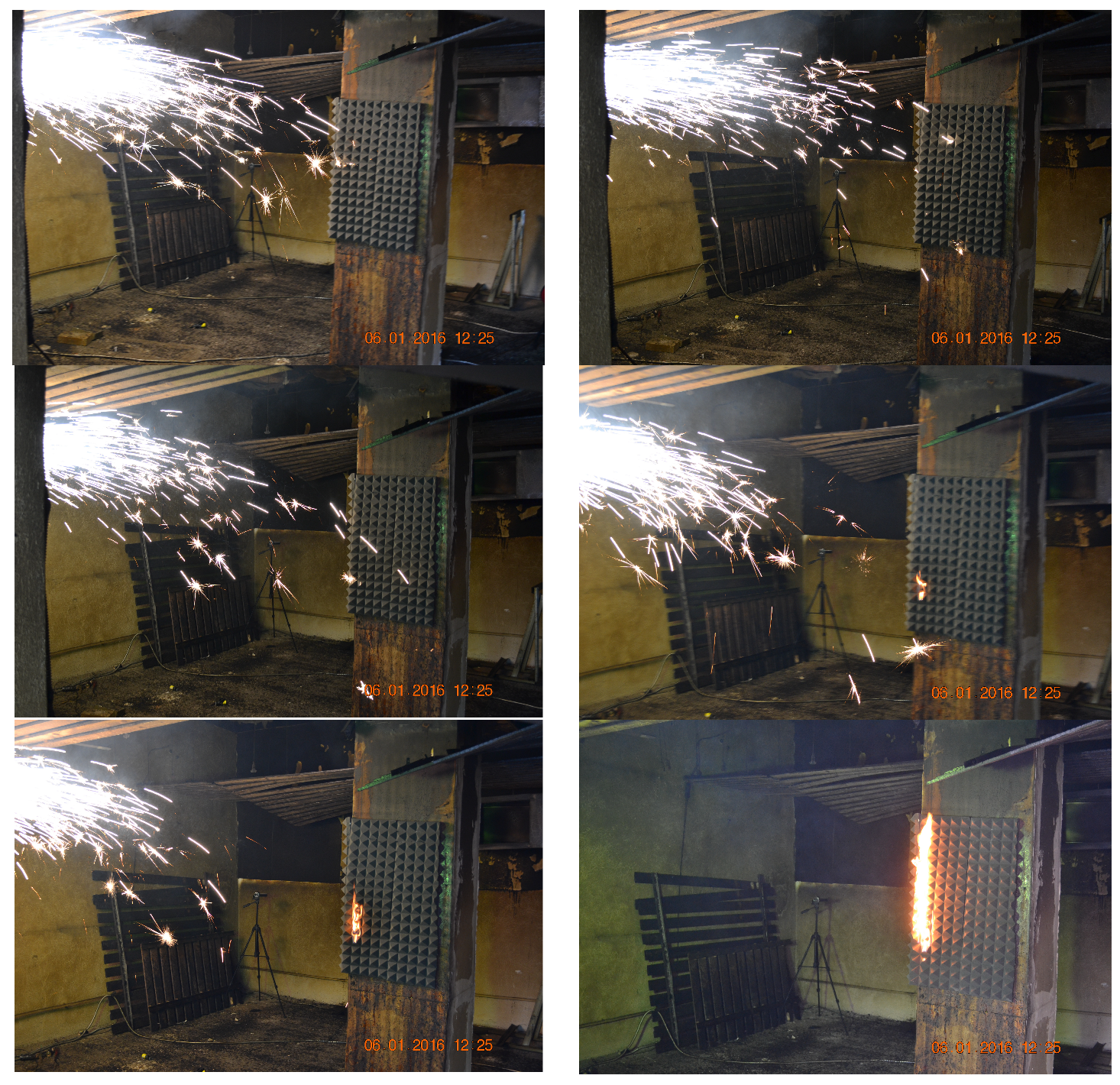
Ignition events from Configuration B are documented in Figure 9, demonstrating the reproducibility of the ignition mechanism under scaled installation conditions.
Figure 9.
Representative images from Configuration B showing a successful ignition event. The sequence demonstrates particle deposition on the foam-covered pillar followed by sustained flame development.
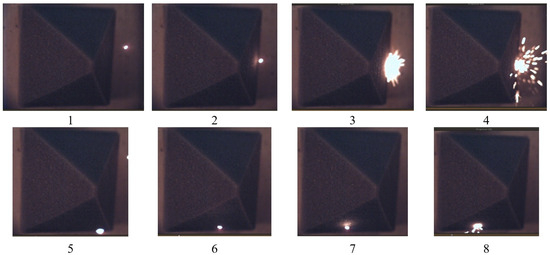
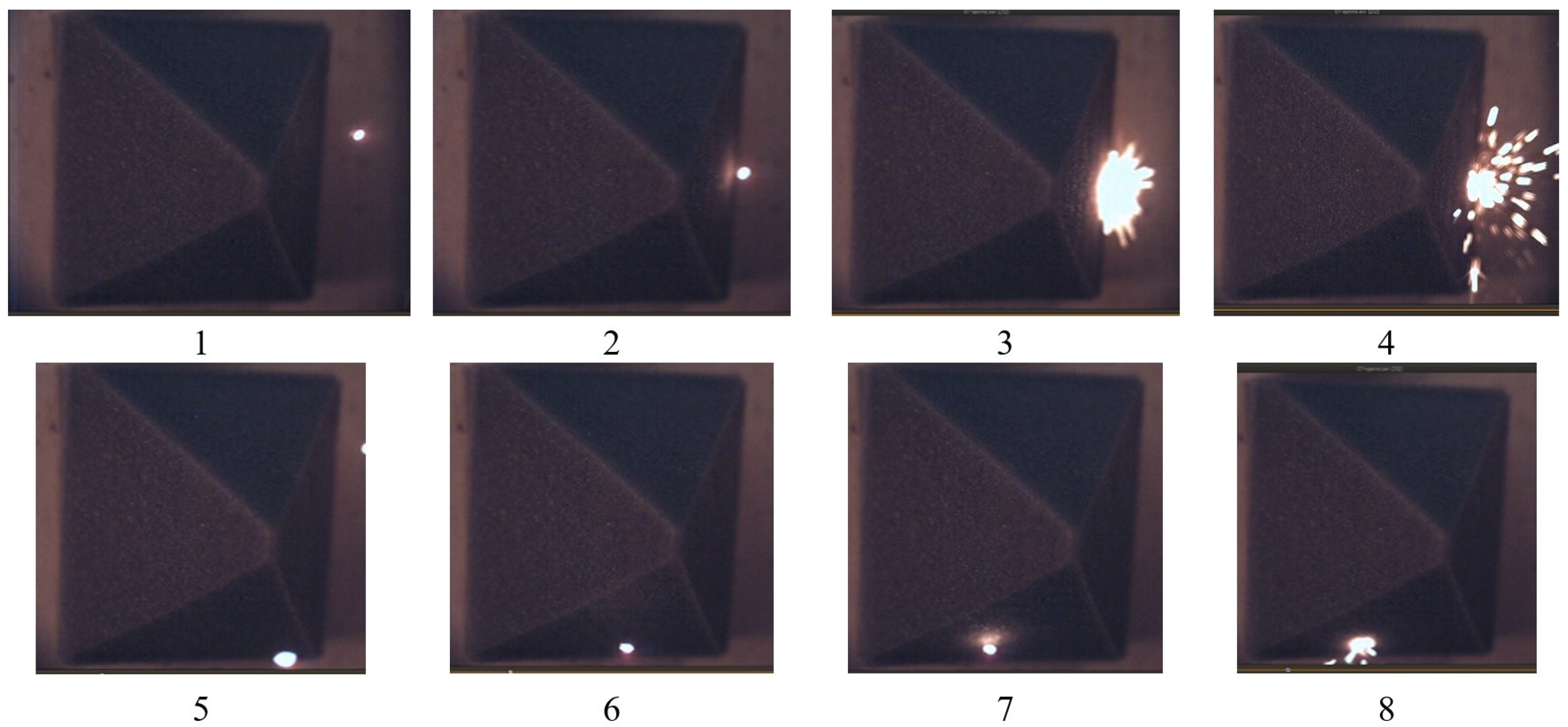
3.3. High–Speed Analysis of Particle–Foam Interaction (Configuration C)
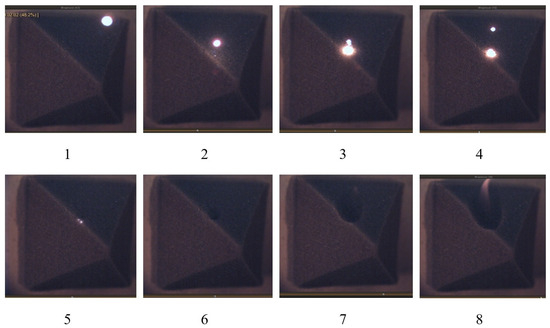
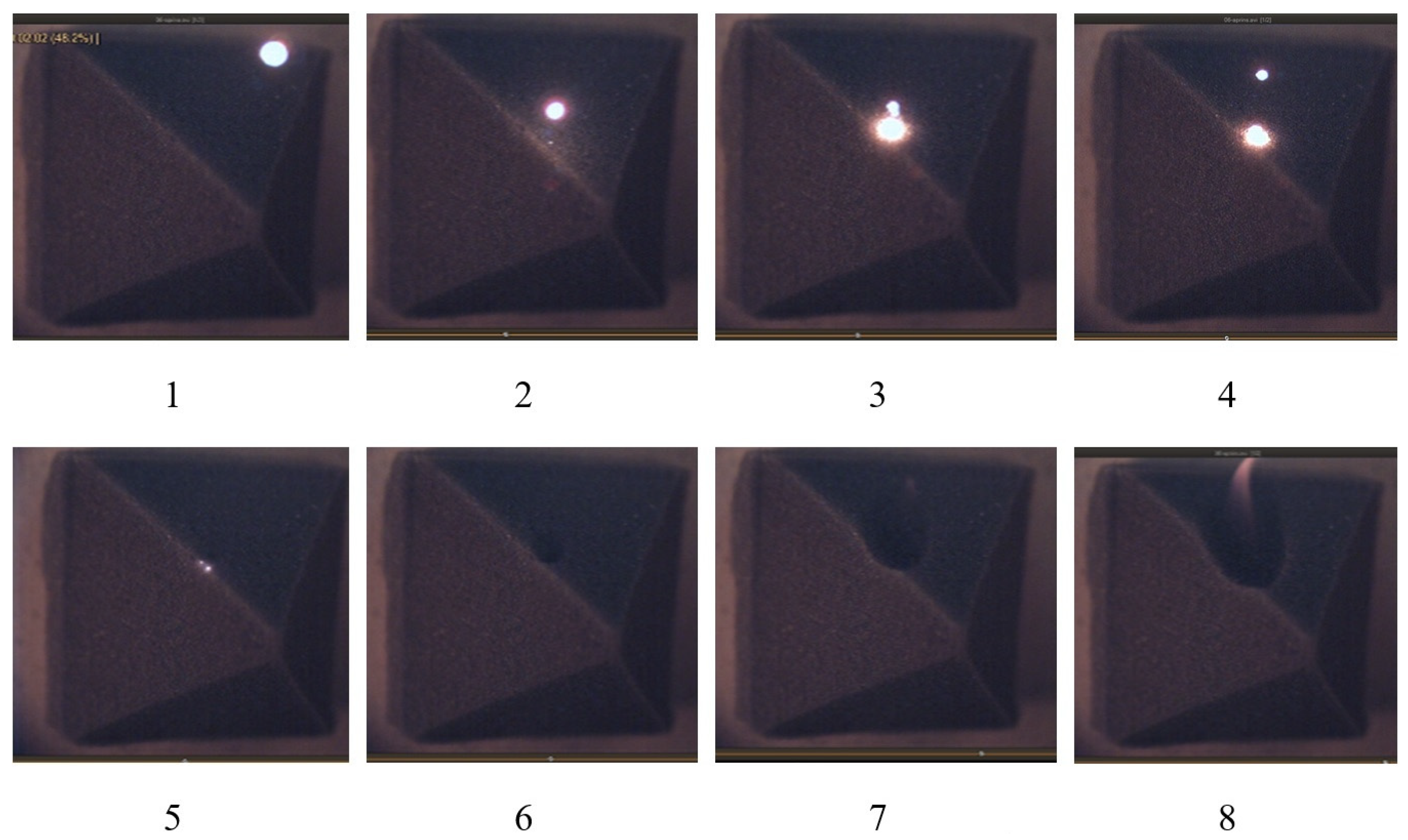
High-speed recordings (1500 fps) enabled comprehensive visualization of the interaction between incandescent particles and the surface of the polyurethane acoustic foam.
Two different behaviors were identified:
- (a)
- Non-ignition events (Figure 10), that are characterized by particle fragmentation upon impact-ricochet of particle fragments away from the surface–limited penetration into the foam structure–localized heating and transient glowing–rapid cooling without sustained flaming.Figure 10. Detailed high-speed sequence of non-ignition event showing particle fragmentation and ricochet with minimal foam penetration (1) approach of the incandescent particle towards the polyurethane foam surface; (2) initial contact of the particle with the foam structure; (3) fragmentation of the particle upon impact; (4) primary dispersion of incandescent fragments across the impact zone; (5) initiation of fragment ricochet and trajectory diversion; (6) migration of smaller fragments away from the surface; (7) rapid cooling and reduction in luminosity of the remaining fragments; (8) final dissipation of fragments without inducing self-sustained ignition of the substrate.
- (b)
- Ignition events (Figure 11), that are characterized by partial penetration of a particle fragment into the porous matrix, retention of the fragment within the foam structure, localized melting of the polyurethane matrix, thermal decomposition releasing flammable volatiles, gas-phase ignition of the air–volatile mixture, visible flame development and propagation.Figure 11. Detailed high-speed sequence of ignition event showing particle penetration, localized melting, volatile release, and flame initiation (1) high velocity approach of the incandescent particle; (2) initial impact and penetration into the porous cellular structure of the foam; (3) stagnation of the particle within the foam, leading to intense localized heat-transfer; (4) thermal degradation and localized melting; (5) production of combustible volatiles (pyrolysis gases) evidenced by the expanding dark char zone; (6) accumulation of heat and transition from shouldering to gas-phase reaction; (7) sustained ignition and the emergence of visible flame from the impact site; (8) upward flame propagation and continued consumption of the foam substate.
These observations confirm that the ignition is dependent on the residual thermal energy and the mass of the particle fragment retained inside the foam, rather than solely on the initial particle temperature. The primary difference between ignition and non-ignition is whether sufficient energy is transferred to and retained within a localized volume of the foam to initiate and sustain gas-phase combustion.
The observed ignition mechanism–involving a particle penetration, localized melting, and volatile generation–is compatible with documented thermal decomposition behavior of polyurethane foam. Wang et al. [27] studied the thermal decomposition kinetics of rigid polyurethane foam and identified three distinct stages: labile organics loss (200–300 °C), oxidative degradation (300–450 °C), and residue oxidation (>450 °C). The localized temperatures obtained by retained particle fragments in our ignition events (estimated >300 °C based on visible melting) correspond to the oxidative degradation stage, where rapid volatile generation occurs. The important function of volatile accumulation within the porous structure for ignition has been documented in smoldering polyurethane foam studies [28], which demonstrate that self-sustained combustion requires threshold heat flux conditions and sufficient char thickness to retain heat and volatiles.
The observed ignition mechanism–localized melting, thermal decomposition, volatile release, and gas-phase ignition is consistent with the multi-stage thermal decomposition of flexible polyurethane foam documented in TGA studies [10,11,12]. The critical role of retained thermal energy (0.5–0 1 J) in initiating decomposition aligns with the reported critical heat flux for piloted ignition (10–15 kW/m2) [13,14], which corresponds to localized energy delivery rates achievable by incandescent particles at temperatures exceeding 1200 °C. The rapid transition from localized decomposition to flaming combustion reflects the high heat release rate (150–350 kW/m2) characteristic of non-flame-retardant flexible PU foams [13,15], which sustains flame propagation once ignition is established.
3.4. Energetic Interpretation of Ignition
The high-speed recordings indicate that ignition is governed by a localized thermophysical process occurring at the particle-foam interface. Upon impact, the incandescent particle may undergo fragmentation. Depending on the mass of the particle and the temperature of the resulting fragment, two distinct situations may occur.
If the fragment loses most of its thermal energy through ricochet, air cooling, or superficial contact without penetration, only localized heating or charring is observed. Conversely, if a sufficiently energetic fragment penetrates the porous polyurethane structure, localized heat transfer to the surrounding polymer matrix leads to melting and thermal decomposition.
This localized decomposition generates flammable volatile compounds within a confined micro-volume of the foam. When the retained thermal energy exceeds the combined heat losses due to conduction within the porous matrix and convection to the surrounding air, the local air-volatile mixture may reach its ignition temperature (approximately 330–370 °C for polyurethane pyrolysis products), resulting in sustained flaming.
To evaluate whether ignition by a single particle is physically plausible, an order-of-magnitude energetic estimation was performed. The thermal energy available from the particle can be approximated using:
where m is the particle mass; c is the specific heat capacity of the metallic particle (≈500 J·kg−1·K−1); ΔT is the temperature difference between the particle and ambient conditions.
Assuming a representative particle mass of approximately 2 mg (2 × 10⁻⁶ kg) and a particle temperature of 1200 °C at impact (ΔT ≈ 900 K), the available thermal energy becomes:
This estimation indicates that a single incandescent particle is on the order of 0.5–1 J of thermal energy.
The estimated available energy of 0.9 J represents an upper bound, assuming complete heat transfer to the foam. In reality, significant energy losses occur through:
- (a)
- Radiative losses: particles at elevated temperatures emit energy in proportion to the fourth power of their temperature while in motion and upon collision
- (b)
- Convective losses: Air cooling during particle trajectory and post-impact
- (c)
- Conductive losses: Heat dissipation into the porous foam structure away from the impact site
- (d)
- Incomplete contact: Particle fragmentation and ricochet reduce effective heat transfer
Assuming an effective heat-transfer efficiency of 10–30% (typical for transient particle-solid contact [29,30]), the energy actually delivered to the foam is approximately 0.1–0.3 J.
The low heat-transfer efficiency (10–30%) is common to the complex heat-transfer mechanisms in porous materials subjected to localized heating. Zakharevich and Baranovskiy [29] demonstrated that high open porosity strongly modifies boundary-layer heat and mass transfer during the ignition induction period, with ignition delay depending critically on heat-source temperature and porosity-controlled transport. The quick cooling of microscopic particles we saw in our non-ignition events is in line with the idea that open-cell foam structure makes convection losses worse. Bean and Blunck [30] showed that ignition likelihood in porous fuel beds is better predicted by heat flux and the ratio of transport-to-chemical timescales than by heater temperature alone, with contact area and thermal diffusivity controlling conduction-dominated ignition for small particles. This framework explains why particle fragmentation and ricochet (reducing contact area and duration) consistently led to non-ignition in our experiments. Additionally, contact area and thermal diffusivity govern conduction-dominated ignition for small particles.
Considering the low density (25 kg/m3) and high porosity of polyurethane acoustic foam, the energy required to locally raise a small mass of material to pyrolysis temperature can be estimated. For a 10 mg mass of polyurethane foam heated from ambient (30 °C) to pyrolysis temperature (300 °C):
This suggests that the limiting factor is not the total energy required for pyrolysis but rather the localized delivery and retention of that energy within a sufficiently small volume to initiate gas-phase ignition. The effective delivered energy (0.1–0.3 J) is more than sufficient to burn a small mass of foam if retained locally.
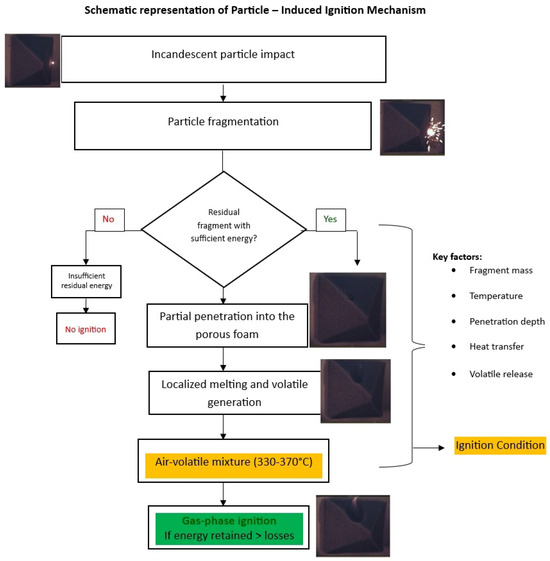
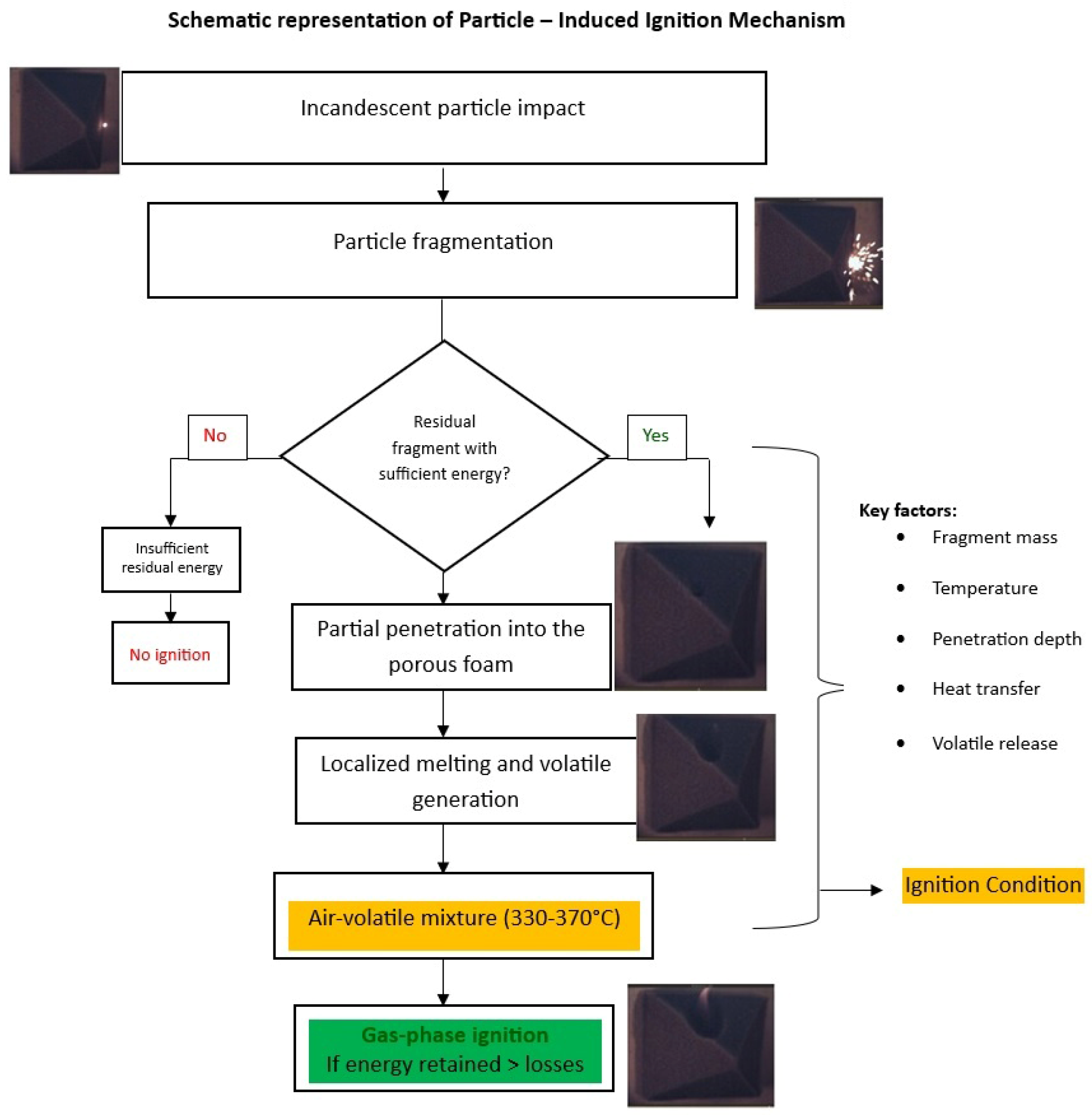
Literature values for minimum ignition energy (MIE) of polyurethane foam by hot surfaces range from 0.05 to 0.5 J, depending on contact area and duration. The estimated delivered energy falls within this range, supporting the experimental observation that ignition is possible but not guaranteed (probabilistic outcome). A flow diagram summarizing the proposed particle-induced ignition mechanism is presented in Figure 12. The diagram illustrates the sequence of processes identified experimentally: particle impact, fragmentation, possible residual fragment retention, partial penetration into the porous structure, localized melting and volatile generation, and subsequent gas-phase ignition when sufficient residual thermal energy is retained. If the retained fragment energy is insufficient, the process terminates without sustained ignition.
Figure 12.
Flow diagram summarizing the proposed particle-induced ignition mechanism of polyurethane acoustic foam. The sequence includes particle impact, fragmentation, possible residual fragment retention, partial penetration into the porous structure, localized melting and volatile generation, and subsequent gas-phase ignition when sufficient thermal energy is retained. The probabilistic nature of the process depends on particle characteristics (mass, temperature, velocity) and interaction dynamics (penetration depth, contact duration).
The combined experimental observations and energetic estimation explain the probabilistic ignition behavior observed in the tests (20–22.2%). Ignition is not determined solely by the initial particle temperature but by the balance between residual fragment energy and local heat losses within the porous structure. Only particles retaining sufficient mass and thermal inertia after impact are capable of initiating sustained combustion. The combined experimental observations and energetic analysis support a mechanistic interpretation in which ignition success depends on achieving three conditions simultaneously: (1) sufficient particle mass and temperature retention after impact to deliver adequate thermal energy (>0.1 J effective), (2) adequate particle penetration and contact duration to heat a localized foam volume above pyrolysis temperature (~250–300 °C), and (3) sufficient volatile accumulation within the porous structure to create a flammable mixture. This multi-step process, which includes heating in the solid phase, pyrolysis, and ignition in the gas phase [26], explains why ignition is probabilistic and why the success rate is just 20%. Particles that fragment extensively, exhibit rapid motion, or collide at acute angles fail to satisfy one or more of these criteria, resulting in transient heating without prolonged combustion. Only particles that partially infiltrate and sustain sufficient thermal mass within the foam matrix effectively initiate the associated thermal-chemical processes that lead to ignition.
3.5. Fire Safety Implications
Although ignition occurred in a minority of the experimental tests (approximately 20%), the results demonstrate that single incandescent particles generated by fountain-type pyrotechnic devices are capable of initiating polyurethane acoustic foam combustion under controlled conditions.
The stochastic nature of ignition does not reduce the associated hazard. To understand how this affects fire safety, consider a typical entertainment venue: a 30 s pyrotechnic fountain effect that sends out about 1000 particles, with 100 of them hitting acoustic foam surfaces that are close enough to catch fire. The predicted number of ignition attempts would be about 20 per activation, based on the fact that each particle has a 20% chance of catching fire. Even though many of these fires may go out on their own or stay in one place, a single continuous ignition event can cause a fire to spread quickly in places with a lot of combustible acoustic surfaces, as shown by the Station and Colectiv events and the most recent Crans Montana occurrence.
The findings challenge the perception of “cold sparks” as inherently safe for indoor use and provide quantitative evidence that particle-induced ignition scenarios should be considered in fire risk assessments for entertainment venues. These results emphasize the importance of evaluating the compatibility between pyrotechnic effects and combustible interior materials during safety planning and regulatory approval processes.
3.6. Study Limitations
The experimental campaign was conducted using pyrotechnic articles provided as forensic evidence by law enforcement authorities. Consequently, the number of available devices was limited, and additional experimental repetitions beyond those reported were not possible. Furthermore, the initial purpose of the experimental investigation was related to the event reconstruction, and the testing protocol was subsequently adapted for scientific analysis.
While the number of tests performed was sufficient to confirm ignition occurrence and characterize the underlying mechanism, a larger dataset would enable more robust statistical quantification of ignition probability.
Additional limitations included:
- ✓
- Single foam type: Only one type of polyurethane acoustic foam was tested. Other acoustic materials or flame-retardant-treated foams may behave differently.
- ✓
- Single pyrotechnic article type: Only one fountain-type device model was evaluated. Other pyrotechnic compositions may produce particles with different characteristics.
- ✓
- No investigation of mitigation strategies: Flame-retardant treatments, protective barriers, or suppression systems were not evaluated.
Future research should include systematic testing with direct measurement of individual particle mass, temperature, and velocity in order to refine the energetic thresholds identified in this study. Testing across multiple foam types, pyrotechnic compositions, and environmental conditions would enable the development of more comprehensive safety guidelines.
4. Conclusions
This study provides experimental evidence that single incandescent particles from fountain-type pyrotechnic devices can ignite polyurethane acoustic foam under realistic conditions. Ignition was observed in approximately 20% of controlled tests across two independent configurations, confirming that the phenomenon is reproducible, although probabilistic in nature.
High-speed visualization (1500 fps) revealed the critical ignition mechanism: partial particle penetration into the porous foam structure with sufficient retained thermal energy (approximately 0.5–1 J) leads to localized melting, volatile generation, and subsequent gas-phase ignition. Non-ignition events were characterized by particle fragmentation and ricochet without adequate heat transfer. Order-of-magnitude energetic analysis confirmed that individual particles carry sufficient energy to initiate ignition when heat-transfer efficiency and localization conditions are favorable.
These findings challenge the widespread perception that fountain-type pyrotechnic devices producing “cold sparks” are inherently safe for indoor use near combustible materials. The demonstrated ignition capability, even at distances exceeding 2.7 m, represents a quantifiable fire hazard in entertainment venues where extensive acoustic foam installations are common.
The probabilistic nature of ignition does not diminish the associated risk. In real-world scenarios involving thousands of particles per pyrotechnic activation, multiple ignition opportunities exist, and even a single successful ignition event can lead to catastrophic fire development in venues with extensive combustible acoustic treatment.
Based on these findings, the following recommendations are proposed:
- ✓
- Regulatory Review: Current safety guidelines for indoor pyrotechnic use should be revised to explicitly consider particle-induced ignition of porous combustible materials.
- ✓
- Safety Distances: Minimum separation distances between fountain-type pyrotechnic devices and combustible acoustic materials should be established based on particle trajectory modeling and ignition probability data.
- ✓
- Material Specifications: Entertainment venues should prioritize flame-retardant-treated acoustic materials or inherently non-combustible alternatives when pyrotechnic effects are planned.
- ✓
- Risk Assessment: Pre-event fire risk assessments should include explicit evaluation of pyrotechnic-acoustic material interactions, not solely relying on “cold spark” marketing claims.
- ✓
- Further Research: Systematic investigation of ignition thresholds across different acoustic foam types, flame retardant treatments, and pyrotechnic compositions is needed to develop evidence-based safety standards.
Author Contributions
M.P.: On-site research, Investigation, Review of manuscript; E.G.: Idea and concepts, On-site research, Investigation; G.A.G.: Formal analysis, Resources, Supervision; D.P.: Formal analysis, Methodology; Investigation, Supervision; M.C.S.: Investigation, Software; N.V.: Investigation, Software; F.M.: Investigation, Software; I.N.: Writing—Review and Editing, Methodology, Investigation; A.S.-M.: Investigation, Software, Methodology; G.D.F.: Formal analysis, Methodology; R.L.: Formal analysis, Methodology. All authors have read and agreed to the published version of the manuscript.
Funding
This research was supported by the National Authority—the General Prosecutor’s Office attached to the High Court of Cassation and Justice of Romania—which led the criminal investigation of the event. The research also used the infrastructure of the Testing Platform for Explosives, Flammable and Toxic Substances, and Anti-Explosive Equipment (PCDIEX), supported by public funds allocated through the national authority for research and development. The authors have reviewed and edited the output and take full responsibility for the content of this publication.
Institutional Review Board Statement
Not applicable.
Informed Consent Statement
Not applicable.
Data Availability Statement
The data presented in this study are available on request from the corresponding author. The data are not publicly available due to legal reasons.
Conflicts of Interest
The authors declare no conflicts of interest.
Abbreviation
| Nomenclature: | |
| CI | Confidence Interval |
| DSC | Differential Scanning Calorimetry |
| HRR | Heat Release Rate |
| LED | Light-Emitting Diode |
| PHRR | Peak Heat Release Rate |
| PU | Polyurethane |
| PIR | Polyisocyanurate |
| RH | Relative Humidity |
| TGA | Thermogravimetric Analysis |
| THR | Total Heat Release |
| T | Temperature (°C) |
| m | Mass (mg, kg) |
| v | Velocity (m/s) |
| E | Energy (J) |
| q″ | Heat flux (kW/m2) |
References
- Grosshandler, W.; Bryner, N.; Madrzykowski, D.; Kuntz, K. Report of the Technical Investigation of the Station Nightclub Fire (NIST NCSTAR 2); National Construction Safety Team Act Reports (NIST NCSTAR); National Institute of Standards and Technology: Gaithersburg, MD, USA, 2005; Volume 1. Available online: https://tsapps.nist.gov/publication/get_pdf.cfm?pub_id=100988 (accessed on 2 March 2026).
- Ionescu, A. Filmul Evenimentelor de la Colectiv. Ce s-a Întâmplat, de Fapt, Acum 5 Ani, kanald.ro, Romania, 2020. Available online: https://www.kanald.ro/filmul-evenimentelor-de-la-colectiv-ce-s-a-intamplat-de-fapt-acum-5-ani-20112045#google_vignette (accessed on 23 September 2025).
- Reuters. Dozens Killed, 100 Injured in Fire at Swiss Ski Resort Bar, Police Say. 2026. Available online: https://www.reuters.com/world/europe/several-killed-after-explosion-swiss-ski-resort-bar-bbc-reports-2026-01-01/ (accessed on 2 March 2026).
- Cox, T.; D’Antonio, P. Acoustic Absorbers and Diffusers: Theory, Design and Application, 3rd ed.; CRC Press: Boca Raton, FL, USA, 2016. [Google Scholar]
- Hirschler, M.M. Fire Hazard and Toxic Potency of the Smoke from Burning Materials. J. Fire Sci. 1987, 5, 289–307. [Google Scholar] [CrossRef] [Scilit]
- Babrauskas, V. Heat Release Rates. In SFPE Handbook of Fire Protection Engineering; Morgan, J.H., Gottuk, D., John, R.H., Harada, K., Kuligowski, E., Puchovsky, M., Torero, J., John, M.W., Christopher, W., Eds.; Springer: New York, NY, USA, 2016; pp. 799–904. [Google Scholar] [CrossRef] [Scilit]
- Khan, M.M.; Tewarson, A.; Chaos, M. Combustion Characteristics of Materials and Generation of Fire Products. In SFPE Handbook of Fire Protection Engineering; Morgan, J.H., Gottuk, D., John, R.H., Harada, K., Kuligowski, E., Puchovsky, M., Torero, J., John, M.W., Christopher, W., Eds.; Springer: New York, NY, USA, 2016; pp. 1143–1232. [Google Scholar] [CrossRef] [Scilit]
- Akhavan, J. The chemistry of fireworks. Mater. Today 2009, 12, 47. [Google Scholar] [CrossRef] [Scilit]
- Mocella, C.J.A. Chemistry of Pyrotechnics: Basic Principles and Theory, 2nd ed.; CRC Press: Boca Raton, FL, USA, 2010. [Google Scholar]
- Pau, D.; Fleischmann, C.; Delichatsios, M. Thermal decomposition of flexible polyurethane foams in air. Fire Saf. J. 2020, 111, 102925. [Google Scholar] [CrossRef] [Scilit]
- Reinerte, S.; Avotina, L.; Zarins, A.; Cabulis, U.; Viksna, A. TG/DTA-FTIR as a method for analysis of tall oil based rigid polyurethane foam decomposition gaseous products in a low oxygen environment. Polym. Degrad. Stab. 2020, 180, 109313. [Google Scholar] [CrossRef] [Scilit]
- Mun, S.-Y.; Lee, J.-H.; Hwang, C.-H. Measurement of Pyrolysis Properties for Fire Spread Simulations of Spray Polyurethane Foam. Fire Sci. Eng. 2022, 36, 29–37. [Google Scholar] [CrossRef] [Scilit]
- Xu, Q.; Jin, C.; Majlingova, A.; Zachar, M.; Restas, A. Evaluate the flammability of a PU foam with double-scale analysis. J. Therm. Anal. Calorim. 2019, 135, 3329–3337. [Google Scholar] [CrossRef] [Scilit]
- Chaudhari, D.M.; Stoliarov, S.I.; Beach, M.W.; Suryadevara, K.A. Polyisocyanurate Foam Pyrolysis and Flame Spread Modeling. Appl. Sci. 2021, 11, 3463. [Google Scholar] [CrossRef] [Scilit]
- Manea, F.; Ilia, G.; Ghicioi, E.; Pupazan, D.G.; Prodan, M.; Nicola, A.H. The Experimental Study of Flame Behavior of Flexible Polyurethane Foam (Sponge), as a Sound-Absorbing Element. Fire 2025, 8, 127. [Google Scholar] [CrossRef] [Scilit]
- Hirschler, M. Fire Performance of Organic Polymers, Thermal Decomposition, and Chemical Composition. ACS Symp. Ser. 2001, 797, 293–306. [Google Scholar] [CrossRef] [Scilit]
- Babrauskas, V.; Peacock, R.D. Heat release rate: The single most important variable in fire hazard. Fire Saf. J. 1992, 18, 255–272. [Google Scholar] [CrossRef] [Scilit]
- Russell, M.S. The Chemistry of Fireworks; Royal Society of Chemistry (RSC): Cambridge, UK, 2007. [Google Scholar] [CrossRef] [Scilit]
- Hadden, R.M.; Scott, S.; Lautenberger, C.; Fernandez-Pello, A.C. Ignition of Combustible Fuel Beds by Hot Particles: An Experimental and Theoretical Study. Fire Technol. 2011, 47, 341–355. [Google Scholar] [CrossRef] [Scilit]
- Zak, C.; Murphy, D.; Fernandez-Pello, A. Understanding ignition of natural fuels by heated particles. In WIT Transactions on the Built Environment; WIT Press: Southampton, UK, 2013; pp. 607–614. [Google Scholar] [CrossRef] [Scilit]
- Zak, C.; Urban, J.; Tran, V.; Fernandez-Pello, A. Flaming Ignition Behavior of Hot Steel and Aluminum Spheres Landing in Cellulose Fuel Beds. Fire Saf. Sci. 2014, 11, 1368–1378. [Google Scholar] [CrossRef] [Scilit]
- Lakkis, H.; Lakkis, A. Analysis of two binomial proportions in noninferiority confirmatory trials. Pharm. Stat. 2022, 23, 257–275. [Google Scholar] [CrossRef] [Scilit] [PubMed]
- Duembgen, L. Exact Confidence Bounds in Discrete Models—Algorithmic Aspects of Sterne’s Method. arXiv 2021, arXiv:2111.12937. [Google Scholar] [CrossRef] [Scilit]
- Urban, J.L.; Zak, C.D.; Song, J.; Fernandez-Pello, C. Smoldering spot ignition of natural fuels by a hot metal particle. Proc. Combust. Inst. 2017, 36, 3211–3218. [Google Scholar] [CrossRef] [Scilit]
- Zak, C.D. The Effect of Particle Properties on Hot Particle Spot Fire Ignition. Ph.D. Thesis, University of California, Berkeley, CA, USA, 2015. [Google Scholar]
- Glushkov, D.O.; Kuznetsov, G.V.; Strizhak, P.A. Experimental and numerical study of coal dust ignition by a hot particle. Appl. Therm. Eng. 2018, 133, 774–784. [Google Scholar] [CrossRef] [Scilit]
- Wang, S.; Chen, H.; Zhang, L. Thermal decomposition kinetics of rigid polyurethane foam and ignition risk by a hot particle. J. Appl. Polym. Sci. 2014, 131, 39359. [Google Scholar] [CrossRef] [Scilit]
- Anderson, M.K.; Sleight, R.T.; Torero, J.L. Downward smolder of polyurethane foam: Ignition signatures. Fire Saf. J. 2000, 35, 131–147. [Google Scholar] [CrossRef] [Scilit]
- Zakharevich, A.V.; Baranovskiy, N.V. Ignition conditions and characteristics for high-porosity condensed materials subjected to local conductive heating. Russ. J. Phys. Chem. B 2015, 9, 911–914. [Google Scholar] [CrossRef] [Scilit]
- Bean, D.; Blunck, D.L. Sensitivities of Porous Beds and Plates to Ignition by Firebrands. Front. Mech. Eng. 2021, 7, 653810. [Google Scholar] [CrossRef] [Scilit]
Disclaimer/Publisher’s Note: The statements, opinions and data contained in all publications are solely those of the individual author(s) and contributor(s) and not of MDPI and/or the editor(s). MDPI and/or the editor(s) disclaim responsibility for any injury to people or property resulting from any ideas, methods, instructions or products referred to in the content. |
© 2026 by the authors. Licensee MDPI, Basel, Switzerland. This article is an open access article distributed under the terms and conditions of the Creative Commons Attribution (CC BY) license.