
Single-Particle Ignition Mechanism of Polyurethane Acoustic Foam by Fountain-Type Pyrotechnic Device: An Experimental Study

 , , , , and
Abstract
1. Introduction
2. Materials and Methods
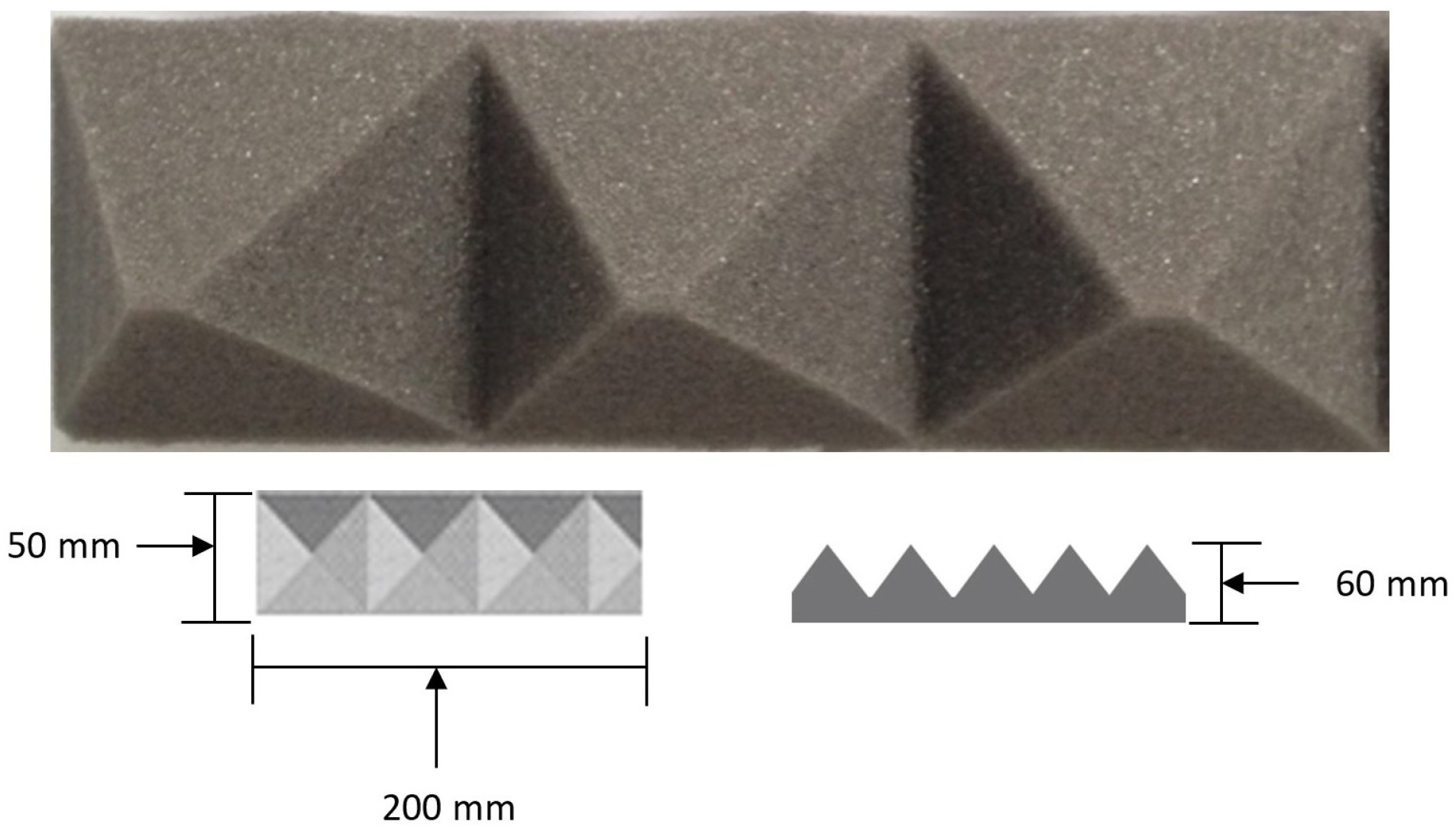
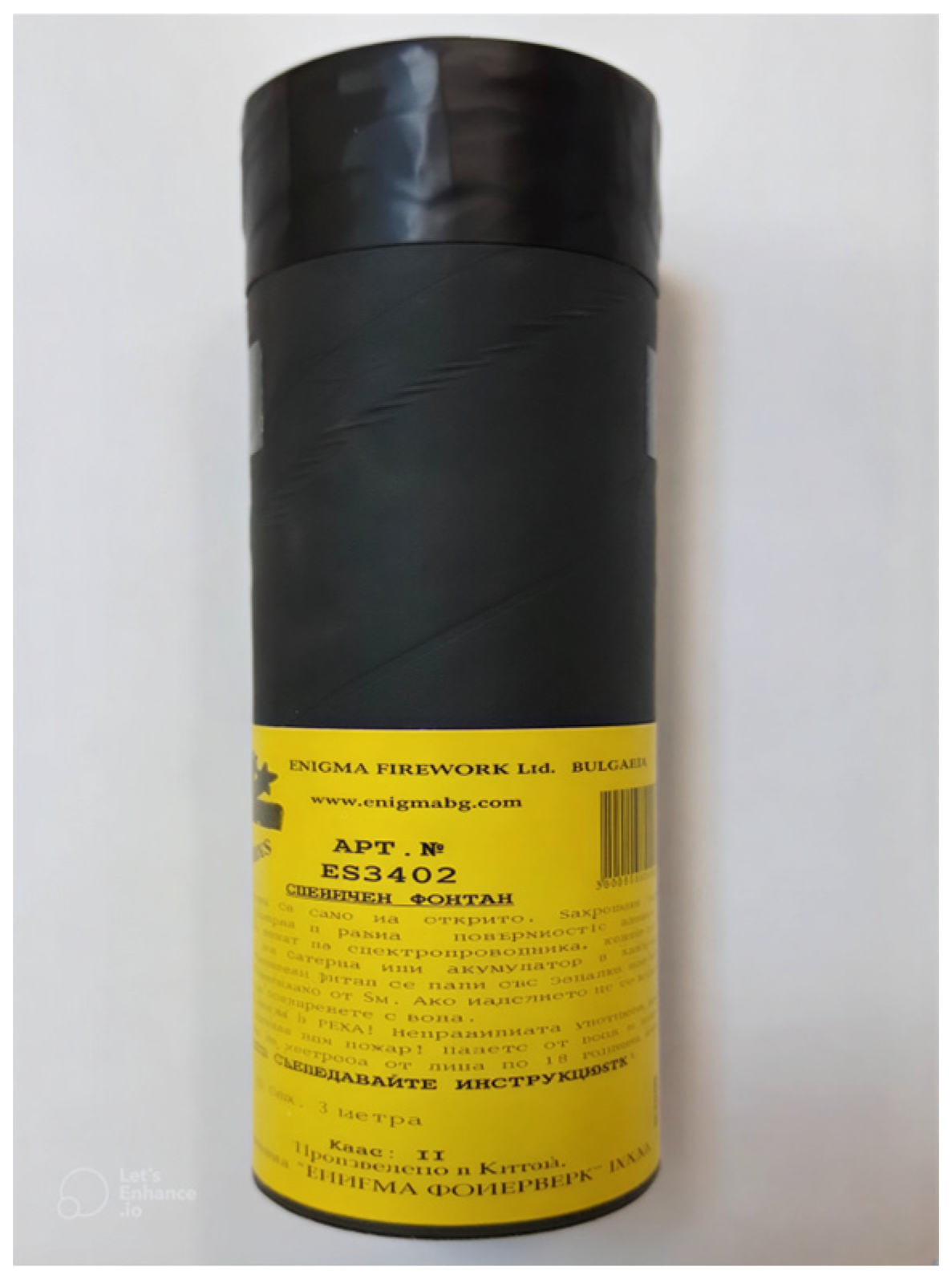
2.1. Description of the Materials
2.2. Experimental Configuration
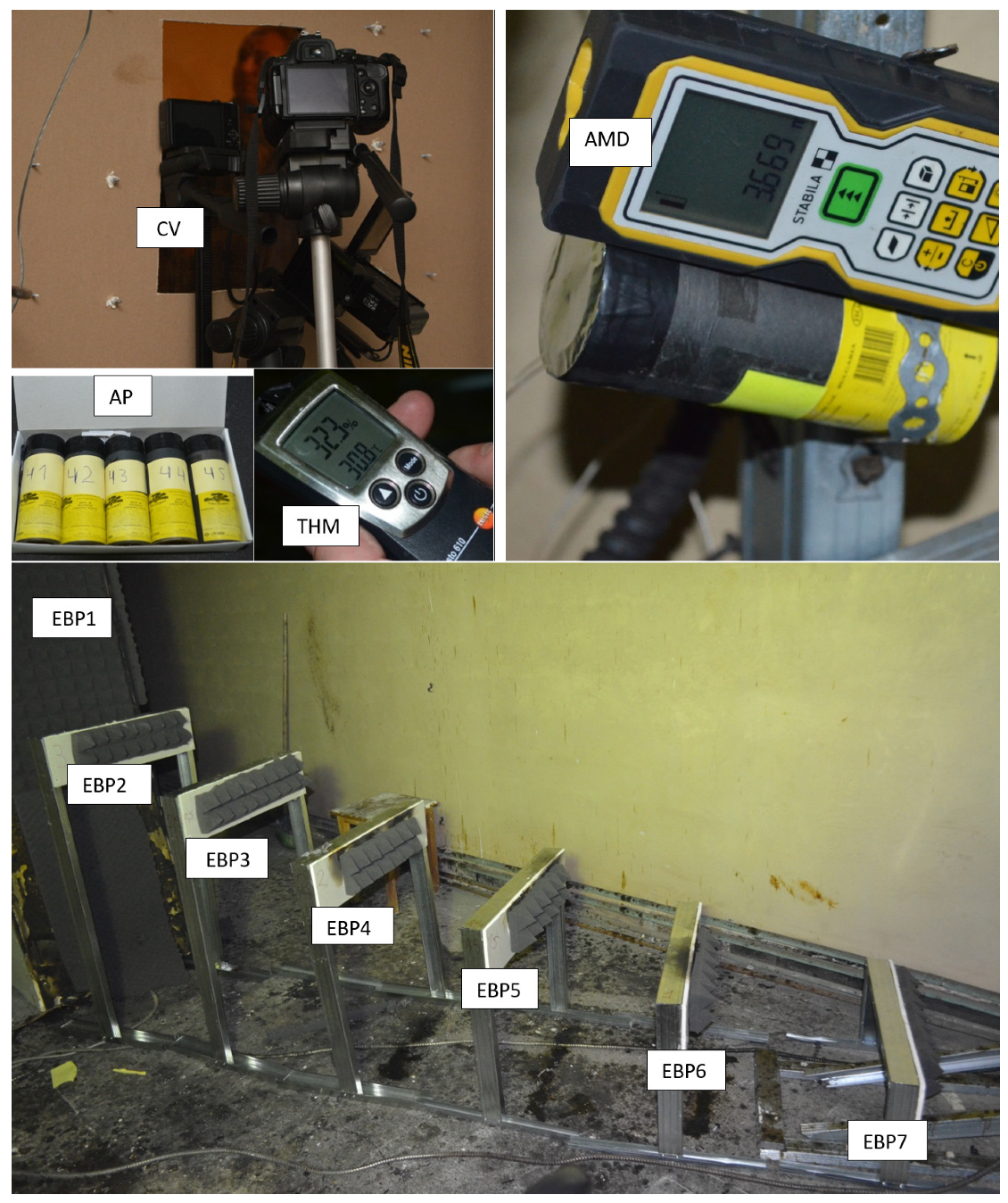
2.2.1. Configuration A
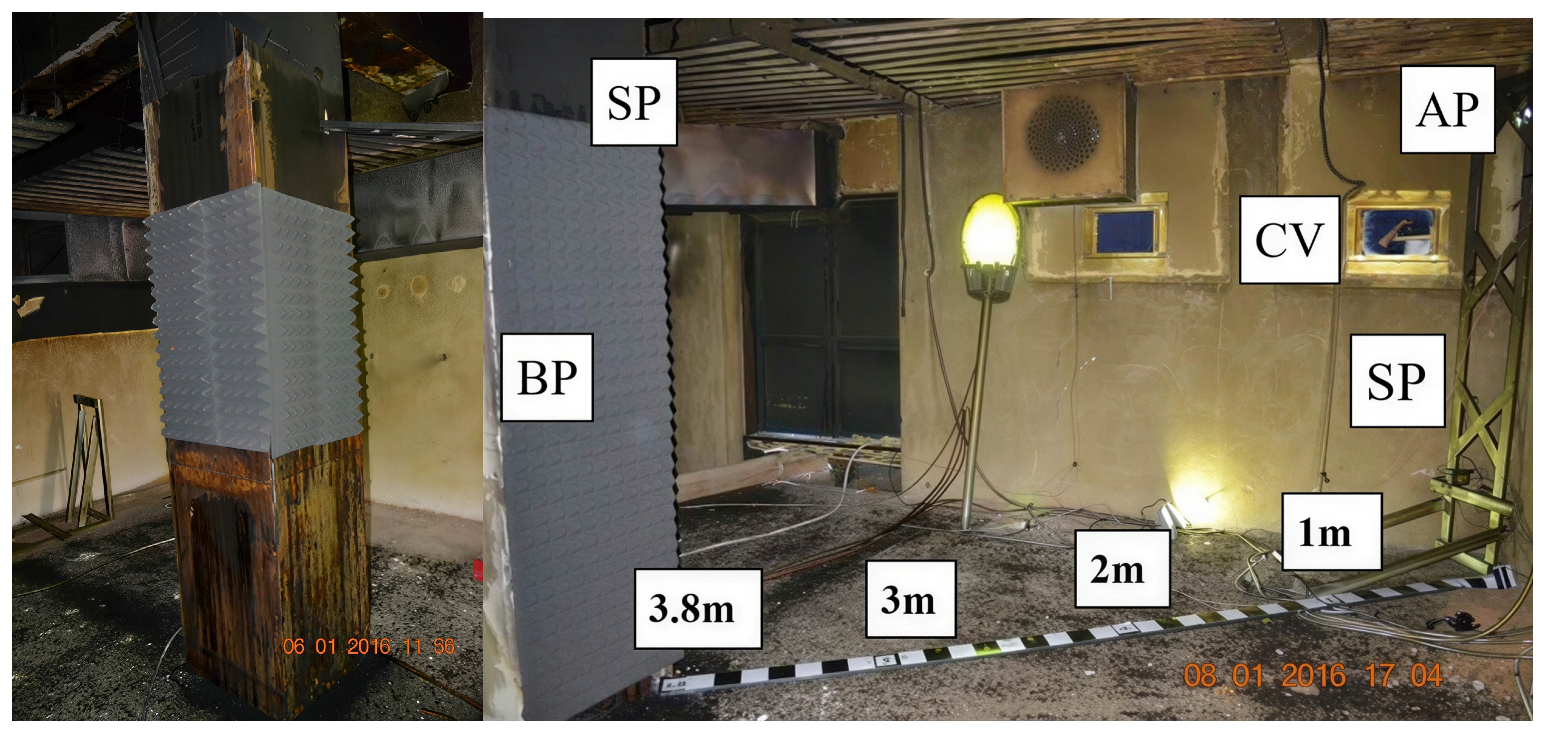
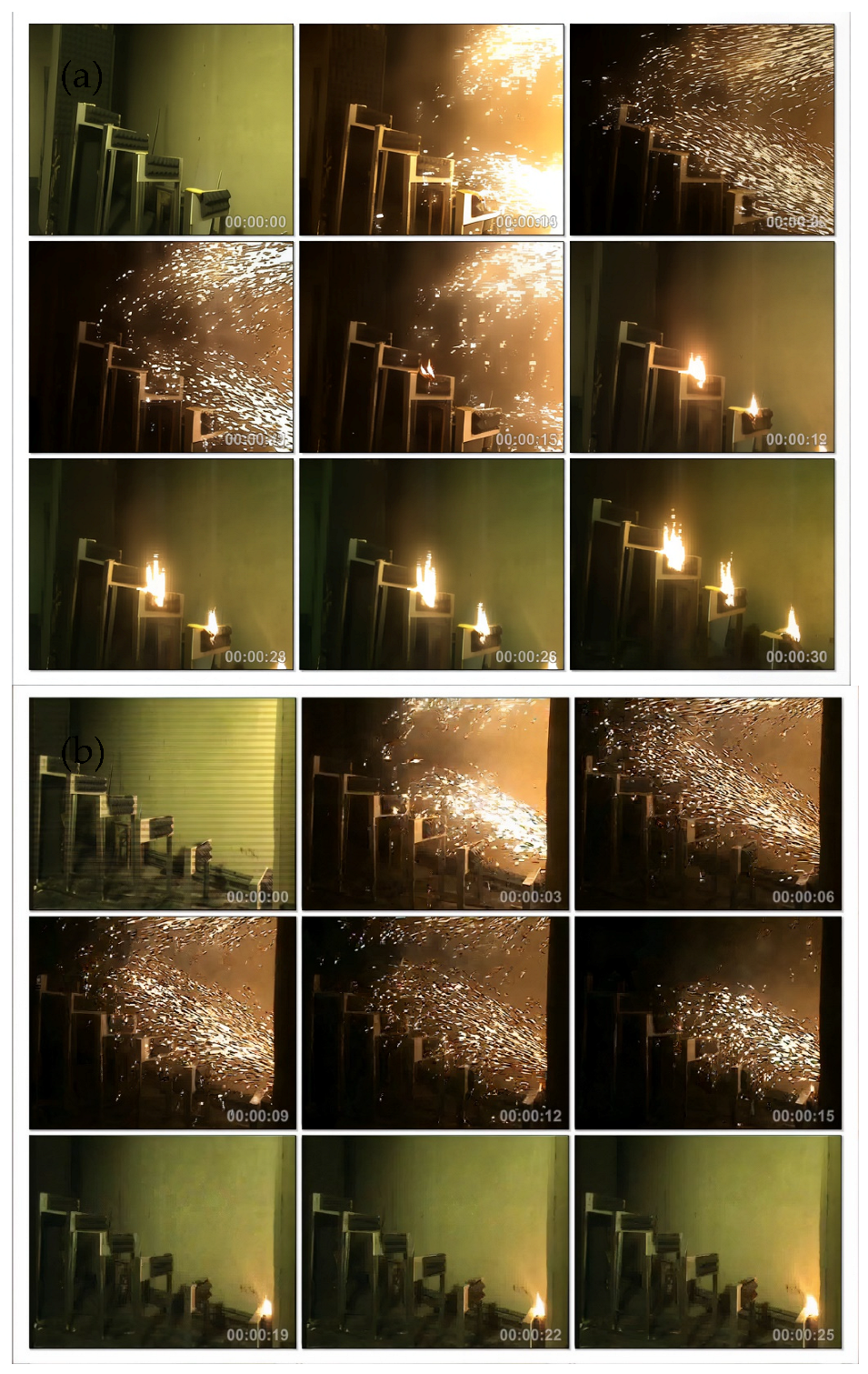
2.2.2. Configuration B
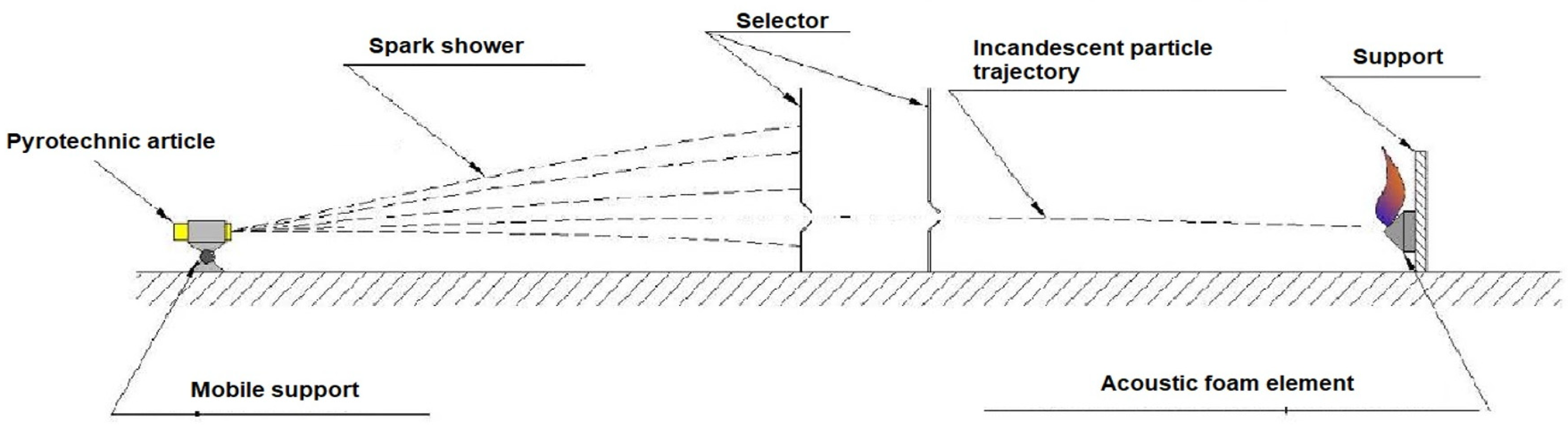
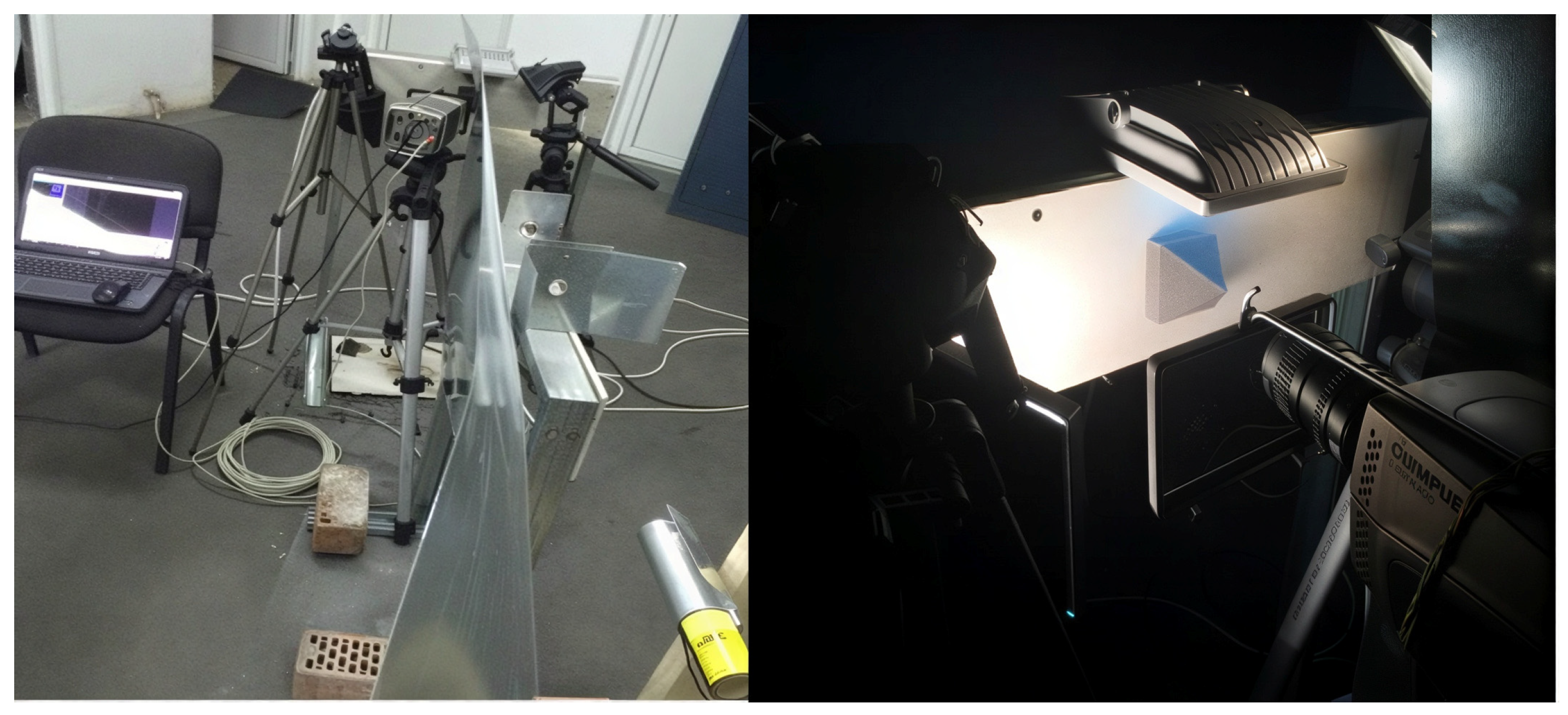
2.2.3. Configuration C
2.3. Experimental Uncertainty and Control
2.4. Safety Protocols
3. Results and Discussion
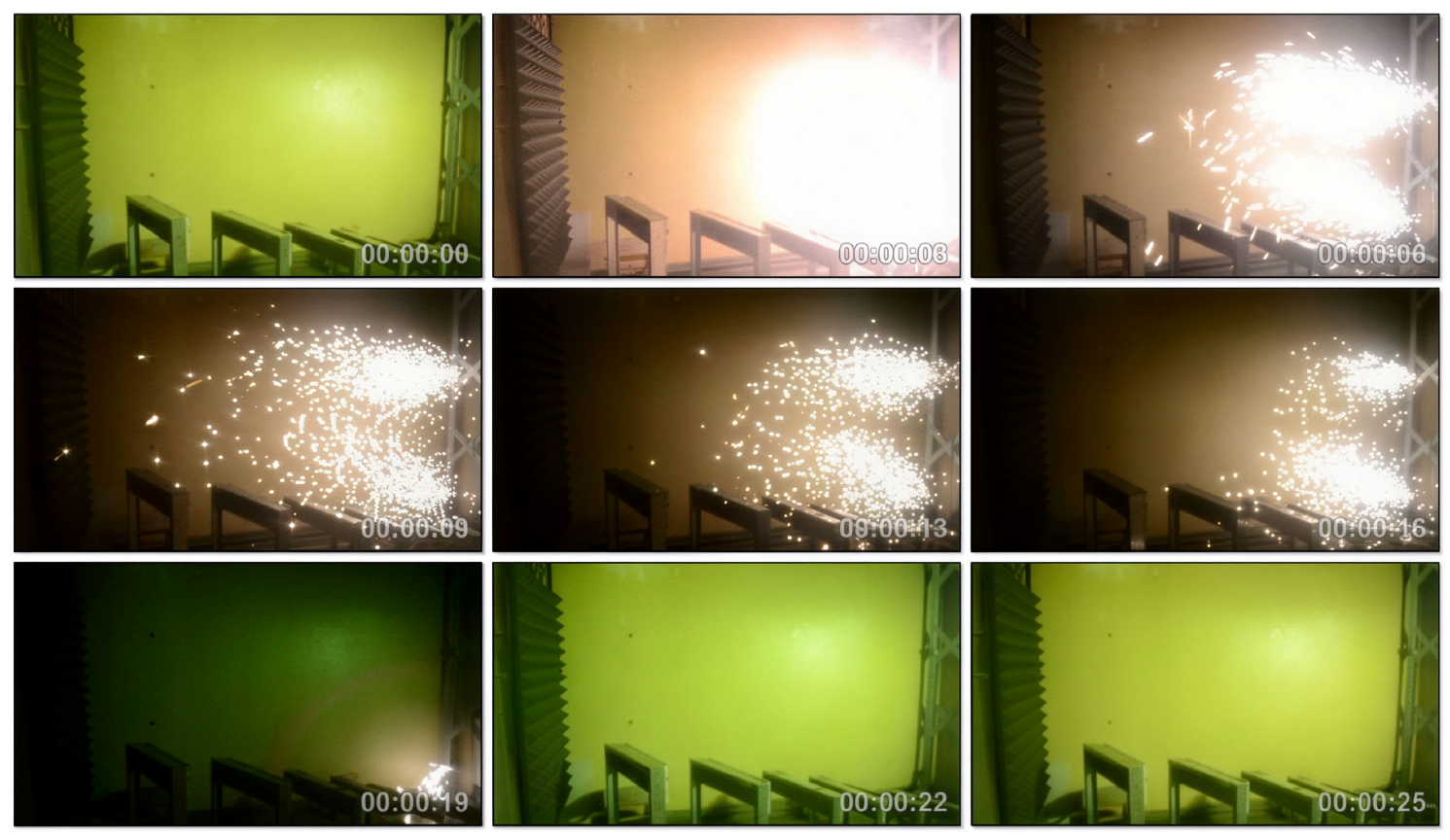
3.1. Ignition Probability Tests (Configuration A)
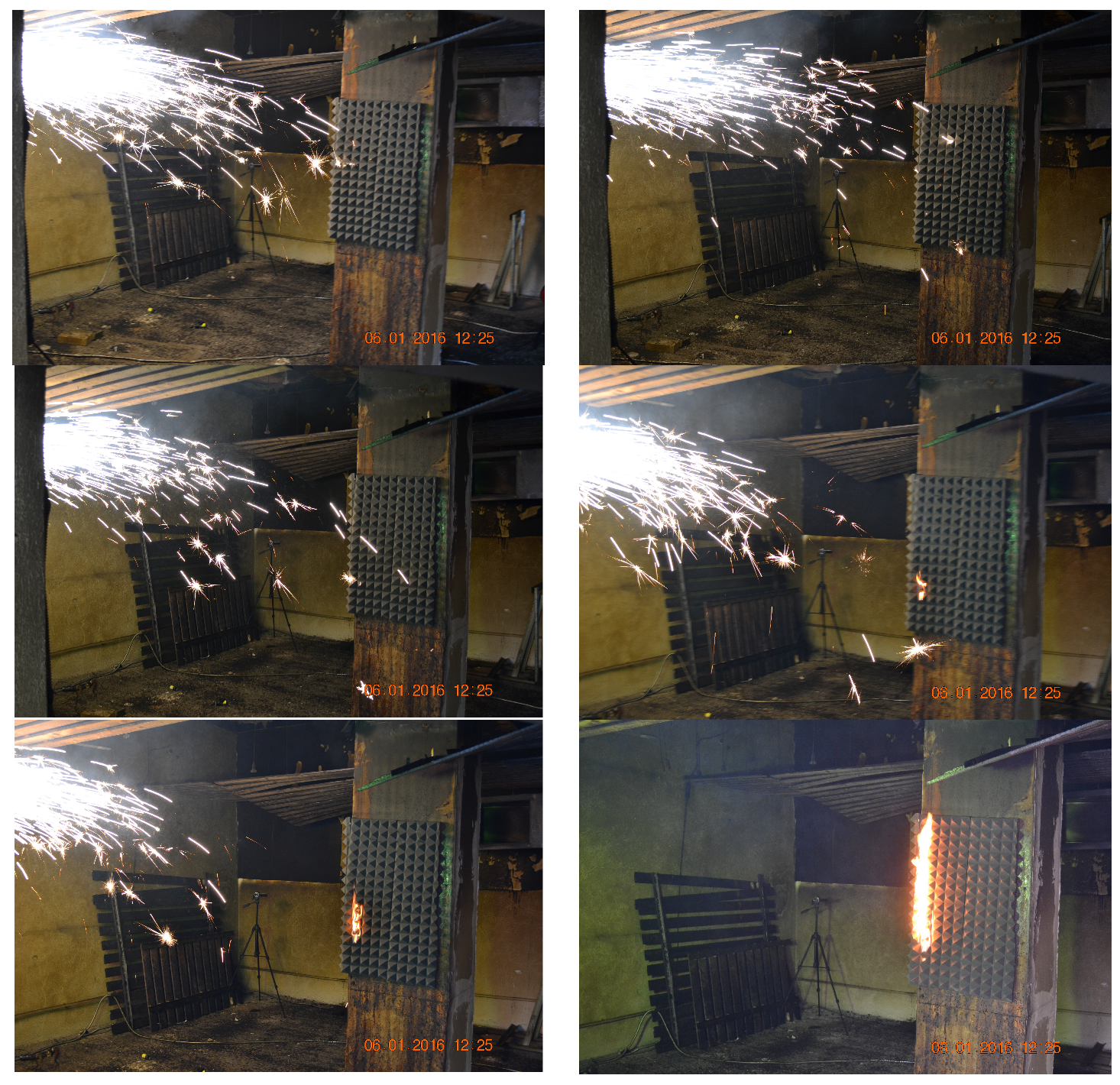
3.2. Scaled Configuration Tests (Configuration B)
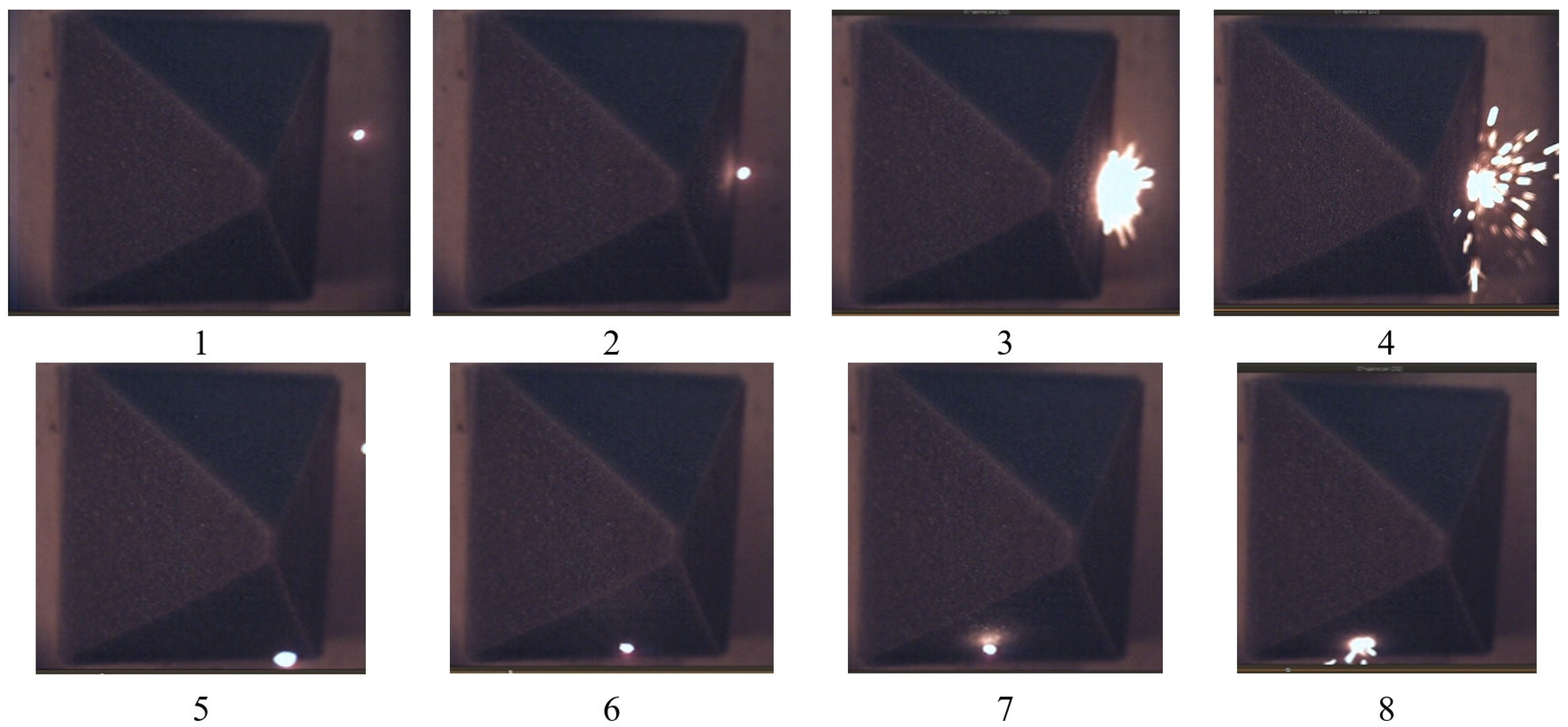
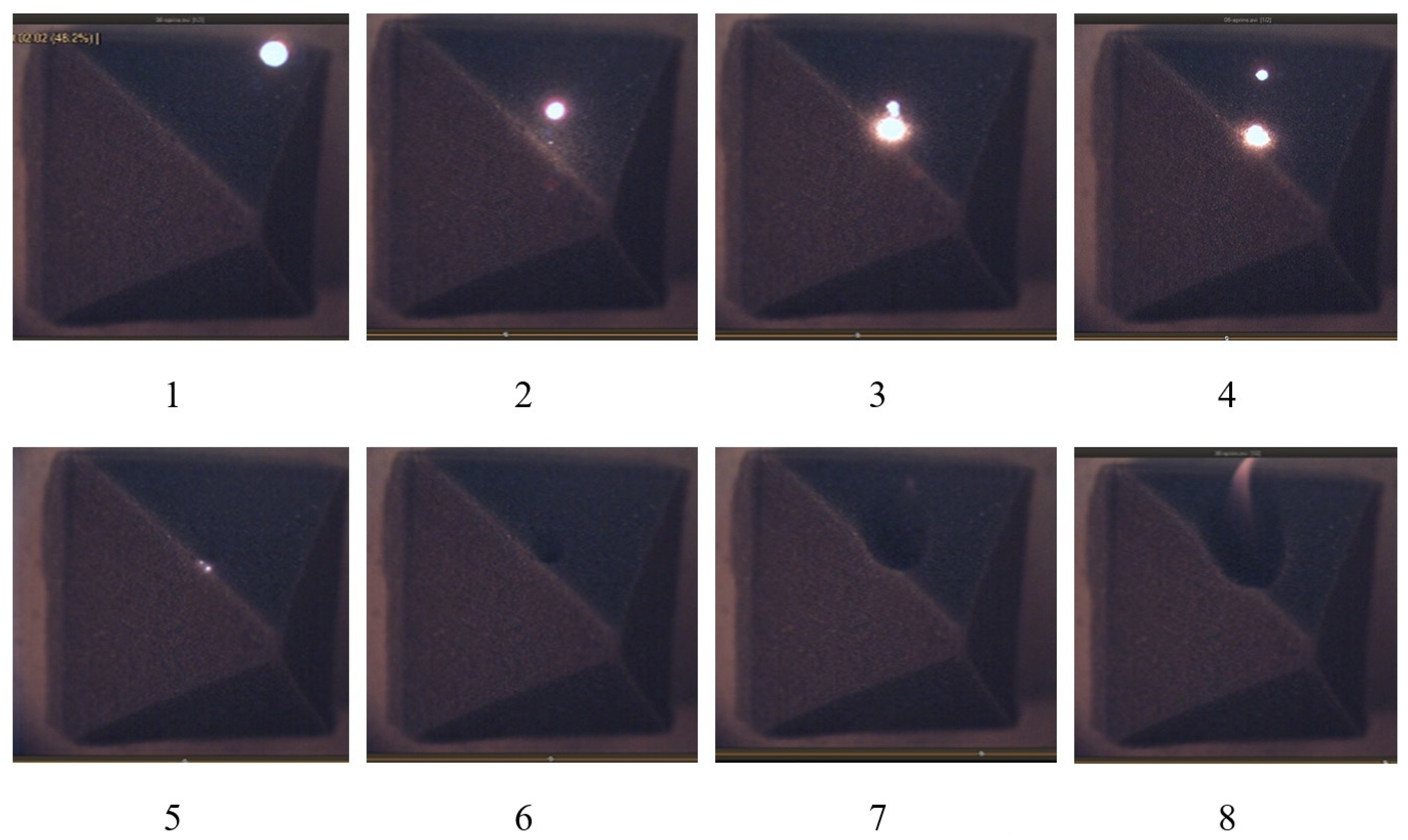
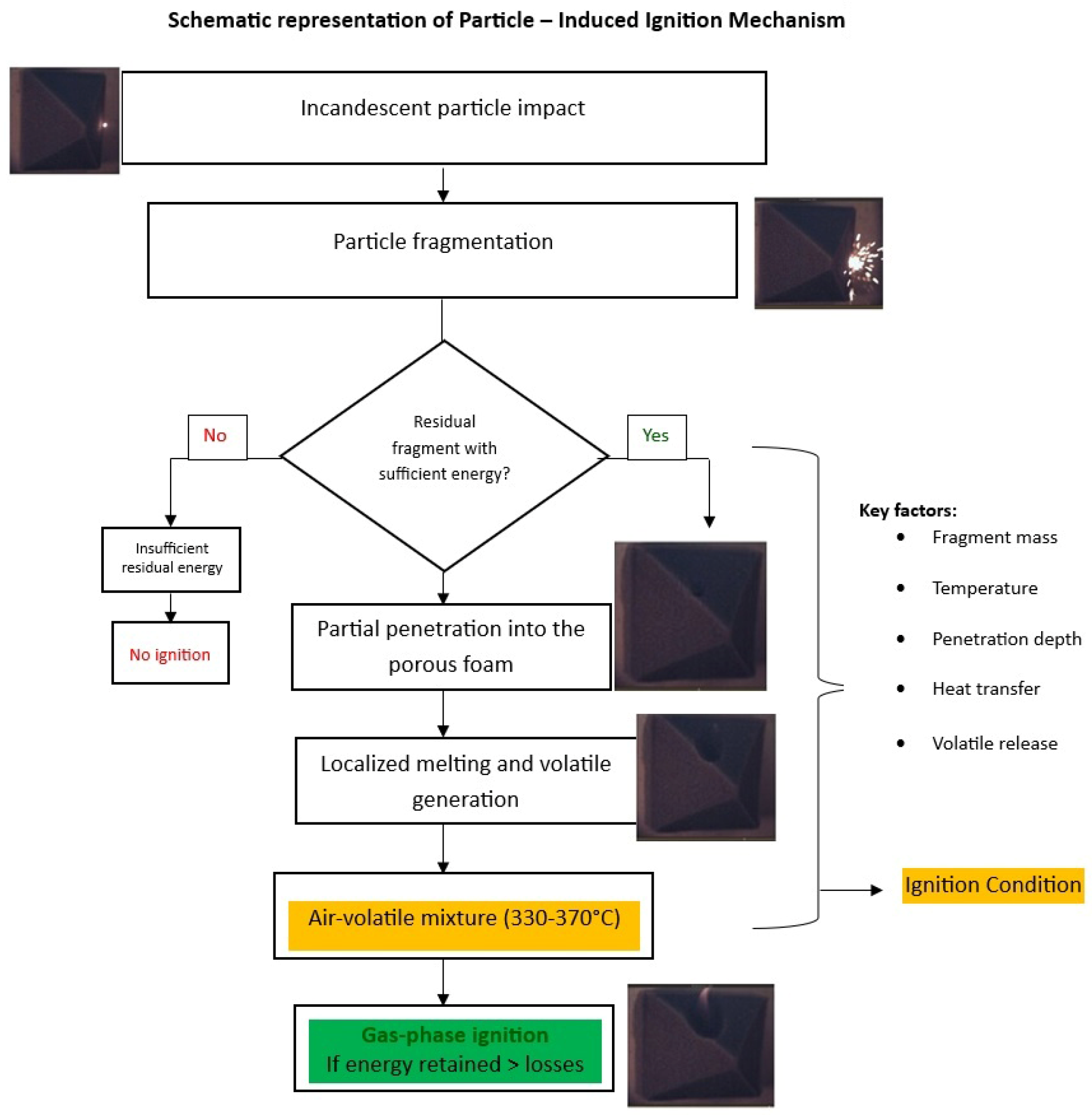
3.3. High–Speed Analysis of Particle–Foam Interaction (Configuration C)
- (a)
- Non-ignition events (Figure 10), that are characterized by particle fragmentation upon impact-ricochet of particle fragments away from the surface–limited penetration into the foam structure–localized heating and transient glowing–rapid cooling without sustained flaming.
- (b)
- Ignition events (Figure 11), that are characterized by partial penetration of a particle fragment into the porous matrix, retention of the fragment within the foam structure, localized melting of the polyurethane matrix, thermal decomposition releasing flammable volatiles, gas-phase ignition of the air–volatile mixture, visible flame development and propagation.
3.4. Energetic Interpretation of Ignition
- (a)
- Radiative losses: particles at elevated temperatures emit energy in proportion to the fourth power of their temperature while in motion and upon collision
- (b)
- Convective losses: Air cooling during particle trajectory and post-impact
- (c)
- Conductive losses: Heat dissipation into the porous foam structure away from the impact site
- (d)
- Incomplete contact: Particle fragmentation and ricochet reduce effective heat transfer
3.5. Fire Safety Implications
3.6. Study Limitations
- ✓
- Single foam type: Only one type of polyurethane acoustic foam was tested. Other acoustic materials or flame-retardant-treated foams may behave differently.
- ✓
- Single pyrotechnic article type: Only one fountain-type device model was evaluated. Other pyrotechnic compositions may produce particles with different characteristics.
- ✓
- No investigation of mitigation strategies: Flame-retardant treatments, protective barriers, or suppression systems were not evaluated.
4. Conclusions
- ✓
- Regulatory Review: Current safety guidelines for indoor pyrotechnic use should be revised to explicitly consider particle-induced ignition of porous combustible materials.
- ✓
- Safety Distances: Minimum separation distances between fountain-type pyrotechnic devices and combustible acoustic materials should be established based on particle trajectory modeling and ignition probability data.
- ✓
- Material Specifications: Entertainment venues should prioritize flame-retardant-treated acoustic materials or inherently non-combustible alternatives when pyrotechnic effects are planned.
- ✓
- Risk Assessment: Pre-event fire risk assessments should include explicit evaluation of pyrotechnic-acoustic material interactions, not solely relying on “cold spark” marketing claims.
- ✓
- Further Research: Systematic investigation of ignition thresholds across different acoustic foam types, flame retardant treatments, and pyrotechnic compositions is needed to develop evidence-based safety standards.
Author Contributions
Funding
Institutional Review Board Statement
Informed Consent Statement
Data Availability Statement
Conflicts of Interest
Abbreviation
| Nomenclature: | |
| CI | Confidence Interval |
| DSC | Differential Scanning Calorimetry |
| HRR | Heat Release Rate |
| LED | Light-Emitting Diode |
| PHRR | Peak Heat Release Rate |
| PU | Polyurethane |
| PIR | Polyisocyanurate |
| RH | Relative Humidity |
| TGA | Thermogravimetric Analysis |
| THR | Total Heat Release |
| T | Temperature (°C) |
| m | Mass (mg, kg) |
| v | Velocity (m/s) |
| E | Energy (J) |
| q″ | Heat flux (kW/m2) |
References
- Grosshandler, W.; Bryner, N.; Madrzykowski, D.; Kuntz, K. Report of the Technical Investigation of the Station Nightclub Fire (NIST NCSTAR 2); National Construction Safety Team Act Reports (NIST NCSTAR); National Institute of Standards and Technology: Gaithersburg, MD, USA, 2005; Volume 1. Available online: https://tsapps.nist.gov/publication/get_pdf.cfm?pub_id=100988 (accessed on 2 March 2026).
- Ionescu, A. Filmul Evenimentelor de la Colectiv. Ce s-a Întâmplat, de Fapt, Acum 5 Ani, kanald.ro, Romania, 2020. Available online: https://www.kanald.ro/filmul-evenimentelor-de-la-colectiv-ce-s-a-intamplat-de-fapt-acum-5-ani-20112045#google_vignette (accessed on 23 September 2025).
- Reuters. Dozens Killed, 100 Injured in Fire at Swiss Ski Resort Bar, Police Say. 2026. Available online: https://www.reuters.com/world/europe/several-killed-after-explosion-swiss-ski-resort-bar-bbc-reports-2026-01-01/ (accessed on 2 March 2026).
- Cox, T.; D’Antonio, P. Acoustic Absorbers and Diffusers: Theory, Design and Application, 3rd ed.; CRC Press: Boca Raton, FL, USA, 2016. [Google Scholar]
- Hirschler, M.M. Fire Hazard and Toxic Potency of the Smoke from Burning Materials. J. Fire Sci. 1987, 5, 289–307. [Google Scholar] [CrossRef] [Scilit]
- Babrauskas, V. Heat Release Rates. In SFPE Handbook of Fire Protection Engineering; Morgan, J.H., Gottuk, D., John, R.H., Harada, K., Kuligowski, E., Puchovsky, M., Torero, J., John, M.W., Christopher, W., Eds.; Springer: New York, NY, USA, 2016; pp. 799–904. [Google Scholar] [CrossRef] [Scilit]
- Khan, M.M.; Tewarson, A.; Chaos, M. Combustion Characteristics of Materials and Generation of Fire Products. In SFPE Handbook of Fire Protection Engineering; Morgan, J.H., Gottuk, D., John, R.H., Harada, K., Kuligowski, E., Puchovsky, M., Torero, J., John, M.W., Christopher, W., Eds.; Springer: New York, NY, USA, 2016; pp. 1143–1232. [Google Scholar] [CrossRef] [Scilit]
- Akhavan, J. The chemistry of fireworks. Mater. Today 2009, 12, 47. [Google Scholar] [CrossRef] [Scilit]
- Mocella, C.J.A. Chemistry of Pyrotechnics: Basic Principles and Theory, 2nd ed.; CRC Press: Boca Raton, FL, USA, 2010. [Google Scholar]
- Pau, D.; Fleischmann, C.; Delichatsios, M. Thermal decomposition of flexible polyurethane foams in air. Fire Saf. J. 2020, 111, 102925. [Google Scholar] [CrossRef] [Scilit]
- Reinerte, S.; Avotina, L.; Zarins, A.; Cabulis, U.; Viksna, A. TG/DTA-FTIR as a method for analysis of tall oil based rigid polyurethane foam decomposition gaseous products in a low oxygen environment. Polym. Degrad. Stab. 2020, 180, 109313. [Google Scholar] [CrossRef] [Scilit]
- Mun, S.-Y.; Lee, J.-H.; Hwang, C.-H. Measurement of Pyrolysis Properties for Fire Spread Simulations of Spray Polyurethane Foam. Fire Sci. Eng. 2022, 36, 29–37. [Google Scholar] [CrossRef] [Scilit]
- Xu, Q.; Jin, C.; Majlingova, A.; Zachar, M.; Restas, A. Evaluate the flammability of a PU foam with double-scale analysis. J. Therm. Anal. Calorim. 2019, 135, 3329–3337. [Google Scholar] [CrossRef] [Scilit]
- Chaudhari, D.M.; Stoliarov, S.I.; Beach, M.W.; Suryadevara, K.A. Polyisocyanurate Foam Pyrolysis and Flame Spread Modeling. Appl. Sci. 2021, 11, 3463. [Google Scholar] [CrossRef] [Scilit]
- Manea, F.; Ilia, G.; Ghicioi, E.; Pupazan, D.G.; Prodan, M.; Nicola, A.H. The Experimental Study of Flame Behavior of Flexible Polyurethane Foam (Sponge), as a Sound-Absorbing Element. Fire 2025, 8, 127. [Google Scholar] [CrossRef] [Scilit]
- Hirschler, M. Fire Performance of Organic Polymers, Thermal Decomposition, and Chemical Composition. ACS Symp. Ser. 2001, 797, 293–306. [Google Scholar] [CrossRef] [Scilit]
- Babrauskas, V.; Peacock, R.D. Heat release rate: The single most important variable in fire hazard. Fire Saf. J. 1992, 18, 255–272. [Google Scholar] [CrossRef] [Scilit]
- Russell, M.S. The Chemistry of Fireworks; Royal Society of Chemistry (RSC): Cambridge, UK, 2007. [Google Scholar] [CrossRef] [Scilit]
- Hadden, R.M.; Scott, S.; Lautenberger, C.; Fernandez-Pello, A.C. Ignition of Combustible Fuel Beds by Hot Particles: An Experimental and Theoretical Study. Fire Technol. 2011, 47, 341–355. [Google Scholar] [CrossRef] [Scilit]
- Zak, C.; Murphy, D.; Fernandez-Pello, A. Understanding ignition of natural fuels by heated particles. In WIT Transactions on the Built Environment; WIT Press: Southampton, UK, 2013; pp. 607–614. [Google Scholar] [CrossRef] [Scilit]
- Zak, C.; Urban, J.; Tran, V.; Fernandez-Pello, A. Flaming Ignition Behavior of Hot Steel and Aluminum Spheres Landing in Cellulose Fuel Beds. Fire Saf. Sci. 2014, 11, 1368–1378. [Google Scholar] [CrossRef] [Scilit]
- Lakkis, H.; Lakkis, A. Analysis of two binomial proportions in noninferiority confirmatory trials. Pharm. Stat. 2022, 23, 257–275. [Google Scholar] [CrossRef] [Scilit] [PubMed]
- Duembgen, L. Exact Confidence Bounds in Discrete Models—Algorithmic Aspects of Sterne’s Method. arXiv 2021, arXiv:2111.12937. [Google Scholar] [CrossRef] [Scilit]
- Urban, J.L.; Zak, C.D.; Song, J.; Fernandez-Pello, C. Smoldering spot ignition of natural fuels by a hot metal particle. Proc. Combust. Inst. 2017, 36, 3211–3218. [Google Scholar] [CrossRef] [Scilit]
- Zak, C.D. The Effect of Particle Properties on Hot Particle Spot Fire Ignition. Ph.D. Thesis, University of California, Berkeley, CA, USA, 2015. [Google Scholar]
- Glushkov, D.O.; Kuznetsov, G.V.; Strizhak, P.A. Experimental and numerical study of coal dust ignition by a hot particle. Appl. Therm. Eng. 2018, 133, 774–784. [Google Scholar] [CrossRef] [Scilit]
- Wang, S.; Chen, H.; Zhang, L. Thermal decomposition kinetics of rigid polyurethane foam and ignition risk by a hot particle. J. Appl. Polym. Sci. 2014, 131, 39359. [Google Scholar] [CrossRef] [Scilit]
- Anderson, M.K.; Sleight, R.T.; Torero, J.L. Downward smolder of polyurethane foam: Ignition signatures. Fire Saf. J. 2000, 35, 131–147. [Google Scholar] [CrossRef] [Scilit]
- Zakharevich, A.V.; Baranovskiy, N.V. Ignition conditions and characteristics for high-porosity condensed materials subjected to local conductive heating. Russ. J. Phys. Chem. B 2015, 9, 911–914. [Google Scholar] [CrossRef] [Scilit]
- Bean, D.; Blunck, D.L. Sensitivities of Porous Beds and Plates to Ignition by Firebrands. Front. Mech. Eng. 2021, 7, 653810. [Google Scholar] [CrossRef] [Scilit]





Disclaimer/Publisher’s Note: The statements, opinions and data contained in all publications are solely those of the individual author(s) and contributor(s) and not of MDPI and/or the editor(s). MDPI and/or the editor(s) disclaim responsibility for any injury to people or property resulting from any ideas, methods, instructions or products referred to in the content. |
© 2026 by the authors. Licensee MDPI, Basel, Switzerland. This article is an open access article distributed under the terms and conditions of the Creative Commons Attribution (CC BY) license.
Share and Cite
Prodan, M.; Ghicioi, E.; Gaman, G.A.; Pupazan, D.; Suvar, M.C.; Vlasin, N.; Manea, F.; Nalboc, I.; Szollosi-Mota, A.; Florea, G.D.; et al. Single-Particle Ignition Mechanism of Polyurethane Acoustic Foam by Fountain-Type Pyrotechnic Device: An Experimental Study. Fire 2026, 9, 180. https://doi.org/10.3390/fire9050180
Prodan M, Ghicioi E, Gaman GA, Pupazan D, Suvar MC, Vlasin N, Manea F, Nalboc I, Szollosi-Mota A, Florea GD, et al. Single-Particle Ignition Mechanism of Polyurethane Acoustic Foam by Fountain-Type Pyrotechnic Device: An Experimental Study. Fire. 2026; 9(5):180. https://doi.org/10.3390/fire9050180
Chicago/Turabian StyleProdan, Maria, Emilian Ghicioi, George Artur Gaman, Daniel Pupazan, Marius Cornel Suvar, Nicolae Vlasin, Florin Manea, Irina Nalboc, Andrei Szollosi-Mota, Gheorghe Daniel Florea, and et al. 2026. "Single-Particle Ignition Mechanism of Polyurethane Acoustic Foam by Fountain-Type Pyrotechnic Device: An Experimental Study" Fire 9, no. 5: 180. https://doi.org/10.3390/fire9050180
APA StyleProdan, M., Ghicioi, E., Gaman, G. A., Pupazan, D., Suvar, M. C., Vlasin, N., Manea, F., Nalboc, I., Szollosi-Mota, A., Florea, G. D., & Laszlo, R. (2026). Single-Particle Ignition Mechanism of Polyurethane Acoustic Foam by Fountain-Type Pyrotechnic Device: An Experimental Study. Fire, 9(5), 180. https://doi.org/10.3390/fire9050180