


Abstract
Electrical arcs resulting from gas breakdown can act as potential ignition sources for electrical fires in high-voltage electrical equipment. However, the microscopic processes leading to electrical arc formation as a potential ignition source remain insufficiently understood, particularly the different effects of gas pressure and solid dielectrics on gas breakdown and surface flashover. This study investigates the AC breakdown characteristics of N2/O2 mixed gas under different gas pressures in electrode configurations with and without a PTFE (Teflon) dielectric to clarify the effects of gas pressure and the presence of Teflon on breakdown voltage and surface flashover voltage. The breakdown voltages are measured, and their pressure dependence is quantitatively evaluated using linear regression analysis. The breakdown voltages increase with gas pressure in both configurations, but the pressure dependence differs significantly. The regression slopes are 59.143 kV/MPa without Teflon and 16.400 kV/MPa with Teflon, indicating that the pressure dependence without Teflon is approximately 3.6 times as large as that with Teflon. The fitted regression lines intersected at approximately 0.400 MPa, which is consistent with the measured reversal in breakdown voltage and surface flashover voltage between 0.3 and 0.4 MPa. The proposed breakdown mechanisms provide a possible explanation for the different pressure dependences and voltage reversal based on electron generation and streamer development in the two electrode configurations. These findings provide fundamental information on the electrical breakdown processes preceding potential arc formation and may contribute to future studies on electrical ignition sources in air-insulated electrical equipment.
Keywords:
breakdown; electrical arc; electrical discharge; ignition source; insulation; gas pressure 1. Introduction
Electrical fires are an important fire-safety concern because electrical faults can release energy in the form of heat, sparks, and electrical arcs, which can act as ignition sources for combustible materials. Among these phenomena, electrical arcs are particularly important because they can release highly concentrated thermal energy and promote the ignition of surrounding combustible materials. A recent review of electrical fires identified short circuits, overloading, equipment aging, and other electrical faults as important causes of electrical fires [1]. An investigation of an electrical cabinet fire also demonstrated that poor electrical contact can produce severe local overheating, followed by a short circuit and fire [2]. These studies indicate that electrical faults and arcs can provide important ignition mechanisms for electrical fires and that understanding the conditions leading to electrical arc formation is important for assessing electrical fire hazards.
Electrical discharge and gas breakdown are also closely related to fire safety in high-voltage electrical equipment. In particular, gas-insulated switchgear (GIS) is widely used in high-voltage power systems because the pressurized gas insulation enables high insulation performance within a compact structure and provides stability and reliability in electrical energy transmission. However, the insulation performance of GIS can be degraded by various defects and operating conditions, such as the pressure reduction due to gas leakage, the presence of conductive particles, the use of solid dielectrics, and contamination or irregularities on electrode and insulator surfaces [3,4,5]. Metallic particle contamination, for example, can substantially reduce the dielectric strength of compressed-gas GIS and adversely affect insulation reliability [3]. Experimental investigations of eco-friendly insulating gases in GIS have also shown that AC breakdown voltage depends on gas pressure, electrode configuration, and the presence of defects such as metal protrusions, air gaps, and metal contamination [5]. In addition, the gas–solid interface can become a critical region for discharge development and surface flashover when a solid dielectric is present [4,6]. These insulation weaknesses can locally enhance the electric field and promote the initiation of partial discharge, corona discharge, or surface discharge. As the applied electric field increases, these discharge phenomena can develop through electron multiplication and streamer formation and eventually lead to complete electrical breakdown. Once breakdown occurs, an electrical arc can be established across the insulation gap or along the dielectric surface. The resulting arc can provide a concentrated source of thermal energy and may therefore act as a potential ignition source for combustible materials in or around electrical equipment [1,2].
The relationship between fire and electrical insulation breakdown has also been investigated from the opposite perspective, in which fire conditions affect the electrical insulation. Pu et al. investigated the DC breakdown voltage of rod–plate gaps under full-flame bridging conditions and reported that the breakdown voltage of a flame-bridged gap was lower than that of an air gap [7]. This behavior was attributed to the elevated temperature and charged particles generated by combustion, which alter the electrical characteristics of the insulation gap and make it more susceptible to breakdown. These results indicate that combustion and gas breakdown can interact through the changes in the electrical properties of the medium. Therefore, understanding the electrical conditions required for the gas breakdown is important not only for insulation design but also for understanding the formation of potential electric ignition sources.
To obtain high insulation performance in GIS, an increase in gas pressure is commonly applied because a higher gas density generally increases the insulation strength of the gas. Therefore, understanding the relationship between gas pressure and breakdown characteristics is important for the reliable operation of gas-insulated electrical equipment. Experimental results for dry air and other eco insulating gases have demonstrated that the AC breakdown voltage generally increases with gas pressure, although the dependence can vary with the gas, electrode configuration, and pressure range [5]. In addition, the introduction of a solid dielectric produces a gas–solid interface where the breakdown process can differ from that in a homogeneous gas gap. Surface flashover is a discharge phenomenon that develops along the gas–solid interface under a high electric field, and its development is associated with complex charge transport processes involving the gas phase, solid phase, and gas–solid interface [4]. A recent review by Li et al. summarized the surface flashover characteristics and mechanisms under various gas conditions, including compressed gases, and discussed the effects of gas pressure and gas species on surface flashover [8]. The surface flashover characteristics of compressed gases are also affected by gas pressure, temperature, and gas adsorption at the dielectric surface [6]. Furthermore, Park et al. investigated partial discharge and surface flashover characteristics in N2/O2 mixed gases under different gas pressures and oxygen concentrations [9]. They reported that surface flashover voltages increased with gas pressure but decreased with increasing oxygen concentration above 20%. These characteristics were explained by electron detachment, photoionization, and photoemission during surface discharge development. Thus, both gas pressure and the presence of a solid dielectric should be considered when evaluating the insulation strength of compressed air.
Because the insulation performance of compressed air strongly depends on gas pressure, its pressure-dependent characteristics should be investigated to understand the breakdown process leading to the formation of electrical arcs as the potential ignition sources. The comparison of air insulation with and without a polytetrafluoroethylene (PTFE) dielectric can provide insight into the different electron-generation and streamer-development processes in gas-phase and gas–solid insulation systems. In other words, it is suggested that the formation process of the electrical arcs as the ignition sources in air insulation differs between gas insulation and gas–solid composite insulation. Detailed knowledge of arc formation and its mechanism is essential for detecting the early stages of electrical fires by analyzing the formation process of ignition sources in air-insulated electrical equipment. However, although the formation of electrical ignition sources in air has been extensively investigated from a macroscopic perspective through fire experiments involving various electrical equipment and wires [1,2,7], knowledge of the microscopic processes involved in the formation of electrical arcs as ignition sources remains considerably limited. In particular, further understanding of electrical discharge physics, including the behavior of electrons and ions under an electric field, is needed to explain the microscopic processes leading to electrical arc formation. However, the effects of gas pressure and the presence of a solid dielectric on these processes, including electron generation, electron avalanche development, and streamer formation, have not been sufficiently explained.
This study investigates the AC insulation breakdown characteristics of a N2/O2 mixture gas under different gas pressures with and without a Teflon dielectric to investigate the breakdown processes preceding potential arc formation. The pressure dependence of the breakdown voltage is quantitatively evaluated using linear regression analysis, and the different pressure-dependent behaviors of gas and gas–solid insulation systems are compared. In particular, the mechanisms responsible for these differences are analyzed from a microscopic perspective based on electron generation, electron avalanche development, streamer formation, and surface discharge processes. Through this approach, this study provides a mechanistic understanding of how gas pressure and a solid dielectric affect insulation breakdown preceding potential arc formation. This understanding may also contribute to future studies aimed at developing electrical arc detection techniques for preventing electrical fires.
2. Materials and Methods
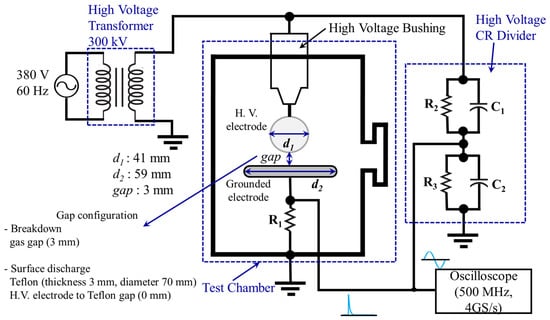
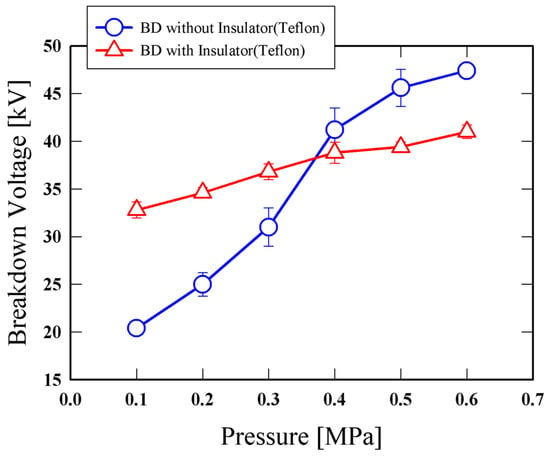
Breakdown experiments were conducted using electrode configurations with and without a solid dielectric to investigate the breakdown processes associated with the formation of electrical arcs as potential ignition sources. Figure 1 shows the experimental setup and the corresponding circuit diagram used for the breakdown tests. During the experiments, a high-voltage transformer (DY-106-1, DAEYANG ELECTRIC, Bucheon, Republic of Korea), a high-voltage divider (EP-50K, Nissin Pulse Electronics Co., Ltd., Noda, Japan), and an oscilloscope (DSO7054A, Agilent Technologies, Santa Clara, CA, USA) were employed. The high-voltage transformer was used to generate a 60 Hz AC high voltage and was capable of supplying voltages up to 300 kV. The high-voltage divider was a CR-type divider composed of resistors and capacitors, with a voltage division ratio of 1000:1 and an accuracy of ±3%. The oscilloscope was used to monitor the discharge voltage and discharge current waveforms. These waveforms were essential for distinguishing between partial discharge and breakdown and for determining the voltages corresponding to each phenomenon. This measurement allowed the electrical discharge process preceding complete breakdown to be experimentally identified.
Figure 1.
Experimental setup and electrode configurations: gas gap filled with N2/O2 mixture for breakdown voltage measurements and gap containing Teflon dielectric (3 mm thick and 70 mm in diameter) for surface flashover voltage measurements.
The experimental components consisted of electrodes, a solid dielectric, and an insulating gas. The electrodes had spherical and circular plate configurations and were fabricated from stainless steel. The diameters of the spherical and circular plate electrodes were 41 mm and 59 mm, respectively. A Teflon disk with a thickness of 3 mm and a diameter of 70 mm was used as the solid dielectric for the surface discharge experiments. The same sphere-to-plane electrode configuration was used for both the gas breakdown experiments without Teflon and the surface flashover experiments with Teflon. In other words, two electrode configurations with and without the Teflon disk were used. The electrode gap was fixed at 3 mm in both configurations. For the measurements of the breakdown voltages, the 3 mm gap was filled with compressed gas without the Teflon. For the surface flashover measurements, the Teflon was inserted between the electrodes. Thus, the spherical electrode was in direct contact with the Teflon surface, and the distance between them was 0 mm. The only difference in the experimental arrangement was the presence or absence of the Teflon dielectric. The presence of the Teflon resulted in different discharge paths. The discharge path is between the electrodes without the Teflon dielectric, whereas it is along the dielectric surface with the Teflon dielectric. These two insulation configurations were employed to compare the breakdown processes in gas insulation and gas–solid composite insulation, which represent different conditions for electrical discharge development leading to arc formation. An N2/O2 gas mixture with a partial pressure ratio of 8:2, controlled using a calibrated pressure gauge (WISE, Republic of Korea), was used as the insulating gas. The N2 and O2 gases were purchased from a commercial gas supplier, and both gases had a purity of 99.999%. The moisture content was not measured separately. Although the moisture content was expected to be low due to the high gas purity, its effect on the breakdown voltage was not evaluated in this study.
The experiments were conducted at an ambient temperature of 23–27 °C and a relative humidity of 50–60% outside the test chamber. The experimental procedure consisted of electrode installation, evacuation of the test chamber, filling with the insulating gas, and high-voltage application and measurement. Before installation in the test chamber, the electrodes were polished with alumina powder. Vacuum grease was used to attach the Teflon dielectric to the surface of the circular plate electrode. The vacuum grease was not exposed to the surface flashover propagation path to minimize its effect on surface discharge development and surface flashover voltage. Before being inserted between the electrodes, the Teflon dielectric was cleaned with ethanol and dried. The surface roughness of the Teflon dielectric was not measured. After the electrodes were installed in the upper and lower sections of the test chamber, the insulation gap was adjusted. During the surface discharge experiments, the spherical electrode was in contact with the surface of the solid dielectric. After the electrode installation and insulation gap adjustment, the test chamber was evacuated to approximately 6.7 × 10⁻² Pa using a vacuum pump (GUD-050A, SINKU KIKO CO., LTD., Yokohama, Japan). The insulating gas was then introduced into the test chamber by filling nitrogen first, followed by oxygen, while the desired gas composition was controlled based on the partial pressures indicated by the pressure gauge. Ten minutes after the insulating gas was introduced into the test chamber, high voltage was applied to the electrodes. The voltage was raised at a rate of 3.15 kV/s. The breakdown voltages were measured ten times at each pressure, and the average value was used for the analysis. The gas pressure was initially set at 0.6 MPa and then decreased to 0.1 MPa in steps of 0.1 MPa. The Teflon dielectric was replaced when a noticeable change in the breakdown voltage was observed. Repeated measurements were conducted using the same Teflon dielectric when no noticeable change in the surface flashover voltage was observed. Surface flashover voltage was measured only when the discharge path developed along the Teflon surface. During repeated measurements, dielectric puncture occasionally occurred, resulting in a significant decrease in the subsequent breakdown voltage. When this decrease was observed, the Teflon specimen was replaced. Measurements affected by dielectric puncture were excluded from the surface flashover data. The same Teflon disk was also reused between different gas pressure steps unless dielectric puncture occurred or a significant change in the surface flashover voltage was observed.
Partial discharge and breakdown were distinguished based on the discharge current and discharge voltage waveforms measured across the discharge resistor R1 of Figure 1. The breakdown voltage was defined as the applied voltage at the instant when the discharge voltage decreased sharply near its peak while the discharge current increased abruptly. The measured breakdown voltage was used to characterize the electrical condition at which the discharge developed into complete breakdown, which represents a possible initial stage preceding arc formation.
3. Results
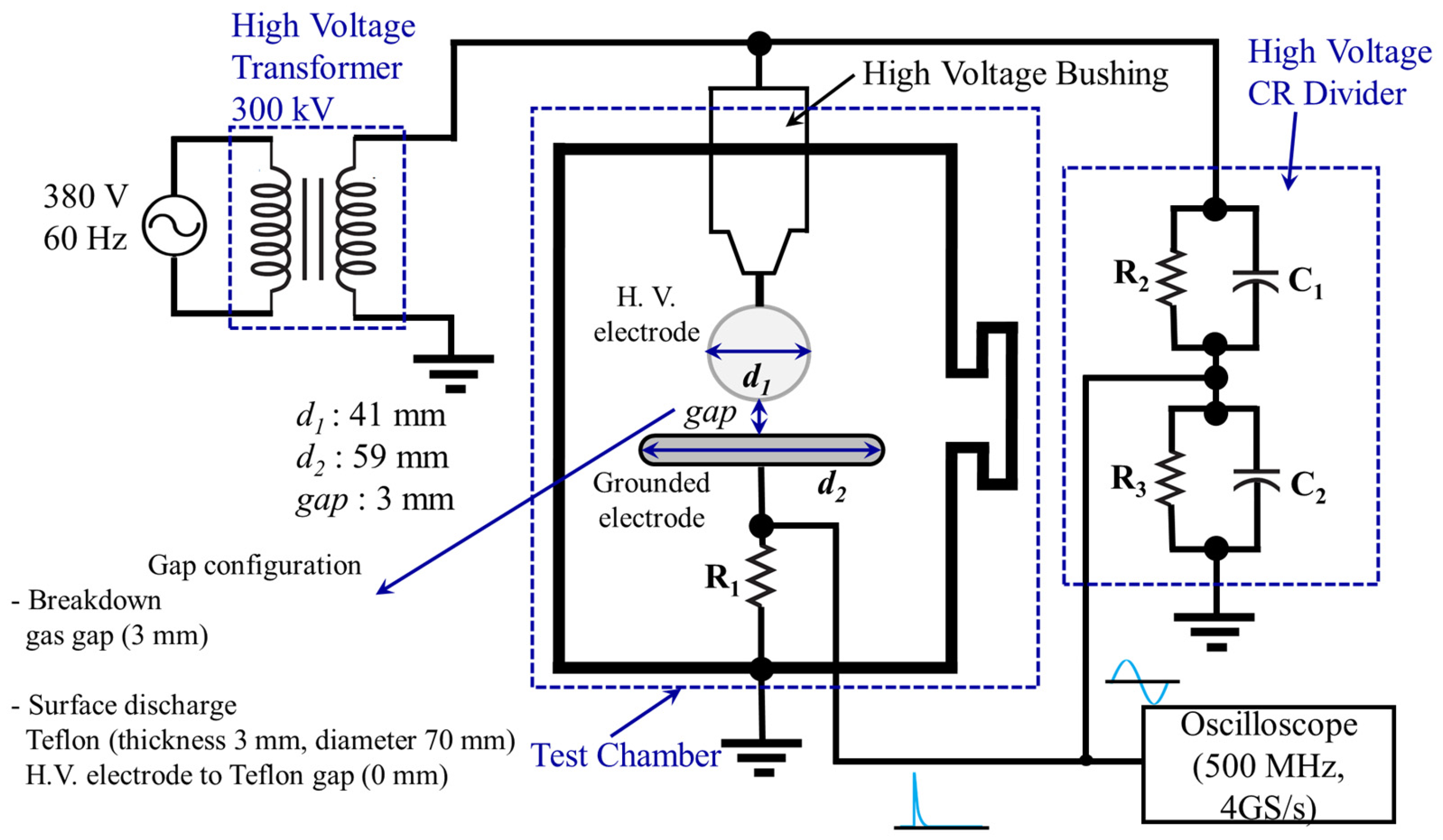
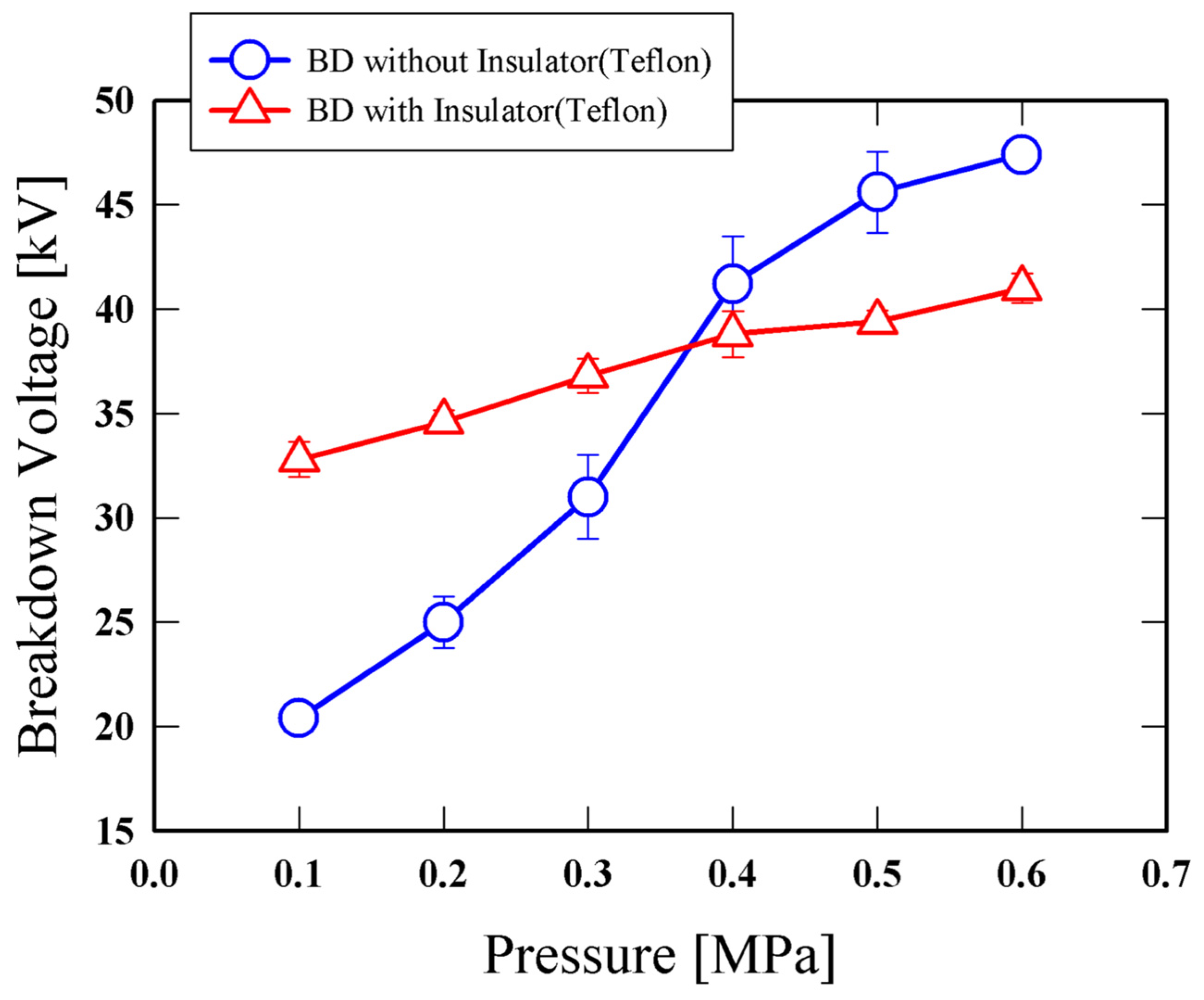
Figure 2 shows the breakdown voltages and the surface flashover voltages as a function of gas pressure for the electrode configurations with and without the solid dielectric (i.e., Teflon). The error bars represent the minimum and maximum breakdown voltages and surface flashover voltages obtained from ten measurements at each gas pressure. The mean, standard deviation, and number of measurements for these breakdown voltages are presented in Table 1. The breakdown voltages and the surface flashover voltages increased with increasing gas pressure for both electrode configurations over the investigated pressure range. These results confirm that gas pressure affects the electrical conditions required for insulation breakdown in both gas insulation and gas–solid composite insulation.
Figure 2.
Breakdown voltages of compressed air with and without a PTFE dielectric as a function of gas pressure (0.1–0.6 MPa). Each data point represents the mean of ten breakdown measurements (n = 10). Error bars indicate the range between the minimum and maximum measured values. The solid lines represent linear regression fits to the mean breakdown voltages.
Table 1.
Statistical summary of breakdown voltages and surface flashover voltage at different gas pressures with and without Teflon. (The mean and standard deviation were calculated from ten breakdown measurements at each gas pressure for each electrode configuration).
At pressures below 0.4 MPa, the breakdown voltages with Teflon were higher than those without Teflon. In contrast, as the gas pressure further increased, the relationship between the breakdown voltages and the surface flashover voltages was reversed. At pressures above 0.4 MPa, the breakdown voltages with Teflon became lower than those without Teflon. This reversal indicates that the effect of gas pressure on insulation breakdown differs depending on the presence of the dielectric surface. Thus, the electrical conditions required for insulation breakdown, which may precede the formation of potential electrical ignition sources can differ between gas insulation and gas–solid composite insulation. A detailed discussion of these results is presented in the following section based on a quantitative analysis of the pressure dependence and the breakdown mechanisms.
4. Discussion
4.1. Quantitative Analysis of Pressure Dependence
To quantitatively compare the effect of pressure on the breakdown voltage, linear regression analysis was performed using the average breakdown voltage (VBD) and surface flashover voltage (VSF) measured at each pressure level. Within the investigated pressure range, the relationship between pressure and electrical discharge voltage was approximated by a linear function,
where VBD is the breakdown voltage, P is the pressure, a is the slope of the regression line, and b is the intercept. The regression coefficients were determined using the least-squares method. Linear regression analysis was performed using six mean breakdown voltages and surface flashover voltages obtained from ten measurements at each gas pressure for each electrode configuration. Table 2 presents the regression coefficients, R2 values, uncertainties of the slope and intercept, and 95% confidence intervals. The residuals are provided in Table 3. Since the slope represents the change in the breakdown voltage and the surface flashover voltage with respect to pressure, it was used as a quantitative parameter for evaluating the pressure dependence of the breakdown voltage and the surface flashover voltage in each electrode configuration. The regression equations for the breakdown voltage and the surface flashover voltage without and with Teflon are given by (2) and (3) respectively.
VBD = aP + b
VBD = 59.143P + 14.400
VSF = 16.400P + 31.493
Table 2.
Statistical results of linear regression analysis for breakdown voltages and surface flashover voltage with and without Teflon. (SE represents standard error, and CI represents confidence interval. The regression analysis was performed using the mean breakdown voltages at six gas pressures).
Table 3.
Residuals of the linear regression analysis.
The slopes of the regression line represent the increase in VBD and VSF unit pressure. Therefore, the slopes can be used as a quantitative parameter to evaluate the pressure dependence of VBD and VSF for each configuration. The calculated slopes are 59.143 kV/MPa for the configuration without Teflon and 16.400 kV/MPa for the configuration with Teflon, indicating that the pressure dependence of VBD and VSF is approximately 3.6 times greater in the configuration without Teflon. The intersection of the two regression lines was calculated by equating the two linear equations. The crossover pressure was obtained by setting the two regression equations equal to each other (59.143P + 14.400 = 16.400P + 31.493) and solving for P, resulting in a crossover pressure of approximately 0.4 MPa. The intersection of the fitted regression lines was approximately 0.400 MPa, which is consistent with the measured reversal in breakdown voltage between 0.3 and 0.4 MPa. The measured breakdown voltages indicate that the crossover occurred between 0.3 and 0.4 MPa. The intersection of the two fitted linear regression lines was approximately 0.400 MPa. Bootstrap analysis was performed using 50,000 resamples, in which the ten measured voltages at each gas pressure for each electrode configuration were randomly resampled with replacement. The analysis gave a 95% confidence interval of 0.390–0.410 MPa for the crossover pressure. This estimated crossover pressure is consistent with the measured data and is specific to the linear regression models used in this study.
To evaluate the suitability of the linear regression model, a piecewise linear regression was also performed using the least squares method. The gas pressure of 0.4 MPa was selected as the breakpoint because the breakdown voltages without Teflon increased rapidly between 0.3 MPa and 0.4 MPa. The piecewise regression equations for the configurations without and with Teflon are expressed as Equations (4) and (5), respectively. The regression results are compared in Table 4.
Table 4.
Comparison of linear and piecewise linear regression models for breakdown voltage. (SE: standard error).
For the configuration without Teflon, the R2 values of the linear and piecewise models were 0.9660 and 0.9823, respectively. The corresponding adjusted R2 values were 0.9575 and 0.9704. For the configuration with Teflon, the R2 values were 0.9783 and 0.9959, respectively. The adjusted R2 values also increased from 0.9728 to 0.9932. These results indicate that the piecewise model provided a better fit to the measured data within the investigated pressure range. For the configuration without Teflon, the slope decreased from 70.579 kV/MPa at pressures up to 0.4 MPa to 39.789 kV/MPa at higher pressures. Similarly, the slope with Teflon decreased from 19.684 to 10.842 kV/MPa. These results indicate that the increase in breakdown voltage with gas pressure was not constant over the investigated pressure range. However, the linear regression model was used to describe the overall pressure dependence of the breakdown voltages and surface flashover voltages. The linear regression slopes were 59.143 and 16.400 kV/MPa without and with Teflon, respectively. The slope without Teflon was approximately 3.6 times that with Teflon. This ratio represents the overall pressure dependence obtained from the linear regression rather than a constant ratio at each pressure. Therefore, the slopes depend on the electrode configurations, experimental apparatus, and pressure range investigated in this study.
This pressure dependence appears to be closely related to electron generation and streamer development in the electrode gap. It is suggested that the slope becomes larger when an increase in gas pressure more effectively suppresses electron generation and streamer development. For the electrode configuration without Teflon, electron-impact ionization and photoionization are considered important processes in the development of electron avalanches and streamers. In contrast, for the configuration with Teflon, additional electron sources associated with the dielectric surface may contribute to surface discharge. These sources include secondary electron emission, photoemission, and field emission. However, secondary electron emission does not necessarily indicate that SEEA is the dominant mechanism. As will be discussed in Section 4.2.2, surface discharge in the N2/O2 mixture gas is considered to develop mainly through electron-impact ionization of gas molecules adjacent to the Teflon surface. The different electron generation and streamer development processes may contribute to the difference in pressure dependence between the two configurations. In particular, additional electron sources associated with the Teflon surface, together with surface avalanches, may contribute to the relatively low slope of 16.400 kV/MPa.
The electric-field distribution and effective discharge length may also affect the pressure dependence of the surface flashover voltage. Based on previous electric-field analyses [10], the electric field is expected to be highest at the spherical electrode surface without Teflon. In contrast, with Teflon, the electric field appears to be concentrated near the triple junction at the spherical electrode surface [10]. Therefore, the electric-field distributions are considered to differ between the two electrode configurations. These differences seem to affect the reduced electric field (E/P) and the electron-impact ionization coefficient in the discharge region. In addition, the effective discharge length with Teflon is expected to depend on the diameter of the Teflon dielectric because surface discharge propagates along its surface. A longer discharge path can increase the interaction between the developing surface discharge and the Teflon surface. Consequently, surface roughness, impurities, and surface charge accumulation are also considered possible factors affecting the pressure dependence of the surface flashover voltage. Thus, the different pressure dependencies appear to be associated with both electron-generation processes and the geometrical and surface conditions of the two electrode configurations.
4.2. Breakdown Mechanism
4.2.1. Breakdown Mechanism in the N2/O2 Mixture Gas Without Teflon
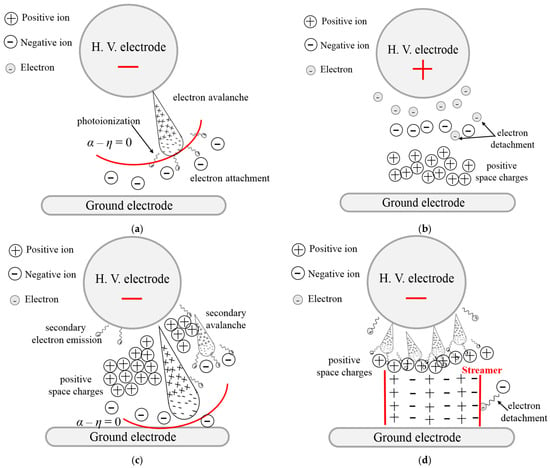
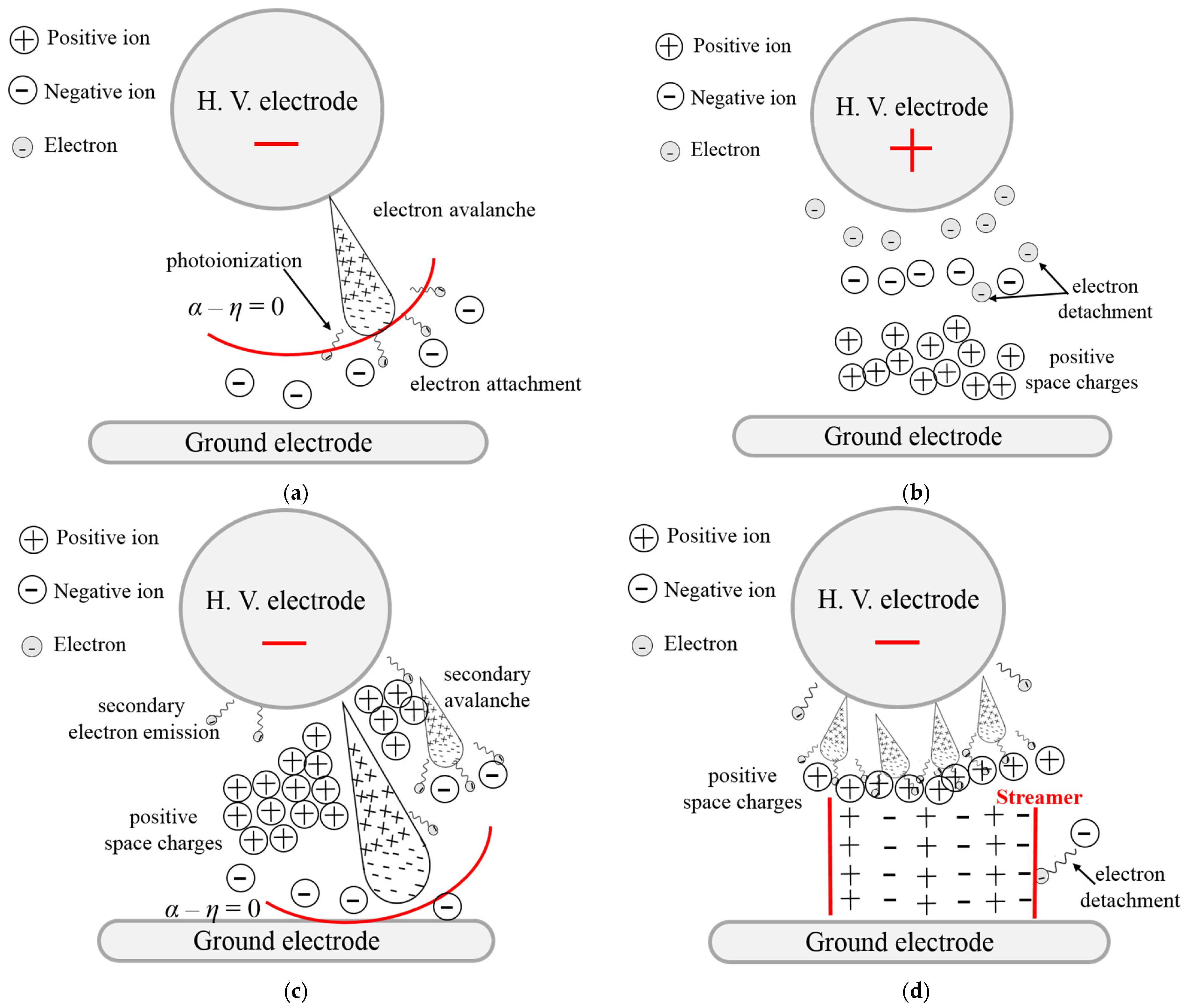
The breakdown of a sphere-plane electrode system in N2/O2 mixture gas can be explained by the development of electron avalanches and streamers. Figure 3 illustrates the proposed breakdown mechanism in the N2/O2 mixture gas. The mechanism consists of four main stages: (a) the initial electron avalanche, (b) diffusion of electrons and ions, (c) formation of space charge due to additional electron avalanches, and (d) streamer formation.
Figure 3.
Breakdown Mechanism in N2/O2 mixture gas without a Teflon Dielectric. (a) Initial electron avalanche, (b) Diffusion of electrons and ions, (c) Space charge formation due to additional electron avalanches, and (d) Streamer formation.
Because the electric field is highest near the surface of the sphere electrode in the electrode configuration used in this study, an initial electron is considered to be emitted from the sphere electrode when the applied voltage is negative. This initial electron can develop into an electron avalanche until it reaches a region where the ionization coefficient becomes zero (i.e., α − η = 0) [11]. During the development of the electron avalanche, additional electrons and positive ions are generated through electron-impact ionization. Because positive ions have a much lower velocity than electrons, they remain mainly in the tail part of the electron avalanche. At the avalanche head, where electron attachment is dominant over ionization (i.e., α − η < 0), electrons generated by photoionization can attach to surrounding O2 molecules and form negative ions [11]. This process is illustrated in Figure 3a.
Figure 3b illustrates the diffusion of ions and electrons after the development of the initial electron avalanche, when the polarity of the applied voltage changes to positive. The negative ions generated during the initial electron avalanche are attracted toward the positive high-voltage electrode. During their movement, electron detachment can occur through collisions with surrounding gas molecules, resulting in the generation of free electrons near the high-voltage electrode. Some of these electrons may reach the high-voltage electrode and be neutralized. Meanwhile, the electrons remaining near the grounded electrode from the preceding electron avalanche can develop into new electron avalanches toward the high-voltage electrode, producing a large number of positive ions within the electrode gap.
Figure 3c shows the development of an electron avalanche under a renewed negative polarity of the applied voltage. Compared with the initial electron avalanche, this avalanche develops further because of the increased magnitude of the negative applied voltage. The electrons accumulated near the high-voltage electrode in the previous stage shown in Figure 3b develop into a strong electron avalanche toward the grounded electrode. This avalanche produces more positive ions than the initial electron avalanche. The positive ions accumulate within the electrode gap and form a positive space charge. Some of these ions may also impact the high-voltage electrode and induce secondary electron emission through the γ-process [12,13].
When the positive ion cloud remains within the electrode gap, a region of the positive space charge is formed. Additional electron avalanches then develop from the negative high-voltage electrode toward this space-charge region. The development of these additional electron avalanches is illustrated in Figure 3d. As electron-generation mechanisms such as additional electron avalanches, photoionization, and electron detachment become active, a large number of electrons are generated within the electrode gap. When the number of electrons exceeds approximately 108 [14,15], a streamer develops from the grounded electrode toward the high-voltage electrode. Once the streamer bridges the electrode gap, electrical breakdown occurs.
4.2.2. Surface Discharge Mechanism in N2/O2 Mixture Gas with Teflon
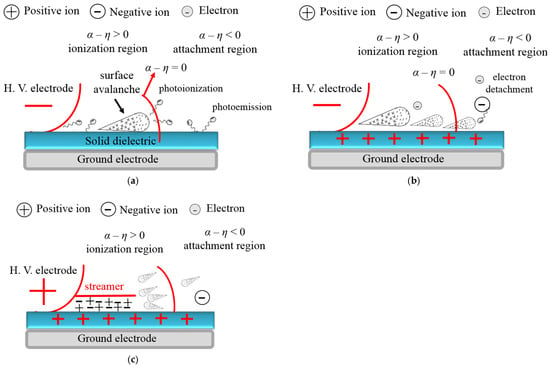
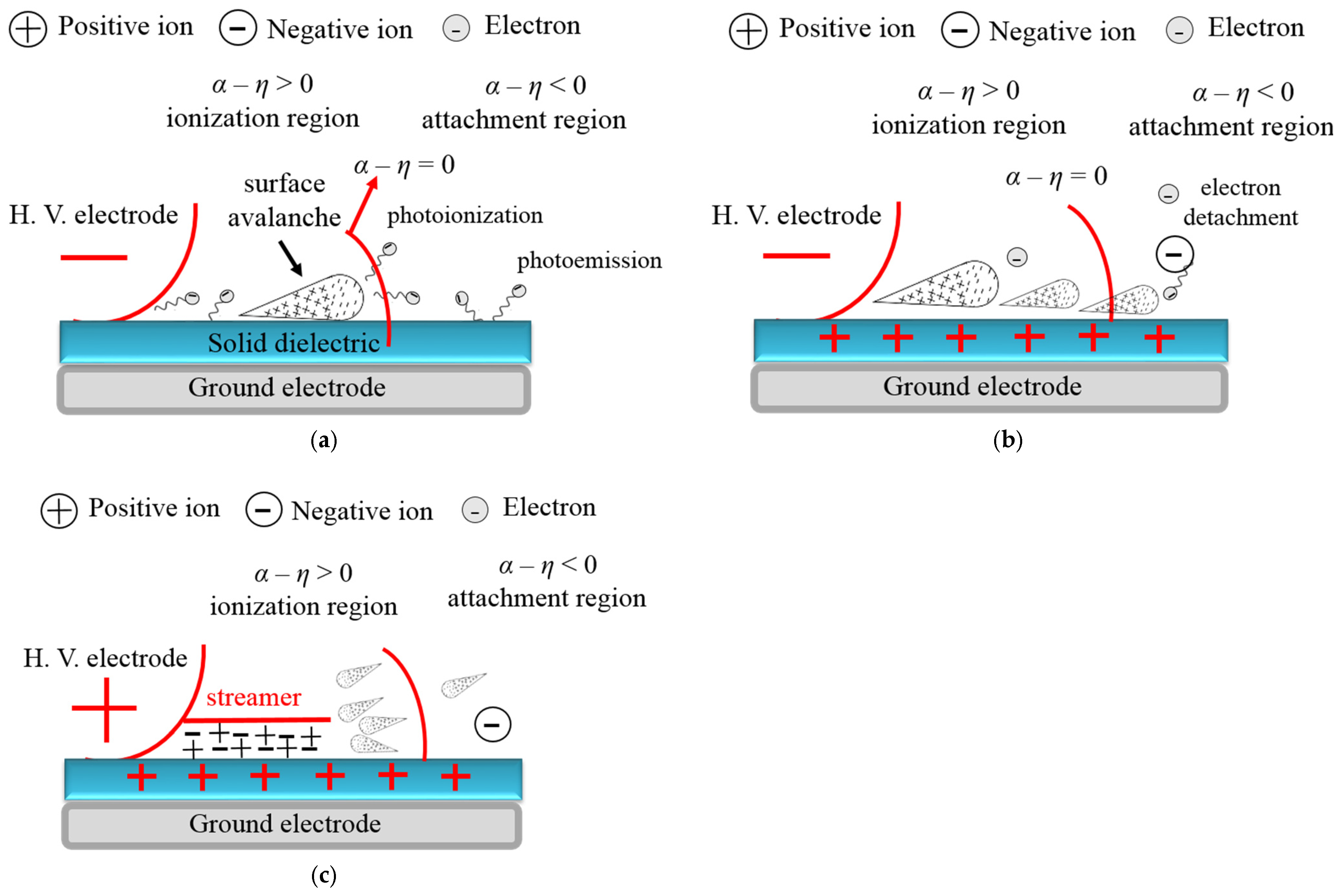
In composite insulation with a solid dielectric, breakdown occurs through surface discharge. The surface discharge develops along the dielectric surface based on electrons generated from the electrode, gas molecules, and dielectric. The surface discharge mechanism in the N2/O2 mixture gas with a Teflon dielectric is presented in Figure 4.
Figure 4.
Breakdown Mechanism in N2/O2 mixture gas with a Teflon Dielectric. (a) Surface avalanche, (b) Additional electron avalanches by photoemission and photoionization, (c) Development of Surface streamers.
In surface discharge, initial electrons may be generated through two mechanisms. One is electron emission at the triple junction where the electrode, gas, and solid dielectric meet [16]. This phenomenon is associated with the high electric field concentrated at the triple junction. The other is electron emission from the dielectric surface near the triple junction due to the high electric field [11]. Electrons emitted from the dielectric surface may be accelerated by the applied electric field and collide with the dielectric surface, producing secondary electrons. Under suitable conditions, repeated secondary electron emission can lead to a secondary electron emission avalanche (SEEA) [16]. However, under the N2/O2 mixture gas conditions investigated in this study, surface discharge is considered to develop mainly through a surface avalanche along the Teflon surface rather than through SEEA. For Teflon, the secondary electron emission coefficient can exceed unity over an incident electron energy range of approximately 50–3000 eV [17]. Because the mean free path of electrons decreases with increasing gas pressure, frequent collisions with gas molecules can limit the energy gained by electrons between collisions. Therefore, it is suggested that surface discharge develops mainly through electron-impact ionization of gas molecules adjacent to the Teflon surface [10,18]. This interpretation does not exclude the possible contribution of secondary electron emission from the Teflon surface.
Figure 4a shows the generation of initial electrons and the development of a surface avalanche along the dielectric surface. The initial electrons may be emitted at the triple junction, where the electric field is concentrated. Under the N2/O2 mixture gas conditions, the contribution of SEEA may be limited by frequent collisions between electrons and gas molecules. Therefore, the initial electrons are considered to develop into a surface avalanche through electron-impact ionization of gas molecules adjacent to the Teflon surface. The surface avalanche can develop toward the region where α − η = 0. Photoionization may also provide additional electrons near the head of the avalanche. Photons generated during the development of the surface avalanche may reach the Teflon surface and cause photoemission. Because the photon absorption length in the gas decreases with increasing gas pressure [19], photoionization is expected to occur closer to the avalanche head at higher pressures. Photoemission from the Teflon surface may also contribute to electron generation, depending on the incident photons and surface conditions.
After the development of the surface avalanche, additional electron avalanches may develop as the applied voltage increases, as illustrated in Figure 4b. In the ionization region (α − η > 0), electrons generated by electron-impact ionization and photoionization can develop into additional avalanches along the Teflon surface. In the attachment region (α − η < 0), electrons may attach to O2 molecules and form negative ions. Electron detachment from these negative ions may subsequently provide additional free electrons. During surface discharge development, positive surface charging may occur due to electron emission and charge transport at the gas–solid interface. Photoemission and field emission are possible processes that may contribute to this charging.
Figure 4c illustrates the proposed development of a surface streamer. As the surface avalanches develop, space charge can modify the local electric field and promote streamer formation. At high gas pressures, additional electrons near the streamer head may contribute to its propagation. Photoionization is considered a possible source of these electrons. Because the photon absorption length decreases with increasing gas pressure [19], photoionization may occur closer to the streamer head. The electrons generated by photoionization can develop into additional avalanches in the ionization region (α − η > 0), contributing to surface streamer propagation. Other electron generation processes, including electron detachment and photoemission, may also contribute, although their relative contributions were not determined in this study. Surface flashover occurs when the surface streamer bridges the electrodes along the Teflon surface.
4.3. Analysis of the Reversal in Breakdown Voltage with Gas Pressure
Figure 2 clearly shows that the breakdown voltages with and without Teflon are reversed as the gas pressure increases. This reversal is attributed to the different breakdown mechanisms, including the electron-generation mechanisms and the formation and propagation of streamers, that occur with increasing gas pressure, as described in Section 4.2. In the absence of Teflon, the breakdown process is dominated by the effect of the positive space charge generated by the electron avalanches. As the gas pressure increases, the mean free path of electrons decreases, which limits the development of electron avalanches. Consequently, the development of the streamer becomes more difficult. The mean free path of electrons is inversely proportional to gas pressure when the gas temperature and collision cross section are assumed to be constant. Therefore, an increase in gas pressure from 0.1 to 0.6 MPa reduces the electron mean free path to approximately one-sixth of its initial value. At a given electric field, the reduced mean free path limits the energy gained by electrons between collisions. Electron-impact ionization and streamer development are also affected by the reduced electric field (E/N), where E is the electric field and N is the gas number density. The effective ionization coefficient (α − η), where α and η are the ionization and attachment coefficients, respectively, determines the growth of electron avalanches. Therefore, a higher applied voltage is required for gas breakdown as gas pressure increases.
In contrast, for the surface discharge with Teflon, surface flashover is initiated by the surface avalanche and the electron source at the streamer head (i.e., photoionization). Because increasing gas pressure suppresses the development of electron avalanches in the gas, surface avalanches become increasingly dominant as the gas pressure increases. In addition, the increase in gas pressure shortens the photon absorption length, causing photoionization to occur near the streamer head. This photoionization supplies electrons for the development of the streamer, leading to surface flashover. Therefore, the surface avalanche and surface streamer in the presence of Teflon reduce the dependence of the breakdown voltage on gas pressure. This reduced dependence is considered to be responsible for the reversal of the breakdown voltage with increasing gas pressure.
4.4. Comparison with Previous Studies, Limitations, and Practical Implications
4.4.1. Comparison with Previous Studies
Although the insulation characteristics of N2/O2 mixed gas with changes in gas pressure have been investigated under experimental conditions and approaches similar to those of the present study [10], the present study has clear novelty compared with Reference [10]. S.-W. Jee et al. [10] proposed surface discharge mechanisms in N2/O2 mixed gas under a sphere–plane electrode configuration with a Teflon dielectric at high gas pressures (0.4–0.6 MPa) and low gas pressures (0.1–0.3 MPa). The surface discharges developed along the Teflon surface and through the bulk gas at high and low pressures, respectively. Their study focused on proposing surface discharge mechanisms to explain these different discharge development paths. However, the gas breakdown mechanism without a Teflon dielectric, as shown in Figure 3 of the present study, was not investigated or proposed in [10].
Furthermore, the present study explains the reversal between the breakdown voltage under a quasi-uniform electric field without a Teflon dielectric and the surface flashover voltage with a Teflon dielectric as the pressure of N2/O2 mixed gas changes, as shown in Figure 2. In contrast, only the surface flashover voltage was measured in [10], and it increased monotonically with gas pressure. In other words, the main focus of [10] was to propose surface discharge mechanisms that explain the discharge development paths under different gas pressures, whereas the present study focuses on explaining the reversal between breakdown voltage and surface flashover voltage with changes in gas pressure based on gas breakdown and surface discharge mechanisms. In addition to explaining this reversal, a quantitative analysis of the pressure dependence was performed. These mechanisms describe the microscopic processes associated with electron generation, electron avalanche, and streamer development under an electric field. Therefore, the present study contributes to understanding the electrical breakdown processes preceding electrical arc formation from the perspective of electrical discharge physics.
Similarly, Meng et al. [20] investigated surface streamer discharge along a Teflon dielectric in air under AC–DC composite voltage conditions. They reported that the electric field required for stable streamer propagation, propagation velocity, and luminous intensity varied with the applied voltage phase. These characteristics were explained by the movement of positive and negative ions, which could suppress or enhance streamer development through changes in the local electric field. Similar to the present study, the previous study [20] also considered the role of charged particles and streamer development in electrical discharge processes, although the experimental conditions and investigated parameters differed.
Meng et al. [21] investigated the effects of atmospheric humidity on positive streamer discharge in air using experiments and numerical simulations. They reported that an increase in humidity increased the electric field required for stable streamer propagation and decreased the streamer propagation velocity under the same electric field. These results indicate that humidity can influence streamer development through changes in electron generation and charge transport processes. It is assumed that an increase in atmospheric humidity could increase the electron attachment coefficient, resulting in changes in the distribution of negative ions near the Teflon surface and the impact ionization coefficient. These changes are expected to affect streamer behavior under different humidity conditions. However, the present study focused on the effects of gas pressure and Teflon on breakdown characteristics, and the influence of humidity was not separately investigated.
Gas temperature can also affect electron-impact ionization and streamer development through changes in gas number density. In addition, Joule heating can increase the local gas temperature in a discharge channel and contribute to the transition from streamer discharge to leader discharge. Li et al. [22] investigated electrothermal instability in electrically exploding aluminum wires in air using experiments and numerical simulations. They reported that resistive inclusions redistributed the current density, resulting in local changes in Joule heating, temperature, and plasma density. These results indicate that electrothermal effects can influence plasma development after substantial current flow. The transition from streamer discharge to leader discharge involves Joule heating of the discharge channel. Therefore, leader development could also influence the pressure dependence of breakdown voltage. However, the effects of electrothermal processes and leader development were not investigated in this study. Further studies on the streamer-to-leader transition could provide a reasonable basis for interpreting the pressure dependence of breakdown voltage observed in this study.
Surface flashover characteristics can vary depending on the dielectric material, and it is important to consider these material-dependent characteristics when investigating and interpreting surface flashover mechanisms. Li et al. [4] reviewed the effects of gas environments, surface charge accumulation, and dielectric material properties on surface flashover. They reported that surface charge accumulation in compressed gases can distort the local electric field and influence electron-impact ionization and discharge development. They also discussed the effects of dielectric permittivity on electric field distribution and partial discharge under AC voltage. These findings indicate that the surface properties of solid dielectrics can influence electron generation and streamer propagation along the gas–solid interface. Therefore, although the basic discharge processes proposed in this study may also occur with other solid dielectrics, their contributions to surface flashover and the pressure dependence of breakdown voltage could differ depending on the dielectric material. Further studies using different dielectric materials are needed to evaluate the general applicability of the proposed discharge mechanism.
Gas temperature is another important factor affecting the breakdown characteristics and streamer development in air. Meng et al. [23] investigated positive streamer discharge in air gaps at low temperatures using experiments and numerical simulations. They reported that decreasing temperature increased the electric field required for streamer propagation and reduced the propagation velocity. They also showed that, at constant gas pressure, decreasing temperature increased the gas density and reduced the electron mean free path and effective ionization coefficient (α − η), thereby suppressing streamer development. These results indicate that gas temperature, as well as gas pressure, can influence electron avalanche development and streamer propagation. Therefore, the pressure-dependent breakdown characteristics observed in this study may differ under low-temperature conditions. Furthermore, because streamer development may differ at low temperatures, further investigation is needed to verify the applicability of the present results under low-temperature operating conditions.
4.4.2. Limitations and Practical Implications
The present study has several limitations that should be considered when interpreting the experimental results. First, the breakdown experiments were conducted using small-scale sphere–plane electrode configurations with and without a Teflon dielectric. Therefore, the electric field distribution and discharge characteristics may differ from those of practical high-voltage equipment with more complex electrode structures and solid insulation systems. Second, the experiments were performed under a 60 Hz AC voltage at gas pressures ranging from 0.1 to 0.6 MPa. The effects of other voltage waveforms, higher gas pressures, and different operating temperatures were not investigated. In addition, the gas composition was limited to synthetic air with a fixed N2/O2 mixing ratio. Changes in gas composition, humidity, and dielectric surface conditions may also influence electron generation and discharge development. Repeated breakdowns may affect the electrode and Teflon surface conditions, which can influence subsequent breakdown measurements. Although ten breakdown measurements were performed at each pressure, the effects of accumulated surface damage and repeated-breakdown history were not separately evaluated. Previous studies have shown that surface flashover characteristics can be influenced by gas composition, electric field distribution, and electron generation mechanisms at the gas–solid interface [8]. Therefore, these factors should be considered when extending the present results to other experimental conditions. Despite these limitations, the present results provide experimental information on the different pressure dependences of breakdown voltage in N2/O2 mixture gas with and without a Teflon dielectric. These findings may be useful for understanding the influence of gas pressure and solid dielectrics on insulation performance in environmentally friendly high-voltage equipment. However, direct application of the measured breakdown voltages and proposed mechanisms to practical equipment requires further investigation under actual operating conditions, including different electrode structures, voltage waveforms, and dielectric materials. Although the proposed discharge mechanisms provide useful information for understanding electrical arc initiation, the present results alone cannot directly predict electrical arc detection signals or detection performance.
This study did not investigate the effects of different Teflon specimen dimensions on surface flashover voltage. The dimensions of the Teflon specimen and the electrode geometry were kept constant throughout the experiments. Changes in the Teflon dimensions may influence the electric field distribution and surface flashover characteristics. Therefore, the results of this study are limited to the experimental conditions used.
In this study, electron density during gas breakdown and UV photoemission from the Teflon surface during surface flashover were not directly measured. The electron mean free path, electron energy, and electron avalanche development discussed in Section 4.2.1 are related to electron generation and electron density during gas breakdown. However, the proposed electron avalanche and streamer development mechanisms are based on established discharge physics rather than direct measurements of electron density. In addition, the contribution of UV photoemission to surface discharge development could not be quantitatively evaluated. Further measurements of electron density and UV photoemission are needed to better understand the proposed gas breakdown and surface flashover mechanisms.
5. Conclusions
The breakdown characteristics of N2/O2 mixture gas in electrode configurations with and without a Teflon solid dielectric were investigated as a function of gas pressure to understand the formation process of electrical arcs as potential ignition sources. The breakdown voltage increased with increasing gas pressure for both electrode configurations, but their pressure dependence was significantly different. The slopes of the regression lines were 59.143 kV/MPa without Teflon and 16.400 kV/MPa with Teflon, indicating that the pressure dependence without Teflon was approximately 3.6 times greater than that with Teflon. The intersection of the two regression lines was estimated at approximately 0.400 MPa. The measured breakdown voltages showed a reversal between 0.3 and 0.4 MPa, consistent with this estimate. Breakdown mechanisms were proposed to explain this reversal, and distinct electron-generation and streamer-development processes were identified depending on the presence of Teflon. In particular, the surface discharge mechanism with Teflon exhibited a weaker pressure dependence than the breakdown mechanism without Teflon. These results demonstrate that gas pressure and the presence of a solid dielectric significantly affect the electrical conditions and microscopic discharge processes leading to insulation breakdown. The findings provide fundamental information on the breakdown processes preceding potential arc formation. The quantitative breakdown-voltage characteristics and proposed mechanisms may contribute to future studies on potential electrical ignition sources in air-insulated high-voltage electrical equipment. The present findings contribute to filling the knowledge gap between the macroscopic observation of electrical ignition sources and the microscopic processes leading to arc formation. Further studies are needed to investigate arc energy, ignition thresholds, and fire development to better understand the relationship between electrical breakdown and fire ignition.
Author Contributions
Conceptualization: Y.-C.Y. and S.-W.J.; Methodology: Y.-C.Y. and G.H.K.; Formal analysis and investigation: Y.-C.Y., D.-Y.L. and G.H.K.; Writing—original draft preparation: Y.-C.Y.; Writing—review and editing: Y.-C.Y., D.-Y.L. and S.-W.J.; Funding acquisition: S.-W.J.; Resources: Y.-C.Y.; Supervision: S.-W.J. All authors have read and agreed to the published version of the manuscript.
Funding
This work was supported by the Korea Institute of Energy Technology Evaluation and Planning (KETEP) and the Ministry of Climate, Energy & Environment (MCEE) of the Republic of Korea (Nos. RS-2025-02310648 and RS-2022-KP002711).
Data Availability Statement
The data presented in this study are available from the corresponding author upon reasonable request.
Conflicts of Interest
The authors declare no conflicts of interest.
References
- Li, G.; Guo, J.; Kang, Y.; Huang, Q.; Zhao, J.; Liu, C. Classification and Prevention of Electrical Fires: A Comprehensive Review. Fire 2025, 8, 154. [Google Scholar] [CrossRef] [Scilit]
- Zhang, J.; Li, C.; Su, G.; Mi, W. Case Study on Investigation of Electrical Cabinet Fire Caused by Poor Electrical Contact. Fire 2025, 8, 412. [Google Scholar] [CrossRef] [Scilit]
- Zhang, S.; Morcos, M.M.; Srivastava, K.D. On the Management of Metallic Particle Contamination in Gas Insulated Switchgear. IEEE Trans. Dielectr. Electr. Insul. 2017, 24, 2746–2754. [Google Scholar] [CrossRef] [Scilit]
- Li, Z.; Liu, J.; Ohki, Y.; Chen, G.; Gao, H.; Li, S. Surface Flashover in 50 Years: Theoretical Models and Competing Mechanisms. High Volt. 2023, 8, 853–877. [Google Scholar] [CrossRef] [Scilit]
- Du, S.; Cheng, X.; Ge, G.; Li, T.; Guo, L.; Liu, S. AC Breakdown and Decomposition Products Detection Characteristics of Eco-Friendly Insulating Medium in Gas Insulated Switchgear. Sci. Rep. 2024, 14, 19491. [Google Scholar] [CrossRef] [Scilit]
- Li, Z.; Li, S.; Xu, H.; Qu, G.; Niu, H.; Huang, Y.; Aslam, F. The Mechanism of Gas Pressure and Temperature Dependent Surface Flashover in Compressed Gas Involving Gas Adsorption. Appl. Surf. Sci. 2021, 539, 148107. [Google Scholar] [CrossRef] [Scilit]
- Pu, Z.; Li, Y.; Li, P.; Ye, K.; Zhou, K.; Zhang, R. Prediction of DC Breakdown Voltage of Rod–Plate Gaps under Full-Flame Bridging Conditions. Fire 2024, 7, 143. [Google Scholar] [CrossRef] [Scilit]
- Li, Z.; Zhang, H.; Gao, H.; Liu, J.; Ohki, Y.; Chen, G.; Li, S. Surface Flashover in 50 Years: III. Extreme Environments and Industrial Challenges. High Volt. 2026, 11, 100–142. [Google Scholar] [CrossRef] [Scilit]
- Park, H.; Lim, D.-Y.; Bae, S. Partial Discharge and Surface Flashover Characteristics with O2 Content in N2/O2 Mixed Gas under a Non-Uniform Field. IEEE Trans. Dielectr. Electr. Insul. 2018, 25, 1403–1412. [Google Scholar] [CrossRef] [Scilit]
- Jee, S.-W.; Lim, D.-Y. Surface Discharge Mechanism with a Change of Gas Pressure in N2/O2 Mixed Gas for Insulation Design of SF6-Free High-Voltage Power Equipment. IEEE Trans. Dielectr. Electr. Insul. 2021, 28, 771–779. [Google Scholar] [CrossRef] [Scilit]
- Hosokawa, T.; Kaneda, T.; Takahashi, T.; Yamamoto, T.; Morita, T.; Sekiya, Y. DC Breakdown Characteristics in the Gap with Thin Dielectric Sheet in Air. IEEE Trans. Dielectr. Electr. Insul. 2011, 18, 822–832. [Google Scholar] [CrossRef] [Scilit]
- Feng, N.; Ma, T.; Chen, C.; Yao, B.; Gao, W. Simulation and Study of DC Corona Discharge Characteristics of Bar-Plate Gap. Energies 2022, 15, 6431. [Google Scholar] [CrossRef] [Scilit]
- Yang, F.; Li, L.; Li, Z.; Wang, P. Numerical Simulation of Acoustic Wave Generated by DC Corona Discharge Based on the Shock Wave Theory. Appl. Sci. 2023, 13, 9251. [Google Scholar] [CrossRef] [Scilit]
- Zhu, R.; Nie, J.; Zhang, Y.; Zhong, Z.; Li, X.; Dong, Y.; Gao, J. Analysis of Positive and Negative Lightning Impulse Discharge Characteristics in Long Air Gaps. Energies 2025, 18, 5746. [Google Scholar] [CrossRef] [Scilit]
- Köhn, C. An Audiovisual Introduction to Streamer Physics. Atmosphere 2025, 16, 757. [Google Scholar] [CrossRef] [Scilit]
- Miller, H.C. Flashover of Insulators in Vacuum: The Last Twenty Years. IEEE Trans. Dielectr. Electr. Insul. 2015, 22, 3641–3657. [Google Scholar] [CrossRef] [Scilit]
- Song, B.-P.; Shen, W.-W.; Mu, H.-B.; Deng, J.-B.; Hao, X.-W.; Zhang, G.-J. Measurements of Secondary Electron Emission from Dielectric Window Materials. IEEE Trans. Plasma Sci. 2013, 41, 2117–2122. [Google Scholar] [CrossRef] [Scilit]
- Ren, M.; Zhang, C.; Dong, M.; Xiao, Z.; Qiu, A. Partial Discharges Triggered by Metal-Particle on Insulator Surface Under Standard Oscillating Impulses in SF6 Gas. IEEE Trans. Dielectr. Electr. Insul. 2015, 22, 3007–3018. [Google Scholar] [CrossRef] [Scilit]
- Dubinova, A.; Trienekens, D.; Ebert, U.; Nijdam, S.; Christen, T. Pulsed Positive Discharges in Air at Moderate Pressures near a Dielectric Rod. Plasma Sources Sci. Technol. 2016, 25, 055021. [Google Scholar] [CrossRef] [Scilit]
- Meng, X.; Lin, L.; Li, H.; Mei, H.; Wang, L. Characteristic of Surface Streamer Discharge Under the AC–DC Composite Voltage. IEEE Trans. Dielectr. Electr. Insul. 2025, 32, 1373–1379. [Google Scholar] [CrossRef] [Scilit]
- Meng, X.; Zhuang, W.; Lin, L.; Mei, H.; Wang, L. Characteristics of Positive Streamer Discharge versus Atmospheric Humidity in a Three-Electrode Configuration. IEEE Trans. Dielectr. Electr. Insul. 2026. early access. [Google Scholar] [CrossRef] [Scilit]
- Li, Z.; Wang, K.; Cheng, M.; Zhou, W. Study on the Electrothermal Instability in Electrically Exploding Aluminum Wires in Air. Phys. Plasmas 2026, 33, 042103. [Google Scholar] [CrossRef] [Scilit]
- Meng, X.; Zhu, Z.; Zhuang, W.; Lin, L.; Mei, H.; Wang, L. Experimental and Simulation Study on Air Gap Streamer Discharge at Low Temperature. IEEE Trans. Dielectr. Electr. Insul. 2026. early access. [Google Scholar] [CrossRef] [Scilit]

Disclaimer/Publisher’s Note: The statements, opinions and data contained in all publications are solely those of the individual author(s) and contributor(s) and not of MDPI and/or the editor(s). MDPI and/or the editor(s) disclaim responsibility for any injury to people or property resulting from any ideas, methods, instructions or products referred to in the content. |
© 2026 by the authors. Licensee MDPI, Basel, Switzerland. This article is an open access article distributed under the terms and conditions of the Creative Commons Attribution (CC BY) license.