


Abstract
Perfluorohexanone (C6F12O) has been widely utilized as an eco-friendly gaseous fire extinguishing agent. However, it is highly susceptible to thermal decomposition under high-temperature conditions during the fire protection process, generating substantial amounts of corrosive hydrogen fluoride (HF). To overcome the limitations of single-component suppression media, this study systematically investigates the effects of E-CF3-CH=CClH addition on the thermal pyrolysis of the C6F12O agent, focusing on the evolution behaviors of fluorine-containing species and HF yield variation under various addition ratios and temperatures via a tube furnace. Additionally, ReaxFF-MD simulations were deployed to elucidate the microscopic pyrolysis fragment evolution and intermolecular interaction mechanisms within the blended system. The results indicate that the pyrolysis conversion of the blended suppressants across all mixing ratios increases monotonically with rising temperature. Once the C6F12O volume fraction surpasses 20% vol, chlorinated organic species completely disappear from the pyrolysis yield, accompanied by the detection of trace amounts of hydrofluoroalkanes. Additionally, maintaining the C6F12O content at 40% vol and 50% vol enables effective control over the net HF yield. Modeling reveals that blending predominantly enhances the C6F12O pyrolysis conversion during the early reaction phase. Mechanistically, HF mitigation within the binary network is governed by a multi-pathway synergistic mechanism. The insights gained from this work provide crucial theoretical foundations and empirical evidence for the formulation optimization of novel environmentally benign blended suppressants and the mitigation of secondary hazards in fire scenes.
1. Introduction
Clean chemical fire extinguishing agents, such as hydrofluorocarbons (HFCs), hydrobromofluorocarbons (HBFCs), and fluoroiodocarbons (FICs), offer significant advantages, including high fire extinguishing efficiency, excellent total flooding capability, electrical non-conductivity, and ease of storage [1,2], playing a pivotal role in the protection of critical infrastructure. Numerous researchers have been actively developing novel gaseous fire extinguishing agents [3,4,5,6,7,8,9,10,11]. Among these, perfluorohexanone (C6F12O, CF3CF2C(=O)CF(CF3)2), developed by the 3M Company, is considered a viable alternative to halons [12,13]. With a global warming potential (GWP) of 1 and an ozone depletion potential (ODP) of 0, C6F12O successfully balances fire extinguishing efficiency and environmental friendliness and has thus been widely applied in numerous fields [14,15,16]. However, C6F12O still exhibits certain limitations in practical applications. C6F12O exhibits a significant combustion-promoting effect at low concentrations [17,18] and undergoes thermal decomposition at high temperatures, producing corrosive hydrogen fluoride (HF) gas that poses hazards to both personnel and equipment. Therefore, single-component fire extinguishing agents cannot meet current demands. Previous studies have shown that composite fire extinguishing technology can overcome the limitations of a single extinguishing agent through the synergistic enhancement of multiple media, exhibiting superior performance.
Some scholars have attempted to combine gaseous fire extinguishing agents with other substances. Vahdat et al. [19] investigated binary fire extinguishing systems of five halogenated compounds, each mixed with nitrogen, and observed positive synergistic effects in all systems. Wang et al. [20] found that the synergistic effect of C6F12O combined with nitrogen is concentration-dependent, and a volume concentration of C6F12O below 40% can significantly enhance fire extinguishing efficiency. Tian et al. [21] indicated that the combined system of C6F12O and C3HF7 can suppress the combustion-promoting effect of C6F12O and produce fewer toxic products during the fire extinguishing process. HE et al. [22] found that the addition of C6F15N can suppress the combustion-promoting phenomenon of C6F12O at low concentrations, and the fire-extinguishing concentration decreased to 5.12% vol after adding 20 mol% of C6F15N. Katta et al. [23] revealed through simulation that the combination of C6F12O and C3H2BrF3 can reduce flame temperature and enhance fire-extinguishing performance. The above studies prove the synergistic extinguishing effect of C6F12O and other gases. Trans-1-chloro-3,3,3-trifluoropropene (trans-1233zd(E), E-CF3-CH=CClH) is a fluorinated chemical gas with a GWP of 1 and an ODP of 0.00034 [24], demonstrating excellent environmental friendliness. Previous studies have confirmed that E-CF3-CH=CClH exhibits good fire-extinguishing performance [3,25,26]. Zhou et al. [18] investigated the synergistic fire-extinguishing effect of C6F12O combined with E-CF3-CH=CClH and found that they exhibit a positive synergistic effect, with the optimal synergy occurring when the volume fraction of E-CF3-CH=CClH is 20%. However, most existing studies remain confined to evaluating the macroscopic fire suppression efficacy. The thermochemical stability of this composite system under the high-temperature environments of fire scenes, along with the evolution behaviors of fluorine-containing pyrolysis products, has not yet been clarified. Research concerning the dynamic changes in radicals and the quantitative formation kinetics of the key corrosive gas, HF, remains virtually unexplored.
This study aims to systematically investigate the thermal decomposition behavior of the C6F12O/E-CF3-CH=CClH composite fire extinguishing agent under high-temperature conditions. An experimental platform comprising a tube furnace, a peristaltic pump, and a gas chromatography–mass spectrometry (GC-MS) system was established. The pyrolysis conversion, pyrolysis product distribution, and evolutionary behaviors were systematically evaluated within a temperature range of 450–750 °C and a residence time of 4 s under various blending ratios. Additionally, the variation trends of HF yield as a function of temperature and component proportions were determined. Furthermore, ReaxFF-MD was developed to reveal the radical evolution process of the blended system at the microscopic scale. The results of this study provide theoretical support and experimental evidence for the formulation optimization of novel eco-friendly composite fire extinguishing agents.
2. Experiments and Methods
2.1. Materials
The primary reagents were C6F12O and E-CF3-CH=CClH, both of which were manufactured by Zhejiang Noah Fluorochemical Co., Ltd, Hangzhou, China. Their specific properties are summarized in Table 1.
Table 1.
Properties of C6F12O and E-CF3-CH=CClH.
2.2. Test Facility
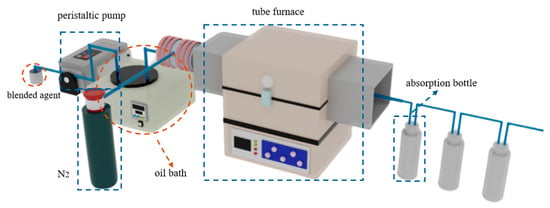
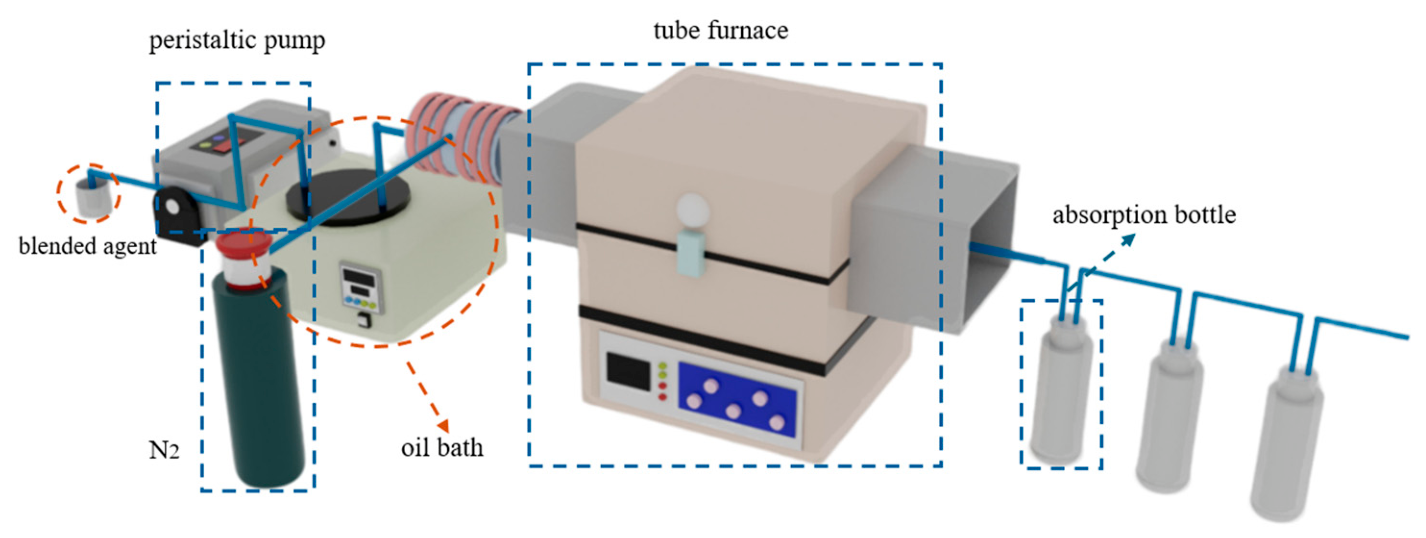
The experimental setup primarily consists of a peristaltic pump, an oil bath, a tube furnace, a rotameter, a GC-MS, and a benchtop ion meter, just as shown in Figure 1. The peristaltic pump was obtained from Baoding Longer Precision Pump Co., Ltd., Baoding, China, with an accuracy of 0.1 r/min. The oil bath used for temperature control was purchased from Jintan Kejie Instrument Factory with an accuracy of ±1 °C. The tube furnace for pyrolysis was manufactured by Nanjing Boyuntong Instrument Technology Co., Ltd., Nanjing, China, with an accuracy of ±1 °C. The rotameter for flow control was produced by Changzhou Shuanghuan Thermo-tech Instrument Co., Ltd., Changzhou, China, with an accuracy of 0.04 L/min. The GC-MS used for the analysis of pyrolysis products is made by Agilent Technologies Co., Ltd., Shenzhen, China. The benchtop ion meter for measuring fluoride ion concentration was supplied by Mettler-Toledo Technology Co., Ltd., Hong Kong, China.
Figure 1.
The layout of the experimental platform.
In this study, a controlled variable approach was employed to conduct thermal decomposition experiments on the C6F12O/E-CF3-CH=CClH blended chemical gas under various conditions. The pyrolysis characteristics were investigated within a temperature range of 450–750 °C, with a fixed residence time of 4 s in the pyrolysis pipeline. The experimental parameters involved volume ratios of the blended fire extinguishing agent at 2:8, 4:6, 5:5, 6:4, and 8:2, while the volumetric ratio of the blended agent to the carrier gas was maintained at a 1:9 ratio. During the experiment, the tube furnace was heated to the target temperature under a continuous N2 purge to eliminate interference from other gases. Once the target temperature was stabilized, N2 and the blended agent were introduced at constant flow rates regulated by a rotameter and a peristaltic pump. The effluent gas resulting from the pyrolysis was subjected to acid scrubbing and drying and subsequently collected using gas sampling bags for analysis via GC-MS. After 30 min of pyrolysis, the liquid in the absorption bottle was collected, and the fluoride ion concentration was determined using a benchtop ion meter. The liquid in the absorption bottle was a 0.2% NaOH solution.
The GC-MS analytical conditions were specified as follows: Separation was performed on a KB-PFXN capillary column (150.0 m × 320 μm, 2 μm film thickness). Helium (He) served as the carrier gas at a constant flow rate of 1.2 mL/min with a split ratio of 80:1. The injector and transfer line temperatures were both maintained at 220 °C. The GC oven temperature program was initiated at 35 °C (held for 5 min), then ramped to 150 °C at a heating rate of 10 °C/min, and finally held at 150 °C for 10 min. For the mass spectrometer, an electron ionization (EI) source was utilized with an electron energy of 70 eV. The temperatures of the ion source and quadrupole were set at 250 °C and 150 °C, respectively.
The residence time is varied by altering the flow rate and can be described by the relationship between the volume in the heating zone and the gas volumetric flow rate; its fundamental definition is
where t represents the gas residence time in the heating zone (s), while and Q are the effective volume of the high-temperature zone in the tubular furnace (mL) and the gas volumetric flow rate (mL/s) (1 L/min = 0.06 mL/s), respectively.
where and are the diameter of the pyrolysis tube and the length of the reaction zone, respectively.
The nitrogen flow rate prior to heating is expressed as follows:
where represents the nitrogen flow rate before heating, while , , and are the air ratio, the ambient temperature (°C), and the tube furnace temperature (°C), respectively.
The volumetric flow rate of the agent within the tube is expressed as follows:
The volumetric flow rate of the agent prior to heating is expressed as follows:
The mass flow rate of the agent is expressed as follows:
where is the molar mass.
The procedure for measuring the F- concentration is as follows: quantitative detection was performed using a benchtop ion meter equipped with a fluoride ion-selective electrode (ISE). It was manufactured by Shanghai INESA Scientific Instrument Co., Ltd., Shanghai, China. Before testing, calibration was carried out using fluoride standard solutions of 1, 10, 100, and 1000 mg/L. During testing, 10 mL of the absorption solution was taken, and dilute nitric acid was added dropwise to adjust the pH to 5–6 to eliminate interference from OH- in the solution. Then, 10 mL of fluoride ion TISAB II buffer was added, and the mixture was stirred before measurement.
Based on the above experimental apparatus and calculation methods, the following sources of uncertainty exist in the experimental process: the temperature uniformity inside the tubular furnace is unclear, and after the mixed gas enters the high-temperature reaction zone, a certain distance and time are required to fully reach the preset temperature. This leads to a temperature gradient in the inlet section, causing the actual effective reaction temperature of the gas to be slightly lower than the set value.
2.3. Calculation Methods
ReaxFF-MD is a computational simulation method that combines the reactive force field (ReaxFF) and molecular dynamics (MD) techniques to investigate interatomic interactions and chemical reaction kinetics in complex systems [27,28]. The force field describes bond breaking and formation through the relationship between bond order and bond length, and its potential energy function incorporates terms such as bond energy, over-coordination, and under-coordination, thereby enabling highly accurate simulations of chemical reactions. ReaxFF-MD has been widely applied to elucidate the reaction mechanisms of pyrolysis and combustion. The ReaxFF parameters used in this study are based on those developed by Li et al. The energy function of the ReaxFF force field adopted in this study is based on previous literature [29] and is defined as follows:
where represents the bond energy, and and are the energy contributions of the over- and under-coordinated atoms. , , , , , and are the valence angle term, penalty energy, torsion energy, conjugation effects on energy, non-bonded van der Waals interaction, and Coulomb interaction, respectively.
To investigate the high-temperature thermal decomposition behavior of C6F12O under the combined effect of the C6F12O/E-CF3-CH=CClH blend, a cubic simulation cell with a side length of 500 Å was constructed. Taking a blended system with a 50%:50% volume ratio (containing 50 molecules of each component) as a representative case, a pure perfluorohexanone system was concurrently established as a control. All molecules are randomly distributed in this simulation. The NVT ensemble (keeping the number of atoms, volume, and temperature constant) was employed to equilibrate all systems at 1000 K for 10 ps with a time step of 0.1 fs. Subsequently, all systems were studied at the designated temperatures for 1000 ps with a time step of 0.1 fs. The simulation results indicated that this temporal setting could accurately capture the pyrolysis processes of both the pure and blended systems. The adoption of elevated temperatures was to facilitate the observation of chemical reactions within a computationally feasible timeframe (typically on the picosecond scale). In ReaxFF-MD simulations, employing high temperature to accelerate reactions is a common strategy for triggering sufficient bond-breaking and recombination events within a limited simulation time. Although the temperatures used in the simulations are higher than practical values, previous studies have demonstrated that high temperatures primarily accelerate the reaction rates without altering the underlying reaction mechanisms [20,30,31].
3. Results and Discussion
3.1. The Distribution of Pyrolysis Products Varying Temperatures
Due to the high boiling point and large molecular weight of C6F12O, a higher mass concentration is required for effective fire suppression, which consequently leads to the generation of more hydrogen fluoride HF via thermal pyrolysis during the fire extinguishing process [12]. Currently, blending C6F12O with novel materials to improve the cleanliness of the suppression process and minimize the generation of hazardous substances such as HF represents a promising research direction. In this section, a tube furnace experimental platform was utilized to characterize and comparatively analyze the distribution characteristics of the primary fluorine-containing pyrolysis products of pure C6F12O, pure E-CF3-CH=CClH, and the blended systems under various mixing ratios within the temperature range of 450–750 °C. The specific parameters under different operating conditions were calculated using Equations (1)–(6).
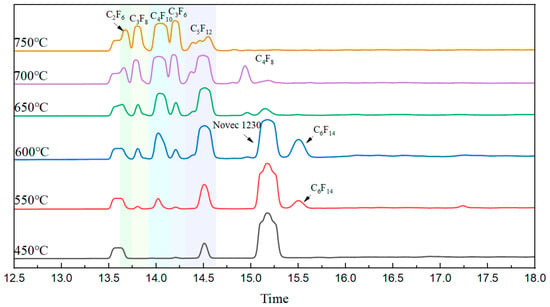
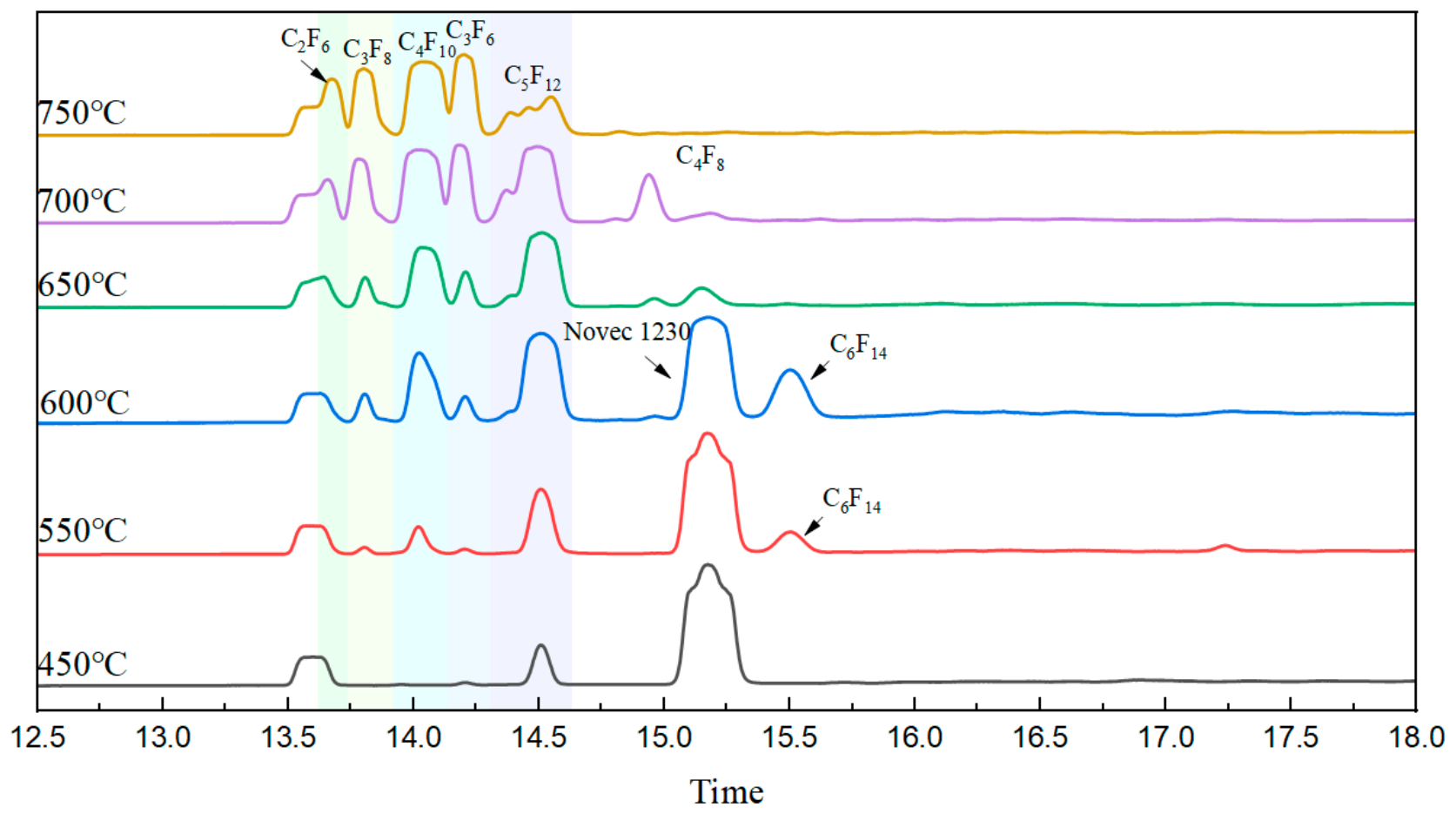
The detected pyrolysis products of the pure perfluorohexanone system are illustrated in Figure 2. At 450 °C, perfluorohexanone undergoes negligible pyrolysis, with only a minor amount of C5F12 being generated. As the reaction temperature increases to 550–650 °C, extensive pyrolysis of C6F12O occurs, yielding C5F12 and C4F10 as the two primary products, along with small quantities of C3F8 and C3F6. When the temperature reaches 700–750 °C, C6F12O is completely pyrolyzed. The major products at these elevated temperatures comprise C2F6, C3F6, C3F8, and C4F10, accompanied by a minor amount of C4F8. This is consistent with a previous report [32]. Additionally, C6F14 acts as an intermediate product during the thermal decomposition process and is no longer generated when the temperature exceeds 650 °C.
Figure 2.
Pyrolysis products of pure C6F12O.
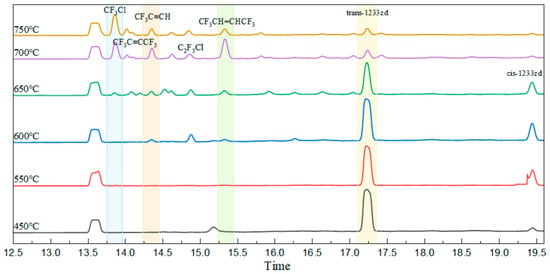
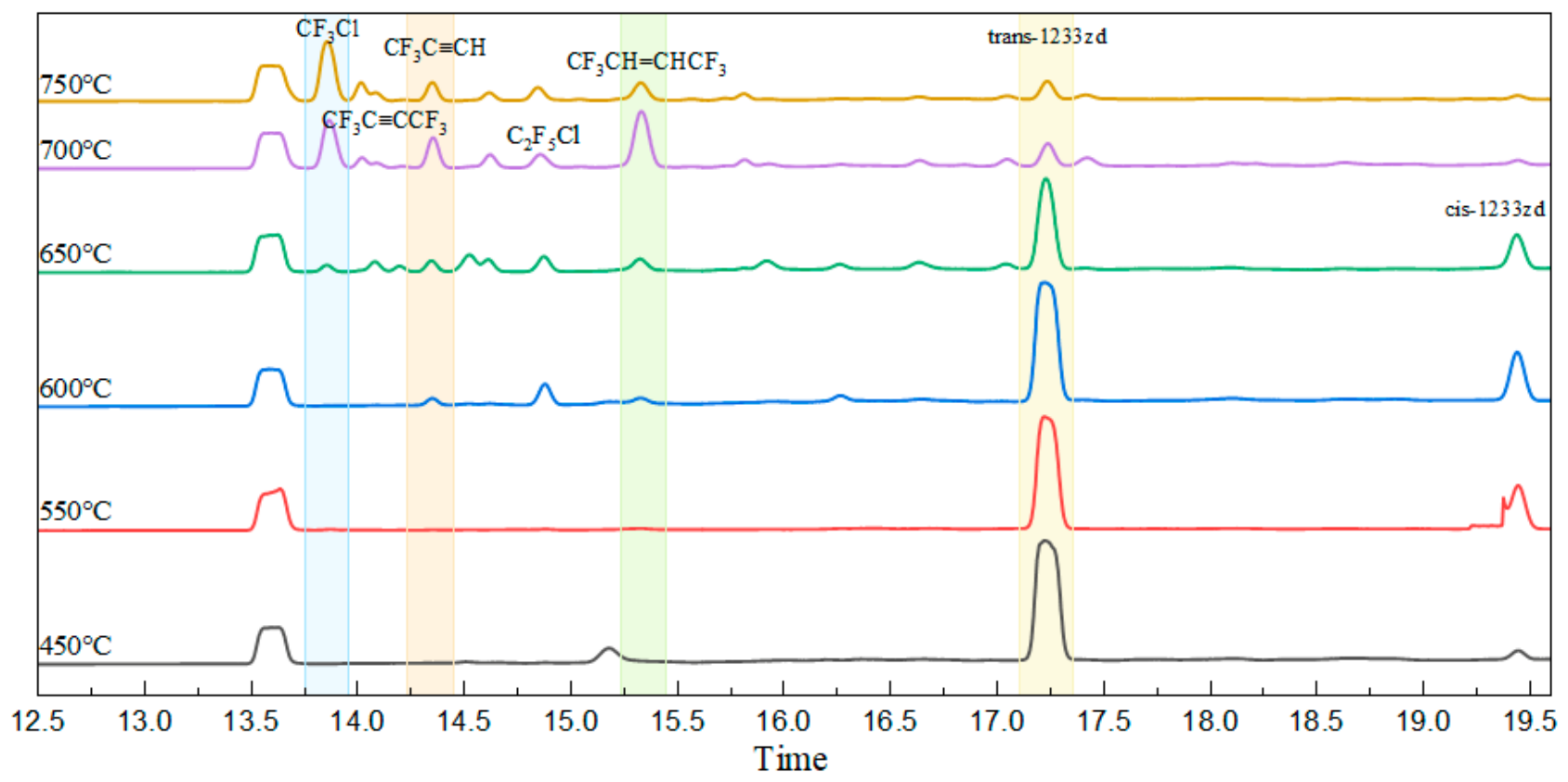
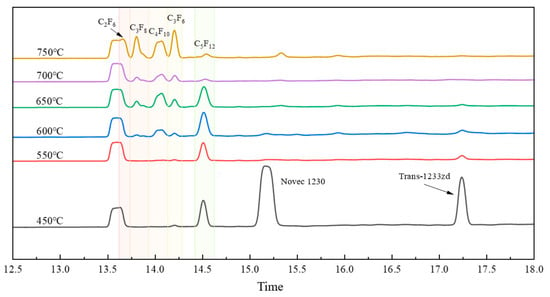
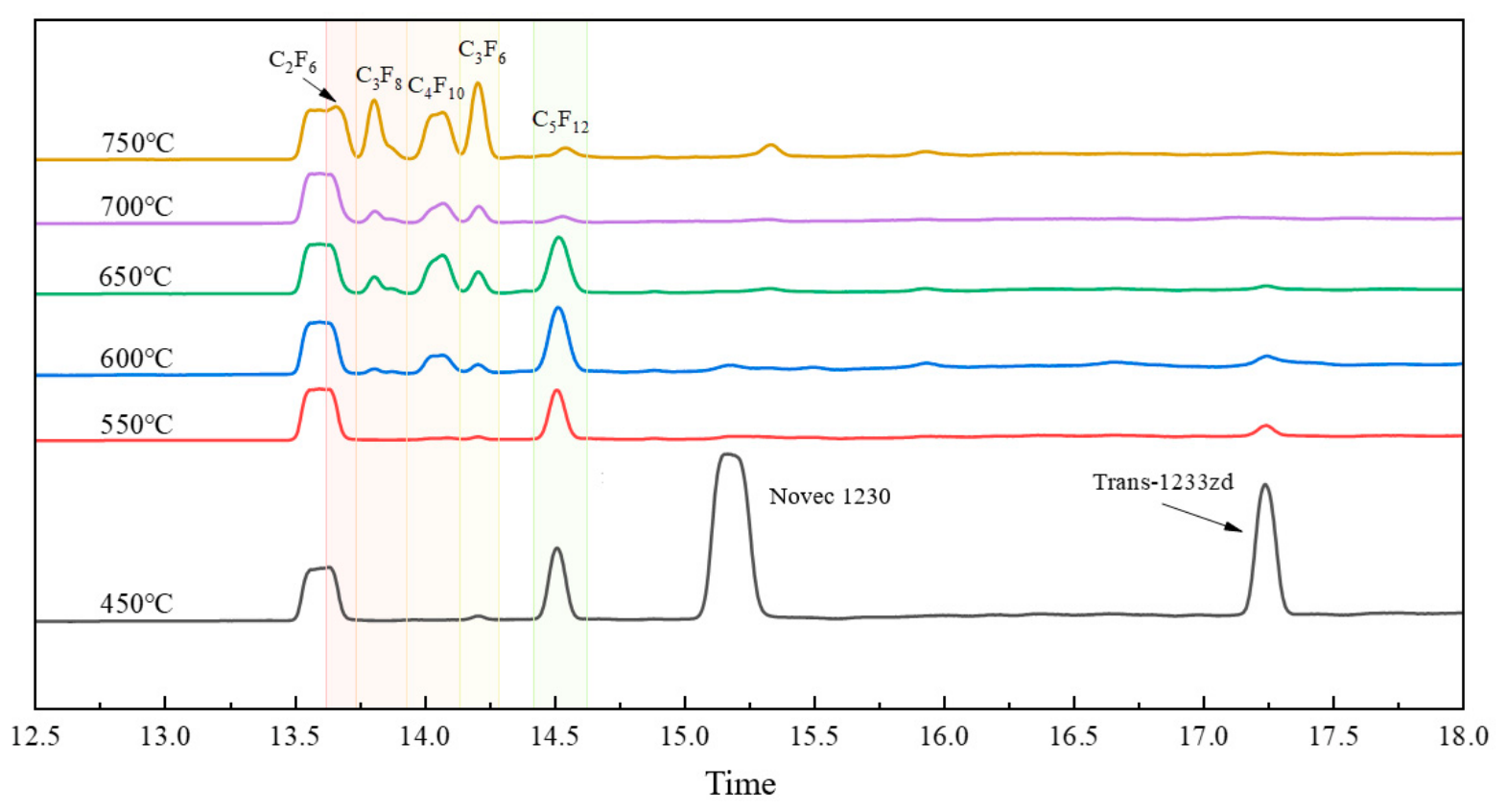
The chromatogram of the pyrolysis products for pure E-CF3-CH=CClH is illustrated in Figure 3. At 450 °C, E-CF3-CH=CClH undergoes negligible pyrolysis. Within the temperature range of 550–650 °C, cis-1233zd, an isomer of trans-1233zd, was detected as a product. When the temperature reaches 700–750 °C, E-CF3-CH=CClH is almost completely decomposed, with the major products including CF3Cl, CF3C≡CCF3, CF3C≡CH, and CF3CH=CFCF3.
Figure 3.
Pyrolysis products of pure E-CF3-CH=CClH.
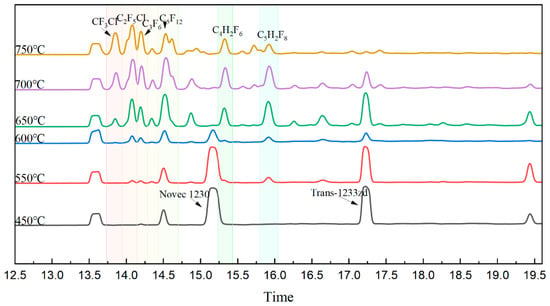
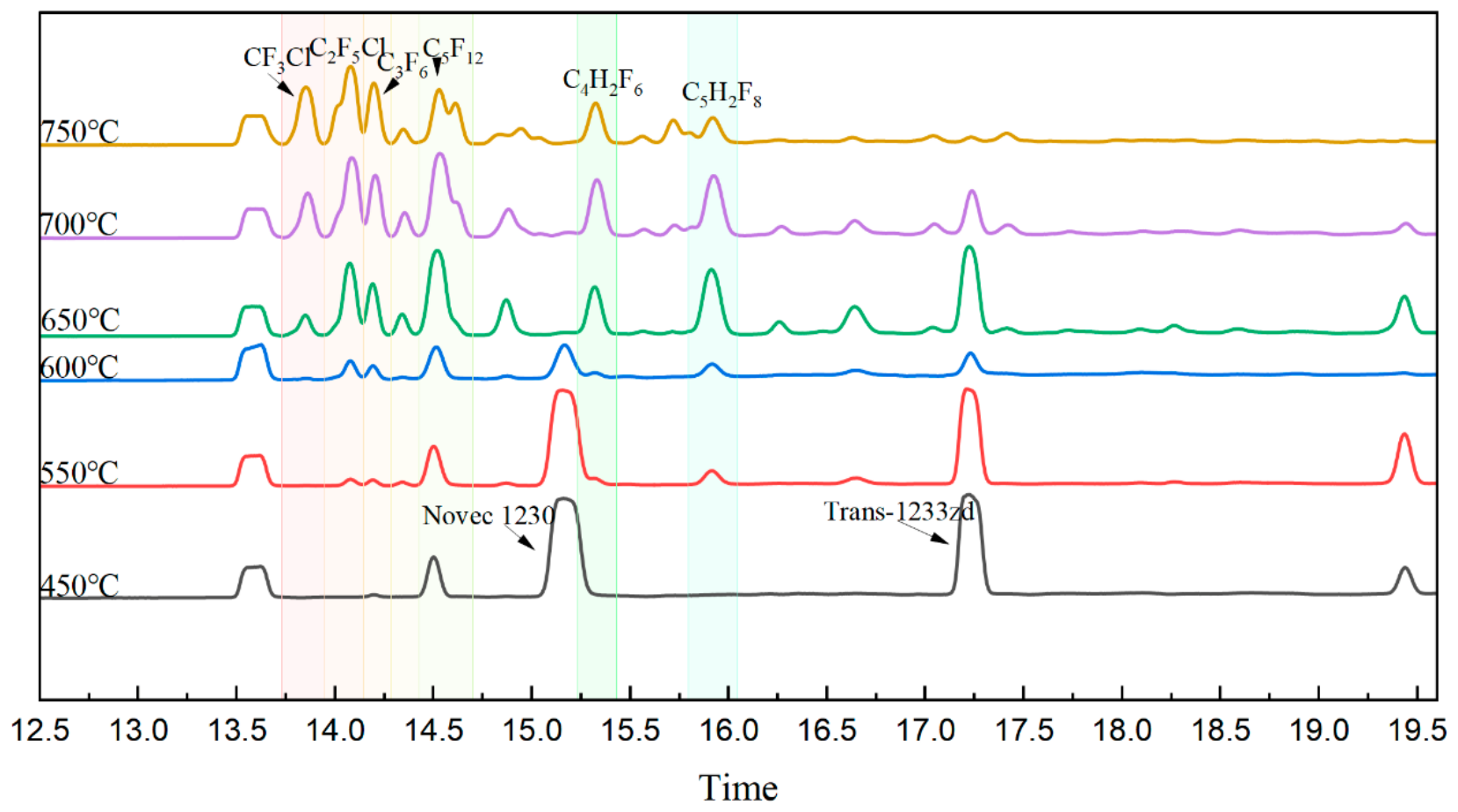
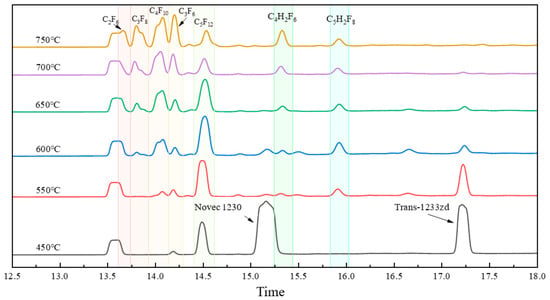
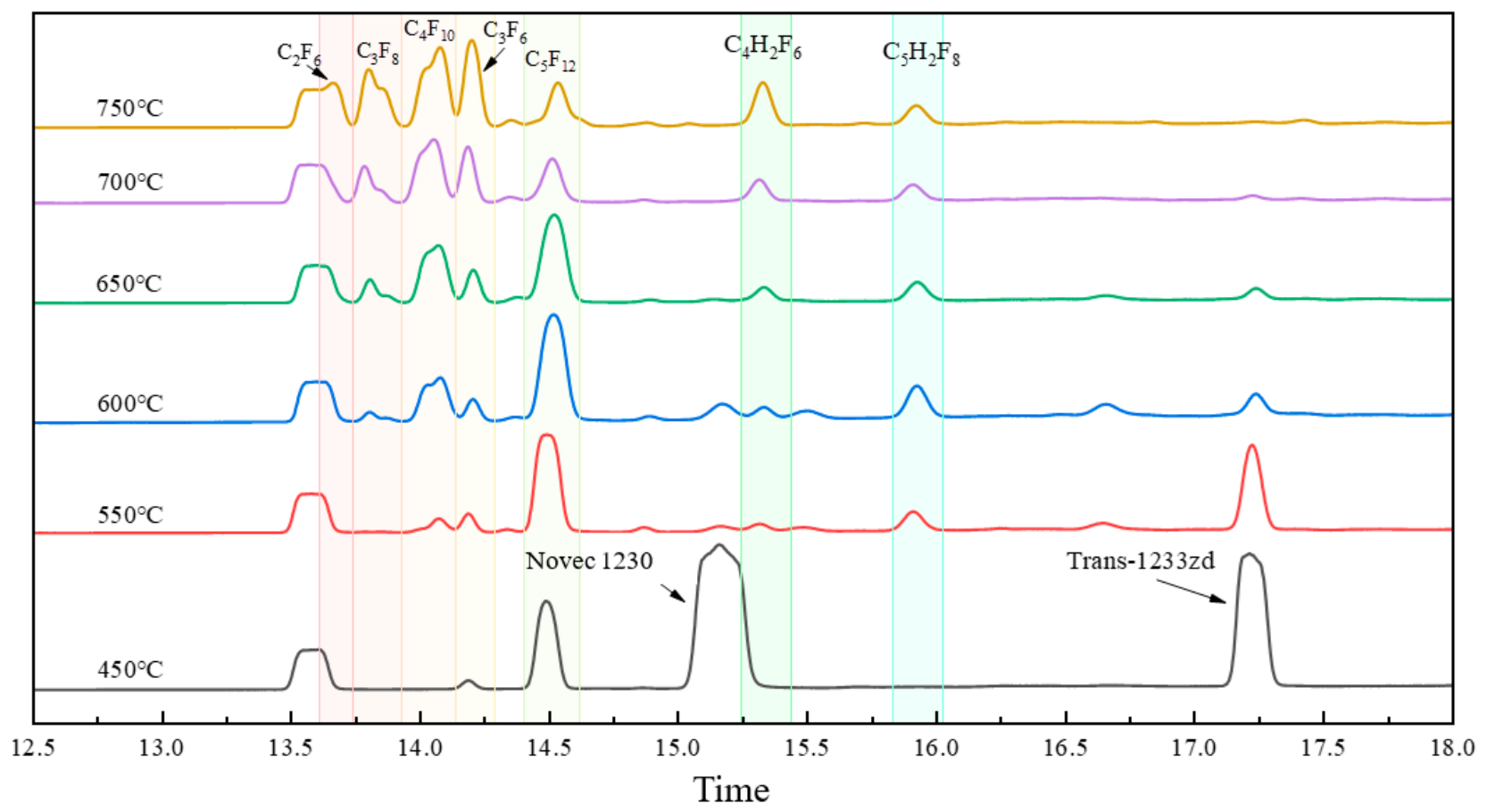
Just as shown in Figure 4, under the condition where the C6F12O/E-CF3-CH=CClH volume ratio is 2:8, two pyrolysis products, namely cis-1233zd and C5F12, emerge within the temperature range of 450–550 °C, accompanied by minor amounts of C2F5Cl and C5H2F8. At 600–650 °C, four primary pyrolysis products are identified: C2F5Cl, C5H2F8, CF3CH=CHCF3, and C5F12, alongside the generation of small quantities of C6H2F10, CF3CCH, and C3F6. At 650 °C, undecomposed perfluorohexanone becomes undetectable in the products, while E-CF3-CH=CClH undergoes extensive pyrolysis. As the temperature rises to 750 °C, a significant amount of soot is observed at the product collection zone, with CF3Cl, C2F5Cl, C3F6, and C5F12 constituting the major pyrolysis products. Meanwhile, the content of C5H2F8 decreases, C6H2F10 disappears, and trace amounts of C4F8 and C3ClF5 are also detected. These results demonstrate that in systems with low perfluorohexanone concentrations, the abundant pyrolysis fragments are dominated by the dissociation of trans-1233zd, leading to a pronounced enrichment of chlorine- and hydrogen-containing organic byproducts.
Figure 4.
Pyrolysis products of C6F12O: E-CF3-CH=CClH = 2:8 ratio.
Under the condition where the C6F12O/E-CF3-CH=CClH volume ratio is 4:6 (see Figure 5), a single pyrolysis product, identified as C5F12, is detected within the temperature range of 450–550 °C. At a reaction temperature of 550 °C, both C6F12O and E-CF3-CH=CClH are almost completely pyrolyzed. As the temperature increases to 600–650 °C, two major pyrolysis products, namely C4F10 and C5F12, are detected, along with the appearance of minor amounts of C3F8 and C3F6. With the temperature further increasing to 750 °C, four primary pyrolysis products are observed.
Figure 5.
Pyrolysis products of C6F12O: E-CF3-CH=CClH = 4:6 ratio.
Just as shown in Figure 6, under the condition where the C6F12O/E-CF3-CH=CClH volume ratio is 5:5, C5F12 serves as the primary pyrolysis product within the temperature range of 450–550 °C. At this stage, C6F12O is almost completely pyrolyzed, whereas residual E-CF3-CH=CClH still persists. As the temperature rises to 600–650 °C, E-CF3-CH=CClH also undergoes near-complete pyrolysis. Concurrently, two major decomposition products, namely C4F10 and C5F12, are detected, alongside the generation of minor amounts of C3F8 and C3F6. When the temperature is further elevated to 750 °C, C2F6 emerges and becomes one of the major products, with the other predominant species being C3F6, C3F8, and C4F10. Notably, at temperatures surpassing 550 °C, minor quantities of C4H2F6 and C5H2F8 are consistently generated across all investigated temperatures.
Figure 6.
Pyrolysis products of C6F12O: E-CF3-CH=CClH = 5:5 ratio.
At C6F12O volume fractions of 60% vol and 80% vol, the distributions of pyrolysis products are similar to those observed at 50% vol. The primary difference is that, under the 60% vol and 80% vol conditions, a higher temperature is required for the near-complete pyrolysis of C6F12O. Beyond 700 °C, an additional major pyrolysis product, C4F8, emerges under the 80% vol condition.
In summary, when the volume fraction of C6F12O in the blended chemical gas exceeds 20%, chlorinated organic compounds are no longer present in the pyrolysis products. The primary pyrolysis products consist of C2F6, C3F6, C3F8, C4F10, and C5F12, with minor amounts of C4H2F6 and C5H2F8 also being detected. The presence of these hydrofluoroalkanes provides strong evidence that the hydrogen-containing radical fragments generated from the cracking of E-CF3-CH=CClH underwent active cross-coupling and hydrogen transfer reactions with the perfluoroalkyl radicals released by C6F12O in the gas phase. Under other operating conditions within 550–650 °C, the dominant fluoroalkane C5F12 primarily stems from the recombination of larger radicals, namely C3F7· and C2F5·. At elevated temperatures, the increase in fluoroalkanes C3F6, C3F8, and C4F10 reflects the further cracking of these higher-order fluoroalkanes, subsequently yielding short-chain fluoroalkanes [33].
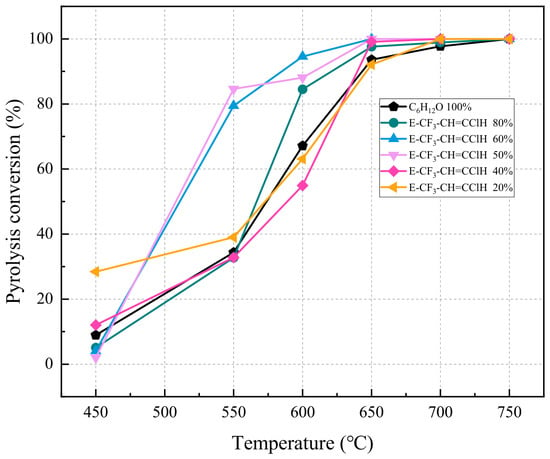
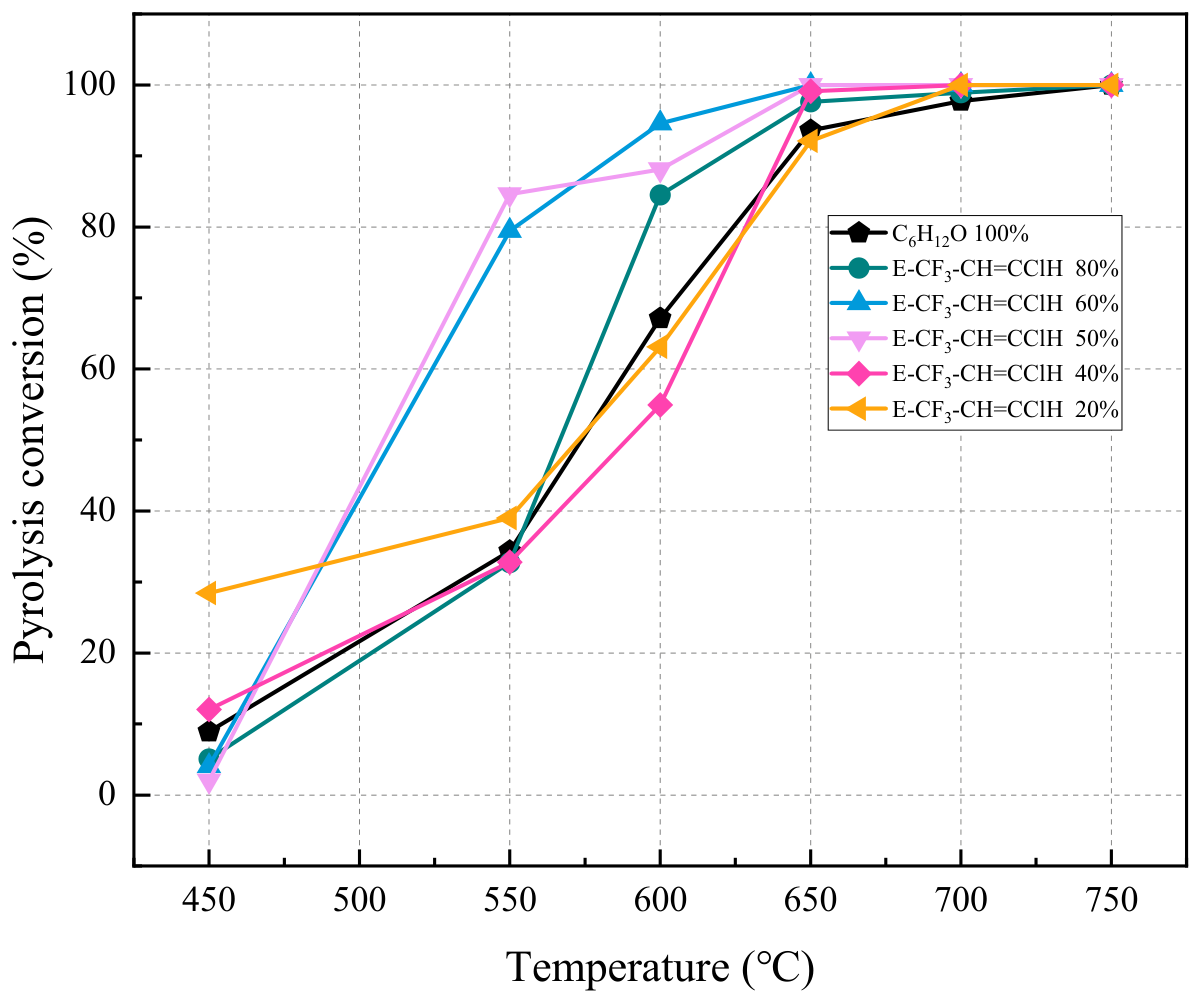
Figure 7 summarizes the effect of different E-CF3-CH=CClH loading amounts on the pyrolysis conversion of C6F12O. Under operating conditions with varying E-CF3-CH=CClH volume fractions, the pyrolysis conversion monotonically increases with rising temperature. For the pure C6F12O monomer, negligible pyrolysis occurs at 450 °C; however, as the temperature shifts to 550–650 °C, its pyrolysis conversion rises sharply, increasing from 34.35% to 84.05%. Over the temperature range of 450 °C to 750 °C, variations in the proportion of C6F12O within the blended agent also affect the trends of its pyrolysis conversion across different temperature intervals. When the volume fractions of E-CF3-CH=CClH in the blended fire suppressant are 50% and 60%, shifting the temperature beyond 450 °C triggers a transition of C6F12O from virtually no decomposition to extensive pyrolysis, with the conversion completely surpassing that of the C6F12O monomer. Specifically, the pyrolysis conversions at 550 °C reach 84.60% and 79.35%, respectively. For the condition with an 80% E-CF3-CH=CClH volume fraction, an abrupt jump in the pyrolysis conversion occurs when the temperature rises to 600 °C, exceeding that of the pure C6F12O monomer. Under the operating condition with a 40% E-CF3-CH=CClH volume fraction, complete pyrolysis is achieved at 650 °C. When the E-CF3-CH=CClH volume fraction is 20%, the pyrolysis conversion remains higher than that of the C6F12O monomer within the 450–550 °C range, after which the discrepancy between the two becomes marginal.
Figure 7.
Changes in the pyrolysis conversion of C6F12O.
3.2. HF Generation Characteristics
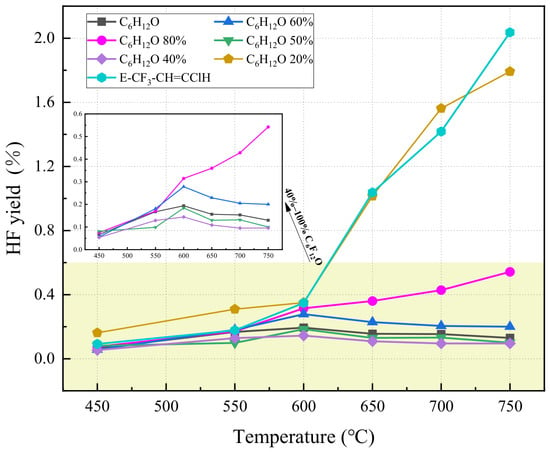
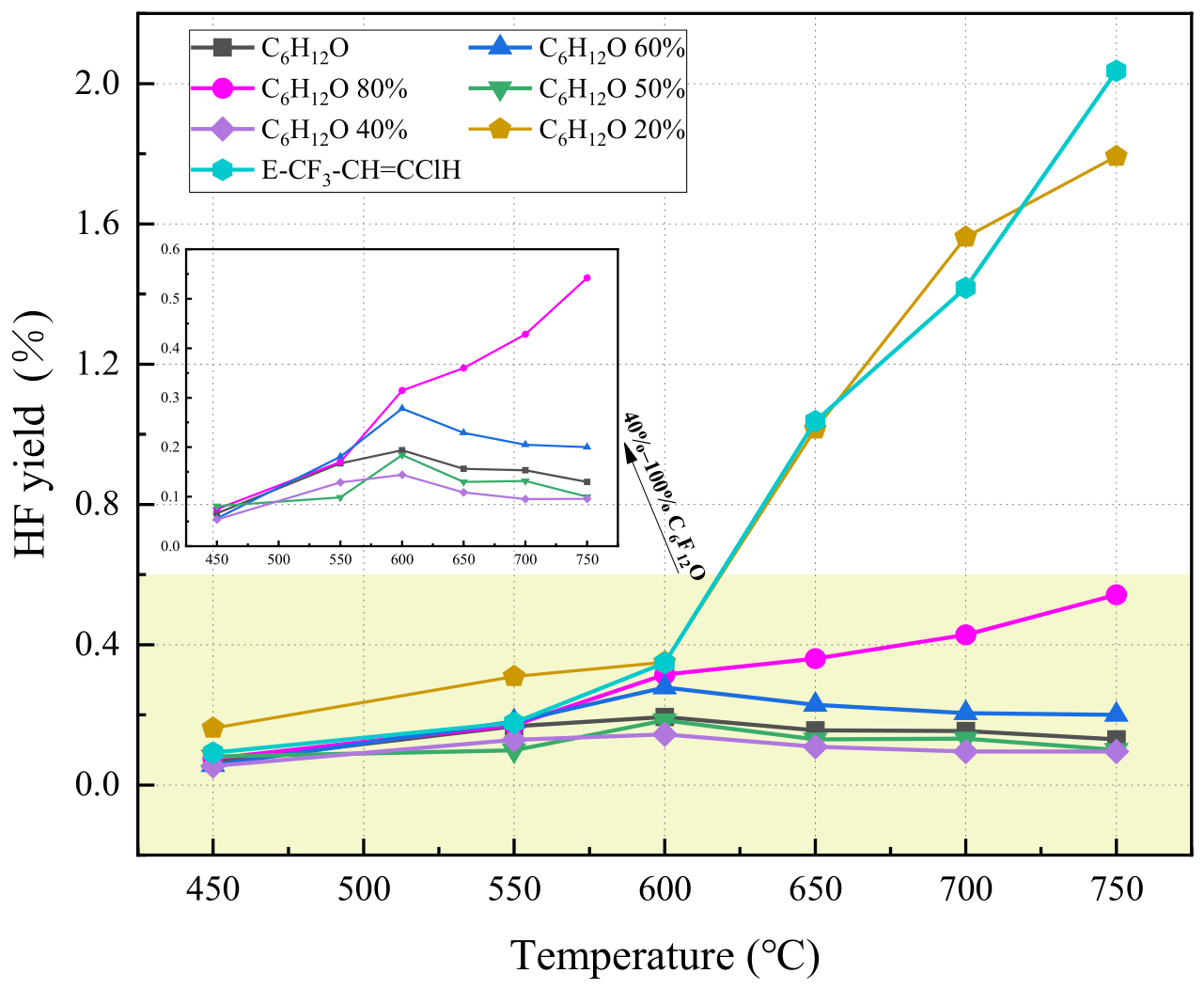
The corrosiveness of HF generated during fire suppression to the surrounding environment is a critical indicator for evaluating a fire extinguishing material. Figure 8 illustrates the variation in HF yield per unit mass of fire extinguishing agent as a function of temperature and blending ratio. For the three cases of pure E-CF3-CH=CClH and mixtures with C6F12O volume fractions of 20% vol and 80% vol, the HF yield per unit mass of the suppressant increases with rising temperature. A distinct inflection point is observed at 600 °C; beyond this temperature, the HF yields for the first two cases exhibit a significant increase. Upon reaching 750 °C, the HF yields escalate to 2.03% and 1.79%, representing relative enhancements of 479.41% and 426.47% compared to those at 600 °C, respectively. Conversely, for pure C6F12O and the blends with 40% vol, 50% vol, and 60% vol C6F12O content, the HF yield first increases and then decreases with rising temperature, peaking at 600 °C. This trend aligns with the HF release characteristics of ketones in an inert atmosphere. Within these three blended systems, the HF yield rises with the increasing volume fraction of C6F12O. When the C6F12O content in the blend exceeds 60% vol, the overall HF yield surpasses that of pure perfluorohexanone. At C6F12O volume fractions of 40% vol and 50% vol, the HF yield remains lower than that of pure C6F12O, thereby achieving effective control over HF generation.
Figure 8.
Changes in the yield of HF.
3.3. ReaxFF-MD Investigation
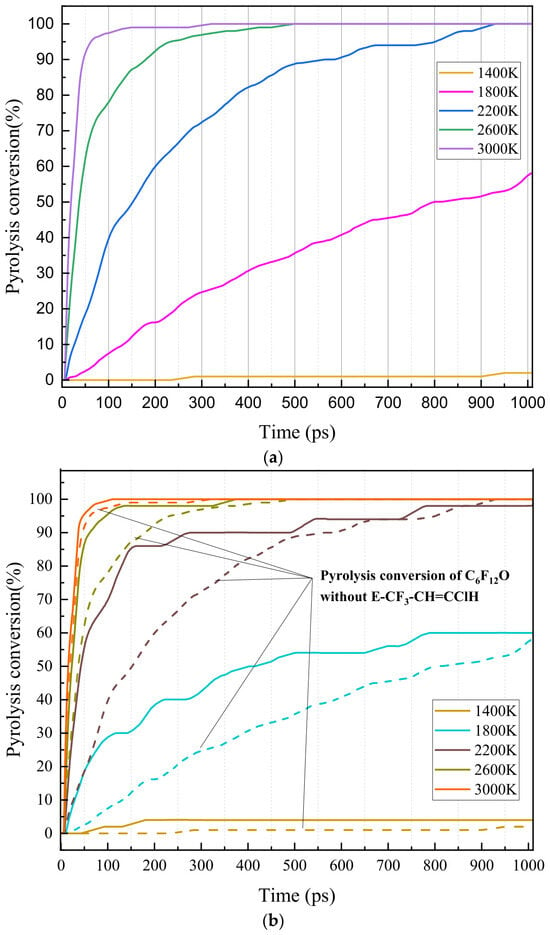
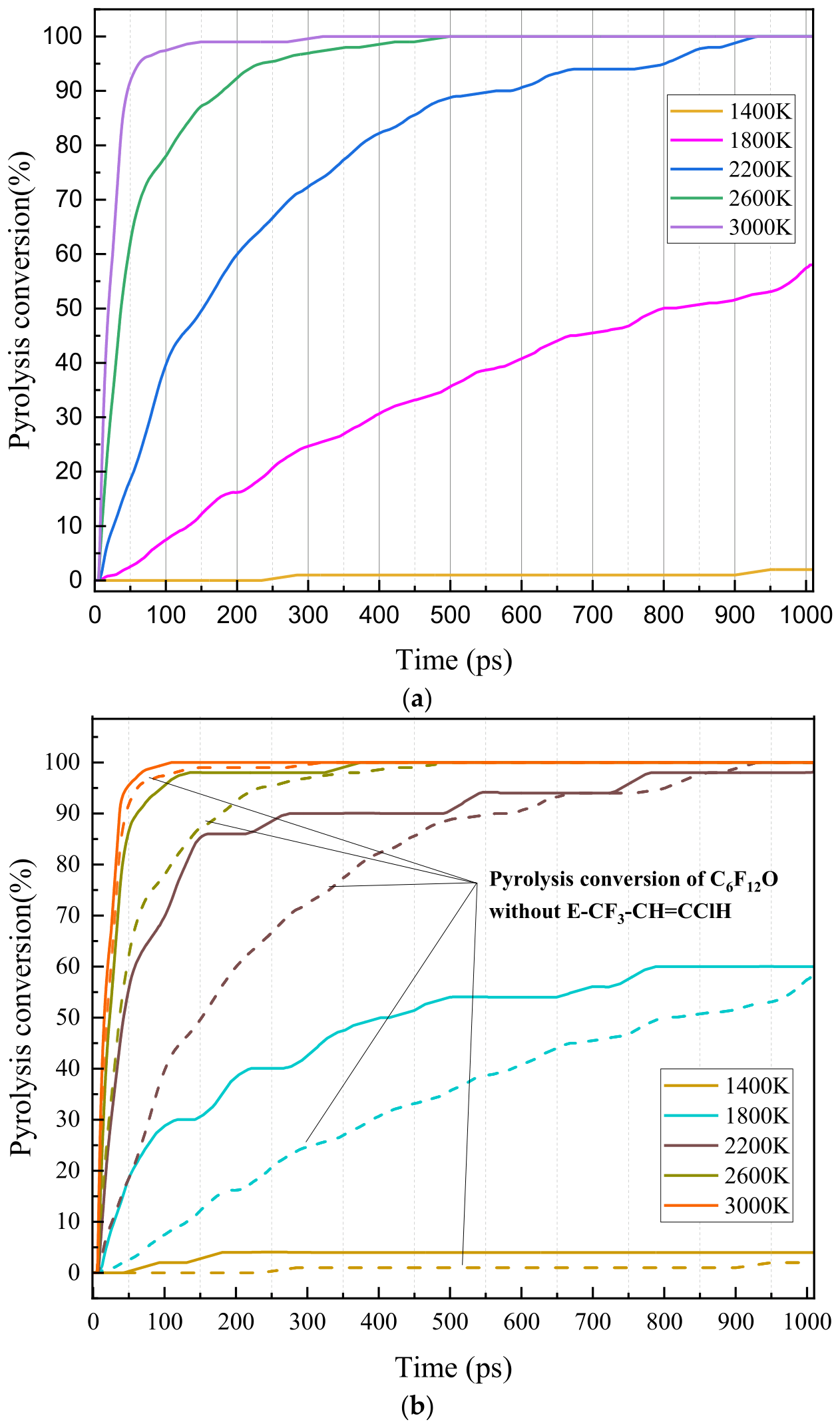
For a better understanding of the pyrolysis of mixed fire extinguishing agents, pyrolysis simulations are required for systems involving a large number of molecules. Temperature is among the most crucial parameters that influence the pyrolysis behavior of fire extinguishing agents. To examine the temperature effect on the pyrolysis behavior, a series of ReaxFF-MD simulations were carried out. The variation in the pyrolysis conversion of C6F12O with temperature is illustrated in Figure 9a. At 1400 K, the pyrolysis conversion is close to 0. As the temperature rises to 1800 K, the pyrolysis conversion exhibits a slow growth trend, reaching only 58% at 1000 ps. When the temperature further increases to 2200 K, the pyrolysis conversion increases substantially, with near-complete decomposition achieved after 900 ps. Under the high-temperature conditions of 2600 K and 3000 K, C6F12O exhibits characteristics of instantaneous decomposition. Specifically, at 3000 K, the pyrolysis conversion rapidly approaches 100% in only about 124 ps. Simulation results indicate that with rising temperature, the pyrolysis conversion of C6F12O increases rapidly, and the reaction intensifies.
Figure 9.
(a) Pyrolysis conversion of C6F12O at different temperatures; (b) pyrolysis conversion of C6F12O/tran-1233zd mixture at different temperatures.
Figure 9b illustrates the variations in the respective pyrolysis efficiencies within the blended system after C6F12O and E-CF3-CH=CClH are mixed at a 5:5 ratio. At 1400 K, the blended system shows only a marginal increase compared to the monomer. Upon heating to 1800 K, blending significantly accelerates the pyrolysis process in the initial stage of the reaction. As the reaction time increases, the difference between the two curves gradually narrows, and they become nearly identical by the end of the reaction. At 2200 K, the promotional effect of blending is most significant, with its initial pyrolysis conversion approaching the level of the pure monomer at 2600 K. When the temperature exceeds 2200 K, the promotional effect of blending on the initial reaction stage gradually weakens with increasing temperature. At 2600 K, a certain difference between the blended and monomer groups remains within the reaction interval of 50–250 ps. By 461 ps, the pyrolysis conversion of both converges to 100%. When the reaction temperature rises to 3000 K, the difference between the blend and the monomer becomes very small.
The variation trend of pyrolysis conversion obtained from the simulation is in good agreement with the trend experimentally measured under the operating condition with a 50% vol E-CF3-CH=CClH volume fraction. Simulation results indicate that the addition of E-CF3-CH=CClH enhances the pyrolysis conversion of C6F12O, leading to a substantial increase in the number of decomposed molecules within a short time, an effect that is particularly pronounced in the initial stage of the reaction. While higher temperatures accelerate the overall pyrolysis process, the promotional enhancement yielded by blending becomes progressively weaker. Consequently, the introduction of E-CF3-CH=CClH can improve the fire extinguishing efficiency of the blended agent and effectively suppress combustion.
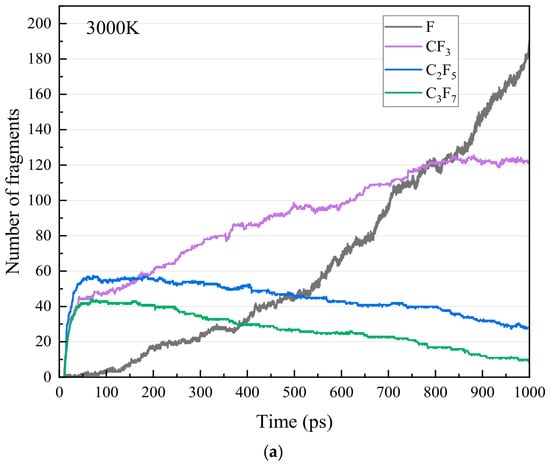
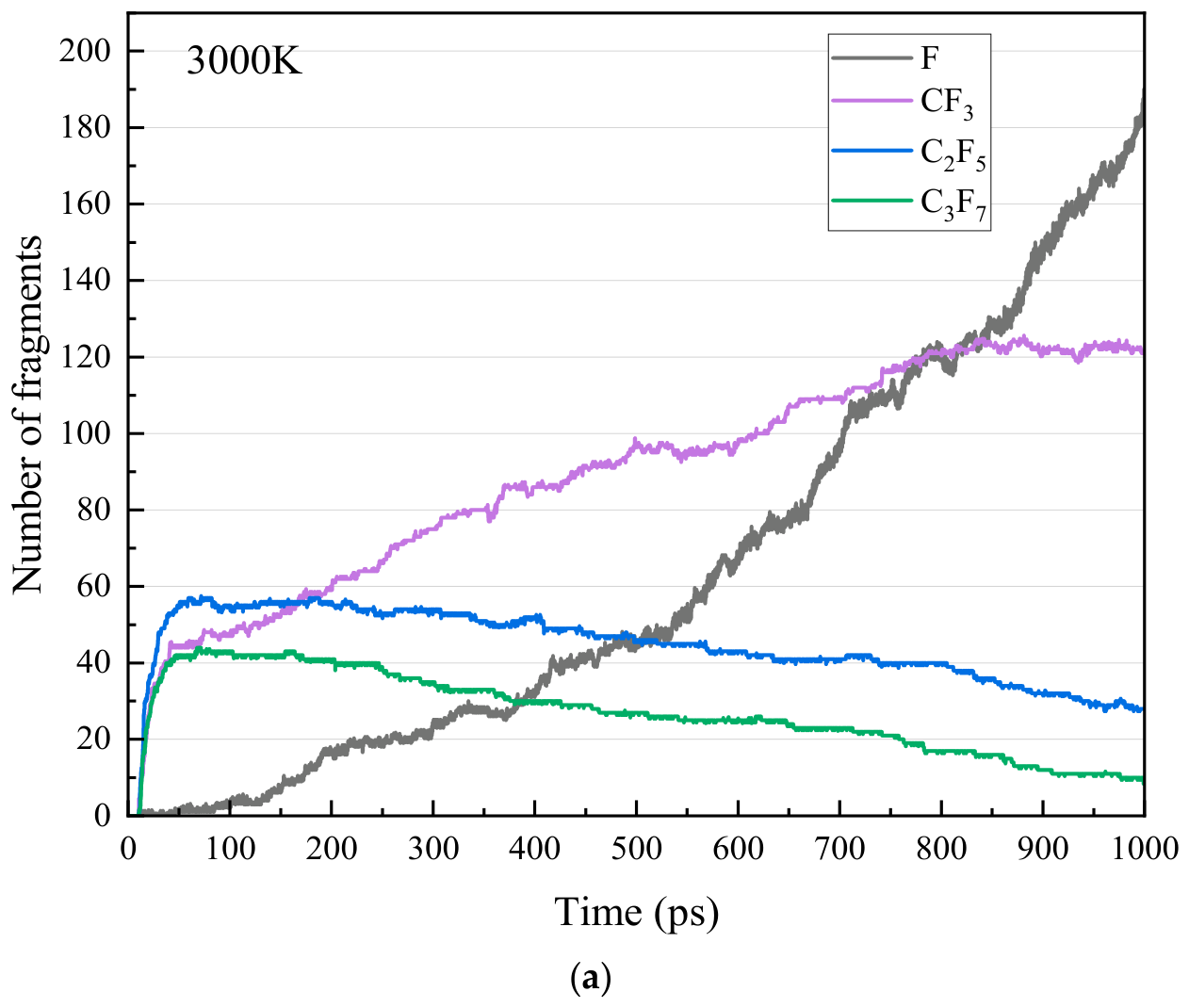
The evolution of the quantities of major cracking fragments over time under the condition of complete C6F12O pyrolysis at 3000 K is illustrated in Figure 10a. In the initial stage of the reaction, the quantities of CF3·, C2F5·, and C3F7· radicals increase rapidly, while the F· radical remains at a low level, indicating that the C-C bonds on both sides of the carbonyl group in C6F12O are the first to cleave. As the reaction time extends, these primary macromolecular fragments undergo secondary dissociation, causing the contents of C2F5· and C3F7· to continuously decline after reaching their peaks, progressively converting into smaller groups and F· radicals. Entering the middle and late stages, the defluorination reaction within the system significantly intensifies. The generation rate of F· accelerates sharply and surpasses that of various carbon-containing fragments, making it one of the predominant end products, while the concentration of CF3· gradually stabilizes. Furthermore, throughout the entire pyrolysis process, the quantity of C2F5· in the system is consistently higher than that of C3F7·. These findings indicate that the microscopic cracking of C6F12O exhibits distinct multi-stage characteristics: the molecular skeleton first undergoes rapid cleavage to form primary fluorinated alkyl fragments, followed by deep cracking of these radicals accompanied by intense defluorination, and ultimately evolves into end products dominated by small fragments and radicals.
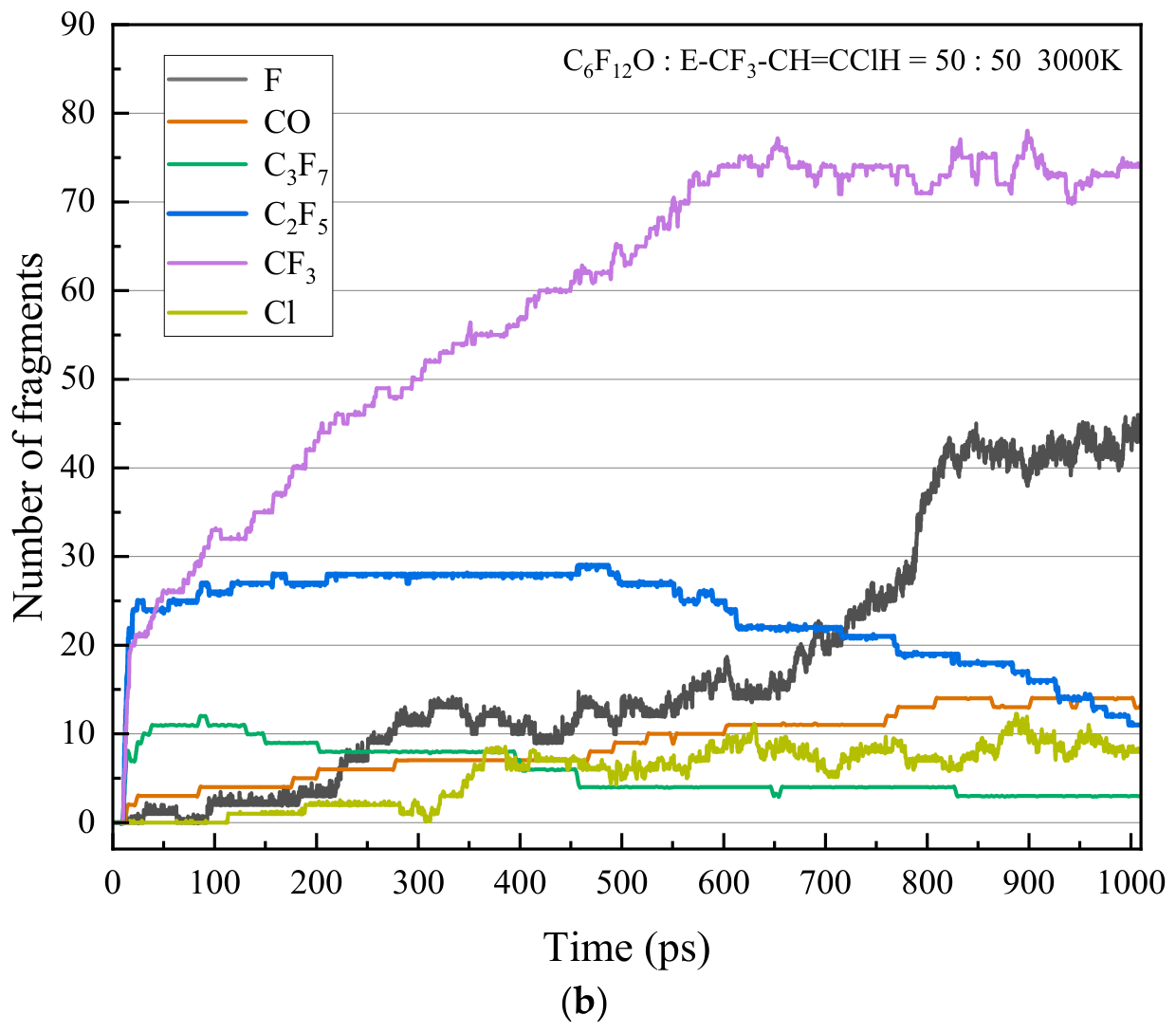
Figure 10.
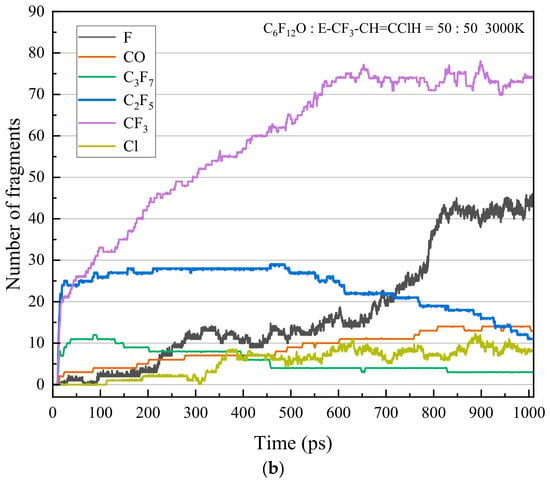
(a) Major fragment changes in C6F12O molecules during pyrolysis at 3000 K; (b) major fragment changes in C6F12O/1233zd mixture during pyrolysis at 3000 K.
Figure 10b illustrates the time-dependent evolution of pyrolysis fragments for the blended fire extinguishing agent with a 5:5 C6F12O/E-CF3-CH=CClH ratio at 3000 K. During the pyrolysis reaction, the quantities of major fragments within the blended system exhibit clear staged evolution characteristics over time. In the initial stage of the reaction, C6F12O is rapidly consumed, and the C–C bonds on both sides of its carbonyl group preferentially cleave, causing the quantities of CF3·, C2F5·, and C3F7· to surge rapidly and reach 33, 26, and 11 at 100 ps, respectively, thereby dominating the products. In the 100–500 ps range, the primary macromolecular fragments begin secondary dissociation; CF3· steadily increases to a high level, and C2F5· remains stable, while the quantity of the larger C3F7· continuously decreases. Meanwhile, the F· radical slowly rises starting from approximately 200 ps and reaches only about 12 at 500 ps, indicating that the defluorination reaction does not dominate this stage.
When the reaction time exceeds 500 ps, the large and medium-sized radicals undergo further deep cleavage. The quantity of CF3· fluctuates around 75 and tends to stabilize, while C2F5· drops to about 12, and the defluorination reaction significantly intensifies starting from 645 ps. The quantity of F· accelerates markedly and stabilizes at around 850 ps, becoming the second major product in the system. Throughout the reaction process, Cl· is generated starting from 300 ps, but its quantity always remains at a low level. Similarly, the yield of F also decreases, indicating that the blended fire extinguishing agent has a certain inhibitory effect on acidic products. Compared with the pyrolysis fragments of pure C6F12O, at the end of the reaction, the proportion of F· in the blended system is significantly smaller, and its quantity is far less than that of CF3·.
The fire suppression mechanism of C6F12O involves both chemical inhibition and physical suppression. Regarding the chemical inhibition of free radicals, the CF3⋅ radical exhibits exceptional suppression efficacy [34,35]. Simulation results indicate that during the pyrolysis process, the concentration of CF3⋅ escalates rapidly and consistently remains at a high level. However, during the fire extinguishing process, CF3⋅ reacts with H⋅ and OH⋅ radicals in the flame to generate HF. The C-Cl bond of E-CF3-CH=CClH is more prone to cleavage compared to other chemical bonds [26]. The resulting Cl⋅ radicals possess a higher fire-extinguishing efficiency than CF3⋅ [36]. Consequently, this effectively reduces the proportion of CF3⋅ participating in flame inhibition, thereby mitigating HF generation at the source.
3.4. Mechanistic Analysis of HF Suppression
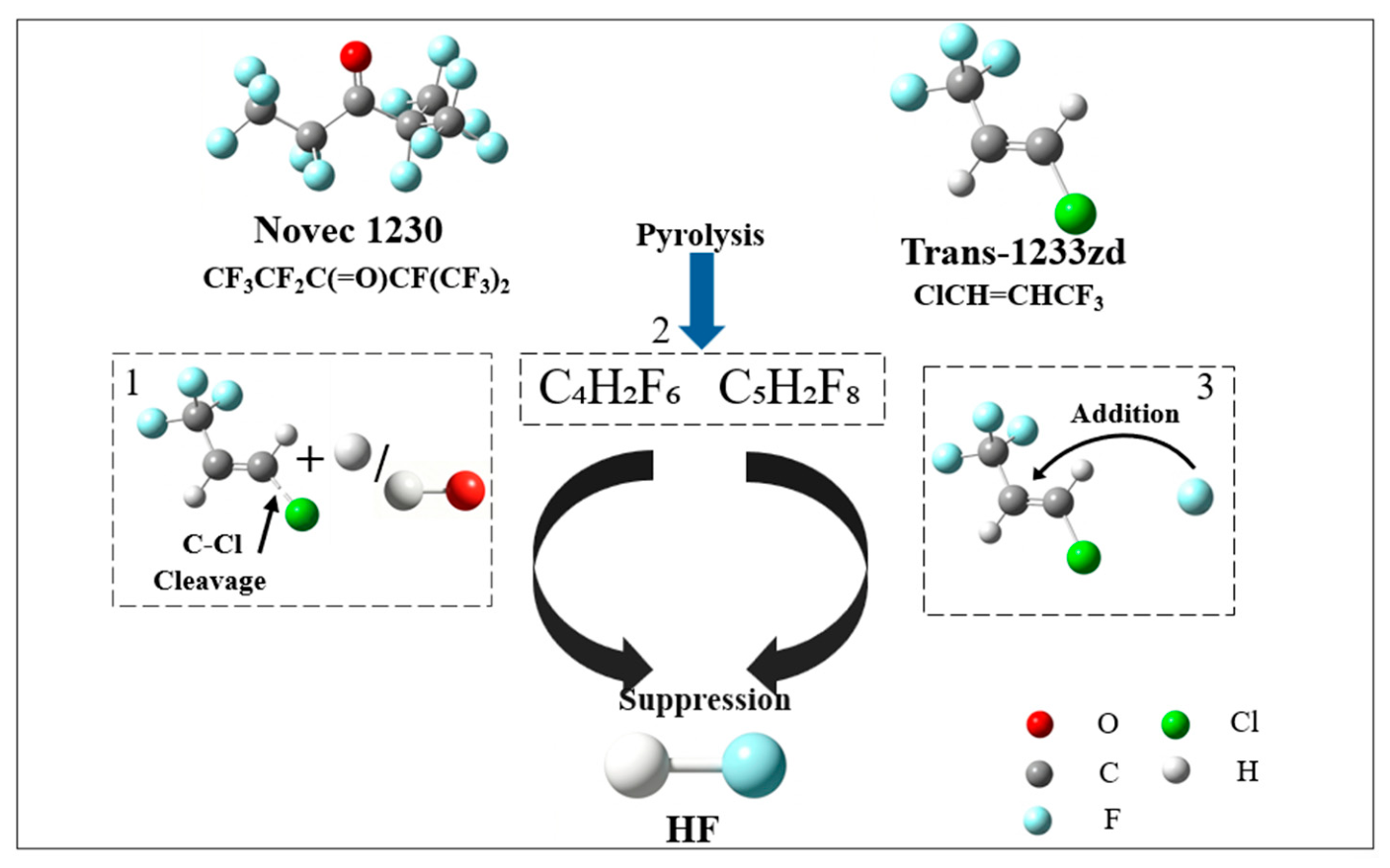
The mechanism of HF suppression in the C6F12O/E-CF3-CH=CClH blended system during high-temperature pyrolysis can be attributed to the synergistic effect of multiple pathways (Figure 11). According to the pyrolysis results, the hydrogen-containing radical fragments generated from the cracking of E-CF3-CH=CClH undergo active cross-coupling and hydrogen transfer reactions with the perfluoroalkyl radicals released by C6F12O in the gas phase. This process generates stable hydrofluoroalkanes (C4H2F6 and C5H2F8), thereby fixing a portion of the fluorine atoms within organic molecules. Furthermore, the Cl· radicals generated from the scission of the C-Cl bond in E-CF3-CH=CClH can effectively suppress the fire, minimizing CF3⋅ consumption and mitigating HF generation at the source. In addition, the carbon–carbon double bonds in E-CF3-CH=CClH molecules can capture F· radicals through radical addition, further suppressing HF generation. However, when the proportion of E-CF3-CH=CClH is too high, its intrinsic pyrolysis releases a large amount of HF at a yield much higher than that of pure C6F12O, causing the net HF yield of the blended system to increase instead. Therefore, precise adjustment of the mixing ratio between the two components is necessary to achieve effective control over HF emissions. Meanwhile, compared to C6F12O, E-CF3-CH=CClH degrades more easily in the atmosphere, and its degradation products exhibit a shorter atmospheric residence time [18,37]. By reducing the dosage of C6F12O, the blended fire extinguishing agent presents a more environmentally friendly formulation.
Figure 11.
Schematic diagram of the synergistic inhibition mechanism of HF.
4. Conclusions
This study systematically investigates the high-temperature thermal decomposition behavior of a C6F12O/E-CF3-CH=CClH blended fire extinguishing agent, analyzing product distributions and HF yields under various temperatures and mixing ratios. The ReaxFF-MD was employed to simulate microscopic fragment evolution and interactions. This joint experimental-theoretical approach clarifies fluorinated product evolution, HF suppression, and radical dynamics. The main conclusions are as follows:
- (1)
- Blending significantly promotes the pyrolysis of C6F12O during the early stage of the reaction. When the C6F12O volume fraction exceeds 20%, chlorinated organic species completely disappear. The hydrogen-containing radical fragments derived from E-CF3-CH=CClH cracking undergo active gas-phase cross-coupling and hydrogen transfer reactions with the perfluoroalkyl radicals liberated from C6F12O, generating stable hydrofluoroalkanes.
- (2)
- Maintaining the C6F12O volume fractions at 40% and 50% in the blended suppressant enables optimal control over the yield of the corrosive gas, HF. This HF mitigation mechanism can be attributed to the result of a multi-pathway synergistic effect.
- (3)
- ReaxFF-MD simulations confirm that the addition of E-CF3-CH=CClH can enhance the pyrolysis conversion of C6F12O and alter the distribution of molecular fragments within the system, leading to a significant increase in the proportion of CF3· and a decrease in F·, improving fire extinguishing efficiency and reducing HF generation.
Author Contributions
Conceptualization, P.C.; validation, Y.G.; investigation, X.W.; writing—original draft preparation, X.Z.; writ-ing—review and editing, X.K.; supervision, B.Z. All authors have read and agreed to the published version of the manuscript.
Funding
This work was supported by Key Laboratory of Fire Protection Technology for Industry and Public Building Ministry of Emergency Management (No. 2023KLIB02), the Tianjin Key Laboratory of Fire Safety Technology (No. 2025TKLFST01), the Key Science and Technology Program of the MEM (No. 2025EMST110301), and the Fundamental Research Funds for the Central Universities (No. 2025ZKPYAQ03).
Data Availability Statement
Data are contained within the article.
Conflicts of Interest
The authors declare no conflicts of interest.
References
- Linteris, G.T.; Babushok, V.I.; Pagliaro, J.L.; Burgess, D.R., Jr.; Manion, J.A.; Takahashi, F.; Katta, V.R.; Baker, P.T. Understanding overpressure in the FAA aerosol can test by C3H2F3Br (2-BTP). Combust. Flame 2016, 167, 452–462. [Google Scholar] [CrossRef] [Scilit] [PubMed]
- Linteris, G.T.; Takahashi, F.; Katta, V.R.; Babushok, V.I. Extinguishment and Enhancement of Propane Cup-Burner Flames by Halon and Alternative Agents. In Proceedings of the Eighth International Seminar on Fire & Explosion Hazards (ISFEH8), Hefei, China, 25–28 April 2016. [Google Scholar]
- Wu, R.; Wang, X.; Cheng, L.; Ren, C.; Wei, X.; Zhang, X. Experimental and theoretical studies on the thermal decomposition of trans-1-chloro-3, 3, 3-trifluoropropene and 2-chloro-3, 3, 3-trifluoropropene and their fire-extinguishing performance. New J. Chem. 2020, 44, 12932–12941. [Google Scholar]
- Vahdat, N.; Zou, Y.; Collins, M. Estimation of fire extinguishing concentration of binary agents. In Proceedings of the Halon Alternatives Technical Working Conference, Albuquerque, NM, USA, 30 April–2 May 2002; p. 182. [Google Scholar]
- Wang, T.; Hu, Y.-j.; Zhang, P.; Pan, R.-m. Study on thermal decomposition properties and its decomposition mechanism of pentafluoroethane (HFC-125) fire extinguishing agent. J. Fluor. Chem. 2016, 190, 48–55. [Google Scholar] [CrossRef] [Scilit]
- Robin, M.L. Suppression of class a fires with HFC-227ea. Process Saf. Prog. 1998, 17, 209–212. [Google Scholar] [CrossRef] [Scilit]
- Zhou, Q.; Ma, W.; Shi, H.; Lu, S.; Zhang, H. Enhancement and suppression of counterflow diffusion flame by HFC-125. Process Saf. Environ. Prot. 2023, 180, 23–34. [Google Scholar] [CrossRef] [Scilit]
- Jin, Z.; Zhang, X. The fire-extinguishing performance and mechanism of fluorinated cyclobutane through experimental measurement and numerical calculation. New J. Chem. 2023, 47, 15787–15796. [Google Scholar] [CrossRef] [Scilit]
- Lv, Z.; Yang, Z.; Zhang, Y.; Chen, Y.; Li, J. A comparative investigation on the flame inhibition characteristics and mechanism of 1, 1, 2, 3, 3, 3-hexafluoro-1-propene (R1216). Fuel 2022, 324, 124652. [Google Scholar]
- Ni, X.; Chow, W.K. Performance evaluation of bromofluoropropene in extinguishing liquid fuel spray fires. Fire Mater. 2014, 38, 673–682. [Google Scholar] [CrossRef] [Scilit]
- Liu, Y.; Wang, J.; Sun, H.; Chen, R.; Xu, Y.; Pan, R. Eco-friendly and high-efficiency Halon replacement fire suppressant: Mechanistic and application insights into the synergistic effects of 2-bromo-3, 3, 3-trifluoropropene and perfluoro-2-methyl-3-pentanone. Combust. Flame 2025, 279, 114295. [Google Scholar] [CrossRef] [Scilit]
- Xing, H.; Lu, S.; Yang, H.; Zhang, H. Review on research progress of C6F12O as a fire extinguishing agent. Fire 2022, 5, 50. [Google Scholar] [CrossRef] [Scilit]
- Zhang, H.; Wang, Y.; Wang, X.; Zhou, S.; Yu, R.; Liao, Y.; Li, J.; Tan, Z. Thermal decomposition mechanism and fire-extinguishing performance of trans-1, 1, 1, 4, 4, 4-hexafluoro-2-butene: A potential candidate for halon substitutes. J. Phys. Chem. A 2020, 124, 5944–5953. [Google Scholar] [PubMed]
- Han, Z.; Zi, R.; Yu, Y.; Du, Z.; Liu, L.; Deng, L. Study on the minimum extinguishing concentration of C6F12O for extinguishing synthesis gas flame of lithium-ion battery. J. Therm. Anal. Calorim. 2023, 148, 3631–3643. [Google Scholar] [CrossRef] [Scilit]
- Yu, B.; Jiang, X.; Zhang, C.; Xu, P.; He, D.; Yu, J.; Cai, Y. Study on ignition delay and reaction mechanism of RP-3/air combustion adding C6F12O. ACS Omega 2023, 8, 24362–24370. [Google Scholar] [CrossRef] [Scilit] [PubMed]
- Shi, B.; Shen, W.; Yin, B.; Wang, Z.; Ruan, H.; Li, Z.; Huang, D. Experimental study on suppressing thermal runaway propagation of lithium-ion battery modules by using liquid nitrogen: Influence of injection pipe diameter and position. Therm. Sci. Eng. Prog. 2024, 50, 102580. [Google Scholar] [CrossRef] [Scilit]
- Xu, W.; Jiang, Y.; Ren, X. Combustion promotion and extinction of premixed counterflow methane/air flames by C6F12O fire suppressant. J. Fire Sci. 2016, 34, 289–304. [Google Scholar] [CrossRef] [Scilit]
- Zhou, B.; Wang, X.; Yoshioka, H.; Wang, K.; Wang, D.; Huang, X.; Chen, T.; Li, Y. Experimental and numerical study of suppression synergistic mechanism of Novec1230 and Trans-1233zd. Therm. Sci. Eng. Prog. 2025, 64, 103840. [Google Scholar] [CrossRef] [Scilit]
- Vahdat, N.; Zou, Y.; Collins, M. Fire-extinguishing effectiveness of new binary agents. Fire Saf. J. 2003, 38, 553–567. [Google Scholar] [CrossRef] [Scilit]
- Wang, K.; Wang, D.; Zhou, B.; Wang, X.; Chen, T. Study on the synergistic extinguishing effect of perfluorohexanone-nitrogen. Case Stud. Therm. Eng. 2025, 71, 106215. [Google Scholar] [CrossRef] [Scilit]
- Tian, S.; Li, Y.; Luo, D.; Yang, R.; Liu, B.; Maluta, N.E.; Li, C.; Zhang, X. Study on the synergistic fire suppression effects of C6F12O and C3HF7. Chem. Eng. Res. Des. 2026, 227, 506–514. [Google Scholar] [CrossRef] [Scilit]
- He, Y.; Guo, R.; Deng, J.; Yi, X.; Xiao, Y.; Feng, J.; Deng, Y. Synergistic fire suppression mechanism of perfluorohexanone and perfluorotriethylamine mixtures: Experimental and quantum chemical insights from a modified cup-burner. Chem. Eng. Sci. 2025, 316, 122029. [Google Scholar] [CrossRef] [Scilit]
- Katta, V.R.; Takahashi, F.; Babushok, V. Effects of agent blending on fire-suppression characteristics. In Proceedings of the AIAA Scitech 2019 Forum, San Diego, CA, USA, 7–11 January 2019; p. 2373. [Google Scholar]
- Tan, B.; Wang, Z.; Huang, J.; Xiao, Z.; Zhang, K.; Xiao, Y. Experimental study of ORC-VCR system using low-GWP fluid R1233zd (E). Therm. Sci. Eng. Prog. 2025, 66, 104085. [Google Scholar] [CrossRef] [Scilit]
- Wang, X.; Tian, H.; Shu, G.; Yang, Z. Insight into the flammability limit and combustion reactions behaviors of R1233zd (E)/R1270 mixtures refrigerants. Int. J. Refrig. 2025, 172, 183–199. [Google Scholar] [CrossRef] [Scilit]
- Feng, B.; Zhang, Z.; Jian, L.; Wang, D.; Feng, R.; Wang, X.; Zhao, G.; Guo, X.; Ma, S. Effect of two halogenated olefins on combustion characteristics of Isobutane. Fuel 2024, 360, 130545. [Google Scholar] [CrossRef] [Scilit]
- Zhang, K.; Xu, Y.; Yu, R.; Wu, H.; Liu, X.; Cheng, X. ReaxFF molecular dynamics study of N-containing PAHs formation in the pyrolysis of C2H4/NH3 mixtures. Combust. Flame 2024, 270, 113774. [Google Scholar] [CrossRef] [Scilit]
- Chenoweth, K.; Van Duin, A.C.; Goddard, W.A. ReaxFF reactive force field for molecular dynamics simulations of hydrocarbon oxidation. J. Phys. Chem. A 2008, 112, 1040–1053. [Google Scholar] [CrossRef] [Scilit] [PubMed]
- Cao, Y.; Liu, C.; Zhang, H.; Xu, X.; Li, Q. Thermal decomposition of HFO-1234yf through ReaxFF molecular dynamics simulation. Appl. Therm. Eng. 2017, 126, 330–338. [Google Scholar] [CrossRef] [Scilit]
- Yu, X.; Zhang, P.; Zhang, H.; Yuan, S. Atomistic Insights into the Influence of High Concentration H2O2/H2O on Al Nanoparticles Combustion: ReaxFF Molecules Dynamics Simulation. Molecules 2024, 29, 1567. [Google Scholar] [CrossRef] [Scilit] [PubMed]
- Bharti, A.; Banerjee, T. Reactive force field simulation studies on the combustion behavior of n-octanol. Fuel Process. Technol. 2016, 152, 132–139. [Google Scholar] [CrossRef] [Scilit]
- Wang, T.; Qin, K.; Zhang, P.; Pan, R. Investigation of the High Temperature Pyrolysis Behavior of Perfluorohexanone as an Environmental-Friendly Fire Extinguishing Agent. Combust. Sci. Technol. 2025, 198, 1–17. [Google Scholar] [CrossRef] [Scilit]
- Wang, K.; Wang, D.; Zheng, B.; Wang, W.; Zhou, B. Pyrolysis mechanism and radical evolution in C6F12O–N2 gas mixtures: A combined ReaxFF MD and DFT study. Appl. Therm. Eng. 2026, 289, 129899. [Google Scholar] [CrossRef] [Scilit]
- Jie, D.; Baohui, C.; Jiazheng, L.; Tiannian, Z.; Chuanping, W. Ternary composite extinguishing agent realizes low HF generation, high efficiency and safe suppression of 280Ah lithium iron phosphate battery fire. J. Energy Storage 2024, 103, 114290. [Google Scholar] [CrossRef] [Scilit]
- Linteris, G.T.; Babushok, V.I.; Sunderland, P.B.; Takahashi, F.; Katta, V.R.; Meier, O. Unwanted combustion enhancement by C6F12O fire suppressant. Proc. Combust. Inst. 2013, 34, 2683–2690. [Google Scholar] [CrossRef] [Scilit]
- Pagliaro, J.L.; Linteris, G.T.; Babushok, V.I. Premixed flame inhibition by C2HF3Cl2 and C2HF5. Combust. Flame 2016, 163, 54–65. [Google Scholar] [CrossRef] [Scilit]
- Sulbaek Andersen, M.; Nielsen, O.; Hurley, M.; Wallington, T. Atmospheric chemistry of t-CF3CH= CHCl: Products and mechanisms of the gas-phase reactions with chlorine atoms and hydroxyl radicals. PCCP. Phys. Chem. Chem. Phys. 2012, 14, 1735–1748. [Google Scholar] [CrossRef] [Scilit] [PubMed]

Disclaimer/Publisher’s Note: The statements, opinions and data contained in all publications are solely those of the individual author(s) and contributor(s) and not of MDPI and/or the editor(s). MDPI and/or the editor(s) disclaim responsibility for any injury to people or property resulting from any ideas, methods, instructions or products referred to in the content. |
© 2026 by the authors. Licensee MDPI, Basel, Switzerland. This article is an open access article distributed under the terms and conditions of the Creative Commons Attribution (CC BY) license.