


Abstract
To investigate the explosive characteristics of solid–liquid mixed fuels containing different types of metal powders—including hydrogen-storage metal powders—and volatile liquid fuels, explosion experiments and corresponding numerical simulations were conducted under unconstrained space conditions. The studied system consisted of Et2O/Al/B/MgH2 mixed fuels with varying composition ratios. Research has shown that the dispersion effect of solid–liquid mixed fuel containing metal dust under strong shock waves is higher than that of pure liquid fuel. And the explosion overpressure and temperature of solid–liquid mixed fuel are higher than that of pure liquid fuel. Under the same solid–liquid ratio, the explosive overpressure of Et2O/Al/B/MgH2 mixed fuel was the highest, which was 110.8% higher than that of pure liquid fuel at the 5 m position. For solid–liquid mixed fuels containing different metal powders, due to the high reaction threshold of boron powder, a high-activity MgH2 reaction is required to drive the reaction. Therefore, the explosive strength of the mixed fuel systems follows the order Et2O/Al/B/MgH2 > Et2O/Al/MgH2 > Et2O/Al > Et2O/Al/B. Meanwhile, simulation models for pure liquid and solid–liquid fuel explosions were established. The discrepancy between the simulated results and the experimental data was within 10%, demonstrating that the proposed model provides an effective and reliable approach for predicting the explosive power and hazardous range of fuel–air explosions.
1. Introduction
Vapor cloud explosions (VCEs) and dust explosions are one of the most serious hazards in modern industry [1,2,3]. Such accidents may occur during the storage [4], production, or transportation [5] of fuel, resulting in severe casualties and substantial economic losses [6,7]. With ongoing technological development, this phenomenon has been deliberately utilized in various engineering and military applications and is commonly referred to as a fuel–air explosion (FAE) [8,9]. There have been many theoretical and experimental studies in the past few decades [10].
Generating strong shock waves through explosions to disperse fuel is beneficial for forming uniform fuel clouds [11,12]. In this regard, Pilch et al. [13] proposed a modified concept of maximum stable diameter, which associates the critical Weber number of droplet fragmentation, fragmentation time, and velocity of droplet fragmentation to more accurately characterize the accelerated fragmentation process of droplets. Li et al. [14,15] systematically studied the mechanism of the liquid dynamic dispersion process from both theoretical and experimental perspectives and analyzed the effects of liquid viscosity and container shell strength on the flow of dispersed liquids. Research suggests that the dominant force for liquid dispersion is the tensile and shear forces generated by the interaction of two reflected waves in opposite directions. Apparao et al. [16] systematically investigated the dispersion characteristics of organic liquid fuels by the types and amounts of dispersed charges and found that 55 g NQ charges are the most suitable for use as dispersed charges for dispersing 4.3 kg of epoxy propane fuel. Song et al. [17,18] used a shock tube to disperse water and glycerol through shock waves of different Mach numbers, elucidating the characteristics of droplet rupture caused by shock waves and vortex rings after shock. It was found that droplets with higher viscosity hinder the stretching effect of a vortex, resulting in less deformation and debris. Wang et al. [19] proposed an improved region growth image processing method to study the dispersion law of cloud radius at different times. In this study, the radial dispersion behavior of a liquid–solid mixed fuel driven by strong shock waves in an unconfined environment was investigated using high-speed photography. Kumar et al. [20,21] established and improved a micro explosion model, providing a theoretical basis for the application of multi-component fuels in secondary atomization.
Ether (DEE), propylene oxide (PO), nitromethane, and aluminum powder are widely used materials in industrial processing and fuel–air explosives (FAEs) [22,23]. Liu et al. [24,25] measured the lower flammability limit (LFL) of DEE/PO/n-pentane vapor mixtures in air using a 20 L sealed stainless steel spherical container. In order to improve its explosive performance, aluminum powder was selected as an additive. The lower flammability limit (LFL) of a volatile liquid fuel–aluminum powder mixture was experimentally studied at temperatures of 20 °C (293 K) and 40 °C (313 K). Bai et al. [26,27] investigated the synergistic effect between nitromethane and ether in a mixture of ether/nitromethane/aluminum at high mass concentrations, resulting in the entire system maintaining high explosion pressure in low-pressure or high relative humidity environments. Liu et al. [28,29] studied the effect of RDX on the explosion characteristics of aluminum powder and aluminum powder/nitromethane mixture fuel using a 20 L spherical explosive device. It was found that when the RDX content is low, it can suppress the reaction of the mixed fuel. But as the mass fraction of RDX increases, the lower flammability limit of the mixed fuel continues to increase. Cao et al. [30,31,32] investigated the explosion characteristics of Al-AlH3 composite dust. It was found that when the concentration of mixed dust remains constant, the higher the proportion of AlH3, the higher the explosion pressure and rate of pressure rise. And it was confirmed that 750 g/m3 is the optimal composite dust explosion concentration.
There is a consensus in the industry that adding high-energy metal powder to liquid fuels can increase explosive power [33,34]. However, due to differences in the chemical reaction activity, component distribution ratio, and physical state of different metal powders, they ultimately have a significant impact on explosion overpressure [35]. This article conducts further experimental research on the effect of three different metal powder ratios of aluminum powder, boron powder, and magnesium hydride on explosion overpressure in liquid ether fuel. These three types of metal powders have their own characteristics, among which aluminum powder is the most commonly added metal powder in solid–liquid fuels. Boron powder has a higher calorific value per unit mass. Magnesium hydride powder has high reaction activity. This study conducted experimental and simulation studies on the dispersion and explosion performance of a composite fuel composed of volatile liquid fuel ether/isopropyl nitrate and high-energy metal powder Al/B/MgH2 mixed in different ratios in an unconstrained space. The effects of different formulations on the dispersion characteristics and explosion pressure characteristics of composite dust were compared and analyzed. Further theoretical support is provided for the explosion-proof safety of composite dust [36] and the design of FAEs.
2. Materials and Methods
2.1. Experimental Site Layout
In order to study the dispersal and cloud explosion processes of different components of solid–liquid fuels, different types of combustible metal powders were added to the liquid fuel to form a solid–liquid mixed fuel. Explosive detonation was used to generate strong shock waves to scatter fuel and form cloud clusters, and finally, secondary ignition and detonation of the cloud clusters was conducted.
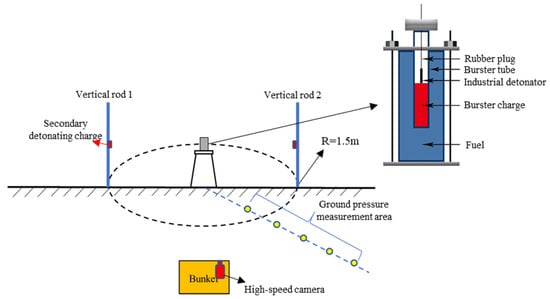
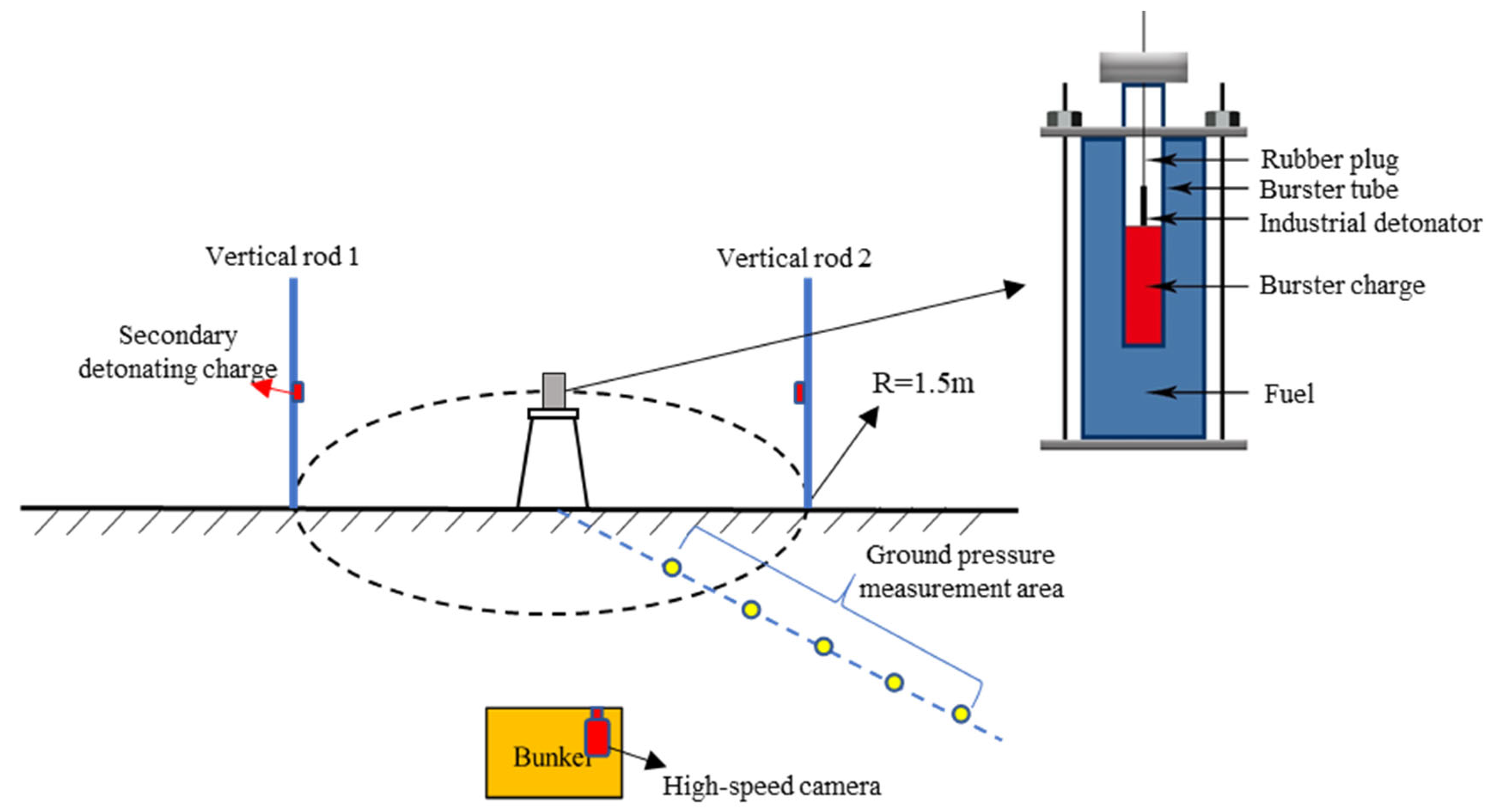
The cylindrical container used for storing the fuel was placed at a height of 0.5 m, and marker posts were set 1.5 m on both sides from the center of the experimental sample. The samples were composed of detonators, central dispersed charges, central tubes, fuel, and outer shells. During the experiment, the scattered charge was first detonated using a detonator, and a suitable time was selected for secondary detonation of the cloud. The secondary detonating charge column was fixed on the left reference rod, and its height was consistent with the horizontal height of the center of the test sample. The amount of TNT was 160 g. The ground pressure sensors (manufactured by the PPCB Piezotronics, New York, NY, USA; maximum range: 5 MPa, sensitivity: 1000 mV/MPa) were arranged at a distance of 1–5 m from the fuel container projection point on the ground surface, with an interval of 1 m. A high-speed photography device (produced by the Photron Corporation of Japan, Tokyo, Japan, with a shooting rate of 2000 fps) and a Micronscan7200 infrared thermal imaging system (produced by Mikron Infrared, Hancock, MI, USA) were placed in a shelter 20 m away from the fuel container. The layout of the experimental site is shown in Figure 1.
Figure 1.
Diagram of the cloud explosion test layout.
2.2. Setting of Solid–Liquid Fuel Components
Common liquid fuels include n-hexane, ether, epoxybutane, ethanol, propylene oxide, acetone, methanol, nitromethane, etc. The common high-energy solid additives mainly include high-calorific-value and high-activity metal powder elements such as aluminum, magnesium, boron, and their compounds. This article selected ethyl ether as the liquid fuel, with the molecular formula (C2H5)2O, abbreviated as Et2O, and added different proportions of aluminum, boron, and magnesium hydride to ether to form different proportions of solid–liquid mixed fuel for experimental research. Meanwhile, in order to compare the difference in explosion pressure between solid–liquid fuel and pure liquid fuel, a group of pure liquid fuels was set up for experimentation as a control. The specific composition of fuel components is shown in Table 1. The particle size of each powder was analyzed by a MALVERN Mastersizer3000 laser particle size meter (produced by Malvern Panalytical Ltd., Malvern, UK). The results are shown in Table 2.
Table 1.
Fuel components of each formula.
Table 2.
Particle size of powder.
According to Table 1, a total of five different fuel formulations were set up in the experiment, and a 1 L cylindrical container with the same shape was used for loading. To prevent fuel overflow, a small amount of space was left at the top of the container. Formula (1) is a pure liquid fuel, consisting of Et2O and isopropyl nitrate as the control group, with a fuel density of 714 kg·m−3 and an effective loading mass of 700 g. Formulas (2)–(5) are solid–liquid mixed fuels with a fuel density of 1032 kg·m−3 and an effective loading mass of 1000 g. In the solid–liquid mixed fuel, the mass ratio of Et2O to metal powder and isopropyl nitrate is 5:5:1, and the total mass of metal powder added in each formula of the solid–liquid mixed fuel is 454 g.
2.3. Establishment of Geometric Models
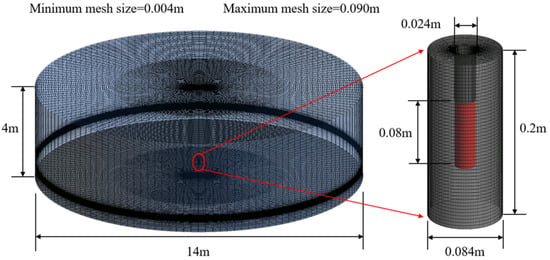
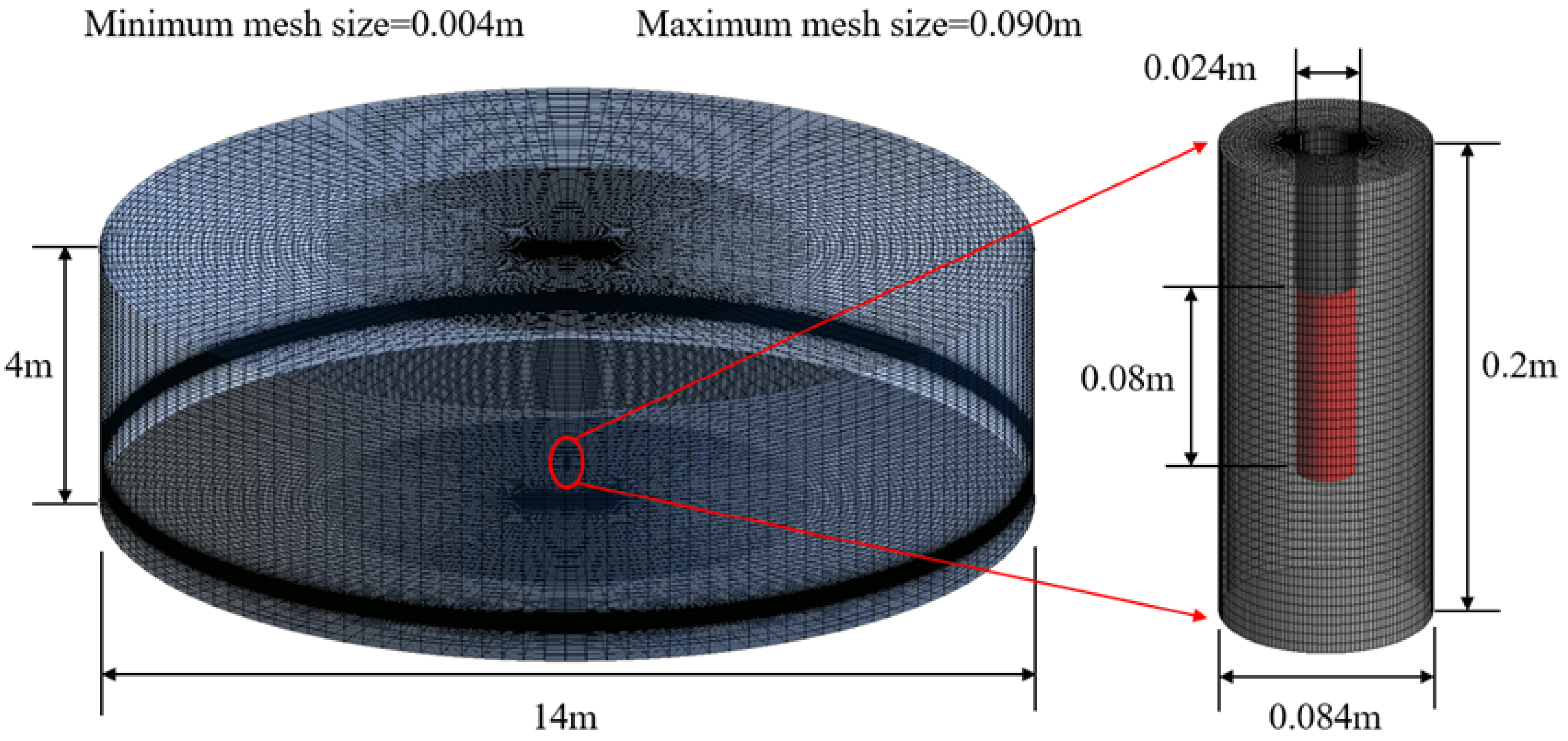
A corresponding 3D simulation model was established based on the size of the experimental sample, and a cylindrical computational domain with a diameter of 14 m and a height of 4 m was established. Topological segmentation was used to divide the model into grids, and O-Grid segmentation was used to generate body-fitted grids for the cylindrical sample area. As shown in Figure 2, the local grid was refined to facilitate precise capture of flow field features during calculation. The minimum grid size was 0.004 m, the transition growth ratio of the grid was 1.15, and the maximum grid size was 0.09 m. The Jacobian criterion for global grid quality was greater than 0.8, indicating excellent grid quality and orthogonality that meets computational requirements. The total number of grids was 2.13 million.
Figure 2.
Three-dimensional model and grid division.
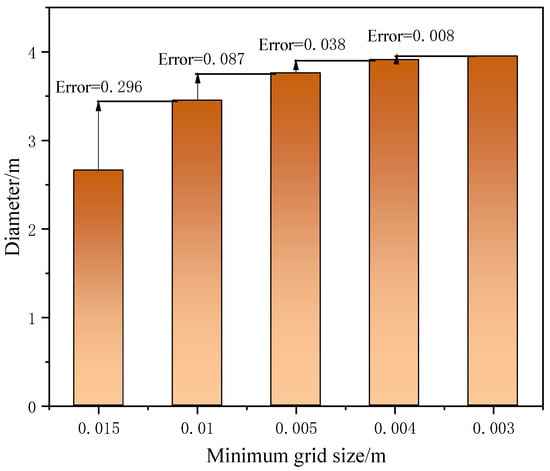
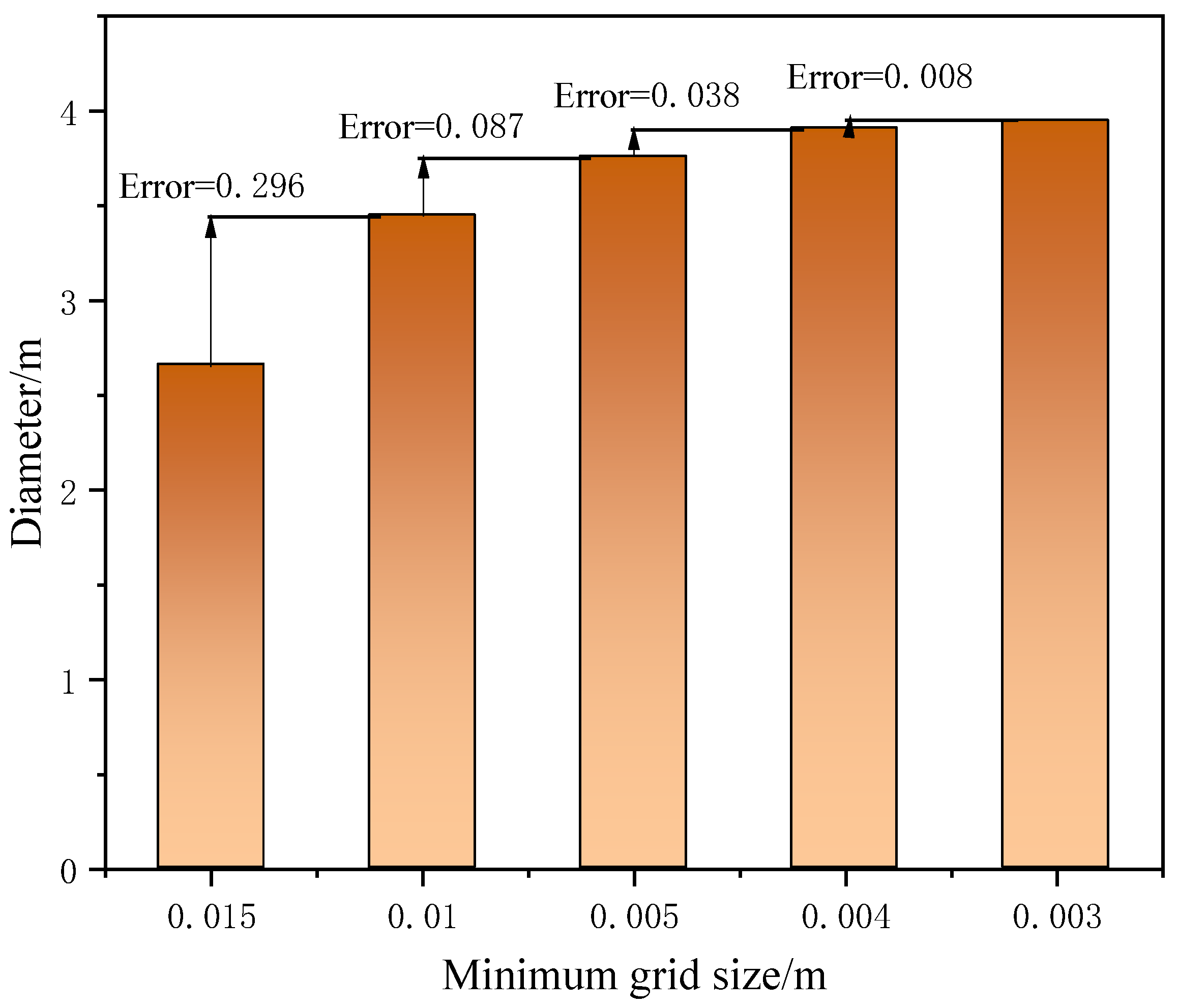
The mesh size has a direct impact on the solution accuracy, computational stability, and computational efficiency of the model. Therefore, it was very important to properly set the spatial scale of the grid to ensure the reliability of the simulation results. In order to analyze the influence of different grid sizes on the simulation results and reduce the error caused by spatial discretization, this study selected multiple groups of minimum grid sizes (0.015 m, 0.01 m, 0.005 m, 0.004 m, and 0.003 m) for Formula (1) to carry out comparative calculation. And the size of the cloud cluster at 40 ms was selected for comparison, as shown in Figure 3. It can be seen that as the grid size decreases, the impact on the calculation results is significant: the calculation accuracy gradually improves, and the results become more stable. When the grid size is reduced from 0.004 m to 0.003 m, the diameter of the cloud and fog changes by only 0.008. Therefore, to ensure a balance between calculation accuracy and efficiency, the smallest grid size of 0.004 m was selected for simulation calculations.
Figure 3.
Verification of grid independence.
2.4. Simulation Models
The simulation calculation was carried out using the FLUENT 2022R1 software. The interaction between shock waves and liquid fuels is a typical gas–liquid two-phase flow process. For gas–liquid two-phase flow, the Volume of Fluid (VOF) model is selected for calculation. The dispersion process of dust is a typical gas–solid two-phase flow process. Metal powder particles are considered as discrete phases in the flow field in simulation calculations, and it is believed that the presence of particles will not change the basic state of the flow field. The calculation of gas–solid–liquid three-phase flow needs to follow the basic Navier–Stokes equations, turbulence equations [37,38,39], and discrete-phase equations. The main governing equations are as follows:
Continuity equation:
Momentum conservation equation:
Energy conservation equation:
The RNG-based k–ε turbulence model was employed to describe the turbulent flow. Compared with the standard k–ε model, the primary distinction lies in the values of the model constants. The governing transport equations for the turbulent kinetic energy and its dissipation rate are expressed as follows:
where represents the turbulent kinetic energy, denotes its dissipation rate, and corresponds to the production term of turbulent kinetic energy. The and constants are 1.42 and 1.68, respectively.
In the model, both the gas and liquid phases are considered as continuous phases, described using the Euler method, while the particle phase is considered as a discrete phase and described using the Lagrangian method.
Consider the surface tension of the liquid phase and calculate the surface tension based on the continuous surface force model. The pressure drop across the surface depends on the surface tension coefficient and the surface curvature measured in the orthogonal direction of two radii and .
In the equation, is the pressure difference at the interface of two fluids, Pa.
Surface curvature is calculated based on the local gradient in the surface normal at the interface. Let be the surface normal and be defined as the gradient of . is the volume fraction of .
Curvature is defined by the divergence of the unit normal
in the equation .
The DPM model adopts the Euler–Lagrange method, and the force of the particles in the flow field follows Newton’s second law. is the total force acting on a unit mass particle, which is composed of the following forces [40]:
where is the fluid velocity; is the particle velocity; is the dynamic viscosity of the fluid; is the fluid density; is the particle density (skeleton density); is the particle diameter; is the relative Reynolds number (particle Reynolds number); is the virtual mass coefficient, with a default value of 0.5; T is the local fluid temperature; is the thermal conductivity of the fluid; is the particle thermal conductivity; is a constant of 2.594; dij is the fluid deformation rate tensor; and is the relative angular velocity of the fluid and particles.
Multiphase cloud and mist explosions belong to chemical combustion reactions with high reaction rates. Taking into account computational efficiency and applicability, a finite rate model described by the Arrhenius formula was chosen.
where is the pre exponential factor; is the temperature index; is the activation energy of the reaction; and R is the universal gas constant, 8.314 kJ·mol−1·K−1.
3. Results
3.1. Fuel Dispersion Characteristics
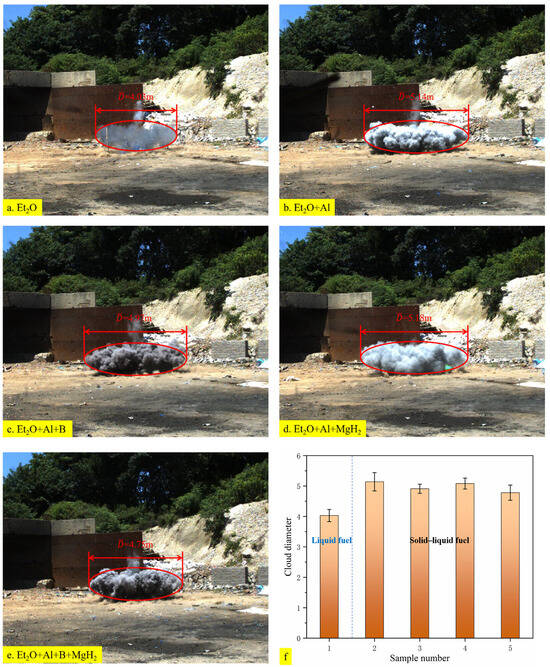
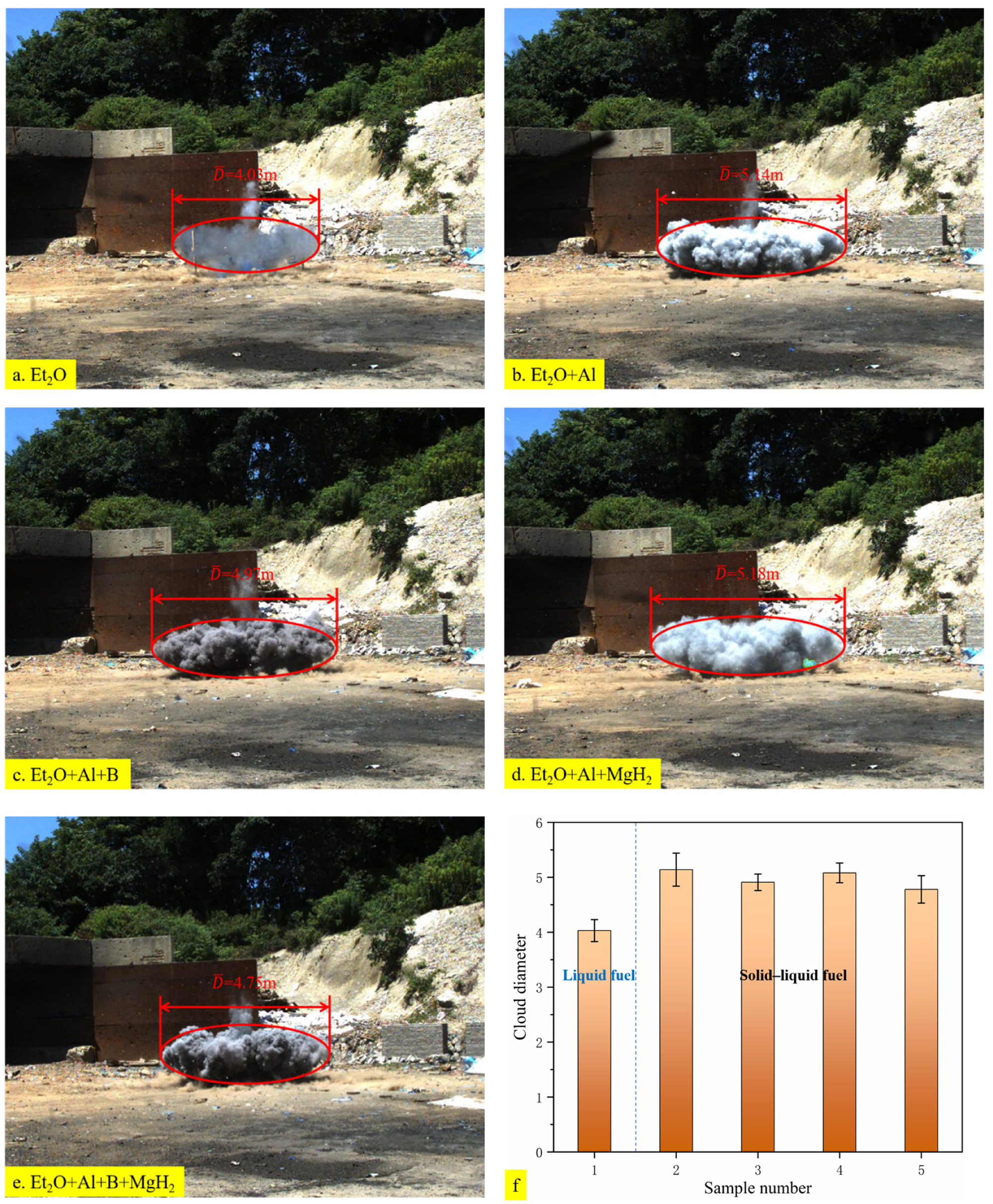
The differences in cloud formation among different fuel formulations were compared and analyzed when the cloud formed by dispersal reached a relatively stable state. The comparison of cloud cluster images and diameters captured by the high-speed camera system at 40 ms after the dispersal of different types of fuels is shown in Figure 4.
Figure 4.
Comparison of fuel cloud diameters with different formulations.
From the comparison of cloud clusters formed by different fuels in Figure 4, it can be seen that the cloud clusters formed by pure liquid fuel and solid–liquid mixed fuel are generally similar in shape, both of which are circular cakes. The difference is that the clouds formed by pure liquid fuel are semi-transparent, while the clouds of solid–liquid mixed fuel have significantly lower transparency. Under the same loading volume, the size of the liquid fuel cloud is smaller than that of the solid–liquid mixture fuel. From Figure 4f, it can be observed that at 40 ms, the diameter of the cloud formed by ether fuel is 4.03 m, while the diameter of the cloud formed by solid–liquid mixture fuel can reach 5.18 m.
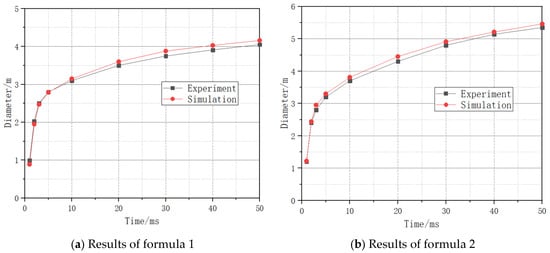
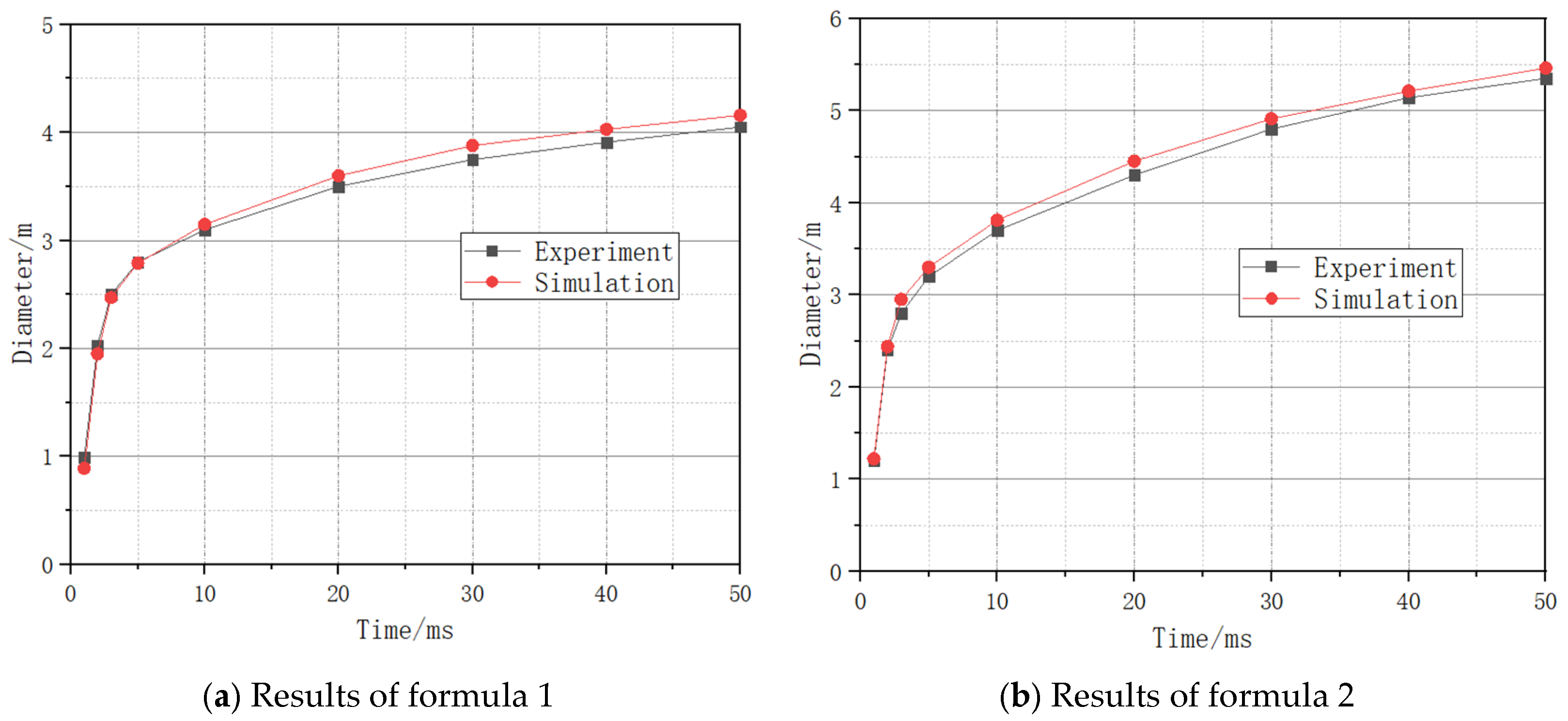
The comparison of the experimental results of the cloud diameters of Formulas (1) and (2) at different times with the numerical simulation results is shown in Figure 5. It can be seen that the cloud diameters of both formulas increase rapidly at the initial stage of scattering, and then the growth rate gradually slows down, presenting an overall expansion feature that is fast at first and then slow. It reflects the transition of fuel from rapid fragmentation and dispersion under shock wave drive to the diffusion stage jointly controlled by aerodynamic force and inertia. The numerical simulation results maintain good consistency with the experimental data at all times, with a maximum error of 9.8%. The simulation can accurately reproduce the overall trend and scale change in cloud cluster expansion, indicating that the established numerical model has good reliability. By comparing the two formulas, it can be found that the overall diameter of the cloud cluster formed at the same time by Formula (2) is larger than that of Formula (1), indicating that it has a stronger dispersion ability under the action of shock waves.
Figure 5.
Comparison between experimental and simulation results of cloud diameter.
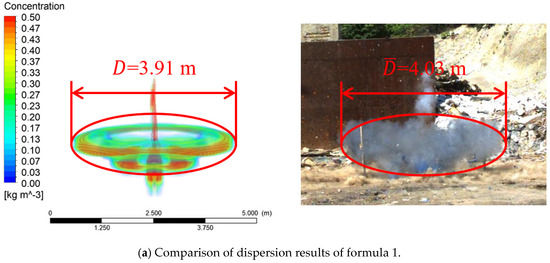
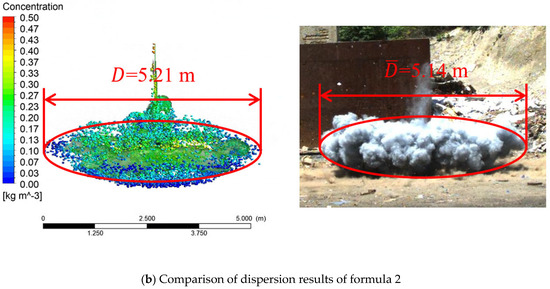
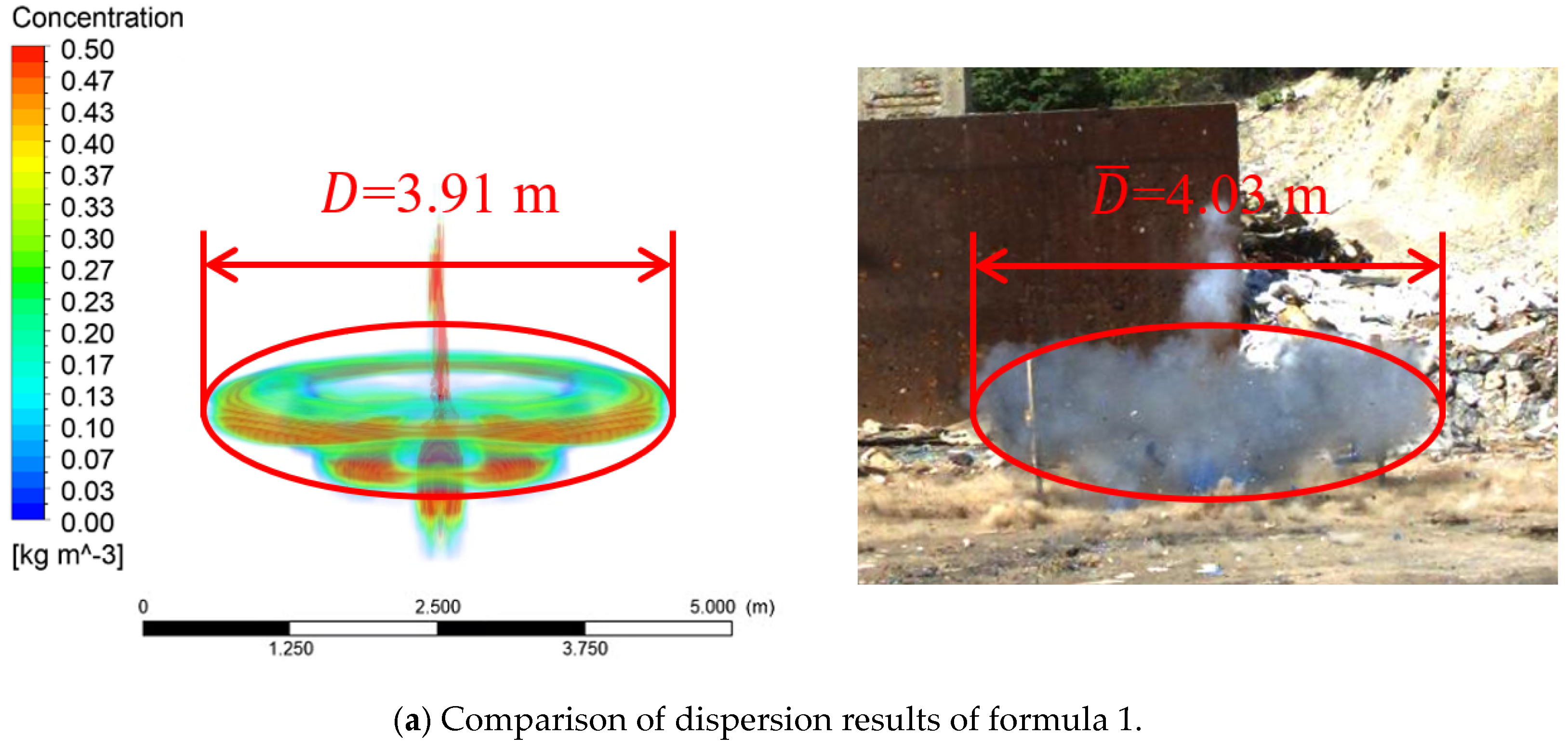
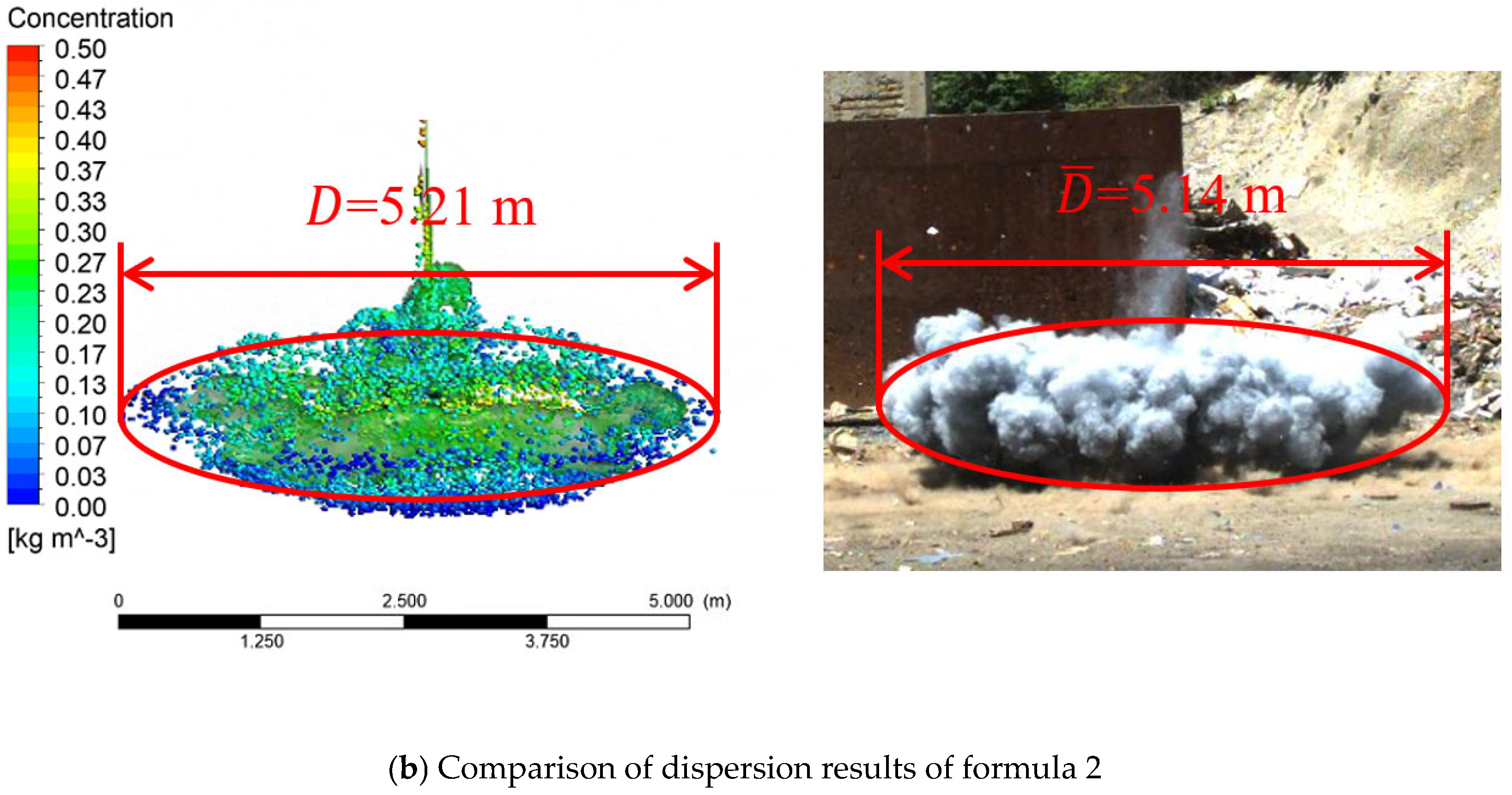
The experimental and numerical simulation results of Formulas (1) and (2) at 40 ms for cloud dispersion are shown in Figure 6. According to the simulation results, it can be seen that the cloud diameter of the simulation result at the moment of 40 ms fuel injection in Formula (1) is 3.91 m, with an error of 2.9% compared to the experimental results. The simulation result of Formula (2) fuel-spraying at 40 ms showed a cloud diameter of 5.21 m, with an error of 1.4% compared to the experimental results. And the similarity in cloud morphology proves that the model can effectively predict the dispersion of pure liquid or solid–liquid fuels.
Figure 6.
Comparison of experimental and numerical simulation results.
3.2. Fuel Detonation Characteristics
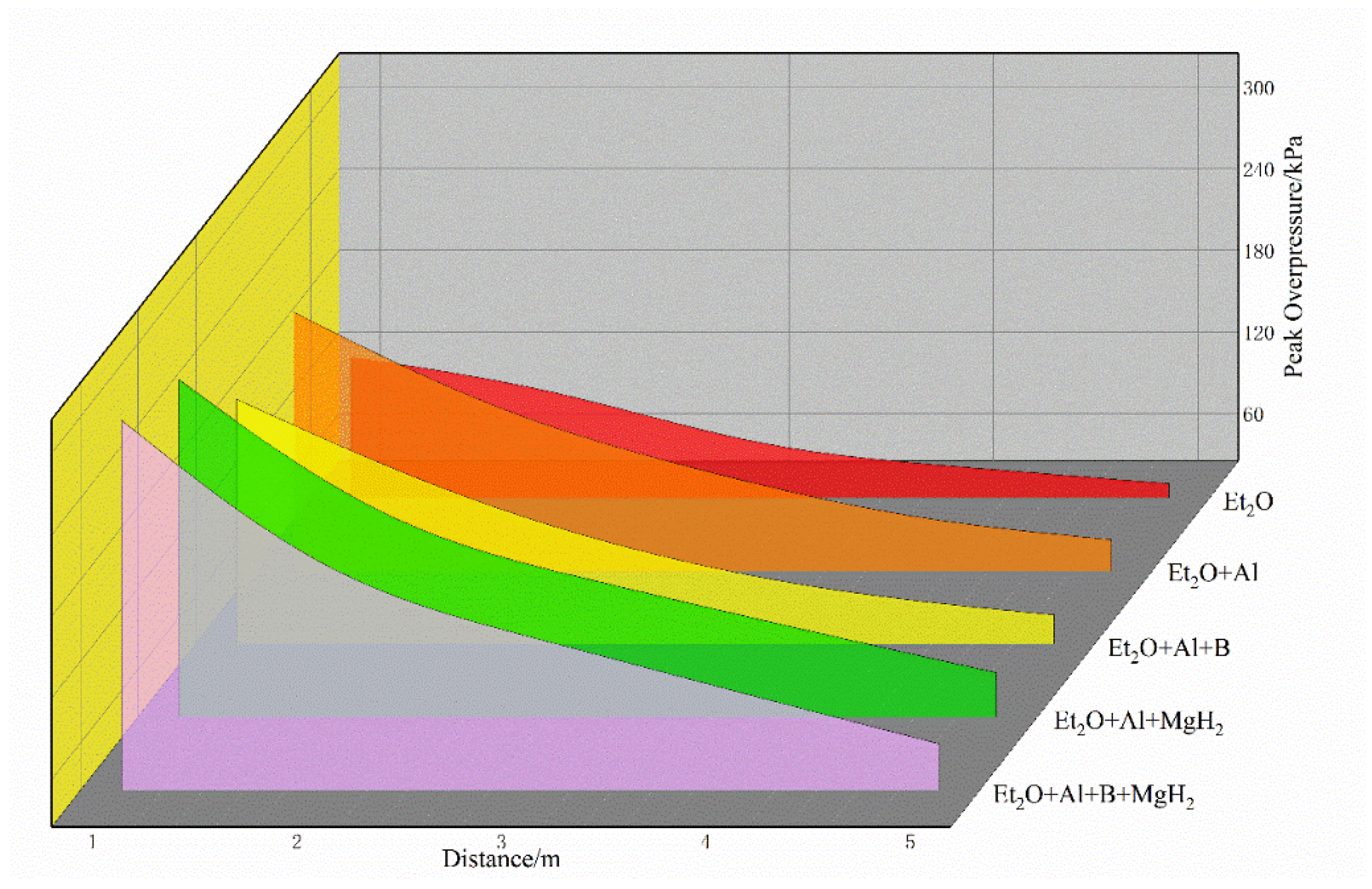
The pressure attenuation trend at different distance positions is shown in Figure 7 when the cloud cluster is ignited at a time of 40 ms after dispersion.
Figure 7.
Peak overpressure curves of five fuels at different distances.
From the above figure, it can be seen that as the distance increases, the pressure peak of the explosion shock wave continuously decays. The explosion overpressure of Formula (1) pure liquid ether fuel is significantly lower than that of Formulas (2)–(5) solid–liquid mixed fuel after adding metal powder. In Formulas (2)–(5) solid–liquid mixed fuel, the order of explosion overpressure values is 5 > 4 > 2 > 3. Among them, the explosion overpressure values of Formulas (4) and (5) are significantly higher than those of Formulas (2) and (3).
Among fuel Formulas (1)–(5), Formula (5) has the highest explosion overpressure value and Formula (1) has the lowest. The measured overpressure value of Formula (1) at a distance of 1 m from the ground is 128.16 kPa, while the measured overpressure values of Formulas (2)–(5) at the same distance are all greater than 200 kPa. The explosion overpressure of Formula (1) decreased to 35.21 kPa at a distance of 5 m on the ground. The measured overpressures of Formulas (2)–(5) at the same distance were 47.85 kPa, 46.41 kPa, 67.62 kPa, and 74.22 kPa, respectively. At the 5 m position, compared with pure liquid fuel, the explosion overpressure of the solid–liquid mixed fuel increased by 35.9%, 31.8%, 92.0%, and 110.8%, respectively. This indicates that the critical safety distance for the explosion of mixed combustible metal powder in liquid fuel is significantly greater than that of a pure liquid fuel explosion.
By analyzing the components of each formula and the explosion overpressure values, it can be seen that although the combustion heat of boron powder is higher under the same quality conditions, the pressure of Formula (3) decreased compared to Formula (2). It is speculated that the reason for this is that the ignition and combustion conditions of boron powder are relatively harsh, with a considerable proportion of boron powder not effectively ignited in the cloud. Comparing the measured data of Formulas (3) and (4), it can be seen that adding magnesium hydride to aluminum powder significantly increases the overpressure value measured compared to adding boron powder, indicating that the combustion efficiency of magnesium hydride is higher than that of boron powder.
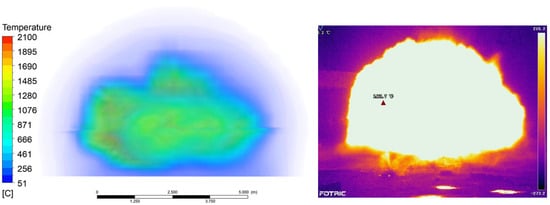
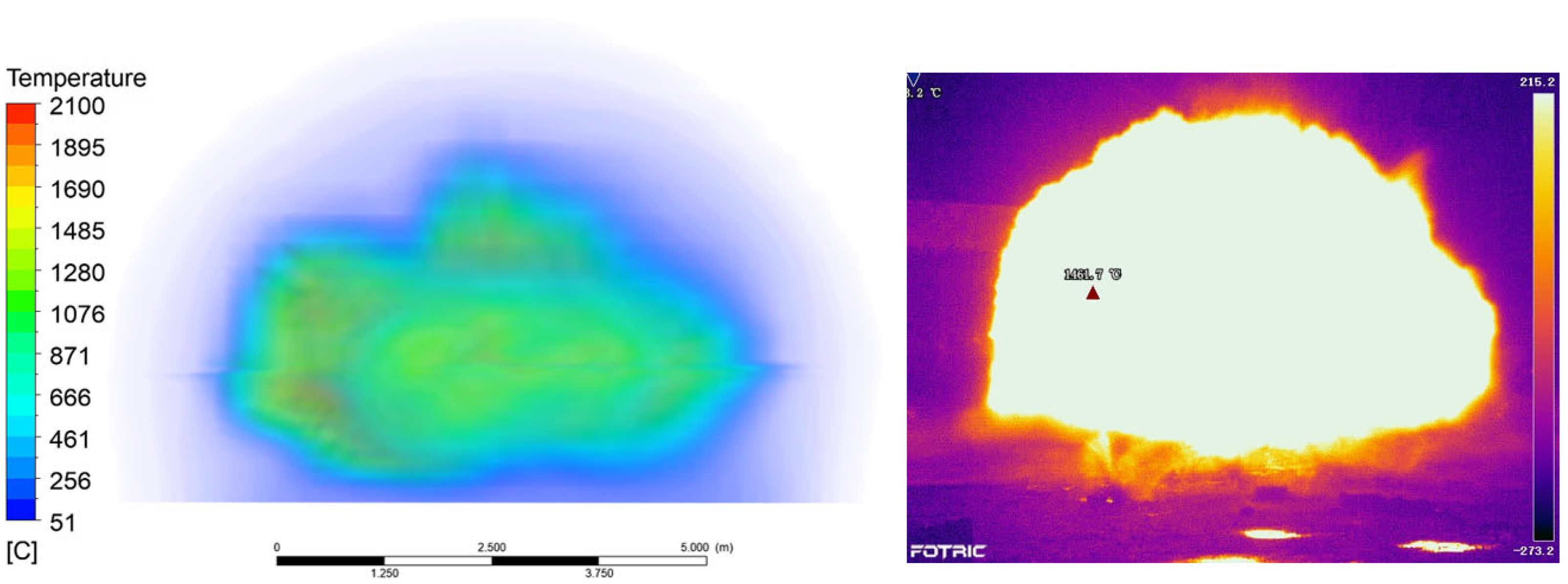
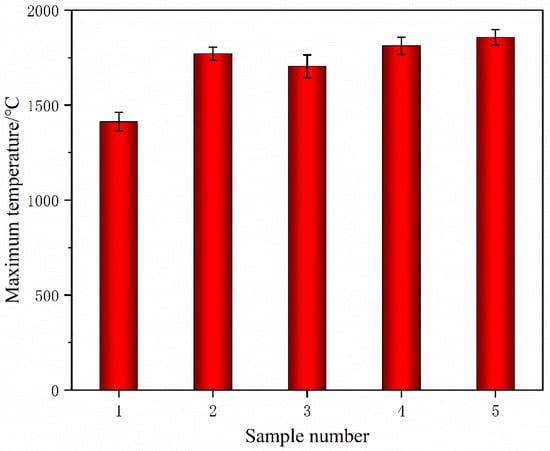
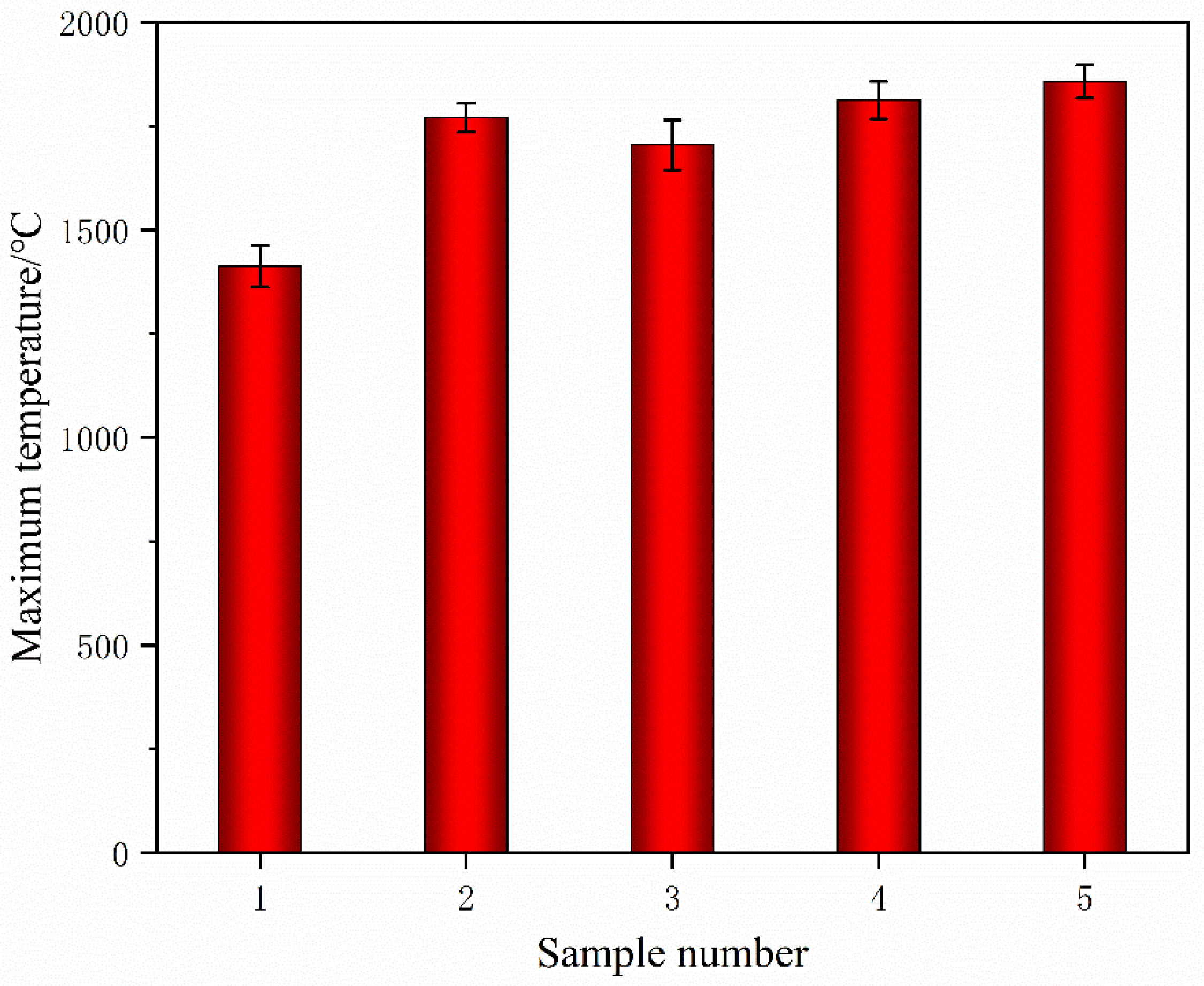
The comparison of fireball results obtained through simulation and infrared photography is shown in Figure 8. The simulation results are consistent with the infrared shooting results in terms of the shape of the fireball. And the highest temperature on the surface of the fireball obtained through simulation is about 1361 °C, while the highest temperature on the fireball surface obtained through experimental photography is 1462 °C, with an error of about 6.9%, proving the reliability of the simulation results. The maximum surface temperature of each explosive fireball during the experimental process is shown in Figure 9. It can be seen that the explosion temperature of liquid fuel is significantly lower than the other four solid–liquid fuels. In Formulas (2)–(5) solid–liquid fuel, the order of explosion temperature is 5 > 4 > 2 > 3, which is consistent with the distribution of overpressure. This also proves that boron powder is not easy to react and magnesium hydride dust promotes the reaction.
Figure 8.
Comparison between simulation and experiment of Formula (1) fireball.
Figure 9.
Maximum temperature of explosion for different formulas.
4. Discussion
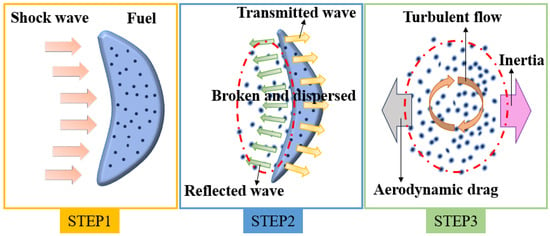
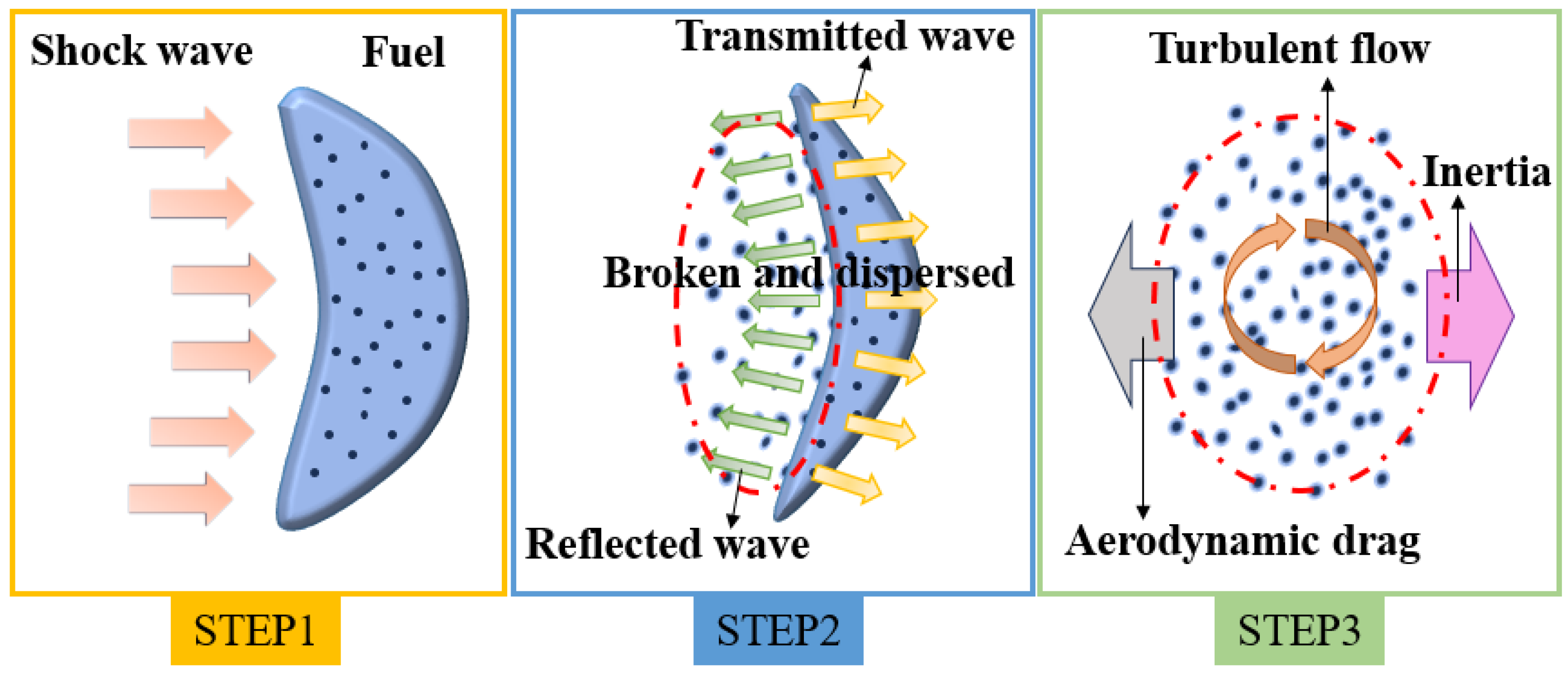
Under the action of the shock wave generated by the explosion, the fragmentation and dispersion process of the fuel cloud essentially belongs to the shock wave–multiphase medium coupling dynamics problem. As shown in Figure 10, this process can be summarized into three stages. Firstly, the shock wave propagates to the boundary of the fuel cloud, due to the significant differences between the fuel cloud and the surrounding air in terms of density, acoustic impedance, and compressibility. The reflected wave enhances the local pressure gradient, while the transmitted wave forms an inhomogeneous pressure field within the cloud, providing the initial driving force for the subsequent fragmentation of the cloud. The reflected waves enhance the local pressure gradient, while the transmitted waves form a non-uniform pressure field within the cloud cluster, providing the initial driving force for the subsequent cloud cluster fragmentation. Secondly, under the combined effect of reflected and transmitted waves, the surface and interior of the fuel cloud are subjected to transient high-pressure loads and strong shear forces. At this time, the pressure mutation at the cloud interface induces Rayleigh–Taylor instability, which causes the fuel mass to quickly destabilize and break. This ultimately leads to the fuel cloud being broken down into a large number of smaller droplets or particles. Finally, in the flow field after the shock wave attenuation, these tiny fuel droplets/particles continue to move and diffuse under the combined action of their own inertial force, aerodynamic force, and turbulent pulsation. The high-speed radial airflow formed in the explosion flow field provides continuous momentum input for the fuel particles, while the air resistance gradually weakens their motion speed, so that the fuel forms a larger scale cloud in the space, which significantly increases the contact area between the fuel and the air and creates favorable conditions for the subsequent combustion or detonation reaction. Combining the experimental and numerical simulation results of solid–liquid fuel and liquid fuel scattering, it can be found that different physical property parameters have a decisive influence on the evolution of fuel clouds. In contrast, solid–liquid fuels, due to their larger overall density and equivalent inertia, have a stronger momentum retention capacity and a slower speed attenuation process after achieving high-speed motion. Therefore, under the action of a shock wave driving force, they can form fuel clouds with a larger spatial scale.
Figure 10.
Schematic diagram of the interaction between the shock wave and fuel.
Based on the analysis of formula data from (3), (4), and (5), it can be concluded that adding magnesium hydride is beneficial for promoting the full combustion of boron powder in the fuel cloud, thereby increasing explosion overpressure. The decomposition temperature of MgH2 is about 400 °C [41], so the MgH2 dust will decompose and generate Mg and H2 during the explosion. The early release of hydrogen significantly enhances the local flammability of the fuel cloud and promotes the formation of the gas-phase flame core, thereby accelerating the ignition of the flame and the rise in early pressure. Meanwhile, the newly formed magnesium has a very high chemical reactivity and can be easily ignited [42]. The combined effect of increasing temperature and increased local turbulence helps to remove or thin the oxide layer, allowing oxygen to more effectively come into contact with the boron core. This leads to a higher degree of complete combustion of boron. The enhanced energy release rate of the system results in an increase in the explosion overpressure. Therefore, mixing highly reactive metal powder with high-calorific-value metal powder is an effective way to increase the explosion overpressure of solid–liquid mixed fuels.
5. Conclusions
By conducting field experiments and numerical simulations, the characteristics of solid–liquid mixed fuel clouds under strong shock waves and the influence of solid powder components on cloud explosion overpressure were studied. The main conclusions are as follows:
- The fuel cloud undergoes three processes under the action of shock waves: contact, wave system reflection and transmission, and fragmentation and atomization. After forming small particle-sized droplets, they diffuse under the action of the airflow. The results show that compared with solid–liquid fuel, pure liquid fuel, due to its lower density, is more easily driven in the initial stage under the action of shock waves. However, its inertia is relatively small, and it decelerates more rapidly in the later stage, resulting in the final formed cloud and fog mass having a diameter smaller than that of solid–liquid fuel, which has greater inertia and can maintain a high-speed state for a longer time.
- Compared with the pure liquid fuel, the explosion overpressure value of the solid–liquid mixed fuel at the distance of 5 m is increased by at least 31.8%, and the explosion damage effect is significantly enhanced. The results show that in fuel–air explosion accidents involving solid–liquid mixed fuels, the range of shock wave action and the intensity of disaster are significantly higher than those in the case of traditional liquid fuels. Therefore, in the process of engineering design and risk assessment, the safety protection distance should be appropriately increased and the protection level raised in response to the explosion scenarios of solid–liquid mixed fuels.
- In the four different energetic material powder addition formulations, the overpressure value and maximum explosion temperature are ordered as aluminum powder + boron powder + magnesium hydride powder > aluminum powder + magnesium hydride powder > aluminum powder > aluminum powder + boron powder. The results show that magnesium hydride is the key additive component for enhancing the explosion intensity of the fuel cloud. The synergistic combustion mechanism formed by hydrogenated magnesium, aluminum powder, and boron powder is the fundamental reason why the explosion power of formulations (4) and (5) is significantly higher than that of other formulations.
In the subsequent research, we hope to verify the synergistic effect of magnesium hydride and metal dust explosion by designing experiments. It is also expected that through a series of thermodynamic and kinetic analyses, the key parameters of each metal and their interactions can be independently measured and a quantitative analysis of the contribution of each metal powder to the overall explosion strength can be conducted.
Author Contributions
J.R.: Writing—original draft; Z.W.: Data curation; C.L.: Funding acquisition; C.B.: Resources and Supervision. All authors have read and agreed to the published version of the manuscript.
Funding
This research was funded by [Hebei Provincial Natural Science Foundation] grant number [A2025507003].
Data Availability Statement
Data availability upon request.
Conflicts of Interest
The authors declare no conflict of interest.
Nomenclature
| the fluid density | the particle density | ||
| the velocity of fluid i | the particle diameter | ||
| the total energy | the relative Reynolds number | ||
| the effective thermal conductivity | the virtual mass coefficient | ||
| the source term | T | the local fluid temperature | |
| the turbulent kinetic energy | the thermal conductivity of the fluid | ||
| the dissipation rate | the particle thermal conductivity | ||
| the production term of turbulent kinetic energy | the fluid deformation rate tensor | ||
| the particle velocity | the relative angular velocity of the fluid and particles | ||
| the dynamic viscosity of the fluid | the temperature index | ||
| the pre exponential factor | the activation energy of the reaction |
References
- Alonso, F.D.; Ferradás, E.G.; Sánchez, T.D.J.J.; Aznar, A.M.; Gimeno, J.R.; Alonso, J.M. Consequence analysis to determine the damage to humans from vapour cloud explosions using characteristic curves. J. Hazard. Mater. 2008, 150, 146–152. [Google Scholar] [CrossRef] [Scilit]
- Wang, K.; Qian, X.; He, Y.; Shi, T.; Zhang, X. Failure analysis integrated with prediction model for LNG transport trailer and thermal hazards induced by an accidental VCE: A case study. Eng. Fail. Anal. 2020, 108, 104350. [Google Scholar] [CrossRef] [Scilit]
- Zhu, C.; Zhu, J.; Wang, L.; Mannan, M.S. Lessons learned from analyzing a VCE accident at a chemical plant. J. Loss Prev. Process Ind. 2017, 50, 397–402. [Google Scholar] [CrossRef] [Scilit]
- Duong, P.A.; Bae, J.-W.; Lee, C.; Yang, D.H.; Kang, H. Numerical Study on Ammonia Dispersion and Explosion Characteristics in Confined Space of Marine Fuel Preparation Room. J. Mar. Sci. Eng. 2025, 13, 1235. [Google Scholar] [CrossRef] [Scilit]
- Ostadi, M.; Cohn, D.R.; Zang, G.; Bromberg, L. Potential Expansion of Low-Carbon Liquid Fuel Production Using Hydrogen-Enhanced Biomass/Municipal Solid Waste Gasification. Sustainability 2025, 17, 5718. [Google Scholar] [CrossRef] [Scilit]
- Holborn, P.G.; Benson, C.M.; Ingram, J.M. Modelling hazardous distances for large-scale liquid hydrogen pool releases. Int. J. Hydrogen Energy 2020, 45, 23851–23871. [Google Scholar] [CrossRef] [Scilit]
- Cardozo Soares Amaral, P.; Oh, C.B.; Do, K.H.; Choi, B.-I. Risk assessment of hydrogen leakage and explosion in a liquid hydrogen facility using computational analysis. Int. J. Hydrogen Energy 2024, 91, 950–964. [Google Scholar] [CrossRef] [Scilit]
- Alonso, F.D.; Ferradás, E.G.; Pérez, J.F.S.; Aznar, A.M.; Gimeno, J.R.; Alonso, J.M. Characteristic overpressure–impulse–distance curves for vapour cloud explosions using the TNO Multi-Energy model. J. Hazard. Mater. 2006, 137, 734–741. [Google Scholar] [CrossRef] [Scilit]
- Zhou, J.; Ding, L.; An, J.; Zhu, Y.; Liang, Y. Study on the thermal behaviors of nano-Al based fuel air explosive. J. Therm. Anal. Calorim. 2017, 130, 1111–1116. [Google Scholar] [CrossRef] [Scilit]
- Wan, X.; Zhang, W.; Deng, K.; Luo, M. Shale gas completion fracturing technology based on FAE controlled burning explosion. Energy 2024, 296, 130941. [Google Scholar] [CrossRef] [Scilit]
- Song, X.; Zhang, J.; Zhang, D.; Xie, L.; Li, B. Dispersion and explosion characteristics of unconfined detonable aerosol and its consequence analysis to humans and buildings. Process Saf. Environ. Prot. 2021, 152, 66–82. [Google Scholar] [CrossRef] [Scilit]
- Song, X.; Li, B.; Xie, L. Experimental investigation on the properties of liquid film breakup induced by shock waves. Chin. Phys. B 2020, 29, 086201. [Google Scholar] [CrossRef] [Scilit]
- Pilch, M.; Erdman, C.A. Use of breakup time data and velocity history data to predict the maximum size of stable fragments for acceleration-induced breakup of a liquid drop. Int. J. Multiph. Flow 1987, 13, 741–757. [Google Scholar] [CrossRef] [Scilit]
- Li, L.; Lu, X.; Ren, X.; Ren, Y.; Zhao, S.; Yan, X. The mechanism of liquid dispersing from a cylinder driven by central dynamic shock loading. Def. Technol. 2021, 17, 1313–1325. [Google Scholar] [CrossRef] [Scilit]
- Ren, X.; Li, L.; Yan, X.; Wang, J.; Wang, H. Dispersion characters of liquid induced by explosion. Explos. Shock Waves 2010, 30, 487. [Google Scholar]
- Apparao, A.; Rao, C.R.; Tewari, S.P. Studies on formation of unconfined detonable vapor cloud using explosive means. J. Hazard. Mater. 2013, 254–255, 214–220. [Google Scholar] [CrossRef] [Scilit]
- Song, X.; Chen, G.; Xu, Q.; Li, B.; Zhang, D.; Xie, L.; Wang, M. The interaction between droplets and the vortex ring after a shock wave. Phys. Fluids 2023, 35, 063331. [Google Scholar] [CrossRef] [Scilit]
- Song, X.; Chen, G.; Dong, Y.; Li, B.; Zhang, D.; Xie, L. The overpressure and temperature characteristics of hydrogen-air mixtures during a vented explosion in a large L/D ratio duct: Effect of burst pressure. Fuel 2023, 350, 128862. [Google Scholar] [CrossRef] [Scilit]
- Wang, F.; Li, Y.-Z.; Li, L.-P.; Kong, D.-R. Research on FAE Cloud Image Processing Method Based on Background Subtraction and Region Growing. Int. J. Patt. Recogn. Artif. Intell. 2018, 32, 1854019. [Google Scholar] [CrossRef] [Scilit]
- Kumar, A.; Chen, H.-W.; Yang, S. Modeling microexplosion mechanism in droplet combustion: Puffing and droplet breakup. Energy 2023, 266, 126369. [Google Scholar] [CrossRef] [Scilit]
- Pamuluri, V.K.N.; Avulapati, M.M. Effect of composition and temperature on the puffing and microexplosion of diesel-ethanol-jatropha oil ternary fuel blend droplets. Energy 2024, 308, 132755. [Google Scholar] [CrossRef] [Scilit]
- Wei, H.; Guo, Y.; Yang, F.; Fang, W.; Lin, R. Densities and Viscosities of exo-Tetrahydrodicyclopentadiene + n-Butanol and exo-Tetrahydrodicyclopentadiene + n-Pentanol at Temperatures of (293.15 to 313.15) K. J. Chem. Eng. Data 2010, 55, 1049–1052. [Google Scholar] [CrossRef] [Scilit]
- Park, B.; Kim, Y.; Hwang, I.-J. Risk Assessment of Explosion Accidents in Hydrogen Fuel-Cell Rooms Using Experimental Investigations and Computational Fluid Dynamics Simulations. Fire 2023, 6, 390. [Google Scholar] [CrossRef] [Scilit]
- Liu, N.; Bai, C.; Yao, N.; Yao, J. Experimental investigation of the lower flammability limit of volatile liquid fuel-aluminum powder mixtures in air. J. Loss Prev. Process Ind. 2020, 66, 104160. [Google Scholar] [CrossRef] [Scilit]
- Bai, C.; Liu, N.; Zhang, B. Experimental investigation on the lower flammability limits of diethyl ether/ n-pentane/epoxypropane-air mixtures. J. Loss Prev. Process Ind. 2019, 57, 273–279. [Google Scholar] [CrossRef] [Scilit]
- Bai, C.; Zhang, C.; Liu, W.; Zhao, X.; Sun, B.; Yao, J. Effect of nitromethane on fuel/air explosion characteristics under different ambient conditions. Combust. Flame 2021, 234, 111632. [Google Scholar] [CrossRef] [Scilit]
- Bai, C.; Zhao, X.; Yao, J.; Sun, B. Numerical investigation of the shockwave overpressure fields of multi-sources FAE explosions. Def. Technol. 2021, 17, 1168–1177. [Google Scholar] [CrossRef] [Scilit]
- Liu, W. Effect of low-concentration RDX dust on solid-liquid mixed fuel characteristics. Combust. Flame 2021, 225, 31–38. [Google Scholar] [CrossRef] [Scilit]
- Liu, W. Effect of metal dust fuel at a low concentration on explosive/air explosion characteristics. Combust. Flame 2020, 221, 41–49. [Google Scholar] [CrossRef] [Scilit]
- Cao, W.; Zhang, X.; Jia, Y.; Zhou, Z.; Li, W.; Xiao, Q.; Xu, S.; Jiao, F.; Zhao, F.; Xu, S.; et al. Energy output characteristics and safety design of Al-AlH3 composite dust for energetic material additive. Combust. Flame 2023, 254, 112842. [Google Scholar] [CrossRef] [Scilit]
- Jiao, F.; Zhang, H.; Li, W.; Zhao, Y.; Guo, J.; Zhang, X.; Cao, W.; Zhang, Y. Experimental and numerical study of the influence of initial temperature on explosion limits and explosion process of syngas-air mixtures. Int. J. Hydrogen Energy 2022, 47, 22261–22272. [Google Scholar] [CrossRef] [Scilit]
- Cao, W.; Qin, Q.; Cao, W.; Lan, Y.; Chen, T.; Xu, S.; Cao, X. Experimental and numerical studies on the explosion severities of coal dust/air mixtures in a 20-L spherical vessel. Powder Technol. 2017, 310, 17–23. [Google Scholar] [CrossRef] [Scilit]
- Liu, L.; Zhang, Q. Comparison of detonation characteristics in energy output of gaseous JP-10 and propylene oxide in air. Fuel 2018, 232, 154–164. [Google Scholar] [CrossRef] [Scilit]
- Sun, B.; Bai, C.; Zhao, C.; Li, J.; Jia, X. Optimization of Ejection Characteristics for Twice-Detonating Device in Double-Event Fuel-Air Explosive with High Drop Velocity. Fire 2023, 6, 250. [Google Scholar] [CrossRef] [Scilit]
- Shi, E.; Wang, X.; Qi, C.; Liang, H.; Yan, X.; Yu, J. Mechanism of influence of water mist in a closed vessel on the explosion overpressure and flame propagation characteristics of magnesium dust. Fuel 2024, 357, 129824. [Google Scholar] [CrossRef] [Scilit]
- Jiang, H.; Bi, M.; Huang, L.; Zhou, Y.; Gao, W. Suppression mechanism of ultrafine water mist containing phosphorus compounds in methane/coal dust explosions. Energy 2022, 239, 121987. [Google Scholar] [CrossRef] [Scilit]
- Qi, W.; Yu, L.; Tang, X.; Wu, J.; Zhang, Y.; He, Z. Multi-objective optimization of a hydrogen-fueled PEMFC with multi wavy channels via machine learning and CFD simulation. Int. J. Hydrogen Energy 2026, 199, 152748. [Google Scholar] [CrossRef] [Scilit]
- Sheng, L.; Wang, H.; Zhang, C.; Zhang, X. Experimental study on immersion cooling performance of a lithium-ion battery module for commercial/industrial energy storage at different ambient temperatures. Int. J. Therm. Sci. 2026, 221, 110473. [Google Scholar] [CrossRef] [Scilit]
- Sheng, L.; Fu, L.; Su, L.; Shen, H.; Zhang, Z. Method to characterize thermal performances of an aluminum-air battery. Energy 2024, 301, 131757. [Google Scholar] [CrossRef] [Scilit]
- Ren, J. Experimental and numerical simulation study on the dispersion and explosion process of solid-liquid-air mixed three phase components. Combust. Flame 2024, 261, 113336. [Google Scholar] [CrossRef] [Scilit]
- Imamura, H.; Masanari, K.; Kusuhara, M.; Katsumoto, H.; Sumi, T.; Sakata, Y. High hydrogen storage capacity of nanosized magnesium synthesized by high energy ball-milling. J. Alloys Compd. 2005, 386, 211–216. [Google Scholar] [CrossRef] [Scilit]
- Moroń, W.; Ferens, W. Analysis of fire and explosion hazards caused by industrial dusts with a high content of volatile matter. Fuel 2024, 355, 129363. [Google Scholar] [CrossRef] [Scilit]

Disclaimer/Publisher’s Note: The statements, opinions and data contained in all publications are solely those of the individual author(s) and contributor(s) and not of MDPI and/or the editor(s). MDPI and/or the editor(s) disclaim responsibility for any injury to people or property resulting from any ideas, methods, instructions or products referred to in the content. |
© 2026 by the authors. Licensee MDPI, Basel, Switzerland. This article is an open access article distributed under the terms and conditions of the Creative Commons Attribution (CC BY) license.