


Abstract
On 2021, in the intensive care unit of a County Emergency Hospital where oxygen therapy treatment was applied to COVID patients, located in the municipality of Ploiesti, Prahova County, a fire occurred that resulted in the destruction by burning of the ICU room, the death of two people, and the injury of a medical professional. In order to elucidate the accelerating causes of the combustion phenomenon of materials in the ICU room, a combustion stand was designed whose atmosphere can be controlled in terms of achieving high oxygen concentrations of 40% vol., in accordance with the treatment schemes applied to the patients and with the configuration of the room and the frequency of use of the access door. In this experimental stand, a series of combustion tests of flexible polyurethane foam samples were performed, which highlighted the acceleration of combustion and the complete consumption of the mass. The purpose of this work is to explain the rapidity of the fire in a hospital ward, both with experimental methods and with the help of FDS.
1. Introduction
Flexible polyurethane foam has a wide range of applications, including soundproofing buildings and rooms, the automotive industry, cleaning products, medical industry, and items such as mattresses and bed pillows [1,2,3].
During the COVID pandemic, the most widely used treatment involved, in addition to allopathic medication, long-term oxygen therapy, which generated a new fire safety problem in the sense that, in the absence of proper ventilation of intensive care units, a series of short-term fires occurred in these units, resulting in multiple victims, such as in the following cases:
- -
- On 24 April 2021, a disastrous fire in an Iraqi hospital took the lives of 82 people [4];
- -
- On 17 December 2010, shortly after a power failure, smoke filled the intensive care unit (ICU) of Federico II University Hospital in Naples, Italy [5].
In recent years, multiple studies have examined hospital fire scenarios, focusing on various factors associated with the use of oxygen therapy in clinical settings [6,7];
An oxygen-enriched atmosphere significantly increases ignition hazards by reducing the energy and temperature required to initiate combustion. This risk is particularly pronounced during medical and surgical procedures involving high-temperature energy sources, such as lasers or electrocautery devices. Under such conditions, materials that are normally considered difficult to ignite may sustain flaming combustion, while sparks or hot surfaces generated by these devices can act as effective ignition sources, thereby increasing the likelihood of accidental fires [8].
In response to hospital incidents involving oxygen-enriched atmospheres, several studies have investigated the evacuation time of medical staff and patients by means of CFD simulations conducted at oxygen concentrations of around 25% [9].
To elucidate the causes of events of the type shown, it was necessary to study the combustion behavior of materials with or without combustible properties in a normal atmosphere and in the presence of a high concentration of oxygen. It was found that the combustion characteristics of the materials are substantially modified, noting a significant increase in the burning rate and specific material consumption, directly proportional to the increase in the oxygen concentration.
It was also found that most of the material involved in such rapid fires had, as a combustible support, the mattresses and pillows on which the patients were placed, which led the investigators to analyze with predilection the combustion behavior of the flexible polyurethane foam used in their manufacture.
Another important aspect was the “contamination” of the alveoli specific to flexible polyurethane foam with high concentrations of oxygen, given that most of the oxygen administration devices had a direct exhaust in the proximity of the patient’s face (CPAP masks, nasal cannulas, facial masks, etc.), who was lying down or semi-sitting in bed (with their head on the pillow and on the mattress).
In situations where oxygen concentrations exceed a certain value, materials known to have flame-retardant properties (e.g., PVC insulation of electrical cables of medical devices and apparata located in ICU rooms) acquire an increased flammability character, in the sense that they burn with an open flame and maintain combustion.
It is known in the specialized literature that oxygen contributes to the degradation/aging of plastic materials, in conjunction with other factors such as UV light and temperature; a series of physicochemical processes has been identified at the polymer level that reduce their initial properties [10,11,12,13], and with the increase in oxygen concentration, the degradation phenomenon also accelerates. As a result, it is possible that the dielectric properties of the materials may be negatively affected and may potentially cause a defect of the insulation of the conductors or the body with connections of a double socket in the ICU room. Another possible cause of the untimely appearance of an insulation defect in the double socket located near the bed of an inpatient may be determined by external action, for example, through mechanical nature-hitting/touching with lateral/related elements of beds or by the type of accidentally spilled/leaked liquids.
This work aims to study the combustion behavior of flexible polyurethane foam samples (with or without memory), taken from the mattresses and pillows of the COVID ICU room within the Ploiesti Emergency Hospital, at various oxygen concentrations, an event for which INCD INSEMEX carried out the investigation report [14].
At the same time, gas concentrations were determined inside a closed enclosure, with a determined volume, for different oxygen concentration, during the controlled combustion of PUR, the initiation being made with a pilot flame.
The determinations and results of the study of the modified combustion behavior of PUR are useful in explaining the rapidity of fire propagation inside the ICU room, as well as the impact on the victims (burns and poisoning).
The experimental data obtained were useful in carrying out a numerical modeling of the fire in the ward, both in terms of the oxygen concentration values in the proximity of the release sources (CPAP masks); at the level of the patients’ beds (mattresses); and in the mode of fire development (radiative, convective, and conductive), for which an electrical defect in an electrical power outlet in the ward was considered as the source of initiation of the event.
Even though the general risks of oxygen therapy are known, this study addresses a specific gap through a unique integrated approach that has not been deeply explored in the current forensic or fire safety literature.
- Quantification of Material Transformation: Most existing studies focus on the clinical aspects of oxygen therapy or general fire statistics. Our work provides specific experimental data on how common ICU materials (flexible PUR foam and PVC) transition from ‘fire-retardant’ or ‘slow-burning’ to ‘high-intensity fuels’ under precise 40% vol.oxygen enrichment. The acceleration of the burning rate and the total mass consumption were quantified, providing empirical constants that were previously unavailable for these specific ICU configurations.
- Coupled Experimental–Forensic Methodology: The novelty lies in the direct coupling of bench-scale laboratory experiments with a full-scale FDS (Fire Dynamics Simulator) forensic reconstruction of a real-world catastrophe. This allowed us to validate that the extreme fire speed was not just due to ‘more oxygen’ but specifically due to the ‘oxygen-soaking’ effect in the cellular structure of polyurethane mattresses, which acts as a secondary oxidizer source.
- Identification of the ‘Oxygen-Contamination’ Mechanism: It highlights a critical, understudied phenomenon, the accumulation of oxygen within the open-cell structure of porous materials (mattresses and pillows) before ignition occurs. This “pre-contamination” creates a combustion environment that defies standard fire safety expectations for Class A materials.
- Practical Safety Thresholds: By calculating the Fractional Effective Dose (FED) and correlating it with the accelerated combustion of PVC-insulated medical equipment, this study fills a gap in understanding the extremely narrow survival window (often less than 3–5 min) in oxygen-enriched hospital environments, providing a technical basis for new ventilation and monitoring protocols in ICUs.
The novelty also lies in the direct coupling of bench-scale laboratory experiments with a full-scale FDS (Fire Dynamics Simulator) forensic reconstruction of a real-world catastrophe. This allowed us to validate that the extreme fire speed was not just due to ‘more oxygen’ but specifically due to the ‘oxygen-soaking’ effect in the cellular structure of polyurethane mattresses, which acts as a secondary oxidizer source.
This study addresses this gap by combining controlled combustion experiments with FDS-based fire reconstruction of a real ICU fire, providing new insights into fire dynamics, material burnout, and toxic hazard development in oxygen-enriched hospital environments.
2. Materials and Methods
The purpose of the experiments was to study the combustion behavior in normal atmosphere and oxygen-enriched atmosphere, at a concentration approximately equal to the concentration determined following computer simulation of the diffusion, concentration, and accumulation of oxygen in the ward, at the level of the beds, monitoring the development of temperatures, mass loss, carbon monoxide generation, and the incendiary capacity of the droplets on the control-cotton fabric.
2.1. Description of the Test Method Used
Samples with a length of 200 mm ± 5 mm, a width of 50 mm ± 2 mm, and a thickness of 50 mm ± 2 mm were used. Inside the stand for studying the flammability of various materials in an oxygen-enriched atmosphere (40% vol), the sample is fixed on a stand with a strong clamp or other similar device. The lower part of the sample must be 300 mm ± 10 mm above a cotton absorbent-ignition capacity witness. By operating the burner with a butane gas charge, a flame with a height of 20 mm ± 1 mm is obtained. The burner flame is applied, centered on the middle of the lower section of the sample, so that the top of the burner is at a distance of 10 mm ± 1 mm from the lowest end of the sample and maintained at this distance for 10 s ± 0.5 s. After applying the flame to the sample, it is removed and simultaneously used:
- -
- The digital stopwatch-type time measuring device to start measuring the burning time of the sample;
- -
- The gas measuring device consisting of a portable gas detector (O2/CO);
- -
- The thermo-hygrometer device to determine the temperature and relative humidity of the ambient environment.
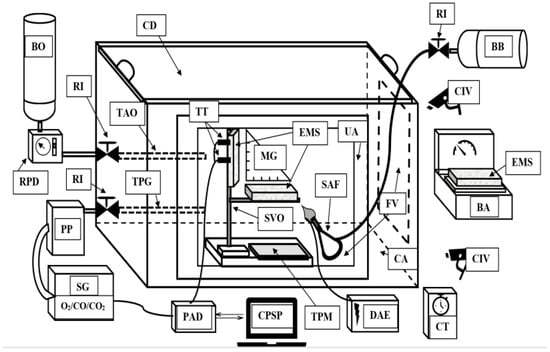
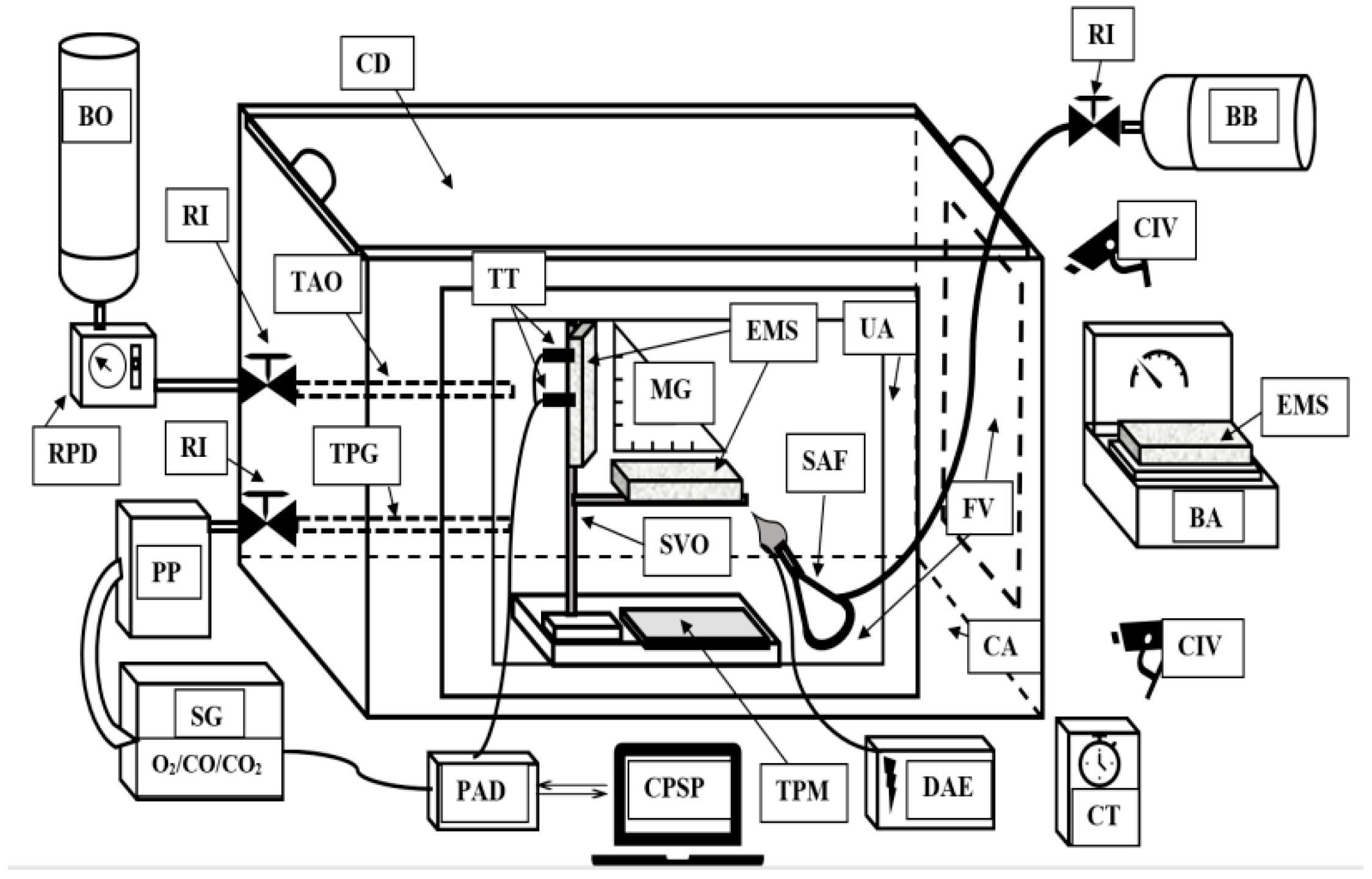
The sample tests were carried out using the stand (Figure 1) for determining the ignition and combustion behavior of solid materials in atmospheres with high oxygen concentrations, which is the subject of OSIM patent application no. CBI A 2022 00607 [15].
Figure 1.
Technical schematic of the test stand. Legend: CA—sealed combustion chamber; FV—viewing windows made of heat-resistant glass; UA—access door for sample insertion; TAO—oxygen inlet pipes; TPG—gas sampling pipes; RI—shut-off valves; CD—removable top cover; SVO—horizontal/vertical sample holders; EMS—solid material samples under investigation; MG—markers/graduations for positioning and reference; SAF—ignition source; DAE—dedicated ignition device; TPM—tray with reference (control) sample; BO—oxygen cylinder; RPD—pressure regulator and flow meter; CT—stopwatch; BB—butane gas cylinder; PP—gas sampling pump; SG—gas sensors (O2/CO/CO2); PAD—data acquisition board; CPSP—computer for data acquisition, storage, and processing; CIV—video recording cameras.
2.2. Description of the Experimental Stand
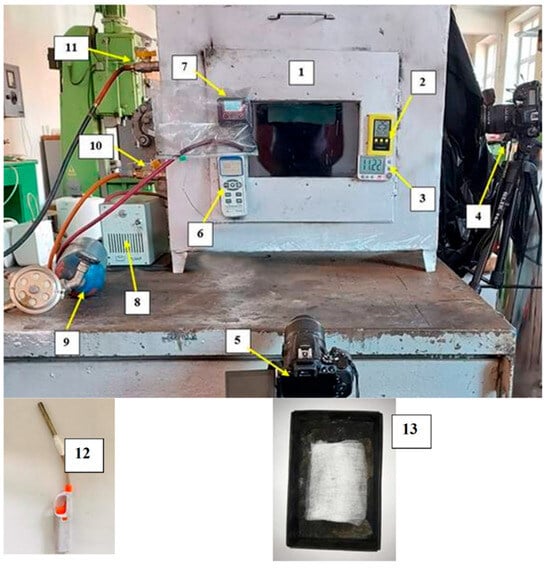
The stand (Figure 2) for studying the flammability of various materials in an oxygen-enriched atmosphere has a combustion chamber volume of 165 dm3 and is composed of the following elements:
Figure 2.
Test stand description.
- Hermetically sealed enclosure with controlled atmosphere;
- Thermo-hygrometer for determining the temperature and relative humidity of the ambient environment;
- Stopwatch;
- Nikon D7500 video camera;
- Nikon D5600 video camera;
- Temperature measurement and recording system;
- Gas measuring device;
- Gas sampling pump;
- Oxygen cylinder with flow regulator preset to 1.4 L/min;
- Gas sampling pipe;
- Oxygen intake pipe;
- Burner with butane gas charge;
- Control-cotton fabric.
2.3. Virtual Simulation of the Fire
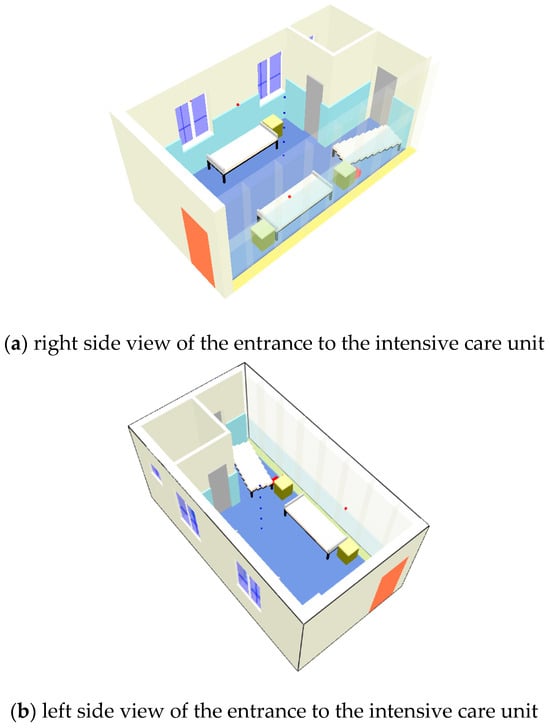
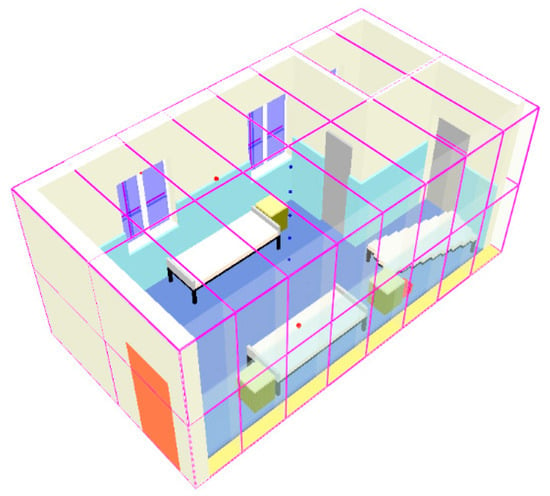
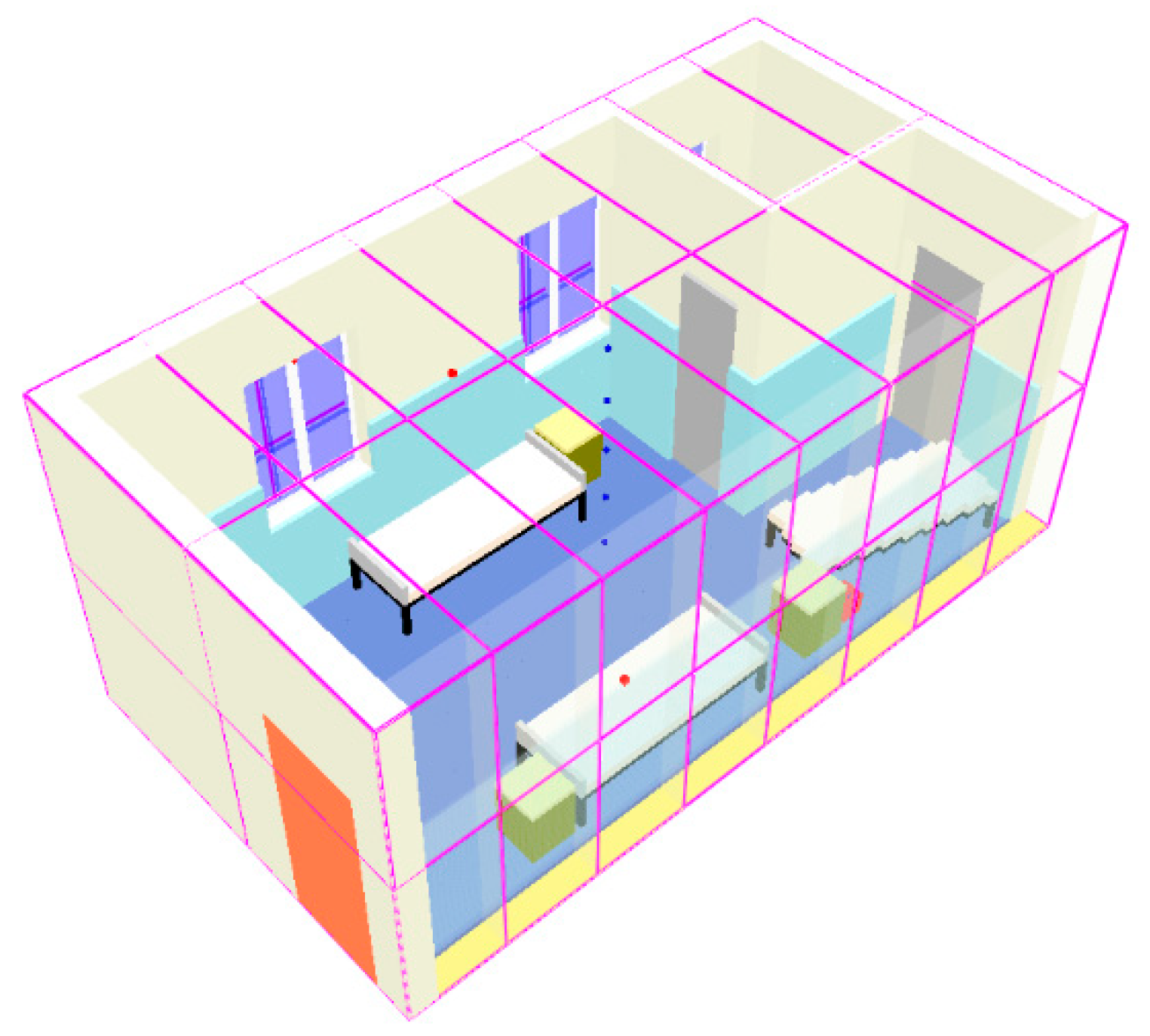
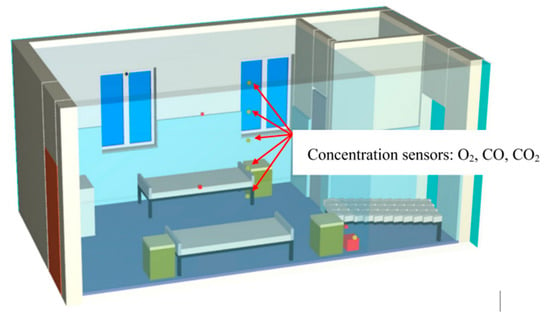
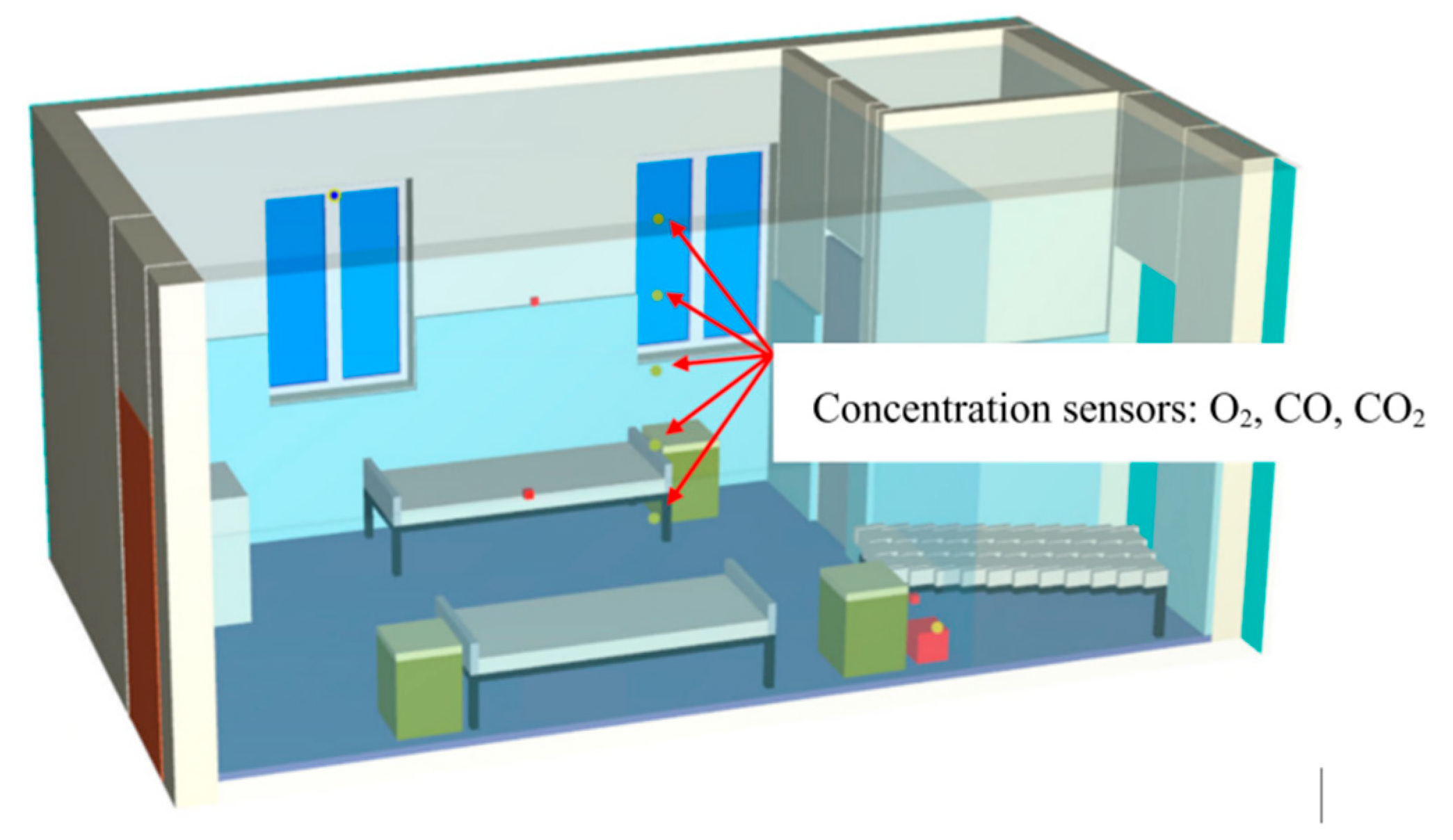
To carry out computer simulations of the event that occurred at the Ploiesti County Emergency Hospital, the geometry of the interior space where the fire occurred was virtualized. Figure 3 presents an overview of the geometry of hospital ward 8.
Figure 3.
Geometry of the computational domain: overview.
For a good approximation and visualization of the fire dynamics, the computer analysis of the fire required a computational domain with dimensions of 6.80 × 3.70 × 3.10 m, involving a discretization grid with cells of size 0.05 × 0.05 × 0.05 m, thus resulting in a number of 623,958 cells for the defined computational domain.
The mesh resolution of 0.05 m was selected following FDS best-practice recommendations, ensuring an adequate D*/Δx ratio for the expected fire size during the early and pre-flashover stages. Although a formal mesh sensitivity analysis was not conducted due to computational constraints, the chosen resolution represents a balance between accuracy and feasibility and has been widely used in similar compartment fire simulations.
Due to the large computational volume required by the large dimensions of the domain and its internal components, the computational domain was subsequently segmented into 32 subdomains in order to reduce the simulation time, by running in parallel on multiple computational systems (computers), respectively, in order to run multiple experiments per event development stage.
The size of these computational subdomains varies within the main computational domain, as follows:
- -
- Thirty-two computational subdomains with dimensions of 0.85 × 1.85 × 1.55 m, containing a number of 19,499 cells, with a resolution (size of a cell) of 0.05 m.
The location and arrangement of these subdomains within the main domain is illustrated further in Figure 4.
Figure 4.
Segmentation of the computational domain (meshing).
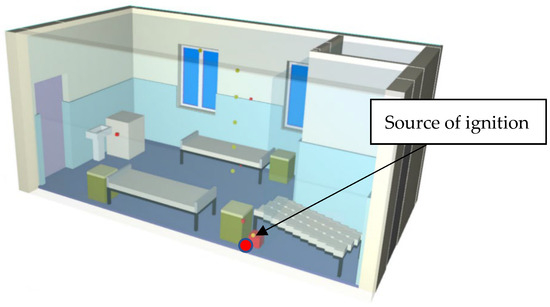
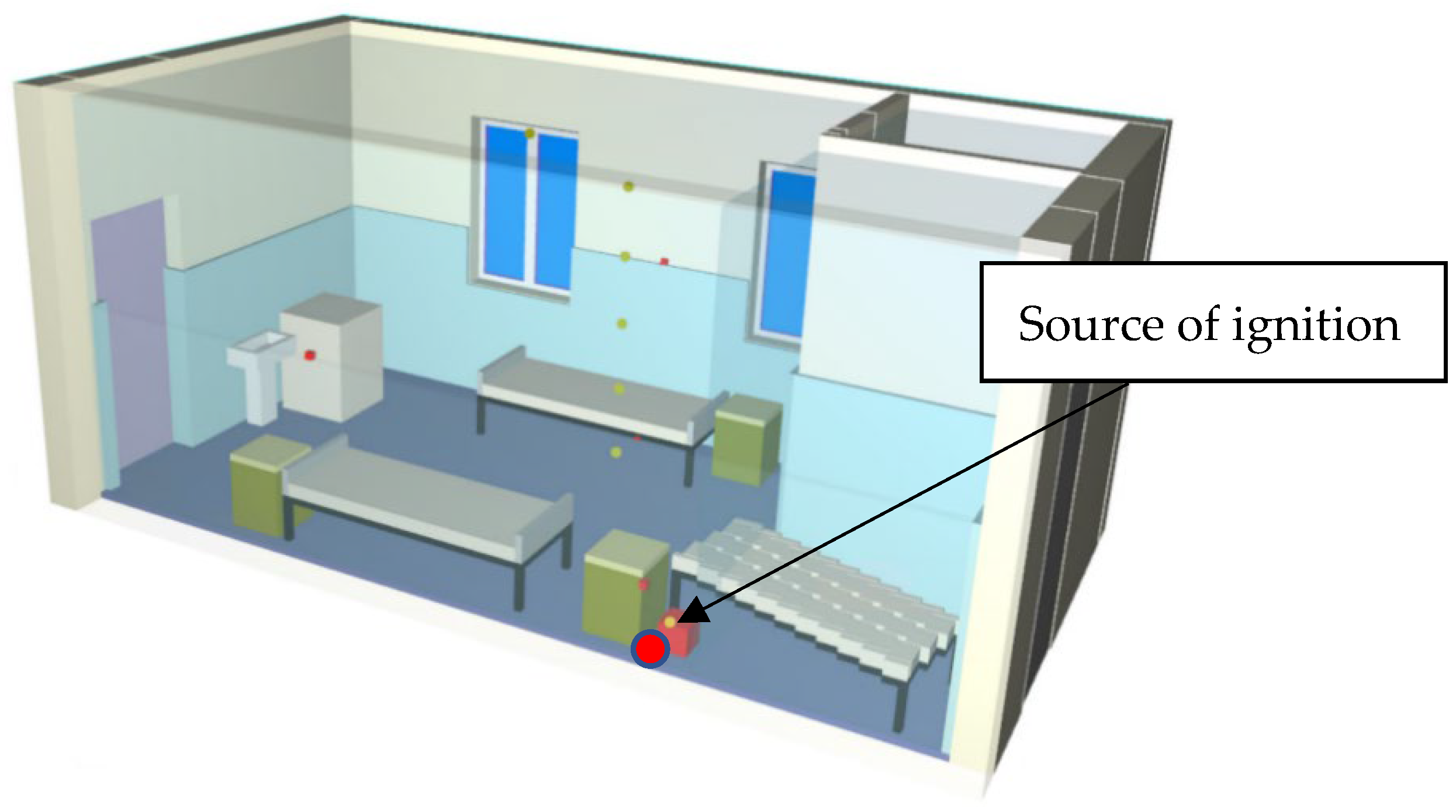
The ignition source (Figure 5) was placed on the left wall, looking from the access door to the living room, at the end of the bed, at a height of approximately 30 cm from the floor, simulating an electrical outlet.
Figure 5.
Location of the ignition point within the calculation domain.
Following the computer simulation, the output data was recorded by means of vertical sections (SLICE elements), located longitudinally in the computational domain.
These elements record values in 2D graphic format, being distributed as follows:
- -
- Three sections for visualizing the carbon dioxide concentration;
- -
- Three sections for visualizing the carbon monoxide concentration;
- -
- Three sections for visualizing the oxygen concentration;
- -
- Three sections for visualizing the temperatures.
The positioning of these elements for visualization is established so as to allow a better overview of the event during the computer simulation.
The positioning of these elements within the computational domain is illustrated in Figure 6.
Figure 6.
Positioning of SLICEs inside the computational domain in longitudinal position.
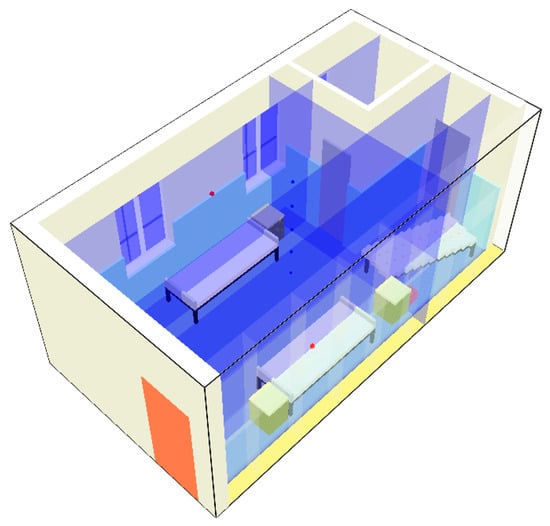
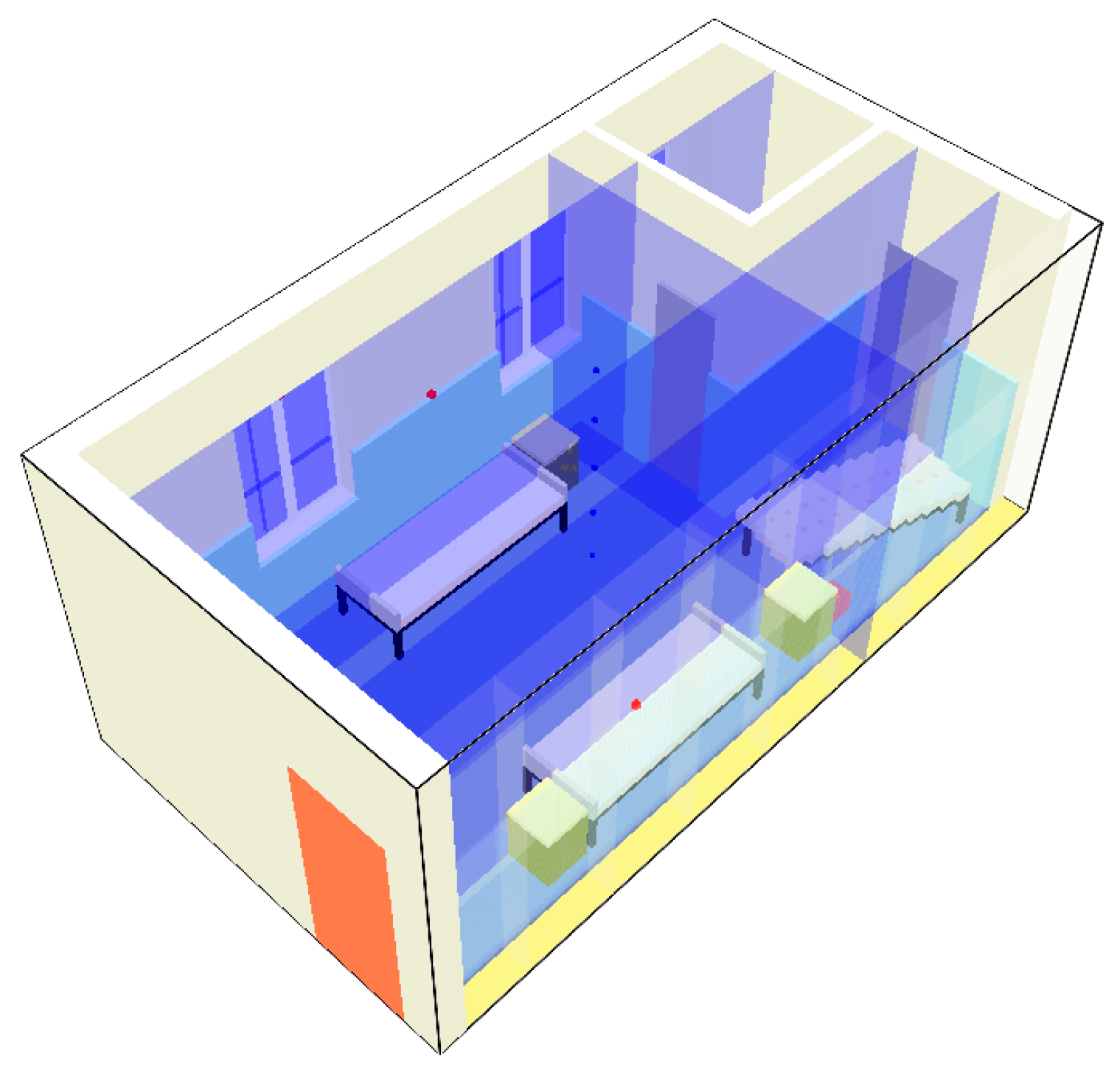
Another method of data recording, used in the simulation, is the placement of sensors at different points of interest within the computational domain, through which temperature, velocity, and gas concentrations can be recorded. In the present simulation, sensors were placed to measure the concentrations of carbon monoxide, carbon dioxide, and oxygen, as follows:
The virtual devices for measuring the concentration of CO, CO2, and O2 were placed in the center of the room, vertically, from 0.5 m to 0.5 m, in the range of 0.5–2.5 m. They provide the gas concentrations as output quantities, both in the form of volume fraction (mol/mol) and in ppm.
In the present study, the primary objective of the sensor placement was to characterize the overall compartment conditions and the rapid development of toxic and thermal hazards driven by the oxygen-enriched atmosphere, rather than to perform a detailed evacuation route optimization. For this reason, sensors and SLICE elements were positioned in the central and bed-level regions, where patients and medical staff were initially exposed and where the most severe conditions developed first. These locations provide conservative estimates of FED and thermal exposure. Nevertheless, the oxygen depletion and toxic gas accumulation observed in the modeled domain indicate that conditions near the evacuation door would also become untenable within a very short time interval, consistent with the conclusions regarding limited self-rescue capability.
The location of the sensors is shown in Figure 7.
Figure 7.
Sensor placement within the computational domain.
In addition to these virtual measuring and recording devices, a temperature sensor with preset activation values was also used in the computer modeling to simulate the destruction of windows under the action of the thermal effect of the fire. Thus, in the modeled living room, a temperature sensor was placed in the upper part of the window on the north wall, in the vicinity of the refrigerator. When the threshold temperature is reached during the development of the fire, these sensors deactivate the corresponding window glass, simulating its breakage under the direct action of the flame.
The number and distribution of SLICE elements were selected to achieve a balance between spatial representative, computational efficiency, and clarity in interpreting fire dynamics. Three longitudinal SLICE sections were used for each variable (CO, CO2, O2, and temperature) to capture (i) conditions in the fire plume region, (ii) the central volume of the compartment where occupants are located, and (iii) the opposite side of the room, allowing assessment of horizontal and vertical gradients. This configuration was sufficient to visualize gas accumulation, oxygen depletion, and thermal stratification while avoiding redundant data output and excessive post-processing. The chosen arrangement follows common FDS practice for compartment fire analysis, where a limited number of strategically placed sections can reliably describe the dominant transport and combustion phenomena without unnecessarily increasing computational and data storage demands.
By examining the findings on site, the following aspects were found:
- -
- The access door on the east side was dislocated during the fire, showing strong traces of burning, its frame being almost completely destroyed;
- -
- The windows on the north side suffered significant damage due to the flame front, especially the first one in the proximity of the previously mentioned door.
To reproduce as accurately as possible the environmental conditions on the night of the fire, the delimiting surfaces of the calculation domain were considered as open-type surfaces (the calculation domain is completely integrated into the environment, uninsulated), and the ambient temperature was set to a value of 20 °C.
Based on the documents, as well as those declared by the medical staff during the on-site visit, the flow rates administered to the patients through the CPAP masks (60 L/min at a maximum oxygen concentration of 90% vol.), following the computer simulation of the evolution of the oxygen concentration in the room and in the bathroom, the following relevant results were obtained, before the event occurred:
- -
- In the volume of room no. 8: 41.65% vol. oxygen;
- -
- In the volume of the room’s bathroom: 39.02% vol. oxygen.
The combustible materials used in the virtual model of the building complex are those found by the fire brigade teams at the scene of the fire, namely the following:
- -
- Wooden material (chipboard);
- -
- Plastic material (PVC and ABS);
- -
- Inert materials (reinforced concrete and gypsum plasterboard);
- -
- Textile materials (bed linen, protective equipment, mattresses, beds, etc.).
Plastic material was used for some components of the devices placed at the level of the beds in the room, such as various medical devices and monitors. Other uses of plastic materials are the window frames and doors at the entrance to the ward, these being double glazed window-type elements, and the insulation of the electrical cables that powered the medical equipment. Also, elements made of ABS (Acrylonitrile Butadiene Styrene)—a hard, resistant thermoplastic polymer—were found in the constructive elements of the beds in the ward (frames and side frames).
The bed mattresses were made of flexible polyurethane foam, treated with a memory agent, wrapped with textile protection (PVC fabric) and bed linen.
The physical and thermal characteristics of some materials presumed to be involved in the fire are included in Table 1.
Table 1.
Thermal characteristics of materials.
Combustible materials were modeled as finite-mass solids, with burnout governed by temperature-dependent pyrolysis and oxygen availability. Complete consumption of the material occurred once the available solid mass was exhausted, consistent with experimental findings under oxygen-enriched conditions.
In emergency evacuation simulation applications, the toxic effects of combustion reaction products are addressed using the concept of Fractional Effective Dose (FED). FED is an international standard developed by the International Standards Organization (ISO) and documented in ISO 13571 [16]. FED is a probabilistic quantity used to estimate the impact of toxic gases on the human body. In the case of FDS computer simulations for fires and evacuation of people, this factor includes the impact of excess carbon monoxide in the air, carbon dioxide inhalation, and oxygen consumption. Other gases produced in the combustion process, such as hydrogen cyanide or nitric acid, and other irritant gases, are not taken into account when calculating FED, as they tend to be of secondary importance compared to the concentrations of CO, CO2, and O2. As a result, the FED value can be calculated by considering only the concentrations of the narcotic gases CO, CO2, and O2:
It can be noted that the above relationship does not include the effect of HCN, which is also a dangerous gas, and the effect of CO2 is caused only by hyperventilation, assuming that CO2 is so low in concentration that it has no narcotic effects. Carbon dioxide has no toxic effects at concentrations below 5%, but it stimulates breathing, which increases the rate at which other products of fire are inhaled.
The fraction of a dose of CO that causes incapacitation is calculated with the following relationship:
where: t—time, in s; CCO—CO concentration, in ppm.
The fraction of an O2 dose, which, when decreased, leads to hypoxia, is calculated with the following relationship:
where: t—time, in s; CO2—O2 concentration, expressed as % volume.
The carbon dioxide-induced hyperventilation factor is calculated with the following relationship:
where: t—time, in s; CCO2—CO2 concentration, expressed as % volume.
FED values are usually classified into three thresholds, reflecting the possibility that a certain percentage of the population will become incapacitated. Incapacitation is defined as the point at which a person can no longer rescue themselves from the danger zone. The lowest FED threshold is 0.3, which is characteristic of the most sensitive population: the elderly, children, and people with compromised immune systems. The second threshold occurs around 1.0 and represents the level at which the average population (50% of the population) is likely to become incapacitated. A FED value of 3.0 represents the upper tolerance threshold for inhalation of combustion gases, at which it is estimated that more than 89% of the population will become incapacitated. This formulation of the FED assumes that the potential victim remains stationary throughout the simulation. The following table (Table 2) shows the four zones delimited by the FED levels described above, and the percentage of the population estimated to be left without self-rescue possibilities.
Table 2.
FED levels.
When the FED > 1, the person is considered to be unable to save themself, but when FED < 0.3, the person is out of danger. A person unable to save themself is modeled as an agent that does not experience any social force as a result of interaction with other agents or walls and whose speed of movement is set to zero.
3. Results
3.1. Experimental Test Results
Sponge samples taken as follows were subjected to the test to determine the fire behavior in contact with an ignition source in the form of a flame.
3.1.1. Horizontal Tests (Figure 8, Figure 9, Figure 10 and Figure 11)
- -
- Sample size: 50 × 50 × 200 mm;
- -
- Sample mass: approx. 10.15 g;
- -
- Horizontal arrangement;
- -
- Pilot flame application time: approx. 10 s;
- -
- Ambient temperature: 21.3 °C;
- -
- Ambient humidity: 54%.
Figure 8.
Unnumbered package containing the mattress from the metal bed marked B2 found in hospital ward 8.
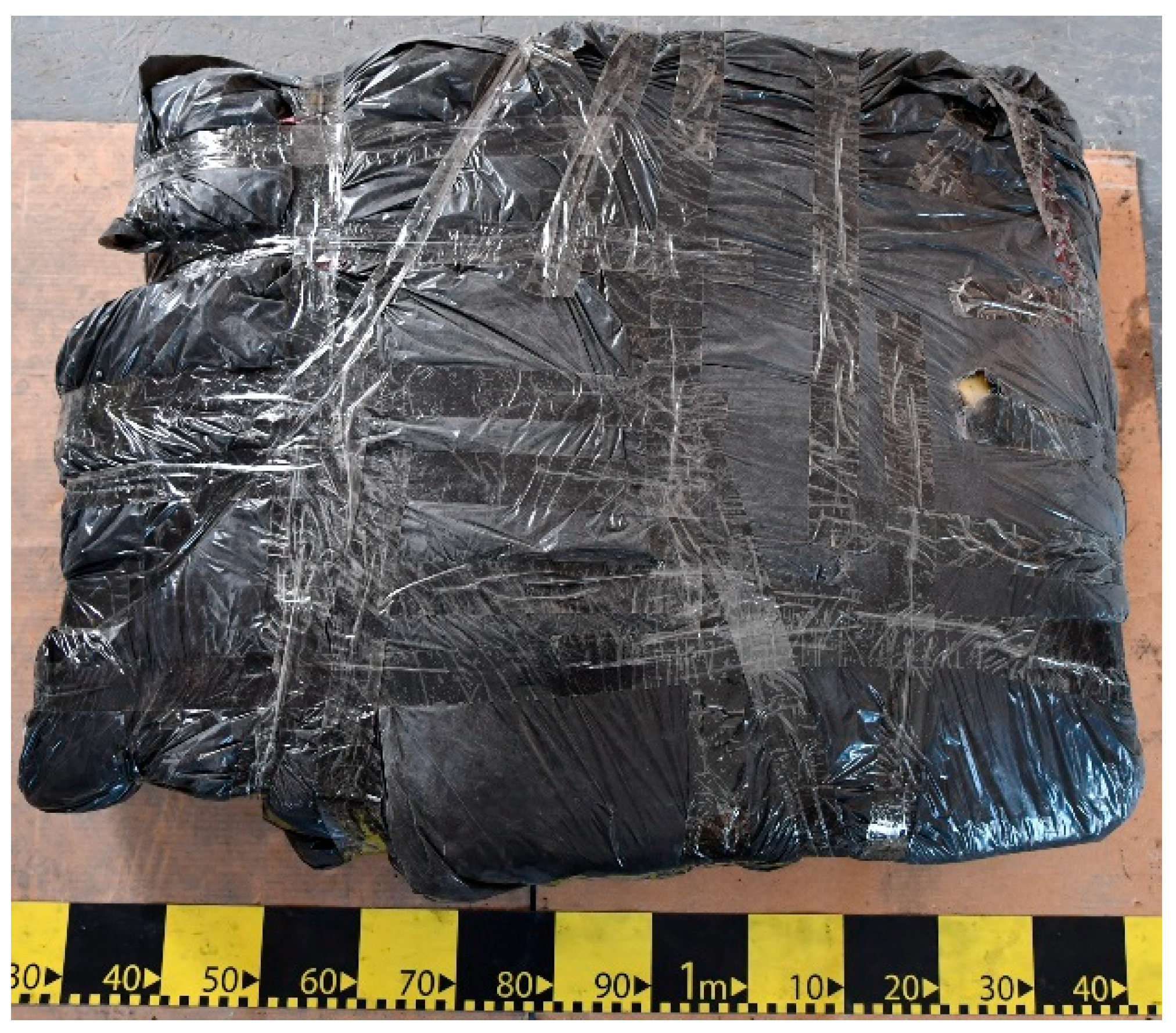
Figure 9.
Samples (50 × 50 × 200 mm) of sponges taken from the mattress of the metal bed found in hospital ward 8.
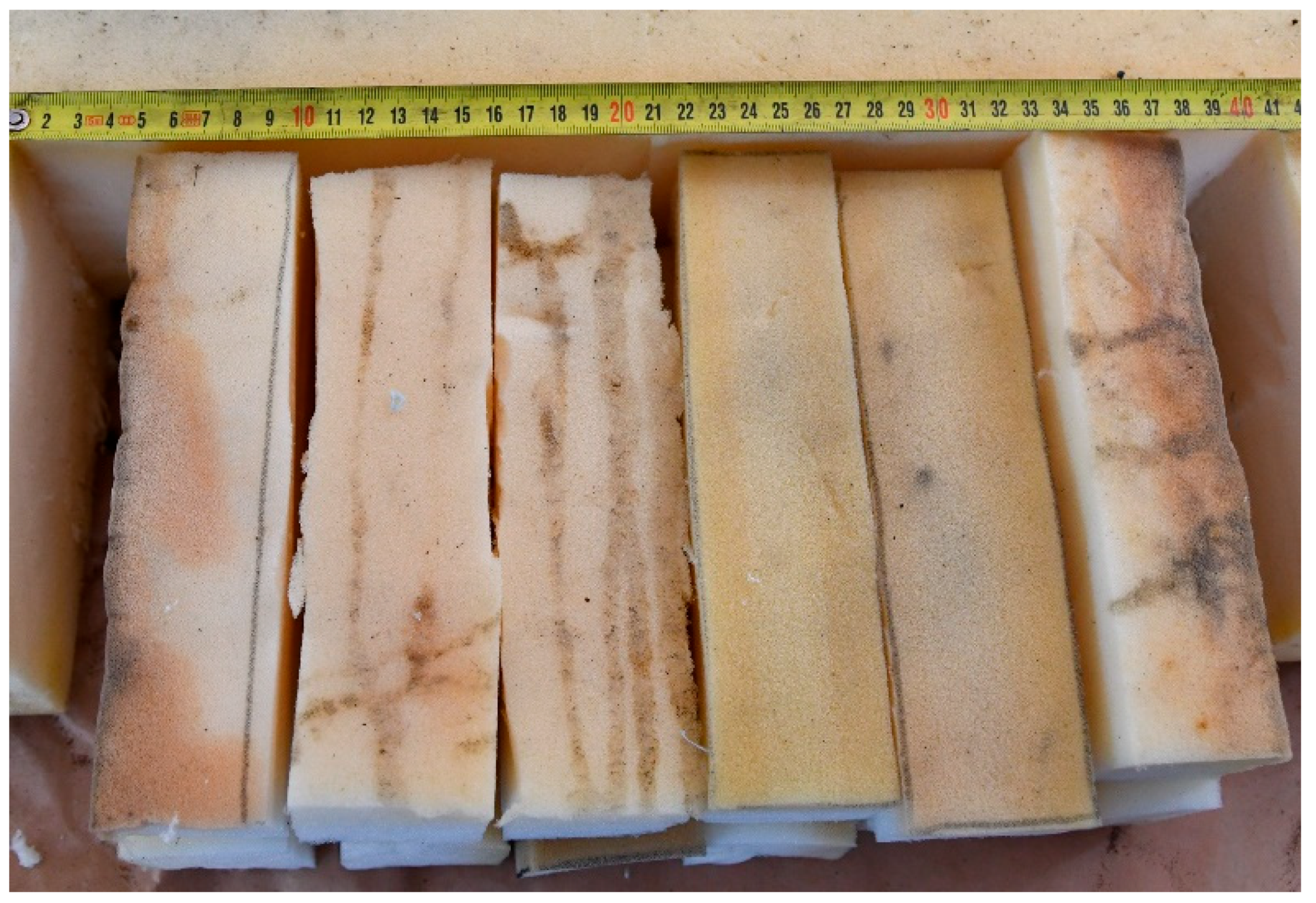
Figure 10.
Burning test in normal atmosphere Sample 1 (O2 20.9%) with horizontal arrangement—sponge taken from the mattress on the metal bed marked B2 found in hospital ward 8.
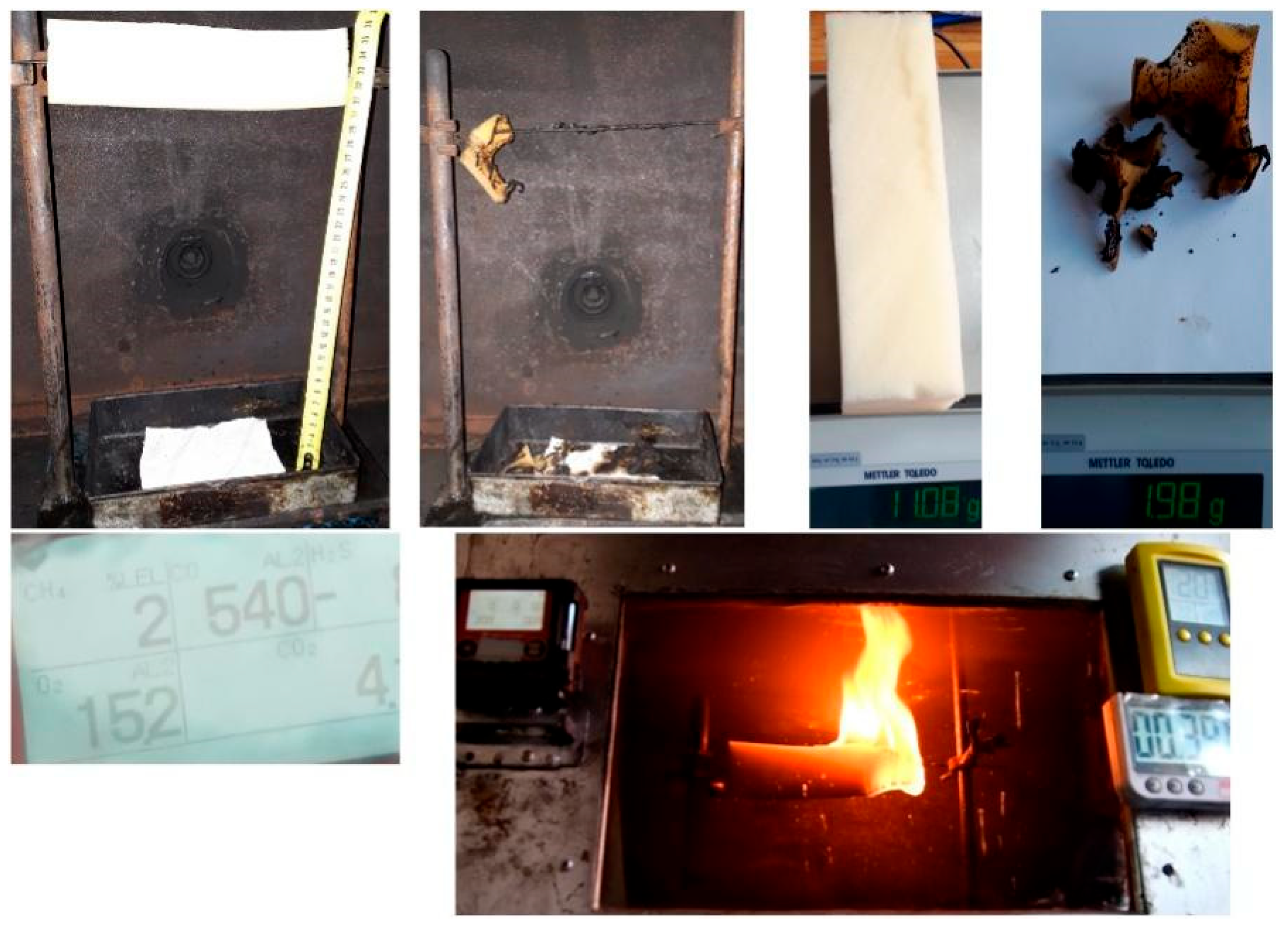
Figure 11.
Enriched atmosphere combustion test Sample 4 (O2 40% vol.) with horizontal arrangement—sponge taken from the mattress on the metal bed marked B2 found in hospital ward 8.
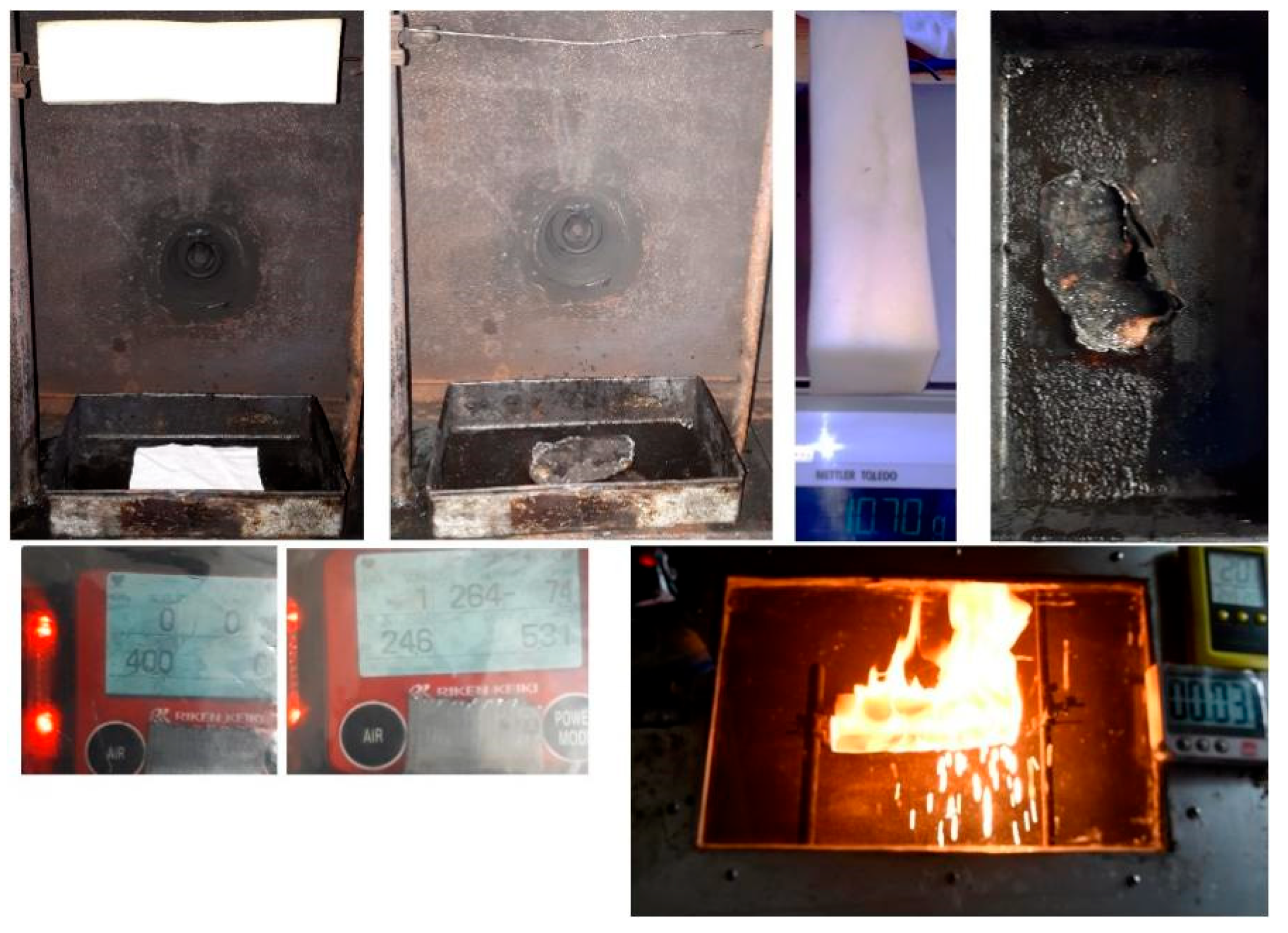
The results are summarized in Table 3.
Table 3.
Horizontal combustion tests for sample B2.
3.1.2. Vertical Tests (Figure 12 and Figure 13)
- -
- Sample size: 50 × 50 × 200 mm;
- -
- Sample mass: approx. 10.15 g;
- -
- Vertical arrangement;
- -
- Pilot flame application time: approx. 10 s;
- -
- Ambient temperature: 21.3 °C;
- -
- Ambient humidity: 54%.
Figure 12.
Burning test in normal atmosphere Sample 1 (O2 20.9%) with vertical arrangement—sponge taken from the mattress on the metal bed marked B2 found in hospital ward 8.
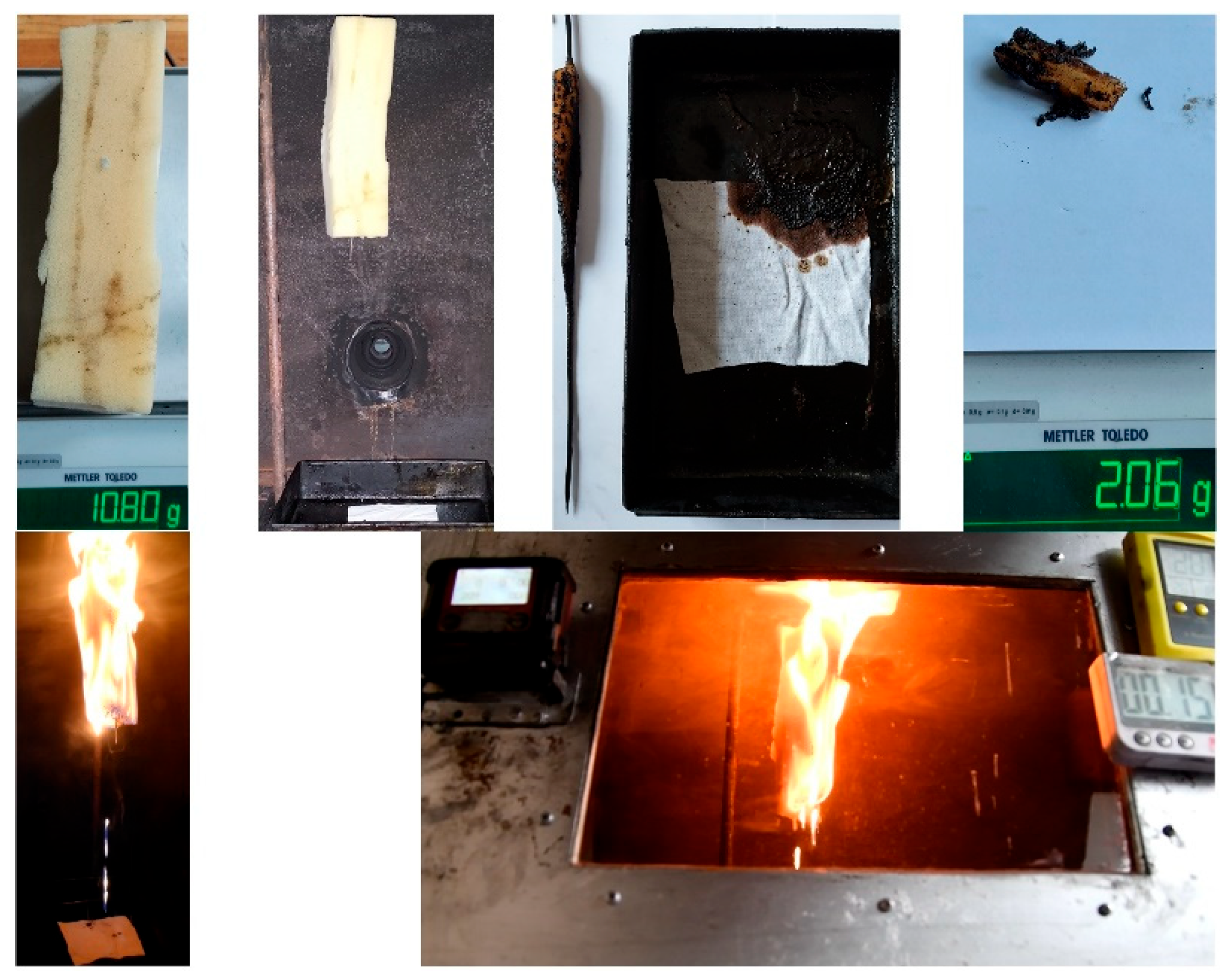
Figure 13.
Enriched atmosphere combustion test Sample 4 (O2 40%) with vertical arrangement—sponge taken from the mattress on the metal bed marked B2 found in hospital ward 8.
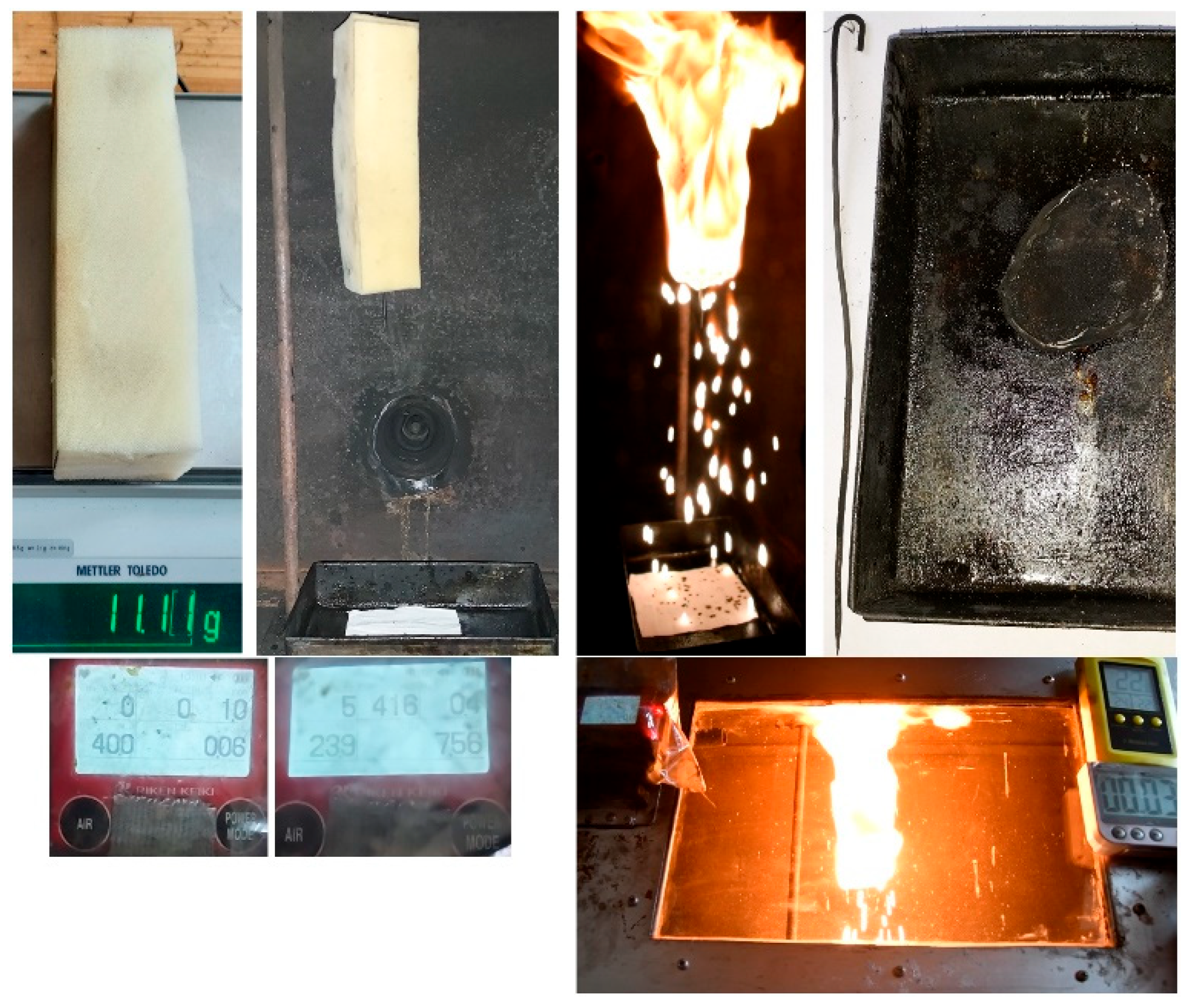
The results are summarized in Table 4.
Table 4.
Vertical combustion tests for sample B2.
3.2. Results of Computer Simulation of Fire Development
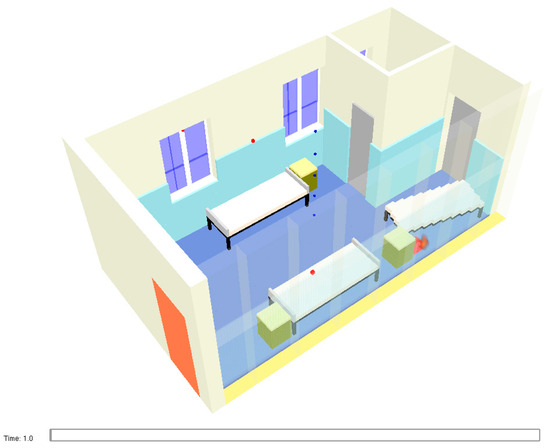
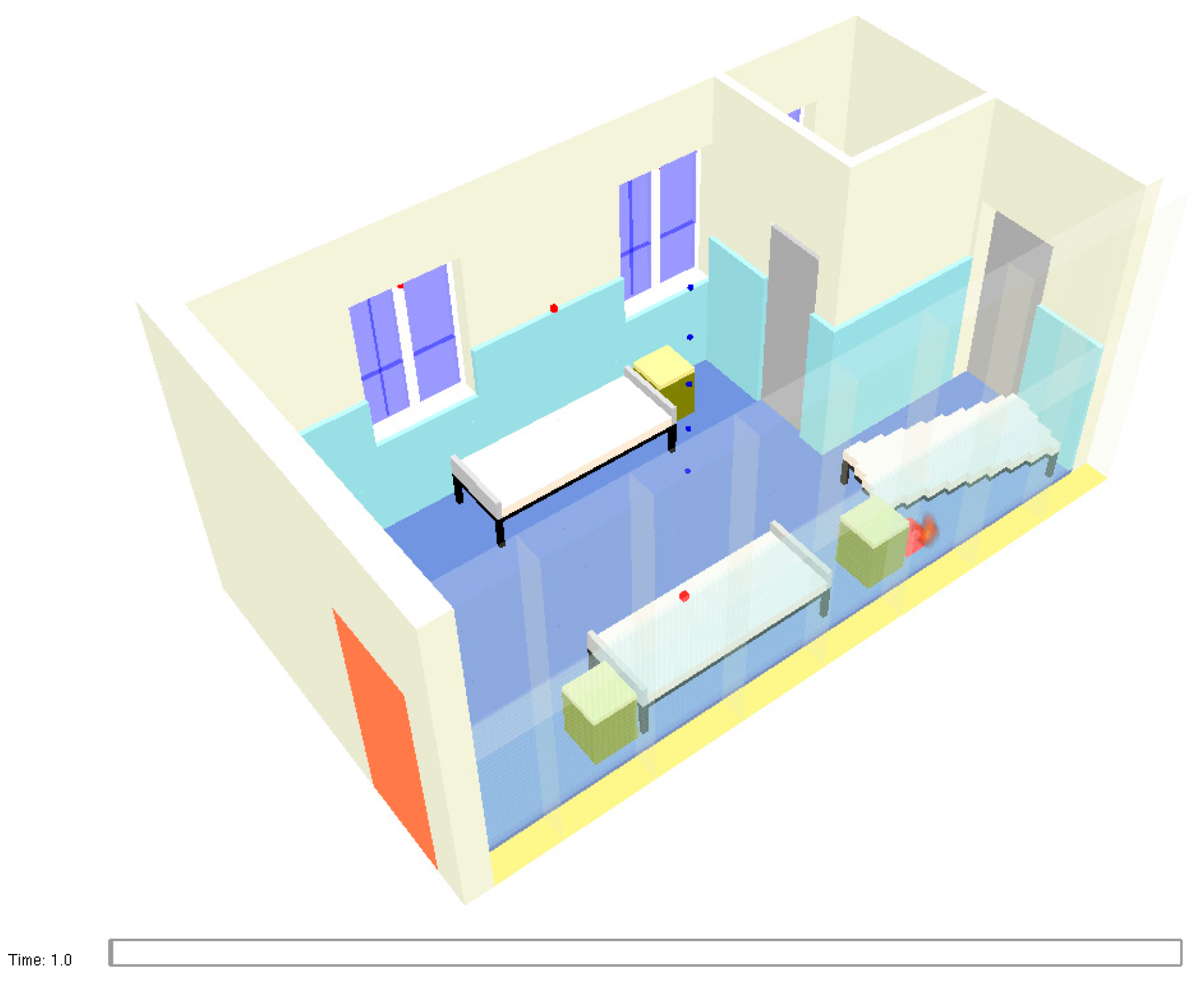
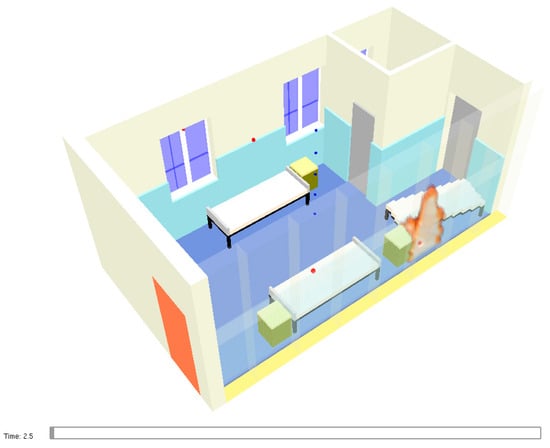
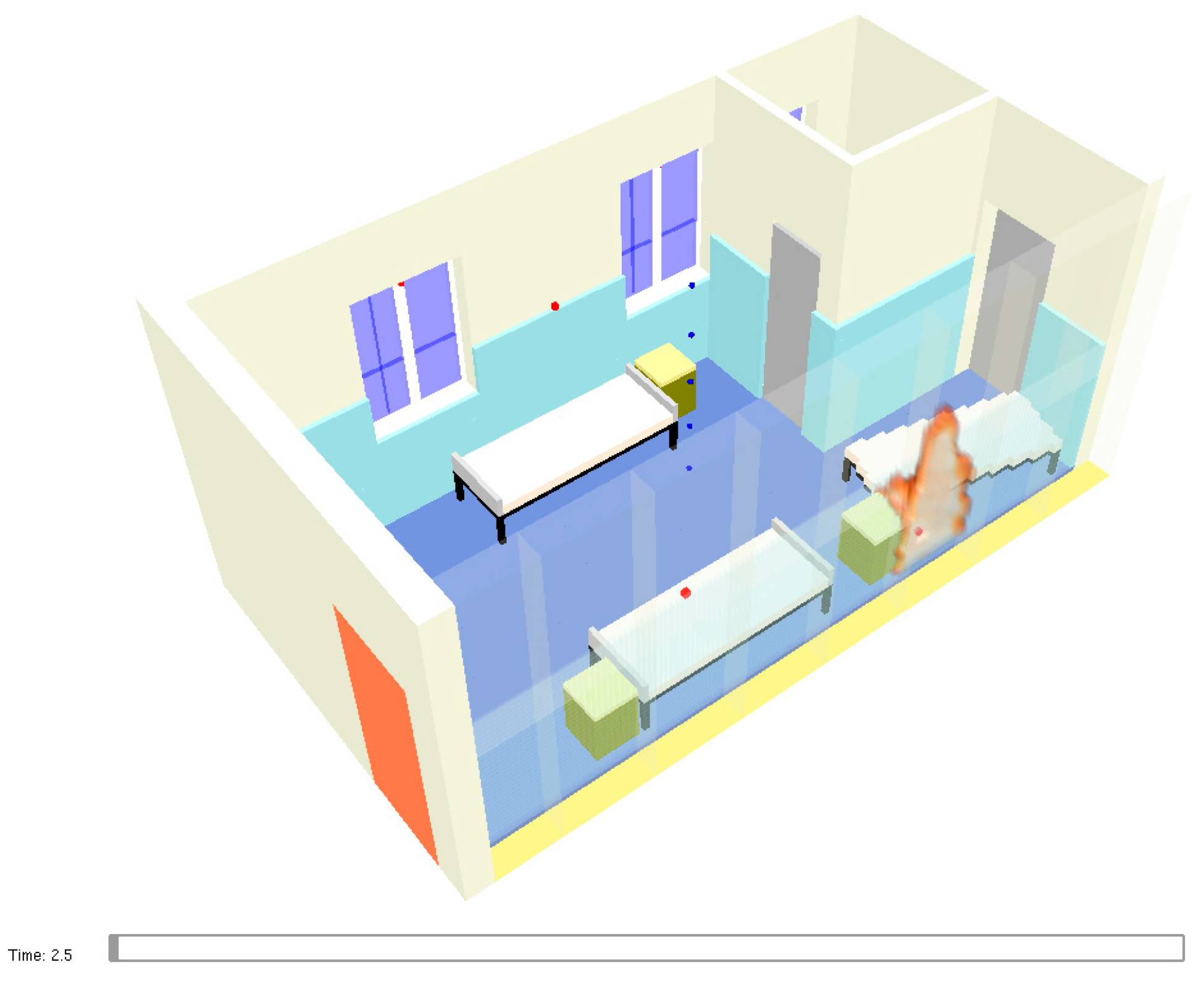
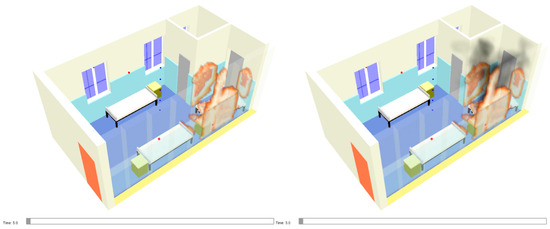
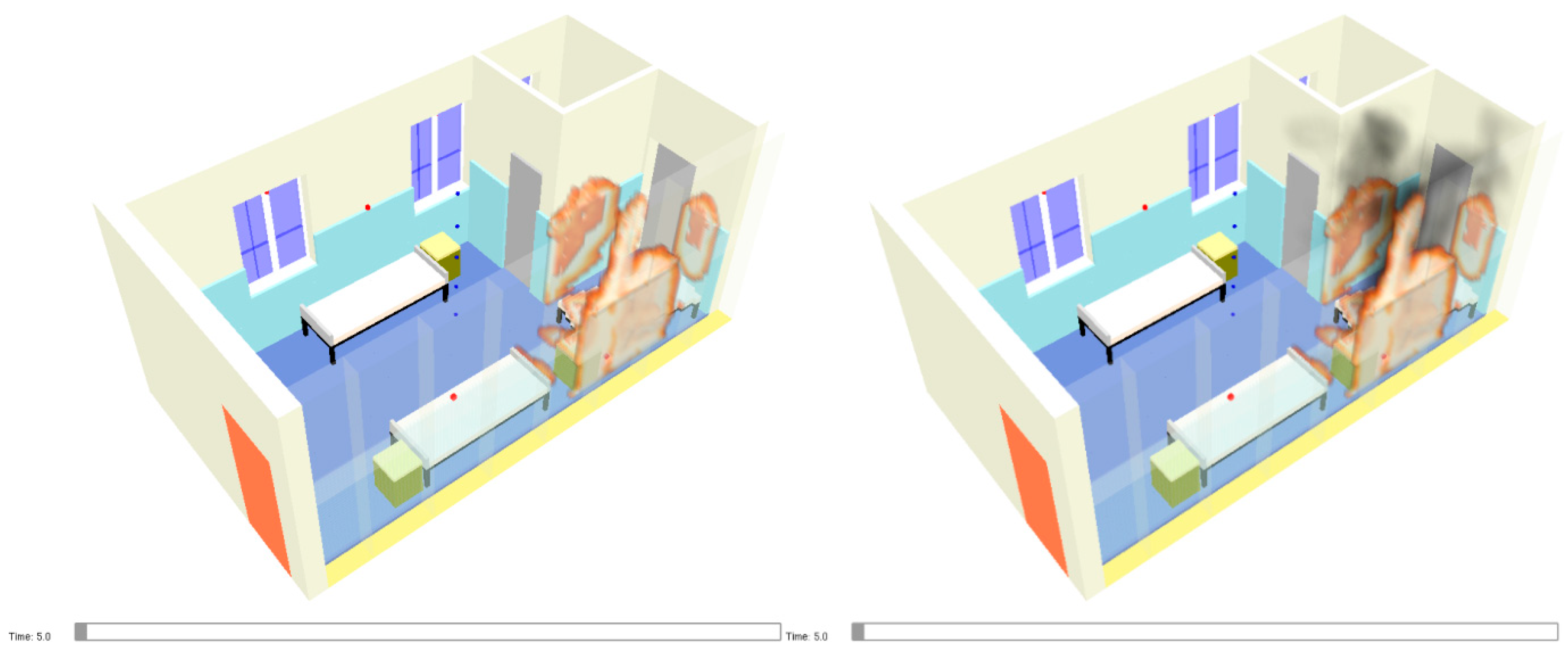
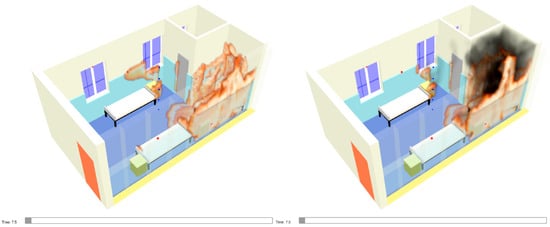
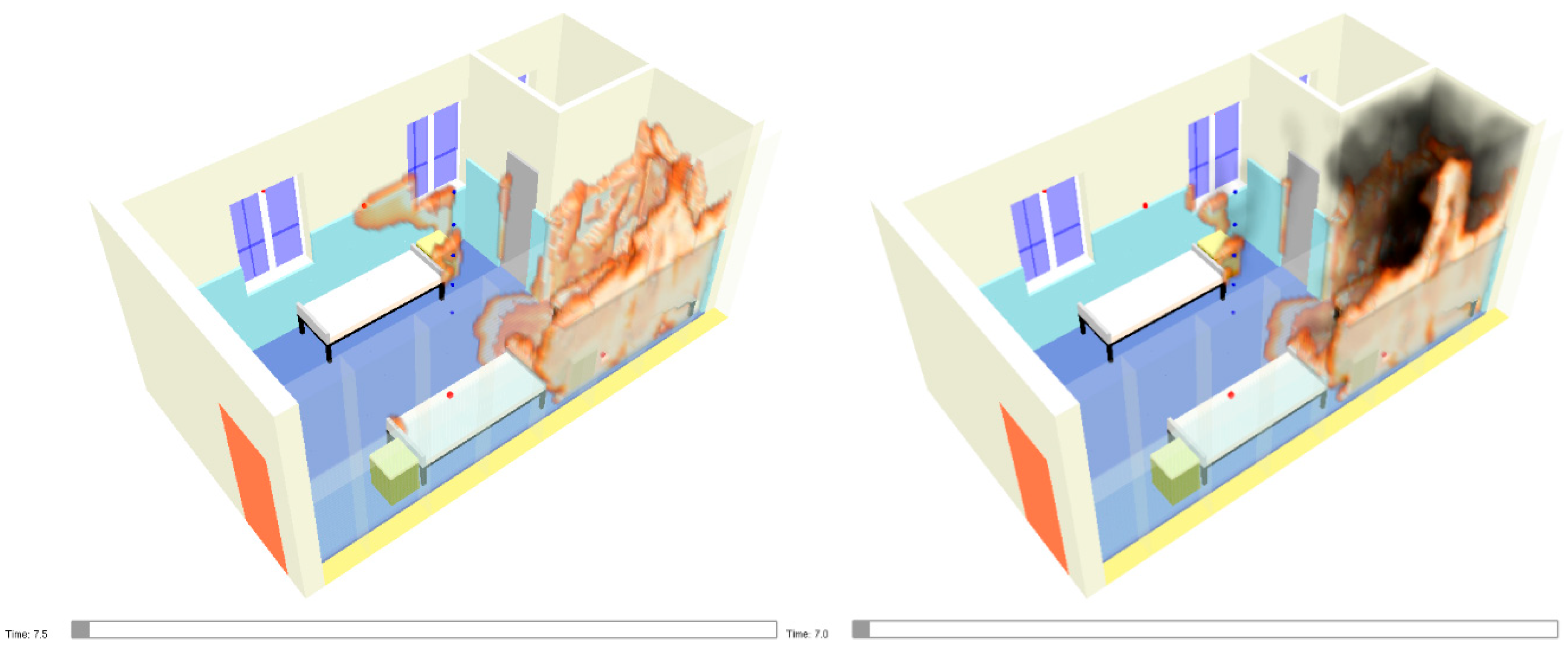
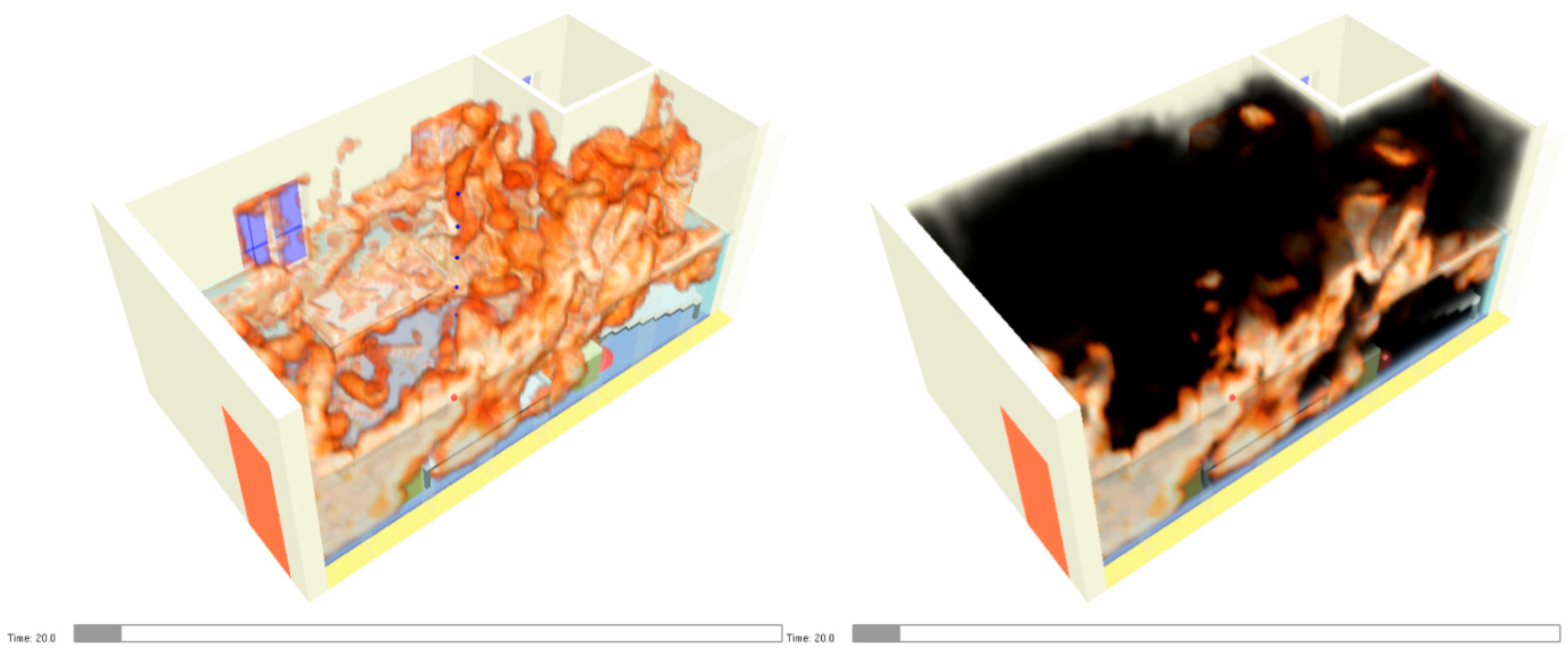
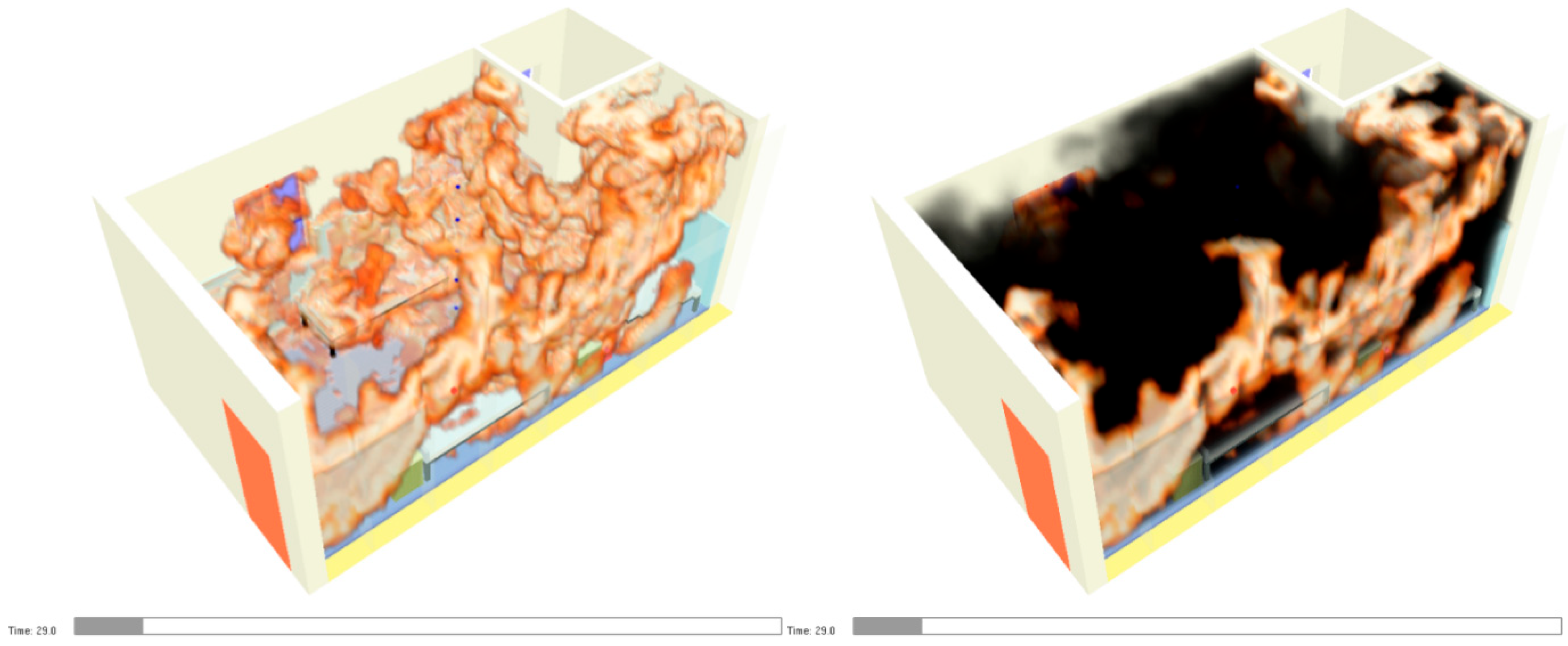
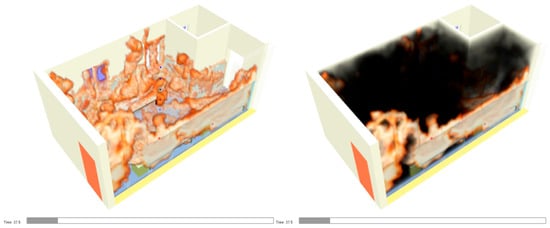
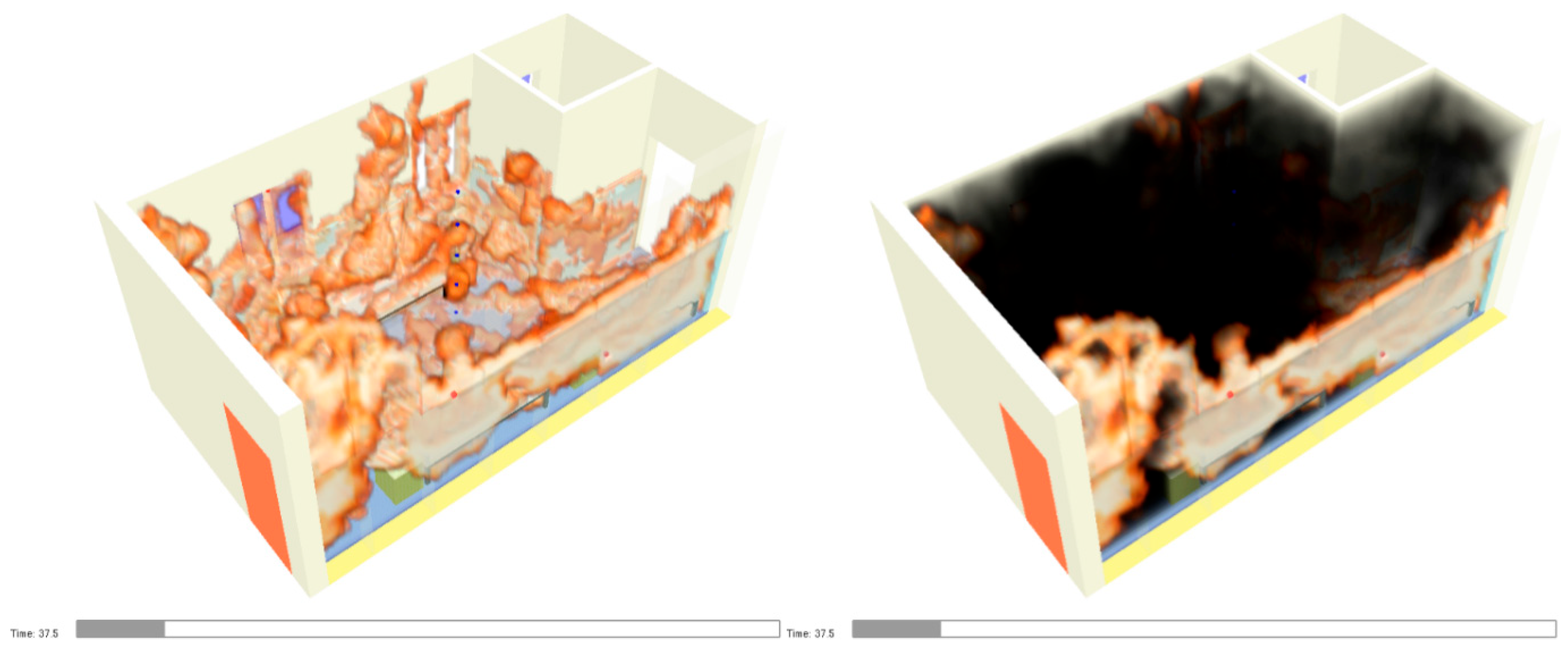
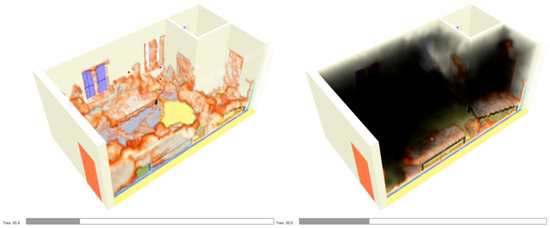
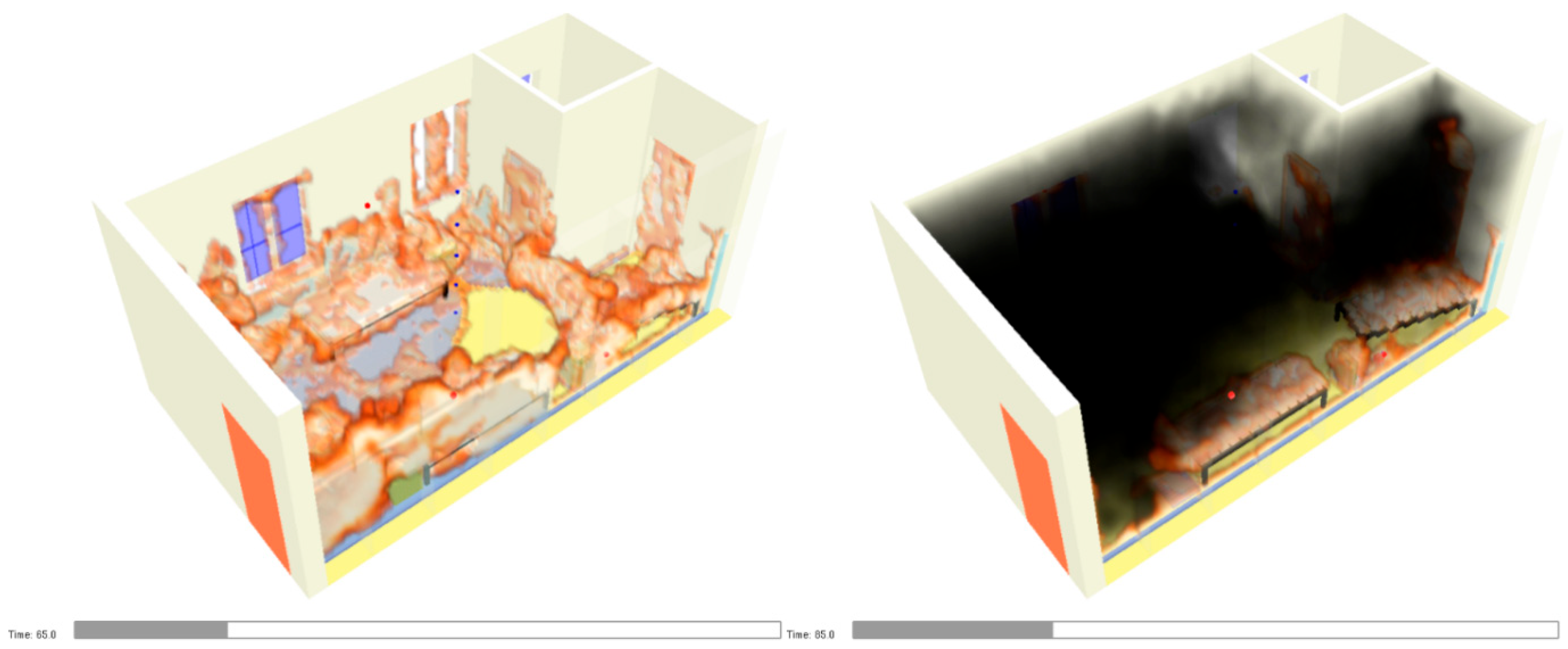
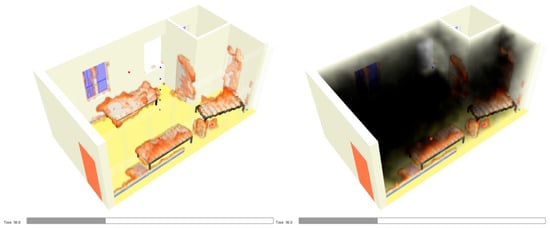
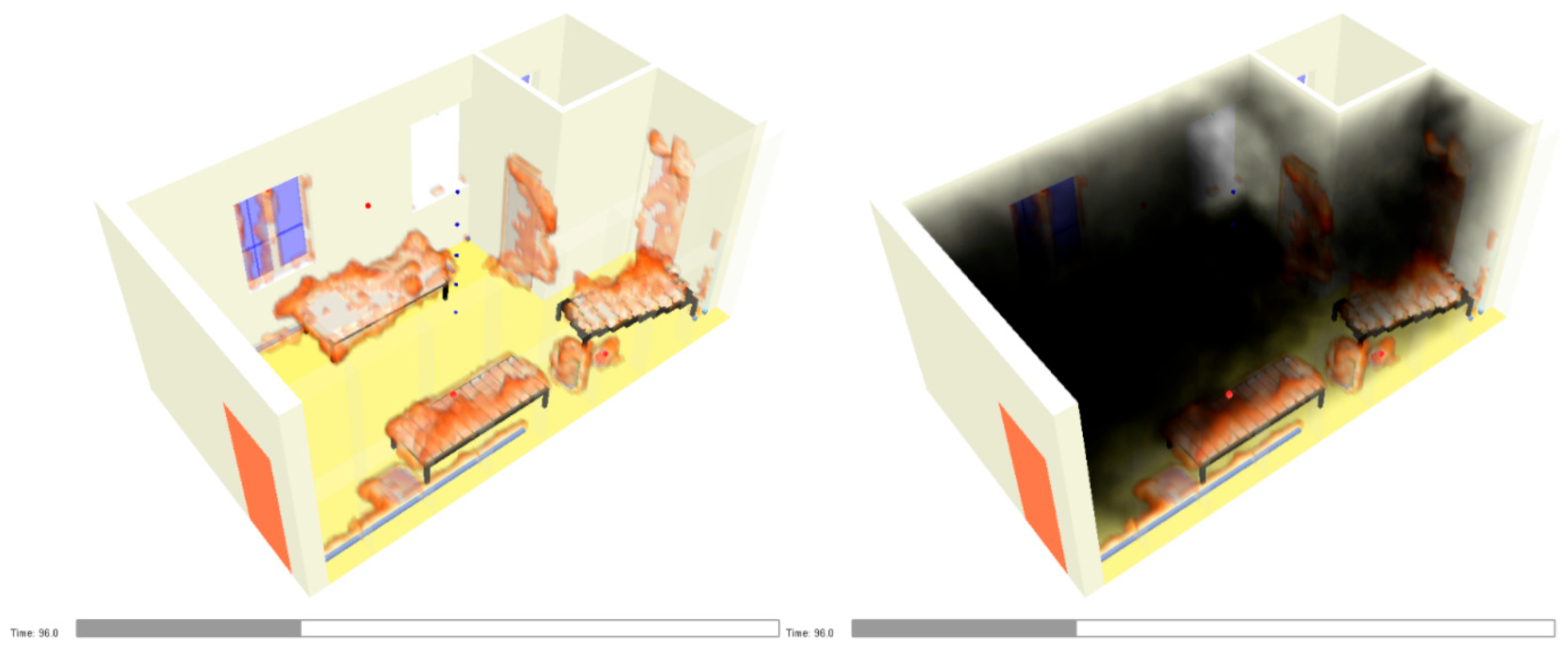
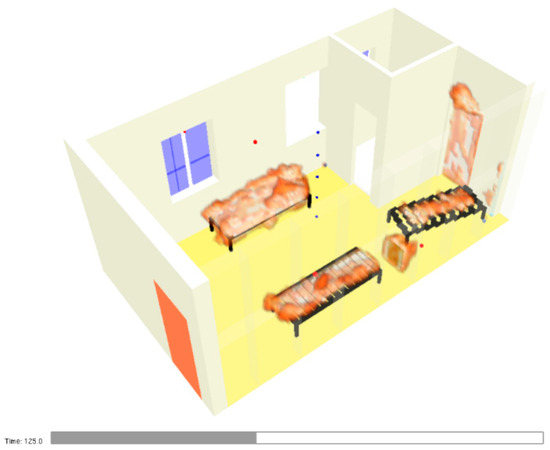
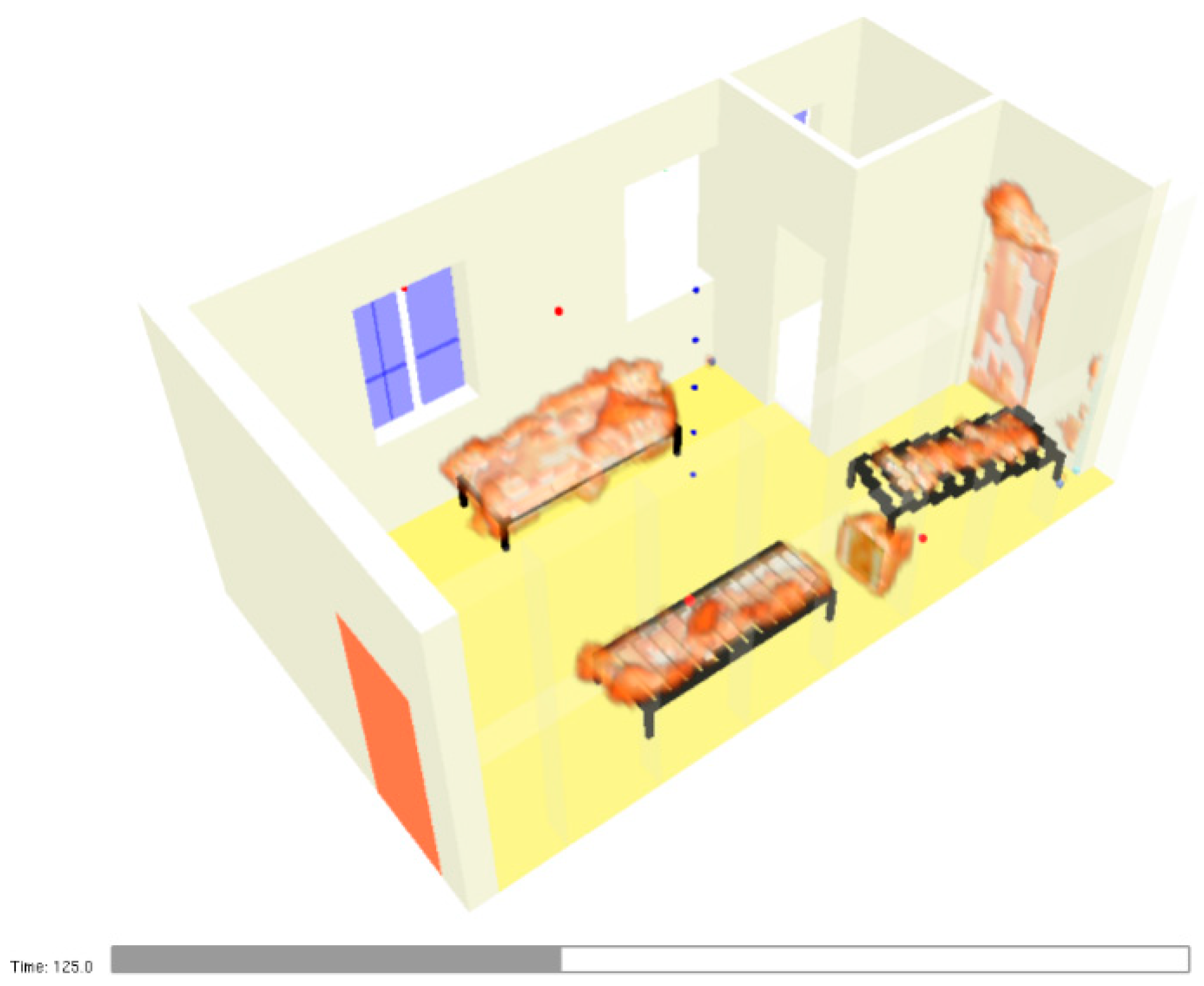
The insulation defect in the power supply conductors of the double electrical socket located on the left wall of the room, at the end of the patient’s bed, at a height of 30 cm from the floor, led to the appearance of high temperatures/electric arc capable of igniting the plastic materials included in the double socket. Since there was a bag with clothes and other belongings of the patient under the bed, they ignited due to the proximity to the burning socket and the high concentration of oxygen in the room volume. The evolution of fire is presented in Figure 14, Figure 15, Figure 16, Figure 17, Figure 18, Figure 19, Figure 20, Figure 21, Figure 22 and Figure 23.
Figure 14.
Ignition of the patient’s bag of clothes from the nearby double electrical outlet.
Figure 15.
Lighting the plastic tarkett on the wall.
Figure 16.
Firing of the tarkett on adjacent walls, by radiative transfer, favored by the oxygen-rich atmosphere.
Figure 17.
Firing of the tarkett on adjacent walls, by radiative and convective transfer, favored by the oxygen-rich atmosphere.
Figure 18.
Generalization of the fire throughout the entire hospital ward.
Figure 19.
Pre-flashover stage, accumulation of over-pressure due to thermal radiation, hot effluents, and oxygen-enriched atmosphere.
Figure 20.
The appearance of the flash-over phenomenon, which led to violent breaking of the access door and some of the windows of the ward. The failure of the oxygen supply socket, its detachment from the wall and its fall onto the bed surface, with further release of oxygen.
Figure 21.
Consumption of PVC material on the walls and thermal damage to window frames, in the upper part.
Figure 22.
Consumption of tarkett material on the walls, floor and mattresses of the two beds by the left wall.
Figure 23.
Combustion consumption of solid materials with burning properties, in normal atmosphere.
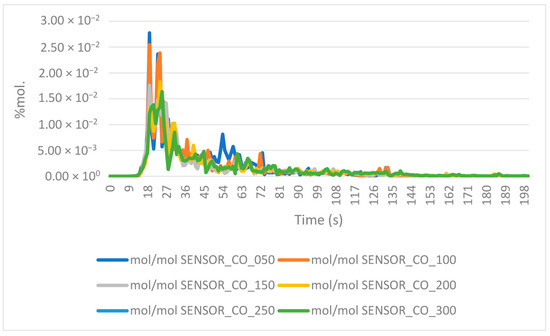
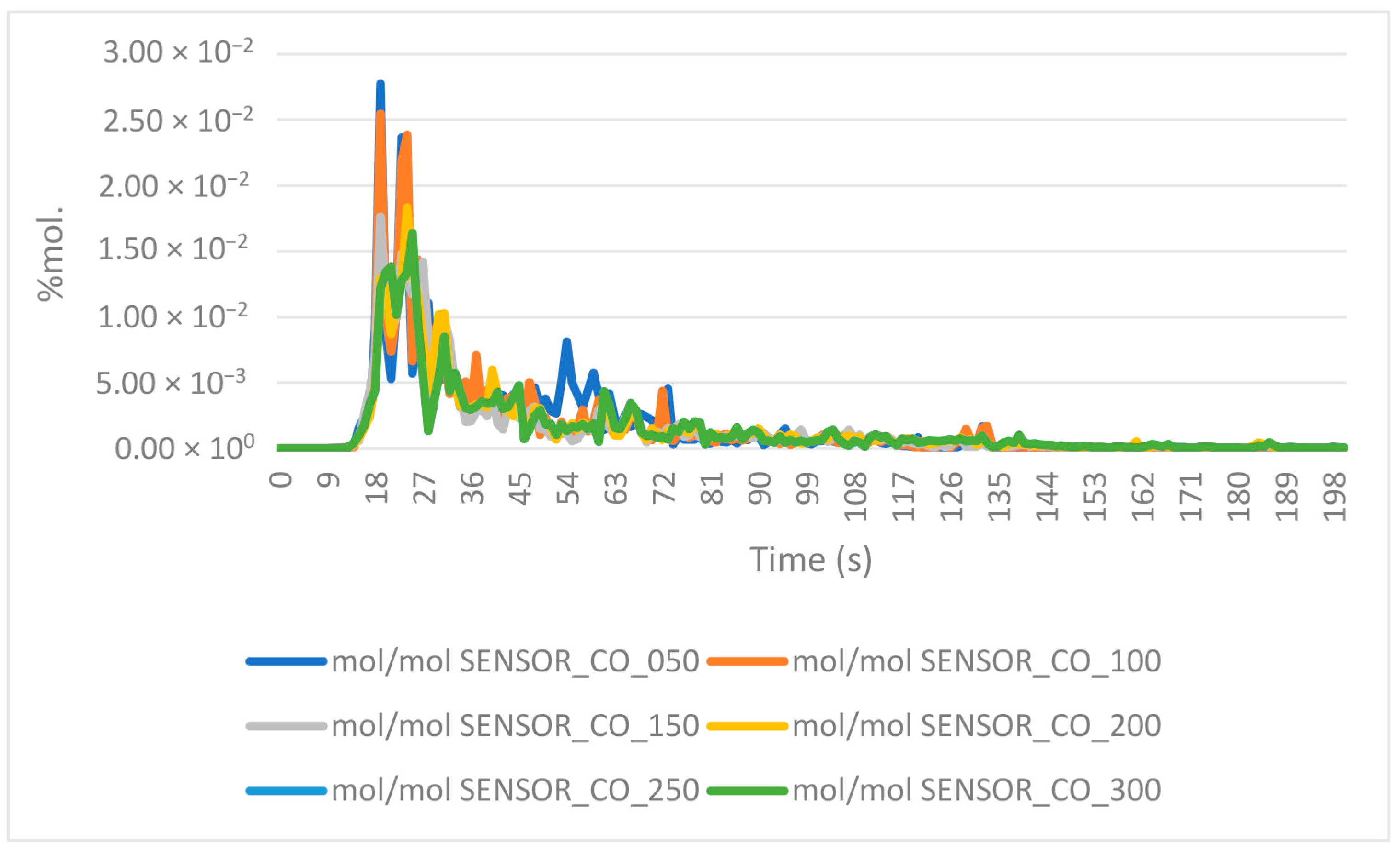
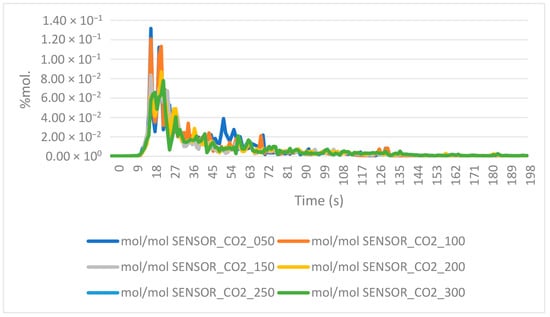
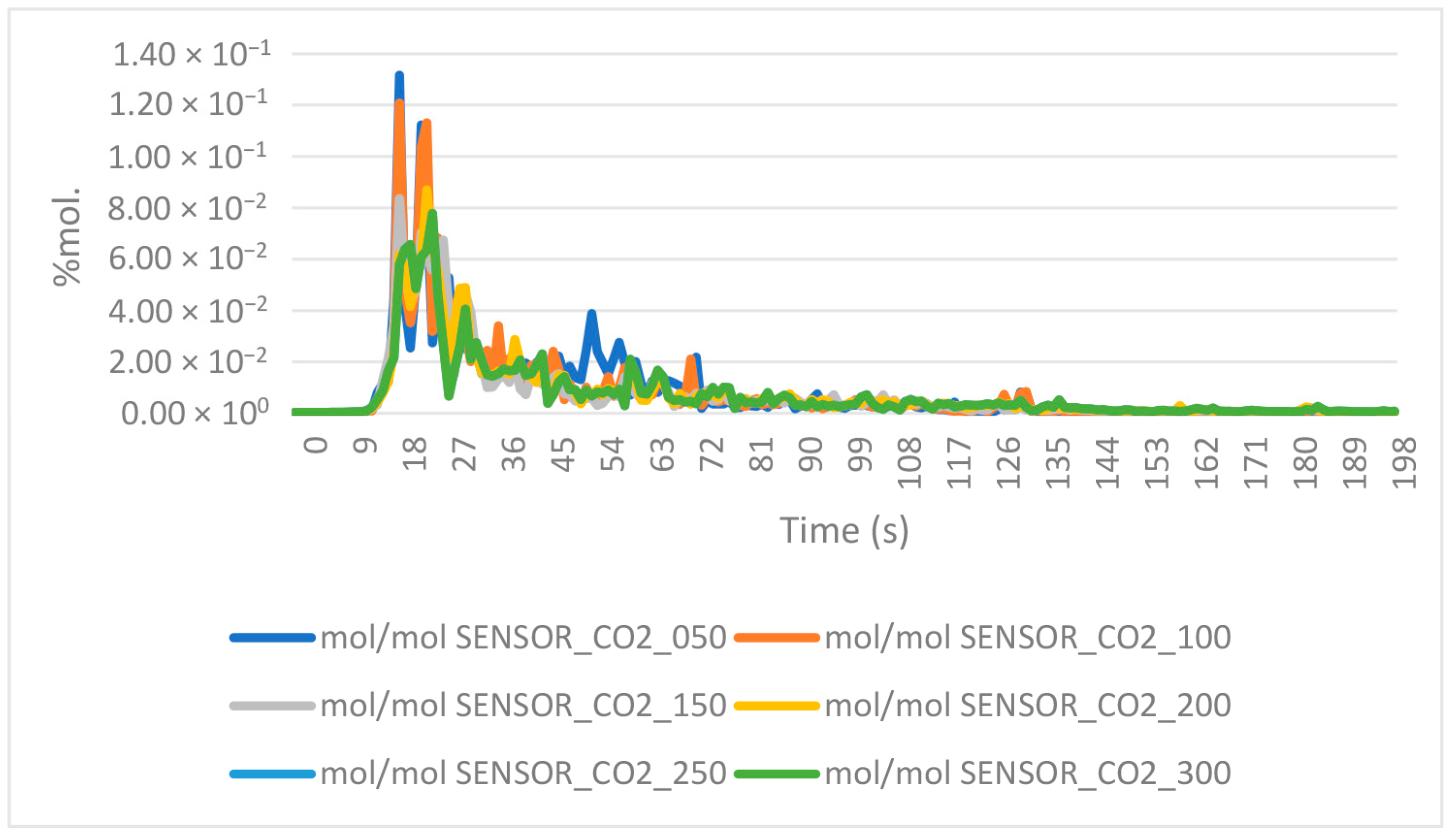
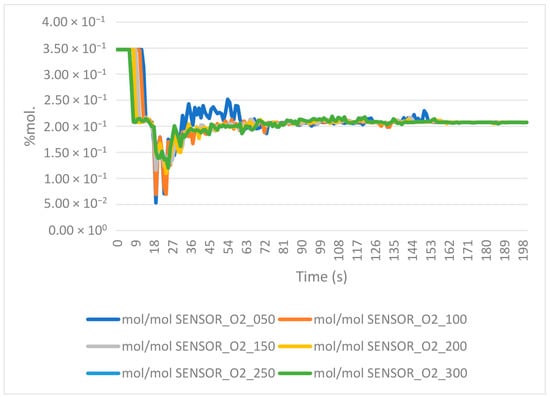
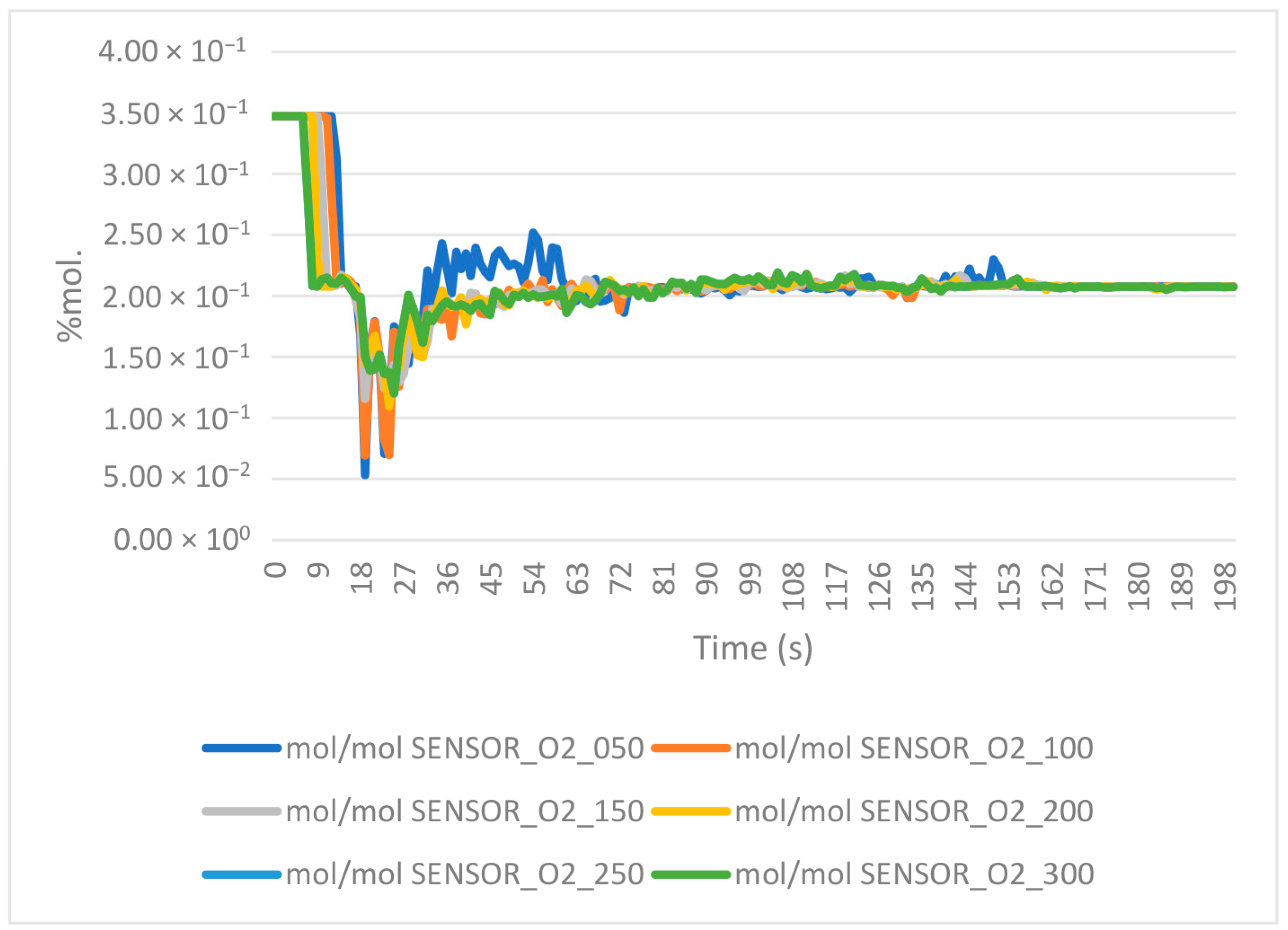
Figure 24, Figure 25 and Figure 26 illustrate the evolution of the concentration of monoxide, carbon dioxide, and oxygen recorded by each sensor.
Figure 24.
Time evolution (seconds) of carbon monoxide concentration (%mol.) recorded by sensors placed centrally in the hospital ward.
Figure 25.
Time evolution (seconds) of carbon dioxide concentration (%mol.) recorded by sensors placed centrally in the hospital ward.
Figure 26.
Time evolution (seconds) of oxygen concentration (%mol.) recorded by sensors placed centrally in the hospital ward.
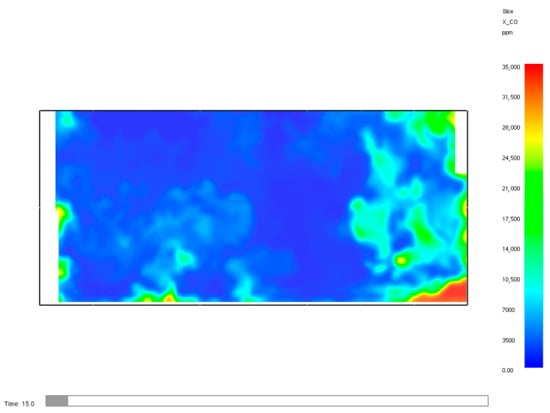
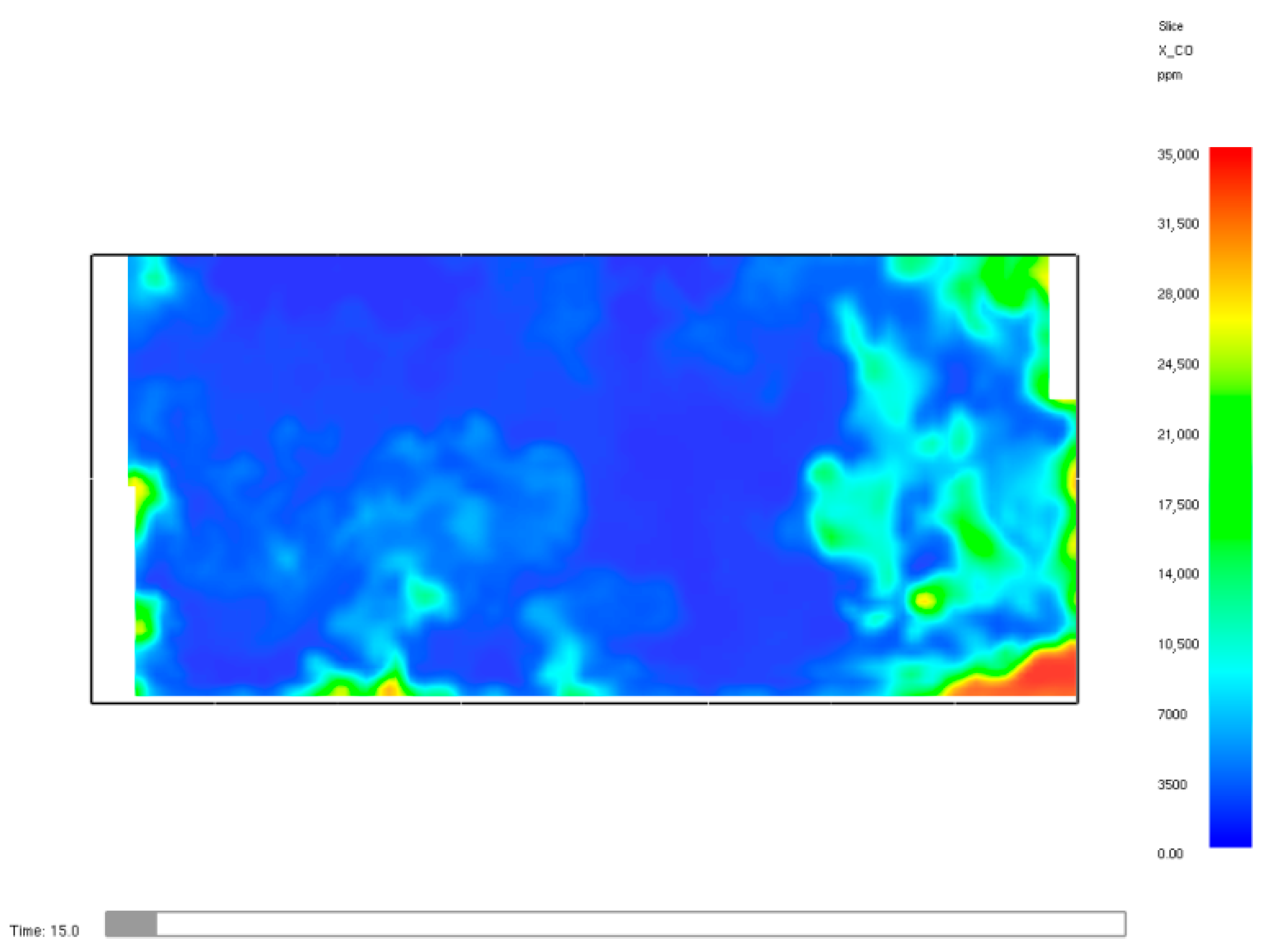
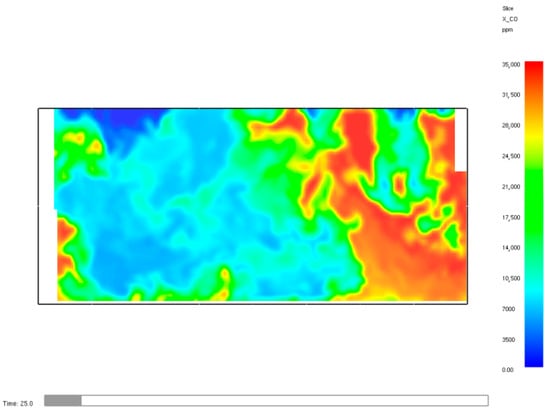
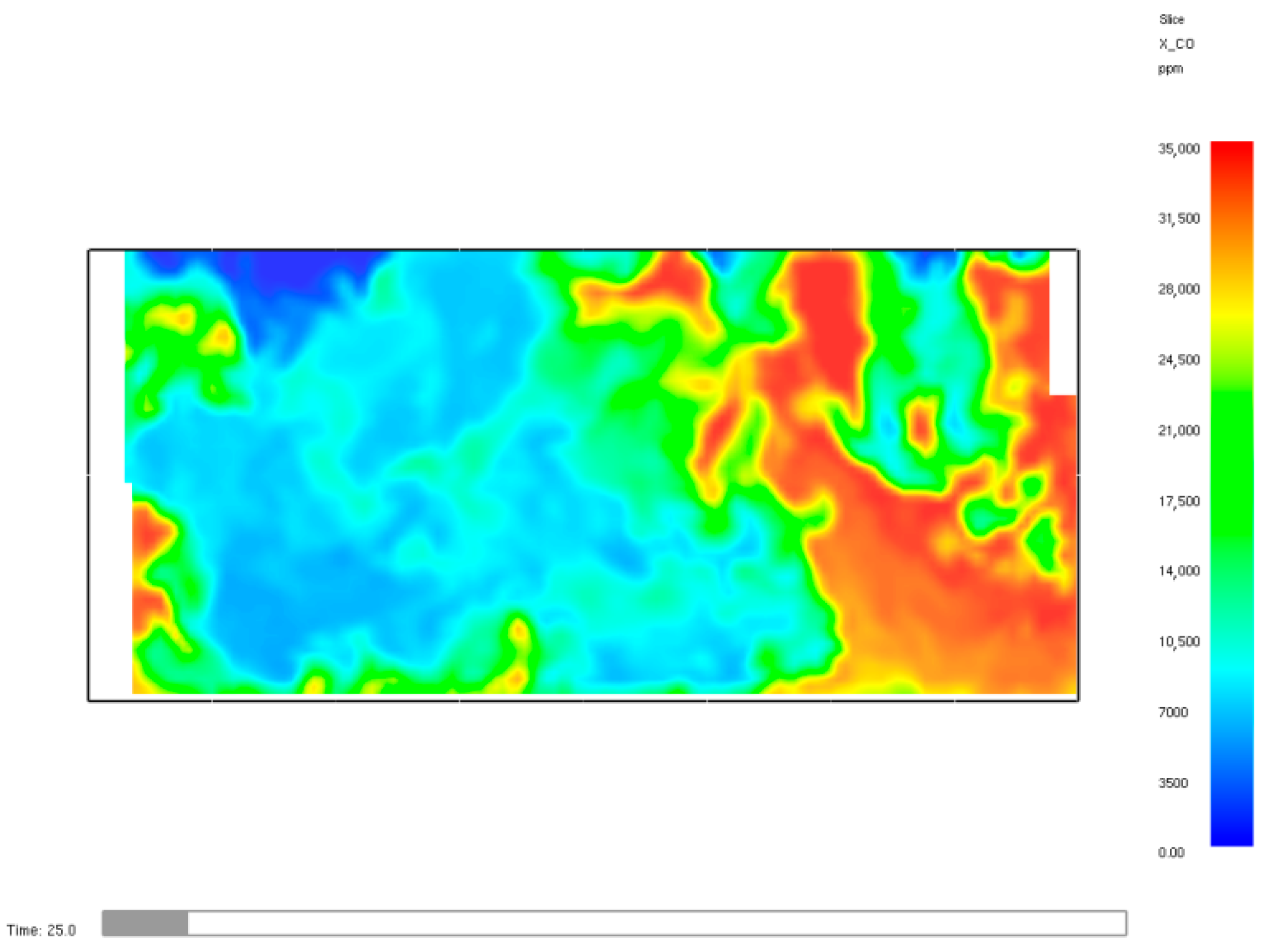
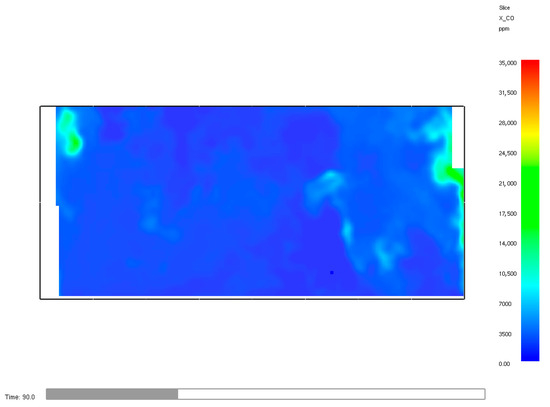
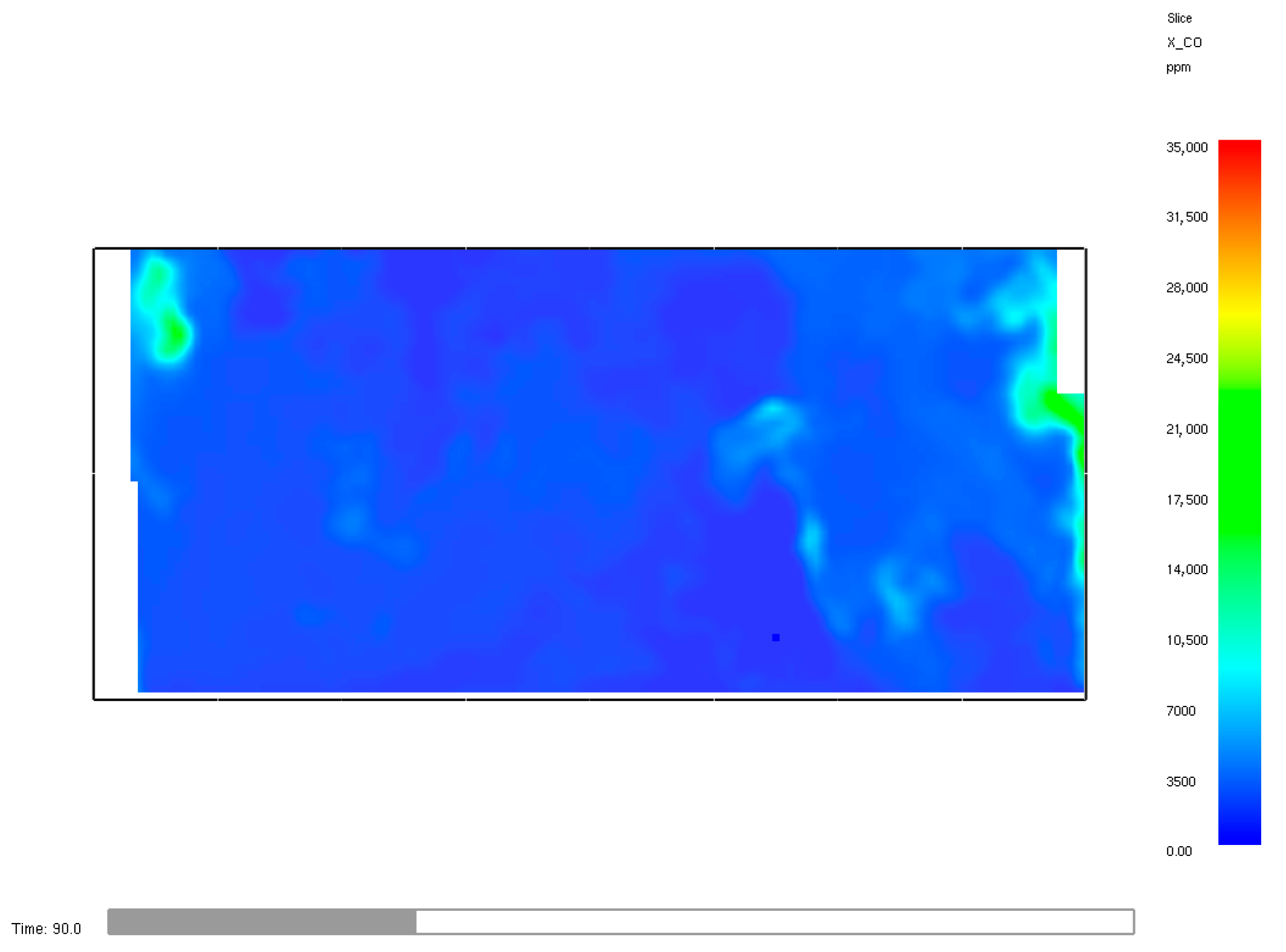
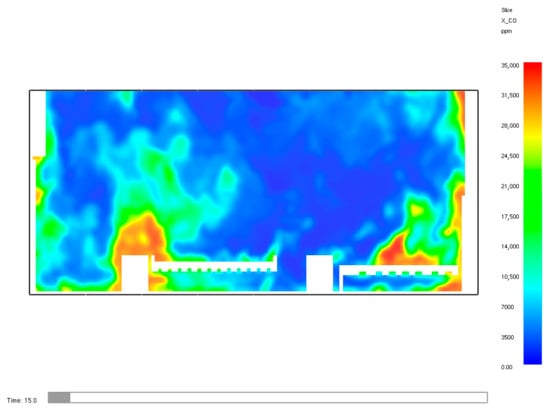
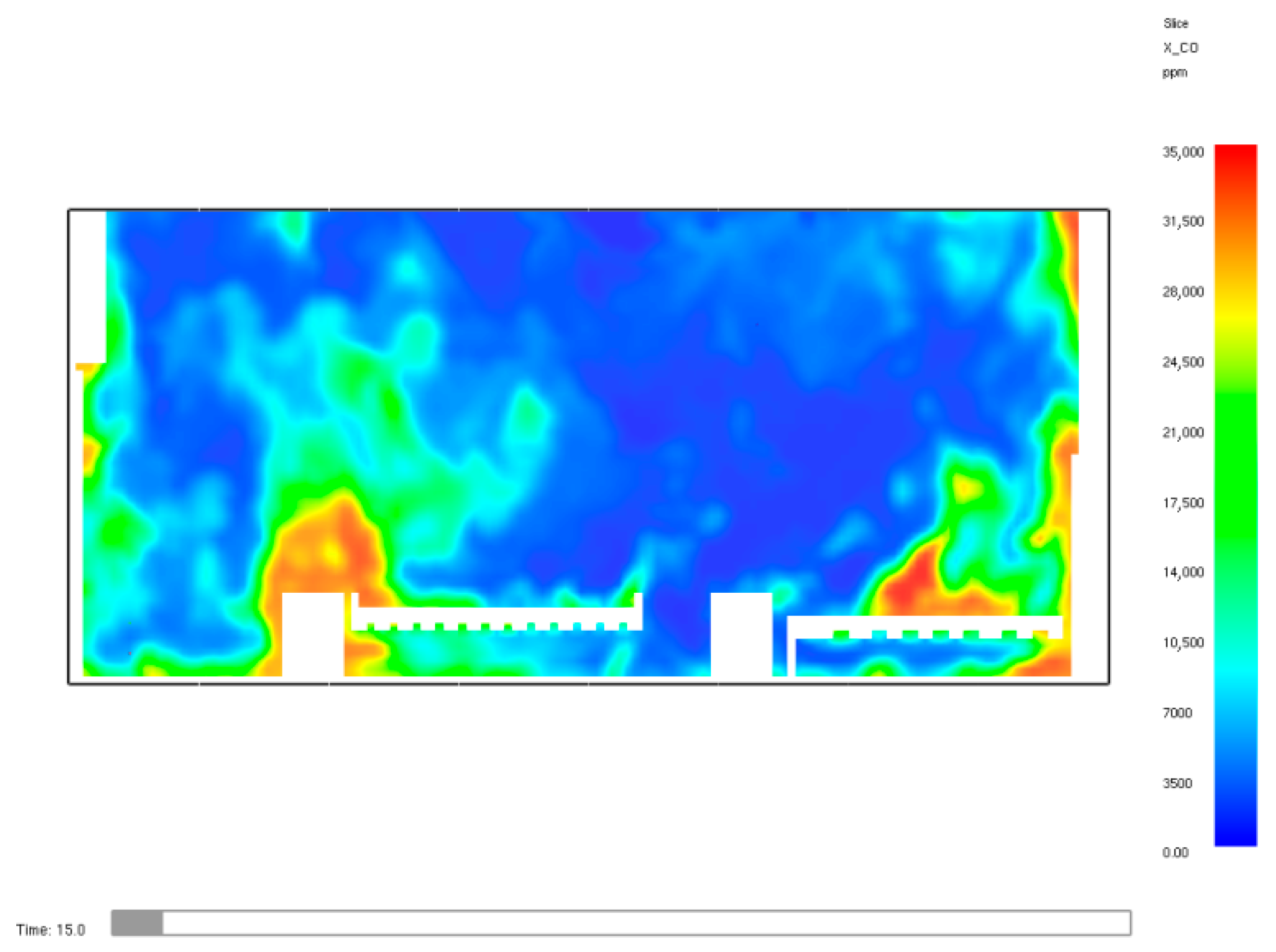
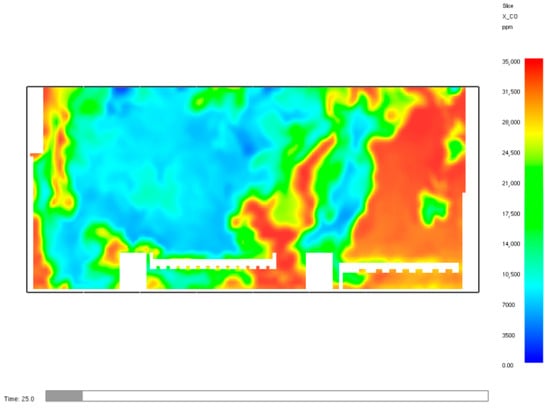
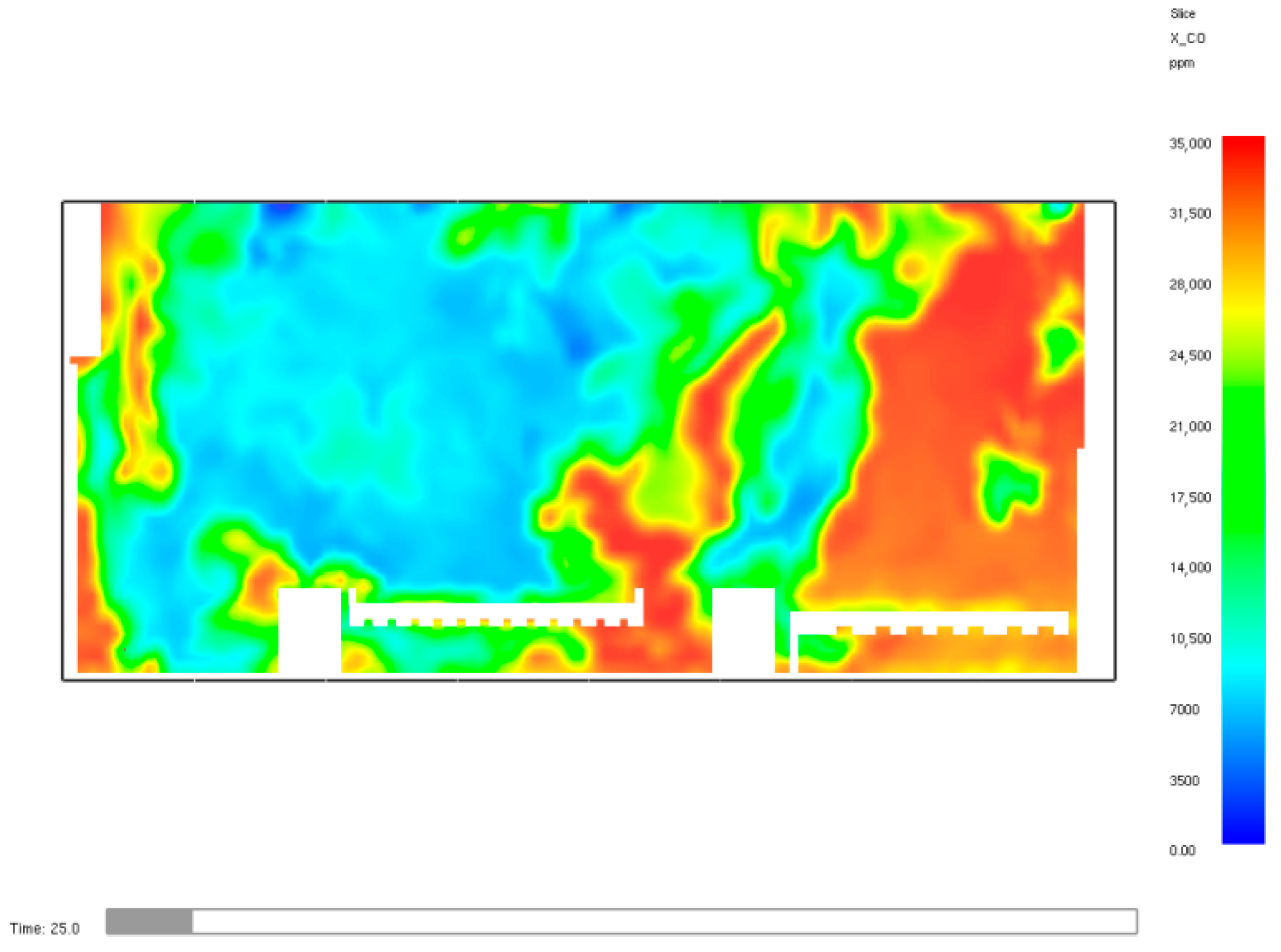
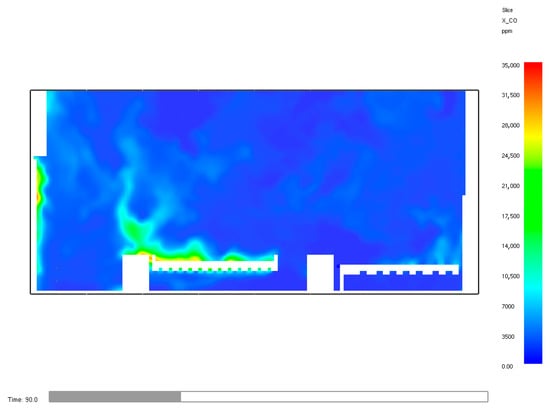
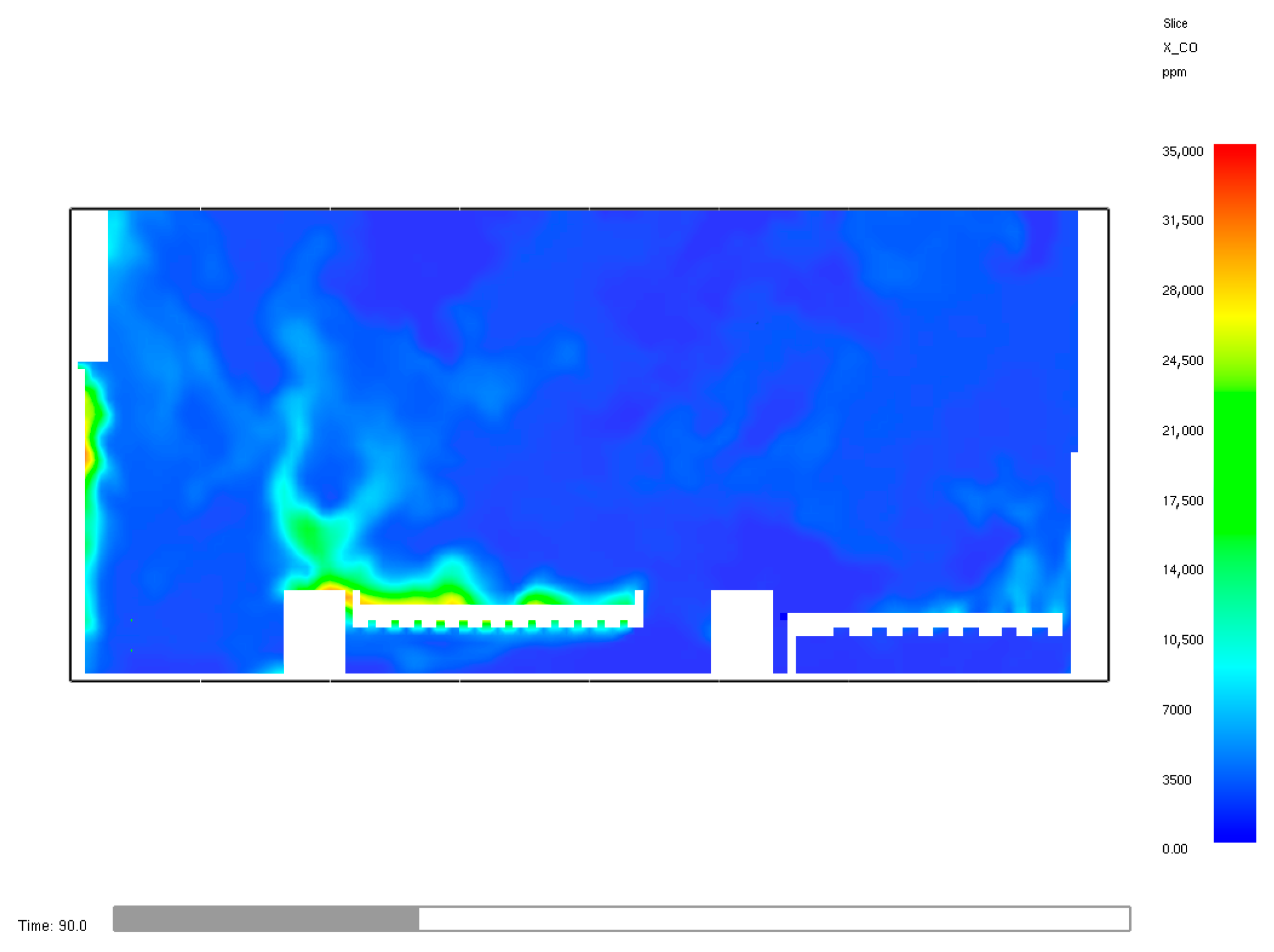
Figure 27, Figure 28 and Figure 29 illustrate the evolution of carbon monoxide concentration, recorded by the planar isosurface located inside the computational domain, intersecting the center of hospital ward no. 8.
Figure 27.
CO concentration, at t = 15 s, on the longitudinal section intersecting the center of the hospital ward.
Figure 28.
CO concentration at t = 25 s, on the longitudinal section intersecting the center of the hospital ward.
Figure 29.
CO concentration at t = 90 s, on the longitudinal section intersecting the center of the hospital ward.
Figure 30, Figure 31 and Figure 32 illustrate the evolution of carbon monoxide concentration, recorded by the planar isosurface located inside the calculation domain, intersecting the beds on the left side of the hospital ward.
Figure 30.
CO concentration at t = 15 s.
Figure 31.
CO concentration at t = 25 s.
Figure 32.
CO concentration at t = 90 s.
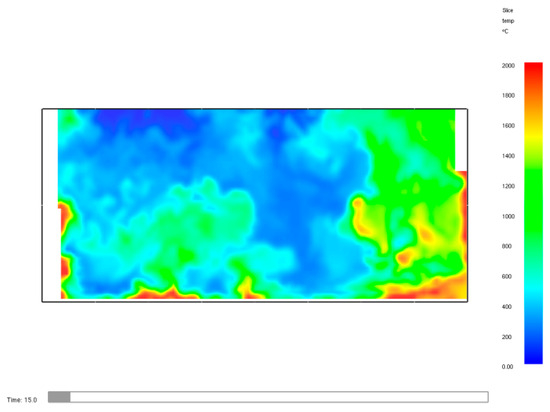
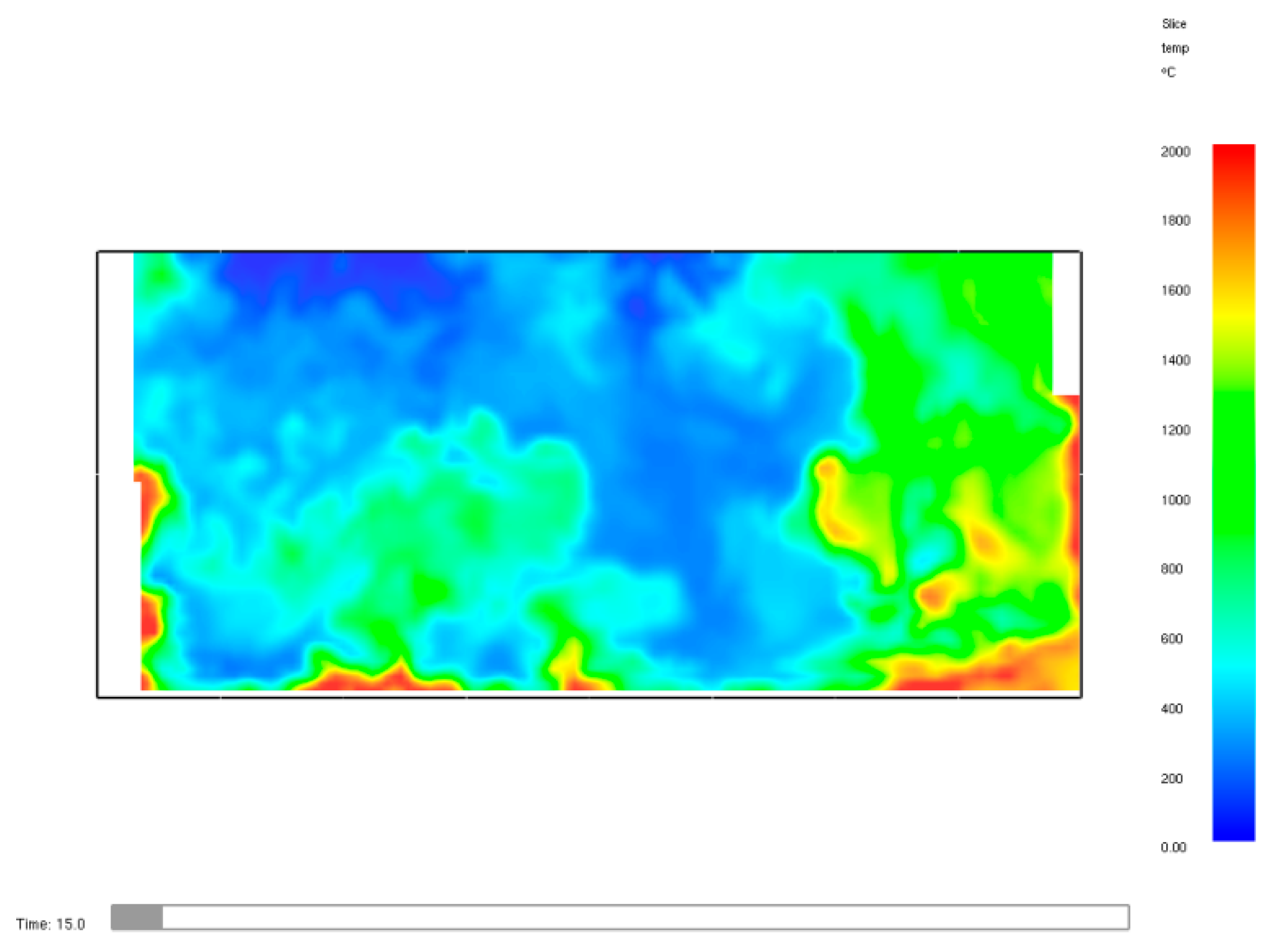
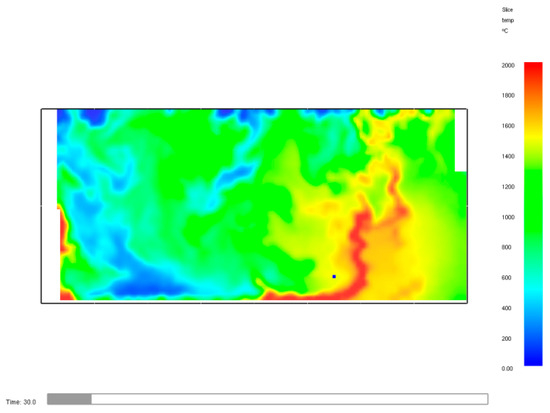
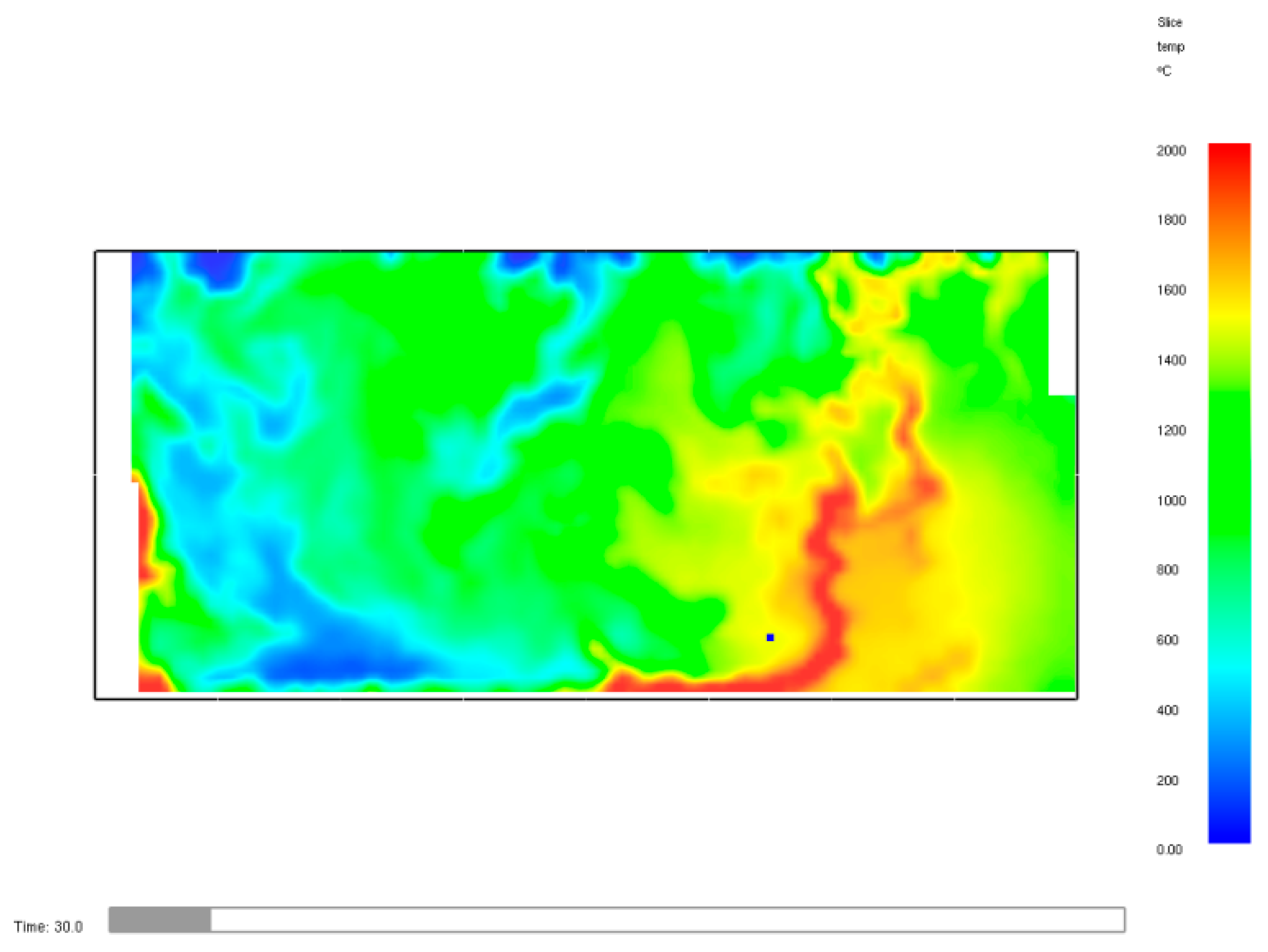
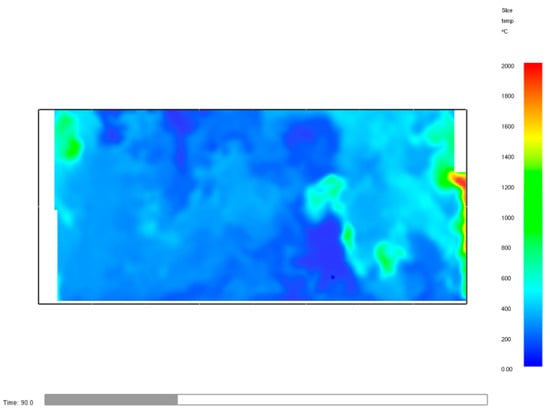
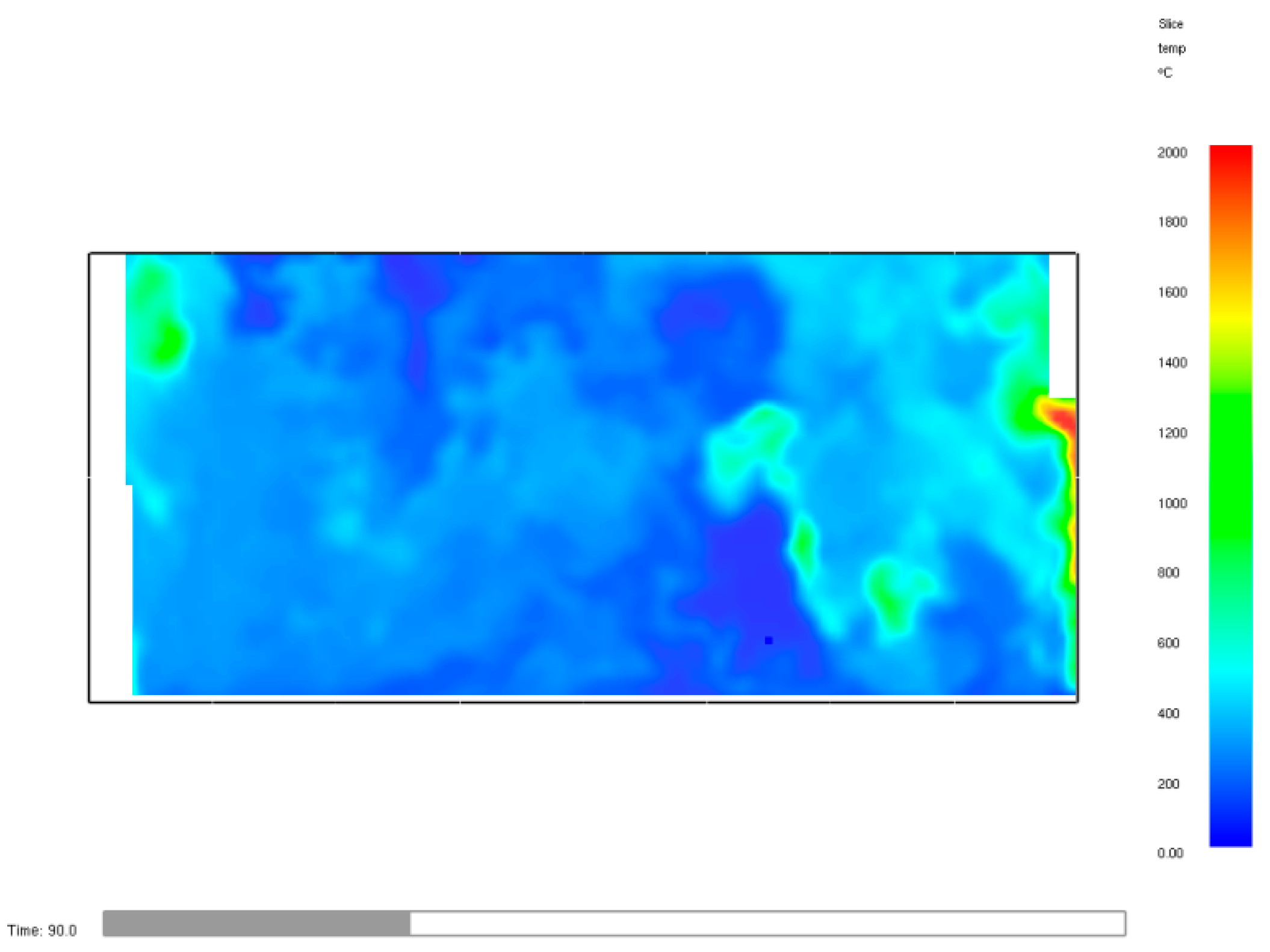
The evolution of temperatures can best be visualized through the temperature contours, which intersect the centers of the rooms (Figure 33, Figure 34 and Figure 35).
Figure 33.
Temperature distribution, on the longitudinal section in the center of the hospital ward, at t = 15 s.
Figure 34.
Temperature distribution, on the longitudinal section in the center of the hospital ward, at t = 30 s.
Figure 35.
Temperature distribution, on the longitudinal section in the center of the hospital ward, at t = 90 s.
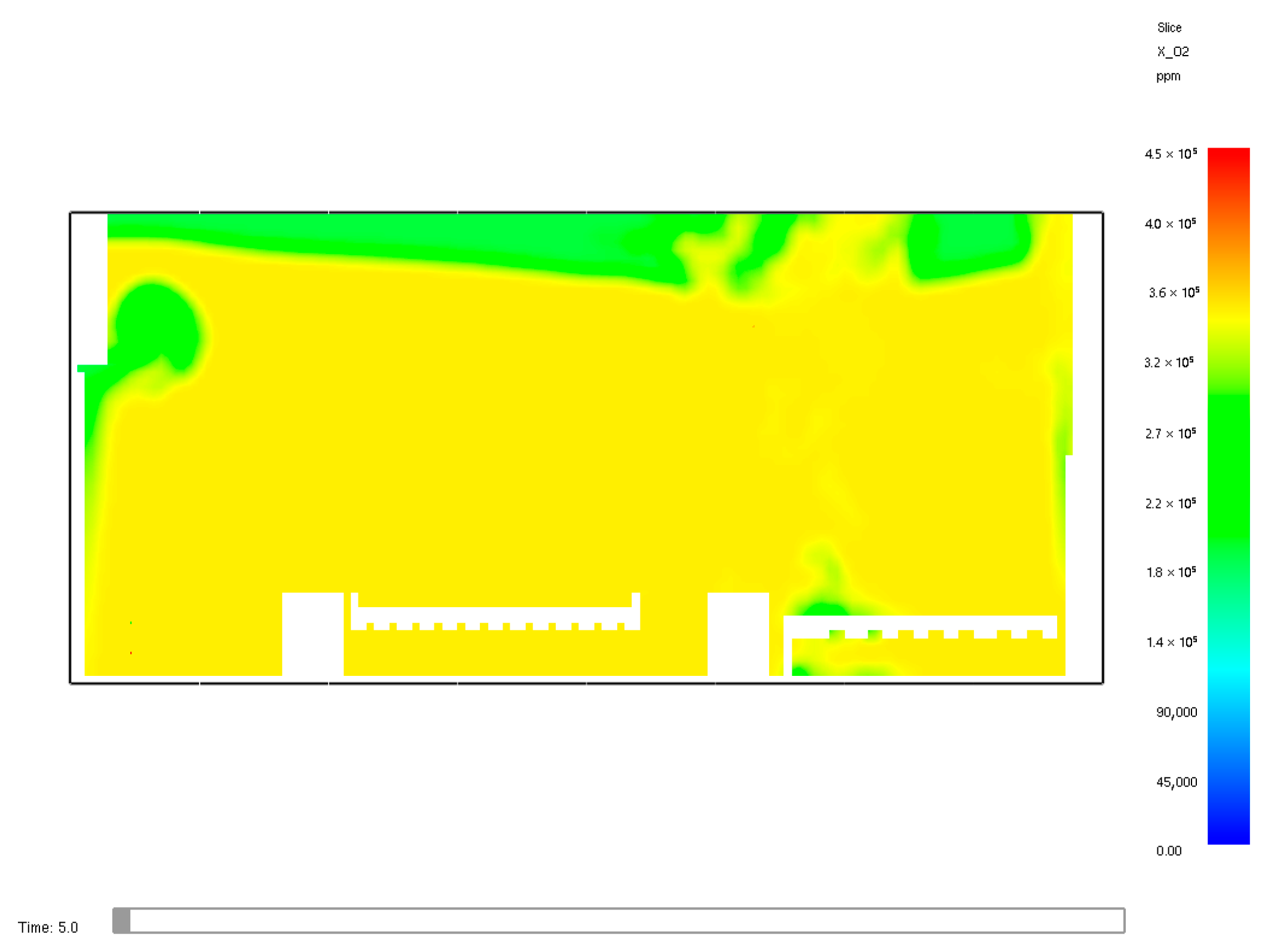
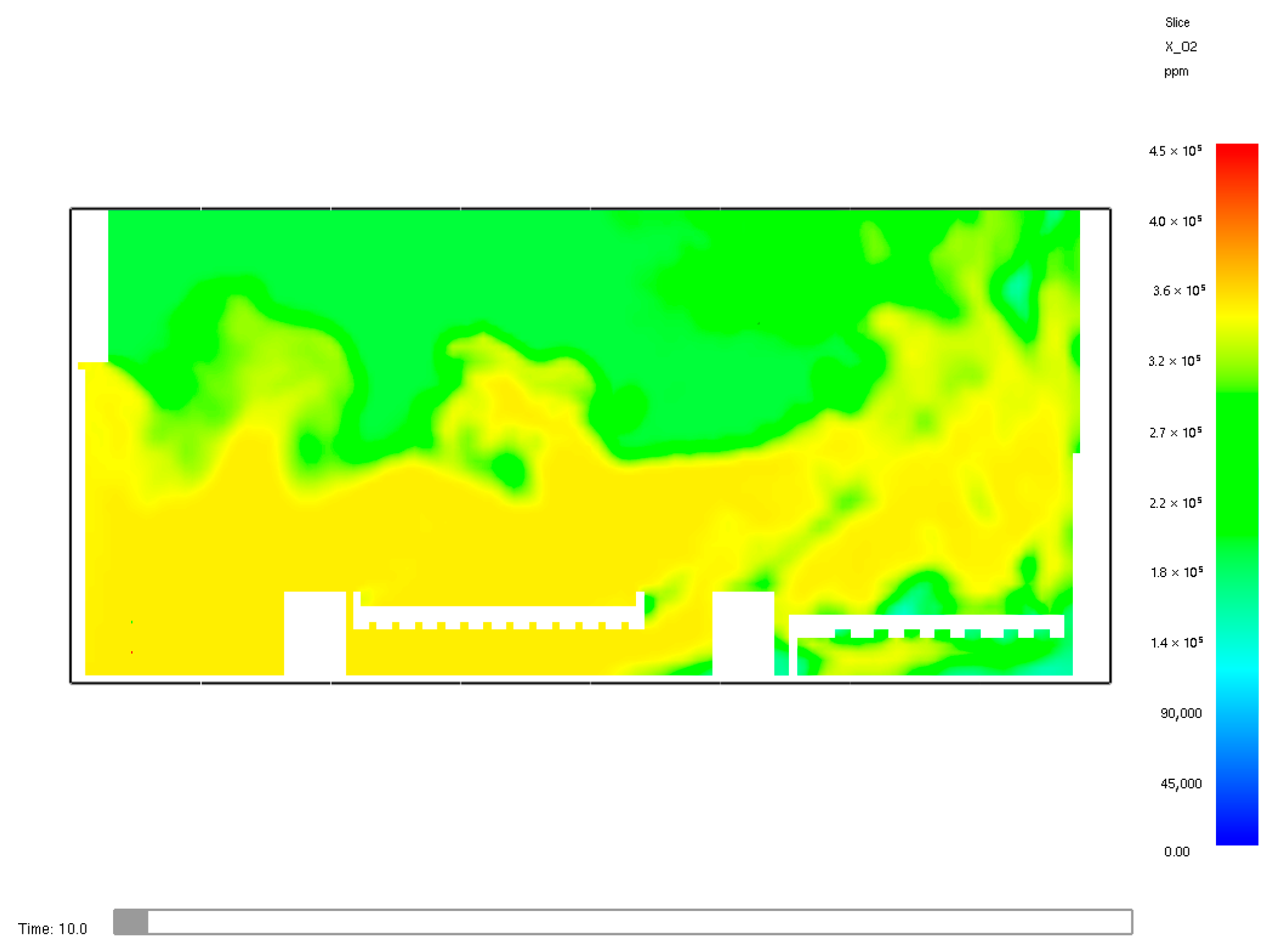
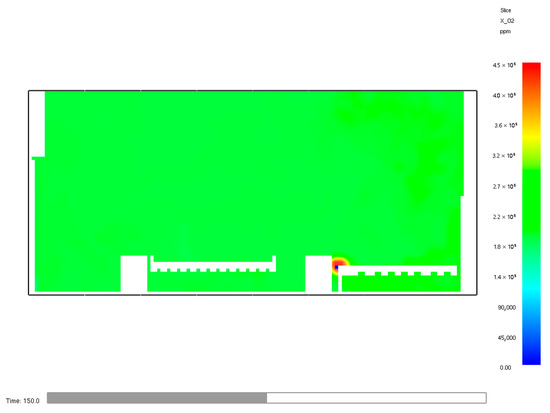
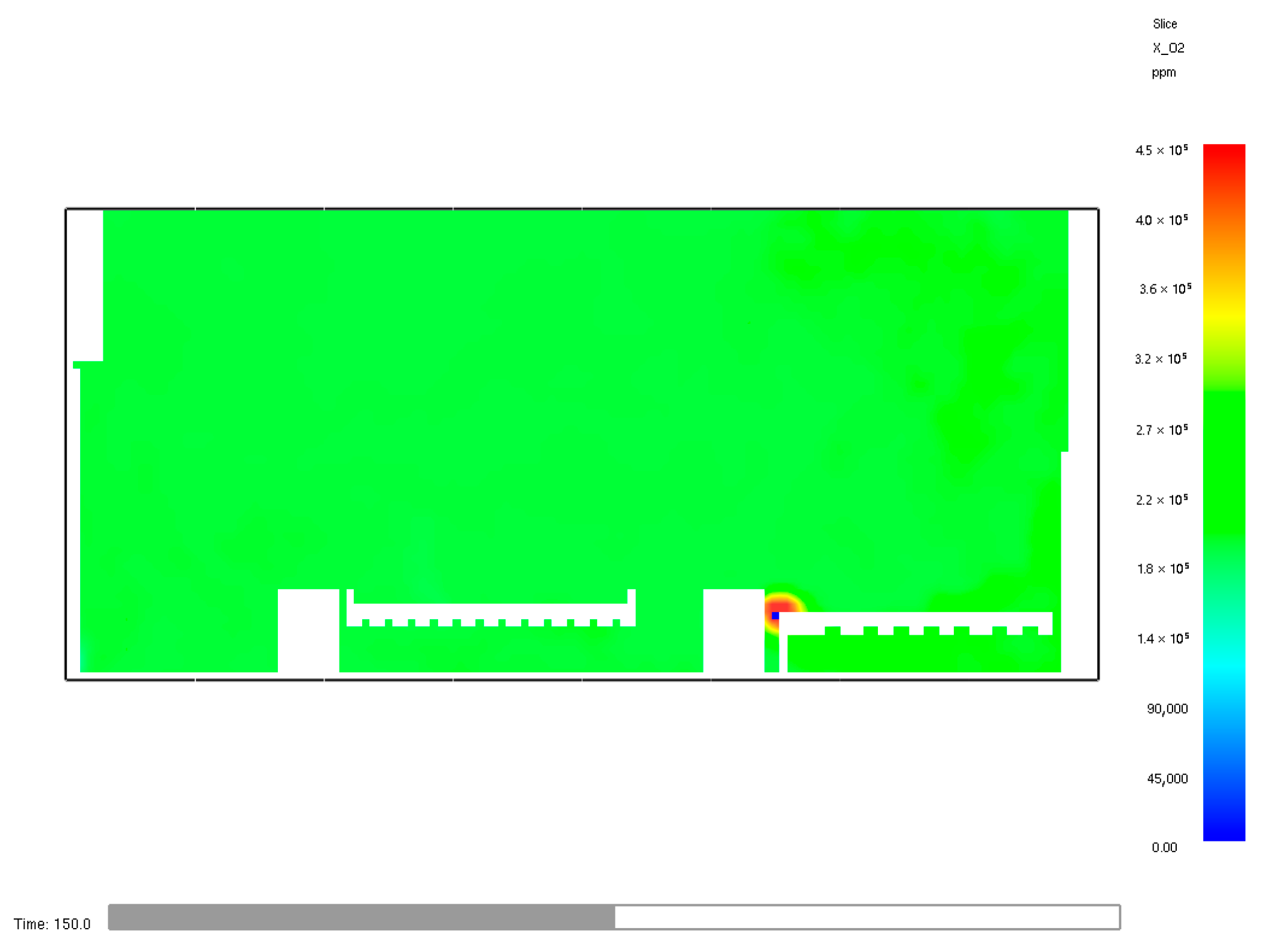
Following the fire, the oxygen consumption and the time evolution of its concentration inside the compartment were monitored by means of virtual measuring devices. In summary, the time evolution of the O2 concentration is presented in the following image sequences (Figure 36, Figure 37 and Figure 38).
Figure 36.
O2 concentration, at t = 5 s, on the longitudinal section intersecting the beds on the left side of the hospital ward.
Figure 37.
O2 concentration, at t = 10 s, on the longitudinal section intersecting the beds on the left side of the hospital ward.
Figure 38.
O2 concentration, at t = 150 s, on the longitudinal section intersecting the beds on the left side of the hospital ward.
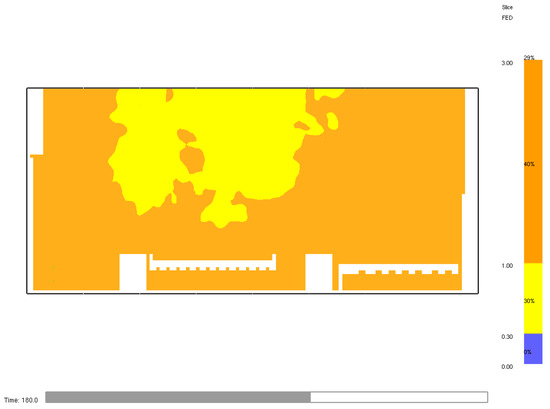
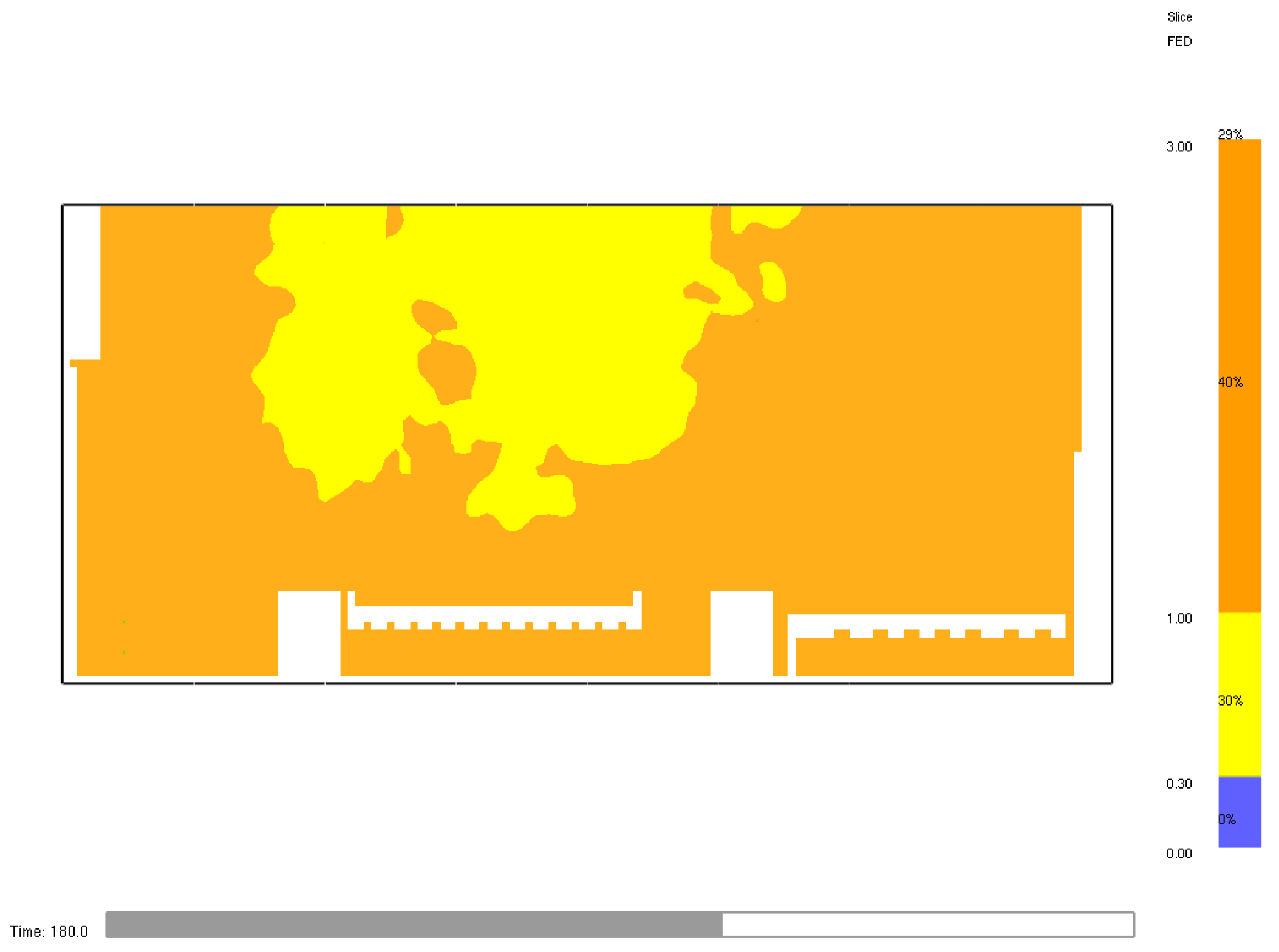
Regarding the FED parameter, representing the upper tolerance threshold for combustion gas inhalation, at which it is estimated that more than 89% of the population will become incapacitated (considering that the potential victim remains stationary throughout the simulation and is not affected by the thermal effects of the fire), Figure 39 demonstrates that, at the end of the simulation, more than 30% of the possible occupants of the room would be in the red zone (FED > 3.0), i.e., deceased.
Figure 39.
Possibility of deceased occupants.
4. Discussion
The experimental results and the FDS simulations were designed in a complementary manner: experimental data informed the material behavior and combustion assumptions in the numerical model, while FDS simulations extrapolated these findings to the full-scale ICU fire scenario.
The tests demonstrated the incendiary capacity of the melted sponge material droplets, the controls—cotton fabric being set on fire.
The combustion of the sponge samples (simple) in a normal atmosphere 20.9% vol. O2 takes place until the oxygen concentration is reduced to approx. 15% vol. O2, this value being critical in terms of maintaining the combustion process of the material—flexible polyurethane foam.
The combustion of the sponge samples (simple and with memory) in an oxygen-enriched atmosphere (40% vol. O2) takes place until the total consumption of the flexible polyurethane foam mass, a decrease in the oxygen concentration at the end of the tests being observed to approx. 24% vol. O2, this value being higher than the critical value necessary to maintain the combustion process.
The tests highlighted a high intensity combustion in the case of an oxygen-enriched atmosphere compared to a normal atmosphere; thus, the trend of consumption through mass combustion is increasing.
The computer simulation highlights the rapid transmission mode of the flame front, the excess oxygen, initially over 35% vol., allowing accelerated combustion of the materials of the bed mattresses, of the wall covering (tarchet) in the first 15–20 s, with the generation of high concentrations for carbon monoxide of 2.77% vol. and for carbon dioxide of 13.2% vol.
When combined with the thermal properties in Table 1, the results indicate a clear coupled combustion mechanism between polyurethane (PU) foam, PVC, ABS, and textiles under oxygen-enriched conditions. Owing to its low density, low thermal conductivity, and high heat of combustion, PU foam acts as the primary fire accelerator, especially when its open-cell structure becomes saturated with oxygen. Once ignited, the intense heat release from PU foam provides strong radiative and convective feedback to adjacent materials. In an oxygen-enriched atmosphere, materials such as PVC and ABS—normally characterized by delayed ignition or limited flammability—exhibit sustained flaming combustion, as elevated oxygen concentrations suppress flame-inhibiting effects and accelerate polymer degradation. Textiles, with low ignition temperatures, ignite early and increase the effective burning surface, facilitating rapid flame spread. As a result, these materials no longer behave independently but interact synergistically, leading to accelerated burning rates, complete material consumption, and rapid fire development, consistent with the experimental observations and numerical simulations.
The experimental results served as the fundamental empirical basis for the FDS model. Material burnout in the FDS model was implemented using the standard finite-mass solid combustion framework. Combustible components were defined as solid obstructions with associated MATL and SURF definitions, including density, thermal properties, ignition temperature, and effective heat of combustion. Gas-phase combustion was described using a global REACTION model.
Once the surface temperature exceeded the ignition threshold, pyrolysis-driven mass loss was initiated. The mass loss rate and heat release were controlled by thermal feedback from the flame and by the local oxygen concentration in the gas phase. Burnout proceeded until the available solid mass was fully consumed, after which the material no longer contributed to heat release or gas generation.
In oxygen-enriched conditions, the accelerated and complete burnout resulted naturally from the enhanced oxygen availability within the gas-phase reaction model, without the use of artificial amplification factors. This modeling approach is consistent with the experimental observation of complete polyurethane foam consumption at 40% vol.of oxygen.
The direct conjunction between the two is established through several key integration points:
- Simulation Parameters: The FDS model first identified that local oxygen concentrations in the ward reached 39–42% vol. These specific findings directly dictated the 40% vol. oxygen concentration used in our laboratory experiments to ensure real-world relevance.
- Material Characterization: The accelerated burning rates and complete mass consumption observed experimentally for polyurethane (PUR) foam were used to calibrate the HRR (Heat Release Rate) and combustion logic within FDS.
- Validation: The concentrations of toxic gases (CO and CO2) and the rapid oxygen depletion rates measured during laboratory tests were used as benchmarks to validate the accuracy of the numerical outputs. The FED analysis further links experimental gas generation trends with numerical predictions of occupant incapacitation.
- Forensic Reconstruction: The observed high incendiary capacity of melting PUR droplets in oxygen-enriched atmospheres provided the physical evidence necessary to accurately model the fire’s rapid transition from a localized electrical fault to a full-scale ward fire.
The experimental phase provided the primary data required to ensure that the FDS simulation accurately reflects the extreme fire dynamics specific to oxygen-enriched medical environments.
For the FED parameter, the numerical modeling demonstrates that, after 180 s, more than 30% of the occupants of the lounge would be in the red zone (FED > 3.0), which means their death.
5. Conclusions
The results of the experimental investigation and numerical simulation carried out for the fire in the COVID ICU ward of the Ploiesti County Emergency Hospital convergently highlight the determining role of the oxygen-enriched atmosphere on the dynamics and severity of the fire development.
Laboratory tests have demonstrated that flexible polyurethane foam—the basic material of mattresses and pillows—radically changes its combustion behavior when the oxygen concentration exceeds the normal values in atmospheric air. Thus, at 40% vol. O2, accelerated, complete combustion was observed, with a significant reduction in combustion time and a massive increase in the material consumption rate. In addition, the incandescent droplets resulting from the combustion showed high incendiary capacity, igniting the textile control placed under the sample. This phenomenon supports the hypothesis of rapid vertical fire propagation in real conditions.
The FDS simulation confirmed that, in a confined space with local accumulations of about 35–40% vol. O2 due to the administration of oxygen therapy (CPAP, cannulas, and face masks), the speed of fire development increases exponentially. In the first 15–20 s, the flame front engulfed the combustible materials near the initiation source, leading to the release of very high concentrations of toxic gases (CO and CO2) and the rapid achievement of pre-flashover conditions. The flashover phenomenon, which occurred shortly after the fire started, explains the severe damage observed on site (door dislocation, broken windows, and damage to the oxygen supply system). Analysis of the FED parameter indicates that, in less than 180 s, over 30% of the people in the room would have been exposed to lethal conditions (FED > 3.0), even assuming the absence of direct exposure to the thermal effects of the flame. High CO concentrations, accelerated oxygen consumption, and rapid accumulation of hot gases created an environment incompatible with survival.
Overall, this study demonstrates that in clinical settings where high-flow oxygen therapy is administered, local accumulation of oxygen transforms otherwise low-flammable or moderately flammable materials into components with high combustible potential. The combination of
- Flexible polyurethane foam;
- Plastics in furniture and equipment;
- High oxygen concentrations;
- A possible electrical fault in the outlet created the conditions necessary for explosive fire propagation and the generation of a lethal environment in an extremely short time.
These findings highlight the importance of implementing strict oxygen-enriched atmosphere control measures in ICUs, as well as the use of appropriate flame retardant materials for medical furniture and equipment, especially during periods of intensive oxygen therapy use, such as the COVID-19 pandemic.
Author Contributions
F.M., Idea and concepts, On-site research, Investigation, Review of manuscript; E.G., Data evaluation, Investigation, Review and editing; M.C.S., Data curation, Formal analysis, Software; M.P., Investigation, Review of manuscripts; D.G.P., Review of manuscript, Investigation; D.F., Testing and Software; B.A.S.-M., Testing and Software; R.L., Formal Analysis, Data curation; G.A.U., Formal analysis, Methodology; G.I., Coordination, Conceptualization, Writing—original draft, Writing—Review and Editing. All authors have read and agreed to the published version of the manuscript.
Funding
This research received no external funding.
Institutional Review Board Statement
Not applicable.
Informed Consent Statement
Not applicable.
Data Availability Statement
The raw data supporting the conclusions of this article will be made available by the authors on request.
Conflicts of Interest
The authors declare no conflicts of interest.
References
- Manea, F.; Ilia, G.; Ghicioi, E.; Pupazan, D.G.; Prodan, M.; Nicola, A.H. The Experimental Study of Flame Behavior of Flexible Polyurethane Foam (Sponge), as a Sound-Absorbing Element. Fire 2025, 8, 127. [Google Scholar] [CrossRef] [Scilit]
- Hirschler, M.M. Polyurethane foam and fire safety. Polym. Adv. Technol. 2008, 19, 521–529. [Google Scholar] [CrossRef] [Scilit]
- Suhailuddin, S.H.; Aprajith, K.; Sanjay, B.; Shabeeruddin, S.H.; Shamshath Begum, S. Development and characterization of flame retardant property in flexible polyurethane foam. Mater. Today Proc. 2022, 59, 819–826. [Google Scholar] [CrossRef] [Scilit]
- Wood, M.H.; Hailwood, M.; Koutelos, K. Reducing the risk of oxygen-related fires and explosions in hospitals treating COVID-19 patients. Process Saf. Environ. Prot. 2021, 153, 278–288. [Google Scholar] [CrossRef] [Scilit] [PubMed]
- Rispoli, F.; Iannuzzi, M.; De Robertis, E.; Piazza, O.; Servillo, G.; Tufano, R. Warning! Fire in the ICU. Prehosp. Disaster Med. 2014, 29, 339–340. [Google Scholar] [CrossRef] [Scilit]
- Wu, J.F.; Yao, Y.Q.; Shang, X.L. Causes and preventive measures for fire-related injuries in intensive care units: A systematic review. J. Glob. Health 2025, 15, 04043. [Google Scholar] [CrossRef] [Scilit] [PubMed]
- Bayuo, J.; Duodu, P.A. Hospital Fire Outbreaks Before and During the COVID-19 Pandemic in Low- and Mid-dle-Income Settings. J. Patient Saf. 2023, 19, 223–228. [Google Scholar] [CrossRef] [Scilit]
- Aldridge, M. Airway fire with use of diathermy in conjunction with high-flow nasal oxygen. Anaesth Rep. 2024, 12, 10–13. [Google Scholar] [CrossRef] [Scilit] [PubMed]
- Wróblewski, W.; Tuśnio, N.; Wolny, P.; Siuta, D.; Trzebicki, J.; Baczkowska, T.; Dzikowska-Diduch, O.; Pruszczyk, P. Fire Safety of Healthcare Units in Conditions of Oxygen Therapy in COVID-19: Empirical Establishing of Effects of Elevated Oxygen Concentrations. Sustainability 2022, 14, 4315. [Google Scholar] [CrossRef] [Scilit]
- Bersch, C.F.; Harvey, M.R.; Achhammer, B.G. Heat and ultraviolet aging of poly(vinyl chloride). J. Res. Natl. Bur. Stand. 1958, 60, 481. [Google Scholar] [CrossRef] [Scilit]
- Maxwell, A.; Broughton, W.R. Survey of Long-Term Durability Testing of Composites, Adhesives and Polymers; NPL Report MAT 85; National Physical Laboratory: Teddington, UK, 2017; Available online: https://api.semanticscholar.org/CorpusID:164387327 (accessed on 6 December 2025).
- Petre, A.L.; Budrugeac, P.; Segal, E. Thermal degradation of polyvinyl chloride. J. Therm. Anal. Calorim. 1999, 56, 1065–1070. [Google Scholar] [CrossRef] [Scilit]
- Colin, X.; Verdu, J. Polymer degradation during processing. Comptes Rendus Chim. 2006, 9, 1380–1395. [Google Scholar] [CrossRef] [Scilit]
- INCD INSEMEX Petrosani. Investigation Report—Specialized Technical Expertise of the Event Occurred, on 11.11.2021, at the Ploiesti County Emergency Hospital—External Infectious Diseases Department "Movila", Located in the Municipality of Ploiesti, Republicii Blvd., no. 271, Prahova County; INSEMEX: Petroșani, Romania, 2022. [Google Scholar]
- INCD INSEMEX Petrosani. Complex System for Determining the Ignition and Combustion Behavior of Solid Materials in Atmospheres with High Oxygen Concentrations. OSIM Patent Application No. CBI A 2022 00607, 5 October 2022. [Google Scholar]
- ISO 13571/2007; Life-Threatening Components of Fire—Guidelines for the Estimation of Time Available for Escape Using Fire Data. ISO: Geneva, Switzerland, 2007. Available online: https://standards.iteh.ai/catalog/standards/iso/39938de8-7def-43e0-8b19-389cf5cdb64d/iso-13571-2007 (accessed on 10 February 2025).





Disclaimer/Publisher’s Note: The statements, opinions and data contained in all publications are solely those of the individual author(s) and contributor(s) and not of MDPI and/or the editor(s). MDPI and/or the editor(s) disclaim responsibility for any injury to people or property resulting from any ideas, methods, instructions or products referred to in the content. |
© 2026 by the authors. Licensee MDPI, Basel, Switzerland. This article is an open access article distributed under the terms and conditions of the Creative Commons Attribution (CC BY) license.