


Abstract
In this study, to reveal the changes in explosion pressure and flame propagation characteristic, a 12 L cylindrical explosion device was used to conduct experiments on the explosions of two-phase mixtures of paper powder and volatile organic compounds (VOCs) at varying concentrations. The findings indicate that, at a constant paper powder concentration, increasing the VOCs concentration initially causes minor fluctuations in the maximum explosion pressure (Pmax), followed by an increase. At a constant VOCs concentration, as the paper powder concentration rises, the Pmax also increases, while the time to reach peak explosion pressure initially decreases before increasing. Additionally, under the two-phase concentration range produced in the production process, higher concentrations of paper powder and VOCs significantly enhance flame brightness, combustion intensity, heat release rate, and flame duration. These insights provide data support for determining the alarm limit values of VOCs concentration detection, provide a scientific basis for evaluating and predicting explosion risks associated with paper powder and VOCs, offering significant practical implications for fire and explosion prevention in the printing industry.
1. Introduction
China’s industrial production involves combustible dust across various sectors, and in recent years, dust explosion accidents have become more frequent, posing significant risks to safety management. According to incomplete statistics, as of 2025, there are 466,282 printing enterprises in China’s provinces. In 2008, the oil vapor from a solvent gasoline tank at a printing factory in Changchun exploded upon meeting a spark from a mobile phone, resulting in two deaths and two injuries. In 2025, a color printing factory in Fuzhou ignited flammable materials such as paper, causing four deaths and economic losses of millions. Many printing enterprises have major safety hazards such as paper powder accumulation, highlighting the serious harm of accidents in this industry. Early detection and analysis of paper powder in these enterprises have confirmed its explosive nature, With a considerable risk of dust explosions.
Printing companies use large amounts of ink and organic solvents, with inks emitting volatile organic compounds (VOCs), comprising 70–80% of the gas content. These organic gases are flammable and toxic [1,2]. During the production process, paper powder and VOCs often coexist. Over time, mixtures of paper powder and VOCs persist in dust removal system and can ignite and cause fires or explosions [3,4,5].
Research on gas and dust two-phase mixture explosions began in the 19th century when Engler discovered that mixing gas below the lower explosive limit with coal dust could detonate. Since then, many scholars have studied the explosion characteristics of combustible gas/dust mixtures to understand the causes and hazards of these two-phase systems, termed hybrid mixtures [6].
With increased awareness of industrial safety, research has focused on the explosion mechanisms, limits, and ignition sources for gas/dust mixtures in specific industries. For instance, studies on coal dust/gas explosions in the coal mining industry and Low-Density Polyethylene(LDPE) dust/ethylene mixtures in manufacturing have explored the explosive properties of hybrid mixtures and the factors influencing explosions. In the field of coal mining, research has shown that adding coal dust to gas significantly increases the Pmax and explosion index, with higher coal dust content intensifying the explosive reaction. The hazard of two-phase explosion is more difficult to predict than that of single-phase explosion [7,8,9,10]. Studies on LDPE dust/ethylene mixtures found that small amounts of ethylene gas enhance the explosion of LDPE dust, increasing the combustion reaction rate and flame propagation speed [11,12,13,14].
Currently, the explosion mechanism and characteristics of paper powder/VOCs mixtures in printing enterprises are not well understood. There is limited research on the explosion characteristics of paper powder and even less on VOCs generated during printing. The effects of single-phase substances on mixed explosions and flame-related characteristics of paper powder/VOCs mixtures are unclear. Therefore, this study conducts experimental research to explore the explosion characteristics and flame propagation characteristics of paper powder/VOCs mixtures, providing a theoretical basis for assessing and controlling explosion risks in printing enterprises.
2. Experimental Setup and Methods
2.1. Experimental Setup
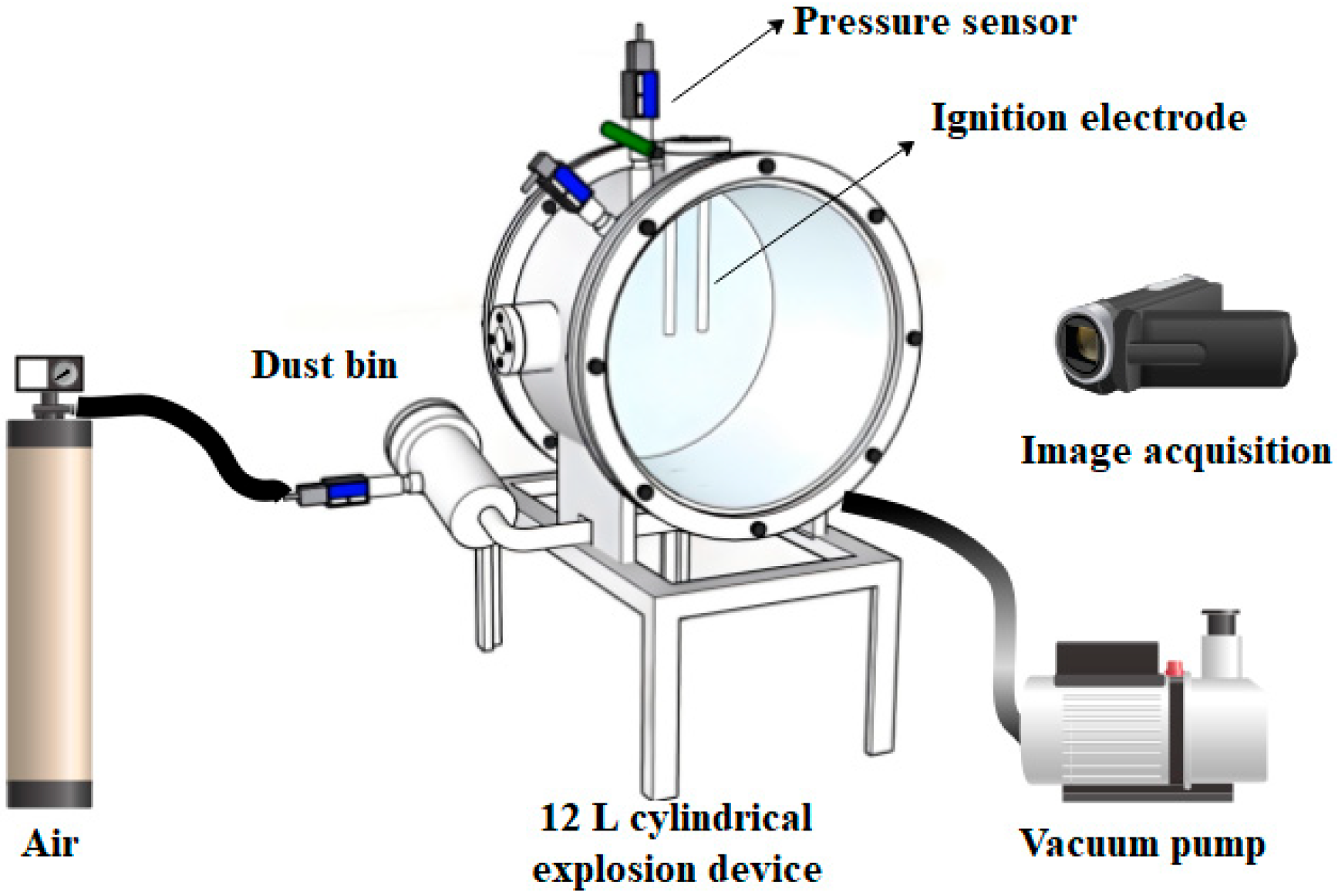
To investigate the maximum pressure distribution and flame propagation characteristics of two-phase explosions with varying concentrations of VOCs and paper powder, a 12 L cylindrical explosion device was used to carry out the experimental study. Compared with the traditional 20 L spherical device, the length-to-diameter ratio of its cylindrical structure is more conducive to the mixing of powder and gas and can accurately simulate the coexistence environment of paper powder/VOCs in the dust removal system of printing enterprises. The observation window design of this device can clearly record the flame evolution process, complementing the test positioning of the 20 L spherical device. This not only ensures the comparability of basic explosion parameters but also enables in-depth exploration of the unique explosion laws of two-phase mixtures, providing more practical scenario-orientated technical support for the prevention and control of explosion disasters in printing enterprises.
Before the experiment, the 12 L cylindrical explosive device was calibrated with Lycopodium powder. The Pmax of Litpine powder was measured as 0.58 MPa, and the Kst value was 7.05 MPa·m/s, which were compared with the reference values measured by the standard device (Pmax 0.55–0.60MPa). The Kst 7.20 MPa·m/s was highly consistent, verifying the reliability of the device [15,16].
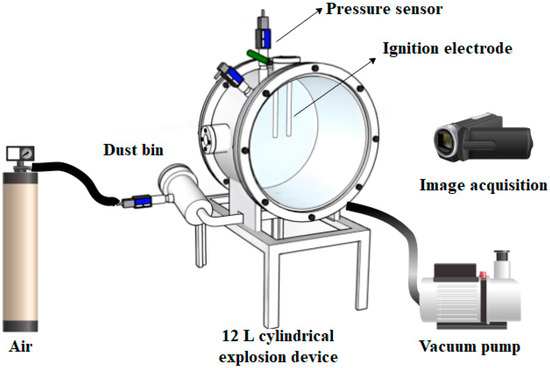
The experimental setup primarily consisted of an explosion container, a powder spray dust system, a data acquisition system, and a high-speed camera system, as illustrated in Figure 1.
Figure 1.
Schematic of the experimental system.
The experimental device is equipped with a dedicated powder spraying system, which can precisely control the pressure of paper powder spraying. Before the experiment, first, the internal pressure of the container is evacuated to 0.6 standard atmospheres through a vacuum pump and then we introduce VOCs gas of the set concentration and let it stand for 30 s to ensure the gas distribution is uniform. After the paper powder is sprayed, Ignition is achieved by using a chemical ignition head with an energy of 5 KJ.
2.2. Experimental Samples
The materials used in the experiment were paper powder and VOCs gases from printing enterprises.
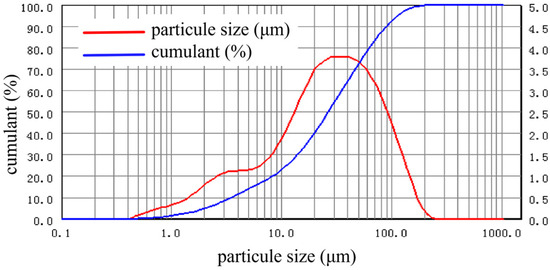
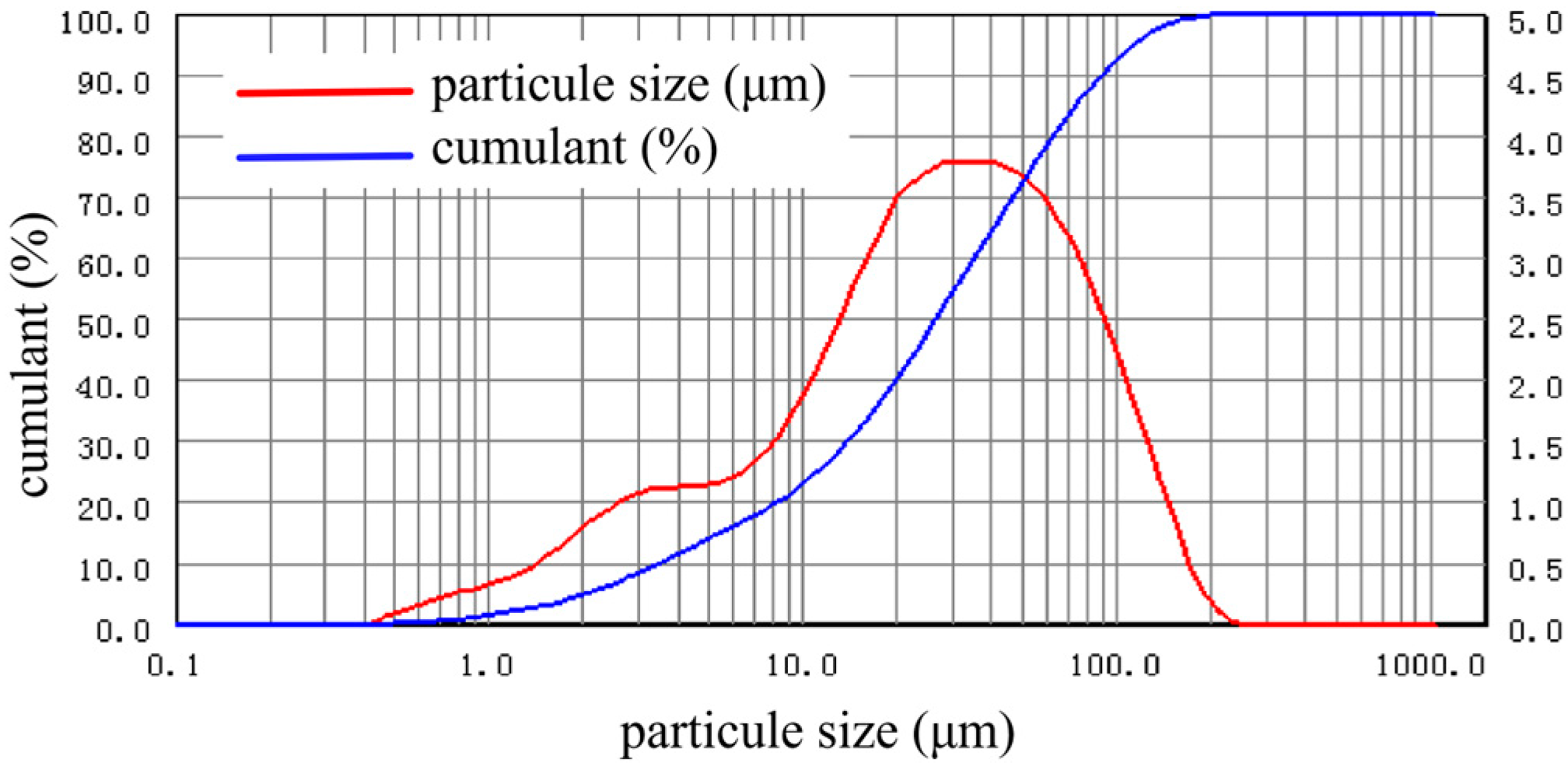
The paper powder used in the experiment was collected from the dust removal system at the production site of the printing enterprise. After screening and drying treatment, impurities were removed to ensure consistency with the characteristics of the paper powder in the actual production environment. The average median particle size of the paper powder was detected by a laser particle size analyzer, providing a reliable basis. The average median particle size (D50) of the paper powder was 23.58 μm, as shown in Figure 2.
Figure 2.
Particle size distribution of paper powder.
The test data indicate that the particle size distribution of the paper powder shows a significant concentration. To accurately reveal the explosion fundamental laws of the coexisting system of paper powder and VOCs and to eliminate the interference of heterogeneity in particle size distribution in the experimental results, this study prioritizes a focus on the mixed explosion characteristics of a single particle size of paper powder and VOCs, and systematically clarifies the influence mechanism of VOCs concentration on the explosion parameters of the paper powder.
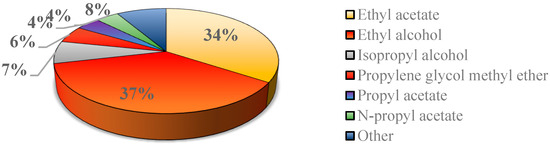
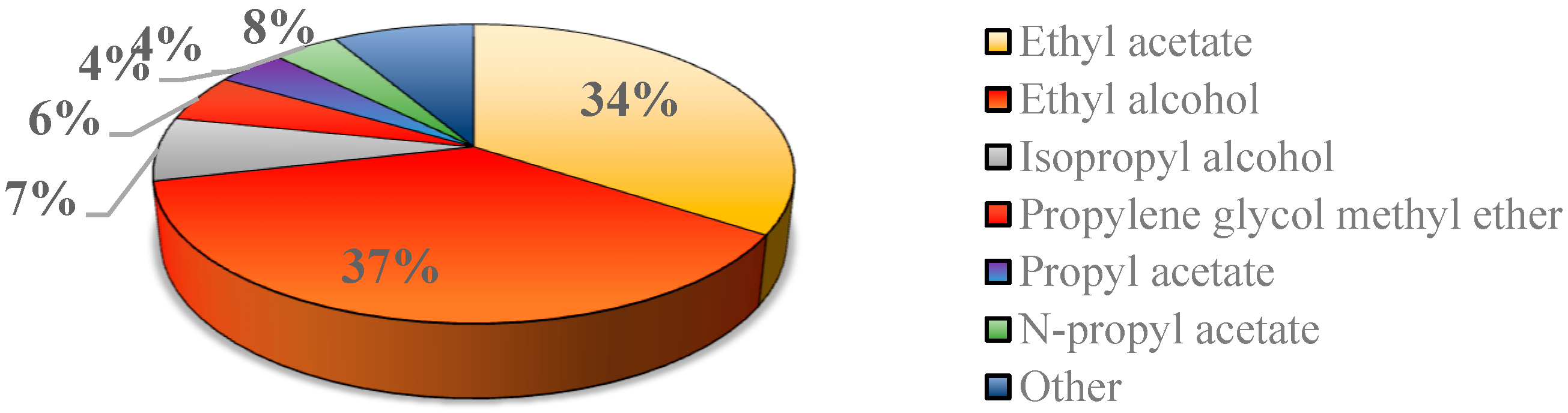
The VOCs components detected in the printing enterprise included ethyl acetate and ethanol gases, with concentrations of 34.3% and 37.1%, respectively, making up a total of 71.4%, as shown in Figure 3. Due to the complex and variable composition of VOCs, it is difficult to directly collect them and apply them in experiments, mix ethyl acetate and ethanol gas in a volume ratio of 1:1 to simulate the VOCs present during the explosion experiments of paper powder/VOCs mixtures. The VOCs components have also been recognized in relevant literature [17,18].
Figure 3.
VOCs components detected.
2.3. Experimental Program
Field research in printing enterprises revealed that the VOCs concentration in indoor environments and dust collection pipelines generally does not exceed 2% by volume. The concentration of paper powder is approximately 500 g/m3.To explore the impact of varying paper powder and VOCs concentrations on the explosion characteristics of paper powder/VOCs mixtures, the study selected several concentrations above and below the actual concentration to form gradients and conducted experiments. The specific experimental program is detailed in Table 1.
Table 1.
Details of the experimental program.
The concentration gradients selected for the research (paper powder concentration 375, 500, and 625 g/m3; VOCs volume concentration 0, 1, 2, 3, and 4%) were strictly based on the actual on-site detection data from printing enterprises, precisely matching the real concentration range of dust naturally accumulated during the production process of the enterprises. They have clear engineering application relevance and practical reference value.
3. Paper Powder/VOCs Two-Phase Explosion Pressure Distribution Characteristic
3.1. Analysis of Two-Phase Explosion Pressure of Paper Powder/VOCs over Time
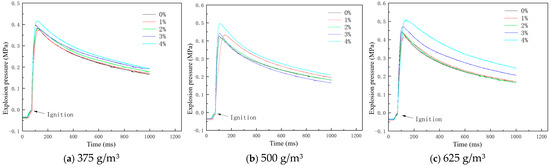
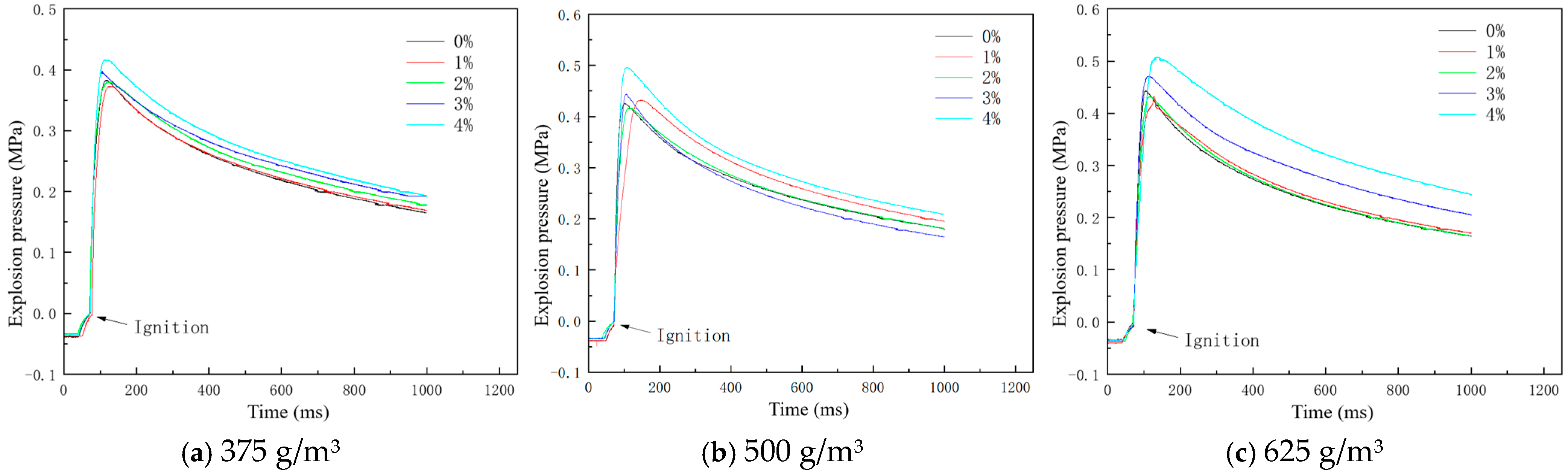
Based on the experimental data collected, the pressure change curves for explosions at different VOCs concentrations under paper powder concentrations of 375 g/m3, 500 g/m3, and 625 g/m3 are shown in Figure 4. The peaks and timings of these pressure changes are analyzed as follows in Table 2.
Figure 4.
Explosion pressure curves under different VOCs concentrations and paper powder concentrations.
Table 2.
Pressure peak values, times and dP/dt max of two-phase mixture explosion.
At a paper powder concentration of 375 g/m3 and 0% VOCs, the Pmax is 0.383 MPa, occurring at 114.6 ms. As the VOCs concentration increases to 4%, the Pmax rises to 0.416 MPa, and the peak pressure occurs at 109.4 ms, indicating that VOCs significantly enhance the explosion intensity of paper powder.
Similarly, at a paper powder concentration of 500 g/m3 and 0% VOCs, the Pmax is 0.426 MPa, peaking at 107 ms, whereas at a 4% VOCs concentration, the Pmax increases to 0.496 MPa, with the peak occurring at 106.4 ms. It reflects that when the concentration of paper powder is higher, the role of VOCs in promoting the peak appearance is relatively less obvious. For a 625 g/m3 paper powder concentration, the Pmax at 0% VOCs is 0.443 MPa, peaking at 103.8 ms. When the VOCs concentration increases to 4%, the Pmax rises to 0.507 MPa, with the peak pressure delayed to 130.8 ms.
The variation in peak pressure timing is primarily due to differences in the combustion rate and pressure release rate of the paper powder/VOCs mixtures at varying concentrations. The addition of VOCs not only intensifies combustion but also alters the kinetic process of the combustion reaction. At a paper powder concentration of 375 g/m3 and 4% VOCs, the peak explosion pressure occurs at 109.4 ms, compared to 114.6 ms at 0% VOCs, demonstrating that increasing VOCs concentration accelerates the explosion of the two-phase mixture. The high concentration of paper powder and VOCs generates more heat and gas during combustion, leading to increased peak explosion pressure. Under the condition of 625 g/m3 paper powder and 4% VOCs, the Pmax reaches 0.507 MPa, the highest among the 15 experimental groups, significantly exceeding the 0% VOCs pressure of 0.443 MPa.
Overall, the (dP/dt)max is affected by the VOCs concentration and shows a core changing trend of “gentle at low concentrations and sharp increase at high concentrations”: When the VOCs concentration is ≤2%, the changes of (dP/dt)max in different paper powder concentration groups are relatively gentle, and the values remain between 7.36 and 10.22 MPa/s. Even under the condition of 500 g/m3 paper powder concentration, there is a slight fluctuation and decrease. When the VOCs concentration rose to 3–4%, the (dP/dt)max of all paper powder concentration groups increased significantly and continued to rise with the increase in VOCs concentration. The values generally exceeded 14 MPa/s, reaching a maximum of 18.80 MPa/s. Among them, the change in the 500 g/m3 paper powder group was particularly typical. When the VOCs concentration rose from 2% (8.15 MPa/s) to 3% (16.33 MPa/s), the increase exceeded 100%, highlighting that a VOCs concentration of ≥3% was the key threshold for a significant increase in (dP/dt)max.
In summary, the concentration of paper powder and VOCs affects the explosion process, particularly in terms of combustion intensity, reaction rate, and the rate of heat and gas generation. Higher concentrations result in greater peak explosion pressures, with the timing of the pressure peak tending to advance, reflecting a dynamic balance between combustion rate and heat release rate.
3.2. Effect of Variation in Paper Powder/VOCs Concentration on Two-Phase Explosion Pressure
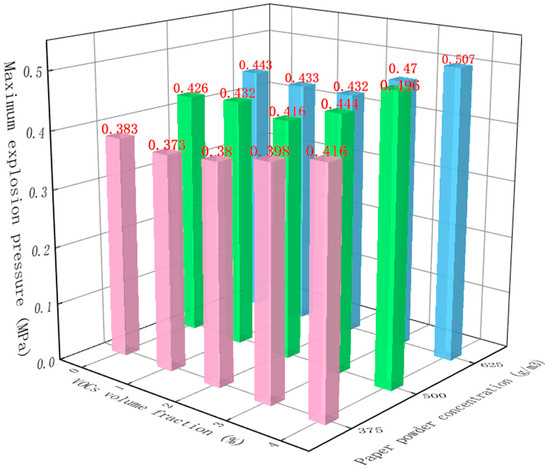
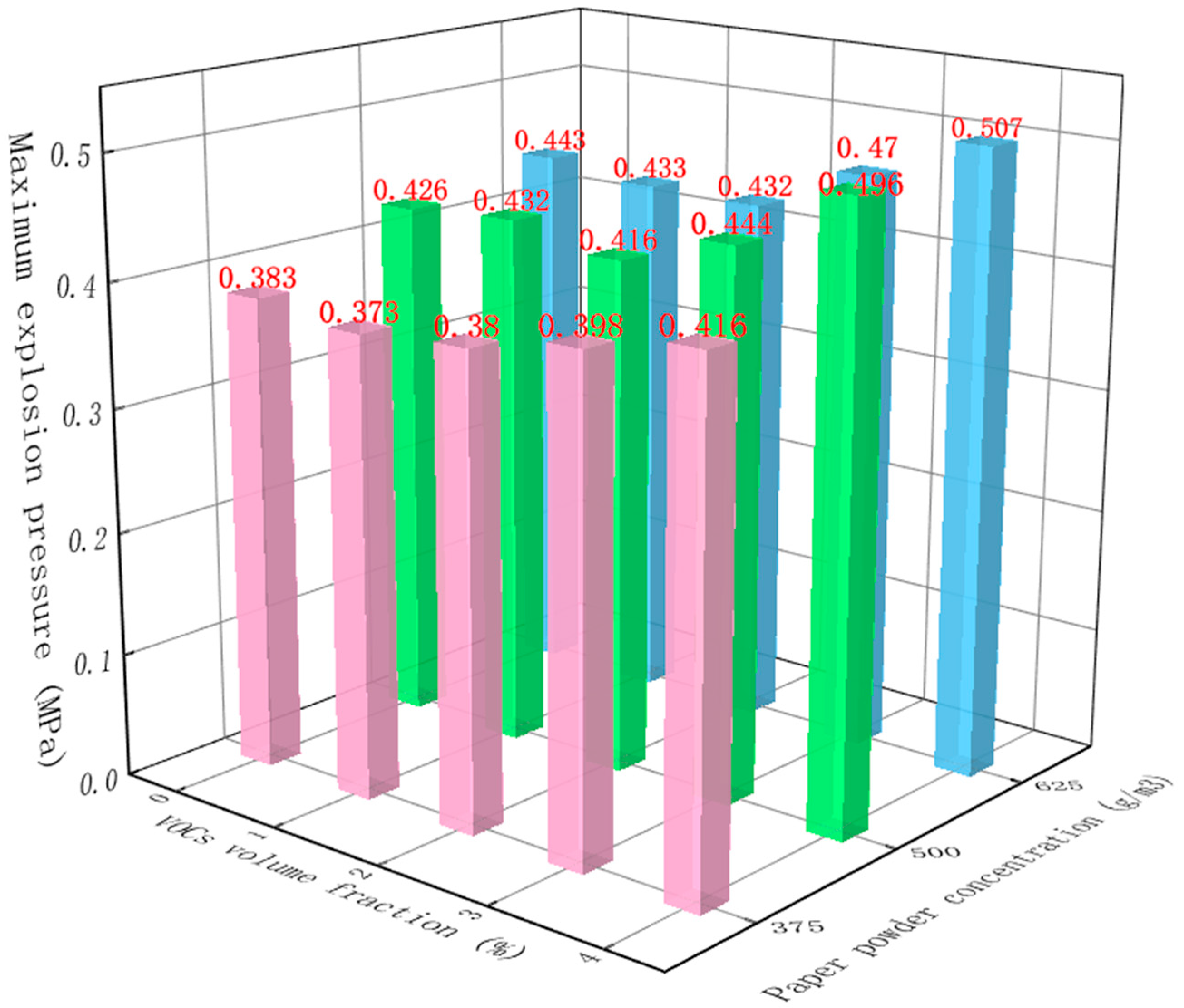
A three-dimensional image of the paper powder concentration /VOCs concentration and Pmax was drawn in Figure 5.
Figure 5.
Maximum pressure distribution diagram of two-phase explosion.
At the same VOCs concentration, the Pmax increases with rising paper powder concentration. For instance, at 0% VOCs concentration, the Pmax increases from 0.383 MPa to 0.443 MPa as the paper powder concentration rises from 375 to 625 g/m3. This indicates that paper powder provides additional combustible material, leading to higher explosion pressures under full oxidation conditions. Conversely, at a constant paper powder concentration, an increase in VOCs concentration causes slight fluctuations in the Pmax.
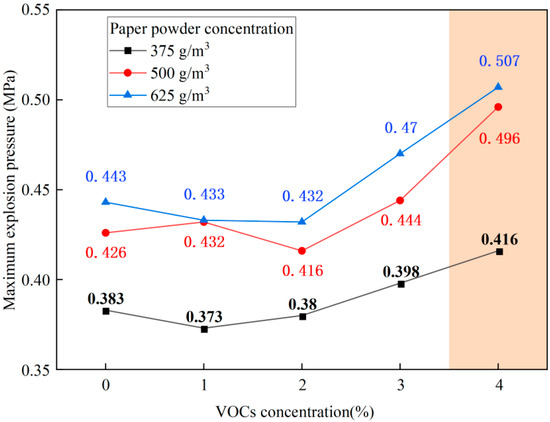
Gaseous combustible VOCs require less ignition energy than paper powder clouds. When the VOCs concentration is below the lower 2%, VOCs have more thorough contact with oxygen and higher reactivity, thus holding an absolute advantage in the competition for oxygen. Due to the large consumption of oxygen by VOCs, the pyrolysis and combustion reactions of paper powder are inhibited, and the energy release is hindered. The explosion pressure of two-phase mixtures mostly shows a downward or stable trend. It indicates that the increase in VOCs concentration in this range does not enhance the overall explosion pressure due to its own combustion. Instead, it weakens the energy release of the system by squeezing the oxygen supply for the combustion of paper powder, thereby lowering the explosion pressure.
As the concentration of VOCs increases to 3–4%, although the competition for oxygen between VOCs and paper powder still exists, the energy released by the combustion of VOCs themselves increases significantly. When the VOCs concentration ranges from 3% to 4%, as a highly active combustible material, the heat and free radicals generated by combustion to a certain extent offset the energy release attenuation caused by the competition for oxygen in the paper powder. The addition of VOCs enhances the combustion reaction. VOCs have a higher sensitivity to ignition than paper powder, promoting the ignition and combustion of paper powder. As the VOCs concentration increases, energy release intensifies, and the Pmax surpasses that of pure paper powder.
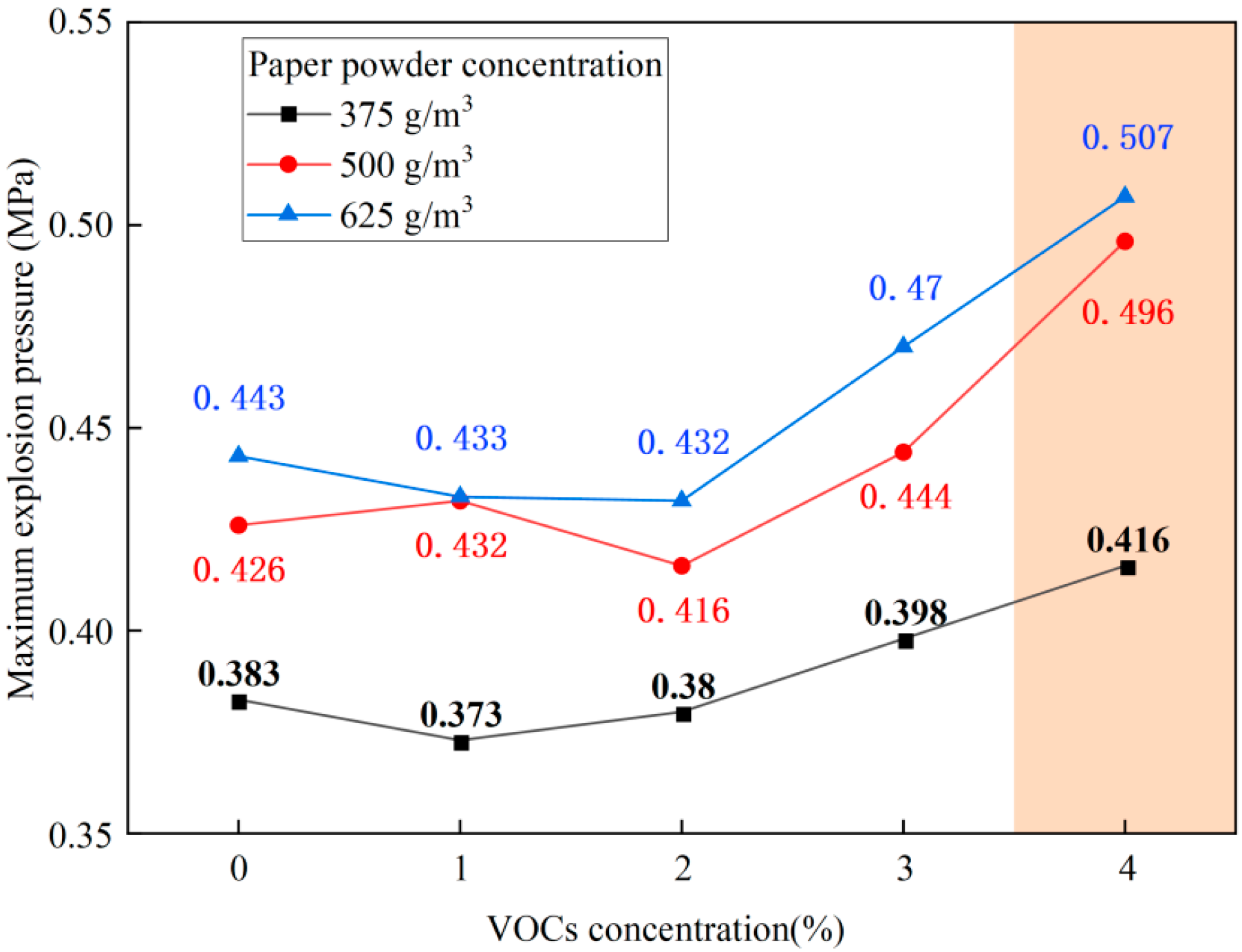
As shown in Figure 6, at VOCs concentrations of 1% and 2%, the Pmax shows a slight decline compared to 0% VOCs. However, from 2% to 4% VOCs, the Pmax increases with rising VOCs concentration. At 4% VOCs, the paper powder concentration significantly influences the Pmax. This is due to the higher heat release at elevated VOCs concentrations, which promotes rapid and comprehensive combustion of paper particles, creating a self-accelerating combustion chain reaction. Consequently, higher paper powder concentrations in this high-heat environment further enhance explosion intensity, leading to a notable increase in Pmax. This indicates that in the actual production process, it is necessary to limit the concentration of paper powder and VOCs to reduce the risk of explosion.
Figure 6.
Pmax as a function of VOCs concentration.
4. Paper Powder/VOCs Two-Phase Explosion Flame Characteristic Distribution Characteristics
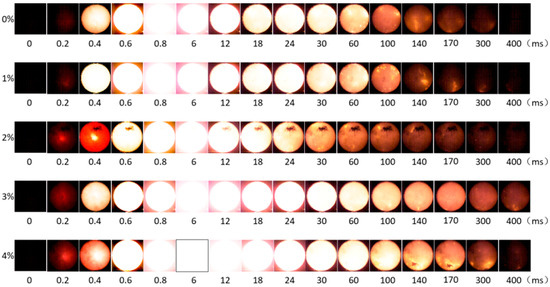
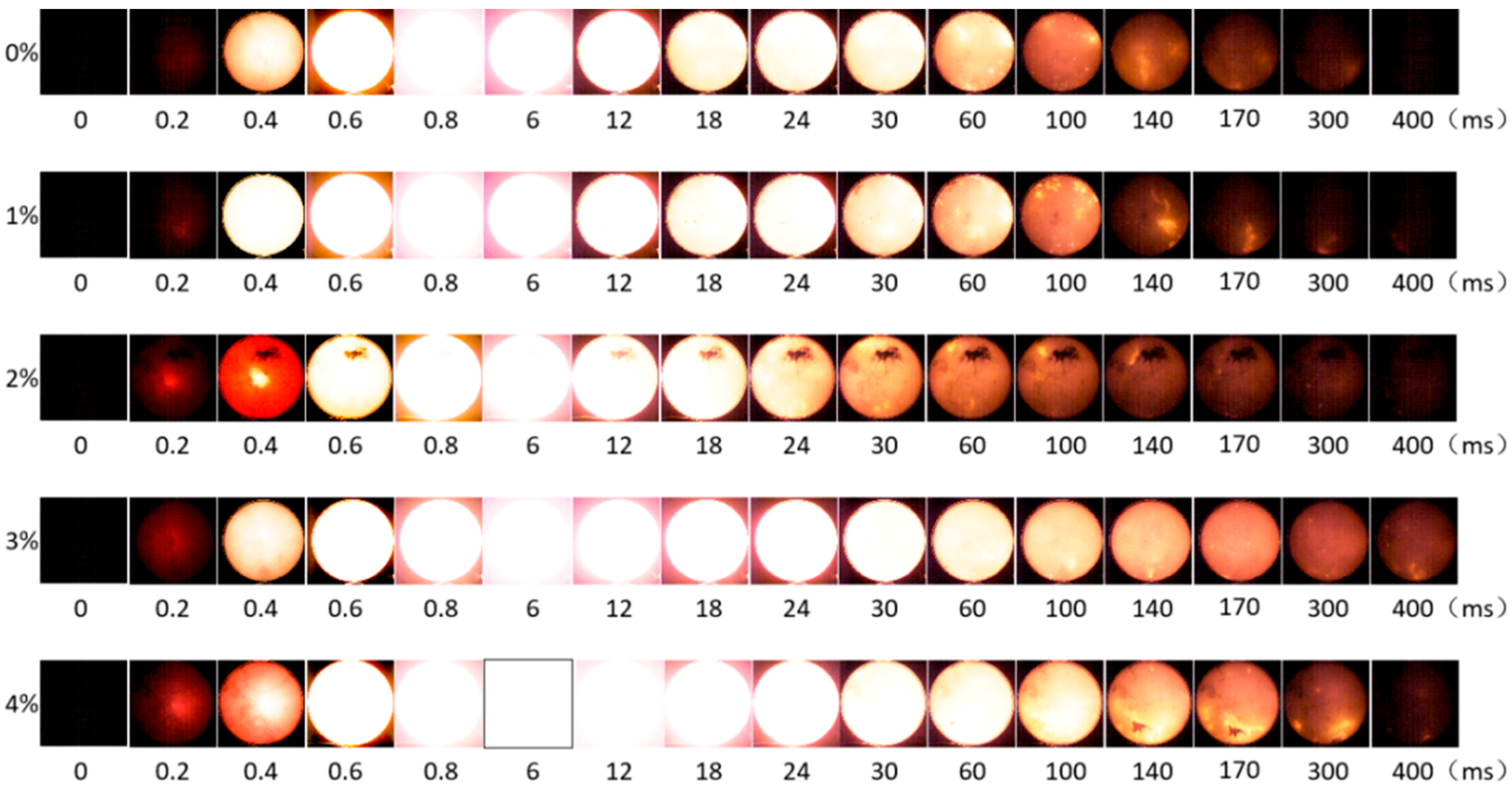
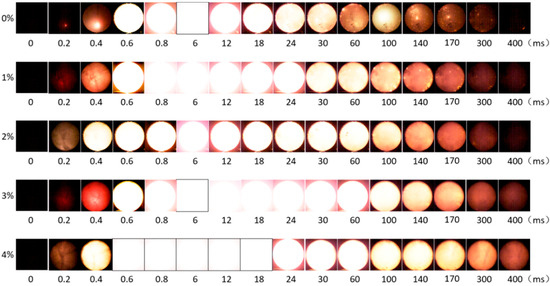
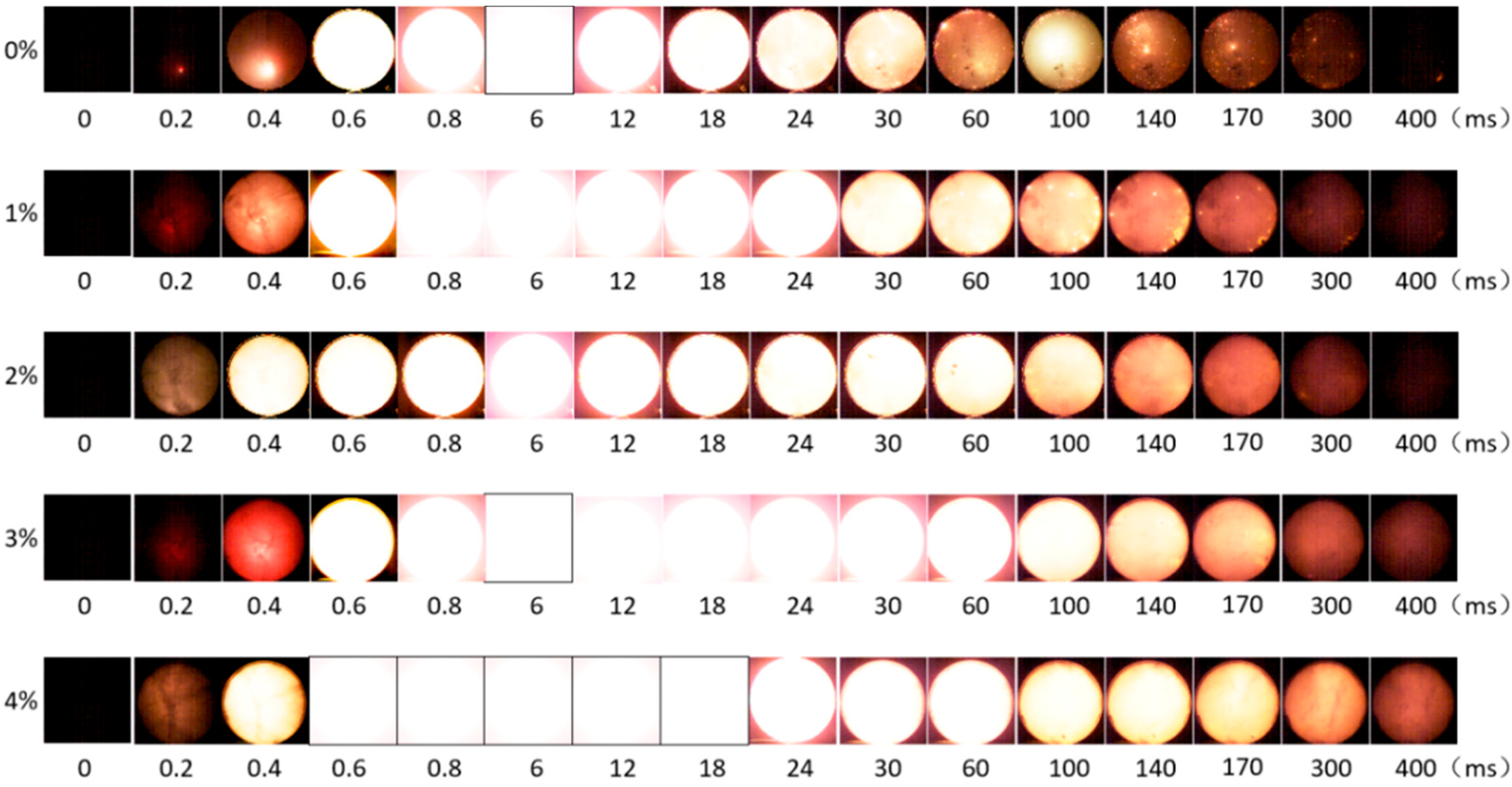
To investigate the flame characteristic in a paper powder/VOCs two-phase explosion, high-speed cameras were used to capture the flame development process at various concentrations of paper powder and VOCs. For a 375 g/m3 paper powder concentration, the flame changes with different VOCs concentrations are depicted in Figure 7.
Figure 7.
Influence of different VOCs on flame changes at a paper powder concentration of 375 g/m3.
The flame development process is divided into four stages: flame ignition, flame expansion, flame recession, and flame extinction. Each stage’s characteristics are influenced by VOCs concentration variations. The black frame in Figure 7 represents the field of view for flame observation, which is used to fix the shooting area to ensure the comparability of experimental data.
During the flame ignition stage (0–0.8 ms), the flames in all experimental groups rapidly ignited, with brightness peaking at 0.8 ms. Particularly at 4% VOCs, the flame exhibited significant brightness at 0.6 ms, indicating a strong deflagration phenomenon. In the flame expansion stage (0.8–30 ms), the flame remained extremely bright. The flame reached peak brightness around 6 ms and maintained it until 30 ms, demonstrating a stable state. At high VOCs concentrations, the flame brightness nearly filled the entire field of view, indicating high combustion intensity. In the flame recession stage (30–140 ms), the flame brightness gradually decreased. The brightness diminished from white to orange-red and progressively led to extinction. High VOCs concentrations resulted in a slower decline in brightness, with a more pronounced afterglow. During the flame extinguishing stage (140–400 ms), the brightness decreased significantly until the flame was fully extinguished, and the field of view returned to darkness. Higher VOCs concentrations prolonged the extinguishing time, suggesting that VOCs extended the flame’s residual duration and made the combustion process more enduring.
In summary, VOCs concentration significantly affects all stages of flame development, particularly during the flame recession, expansion, and extinction stages. During the flame expansion stage, VOCs enhanced combustion intensity and expansion rate, resulting in a brighter and longer-lasting flame. In the flame recession stage, VOCs extended the afterglow duration, and in the flame extinguishing stage, VOCs lengthened the residual flame time. Overall, higher concentrations of VOCs led to increased flame brightness and duration, intensifying the combustion process. It has intensified the danger of two-phase explosion.
The flame development process for a two-phase explosion with a 500 g/m3 paper powder concentration and varying VOCs concentrations is shown in Figure 8. Comparing the flame development under different VOCs concentrations reveals that increased VOCs concentration significantly affects flame brightness and duration. At a paper powder concentration of 500 g/m3, as the VOCs concentration rises, the flame’s brightness increases more rapidly, the time to reach peak brightness shortens, the brightness during the expansion phase is higher, the afterglow during the recession phase is more persistent, and the residual time in the extinguishing phase is longer. Specifically, during the flame expansion stage, higher VOCs concentrations result in greater peak brightness and extended flame expansion duration. In the flame recession stage, higher VOCs concentrations lead to a longer-lasting afterglow and a slower rate of brightness reduction. During the flame extinguishing stage, higher VOCs concentrations extend the flame residual time, making the combustion process longer.
Figure 8.
Influence of different VOCs on flame changes at a paper powder concentration of 500 g/m3.
Under the same VOCs concentration, compared to the experimental results at a 375 g/m3 paper powder concentration, the flame at 500 g/m3 was brighter, lasted longer, and had a more durable afterglow, and a longer extinguishing time.
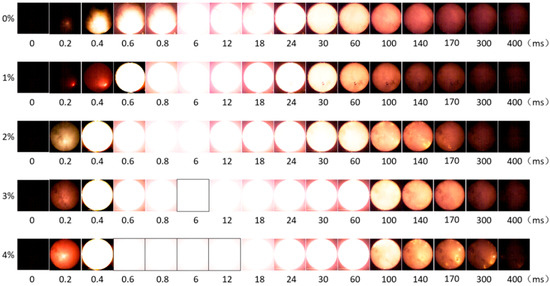
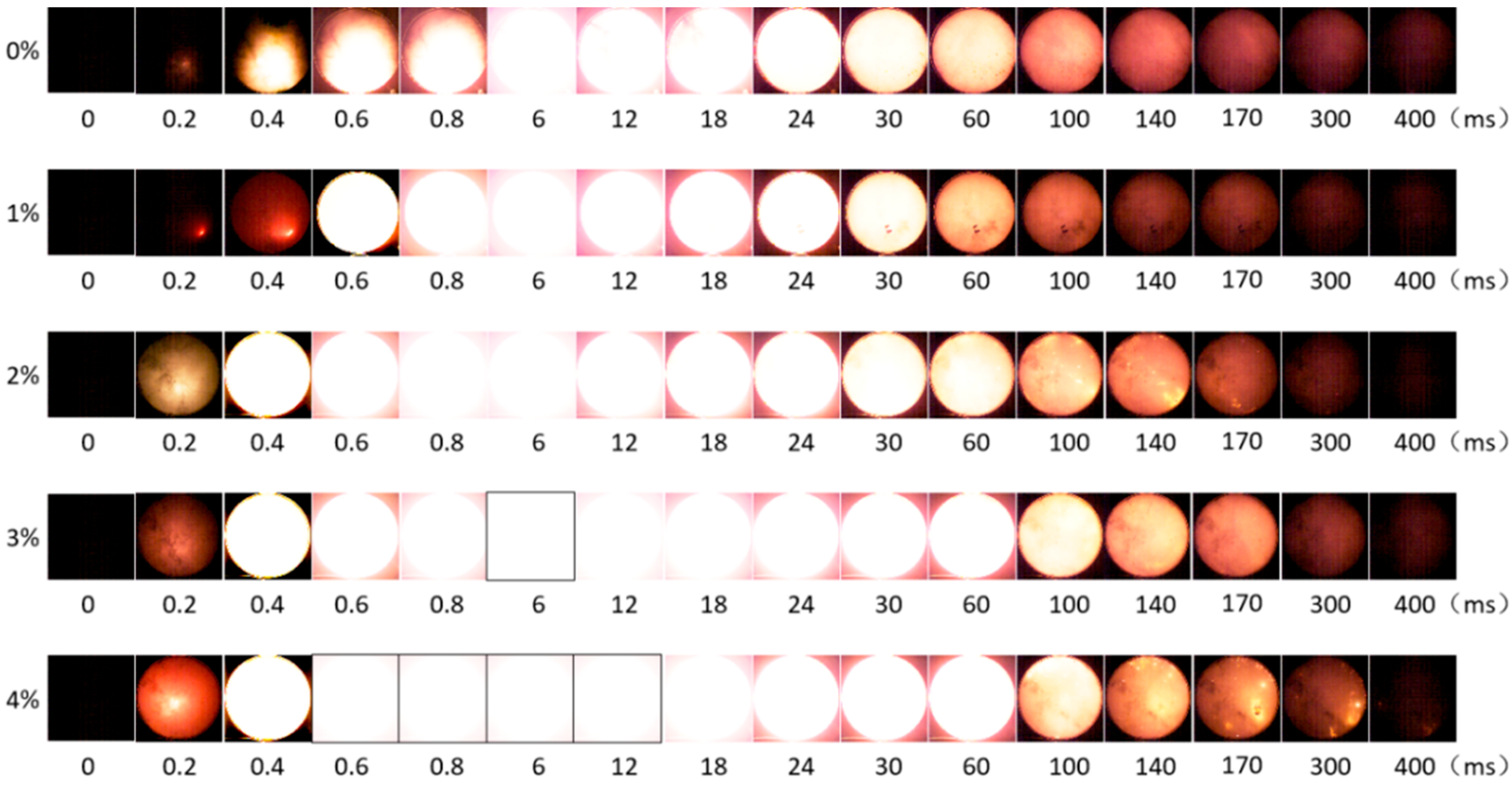
Figure 9 shows the effect of different VOCs concentrations on flame changes at a 625 g/m3 paper powder concentration. In the initial stage of the flame, the higher paper powder concentration enhanced the brightness increase. At 0.2 ms, the flame first appeared, brightness increased significantly at 0.4 ms, and it peaked, nearly filling the entire field of view, by 0.6 ms. Under lower VOCs concentrations, the brightness increase was smoother, and the brightest phase duration was shorter, highlighting the impact of VOCs concentration on flame brightness duration in the paper powder/VOCs two-phase explosion. During the flame expansion phase, the brightness was extremely high, expanding outward and remaining bright. At 6 ms, the flame brightness reached its maximum and stayed intense. As VOCs concentration increased, the duration of maximum brightness lengthened. In the flame recession stage, flames at different VOCs concentrations began to recede at varying times, with higher VOCs concentrations showing a more persistent afterglow and slower brightness reduction, indicating higher residual combustion activity. In the flame extinguishing stage, higher VOCs concentrations resulted in a longer flame residual time.
Figure 9.
Influence of different VOCs on flame changes at a paper powder concentration of 625 g/m3.
Comparing the experimental results of two concentrations to 625 g/m3, the flame at 625 g/m3 was brighter, and the extension, recession, and extinguishing phases were longer. At 375 g/m3 and 500 g/m3, the flame brightness increased more gradually, and the brightness during the expansion stage was significantly lower than at 625 g/m3. There was less afterglow during the recession stage, brightness weakened more quickly, and the flame residual time in the extinguishing stage was shorter.
5. Conclusions
Through analysis of the explosion characteristics of paper powder influenced by VOCs concentration, this study reveals the behavior of these two-phase mixtures at different concentrations during the explosion process and their development patterns. The main conclusions are as follows:
- (1)
- When the paper powder concentration increased from 375 g/m3 to 625 g/m3, the maximum explosion pressure rose by approximately 20%. As the VOCs concentration increases, the Pmax of the mixed explosion first decreases and then rises. High-concentration VOCs can lead to higher heat release, thereby promoting the rapid and complete combustion of paper powder particles and forming a self-accelerating combustion chain reaction. When the Pmax increases by 10% due to fluctuations in working conditions, the nonlinear surge in explosion energy will pose a severe challenge to the venting process parameters. Combining the variation pattern of Pmax, when Pmax increases by 10%, the corresponding VOCs concentration is approximately 3.5%.
- (2)
- An increase in the concentrations of both paper powder and VOCs enhances flame brightness. The higher quantity of combustibles intensifies the combustion process and heat release rate, allowing the flame to reach maximum brightness more quickly and sustain it for a longer duration. Additionally, the phases of flame extension, recession, and extinguishing are prolonged. Under high VOCs concentrations, the flame extension phase is brighter and longer, the afterglow during the recession phase is extended, and the residual time in the extinguishing phase is also prolonged. Under conditions of high-concentration two-phase mixtures, flames spread more rapidly and lastingly, and the accident hazard is greater.
- (3)
- It was found that the addition of VOCs in actual production has a significant impact on the explosion characteristics of paper powder. The concentration of 4% VOCs increased the Pmax of the two-phase mixture by about 15%, and accelerated the flame spread rate, intensifying the severity of the explosion of the paper powder/VOCs mixture. Printing enterprises should adopt two sets of systems to clean paper powder and VOCs respectively, or strictly limit the VOCs concentration to below 3.5% to reduce the consequences of two-phase mixture explosion disasters.
- (4)
- The research results can be directly applied to printing enterprises to formulate control standards for VOCs and paper powder concentrations, providing a scientific basis for the design of explosion risk early warning systems and the selection of dust removal and VOCs treatment equipment and have clear engineering application value. Other industries, such as the painting industry, furniture manufacturing industry, and rubber and plastic products industry, all produce a large amount of VOCs, and also have combustible dust. The research results of this paper also have practical reference significance for further exploring the mixed risks in other industries.
Author Contributions
S.S.: Methodology, Writing-review & editing, Supervision, Funding acquisition. C.X.: Data curation, Writing-original draft, Investigation. L.P.: Methodology, Investigation, Writing-review & editing, Project administration. Y.H.: Data curation. H.W.: Data curation, Funding acquisition. C.H.: Data curation, Project administration. All authors have read and agreed to the published version of the manuscript.
Funding
The authors appreciate the Open Fund Project—Key Laboratory of Toxic and Harmful Gas Monitoring and Early Warning, Ministry of Emergency Management (No. OF2307), and the China Postdoctoral Science Foundation (No. 2024M760210).
Data Availability Statement
The raw data supporting the conclusions of this article will be made available by the authors on request.
Acknowledgments
We gratefully acknowledge the financial support from the Open Fund Project of the Key Laboratory of Toxic and Harmful Gas Monitoring and Early Warning, Ministry of Emergency Management (No. OF2307) and the China Postdoctoral Science Foundation (No. 2024M760210). We would like to express our sincere thanks to the research team of the Research Institute of Macro-Safety Science, University of Science and Technology Beijing, for providing experimental platform and technical guidance during the study. Special gratitude goes to the printing enterprise that provided paper powder samples and on-site concentration detection data, which laid a solid foundation for the experiment. Additionally, we appreciate the valuable suggestions from the anonymous reviewers and academic editors, which significantly improved the quality of this manuscript. Finally, thanks to all colleagues who participated in the experimental operation and data analysis for their hard work.
Conflicts of Interest
The authors declare no conflict of interest.
Correction Statement
Due to an error during the publication process, the DAS (Data Availability Statement) provided by the authors was not published. This information has now been updated.
References
- Zhang, L.L. Comparative study on advanced treatment technologies of printing ink exhaust gas. Resour. Conserv. Environ. Prot. 2018, 4, 6. [Google Scholar]
- Wu, J.M.; Chen, Y.C.; Xue, Z.C.; Ma, L.E.; Xu, Z.L. Research on gravure press energy-saving drying system based on the minimal explosion limit. Light Ind. Mach. 2010, 28, 117. [Google Scholar]
- Pang, L.; Jin, X.; Li, G.F.; Li, T.N.; Jin, L.Z.; Lv, P.F. The influence of pipeline deposited dust on the explosion propagation of dust collector. Powder Technol. 2024, 434, 119341. [Google Scholar] [CrossRef] [Scilit]
- Sun, S.H.; Mao, T.T.; Lv, P.F.; Pang, L. Dust Explosion Risk Assessment for Dry Dust Collector Based on AHP-Fuzzy Comprehensive Evaluation. Processes 2022, 10, 2616. [Google Scholar] [CrossRef] [Scilit]
- Sun, S.H.; Xing, C.L.; Pang, L.; Hu, Y. Study on explosion characteristics of paper powder/VOCs two-phase mixture in printing enterprises. Process Saf. Environ. Prot. 2026, 206, 108275. [Google Scholar] [CrossRef] [Scilit]
- Sun, H.L. Experimental Investigation into the Explosibility of Hybrid Mixtures of Flammable Gas and Dust. Ph.D. Thesis, Dalian University of Technology, Dalian, China, 2017. [Google Scholar]
- Qi, Y.Q.; Gan, X.Y.; Li, Z.; Li, L.; Wang, Y.; Ji, W.T. Variation and Prediction Methods of the Explosion Characteristic Parameters of Coal Dust/Gas Mixtures. Energies 2021, 14, 264. [Google Scholar] [CrossRef] [Scilit]
- Wang, H.Y.; Zhang, Y.W.; Xu, J.D.; Li, J.L.; Fan, C.; Hu, Y. Experimental study on effect of dilute coal dust on gas explosion pressure/flame evolution process. Powder Technol. 2022, 404, 117450. [Google Scholar] [CrossRef] [Scilit]
- Zhao, P.; Schmidt, M.; Krause, U.; Duan, Q.L.; Krietsch, A.; Wu, D.J. Experimental study on the minimum explosion concentration of anthracite dust: The roles of O2 mole fraction, inert gas and CH4 addition. J. Loss Prev. Process Ind. 2021, 71, 104490. [Google Scholar] [CrossRef] [Scilit]
- Zhang, L.; Wang, H.Y.; Chen, C.; Wang, P.P.; Xu, L.W. Experimental study to assess the explosion hazard of CH4/coal dust mixtures induced by high-temperature source surface. Process Saf. Environ. 2021, 154, 60. [Google Scholar] [CrossRef] [Scilit]
- Cheng, Y.C.; Chang, S.C.; Shu, C.M. Effects of volatile organic compounds on the explosion characteristics of polyethylene dust. Process Saf. Environ. 2022, 168, 114–122. [Google Scholar] [CrossRef] [Scilit]
- Ji, W.T.; Yang, J.J.; Wang, Y.; He, J.; Wen, X.P.; Wang, Y. Flame propagation characteristics of hybrid explosion of Ethylene and Polyethylene mixture under pressure accumulation. Energies 2022, 15, 4786. [Google Scholar] [CrossRef] [Scilit]
- Jia, Y.S.; Zhang, C.; Zhang, Q.; Liang, H.M. Correlation between concentration, droplet size, turbulent intensity and explosion parameters of gas-liquid two-phase mixture. Fire Saf. J. 2023, 136, 103731. [Google Scholar] [CrossRef] [Scilit]
- Yang, K.; Cao, J.J.; Zhao, Y.; Pang, L.; Ma, R. Inerting effect of N2 on explosion of LDPE dust/ethylene hybrid mixtures. J. Loss Prev. Process Ind. 2021, 70, 104431. [Google Scholar] [CrossRef] [Scilit]
- Kukfisz, B.; Dowbysz, A.; Samsonowicz, M.; Markowska, D.; Maranda, A. Comparative Analysis of Fire and Explosion Properties of Lycopodium Powder. Energies 2023, 16, 6121. [Google Scholar] [CrossRef] [Scilit]
- Weerasekara, K.; Spiĵ er, S.H.; Zakel, S.; Grosshans, H. Influence of the particle distribution on dust explosions in the 20 L sphere. Powder Technol. 2025, 459, 120984. [Google Scholar] [CrossRef] [Scilit]
- Liang, X.M.; Chen, L.G.; Liu, M.; Lu, H.; Lu, Q.; Gao, B.; Zhao, W.; Sun, X.; Ye, D. Improved emission factors and speciation to characterize VOC emissions in the printing industry in China. Sci. Total Environ. 2022, 866, 161295. [Google Scholar] [CrossRef] [Scilit] [PubMed]
- Kim, K.-C.; Oh, B.-H.; Baek, J.-D.; Lee, C.-S.; Lim, Y.-J.; Joo, H.-S.; Han, J.-S. Characteristics and Source Profiles of Volatile Organic Compounds (VOCs) by Several Business Types in an Industrial Complex Using a Proton-Transfer-Reaction Time-of-Flight Mass Spectrometry (PTR-ToF-MS). Atmosphere 2024, 15, 1156. [Google Scholar] [CrossRef] [Scilit]

Disclaimer/Publisher’s Note: The statements, opinions and data contained in all publications are solely those of the individual author(s) and contributor(s) and not of MDPI and/or the editor(s). MDPI and/or the editor(s) disclaim responsibility for any injury to people or property resulting from any ideas, methods, instructions or products referred to in the content. |
© 2026 by the authors. Licensee MDPI, Basel, Switzerland. This article is an open access article distributed under the terms and conditions of the Creative Commons Attribution (CC BY) license.