


Abstract
Ceramic membranes show potential for high-temperature CO2 extraction from flue gas; nevertheless, their performance under simultaneous heat and pressure stress is not well comprehended. This research addresses the temperature-dependent CO2/N2 separation characteristics of a commercial ceramic membrane (pore size ~0.1–1 µm) utilizing simulated flue gas (11.8% CO2, 74.2% N2, 2.5% O2, remainder CH4) at temperatures ranging from 60 to 140 °C and pressures between 4 and 6 bar. Calibrated GC-TCD was used to quantify permeate compositions across multiple operating valve openings. With a CO2/N2 selectivity (α) of 0.75 at 4 bars, the maximum CO2 enrichment peaked at 80 °C (10.8 mol%), getting close to the Knudsen diffusion limit (0.80). Selectivity decreased dramatically beyond 100 °C—α = 0.61 (100 °C), 0.45 (140 °C)—and CO2 dropped to 5.8% at 4 bar and 2.2% at 6 bars. Viscous flow dominance was shown by the strong pressure amplification—α decreased by more than 60% from 4 to 6 bar at all temperatures. These findings emphasize the possibility of performance collapse in hot, pressured flue streams and identify the limited operating window under which Knudsen-controlled transport can be maintained. The study provides quantitative evidence of a transition in transport regime under mixed flue-gas conditions.
1. Introduction
Mitigating greenhouse gas emissions from power generation and energy-intensive sectors continues to be a fundamental technological problem of the 21st century [1,2,3,4]. The greatest stationary source of anthropogenic emissions is industrial flue gas, which usually has CO2 values of 10–15% [5,6,7,8,9]. Despite amine absorption continuing to be the predominant commercial method, membrane technologies are being progressively explored as energy-efficient supplementary solutions for post-combustion CO2 capture [10,11,12,13,14,15].
Recently, membrane-based gas separation has attracted great interest, as it offers many advantages, such as being a simpler and more energy-efficient option, particularly for continuous gas streams produced in industrial furnaces and power plants [16,17,18,19]. Among the numerous membrane materials, ceramic membranes have a special place because of their outstanding thermal stability and tolerance to rigorous working circumstances. These benefits make them interesting candidates for high-temperature applications where polymeric membranes normally fail. However, the efficacy of a ceramic membrane is governed not only by its chemical stability, but also, and more critically, by the transport mechanism that directs the flow of gas molecules via its pores [20,21,22,23].
The sort of transport mechanism that will predominate in the area of flow through porous media is largely determined by the pore dimensions. In comparison to particle–wall collisions, the rate of particle–particle collisions is influenced by the pore diameters and gas concentrations within those pores. The features of the dominant transport systems are subsequently influenced by them [24]. Gas movement in porous membranes can vary based on the operating temperature, pressure, the mean free path of the evaporated molecules and pore size, as gas permeability through porous membranes can be achieved through molecular diffusion, Poiseuille (viscous) flow, (Fickian) diffusion, Knudsen diffusion, or a combination of these [25,26,27]. Collisions with the pore’s walls take precedence and result in Knudsen diffusion, which raises movement in lighter molecules if the molecular mean free path is larger than or equal to the pore’s diameter. The behavior enables a minor degree of separation even for gases of similar size, such as N2 and CO2 [28]. In contrast, the flow changes into Poiseuille (viscous) flow, a regime in which gas travels collectively under the pressure differential with minimal species discrimination, when temperature rises or pore size increases and intermolecular collisions start to predominate [29].
Understanding the transition between different gas transport regimes is essential for correctly interpreting membrane performance under realistic operating conditions. In porous ceramic materials, the dominant mechanism depends strongly on pore size, temperature, and pressure [30]. A membrane with limited selectivity during diffusion-dominated operation may lose its separation capabilities completely if the flow gets viscous. Real flue-gas streams frequently encounter increased temperatures and pressures; therefore determining the “operating window” in which a membrane retains functional selectivity is critical for process design. Furthermore, the interaction of temperature, pressure, pore architecture, and gas composition typically results in non-linear transport behavior that cannot be anticipated using single-gas permeation data alone [31]. Because the pore size of the investigated membrane lies in the macroporous regime, molecular sieving mechanisms are not expected to occur. Gas transport is therefore governed primarily by Knudsen diffusion and viscous flow. The innovation of this study is in quantitatively illustrating the shift from Knudsen-controlled transport to viscous-flow-dominated transport in an economical red-clay ceramic membrane utilizing a realistic multicomponent flue-gas combination. The objective of this work is to investigate how temperature and pressure influence the transition between these transport mechanisms under conditions relevant to flue-gas mixtures. It was hypothesized that elevated temperature and pressure would decrease the Knudsen number, hence transitioning transport from molecule–wall collision-dominated flow to viscous bulk flow.
2. Materials and Methods
2.1. Description of the Feed Gas
Table 1 shows that a pressurized cylinder was used to supply a certified flue-gas mixture with the subsequent list of ingredients:
Table 1.
Feed gas composition measured by GC-TCD.
2.2. Ceramic Membrane
The red-clay ceramic disc membrane was fabricated using Saudi red clay as the primary raw material, with waste glass and Arabic gum added as a flux and pore-forming binder, respectively. The mixed paste was pressed into disc form and sintered under controlled thermal conditions to develop a mechanically stable and porous ceramic structure [32]. Nitrogen adsorption–desorption analysis revealed that the membrane possesses a predominantly macroporous microstructure, with an average pore diameter of approximately 100 nm as determined using the Brunauer–Emmett–Teller and Barrett–Joyner–Halenda models. This pore size reflects the formation of interconnected intergranular voids during sintering and is well suited for gas separation processes governed by Knudsen and transitional diffusion mechanisms rather than molecular sieving.
2.3. Experimental Configuration for CO2/N2 Separation Performance Assessment
The bespoke fabricated porous ceramic membrane unit operated as a component of the TRACE 1310, Thermo Fisher Scientific (Rodano, Italy) gas chromatograph apparatus, and a synthetic flue-gas combination similar to industrial after-combustion streams was used in mixed-gas permeation tests. Each separation measurement was carried out for 120 min while maintaining stable conditions in a controlled temperature and pressure range of 60 to 140 °C and (≈4–6 bar), where steady state was considered reached when permeate composition variation remained within ±2% over three consecutive measurements. The feed combination whose composition is shown in Table 1 was delivered straight to the membrane module’s upstream side. An external heating block was used to preheat the feed to the appropriate temperature before it entered the membrane housing. A precise regulator was used to regulate the pressure at the feed side, and a calibrated micro-valve kept the permeate flow at atmospheric pressure.
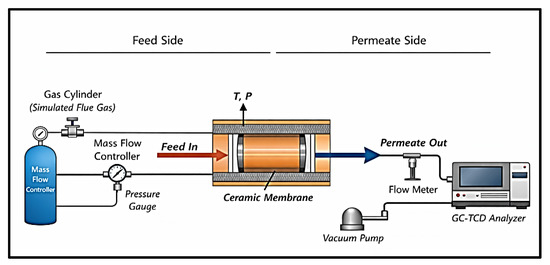
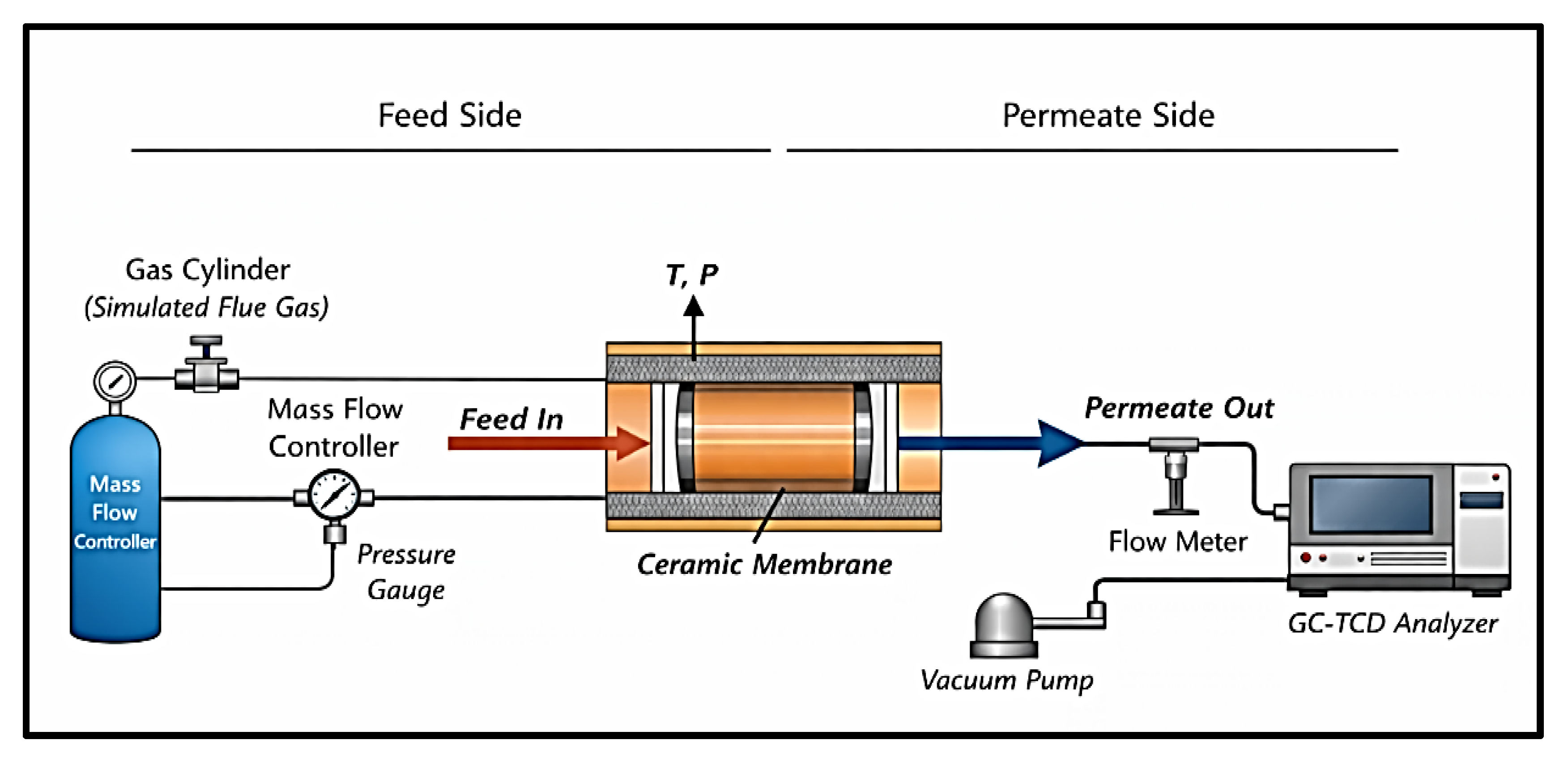
The permeate was collected from the outer side of the ceramic membrane, which was positioned inside a stainless-steel tube module with the feed gas entering its inner side. To provide accurate thermal management, the temperature within the module was monitored using an incorporated thermocouple that was positioned close to the membrane surface. To prevent a hydrodynamic fluctuation and confirm that differences in permeate composition were caused solely by pressure and temperature impacts, the feed flow rate was kept constant throughout all experiments. Upon the system stability under each set of operating circumstances, permeate gas samples were collected and analyzed using gas chromatography equipped with a thermal conductivity detector (GC-TCD). Figure 1 presents a schematic picture depicting the entirety of the experimental work undertaken in this research.
Figure 1.
Schematic diagram of the experimental setup used in this study.
To achieve accurate quantification, calibration was carried out prior to each experimental run using certified CO2, N2, CH4 and O2 standards. Table 2 summarizes the permeate composition achieved at each temperature–pressure setting, and Table 3 displays the associated CO2/N2 selectivity values generated from these data. Standard gas-transport formulae for porous membranes were used for all permeation and selectivity calculations, assuming ideal-gas behavior and little concentration polarization because of the comparatively large feed-to-permeate pressure ratio. The ideal-gas assumption was adopted as an engineering simplification for comparative analysis of transport trends within the investigated operating window. Although mild non-ideal behavior may occur for CO2 at elevated pressure, the combination of moderate pressure (4–6 bar), diluted CO2 concentration in the feed mixture, and operating temperatures above ambient conditions was considered sufficient to limit major deviations from ideality. Therefore, the assumption was regarded as acceptable for relative permeation and selectivity comparisons.
Table 2.
Summary table of average compositions in the permeate gas.
Table 3.
Summary of average CO2/N2 selectivity (α) across multiple operating valve openings for each temperature and pressure.
Measurements were conducted at several valve-opening conditions corresponding to stage-cut values within the tested range (θ = 0.1–0.5). Since no statistically significant trend with valve opening was observed within this range, averaged values are reported in Table 3 for clarity and comparative discussion.
2.4. Calculations for Selectivity and Permeability
The observed permeate flow rates and the accompanying partial pressures across the membrane were used to determine the permeance values for each gas component. The transmembrane driving force was defined as the difference between the feed partial pressure and the ambient permeate partial pressure since the studies were carried out in a single-ended permeation arrangement with the permeate side kept at atmospheric pressure. Each gas component i (CO2, N2, O2, CH4) has its permeance Pi (mol m−2 s−1Pa−1) determined using the following Equation (1):
where A is the effective membrane surface area, Δpi is the partial pressure differential of component i across the membrane, and Fi is the molar permeate flow rate of gas i, as determined by GC-TCD analysis and the calibrated permeate volumetric flow meter [22,33].
The applied operating pressure (4–6 bar) multiplied by the gas mole percentage in the feed mixture was used to calculate feed-side partial pressures (Table 1). The permeate partial pressure was regarded as insignificant in relation to the feed-side pressure as the permeate was collected at near-atmospheric conditions and flowed freely without sweeping gas. Because of the high feed-to-permeate pressure ratio employed in the studies, this assumption is true and compatible with typical permeation techniques. The α CO2/N2 mixed-gas selectivity, which is the ratio of the permeance-normalized permeate composition to that of the feed, was used to assess the separation performance using the following Equation (2) [34]:
where = feed mole fraction and = permeate mole fraction of CO2 and N2, respectively, as determined by GC. –TCD. Under mixed-gas circumstances, the membrane’s capacity to enrich CO2 relative to N2 is quantified by this expression.
For porous membranes operating in the Knudsen diffusion regime, the ideal selectivity between two gases A and B is given by:
where MA and MB are the molecular weights of gases A and B, respectively. For the CO2/N2 pair this theoretical selectivity is approximately 0.80, indicating slightly faster diffusion of N2.
Table 3 shows the selectivity values obtained from this equation for every combination of temperature and pressure. The interaction between Knudsen diffusion and viscous flow, which controls the transport mechanism inside the mesoporous ceramic membrane, is reflected in the measured patterns. All selectivity estimations were carried out for at least three times for optimal repeatability, with errors falling within the testing uncertainty of the flow calibration and gas chromatograph data.
3. Results and Discussion
3.1. Feed Gas Verification
The input gas composition was verified by GC-TCD before membrane performance analysis. Table 1 shows that the mixture, which included 11.82% CO2, 74.18% N2, 2.76% O2, and 11.24% CH4, was consistent during all testing. This stability ensures that variations in the permeate stream are due to the effects of pressure and temperature on membrane transport rather than variations in the feed composition [33].
3.2. Influence of Temperature on Gas Permeation Behavior
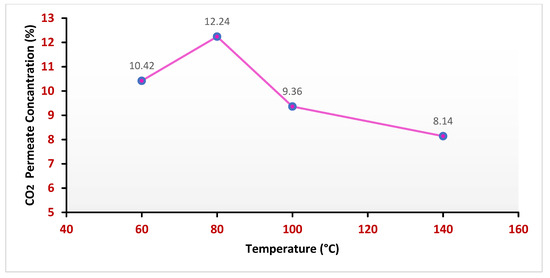
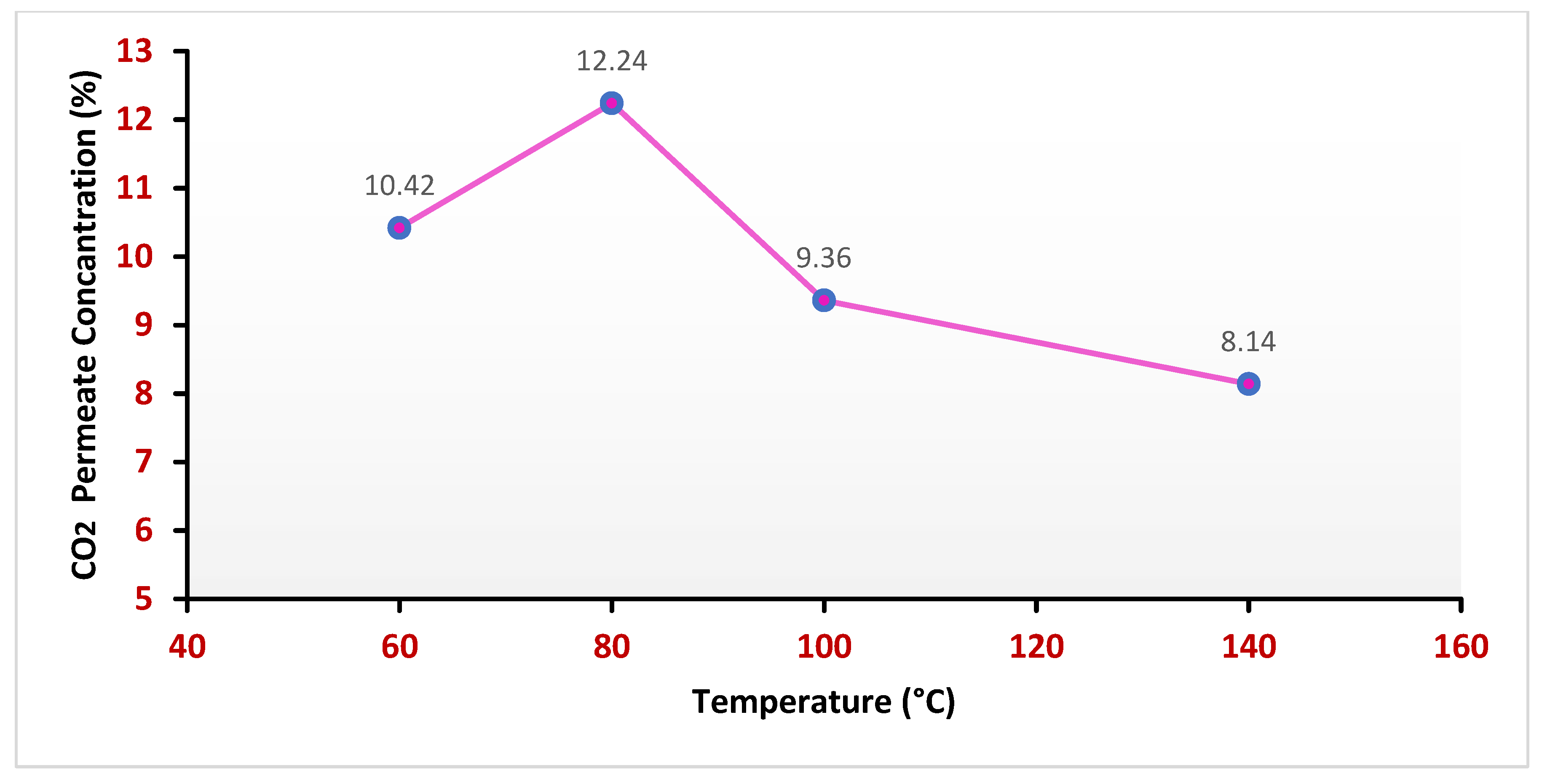
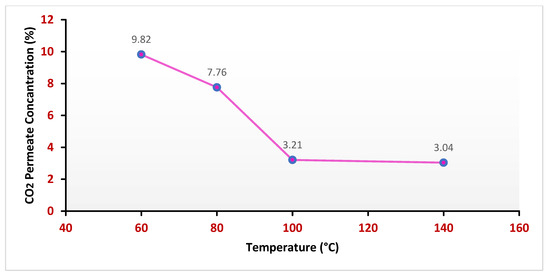
Temperature has a significant impact on gas penetration through the ceramic membrane, with the permeability of CO2 and N2 being clearly impacted by temperature [32,35]. As indicated in Figure 2 and Figure 3, the permeate exhibited a minor CO2 enrichment at 60 °C, ranging from 10.4 to 9.2% with increasing pressure from 4 to 6 bar, although N2 continued to be the major dominant permeating component (around 86%) under the same conditions. At 60 °C, the membrane exhibited moderate CO2/N2 selectivity (α = 0.66), which remains below the theoretical Knudsen limit (αkn ≈ 0.80). This deviation suggests that gas transport under these conditions is better described as a mixed regime. This suggests that movement at this stage was mostly controlled by a mixed regime of Knudsen/viscous diffusion rather than solely Knudsen-controlled behavior. Therefore, molecule–wall collisions are important, although not exclusively dominant. Lighter gases with greater diffusivity, such as N2, also preferentially infiltrate the porous ceramic structure [36]. As can be seen in Table 2 and illustrated in Figure 2, the membrane reached its maximum CO2 enrichment at 80 °C at reduced pressure, with permeate CO2 reaching 12.24% at 4 bar, the highest in the collection, alongside a reduced N2 concentration of 84.35%.
Figure 2.
Temperature dependence of CO2 concentration in the permeate stream through the ceramic membrane at 4 bar feed pressure.
Figure 3.
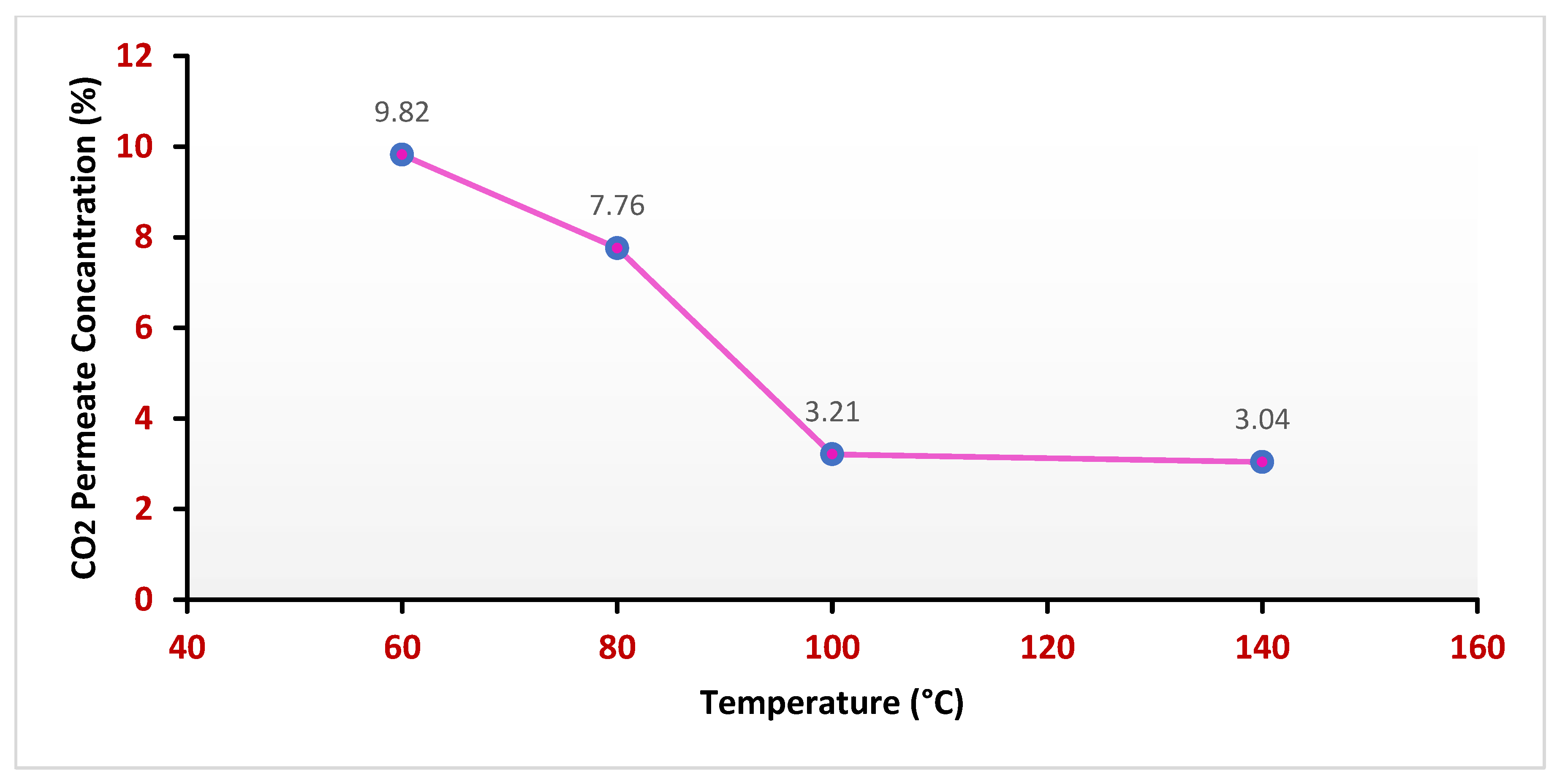
Temperature dependence of CO2 concentration in the permeate stream through the ceramic membrane at 6 bar feed pressure.
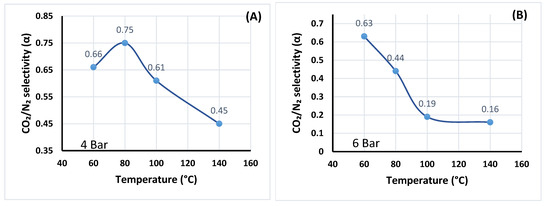
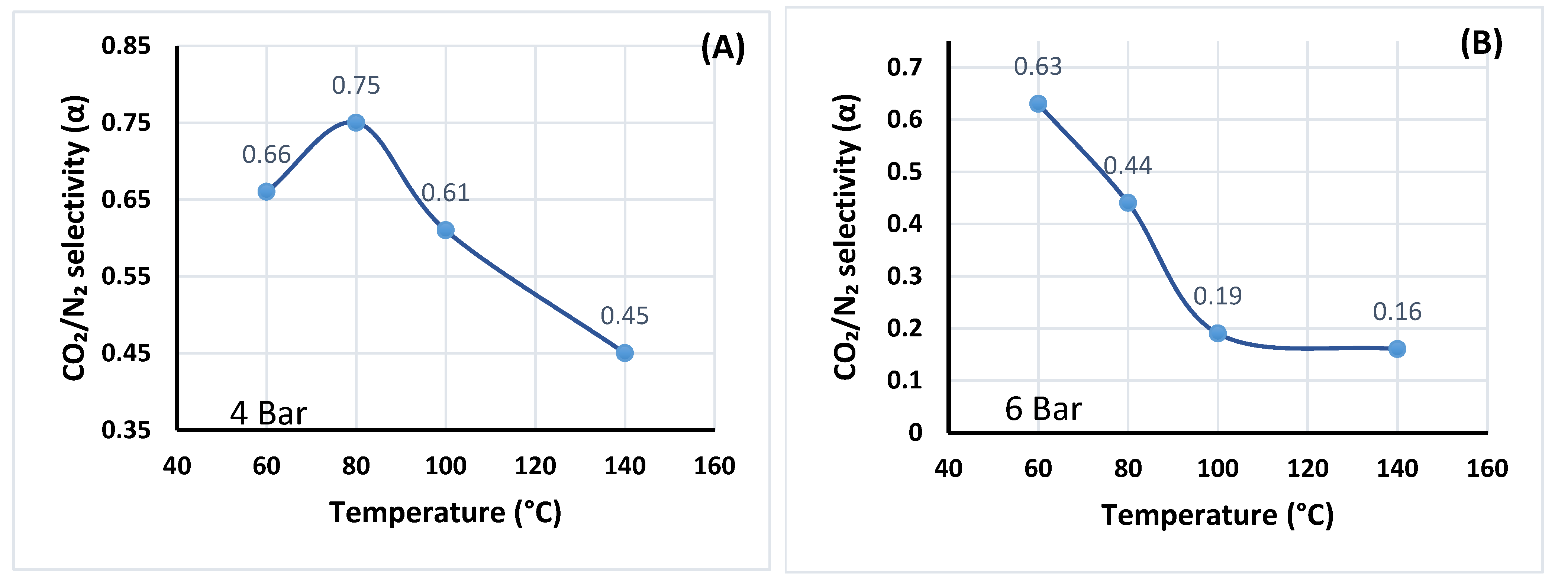
Figure 4 indicates that the highest CO2/N2 selectivity found in the study (α = 0.75) was obtained under this setting, as shown in Table 3, which is quite similar to the theoretical Knudsen diffusion limit (α = 0.8). The experimentally observed selectivity (α = 0.75 at 80 °C and 4 bar) approaches the theoretical Knudsen limit (0.80), suggesting that Knudsen diffusion contributes significantly under these conditions. However, the result should be interpreted as indirect evidence, and the transport behavior likely reflects a mixed regime with dominant molecule–wall interactions accompanied by minor viscous-flow contributions. While molecule–wall interactions remained sufficiently dominant to maintain partial selectivity, the enhancement is ascribed to increased CO2 mobility brought on by higher thermal activation [37].
Figure 4.
Variation in CO2/N2 selectivity with temperature at (A) 4 bars and (B) 6 bars.
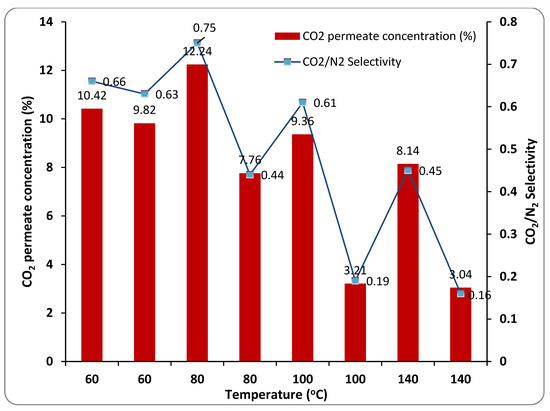
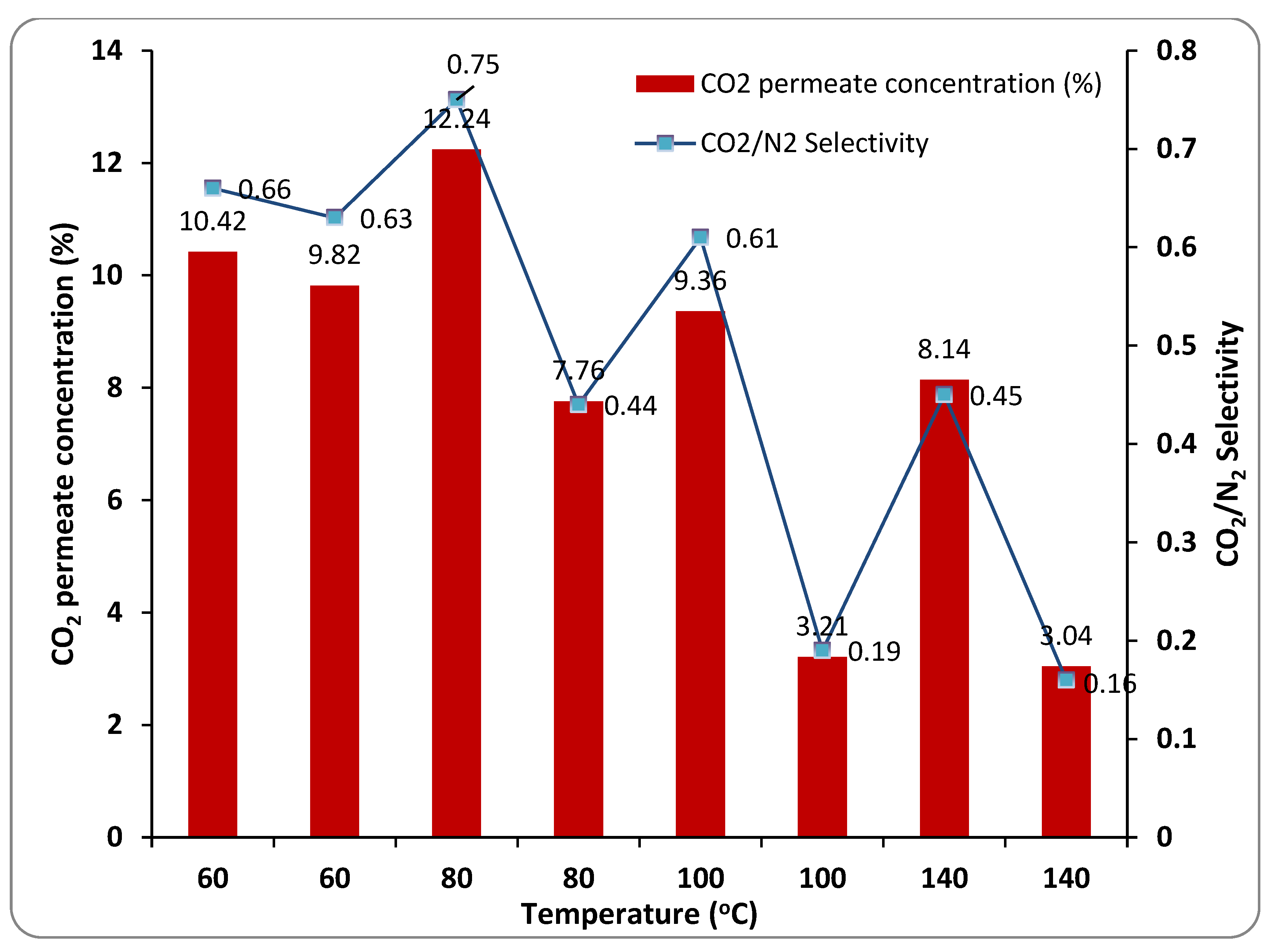
As shown in Figure 2, when temperatures rose over 100 °C, CO2 enrichment decreased sharply, dropping to 9.36% at 100 °C and 4 bar, and then to 8.14% at 140 °C. The N2 concentration rose (86–87%) under the same circumstances, suggesting a transition from Knudsen diffusion to a regime where bulk gas movement becomes more significant [38]. Figure 5 illustrates that at all temperatures, raising the pressure from 4 to 6 bar resulted in a sharp decrease in CO2 concentration in permeate (%) and also selectivity values. A temperature-driven shift from Knudsen to viscous flow is confirmed by the dramatic drop in selectivity with temperature, from α = 0.75 (80 °C) to α = 0.61 (100 °C) and α = 0.45 (140 °C) at 4 bar (Table 3), as shown in Figure 4.
Figure 5.
CO2 concentration in permeate (%) and CO2/N2 selectivity across the ceramic membrane at different temperatures.
3.3. Influences of Pressure on Permeation and Selectivity
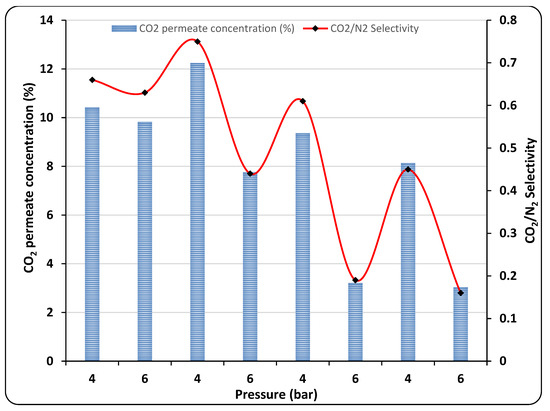
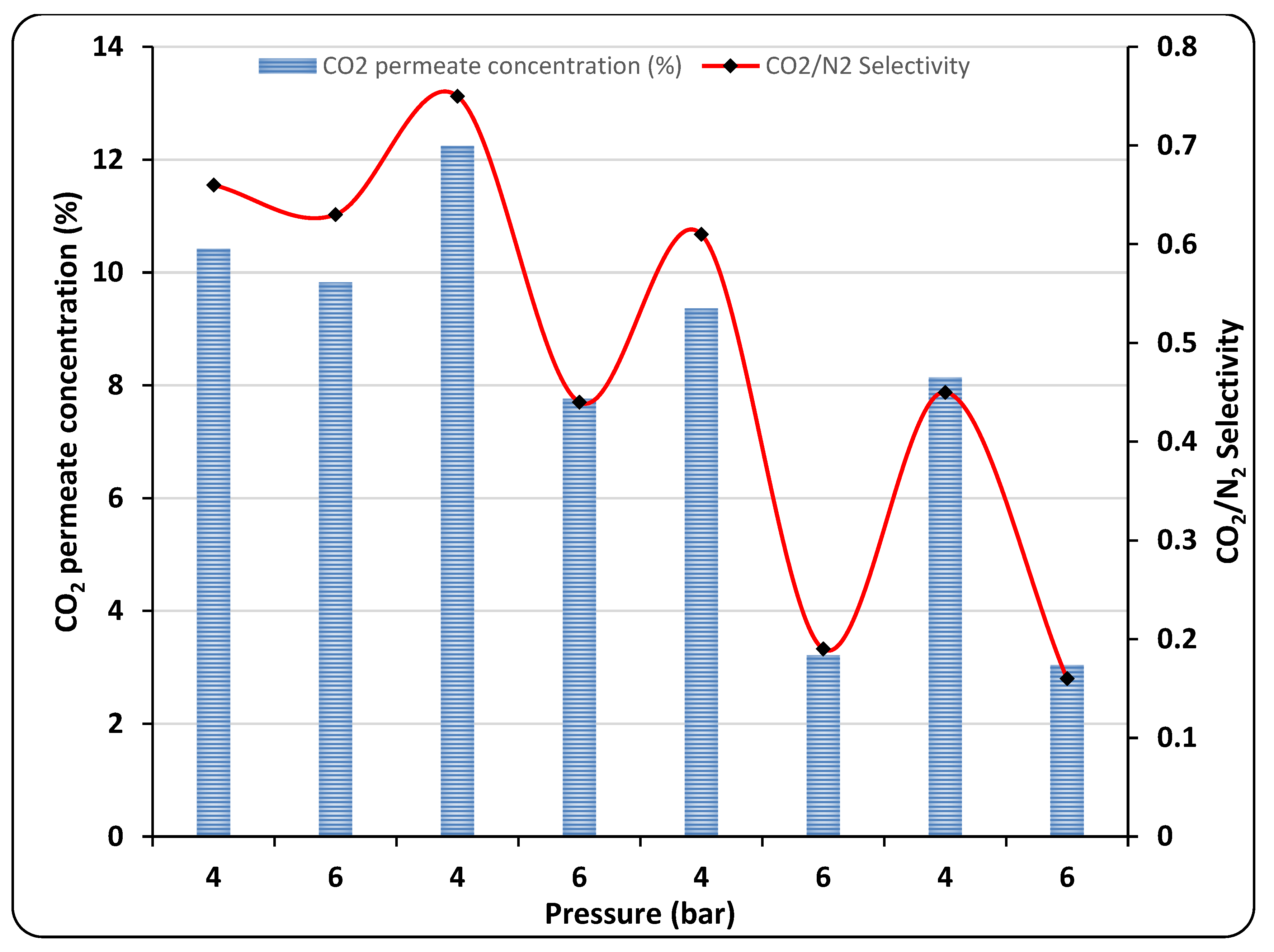
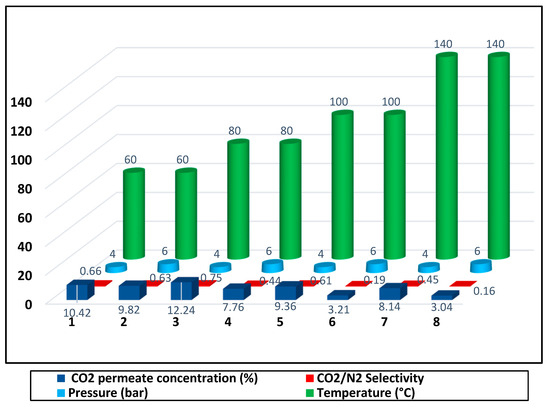
As seen in Figure 6, at all temperatures, pressure had a significant detrimental impact on CO2 permeate concentration, with the permeance of CO2 decreasing with increasing feed pressure in the Knudsen-type transport dominated by molecule–wall collisions (lower temperatures). Even at the ideal temperature of 80 °C, raising the pressure from 4 to 6 bar caused CO2 concentration in permeate (%) to drop sharply from 12.24% to 7.76%, whereas N2 permeation increased significantly to 88.60% (Table 2). As gas density rises, wall-dominated transport is suppressed, resulting in more gas–gas collisions and the formation of viscous flow [39]. The pressure impact was more noticeable at 100 °C. While N2 increased from 86.78% to 92.71%, CO2 decreased from 9.36% at 4 bars to 3.21% at 6 bars. At 140 °C and 6 bar, the poorest performance was seen, with CO2 falling to 3.04% and N2 rising to 93.28%, suggesting near-total domination of viscous flow and near-loss of separation capacity. This collapse is reflected in selectivity values. Selectivity decreased from α = 0.75 to α = 0.44 at 80 °C when pressure was increased from 4 to 6 bar (Table 3). Similar trends were seen at 100 °C (α = 0.61 → 0.19) and 140 °C (α = 0.45 → 0.16), indicating that the greatest negative factor impacting CO2/N2 discrimination is pressure (Figure 6).
Figure 6.
CO2 concentration in permeate (%) and CO2/N2 selectivity across the ceramic membrane at different pressures (4–6 bar).
Besides increasing the contribution of viscous flow, elevated pressure also affects gas transport by reducing the molecular mean free path, thereby decreasing the Knudsen number (Kn). As Kn decreases, molecule–wall collisions become less dominant relative to intermolecular collisions, promoting a gradual shift from Knudsen-controlled transport toward viscous bulk flow. This effect further explains the observed decline in CO2/N2 selectivity at higher pressures.
3.4. Temperature–Pressure Coupling Effects on Membrane Transport Regimes
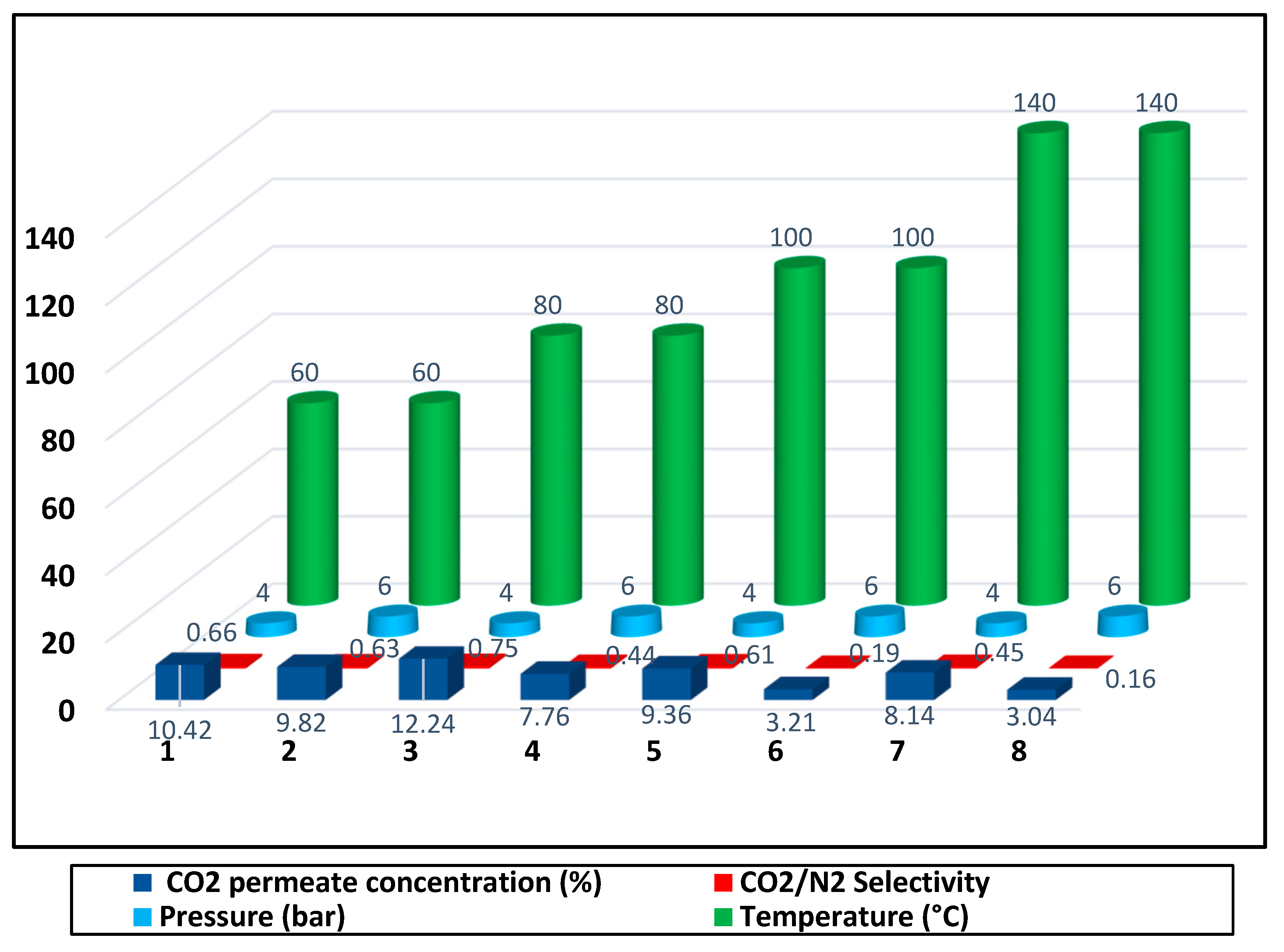
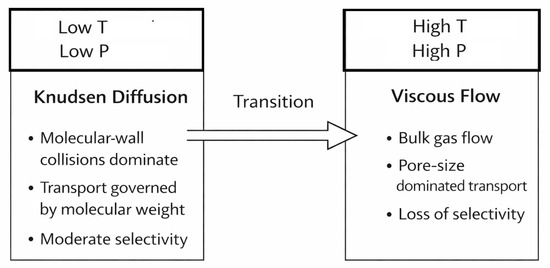
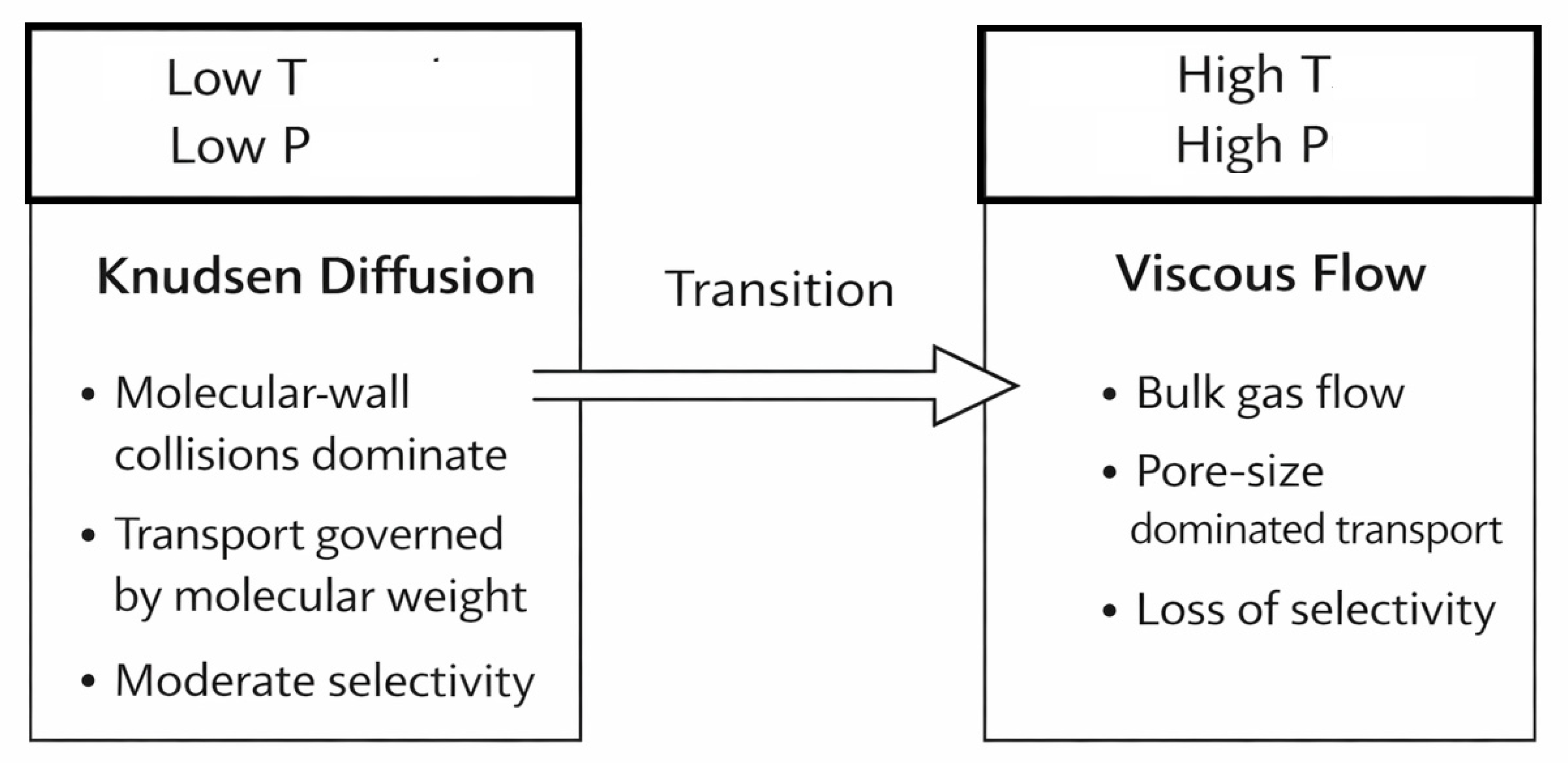
It is evident from the combined temperature–pressure trends, reflected in the data in Table 2 and Table 3, that the prevailing gas-transport regime within the ceramic membrane is gradually changing (Figure 7). At lower temperature and pressure (60–80 °C, 4 bar), CO2 enrichment is relatively higher, selectivity approaches the Knudsen theoretical limit (0.66–0.75), and transport is dominated by molecule–wall interactions [36]. Meanwhile at high temperature and/or high pressure, the CO2 concentration in permeate (%) drops drastically (e.g., 3.21% at 100 °C/6 bar, 3.04% at 140 °C/6 bar), selectivity collapses (α ≈ 0.16–0.19), and transport becomes dominated by viscous flow, which is non-selective (Figure 7). These findings suggest that the membrane has a limited operating window, with significant separation only possible at <80 °C and ≤4 bar. Overall, the findings demonstrate that the membrane has a distinct operating window, centered around 80 °C and 4 bar under the tested laboratory conditions, in which it retains usable separation performance. However, commercial flue-gas streams are commonly discharged at higher temperatures (typically 120–180 °C), and direct membrane application may therefore require prior cooling and pressure adjustment. Accordingly, the identified operating window should be interpreted as the optimum range for the present membrane material rather than a universal industrial operating condition. CO2 permeate concentration and selectivity are persistently degraded by temperatures above 100 °C and pressures above 4 bars, which eventually result in a non-selective viscous-flow condition where the membrane functions more like a basic porous medium than an effective separation barrier (Figure 8).
Figure 7.
CO2 concentration in permeate (%) and CO2/N2 selectivity across the ceramic membrane at different pressures and temperatures.
Figure 8.
Illustration of the concept of gas transport mechanisms across the ceramic membrane from Knudsen diffusion at low pressure and temperatures to viscous flow under elevated operating conditions.
3.5. Influence of Membrane Microstructure and Surface Properties
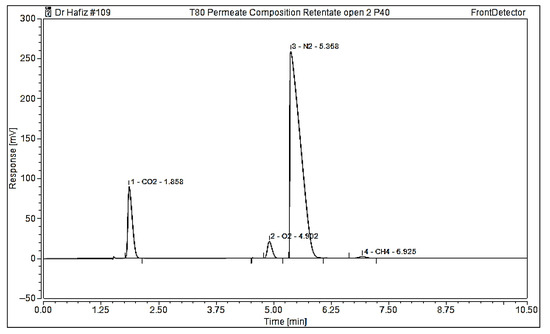
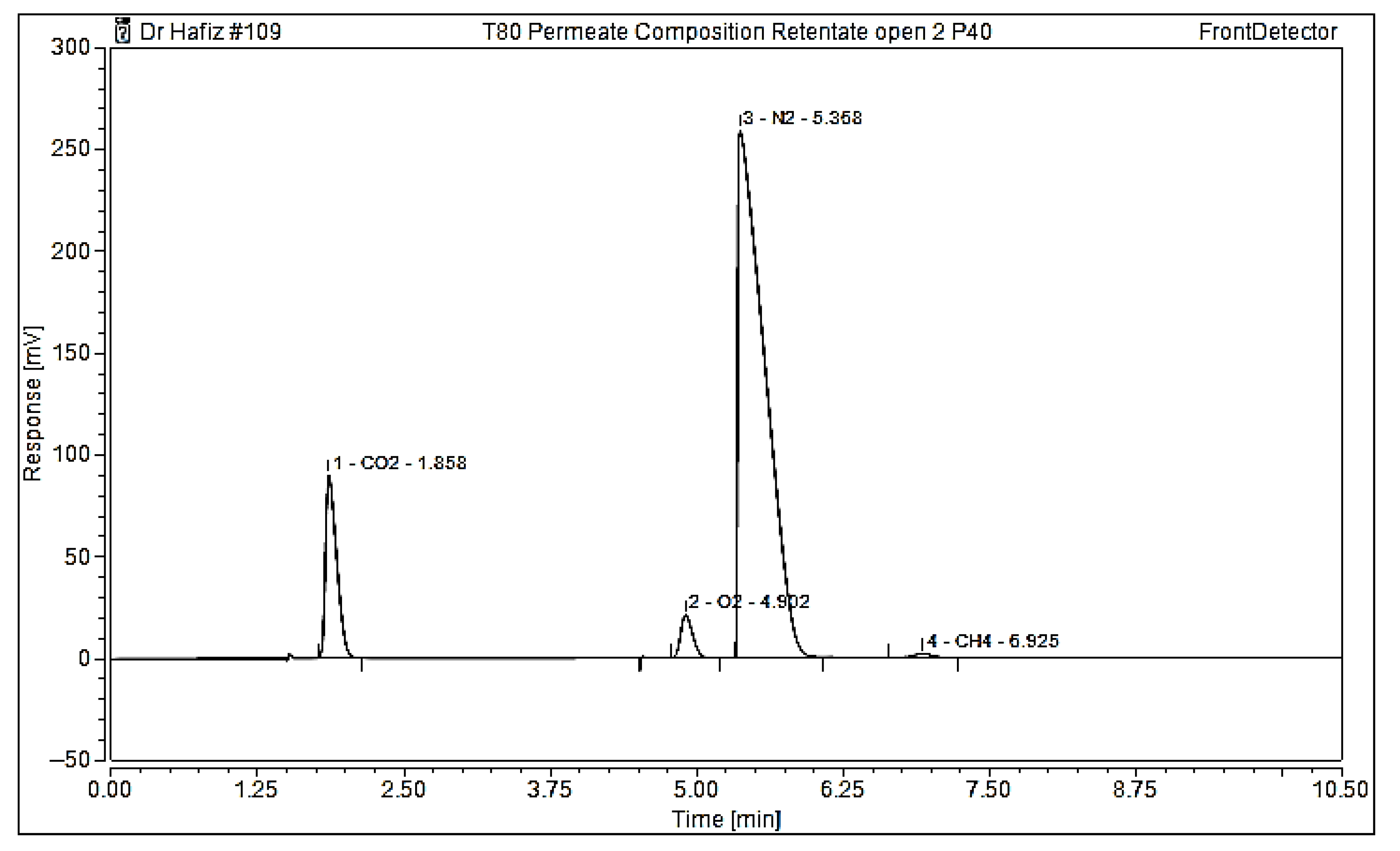
The unmodified red-clay ceramic slab showed remarkable gas separation performance for a material composed solely of naturally abundant clay; the maximum CO2/N2 selectivity observed experimentally was α = 0.75 at 80 °C and 4 bar, which approaches the theoretical Knudsen diffusion limit (α ≈ 0.80) (Figure 9). This selectivity, coupled with CO2 enrichment up to 12.4 vol% in the permeate, highlights the potential of low-cost ceramic membranes for sustainable biogas upgrading and CO2 removal from low-quality gas streams.
Figure 9.
Gas chromatography data for permeate gas at 80 °C and 4 bar.
Nitrogen adsorption–desorption analysis using an ASAP-2020 Micromeritics instrument revealed a predominantly macroporous microstructure, with an average pore diameter of (~100 nm), which is several orders of magnitude larger than the kinetic diameters of CO2 and N2, confirming that molecular sieving is not expected.
Under these conditions, gas transport is mainly controlled by Knudsen diffusion at moderate pressure and temperature, and by viscous (Poiseuille) flow as pressure or temperature increases. The highest CO2/N2 selectivity measured in this work (α = 0.75 at 80 °C and 4 bar) is close to the theoretical Knudsen value (≈0.80). This agreement indicates that the observed separation originates from differences in molecular weight rather than from specific adsorption effects or structural selectivity of the membrane.
When the temperature exceeded 100 °C or the pressure increased to 6 bar, the selectivity dropped sharply. This behavior is consistent with a transition toward viscous flow, where gas molecules move collectively under a pressure gradient. In such a regime, discrimination between CO2 and N2 becomes weak, and the membrane behaves more like a simple porous medium than a selective barrier.
The results underscore that the separation behavior of the membrane is fundamentally limited by its macroporous structure. Any CO2/N2 selectivity observed in this study is consistent with classical Knudsen-controlled transport and decreases once viscous flow becomes dominant at elevated operating conditions.
It should be emphasized that the observed selectivity values remain within the theoretical Knudsen limit and do not indicate intrinsic structural selectivity of the membrane.
4. Conclusions
This study demonstrated that the gas transport behavior of a macroporous red-clay ceramic membrane is strongly governed by the interplay between temperature and pressure. The results demonstrate that gas separation performance is strongly governed by the prevailing transport regime.
Under moderate conditions (≤80 °C and 4 bar), the membrane exhibited CO2/N2 selectivity values approaching the theoretical Knudsen limit (α ≈ 0.80), indicating that transport was primarily controlled by molecule–wall interactions. However, increasing temperature and pressure led to a progressive transition toward viscous-flow-dominated transport, resulting in a marked decline in selectivity.
At temperatures above 100 °C and pressures of 6 bars, selectivity collapsed to values as low as 0.16–0.19, confirming the suppression of Knudsen-controlled discrimination and the dominance of non-selective bulk gas flow.
These findings highlight the narrow operational limits of untreated microporous ceramic membranes for gas separation applications and emphasize the importance of controlling pore structure and operating conditions. The study also demonstrates the potential of low-cost natural clay membranes as proof-of-concept materials for sustainable separation technologies. Future improvements may be achieved through microstructural tailoring, pore-size reduction, or surface functionalization to enhance selectivity under industrially relevant conditions.
Funding
This research received no external funding.
Data Availability Statement
Some or all data, models, or code that support the findings of this study are available from the corresponding author upon reasonable request.
Acknowledgments
The author would like to thank all those who contributed to the development of this research.
Conflicts of Interest
The authors declare no conflicts of interest.
References
- Sun, Y.; Ma, Y.; Yang, F.; Liu, H.; Li, S.; Li, X. Application of molecular dynamics simulation in CO2-enhanced oil recovery and CO2 geological storage: A review. Geosci. Eng. 2025, 251, 213894. [Google Scholar]
- Madejski, P.; Chmiel, K.; Subramanian, N.; Kuś, T. Methods and techniques for CO2 capture: Review of potential solutions and applications in modern energy technologies. Energies 2022, 15, 887. [Google Scholar] [CrossRef] [Scilit]
- Fu, H.; Xue, K.; Li, Z.; Zhang, H.; Gao, D.; Chen, H. Study on the performance of CO2 capture from flue gas with ceramic and PTFE membrane contactors. Energy 2023, 263, 125677. [Google Scholar] [CrossRef] [Scilit]
- Sun, M.; Zhao, Z.; Gong, J. Numerical investigations on boil-off gas generation characteristics of liquefied CO2 in type C storage tanks under different sloshing conditions. Appl. Sci. 2025, 15, 5788. [Google Scholar] [CrossRef] [Scilit]
- Zhang, H.; Xue, K.; Cheng, C.; Gao, D.; Chen, H. Study on the performance of CO2 capture from flue gas with ceramic membrane contactor. Sep. Purif. Technol. 2021, 265, 118521. [Google Scholar] [CrossRef] [Scilit]
- Nunes, L.J.R. The rising threat of atmospheric CO2: Causes, impacts, and mitigation strategies. Environments 2023, 10, 66. [Google Scholar] [CrossRef] [Scilit]
- Chattaraj, S.; Dharme, N.S.; Mahant, B.; Kushwaha, O.S.; Bhadani, A.; Kumar, R. Industrial decarbonization by a gas hydrate process: Scale-up studies on CO2 capture from flue gas. Energy Fuels 2025, 39, 6332–6351. [Google Scholar] [CrossRef] [Scilit]
- Veluturla, S.; Singh, S.; Fatima, S. A comprehensive review of carbon dioxide sequestration: Exploring post-combustion CO2 capture, transport, and storage. Environ. Eng. Res. 2025, 30, 230452. [Google Scholar] [CrossRef] [Scilit]
- Medeiros, F.G.M.; Lopes, F.W.B.; Lotfi, S.; Vasconcelos, B.R. One-step upgrading of real flue gas streams into syngas over alumina-supported catalysts. Fuel 2023, 338, 127324. [Google Scholar] [CrossRef] [Scilit]
- Kanth, M.S.; Rani, S.L.S.; Raja, V.K. Advancing ceramic membrane technology in chemical industry applications: Cost-effective materials, fabrication, and surface modification strategies. Hybrid Adv. 2025, 8, 100380. [Google Scholar] [CrossRef] [Scilit]
- Song, C.F.; Liu, Q.L.; Deng, S.; Li, H.L.; Kitamura, Y. Cryogenic-based CO2 capture technologies: State-of-the-art developments and current challenges. Renew. Sustain. Energy Rev. 2019, 101, 265–278. [Google Scholar] [CrossRef] [Scilit]
- Vega, F.; Cano, M.; Camino, S.; Navarrete, B.; Camino, J.A. Evaluation of absorption performance of amine-based solvents for CO2 capture based on partial oxy-combustion approach. Int. J. Greenh. Gas Control 2018, 73, 95–103. [Google Scholar] [CrossRef] [Scilit]
- Wang, J.Y.; Sun, T.W.; Zeng, X.L.; Fu, J.X.; Zhao, J.; Deng, S.; Li, K.X. Feasibility of solar-assisted CO2 capture power plant with flexible operation: A case study in China. Appl. Therm. Eng. 2020, 182, 116096. [Google Scholar] [CrossRef] [Scilit]
- Hu, Y.; Xu, G.; Xu, C.; Yang, Y.P. Thermodynamic analysis and techno-economic evaluation of an integrated natural gas combined cycle power plant with post-combustion CO2 capture. Appl. Therm. Eng. 2017, 111, 308–316. [Google Scholar] [CrossRef] [Scilit]
- Fang, M.X.; Yi, N.T.; Di, W.T.; Wang, T.; Wang, Q.H. Emission and control of flue gas pollutants in CO2 chemical absorption systems: A review. Int. J. Greenh. Gas Control 2020, 93, 102904. [Google Scholar] [CrossRef] [Scilit]
- Zhang, J.; Zhang, Y.; Li, N.; Nie, S.; Yang, L.; Luan, Y.; Ma, Y.; Wang, G.; Li, K.; Jiao, L.; et al. Simultaneously improving anti-aging and gas separation performance of high-permeability membranes based on hydrogen bonding interactions. J. Membr. Sci. 2026, 739, 124912. [Google Scholar] [CrossRef] [Scilit]
- Shin, H.; Sabir, A.W.; Oh, J.; Lee, P.S.; Lim, Y. Eco-techno-economic analysis of onboard membrane carbon capture systems considering CO2/N2 and CO2/O2 selectivity improvements. Sep. Purif. Technol. 2025, 376, 133985. [Google Scholar] [CrossRef] [Scilit]
- Ambili, K.S.; Penkova, A.; Aravind, U.K.; Aravindakumar, C.T. Innovations in CO2 separation technologies using polyetherimide-based membranes. Sep. Purif. Rev. 2025, 54, 1–21. [Google Scholar]
- Chen, R.; Yu, S.; Lin, R.; Yang, J.; Zhao, S.; Hsu, Y.-C.; Huang, W.; Lu, P.; Zhou, T.; Zhang, L.; et al. Integration of UiO-66 metal–organic frameworks into zinc coordination polymer glass membranes for enhanced gas separation. Ind. Eng. Chem. Res. 2025, 64, 22868–22877. [Google Scholar] [CrossRef] [Scilit]
- Imtiaz, A.; Othman, M.H.D.; Jilani, A.; Khan, I.U.; Kamaludin, R.; Ayub, M.; Samuel, O.; Kurniawan, T.A.; Hashim, N.A.; Puteh, M.H. Recent progress in hollow fiber membrane contactors for efficient CO2 separation: A critical review. Chemosphere 2023, 325, 138300. [Google Scholar] [CrossRef] [Scilit]
- Fu, W.; Zhang, L.; Liu, J.; Yang, T.; Sun, M.; Ma, X.; Zhao, Y.; Chen, L. Ceramic-based composite membranes incorporated with ZIF-8 and PDMS for efficient CO2/N2 separation. Sep. Purif. Technol. 2025, 352, 128142. [Google Scholar] [CrossRef] [Scilit]
- Sharma, S.K.; Das, P.; Mandal, B.; Sanfui, B.K. Fabrication, characterization and optimization of α-alumina ceramic membrane supports for CO2/N2 separation. J. CO2 Util. 2022, 63, 102121. [Google Scholar] [CrossRef] [Scilit]
- Choleva, E.; Labropoulos, A.I.; Kouvelos, E.; Theodorakopoulos, G.V.; Stamatakis, E.; Bellas, S.; Yentekakis, I.V.; Beltsios, K.G.; Romanos, G.E. Supported ionic liquid membranes based on alkyl-methylimidazolium tricyanomethanide for CO2 separation. J. Environ. Chem. Eng. 2025, 13, 118562. [Google Scholar] [CrossRef] [Scilit]
- Sahin, Z.E.; Rahimalimamaghani, A.; Gazzani, M.; Gallucci, F. Gas permeation through carbon membranes: Model development and experimental validation. Int. J. Hydrog. Energy 2024, 50, 561–581. [Google Scholar] [CrossRef] [Scilit]
- Ogunlude, P.; Abunumah, O.; Muhammad-Sukki, F.; Gobina, E. Gas transport mechanisms for CH4/CO2 separation using ceramic membranes. Crystals 2021, 11, 1224. [Google Scholar] [CrossRef] [Scilit]
- Alessandro, F.; Macedonio, F. Membrane distillation using ceramic membranes: Advances, opportunities, and challenges. Materials 2025, 18, 3296. [Google Scholar] [CrossRef] [Scilit]
- Huang, S.M.; Chen, Y.H.; Yuan, W.Z.; Zhao, S.; Hong, Y.; Ye, W.B.; Yang, M. Heat and mass transfer in hollow fiber membrane contactors for sweeping gas membrane distillation. Sep. Purif. Technol. 2019, 220, 334–344. [Google Scholar] [CrossRef] [Scilit]
- Amer, J.; Benguerba, Y.; Elboughdiri, N.; Albrahim, M.; Burgard, M.; Ernst, B. Enhancing hydrogen separation efficiency through nickel-based composite membranes. Int. J. Hydrog. Energy 2024, 66, 703–718. [Google Scholar] [CrossRef] [Scilit]
- Islam, M.A.; Ulbricht, M. New interpretation of gas viscosity for flow through micro-capillaries and pores. Adv. Theory Simul. 2023, 6, 2205827. [Google Scholar] [CrossRef] [Scilit]
- Li, H.; Schygulla, U.; Hoffmann, J.; Niehoff, P.; Haas-Santo, K.; Dittmeyer, R. Experimental and modeling study of gas transport through composite ceramic membranes. Chem. Eng. Sci. 2014, 108, 94–102. [Google Scholar] [CrossRef] [Scilit]
- Li, K. Transport and separation of gases in porous ceramic membranes. In Ceramic Membranes for Separation and Reaction; John Wiley & Sons: Hoboken, NJ, USA, 2007; pp. 97–134. [Google Scholar]
- Rahman, M.H.; Gadalla, A.G.; Kriaa, K.; Aljlil, S.A.; Alshamari, A.K.; AlGhamdi, A.A.; Fawaz, H.E. High-temperature CO2 separation using ceramic membranes: Experimental insights and ANN modeling. Metall. Mater. Eng. 2025, 31, 688–704. [Google Scholar] [CrossRef] [Scilit]
- Buddin, M.M.H.S.; Ahmad, A.L.; Zainuddin, M.I.F. Prediction of CO2 permeance across ZIF-L@PDMS/PES composite membranes. Membranes 2023, 13, 134. [Google Scholar] [CrossRef] [Scilit] [PubMed]
- Malakhov, A.O.; Volkov, V.V. Mixed-gas selectivity estimation based on pure gas permeation measurements. Membranes 2021, 11, 833. [Google Scholar] [CrossRef] [Scilit]
- Othman, M.R. Permeability and separability of methane and carbon dioxide across meso-porous Mg–Al hydrotalcite and activated carbon media. Chem. Eng. Sci. 2009, 64925, 929. [Google Scholar] [CrossRef] [Scilit]
- Zito, P.F.; Caravella, A.; Brunetti, A.; Drioli, E.; Barbieri, G. Knudsen and surface diffusion competition in gas permeation through silicalite membranes. J. Membr. Sci. 2017, 523, 456–469. [Google Scholar] [CrossRef] [Scilit]
- Karousos, D.S.; Labropoulos, A.I.; Tzialla, O.; Papadokostaki, K.; Gjoka, M.; Stefanopoulos, K.L.; Romanos, G.E. Effect of cyclic heating on CO2/N2 separation performance of ionic liquid-supported ceramic membranes. Sep. Purif. Technol. 2018, 200, 11–22. [Google Scholar] [CrossRef] [Scilit]
- Genduso, G.; Ogieglo, W.; Wang, Y.; Pinnau, I. Carbon molecular sieve membranes for gas separation: A comprehensive review. J. Membr. Sci. 2024, 699, 122533. [Google Scholar] [CrossRef] [Scilit]
- Gabitto, J.; Tsouris, C. Hydrogen transport in composite inorganic membranes. J. Membr. Sci. 2008, 312, 132–142. [Google Scholar] [CrossRef] [Scilit]

Disclaimer/Publisher’s Note: The statements, opinions and data contained in all publications are solely those of the individual author(s) and contributor(s) and not of MDPI and/or the editor(s). MDPI and/or the editor(s) disclaim responsibility for any injury to people or property resulting from any ideas, methods, instructions or products referred to in the content. |
© 2026 by the author. Licensee MDPI, Basel, Switzerland. This article is an open access article distributed under the terms and conditions of the Creative Commons Attribution (CC BY) license.