


Abstract
Approximately 60% of the world’s primary energy is dissipated as waste heat, representing a critical opportunity for energy recovery in sectors such as electro-mobility and fuel cells. Commercial thermoelectric generators (TEGs), predominantly based on bismuth telluride (Bi2Te3), face limitations due to mechanical rigidity, toxicity, and high production costs. This study proposes graphene oxide (GO) as an emerging alternative thanks to its oxygenated functional groups and layered structure as well as GO paper facilitates’ thermal and electrical transport. However, the effective integration of this nanomaterial into solid-state systems under real operating conditions remains a technical challenge. Therefore, this work presents the development, multiphysics modeling, and experimental validation of an innovative TEG cell using GO paper as an active layer. The results demonstrate that the proposed GO-ITC achieves an average of 2.75 times higher generated voltage with a lower thermal gradient as well as an improved equivalent figure of merit (ZT) compared to Bi2Te3-based TEGs. This work contributes to the evaluation of GO-doped materials for voltage generation under specific thermal gradients, providing a lightweight and flexible solution for waste heat harvesting in modern power systems.
1. Introduction
The growing global energy crisis and the need for more sustainable transport systems have driven research into waste heat recovery technologies. In particular, thermal management in fuel cells and battery systems for electro-mobility has become a bottleneck for system efficiency [1,2]. Thermoelectric generators (TEGs) represent a solid solution by enabling the direct conversion of thermal gradients into low-voltage electrical energy via the Seebeck effect [3]. These devices have garnered significant interest in the pursuit of energy sustainability strategies and the development of energy harvesting technologies [1,2,3,4,5,6,7,8,9,10,11,12,13,14,15]. Globally, nearly 63% of the energy supplied during heat transfer and combustion processes is not recovered and, consequently, it is not utilized to increase process efficiency [2]. A portion of this waste energy is generated within an approximate range of 30 °C to 150 °C. These temperatures and their associated thermal energy can be used to produce sufficient electrical power to feed low-power devices, such as smartwatches, sensors, and batteries. This can contribute to decreasing fossil fuel consumption and reducing the amount of greenhouse gases released into the atmosphere. In this research work, three pathways for transforming waste heat into electrical energy have been identified: mechanical heat engines (thermal engines), thermoelectric generators, and ionic thermoelectric systems [3,4]. This research focuses on TEGs, which transform thermal energy directly into electricity. These are solid-state devices lacking moving parts, making them silent and requiring low maintenance. TEGs have been implemented to transform low-grade energy from solar radiation, geothermal heat, ocean thermal energy, and automotive waste heat into electrical power [5,6]. The operation of TEGs is based on the Seebeck effect, which occurs in metals and semiconductors due to the free movement of charge carriers. When a temperature gradient is applied, charge carriers move from the hotter end toward the colder end, producing an electrostatic potential. Therefore, for a TEG to generate sufficient voltage to provide electricity, it primarily requires a large number of n-type and p-type carriers electrically connected in series and thermally in parallel [7]. Despite their advantages, such as long service life and silent operation, TEGs have limited commercial applications because they typically exhibit an energy conversion efficiency of less than 6% and high costs. Furthermore, many TEGs are made of inorganic materials that are toxic and brittle in nature, involving expensive processing techniques [8]. This has led to the search for more efficient and easily synthesized thermoelectric materials. Currently, there is a demand for thermoelectric materials with a high thermoelectric coefficient, high electrical conductivity, low thermal conductivity, and a high absolute Seebeck coefficient through the integration of novel materials, such as graphene [9]. Graphene has received special attention thanks to its electrical, catalytic, optical, and mechanical properties as well as its high charge carrier mobility, sparking interest in its use for thermoelectric applications [10,11,12,13,14,15]. It has been observed that despite their potential, conventional thermoelectric materials like Bi2Te3 present unfavorable characteristics: their structural rigidity prevents adaptation to curved surfaces (common in engines and exhausts), and their environmental impact is high due to component toxicity [16,17,18,19]. In this regard, graphene oxide (GO) offers a competitive advantage. Unlike pristine graphene, GO possesses a carbon network decorated with oxygenated functional groups that drastically reduce thermal conductivity, facilitating a more stable temperature gradient. Meanwhile, its layered nature allows the fabrication of lightweight, cost-effective, and, above all, flexible devices. Furthermore, recent studies have demonstrated that the incorporation of GO can significantly reduce the bulk density of materials, with reductions reported between 0.9% and 6.5% in specialized mixtures compared to reference samples [20]. Beyond graphene-based materials, the landscape of flexible thermoelectric has been significantly shaped by conductive polymers and carbon nanomaterials. For instance, PEDOT-based systems and their composites have demonstrated remarkable performance due to their mechanical flexibility and tunable electrical properties [21,22]. Similarly, carbon nanotubes (CNTs) have been extensively explored to establish robust structure–property relationships [23,24]. While these systems primarily rely on electronic transport, graphene oxide (GO) presents a unique alternative where oxygen functional groups facilitate ionic transport. The primary contribution of this article is the development of an ionic thermoelectric cell (ITC) architecture based on GO paper, validated through a dual approach: (1) advanced multiphysics modeling using the finite element method (FEM) to predict the thermodynamic behavior of the system, and (2) a robust experimental phase characterizing the voltage response as a function of the applied thermal gradient. This work not only evaluates the material but also proposes a design methodology to integrate carbon nanomaterials into next-generation energy harvesting systems, aligning with trends in energy efficiency and industrial heat recovery. The remainder of this article is organized as follows: Section 2 describes the development process of the GO-ITC. Section 3 details the governing model of the thermoelectric phenomenon and the parameters used for the simulated multiphysics model. Section 4 presents the results obtained through FEM multiphysics simulation. Section 5 shows the experimental validation performed and, finally, the conclusions address the implications of these findings for innovation in energy harvesting systems.
2. Development of the Graphene Oxide Paper-Based Thermoelectric Generator (GO-ITC)
2.1. Synthesis and Preparation of GO Paper
GO paper was synthesized using a modified Hummers’ method [25], integrating a critical exfoliation stage through high-shear processing to ensure enhanced delamination of the graphite flakes. The resulting material underwent washing cycles with deionized water until reaching a neutral pH (pH ≈ 7), removing residual impurities from the oxidation process. Finally, the GO paper was obtained via vacuum filtration using a cellulose ester membrane with a pore size of 0.22 µm. This process facilitated the self-assembly of the GO sheets into an ordered layered structure, yielding a self-standing membrane (GO paper) that was dried under standard conditions at approximately 35 °C for 6 h prior to its integration into the cell.
2.2. Thermoelectric Cell Architecture and Assembly
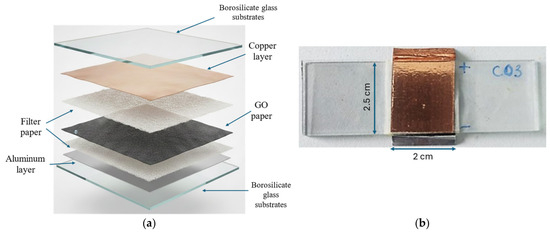
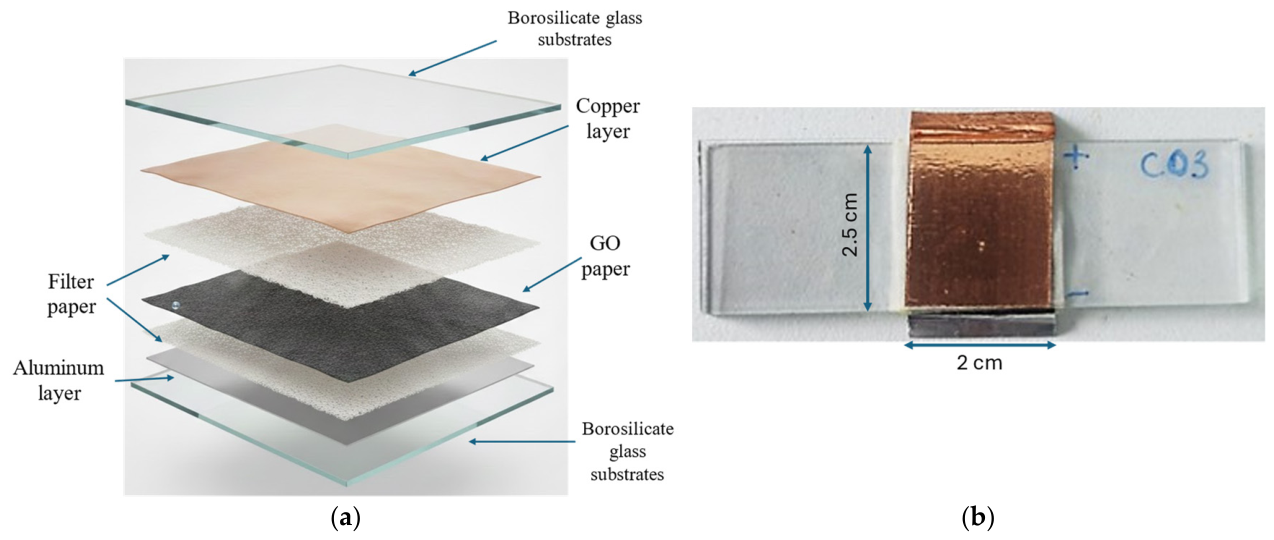
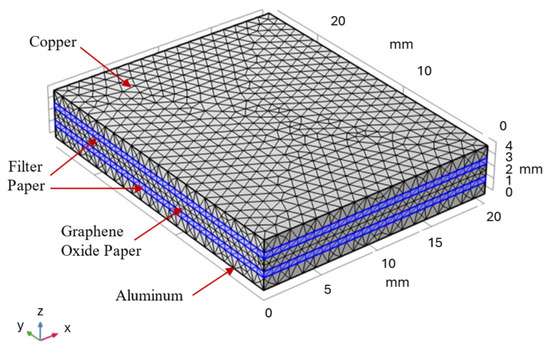
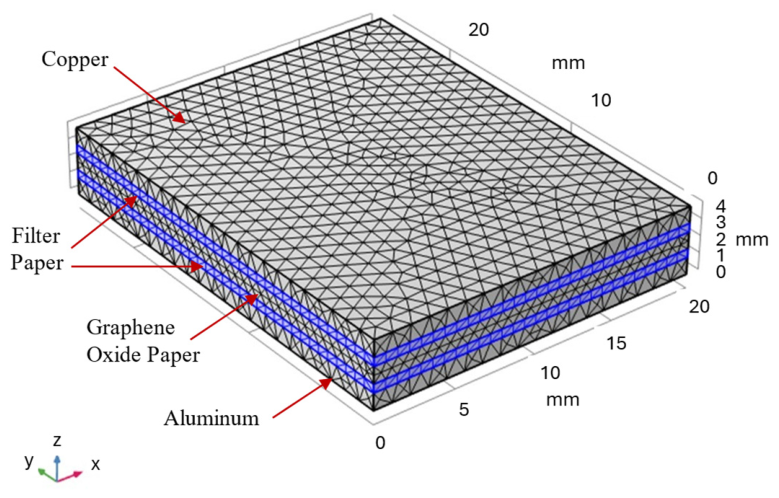
The cell configuration was designed as a multilayer structure oriented toward thermal gradient optimization. Before creating the flexible GO-ITC, 1 mm-thick borosilicate glass substrates were used as structural support. These glass layers facilitated experimentation, although our ultimate goal regarding the GO-ITCs is to be flexible. The subsequent process involved the integration of the following components. Electrodes: symmetric sections of copper tape and aluminum foil were employed to evaluate contact response and charge transfer. Separator: technical-grade filter paper was used to ensure galvanic isolation, preventing undesired direct contact between the GO paper and the metallic electrodes, while allowing only ionic/electronic flow through the electrolyte. Active layer: a GO paper sheet with an effective area of 5 cm2, obtained from a rectangular geometry of 2.0 cm × 2.5 cm. The assembly was performed by sequential layering of the components onto the base substrate (see Figure 1a). Finally, the cell was sealed with a second glass substrate to maintain structural integrity (see Figure 1b) as well as to provide enhanced mechanical robustness for experimentation.
Figure 1.
Design and model of the GO-ITC: (a) thermoelectric cell structure and (b) assembled thermoelectric cell.
2.3. Characterization of Graphene Oxide (GO) Paper
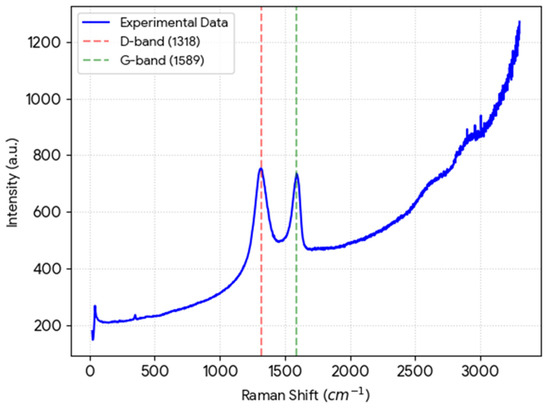
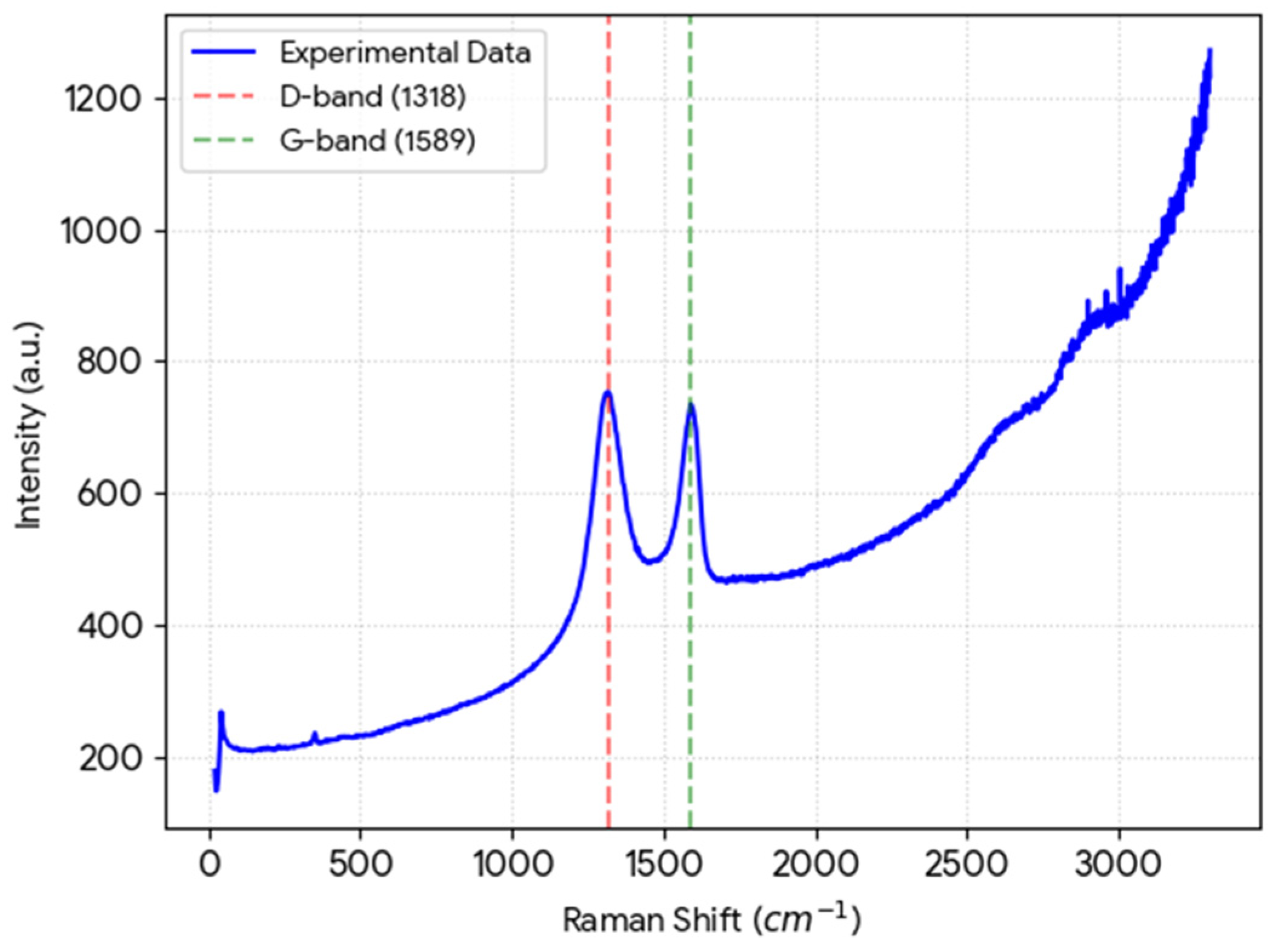
The structural integrity and functionalization of the GO paper were evaluated using Raman spectroscopy. As shown in Figure 2, the spectrum displays two prominent peaks: the D band at ~1318 cm−1 and the G band at ~1589 cm−1. The D band is associated with structural defects and oxygen-containing functional groups, while the G band corresponds to the sp2 carbon network. The calculated ID/IG ratio of 1.025 confirms a high degree of oxidation and structural disorder, which provides the necessary active sites and pathways for the ionic thermodiffusion mechanism observed in the electrochemical performance of the cell.
Figure 2.
Raman spectrum of the proposed graphene oxide paper.
3. Multiphysics Model of the GO-ITC
To understand the cell’s behavior and validate the experimental results, a numerical simulation based on the finite element method (FEM) was developed using the commercial software COMSOL Multiphysics 6.2. The model couples heat transfer and electrical charge transport phenomena.
3.1. Governing Model
The thermoelectric phenomenon in GO paper is governed by the constitutive equations that relate heat flux () and electrical current density () [26,27]:
where is the electrical conductivity, denotes the Seebeck coefficient of graphene oxide, indicates the thermal conductivity, and and represent the electrical potential and temperature, respectively. The model assumes a steady state where energy conservation is defined as ∇∙ = Qj, where Qj represents the heat generated by the Joule effect and is the Peltier coefficient. For the purposes of this study, given the low current densities () generated by the GO-ITC, the term was considered negligible compared to the conductive heat flux, focusing the analysis on the potential generation and thermal gradient.
Another element considered for the analysis of the GO-ITC is the equivalent figure of merit (). Given the ionic nature of the device, this is used here to allow a direct comparison with traditional electronic thermoelectric materials, which is a dimensionless number that summarizes the efficiency of a thermoelectric material. It is defined by the following equation [28]:
where is the effective Seebeck coefficient (the voltage generated per degree of thermal gradient), denotes the electrical conductivity (the ease of electron flow), represents the thermal conductivity (the rate of heat transfer through the material), and indicates the absolute operating temperature. For a material to exhibit high energy conversion efficiency, it must be a good electrical conductor but a poor thermal conductor (ZT > 1). Metals possess very high electrical conductivity, which is advantageous. Their thermal conductivity is also extremely high because electrons transport both charge and heat. This results in a very large denominator in the formula, leading to a very low ZT. In contrast, semiconductors (such as Bi2Te3 used in thermoelectric cells) can be doped to achieve decent electrical conductivity while their lattice structure (phonons) allows them to hinder heat flow much more effectively than metals.
3.2. Parameters, Materials, and Boundary Conditions
Specific thermal and electrical properties were assigned to each layer of the defined architecture. For the graphene oxide, values reported in the literature for GO paper [27] obtained by vacuum filtration were considered (see Table 1).
Table 1.
Materials and properties of the GO-ITC.
From Table 1, copper exhibits significantly higher conductivities due to its metallic bonding and high density of delocalized electrons, facilitating rapid transport of charge and heat. In contrast, the GO paper and separator possess semi-crystalline structures that provide the necessary thermal resistance to maintain the temperature gradient required for the thermoelectric effect. To simulate the GO-ITC environment, a constant temperature Thot (Th) was applied as a thermal condition to the face of the copper plate (disregarding the glass substrate), while a natural convection condition Tamb (Ta) was applied to the face of the aluminum plate. Regarding the electrical conditions, a ground node (V = 0) was defined at the aluminum electrode and a measurement terminal was set at the copper electrode to extract the generated electric potential (V), as shown in Figure 3. The simulation was performed using a 3D model with 110,680 tetrahedral elements and 324,964 degrees of freedom, with a computational cost of 2.3 GB of RAM.
Figure 3.
3D model of the GO-ITC simulation with 110,680 tetrahedral elements.
4. Evaluation of GO Potential in Voltage Generation Compared to Conventional Materials
In this work, both the GO-ITC and a conventional Bi2Te3 thermoelectric cell were simulated. To operate as an electrical generator, temperature conditions were applied to both electrode faces: the aluminum plate was kept at an ambient temperature of 20 °C, while the copper plate temperature was increased in 2 °C increments until reaching a final temperature of 40 °C, resulting in a maximum simulated temperature gradient (ΔT) of 20 °C. Ten iterations were performed, each solving 324,964 degrees of freedom, with a computational cost of 2.3 GB of RAM and an achieving an average solution time of 16.36 min (982 s). For the simulation of thermoelectric generators in COMSOL Multiphysics 6.2, it was necessary to include and couple the Heat Transfer in Solids and Electric Currents modules. If these interfaces are not properly coupled, one might ignore how the current itself alters the thermal gradient of the cell. Therefore, it is crucial that the Electromagnetic Heating multiphysics coupling is active—to account for Joule heating under high current conditions—as well as the Thermoelectric Effect coupling, ensuring that the thermal gradient generates the electric field via the Seebeck effect (V = αΔT).
4.1. Thermal Profile Distribution
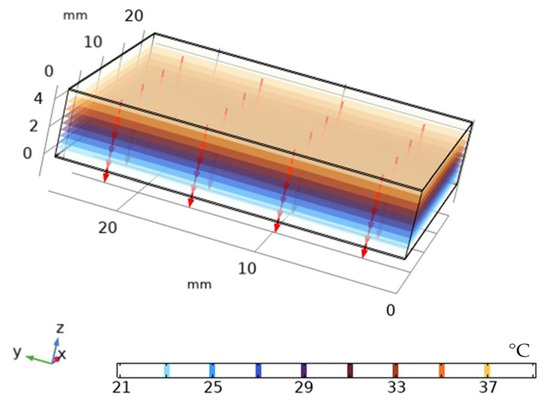
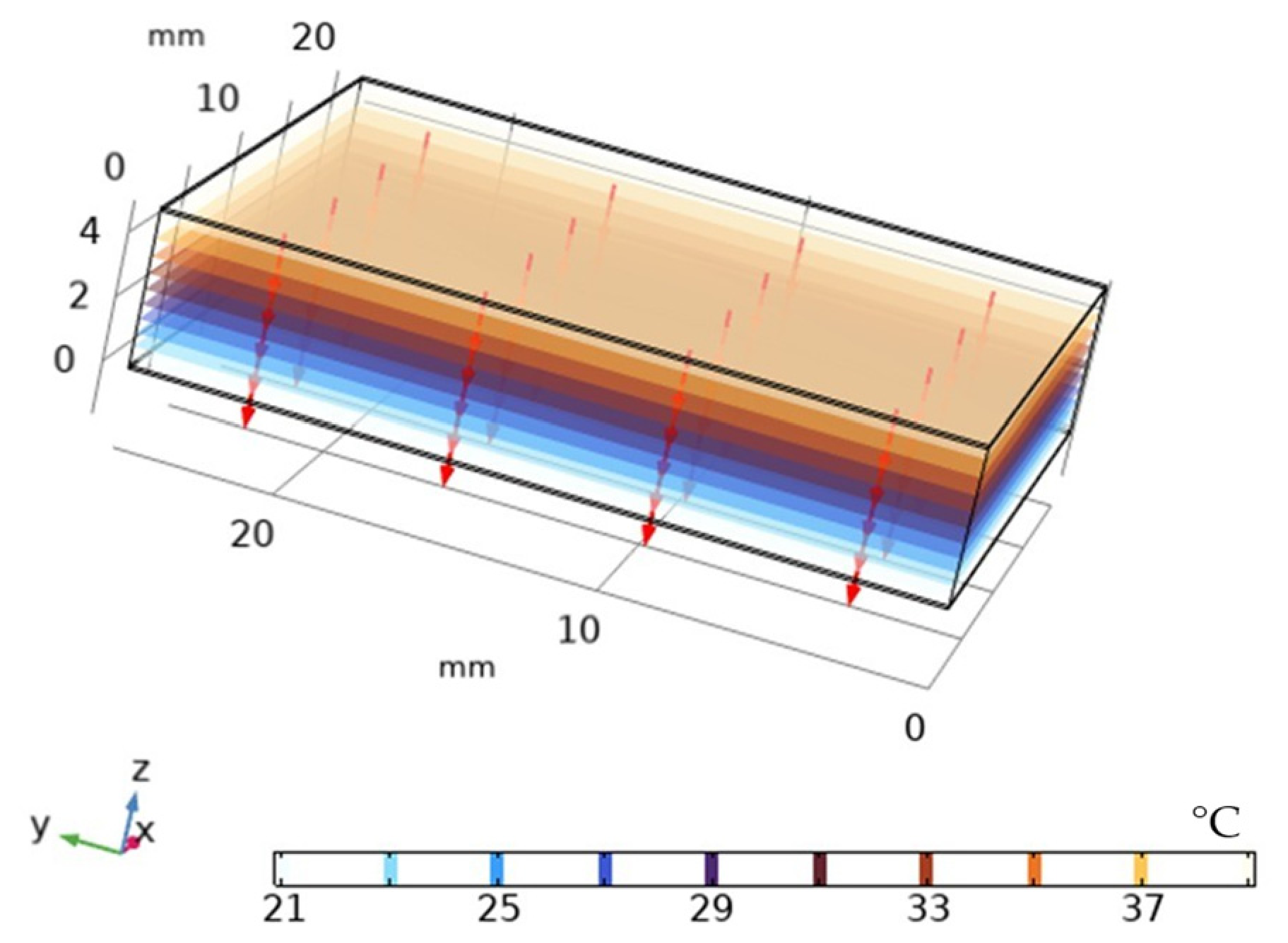
Figure 4 shows the temperature distribution obtained through isothermal contours across the height and thickness of the GO-ITC. It also displays the heat flow lines, indicated by the arrows in the figure. This case represents the condition where ΔT = 20.
Figure 4.
Isothermal layer distribution and heat flows for the GO-ITC.
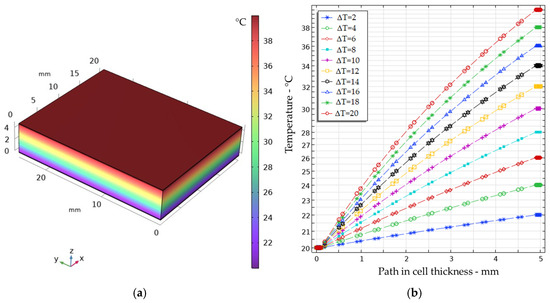
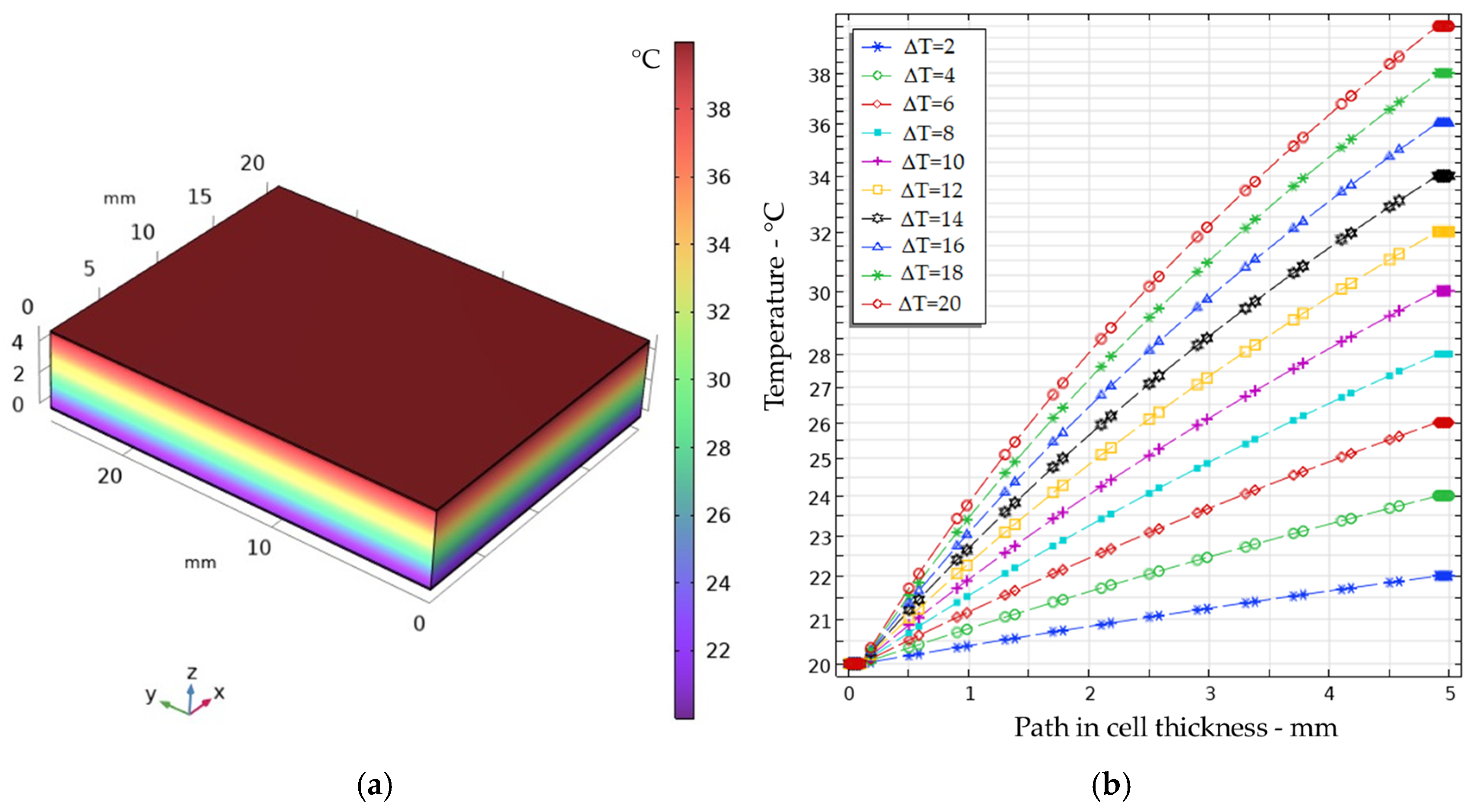
Figure 5a shows the volumetric temperature distribution obtained in the GO-ITC. It is interesting to observe how the temperature profile changes for each of the 10 iterations performed for each ΔT case, as shown in Figure 5b, showing the thermal behavior across the GO-ITC. As specified in the simulation parameters, the bottom plate (heat sink) remains at a constant reference temperature of 20 °C, while the top plate (heat source) is incrementally heated in 2 °C steps until reaching 40 °C. The horizontal axis represents a linear probe following the vertical axis (thickness) of the cell, from the hot interface to the cold interface. It is important to highlight the linearity observed in these profiles. This steady-state temperature distribution indicates that the thermal resistance of GO paper and the separator is uniform throughout the height of the device. This linear gradient is essential for the stable diffusion of ionic charge carriers, as a constant ΔT ensures a predictable and continuous driving force governed by the effective Seebeck coefficient. Furthermore, the absence of non-linear fluctuations suggests that the contact thermal resistances defined in the multiphysics model accurately represent the experimental conditions, providing a solid foundation for the subsequent electric potential analysis.
Figure 5.
(a) Volumetric temperature distribution in the GO-ITC. (b) Temperature profiles for each considered ΔT.
4.2. Ionic Transport and Thermoelectrochemical Mechanism
The observed electrical response of the GO-ITC deviates from conventional electronic thermoelectric behavior. While standard Bi2Te3 devices rely on the Seebeck effect of charge carriers, the GO paper-based cell operates as a thermally driven electrochemical system. The high effective Seebeck coefficient (Seff) measured is attributed to the synergistic effect of ionic thermodiffusion (Soret effect) and the thermogalvanic response at the copper–GO interface. To understand this behavior, the structural quality of the material was analyzed. The high ID/IG ratio of 1.025 obtained via Raman spectroscopy confirms a high density of oxygen functional groups. These groups, acting as active sites, support an ionic hopping mechanism Soret effect rather than a purely electronic one, explaining the superior effective Seebeck coefficient observed compared to traditional Bi2Te3 systems. This mechanism is further supported by the presence of hydroxyl and carboxyl groups, which facilitate the mobility of ions through the GO lamellar structure under a thermal gradient.
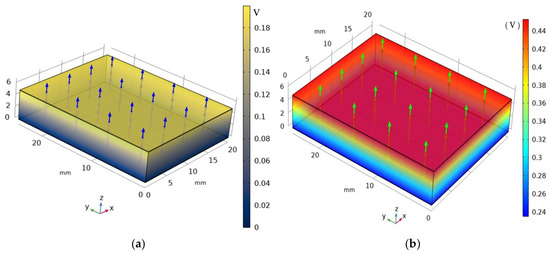
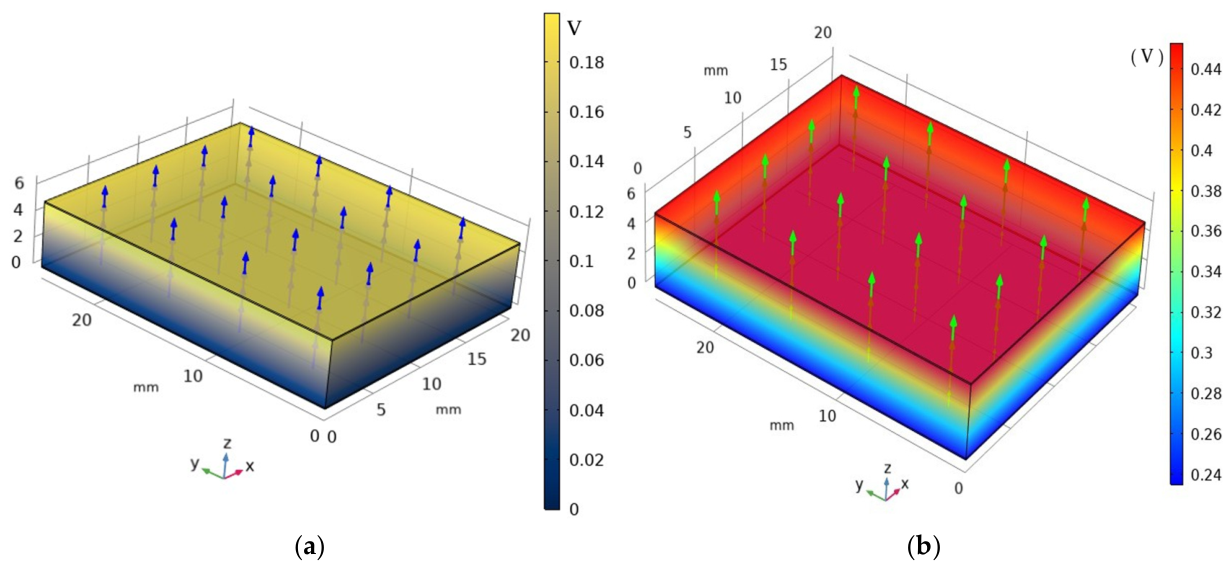
Figure 6a shows the volumetric electrical potential (V) distribution obtained for the Bi2Te3 cell with ΔT = 20 °C. It is important to note that a ground condition (Vg = 0 V) was applied to the bottom face, where the fixed temperature of 20 °C was set. Under these conditions, the top plate reached a voltage of approximately 199 mV. The arrows represent the current flow supplied by this Bi2Te3 thermoelectric cell. For comparison purposes, Figure 6b presents the volumetric electrical potential (V) distribution obtained for the GO-ITC under the same ΔT = 20 °C condition. It can be observed that while the Bi2Te3 cell starts with very low voltage values (approximately 2 mV in certain regions), the developed GO-ITC achieves values exceeding 200 mV.
Figure 6.
(a) Volumetric electrical potential (V) distribution for the Bi2Te3 cell. (b) Volumetric electrical potential (V) distribution for the GO-ITC.
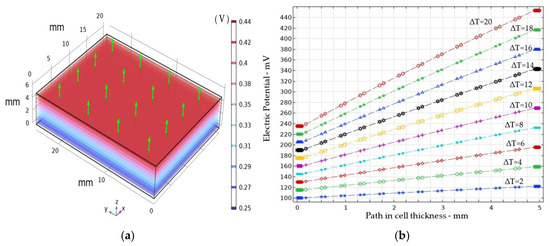
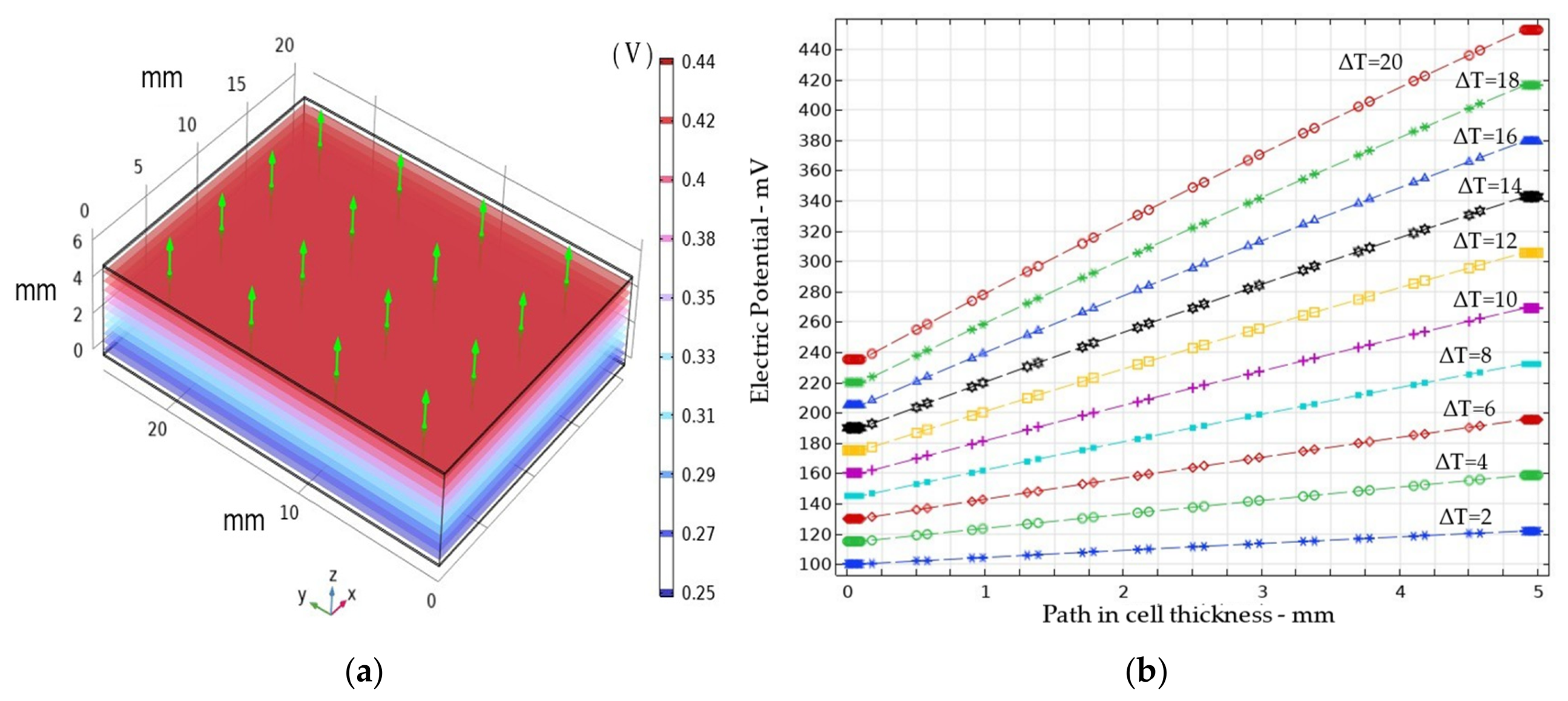
Figure 7a shows the electrical isopotential distribution of the GO-ITC when a temperature difference of ΔT = 20 °C exists between the electrodes. It is possible to observe that some voltage is already generated at the bottom electrode, while the top electrode reaches voltages of approximately 440 mV.
Figure 7.
(a) Isopotential electrical distribution of the GO-ITC at ΔT = 20° C. (b) Generated voltage as a function of the temperature gradient.
As observed in Figure 7b, there is a clear proportional relationship between the applied thermal gradient and the generated electric potential. This behavior is primarily driven by the thermodiffusion of charge carriers—specifically ions and functional groups—within the graphene oxide paper layers. When the ΔT increases, the kinetic energy of these carriers rises, promoting a more vigorous diffusion from the hot electrode toward the cold electrode (a phenomenon known as the Soret effect in ionic systems). This accumulation of charges results in a higher measurable potential difference, which is quantitatively defined by the Seff. These results are significant because they confirm that GO-ITCs, doped with graphene oxide, are capable of generating voltage even with a small temperature difference of ΔT = 2 °C between the electrodes, unlike Bi2Te3 cells. This finding clearly contributes to the field of energy harvesting. To explain why more voltage is generated with such a low-temperature gradient, it can be considered that in materials based on wet or impurity-containing graphene oxide, the voltage originates not only from electrons but also from the movement of ions (protons). This phenomenon is known as the ‘thermogalvanic effect’ or ionic thermodiffusion. These systems can generate hundreds of millivolts with minimal temperature differences because ions ‘push’ significantly more than electrons [29]; thus, the cell proposed in this study can be classified as a thermoelectrochemical cell. In contrast to the electronic behavior of Bi2Te3, the graphene-oxide-based cell proposal exhibited a high effective Seebeck coefficient exceeding 10 mV/K, which is consistent with ionic diffusion theory [30].
4.3. Discussion of ZT and Efficiency
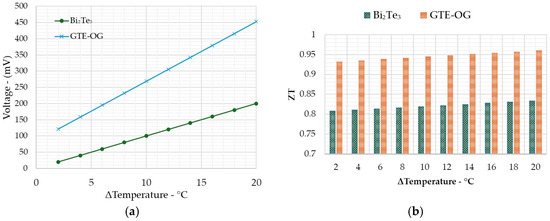
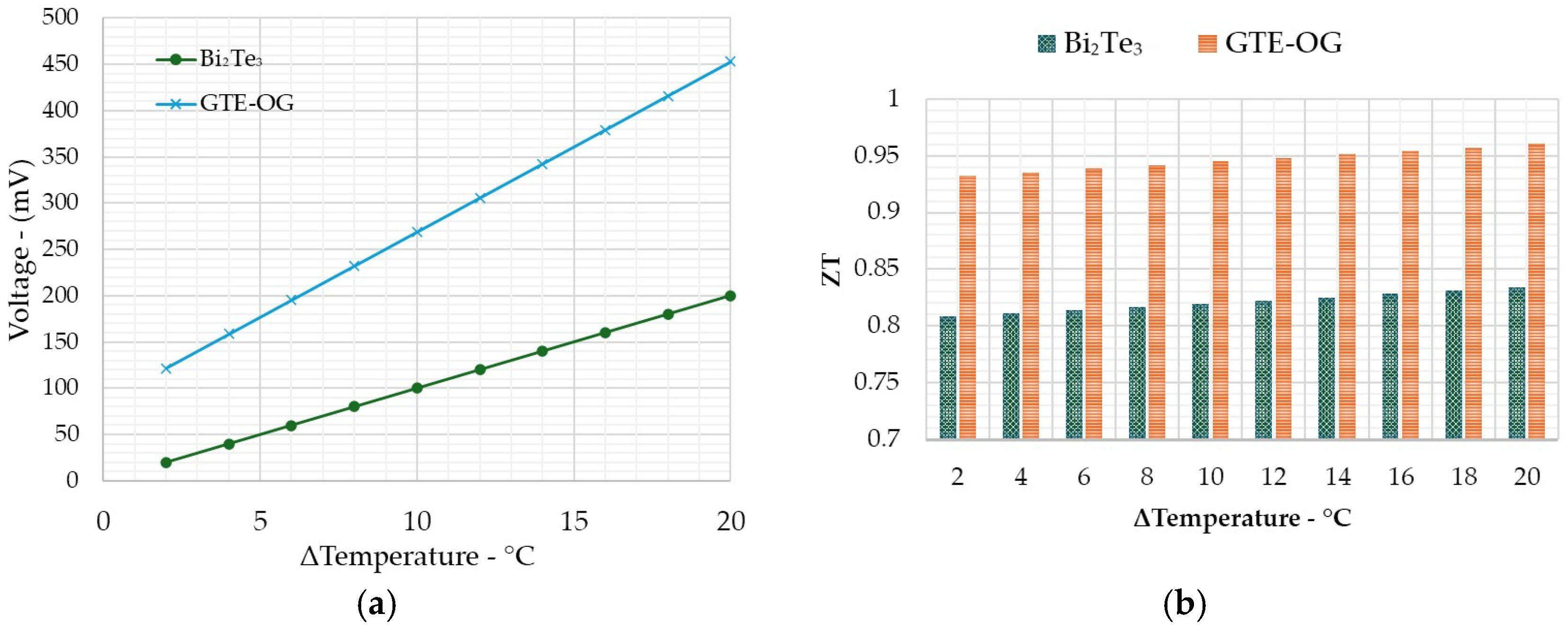
In this section, the conversion efficiency of the simulated and studied cells has been analyzed through the voltage obtained across various thermal gradients and the dimensionless figure of merit (ZT). Based on the results obtained from the generated voltage simulation, a significant difference in transport mechanisms between Bi2Te3 and GO is observed, as shown in Figure 8. Bi2Te3 analysis: The results for this cell show a minimum generated voltage of 19.9 mV for ΔT = 2 °C and 199.91 mV when the temperature difference is ΔT = 20 °C. Regarding its ZT, it starts at 0.8 and reaches ZT = 0.83 at the highest temperature difference.
Figure 8.
(a) Comparison between Bi2Te3 and GO-ITC for generated voltage versus temperature difference between electrodes. (b) Comparison between Bi2Te3 and GO-ITC for ZT versus temperature difference between electrodes.
For the GO-doped TEG cell, the generated voltage exceeds 100 mV even with a small temperature difference between electrodes; at ΔT = 20 °C, it reaches a value of 450 mV. Regarding ZT, its values are higher than those of Bi2Te3. This superiority can be attributed to the transport mechanisms: ionic GO leverages the minimization of the thermal conductivity denominator (κ) in Equation (3) and its high ionic Seebeck effect of 10 mV/K. This magnitude difference in the effective Seebeck coefficient enables useful voltage generation under limited heat flow conditions, where conventional materials would fail due to thermal saturation.
5. Experimental Results
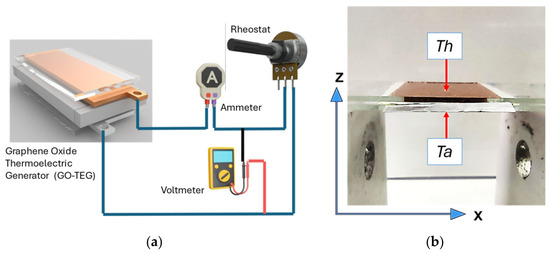
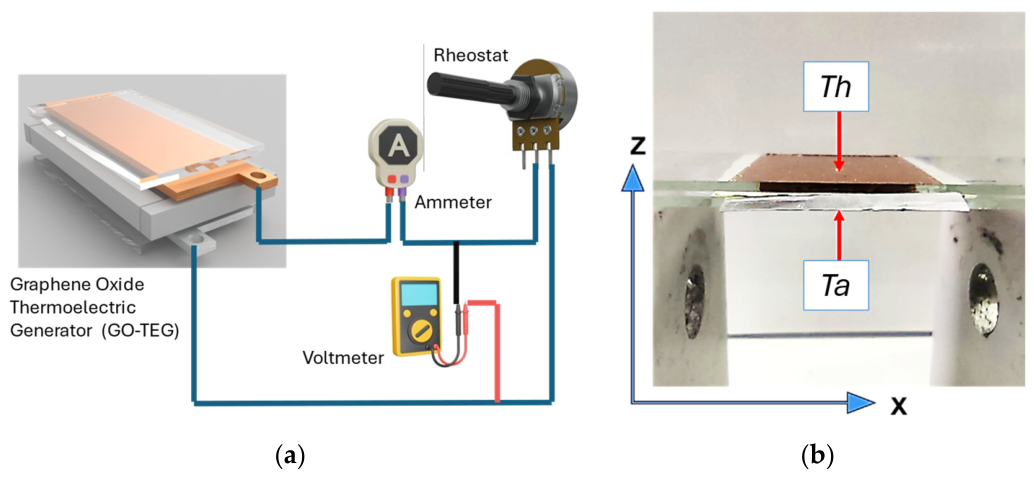
To determine the effectiveness of the proposed GO-ITC, tests were conducted under different electrical load values, monitoring voltage, current, and power at various temperature levels. The tests involved varying the electrical load using a rheostat to measure the resulting current and voltage, as shown in the circuit diagram in Figure 9a. The GO-ITC was subjected to different heat levels or temperatures (Th) applied to one of its glass substrates (see Figure 9b). This creates a temperature gradient that is converted into electrical energy, extracted through the terminals between the anode and cathode. Three different electrical load levels were evaluated: 5 kΩ, 2.5 kΩ, and 0 Ω, the latter representing short-circuit conditions. To ensure the reproducibility of the results obtained, all measurements were conducted in triplicate (n = 3), the data points represent the average values obtained, and the experimental characterization was performed with an average ambient temperature of 22.5 °C and a stable relative humidity environment.
Figure 9.
(a) Circuit diagram of the GO-ITC test. (b) Physical schematic of the GO-ITC under testing.
For the experimental timeline and to ensure the reliability of the data this work considers, the average time required to reach a stable set temperature (Th) was approximately 130 s (over 2 min), so each single measurement lasted between 2.5 and 3 min. This duration was sufficient to allow the ionic thermodiffusion process to reach a steady-state voltage output, consistent with the behavior of GO-based ionic cells. For each temperature gradient (ΔT), three independent replicates were performed to verify the consistency of the results. Consequently, the total characterization time for each thermal point was approximately 10 to 11 min. To achieve and maintain the ΔT, a Peltier cell was used as a heat sink on the cold side, while the hot side was regulated by a resistance heater. Both sides were monitored and controlled in real time using thermistors, ensuring that the ΔT remained constant at 12 °C throughout the measurement period, regardless of the ambient laboratory temperature (22.5 °C).
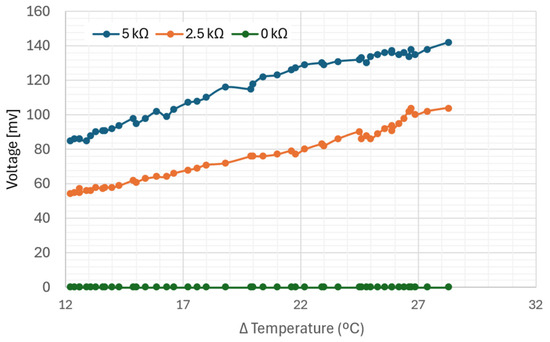
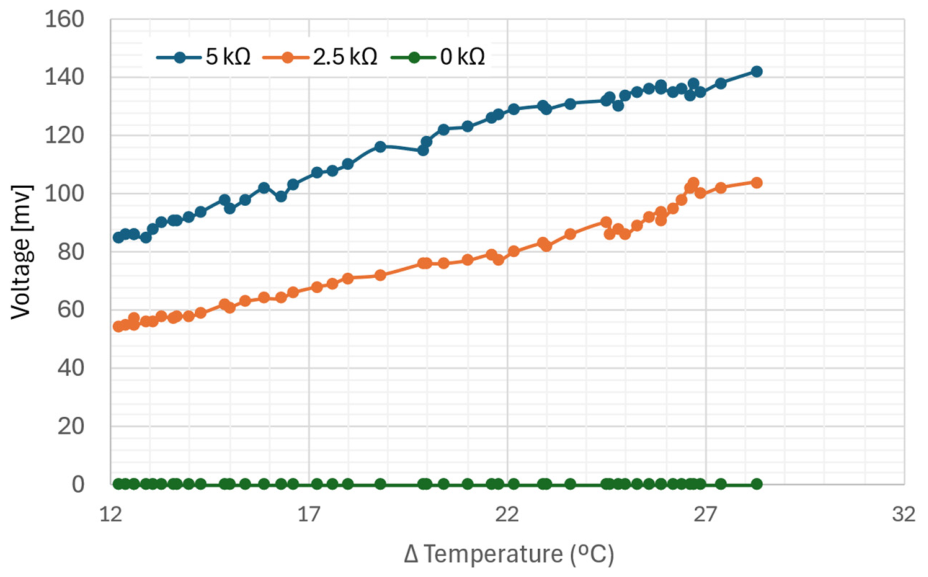
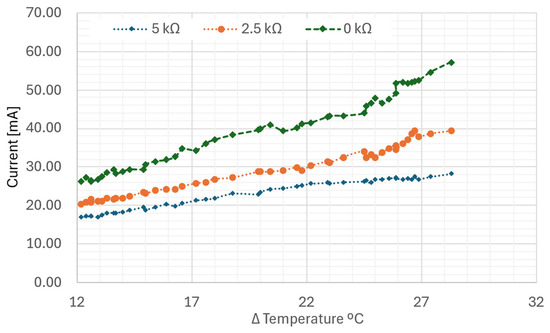
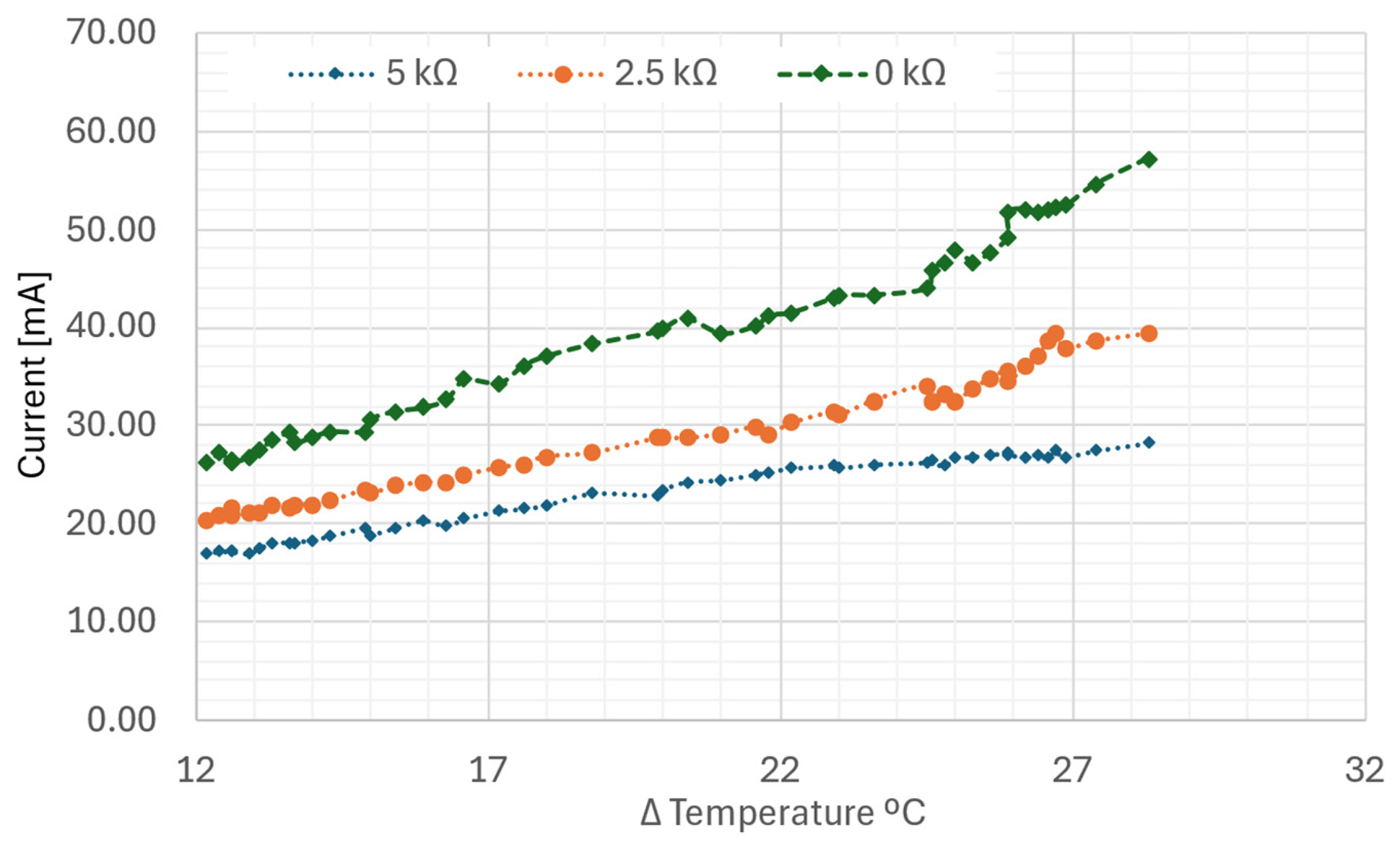
The temperature levels, generated voltage, and supplied current were measured as illustrated in Figure 10 and Figure 11, respectively.
Figure 10.
Measurement of the voltage generated by the GO-ITC, with three different load models: 5 kΩ, 2.5 kΩ, and 0 Ω (short-circuit condition).
Figure 11.
Measurement of the current supplied by the GO-ITC, with three different load models: 5 kΩ, 2.5 kΩ, and 0 Ω (short-circuit condition).
Figure 10 presents the experimental performance of the GO-ITC voltage as a function of the temperature gradient ΔT under three distinct electrical load conditions: open circuit (no load), 5 kΩ, and 2.5 kΩ. The results show that the maximum potential is obtained in the open-circuit condition, corresponding to the maximum electromotive force generated by the effective Seebeck coefficient Seff. As the electrical load is introduced, a controlled reduction in the output voltage is observed. Specifically, for a load of 5 kΩ, the voltage maintains a high degree of proximity to the ‘no load’ curve, while at 2.5 kΩ, the drop is more evident due to the internal impedance of the cell and the ionic transport limitations. Despite this decrease, the cell demonstrates a consistent linear increase in voltage with ΔT under all tested loads.
The experimental current output is presented in Figure 11. It can be observed that for a thermal gradient of ΔT = 20 °C, the GO-ITC produces a steady-state current of approximately 0.16 mA when connected to a 2.5 kΩ load, and 0.08 mA with a 5 kΩ load. This performance is consistent with the recorded voltage of 400 mV, following Ohm’s law (I = V/R). The stability of these current plateaus over time indicates that the ionic diffusion process within the graphene oxide structure reaches a reliable equilibrium, making it suitable for continuous low-power applications.
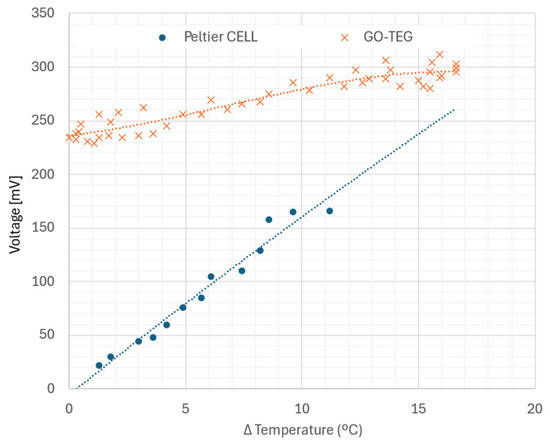
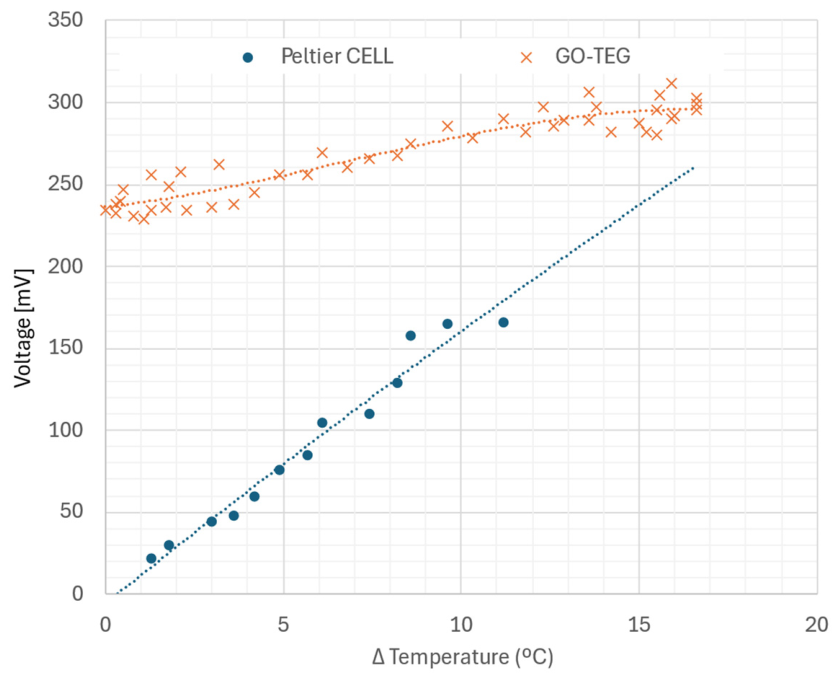
A comparison was conducted between the proposed graphene oxide thermoelectrochemical cell and a conventional commercial Peltier cell (model TEC MCTE1-12715L-S, ViaGasaFamido, China) operating as a thermoelectric generator. Figure 12 illustrates this comparison. It is evident that the commercial Peltier cell as a thermoelectric generator exhibits lower voltage generation at low-temperature differences (ΔT). When the temperature difference exceeds 10 °C, both cells appear to show similar behavior in voltage generation; however, the graphene oxide paper thermoelectrochemical cell generates approximately three times more voltage at low-temperature gradients between its faces (see Figure 12). Furthermore, its voltage generation characteristic appears to be more constant as the temperature difference between its faces increases.
Figure 12.
Comparison between a commercial Peltier cell and the GO-ITC.
Unlike conventional bismuth-telluride-based thermoelectric materials, which exhibit high efficiency but suffer from disadvantages, such as structural rigidity, toxicity, and high processing costs, the proposed cell developed from graphene oxide paper offers a versatile and sustainable alternative. While Bi2Te3 is difficult to implement on irregular surfaces, the mechanical flexibility of GO paper enables superior thermal coupling in complex geometries, such as motors and automotive exhaust pipes. Furthermore, it allows the maintenance of stable temperature gradients within micrometric thicknesses, achieving competitive power density for self-powered sensor applications and wearable devices.
6. Conclusions
This research successfully developed and validated a high-performance thermoelectric cell based on graphene oxide (GO) paper by integrating multiphysics modeling with experimental characterization. The FEM simulations in COMSOL achieved full agreement with the thermal and electrical behavior of the multilayer architecture. A key finding is the superior performance of the GO-ITC over commercial Bi2Te3 cells in low-temperature gradients (ΔT < 20 °C), where the proposed cell reached voltage outputs exceeding 400 mV—approximately three times higher than the commercial standard.
This “ionic advantage” is driven by an effective Seebeck coefficient exceeding 10 mV/K, attributed to the synergistic coupling of the thermogalvanic effect and ionic thermodiffusion. Furthermore, the structural integrity of the GO paper was confirmed via Raman spectroscopy, yielding an ID/IG ratio of 1.025, which validates the oxidation state necessary for efficient transport. Beyond its efficiency, the GO-ITC offers a flexible, non-toxic, and robust alternative for waste heat recovery in modern industrial applications, proving that ionic transport in graphene derivatives is a superior pathway for small-scale power generation.
Author Contributions
Conceptualization, I.A.H.-R. and X.G.-R.; methodology, I.A.H.-R. and A.E.-P.; validation, I.A.H.-R. and A.E.-P.; formal analysis, I.A.H.-R., X.G.-R. and L.R.M.-V.; investigation, I.A.H.-R. and A.E.-P.; resources, X.G.-R. and J.M.-P.; writing—original draft preparation, I.A.H.-R. and X.G.-R.; writing—review and editing, X.G.-R., L.R.M.-V. and J.M.-P.; visualization, I.A.H.-R. and X.G.-R.; supervision, I.A.H.-R.; project administration, X.G.-R. All authors have read and agreed to the published version of the manuscript.
Funding
This research received no external funding.
Data Availability Statement
The original contributions presented in the study are included in the article. Further inquiries can be directed to the corresponding author.
Acknowledgments
The authors are grateful the Secretaría de Ciencia, Humanidades, Tecnología e Innovación (SECIHTI).
Conflicts of Interest
The authors declare no conflicts of interest.
References
- Snyder, G.; Toberer, E. Complex Thermoelectrics materials. Nat. Mater. 2008, 7, 105–113. [Google Scholar] [CrossRef] [Scilit]
- Forman, C.; Muritala, I.; Pardemann, R.; Meyer, B. Estimating the global waste heat potential. Renew. Sustain. Energy Rev. 2016, 57, 1568–1579. [Google Scholar] [CrossRef] [Scilit]
- Haque, M.; Abdurrokhman, I.; Idström, A.; Li, Q.; Rajaras, A.; Martinelli, A.; Evenäs, L.; Lundgren, P.; Enoksson, P. Exploting low-grade waste heat to produce electricity through supercapacitor containing carbon electrodes and ionic liquid electrolytes. Electrochim. Acta 2022, 403, 139640. [Google Scholar] [CrossRef] [Scilit]
- Liu, X.; Li, C.; Deng, Y.; Su, C. An energy-harvesting system using thermoelectric power generation for automotive application. Int. J. Electr. Power Energy Syst. 2015, 67, 510–516. [Google Scholar] [CrossRef] [Scilit]
- Gao, H.; Huang, G.; Li, H.; Qu, Z.; Zhang, Y. Development of stove-powered thermoelectric generators: A review. Appl. Therm. Eng. 2016, 96, 297–310. [Google Scholar] [CrossRef] [Scilit]
- Dabrowska, A.; Greszta, A. Analysis of the possibility of using energy harvesters to power wearable electronics in clothing. Adv. Mater. Sci. Eng. 2019, 2019, 1–13. [Google Scholar] [CrossRef] [Scilit]
- Kjelstrup, S.; Vie, P.; Akyalcin, L.; Zefaniya, P.; Pharoah, J.; Burheim, O. The Seebeck coefficient and the Peltier effect in a polymer electrolyte membrane cell with two hydrogen electrodes. Electrochim. Acta 2013, 99, 166–175. [Google Scholar] [CrossRef] [Scilit]
- Bharti, M.; Singh, A.; Samanta, S.; Aswal, D.K. Conductive polymers: Creating their niche in thermoelectric domain. Prog. Mater. Sci. 2017, 93, 270–310. [Google Scholar] [CrossRef] [Scilit]
- Zhao, Y.; Tang, G.; Yu, Z.; Qi, J. The effect of graphite oxide on the thermoelectric properties of polyaniline. Carbon 2012, 50, 3064–3073. [Google Scholar] [CrossRef] [Scilit]
- Du, Y.; Shen, S.Z.; Yang, W.; Donelson, R.; Cai, K.; Casey, P.S. Simultaneus increase in conductivity and Seebeck coefficient in a polyaniline/graphene nanosheets thermoeletric nanocomposite. Synth. Met. 2012, 161, 2688–2692. [Google Scholar] [CrossRef] [Scilit]
- Lin, Y.; Norman, C.; Srivastava, D.; Azough, F.; Wang, L.; Robbins, M.; Simpson, K.; Freer, R.; Kinloch, I. Thermoelectric Power Generation from Lanthanum Strontium Titanium Oxide at Room Temperature through the Addition of Graphene. ACS Appl. Mater. Interfaces 2015, 7, 15898–15908. [Google Scholar] [CrossRef] [Scilit]
- Chen, W.-H.; Bai, W.-C.; Luo, D.; Bandala, A.A.; Wang, X.D.; Hoang, A.T. Optimization of material properties and performance of flexible thermoelectric generators with/without graphene. Energy Convers. Manag. X 2024, 24, 100741. [Google Scholar] [CrossRef] [Scilit]
- Elrashidi, A. Light Harvesting in Silicon Nanowires Solar Cells by Using Graphene Layer and Plasmonic Nanoparticles. Appl. Sci. 2022, 12, 2519. [Google Scholar] [CrossRef] [Scilit]
- Cataldi, P.; Athanassiou, A.; Bayer, I.S. Graphene Nanoplatelets-Based Advanced Materials and Recent Progress in Sustainable Applications. Appl. Sci. 2018, 8, 1438. [Google Scholar] [CrossRef] [Scilit]
- Jiménez-Suárez, A.; Prolongo, S.G. Graphene Nanoplatelets. Appl. Sci. 2020, 10, 1753. [Google Scholar] [CrossRef] [Scilit]
- Goldsmid, H.J. Bismuth Telluride and Its Alloys as Materials for Thermoelectric Generation. Materials 2014, 7, 2577–2592. [Google Scholar] [CrossRef] [Scilit] [PubMed]
- Jamil, U.; Holden, N.M. Assessment of Scarcity, Toxicity, and Circularity Risks in the European Thermoelectric Market: A Focus on Tellurium, Antimony, Bismuth, and Lead. Clean Technol. 2025, 7, 5. [Google Scholar] [CrossRef] [Scilit]
- Sekhar, R.; Sharma, D.; Shah, P. State of the Art in Metal Matrix Composites Research: A Bibliometric Analysis. Appl. Syst. Innov. 2021, 4, 86. [Google Scholar] [CrossRef] [Scilit]
- Fahmy Taha, M.H.; Ashraf, H.; Caesarendra, W. A Brief Description of Cyclic Voltammetry Transducer-Based Non-Enzymatic Glucose Biosensor Using Synthesized Graphene Electrodes. Appl. Syst. Innov. 2020, 3, 32. [Google Scholar] [CrossRef] [Scilit]
- Coviello, C.G.; Mansour, S.; Rizzo, F.; Foti, D. An experimental study on the mechanical and thermal properties of graphene-reinforced screeds. In Proceedings of the 3rd fib Italy YMG Symposium on Concrete and Concrete Structures, Torino, Italy, 9–10 November 2023; pp. 307–314. [Google Scholar]
- Zhang, Y.; Zhang, L.; Wang, Z.; Chen, G. Polymer and composite thermoelectric materials with desired mechanical performances for versatile applications. EnergyChem 2026, 8, 100181. [Google Scholar] [CrossRef] [Scilit]
- Song, J.H.; Jeong, J.; Choi, Y.; Cho, S.; Imae, I.; Kwak, J. Recent advances in engineering electronic and thermal properties of PEDOT:PSS for efficient thermoelectric energy conversion. J. Mater. Chem. C 2025, 13, 14144–14167. [Google Scholar] [CrossRef] [Scilit]
- Imae, I. Precise Control of Doping Level and Molecular Structure in Conjugated Organic Materials: Property Design Toward Functional Devices. Chem. Rec. 2026. online ahead of print. [Google Scholar] [CrossRef] [Scilit]
- Imae, I. Potential-step chronocoulometry for robust analysis of charge-transport and thermoelectric behaviors of conducting polymers. Front. Mater. 2025, 12, 1375558. [Google Scholar] [CrossRef] [Scilit]
- Yoo, M.J.; Park, H.B. Effect of hydrogen peroxide on properties of graphene oxide in Hummers method. Carbon 2019, 141, 515–522. [Google Scholar] [CrossRef] [Scilit]
- Rowe, D.M. (Ed.) Thermoelectrics Handbook: Macro to Nano, 1st ed.; CRC Press: Boca Raton, FL, USA, 2006. [Google Scholar] [CrossRef] [Scilit]
- Lamastra, F.R.; Montesperelli, G.; Galvanetto, E.; Chougan, M.; Ghaffar, S.H.; Al-Kheetan, M.J.; Bianco, A. An Insight into Durability, Electrical Properties and Thermal Behavior of Cementitious Materials Engineered with Graphene Oxide: Does the Oxidation Degree Matter? Nanomaterials 2023, 13, 726. [Google Scholar] [CrossRef] [Scilit] [PubMed]
- Wang, J.; Mu, X.; Sun, M. The Thermal, Electrical and Thermoelectric Properties of Graphene Nanomaterials. Nanomaterials 2019, 9, 218. [Google Scholar] [CrossRef] [Scilit] [PubMed]
- Zhang, J.; Xiao, Y.; Lei, B.; Liang, G.; Zhao, W. Research Progress of Ionic Thermoelectric Materials for Energy Harvesting. In Thermoelectricity—Recent Advances, New Perspectives and Applications; IntechOpen: Rijeka, Croatia, 2022. [Google Scholar] [CrossRef] [Scilit]
- Wang, K.; Qin, W.; Wang, X.; Song, D.; Han, Y.; Lv, C.; Li, Z. Synergistic Enhancement of Ionic Thermoelectric Properties in Cementitious Composites via Dual-Mechanism Coupling for Building Energy Harvesting. ACS Appl. Eng. Mater. 2026, 4, 775–785. [Google Scholar] [CrossRef] [Scilit]

Disclaimer/Publisher’s Note: The statements, opinions and data contained in all publications are solely those of the individual author(s) and contributor(s) and not of MDPI and/or the editor(s). MDPI and/or the editor(s) disclaim responsibility for any injury to people or property resulting from any ideas, methods, instructions or products referred to in the content. |
© 2026 by the authors. Published by MDPI on behalf of the International Institute of Knowledge Innovation and Invention. Licensee MDPI, Basel, Switzerland. This article is an open access article distributed under the terms and conditions of the Creative Commons Attribution (CC BY) license.