


Abstract
Photovoltaic thermal concentration has emerged as a method to enhance the energy efficiency and performance of photovoltaic installations. This approach addresses the growing demand for renewable energy aimed at reducing emissions and mitigating climate change. It represents a significant solution for applications requiring both thermal and electrical energy under constraints of a limited available area for solar energy harvesting. However, currently developed devices rely on expensive photovoltaic cells, incorporate complex geometries that are difficult to manufacture and maintain, and employ tracking systems that complicate interconnection with similar units. The objective of this study is to design and numerically evaluate a hybrid thermal–photovoltaic modular linear Fresnel solar concentrator (H-MLFRC) based on commercial silicon cells. The proposed system allows series and parallel interconnection and is suitable for both islanded and grid-connected configurations. Its development was guided by integrated optical, photovoltaic, and thermal analyses, which defined the system geometry, characteristic parameters, and operating conditions. The results indicate that the maximum operating temperature of the device is 70 °C under a nominal operating mass flow rate of 0.45 kg/s. Additionally, the thermal and photovoltaic efficiencies are 49% and 16%, respectively, resulting in a combined efficiency of 65%.
1. Introduction
Photovoltaic technology has seen substantial advancements in recent decades, largely driven by the increasing demand for renewable energy to lower emissions and combat climate change. However, conventional photovoltaic systems still face challenges related to efficiency limitations and system costs. Concentrated Photovoltaics (CPV) offers a promising alternative by employing lenses or mirrors to improve the economic and energy performance of photovoltaic systems. This approach effectively reduces the required cell area in relation to its concentration ratio [1].
Concentrated photovoltaic thermal (CPV-T) technology can produce both electrical and thermal energy from solar radiation. A key challenge is achieving an optimal balance between electrical and thermal production through its design [2]. This hybrid configuration significantly enhances overall energy efficiency in harnessing renewable energy, as the thermal component provides dual benefits: generating thermal energy alongside electrical energy and cooling the photovoltaic cells, which extends their lifespan and boosts energy efficiency by lowering their operating temperatures [3]. The efficiency of a photovoltaic cell decreases by approximately 0.2% to 0.5% for every degree Celsius increase in temperature [4].
The dual energy production capability of CPV-T technology offers an ideal energy solution for applications requiring both electrical and thermal outputs, particularly in space-constrained settings such as residential complexes, hospitals, and hotels. This technology enables efficient solar energy harvesting, maximizing output in limited areas while accommodating diverse energy needs.
Certain CPV-T technologies rely on specialized photovoltaic cells, such as GaAs multijunction solar cells, designed to operate under high concentration ratios exceeding 100×. While these cells offer high conversion efficiencies, they are associated with elevated costs and typically require dual-axis tracking systems to maximize energy yield and economic viability [5]. This requirement complicates their operation and poses challenges for connecting them in series or parallel with similar equipment. An example of this is the device developed by the Department of Energy Technologies and Renewable Sources at the Italian National Agency for New Technologies as part of their SOLARGRID project, which was showcased in 2024. This device employs a triple junction cell and features optics consisting of two lenses, demanding tracking that maintains an accuracy of no more than 0.43° deviation from the solar vector [6].
On the other hand, devices designed for low-concentration applications utilize silicon cells and simpler, primarily linear optics. One such device is the prototype developed by the Clean Technology Lab at Taylor’s University, which has achieved an overall efficiency of nearly 45% and employs a linear optics system consisting of a parabolic trough collector and a compound parabolic concentrator—geometries that are challenging to achieve and maintain, particularly when the system is in motion [7].
Despite the linear concentration capabilities, CPV-T systems require tracking mechanisms. An example is the Bifres prototype developed by the Department of Medi Ambient at the Universitat de Lleida, which achieves an overall efficiency of 65%. This device employs flat reflective facets arranged in a linear Fresnel configuration for concentration rather than traditional lenses. However, it still needs a two-axis tracking system, which complicates its integration with similar equipment [8].
Although CPVT system development has progressed steadily, it often trends toward increasingly complex and less scalable designs. Recent advancements in CPVT systems have explored the use of spectral beam splitting and triangular cooling ducts to enhance energy performance, as demonstrated in a study involving semi-transparent perovskite cells integrated beneath a Fresnel concentrator [9]. While this configuration achieves high energy efficiency and a slight exergy improvement over flat-plate systems, it introduces significant design complexity, including interference filters, triangular receivers, and advanced materials that are more difficult to access and scale.
Despite these advances, many CPV-T systems remain complex, costly, or difficult to scale due to their optical configurations, tracking requirements, or the use of specialized photovoltaic cells. This work presents the design and numerical evaluation of a hybrid modular device capable of generating both thermal and electrical energy from solar radiation. This device can be interconnected with similar units in series and/or parallel configurations. The design and numerical evaluation were performed using the Modular Linear Fresnel Reflecting Solar Concentrator (MLFRC), as presented in the book Renewable Energy in the Service of Mankind Vol II, 2014. The MLFRC was developed through a mathematical model that optimizes its geometry to minimize shading among its components during operation. Featuring a single-axis tracking system, the MLFRC has an acceptance angle of 45°, allowing it to harness solar radiation for approximately six hours each day [10].
The MLFRC was originally designed for applications in water heating and the generation of low-enthalpy steam. In 2019, a numerical model was created to assess its thermodynamic performance, and this model was subsequently validated through experimental tests in accordance with the ASHRAE 93:2003 standard [11].
The objective of this work is to design and numerically evaluate a hybrid photovoltaic–thermal modular linear Fresnel solar concentrator (H-MLFRC) capable of producing both thermal and electrical energy while enabling modular interconnection with similar units.
To achieve this objective, the numerical model of the Modular Linear Fresnel Reflecting Solar Concentrator (MLFRC) was modified to incorporate a flat receiver located at the focal region, integrating a photovoltaic module with a heat transfer fluid channel.
Optical, photovoltaic, and thermal analyses were conducted to determine the dimensions of the photovoltaic array, the operating conditions of the system, and its characteristic performance parameters, including thermal and electrical output and overall efficiency.
2. Design and Methods
The Hybrid Modular Linear Fresnel Reflecting Solar Concentrator (H-MLFRC) is an innovative device that converts solar energy into photothermal and photovoltaic energy. This modular system can be interconnected in series and parallel with other similar units. It features a solar concentration mechanism, a single-axis tracking system, and a hybrid receiver that integrates thermal and photovoltaic technologies.
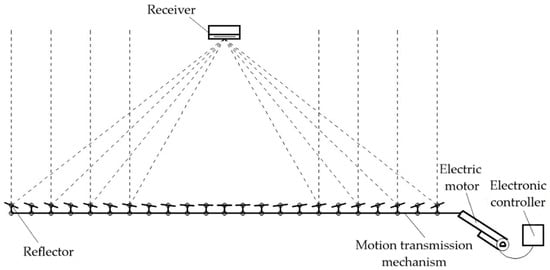
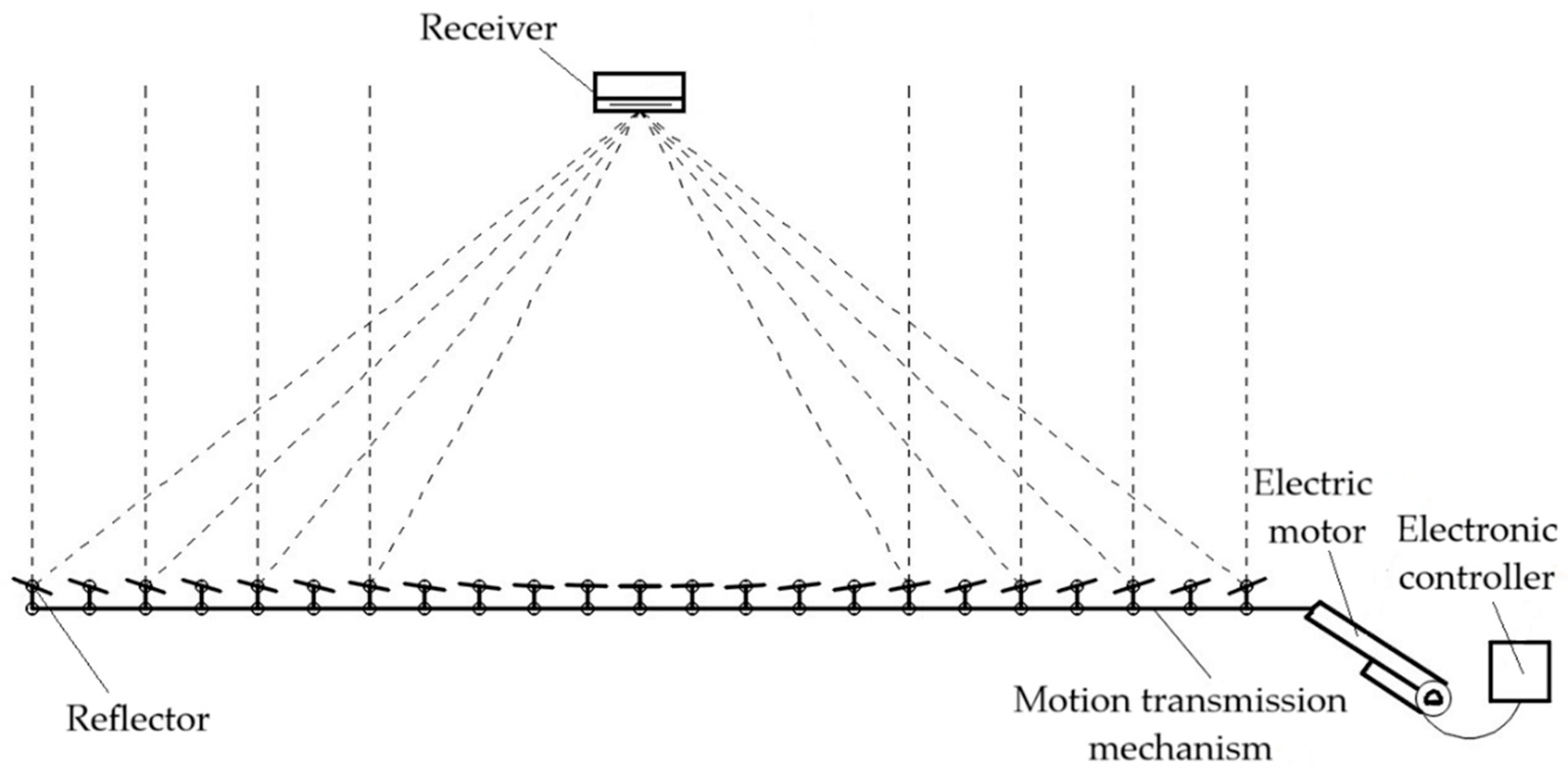
As shown in Figure 1, this design includes a linear Fresnel reflective solar concentrator that uses flat reflective surfaces of uniform width (1) to direct solar radiation toward a linear receiver. The reflective facets are equipped with a tracking system, which consists of an electric motor (2), an electronic controller (3), and a motion transmission mechanism (4).
Figure 1.
Design of the H-MLFRC.
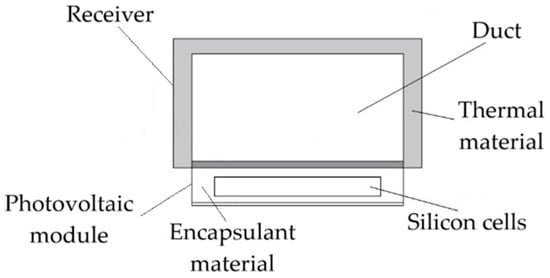
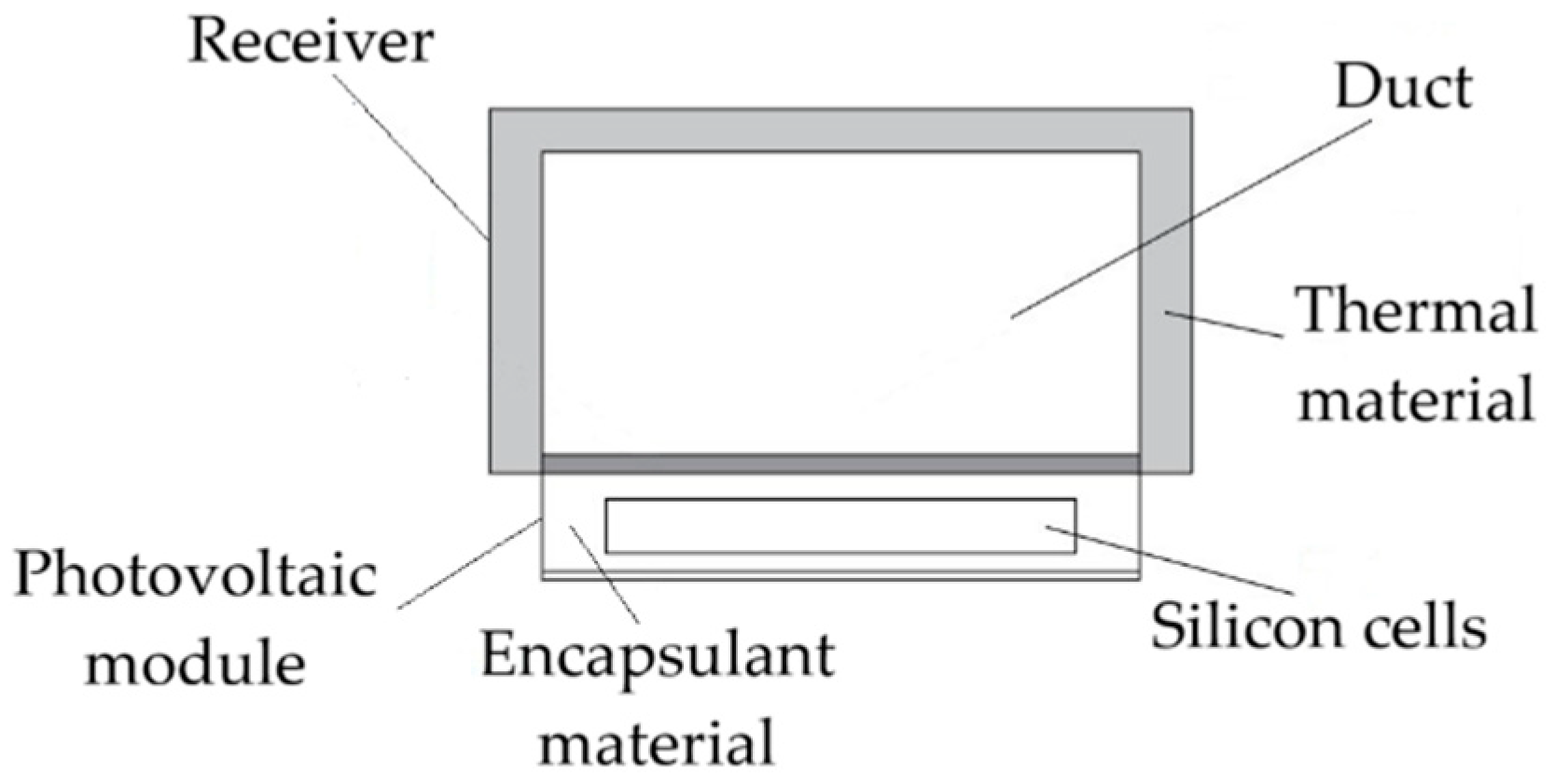
The receiver (5), illustrated in Figure 2, is positioned at the focal point of the concentrator, where a homogeneous radiative distribution is achieved. It consists of a photovoltaic module (6), made up of a series-connected array of silicon cells (7) and encapsulant material (8), as well as a duct (9) that serves the dual purpose of heat dissipation and thermal energy collection, through which a heat transfer fluid circulates. The lateral and top walls of the duct are insulated with a thermal material (10).
Figure 2.
Cross-sectional diagram of the H-MLFRC receptor.
2.1. Optical Analysis
The objective of this study is to ascertain the width of the photovoltaic module and the quantity of reflective facets needed for the concentrator to reach the maximum operational power of the photovoltaic system cells.
It is assumed that the focal distance of the concentrator, denoted as , is 99.96 cm, the width of the reflective facets, referred to as , is 6 cm, and the reflectance, represented by , is 0.85. The positioning of the facets within the concentrator’s aperture plane, , is detailed in Table 1.
Table 1.
Dimensions and properties of the concentrator used in ray tracing.
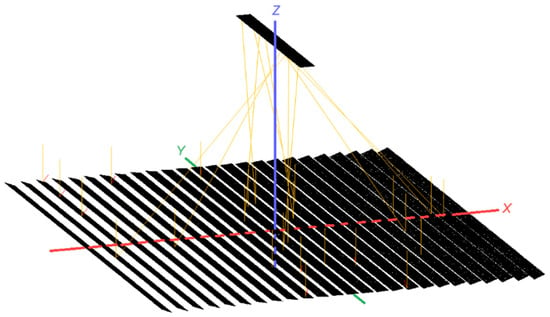
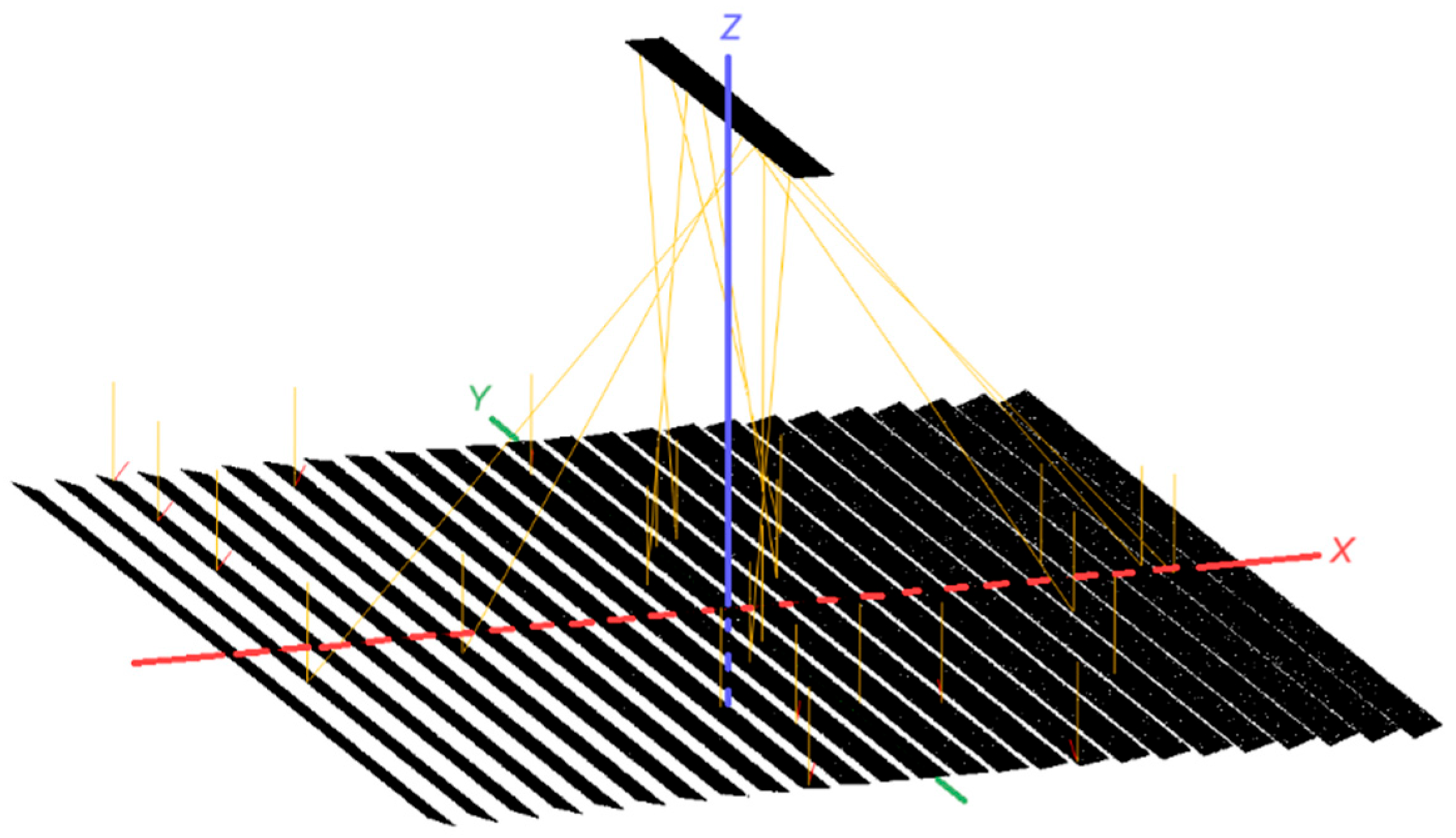
Ray tracing for the optical study was conducted using Soltrace 3.1.0 software from the National Renewable Energy Laboratory (NREL), as shown in Figure 3.
Figure 3.
Ray tracing of the H-MLFRC using the Soltrace software. Yellow lines represent the path of the solar rays reflected by the mirrors of the concentrator.
After conducting a mesh sensitivity analysis on the flat receiver of the concentrator, it was concluded that a mesh made up of 1 mm2 elements and utilizing nine million rays was adequate to ensure the accuracy of the simulations while minimizing unnecessary computational costs.
The uniformity of the radiative distribution incident on the receiver, , is given by
where is the standard deviation of the radiative flux divided by the average intensity, .
2.2. Thermal Analysis
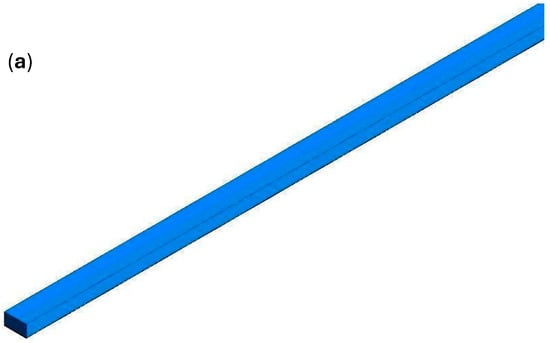
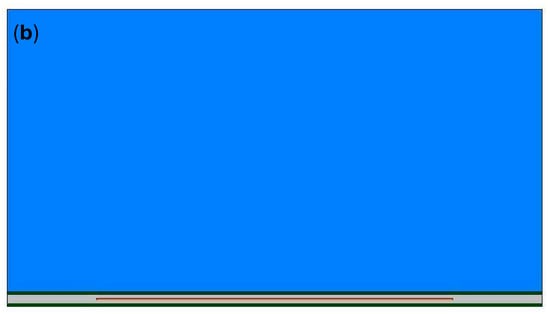
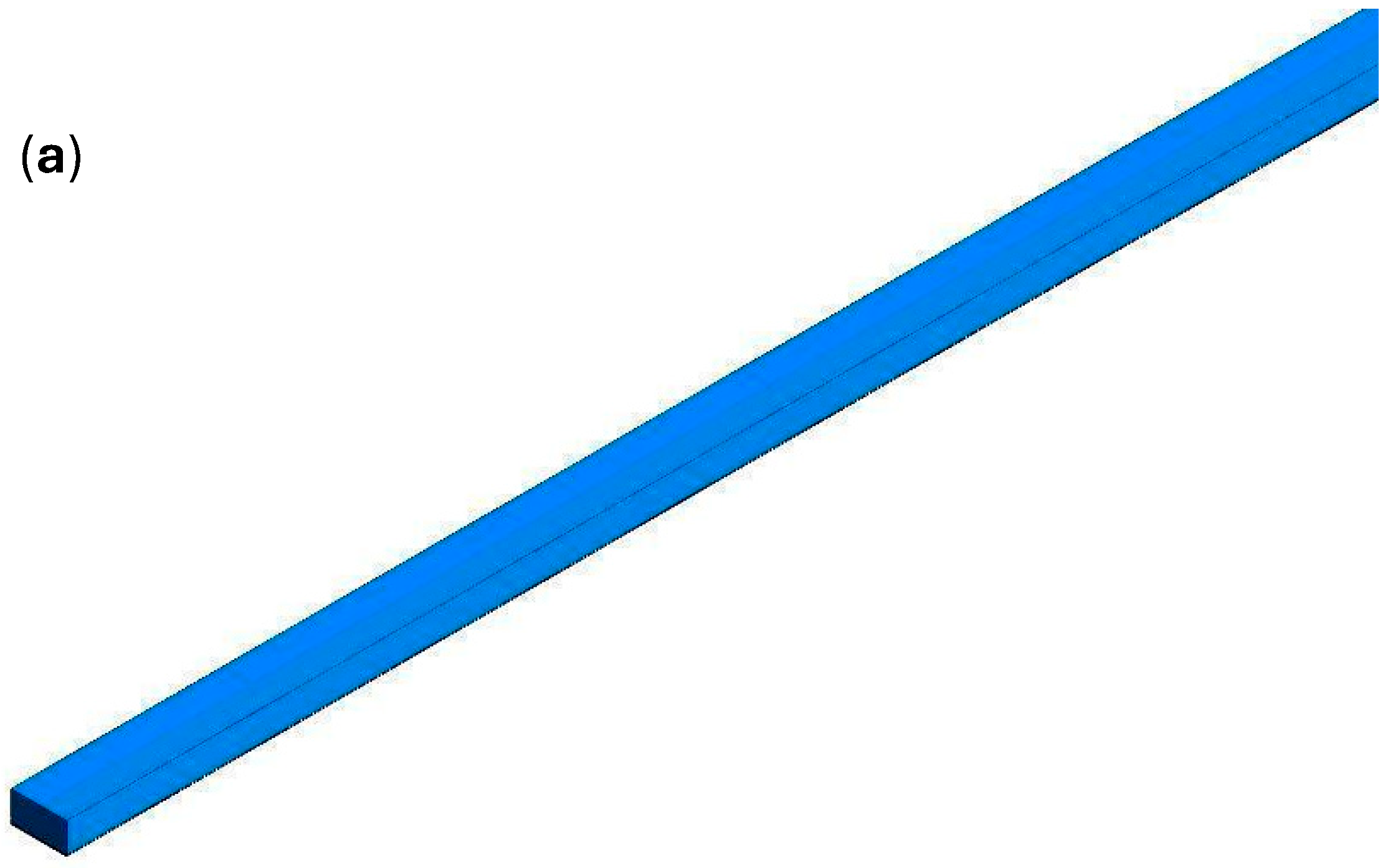
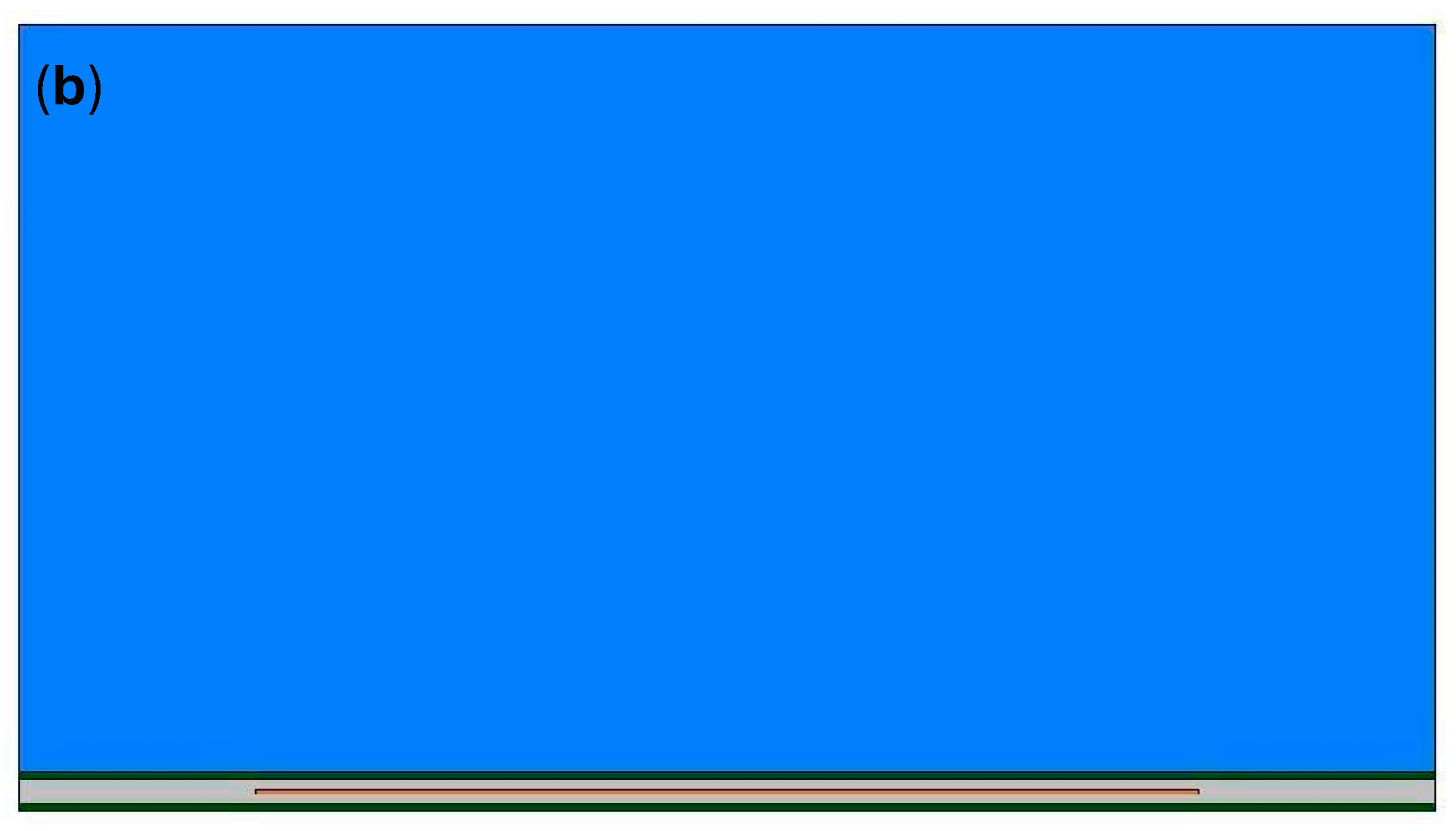
For the thermal analysis, the commercial software ANSYS-Fluent 2021 R2 was utilized to create the 3D geometry of the H-MLFRC receiver. The dimensions considered were a length of 2 m, a width of 6 cm, and a height of 3.3 cm (see Figure 4a). Figure 4b illustrates the structural arrangement of the various components included in the receiver. The photovoltaic cell is encased between two layers of Polyvinyl Fluoride (Tedlar) and a layer of Ethylene Vinyl Acetate (EVA).
Figure 4.
(a) Three-dimensional geometry of the receiver. (b) Cross-section of the receiver, Tedlar in green, EVA in gray, Duct domain in blue.
The thermophysical properties used for each of the elements considered are shown in Table 2 [12,13].
Table 2.
Thermophysical properties used.
Conversely, the numerical solution for the H-MLFRC receiver is governed by a set of partial differential equations that describe the transport phenomena occurring within the receiver. In this analysis, steady-state conditions were assumed, along with constant transport properties, except for density. The steady-state approach was adopted to evaluate the thermal behavior of the receiver under parametrically defined operating conditions. The simulations compare the temperature distribution of the photovoltaic cell for different coolant inlet flow rates and temperatures while maintaining a constant solar radiation level obtained from the optical analysis. The Boussinesq Approximation was utilized to account for buoyancy effects. This approximation is expressed in terms of the thermal expansion coefficient, , the local temperature, , and reference density and temperature, and , respectively.
considering a constant value of .
On the other hand, the flow and temperature fields in the H-MLFRC receiver are determined using the laws of conservation of mass, momentum, and the energy equation, defined as follows:
Continuity Equation:
Momentum Equations:
X coordinate:
Y coordinate:
Z coordinate:
Energy Equation:
A turbulent flow behavior of the heat transfer fluid was considered, using the standard turbulence model, which is suitable for the study of flow in ducts and pipes. The standard equations of the model are defined as [14]:
where and represent the generation of turbulent kinetic energy due to mean velocity gradients and the generation of energy due to buoyancy, respectively. is the contribution of fluctuating expansion in compressible turbulence to the general dissipation rate. and are constant values of 1.44 and 1.92, respectively. and represent the turbulent Prandtl numbers for kinetic energy and dissipation rate, with values of 1 and 1.3, respectively.
Finally, the turbulent viscosity, , is calculated using Equation (10):
where .
Operating Conditions and Numerical Procedure
To analyze and compare the thermal behavior of the photovoltaic cell within the H-MLFRC, a series of simulations were conducted. These simulations varied the inlet conditions of the heat transfer fluid (water), while keeping the solar radiation constant. The variations in the inlet conditions were implemented based on the Reynolds number and the temperature of the fluid.
Table 3 presents the values used for the simulations. The cases were formed by combining these values, resulting in a total of 16 different cases.
Table 3.
Inlet conditions of the heat transfer fluid.
The numerical model of the H-MLFRC receiver was solved using the finite volume method through the commercial software ANSYS-Fluent. A coupling scheme for pressure and velocity was applied, while the convective terms were discretized using a second-order scheme. Convergence criteria were established such that all residual values were below .
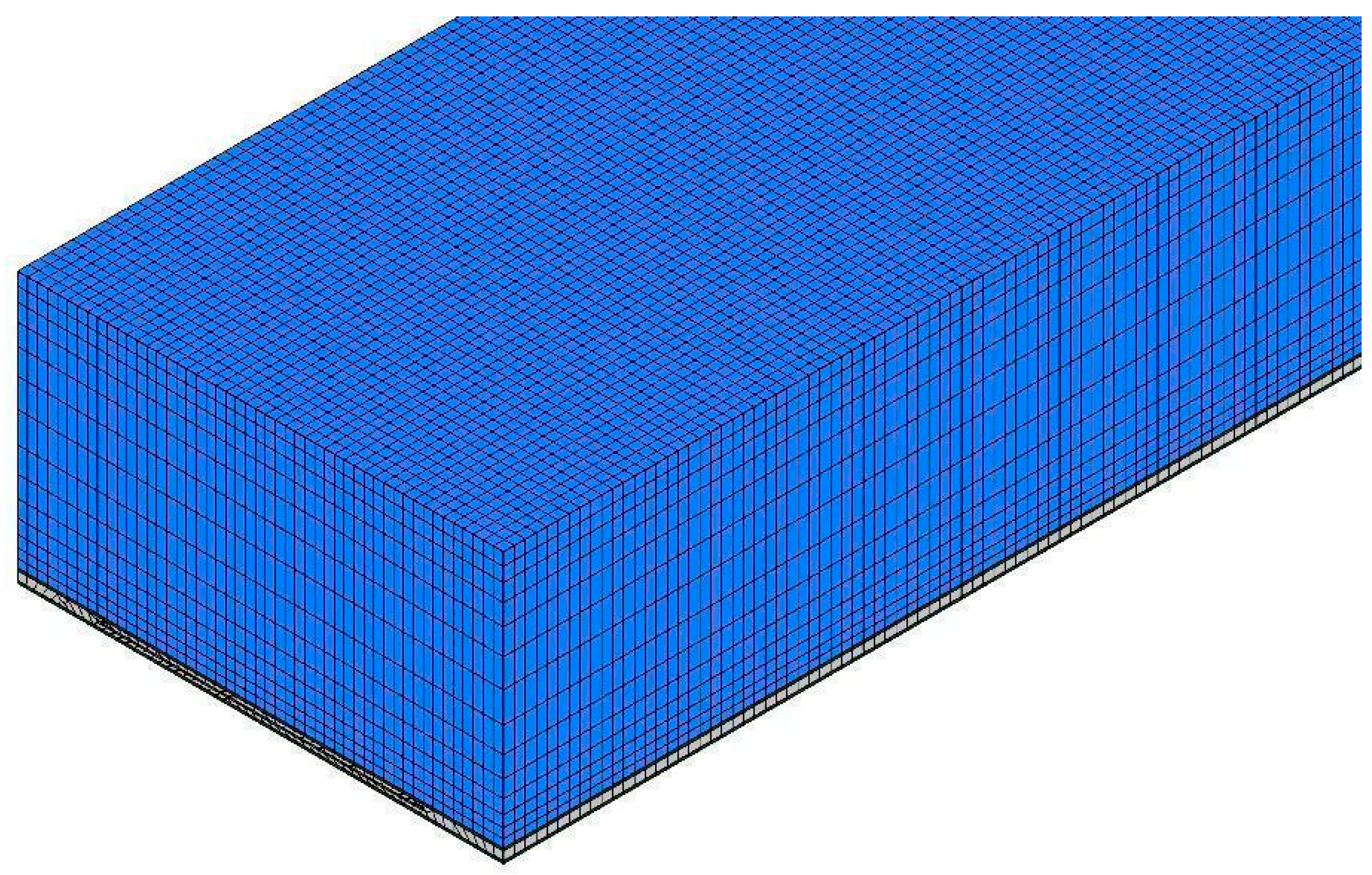
To reduce unnecessary computational costs, a refined and structured computational mesh was utilized, determining that a total of 1,435,246 elements were sufficient to achieve mesh-independent results (Figure 5).
Figure 5.
Mesh used.
For each of the operating conditions considered, the temperature profile of the cell was obtained, including the value and position of the cell’s maximum temperature.
2.3. Photovoltaic Analysis
The development of the H-MLFRC aims to introduce it to the energy market as a renewable solar solution for generating both electrical and thermal energy, ensuring compatibility with existing technologies. To this end, the electrical design criterion has been established to ensure the device’s voltage is a minimum of 18 V, which is the safe voltage required for charging a 12 V battery. Currently, silicon photovoltaic modules designed to produce a continuous current at 18 V are composed of 36 cells connected in series. Therefore, the photovoltaic array of the proposed device will incorporate the same number of silicon cells.
To estimate the electrical energy generation of the device, Equation (11) was used, which describes the dependence of the photovoltaic module’s power on its temperature,
where is the maximum power of the photovoltaic module, and are the temperature of the module and the maximum power at Standard Test Conditions (STC), respectively; is the solar radiation incident on the photovoltaic module; is the module temperature, and is the temperature loss coefficient () [15]. The electrical characteristics of the photovoltaic module, according to the manufacturer’s data, are presented in Table 4.
Table 4.
Electrical characteristics of the photovoltaic module.
3. Results and Discussion
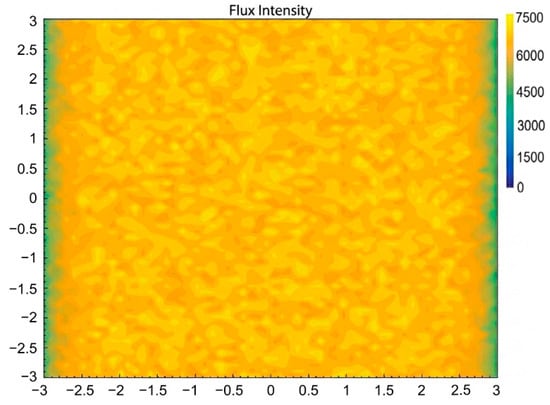
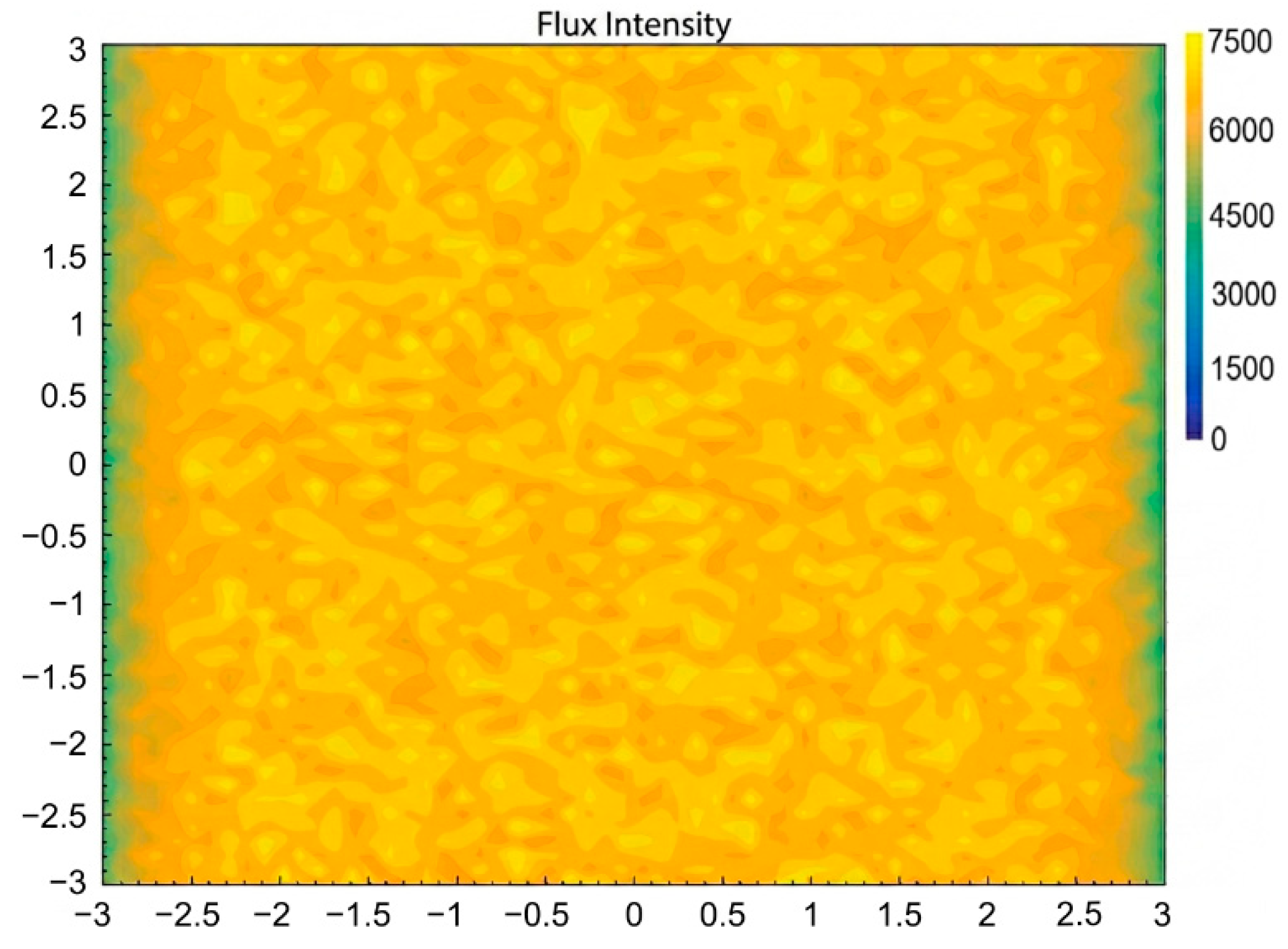
The optical study showed that eight reflective facets are necessary for the H-MLFRC to exceed the intensity of at the focus, which is the level at which the photovoltaic cell operates, according to the data provided by the supplier. The central region of the flat receiver, measuring 4.64 cm in width, achieves an average radiative intensity of the same value , with a uniformity of 0.041, as depicted in Figure 6. Therefore, it is determined that the arrangement of cells in the photovoltaic module should have a maximum width of 4 cm to ensure its integrity and optimal utilization of concentrated solar radiation.
Figure 6.
Radiative distribution at the focus of the H-MLFRC (flat receiver).
To contextualize this result, previous studies on linear Fresnel reflector systems have reported larger variations in solar flux distribution depending on the optical configuration. For example, Prasad et al. [16] reported a uniformity of 0.13 for a system with a secondary concentrator and a cylindrical absorber tube, while Ma et al. [17] reported a uniformity of 0.0625 for a linear Fresnel CPVT system with a flat receiver. In comparison, the uniformity obtained in the present work (0.041) indicates a relatively homogeneous radiative intensity distribution, highlighting the capability of the proposed optical configuration (concentrator and solar cell dimensions) to mitigate flux gradients.
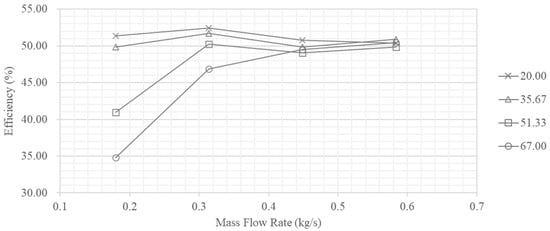
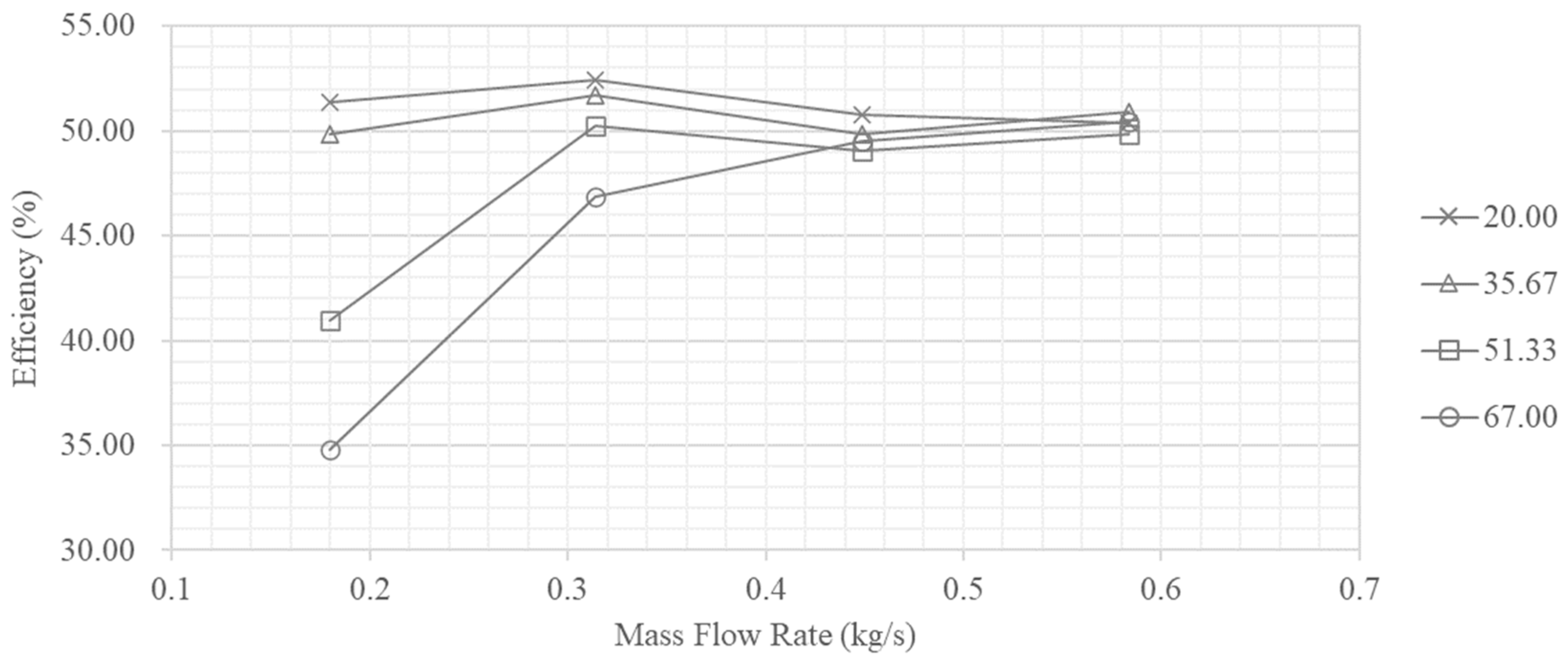
With the photovoltaic module width established, the model presented in the thermal study is analyzed, enabling the determination of the device’s thermal efficiency across various Reynolds numbers and inlet fluid temperatures. As illustrated in Figure 7, a maximum thermal efficiency of the concentrator is attained at a flow rate of 0.45 kg/s, irrespective of the inlet temperature of the working fluid.
Figure 7.
Thermal efficiency of the H-MLFRC.
Future work could explore the potential for enhancing thermal efficiency through passive turbulence-generating elements within the flow channel. For instance, recent studies using wire coil inserts in rectangular ducts exposed to solar fluxes ranging from 16,667 to 25,000 W/m2—comparable in geometry and intensity to those in our configuration—have demonstrated heat transfer enhancements in CPVT systems, along with significant reductions in PV surface temperature [18]. Such approaches could be adapted to the present configuration to further optimize thermal regulation under real operating conditions.
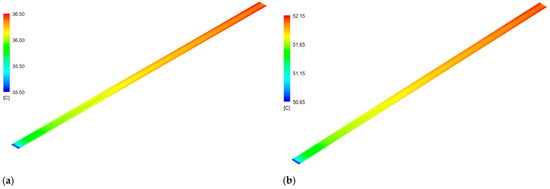
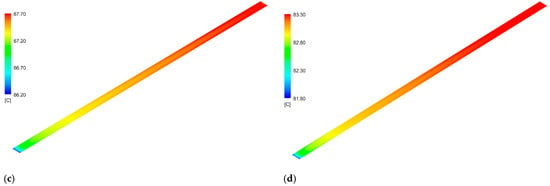
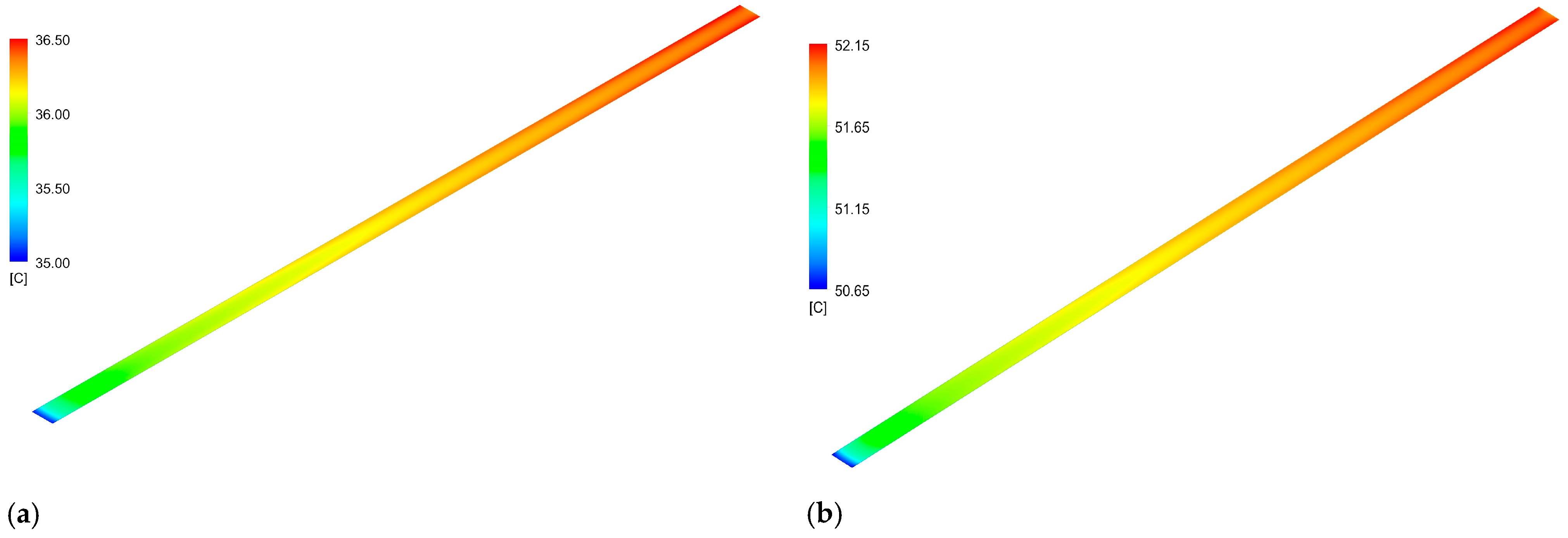
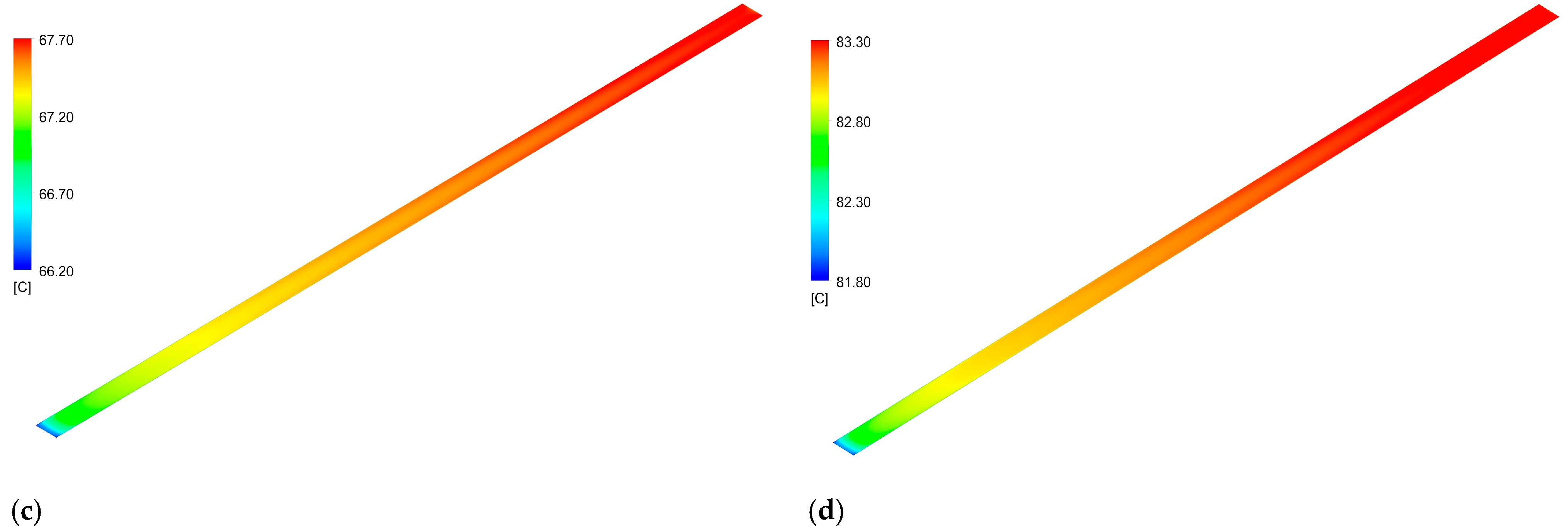
In a similar manner, the temperature contours of the cell at an operating flow rate of 0.45 kg/s are illustrated in Figure 8 for various inlet temperatures of the heat transfer fluid. It is evident that, at this flow rate, the cell temperature remains below 85 °C, even with an inlet temperature of the heat transfer fluid reaching 67 °C.
Figure 8.
Temperature of the photovoltaic cells during the operation of the H-MLFRC with a flow rate of 0.45 kg/s and an inlet heat transfer fluid temperature of (a) 20 °C, (b) 35 °C, (c) 51 °C, and (d) 67 °C.
It should be noted that each subfigure is presented with its own color scale. This approach was adopted to preserve the visibility of the temperature gradients within each operating condition, since the temperature variation across the cell surface for a given case is approximately 1 to 1.5 °C.
The contours exhibit a longitudinal temperature gradient, with higher values near the outlet. Increasing inlet temperature raises the overall cell temperature while maintaining a similar distribution pattern, indicating stable thermal behavior without localized overheating. This observation confirms the cell’s integrity and proper functioning.
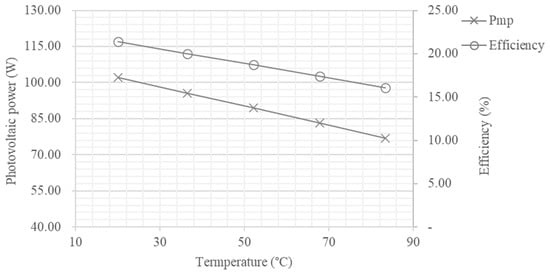
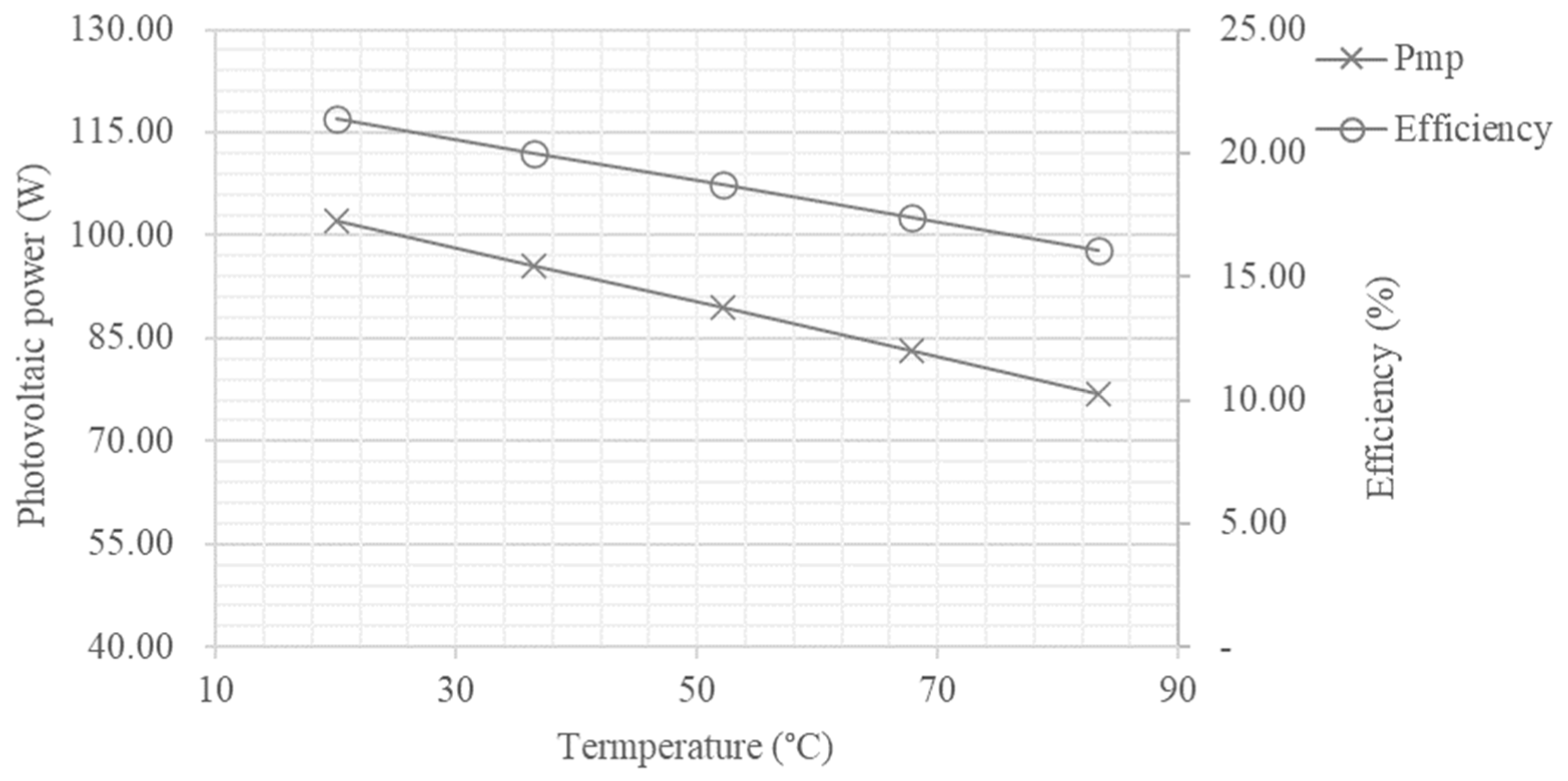
In relation to the photovoltaic study, Figure 9 displays the electrical power generated at the maximum cell temperatures identified in the thermal analysis for a flow rate of 0.45 kg/s. Notably, at a temperature of 83.4 °C, the conversion efficiency to electrical energy is recorded at 16.10%.
Figure 9.
Electrical generation and efficiency of the photovoltaic module at the maximum cell temperature with a flow rate of 0.45 kg/s.
In photovoltaic systems connected in series, non-uniform irradiance or temperature conditions may lead to mismatch losses, reducing the overall electrical power output due to the non-linear behavior of photovoltaic modules.
In the proposed H-MLFRC, the optical Fresnel configuration based on flat mirrors was designed to promote a homogeneous radiative distribution at the focal region, thereby reducing irradiance variations across the photovoltaic module. In addition, the receiver incorporates a heat transfer fluid operating under turbulent flow conditions, which enhances heat removal and promotes a more uniform temperature distribution along the module surface. These design characteristics contribute to reducing the likelihood of significant mismatch effects within the system.
Furthermore, the use of module-level power electronics, such as microinverters, is contemplated during system integration when multiple concentrator units are interconnected. Microinverters allow each photovoltaic module to operate at its own maximum power point, which helps mitigate mismatch losses between different modules connected in the system. Nevertheless, conventional bypass diodes remain advisable as a protective element at the module level.
These results demonstrate that the proposed configuration operates efficiently under the selected nominal conditions. Although the present study focuses on the design and numerical evaluation of the H-MLFRC under its nominal operating conditions, future work will consider broader parametric analyses exploring variations in operating conditions and design parameters. Such analyses may provide additional insight into system performance and support further optimization of the proposed concentrator.
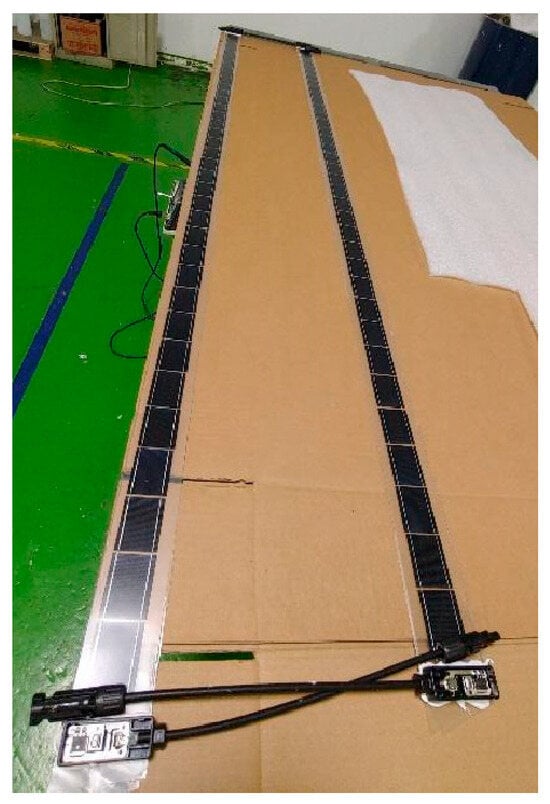
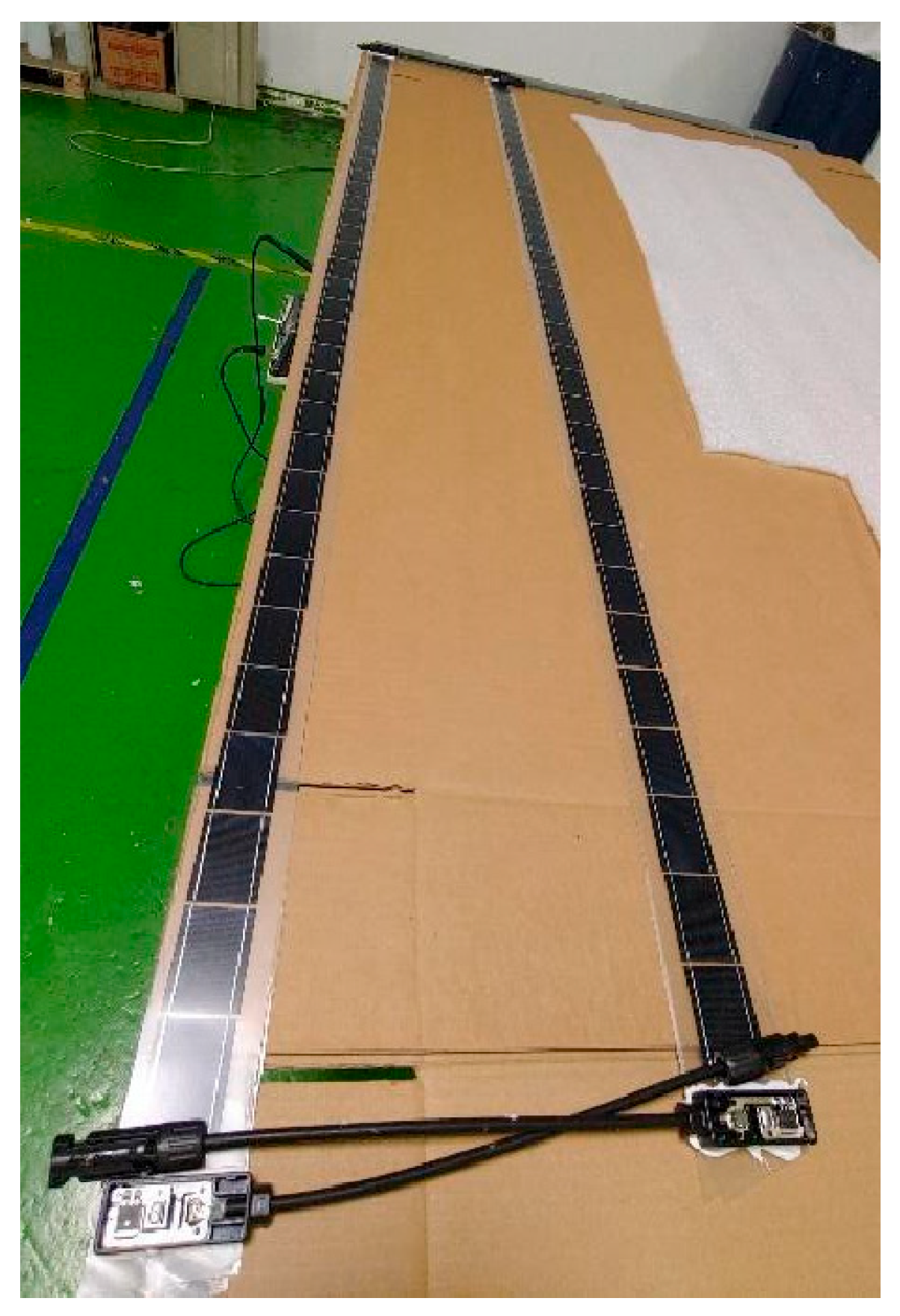
The results obtained have been shared with the company Solarever, which has agreed to fabricate the prototype photovoltaic modules for the experimental evaluation of the device. These modules were manufactured according to the specifications derived from this study. Each module consists of 36 series-connected cells, each 4 cm wide, as shown in Figure 10.
Figure 10.
Prototype photovoltaic modules fabricated by Solarever, consisting of 36 series-connected silicon cells, each 4 cm wide, according to the specifications derived from this study.
4. Conclusions
Numerical simulations demonstrate that developing a hybrid modular device for the thermal and photovoltaic conversion of solar energy is feasible. This device would utilize the proposed MLFRC, which has been previously assessed for thermal applications.
Based on the operating conditions established in this study, it is guaranteed that the device will operate effectively in a modular fashion, allowing for connections in series and/or parallel with similar units.
This work is part of the series of steps we have taken toward developing a device that reaches a commercial level and represents a more efficient option than using thermal or photovoltaic solar technologies separately. It is ideal for harnessing renewable energy in facilities with high energy demand concentrated in small areas. This technology opens the possibility for buildings with limited roof surfaces to better use the area, filling a gap in solar applications toward decarbonization, where both thermal and photovoltaic energies are needed.
The next steps in developing a hybrid thermal and photovoltaic concentrator require the construction and experimental evaluation of the device to characterize it and improve its design, if possible. Also, for a better implementation toward commercialization, following the Technology Readiness Levels is recommended. This is an important methodology for effectively developing prototypes that can move to commercialization stages. This is particularly important since the findings of this study have been shared with Solarever. This company has an interest in going further with the construction of the initial PV module prototype, comprising 36 cells connected in series with a width of 4 cm.
5. Patents
It is important to note that the intellectual property associated with this development has been protected through the patent application MX/a/2023/011801.
Author Contributions
Conceptualization, J.C.C.-D. and O.A.J.; methodology, J.C.C.-D.; software, J.C.C.-D., O.A.L.-N. and J.O.A.; validation, O.A.L.-N. and J.O.A.; formal analysis, J.C.C.-D. and O.A.J.; investigation, J.C.C.-D.; resources, O.A.J. and K.G.C.-V.; writing—original draft preparation, J.C.C.-D.; writing—review and editing, O.A.J., O.A.L.-N., J.O.A. and K.G.C.-V.; supervision, O.A.J.; project administration, K.G.C.-V.; funding acquisition, O.A.J. and K.G.C.-V. All authors have read and agreed to the published version of the manuscript.
Funding
CONACyT’s support is gratefully acknowledged, including funding for project 207450 CeMIESol P70 and J.C.C.D. PhD grant no. 420352. Funding from SECIHTI for project MADTEC-2025-M-311 is also gratefully recognized.
Data Availability Statement
The raw data supporting the conclusions of this article will be made available by the authors on request.
Acknowledgments
The authors would like to express their gratitude to Solarever for their technical support, particularly for providing samples and specifications, as well as for their commitment to manufacturing the photovoltaic module developed in this work.
Conflicts of Interest
The authors declare no conflicts of interest.
References
- Zhang, L.; Jing, D.; Zhao, L.; Wei, J.; Guo, L. Concentrating PV/T Hybrid System for Simultaneous Electricity and Usable Heat Generation: A Review. Int. J. Photoenergy 2012, 2012, 869753. [Google Scholar] [CrossRef] [Scilit]
- Wang, G.; Yao, Y.; Lin, J.; Chen, Z.; Hu, P. Design and thermodynamic analysis of a novel solar CPV and thermal combined system utilizing spectral beam splitter. Renew. Energy 2020, 155, 1091–1102. [Google Scholar] [CrossRef] [Scilit]
- Xiao, M.; Tang, L.; Zhang, X.; Lun, I.Y.F.; Yuan, Y. A Review on Recent Development of Cooling Technologies for Concentrated Photovoltaics (CPV) Systems. Energies 2018, 11, 3416. [Google Scholar] [CrossRef] [Scilit]
- Skoplaki, E.P.J.A.; Palyvos, J.A. Operating temperature of photovoltaic modules: A survey of pertinent correlations. Renew. Energy 2009, 34, 23–29. [Google Scholar] [CrossRef] [Scilit]
- Al-Ezzi, A.S.; Ansari, M.N.M. Photovoltaic Solar Cells: A Review. Appl. Syst. Innov. 2022, 5, 67. [Google Scholar] [CrossRef] [Scilit]
- Cancro, C.; Palladino, V.; Borriello, A.; Romano, A.; Mongibello, L. Design of a Novel Hybrid Concentrated Photovoltaic–Thermal System Equipped with Energy Storages, Optimized for Use in Residential Contexts. Solar 2024, 4, 526–554. [Google Scholar] [CrossRef] [Scilit]
- Indira, S.S.; Vaithilingam, C.A.; Sivasubramanian, R.; Chong, K.-K.; Narasingamurthi, K.; Saidur, R. Prototype of a novel hybrid concentrator photovoltaic/thermal and solar thermoelectric generator system for outdoor study. Renew. Energy 2022, 201, 224–239. [Google Scholar] [CrossRef] [Scilit]
- Rosell, J.I.; Vallverdu, X.; Lechon, M.A.; Ibanez, M. Design and simulation of a low concentrating photovoltaic/thermal system. Energy Convers. Manag. 2005, 46, 3034–3046. [Google Scholar] [CrossRef] [Scilit]
- Ma, Y.; Han, X.; Chen, Z.; Zheng, D. Performance evaluation of a semi-transparent cells filtered concentrated photovoltaic/thermal system. Appl. Therm. Eng. 2025, 266, 125760. [Google Scholar] [CrossRef] [Scilit]
- Jaramillo, O.A.; Aguilar, J.O.; Castrejón-García, R.; Velázquez, N. A modular linear Fresnel reflecting solar concentrator for low-enthalpy processes. In Renewable Energy in the Service of Mankind Vol II: Selected Topics from the World Renewable Energy Congress WREC 949-960; Springer International Publishing: Cham, Switzerland, 2016. [Google Scholar] [CrossRef] [Scilit]
- López-Núñez, O.A.; Alfaro-Ayala, J.A.; Jaramillo, O.A.; Ramírez-Minguela, J.J.; Castro, J.C.; Damian-Ascencio, C.E.; Cano-Andrade, S. A numerical analysis of the energy and entropy generation rate in a Linear Fresnel Reflector using computational fluid dynamics. Renew. Energy 2020, 146, 1083–1100. [Google Scholar] [CrossRef] [Scilit]
- Herrando, M.; Fantoni, G.; Cubero, A.; Simón-Allué, R.; Guedea, I.; Fueyo, N. Numerical analysis of the fluid flow and heat transfer of a hybrid PV-thermal collector and performance assessment. Renew. Energy 2023, 209, 122–132. [Google Scholar] [CrossRef] [Scilit]
- Liu, L.; Jia, Y.; Lin, Y.; Alva, G.; Fang, G. Numerical study of a novel miniature compound parabolic concentrating photovoltaic/thermal collector with microencapsulated phase change slurry. Energy Convers. Manag. 2017, 153, 106–114. [Google Scholar] [CrossRef] [Scilit]
- Prasetyo, S.D.; Prabowo, A.R.; Arifin, Z. The use of a hybrid photovoltaic/thermal (PV/T) collector system as a sustainable energy-harvest instrument in urban technology. Heliyon 2023, 9, e13390. [Google Scholar] [CrossRef] [Scilit] [PubMed]
- Marion, B. A method for modeling the current–voltage curve of a PV module for outdoor conditions. Prog. Photovolt. Res. Appl. 2002, 10, 205–214. [Google Scholar] [CrossRef] [Scilit]
- Prasad, G.C.; Reddy, K.S.; Sundararajan, T. Optimization of solar linear Fresnel reflector system with secondary concentrator for uniform flux distribution over absorber tube. Sol. Energy 2017, 150, 1–12. [Google Scholar] [CrossRef] [Scilit]
- Ma, J.; Zhou, Z.-Y.; Liu, F.; Xu, W.-C.; Wang, C.-L.; Zhao, L. A novel linear Fresnel reflector concentrating photovoltaic/thermal system with enhanced optical performance. Renew. Energy 2025, 244, 122664. [Google Scholar] [CrossRef] [Scilit]
- Benouis, F.Z.; Egea, A.; García, A.; Herrero-Martin, R. Heat transfer enhancement in rectangular ducts with wire coil inserts: Applications in building-integrated CPVT systems. Appl. Therm. Eng. 2025, 278, 127303. [Google Scholar] [CrossRef] [Scilit]

Disclaimer/Publisher’s Note: The statements, opinions and data contained in all publications are solely those of the individual author(s) and contributor(s) and not of MDPI and/or the editor(s). MDPI and/or the editor(s) disclaim responsibility for any injury to people or property resulting from any ideas, methods, instructions or products referred to in the content. |
© 2026 by the authors. Published by MDPI on behalf of the International Institute of Knowledge Innovation and Invention. Licensee MDPI, Basel, Switzerland. This article is an open access article distributed under the terms and conditions of the Creative Commons Attribution (CC BY) license.