


Abstract
The world population is aging at an accelerating pace, and the rate of disability caused by chronic diseases and trauma is on the rise. The traditional rehabilitation model has some structural defects, such as subjective evaluation, homogeneity in treatment schemes, imbalance of resource allocation, and insufficient intervention accuracy. The deep integration of big data analysis, artificial intelligence (AI), edge computing, digital twins, federated learning and multimodal large models is promoting a shift in the rehabilitation system from an experience-driven paradigm to a data-driven paradigm. This review systematically summarizes the development and evolution of big data analysis and artificial intelligence pertaining to intelligent rehabilitation, proposes a four-tier progressive technical architecture, summarizes the standardized governance paradigm of heterogeneous rehabilitation big data, and analyzes the mechanism and application boundaries of artificial intelligence algorithms in rehabilitation scenarios, such as neurology, orthopedics, elderly balance, and speech cognition. By comparing typical intelligent rehabilitation platforms horizontally, the core bottlenecks, including data islands, lack of clinical interpretability, weak robustness in complex environments and lack of evidence-based support, were identified. A future development path for integrating federated learning, lightweight multimodal models, human digital twins, flexible wearable sensing and other technologies is proposed to provide theoretical support for the next generation of rehabilitation systems.
1. Introduction
1.1. Research Background
According to World Health Organization (WHO) statistics, about one third of the world’s population, or 2.4 billion people, have health conditions that can be improved by rehabilitation services. Stroke, spinal cord injury, bone and joint injury, Parkinson’s disease and Alzheimer’s disease continue to increase the size of the population with long-term disabilities [1]. According to the Seventh National Census in China (2020), the population aged 60 and over in China has exceeded 264 million, and the disabled and semi-disabled elderly population has been increasing against the backdrop of deep aging. At the individual level, biological aging is increasingly quantified by the “deep aging clock” based on AI. This method estimates biological age from multimodal biomarkers, which are closely related to health outcomes, functional decline and long-term care needs. According to the latest data from the National Bureau of Statistics, by the end of 2025, China’s population aged 60 and over reached 310 million and the aging degree continued to deepen. Stroke is the No. 1 disabling disease in China, with more than 2 million new patients a year on average. More than 70% of survivors have long-term continuous rehabilitation medical needs, including left limb motor, speech, and cognitive dysfunction [2].
The traditional rehabilitation diagnosis and treatment process relies heavily on manual operation by rehabilitation physicians and therapists. The whole process involves preliminary screening and evaluation, formulation of a rehabilitation program, offline training intervention and phased follow-up on curative effects. The inherent shortcomings of the artificial rehabilitation model have gradually emerged: First, the evaluation of rehabilitation functions depends on the clinical experience of practitioners; there are unavoidable subjective deviations in scoring scales and judgment of motor functions; and there is a lack of objective and continuous quantitative indicators. Second, the rehabilitation training program is homogeneous, and it is difficult to dynamically adjust the training intensity and movement mode according to the changes in the physiological time sequence of patients. Third, high-quality rehabilitation resources are concentrated in tertiary hospitals, and there is a huge gap in rehabilitation talent in primary medical institutions. Many patients stop standardized rehabilitation training after discharge. Fourth, the data on in-hospital rehabilitation and home-based rehabilitation are separated from each other. Doctors are unable to monitor patient compliance with home exercise and movement standardization, resulting in difficulty in achieving long-term continuous functional management [3].
Big data and artificial intelligence technologies provide a new technical path to solve the contradiction between supply and demand in the rehabilitation industry in the context of digital medical transformation. An intelligent rehabilitation system integrates inertial sensing devices, optical motion capture, surface electromyography acquisition terminals, and VR/AR interactive devices to continuously collect multimodal heterogeneous data such as electromyography (sEMG), electroencephalogram (EEG), human joint trajectory, vital signs, rehabilitation scales, medical images, and diagnosis and treatment texts. These systems rely on a distributed big data platform to complete data cleaning, alignment, fusion and storage and to build a standardized rehabilitation knowledge base. Automatic function evaluation, real-time motion feedback, rehabilitation prognosis prediction, and scheme adaptive optimization are completed with the help of an artificial intelligence model, forming a closed-loop rehabilitation link of “multi-source perception acquisition–big data governance–AI intelligent decision-making–rehabilitation intervention implementation–curative effect feedback iteration” [4].
In the past ten years, university laboratories and medical device companies around the world have conducted a large amount of research on rehabilitation robots, remote home rehabilitation platforms and artificial intelligence rehabilitation assessment systems, and the research results have been continuously published in high-level journals in the fields of biomedical engineering, rehabilitation medicine and artificial intelligence. However, the large-scale clinical implementation of technology lags behind theoretical research, and there are many practical problems, such as the separation between technical solutions and clinical practice, the lack of industry standards for rehabilitation data, and the lack of security and interpretability of AI models. Clarifying the advantages and limitations of the existing technology system and sorting out the key scientific issues in the field has important theoretical value for promoting the industrialization and standardized development of intelligent rehabilitation technology.
1.2. Research Status in China and Abroad
1.2.1. Foreign Research Status
European and American countries began the digital layout of intelligent rehabilitation earlier. The United States National Institutes of Health (NIH) has long funded neural rehabilitation projects, such as AI decoding of bioelectrical signals, while MIT and Johns Hopkins University focus on exploring closed-loop systems for stroke upper limb rehabilitation based on brain–computer interfaces and deep reinforcement learning. The European Union continues to fund transnational remote rehabilitation and digital health projects through frameworks such as Horizon Europe and promotes the establishment of unified rehabilitation data exchange standards and remote home rehabilitation technical specifications [5]. Commercially, Ekso Bionics, ReWalk and CYBERDYNE have successively launched lower limb rehabilitation exoskeleton robots with built-in motion trajectory perception and basic AI recognition modules. MindMaze integrates virtual reality and EEG signals to realize the rehabilitation intervention of cognitive impairment.
In terms of algorithm research, foreign scholars first used convolutional neural networks (CNNs) and recurrent neural networks (RNNs) to carry out human posture recognition and EMG time sequence signal classification [6,7]. However, there are significant shortcomings in the existing product system: high-end rehabilitation equipment is expensive and difficult to integrate into the home scene; the hardware data protocols of different manufacturers are incompatible, and cross-platform data fusion is difficult; and the vast majority of AI models rely on single-center dataset training, lack multi-center, large-sample randomized controlled clinical trial verification, and the external generalization ability of the model is limited [7,8].
1.2.2. Domestic Research Status
In the past decade, intelligent rehabilitation in China has entered a stage of rapid development. The Ministry of Industry and Information Technology and the National Health Commission have successively released policy documents to support R&D of smart medicine and innovative rehabilitation medical devices. Tsinghua University, Shanghai Jiao Tong University, Harbin Institute of Technology, Southeast University and other university teams have dug deep into the field of rehabilitation robots, human motion capture, and intelligent analysis of biological signals. Domestic enterprises such as Fourier Intelligence and iFLYTEK have introduced commercial intelligent rehabilitation equipment, covering neuro-rehabilitation, postoperative orthopedic rehabilitation, and speech rehabilitation [6].
Chinese research has unique advantages, including a huge sample reserve of clinical patients and the construction of an industrial ecology driven by policies. The research is more directed to primary-level communities and inclusive rehabilitation scenarios at home. But there are multiple bottlenecks at the same time: there is no unified metadata standard for multi-source rehabilitation data, and a large number of data islands are formed by electronic rehabilitation medical records, rehabilitation robots and consumer wearable devices in hospitals; most AI algorithms are trained in laboratory-controlled environments, and the recognition accuracy in real home complex environments is significantly reduced; and AI rehabilitation assessment results lack high-level evidence-based medicine support, which limits the inclusion of intelligent rehabilitation projects in the medical insurance payment system [8].
In a comprehensive comparison, international research has made profound advances in basic algorithm innovation, high-end equipment industrialization and multi-center clinical trials, but there is a contradiction between “technology advancement and cost accessibility”. Domestic research has late mover advantages in terms of scene adaptation, data scale and policy response speed, but it faces the double tension of “algorithm accuracy and clinical credibility” and “data scale and data quality”. These gaps and tensions are the practical motivation for constructing a unified technical architecture for intelligent rehabilitation systems in this paper.
1.3. Overview of Methods, Research Issues and Contributions
The overall framework of this paper is a systematic review. This paper follows PRISMA 2020 guidelines. We obtained literature from PubMed, IEEE Xplore, ACM Digital Library, Web of Science, Scopus, CNKI, and Wanfang database, which covers publications from 2014 to 2025 and high-impact literature in the past five years. The search keywords included “intelligent rehabilitation”, “rehabilitation big data”, “big data analysis”, “federated learning”, “digital twins”, “wearable sensors”, “post-stroke rehabilitation”, “AI-assisted rehabilitation”, “brain–computer interface”, “interpretable AI” and the corresponding Chinese terms. The inclusion criteria were: (1) papers from SCI/SSCI journals, Chinese Core Journals (Peking University Edition), CSCD source journals and authoritative clinical guidelines; (2) research directly related to the technical architecture, algorithm application or clinical verification of intelligent rehabilitation systems; and (3) high-impact reviews or landmark early breakthrough studies published in the past five years. The exclusion criteria were: (1) low-impact open-access journal papers, excluding conference papers, book chapters and SCI/SSCI; (2) pure hardware design without AI or big data analysis components; and (3) research on general artificial intelligence technology for non-rehabilitation medical scenes. The screening process is shown in Figure 1. A total of 1168 records were initially identified. After removing 342 duplicate records, the remaining 826 records were screened by title and abstract, leading to the exclusion of 583 records. Then, 243 full-text reports were retrieved, of which nine were not available. Of the 234 reports assessed for eligibility, 181 were excluded for specific reasons (71 concerned non-rehabilitation AI applications, 42 described pure hardware designs, 18 were conference papers or book chapters, and 50 provided insufficient technical and clinical details). Finally, 53 core papers were selected for analysis, including 48 English SCI/SSCI journal papers and five Chinese core journal papers.
Figure 1.
PRISMA 2020 flow diagram of the literature screening process.
The scope of the study is the hospital–community–family integrated intelligent rehabilitation system, focusing on the non-invasive perception scheme; invasive brain–computer interfaces will not be discussed in depth. This paper focuses on the transformation and application of general artificial intelligence technology in the rehabilitation scene instead of the hardware design of a single rehabilitation robot. Three research questions are proposed accordingly: RQ1—How can we govern, integrate and protect heterogeneous multi-source rehabilitation big data to support reliable AI modeling? RQ2—Which artificial intelligence (AI) tools are effective in different rehabilitation scenarios, what accuracy is achieved and how can they support clinical decision-making? RQ3—What is the key bottleneck and the way forward for intelligent rehabilitation systems?
The main contributions of this paper are as follows: (1) A four-tier progressive architecture of “perceptual acquisition–big data platform–algorithm support–business application” is proposed, which is different from the general smart health framework and identifies the rehabilitation-specific engineering adaptation. (2) A summary of the standardized governance paradigm of heterogeneous rehabilitation big data, including a three-level cross-modal fusion mechanism and a privacy-protection computing scheme. (3) An artificial intelligence (AI) technology adaptation matrix covering five types of rehabilitation scenarios and a quantitative comparison of the representative models and their reporting accuracy. (4) An analysis of the core bottlenecks from the technical, clinical, ethical and regulatory perspectives and six potential development paths. The rest of this paper is organized as follows: Section 2 defines the core concepts; Section 3 proposes the four-tier architecture; Section 4 discusses rehabilitation big data governance; Section 5 analyzes the application of artificial intelligence; Section 6 compares typical domestic and international systems; Section 7 analyzes the challenges; Section 8 discusses future trends; and Section 9 summarizes the full text.
2. Definition of Relevant Core Concepts
2.1. Rehabilitation Big Data
Rehabilitation big data belongs to the medical and health big data segment, which is different from traditional electronic medical record data. It has four main characteristics, i.e., continuity in time series, heterogeneity across multiple modes, high personalization, and strong sensitivity to privacy [6]. Rehabilitation big data can be divided into four categories, including ① structured data: demographic information, rehabilitation assessment scales (Fugl Meyer score, Berg balance scale, MMSE cognitive scale), joint activity, and vital sign indicators; ② semi-structured data: rehabilitation training log, equipment operation parameters, and regular follow-up records; ③ unstructured time sequence signals: EMG signals, EEG signals, and plantar pressure sequences; and ④ unstructured visual and text data: rehabilitation training videos, MRI/CI images, physician diagnosis and treatment texts, and voice rehabilitation interactive records. The core value of rehabilitation big data lies in continuously recording the dynamic evolution trajectory of patient functions and providing the underlying database for AI model training, rehabilitation prognosis modeling, and evidence-based medicine research.
2.2. Artificial Intelligence Technology for Rehabilitation Scenarios
The field of rehabilitation is divided into four branches of AI technology according to its functions [4,7]:
(1) Perceptual Intelligence: responsible for feature extraction of original perceptual data, such as human 2D/3D pose estimation, SEMG/EEG time-sequence signal recognition, speech recognition, and medical image segmentation;
(2) Cognitive Intelligence: multimodal rehabilitation models with big data, intelligent rehabilitation queries, natural language analysis of rehabilitation text, and primary generation of rehabilitation schemes;
(3) Decision Intelligence: sequential machine learning, deep reinforcement learning, dynamic regulation of rehabilitation training parameters and prediction of rehabilitation outcomes;
(4) Interactive Intelligence: VR/AR human–computer interaction and game-based rehabilitation training systems that can improve patients’ compliance with rehabilitation.
2.3. Intelligent Rehabilitation System
The intelligent rehabilitation system is an integrated software and hardware system. It is based on the theory of modern rehabilitation medicine and integrated multimodal perception hardware, a distributed big data platform, an artificial intelligence reasoning service and a multi-terminal human–computer interaction module. The main goals of the system are objective quantification of rehabilitation assessments, personalized and dynamic adjustment of rehabilitation intervention schemes, full coverage of rehabilitation service scenes (hospitals, communities, families), and traceability of data on the whole rehabilitation process. The intelligent rehabilitation system is a support tool for rehabilitation physicians and cannot completely replace the clinical decision-making of professional therapists [9].
2.4. Precision Rehabilitation
Precision rehabilitation is a new cross-integration paradigm of modern rehabilitation medicine and precision medicine. Its core connotation is to develop differentiated, dynamic and iterative rehabilitation intervention programs, with individualized prediction and evaluation of rehabilitation outcomes according to individualized genomics, biomarkers, functional injury characteristics, living environments and rehabilitation response data [4]. Unlike the traditional homogeneous rehabilitation mode of “treating the same disease with the same treatment”, the precision rehabilitation mode emphasizes the dialectical unity of “treating the same disease with different treatments” and “treating different diseases with the same treatment”. Its technology relies heavily on the continuous acquisition of multimodal rehabilitation big data and the in-depth mining of AI models. The intelligent rehabilitation system carries the precise rehabilitation concept at the engineering level and realizes the three-level transition from “experience rehabilitation” to “evidence-based rehabilitation” and then to “precise rehabilitation” through data-driven analysis.
3. Overall Hierarchical Architecture of the Intelligent Rehabilitation System Based on Big Data AI
The intelligent rehabilitation system proposed in this paper is composed of four layers from bottom to top, i.e., perception acquisition layer, rehabilitation big data platform layer, AI algorithm support layer, and business application layer. The four-tier architecture is progressive and mutually supportive, forming a complete technical closed loop in the intelligent rehabilitation system. There are significant hierarchical differences in hardware configuration, core technology, functional value and existing limitations at each level. The multi-dimensional comparison can be used to visually illustrate the strengths and weaknesses of the overall technical architecture of the system. Table 1 provides a detailed description of the hierarchical characteristics.
Table 1.
Key technologies and functions of an intelligent rehabilitation system at all levels.
From the horizontal comparison and vertical level correlation analysis in Table 1, it can be seen that the intelligent rehabilitation system has transmission defects at the whole-link level, and the technical pain points at each level restrict each other and overlap layer by layer. From the perspective of Vertical Architecture logic, basic problems, such as insufficient accuracy of hardware acquisition and poor data synchronization in the perception acquisition layer as the data entry, will directly increase the pressure of data preprocessing at the big data platform layer, which will result in the loss of original effective features. The lack of standardization and the data island problems in the data layer will further limit the quality of model training in the AI algorithm layer, resulting in weak generalization ability and low clinical reliability. The dual defects in the final algorithm and data will directly lead to the business application layer’s limited landing effect, poor adaptability, lack of practicability and other problems. From the comparison of the horizontal dimension, it can be found that the limitations of the system show obvious gradient characteristics: the underlying hardware and data standard problems are common basic problems in the industry, which are difficult to completely overcome in the short term, and the upper-level algorithm optimization and interaction design can be rapidly improved through technical iteration. The comparison results clearly show that the optimization of the intelligent rehabilitation system should follow the core logic of “building a foundation at the bottom and iterating at the top” and provide a supporting basis at the architecture level for subsequent technical bottleneck analysis and development trend prediction.
The overall architecture of the system is shown in Figure 2.
Figure 2.
Hierarchical architecture diagram of a big-data-driven AI intelligent rehabilitation system.
3.1. Perception Acquisition Layer
The original data enter the system through the perceptual acquisition layer, and the hardware equipment is divided into two categories: high-precision fixed equipment in the hospital and lightweight portable equipment at home. The hospital terminal is equipped with an optical motion capture system, a gait analysis instrument, a biological signal acquisition instrument and a rehabilitation robot with high measurement accuracy, which is suitable for standardized primary rehabilitation assessment. The home terminal is mainly composed of an IMU sensor bracelet, flexible EMG armband, intelligent pressure insole and ordinary camera terminal. The advantages include low cost and easy deployment, while the disadvantages are that it is easily affected by environmental noise and sensor wearing deviation [10,11,12].
Time stamp dislocation and sampling frequency mismatch are two common problems in multi-terminal synchronous acquisition. The perception layer should apply noise reduction and time synchronization protocols to the original data to filter invalid noise and reduce the transmission and calculation pressure of the upper big data platform.
3.2. Rehabilitation Big Data Platform Layer
The big data platform provides unified management, persistent storage, and secure scheduling for heterogeneous data. It is therefore an intermediate layer between perception hardware and AI algorithms. The core modules are:
(1) Multi-source heterogeneous data access module: compatible with MQTT, HTTP, and TCP/IP communication protocols to achieve real-time data access from different brands of sensor devices and rehabilitation terminals.
(2) Data preprocessing module: time series signal filtering, missing value interpolation filling, outlier elimination, and data standardization and normalization.
(3) Cross-modal data fusion module: aligns and fuses the image, motion sequence signal, text medical record and scale score features.
(4) Distributed hybrid storage module: HDFS stores unstructured data such as video and medical images, MySQL stores structured patient files, and the InfluxDB time series database continuously stores high-frequency sensing sequences.
(5) Privacy security computing module: integrates data desensitization, differential privacy, and federated learning interactive interfaces to meet the requirements of domestic medical data laws and regulations.
3.3. AI Algorithm Support Layer
The general models of basic algorithms include object detection (YOLO series), 2D/3D pose estimation (OpenPose, MediaPipe, AlphaPose), time series signal classification (CNN–LSTM, Transformer) [13], and natural language processing (BERT, GPT series) [14]. The customized rehabilitation model is based on fine-tuning and optimizing the rehabilitation clinical annotation dataset, including a stroke motor function evaluation model based on an attention mechanism, a gait anomaly recognition model based on temporal anomaly detection, an aphasia evaluation model based on speech recognition, and a fall risk prediction model based on integrated learning. All models expose reasoning ability to upper business applications as API microservices and support continuous iteration in the cloud and lightweight deployment at the edge.
3.4. Business Application Layer
The business application layer develops differentiated terminal applications for three user groups: For the management background of rehabilitation therapists, it realizes patient file management, AI evaluation report visualization, and manual review and editing of rehabilitation programs. The mobile app and VR training terminal for patients are responsible for home-based rehabilitation training, real-time action error correction and rehabilitation knowledge push. The desensitization data retrieval platform for researchers provides support for statistical analysis and model training research on rehabilitation big data while ensuring privacy protection.
3.5. Rehabilitation-Specific Adaptation Beyond the General Smart Health Framework
The “perception platform algorithm application” four-layer technology stack is structurally similar to the general Internet of Things (IOT) and smart health framework. Hence, the engineering value of the proposed architecture lies in a set of domain-specific adaptations that distinguish the intelligent rehabilitation system from the general intelligent health system. The conceptual closed-loop framework of the intelligent rehabilitation system enabled by big data analysis and artificial intelligence is illustrated in Figure 3.
Figure 3.
Conceptual closed-loop framework of an intelligent rehabilitation system enabled by big data analysis and AI.
(1) Scale-anchored data modeling. The clinical and legal levels of functional status are expressed in rehabilitation medicine by standardized assessment scales, such as the Fugl–Meyer Assessment (FMA), the Berg balance scale (BBS) and the modified Barthel Index (MBI). Thus, the design of the data platform ensures that all sensor flows can be traced back to the scale entries: the original signal is transformed into kinematic and physiological indicators that can be associated with each scale entry, so as to establish the traceability from the original data to the clinical score and support the regulatory audit of the AI evaluation results.
(2) Safety constraint execution. The rehabilitation robot, when working with patients with functional impairments, must be embedded with the safety functions that are not required by the universal IOT actuator: force/torque limit, range of motion protection, collision detection and emergency stop interlocking, and equipped with risk management that complies with the standards of medical devices such as ISO 14971 [15]. The AI decision model produces training parameters that must go through these safety envelopes before execution.
(3) Rehabilitation closed-loop workflow. The business layer realizes the clinical path of rehabilitation medicine—admission evaluation, individualized scheme generation, supervision training, regular reevaluation and scheme iteration—which is not the general monitoring alarm loop. Each iteration is versioned to ensure that the evolution of the patient’s functional trajectory is auditable on the hospital community family continuum.
(4) Multimodal redundancy for clinical stability. Single sensor evaluation is not reliable for clinical decision-making (e.g., failure of vision-based pose estimation under occlusion). Therefore, the design of the perceptual layer uses intentional redundancy vision, inertial perception and surface electromyography to make the fusion output achieve the reliability expected by clinical measurement, which is similar to the consistency requirements among raters in the scale evaluation.
These adaptations turn the generic hierarchical framework into an engineering system subject to clinical constraints. They also explain why the pain points in Table 1 manifest across layers: for example, the platform layer’s missing data standards will weaken the anchor modeling, security verification and closed-loop audit of the scale at the same time.
4. Key Technology System of Rehabilitation Multi-Source Big Data Governance
4.1. Data Types and Inherent Characteristics of Rehabilitation Big Data
Rehabilitation big data is different from data on conventional clinical diagnosis and treatment. The rehabilitation process of patients is a continuous time series evolution process, and a single-point static index cannot fully reflect the functional state. The data distribution of patients with different diseases and disease courses is uneven, and samples of severe dysfunction are scarce. The output signal format and sampling frequency of sensor equipment from different manufacturers are not unified, and the heterogeneity is very strong. All data, including patient biometrics and health privacy, are strictly restricted by personal information protection laws and network security administration measures in medical and health institutions. Therefore, the original data is difficult to circulate across institutions [6].
4.2. Multimodal Rehabilitation Data Preprocessing Technology
Raw sensor signals are often characterized by baseline drift, environmental noise and data loss. Direct input into an AI model will greatly reduce recognition accuracy. Time series biological signals (sEMG, plantar pressure) are usually filtered by wavelet transform and empirical mode decomposition; missing values in a time series are filled by k-nearest neighbor interpolation and linear interpolation; abnormal samples of motion acquisition outliers are eliminated based on the three-sigma rule; and Z-score standardization is used to eliminate the dimensional differences of different sensors.
For visual data in rehabilitation videos, background segmentation and human body region clipping are performed to reduce the computational overhead of invalid pixels. For free-text rehabilitation medical records, injury type, rehabilitation duration and scale score are separated by Chinese entity extraction technology, and the unstructured diagnosis and treatment text is transformed into a structured feature vector [16].
4.3. Three-Level Cross-Modal Data Fusion Mechanism
There are information defects in every data source. Vision-based pose recognition alone can easily fail because of human occlusion. The fusion of IMU inertial sensor data can greatly enhance the robustness of attitude recognition. Multimodal data fusion in the field of rehabilitation is composed of three layers:
(1) Data fusion: original sensor signal splicing, which requires extremely high synchronization accuracy of the equipment and has limited application scenarios.
(2) Feature-level fusion: the mainstream scheme of current intelligent rehabilitation systems, which fuses the input model after extracting visual, EMG, and scale text features separately.
(3) Decision-level fusion: multiple independent models reason independently and fuse the conclusions of the multiple model outputs. It has good fault tolerance, but the loss of feature information is large [16].
4.4. Medical Rehabilitation Data Privacy Protection Scheme
There is a serious risk of privacy disclosure in the centralized data sharing mode, and federated learning has become the core scheme for joint modeling of rehabilitation centers. Horizontal federated learning allows multiple medical institutions to save their original patient data locally, interactively encrypt only the model parameters, and cooperate to jointly train the rehabilitation AI model. At the same time, it is combined with differential privacy, static and dynamic desensitization, transmission link encryption and hierarchical access control to form a multi-layer security protection system [17,18,19,20]. However, federated learning is still a key research direction due to practical constraints such as high communication overhead, difficulty in training, and convergence of heterogeneous devices [21,22].
5. Application Mechanism of Artificial Intelligence Technology in Intelligent Rehabilitation Scenes
There are essential differences in the pathological characteristics and functional injury types of different rehabilitation diseases. The corresponding data acquisition requirements, types of algorithm adaptation and core rehabilitation goals are quite different. There is no universal model of AI rehabilitation technology. In order to clarify the scene adaptation boundary of various AI technologies and accurately sort out the technical pain points of different rehabilitation tracks, this paper makes a horizontal comparison of the technical application characteristics of five mainstream rehabilitation scenes and comprehensively identifies the scene differentiation adaptation law of AI technology. Table 2 presents the specific comparison results.
Table 2.
Comparison of AI technology application scenarios in various rehabilitation directions.
The multi-dimensional horizontal comparison in Table 2 clearly summarizes the scene adaptation rules and common bottlenecks of AI rehabilitation technology. From the perspective of technical adaptability, each rehabilitation scenario forms an independent technical system: neural rehabilitation is based on sequential bioelectrical signals and sequential deep learning models, focusing on decoding neuromotor intention and precise action correction; orthopedic postoperative rehabilitation is based on visual and pressure sensing data and convolutional neural networks, focusing on monitoring the safety of joint motion; cognitive speech rehabilitation is based on non-sequential text and speech data and relies on large models and speech recognition technology to complete cognitive intervention; and geriatric rehabilitation is based on lightweight sensing and timing anomaly detection, focusing on the function of early risk warning. From the perspective of technical weaknesses, there are differentiated pain points in different scenarios: neural rehabilitation is limited by individual differences in human physiology, and the generalization ability of the model is weak; cognition and rehabilitation of spinal cord injury are limited by the lack of local high-quality annotation datasets; and home-based elderly rehabilitation and orthopedic rehabilitation are faced with the problems of real-scene interference and difficulty in accurate discrimination. In general, the present AI rehabilitation technology field is very specific and has poor versatility. This is also the core reason why the intelligent rehabilitation system at this stage has difficulty realizing large-scale and all-disease popularization. At the same time, it also provides a clear research direction for subsequent algorithm optimization and dataset construction in subdivision scenes.
5.1. Evolution of AI Computing Models in the Field of Rehabilitation
The computational model for intelligent rehabilitation has undergone four stages of development in the last ten years. (1) Classical machine learning of hand-engineered features (early 2010s): Support vector machines, random forests and hidden Markov models are trained on hand-designed kinematics and EMG features, achieving medium accuracy in a controlled lab environment but poor generalization between patients [8]. (2) Deep learning (2015–2019): CNN and RNN/LSTM realize end-to-end learning from raw images and time-domain signals, greatly improving pose estimation and sEMG/EEG decoding [23,24,25]. (3) Attention and Transformer Architecture (2019–2022): The self-attention mechanism is capable of modeling long-range time series dependence of multichannel physiological signals and weighting clinically weak but informative features [13]. (4) Multimodal pre-trained models (2023–2025): Large language models and multimodal models begin to fine-tune rehabilitation education and report interpretation and preliminary scheme generation, promoting the field from a small task-specific model to a generalized multimodal model [14]. Overall, the increase in model capacity has been faster than the increase in labeled rehabilitation data; thus, data efficiency, transfer learning and domain adaptation are as important as architecture innovation. To intuitively show the actual performance levels, verification methods and applicable boundaries of different technical routes, this paper compares seven representative studies and systematic reviews covering computer vision, wearable sensing, brain–computer interfaces, prognosis prediction, tele-rehabilitation, and other directions for horizontal quantitative comparison. The results are presented in Table 3.
Table 3.
Quantitative comparison of representative AI technologies in rehabilitation systems.
From the comparison results, the reporting performance of current mainstream rehabilitation artificial intelligence technologies in their respective controlled verification scenarios is between 70% and 99%. Among these, the visual gesture recognition algorithm based on standard datasets provides a clear benchmark. The wearable evaluation and brain–computer interface decoding performance based on clinical samples fluctuates significantly with sample characteristics, while the remote rehabilitation research based on randomized controlled trials considers differences in clinical efficacy as the core evaluation criterion.
5.2. Computer Vision and Human Posture Recognition Technology
Vision-based human pose recognition is the key technology for low-cost home rehabilitation. We use the OpenPose and MediaPipe 2D pose estimation algorithms to extract the coordinates of 33 body key points in real time [25,26] and use the YOLO object detection model to assess the standardization of rehabilitation training movements. Visual posture recognition has been extensively applied to rehabilitate stroke limbs, train balance functions and monitor joint activity after knee surgery in a large number of studies [4,7].
The two-dimensional vision algorithm suffers from the problem of depth ambiguity. Monocular three-dimensional pose reconstruction technology is under continuous development, which reduces the dependence on expensive optical motion capture devices. However, its recognition accuracy is still limited by illumination changes in home scenes, clothing occlusion and complex backgrounds. The pure vision scheme still has difficulty meeting the needs of high-precision neural rehabilitation assessment, so it must be combined with inertial sensing to realize multimodal fusion [16].
5.3. Deep Learning Drives Bioelectrical Signal Decoding
Surface electromyography (sEMG) signals represent the degree of muscle activation, and EEG signals represent the activity of brain nerves; these signals are widely used in neural rehabilitation and brain–computer interactive rehabilitation systems. CNNs, LSTMs, and time series Transformer models are used to decode bioelectrical time series signals, recognize patient movement intentions, and drive rehabilitation robots to achieve active-assisted training [12,23,24,27,28,30,31].
The neural pathways of stroke patients are damaged, and the signal-to-noise ratio of their EMG signals is significantly decreased. Researchers have incorporated attention mechanisms to improve time series models and enhance the extraction of weak and effective features. The main limitation of this approach is that individual differences in EMG features are very significant; therefore, it is difficult to generalize the model across subjects, so it is difficult to adapt a set of models to all patient groups [24].
5.4. Machine Learning for Rehabilitation Assessment and Prognosis Time Series Prediction
Predicting rehabilitation efficacy is a common time series regression problem. The input features include demographics, injury type, previous rehabilitation scales and continuous motion sensing data. XGBoost and gated recurrent units (GRUs) are used to predict the upper limit of patients’ rehabilitation and the rehabilitation cycle required for self-care, helping doctors formulate medium- and long-term rehabilitation planning [8].
In order to reduce the time of manual evaluation, a large number of studies have tried to build AI automatic scoring models that automatically output Fugl–Meyer and Berg balance scores based on motion sensing data. At this stage, AI automatic scoring and physician manual evaluation still have systematic errors, so such a model can only be used as an auxiliary reference index and cannot replace professional clinical evaluation [16].
5.5. Deep Reinforcement Learning to Achieve Adaptive Rehabilitation Training Regulation
Fixed-mode rehabilitation training easily causes patient fatigue and attenuation of training enthusiasm. The reinforcement learning framework is based on the Markov decision process (MDP), and an improvement in patients’ rehabilitation functions is taken as a reward function. The system dynamically adjusts training difficulty, range of motion and training duration in real time. When the system detects motion deformation and over-fatigue, the training load is automatically reduced. After patient function is improved, the training intensity is gradually increased, and the individualized dynamic training program is realized [27,30].
The challenge preventing reinforcement learning from being used in the rehabilitation scenario is the high cost of acquiring real patient interaction samples. Most existing studies depend on pre-training in a simulation environment, and the transferability to real clinical scenes still needs further verification [25].
5.6. Emerging Applications and Risks of the Multimodal Rehabilitation Model
The multimodal large-scale rehabilitation model integrates text, images, motion sequences, and bioelectric signals and has functions such as rehabilitation health education, automatic interpretation of rehabilitation reports, answering home-based rehabilitation questions, and preliminary generation of training programs, greatly lowering the barrier to access rehabilitation knowledge [14]. However, there is a serious risk of medical hallucinations in large models. The automatically generated rehabilitation suggestions have to be reviewed by rehabilitation physicians. Directly guiding the patients to perform rehabilitation training is strictly prohibited. Identifying how to achieve rehabilitation-oriented fine-tuning of large models, constrain the output content and reduce the probability of hallucination is a hot research direction [32,33].
The core bottleneck of the existing rehabilitation model is the extreme lack of high-quality, multimodal, cross-disease annotation datasets in the field of rehabilitation, especially the lack of a large-scale Chinese cognitive rehabilitation corpus and standardized rehabilitation action video datasets. Existing studies mainly rely on the transfer learning of general medical models (such as Med-PaLM and HuatuoGPT). However, the specific sequential action semantics, scale scoring logic and clinical decision path in the field of rehabilitation are significantly different from the general medical scene, so their zero-shot or few-shot performance on rehabilitation-specific tasks remains far below the threshold required for clinical use. Therefore, the establishment of standardized rehabilitation datasets throughout the entire process of “in-hospital evaluation, home training and community follow-up” is the premise for promoting large rehabilitation models from concept verification to clinical implementation.
5.7. Interpretable AI Methods Supporting Clinical Decision-Making
One of the main obstacles to the clinical application of AI rehabilitation systems is a lack of interpretability. We can transfer a series of interpretable artificial intelligence (XAI) methods to rehabilitation scenarios. Layer-wise relevance propagation (LRP) backpropagates the prediction onto the input variables to generate a heatmap of feature contributions. Recently, LRP-based neuron selection and visualization of deep networks have been further improved. LIME learns an interpretable local surrogate model around a single prediction [34]. SHapley Additive exPlanations (SHAP) provide additive attributions based on the Shapley value and can be used for tabular clinical characteristics such as demographic variables and scale scores [35]. Grad-CAM [36] generates a class-discriminative localization map for CNN-based pose estimation and medical image analysis, and attention visualization techniques can highlight the time segments that the Transformer focuses on [13].
These methods support clinical decision-making in rehabilitation practice in at least four ways: (1) They verify the results of AI evaluation; for example, they check the range of motion of a joint or sEMG channel determined by LRP/SHAP to determine whether the score of the Fugl–Meyer item is physiologically reasonable. (2) They audit risk predictions, such as fall risk or pain warnings, and an attribution map can reveal whether the model relies on pathological signals rather than clothing or light artifacts. (3) They detect algorithm bias because systematic attribution differences between age, gender and severity subgroups can expose unfair model behavior. (4) They support supervision and explain that the log can record model behavior for continuous review of medical device software (SaMD 1.2.4) [37]. But rehabilitation XAI is still immature: attribution of long multivariate time series is unstable, and fidelity and rationality of interpretation cannot be guaranteed. Clinicians should assess the interpretation itself rather than relying only on proxy indicators [37,38,39,40].
6. Comparison of Typical Cases of Intelligent Rehabilitation Systems in China and Abroad
Currently, there are various types of intelligent rehabilitation products and research prototype systems both domestically and internationally, such as high-end medical rehabilitation equipment, VR cognitive rehabilitation systems, and lightweight home monitoring platforms. There are large differences in technical maturity, scenario adaptability, implementation cost, and clinical practicability among different R&D subjects and systems with different positioning. To objectively sort out the current situation of industrial products and clarify the pain points of commercialization, this paper selects representative commercial equipment and university research platforms in China and abroad and carries out a horizontal comparison from the perspectives of R&D subjects, hardware forms, AI capabilities, applicable scenarios, advantages and disadvantages. It then comprehensively analyzes the weaknesses of the existing intelligent rehabilitation system and the pain points of industry development. The details of the comparison are shown in Table 4.
Table 4.
Comprehensive comparison of typical intelligent rehabilitation systems at China and abroad.
Cost-wise, a high-end Rehabilitation Exoskeleton is generally priced at US $50,000–150,000 per unit [41], while an IMU-based home monitoring system costs less than US $500. Regulation-wise, representative products such as the Ekso exoskeleton and MindMaze’s MindMotion GO have been licensed by the FDA, and domestic products such as Fourier Intelligence’s ExoMotus series have been registered with the National Drug Administration (NMPA). Clinical evidence-wise, trial registration and randomized controlled trials of these systems are still limited. A recent Cochrane review concluded that there is still insufficient evidence on the long-term benefits to activities of daily living after robot-assisted arm training [42].
The three-dimensional horizontal comparison in Table 4 accurately summarizes the current industrial patterns and the core contradictions in the implementation of intelligent rehabilitation systems in China and internationally. From the R&D perspective, overseas commercialized equipment started early, with rich clinical accumulation and excellent hardware stability, but its cost-effectiveness remains insufficient for inclusive rehabilitation scenarios. The products of domestic enterprises are in line with the local clinical process and have a high degree of industrialization maturity, but their coverage is limited to hospitals. Domestic university research prototypes focus on home and community inclusive scenarios, innovation and cost-effectiveness, but they generally remain at the laboratory stage, lacking industrialization and clinical verification. From the perspective of scene adaptation, the industry has obvious problems of scene fragmentation and functional faults: high-end commercial equipment focuses on precision rehabilitation in hospitals, with high precision and perfect functions, but poor portability and cost-effectiveness, and cannot meet long-term rehabilitation needs at home. The lightweight home platform has the advantages of low cost and flexible deployment, but it cannot replace professional rehabilitation equipment in hospitals due to its low detection accuracy and single function.
Overall, all of the mainstream systems on the market have obvious shortcomings. The integrated closed-loop system of “in-hospital accurate assessment, community standardized intervention, and home continuous follow-up” has not yet been formed. This is a core pain point of the industry: current intelligent rehabilitation technology cannot yet be fully popularized or implemented across the whole process. It also verifies the main problems, such as technical bottlenecks and lack of scene adaptation, as mentioned above, and provides empirical support for the challenge analysis and future trends discussed below. The comprehensive comparison shows that high-end rehabilitation robots focus on standardized evaluation and auxiliary training in hospitals and have a mature quantitative evaluation module. However, the high cost (a single device usually costs $50,000–150,000) and huge volume are mainly due to the requirements of high-precision force control actuators, safety redundancy in multi-axis motion control and medical device-level certification, which makes it difficult to achieve home-based use in the short term by simply reducing the configuration. The cost advantage of lightweight home systems is obvious, but their perception accuracy is limited by the physical upper limit of consumer-grade IMUs and monocular cameras, and the lack of clinical-level calibration processes makes it difficult for doctors to accept the evaluation results. Most existing products only realize the intellectualization of a single module, and no complete big data AI closed-loop system integrates intelligent evaluation, dynamic scheme generation, real-time training intervention, and long-term prognosis prediction. In essence, this structural mismatch, in which high-end equipment is still relegated to hospitals and home-based equipment has not yet reached clinical-grade accuracy, is not a single technical bottleneck but the systematic lack of data standards, algorithm generalization, clinical validation, and viable business models in the current intelligent rehabilitation field.
7. Core Challenges Faced by the Current Development of Intelligent Rehabilitation Systems
7.1. Lack of Big Data Standards for Rehabilitation and the Problem of Data Islands
The rehabilitation equipment brands in domestic medical institutions at all levels are complicated, and the rehabilitation sensing data and rehabilitation evaluation data elements do not have a unified national standard. The data protocols of rehabilitation electronic medical records, rehabilitation robots and consumer wearable devices are not compatible with each other, and it is difficult to circulate data across departments and hospitals, forming a large number of data islands. Consequently, high-quality, multi-center, and standardized public rehabilitation datasets are very rare. Most AI models are trained on small samples of single-center data, which are prone to overfitting and greatly reduce the effect of clinical verification by external medical institutions. At the international level, the HL7 FHIR (Fast Healthcare Interoperability Resources) standard has begun to regulate the exchange of rehabilitation data, and standards organizations such as IEEE have promoted the standardization of wearable sensor device interfaces (such as IEEE Std 1708 [43]). In China, the National Health Commission and the China Rehabilitation Medical Association are leading the development of rehabilitation data element standards and rehabilitation robot technical specifications. The industry needs to urgently produce a unified technical specification for the collection, storage and exchange of rehabilitation data [13].
7.2. Lack of Clinical Interpretability of Deep Learning Algorithms
The mainstream of deep learning today is the “black box model”. When an AI system provides rehabilitation function scores and prognosis prediction results, it cannot clearly explain the motor features and physiological indicators according to its reasoning. Rehabilitation medicine is a high-risk clinical area. Unexplained algorithm conclusions are unlikely to be accepted by doctors to ensure medical safety, which largely impedes the clinical implementation of AI rehabilitation systems and the approval of medical devices. Interpretable artificial intelligence (XAI) is still in its infancy in the field of rehabilitation medicine, and there is no mature interpretation framework for rehabilitation time series data [37,39,40,44].
7.3. Insufficient Robustness of Algorithms in Real Scenes
Most AI models are trained in controlled laboratory environments, with stable light, patients in standard clothes, and no external environmental interference. When used in actual home scenes, recognition accuracy will rapidly decrease due to clothing occlusion, light changes, sensor wearing deviation, and patients’ irregular actions. However, individual differences in patients with different ages, degrees of injury and disease course stages are huge, and the model’s generalization ability across populations is insufficient, which limits its wide application [6,7].
7.4. Aging Defects in Human–Computer Interactions
A large number of intelligent rehabilitation users are elderly and stroke patients with cognitive impairment, and their operational ability is weak. Existing rehabilitation terminal applications and interaction interfaces are mainly designed for healthy adults. The operation process is cumbersome, the font size is small, the touch area is dense, feedback delay is common, and the VR game-based training mode is not friendly for patients with vestibular dysfunction, cognitive impairment or spatial orientation disorder. Some patients experience side effects such as dizziness and nausea after using VR equipment [45]. The defect of deeper interaction is that the existing system has no real-time perception of patient fatigue, emotional state and cognitive load, and it cannot dynamically adjust the interaction rhythm and information density. The design of multimodal feedback (visual, auditory, tactile) is not coordinated, and the recognition rate of voice instructions drops sharply in a noisy home environment. An aging-friendly human–computer interaction system with minimalism, high error tolerance, multimodal redundancy and enhanced emotional computing for the rehabilitation population is an important prerequisite for the popularization of home-based intelligent rehabilitation.
7.5. Insufficient Evidence-Based Medicine and Lagging Regulatory Systems
Most intelligent rehabilitation equipment falls under Class II and Class III medical devices, and the approval process is strict. At this stage, we lack long-term, large-sample, multi-center randomized controlled clinical trials (RCTs) for a large number of AI rehabilitation products and high-quality evidence suggesting that intelligent rehabilitation has a stable curative effect compared with traditional rehabilitation. For example, for the rehabilitation robot, the existing Cochrane system evaluation shows that although robot-assisted upper limb training can improve short-term motor functions of stroke patients, the evidence for long-term improvements in activities of daily living (ADL) is not sufficient [42]. At the same time, the domestic medical insurance payment system lacks coverage for intelligent rehabilitation projects. Most AI rehabilitation assessments and remote rehabilitation guidance are not included in medical insurance directories, and the proportion of patients paying out of their own pockets is high, which directly restricts the market demand for home-based intelligent rehabilitation. In addition, the dynamic supervision mechanism for continuously iterative AI medical software is inadequate; the effectiveness of safety verification systems after model updates is also lacking; and regulatory authorities lack clear technical review guidelines for AI algorithm change management of “software as a medical device” (SaMD) [38,46].
7.6. Data Security and Multiple Ethical Risks
Rehabilitation data is very sensitive human health information, which can easily cause privacy disclosure issues due to improper protection. Meanwhile, there are complex ethical challenges: errors in AI assessment can lead to incorrect rehabilitation plans and cause secondary injuries; imbalanced training datasets can lead to algorithm bias and unfair evaluation of specific populations; and long-term over-reliance on intelligent systems may risk diminishing the clinical diagnosis and treatment capabilities of rehabilitation therapists. In the research and development of technology, a complete ethical review mechanism must be supported [47,48].
7.7. Algorithm Deviation and Fairness
The risk of algorithm deviation has not received sufficient attention in rehabilitation AI. Training datasets often underrepresent elderly patients, severe dysfunction cases and minority groups, and the model may exhibit systematically low accuracy or unfair score distribution for these groups. Furthermore, the label itself and the clinical scale score itself carry inter-rater variability, which may be absorbed as bias by the model. One of the most cited studies in group health management shows that a nursing management algorithm has significant racial bias because of the use of medical expenditures as a proxy for health needs [49]. Similar deviations can occur in rehabilitation when a model trained on hospital data is deployed to community or home settings with different population characteristics. Mitigation strategies include ensuring balanced and representative sampling, evaluating fairness metrics across demographic and severity subgroups, reporting performance stratified by subgroup in clinical trials [46], and conducting continuous post-deployment monitoring.
8. Prediction of Future Development Trends
Six possible development paths are proposed in this section based on the bottlenecks above. These directions are promising but should be considered as candidates, and their popularity will depend on further technical and clinical evidence.
8.1. Federated Learning-Driven Multi-Center Collaborative Model Training
Based on the premise that original clinical patient data is not transmitted, AI rehabilitation models are jointly trained by multiple hospitals relying on horizontal federated learning, which can alleviate the problems of scarce high-quality samples and data islands in rehabilitation [17,18,19,20]. The hierarchical federated learning architecture has been constructed, including the general rehabilitation model for cloud training, deployment of lightweight small models for home edge terminals, and realization of cloud-edge collaborative continuous updates, considering model accuracy, privacy security and transmission efficiency, and is expected to be the mainstream solution for rehabilitation AI modeling [21,22].
8.2. Human Digital Twin Enabling Personalized Rehabilitation Simulation
A digital twin model of a patient’s body was established, and the bone biomechanics model, muscle dynamics model and real-time sensing data stream were integrated to simulate the motion state of the patient in real time in a virtual space [50,51,52,53]. Based on digital twin simulation, the impact of different rehabilitation actions on joint and muscle load was determined, allowing patients to avoid training actions with secondary injury risk in advance. The long-term simulation of rehabilitation function evolution realizes the pre-intervention mode of “simulation pre-judgment–scheme optimization–physical training” and promotes the transformation of rehabilitation from passive monitoring to active prediction [21].
8.3. Edge Deployment of a Lightweight Multimodal Rehabilitation Large Model
Model compression technologies such as quantization (compressing model weights from 32-bit floating-point numbers to 8-bit or lower precision integers), pruning (removing neuron connections with low contribution to reasoning), and distillation (training lightweight small models with large model supervision) are implemented in home terminals and edge gateways to achieve local completion of AI reasoning at the terminal, eliminating the need for continuous transmission of original sensor data to the cloud and reducing bandwidth pressure and protecting patient privacy. Future work should promote the deep integration of perception and rehabilitation models, open the link between multimodal data acquisition, intelligent evaluation and rehabilitation guidance, and apply constraint-based fine-tuning to the medical hallucination problem to improve the reliability of the output content [14,37].
8.4. Hospital–Community–Home Three-Level Integrated Continuous Closed-Loop Rehabilitation
The three-level rehabilitation service network is constructed based on 5G communication and edge computing: tertiary hospitals are responsible for accurate diagnosis and initial rehabilitation evaluation; community medical institutions undertake medium-term standardized rehabilitation training; and home lightweight intelligent devices complete long-term maintenance rehabilitation intervention. Node data is linked at all levels in both directions. Physicians involved in rehabilitation can remotely access data on home training and dynamically iterate rehabilitation programs to solve patients’ pain points in rehabilitation after discharge [29].
8.5. Continuous Improvement in Rehabilitation Data Standardization Systems and Evidence-Based Research
Future work should gradually formulate unified standards for rehabilitation sensing data and AI rehabilitation evaluation indicators by industry associations and medical institutions. In the international arena, the HL7 FHIR (Fast Healthcare Interoperability Resources) standard has begun to specify rehabilitation data exchange, and standards organizations such as IEEE have been promoting the standardization of wearable sensor device interfaces. In China, the National Health Commission and the China Rehabilitation Medical Association are leading the formulation of standards for rehabilitation medical data elements and technical specifications for rehabilitation robots. The academic community should continue to conduct large-sample randomized controlled clinical trials and gather evidence-based medical evidence [43]. Regulatory authorities should improve the dynamic approval specifications of AI rehabilitation medical devices and promote the integration of mature intelligent rehabilitation systems into standardized rehabilitation medical service systems.
8.6. Popularity of Flexible, Low-Power Wearable Sensing Hardware
Hardware production costs continue to fall thanks to advances in MEMS microelectronics and flexible sensing technology. Textile-integrated sensing clothing and flexible EMG sensors are gradually being commercialized, overcoming the constraints of bulky external acquisition equipment, realizing long-term unobtrusive acquisition of human motion and physiological signals, and providing hardware support for long-term continuous home rehabilitation monitoring [10,11,54].
9. Conclusions
This paper systematically summarizes the intelligent rehabilitation system based on big data analysis and artificial intelligence. We analyzed 53 core studies published between 2014 and 2025 according to PRISMA 2020 guidelines. We proposed a four-tier progressive architecture comprising perception acquisition, a rehabilitation big data platform, AI algorithm support, business application, and rehabilitation-specific adaptation support, including scale anchor data modeling, safety constraint execution, rehabilitation-specific closed-loop workflow, and multimodal redundancy. We constructed an adaptation matrix of artificial intelligence (AI) technologies covering five types of rehabilitation scenarios and quantitatively compared the representative models by datasets, validation methods and reporting accuracies. From the perspectives of technology, clinics, ethics and regulation, this paper analyzes the main bottlenecks of AI in healthcare—data islands, lack of interpretability, limited robustness, algorithm deviation, interaction discomfort and aging, weak evidence-based support, and privacy and ethical risks—and proposes six potential development paths.
Follow-up research should be guided by real clinical needs, strengthen the collaboration between doctors and workers, and give priority to four directions: (1) Build a multi-center, cross-disease, standardized open-source rehabilitation dataset to solve the problems of data islands and label scarcity. (2) Develop and verify the interpretable AI framework for rehabilitation time series data with clinicians. (3) Conduct long-term multi-center randomized controlled trials to accumulate high-level evidence for the comparison between intelligent rehabilitation and traditional rehabilitation. (4) Explore the multi-level payment system of “medical device registration + medical insurance access + commercial insurance” and open up the last mile of clinical transformation. Only through the joint promotion of technology, standards, evidence and policies can the intelligent rehabilitation system realize the vision of inclusive precision rehabilitation from laboratory to ward and from hospital to family.
Author Contributions
Conceptualization, G.M. and Z.L.; methodology, G.M.; software, G.M.; validation, G.M. and Z.L.; formal analysis, G.M.; investigation, G.M.; resources, G.M. and Z.L.; data curation, G.M.; writing—original draft preparation, G.M.; writing—review and editing, G.M. and Z.L.; visualization, G.M.; supervision, Z.L.; project administration, G.M. and Z.L.; funding acquisition, Z.L. All authors have read and agreed to the published version of the manuscript.
Funding
This work was supported by the Projects of Talents Recruitment of Guangdong University of Petrochemical Technology: Research on the Construction of Teaching Models Based on AI Robots (No. XJ2025001502).
Institutional Review Board Statement
Not applicable.
Informed Consent Statement
Not applicable.
Data Availability Statement
No new data were created or analyzed in this study. Data sharing is not applicable to this article.
Acknowledgments
The authors would like to express their sincere gratitude to the School of Literature and Law, Guangdong University of Petrochemical Technology for providing institutional support, favorable research atmosphere and academic resources throughout the whole research and manuscript preparation process. Special thanks are extended to Xuelu Qiu for the valuable academic suggestions, professional guidance and generous project fund support, which greatly facilitated the completion of this systematic review. Meanwhile, we sincerely acknowledge all scholars and researchers whose published works are cited in this article, whose pioneering research results provide solid theoretical and practical foundations for this study.
Conflicts of Interest
The authors declare no conflicts of interest.
References
- Cieza, A.; Causey, K.; Kamenov, K.; Hanson, S.W.; Chatterji, S.; Vos, T. Global estimates of the need for rehabilitation based on the Global Burden of Disease study 2019: A systematic analysis for the Global Burden of Disease Study 2019. Lancet 2021, 396, 2006–2017. [Google Scholar] [CrossRef] [Scilit]
- Stroke Prevention Project, National Health Commission; Ji, X. Summary of China stroke prevention and treatment report 2024. J. Cap. Med. Univ. 2025, 46, 947–960. [Google Scholar]
- Rehabilitation Committee for Vomiting and Swallowing Disorders, Chinese Rehabilitation Medical Association. Chinese guide-lines for rehabilitation management of vomiting and swallowing disorders (2023 Edition). Chin. J. Phys. Med. Rehabil. 2023, 45, 1057–1072. [Google Scholar]
- Maceira-Elvira, P.; Popa, T.; Schmid, A.C.; Hummel, F.C. Wearable technology in stroke rehabilitation: Towards improved diagnosis and treatment of upper-limb motor impairment. J. Neuroeng. Rehabil. 2019, 16, 142. [Google Scholar] [CrossRef] [Scilit]
- Srour, L.; Bejaoui, Y.; She, J.; Alam, T.; El Hajj, N. Deep aging clocks: AI-powered strategies for biological age estimation. Ageing Res. Rev. 2025, 112, 102889. [Google Scholar] [CrossRef] [Scilit]
- Boukhennoufa, I.; Zhai, X.; Utti, V.; Jackson, J.; McDonald-Maier, K.D. Wearable sensors and machine learning in post-stroke rehabilitation assessment: A systematic review. Biomed. Signal Process. Control 2022, 71, 103197. [Google Scholar] [CrossRef] [Scilit]
- Toh, S.F.M.; Fong, K.N.; Gonzalez, P.C.; Tang, Y.M. Application of home-based wearable technologies in physical rehabilitation for stroke: A scoping review. IEEE Trans. Neural Syst. Rehabil. Eng. 2023, 31, 1614–1623. [Google Scholar] [CrossRef] [Scilit]
- Campagnini, S.; Arienti, C.; Patrini, M.; Liuzzi, P.; Mannini, A.; Carrozza, M.C. Machine learning methods for functional recovery prediction and prognosis in post-stroke rehabilitation: A systematic review. J. Neuroeng. Rehabil. 2022, 19, 54. [Google Scholar] [CrossRef] [Scilit]
- Science Management and Evaluation Committee of the Chinese Rehabilitation Medical Association; Rehabilitation Branch of the Chinese Anti-Aging Promotion Association; Rehabilitation Assessment Group, Chinese Society of Physical Medicine and Rehabilitation, Chinese Medical Association; Vascular Cognitive Impairment Branch of the Chinese Stroke Association; Geriatric Rehabilitation Professional Committee of Beijing Rehabilitation Medical Association; Gong, W.; Zhang, Y. Chinese expert consensus on cognitive impairment rehabilitation 2023. Chin. J. Med. 2023, 58, 949–953. [Google Scholar]
- Filippeschi, A.; Schmitz, N.; Miezal, M.; Bleser, G.; Ruffaldi, E.; Stricker, D. Survey of motion tracking methods based on inertial sensors: A focus on upper limb human motion. Sensors 2017, 17, 1257. [Google Scholar] [CrossRef] [Scilit]
- Weizman, Y.; Tirosh, O.; Fuss, F.K.; Tan, A.M.; Rutz, E. Recent state of wearable IMU sensors use in people living with spasticity: A systematic review. Sensors 2022, 22, 1791. [Google Scholar] [CrossRef] [Scilit]
- Mridha, M.F.; Das, S.C.; Kabir, M.M.; Lima, A.A.; Islam, R.; Watanobe, Y. Brain-computer interface: Advancement and challenges. Sensors 2021, 21, 5746. [Google Scholar] [CrossRef] [Scilit]
- Vaswani, A.; Shazeer, N.; Parmar, N.; Uszkoreit, J.; Jones, L.; Gomez, A.N.; Kaiser, Ł.; Polosukhin, I. Attention is all you need. In Proceedings of the Advances in Neural Information Processing Systems (NeurIPS), Long Beach, CA, USA, 4–9 December 2017; Curran Associates, Inc.: Red Hook, NY, USA, 2017; Volume 30, pp. 5998–6008. [Google Scholar]
- Devlin, J.; Chang, M.W.; Lee, K.; Toutanova, K. BERT: Pre-training of deep bidirectional transformers for language understanding. In Proceedings of the 2019 Conference of the North American Chapter of the Association for Computational Linguistics: Human Language Technologies, Minneapolis, MN, USA, 2–7 June 2019; Association for Computational Linguistics: Stroudsburg, PA, USA, 2019; pp. 4171–4186. [Google Scholar]
- ISO 14971:2019; Medical Devices—Application of Risk Management to Medical Devices. International Organization for Standardization: Geneva, Switzerland, 2019.
- Song, T.; Yan, Z.; Guo, S.; Li, Y.; Li, X.; Xi, F. Review of sEMG for robot control: Techniques and applications. Appl. Sci. 2023, 13, 9546. [Google Scholar] [CrossRef] [Scilit]
- Yang, Q.; Liu, Y.; Chen, T.; Tong, Y. Federated machine learning: Concept and applications. ACM Trans. Intell. Syst. Technol. 2019, 10, 12. [Google Scholar]
- Rieke, N.; Hancox, J.; Li, W.; Milletarì, F.; Roth, H.R.; Albarqouni, S.; Bakas, S.; Galtier, M.N.; Landman, B.A.; Maier-Hein, K.; et al. The future of digital health with federated learning. npj Digit. Med. 2020, 3, 119. [Google Scholar] [CrossRef] [Scilit]
- Ali, M.; Naeem, F.; Tariq, M.; Kaddoum, G. Federated learning for privacy preservation in smart healthcare systems: A comprehensive survey. IEEE J. Biomed. Health Inform. 2023, 27, 778–789. [Google Scholar] [CrossRef] [Scilit]
- Nguyen, D.C.; Pham, Q.V.; Pathirana, P.N.; Ding, M.; Seneviratne, A.; Lin, Z.; Dobre, O.; Hwang, W.-J. Federated learning for smart healthcare: A survey. ACM Comput. Surv. 2023, 55, 60. [Google Scholar] [CrossRef] [Scilit]
- Pfitzner, B.; Steckhan, N.; Arnrich, B. Federated learning in a medical context: A systematic literature review. ACM Trans. Internet Technol. 2021, 21, 50. [Google Scholar] [CrossRef] [Scilit]
- Antunes, R.S.; André da Costa, C.; Küderle, A.; Yari, I.A.; Eskofier, B. Federated learning for healthcare: Systematic review and architecture proposal. ACM Trans. Intell. Syst. Technol. 2022, 13, 54. [Google Scholar] [CrossRef] [Scilit]
- Formstone, L.; Huo, W.; Wilson, S.; McGregor, A.; Bentley, P.; Vaidyanathan, R. Quantification of motor function post-stroke using novel combination of wearable inertial and mechanomyographic sensors. IEEE Trans. Neural Syst. Rehabil. Eng. 2021, 29, 1158–1167. [Google Scholar] [CrossRef] [Scilit]
- Sitole, S.P.; Sup, F.C. Continuous prediction of human joint mechanics using EMG signals: A review of model-based and mod-el-free approaches. IEEE Trans. Med. Robot. Bionics 2023, 5, 528–546. [Google Scholar] [CrossRef] [Scilit]
- Cao, Z.; Hidalgo, G.; Simon, T.; Wei, S.E.; Sheikh, Y. OpenPose: Realtime multi-person 2D pose estimation using part affinity fields. IEEE Trans. Pattern Anal. Mach. Intell. 2021, 43, 172–186. [Google Scholar] [CrossRef] [Scilit]
- Bazarevsky, V.; Grishchenko, I.; Raveendran, K.; Zhu, T.; Zhang, F.; Grundmann, M. BlazePose: On-device real-time body pose tracking. arXiv 2020, arXiv:2006.10204. [Google Scholar]
- Khan, M.A.; Das, R.; Iversen, H.K.; Puthusserypady, S. Review on motor imagery based BCI systems for upper limb post-stroke neurorehabilitation: From designing to application. Comput. Biol. Med. 2020, 123, 103843. [Google Scholar] [CrossRef] [Scilit]
- Gu, X.; Cao, Z.; Jolfaei, A.; Xu, P.; Wu, D.; Jung, T.-P.; Lin, C.-T. EEG-based brain-computer interfaces (BCIs): A survey of recent studies on signal sensing technologies and computational intelligence approaches and their applications. IEEE/ACM Trans. Comput. Biol. Bioinform. 2021, 18, 1645–1666. [Google Scholar] [CrossRef] [Scilit]
- Xiang, W.; Wang, J.Y.; Ji, B.J.; Li, L.-J.; Xiang, H. Effectiveness of different telerehabilitation strategies on pain and physical function in patients with knee osteoarthritis: Systematic review and meta-analysis. J. Med. Internet Res. 2023, 25, e40735. [Google Scholar] [CrossRef] [Scilit]
- Mane, R.; Chouhan, T.; Guan, C. BCI for stroke rehabilitation: Motor and beyond. J. Neural Eng. 2020, 17, 041001. [Google Scholar] [CrossRef] [Scilit]
- Alder, G.; Taylor, D.; Rashid, U.; Olsen, S.; Brooks, T.; Terry, G.; Niazi, I.K.; Signal, N. A brain computer interface neuromodulatory device for stroke rehabilitation: Iterative user-centered design approach. JMIR Rehabil. Assist. Technol. 2023, 10, e49702. [Google Scholar] [CrossRef] [Scilit]
- Bach, S.; Binder, A.; Montavon, G.; Klauschen, F.; Müller, K.R.; Samek, W. On pixel-wise explanations for non-linear classifier decisions by layer-wise relevance propagation. PLoS ONE 2015, 10, e0130140. [Google Scholar] [CrossRef] [Scilit]
- Montavon, G.; Samek, W.; Müller, K.R. Methods for interpreting and understanding deep neural networks. Digit. Signal Process. 2018, 73, 1–15. [Google Scholar] [CrossRef] [Scilit]
- Ribeiro, M.T.; Singh, S.; Guestrin, C. “Why should I trust you?”: Explaining the predictions of any classifier. In Proceedings of the 22nd ACM SIGKDD International Conference on Knowledge Discovery and Data Mining, San Francisco, CA, USA, 13–17 August 2016; ACM: New York, NY, USA, 2016; pp. 1135–1144. [Google Scholar]
- Lundberg, S.M.; Lee, S.I. A unified approach to interpreting model predictions. In Proceedings of the Advances in Neural Information Processing Systems (NeurIPS), Long Beach, CA, USA, 4–9 December 2017; Curran Associates, Inc.: Red Hook, NY, USA, 2017; Volume 30, pp. 4765–4774. [Google Scholar]
- Selvaraju, R.R.; Cogswell, M.; Das, A.; Vedantam, R.; Parikh, D.; Batra, D. Grad-CAM: Visual explanations from deep networks via gradient-based localization. In Proceedings of the IEEE International Conference on Computer Vision (ICCV), Venice, Italy, 22–29 October 2017; IEEE: New York, NY, USA, 2017; pp. 618–626. [Google Scholar]
- Loh, H.W.; Ooi, C.P.; Seoni, S.; Barua, P.D.; Molinari, F.; Acharya, U.R. Application of explainable artificial intelligence for healthcare: A systematic review of the last decade (2011–2022). Comput. Methods Programs Biomed. 2022, 226, 107161. [Google Scholar] [CrossRef] [Scilit]
- Tjoa, E.; Guan, C. A survey on explainable artificial intelligence (XAI): Toward medical XAI. IEEE Trans. Neural Netw. Learn. Syst. 2021, 32, 4793–4813. [Google Scholar] [CrossRef] [Scilit]
- Albahri, A.S.; Duhaim, A.M.; Fadhel, M.A.; Alnoor, A.; Baqer, N.S.; Alzubaidi, L.; Albahri, O.; Alamoodi, A.; Bai, J.; Salhi, A.; et al. A systematic review of trustworthy and explainable artificial intelligence in healthcare: Assessment of quality, bias risk, and data fusion. Inf. Fusion 2023, 96, 156–191. [Google Scholar] [CrossRef] [Scilit]
- Hassija, V.; Chamola, V.; Mahapatra, A.; Singal, A.; Goel, D.; Huang, K.; Scardapane, S.; Spinelli, I.; Mahmud, M.; Hussain, A. Interpreting black-box models: A review on explainable artificial intelligence. Cogn. Comput. 2024, 16, 45–74. [Google Scholar] [CrossRef] [Scilit]
- Maciejasz, P.; Eschweiler, J.; Gerlach-Hahn, K.; Jansen-Troy, A.; Leonhardt, S. A survey on robotic devices for upper limb rehabilitation. J. Neuroeng. Rehabil. 2014, 11, 3. [Google Scholar] [CrossRef] [Scilit]
- Mehrholz, J.; Platz, T.; Kugler, J.; Pohl, M. Electromechanical and robot-assisted arm training for improving arm function and activities of daily living after stroke. Cochrane Database Syst. Rev. 2018, 4, CD006876. [Google Scholar] [CrossRef] [Scilit]
- IEEE Std 1708-2014; IEEE Standard for Wearable, Cuffless Blood Pressure Measuring Devices—Test, Evaluation, and Verification. IEEE: Piscataway, NJ, USA, 2014.
- Bhati, D.; Neha, F.; Amiruzzaman, M.; Guercio, A.; Shukla, D.K.; Ward, B. Neural network interpretability with layer-wise relevance propagation: Novel techniques for neuron selection and visualization. arXiv 2024, arXiv:2412.05686. [Google Scholar]
- Demeco, A.; Zola, L.; Frizziero, A.; Martini, C.; Palumbo, A.; Foresti, R.; Buccino, G.; Costantino, C. Immersive virtual reality in post-stroke rehabilitation: A systematic review. Sensors 2023, 23, 1712. [Google Scholar] [CrossRef] [Scilit]
- Vasey, B.; Nagendran, M.; Campbell, B.; Clifton, D.A.; Collins, G.S.; Denaxas, S.; Denniston, A.K.; Faes, L.; Geerts, B.; Ibrahim, M.; et al. Reporting guideline for the early-stage clinical evaluation of decision support systems driven by artificial intelligence: DECIDE-AI. Nat. Med. 2022, 28, 924–933. [Google Scholar] [CrossRef] [Scilit]
- Mittelstadt, B. Principles alone cannot guarantee ethical AI. Nat. Mach. Intell. 2019, 1, 501–507. [Google Scholar] [CrossRef] [Scilit]
- Zhang, J.; Zhang, Z. Ethics and governance of trustworthy medical artificial intelligence. BMC Med. Inform. Decis. Mak. 2023, 23, 7. [Google Scholar] [CrossRef] [Scilit]
- Obermeyer, Z.; Powers, B.; Vogeli, C.; Mullainathan, S. Dissecting racial bias in an algorithm used to manage the health of populations. Science 2019, 366, 447–453. [Google Scholar] [CrossRef] [Scilit]
- Katsoulakis, E.; Wang, Q.; Wu, H.; Shahriyari, L.; Fletcher, R.; Liu, J.; Achenie, L.; Liu, H.; Jackson, P.; Xiao, Y.; et al. Digital twins for health: A scoping review. npj Digit. Med. 2024, 7, 77. [Google Scholar] [CrossRef] [Scilit]
- Zhang, K.; Zhou, H.; Baptista-Hon, D.T.; Gao, Y.; Liu, X.; Oermann, E.; Xu, S.; Jin, S.; Zhang, J.; Sun, Z.; et al. Concepts and applications of digital twins in healthcare and medicine. Patterns 2024, 5, 101028. [Google Scholar] [CrossRef] [Scilit]
- Wang, W.; He, Y.; Li, F.; Li, J.; Liu, J.; Wu, X. Digital twin rehabilitation system based on self-balancing lower limb exoskeleton. Technol. Health Care 2023, 31, 103–115. [Google Scholar] [CrossRef] [Scilit]
- Lauer-Schmaltz, M.W.; Cash, P.; Hansen, L.P.; Maier, A. Designing human digital twins for behaviour-changing therapy and rehabilitation: A systematic review. Proc. Des. Soc. 2022, 2, 1303–1312. [Google Scholar] [CrossRef] [Scilit]
- Favata, A.; Gallart-Agut, R.; Pamies-Vila, R.; Torras, C.; Font-Llagunes, J.M. IMU-based systems for upper limb kinematic analysis in clinical applications: A systematic review. IEEE Sens. J. 2024, 24, 28576–28594. [Google Scholar] [CrossRef] [Scilit]
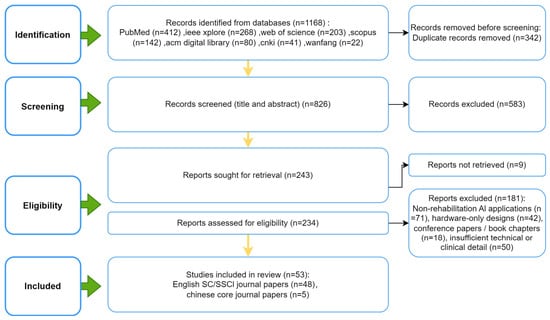
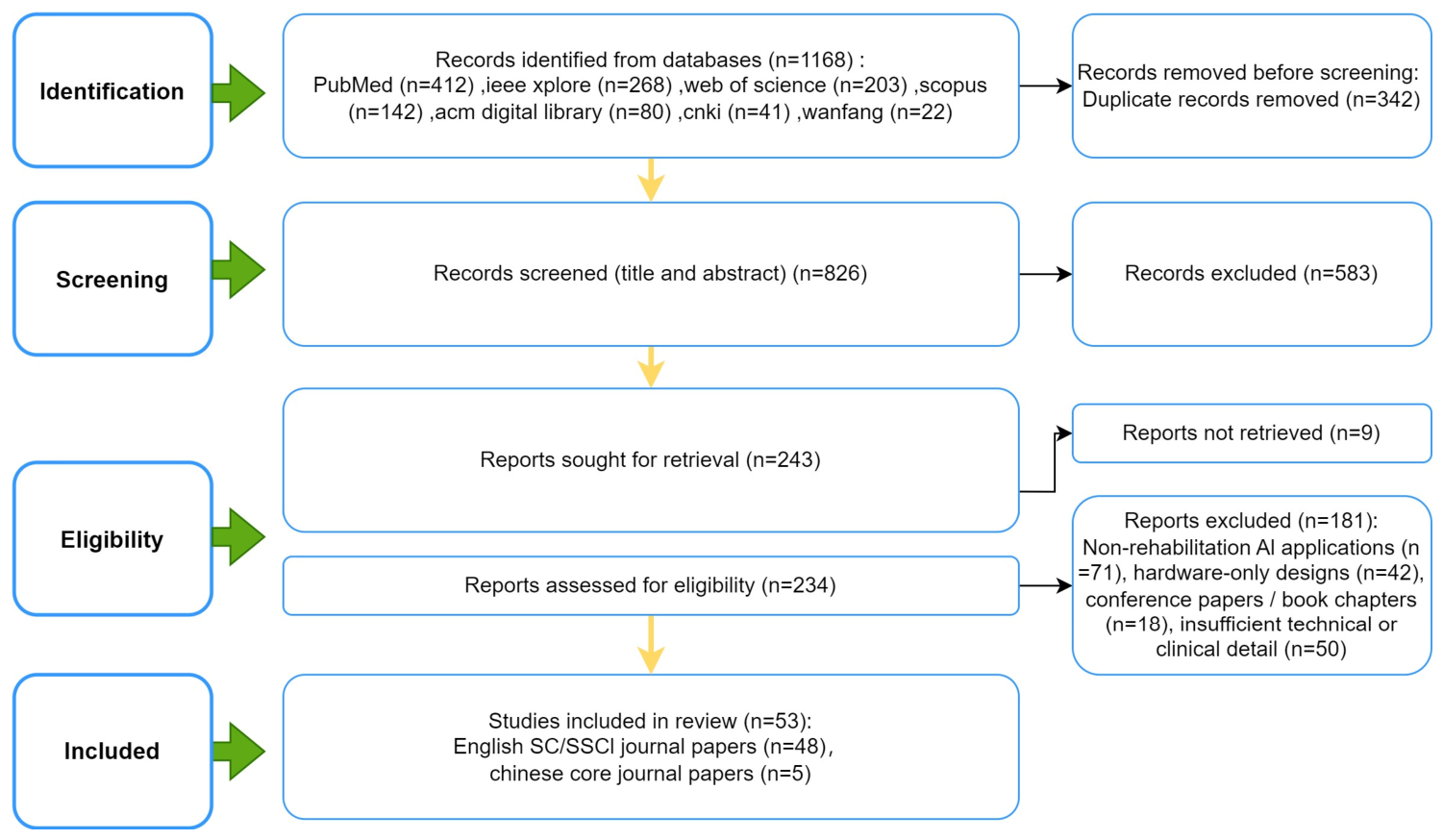
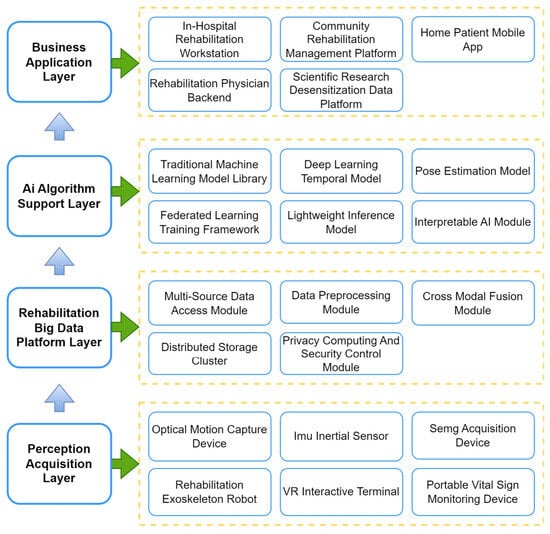
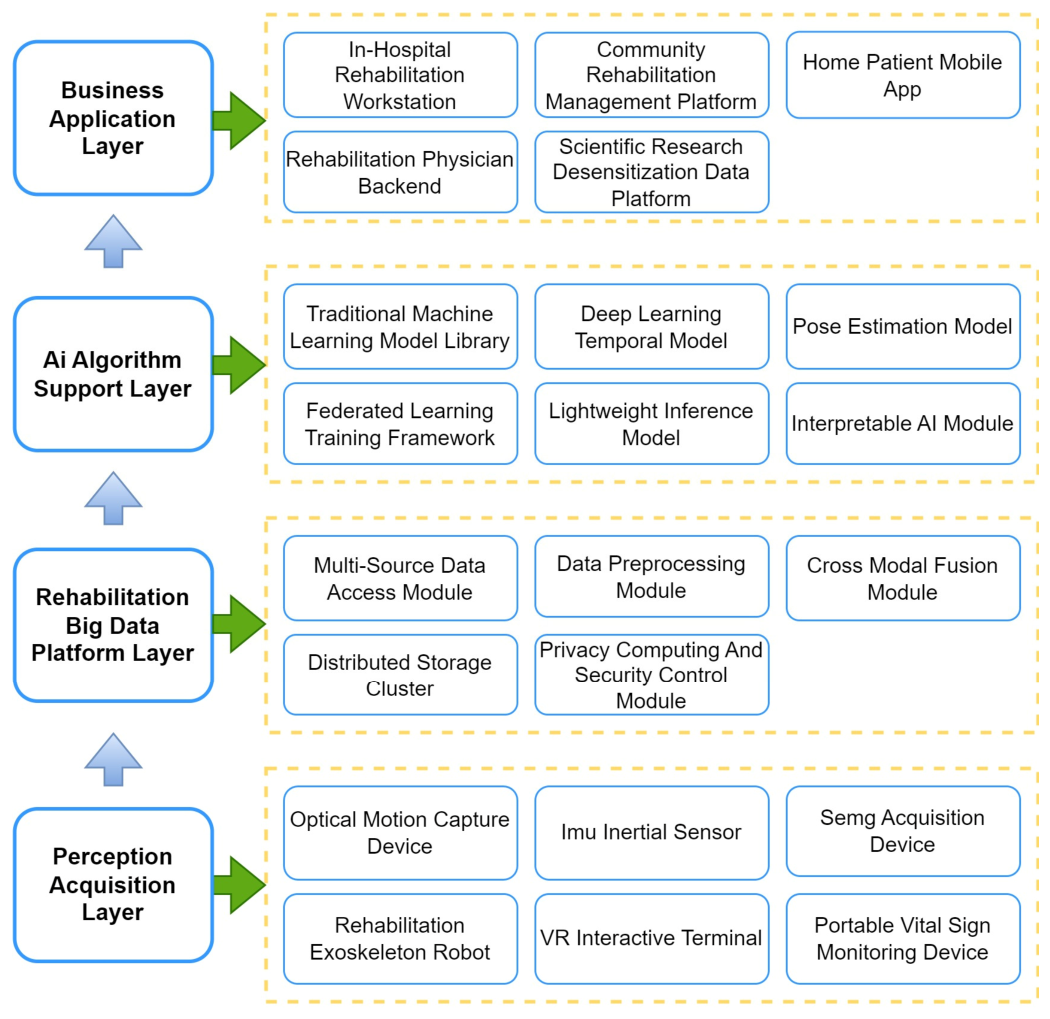
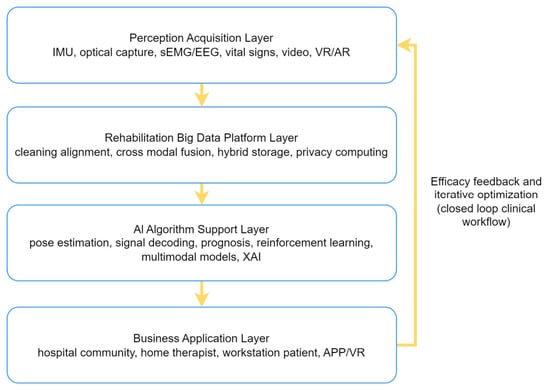
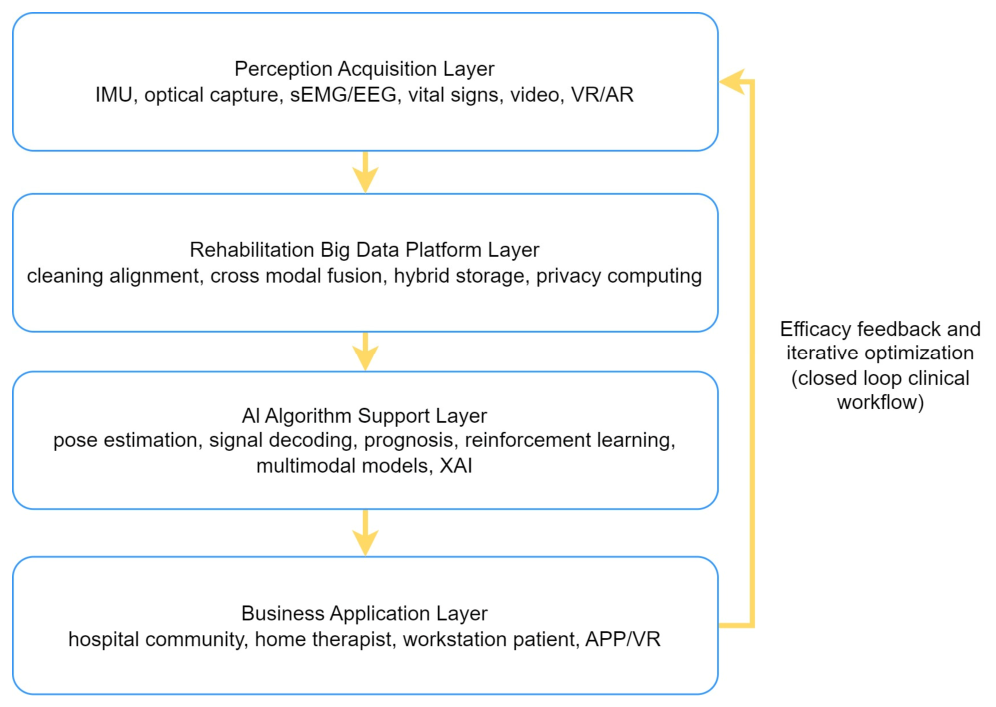

Disclaimer/Publisher’s Note: The statements, opinions and data contained in all publications are solely those of the individual author(s) and contributor(s) and not of MDPI and/or the editor(s). MDPI and/or the editor(s) disclaim responsibility for any injury to people or property resulting from any ideas, methods, instructions or products referred to in the content. |
© 2026 by the authors. Published by MDPI on behalf of the International Institute of Knowledge Innovation and Invention. Licensee MDPI, Basel, Switzerland. This article is an open access article distributed under the terms and conditions of the Creative Commons Attribution (CC BY) license.