


1. Introduction
Hydrocele is among the oldest documented urological conditions in medical history. Ancient physicians recognized scrotal swelling as a common clinical problem and attempted various therapeutic interventions, ranging from puncture and drainage to cautery and operative incisions. Despite the long historical continuity of hydrocele treatment, the contributions of medieval Islamic surgeons often receive less attention in modern surgical historiography to [1,2,3,4,5].
The Islamic Golden Age served as a major period of medical synthesis, preservation, and innovation. Physicians in the Islamic world translated and critically evaluated Greco-Roman and Indian medical knowledge while integrating clinical observations and surgical refinements into their practices. Among the most influential figures was Abu al-Qasim Al-Zahrawi (936–1013 CE), whose encyclopedic work Al-Tasrif became one of the most important surgical references in medieval Europe [5,6].
Al-Zahrawi’s discussion of hydrocele is particularly important because it reflects a transition from relatively simple evacuation techniques to a more structured operative philosophy incorporating recurrence prevention, anatomical awareness, and postoperative management [7,8].
2. Materials and Methods
This study used a historical comparative review methodology. Primary historical medical texts from Greco-Roman, Ayurvedic, and Islamic traditions were examined using available English translations and Arabic source texts. Al-Zahrawi’s account of hydrocele surgery was examined in the Arabic edition of Al-Tasrif and in the scholarly English translation by Spink and Lewis, Albucasis on Surgery and Instruments [1]. Direct quotations in this article are taken from the published English translation and checked against the corresponding Arabic passage. Key Islamic medical sources also included Al-Hawi by Al-Razi and the Canon of Medicine by Ibn Sina [1,2,3].
Earlier traditions were represented through selected Greco-Roman surgical descriptions and the Sushruta Samhita from the Ayurvedic tradition. Secondary modern historical literature was also reviewed to contextualize the evolution of medieval surgery and transmission of medical knowledge to Europe [1,2,3].
3. Historical Background
Greco-Roman physicians recognized scrotal fluid collections and proposed several treatment approaches, commonly involving puncture, drainage, compression, and cautery of the scrotum. These procedures are often relatively limited in operative scope, and recurrence remains a major challenge. In the Ayurvedic tradition, texts such as the Sushruta Samhita discuss scrotal swelling under broader disease classifications, including Vriddhi disorders. Ayurvedic approaches include aspiration and drainage methods, alongside broader systemic therapeutic concepts [4].
Islamic physicians inherited these traditions through translation movements centered in Baghdad and other intellectual centers. Rather than merely preserving earlier knowledge, many Islamic surgeons critically refined surgical techniques and emphasized the importance of operative organization, instrumentation and anatomical precision [1,5,6].
4. Al-Zahrawi and Hydrocele Surgery
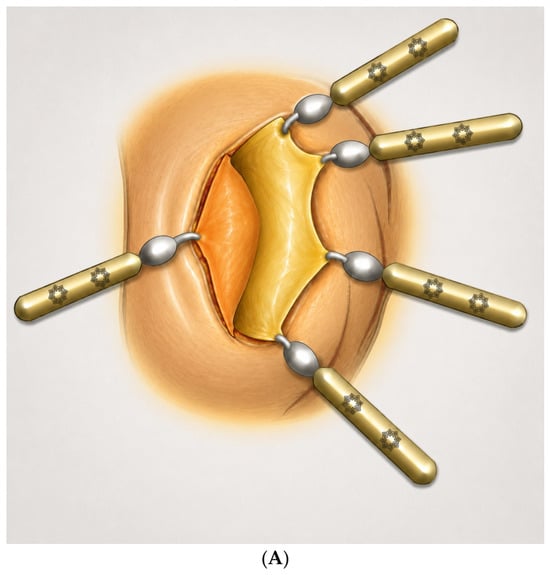
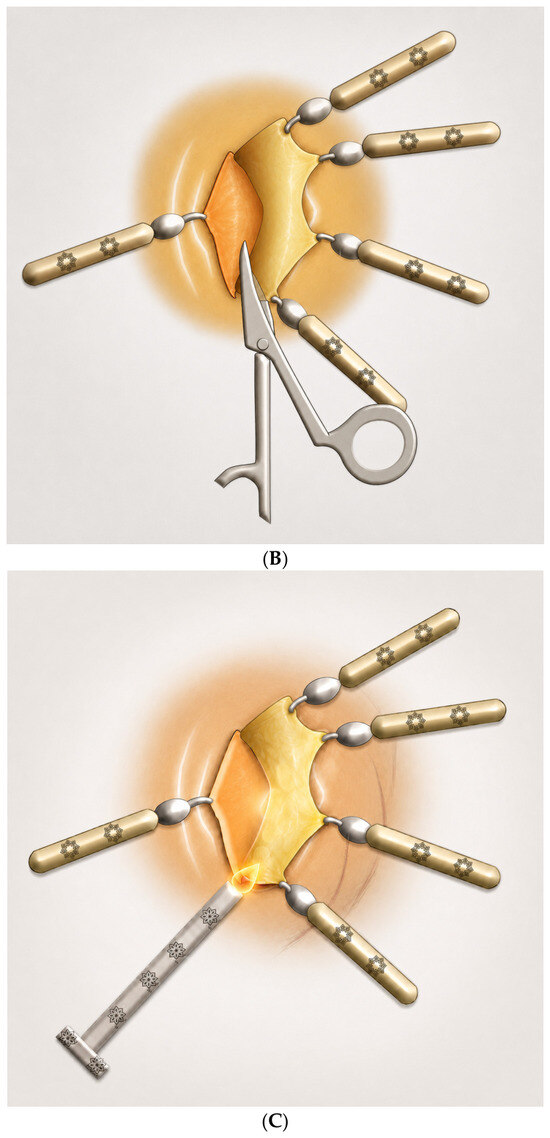
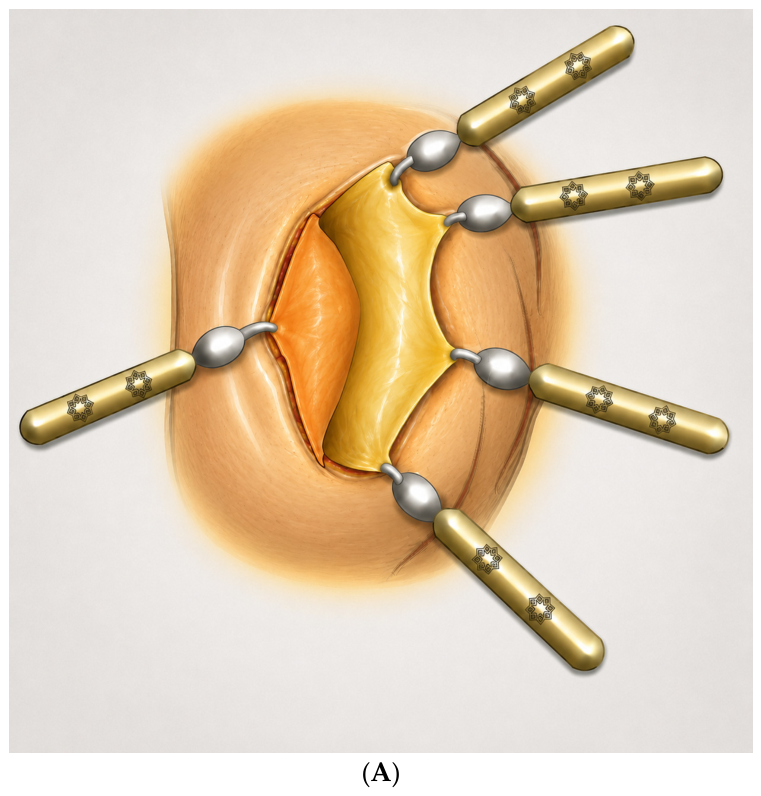
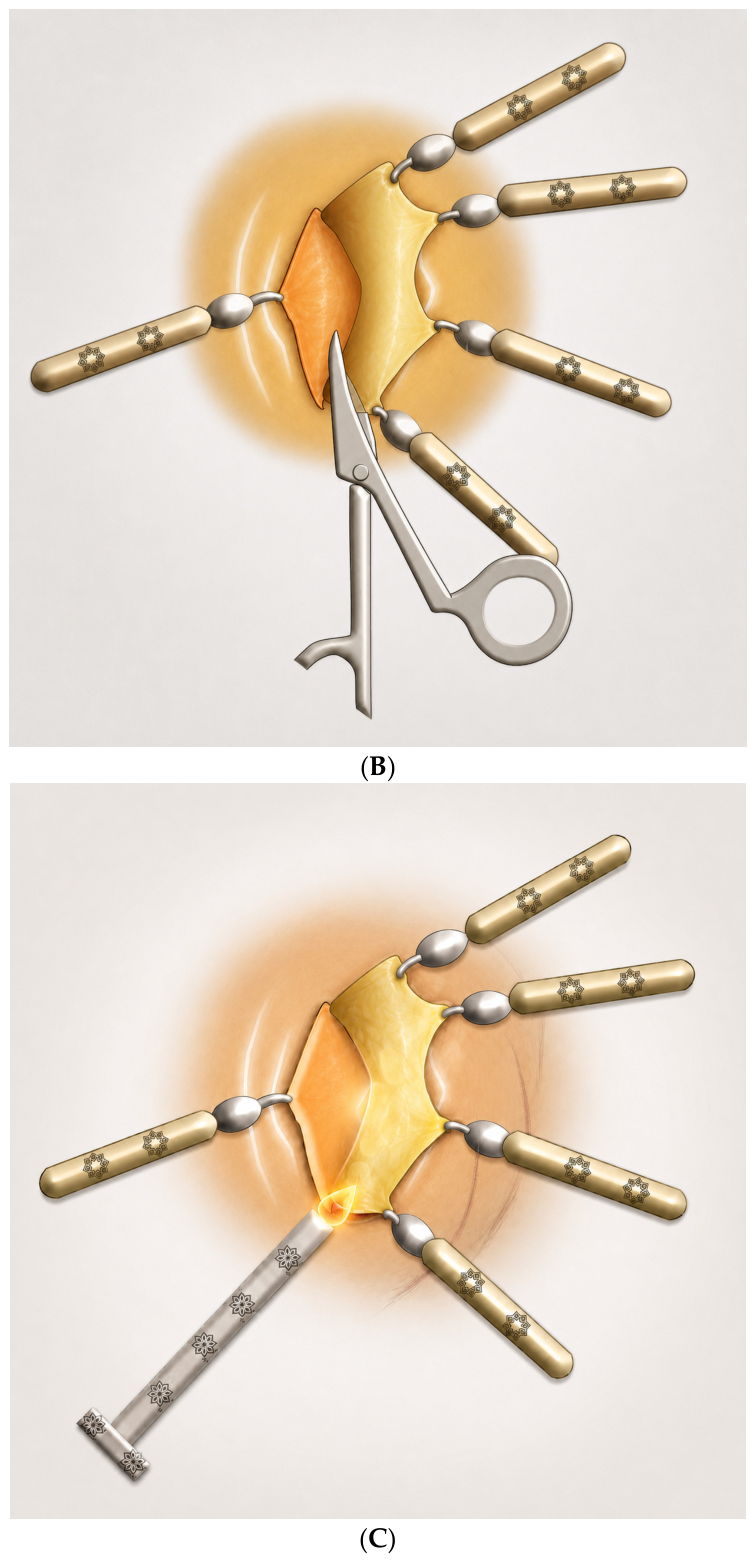
Al-Zahrawi’s surgical practice reflected awareness of pain control during operative procedures. Medieval Islamic surgeons described the use of sedative and soporific preparations composed of substances such as opium, mandrake, henbane, and other herbal compounds that were administered before surgery to induce sleep in patients [9,10]. Al-Zahrawi also provided one of the most detailed medieval descriptions of hydrocele management. He recommended a longitudinal scrotal incision extending “down to the tunica albuginea,” with careful dissection to avoid injuring the testis [7] (p. 426). After opening the fluid-containing membrane, he instructed the surgeon to “draw off all the fluid,” elevate the sac with hooks, and excise it as completely as possible to reduce recurrence [7] (p. 426). He then directed that the testis be returned to its position and that the wound edges be approximated “with a suture,” followed by routine wound dressings until healing [7] (p. 426). These details support the interpretation that his technique incorporated incision planning, anatomical caution, evacuation, sac management, recurrence prevention, wound closure, and postoperative care [8].
Illustrated reconstruction of Al-Zahrawi’s hydrocele procedure is shown in Figure 1A–C.
Figure 1.
(A) Scrotal incision and opening of the hydrocele sac. (B) Excision of the redundant hydrocele sac after evacuation of the fluid. (C) Use of cautery or heated instrumentation for cutting and hemostasis.
5. Comparative Analysis
A comparison of Greco-Roman, Ayurvedic, and Islamic traditions reveals important differences in operative sophistication and surgical philosophy. Greco-Roman approaches often relied heavily on puncture, drainage, or cauterization which frequently lack structured strategies. Ayurvedic texts demonstrate important observational classifications and therapeutic diversity but generally provide less detailed operative procedure for hydrocele specifically, intended for recurrence control [4,11,12].
In contrast, Al-Zahrawi’s descriptions reflected greater operative systematization. His emphasis on incision planning, evacuation, tissue management, and postoperative care suggests significant refinement in hydrocele surgeries. These developments paralleled broader advancements in medieval Islamic surgery, where operative procedures increasingly became structured disciplines rather than isolated interventions [1,5,7,8].
6. Discussion
The historical evolution of hydrocele surgery illustrates the broader transformation of surgical practices across different civilizations. Medieval Islamic surgeons did not merely preserve earlier knowledge; they actively refined operative concepts and procedural organization. Al-Zahrawi’s hydrocele techniques may represent one of the clearest examples of this progression within urological surgery. His methods reflected increasing attention to anatomy, recurrence prevention, and postoperative management, which are all important principles in modern surgery [1,5,7].
The later transmission of Al-Tasrif into Latin contributed significantly to the dissemination of surgical knowledge in medieval Europe, where it remained influential in medical education and surgical teaching for centuries. Modern historical scholarship has increasingly recognized the importance of Islamic surgical contributions; however, many specific urological procedures remain understudied. Hydrocele surgery provides an important example of how medieval Islamic medicine contributed to the development of organized surgical practices [5,7].
7. Conclusions
Hydrocele management has evolved substantially over the past 1000 years across successive medical traditions. While Greco-Roman and Ayurvedic physicians established important early therapeutic approaches, medieval Islamic surgeons, particularly Al-Zahrawi, advanced hydrocele surgery into a more systematic operative discipline. His descriptions demonstrate technical refinement, recurrence-conscious planning, and organized postoperative management. These contributions were part of the broader surgical advancements of the Islamic Golden Age and influenced the subsequent development of surgery in Europe [1,7,8].
Author Contributions
Conceptualization, A.A.D. and N.A.A.Z.; methodology, A.A.D.; validation, A.A.D. and N.A.A.Z.; formal analysis, A.A.D.; investigation, A.A.D.; resources, A.A.D.; writing—original draft preparation, A.A.D.; writing—review and editing, A.A.D. and N.A.A.Z.; visualization, N.A.A.Z.; supervision, A.A.D.; project administration, A.A.D. All authors have read and agreed to the published version of the manuscript.
Funding
This research received no external funding.
Institutional Review Board Statement
Not applicable. This study is a historical analysis of published texts and did not involve human participants, identifiable personal data, or animals.
Informed Consent Statement
Not applicable. This study did not involve human participants, patient data, or identifiable patient information.
Data Availability Statement
No new data were created or analyzed in this study. Data sharing is not applicable to this article, as the analysis was based on published historical sources cited in the manuscript.
Conflicts of Interest
The authors declare no conflict of interest.
References
- Al-Zahrawi, A. Al-Tasrif liman ‘ajaza ‘an al-ta’lif. In The Method of Medicine; Al-Maktaba al-Tijariyya al-Kubra: Cairo, Egypt, 1908. [Google Scholar]
- Al-Razi, M. Al-Hawi fi al-Tibb. In The Comprehensive Book on Medicine; Osmania Oriental Publications Bureau: Hyderabad, India, 1955. [Google Scholar]
- Sina, I. The Canon of Medicine; Hameed, B.K., Trans.; Great Books of the Islamic World: Chicago, IL, USA, 1999. [Google Scholar]
- Sushruta. Sushruta Samhita; Bhishagratna, K.L., Trans.; Chowkhamba Sanskrit Series Office: Varanasi, India, 1907. [Google Scholar]
- Pormann, P.E.; Savage-Smith, E. Medieval Islamic Medicine; Edinburgh University Press: Edinburgh, UK, 2007. [Google Scholar]
- Hamarneh, S.K. Health Sciences in Early Islam; Noor Health Foundation and Zahra Publications: Blanco, TX, USA, 1983; Volume 1. [Google Scholar]
- Spink, M.S.; Lewis, G.L. Albucasis on Surgery and Instruments: A Definitive Edition of the Arabic Text with English Translation and Commentary; University of California Press: Berkeley, CA, USA, 1973. [Google Scholar]
- Al-Ghazal, S.K. Al-Zahrawi (Albucasis): A light in the dark Middle Ages in Europe. J. Int. Soc. Hist. Islam. Med. 2003, 1, 37–38. [Google Scholar]
- Aziz, E.; Nathan, B.; McKeever, J. Anesthetic and analgesic practices in Avicenna’s Canon of Medicine. Am. J. Chin. Med. 2000, 28, 147–151. [Google Scholar] [CrossRef] [Scilit]
- Chidiac, E.J.; Kaddoum, R.N.; Fuleihan, S.F. Mandragora: Anesthetic of the ancients. Anesth. Analg. 2012, 115, 1437–1441. [Google Scholar] [CrossRef] [Scilit]
- Gurunluoglu, R.; Gurunluoglu, A. Paul of Aegina: Landmark in surgical progress. World J. Surg. 2003, 27, 18–25. [Google Scholar] [CrossRef] [Scilit]
- Pormann, P.E. The Oriental Tradition of Paul of Aegina’s Pragmateia. In Medical Books in the Byzantine World; Johnson, S.D., Ed.; Routledge: London, UK, 2013; pp. 115–131. [Google Scholar]
Disclaimer/Publisher’s Note: The statements, opinions and data contained in all publications are solely those of the individual author(s) and contributor(s) and not of MDPI and/or the editor(s). MDPI and/or the editor(s) disclaim responsibility for any injury to people or property resulting from any ideas, methods, instructions or products referred to in the content. |
© 2026 by the authors. Published by MDPI on behalf of the Société Internationale d’Urologie. Licensee MDPI, Basel, Switzerland. This article is an open access article distributed under the terms and conditions of the Creative Commons Attribution (CC BY) license.