


Highlights
What are the main findings?
- Pulmonary rehabilitation responsiveness reflects the interaction of genomic, immune, metabolic, behavioural, and environmental factors rather than a single biological mechanism.
- Integrating genomic instability, host genetics, immune competence, behavioural resilience, lifestyle, smoking-related biology, cognition, persistent viral infection, and obesity provides a more comprehensive interpretation of rehabilitation heterogeneity in COPD.
What are the implications of the main findings?
- An integrated biological approach may improve patient stratification and support more individualized pulmonary rehabilitation strategies.
- The integration of multi-omics technologies, digital phenotyping, and artificial intelligence may further refine biological profiling and advance precision pulmonary rehabilitation.
Abstract
Pulmonary rehabilitation improves symptoms, exercise capacity and quality of life in chronic obstructive pulmonary disease (COPD), although patients with similar clinical characteristics often show different responses. This review summarizes the biological determinants of rehabilitation responsiveness identified through more than 10 years of translational research. Evidence from longitudinal studies of elderly patients with severe COPD undergoing standardized pulmonary rehabilitation was integrated with clinical, functional, molecular, immunological, cognitive, behavioural and lifestyle data, including long-term follow-up. Baseline DNA damage was markedly increased and further rose during rehabilitation (19.6 ± 7.3% vs. 21.8 ± 7.2% tail intensity) despite significant functional improvement. FKBP5 rs4713916 was the only genetic variant associated with better rehabilitation outcomes. Daily vegetable intake independently predicted treatment success, whereas smoking was associated with oxidative DNA damage, immune alterations and higher Torque Teno Virus (TTV) load. TTV ≥ 4 log10 copies/mL was associated with increased regulatory T cells, reduced α7 nicotinic acetylcholine receptor expression (31% vs. 52%; p = 0.023) and shorter 5-year survival (609 ± 160 vs. 937 ± 94 days; p = 0.017). Active Coping, Planning and Self-Distraction were the behavioural strategies most strongly associated with rehabilitation response. Cognitive impairment and obesity-related immune regulation further contributed to patient heterogeneity. These observations suggest that rehabilitation responsiveness reflects the interaction of genomic, immune, behavioural and lifestyle factors. Their integration may improve patient stratification and support the development of precision pulmonary rehabilitation.
1. Introduction
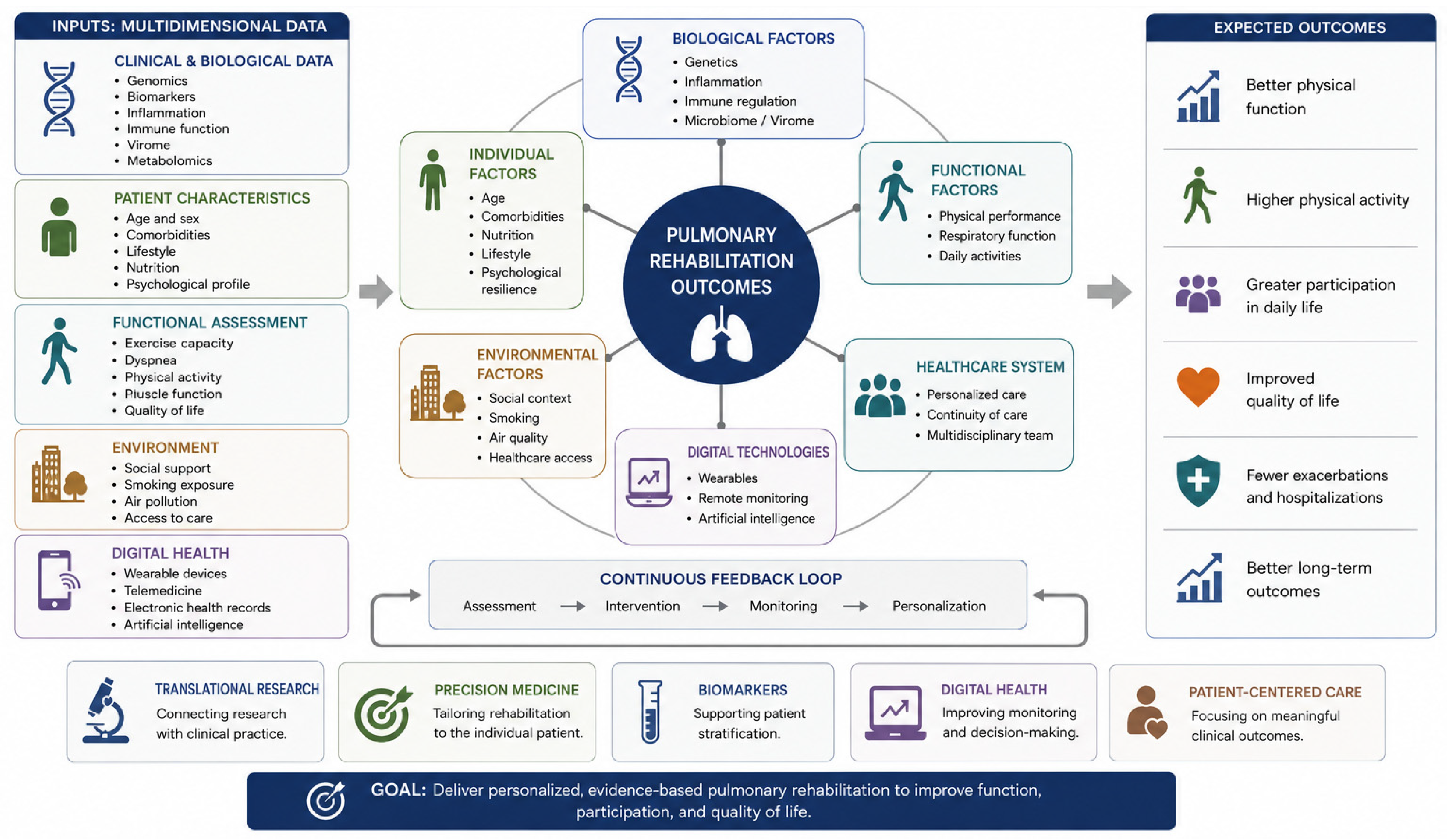
Population ageing and the growing burden of chronic diseases have expanded the role of rehabilitation beyond the recovery of lost function. Rehabilitation is now recognized as an integral component of chronic disease management, aiming to preserve functional capacity, reduce disability, and improve quality of life [1]. This shift is reflected in two major international initiatives. The “World Health Organization (WHO) Rehabilitation 2030: A Call for Action” identifies rehabilitation as an essential element of universal health coverage, [2], while the National Institutes of Health (NIH) Research Plan on Rehabilitation [3] highlights precision medicine, biomarkers, translational research, digital technologies, and interdisciplinary collaboration as priorities for future rehabilitation research. Both initiatives recognize that rehabilitation outcomes result from the interaction of clinical, biological, behavioural, environmental, and social determinants rather than from disease severity alone (Figure 1).
Figure 1.
Conceptual evolution toward precision rehabilitation according to the National Institutes of Health (NIH) Research Plan on Rehabilitation [3].
Chronic obstructive pulmonary disease (COPD) exemplifies this complexity. Although persistent airflow limitation remains its defining clinical feature, COPD is increasingly recognized as a multisystem disorder characterized by chronic inflammation, oxidative stress, immune dysregulation, accelerated biological ageing, skeletal muscle dysfunction, nutritional abnormalities, cognitive impairment, psychological distress, and multiple comorbidities. The relative contribution of these processes differs substantially among patients, contributing to the marked heterogeneity observed in disease progression and treatment response [4,5,6,7,8,9,10,11,12,13,14,15].
Pulmonary rehabilitation is one of the most effective non-pharmacological interventions for COPD and consistently improves exercise capacity, dyspnoea, and health-related quality of life [16,17,18,19,20]. Nevertheless, clinically comparable patients frequently achieve different outcomes after rehabilitation. Conventional clinical and functional variables explain only part of this variability [21], suggesting that additional biological mechanisms influence rehabilitation responsiveness.
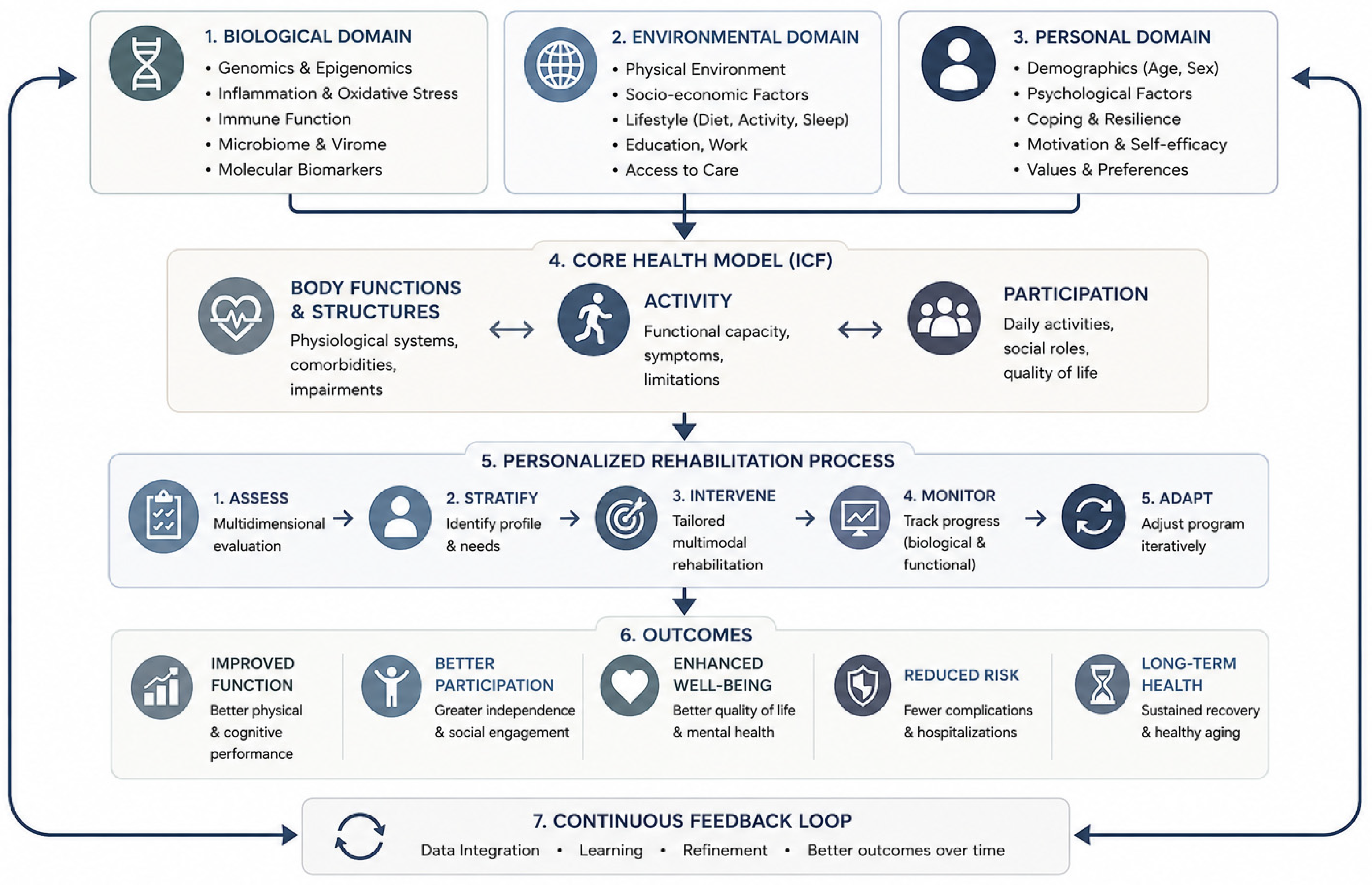
The concept of rehabilomics, introduced by Wagner and Kumar, proposed the integration of molecular biomarkers into rehabilitation research to better characterize individual variability in functional recovery. Within the framework of the International Classification of Functioning, Disability and Health (ICF), biological markers complement conventional clinical assessment by improving patient stratification and supporting more individualized rehabilitation strategies (Figure 2) [22,23].
Figure 2.
Conceptual model of rehabilomics within the International Classification of Functioning, Disability and Health (ICF).
Despite this conceptual framework, the application of rehabilomics to COPD remains limited. Most studies have focused on individual biomarkers or single molecular pathways, whereas few have examined how multiple biological processes interact to influence rehabilitation outcomes.
Recent evidence has also highlighted the potential role of biomarkers in exercise-based pulmonary rehabilitation. In particular, inflammatory and oxidative stress markers, as well as emerging markers related to DNA damage, microbiota, and metabolism, may provide additional information on the biological response to rehabilitation and may help identify different patterns of responsiveness [24,25]. However, the available evidence remains limited and heterogeneous, and the relationship between biomarker changes and clinical outcomes is not yet sufficiently established to support their routine use in clinical practice [26].
The studies reviewed here derive from a longitudinal translational research programme initiated in 2013 in elderly patients with severe COPD undergoing standardized pulmonary rehabilitation [7]. The programme progressively expanded to investigate genomic instability, pharmacogenomics, immune competence, chronic viral infection, behavioural resilience, cognition, nutrition, smoking-related biology, obesity, and biological ageing. More recently, transcriptomic, metabolomic, and lipidomic analyses have been introduced to further extend the biological characterization of the cohort.
Although each study addressed a different research question, the findings gradually converged toward a common biological interpretation. Rehabilitation responsiveness could not be explained by any single clinical or biological determinant but appeared to reflect the interaction of multiple biological processes acting at different levels of disease complexity.
This article brings together the findings generated by our longitudinal translational research programme and places them within the broader context of precision pulmonary rehabilitation, rehabilomics, systems biology, and personalized medicine. Rather than providing a systematic review of the literature, the aim is to integrate complementary observations from our research programme into a biological framework that may help explain heterogeneity in rehabilitation responsiveness and generate hypotheses for future validation.
2. Methodological Approach
The biological model proposed in this review builds on the longitudinal translational research platform established at IRCCS San Raffaele Roma (Italy), as originally described by Cesario et al. [7], and subsequently developed between 2013 and 2026 through the contribution of several collaborators, bringing together complementary biological domains to better explain the heterogeneity of pulmonary rehabilitation responsiveness. It integrates the findings of these complementary investigations with current concepts in systems biology, rehabilomics, precision rehabilitation, and personalized medicine. The project involved collaborations with San Raffaele University, Rome, Italy; IRCCS San Raffaele Roma, Rome, Italy; San Raffaele Sulmona, Sulmona (L’Aquila), Italy; Sapienza University of Rome, Rome, Italy; National Institute for Infectious Diseases “Lazzaro Spallanzani” IRCCS, Rome, Italy; University of Insubria, Varese, Italy; IRCCS INRCA, Ancona, Italy; University of Naples Federico II, Naples, Italy; and the AgEA Coordinating Body (Agenzia per le Erogazioni in Agricoltura), Rome, Italy.
The present article is a narrative and conceptual synthesis rather than a systematic review. The primary evidence base consists of studies generated within the longitudinal translational research programme described above. The relevant external literature was considered to contextualize these findings within established and emerging concepts in COPD heterogeneity, precision medicine, rehabilomics, and systems biology. No formal systematic literature search or quantitative synthesis of the external literature was performed.
The programme enrolled elderly patients (>71 years old) with severe COPD (Gold stage 3–4) undergoing standardized inpatient pulmonary rehabilitation. Clinical, functional, nutritional, lifestyle, cognitive, psychological, and biological data were collected prospectively, while a dedicated biobank was established to store whole blood, serum, plasma, peripheral blood lymphocytes, DNA, and blood RNA samples (collected using PAXgene® tubes from Qiagen, Milan, Italy).
Clinical and laboratory information was managed through the REDCap electronic platform, which ensured standardized data collection, quality control, and secure long-term data management [27]. The study was approved by the Ethics Committee of IRCCS San Raffaele Roma (Protocol No. 15/2013) and conducted in accordance with the Declaration of Helsinki. All participants provided written informed consent. Laboratory analyses were performed blind to clinical outcomes, and statistical analyses were conducted on pseudonymized datasets. Vital status was assessed after three and five years using municipal registry records.
As the programme evolved, successive studies explored complementary biological domains potentially associated with rehabilitation response, including oxidative stress, genomic instability, DNA damage, pharmacogenetics, cognition, behavioural resilience, nutrition, smoking-related biology, Torque Teno Virus infection, immune competence, and obesity-related inflammation. Transcriptomic, metabolomic, and lipidomic analyses are currently underway and are expected to further expand the biological characterization of the cohort.
3. Results
Patients with apparently similar clinical characteristics often experience markedly different outcomes after pulmonary rehabilitation, indicating that conventional clinical assessment captures only part of the biological heterogeneity of COPD. The studies reviewed here examined complementary biological domains and consistently showed that rehabilitation responsiveness reflects the interaction of genomic, immune, metabolic, behavioural, and environmental mechanisms rather than a single determinant [28,29,30,31,32,33,34,35,36,37]. The main findings are summarized below and integrated in Table 1, which provides an overview of the biological evidence generated by our longitudinal translational research programme.
Table 1.
Biological domains investigated within the longitudinal translational research programme and their contribution to precision pulmonary rehabilitation.
3.1. Genomic Instability
The initial studies addressed genomic instability, a well-recognized consequence of the persistent oxidative stress associated with COPD. Elderly patients with COPD showed substantially higher levels of DNA damage than healthy older adults (19.6 ± 7.3% vs. approximately 10.5 ± 11.2% tail intensity). DNA damage increased during pulmonary rehabilitation (19.6 ± 7.3% to 21.8 ± 7.2%), despite significant improvements in exercise capacity (6MWD: 94 ± 84 to 187 ± 134 m) and pulmonary function. The increase in DNA damage was greatest in non-responders and in patients receiving long-term oxygen therapy, suggesting that genomic instability reflects biological vulnerability rather than simply disease severity [28,38].
3.2. Pharmacogenomics
Host genetic variability was subsequently investigated to determine whether inherited factors influenced rehabilitation responsiveness. Among the polymorphisms examined, FKBP5 was the only gene consistently associated with rehabilitation outcome. Carriers of the favourable genotype achieved greater improvements in 6MWD (152 vs. 90 m), lung function and health-related quality of life, with an approximately four-fold higher probability of successful rehabilitation. These findings suggest that pharmacogenomic variability contributes to treatment response but should be interpreted within the broader biological context of COPD [29].
3.3. Lifestyle and Smoking-Related Biology
Lifestyle further contributed to the biological diversity of rehabilitation outcomes. Daily vegetable consumption was independently associated with rehabilitation success (OR ≈ 3.6), with an even stronger association among patients aged ≥80 years (OR ≈ 17). Higher vegetable intake was accompanied by lower IL-6 concentrations and a more favourable inflammatory profile. Conversely, smoking identified a biological phenotype characterized by persistent DNA damage, oxidative stress, immune dysregulation and a higher prevalence of TTV viremia ≥ 4 log10 copies/mL, indicating that environmental exposures influence rehabilitation through biological mechanisms extending beyond smoking history alone [30,31,32].
3.4. Cognitive Ageing
The biological alterations identified in COPD also involved cognitive function. Patients with cognitive impairment consistently showed higher DNA damage, whereas conventional inflammatory and oxidative stress biomarkers provided limited discriminatory value. A subsequent meta-analysis confirmed the association between genomic instability and cognitive decline, supporting the concept that DNA damage reflects systemic biological ageing rather than respiratory disease alone [33].
3.5. Behavioural Resilience
The first evidence that behavioural response to pulmonary rehabilitation might have a biological basis came from our study on the FKBP5 rs4713916 polymorphism. Patients carrying the GA genotype showed better cognitive performance, lower anxiety and depressive symptoms, higher mental quality of life, more adaptive coping strategies, and greater functional recovery following pulmonary rehabilitation. These findings suggested that genetic factors may contribute to the individual capacity to adapt to rehabilitation.
However, genetic predisposition alone did not fully explain rehabilitation responsiveness. In a subsequent cohort of 102 elderly COPD patients, responders consistently exhibited higher Active Coping and Planning scores than non-responders, while Self-distraction was independently associated with better rehabilitation outcomes. These behavioural characteristics were also accompanied by greater functional independence, indicating that psychological adaptation contributes substantially to treatment success.
The IMPROVE pilot study further demonstrated that these behavioural traits are not fixed. A structured psychoeducational intervention increased adaptive coping, reduced maladaptive coping, and promoted the maintenance of rehabilitation benefits over time. Together, these findings indicate that behavioural resilience is both measurable and modifiable and should be considered an integral component of precision pulmonary rehabilitation programmes (Ref. [34] and manuscript in preparation).
3.6. Virome and Immune Ageing
The search for additional biological determinants led to the investigation of immune competence. Overall, 62.7% of patients exhibited TTV viremia ≥ 4 log10 copies/mL. High TTV load was associated with lower CD3+, CD4+ and CD8+ lymphocyte counts, increased regulatory T-cell frequency and reduced five-year survival. Rather than acting as a direct pathogen, TTV appears to reflect the progressive decline in immune competence accompanying advanced COPD [35,36].
3.7. Immune Dysfunction, Immunometabolism and Obesity
Further analyses confirmed the central role of immune regulation. Patients with poorer outcomes showed expansion of regulatory T cells, reduced lymphocyte populations and impaired cholinergic anti-inflammatory signalling, indicating that immune competence provides more meaningful prognostic information than viral burden alone [36].
The interaction between metabolism and immunity provided an additional perspective on patient heterogeneity. Approximately 26.5% of patients were obese. Compared with non-obese individuals, obese patients showed higher CD3+, CD4+ and CD8+ lymphocyte counts, lower inflammatory indices (NLR, PLR, SII and SIRI) and a lower prevalence of TTV viremia ≥ 4 log10 copies/mL, whereas DNA damage and five-year survival were similar between BMI groups. These findings support an immune-based interpretation of the obesity paradox, suggesting that immune–inflammatory regulation is more informative than body mass index alone for characterizing rehabilitation phenotypes [37].
3.8. Toward an Integrated Biological Model
The evidence reviewed here suggests that rehabilitation responsiveness in COPD cannot be explained by any single biological mechanism. Instead, it reflects the interaction of multiple processes operating at different levels of disease complexity. Genomic instability, host genetics, immune competence, persistent viral infection, immunometabolic regulation, lifestyle, behavioural resilience, cognition, and environmental exposures each provide complementary information on the biological variability underlying rehabilitation outcomes. Considered individually, none of these factors adequately captures the heterogeneity of treatment response. Their integration offers a broader biological framework for interpreting patient variability.
This integrated perspective provides the basis for moving beyond conventional clinical stratification toward a more personalized approach to pulmonary rehabilitation, in which biological and functional information jointly contribute to patient characterization and treatment planning [28,29,30,31,32,33,34,35,36,37].
4. Discussion
Pulmonary rehabilitation is one of the most effective non-pharmacological interventions for patients with COPD, consistently improving exercise capacity, dyspnoea and health-related quality of life [4,39,40,41,42]. Nevertheless, patients with apparently similar clinical characteristics often achieve different outcomes. This variability suggests that conventional physiological and functional assessment captures only part of the processes underlying recovery.
This observation is consistent with the current understanding of COPD. Agustí and colleagues proposed that COPD should be regarded as a heterogeneous syndrome resulting from the interaction of genetic susceptibility, environmental exposures, ageing, inflammation and impaired tissue repair rather than airflow limitation alone [43,44]. In support of this, extensive functional genomic and epidemiological studies demonstrate that polygenic lung vulnerability interacts early with environmental insults across the lifespan [45,46]. Within this framework, the molecular mechanisms of accelerated ageing and cellular senescence amplify the chronic inflammatory response, severely impairing tissue regeneration and repair capacity [47,48]. The concepts of treatable traits and, more recently, GETomics have further extended this view by emphasizing that biological mechanisms should complement clinical assessment when guiding patient management [49,50,51,52]. Along the same line, the Lancet Commission highlighted the need to move beyond a predominantly spirometric definition of COPD, emphasizing the importance of risk factors, disease trajectories, and the underlying biological mechanisms contributing to disease development and progression [10,53].
Pulmonary rehabilitation has only partly followed this evolution. Functional measures remain central to patient evaluation, whereas the biological basis of treatment response has received comparatively less attention. The studies reviewed here addressed different biological domains within the same longitudinal translational research programme, making it possible to examine molecular, clinical and behavioural findings within a common clinical setting.
Although each study addressed a specific question, the findings pointed towards a common picture. No single biomarker appeared to account for the variability in response to rehabilitation. Rather, genomic instability, host genetics, immune competence, persistent viral infection, cognition, behavioural characteristics, lifestyle and obesity were associated with different aspects of patient heterogeneity. Importantly, these findings are mainly based on observational studies and therefore do not allow causal relationships to be established. These factors should be considered as possible contributors to differences in rehabilitation response rather than as established determinants or validated predictors of outcome. It is also important to recognize that responsiveness to pulmonary rehabilitation is not a single or uniform outcome. Patients may improve to different degrees in exercise capacity, symptoms, health-related quality of life, functional status, or other clinical domains, and improvement in one domain does not necessarily imply a similar response in another. The different outcomes used across the studies in this programme should therefore be considered when interpreting the apparent convergence of the findings.
This interpretation is also in keeping with the emerging literature on biomarkers and exercise-based pulmonary rehabilitation. The biological characteristics identified in our studies may provide complementary information for understanding differences between patients, but their value for predicting individual responses or guiding treatment decisions remains to be established.
A recent narrative review by Candia et al. [26] summarized evidence on inflammatory and oxidative stress markers, DNA damage, microbiota and metabolic signatures as potential biomarkers of the biological response to rehabilitation. These studies suggest that biomarkers may provide information that is not fully captured by conventional clinical and functional measures and may have a future role in patient phenotyping and in monitoring changes during rehabilitation. However, the evidence remains heterogeneous, and the clinical meaning of individual biomarker changes is not yet sufficiently established. Differences in patient characteristics, rehabilitation protocols, timing of sampling and laboratory methods make it difficult to compare findings across studies and to identify biomarkers that can be reliably used in clinical practice [26]. Thus, biomarker-based approaches should currently be considered complementary to, rather than a replacement for, established clinical and functional assessment.
Genomic instability was among the first biological alterations identified in this programme. DNA damage remained elevated during rehabilitation despite improvements in exercise capacity, pulmonary function and health-related quality of life [28]. Similar observations have been reported in elderly individuals exposed to chronic oxidative stress, where biological adaptation may follow a different time course from functional recovery [38,54] and in other cohorts of COPD patients undergoing physical exercise [55]. FKBP5 polymorphisms identified patients with greater rehabilitation benefit, whereas the remaining candidate genes showed limited additional value [29]. These findings suggest that host genetic variability contributes to rehabilitation outcome but does not explain it on its own.
Lifestyle and behavioural factors added another perspective. Regular vegetable consumption was associated with lower systemic inflammation and better rehabilitation outcomes, whereas smoking was associated with persistent oxidative stress, DNA damage and immune alterations [30,31,32]. Our observations are consistent with other studies investigating the protective impact of vegetable consumption on COPD development [56,57] as well as the effect of smoking on inflammation and immune response [58]. Cognitive impairment, which in COPD can be manifested by functional disability, poor psychological well-being, frequent memory loss and faster cognitive decline over time [59,60,61], in our cohort was associated with increased genomic damage, while patients with better outcomes consistently reported more adaptive coping strategies [33,34]. Considered individually, these observations provide only part of the explanation; viewed together, they indicate that behavioural and biological factors contribute jointly to rehabilitation outcome.
The studies on immune competence reached similar conclusions. Higher Torque Teno Virus (TTV) viraemia was associated with increased genomic instability, impaired immune status and reduced long-term survival [35,36]. These findings are consistent with the interpretation of TTV as a marker of immune competence rather than a direct pathogenic factor [62,63]. Likewise, obese patients showed lower systemic inflammation, lower TTV viraemia and better preservation of immune function despite similar survival [37]. These observations support the role of immune regulation as one of the mechanisms contributing to patient variability.
This interpretation is consistent with recent developments in precision medicine. The Lancet Commission proposed a biological framework integrating disease mechanisms and risk factors [10]. Recent reviews further support this view. Finney et al. proposed that precision treatment should target the appropriate biological pathway in the appropriate patient, whereas Xie et al. highlighted the integration of phenotypes, endotypes, biomarkers and multi-omics technologies to improve patient stratification in COPD [64,65]. Although these models were developed mainly for disease classification and targeted therapies, the same principles may also be relevant to pulmonary rehabilitation.
In this context, the concept of rehabilomics is particularly relevant. Candia et al. [26] highlighted how the integration of molecular information with rehabilitation outcomes may help describe the biological processes underlying recovery and, in the future, support more individualized rehabilitation strategies. Their review also emphasized that this field is still developing: promising findings have been reported for oxidative stress, DNA damage, microbiota and metabolic markers, but larger studies, standardized methods and independent validation are needed before these approaches can be translated into routine practice [26]. Our findings fit within this emerging framework, while also supporting a broader view in which biological markers are considered together with clinical, functional, behavioural and lifestyle characteristics rather than as isolated predictors of response [26].
Multi-omics approaches represent a further development of this framework, but they should currently be considered as a future extension of the research programme rather than as part of the empirical evidence presented in this review. The published findings summarized here derive from the biological, clinical, functional, behavioural and lifestyle domains described above, whereas transcriptomic, metabolomic and lipidomic analyses are currently ongoing. These approaches may provide additional information on the molecular pathways associated with different patterns of rehabilitation responsiveness and may help to refine the biological framework proposed here.
Metabolomics is particularly promising in this regard. Recent evidence indicates that metabolic profiling may contribute to the characterization of COPD phenotypes and severity and may identify pathways related to inflammation, oxidative stress, energy metabolism and other disease mechanisms [66,67,68]. Metabolomic approaches have also been investigated for biomarker discovery and prognosis, supporting their potential relevance to precision medicine. However, several methodological issues remain. Results may be influenced by the biological matrix used, sample handling and stability, intra- and inter-individual variability, dilution effects, analytical platform and data-processing procedures. Moreover, no single analytical platform can comprehensively capture the entire metabolome, and differences in sampling and analytical methods may limit comparisons between studies [68,69]. The current evidence therefore supports the potential value of metabolomics, but also indicates that its clinical application requires careful standardization and independent validation.
For these reasons, transcriptomics, metabolomics and lipidomics should currently be regarded as promising tools for the future refinement of patient phenotyping and response assessment rather than as validated methods for clinical stratification. Their integration with the biological and clinical information already available may eventually provide a more comprehensive view of the pathways associated with rehabilitation response. However, this hypothesis will need to be tested through longitudinal studies and independent cohorts before these approaches can be translated into clinical practice.
Overall, the available evidence suggests that rehabilitation outcome cannot be explained by a single biological factor. Different biological characteristics may contribute to the variability observed among patients, but the available studies do not establish causal relationships or provide sufficient evidence to support validated prediction of rehabilitation response. Rather, the findings support a multidimensional framework in which biological, clinical, functional, behavioural and lifestyle characteristics are considered together as complementary sources of information.
An important feature of this work is the continuity of the research programme. Clinical, functional, molecular and psychological data were collected over more than ten years using standardized rehabilitation protocols and harmonized laboratory procedures. This allowed findings from different studies to be interpreted within the same research framework and reduced some of the methodological variability that often limits comparisons across independent investigations. At the same time, this continuity should not be interpreted as equivalent to external validation. The evidence comes predominantly from a single longitudinal translational programme involving a relatively selected population of older patients with severe COPD. This limits the generalizability of the findings to younger patients, patients with less severe disease and other rehabilitation settings. Moreover, the proposed biological framework has not yet been independently validated in multicenter cohorts. Further studies using standardized protocols and broader COPD populations will therefore be needed to establish whether the biological domains identified here can meaningfully improve phenotyping, monitoring and prediction of response to pulmonary rehabilitation.
Several limitations should be taken into account when interpreting these findings. The evidence reviewed comes mainly from a longitudinal research programme conducted in a single clinical setting and involving elderly patients with severe COPD undergoing standardized inpatient pulmonary rehabilitation. This specific patient population may limit the generalizability of the findings to younger patients, those with less severe disease, and individuals undergoing pulmonary rehabilitation in other clinical settings. In addition, several studies originated from the same research programme and involved similar, and potentially partially overlapping, patient populations. Therefore, the consistency of findings across studies should not be interpreted as independent replication, but rather as complementary observations obtained within a relatively consistent clinical and methodological context.
Another important consideration is that responsiveness to pulmonary rehabilitation is not a single or uniform outcome. The studies included in this programme used different measures to characterize response, including exercise capacity, pulmonary function, symptoms, health-related quality of life, cognitive and psychological outcomes, and longer-term clinical outcomes. Patients may therefore improve in some domains but not others, and the use of different outcomes needs to be considered when interpreting the apparent convergence of the findings.
The single-center design is an important limitation of this work. Although the longitudinal approach and the use of standardized rehabilitation protocols allowed us to assess different biological and clinical domains within a consistent setting, the findings cannot be assumed to be generalizable to other populations or rehabilitation settings. In addition, several studies were conducted within the same longitudinal research programme and included similar, and potentially partially overlapping, patient populations. Thus, the consistency observed across studies should be interpreted as complementary evidence rather than as independent replication.
Another consideration is the multidimensional nature of the response to pulmonary rehabilitation. The studies included in this programme used different outcomes to characterize response, including exercise capacity, pulmonary function, symptoms, health-related quality of life, cognitive and psychological measures, and longer-term clinical outcomes. Patients may therefore improve in some domains but not others, and these differences should be taken into account when interpreting the overall pattern of findings.
Taken together, these considerations mean that the biological model proposed here should currently be viewed as a hypothesis-generating framework rather than as a validated model for predicting rehabilitation response or guiding patient stratification. Independent prospective and multicenter studies involving broader COPD populations and different rehabilitation settings will be needed to determine whether the biological and clinical domains identified in this programme can reliably contribute to patient phenotyping and response assessment and, ultimately, support more individualized pulmonary rehabilitation.
5. Conclusions
Clinical improvement after pulmonary rehabilitation reflects more than changes in functional performance alone. The available evidence suggests that rehabilitation outcomes are influenced by multiple biological processes that complement conventional clinical assessment. Integrating molecular, immune, behavioural and clinical information may support a more individualized approach to pulmonary rehabilitation.
Ongoing transcriptomic, metabolomic and lipidomic studies will further characterize the biological basis of rehabilitation outcomes. Their integration with clinical and functional data will refine the proposed biological model. Validation in independent multicentre cohorts will be an essential next step before clinical application.
Author Contributions
Conceptualization, P.R. and S.B.; methodology, P.R., L.V. and S.B.; resources, P.R. and S.B.; data curation, L.V.; writing—original draft preparation, P.R. and L.V.; writing—review and editing, G.F., C.T. and M.F.; supervision, S.B.; project administration, P.R.; funding acquisition, P.R. All authors have read and agreed to the published version of the manuscript.
Funding
PRIN: Progetti di Ricerca di Rilevante Interesse Nazionale: TTV-virome prediction of dysregulated Immunity and clinical differential diagnosis (B53D23003760006/G53D23000700001), awarded by Ministero dell’Università e della Ricerca. The work of P.R., L.V. and S.B. was supported by current research funding from the Ministry of Health (Ricerca Corrente), Rome, Italy. P.R. and S.B. were supported by Competitive Funding for University Research Projects [Finanziamento competitivo di progetti di ricerca di ateneo (FIN/RIC)], San Raffaele University, Rome, Italy.
Institutional Review Board Statement
The study was conducted in accordance with the Declaration of Helsinki, and approved by the Ethics Committee of IRCCS San Raffaele Roma (Prot. 15/2013, approval date: 2 September 2013).
Informed Consent Statement
Informed consent was obtained from all subjects involved in the study.
Data Availability Statement
This manuscript is a narrative review. No new datasets were generated or analyzed. The evidence supporting the conclusions is derived from the published literature comprehensively cited in the reference list.
Acknowledgments
The authors gratefully acknowledge all clinicians, researchers, healthcare professionals, and collaborators who contributed to the multidisciplinary COPD research programme conducted between 2013 and 2026 at the participating institutions. Their scientific and clinical contributions provided the foundation for the integrated biological model proposed in this review. We also thank all patients who participated in our studies.
Conflicts of Interest
The authors declare no conflicts of interest.
Abbreviations
The following abbreviations are used in this manuscript:
| Abbreviation | Definition |
| 6MWD | Six-Minute Walk Distance |
| BMI | Body Mass Index |
| CAT | COPD Assessment Test |
| COPD | Chronic Obstructive Pulmonary Disease |
| DNA | Deoxyribonucleic Acid |
| FEV1 | Forced Expiratory Volume in One Second |
| FKBP5 | FK506 Binding Protein 5 |
| GOLD | Global Initiative for Chronic Obstructive Lung Disease |
| ICF | International Classification of Functioning, Disability and Health |
| IL-6 | Interleukin-6 |
| LMR | Lymphocyte-to-Monocyte Ratio |
| MRC | Medical Research Council Dyspnoea Scale |
| NIH | National Institutes of Health |
| NLR | Neutrophil-to-Lymphocyte Ratio |
| OR | Odds Ratio |
| PLR | Platelet-to-Lymphocyte Ratio |
| REDCap | Research Electronic Data Capture |
| SGRQ | St George’s Respiratory Questionnaire |
| SII | Systemic Immune–Inflammation Index |
| SIRI | Systemic Inflammation Response Index |
| Treg | Regulatory T Cell |
| TTV | Torque Teno Virus |
| VZV | Varicella-Zoster Virus |
| WHO | World Health Organization |
| α7nAChR | Alpha-7 Nicotinic Acetylcholine Receptor |
References
- Seijas, V.; Maritz, R.; Mishra, S.; Bernard, R.M.; Fernandes, P.; Lorenz, V.; Machado, B.; Posada, A.M.; Lugo-Agudelo, L.H.; Bickenbach, J.; et al. Rehabilitation in primary care for an ageing population: A secondary analysis from a scoping review of rehabilitation delivery models. BMC Health Serv. Res. 2024, 24, 123, Erratum in BMC Health Serv. Res. 2024, 24, 193. https://doi.org/10.1186/s12913-024-10694-w. [Google Scholar] [CrossRef] [Scilit] [PubMed] [PubMed Central]
- Gimigliano, F.; Negrini, S. The World Health Organization “Rehabilitation 2030: A call for action”. Eur. J. Phys. Rehabil. Med. 2017, 53, 155–168. [Google Scholar] [CrossRef] [Scilit] [PubMed]
- Jackson, J.N.; Cernich, A.N. National Institutes of Health Research Plan on Rehabilitation: Analysis and Progress. Arch. Phys. Med. Rehabil. 2020, 101, 1313–1321. [Google Scholar] [CrossRef] [Scilit] [PubMed]
- Agusti, A.; Bel, E.; Thomas, M.; Vogelmeier, C.; Brusselle, G.; Holgate, S.; Humbert, M.; Jones, P.; Gibson, P.G.; Vestbo, J.; et al. Treatable traits: Toward precision medicine of chronic airway diseases. Eur. Respir. J. 2016, 47, 410–419. [Google Scholar] [CrossRef] [Scilit] [PubMed]
- Agustí, A.; Bafadhel, M.; Beasley, R.; Bel, E.H.; Faner, R.; Gibson, P.G.; Louis, R.; McDonald, V.M.; Sterk, P.J.; Thomas, M.; et al. Precision medicine in airway diseases: Moving to clinical practice. Eur. Respir. J. 2017, 50, 1701655. [Google Scholar] [CrossRef] [Scilit] [PubMed]
- Celli, B.R.; Agustí, A. COPD: Time to improve its taxonomy? ERJ Open Res. 2018, 4, 00132-2017. [Google Scholar] [CrossRef] [Scilit] [PubMed]
- Cesario, A.; Auffray, C.; Agusti, A.; Apolone, G.; Balling, R.; Barbanti, P.; Bellia, A.; Boccia, S.; Bousquet, J.; Cardaci, V.; et al. A systems medicine clinical platform for understanding and managing non- communicable diseases. Curr. Pharm. Des. 2014, 20, 5945–5956. [Google Scholar] [CrossRef] [Scilit] [PubMed]
- Fabbri, L.M.; Celli, B.R.; Agustí, A.; Criner, G.J.; Dransfield, M.T.; Divo, M.; Krishnan, J.K.; Lahousse, L.; Montes de Oca, M.; Salvi, S.S.; et al. COPD and multimorbidity: Recognising and addressing a syndemic occurrence. Lancet Respir. Med. 2023, 11, 1020–1034. [Google Scholar] [CrossRef] [Scilit] [PubMed]
- Agustí, A.; Celli, B.R.; Criner, G.J.; Halpin, D.; Anzueto, A.; Barnes, P.; Bourbeau, J.; Han, M.K.; Martinez, F.J.; Montes de Oca, M.; et al. Global Initiative for Chronic Obstructive Lung Disease 2023 Report: GOLD Executive Summary. Respirology 2023, 28, 316–338. [Google Scholar] [CrossRef] [Scilit] [PubMed]
- Stolz, D.; Mkorombindo, T.; Schumann, D.M.; Agusti, A.; Ash, S.Y.; Bafadhel, M.; Bai, C.; Chalmers, J.D.; Criner, G.J.; Dharmage, S.C.; et al. Towards the elimination of chronic obstructive pulmonary disease: A Lancet Commission. Lancet 2022, 400, 921–972. [Google Scholar] [CrossRef] [Scilit] [PubMed]
- Celli, B.; Fabbri, L.; Criner, G.; Martinez, F.J.; Mannino, D.; Vogelmeier, C.; Montes de Oca, M.; Papi, A.; Sin, D.D.; Han, M.K.; et al. Definition and Nomenclature of Chronic Obstructive Pulmonary Disease: Time for Its Revision. Am. J. Respir. Crit. Care Med. 2022, 206, 1317–1325. [Google Scholar] [CrossRef] [Scilit] [PubMed]
- Agustí, A.; Melén, E.; DeMeo, D.L.; Breyer-Kohansal, R.; Faner, R. Pathogenesis of chronic obstructive pulmonary disease: Understanding the contributions of gene-environment interactions across the lifespan. Lancet Respir. Med. 2022, 10, 512–524. [Google Scholar] [CrossRef] [Scilit] [PubMed] [PubMed Central]
- Agusti, A.; Gibson, P.G.; McDonald, V.M. Treatable Traits in Airway Disease: From Theory to Practice. J. Allergy Clin. Immunol. Pract. 2023, 11, 713–723. [Google Scholar] [CrossRef] [Scilit] [PubMed]
- Agusti, A.; Ambrosino, N.; Blackstock, F.; Bourbeau, J.; Casaburi, R.; Celli, B.; Crouch, R.; Negro, R.D.; Dreher, M.; Garvey, C.; et al. COPD: Providing the right treatment for the right patient at the right time. Respir. Med. 2023, 207, 107041. [Google Scholar] [CrossRef] [Scilit] [PubMed]
- Nici, L.; Celli, B.R.; Mannino, D.; Rennard, S.I.; Agusti, A.; Lareau, S.; Meek, P.; O’Donnell, D.; Neder, J.A.; Wedzicha, J.A.; et al. A Brief History of COPD: As Told by Some of Its Senior Scientists and Clinicians. J. Clin. Med. 2026, 15, 3914. [Google Scholar] [CrossRef] [Scilit] [PubMed]
- Spruit, M.A.; Singh, S.J.; Garvey, C.; ZuWallack, R.; Nici, L.; Rochester, C.; Hill, K.; Holland, A.E.; Lareau, S.C.; Man, W.D.; et al. An official American Thoracic Society/European Respiratory Society statement: Key concepts and advances in pulmonary rehabilitation. Am. J. Respir. Crit. Care Med. 2013, 188, e13–e64. [Google Scholar] [CrossRef] [Scilit] [PubMed]
- Tonga, K.O.; Oliver, B.G. Effectiveness of Pulmonary Rehabilitation for Chronic Obstructive Pulmonary Disease Therapy: Focusing on Traditional Medical Practices. J. Clin. Med. 2023, 12, 4815. [Google Scholar] [CrossRef] [Scilit] [PubMed] [PubMed Central]
- Vatrella, A.; Maglio, A.; Di Palo, M.P.; Contursi, E.A.; Buscetto, A.F.; Cafà, N.; Garofano, M.; Del Sorbo, R.; Bramanti, P.; Pessolano, C.; et al. Effects of Pulmonary Rehabilitation on Dyspnea, Quality of Life and Cognitive Function in COPD: A Systematic Review. J. Clin. Med. 2026, 15, 670. [Google Scholar] [CrossRef] [Scilit] [PubMed]
- Holland, A.E.; Cox, N.S.; Houchen-Wolloff, L.; Rochester, C.L.; Garvey, C.; ZuWallack, R.; Nici, L.; Limberg, T.; Lareau, S.C.; Yawn, B.P.; et al. Defining Modern Pulmonary Rehabilitation. An Official American Thoracic Society Workshop Report. Ann. Am. Thorac. Soc. 2021, 18, e12–e29. [Google Scholar] [CrossRef] [Scilit] [PubMed]
- Van Raemdonck, I.; van Waterschoot, J.; Vanuytrecht, Y.; Vissers, D.; Lapperre, T.; Hansen, H. Short- and Long-Term Responses to Pulmonary Rehabilitation in 922 Patients with COPD: A Real-World Database Study (2002–2019). J. Clin. Med. 2026, 15, 793. [Google Scholar] [CrossRef] [Scilit] [PubMed] [PubMed Central]
- Houben-Wilke, S.; Augustin, I.M.; Vercoulen, J.H.; van Ranst, D.; Bij de Vaate, E.; Wempe, J.B.; Spruit, M.A.; Wouters, E.F.M.; Franssen, F.M.E. COPD stands for complex obstructive pulmonary disease. Eur. Respir. Rev. 2018, 27, 180027. [Google Scholar] [CrossRef] [Scilit] [PubMed]
- Wagner, A.K. TBI Rehabilomics Research: An Exemplar of a Biomarker-Based Approach to Precision Care for Populations with Disability. Curr. Neurol. Neurosci. Rep. 2017, 17, 84. [Google Scholar] [CrossRef] [Scilit] [PubMed]
- Wagner, A.K.; Kumar, R.G. TBI Rehabilomics Research: Conceptualizing a humoral triad for designing effective rehabilitation interventions. Neuropharmacology 2019, 145, 133–144. [Google Scholar] [CrossRef] [Scilit] [PubMed]
- Zhang, W.; Du, M.; Zhang, Z.; Zhan, Y.; Chen, L.; Dong, J. The impact of exercise on inflammatory biomarkers: An umbrella review of systematic reviews and meta-analyses. Front. Immunol. 2026, 17, 1892544. [Google Scholar] [CrossRef] [Scilit] [PubMed] [PubMed Central]
- Yue, X.A.; Sheng, Y.; Li, J. Effects of pulmonary rehabilitation on systemic inflammation in chronic obstructive pulmonary disease: A meta-analysis. Am. J. Clin. Exp. Immunol. 2024, 13, 1–11. [Google Scholar] [CrossRef] [Scilit] [PubMed] [PubMed Central]
- Candia, C.; Fuschillo, S.; Ambrosino, P.; Motta, A.; Ambrosino, N.; Maniscalco, M. Exercise-based pulmonary rehabilitation for individuals with chronic obstructive pulmonary disease: What is the potential role of biomarkers? A narrative review. Respir. Med. 2025, 247, 108282. [Google Scholar] [CrossRef] [Scilit] [PubMed]
- Harris, P.A.; Taylor, R.; Minor, B.L.; Elliott, V.; Fernandez, M.; O’Neal, L.; McLeod, L.; Delacqua, G.; Delacqua, F.; Kirby, J.; et al. The REDCap consortium: Building an international community of software platform partners. J. Biomed. Inform. 2019, 95, 103208. [Google Scholar] [CrossRef] [Scilit] [PubMed]
- Russo, P.; Lamonaca, P.; Milic, M.; Rojas, E.; Prinzi, G.; Cardaci, V.; Vitiello, L.; Proietti, S.; Santoro, A.; Tomino, C.; et al. Biomarkers of DNA damage in COPD patients undergoing pulmonary rehabilitation: Integrating clinical parameters with genomic profiling. Mutat. Res. Genet. Toxicol. Environ. Mutagen. 2019, 843, 111–117. [Google Scholar] [CrossRef] [Scilit] [PubMed]
- Russo, P.; Tomino, C.; Santoro, A.; Prinzi, G.; Proietti, S.; Kisialiou, A.; Cardaci, V.; Fini, M.; Magnani, M.; Collacchi, F.; et al. FKBP5 rs4713916: A Potential Genetic Predictor of Interindividual Different Response to Inhaled Corticosteroids in Patients with Chronic Obstructive Pulmonary Disease in a Real-Life Setting. Int. J. Mol. Sci. 2019, 20, 2024. [Google Scholar] [CrossRef] [Scilit] [PubMed] [PubMed Central]
- Ilari, S.; Vitiello, L.; Russo, P.; Proietti, S.; Milić, M.; Muscoli, C.; Cardaci, V.; Tomino, C.; Bonassi, G.; Bonassi, S. Daily Vegetables Intake and Response to COPD Rehabilitation. The Role of Oxidative Stress, Inflammation and DNA Damage. Nutrients 2021, 13, 2787. [Google Scholar] [CrossRef] [Scilit] [PubMed] [PubMed Central]
- de Iure, A.; Vitiello, L.; Proietti, S.; Fortugno, P.; Limongi, D.; Prezioso, C.; Maggi, F.; Antonelli, G.; Picconi, B.; Tomino, C.; et al. Effects of Cigarette Smoking on Oxidative Stress, DNA Damage, Immunological Profile, Viral Susceptibility, and Survival in Patients with Chronic Obstructive Pulmonary Disease. Biomolecules 2026, 16, 1009. [Google Scholar] [CrossRef] [Scilit] [PubMed] [PubMed Central]
- Russo, P.; Milani, F.; De Iure, A.; Proietti, S.; Limongi, D.; Prezioso, C.; Checconi, P.; Zagà, V.; Novazzi, F.; Maggi, F.; et al. Effect of Cigarette Smoking on Clinical and Molecular Endpoints in COPD Patients. Int. J. Mol. Sci. 2024, 25, 5834. [Google Scholar] [CrossRef] [Scilit] [PubMed] [PubMed Central]
- Ilari, S.; Russo, P.; Proietti, S.; Vitiello, L.; Muscoli, C.; Tomino, C.; Milic, M.; Bonassi, S. DNA damage in dementia: Evidence from patients affected by severe Chronic Obstructive Pulmonary Disease (COPD) and meta-analysis of most recent literature. Mutat. Res. Genet. Toxicol. Environ. Mutagen. 2022, 878, 503499. [Google Scholar] [CrossRef] [Scilit] [PubMed]
- Marcolongo, F.; Scarlata, S.; Tomino, C.; De Dominicis, C.; Giacconi, R.; Malavolta, M.; Bonassi, S.; Russo, P.; Prinzi, G. Psycho-cognitive assessment and quality of life in older adults with chronic obstructive pulmonary disease-carrying the rs4713916 gene polymorphism (G/A) of gene FKBP5 and response to pulmonary rehabilitation: A proof of concept study. Psychiatr. Genet. 2022, 32, 116–124. [Google Scholar] [CrossRef] [Scilit] [PubMed]
- Russo, P.; Milani, F.; Limongi, D.; Prezioso, C.; Novazzi, F.; Ferrante, F.D.; Maggi, F.; Antonelli, G.; Bonassi, S. The effect of torque teno virus (TTV) infection on clinical outcomes, genomic integrity, and mortality in COPD patients. Mech. Ageing Dev. 2025, 224, 112024. [Google Scholar] [CrossRef] [Scilit] [PubMed]
- Vitiello, L.; Proietti, S.; Limongi, D.; Prezioso, C.; Checconi, P.; Fortugno, P.; Quaranta, M.; Maggi, F.; Antonelli, G.; Bonassi, S.; et al. TTV virome marks immune exhaustion, α7nAChR alte-ration, and mortality in elderly patients with severe COPD. Geroscience 2026. ahead of print. [Google Scholar] [CrossRef] [Scilit] [PubMed]
- Vitiello, L.; Proietti, S.; Limongi, D.; Prezioso, C.; Mammi, C.; Caprio, M.; Maggi, F.; Antonelli, G.; Bonassi, S.; Russo, P. Obesity in Chronic Obstructive Pulmonary Disease (COPD): Effects on Inflammation, Immune System, Susceptibility to Viral Infections, and Mortality. Pathogens 2026, 15, 664. [Google Scholar] [CrossRef] [Scilit] [PubMed]
- Milić, M.; Ceppi, M.; Bruzzone, M.; Azqueta, A.; Brunborg, G.; Godschalk, R.; Koppen, G.; Langie, S.; Møller, P.; Teixeira, J.P.; et al. The hCOMET project: International database comparison of results with the comet assay in human biomonitoring. Baseline frequency of DNA damage and effect of main confounders. Mutat. Res. Rev. Mutat. Res. 2021, 787, 108371. [Google Scholar] [CrossRef] [Scilit] [PubMed]
- Zampogna, E.; Ferriero, G.; Visca, D.; Patrini, M.; Negrini, S.; Arienti, C. An overview of Cochrane systematic reviews for pulmonary rehabilitation interventions in people with chronic obstructive pulmonary disease: A mapping synthesis. Panminerva Med. 2023, 65, 234–243. [Google Scholar] [CrossRef] [Scilit] [PubMed]
- McCarthy, B.; Casey, D.; Devane, D.; Murphy, K.; Murphy, E.; Lacasse, Y. Pulmonary rehabilitation for chronic obstructive pulmonary disease. Cochrane Database Syst. Rev. 2015, 2015, CD003793. [Google Scholar] [CrossRef] [Scilit] [PubMed] [PubMed Central]
- Global Initiative for Chronic Obstructive Lung Disease (GOLD). Global Strategy for the Diagnosis, Management, and Prevention of Chronic Obstructive Pulmonary Disease: 2025 Report; Global Initiative for Chronic Obstructive Lung Disease (GOLD): Deer Park, IL, USA, 2025. [Google Scholar]
- Salman, G.F.; Mosier, M.C.; Beasley, B.W.; Calkins, D.R. Rehabilitation for patients with chronic obstructive pulmonary disease: Meta-analysis of randomized controlled trials. J. Gen. Intern. Med. 2003, 18, 213–221. [Google Scholar] [CrossRef] [Scilit] [PubMed] [PubMed Central]
- Agusti, A.; Calverley, P.M.; Celli, B.; Coxson, H.O.; Edwards, L.D.; Lomas, D.A.; MacNee, W.; Miller, B.E.; Rennard, S.; Silverman, E.K.; et al. Characterisation of COPD heterogeneity in the ECLIPSE cohort. Respir. Res. 2010, 11, 122. [Google Scholar] [CrossRef] [Scilit] [PubMed] [PubMed Central]
- Agustí, A.; Faner, R. COPD beyond smoking: New paradigm, novel opportunities. Lancet Respir. Med. 2018, 6, 324–326. [Google Scholar] [CrossRef] [Scilit] [PubMed]
- Cho, M.H.; Hobbs, B.D.; Silverman, E.K. Genetics of chronic obstructive pulmonary disease: Understanding the pathobiology and heterogeneity of a complex disorder. Lancet Respir. Med. 2022, 10, 485–496. [Google Scholar] [CrossRef] [Scilit] [PubMed] [PubMed Central]
- Lange, P.; Celli, B.; Agustí, A.; Boje Jensen, G.; Divo, M.; Faner, R.; Guerra, S.; Marott, J.L.; Martinez, F.D.; Martinez-Camblor, P.; et al. Lung-Function Trajectories Leading to Chronic Obstructive Pulmonary Disease. N. Engl. J. Med. 2015, 373, 111–122. [Google Scholar] [CrossRef] [Scilit] [PubMed]
- Brandsma, C.A.; de Vries, M.; Costa, R.; Woldhuis, R.R.; Königshoff, M.; Timens, W. Lung ageing and COPD: Is there a role for ageing in abnormal tissue repair? Eur. Respir. Rev. 2017, 26, 170073. [Google Scholar] [CrossRef] [Scilit] [PubMed] [PubMed Central]
- MacNee, W. Is Chronic Obstructive Pulmonary Disease an Accelerated Aging Disease? Ann. Am. Thorac. Soc. 2016, 13, S429–S437. [Google Scholar] [CrossRef] [Scilit] [PubMed]
- Cazzola, M.; Maniscalco, M.; Matera, M.G.; Rogliani, P. The importance of biomarkers in the treatable-trait approach to chronic airway diseases. Pulm. Pharmacol. Ther. 2026, 92, 102410. [Google Scholar] [CrossRef] [Scilit] [PubMed]
- McDonald, V.M.; Fingleton, J.; Agusti, A.; Hiles, S.A.; Clark, V.L.; Holland, A.E.; Marks, G.B.; Bardin, P.P.; Beasley, R.; Pavord, I.D.; et al. Treatable traits: A new paradigm for 21st century management of chronic airway diseases: Treatable Traits Down Under International Workshop report. Eur. Respir. J. 2019, 53, 1802058. [Google Scholar] [CrossRef] [Scilit] [PubMed]
- Cardoso, J.; Ferreira, A.J.; Guimarães, M.; Oliveira, A.S.; Simão, P.; Sucena, M. Treatable Traits in COPD—A Proposed Approach. Int. J. Chronic Obstr. Pulm. Dis. 2021, 16, 3167–3182. [Google Scholar] [CrossRef] [Scilit] [PubMed]
- Papi, A.; Faner, R.; Pavord, I.; Baraldi, F.; McDonald, V.M.; Thomas, M.; Miravitlles, M.; Roche, N.; Agustí, A. From treatable traits to GETomics in airway disease: Moving towards clinical practice. Eur. Respir. Rev. 2024, 33, 230143. [Google Scholar] [CrossRef] [Scilit] [PubMed]
- Morelli, T.; Geeves, M.E.; Mohammed, A.; Spalluto, C.M.; Ackland, J.; Freeman, A.; Ullah, F.; Weeks, J.; Page, L.; Kong, A.; et al. Beyond spirometry: Understanding COPD origins to support a new diagnostic approach. ERJ Open Res. 2026, 12, 00885–02025. [Google Scholar] [CrossRef] [Scilit] [PubMed] [PubMed Central]
- Neofytou, E.; Tzortzaki, E.G.; Chatziantoniou, A.; Siafakas, N.M. DNA damage due to oxidative stress in Chronic Obstructive Pulmonary Disease (COPD). Int. J. Mol. Sci. 2012, 13, 16853–16864. [Google Scholar] [CrossRef] [Scilit] [PubMed] [PubMed Central]
- da Silva, A.L.; Karnopp, T.E.; Weber, A.F.; Goulart, C.D.; Scheneiders, P.B.; Cardoso, D.M.; Carvalho, L.L.; Ellwanger, J.H.; Possuelo, L.G.; Valim, A.R. DNA damage and repair capacity in lymphocyte of chronic obstructive pulmonary diseases patients during physical exercise with oxygen supplementation. Multidiscip. Respir. Med. 2016, 11, 43. [Google Scholar] [CrossRef] [Scilit] [PubMed] [PubMed Central]
- Kaluza, J.; Larsson, S.C.; Orsini, N.; Linden, A.; Wolk, A. Fruit and vegetable consumption and risk of COPD: A prospective cohort study of men. Thorax 2017, 72, 500–509. [Google Scholar] [CrossRef] [Scilit] [PubMed]
- Zhai, H.; Wang, Y.; Jiang, W. Fruit and Vegetable Intake and the Risk of Chronic Obstructive Pulmonary Disease: A Dose-Response Meta-Analysis of Observational Studies. Biomed. Res. Int. 2020, 2020, 3783481. [Google Scholar] [CrossRef] [Scilit] [PubMed] [PubMed Central]
- Lu, W.; Waters, M.; Larby, J.; Shibeeb, S.; Bozinovski, S.; Selemidis, S.; McQualter, J.; Vlahos, R.; Hassan, M.I.; Weber, H.; et al. Peripheral Blood Inflammatory Markers and Immune Cell Profiles in Smokers With and Without COPD. Pulm. Ther. 2026, 12, 637–652. [Google Scholar] [CrossRef] [Scilit] [PubMed] [PubMed Central]
- Tabert, M.H.; Albert, S.M.; Borukhova-Milov, L.; Camacho, Y.; Pelton, G.; Liu, X.; Stern, Y.; Devanand, D.P. Functional deficits in patients with mild cognitive impairment: Prediction of AD. Neurology 2002, 58, 758–764. [Google Scholar] [CrossRef] [Scilit] [PubMed]
- Hung, W.W.; Wisnivesky, J.P.; Siu, A.L.; Ross, J.S. Cognitive decline among patients with chronic obstructive pulmonary disease Am. J. Respir. Crit. Care Med. 2009, 180, 134–137. [Google Scholar] [CrossRef] [Scilit] [PubMed]
- Gates, N.; Valenzuela, M.; Sachdev, P.S.; Singh, M.A. Psychological well-being in individuals with mild cognitive impairment. Clin. Interv. Aging 2014, 9, 779–792. [Google Scholar] [CrossRef] [Scilit] [PubMed]
- Kuczaj, A.; Przybyłowski, P.; Hrapkowicz, T. Torque Teno Virus (TTV)—A Potential Marker of Immunocompetence in Solid Organ Recipients. Viruses 2023, 16, 17. [Google Scholar] [CrossRef] [Scilit] [PubMed] [PubMed Central]
- Ferrarese, R.; Spezia, P.G.; Boutahar, S.; Genoni, A.P.; Arcari, G.; Zambon, G.; Dolci, M.; D’alessandro, S.; Sberna, G.; Delbue, S.; et al. Torque Teno Virus Levels During Viral Respiratory Infections: The Interplay with Immune Dysregulation and Coagulopathy Biomarkers. J. Med. Virol. 2026, 98, e70831. [Google Scholar] [CrossRef] [Scilit] [PubMed]
- Finney, L.J.; Conway, F.M.; Sethi, D.K. COPD Biologics: Right Patient, Right Pathway, Right Time. Pulm. Ther. 2026, 12, 763–783. [Google Scholar] [CrossRef] [Scilit] [PubMed]
- Xie, C.; Wang, K.; Yang, K.; Zhong, Y.; Gul, A.; Luo, W.; Yalikun, M.; He, J.; Chen, W.; Xu, W.; et al. Toward precision medicine in COPD: Phenotypes, endotypes, biomarkers, and treatable traits. Respir. Res. 2025, 26, 274. [Google Scholar] [CrossRef] [Scilit] [PubMed] [PubMed Central]
- Ran, N.; Pang, Z.; Gu, Y.; Pan, H.; Zuo, X.; Guan, X.; Yuan, Y.; Wang, Z.; Guo, Y.; Cui, Z.; et al. An Updated Overview of Metabolomic Profile Changes in Chronic Obstructive Pulmonary Disease. Metabolites 2019, 9, 111. [Google Scholar] [CrossRef] [Scilit] [PubMed] [PubMed Central]
- Tirelli, C.; Mira, S.; Belmonte, L.A.; De Filippi, F.; De Grassi, M.; Italia, M.; Maggioni, S.; Guido, G.; Mondoni, M.; Canonica, G.W.; et al. Exploring the Potential Role of Metabolomics in COPD: A Concise Review. Cells 2024, 13, 475. [Google Scholar] [CrossRef] [Scilit] [PubMed]
- Maniscalco, M.; Fuschillo, S.; Candia, C.; Corso, G.; Paris, D.; Motta, A. The role of metabolomics in chronic obstructive pulmonary disease: From analytic techniques to clinical applications. J. Breath. Res. 2026, 20, 015001. [Google Scholar] [CrossRef] [Scilit] [PubMed]
- Reinke, S.N.; Chaleckis, R.; Wheelock, C.E. Metabolomics in pulmonary medicine: Extracting the most from your data. Eur. Respir. J. 2022, 60, 2200102. [Google Scholar] [CrossRef] [Scilit] [PubMed] [PubMed Central]

Disclaimer/Publisher’s Note: The statements, opinions and data contained in all publications are solely those of the individual author(s) and contributor(s) and not of MDPI and/or the editor(s). MDPI and/or the editor(s) disclaim responsibility for any injury to people or property resulting from any ideas, methods, instructions or products referred to in the content. |
© 2026 by the authors. Published by MDPI on behalf of the Polish Respiratory Society. Licensee MDPI, Basel, Switzerland. This article is an open access article distributed under the terms and conditions of the Creative Commons Attribution (CC BY) license.