


Highlights
What are the main findings?
- There are no studies examining the safety profile of spirometry during pregnancy.
- None of the studies which evaluated spirometry attempts by pregnant women reported any adverse events during the procedure
What are the implications of the main findings?
- Further studies are needed to evaluate the safety profile of spirometry during pregnancy.
Abstract
Introduction: It is estimated that up to 75% of pregnant women complain of dyspnea at some point during pregnancy. Asthma is the most common chronic pulmonary disease complicating pregnancy. Well controlled asthma does not affect pregnancy negatively. However, asthma exacerbations are linked with several adverse perinatal outcomes. As diligent treatment of asthma significantly reduces the number of asthma exacerbations, it is important to properly detect asthmatic patients among pregnant women in order to provide them with better care. The most efficient way to diagnose asthma is to perform spirometry with a reversibility test. There are no studies that have examined the safety of performing spirometry and, more specifically, a reversibility test, during pregnancy. Objectives: In this systematic review we aimed to review current available data regarding the safety of performing spirometry and a reversibility test during pregnancy. Patients and methods: For this systematic review, we searched PubMed, Scopus and Cochrane databases. We used the following search terms: (pregnancy); (spirometry); (lung function test); (pulmonary function test); (reversibility test); (post-bronchodilator challenge); (safety). Results: We collected reports of spirometry performed on pregnant women and analyzed them for complications that occurred during the procedure. Out of 13,594 records identified for the aforementioned search words, we included 78 documents that met the inclusion criteria. In total, the studies consisted of over 33,405 spirometry attempts performed by 10,617 pregnant women. Additionally, the reversibility test was conducted in nine studies. In all of the selected articles, there were no reports of adverse events occurring while performing spirometry. Conclusions: In this systematic review we aimed to summarize the current available data about the safety of performing spirometry during pregnancy. Several studies have investigated pulmonary function tests during pregnancy. No studies reported any adverse events that occurred while performing the procedure. In order to better characterize the safety profile of spirometry, including during pregnancy, further prospective studies systematically reporting on adverse symptoms during spirometry are required.
1. Introduction
Rationale: Dyspnea is one of the most common symptoms to be reported among pregnant women. It is estimated that up to 75% of pregnant women will complain of dyspnea at some point during pregnancy [1,2]. In majority, it comes from physiological adaptations the body undergoes in order to sustain a growing fetus. However, when dyspnea is accompanied by a cough or when it persists at rest and during the night further investigation is needed. Pulmonary function tests provide valuable findings to better understand the pathophysiology behind dyspnea. They help to establish a diagnosis of obstructive diseases, including asthma [3]. The prevalence of asthma during pregnancy varies depending on the population. American studies report that from 3 up to 8% of pregnant women have asthma [4]. A Danish study estimated that even up to 12% of pregnant women suffer from asthma [5]. Maternal asthma is linked with several adverse outcomes, both for the mother and the fetus [6,7,8,9]. For example, asthmatic women are more likely to develop preeclampsia, placenta previa and to undergo caesarean section, while for the infant, maternal asthma increases the risk of preterm birth, low birth weight, small-for-gestational age and congenital abnormalities [10,11,12]. As such, it is crucial to recognize pregnant women with asthma to provide better care and minimize the risk of adverse outcomes. In the past, pregnancy was considered a contraindication for lung function tests, and in current standards, late-term pregnancy remains a relative contraindication [13]. We therefore reviewed the published literature on the safety of performing spirometry during pregnancy.
Current guidelines for spirometry are based on a joint statement of American Thoracic Society and European Respiratory Society from 2019. In the report, late-term pregnancy is listed as one of the relative contraindications for spirometry testing. The reasoning behind this statement is linked to an increase in intra-thoracic or intra-abdominal pressure. There is, however, no source material to verify the origins of this annotation. The section on patient details lists age, height, weight and ethnicity as factors to be considered. There is no mention of pregnancy being a critical variable. Norms for the spirometry readings come from the European Respiratory Society Global Lung Function Initiative (GLI) document first published in 2012, later updated in 2022 [14]. In this paper, after reviewing 97,759 records obtained from healthy, non-smoking individuals, of which 55.3% were women, the reference ranges were established. The data were evaluated in relation to age, ethnicity and height. There is no mention of pregnancy being considered, either as a contraindication for the procedure or a variable affecting the spirometry result. Furthermore, a more general document considering pulmonary function tests as a whole was published by the two organizations in 2022 [15]. In this document pregnancy is mentioned only once, in a section addressing special considerations for lung volumes. It states that a pregnancy may affect lung volumes and therefore spirometry results obtained during pregnancy should be interpreted with caution. There is no elaboration on how pregnancy alters lung function. Linked source material leads to two papers. First, a research paper [16] detailing physiological and anatomical changes that a woman undergoes during pregnancy. Secondly, a cross-sectional study published in 2002 by McAuliffe et al. [17] which compares spirometry results obtained from women with singleton and twin pregnancy. There is no mention of the safety of performing spirometry while pregnant.
Objectives: To evaluate the safety of performing pulmonary function tests during pregnancy. We paid special attention to reports including the application of the reversibility test. Additionally, we searched for an answer to the question of whether multiple pregnancy poses a greater risk of adverse outcomes occurring during spirometry than a singleton pregnancy.
2. Materials and Methods
For this systematic review we followed the guidelines from the PRISMA 2020 statement (Supplementary Materials). The systematic review has not been registered in any database. Two independent investigators searched PubMed and Cochrane databases, Google Scholar, and forward and backward citations for studies published between the database search and 1 January 1970. We used the following search terms: (pregnancy); (spirometry); (lung function test); (pulmonary function test); (reversibility test); (post-bronchodilator challenge); (safety).
Eligibility criteria: We included documents reporting spirometry results obtained from pregnant individuals. We considered reports published in English, Polish, French, German and Spanish.
Selection process: First, we selected studies based on their titles, with eligibility criteria being on the topic of pulmonary function tests, pregnancy, asthma, or cystic fibrosis. Then, we skimmed through the abstracts of selected works and excluded those that did not involve spirometry being performed by pregnant women. Finally, we read through the full text of the remaining studies. We included studies for which full text was available online. We took note of any adverse events reported as occurring during the procedure. We counted the number of women tested and the number of spirometry tests performed. We paid special attention to studies involving the reversibility test.
All steps, including database search, study selection and study analysis, were performed independently by two investigators.
Study risk of bias assessment: The risk of bias in our study comes from the assumption that not reporting complications that might have happened during a pulmonary function test means that no complications occurred. The second limitation stems from the fact that the majority of studies we analyzed performed the objectives on otherwise healthy subjects, excluding patients with chronic illnesses, smokers or women with complicated pregnancies.
Effect measures: Safety, by the definition from the Merriam-Webster Dictionary, is ‘1: the condition of being safe from undergoing or causing hurt, injury, or loss’. In our review by safety we understood not experiencing any potential harms or risk, both to the mother and the fetus, during spirometry. Recognizing that there are a number of possible complications, we preemptively grouped them into categories based on the severity of the potential adverse events. The possible outcomes we suspected to occur were general complications that are expected to happen during procedure in otherwise healthy, non-pregnant subjects. These adverse events include:
- Respiratory alkalosis as a result of hyperventilation;
- Hypoxemia in a patient whose oxygen therapy has been interrupted;
- Chest pain;
- Fatigue;
- Paroxysmal coughing;
- Bronchospasm;
- Dizziness;
- Urinary incontinence;
- Increased intra-cranial pressure;
- Syncopal symptoms [18].
We propose a low-risk category for these complications that routinely occur even in the otherwise healthy population. Furthermore, we identified a high-risk category for adverse events that may require medical treatment or hospitalization.
Synthesis methods: Given the broadness of the subject investigated we categorized each document assessed for eligibility into a category as follows:
- Prospective longitudinal reports researching pulmonary function findings during the course of pregnancy;
- Cross-sectional studies examining women in groups of a certain trimester;
- Single spirometry measurement in a pregnant participant;
- Case reports.
In the first category we placed 28 studies. We recognized 19 prospective cross-sectional studies. There were 23 studies in which a single measurement of spirometry was performed, without dividing women into trimester groups. In the fourth category we found 8 case reports. We prepared graphs including the number of women participating in the study and the number of spirometry attempts obtained in the study. To meet the inclusion criteria, the study had to state the number of women involved in a study, gestational age they were examined in and the number of spirometry tests performed. It was not possible to conduct a meta-analysis as the studies we reviewed did not report any adverse events.
3. Results
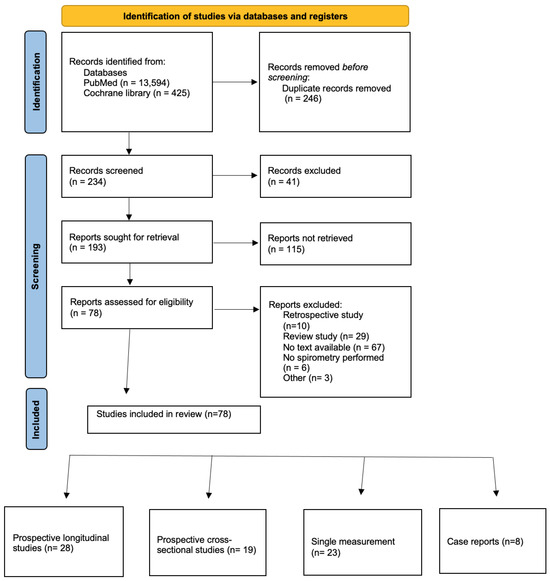
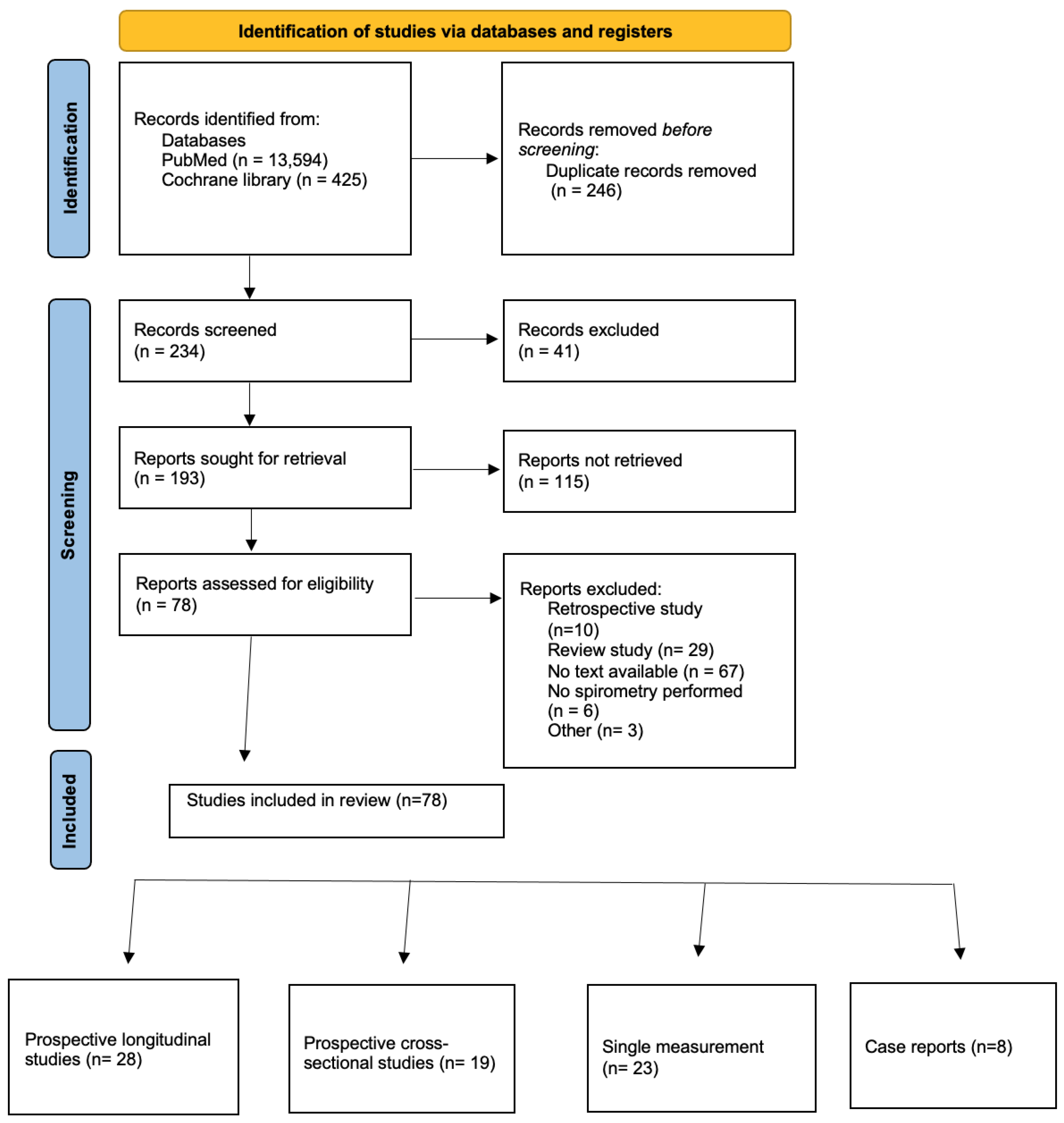
For this analysis we identified nearly 14,000 results. After initial retrieval we screened 234 records, from which we excluded 41 based on being published before 1970 or being published in a different language than considered. Ultimately, 78 papers met the criteria for final inclusion in this analysis (Figure 1). There were no studies whose main objective was to examine the safety profile of spirometry during pregnancy.
Figure 1.
Selection process flow chart.
We excluded studies that assessed pregnant women without performing a spirometry, review papers summarizing the topic of pregnancy-related dyspnea and retrospective studies examining historical findings, as there was no possibility for an adverse event to occur. We decided not to include papers that had no full text available. There were three studies that did not fit into any of the categories. One did not report the number of participants [19], the second paper examined remote spirometry [20], which raised concerns about whether the procedure was performed correctly and whether any adverse events would have been reliably reported in the absence of medical supervision. Finally, the third paper did not state the gestational age of the participants during testing and number of spirometry attempts obtained [21]. Further information available in Appendix A.
3.1. Prospective Longitudinal Studies
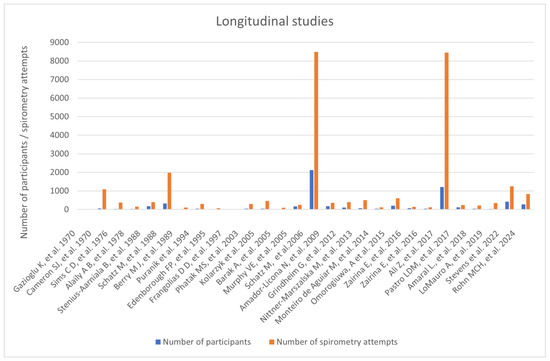
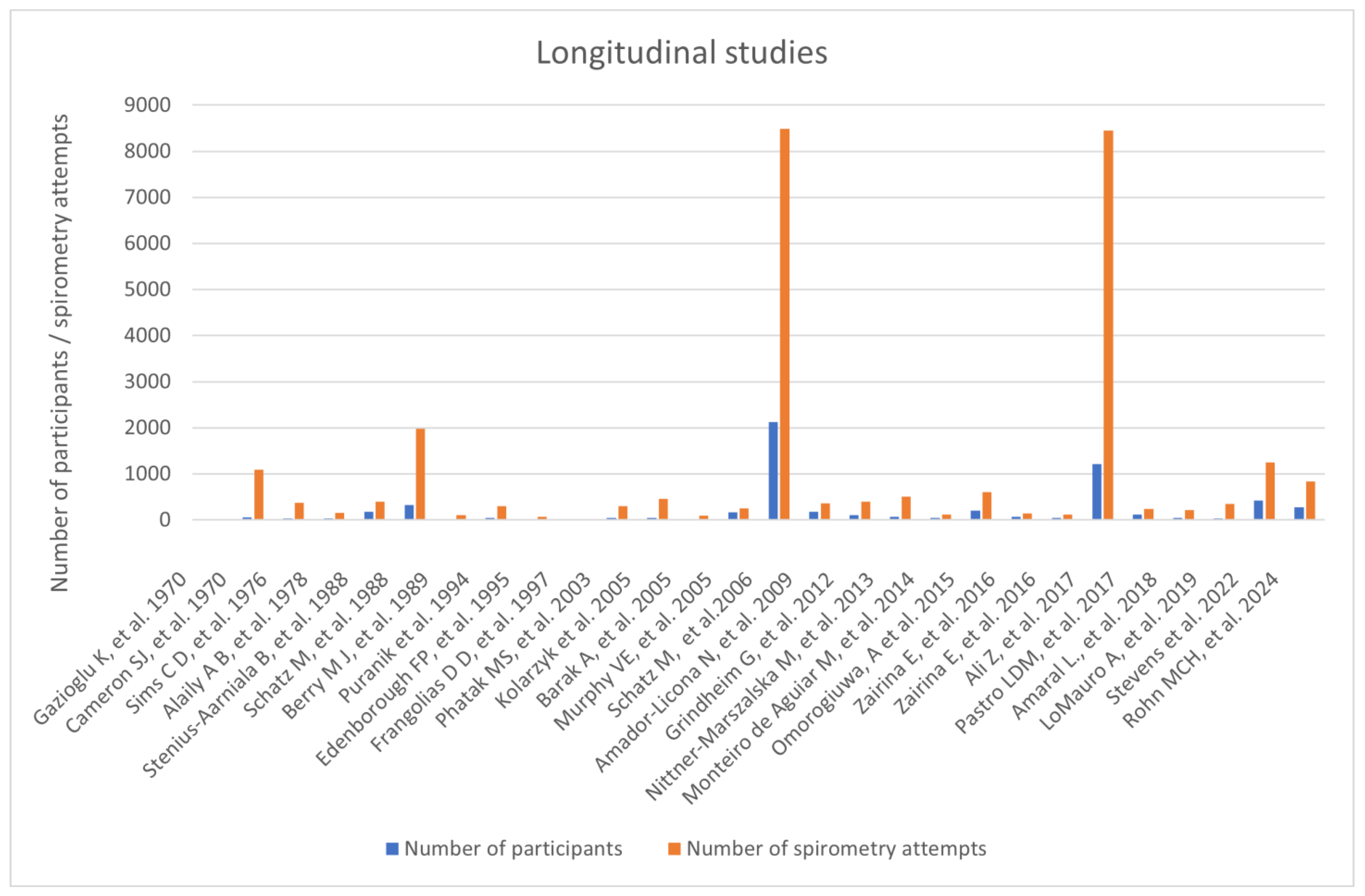
In our search we recognized twenty-eight prospective longitudinal studies that examined women throughout their pregnancy. In total 5973 women participated in those studies, with 27,688 spirometries performed. Thirteen studies examined women with asthma, three studies involved patients with cystic fibrosis and one study assessed women with cardiovascular diseases. Eleven studies were conducted in a healthy population, with consideration of smoking, parity and obesity as additional factors. Across reviewed longitudinal studies there were three papers where the reversibility test was performed. In total, 551 women underwent the examination. None of those studies reported any adverse events occurring during the procedure (Figure 2).
Figure 2.
Prospective longitudinal studies [22,23,24,25,26,27,28,29,30,31,32,33,34,35,36,37,38,39,40,41,42,43,44,45,46,47,48,49].
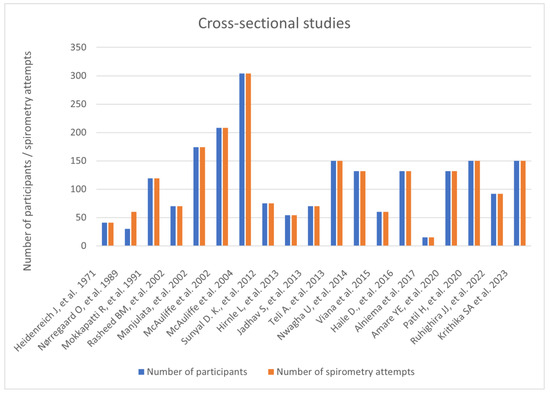
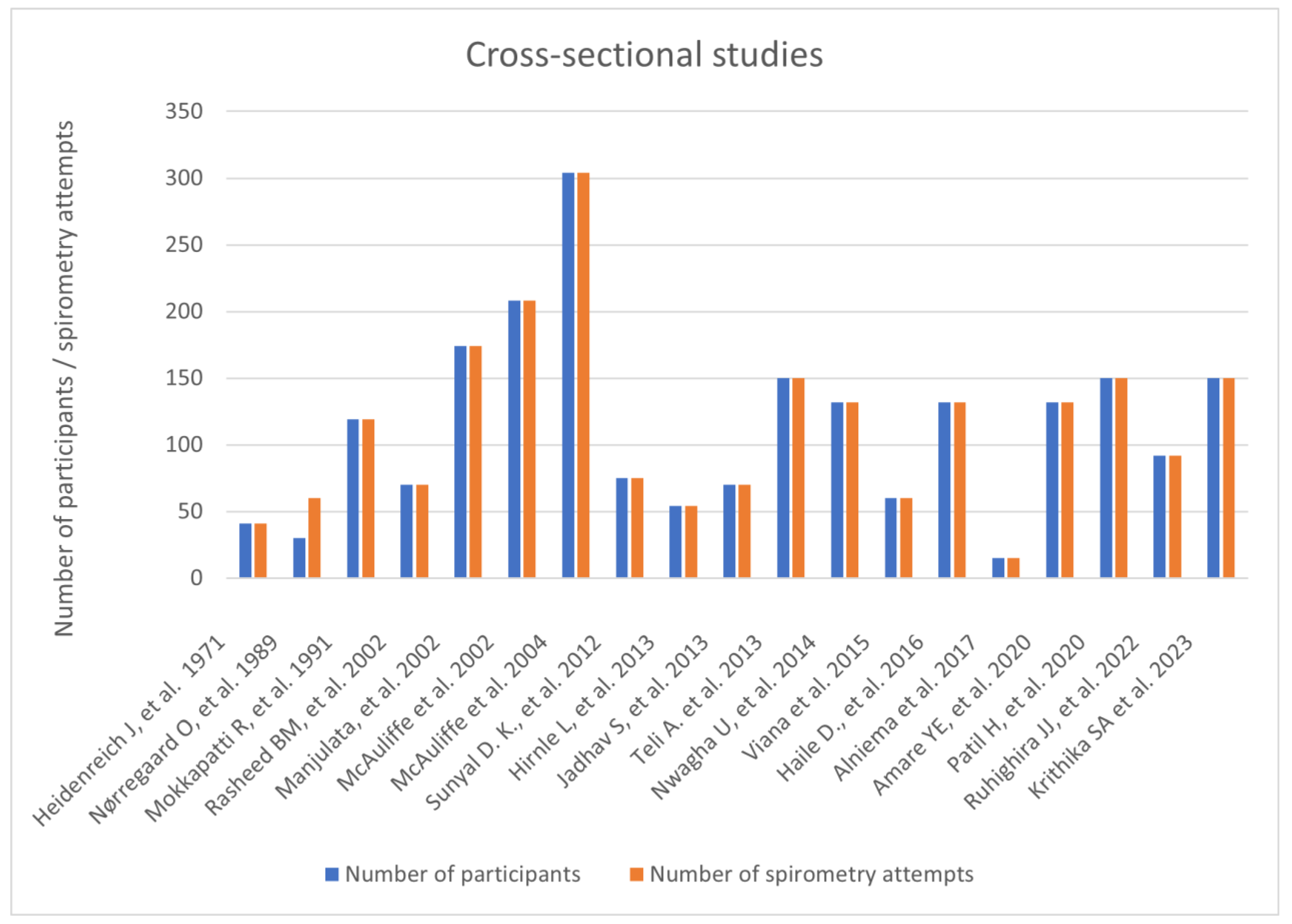
3.2. Prospective Cross-Sectional Studies
We found nineteen cross-sectional studies, in which participants were divided into groups based on the trimester they were examined in. Combined, there were 2158 women participating in those studies, with over 2188 procedures performed. There was one publication whose main objective was to evaluate pulmonary function by spirometry in women with high-risk pregnancies. It assessed 30 women with gestational diabetes and/or preeclampsia. The study did not report any adverse events to happen during spirometry in this population. One study from 2002 by McAuliffe et al. [17] compared singleton and twin pregnancies, examining 68 women with multiple pregnancies to 140 women with singleton pregnancies. None of the cross-sectional studies we considered mentioned having performed the reversibility test (Figure 3).
Figure 3.
Prospective cross-sectional studies [17,50,51,52,53,54,55,56,57,58,59,60,61,62,63,64,65,66,67].
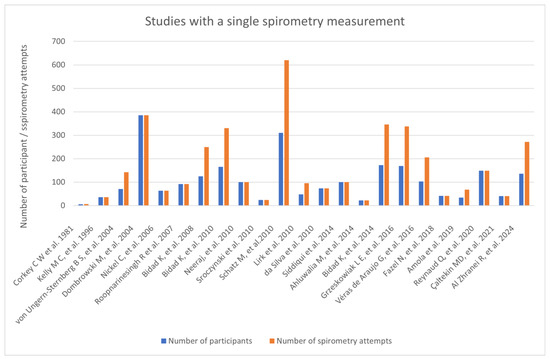
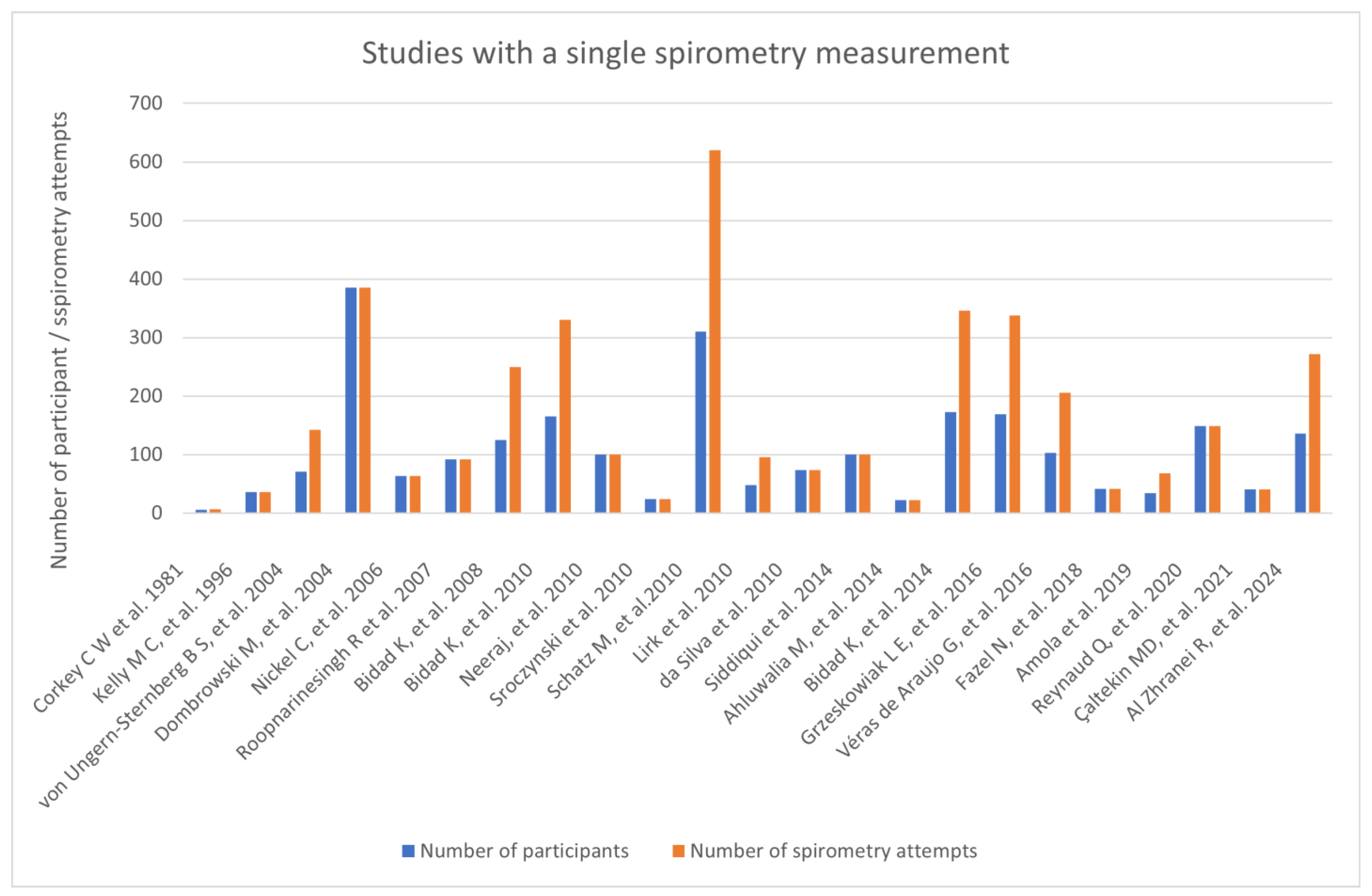
3.3. Studies with a Single Measurement of Spirometry
In our research we gathered twenty-three studies in which a single measurement of spirometry was performed on pregnant participants, without differentiating them by the trimester. Across those studies 2469 women were examined, with 3494 spirometry assessments performed. The difference in number comes from eight papers. First, a study that compared lung function tests in various positions, where each participant was examined sitting and standing [68]. Secondly, from the study that researched the impact of spinal anesthesia on respiratory function during caesarean section, where each participant performed baseline spirometry before induction of the anesthesia and shortly after [69]. We also included in this category a study that compared pulmonary function test results before and after implementing inspiratory muscle training and diaphragmatic breathing exercises for four weeks [70]. Lastly, five papers conducted a reversibility test, which gave two spirometry readings per participant. In nine of the studies women with asthma were examined; three studies involved participants with cystic fibrosis. Aside from the previously mentioned study examining women in late-term pregnancy there were two additional studies that performed lung function tests shortly before delivery by a caesarean section—a study by Lirk et al. [71] and a study by Kelly et al. [72] Another study that examined women in late-term pregnancy was a study by Çaltekin et al. [73] which assessed the relationship between maternal spirometry readings with umbilical cord blood gases values. Despite performing lung function tests in late-term pregnancy, no adverse effects were reported to happen during those procedures. Two studies researched lung function in women with preeclampsia—Roopnarinesingh et al. [74] and da Silva et al. [75] They did not report any adverse events to happen during spirometry. Among twenty-three considered single-measurement studies there were five which included performing the reversibility test on the participants. In these studies, 735 women were tested, and there was no report of complications happening while conducting the procedure (Figure 4).
Figure 4.
Studies with a single spirometry measurement [22,23,24,25,26,27,28,29,76,77,78,79,80,81,82,83,84,85,86,87,88,89,90].
3.4. Case Reports
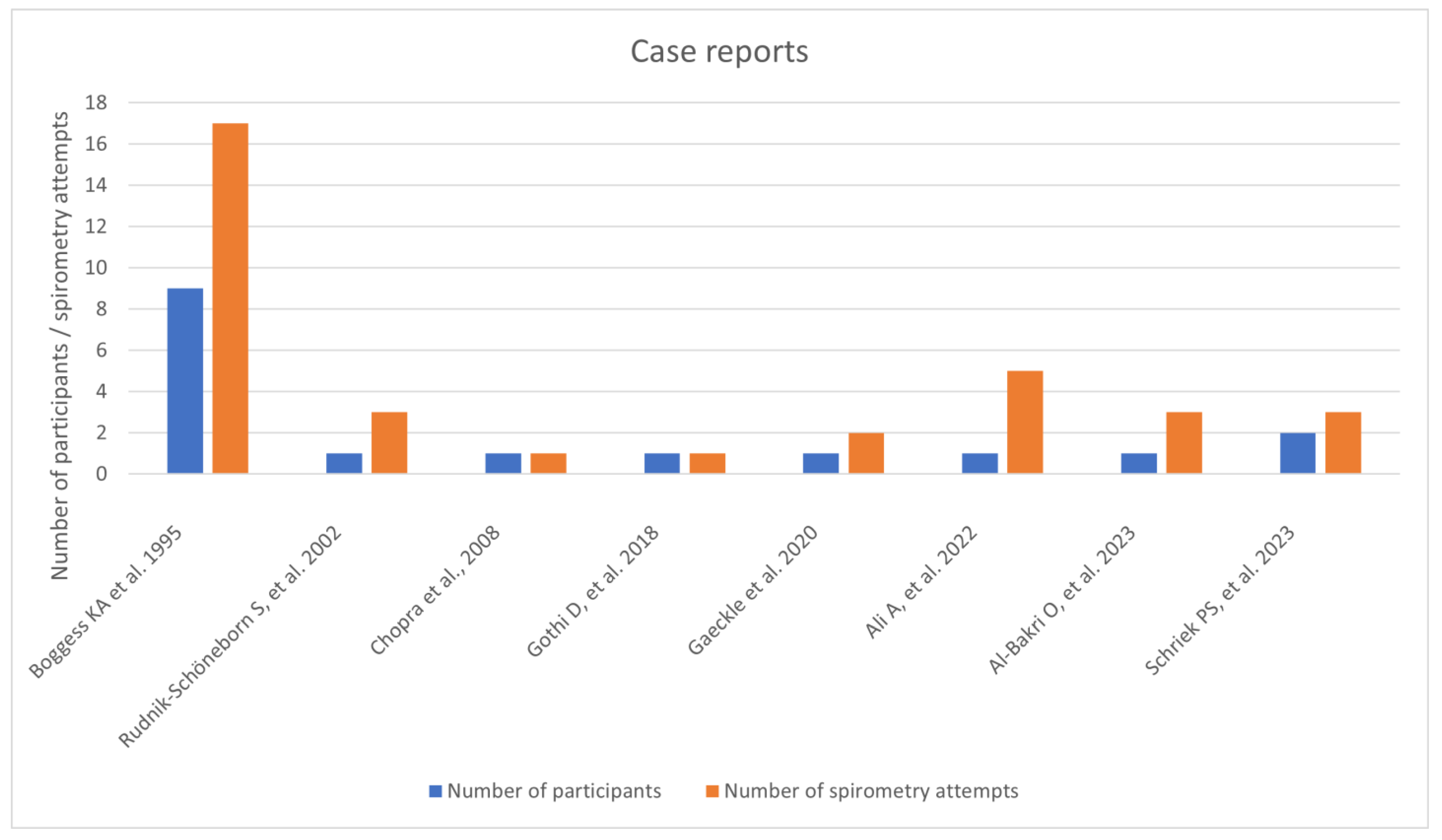
For our analysis we considered eight case reports that mentioned performing pulmonary function tests on pregnant women. In these papers seventeen women were examined, with combined 38 spirometry assessments obtained. The first study involved a woman with infantile spinal muscular atrophy type II, the second study described a woman with a motor neurone disease. The third described a patient with alpha-1 antitrypsin deficiency. The fourth paper presented successful pregnancies in nine women with interstitial and restrictive lung disease. Two documents presented cases of women with Swyer–James–MacLeod syndrome. The seventh paper involved a patient with a chronic obstructive pulmonary disease, and finally, the eighth paper reported two cases of new onset asthma during pregnancy. In this last document there is a mention of the reversibility test being conducted. None of the papers reported any adverse events occurring during pulmonary function tests (Figure 5).
Figure 5.
Case reports [91,92,93,94,95,96,97,98].
After an initial search we screened 234 papers regarding lung function tests among the pregnant population. Of these, we selected 78 documents that met the inclusion criteria for this analysis. After reviewing the material, we did not find any information on adverse events during spirometry. There are, however, two considerations that need to be acknowledged. Firstly, not reporting complications does not necessarily indicate that none occurred. It is possible that mild symptoms, which may occur even in healthy individuals, were not described. Secondly, many studies were conducted in otherwise healthy women. Thirty-eight studies were carried out in populations with an additional diagnosis. Twenty-three studies included women with asthma, six examined women with cystic fibrosis, one included patients with gastroesophageal reflux, and one considered women with a cardiopulmonary disease. Among case reports there were women with an infantile spinal muscular atrophy type II, with a motor neurone disease, alpha-1 antitrypsin deficiency, with Swyer–James–MacLeod syndrome, as well as patients with interstitial or restrictive lung diseases and with a chronic obstructive pulmonary disease. None of the papers reported any complication occurring during spirometry in pregnant women.
In the process of this systematic review, we did not find any studies whose main objective was to examine the safety profile of performing spirometry during pregnancy. Our interpretation of the gathered material comes with the assumption that not reporting any adverse events to happen during the procedure means that no serious complications occurred. This, however, creates lack of certainty in concluding that a spirometry is safe to conduct in a pregnant woman, highlighting the need for further research, with a prospective study evaluating any symptoms reported by a pregnant woman during spirometry.
4. Discussion
Spirometry is a valuable test offering insight into the possible pathomechanism of dyspnea reported by the patient. It is a safe, non-invasive procedure with a few potential complications. During the examination due to the forced exhalation there is an increase in intra-cranial, intra-thoracic and intra-abdominal pressure. As such, it may pose a risk to the thoracic and abdominal organs. This observation led to late-term pregnancy being a relative contraindication for performing spirometry as listed by the joint statement by the ERS/ATS [13]. In our systematic review we considered the question whether spirometry is safe to perform during pregnancy. We paid special attention to the use of the reversibility test. Additionally, we considered whether multiple pregnancies posed a greater risk of complications happening while performing lung function tests. We collected studies that examined pregnant women with a spirometry and found no reports of adverse events occurring while performing spirometry on a pregnant individual. Among studies included in this review we counted 33,405 spirometry procedures attempted by 10,617 women. These women included both healthy individuals and patients with preexisting conditions. As asthma is the main indicator for spirometry, whether to verify the diagnosis with a bronchodilator testing or to monitor a pre-established disease, studies conducted in women with asthma require special attention. Twenty-three papers considered for this review were conducted in women with asthma, ten of them presented longitudinal studies that monitored pregnant asthmatic women with spirometry during the course of their pregnancy. Nine studies included a bronchodilator challenge by the participants. In one of these papers there is explicit information that the reversibility test was performed 4 h after bronchodilator use; however, in the remaining studies no such information is provided. None of those studies reported any adverse events during the procedure. Nine studies conducted a reversibility test on the participants and none of them reported any adverse events during the procedure. In two studies women with a multiple pregnancy were examined. There was no mention of any complications occurring in that population while performing the spirometry. Among the studies considered for this review, there were 4596 women examined in the first trimester, 6540 women tested in the second trimester, and finally, 7388 women in the third trimester. A total of 5973 women participating in longitudinal studies were examined multiple times during pregnancy. Three studies researched the respiratory functions of women undergoing caesarean section. They included performing spirometry just before the operation, in a highly late-term pregnancy. The gestational age over a certain week was not the exclusion criteria for any of the studies. Conversely, twenty-three studies included women in late-term pregnancy, examining women in the gestational age of over 39 weeks pregnant. Two studies included patients with preeclampsia, one study researched women with high-risk pregnancies. None of these studies reported any adverse events during lung function testing.
We had identified several limitations. First, although the studies did not report any adverse events during the procedure, the safety of a spirometry and a reversibility test was not the primary objective of any of the studies. As such, there is a possibility that the documents did not include any complications that might have happened. Additionally, many of the studies excluded patients with preexisting conditions, obtaining results from otherwise healthy individuals who had a lower risk of adverse events. Similarly, multiple pregnancy was often an exclusion criterion for participation in a study. Therefore, it is not well evaluated whether a multiple pregnancy poses a greater risk of adverse events during spirometry.
The review process had some limitations. We included articles published only in English, Polish, French, German and Spanish; excluding other languages such as Chinese, Bulgarian, Slovak to name a few, of which there have been some papers available. We did not register our study in any databases.
Dyspnea is one of the most common complaints among pregnant women. The majority of these cases stem from the physiological changes that the female body undergoes to sustain a pregnancy. However, there is a significant percentage of women who suffer from asthma. If untreated, asthma can negatively impact the pregnancy, leading to a number of complications. Maternal asthma has been associated with infant complications such as low birth weight, small-for-gestational age, congenital abnormalities and increased infant hospital stay, as well as adverse maternal outcomes including preeclampsia, placenta previa, caesarean delivery and prolonged hospital stay [10,11,12]. Spirometry is a simple, non-invasive and widely available diagnostic test that helps to establish a diagnosis of asthma. Numerous studies have examined pregnant women using spirometry without reporting any complications occurring during the procedure. However, the safety of performing spirometry by a pregnant woman was not the objective of any of the studies. This suggests the need for further research prospectively reporting on adverse events that happen during spirometry.
Supplementary Materials
The following supporting information can be downloaded at: https://www.mdpi.com/article/10.3390/arm94020017/s1, Table S1: PRISMA Checklist [99].
Author Contributions
Conceptualization, Z.P., K.G. and P.K.; methodology, Z.P.; formal analysis, Z.P. and R.C.; investigation, Z.P. and R.C.; resources, Z.P. and R.C.; data curation, Z.P. and R.C.; writing—original draft preparation, Z.P.; writing—review and editing, Z.P., K.G., R.C., D.B.-O., M.W. and P.K.; visualization, Z.P. and R.C.; supervision, K.G. and P.K. All authors have read and agreed to the published version of the manuscript.
Funding
This research received no external funding.
Institutional Review Board Statement
Not applicable.
Informed Consent Statement
Not applicable.
Data Availability Statement
In the process of writing this systematic review no new data was created. All analyzed data belong to the authors.
Conflicts of Interest
The authors declare no conflicts of interest.
Abbreviations
The following abbreviations are used in this manuscript:
| ATS | American Thoracic Society |
| ERS | European Respiratory Society |
| GLI | Global Lung Function Initiative |
| PRISMA | Preferred Reporting Items for Systematic Reviews and Meta-Analyses |
Appendix A
Information sources: On 18 October 2025 we conducted a search on PubMed database using search words
- (pregnancy) and (spirometry);
- (pregnancy) and (lung function test);
- (pregnancy) and (pulmonary function test);
- (pregnancy) and (reversibility test);
- (pregnancy) and (post-bronchodilator challenge);
- (pregnancy) and (spirometry) and (safety);
- (pregnancy) and (lung function test) and (safety);
- (pregnancy) and (pulmonary function test) and (safety);
- (pregnancy) and (reversibility test) and (safety);
- (pregnancy) and (post-bronchodilator challenge) and (safety).
On 16 November 2025 we conducted a search in Cochrane Library using the same search words.
Data collection process: The PubMed database was searched using the advanced search tool. The fixed search word was “pregnancy” which was sequentially combined with the terms: “spirometry”, “lung function test”; “pulmonary function test”, “reversibility test”; “post bronchodilator challenge”. Then, a three word search was conducted by adding a second fixed word: “safety”. Next, we performed a similar search on the Cochrane Library database. After gathering the retrieved papers, we continued with the selection process. First, after reviewing each title, we selected publications regarding lung function tests, pregnancy, asthma and cystic fibrosis. Then, we read through the abstracts and chose studies in which spirometry was performed on pregnant women.
Eligible papers included documents performing pulmonary function tests, specifically, spirometry, by pregnant women. The spirometer used in each study should have been validated for the assessment of pulmonary function, but omission of the characteristics of the equipment used in a study was not an exclusion. No restrictions were placed on the reported number of attempts of pulmonary function test attempts.
We collected data on:
- The report: Author, year, and source of publication;
- The study: Objective; methods; study location;
- The participants: Age; race; singleton vs. multiple pregnancy; nulliparous vs. multiparous.
In the papers excluded on the final selection step we recognized additional categories as follows: (V) review papers (VI) no spirometry performed (VII) retrospective studies (VIII) no text available (IX) others. We screened 29 review papers, 6 studies in which no spirometry was performed and 10 retrospective studies. We excluded 68 articles that had no full text available. There were three studies that did not fit into any of the categories. One did not report the number of participants, the second paper examined remote spirometry which raised concerns about whether the procedure was performed correctly and whether any adverse events would have been reliably reported in the absence of medical supervision. Finally, the third paper did not state the gestational age of the participants during testing and number of spirometry attempts obtained.
Table A1.
List of longitudinal studies included in this systematic review.
Table A2.
List of cross-sectional studies included in this systematic review.
Table A3.
List of studies with a single measurement of spirometry included for this systematic review.
Table A4.
List of case reports included in this systematic review.
References
- Milne, J.A. The respiratory response to pregnancy. Postgrad. Med. J. 1979, 55, 318–324. [Google Scholar] [CrossRef] [Scilit] [PubMed] [PubMed Central]
- Souza, R.T.; Bonomi, I.B.A.; Maganha, C.A.; Ferreira, E.C.; Solha, S.T.G.; Vetorazzi, J.; Mattar, R.; de Carvalho-Pinto, R.M.; Bártholo, T.P.; Caetano, L.S.B. Asthma and pregnancy. Rev. Bras. Ginecol. Obstet. 2025, 47, e-FPS5. [Google Scholar] [CrossRef] [Scilit] [PubMed] [PubMed Central]
- Global Initiative for Asthma. Global Strategy for Asthma Management and Prevention, 2025. Updated 15 November 2025. Available online: www.ginasthma.org (accessed on 10 November 2025).
- Kwon, H.L.; Triche, E.W.; Belanger, K.; Bracken, M.B. The epidemiology of asthma during pregnancy: Prevalence, diagnosis, and symptoms. Immunol. Allergy Clin. N. Am. 2006, 26, 29–62. [Google Scholar] [CrossRef] [Scilit] [PubMed]
- Jølving, L.R.; Nielsen, J.; Kesmodel, U.S.; Nielsen, R.G.; Beck-Nielsen, S.S.; Nørgård, B.M. Prevalence of maternal chronic diseases during pregnancy—A nationwide population based study from 1989 to 2013. Acta Obstet. Gynecol. Scand. 2016, 95, 1295–1304. [Google Scholar] [CrossRef] [Scilit] [PubMed]
- Demissie, K.; Breckenridge, M.B.; Rhoads, G.G. Infant and maternal outcomes in the pregnancies of asthmatic women. Am. J. Respir. Crit. Care Med. 1998, 158, 1091–1095. [Google Scholar] [CrossRef] [Scilit] [PubMed]
- Middleton, P.G.; Gade, E.J.; Aguilera, C.; MacKillop, L.; Button, B.M.; Coleman, C.; Johnson, B.; Albrechtsen, C.; Edenborough, F.; Rigau, D.; et al. ERS/TSANZ Task Force Statement on the management of reproduction and pregnancy in women with airways diseases. Eur. Respir. J. 2020, 55, 1901208. [Google Scholar] [CrossRef] [Scilit] [PubMed]
- Van Zutphen, A.R.; Bell, E.M.; Browne, M.L.; Lin, S.; Lin, A.E.; Druschel, C.M. National Birth Defects Prevention Study. Maternal asthma medication use during pregnancy and risk of congenital heart defects. Birth Defects Res. A Clin. Mol. Teratol. 2015, 103, 951–961. [Google Scholar] [CrossRef] [Scilit] [PubMed]
- Namazy, J.; Schatz, M. The Treatment of Allergic Respiratory Disease During Pregnancy. J. Investig. Allergol. Clin. Immunol. 2016, 26, 1–7, quiz 2p following 7. [Google Scholar] [CrossRef] [Scilit]
- Mendola, P.; Laughon, S.K.; Männistö, T.I.; Leishear, K.; Reddy, U.M.; Chen, Z.; Zhang, J. Obstetric complications among US women with asthma. Am. J. Obstet. Gynecol. 2013, 208, 127.e1–127.e8. [Google Scholar] [CrossRef] [Scilit] [PubMed] [PubMed Central]
- Moitra, S.; Savu, A.; Annesi-Maesano, I.; Garcia-Aymerich, J.; Lacy, P.; Metcalfe, A.; Kaul, P. Maternal Asthma and Adverse Perinatal Outcomes: An Analysis of 434,068 Pregnancies in Canada. J. Allergy Clin. Immunol. Pract. 2025, 13, 1836–1845.e6. [Google Scholar] [CrossRef] [Scilit] [PubMed]
- Bakhireva, L.N.; Schatz, M.; Lyones Jones, K.; Chambers, C.D. Organization of Teratology Information Specialists Collaborative Research Group. Asthma control during pregnancy and the risk of preterm delivery or impaired fetal growth. Ann. Allergy Asthma Immunol. 2008, 101, 137–143. [Google Scholar] [CrossRef] [Scilit] [PubMed]
- Graham, B.L.; Steenbruggen, I.; Miller, M.R.; Barjaktarevic, I.Z.; Cooper, B.G.; Hall, G.L.; Hallstrand, T.S.; Kaminsky, D.A.; McCarthy, K.; McCormack, M.C.; et al. Standardization of Spirometry 2019 Update. An Official American Thoracic Society and European Respiratory Society Technical Statement. Am. J. Respir. Crit. Care Med. 2019, 200, e70–e88. [Google Scholar] [CrossRef] [Scilit] [PubMed] [PubMed Central]
- Quanjer, P.H.; Stanojevic, S.; Cole, T.J.; Baur, X.; Hall, G.L.; Culver, B.H.; Enright, P.L.; Hankinson, J.L.; Ip, M.S.; Zheng, J.; et al. Multi-ethnic reference values for spirometry for the 3-95-yr age range: The global lung function 2012 equations. Eur. Respir. J. 2012, 40, 1324–1343. [Google Scholar] [CrossRef] [Scilit] [PubMed] [PubMed Central]
- Stanojevic, S.; Kaminsky, D.A.; Miller, M.R.; Thompson, B.; Aliverti, A.; Barjaktarevic, I.; Cooper, B.G.; Culver, B.; Derom, E.; Hall, G.L.; et al. ERS/ATS technical standard on interpretive strategies for routine lung function tests. Eur. Respir. J. 2022, 60, 2101499. [Google Scholar] [CrossRef] [Scilit] [PubMed]
- Tan, E.K.; Tan, E.L. Alterations in physiology and anatomy during pregnancy. Best. Pract. Res. Clin. Obstet. Gynaecol. 2013, 27, 791–802. [Google Scholar] [CrossRef] [Scilit] [PubMed]
- McAuliffe, F.; Kametas, N.; Costello, J.; Rafferty, G.F.; Greenough, A.; Nicolaides, K. Respiratory function in singleton and twin pregnancy. BJOG 2002, 109, 765–769. [Google Scholar] [CrossRef] [Scilit] [PubMed]
- Lamb, K.; Theodore, D.; Bhutta, B.S. Spirometry. [Updated 2023 Aug 17]. In StatPearls [Internet]; StatPearls Publishing: Treasure Island, FL, USA, 2023. Available online: https://www.ncbi.nlm.nih.gov/books/NBK560526/ (accessed on 18 November 2025).
- Shailaja, Y.; Srikanth, S. Lung function tests in different trimesters of pregnancy. Indian J. Basic Appl. Med. Res. 2013, 3, 285–292. [Google Scholar]
- Wharton, R.; Mathis, N.; Wang, J.G.; Meislin, R.; Liu, B.; Abdurrahman, N.; Le, V.; Rurak, K.; Hanson, C.; Cue, L.Q.; et al. Feasibility of remote spirometry monitoring of asthma in pregnancy. Respir. Med. 2024, 233, 107782. [Google Scholar] [CrossRef] [Scilit] [PubMed]
- Jensen, M.E.; Robijn, A.L.; Gibson, P.G.; Oldmeadow, C.; Managing Asthma in Pregnancy Study Collaborative Group; Breathing for Life Trial Collaborative Group; Murphy, V.E. Longitudinal Analysis of Lung Function in Pregnant Women with and without Asthma. J. Allergy Clin. Immunol. Pract. 2021, 9, 1578–1585.e3. [Google Scholar] [CrossRef] [Scilit] [PubMed]
- Gazioglu, K.; Kaltreider, N.L.; Rosen, M.; Yu, P.N. Pulmonary function during pregnancy in normal women and in patients with cardiopulmonary disease. Thorax 1970, 25, 445–450. [Google Scholar] [CrossRef] [Scilit] [PubMed] [PubMed Central]
- Cameron, S.J.; Bain, H.H.; Grant, I.W.B. Ventilatory Function in Pregnancy. Scott. Med. J. 1970, 15, 243–247. [Google Scholar] [CrossRef] [Scilit]
- Sims, C.D.; Chamberlain, G.V.; de Swiet, M. Lung function tests in bronchial asthma during and after pregnancy. Br. J. Obstet. Gynaecol. 1976, 83, 434–437. [Google Scholar] [CrossRef] [Scilit] [PubMed]
- Alaily, A.B.; Carrol, K.B. Pulmonary ventilation in pregnancy. Br. J. Obstet. Gynaecol. 1978, 85, 518–524. [Google Scholar] [CrossRef] [Scilit] [PubMed]
- Stenius-Aarniala, B.; Piirilä, P.; Teramo, K. Asthma and pregnancy: A prospective study of 198 pregnancies. Thorax 1988, 43, 12–18. [Google Scholar] [CrossRef] [Scilit] [PubMed] [PubMed Central]
- Schatz, M.; Harden, K.; Forsythe, A.; Chillingar, R.; Hoffman, C.; Sperling, W.; Zeiger, R.S. The course of asthma during pregnancy, post partum, and with successive pregnancies: A prospective analysis. J. Allergy Clin. Immunol. 1988, 81, 509–517. [Google Scholar] [CrossRef] [Scilit] [PubMed]
- Berry, M.J.; McMurray, R.G.; Katz, V.L. Pulmonary and ventilatory responses to pregnancy, immersion, and exercise. J. Appl. Physiol. 1989, 66, 857–862. [Google Scholar] [CrossRef] [Scilit] [PubMed]
- Puranik, B.M.; Kaore, S.B.; Kurhade, G.A.; Agrawal, S.D.; Patwardhan, S.A.; Kher, J.R. A longitudinal study of pulmonary function tests during pregnancy. Indian J. Physiol. Pharmacol. 1994, 38, 129–132. [Google Scholar] [PubMed]
- Edenborough, F.P.; Stableforth, D.E.; Webb, A.K.; Mackenzie, W.E.; Smith, D.L. Outcome of pregnancy in women with cystic fibrosis. Thorax 1995, 50, 170–174. [Google Scholar] [CrossRef] [Scilit] [PubMed] [PubMed Central]
- Frangolias, D.D.; Nakielna, E.M.; Wilcox, P.G. Pregnancy and cystic fibrosis: A case-controlled study. Chest 1997, 111, 963–969. [Google Scholar] [CrossRef] [Scilit] [PubMed]
- Phatak, M.S.; Kurhade, G.A. A longitudinal study of antenatal changes in lung function tests and importance of postpartum exercises in their recovery. Indian J. Physiol. Pharmacol. 2003, 47, 352–356. [Google Scholar] [PubMed]
- Kolarzyk, E.; Szot, W.M.; Lyszczarz, J. Lung function and breathing regulation parameters during pregnancy. Arch. Gynecol. Obstet. 2005, 272, 53–58. [Google Scholar] [CrossRef] [Scilit] [PubMed]
- Barak, A.; Dulitzki, M.; Efrati, O.; Augarten, A.; Szeinberg, A.; Reichert, N.; Modan, D.; Weiss, B.; Miller, M.; Katzanelson, D.; et al. Pregnancies and outcome in women with cystic fibrosis. Isr. Med. Assoc. J. 2005, 7, 95–98. [Google Scholar] [PubMed]
- Murphy, V.E.; Gibson, P.G.; Talbot, P.I.; Kessell, C.G.; Clifton, V.L. Asthma self-management skills and the use of asthma education during pregnancy. Eur. Respir. J. 2005, 26, 435–441. [Google Scholar] [CrossRef] [Scilit] [PubMed]
- Schatz, M.; Dombrowski, M.P.; Wise, R.; Momirova, V.; Landon, M.; Mabie, W.; Newman, R.B.; Rouse, D.J.; Lindheimer, M.; Miodovnik, M.; et al. National Institute of Child Health and Human Development Maternal-Fetal Medicine Units Network; National Heart, Lung, and Blood Institute. Spirometry is related to perinatal outcomes in pregnant women with asthma. Am. J. Obstet. Gynecol. 2006, 194, 120–126. [Google Scholar] [CrossRef] [Scilit] [PubMed]
- Amador-Licona, N.; Guízar-Mendoza, J.M.; Juárez, M.; Linares-Segovia, B. Heart sympathetic activity and pulmonary function in obese pregnant women. Acta Obstet. Gynecol. Scand. 2009, 88, 314–319. [Google Scholar] [CrossRef] [Scilit] [PubMed]
- Grindheim, G.; Toska, K.; Estensen, M.E.; Rosseland, L.A. Changes in pulmonary function during pregnancy: A longitudinal cohort study. BJOG 2012, 119, 94–101. [Google Scholar] [CrossRef] [Scilit] [PubMed]
- Nittner-Marszalska, M.; Liebhart, J.; Pawłowicz, R.; Kazimierczak, A.; Marszalska, H.; Kraus-Filarska, M.; Panaszek, B.; Dor-Wojnarowska, A. Fractioned exhaled nitric oxide (FE(NO)) is not a sufficiently reliable test for monitoring asthma in pregnancy. Nitric Oxide 2013, 33, 56–63. [Google Scholar] [CrossRef] [Scilit] [PubMed]
- Monteiro de Aguiar, M.; Rizzo, J.Â.; de Melo Junior, E.; Pires Lins E Silva Lima, M.E.; Cavalcanti Sarinho, E.S. Validation of the Asthma Control Test in pregnant asthmatic women. Respir. Med. 2014, 108, 1589–1593. [Google Scholar] [CrossRef] [Scilit] [PubMed]
- Omorogiuwa, A.; Iyawe, V.I. Effect of Parity on FVC and FEV1 During Pregnancy. J. Adv. Med. Med. Res. 2015, 9, 1–9. [Google Scholar] [CrossRef] [Scilit]
- Zairina, E.; Abramson, M.J.; McDonald, C.F.; Li, J.; Dharmasiri, T.; Stewart, K.; Walker, S.P.; Paul, E.; George, J. Telehealth to improve asthma control in pregnancy: A randomized controlled trial. Respirology 2016, 21, 867–874. [Google Scholar] [CrossRef] [Scilit] [PubMed]
- Zairina, E.; Abramson, M.J.; McDonald, C.F. A prospective cohort study of pulmonary function during pregnancy in women with and without asthma. J. Asthma 2016, 53, 155–163. [Google Scholar] [CrossRef] [Scilit] [PubMed]
- Ali, Z.; Nilas, L.; Ulrik, C.S. Determinants of low risk of asthma exacerbation during pregnancy. Clin. Exp. Allergy 2018, 48, 23–28. [Google Scholar] [CrossRef] [Scilit] [PubMed]
- Pastro, L.D.M.; Lemos, M.; Fernandes, F.L.A.; Saldiva, S.R.D.M.; Vieira, S.E.; Romanholo, B.M.S.; Saldiva, P.H.N.; Francisco, R.P.V. Longitudinal study of lung function in pregnant women: Influence of parity and smoking. Clinics 2017, 72, 595–599. [Google Scholar] [CrossRef] [Scilit] [PubMed] [PubMed Central]
- Amaral, L.; Martins, C.; Coimbra, A. Use of the Control of Allergic Rhinitis and Asthma Test and pulmonary function tests to assess asthma control in pregnancy. Aust. N. Z. J. Obstet. Gynaecol. 2018, 58, 86–90. [Google Scholar] [CrossRef] [Scilit] [PubMed]
- LoMauro, A.; Aliverti, A.; Frykholm, P.; Alberico, D.; Persico, N.; Boschetti, G.; DeBellis, M.; Briganti, F.; Nosotti, M.; Righi, I. Adaptation of lung, chest wall, and respiratory muscles during pregnancy: Preparing for birth. J. Appl. Physiol. 2019, 127, 1640–1650. [Google Scholar] [CrossRef] [Scilit] [PubMed]
- Stevens, D.R.; Rohn, M.C.H.; Hinkle, S.N.; Williams, A.D.; Kumar, R.; Lipsky, L.M.; Grobman, W.; Sherman, S.; Kanner, J.; Chen, Z.; et al. Maternal body composition and gestational weight gain in relation to asthma control during pregnancy. PLoS ONE 2022, 17, e0267122. [Google Scholar] [CrossRef] [Scilit] [PubMed] [PubMed Central]
- Rohn, M.C.H.; Stevens, D.R.; Grobman, W.A.; Kumar, R.; Chen, Z.; Deshane, J.; Biggio, J.R.; Subramanian, A.; Grantz, K.L.; Sherman, S.; et al. The Association of Periconception Asthma Medication Discontinuation with Adverse Obstetric Outcomes. Am. J. Perinatol. 2024, 41, e2089–e2097. [Google Scholar] [CrossRef] [Scilit] [PubMed] [PubMed Central]
- Heidenreich, J.; Kafarnik, D.; Westenburger, U.; Beck, L. Statische und dynamische Ventilationsgrößen in der Schwangerschaft und im Wochenbett. Arch. Gynäk. 1971, 210, 208–234. [Google Scholar] [CrossRef] [Scilit] [PubMed]
- Nørregaard, O.; Schultz, P.; Ostergaard, A.; Dahl, R. Lung function and postural changes during pregnancy. Respir. Med. 1989, 83, 467–470. [Google Scholar] [CrossRef] [Scilit] [PubMed]
- Mokkapatti, R.; Prasad, E.C.; Venkatraman Fatima, K. Ventilatory functions in pregnancy. Indian J. Physiol. Pharmacol. 1991, 35, 237–240. [Google Scholar] [PubMed]
- Rasheed, B.M.; Mansoor, A.; Hussain, S. Incentive spirometry and PEFR in different phases of pregnancy. Indian J. Physiol. Pharmacol. 2002, 46, 126–128. [Google Scholar] [PubMed]
- Manjulata Kumar, S.; Behera, J.K.; Mondal, H.; Singh, P. Comparative pulmonary function test parameters in non-tribal and tribal women in singleton first, second, and the third trimester of pregnancy. J. Fam. Med. Prim. Care 2022, 11, 4582–4587. [Google Scholar] [CrossRef] [Scilit] [PubMed] [PubMed Central]
- McAuliffe, F.; Kametas, N.; Espinoza, J.; Greenough, A.; Nicolaides, K. Respiratory function in pregnancy at sea level and at high altitude. BJOG 2004, 111, 311–315. [Google Scholar] [CrossRef] [Scilit] [PubMed]
- Sunyal, D.K.; Amin, M.R.; Yasmin, A.; Molla, G.M.; Ali, M.L.; Sultana, M. Study of Forced Expiratory Volume in First Second (FEV1) and Ratio of Forced Expiratory Volume in First Second and Forced Vital Capacity in Percentage (FEV1/FVC%) in Pregnant Women. J. Enam Med. Coll. 2012, 2, 29–32. [Google Scholar] [CrossRef] [Scilit]
- Hirnle, L.; Lysenko, L.; Gerber, H.; Lesnik, P.; Baranowska, A.; Rachwalik, M.; Leszczyszyn, J.; Strozecki, L. Respiratory function in pregnant women. Adv. Exp. Med. Biol. 2013, 788, 153–160. [Google Scholar] [CrossRef] [Scilit] [PubMed]
- Jadhav, S.; Dudhamal, V.B.; Karadkhedkar, S.S.; Afroz, S.; Razvi, N.A. Comparative study of pulmonary function tests on different trimesters of pregnancy. Int. J. Curr. Res. Rev. 2013, 5, 118–122. [Google Scholar]
- Teli, A.; Doddamani, D.; Ghatanatti, R.; Bagali, S.C. Physiological Alterations in Pulmonary functions during Pregnancy: Its application in clinical scenario. Int. J. Biomed. Res. 2013, 4, 173–178. [Google Scholar] [CrossRef] [Scilit]
- Nwagha, U.; Iyare, E.; Anyaehie, U.; Onyedum, C.; Okereke, C.; Ajuzieogu, O.; Amucheazi, A.; Oluboboku, T.; Agu, P.; Igweh, J.; et al. Forced Expiratory Volume in 6 s (FEV6) and FEV1/FEV6 Values as a Viable Alternative for Forced Vital Capacity (FVC) and FEV1/FVC Values During Pregnancy in South East Nigeria: A Preliminary Study. Ann. Med. Health Sci. Res. 2014, 4, 516–521. [Google Scholar] [CrossRef] [Scilit] [PubMed] [PubMed Central]
- Viana, M.C.; Araujo Júnior, E.; Santana, E.F.; Lima, J.W.; Costa Fda, S. Analysis of pulmonary function in high-risk pregnancies: A case-control study. J. Matern. Fetal Neonatal Med. 2015, 28, 994–999. [Google Scholar] [CrossRef] [Scilit] [PubMed]
- Haile, D.; Abebe, Y. Trends of lung function indices, arterial blood oxygen saturation and pulse rate among the first and third trimester pregnant women in Addis Ababa, Ethiopia. Ethiop. J. Reprod. Health 2018, 8. [Google Scholar] [CrossRef] [Scilit]
- Alniema, M.F.; Abduallah, A.K.; Elhadi, S.; Musa, O.A. The effects of pregnancy on pulmonary function and respiratory muscles power parameters in Sudanese women. Int. J. Sci. Res. Publ. 2017, 7, 608–612. Available online: http://www.ijsrp.org/research-paper-1017.php?rp=P706896 (accessed on 10 November 2025).
- Amare, Y.E.; Haile, D. Evaluation of Pulmonary Function Tests Among Pregnant Women of Different Trimesters in Debre Berhan Referral Hospital, Shoa, Ethiopia. Int. J. Womens Health 2020, 12, 1135–1143. [Google Scholar] [CrossRef] [Scilit] [PubMed] [PubMed Central]
- Patil, H.; Teli, A.; Tamagond, B.; Dalal, A. Analysis of Pulmonary Function and Serum Progesterone Level during Pregnancy: A Cross-sectional Study. J. South Asian Fed. Obstet. Gynaecol. 2020, 12, 215–219. [Google Scholar] [CrossRef] [Scilit]
- Ruhighira, J.J.; Mashili, F.L.; Tungu, A.M.; Mamuya, S. Spirometry profiles among pregnant and non-pregnant African women: A cross-sectional study. BMC Womens Health 2022, 22, 483. [Google Scholar] [CrossRef] [Scilit] [PubMed] [PubMed Central]
- Krithika, S.A.; Jayanthi, N.N.; Gokulakrishnan, S.; Regan, M.S. Changes in the pulmonary function parameters during pregnancy. Int. J. Acad. Med. Pharm. 2023, 5, 1008–1013. [Google Scholar] [CrossRef]
- Al Zhranei, R.; Alsulami, S.; Alfaydi, W.; Alzahrani, R.; Alsulami, M.; Al Nufaiei, Z.F. The impact of body position on vital capacity among pregnant women in the second trimester. Front. Med. 2024, 11, 1351681. [Google Scholar] [CrossRef] [Scilit] [PubMed] [PubMed Central]
- von Ungern-Sternberg, B.S.; Regli, A.; Bucher, E.; Reber, A.; Schneider, M.C. Impact of spinal anaesthesia and obesity on maternal respiratory function during elective Caesarean section. Anaesthesia 2004, 59, 743–749. [Google Scholar] [CrossRef] [Scilit] [PubMed]
- Amola, M.; Pawaria, S.; Kalra, S. Effect of Inspiratory Muscle Training and Diaphragmatic Breathing Exercises on Dyspnea, Pulmonary Functions, Fatigue and Functional Capacity in Pregnancy during Third Trimester. J. Clin. Diagn. Res. 2019, 13, YC1–YC4. [Google Scholar] [CrossRef] [Scilit]
- Lirk, P.; Kleber, N.; Mitterschiffthaler, G.; Keller, C.; Benzer, A.; Putz, G. Pulmonary effects of bupivacaine, ropivacaine, and levobupivacaine in parturients undergoing spinal anaesthesia for elective caesarean delivery: A randomised controlled study. Int. J. Obstet. Anesth. 2010, 19, 287–292. [Google Scholar] [CrossRef] [Scilit] [PubMed]
- Kelly, M.C.; Fitzpatrick, K.T.; Hill, D.A. Respiratory effects of spinal anaesthesia for caesarean section. Anaesthesia 1996, 51, 1120–1122. [Google Scholar] [CrossRef] [Scilit] [PubMed]
- Çaltekin, M.D.; Onat, T.; Kırmızı, D.A.; Baser, E.; İntepe, Y.S.; Kara, M.; Yalvac, E.S. The Effect of Maternal Pulmonary Function Test Parameters on Umbilical Cord Blood Gas and the Duration of Labor. Z. Geburtshilfe Neonatol. 2020, 225. [Google Scholar] [CrossRef] [Scilit] [PubMed]
- Roopnarinesingh, R.; Collins, C.; McKenna, P. Pre-eclampsia affects pulmonary function in pregnancy. J. Obstet. Gynaecol. 2007, 27, 672–675. [Google Scholar] [CrossRef] [Scilit] [PubMed]
- da Silva, E.G.; de Godoy, I.; de Oliveira Antunes, L.C.; da Silva, E.G.; Peraçoli, J.C. Respiratory parameters and exercise functional capacity in preeclampsia. Hypertens. Pregnancy 2010, 29, 301–309. [Google Scholar] [CrossRef] [Scilit] [PubMed]
- Corkey, C.W.; Newth, C.J.; Corey, M.; Levison, H. Pregnancy in cystic fibrosis: A better prognosis in patients with pancreatic function? Am. J. Obstet. Gynecol. 1981, 140, 737–742. [Google Scholar] [CrossRef] [Scilit] [PubMed]
- Dombrowski, M.P.; Schatz, M.; Wise, R.; Thom, E.A.; Landon, M.; Mabie, W.; Newman, R.B.; McNellis, D.; Hauth, J.C.; Lindheimer, M.; et al. National Institute of Child Health and Human Development Maternal-Fetal Medicine Units Network; National Heart, Lung, and Blood Institute. Randomized trial of inhaled beclomethasone dipropionate versus theophylline for moderate asthma during pregnancy. Am. J. Obstet. Gynecol. 2004, 190, 737–744. [Google Scholar] [CrossRef] [Scilit] [PubMed]
- Nickel, C.; Lahmann, C.; Muehlbacher, M.; Gil, F.P.; Kaplan, P.; Buschmann, W.; Tritt, K.; Kettler, C.; Bachler, E.; Egger, C.; et al. Pregnant women with bronchial asthma benefit from progressive muscle relaxation: A randomized, prospective, controlled trial. Psychother. Psychosom. 2006, 75, 237–243. [Google Scholar] [CrossRef] [Scilit] [PubMed]
- Bidad, K.; Heidarnazhad, H.; Kazemnejad, A.; Pourpak, Z. Impulse oscillometry in comparison to spirometry in pregnant asthmatic females. Eur. Respir. J. 2008, 32, 1673–1675. [Google Scholar] [CrossRef] [Scilit] [PubMed]
- Bidad, K.; Heidarnazhad, H.; Pourpak, Z.; Ramazanhzadeh, F.; Zendehdel, N.; Moin, M. Frequency of asthma as the cause of dyspnea in pregnancy. Int. J. Gynaecol. Obstet. 2010, 111, 140–143. [Google Scholar] [CrossRef] [Scilit] [PubMed]
- Neeraj Sodhi, C.; Pramod, J.; Singh, J.; Kaur, V. Effect of advanced uncomplicated pregnancy on pulmonary function parameters of North Indian subjects. Indian J. Physiol. Pharmacol. 2010, 54, 69–72. [Google Scholar] [PubMed]
- Sroczynski, T.; Gawlikowska-Sroka, A.; Dzieciolowska-Baran, E.; Poziomkowska-Gesicka, I. Causes of respiratory ailments in pregnancy. Eur. J. Med. Res. 2010, 15, 189–192. [Google Scholar] [CrossRef] [Scilit] [PubMed] [PubMed Central]
- Schatz, M.; Dombrowski, M.P.; Wise, R.; Lai, Y.; Landon, M.; Newman, R.B.; Rouse, D.J.; Miodovnik, M.; O’Sullivan, M.J.; Caritis, S.N.; et al. National Institute Of Child Health And Human Development Maternal-Fetal Medicine Units Network And The National Heart Lung And Blood Institute. The relationship of asthma-specific quality of life during pregnancy to subsequent asthma and perinatal morbidity. J. Asthma 2010, 47, 46–50. [Google Scholar] [CrossRef] [Scilit] [PubMed] [PubMed Central]
- Siddiqui, A.H.; Tauheed, N.; Ahmad, A.; Mohsin, Z. Pulmonary function in advanced uncomplicated singleton and twin pregnancy. J. Bras. Pneumol. 2014, 40, 244–249. [Google Scholar] [CrossRef] [Scilit] [PubMed] [PubMed Central]
- Ahluwalia, M.; Hoag, J.B.; Hadeh, A.; Ferrin, M.; Hadjiliadis, D. Cystic fibrosis and pregnancy in the modern era: A case control study. J. Cyst. Fibros. 2014, 13, 69–73. [Google Scholar] [CrossRef] [Scilit] [PubMed]
- Bidad, K.; Heidarnazhad, H.; Pourpak, Z.; Sahyestefar, G.; Moayeri, H.; Zendehdel, N. Reflux disease and asthma in pregnant women with dyspnea. Iran. J. Allergy Asthma Immunol. 2014, 13, 104–109. [Google Scholar] [PubMed]
- Grzeskowiak, L.E.; Smith, B.; Roy, A.; Dekker, G.A.; Clifton, V.L. An observational study of the impact of an antenatal asthma management service on asthma control during pregnancy. Eur. J. Obstet. Gynecol. Reprod. Biol. 2016, 197, 48–53. [Google Scholar] [CrossRef] [Scilit] [PubMed]
- de Araujo, G.V.; Leite, D.F.; Rizzo, J.A.; Sarinho, E.S. Asthma in pregnancy: Association between the Asthma Control Test and the Global Initiative for Asthma classification and comparisons with spirometry. Eur. J. Obstet. Gynecol. Reprod. Biol. 2016, 203, 25–29. [Google Scholar] [CrossRef] [Scilit] [PubMed]
- Fazel, N.; Kundi, M.; Jensen-Jarolim, E.; Pali-Scholl, I.; Kazemzadeh, A.; Abdizadeh, M.F.; Esmaily, H.; Akbarzadeh, R.; Ahmadi, R. Prospective cohort study of pregnancy complications and birth outcomes in women with asthma. Arch. Gynecol. Obstet. 2018, 298, 279–287, Erratum in Arch. Gynecol. Obstet. 2019, 299, 597. https://doi.org/10.1007/s00404-018-4986-z. [Google Scholar] [CrossRef] [Scilit] [PubMed] [PubMed Central]
- Reynaud, Q.; Rousset Jablonski, C.; Poupon-Bourdy, S.; Denis, A.; Rabilloud, M.; Lemonierr, L.; Nove-Josserand, R.; Durupt, S.; Touzet, S.; Durieu, I.; et al. Participating Centers of the French Cystic Fibrosis Registry. Pregnancy outcome in women with cystic fibrosis and poor pulmonary function. J. Cyst. Fibros. 2020, 19, 80–83. [Google Scholar] [CrossRef] [Scilit] [PubMed]
- Boggess, K.A.; Easterling, T.R.; Raghu, G. Management and outcome of pregnant women with interstitial and restrictive lung disease. Am. J. Obstet. Gynecol. 1995, 173, 1007–1014. [Google Scholar] [CrossRef] [Scilit] [PubMed]
- Rudnik-Schöneborn, S.; Breuer, C.; Zerres, K. Stable motor and lung function throughout pregnancy in a patient with infantile spinal muscular atrophy type II. Neuromuscul. Disord. 2002, 12, 137–140. [Google Scholar] [CrossRef] [Scilit] [PubMed]
- Chopra, S.; Aggarwal, N.; Suri, V.; Thami, M.R. Successful pregnancy outcome in Swyer-James-Macleod syndrome. Ann. Thorac. Med. 2008, 3, 26–27. [Google Scholar] [CrossRef] [Scilit] [PubMed] [PubMed Central]
- Gothi, D.; Sah, R.B.; Teotia, A.; Yadav, S. Improvement in spirometry and oxygenation of chronic obstructive pulmonary disease during pregnancy. Lung India 2018, 35, 441–442. [Google Scholar] [CrossRef] [Scilit] [PubMed] [PubMed Central]
- Gaeckle, N.T.; Stephenson, L.; Reilkoff, R.A. Alpha-1 Antitrypsin Deficiency and Pregnancy. COPD 2020, 17, 326–332. [Google Scholar] [CrossRef] [Scilit] [PubMed]
- Ali, A.; Mowat, A.; Jones, N.; Mustfa, N. A case of successful pregnancy managed in a patient living with Motor Neurone Disease for more than 3 years. BMJ Case Rep. 2022, 15, e248872. [Google Scholar] [CrossRef] [Scilit] [PubMed] [PubMed Central]
- Al-Bakri, O.; Malebranche, M.; Shetty, N.; Miller, A.; McCoy, K.; Nash, C.M. Swyer-James-MacLeod syndrome in pregnancy: A case report. Obstet. Med. 2023, 16, 187–188. [Google Scholar] [CrossRef] [Scilit] [PubMed] [PubMed Central]
- Schriek, P.S.; Bendien, S.A.; Feitsma, H.A.; van Exsel, J. New onset asthma during pregnancy: Two case reports. F1000Res 2023, 10, 1120. [Google Scholar] [CrossRef] [Scilit] [PubMed] [PubMed Central]
- Page, M.J.; McKenzie, J.E.; Bossuyt, P.M.; Boutron, I.; Hoffmann, T.C.; Mulrow, C.D.; Shamseer, L.; Tetzlaff, J.M.; Akl, E.A.; Brennan, S.E.; et al. The PRISMA 2020 statement: An updated guideline for reporting systematic reviews. BMJ 2021, 372, n71. [Google Scholar] [CrossRef] [Scilit]
Disclaimer/Publisher’s Note: The statements, opinions and data contained in all publications are solely those of the individual author(s) and contributor(s) and not of MDPI and/or the editor(s). MDPI and/or the editor(s) disclaim responsibility for any injury to people or property resulting from any ideas, methods, instructions or products referred to in the content. |
© 2026 by the authors. Published by MDPI on behalf of the Polish Respiratory Society. Licensee MDPI, Basel, Switzerland. This article is an open access article distributed under the terms and conditions of the Creative Commons Attribution (CC BY) license.