
Clues to Long COVID Linked to Virulence and Infectivity Found in Shell Proteins



Highlights
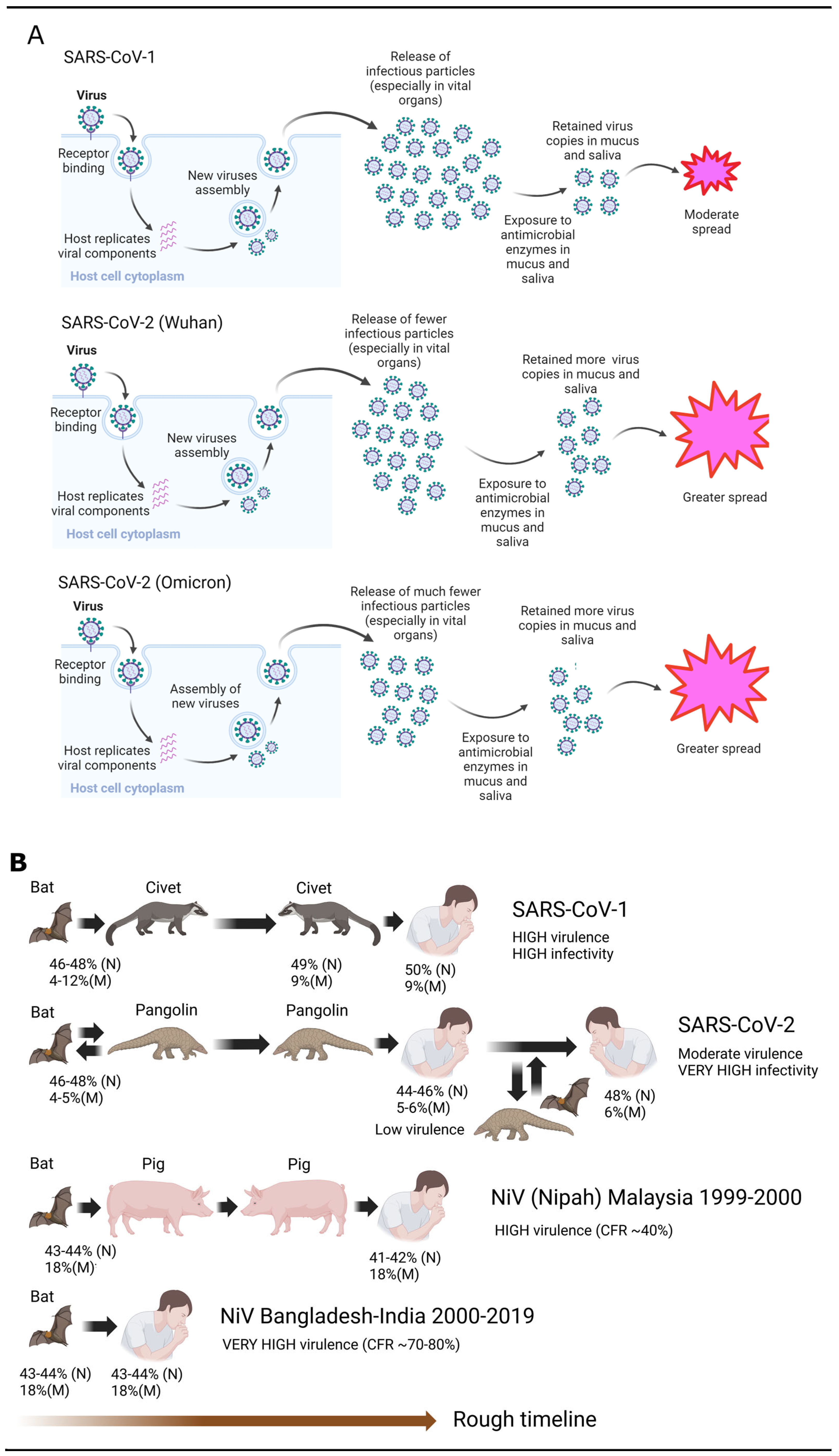
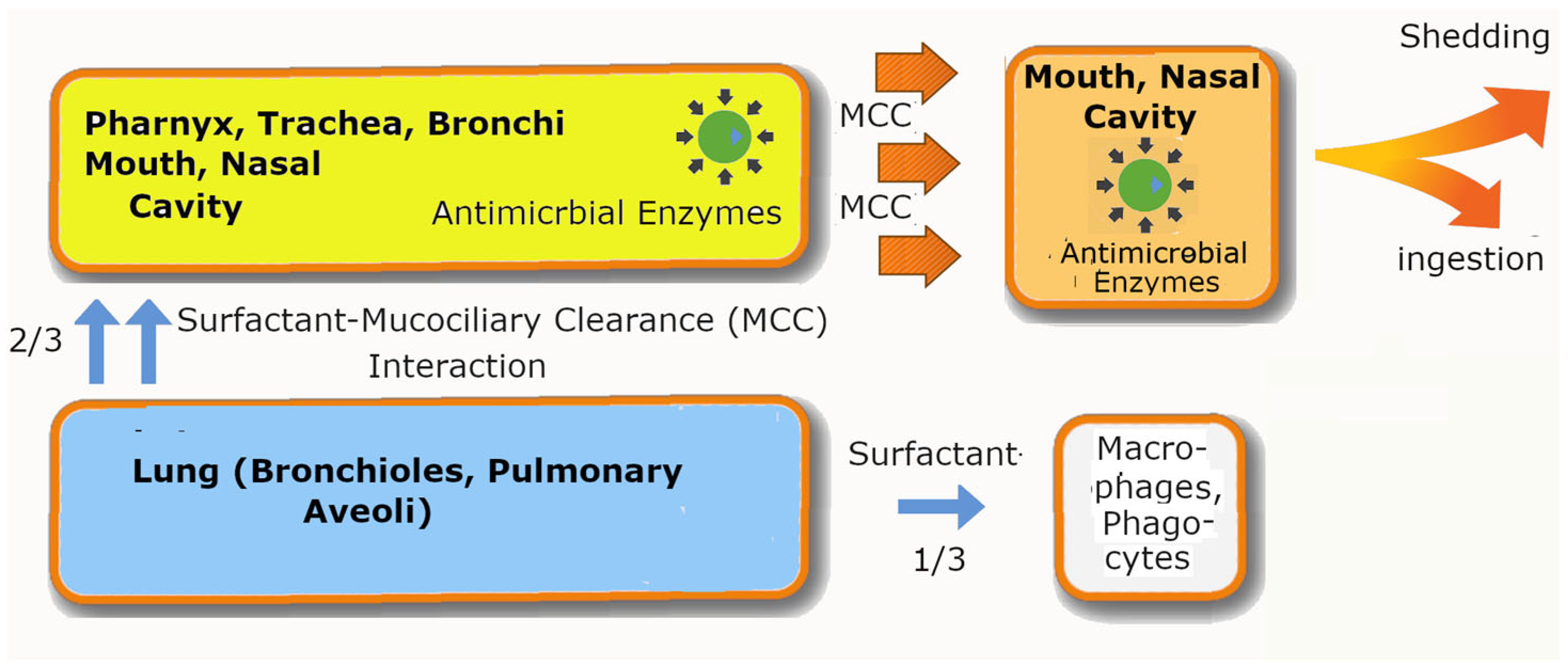
- The abnormally hard M, detected among all SARS-CoV-2 viruses using AI, is believed to be the cause of SARS-CoV-2 high infectivity as it is more resistance to salivary and mucosal antimicrobial enzymes and, thereby, forces the infected person to shed much greater quantities of viral particles.
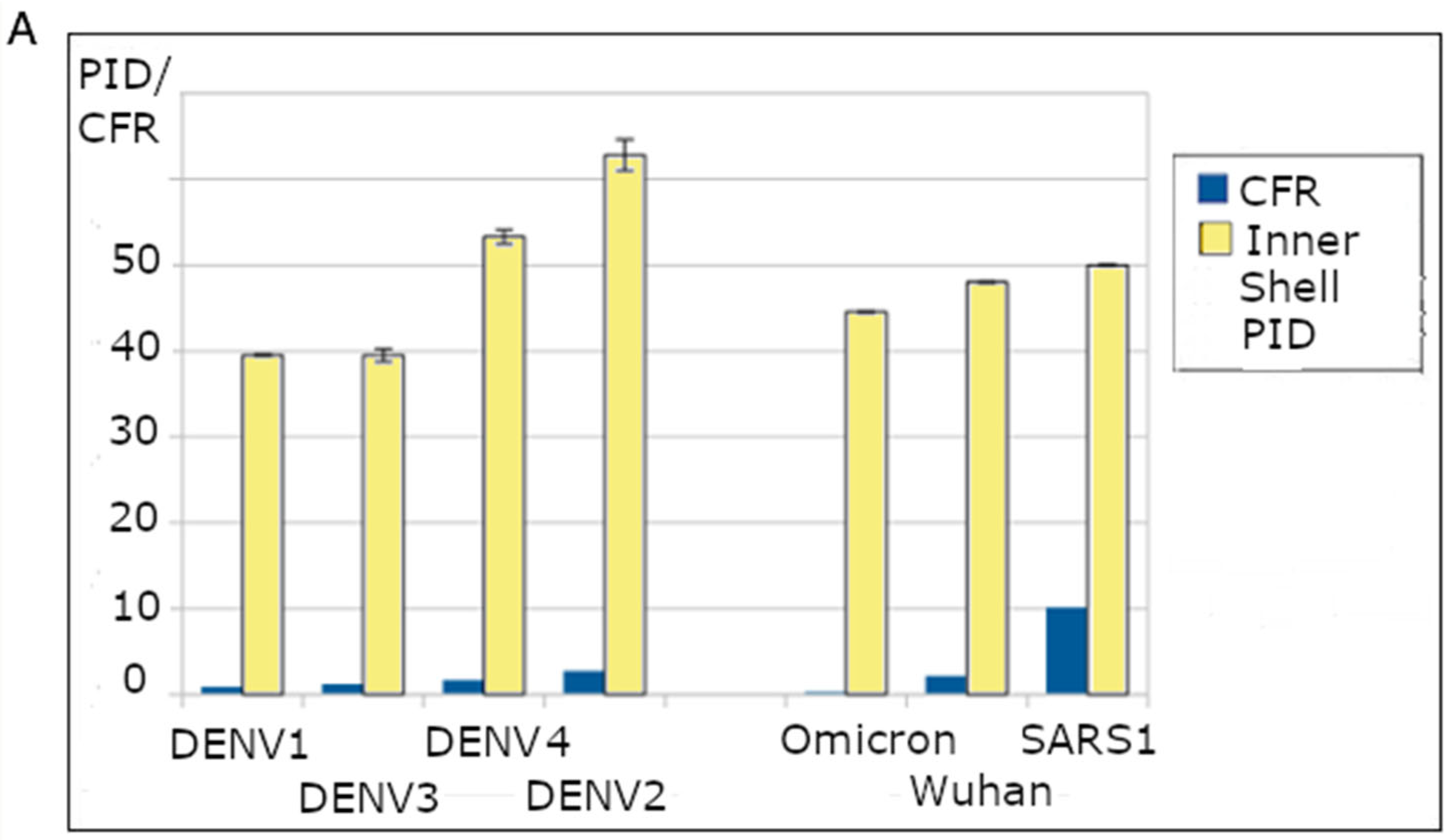
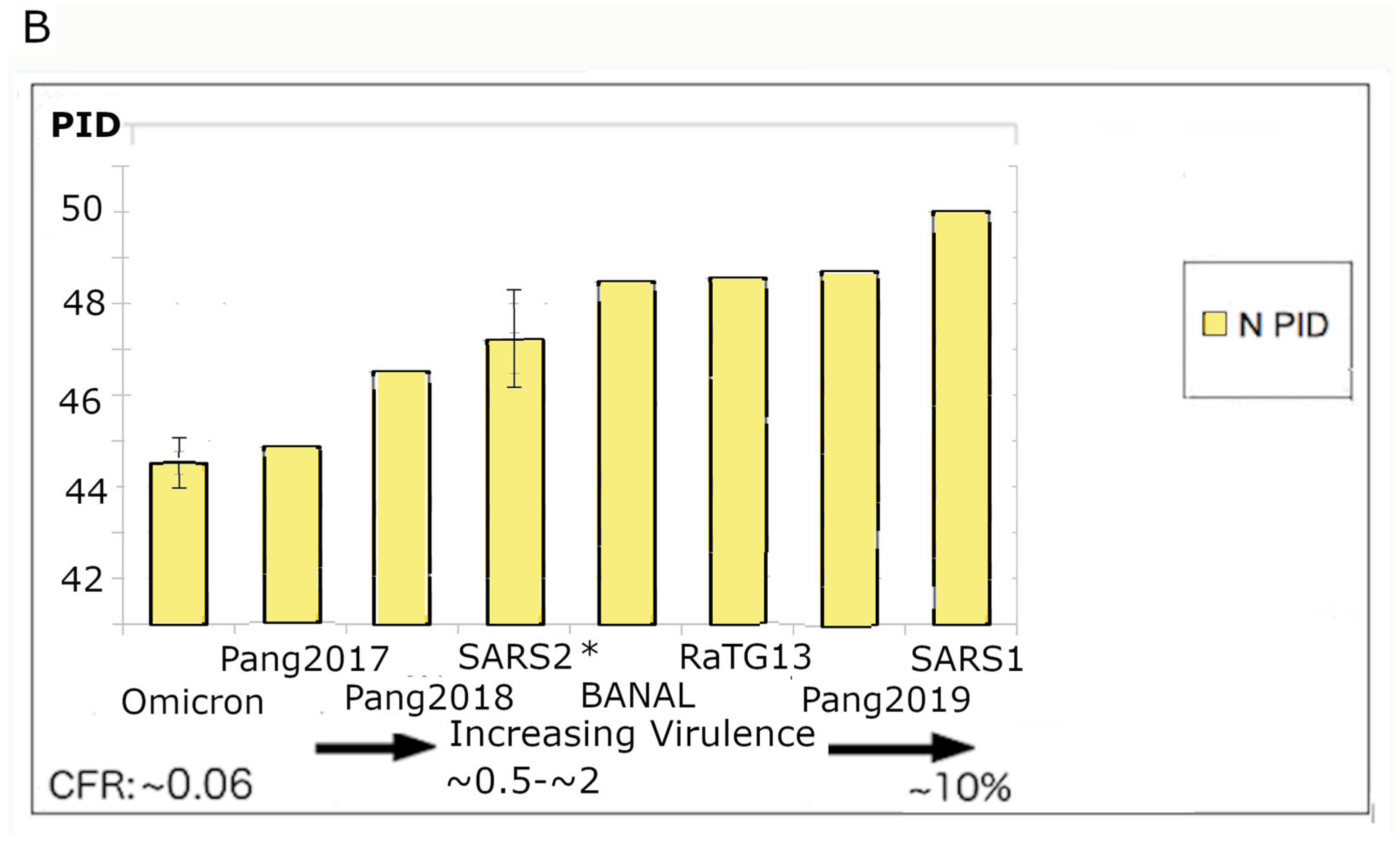
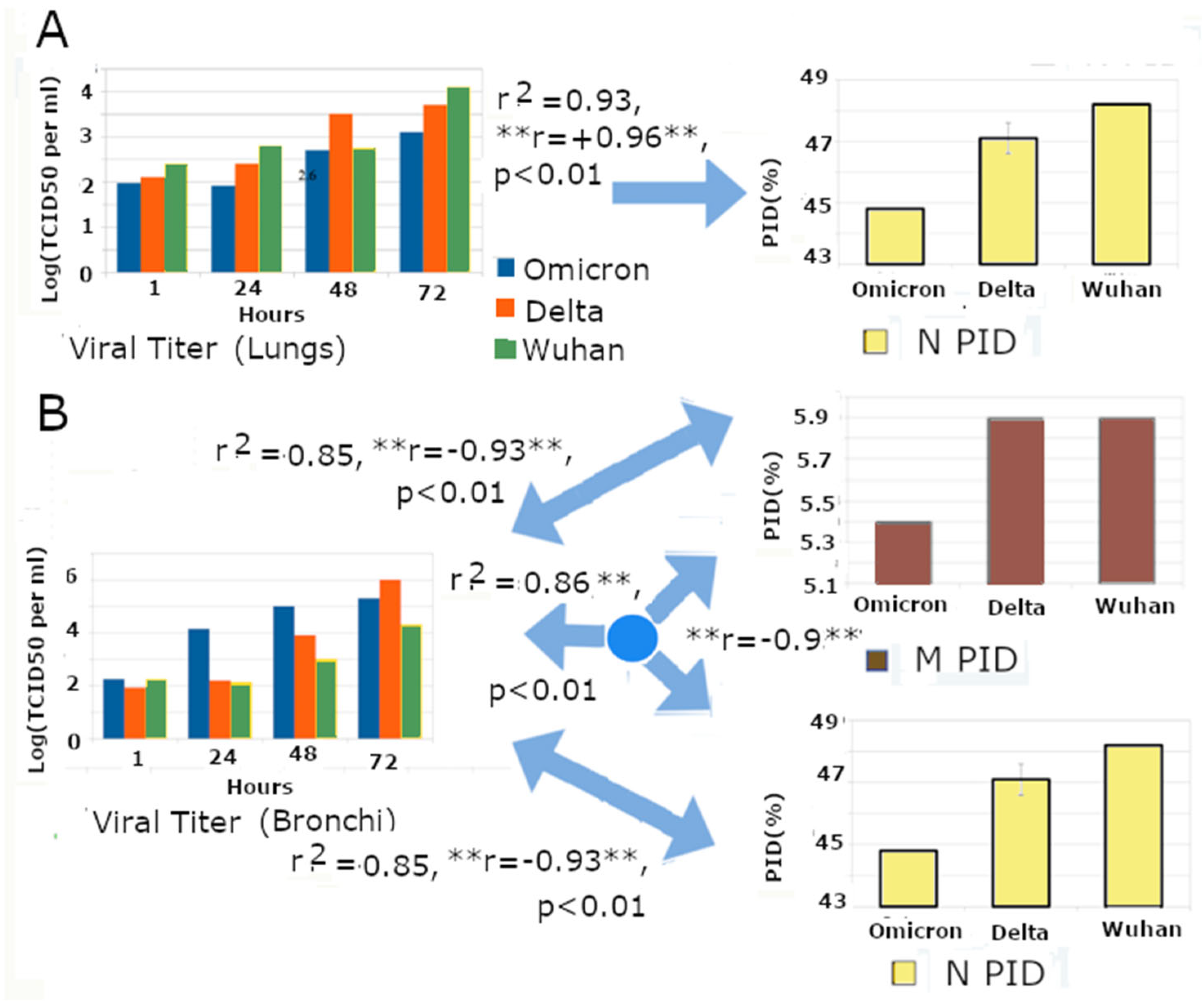
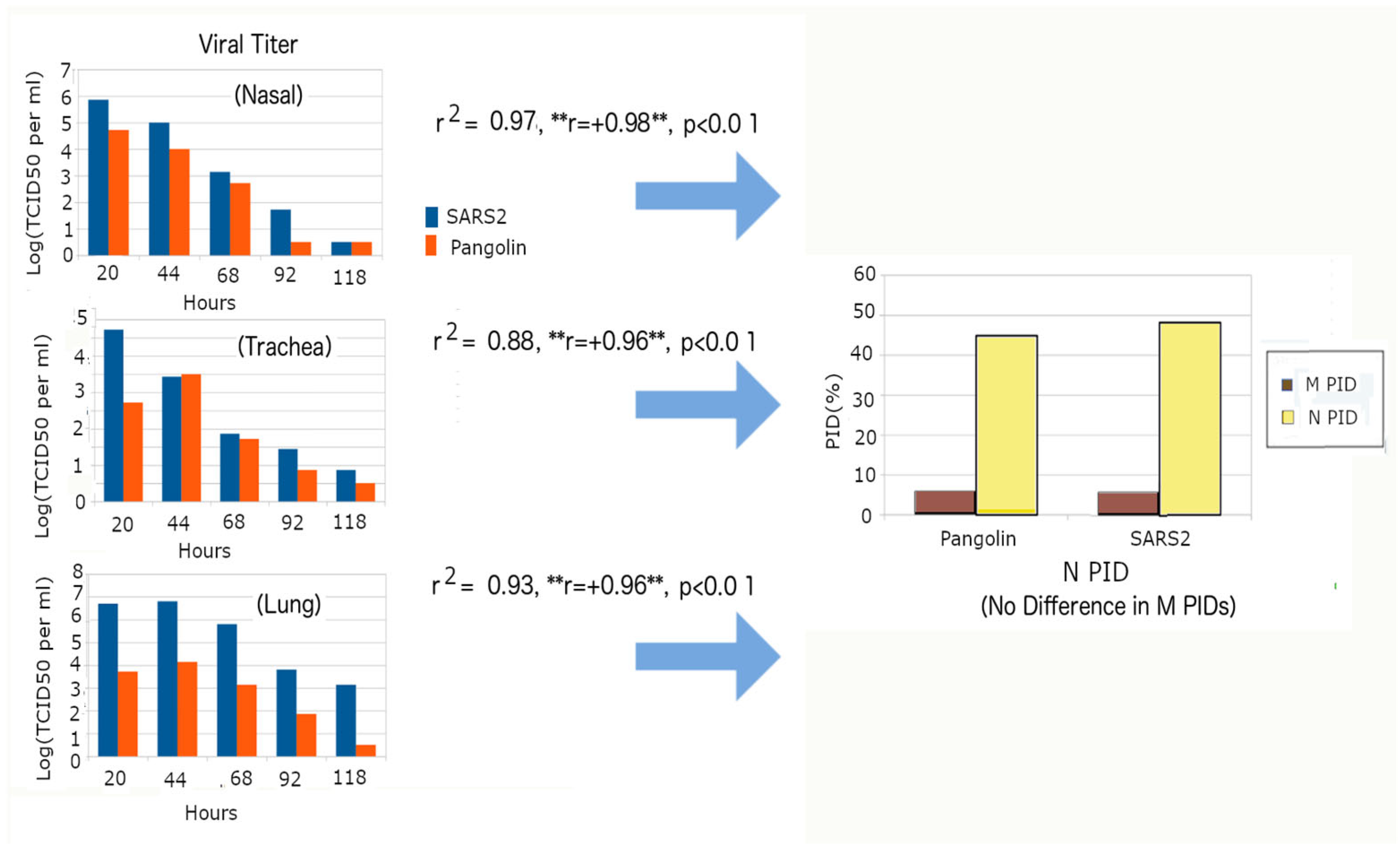
- N disorder could modulate the severity of COVID-19 and long COVID by allowing faster replication of the virus as correlations between the inner shell (N) disorder and virulence have been found.
- Current knowledge of physiology, immunology and biochemistry suggests that the unusually hard M is not just associated with infectivity but also long COVID as the virus could resist the antimicrobial enzymes in the phagocyte and is thus able to dwell in it, which could become a virus reservoir.
- An understanding of the mechanisms by which the virus hides in the body, could lead to better treatments of long COVID by targeting the reservoir via antiviral drugs or correctly timed vaccination using the appropriate vaccine version.
Abstract
1. Introduction
1.1. Goals and Overview
1.2. Pangolin Footprints: Enigmas of COVID-19-Related Viruses
1.3. Long COVID: A Mystery
1.4. Varying Strengths in Evidence Presented
2. The Shell Disorder Models (SDMs): Three Closely Related Models
3. Pangolin Molecular Footprint as an Evolutionary Link to the Peculiar Characteristics Found in SARS-CoV-2
3.1. The First Sign of a Pangolin Footprint: Abnormally Hard Shells in All SARS-CoV-2-Related Viruses
3.2. Signs of Attenuation: Another Pangolin Footprint
3.3. Pangolin Footprints: Implications and Manifestations
3.4. Implications and Manifestations: Infectivity and Virulence
3.5. Physiological Mechanisms Allow Dichotomy Between Virulence and Infectivity: Mucociliary Clearance (MCC)
3.6. Phylogenetic Trees Using M Reveal a More Intimate Relationship Between Pangolin-CoVs and SARS-CoV-2: Another Sign of a Pangolin Footprint

4. The Shell Disorder Models and Reproducibility: M and N Proteins
4.1. The Problem with the S Protein: Limitations and Potentials
4.2. SDMs and Reproducibility
4.3. More Reproducibility: Omicrons and Pangolin-CoVs
4.4. Measuring Virulence Using CFR, Animal Models, and Cell/Tissue Damage Observation
5. The Roles of S, M, and N in Viral Replication: An Enigma
5.1. The S Protein, Omicron, and Pangolins
5.2. The S and Omicron Conundrum
5.3. Evidence of the Different Roles of N and M in Experimental Data
5.4. Hui et al. Experiment: S-Alone Hypothesis vs. SDMs
5.5. The Role of MCC in Virulence and Infectivity
5.6. SDMs Account for MCC in Virulence and Infectivity
5.7. The HCoV-NL63 Enigma
5.8. The Protective Roles of Outer and Inner Shells
5.9. The Functions of M and N
5.10. A More Accurate Understanding of S Comes with the Study of Other Proteins
5.11. Biological Implications of a More Rigid M
6. Potentials and Limitations of M and N in SDMs
6.1. A Comparative Analysis of SARS-CoV-2, Pangolin-CoVs, and Laotian Bat-CoV Experiments Using S, N, and M
6.2. Evidence of the Potentials and Limitations of S: Viral Entry and Replication
6.3. Greater Model Reproducibility and Reliability Come When More Proteins Are Considered
6.4. Limitations and Potentials of N, M, and SDMs
7. SDMs Hint at a Novel Immune Evasion Strategy Used by SARS-CoV-2 in Long COVID
7.1. The Long COVID Enigma and Pangolin Footprints
7.2. Hard M Resistance to Virolysis by Phagocytes and a Complement System
7.3. Resistance to Virolysis Within a Phagocyte May Provide the Virus a Place to Dwell: Possible Reservoir
7.4. Granzymes: A Suspected Mechanism of M Resistance
7.5. Uniqueness of COVID-19 Strategy of Immune Evasion in Long COVID
7.6. Long COVID, Long SARS, and S
8. Summary and Conclusions
8.1. SDMs: Coherent Links Among Virulence, Infectivity, and Long COVID
8.2. Unusual Characteristics in SARS-CoV-2 and the Clinical Manifestations That Arise from Its Evolution
8.3. Clues Pointing to Pangolin Footprints in the Evolution of SARS-CoV-2
8.4. Long COVID
8.5. Clues for Further Research
Author Contributions
Funding
Institutional Review Board Statement
Informed Consent Statement
Data Availability Statement
Conflicts of Interest
Abbreviations
| COVID-19 | coronavirus disease |
| CoV | coronavirus |
| SARS | severe acute respiratory syndrome |
| HCoV | human coronavirus |
| SDM | shell disorder model |
| PONDR®:-VLXT | predictor of natural disordered regions using VLXT |
| PID | percentage of intrinsic disorder (number of disordered residues divided by the total number of residues) |
| Pang2017 | SARS-CoV-2-related pangolin-CoV isolated in 2017 |
| Pang2019 | Pangolin-CoV isolated in 2019 |
| N | nucleocapsid protein |
| M | membrane protein |
| S | spike protein |
| SARS-CoV-2, BANAL | SARS-CoV-2-related Bat-CoVs found in Laos |
| NL63 | a common HCoV |
| RaTG13 | a SARS-CoV-2-related bat-CoV discovered in Yunnan |
| AI | artificial intelligence |
| EBOV | Ebola virus |
| NiV | Nipah virus |
| DENV | dengue virus |
| HIV | human immunodeficiency virus |
| YFV | yellow fever virus |
| ZIKV | Zika virus |
References
- WHO. Coronavirus Disease (COVID-19) Pandemic. Available online: https://www.who.int/emergencies/diseases/novel-coronavirus-2019 (accessed on 2 January 2025).
- CDC Museum COVID-19 Timeline. Available online: https://www.cdc.gov/museum/timeline/covid19.html (accessed on 1 January 2025).
- Woldometer: COVID-19 Coronavirus Pandemic. Available online: https://www.worldometers.info/coronavirus/ (accessed on 2 January 2025).
- Goh, G.K. Viral Shapeshifters: Strange Behaviors of HIV and Other Viruses; Simplicity Research Institute: Singapore, 2017. [Google Scholar]
- Zhang, Z.; Nomura, N.; Muramoto, Y.; Ekimoto, T.; Uemura, T.; Liu, K.; Yui, M.; Kono, N.; Aoki, J.; Ikeguchi, M.; et al. Structure of SARS-CoV-2 Membrane Protein Essential for Virus Assembly. Nat. Commun. 2022, 13, 4399. [Google Scholar] [CrossRef] [Scilit]
- Wang, Y.; Xia, B.; Gao, Z. A Comprehansive Review of Current Insights into the Virulence Factor of SARS-CoV-2. J. Vir. 2025, 99, e02049. [Google Scholar]
- Minigulov, N.; Boranbayev, K.; Bekbossynova, A.; Gadilgereyeva, B.; Filchakova, O. Structural Proteins Proteins of Human Coronaviruses: What Makes Thme Different? Front. Cell. Infect. Microbial. 2024, 14, 1458383. [Google Scholar] [CrossRef] [Scilit]
- Van Damme, E.; Abeywickrema, P.; Yin, Y.; Xie, J.; Jacobs, S.; Mann, M.K.; Doijen, J.; Miller, R.; Piassek, M.; Marsili, S.; et al. A Small-Molecule SARS-CoV-2 Inhibitor Targeting the Membrane Protein. Nature 2025, 640, 506–513. [Google Scholar] [CrossRef] [Scilit]
- Shang, J.; Ye, G.; Shi, K.; Wan, Y.; Luo, C.; Aihara, H.; Geng, Q.; Auerbach, A.; Li, F. Structural basis of receptor recognition by SARS-CoV-2. Nature 2020, 581, 221–224. [Google Scholar] [CrossRef] [Scilit]
- Piplani, S.; Singh, P.K.; Winkler, D.A.; Petrovsky, N. In silico comparison of SARS-CoV-2 spike protein-ACE2 binding affinities across species and implications for virus origin. Sci. Rep. 2021, 11, 13063. [Google Scholar] [CrossRef] [Scilit]
- Wrapp, D.; Wang, N.; Corbett, K.S.; Goldsmith, J.A.; Hsieh, C.L.; Abiona, O.; Graham, B.S.; McLellan, J.S. Cryo-EM Structure of the 2019-nCoV Spike in the Prefusion Conformation. Science 2020, 367, 1260–1263. [Google Scholar] [CrossRef] [Scilit] [PubMed]
- Keshta, A.S.; Mallah, S.I.; Al Zubaidi, K.; Ghorab, O.K.; Keshta, M.S.; Alarabi, D.; Abousaleh, M.A.; Salman, M.T.; Taha, O.E.; Zeidan, A.A.; et al. COVID-19 VS SARS: A Comparative Review. J. Infect. Public Health 2021, 14, 967–977. [Google Scholar] [CrossRef] [Scilit]
- RIDAO: Rapid Intrinsic Disorder Analysis Online. Available online: https://ridao.app/users/sign_in (accessed on 1 January 2025).
- PONDR®: Prediction of Naturally Disordered Regions. Available online: https://www.pondr.com/ (accessed on 28 May 2025).
- Garner, E.; Romero, P.; Dunker, A.K.; Brown, C.; Obradovic, Z. Predicting Binding Regions within Disordered Proteins. Genome Inform. Ser. Workshop Genome Inform. 1999, 10, 41–50. [Google Scholar] [PubMed]
- Cheng, Y.; Oldfield, C.J.; Meng, J.; Romero, P.; Uversky, V.N.; Dunker, A.K. Mining alpha-helix-forming molecular recognition features with cross species sequence alignments. Biochemistry 2007, 46, 13468–13477. [Google Scholar] [CrossRef] [Scilit] [PubMed]
- Li, X.; Romero, P.; Rani, M.; Dunker, A.K.; Obradovic, Z. Predicting Protein Disorder for N-, C-, and Internal Regions. Genome Inform. Ser. Workshop Genome Inform. 1999, 10, 30–40. [Google Scholar] [PubMed]
- Goh, G.K.; Dunker, A.K.; Foster, J.A.; Uversky, V.N. Shell Disorder Analysis Suggests That Pangolins Offered a Window for a Silent Spread of an Attenuated SARS-CoV-2 Precursor among Humans. J. Proteome Res. 2020, 19, 4543–4552. [Google Scholar] [CrossRef] [Scilit]
- Goh, G.K.; Dunker, A.K.; Foster, J.A.; Uversky, V.N. Rigidity of the Outer Shell Predicted by a Protein Intrinsic Disorder Model Sheds Light on the COVID-19 (Wuhan-2019-nCoV) Infectivity. Biomolecules 2020, 10, 331. [Google Scholar] [CrossRef] [Scilit] [PubMed]
- Goh, G.K.; Dunker, A.K.; Foster, J.A.; Uversky, V.N. Shell disorder analysis predicts greater resilience of the SARS-CoV-2 (COVID-19) outside the body and in body fluids. Microb. Pathog. 2020, 144, 104177. [Google Scholar] [CrossRef] [Scilit] [PubMed]
- Riddell, S.; Goldie, S.; Hill, A.; Eagles, D.; Drew, T.W. The effect of temperature on persistence of SARS-CoV-2 on common surfaces. Virol. J. 2020, 17, 145. [Google Scholar] [CrossRef] [Scilit]
- Mandel, I.D. The functions of saliva. J. Dent. Res. 1987, 66, 623–627. [Google Scholar] [CrossRef] [Scilit]
- Ganz, T. Antimicrobial polypeptides in host defense of the respiratory tract. J. Clin. Investig. 2002, 109, 693–697. [Google Scholar] [CrossRef]
- Cole, A.M.; Dewan, P.; Ganz, T. Innate antimicrobial activity of nasal secretions. Infect. Immun. 1999, 67, 3267–3275. [Google Scholar] [CrossRef] [Scilit] [PubMed]
- Malamud, D.; Abrams, W.R.; Barber, C.A.; Weissman, D.; Rehtanz, M.; Golub, E. Antiviral activities in human saliva. Adv. Dent. Res. 2011, 23, 34–37. [Google Scholar] [CrossRef] [Scilit]
- Chatterjee, M.; Van Putten, J.P.M.; Strijbis, K. Defensive Properties of Mucin Glycoproteins during Respiratory Infections-Relevance for SARS-CoV-2. mBio 2020, 11, e02374-20. [Google Scholar] [CrossRef] [Scilit] [PubMed]
- Bakshani, C.R.; Morales-Garcia, A.L.; Althaus, M.; Wilcox, M.D.; Pearson, J.P.; Bythell, J.C.; Burgess, J.G. Evolutionary Conservation of Antimicrobial Function of Mucus: A First Defence Against Infection. NPJ Biofilms Microbiomes 2018, 4, 14. [Google Scholar] [CrossRef] [Scilit] [PubMed]
- Wilson, S.S.; Wiens, M.E.; Holly, M.K.; Smith, J.G. Defensins at Mucosal Surface: Latest Insights into Defensin-Virus Interactions. J. Virol. 2016, 90, 5216–5218. [Google Scholar] [CrossRef] [Scilit]
- Wolfel, R.; Corman, V.M.; Guggemos, W.; Seilmaier, M.; Zange, S.; Muller, M.A.; Niemeyer, D.; Jones, T.C.; Vollmar, P.; Rothe, C.; et al. Virological assessment of hospitalized patients with COVID-2019. Nature 2020, 581, 465–469. [Google Scholar] [CrossRef] [Scilit] [PubMed]
- Wright, P.E.; Dyson, H.J. Intrinsically unstructured proteins: Re-assessing the protein structure-function paradigm. J. Mol. Biol. 1999, 293, 321–331. [Google Scholar] [CrossRef] [Scilit]
- Barlow, R.B.; Dyson, H.J.; Wright, P.E. Expanding the Paradigm: Intrinsically Disordered Proteins and Allosteric Regulation. J. Mol. Biol. 2018, 430, 2309–2320. [Google Scholar] [CrossRef] [Scilit]
- Longhi, S.; Bloyet, L.M.; Gianni, S.; Gerlier, D. How order and disorder within paramyxoviral nucleoproteins and phosphoproteins orchestrate the molecular interplay of transcription and replication. Cell. Mol. Life Sci. 2017, 74, 3091–3118. [Google Scholar] [CrossRef] [Scilit] [PubMed]
- Habchi, J.; Longhi, S. Structural disorder within paramyxovirus nucleoprotein and phosphoproteins. Mol. Biosyst. 2012, 8, 69–81. [Google Scholar] [CrossRef] [Scilit]
- Goh, G.K.; Dunker, A.K.; Uversky, V.N. Correlating Flavivirus virulence and levels of intrinsic disorder in shell proteins: Protective roles vs. immune evasion. Mol. Biosyst. 2016, 12, 1881–1891. [Google Scholar] [CrossRef] [Scilit]
- Goh, G.K.; Dunker, A.K.; Foster, J.A.; Uversky, V.N. Zika and Flavivirus Shell Disorder: Virulence and Fetal Morbidity. Biomolecules 2019, 9, 710. [Google Scholar] [CrossRef] [Scilit]
- Goh, G.K.; Dunker, A.K.; Foster, J.A.; Uversky, V.N. Nipah shell disorder, modes of infection, and virulence. Microb. Pathog. 2020, 141, 103976. [Google Scholar] [CrossRef] [Scilit]
- Goh, G.K.; Dunker, A.K.; Uversky, V.N. Detection of links between Ebola nucleocapsid and virulence using disorder analysis. Mol. Biosyst. 2015, 11, 2337–2344. [Google Scholar] [CrossRef] [Scilit]
- Goh, G.K.; Dunker, A.K.; Foster, J.A.; Uversky, V.N. Feasibility of the vaccine development for SARS-CoV-2 and other viruses using the shell disorder analysis. Pac. Symp. Biocomput. 2021, 26, 143–153. [Google Scholar]
- Goh, G.K.; Dunker, A.K.; Foster, J.A.; Uversky, V.N. A Novel Strategy for the Development of Vaccines for SARS-CoV-2 (COVID-19) and Other Viruses Using AI and Viral Shell Disorder. J. Proteome Res. 2020, 19, 4355–4363. [Google Scholar] [CrossRef] [Scilit] [PubMed]
- Goh, G.K.; Dunker, A.K.; Foster, J.A.; Uversky, V.N. A Study on the Nature of SARS-CoV-2 Using the Shell Disorder Models: Reproducibility, Evolution, Spread, and Attenuation. Biomolecules 2022, 12, 1353. [Google Scholar] [CrossRef] [Scilit]
- Li, X.; Zai, J.; Zhao, Q.; Nie, Q.; Li, Y.; Foley, B.T.; Chaillon, A. Evolutionary history, potential intermediate animal host, and cross-species analyses of SARS-CoV-2. J. Med. Virol. 2020, 92, 602–611. [Google Scholar] [CrossRef] [Scilit] [PubMed]
- Zhou, P.; Yang, X.L.; Wang, X.G.; Hu, B.; Zhang, L.; Zhang, W.; Si, H.R.; Zhu, Y.; Li, B.; Huang, C.L.; et al. Addendum: A pneumonia outbreak associated with a new coronavirus of probable bat origin. Nature 2020, 588, E6. [Google Scholar] [CrossRef] [PubMed]
- Hu, B.; Guo, H.; Zhou, P.; Shi, Z.L. Characteristics of SARS-CoV-2 and COVID-19. Nat. Rev. Microbiol. 2021, 19, 141–154. [Google Scholar] [CrossRef] [Scilit]
- Lam, T.T.; Jia, N.; Zhang, Y.W.; Shum, M.H.; Jiang, J.F.; Zhu, H.C.; Tong, Y.G.; Shi, Y.X.; Ni, X.B.; Liao, Y.S.; et al. Identifying SARS-CoV-2-related coronaviruses in Malayan pangolins. Nature 2020, 583, 282–285. [Google Scholar] [CrossRef] [Scilit]
- Xiao, K.; Zhai, J.; Feng, Y.; Zhou, N.; Zhang, X.; Zou, J.J.; Li, N.; Guo, Y.; Li, X.; Shen, X.; et al. Isolation of SARS-CoV-2-related coronavirus from Malayan pangolins. Nature 2020, 583, 286–289. [Google Scholar] [CrossRef] [Scilit]
- Fan, H.-H.; Wang, L.-Q.; Liu, W.-L.; An, X.-P.; Liu, Z.-D.; He, X.-Q.; Song, L.-H.; Tong, Y.-G. Repurposing of clinically approved drugs for treatment of coronavirus disease 2019 in a 2019-novel coronavirus-related coronavirus model. Chin. Med. J. 2020, 133, 1051–1056. [Google Scholar] [CrossRef] [Scilit]
- Zhang, T.; Wu, Q.; Zhang, Z. Probable Pangolin Origin of SARS-CoV-2 Associated with the COVID-19 Outbreak. Curr. Biol. 2020, 30, 1346–1351.e2. [Google Scholar] [CrossRef] [Scilit]
- Liu, P.; Jiang, J.Z.; Wan, X.F.; Hua, Y.; Li, L.; Zhou, J.; Wang, X.; Hou, F.; Chen, J.; Zou, J.; et al. Are Pangolins the Intermediate Host of the the 2019 Novel Coronavirus (SARS-CoV-2)? PLoS Pathog. 2021, 16, e1009664. [Google Scholar] [CrossRef] [Scilit]
- Nga, N.T.T.; Latinne, A.; Thuy, H.B.; Van Long, N.; Ngoc, P.T.B.; Anh, N.T.L.; Van Thai, N.; Phuong, T.Q.; Van Thai, H.; Hai, L.K.; et al. Evidence of SARS-CoV-2 Related Coronaviruses Circulating in Sunda pangolins (Manis javanica) Confiscated from the Illegal Wildlife Trade in Viet Nam. Front. Public Health 2022, 10, 826116. [Google Scholar] [CrossRef] [Scilit] [PubMed]
- Temmam, S.; Vongphayloth, K.; Baquero, E.; Munier, S.; Bonomi, M.; Regnault, B.; Douangboubpha, B.; Karami, Y.; Chrétien, D.; Sanamxay, D.; et al. Bat coronaviruses related to SARS-CoV-2 and infectious for human cells. Nature 2022, 604, 330–336. [Google Scholar] [CrossRef] [Scilit] [PubMed]
- Temmam, S.; Montagutelli, X.; Herate, C.; Donati, F.; Regnault, B.; Attia, M.; Baquero Salazar, E.; Chretien, D.; Conquet, L.; Jouvion, G.; et al. SARS-CoV-2 Related Bat Virus Behvior in Human-relevant Models Sheds Light on the Orgin of COVID-19. EMBO Rep. 2023, 5, e56055. [Google Scholar] [CrossRef] [Scilit] [PubMed]
- Goh, G.K.; Dunker, A.K.; Foster, J.A.; Uversky, V.N. Computational, Experimental, and Clinical Evidence of a Specific but Peculiar Evolutionary Nature of (COVID-19) SARS-CoV-2. J. Proteome Res. 2022, 21, 874–890. [Google Scholar] [CrossRef] [Scilit]
- Goh, G.K.; Dunker, A.K.; Uversky, V.N. Understanding Viral Transmission Behavior via Protein Intrinsic Disorder Prediction: Coronaviruses. J. Pathog. 2012, 2012, 738590. [Google Scholar] [CrossRef] [Scilit]
- Goh, G.K.; Dunker, A.K.; Uversky, V. Prediction of Intrinsic Disorder in MERS-CoV/HCoV-EMC Supports a High Oral-Fecal Transmission. PLoS Curr. 2013, 5. [Google Scholar] [CrossRef] [Scilit] [PubMed]
- Wei, L.; Song, L.; Dunker, A.K.; Foster, J.A.; Uversky, V.N.; Goh, G.K.-M. A Comparative Experimental and Computational Study on the Nature of the Pangolin-CoV and COVID-19 Omicron. Int. J. Mol. Sci. 2024, 25, 753. [Google Scholar] [CrossRef] [Scilit]
- Goh, G.K.; Dunker, A.K.; Foster, J.A.; Uversky, V.N. Shell Disorder Models Detect That Omicron Has Harder Shells with Attenuation but Is Not a Descendant of the Wuhan-Hu-1 SARS-CoV-2. Biomolecules 2022, 12, 631. [Google Scholar] [CrossRef] [Scilit]
- Gheorghita, R.; Soldanescu, I.; Lobiuc, A.; Caliman Sturdza, O.A.; Filip, R.; Constantinescu-Bercu, A.; Dimian, M.; Mangul, S.; Covasa, M. The Knowns and Unknowns of long COVID form Mechanisms to Therapeutical. Front. Immunol. 2024, 15, 1344086. [Google Scholar] [CrossRef] [Scilit]
- Lai, C.C.; Hsu, C.K.; Yen, M.Y.; Lee, P.I.; Ko, W.C.; Hsueh, P.R. Long COVID: An Inevitable Sequela of SARS-CoV-2 Infection. J. Microbiol. Immunolo. Infect. 2023, 56, 1–9. [Google Scholar] [CrossRef] [Scilit]
- Post COVID-19 Condition (Long COVID). Available online: https://www.who.int/news-room/fact-sheets/detail/post-covid-19-condition-(long-covid) (accessed on 28 September 2025).
- Are Long COVID Sufferers Falling Through the Cracks? Available online: https://med.stanford.edu/news/insights/2024/03/long-covid-symptoms-sufferers-misdiagnosed.html (accessed on 28 September 2025).
- Erlandson, K.M.; Geng, L.N.; Thaweethai, T.; Chen, P.; Erdmann, N.B.; Goldman, J.D.; Henrich, T.J.; Hornig, M.; Karlson, E.W.; Katz, S.D.; et al. Differentiation of Prior SARS-CoV-2 Infection and postacute Sequelae by Standard Clinical Laboratory Measurements in RECOVER Cohort. Ann. Intern. Med. 2024, 177, 1209–1221. [Google Scholar] [CrossRef] [Scilit]
- Marshall, M. The Four Most Urgent Questions About Long COVID. Nature 2021, 594, 168–170. [Google Scholar] [CrossRef] [Scilit]
- Levin, J.; Bradshaw, M. The Challenge of Long COVID: Is the Pandemic Really Over? Public Health Rep. 2025, 140, 506–513. [Google Scholar] [CrossRef] [Scilit] [PubMed]
- Patcai, J. Is “Long COVID” Similar to “Long SARS”? Oxf. Open Immunol. 2022, 3, iqac002. [Google Scholar] [CrossRef] [Scilit]
- Goh, G.K.; Dunker, A.K.; Uversky, V.N. Protein intrinsic disorder toolbox for comparative analysis of viral proteins. BMC Genom. 2008, 9, S4. [Google Scholar] [CrossRef] [Scilit]
- Goh, G.K.; Dunker, A.K.; Uversky, V.N. A comparative analysis of viral matrix proteins using disorder predictors. Virol. J. 2008, 5, 126. [Google Scholar] [CrossRef] [Scilit]
- Goh, G.K.; Dunker, A.K.; Foster, J.A.; Uversky, V.N. HIV Vaccine Mystery and Viral Shell Disorder. Biomolecules 2019, 9, 178. [Google Scholar] [CrossRef] [Scilit] [PubMed]
- UniProt. Available online: https://www.uniprot.org/ (accessed on 22 January 2025).
- NCBI-Protein/Genbank. Available online: https://www.ncbi.nlm.nih.gov/protein (accessed on 22 March 2022).
- Lu, S.; Luo, S.; Liu, C.; Li, M.; An, X.; Li, M.; Hou, J.; Fan, H.; Mao, P.; Tong, Y.; et al. Induction of significant neutralizing antibodies against SARS-CoV-2 by a highly attenuated pangolin coronavirus variant with a 104nt deletion at the 3′-UTR. Emerg. Microbes Infect. 2023, 12, 2151383. [Google Scholar] [CrossRef] [Scilit] [PubMed]
- Guo, Z.; Zhang, C.; Zhang, C.; Cui, H.; Chen, Z.; Jiang, X.; Wang, T.; Li, Y.; Liu, J.; Wan, Z.; et al. SARS-CoV-2-related pangolin coronavirus exhibits similar infection characteristics to SARS-CoV-2 and direct contact transmissibility in hamsters. Science 2022, 25, 104350. [Google Scholar] [CrossRef] [Scilit]
- Liu, M.-Q.; Lin, H.-F.; Li, J.; Chen, Y.; Luo, Y.; Zhang, W.; Hu, B.; Tian, F.-J.; Hu, Y.-J.; Liu, Y.-J.; et al. A SARS-CoV-2-Related Virus from Malayan Pangolins Causes Lung Infection without Severe Diseases in Human ACE2-Transgenic Mice. J. Virol. 2023, 97, e01971922. [Google Scholar] [CrossRef] [Scilit]
- Shuai, H.; Chan, J.F.-W.; Hu, B.; Chai, Y.; Yuen, T.T.-T.; Yin, F.; Huang, X.; Yoon, C.; Hu, J.-C.; Liu, H.; et al. Attenuated Replication and Pathogenicity of SARS-CoV-2 B.1.1 Omicron. Nature 2022, 603, 693–699. [Google Scholar] [CrossRef] [Scilit]
- Hui, K.P.Y.; Ho, J.C.W.; Cheung, M.C.; Ng, K.C.; Ching, R.H.H.; Lai, K.L.; Kam, T.T.; Gu, H.; Sit, K.Y.; Hsin, M.K.Y.; et al. SARS-CoV-2 Omicron variant replication in human bronchus and lung ex vivo. Nature 2022, 603, 715–720. [Google Scholar] [CrossRef] [Scilit] [PubMed]
- Ogando, N.S.; Dalebout, T.J.; Zevenhoven-Dobbe, J.C.; Limpens, R.; van der Meer, Y.; Caly, L.; Druce, J.; de Vries, J.J.C.; Kikkert, M.; Barcena, M.; et al. SARS-coronavirus-2 replication in Vero E6 cells: Replication kinetics, rapid adaptation and cytopathology. J. Gen. Virol. 2020, 101, 925–940. [Google Scholar] [CrossRef] [Scilit]
- Liang, X.; Chen, X.; Zhai, J.; Li, X.; Zhang, X.; Zhang, Z.; Zhang, P.; Wang, X.; Cui, X.; Wang, H.; et al. Pathogenicity, Tissue Tropism and Potential Vertical Transmission of SARS-CoV-2 in Malayan Pangolins. PLoS. Pathog. 2023, 19, e10111384. [Google Scholar] [CrossRef] [Scilit]
- Hou, Y.J.; Chiba, S.; Leist, S.R.; Meganck, R.M.; Martinez, D.R.; Schafer, A.; Catanzaro, N.J.; Sontake, V.; West, A.; Edwards, C.E.; et al. Host range, transmissibility and antigenicity of a pangolin coronavirus. Nat. Microbiol. 2023, 8, 1820–1833. [Google Scholar] [CrossRef] [Scilit] [PubMed]
- Huang, X.-Y.; Chen, Q.; Sun, M.-X.; Zhou, H.-Y.; Ye, Q.; Chen, W.; Peng, J.-Y.; Qi, Y.-N.; Zhai, J.-Q.; Tian, Y.; et al. A Pangolin-Origin SARS-CoV-2-Related Coronavirus: Infectivity, Pathogenicity, and Cross-Protection by Preexisting Immunity. Cell Discov. 2023, 9, 59. [Google Scholar] [CrossRef] [Scilit]
- European_CDC. European Center for Disease Prevention and Control, Weekly Epidemilogical Update: Omicron Variant of Concern (VOC). Available online: https://www.ecdc.europa.eu/en/news-events/weekly-epidemiological-update-omicron-variant-concern-voc-week-2-data-20-january-2022 (accessed on 28 January 2025).
- Wolter, N.; Jassat, W.; Walaza, S.; Welch, R.; Moultrie, H.; Groome, M.; Amoako, D.G.; Everatt, J.; Bhiman, J.N.; Scheepers, C. Early assessment of the clinical severity of the SARS-CoV-2 Omicron variant in South Africa: A data linkage study. Lancet 2022, 399, 437–446. [Google Scholar] [CrossRef] [Scilit] [PubMed]
- Abdullah, F.; Myers, J.; Basu, D.; Tintinger, G.; Ueckermann, V.; Mathebula, M.; Ramlall, R.; Spoor, S.; de Villiers, T.; Van der Walt, Z.; et al. Decreased severity of disease during the first global omicron variant covid-19 outbreak in a large hospital in tshwane, south africa. Int. J. Infect. Dis. 2022, 116, 38–42. [Google Scholar] [CrossRef] [Scilit]
- Mire, C.E.; Satterfield, B.A.; Geisbert, J.B.; Agans, K.N.; Borisevich, V.; Yan, L.; Chan, Y.-P.; Cross, R.W.; Fenton, K.A.; Broder, C.C.; et al. Pathogenic differences between Nipah virus Bangladesh and Malaysia strains in primates: Implications for antibody therapy. Sci. Rep. 2016, 6, 30916. [Google Scholar] [CrossRef] [Scilit]
- CDC: Avian Influenza (Bird Flu). Available online: https://www.cdc.gov/bird-flu/virus-transmission/index.html (accessed on 28 May 2025).
- Yehia, N.; Salem, H.M.; Mahmmod, Y.; Said, D.; Samir, M.; Mawgod, S.A.; Sorour, H.K.; AbdelRahman, M.A.; Selim, S.; Saad, A.M.; et al. Common Viral and Bacterial Respiratory Infections: An Updated Review. Poult. Sci. 2023, 102, 102553. [Google Scholar] [CrossRef] [Scilit] [PubMed] [PubMed Central]
- Psittacosis Pneumonia. Available online: https://www.ncbi.nlm.nih.gov/books/NBK526005/ (accessed on 28 May 2025).
- Nguyen, X.D.; Zhao, Y.; Lin, J.; Purswell, J.L.; Tabler, T.; Voy, B.; Hawkins, S.; Evans, J.D. Modeling Long-Distance Airborne Transmission of Highly Pathogenic Avian Influenza Carried by Dust Particles. Sci. Rep. 2023, 13, 16255. [Google Scholar] [CrossRef] [Scilit] [PubMed]
- Weupe, M.; Peabody Lever, J.E.; Kennemur, J.P.; Bono, T.R.; Phillips, S.E.; Shei, R.-J.; Rowe, S.M. Moving mucus matters for lung health. Front. Young Minds 2019, 7, 16. [Google Scholar] [CrossRef] [Scilit]
- Fahy, J.B.; Dickey, B.F. Airways mucus function and disfuction. N. Engl. J. Med. 2010, 363, 2233–2247. [Google Scholar] [CrossRef] [Scilit]
- Abrahams, P. (Ed.) How the Body Works: A Comprehensive Illustrated Encyclopedia of Anatomy; Amber Books Limited: London, UK, 2016. [Google Scholar]
- Ward, H.E.; Nicholas, T.E. Alveolar type I and type II cells. Aust. N. Z. J. Med. 1984, 14, 731–734. [Google Scholar] [CrossRef] [Scilit]
- Gehr, P.; Geiser, M.; Im Hof, V.; Schürch, S.; Waber, U.; Baumann, M. Surfactant and Inhaled Particles in the Conducting Airways: Structural, Stereological, and Biophysical Aspects. Microsc. Res. Tech. 1993, 26, 324–336. [Google Scholar] [CrossRef] [Scilit] [PubMed]
- Posada, D. How does recombination affect phylogeny estimation? Trends Ecol. Evol. 2000, 15, 489–490. [Google Scholar] [CrossRef] [Scilit]
- Kupferschmidt, K. Where did ‘weird’ Omicron come from? Science 2021, 374, 1179. [Google Scholar] [CrossRef] [Scilit]
- Choi, B.; Choudhary, M.C.; Regan, J.; Sparks, J.A.; Padera, R.F.; Qiu, X.; Solomon, I.H.; Kuo, H.H.; Boucau, J.; Bowman, K.; et al. Persistence and Evolution of SARS-CoV-2 in an Immunocompromised Host. N. Engl. J. Med. 2020, 383, 2291–2293. [Google Scholar] [CrossRef] [Scilit] [PubMed]
- Wei, C.; Shan, K.J.; Wang, W.; Zhang, S.; Huan, Q.; Qian, W. Evidence for a mouse origin of the SARS-CoV-2 Omicron variant. J. Genet. Genom. 2021, 48, 1111–1121. [Google Scholar] [CrossRef] [Scilit] [PubMed]
- Schmid-Holmes, S.; Drickamer, L.C.; Robinson, A.S.; Gillie, L.L. Burrows and burrow-cleaning behavior of house mice (Mus musculus domesticus). Am. Midl. Nat. 2001, 146, 53–62. [Google Scholar] [CrossRef] [Scilit]
- EMBI-EBI: Clustal Omega. Available online: https://www.ebi.ac.uk/Tools/msa/clustalo/ (accessed on 2 January 2025).
- Sievers, F.; Higgins, D.G. Clustal Omega for Making Accurate Alignments of Many Protein Sequences. Protein Sci. 2018, 27, 135–145. [Google Scholar] [CrossRef] [Scilit]
- TREX: CLUSTALW. Available online: http://www.trex.uqam.ca/index.php?action=align&project=trex (accessed on 28 May 2025).
- Garry, R.F. SARS-CoV Furin Cleavage Site is not Engineered. Proc. Natl. Acad. Sci. USA 2022, 119, e2211107119. [Google Scholar] [CrossRef] [Scilit] [PubMed]
- Chan, Y.A.; Zhan, S.H. The Emergence of the Spike Furin Cleavage Site in SARS-CoV-2. Mol. Biol. Evol. 2022, 39, msab327. [Google Scholar] [CrossRef] [Scilit]
- Harrison, N.L.; Sach, J. A Call for an Independent Inquiry into the Origin of the SARS-CoV-2 virus. Proc. Natl. Acad. Sci. USA 2022, 119, e2202769119. [Google Scholar] [CrossRef] [Scilit]
- Mushebenge, A.G.-A.; Ugbaja, S.C.; Mbatha, N.A.; Khan, R.B.; Kumalo, H.M. A Comprehensive Analysis of Structural and Functional Changes Induced by SARS-CoV-2 Spike Protein Mutations. COVID 2023, 3, 1454–1472. [Google Scholar] [CrossRef] [Scilit]
- Morris, R.; Black, K.A.; Stollar, E.J. Uncovering Protein Functions: From Classification to Complexes. Essays Biochem. 2022, 66, 255–285. [Google Scholar] [CrossRef] [Scilit]
- McBride, R.; Van Zyl, M.; Fielding, B.C. The Coronavirus Nucleocapsid Is a Multifunctional Protein. Viruses 2014, 6, 2991–3018. [Google Scholar] [CrossRef] [Scilit]
- Bai, Z.; Cao, Y.; Liu, W.; Li, J. The SARS-CoV-2 Nucleocapsid Protein and Its Role in Viral Structure, Biological Functions, and a Potential Target for Drug or Vaccine Migration. Viruses 2021, 13, 1115. [Google Scholar] [CrossRef] [Scilit]
- V’kovski, P.; Kratzel, A.; Steiner, S.; Stalder, H.; Thiel, V. Coronavirus Biology and Replication: Implications for SARS-CoV-2. Nat. Rev. Microbiol. 2021, 19, 155–170. [Google Scholar] [CrossRef] [Scilit]
- Acheson, N.H. Fundamentals of Molecular Virology; Wiley: Hoboken, NJ, USA, 2007. [Google Scholar]
- Machkovech, H.M.; Hahn, A.M.; Wang, J.G.; Grubaugh, N.D.; Halfmann, P.J.; Johnson, M.C.; E Lemieux, J.; O’COnnor, D.H.; Piantadosi, A.; Wei, W.; et al. Persistent SARS-CoV-2 Infection,: Significance and Implications. Lancet Infect. Dis. 2024, 24, e453–e462. [Google Scholar] [CrossRef] [Scilit]
- Zuo, W.; He, D.; Liang, C.; Du, S.; Hua, Z.; Nie, Q.; Zhou, X.; Yang, M.; Tan, H.; Xu, J.; et al. The Persistence of SARS-CoV-2 in Tissues and its Association with long COVID Symptoms: A Cross-Sectional Cohort Study in China. Lancet Infect. Dis. 2024, 9, 845–855. [Google Scholar] [CrossRef] [Scilit] [PubMed]
- Peacock, T.P.; Goldhill, D.H.; Zhou, J.; Baillon, L.; Frise, R.; Swann, O.C.; Kugathasan, R.; Penn, R.; Brown, J.C.; Sanchez-David, R.Y.; et al. The Furin Cleavage Site is in the SARS-CoV-2 Spike Protein is Required for Transmission in Ferrets. Nat. Microbiol. 2021, 6, 899–909. [Google Scholar] [CrossRef] [Scilit]
- Yuan, S.; Ye, Z.-W.; Liang, R.; Tang, K.; Zhang, A.J.; Lu, G.; Ong, C.P.; Poon, V.K.M.; Chan, C.C.-S.; Mok, B.W.-Y.; et al. Pathogenicity Transmissibility, and Fitness of SARS-CoV-2 Omicron in Syrian Hamster. Science 2022, 377, 428–433. [Google Scholar] [CrossRef] [Scilit]
- Zhang, Y.N.; Zhang, Z.R.; Zhang, H.Q.; Li, N.; Zhang, Q.Y.; Li, X.D.; Deng, C.L.; Deng, F.; Shen, S.; Zhu, B.; et al. Different Pathogenesis of SARS-CoV-2 Omicron Variant in Wild-Type Laboratory Mice and Hamster. Signal Transduct. 2022, 7, 62. [Google Scholar] [CrossRef] [Scilit] [PubMed]
- Armando, F.; Beythien, G.; Kaiser, F.K.; Allnoch, L.; Heydemann, L.; Rosiak, M.; Becker, S.; Gonzalez-Hernandez, M.; Lamers, M.M.; Haagmans, B.L.; et al. SARS-CoV-2 Omicron Variant Causes Mild Pathology in the Upper and Lower Respiratory Tract of Hamsters. Nat. Commun. 2022, 13, 3519. [Google Scholar] [CrossRef] [Scilit] [PubMed]
- Tang, H.; Shao, Y.; Huang, Y.; Qiao, S.; An, J.; Yan, R.; Zhao, X.; Meng, F.; Du, X.; Qin, F.X.-F. Evolutionary Characteristics of SARS-CoV-2 Omicron Subvariants Adapted to the Host. Sig. Transduct. Target. Ther. 2023, 8, 211. [Google Scholar] [CrossRef] [Scilit]
- R: Statistical Package. Available online: https://www.r-project.org/ (accessed on 28 May 2025).
- R Core Team. A Language and Environment for Statistical Computing; R Foundation for Statistical Computing: Vienna, Austria, 2013. [Google Scholar]
- Castillo, G.; Nelli, R.K.; Phadke, K.S.; Bravo-Parra, M.; Mora-Díaz, J.C.; Bellaire, B.H.; Giménez-Lirola, L.G. SARS-CoV-2 is More Efficient than HCoV-NL63 in Infecting a Small Subpopulatiion of ACE2+ Human Respiratory Epithelial Cells. Viruses 2023, 15, 736. [Google Scholar] [CrossRef] [Scilit]
- Castillo, G.; Mora-Díaz, J.C.; Breuer, M.; Singh, P.; Nelli, R.K.; Giménez-Lirola, L.G. Molecular Mechanism of Human Coronavirus Infection and Replication. Virus Res. 2023, 327, 199078. [Google Scholar] [CrossRef] [Scilit] [PubMed]
- Lin, H.-X.; Feng, Y.; Tu, X.; Zhao, X.; Hsieh, C.-H.; Griffin, L.; Junop, M.; Zhang, C. Characterization of the Spike Protein of Human Coronavirus NL63 in Receptor Binding and Pseudotype Virus Entry. Virus Ress 2011, 160, 283–293. [Google Scholar] [CrossRef] [Scilit]
- Hofmann, H.; Pyrc, K.; Van Der Hoek, L.; Geier, M.; Berkhout, B.; Pöhlmann, S. Human Coronavirus NL63 employs the severe acute respiratory syndrome coronavirus for cellular entry. Proc. Natl. Acad. Sci. USA 2005, 102, 7988–7993. [Google Scholar] [CrossRef] [Scilit]
- Wang, Y.; Li, X.; Liu, W.; Gan, M.; Zhang, L.; Wang, J.; Zhang, Z.; Zhu, A.; Li, F.; Sun, J.; et al. Discovery of a Subgenotype of Human Coronavirus NL63 Associated with Lower Respiratory Tract Infection in China. Emerg. Microbe Infect. 2018, 9, 246–255. [Google Scholar] [CrossRef] [Scilit]
- Abdul-Rasool, S.; Fielding, B.C. Understanding Human Coronavirus HCoV-NL63. Open Virol. J. 2023, 4, 76–84. [Google Scholar] [CrossRef] [Scilit] [PubMed]
- Calder, L.J.; Calcraft, T.; Hussain, S.; Harvey, R.; Rosenthal, P.B. Electron Crytomography of SARS-CoV-2 Virions Reveals Clylinder-Shaped Particles with a Double Layer RNA Assembly. Commun. Biol. 2022, 5, 1210. [Google Scholar] [CrossRef] [Scilit] [PubMed]
- Escors, D.; Ortega, J.; Laude, H.; Ehjuanes, L. The Membrane M Protein Carboxy Terminus Binds to Transmissible Gasteroenteritis. J. Virol. 2021, 75, 1312–1324. [Google Scholar] [CrossRef] [Scilit]
- Laue, M.; Kauter, A.; Hoffmann, T.; Möller, L.; Michel, J.; Nitsche, A. Morphometry of SARS-CoV and SARS-CoV-2 particles in ultrathin plastic sections of infected Vero cell cultures. Sci. Rep. 2021, 11, 3515. [Google Scholar] [CrossRef] [Scilit]
- Adamczky, Z.; Batys, P.; Barbasz, J. SARS-CoV-2 virion physicochemical characteristics pertinent to abiotic substrate attachment. Curr. Opin. Clolloid Interface Sci. 2021, 55, 101466. [Google Scholar] [CrossRef] [Scilit] [PubMed]
- Gundersen, O.E. The Fundamental Principles of Reproducibility. Phil. Trans. R. Soc. A 2021, 379, 20200210. [Google Scholar] [CrossRef] [Scilit]
- Cong, Y.; Ulasli, M.; Schepers, H.; Mauthe, M.; V’Kovski, P.; Kriegenburg, F.; Thiel, V.; de Haan, C.A.M.; Reggiori, F. Nucleocapsid Protein Recruitment to Replication-Transcription Complex. J. Virol. 2020, 94, e01925-19. [Google Scholar] [CrossRef] [Scilit] [PubMed] [PubMed Central]
- Verheije, M.H.; Hagemeijer, M.C.; Ulasli, M.; Reggiori, F.; Rottier, P.J.M.; Masters, P.S.; de Haan, C.A.M. The Coronavirus Nucleocapsid Protein is Dynamically Associated with the Replication-Transcription Complexes. J. Virol. 2010, 84, 11575–11579. [Google Scholar] [CrossRef] [Scilit] [PubMed] [PubMed Central]
- Lubinski, B.; Jaimes, J.A.; Whitaker, G.R. Intrinsic Furin-mediated Cleavability of the Spike S1/S2 Site from SARS-CoV-2 Variant B.1.529 (Omicron). bioRxiv 2022, 26, 2022.04.20.488969. [Google Scholar] [CrossRef] [Scilit]
- Tompa, P. Intrinsically unstructured proteins. Trends Biochem. Sci. 2002, 27, 527–533. [Google Scholar] [CrossRef] [Scilit] [PubMed]
- Gu, H.; Chen, Q.; Yang, G.; He, L.; Fan, H.; Deng, Y.Q.; Wang, Y.; Teng, Y.; Zhao, Z.; Cui, Y.; et al. Adaptation of SARS-CoV-2 in BALB/cMice for Testing Vaccine Efficacy. Science 2020, 369, 1603–1607. [Google Scholar] [CrossRef] [Scilit]
- Su, W.; Choy, K.T.; Gu, H.; Sia, S.F.; Cheng, K.M.; Nizami, S.I.N.; Krishnan, P.; Ng, Y.M.; Chang, L.D.J.; Liu, Y.; et al. Reduced Pathogenicity and Transmission Potential of Omicron BA.1 and BA.2 Compared with the Early Severe Acute Restpiratory Syndrome Coronavirus 2 D614G Variant in Syrian Hamster. J. Infect. Dis. 2023, 227, 1143–1152. [Google Scholar] [CrossRef] [Scilit]
- Rajgor, D.D.; Lee, M.H.; Archuleta, S.; Bagdasarian, N.; Quek, S.C. The Many Estimat4s of the COVID-19 Case Fatality Rate. Lancet Infect. Dis. 2020, 20, 776–777. [Google Scholar] [CrossRef] [Scilit]
- Brown, V.J. Pharmaceuticals: New Insignhs into Thalidomide. Environ. Health Perspect. 2009, 117, A61. [Google Scholar] [CrossRef] [Scilit]
- Huang, K.; Zhang, Y.; Hui, X.; Zhao, Y.; Gong, W.; Wang, T.; Zhang, S.; Yang, Y.; Deng, F.; Zhang, Q.; et al. Q493K and Q498H Substitutionx in Spike Promote Adaptation of SARS-CoV-2 in Mice. eBioMedicine 2021, 67, 103381. [Google Scholar] [CrossRef] [Scilit]
- Montagutelli, X.; Prot, M.; Jouvion, G.; Levillayer, L.; Conquet, L.; Reyes-Gomez, E.; Donati, F.; Albert, M.; van der Werf, S.; Jaubert, J.; et al. A Mouse-Adapted SARS-CoV-2 Strain in Mice. bioRxiv 2021. [Google Scholar] [CrossRef] [Scilit]
- West, E.F.; Dkemper, C. Complsome—The Intracellular Complement System. Nat. Rev. Nuephrol. 2023, 19, 426–439. [Google Scholar] [CrossRef] [Scilit]
- Van Domselaar, R.; Bovenchen, N. Cell Death-Independent Functions of Granzymes: Hit Viruses Where It Hurts. Rev. Med. Virol. 2011, 9, 302–314. [Google Scholar] [CrossRef] [Scilit]
- Trivedi, P.C.; Barlett, J.J.; Puliniklkunil, T.L. Lysosomal Biology and Function: Modern View of Cellular Debris Bin. Cells 2023, 9, 113. [Google Scholar] [CrossRef] [Scilit]
- Sompayrac, L. How the Immune Sustem Works, 5th ed.; Wiley Blackwell: Sussex, UK, 2016. [Google Scholar]
- Gilbert, A.S.; Wheeler, R.T.; May, R.C. Fungal Pathogens: Survival and Replication within Macrophages. Cold Spring Harb. Perspect. Med. 2014, 5, a019661. [Google Scholar] [CrossRef] [Scilit]
- Gavin, C.; Meinke, S.; Heldring, N.; Heck, K.A.; Achour, A.; Iacobaeus, E.; Höglund, P.; Le Blanc, K.; Kadri, N. The Complement System is Essential for Phagocytosis of Mesenchvmak Stomal Cells by Monocytes. Front. Immunol. 2019, 10, 2249. [Google Scholar] [CrossRef] [Scilit]
- Sharma, C.; Bayry, J. High Risk of Autoimmune Disease After COVID-19. Nat. Rev. Rheumatol. 2023, 19, 399–400. [Google Scholar] [CrossRef] [Scilit]
- Huot, N.; Planchais, C.; Rosenbaum, P.; Contreras, V.; Jacquelin, B.; Petitdemange, C.; Lazzerini, M.; Beaumont, E.; Orta-Resendiz, A.; Rey, F.A.; et al. SARS-CoV-2 Viral Persistence in Lung Alveolar Macrophages is Controlled by IFN-γ and NK cells. Nat. Immunol. 2023, 24, 2068–2079. [Google Scholar] [CrossRef] [Scilit]
- Ruf, W. Immune Damage in Long COVID. Science 2024, 383, 262–263. [Google Scholar] [CrossRef] [Scilit]
- Thiery, J.; Liberman, J. Perforin: A Key Pore-Forming Protein for Immune Control of Viruses and Cancer. Subcell. Biochem. 2014, 80, 197–220. [Google Scholar] [CrossRef] [Scilit]
- Conceptualizing, Measuring, and Studying Reproducibility. Available online: https://www.ncbi.nlm.nih.gov/books/NBK350355/ (accessed on 28 May 2025).



| Year of First Publication | Shell Disorder Model | Details |
|---|---|---|
| 2008 | Viral Shapeshifter Model (Parent) | Disorder of shell proteins was measured for a wide variety of viruses. Only very few viruses have been found to have unusually high disorder in the outer shell (HIV-1, HCV, and HSV). There is no effective vaccine yet found for the three viruses. |
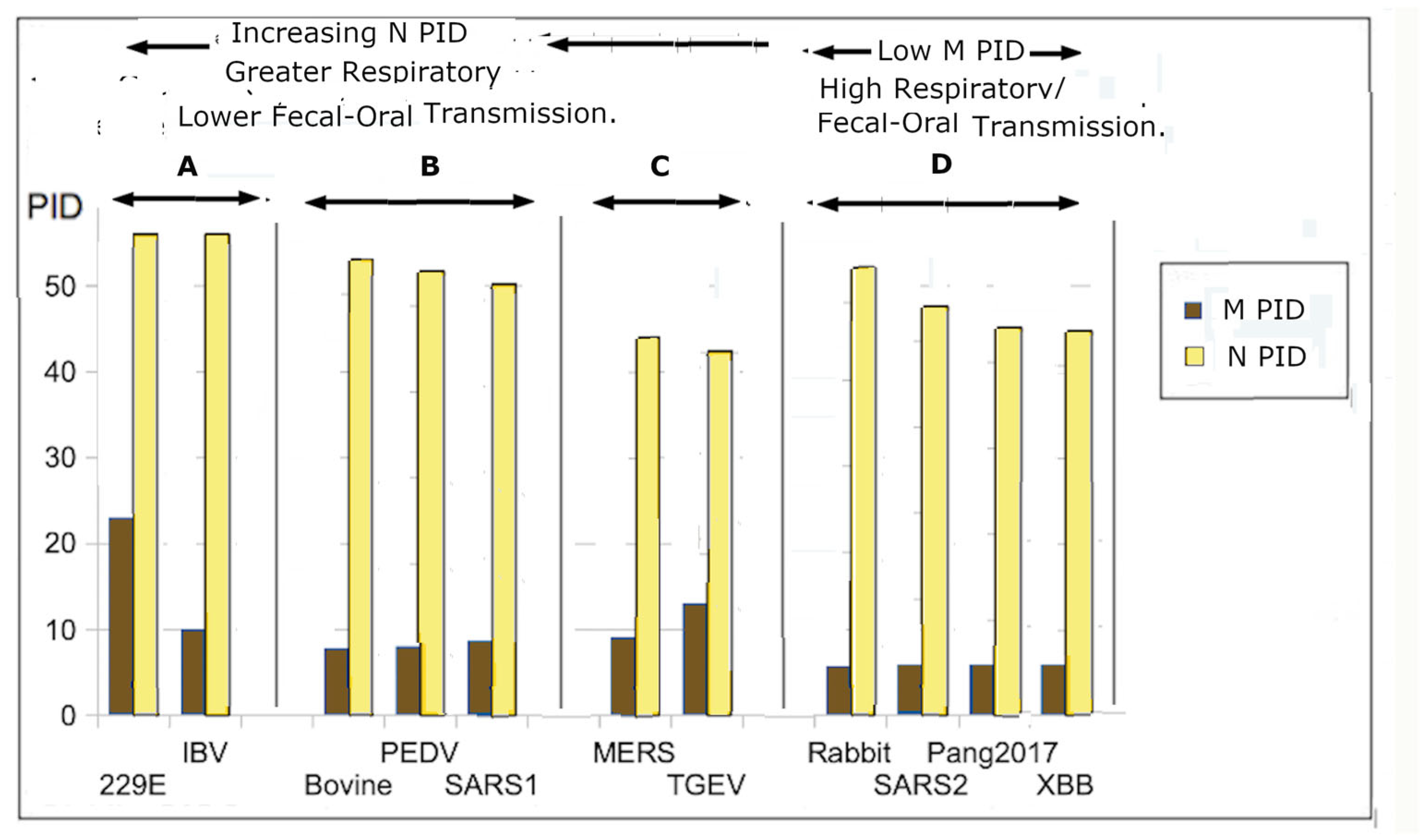
| 2012 | CoV Transmission SDM | Links between modes of transmission (fecal, oral, and respiratory) and N and M disorder were found. |
| 2015 | Virulence–Inner Shell Disorder Model | Strong correlation between inner shell disorder and virulence of a wide variety of viruses, including DENV, EBOV, NiV, and SARS-CoV-1/2. |
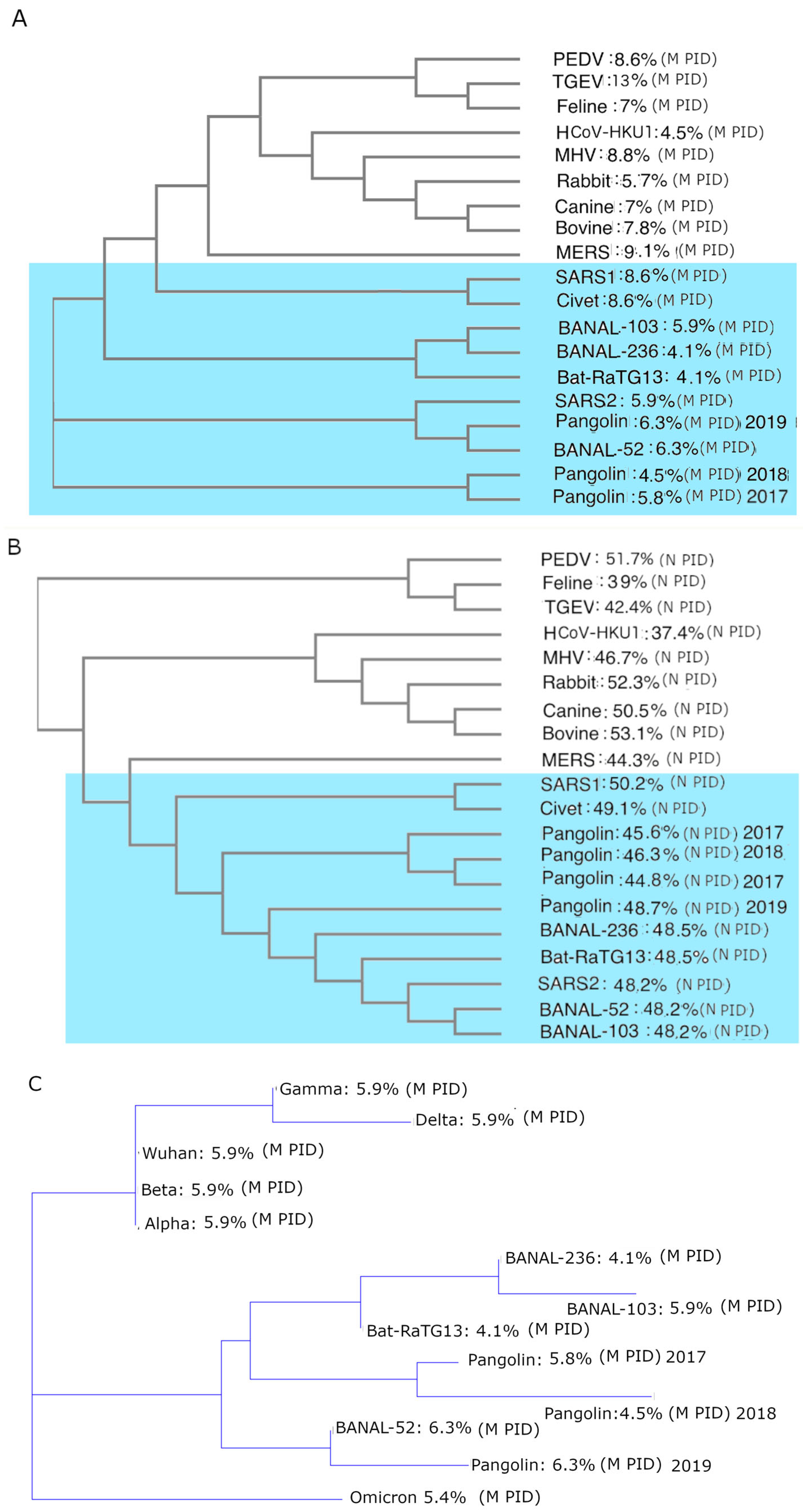
| Coronavirus | Sequence Similarity M (%) a | M PID (%) | Accession: UniProt (U); GenBank (G) | Sequence Similarity N (%) b | N PID (%) | Accession UniProt (U); GenBank (G) |
|---|---|---|---|---|---|---|
| SARS-CoV-1 | 90.5 | 8.6 | P59596(U) | 90.5 | 50.2 | P59595(U) |
| Civet-SARS-CoV | 90.1 | 8.6 | Q3ZTE9(U) | 90.01 | 49.1 | Q3ZTE4(U) |
| Laotian Bat-CoV | - | 6.0 + 0.2 | - | - | 48.3 + 0.2 | - |
| [Banal-52] | 98.7 | 6.3 | UAY13220.1 | 99.3 | 48.2 | UAY13225.1 |
| [Banal-103] | 98.7 | 5.9 | UAY13232.1 | 99.1 | 48.5 | UAY13257.1 |
| [Banal-236] | 99.1 | 4.1 | UAY13256.1 | 99.3 | 48.5 | UAY1326.1 |
| Pangolin-CoV | - | 5.6 + 0.9 | - | - | 46.6 + 1.6 | - |
| 2019 | 98.2 | 6.3 | QIG55948(G) | 98 | 48.7 | QIG55953(G) |
| 2018 | 97.7 | 4.5 | QIQ54051(G) | 93.8 | 46.3 | QIQ54056(G) |
| 2017 | 98.2 | 5.9 | QIA48617(G) | 94 | 44.9 | QIA48630(G) |
| 93.32 | 46.5 | QIA48656(G) | ||||
| SARS-CoV-2 | ||||||
| Wuhan-Hu-1 | 100 | 5.9 | YP009724393(G) | 100 | 48.2 | YP009724397(G) |
| Delta | 5.9 + 0.01 | 47.1 + 0.5 | ||||
| Delta1 | 99.1 | 5.9 | QUX81285(G) | 46.8 | QYM89997(G) | |
| Delta2 | 99.1 | 5.9 | QUX81285(G) | 99.1 | 47.5 | QYM89845(G) |
| Omicron | - | 5.7 + 0.4 | - | - | 44.5 + 0.4 | - |
| Omicron BA1 | 98.7 | 5.4 | UFO59282(G) | 98.6 | 44.8 | UFO692871(G) |
| Omicron XBB | 99.1 | 5.9 | WBI50320(G) | 98.2 | 44.2 | WIL50325 |
| Bat-CoV | 11.2 + 15 | 47.7 + 0.9 | ||||
| RATG13 | 99.6 | 4.1 | QHR63303(G) | 99.1 | 48.5 | QHR63308(G) |
| Bat 512 | 35.5 | 15.3 | Q0Q463(U) | 29.4 | 46.5 | Q0Q462(U) |
| HKU3 | 91 | 7.7 | Q3LZX9(U) | 89.6 | 48 | Q3LZX4(U) |
| HKU4 | 42.7 | 16.4 | A3EXA0(U) | 51.1 | 48.5 | A3EXA1(U) |
| HKU5 | 44.7 | 11.8 | A3EXD6(U) | 47.9 | 47.1 | A3EXD7(U) |
Disclaimer/Publisher’s Note: The statements, opinions and data contained in all publications are solely those of the individual author(s) and contributor(s) and not of MDPI and/or the editor(s). MDPI and/or the editor(s) disclaim responsibility for any injury to people or property resulting from any ideas, methods, instructions or products referred to in the content. |
© 2026 by the authors. Published by MDPI on behalf of the Polish Respiratory Society. Licensee MDPI, Basel, Switzerland. This article is an open access article distributed under the terms and conditions of the Creative Commons Attribution (CC BY) license.
Share and Cite
Goh, G.K.-M.; Foster, J.A.; Uversky, V.N. Clues to Long COVID Linked to Virulence and Infectivity Found in Shell Proteins. Adv. Respir. Med. 2026, 94, 18. https://doi.org/10.3390/arm94020018
Goh GK-M, Foster JA, Uversky VN. Clues to Long COVID Linked to Virulence and Infectivity Found in Shell Proteins. Advances in Respiratory Medicine. 2026; 94(2):18. https://doi.org/10.3390/arm94020018
Chicago/Turabian StyleGoh, Gerard Kian-Meng, James A. Foster, and Vladimir N. Uversky. 2026. "Clues to Long COVID Linked to Virulence and Infectivity Found in Shell Proteins" Advances in Respiratory Medicine 94, no. 2: 18. https://doi.org/10.3390/arm94020018
APA StyleGoh, G. K.-M., Foster, J. A., & Uversky, V. N. (2026). Clues to Long COVID Linked to Virulence and Infectivity Found in Shell Proteins. Advances in Respiratory Medicine, 94(2), 18. https://doi.org/10.3390/arm94020018