


Highlights
What are the main findings?
- Patients admitted for hospitalization in Greece due to respiratory disorders are patients with multimorbidity, polypharmacy, and a high prevalence of drug–drug interactions (DDIs) in their medication regimens.
- Clinically significant DDIs that may require modulation in medical regimen or patient monitoring for side effects accounted for 58% upon admission and discharge and less during hospitalization (43%).
What are the implications of the main findings?
- The recorded DDIs mostly refer to cases requiring monitoring and caution to avoid the oc-currence of QT-prolongation, INR modulation, and CYP-mediated metabolism inhibition.
- The clinical significance of DDIs within the cohort can be considered manageable under proper patient monitoring, but clinicians should be aware and always examine if any oc-curring arrhythmias, INR modulations, and prolonged or increased drug actions are linked with DDIs.
Abstract
Background: Patients with respiratory disorders often have additional diseases and are usually treated with more than one medication to manage their respiratory conditions as well as additional comorbidities. Thus, they are frequently exposed to polypharmacy (≥5 drugs), which raises the risk for drug–drug interactions (DDIs) and adverse drug reactions (ADRs). In this work, we present the results regarding the prevalence of DDIs in hospitalized patients with respiratory disorders in Greece. Methods: A 6-month descriptive single-center retrospective observational study enrolled 102 patients with acute or chronic respiratory disorders. Clinical characteristics and medication regimens were recorded upon admission, hospitalization, and discharge. The prevalence of DDIs and their clinical significance was recorded and analyzed. Results: Unspecified acute lower respiratory tract infection (25%), exacerbations of chronic obstructive pulmonary disease (12%) and pneumonia (8%) were the most frequent reasons for admission. Cardiovascular disorders (46%), co-existing respiratory disorders (32%), and diabetes (25%) were the most prevalent comorbidities. Polypharmacy was noted in 61% of patients upon admission, 98% during hospitalization, and 63% upon discharge. Associated DDIs were estimated to be 55% upon admission, 96% throughout hospitalization, and 63% on discharge. Pharmacodynamic (PD) DDIs were the most prevalent cases (81%) and referred mostly to potential risk for QT-prolongation (31.4% of PD-DDIs) or modulation of coagulation process as expressed through the international normalized ratio (INR) (29.0% of DDIs). Pharmacokinetic (PK) DDIs (19% of DDIs) were due to inhibition of Cytochrome P450 mediated metabolism that could lead to elevated systemic drug concentrations. Clinically significant DDIs characterized as “serious-use alternative” related to 7% of cases while 59% of DDIs referred to combinations that could be characterized as “use with caution—monitor”. Clinically significant DDIs mostly referred to medication regimens upon admission and discharge and were associated with outpatient prescriptions. Conclusions: Hospitalized patients with respiratory disorders often experience multimorbidity and polypharmacy that raise the risk of DDIs. Clinicians should be conscious especially if any occurring arrhythmias, INR modulations, and prolonged or increased drug action is associated with DDIs.
1. Introduction
Chronic respiratory diseases (CRDs) such as asthma, chronic obstructive pulmonary disease (COPD), emphysema, cystic fibrosis, bronchiectasis, etc. are a major burden to global health [1,2]. CRD patients also have a high incidence of comorbidities such as cardiovascular diseases (i.e., hypertension, coronary disease, etc.), diabetes, arthritis, and psychiatric conditions [3]. These conditions can further impair the quality of life for patients with CRDs and are often associated with higher mortality [4,5]. In addition, the recent pandemic crisis of coronavirus disease 2019 (COVID-19) introduced an additional risk factor since SARS-CoV-2, aside from causing the acute respiratory distress syndrome, can affect the respiratory system in a range of ways with long-term pulmonary complications that worsen or trigger diseases such as asthma, COPD, interstitial lung disease, lung fibrosis, etc. [6,7]. The management of CRDs requires an evidence-based guideline approach such as those of the global strategy for prevention, diagnosis, and management of COPD (GOLD guidelines) [8]. Generally, CRDs insufficiently controlled by monotherapy often require the incorporation of drug combinations with synergistic results to achieve optimum response [9]. Therefore, CRD patients are patients with multiple comorbidities and are often on polypharmacy to appropriately manage their respiratory disorder and the other comorbidities.
Polypharmacy is described as the concurrent administration of five or more medications. It is a widespread, complex situation among patients with chronic diseases and ia related with age, gender, and comorbidities as well as the use of over-the-counter (OTC) drugs and inappropriate health policies [10,11,12]. On the other hand, polypharmacy is also related to the increased risk of drug–drug interactions (DDIs) in cases of co-administration of drugs that share mutual or interconnected pharmacological pathways [13,14]. The modulation of absorption, metabolism, distribution, and elimination (ADME) processes may lead to pharmacokinetic DDIs (PK-DDIs) whereas modulation of primary or secondary pharmacological actions may result in pharmacodynamic DDIs (PD-DDIs). Consequently, this modulation of a drug’s pharmacological profile from a perpetrator drug can result in adverse drug reactions (ADRs) if a victim’s drug action is enhanced or treatment failure if it is reduced [15].
In previous years, there were several studies that mainly focused on COPD and examined the incidence of polypharmacy in outpatients [9,16,17]. In addition, the impact of the current pandemic also set several alerts regarding potential DDIs in patients with respiratory disorders [18,19]. Throughout these studies, it was shown that polypharmacy, age, and multimorbidity, especially in COPD patients, may affect treatment response, as well as patients’ adherence and, overall, their quality of life. On the other hand, limited data is available regarding inpatients’ exposure to clinically significant DDIs in respiratory wards. In addition, the current pandemic of COVID-19 introduced another clinical field of potential DDIs that require attention within the hospital clinics [19,20]. The aim of this study was to evaluate the occurrence of DDIs in hospitalized patients with respiratory diseases from the perspective of their clinical significance and underlying pharmacological mechanisms.
2. Materials and Methods
2.1. Study Design and Ethics Approval
A descriptive single-center retrospective observational study was conducted over a 6-month period (January–June 2022) in the Department of Respiratory Medicine in the University Hospital of Heraklion in Crete, Greece. The study complied with the rules of the Declaration of Helsinki of 1975, as revised in 2013, and was in accordance with the General Data Protection Regulation (GDPR). The study was approved by both the Hellenic Mediterranean University (51/04-03-21) and the University Hospital of Heraklion ethics committee (16105/13-10-2021). The study guidelines for reporting observational studies (Strengthening the Reporting of Observational Studies in Epidemiology—STROBE) are presented in Table 1.
Table 1.
STROBE information for the study regarding methods and results.
Patients that were admitted to the respiratory department of the hospital with diagnoses that referred to respiratory disorders according to International Classification of Diseases (ICD-10) were informed of the study’s objectives and enrolled upon freely and willingly signing the informed consent form. Patients that did not provide consent or did not understand the terms of participation were excluded from the study. Multimorbidity was considered for patients with more than 2 additional diseases apart from their diagnosis on admission. Patients with lung cancer disease as a reason for attendance were excluded. Anonymized demographics, clinical and laboratory data, and medication regiments were extracted from the hospital’s medical record system. All data were collected and analyzed anonymously, and no interventions were made regarding healthcare provision during hospitalization.
2.2. DDI Analysis
Polypharmacy was classified as co-administration of five or more (≥5) medications. Different pharmacologically active compounds within the same medicinal product were considered as different compounds and counted separately (i.e., ipratropium with albuterol). Medications obtained from the hospital’s medical record system were classified according to the Anatomical Therapeutic Chemical (ATC) classification system (Appendix A) and were presented with its second level (anatomical group-therapeutic subgroup, i.e., ATC- X00). DDIs were identified using available online drug interaction checker tools (Medscape and Drugs.com).
DDIs were characterized as pharmacokinetic (PK) or pharmacodynamic (PD) based on their underlying pharmacological mechanism. As for their significance, they were categorized as “Serious-Use alternative”, “Use with caution-Monitor”, and “Moderate-Minor” considering the level of evidence in the literature such as experts’ opinion, in silico/in vitro/in vivo data/, clinical studies, summary of product characteristics (SmPC), and regulatory reports [20,21,22]. The ATC groups paired in identified DDIs are represented as Circos diagrams generated with Circos Table Viewer v0.63-9© (http://circos.ca/ accessed on 20 December 2022) [23].
2.3. Statistical Analysis
Data are presented as numbers or percentages for continuous variables and ex-pressed as mean values ± standard deviation (±SD) whereas for discrete variables (i.e., number of drugs) they are presented as median number with ± interquartile range. Statistically significant differences (p < 0.05) were assessed with Mann–Whitney t-test with 95% confidence intervals (CI) using GraphPad Prism version 8.0.1 for Windows, GraphPad Software, San Diego, CA, USA, www.graphpad.com accessed on 20 December 2022.
3. Results
3.1. Patient Demogrpahics, Diagnosis and Comorbidities, and Clinical Status
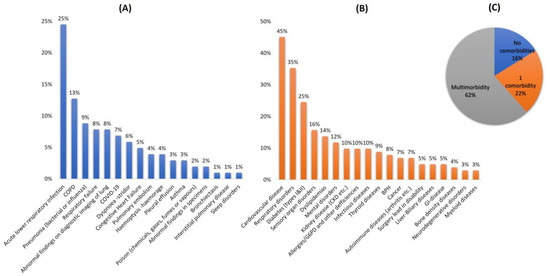
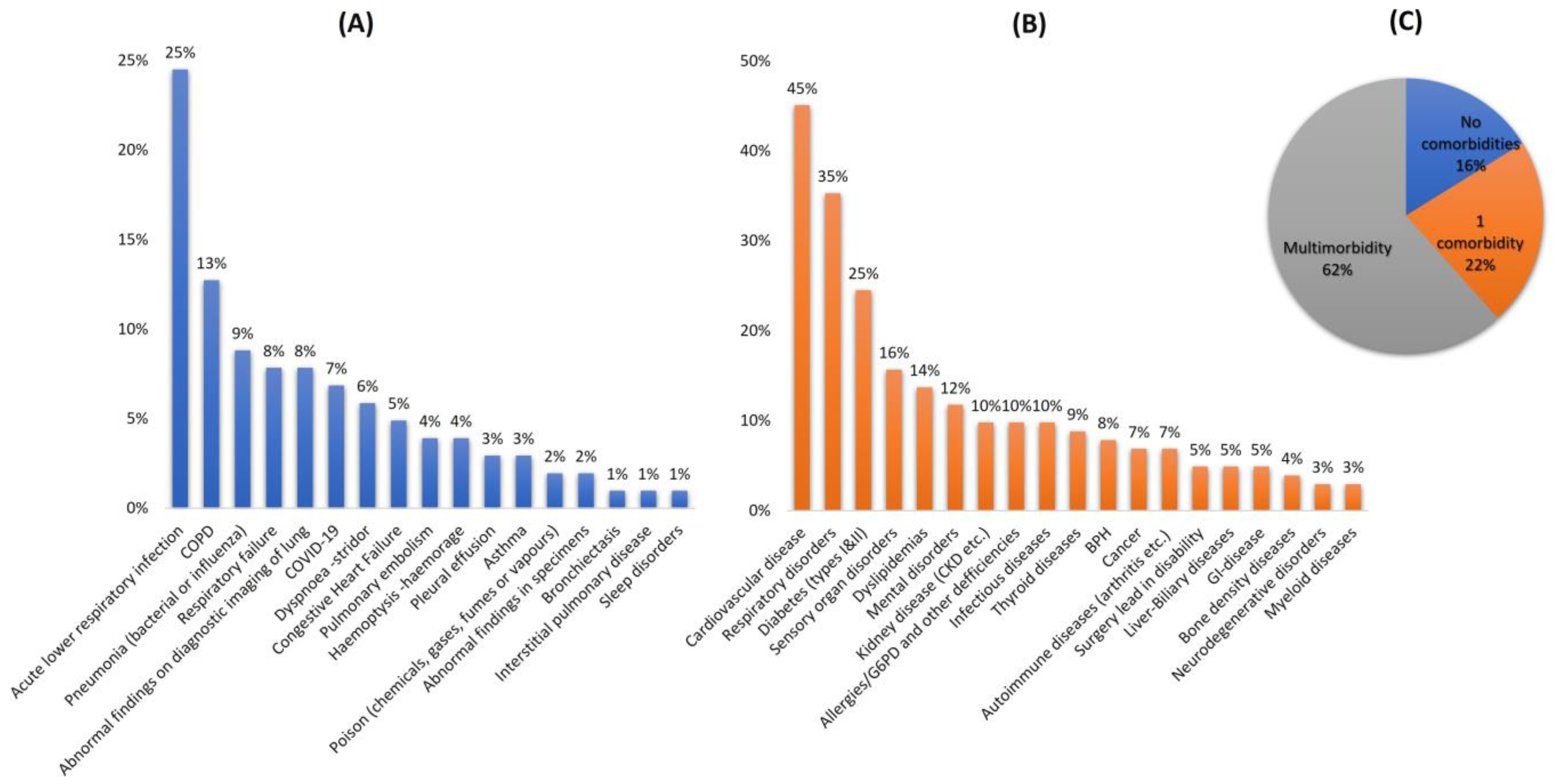
The study enrolled 102 patients (59% male, 43% female) admitted to the hospital’s respiratory ward with a diagnosed respiratory condition (Figure 1). Among them, 48% were residents in urban areas, the mean age was 69.2 years (±16.9), the mean BMI was 30.5 kg/m2, and 10% of them were habitually smokers (Table 2). The most common diagnoses upon admission were unspecified acute lower respiratory tract infection (25%), exacerbation of COPD (12%), and pneumonia (bacterial or influenza related) (8%). In addition, seven patients (7%) were hospitalized with respiratory complications after their recovery from COVID-19 (Figure 1A). Regarding comorbidities, cardiovascular diseases (46%), respiratory disorders (36%), diabetes (25%), sensory organs disorders (16%), dyslipidemias (14%), and mental disorders (12%) were the most frequent comorbidities (Figure 1B). Multimorbidity accounted for 38% within the cohort whereas 52% of admitted patients had one additional condition. Additional information for relevant clinical values of the participants can be found in the Supplementary Files.
Figure 1.
(A) ICD-10 diagnosis upon admission, (B) comorbidities recorded, and (C) patients’ burden of comorbidities within study’s cohort.
Table 2.
Demographic characteristics of enrolled patients.
3.2. Medications Administered
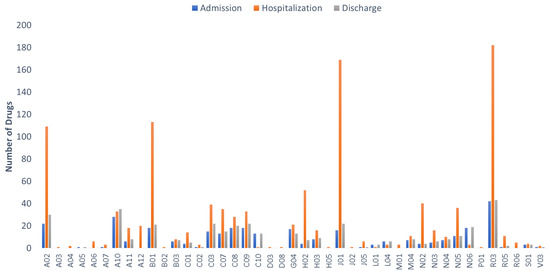
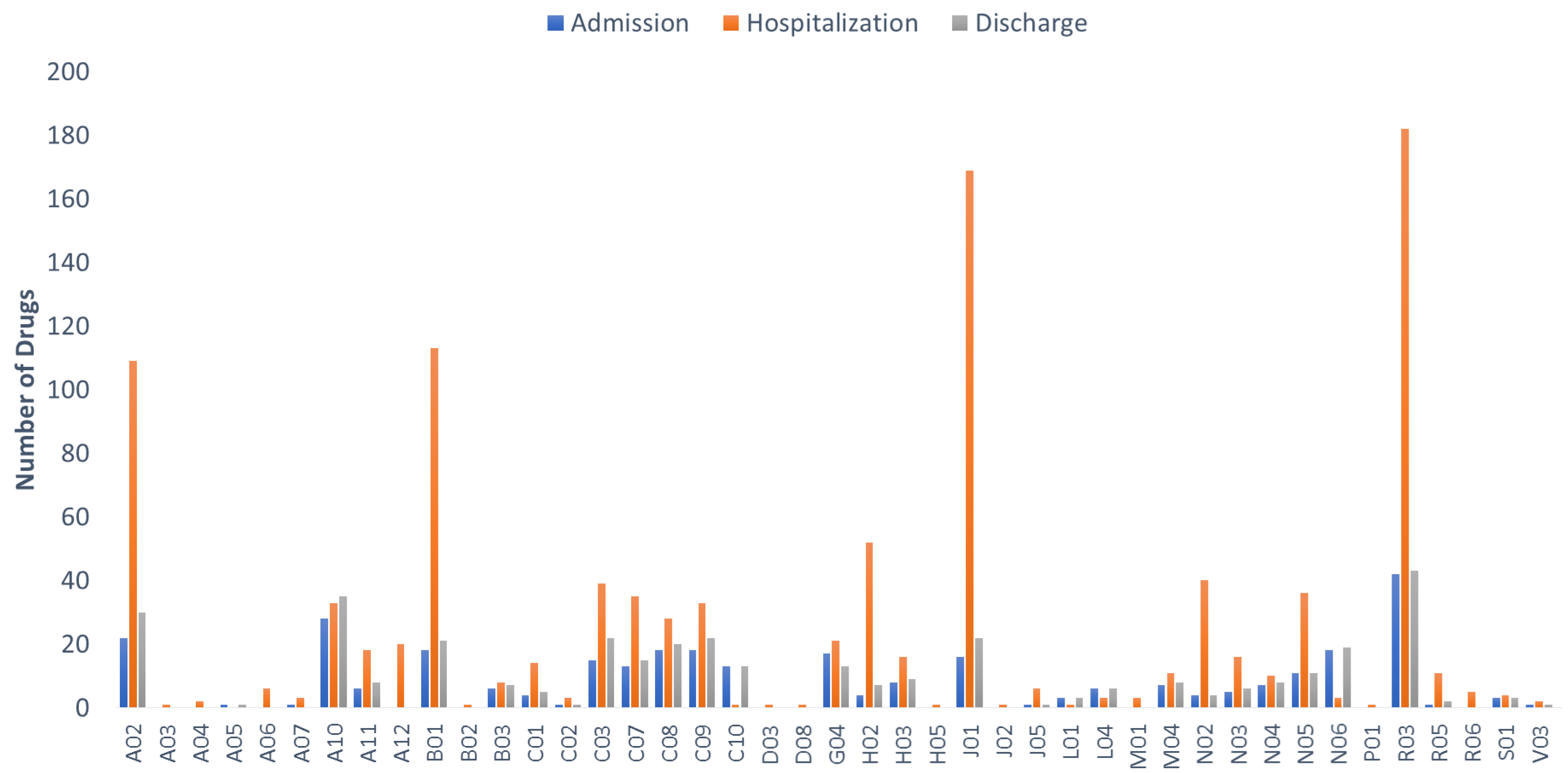
A median number of six drugs (IQR = 6) per patient were recorded upon admission, 11 (IQR = 5) during hospitalization, and seven (IQR = 7) upon discharge. Following the ATC categorization (2nd level), administered medications are organized into 43 different ATC groups (Figure 2). Upon admission, patients were mostly prescribed drugs for obstructive airway diseases (ATC-R03), antidiabetics (ATC-A10), and cardiovascular and lipid-modifying agent medications (ATC-C01, C03, C07, C08, C9, C10), as well as drugs for benign prostatic hyperplasia (ATC-G04). These categories, along with proton pump inhibitors (PPIs) (drugs for acid related disorders, ATC-A02), were also the most prevalent medications on discharge. During hospitalization, patients’ medication regimens were revised and modified according to treatment requirements. Hence, antibiotics (ATC-J01) usage increased along with administration of antithrombotic agents (ATC-B01), drugs for obstructive airway diseases (ATC-R03), and corticosteroids for systemic use (ATC-H02). For gastro-intestinal (GI) protection, PPIs were added, and there was a slight increase in usage of analgesics (ATC-N02) and anxiolytics (ATC-N05). The most administered drugs during hospitalization were esomeprazole (87%), enoxaparin (85%), ipratropium (60%), budesonide (46%), methylprednisolone (42%), salbutamol (40%), furosemide (32%), and insulin (27%). Regarding antibiotics during hospitalization, the β-lactam piperacillin (22%), the fluoroquinolone levofloxacin (20%), and the third generation cephalosporin ceftriaxone (18%) were the most administered. Overall, 141 different medications were recorded upon admission, 187 during hospitalization, and 146 on discharge.
Figure 2.
ATC drug categories that were administered in patients during admission (blue bars), hospitalization (red bars), and discharge (grey bars).
3.3. Identified DDIs and Underlying Pharmacological Mechanisms
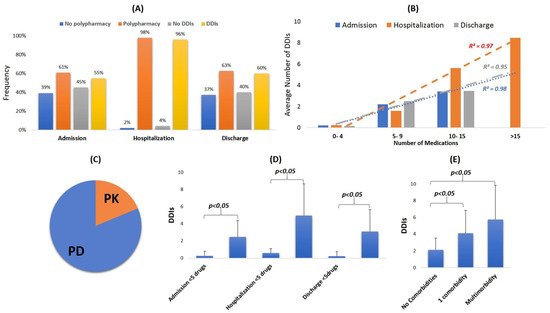
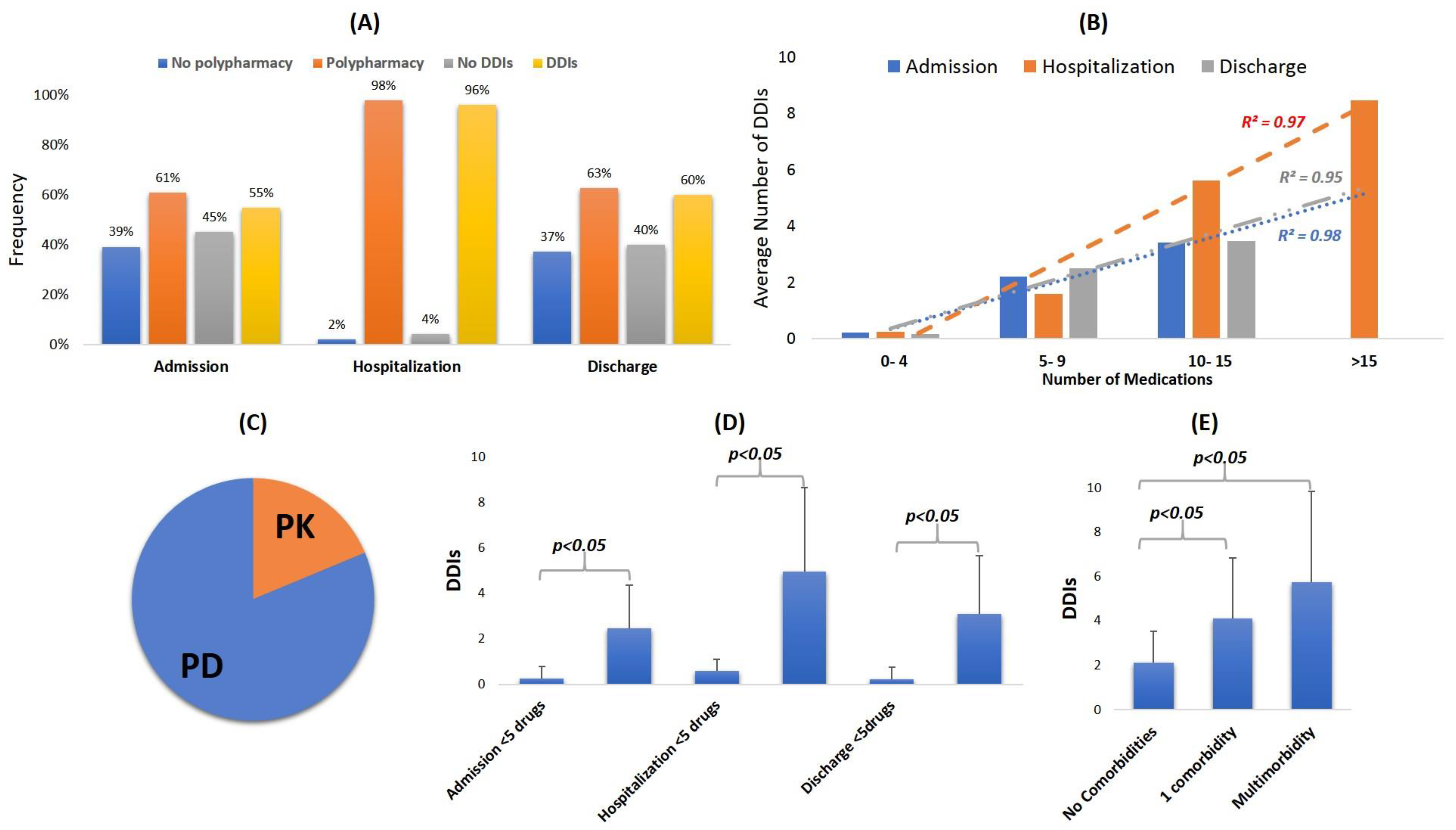
Polypharmacy accounted for 61% upon admission, 98% during hospitalization, and 63% on discharge (Figure 1A). The analysis of medication regimens revealed 453 cases from 252 different drug combinations identified as potential DDIs. Average values of two DDIs (min = 0, max = 7) upon admission, five DDIs (min = 0, max = 18) during hospitalization, and two DDIs (min = 0, max = 12) on discharge were identified. Table 3 and Table 4 present characteristic cases regarding PK-DDIs and PD-DDIs that were recorded. The full list of DDIs can be found in the Supplementary Files.
Table 3.
Drug pairs found in the study that can lead to pharmacokinetic drug interactions (Significance: SUA = Serious Use Alternative, Monitor: Use with Caution-Monitor; #: Frequency. Drug A: perpetrator, Drug B: victim or affected drug).
Table 4.
Drug pairs found in the study that can lead to pharmacodynamic drug interactions due to additive, synergistic, or antagonistic effects (Significance: SUA = Serious Use Alternative, Monitor: Use with Caution-Monitor; #: Frequency).
A higher number of DDIs was recorded during hospitalization (96%) compared to admission (55%) or discharge (60%) (Figure 1A). There was also a linear correlation (r2 > 0.95) in all time points between the numbers of medications administered as to the average number of DDIs identified (Figure 1B). The underlying pharmacological mechanisms of recorded DDIs were referring primarily to PD-DDIs (81%) (Figure 3C). Polypharmacy was related to higher occurrence of DDIs (p < 0.05, 95%) at all time points (Figure 3D). DDIs were also more prevalent (p < 0.05, 95% CI) in multimorbidity patients compared to those with no other underlying conditions (Figure 3E).
Figure 3.
(A) Polypharmacy and DDI percentages recorded at each time point. (B) Correlation between number of medications and average number of DDIs identified. (C) Pharmacological mechanisms of DDIs. (D) DDIs as to polypharmacy at different time points. (E) DDIs as to disease burden. Statistically significant pairs are presented with brackets.
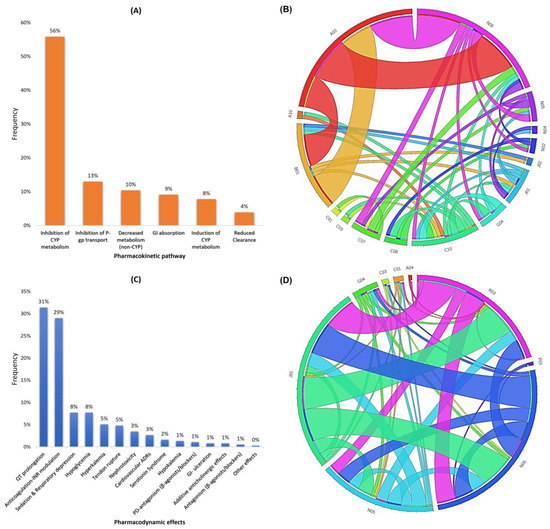
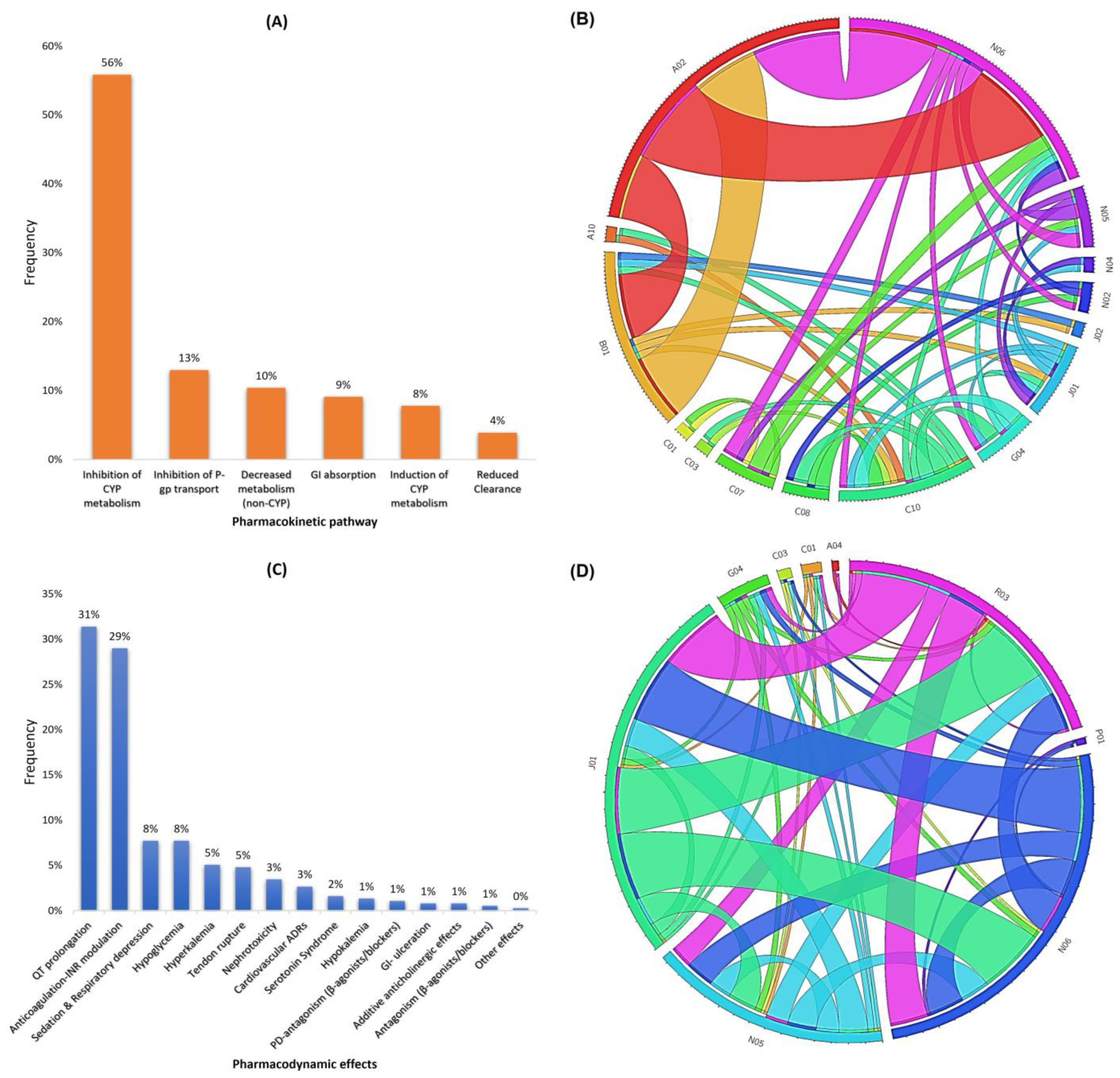
PK-DDIs refer to mechanisms involving inhibition of cytochrome P450 (CYP) mediated metabolism (56% of PK-DDIs), and, to a lesser extent, inhibition of P-glycoprotein mediated transport (13% of PK-DDIs) or other pathways (Figure 4A). Typical examples were the co-administration of CYP inhibitors such as chloramphenicol (ATC-J01), diltiazem (ATC-CO8), amlodipine (ATC-C08), itraconazole (ATC-J02), esomeprazole (ATC-A02), fluoxetine (ATC-N06), verapamil (ATC-C08), and amiodarone (ATC-C01) that potentially can elevate the concentrations of co-administered drug substrates for relative CYPs (i.e., CYP2C9, CYP2D6, CYP3A4). Similarly, co-administration of drugs that are P-gp inhibitors such as amiodarone, azithromycin, and carvedilol can inhibit the mediated transport of P-gp substrates (i.e., statins, dabigatran, etc.) changing their systemic concentration. The overall ATC associations that can lead to PK-DDIs due to inhibition of CYP-mediated metabolism (e.g., CYP3A4) are represented with a circos diagram (Figure 4B).
Figure 4.
(A) Pharmacokinetic mechanisms of PK-DDIs; (B) Circos plot representing the ATC categories that can lead to CYP-mediated metabolism inhibition as recorded in this cohort; (C) Pharmacodynamic effects from the PD-DDIs; and (D) Circos plot representing ATC categories that can elevate the risk for QT-prolongation due to co-administration.
PD-DDIs referred mostly to drug combinations that increase the risk of QT-prolongation (31.4% of PD-DDIs); anticoagulation processes and INR-modulation (29.0%); synergism that enhances sedation and respiratory depression (7.7%); hypoglycemia (7.7%); and hyperkaliemia (5.1%) (Figure 4C). QT-prolongation risk often emerged from the co-administration of antibiotics (ATC-J01) (e.g., quinolones), drugs for obstructive airway diseases (ATC-R03) (e.g., selective β-2-adrenoreceptor agonists), antidepressants (ATC-N06) (e.g., selective serotonin reuptake inhibitors, SSRIs), and antipsychotics (ATC-N05) (e.g., diazepines and butyrophenone derivatives). The overall ATC associations that can lead to PD-DDIs of QT-prolongation are presented in a circos diagram (Figure 4D). A brief list of PK-DDIs and PD-DDIs is presented in Table 3 and Table 4, and the full PK-DDI and PD-DDIs table can be found in the Supplementary Files.
3.4. Clinical Significance of Identified DDIs
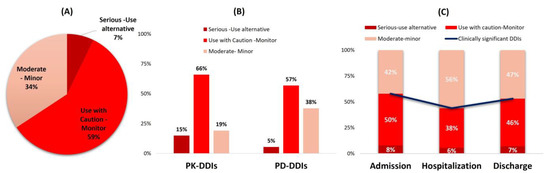
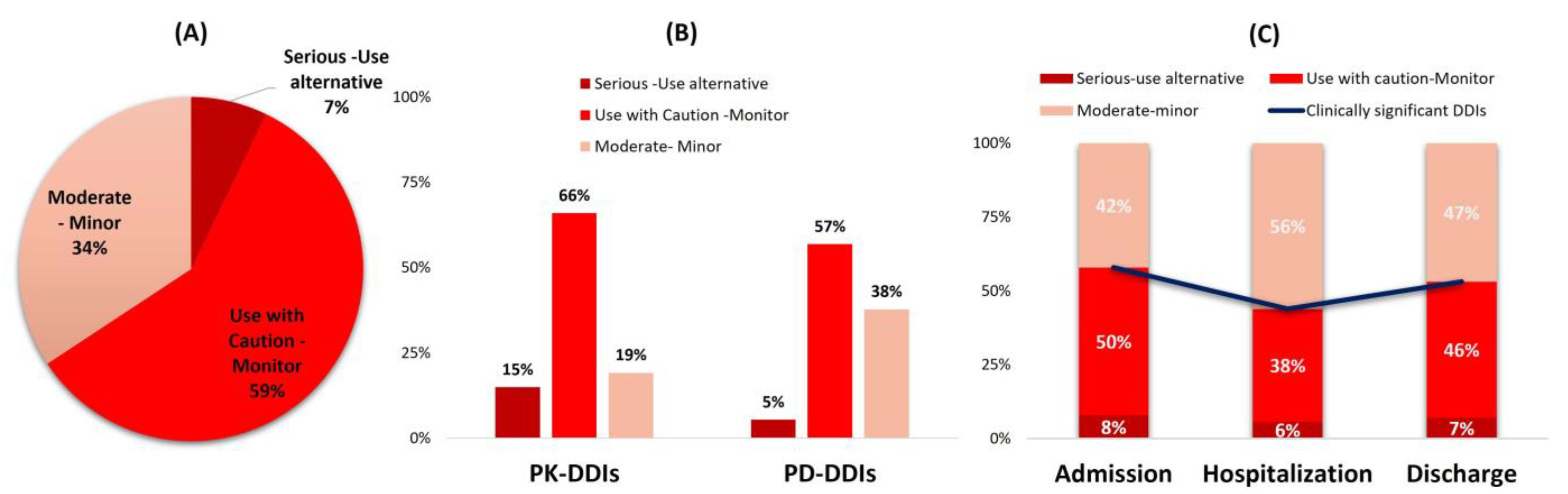
Drug combinations with potentially clinically significant DDIs of “Serious-Use alternative” represented 7%, combinations of “Use with caution-Monitor” accounted for 59%, and of “Moderate-Minor Significance” represented 34% of all DDIs (Figure 5A). Considering significance and underlying pharmacological mechanisms, “Use with caution-Monitor” was related with 66% and 57% of PK- and PD-DDIs, respectively. “Serious-Use alternative” combinations were more common in PK-DDIs (15%) than PD-DDIs (5%), and the importance of “Moderate-Minor” DDIs were mostly for combinations resulting in PD-DDIs (38%) and less in PK-DDIs (19%) (Figure 5B). Considering the clinical significance related to the time point, “Serious-Use alternative” DDIs were recorded mostly upon admission (8%) and less during hospitalization (5%) or on discharge (7%) (Figure 5C). “Use-with caution-Monitor” DDIs were identified in 50% upon admission, 38% during hospitalization, and 46% on discharge. DDIs of “Moderate-Minor” significance were recorded in 42% of cases upon admission, 56% during hospitalization, and 47% on discharge. Overall, clinically significant DDIs (“Use alternative” and “Use with caution-Monitor”) accounted for 58% of the cases upon admission, 43% during hospitalization, and 52% on discharge (Figure 5C blue line).
Figure 5.
Distribution of recorded DDIs’ clinical significance (A) in all identified DDIs; (B) related to pharmacological mechanism involved; (C) in each time point.
4. Discussion
Polypharmacy and comorbidities, among other reasons, are contributing factors to the appearance of DDIs and ADRs. Generally, ADRs from DDIs decrease the quality of provided healthcare, prolong hospitalization as well as its costs, and deteriorate patients’ quality of life [24,25,26]. Hence, the awareness of potential DDIs among clinicians is an important factor that can assist healthcare teams to proceed to improved assessment and planning of healthcare provisions [27,28]. Considering respiratory diseases, the clinical information related to DDIs for hospitalized patients with respiratory disorders is lacking with most studies being oriented primarily toward COPD patients [9,29].
The current retrospective study presented the results regarding the prevalence of DDIs among 102 patients admitted to the respiratory department of the University Hospital of Heraklion in Greece. Compared to previous studies that focus on COPD or asthma, this work expanded the target group to include all potential cases of diagnosis according to the ICD-10 criteria for patients admitted to the respiratory department [30,31]. Moreover, the study recorded and analyzed the prevalence of DDIs in three discrete time points, upon admission, during hospitalization, and on discharge, hence, taking into consideration the prevalence of DDIs over time. The diagnoses upon admission in the current study were similar to those in the literature, suggesting acute or chronic lower respiratory disorders, infections, and pneumonia as the most common reasons for admission [32]. In addition, the cohort showed similar trends with previous studies examining the prevalence of comorbidities (66% multimorbidity within the cohort) with cardiovascular (46%) and respiratory disorders (36%) being the most prevalent co-existing conditions [3,16].
Regarding medication regimens, a high prevalence of polypharmacy was observed in hospital admission that intensified during hospitalization (Figure 1). The most administered medications during hospitalization were antibiotics, drugs for obstructive airway diseases, corticosteroids for systemic use, and PPIs for gastroprotection along with analgesics and anxiolytics. Polypharmacy has been described as a frequent situation and a risk factor for patients hospitalized for respiratory disorders such as acute exacerbation of COPD or respiratory tract infections (upper and lower) [31,33]. This also contributes to the excess number of drugs that these patients require during hospitalization (Figure 2). As a result, both multimorbidity and polypharmacy are associated with the exposure in drug combinations that potentially can lead to DDIs and consequently to ADRs [34]. At least one drug pair within each patients’ medication regimen that could result in DDIs was found in 55% upon admission, 96% throughout hospitalization, and 63% on discharge with a linear trend between the average number of DDIs and number of medications administered (Figure 3). In addition, comparable with previous studies for prescription practices and DDIs within the Greek healthcare ecosystem, results from the current work reveal a similar trend about polypharmacy and DDIs in outpatient prescriptions [17,20,21,22,35,36].
The pharmacological mechanisms of DDIs were due to synergistic actions on biological pathways (PD-DDIs) and to a lesser extent due to modulation of ADME processes (PK-DDIs). The majority of observed PD-DDIs involved elevation of QT-prolongation risk due to the co-administration of drugs that influence the repolarization phase of cardiac myocytes such as quinolones (ATC-J01), selective β-2-adrenoreceptor agonists (ATC-R03), and selective serotonin reuptake inhibitors (ATC-N06) (Table 4, Figure 4) [37,38,39,40]. The associated clinical risk for arrhythmias from co-administered drugs with QT-prolonging effects might be unpredictable: thus, when combining drugs with potentiating effect on QT interval, a risk–benefit analysis considering individual patient status along with each drug’s risk for QT-prolongation and monitoring for potential signs of arrhythmias is suggested [41,42,43]. The second most commonly observed PD-DDI was the potential modulation of anticoagulation from a combination of drugs that may increase INR, a PD-DDI of moderate significance that is easily managed and monitored within clinical routine [44,45,46]. The rest of the potential PD-DDIs were of lesser frequency, referring to combinations that may imbalance glucose or electrolyte levels, hence referring to cases easily addressed as part of patient monitoring during hospitalization [47,48]. The PD-DDIs considered to be serious referred to co-administration of linezolid with antidepressants, which raises the risk for serotonin syndrome, co-administration of drugs of the same ATC-category such as enoxaparin with dabigatran that can cause bleeding or abatacept with adalimumab (found on admission) that can lead to serious immunosuppression and respiratory tract infections in patients with history of lung disease [49,50,51,52]. In summary, PD-DDIs, although observed in higher frequency than PK-DDIs, were mostly manageable and within the risk–benefit analysis according to the medication protocols for this patient cohort. PK-DDIs were mostly related to inhibition of CYP-mediated metabolism such as CYP3A4, CYP2D6, CYP2C9, and CYP2C19. Typical examples of these PK-DDIs were the co-administration of PPIs, quinolones (e.g., ciprofloxacin), antidepressants (e.g., fluoxetine or paroxetine), and cardiovascular drugs such as Ca2+ channel blockers (e.g., verapamil or diltiazem) with CYP substrates [27,53]. PK-DDIs of drug combinations that should be avoided, thus requiring changes in medication regimens, referred mostly to CYP-mediated metabolism inhibition due to co-administration of CYP3A4 inhibitors (i.e., diltiazem, verapamil), CYP2C19 inhibitors (i.e., esomeprazole), P-gp inhibition (i.e., amiodarone), and CYP3A4 induction (i.e., primidone) [54,55,56]. These cases, although less frequently observed, could be associated with clinically significant DDIs due to the altered biotransformation of CYP substrates that could lead to modulation of their systemic concentrations outside their therapeutic window or reduce their action in case of administration as prodrugs (i.e., clopidogrel and PPIs).
Overall, the underlying pharmacological outcome of potential clinically significant DDIs of “Serious-Use alternative” made up 7% of total DDIs whereas 59% were of “Use with caution-Monitor” significance and 34% of “Moderate-Minor” importance. This is in line with previous observations regarding the prevalence of DDIs in CRD outpatients and considerations that despite the fact that these patients are usually under polypharmacy and multimorbidity conditions, the observed DDIs are mostly manageable and easily addressed if needed [57]. An additional factor that could contribute to the less frequent occurrence of clinically significant DDIs could be the low incidence of PK-DDIs for patients with respiratory disorders as in this cohort. The assessment of significance in cases of PK-DDIs is more feasible compared to PD-DDIs since they have specific and quantifiable mechanisms, whereas PD-DDIs have more complex mechanisms and clinical outcomes [58,59]. Nevertheless, considering that clinically significant DDIs are represented mostly with “Serious-Use alternative” and “Use with caution-Monitor”, an evident drop in clinically significant DDIs is observed during hospitalization compared to admission or discharge (Figure 5). This is expected for hospitalized patients under the healthcare provision of expert multidisciplinary medical teams that have additional clinical information (i.e., detailed laboratory values, medical imaging, etc.) and a full medication list at their disposal. Hence, they can proceed to better the risk–benefit analysis and therapy plan with fewer medication errors, avoid or better manage clinically significant DDIs, and, overall, provide better healthcare in accordance to evidence-based medical guidelines [60,61].
Some notable limitations regarding this study are the small sample size and that the study took place in one hospital. However, the clinical characteristics of the cohort correspond to data from the literature; hence, it can be argued that the pool of participants is representative for this patient cohort.
5. Conclusions
The present study explored the prevalence of DDIs for hospitalized patients with respiratory disorders in Greece. Unspecified acute lower respiratory tract infection was the main reason for admission. Patients often had an additional cardiovascular disorder along with their respiratory condition, so they were mostly under polypharmacy. A rise in administration of antibiotics, antithrombotic agents, drugs for obstructive airway diseases, and corticosteroids for systemic use was observed during hospitalization. As a result, multimorbidity and polypharmacy could be associated with potential DDIs. Pharmacological mechanisms of DDIs were due to synergistic PD effects that could lead to QT-prolongation or INR-modulation and to a lesser extent alteration of PK processes that could modulate drug concentrations such as inhibition of CYP-mediated metabolism. Despite the high frequency of polypharmacy and DDIs, their clinical significance was evaluated as manageable under proper patient monitoring whereas their frequency was lowered during hospitalization. In any case, clinicians in respiratory wards should be conscious and take into consideration that observed arrhythmias, INR modulations, and prolonged or increased drug action could be related to underlying DDIs in these patients.
Supplementary Materials
The following supporting information can be downloaded at: https://www.mdpi.com/article/10.3390/arm91010008/s1, Figure S1: Gender, age distribution and clinical values for kidney and liver function as extracted from the medical records from participants in the study. CRP: C-reactive protein, SGPT: serum glutamic-pyruvic transaminase, SGOT: serum glutamic oxaloacetic transaminase, AL: Alkaline phosphatase; Table S1: Drug combinations that may lead to pharmacokinetic DDIs as they are recorded in the current study. SUA: Serious-Use alternative, Monitor: Use with caution-Monitor, Moderate: Moderate-Minor, frequency: number of cases. Table S2: Drug combinations that may lead to pharmacodynamic DDIs as they are recorded in the current study. SUA: Serious-Use alternative, Monitor: Use with caution-Monitor, Moderate: Moderate-Minor, frequency: number of cases.
Author Contributions
Conceptualization and visualization M.S. and N.T.; methodology P.I.; formal analysis, investigation, S.T. and F.C.; data curation, K.M.A. and S.E.S.; supervision, E.P. and A.P.; resources, N.T. and D.P.K.; project administration E.P. and A.P.; writing—original draft preparation, M.S.; writing—review and editing M.S., P.I., and A.P. All authors have read and agreed to the published version of the manuscript.
Funding
This research received no external funding.
Institutional Review Board Statement
The study was conducted according to the guidelines of the Declaration of Helsinki and approved by the Institutional Review Board (or Ethics Committee) of Hellenic Mediterranean University (51/04-03-21) and the University Hospital of Heraklion (16105/13-10-2021). The study was conducted as part of a research process. Data records and analysis were performed without motivation, were not influenced by any other factors (economic, social, and political), and were conducted with absolute respect for the bioethical, physical, and mental condition of each participant.
Informed Consent Statement
Informed consent was obtained from all subjects involved in the study.
Data Availability Statement
During the data collection and analysis, all procedures were followed to ensure confidentiality of participants in accordance with EU directives and the General Data Protection Regulation (GDPR). Data presented in the study are available to use upon reasonable request/permission from the corresponding author. The data are not publicly available due to privacy statements and ethical reasons that were included in the informed consent form signed by the participants.
Acknowledgments
We acknowledge the patients that agreed to participate in the study.
Conflicts of Interest
The authors declare no conflict of interest.
Appendix A
Drugs were classified and presented in figures and tables according to the Anatomical Therapeutic Chemical (ATC) classification system.
Table A1.
Pharmacological subgroups of drugs that were classified into the relative ATC-groups.
References
- World Health Organization. Chronic Respiratory Diseases. Available online: https://www.who.int/health-topics/chronic-respiratory-diseases#tab=tab_1 (accessed on 18 November 2022).
- Shukla, S.D.; Vanka, K.S.; Chavelier, A.; Shastri, M.D.; Tambuwala, M.M.; Bakshi, H.A.; Pabreja, K.; Mahmood, M.Q.; O’Toole, R.F. Chronic Respiratory Diseases: An Introduction and Need for Novel Drug Delivery Approaches. In Targeting Chronic Inflammatory Lung Diseases Using Advanced Drug Delivery Systems; Academic Press: Cambridge, MA, USA, 2020; Volume 1. [Google Scholar] [CrossRef] [Scilit]
- Hillas, G.; Perlikos, F.; Tsiligianni, I.; Tzanakis, N. Managing Comorbidities in COPD. Int. J. COPD 2015, 10, 95–109. [Google Scholar]
- Chatila, W.M.; Thomashow, B.M.; Minai, O.A.; Criner, G.J.; Make, B.J. Comorbidities in Chronic Obstructive Pulmonary Disease. Proc. Am. Thorac. Soc. 2008, 5, 549. [Google Scholar] [CrossRef] [Scilit]
- dos Santos, N.C.; Miravitlles, M.; Camelier, A.A.; de Almeida, V.D.C.; Tosta Maciel, R.R.B.; Rosa Camelier, F.W. Prevalence and Impact of Comorbidities in Individuals with Chronic Obstructive Pulmonary Disease: A Systematic Review. Tuberc. Respir. Dis. 2022, 85, 205–220. [Google Scholar] [CrossRef] [Scilit]
- Rattan Ambardar, S.; Hightower, S.L.; Huprikar, N.A.; Chung, K.K.; Singhal, A.; Collen, J.F.; Huprikar, S.L.; Chung, N.A.; Singhal, K.K.; Collen, A.; et al. Post-COVID-19 Pulmonary Fibrosis: Novel Sequelae of the Current Pandemic. J. Clin. Med. 2021, 10, 2452. [Google Scholar] [CrossRef] [Scilit] [PubMed]
- Chiner-Vives, E.; Cordovilla-Pérez, R.; de la Rosa-Carrillo, D.; García-Clemente, M.; Izquierdo-Alonso, J.L.; Otero-Candelera, R.; Pérez-de Llano, L.; Sellares-Torres, J.; de Granda-Orive, J.I. Short and Long-Term Impact of COVID-19 Infection on Previous Respiratory Diseases. Arch. Bronconeumol. 2022, 58, 39–50. [Google Scholar] [CrossRef] [Scilit] [PubMed]
- Global Initiative for Chronic Obstructive Lung Disease—GOLD. Available online: https://goldcopd.org/# (accessed on 18 November 2022).
- Rogliani, P.; Ritondo, B.L.; Zerillo, B.; Matera, M.G.; Calzetta, L. Drug Interaction and Chronic Obstructive Respiratory Disorders; Elsevier: Amsterdam, The Netherlands, 2021; Volume 2, p. 100009. [Google Scholar]
- Roux-Marson, C.; Baranski, J.B.; Fafin, C.; Exterman, G.; Vigneau, C.; Couchoud, C.; Moranne, O.; Investigators, P.S.P.A. Medication Burden and Inappropriate Prescription Risk among Elderly with Advanced Chronic Kidney Disease. BMC Geriatr. 2020, 20, 87. [Google Scholar] [CrossRef] [Scilit] [PubMed]
- Masnoon, N.; Shakib, S.; Kalisch-Ellett, L.; Caughey, G.E. What Is Polypharmacy? A Systematic Review of Definitions. BMC Geriatr. 2017, 17, 230. [Google Scholar] [CrossRef] [Scilit] [PubMed]
- Guillot, J.; Maumus-Robert, S.; Bezin, J. Polypharmacy: A General Review of Definitions, Descriptions and Determinants. Therapies 2020, 75, 407–416. [Google Scholar] [CrossRef] [Scilit] [PubMed]
- Bjerrum, L.; Lopez-Valcarcel, B.G.; Petersen, G. Risk Factors for Potential Drug Interactions in General Practice. Eur. J. Gen. Pract. 2008, 14, 23–29. [Google Scholar] [CrossRef] [Scilit] [PubMed]
- Cantudo-Cuenca, M.D.; Gutiérrez-Pizarraya, A.; Pinilla-Fernández, A.; Contreras-Macías, E.; Fernández-Fuertes, M.; Lao-Domínguez, F.A.; Rincón, P.; Pineda, J.A.; Macías, J.; Morillo-Verdugo, R. Drug-Drug Interactions between Treatment Specific Pharmacotherapy and Concomitant Medication in Patients with COVID-19 in the First Wave in Spain. Sci. Rep. 2021, 11, 12414. [Google Scholar] [CrossRef] [Scilit]
- Edwards, I.R.; Aronson, J.K. Adverse Drug Reactions: Definitions, Diagnosis, and Management. Lancet 2000, 356, 1255–1259. [Google Scholar] [CrossRef] [Scilit]
- Ierodiakonou, D.; Theodorou, E.; Sifaki-Pistolla, D.; Bouloukaki, I.; Antonopoulou, M.; Poulorinakis, I.; Tsakountakis, N.; Voltiraki, F.; Chliveros, K.; Tsiligianni, I. Clinical Characteristics and Outcomes of Polypharmacy in Chronic Obstructive Pulmonary Disease Patients: A Cross-Sectional Study from Crete, Greece. Clin. Respir. J. 2021, 15, 1310–1319. [Google Scholar] [CrossRef] [Scilit] [PubMed]
- Charalampopoulou, E.; Kontogiorgis, C.; Nena, E.; Constantinides, T.; Kolios, G. The Complex Phenomenon of Polypharmacy in Older Age People of Greece: Data from the New Era of e-Prescribing. Drugs Ther. Perspect. 2017, 33, 580–584. [Google Scholar] [CrossRef] [Scilit]
- Forgerini, M.; Schiavo, G.; Lucchetta, R.C.; de Carvalho Mastroianni, P. Drug Interactions for Elderly with Respiratory Disorders and Times of Covid-19: A Systematic Scoping Review. Vitae 2020, 27, 1–14. [Google Scholar] [CrossRef] [Scilit]
- Spanakis, M.; Patelarou, A.; Patelarou, E.; Tzanakis, N. Drug Interactions for Patients with Respiratory Diseases Receiving COVID-19 Emerged Treatments. Int. J. Environ. Res. Public Health 2021, 18, 11711. [Google Scholar] [CrossRef] [Scilit] [PubMed]
- Spanakis, M.; Ioannou, P.; Tzalis, S.; Papakosta, V.; Patelarou, E.; Tzanakis, N.; Patelarou, A.; Kofteridis, D.P. Drug-Drug Interactions among Patients Hospitalized with COVID-19 in Greece. J. Clin. Med 2022, 11, 7172. [Google Scholar] [CrossRef] [Scilit] [PubMed]
- Spanakis, M.; Melissourgaki, M.; Lazopoulos, G.; Patelarou, A.E.; Patelarou, E. Prevalence and Clinical Significance of Drug–Drug and Drug–Dietary Supplement Interactions among Patients Admitted for Cardiothoracic Surgery in Greece. Pharmaceutics 2021, 13, 239. [Google Scholar] [CrossRef] [Scilit]
- Spanakis, M.; Roubedaki, M.; Tzanakis, I.; Zografakis-Sfakianakis, M.; Patelarou, E.; Patelarou, A. Impact of Adverse Drug Reactions in Patients with End Stage Renal Disease in Greece. Int. J. Environ. Res. Public Health 2020, 17, 9101. [Google Scholar] [CrossRef] [Scilit] [PubMed]
- Krzywinski, M.; Schein, J.; Birol, I.; Connors, J.; Gascoyne, R.; Horsman, D.; Jones, S.J.; Marra, M.A. Circos: An information aesthetic for comparative genomics. Genome Res. 2009, 19, 1639–1645. [Google Scholar] [CrossRef] [Scilit]
- Dechanont, S.; Maphanta, S.; Butthum, B.; Kongkaew, C. Hospital Admissions/Visits Associated with Drug-Drug Interactions: A Systematic Review and Meta-Analysis. Pharmacoepidemiol. Drug Saf. 2014, 23, 489–497. [Google Scholar] [CrossRef] [Scilit]
- Zwart-Van Rijkom, J.E.F.; Uijtendaal, E.V.; Ten Berg, M.J.; Van Solinge, W.W.; Egberts, A.C.G. Frequency and Nature of Drug-Drug Interactions in a Dutch University Hospital. Br. J. Clin. Pharmacol. 2009, 68, 187–193. [Google Scholar] [CrossRef] [Scilit]
- Tonelli, M.; Wiebe, N.; Guthrie, B.; James, M.T.; Quan, H.; Fortin, M.; Klarenbach, S.W.; Sargious, P.; Straus, S.; Lewanczuk, R.; et al. Comorbidity as a driver of adverse outcomes in people with chronic kidney disease. Kidney Int. 2015, 88, 859–866. [Google Scholar] [CrossRef] [Scilit] [PubMed]
- Palleria, C.; Di Paolo, A.; Giofrè, C.; Caglioti, C.; Leuzzi, G.; Siniscalchi, A.; De Sarro, G.; Gallelli, L. Pharmacokinetic Drug-Drug Interaction and Their Implication in Clinical Management. J. Res. Med. Sci. 2013, 18, 600–609. [Google Scholar]
- Gallelli, L.; Siniscalchi, A.; Palleria, C.; Mumoli, L.; Staltari, O.; Squillace, A.; Maida, F.; Russo, E.; Gratteri, S.; De Sarro, G.; et al. Adverse Drug Reactions Related to Drug Administration in Hospitalized Patients. Curr. Drug Saf. 2017, 12, 171–177. [Google Scholar] [CrossRef] [Scilit] [PubMed]
- Hanlon, P.; Nicholl, B.I.; Jani, B.D.; McQueenie, R.; Lee, D.; Gallacher, K.I.; Mair, F.S. Examining Patterns of Multimorbidity, Polypharmacy and Risk of Adverse Drug Reactions in Chronic Obstructive Pulmonary Disease: A Cross-Sectional UK Biobank Study. BMJ Open 2018, 8, 18404. [Google Scholar] [CrossRef] [Scilit] [PubMed]
- Díez-Manglano, J.; Barquero-Romero, J.; Mena, P.A.; Recio-Iglesias, J.; Cabrera-Aguilar, J.; López-García, F.; Viu, R.B.; Soriano, J.B. Polypharmacy in Patients Hospitalised for Acute Exacerbation of COPD. Eur. Respir. J. 2014, 44, 791–794. [Google Scholar] [CrossRef] [Scilit] [PubMed]
- Stojadinovic, D.; Zivkovic Zaric, R.; Jankovic, S.; Lazic, Z.; Cekerevac, I.; Susa, R. Risk Factors for Potential Drug-Drug Interactions in Patients with Chronic Obstructive Pulmonary Disease. Ir. J. Med. Sci. 2020, 189, 1123–1125. [Google Scholar] [CrossRef] [Scilit] [PubMed]
- Naser, A.Y.; Mansour, M.M.; Alanazi, A.F.R.; Sabha, O.; Alwafi, H.; Jalal, Z.; Paudyal, V.; Dairi, M.S.; Salawati, E.M.; Alqahtan, J.S.; et al. Hospital Admission Trends Due to Respiratory Diseases in England and Wales between 1999 and 2019: An Ecologic Study. BMC Pulm. Med. 2021, 21, 356. [Google Scholar] [CrossRef] [Scilit]
- Graf, J.; Lucke, T.; Herrera, R.; Watz, H.; Holle, R.; Vogelmeier, C.; Ficker, J.H.; Jörres, R.A. Compatibility of Medication with PRISCUS Criteria and Identification of Drug Interactions in a Large Cohort of Patients with COPD. Pulm. Pharmacol. Ther. 2018, 49, 123–129. [Google Scholar] [CrossRef] [Scilit]
- Guthrie, B.; Makubate, B.; Hernandez-Santiago, V.; Dreischulte, T. The rising tide of polypharmacy and drug-drug interactions: Population database analysis 1995-2010. BMC Med. 2015, 13, 74. [Google Scholar] [CrossRef] [Scilit]
- Chatsisvili, A.; Sapounidis, I.; Pavlidou, G.; Zoumpouridou, E.; Karakousis, V.-A.A.; Spanakis, M.; Teperikidis, L.; Niopas, I. Potential Drug–Drug Interactions in Prescriptions Dispensed in Community Pharmacies in Greece. Pharm. World Sci. 2010, 32, 187–193. [Google Scholar] [CrossRef] [Scilit] [PubMed]
- Lalagkas, P.-N.; Poulentzas, G.; Tsiolis, L.; Berberoglou, E.; Hadjipavlou-Litina, D.; Douros, A.; Kontogiorgis, C.; Constantinides, T. Investigating Potential Drug-Drug Interactions from Greek e-Prescription Data. Curr. Drug Saf. 2022, 17, 114–120. [Google Scholar] [CrossRef] [Scilit] [PubMed]
- Wu, Z.; Zhou, P.; He, N.; Zhai, S. Drug-Induced Torsades de Pointes: Disproportionality Analysis of the United States Food and Drug Administration Adverse Event Reporting System. Front. Cardiovasc. Med. 2022, 9, 966331. [Google Scholar] [CrossRef] [Scilit] [PubMed]
- Milic, M.; Bao, X.; Rizos, D.; Liu, F.; Ziegler, M.G. Literature Review and Pilot Studies of the Effect of QT Correction Formulas on Reported Beta2-Agonist-Induced QTc Prolongation. Clin. Ther. 2006, 28, 582–590. [Google Scholar] [CrossRef] [Scilit]
- Beach, S.R.; Kostis, W.J.; Celano, C.M.; Januzzi, J.L.; Ruskin, J.N.; Noseworthy, P.A.; Huffman, J.C. Meta-Analysis of Selective Serotonin Reuptake Inhibitor-Associated QTc Prolongation. J. Clin. Psychiatry 2014, 75, 11731. [Google Scholar] [CrossRef] [Scilit]
- Briasoulis, A.; Agarwal, V.; Pierce, W.J. QT Prolongation and Torsade de Pointes Induced by Fluoroquinolones: Infrequent Side Effects from Commonly Used Medications. Cardiology 2011, 120, 103–110. [Google Scholar] [CrossRef] [Scilit]
- Wiśniowska, B.; Tylutki, Z.; Wyszogrodzka, G.; Polak, S. Drug-Drug Interactions and QT Prolongation as a Commonly Assessed Cardiac Effect—Comprehensive Overview of Clinical Trials. BMC Pharmacol. Toxicol. 2016, 17, 12. [Google Scholar] [CrossRef] [Scilit]
- Ponte, M.; Keller, G.; Girolamo, G. Mechanisms of Drug Induced QT Interval Prolongation. Curr. Drug Saf. 2009, 5, 44–53. [Google Scholar] [CrossRef] [Scilit]
- Khatib, R.; Sabir, F.R.N.; Omari, C.; Pepper, C.; Tayebjee, M.H. Managing Drug-Induced QT Prolongation in Clinical Practice. Postgrad. Med. J. 2021, 97, 452–458. [Google Scholar] [CrossRef] [Scilit]
- Braz-de-Melo, H.A.; Faria, S.S.; Pasquarelli-do-Nascimento, G.; de Oliveira Santos, I.; Kobinger, G.P.; Magalhães, K.G. The Use of the Anticoagulant Heparin and Corticosteroid Dexamethasone as Prominent Treatments for COVID-19. Front. Med. 2021, 8, 615333. [Google Scholar] [CrossRef] [Scilit]
- Cattaneo, D.; Pasina, L.; Maggioni, A.P.; Oreni, L.; Conti, F.; Pezzati, L.; Casalini, G.; Bonazzetti, C.; Morena, V.; Ridolfo, A.; et al. Drug–Drug Interactions and Prescription Appropriateness at Hospital Discharge: Experience with COVID-19 Patients. Drugs Aging 2021, 38, 341–346. [Google Scholar] [CrossRef] [Scilit] [PubMed]
- Bernier, M.; Lancrerot, S.L.; Parassol, N.; Lavrut, T.; Viotti, J.; Rocher, F.; Drici, M.D. Therapeutic Drug Monitoring of Direct Oral Anticoagulants May Increase Their Benefit-Risk Ratio. J. Cardiovasc. Pharmacol. 2020, 76, 472–477. [Google Scholar] [CrossRef] [Scilit] [PubMed]
- Murad, M.H.; Coto-Yglesias, F.; Wang, A.T.; Sheidaee, N.; Mullan, R.J.; Elamin, M.B.; Erwin, P.J.; Montori, V.M. Drug-Induced Hypoglycemia: A Systematic Review. J. Clin. Endocrinol. Metab. 2009, 94, 741–745. [Google Scholar] [CrossRef] [Scilit] [PubMed]
- Ben Salem, C.; Badreddine, A.; Fathallah, N.; Slim, R.; Hmouda, H. Drug-Induced Hyperkalemia. Drug Saf. 2014, 37, 677–692. [Google Scholar] [CrossRef] [Scilit]
- Quinn, D.K.; Stern, T.A. Linezolid and Serotonin Syndrome. Prim. Care Companion J. Clin. Psychiatry 2009, 11, 353. [Google Scholar] [CrossRef] [Scilit]
- Clemens, A.; Van Ryn, J.; Sennewald, R.; Yamamura, N.; Stangier, J.; Feuring, M.; Härtter, S. Switching from Enoxaparin to Dabigatran Etexilate: Pharmacokinetics, Pharmacodynamics, and Safety Profile. Eur. J. Clin. Pharmacol. 2012, 68, 607. [Google Scholar] [CrossRef] [Scilit]
- Salmon, J.H.; Gottenberg, J.E.; Ravaud, P.; Cantagrel, A.; Combe, B.; Flipo, R.M.; Schaeverbeke, T.; Houvenagel, E.; Gaudin, P.; Loeuille, D.; et al. Predictive Risk Factors of Serious Infections in Patients with Rheumatoid Arthritis Treated with Abatacept in Common Practice: Results from the Orencia and Rheumatoid Arthritis (ORA) Registry. Ann. Rheum. Dis. 2016, 75, 1108–1113. [Google Scholar] [CrossRef] [Scilit]
- Miller, K.L.; Sawitzke, A.D.; Doane, J. Abatacept and Serious Respiratory Infections in Patients with Previous Lung Disease. Clin. Rheumatol. 2008, 27, 1569–1571. [Google Scholar] [CrossRef] [Scilit]
- Gjestad, C.; Westin, A.A.; Skogvoll, E.; Spigset, O. Effect of Proton Pump Inhibitors on the Serum Concentrations of the Selective Serotonin Reuptake Inhibitors Citalopram, Escitalopram, and Sertraline. Ther. Drug Monit. 2015, 37, 90. [Google Scholar] [CrossRef] [Scilit]
- Ma, B.; Prueksaritanont, T.; Lin, J.H. Drug Interactions with Calcium Channel Blockers: Possible Involvement of Metabolite-Intermediate Complexation with CYP3A. Drug Metab. Dispos. 2000, 28, 125–130. [Google Scholar]
- Serbin, M.A.; Guzauskas, G.F.; Veenstra, D.L. Clopidogrel-Proton Pump Inhibitor Drug-Drug Interaction and Risk of Adverse Clinical Outcomes among PCI-Treated ACS Patients: A Meta-Analysis. J. Manag. Care Spec. Pharm. 2016, 22, 939–947. [Google Scholar] [CrossRef] [Scilit] [PubMed]
- Karaźniewicz-Łada, M.; Główka, A.K.; Mikulska, A.A.; Główka, F.K. Pharmacokinetic Drug-Drug Interactions among Antiepileptic Drugs, Including CBD, Drugs Used to Treat COVID-19 and Nutrients. Int. J. Mol. Sci. 2021, 22, 9582. [Google Scholar] [CrossRef] [Scilit] [PubMed]
- Roblek, T.; Trobec, K.; Mrhar, A.; Lainscak, M. Potential Drug-Drug Interactions in Hospitalized Patients with Chronic Heart Failure and Chronic Obstructive Pulmonary Disease. Arch. Med. Sci. 2014, 10, 920–932. [Google Scholar] [CrossRef] [Scilit]
- Yu, J.; Petrie, I.D.; Levy, R.H.; Ragueneau-Majlessi, I. Mechanisms and Clinical Significance of Pharmacokinetic-Based Drug-Drug Interactions with Drugs Approved by the U.S. Food and Drug Administration in 2017 S. Drug Metab. Dispos. 2019, 47, 135–144. [Google Scholar] [CrossRef] [Scilit] [PubMed]
- Niu, J.; Straubinger, R.M.; Mager, D.E. Pharmacodynamic Drug-Drug Interactions. Clin. Pharmacol. Ther. 2019, 105, 1395. [Google Scholar] [CrossRef] [Scilit]
- Andersson, M.L.; Böttiger, Y.; Kockum, H.; Eiermann, B. High Prevalence of Drug–Drug Interactions in Primary Health Care Is Caused by Prescriptions from Other Healthcare Units. Basic Clin. Pharmacol. Toxicol. 2018, 122, 512–516. [Google Scholar] [CrossRef] [Scilit]
- Manias, E.; Kusljic, S.; Wu, A. Interventions to Reduce Medication Errors in Adult Medical and Surgical Settings: A Systematic Review. Ther. Adv. Drug Saf. 2020, 11, 1–29. [Google Scholar] [CrossRef] [Scilit]

Disclaimer/Publisher’s Note: The statements, opinions and data contained in all publications are solely those of the individual author(s) and contributor(s) and not of MDPI and/or the editor(s). MDPI and/or the editor(s) disclaim responsibility for any injury to people or property resulting from any ideas, methods, instructions or products referred to in the content. |
© 2023 by the authors. Licensee MDPI, Basel, Switzerland. This article is an open access article distributed under the terms and conditions of the Creative Commons Attribution (CC BY) license (https://creativecommons.org/licenses/by/4.0/).