


Abstract
Gum arabic (GA) is a widely used natural hydrocolloid in food processing because its protein–polysaccharide architecture combines high water solubility, low bulk viscosity, and useful interfacial activity. These attributes make GA valuable as an emulsifier, encapsulating agent, and film-forming material, but native GA is constrained by source-dependent heterogeneity, limited antioxidant functionality, relatively high dosage requirements in some emulsions, and modest barrier and mechanical performance in dried matrices. This review synthesizes recent advances in chemical functionalization, enzymatic and oxidative grafting, physical fractionation and complexation, and Maillard-type bioconjugation as routes to tailor GA for food engineering applications. Emphasis is placed on process-relevant structure–property relationships, including dynamic adsorption, interfacial rheology, emulsifying and encapsulation efficiency, bulk rheology, powder glass transition and hygroscopicity, film barrier behavior, and release kinetics. Across beverage emulsions, spray-dried powders, coacervates, coatings, and delivery systems, the evidence shows that modification must be selected according to the dominant process bottleneck, such as adsorption kinetics, oxidative stability, drying behavior, or humidity-sensitive matrix mobility. This review also identifies priorities for translation, including model-ready measurements, the management of raw-material variability, scale-up-aware processing, and sustainability and regulatory practicality. Overall, modified GA emerges as a versatile platform for designing more robust, application-specific food colloids, encapsulates, and functional coatings.
1. Introduction
Gum arabic (GA) is a dried exudate from Acacia species composed of branched polysaccharides covalently linked to proteins, forming a highly water-soluble, amphiphilic, polyelectrolyte biopolymer [1]. This hybrid structure underpins its broad technological use as a natural interfacial-active polymer and process aid in foods, pharmaceuticals, and other industries.
1.1. Why Gum Arabic Is Used—Engineering Perspective
At oil–water interfaces, protein-rich domains of GA adsorb irreversibly to droplets while hydrated polysaccharide branches extend into the aqueous phase, generating a dense physically connected interfacial layer that provides steric repulsion and long-term emulsion metastability rather than a covalently crosslinked shell [2]. This behavior makes GA a benchmark emulsifier and stabilizer (E414) in beverage, flavor, and nutraceutical emulsions, including under high dilution and variable processing conditions [3]. In microencapsulation and spray drying, GA acts as a wall material and carrier for lipids, antioxidants, pigments, and probiotics, improving dispersibility, protecting labile cores, and enhancing bioavailability [4]. As a film former, GA yields continuous, edible, biodegradable coatings and composite films with tunable mechanical, barrier, and optical properties used in food packaging and preservation [5]. Its biocompatibility, hydrophilicity, and reactive functional groups also support the design of hydrogels, nanofibers, scaffolds, and other structured soft materials [6,7,8].
1.2. Why Modification Is Needed
Despite its “gold-standard” status, native GA exhibits several limitations from an engineering and process-integration standpoint. First, GA is highly heterogeneous and source-dependent; composition and functionality vary with botanical origin, geography, and harvesting conditions, creating batch-to-batch variability in emulsification and encapsulation performance [9]. Second, GA often requires comparatively high concentrations to reach sufficient interfacial packing and stability. In beverage-type model emulsions, GA is commonly used at roughly 5–15 wt% for oil loads of 10–20 wt%, and gum/oil ratios can approach ~1:1 when fine droplets and long-term stability are required [10,11]. At the upper end of this window, the cost penalty is obvious, and formulation penalties such as unwanted changes in osmotic pressure, depletion interactions, and downstream drying behavior may become relevant [12]. Third, GA is not optimal for all performance metrics: it shows relatively poor antioxidant capacity due to the absence of phenolic groups [13], is less efficient than some other polysaccharides as an emulsion stabilizer on an equal-dosage basis [14], and GA-based films may have sub-optimal mechanical and barrier properties unless reinforced or blended [15]. Emerging applications—such as oxidation-sensitive emulsions, controlled-release capsules, and active or barrier coatings—therefore motivate selective modification rather than reliance on the native gum alone.
Several recent reviews describe gum arabic as a versatile natural hydrocolloid, summarize broad application areas, or discuss microencapsulation, packaging, and spray-drying technologies in general. However, these contributions usually treat composition, modification chemistry, encapsulation, and end-use performance as separate topics. What remains underdeveloped is an engineering synthesis that explicitly links modification route to process-relevant structure/property changes and then to unit operation consequences across emulsification, drying, coacervation, films, and delivery. In particular, the literature still lacks a consistent framework for comparing how GA modification changes dynamic adsorption, interfacial rheology, bulk processability, powder Tg/stickiness behavior, and film barrier performance, while simultaneously accounting for scale-up, sustainability, and regulatory practicality. This gap is significant because the same modification that improves one metric (e.g., smaller droplets or higher encapsulation efficiency) can create new bottlenecks in viscosity, dissolution, drying yield, or food-grade feasibility. The present review addresses that missing integration by organizing the field around controllable engineering levers and measurable performance outcomes rather than around chemistry alone.
To address these gaps, numerous chemical, enzymatic, physical, and formulation-based modifications have been explored. These include covalent grafting with phenolic acids or curcumin to introduce antioxidant activity and tune hydrophobicity [13], genipin crosslinking to increase molecular weight, arabinogalactan–protein content, and emulsifying efficiency at lower GA dosage [7], cold-plasma treatments to alter surface energy and hydrophobicity [16], the incorporation of nanofillers and other biopolymers to reinforce GA films [5], and Maillard or complex coacervation strategies with proteins to improve interfacial structure, thermal stability, and controlled release [17,18,19].
GA should not be modified by default. Modification is most justified when one aims to preserve GA’s distinctive combination of high water solubility, low bulk viscosity, beverage compatibility, and broad food use familiarity while selectively correcting bottlenecks such as dosage, oxidative robustness, coacervation window, or film/barrier weakness. By contrast, when the dominant need is low-cost carrier solids, intrinsically stronger barrier properties, or already-optimized interfacial performance at lower cost, starches or other hydrocolloids may be more rational choices. This also means that GA’s clean-label advantage is route-dependent: physical fractionation, complexation, enzymatic grafting, and food-ingredient bioconjugation generally preserve it more readily than strongly synthetic covalent derivatization [3,4,15,17,18,19].
1.3. Review Objective and Novelty
This review adopts a route–property–process framework rather than a method-by-method catalog. It consolidates gum arabic modification routes—including covalent grafting, crosslinking, physical activation, nanocomposite design, and protein–polysaccharide complexation—and maps them to (i) measurable, process-relevant properties such as dynamic adsorption, interfacial rheology, emulsifying and encapsulation efficiency, bulk rheology, powder glass transition and hygroscopicity, and film mechanical/barrier behavior, and (ii) industrial use cases spanning beverage and flavor emulsions, microencapsulated bioactives, active packaging, pharmaceutical/biomedical formulations, and other structured soft materials [1]. The novelty lies in treating modification as an engineering decision problem: which route changes the dominant bottleneck, how large that change appears to be from the available data, and what penalty in dosage, viscosity, cost, sustainability, or regulatory practicality accompanies it.
This manuscript was developed as a critical narrative review rather than a formal meta-analysis. The evidence base was assembled from the peer-reviewed studies cited throughout the paper, spanning foundational work on gum arabic fractionation and emulsification through recent reports on chemical, enzymatic, physical, and bioconjugation routes, hybrid wall materials, encapsulation, packaging, modeling, and digitalization. Priority was given to studies that reported both processing conditions (e.g., pH, temperature, reaction time, homogenization or drying conditions) and quantifiable outputs relevant to food engineering, including droplet size distributions, interfacial properties, rheology, glass-transition or sorption behavior, encapsulation efficiency, barrier performance, storage stability, and release behavior. The literature was then synthesized comparatively, with emphasis on route-dependent trade-offs, process windows, model-ready measurements, scale-up implications, and food-grade feasibility, rather than on exhaustive cataloging of all gum arabic derivatives reported in the literature. The engineering motivation for modifying native gum arabic and the main functional bottlenecks that drive these strategies are summarized schematically in Figure 1.
Figure 1.
The engineering rationale for modifying native gum arabic. Native gum arabic (GA) derives its functionality from arabinogalactan–protein (AGP)-bearing amphiphilic fractions, high water solubility, low bulk viscosity, film-forming ability, and the presence of reactive hydroxyl, carbonyl, and protein moieties. These attributes support its use as a beverage/flavor emulsifier, spray-drying wall material, edible coating and film former, and delivery-platform biopolymer. However, native GA also presents important engineering bottlenecks, including the need for relatively high dosage to achieve full interfacial coverage, batch-to-batch variability in AGP-rich fractions, limited antioxidant and barrier performance, and strong sensitivity to process history. These limitations motivate the main modification levers discussed in this review—charge tuning, hydrophobization, crosslinking/network formation, and hybridization or fractionation—which are used to reduce dosage, improve robustness, and better align interfacial, powder, and film performance with unit-operation constraints.
2. Gum Arabic as a Functional Material: Structure–Property Baseline
Gum arabic (GA) is a highly polydisperse, amphiphilic protein–polysaccharide exudate whose “native” functionality emerges from the coupled effects of (i) compositional heterogeneity (multiple molecular populations with different protein contents and molar masses), (ii) solution conformation and hydration, and (iii) interfacial adsorption followed by irreversible interfacial networking under sufficiently high surface packing [20]. From a food engineering perspective, a useful baseline is therefore not an exhaustive molecular description, but a minimal structure–property map that links: fractional composition → interfacial activity → measurable bulk/interfacial properties → process performance envelope (emulsification, encapsulation/drying, coatings/films, and stability under formulation and storage stresses).
2.1. Composition and Key Fractions
Native GA is commonly described as a mixture of at least three families of macromolecular species: a polysaccharide-rich arabinogalactan fraction, a protein–polysaccharide conjugate fraction (often referred to as arabinogalactan–protein, AGP), and smaller glycoprotein-like components, with the amphiphilic conjugates playing a disproportionate role in emulsification despite their minority abundance [10]. Both classical fractionation and modern chromatographic/scattering approaches converge on the conclusion that GA’s emulsifying performance is governed primarily by the presence, abundance, and interfacial selectivity of protein-bearing species [21].
2.1.1. Molar Mass Populations and Protein Distribution
Asymmetrical flow field-flow fractionation (AF4) and complementary fractionation approaches show GA as a broad molar-mass distribution with distinct sub-populations that differ in protein content and interfacial functionality [22]. A convenient engineering summary is the presence of two major populations: a lower-molar-mass, protein-poor fraction (reported around M ≈ 3.4 × 10⁵ g·mol−1) and a higher-molar-mass, protein-richer fraction (around M ≈ 1.9 × 10⁶ g·mol−1). These populations do not contribute equally to interfacial stabilization: the high-molar-mass, protein-rich material tends to dominate adsorption and interfacial film formation under emulsification conditions, while protein-poorer species contribute mainly to bulk-phase hydration and solution properties [22].
Consistent with this view, fractionation studies in model beverage emulsions have shown that fractions enriched in the most amphiphilic, protein-bearing components generate the most stable citrus oil emulsions, whereas very low-molar-mass material (reported to represent only a small fraction of the total gum) performs poorly as an emulsifier even when protein content is not drastically different—highlighting that protein identity and molecular architecture, not protein mass fraction alone, can control functionality [21].
2.1.2. AGP Fraction as the Primary Emulsifying “Active” Component
The AGP fraction is routinely identified as the key emulsifying component because it couples (i) protein moieties capable of anchoring to oil–water interfaces with (ii) hyperbranched carbohydrate domains that extend into the aqueous phase to provide hydration and steric repulsions. In native commercial gums, AGP is commonly reported at ~10–15% (method- and source-dependent), but can be markedly enriched by fractionation strategies [23]. Notably, segregative phase separation in mixed polysaccharide systems (e.g., GA/xanthan) can induce molecular fractionation, selectively enriching AGP-containing species in one phase, with reported enrichments of ~40–55% under appropriate conditions [24]. This is practically important because increasing the proportion of AGP-rich material expands GA’s interfacial performance window—often enabling smaller droplets and improved stability at a given gum dosage. More recent studies of GA-containing interfacial systems and protein–GA co-assembled interfaces support this composition–performance link, but also indicate that functionality depends not only on AGP abundance, but on molecular conformation, charge environment, and interactions with partner biopolymers [17,18,25].
2.1.3. Interfacial Mechanism: Adsorption, Restructuring, and Irreversible Networking
Mechanistically, the baseline interfacial behavior of GA can be summarized as a two-stage process: (1) adsorption of amphiphilic species (preferentially protein-bearing) and (2) progressive interfacial restructuring and aggregation as surface packing increases [10]. A key finding from detailed interfacial harvesting and characterization is that increasing interfacial packing promotes irreversible aggregation of adsorbed amphiphilic species, driven primarily by interactions among protein segments, yielding a quasi-two-dimensional protein network that remains covalently linked to swollen, conformationally altered polysaccharide chains [20]. This network architecture helps rationalize why well-formed GA interfacial films can impart metastability under dilution and mechanical stress, even when the bulk aqueous phase is later subjected to substantial environmental changes. From an engineering standpoint, the implication is clear: native GA is not a “fast surfactant.” Its stabilization relies on achieving sufficiently high surface coverage and allowing for interfacial film development during emulsification; process history (mixing, homogenization intensity, residence time), therefore, matters as much as formulation composition in determining baseline performance.
2.2. Baseline Solution Behavior: Viscosity, Rheology, Hygroscopicity, and Glass Transition
2.2.1. Solution Viscosity and Rheological Signature
GA is valued industrially for its interfacial stabilization, with comparatively modest bulk thickening. In aqueous solution, GA typically exhibits low apparent viscosity relative to many hydrocolloids at equivalent concentrations and shows shear-thinning behavior, reflecting its compact, weakly entangling conformation and the dominance of branched polysaccharide architecture over extended-chain entanglement [1]. This rheological profile enables the use of relatively high GA concentrations in beverage and flavor emulsions without creating unacceptably thick textures or severe pumping/mixing penalties.
However, the low intrinsic viscosity that enhances processability also imposes a key limitation: since GA is not very surface-active per unit mass, relatively high gum-to-oil ratios (often near ~1:1 in model systems) may be needed to achieve small droplet sizes and long-term stability, especially at higher oil loads [11,12]. Therefore, GA’s “low viscosity advantage” is linked to a “high dosage requirement” in many traditional beverage emulsions.
In mixed biopolymer systems, GA can also act as a lubrication and texture modifier rather than a strong thickener. For example, in guar gum matrices containing GA-based emulsions, increasing GA content has been reported to reduce apparent viscosity while simultaneously strengthening weak gel-like behavior and improving tribological (lubrication) performance—consistent with GA acting as a compact, highly solvated component that modifies microstructure and interparticle interactions rather than forming a strongly entangled continuous network [26]. Such behavior is relevant when GA is used in complex formulations that require managing both processing viscosity and sensory texture.
2.2.2. Powder Hygroscopicity, Water Activity, and Glass Transition Temperature
As a powder ingredient, GA is highly hygroscopic, and its water uptake is strongly particle size-dependent. Under controlled humidity exposure (e.g., ~76% relative humidity at 25 °C), very fine GA particles can reach ~40% hygroscopicity, while coarser fractions show lower moisture uptake (reported roughly in the mid-20% range under comparable testing) [27]. This has direct implications for storage, conveying, and agglomeration: fine powders can rapidly absorb moisture, increasing stickiness and the risk of caking under humid handling conditions.
Despite differences in hygroscopicity, glass transition temperatures (Tg) of size-classified and commercial GA powders have been reported to cluster tightly around ~56–58 °C, with minimal sensitivity to particle size in the tested materials. Practically, this means that GA powders can remain in a glassy (non-sticky) state at ambient temperatures provided water content and humidity are controlled, but the operating window narrows in warm and humid environments—relevant to spray-drying recovery, powder storage, and film/coating processing where stickiness can limit yield and stability. Water activity (aw) measurements for GA powders at typical moisture contents indicate a relatively low-aw environment (reported around 0.52–0.56 for classified powders, versus ~0.45 for a commercial comparator), supporting microbiological safety under dry storage while still highlighting the need for humidity control to avoid physical instability (caking/flow issues) [27].
2.3. Baseline Interfacial and Emulsifying Performance
For oil-in-water emulsions at relevant oil loads (e.g., ~10–20% dispersed phase), GA commonly requires comparatively high gum concentrations (often ~5–15 wt%) and high gum-to-oil ratios (approaching ~1:1 in many model systems) to reach droplet sizes and interfacial coverages associated with long-term stability [12]. This dosage requirement reflects the fact that only a minority of GA molecules are strongly amphiphilic, while the remaining polysaccharide-rich population mainly contributes to hydration and steric thickness once adsorbed species are present [23].
Within this baseline “native GA” window, several robust trends emerge:
- Selective adsorption of AGP-rich, high-M fractions.High-molar-mass, protein-rich fractions preferentially adsorb and are more effective at generating small droplets and resisting coalescence than protein-poorer fractions [24]. This selectivity helps explain why compositional variability (source, processing, fractionation) can produce large differences in emulsification outcomes even when total GA concentration is held constant.
- 2.
- Metastability conditioned on interfacial packing and processing history.When emulsification conditions achieve sufficiently high surface packing, GA forms an interfacial layer that can undergo irreversible aggregation/networking, creating a mechanically robust shell that promotes metastability under stresses such as dilution and mechanical handling [20]. Consequently, stability is strongly dependent on how the emulsion is formed (homogenization intensity and time, order of addition, temperature history), not merely on equilibrium formulation variables.
- 3.
- Existence of process–formulation optima.Response surface approaches using image-based stability metrics have identified optimum operating regions in which GA concentration, homogenization time, and storage temperature jointly maximize stability, with reported optima in some model systems near ~5–6 wt% GA and relatively short homogenization times at moderate temperatures [12]. Such results reinforce that “more gum” does not necessarily yield proportionally better stability beyond a threshold, especially if processing does not translate added gum into increased effective surface coverage.
Benchmarking Versus Alternative Gums and Pectins
Comparative studies with other natural exudate gums and charged polysaccharides provide additional context for GA’s baseline envelope. For example, alternative exudate gums can match or exceed GA performance under certain conditions, reflecting differences in protein content, charge density, and molecular architecture that affect adsorption kinetics and interfacial layer strength [28]. Similarly, comparisons between GA and sugar beet pectin emphasize that different biopolymers can stabilize emulsions through distinct interfacial mechanisms and may offer improved stability at lower concentrations, depending on formulation constraints [7]. These comparisons underscore a central premise of subsequent sections of the review: native GA’s interfacial performance is fundamentally limited by its small fraction of strongly amphiphilic species and its relatively slow, packing-dependent route to robust interfacial films [23].
Taken together, the baseline structure–property picture of GA is characterized by an advantageous combination of high solubility and low bulk viscosity, coupled to a reliance on protein-bearing fractions for interfacial activity. In practice, this translates to a “native GA” operating regime where stable emulsions are achievable but often require high dosages and careful attention to process history to build dense, irreversibly networked interfacial layers. This inherent trade-off—good processability but modest specific interfacial activity—is a primary driver for the modification and fractionation strategies reviewed in subsequent sections.
3. Modification Routes: Classification and Process Conditions
Because native gum arabic (GA) functionality is dominated by a minority population of protein-bearing species and by the development of an interfacial network that depends strongly on surface packing and process history, most modification strategies can be understood as attempts to expand the native performance envelope by tuning a small set of engineering-relevant levers: charge density and sign, hydrophobicity (and therefore adsorption kinetics), effective molar mass or crosslink density, and the presence of antioxidant or other bioactive functionality that improves oxidative stability in emulsions and coatings [2,20,24]. In practice, the routes used to modify GA fall into four families that are most usefully classified by “engineering controllables” rather than by chemistry alone. Chemical functionalization offers direct control via reagent class, pH, temperature, time, and downstream purification, but imposes the strongest constraints around food-grade feasibility and residual management. Enzymatic and oxidative routes operate in mild aqueous conditions and align well with sustainability goals, yet are typically governed by kinetics and mass-transfer limitations (especially oxygen transfer) and may introduce color or solubility changes at high grafting levels. Physical treatments, fractionation, and complexation rely on unit operations and formulation variables to reshape the effective composition or supramolecular organization without necessarily introducing new covalent bonds, but often trade chemical simplicity for yield losses and scale-up sensitivity to raw material variability. Finally, bioconjugation through Maillard/glycation chemistry uses food proteins and GA to generate covalent protein–polysaccharide conjugates that often behave as “engineered AGP-like” amphiphiles, improving interfacial robustness under pH, heat, and ionic stresses, while requiring careful control to avoid excessive browning and advanced Maillard products [11,24,26,27,28]. Across all families, the comparative question is not “which method exists,” but rather “which lever changes most and what trade-off consistently comes with that lever,” because these trade-offs largely determine industrial feasibility. The main gum arabic modification routes and their dominant engineering consequences are summarized in Table 1, which compares the principal controllable variables, property shifts, target applications, and typical trade-offs reported in the literature.
Table 1.
Engineering comparison of gum arabic modification routes: controllables, dominant gains, and practical trade-offs.
3.1. Chemical Functionalization: Charge, Hydrophobization, and Crosslinking
Chemical functionalization modifies GA by introducing new ionic groups, grafting hydrophobes, or creating covalent networks, thereby shifting the molar mass distribution and interfacial film strength. The central engineering advantage of this family is controllability: reagent dose and reaction conditions can be used to target degrees of substitution (DS) or crosslink density, thereby tuning functional properties in a comparatively direct way. The recurring engineering cost is that chemical routes impose added requirements for purification, specification control, and safety assessment of residual reactants and by-products, which can be straightforward for food-derived reagents but become a major barrier for strongly synthetic chemistries.
3.1.1. Charge Modification
Charge modification is primarily selected when the target application is governed by electrostatic interactions, such as complex coacervation, multilayer deposition, protein–polysaccharide complexation, or colloidal stability under pH/ionic conditions where the native GA charge envelope is insufficient. Cationic modification via quaternization provides a clear example of how charge sign can be engineered. Quaternized GA has been synthesized using 3-chloro-2-hydroxypropyltrimethylammonium chloride (CHPTAC) in alkaline water, with representative conditions reported around 50–90 °C for 3–14 h, where higher temperature and longer reaction time increase substitution and therefore cationic charge density [30]. The resulting material carries a permanent positive charge, which enhances interaction with anionic substrates and can preserve thermal stability; the same study reported selective cytotoxicity toward colorectal cancer cells at approximately 2 mg/mL while remaining comparatively safe on normal cells, underscoring that this chemistry has been developed mainly with biomedical performance in mind rather than food use [30]. From a comparative standpoint, the most pronounced change here is the inversion and magnitude increase in ζ-potential, which can radically shift complexation windows and adsorption behavior, while the consistent trade-off is the need to justify food-grade feasibility because the reagent system and resulting quaternary ammonium functionality are not inherently food ingredient-like.
A more food-realistic route to “more anionic” or more structured GA uses organic acids that can both introduce additional carboxyl functionality and generate ester crosslinks under heating. Crosslinking with citric, malic, or tartaric acid has been reported using gum/acid ratios up to about 1:2 (w/w), producing modified GA with increased DS (citric acid often showing the highest DS among the tested acids), altered thermal behavior, and more structured networks that improve oil retention and coating performance; in an edible coating demonstration, these modifications contributed to shelf-life extension of strawberries during storage [31]. In this family, the dominant lever is not simply charge magnitude but the coupling between added carboxyl groups and network formation, meaning that the same process can simultaneously shift solubility across pH and increase structural rigidity. The trade-off is correspondingly coupled: improved barrier or retention properties can come at the expense of rapid dissolution and low-viscosity handling if crosslinking becomes excessive, which makes DS control and post-reaction neutralization/residual acid management central to engineering feasibility [31].
3.1.2. Hydrophobization
Hydrophobization is most valuable when the main limitation of native GA is not solubility or bulk rheology, but rather the need to achieve stable emulsions at lower dosage or to form interfacial layers that develop faster during homogenization. Hydrophobically modified GA has been prepared by substitution with dodecenyl succinic anhydride (DDSA) in aqueous media under controlled pH, with hydrophobe loadings on the order of 5–10% (w/w) reported for GA derivatives [32]. These derivatives display self-association behavior in water, with critical aggregation concentrations reported around 0.04–0.1%, and they can produce markedly smaller emulsion droplets with reduced creaming compared with native GA, consistent with increased specific interfacial activity and more efficient surface packing during emulsification [32]. In engineering terms, this route changes adsorption kinetics and interfacial activity per unit mass more than it changes bulk-phase viscosity, and that is precisely the desired outcome when the goal is droplet size reduction at fixed solids content. The recurring trade-off is that increasing hydrophobe content can reduce aqueous solubility and complicate powder handling or rehydration, so the same hydrophobe incorporation that improves emulsification can narrow the processing window for beverage applications if dissolution becomes slow or incomplete.
A conceptually distinct hydrophobization strategy uses cold atmospheric plasma to alter surface chemistry without the addition of chemical reagents. Dielectric barrier discharge plasma treatment of dry GA powder in air for approximately 20–60 min has been reported to increase surface roughness and shift surface elemental composition, leading to increased water contact angle and changes in surface and interfacial tension, while also decreasing molar mass and solubility in a manner consistent with partial depolymerization and oxidation [16]. Here, the lever that changes most is not necessarily “bulk hydrophobicity” but rather surface wettability and surface energy, which can influence powder wetting, dispersion, and potentially interfacial behavior. The consistent trade-off is that plasma treatment can simultaneously modify surface properties and degrade or fragment macromolecules, so process optimization must balance improved surface characteristics against losses in solubility or functional molar mass, and scale-up requires reactor designs that ensure uniform exposure throughout a powder bed [16].
3.1.3. Crosslinking and Covalent Network Formation
Crosslinking strategies seek to increase effective molar mass, create more robust interfacial films, improve thermal or sterilization tolerance, or improve encapsulation performance by reducing diffusion or leakage. A food-compatible and widely discussed crosslinker is genipin, which has been used to crosslink GA in aqueous systems at moderate temperatures and on hours-to-days timescales. Genipin-crosslinked GA has been reported to increase molar mass substantially (for example, from ~529 to ~1596 kg/mol) and increase conformational dimensions, while improving emulsification performance in a way that can reduce required emulsifier dosage; in one study, stabilizing a 20% oil emulsion required roughly half the GA concentration after crosslinking (15% reduced to 7.5%), and heat/sterilization stability improved, indicating that crosslinking can shift the interfacial film from a packing-dependent metastable state to a more robust, stress-tolerant architecture [7]. In comparative terms, genipin crosslinking most strongly changes effective molar mass/aggregation and interfacial mechanical strength, which manifests as dosage savings and improved heat tolerance, while the trade-off is the classic network formation constraint: increasing molar mass or crosslink density can raise viscosity at high solids and can reduce solubility if the network becomes too dense, so crosslinking must be tuned to remain within processable viscosity and dissolution windows [7].
Polyphosphate crosslinking using sodium trimetaphosphate (STMP) provides an additional example where crosslink density is an engineering lever for encapsulation performance. GA modified with STMP in alkaline aqueous conditions has been used as an encapsulation matrix for essential oils, and increasing STMP level (reported up to about 6%) improved encapsulation efficiency substantially (for example, from ~85% to ~97% for lemongrass oil), while also shifting physical properties such as swelling/water retention and particle size distribution [33]. For this route, the dominant lever is matrix network density, which improves retention and reduces diffusion-driven losses, while the consistent trade-off is that increased crosslinking and phosphate incorporation can reduce water uptake and potentially slow rehydration, which may be beneficial for controlled release but undesirable for rapidly dissolving beverage powders. In addition, because STMP introduces phosphate groups and reaction salts, post-reaction washing/neutralization and compositional specifications become important for reproducibility and downstream sensory compatibility [33].
At the edge of the chemical functionalization space, free-radical grafting of synthetic monomers onto GA demonstrates extreme tunability of network architecture but typically falls outside food-oriented constraints. Highly porous hydrogels have been prepared by grafting acrylamide onto GA via Ce(IV) initiation at around 50 °C, followed by partial hydrolysis and epichlorohydrin crosslinking to produce superabsorbent materials for dye adsorption in water treatment [34]. The value of including such routes in a comparative review is not that they are candidates for edible systems, but that they illustrate the structural variables chemical functionalization can control—porosity, swelling, charge after hydrolysis, and network density—while simultaneously highlighting that the consistent trade-off for these high-tunability chemistries is incompatibility with food-grade constraints and the need for rigorous residual removal even in non-food contexts.
3.2. Enzymatic and Oxidative Routes: Kinetics-Controlled Functionalization in Mild Aqueous Conditions
Enzymatic routes modify GA under comparatively mild, aqueous conditions and therefore align well with sustainability and safety goals, particularly when the modifying substrates are food-derived phenolics. The most prominent platform is laccase-mediated oxidation, in which phenolic substrates are converted into reactive intermediates that can couple and graft onto polysaccharides, thereby increasing antioxidant functionality and potentially modifying interfacial behavior [35]. The key engineering difference from chemical functionalization is that the extent of the reaction is frequently governed by kinetics and mass transfer rather than by stoichiometric reagent addition alone. Enzyme activity, substrate solubility, oxygen availability, and mixing intensity become central to reproducible manufacturing, especially at scale.
Laccase-mediated grafting of phenolic acids such as ferulic, caffeic, or gallic acid has been conducted in aqueous buffer under mild temperatures around 30 °C and near-neutral to slightly alkaline pH, with reaction times on the order of hours. This approach increases phenolic content and antioxidant activity and can improve emulsifying performance and oxidative stability of GA-stabilized oil-in-water emulsions; in one report, phenolic grafting increased emulsifying activity and stability and substantially improved oxidation stability, with the magnitude dependent on phenolic structure and gallic acid-modified GA showing particularly strong effects [13]. Complementary studies focusing on ferulic acid oxidation products provide mechanistic support for covalent grafting onto GA and document accompanying physicochemical changes, including alterations in color, thermal behavior, and solution properties that can influence both processing and application outcomes [36]. In comparative terms, the most pronounced shift from this family is the addition of antioxidant capacity and oxidation protection, which is often a limiting factor for flavor and nutraceutical emulsions, while the consistent trade-off is that increased graft density can alter solubility and color and can introduce batch-to-batch variability if oxygen transfer and enzyme activity are not tightly controlled in scale-up reactors [37].
Curcumin-based enzymatic modification extends the same oxidative platform to a more hydrophobic polyphenolic substrate. Laccase-mediated oxidation products of curcumin have been grafted onto GA, producing derivatives with modified self-assembly behavior and altered physicochemical properties, including formation of particulate assemblies and changes in hydrophilicity and thermal behavior [14]. From an engineering standpoint, this route changes interfacial behavior and delivery system functionality by combining antioxidant and hydrophobic contributions, but the trade-off is typically upstream dispersion and mass transfer control because curcumin’s limited aqueous solubility can make reaction rates sensitive to mixing, dispersion strategy, and oxygen availability, and downstream separation must ensure removal of unreacted curcumin species if a consistent ingredient specification is required [14].
3.3. Physical Treatments, Fractionation, and Complexation: Unit Operations as Composition and Structure Engineering
When chemical modification is constrained by regulatory, clean-label, or cost considerations, physical routes can still deliver meaningful performance gains by altering GA’s effective composition or supramolecular organization. This family is best understood as “unit operation-driven modification,” in which process variables such as polymer ratios, ionic strength, temperature, mixing intensity, and separation methods reshape the functional distribution of GA components or generate functional complexes without necessarily altering covalent chemistry.
Fractionation is particularly compelling because emulsification is disproportionately controlled by protein-bearing fractions, and increasing the relative abundance of these species can improve interfacial performance without introducing new functional groups. Segregative phase separation in mixed biopolymer systems, such as aqueous GA/xanthan mixtures, has been shown to induce molecular fractionation, with phases differing in molar mass distributions and partitioning behavior, thereby enriching certain fractions depending on formulation and conditions [27]. When viewed alongside the demonstrated importance of AGP content for emulsification performance, phase separation-induced fractionation can be interpreted as a scalable route to increase effective AGP-rich content in the recovered fraction and thereby reduce the dosage required for a target emulsion stability envelope [10]. The trade-off is that fractionation nearly always introduces yield and process-complexity costs: additional separation steps are required, partition behavior can be sensitive to raw material variability, and scale-up must manage phase behavior and mixing to avoid inconsistent fraction profiles [27].
Complexation and coacervation with proteins represent another physically controlled route that changes functionality by reorganizing biopolymers into new supramolecular structures. Recent literature emphasizes GA–protein coacervation as a platform for improved functionality in food applications, where pH relative to protein isoelectric point, ionic strength, polymer ratio, and order of addition determine whether soluble complexes, coacervate droplets, or precipitation are obtained, and these structures can be leveraged for encapsulation and stabilization [18]. In engineering terms, the key lever that changes most is not chemical composition but interaction strength and microstructure, which directly affects encapsulation efficiency, interfacial behavior, and stability under processing. The consistent trade-off is that coacervation systems are highly sensitive to local pH and concentration gradients, so scale-up requires reactor designs with controlled dosing and high-quality mixing to maintain reproducibility [18].
The relevance of physical routes increases further when they are integrated with industrial unit operations such as spray-drying, where powder stickiness, water activity, and solubility become decisive. Polyelectrolyte complexes formed between fish gelatin and GA have been atomized and dried into powders, and the reported work highlights how GA concentration and drying/atomization conditions jointly determine powder properties such as solubility and hygroscopicity [38]. Although this example involves gelatin, the broader engineering implication applies to GA modification generally: modification strategies should not be evaluated solely by interfacial metrics in dilute emulsions, but also by how they behave under concentration and drying, where glass transition, stickiness, and rehydration control manufacturability and quality.
3.4. Bioconjugation: Maillard/Glycation Protein–GA Conjugates and Reaction Engineering
Bioconjugation through Maillard/glycation chemistry is one of the most food-realistic routes for enhancing emulsification and stability because it uses food proteins and GA as reactants and can be implemented using processing-like thermal and moisture conditions. In these systems, GA’s carbonyl groups participate in reactions with amino groups on proteins or protein hydrolysates, producing covalent conjugates that often show improved solubility and interfacial robustness compared with proteins alone or simple physical mixtures. Conceptually, this route can be interpreted as an engineered way to create additional amphiphilic protein–polysaccharide conjugates, shifting adsorption and film formation toward the behavior that makes native AGP fractions effective emulsifiers.
Two process modes dominate practical implementation, and both are strongly governed by reaction engineering controls. Dry-heating under controlled relative humidity (RH) uses temperature, RH (and therefore water activity), time, and reactant ratio to tune glycation while attempting to limit excessive browning. Wet-heating in aqueous systems uses temperature, time, solids content, and mixing to drive conjugation and is often simpler to scale, though it may require downstream drying to produce stable ingredient formats. Across both modes, the main engineering challenge is to maximize early-stage conjugation that improves functionality while constraining advanced Maillard products that can drive undesirable color, flavor, and nutritional changes.
The controlled Maillard reaction between pea protein concentrate and GA provides a representative example of dry-mode processing. Conjugates produced under controlled conditions exhibited improved functional properties and flavor attributes relative to the native protein, including reduced beany flavor notes, demonstrating that glycation can simultaneously enhance interfacial performance and mitigate sensory limitations in plant proteins [39]. Wet-heating conjugation between canola protein isolate and GA has also been reported, where covalent attachment improved solubility and modified protein structure in ways that support improved functionality [40]. When protein hydrolysates are used, the higher density of free amino groups can accelerate reaction and enhance functional outcomes; GA-mediated synthesis of glyco-pea protein hydrolysates improved solubility, flavor profile, and functionality in one study [41], and conjugation with lentil protein hydrolysates has been shown to improve antioxidant activity and alter volatile/sensory properties alongside functional changes [42]. Process intensification approaches such as radio frequency heating have also been explored to improve heating uniformity and accelerate glycation; for whey protein–GA systems, the radio frequency-assisted Maillard reaction increased degree of glycosylation compared with conventional heating and improved functional properties, suggesting a pathway for scalable manufacturing when dielectric heating equipment and control strategies are available [43].
Compared with other bioconjugation methods, Maillard bioconjugation most strongly affects protein solubility under stress, steric stabilization at interfaces, and emulsion stability across pH, ionic strength, and heat conditions, while the consistent trade-off is the need to manage browning and advanced Maillard chemistry through careful control of moisture history, temperature–time profiles, and reactant ratios. Scale-up feasibility is often high because reactants are food ingredients and the process uses water and heat, but reproducibility hinges on controlling water activity and thermal gradients, especially in dry-state reactions where local heterogeneity can lead to uneven reaction extent and inconsistent functionality [39,40,42].
3.5. Cross-Route Comparison: Dominant Levers and Consistent Trade-Offs
The literature on degree of modification remains route-specific and is still too heterogeneous to support a universal quantitative relationship between degree of substitution and performance across all GA chemistries. Even so, several within-route trends are sufficiently clear to guide design. In organic-acid modification, increasing acid loading increased degree of substitution and was accompanied by higher solubility and more structured networks [31]. In DDSA hydrophobization, raising hydrophobe incorporation shifted critical aggregation behavior and improved emulsification efficiency [32]. In genipin crosslinking, the effective molar mass increase was large enough to halve GA dosage in a 20% oil emulsion [7]. In laccase-mediated phenolic grafting, higher grafting levels increased total phenolics and improved EAI/ESI, while Maillard-type conjugation produced higher-molar-mass species and stronger interfacial performance under stress [13,42]. The main current limitation is therefore not the absence of route-specific trends, but the lack of harmonized descriptors and testing windows that would permit cross-route normalization.
When the modification routes are compared, the most useful distinction is the dominant lever each family changes and the penalty that tends to accompany it. Chemical functionalization most directly changes charge, hydrophobicity, and crosslink density, and therefore provides the most explicit design control over ζ-potential, adsorption kinetics, and interfacial film strength; the consistent trade-off is the requirement to manage reagents and residuals and to justify food-grade feasibility, which becomes easier for organic-acid and biobased crosslinkers and harder for strongly synthetic chemistries [16,30,31,34]. Enzymatic and oxidative routes most strongly add antioxidant functionality and can also shift self-assembly and interfacial behavior under mild aqueous conditions; their consistent trade-off is kinetic and mass transfer sensitivity, especially oxygen transfer and substrate dispersion, which can introduce variability at scale and can be accompanied by color or solubility shifts at high grafting levels [14,36,37]. Physical fractionation and complexation change effective composition and supramolecular structure, which can deliver significant gains without new covalent chemistry; their consistent trade-off is process complexity in separation and sensitivity to raw material variability and mixing/pH control during scale-up [10,18,27,38]. Bioconjugation through Maillard chemistry offers a particularly food-aligned path to more robust interfacial layers and improved solubility and stability, especially for plant proteins and hydrolysates; its consistent trade-off is the need to constrain advanced Maillard products to maintain acceptable color, flavor, and nutritional profiles while achieving reproducible degrees of glycation under scalable thermal and moisture conditions [39,42].
Taken together, route selection can be treated as an engineering design problem in which the target application dictates the lever that must change most. If the primary bottleneck is oxidative stability, enzymatic phenolic grafting can provide a direct functional gain under mild conditions [13,36,37]. If the bottleneck is interfacial efficiency and dosage, hydrophobization or genipin-type crosslinking can shift adsorption and film strength in a way that reduces required GA loading, provided solubility and processing viscosity remain within acceptable limits [7,16,32]. If the bottleneck is stability under pH/ionic/thermal stress in protein-rich systems, Maillard conjugation offers a scalable, ingredient-compatible solution, with the practical constraint that browning and sensory impacts must be actively engineered rather than treated as secondary outcomes [39,40,41,42,43].
4. Structure–Property Relationships That Matter to Processes
A central reason gum arabic (GA) remains an industrial benchmark is that it occupies an unusual “engineering niche”: it can generate long-lived emulsions while keeping bulk viscosity comparatively low, yet its performance is strongly conditioned by molecular heterogeneity, slow-to-moderate adsorption, and interfacial restructuring that depends on how the interface is created during processing [2,10,20,24]. In food systems, those structure–property links span at least four coupled domains: adsorption and dynamic interfacial tension during drop formation, interfacial rheology and film mechanics during coalescence events, bulk rheology during pumping/mixing/atomization, and solid-state physics, glass transition, and water plasticization, which governs powders and dried films. Multi-scale food engineering perspectives emphasize that these links are the “design language” for translating lab-scale formulation to industrial implementation, because the dominant structure at one scale, molecular conformation at the interface, droplet size distribution in the bulk, amorphous mobility in a powder, becomes the dominant property constraint at the next scale (coalescence resistance, pressure drop and atomization, caking and collapse) [44,45]. The overall framework connecting modification routes, resulting physicochemical property shifts, and process-level consequences is illustrated in Figure 2.
Figure 2.
A conceptual framework linking gum arabic modification routes to dominant property shifts and process outcomes. Native gum arabic combines a branched arabinogalactan matrix with a minority arabinogalactan–protein (AGP)-rich fraction that governs much of its interfacial activity, while its baseline behavior is also characterized by low bulk viscosity, high solubility, relatively slow adsorption, and hygroscopic powder behavior with moderate glass-transition temperature. Modification strategies—chemical functionalization, enzymatic/oxidative grafting, physical fractionation, and bioconjugation—act on a limited set of dominant engineering levers, primarily charge density, amphiphilicity and adsorption kinetics, molar mass/network density and interfacial film strength, and antioxidant functionality. These property shifts ultimately determine process performance, including emulsification efficiency, spray-drying encapsulation behavior, coating and film performance, and delivery/release functionality. The figure is intended as a synthesis of the route–property–process logic developed throughout the review, rather than as a mechanistic or quantitative model.
Before discussing each property domain separately, it is useful to note that only a limited number of studies report engineering metrics in directly comparable form. Nevertheless, several quantitative anchors are available. Genipin crosslinking increased the apparent molar mass of GA from 529 to 1596 kg mol−1 and reduced the GA dosage required to stabilize a 20% oil emulsion from 15 to 7.5 wt%, while improving heat and sterilization tolerance [7]. STMP crosslinking raised lemongrass oil encapsulation efficiency from about 85% to 97% in a representative essential oil system [34]. Laccase-mediated phenolic grafting increased total phenolics from about 2.7 to 22.4 mg g−1 and improved emulsifying activity and stability indices [13]. Maillard-type protein–GA conjugation has likewise been associated with high EAI values and improved stability across broad pH ranges [42,43]. These route-specific anchors do not justify a universal predictive equation across all chemistries, but they do provide a quantitative backbone for comparing engineering gains across routes.
4.1. Interfacial Tension and Adsorption Kinetics
For emulsification, the relevant interfacial tension is rarely the equilibrium value measured after minutes of adsorption. In rotor–stator mixing, high-pressure homogenization, membrane emulsification, or atomization, new interface is generated on time scales that can be milliseconds or less, and the “effective” interfacial tension that controls droplet breakup and recoalescence is therefore a dynamic interfacial tension governed by diffusion, convection, adsorption kinetics, and interfacial rearrangement during flow [46]. This is why a modification route that only modestly changes equilibrium interfacial tension may still strongly alter droplet size if it accelerates adsorption or increases the fraction of molecules that adsorb rapidly and irreversibly.
Recent reviews highlight microfluidic methods as a critical bridge between classic tensiometry and process-relevant conditions, because they can resolve sub-second adsorption and interfacial tension evolution under controlled flow fields that mimic aspects of industrial droplet formation [46,47]. Microfluidic approaches also make explicit a limitation often hidden in bench emulsification: interfacial tension measured at long times cannot be naively mapped onto droplet size scaling laws unless the adsorption timescale is known and comparable to the droplet formation timescale [47]. In practical terms, this is one reason GA requires relatively high dosage in many beverage emulsions: the interfacially active population is a minority fraction and the system relies on building high surface coverage and a robust film through processing history rather than through “instantaneous” surfactant-like adsorption [2].
Modification routes can be interpreted through this kinetic lens. Hydrophobization (e.g., DDSA substitution) effectively increases amphiphilicity and can introduce self-association behavior that changes the concentration dependence of dynamic interfacial tension, often enabling smaller droplets at lower GA loadings because adsorption and surface packing become more efficient during the brief window of droplet creation [32]. Crosslinking and bioconjugation can also change adsorption indirectly by shifting the molar-mass distribution and conformation of the interfacially active species; however, these routes may either accelerate adsorption, if they increase the probability of anchoring and reduce desorption, or slow it, if they increase size and reduce diffusion, meaning that “bigger is better” is not a safe generalization without kinetic data [7,39,40]. More broadly, studies on biopolymer and plant–protein interfaces emphasize that adsorption kinetics are sensitive not only to emulsifier identity but also to subphase composition (ionic strength, pH) and to the way interfaces are created, so adsorption should be treated as a process variable, not merely a material property [48,49].
A critical implication is that reporting only equilibrium interfacial tension or only final droplet sizes is insufficient to rationalize processing performance. For GA systems, the most process-informative dataset typically couples a time-resolved interfacial tension curve (or an adsorption kinetic model) with a droplet formation time scale and a controlled shear history. Without this coupling, an apparent “improvement” after modification can be misattributed to chemistry when it actually arises from differences in emulsification protocol, residence time, or energy dissipation history—factors that GA is known to be particularly sensitive to because of its packing-dependent film development [11].
4.2. Interfacial Rheology and Droplet Coalescence Resistance
Once droplets exist, stability against coalescence is controlled less by interfacial tension per se and more by the mechanical response of the interfacial layer during droplet collisions and thin-film drainage. Reviews of food emulsions increasingly converge on the conclusion that interfacial layer properties—thickness, surface load, interactions among adsorbed molecules, and the resulting shear and dilatational moduli—are key determinants of physical stability, especially when emulsions are destabilized by repeated collisions during processing, transport, and storage [25,50,51]. High interfacial viscoelasticity can suppress coalescence by slowing film drainage and increasing the energy barrier to rupture, but the relationship is nonlinear: many systems show sharp transitions from weakly elastic, fluid-like interfaces that permit rapid coalescence to aged or structured interfaces that behave as solid-like films and dramatically delay coalescence [52]. Recent multiscale reviews also emphasize that bulk, interfacial, and micro-rheological descriptors need to be interpreted together rather than as isolated predictors, which is especially relevant for heterogeneous GA systems [25].
This “transition” behavior is highly relevant to GA. Mechanistic work on GA-stabilized emulsions shows that stability is closely linked to the formation of an interfacial network created by irreversible aggregation of adsorbed species at sufficiently high packing, producing a mechanically robust interfacial shell that explains long-term metastability under dilution and mechanical stress. In this context, modification routes can be interpreted as strategies to accelerate and more reliably move GA into the “elastic film” regime. Hydrophobization can increase interfacial packing efficiency and accelerate network formation by improving anchoring and reducing the probability of desorption during collision events [32]. Crosslinking (e.g., genipin) can increase the effective molar mass and connectivity of interfacial species and has been associated with improved heat/sterilization stability and reduced dosage requirements, consistent with a shift toward stronger interfacial layers under stress [7]. Maillard bioconjugation can similarly be viewed as the manufacture of additional amphiphilic protein–polysaccharide conjugates that form thicker, more sterically stabilizing interfacial layers and remain stable under pH/ionic/thermal stresses, where proteins alone often fail [39,40,41,42].
At the same time, it is important to be critical about what interfacial rheology can and cannot predict. First, interfacial rheological measurements depend strongly on the deformation mode (shear vs. dilatational), strain amplitude, and interfacial age, and many food interfaces show strain-softening or strain-hardening that complicates simple “higher modulus equals higher stability” rules [48,50]. Second, coalescence in real emulsions often occurs under coupled destabilization mechanisms—creaming, flocculation, depletion interactions, or partial coalescence in fat systems—so interfacial rheology may be necessary but not sufficient to predict shelf life [25]. Third, the measurement itself is nontrivial: interfacial rheometers probe idealized planar or pendant interfaces, while industrial emulsions involve curved, dynamic, surfactant-competitive interfaces with repeated collisions. The petroleum literature on viscoelastic stabilizing films offers a useful cautionary analogy: when interfacial layers behave dominantly viscous, coalescence can be rapid, whereas increased elasticity can dramatically slow coalescence, but the mapping from measured rheological response to collision outcomes depends sensitively on the collision geometry and drainage pathway [53]. Food systems are different in composition, but the mechanistic lesson—that the elastic/viscous balance and its evolution with interfacial age can dominate coalescence kinetics—translates directly [52,53].
The practical “engineering win” is therefore to treat interfacial rheology as part of a stability toolkit rather than a standalone predictor. For GA modifications, a convincing structure–property argument typically links the modification to an expected change in interfacial film formation (adsorption and packing), verifies it with interfacial mechanical data (age-dependent moduli), and then demonstrates that the coalescence rate decreases under a controlled collision protocol that mimics relevant stresses (e.g., thermal cycling, dilution, shear). Reviews focused on protein-stabilized emulsions emphasize this multi-metric approach, using rheology to link interfacial structure to macroscopic stability outcomes [50].
4.3. Bulk Rheology and Processability: Pumping, Mixing, and Atomization
Bulk rheology is the “hidden” constraint that often decides whether an interfacial improvement is manufacturable. In liquid foods and emulsions, bulk rheology is controlled by microstructure—droplet or particle concentration, size, morphology, and interparticle interactions—which is itself shaped by the sequence and intensity of unit operations [54,55]. For engineers, the relevant question is not merely whether a system is shear-thinning, but how its viscosity, yield stress, and thixotropy behave over the shear-rate range experienced in pumps, pipes, mixers, homogenizers, and atomizers, because those behaviors govern pressure drop, mixing efficiency, heat transfer, and the feasibility of atomization or extrusion [55,56]. Reviews of viscous flows in food processing emphasize that rheological characterization is essential for equipment design and process control, and that modeling frameworks such as Ostwald–de Waele (power law), Herschel–Bulkley (yield stress fluids), or Carreau-type models are routinely required to translate lab measurements into engineering calculations [57].
GA sits at an interesting point in this landscape. Native GA provides stabilizing functionality with relatively modest thickening, which is advantageous for pumping and beverage texture, but it also means that continuous-phase viscosity does not strongly suppress creaming or collision frequency unless other structuring agents are present [1]. Modification can move GA along this rheological spectrum, and the trade-offs are predictable when viewed through the lens of processability. Crosslinking or strong complexation can increase effective molar mass and introduce weak network-like behavior, potentially improving stability and enabling applications such as coatings or structured foods, but at the cost of higher apparent viscosity and sometimes yield stress that increase energy consumption and can limit atomization efficiency [7,18,33]. Maillard protein–GA conjugates often improve interfacial functionality without necessarily increasing bulk viscosity, but the impact depends on protein type, extent of conjugation, and aggregate formation; therefore, reporting viscosity at a single shear rate is rarely adequate to predict performance across unit operations [41,43].
Atomization provides a particularly clear example of why bulk rheology must be integrated into structure–property arguments. Droplet formation during spray drying and emulsification is sensitive to viscosity and elasticity; higher viscosity generally increases droplet size at fixed atomization energy and can limit throughput, while shear-thinning behavior can be beneficial by allowing for low viscosity at high shear while maintaining higher viscosity at low shear to reduce creaming during storage [55,57]. Because GA modifications can either increase viscosity, crosslinking, strong complexation, or decrease it, the “best” modification is application-specific and must be evaluated at the shear rates relevant to the target process, not only under benchtop rheometry conditions [16,57]. This becomes even more important when emulsions are processed into structured products such as extruded or 3D-printed foods, where yield stress and thixotropy govern extrudability and shape retention; formulation engineering reviews emphasize that rheology–process matching is central to successful printing and extrusion design [49].
A key point for GA-focused manuscripts is that bulk rheology and interfacial performance are often interconnected through microstructure. A modification that produces smaller droplets can increase the effective dispersed-phase volume fraction and improve droplet–droplet interactions, leading to higher viscosity and possibly introducing yield stress even if the continuous-phase polymer concentration remains the same. Conversely, a modification that increases the viscosity of the continuous phase can slow down droplet breakup and alter the droplet size distribution, indirectly affecting interfacial area and stability outcomes. These feedback loops are widely recognized in process–structure–rheology analyses of complex food suspensions and emulsions and should be considered as expected behavior rather than anomalies [54,55].
4.4. Powder Properties: Glass Transition, Stickiness, Hygroscopicity, Caking, and Flow
For GA-derived powders, microencapsulates, and spray-dried emulsions, the dominant physics shifts from fluid mechanics to the mobility of amorphous solids. A recurring, highly actionable framework is the relationship among glass transition temperature (Tg), water activity, and storage temperature. In sugar-rich and dairy powders, water acts as a powerful plasticizer that depresses Tg; when the storage temperature approaches Tg (or a related sticky-point temperature), particle surfaces become mobile, leading to stickiness, collapse, and caking under relatively modest humidity excursions [58,59]. Classic work on dairy-based powders established strong links between surface caking behavior and Tg-related transitions, and later studies extended this concept to fruit powders, where stability/mobility diagrams provide practical maps of “safe” storage conditions across humidity environments. However, it is equally important to recognize the limitations: real food powders often deviate from simplified Tg-based predictions because of surface composition gradients, fat migration, crystallization, and heterogeneous water sorption.
For GA specifically, the baseline powder behavior is characterized by substantial hygroscopicity and a Tg in the mid-50 °C range for commercial powders, meaning that GA can be stable at ambient temperatures if humidity is controlled but can become problematic in warm and humid environments or during spray-drying recovery when surface temperature and moisture can transiently approach sticky regimes [21]. Modification routes can shift this landscape in multiple directions. Hydrophobization and certain crosslinking strategies can reduce water sorption and potentially raise the effective resistance to plasticization, thereby improving caking resistance, but these same modifications may reduce solubility or slow rehydration—an unacceptable outcome for instant beverage powders. Conversely, enzymatic phenolic grafting or oxidative treatments can alter color and self-assembly and may change hygroscopicity and Tg in ways that require empirical mapping rather than assumption [14,37]. Studies on carbohydrate powders also show that adding high-Tg carriers or anti-caking agents can reduce caking by diluting low-Tg domains and reducing mechanical relaxation; for example, incorporation of cellulose powders has been shown to reduce caking and modify water sorption and relaxation behavior in freeze-dried carbohydrate blends [60]. Such findings are directly relevant to GA-based encapsulates, where maltodextrin or other carriers are often co-used to manage stickiness and flow, and they underscore that powder stability should be treated as a design target that is co-engineered through formulation and drying conditions, not only through GA modification chemistry.
A critical process implication is that the “best” interfacial stabilizer is not necessarily the best spray-drying carrier. Enhancing interfacial activity may increase oil loading and surface oil risk, potentially worsening stickiness and flow despite improved emulsion stability. Therefore, in GA modification studies aimed at industrial translation, it is valuable to report at least one powder-relevant metric alongside emulsion performance, such as Tg-water activity curves, sticky point temperature, sorption isotherms, or standardized caking/flow indices, because these properties often become the binding constraints in production and storage [58,59,60].
4.5. Film and Coating Properties: Barrier Behavior and Mechanical Integrity
When GA is used in edible coatings, films, or packaging-related matrices, structure–property relationships are influenced by polymer network formation, molecular interactions, and the drying process. Barrier properties such as water vapor permeability (WVP) and oxygen permeability are heavily affected by polymer free volume, crystallinity (if present), and water-induced plasticization; mechanical strength and elongation are similarly governed by network connectivity, chain mobility, and residual stresses formed during drying. Reviews on physical properties and molecular interactions in food formulations highlight that the thermophysical properties and rheology of semi-solid structures impact drying behavior, mechanical relaxation, and the stability of films and coatings, because phase transitions like glass transition determine whether a film can relax stresses without cracking and whether it maintains mechanical integrity during humidity changes [55]. Broader perspectives on protein and biopolymer processing also stress that molecular interactions among proteins, polysaccharides, sugars, and lipids generate emergent microstructures that influence mechanical and barrier performance [61].
GA modification routes provide predictable levers for film/coating design when interpreted through these principles. Organic acid crosslinking can increase network rigidity and improve coating performance, as demonstrated in edible coating applications, where modified GA contributed to improved shelf-life outcomes [31]. Genipin and phosphate crosslinking can increase effective network density and may reduce diffusion of water or volatiles, which is beneficial for retention and barrier function, but can also increase brittleness if chain mobility becomes too restricted, particularly at low humidity where the matrix is glassy [7,33]. Hydrophobization can reduce water uptake and lower WVP by reducing hydrophilicity, but if hydrophobe incorporation disrupts cohesive hydrogen bonding networks or induces phase separation, the film may develop defects that negate barrier gains, especially under high humidity, where plasticization dominates. This pattern mirrors a general film/coating design trade-off: improving barrier performance often requires reducing mobility and free volume, yet adequate toughness and adhesion often require some degree of mobility and stress relaxation during and after drying [55].
From a process perspective, film/coating properties are not determined only by formulation but also by drying kinetics and the mechanical history of the forming film. Rapid drying can lock in gradients (moisture, plasticizer concentration) and generate residual stresses, increasing cracking risk, whereas slower drying can permit relaxation but may increase migration of low-molar-mass components to surfaces. Therefore, for GA-based coatings and films, the most compelling structure–property argument couples modification chemistry (which changes network and interactions) with drying process conditions (which set gradients and phase transitions), and then evaluates barrier and mechanical performance under humidity conditions relevant to storage and use rather than only at a single laboratory humidity point [55].
4.6. Cross-Scale Synthesis: Why These Links Guide Route Selection
Across interfaces, bulk fluids, powders, and films, the unifying message is that GA modification must be judged by time-scale matching and mobility control. Adsorption kinetics and dynamic interfacial tension matter most during droplet formation and immediately thereafter, when coalescence during processing can erase droplet size gains [46,47]. Interfacial rheology matters most during collisions and storage, where elastic film formation and aging can shift systems from rapidly coalescing to effectively arrested coalescence [25,50,52]. Bulk rheology matters whenever the product must be pumped, mixed, homogenized, atomized, or printed, because viscosity and yield stress set the energy cost and feasibility window of unit operations [49,56,57]. Finally, Tg-driven mobility matters whenever GA is dried into powders or films, because water plasticization governs stickiness, caking, relaxation, and barrier behavior, which often become the binding constraints for industrial stability and shelf life [58,59,60]. Framing GA modifications explicitly through these process-relevant structure–property links is typically what distinguishes an engineering review from a chemistry review and is therefore a strong fit to Food Engineering Reviews’ scope and readership [62].
5. Application-Driven Performance and Engineering Design Implications
Application performance is ultimately decided not by microstructure in isolation, but by whether formulation + process choices translate into the metrics that matter for a given unit operation: stable droplet populations after homogenization and during shelf life, high encapsulation efficiency and powder yield after drying, robust coacervate formation under scalable mixing and pH control, barrier and mechanical performance of films under realistic humidity gradients, and predictable release kinetics under storage and gastrointestinal conditions. To provide a comparative overview of how different modification routes influence physicochemical properties and application performance, the literature-derived meta-trends are visualized in Figure 3. This is where gum arabic (GA) modification must be evaluated with an engineering lens, because the same molecular change that improves an interfacial property can degrade manufacturability (viscosity, atomization) or solid-state stability (stickiness, caking), and the literature still too often reports “functional improvement” without demonstrating that the improvement survives the relevant processing and storage stresses [2,21,58,63,64]. A critical state-of-the-art reading suggests that the field has strong proof-of-concept evidence across product classes, but weaker convergence on transferable design rules, primarily because performance is frequently optimized empirically for a single formulation, under a single unit operation, and measured with non-standardized stability and powder/film metrics that limit cross-study comparability and scale-up confidence [25,63,65,66]. From an engineering standpoint, these application spaces are best distinguished by their dominant design levers, performance metrics, and scale-up failure modes, as summarized in Table 2.
Figure 3.
Meta-trend visualization summarizing the functional consequences of gum arabic modification routes. Literature-informed heuristic scores were normalized on a 0–10 scale (arbitrary units) for six representative gum arabic modification routes: charge modification, hydrophobization, crosslinking, enzymatic/oxidative grafting, fractionation/complexation, and protein–gum arabic Maillard conjugation. (A) Heat map showing relative shifts in key physicochemical properties, including intervention intensity, interfacial activity/adsorption, emulsifier reduction potential, charge tuning/complexation, solubility/processability, and coacervation compatibility. (B) Heat map showing relative effects on matrix and solid-state performance, including molar mass/network formation, encapsulation efficiency, glass-transition/powder stability, antioxidant functionality, spray-drying processability, and film/coating integrity. (C) Heat map showing relative suitability across major unit operations, including emulsification, spray drying, coacervation, films/coatings, and delivery/release. (D) Schematic decision map relating gum arabic modification extent (%) to functional gain (%), illustrating the relative positioning of the main modification routes in terms of intervention level and expected performance improvement. The scores shown in panels (A–C) are intended as comparative meta-trend indicators derived from literature synthesis, rather than as predictive quantitative values.
Table 2.
Application-driven design implications of modified gum arabic across key unit operations and product classes.
5.1. Beverage Emulsions, Flavor Oils, and Cloud Emulsions: Homogenization History and Stability Metrics
In beverage emulsions (flavor oils, cloud emulsions, beverage concentrates), the practical objective is often deceptively simple: maintain turbidity and prevent ring formation and creaming over weeks to months while surviving thermal processing, high-pressure processing, and distribution temperature fluctuations. Achieving this objective is primarily a problem of drop formation under fast interfacial time scales and post-formation resistance to coalescence, flocculation, and gravitational separation, which means that emulsifier performance must be interpreted through the lens of homogenization energy density, droplet formation time scales, and interfacial film development rather than equilibrium interfacial properties alone [46,47]. This point is particularly relevant for GA because the most robust stability occurs when sufficient surface coverage is achieved and the interface evolves into an irreversibly networked layer; thus, processing history can determine whether an apparently adequate formulation becomes metastable or fails early due to coalescence and creaming [11].
Comparative processing studies reinforce that droplet size distribution is a first-order determinant of stability in cloud emulsions, and that achieving smaller droplets with narrow distributions generally improves cloud stability and slows creaming. Ultrasound emulsification has been reported to generate stable oil-in-water emulsions with improved stability relative to high-pressure homogenization in some conditions and, importantly, may reduce aggregation that can occur at very high homogenization pressures, highlighting that “more pressure” is not universally better when interfacial restructuring or biopolymer aggregation is triggered by excessive mechanical or thermal stress [67]. In beverage systems designed to face thermal and nonthermal processing, hydrocolloid-enriched emulsions demonstrate how emulsifier architecture and processing history interact: emulsifier systems tuned to withstand pH and processing stresses can outperform simpler formulations, and in a comparative study modified starch–gelatin type A conjugate systems gave particularly strong stability under processing conditions used for model orange and dairy beverages [21]. For GA-driven beverages, the implication is that GA modification strategies should be tested not only for “initial droplet size” but for robustness to process steps that alter protein conformation, ionic environment, and interfacial packing, because those are the stresses that beverage manufacturing actually imposes.
The literature is strongest when stability assessment incorporates multiple metrics. In beverage contexts, the most informative datasets usually combine droplet size distribution (and its changes), ζ-potential as an indicator of electrostatic repulsion, shear-thinning viscosity profiles that affect creaming rates and sensory texture, and direct physical stability measures such as creaming height, ring formation, and turbidity decay during storage [67,68]. This is also where the literature remains inconsistent. Many GA modification studies still rely on a single-time-point droplet size measurement or a brief storage test, which can overlook slow coalescence dynamics, Ostwald ripening in flavor-oil systems, and “late failure” modes caused by gradual interfacial reorganization. For flavor emulsions in particular, Ostwald ripening deserves separate attention because finite oil solubility in the continuous phase can drive molecular diffusion from smaller to larger droplets even when direct coalescence is limited; under these conditions, interfacial strengthening alone is insufficient unless oil composition or ripening-inhibiting strategies are also addressed. Even when a modified GA improves droplet size, the research often fails to demonstrate stability under beverage-relevant stressors such as low pH, ethanol, high ionic strength, and post-homogenization dilution—despite evidence that GA stabilization depends on interfacial packing and network maturation [10]. A practical design implication is that GA modifications intended for beverages should be screened with time-resolved interfacial tests and validated against storage protocols that probe these failure mechanisms.
Where modification does appear to be directly beneficial for beverage-like emulsions is when it addresses limiting failure modes. Phenolic grafting via laccase, for example, improved oxidation stability of oil-in-water emulsions while also enhancing emulsifying activity, which speaks to a common industrial constraint in flavor emulsions where physical stability and oxidative stability must be achieved simultaneously [13]. Similarly, genipin crosslinking reduced emulsifier dosage and improved heat/sterilization stability in emulsions, a performance domain that matters for shelf-stable beverages and aseptic processing, but it should be noted that crosslinking can also raise viscosity or slow dissolution if pushed too far, so its beverage relevance depends on maintaining rapid hydration and acceptable texture at use concentrations [7]. The state of the art, therefore, supports a critical conclusion: GA modification can improve beverage-relevant stability, but the decisive question is not “does it reduce droplet size,” it is whether it improves stability under the full process and storage envelope without creating new constraints in handling, dissolution, flavor, and appearance.
5.2. Spray-Drying Encapsulation: Formulation–Atomization Coupling and Tg/Stickiness Constraints
Spray drying remains one of the most scalable and economical routes to transform emulsified oils and essential oils into free-flowing powders, but it is also the unit operation where the gap between lab success and industrial reality is most visible. Reviews consistently emphasize that powder performance depends on a tight coupling between drying conditions (inlet/outlet temperatures and air flow), formulation (wall material type and solids content), and the feed emulsion’s rheology and droplet size distribution, because these factors jointly determine drying kinetics, particle morphology, surface oil, oxidation protection, and ultimately yield and flowability [63,64]. In oil and essential oil systems, optimization of inlet/outlet temperature, feed solids, and atomization conditions is commonly required to balance encapsulation efficiency against powder stickiness and oxidation risk; wall materials such as maltodextrin, GA, and proteins are often blended to balance film-forming ability, glass transition behavior, and interfacial stabilization of the oil droplets before and during drying.
From an engineering standpoint, spray drying is dominated by a small set of interacting constraints. The first is droplet formation and breakup in the nozzle or atomizer, which depends on feed viscosity and interfacial properties; changes to GA chemistry that increase viscosity or elasticity can increase droplet size at a fixed atomization energy, thereby reducing drying rate and increasing surface oil and wall deposition. The second is the solid-state mobility of the drying particle, typically framed through Tg and water plasticization. Food powder research has long shown that low Tg and strong water plasticization lead to stickiness, collapse, and caking at modest water activities, and that Tg–water activity–temperature relationships can be used to construct stability/mobility diagrams and sticky-point criteria that define safe storage conditions and constrain outlet temperatures and storage humidity [58,59]. GA has a moderate Tg in the mid-50 °C range and is hygroscopic, meaning that its performance as a carrier is sensitive to humidity and that fine powders can uptake substantial moisture, which directly affects caking and flow [21]. Consequently, GA modification strategies intended for spray drying must be assessed not only by encapsulation efficiency and retention, but also by how they shift Tg and sorption behavior and whether they reduce or exacerbate stickiness during drying and storage.
The state-of-the-art literature includes strong examples of formulation–process optimization but also reveals persistent limitations. Response surface approaches can produce high yields and acceptable powder properties for specific systems; for instance, spray drying of a W/O/W acerola emulsion achieved high process yield (reported above 90% under optimized conditions) and showed that storage temperature strongly influences stability and release behavior, reinforcing that drying optimization is inseparable from storage design [69]. Reviews of essential oil encapsulation similarly document that process settings and formulation choices can extend shelf life and enable controlled release, but they also highlight that powder outcomes are extremely formulation-specific, which is a warning against overgeneralizing “optimal” temperatures or solids contents across different oils, wall materials, and equipment configurations. A critical gap is that many studies still prioritize encapsulation efficiency as the headline metric while under-reporting the parameters that most often drive industrial failure: wall deposition and yield loss, surface oil evolution during storage, sorption isotherms and Tg shifts under realistic humidity, and standardized flow/caking indices. Without these data, it is difficult to judge whether a modified GA is truly a better spray-drying carrier or merely an effective emulsifier in the feed emulsion [4].
GA modification can, in principle, improve spray-drying outcomes by strengthening the interfacial layer (by reducing surface oil), increasing oxidative stability (through phenolic grafts), or increasing matrix integrity (through crosslinking) [70]. STMP crosslinking, for example, increased encapsulation efficiency of an essential oil system, demonstrating that network formation can improve retention within particles [33]. The critical caveat is that crosslinking and hydrophobization may also reduce solubility or alter hygroscopicity, potentially undermining reconstitution performance and powder handling [71]. Plasma treatment, which can increase surface hydrophobicity while also decreasing molar mass and solubility, exemplifies this duality: it may reduce moisture uptake or change surface stickiness, but could simultaneously worsen dissolution, which is often a non-negotiable requirement for beverage powders [16]. The engineering implication is that spray-drying-oriented modification studies should report a “powder fitness” suite—yield, moisture, and water activity, Tg as a function of water activity, surface oil, oxidative stability, and flow/caking metrics—because only this suite reveals whether improvements are robust and manufacturable [72,73].
5.3. Encapsulation by Complexation and Coacervation: Process Control and Scalability as the Binding Constraint
Complex coacervation and protein–polysaccharide complexation are attractive because they can achieve high payloads and encapsulation efficiencies under mild conditions and can enable controlled release of flavors and bioactives. The fundamental mechanism is liquid–liquid phase separation driven by electrostatic attraction between oppositely charged biopolymers, and the governing design variables are well established: pH relative to protein isoelectric point, ionic strength (electrostatic screening), polymer mixing ratio and charge density, and mixing sequence and rate, which determine whether soluble complexes, coacervate droplets, or precipitation is obtained [65,74,75]. In GA systems specifically, coacervation has drawn strong attention as a route to improved functionality in food applications, but the same literature emphasizes that reproducibility hinges on tight control of mixing and pH gradients, making reactor and dosing design central rather than optional [18].
A key challenge in engineering is that coacervation is rarely a one-step process in practice. A typical microencapsulation workflow involves emulsifying the hydrophobic core, inducing coacervation, hardening or stabilizing the coacervate phase, and then drying or processing it further into a usable ingredient format. Each step introduces opportunities for yield loss and variability, and the multistep nature is a main obstacle to industrial adoption despite strong lab-scale results [65,75]. The current best approach is process integration. For example, the industrially scalable coacervation–spray-drying “CoCo” process combines multiple operations into a single integrated process and has been shown to achieve high aroma retention (around 80% over several months) and high coacervation yield without using chemical crosslinkers, providing a feasible path to scalable encapsulation of volatile actives [76]. These methods are important because they transform coacervation from a fragile batch microstructure process into a continuous or semi-continuous process framework, enabling systematic optimization of retention and yield.
For protein cargos, advances in design rules provide a more mechanistic basis for formulation choices. Work on protein encapsulation using complex coacervates highlights that protein sequence features, such as clusters of like-charged residues, can strongly influence uptake into coacervates, and that encapsulation sensitivity to electrostatic parameters can be exploited for rational design of loading and release [77,78]. These insights are conceptually powerful for GA-based systems, because GA modification routes that shift charge density or introduce cationic sites can directly reshape coacervation windows and encapsulation selectivity. However, the critical question for food engineering is whether such mechanistic rules survive the realities of ingredient variability, mixed protein populations, and process shear. Many studies still infer “good coacervation” from microscopy and single-point encapsulation efficiency measurements, without quantifying coacervate viscoelasticity, phase volume fractions, and shear sensitivity—properties that determine pumping, mixing, atomization, and drying feasibility. Consequently, the field is strong on equilibrium phase behavior but weaker on processability of coacervates as materials, which is arguably the gating factor for industrial translation.
A practical design implication is that coacervation studies aimed at scale-up should report, at minimum, a charge balance framework (e.g., ratio of oppositely charged groups), a controlled mixing protocol (including addition rate and mixing energy), and a measure of coacervate rheology and yield under process-relevant shear, alongside encapsulation and retention data. Without these, the same formulation can produce very different outcomes across equipment scales, leading to the “promising in lab, unstable in plant” problem that has limited adoption historically [65].
5.4. Edible Coatings and Packaging Films: Barrier Function, Mechanics, and Shelf-Life Outcomes Under Realistic Conditions
Edible coatings and packaging films represent a distinct performance domain, with key metrics including barrier properties (water vapor and gas permeability), mechanical integrity (tensile strength, elongation), and the ability to carry active compounds (antimicrobial, antioxidant) without compromising sensory quality or regulatory compliance. Reviews of edible films and coatings consistently show that no single biopolymer class provides ideal performance across all metrics. Lipid-rich or lipid-incorporated films typically provide improved water vapor barrier performance by reducing hydrophilicity and diffusion pathways for water, but they often trade off mechanical strength and can introduce brittleness or poor adhesion if phase separation occurs [74]. Polysaccharide and protein matrices, by contrast, often provide good oxygen barrier and structural strength but can be poor water vapor barriers and are highly sensitive to humidity because water plasticization increases mobility and permeability. Composite and multilayer strategies are therefore dominant: they aim to combine the water barrier of lipids with the gas barrier and mechanical support of polysaccharide/protein layers, accepting that the engineering task becomes managing interfaces between layers and preventing defect formation during drying and application [79,80].
The state of the art is rich in proof-of-concept demonstrations of shelf-life extension, especially through active coatings containing essential oils or plant extracts. Reviews focused on meat and fish products report that edible films and coatings with active components can reduce microbial growth and lipid oxidation, thereby extending shelf life and improving sensory and quality characteristics [81]. The broader packaging literature also emphasizes environmental and sustainability drivers and the potential of cellulose-, chitosan-, and protein-based systems for sustainable packaging, while acknowledging persistent limitations in mechanical performance, industrial scalability, and consumer acceptance [66]. The critical limitation, however, is that many film/coating studies are still evaluated under simplified laboratory conditions that do not represent the humidity and temperature cycling of real supply chains. Barrier properties are frequently reported at a single relative humidity, even though permeability can change dramatically with humidity due to plasticization and microstructural relaxation. Mechanical properties are often reported on conditioned films that may not reflect the mechanical state of real food surfaces after application and drying. As a result, “good barrier numbers” in the lab do not always translate to consistent shelf-life outcomes in practice.
For GA specifically, film/coating applications are one area where modification appears directly aligned with performance needs. Organic acid crosslinking improved the structure and functional properties of GA-based coatings and was demonstrated in strawberry shelf-life extension, illustrating how increasing network integrity can translate into measurable shelf-life outcomes when coupled with coating application [31]. Nevertheless, the same crosslinking that improves cohesion can reduce solubility and increase brittleness, particularly under low-humidity conditions where the film becomes glassy. Thus, the critical design implication is that GA modifications for coatings should be evaluated not only for shelf-life endpoints (mass loss, firmness, microbial counts) but also for barrier and mechanical performance across a humidity range, and for coating rheology and application method (dip vs. spray vs. extrusion), because thickness uniformity and coverage often dominate performance variability in industrial application [79,82]. Active GA coatings also face an additional constraint: integrating essential oils or phenolic actives can improve antimicrobial/antioxidant function but may create volatility losses during drying, sensory impacts, and regulatory complexity that is rarely addressed in early-stage studies.
5.5. Delivery, Digestion, and Release Kinetics: Engineering Relevance and Current Gaps
Delivery and digestion performance are increasingly used to justify GA-based emulsifiers, coacervates, and powders as functional ingredient systems. From an engineering perspective, the key question is how carrier structure and composition determine release kinetics under storage and gastrointestinal triggers, and whether these kinetics can be predicted and controlled. Comprehensive reviews of controlled release in foods highlight that release profiles depend on a small set of mechanisms—diffusion through matrices, matrix erosion or dissolution, and interfacial disassembly—and that the dominant mechanism varies with carrier type (spray-dried matrix, coacervate shell, or multilayer emulsion droplet) and environmental conditions (pH, ionic strength, enzymes) [83]. In emulsions, structuring strategies such as multilayer interfaces, gelled droplets, or solid lipid structures can modify digestion kinetics and the bioaccessibility of lipophilic nutrients by regulating lipase access and interfacial displacement, which is explicitly recognized as a design opportunity in food engineering [84]. Protein/polysaccharide interactions offer additional tools to stabilize functional ingredients, enhance aqueous dispersibility, control lipid digestion, and tune release and bioavailability [85].
The state of the art is strong in conceptual frameworks but still limited in engineering closure. Many delivery studies use static in vitro digestion models and report bioaccessibility as an endpoint without quantifying how processing history (homogenization intensity, thermal processing, storage-induced oxidation, powder reconstitution) shifts the release pathway. This is a nontrivial gap because GA-based systems are sensitive to interfacial packing history and to solid-state mobility upon drying, meaning that the structure entering digestion may differ from the structure created during initial formulation [2]. Coacervate-based carriers provide a clearer pathway to tunable release because shell composition and electrostatics can be engineered; design rule work shows that charge patterning and coacervate composition control uptake and sensitivity to electrostatic parameters, which can be exploited to tune encapsulation and partitioning [77,78]. However, translating to food systems requires greater realism: food matrices often contain competing surfactants, salts, and proteins that can destabilize multilayers and shells, and the mechanical stresses of mastication and gastric mixing are rarely reproduced in vitro. Similarly, spray-dried powders may show controlled release in water or model media, but their release behavior in real foods depends strongly on rehydration kinetics, particle wetting, and the evolution of surface oil—parameters that are still inconsistently reported in the literature [63,69].
For GA modification, the engineering-relevant opportunity is to align the modification type with the dominant release mechanism. Crosslinking (genipin, STMP) can reduce matrix erosion and diffusion, shifting release toward sustained regimes, but may slow dissolution and reduce bioaccessibility if the matrix becomes too resistant [33]. Phenolic grafting can improve oxidative stability, indirectly preserving actives and delaying release changes driven by oxidation-induced interfacial weakening, but may introduce color changes and self-assembly behavior that complicate the modeling of predictable release [14,36,37]. Maillard conjugation can improve interfacial robustness and thereby influence lipid digestion kinetics, but advanced Maillard products and aggregation can introduce variability and unknown nutritional impacts if reaction control is poor [39,40]. A critical conclusion is that delivery studies should be integrated with process and storage history, because without that integration, the “designed” release kinetics can be overwritten by manufacturing-induced structural changes before the product is ever consumed.
5.6. Synthesis: Toward Application-Specific Design Rules Rather than Method-Specific Claims
Across beverage emulsions, spray-dried powders, coacervate capsules, coatings/films, and delivery systems, the most transferable design logic is that performance is governed by a few controllable variables whose relevance varies by unit operation. For beverage emulsions, the binding constraints are droplet formation on dynamic interfacial timescales, interfacial film strengthening, and resistance to processing stresses, with stability quantified by droplet size evolution, turbidity decay, and creaming/ring formation under realistic pH/ionic/thermal histories [67,68]. For spray drying, the binding constraints are droplet formation in the atomizer and solid-state mobility of the drying particle; thus, yield and flowability must be evaluated together with encapsulation efficiency and oxidation protection, and Tg–water activity relationships should be treated as design inputs rather than post hoc explanations [58,59]. For coacervation, the binding constraint is process control—pH, ionic strength, mixing gradients, and shear—because these variables dominate reproducibility and scalability even when equilibrium phase diagrams look favorable [65,74,76]. For films and coatings, barrier and mechanical properties must be evaluated under humidity conditions that reflect real supply chains, and application method and coating rheology must be treated as primary design variables because thickness uniformity and adhesion are often the dominant sources of variability [80,81]. For delivery, release kinetics must be linked to manufacturing and storage history and expressed through mechanism-based models (diffusion/erosion/disassembly) rather than as single end-point “bioaccessibility” values [83,84].
Critically, the state of the art still overuses single-metric claims (e.g., “higher encapsulation efficiency,” “smaller droplets,” “better tensile strength”) without establishing whether the improvement persists under the full process–storage–use chain. A Food Engineering Reviews-level synthesis would therefore argue that the next step for GA modification research is methodological: adopting standardized, application-specific performance suites and reporting process histories with enough fidelity to allow for translation and comparison. Until that happens, the literature will continue to generate many “better than native GA” formulations that cannot be confidently scaled or selected across product classes, even when the underlying structure–property changes are scientifically sound.
6. Modeling, Measurement, and Scale-Up
For gum arabic (GA) systems, robust process design depends on a closed loop between what is measured, how those measurements are translated into model parameters, and how both are used to manage scale-up variability. This sounds obvious, but the current literature remains uneven on exactly this point. Many studies still report endpoint functionality—smaller droplets, higher encapsulation efficiency, better oxidative stability—without measuring the state variables that actually determine whether those gains are transferable across equipment, scales, and raw-material lots [72]. For GA, that omission is particularly costly because the material is intrinsically polydisperse, interfacially selective, and batch-variable, with performance depending not only on average composition but on the fraction of protein-bearing species, their adsorption history, and the thermal and humidity paths experienced during processing [21]. As a result, modeling without a minimal but coherent characterization toolbox becomes speculative, while scale-up without model-informed quality control reduces to repeated empirical re-optimization. A more useful engineering approach is to define a compact set of measurements that directly parameterize adsorption, breakup/coalescence, drying, and release models, and then to embed those measurements into a QA/QC framework capable of detecting when a plant-scale process has drifted away from the laboratory design space. A practical translation framework for modified gum arabic therefore requires alignment between characterization, model inputs, scale-up risks, and sustainability/regulatory constraints, as outlined in Table 3.
Table 3.
Translation-to-practice framework for modified gum arabic: measurement, modeling, scale-up, and sustainability/regulatory checks.
6.1. Recommended Characterization Toolbox: Measuring the Variables That Actually Enter Design Equations
The most defensible experimental toolbox for modified GA systems is not the most elaborate, but the one that captures the state variables required to characterize the dominant failure modes of the target process. For dispersions and emulsions, droplet or particle size distribution is the obvious starting point, typically measured by dynamic light scattering (DLS) in the nano- to submicron range and by laser diffraction for broader, more polydisperse distributions. DLS is attractive because it is fast and sensitive to small particles, but it is also easy to misuse: the signal is intensity-weighted, highly sensitive to dust and aggregates, and dependent on dilution, refractive index contrast, and the assumption that the population behaves as noninteracting Brownian scatterers [94,95]. In modified GA systems, where self-association, aggregation, and broad molar-mass distributions are common, a single DLS “Z-average” can therefore be misleading. Laser diffraction is generally more informative for broad emulsion populations, especially when the design question concerns the full droplet size distribution rather than only the smallest fraction, but it too depends on correct optical assumptions and does not, by itself, resolve interfacial composition or colloidal interactions. The practical implication is that DLS and laser diffraction should be treated as complementary rather than interchangeable, and their output should be interpreted in the context of the specific GA modification route. For instance, hydrophobized or crosslinked GA may produce associative structures whose apparent size reflects both primary particles and reversible clusters, whereas phenolic-grafted systems may exhibit altered self-assembly that alters scattering behavior independently of any true gain in emulsification performance [13,32,95,96].
Closely related to size analysis is ζ-potential, usually obtained by electrophoretic light scattering. This is often presented as a direct measure of colloidal stability, but that interpretation is too simplistic for biopolymer-stabilized food systems. ζ-potential reflects the electrokinetic potential at the slipping plane, not the total interfacial charge, and it is strongly influenced by ionic strength, adsorbed polymer layers, and the position of the shear plane relative to the droplet surface [94]. In GA-stabilized systems, where thick hydrated layers and selective adsorption of protein-bearing fractions are common, ζ-potential is best viewed as a contextual electrostatic indicator rather than a stand-alone stability criterion. It is useful for comparing charge modification routes and coacervation windows, but it cannot by itself predict whether an emulsion will resist coalescence, whether a coacervate will survive pumping, or whether a modified powder will redisperse reproducibly. That limitation is important because the GA literature still too often uses ζ-potential as shorthand for “stable,” even when steric stabilization, interfacial viscoelasticity, and bulk rheology are clearly the more relevant variables [25].
For interfacial processes, dynamic rather than equilibrium measurements are the priority. Pendant-drop or related dynamic interfacial tensiometry is particularly useful because it provides time-resolved interfacial tension, γ(t), from which adsorption rates, apparent diffusion effects, and equilibrium interfacial states can be inferred [97]. For GA, this is essential because its emulsifying behavior is governed by a minority fraction of protein-bearing species and by the interfacial restructuring that occurs after adsorption [1,2,3,4,5]. A single equilibrium interfacial tension value measured after several minutes or hours is therefore insufficient to predict what happens in a homogenizer or atomizer, where a fresh interface may exist for only milliseconds. Moreover, the state of the art increasingly suggests that single-species adsorption models are often too crude for heterogeneous biopolymer emulsifiers. Work on other polydisperse emulsifier systems has shown that dynamic interfacial tension data are better captured by multi-species kinetic models that distinguish kinetically fast but perhaps less surface-active species from slower, thermodynamically favored ones [97]. For GA, where AGP-rich fractions adsorb selectively, this kind of multi-population treatment is likely more realistic than fitting all data to a single Langmuir-type curve. A genuinely informative characterization workflow therefore measures γ(t) across concentration and, ideally, under process-relevant temperatures and ionic strengths, so that the resulting model parameters can be connected to droplet formation time scales rather than only to equilibrium interfacial coverage.
Bulk rheology completes the liquid-state toolbox because viscosity, viscoelasticity, and thixotropy determine whether a formulation that performs well in a beaker can actually be pumped, mixed, homogenized, or atomized. Conventional rheometry remains the primary method here, but in systems with limited sample volume or complex microstructures, light-scattering-based microrheological approaches can provide complementary transport information, including diffusivity and viscoelastic responses in appropriate regimes [106]. The critical point is that rheological data must be collected over the shear-rate and time domains relevant to the target unit operation. A single apparent viscosity at one shear rate has limited design value. GA modifications can alter not only continuous-phase viscosity but also the effective dispersed-phase volume fraction and droplet interaction strength, so rheological changes are often indirect consequences of altered interfacial properties rather than of polymer thickening alone. For that reason, rheology should be interpreted alongside droplet size, adsorption kinetics, and composition, not as a separate afterthought.
For powders, encapsulates, and dried films, the relevant toolbox shifts to solid-state characterization, especially differential scanning calorimetry (DSC) for glass-transition measurements and moisture sorption isotherms for mapping water plasticization. DSC remains the standard route to Tg determination, but in food powders Tg should rarely be reported as a single dry-state number. It is the Tg–water activity–temperature relationship that governs stickiness, caking, and collapse in real storage and drying environments [86,87]. Sorption isotherms, therefore, are not secondary data; they are what convert Tg into a practical state diagram. This is particularly important for GA, whose powders are hygroscopic and whose Tg is sufficiently moderate that modest humidity excursions can move the system into a mobile, sticky state [21]. For modified GA, where hydrophobization, crosslinking, or phenolic grafting may shift moisture sorption behavior, reporting Tg without sorption data is of limited value for engineering decisions.
6.2. Modeling Options and What Data They Actually Require
The value of the characterization toolbox becomes apparent only when it feeds models that can predict process outcomes rather than merely describe observed trends. For adsorption, the simplest starting point is usually a Langmuir-type or diffusion-limited model fitted to dynamic interfacial tension data. Such models can be useful for screening, but for GA they should be treated cautiously. Because GA is compositionally heterogeneous and interfacially selective, a single effective adsorption constant often collapses physically distinct processes—diffusion of different species, selective anchoring, interfacial rearrangement, and competitive adsorption—into one fitted parameter. Multi-species kinetic models are therefore more defensible when the aim is mechanism-based design, especially for modified systems in which hydrophobization or conjugation changes the relative abundance of fast- and slow-adsorbing populations [97]. At minimum, these models require γ(t) as a function of bulk concentration and a known or estimated interfacial area history; without the latter, fitted rate constants cannot be meaningfully transferred across emulsification devices.
When the engineering goal is droplet size distribution (DSD), population balance equations (PBEs) are the most effective mechanistic framework because they explicitly include breakup, coalescence, and, where relevant, leakage or swelling of internal droplets. PBE-based methods have been used to predict DSDs in homogenized emulsions as well as in rotor–stator or static-mixer devices, and they generally outperform simple equilibrium correlations when the entire distribution matters more than just an average diameter [73,74,75,76]. This is important for GA because two emulsions with the same volume-weighted mean size can still differ significantly in stability if one has a larger tail of oversized droplets or a wider population prone to creaming and coalescence. In double emulsions and encapsulation systems, PBE frameworks have also been adapted to include swelling and escape phenomena, which is especially relevant when modified GA is applied to multiple emulsions or structured carriers with release capabilities [88,89]. The cost of this added realism is a higher data requirement. PBEs need time-resolved DSD data under known hydrodynamic conditions, along with viscosity and, ideally, some information on surfactant or emulsifier kinetics because breakup and coalescence kernels depend on interfacial coverage and film drainage. Many food studies remain weak here: kernels are often tuned to match one experiment and then used as predictive, even though the fitted parameters may compensate for unmeasured changes in interfacial composition or local energy dissipation. For GA systems, PBEs become much more justifiable when combined with dynamic interfacial tension and rheology measurements, not just droplet size snapshots.
Drying models are only as good as their inputs. Recent work using kinetics-based multistage drying models embedded in Euler–Lagrange simulations shows that spray-drying behavior can be predicted with useful accuracy when droplet size, composition, thermophysical properties, and drying kinetics are known [79]. More general multicomponent droplet-drying models couple conservation equations with PBEs to describe the evolution of composition and particle formation [90]. For GA-based encapsulates, however, the critical state variables go beyond droplet size and solids content. Effective diffusivities, Tg, sorption behavior, and the tendency to form a skin or undergo stickiness transitions must also be parameterized if the model is to predict yield, wall deposition, and the final powder state rather than just moisture loss [86,87,90,94]. A persistent limitation in the spray-drying literature is validation against a single output variable such as outlet moisture or retention. That level of validation is insufficient for plant translation. A stronger modeling workflow validates against single-droplet drying curves, outlet particle size distribution, and at least one solid-state property such as Tg or sticky-point behavior because these variables are most likely to fail at scale.
Release and delivery models are an area where the food literature is simultaneously mature in form and weak in mechanistic closure. Reviews of bioactive release from food carriers describe empirical, semiempirical, and mechanistic models ranging from simple power laws to diffusion-, erosion-, and permeability-based approaches [91]. Mechanistic models are the most useful for design, but they require independent measurements of diffusivity, partition coefficients, shell thickness, swelling or erosion kinetics, and, in structured emulsions, the stability of the interfacial layer under pH, enzymatic, and ionic triggers [91]. Too often, release data are fitted retrospectively to empirical equations without any independent measurement of the parameters that would allow for extrapolation across formulations or processing conditions. For modified GA systems, this is especially problematic because release often depends on processing history: crosslinking can reduce diffusion and slow matrix erosion, but it can also change hydration and swelling; phenolic grafting can increase oxidative stability, which indirectly affects release; and coacervation-based carriers can switch mechanisms entirely depending on pH and salt. As a result, empirical fits can describe a dataset yet add little predictive value. The more useful strategy is to combine controlled-release measurements with structural and transport data so that the governing mechanism—diffusion, shell rupture, swelling, interfacial disassembly, or a combination—can be identified rather than assumed [88,89,91].
6.3. Scale-Up Pitfalls: Mixing Limitations, Heat History, Batch Variability, and QA/QC
Even a well-parameterized model can fail at scale if the process does not reproduce the same local histories of mixing, temperature, and composition that existed in the laboratory. Mixing limitations are often underestimated in GA systems because bench protocols are usually performed in well-stirred vessels or small homogenizers where local gradients quickly disappear. At plant scale, however, mesomixing can dominate the outcome of pH-triggered coacervation, enzymatic grafting, Maillard conjugation, and crosslinking reactions. Local differences in pH, ionic strength, or reactant concentration can produce populations of material with varying degrees of substitution, different aggregate states, or different coacervate phase volumes, even when the overall recipe remains unchanged. Chemical engineering studies on mixing-sensitive reactions show that dedicated mixing-time characterization, including heat-pulse methods or tracer approaches, can be used to measure these effects and support scale-up [92]. The principle is directly applicable to food colloids: if a GA modification route is sensitive to the rate of pH adjustment or the order of addition, then mixing time becomes a critical process variable, not just a procedural detail.
Thermal and drying history are equally important. GA-based systems are often processed under conditions in which modest differences in heat exposure can alter interfacial structure, browning extent, protein conformation, powder morphology, or the state of water plasticization. This is true in thermal processing, microwave heating, and spray drying alike. Dynamic optimization approaches in food thermal processing show that raw-material variability and process perturbations can be managed more effectively when heat history is explicitly modeled rather than treated as uniform [107]. Quality assurance studies in microwave food processing similarly highlight that nonuniform energy delivery can cause spatial variation in quality and safety, which is a reminder that “same nominal temperature” does not mean “same product history” [108]. For modified GA systems, these issues are especially relevant because interfacial properties, Maillard extent, and powder stickiness are all path-dependent. A model or protocol developed at a small scale, therefore, needs to be tested against spatially heterogeneous thermal histories, not just mean outlet temperatures.
Batch variability is the third major scale-up hazard, and for GA it begins with the raw material itself. As discussed in earlier sections, native GA varies in AGP content, molar-mass distribution, and protein-bearing fraction, and those differences directly affect interfacial activity and emulsification performance [27]. Modification can amplify that variability rather than remove it: two GA lots with different starting compositions may not respond identically to the same crosslinking or hydrophobization protocol. This means that QA/QC for modified GA cannot rely only on conventional gum specifications such as moisture, ash, or solution viscosity. At a minimum, lot-release criteria should include a proxy for compositional functionality—ideally protein or AGP-related content or a molar-mass/fractionation fingerprint—along with one standardized interfacial test, such as dynamic interfacial tension at a defined concentration and ionic strength, one standardized rheological profile, and, for dry ingredients, Tg linked to a sorption-based storage window [86,97]. Without this, plant operators can meet nominal composition targets while still receiving raw material that behaves differently during emulsification, coacervation, or drying.
Recent Industry 4.0 and machine learning frameworks promise improved quality management, traceability, and predictive control in food processing [98,99]. These tools are useful, but they should not be treated as substitutes for mechanistic understanding. Machine learning models can identify drift patterns and predict failures only if the underlying data stream contains the state variables that matter. If interfacial kinetics, sorption behavior, or mixing sensitivity are never measured, then a digital control system will merely learn correlations between symptoms and failures rather than control the cause. Similarly, traceability systems improve accountability and comparability across sites, but they do not solve the problem of poorly chosen release metrics [100,101]. The most effective QA/QC strategy for modified GA is therefore hybrid: mechanistic measurements define the critical quality attributes, while sensors, data infrastructure, and statistical or machine-learning tools monitor those attributes in real time and across lots [102].
Taken together, the main lesson for GA process design is that modeling, measurement, and scale-up must be treated as one problem rather than three. A compact but coherent toolbox—dynamic interfacial tensiometry, DLS and/or laser diffraction, ζ-potential, rheometry, DSC/Tg, and sorption isotherms—provides most of the parameters required by adsorption, PBE, drying, and release models. Those models, in turn, are most useful when they are validated against process-relevant histories and then translated into QA/QC specifications that protect against the actual sources of industrial variability: mixing, heat history, and raw-material heterogeneity. The state of the art is now strong enough to support this integrated approach, but the field still needs more studies that report model-ready measurements and scale-aware validation rather than only end-point functionality. That is the step required if modified GA is to move from interesting formulation chemistry to reliable food engineering practice.
7. Sustainability, Safety, and Regulatory Practicality
Sustainability and regulatory practicality are no longer “nice-to-have” considerations for gum arabic (GA) modification; they are design constraints that can dominate whether a formulation is scalable and marketable. In practice, the sustainability profile of a modified GA ingredient is determined less by the novelty of the chemistry and more by the cumulative resource and risk footprint across the full chain: reaction medium and downstream purification, energy demand of concentration and drying, waste and effluent handling (salts, residual acids/bases), and the safety assessment burden created by new functional groups or by the incorporation of active or nano-enabled components into coatings and packaging. A critical reading of the state of the art suggests that many GA modification studies still treat “green” as synonymous with “aqueous,” and “food-grade” as synonymous with “natural,” but neither equivalence is reliable without explicit accounting of water and energy intensity, compositional variability, residuals, and migration behavior when the modified material is used in edible films or food contact structures [103,104,109,110].
7.1. Green Routes, Solvent/Water Intensity, and Energy Footprint
At the chemistry level, many of the GA modification routes most compatible with food applications are already aligned with core “green processing” principles because they operate in water and at moderate temperature, often using food-derived reactants or catalysts. Organic-acid esterification/crosslinking (citric/malic/tartaric acids), laccase-mediated phenolic grafting, Maillard conjugation with food proteins, and genipin-type crosslinking all exemplify a strategy of using water-based media and relatively mild thermal windows to generate functional gains, while avoiding strongly toxic monomers or organic solvents [31,103]. However, an aqueous medium does not automatically imply low environmental footprint. Several of these routes use alkaline pH adjustments, salt-forming neutralizations, multiple washing steps, and extended heating times, which can increase water intensity and generate saline effluents whose treatment is nontrivial at scale. This is a recurring blind spot in the GA modification literature: reaction “greenness” is frequently asserted on the basis of reagent identity but rarely supported with even simple mass balances for water use, salt generation, and yield. For industrial translation, those mass balances matter, because they often determine whether a route can be integrated into existing food-ingredient plants without creating disproportionate wastewater load.
Energy demand often becomes the dominant sustainability driver once modified GA is converted into powders or encapsulates. Spray drying is the prevailing industrial route because it is fast and compatible with continuous production, but it is also widely recognized as energy intensive, with conventional systems losing a substantial fraction of supplied heat in exhaust streams and operating with relatively low thermal efficiency. Analyses of dairy powder manufacturing emphasize that spray drying can represent the largest share of total process energy, which is a key reason why the sector invests heavily in heat recovery, upstream dewatering (reverse osmosis/evaporation), and even disruptive “no-spray-dryer” routes intended to reduce footprint while maintaining powder quality [104]. In parallel, reviews of spray-drying innovation highlight that process intensification approaches—such as pulse combustion spray drying and other variants—are motivated in part by the same inefficiency: reducing energy expenditure while improving powder properties and accommodating heat-sensitive compounds [93,105,111]. The engineering implication for modified GA ingredients is that claims of sustainability should not be made solely on the chemistry step. If the modified ingredient is ultimately spray dried, the drying step can dominate the life-cycle energy, and the “best” modification route from a functional standpoint may be suboptimal overall if it increases feed viscosity, reduces atomization quality, lowers yield, or pushes operating points into sticky regimes that increase wall deposition and rework. In other words, the sustainability of GA modification is coupled to processability and yield, not only to reagent selection.
Alternative and hybrid drying routes illustrate this coupling and provide a useful reality check. For gelatin powders, infrared drying has been reported to consume substantially less energy than spray drying and freeze drying (approximately 3.41 vs. 8.46 vs. 25.33 kWh/kg in the cited study), while maintaining acceptable functionality, suggesting that nonconventional dryers can contribute meaningfully to lower-energy ingredient production when quality constraints are met [112]. Broader energy-efficiency reviews similarly point to hybrid systems and novel drying concepts as viable pathways to reduce energy demand, though they also emphasize that product quality and process control must be preserved to avoid trading energy savings for inconsistent performance [113]. Renewable-assisted drying systems provide further potential. Solar drying case studies and reviews indicate that renewable integration can reduce CO2 emissions relative to fossil fuel-driven drying, although feasibility is product- and climate-dependent and must be evaluated with realistic control of temperature and humidity histories that preserve quality [114]. For GA-based powders, the practical constraint is that quality is highly sensitive to thermal and moisture history because hygroscopicity and glass transition behavior govern stickiness and flow, meaning that energy-efficient drying is only “successful” if it produces powders with stable Tg–water activity behavior and acceptable reconstitution performance [21,59,112,113]. This is why energy claims should be framed as system-level comparisons (energy per kg of powder meeting specification) rather than as isolated equipment comparisons.
Sustainability is also increasingly framed through circularity, and spray drying can contribute positively when it valorizes by-products and waste streams into stable ingredients. Reviews document spray drying as a method for converting food wastes and by-products into powders with retained bioactivity, supporting waste reduction and potentially lowering associated emissions [115]. Recent examples include the spray drying of post-process osmotic solutions and other side streams, which illustrates a route to circular ingredient production but also highlights a predictable trade-off: by-product feeds can carry higher compositional variability and potentially higher contaminant burdens, which raises QA requirements and may increase safety assessment complexity for both ingredients and packaging applications [116,117]. For modified GA systems, the circularity opportunity is real, but it intensifies the need for consistent upstream specifications, validated purification steps, and documented control of contaminants and allergens.
Viewed comparatively, the route families differ in where their sustainability burden tends to sit. Physical fractionation and complexation minimize chemical input, but can incur lower yields and more demanding upstream separation. Enzymatic phenolic grafting and Maillard conjugation are attractive from a reagent standpoint, yet they may still be water- and drying-intensive once purification and powder formation are included. Hydrophobization and covalent crosslinking often deliver larger functional gains per unit dosage reduction, but usually at the cost of additional purification, salt generation, or more complex regulatory justification. No route is automatically sustainable: once a modified GA is converted into a stable powder, drying efficiency, yield, and rework frequently dominate the overall footprint [93,104,105,111,112,113,114,115,116].
7.2. Food-Grade Feasibility and Regulatory Realism
Regulatory practicality is best treated as “regulatory realism”: designing materials and processes that can be mapped onto multiple jurisdictions without relying on a single region’s rule set. At a principle level, food contact and edible packaging frameworks share a common requirement that packaging materials should not transfer substances to food at levels that endanger health or cause unacceptable changes in food composition, taste, or odor; this principle applies equally to conventional plastics and to emerging sustainable alternatives [109]. The challenge is that “sustainable” often correlates with increased compositional complexity and variability. Reviews focusing on emerging packaging alternatives emphasize chemical safety risks associated with intentionally added substances, non-intentionally added substances (NIASs), contaminants from recycled or bio-based feedstocks, and the analytical difficulty of fully characterizing complex, novel materials [110]. These risks are not abstract: they translate into expanded testing needs and documentation burdens, which can slow adoption even when performance benefits are clear.
For edible films and coatings, regulatory practicality depends on more than material origin. Even when films are based on food-grade biopolymers and familiar actives, safety still hinges on microbiological control during manufacture, stability during storage, and the absence of harmful migration or unintended sensory impacts when applied to foods. Reviews on edible packaging and active films emphasize that performance gains (antimicrobial, antioxidant, shelf-life extension) must be balanced against safety, standardization, and consumer acceptance, and that lack of harmonized standards can hinder widespread adoption despite promising functionality [74,80,81]. This matters directly for modified GA coatings, because functionalization routes that improve barrier performance or enable active delivery can simultaneously create new regulatory questions about residual reagents, reaction by-products, or the stability and migration of incorporated actives. Organic-acid crosslinking, for example, is conceptually attractive because it uses food acids and can improve coating performance, but regulatory acceptability still requires control of reaction extent, residual free acids, and consistent compositional specification across lots [31]. In practice, “food-grade feasibility” is not only about reagent identity; it is about whether the manufacturing route can consistently produce a material within a well-defined specification that supports safety assessment and labeling.
Active packaging and controlled-release systems intensify these requirements because they intentionally incorporate substances designed to migrate or interact at the food surface. Reviews of active and controlled-release packaging emphasize both the promise and the constraints: such systems can improve safety and shelf life, but market deployment is limited by technology readiness, legislation, and the need for migration testing under appropriate simulants and time–temperature conditions [118,119]. From an engineering standpoint, this translates into a design requirement: release kinetics and migration must be treated as quantifiable, model-informed properties, not as qualitative “activity.” If a modified GA film includes essential oils or phenolic antioxidants, the relevant question is not only whether microbial growth is reduced in a lab trial, but whether migration profiles remain within acceptable exposure limits under realistic storage conditions and whether the active remains stable without producing off-odors or unwanted sensory changes.
Nano-enabled packaging and coatings further increase uncertainty since reviews on engineered nanomaterial coatings and nanocellulose in food packaging emphasize that safety depends strongly on physicochemical properties, manufacturing method, and external conditions, and that regulatory treatment often requires nano-specific risk assessment within existing food contact frameworks, with particular attention to migration behavior and toxicology [120,121]. Broader discussions of nanotechnology regulation in agri-food contexts similarly emphasize evolving requirements and the need for cautious safety evaluation and transparent documentation [122]. The critical point for GA modification is that “nano” can enter the system in multiple ways: through nano-coatings, nanocomposites, or nanoencapsulation architectures. Each pathway can deliver performance gains in barrier and functionality, but each also raises the burden of demonstrating that migration is controlled and that the nanoscale form does not introduce unforeseen hazards. Given the current heterogeneity of national rules and the evolving nature of nano-specific guidance, a practical strategy is to design for conservative migration profiles, implement robust analytical characterization of potential migrants, and maintain documentation that can be adapted to different jurisdictions [109,120]. Recent reviews even argue that international guidance based on high-level safety principles could support harmonization and innovation, precisely because fragmented requirements can slow deployment of otherwise beneficial sustainable materials [109].
Encapsulation raises parallel regulatory considerations on the ingredient side, especially when modified GA is used as an encapsulant or when new conjugates are formed. Principle-level regulatory discussions emphasize the importance of early assessment of ingredient legal status, source, and intended use, because a mismatch between formulation design and regulatory classification can create late-stage commercialization barriers and limit exportability [123]. For GA modification, this implies that route selection should explicitly consider whether the chemistry introduces new functional groups likely to trigger additional review, whether residuals can be controlled and measured reliably, and whether labeling claims implied by “active” or “functional” encapsulation can be substantiated. The distinction between clearly non-food modification routes (e.g., quaternization with CHPTAC, acrylamide grafting) and food-leaning routes (organic acids, enzymes/phenolics, Maillard conjugation, genipin-like crosslinking) is therefore not just a toxicology issue; it is a regulatory practicality issue that determines time-to-market and the feasibility of multi-region deployment [30,31,42,123].
7.3. Design Implications: Sustainability-by-Design and Regulatory-by-Design for Modified GA
Taken together, the sustainability and safety literature supports a pragmatic design stance for GA modification. First, routes that are water-based and use food-compatible reactants are necessary but not sufficient; they must also minimize downstream purification burden and effluent generation, and they must be evaluated on energy per kg of ingredient meeting specification, not energy per kg of wet feed. Second, drying strategy is often the dominant energy lever, and a credible sustainability claim should either (i) show energy-aware spray-drying operation (heat recovery, optimized inlet/outlet temperatures, high yields, minimized wall deposition) or (ii) justify alternative or hybrid drying pathways that reduce energy while preserving powder stability and reconstitution [104,105,113]. Third, circularity strategies that valorize by-products can be genuinely beneficial, but they increase variability and therefore require stronger QA/QC and, in packaging contexts, stronger migration and contaminant evaluation [109,115,116]. Fourth, regulatory realism favors modification strategies that yield well-defined, characterizable products with controllable residuals and predictable migration/release behavior; this is especially important for active and nano-enabled packaging, where evolving guidance and multi-jurisdiction heterogeneity make proactive testing and documentation the most practical route to commercialization [122,124].
A critical gap in the state-of-the-art is that comprehensive life-cycle assessment (LCA) and regulatory-readiness reporting are still rare in GA modification studies. Energy, water, and effluent intensity are seldom quantified, and migration/release testing is often absent even when coatings and packaging are proposed as applications. Addressing these gaps does not require every study to perform a full LCA or a complete regulatory dossier, but it does require a shift in reporting norms: inclusion of basic mass and energy balances for modification and drying steps, explicit accounting of purification and waste streams, and at least preliminary migration- or release-informed safety reasoning when food-contact or edible coating applications are claimed. This shift would move the field from “green by intention” to “green and safe by design,” and it would substantially improve the likelihood that modified GA technologies can translate from laboratory demonstrations into robust, multi-jurisdiction industrial solutions.
8. Future Directions: Intensification, Hybrid Materials, Digitalization, and Standardization
Future work on gum arabic (GA) encapsulation should move beyond demonstrating that a given bioactive can be entrapped or that a modified wall material can improve one performance metric under one set of laboratory conditions. The field is already sufficiently mature to shift from “make it work” formulation studies toward intensified, continuous, and data-rich manufacturing strategies in which formulation, process, and storage stability are designed together. Recent reviews on food encapsulation consistently indicate that technology readiness is increasing, that a broader range of actives and wall systems is now technically feasible, and that techno-economic considerations are becoming more explicit in research and development [125,126,127,128]. At the same time, those same reviews make clear that industrial uptake is still constrained by high cost, variable raw materials, incomplete scale-up logic, and a persistent gap between precise laboratory fabrication methods and robust large-scale operation [129]. For GA-based systems, this challenge is especially important because performance depends not only on the nominal composition of the wall material, but also on the heterogeneity of the gum, the degree of interaction with co-wall materials, and the processing history that shapes interfacial structure, matrix mobility, and long-term stability. As a result, the next phase of research should be judged less by whether a new encapsulate performs better than native GA in a single assay and more by whether it yields transferable design rules, validated operating windows, and scalable process architectures.
8.1. Process Intensification and Continuous Operation
Process intensification is likely to be the most immediate route to making GA-based encapsulation more industrially competitive. Broad reviews of encapsulation technologies increasingly emphasize higher-solids feeds, integrated unit operations, improved drying efficiency, and more favorable techno-economic profiles as the key directions for moving technologies to higher technology readiness levels (TRLs) [125,127]. This is a notable change in emphasis. Earlier work in encapsulation often prioritized proof of functionality at bench scale, whereas the more recent literature is more explicit about throughput, yield, cost, and compatibility with existing processing infrastructure. Even so, most published GA-based encapsulation systems still rely on discontinuous processing sequences: an emulsion or complex is prepared in batch, modified or matured in a separate step, and only then transferred to drying or solidification. This batch logic is convenient for experimental control, but it makes residence time poorly defined, amplifies lot-to-lot variability, and complicates mechanistic interpretation because the structure formed in one vessel is frequently altered before it reaches the next operation [128].
Precision fabrication methods such as microfluidics, electrospraying, and mini- or nano-spray drying illustrate both the promise and the current limitation of the field. These platforms enable very tight control over droplet size, shell thickness, and interfacial area, which makes them powerful tools for testing mechanistic hypotheses and creating narrowly distributed particles [126]. However, their throughput remains low relative to mainstream industrial needs, and their sensitivity to fouling, concentration changes, and process interruptions means that they are often better suited to screening and materials discovery than to direct industrial translation. The critical gap is therefore not a lack of fabrication precision, but a lack of validated strategies for translating insights gained from high-control devices into continuous, inline-monitored encapsulation lines that can operate at industrially relevant solids contents and production rates. Future progress will depend on linking residence time distributions, droplet breakup, heat and mass transfer, and final storage stability within integrated process models, rather than optimizing each unit operation separately Without this step, the field risks continuing to produce elegant process demonstrations that remain disconnected from industrial manufacturing realities.
8.2. Hybrid Wall Materials: GA with Proteins, Phenolics, and Other Co-Wall Components
A second major direction is the rational design of hybrid wall systems, particularly those that combine GA with proteins, phenolics, and secondary carbohydrate carriers. This trend is not incidental. GA alone offers a valuable combination of solubility, emulsifying functionality, and mild flavor impact, but it is rarely optimal across all process and storage constraints. Multiple studies now show that combining GA with whey proteins, caseinates, soy proteins, maltodextrin, or egg yolk proteins can improve encapsulation efficiency, antioxidant retention, glass transition behavior, and release control relative to GA used as a single wall material [130,131,132,133,134,135]. These gains are particularly pronounced in systems where the core material is oxidation-sensitive or where long-term storage stability depends on achieving both a strong interfacial film and a sufficiently rigid dry matrix.
Ternary systems appear especially promising. Blends such as GA with whey protein and maltodextrin, or GA with proteins plus pectin-like or carbohydrate co-carriers, often outperform binary systems in terms of antioxidant retention and storage stability [136]. This pattern strongly suggests synergistic interfacial and matrix effects rather than simple additive behavior. In many of these systems, proteins likely contribute stronger or faster adsorption at interfaces, GA contributes steric stabilization and good film-forming capacity, and lower-cost carbohydrate carriers such as maltodextrin improve solids handling and glass formation during drying and storage. Yet despite the repeated observation of synergy, the field remains more empirical than mechanistic. Most studies optimize blend ratios by response surface methods or one-factor-at-a-time variation, while the molecular questions that would enable predictive formulation remain underdeveloped. It is still not well resolved how GA fractions interact with partially unfolded proteins during emulsification, how phenolic compounds partition between interface and matrix in hybrid wall systems, or how these interactions change shell formation during spray drying and long-term oxygen and moisture transport through the dried particle [134,135,137,138].
This is a critical weakness in the current state of the art. The literature strongly supports the conclusion that hybrid systems can outperform GA alone, but it does not yet offer robust selection rules for choosing the right GA–protein–phenolic combination for a given core type, processing route, or release target. Future work should therefore move away from screening ever-larger numbers of blends and toward establishing design maps that relate core polarity, volatility, oxidation sensitivity, target site of release, solids content, and drying method to an optimal hybrid wall architecture. That shift would substantially improve the transferability of findings across bioactives and product categories.
8.3. Digitalization and Machine Learning for Formulation and Stability Prediction
Digitalization is emerging as one of the most promising, and still underused, directions in food encapsulation. Machine learning (ML) is already being used in neighboring areas of food science to predict emulsion and nanoparticle stability, optimize formulations, accelerate experimentation through robotics, and model flavor or sensory outcomes [139,140,141,142,143,144]. In encapsulation-related contexts, these tools are particularly attractive because the design space is large, nonlinear, and constrained by multiple competing objectives: high retention, low oxidation, acceptable viscosity, good atomization, high powder yield, and appropriate release kinetics. Traditional design-of-experiments methods remain useful, but they become inefficient when the number of formulation and process variables grows and when the objective is not simply to maximize one response, but to balance several simultaneously.
Recent work demonstrates several important directions. Machine learning-driven robotic formulation searches can shorten optimization cycles dramatically by exploring multi-objective formulation spaces with far greater efficiency than manual trial-and-error workflows [141]. Multi-laboratory datasets have been used to predict lipid emulsion stability and to identify influential variables through interpretable approaches such as feature ranking, indicating that ML can extract useful stability patterns even from heterogeneous literature data [142]. Broader reviews of AI in food science and food engineering also indicate that digital tools are becoming increasingly important for process control, material design, and sensory prediction, yet encapsulation remains comparatively under-digitized relative to those other domains [140,143,144].
The main bottleneck is not the lack of algorithmic sophistication; it is data quality and structure. Encapsulation papers often report outcomes such as encapsulation efficiency or retention without standardized metadata describing raw-material composition, droplet size distribution, interfacial properties, humidity exposure, or storage conditions. That makes cross-study aggregation noisy and limits model transferability. For GA systems, the problem is amplified by the natural variability of the gum itself. A machine learning model trained only on ingredient names and nominal concentrations will perform poorly if it ignores source-dependent GA composition, lot-to-lot differences, and process history. Future digitalization efforts will therefore need to combine ML with stronger physicochemical descriptors and richer process metadata. Hybrid approaches that integrate mechanistic models of interfacial adsorption, drying, or diffusion with ML-based optimization are likely to be especially powerful because they can reduce the dependence on very large datasets while preserving interpretability [139,140]. In practical terms, the future value of digitalization in GA encapsulation will depend less on building ever more complex models and more on creating the structured, high-quality datasets needed to make those models meaningful.
8.4. Standardization and the Management of Natural Variability
Standardization may ultimately prove to be the decisive enabler for industrial adoption of advanced GA encapsulation systems. Reviews repeatedly highlight the high cost and variability of natural polymers as major barriers to commercialization, even when technical performance is promising [125,127,129]. GA-based systems illustrate this clearly. The performance of a formulation may depend not only on the nominal gum concentration, but on the underlying distribution of protein-bearing fractions, interactions with co-wall materials, and the resulting differences in adsorption and matrix formation. If those variables are not measured consistently, then comparing results across laboratories—or even across production lots—becomes difficult.
At present, there is still very little harmonization in how encapsulation performance is reported. Encapsulation efficiency can be defined using different extraction protocols, storage stability can refer to very different time scales and conditions, and powder quality is often reported without sufficient context on water activity, glass transition, or hygroscopicity. This lack of standardization prevents robust benchmarking and weakens both mechanistic interpretation and scale-up. It also limits the usefulness of digital tools, because models trained on inconsistent outcome definitions or poorly described inputs will inevitably learn laboratory-specific artifacts rather than transferable formulation rules.
A promising way forward is to combine standardized performance testing with compositional fingerprinting and digital correction of variability. The use of techniques such as spectroscopy or nuclear magnetic resonance (NMR) to capture raw-material fingerprints, coupled with multivariate or machine-learning models, could allow batch-to-batch differences in natural polymers to be accounted for proactively rather than discovered only after performance drifts [144]. This idea is especially relevant to GA because a rapid, composition-informed correction step could make hybrid formulations more robust across sources and harvest conditions. However, this strategy will only work if the field adopts common data structures, minimum reporting standards, and interlaboratory validation practices. Otherwise, AI and ML will optimize noise rather than encapsulation science. Future research should therefore place more emphasis on creating shared reference materials, round-robin test protocols, and metadata standards that connect raw material identity, process history, and functional outcomes.
8.5. Outlook
Taken together, the most credible future for GA-based encapsulation lies at the intersection of intensified processing, rational hybrid material design, and digital, variability-aware formulation control. Continuous or semi-continuous encapsulation lines with inline monitoring are needed to close the longstanding gap between precise laboratory methods and scalable production. Hybrid GA–protein–phenolic systems should become less empirical and more rule-based, with formulation choices guided by core properties, target product architecture, and processing route rather than by narrow optimization studies. Digitalization and ML should be used not as replacements for physicochemical understanding, but as accelerators that sit on top of stronger mechanistic models and more standardized datasets. Finally, because natural variability is intrinsic to biopolymer-based food systems, future work must treat variability management as a central scientific and engineering objective rather than as an inconvenient background factor.
In that sense, the future challenge is not simply to produce encapsulates with higher efficiency or slower release. It is to create GA-based systems that remain predictable across raw-material lots, scalable across equipment sizes, and robust across storage and use environments. Achieving that goal will require a methodological shift: from isolated formulation successes to integrated process–material–data frameworks. That shift is precisely what would move GA encapsulation from a mature laboratory technology to a reliable industrial food-engineering platform.
9. Conclusions
Native gum arabic occupies a valuable but constrained engineering niche: it combines high solubility, low bulk viscosity, and the ability to form long-lived interfacial films, but it depends on a minority AGP-rich fraction for strong interfacial activity and therefore often requires high dosage and careful process control to reach stable performance. The literature reviewed here shows that gum arabic modification expands this native envelope through four main levers—charge tuning, hydrophobization, crosslinking/network formation, and hybridization/bioconjugation—each improving a different bottleneck while introducing predictable trade-offs in solubility, viscosity, color, kinetics, scalability, or regulatory practicality. Accordingly, no single route is universally optimal. Chemical functionalization is most powerful when direct control of charge or amphiphilicity is needed; enzymatic and oxidative routes are attractive when antioxidant function and mild processing are priorities; fractionation and complexation are valuable when clean-label or composition engineering is preferred; and Maillard-type bioconjugation is particularly relevant when stability must be improved in protein-rich systems under pH, thermal, or ionic stresses.
Across applications, the most transferable design lesson is that gum arabic modification should be selected against the dominant process constraint rather than against a single performance metric. Dynamic adsorption and interfacial rheology govern beverage emulsions; feed rheology, Tg, and sorption behavior govern spray-dried powders; electrostatic control and mixing history govern coacervation; and network mobility together with humidity-dependent barrier behavior governs coatings and films. Future progress will depend less on generating additional one-off “improved” formulations and more on standardizing characterization protocols, coupling measurements to predictive models, managing natural variability in gum arabic and hybrid biopolymers, and integrating sustainability and regulatory realism into process design from the outset. Under that framework, modified gum arabic can evolve from an empirically optimized hydrocolloid into a rationally engineered platform for next-generation emulsions, encapsulates, coatings, and delivery systems.
Author Contributions
Conceptualization, H.M.L.; methodology, J.L., L.F. and R.D.A.; software, M.E.C.; formal analysis, L.B., R.A., A.M.S. and M.E.C.; investigation, J.L., Y.D.d.M. and L.F.; data curation, R.A. and L.B.; writing—original draft preparation, J.L. and H.M.L.; writing—review and editing, H.M.L.; visualization, A.M.S. and M.E.C.; supervision, H.M.L. and R.D.A.; project administration, R.D.A. All authors have read and agreed to the published version of the manuscript.
Funding
This study was funded by CAPES via grant No. 88887.082449/2024-00.
Data Availability Statement
No new data were generated.
Conflicts of Interest
The authors declare no conflicts of interest.
References
- Mohamed, S.; Elsherbini, A.; Alrefaey, H.; Adelrahman, K.; Moustafa, A.; Egodawaththa, N.; Crawford, K.; Nesnas, N.; Sabra, S. Gum Arabic: A Commodity with Versatile Formulations and Applications. Nanomaterials 2025, 15, 290. [Google Scholar] [CrossRef] [Scilit]
- Atgié, M.; Chennevière, A.; Masbernat, O.; Roger, K. Emulsions stabilized by gum Arabic: How diversity and interfacial networking lead to metastability. Langmuir ACS J. Surf. Colloids 2019, 35, 14553–14565. [Google Scholar] [CrossRef] [Scilit]
- Prasad, N.; Thombare, N.; Sharma, S.C.; Kumar, S. Gum arabic—A versatile natural gum: A review on production, processing, properties and applications. Ind. Crops Prod. 2022, 187, 115304. [Google Scholar] [CrossRef] [Scilit]
- Nascimento, A.; Lúcio, A.; Nery, A.; Andrade, R.; Sarinho, A.M.; Lima, J.; Batista, L.; Lisboa, H.M. Engineering effects of hydrocolloids on drying kinetics, powder characteristics, and antioxidant preservation in grape powder. J. Food Eng. 2025, 387, 112319. [Google Scholar] [CrossRef] [Scilit]
- Kang, S.; Xiao, Y.; Guo, X.; Huang, A.; Xu, H. Development of gum arabic-based nanocomposite films reinforced with cellulose nanocrystals for strawberry preservation. Food Chem. 2021, 350, 129199. [Google Scholar] [CrossRef] [Scilit] [PubMed]
- Nasir, M.; Islam, A.; Alotaibi, K.; Al-Kutti, W. Evolution of Arabic Gum-based green mortar towards enhancing the engineering properties—Fresh, mechanical, and microstructural investigation. Constr. Build. Mater. 2023, 365, 130025. [Google Scholar] [CrossRef] [Scilit]
- Lin, J.; Wang, Z.; Meng, H.; Guo, X. Genipin crosslinked gum arabic: Synthesis, characterization, and emulsification properties. Carbohydr. Polym. 2021, 261, 117880. [Google Scholar] [CrossRef] [Scilit] [PubMed]
- Patel, R.; Khumkar, R.; Suvarna, V. Gum arabic in drug delivery systems: A route-specific overview and functional insights. Carbohydr. Polym. 2025, 368, 124139. [Google Scholar] [CrossRef] [Scilit]
- Al-Hamayda, A.; Abu-Jdayil, B.; Ayash, M.; Tannous, J. Advances in microencapsulation techniques using Arabic gum: A comprehensive review. Ind. Crops Prod. 2023, 205, 117556. [Google Scholar] [CrossRef] [Scilit]
- Han, L.; Hu, B.; Ma, R.; Gao, Z.; Nishinari, K.; Phillips, G.; Yang, J.; Fang, Y. Effect of arabinogalactan protein complex content on emulsification performance of gum arabic. Carbohydr. Polym. 2019, 224, 115170. [Google Scholar] [CrossRef] [Scilit]
- Hosseini, A.; Jafari, S.; Mirzaei, H.; Asghari, A.; Akhavan, S. Application of image processing to assess emulsion stability and emulsification properties of Arabic gum. Carbohydr. Polym. 2015, 126, 1–8. [Google Scholar] [CrossRef] [Scilit]
- Niu, H.; Chen, X.; Luo, T.; Chen, H.; Fu, X. The interfacial behavior and long-term stability of emulsions stabilized by gum arabic and sugar beet pectin. Carbohydr. Polym. 2022, 291, 119623. [Google Scholar] [CrossRef] [Scilit]
- Luan, Y.; Wang, Q.; Li, S.; Gu, C.; Liu, R.; Ge, Q.; Yu, H.; Wu, M. Arabic gum grafted with phenolic acid as a novel functional stabilizer for improving the oxidation stability of oil-in-water emulsion. Food Chem. X 2023, 20, 100974. [Google Scholar] [CrossRef] [Scilit] [PubMed]
- Adam, A.A.; Jasniewski, J.; Vuillemin, M.E.; Simard, B.; Burgain, J.; Badin, R.; Muniglia, L.; Michaux, F. Enzymatic mediated modification of gum Arabic by curcumin oxidation products: Physicochemical and self-assembly study. Food Hydrocoll. 2022, 126, 107451. [Google Scholar] [CrossRef] [Scilit]
- Jiang, H.; Wang, F.; Ma, R.; Tian, Y. Advances in gum Arabic utilization for sustainable applications as food packaging: Reinforcement strategies and applications in food preservation. Trends Food Sci. Technol. 2023, 142, 104215. [Google Scholar] [CrossRef] [Scilit]
- Amirabadi, S.; Milani, J.; Sohbatzadeh, F. Application of dielectric barrier discharge plasma to hydrophobically modification of gum arabic with enhanced surface properties. Food Hydrocoll. 2020, 104, 105724. [Google Scholar] [CrossRef] [Scilit]
- Zhao, S.; Li, K.; Huang, H.; Zhao, P.; Su, S.; McClements, D.; Chen, S.; Ma, C.; Liu, X.; Liu, F. Regulation of goat whey protein complex interfacial structures by gum Arabic to improve emulsion performance for curcumin delivery and application. Carbohydr. Polym. 2025, 366, 123782. [Google Scholar] [CrossRef] [Scilit]
- Khubber, S.; Gharibzahedi, S.M.T.; Gupta, S. Gum Arabic-protein coacervation: Recent advances for improved functionality and food applications. Adv. Colloid Interface Sci. 2025, 342, 103522. [Google Scholar] [CrossRef] [Scilit]
- Ololade, O. Processing and modification of gum arabic in specific applications. In Gum Arabic: Structure, Properties, Application And Economics; Mariod, A.A., Ed.; Academic Press: Cambridge, MA, USA, 2018; pp. 127–142. [Google Scholar] [CrossRef] [Scilit]
- Alftrén, J.; Peñarrieta, J.; Bergenståhl, B.; Nilsson, L. Comparison of molecular and emulsifying properties of gum arabic and mesquite gum using asymmetrical flow field-flow fractionation. Food Hydrocoll. 2011, 26, 54–62. [Google Scholar] [CrossRef] [Scilit]
- Abel, S.; Yusof, Y.; Chin, N.; Chang, L.S.; Ghazali, H.; Manaf, Y.N.A. Characterisation of physicochemical properties of gum arabic powder at various particle sizes. Food Res. 2020, 4, 107–115. [Google Scholar] [CrossRef] [Scilit]
- Bak, J.; Yoo, B. Rheological and Tribological Properties of Concentrated Guar Gum Mixed with Gum Arabic-based Emulsion. Food Biophys. 2024, 19, 567–576. [Google Scholar] [CrossRef] [Scilit]
- Ebrahimi, B.; Homayouni-Rad, A.; Ghanbarzadeh, B.; Torbati, M.; Falcone, P. The emulsifying and foaming properties of Amuniacum gum (Dorema ammoniacum) in comparison with gum Arabic. Food Sci. Nutr. 2020, 8, 3716–3730. [Google Scholar] [CrossRef] [Scilit]
- Ray, A.; Bird, P.; Iacobucci, G.; Clark, B. Functionality of gum arabic. Fractionation, characterization and evaluation of gum fractions in citrus oil emulsions and model beverages. Food Hydrocoll. 1995, 9, 123–131. [Google Scholar] [CrossRef] [Scilit]
- Cai, Z.; Wei, Y.; Shi, A.; Zhong, J.; Rao, P.; Wang, Q.; Zhang, H. Correlation between interfacial layer properties and physical stability of food emulsions: Current trends, challenges, strategies, and further perspectives. Adv. Colloid Interface Sci. 2023, 313, 102863. [Google Scholar] [CrossRef] [Scilit]
- Vasile, F.; Martinez, M.; Ruiz-Henestrosa, V.; Judis, M.; Mazzobre, M. Physicochemical, interfacial and emulsifying properties of a non-conventional exudate gum (Prosopis alba) in comparison with gum arabic. Food Hydrocoll. 2016, 56, 245–253. [Google Scholar] [CrossRef] [Scilit]
- Hu, B.; Zhang, C.; Han, L.; Cao, J.; Yang, J.; Zheng, Q.; Zhang, X.; Liu, Y.; Yao, Z. The impact of molecular weight on the segregative phase separation-induced molecular fractionation of aqueous gum Arabic/xanthan mixtures. Int. J. Biol. Macromol. 2025, 304, 140969. [Google Scholar] [CrossRef] [Scilit] [PubMed]
- Ali, U.; Farooq, S.; Ahmad, M.I.; Sun, Q.; Peng, Y.; Chen, M.; Zhang, H. Stabilization of sesame oil-in-water emulsions by synergistic complexation of tea saponin and gum arabic: Stability and rheological characterization. Food Chem. 2025, 493, 145816. [Google Scholar] [CrossRef] [Scilit]
- Ye, Z.; Landman, J.; Sagis, L. Kafirin-based Pickering stabilizers: Tailoring interfacial properties with gum Arabic. Food Hydrocoll. 2025, 168, 111530. [Google Scholar] [CrossRef] [Scilit]
- de Almeida, W.S.; Marinho Filho, J.D.; Araújo, A.J.; Barros, A.B.; da Silva, D.A. Synthesis, characterization and biocompatibility of quaternized derivatives of gum arabic. Mater. Today Commun. 2022, 33, 104611. [Google Scholar] [CrossRef] [Scilit]
- Choudhary, A.; Tosif, M.M.; Bains, A.; Goksen, G.; Nagraik, R.; Dhull, S.B.; Ali, N.; Muzaffar, N.; Chawla, P. Impact of organic acid cross-linking on the structure and functional properties of gum arabic and guar gum: Formulation of an edible coating for enhancing strawberry shelf life. Food Chem. X 2025, 28, 102527. [Google Scholar] [CrossRef] [Scilit]
- Wang, H.; Williams, P.A.; Senan, C. Synthesis, characterization and emulsification properties of dodecenyl succinic anhydride derivatives of gum Arabic. Food Hydrocoll. 2014, 37, 143–148. [Google Scholar] [CrossRef] [Scilit]
- Ribeiro, F.W.M.; Laurentino, L.d.S.; Alves, C.R.; Bastos, M.d.S.R.; Costa, J.M.C.d.; Canuto, K.M.; Furtado, R.F. Chemical modification of gum arabic and its application in the encapsulation of Cymbopogon citratus essential oil. J. Appl. Polym. Sci. 2015, 132, 41519. [Google Scholar] [CrossRef] [Scilit]
- Elbedwehy, A.M.; Atta, A.M. Novel Superadsorbent Highly Porous Hydrogel Based on Arabic Gum and Acrylamide Grafts for Fast and Efficient Methylene Blue Removal. Polymers 2020, 12, 338. [Google Scholar] [CrossRef] [Scilit]
- Su, J.; Fu, J.; Wang, Q.; Silva, C.; Cavaco-Paulo, A. Laccase: A green catalyst for the biosynthesis of poly-phenols. Crit. Rev. Biotechnol. 2018, 38, 294–307. [Google Scholar] [CrossRef] [Scilit] [PubMed]
- Vuillemin, M.E.; Muniglia, L.; Linder, M.; Bouguet-Bonnet, S.; Poinsignon, S.; Dos Santos Morais, R.; Simard, B.; Paris, C.; Michaux, F.; Jasniewski, J. Polymer functionalization through an enzymatic process: Intermediate products characterization and their grafting onto gum Arabic. Int. J. Biol. Macromol. 2021, 169, 480–491. [Google Scholar] [CrossRef] [Scilit] [PubMed]
- Vuillemin, M.E.; Michaux, F.; Adam, A.A.; Linder, M.; Muniglia, L.; Jasniewski, J. Physicochemical characterizations of gum Arabic modified with oxidation products of ferulic acid. Food Hydrocoll. 2020, 107, 105919. [Google Scholar] [CrossRef] [Scilit]
- Oliveira, L.C.d.; Barbosa, J.R.; Ribeiro, S.d.C.A.; Vasconcelos, M.A.M.d.; Aguiar, B.A.d.; Pereira, G.V.d.S.; Albuquerque, G.A.; Silva, F.N.L.d.; Crizel, R.L.; Campelo, P.H.; et al. Improvement of the characteristics of fish gelatin–gum arabic through the formation of the polyelectrolyte complex. Carbohydr. Polym. 2019, 223, 115068. [Google Scholar] [CrossRef] [Scilit]
- Zha, F.; Dong, S.; Rao, J.; Chen, B. The structural modification of pea protein concentrate with gum Arabic by controlled Maillard reaction enhances its functional properties and flavor attributes. Food Hydrocoll. 2019, 92, 30–40. [Google Scholar] [CrossRef] [Scilit]
- Pirestani, S.; Nasirpour, A.; Keramat, J.; Desobry, S. Preparation of chemically modified canola protein isolate with gum Arabic by means of Maillard reaction under wet-heating conditions. Carbohydr. Polym. 2017, 155, 201–207. [Google Scholar] [CrossRef] [Scilit]
- Zha, F.; Yang, Z.; Rao, J.; Chen, B. Gum arabic-mediated synthesis of glyco-pea protein hydrolysate via Maillard reaction improves solubility, flavor profile, and functionality of plant protein. J. Agric. Food Chem. 2019, 67, 10195–10206. [Google Scholar] [CrossRef] [Scilit]
- Rezvankhah, A.; Ghanbarzadeh, B.; Mirzaee, H.; Ahmadi Hassan Abad, A.; Tavakkoli, A.; Yarmand, A. Conjugation of gum Arabic and lentil protein hydrolysates through Maillard reaction: Antioxidant activity, volatile compounds, functional and sensory properties. Food Sci. Nutr. 2024, 12, 2855–2873. [Google Scholar] [CrossRef] [Scilit]
- Fan, L.; Yang, G.; Li, M.; Xu, J.; Zhou, D.; Li, R.; Wang, S. Radio frequency heating assisted Maillard reaction of whey protein-gum Arabic: Improving structural and unlocking functional properties. Int. J. Biol. Macromol. 2025, 293, 139341. [Google Scholar] [CrossRef] [Scilit] [PubMed]
- Roos, Y.H.; Potes, N. Quantification of protein hydration, glass transitions, and structural relaxations of aqueous protein and carbohydrate–protein systems. J. Phys. Chem. B 2015, 119, 7077–7086. [Google Scholar] [CrossRef] [Scilit] [PubMed]
- Li, Y.; Liu, X.; Liu, H.; Zhu, L. Interfacial adsorption behavior and interaction mechanism in saponin–protein composite systems: A review. Food Hydrocoll. 2023, 136, 108295. [Google Scholar] [CrossRef] [Scilit]
- Ho, T.M.; Razzaghi, A.; Ramachandran, A.; Mikkonen, K.S. Emulsion characterization via microfluidic devices: A review on interfacial tension and stability to coalescence. Adv. Colloid Interface Sci. 2022, 299, 102541. [Google Scholar] [CrossRef] [Scilit]
- Schroën, K.; de Ruiter, J.; Berton-Carabin, C. The Importance of Interfacial Tension in Emulsification: Connecting Scaling Relations Used in Large Scale Preparation with Microfluidic Measurement Methods. ChemEngineering 2020, 4, 63. [Google Scholar] [CrossRef] [Scilit]
- Kontogiorgos, V.; Prakash, S. Adsorption kinetics and dilatational rheology of plant protein concentrates at the air- and oil-water interfaces. Food Hydrocoll. 2023, 138, 108486. [Google Scholar] [CrossRef] [Scilit]
- Wilms, P.; Daffner, K.; Kern, C.; Gras, S.L.; Schutyser, M.A.I.; Kohlus, R. Formulation engineering of food systems for 3D-printing applications—A review. Food Res. Int. 2021, 148, 110585. [Google Scholar] [CrossRef] [Scilit]
- Félix, M.; Carrera, C.; Romero, A.; Bengoechea, C.; Guerrero, A. Rheological approaches as a tool for the development and stability behaviour of protein-stabilized emulsions. Food Hydrocoll. 2020, 104, 105719. [Google Scholar] [CrossRef] [Scilit]
- Kontogiorgos, V. Polysaccharides at fluid interfaces of food systems. Adv. Colloid Interface Sci. 2019, 270, 28–37. [Google Scholar] [CrossRef] [Scilit]
- Botti, T.C.; Hutin, A.; Quintella, E.; Carvalho, M.S. Effect of interfacial rheology on drop coalescence in water–oil emulsion. Soft Matter 2022, 18, 1423–1434. [Google Scholar] [CrossRef] [Scilit]
- Harbottle, D.; Chen, Q.; Moorthy, K.; Wang, L.; Xu, S.; Liu, Q.; Sjoblom, J.; Xu, Z. Problematic stabilizing films in petroleum emulsions: Shear rheological response of viscoelastic asphaltene films and the effect on drop coalescence. Langmuir 2014, 30, 6730–6738. [Google Scholar] [CrossRef] [Scilit]
- Moelants, K.R.N.; Cardinaels, R.; Van Buggenhout, S.; Van Loey, A.M.; Moldenaers, P.; Hendrickx, M.E. A Review on the Relationships between Processing, Food Structure, and Rheological Properties of Plant-Tissue-Based Food Suspensions. Compr. Rev. Food Sci. Food Saf. 2014, 13, 241–260. [Google Scholar] [CrossRef] [Scilit]
- Polachini, T.C.; Morales, S.A.V.; Filho, L.R.P.; Ribeiro, E.F.; Saraiva, L.S.; Basso, R.C. Physical Properties and Molecular Interactions Applied to Food Processing and Formulation. Processes 2023, 11, 2181. [Google Scholar] [CrossRef] [Scilit]
- Kassim, M.S.; Sarow, S.A. Flows of viscous fluids in food processing industries: A review. In IOP Conference Series: Materials Science and Engineering; IOP Publishing: Bristol, UK, 2020; Volume 870, p. 012032. [Google Scholar]
- Martínez–Padilla, L.P. Rheology of liquid foods under shear flow conditions: Recently used models. J. Texture Stud. 2024, 55, e12802. [Google Scholar] [CrossRef] [Scilit] [PubMed]
- Chuy, L.E.; Labuza, T.P. Caking and Stickiness of Dairy-Based Food Powders as Related to Glass Transition. J. Food Sci. 1994, 59, 43–46. [Google Scholar] [CrossRef] [Scilit]
- Jaya, S.; Das, H. Glass Transition and Sticky Point Temperatures and Stability/Mobility Diagram of Fruit Powders. Food Bioprocess Technol. 2009, 2, 89–95. [Google Scholar] [CrossRef] [Scilit]
- Alvino Granados, A.E.; Kawai, K. Effect of cellulose powder content on the water sorption, glass transition, mechanical relaxation, and caking of freeze-dried carbohydrate blend and food powders. LWT 2021, 148, 111798. [Google Scholar] [CrossRef] [Scilit]
- Wu, D.; Tu, M.; Wang, Z.; Wu, C.; Yu, C.; Battino, M.; El-Seedi, H.R.; Du, M. Biological and conventional food processing modifications on food proteins: Structure, functionality, and bioactivity. Biotechnol. Adv. 2020, 40, 107491. [Google Scholar] [CrossRef] [Scilit]
- Roos, Y.H.; Fryer, P.J.; Knorr, D.; Schuchmann, H.P.; Schroën, K.; Schutyser, M.A.I.; Trystram, G.; Windhab, E.J. Food Engineering at Multiple Scales: Case Studies, Challenges and the Future—A European Perspective. Food Eng. Rev. 2016, 8, 91–115. [Google Scholar] [CrossRef] [Scilit]
- Mohammed, N.K.; Tan, C.P.; Manap, Y.A.; Muhialdin, B.J.; Hussin, A.S.M. Spray drying for the encapsulation of oils—A review. Molecules 2020, 25, 3873. [Google Scholar] [CrossRef] [Scilit]
- Altay, Ö.; Köprüalan, Ö.; İlter, I.; Koç, M.; Ertekin, F.K.; Jafari, S.M. Spray drying encapsulation of essential oils; process efficiency, formulation strategies, and applications. Crit. Rev. Food Sci. Nutr. 2024, 64, 1139–1157. [Google Scholar] [CrossRef] [Scilit]
- Timilsena, Y.P.; Akanbi, T.O.; Khalid, N.; Adhikari, B.; Barrow, C.J. Complex coacervation: Principles, mechanisms and applications in microencapsulation. Int. J. Biol. Macromol. 2019, 121, 1276–1286. [Google Scholar] [CrossRef] [Scilit]
- Arshad, M.T.; Naveed, F.; Rasheed, A.; Ikram, A.; Maqsood, S.; Hossain, M.S.; Gnedeka, K.T. Biopolymer-based edible films and coatings: Toward eco-friendly and safe food packaging. Int. J. Food Sci. Technol. 2025, 60, vvaf213. [Google Scholar] [CrossRef] [Scilit]
- Li, Y.; Xiang, D. Stability of oil-in-water emulsions performed by ultrasound power or high-pressure homogenization. PLoS ONE 2019, 14, e0213189. [Google Scholar] [CrossRef] [Scilit] [PubMed]
- Ramaswamy, H.S.; Arora, J.K.; Vatankhah, H.; Taherian, A.R.; Rattan, N. Stability of hydrocolloid enriched oil-in-water emulsions in beverages subjected to thermal and nonthermal processing. J. Dispers. Sci. Technol. 2021, 43, 94–104. [Google Scholar] [CrossRef] [Scilit]
- Dang, Y.T.; Tran, H.; Kha, T.C. Encapsulation of W/O/W Acerola Emulsion by Spray Drying: Optimization, Release Kinetics, and Storage Stability. Foods 2024, 13, 1463. [Google Scholar] [CrossRef] [Scilit]
- Rajaei, A.; Nahalkar, A. Gum Arabic–based Pickering emulsions: Design principles and emerging applications. Carbohydr. Polym. 2026, 381, 125141. [Google Scholar] [CrossRef] [Scilit]
- Costa, M.E.; Sarinho, A.M.; Lima, J.; Andrade, R.; Baptista, L.; Almeida, R.D.; Lisboa, H.M. Chemical modification of starch for high-performance bioplastics: A critical review of structure–property relationships and scalable processing. Carbohydr. Polym. 2026, 378, 124906. [Google Scholar] [CrossRef] [Scilit]
- Lisboa, H.M.; Lúcio, A.; Andrade, R.; Sarinho, A.M.; Lima, J.; Batista, L.; Costa, M.E.; Nascimento, A.; Pasquali, M.B. Leveraging Quantitative Structure-Activity Relationships to Design and Optimize Wall Material Formulations for Antioxidant Encapsulation via Spray Drying. Food Chem. Adv. 2025, 7, 100948. [Google Scholar] [CrossRef] [Scilit]
- Lisboa, H.M.; Duarte, M.E.; Cavalcanti-Mata, M.E. Modeling of food drying processes in industrial spray dryers. Food Bioprod. Process. 2018, 107, 49–60. [Google Scholar] [CrossRef] [Scilit]
- Devi, N.; Sarmah, M.; Khatun, B.; Maji, T.K. Encapsulation of active ingredients in polysaccharide–protein complex coacervates. Adv. Colloid Interface Sci. 2017, 239, 136–145. [Google Scholar] [CrossRef] [Scilit] [PubMed]
- Eghbal, N.; Choudhary, R. Complex coacervation: Encapsulation and controlled release of active agents in food systems. LWT 2018, 90, 254–264. [Google Scholar] [CrossRef] [Scilit]
- Tang, Y.; Scher, H.B.; Jeoh, T. Industrially scalable complex coacervation process to microencapsulate food ingredients. Innov. Food Sci. Emerg. Technol. 2020, 59, 102257. [Google Scholar] [CrossRef] [Scilit]
- Blocher McTigue, W.C.; Perry, S.L. Protein Encapsulation Using Complex Coacervates: What Nature Has to Teach Us. Small 2020, 16, 1907671. [Google Scholar] [CrossRef] [Scilit]
- McTigue, W.C.B.; Perry, S.L. Design rules for encapsulating proteins into complex coacervates. Soft Matter 2019, 15, 3089–3103. [Google Scholar] [CrossRef] [Scilit]
- Devi, L.S.; Jaiswal, A.K.; Jaiswal, S. Lipid incorporated biopolymer based edible films and coatings in food packaging: A review. Curr. Res. Food Sci. 2024, 8, 100720. [Google Scholar] [CrossRef] [Scilit]
- Kumar, L.; Ramakanth, D.; Akhila, K.; Gaikwad, K.K. Edible films and coatings for food packaging applications: A review. Environ. Chem. Lett. 2022, 20, 875–900. [Google Scholar] [CrossRef] [Scilit]
- Umaraw, P.; Munekata, P.E.S.; Verma, A.K.; Barba, F.J.; Singh, V.P.; Kumar, P.; Lorenzo, J.M. Edible films/coating with tailored properties for active packaging of meat, fish and derived products. Trends Food Sci. Technol. 2020, 98, 10–24. [Google Scholar] [CrossRef] [Scilit]
- Shahidi, F.; Hossain, A. Preservation of aquatic food using edible films and coatings containing essential oils: A review. Crit. Rev. Food Sci. Nutr. 2022, 62, 66–105. [Google Scholar] [CrossRef] [Scilit]
- Boostani, S.; Jafari, S.M. A comprehensive review on the controlled release of encapsulated food ingredients; fundamental concepts to design and applications. Trends Food Sci. Technol. 2021, 109, 303–321. [Google Scholar] [CrossRef] [Scilit]
- Mao, L.; Miao, S. Structuring Food Emulsions to Improve Nutrient Delivery During Digestion. Food Eng. Rev. 2015, 7, 439–451. [Google Scholar] [CrossRef] [Scilit]
- Li, H.; Wang, T.; Hu, Y.; Wu, J.; Van der Meeren, P. Designing delivery systems for functional ingredients by protein/polysaccharide interactions. Trends Food Sci. Technol. 2022, 119, 272–287. [Google Scholar] [CrossRef] [Scilit]
- Carter, B.P.; Schmidt, S.J. Developments in glass transition determination in foods using moisture sorption isotherms. Food Chem. 2012, 132, 1693–1698. [Google Scholar] [CrossRef] [Scilit]
- Zheng, Q.; Zhang, Y.; Montazerian, M.; Gulbiten, O.; Mauro, J.C.; Zanotto, E.D.; Yue, Y. Understanding Glass through Differential Scanning Calorimetry. Chem. Rev. 2019, 119, 7848–7939. [Google Scholar] [CrossRef] [Scilit]
- Khadem, B.; Sheibat-Othman, N. Modeling droplets swelling and escape in double emulsions using population balance equations. Chem. Eng. J. 2020, 382, 122824. [Google Scholar] [CrossRef] [Scilit]
- Khadem, B.; Sheibat-Othman, N. Modeling of double emulsions using population balance equations. Chem. Eng. J. 2019, 366, 587–597. [Google Scholar] [CrossRef] [Scilit]
- Poozesh, S.; Algasem, F.; Azad, M.A.; Marsac, P.J. Multicomponent Droplet Drying Modeling Based on Conservation and Population Balance Equations. Pharm. Res. 2022, 39, 2033–2047. [Google Scholar] [CrossRef] [Scilit]
- Malekjani, N.; Jafari, S.M. Modeling the release of food bioactive ingredients from carriers/nanocarriers by the empirical, semiempirical, and mechanistic models. Compr. Rev. Food Sci. Food Saf. 2021, 20, 3–47. [Google Scholar] [CrossRef] [Scilit]
- Camps, L.; Moens, L.; Groth, U.; Braeken, L.; Kuhn, S.; Thomassen, L.C. Batch reactor scale-up of the mixing-sensitive Bechamp reaction based on the heat pulse method. Chem. Eng. Sci. 2022, 247, 116928. [Google Scholar] [CrossRef] [Scilit]
- Dantas, A.; Piella-Rifà, M.; Costa, D.P.; Felipe, X.; Gou, P. Innovations in spray drying technology for liquid food processing: Design, mechanisms, and potential for application. Appl. Food Res. 2024, 4, 100382. [Google Scholar] [CrossRef] [Scilit]
- Bhattacharjee, S. DLS and zeta potential—What they are and what they are not? J. Control. Release 2016, 235, 337–351. [Google Scholar] [CrossRef] [Scilit] [PubMed]
- Hassan, P.A.; Rana, S.; Verma, G. Making sense of Brownian motion: Colloid characterization by dynamic light scattering. Langmuir 2015, 31, 3–12. [Google Scholar] [CrossRef] [Scilit]
- Rodriguez-Loya, J.; Lerma, M.; Gardea-Torresdey, J.L. Dynamic Light Scattering and Its Application to Control Nanoparticle Aggregation in Colloidal Systems: A Review. Micromachines 2024, 15, 24. [Google Scholar] [CrossRef] [Scilit] [PubMed]
- Tripathi, S.; Tan, S.N.; Bhattacharya, A.; Tabor, R.F. Measuring and modelling the adsorption kinetics of polydisperse PiBSA-based emulsifiers using dynamic interfacial tension measurements. Colloids Surf. A Physicochem. Eng. Asp. 2021, 624, 126728. [Google Scholar] [CrossRef] [Scilit]
- Peres, F.A.P.; Bondarczuk, B.A.; Gomes, L.d.C.; Jardim, L.d.C.; Corrêa, R.G.d.F.; Baierle, I.C. Advances in Food Quality Management Driven by Industry 4.0: A Systematic Review-Based Framework. Foods 2025, 14, 2429. [Google Scholar] [CrossRef] [Scilit]
- Liakos, K.G.; Athanasiadis, V.; Bozinou, E.; Lalas, S.I. Machine Learning for Quality Control in the Food Industry: A Review. Foods 2025, 14, 3424. [Google Scholar] [CrossRef] [Scilit]
- Okpala, C.O.R.; Korzeniowska, M. Understanding the relevance of quality management in agro-food product industry: From ethical considerations to assuring food hygiene quality safety standards and its associated processes. Food Rev. Int. 2023, 39, 1879–1952. [Google Scholar] [CrossRef] [Scilit]
- Qian, J.; Dai, B.; Wang, B.; Zha, Y.; Song, Q. Traceability in food processing: Problems, methods, and performance evaluations—A review. Crit. Rev. Food Sci. Nutr. 2022, 62, 679–692. [Google Scholar] [CrossRef] [Scilit]
- Casaubieilh, P.; Résidant, L.; Heyd, B.; Bussière, J.; Cattenoz, T.; Sénoville, M. Automation and Monitoring of Lab- and Industrial-Scale Food Processing Facilities for Quality Project Management. EPJ Web Conf. 2025, 323, 06003. [Google Scholar] [CrossRef] [Scilit]
- Chemat, F.; Natacha, R.; Meullemiestre, A.; Turk, M.; Sandrine, P.; Fabiano-Tixier, A.; Abert-Vian, M. Review of Green Food Processing techniques. Preservation, transformation, and extraction. Innov. Food Sci. Emerg. Technol. 2017, 41, 357–377. [Google Scholar] [CrossRef] [Scilit]
- Patil, M.H.; Tanguy, G.; Floch-Fouéré, C.L.; Jeantet, R.; Murphy, E.G. Energy usage in the manufacture of dairy powders: Advances in conventional processing and disruptive technologies. Dry. Technol. 2021, 39, 1595–1613. [Google Scholar] [CrossRef] [Scilit]
- Samborska, K.; Poozesh, S.; Barańska, A.; Sobulska, M.; Jedlińska, A.; Arpagaus, C.; Malekjani, N.; Jafari, S.M. Innovations in spray drying process for food and pharma industries. J. Food Eng. 2022, 321, 110960. [Google Scholar] [CrossRef] [Scilit]
- Koller, T.M.; Rausch, M.H.; Fröba, A.P. Dynamic Light Scattering for the Measurement of Transport Properties of Fluids. Int. J. Thermophys. 2024, 45, 57. [Google Scholar] [CrossRef] [Scilit]
- Alonso, A.A.; Pitarch, J.L.; Antelo, L.T.; Vilas, C. Event-based dynamic optimization for food thermal processing: High-quality food production under raw material variability. Food Bioprod. Process. 2021, 127, 162–173. [Google Scholar] [CrossRef] [Scilit]
- Atuonwu, J.C.; Tassou, S.A. Quality assurance in microwave food processing and the enabling potentials of solid-state power generators: A review. J. Food Eng. 2018, 234, 1–15. [Google Scholar] [CrossRef] [Scilit]
- Lacourt, C.; Mukherjee, K.; Garthoff, J.; O’Sullivan, A.; Meunier, L.; Fattori, V. Recent and emerging food packaging alternatives: Chemical safety risks, current regulations, and analytical challenges. Compr. Rev. Food Sci. Food Saf. 2024, 23, e70059. [Google Scholar] [CrossRef] [Scilit]
- Lisboa, H.M.; Pasquali, M.B.; dos Anjos, A.I.; Sarinho, A.M.; de Melo, E.D.; Andrade, R.; Batista, L.; Lima, J.; Diniz, Y.; Barros, A. Innovative and Sustainable Food Preservation Techniques: Enhancing Food Quality, Safety, and Environmental Sustainability. Sustainability 2024, 16, 8223. [Google Scholar] [CrossRef] [Scilit]
- Thakur, C.; Kaushal, M.; Vaidya, D.; Verma, A.K.; Gupta, A.; Sharma, R. Unlocking the Potential of Spray Drying for Agro-products: Exploring Advanced Techniques, Carrier Agents, Applications, and Limitations. Food Bioprocess Technol. 2025, 18, 1181–1220. [Google Scholar] [CrossRef] [Scilit]
- Cansu, Ü. Utilization of Infrared Drying as Alternative to Spray- and Freeze-Drying for Low Energy Consumption in the Production of Powdered Gelatin. Gels 2024, 10, 522. [Google Scholar] [CrossRef] [Scilit]
- Menon, A.; Stojceska, V.; Tassou, S.A. A systematic review on the recent advances of the energy efficiency improvements in non-conventional food drying technologies. Trends Food Sci. Technol. 2020, 100, 67–76. [Google Scholar] [CrossRef] [Scilit]
- Sharshir, S.W.; Joseph, A.; Peng, G.; Kandeal, A.W.; Abdullah, A.S.; Abdelaziz, G.B.; Edreis, E.M.A.; Yuan, Z. Recent efforts in developing agricultural product drying processes using solar energy. Sol. Energy 2023, 257, 137–154. [Google Scholar] [CrossRef] [Scilit]
- Banožić, M.; Vladić, J.; Banjari, I.; Velić, D.; Aladić, K.; Jokić, S. Spray drying as a method of choice for obtaining high quality products from food wastes—A review. Food Rev. Int. 2023, 39, 1953–1985. [Google Scholar] [CrossRef] [Scilit]
- Zimmer, A.; Masztalerz, K.; Serowik, M.; Nejman, M.; Lech, K. Utilization of Post-Process Osmotic Solution Based on Tomato Juice Through Spray Drying. Agriculture 2024, 14, 1883. [Google Scholar] [CrossRef] [Scilit]
- Alamri, M.S.; Qasem, A.A.A.; Mohamed, A.A.; Hussain, S.; Ibraheem, M.A.; Shamlan, G.; Alqah, H.A.; Qasha, A.S. Food packaging’s materials: A food safety perspective. Saudi J. Biol. Sci. 2021, 28, 4490–4499. [Google Scholar] [CrossRef] [Scilit] [PubMed]
- Vasile, C.; Baican, M. Progresses in Food Packaging, Food Quality, and Safety—Controlled-Release Antioxidant and/or Antimicrobial Packaging. Molecules 2021, 26, 1263. [Google Scholar] [CrossRef] [Scilit] [PubMed]
- Ahmed, M.W.; Haque, M.A.; Mohibbullah, M.; Khan, M.S.I.; Islam, M.A.; Mondal, M.H.T.; Ahmmed, R. A review on active packaging for quality and safety of foods: Current trends, applications, prospects and challenges. Food Packag. Shelf Life 2022, 33, 100913. [Google Scholar] [CrossRef] [Scilit]
- Olawore, O.; Ogunmola, M.; Desai, S. Engineered Nanomaterial Coatings for Food Packaging: Design, Manufacturing, Regulatory, and Sustainability Implications. Micromachines 2024, 15, 245. [Google Scholar] [CrossRef] [Scilit]
- Hu, Y.; Wang, F.; Zhao, J.; Ma, S.; Wang, L. Recent Advances in Safety Assessment of Nanocellulose in Food Packaging. J. Agric. Food Chem. 2025, 73, 28553–28574. [Google Scholar] [CrossRef] [Scilit]
- Kumari, R.; Suman, K.; Karmakar, S.; Mishra, V.; Lakra, S.G.; Saurav, G.K.; Mahto, B.K. Regulation and safety measures for nanotechnology-based agri-products. Front. Genome Ed. 2023, 5, 1200987. [Google Scholar] [CrossRef] [Scilit]
- Howell, J. Chapter 26—Regulatory considerations of encapsulation used in the food industry. In Microencapsulation in the Food Industry, 2nd ed.; Sobel, R., Ed.; Academic Press: Cambridge, MA, USA, 2023; pp. 419–425. [Google Scholar]
- Bumbudsanpharoke, N.; Ko, S. Nano-food packaging: An overview of market, migration research, and safety regulations. J. Food Sci. 2015, 80, R910–R923. [Google Scholar] [CrossRef] [Scilit]
- Zabot, G.; Fabiele Schaefer, R.; Lissara Polano, O.; Marcus Vinícius, T.; Herrera, E.; Palacin, H.; Javier, S.C.-R.; Best, I.; Luis, O.-M. Encapsulation of Bioactive Compounds for Food and Agricultural Applications. Polymers 2022, 14, 4194. [Google Scholar] [CrossRef] [Scilit]
- Xu, Y.; Yan, X.; Zheng, H.; Li, J.; Wu, X.; Xu, J.; Zhen, Z.; Du, C. The application of encapsulation technology in the food Industry: Classifications, recent Advances, and perspectives. Food Chem. X 2024, 21, 101240. [Google Scholar] [CrossRef] [Scilit]
- Assadpour, E.; Jafari, S.M. Advances in spray-drying encapsulation of food bioactive ingredients: From microcapsules to nanocapsules. Annu. Rev. Food Sci. Technol. 2019, 10, 103–131. [Google Scholar] [CrossRef] [Scilit]
- Rezagholizade-shirvan, A.; Soltani, M.; Shokri, S.; Radfar, R.; Arab, M.; Shamloo, E. Bioactive compound encapsulation: Characteristics, applications in food systems, and implications for human health. Food Chem. X 2024, 24, 101953. [Google Scholar] [CrossRef] [Scilit]
- Reque, P.M.; Brandelli, A. Encapsulation of probiotics and nutraceuticals: Applications in functional food industry. Trends Food Sci. Technol. 2021, 114, 1–10. [Google Scholar] [CrossRef] [Scilit]
- Nascimento, A.P.S.; Carvalho, A.J.d.B.A.; Lima, M.d.S.; Barros, S.L.; Ribeiro, S.; Pasqualli, M.; Lisboa, H.M.; Barros, A.N. Enhancing Antioxidant Retention through Varied Wall Material Combinations in Grape Spray Drying and Storage. Antioxidants 2023, 12, 1745. [Google Scholar] [CrossRef] [Scilit]
- Al-Maqtari, Q.A.; Mohammed, J.K.; Mahdi, A.A.; Al-Ansi, W.; Zhang, M.; Al-Adeeb, A.; Wei, M.; Phyo, H.M.; Yao, W. Physicochemical properties, microstructure, and storage stability of Pulicaria jaubertii extract microencapsulated with different protein biopolymers and gum arabic as wall materials. Int. J. Biol. Macromol. 2021, 187, 939–954. [Google Scholar] [CrossRef] [Scilit] [PubMed]
- Rocha, J.d.C.G.; de Barros, F.A.R.; Perrone, Í.T.; Viana, K.W.C.; Tavares, G.M.; Stephani, R.; Stringheta, P.C. Microencapsulation by atomization of the mixture of phenolic extracts. Powder Technol. 2019, 343, 317–325. [Google Scholar] [CrossRef] [Scilit]
- Yadav, K.; Bajaj, R.K.; Mandal, S.; Mann, B. Encapsulation of grape seed extract phenolics using whey protein concentrate, maltodextrin and gum arabica blends. J. Food Sci. Technol. 2020, 57, 426–434. [Google Scholar] [CrossRef] [Scilit] [PubMed]
- Ozdemir, N.; Bayrak, A.; Tat, T.; Altay, F.; Kiralan, M.; Kurt, A. Microencapsulation of basil essential oil: Utilization of gum arabic/whey protein isolate/maltodextrin combinations for encapsulation efficiency and in vitro release. J. Food Meas. Charact. 2021, 15, 1865–1876. [Google Scholar] [CrossRef] [Scilit]
- Ben Sassi, C.; Marcet, I.; Rendueles, M.; Díaz, M.; Fattouch, S. Egg yolk protein as a novel wall material used together with gum Arabic to encapsulate polyphenols extracted from Phoenix dactylifera L pits. LWT 2020, 131, 109778. [Google Scholar] [CrossRef] [Scilit]
- Sirichokworrakit, S.; Aukkanit, N.; Sangsuwon, C. Optimizing encapsulation strategies for enhanced antioxidant stability of Wolffia globosa extracts: A comparative study of maltodextrin, gum arabic, and whey protein concentrate. Appl. Food Res. 2025, 5, 101030. [Google Scholar] [CrossRef] [Scilit]
- de Oliveira Alencar, D.D.; de Souza, E.L.; da Cruz Almeida, E.T.; da Silva, A.L.; Oliveira, H.M.L.; Cavalcanti, M.T. Microencapsulation of Cymbopogon citratus DC Stapf Essential Oil with Spray Drying: Development, Characterization, and Antioxidant and Antibacterial Activities. Foods 2022, 11, 1111. [Google Scholar] [CrossRef] [Scilit] [PubMed]
- Dantas, D.; Pasquali, M.A.; Cavalcanti-Mata, M.; Duarte, M.E.; Lisboa, H.M. Influence of spray drying conditions on the properties of avocado powder drink. Food Chem. 2018, 266, 284–291. [Google Scholar] [CrossRef] [Scilit] [PubMed]
- Sun, Y.; Wang, Z.; Ye, J.; Li, Y.; Wang, L.; Cao, R. Advances in Starch-Based Nanocomposites for Functional Food Systems: Harnessing AI and Nuclear Magnetic Resonance Technologies for Tailored Stability and Bioactivity. Foods 2025, 14, 773. [Google Scholar] [CrossRef] [Scilit]
- Zhang, L.; Boom, R.M.; Ma, Y. Machine learning in automated food processing: A mini review. Annu. Rev. Food Sci. Technol. 2025, 16, 25–37. [Google Scholar] [CrossRef] [Scilit]
- Cao, L.; Russo, D.; Felton, K.; Salley, D.; Sharma, A.; Keenan, G.; Mauer, W.; Gao, H.; Cronin, L.; Lapkin, A.A. Optimization of Formulations Using Robotic Experiments Driven by Machine Learning DoE. Cell Rep. Phys. Sci. 2021, 2, 100295. [Google Scholar] [CrossRef] [Scilit]
- Shang, Y.-g.; Wang, X.-l.; Cheng, Y.; Qin, W.-j.; Li, P.-m.; Zhang, L. Machine learning predicts lipid emulsion stability in parenteral nutrition using multi-laboratory literature data. Front. Nutr. 2025, 12, 1668464. [Google Scholar] [CrossRef] [Scilit]
- Ge, X.; Zhou, Y.; Li, Q.; Tan, Y.; Luo, Y.; Hong, H. Machine learning for food flavor prediction and regulation: Models, data integration, and future perspectives. J. Adv. Res. 2025. [Google Scholar] [CrossRef] [Scilit]
- Pennells, J.; Watkins, P.; Bowler, A.L.; Watson, N.J.; Knoerzer, K. Mapping the AI Landscape in Food Science and Engineering: A Bibliometric Analysis Enhanced with Interactive Digital Tools and Company Case Studies. Food Eng. Rev. 2025, 17, 465–489. [Google Scholar] [CrossRef] [Scilit]
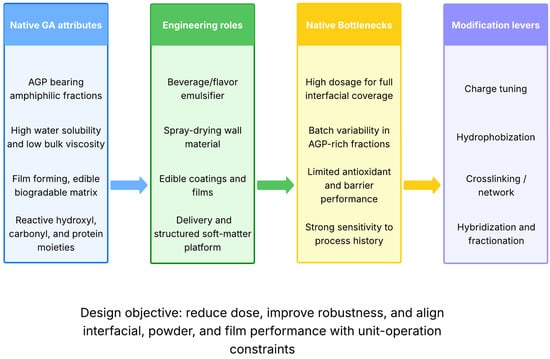
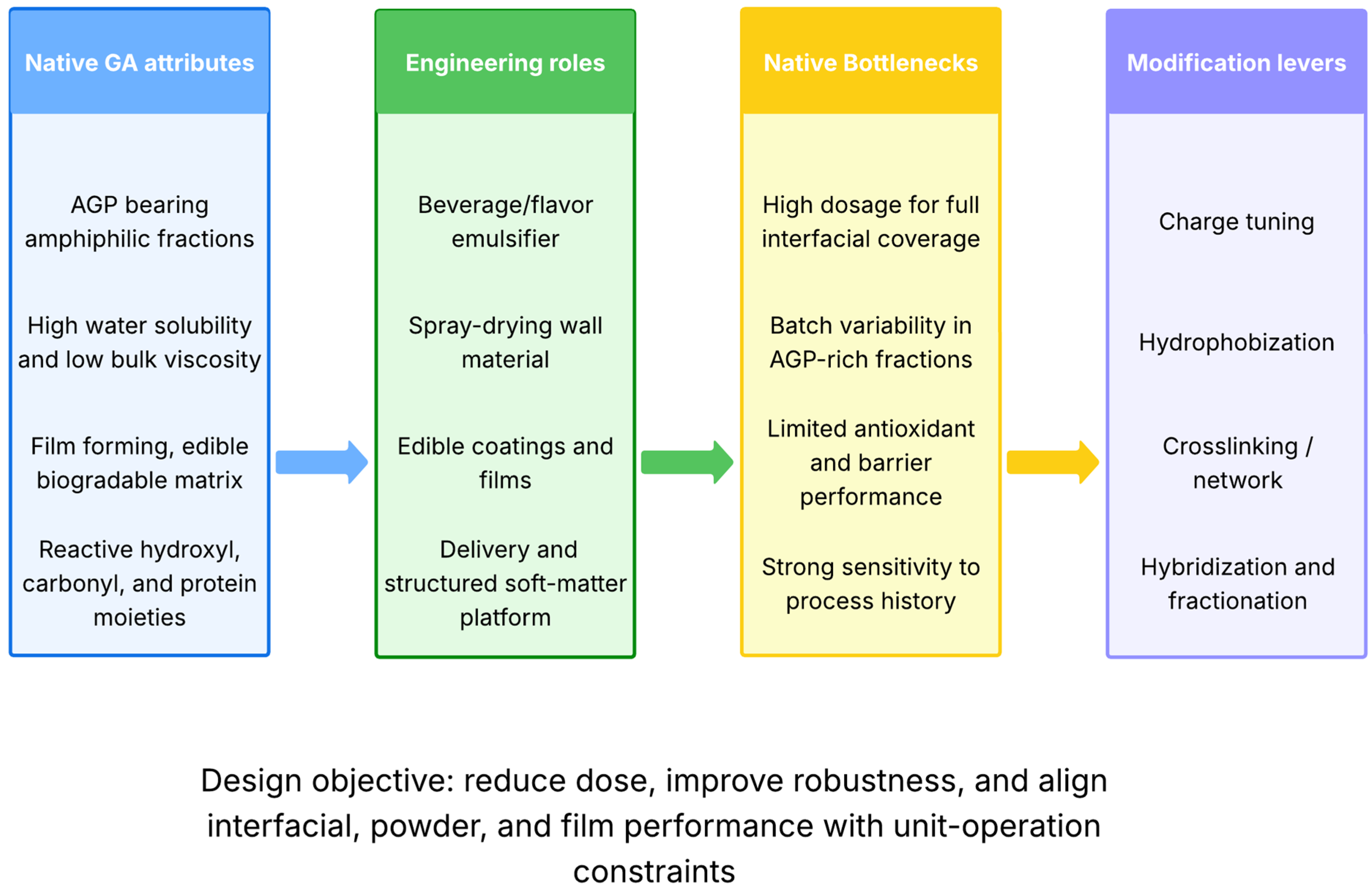
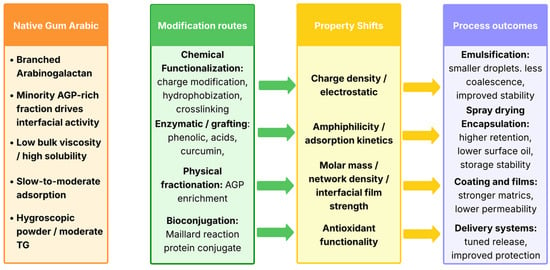
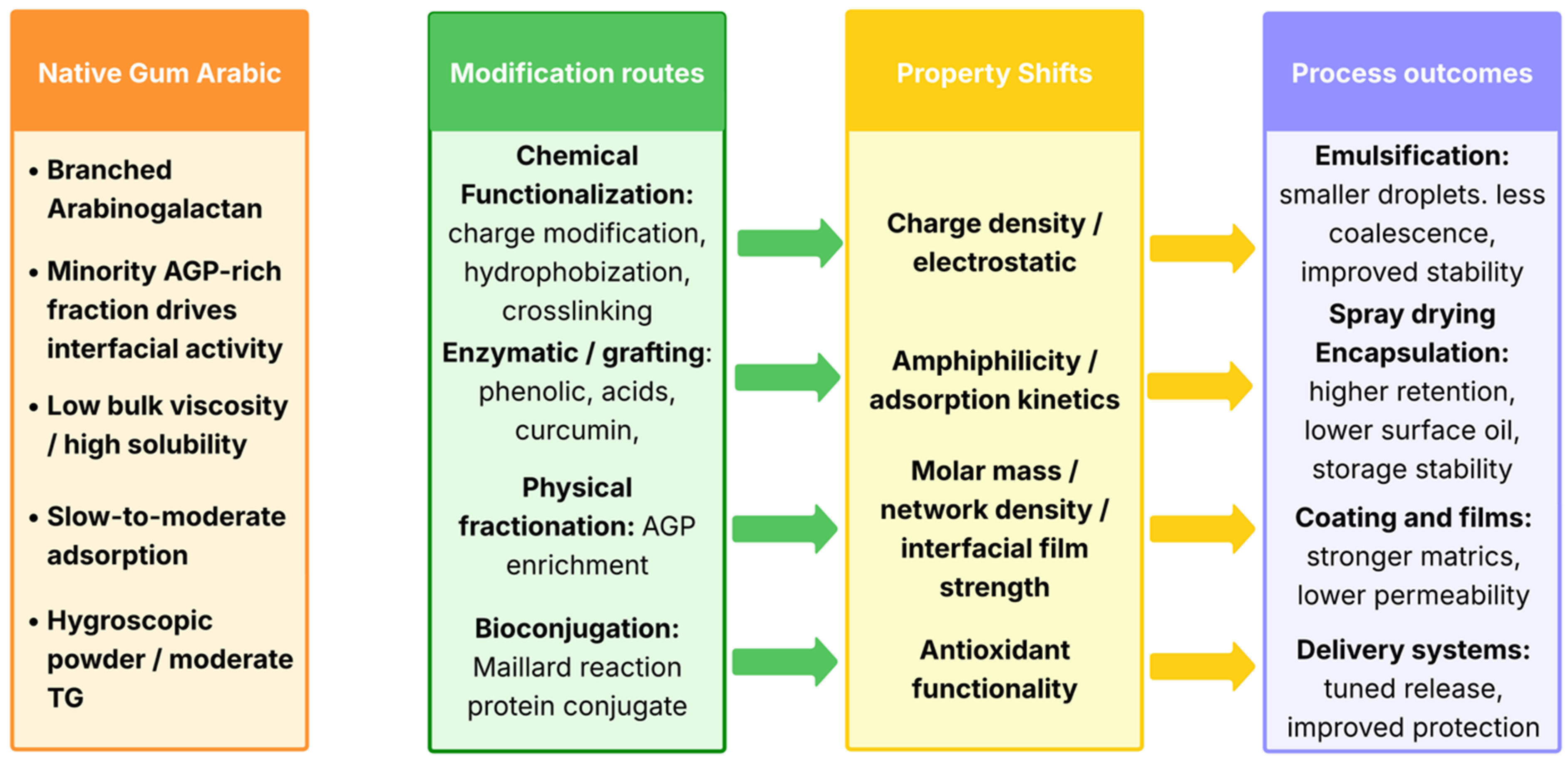
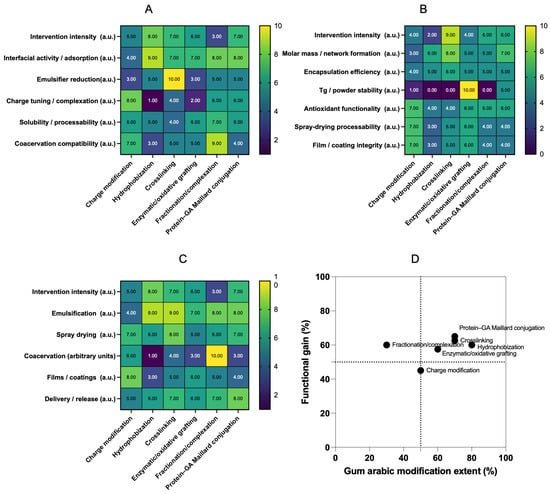
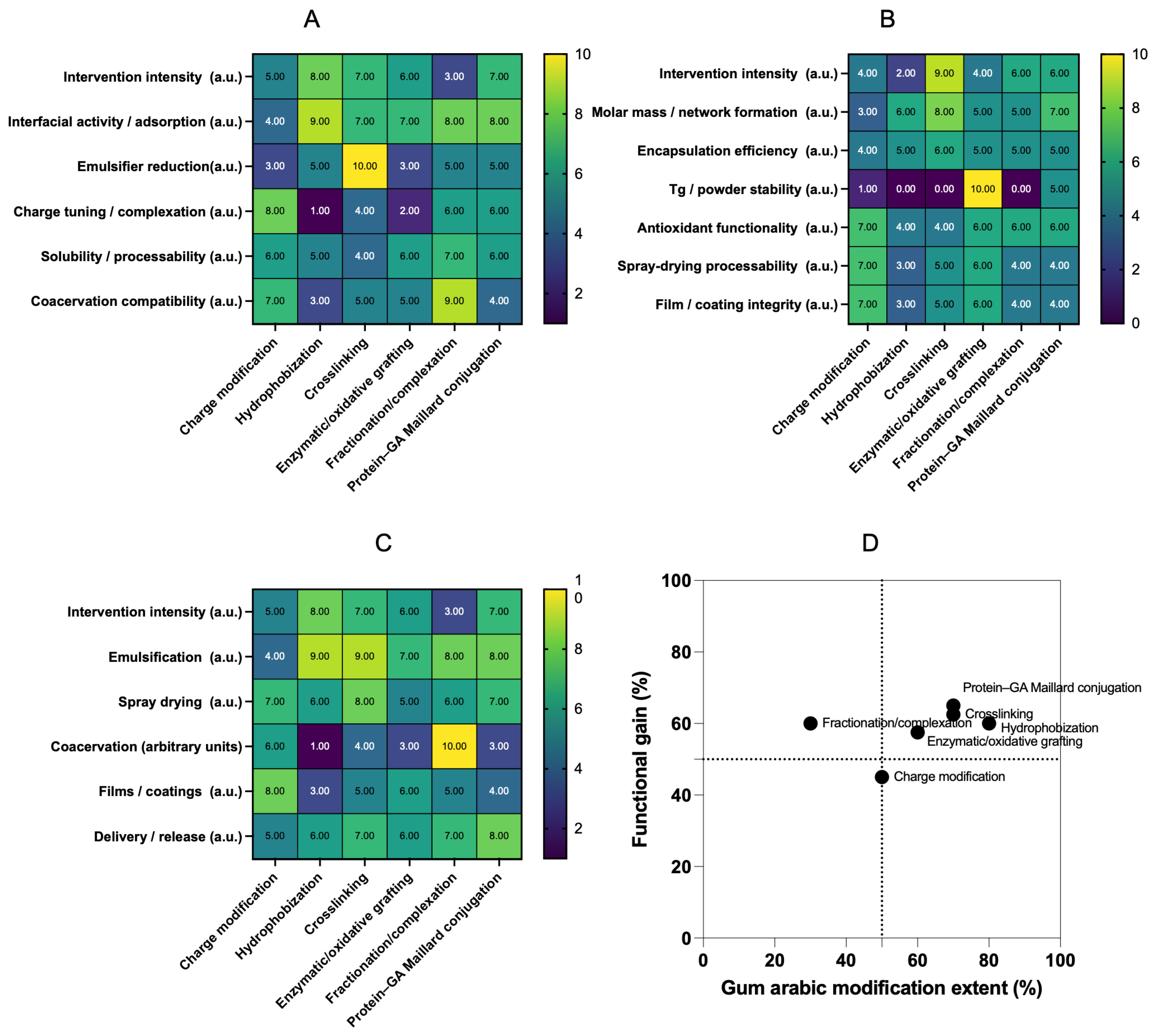

Disclaimer/Publisher’s Note: The statements, opinions and data contained in all publications are solely those of the individual author(s) and contributor(s) and not of MDPI and/or the editor(s). MDPI and/or the editor(s) disclaim responsibility for any injury to people or property resulting from any ideas, methods, instructions or products referred to in the content. |
© 2026 by the authors. Licensee MDPI, Basel, Switzerland. This article is an open access article distributed under the terms and conditions of the Creative Commons Attribution (CC BY) license.