


Abstract
Natural-based composites have received increasing attention as engineering materials because they can incorporate renewable feedstocks, valorize agro-industrial residues, and support more circular resource use. Their engineering interpretation, however, remains challenging because reported performance depends on formulation, reinforcement or filler characteristics, interphase condition, processing history, defect state, environmental exposure, and testing context. This review organizes a bounded evidence set, selected using explicit evidence-relevance criteria, into evidence maps to examine how these variables affect cross-study interpretation and evidence reuse. Across the mapped studies, nominal material designation alone did not provide a reliable basis for comparison, and recurring gaps were identified in defect characterization, durability and retained-property assessment, and validation of end-of-life claims. Quantitative comparisons were retained only when the relevant formulation, processing, exposure, and test conditions were sufficiently defined. Based on these observations, the review proposes a qualification-oriented framework comprising an Evidence Readiness Score, four Evidence Readiness Levels, and a staged roadmap linking evidence completeness with comparison, scale-up, predictive design, and application-specific qualification. The resulting framework provides a structured basis for determining whether reported evidence is sufficiently complete and contextually defined to support comparison, scale-up, and application-specific engineering decisions.
1. Introduction
Natural-based composites are increasingly recognized for their potential to align engineering performance with broader sustainability objectives. Their relevance stems from the potential to incorporate renewable feedstocks, valorize agro-industrial residues, and link composite development to circular resource strategies [1,2,3]. This interest reflects a broader transition in materials engineering, where sustainability has become a central design criterion alongside performance, durability, manufacturability, and reliability in the intended application [4,5,6,7,8,9,10].
Natural-based composites are currently being investigated across diverse sectors, including automotive engineering [11,12], building construction [13,14], medical applications [15,16,17], energy systems [18], packaging [19], and environmental applications [20]. They are popular because they are lightweight, cost-effective, rely less on fossil sources, make use of waste, and perform well under mechanical, fatigue, moisture, or temperature changes. These properties are strongly influenced by material choice and manufacturing [7,21,22,23].
End-of-life practices such as incineration and dumping remain common in both the composites industry and the agroindustry, limiting valorization and increasing environmental impact [24,25,26,27,28,29]. Poor management of agro-industrial residues also increases ecological and public health risks [30,31]. At the same time, these biomass streams remain underutilized as resources for developing circular bioeconomies, with important consequences for climate resilience, local value creation, and community well-being [32,33,34]. These circumstances have encouraged the incorporation of natural fibers, bio-derived fillers, and renewable matrices into composite systems, although it has also become necessary to back up sustainability claims with specific evidence, clearly defined boundary conditions, and comprehensive end-of-life scenarios [35,36,37,38].
As research on natural-based composites grows, the main challenge is no longer finding possible ingredients, but making sense of the data to guide material selection and design. Key barriers remain, including raw-material variability, weak fiber–matrix adhesion, moisture issues, process defects, and inconsistent reporting for industrial biocomposites [39,40,41,42]. Materials described under similar labels may behave differently depending on matrix composition, reinforcement or filler morphology, loading level, interface strategy, processing route, conditioning history, defect population, and test context. Reported properties cannot be treated as intrinsic material responses unless the experimental conditions and descriptors that produced them are also available. This limitation impedes comparisons across studies, reduces the usefulness of reported datasets for predictive design, and makes it harder to use laboratory results to develop scalable engineering guidance.
This review organizes the literature around material and reporting variables that affect data interpretation and comparability across studies. Primary descriptors include matrix platform, reinforcement or bio-derived filler morphology, interphase strategy, processing history, environmental conditioning, defect state, moisture exposure, durability, and end-of-life evidence. Supplementary evidence maps record formulation, processing, test conditions, property retention, end-of-life scenarios, interpretability, and common reporting gaps. From this evidence, the review develops a classification framework with qualification priorities, including minimum reporting requirements, scalability considerations, and qualification needs for different applications and emerging digital manufacturing routes.
2. Operational Definitions, Scope, and Classification Framework
2.1. Operational Definitions
2.1.1. Bio-Based, Biodegradable, and Compostable
In this review, “bio-based” refers to the origin of the carbon feedstock, meaning materials derived wholly or partly from renewable biological resources. This term describes only the feedstock source and does not imply biodegradability, compostability, recyclability, or reduced environmental impact. Bio-based carbon content is often quantified using standardized methods, such as radiocarbon-based analysis, since qualitative descriptions alone may not provide enough information [43,44].
In contrast, here, “biodegradability” means the breakdown of organic carbon by microbes into simpler products under certain environmental and test conditions. Depending on the setting, these products can include carbon dioxide, water, biomass, methane, and mineral salts. Because biodegradation depends on factors such as temperature, humidity, oxygen, microbes present, the medium, sample shape, and time, claims about biodegradability are typically assessed against standards, test environments, treatment details, and the material’s properties [45].
Compostability is considered a special case of biodegradability, with extra requirements like disintegration and limits on negative effects. It is usually assessed using standards for industrial composting, such as UNE-EN 13432 [46], ASTM D6400 [47], and ISO 17088 [45], among others.
Throughout this review, bio-based refers to feedstock origin, whereas biodegradability and compostability are treated as condition-dependent end-of-life claims requiring defined test environments and acceptance criteria. Recyclability, reuse, and circularity are considered distinct recovery pathways.
2.1.2. Natural-Based Composites
Terminology and classification of natural-based composites remain inconsistent throughout the literature. Some sources call them bio-based composites; others use natural-based, even if the components’ origins and functions differ. To enhance conceptual clarity, this review uses the term natural-based composites to refer to composite systems in which at least one intentionally incorporated constituent is natural or bio-derived. Under this definition, the natural or bio-derived constituent should be explicitly identified by its role as a matrix, reinforcement, filler, or a combination of these. This distinction is necessary because the term natural-based does not imply that the entire composite is fully bio-based, biodegradable, compostable, or environmentally preferable by default.
Accordingly, this review distinguishes among: (i) composites with natural fibers in fossil-based or bio-based matrices; (ii) those with bio-based matrices and either synthetic or natural reinforcements; (iii) systems containing both natural reinforcements and bio-based matrices; (iv) composites with agro-industrial residues or bio-derived fillers; and (v) mineral, cement, clay, or earthen matrices with natural fibers or bio-based parts. These categories depend on each component’s role, structure, processing, and application [3,35,48].
It is also important to distinguish between natural-fiber reinforcements and agro-industrial fillers. Natural fibers, typically lignocellulosic plant derivatives, are often used as structural reinforcements and are processed into high-aspect-ratio morphologies that can support load transfer when fiber length, orientation, dispersion, and interfacial bonding are adequately controlled [3,35,48]. In contrast, agro-industrial fillers are commonly derived from agricultural or agro-industrial biomass streams, including by-products, residues, and processed fractions, and are generally incorporated as particulate or fragmented phases, such as powders, flours, ashes, biochar, or silica-rich fractions [49,50,51,52]. Main design drivers often include cost reduction, density control, circularity, rheological modification, functionality, and biomass valorization. Their performance depends strongly on particle-size distribution, dispersion, moisture content, matrix compatibility, and defect formation, and should not be interpreted through the same load-transfer logic used for continuous or high-aspect-ratio fiber reinforcement alone [35,50,51].
2.2. Scope and Review Approach
This review focuses on natural-based composite systems in which at least one intentionally incorporated constituent is natural, bio-derived, or obtained from a renewable biological resource. The scope includes: (i) composites reinforced with natural fibers in fossil-derived polymer matrices, bio-based polymer matrices, or mineral and cementitious matrices; (ii) composites incorporating agro-industrial residues as fillers, reinforcement phases, or functional additives; and (iii) systems based on bio-derived matrices combined with natural, synthetic, mineral, or hybrid reinforcements, provided that the material composition and performance context are sufficiently described.
Within this scope, the reviewed systems are interpreted according to constituent role, matrix platform, morphology, processing route, and application context. The corresponding evidence and comparability descriptors are formalized in Section 2.4 and Figure 1.
Figure 1.
Evidence identification, categorization, and interpretation workflow used to organize the review.
2.3. Literature Selection and Evidence Organization
This study adopts a critical review approach structured around an analytical framework, rather than comprising a systematic review or meta-analysis. The aim was to identify and organize evidence relevant to material selection, processing, durability, and qualification. Study selection followed predefined evidence-relevance criteria and was independent of whether studies reported favorable, neutral, or unfavorable performance trends. Studies were included if they provided well-documented evidence in at least one analysis area (such as matrix platform, reinforcement or filler morphology, interphase engineering, processing history, conditioning, defect state, durability, retained properties, end-of-life behavior, scalability, or qualification). Reports showing improvements, neutral outcomes, trade-offs, or performance losses were eligible if they clearly described experimental conditions. Studies were excluded from the evidence map if the material system was not clearly identified, if processing or experimental conditions were insufficient to interpret the reported outcomes, or if the publication did not provide evidence for the areas under evaluation. These excluded studies could still be cited as general background, but were not included in evidence-map frequencies.
For this critical review, relevant literature was identified through targeted, non-systematic searches in Scopus and Web of Science, supplemented by Google Scholar and citation tracking. Search terms were combined iteratively to cover natural-based composite systems, matrix platforms, reinforcement and filler formats, interface engineering, processing, moisture response, durability, end-of-life behavior, and qualification. Publisher platforms were used only to obtain potentially relevant full texts, not as independent bibliographic databases. Standards and policy documents from ISO, ASTM, UNE, FAO, and European Union sources were consulted for terminology, interpretation of test conditions, and the boundaries of sustainability and end-of-life claims. Most selected evidence came from studies published since 2010, with earlier sources included when foundational definitions, mechanisms, standards, or historical context were necessary.
The selected literature was organized into supplementary evidence maps, which record details such as matrix and reinforcement or filler identity, formulation and loading, morphology or architecture, processing and treatment strategies, moisture and conditioning history, defect or porosity information, test conditions, durability or retained property evidence, end-of-life information, interpretability across studies, and common reporting gaps. Complete entry-level coding is provided in Supplementary Tables S1 and S2. The main manuscript reports selected illustrative cases and aggregated patterns derived from these evidence maps.
A descriptive quantitative analysis was performed at the mapped-entry level. Frequencies and percentages were calculated for matrix platform, reinforcement or filler category, processing and conditioning descriptors, defect characterization, durability or retained-property evidence, end-of-life validation, and reporting of test conditions. Quantitative comparisons of material performance were limited to within-study comparisons or to cases with sufficiently aligned formulation, processing, conditioning, and test conditions. Pooled property ranges across experimentally heterogeneous systems were not included.
Because the evidence set was bounded and selected using predefined relevance criteria, the frequencies derived from the evidence maps describe only the mapped cases. These frequencies identify common limitations within the selected evidence and should not be interpreted as statistically representative of the broader natural-based composites literature.
The analysis formed the basis for the reporting-gap summary in Figure 3 and the minimum reporting descriptors in Figure 4 and Supplementary Table S3. These outputs support the proposed reporting framework, which aims to improve interpretability, reproducibility, scalability, and the value of future studies for qualification.
For application of the Evidence Readiness Score proposed in Section 6.5, the evidence-map fields are linked to the scoring domains as follows: material/formulation uses the matrix platform, family/grade, origin basis, paired phase, and formulation descriptors in Table S1A; reinforcement/filler uses the paired phase in Table S1A together with identity, functional role, morphology/architecture, and geometry in Table S2A; interphase/treatment uses the surface-treatment or compatibilization field in Table S2A; processing history uses the processing route and key conditions in Tables S1A and S2B; testing and repeatability uses the test context in Table S1B, supplemented by article-level information on replication or variability when reported; defects/morphology uses the defect/porosity field in Table S1A and the geometry and defect descriptors in Table S2A,B; durability/retention uses the durability/retention field in Table S1B and the conditioning/exposure and retention fields in Table S2B; and end-of-life uses the evidence field in Table S1B, supplemented by article-level verification when needed. Scale/application is not a dedicated S1/S2 field; it is assessed from the source article only when scale-up or application qualification is part of the study claim and is otherwise treated as not applicable. The evidence maps were not constructed as an ERS validation dataset, so the score is presented here as a proposed assessment method rather than as a score distribution across the mapped evidence.
2.4. Classification Framework
To support consistent interpretation across heterogeneous literature, this review organizes natural-based composite studies using three primary descriptors: matrix platform, reinforcement or filler morphology, and interface engineering strategy. These descriptors were selected since they reflect the main design decisions that shape processing behavior, load transfer, moisture response, durability, and end-of-life interpretation.
(i) Matrix platform. Studies are grouped according to the material forming the continuous phase. Matrix platforms are classified as fossil-derived polymer matrices, bio-based polymer matrices, and mineral or cementitious matrices. This distinction is retained because matrix chemistry and consolidation mechanism influence processing temperature or curing conditions, wetting or binding behavior, moisture transport, defect sensitivity, degradation pathway, and end-of-life options.
(ii) Reinforcement and residue-derived filler morphology. The natural or bio-derived constituent is classified according to role and morphology. This includes natural-fiber reinforcements, such as continuous, woven, chopped, or short fibers; agro-industrial fillers, such as powders, flours, ashes, biochar-like fractions, or silica-rich residues; and hybrid fiber–filler systems. This distinction is necessary because fibers and particulate fillers contribute differently to load transfer, dimensional stability, moisture sensitivity, processing behavior, and defect formation.
(iii) Interface engineering strategy. Studies are interpreted according to the strategy used to control bonding, wetting, dispersion, or moisture sensitivity. These strategies include fiber-side surface modification, matrix-side compatibilization, reactive coupling, hybridization, and moisture-management measures. Interface engineering is treated as a primary descriptor because reported property changes may arise from the constituent selection, as well as improved adhesion, altered surface chemistry, modified dispersion, reduced moisture uptake, or differences in defect formation.
These descriptors do not directly rank material systems; instead, they distinguish material-design variables from the contextual evidence required for reproducibility, comparison across studies, scale-up, and qualification for the intended application. Figure 1 summarizes this evidence-organization workflow.
3. Matrix Types as Engineering Choices
Matrix selection defines the composite’s continuous phase and strongly influences the feasible processing route, consolidation mechanism, moisture transport, durability, and end-of-life options. In natural-based composites, this decision matters because the matrix determines how natural fibers, residue-derived fillers, or bio-derived constituents are incorporated, stabilized, and evaluated under application-relevant conditions.
This section examines three matrix families: fossil-derived polymer, bio-based polymer, and mineral-based matrices. The comparison does not aim to identify a universally superior matrix platform. Instead, it highlights how each family introduces different processing constraints, compatibility requirements, durability concerns, and reporting needs. Selected examples from the evidence map show that matrix comparisons are more than direct rankings of isolated property values; they require contextual descriptors. The cases discussed in the main text are illustrative examples; the complete matrix-platform evidence map is provided in Supplementary Table S1.
3.1. Fossil-Derived Polymer Matrices in Natural-Based Composites
Fossil-derived polymer matrices remain important reference platforms for natural-based composites because they offer mature processing routes, industrial scalability, and well-established performance in conventional manufacturing environments. Polypropylene, polyethylene, polystyrene, poly(vinyl chloride), and epoxy resins continue to appear frequently in natural-reinforced and residue-filled composites because they provide predictable processing behavior and allow natural constituents to be evaluated against widely used industrial benchmarks [53,54,55,56,57].
Their main limitation is not a lack of technical maturity, but how performance is interpreted within sustainability and circular-economy contexts. Fossil origin, limited biodegradability, and the irreversible crosslinking of many thermoset systems restrict end-of-life options, whereas thermoplastic reprocessing depends on composite heterogeneity, prior processing history, and retained properties after use [58,59,60,61,62]. Fossil-derived matrices remain useful for benchmarking, but evidence of durability, reprocessability, property retention, and feasible recovery routes must support their contribution to circularity-oriented design.
In polyolefin-based composites, the central technical challenge is the mismatch between hydrophilic lignocellulosic reinforcements and hydrophobic matrices. This mismatch can reduce wetting, weaken interfacial adhesion, limit stress transfer, and increase sensitivity to moisture exposure unless compatibilization or surface-modification strategies are used [62,63,64,65]. Processing adds further uncertainty because lignocellulosic constituents may degrade at polymer-processing temperatures, while high melt viscosity, incomplete impregnation, poor dispersion, and void formation can alter the measured response [60,62,64,66,67]. As a result, reported properties in polyolefin-based natural composites should be interpreted in relation to matrix grade, reinforcement morphology, compatibilization strategy, processing route, defect state, and conditioning protocol.
Recycled polyolefins and wood–plastic composites illustrate why matrix identity and biomass incorporation are insufficient for direct comparison. These systems are often positioned as scalable routes for incorporating agricultural residues, wood waste, sawdust, and recycled polymer streams into composite products [55,56,68,69,70,71]. However, their reported performance depends on matrix-stream quality, filler fraction, particle or fiber morphology, dispersion, contamination, porosity, processing route, and conditioning history. For example, recycled-polypropylene filaments containing rice husk and wood–plastic composites based on recycled polyolefin streams both support residue valorization, but they cannot be interpreted only through recycled-matrix use or biomass content. Filament extrusion, printing direction, interlayer bonding, thermal degradation onset, filler size, moisture state, and recycled-stream variability may all change the measured response. These systems require reporting of recycled-matrix source and quality, filler morphology, processing conditions, defect state, and property retention before comparing performance trends.
Thermoset matrices represent a different case. Epoxy and related networks provide stiffness, dimensional stability, solvent resistance, and laminate-processing advantages, making them valuable reference materials for assessing fiber treatment, hybrid reinforcement, defect control, and durability under moisture exposure [22,72,73,74,75]. At the same time, irreversible network formation limits remelting, reshaping, welding, and mechanical reprocessing. In laminated natural and hybrid composites, water uptake, swelling, delamination, and retained properties depend on fiber architecture, matrix selection, void content, and manufacturing history [76,77,78]. These systems show that high mechanical performance and dimensional stability do not automatically imply favorable circularity or end-of-life behavior.
Overall, fossil-derived matrices remain useful industrial benchmarks, but their interpretation requires the processing, conditioning, defect, durability, and end-of-life context captured in Supplementary Table S1.
3.2. Bio-Based Polymer Matrices
Bio-based polymer matrices expand the design space of natural-based composites, but they should not be treated as a single material category. Their relevance may arise from renewable carbon content, biodegradability under defined conditions, long service life, melt reprocessability, film-forming ability, or functional chemistry. These objectives are not equivalent. A matrix selected for compostability, for example, is evaluated through different criteria than a bio-based engineering thermoplastic selected for durability and dimensional stability. For this reason, interpreting bio-based matrices requires attention to matrix chemistry, processing route, moisture response, interphase stability, degradation mechanism, and the end-of-life scenario being claimed [79,80,81].
The literature uses several classification routes. Chemical classifications distinguish polysaccharide-based, protein-based, lipid-derived, and long-chain bio-based polyamides, lignin-derived systems, and renewable aromatic networks [79,81,82]. Processing-based classifications separate melt-processable thermoplastics from curable or film-forming systems [83,84,85,86,87]. In this review, the processing route matters because it determines whether natural fibers and bio-derived fillers are exposed to melt temperatures, curing reactions, moisture-driven consolidation, solution casting, or network formation. These conditions affect wetting, dispersion, fiber degradation, void formation, crystallization, barrier behavior, and property retention [88,89,90].
3.2.1. Melt-Processable Biodegradable Thermoplastics
Melt-processable biodegradable thermoplastics are frequently presented as alternatives to fossil-derived polymer matrices because they can combine renewable sourcing, established polymer-processing routes, and potential end-of-life advantages under defined conditions [63,91,92]. However, melt-processability and biodegradability alone do not resolve the main qualification challenges of natural-fiber composites. These matrices must still be evaluated for thermal stability during processing, compatibility with lignocellulosic constituents, crystallization behavior, hydrolytic sensitivity, moisture uptake, rheology, impregnation, and dispersion [88,90].
The most frequently reported matrices in this group include PLA, polyhydroxyalkanoates, succinate-based polyesters, and starch-rich systems [68,93,94,95,96,97,98]. Their comparison is difficult when studies report only the matrix name and reinforcement content. Matrix grade, molecular and thermal history, crystallinity or phase morphology, reinforcement conditioning, processing temperature, residence time, and exposure conditions can strongly affect the reported response. These descriptors are necessary before drawing conclusions about whether a bio-based matrix improves performance, durability, or end-of-life behavior relative to fossil-derived alternatives.
PLA is one of the most established biodegradable thermoplastic matrices used in natural-fiber and bio-derived filler composites. Its commercial availability, stiffness-oriented properties, and compatibility with extrusion, molding, filament fabrication, and additive manufacturing make it a common reference platform in bio-based composite research [5,99,100,101,102,103,104,105,106]. Its use also illustrates why matrix identity alone is insufficient for interpretation. PLA-based composites are sensitive to crystallinity, phase morphology, thermal history, reinforcement or filler loading, fiber conditioning, and moisture-assisted degradation [107,108,109,110].
PHA-based matrices follow a different qualification logic. Polyhydroxyalkanoates are biodegradable thermoplastics produced by microorganisms, including grades such as PHB and PHBV [111,112]. In natural-based composite research, PHAs are often discussed alongside PLA as candidates for highly bio-based or biodegradable systems. However, their qualification challenges differ. PHA-based systems are more frequently discussed in relation to cost, manufacturability, brittleness, crystallinity, morphology control, and formulation strategies used to stabilize mechanical response [111,112,113,114,115].
The performance of PHA-based composites depends on PHA grade, reinforcement morphology, fiber integrity after processing, dispersion, phase structure, and fiber–matrix adhesion. Blending with other biodegradable polymers and incorporating bio-derived fillers are commonly used to adjust crystallization, chain mobility, and phase morphology while maintaining renewable or biodegradable characteristics [95,116,117]. Evidence mapped in the supplementary tables also shows that PHA-family matrices are frequently studied with a broad range of fillers and fibers, including hemp, flax, wood fibers, nettle fibers, pine cone flour, walnut shell flour, pistachio shell flour, softwood sawdust, chitin, human hair waste, cellulose fibers, and agro-industrial residues [118,119,120,121]. Across these systems, stiffness gains, faster biodegradation, or improved filler wetting are often accompanied by increased water uptake, reduced tensile or impact performance, qualitative defect reporting, or missing retained-property data. PHA-based composites require reporting of matrix grade, blend composition, filler or fiber morphology, processing history, phase morphology, conditioning state, and retained properties after exposure.
Succinate-based aliphatic polyesters, including PBS and related copolyesters such as PBSA, broaden the range of biodegradable thermoplastic matrices beyond PLA and PHAs. PBS is often considered promising for natural-based composites because of its ductility, crystallization behavior, and thermal response, particularly when synthesized from bio-based succinic acid or diols [122]. PBS-based systems have also been used to examine reinforcement geometry and loading as design variables, which makes them relevant for application-oriented composite development [123,124,125].
The main interpretive issue is that PLA, PHA, PBS, and related copolyesters should not be presented as interchangeable biodegradable matrix platforms. Their suitability depends on formulation, crystallization rate, thermal stability, processing conditions, reinforcement compatibility, moisture response, and application performance targets. Comparative studies should report the specific polymer grade, bio-based content (when relevant), copolymer or blend composition, processing route, reinforcement or filler fraction, conditioning protocol, and evidence of durability or property retention.
3.2.2. Bio-Based Engineering Thermoplastics
Bio-based engineering thermoplastics follow a different sustainability logic from biodegradable commodity polyesters. Their relevance is primarily associated with renewable monomer sourcing, long service life, and melt reprocessability; rapid biodegradation is generally not the design objective. Long-chain bio-based polyamides are among the most mature examples because they combine renewable feedstock routes with property profiles comparable to conventional engineering polymers [87,126]. Castor-oil-derived intermediates, including 11-aminoundecanoic acid and sebacic acid, are used to produce polyamide families such as PA11 and PAx.10 systems, depending on the selected diamine [87,126,127].
In composite design, these matrices are generally processed through conventional melt routes such as compounding, extrusion, and injection molding and are used to develop short-fiber-reinforced systems with improved durability or engineering performance [87,126,128,129]. Their qualification depends on thermal compatibility with lignocellulosic reinforcements, fiber–matrix compatibility, water uptake, and aging behavior. This is particularly important for polyamides because moisture can plasticize the matrix and modify mechanical response under humid conditions [87,126,130].
More broadly, bio-based matrices may show reduced ductility, increased brittleness, lower impact resistance, limited thermal stability, or higher moisture sensitivity compared with selected fossil-derived engineering polymers [61,131,132,133]. These limitations stem from composition–structure relationships, including polarity, crystallinity, functional-group chemistry, melt behavior, fiber impregnation, interphase formation, and property retention under humid conditions [79,80]. As a result, developing bio-based matrices often depends on formulation and interface-design strategies, including compatibilization, hybridization, blending, protein–polysaccharide approaches, and incorporating waste-derived materials, waxes, or particulates in starch-rich systems to balance renewable content with processing stability and application performance [93,134,135,136,137].
3.2.3. Film-Forming and Functional Bio-Based Matrices
A smaller but important group of bio-based matrices is selected primarily for film formation, aqueous processing, barrier performance, antimicrobial activity, adsorption capacity, hydrogel formation, or biomineralization; high-throughput melt processing is generally not the primary objective. Protein- and polysaccharide-based systems, including gelatin, alginate, chitosan, casein, and related blends, fall into this category when used as continuous phases in films, hydrogels, packaging materials, biomedical-adjacent systems, or environmental platforms [138,139,140,141,142,143,144].
These systems should be evaluated on the basis of their intended functional or sustainability role, with less emphasis placed on the mechanical criteria typically applied to structural thermoplastics or thermosets. Their qualification may depend on wet stability, barrier performance, antimicrobial or antioxidant activity, cytotoxicity, biodegradation, and retention of functional properties after exposure [145,146]. Although several film-forming bio-based systems show improvements in barrier behavior, UV protection, food preservation, or biodegradation, common gaps remain in defect characterization, moisture-state reporting, retained properties, and end-of-life validation. Interpretation of these systems requires adequate reporting of matrix grade and bio-based content when relevant, formulation and processing history, crosslinking or blending strategy, conditioning and exposure conditions, functional testing, retained performance, and the specific end-of-life pathway associated with the claimed application.
3.3. Mineral-Based Matrices
Mineral-based matrices represent a distinct category within natural-based composites because their engineering logic differs from that of polymer matrices. In this review, these systems are considered natural-based composite platforms when a continuous inorganic phase is combined with natural fibers, agro-industrial residues, bio-derived fillers, or biologically derived modifiers. Their relevance does not arise from the matrix’s biological origin, but from mineral binders’ ability to incorporate natural or residue-derived constituents for crack control, toughness improvement, rheological adjustment, residue valorization, embodied-impact reduction, or application-specific durability.
This category includes Portland-cement-based systems, alkali-activated binders, geopolymer matrices, and clay- or earthen-based matrices. Each family is governed by a different consolidation mechanism and requires different reporting descriptors [147,148,149]. Performance in these systems is usually controlled by pore structure, curing or drying history, moisture transport, alkalinity, shrinkage, and compatibility between the mineral environment and lignocellulosic phases, with the hydrophilic–hydrophobic mismatch (typically emphasized in polymer composites) playing a less predominant role [148,150,151]. For this reason, mineral-based natural composites should be evaluated through construction-relevant metrics and exposure scenarios, not only through tensile or flexural values reported without curing, moisture, or durability context.
3.3.1. Cementitious-Based Matrices
In cementitious systems, the contribution of natural fibers or bio-derived constituents is closely linked to crack control, post-cracking response, fiber bridging, fresh-state behavior, and durability under moisture exposure. Natural fibers can improve load transfer across cracks and porous interfacial regions, but the same constituents may also increase porosity, reduce compressive performance, or degrade under alkaline pore-solution conditions if fiber dosage, dispersion, and compatibility are not controlled [152,153,154,155,156].
Interpreting cementitious natural-based composites depends on descriptors specific to construction materials. Binder composition, water-to-binder ratio, curing history, fiber dosage, fiber condition, pore structure, shrinkage, cracking tendency, permeability, water uptake, and exposure durability are needed to understand reported performance [147,149]. These descriptors are particularly important because improvements in toughness or crack resistance may occur alongside reductions in compressive strength, increased water transport, or changes in long-term durability.
The same reporting logic applies to additive manufacturing with cementitious matrices. In printed cementitious systems, natural fibers and bio-derived modifiers may influence hardened-state performance as well as rheology, extrudability, buildability, interlayer bonding, dimensional stability, and property retention after environmental or thermal exposure [148,150,157]. As a result, studies on cementitious additive manufacturing should not report mechanical properties without the processing descriptors that determine printability and layer integrity.
3.3.2. Alkali-Activated and Geopolymer Matrices
Alkali-activated and geopolymer matrices broaden the construction-oriented design space because their consolidation relies on alkaline activation of aluminosilicate precursors and the formation of pore-structured binding phases. When natural fibers are incorporated into these matrices, reported responses reflect the combined effects of precursor composition, activator chemistry, curing protocol, pore-structure development, fiber dosage, dispersion, and compatibility with alkaline environments [149,158,159,160,161].
The main interpretive issue is that reported improvements in compressive strength, tensile ductility, or damage tolerance cannot be attributed to fiber addition alone. Fiber bridging and matrix densification may improve mechanical response, but long-term property retention also depends on fiber stability under alkaline exposure, activator concentration, curing conditions, and microstructural evolution [157,158,160,162]. Without these descriptors, it is difficult to determine whether a reported change in performance arises from the reinforcement strategy, binder chemistry, pore structure, or aging conditions.
For comparison and qualification, alkali-activated and geopolymer composite studies should report precursor type, activator composition, liquid-to-solid ratio, curing protocol, fiber source and condition, fiber dosage, dispersion method, pore structure, exposure environment, and retained properties after aging. These descriptors are necessary because the same natural fiber may behave differently depending on alkalinity, curing regime, and microstructural development.
3.3.3. Clay- and Earthen-Based Matrices
Clay- and earthen-based matrices form a complementary group within mineral-based natural composites. Their relevance stems from local availability, low-energy processing, reduced embodied impacts, and compatibility with unfired or lightly processed construction strategies. Natural constituents such as straw, hemp, and other plant-derived fibers are commonly introduced to improve cohesion, crack control, post-cracking behavior, and early-age stability [153,163,164].
The main limitation of these matrices is not polymer-style interfacial mismatch, but water-mediated deformation. Moisture content, drying shrinkage, cracking, permeability, and dimensional instability strongly affect both processing and service performance. Interpreting clay- and earthen-based composites requires reporting composition, water content, particle-size distribution, fiber dosage, rheology, drying protocol, permeability, shrinkage, cracking behavior, and dimensional change [153,165,166,167,168,169].
This reporting need becomes even more important in extrusion and additive manufacturing. In these processes, natural stabilizers, drying-aware shaping methods, and formulation strategies that regulate flow, cohesion, and shrinkage can determine whether a material is printable and whether the printed geometry remains stable [170,171,172]. Plant-based fibers may improve stress distribution and crack control, but the benefit can be offset by reduced compressive strength or increased variability when fiber content, moisture state, and drying conditions are not controlled [164,173]. For earthen additive manufacturing, extrudability, buildability, deposition stability, interlayer integrity, shrinkage, cracking, and dimensional accuracy should be treated as qualification descriptors [164,174,175].
3.4. Comparative Interpretation of Matrix Selection
Across the reviewed literature, matrix selection emerges as an application-dependent decision and not as a direct substitution of one material origin for another. Fossil-derived polymer matrices remain relevant as industrial benchmarks because they offer mature processing routes, predictable consolidation behavior, and broad manufacturing compatibility. Their limitations are mainly related to sustainability and circularity when property retention, recovery routes, and reprocessing history are not reported [58,60,88,176,177]. Bio-based polymer matrices expand the design space through renewable carbon content, biodegradability in selected cases, long-service-life engineering performance, or functional behavior. However, interpretation depends on the specific claim because compostability, reprocessability, durability, renewable sourcing, barrier performance, and functional response require different evidence [90,92,178]. Mineral-based matrices follow a separate construction-oriented logic, in which curing or drying history, pore structure, alkalinity, shrinkage, permeability, and exposure conditions often dominate over the hydrophilic–hydrophobic mismatch emphasized in polymer composites [147,148,149].
The mapped evidence illustrates this point at two levels. The first level involves comparisons made within the same study, where some experimental variables are shared, but matrix-dependent trade-offs remain evident. Ratna Kumari et al. [179], for example, evaluated sisal-reinforced PLA and sisal-reinforced unsaturated polyester using 10, 20, and 30 wt.% fiber. Water uptake increased with fiber loading in both systems and reached 23.36% for sisal-reinforced PLA and 22.39% for sisal-reinforced polyester at the highest loading. Although these values appear close, they do not support a simple matrix-based ranking. The PLA system was processed by compression molding, whereas the polyester system was prepared by hand lay-up; in addition, fiber geometry, void or porosity state, pre-processing moisture history, and retained mechanical properties after water exposure were not reported with equivalent completeness. The comparison is useful not because it identifies the “better” matrix, but because it shows how similar water-uptake values can still require different interpretation when processing and reporting contexts differ.
A second within-study comparison shows how matrix choice can shift the balance among mechanical performance, moisture response, durability, and end-of-life behavior. Moulya [180] compared jute-reinforced PLA, PBS, PP, and PE systems prepared with 10, 20, and 30 wt.% fiber, alkali treatment, drying, melt compounding or extrusion, and compression molding. At the main comparison level of 30 wt.% jute, PLA and PBS systems supported biodegradable behavior but were also associated with higher moisture sensitivity or post-aging performance loss. In contrast, maleic-anhydride-compatibilized PP and PE systems showed stronger interfacial adhesion, lower moisture uptake, stronger durability under humid conditions, or higher thermal stability, but very limited biodegradation. This contrast does not indicate a universally superior matrix. It shows that matrix selection changes the performance hierarchy depending on whether the priority is mechanical robustness, moisture durability, interfacial stability, or biodegradation.
Both studies [180,181] include jute-reinforced PLA, but the evidence reported for each system is not equivalent. Short plant-fiber-reinforced PLA using alkali- and silane-treated fibers, twin-screw extrusion, and injection molding was investigated by Mu et al. [181], with emphasis on mechanical performance, microstructural characterization, thermal behavior, and performance prediction. In contrast, alkali-treated jute in PLA and other matrices was evaluated using melt compounding or extrusion followed by compression molding by Moulya [180], with emphasis on mechanical response, water absorption, hygrothermal aging, and biodegradability. Consequently, the two jute-reinforced PLA systems cannot be compared only by fiber and matrix identity. Their interpretation depends on fiber treatment route, fiber loading, processing method, post-processing morphology, defect reporting, aging protocol, testing direction, and the specific performance domains measured. Matrix selection changes the balance among mechanical performance, moisture durability, processing, and end-of-life behavior. The examples discussed here represent selected cases from the matrix-platform evidence map; Supplementary Table S1 provides the complete matrix-platform evidence map.
4. Bio-Derived Reinforcements and Agro-Industrial Fillers
Bio-derived reinforcements and agro-industrial fillers determine how natural-based composites carry load, develop anisotropy, respond to processing, and accumulate defects. Researchers often group these constituents under broad terms such as natural fibers, biofillers, or agro-industrial residues. However, their engineering function depends less on the general label used to describe them and more on their role, morphology, architecture, aspect ratio, dispersion state, moisture condition, and compatibility with the matrix.
This section examines reinforcements and fillers from a function- and format-oriented perspective. It first uses a source-based taxonomy to clarify the biological origin of natural fibers, but treats it only as an entry point. The discussion then distinguishes continuous and textile reinforcements, discontinuous short-fiber reinforcements, additive-manufacturing-compatible formats, particulate residue-derived fillers, and hybrid fiber–filler systems. This organization avoids treating all natural constituents as equivalent reinforcements and clarifies the descriptors needed for interpretation, comparison, and qualification. Section 5 addresses interfacial mechanisms, moisture-driven degradation, and surface modification strategies.
4.1. Source-Based Taxonomy and Functional Role of Natural Reinforcements
Natural-fiber reinforcements are commonly classified according to biological source and physical origin. Plant fibers are often grouped as bast fibers, such as jute and flax; seed fibers, such as cotton; stalk or grass fibers, such as bamboo; stem fibers, such as banana; leaf fibers, such as sisal; and fruit fibers, such as coir. Animal-derived fibers and other bio-derived fibrous materials are also reported in selected composite systems. This taxonomy is useful because biological origin is associated with differences in chemical composition, fiber morphology, moisture affinity, thermal stability, and processing sensitivity [1,55,63,182].
Source-based classification, however, does not explain composite performance alone. Fibers from the same biological source may behave differently depending on extraction method, retting or cleaning history, surface condition, fiber length distribution, moisture state, treatment protocol, and damage introduced during processing. Similarly, fibers from different sources may produce comparable responses when their aspect ratio, orientation, dispersion, and interfacial bonding are similar. For this reason, biological source should be reported together with descriptors that define the reinforcement state after processing.
The distinction between reinforcement and filler is also important. Natural fibers are generally introduced as structural reinforcements, where fiber length, aspect ratio, orientation, dispersion, and interfacial bonding govern reinforcement efficiency [3,35,48,183,184,185]. Agro-industrial fillers, in contrast, are commonly incorporated as particulate or fragmented phases whose contribution depends more strongly on particle-size distribution, packing, dispersion, rheological modification, moisture state, and defect formation [49,50,51,52,186,187,188]. These two categories follow different performance logics. Chopped or continuous fibers may improve load-bearing capacity when orientation and adhesion are controlled, whereas particulate residues may primarily affect packing, viscosity, stress concentration, porosity, or moisture sensitivity. Supplementary Table S2 provides the complete reinforcement/filler classification and the corresponding mapped-entry morphology, treatment, geometry, and conditioning descriptors.
Some evidence in the literature shows why source labels must be interpreted alongside morphology and processing history. Mu et al. [181] compared short flax, jute, and ramie fibers in PLA using alkali and silane treatments, twin-screw extrusion, and injection molding. Flax provided the strongest reinforcement effect, while jute reinforced PLA less effectively, partly because its microstructure contained more internal cavities. Performance also depended on fiber content, with properties peaking at 40 wt.% before agglomeration-related losses appeared at higher contents. This example does not imply that one plant source is intrinsically superior to another; rather, it shows that fiber source, internal morphology, treatment route, loading level, and processing-induced fiber state must be considered together.
4.2. Reinforcement Architectures and Format Classes
Reinforcement architecture is one of the most important variables controlling stress-transfer pathways, anisotropy, processability, and defect formation. Natural reinforcements may be incorporated as particulates, short fibers, long discontinuous fibers, continuous fibers, woven fabrics, nonwoven mats, yarns, tapes, or hybrid architectures. These formats are not interchangeable, even when they come from the same biological source, because each format creates a different load-path structure and a different set of manufacturing requirements [189,190].
Particulate fillers and very short fibers generally provide limited long-range load transfer and are strongly influenced by dispersion, particle size, stress concentration, and matrix continuity. Short fibers can improve stiffness and strength when their aspect ratio, orientation, and interfacial bonding are sufficient, but they are sensitive to fragmentation during compounding, extrusion, injection molding, or filament production. Long, continuous, and textile reinforcements can provide more efficient load paths, although they introduce greater challenges related to impregnation, consolidation, void formation, delamination, and anisotropic testing.
Micromechanical models and reinforcement-efficiency concepts consistently show that geometry, length, orientation, packing density, and fiber–matrix bonding are necessary to interpret reported properties [63,183,184,191]. Figure 2 summarizes this architectural gradient by showing the progression from particulate or short-fiber systems, where reinforcement efficiency is limited by random dispersion and short load-transfer lengths, to continuous and woven architectures, where load transfer can improve but processing and impregnation difficulty also increase. Architecture should be treated as a primary descriptor, not as a secondary detail.
Figure 2.
Reinforcement architectures and functional roles in natural-based composites. (a) Schematic progression from particulate fillers to continuous and woven reinforcements. (b) Qualitative trends in load-transfer potential and processing and impregnation complexity with increasing reinforcement continuity. (c) Distribution of the mapped reinforcement and bio-derived filler entries by source category and functional role; bubble size indicates the number of mapped entries.
4.2.1. Continuous and Textile Reinforcements
Continuous and textile reinforcements include unidirectional bundles, tapes, yarns, woven fabrics, nonwoven mats, and other aligned or semi-aligned architectures. They are selected when load transfer, directional stiffness, impact response, or damage tolerance are central design objectives. Their performance depends on preserving reinforcement continuity, impregnation quality, consolidation, fiber direction, lay-up, and void formation during processing. For this reason, continuous and textile systems should not be interpreted using the same assumptions as randomly oriented short-fiber composites.
These reinforcement formats are closely linked to manufacturing processes. Pultrusion is frequently recognized as a high-performance route in which fiber bundles are continuously impregnated and drawn through a heated die to produce profiles with fixed cross-sections. Recent studies on natural-fiber pultruded profiles indicate the potential of structural biocomposites for load-bearing applications, provided that formulation and processing are optimized to support mechanical reproducibility [62,184,185]. Additional work distinguishes continuous yarn-based reinforcements from short-fiber feedstocks and describes processing routes such as in-nozzle impregnation and pre-impregnated filament methods [192]. Assembling cellulose filaments into yarns and woven mats further shows how alignment and architecture can support high-performance bio-based composites with improved flexural and fire-related properties [193].
From an analysis standpoint, continuous architectures are also the setting in which simplified mixture rules are most often introduced [191,194]. However, such models are assumption-dependent and should be interpreted with care when moving from idealized aligned systems to woven fabrics, hybrid laminates, nonwoven mats, or particulate-containing composites [48,55,63,96,191,194]. Reported modulus or strength values should be accompanied by information on fabric architecture, yarn geometry, areal density, lay-up, impregnation, void content, fiber direction, and testing direction.
Textile durability also requires attention to interphase stability and moisture transport. Wang et al. [109] evaluated basket-weave flax fabric-reinforced PLA, including untreated and atmospheric-pressure plasma-treated fabric systems, under hygrothermal aging. Plasma treatment improved wettability and SEM-observed fiber–matrix adhesion, but had negligible influence on tensile-property retention during aging. This example shows that improved initial wetting or apparent adhesion does not necessarily ensure long-term reinforcement efficiency. Textile architecture, interphase durability, moisture uptake, void state, and retained properties after exposure must be interpreted together.
4.2.2. Discontinuous Short-Fiber Reinforcements
Discontinuous reinforcements consist of short or chopped fibers dispersed within a matrix. They are typically compounded and then processed by extrusion-based shaping, compression molding, injection molding, filament production, pellet-based processing, or related routes. These systems follow a different interpretive regime from aligned continuous-fiber composites. Their tensile behavior does not conform to the ideal assumptions used for continuous unidirectional systems; instead, predictive and interpretive models often rely on modified rule-of-mixtures or shear-lag-type formulations that incorporate fiber length, orientation, interfacial stress transfer, and efficiency factors [184,194,195].
In practice, process-induced microstructure strongly influences property variability in short-fiber systems. Fiber fragmentation during compounding, agglomeration, manufacturing-induced porosity, and flow-generated orientation distributions can introduce anisotropy even in composites described as randomly oriented [96]. These effects may obscure a fiber’s apparent reinforcement potential when dispersion and bonding are not controlled or reported in sufficient detail [89,196]. Reviews of micromechanical prediction frameworks similarly show that reliable interpretation requires explicit consideration of fiber geometry, length distribution, packing, orientation, and fiber–matrix bonding, especially for randomly oriented short-fiber composites [183,184].
The evidence map reinforces this point. Mu et al. [181] showed that short plant fibers in PLA produced different reinforcement outcomes depending on fiber type, treatment, and loading. Their comparison of flax, jute, and ramie indicates that short-fiber performance depends not only on fiber identity but also on fiber morphology, internal cavities, treatment response, dispersion, and processing-induced changes. Moulya [180] reported jute-reinforced systems across PLA, PBS, PP, and PE matrices, showing that reinforcement behavior changes with matrix polarity, compatibilization, moisture response, and biodegradation context. These studies are not directly interchangeable, because each emphasizes different performance domains and processing routes. Their value lies in showing that short-fiber evidence must be interpreted with the fiber state and experimental purpose in view.
Valid short-fiber comparisons require post-processing geometry, treatment, dispersion, defect, conditioning, and test-context descriptors, which are captured in Supplementary Table S2.
4.2.3. Additive-Manufacturing-Compatible Reinforcement Formats
Additive manufacturing adds another coupling between reinforcement format and microstructure because the deposition strategy can alter fiber alignment, interlayer bonding, porosity, and retained reinforcement morphology. Short-fiber-reinforced filaments, pellets, and particle-loaded feedstocks can be used in material-extrusion processing, but recent meta-analytical work shows that strengthening potential is often underused when compounding and printing conditions reduce retained fiber length or generate unfavorable orientation and porosity [183,184,197].
Continuous-reinforcement additive manufacturing opens new opportunities and challenges. Continuous fiber, yarn, or tape placement can improve directional performance, but it requires control of impregnation, nozzle compatibility, path planning, consolidation, and interlayer adhesion. Hybrid approaches, including pre-impregnated filaments, in-nozzle impregnation, and continuous natural-yarn feedstocks, further show that additive manufacturing cannot be interpreted only through matrix and fiber identity [192]. The reinforcement format, feedstock architecture, printing route, and post-deposition fiber state become part of the material definition.
Residue-filled and short-fiber feedstocks add further complexity. For example, rice-husk-filled recycled polypropylene filaments for material extrusion illustrate the potential of combining waste valorization with digital manufacturing, but interpretation depends on filler size, drying history, filament production, printing parameters, interlayer bonding, thermal degradation, and water absorption [56]. Similar considerations apply to other natural-fiber and biofiller feedstocks used in material extrusion, where fiber type, fiber length, moisture uptake, melt flow, void formation, and print parameterization affect the final response [198,199].
4.3. Agro-Industrial Residues as Fillers and Hybrid Reinforcement Systems
Agro-industrial residues are treated here primarily as particulate or fragmented fillers whose effects are governed by particle size, moisture state, dispersion, surface chemistry, and matrix compatibility, meaning that they are not usually subjected to long-range load transfer [49,52,186,187,200]. Their engineering role may include density or cost reduction, rheological modification, functionality, or waste valorization.
The evidence map provides several examples of this point. Gąsiorowski et al. [188] compared sorghum leaf and stem fibrous fillers in PLA at 5, 10, and 15 wt.% using drying, milling, fractionation, extrusion, re-extrusion, and injection molding. The stem-derived filler provided a better stiffness–ductility balance, better dispersion, and improved interfacial adhesion compared with the leaf-derived filler. The leaf-derived filler increased stiffness but promoted greater brittleness, agglomeration, voids, and interfacial discontinuities, especially at higher loadings. Both fillers came from the same biomass source, yet their behavior differed because morphology, dispersion, and defect formation differed. This example shows that residue origin must be interpreted together with fractionation, particle state, processing history, and dispersion.
Cellulose-filled PBS systems provide a complementary example. Platnieks et al. [201] examined PBS reinforced with nanofibrillated cellulose, microcrystalline cellulose, and hybrid NFC/MCC systems. Cellulose addition increased stiffness and storage modulus, while hybrid compositions improved dispersion and reduced some void-related limitations compared with single-filler formulations. These results show the potential of hybrid micro- and nano-cellulosic fillers, but they also illustrate why filler geometry, dispersion, interfacial coverage, porosity, and retained properties after exposure are needed before filler performance can be generalized across studies.
Hybrid reinforcement strategies integrate fibers and particulates to balance mechanical performance, manufacturability, weight, cost, and circularity objectives. Reported improvements cannot be attributed only to the presence of a second bio-derived component. They depend on load sharing, filler dispersion, fiber continuity, matrix compatibility, formulation control, and how the added phase modifies porosity, rheology, or interfacial behavior. Illustrative examples include rice-husk-filled recycled polypropylene filaments for material-extrusion printing and polymer composites incorporating shell-derived or wood-derived fillers to tailor stiffness, density, and processability [56,69,71,202,203]. The analytical importance of this category is that fiber-dominated and filler-dominated systems should not be interpreted through the same load-transfer logic, even when both fall under the broad umbrella of natural-based composites.
4.4. Critical Variables Governing Reinforcement Performance and Variability
Once source, role, and architecture are established, reliable interpretation of reinforcement performance requires attention to the variables that control reinforcement efficiency. These include fiber geometry, fiber-length distribution, orientation distribution, packing or volume fraction, dispersion state, defect population, moisture condition, interphase quality, processing history, and testing direction. These descriptors help explain why the same nominal reinforcement may produce different outcomes across studies, and why reinforcement selection cannot be interpreted independently from the matrix and processing route [53,184,191,204,205].
This variability reflects a characteristic of the field. Most studies are designed to answer specific research questions within defined material systems, processing routes, and application contexts. A study focused on tensile performance may not generate the same type of evidence as a study focused on hygrothermal aging, biodegradation, printability, or barrier behavior. The challenge appears when results generated for different objectives are later used for broader comparison, ranking, or design decisions.
The jute-reinforced PLA systems discussed in Section 3.4 illustrate the same issue: nominally similar systems may reflect different treatment routes, processing histories, and performance domains. In reinforcement-focused comparisons, fiber identity should be interpreted together with post-processing morphology, defect state, conditioning history, and test direction.
A similar situation appears within the broader natural-fiber comparison reported by Moulya [180], where jute, flax, hemp, and kenaf were considered across different matrix systems. The available evidence illustrates how each reinforcement was discussed in relation to the performance domains emphasized by the study. Jute was associated with biodegradability in PLA and PBS systems and with strength or stability gains in maleic-anhydride-compatibilized PP and PE systems. Flax showed high flexural performance, with PP–flax reaching 78.5 MPa at 30 wt.% fiber and PLA–flax reaching 72.0 MPa. Hemp showed the highest reported impact strength in PE–hemp, reaching 4.7 kJ/m2 at 30 wt.% fiber, while PLA–hemp exhibited reduced impact resistance with increasing fiber loading. Kenaf was included within the material set, but the mapped information available for this fiber did not cover the same condition-specific mechanical, thermal, morphological, aging, or biodegradation details as the information available for the other fibers. This variation reflects differences in study emphasis, experimental scope, and reporting priorities.
These examples show that reinforcement selection cannot be interpreted solely by fiber species, since performance also depends on matrix type, treatment, processing route, loading, architecture, moisture condition, and the property being evaluated. Because studies are designed for different objectives, they may provide different levels of reinforcement-specific evidence. Reinforcement mapping is used to clarify the information needed for reuse and comparison across studies, not to identify deficiencies in individual investigations. Key descriptors include fiber source, morphology and architecture, treatment, loading, processing route, final geometry, defect or porosity state, conditioning history, testing direction, retained properties after exposure, and the claimed performance domain.
4.5. Application-Driven Reinforcement Selection and Reporting Implications
Reinforcement selection depends on the application: structural architectures prioritize load transfer and damage tolerance, particulate systems emphasize dispersion and transport behavior, and packaging, construction, and digitally manufactured composites require function-specific evidence. Section 6.7 and Table 7 consolidate these qualifications for the intended application requirements, while Supplementary Table S2 provides the underlying reinforcement/filler descriptors.
In structural and laminate-oriented applications, continuous, textile, and laminar architectures are selected to improve impact response, flexural performance, damage tolerance, or directional load transfer. These systems require reporting of fabric architecture, lay-up, fiber condition, impregnation quality, processing route, void content, machining or post-processing conditions, and failure mode. Machining and drilling are relevant in these systems because delamination, fiber pull-out, matrix cracking, and thermal damage can alter retained performance after manufacturing [55,206]. Thus, qualification cannot rely only on as-molded or as-consolidated properties when post-processing is required.
In short-fiber thermoplastic systems, key descriptors differ. Post-processing fiber length, aspect ratio, orientation, dispersion, matrix grade, processing temperature, residence time, flow-induced alignment, and testing direction become central to interpretation. In residue-filled and particulate systems, source, recovery route, particle-size distribution, moisture state, dispersion, agglomeration, and porosity are more relevant than fiber alignment. For this reason, the reporting priorities for textiles, short fibers, and particulate fillers should not be treated as identical.
For packaging, films, and short-service-life applications, barrier performance, water vapor transmission, optical behavior, antimicrobial activity, antioxidant response, biodegradation behavior, and food-preservation performance may drive reinforcement or filler selection, in addition to structural strength. For construction-oriented systems, researchers often select natural fibers and residue-derived constituents to modify cracking behavior, shrinkage, cohesion, density, or rheology. For digitally manufactured composites, reinforcement selection must also account for feedstock stability, extrusion or deposition behavior, nozzle compatibility, interlayer bonding, anisotropy, shape retention, and dimensional accuracy.
Across these application contexts, reinforcement-focused evidence is most useful when it clarifies the descriptors required to interpret performance claims. A reported increase in stiffness, strength, toughness, barrier performance, or biodegradation rate can be interpreted only when the role, morphology, architecture, processing route, defect state, conditioning history, and relevant exposure conditions are also reported. Section 5 discusses interface-specific mechanisms and modification strategies, while Section 6 consolidates reporting descriptors for reproducibility, scalability, and qualification.
5. Interface Engineering and Durability
The previous sections examined matrix platforms, reinforcement formats, and residue-derived fillers as material-design variables. Their combined performance depends strongly on the interphase, where wetting, adhesion, stress transfer, defect formation, and moisture transport determine how effectively the constituents function as an integrated composite. This region is particularly relevant in natural-based composites because lignocellulosic fibers and many bio-derived fillers introduce polar surfaces, moisture sensitivity, surface heterogeneity, and processing-induced variability.
This section examines interface engineering as the connection between constituent selection and retained performance. The discussion first addresses the mechanisms governing fiber–matrix interaction and then considers fiber-side modification, matrix-side compatibilization, moisture-induced degradation, and durability metrics. The analysis extends beyond improvements in initial properties to consider the treatment or formulation state that produced the response, the evidence used to assess interfacial quality, and whether performance is maintained under relevant environmental exposure.
5.1. Interfacial Mechanisms in Natural-Reinforced Composites
In natural-based composites, the interphase is better understood as a finite region than as an idealized boundary between reinforcement and matrix. Its chemistry and structure may differ from those of both the bulk matrix and the reinforcement surface. Chemical interactions, wetting, surface energy, mechanical interlocking, surface roughness, and local defects can influence its mechanical response. Effective interface engineering involves not only promoting initial stress transfer but also preserving this function during environmental, mechanical, chemical, or thermal exposure [207].
Natural lignocellulosic reinforcements present a recurring interfacial challenge because their polar, hydrophilic, and hygroscopic surfaces frequently contrast with the less polar character of polymer matrices, particularly polyolefins. This polarity mismatch can limit wetting, weaken adhesion, reduce load-transfer efficiency, and increase moisture sensitivity unless the interphase is modified [62,63]. Matrix polarity and fiber chemistry alone, however, do not determine the final response. Fiber surface condition, matrix grade, dispersion, processing-induced defects, moisture state, and the selected treatment or compatibilization route also influence interfacial performance [63,96].
Moisture adds another mechanism of interfacial degradation. Water uptake by lignocellulosic reinforcements can induce swelling, dimensional instability, and local stresses at the fiber–matrix boundary. Continued exposure may promote microcracking, debonding, interfacial deterioration, and additional pathways for water transport [63,96]. Surface chemistry or a single mechanical property provides only partial evidence of interfacial quality. Interpretation becomes more informative when bonding indicators are considered alongside failure mode, defect state, moisture response, and mechanical properties after defined exposure conditions [207].
Experimental studies illustrate why this distinction matters. Mu et al. [181] reported improved fiber–matrix adhesion and mechanical performance after alkali and silane treatment of short plant fibers in PLA, but reinforcement efficiency also depended on fiber type, internal morphology, loading, and agglomeration. Wang et al. [109] observed a different outcome in woven flax-fabric-reinforced PLA. Atmospheric-pressure plasma treatment improved wettability and the adhesion observed by scanning electron microscopy, yet it had negligible influence on tensile-property retention during hygrothermal aging. Improved initial adhesion does not necessarily ensure long-term durability. Although plasma treatment enhances wettability and fiber–matrix contact, hygrothermal retention is also governed by moisture transport, swelling, matrix degradation, and progressive interfacial damage. During prolonged hygrothermal exposure, hygroscopic swelling of the flax reinforcement and moisture-assisted degradation of the PLA matrix can generate dimensional mismatch and progressive stresses at the interphase, promoting microcracking and debonding even when the initial fiber–matrix contact has been improved. Interface treatments should be assessed through both initial bonding and post-exposure property retention. Process-specific constraints become even more evident in continuous natural-fiber additive manufacturing. Dos Santos et al. [208] showed that yarn diameter, incomplete impregnation, and extensive void formation affected interfacial quality in continuous natural-fiber fused filament fabrication. These examples demonstrate that an apparent improvement in the interphase must be interpreted within the processing route, performance domain, and exposure condition in which it was measured.
5.2. Fiber-Side Interfacial Modification Strategies
Fiber-side modification alters the surface chemistry, roughness, wettability, or moisture affinity of natural reinforcements to improve fiber–matrix interaction and interphase stability [209,210]. To avoid repetitive treatment-by-treatment descriptions, Table 1 summarizes the main strategies identified in the reviewed literature by typical processing route, dominant interfacial mechanism, and representative sources.
Table 1.
Summary of fiber-side interfacial modification strategies for natural-based composites.
Treatment labels alone are insufficient for engineering interpretation because concentration, exposure severity, washing and drying history, matrix chemistry, and subsequent processing determine the resulting interphase [62,63,95,96,181,211,212,213,214,215]. Excessive chemical treatment may also compromise fiber integrity, emphasizing the need to also report treatment conditions.
As discussed in Section 5.1, improved initial adhesion did not necessarily improve hygrothermal property retention [109]. Treatment and compatibilization descriptors for the mapped systems are provided in Supplementary Table S2.
5.3. Matrix-Side Compatibilization and Hybrid Interphase Strategies
Matrix-side compatibilization provides an alternative or complementary route to fiber-surface modification. The matrix formulation can instead be adjusted with coupling agents, reactive additives, compatibilizers, plasticizers, chain extenders, or functionalized polymers to modify wetting, dispersion, stress transfer, and processability during manufacturing. This approach is particularly relevant when a substantial polarity difference exists between lignocellulosic reinforcements and less polar matrices [62,63,64,96].
Compatibilization depends on the interaction between matrix chemistry and additive functionality, while additive loading, processing temperature, residence time, mixing sequence, reinforcement moisture state, and processing route determine how this interaction develops during manufacturing. Maleated polymers are widely used in polyolefin systems to increase interaction with hydroxyl-rich reinforcement surfaces while retaining compatibility with the polymer phase. In biodegradable matrices, matrix-side engineering may instead involve grafted biopolymer compatibilizers, reactive extrusion, chain extension, plasticization, or formulation strategies that modify polarity, crystallization, rheology, and interphase development [88,90,124].
Experimental comparisons show why compatibilization is better treated as a quantitative formulation variable than as a binary descriptor. Moulya [180] reported jute-reinforced PP and PE systems using maleic-anhydride-based compatibilization and showed improved interfacial interaction, moisture resistance, and durability-related performance within those matrix platforms. However, the limited biodegradation of those PP- and PE-based systems remained an important end-of-life trade-off relative to biodegradable matrix systems. Nath et al. [216] examined cellulose-fiber-reinforced PHBV containing tributyl citrate and MA-g-PHBV compatibilizer. Compatibilization improved interfacial adhesion and tensile, flexural, heat-deflection, and rheological responses, while the grafting level influenced the magnitude of the improvement. In both cases, interfacial changes were accompanied by changes in other material characteristics, including rheology, dispersion, thermal response, moisture behavior, and end-of-life interpretation.
Hybrid interphase strategies introduce additional interactions because fibers, particles, surface treatments, compatibilizers, and matrix additives may operate simultaneously. Bio-derived fillers can improve stiffness, rheology, transport behavior, waste valorization, or active functionality, but poor dispersion can also increase agglomeration, stress concentration, porosity, and moisture-sensitive defects. Silanized oat-hull-filled PHBH systems, artichoke-residue-filled PBSA systems, and broader agro-waste composites show how filler chemistry and processing can modify the surrounding interphase beyond acting as an inert addition [49,52,200].
Matrix-side and hybrid strategies must therefore be interpreted in the context of the formulation and processing state that produced the measured response. Matrix and additive chemistry, loading, compounding history, dispersion, moisture state, and defect development help distinguish improvements from interfacial interaction from changes indirectly caused by rheology, crystallinity, or morphology. Section 5.5 consolidates the implications of these variables for comparable reporting, and Section 6 develops them further.
5.4. Moisture Management, Aging, and Environmental Degradation
Moisture is one of the most persistent durability challenges in natural-based composites because many plant-derived reinforcements are hydrophilic and hygroscopic. Water uptake can change fiber dimensions, plasticize susceptible matrices, weaken the interphase, and promote microcracking or debonding. Moisture absorption is better understood as part of a damage pathway involving isolated uptake value, reinforcement chemistry, matrix polarity, interfacial quality, defect state, specimen geometry, conditioning protocol, and exposure history [165,212,217].
The severity of moisture-induced degradation varies considerably among material systems [119]. Pavlovic et al. [217] reviewed mechanical and fatigue data for natural-fiber composites and reported that water uptake can reduce tensile strength by up to 40% and elastic modulus by approximately 20% to 30%, depending on fiber type, reinforcement fraction, surface treatment, and testing conditions. These ranges indicate the potential severity of moisture damage. Matrix chemistry, reinforcement architecture, fiber loading, surface modification, void content, exposure medium, temperature, and conditioning history all influence the resulting property retention.
The comparison reported by Ratna Kumari et al. [179] illustrates this system dependence. Sisal-reinforced PLA and sisal-reinforced unsaturated polyester both showed Fickian water uptake that increased with fiber loading. At 30 wt.% sisal fiber, the reported uptake reached 23.36% for the PLA composite and 22.39% for the polyester composite. Although the values are similar, the systems differ in matrix chemistry and processing route, and the study did not provide retained mechanical properties after immersion. The measured uptake therefore describes one component of the moisture response.
A complementary example comes from Barbalho et al. [153], who compared bio-based polyethylene composites containing curauá fiber or organophilic montmorillonite clay at different reinforcement contents and temperatures. Moisture migration and equilibrium content depended on reinforcement type and loading, while mechanical deterioration became more pronounced as moisture content and exposure temperature increased. This comparison shows that moisture response cannot be attributed only to lignocellulosic hydrophilicity. Reinforcement morphology, interface quality, loading level, and temperature can substantially alter both transport and damage mechanisms.
Property retention provides information that uptake alone cannot capture [218]. Pantaloni et al. [75] reported mechanical degradation in flax–PLA nonwoven composites after water aging, linking retained properties to reinforcement hygroscopicity and interfacial integrity. Wang et al. [109] observed rapid stiffness reduction followed by strength degradation in woven flax-fabric PLA during hygrothermal aging at 40 °C, despite improved wettability and apparent adhesion from plasma treatment. In thermoset composites, moisture and temperature also modify quasi-static and fatigue behavior, as shown in flax–epoxy and short-natural-fiber systems subjected to hygrothermal conditioning [72,74]. These studies illustrate why properties measured before exposure cannot fully describe the interphase once moisture transport and damage evolution begin.
Exposure duration is equally important. Short-term measurements may describe the initial diffusion regime without capturing saturation, matrix relaxation, interfacial degradation, or damage that develops over longer periods. Tajvidi et al. [219] showed that reinforcement type and content influence long-term water uptake in natural-fiber–polypropylene composites and that non-Fickian behavior can emerge at higher reinforcement contents. Barbière et al. [220] conditioned woven hemp–epoxy specimens in water for approximately 90 days to reach a saturation plateau before comparing ambient, wet, and dried conditions. Their fatigue analysis, supported by acoustic emission and microcomputed tomography, further showed that moisture and subsequent drying modified damage mechanisms even when part of the stiffness response recovered. Time to saturation and the condition in which the specimen is subsequently tested are integral parts of durability interpretation.
Cyclic environmental exposure adds another dimension. Balan and Raj [221] reported progressive mechanical deterioration during freeze–thaw cycling of flax-fiber-reinforced composites modified with palm seed powder, with degradation associated with moisture, interfacial damage, and repeated thermal cycling. Da Silva Batista et al. [222] showed that hygrothermal exposure and subsequent mechanical cycling affected sisal–epoxy composites differently depending on reinforcement orientation and NaOH treatment. Under the investigated conditions, treated systems absorbed less water and retained mechanical performance more effectively than untreated systems, showing why cyclic environmental loading cannot be inferred from a single immersion measurement.
Moisture management is a design and qualification problem that links material selection, interphase engineering, manufacturing history, and expected service conditions. Initial moisture state, interfacial transport pathways, processing-induced porosity, saturation behavior, and the sequence of environmental and mechanical exposure determine whether favorable initial properties are retained. The following subsection describes the metrics used to characterize this behavior.
5.5. Comparable Metrics and Reporting Practices for Interphase and Durability
The literature provides extensive evidence on interface modification and moisture aging, but comparison becomes difficult when treatment state, exposure history, saturation condition, and retained properties are described with different levels of detail. This limitation does not imply that individual studies are inadequately designed for their original objectives. It becomes important when results are reused for cross-study comparisons, modeling, material selection, or qualification [217].
Water absorption () is commonly calculated from the change in specimen mass:
where is the initial dry mass, and is the mass after a defined exposure time. ASTM D570-22 provides one standardized approach for water-absorption testing of plastics [223]. For natural-based composites, however, the resulting value can be interpreted only when specimen geometry, exposure medium, temperature, duration, and conditioning state are defined. A single time point may also be insufficient when saturation behavior is relevant. Time-dependent uptake curves can distinguish early diffusion from later transport behavior and indicate whether a saturation plateau has been reached. When diffusion parameters are extracted, the fitting interval, model assumptions, and specimen dimensions should accompany the reported value because prolonged exposure, swelling, matrix relaxation, or interfacial damage can cause departures from ideal Fickian transport [217,219].
Mechanical durability can be expressed using both absolute conditioned properties and retention relative to a matched reference condition. The property selected depends on the intended application and dominant failure mode. Tensile or flexural strength and modulus may suit structural comparisons, whereas impact, fracture, fatigue, barrier, or other functional responses may be more relevant in other applications. Therefore, define the conditioned value and its reference state consistently. This distinction is particularly useful in cases such as [109], where improved wettability and apparent adhesion did not correspond to improved retention of tensile properties during hygrothermal aging.
Interphase characterization provides complementary evidence. Surface chemistry, contact angle, scanning electron microscopy, dynamic mechanical analysis, pull-out measurements, interlaminar testing, and fracture-surface observations probe different aspects of bonding and damage, but no single technique captures the complete interphase response. Interpretation is stronger when these observations are related to the relevant composite-scale property and when changes in morphology or failure mode can be connected to the treatment, formulation, or exposure condition under investigation.
When durability results are reused across studies, they should remain linked to material state, manufacturing and conditioning history, exposure conditions, defect state, and pre- and post-exposure performance. These durability descriptors are integrated into the qualification framework developed in Section 6, while Supplementary Table S3 provides the corresponding operational reporting checklist.
This reporting approach does not require every study to follow an identical durability program. A study investigating surface chemistry does not need the same qualification evidence as one intended for structural service. The objective is to define the conditions under which each result can be interpreted and subsequently reused. In this way, interface engineering connects the constituent choices developed in Section 3 and Section 4 with the broader reproducibility, processing-readiness, scalability, and qualification priorities consolidated in Section 6.
6. From Evidence Gaps to Reporting Priorities for Qualification
The preceding sections show that the challenge in natural-based composite research extends beyond the diversity of matrices, reinforcements, fillers, treatments, and processing routes. Such diversity is expected in a field spanning multiple material platforms and application sectors. The greater difficulty arises when reported properties cannot be readily compared, reproduced, scaled, or used for qualification because the experimental context that produced them is only partially described. This issue appears across matrix selection, reinforcement architecture, residue-derived fillers, interface modification, moisture exposure, manufacturing history, durability assessment, and end-of-life claims [7,63,96,204,217].
This limitation should not be interpreted as a weakness of individual studies. Most investigations focus on specific research questions and material systems. A study focused on interfacial adhesion may not include long-term environmental aging, while a biodegradation study may not examine structural property retention after humid exposure. Similarly, a printability study may require a different evidence package from one intended to support automotive or construction qualification. The comparability problem emerges when results generated for different purposes are later reused for material ranking, predictive modeling, scale-up, or application-oriented decision-making.
This section uses the common evidence limitations identified in the reviewed literature to define reporting priorities for qualification. The priorities do not prescribe the same experimental program for every study. They specify the information needed to understand what a reported result represents, the conditions under which it remains valid, and how confidently it can be reused.
Four priorities are considered. First, terminology and claim boundaries must match the supporting evidence. Second, experimental design and reporting should retain the information needed for valid comparison across studies. Third, scalable processing and digital manufacturing require descriptors that connect feedstock state, process conditions, defect formation, geometry, and final performance. Fourth, qualification requirements vary by application because different sectors impose different mechanical, environmental, functional, and end-of-life requirements.
The evidence maps developed in this review provide an empirical basis for these priorities. Within the bounded matrix-platform evidence map, comprising 60 mapped entries, 55 entries had incomplete defect or porosity characterization (Figure 3). The corresponding limitation appeared in 41 of the 49 entries in the reinforcement and filler evidence map. Incomplete durability or retained-property evidence and limited end-of-life validation were also common, while reinforcement-focused studies showed additional gaps in post-processing geometry, morphology, and loading descriptors. These frequencies identify common limitations within the selected evidence maps. They are not estimates of prevalence across the entire natural-based composites literature.
Figure 3.
Quantitative characterization of the bounded evidence set. (a) Matrix-family distribution (n = 60); (b) reinforcement/filler-family distribution (n = 49); (c,d) common reporting gaps in the matrix-platform and reinforcement/filler evidence maps, respectively; and (e,f) reporting completeness of key descriptors in the corresponding maps. Reported, partially reported, and not reported follow the coding defined in Section 2.3. Frequencies describe only the bounded mapped evidence set and should not be interpreted as field-wide prevalence.
6.1. Quantitative Profile of the Mapped Evidence
The evidence maps were also analyzed quantitatively to describe the distribution and completeness of the mapped evidence. The analysis was performed at the level of the bounded evidence set and describes only the studies included in this review; it is not an estimate of field-wide prevalence. Supplementary Tables S1 and S2 provide the coded entry-level evidence used for this analysis, including matrix platform, reinforcement or filler identity, processing route, defect characterization, conditioning history, durability or retained-property evidence, end-of-life validation, and interpretability across studies.
The frequencies shown in Figure 3 were calculated directly from the coded entries reported in Supplementary Tables S1 and S2.
At the formulation-entry level, PHBV-based systems were the most represented matrix family (20/60, 33.3%), followed by chitosan-based/CHI blends (12/60, 20.0%) and PLA (8/60, 13.3%). In the reinforcement/filler map, plant-fiber reinforcements were the most represented family (20/49, 40.8%), followed by cellulose/wood-derived constituents (14/49, 28.6%) and agro-residue particulate fillers (9/49, 18.4%). These counts refer to mapped formulation entries, not unique studies, and should not be interpreted as field-wide prevalence. Among individually named plant-fiber entries, flax appeared most frequently (6/49), followed by sisal and jute (3/49 each).
To complement the evidence-map statistics, Table 2 summarizes representative study-specific quantitative benchmarks for which the material formulation, processing or exposure condition, and reported performance metric were sufficiently defined. Only numerical values explicitly reported in the original article text or tables were retained for this comparison; values were not estimated or digitized from graphical data. Systems differing in matrix, reinforcement loading, treatment, processing route, test condition, or aging condition were kept distinct. This table illustrates quantitative engineering trade-offs while preserving experimental context. Thus, it does not aim to define universal property ranges for natural-based composites.
Table 2.
Study-specific quantitative benchmarks and engineering trade-offs extracted from the mapped evidence.
The benchmarks in Table 2 are examples reported under sufficiently defined conditions. They show how quantitative results can support engineering interpretation when formulation, processing, conditioning, defect state, and test context remain visible. Broad numerical ranges combining experimentally heterogeneous material systems were not calculated because apparent numerical similarity does not necessarily imply equivalent material behavior or qualification relevance. The Supplementary Material provides detailed quantitative comparisons of mechanical performance, retained properties, interface and defect state, end-of-life pathways, and manufacturing-related evidence.
6.2. Terminology, Claim Boundaries, and Minimum Reporting Descriptors
The first priority is to align terminology with the evidence available for each claim. Terms such as natural-based, bio-based, biodegradable, compostable, recyclable, circular, and sustainable describe different characteristics and should not be treated as interchangeable. A natural-based composite may contain a natural reinforcement or bio-derived filler while retaining a fossil-derived or non-biodegradable matrix. Likewise, renewable or bio-based origin does not demonstrate biodegradability, compostability, recyclability, or reduced environmental impact unless those outcomes are evaluated under appropriate conditions and assessment boundaries [43,44,45].
The boundary of an end-of-life claim is part of the material evidence. Biodegradability should be associated with a defined environment, duration, temperature, biological context, endpoint, and test method. Compostability requires similarly explicit conditions and, where relevant, disintegration and ecotoxicity criteria. Recyclability and circularity require information on the recovery route, contamination state, reprocessing history, infrastructure assumptions, and retention of useful properties after recovery or reprocessing [28,46,47,58,178].
Beyond terminology, the evidence needed to interpret a composite can be organized into a limited number of reporting domains. Material-state information includes matrix identity and grade, reinforcement or filler provenance, morphology, loading, moisture state, and relevant pre-conditioning. Manufacturing information describes how these constituents were transformed into the tested material, including compounding, molding, curing, consolidation, printing, drying, and post-processing conditions.
Table 3 summarizes practical examples of standard selection and the reporting information required to interpret each result. Standard selection should begin with the engineering claim, specimen architecture, and intended service or end-of-life environment, not from the material label alone. For example, ASTM D638 [228] is appropriate for standard dumbbell specimens of unreinforced or reinforced plastics, whereas ASTM D3039/D3039M [229] is intended for in-plane tensile characterization of polymer-matrix composites whose reinforcement architecture falls within its scope. Accordingly, results obtained using different standards, specimen geometries, conditioning histories, test directions, or environmental exposure conditions should not be directly ranked unless these differences are explicitly considered.
Table 3.
Practical guidance for standard selection and interpretation.
Interface information identifies treatment or compatibilization chemistry and the protocol used to generate the resulting interphase [237]. Defect and morphology information describes porosity, agglomeration, fiber damage, orientation, interfacial gaps, or other process-induced features that influence the measured response. Finally, test and exposure information establishes specimen geometry, testing direction, conditioning state, environmental history, and the performance domain being claimed [55,88,90,199,206].
This structure intentionally extends beyond the durability-specific metrics discussed in Section 5.5. Moisture uptake and retained properties form one part of the evidence package, while this section integrates them with material identity, processing, defects, testing context, and end-of-life evidence. The level of detail required depends on the study objective, but the information needed to interpret a reported value should remain visible.
Figure 4 summarizes this minimum reporting framework. Supplementary Table S3 provides a detailed operational checklist, including suggested characterization approaches and representative examples from the mapped literature. The dotted pathway in Figure 4 is a logical route for evidence integration, not a mandatory experimental workflow; the relevance of each domain depends on the material system, study objective, and intended application. A descriptor may be identified as not applicable or outside the study scope when the resulting boundary on interpretation is stated clearly.
Figure 4.
Evidence domains supporting reporting and qualification of natural-based composites.
6.3. Comparability-Oriented Experimental Design and Evidence Reuse
The second priority concerns the conditions under which experimental evidence can be compared or reused. Nominal composition alone rarely establishes equivalence between natural-based composite systems. Matrix grade, fiber morphology, residue-derived filler state, treatment history, processing route, moisture condition, defect population, and testing direction may all influence the measured response [7,56,60,204,237].
The jute-reinforced PLA comparison discussed in Section 4.4 illustrates how nominally similar composite systems may remain non-equivalent when treatment history, processing route, conditioning state, and performance domain differ [180,181].
A useful distinction can be made between material variables and process variables. Material variables include matrix type and grade, reinforcement or filler source and morphology, loading, treatment, and compatibilization. Process variables describe the route by which that material state was created, including mixing sequence, temperature, residence time, pressure, curing or consolidation conditions, drying, printing parameters, and post-processing. Interpretation across studies improves when it is clear which variables were controlled, intentionally varied, and outside the experimental scope.
Design of experiments can help separate these effects when interactions among material and process variables are central to the research question. Researchers have used full factorial, fractional factorial, response-surface, and Taguchi-type approaches to investigate combinations such as fiber loading, treatment concentration, processing temperature, moisture conditioning, and printing parameters [7,204]. The statistical design alone, however, does not determine evidence quality. Factor levels, replication, uncertainty, specimen orientation, conditioning history, and data-reduction procedures remain necessary for interpretation.
Property values should consequently remain linked to their measurement context. Mechanical data require information on specimen geometry, loading direction, strain rate or crosshead speed, conditioning state, replication, and statistical dispersion. Moisture data require exposure, temperature, duration, saturation condition, and the relationship between uptake and retained performance. Thermal and rheological results require sample history and test conditions relevant to the processing window. Microstructural evidence should distinguish qualitative observations from quantitative measurements of porosity, orientation, agglomeration, interfacial gaps, or reinforcement geometry.
Exploratory research remains essential for identifying new matrices, fibers, fillers, residues, treatments, and processing concepts. Comparability-oriented reporting does not restrict this exploratory role. It establishes the context needed when those results are subsequently used for modeling, material selection, process development, or qualification decisions.
6.4. Scalability, Processing Readiness, and Emerging Digital Manufacturing Routes
The third priority is to treat processing readiness as part of the material evidence. Final properties alone do not establish whether a natural-based composite can be manufactured reproducibly or scaled from laboratory preparation to larger-volume production. Natural fibers and agro-industrial residues introduce additional variability through moisture state, particle-size distribution, fiber-length retention, thermal sensitivity, source variability, and preprocessing history, all of which can affect both manufacturing and final performance [53,106,204].
For conventional polymer-processing routes, processing evidence should describe the parameters that transform the feedstock into the tested specimen. Extrusion and compounding may require temperature profile, screw speed, residence time, feeding sequence, drying conditions, and post-processing reinforcement geometry. Injection molding, compression molding, hot pressing, and lamination require different combinations of pressure, temperature, consolidation time, cooling history, reinforcement arrangement, and defect control. The relevant descriptors change again for cementitious, geopolymer, clay-based, and earthen composites, where binder formulation, water content, rheology, open time, curing or drying, shrinkage, cracking, buildability, and interlayer integrity can determine manufacturability and final performance [148,150,157,164,174,175].
Digital manufacturing requires an additional level of process definition because deposition conditions can become part of the material state. A printed fiber-reinforced thermoplastic, a particle-filled pellet feedstock, a cementitious extrusion paste, or an earthen formulation prepared for robotic deposition cannot be interpreted through composition alone. Nozzle geometry, layer height, deposition path, printing temperature, feed rate, interlayer time, cooling or drying history, and testing direction influence anisotropy, porosity, dimensional accuracy, and interlayer bonding [198,199,238,239].
For these systems, processing-readiness evidence can be organized into four linked layers. The first is feedstock definition, including matrix or binder identity, reinforcement morphology, moisture condition, particle-size or fiber-length distribution, pretreatment, and storage history. The second is process definition, which includes the thermal, rheological, curing, drying, or deposition conditions required to produce the part. The third is defect and geometry definition, including porosity, dimensional accuracy, layer integrity, anisotropy, surface condition, and interlayer bonding. The fourth is performance validation, which evaluates mechanical, moisture-related, functional, and retained properties under conditions relevant to the intended application [198,199,238,239].
These four layers should not be interpreted as a universal material-performance scale. Instead, they identify process-readiness evidence that contributes to the Evidence Readiness assessment proposed in Section 6.5. Acceptance thresholds remain material-, process-, geometry-, and application-specific.
The same logic extends beyond additive manufacturing. Scale-up requires consistent feedstock quality, reliable supply, preprocessing capacity, drying and storage infrastructure, compatibility with manufacturing equipment, process repeatability, and predictable post-processing behavior. For agro-industrial residues, source availability alone does not indicate readiness for processing. Recovered fraction, seasonal variability, contamination, drying energy, particle-size control, and storage stability can affect manufacturing feasibility. For natural fibers, extraction, retting, cutting, treatment, moisture control, and handling may determine whether laboratory-scale results remain reproducible when production volume increases.
Selected natural-based composite systems have already reached industrial use, but publicly available studies rarely disclose the process-control limits, batch-acceptance criteria, defect tolerances, repeatability requirements, or retained-performance thresholds used during industrial qualification. This lack of openly available qualification data prevents deriving universal readiness levels from the literature and reinforces the need for process-specific and application-specific evidence.
Processing readiness should connect feedstock state, process window, defect population, geometric fidelity, repeatability, and retained performance. Without these connections, a promising property value may remain useful for material screening while providing limited evidence of scalable manufacturing capability.
For industrial scale-up, processing readiness should be supported, where applicable, by quantitative descriptors such as feedstock availability and batch variability, processing yield, cycle time or throughput, defect rate or porosity, dimensional tolerance, repeatability across batches, scrap generation, energy demand, material or processing cost, and property retention after scale-up. These metrics should be reported together with acceptance criteria for the intended application and should not be treated as universal thresholds.
6.5. Semi-Quantitative Evidence Readiness Assessment
To make the reporting framework more useful for decision support, this review proposes a semi-quantitative Evidence Readiness Score (ERS) and four Evidence Readiness Levels (ERLs). The assessment addresses the completeness and maturity of the evidence available for a composite system, not whether one material is intrinsically superior to another. Each applicable evidence domain is scored according to whether the required information is absent, partially documented, or sufficiently documented for engineering interpretation. The resulting score indicates whether the available evidence mainly supports exploratory screening, interpretation, comparison that includes durability evidence, or qualification decisions. Table 4 defines the nine evidence domains and their corresponding 0–2 scoring criteria.
Table 4.
Semi-quantitative rubric for the proposed Evidence Readiness Score (ERS).
For each mapped case, the normalized Evidence Readiness Score can be expressed as:
where is the score assigned to each applicable evidence domain (0, 1, or 2), and is the number of applicable domains. Domains that are genuinely outside the study claim or scope may be classified as not applicable and excluded from the denominator. An explanation for this concept is developed in Table 5.
Table 5.
Proposed Evidence Readiness Levels (ERLs) for natural-based composite evidence.
To illustrate application of the proposed ERS, the evidence reported for the jute/PLA system in Mu et al. [171] was used as a worked example. This case was selected because it is already included in the evidence maps and provides sufficiently detailed information across formulation, reinforcement, interphase treatment, processing, testing, and morphology, while also illustrating how missing durability evidence affects readiness classification. Material/formulation was scored 2; reinforcement/filler, 1, because post-processing geometry was only partially documented; interphase/treatment, 2; processing history, 2; testing and repeatability, 2; defects/morphology, 1, because defect characterization was not fully quantitative; and durability/retention, 0. End-of-life and scale/application were treated as not applicable because they were outside the study claim. The applicable-domain scores therefore sum to 10 across seven domains, giving an ERS of 71.4. Although this numerical value lies within the indicative ERL 3 interval, the available evidence is classified as ERL 2 because the minimum ERL 3 requirement for conditioning or retained-performance evidence is not satisfied. This worked example is intended solely to demonstrate application of the scoring procedure and associated ERL gating criteria; it does not constitute validation of the ERS thresholds or an assessment of the overall quality of the source study.
The ERS and ERL classifications are not universal material-performance grades or regulatory approval levels. A higher score indicates a more complete evidence package, not an intrinsically superior material. ERL assignment also depends on minimum evidence requirements, not the numerical score alone. In particular, ERL 3 requires evidence of conditioning or retained performance together with defect or morphology characterization, whereas ERL 4 requires evidence relevant to process repeatability or scale, testing and standards for the intended application, and claim-specific end-of-life validation where such claims are made. Acceptance thresholds remain specific to the material, process, geometry, service conditions, and regulatory setting.
The ERS/ERL scheme is proposed as a structured interpretation aid and has not yet been validated through independent inter-rater coding or external qualification datasets. Its numerical thresholds should therefore be treated as indicative rather than regulatory cutoffs. Application of the score requires article-level verification when a domain is not directly represented in the evidence maps, and sector-specific qualification still depends on the relevant material, process, geometry, service environment, standards, and acceptance criteria.
6.6. Staged Qualification Roadmap
The reporting framework and Evidence Readiness assessment can also be organized as a staged pathway from exploratory material development to industrial implementation. The stages are not a universal regulatory sequence. They indicate the evidence that should progressively become available as a composite moves from formulation screening to reproducible processing, service-relevant durability, scale validation, application qualification, and implementation. Table 6 summarizes this progression together with the main engineering barriers, industrial-readiness metrics, and qualification milestones at each stage.
Table 6.
Evidence-based roadmap from material screening to industrial implementation of natural-based composites.
The mapped evidence is strongest in material formulation, processing description, and initial performance, while defect characterization, durability, end-of-life validation, and scale-specific qualification remain less consistently reported (Figure 3). These gaps highlight priorities for improved defect quantification, aging and retained-property assessment, process-window definition, pilot-scale repeatability, cost and throughput evaluation, quality control, and acceptance criteria for the intended application.
6.7. Sector-Specific Qualification Priorities
The fourth priority is to align evidence with the intended application. Natural-based composites are being investigated in sectors with different performance hierarchies, exposure conditions, safety requirements, processing constraints, and end-of-life expectations. Consequently, the same evidence package cannot qualify a packaging material, structural laminate, construction element, digitally manufactured habitat component, environmental substrate, or functional composite [1,19,240].
For automotive and transportation applications, qualification depends on a combination of lightweight performance and durability under mechanical and environmental loading. Impact resistance, fatigue behavior, dimensional stability, thermal response, moisture resistance, and manufacturing repeatability become particularly relevant. Evidence should extend beyond dry-state tensile or flexural testing to include the loading and environmental histories expected during service [11,12,240,241].
Building and construction applications require a different hierarchy. Polymer-based panels and laminates may require flexural behavior, creep, dimensional stability, moisture cycling, fire response, and post-processing performance. Cementitious, geopolymer, clay-based, and earthen systems require attention to fresh-state behavior, curing or drying history, shrinkage, cracking, permeability, water uptake, compressive or flexural response, and durability under outdoor exposure. When these materials are digitally manufactured, buildability, extrudability, interlayer integrity, and geometric fidelity become part of the qualification problem and cannot be treated as secondary processing observations [147,148,149,150,164,165].
For packaging and short-service-life applications, mechanical strength is only one performance component. Barrier behavior, sealing and handling, optical response, food-contact safety, antimicrobial or antioxidant functionality when claimed, storage stability, and validated end-of-life behavior may matter more. A filler that reduces tensile strength could still be useful if it improves water-vapor resistance, gas barrier performance, ultraviolet protection, antioxidant response, or another function required by the application. Qualification has to follow the intended function, not a universal hierarchy of mechanical properties [19,242,243,244].
Environmental, habitat, and remediation applications introduce ecological compatibility into the evidence hierarchy. Materials intended for water treatment, erosion control, habitat structures, bioinclusive surfaces, or remediation elements may require leaching and ecotoxicity evidence together with mechanical stability during wet exposure, environmental durability, biological response, and an appropriate end-of-life pathway. In such applications, maximum mechanical strength may matter less than maintaining the intended ecological or remediation function without unacceptable environmental effects.
Evaluate energy-related and other functional applications based on the specific function the composite delivers. Assess thermal insulation, tribological response, electrical behavior, thermal management, or other functional properties alongside mechanical stability, moisture sensitivity, thermal aging, process-induced defects, and retention during service. A functional improvement that cannot be retained under the relevant exposure conditions provides incomplete qualification evidence. Table 7 summarizes sector-specific performance and evidence priorities without proposing universal acceptance thresholds. The appropriate test standard, loading level, exposure duration, and acceptance criterion remain dependent on the component, regulatory environment, service condition, and required qualification level.
Table 7.
Sector-specific performance and evidence priorities for natural-based composite qualification.
Table 7 functions as an application-oriented layer above the common reporting framework presented in Figure 5. The same composite may require different evidence depending on whether it is proposed for a packaging structure, construction element, vehicle component, environmental substrate, or functional device. Reporting for qualification requires a shared descriptive foundation combined with evidence selected according to the intended application.
Figure 5.
Evidence-to-decision framework for development and qualification of natural-based composites. Material and design variables are linked to processing history, microstructure and defect state, test and exposure conditions, retained performance, and end-of-life evidence. More complete evidence supports progress from exploratory material screening to comparable datasets, predictive design, scalable processing, and qualification for the intended application.
6.8. Implications for Future Research and Standardization
Future research will continue to expand the combinations of matrices, fibers, residues, treatments, and manufacturing routes available for natural-based composites. This innovation will be more valuable when new formulations are accompanied by sufficiently transparent evidence on processing history, material state, defect development, environmental conditioning, and end-of-life assumptions [7,42,204,237]. The objective is not to reduce material exploration, but to improve the ability to interpret and reuse the evidence.
Standardization can support this transition, but existing test methods cannot resolve the variability introduced by natural constituents on their own. Mechanical, moisture, thermal, and biodegradation standards provide common test structures, but their interpretation often requires additional descriptors such as biological source, residue recovery route, moisture state before processing, post-processing reinforcement geometry, interface treatment protocol, defect population, testing direction, retained properties, and the environmental boundary associated with end-of-life claims [45,46,55,217,223].
These reporting priorities also matter for predictive modeling, optimization, and data-driven material design. Models and machine-learning approaches require datasets in which composition, processing, microstructure, defects, exposure history, and test conditions are sufficiently consistent to distinguish material effects from experimental context. Without these descriptors, property databases may contain many values yet remain poorly suited to predictive design or transferable optimization [184,198,199,238,239].
The framework proposed here (Figure 5) is an evidence scaffold, not a rigid checklist. Exploratory, mechanistic, processing-oriented, durability-focused, and application-driven studies can require different levels of characterization. The essential point is that the scope of each claim should match the evidence reported and that variables limiting broader interpretation should be identifiable.
The review’s main contribution to qualification is this shift from material-centered to evidence-centered reporting. Renewable origin, natural reinforcement, or waste valorization alone does not establish engineering readiness or environmental benefit. Progress toward application-ready natural-based composites depends on whether performance can be interpreted for a defined material and processing state, reproduced under comparable conditions, retained during relevant exposure, scaled with controlled variability, and supported by end-of-life evidence consistent with the claims.
7. Conclusions
This review examined natural-based composites through the conditions required to interpret and reuse engineering evidence, rather than through a universal ranking of materials. Across the bounded evidence set, material designation or nominal composition alone did not provide a sufficient basis for meaningful comparison. Nominally similar systems could remain non-comparable when formulation, reinforcement or filler state, interphase condition, processing history, defect state, test context, or environmental exposure were unevenly described or omitted. The practical implication is that reported properties become transferable engineering evidence only when the conditions that produced them are documented in enough detail to support interpretation and reproduction.
The mapped evidence also shows that initial performance should not be interpreted independently of the conditions under which that performance is generated and retained. Interphase behavior, moisture exposure, processing history, and defect development can affect both retained properties and failure mechanisms. End-of-life claims require the same contextual discipline: biodegradability and compostability should be interpreted according to defined test environments, durations, and endpoints, whereas recyclability depends on the specified recovery or reprocessing route and the condition of the recovered material. Qualification requires evidence of performance under relevant conditions rather than isolated property values measured at a single state.
The proposed Evidence Readiness Score, the four Evidence Readiness Levels, and the staged roadmap translate this principle into a structured assessment of evidence completeness and decision relevance. These tools are not material-performance grades, universal qualification thresholds, or substitutes for sector-specific standards and acceptance criteria. Their purpose is to identify which information is available, which information remains missing, and which engineering decisions the resulting evidence package can reasonably support. The current rubric remains provisional and has not yet been evaluated through independent inter-rater coding or against external qualification datasets. Further evaluation across independent datasets, evaluators, material classes, and application sectors will be required to establish its broader transferability.
The central conclusion is that qualification of natural-based composites depends not only on what a material is or how well it performs in an individual experiment, but also on the quality, completeness, and context of the evidence supporting that performance. Progress in the field requires material innovation and evidence development to advance together so that reported results can be reproduced, compared, scaled, and used to support application-specific engineering decisions.
Supplementary Materials
The following supporting information can be downloaded at https://www.mdpi.com/article/10.3390/jcs10110566/s1: Table S1A, Matrix-platform evidence map: material system, formulation, and processing descriptors; Table S1B, Matrix-platform evidence map: testing context, performance outcomes, and reporting gaps; Table S2A, Reinforcement and bio-derived filler evidence map: filler identity, morphology, compatibility, and reporting descriptors; Table S2B, Reinforcement and bio-derived filler evidence map: processing, conditioning, performance claims, and reporting gaps; Table S3, Proposed minimum reporting checklist for natural-based composite studies; Table S4, Context-qualified quantitative performance comparisons extracted from the mapped evidence; and Table S5, Context-qualified durability and retained-performance evidence.
Author Contributions
Conceptualization, M.D.L.A.O.-D.-R. and M.N.M.P.; methodology, M.D.L.A.O.-D.-R. and M.N.M.P.; formal analysis, M.D.L.A.O.-D.-R., M.N.M.P., L.D.C.N.J., and K.M.A.B.; investigation, M.N.M.P., S.G.-S., and M.D.L.A.O.-D.-R.; resources, M.D.L.A.O.-D.-R.; data curation, M.D.L.A.O.-D.-R., M.N.M.P., J.C.-B., K.M.A.B., L.D.C.N.J. and S.G.-S.; writing—original draft preparation, M.D.L.A.O.-D.-R., M.N.M.P., K.M.A.B., L.D.C.N.J. and S.G.-S.; writing—review and editing, M.D.L.A.O.-D.-R., C.C., J.C.-B. and M.N.M.P.; supervision, M.D.L.A.O.-D.-R.; project administration, M.D.L.A.O.-D.-R. and M.N.M.P.; funding acquisition, M.N.M.P., S.G.-S., and M.D.L.A.O.-D.-R. All authors have read and agreed to the published version of the manuscript.
Funding
This research was supported by the Panamanian Bureau of Science, Technology, and Innovation (Secretaría Nacional de Ciencia, Tecnología e Innovación, SENACYT) under Grant IDDS25-30 and contract No. 143-2023 from the Master’s Program in Mechanical Engineering Sciences at the Technological University of Panama, also granted by SENACYT.
Data Availability Statement
The data supporting the findings of this review are provided within the article and its Supplementary Materials.
Acknowledgments
The authors thank the Research Group in Design, Manufacturing, and Materials (DM + M) at the Technological University of Panama (https://utp.ac.pa/, accessed on 28 January 2026) for their collaboration. They also acknowledge support from the National Research System (SNI) and administrative assistance from the Centro de Estudios Multidisciplinarios en Ciencia, Ingeniería y Tecnología (CEMCIT-AIP). Finally, the authors gratefully acknowledge the support and encouragement of their colleagues from Lab 1-317 throughout this work.
Conflicts of Interest
The authors declare no conflicts of interest.
Abbreviations
The following abbreviations are used in this manuscript:
| AM | Additive Manufacturing |
| ASTM | American Society for Testing and Materials |
| Bio PA | Bio-Polyamide |
| Bio PBS | Bio-Poly(butylene succinate) |
| Bio PBSA | Bio-Poly(butylene succinate-co-adipate) |
| Bio PE | Bio-Polyethylene |
| Bio PET | Bio-Poly(ethylene terephthalate) |
| Bio PP | Bio-Polypropylene |
| CO2 | Carbon Dioxide |
| EoL | End of Life |
| GWP | Global Warming Potential |
| PA | Polyamide |
| PA11 | Polyamide 11 |
| PA6.10 | Polyamide 6.10 |
| PA10.1 | Polyamide 10.1 |
| ISO | International Organization for Standardization |
| LCA | Life Cycle Assessment |
| PBAT | Poly(butylene adipate-co-terephthalate) |
| PBS | Polybutylene Succinate |
| PBSA | Polybutylene Succinate Adipate |
| PCL | Poly(ε-caprolactone) |
| PE | Polyethylene |
| PEA | Poly(ethylene adipate) |
| PET | Poly(ethylene terephthalate) |
| PGA | Poly(glycolic acid) |
| PHA | Polyhydroxyalkanoate |
| PHAs | Polyhydroxyalkanoates |
| PHB | Polyhydroxybutyrate |
| PHBV | Poly(3-hydroxybutyrate-co-3-hydroxyvalerate) |
| PLA | Polylactic Acid |
| PP | Polypropylene |
| PS | Polystyrene |
| PVA | Poly(vinyl alcohol) |
| PVC | Poly(vinyl chloride) |
| UNE | Spanish Association for Standardization |
| WA | Water Absorption |
| wt% | Weight Percent |
References
- Khalid, M.Y.; Al Rashid, A.; Arif, Z.U.; Ahmed, W.; Arshad, H.; Zaidi, A.A. Natural Fiber Reinforced Composites: Sustainable Materials for Emerging Applications. Results Eng. 2021, 11, 100263. [Google Scholar] [CrossRef] [Scilit]
- Malviya, R.K.; Singh, R.K.; Purohit, R.; Sinha, R. Natural Fibre Reinforced Composite Materials: Environmentally Better Life Cycle Assessment–A Case Study. Mater. Today Proc. 2020, 26, 3157–3160. [Google Scholar] [CrossRef] [Scilit]
- Thyavihalli Girijappa, Y.G.; Mavinkere Rangappa, S.; Parameswaranpillai, J.; Siengchin, S. Natural Fibers as Sustainable and Renewable Resource for Development of Eco-Friendly Composites: A Comprehensive Review. Front. Mater. 2019, 6, 226. [Google Scholar] [CrossRef] [Scilit]
- Al-Ghazali, N.A.; Abdul Aziz, F.N.A.; Abdan, K.; Mohd Nasir, N.A. Mechanical Properties of Natural Fibre Reinforced Geopolymer Composites: A Review. JST 2022, 30, 2053–2069. [Google Scholar] [CrossRef] [Scilit]
- Friedel, A.; Junk, S. Potential Analysis for the Use of Bio-Based Plastics with Natural Fiber Reinforcement in Additive Manufacturing. In Manufacturing Driving Circular Economy; Lecture Notes in Mechanical Engineering; Springer: Cham, Switzerland, 2023; pp. 285–293. [Google Scholar]
- Middleton, G. Material Selection: Balancing Sustainability and Resilience. Adv. Civ. Eng. Mater. 2018, 7, 221–236. [Google Scholar] [CrossRef] [Scilit]
- Karthik, K.; Kolappan, S.; Ramesh, V.; Muthukumarasamy, S. 3D Printing with Natural Fiber Composites: A Review for Advanced Manufacturing Applications. Interactions 2024, 245, 231. [Google Scholar] [CrossRef] [Scilit]
- Krzyżostan, M.; Wawrzyńczak, A.; Nowak, I. Use of Waste from the Food Industry and Applications of the Fermentation Process to Create Sustainable Cosmetic Products: A Review. Sustainability 2024, 16, 2757. [Google Scholar] [CrossRef] [Scilit]
- Hossain, M.U.; Poon, C.S.; Dong, Y.H.; Lo, I.M.C.; Cheng, J.C.P. Development of Social Sustainability Assessment Method and a Comparative Case Study on Assessing Recycled Construction Materials. Int. J. Life Cycle Assess. 2018, 23, 1654–1674. [Google Scholar] [CrossRef] [Scilit]
- Zhang, Z.; Mu, Z.; Wang, Y.; Song, W.; Yu, H.; Zhang, S.; Li, Y.; Niu, S.; Han, Z.; Ren, L. Lightweight Structural Biomaterials with Excellent Mechanical Performance: A Review. Biomimetics 2023, 8, 153. [Google Scholar] [CrossRef] [Scilit] [PubMed]
- Carvalho, D.; Ferreira, N.; França, B.; Marques, R.; Silva, M.; Silva, S.; Silva, E.; Macário, D.; Barroso, L.; Silva, C.J.; et al. Advancing Sustainability in the Automotive Industry: Bioprepregs and Fully Bio-Based Composites. Compos. Part C Open Access 2024, 14, 100459. [Google Scholar] [CrossRef] [Scilit]
- Judawisastra, H.; Refiadi, G. Permanganate Treatment Optimization on Tensile Properties and Water Absorption of Kenaf Fiber-Polypropylene Biocomposites. Int. J. Automot. Mech. Eng. 2022, 19, 9623–9633. [Google Scholar] [CrossRef] [Scilit]
- Corradi, M.; Agnetti, S.; Quintaliani, C.; Speranzini, E. Experimental Investigation on a FRCM Bio-Composite for Sustainable Retrofitting of Masonry Buildings. Compos. Struct. 2024, 329, 117753. [Google Scholar] [CrossRef] [Scilit]
- Mucsi, Z.M.; Hasan, K.M.F.; Horváth, P.G.; Bak, M.; Hung Anh, L.D.; Kóczán, Z.; Bejó, L.; Alpár, T. Fabrication and Characterization of Lignocellulosic Coconut and Energy Reed Straw-Reinforced Methylene Diphenyl Diisocyanate-Bonded Sustainable Insulation Panels. Constr. Build. Mater. 2024, 414, 134992. [Google Scholar] [CrossRef] [Scilit]
- Liang, W.; Ni, N.; Huang, Y.; Lin, C. An Advanced Review: Polyurethane-Related Dressings for Skin Wound Repair. Polymers 2023, 15, 4301. [Google Scholar] [CrossRef] [Scilit] [PubMed]
- Yan, Z. Sustainable In-House PCB Prototyping. In Proceedings of the 37th Annual ACM Symposium on User Interface Software and Technology Adjunct Proceedings (UIST Adjunct ’24), Pittsburgh, PA, USA, 13–16 October 2024; pp. 1–5. [Google Scholar] [CrossRef] [Scilit]
- Zhao, L.; Zhou, Y.; Zhang, J.; Liang, H.; Chen, X.; Tan, H. Natural Polymer-Based Hydrogels: From Polymer to Biomedical Applications. Pharmaceutics 2023, 15, 2514. [Google Scholar] [CrossRef] [Scilit] [PubMed]
- Mai, V.-D.; Kang, D.; Kim, Y.; Jang, Y.; Min, J.; Han, J.; Kim, S.-K. Preparation and Environmental Analysis of Biodegradable Polylactic Acid and Modified Cellulose Nanofiber Composites. J. Ind. Eng. Chem. 2024, 130, 401–411. [Google Scholar] [CrossRef] [Scilit]
- Kóczán, Z.; Pásztory, Z. Overview of Natural Fiber-Based Packaging Materials. J. Nat. Fibers 2024, 21, 2301364. [Google Scholar] [CrossRef] [Scilit]
- Abu Rahim, N.E.A.; Wan Azelee, N.I.; Mohd Fuzi, S.F.Z.; Masngut, N.; Zakaria, Z.A.; Zulkharnain, A.; Illias, R.M.; Abdul Manas, N.H. Crosslinked Cyclodextrin as Potent Composite for Removal of Wastewater Pollutants. Curr. Pollut. Rep. 2023, 9, 680–693. [Google Scholar] [CrossRef] [Scilit]
- Batu, T.; Lemu, H.G. Fatigue Life Study of False Banana/Glass Fiber Reinforced Composite for Wind Turbine Blade Application. In Proceedings of the Advanced Manufacturing and Automation X; Wang, Y., Martinsen, K., Yu, T., Wang, K., Eds.; Springer: Singapore, 2021; pp. 29–40. [Google Scholar]
- Castro, D.; Pertuz, A.; León-Becerra, J. Mechanical Behavior Analysis of a Vertical Axis Wind Turbine Blade Made with Fique-Epoxy Composite Using FEM. Procedia Comput. Sci. 2022, 203, 310–317. [Google Scholar] [CrossRef] [Scilit]
- Helaili, S.; Bouajila, S.; Kaddami, H.; Chafra, M. Turbine Blade Made of Natural Fiber Composite Structural and Vibrational Behavior. In Proceedings of the Design and Modeling of Mechanical Systems-V.; Walha, L., Jarraya, A., Djemal, F., Chouchane, M., Aifaoui, N., Chaari, F., Abdennadher, M., Benamara, A., Haddar, M., Eds.; Springer International Publishing: Cham, Switzerland, 2023; pp. 743–749. [Google Scholar]
- Chinta, V.S.; Amireddy, K.K.; Reddy, P.R.; Prasad, K.E. Fracture Parameters of Woven Jute Fibre Reinforced Axial Flow Fan Blade Material: An Experimental Investigation and FEA Analysis. Eng. Res. Express 2023, 6, 015001. [Google Scholar] [CrossRef] [Scilit]
- Chatziparaskeva, G.; Papamichael, I.; Voukkali, I.; Loizia, P.; Sourkouni, G.; Argirusis, C.; Zorpas, A.A. End-of-Life of Composite Materials in the Framework of the Circular Economy. Microplastics 2022, 1, 377–392. [Google Scholar] [CrossRef] [Scilit]
- Rahman, F. Societal Impact of Recycling Waste into Composite Materials. Soc. Impacts 2024, 4, 100082. [Google Scholar] [CrossRef] [Scilit]
- Rana, S.; Rana, R.; Thapliyal, D.; Verma, S.; Mehra, A.; Bhargava, C.K.; Tewari, K.; Verros, G.D.; Arya, R.K. Potential Exploitation of Agro-Industrial Waste. In From Waste to Wealth; Arya, R.K., Verros, G.D., Verma, O.P., Hussain, C.M., Eds.; Springer Nature: Singapore, 2024; pp. 1013–1046. [Google Scholar]
- Sharma, V.; Tsai, M.-L.; Nargotra, P.; Chen, C.-W.; Kuo, C.-H.; Sun, P.-P.; Dong, C.-D. Agro-Industrial Food Waste as a Low-Cost Substrate for Sustainable Production of Industrial Enzymes: A Critical Review. Catalysts 2022, 12, 1373. [Google Scholar] [CrossRef] [Scilit]
- Solanki, A.; Kumar, D.; Sharma, P. A Mini-Review on Agro Waste Mediated Technologies Used for Landfill Leachate Treatment. J. Water Process Eng. 2024, 57, 104685. [Google Scholar] [CrossRef] [Scilit]
- Bertolucci Paes, L.A.; Bezerra, B.S.; Jugend, D.; Liar Agudo, F. Navigating Challenges and Opportunities in Urban Circular Bioeconomy: A Comprehensive Review and Future Directions. Environ. Dev. 2024, 51, 101039. [Google Scholar] [CrossRef] [Scilit]
- Fedele, M.; Formisano, V. Waste from Criticality to Resource through an Innovative Circular Business Model: A Case Study in the Manufacturing Industry. J. Clean. Prod. 2023, 407, 137143. [Google Scholar] [CrossRef] [Scilit]
- Papangelou, A.; Bahers, J.-B.; Aissani, L. Drivers of Urban Metabolism: Toward a Framework for Urban Transformations. J. Ind. Ecol. 2023, 27, 1389–1405. [Google Scholar] [CrossRef] [Scilit]
- Amenta, L.; Russo, M.; Van Timmeren, A. (Eds.) Regenerative Territories: Dimensions of Circularity for Healthy Metabolisms; GeoJournal Library; Springer International Publishing: Cham, Switzerland, 2022; Volume 128. [Google Scholar]
- Calisto Friant, M.; Reid, K.; Boesler, P.; Vermeulen, W.J.V.; Salomone, R. Sustainable Circular Cities? Analysing Urban Circular Economy Policies in Amsterdam, Glasgow, and Copenhagen. Local Environ. 2023, 28, 1331–1369. [Google Scholar] [CrossRef] [Scilit]
- Akter, M.; Uddin, M.H.; Tania, I.S. Biocomposites Based on Natural Fibers and Polymers: A Review on Properties and Potential Applications. J. Reinf. Plast. Compos. 2022, 41, 705–742. [Google Scholar] [CrossRef] [Scilit]
- Karimah, A.; Ridho, M.R.; Munawar, S.S.; Adi, D.S.; Ismadi; Damayanti, R.; Subiyanto, B.; Fatriasari, W.; Fudholi, A. A Review on Natural Fibers for Development of Eco-Friendly Bio-Composite: Characteristics, and Utilizations. J. Mater. Res. Technol. 2021, 13, 2442–2458. [Google Scholar] [CrossRef] [Scilit]
- Kopitar, D.; Marasovic, P.; Jugov, N.; Schwarz, I. Biodegradable Nonwoven Agrotextile and Films—A Review. Polymers 2022, 14, 2272. [Google Scholar] [CrossRef] [Scilit] [PubMed]
- Walter, M.; von Berg, K.-P.; Unverfährt, S.; Fiedler, B. Novel Manufacturing Process for Natural Fibre Composites out of Biobased and Biodegradable Materials. In Proceedings of the 23rd International Conference on Composite Materials (ICCM23), Belfast, United Kingdom, 30 July–4 August 2023; Falzon, B.G., McCarthy, C., Eds.; Queen’s University Belfast: Belfast, UK, 2023. [Google Scholar]
- Yangüez, B. Bioeconomía, una Herramienta para el Desarrollo Económico de América Latina. La Estrella de Panamá. 11 April 2024. Available online: https://www.laestrella.com.pa/economia/bioeconomia-una-herramienta-para-el-desarrollo-economico-de-america-latina-IK6941820 (accessed on 27 September 2026).
- Galluccio, G. Towards an Informational Upcycling: Leveraging Computation to (Re)Design Biomaterials’ Life Cycles. Detritus 2024, 28, 28–40. [Google Scholar] [CrossRef] [Scilit]
- Mendoza-Rangel, J.M.; Zapata-Padilla, J.R.; Anguiano-Pérez, F.D.; Velásquez-Hernández, M.I.; Mares-Chávez, S.; Espino-Robles, E.E.; Alvarado-López, J.I.; López-Serna, M.A.; Mendoza-Jiménez, J.A.; Díaz-Aguilera, J.H. Circular Economy in the 3D Printing Construction Industry: A Design, Durability, Materials, and Processes Solution to Achieve Decent, Affordable, and Sustainable Housing in Nuevo León and Mexico. Rev. Alconpat 2024, 14, 115–140. [Google Scholar] [CrossRef] [Scilit]
- Wilson, T.T.; Mativenga, P.T.; Marnewick, A.L. Sustainability of 3D Printing in Infrastructure Development. Procedia CIRP 2023, 120, 195–200. [Google Scholar] [CrossRef] [Scilit]
- European Commission. EU Policy Framework on Biobased, Biodegradable and Compostable Plastics; COM(2022) 682 Final; European Commission: Brussels, Belgium, 2022.
- Food and Agriculture Organization of the United Nations (FAO). Bioeconomy for Sustainable Food and Agriculture; CC6905EN; FAO: Rome, Italy, 2023. [Google Scholar]
- ISO 17088:2021; Plastics—Organic Recycling—Specifications for Compostable Plastics. ISO: Geneva, Switzerland, 2021.
- UNE-EN 13432:2001; Envases y Embalajes. Requisitos de los Envases y Embalajes Valorizables Mediante Compostaje y Biodegradación. Programa de Ensayo y Criterios de Evaluación para la Aceptación Final del Envase o Embalaje. AENOR: Madrid, Spain, 2001.
- ASTM D6400-26; Standard Specification for Labeling of Plastics Designed to Be Aerobically Composted in Municipal or Industrial Facilities. ASTM International: West Conshohocken, PA, USA, 2026.
- Azman, M.A.; Asyraf, M.R.M.; Khalina, A.; Petrů, M.; Ruzaidi, C.M.; Sapuan, S.M.; Wan Nik, W.B.; Ishak, M.R.; Ilyas, R.A.; Suriani, M.J. Natural Fiber Reinforced Composite Material for Product Design: A Short Review. Polymers 2021, 13, 1917. [Google Scholar] [CrossRef] [Scilit] [PubMed]
- Minichiello, C.; Pagliarini, E.; Baffoni, L.; Di Gioia, D.; Ferri, M.; Vannini, M.; Celli, A.; Saccani, A.; Sisti, L. Artichoke Bracts and Stems Residues as Active Filler for Poly(Butylene Succinate-Co-Adipate) (PBSA) Composites: From Agro-Waste to a New Sustainable Material. Polym. Compos. 2025, 47, 2376–2392. [Google Scholar] [CrossRef] [Scilit]
- Ortega, F.; Versino, F.; López, O.V.; García, M.A. Biobased Composites from Agro-Industrial Wastes and by-Products. Emergent Mater. 2022, 5, 873–921. [Google Scholar] [CrossRef] [Scilit] [PubMed]
- Pudhupalayam Muthukutti, G.; Singh, M.K.; Palaniappan, S.K.; Vijayananth, K.; Boonyasopon, P.; Mavinkere Rangappa, S.; Siengchin, S. Sustainable Polymer Composites from Agro and Municipal Green Wastes: A Comprehensive Review of Materials, Properties, and Applications. J. Mater. Cycles Waste Manag. 2025, 27, 3121–3142. [Google Scholar] [CrossRef] [Scilit]
- Sholokhova, A.; Varžinskas, V.; Rutkaitė, R. Valorization of Agro-Waste in Bio-Based and Biodegradable Polymer Composites: A Comprehensive Review with Emphasis on Europe Perspective. Waste Biomass Valorization 2025, 16, 1537–1571. [Google Scholar] [CrossRef] [Scilit]
- Cai, R.; Wen, W.; Wang, K.; Peng, Y.; Ahzi, S.; Chinesta, F. Tailoring Interfacial Properties of 3D-Printed Continuous Natural Fiber Reinforced Polypropylene Composites through Parameter Optimization Using Machine Learning Methods. Mater. Today Commun. 2022, 32, 103985. [Google Scholar] [CrossRef] [Scilit]
- Funabashi, M.; Ninomiya, F.; Flores, E.D.; Kunioka, M. Biomass Carbon Ratio of Polymer Composites Measured by Acceler-ator Mass Spectrometry. J. Polym. Environ. 2010, 18, 85–93. [Google Scholar] [CrossRef] [Scilit]
- Kamarudin, S.H.; Mohd Basri, M.S.; Rayung, M.; Abu, F.; Ahmad, S.; Norizan, M.N.; Osman, S.; Sarifuddin, N.; Desa, M.S.Z.M.; Abdullah, U.H.; et al. A Review on Natural Fiber Reinforced Polymer Composites (NFRPC) for Sustainable Industrial Applications. Polymers 2022, 14, 3698. [Google Scholar] [CrossRef] [Scilit] [PubMed]
- Morales, M.A.; Atencio Martinez, C.L.; Maranon, A.; Hernandez, C.; Michaud, V.; Porras, A. Development and Characterization of Rice Husk and Recycled Polypropylene Composite Filaments for 3d Printing. Polymers 2021, 13, 1067. [Google Scholar] [CrossRef] [Scilit] [PubMed]
- Singh, A.K.; Singh, M.; Kumar, S.; Chaudhari, A.; Chaudhari, A.S.; Maurya, A.K.; Manik, G. Eco-Friendly Sisal, Basalt, and Recycled Nylon Fibers-Reinforced Polypropylene Composites: A Step towards Sustainable Developments. Next Mater. 2025, 8, 100906. [Google Scholar] [CrossRef] [Scilit]
- Chatziparaskeva, G.; Papamichael, I.; Zorpas, A.A. Microplastics in the Coastal Environment of Mediterranean and the Impact on Sustainability Level. Sustain. Chem. Pharm. 2022, 29, 100768. [Google Scholar] [CrossRef] [Scilit]
- Oliver-Cuenca, V.; Salaris, V.; Muñoz-Gimena, P.F.; Agüero, Á.; Peltzer, M.A.; Montero, V.A.; Arrieta, M.P.; Sempere-Torregrosa, J.; Pavon, C.; Samper, M.D.; et al. Bio-Based and Biodegradable Polymeric Materials for a Circular Economy. Polymers 2024, 16, 3015. [Google Scholar] [CrossRef] [Scilit] [PubMed]
- Parodo, G.; Sorrentino, L.; Turchetta, S.; Moffa, G. Manufacturing of Sustainable Composite Materials: The Challenge of Flax Fiber and Polypropylene. Materials 2024, 17, 4768. [Google Scholar] [CrossRef] [Scilit] [PubMed]
- Seychal, G.; Van Renterghem, L.; Ocando, C.; Bonnaud, L.; Raquez, J.-M. Towards Sustainable Reprocessable Structural Composites: Benzoxazines as Biobased Matrices for Natural Fibers. Compos. Part B Eng. 2024, 272, 111201. [Google Scholar] [CrossRef] [Scilit]
- Tang, Y.; Zhan, Z.; De, S.; Marathe, U.; Tekinalp, H.; Ozcan, S.; Dong, W.; Jin, Q.; Zhao, X.; Li, Y. Sustainable Biobased Composites: From Raw Materials to Recycling. Compos. Part B Eng. 2026, 311, 113188. [Google Scholar] [CrossRef] [Scilit]
- Elfaleh, I.; Abbassi, F.; Habibi, M.; Ahmad, F.; Guedri, M.; Nasri, M.; Garnier, C. A Comprehensive Review of Natural Fibers and Their Composites: An Eco-Friendly Alternative to Conventional Materials. Results Eng. 2023, 19, 101271. [Google Scholar] [CrossRef] [Scilit]
- Madueke, C.I.; Mbah, O.M.; Umunakwe, R. A Review on the Limitations of Natural Fibres and Natural Fibre Composites with Emphasis on Tensile Strength Using Coir as a Case Study. Polym. Bull. 2023, 80, 3489–3506. [Google Scholar] [CrossRef] [Scilit] [PubMed]
- Wang, Q.; Chen, T.; Wang, X.; Zheng, Y.; Zheng, J.; Song, G.; Liu, S. Recent Progress on Moisture Absorption Aging of Plant Fiber Reinforced Polymer Composites. Polymers 2023, 15, 4121. [Google Scholar] [CrossRef] [Scilit] [PubMed]
- De Souza, B.B.; Pourdeyhimi, B.; Yarin, A.L. Water Imbibition and Swelling of Natural Filaments: Hemp, Jute, and Flax–Auxetic, Negative Poisson’s Ratio (NPR) Materials. Ind. Crops Prod. 2025, 235, 121702. [Google Scholar] [CrossRef] [Scilit]
- Islam, S.; Karim, F.-E.-; Islam, M.R. Assessing the Consequences of Water Retention on the Structural Integrity of Jute Fiber and Its Composites: A Review. SPE Polym. 2024, 5, 457–480. [Google Scholar] [CrossRef] [Scilit]
- da Silva, A.M.B.; Martins, A.B.; Santana, R.M.C. 10-Biodegradability Studies of Lignocellulosic Fiber Reinforced Composites. In Fiber Reinforced Composites; Joseph, K., Oksman, K., George, G., Wilson, R., Appukuttan, S., Eds.; Woodhead Publishing Series in Composites Science and Engineering; Woodhead Publishing: Cambridge, UK, 2021; pp. 241–271. [Google Scholar]
- Olaiya, B.C.; Lawan, M.M.; Olonade, K.A. Utilization of Sawdust Composites in Construction—A Review. SN Appl. Sci. 2023, 5, 140. [Google Scholar] [CrossRef] [Scilit]
- Oliveros-Gaviria, C.; Cumbalaza, E.; Mina-Hernandez, J.H.; Valencia-Zapata, M.E.; Suarez-Bonilla, J.N.; Martinez-Mera, N. Wood Plastic Composite Based on Recycled High-Density Polyethylene and Wood Waste (Sawdust). Polymers 2024, 16, 3136. [Google Scholar] [CrossRef] [Scilit] [PubMed]
- Sikhosana, T.S.; Malebo, N.J.; Mofokeng, T.G.; Motloung, M.P.; Mochane, M.J. Sawdust as a Byproduct of Wood Processing: Properties, Applications and a Reinforcing Filler in Hybrid Polymer Composites. Polymers 2025, 17, 1523. [Google Scholar] [CrossRef] [Scilit] [PubMed]
- Habibi, M.; Laperrière, L.; Hassanabadi, H.M. Effect of Moisture Absorption and Temperature on Quasi-Static and Fatigue Behavior of Nonwoven Flax Epoxy Composite. Compos. Part B Eng. 2019, 166, 31–40. [Google Scholar] [CrossRef] [Scilit]
- Jeyapragash, R.; Srinivasan, V.; Sathiyamurthy, S. Mechanical Properties of Natural Fiber/Particulate Reinforced Epoxy Composites–A Review of the Literature. Mater. Today Proc. 2020, 22, 1223–1227. [Google Scholar] [CrossRef] [Scilit]
- Mejri, M.; Toubal, L.; Cuillière, J.C.; François, V. Hygrothermal Aging Effects on Mechanical and Fatigue Behaviors of a Short- Natural-Fiber-Reinforced Composite. Int. J. Fatigue 2018, 108, 96–108. [Google Scholar] [CrossRef] [Scilit]
- Pantaloni, D.; Melelli, A.; Shah, D.U.; Baley, C.; Bourmaud, A. Influence of Water Ageing on the Mechanical Properties of Flax/PLA Non-Woven Composites. Polym. Degrad. Stab. 2022, 200, 109957. [Google Scholar] [CrossRef] [Scilit]
- Rajkumar, D.R.; Saravanan, A.R.; Rachchh, N.; Rajendran, R.; Vijayakumar, S.; Patil, N.; Kashyap, A.; Karthikeyan, A.; Pydi, H.P. Mechanical and Environmental Performance of Laminated Composite Plates Reinforced with Natural and Synthetic Fibers: A Comparative Study of Flexural, Water Absorption and Swelling Characteristics. Discov. Sustain. 2025, 6, 905. [Google Scholar] [CrossRef] [Scilit]
- Senthilrajan, S.; Venkateshwaran, N.; Ismail, S.O.; Nagarajan, R.; Ayrilmis, N.; Krishnan, K.; Mohammad, F.; Al-Lohedan, H.A. Improvement of Vibration and Acoustic Properties of Woven Jute/Polyester Composites by Surface Modification of Fibers with Various Chemicals. Sci. Rep. 2025, 15, 19641. [Google Scholar] [CrossRef] [Scilit] [PubMed]
- Yuvaraj, G.; Ramesh, M. Effect of Silane Treatment on Corn Husk and Tamarind Fiber and Betel Nut Filler on Fatigue, Thermal Conductivity, and Machining Behavior of Epoxy Biocomposites. Biomass Convers. Biorefin. 2024, 14, 10807–10816. [Google Scholar] [CrossRef] [Scilit]
- Gonçalves, R.; Serra, J.; Reizabal, A.; Correia, D.M.; Fernandes, L.C.; Brito-Pereira, R.; Lizundia, E.; Costa, C.M.; Lanceros-Méndez, S. Biobased Polymers for Advanced Applications: Towards a Sustainable Future. Prog. Polym. Sci. 2025, 162, 101934. [Google Scholar] [CrossRef] [Scilit]
- Madsen, B.; Brøndsted, P.; Andersen, T. Biobased Composites: Materials, Properties and Potential Applications as Wind Turbine Blade Materials. In Advances in Wind Turbine Blade Design and Materials; Woodhead Publishing: Cambridge, UK, 2013; pp. 363–386. [Google Scholar]
- Yashas Gowda, T.G.; Sanjay, M.R.; Subrahmanya Bhat, K.; Madhu, P.; Senthamaraikannan, P.; Yogesha, B. Polymer Matrix-Natural Fiber Composites: An Overview. Cogent Eng. 2018, 5, 1446667. [Google Scholar] [CrossRef] [Scilit]
- Benalaya, I.; Alves, G.; Lopes, J.; Silva, L.R. A Review of Natural Polysaccharides: Sources, Characteristics, Properties, Food, and Pharmaceutical Applications. Int. J. Mol. Sci. 2024, 25, 1322. [Google Scholar] [CrossRef] [Scilit]
- Dai, J.; Teng, N.; Shen, X.; Liu, Y.; Cao, L.; Zhu, J.; Liu, X. Synthesis of Biobased Benzoxazines Suitable for Vacuum-Assisted Resin Transfer Molding Process via Introduction of Soft Silicon Segment. Ind. Eng. Chem. Res. 2018, 57, 3091–3102. [Google Scholar] [CrossRef] [Scilit]
- Devi, L.S.; Jaiswal, A.K.; Jaiswal, S. Lipid Incorporated Biopolymer Based Edible Films and Coatings in Food Packaging: A Review. Curr. Res. Food Sci. 2024, 8, 100720. [Google Scholar] [CrossRef] [Scilit] [PubMed]
- Genua, A.; Montes, S.; Azcune, I.; Rekondo, A.; Malburet, S.; Daydé-Cazals, B.; Graillot, A. Build-To-Specification Vanillin and Phloroglucinol Derived Biobased Epoxy-Amine Vitrimers. Polymers 2020, 12, 2645. [Google Scholar] [CrossRef] [Scilit] [PubMed]
- Hernández-Díaz, D.; Villar-Ribera, R.; Serra-Parareda, F.; Weyler-Pérez, R.; Sánchez-Romero, M.; Rojas-Sola, J.I.; Julián, F. Technical and Environmental Viability of a Road Bicycle Pedal Part Made of a Fully Bio-Based Composite Material. Materials 2021, 14, 1399. [Google Scholar] [CrossRef] [Scilit] [PubMed]
- Radzik, P.; Leszczyńska, A.; Pielichowski, K. Modern Biopolyamide-Based Materials: Synthesis and Modification. Polym. Bull. 2020, 77, 501–528. [Google Scholar] [CrossRef] [Scilit]
- Ferrari, F.; Striani, R.; Fico, D.; Alam, M.M.; Greco, A.; Corcione, C. An Overview on Wood Waste Valorization as Biopolymers and Biocomposites: Definition, Classification, Production, Properties and Applications. Polymers 2022, 14, 5519. [Google Scholar] [CrossRef] [Scilit] [PubMed]
- Gupta, P.; Bishoyi, A.K.; Rajput, M.; Trivedi, U.; Singh, N.; Sanghvi, G. Recent Trends in Microbe-Based Food Hydrocolloids. In Recent Advances in Food Biotechnology; Springer Nature: Berlin/Heidelberg, Germany, 2022; pp. 211–241. [Google Scholar]
- Trivedi, A.K.; Gupta, M.K.; Singh, H. PLA Based Biocomposites for Sustainable Products: A Review. Adv. Ind. Eng. Polym. Res. 2023, 6, 382–395. [Google Scholar] [CrossRef] [Scilit]
- Balla, V.K.; Kate, K.H.; Dattatreya Tadimeti, J.G.; Satyavolu, J. Influence of Soybean Hull Fiber Concentration on the Water Absorption and Mechanical Properties of 3D-Printed Thermoplastic Copolyester/Soybean Hull Fiber Composites. J. Mater. Eng. Perform. 2020, 29, 5582–5593. [Google Scholar] [CrossRef] [Scilit]
- Sari, N.; Suteja; Fatriasari, W. Integration of Biopolyesters and Natural Fibers in Structural Composites: An Innovative Approach for Sustainable Materials. JRM 2025, 13, 1521–1546. [Google Scholar] [CrossRef] [Scilit]
- Belhassen, R.; Boufi, S.; Vilaseca, F.; López, J.P.; Méndez, J.A.; Franco, E.; Pèlach, M.A.; Mutjé, P. Biocomposites Based on Alfa Fibers and Starch-Based Biopolymer. Polym. Adv. Technol. 2009, 20, 1068–1075. [Google Scholar] [CrossRef] [Scilit]
- Hazrol, M.D.; Sapuan, S.M.; Ilyas, R.A.; Zainudin, E.S.; Zuhri, M.Y.M.; Abdul, N.I. Effect of Corn Husk Fibre Loading on Thermal and Biodegradable Properties of Kenaf/Cornhusk Fibre Reinforced Corn Starch-Based Hybrid Composites. Heliyon 2023, 9, e15153. [Google Scholar] [CrossRef] [Scilit] [PubMed]
- Olonisakin, K.; Mohanty, A.K.; Thimmanagari, M.; Misra, M. Recent Advances in Biodegradable Polymer Blends and Their Biocomposites: A Comprehensive Review. Green Chem. 2025, 27, 11656–11704. [Google Scholar] [CrossRef] [Scilit]
- Samir, A.; Ashour, F.H.; Hakim, A.A.A.; Bassyouni, M. Recent Advances in Biodegradable Polymers for Sustainable Applications. npj Mater. Degrad. 2022, 6, 68. [Google Scholar] [CrossRef] [Scilit]
- Behera, D. Development and Characterization of Water Hyacinth Reinforced Thermoplastic Starch as Sustainable Biocomposites. RSC Sustain. 2025, 3, 1807–1818. [Google Scholar] [CrossRef] [Scilit]
- Kassa, M.Y.; Mekonone, S.T.; Ayaliew, T.G.; Rengiah, R.G.; Demisie, L.F. Optimization of Process Parameters for Sisal Fiber-Reinforced Cornstarch Biocomposites in Sustainable Packaging Applications. Discov. Appl. Sci. 2025, 7, 1119. [Google Scholar] [CrossRef] [Scilit]
- Cozzolino, E.; Napolitano, F.; Russo, P.; Astarita, A.; Papa, I. Additive Manufacturing of Low Environmental Impact PLA-Basalt/Hemp Biocomposites: Life Cycle Assessment and Mechanical Properties. Int. J. Adv. Manuf. Technol. 2025, 139, 1405–1421. [Google Scholar] [CrossRef] [Scilit]
- Ecker, J.V.; Haider, A.; Burzic, I.; Huber, A.; Eder, G.; Hild, S. Mechanical Properties and Water Absorption Behaviour of PLA and PLA/Wood Composites Prepared by 3D Printing and Injection Moulding. Rapid Prototyp. J. 2019, 25, 672–678. [Google Scholar] [CrossRef] [Scilit]
- Govilas, J.; Chevallier, A.; Akleh, W.; Beaugrand, J.; Clévy, C.; Placet, V. Mechanical Behavior and Apparent Stiffness of Flax, Hemp and Nettle Fibers under Single Fiber Transverse Compression Tests. Compos. Part A Appl. Sci. Manuf. 2024, 185, 108321. [Google Scholar] [CrossRef] [Scilit]
- Koutsomitopoulou, A.F.; Bénézet, J.C.; Bergeret, A.; Papanicolaou, G.C. Preparation and Characterization of Olive Pit Powder as a Filler to PLA-Matrix Bio-Composites. Powder Technol. 2014, 255, 10–16. [Google Scholar] [CrossRef] [Scilit]
- Mian, S.H.; Bin Jumah, A.; Saleh, M.; Mohammed, J.A. Fabrication of PLA–Date Fiber Biocomposite via Extrusion Filament Maker for 3D Printing and Its Characterization for Eco-Friendly and Sustainable Applications. Polymers 2025, 17, 2707. [Google Scholar] [CrossRef] [Scilit] [PubMed]
- Obielodan, J.; Vergenz, K.; Aqil, D.; Wu, J.; Ellistrem, L.M. Characterization of PLA/Lignin Biocomposites for 3D Printing; University of Texas at Austin: Austin, TX, USA, 2019; pp. 998–1007. [Google Scholar]
- Parikh, H.H.; Chokshi, S.; Chaudhary, V.; Oza, A.D.; Prakash, C. Development and Characterization of Eco-Friendly Extruded Green Composites Using PLA/Wood Dust Fillers. Proc. Inst. Mech. Eng. Part J J. Eng. Tribol. 2024, 238, 676–686. [Google Scholar] [CrossRef] [Scilit]
- Tanase-Opedal, M.; Espinosa, E.; Rodríguez, A.; Chinga-Carrasco, G. Lignin: A Biopolymer from Forestry Biomass for Biocomposites and 3D Printing. Materials 2019, 12, 3006. [Google Scholar] [CrossRef] [Scilit] [PubMed]
- Kamau-Devers, K.; Kortum, Z.; Miller, S.A. Hydrothermal Aging of Bio-Based Poly(Lactic Acid) (PLA) Wood Polymer Composites: Studies on Sorption Behavior, Morphology, and Heat Conductance. Constr. Build. Mater. 2019, 214, 290–302. [Google Scholar] [CrossRef] [Scilit]
- Regazzi, A.; Pucci, M.F.; Dumazert, L.; Buonomo, S.; Gallard, B.; Ravel, R.; López-Cuesta, J.-M. Development of Flame-Retarded PLA Compositions by 3D Printing of Core-Skin Structures. In Proceedings of the ECCM18-18th European Conference on Composite Materials, Athens, Greece, 24–28 June 2020. [Google Scholar]
- Wang, L.; Abenojar, J.; Martínez, M.A.; Santiuste, C. Degradation of Mechanical Properties of Flax/PLA Composites in Hygrothermal Aging Conditions. Polymers 2024, 16, 528. [Google Scholar] [CrossRef] [Scilit] [PubMed]
- Szczepanik, E.; Szatkowski, P.; Molik, E.; Pielichowska, K. The Effect of Natural Plant and Animal Fibres on PLA Composites Degradation Process. Appl. Sci. 2024, 14, 5600. [Google Scholar] [CrossRef] [Scilit]
- Getino, L.; Martín, J.L.; Chamizo-Ampudia, A. A Review of Polyhydroxyalkanoates: Characterization, Production, and Application from Waste. Microorganisms 2024, 12, 2028. [Google Scholar] [CrossRef] [Scilit] [PubMed]
- Zytner, P.; Kumar, D.; Elsayed, A.; Mohanty, A.; Ramarao, B.V.; Misra, M. A Review on Polyhydroxyalkanoate (PHA) Production through the Use of Lignocellulosic Biomass. RSC Sustain. 2023, 1, 2120–2134. [Google Scholar] [CrossRef] [Scilit]
- Gundlapalli, M.; Ganesan, S. Polyhydroxyalkanoates (PHAs): Key Challenges in Production and Sustainable Strategies for Cost Reduction within a Circular Economy Framework. Results Eng. 2025, 26, 105345. [Google Scholar] [CrossRef] [Scilit]
- Li, D.; Yang, Y.; Liu, R.; Wu, Y.; Guo, F. Review of Biopolymer Polyhydroxybutyrate (PHB) and Blends: Modification of Thermal and Mechanical Properties via Additive Manufacturing Processing. Polymers 2025, 17, 3083. [Google Scholar] [CrossRef] [Scilit] [PubMed]
- Turco, R.; Santagata, G.; Corrado, I.; Pezzella, C.; Di Serio, M. In Vivo and Post-Synthesis Strategies to Enhance the Properties of PHB-Based Materials: A Review. Front. Bioeng. Biotechnol. 2021, 8, 619266. [Google Scholar] [CrossRef] [Scilit] [PubMed]
- David, G.; Heux, L.; Pradeau, S.; Gontard, N.; Angellier-Coussy, H. Upcycling of Vine Shoots: Production of Fillers for PHBV-Based Biocomposite Applications. J. Polym. Environ. 2021, 29, 404–417. [Google Scholar] [CrossRef] [Scilit]
- Thakur, A.; Musioł, M.; Duale, K.; Kowalczuk, M. Exploring the Future of Polyhydroxyalkanoate Composites with Organic Fillers: A Review of Challenges and Opportunities. Polymers 2024, 16, 1768. [Google Scholar] [CrossRef] [Scilit] [PubMed]
- Frącz, W.; Janowski, G.; Smusz, R.; Szumski, M. The Influence of Chosen Plant Fillers in PHBV Composites on the Processing Conditions, Mechanical Properties and Quality of Molded Pieces. Polymers 2021, 13, 3934. [Google Scholar] [CrossRef] [Scilit] [PubMed]
- Mazur, K.E.; Jakubowska, P.; Gaweł, A.; Kuciel, S. Mechanical, Thermal and Hydrodegradation Behavior of Poly (3-Hydroxybutyrate-Co-3-Hydroxyvalerate) (PHBV) Composites with Agricultural Fibers as Reinforcing Fillers. Sustain. Mater. Technol. 2022, 31, e00390. [Google Scholar] [CrossRef] [Scilit]
- Altun, M.; Çelebi, M.; Şen, S.; Kökpınar, Ö.; Kaçoğlu, H.S. Characterization of Polyhydroxyalkanoate-Based Composites Derived from Waste Cooking Oil and Agricultural Surplus. Polym. Compos. 2023, 44, 4055–4068. [Google Scholar] [CrossRef] [Scilit]
- Furgier, V.; Root, A.; Heinmaa, I.; Zamani, A.; Åkesson, D. Development and Characterisation of Composites Prepared from PHBV Compounded with Organic Waste Reinforcements, and Their Soil Biodegradation. Materials 2024, 17, 768. [Google Scholar] [CrossRef] [Scilit] [PubMed]
- Mochane, M.J.; Magagula, S.I.; Sefadi, J.S.; Mokhena, T.C. A Review on Green Composites Based on Natural Fiber-Reinforced Polybutylene Succinate (PBS). Polymers 2021, 13, 1200. [Google Scholar] [CrossRef] [Scilit] [PubMed]
- Aliotta, L.; Seggiani, M.; Lazzeri, A.; Gigante, V.; Cinelli, P. A Brief Review of Poly (Butylene Succinate) (PBS) and Its Main Copolymers: Synthesis, Blends, Composites, Biodegradability, and Applications. Polymers 2022, 14, 844. [Google Scholar] [CrossRef] [Scilit] [PubMed]
- Nath, D.; Misra, M.; Al-Daoud, F.; Mohanty, A.K. Studies on Poly(Butylene Succinate) and Poly(Butylene Succinate- Co -Adipate)-Based Biodegradable Plastics for Sustainable Flexible Packaging and Agricultural Applications: A Comprehensive Review. RSC Sustain. 2025, 3, 1267–1302. [Google Scholar] [CrossRef] [Scilit]
- Rafiqah, S.A.; Khalina, A.; Harmaen, A.S.; Tawakkal, I.A.; Zaman, K.; Asim, M.; Nurrazi, M.N.; Lee, C.H. A Review on Properties and Application of Bio-Based Poly(Butylene Succinate). Polymers 2021, 13, 1436. [Google Scholar] [CrossRef] [Scilit] [PubMed]
- Oliver-Ortega, H.; Julian, F.; Espinach, F.X.; Tarrés, Q.; Delgado-Aguilar, M.; Mutjé, P. Biobased Polyamide Reinforced with Natural Fiber Composites. In Fiber Reinforced Composites; Woodhead Publishing: Cambridge, UK, 2021; pp. 141–165. [Google Scholar]
- Battegazzore, D.; Frache, A. Bio-Based PA5.10 for Industrial Applications: Improvement of Barrier and Thermo-Mechanical Properties with Rice Husk Ash and Nanoclay. J. Polym. Environ. 2019, 27, 2213–2223. [Google Scholar] [CrossRef] [Scilit]
- Le Duigou, A.; Correa, D.; Ueda, M.; Matsuzaki, R.; Castro, M. A Review of 3D and 4D Printing of Natural Fibre Biocomposites. Mater. Des. 2020, 194, 108911. [Google Scholar] [CrossRef] [Scilit]
- Quiles-Carrillo, L.; Balart, R.; Boronat, T.; Torres-Giner, S.; Puglia, D.; Dominici, F.; Torre, L. Development of Compatibilized Polyamide 1010/Coconut Fibers Composites by Reactive Extrusion with Modified Linseed Oil and Multi-Functional Petroleum Derived Compatibilizers. Fibers Polym. 2021, 22, 728–744. [Google Scholar] [CrossRef] [Scilit]
- Randhawa, K. Singh Hygroscopic Behaviour Analysis of Biocompatible PA6 and PA6 Composites Containing Oxide and Nitride Compounds of Boron. Ceram. Int. 2022, 48, 29340–29348. [Google Scholar] [CrossRef] [Scilit]
- González-López, M.E.; Robledo-Ortíz, J.R.; Manríquez-González, R.; Silva-Guzmán, J.A.; Pérez-Fonseca, A.A. Polylactic Acid Functionalization with Maleic Anhydride and Its Use as Coupling Agent in Natural Fiber Biocomposites: A Review. Compos. Interfaces 2018, 25, 515–538. [Google Scholar] [CrossRef] [Scilit]
- Posada, J.C.; Jaramillo, L.Y.; Cadena, E.M.; García, L.A. Bio-Based Composites from Agricultural Wastes: Polylactic Acid and Bamboo Guadua Angustifolia. J. Compos. Mater. 2016, 50, 3229–3237. [Google Scholar] [CrossRef] [Scilit]
- Sha, L.; Chen, Z.; Chen, Z.; Zhang, A.; Yang, Z. Polylactic Acid Based Nanocomposites: Promising Safe and Biodegradable Materials in Biomedical Field. Int. J. Polym. Sci. 2016, 2016, 6869154. [Google Scholar] [CrossRef] [Scilit]
- Bealer, E.J.; Onissema-Karimu, S.; Rivera-Galletti, A.; Francis, M.; Wilkowski, J.; Salas-de la Cruz, D.; Hu, X. Protein–Polysaccharide Composite Materials: Fabrication and Applications. Polymers 2020, 12, 464. [Google Scholar] [CrossRef] [Scilit] [PubMed]
- Cao, L.; Qiu, X.; Jiao, Q.; Zhao, P.; Li, J.; Wei, Y. Polysaccharides and Proteins-Based Nanogenerator for Energy Harvesting and Sensing: A Review. Int. J. Biol. Macromol. 2021, 173, 225–243. [Google Scholar] [CrossRef] [Scilit] [PubMed]
- Silva, G.; Ñañez, R.; Zavaleta, D.; Burgos, V.; Kim, S.; Ruiz, G.; Pando, M.A.; Aguilar, R.; Nakamatsu, J. Eco-Friendly Additive Construction: Analysis of the Printability of Earthen-Based Matrices Stabilized with Potato Starch Gel and Sisal Fibers. Constr. Build. Mater. 2022, 347, 128556. [Google Scholar] [CrossRef] [Scilit]
- Thivya, P.; Gururaj, P.N.; Reddy, N.B.P.; Rajam, R. Recent Advances in Protein-Polysaccharide Based Biocomposites and Their Potential Applications in Food Packaging: A Review. Int. J. Biol. Macromol. 2024, 268, 131757. [Google Scholar] [CrossRef] [Scilit] [PubMed]
- Beycan, B.; Erdoğan, M.K.; Yangın, S.; Yurdakok-Dikmen, B.; Kiymaci, M.E.; Karakışla, M. Gelatin-Based Electrospun Nanofibers Varied in Morphologies with Poly(Ethylene Imine) and Poly(2-Ethyl-2-Oxazoline): Allantoin-Modified for Antimicrobial Skin Compatibility. ACS Appl. Polym. Mater. 2025, 7, 6082–6099. [Google Scholar] [CrossRef] [Scilit]
- Cigala, R.M.; De Luca, G.; Ielo, I.; Crea, F. Biopolymeric Nanocomposites for CO2 Capture. Polymers 2024, 16, 1063. [Google Scholar] [CrossRef] [Scilit] [PubMed]
- Makarova, A.O.; Bogdanova, L.R.; Zueva, O.S. Use of Natural Biopolymers to Create Nanocomposite Materials. Solid State Phenom. 2020, 299, 299–304. [Google Scholar] [CrossRef] [Scilit]
- Ng, Y.Y.; Goh, M.; Low, T.N.; Kiew, P.L.; Tan, L.S. Chapter 15-Advances and Prospects of Polymeric Nanobiocomposites for Dye Adsorption. In Engineered Biocomposites for Dye Adsorption; Jagaba, A.H., Kutty, M., Isa, S.R., Birniwa, M.H., Eds.; Elsevier: Amsterdam, The Netherlands, 2025; pp. 237–249. [Google Scholar]
- Niță, N.-T.; Suceveanu, E.-M.; Nedeff, F.M.; Tița, O.; Rusu, L. Biocomposite Material Based on Lactococcus lactis sp. Immobilized in Natural Polymer Matrix for Pharmaceutical Removal from Aqueous Media. Polymers 2024, 16, 1804. [Google Scholar] [CrossRef] [Scilit] [PubMed]
- Thomas, R.; Wang, F.; Suginta, W.; Chang, C.-Y.; Xie, F. Sodium Alginate/Cuprous Oxide Composite Materials with Antibacterial Properties: A Preliminary Study Revealing the Counteracting Effects of Oligosaccharides in the Matrix. Foods 2025, 14, 1666. [Google Scholar] [CrossRef] [Scilit] [PubMed]
- Russo, M.; Langella, A.; Sansone, L.; Ricciardi, M.R. Casein Matrix Composites Reinforced with Recycled Cellulose and Cellulose Acetate Fibers: Formulation and Mechanical Performance for Sustainable Applications. Cellulose 2025, 32, 3761–3776. [Google Scholar] [CrossRef] [Scilit]
- Kulandaivel, A. Bio-Based Composite Materials with Natural Fiber Enhanced Bioactivity and Eco Degradability Analysis. Results Eng. 2025, 28, 107557. [Google Scholar] [CrossRef] [Scilit]
- Adzkia, Q.A.A.; Noviyanti, A.R.; Cahyana, Y.; Rukayadi, Y.; Ogino, C.; Putra, F.J.N. Sustainable Antibacterial Films from Cellulose Acetate and Hydroxyapatite: A Green Approach to Food Packaging. Results Chem. 2026, 20, 102973. [Google Scholar] [CrossRef] [Scilit]
- Luhar, S.; Suntharalingam, T.; Navaratnam, S.; Luhar, I.; Thamboo, J.; Poologanathan, K.; Gatheeshgar, P. Sustaina-ble and Renewable Bio-Based Natural Fibres and Its Application for 3D Printed Concrete: A Review. Sustainability 2020, 12, 10485. [Google Scholar] [CrossRef] [Scilit]
- Mohd Zainuri, M.I.S.; Wahab, M.S.; Ibrahim, M.H.; Marwah Omar, O.M.F.; Saude, N. Emerging Natural Fiber-Reinforced Cement Materials and Technology for 3d Concrete Printing: A Review. Int. J. Integr. Eng. 2020, 12, 161–177. [Google Scholar]
- Zhong, H.; Zhang, M. 3D Printing Geopolymers: A Review. Cem. Concr. Compos. 2022, 128, 104455. [Google Scholar] [CrossRef] [Scilit]
- Medeiros, F.K.; Anjos, M.A.S.; Maia, J.V.R.; Dias, L.S.; Lucas, S.S. Effect of Sisal Fibers on the Behavior of 3D-Printed Cementitious Mixtures Exposed to High Temperatures. Constr. Build. Mater. 2025, 492, 143037. [Google Scholar] [CrossRef] [Scilit]
- Vergara, L.A.; Perez, J.F.; Colorado, H.A. 3D Printing of Ordinary Portland Cement with Waste Wood Derived Biochar Obtained from Gasification. Case Stud. Constr. Mater. 2023, 18, e02117. [Google Scholar] [CrossRef] [Scilit]
- Addis, L.B.; Getahun, E.; Workiye, A.; Zenebe, G. The Role of Fiber Alkalization in Enhancing the Physical and Mechanical Performance of False Banana Fiber and Its Composites in Geopolymer Matrices. Sci. Rep. 2025, 15, 35102. [Google Scholar] [CrossRef] [Scilit] [PubMed]
- Barbalho, G.H.A.; Nascimento, J.J.S.; Silva, L.B.; Delgado, J.M.P.Q.; Vilela, A.F.; Pereira, J.F.; Santos, I.B.; Luiz, M.R.; Pinheiro, L.S.S.; Silva, A.G.S.; et al. Moisture Absorption and Its Effects on the Mechanical Properties of Biopolymers Reinforced by Curauá Fiber and Montmorillonite Clay: A Transient Experimental Evaluation. J. Compos. Sci. 2025, 9, 248. [Google Scholar] [CrossRef] [Scilit]
- Lv, C.; Liu, J. Alkaline Degradation of Plant Fiber Reinforcements in Geopolymer: A Review. Molecules 2023, 28, 1868. [Google Scholar] [CrossRef] [Scilit] [PubMed]
- Mudi, C.; Shaw, A. Experimental Investigation on Durability of Chemically Treated Natural Fiber Textile Reinforced Cementitious Composite. Constr. Build. Mater. 2025, 466, 140298. [Google Scholar] [CrossRef] [Scilit]
- Suwan, T.; Maichin, P.; Fan, M.; Jitsangiam, P.; Tangchirapat, W.; Chindaprasirt, P. Influence of Alkalinity on Self-Treatment Process of Natural Fiber and Properties of Its Geopolymeric Composites. Constr. Build. Mater. 2022, 316, 125817. [Google Scholar] [CrossRef] [Scilit]
- Santana, H.A.; Cilla, M.S.; Walkley, B.; Ribeiro Dias, C.M. Durability of Geopolymer Composites Reinforced with Vegetable Fibers: Effects of Alkaline Activator, Matrix Dosage, and Aging on the Composite. J. Build. Eng. 2025, 107, 112693. [Google Scholar] [CrossRef] [Scilit]
- Çevik, A.; Niş, A. Advanced Fiber-Reinforced Alkali-Activated Composites: Design, Mechanical Properties, and Durability; Elsevier: Amsterdam, The Netherlands, 2023. [Google Scholar]
- Fahim, A.A.; Admassu, N.; Dailey, G.; Khanzadeh Moradllo, M. Application of Cellulose Nanocrystals in 3D Printed Alkali-Activated Cementitious Composites. J. Build. Eng. 2024, 82, 108380. [Google Scholar] [CrossRef] [Scilit]
- Qin, L.; Yan, J.; Zhou, M.; Liu, H.; Wang, A.; Zhang, W.; Duan, P.; Zhang, Z. Mechanical Properties and Durability of Fiber Reinforced Geopolymer Composites: A Review on Recent Progress. Eng. Rep. 2023, 5, e12708. [Google Scholar] [CrossRef] [Scilit]
- Ur Rehman, A.; Sglavo, V.M. 3D Printing of Geopolymer-Based Concrete for Building Applications. Rapid Prototyp. J. 2020, 26, 1783–1788. [Google Scholar] [CrossRef] [Scilit]
- Liu, C.; Yu, X.; Shumuye, E.D.; Zhang, Y.; Dong, B.; Xiao, H.; Zhong, H.; Fang, G. Engineering Properties of Strain-Hardening Geopolymer Composites Reinforced with Various Natural Fibers: Multiscale Synergistic Optimization and Sustainability. Constr. Build. Mater. 2025, 490, 142423. [Google Scholar] [CrossRef] [Scilit]
- Abdallah, Y.K.; Estévez, A.T. 3d-Printed Biodigital Clay Bricks. Biomimetics 2021, 6, 59. [Google Scholar] [CrossRef] [Scilit] [PubMed]
- Bhusal, S.; Sedghi, R.; Hojati, M. Evaluating the Printability and Rheological and Mechanical Properties of 3D-Printed Earthen Mixes for Carbon-Neutral Buildings. Sustainability 2023, 15, 15617. [Google Scholar] [CrossRef] [Scilit]
- Abbas, M.S.; McGregor, F.; Fabbri, A.; Ferroukhi, M.Y.; Perlot, C. Effect of Moisture Content on Hygrothermal Properties: Comparison between Pith and Hemp Shiv Composites and Other Construction Materials. Constr. Build. Mater. 2022, 340, 127731. [Google Scholar] [CrossRef] [Scilit]
- Carr, M. Effects of 3D Printing on Clay Permeability. Master’s Thesis, University of New Hampshire, Durham, NH, USA, 2022. [Google Scholar]
- Chen, J.; Tong, H.; Yuan, J.; Fang, Y.; Gu, R. Permeability Prediction Model Modified on Kozeny-Carman for Building Foundation of Clay Soil. Buildings 2022, 12, 1798. [Google Scholar] [CrossRef] [Scilit]
- Drucker, D.C.; Prager, W. Soil Mechanics and Plastic Analysis or Limit Design. Quart. Appl. Math. 1952, 10, 157–165. [Google Scholar] [CrossRef] [Scilit]
- Mitchell, J.K.; Soga, K.; O’Sullivan, C. Fundamentals of Soil Behavior, 4th ed.; John Wiley & Sons: Hoboken, NJ, USA, 2025. [Google Scholar] [CrossRef] [Scilit]
- Maierdan, Y.; Armistead, S.J.; Mikofsky, R.A.; Huang, Q.; Ben-Alon, L.; Srubar, W.V.; Kawashima, S. Rheology and 3D Printing of Alginate Bio-Stabilized Earth Concrete. Cem. Concr. Res. 2024, 175, 107380. [Google Scholar] [CrossRef] [Scilit]
- Motamedi, S.; Rousse, D.R.; Promis, G. Microstructure-Driven Hygrothermal Behavior of Mycelium-Based Composites for Bio-Based Insulation. Energies 2025, 18, 2864. [Google Scholar] [CrossRef] [Scilit]
- Perrot, A.; Rangeard, D.; Courteille, E. 3D Printing of Earth-Based Materials: Processing Aspects. Constr. Build. Mater. 2018, 172, 670–676. [Google Scholar] [CrossRef] [Scilit]
- Akemah, T.; Ben-Alon, L. Developing 3D-Printed Natural Fiber-Based Mixtures. In Bio-Based Building Materials; RILEM Bookseries; Springer: Cham, Switzerland, 2023; Volume 45, pp. 555–572. [Google Scholar]
- Gleiser, L.; Pierer, R.; Markin, S.; Butler, M.; Mechtcherine, V. Additive Manufacturing with Earth Based Materials-Minimization of Shrinkage Deformation. In Proceedings of the Second RILEM International Conference on Earthen Construction; Beckett, C., Bras, A., Fabbri, A., Keita, E., Perlot, C., Perrot, A., Eds.; Springer Nature: Cham, Switzerland, 2024; pp. 12–21. [Google Scholar]
- Akhrif, I.; Oulkhir, F.Z.; El Jai, M.; Rihani, N.; Igwe, N.C.; Baalal, S.E. Earth-Based Materials 3D Printing, Extrudability and Buildability Numerical Investigations. Prog. Addit. Manuf. 2025, 10, 6873–6905. [Google Scholar] [CrossRef] [Scilit]
- Rahman, N.A.A.; Anuar, H.; Ali, F.; Suhr, J. Mechanical and Thermal Properties of 3D Printed Polylactic Acid Reinforced Alkaline Lignin with Epoxidized Palm Oil Bio-Composites. In Proceeding of 5th International Conference on Advances in Manufacturing and Materials Engineering; Lecture Notes in Mechanical Engineering; Springer: Singapore, 2023; pp. 161–167. [Google Scholar]
- Sarasini, F. 4-Thermoplastic Biopolymer Matrices for Biocomposites. In Biocomposites for High-Performance Applications; Ray, D., Ed.; Woodhead Publishing: Cambridge, UK, 2017; pp. 81–123. [Google Scholar]
- Raddadi, N.; Fava, F. Biodegradation of Oil-Based Plastics in the Environment: Existing Knowledge and Needs of Research and Innovation. Sci. Total Environ. 2019, 679, 148–158. [Google Scholar] [CrossRef] [Scilit] [PubMed]
- Ratna Kumari, Y.; Ramanaiah, K.; Ratna Prasad, A.V.; Hemachandra Reddy, K.; Prasad Sanaka, S.; Kalyan Prudhvi, A. Experimental Investigation of Water Absorption Behaviour of Sisal Fiber Reinforced Polyester and Sisal Fiber Reinforced Poly Lactic Acid Composites. Mater. Today Proc. 2021, 44, 935–940. [Google Scholar] [CrossRef] [Scilit]
- Moulya, H.V. Green Revolution in Polymer Composites: Performance and Degradability of Natural Fiber Reinforced Biopolymers. J. Eng. Appl. Sci. 2026, 73, 82. [Google Scholar] [CrossRef] [Scilit]
- Mu, W.; Chen, X.; Li, S.; Sun, Y.; Wang, Q.; Na, J. Mechanical Performances Analysis and Prediction of Short Plant Fiber-Reinforced PLA Composites. Polymers 2023, 15, 3222. [Google Scholar] [CrossRef] [Scilit] [PubMed]
- Bhat, A.R.; Kumar, R.; Mural, P.K.S. Natural Fiber Reinforced Polymer Composites: A Comprehensive Review of Tribo-Mechanical Properties. Tribol. Int. 2023, 189, 108978. [Google Scholar] [CrossRef] [Scilit]
- Ajayi, N.E.; Rusnakova, S.; Ajayi, A.E.; Ogunleye, R.O.; Agu, S.O.; Amenaghawon, A.N. A Comprehensive Review of Natural Fiber Reinforced Polymer Composites as Emerging Materials for Sustainable Applications. Appl. Mater. Today 2025, 43, 102666. [Google Scholar] [CrossRef] [Scilit]
- Khan, T.; Sebaey, T.A.; Muthukumar, C.; Rao, H.I.; Shahroze, R.M.; Parthasarathy, V. Prediction of the Tensile Properties of Biocomposites: A Review of Micro-Mechanical Models. Biomass Convers. Biorefin. 2025, 15, 13123–13141. [Google Scholar] [CrossRef] [Scilit]
- Spyridonos, E.; Costalonga, V.; Petrš, J.; Kerekes, G.; Schwieger, V.; Dahy, H. Enhancing Construction Accuracy with Biocomposites through 3D Scanning Methodology: Case Studies Applying Pultrusion, 3D Printing, and Tailored Fibre Placement. Case Stud. Constr. Mater. 2025, 22, e04499. [Google Scholar] [CrossRef] [Scilit]
- Nayyab, G.E.; Zakaria, M.R.S.B.; Abid, M.B.; Shamim, A.; Suradi, S.S.; Marsi, N.B.; Kormin, F.B. A Review on Biodegradable Composite Films Containing Organic Material as a Natural Filler. J. Inorg. Organomet. Polym. 2025, 35, 2126–2161. [Google Scholar] [CrossRef] [Scilit]
- Manickaraj, K.; Thirumalaisamy, R.; Palanisamy, S.; Ayrilmis, N.; Massoud, E.E.S.; Palaniappan, M.; Sankar, S.L. Value-Added Utilization of Agricultural Wastes in Biocomposite Production: Characteristics and Applications. Ann. N. Y. Acad. Sci. 2025, 1549, 72–91. [Google Scholar] [CrossRef] [Scilit] [PubMed]
- Gąsiorowski, R.; Matykiewicz, D.; Janiszewska-Latterini, D. Polylactide (PLA) Composites Reinforced with Natural Fibrous Filler Recovered from the Biomass of Sorghum Leaves or Stems. Materials 2025, 18, 4634. [Google Scholar] [CrossRef] [Scilit] [PubMed]
- Ranakoti, L. Brijesh Gangil Synthesis and Surface Treatments of Bio-Based Fibers. In Advances in Bio-Based Fiber; Woodhead Publishing: Cambridge, UK, 2022; pp. 21–32. [Google Scholar]
- McKay, I.; Vargas, J.; Yang, L.; Felfel, R.M. A Review of Natural Fibres and Biopolymer Composites: Progress, Limitations, and Enhancement Strategies. Materials 2024, 17, 4878. [Google Scholar] [CrossRef] [Scilit] [PubMed]
- Abdalla, H.M.A. Review of Rules of Mixture for Effective Elastic Properties in Fibrous and Particulate Composite Materials. Compos. Struct. 2025, 367, 119216. [Google Scholar] [CrossRef] [Scilit]
- Tao, Y.; Li, P.; Zhang, J.; Wang, S.; Shi, S.Q.; Kong, F. A Review of Fused Filament Fabrication of Continuous Natural Fiber Reinforced Thermoplastic Composites: Techniques and Materials. Polym. Compos. 2023, 44, 8200–8222. [Google Scholar] [CrossRef] [Scilit]
- Adil, S.; Kumar, B.; Pham, D.H.; Kim, J. Biobased, Cellulose Long Filament-Reinforced Vanillin-Derived Epoxy Composite for High-Performance and Flame-Retardant Applications. Int. J. Biol. Macromol. 2024, 256, 128411. [Google Scholar] [CrossRef] [Scilit] [PubMed]
- Summerscales, J.; Virk, A.S.; Hall, W. Fibre Area Correction Factors (FACF) for the Extended Rules-of-Mixtures for Natural Fibre Reinforced Composites. Mater. Today Proc. 2020, 31, S318–S320. [Google Scholar] [CrossRef] [Scilit]
- Espinach, F.X.; Vilaseca, F.; Tarrés, Q.; Delgado-Aguilar, M.; Aguado, R.J.; Mutjé, P. An Alternative Method to Evaluate the Micromechanics Tensile Strength Properties of Natural Fiber Strand Reinforced Polyolefin Composites. The Case of Hemp Strand-Reinforced Polypropylene. Compos. Part B Eng. 2024, 273, 111211. [Google Scholar] [CrossRef] [Scilit]
- Yuan, F.; Li, Q.; Yu, T.; Zhou, J.; Wang, J.; Li, Y. Investigations of High Mechanical Performance of Pultruded Sisal Fiber Reinforced Composites. Compos. Part A Appl. Sci. Manuf. 2025, 196, 108976. [Google Scholar] [CrossRef] [Scilit]
- Tóth, C.; Molnár, K.; Virág, Á.D. Short Fiber Reinforcement in Material Extrusion 3D Printing: A Meta-Analysis Review with Insights into Sustainable Alternatives. Polym. Compos. 2025, 46, S9–S47. [Google Scholar] [CrossRef] [Scilit]
- Ismail, K.I.; Yap, T.C.; Ahmed, R. 3D-Printed Fiber-Reinforced Polymer Composites by Fused Deposition Modelling (FDM): Fiber Length and Fiber Implementation Techniques. Polymers 2022, 14, 4659. [Google Scholar] [CrossRef] [Scilit] [PubMed]
- Khilji, I.A.; Chilakamarry, C.R.; Surendran, A.N.; Kate, K.; Satyavolu, J. Natural Fiber Composite Filaments for Additive Manufacturing: A Comprehensive Review. Sustainability 2023, 15, 16171. [Google Scholar] [CrossRef] [Scilit]
- Giubilini, A.; Sciancalepore, C.; Messori, M.; Bondioli, F. Valorization of Oat Hull Fiber from Agri-Food Industrial Waste as Filler for Poly(3-Hydroxybutyrate-Co-3-Hydroxyhexanoate). J. Mater. Cycles Waste Manag. 2021, 23, 402–408. [Google Scholar] [CrossRef] [Scilit]
- Platnieks, O.; Gaidukovs, S.; Barkane, A.; Sereda, A.; Gaidukova, G.; Grase, L.; Thakur, V.K.; Filipova, I.; Fridrihsone, V.; Skute, M.; et al. Bio-Based Poly(Butylene Succinate)/Microcrystalline Cellulose/Nanofibrillated Cellulose-Based Sustainable Polymer Composites: Thermo-Mechanical and Biodegradation Studies. Polymers 2020, 12, 1472. [Google Scholar] [CrossRef] [Scilit] [PubMed]
- Çetin, A. Utilizing Almond Shell Filler to Improve Strength and Sustainability of Jute Fiber Composites. Polym. Compos. 2025, 46, 450–470. [Google Scholar] [CrossRef] [Scilit]
- Paternina Reyes, M.J.; Unfried Silgado, J.; Santa Marín, J.F.; Colorado Lopera, H.A.; Espitia Sanjuán, L.A. Cashew Nutshells: A Promising Filler for 3D Printing Filaments. Polymers 2023, 15, 4347. [Google Scholar] [CrossRef] [Scilit] [PubMed]
- Kamarian, S.; Teimouri, A.; Alinia, M.; Saber-Samandari, S.; Song, J. Machine Learning for Bending Behavior of Sandwich Beams with 3D-Printed Core and Natural Fiber-Reinforced Composite Face Sheets. Polym. Compos. 2024, 45, 3043–3054. [Google Scholar] [CrossRef] [Scilit]
- Zuo, J.; Mayfield, S.; Akcicek, K.; Sheil, B.; Marrow, J.; Acikgoz, S. Constituent and Composite Level Characterisation of Fibrous Plaster in Decorative Suspended Ceilings. Constr. Build. Mater. 2025, 493, 143035. [Google Scholar] [CrossRef] [Scilit]
- Lotfi, A.; Li, H.; Dao, D.V. Effect of Drilling Parameters on Delamination and Hole Quality in Drilling Flax Fiber Reinforced Bio-Composites; Vlacic, L., Dao, D., Howlett, R.J., Setchi, R., Eds.; Springer Science and Business Media Deutschland GmbH: Berlin/Heidelberg, Germany, 2019; Volume 130, pp. 71–81. [Google Scholar]
- Bergeret, A. 3-Surface Treatments in Fiber-Reinforced Composites. In Fiber Reinforced Composites; Joseph, K., Oksman, K., George, G., Wilson, R., Appukuttan, S., Eds.; Woodhead Publishing Series in Composites Science and Engineering; Woodhead Publishing: Cambridge, UK, 2021; pp. 47–81. [Google Scholar]
- Dos Santos, N.V.; Cavalcanti, D.K.K.; Neto, J.S.S.; De Queiroz, H.F.M.; Banea, M.D.; Cardoso, D.C.T. Analysis of Voids, Interfacial and Thermal Properties of Additively Manufactured Continuous Natural Fiber-Reinforced Biocomposites. Prog. Addit. Manuf. 2025, 10, 5401–5422. [Google Scholar] [CrossRef] [Scilit]
- Tserki, V.; Panayiotou, C.; Zafeiropoulos, N.E. A Study of the Effect of Acetylation and Propionylation on the Interface of Natural Fibre Biodegradable Composites. Adv. Compos. Lett. 2005, 14, 65–71. [Google Scholar] [CrossRef] [Scilit]
- Abdullahi, A.; Korumilli, T.; Rao, K.J. Development of Hydrophobic Jute Fibers Reinforced Chitosan/Guar Gum Biocomposite Film for Sustainable Food Packaging Solution. Results Surf. Interfaces 2025, 19, 100512. [Google Scholar] [CrossRef] [Scilit]
- Remila, B.; Zembouai, I.; Zaidi, L.; Kaci, M.; Kervoelen, A.; Bruzaud, S. Surface Treatment Effects on Morphological and Property Enhancements of Poly (3-Hydroxybutyrate-Co-3-Hydroxyvalerate)/Diss Fibers (Ampelodesmos Mauritanicus) Biocomposites. Polym. Compos. 2025, 46, 2404–2419. [Google Scholar] [CrossRef] [Scilit]
- Mohammed, M.; Jawad, A.J.M.; Mohammed, A.M.; Oleiwi, J.K.; Adam, T.; Osman, A.F.; Dahham, O.S.; Betar, B.O.; Gopinath, S.C.B.; Jaafar, M. Challenges and Advancement in Water Absorption of Natural Fiber-Reinforced Polymer Composites. Polym. Test. 2023, 124, 108083. [Google Scholar] [CrossRef] [Scilit]
- Zhuo, G.; Zhang, X.; Jin, X.; Wang, M.; Yang, X.; Li, S. Effect of Different Enzymatic Treatment on Mechanical, Water Absorption and Thermal Properties of Bamboo Fibers Reinforced Poly(Hydroxybutyrate-Co-Valerate) Biocomposites. J. Polym. Environ. 2020, 28, 2377–2385. [Google Scholar] [CrossRef] [Scilit]
- Laadila, M.A.; Suresh, G.; Rouissi, T.; Kumar, P.; Brar, S.K.; Cheikh, R.B.; Abokitse, K.; Galvez, R.; Jacob, C. Biocomposite Fabrication from Enzymatically Treated Nanocellulosic Fibers and Recycled Polylactic Acid. Energies 2020, 13, 1003. [Google Scholar] [CrossRef] [Scilit]
- Imoisili, P.E.; Jen, T.-C. Mechanical and Water Absorption Behaviour of Potassium Permanganate (KMnO4) Treated Plantain (Musa Paradisiacal) Fibre/Epoxy Bio-Composites. J. Mater. Res. Technol. 2020, 9, 8705–8713. [Google Scholar] [CrossRef] [Scilit]
- Nath, D.; Rodriguez-Uribe, A.; Wang, T.; Misra, M.; Mohanty, A.K. Green Composites from Plasticized Poly(3-Hydroxybutyrate-Co-3-Hydroxyvalerate) Bioplastic and Cellulosic Fiber: Effect of Compatibilizer and Grafting Percentage on Interfacial Adhesion and Biocomposite Performance. Int. J. Biol. Macromol. 2025, 315, 144107. [Google Scholar] [CrossRef] [Scilit] [PubMed]
- Pavlovic, A.; Valzania, L.; Minak, G. Effects of Moisture Absorption on the Mechanical and Fatigue Properties of Natural Fiber Composites: A Review. Polymers 2025, 17, 1996. [Google Scholar] [CrossRef] [Scilit] [PubMed]
- Seitz, M.; Rihm, R.; Bonten, C. Degradation of Poly(3-Hydroxybutyrate-Co-3-Hydroxyvalerate) Reinforced with Regenerated Cellulose Fibers. Polymers 2024, 16, 2070. [Google Scholar] [CrossRef] [Scilit] [PubMed]
- Tajvidi, M.; Najafi, S.K.; Moteei, N. Long-Term Water Uptake Behavior of Natural Fiber/Polypropylene Composites. J. Appl. Polym. Sci. 2006, 99, 2199–2203. [Google Scholar] [CrossRef] [Scilit]
- Barbière, R.; Touchard, F.; Chocinski-Arnault, L.; Mellier, D. Influence of Moisture and Drying on Fatigue Damage Mechanisms in a Woven Hemp/Epoxy Composite: Acoustic Emission and Micro-CT Analysis. Int. J. Fatigue 2020, 136, 105593. [Google Scholar] [CrossRef] [Scilit]
- Balan, G.S.; Raj, S.A. Impact of Freeze-Thaw Cycles on the Mechanical Performance of Palm Seed Powder-Modified Flax-Fibre Reinforced Polymer Composites. J. Polym. Environ. 2023, 31, 5371–5388. [Google Scholar] [CrossRef] [Scilit]
- da Silva Batista, M.; Teixeira, L.A.; Maria da Luz, S. Hygrothermal Exposure and Residual Strength after Cyclic Loading on Epoxy Composites Reinforced with Sisal Fibers. Polym. Test. 2023, 127, 108192. [Google Scholar] [CrossRef] [Scilit]
- ASTM D570-22; Standard Test Method for Water Absorption of Plastics. ASTM International: West Conshohocken, PA, USA, 2022.
- Simonini, L.; Dorigato, A. Surface Modification of Wood Fibers with Citric Acid as a Sustainable Approach to Developing Novel Polycaprolactone-Based Composites for Packaging Applications. J. Compos. Sci. 2025, 9, 274. [Google Scholar] [CrossRef] [Scilit]
- Santos, F.; Vargas, P.; Massano, A.; Carvalho, B.; Fonseca, A.; Mitchell, G.; Santos, B.; Mateus, A.; Encarnação, T. Biocomposite of Poly(3-Hydroxybutyrate-Co-3-Hydroxyvalerate) (PHBV), Wood Fibres and Additives: Physicochemical Properties and Processability through Different Techniques. Eur. J. Wood Wood Prod. 2026, 84, 56. [Google Scholar] [CrossRef] [Scilit]
- Nukala, S.G.; Kong, I.; Patel, V.I.; Kakarla, A.B.; Kong, W.; Buddrick, O. Development of Biodegradable Composites Using Polycaprolactone and Bamboo Powder. Polymers 2022, 14, 4169. [Google Scholar] [CrossRef] [Scilit] [PubMed]
- Cabrera-Villamizar, L.; Núñez, E.; Reyes, A.; Lizundia, E.; López-Rubio, A.; Fabra, M.J. PHA/PBAT Biocomposites Reinforced with Rice Straw Lignocellulosic Macromolecules: Decoding Structure-Property Relationships through Filler Size and Concentration. Int. J. Biol. Macromol. 2025, 322, 146804. [Google Scholar] [CrossRef] [Scilit] [PubMed]
- ASTM D638-22; Standard Test Method for Tensile Properties of Plastics. ASTM International: West Conshohocken, PA, USA, 2022.
- ASTM D3039/D3039M-17(2025); Standard Test Method for Tensile Properties of Polymer Matrix Composite Materials. ASTM International: West Conshohocken, PA, USA, 2025.
- ASTM D790-25; Standard Test Methods for Flexural Properties of Unreinforced and Reinforced Plastics and Electrical Insulating Materials. ASTM International: West Conshohocken, PA, USA, 2025.
- ASTM D256-26; Standard Test Methods for Determining the Izod Pendulum Impact Resistance of Plastics. ASTM International: West Conshohocken, PA, USA, 2026.
- ASTM D5229/D5229M-20; Standard Test Method for Moisture Absorption Properties and Equilibrium Conditioning of Polymer Matrix Composite Materials. ASTM International: West Conshohocken, PA, USA, 2020.
- ASTM D2734-23; Standard Test Methods for Void Content of Reinforced Plastics. ASTM International: West Conshohocken, PA, USA, 2023.
- ASTM D6866-24a; Standard Test Methods for Determining the Biobased Content of Solid, Liquid, and Gaseous Samples Using Radiocarbon Analysis. ASTM International: West Conshohocken, PA, USA, 2024.
- ASTM D5988-18(2025); Standard Test Method for Determining Aerobic Biodegradation of Plastic Materials in Soil. ASTM International: West Conshohocken, PA, USA, 2025.
- ASTM D6691-24a; Standard Test Method for Determining Aerobic Biodegradation of Plastic Materials in the Marine Environment by a Defined Microbial Consortium or Natural Sea Water Inoculum. ASTM International: West Conshohocken, PA, USA, 2024.
- Koutsos, V. Interfacial Adhesion Between Fibres and Polymers in Fibre-Reinforced Polymer Composites. Adhesives 2025, 1, 11. [Google Scholar] [CrossRef] [Scilit]
- Al Rashid, A.; Koç, M. Additive Manufacturing for Sustainability and Circular Economy: Needs, Challenges, and Opportunities for 3D Printing of Recycled Polymeric Waste. Mater. Today Sustain. 2023, 24, 100529. [Google Scholar] [CrossRef] [Scilit]
- König, K.; Mörsdorf, S.; Vielhaber, M. Trade-Off Analysis and Identification of Optimization Potentials Between Lightweight Design and Design for Circularity. Clean. Eng. Technol. 2025, 28, 101068. [Google Scholar] [CrossRef] [Scilit]
- Dobrotă, D.; Sava, G.-A.; Bărbușiu, A.-M.; Dobrescu, G.T. Sustainable Polymer Composites for Thermal Insulation in Automotive Applications: A Systematic Literature Review. Polymers 2025, 17, 2200. [Google Scholar] [CrossRef] [Scilit] [PubMed]
- Elseify, L.A.; Midani, M.; El-Badawy, A.A.; Jawaid, M. Natural Fiber Composite Qualification in the Automotive Industry. In Manufacturing Automotive Components from Sustainable Natural Fiber Composites; Springer: Cham, Switzerland, 2021; pp. 53–65. [Google Scholar] [CrossRef] [Scilit]
- Patrón-Espá, A.; Martín-Esparza, M.E.; Chiralt, A.; González-Martínez, C. Biocomposites Based on PHBV and the Lignocellulosic Residue from Horchata Production. Polymers 2025, 17, 974. [Google Scholar] [CrossRef] [Scilit] [PubMed]
- Senakham, T.; Sae-oui, P.; Siriwong, C. Chitosan/PVA-Based Films with Mushroom Nanofibers for Improved Water Barrier Properties and Shelf Life of Strawberries. Food Packag. Shelf Life 2025, 52, 101631. [Google Scholar] [CrossRef] [Scilit]
- Xu, D.-Y.; Yu, B.; Zeng, X.-A.; Wang, R. Preparation, Properties, and Application of Soy Protein Isolate Nanofiber-Chitosan Based Films: Focus on the Impact of Morphologically Diverse SPIFs. LWT 2026, 240, 119030. [Google Scholar] [CrossRef] [Scilit]
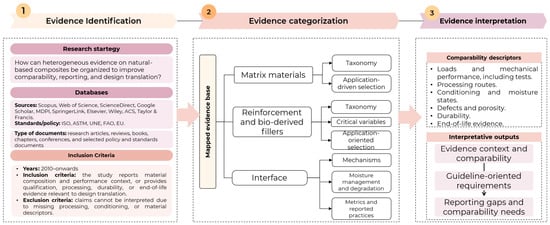
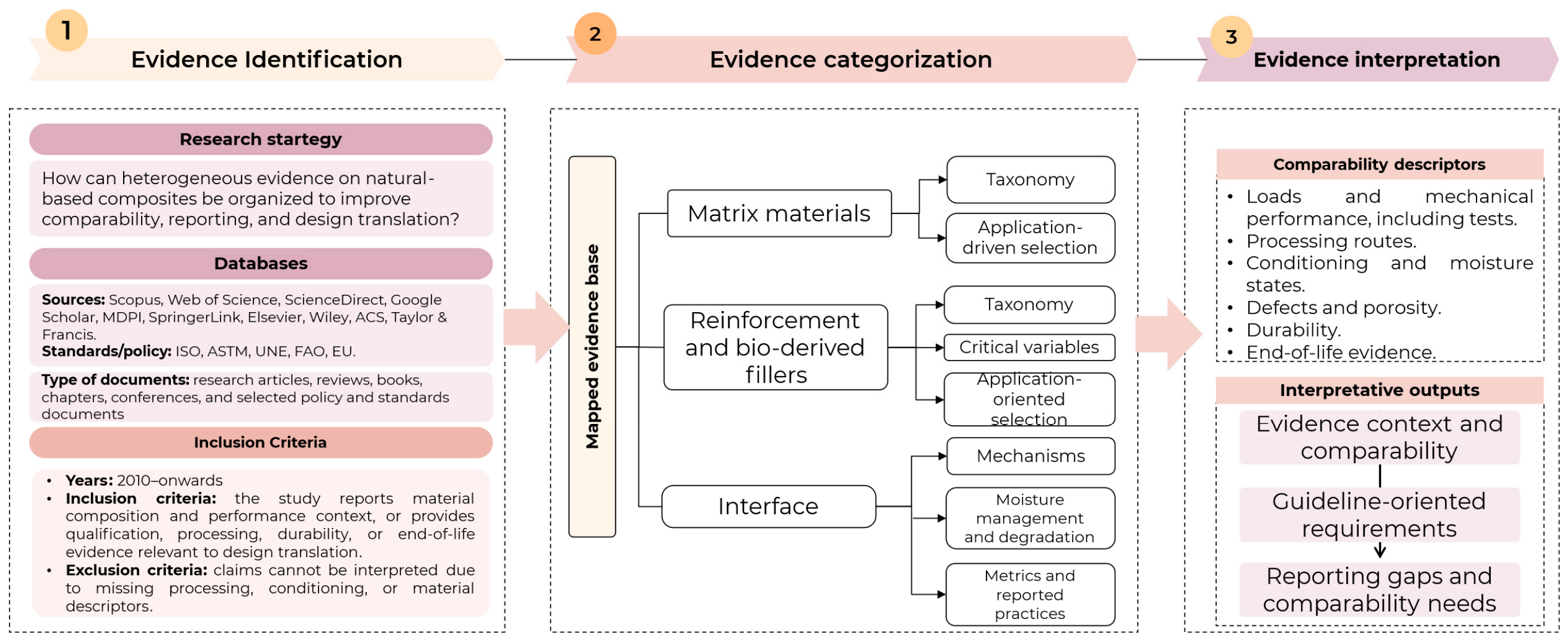
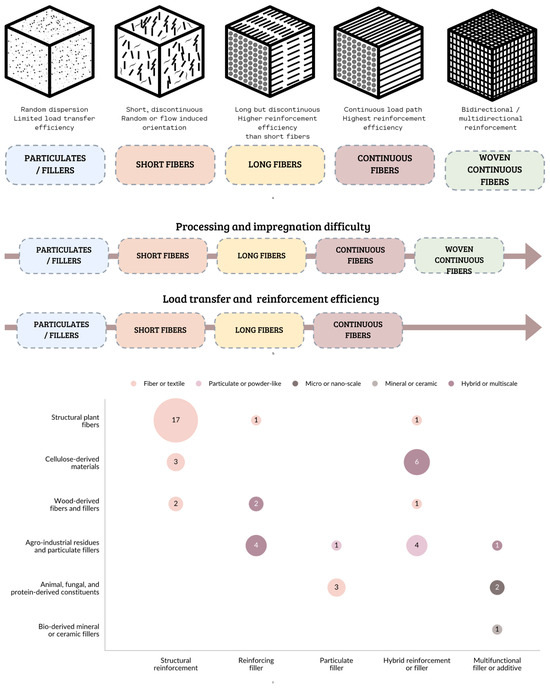
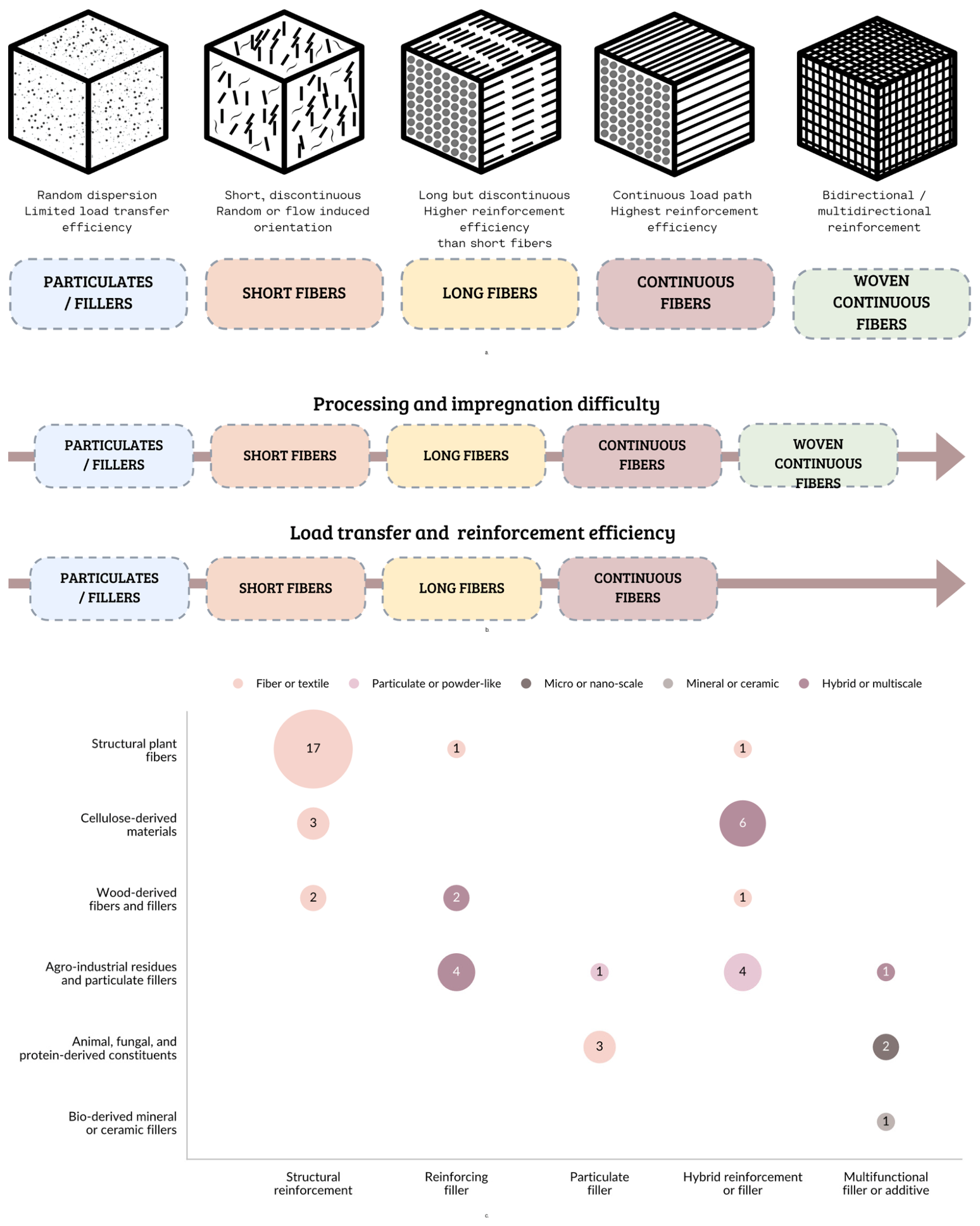
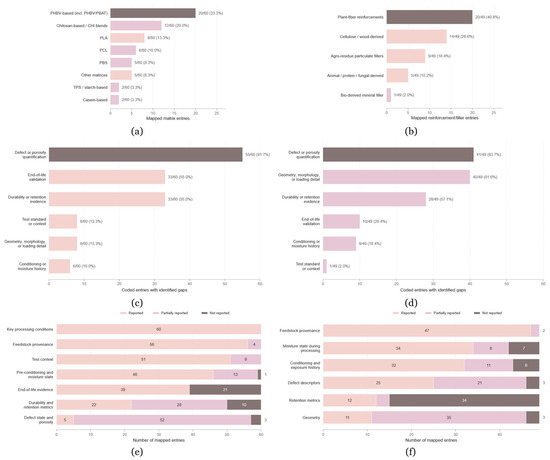
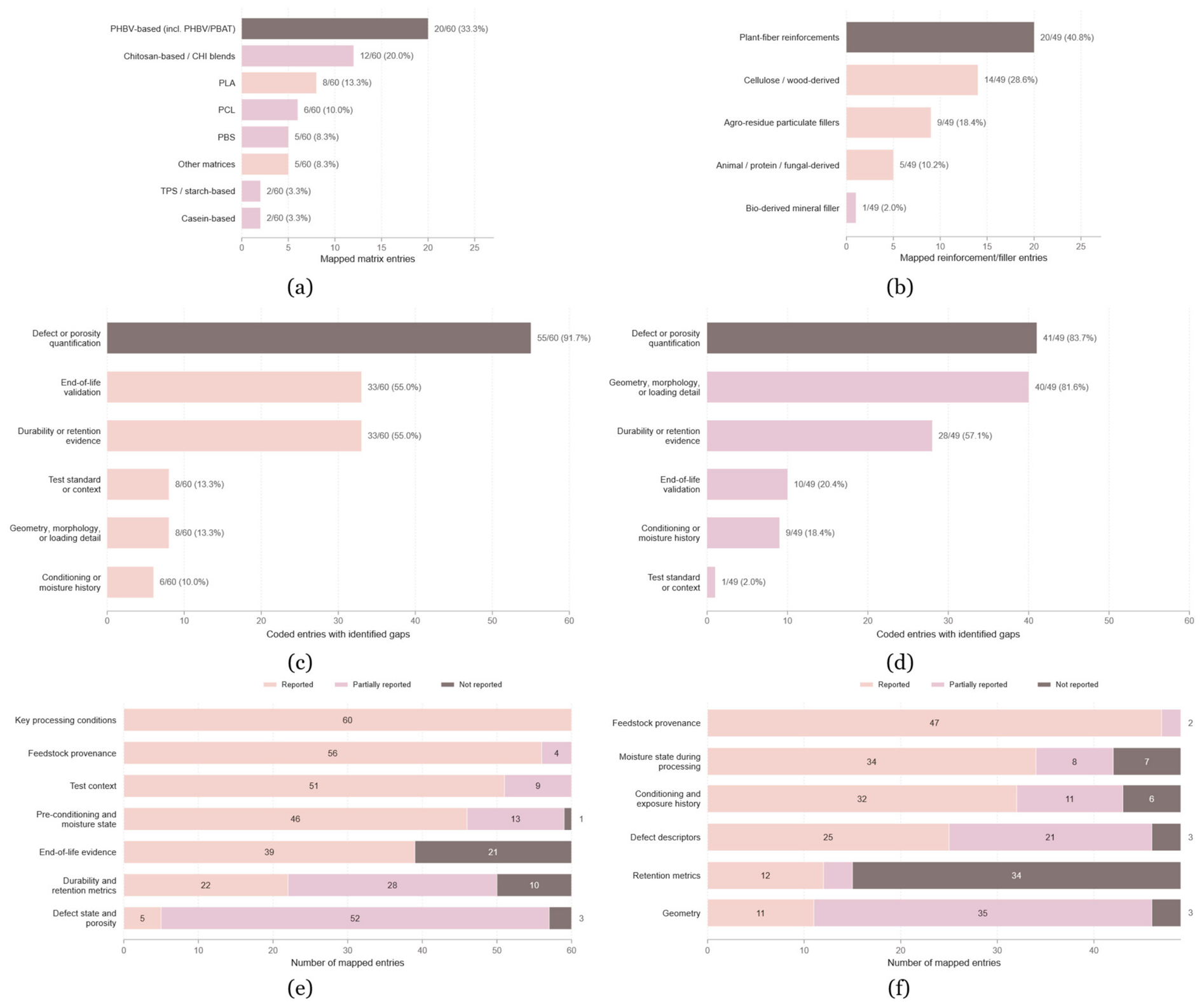
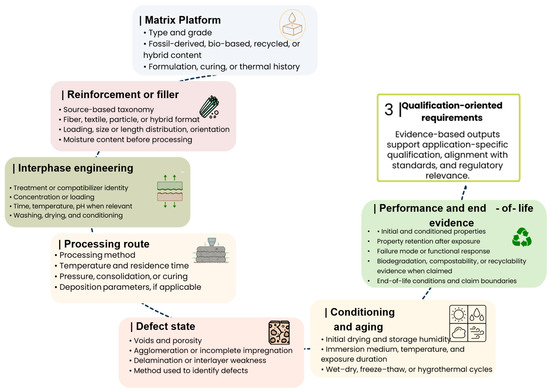
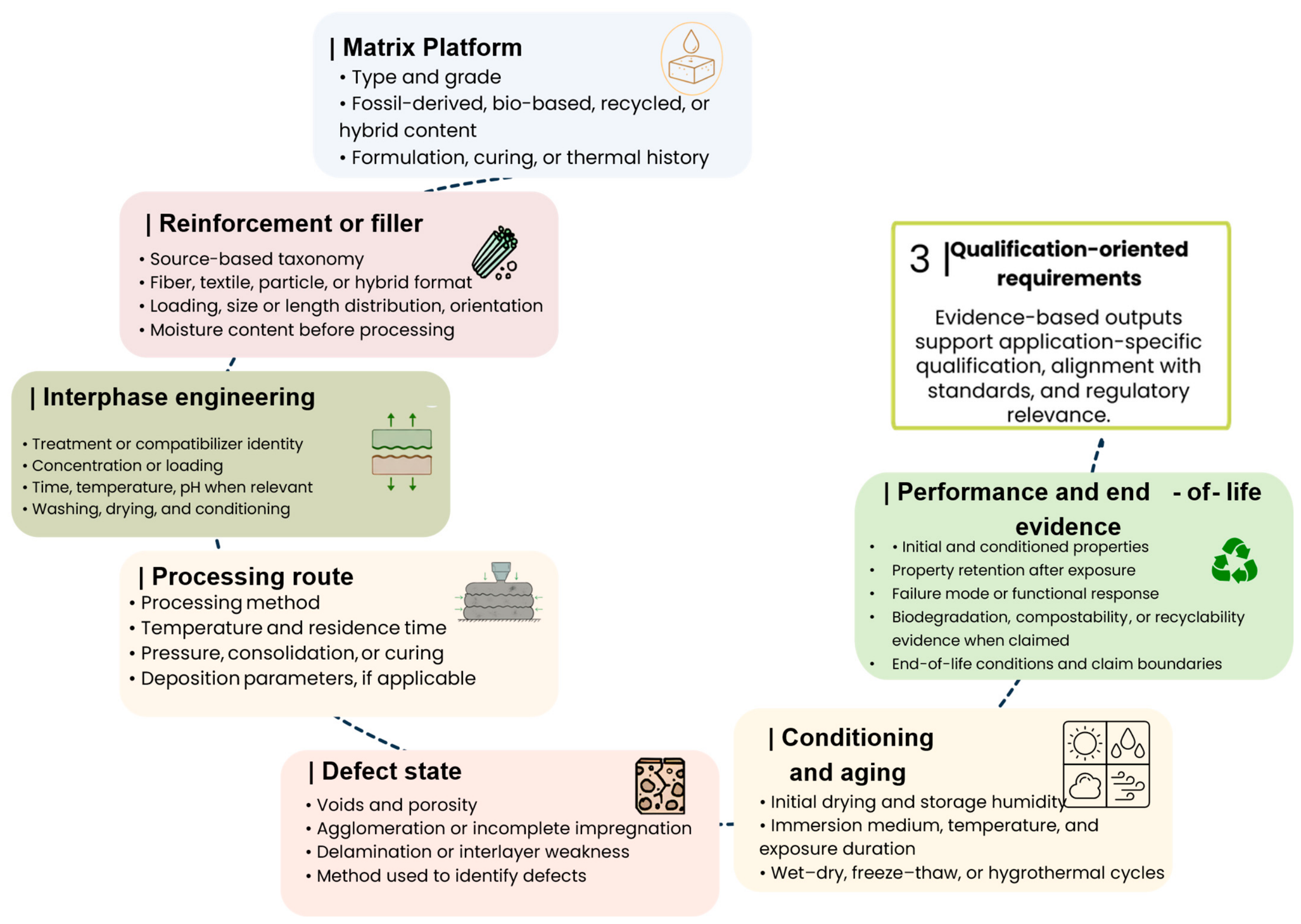
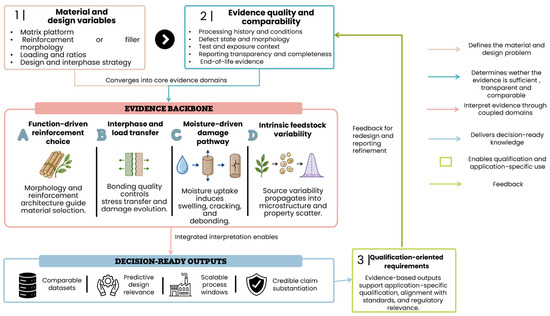
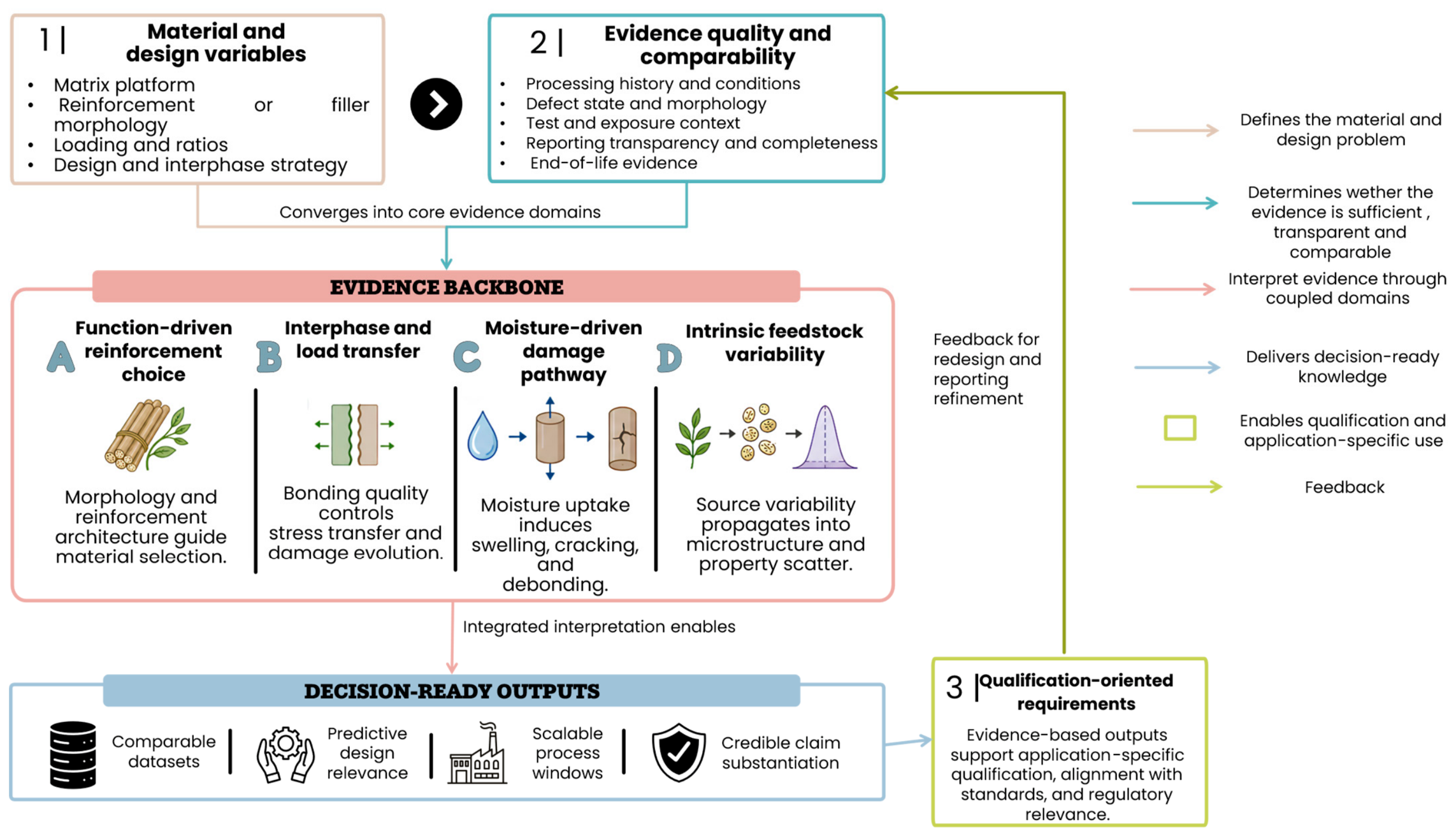

Disclaimer/Publisher’s Note: The statements, opinions and data contained in all publications are solely those of the individual author(s) and contributor(s) and not of MDPI and/or the editor(s). MDPI and/or the editor(s) disclaim responsibility for any injury to people or property resulting from any ideas, methods, instructions or products referred to in the content. |
© 2026 by the authors. Licensee MDPI, Basel, Switzerland. This article is an open access article distributed under the terms and conditions of the Creative Commons Attribution (CC BY) license.