


Abstract
This study investigated the comparative effects of various maleic anhydride-grafted polymeric compatibilizers such as polyethylene-graft-maleic anhydride, polypropylene-graft-maleic anhydride, polyethylene(alt)-graft-maleic anhydride and poly(styrene-ethylene/butylene-styrene)-graft-maleic anhydride on the final properties of polypropylene (PP) carbon nanotube (CNT) composites. Polypropylene nanocomposites (PP-CNT) were prepared by melt mixing using a laboratory scale twin-screw extruder. The mechanical test results showed that the incorporation of CNTs along with various compatibilizers increased the tensile strength (10.3%) and tensile modulus (24.2%). The tensile modulus and yield stress of the PP-CNT nanocomposites were significantly higher than those of the pristine PP. Differential Scanning Calorimetry (DSC) analysis revealed that the addition of CNTs slightly increased the melting temperature of the crystallization peaks. In the compatibilized PP-CNT composites, the CNTs were well dispersed to enhance the onset of degradation and maximum decomposition temperatures. The frequency-dependent rheological behaviors of PP-CNT nanocomposites indicated that the storage modulus (G′), loss modulus (G″), and complex viscosity (η*) PP increased for the compatibilized system. The XRD results indicated that the addition of CNTs and compatibilizers slightly affected the crystalline nature of PP. Scanning electron microscopic images of the fractured surfaces presented in the micrographs showed the brittle nature of the surface morphology of PP-CNT nanocomposites.
1. Introduction
Polypropylene (PP) is a partially crystalline polyolefin, made from the polymerization of propylene monomers, and is one of the most widely used thermoplastics for various engineering applications such as automobiles, biomedical, energy, flexible electronics and packaging [1,2,3,4]. However, PP usually exhibits low heat resistance, high flammability, and limited mechanical properties. To improve similar properties, several material modification approaches have been implemented by incorporating nanostructures, such as carbon nanotubes (CNTs) [5,6,7,8,9], graphene nanoplatelets (GnPs) [10,11,12,13] and carbon nanofibers (CNFs) [14,15,16,17]. The development of CNT-based composites has gained significant attention due to their superior heat resistance, electrical, thermal and mechanical performances combined with low flammability. These high-performance nanomaterial are increasingly recognized as essential components in polymer composites for future materials for engineering applications. Evidently, the high-aspect-ratio CNT has excellent thermal, mechanical, and electrical properties, which demonstrate its potential ability to considerably change the overall physical properties of the polymer matrix. The capability of CNTs to form a conductive network structure in a polymer matrix usually increases the electrical conductivity and energy storage density compared to conventional fillers [18]. Various studies on polymer nanocomposites have led to the design and development of polypropylene CNT nanocomposites with excellent properties. Bao et al. [19] reported polypropylene/carbon nanotube composites with improved mechanical properties at 1 wt%. The higher CNT loading resulted in a decrease in the mechanical properties. In another report, Gao et al. [20] prepared polypropylene/carbon nanotube composites by combining solution mixing and melt compounding. Mechanical properties such as tensile strength increased for PP-3 wt%CNT because of the3 fracturing of the CNTs in the PP matrix. In a similar study, Esawi and Salem [21] reported that polypropylene/carbon nanotube composites processed by solvent mixing followed by melt compounding are more efficient in the dispersion of CNTs in the PP matrix. Alkyl chain-grafted multi-walled carbon nanotubes (MWNTs) reinforcement in PP, along with dynamic packing injection molding, also achieved excellent tensile properties [22].
The fabrication of polypropylene/carbon nanotube nanocomposites addresses the incompatibility challenges due to the aggregation of CNTs in the PP matrix. Therefore, compatibilizers are often considered essential components in different immiscible thermoplastic blends and composites to enhance their processing and targeted properties. Compatibilizing materials are usually chemicals that stimulate compatibility between incompatible materials, resulting in materials with reduced interfacial stress. Several approaches have been proposed to increase the interfacial adhesion between the reinforcement filler and the polymer matrix. The most well-known and cost-effective method is the grafting of maleic anhydride (MA) to the matrix as a compatibilizer. Maleic anhydride group-containing polymer may induce strong interactions with the functional groups of the reinforcing fillers, resulting in good dispersion and compatibility between the two components. The functional modification of non-polar polymer using maleic anhydride can also impart polarity, which creates a better adhesion between the nanofiller containing polar functionalities and the polymer. Many studies have proposed the use of MA-grafted to thermoplastics, such as polyethylene (PE) and PP, to improve the interfacial adhesion between the matrix and reinforcing fillers [23,24]. It was observed that the presence of the compatibilizer agent induced stronger interfacial tension and improved the properties. The good interfacial bonding between the polymer and nanofillers with the MA-grafted polymer supports the surface energy reduction of the CNTs, creating chemical compatibility with the polymer matrix. MA also improves the thermal, mechanical, and dielectric properties of polymer composite materials [25,26,27]. Zhou et al. [28] fabricated polypropylene/carbon nanotube composites using MA-grafted styrene-ethylene/butylene-styrene copolymer as a compatibilizer and the resultant composite materials exhibited improved thermal and mechanical properties. The use of such a compatibilizer can lead to the CNT network in the PP matrix. Similarly, Szentes and Varga fabricated polypropylene/carbon nanotube composites using olefin-g-MA copolymer and olefin-g-MA-ester-amide as compatibilizer to aid the dispersion of CNTs in the PP matrix [29]. In addition, Hemmati et al. fabricated PP-SWCNT composites via a melt compounding method using PP-g-MA as a compatibilizer and CNTs [30]. The results showed a good dispersion state of the SWCNTs in the PP matrix with better mechanical properties than the composites without compatibilizer. Several studies have indicated that the mechanical properties usually decrease as the CNT content increases, and this deterioration effect could be due to an increase in CNT agglomeration in the matrix with increasing CNT content [31,32].
CNTs are preferred for enhancing the mechanical, thermal, and electrical properties of polymers because of their higher aspect ratio compared to other conventional fillers. This study compares the overall properties of PP-CNT polymer nanocomposites composed of various maleic anhydride-functionalized polymers. Melt extrusion using a micro-twin extruder and injection molding processing route were used to prepare five different composites. The mechanical, thermal, and rheological properties of the composites were also investigated. These properties were compared with those obtained from the control PP and PP-CNT nanocomposites prepared by melt processing of pristine CNT with PP. It has been shown that significant property improvements can be obtained at a relatively low CNT concentration of 1 wt% by tailoring the interphase between the carbon nanotubes and the polymer matrix. In this study we explored the comparative effect of various compatiblizers on the mechanical, thermal, rheological and morphological properties of PP-CNT nanocomposites, where the compatibilizers improve the adhesion between the CNTs and PP. The obtained results are expected to produce more insight into the effectiveness of various polymeric compatibilizers in polymer nanocomposites, particularly thermoplastics. Although many studies have been conducted in the area of PP-CNT nanocomposites with functionalized compatibilizers, there is a significant gap in the literature in terms of investigating the comparative performance of various compatibilizers in a single system. In this study, the final properties such as mechanical, thermal, and rheological properties of the neat PP and PP nanocomposites were systematically investigated.
2. Experimental
2.1. Materials and Sample Preparation
PP (HF-09) with a melt index (I2.16) 0.4 g/10 min from Petrochemical Industries Company (PIC) of Kuwait (Safat, Kuwait) was used in this study and exhibited easy processability, excellent thermal stability, good film clarity and gloss, and high purity. PP is commonly used for packaging food products, industrial chemicals, bottle labels and pressure-sensitive tapes. Commercially available multi-wall CNTs (>90% carbon basis, D × L 110–170 nm × 5–9 µm) were obtained from Aldrich Co., (London, UK). Compatibilizing agents such as polyethylene-graft-maleic anhydride, (PEgMA), polypropylene-graft-maleic anhydride (PPgMA), polyethylene(alt)-graft-maleic anhydride (PE(alt)gMA) and polystyrene-block-poly(ethylene-ran-butylene)-block-polystyrene-graft-maleic anhydride (SEBSgMA) were supplied by Aldrich Co. Prior to melt mixing, carbon nanotube (CNT) powder and PP pellets with and without dispersion agents were manually mixed in a container to confirm the uniform distribution. The resulting mixtures containing various formulations as outlined in Table 1. The pre-compounded samples were further melt-mixed at 180–200 °C using a lab bench co-rotating twin-screw extruder (Thermo Scientific™ Process 11 Parallel Twin-Screw Extruder, Karlsruhe, Germany) with a rotating speed of 100 rpm and a feeder speed of 20 rpm. Standard Test samples such as micro dumbbells (ASTM D638 Type V) and un-notched Charpy specimen (ISO 179, Type 1A; 80 mm × 10 mm × 4 mm) and discs for rheology (25 mm × 1.5 mm) were prepared by a benchtop injection molding system (Thermo Scientific™ HAAKE™ MiniJet, Karlsruhe, Germany). The injection molding parameters include a cylinder temperature of 200 °C, an injection pressure of 400 bar, a mold temperature of 80 °C, and a post-pressure holding time of 4 s.
Table 1.
Description of PP-CNT composite materials and their formulation.
2.2. Characterization
The mechanical properties, including tensile strength, % elongation at break, and tensile modulus, were evaluated (ASTM D638) using a universal testing machine (Instron 5984, Instron, Norwood, MA, USA) at room temperature, with a fixed strain rate of 50 mm/min. For each batch, five tensile specimens were tested, and the average values were reported. The Charpy impact strength of the specimens was measured using Instron Ceast 9050, Instron, Norwood, MA, USA; five specimens were tested under room temperature, and the average value is given. The differential scanning calorimetric (DSC) profile of PP and its nanocomposites was evaluated using a Shimadzu DSC-60A Plus (Kyoto, Japan) instrument with a heating rate of 10 °C /min starting from 30 to 220 °C, and the DSC parameters were collected during the second heating and cooling cycle. The estimation of the degree of crystallinity can be used to identify the crystalline nature of semi-crystalline polymers, and the calculation is shown below. The degree of crystallinity () parameter of the prepared composites was calculated from the enthalpy of melting (ΔHm) for each sample using Equation (1).
where ΔHm100 is the melting enthalpy for 100% crystalline PP and f is the weight fraction of the polymer phase. Thermogravimetric analysis (TGA) was used to assess the thermal stability of the samples, and the degradation analysis was performed using TA Discovery, New Castle, DE, USA heated from 40 °C to 700 °C, in both nitrogen and air atmosphere, at a heating rate of 10 °C/min. Rheological analysis of the PP-CNT composites was performed using a TA DHR-3 hybrid oscillatory rheometer. The rheological measurements were carried out under a preheated parallel plate (200 °C) with a geometric gap of 1 mm. The frequency sweep tests were conducted over a frequency range of 0.1 up to 400 Hz with five data points per decade. The size of crystallites in PP and PP-CNT composites were analyzed using an X-ray diffractometer (PANalytical Empyrean, Malvern, Almelo, The Netherlands), equipped with a CuKα radiation source (λ = 0.154 nm), operating at 40 kV. Scans were performed over a 2θ range of 10° to 40° with a rate of 3°/min. For morphological analysis, the tensile fractured surfaces of the test specimens were examined using scanning electron microscopy (SEM, JEOL Model 6300, JEOL, Tokyo, Japan) equipped with secondary electron detector (SEI) at 10 kV. Prior to the SEM imaging, the samples were sputter-coated with a thin layer of gold for 120 s using a sputter-coating machine.
3. Results and Discussion
3.1. Mechanical Properties
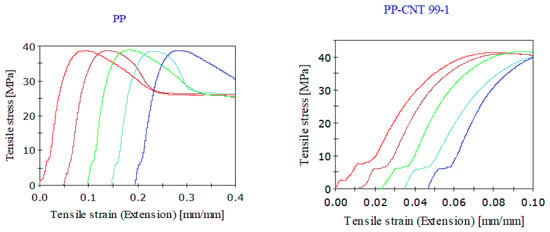
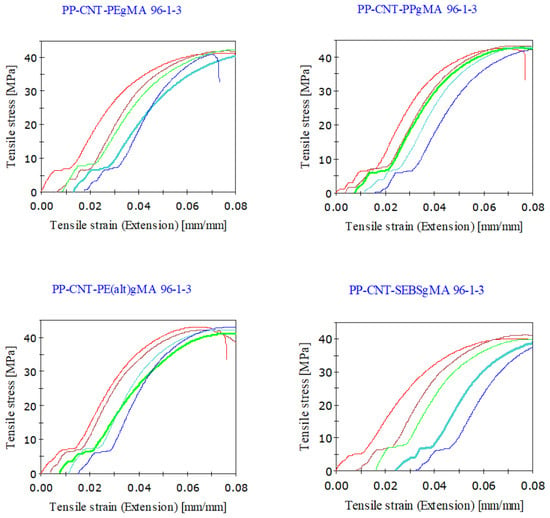
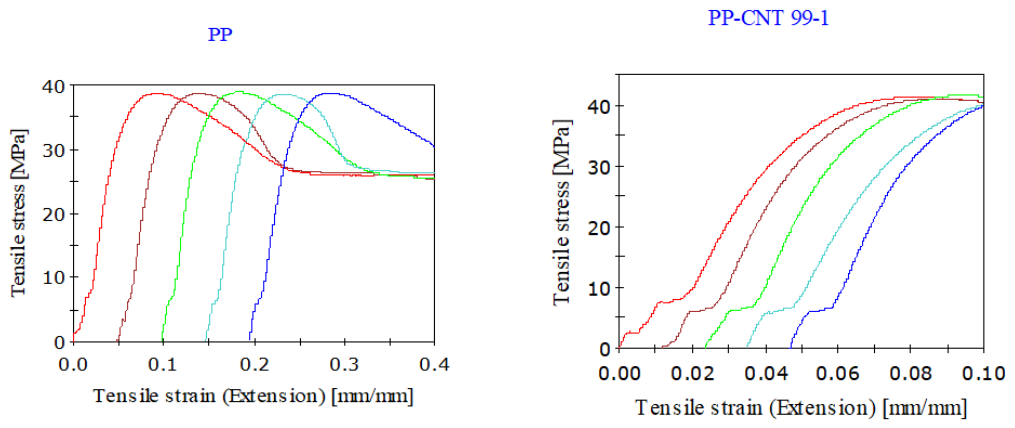
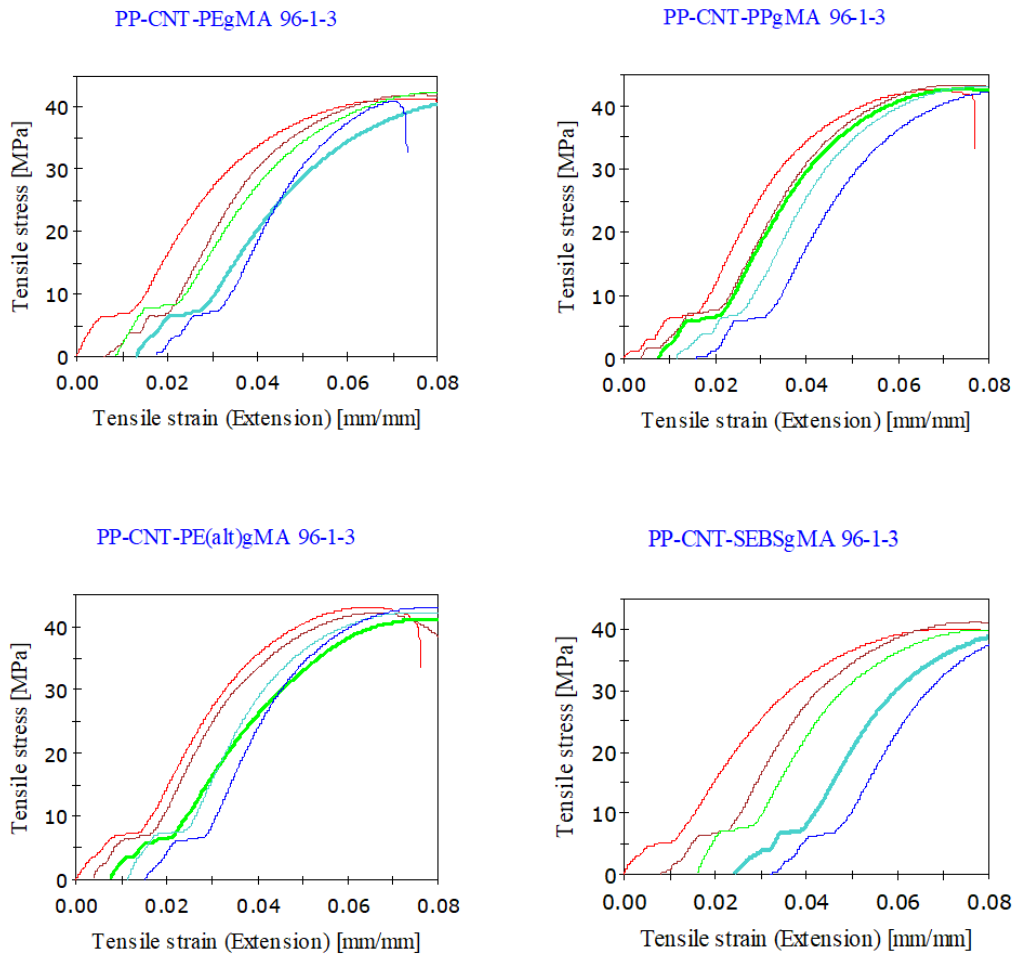
The mechanical properties of the pristine PP and CNT nanocomposites containing various compatibilizers were assessed by tensile testing, and the calculated parameters are listed in Table 2. The stress/strain curves of PP and its composites are shown in Figure 1. As expected, all the prepared polymer nanocomposites exhibited good mechanical properties compared with the pristine polymer. Owing to the remarkably high elastic modulus and tensile strength of CNTs, the reinforcements in PP could significantly enhance the mechanical properties of the resulting polymer/carbon nanotube composites, and these performances are controlled by the matrix–nanofiller interactions through efficient interfacial adhesion [32,33]. Many studies on PP-CNT composites have clearly reported remarkable enhancement in mechanical properties compared to the pristine PP due to the incredible mechanical parameters of CNTs as well as their significant load-bearing capacity [34]. The tensile results of this study demonstrated that the PP matrix containing only 1 wt% CNT reinforces the composite without any compatibilizer due to the good reinforcement and efficient load transfer capability. Compared to the strength of the PP matrix, the tensile strength of the PP-CNT nanocomposite formulation was 6.55% higher due to the improved stress transfer from the PP matrix to the reinforced CNTs. The good distribution of such nanotubes can greatly influence their strengthening capabilities and hence hinder mechanical failure. The tensile modulus value of the PP-CNT nanocomposite sample also increased owing to the intrinsic tensile properties of CNTs. Similarly, good improvement in tensile strength was observed in all compatibilized PP-CNT nanocomposite systems. The progressive improvement in the tensile strength and Young’s modulus, owing to the presence of compatibilizers, reinforces the CNTs. The compatibility between a compatibilizer containing MA structure and a PP matrix is greatly dependent on the similarity–solubility principle, where the backbone of the compatibilizer must be structurally alike or of a chemical nature similar to the PP matrix to enhance physical integration and interfacial migration [35]. On the other hand, the decrease in elongation in the CNT-filled PP composite was related to the irresistible filler–polymer interaction. The efficient dispersion of CNTs was also revealed to be significant in reinforced thermoplastics, where the tensile strength increased by introducing interface adhesion. The presence of CNTs affected the mobility of the PP chains, making the composites ductile in nature. Although the decrease in elongation can be an outcome of the formation of network structures by the CNTs in the PP matrix, in addition to the large difference in tensile modulus of the PP matrix [34].
Table 2.
Mechanical properties of PP-CNT nanocomposites.
Figure 1.
Stress–strain curves of various PP-CNT nanocomposites (Five tensile specimens were marked in five distinct colors).
The effect of various compatibilizers in the PP-CNT nanocomposite was further verified by Charpy impact strength (un-notched). As shown in Table 2, the PP-CNT nanocomposite sample exhibited improvement in the impact strength. It was clearly observed that enhancement of impact property was more effective in the compatibilized system. The strength of the interface between the PP matrix and the CNT filler along with compatibilizers improves the impact strength. As shown in Table 2, the composites containing PpgMA and PE(alt)gMA compatibilizers performed well compared to the other nanocomposite formulations. The efficient dispersion of the CNTs was also responsible for the significant improvement in the impact properties of reinforced PP, along with strong interface adhesion [10]. CNT filler dispersion efficiency further reduced the impact of damage in the PP-CNT nanocomposites. The improved impact strength results further support a well-balanced PP-CNT interaction through the MA-grafted compatibilizer system. The observed improvement in impact strength associates with a reduction in stiffness, attributed to superior interfacial bonding between the PP matrix and the CNT filler. Compatibilizers with similar chemical features of polyolefin backbone showed better miscibility that allows it to diffuse easily within the PP matrix to form strong entanglements. Furthermore, such compatibilization between polymers was supported by a dual mechanism of combining non-polar interaction with the PP matrix and polar chemical bonding to the dispersed phase of CNTs [36]. This dual mechanism guarantees that the MA-grafted compatibilizer acts as a bridging agent, increasing the interfacial adhesion between CNTs and the PP matrix. The CNT dispersion along with strong adhesion in the PP matrix leads to enhanced impact strength.
3.2. Thermal Properties
The key challenge in the design of polymer nanocomposites is monitoring the distribution of nano particles and other additives for dispersion in the polymer matrix.
3.2.1. Differential Scanning Calorimetry (DSC)
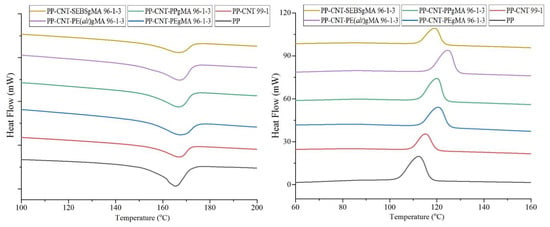
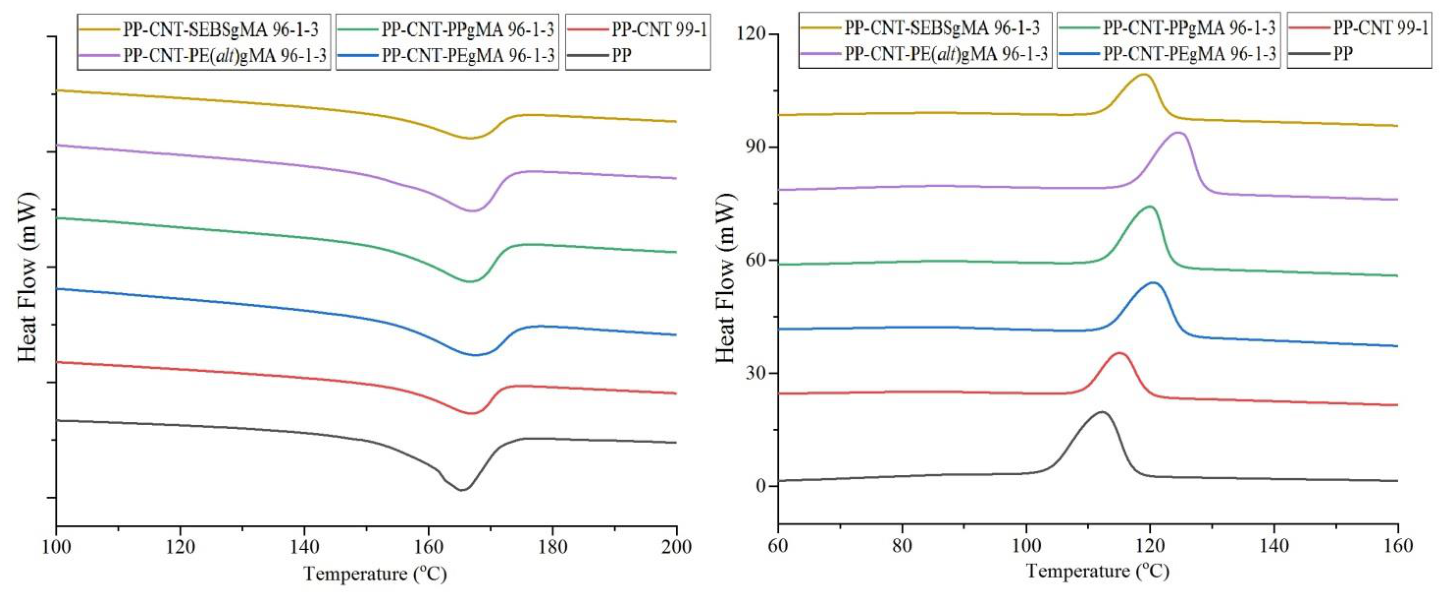
The influence of various compatibilizers on the melting and crystallization behaviors of PP-CNT was investigated using DSC. The heating and cooling curves clearly show the crystalline nature of all prepared PP-CNT formulations (Figure 2), and the calculated DSC parameters are summarized in Table 3. The tabulated parameters show that the melting temperature (Tm) of pristine PP and its CNT composites varied within a range of 165.27–167.57 °C; and it was obvious that the melting temperature (Tm) slightly increased upon CNT loading. As a third component, maleic anhydride-grafted polymers act as compatibilizers in PP-CNT systems with similar melting behavior. The formulation PP-CNT-PE(alt)gMA 96-1-3 has the highest melting point, which features the lowest number of defects and suggests the enhancement of interfacial interactions between PP and CNTs, further confirming their good dispersion. Compared to the enthalpy of melting for 100% fully crystalline PP of 209 J/g [37], the melting enthalpy decreased to 78.85 J/g. Depending on the filler content, a balance between nucleation and polymer chain confinement occurs, which is further influenced by the specific features of the filler. The addition of various maleic anhydride-grafted polymeric compatibilizers insignificantly affects the crystallization behavior, which can be ascribed to the good distribution and network formation of CNT nanofillers owing to their high aspect ratio and specific surface area [38]. The crystallization temperature (Tc) for all the composites showed comparable values to the pristine PP, and this effect can be further described by the good dispersion of CNT nanofillers in the PP matrix through the filler–matrix interactions. The crystallinity of neat PP (37.72%) was unchanged in the presence of fillers and compatibilizers. The Tc values of the PP-CNT samples indicated that there was no profound nucleation effect in the polymer matrix due to the nanofiller CNTs. Retention of crystallinity is attributed to the limited quantities of reinforcing fillers and thereby less aggregation and good distribution of the fillers. Usually, Tc is significantly influenced by the presence of rigid filler particles, which may act as an energy barrier for the phase transition. Overall, the thermal parameters of the prepared composites were not significantly affected by the specific quantities of the reinforcing filler.
Figure 2.
DSC heating and cooling curves.
Table 3.
DSC characteristics of PP and PP-CNT nanocomposites.
Based on the DSC data, it can be concluded that the introduction of MA-grafted polymeric compatibilizers into PP-CNT nanocomposites leads to a small shift in the PP melting temperature to the higher temperature with comparable crystallinity, indicating that the crystalline structure does not change upon the specific amount of CNTs without any aggregation in the polymer matrix.
3.2.2. Thermogravimetric Analysis (TGA)
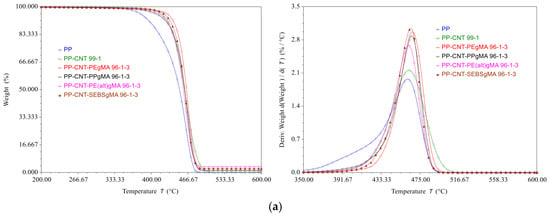
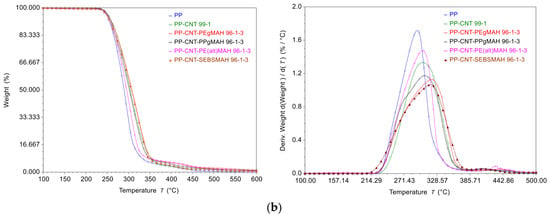
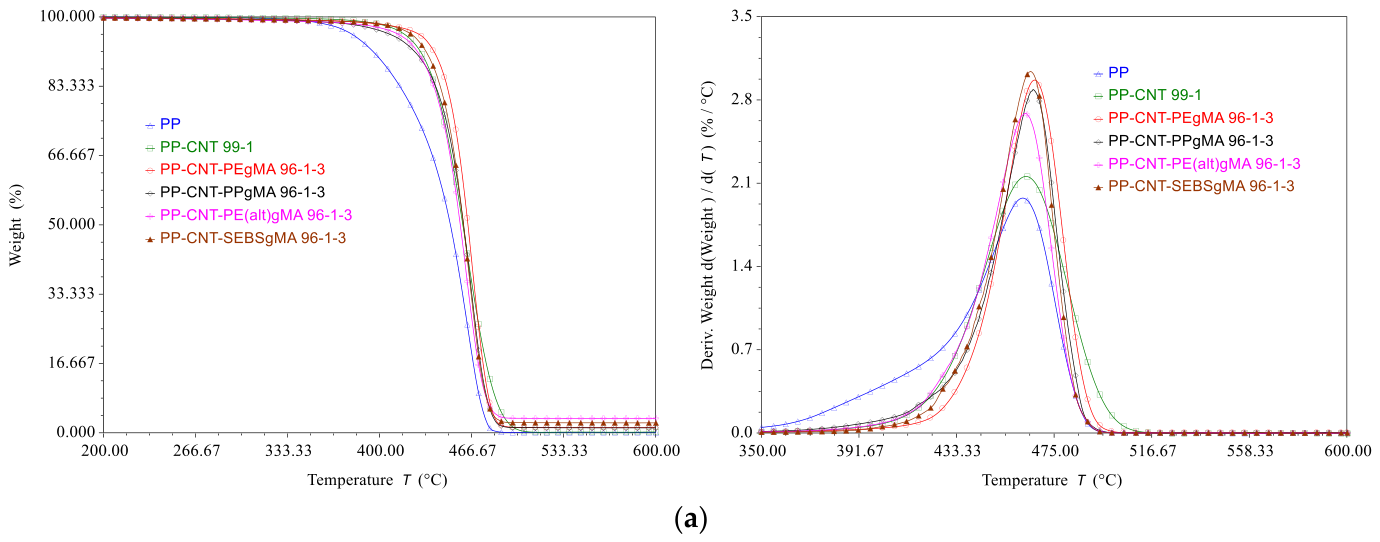
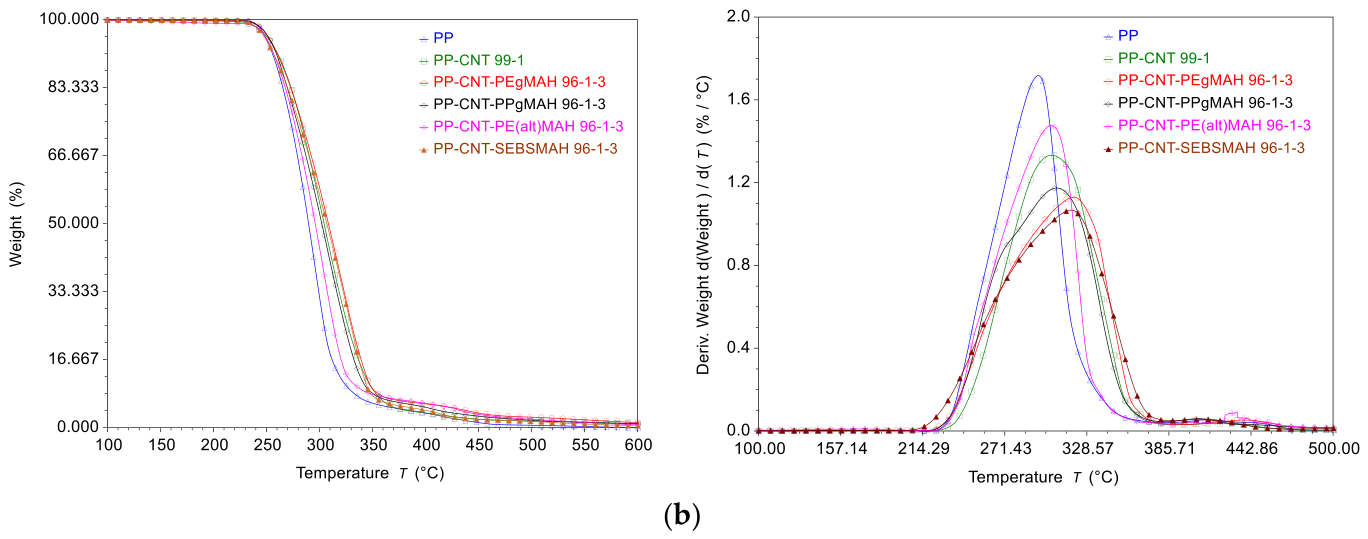
The thermogravimetric data under nitrogen and air atmospheres including the onset of degradation temperature (Td10%), maximum degradation temperature (Td50%), and amount of char residue (%) are summarized in Table 4. The representative TGA and derivative thermogravimetric (DTG) plots shown in Figure 3a,b. Under a nitrogen atmosphere, both neat PP and PP-CNT nanocomposites exhibited single-step degradation, with Td (10%) values ranging from 400 to 442 °C. The incorporation of CNTs led to an improvement in both the onset and maximum degradation temperatures of PP, indicating enhanced thermal stability. This improvement is attributed to the presence of highly ordered stacked graphene layers in the structure of multi-walled carbon nanotubes (MWCNTs), which are inherently more stable under high-temperature conditions. Previous studies have reported that MWCNTs can raise the onset oxidation temperature compared to single-layer graphitic structures, due to the increased thermal stability imparted by the stacked tubular morphology [39,40]. It was found that Td10% improved by up to 40 °C in the compatibilized PP-CNT composites. The presence of a well-mixed compatibilizer may efficiently improve the CNT–matrix bonding due to the formation of strong linkages between the maleated anhydrides and the polar functional groups of the CNT fillers. The incorporation of CNTs along with various compatibilizers led to the presence of the char residues at 700 °C. Comparing the results obtained over the thermal degradation showed a clear compatibilization effect by various maleic anhydride-grafted polymeric additives, particularly PP and PE-grafted ones. These results and interpretations are in good agreement with those obtained for the thermal and thermal oxidative decomposition of polymer CNT nanocomposites [33]. From the DTG curves, it was identified that all nanocomposites decomposed via a single decomposition step with respect to the neat PP sample under various atmospheres. Under air, PP displays a higher DTG peak, indicating a fast degradation step, while in other PP-CNT nanocomposites, a lower peak indicates a slower mass loss process. DTG peaks under air are broader than those under air (Figure 3b); this indicates that thermal decomposition occurs over a wider range of temperatures. In an air atmosphere, samples undergo pyrolysis and oxidation reactions, which act differently on the material decomposing under inert atmosphere. The onset and maximum decomposition temperatures are shifted towards higher temperatures; this effect is explained by the fine compatibilization within the matrix, which improves the thermal stability of the polymer. Generally, compatibilizers exhibit different adhesion effects between the matrix and filler. Thus, the addition of maleic anhydride may improve the interfacial adhesion between the polymer matrices. The combined thermal stability of CNT and compatibilizers and the strong interfacial interaction between the CNTs and the polymer chains could account for such remarkable improvements in thermal stability. The char residues of the nanocomposites were slightly higher than those of neat PP. The overall TGA results confirmed the synergistic effect of CNTs and compatibilizers on the thermal stability of neat PP. Thermogravimetric analysis under air also delivers information about the real thermal stability of the PP-CNT composites and provides additional proof of the compatibilization effects. Comparatively, under an air atmosphere, PP composites also showed a single-step degradation behavior, Td (10%) was in the range of 257–261 °C and all the decomposition products were released as volatile species with notable stable residues for the CNT-filled composite. The PP-CNT nanocomposites also followed the same stability trend in air. All the composite formulations showed a lower decomposition temperature compared to the results obtained under a nitrogen atmosphere, which is probably due to oxidative degradation with a small amount of char residues at 700 °C.
Table 4.
TGA data of PP and PP-CNT nanocomposites.
Figure 3.
(a) TGA and DTG curves @ N2 atmosphere. (b) TGA and DTG curves @ air atmosphere.
3.3. Rheological Properties
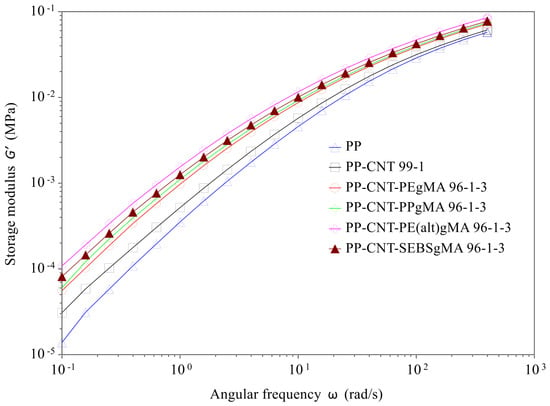
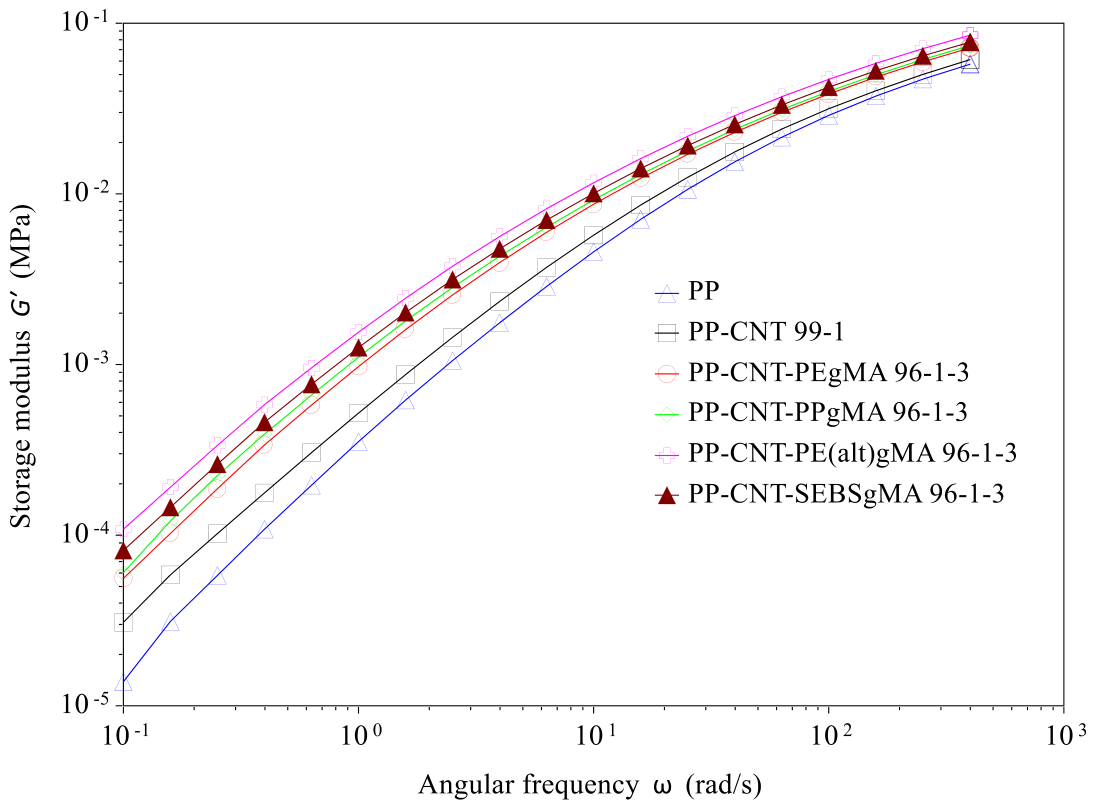
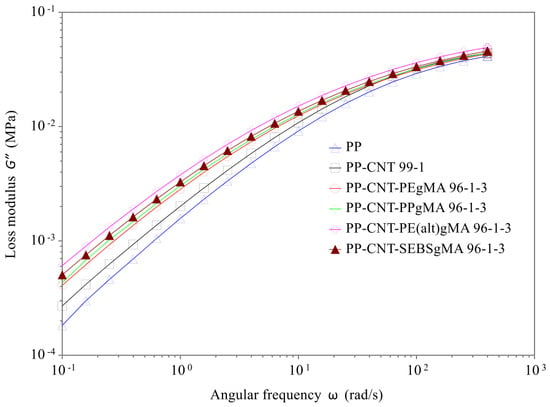
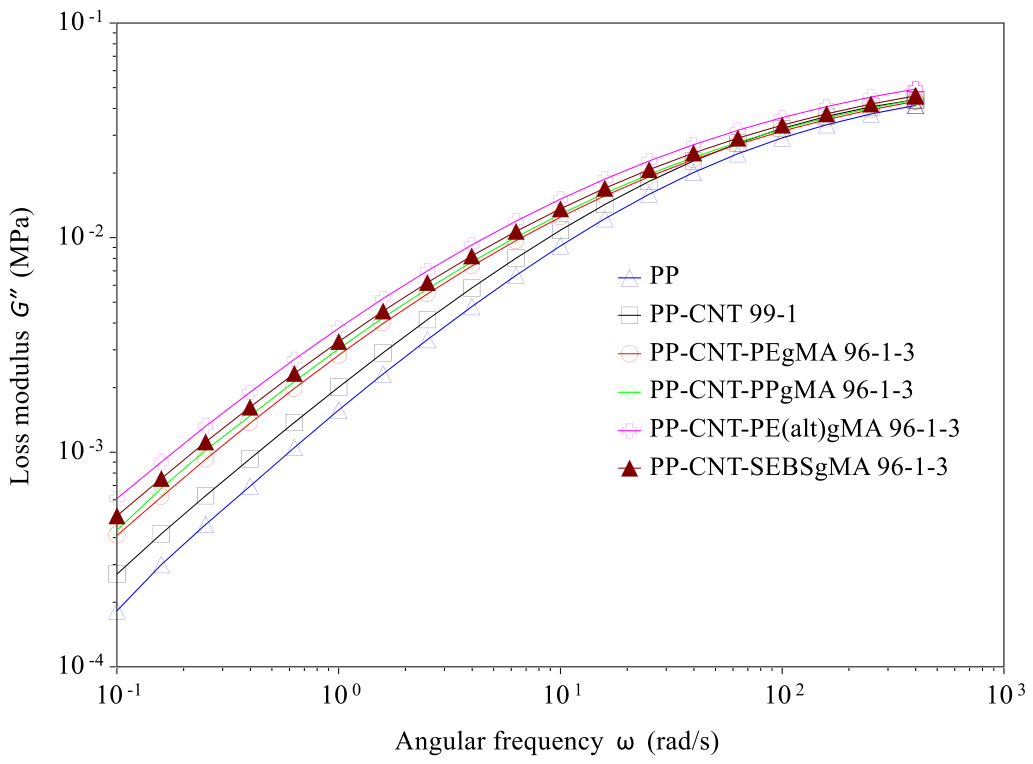
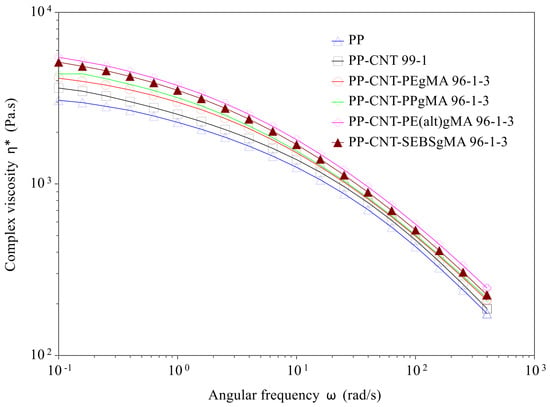
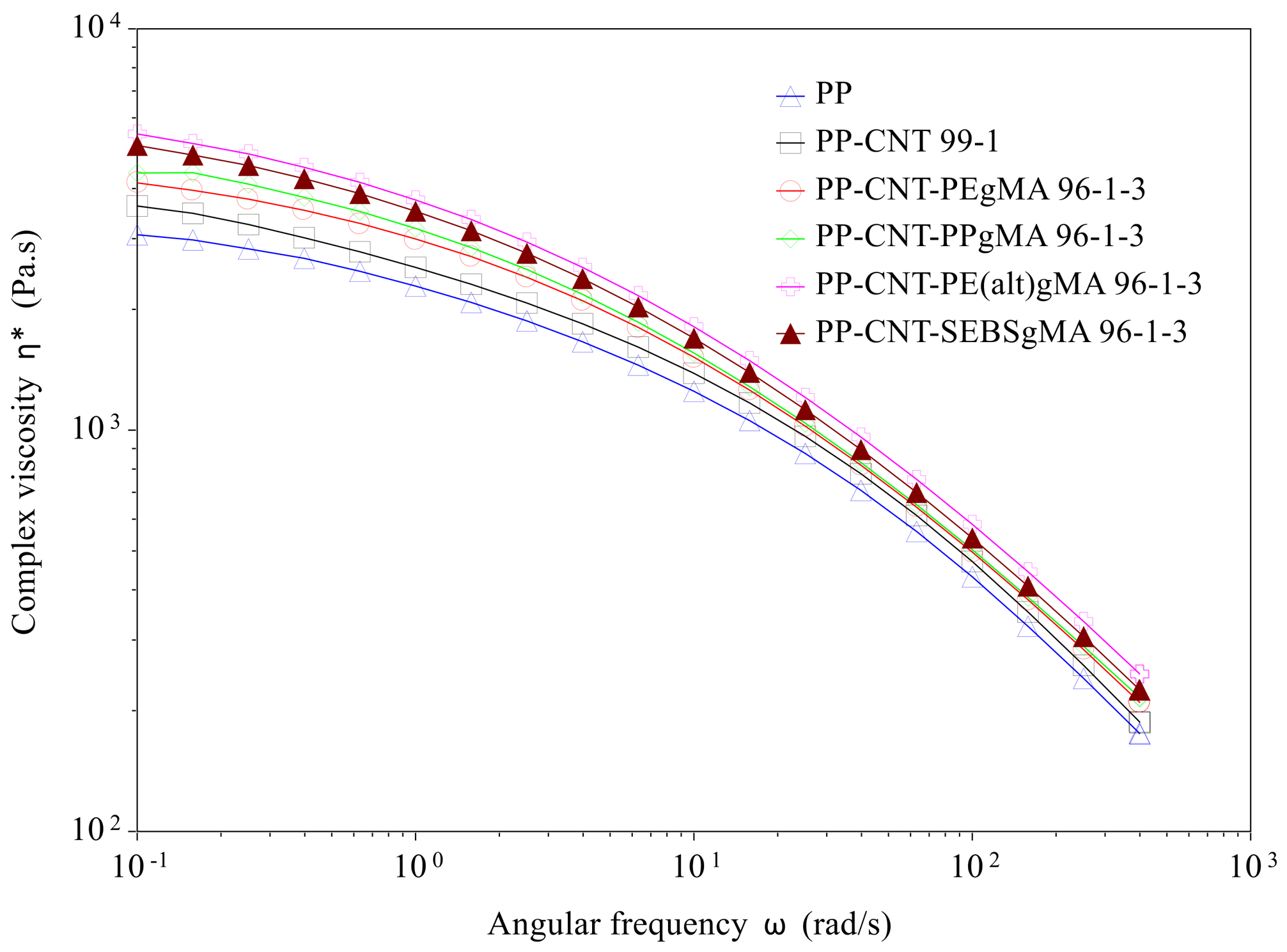
The measurement of rheological properties plays an extremely important role in assessing the structural changes in polymer composites as well as their behavior during processing. The rheological properties of the melt in this study describe the flow behavior of PP reinforced with CNTs during melt processing. The sweep angular frequency dependences of the storage modulus (G′), loss modulus (G𠌲) and complex viscosity (η*) are plotted in Figure 4, Figure 5 and Figure 6. It was observed that both storage modulus (G′) and loss modulus (G″) increased marginally with respect to the pristine PP with the addition of CNTs. This is ascribed to the filler–polymer interaction that leads to the formation of a composite structure containing networks [33]. The addition of various maleic anhydride compatibilizers further improved the rheological properties. The good dispersion ability of the CNTs was responsible for this improvement. It was also observed that the pristine PP and its compatibilized PP-CNT nanocomposite showed viscous behavior at low angular frequencies and an elastic behavior at high angular frequencies. The crossover frequency values showed a similar viscous behavior of all the compatibilized PP-CNT composites. Moreover, the high aspect ratio features of CNTs facilitated the improved physical and chemical interactions with the polymer structures through the polymeric compatibilizers. Such functionalized polymeric compatibilization can be used as a better interfacial binding agent between CNTs and the PP matrix. It is clear that a better CNT distribution could enhance both the modulus and complex viscosity. The variations in melt complex viscosity at different angular frequencies are listed in Table 5. The tubular nature of CNTs generates networks that mechanically limit the polymer chain movement and hence interrupt the melt flow. Additionally, the strong polymer–CNT interactions further induced resistance to deformation and increased the overall viscosity of the reinforced polymer system [41]. The complex viscosity in the high-frequency region decreased and followed closely with the neat PP and its individual composites, which is attributed to the good dispersion of the nanofillers. The frequency curves show typical pseudoplastic behavior for neat PP and its nanocomposites. In this pseudoplastic behavior, the molten polymer layers sheared away, resulting in reduced viscosity. The decline in polymer viscosity at high frequencies is an additional benefit of polymer composite processing. Moreover, all materials exhibited non-Newtonian behavior at low frequencies, comprising a pseudo-solid network-like behavior. The crossover frequency and modulus values exhibited different viscous behaviors for the reinforced composites. Generally, the presence of reinforcing fillers in a polymer matrix induces a shift in the molecular chain mobility to exhibit pronounced elastic properties as well as a delayed relaxation time compared to the virgin polymer. This is attributed to the increase in the polymer chain–nanofiller interactions, thereby restricting chain mobility [42].
Figure 4.
Variation in storage modulus as a function of the angular frequency of PP and PP-CNT composites @ 200 °C.
Figure 5.
Variation in loss modulus as a function of the angular frequency of PP and PP-CNT composites @ 200 °C.
Figure 6.
Variation in complex viscosity as a function of the angular frequency of PP and PP-CNT composites @ 200 °C.
Table 5.
Rheological parameters of PP and its nanocomposites at 200 °C.
3.4. X-Ray Diffraction
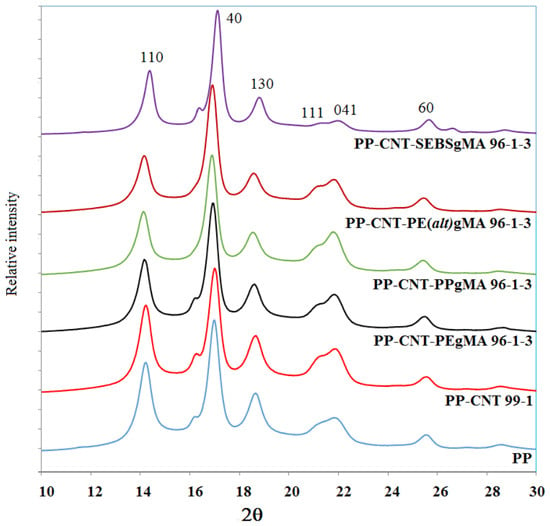
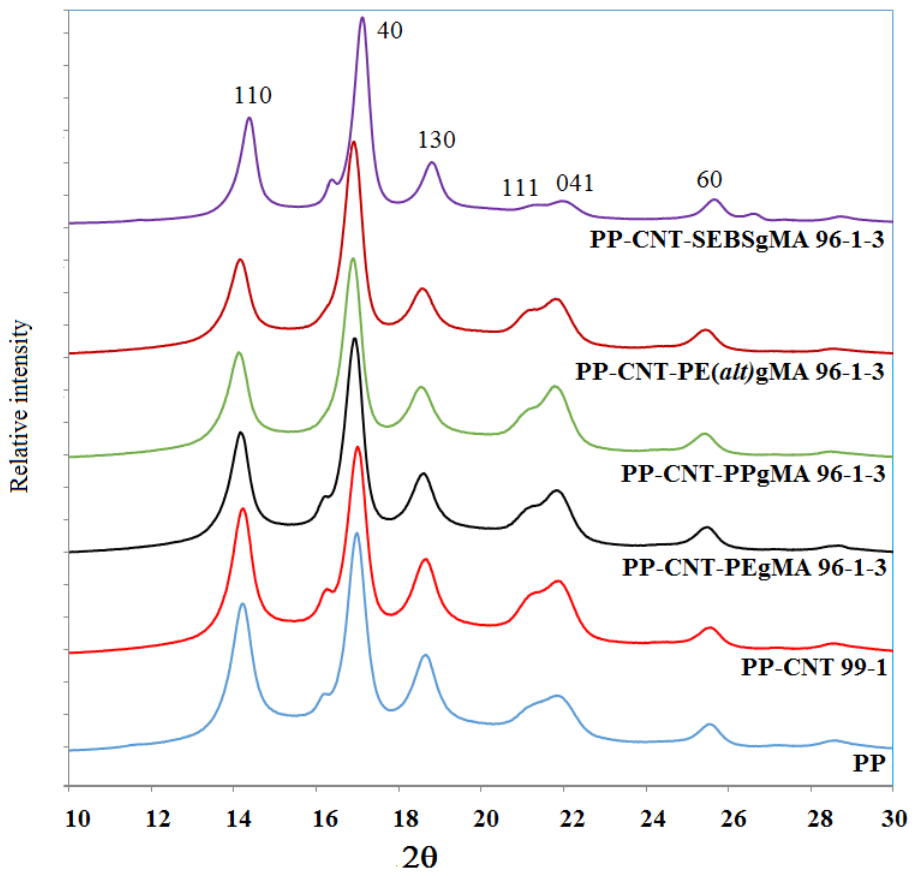
X-ray diffraction patterns of pristine PP and the various PP-CNT composites in the 2θ range of 10–30° are shown in Figure 7. The different crystal forms (i.e., α, β, and γ) depend on the crystallization conditions or the crystallization forms induced by the additions of specific fillers. Four clear peaks at the 2θ angles of 14.0°, 16.9°, 18.5°, and 25.4° were observed for the pristine PP samples, attributed to the α-crystal diffraction of crystallographic planes (110), (040), (130), and (060), respectively. All the PP-CNT composites exhibited similar diffraction peaks of the corresponding crystallographic planes. It is evident that these four characteristic diffraction peaks represent the α form of PP crystals which were retained in all the composites samples. The positions of each peak are indistinctive between PP and composite samples, which further supports the domination of α form of crystals in the composites. The obtained 2θ values of PP samples were in good agreement with the reported values for PP composites. In addition, two other weak reflection peaks appeared at 2θ around 21.3° and 21.8°, which are other crystallographic planes (111/041) further representing the α-form PP. The two characteristic peaks (111/041) remained unchanged even after the incorporation of CNTs and compatibilizers, indicating that the addition of the CNTs along with compatibilizers may not affect the original α crystalline structure of the PP matrix. Relatively small changes in the intensities of certain peaks were observed and assigned to small alterations in the crystalline nature of PP upon the addition of CNTs. CNTs can alter the crystalline nature of polymeric nanocomposites by inducing specific crystal formations as a result of heterogeneous nucleation, affecting polymer chain entanglement and flexibility [43].
Figure 7.
XRD patterns of PP-CNT nanocomposites.
Additionally, neat PP and a few PP-CNT composites showed an additional small shoulder peak at 2θ = 16.2° representative of the β-form (300). It is well known that CNTs induce the formation of more stable specific structures such as α-form [44], as is also evident from the increase in the intensity of the peaks corresponding to this crystalline phase. The influence of CNTs and compatibilizers on the crystallographic morphology of PP nanocomposites was further analyzed by Scherrer’s Equation (2), which is usually applied to estimate the crystallite size (Dhkl) from the respective diffraction peak under the ideal condition of a perfectly parallel, infinitely narrow, and monochromatic X-ray beam incident on monodisperse crystallites perpendicular to the lattice plane (represented by Miller indices hkl). K is the crystallite shape factor (0.9), λ is the wavelength of the incident X-ray in nm, β is the width (full-width at half-maximum) of the X-ray diffraction peak denoted in radians and θ is the Bragg angle.
Scherrer analysis of the XRD peak corresponding to the lattice plane (110) revealed that the crystalline domain size remains unaffected in the nanocomposites compared with pristine PP (Table 6). The slight increase in the crystallite size is attributed to the good distribution and lack of noticeable nucleation effect applied by the CNTs, and the nucleation process facilitates crystallite size reduction and monoclinic α-form formation.
Table 6.
Scherrer analyses of XRD data.
3.5. Scanning Electron Microscopy
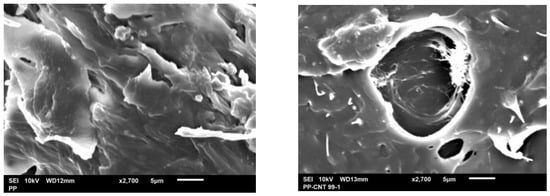
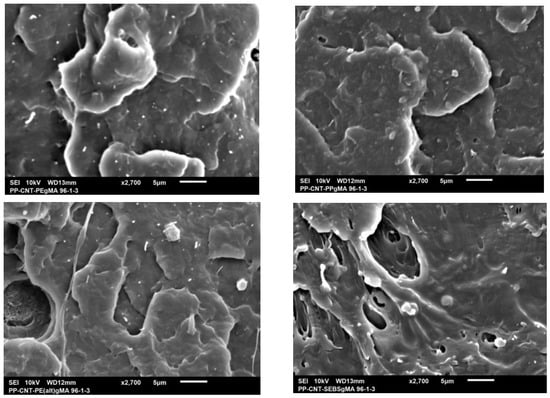
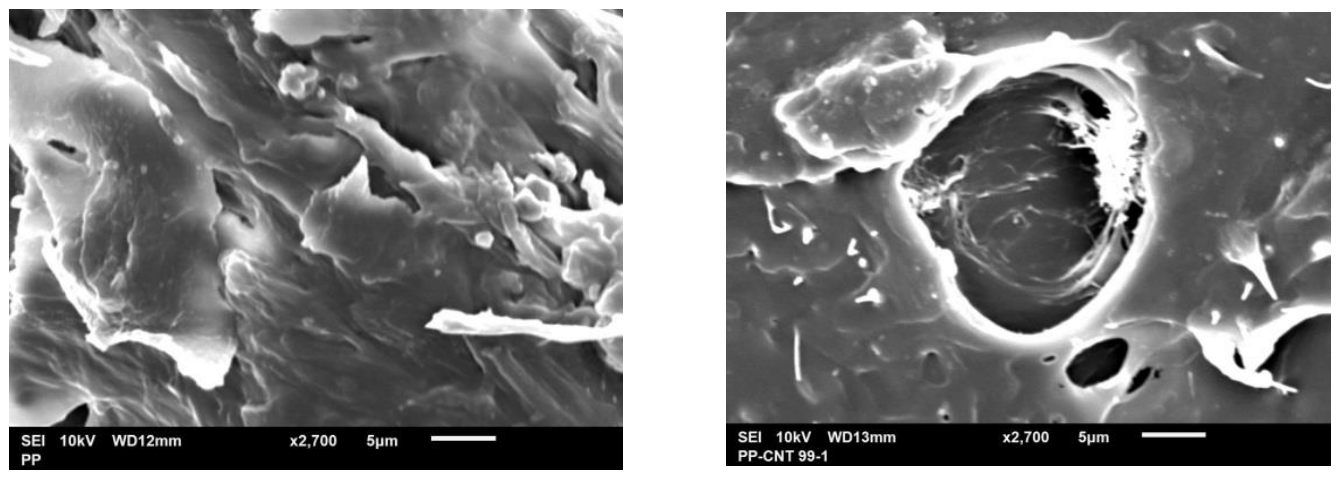
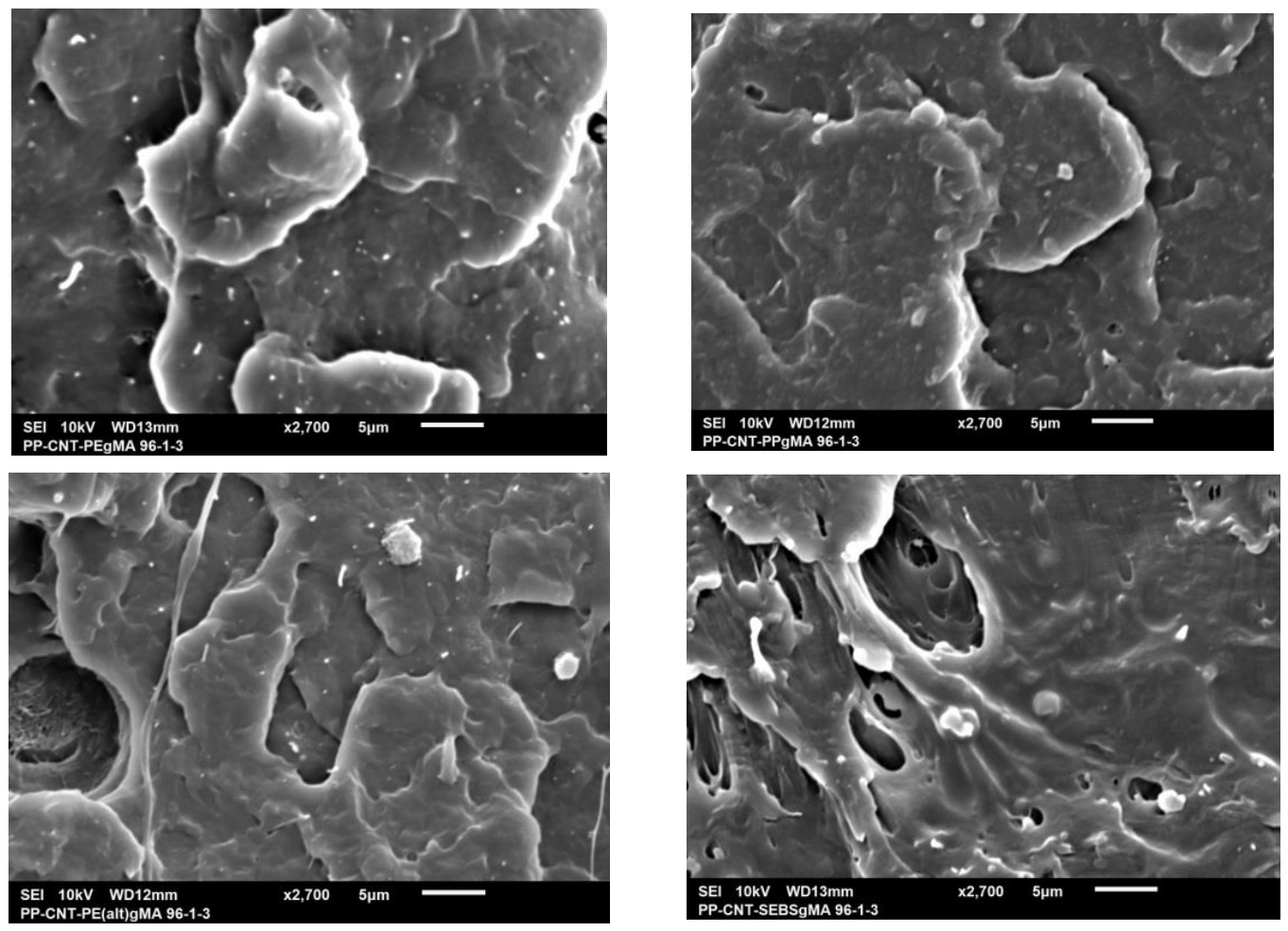
Morphological analysis of the composite samples was performed using scanning electron microscopy (SEM) to understand the changes in their physical and topological features, and the obtained microscopic images are depicted as the uncropped and unprocessed full-frame images. Based on the tensile fractured samples, the SEM images showed no nanotube pull-out, and all nanotubes appeared to be broken due to fracture (Figure 8). At 1 wt% CNT concentration, scanning electron microscopy images showed that the CNT dispersion was relatively good within the PP sample; however, some regions of aggregates were observed in the case of the PP-CNT along with some individual CNTs. In contrast, compatibilized PP-CNT composite samples predominantly contained individual broken CNTs, and no noticeable aggregates were observed. The CNT-containing sample based on PP/CNT showed a very rough fracture surface, whereas pristine PP exhibited relatively toughening and non-brittle fracture surfaces. These differences in fracture surfaces clearly show that crack propagation has a higher resistance in the compatibilized samples than in the PP-CNT samples. Under SEM observation at relatively high magnification, the entire fracture surface of the compatibilized samples exhibited brittle behavior compared to the PP. This indicates that the CNTs are well-bonded in the matrix owing to the strong PP CNT interfacial adhesion.
Figure 8.
SEM images of PP and PP-CNT nanocomposites.
4. Conclusions
PP-CNT nanocomposites containing various maleic anhydride-grafted polymer compatibilizers were prepared by melt compounding using a twin-screw extruder. The impact of various compatibilizers on PP-CNT nanocomposites was evaluated by analyzing significant mechanical, thermal, rheological, and morphological characteristics. The PP-CNT nanocomposites exhibited good improvement in tensile strength and modulus, due to the presence of compatibilizers, which reinforces the PP matrix through strong interfacial bonding between CNTs and the PP. The incorporation of a specific amount of CNTs and MA-grafted compatibilizers resulted in comparable crystallinity, having only a slight effect on the melting temperature of pristine PP. TGA confirmed that all PP-CNT nanocomposite samples exhibited higher and better thermal stability properties under a nitrogen atmosphere. Under air, all the PP-CNT nanocomposites exhibited lower decomposition temperatures, likely caused by oxidative degradation. Rheological parameters such as storage modulus (G′) and loss modulus (G″) were marginally improved with respect to the pristine PP with the addition of CNTs along with compatibilizers, attributed to filler–polymer interactions promoting a network-structured composite. At low angular frequencies, neat PP and its nanocomposite displayed viscous behavior and elastic behavior at higher angular frequencies. Furthermore, adding CNTs and MA-grafted compatibilizers increased the complex viscosity, exhibiting solid-like behavior due to the strong interaction between the fillers and the PP matrix. XRD analysis confirmed that the α form of PP crystal structure of PP was retained across all PP-CNT composites with characteristic diffraction peaks. Additionally, Scherrer analysis of the (110) lattice plane showed that the crystalline domain size remained unaffected by the addition of CNTs compared to pristine PP. Morphological analysis clearly revealed that composites exhibited non-brittle microstructural features and well-dispersed CNTs without any visible aggregates. Overall, it is shown that the addition of CNTs together with compatibilizers, particularly PP-g-MA and PE(alt)gMA, improved the final properties of the neat PP.
Author Contributions
J.S.: Conception and design, interpretation of the data, and drafting of the paper; A.A.Y.: interpretation of the data and drafting of the paper; M.A.-S.: interpretation of the data and drafting of the paper; T.A.-S.: analysis and interpretation of the data; R.A.-Z.: analysis and interpretation of the data; A.A.-B.: analysis and interpretation of the data. All authors have read and agreed to the published version of the manuscript.
Funding
This research received no external funding.
Data Availability Statement
The original contributions presented in this study are included in the article. Further inquiries can be directed to the corresponding authors.
Acknowledgments
The authors wish to express their gratitude to the Kuwait Institute for Scientific Research (KISR) for the technical support.
Conflicts of Interest
The authors declared no potential conflicts with respect to research, authorship, and publication of this article.
References
- Maurya, A.K.; Manik, G. Advances towards Development of Industrially Relevant Short Natural Fiber Reinforced and Hybridized Polypropylene Composites for Various Industrial Applications: A Review. J. Polym. Res. 2023, 30, 47. [Google Scholar] [CrossRef] [Scilit]
- Martínez-Colunga, J.G.; Sanchez-Valdes, S.; Ramos-deValle, L.F.; Perez-Camacho, O.; Ramirez-Vargas, E.; Benavides-Cantú, R.; Espinoza-Martínez, A.B. Aniline-Modified Polypropylene as a Compatibilizer in Polypropylene Carbon Nanotube Composites. Polym. Plast. Technol. Eng. 2017, 57, 1360–1366. [Google Scholar] [CrossRef] [Scilit]
- Takahashi, S.; Imai, Y.; Kan, A.; Hotta, Y.; Ogawa, H. Preparation and Characterization of Isotactic Polypropylene/MgO Composites as Dielectric Materials with Low Dielectric Loss. J. Ceram. Soc. Jpn. 2013, 121, 606–610. [Google Scholar] [CrossRef] [Scilit]
- Kausar, A.; Rafique, I.; Muhammad, B. Significance of Carbon Nanotube in Flame-Retardant Polymer/CNT Composite: A Review. Polym.-Plast. Technol. Eng. 2016, 56, 470–487. [Google Scholar] [CrossRef] [Scilit]
- Ali, W.; Kausar, A.; Iqbal, T. Reinforcement of High-Performance Polystyrene/Polyamide/Polythiophene with Multi-Walled Carbon Nanotube Obtained Through Various Routes. Compos. Interfaces 2015, 22, 885–897. [Google Scholar] [CrossRef] [Scilit]
- Zaman, H.U.; Hun, P.D.; Khan, R.A.; Yoon, K.B. Improvement of the Mechanical and Rheological Properties of HDPE/PET/MWCNT Nanocomposites. Compos. Interfaces 2012, 19, 71–81. [Google Scholar] [CrossRef] [Scilit]
- Kashiwagi, T.; Grulke, E.; Hilding, J.; Harris, R.; Awad, W.; Douglas, J. Thermal Degradation and Flammability Properties of Polypropylene-Carbon Nanotube Composites. Macromol. Rapid Commun. 2002, 23, 761–765. [Google Scholar] [CrossRef] [Scilit]
- Girei, S.A.; Thomas, S.P.; Atieh, M.A.; Mezghani, K.; De, S.; Bandyopadhyay, S.; Al-Juhani, A. Effect of -COOH Functionalized Carbon Nanotubes on Mechanical, Dynamic Mechanical and Thermal Properties of Polypropylene Nanocomposites. J. Thermoplast. Compos. Mater. 2012, 25, 333–350. [Google Scholar] [CrossRef] [Scilit]
- Ghoshal, S.; Wang, P.H.; Gulgunje, P.; Verghese, N.; Kumar, S. High impact strength polypropylene containing carbon nanotubes. Polymer 2016, 100, 259–274. [Google Scholar] [CrossRef] [Scilit]
- Al-Saleh, M.A.; Yussuf, A.A.; Al-Enezi, S.; Kazemi, R.; Wahit, M.U.; Al-Shammari, T.; Al-Banna, A. Polypropylene/Graphene Nanocomposites: Effects of GNP Loading and Compatibilizers on the Mechanical and Thermal Properties. Materials 2019, 12, 3924. [Google Scholar] [CrossRef] [Scilit]
- Xu, Z.W.; He, S.H.; Zhang, J.J.; Huang, S.J.; Chen, A.F.; Fu, X.L.; Zhang, P. Relationship Between the Structure and Thermal Properties of Polypropylene/Graphene Nanoplatelets Composites for Different Platelet-Sizes. Compos. Sci. Technol. 2019, 183, 107826. [Google Scholar] [CrossRef] [Scilit]
- Sun, T.; Luo, W.; Luo, Y.; Wang, Y.; Zhou, S.; Liang, M.; Chen, Y.; Zou, H. Self-Reinforced Polypropylene/Graphene Composite with Segregated Structures to Achieve Balanced Electrical and Mechanical Properties. Ind. Eng. Chem. Res. 2020, 59, 11206–11218. [Google Scholar] [CrossRef] [Scilit]
- Yang, K.; Endoh, M.; Trojanowski, R.; Ramasamy, R.P.; Gentleman, M.M.; Butcher, T.A.; Rafailovich, M.H. The Thermo-Mechanical Response of PP Nanocomposites at High Graphene Loading. Nanocomposites 2015, 1, 126–137. [Google Scholar] [CrossRef] [Scilit]
- Foster, R.J.; Hine, P.J.; Ward, I.M. Characterization and Modelling of Polypropylene/Carbon Nanofibre Nanocomposites. Polymer 2009, 50, 4018–4027. [Google Scholar] [CrossRef] [Scilit]
- Gordeyev, S.A.; Ferreira, J.A.; Bernardo, C.A.; Ward, I.M. A Promising Conductive Material: Highly Oriented Polypropylene Filled with Short Vapour-Grown Carbon Fibers. Mater. Lett. 2001, 51, 32–36. [Google Scholar] [CrossRef] [Scilit]
- Chipara, M.; Villarreal, J.R.; Chipara, M.D.; Lozano, K.; Chipara, A.C.; Sellmyer, D.J. Spectroscopic Investigations on Polypropylene-Carbon Nanofiber Composites. I. Raman and Electron Spin Resonance Spectroscopy. J. Polym. Sci. B Polym. Phys. 2009, 47, 1644–1652. [Google Scholar] [CrossRef] [Scilit]
- Pathak, A.K.; Yokozeki, T. Recycled Carbon Nanofiber-Polypropylene Nanocomposite: A Step towards Sustainable Structural Material Development. J. Compos. Sci. 2022, 6, 332. [Google Scholar] [CrossRef] [Scilit]
- Lee, S.H.; Cho, E.; Jeon, S.H.; Youn, J.R. Rheological and Electrical Properties of Polypropylene Composites Containing Functionalized Multi-Walled Carbon Nanotubes and Compatibilizers. Carbon 2007, 45, 2810–2822. [Google Scholar] [CrossRef] [Scilit]
- Bao, S.P.; Tjong, S.C. Mechanical Behaviors of Polypropylene/Carbon Nanotube Nanocomposites: The Effects of Loading Rate and Temperature. Mater. Sci. Eng. A 2008, 485, 508–516. [Google Scholar] [CrossRef] [Scilit]
- Gao, J.L.; Liu, Y.H.; Li, D.M. Preparation and Properties of Recycled Polypropylene/Carbon Nanotube Composites. Adv. Mater. Res. 2011, 279, 106–110. [Google Scholar] [CrossRef] [Scilit]
- Esawi, A.M.; Salem, H.G.; Hussein, H.M.; Ramadan, A.R. Effect of Processing Technique on the Dispersion of Carbon Nanotubes Within Polypropylene Carbon Nanotube-Composites and its Effect on Their Mechanical Properties. Polym. Compos. 2010, 31, 772–780. [Google Scholar] [CrossRef] [Scilit]
- Zhao, P.; Wang, K.; Yang, H.; Zhang, Q.; Du, R.; Fu, Q. Excellent Tensile Ductility in Highly Oriented Injection-Molded Bars of Polypropylene/Carbon Nanotubes Composites. Polymer 2007, 48, 5688–5695. [Google Scholar] [CrossRef] [Scilit]
- Lee, G.-W.; Jagannathan, S.; Chae, H.G.; Minus, M.L.; Kumar, S. Carbon nanotube dispersion and exfoliation in polypropylene and structure and properties of the resulting composites. Polymer 2008, 49, 1831–1840. [Google Scholar] [CrossRef] [Scilit]
- Jin, S.H.; Kang, C.H.; Yoon, K.H.; Bang, D.S.; Park, Y.-B. Effect of Compatibilizer on Morphology, Thermal, and Rheological Properties of Polypropylene/Functionalized Multi-Walled Carbon Nanotubes Composite. J. Appl. Polym. Sci. 2009, 111, 1028–1033. [Google Scholar] [CrossRef] [Scilit]
- Kucera, F.; Petruš, J.; Bálková, R.; Jančář, J. Solid-State Grafting of Maleic Anhydride onto Polypropylene: The Influence of Morphology of Polypropylene on Heterogeneous Reaction. Polym. Eng. Sci. 2020, 60, 1076–1082. [Google Scholar] [CrossRef] [Scilit]
- Li, C.-Q.; Zha, J.-W.; Long, H.-Q.; Wang, S.-J.; Zhang, D.-L.; Dang, Z.-M. Mechanical and Dielectric Properties of Graphene Incorporated Polypropylene Nanocomposites Using Polypropylene-Graft-Maleic Anhydride as a Compatibilizer. Compos. Sci. Technol. 2017, 153, 111–118. [Google Scholar] [CrossRef] [Scilit]
- Aldajah, S.; Al-Haik, M.Y.; Siddique, W.; Kabir, M.M.; Haik, Y. Mechanical and Thermal Characterization of Grafted PP-NCC Nanocomposites. J. Thermoplast. Compos. Mater. 2019, 34, 1666–1679. [Google Scholar] [CrossRef] [Scilit]
- Zhou, X.; Xie, X.; Zeng, F.; Li, R.K.-Y.; Mai, Y.-W. Properties of Polypropylene/Carbon Nanotube Composites Compatibilized by Maleic Anhydride-Grafted SEBS. Key Eng. Mater. 2006, 312, 223–228. [Google Scholar] [CrossRef] [Scilit]
- Szentes, A.; Varga, C.; Horvath, G.; Bartha, L.; Konya, Z.; Haspel, H.; Szel, J.; Kukovecz, A. Electrical Resistivity and Thermal Properties of Compatibilized Multi-walled Carbon Nanotube/Polypropylene Composites. Express Polym. Lett. 2012, 6, 494–502. [Google Scholar] [CrossRef] [Scilit]
- Hemmati, M.; Shariatpanahi, H.; Ahangari, M.G.; Fereidoon, A.; Narimaniet, A. Effect of Polypropylene-Grafted-Maleic Anhydride Compatibilizer on the Physical Properties of Polypropylene/Carbon Nanotube Composites. Polym. Polym. Compos. 2012, 20, 559–566. [Google Scholar] [CrossRef] [Scilit]
- Ganß, M.; Satapathy, B.K.; Thunga, M.; Weidisch, R.; Pötschke, P.; Jehnichen, D. Structural Interpretations of Deformation and Fracture Behavior of Polypropylene/Multi-Walled Carbon Nanotube Composites. Acta Mater. 2008, 56, 2247–2261. [Google Scholar] [CrossRef] [Scilit]
- Rahmatpour, A.; Aalaie, J. Steady Shear Rheological Behavior, Mechanical Properties, and Morphology of the Polypropylene/Carbon Nanotube Nanocomposites. J. Macromol. Sci. B 2008, 47, 929–941. [Google Scholar] [CrossRef] [Scilit]
- Samuel, J.; Al-Enezi, S.; Al-Banna, A.; Abraham, G. Effect of Compatibilizing Agents on the Morphological, Thermal and Rheological Properties of High Density Polyethylene/Carbon Nano Fiber Composites. Polym.-Plast. Technol. Mater. 2022, 61, 1–12. [Google Scholar]
- Uyor, U.O.; Popoola, P.A.; Popoola, O.M.; Aigbodion, V.S. A Review of Recent Advances on the Properties of Polypropylene-Carbon Nanotubes Composites. J. Thermoplast. Compos. Mater. 2022, 36, 3737–3770. [Google Scholar] [CrossRef] [Scilit]
- Sanadia, A.R.; Stelteb, W. Effect of the Characteristics of Maleic Anhydride-Grafted Polypropylene (MAPP) Compatibilizer on the Properties of Highly Filled (85%) Kenaf-Polypropylene Composites. Mater. Res. 2023, 26, e20220428. [Google Scholar] [CrossRef] [Scilit]
- Li, Y.; Yu, W.; Ruan, Q.; Li, K.; Guo, X.; Bai, Z.; Chen, J. Enhanced High-Performance iPP/TPU/MWCNT Nanocomposite for Electromagnetic Interference Shielding. Polymers 2024, 16, 1837. [Google Scholar] [CrossRef] [Scilit]
- Krajenta, J.; Pawlak, A. Crystallization of the β-Form of Polypropylene from the Melt with Reduced Entanglement of Macromolecules. Polymers 2024, 16, 1710. [Google Scholar] [CrossRef] [Scilit]
- Coppola, B.; Di Maio, L.; Incarnato, L.; Tulliani, J.-M. Preparation and Characterization of Polypropylene/Carbon Nanotubes (PP/CNTs) Nanocomposites as Potential Strain Gauges for Structural Health Monitoring. Nanomaterials 2020, 10, 814. [Google Scholar] [CrossRef] [Scilit]
- Uyor, U.; Popoola, A.; Popoola, O.; Aigbodion, V. Effects of Titania on Tribological and Thermal Properties of Polymer/Graphene Nanocomposites. J. Thermoplast. Compos. Mater. 2019, 33, 1030–1047. [Google Scholar] [CrossRef] [Scilit]
- Ali, A.; Koloor, S.S.R.; Alshehri, A.H.; Arockiarajan, A. Carbon nanotube characteristics and enhancement effects on the mechanical features of polymer-based materials and structures—A review. J. Mater. Res. Technol. 2023, 24, 6495–6521. [Google Scholar] [CrossRef] [Scilit]
- Yaqoob, S.; Ali, Z.; Ali, S.; D’Amore, A. Polystyrene–Carbon Nanotube Composites: Interaction Mechanisms, Preparation Methods, Structure, and Rheological Properties-a Review. Physchem 2025, 5, 14. [Google Scholar] [CrossRef] [Scilit]
- Samuel, J.; Yussuf, A.A.; Al-Zufairi, R.; Al-Banna, A.; Al-Shammary, T.; Abraham, G. High-density Polyethylene Hybrid Nanocomposites Reinforced with Carbon nanofiber and Nanoclay. J. Elastomers Plast. 2024, 56, 713–731. [Google Scholar] [CrossRef] [Scilit]
- Li, Z.; Chen, M.; Ma, W. Polypropylene/Hydroxyl-Multi-wall Carbon Nanotubes Composites: Crystallization Behavior, Mechanical Properties, and Foaming Performance. J. Mater. Sci. 2016, 51, 4566–4579. [Google Scholar] [CrossRef] [Scilit]
- Yetgin, S.H. Effect of Multi-walled Carbon Nanotube on Mechanical, Thermal and Rheological Properties of Polypropylene. J. Mater. Res. Technol. 2019, 8, 4725–4735. [Google Scholar] [CrossRef] [Scilit]

Disclaimer/Publisher’s Note: The statements, opinions and data contained in all publications are solely those of the individual author(s) and contributor(s) and not of MDPI and/or the editor(s). MDPI and/or the editor(s) disclaim responsibility for any injury to people or property resulting from any ideas, methods, instructions or products referred to in the content. |
© 2026 by the authors. Licensee MDPI, Basel, Switzerland. This article is an open access article distributed under the terms and conditions of the Creative Commons Attribution (CC BY) license.