


Abstract
In order to better understand the mechanical properties of lightweight cement-based composite concrete (LWC), expanded polystyrene (EPS) beads are used as lightweight aggregate (LWA) in this paper. 50%, 70%, and 90% of EPS foam beads by volume are used to partially replace normal fine aggregate in different EPS concrete compositions. In addition, Ordinary Portland cement (OPC) was substituted with silica fume (SF) in EPS concrete at varying weight percentages of 15%. Nine mixes are made in order to examine the properties of EPS concrete. In the testing program, fresh density, slump, compressive strength, splitting tensile strength, flexural strength, thermal conductivity, and absorption are all determined. Although workability is improved, the mechanical properties of concrete are generally decreased when EPS beads are used. The addition of silica fume (SF) successfully counteracted the mixture’s overall decline in mechanical properties across all the mixtures that have been used. More solid material can be found per square inch of surface area in materials with a higher density, which results in more continuous heat-conduction pathways. In comparison to the control mix, the compressive strength of the polystyrene modified mixes showed a noticeable decline, falling by roughly 62% for P-50%, 69% for P-70%, and 71% for P-90%. In contrast, mixes P-90%-1.2, P-90%-1.4, and P-90%-1.6 reduced absolute strength compared to P-90%; their performance is nonetheless noteworthy because of their extraordinarily high EPS content. Despite having lesser absolute strengths than P-90%, mixes of P-90%-1.2, P-90%-1.4, and P-90%-1.6 nevertheless performed admirably considering their remarkably high EPS content.
1. Introduction
Lightweight aggregates can generally be divided into two categories: manufactured (such as perlite, clay, sintered fly ash, and expanded shale) and natural (such as pumice, diatomite, and volcanic cinder). In order to create lightweight cement-based composite concrete (LWC) with a variety of densities, polystyrene beads are a commonly utilized aggregate that is simple to mix into mortar or concrete [1]. Fine perlite aggregate is close in specification to polystyrene aggregate. When used to produce lightweight cement mortar, replacing all sand with perlite aggregate decreases the density to approximately 1000 kg/m3. Its mechanical properties decrease, but its thermal insulation improves significantly [2].
The density of EPS foams is normally less than 50 kg/m3, and they have a cellular architecture with closed cell membranes composed of expandable polystyrene (EPS) [3]. Because of its excellent energy-absorbing qualities, EPS LWCv has recently found use in cladding panels, curtain walls, composite flooring systems, non-load-bearing concrete blocks, sub-base material for pavements, floating marine structures, and impact-resistant structural protection layers. According to Schackow et al. [4], one benefit of EPS LWC is that its recyclable EPS particles do not collect water like vermiculite does. In addition, it can be used to create concretes for both structural and non-structural uses by changing the volume proportion of the material in mortar or concrete [5,6,7].
Conversely, the majority of studies uncovered throughout this investigation indicate that a higher EPS foam content will result in a concrete’s lower compressive strength and other mechanical properties. As the amount of foam in fresh concrete increases, its workability improves. Although silica fume (SF) is well-known for improving the mechanical properties of concrete, its main physical impact on the material is as a filler that effectively lowers permeability and negatively lowers the PH value [8,9,10]. Because of its large surface area, fresh concrete with SF is more cohesive and less likely to segregate than concrete without it. Additionally, the water needs for concrete with SF increase as the silica content increases [11].
Numerous researchers investigated the impact of EPS in concrete using varying amounts of EPS. By amount of concrete, the authors combined EPS at 25%, 50%, 75%, and 100% (PC/EPS ratio). Concrete’s slump and density decrease as the PC/EPS ratio increases [12]. In order to examine the compressive strength of concrete containing SF and EPS, another study was conducted [13]. In the published study, 10%, 20%, 30%, 40%, and 50% of concrete was mixed with EPS with diameters of 1 mm, 2.5 mm, and 6.3 mm. According to the test results, compressive strength is reduced by EPS volume friction when the static modulus of elasticity is high. After researching the impact of EPS size, it was determined that EPS concrete with a smaller size (1 mm) had higher compressive strength.
EPS concrete’s fire resistance and heat conductivity were investigated. According to the test results, the volume of EPS, the volume of foam, and the cement concentration all have an impact on the mechanical and thermal properties of EPS concrete. The volume of EPS reduces the foamed concrete’s strength. Due to being 98% air and 2% polystyrene, the large volume of EPS reduces thermal conductivity. As EPS volume increases, concrete’s density and unit weight decrease [14].
The impact of the EPS matrix particle size on concrete was investigated by researchers. The following conclusions were mapped by the authors: (i) slump decreases as volume matrix increases; (ii) slump increases with matrix particle size; (iii) slump was 20 to 30 mm for 0.63 mm EPS concrete; (iv) matrix aggregate size increases concrete’s workability and strength; and (v) coarse-aggregate with a diameter of 10 mm or less can be used as matrix [15].
Concrete with a density less than 1700 kg/m3 was investigated to study how EPS affected thermal conductivity and compressive strength. The researcher used a variety of patterns to arrange the various EPS sizes. The experimental findings demonstrated that the properties of concrete are influenced by the size of EPS. Concrete’s compressive strength is increased by the smaller size of EPS, and concrete’s thermal conductivity decreases as the EPS size increases [16].
When comparing the compressive and tensile strengths of EPS concrete to the controlled concrete specimen, the authors added EPS to the concrete at 5% intervals, ranging from 5% to 25%. The experimental findings demonstrated that the strength of concrete diminishes as the amount of EPS increases [17]. This is explained by the fact that the EPS particles are loosely packed and have weakly bonding properties to the cement matrix. Moreover, the concrete mix type may significantly affect the structural performance of the concrete elements, as the constituents of the mix can vary substantially, which makes the ultimate load capacity and deflections experienced by the concrete elements evident with the loads applied [18].
Polystyrene is used in the manufacturing of lightweight blocks used for non-load-bearing walls to increase thermal insulation and reduce weight [19]. Additionally, polystyrene is used in varying ratios (0–26%) in place of sand in hollow block masonry units, resulting in a density of 982–2119 kg/m3 and a compressive strength of 1.4–9.5 MPa [20]. As a result, this work experimentally investigates the primary goal of this research, which was to present some fundamental details on the mechanical and novel properties of EPS LWC. In order to examine the effects of polystyrene on compressive strength, splitting tensile strength, flexural strength, density, and thermal conductivity at 7 and 28 days, this study developed and evaluated nine mix designs. Additionally, in mixtures with a moderate EPS level, the addition of SF was examined. The polystyrene, perlite, and polypropylene fibers, together with SF, were used in this study’s experimental program because they were the logical choices for enhancing the sustainability and quality of concrete.
The main goal of the current study was to evaluate the macroscopic fresh, mechanical, and physical properties in order to evaluate the mixtures’ engineering performance. As a result, the improvement processes were interpreted indirectly using well-established findings published in the literature and observed property changes. Although microstructural investigations (e.g., SEM or porosity measurements) were not conducted in this study, the observed mechanical improvements are consistent with previously reported mechanisms of silica fume and perlite, including pore refinement and ITZ densification. Despite earlier research on lightweight concretes such as foamed concrete and polystyrene-based concrete, the mechanical performance stated is frequently limited, inconsistent, or inadequately described, especially when it comes to compressive, tensile, and flexural behavior. The development of a lightweight polystyrene concrete composite with an optimum mix design is the study’s original contribution.
2. Experimental Program
2.1. Materials
The experimental program in this study utilized sulfate-resistant Portland cement (Type V), potable water, natural sand, perlite aggregate, and polystyrene, as well as silica fume, which were chosen due to their rationality of improving concrete quality and sustainability.
2.1.1. Cement
Type V Portland cement, marketed as Aljisir, is resistant to sulfates and was utilized. This kind was made in Karbala, Iraq. Its physical and chemical properties meet Iraqi Specification No.5/2019 [21] requirements. Table 1 presents the chemical and physical properties of the cement used.
Table 1.
Chemical and physical properties of cement.
2.1.2. Sand
In concrete mixtures, Al-Ekhaider sand from the Karbala region of Iraq with a maximum size of 4.75 mm is utilized as a fine aggregate. The grading curve for the sand utilized in this work was determined by the sieve analysis. Its grading was in Zone II, as per Iraqi Specification No. 45, 1984 [22], giving proper workability and packing density, as shown in Table 2.
Table 2.
Chemical and physical properties of sand.
2.1.3. Polystyrene
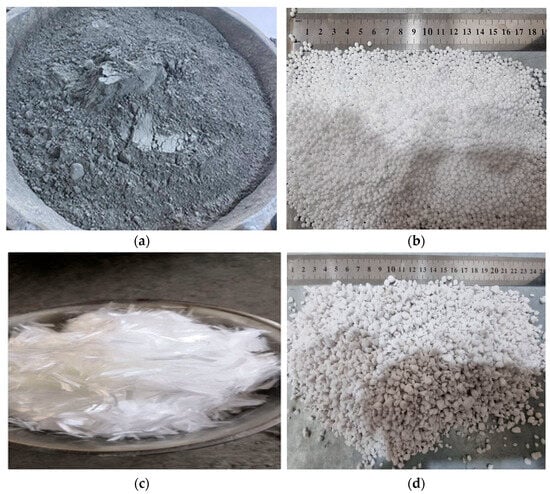
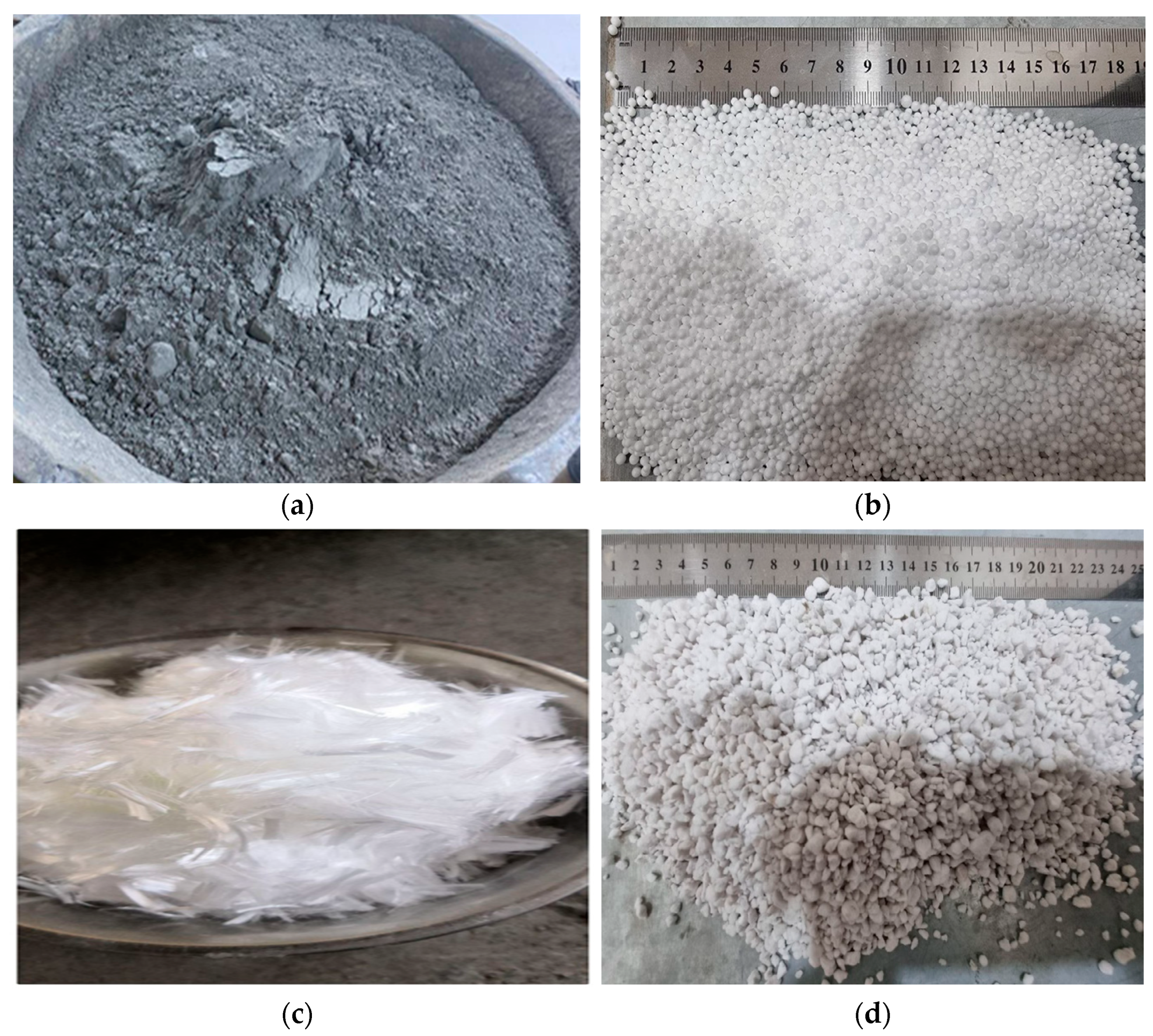
In order to make low-density, thermally insulating concrete, expanded polystyrene (EPS) particles were added as a lightweight aggregate. The sample was obtained from a polystyrene production factory in Karbala, Iraq. The EPS particles had a bulk density of around 25 kg/m3 and were spherical, ranging in size from 2 to 4 mm. EPS particles lower the composite’s overall density but have no effect on the effective water–cement ratio because of their hydrophobic nature and extremely low water absorption. To compensate for the significant density differential between EPS and natural sand, a replacement was performed by volume. The new material is appropriate for non-load-bearing and insulating applications because the addition of EPS decreased compressive strength while enhancing thermal insulation. As discovered in earlier studies, the best ratio of fibers is 1%, which meets the aim of desired mechanical properties and workability [19]. The polystyrene utilized in this investigation is depicted in Figure 1a. Table 3 provides a summary of the mechanical and physical characteristics of the polypropylene fibers used in this investigation, as supplied by the manufacturer.
Figure 1.
Materials used in this study: (a) silica fume, (b) polystyrene, (c) polypropylene fiber, (d) perlite aggregate.
Table 3.
Properties of the polypropylene fibers.
2.1.4. Silica Fume
Micro silica, another name for SF, is an amorphous (non-crystalline) polymorph of silica and silicon dioxide. This ultrafine powder, which is made up of spherical particles with an average diameter of 0.15 µm, was gathered as a byproduct of the manufacture of silicon and ferrosilicon alloys. The SF type used in the LWC mixtures was Megaadd MS (D) in United Arab Emirates. Typically, amorphous silica was converted into this type of incredibly fine pozzolanic material as a byproduct in electric furnaces. According to the results, there was agreement with ASTM C 1240 [23]. By chemically reacting with the calcium hydroxide in the cement paste, this product creates a calcium silicate hydrate gel that greatly increases strength and durability. The SF utilized in this investigation is depicted in Figure 1b.
2.1.5. Perlite
In order to make lightweight and insulating concrete, perlite, a volcanic glass, is occasionally added to concrete mixtures. This LWC is frequently utilized for non-structural purposes, such as tank insulation, sound/firewalls, and floor fills. It has advantages, including noise reduction and thermal insulation, but it is not typically utilized for load-bearing constructions because of its lower strength when compared to traditional concrete. Perlite from Erzincan, Turkey was utilized in this experiment, and the grades vary as indicated in Table 4. The perlite utilized in this investigation is depicted in Figure 1c.
Table 4.
Sieve analysis of perlite.
2.1.6. Polypropylene Fiber
SikaFiber® polypropylene fibers were used in this research. Fiber made of polypropylene is not a hydrophilic substance; it does not absorb water and is resistant to chemicals, alkalis, and chloride. Discontinuous polypropylene fibers measuring 12 mm in length and 34 µm in diameter were employed in this investigation. One fiber percentage of concrete was used at a 1% volumetric ratio. The polypropylene fiber utilized in this investigation is depicted in Figure 1d. The capacity of the polypropylene (PP) fibers used in this investigation to reduce cracks and increase toughness was the main factor in their selection. The new material is intended for lightweight, non-structural/insulating applications where improving serviceability performance and decreasing density are more important than providing structural reinforcement. PP fibers provide several advantages over steel or high-modulus fibers, including reduced density, resistance to corrosion, enhanced dispersion, and little effect on thermal characteristics.
2.2. Concrete Mix Preparation
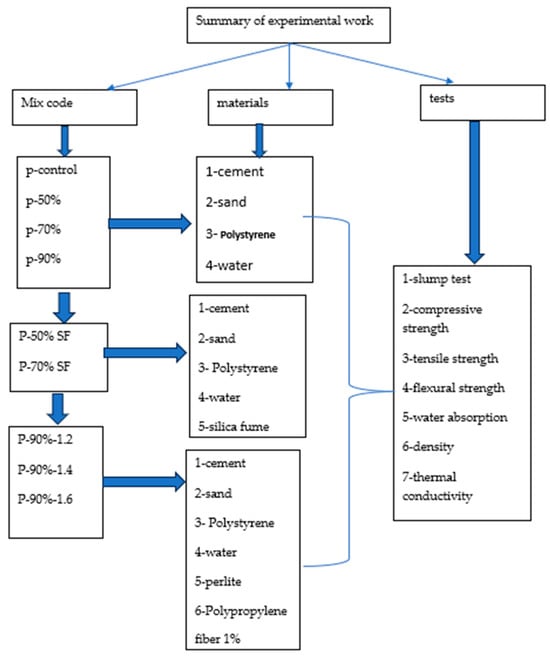
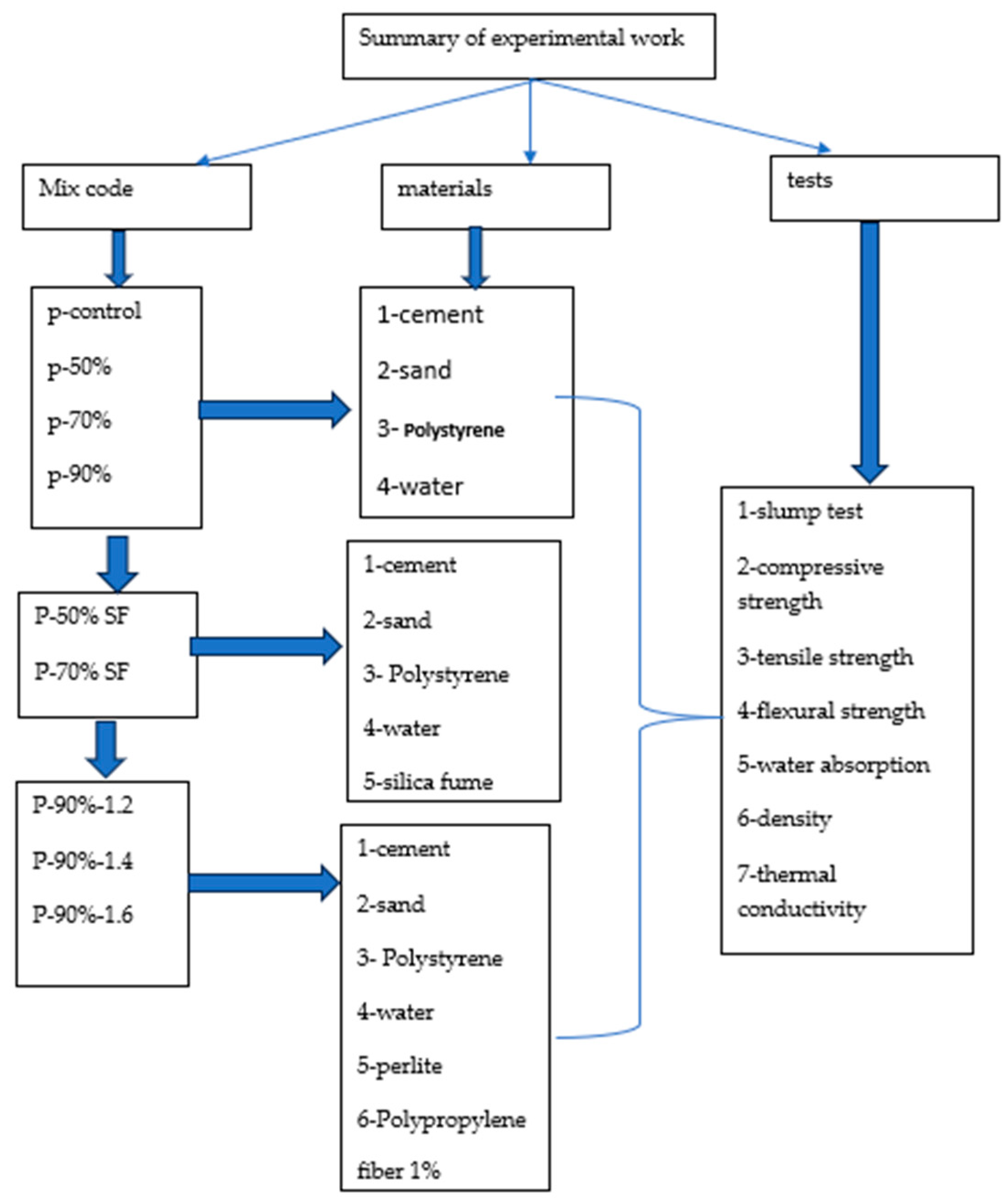
In this study, the concrete mixtures were prepared with a uniform water-to-cement ratio of 0.42, allowing for a comparative evaluation of the mixes. A typical cement content of 400 kg/m3 was used, and depending on the desired ratios of replacements, the sand content was varied. The contents of the polystyrene were used as a partial replacement of sand contents at percentages of 50%, 70% and 90% by volume, and correct weights were recorded to ensure there was precise control over the mixture. Silica fume, in specified blends, was introduced at a dosage of 60 kg/m3 of pozzolanic reactivity, whereas expanded perlite was added at a dosage of 18 kg/m3, to achieve better thermal insulation as well as less fresh density of the concrete. Crack resistance and control of plastic shrinkage in conventional concrete were achieved through the incorporation of polypropylene fibers by the volume of concrete into the final concrete mixture. The cement-to-sand ratios were also varied (1:1, 1:1.2, 1:1.4 and 1:1.6) to investigate the effect of binder content on the fresh properties of concrete. After mixing, the detailed mix proportions for all mixtures are presented in Table 5. Furthermore, a schematic drawing has been included in Figure 2 to demonstrate how each component is integrated into the matrix.
Table 5.
Mix proportion of concrete mix (kg/m3).
Figure 2.
The summary of experimental work.
2.3. Casting and Testing
All concrete mixes were cast with the mixture and cast in a controlled laboratory to achieve uniformity and accuracy of all specimens. First of all, all dry materials (cement, sand, polystyrene, silica fume, and perlite) were mixed thoroughly to have a uniform mixture. The water and the rest of the admixtures were then added to that mixture gradually and mixed until an achievable consistency was achieved. To give an opportunity to calculate average values, to reduce the error in the experiments, and to determine the degree of some tests, three specimens were prepared each time.
The experimental program was categorized into three broad groups as follows: (1) fresh concrete tests that involved workability, whereby workability was measured by the slump test, (2) physical property tests that included the water absorption, density and thermal conductivity tests, and (3) mechanical property tests that involved compressive strength, flexure strength and the splitting tensile strength. Molds to cast the specimens to be used in each of the tests were prepared, with the specimens being demolded after 24 h, and the specimens were left in water until the day of the test. The majority of the tests were carried out at a conventional curing age of 28 days, with the exception of the compressive strength test, which was carried out at 7, 28, and 56 days to determine strength gain over time. Table 6 summarizes the list of tests conducted, which is extended completely.
Table 6.
Summary of performed tests and corresponding standards.
3. Results and Discussion
Test results on polystyrene, silica fume, perlite and polypropylene fibers, concrete cubes, cylinders, and prisms will be presented and discussed. This study created and tested nine mix designs to investigate the impact of polystyrene on concrete’s flexural strength as well as its compressive strength (at 7 and 28 days).
3.1. Slump Test
The concrete slump was evaluated according to ASTM C143 [24] specifications, revealing that the combinations including polystyrene exhibited a slump of 23 cm, exceeding that of the reference mixture. This results from substituting sand with polystyrene, which is lightweight, hence decreasing the density of the concrete and enhancing its flowability compared to the reference mixture. The slump significantly decreased when SF was incorporated into the P-50%SF and P-70%SF mixes, reducing to 7 cm due to the large surface area and water demands of silica fume. The slump values were minimal in the last three mixtures (P-90%-1.2, P-90%-1.4, and P-90%-1.6) that incorporated perlite and polypropylene fibers. The slump values progressively decreased to 6 cm, followed by 5 cm, due to the stiffening impact of the fibers that diminishes the mix’s flowability [30]. The variations in slump demonstrate that the workability of concrete is significantly influenced by the type of lightweight aggregate that is used, together with the incorporation of fine elements or fibers.
3.2. Compressive Strength
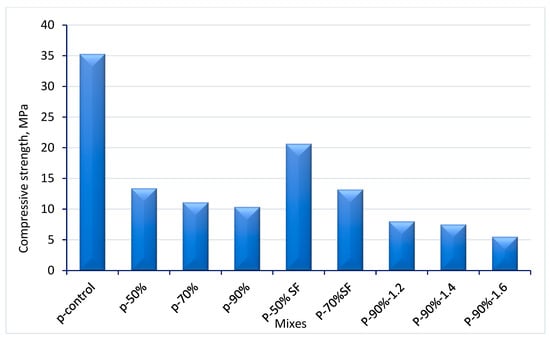
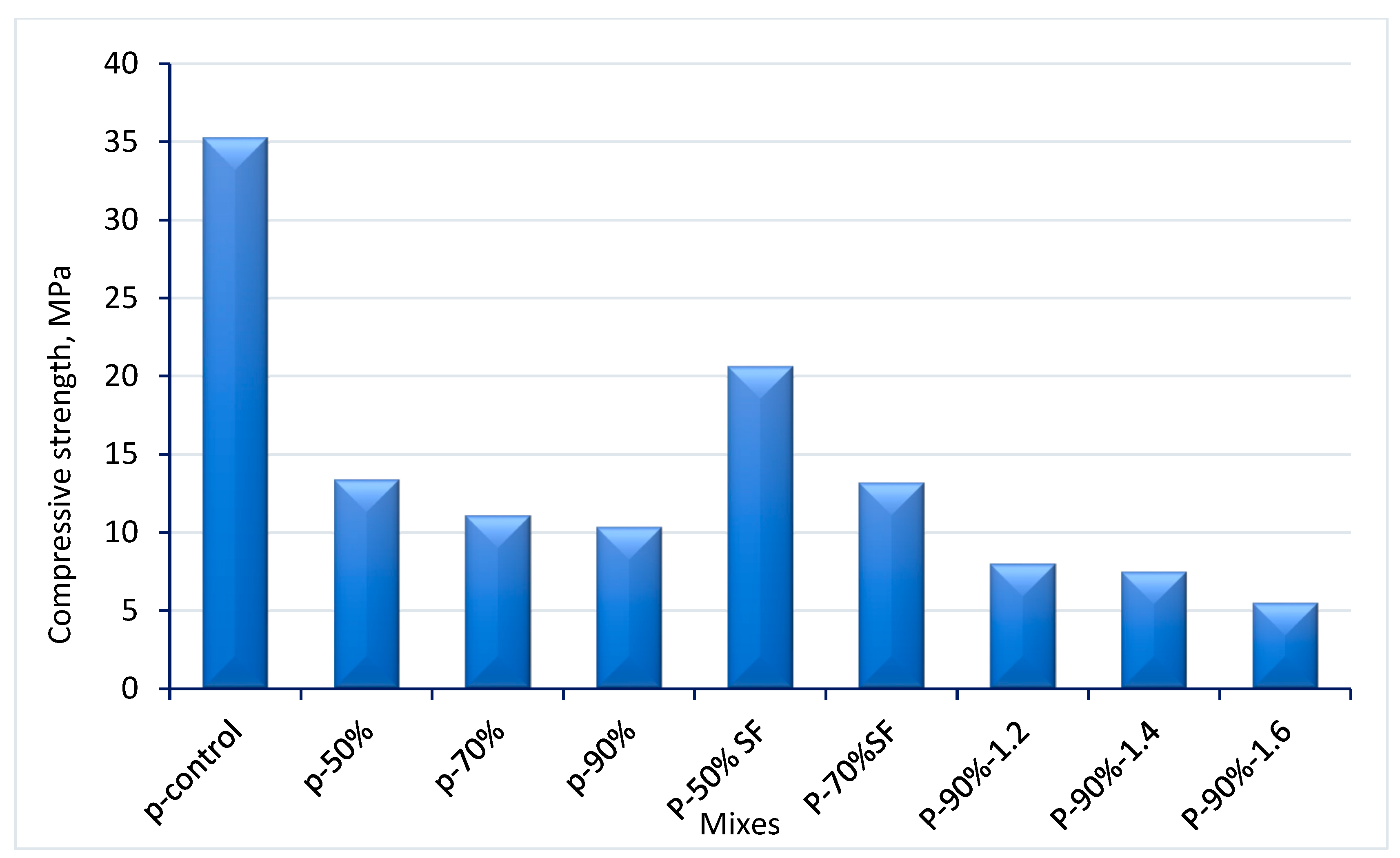
The experimental results demonstrate a clear and significant influence of polystyrene (PS) bead content on the compressive strength of the concrete mixtures. This test used cube specimens of 100 × 100 × 100 mm to determine the compressive strength of polystyrene mixtures. As illustrated in Figure 3, the incremental replacement of conventional aggregate with polystyrene beads leads to a substantial decrease in compressive strength across all testing ages (7, 28, and 56 days).
Figure 3.
Compressive strength at 56 days for all mixes.
The reference mix (p-control) achieved the highest compressive strength, reaching 35.3 MPa at 56 days. In contrast, the compressive strength of the polystyrene modified mixes exhibited a pronounced reduction, decreasing by approximately 62% for P-50% (13.4 MPa), 69% for P-70% (11.1 MPa), and 71% for P-90% (10.35 MPa) compared to the control. This inverse relationship between EPS content and strength is primarily attributed to the lower mechanical strength and stiffness of the lightweight polystyrene aggregate itself, coupled with an overall reduction in composite density.
The incorporation of SF effectively mitigated this strength reduction in mixes with moderate EPS content. The pozzolanic reaction between SF and calcium hydroxide (CaOH)2 generated additional calcium silicate hydrate (C-S-H) gel, densifying the cement paste matrix and improving the interfacial transition zone (ITZ) around the polystyrene beads. This mechanism is confirmed by the notable 54% increase in 56 days strength observed in mix P-50% SF (20.56 MPa) compared to its counterpart without SF, P-50% (13.4 MPa). The minimal strength gain in mix P-70% SF suggests that the positive effect of SF is increasingly outweighed by the dominance of the weak polystyrene aggregate as its proportion rises.
For mixes with very high polystyrene content (P-90%series, i.e., P-90%-1.2, P-90%-1.4, and P-90%-1.6), a different strategy was employed using perlite aggregate. Despite having lower absolute strengths than P-90%, mixes P-90%-1.2, P-90% 1.4, and P-90% 1.6 nevertheless performed admirably considering their remarkably high EPS content. A key observation is the significant strength development between 28 and 56 days in these mixes. For instance, the mix P-90%-1.6 exhibited a 34% increase in strength over this period, compared to a 15% increase for the p-90% mix without perlite. As with silica fume, perlite’s pozzolanic activity is responsible for this increased long-term benefit by continuing matrix densification and void filling, which eventually results in increased strength. The lightweight polystyrene concrete composite that was developed, however, is mainly meant for non-structural and semi-structural applications where weight reduction, low density, and thermal insulation are more important than high strength. These materials can be used for lightweight blocks, void-filling components, roof insulation layers, partition panels, and non-load-bearing walls. In certain situations, there may be major engineering and financial advantages to lowering the dead load and enhancing thermal performance.
3.3. Tensile Strength
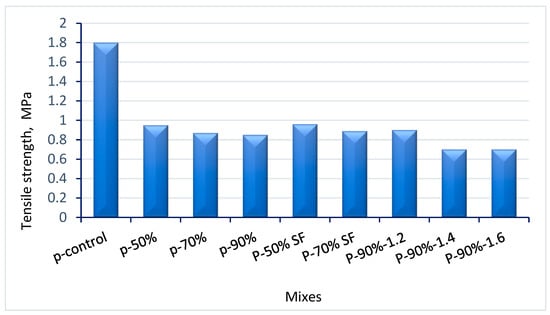
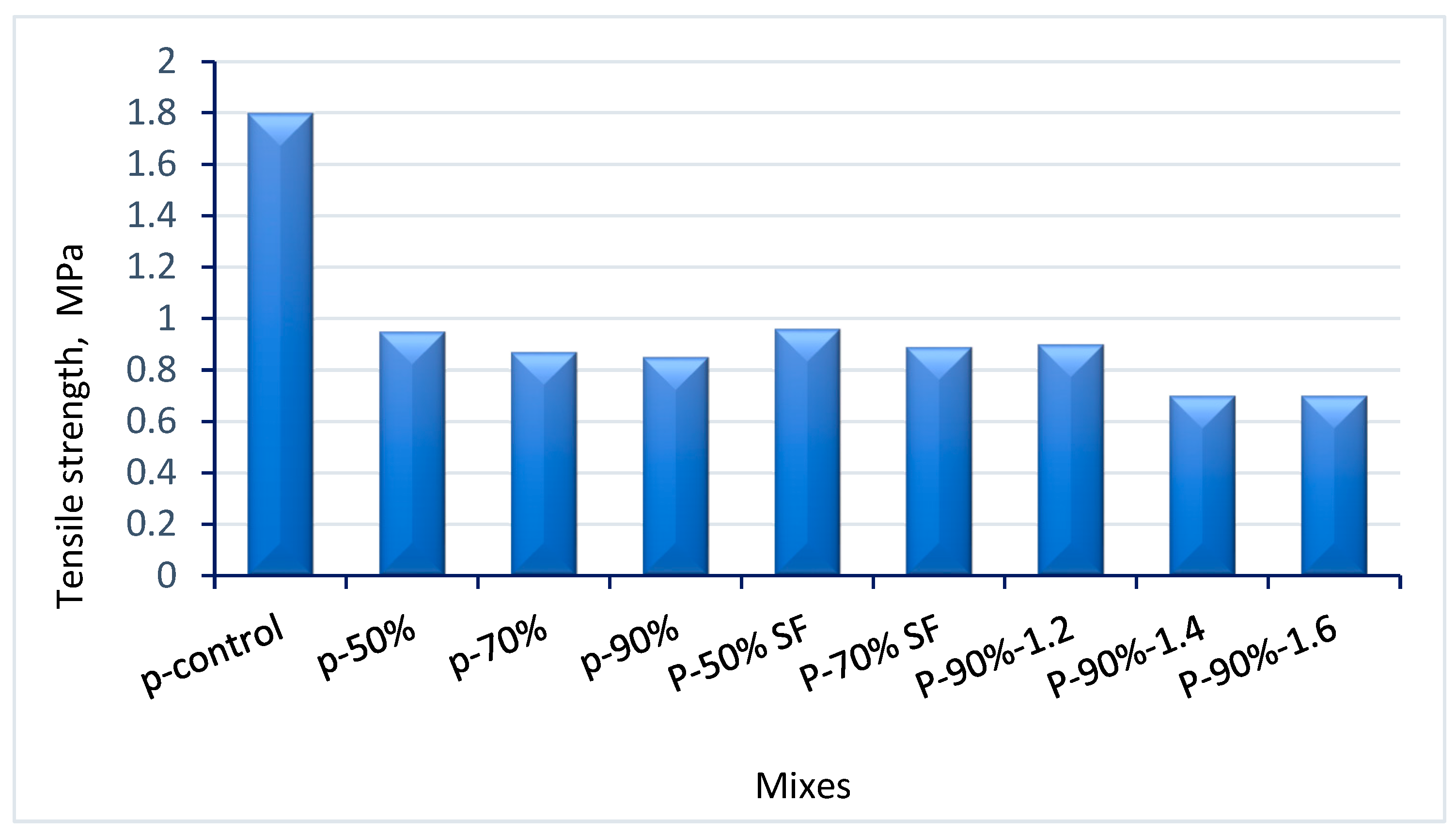
The splitting tensile strength was measured using 100 × 200 mm cylindrical specimens of all ages. This test was conducted in accordance with the American specification ASTM C496/C496M [26]. As presented in Figure 4, that indicates the control mix (P-control) consisted of conventional concrete, that is, without any lightweight aggregates or the addition of any additives, which yielded the highest tensile strength of 1.8 MPa. This rather high index indicates a dense and compact microstructure with a strong bonding interaction between the cement paste and aggregate particles.
Figure 4.
Tensile strength at 28 days for all mixes.
As partial sand replacement was made in mixes P-50%, P-70%, and P-90 with the use of polystyrene a considerable drop was registered in the tensile strength as the recorded values were 0.95 MPa, 0.87 MPa, and 0.85 MPa, respectively. The reduction is mostly due to the low stiffness and poor bonding nature of polystyrene particles, which are a soft inclusion into the concrete matrix, disrupting stress transfer, which decreases the general tensile performance.
To reduce this effect, the P-50%SF and P-70%SF mixes added silica fume with a dosage of 60 kg/m3. Its findings revealed an increase in tensile strength by a small margin of 0.96 MPa and 0.89 MPa, respectively. This can be attributed to the fine particle size and pozzolanic activity of the silica fume, which can aid in strengthening the interfacial transition zone (ITZ) and elevate the matrix density, as well as in the creation of extra calcium silicate hydrate (C-S-H) gel that all add to the tensile resistance of the cementitious mass.
Additional optimization techniques were used on the (P-90%-1.2) mix, including adding 18 kg/m3 perlite and 1 percent polypropylene fibers (3.2 kg/m3) as well as an alteration of the ratio of cement to aggregate (1.2, 1.4 and 1.6). The (P-90%-1.2) mix recorded a tensile strength of 0.90 MPa, higher than any other mix, implying that the intervening effect of fiber bridging and internal curing with perlite acted constructively in the tensile response, in addition to having a more desirable paste content.
Although the amount of polystyrene increased in the mixtures (P-90%-1.2, P-90%-1.4, P-90%-1.6), the tensile strength exhibited no significant decrease compared to the mix (P-90%) because of the inclusion of perlite aggregate, which serves as an internal curing agent for the concrete [31,32], in conjunction with polypropylene fibers. Consequently, we successfully incorporated a greater volume of polystyrene without a significant decrease in the tensile strength of the concrete [33].
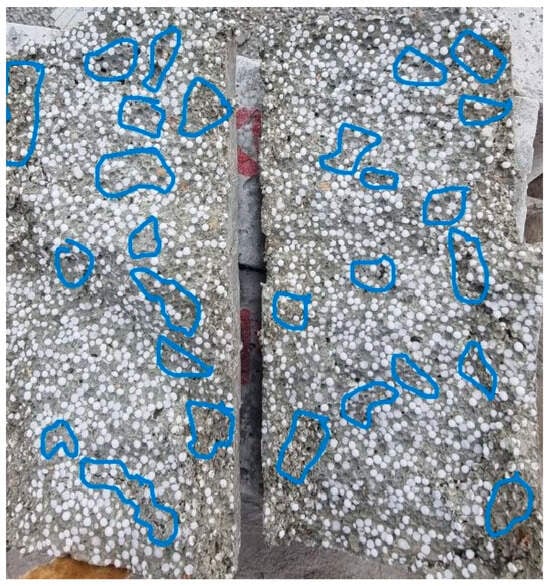
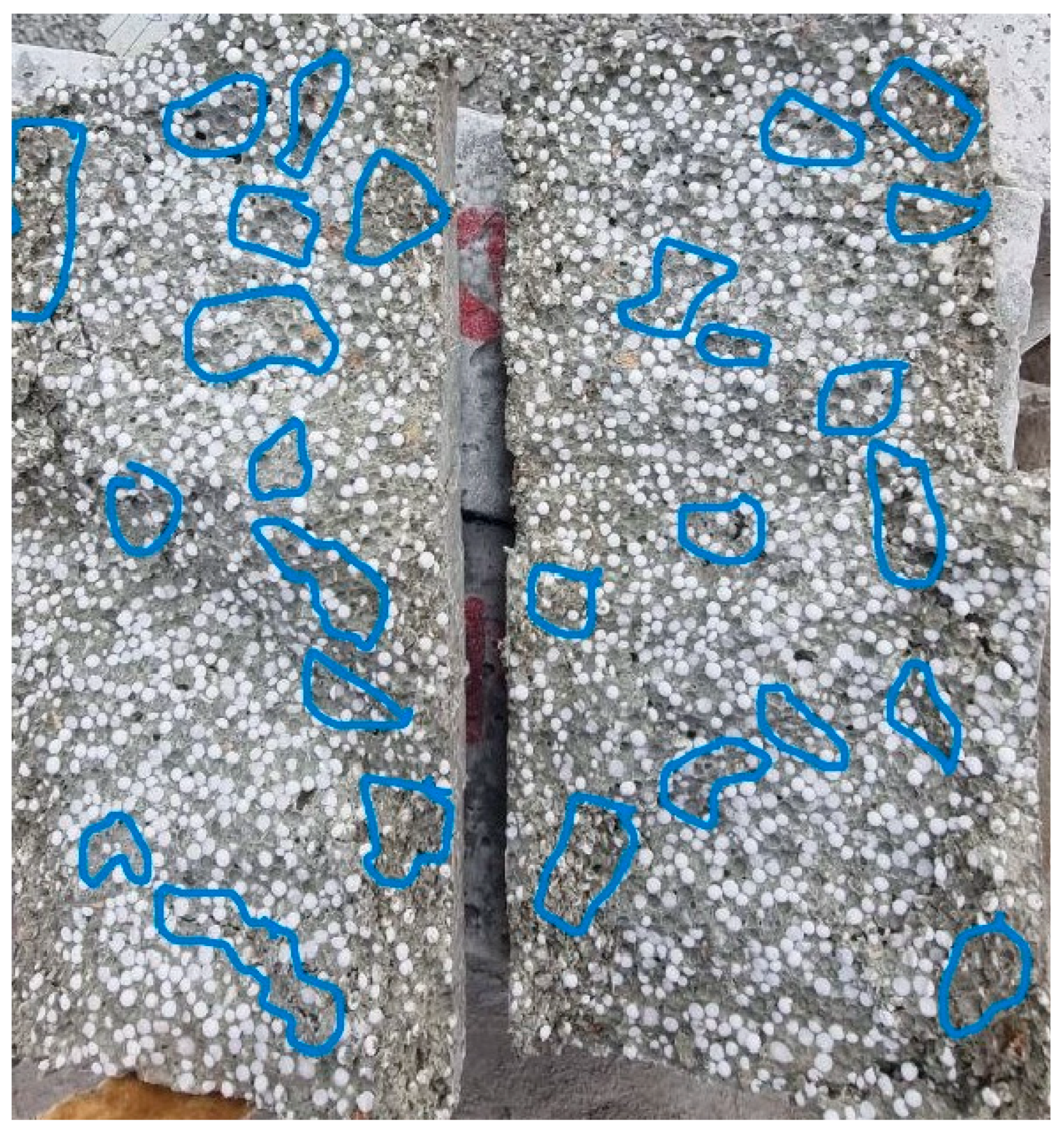
Figure 5 shows a concrete specimen after the indirect tensile test, where the fracture occurred along the length of the specimen. We can see from the specimen section that the polystyrene aggregate was split, and a portion of this aggregate separated from the specimen after its failure, as indicated by the marker. This behavior is attributed to the poor adhesion of the polystyrene aggregate to the cement mortar. Because of the weak bond between the cement matrix and the polystyrene particles, the specimens showed a relatively brittle failure that was characterized by sudden cracking and splitting. Nevertheless, fiber-reinforced specimens demonstrated better toughness and crack-bridging activity, failing more gradually and maintaining integrity after cracking. Compared to other fibers, polypropylene fiber prevents microcracking, improves certain mechanical properties including tensile and flexural strength, and is simple to use.
Figure 5.
Concrete sample after the tensile strength test.
3.4. Flexural Strength
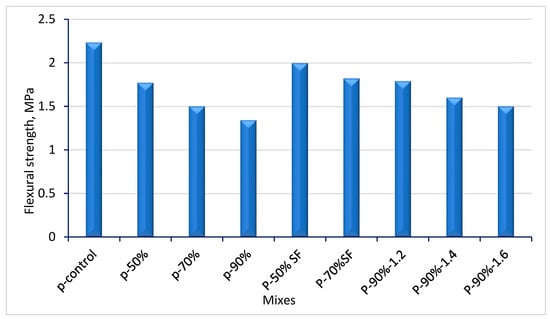
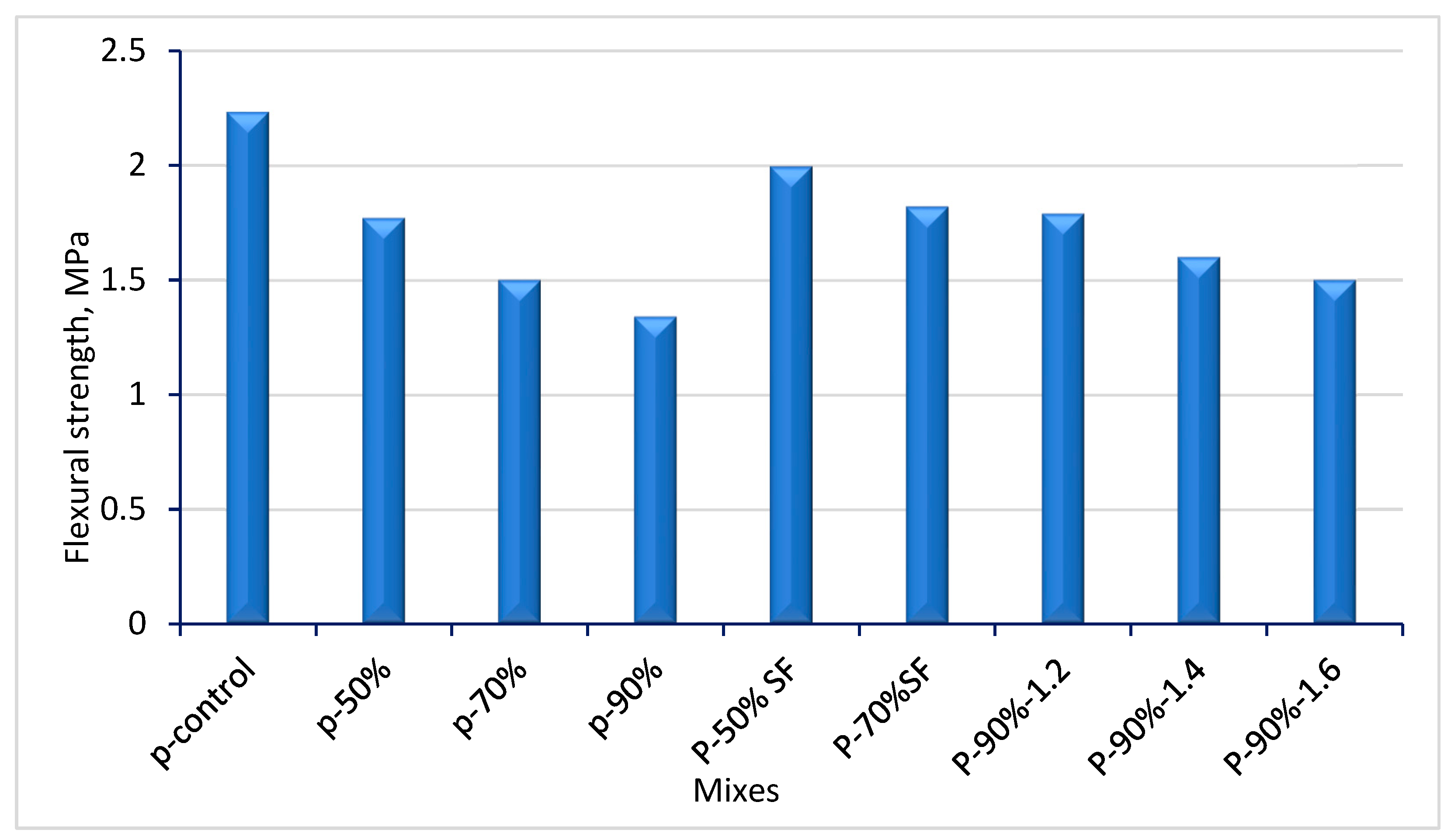
Third-point loading was applied to prism specimens of 100 × 100 × 400 mm in order to assess the flexural performance of polystyrene concrete. Flexural strengths of the concrete mixes were determined according to ASTM C78 [27]. The results, as summarized in Figure 6, show the influence of partial replacement of natural sand with polystyrene, and addition of silica fume, perlite and polypropylene fibers on the mechanical properties of the tested mixes. The highest flexural strength of 2.23 MPa was obtained in the reference mix p-control.
Figure 6.
Flexural strength at 28 days for all mixes.
Nonetheless, a 50% replacement of sand with polystyrene in mix P-50% yielded a considerable reduction in strength to 1.77 MPa, representing a 20.6% loss of strength to the control mix. The reduction in flexural strength became more pronounced with a higher polystyrene content, with mix P-70% recording a 32.9% decrease (1.50 MPa) and mix P-90 exhibiting a 40.0% decrease (1.34 MPa) relative to the control mix. The addition of the silica fume to mixtures P-50% SF and P-70% SF increased the flexural strength modestly to 1.99 MPa and 1.82 MPa, representing 10.7% and 18.5% decreases over the control mix. The addition of 1% polypropylene fibers to the fiber-reinforced mixes (P-90%-1.2, P-90%-1.4, and P-90%-1.6) had a significant positive impact on the flexural strength. The flexural strength enhancement for the mixtures (P-90%-1.2, P-90%-1.4, P-90%-1.6) is 33.5%, 19.4%, and 11.9%, respectively, compared with reference mix p-90%, attributable to the incorporation of polypropylene fibers, which enabled an increase in polystyrene content and improved flexural strength for these mixtures in comparison to the control mix p-90% [34]. As a lightweight porous aggregate, perlite primarily lowers density and heat conductivity while somewhat lowering compressive strength. By bridging microcracks and preventing crack propagation, polypropylene fibers, on the other hand, enhance crack resistance, ductility, and post-cracking behavior. Higher compressive, tensile, and flexural strengths are achieved by adding SF, which also densifies the interfacial transition zone (ITZ), enhances particle packing, and refines the pore structure [35].
3.5. Water Absorption
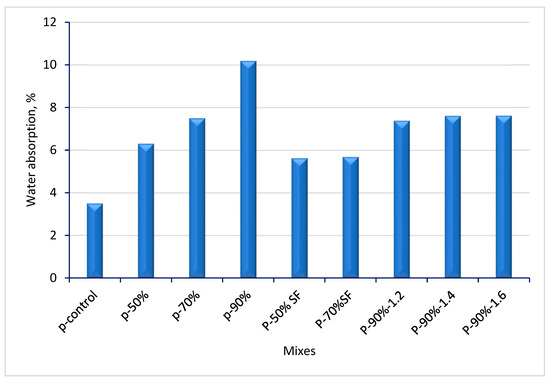
Despite LWC exhibiting greater absorption than conventional concrete, this characteristic does not affect its durability [36]. All the concrete mixes were measured with respect to water absorption according to the standard test method ASTM C642. The control mix had the least absorption of 3.5% hence the matrix is dense and well-compacted without many connectivity pores.
Water absorption of concrete increases with the increase in the amount of polystyrene. Although polystyrene does not absorb water, the increase in polystyrene causes an increase in the gaps in this concrete, its density also decreases, and absorption increases [37,38]. The absorption value for the reference mix p-control is 3.5%, and the mixes (p-50%, p-70%, p-90%) were (6.3%, 7.5%, 10.1%), respectively.
Nevertheless, water absorption also dropped significantly when SF was added to the P-50%SF and P-70%SF mixes in comparison to the relevant polystyrene-only mixes. This is largely attributed to the pozzolanic reactivity and micro-filler effect of SF, which improves the packing of particles and polishes the pore structure.
Additionally, the three modified P-90% mixes with perlite and 1% of polypropylene fibers at different ratios (1:1.2, 1:1.4, and 1:1.6) of sand and cement turned out to absorb lower amounts than the initial P-90% mix. The P-90%-1.2 mix had the lowest absorption of all that at 7.38%, which implies a synergistic effect between the lightweight characteristics and the insulation features of perlite, and the crack-bridging action of polypropylene fibers. These components collectively help avoid microcrack development and/or minimize connectivity between the interconnected pores, and thus contribute to increasing the resistance of the mix to water ingress. In general, the lightweight concrete has high water absorption compare with traditional concrete and this does not affect on durability [39] Figure 7 presents the water absorption results for all concrete mixtures.
Figure 7.
Water absorption for all mixes.
3.6. Density
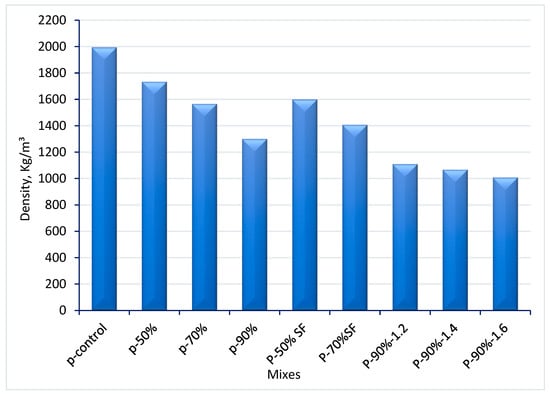
The concrete is appropriate for structural lightweight concrete ASTM C330 [40] if its density is between 1440 and 1840 kg/m3 and its compressive strength is higher than 17 MPa. A strength of 7–17 MPa is suitable for masonry or non-load-bearing blocks ASTM C331 [41]. If the concrete’s strength is less than 7 MPa, its density is low, and its thermal insulation is enhanced, it can be used to fill or insulate it ASTM C332 [42]. Concrete density was determined according to the standard procedures included in ASTM C642 to determine the influence of different lightweight additives on the unit weight of the mixes. Adopting this standard ensures uniformity of testing and provides a reliable assessment of the dry density of concrete, which is a fundamental parameter of the design of LWC. The findings indicate that there is an inverse relationship between lightweight materials and the consequent concrete density.
The control mix (p-control) had the highest density of 1995 kg/m3. With natural sand replaced by 50%, 70%, and 90% by polystyrene, a significant decrease in density was recorded: P-50% (1734 kg/m3), P-70% (1566 kg/m3), and P-90% (1300 kg/m3), showing reductions of 13.1%, 21.5%, and 34.8% respectively. Such reductions demonstrate the utility of polystyrene in the loading of concrete since it has low density.
The addition of SF into the mixes (P-50%SF and P-70%SF), the following densities were obtained: 1600 kg/m3 and 1407.5 kg/m3, when SF is added, the concrete slump is significantly reduced compared to other mixes, and since the polystyrene aggregate has a dry surface, this addition caused a decrease in workability, which made the gaps increase, and the density of these mixes decreased, so the mix becomes less dense but sustains adequate cohesion and structural strength [43].
The greatest density reductions were observed in mixtures of polystyrene, perlite, and polypropylene fibers, with P-90%-1.2, P-90%-1.4, and P-90%-1.6 recording densities of 1109, 1067 and 1008 kg/m3, representing the percent reduction of 44.37%, 46.47% and 49.51% of the control mix (p-90%), respectively, the density of concrete has significantly decreased due to the use of ultra-lightweight materials instead of traditional ones. These materials contain a high proportion of low-density solids and trapped air, which considerably reduces the unit weight of the mix.
To further enhance the structural integrity of the lightweight alloy, polypropylene fibers are added to the matrix material. This addition provides strength without significantly increasing the weight.
The density values of all concrete mixes are presented in Figure 8.
Figure 8.
Density for all mixes.
3.7. Thermal Conductivity
Valore [44] illustrated the oven-dry density of concrete as a function of the logarithm of the thermal conductivity, resulting in a linear relationship represented by the equation:
where, d is oven dry density (kg/m3), and kc is the thermal conductivity (w/m2·k).
This equation, in more popular usage on LWC, estimates the amount of convection better than other linear methods and in particular when porous aggregates are present. This is summarised in the results Table 6, and it shows that there is a non-linear dependence of thermal conductivity on density, and this is mainly caused by progressive replacement of natural sand materials with expanded polystyrene (EPS) and also in later mixes addition of perlite and polypropylene fibers.
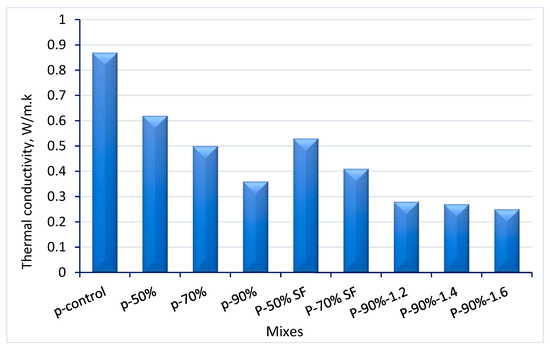
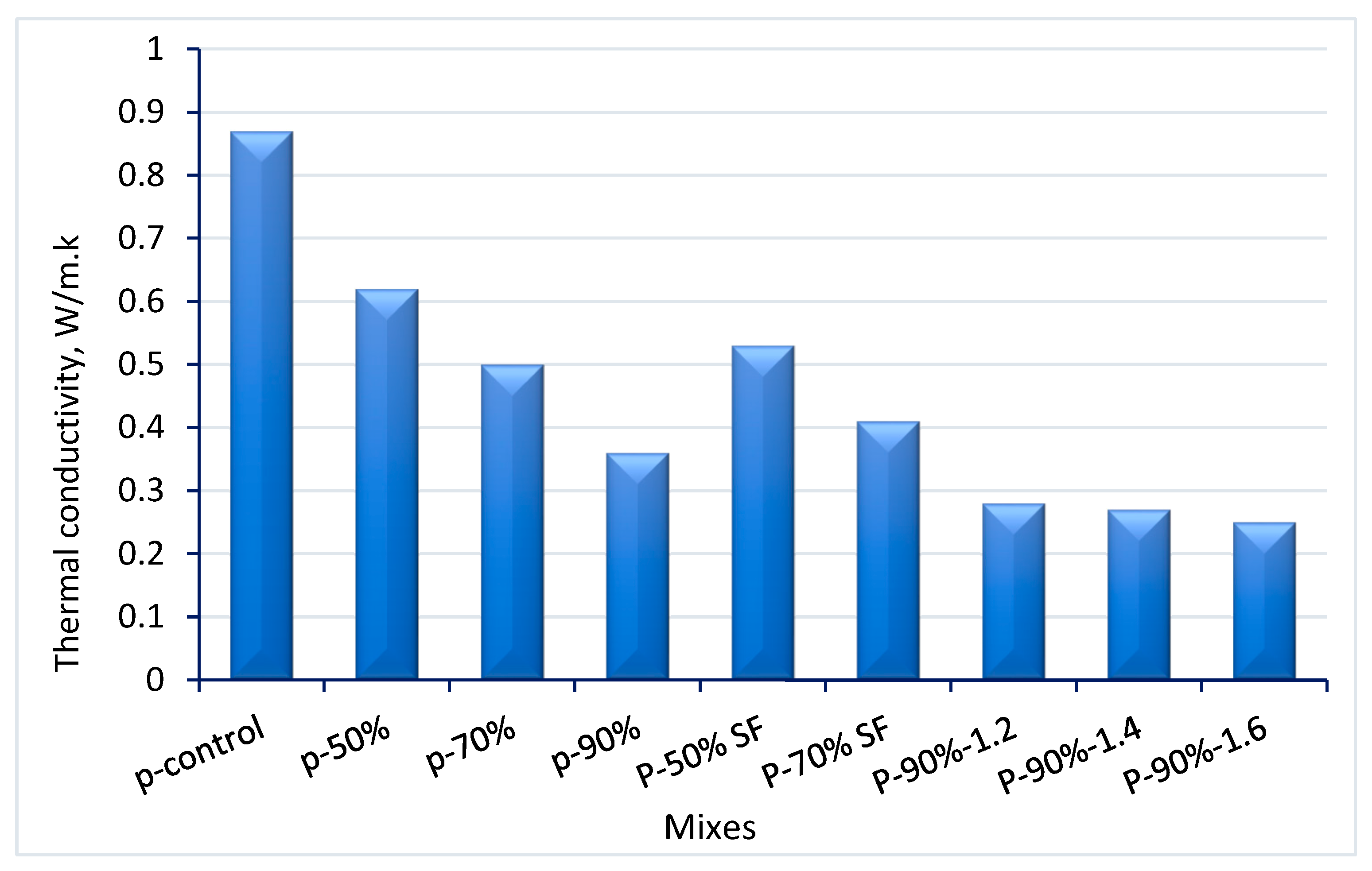
Indicatively, the mix with the highest density 1995 kg/m3, having no lightweight additives registered, has the highest thermal conductivity rate of 0.87 W/m·K. However, as the proportion of the replaced part of the sand by the polystyrene has grown to 50 to 90%, the density has significantly decreased to the 1300 kg/m3 level, and thermal conductivity has declined to 0.36 W/m·K in the P-90 mixture.
The addition of silica fume to the P-50% SF and P-70% SF also decreased thermal conductivity to 0.53 and 0.41 W/m·K, respectively. This is explained by not only a lower cement content but is also attributed to the refining of pore structure and solid-phase conductivity by SF [45].
But the greatest minimisation was in the group of fiber-reinforced, perlite-containing series (P-90%-1.2 to P-90%-1.6). The lowest densities of these mixes (1109 to 1008 kg/m3) were obtained, with the thermal conductivity values between 0.28 and 0.25 W/m·K. This significant reduction can be attributed to the fact that polystyrene has an enclosed cellular structure, perlite is porous, and the combination of the two is augmented by the fiber network, which stabilises the internal microstructure without raising density.
These results explicitly show that the reduction in density with the help of lightweight aggregates and fibers is a viable measure to boost thermal insulation abilities. The improved mixes have structural continuity with a significant reduction of heat transfer, so they can be used in building envelopes, thermal insulation layers and energy optimised construction systems [46,47]. Table 7 presents the thermal conductivity and density values for all concrete samples, also Figure 9 shows the thermal conductivity for all mixes.
Table 7.
Thermal conductivity and density for all mixes.
Figure 9.
Thermal conductivity for all mixes.
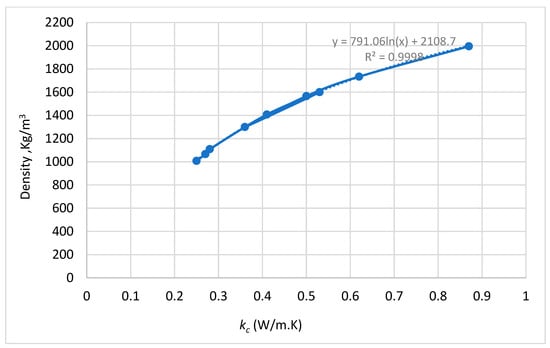
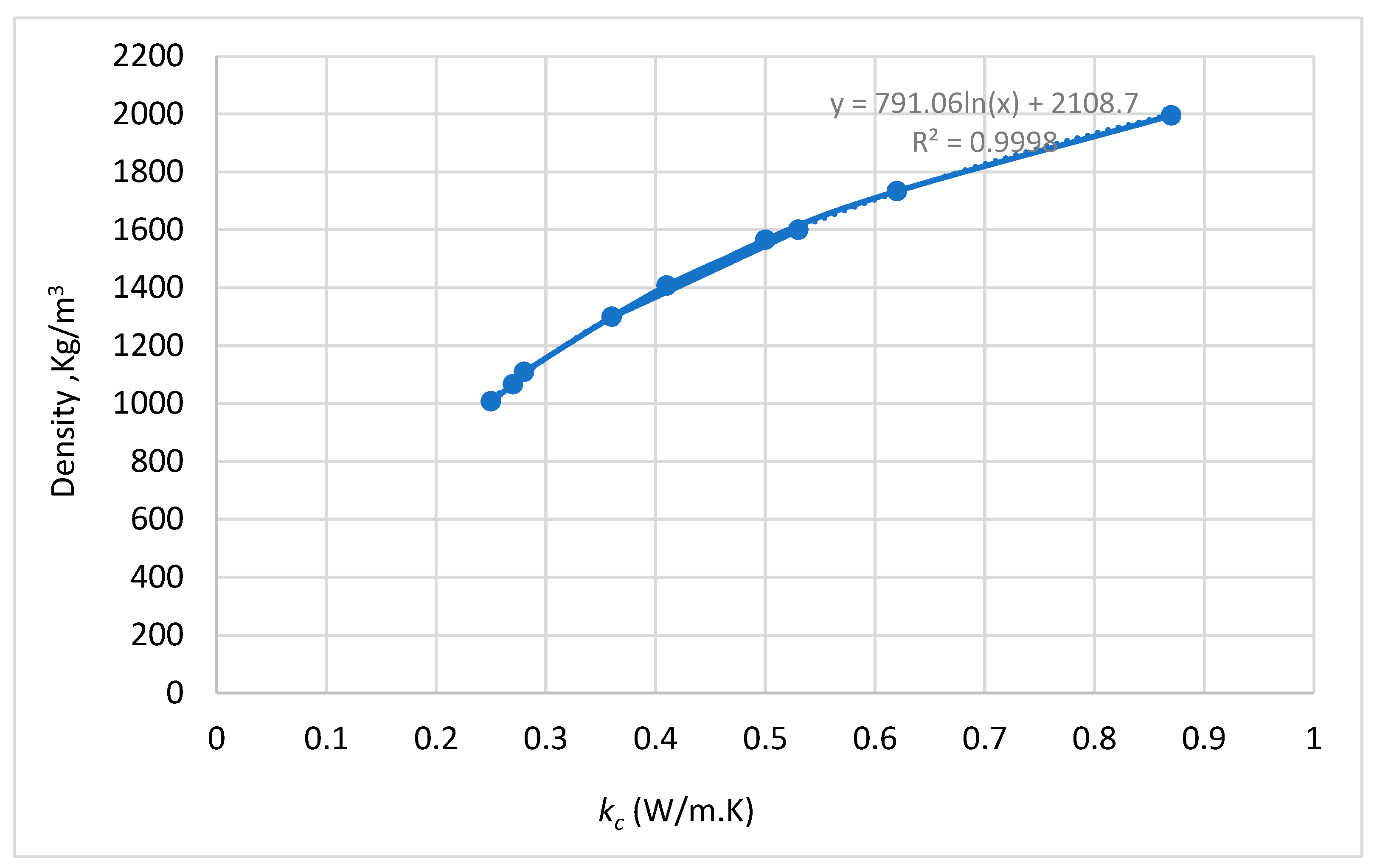
The relationship between thermal conductivity (kc) and density (ρ) is evidently positive, as shown in the experimental data from the mixes investigated. As density decreases, thermal conductivity also decreases. For example, the control mix, which has the highest density, 1995 kg/m3, exhibits the highest thermal conductivity, 0.87 W/m·K. In contrast, the mixture with the lowest density (P-90%-1.6, ρ = 1008 kg/m3) has the lowest thermal conductivity (0.25 W/m·K).
This trend can be attributed to the mechanisms of heat transfer in composite materials. Overall, materials with higher density can contain more solid material per square inch of surface area, creating more continuous pathways for conducting heat. Conversely, lighter density mixes contain more air voids or lightweight aggregates to enhance thermal insulation because air has a low inherent thermal conductivity (~0.024 W/m·K). The loss of solid matrix connectivity inhibits the transmission of phonons, the primary heat carriers in non-metallic solids, which ultimately reduces overall thermal conductivity.
This behavior can be explained using established theoretical models, such as the Effective Medium Theory (EMT) [48] or the Lewis-Nielsen equation [49], which describe how the thermal properties of structurally heterogeneous materials vary with the concentration and distribution of their constituents.
The observed positive correlation between density and thermal conductivity highlights the importance of material composition in engineering applications that require specific thermal insulation or conduction properties. To explain the association depicted in Figure 10, many regression models were assessed, including linear and nonlinear (logarithmic) fits. With a greater coefficient of determination (R2) and a lower fitting error than the linear model, the logarithmic model was chosen because it provided a better correlation with the experimental data. Furthermore, a nonlinear behavior is indicated by the observed trend, which exhibits a quick change at lower values followed by a gradual stability at higher levels. Physically, this behavior makes sense for lightweight polystyrene concrete, where the strength loss lessens with increasing polystyrene content. Consequently, the material response is more accurately represented by the logarithmic function. Figure 10 shows the relationship between thermal conductivity and concrete density for all the mixtures. Furthermore, Table 8 indicates that, according to the data provided, the new material appears to compete with foamed concrete.
Figure 10.
Relationship between thermal conductivity and density for all the mixes.
Table 8.
Comparison between foamed concrete and polystyrene concrete.
4. Conclusions
The experimental findings show that the amount of polystyrene (EPS) beads in the concrete mixtures has a noticeable and substantial impact on their mechanical properties. The following conclusions are drawn:
- The gradual substitution of polystyrene beads for traditional aggregate resulted in a significant drop in compressive strength at all testing ages. However, SF was successfully added to mixes with a moderate EPS level to counteract this strength loss.
- In comparison to mix proportions 1.4 and 1.6, the mix proportion (P-90%-1.2) that contained perlite and polypropylene fiber recorded a high tensile strength. This suggests that, in addition to having a more desirable paste content, the intervening effect of fiber bridging and internal curing with perlite acted constructively in the tensile response.
- Due to the addition of polypropylene fibers, which allowed for a higher polystyrene content and better flexural strength for these mixtures, the flexural strength improvement for the mixtures containing perlite and polypropylene was compared with the reference mix (p-90%).
- It was found that the three modified P-90% mixes, including perlite and polypropylene fibers at varying ratios of 1:1.2, 1:1.4, and 1:1.6 of sand and cement, absorbed less than the original P-90% mix. All of these elements work together to prevent the formation of microcracks and/or reduce connectivity between the linked pores, which increases the mix’s resistance to water intrusion.
- By substituting ultra-lightweight materials with conventional ones, concrete’s density has dramatically dropped. These materials have a large percentage of trapped air and low-density solids, which significantly lowers the mix’s unit weight.
- Thermal conductivity values ranged from 0.28 to 0.25 W/m·K, indicating the lowest densities. This notable decrease can be explained by the confined cellular structure of polystyrene, the porous nature of perlite, and the fiber network’s enhancement of the two materials, which stabilises the internal microstructure without increasing density.
- The apparent positive relationship between density and thermal conductivity emphasises how crucial material composition is for engineering applications requiring certain conduction or thermal insulation qualities.
Author Contributions
A.J.: Writing—review and editing, Formal analysis, Visualization, Validation, Data curation. M.S.W.: Writing—review and editing, Visualization, Validation, Formal analysis. H.A.A.-H.: Writing—review and editing, Resources, Investigation, Visualization, Formal analysis. A.J.K.: Visualization, resources, writing-review & editing. H.A.S.P.: Visualization, resources, writing-review & editing. L.F.A.B.: Visualization, resources, writing-review & editing. A.D.: Visualization, Writing—review and editing, Supervision, Resources, Investigation, Funding acquisition. All authors contributed to the article and approved the submitted version. All authors have read and agreed to the published version of the manuscript.
Funding
This work was partially supported by the GeoBioTec Research Unit, through the strategic projects UIDB/04035/2025 (https://doi.org/10.54499/UIDB/04035/2025) and UIDP/04035/2020 (https://doi.org/10.54499/UIDP/04035/2025), funded by the Fundação para a Ciência e a Tecnologia, IP/MCTES through national funds (PIDDAC). Funding for the period 2025–2029-transition phase.
Institutional Review Board Statement
Not applicable.
Informed Consent Statement
Not applicable.
Data Availability Statement
The authors declare that the data supporting the findings of this study are available within the paper.
Acknowledgments
The experimental techniques were carried out at the Construction Materials Laboratory of the University of Kerbala. The authors would like to thank the staff for their help.
Conflicts of Interest
The authors declare no conflicts of interest.
References
- Kan, A.; Demirboğa, R. A new technique of processing for waste-expanded polystyrene foams as aggregates. J. Mech. Work. Technol. 2009, 209, 2994–3000. [Google Scholar] [CrossRef] [Scilit]
- Whwah, M.S.; Radhi, M.S.; Dulaimi, A.; Bernardo, L.F.A.; Ribeiro, T.P. Simultaneous Effects of Perlite Fine Aggregate and Silica Fume on the Physical Properties of Lightweight Cement Mortars. CivilEng 2025, 6, 51. [Google Scholar] [CrossRef] [Scilit]
- Chen, B.; Liu, N. A novel lightweight concrete-fabrication and its thermal and mechanical properties. Constr. Build. Mater. 2013, 44, 691–698. [Google Scholar] [CrossRef] [Scilit]
- Schackow, A.; Effting, C.; Folgueras, M.V.; Güths, S.; Mendes, G.A. Mechanical and thermal properties of lightweight concretes with vermiculite and EPS using air-entraining agent. Constr. Build. Mater. 2014, 57, 190–197. [Google Scholar] [CrossRef] [Scilit]
- Babu, D.S.; Babu, K.G.; Wee, T. Properties of lightweight expanded polystyrene aggregate concretes containing fly ash. Cem. Concr. Res. 2005, 35, 1218–1223. [Google Scholar] [CrossRef] [Scilit]
- Perry, S.H.; Bischoff, P.H.; Yamura, K. Mix details and material behaviour of polystyrene aggregate concrete. Mag. Concr. Res. 1991, 43, 71–76. [Google Scholar] [CrossRef] [Scilit]
- Xu, Y.; Jiang, L.; Xu, J.; Li, Y. Mechanical properties of expanded polystyrene lightweight aggregate concrete and brick. Constr. Build. Mater. 2012, 27, 32–38. [Google Scholar] [CrossRef] [Scilit]
- Madandoust, R.; Ranjbar, M.M.; Mousavi, S.Y. An investigation on the fresh properties of self-compacted lightweight concrete containing expanded polystyrene. Constr. Build. Mater. 2011, 25, 3721–3731. [Google Scholar] [CrossRef] [Scilit]
- ACI 234R-06; Guide for the Use of Silica Fume in Concrete. American Concrete Institute (ACI): Farmington Hills, MI, USA, 2006.
- Vennesland, O.; Gjorv, O.E. Silica Concrete–Protection Against Corrosion of Embedded Steel. Spec. Publ. 1983, 79, 719–730. [Google Scholar]
- JiaHao, L.; Lian, F.C.; Hejazi, F.; Azline, N. Study of properties and strength of no-fines concrete. IOP Conf. Ser. Earth Environ. Sci. 2019, 357, 012009. [Google Scholar]
- Sulong, N.H.R.; Mustapa, S.A.S.; Rashid, M.K.A. Application of expanded polystyrene (EPS) in buildings and constructions: A review. J. Appl. Polym. Sci. 2019, 136, 47529. [Google Scholar] [CrossRef] [Scilit]
- Minh, D.H.; Le Phuong, L. Effect of matrix particle size on EPS lightweight concrete properties. MATEC Web Conf. 2018, 251, 01027. [Google Scholar] [CrossRef] [Scilit]
- Chung, S.-Y.; Elrahman, M.A.; Stephan, D. Effects of expanded polystyrene (EPS) sizes and arrangements on the properties of lightweight concrete. Mater. Struct. Mater. Constr. 2018, 51, 57. [Google Scholar] [CrossRef] [Scilit]
- Karthick, M.D.; Ramya, S.B.; Bharathi, R.; Mullainathan, R. Experimental Study on Strength Behaviour of Concrete Block with Partial Replacement of “Expanded Polystyrene Beads”. Int. J. Eng. Res. Technol. 2018, 6, 1–5. [Google Scholar]
- Al-Mamoori, F.H.N.; Al-Mamoori, M.H.N.; Najim, W.N. Production of structural light-weight aggregate concrete using different types of Iraqi local crushed materials as coarse aggregate. J. Univ. Babylon Eng. Sci. 2018, 26, 362–375. [Google Scholar]
- Liu, N.; Chen, B. Experimental study of the influence of EPS particle size on the mechanical properties of EPS lightweight concrete. Constr. Build. Mater. 2014, 68, 227–232. [Google Scholar] [CrossRef] [Scilit]
- Al-Mamoori, A.H.; Alyhya, W.S.; A Al-Hussainy, H. The Behaviour of Reinforced Concrete Bridge Piers Using Different Types of Concrete Mix. IOP Conf. Ser. Mater. Sci. Eng. 2019, 584, 012044. [Google Scholar] [CrossRef] [Scilit]
- Aziz, A.A.; Al Mulla, I.F. An Experimental Investigation of the Mechanical Properties of Lightweight Concrete with Pumice Aggregate and Polypropylene Fibers. Eng. Technol. Appl. Sci. Res. 2025, 15, 26344–26350. [Google Scholar] [CrossRef] [Scilit]
- Behera, D.; Liu, K.-Y.; Rachman, F.; Worku, A.M. Innovations and applications in lightweight concrete: Review of current practices and future directions. Buildings 2025, 15, 2113. [Google Scholar] [CrossRef] [Scilit]
- IQS. Portland cement. In No. 5. Central Organization for Standardization and Quality Control; IQS: Baghdad, Iraq, 2019. [Google Scholar]
- IQS. Aggregate from natural sources for concrete and building construction. In No. 45. Central Organization for Standardization and Quality Control; IQS: Baghdad, Iraq, 1984. [Google Scholar]
- ASTM-1240-20; Standard Specification for Silica Fume Used in Cementitious Mixtures. ASTM International: West Conshohocken, PA, USA, 2020; Volume 4, pp. 1–7. [CrossRef] [Scilit]
- ASTM C143/C143M; Standard Test Method for Slump of Hydraulic-Cement Concrete, This Standard Is Issued Under the Fixed Designation. ASTM International: West Conshohocken, PA, USA, 2015.
- BS EN 12390-8:2019; Testing Hardened Concrete. British Standards Institution, BSI Standards Publication: London, UK, 2019.
- ASTM C496/C496M-11; Test Method for Splitting Tensile Strength of Cylindrical Concrete Specimens. ASTM International: West Conshohocken, PA, USA, 2011. [CrossRef] [Scilit]
- ASTM C78/C78M; Standard Test Method for Flexural Strength of Concrete (Using Simple Beam with Third-Point Loading). ASTM International: West Conshohocken, PA, USA, 2010. Available online: https://store.astm.org/astm-tpt-175.html (accessed on 30 January 2026).
- ASTM C642-21; Standard Test Method for Density, Absorption, and Voids in Hardened Concrete. ASTM International: West Conshohocken, PA, USA, 2022. Available online: https://store.astm.org/c0642-21.html (accessed on 30 January 2026).
- ACI 122R-14; Guide to Thermal Properties of Concrete and Masonry Systems. American Concrete Institute: Farmington Hills, Michigan, USA, 2014.
- Sun, Y.; Li, C.; You, J.; Bu, C.; Yu, L.; Yan, Z.; Liu, X.; Zhang, Y.; Chen, X. An Investigation of the Properties of Expanded Polystyrene Concrete with Fibers Based on an Orthogonal Experimental Design. Materials 2022, 15, 1228. [Google Scholar] [CrossRef] [Scilit] [PubMed]
- Whwah, M.S.; Mahmmod, L.M.R.; Abdoulhaleem, H.H.; Dulaimi, A. Internal Curing Utilising Recycled Concrete Aggregate: A Sustainable Approach for Improving High-Strength Concrete’s Performance. Arab. J. Sci. Eng. 2025, 50, 8061–8076. [Google Scholar] [CrossRef] [Scilit]
- Whwah, M.S.; A Al-Hussainy, H.; Dulaimi, A.; Bernardo, L.F.A.; Ribeiro, T.P. Investigation of the Effects of Water-to-Cement Ratios on Concrete with Varying Fine Expanded Perlite Aggregate Content. J. Compos. Sci. 2025, 9, 390. [Google Scholar] [CrossRef] [Scilit]
- Chen, B.; Liu, J. Properties of lightweight expanded polystyrene concrete reinforced with steel fiber. Cem. Concr. Res. 2004, 34, 1259–1263. [Google Scholar] [CrossRef] [Scilit]
- Canbaz, M.; Türeyen, A.C. Effect of expanded polystyrene beads on the properties of foam concrete containing polypropylene fiber. Chall. J. Concr. Res. Lett. 2022, 13, 28–35. [Google Scholar] [CrossRef] [Scilit]
- Liao, J.; Yang, B.-X.; Lin, Z.; Zheng, Y.; Quach, W.-M.; Guan, H. Autogenous and Drying Shrinkage of Ultra-High-Performance Concrete Strengthened with Ultra-High Molecular Weight Polyethylene Fibers. J. Build. Eng. 2025, 117, 114853. [Google Scholar]
- Hanson, J.A. Replacement of Lightweight Aggregate Fines with Natural Sand in Structural Concrete. ACI J. Proc. 1964, 61, 779–794. [Google Scholar] [CrossRef] [Scilit] [PubMed]
- Abah, J.C.; Ndububa, E.E.; Ikpe, E.O.; Abah, J.C.; Ndububa, E.E.; Ikpe, E.O. An Evaluation of the Water Absorption and Density Properties of Expanded Polystyrene Sanded Concrete. Open J. Civ. Eng. 2018, 8, 524–532. [Google Scholar] [CrossRef]
- Herki, B.; Khatib, J. Valorisation of waste expanded polystyrene in concrete using a novel recycling technique. Eur. J. Environ. Civ. Eng. 2017, 21, 1384–1402. [Google Scholar] [CrossRef] [Scilit]
- Feizbahr, M.; Pourzanjani, P. The impact of advanced concrete technologies on modern construction and aesthetics. J. Rev. Sci. Eng. 2024, 2024, 1–9. [Google Scholar]
- ASTM C330/C330M; Standard Specification for Lightweight Aggregates for Structural Concrete. ASTM International: West Conshohocken, PA, USA, 2023.
- ASTM C331/C331M; Standard Specification for Lightweight Aggregates for Concrete Masonry Units. ASTM International: West Conshohocken, PA, USA, 2022.
- ASTM C332/C332M; Standard Specification for Lightweight Aggregates for Concrete Roof Deck Insulation. ASTM International: West Conshohocken, PA, USA, 2022.
- Askar, L.K.; Mosa Albarwary, I.H.; Askar, M.K. Use Of Expanded Polystyrene (Eps) Beads In Silica-Fume Concrete. J. Univ. Duhok 2019, 22, 30–38. [Google Scholar] [CrossRef] [Scilit]
- Valore, R.C. Calculations of U-Values of Hollow Concrete Masonry. Concr. Int. 1980, 2, 40–63. [Google Scholar]
- Baghban, M.H.; Jacobsen, S.; Asadi, I. Assessing Thermal Conductivity and Predictive Modeling:Impact of Silica Fume and Macro Pores on Hardened Cement Paste. Preprint 2024. [Google Scholar] [CrossRef] [Scilit]
- Kontoleon, K.; Theodosiou, T.; Tsikaloudaki, K. The influence of concrete density and conductivity on walls’ thermal inertia parameters under a variety of masonry and insulation placements. Appl. Energy 2013, 112, 325–337. [Google Scholar] [CrossRef] [Scilit]
- Collet, F.; Pretot, S. Thermal conductivity of hemp concretes: Variation with formulation, density and water content. Constr. Build. Mater. 2014, 65, 612–619. [Google Scholar] [CrossRef] [Scilit]
- Torquato, S. Random Heterogeneous Materials. In Microstructure and Macroscopic Properties; Springer: Berlin/Heidelberg, Germany, 2002; Volume 16. [Google Scholar] [CrossRef] [Scilit]
- Nielsen, L.E. Thermal conductivity of particulate-filled polymers. J. Appl. Polym. Sci. 1973, 17, 3819–3820. [Google Scholar] [CrossRef] [Scilit]

Disclaimer/Publisher’s Note: The statements, opinions and data contained in all publications are solely those of the individual author(s) and contributor(s) and not of MDPI and/or the editor(s). MDPI and/or the editor(s) disclaim responsibility for any injury to people or property resulting from any ideas, methods, instructions or products referred to in the content. |
© 2026 by the authors. Licensee MDPI, Basel, Switzerland. This article is an open access article distributed under the terms and conditions of the Creative Commons Attribution (CC BY) license.