


Abstract
This study investigates the synthesis, phase evolution, and high-temperature oxidation behavior of multi-component aluminide coatings on EP670 (Fe-Ni base), EP718 (Ni-Fe base), and EP648 (Ni-base) superalloys. The coatings were produced using an economical hot-dip aluminizing method, followed by diffusion heat treatment at 1100 °C. In the as-deposited state, the coatings exhibit a heterogeneous structure consisting of an aluminum matrix with various Al-rich intermetallic inclusions. Subsequent heat treatment promotes the redistribution of chemical elements, leading to the elimination of free aluminum and the stabilization of a protective β-phase matrix. Long-term oxidation tests were performed at 900 °C, 1100 °C, and 1300 °C for up to 1000 h. At 1100 °C, the coatings on EP670 and EP648 demonstrated high stability, following a near-parabolic oxidation law and significantly reducing mass gain compared to uncoated substrates. However, at 1100 °C, the EP718 alloy underwent catastrophic failure within 200 h due to pest oxidation, disintegrating into an oxide powder—a phenomenon quantitatively confirmed by the kinetic exponent dropping below 1.0. At 1300 °C, the thermal limit for all coatings was established, with protective properties failing after 50 h. Based on the aluminum depletion kinetics, the service life at 1100 °C was estimated at 1300 h for EP670 and 2200 h for EP648. Scratch testing confirmed a complete absence of interfacial adhesive cracks across all systems. Contact loading triggered only cohesive cracks localized within the near-surface zone of the coatings. The results highlight the superior thermodynamic compatibility of the EP670 and EP648 systems with aluminide coatings, making them the most suitable candidates for extreme high-temperature applications.
1. Introduction
The continuous advancement in aerospace, power generation, and automotive engineering demands materials capable of withstanding increasingly harsh environments characterized by high temperatures and aggressive oxidizing atmospheres. Among the various strategies developed to protect structural components, coatings based on iron and nickel aluminides, such as Fe–Al and Ni–Al systems, have emerged as some of the most effective solutions. Their exceptional protective performance is primarily driven by the preferential oxidation of aluminum, resulting in the formation of a continuous, dense, and stable α-Al2O3 scale [1,2,3]. This alumina layer acts as a robust kinetic barrier against oxygen diffusion, significantly reducing the degradation rate of the underlying substrate and ensuring long-term structural integrity [4]. Despite these superior oxidation-resistant properties, binary iron and nickel aluminides suffer from intrinsic limitations that hinder their widespread industrial application, most notably their low fracture toughness and susceptibility to brittle fracture at both room and sub-zero temperatures. To mitigate these issues and achieve a favorable balance of strength, ductility, and fracture toughness, complex alloying remains a primary research focus [5,6]. Strategic alloying promotes the refinement of the microstructure and increases the density of phase boundaries, which serve a dual purpose: they improve the mechanical response through grain boundary strengthening and act as high-diffusivity paths for aluminum atoms, ensuring the rapid restoration of the protective oxide film in the event of surface damage.
A significant challenge in the long-term reliability of these coatings is the inherent instability of their functional characteristics during service. At elevated temperatures, a steep chemical potential gradient exists between the aluminum-rich coating and the underlying substrate, driving the interdiffusion of major chemical elements. This diffusion-induced redistribution leads to a gradual depletion of the aluminum reservoir and qualitative changes in the structural-sensitive, physicochemical, and mechanical properties of the system [7,8]. Consequently, the coating’s ability to maintain a protective barrier diminishes, potentially leading to the formation of brittle secondary phases or Kirkendall voids at the interface, which drastically reduces bond strength and service life. Therefore, developing a comprehensive evaluation of the kinetics of structural-phase transformations during prolonged thermal exposure is essential for predicting the residual life and reliability of these protective systems.
The synthesis of aluminide coatings on iron- and nickel-based alloys is traditionally achieved through several technologies, including thermal spraying [9,10], self-propagating slurry aluminizing [11,12], pack cementation [13,14], and various deposition methods [15]. However, these techniques possess several inherent disadvantages. Thermal spraying, for instance, often fails to produce completely pore-free coatings [16], allowing aggressive media to reach the base material. Furthermore, this method causes melting, oxidation, and recrystallization of the feedstock, leading to residual stress build-up during solidification [17]. Although slurry aluminizing is a cost-effective and straightforward method for surface modification, it possesses several processing limitations. Specifically, thick slurry deposits tend to form highly porous and structurally loose coatings upon heat treatment, which severely undermines their long-term protective performance. Furthermore, conventional slurry formulations frequently rely on toxic constituents; eliminating these hazardous additives drastically complicates the rheological control and preparation process of the paste [18]. The mismatch in diffusion rates between aluminum and substrate atoms during pack cementation induces the Kirkendall effect, which generates microscopic voids at the coating–substrate interface and impairs coating adhesion and protective properties [19]. Furthermore, most conventional deposition methods necessitate sophisticated and expensive equipment and are limited by low reaction rates due to the presence of diffusion barriers like aluminum or chromium oxides at the contact interfaces. These processes are frequently energy-intensive and offer limited flexibility for the formation of complex-shaped industrial components.
In the search for a more cost-effective and technologically accessible alternative, hot-dip aluminizing [20] followed by subsequent heat treatment [21] stands out as a promising route. Although this method involves the partial dissolution of the substrate into the molten aluminum bath, which may lead to minor changes in the final dimensions of the part, it remains the most practical approach for producing thick, dense, and metallurgically bonded protective layers. This technology is particularly advantageous for the synthesis of multi-component systems based on doped iron and nickel aluminides. Consequently, the hot-dip method was selected in the present work as the primary technique for obtaining high-performance, multi-component heat-resistant coatings. While hot-dip aluminizing has been extensively evaluated for standard steels and binary nickel alloys, a comprehensive comparative understanding of how multi-element substrate chemistry influences the long-term phase evolution and structural stability remains limited. The scientific novelty of this study lies in the systematic investigation of multi-component interdiffusion kinetics and phase transformation pathways within the coatings synthesized on three complex industrial superalloys: EP670, EP718, and EP648. For the first time, this work establishes a direct link between the specific refractory alloying elements of the substrate (such as Mo, W, Ti, and Nb) and the resulting structural stability or degradation modes of the aluminide layer during extended exposure up to 1000 h. Furthermore, it defines the precise thermal limits and quantifies the effective service life of each coating system based on aluminum depletion kinetics under high-temperature conditions.
The objective of this study is to analyze the formation mechanisms and the evolution of the structural and mechanical properties of these coatings under long-term thermal exposure, providing a foundation for their broader industrial implementation in high-temperature applications.
2. Materials and Methods
Three commercially available iron and nickel superalloys with different chemical compositions—EP670 (Fe45Ni32Cr20Ti), EP718 (Ni45Fe27Cr15MoWTiAlNbR), and EP648 (Ni50Cr33FeWMoTiAlNb) (SibMetallTorg LLC, Novosibirsk, Russia)—were selected as substrates for the aluminizing process. The choice of these specific alloys was driven by the need to cover a wide range of nickel, iron, and chromium concentration ratios, which significantly influence the phase evolution and thermodynamic stability of the resulting aluminide layers. Additionally, these alloys contain varying amounts of alloying elements such as molybdenum (Mo), tungsten (W), titanium (Ti), and niobium (Nb). The presence of these elements alters the diffusion processes, which subsequently exerts a significant impact on the overall oxidation resistance of the material. The presence of these elements is of particular interest as they can effectively suppress undesirable interdiffusion between the coating and the substrate, thereby enhancing the long-term thermal stability of the protective system. The detailed chemical compositions of the investigated alloys are presented in Table 1.
Table 1.
Chemical composition of the investigated substrate alloys (wt. %).
Specimens with dimensions of 10 × 20 mm were cut from the bulk alloys. The specimen surfaces were ground using 320-grit SiC abrasive paper and subsequently degreased with acetone. Commercial-purity aluminum (AD1 grade) was melted in ceramic crucibles using a SNOL 8.2/1100 muffle furnace. The melt was heated to a temperature range of 700–760 °C. Prior to immersion, the oxide dross was manually removed from the melt surface to ensure direct metal-to-metal contact. The specimens were then immersed into the molten aluminum for durations ranging from 2 to 10 min, followed by cooling in still air to room temperature.
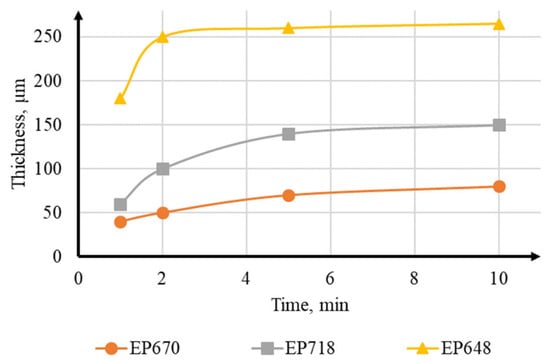
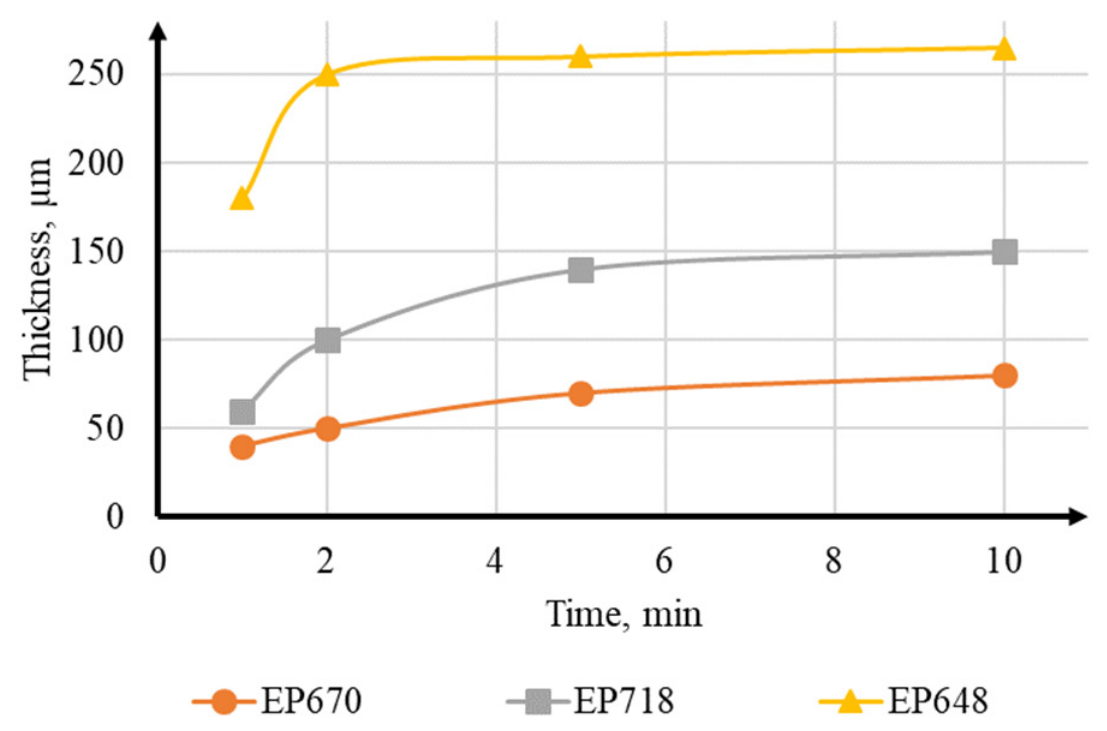
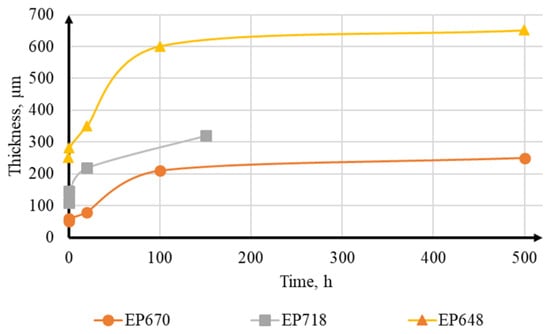
The analysis of the effect of aluminizing time on the thickness of the resulting coating revealed several key trends. For nickel-based alloys with the minimum iron content (EP648), coatings with a thickness exceeding 200 µm were formed (Figure 1). An increase in the iron (Fe) content in the alloy composition (EP670, and EP718) leads to a reduction in the coating thickness. Other alloying elements also influence the growth of the aluminum layer; specifically, a minimal concentration of additional alloying elements (as seen in EP670) contributes to a decrease in the total coating thickness.
Figure 1.
Time dependence of coating thickness after aluminizing at 760 °C.
Analysis of the processing parameters showed that increasing the immersion time beyond 2 min did not result in a significant increase in coating thickness. Conversely, shorter immersion times failed to consistently produce a continuous (defect-free) coating layer. Consequently, a standardized aluminizing regime of 760 °C for 2 min was adopted for all investigated specimens.
The cross-sectional microstructures of samples were evaluated using scanning electron microscopy (SEM) (Versa 3D, FEI, Morristown, NJ, USA). The elemental composition was determined via energy-dispersive X-ray spectroscopy (EDS) using the Oxford 51N1286 AZtecLive Expert system equipped with an Ultim Max 65 detector (Oxford Instruments, Abingdon, UK). To perform the microstructure observation and chemical analysis in SEM, the sample cross-sections were ground using abrasive papers and then mirror-polished using diamond slurry with a particle size of 0.5 μm. Prior to this, the specimens were mounted in conductive polyester resin using the POLYLAB S50L metallographic press (KEMIKA, Moscow, Russia).
Metallographic studies of the specimens were carried out using an optical microscope (Olympus BX-61, Olympus Corporation, Tokyo, Japan) equipped with the AnalySIS Pro 32 software (Soft Imaging System GmbH, Münster, Germany).
A Bruker D8 Advance Eco X-ray diffractometer (XRD) (Bruker AXS GmbH, Karlsruhe, Germany) in the Bragg–Brentano geometry with Kβ-filtered CuKα radiation (λ = 0.15406 nm) was used to identify the intermetallic phases.
The oxidation resistance of the coatings was evaluated gravimetrically by measuring the weight gain in accordance with the GOST 6130-71 standard [25] (“Metals. Methods for determination of oxidation resistance”). Tests were conducted on specimens with dimensions of 10 × 20 × 2 mm. The specimens were placed in individual ceramic crucibles equipped with ceramic lids to account for any potential oxide spallation. Thermal exposure was conducted in a SNOL 16/12 furnace at 900, 1100, and 1300 °C. The selected thermal exposure temperatures—900 °C, 1100 °C, and 1300 °C—directly correspond to different operational regimes and critical limits of the studied superalloys in actual industrial applications (such as gas turbine components). The temperature of 900 °C reflects the standard long-term continuous service environment for these materials. The temperature of 1100 °C simulates forced peak operational loads and accelerated thermal aging, which is critical for evaluating the long-term interdiffusion resistance of the coatings. Finally, the extreme temperature of 1300 °C was selected as an emergency benchmark to identify the absolute upper thermal limits, structural degradation pathways, and short-term failure mechanisms of the synthesized aluminide layers under catastrophic overheating conditions.
To ensure statistical reliability, all high-temperature oxidation tests and gravimetric measurements were performed using three parallel specimens per alloy condition. To properly account for oxide scale spallation during thermal cycling, each specimen was housed in an individual alumina (Al2O3) crucible with a lid that had been pre-calcined at 1100 °C to achieve mass stability. To determine the oxidation kinetics, the crucibles containing the specimens were weighed before the tests and at specific time intervals during the thermal exposure. For tests at 900 °C and 1100 °C, the weight measurements were taken after 10, 25, 50, 100, 150, 300, 500, 700, 900, and 1000 h of exposure. For the short-term exposure at 1300 °C, the data points were taken after 20, 50, 70 h. Weight measurements were performed using a Shinko VIBRA HT-220CE (Shinko Technos Co., Ltd., Osaka, Japan) analytical balance with an accuracy of 0.0001 g. The results were subsequently normalized to the surface area of the specimens to determine the specific mass gain mg/mm2.
Based on the mass change data, the average equivalent thickness of the coating layer consumed by oxidation was calculated using the following equation:
where Δm is the mass change in the specimen (kg); S is the surface area of the specimen (m2); and ρ is the density of the material (kg/m3).
In the calculation of the corrosion penetration depth, the density of the aluminide coatings was determined using the rule of mixtures, based on the densities of the plain substrate and the coated specimen, both of which were measured via hydrostatic weighing.
The study of the processes of adhesive/cohesive destruction of coatings, as well as the determination of their hardness by scratching, was carried out using a PMT-3M microhardness tester (JSC LOMO, Saint Petersburg, Russia). A Vickers tetrahedral diamond pyramid with an apex angle of 136° was used as an indenter. Scratching was carried out on the surface of the metallographic sample with the pyramid edge so that the diagonal of the pyramid base was located along the direction of indenter movement. The indenter was moved from the substrate to the coating perpendicular to the interface. The horizontal driving force was applied through a microscrew to the rotating platform of the microhardness tester. The 1000 μm long scratches were applied in the plane of the metallographic specimen from the substrate through the coating and beyond its limits. The uniform movement speed of the table was 20 μm/s. The vertical load on the indenter varied within 0.5–5 N.
The value of scratch hardness (H, MPa), which characterizes the resistance to destruction, was determined using Formula (2):
where F—normal force, N, and b—scratch width, mm.
H = (0.3782 × F)/b2,
To ensure the reproducibility of the results, a scratch test was performed on at least three duplicate samples for each condition. The experimental data are presented as mean values ± standard deviation.
3. Results and Discussion
3.1. Aluminizing
Metallographic investigations of the coating structures after aluminizing revealed that for the EP670, EP718, and EP648 alloys, the structure consists of an aluminum matrix containing large intermetallic inclusions and eutectic regions. A continuous transition layer is observed along the interface with the substrate.
Comparison of the results of the Energy-Dispersive Spectroscopy (EDS) and X-ray Diffraction (XRD) indicates the following.
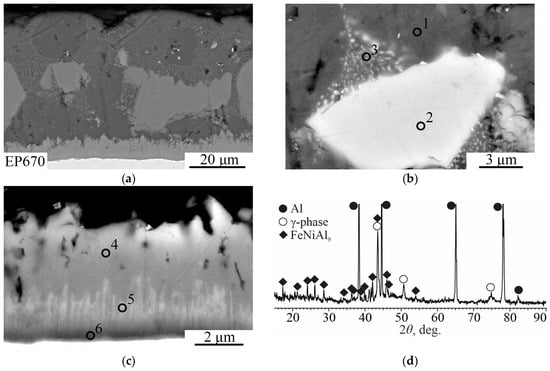
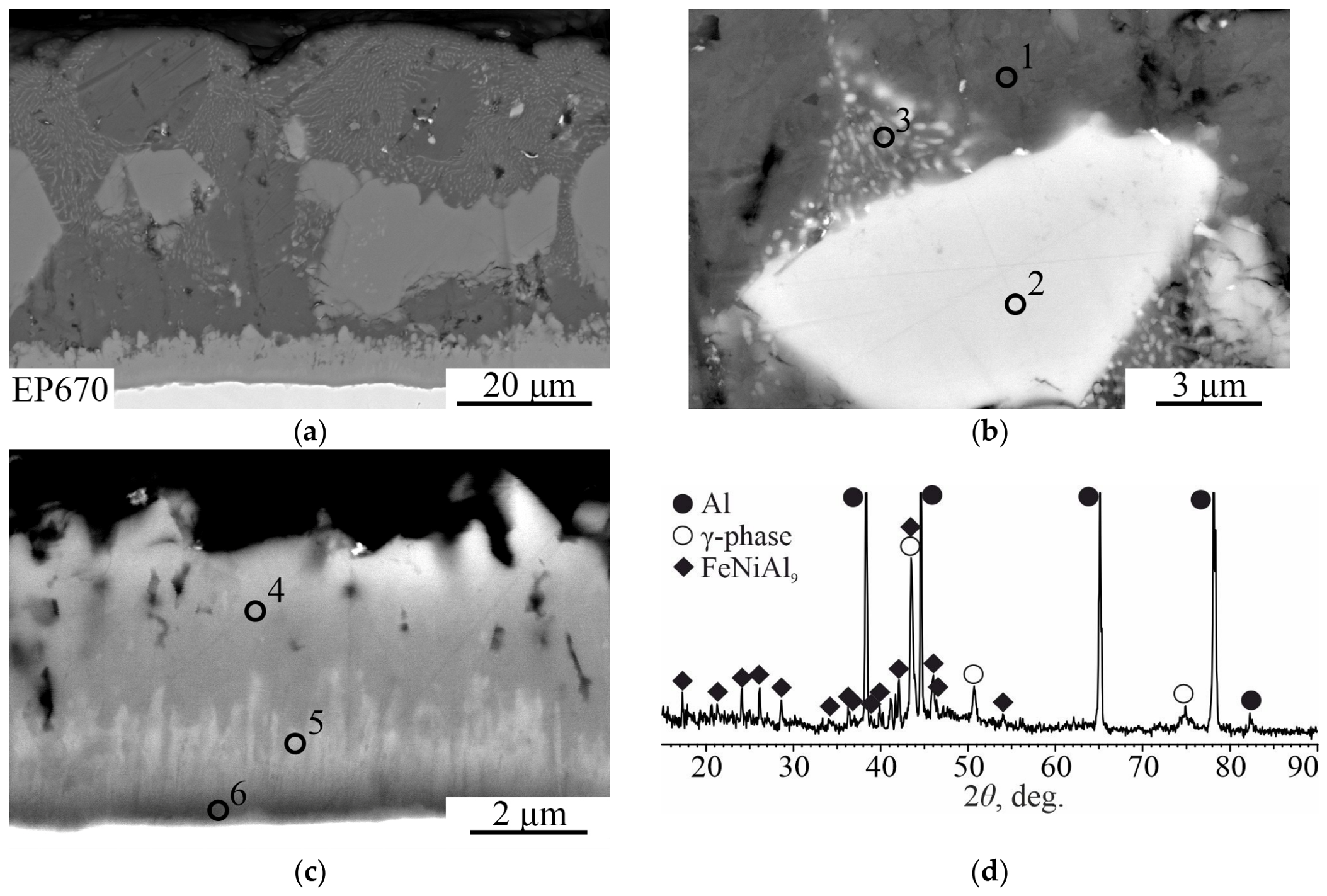
Large inclusions within the coating on the EP670 alloy (Figure 2) correspond to the H-(CrFeAl) intermetallic phase (Table 2, pt. 2), which possesses an Al82.5Cr11.5Fe6 structure [26]. The formation of the H-phase was first reported by Sui H.X. in [27]. The eutectic structure consists of a mixture of (Al) (ICDD PDF-2 No. 00-004-0787) and the τ1-FeNiAl9 (ICDD PDF-2 No. 01-076-2701) intermetallic, which was clearly identified in the XRD pattern (Figure 2d). The observed reflections of the γ-phase (ICDD PDF-2 No. 00-047-1417) correspond to the signal originating from the substrate superalloy. The interlayer at the substrate interface is composed of two distinct sub-layers: an η-type (Fe,Ni,Cr)2Al5 phase adjacent to the substrate (Table 2, pt. 6) and a θ-type (Fe,Cr,Ni)Al3 phase facing the coating (Table 2, pt. 4).
Figure 2.
Microstructure of the coating on the EP670 alloy after aluminizing: (a) general cross-sectional view; (b) the central region of the coating; (c) the boundary of the coating with the substrate; and (d) the XRD pattern obtained from its surface.
Table 2.
Results of the point EDS analysis for the aluminized EP670 alloy.
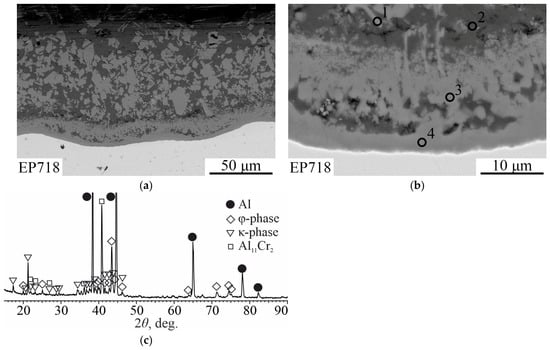
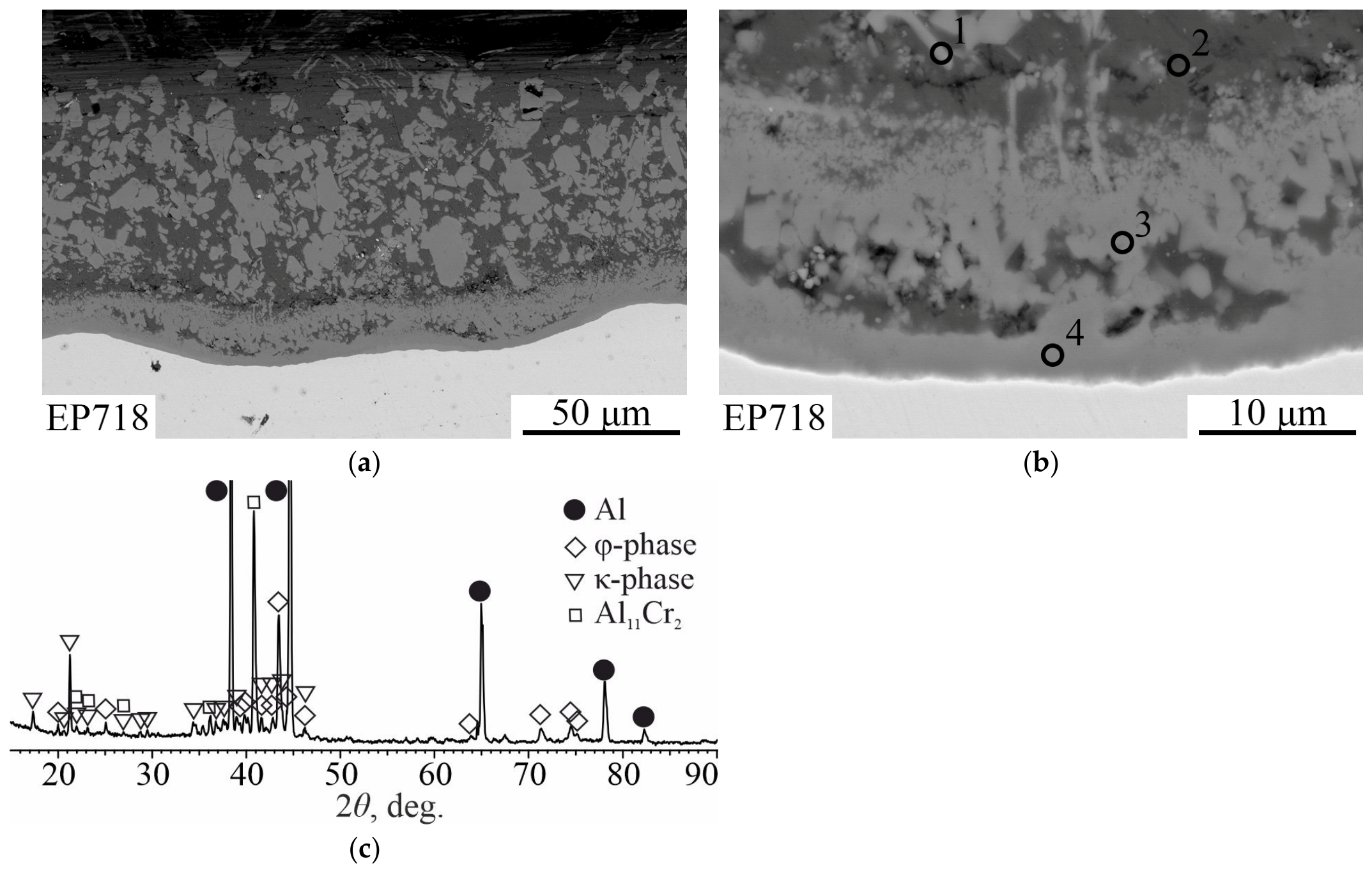
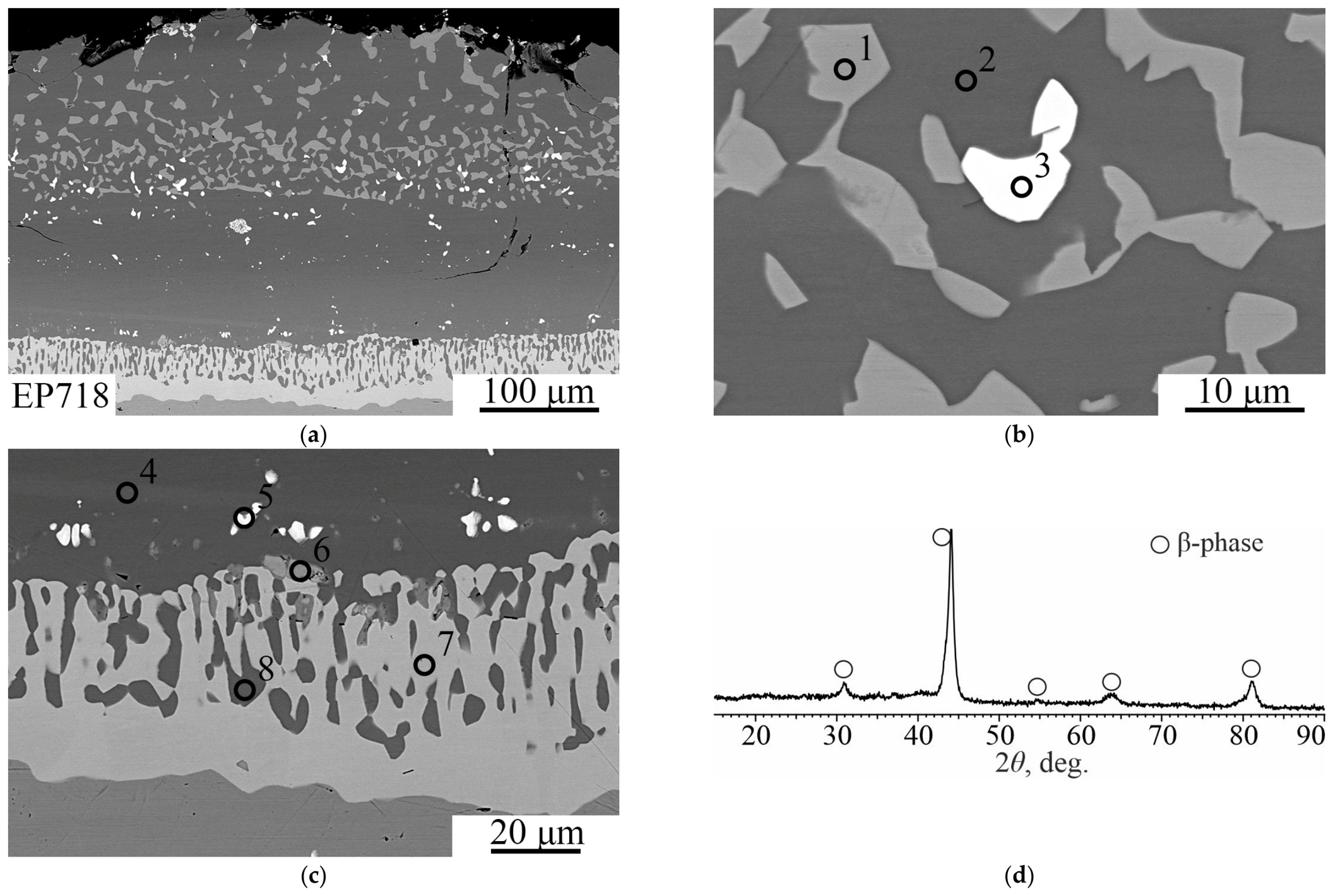
Inclusions within the coating on the EP718 alloy (Figure 3) correspond to intermetallic phases with a chemical composition based on CrAl7, significantly alloyed with Ni and other substrate elements. These were identified as the φ-phase (Table 3, pt. 1) (ICDD PDF-2 No. 00-066-0700) and the κ-phase (ζ-phase) (Table 3, pt. 3) (ICDD PDF-2 No. 01-072-3510). According to the literature data [28], the nominal compositions for these phases are κ-Al76Cr18Ni6 and φ-Al77.5Cr12.5Ni10. However, the EDS analysis (Table 3) shows a higher aluminum content (up to 89 at. %), which is attributed to the interaction volume capturing the surrounding (Al) matrix during the measurement of fine intermetallic precipitates. Furthermore, the EDS data confirms that these complex intermetallic compounds host approximately 5–8 at. % of dissolved Fe, Mo, Ti, and W. The XRD analysis (Figure 3c) additionally revealed the presence of the Al11Cr2 (ICDD PDF-2 No. 00-029-0017) intermetallic phase. This phase is typically formed during the rapid solidification of the Al-rich melt [29].
Figure 3.
Microstructure of the coating on the EP718 alloy after aluminizing: (a) general cross-sectional view; (b) the boundary of the coating with the substrate; and (c) the XRD pattern obtained from its surface.
Table 3.
Results of the point EDS analysis for the aluminized EP718 alloy.
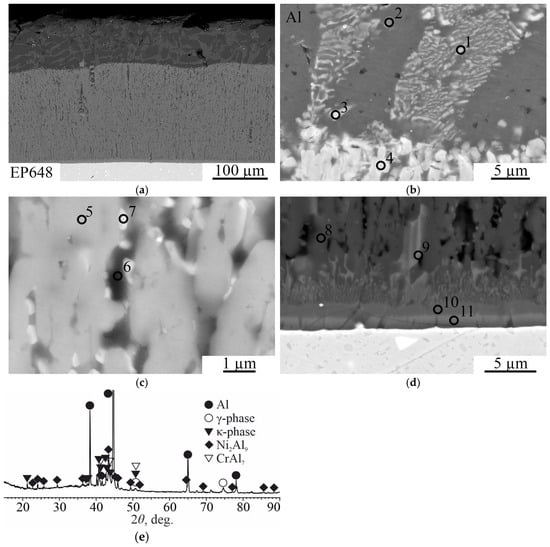
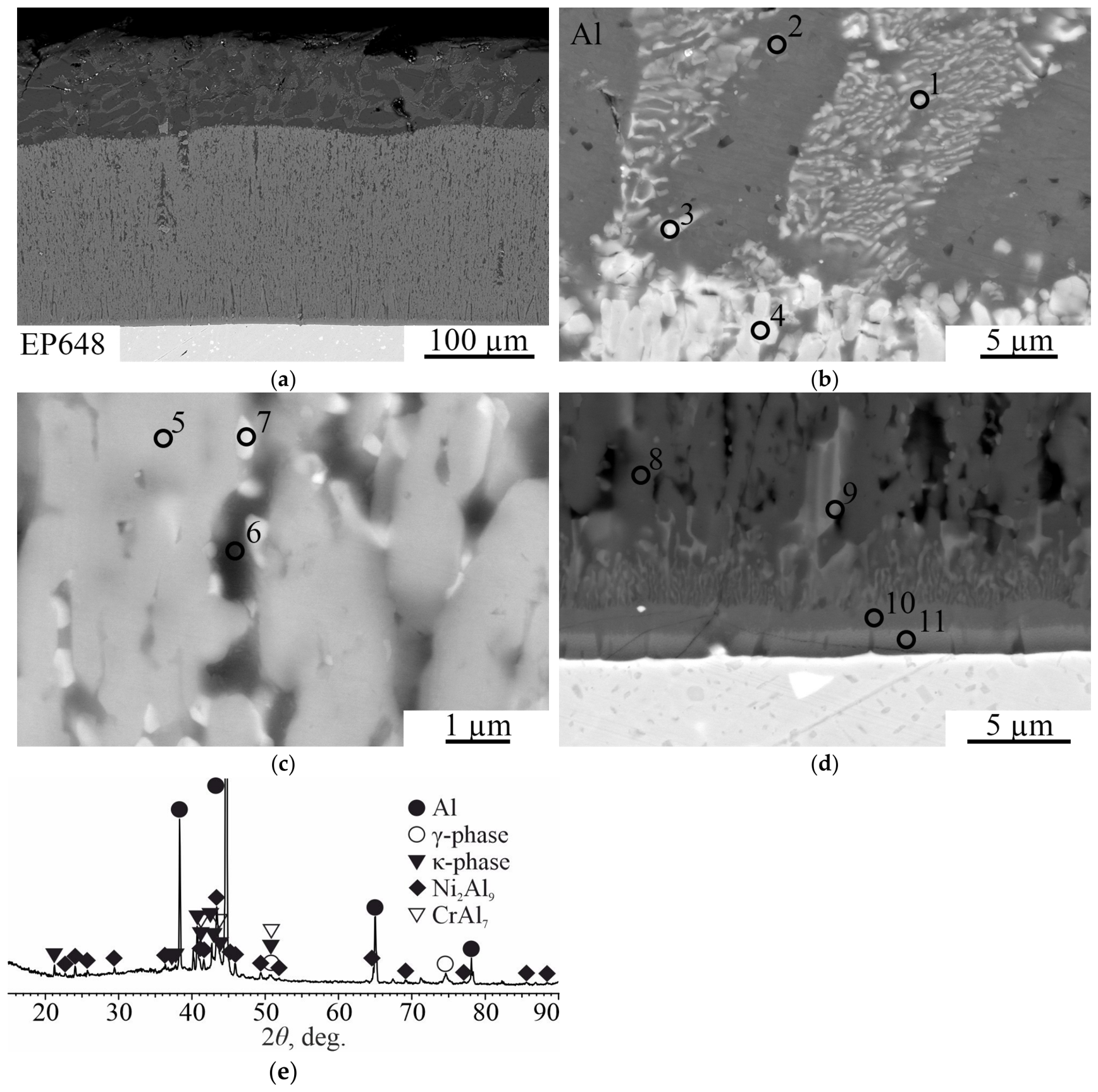
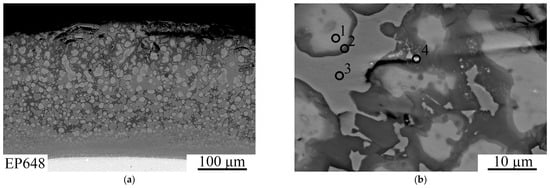
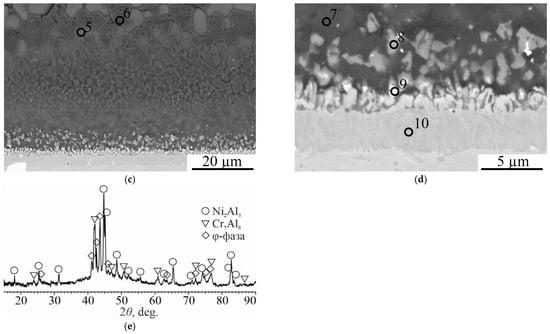
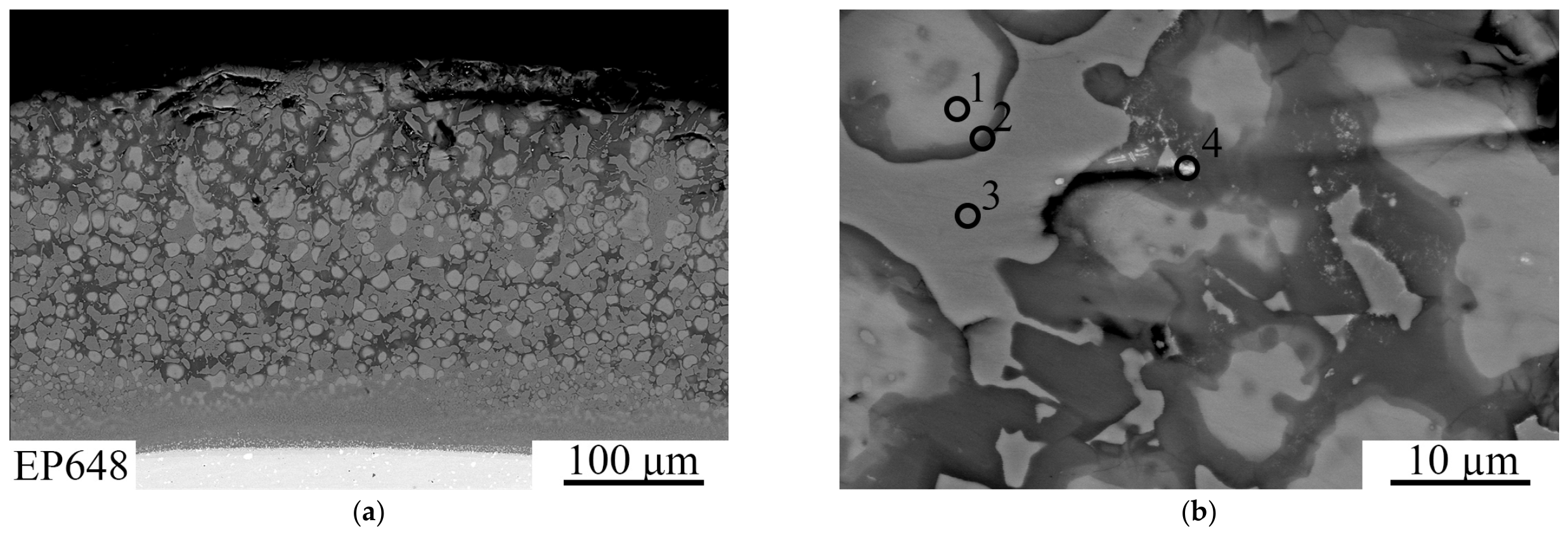
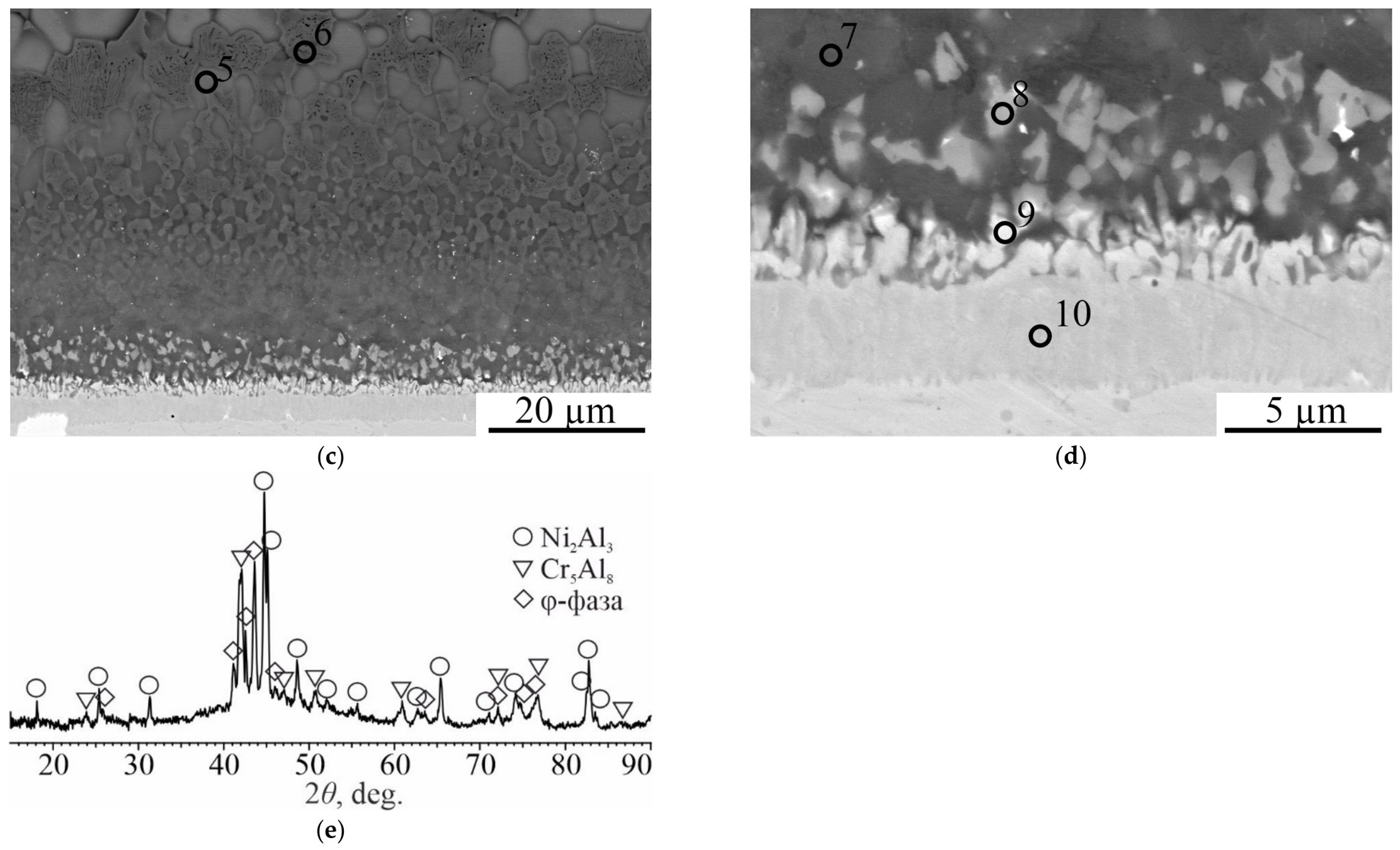
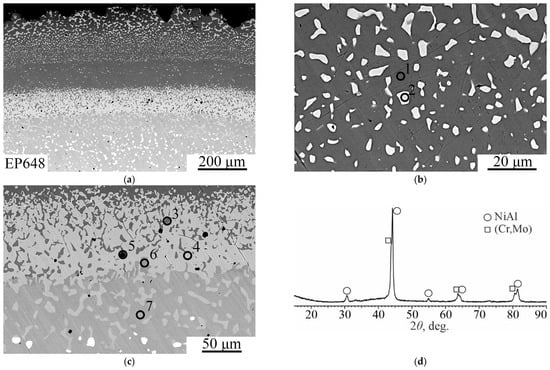
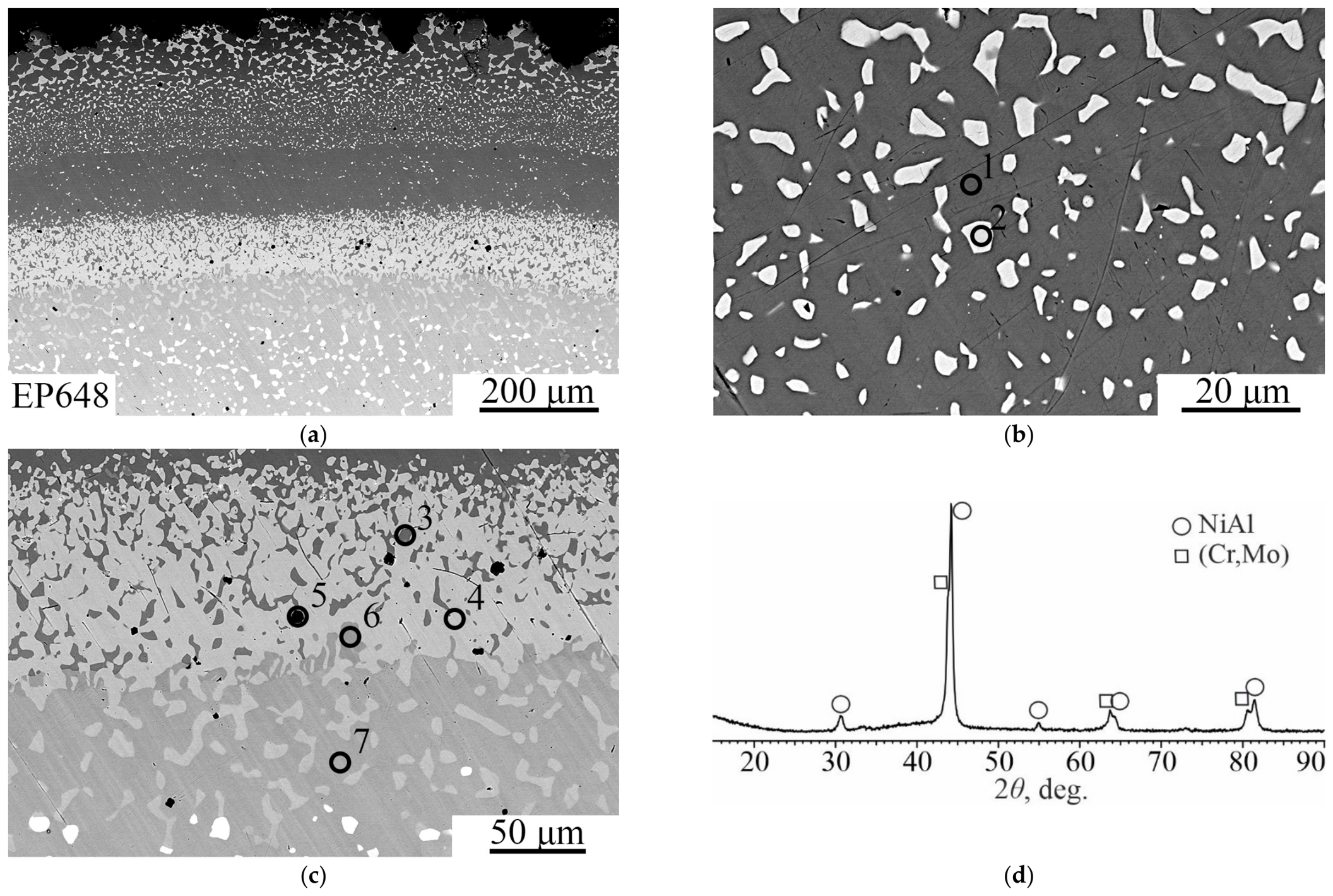
The eutectic structure of the upper layer of the coating on the EP648 alloy consists of a mixture of (Al) and the metastable Ni2Al9 phase [30] (Table 4, pt. 1, Figure 4). The intermediate layer, which constitutes the bulk of the coating, is composed of (Al), CrAl7, and the κ-phase (Table 4, pts. 4–8). In this instance, the formation of CrAl7 is definitively confirmed by both XRD (ICDD PDF-2 No. 03-065-6844) and EDS analysis, which indicates that no other alloying elements are dissolved within this phase. The layer adjacent to the substrate exhibits a multi-layered (stratified) structure. Specifically, the sub-layer facing the coating is biphasic (φ + κ), the middle sub-layer corresponds to the φ-phase, and the sub-layer facing the substrate consists of a solid solution based on δ-phase (Ni2Al3(Cr)) (Table 4, pts. 10–11).
Table 4.
Results of the point EDS analysis for the aluminized EP648 alloy.
Figure 4.
Microstructure of the coating on the EP648 alloy after aluminizing: (a) general cross-sectional view; (b) the upper region of the coating; (c) the central region of the coating; (d) the boundary of the coating with the substrate; and (e) the XRD pattern obtained from its surface.
3.2. EP670 Heat Treatment
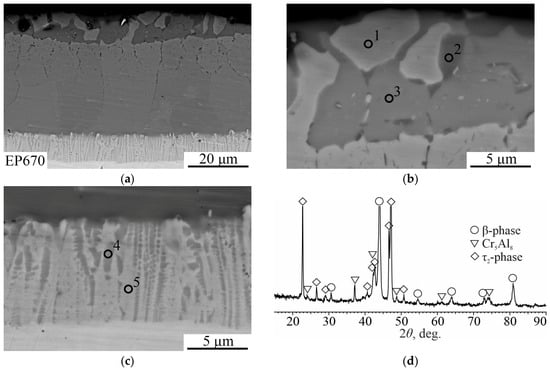
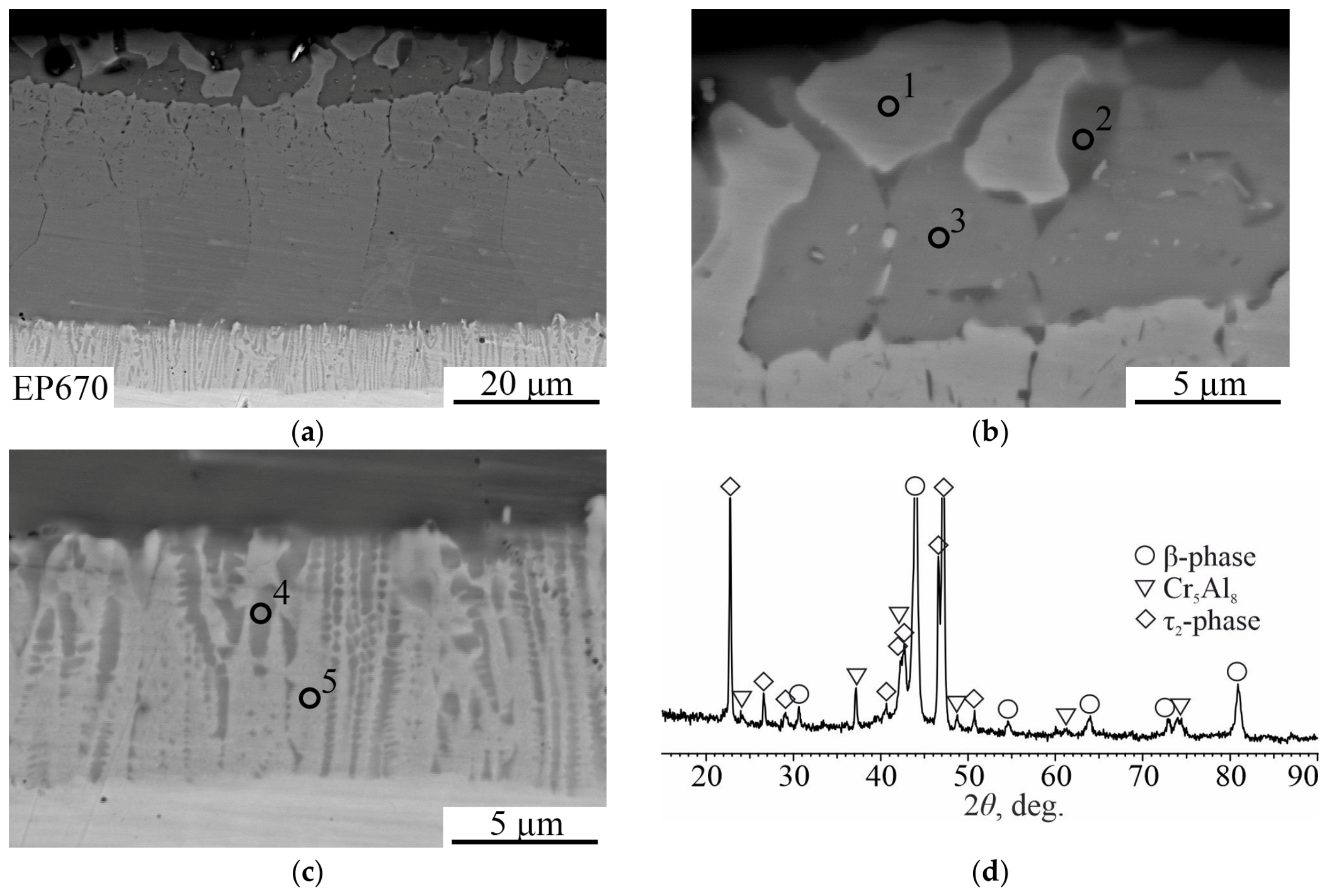
After heat treatment of the aluminized EP670 alloy at 1100 °C for 10 min, the coating acquires a stratified structure (Figure 5). A layer corresponding to the (CrFe)5Al8 intermetallic phase (ICDD PDF-2 No. 01-082-2599) is observed on the surface (Table 5, pt. 3). Within this layer, inclusions identified as β-(Fe,Ni,Cr)Al (ICDD PDF-2 No. 00-033-0020) and τ2-FeNiAl5 (ICDD PDF-2 No. 01-078-5054) phases are present (Table 5, pts. 1–2, Figure 5d). The central part of the coating consists of the β-(Fe,Ni)Al intermetallic. Along the substrate interface, a biphasic diffusion region represented by α-phase and γ-phase solid solutions is observed (Table 5, pts. 4–5).
Figure 5.
Microstructure of the coating on the EP670 alloy after heat treatment at 1100 °C for 10 min: (a) general cross-sectional view; (b) the central region of the coating; (c) the boundary of the coating with the substrate; and (d) the XRD pattern obtained from its surface.
Table 5.
Results of the point EDS analysis for the aluminized EP670 alloy after heat treatment (1100 °C, 10 min).
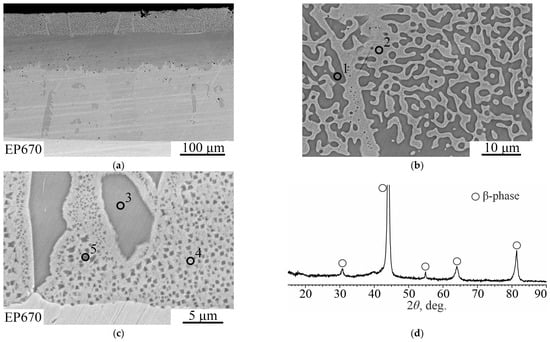
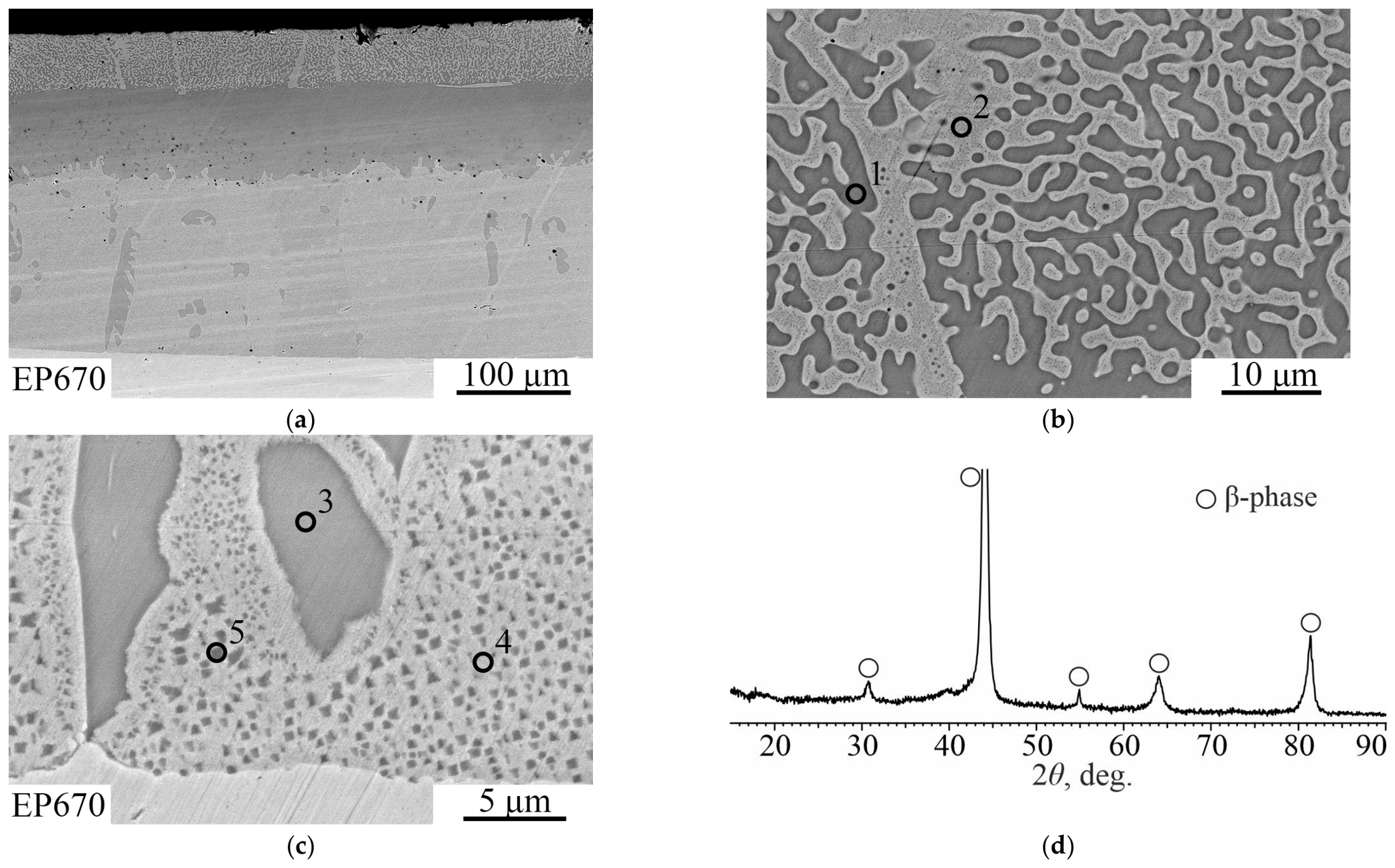
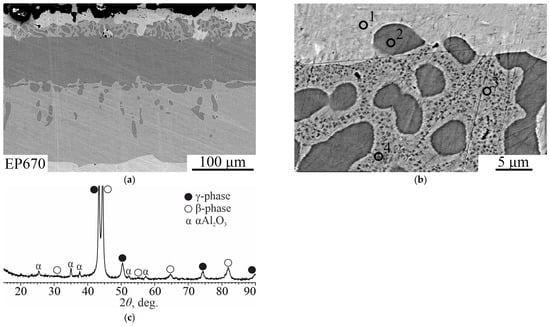
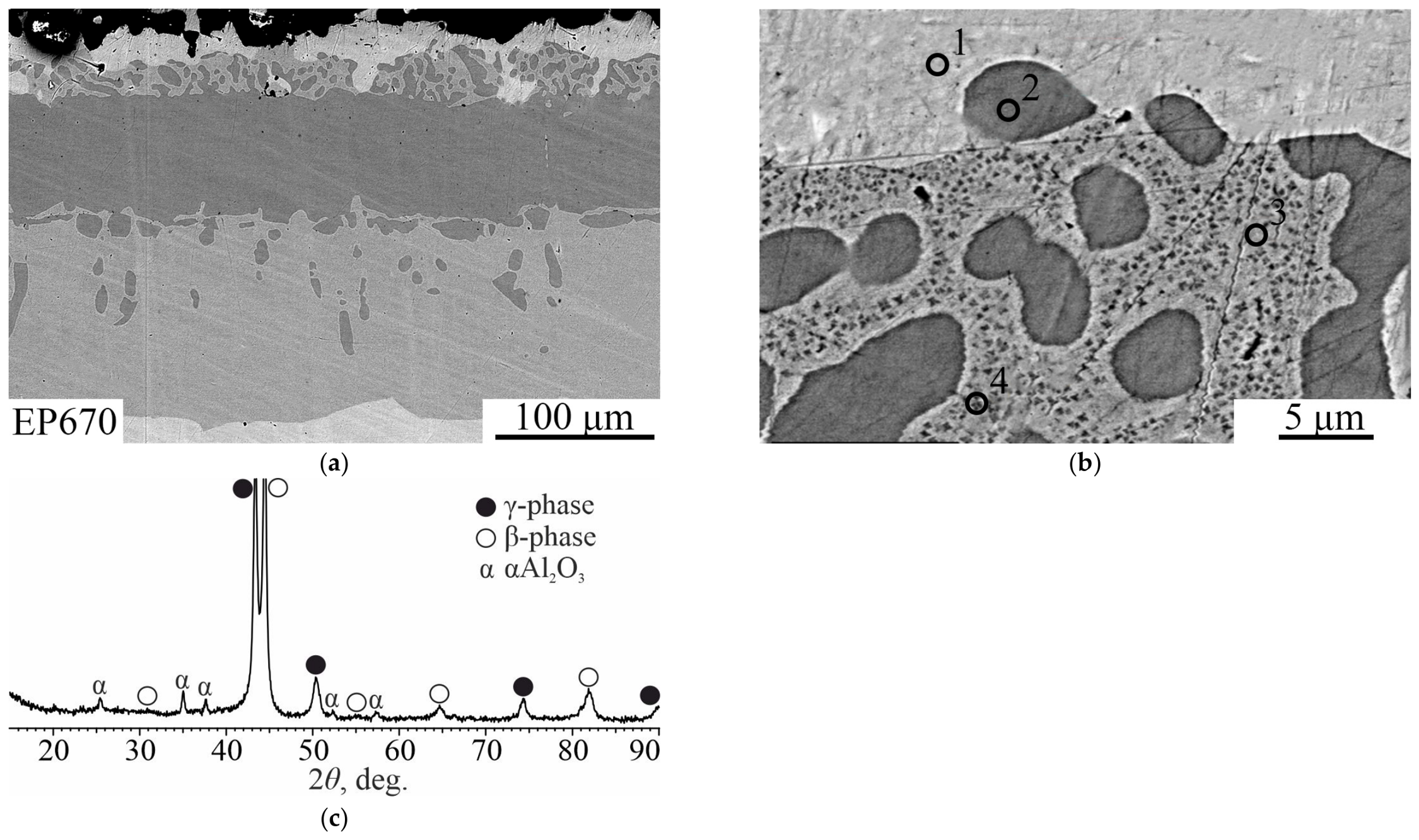
An increase in the exposure time to 100 h is accompanied by the formation of three clearly distinguishable layers within the coating (Figure 6). The surface layer consists of a β-phase (Table 6, pt. 1) with α-phase inclusions distributed throughout its matrix. The formation of the α-phase is confirmed by the XRD results (Figure 6d), which exhibit broadened β-phase reflections that almost completely overlap with those of the α-phase (the reflections for the γ-phase are located at different diffraction angles). The intermediate layer corresponds to the β phase. The layer adjacent to the substrate consists of a mixture of α-phase and γ-phase with individual large β-phase inclusions (Table 6, pts. 3–5). Despite the low aluminum content observed at points 1 and 3, these regions correspond to an Al-depleted β-phase. This identification is based on the XRD results and an analysis of the Al-Cr-Ni and Al-Fe-Ni ternary phase diagrams. According to these phase equilibria, the solubility limits and the observed crystal structure support the presence of a stable, though significantly depleted, β-phase under the given thermal exposure conditions.
Figure 6.
Microstructure of the coating on the EP670 alloy after heat treatment at 1100 °C for 100 h: (a) general cross-sectional view; (b) the central region of the coating; (c) the boundary of the coating with the substrate; and (d) the XRD pattern obtained from its surface.
Table 6.
Results of the point EDS analysis for the aluminized EP670 alloy after heat treatment (1100 °C, 100 h).
Increasing the exposure time to 500 h does not result in significant changes to the coating microstructure (Figure 7). However, chemical composition analysis reveals a further reduction in aluminum concentration within the surface layer, dropping to 10 at. %. Meanwhile, the aluminum content within the β-phase shows a slight relative increase, reaching 33 at. %.
Figure 7.
Microstructure of the coating on the EP670 alloy after heat treatment at 1100 °C for 500 h: (a) general cross-sectional view; (b) the central region of the coating; and (c) the XRD pattern obtained from its surface.
The EDS data for point 4 (Table 7) suggests a biphasic α + β region, where fine particles of the Al-depleted β-phase are embedded within the Cr-rich α-phase matrix due to prolonged interdiffusion.
Table 7.
Results of the point EDS analysis for the aluminized EP670 alloy after heat treatment (1100 °C, 500 h).
3.3. EP718 Heat Treatment
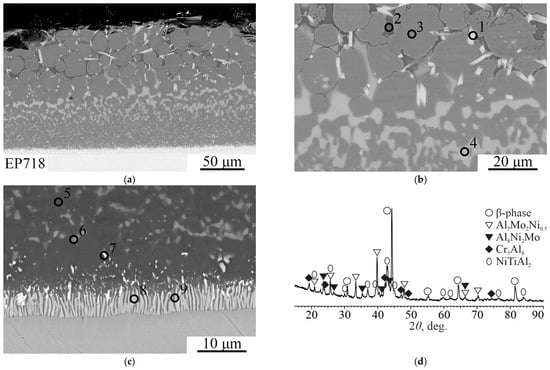
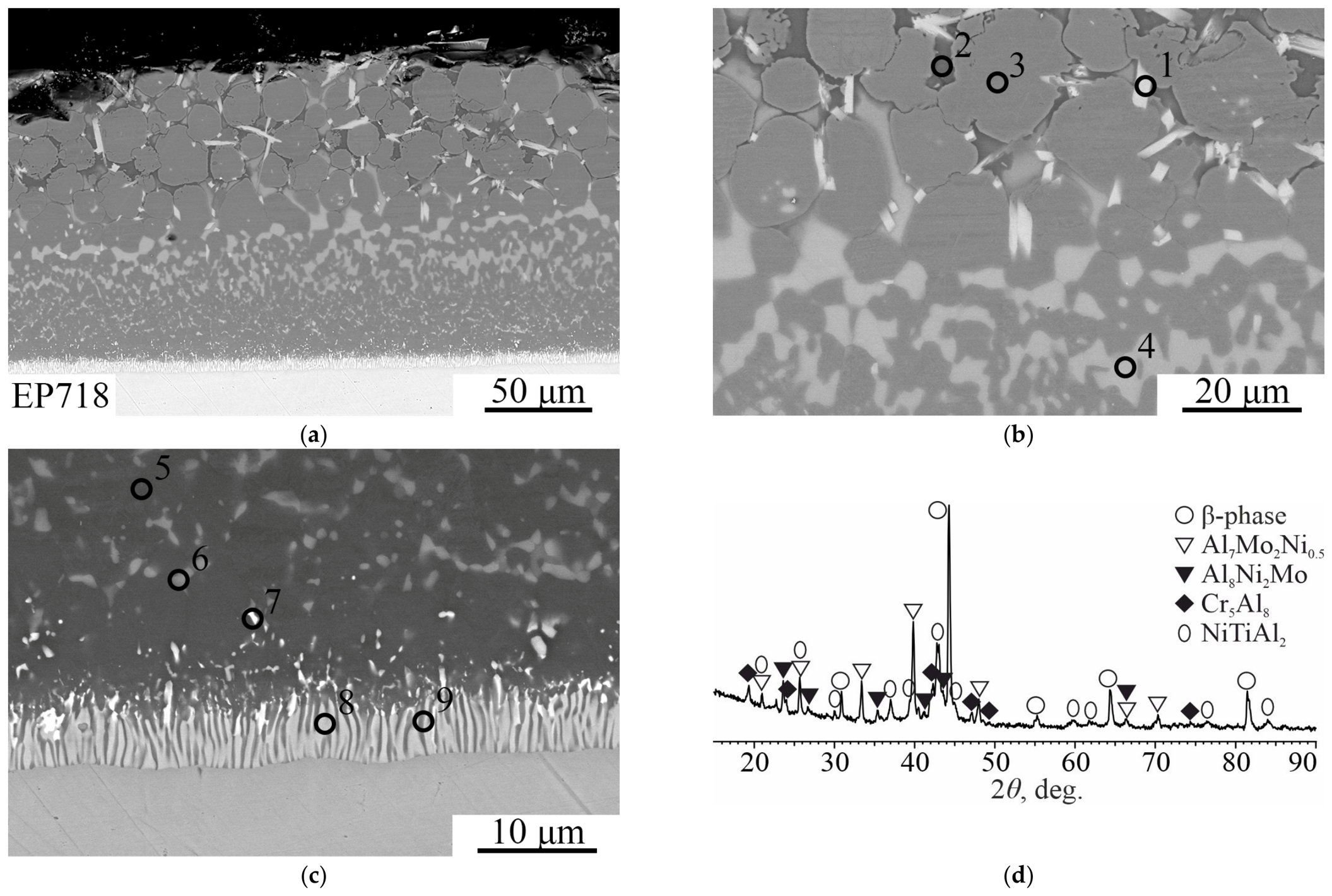
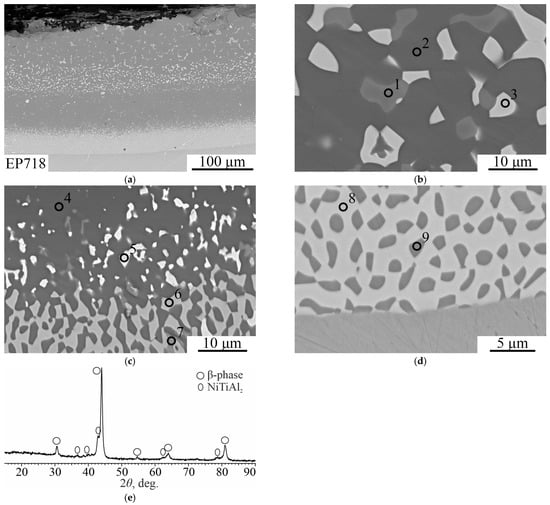
After heat treatment of the aluminized EP718 alloy at 1100 °C for 10 min, the coating develops a complex multi-phase structure (Figure 8). The surface layer consists of large β-phase grains, which remain enriched with aluminum (up to 57–58 at. %) due to the short duration of the thermal exposure. The dark regions filling the intergranular spaces correspond to the H-phase (Table 8, pt. 2). Distinct white crystals distributed within the surface layer are identified as refractory-rich intermetallics, structurally close to Al7Mo2Ni0.5 and Al7Ni2Mo (ICDD PDF-2 No. 00-054-0408 and 01-080-5813), containing significant amounts of Mo, Nb, and W (Table 8, pt. 1). X-ray diffraction analysis of the coating additionally revealed the presence of the NiTiAl2 Heusler phase (ICDD PDF-2 No. 00-057-0375) [31] (Figure 8d). However, microstructural analysis (SEM/EDS) did not reveal any distinct titanium-rich regions. This discrepancy suggests that the NiTiAl2 phase is present as finely dispersed intermetallic precipitates that have nucleated within the β-phase matrix (ICDD PDF-2 No. 00-044-1188).
Figure 8.
Microstructure of the coating on the EP718 alloy after heat treatment at 1100 °C for 10 min: (a) general cross-sectional view; (b) the central region of the coating; (c) the boundary of the coating with the substrate; and (d) the XRD pattern obtained from its surface.
Table 8.
Results of the point EDS analysis for the aluminized EP718 alloy after heat treatment (1100 °C, 10 min).
The central part of the coating is composed of alternating light and dark regions: the dark areas represent the β-(Ni,Fe,Cr)Al phase, while the light areas consist of a complex intermetallic, likely (Cr,Fe)5Al8 (ICDD PDF-2 No. 01-071-0126), with dissolved Mo, Ti, and W. A thin interlayer at the substrate interface consists of α-phase and γ-phase crystals. The lighter α-phase crystals are enriched with Mo and W but contain relatively little aluminum (6.5 at.%). In contrast, the darker γ-phase crystals contain a higher concentration of Al (up to 24 at.%) and Ti (up to 4.9 at.%), while being practically free of tungsten.
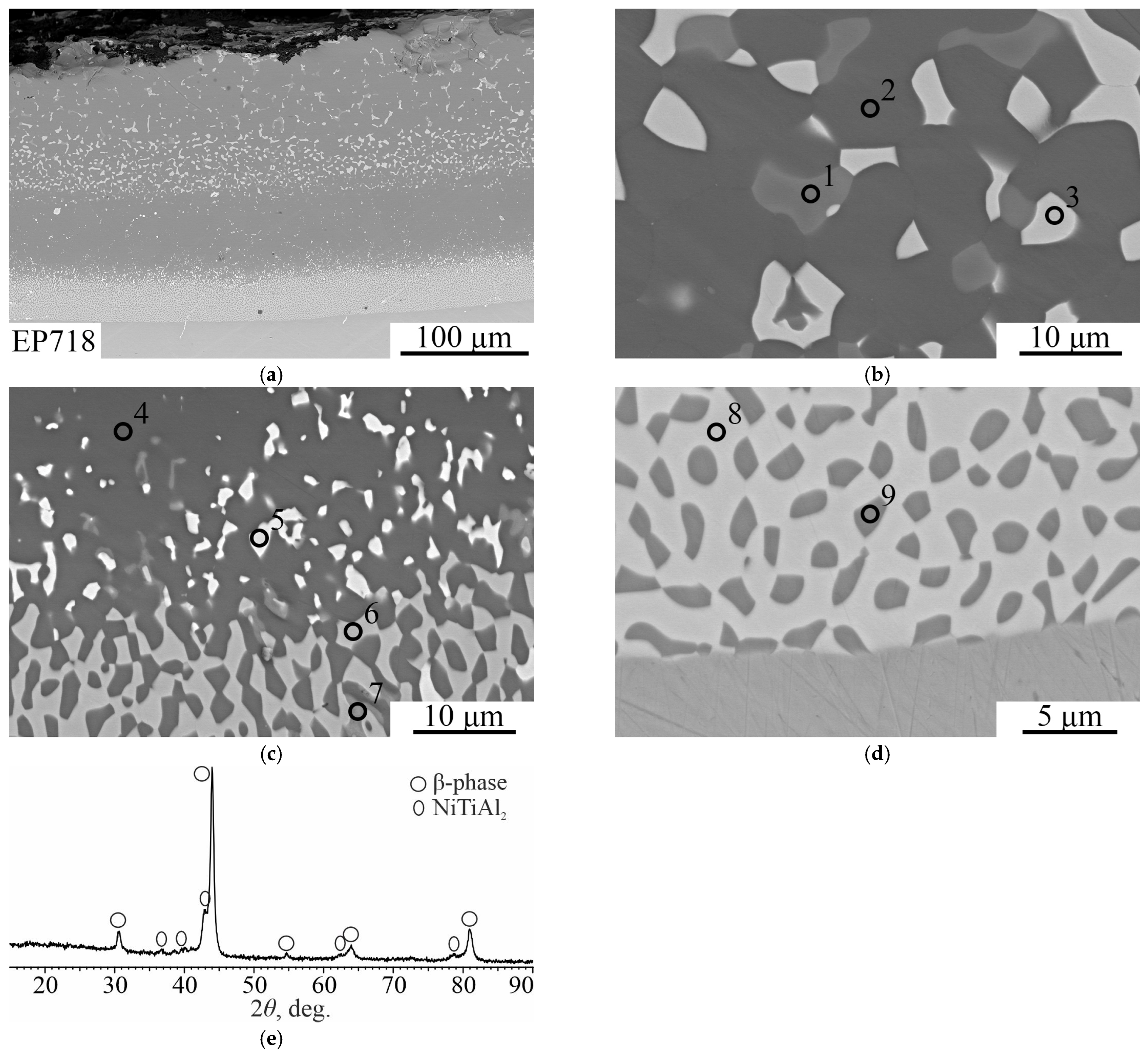
After 20 h of thermal exposure, two clearly distinguishable layers are observed in the coating structure (Figure 9). The surface layer consists of the β-phase, which acts as a matrix for distributed inclusions of the NiTiAl2 Heusler phase (clearly identified by XRD Figure 9e and EDS Table 9, pt. 1) and complex chromium-rich intermetallics of the Cr2Al type, containing significant amounts of Mo and W (Table 9, pt. 3).
Figure 9.
Microstructure of the coating on the EP718 alloy after heat treatment at 1100 °C for 20 h: (a) general cross-sectional view; (b) the upper region of the coating; (c) the central region of the coating; (d) the boundary of the coating with the substrate; and (e) the XRD pattern obtained from its surface.
Table 9.
Results of the point EDS analysis for the aluminized EP718 alloy after heat treatment (1100 °C, 20 h).
Closer to the substrate, the coating contains large inclusions represented by the α-phase, characterized by a high concentration of dissolved refractory elements, specifically Mo (up to 11 at.%), Nb (up to 6.4 at.%), and W (up to 6.7 at.%). Additionally, primary Ti-Nb-rich phases originating from the substrate remain present within this zone (Table 9, pt. 7). Directly at the substrate interface, a biphasic interlayer consisting of the α-phase and the γ-phase has formed, marking the boundary of the interdiffusion zone.
Thermal exposure at 1100 °C for 150 h led to the coagulation of inclusions within the coating, resulting in the formation of a coarser-grained microstructure (Figure 10). A notable feature of the structure is the formation of a nickel-rich β-phase, characterized by a significant influx of titanium (up to 15.3 at.%, Table 10, pt. 8) from the substrate. Concurrently, specific Nb- and Ti-rich inclusions are preserved (Table 10, pt. 6).
Figure 10.
Microstructure of the coating on the EP718 alloy after heat treatment at 1100 °C for 150 h: (a) general cross-sectional view; (b) the central region of the coating; (c) the boundary of the coating with the substrate; and (d) the XRD pattern obtained from its surface.
Table 10.
Results of the point EDS analysis for the aluminized EP718 alloy after heat treatment (1100 °C, 150 h).
Despite their single-phase appearance, these inclusions possess a unique chemical composition (approximately 52.5 at.% Ti and 39.6 at.% Nb) that does not correspond to any known equilibrium phases in the binary Nb–Ti or ternary phase diagrams. The stoichiometry suggests the formation of a complex multi-component solid solution based on the β-(Ti,Nb) system or a metastable intermetallic phase. The stabilization of this phase is likely promoted by the high local concentration of refractory elements, such as Mo and W, and the specific diffusion environment created during the prolonged interaction between the aluminide coating and the EP718 superalloy.
A further increase in the exposure time beyond 150 h for the aluminized EP718 alloy resulted in its complete structural failure, with the specimen disintegrating into a dark-green powder. This catastrophic destruction cannot be attributed to aluminum depletion as the coating maintained a sufficient aluminum reservoir and structural integrity up to the point of failure. Instead, the observed phenomenon strongly suggests the occurrence of “pest oxidation” (Figure 11).
Figure 11.
XRD pattern of the powder collected after pest oxidation of the aluminized EP718 alloy.
This mechanism is characteristic of certain intermetallic compounds, where rapid oxygen diffusion along grain boundaries leads to the formation of voluminous internal oxides. The resulting high localized stresses at the grain boundaries exceed the cohesive strength of the material, causing it to crumble into powder [32,33,34]. In the case of the EP718 coating, the presence of complex multi-component phases, specifically those enriched with Ti, Nb, and Mo, likely acted as catalysts for this process. The dark-green color of the resulting powder further indicates the formation of complex Ni-Cr-based oxides, which developed rapidly once the catastrophic intergranular oxidation was initiated.
3.4. EP648 Heat Treatment
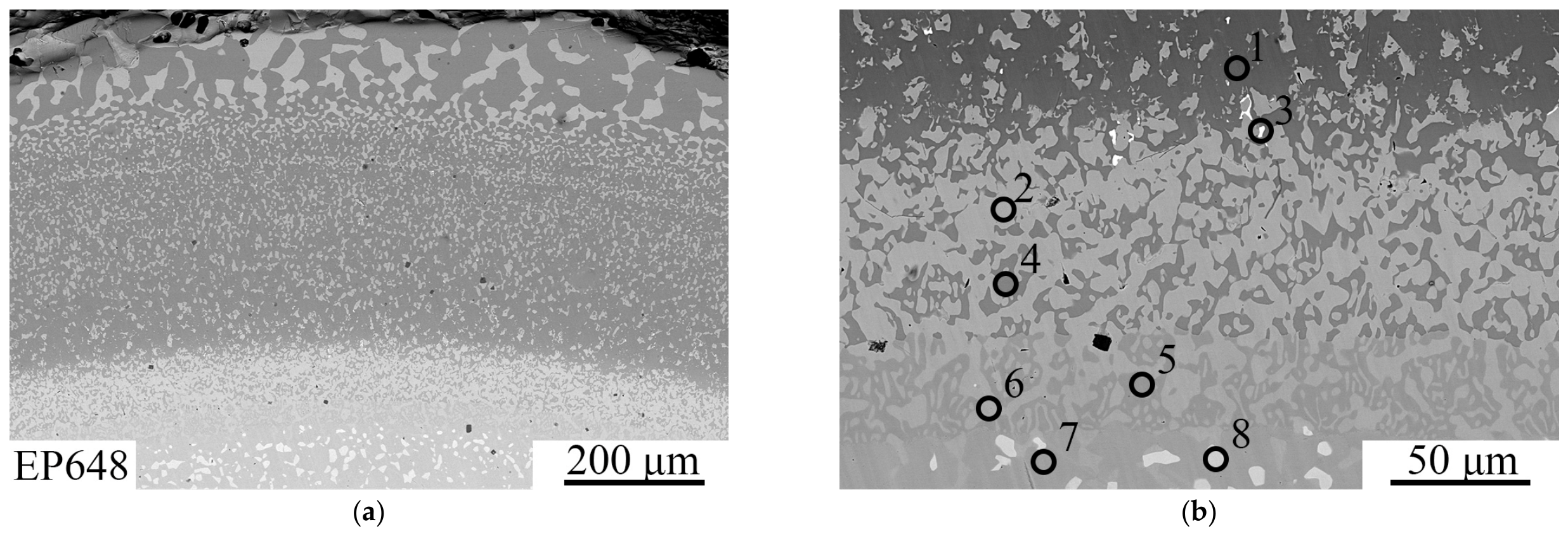
After heat treatment of the aluminized EP648 alloy at 1100 °C for 10 min, the upper part of the coating contains Cr5Al8 inclusions surrounded by a dark shell of the φ-phase, alongside regions corresponding to the δ-phase (Ni2Al3) (ICDD PDF-2 No. 01-080-5811) (Table 11, pts. 1–3, Figure 12d). Small inclusions enriched with Ti and W were also observed, likely representing complex refractory-rich precipitates (Table 11, pt. 4).
Table 11.
Results of the point EDS analysis for the aluminized EP648 alloy after heat treatment (1100 °C, 10 min).
Figure 12.
Microstructure of the coating on the EP648 alloy after heat treatment at 1100 °C for 10 min: (a) general cross-sectional view; (b) the upper region of the coating; (c) the central region of the coating; (d) the boundary of the coating with the substrate; and (e) the XRD pattern obtained from its surface.
The central part of the coating consists of a mixture of Cr5Al8 and δ-phase intermetallics. Notably, the majority of the alloying elements are dissolved within the Cr5Al8 phase, whereas the δ-phase remains relatively pure, with only 2.1–4.9 at.% of Cr in solid solution (Table 11, pts. 5–6). Near the substrate, the coating transforms into a β-phase enriched with chromium (up to 25.4 at.%, pt. 8). The layer adjacent to the substrate interface is represented by a mixture of γ-phase and hard Cr-rich phase inclusions (Table 11, pts. 9–10).
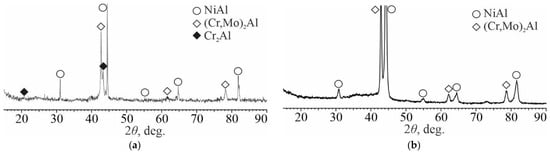
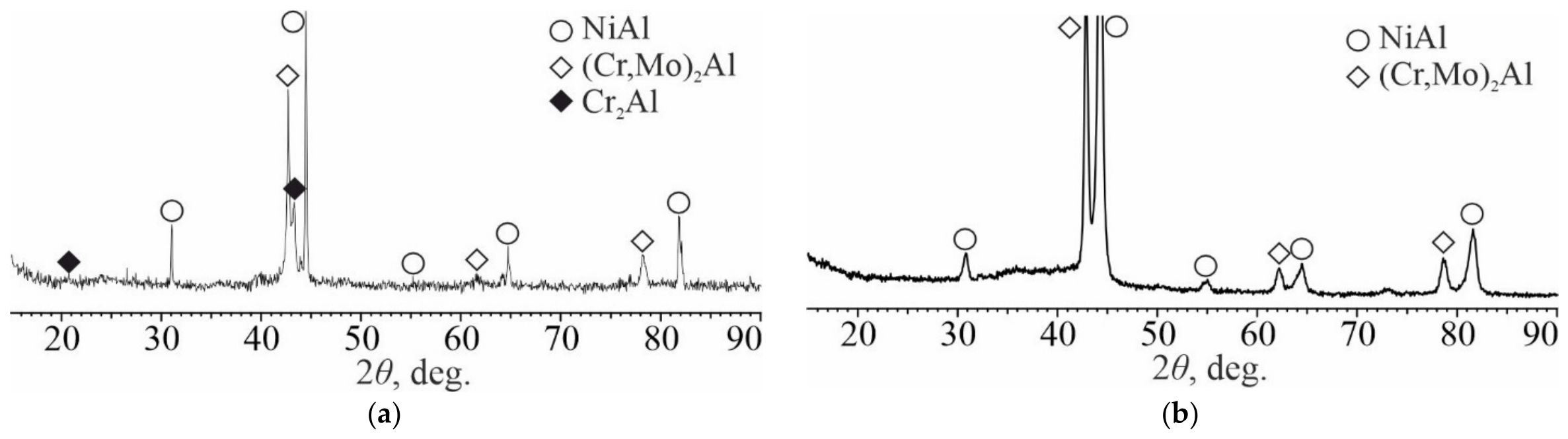
In the exposure range of 20–100 h at 1100 °C, the coating structure does not undergo fundamental changes, maintaining a gradient-dispersed appearance with light inclusions embedded within a dark matrix (Figure 13). According to XRD (Figure 14) and EDS data (Table 12), the matrix consists predominantly of the β-phase. Notably, after 100 h, the aluminum content in the β-phase significantly decreases to approximately 22 at.% (Table 12, pt. 4).
Figure 13.
Microstructure of the coating on the EP648 alloy after heat treatment at 1100 °C for 100 h: (a) general cross-sectional view; (b) the central region of the coating.
Figure 14.
XRD patterns obtained from the surface of the coating on the EP648 alloy after heat treatment at 1100 °C for 20 h (a) and 100 h (b).
Table 12.
Results of the point EDS analysis for the aluminized EP648 alloy after heat treatment (1100 °C, 100 h).
The inclusions distributed within this matrix are identified as Cr2Al and (Cr,Mo)2Al-type intermetallics (ICDD PDF-2 No. 03-065-2640 and 01-074-5159), which are characterized by a high concentration of refractory elements, including Mo (up to 11.7 at.%), W (up to 10.7 at.%), and Nb (up to 5.6 at.%, pt. 3). As the substrate interface is approached, the (Cr,Mo)2Al-type phase disappears, leaving only the hard Cr-rich phase.
An increase in exposure time leads to the complete disappearance of the (Cr,Mo)2Al intermetallics (Figure 15, Table 13). In this state, the coating consists of the β-phase with other alloying elements in solid solution, containing distributed inclusions of the Cr-rich phase (ICDD PDF-2 No. 01-071-7569), which remain stable even after prolonged thermal exposure. After 500 h, the presence of a Mo-Nb-rich phase (Table 13, pt. 6) indicates the final stages of the redistribution of heavy alloying elements within the β-phase matrix, where they form stable complex intermetallic clusters.
Figure 15.
Microstructure of the coating on the EP648 alloy after heat treatment at 1100 °C for 500 h: (a) general cross-sectional view; (b) the central region of the coating; (c) the boundary of the coating with the substrate; and (d) the XRD pattern obtained from its surface.
Table 13.
Results of the point EDS analysis for the aluminized EP648 alloy after heat treatment (1100 °C, 500 h).
3.5. Coating Thickness Kinetics and Phase Evolution
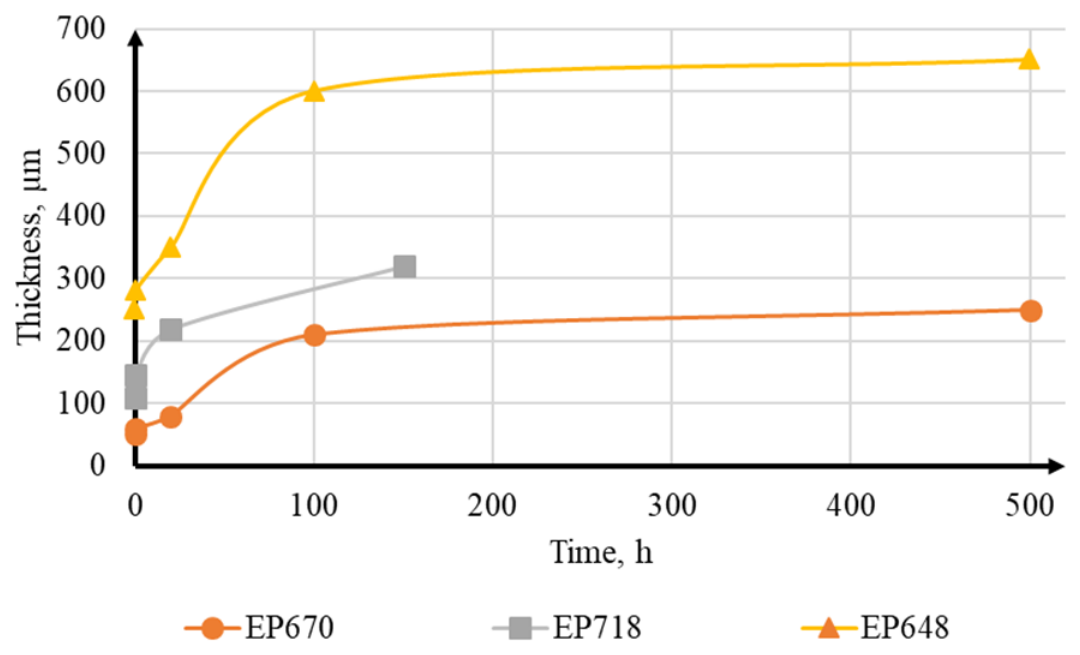
The evolution of the total coating thickness as a function of the diffusion heat treatment time at 1100 °C is summarized in Figure 16. For all investigated systems, the layer growth follows a classical diffusion-controlled, near-parabolic kinetic pathway, where the most intense thickness increase occurs during the initial 20–100 h of exposure, followed by a gradual stabilization of the growth rates.
Figure 16.
Time dependence of coating thickness during heat treatment at 1100 °C.
This thickness evolution clearly demonstrates that the specific chemistry of the substrate governs both the diffusion growth kinetics and the microstructural evolution.
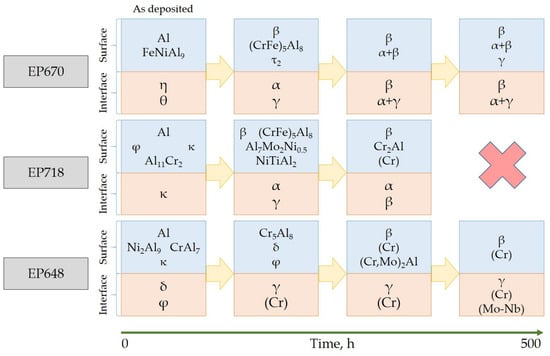
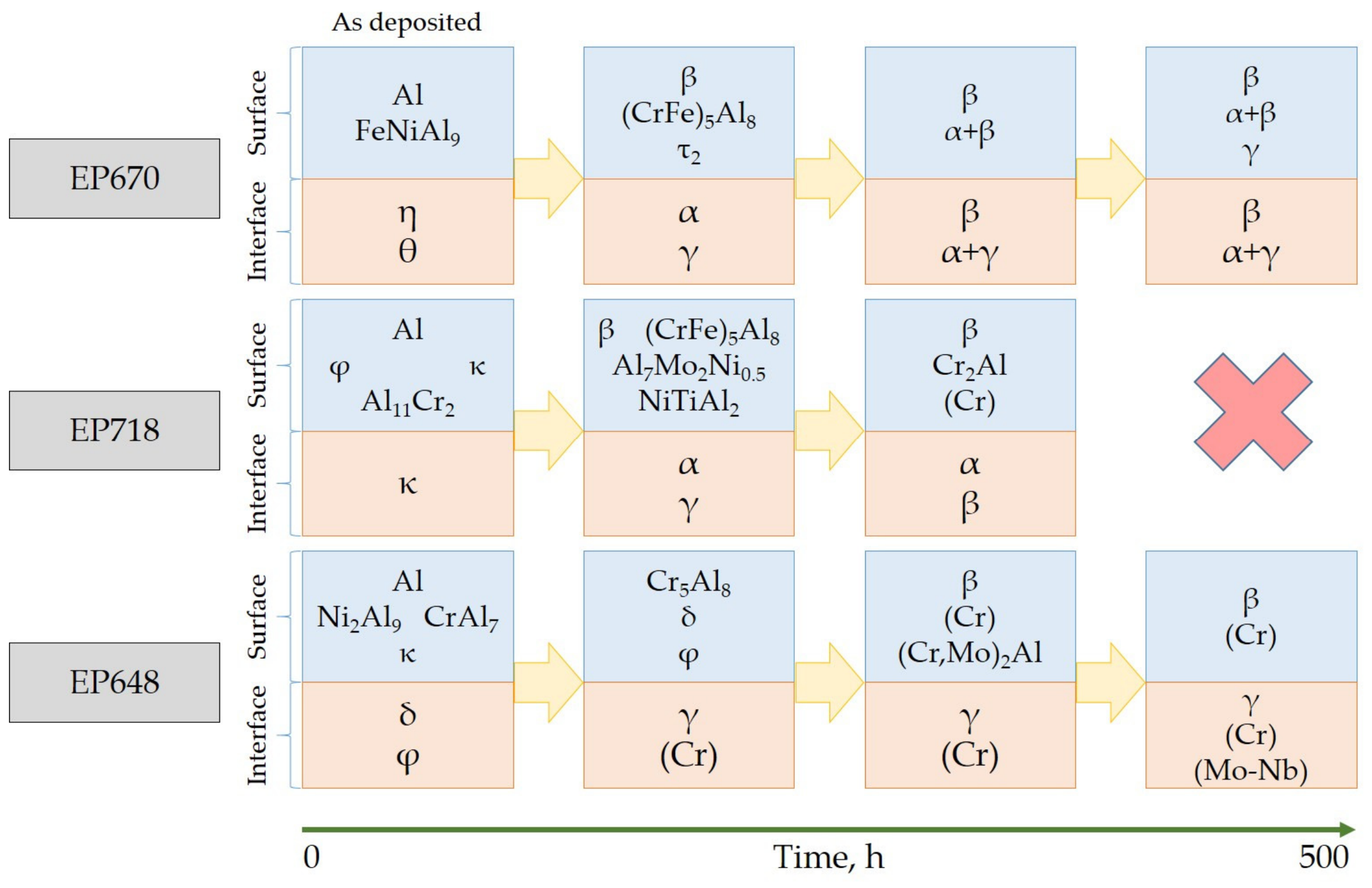
To systematically analyze interdiffusion and phase transformation pathways occurring during high-temperature exposure, a comprehensive structural evolution diagram was established (Figure 17). This diagram models the distinct bifurcation of phase layouts across the EP670, EP718, and EP648 coating systems from the initial as-deposited state up to 500 h of high-temperature oxidation at 1100 °C.
Figure 17.
Phase evolution diagram for the EP670, EP718, and EP648 coating systems at 1100 °C.
In the as-deposited state (0 h), all three substrates feature a non-equilibrium layout dominated by a solidified aluminum matrix at the surface, which embeds intermetallics such as FeNiAl9 (for EP670), φ and κ phases (for EP718), or Ni2Al9 and CrAl7 (for EP648). Concurrently, thin reaction sub-layers—comprising η/θ, κ, or δ/φ phases—nucleate at the respective coating–substrate interfaces.
Following a short-term diffusion heat treatment (10 min), intense chemical homogenization eliminates free aluminum. The outer matrix successfully transforms into a protective β-phase for the EP670 and EP718 systems, embedding secondary precipitates like (CrFe)5Al8 or Al7Mo2Ni. In the case of the iron-free EP648 system, the surface region converts into a mixture of Cr5Al8, δ, and φ phases. At the interface, a distinct thermodynamic adjustment leads to the formation of γ/α mixtures or β/γ combinations, accompanied by localized accumulations of chromium solid solution.
During the steady-state oxidation stage (20 h to 100 h), the inward migration of aluminum and outward diffusion of substrate elements induce matrix restructuring. The EP670 coating shifts toward a biphasic α + β surface structure, while the EP718 and EP648 systems maintain a stable beta-matrix embedded with fine NiTiAl2 or (Cr,Mo)2Al intermetallics. The interfacial zones stabilize, forming mixtures of α and γ phases.
At the extended exposure milestone (500 h), a critical structural divergence is observed. While the EP670 and EP648 systems preserve their geometric and phase stability via controlled matrix refinement and the retention of Cr-rich or Mo-Nb-rich solid solutions at the interface, the EP718 alloy undergoes severe phase destabilization. In the EP718 system, the accumulation of Mo-rich phases accelerates sub-scale stress generation, which ultimately triggers internal intergranular oxidation and the catastrophic disintegration of the coating structure.
3.6. Scratch Testing
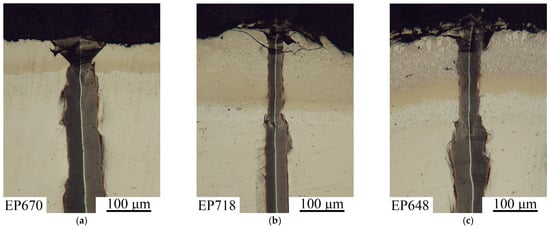
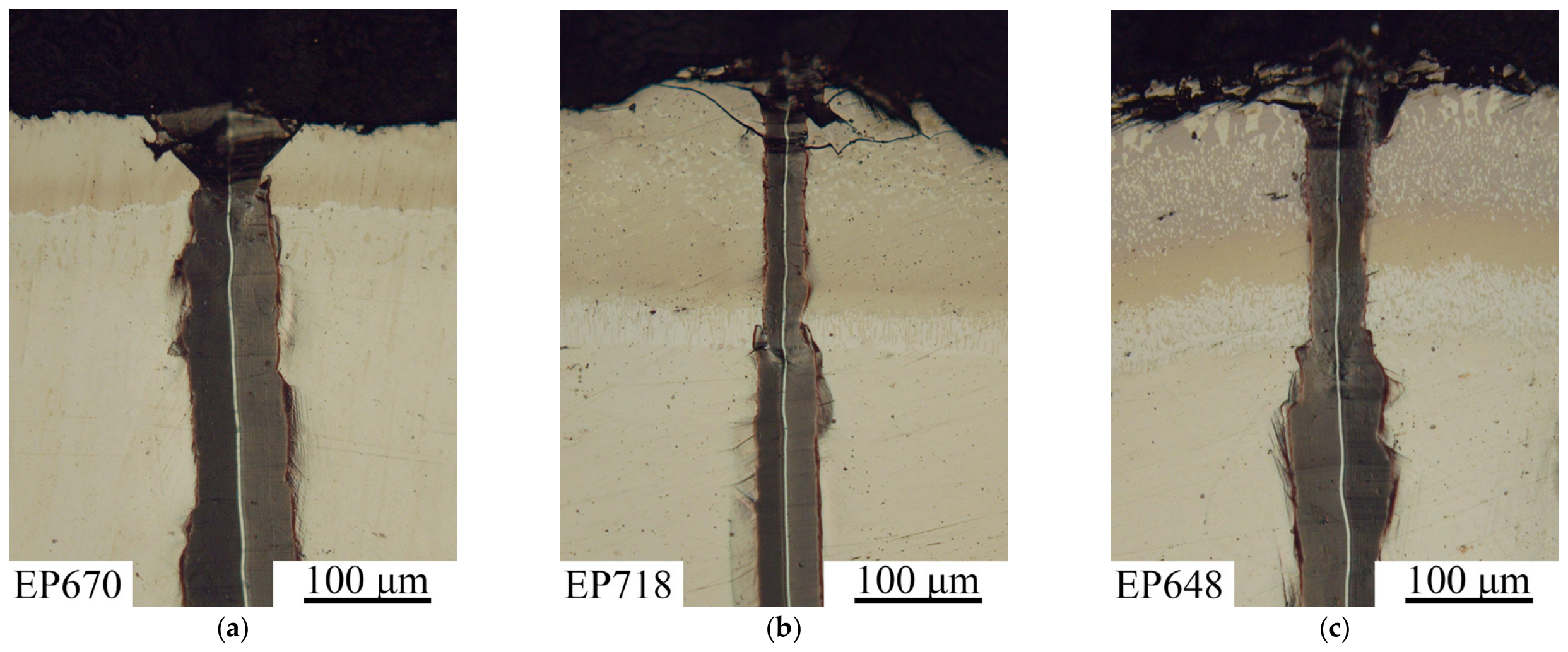
The scratch tests allowed us to evaluate the adhesive and cohesive strength of the coatings. All investigated coatings demonstrated a complete absence of adhesive cracks at the coating–substrate interface (Figure 18). Near the outer surface, distinct scratch widening is observed as a result of the indenter exiting the coating layer. These near-surface regions are structurally characterized by the formation of purely cohesive cracks within the coating matrix.
Figure 18.
Microstructural traces of scratch tracks: (a) the coating on the EP670 alloy (load 3 N), (b) the coating on the EP718 alloy (load 2 N), and (c) the coating on the EP648 alloy (load 3 N).
Microcracks within the coating on the EP670 alloy begin to appear at a normal load as low as 1 N within the widening scratch region near the surface. Increasing the normal load to 3 N does not initiate the formation of new cracks. At a critical load of 5 N, localized delamination occurs along the internal boundaries of the FeNiAl5 and α phase layers. In the case of the EP718 alloy, fine microcracks nucleate near the outer edge of the coating at a load of 1 N. At a load of 2 N, these cracks are observed prior to reaching the scratch-widening zone. For the coating on the EP648 substrate, microcracks appear at a load of 1 N and remain strictly localized within the widening scratch zone near the outer coating surface.
The scratch testing results indicate that crack nucleation and propagation occur directly within the bulk of the coating. Due to the compositional gradient, the transition zone at the substrate interface possesses lower hardness, which allows it to undergo co-plastic deformation alongside the base material. This mechanism effectively minimizes stress concentration at the interface, making the development of adhesive cracks in such systems highly unlikely.
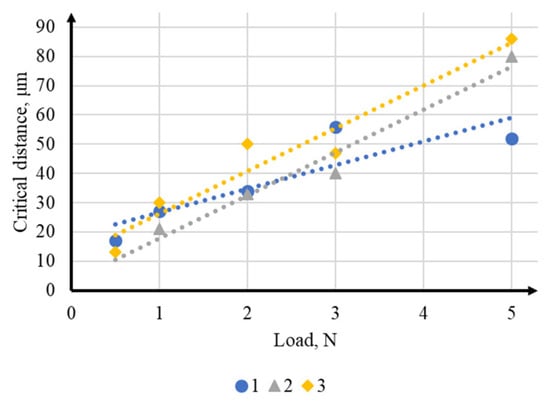
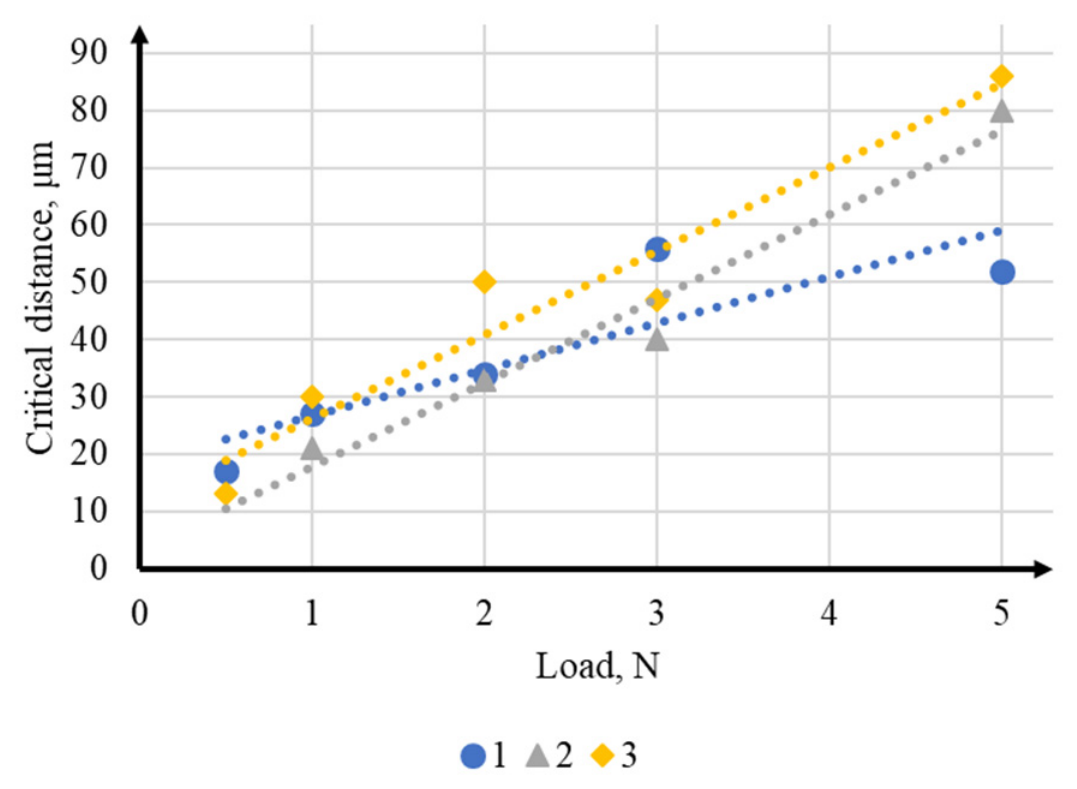
For all investigated systems, the critical distance values are comparable and linearly increase with the normal load on the indenter (Figure 19). The critical distance [35] is defined as the distance from the onset of the conical scratch widening, which forms as the indenter exits the coating, to the outer surface of the coating.
Figure 19.
Critical distance during scratch testing as a function of the normal load on the indenter: 1—EP670; 2—EP718; 3—EP648.
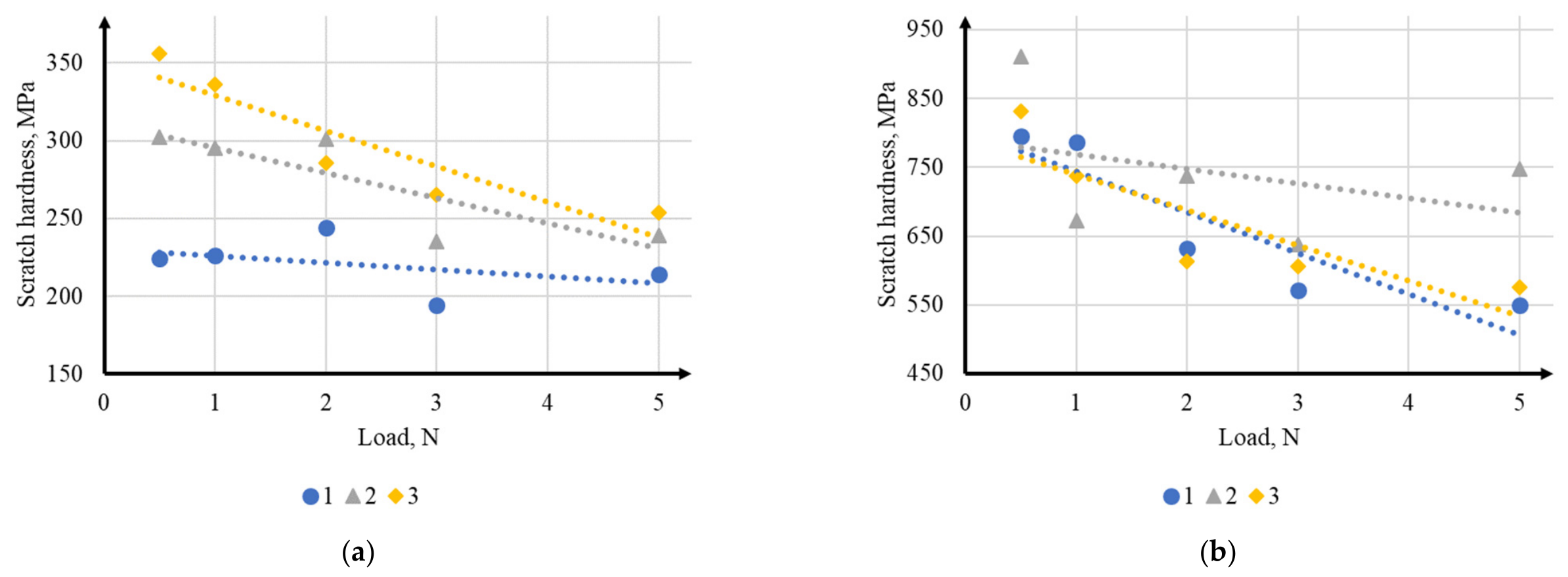
At lower normal loads (0.5 N and 1 N), all coatings exhibit significantly higher scratch hardness than at higher loads (Figure 20). This behavior is attributed to the fine-scale dispersed precipitates, which provide a high precipitation-hardening contribution at shallow depths. At higher loads, matrix plastic deformation dominates, neutralizing the effect of fine intermetallics.
Figure 20.
Scratch hardness of the substrate superalloys (a) and the corresponding coatings (b): 1—EP670; 2—EP718; 3—EP648.
3.7. Oxidation Resistance Results
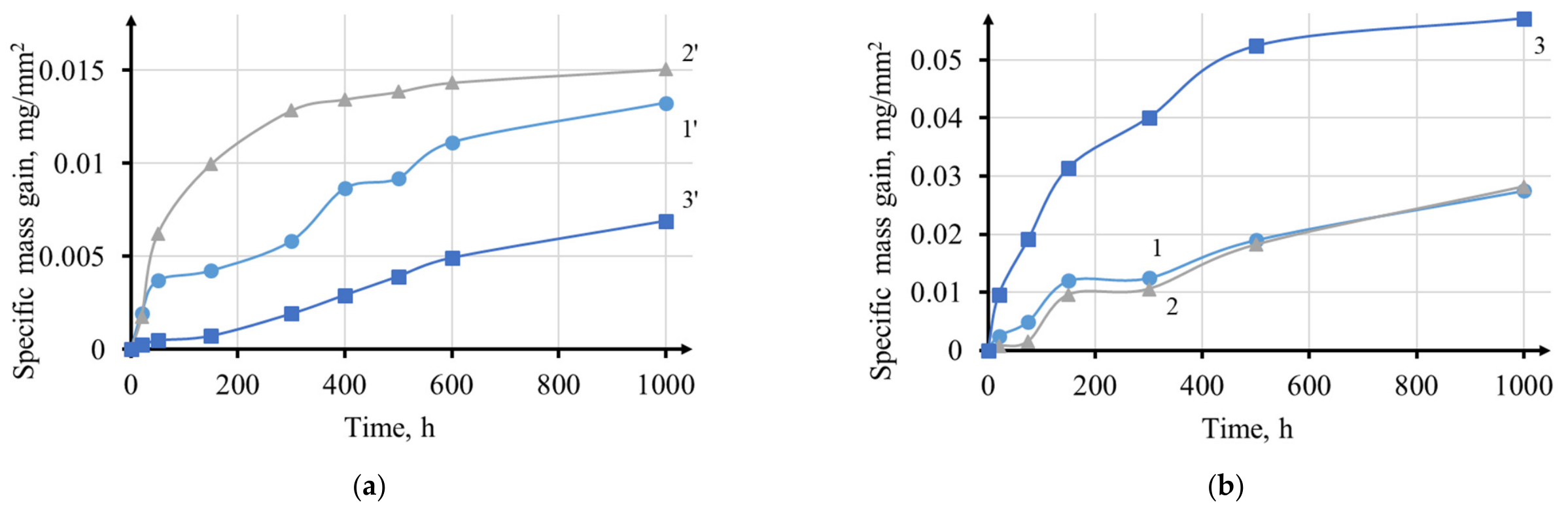
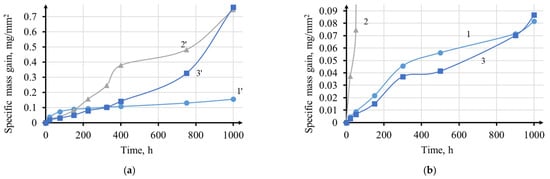
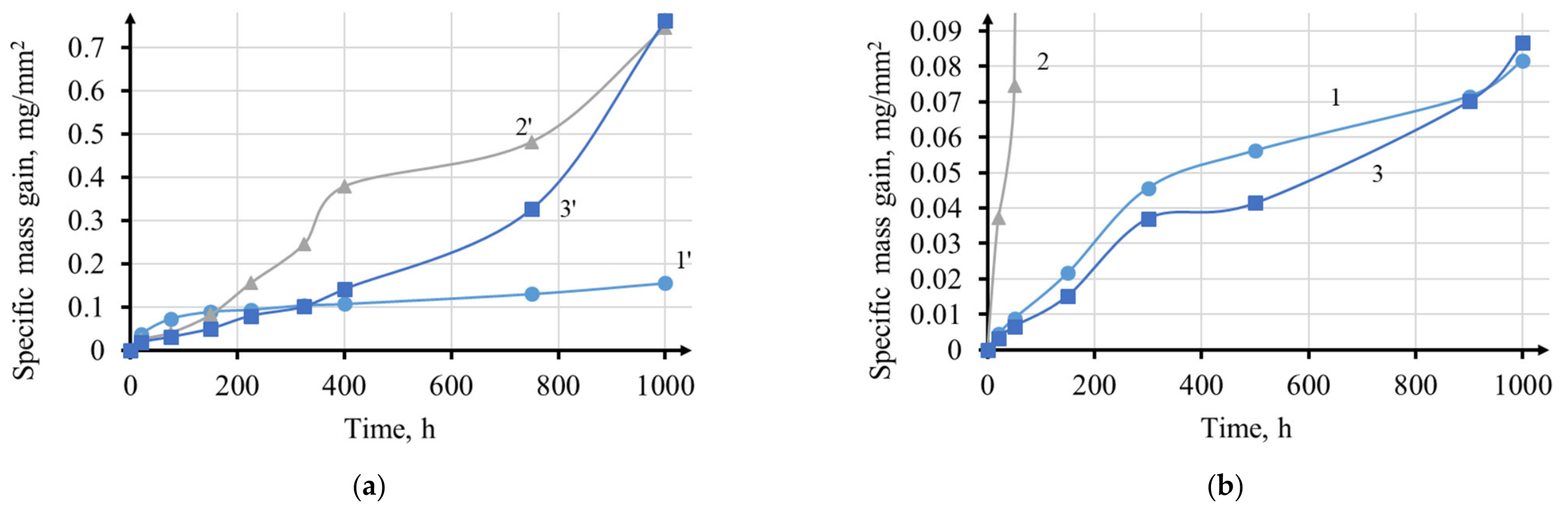
The high-temperature oxidation kinetics of the superalloys EP670, EP718, and EP648, both in their initial (plain) state and with multi-component aluminide coatings, were evaluated at 900 °C for up to 1000 h. The specific mass gain data (mg/mm2) for all investigated systems are summarized in Figure 21.
Figure 21.
Specific mass gain of the investigated alloys at 900 °C: (a) uncoated (1′—EP670; 2′—EP718; 3′—EP648) and (b) aluminized (1—EP670; 2—EP718; 3—EP648) specimens.
The mass gain for the coated specimens reflects the formation of a protective oxide scale and the initial stabilization of the multi-phase aluminide structure. The oxidation behavior of the substrate alloys without coatings provides a baseline for evaluating the protective efficiency of the synthesized aluminide layers.
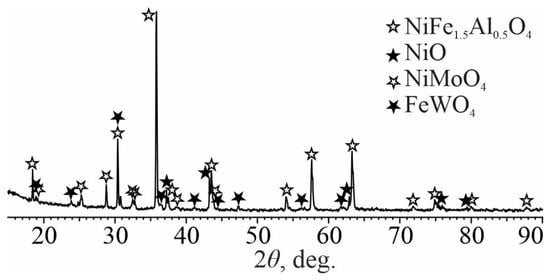
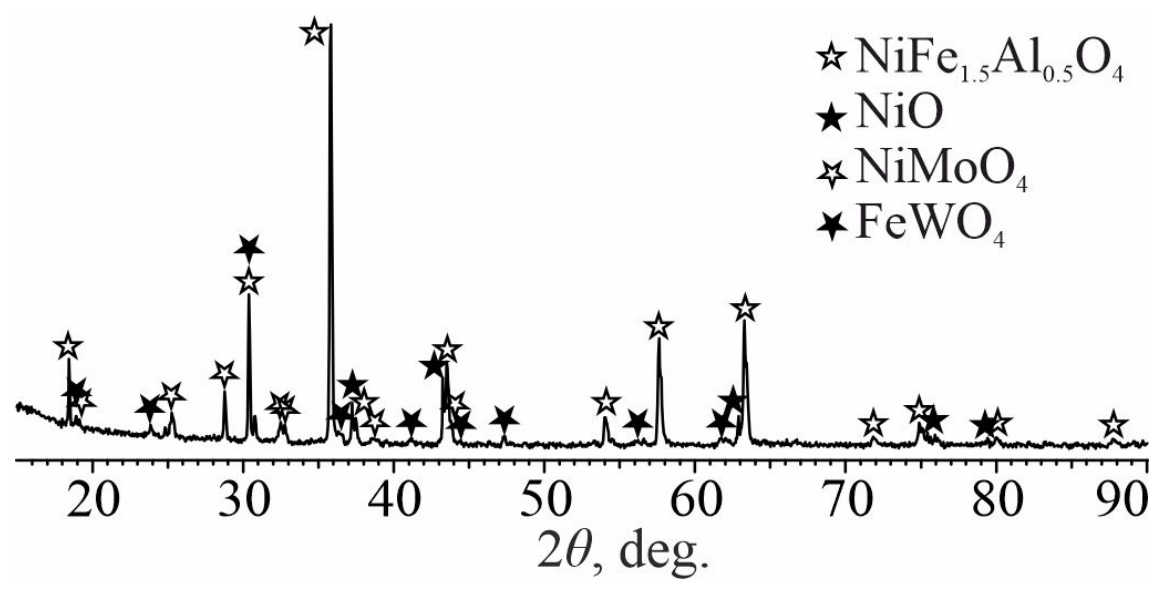
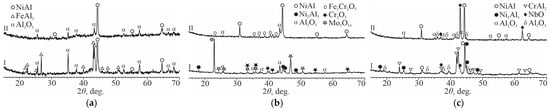
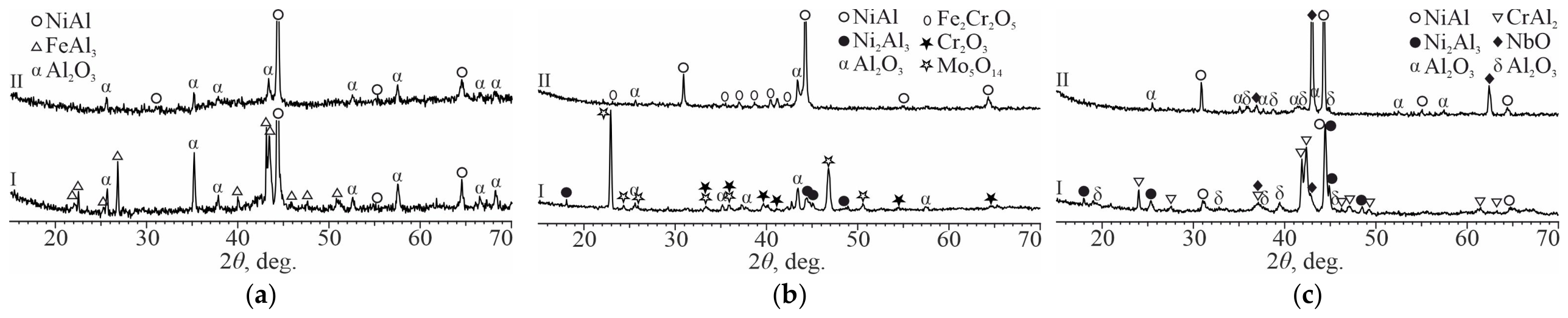
At a temperature of 900 °C, the oxidation intensity of the aluminide coatings applied to the investigated alloys increased compared to the plain (uncoated) substrates (Figure 21). This kinetic trend was systematically clarified via surface XRD analysis of the oxide scales formed at 900 °C and 1100 °C (Figure 22). At a higher temperature of 1100 °C, a dense and continuous corundum (α-Al2O3) (ICDD PDF-2 No. 01-070-5679) layer successfully develops across all specimens. However, at the intermediate temperature of 900 °C, a distinct bifurcation of the oxide phase composition is observed depending on the substrate chemistry. For the EP670 coating, the scale is predominantly composed of stable α-Al2O3. In contrast, the scale on the EP718 coating reveals intense peaks of Mo5O14 (ICDD PDF-2 No. 01-081-1264) and reflections corresponding to complex iron-chromium oxides (ICDD PDF-2 No. 01-083-5077, 00-035-1112) alongside the corundum phase. Most notably, for the EP648 coating at 900 °C, protective corundum is practically absent, exhibiting only traces of the metastable δ-Al2O3 modification (ICDD PDF-2 No. 00-046-1131) and niobium oxide (ICDD PDF-2 No. 01-077-0015). The rapid nucleation of these non-protective oxides disrupts the overall scale compactness during the early stages of exposure. The observed situation explains the more intensive oxidation of the aluminized alloys at 900 °C. In the case of the EP670 alloy, the absence of other identified oxide phases may be due to their spallation from the surface during cooling.
Figure 22.
X-ray diffraction patterns obtained from the surface of the aluminized alloys after high-temperature oxidation at 900 °C (I) and 1100 °C (II) for 20 h: (a) EP670; (b) EP718; and (c) EP648.
An increase in the testing temperature to 1100 °C demonstrates the high protective efficiency of the synthesized aluminide coatings on the EP670 and EP648 superalloys. Within the investigated time range, the coatings significantly reduce the mass gain of the specimens compared to the plain alloys (Figure 23), effectively suppressing high-temperature oxidation.
Figure 23.
Specific mass gain of the investigated alloys at 1100 °C: (a) uncoated (1′—EP670; 2′—EP718; 3′—EP648) and (b) aluminized (1—EP670; 2—EP718; 3—EP648) specimens.
In contrast, the coating on the EP718 alloy exhibits intense oxidation leading to complete structural failure within the first 200 h of exposure at 1100 °C. The specimen undergoes catastrophic disintegration, transforming into a powder of mixed oxides. The specific mass gain of the aluminized EP718 specimen reached 1.786 mg/mm2 before its ultimate destruction, which is nearly two orders of magnitude higher than the values observed for more stable systems.
Based on the microstructural evolution observed at intermediate stages prior to total structural disintegration, the localized failure of the coating on the EP718 alloy can be linked to the high concentration of molybdenum in the substrate matrix. During high-temperature exposure, the segregation of heavy elements promotes the formation of Mo-rich intermetallic compounds (Table 8, Table 9 and Table 10). Concurrently, this process is accompanied by the precipitation of a distinct α-phase, which exhibits severe aluminum depletion compared to the surrounding coating matrix. This structural evolution acts as a plausible trigger for accelerated degradation. The accumulation of these phases at the sub-scale interface induces severe local lattice strains and disrupts the formation of a continuous, protective α-Al2O3 layer. Consequently, this phase destabilization facilitates intense intergranular oxidation. While the rapid volatilization of MoO3 oxides at temperatures above 800 °C is a well-documented phenomenon in similar refractory-containing superalloys, the localized stress accumulation, sub-surface aluminum depletion, and matrix degradation observed in our intermediate cross-sections suggest that the presence of the Mo-rich phase and the associated α-phase formation represent a primary structural driver accelerating the catastrophic pest disintegration of the coating system.
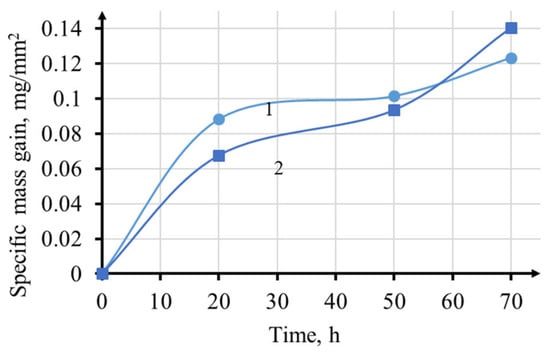
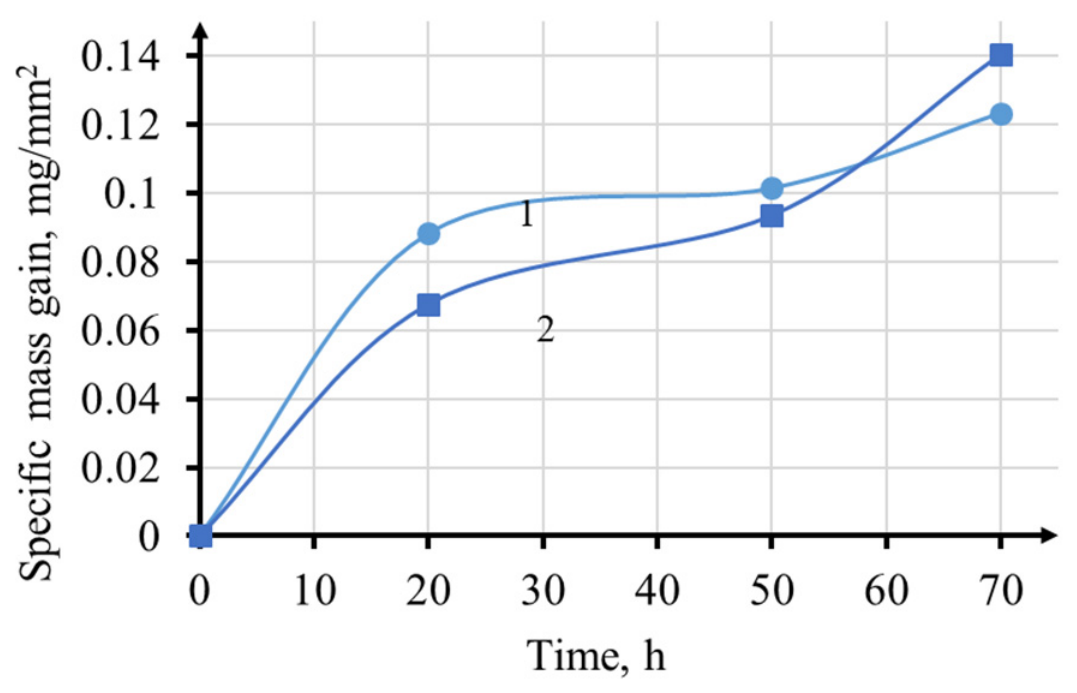
At a temperature of 1300 °C, the oxidation intensity reaches extremely high values. For the EP670 and EP648 alloys, the protective properties of the coatings are maintained only during the first 50 h of exposure (Figure 24). Beyond this period, a rapid intensification of the mass change is observed, indicating the onset of catastrophic oxidation and the depletion of the protective capacity of the aluminide layers. The results at 1300 °C establish the upper thermal limit for the synthesized aluminide coatings, beyond which the synergistic effect of rapid aluminum depletion and intermetallic phase instability leads to a loss of protective performance.
Figure 24.
Specific mass gain of the investigated aluminized alloys at 1300 °C: 1—EP670; 2—EP648.
To quantify the oxidation behavior, the kinetic parameters were determined using the power law equation. The resulting empirical equations, which describe the mass change (m) as a function of exposure time (τ) for the aluminized alloys at different temperatures, are summarized in Table 14.
Table 14.
Mass change (g/mm2) of the aluminized specimens during prolonged high-temperature exposure.
Analysis of the kinetic data shows that at 900 °C, a mixed oxidation regime (combining both kinetic and diffusion-controlled stages) is realized for the EP670 and EP648 alloys. In this regime, the oxidation rate is simultaneously limited by the chemical reaction at the interface and the diffusion of species through the forming oxide scale. In contrast, a predominantly kinetic regime is observed for the EP718 alloy, suggesting a less effective diffusion barrier.
Increasing the testing temperature to 1100 °C leads to a notable decrease in the power law exponent (n), shifting the oxidation mechanism further toward the kinetic regime. This transition implies that at higher temperatures, the diffusion of oxygen through the scale becomes so rapid that it no longer acts as the rate-limiting step. Instead, the process is controlled by the speed of the chemical reaction at the metal-scale interface.
For the EP718 alloy at 1100 °C, the exponent drops below 1.0 (0.52). This is a critical transition that quantitatively confirms the complete loss of the coating’s protective properties. A sub-linear exponent (n < 1) indicates breakaway oxidation, where the effective surface area of the reaction increases over time due to catastrophic cracking and pulverization of the coating, leading to the rapid structural disintegration of the specimen.
The accuracy of calculating the coefficients of the oxidation equation for 1300 °C is difficult due to the changing nature of oxidation.
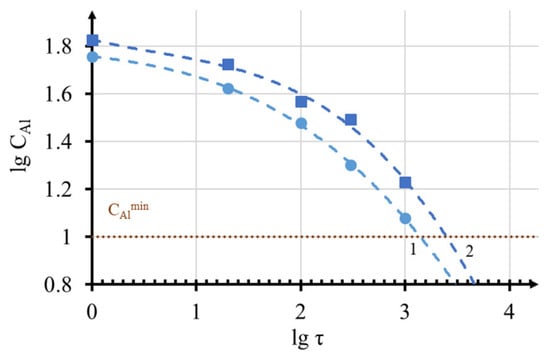
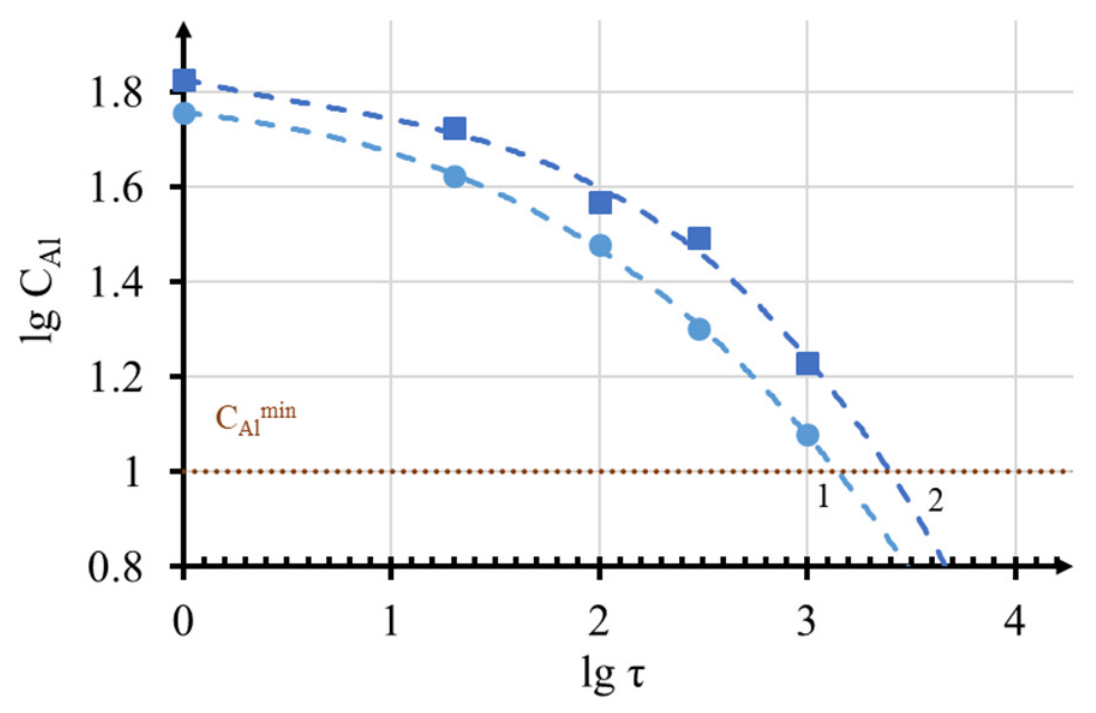
Since the oxidation resistance of aluminide coatings is fundamentally determined by their ability to form a protective Al2O3 scale, the aluminum concentration within the surface layer was selected as the primary evaluation criterion. In the investigated time interval (1000 h), the aluminum concentration did not drop below the critical threshold required for the stable formation of a continuous alumina film (10 at.%). Consequently, the remaining service life of the coatings was estimated by extrapolating the experimental data using logarithmic coordinates (Figure 25). Consequently, the remaining service life of the coatings was estimated by extrapolating the experimental data using fully logarithmic coordinates. To capture the non-linear character of the long-term diffusion, a third-order polynomial regression model was applied to the experimental aluminum depletion data collected up to 1000 h. The application of this mathematical model is strictly bound to the following physical boundary conditions: (1) the thermal exposure is assumed to be strictly continuous and isothermal at 1100 °C, completely excluding the effects of rapid thermal cycling; (2) the system is evaluated under zero external mechanical load, neglecting any creep or thermo-mechanical fatigue stresses; and (3) the model assumes stable outer oxide scale growth and interdiffusion behavior without accounting for localized structural macro-cracking or external scale erosion. The high R2 values (exceeding 0.99) mathematically validate that the third-order polynomial regression accurately maps the complex, non-linear diffusion consumption of aluminum.
Figure 25.
Time dependence of aluminum concentration changes in the coating surface layer at 1100 °C: 1—EP670; 2—EP648.
To validate the reliability of the service life predictions for the synthesized coatings at 1100 °C, the lifetime estimation model was grounded in several key physical and kinetic assumptions. First, the depletion of aluminum due to simultaneous outer oxide scale formation and inward interdiffusion into the substrate is assumed to follow a diffusion-controlled, near-parabolic kinetic rate law established during the first 500 h of steady-state testing. Second, the absolute failure criterion (endpoint) of the protective coating is defined as the degradation stage where the local aluminum concentration within the outer matrix zone falls below the critical thermodynamic threshold required to maintain the protective beta-phase (approximately 10 at.%). Beyond this threshold, the formation of a protective oxide film is difficult. Finally, the extrapolation assumes geometric uniformity of the layer and stable boundary conditions, excluding premature failure via thermal-stress macro-cracking or localized sub-scale spallation.
Extrapolation of the experimental data for the coatings on EP670 and EP648 alloys estimated the duration of their oxidation resistance at 1100 °C to be approximately 1300 and 2200 h, respectively. The predicted corrosion penetration depth for these coatings at the point when the surface aluminum concentration drops below the critical threshold was determined to be 16 µm for EP670 and 28 µm for EP648.
4. Conclusions
1. Hot-dip aluminizing of EP670, EP718, and EP648 alloys ensures the formation of a surface coating characterized by a matrix structure of solidified aluminum. This matrix contains various Al-rich Ni and Fe intermetallics, along with their associated solid solutions, differing in size and morphology. At the coating–substrate interface, these phases are present in the form of thin, continuous interlayers.
2. Initial diffusion heat treatment at 1100 °C successfully eliminates free aluminum and reduces the fraction of Al-rich intermetallics. For the EP670 alloy, this leads to a stratified structure consisting of FeNiAl5 and a protective β-phase. For the EP718 and EP648 alloys, the matrix transforms into a stable β-phase containing distributed Cr5Al8, Mo2NiAl5, and φ-(Al77.5Cr12.5Ni10) phases, which host dissolved W, Ti, and Nb.
3. Prolonged high-temperature exposure induces intensive interdiffusion, characterized by the inward migration of aluminum into the substrate and the outward diffusion of substrate elements toward the surface. This leads to a gradual redistribution of heavy alloying elements and the depletion of aluminum in the outer coating zones. The EP670 coating maintains its stratified structure, with layers consisting of the β-phase or a biphasic nanodispersed mixture of β and α-phase (or γ-phase). The EP648 alloy preserves its dispersed structure, which eventually refines into a stable β-phase matrix with uniformly distributed inclusions of a Cr-rich solid solution.
4. Due to its high molybdenum content, the coating on the EP718 alloy is highly susceptible to localized phase destabilization. This promotes pest oxidation and the rapid growth of non-protective internal oxides, leading to catastrophic structural failure and complete disintegration into oxide powder within the first 200 h of testing.
5. The coatings demonstrate high protective efficiency during long-term exposure strictly at 1100 °C for both EP670 and EP648 alloys. In contrast, at a lower temperature of 900 °C, the coatings do not provide a protective advantage, as they increase the oxidation intensity compared to the inherently resistant uncoated specimens due to the rapid growth kinetics of the outer oxide scale. Furthermore, 1300 °C represents the critical thermal limit for all studied systems, where protective performance completely fails after 50 h due to rapid aluminum depletion.
6. Based on the aluminum depletion kinetics at 1100 °C, the effective service life is estimated to be approximately 1300 h for the EP670 system (with a predicted corrosion depth of 16 µm) and 2200 h for the EP648 system (with a predicted corrosion depth of 28 µm).
7. Scratch tests confirm a complete absence of adhesive cracks at the coating–substrate interface across all investigated systems. Due to the compositional gradient, the transition zone at the substrate interface possesses lower hardness, which allows it to undergo co-plastic deformation alongside the base material, effectively minimizing stress concentration. The formation of cohesive cracks is strictly localized within the near-surface scratch widening zone, where all coatings exhibit significantly higher scratch hardness.
Author Contributions
Conceptualization, L.M.G. and V.G.S.; Methodology, A.I.B., O.V.S. and V.P.K.; Validation, V.P.K., D.V.P. and A.I.B.; Investigation, A.I.B. and V.P.K.; Writing—Original Draft Preparation, V.G.S. and V.P.K.; Writing—Review and Editing, V.G.S.; Visualization, V.P.K. All authors have read and agreed to the published version of the manuscript.
Funding
The study was carried out with the financial support of the Ministry of Science and Higher Education of the Russian Federation (project No. FZUS-2026-0003 based on Agreement No. 075-03-2026-526 dated 16 January 2026).
Data Availability Statement
The original contributions presented in this study are included in the article. Further inquiries can be directed to the corresponding author.
Acknowledgments
Part of this research (electron microscopy and energy-dispersive X-ray spectroscopy) was carried out using the equipment of the Center for Collective Use of the Volgograd State Technical University.
Conflicts of Interest
The authors declare no conflicts of interest.
References
- Yang, Z.; Lu, J.T.; Zhang, P.; Le, M.; Zhou, Y.L.; Huang, J.Y.; Zhang, L.; Liang, G.Y.; Gu, Y.F. Oxidation performance and degradation mechanism of the slurry aluminide coating deposited on Super304H in steam at 600–650 °C. Surf. Coat. Technol. 2020, 391, 125700. [Google Scholar] [CrossRef] [Scilit]
- Bogdanov, A.; Kulevich, V.; Shmorgun, V.; Taube, A. Formation of thermally grown aluminum oxide scale on the surface of Ni2Al3/Ni layered coating. Oxid. Met. 2022, 98, 199–216. [Google Scholar] [CrossRef] [Scilit]
- Shmorgun, V.G.; Bogdanov, A.I.; Kulevich, V.P. The effect of aluminum content in the Fe-Cr-Al system alloys on the oxide films phase composition. Mater. Today Proc. 2020, 30, 554–558. [Google Scholar] [CrossRef] [Scilit]
- Gu, C.; Liu, R.; Wang, C.; Sun, Y.; Zhang, S. Effect of aluminum on microstructure and high-temperature oxidation resistance of austenitic heat-resistant steel. Metals 2020, 10, 176. [Google Scholar] [CrossRef] [Scilit]
- Darolia, R. Ductility and fracture toughness issues related to implementation of NiAl for gas turbine applications. Intermetallics 2000, 8, 1321–1327. [Google Scholar] [CrossRef] [Scilit]
- Lynch, R.J.; Gee, K.A.; Heldt, L.A. Environmental embrittlement of single crystal and thermomechanically processed B2-ordered iron aluminides. Scr. Metall. Mater. 1994, 30, 821–826. [Google Scholar] [CrossRef] [Scilit]
- Haynes, J.A.; Zhang, Y.; Cooley, K.M.; Walker, L.; Reeves, K.S.; Pint, B.A. High-temperature diffusion barriers for protective coatings. Surf. Coat. Technol. 2004, 188, 153–157. [Google Scholar] [CrossRef] [Scilit]
- Liu, Y.; Yin, B.; Deng, C.; Li, Q.; Zhang, L.; Deng, P.; Zhou, X.; Liu, M. Microstructure evolution and interdiffusion behaviors of (Ni, Pt) Al coating with and without Re-diffusion barrier on IC21 substrate at 1100 °C. Mater. Charact. 2021, 181, 111450. [Google Scholar] [CrossRef] [Scilit]
- Singh, S.; Berndt, C.C.; Singh Raman, R.K.; Singh, H.; Ang, A.S. Applications and developments of thermal spray coatings for the iron and steel industry. Materials 2023, 16, 516. [Google Scholar] [CrossRef] [Scilit] [PubMed]
- Ułanowicz, L.; Dudziński, A. Heat-resistant protective coatings applied to aircraft turbine blades by supersonic thermal spraying and diffusion-aluminizing. Coatings 2024, 14, 1554. [Google Scholar] [CrossRef] [Scilit]
- Li, Z.; Wang, C.; Ding, X.; Li, X.; Yu, J.; Li, Q.; Qu, Y. Effect of slurry thickness on the quality of aluminized coatings. Materials 2022, 15, 6758. [Google Scholar] [CrossRef] [Scilit] [PubMed]
- Pedrizzetti, G.; Genova, V.; Scrinzi, E.; Bottacchiari, R.; Conti, M.; Paglia, L.; Bartuli, C. Slurry Aluminizing Mechanisms of Nickel-Based Superalloy and Applicability for the Manufacturing of Platinum-Modified Aluminide Coatings. Coatings 2025, 15, 822. [Google Scholar] [CrossRef] [Scilit]
- Wu, Y.; Zhang, Z.; Leng, J.; Gao, C.; Huang, G.; Qi, F.; Yang, S.; Shi, Q. Supercritical oxidation resistance of double-layer aluminized coating on Nickel alloy prepared by pack cementation aluminizing. Surf. Coat. Technol. 2025, 497, 131728. [Google Scholar] [CrossRef] [Scilit]
- Barwinska, I.; Kopec, M.; Kukla, D.; Łaźińska, M.; Sitek, R.; Kowalewski, Z.L. Effect of Aluminizing on the Fatigue and High-Temperature Corrosion Resistance of Inconel 740 Nickel Alloy. JOM 2023, 75, 1482–1494. [Google Scholar] [CrossRef] [Scilit]
- Kopec, M. Recent advances in the deposition of aluminide coatings on nickel-based superalloys: A synthetic review (2019–2023). Coatings 2024, 14, 630. [Google Scholar] [CrossRef] [Scilit]
- Vardelle, A.; Moreau, C.; Akedo, J.; Ashrafizadeh, H.; Berndt, C.C.; Berghaus, J.O.; Bisson, J.F.; Bostrom, O.; Brigaud, A.S.; Chazelas, J.; et al. The 2016 thermal spray roadmap. J. Therm. Spray Technol. 2016, 25, 1376–1440. [Google Scholar] [CrossRef] [Scilit]
- Galedari, S.A.; Mahdavi, A.; Azarmi, F.; Huang, Y.; McDonald, A. A comprehensive review of corrosion resistance of thermally-sprayed and thermally-diffused protective coatings on steel structures. J. Therm. Spray Technol. 2019, 28, 645–677. [Google Scholar] [CrossRef] [Scilit]
- Montero, X.; Demler, I.; Kuznetsov, V.; Galetz, M.C. Factors governing slurry aluminization of steels. Surf. Coat. Technol. 2017, 309, 179–186. [Google Scholar] [CrossRef] [Scilit]
- Cojocaru, M.O.; Branzei, M.; Druga, L.N. Aluminide diffusion coatings on IN 718 by pack cementation. Materials 2022, 15, 5453. [Google Scholar] [CrossRef] [Scilit] [PubMed]
- Dey, P.P.; Sahu, S.; Banerjee, P.S.; Ghosh, M. A review on metallurgical features of hot-dip aluminized steel. Eng. Res. Express 2023, 5, 012002. [Google Scholar] [CrossRef] [Scilit]
- Kishore, K.; Chhangani, S.; Prasad, M.J.N.V.; Bhanumurthy, K. Microstructure evolution and hardness of hot dip aluminized coating on pure iron and EUROFER 97 steel: Effect of substrate chemistry and heat treatment. Surf. Coat. Technol. 2021, 409, 126783. [Google Scholar] [CrossRef] [Scilit]
- GOST 5632-72; Stainless Steels and Alloys Corrosion-Resistant, Heat-Resistant, and High-Temperature Strength. Grades. Standardinform: Moscow, Russia, 1973.
- TU 14-1-3905-85; High-Alloy Corrosion-Resistant, Heat-Resistant, and High-Temperature Strength Steels and Alloys. Technical Specifications. Central Research Institute of Ferrous Metallurgy: Moscow, Russia, 1985.
- TU 14-3-837-79; Seamless Cold-Deformed and Hot-Deformed Tubes Made of High-Alloy Steel and Alloys. Technical Specifications. Central Research Institute of Ferrous Metallurgy: Moscow, Russia, 1979.
- GOST 6130-71; Metals. Methods for Determination of Oxidation Resistance. Standardinform: Moscow, Russia, 1972.
- Pavlyuchkov, D.; Przepiórzyński, B.; Grushko, B.; Velikanova, T.Y. The hexagonal phase in the Al-Cr-Fe system. Metallofiz. Noveishie Tekhnol. 2008, 30, 1423–1428. [Google Scholar]
- Sui, H.X. Hexagonal Al81Fe8Cr11 with a=4.00 nm and c=1.24 nm. Philos. Mag. Lett. 1999, 79, 181–185. [Google Scholar] [CrossRef] [Scilit]
- Grushko, B.; Kowalska-Strzęciwilk, E.; Pavlyuchkov, D.; Surowiec, M. Al-rich region of the Al-Ni-Cr alloy system below 900 °C. J. Alloys Compd. 2009, 485, 132–138. [Google Scholar] [CrossRef] [Scilit]
- Grégoire, B.; Bonnet, G.; Pedraza, F. Reactivity of Al-Cr microparticles for aluminizing purposes. Intermetallics 2017, 81, 80–89. [Google Scholar] [CrossRef] [Scilit]
- Pohla, C.; Ryder, P.L. Crystalline and quasicrystalline phases in the system Al-Cr-Fe. Acta Mater. 1997, 45, 2155–2166. [Google Scholar] [CrossRef] [Scilit]
- Duarte, L.I.; Leinenbach, C.; Klotz, U.E.; Marker, M.C.; Richter, K.W.; Löffler, J.F. Experimental study of the FeAl-NiAl-TiAl section. Intermetallics 2012, 23, 80–90. [Google Scholar] [CrossRef] [Scilit]
- Li, W.; Zhang, X.; Cheng, G.; Wu, T.; Liu, Y.; Meng, F.; Sun, X. Effect of molybdenum on isothermal oxidation behavior of 4th generation nickel-based single crystal superalloys. J. Mater. Res. Technol. 2024, 29, 1453–1466. [Google Scholar] [CrossRef] [Scilit]
- Volders, C.; Reinke, P. Reaction pathways in the oxidation and pesting of molybdenum disilicide MoSi2 studied with scanning tunneling microscopy and spectroscopy. Surf. Sci. 2019, 681, 134–142. [Google Scholar] [CrossRef] [Scilit]
- Xie, F.; Wang, Y.; Li, J.; Zhang, H.; Liu, Z.; Sun, J. Unveiling the non-catastrophic oxidation mechanism of high molybdenum carbon-free high-speed steel using multi-scale characterization. Mater. Charact. 2025, 219, 115425. [Google Scholar] [CrossRef] [Scilit]
- Beltzung, F.; Albrecht, J.; Rohde, M. Fracture toughness measurement of plasma sprayed ceramic coatings. Thin Solid Films 1989, 181, 407–415. [Google Scholar] [CrossRef] [Scilit]

Disclaimer/Publisher’s Note: The statements, opinions and data contained in all publications are solely those of the individual author(s) and contributor(s) and not of MDPI and/or the editor(s). MDPI and/or the editor(s) disclaim responsibility for any injury to people or property resulting from any ideas, methods, instructions or products referred to in the content. |
© 2026 by the authors. Licensee MDPI, Basel, Switzerland. This article is an open access article distributed under the terms and conditions of the Creative Commons Attribution (CC BY) license.