
Review

A Systematic Review of Urban Air Mobility Development: eVTOL Drones’ Technological Challenges and Low-Altitude Policies of Shenzhen


1
School of Finance and Economics, Shenzhen University of Information Technology, Shenzhen 518000, China
2
School of Aeronautic Science and Engineering, Beihang University, Beijing 100191, China
3
National Superior College for Engineers, Beihang University, Beijing 100191, China
4
Research Institute of Unmanned System, Beihang University, Beijing 100191, China
5
Shenzhen Research Institute, Beihang University, Shenzhen 518000, China
*
Authors to whom correspondence should be addressed.
Drones 2025, 9(12), 842; https://doi.org/10.3390/drones9120842
Submission received: 12 October 2025 / Revised: 28 November 2025 / Accepted: 1 December 2025 / Published: 8 December 2025

Highlights

What are the main findings?
  • A systematic analysis of the multidimensional technical bottlenecks and systemic challenges for eVTOL drones in Urban Air Mobility (UAM) is conducted, identifying critical issues in aerodynamics, structure, energy, navigation, redundancy control, and safety.
  • The complementary relationship between technological challenges and low-altitude policies in Shenzhen is revealed, highlighting its advantages in efficient flight approval and large-scale takeoff-landing infrastructure, leading to development suggestions from technology, infrastructure, industrial ecology, and regional coordination.
What is the implication of the main finding?
  • Taking Shenzhen as an example, this paper explores the research progress and development trends of urban air mobility in big cities based on eVTOL, revealing the technical pain points and policy bottlenecks of urban air mobility, as well as their interrelationships. This can promote technological development of urban air mobility and shorten its path of commercialization expansion.
  • A concrete development roadmap for Shenzhen is proposed, emphasizing coordinated advancement in technology R&D, infrastructure, regulation, and regional cooperation to establish a global benchmark for UAM implementation.

Abstract

Urban Air Mobility (UAM) is emerging as a transformative solution to urban traffic congestion and inefficient ground travel. This paper presents the UAM development of Shenzhen, a pioneering city of low-altitude economy in China. It focuses on eVTOL drones for Shenzhen UAM, systematically reviewing the technical challenges, policy support, and practical progress. Firstly, the technical status of eVTOL drone design and research is reviewed, and the multidimensional technologies and application bottlenecks faced by eVTOL drones are identified. Secondly, by combining flight safety technology and urban air mobility regulation technology, the systematic technical challenges of urban low-altitude traffic based on eVTOL drones are analyzed. Furthermore, from the perspective of coordinated promotion of infrastructure and regulation, the foundation of urban air mobility applications is clarified, among which efficient flight approval and large-scale construction of takeoff and landing sites across the entire city represent prominent advantages of Shenzhen’s future air mobility. Then, given the high correlation between the systemic technological challenges of urban air mobility and low-altitude economic policies, this paper reveals the complementary relationship between technological challenges and low-altitude policies based on the current status of Shenzhen’s policy promotion and its impact on technology and industry. Finally, the technical issues and regulatory trends faced by eVTOL drones in urban air mobility in Shenzhen are summarized, and combined with the global and Chinese commercial prospects of manned eVTOL drones, suggestions for the future development of urban air mobility in Shenzhen are proposed from the following four dimensions: technology research and development, infrastructure, industrial ecology, and regional coordination.

1. Introduction

With the acceleration of urbanization, the continuous expansion of city size, population growth, and increasingly severe ground traffic congestion, traditional transportation modes are no longer sufficient for efficient urban travel. In this context, Urban Air Mobility (UAM) has emerged as a promising transportation mode that can help alleviate urban traffic challenges and improve travel efficiency, attracting worldwide attention.
According to NASA’s definition, urban air mobility refers to a safe and efficient transportation mode that uses manned or unmanned aerial vehicles in urban areas [1]. It covers diverse applications, including air taxi services providing fast point-to-point travel for residents, emergency medical transportation delivering supplies and personnel to critical sites, and urban express delivery enabling efficient distribution of goods. The drones involved in UAM include fixed-wing drones and electric vertical take-off and landing (eVTOL) drones. Fixed-wing drones are mostly used for bulk cargo transport and large-scale inspections, while eVTOL drones are designed with potential intelligent capabilities but are still under development [2]. Compared with fixed-wing drones, eVTOL drones offer advantages in flexible takeoff and landing within urban spaces and are described as a promising solution for future urban passenger transport. Unlike helicopters that currently operate in low-altitude urban environments with existing helipads, eVTOL drones are still largely under development and aim to complement or expand UAM capabilities rather than fully replace existing systems [3].
The development of urban air mobility is a complex systems engineering challenge involving multiple technical domains [4]. Aircraft design must ensure safety, efficiency, low noise, and environmental compatibility, requiring continuous innovation in configuration, power systems, materials, and operational strategies. Traffic management and supervision technologies are essential to maintain safe and orderly flight within complex urban airspace, while takeoff and landing infrastructure must be appropriately designed and equipped. Additionally, the supporting air mobility management systems, including communication, navigation, and surveillance infrastructure, are critical for precise positioning and real-time monitoring of aircraft.
While these technologies are being developed, their deployment is influenced by economic policies, which provide funding, incentives, and regulatory guidance. Shenzhen serves as a practical case study due to its advanced low-altitude economic development and technological ecosystem [5]. Thus, Shenzhen serves as a practical and leading case study, as it is not only representative of rapidly developing urban low-altitude economies in China but also exhibits pioneering technological and regulatory practices that can provide insights for other cities. The city has achieved notable progress in coordinating urban air mobility with supportive policies, offering a context for examining technology–policy interactions. However, this review focuses primarily on eVTOL technological challenges and UAM system integration, with policy serving as contextual background.
Despite a growing body of literature on eVTOL technologies and UAM frameworks, there remains a lack of integrated analyses connecting technological challenges with policy instruments in real-world urban contexts. To address this gap, this review systematically synthesizes the eVTOL technological landscape alongside Shenzhen’s low-altitude policy system. Specifically, it examines (1) key technological challenges in eVTOL design and operation and (2) how low-altitude policies influence technological implementation. Unlike previous reviews that focus mainly on either technology [6,7] or policy [8,9,10], this study integrates both aspects using Shenzhen as a representative case, providing a ‘technology–policy co-evolution’ framework and actionable insights for UAM development in metropolitan regions.
To ensure the scientific rigor of this review, the literature selection followed a structured methodology. We conducted a targeted search across Web of Science, Scopus, IEEE Xplore, and China National Knowledge Infrastructure (CNKI), using keywords such as “eVTOL,” “distributed electric propulsion,” “urban air mobility,” “low-altitude economy,” and “UAM regulation.” Priority was given to peer-reviewed journal articles, highly cited conference papers, government and industry reports, and Shenzhen-specific policy documents published between 2015 and 2024. Studies were screened based on technical relevance, methodological clarity, and contribution to UAM system development.

2. Low-Altitude Technology Challenges in Urban Air Mobility

2.1. Technical Challenges of eVTOL Drones

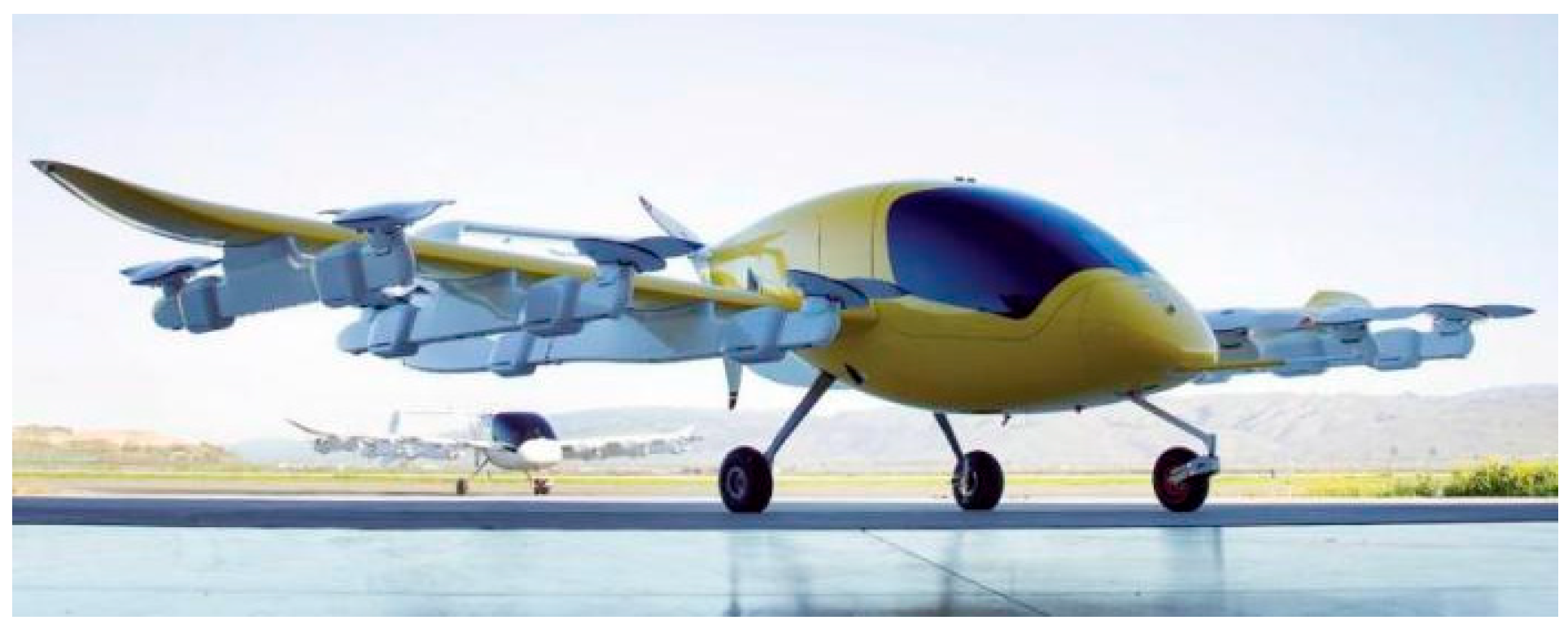
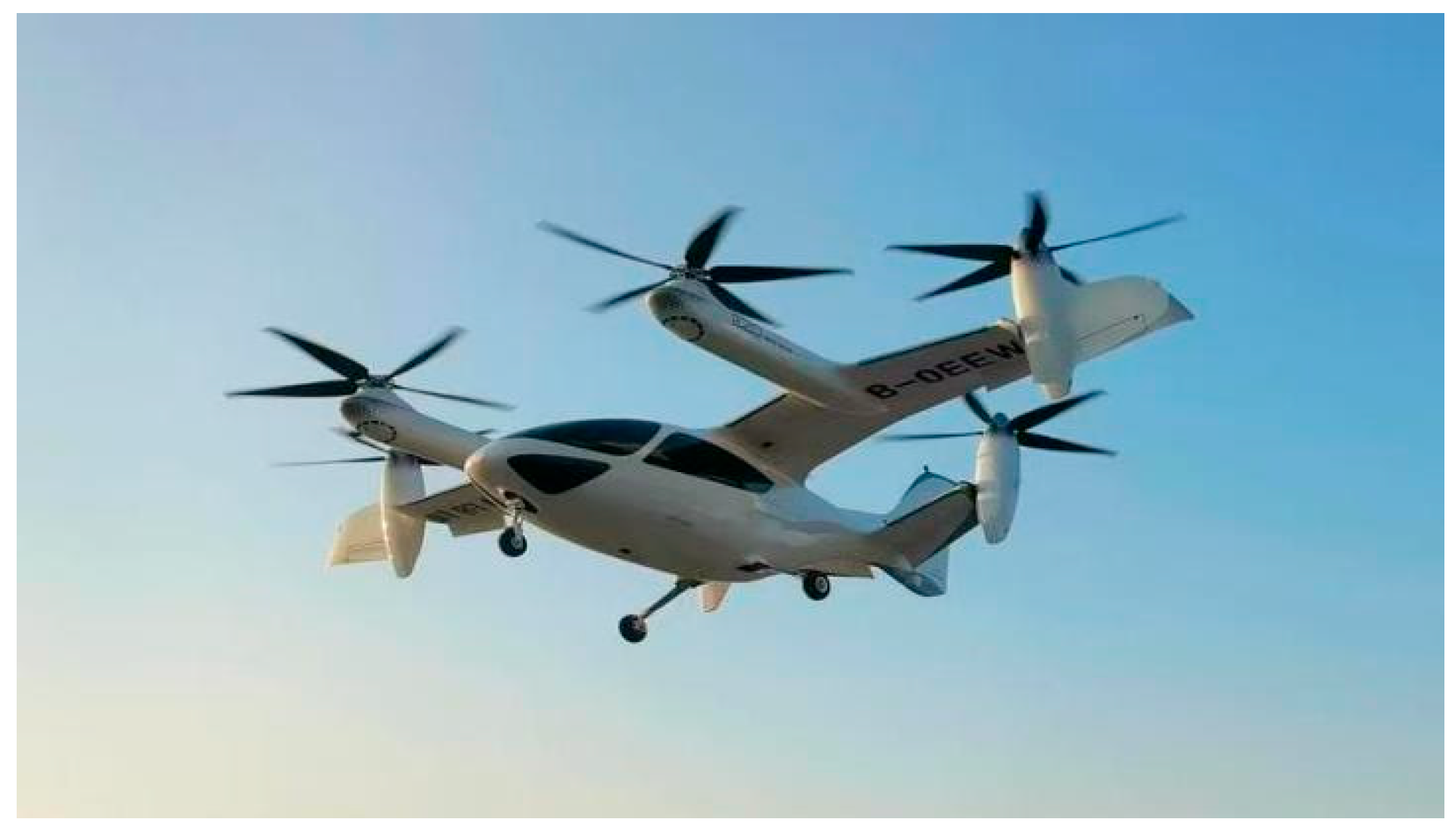
eVTOL drones refer to a type of Unmanned Aerial Vehicle (UAV) suitable for low-altitude urban transportation. They can be categorized into various configurations based on propulsion layout and operational principle. The main types include (1) multi-rotor configuration (e.g., EH216 from Shenzhen EHang, Shenzhen, China, Figure 1) suitable for vertical takeoff and landing with simple control but limited range; (2) lift + cruise configuration (e.g., Kitty Hawk Cora, Palo Alto, CA, USA, Figure 2), where lift rotors provide vertical thrust and cruise rotors enable efficient forward flight, improving range and endurance; and (3) tilt-rotor configuration (e.g., Joby Aviation S4, Santa Cruz, CA, USA, Figure 3), which combines vertical lift with horizontal thrust by tilting rotors, offering high speed and flexibility. Additional representative studies include modeling and passivity-based control for convertible fixed-wing VTOL [11,12,13,14] and predictive control strategies for aerial payload transportation with UAV [15,16,17], which illustrate technical differences in control strategies, propulsion distribution, and energy efficiency.
Currently, the main types include the multi-rotor configuration (e.g., EH216 from Shenzhen EHang, Figure 1), the lift + cruise configuration (e.g., Kitty Hawk Cora, Figure 2), and the tilt-rotor configuration (e.g., Joby Aviation S4, Figure 3).
The current development of eVTOL drones faces many technical challenges, with one of the most critical being limited battery endurance. Therefore, targeted design improvements are required to enhance battery endurance. At present, the aerodynamic design of distributed propulsion, the choice of multi-rotor structures, the efficiency of the power system, and the management and optimization of the energy system at the design stage all critically affect endurance performance. According to the “White Paper 2025 on China’s Manned eVTOL drones Industry” released by Boston Consulting Group, the breakthrough in battery energy density is critical for achieving large-scale commercialization of eVTOL drones. Current mainstream pure-electric solutions provide a range of 50–100 km, which is insufficient to meet the commuting demands of core urban areas. The industry is actively exploring transitional technology routes such as hybrid power and hydrogen fuel cells, aiming to achieve a target range of 150–200 km between 2028 and 2030. Safety-related technical challenges also pose major obstacles to the practical application of eVTOL drones. These primarily include energy safety assessment and application, high-precision navigation and positioning, redundant flight control, efficient autonomous obstacle avoidance, and maintenance support.

2.1.1. Technical Challenges in eVTOL Drone Design and Development

Efficient Aerodynamics of Distributed Power
Considering both safety and flight efficiency, current eVTOL drones generally adopt distributed propulsion systems. While multiple propellers introduce complex wake interactions and turbulence over the wings, appropriate design of propeller spacing, rotation direction, and thrust distribution can mitigate negative aerodynamic effects and enhance overall efficiency. Enhancing aerodynamic efficiency in such systems can effectively reduce aerodynamic drag, improve overall performance, extend endurance, and broaden practical application scenarios. However, when multiple propellers are employed, turbulence interactions in the propeller wake can affect the wing lift distribution and induce complex unsteady aerodynamic loads. This highlights the importance of not only CFD simulations but also comparative analysis and parametric studies to evaluate optimal propeller spacing, rotation directions, and thrust allocation. For instance, Minervino [19] and De Vries [20] reported that proper distributed propulsion layout can reduce wing drag and improve energy efficiency, but excessive interference between propellers may decrease net lift gains.
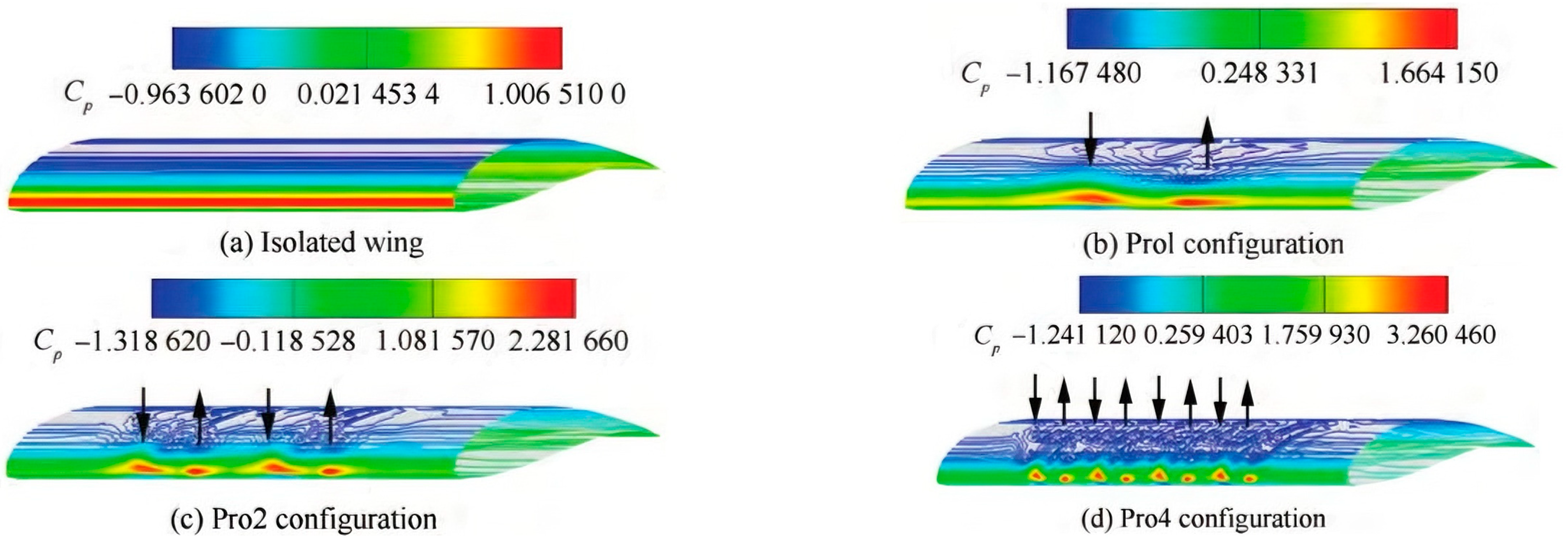
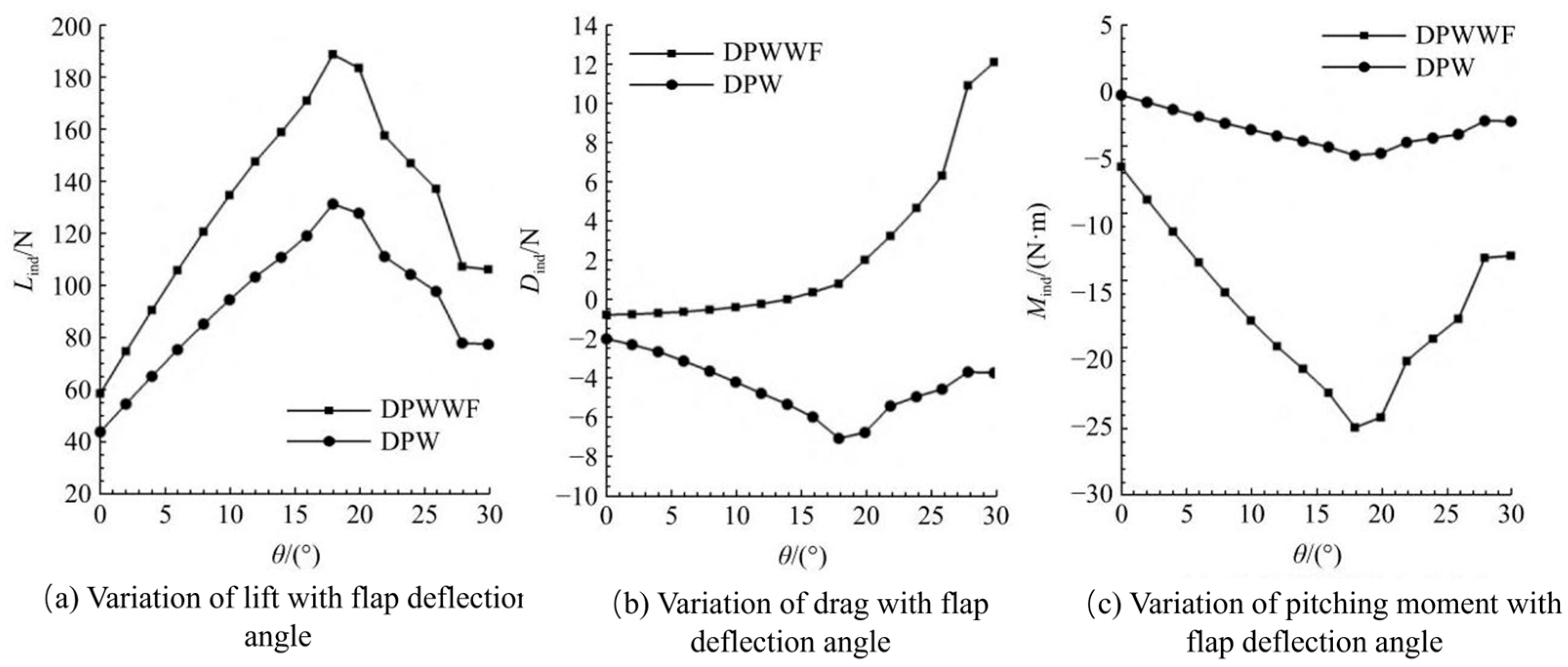
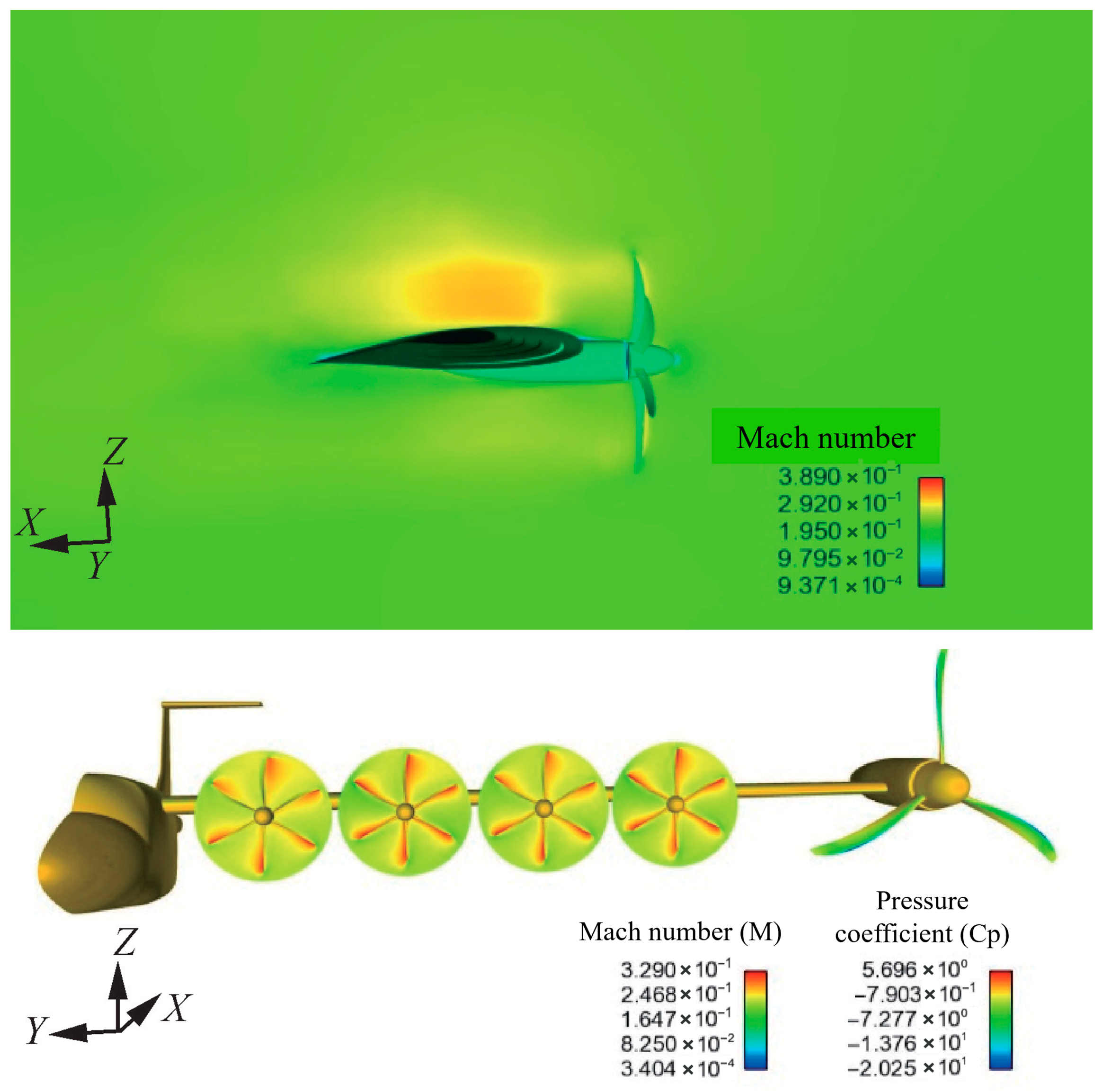
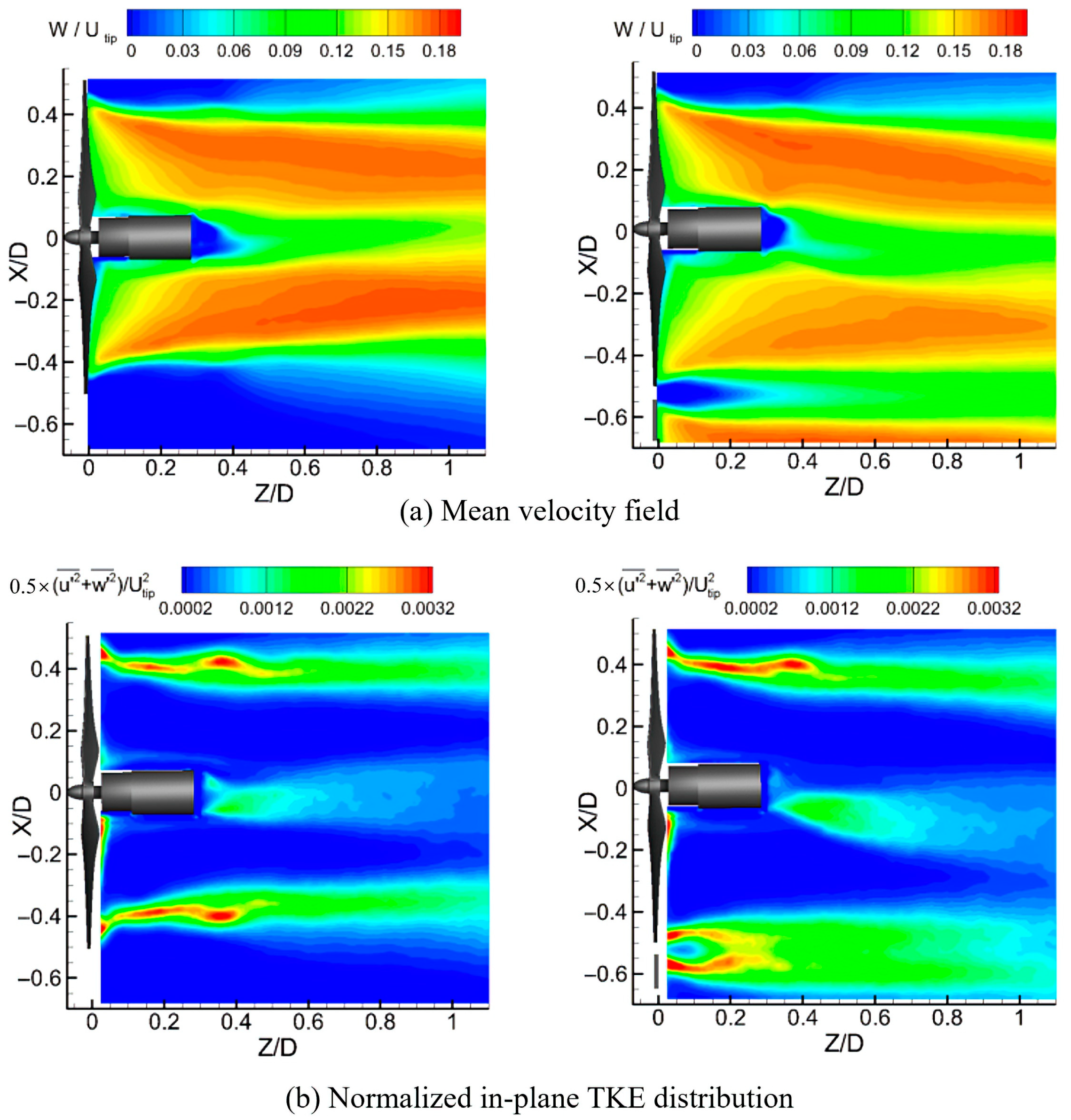
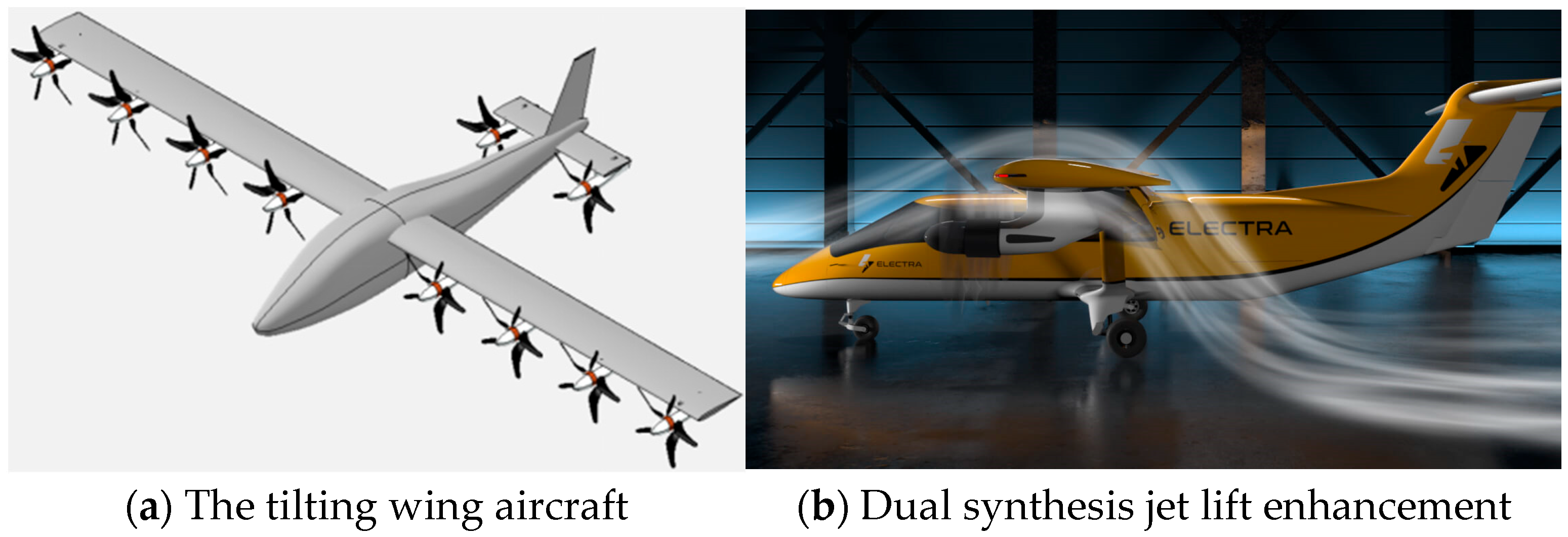
Wang et al. [21] found that propeller slipstream increases wing lift force, decreases the lift-to-drag ratio, and delays flow separation, as illustrated in Figure 4. Liang [22] showed that appropriate spacing between ducted fans can enhance the induced lift effect. Xu et al. [23] further showed that the slipstream-induced suction and jet deflection enhance the effective lift of the high-lift flap and substantially delay stall, As shown in Figure 5.
In studies of distributed aerodynamics, the strong coupling between aircraft aerodynamic characteristics and the propulsion system necessitates comprehensive investigation of their interaction. In addition to CFD simulations, comparative studies, parametric analyses, and experimental validation are essential to quantify the effects of propeller wake turbulence on wing performance and overall aircraft efficiency. Numerical simulation methods are therefore widely employed to analyze aerodynamic–propulsion coupling phenomena, and current research approaches can be broadly categorized into two groups: source-term methods and dynamic-grid methods. Source-term methods include the equivalent disk method, the viscous vortex particle method (VVPM), and the momentum source method, while dynamic-grid methods primarily consist of the multiple reference frame (MRF) method and the sliding mesh method. The equivalent disk method replaces the real propeller with an equivalent actuator disk and employs steady-state numerical simulations to rapidly solve the distributed-propeller flow field and estimate the corresponding aerodynamic forces [24]. The viscous vortex particle method (VVPM) is used to simulate incompressible viscous flows, effectively capturing the evolution of vorticity and handling complex unsteady phenomena such as flow separation and vortex dynamics [25,26]. The momentum source method introduces momentum terms into CFD models to approximate rotational flows without explicitly modeling rotating geometries. Although computationally efficient, it offers limited accuracy in capturing complex flow features, making it more suitable for rapid assessments and preliminary design stages. The multiple reference frame (MRF) method, a widely used dynamic-grid approach for propeller slipstream analysis, is commonly applied to aerodynamic calculations of fixed-axis rotating bodies [27,28]. By converting unsteady problems into steady-state formulations, the MRF method reduces computational cost while maintaining high accuracy and efficiency. The velocity field obtained by Rao et al. [29] using the MRF method is shown in Figure 6. The sliding mesh method addresses relative motion in fluid domains, particularly in regions coupling rotating and stationary components. By applying relative sliding boundaries, it accurately resolves transient flow characteristics while retaining reasonable computational efficiency.
Research has demonstrated that distributed propulsion offers high aerodynamic efficiency and the potential to enhance lift [21,22,23,24]. Nevertheless, aerodynamic coupling, propeller wake interference, and multi-rotor interactions present significant challenges, particularly in fixed-wing and hybrid configurations. Across the reviewed literature, trends indicate that optimal spacing of propellers, coordinated rotation directions, and integrated motor–propeller design improve efficiency and reduce energy consumption, while minimizing lift fluctuations. A comparative synthesis reveals that multi-rotor configurations excel in maneuverability but have limited range, lift + cruise offers balanced endurance and flexibility, and tilt-rotor configurations provide high speed but require complex control.
Lightweight and High-Strength Multi-Rotor Structure
In the design and development of eVTOL drones, the lightweight and high-strength multi-rotor structure represents a crucial technical challenge that directly affects the performance, efficiency, and safety of the aircraft. In order to achieve multi-rotor vertical takeoff and landing, the aircraft must reduce its own weight as much as possible while maintaining sufficient structural strength to withstand various loads generated during flight, including aerodynamic loads, gravity, vibration, and sudden impacts.
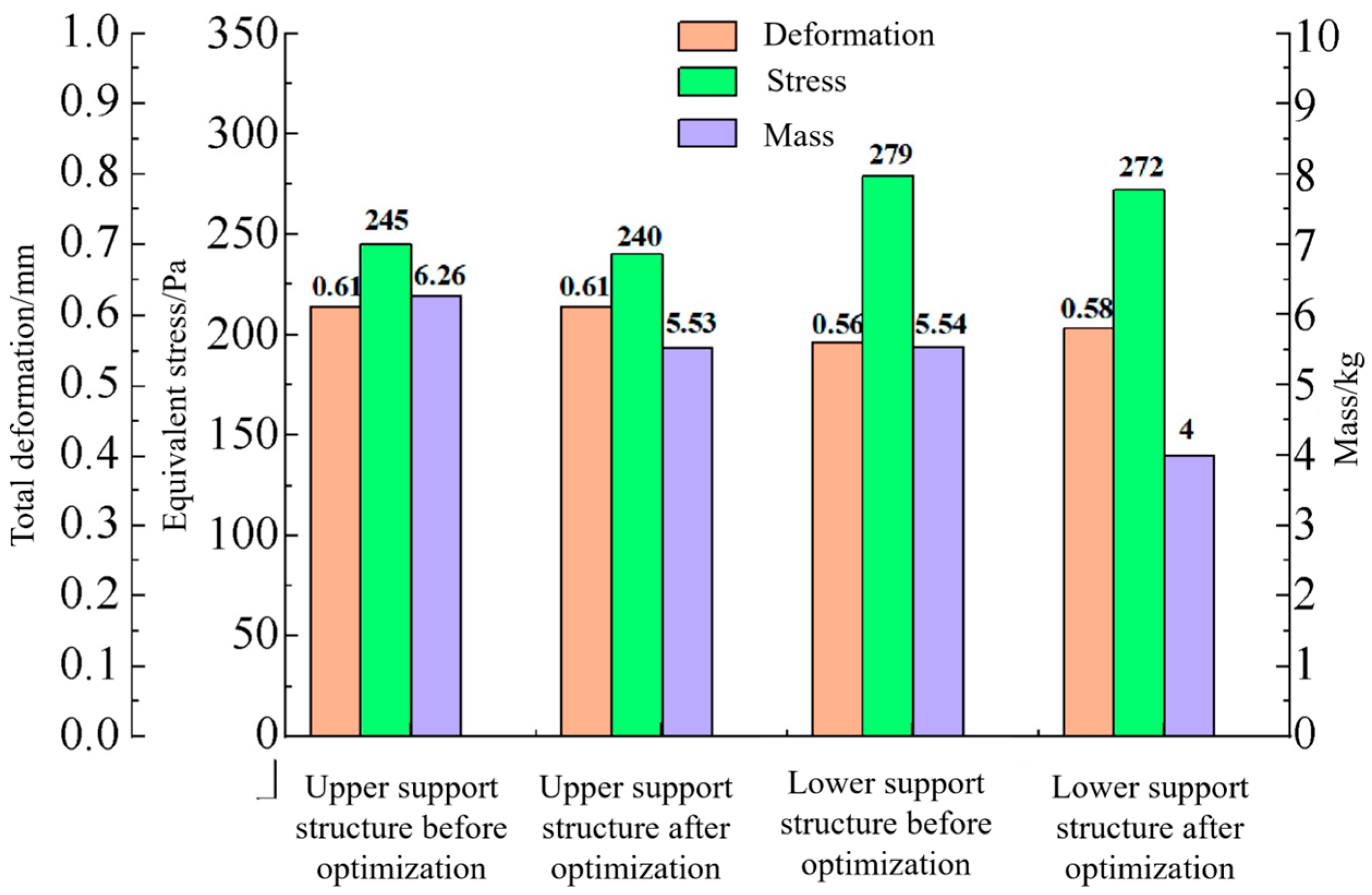
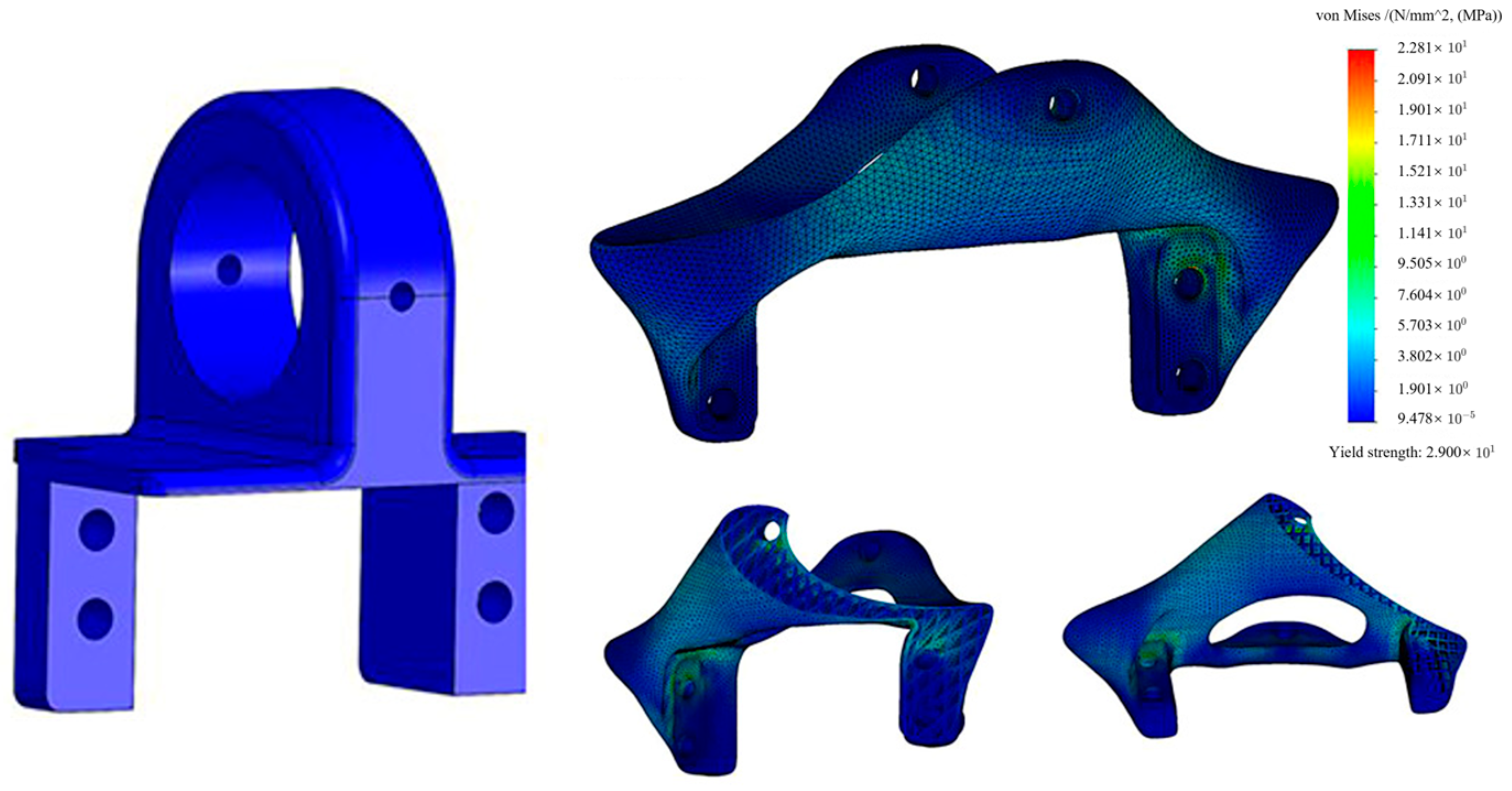
In the optimization of multi-rotor structures, topology optimization design plays a significant role in enhancing structural strength and achieving lightweight. Ren et al. [30] conducted topology optimization on the folding mechanism of a six-rotor aircraft to meet the requirements of lightweight unmanned aerial vehicles. Yao et al. [31] used the variable-density method of topology optimization to design lightweight multi-rotor structures, which improved structural strength and achieved significant weight reduction. The changes in the upper and lower supports before and after topology optimization are illustrated in Figure 7. Xie et al. [32] designed a hinge bracket through topology optimization, which reduced the weight by about 28% compared to the original structure and exhibited good mechanical properties. Helge et al. [33] proposed a design method combining topology optimization and fill optimization, and demonstrated that a triangular fill with a density of 50% represents the optimal pattern, yielding the best performance in terms of structural strength and weight reduction. Comparative analysis suggests that hinge design and variable-density optimization significantly influence mechanical performance and weight efficiency. The structural comparison and optimized stress distribution are illustrated in Figure 8.
Overall, the design of lightweight and high-strength multi-rotor structures requires not only breakthroughs in material technology and structural optimization, but also precise engineering design to balance weight, strength, and safety, ensuring that eVTOL drones can operate stably under various complex flight conditions. With the continuous advancement of technology, eVTOL drones are expected to improve flight performance and safety while further reducing production and maintenance costs, promoting widespread application.
Efficient Motor/Propeller Power System Design
In the design and development of eVTOL drones, an efficient motor/propeller power system is also a key technical challenge, as it directly determines the power performance, endurance, and energy efficiency of the aircraft. The motor and propeller system of eVTOL drone aircraft needs to meet the dual requirements of vertical takeoff and horizontal flight, so its design must ensure efficient thrust output to extend flight time and improve overall performance.
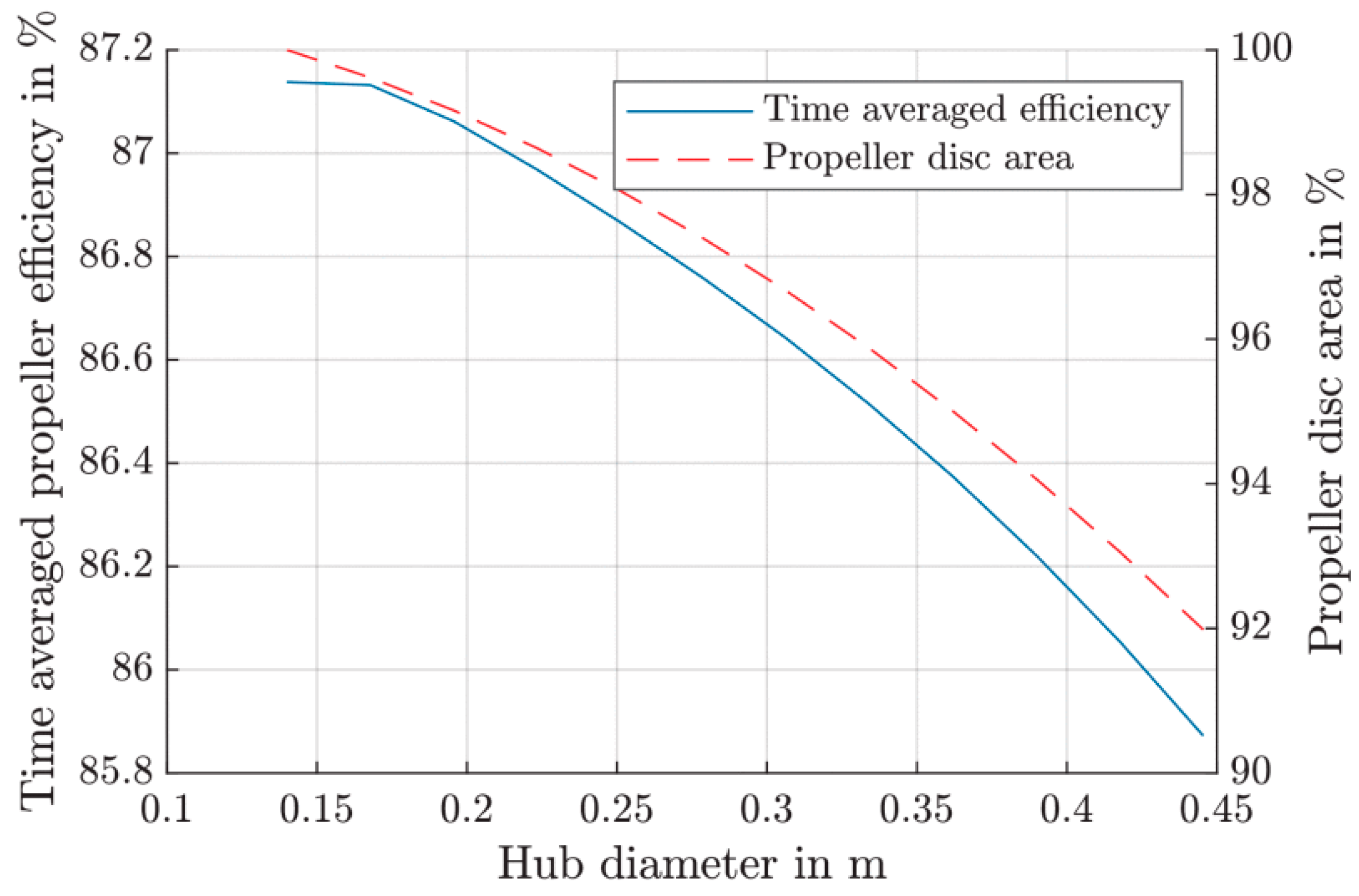
Ralf et al. [34] found that increasing the diameter of the electric motor has a relatively small impact on aerodynamics, but the improvement in motor performance is significant only until the diameter-to-length ratio becomes excessively high. At the same time, the synergistic optimization of speed in the task profile mainly affects system efficiency determined by the propeller, as shown in Figure 9. The synergistic design of the electric motor and propeller is the key to achieving high efficiency and power density; Zhang [35] optimized the chord length distribution and twist angle distribution of the blade and designed a high-efficiency composite propeller; Javier et al. [36] proposed a preliminary design method for eVTOL drone propeller system configuration, which first calculates the external dimensions of the propeller and optimizes the blade geometry, and then determines the size of the electric motor; Zhou’s [37] research found that the thrust coefficient of the rotor is independent of the rotor spacing, but as the rotor spacing decreases, the thrust fluctuation significantly increases, as shown in Figure 10. Comparative trends show that increased motor diameter improves power density up to a limit, while reduced rotor spacing enhances lift but increases thrust fluctuations and noise. Optimized blade geometry and chord/twist distributions remain essential for balancing thrust efficiency and energy consumption.
In summary, an efficient motor/propeller power system requires the propeller to have good aerodynamic performance and compatibility with the motor. By optimizing the design of electric motors, propellers, and the overall power system, eVTOL drones can improve energy efficiency, extend endurance, and ensure flight performance, laying a technological foundation for widespread adoption of urban air travel.
Energy Management and Optimization
For eVTOL drones, the current propulsion method is mostly propeller/ducted electric propulsion. Therefore, whether using a pure electric propulsion system or a hybrid electric propulsion system, energy management and optimization of eVTOL drone batteries are inevitable technical challenges.
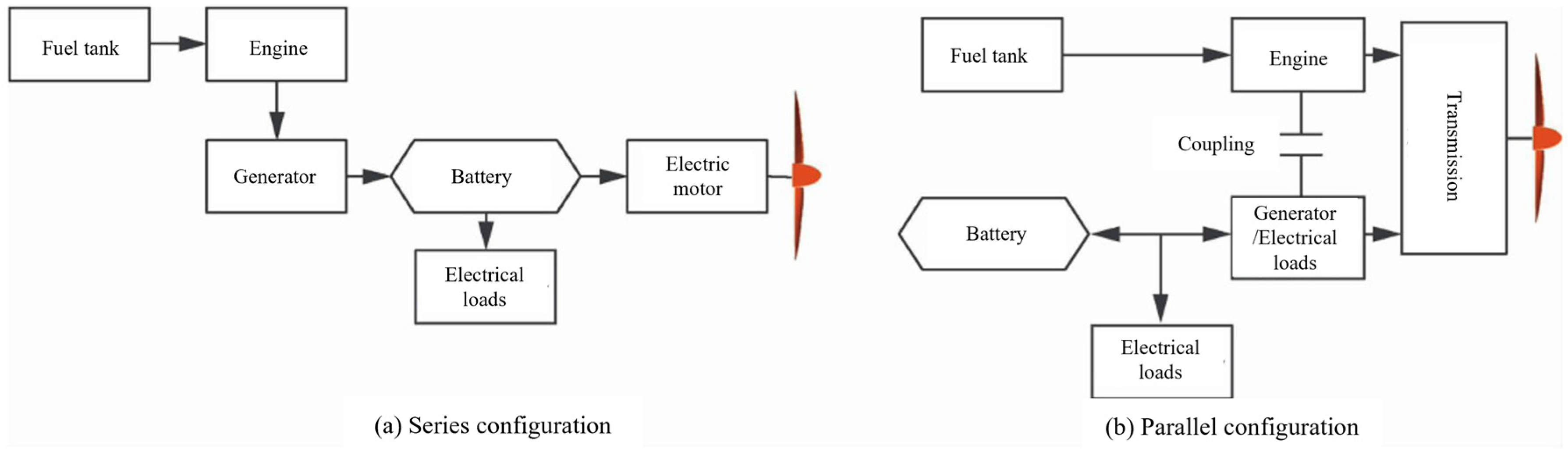
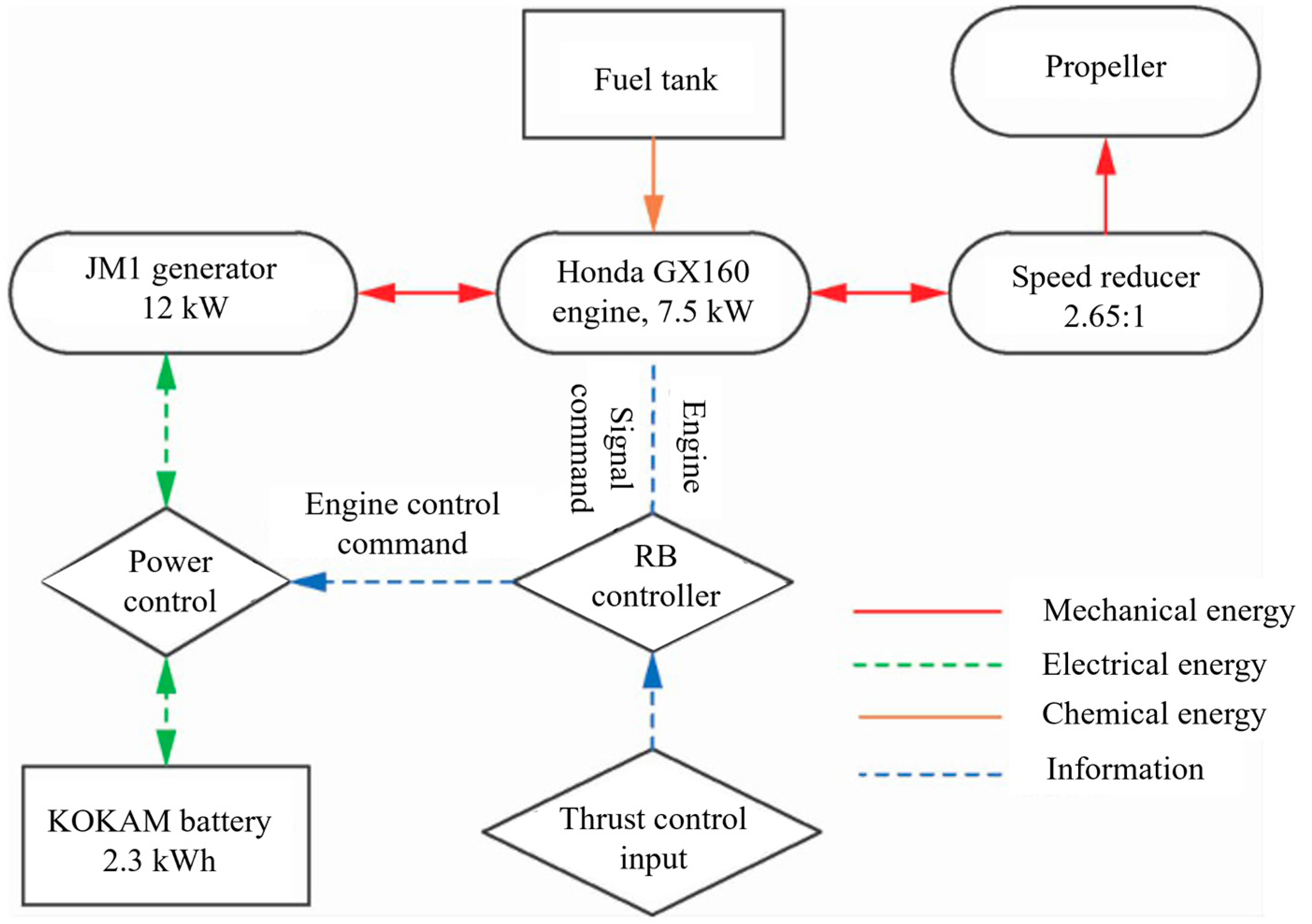
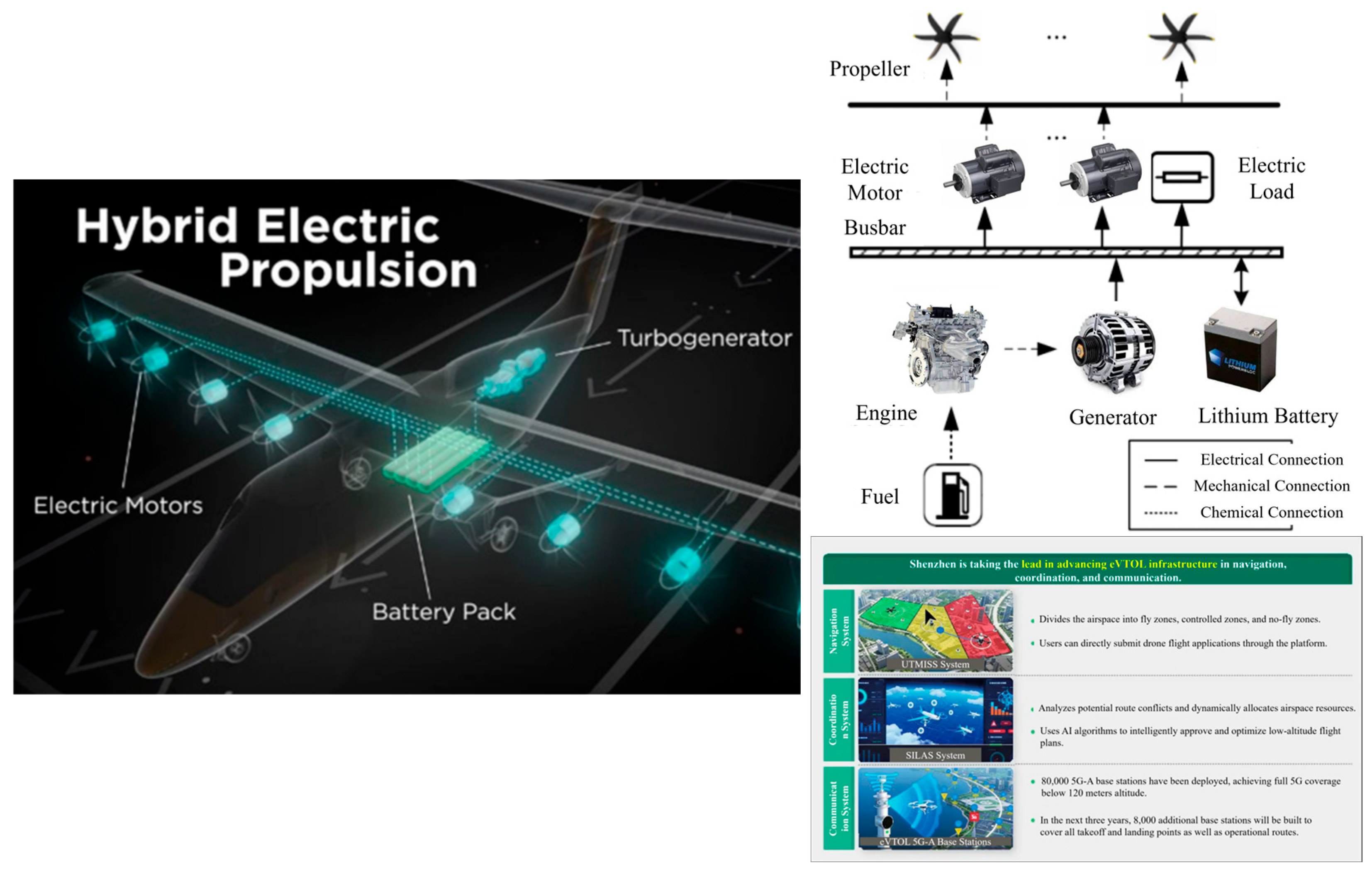
Zhu et al. [38] argued that hybrid electric propulsion technology, by optimizing the secondary energy system, can not only improve energy utilization efficiency, but also meet the requirements of a distributed layout of power systems and achieve higher propulsion efficiency. The energy management of hybrid electric propulsion systems can be mainly divided into two modes, as shown in Figure 11. Wang et al. [39] optimized the power system and battery calculation model, taking into account the impact of lithium-ion battery discharge rate and voltage reduction on discharge time. Friedrich [40] proposed a topology design method for hybrid electric propulsion systems, as shown in Figure 12. Through modeling and simulation, the topology architecture and dimensions of the aircraft’s hybrid electric propulsion system were analyzed. It was found that by optimizing energy allocation, flight time can be extended, which has important implications. Liu et al. [41] proposed an overall design method that considers the coupling relationship between the weight and energy of the entire aircraft, as well as an energy management strategy driven by task profiles. They established an energy system model that can reasonably configure the power supply of multiple energy systems according to different task profiles.
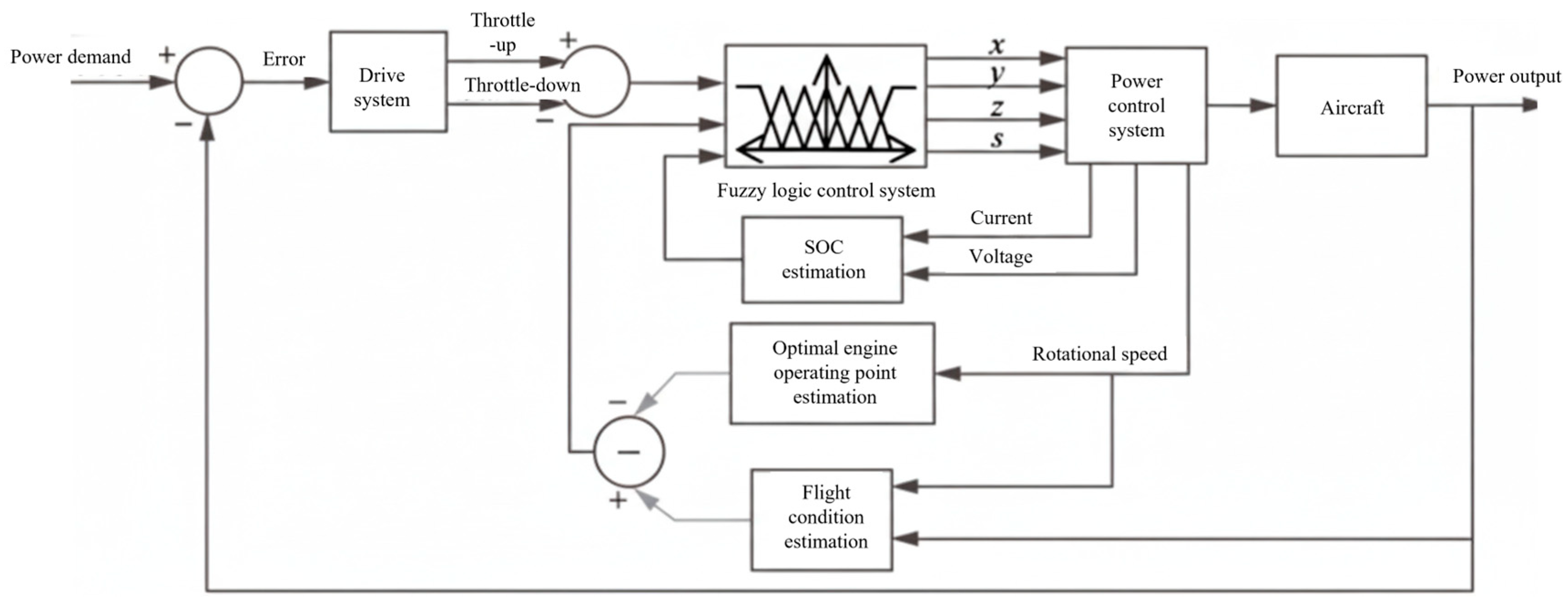
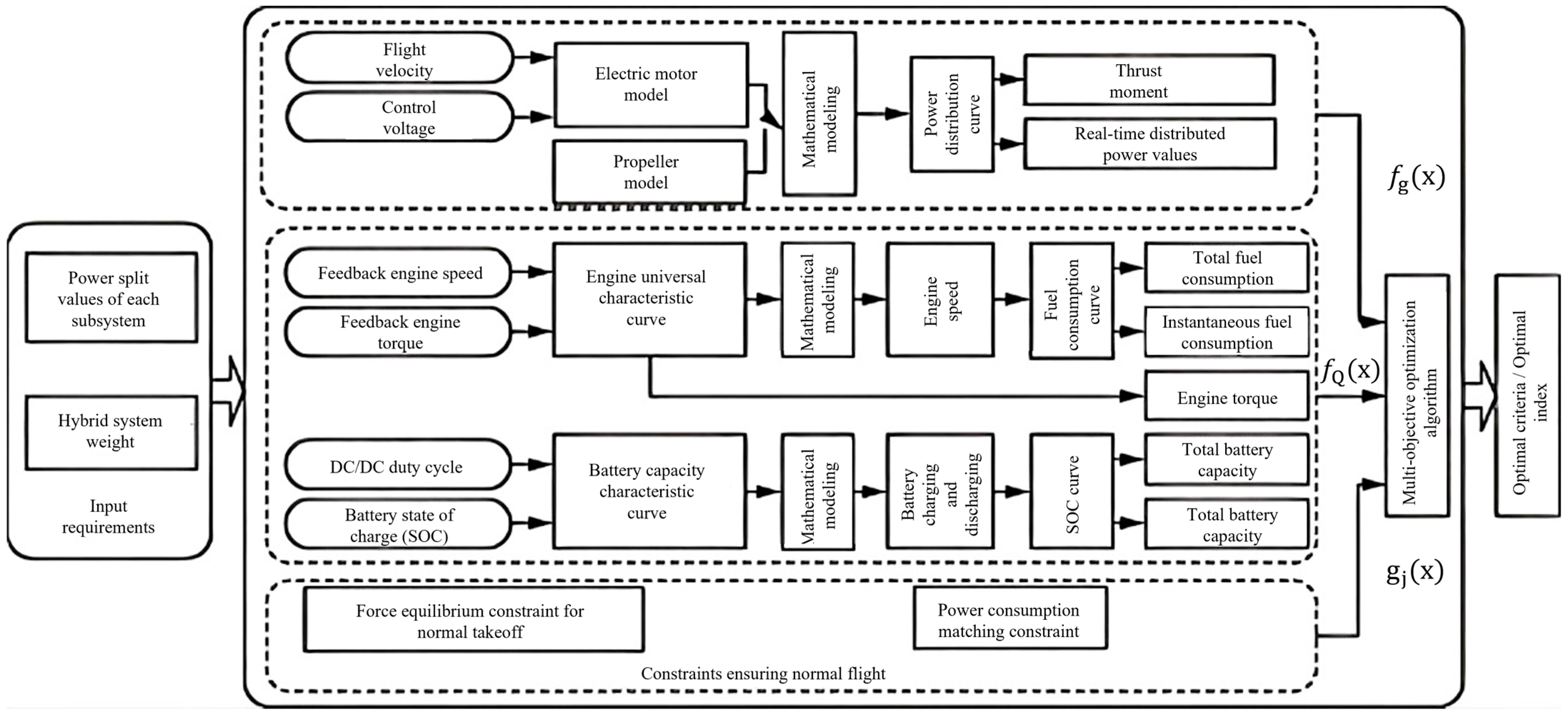
In addition, the optimization of energy management strategies mainly involves optimizing control strategies (such as power splitting and load balancing) to achieve efficient energy utilization during different flight phases (takeoff, cruise, landing). Advanced control algorithms have been widely applied in this field, including fuzzy logic control and optimal energy allocation prediction driven by historical big data. Fuzzy logic control is an intelligent control method based on fuzzy logic, which imitates human control experience and knowledge. The overall schematic diagram of the energy management strategy of the hybrid electric propulsion system based on fuzzy logic control is illustrated in Figure 13. The optimal energy allocation based on flight history big data should not only reflect the optimal power allocation under current flight conditions, but also incorporate capability optimization through environmental perception and task planning. Model reference adaptive control methods and non-dominated sorting genetic algorithms with elite strategies are utilized to achieve optimal power allocation for engines and energy storage batteries. The integration of flight history big data with a multi-objective optimization model is depicted in Figure 14. Comparative analysis shows that integrating adaptive control and task-driven energy allocation addresses major bottlenecks in energy efficiency and operational reliability.

2.1.2. Technical Focus Related to Flight Safety

Assessment and Application of Power Energy Security
With the advancement of power batteries and electric propulsion technology, multifunctional redundancy design makes the design of electric vertical takeoff and landing (eVTOL drones) aircraft more reliable, cost-effective, and therefore safer. In particular, system-level aircraft safety mitigation measures and comprehensive functional hazard assessments (FHAs) ensure fail-safe design and help address potential development errors through rigorous process assurance. After describing the application scenarios of eVTOL drones, Wang et al. [42] analyzed and elaborated on the safety mitigation effects of using collision resistance and ballistic rescue systems (BRSs) on eVTOL drones aircraft, and optimized the flight profile of eVTOL drones based on aircraft-level safety objectives. Using commercial aircraft systems engineering methods, an aircraft-level functional hierarchy structure for eVTOL drones was proposed, emphasizing integrity and correctness. Based on the innovative characteristics of the electric power battery system, a detailed inspection of the functional list was conducted using the mature Aircraft Functional Hazard Assessment (FHA) method. Marm [43] argued that understanding the performance–safety trade-offs of battery architecture in the application of electric vertical takeoff and landing aircraft is crucial. Zhuang [44] proposed that if only a simple voltage-limiting alarm device is used, there is a high possibility of over-discharge in lithium batteries.
In addition to safety-focused design, eVTOL aircraft face important structural and performance trade-offs. A further critical consideration arises in lightweight composite frame designs: reducing frame mass through advanced materials (e.g., carbon fiber) improves endurance but often reduces stiffness and increases susceptibility to vibration. Excessive vibration can degrade sensor performance (e.g., IMU noise), impair flight control stability, and shorten component lifespan. Engineering strategies such as adding damping layers, tuned mass dampers, or structural stiffeners are therefore required to balance lightweight framing with vibration resilience, ensuring both efficiency and safety.
Moreover, battery endurance is fundamentally constrained by the energy density of the power system. State-of-the-art lithium-ion or lithium-polymer batteries used in aerial systems typically have specific energies in the range of ~200–300 Wh/kg. For eVTOL applications, some studies estimate that pack-level energy densities may need to reach ~300 Wh/kg or higher to support meaningful cruising ranges [45]. In contrast, conventional aviation fuels (e.g., Jet-A) carry energy densities on the order of ~10,000–12,000 Wh/kg, highlighting the significant gap between current battery technology and traditional aviation energy sources [46]. Because of this, the actual endurance (flight time) of an eVTOL is strongly influenced by design trade-offs between usable battery capacity, reserve energy for safety, and battery mass. Designers must therefore perform rigorous quantitative risk and safety assessments to ensure that battery architecture delivers both adequate flight range and acceptable safety margins.
Boston Consulting Group pointed out in its White Paper on China’s Manned eV-TOL drones Industry 2025 that safety is the primary threshold for public acceptance. Overall, the key design challenges of eVTOL drones—encompassing propulsion safety, redundancy design, structural lightweighting with vibration control, and battery energy density—are interdependent factors that collectively determine operational reliability, flight efficiency, and public acceptance. In addition to optimizing the aircraft itself, building a system-wide safety framework covering “aircraft, airspace, and takeoff and landing sites,” as well as certification assurance capabilities that comply with aviation standards, are urgent gaps that Chinese manufacturers need to address.
High Precision Navigation and Positioning Technology
In terms of navigation and positioning, the primary condition for eVTOL drones’ autonomous flight is to obtain high-precision and highly reliable aircraft speed, position, and attitude. However, due to the limitations of the performance of a single sensor, it is difficult to fully meet the needs of aircraft navigation. To achieve the requirements of high precision, high stability, and high real-time performance simultaneously, multiple sensor combinations can be used to construct a combined navigation system through multi-source data fusion. By integrating multiple information sources, it is studied how to effectively fuse these redundant measurement data to achieve high precision, high reliability, high robustness, and high real-time performance of navigation information. This has become a core technical issue in the research of combined navigation systems.
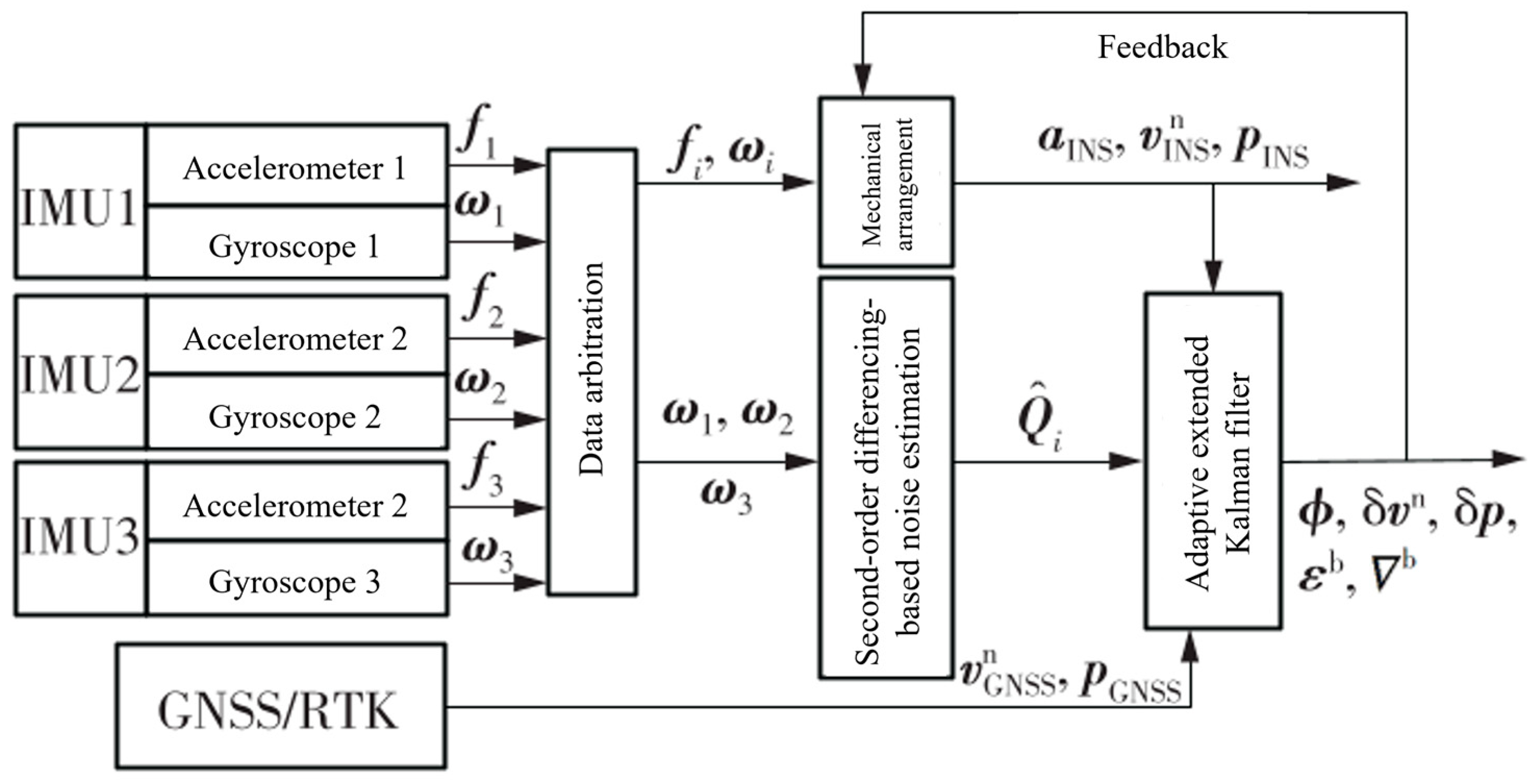
Fresk E et al. [47] proposed a universal pose estimation framework based on error parameters, which utilizes the square root form of the extended Kalman filter to ensure the positive semi-definiteness of the covariance matrix. By expanding the dynamic range of computation, the dynamic range problem in small embedded systems is solved while maintaining low computational complexity. Cordeiro et al. [48] designed an attitude estimation framework based on antenna arrays, which uses the ESPRIT algorithm to calculate the phase difference between antenna-received signals. This method is called line-of-sight vector measurement and combines extended Kalman filtering and four-element algorithms. At the same time, a known perturbation model is used to determine the mean square error of phase shift, which is used to analyze the error covariance matrix of line-of-sight vectors. Wu et al. [49] proposed a novel attitude estimator based on quaternions and designed a fixed-gain complementary filter for multi-sensor data fusion. By converting the accelerometer-based attitude solution into a linear system, iterative algorithms were avoided, and the gyroscope and accelerometer were fused to propose a complementary filter that does not require iteration. Hu et al. [50] proposed a real-time estimation method for gyroscope noise based on second-order differencing and redundant information of inertial sensors (IMU), as shown in Figure 15. The adaptive extended Kalman filter method was used to fuse the navigation information of SINS and GNSS to improve the accuracy and robustness of the integrated navigation system. Through simulation and real vehicle experiments on the SINS/GNSS integrated navigation system, the results show that the method proposed in this paper can accurately estimate gyroscope noise. Compared with traditional fusion methods, the introduction of real-time estimation of gyroscope noise has improved the navigation accuracy and anti-interference ability of the integrated navigation system, which has practical engineering significance.
Redundancy Flight Control
When conducting flight missions in complex urban environments, eVTOL drones often face various disturbances such as strong winds, crosswinds, and gusts, which can affect the control system and flight stability of the aircraft [11,12,51]. Therefore, research on redundant flight control is crucial for improving the safe and stable operation of aircraft.
Emre [13] described a control allocation strategy for a series of tilting-wing electric vertical takeoff and landing (eVTOL drones) aircraft, which uses a distributed propulsion system and proposes a control allocation optimization problem based on force and torque commands under specific flight conditions. Li [15] proposed an adaptive fault-tolerant control method suitable for the lateral motion mode of DEP aircraft, which can alleviate yaw channel anomalies by switching controllers and utilizing differential thrust from distributed redundant propulsion units, thus achieving adaptive fault-tolerant control. Salman Ijaz [52] improved the existing control law and incorporated secondary (redundant) actuators into the control loop. Wang [53] found that in situations where the degree of control surface failure is limited and the flight quality level is degraded, using a control-allocation-based flight control reconfiguration method for fighter-wing-shaped aircraft can ensure flight safety and perform some flight combat tasks. Gai [14] proposed a closed-loop control allocation method that uses nonlinear dynamic inversion to design a baseline attitude controller and derives the expected torque increment. Huang [54] proposed an intelligent design method that explores the design space of the driving system architecture through the constraint satisfaction problem (CSP) method, conducts a safety evaluation process to eliminate unsafe solutions, and performs multi-objective optimization to obtain the Pareto optimal frontier. The final architecture is comprehensively determined through the analysis of hierarchical processes. Wang [55] proposed a model-free adaptive fault-tolerant tracking control scheme that does not require system identification. This approach effectively reconstructs the system’s control capabilities even in the presence of uncertainties and errors.
For eVTOL drone aircraft, the reliability of the flight control system directly determines its safe operational performance. Currently, there is relatively little research on fault-tolerant control for multi-rotor eVTOL drone aircraft. Therefore, it is necessary to further develop fault-tolerant control on the basis of hardware redundancy, which is also one of the main challenges in aircraft design.
Efficient Autonomous Obstacle Avoidance
The obstacle avoidance system is an important safety guarantee for manned aircraft to successfully complete flight missions, and it is also a key indicator for measuring its intelligence level and flight safety. The system continuously monitors the physical environment during flight, identifies obstacles in a timely manner, and plans the flight path based on depth information. Finally, the flight controller performs obstacle avoidance operations to ensure the completion of the flight mission. The core of obstacle avoidance lies in the real-time acquisition of surrounding environmental information by sensors. At present, sensors used for environmental information collection mainly include ultrasonic sensors, infrared sensors, laser sensors, and visual sensors. Research institutions and drone companies at home and abroad have conducted in-depth research on obstacle recognition for different application scenarios, forming three main methods: active obstacle avoidance, passive obstacle avoidance, and composite obstacle avoidance.
Ramasamy et al. [56] conducted in-depth research on perception and obstacle avoidance in aircraft systems, pointing out that small- and medium-sized aircraft often operate near the ground, and due to the limited observation and discrimination ability of pilots, the possibility of collisions is further exacerbated. They proposed a laser-radar-based obstacle avoidance system architecture, which includes automatic obstacle avoidance algorithms, human–machine interface interaction, and ground control stations. The system developed an analytical model to achieve real-time processing of navigation information and tracking errors. Sasongko R. A. et al. [57] proposed an obstacle avoidance algorithm. When obstacles are found on the flight path, a restricted ellipsoid region is established based on the geometric information of the identified obstacles, and the obstacle avoidance path is calculated based on this ellipsoid region. With the rapid development of autonomous manned aircraft, the requirements for resolution, accuracy, and speed of obstacle recognition are also increasing. At the same time, the requirements for the dynamic response performance of the aircraft are also increasing. Better sensors, recognition algorithms, and dynamic performance of the aircraft are future research hotspots. Lin [16] used a path search method based on the RRT algorithm and a trajectory fitting method based on model prediction for trajectory planning of quadcopters under multiple constraint conditions. The effectiveness of the method was verified through simulation. Chen et al. [17] proposed an improved center force optimization method (MCFO), which utilizes particle swarm optimization and genetic algorithms to improve the original center force optimization method in the path planning process.
Maintenance Guarantee
In recent years, the design and certification of electric aircraft have attracted widespread attention in areas such as pilot training, urban air mobility (UAM), and regional transportation. However, as of now, there has been relatively little discussion regarding the maintenance of eVTOL drones. Although eVTOL drones typically require less maintenance than internal combustion engines, electric motors are not maintenance-free. The high-speed bearings inside the core of the electric motor need to be regularly monitored and replaced if necessary. Motor windings may experience short circuits due to pollution, wear, vibration, or voltage surges, which require disassembling and reassembling the motor. Thermal damage to insulation components may also occur, leading to a decrease in performance. The motor core may not be entirely suitable for on-site maintenance and needs to be disassembled and sent to a specialized repair shop for major repairs. High-power batteries will require corresponding inspection and maintenance regulations. The connectors on the detachable rack battery may be damaged, and dropping the battery during disassembly or installation may also cause impact damage. Individual battery cells may need to be inspected or replaced, in which case the battery pack needs to be carefully disassembled. From a configuration perspective, eVTOL drones are completely different from any aircraft previously encountered by maintenance professionals. Aircraft with distributed electric propulsion systems will have a large number of propulsion components, which need to operate separately and as an integrated system to function properly.
eVTOL drones as a whole also need corresponding maintenance measures and policies. For the overall aircraft, it is necessary to implement health state monitoring and prediction work. It can be divided into stages such as pre-flight health check, in-flight health monitoring, and failure protection. In traditional aviation equipment such as airplanes and helicopters, high-income countries in Europe and America have developed various systems, including Helicopter Health and Usage Monitoring System (HUMS), Aircraft Fault Prediction and Condition Management System (PHM), and Central Maintenance System (CMS) [58,59,60,61]. These health monitoring and prediction systems can effectively improve the mission reliability and service life of aircraft.

2.2. Supervision Technology for Urban Air Mobility

2.2.1. Technical Requirements for Regulatory System

The technical requirements of the urban air mobility supervision system are mainly reflected in two aspects: airworthiness requirements and infrastructure requirements of the supervision system (Table 1). These requirements aim to achieve real-time monitoring of aircraft in low-altitude airspace; to accept, approve, monitor, and command flight plans; to provide flight plan application, meteorological services, and communication services for small unmanned aerial vehicles; to ensure the safe transmission, management, and analysis of flight data; and to guarantee overall air mobility safety.
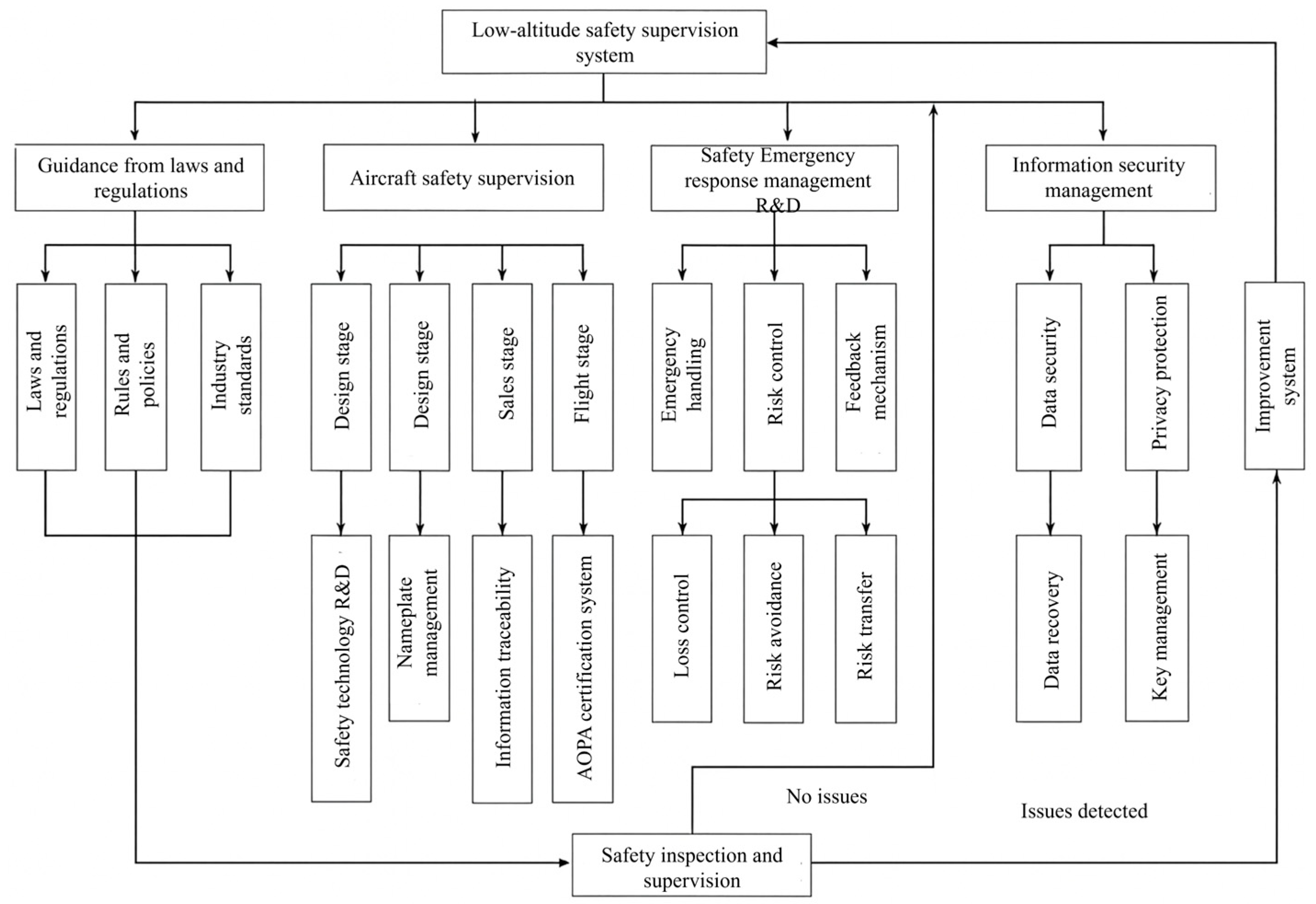
Wu et al. [62] explored the applicability of the comprehensive application of airworthiness regulations and fly-by-wire aircraft flight quality standards in the verification process of unmanned aerial vehicle (UAV) flight quality. At the same time, they considered the concept and safety, mission and system requirements of UAV systems, and pointed out the regulatory requirements and research directions for the flight quality of large- and medium-sized UAVs in China. Qi et al. [63] proposed suggestions for the development of airworthiness standards for light unmanned aerial vehicles in China, focusing on the limitations of the current airworthiness system and possible approaches to overcome these bottlenecks. Liao [64] drew on the experience of the United States and made further adjustments to China’s drone regulatory system from three dimensions: regulatory concepts, regulatory content, and regulatory measures. Liu [65] proposed a series of safety supervision optimization measures and developed a safety supervision system for low-altitude flight, as shown in Figure 16. The urban air mobility supervision system in Shenzhen is at the forefront of the country. On 2 August 2024, the Guangdong-Hong Kong-Macao Greater Bay Area Digital Economy Research Institute released the independently developed SILAS (Smart Integrated Lower Airspace System) Pioneer Edition, which integrates the UAV integrated supervision service platform (UOM), UAV remote identification (RID), automatic correlation monitoring (ADS-B), and integrated sensing (5G-A) equipment to achieve interconnection and sharing of environmental information, flight dynamic data, navigation data, and monitoring and detection data.
Overall, the construction of an efficient, safe, and reliable low-altitude airspace planning network cannot be separated from the development of airworthiness requirements and regulatory system infrastructure. By establishing and implementing strict airworthiness standards, onboard equipment requirements, and maintenance support systems, the safe operation of manned eVTOL aircraft—designed with potential for autonomous operation—can be ensured, providing a solid safety guarantee for air mobility.

2.2.2. Standards and Specifications for the Use of Various Low-Altitude Aircraft

Improving the standards and regulations for the use of various low-altitude aircraft is the foundation for establishing an urban air mobility supervision system. Urban air mobility has entered a standardized development stage, and there is an urgent need to establish a mature, unified, and universal regulatory system that covers various aspects such as meteorology, communication, navigation, radar, support, takeoff, obstacle avoidance, flight altitude, air control, and risk management. This system should standardize the architecture, configuration requirements, general technical requirements, and testing methods of various types of low-altitude aircraft.
Liao et al. [66] proposed a UAM operation management framework and provided suggestions and countermeasures regarding the responsibilities that relevant administrative departments may undertake in the development of urban air mobility, summarizing the construction methods of low-altitude shared air routes. Yu et al. [4] proposed that urban air mobility research extends from technology (such as collision avoidance, high-precision positioning, vertical takeoff and landing cruise capability, dynamic airspace division, etc.) to operation (such as UAM operations, UAV logistics route networks, ultra-local weather forecasting), as well as low-noise landing conditions and consumer acceptance, forming a comprehensive framework aimed at achieving a safe, efficient, and environmentally friendly urban air mobility system. These key technologies face unique challenges in solving the complexity of urban low-altitude airspace, and during the development of urban air mobility, attention should be paid to air mobility management and environmental impact. Yu [67] proposed to improve problems of insufficient resources and complex airspace environments in airspace management through eight measures, including improving the regulatory system and strengthening airspace coordination. He also put forward five improvement suggestions, including clarifying safety standards and enriching regulatory measures, to address issues of vague safety standards and large regional differences in safety supervision. On 25 December 2024, the Shenzhen Market Supervision Administration and the Shenzhen Transportation Bureau jointly released the “Guidelines for the Construction of Shenzhen Low-altitude Economic Standard System (V1.0)”, which provides safety standards, technical requirements, and prescribed procedures for the design, manufacturing, operation, maintenance, and other aspects of aircraft.
Overall, improving the standards and regulations for the use of low-altitude aircraft is the key to building an urban air mobility supervision system. Only by researching and proposing a comprehensive regulatory system, UAM operation management framework, low-altitude public route construction methods, and key technological innovations can the standardization and development of the urban air mobility industry be fundamentally promoted.

2.2.3. Regulatory and Communication System Linkage Technology

Efficient regulatory and communication system linkage technology is the technical guarantee for building urban air mobility supervision systems. Based on global satellite positioning, aviation data link, and satellite communication technology, aircraft monitoring systems such as Automatic Dependent Surveillance Ground Stations (ADS-B) and Multi-Lateration Systems (MLAT) have effectively achieved global aircraft monitoring, providing technical support for the operation of urban air mobility.
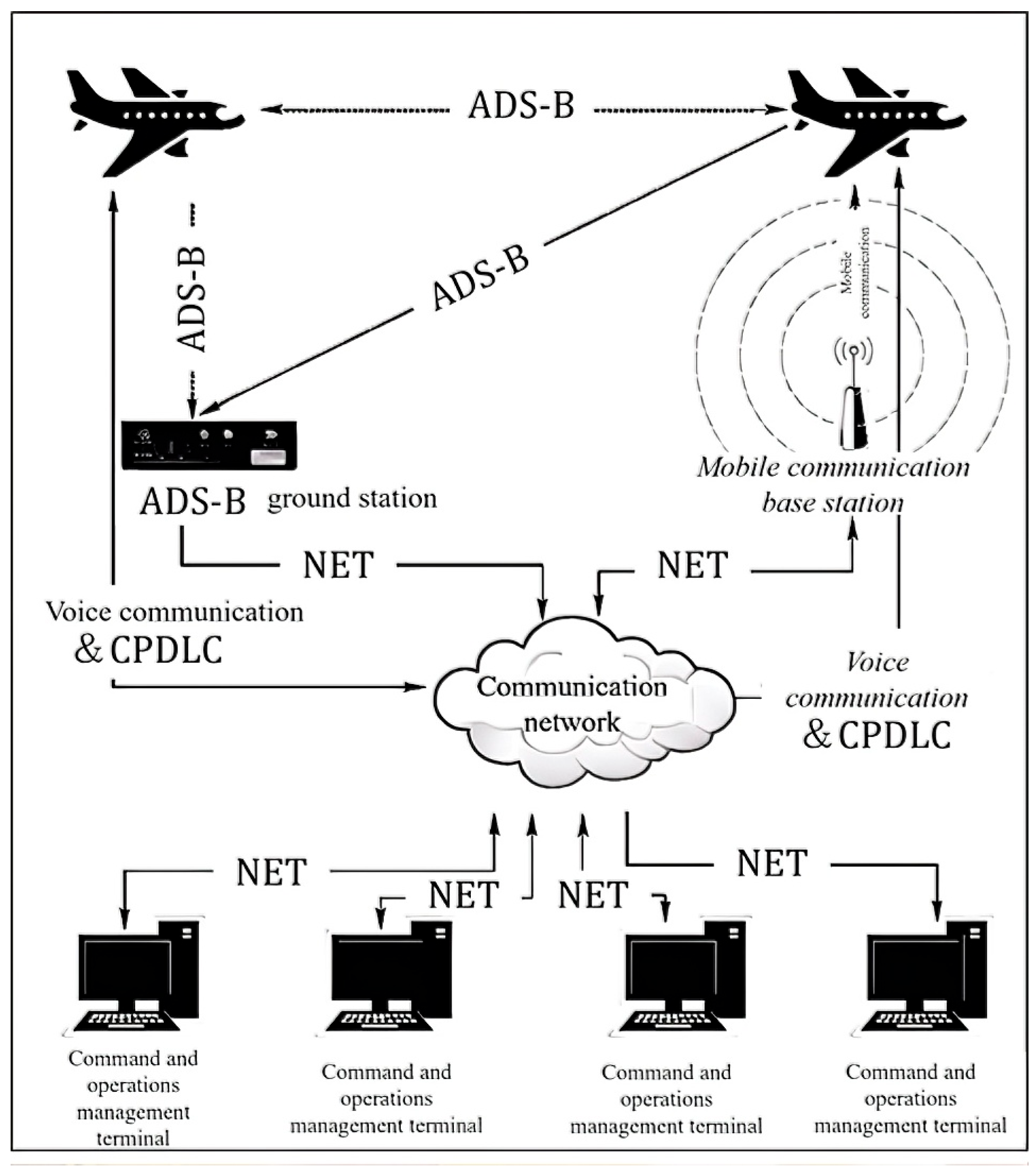
Ren et al. [68] proposed a design method for an airspace situation monitoring system based on ADS-B technology, which has a high degree of integration, significantly reduces power consumption, and is suitable for airspace management in complex electromagnetic environments. Su et al. [69] designed command and operation management terminal software based on 1090ES ADS-B aircraft, which realizes safety warning of approaching traffic and prediction of aircraft with altitude-change capability, providing pilot perspective and enhanced display information for ground supervisors, as shown in Figure 17. Liu [70] designed and developed 5G regulatory technology software, which can effectively achieve functions such as ADS-B data parsing and display, 5G communication, aircraft trajectory prediction, flight conflict detection, and resolution. Tang et al. [71] studied the feasibility of using mobile communication networks for aerial control of drones and proposed several key technical challenges that need to be addressed. Li et al. [72] conducted in-depth research on the communication performance of the satellite-based ADS-B system, including the probability of message identification (POI) and the probability of message detection (POD), and constructed a complete model of the satellite-based ADS-B airspace link that meets international standards.
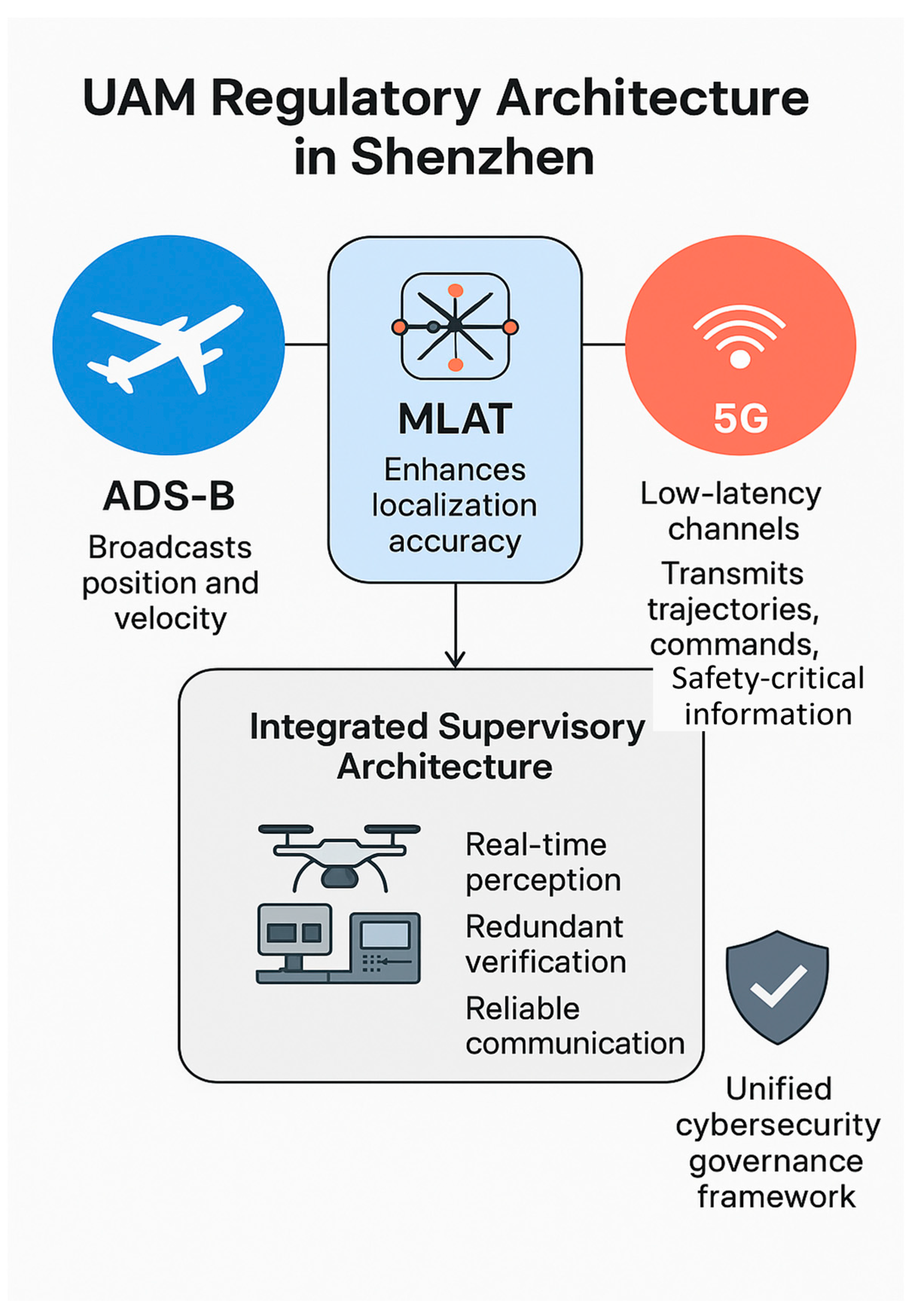
In the context of Shenzhen’s UAM system, ADS-B, MLAT, and 5G regulatory technologies operate in a complementary manner. ADS-B broadcasts aircraft position and velocity, MLAT enhances localization accuracy through multilateration, and 5G networks offer low-latency channels for transmitting trajectories, commands, and safety-critical information. Together, these technologies form an integrated supervisory architecture that supports high-density low-altitude operations in Shenzhen’s rapidly expanding UAM network, ensuring real-time perception, redundant verification, and reliable communication between aircraft and ground control, as shown in Figure 18.
However, as these technologies become deeply embedded in urban operations, their vulnerabilities also grow more consequential. Due to its open and unencrypted broadcast nature, ADS-B remains susceptible to spoofing, jamming, and replay attacks, potentially compromising situational awareness in densely trafficked UAM corridors. Similarly, the introduction of 5G-based regulatory networks—while improving latency and bandwidth—creates additional cybersecurity challenges involving authentication, end-to-end protection, network-slice separation, and security of edge-computing nodes. Given that UAM operations continuously generate sensitive trajectory, navigation, and operational data over populated areas, protecting data integrity and privacy becomes essential to system-level safety rather than an auxiliary requirement.
These emerging risks underline the necessity for Shenzhen to establish a unified cybersecurity governance framework for low-altitude management, including standardized encryption protocols, secure data-handling rules, and multi-layer redundancy mechanisms to enhance resilience against malicious interference.
Overall, satellite-based ADS-B and associated communication technologies offer a solid technical foundation for UAM supervision by enabling rapid and accurate transmission of aircraft positioning, weather information, and routing data. By integrating these technical capabilities with robust, security-oriented communication frameworks, Shenzhen can ensure that its UAM system achieves both operational efficiency and long-term safety, thereby providing a scalable regulatory model for future large-scale deployment.

2.2.4. Low-Altitude Route Management Technology

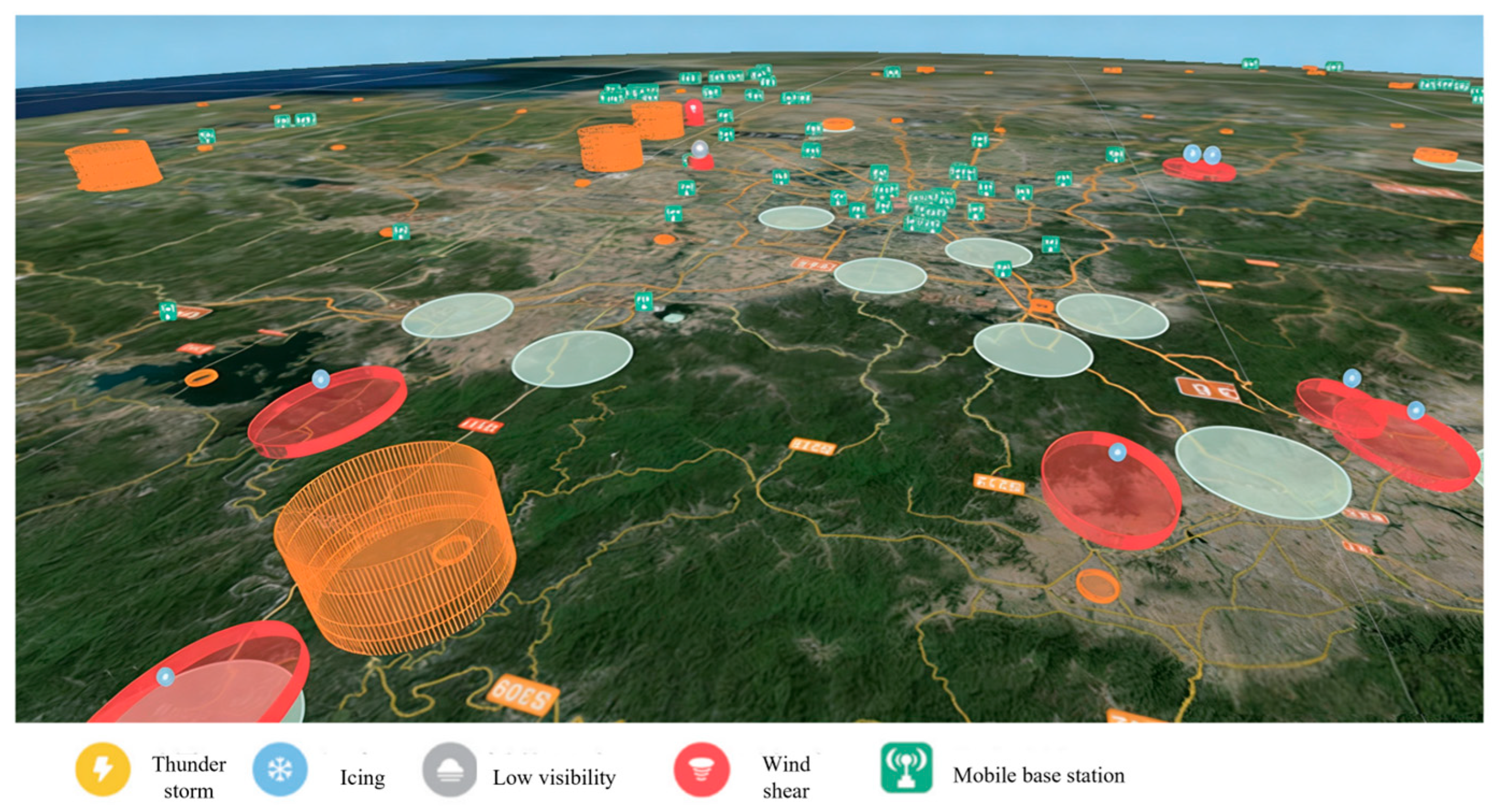
Improving low-altitude route management technology is a prerequisite for developing urban air mobility supervision systems. By integrating remote sensing technology and geographic spatial information technology to assist route planning and monitoring, a low-altitude three-dimensional traffic route network is constructed to monitor traffic flow and optimize route allocation, forming an orderly low-altitude route management and control mode, which can comprehensively improve the safety and efficiency of urban air mobility.
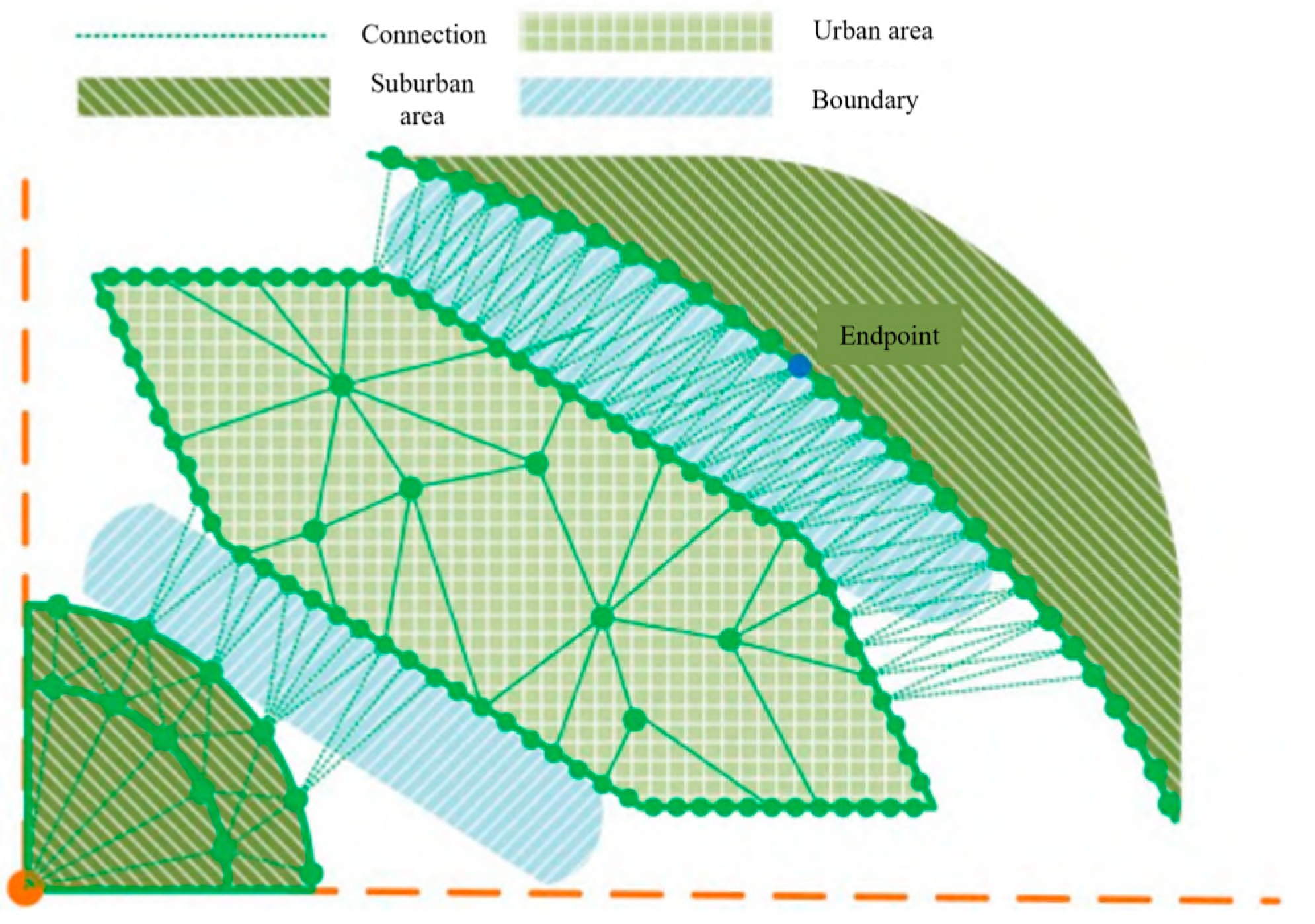
Wu et al. [73] investigated the network design of on-demand air mobility services, tested different pricing strategies affecting potential demand and revenue of air mobility operators, and provided future directions for air mobility research. Zhang et al. [74] proposed a framework system for urban low-altitude route planning based on the characteristics of China’s airspace management and anticipated low-altitude development trends. Xu et al. [75] proposed an efficient iterative construction method for low-altitude public air route networks in urbanized areas based on remote sensing and geographic information technology, and demonstrated the feasibility of this method through theoretical analysis and existing research foundations, as shown in Figure 19. Zhang et al. [76] conducted research on the design and implementation of a Xinjiang civil aviation air mobility control system based on remote sensing and GIS, providing strong support for air safety in Xinjiang. Wang et al. [77] introduced eVTOL drones as a key technology for UAM, proposed a roadmap for the future development of UAM, and outlined the evolution from the era of electric vertical takeoff and landing aircraft to the era of flying cars. Zhou et al. [78] proposed a suburban combined road network construction method suitable for suburban and urban operations, and, based on the eVTOL drone flight dynamics model, proposed an accurate eVTOL drones power consumption model to optimize flight paths. Based on the Ripple Diffusion Algorithm (RSA), a Dynamic Weighted Road Network (RSA-DWRN) algorithm suitable for dynamic airspace was proposed, as shown in Figure 20.
Overall, building an efficient and safe low-altitude route management system, which utilizes high-resolution terrain data for accurate route mapping and intelligent path planning, can effectively avoid air mobility congestion, playing a crucial role in the development and innovation of urban air mobility.

2.2.5. Rapid Scheduling Management Technology

Rapid dispatch management technology is a key technical challenge that restricts the development of urban air mobility supervision systems. In the complex urban airspace environment, the main difficulty lies in quickly providing efficient and low-cost task assignments, path planning, and flight control strategy solutions to achieve rapid scheduling management.
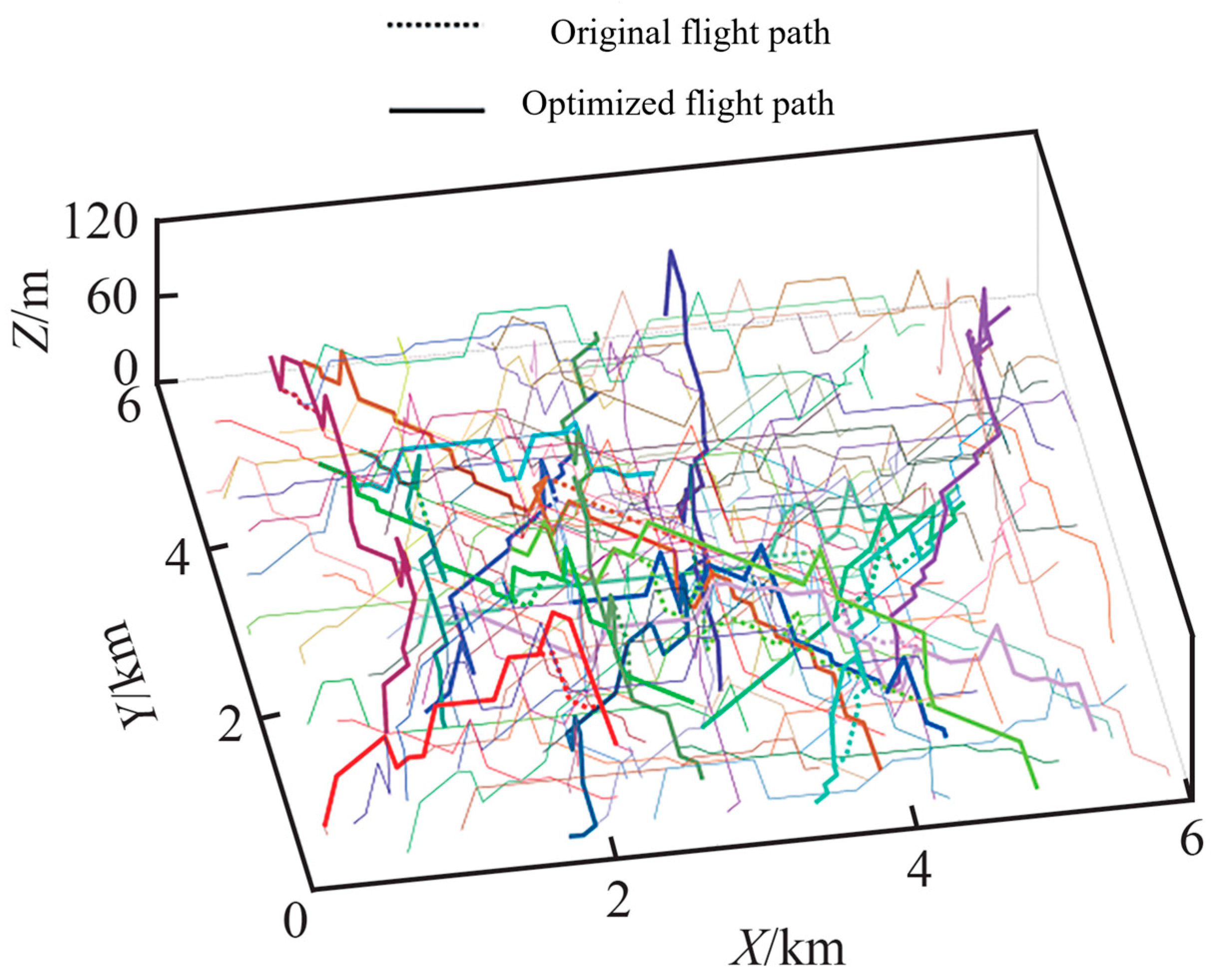
Tang et al. [79] established a four-dimensional trajectory low-altitude airspace capacity balance model and verified its effectiveness using a large-scale mathematical programming optimizer with precise solutions. Tian et al. [80] established an emergency dispatch management system for UAV remote sensing networks, achieving unified configuration, scheduling, and operation management of UAV remote sensing resource networks under emergency conditions. Wei et al. [81] established a wake circulation and induced velocity model suitable for UAV swarms. By calculating the roll torque coefficient, the safe flight area of the rear aircraft was evaluated. This model can better predict the safe position of the rear aircraft in complex wake fields and provide navigation guidance for UAVs. Xie et al. [82] proposed a collaborative deduction and optimal allocation method for urban low-altitude drone flight plans to address challenges faced by drone swarms in complex urban environments, such as multi-aircraft coupling constraints, frequent conflict risks, and low operational efficiency. Liu [83] discussed the advantages and disadvantages of different urban airspace architectures and designed a multi-aircraft collaborative trajectory planning method based on the selected altitude-level airspace architecture, effectively achieving multi-aircraft collaborative trajectory planning. Zhong et al. [84] proposed a two-stage optimization scheduling method for flight plans based on complex networks, establishing a flight plan optimization and scheduling model that integrates various strategies, including ground waiting, speed adjustment, and local diversion. The model was solved using an improved FATA algorithm, as shown in Figure 21.
Overall, by developing optimization algorithms to form effective rapid scheduling management methods, it is possible to ensure the safe, efficient, and orderly operation of aircraft, thus promoting the high-quality and stable development of urban air mobility.

2.3. Infrastructure Technology

The effective operation of urban air mobility relies on the comprehensive support of ground infrastructure. Future urban air mobility should be a coordinated transportation mode between air and ground. Route network planning must consider the layout of ground-based vertical takeoff and landing airports, and UAM operations must be maintained within the effective range of communication, navigation, and surveillance (CNS). Therefore, this section mainly reviews current research on urban air mobility infrastructure from three aspects: vertical takeoff and landing airports, communication and navigation monitoring, and aircraft nest design.

2.3.1. Technological Progress in Design and Construction of Takeoff and Landing Sites

Technologies and Standards for Civil Engineering and Infrastructure Construction
(1)
Layout and Site Selection of Vertical Takeoff Airports
As an important node for entering and leaving air routes, the layout design of vertical takeoff and landing airports significantly influences the layout and development direction of the public air route network. The Uber white paper proposes that UAM will be coupled with the urban transportation system through multimodal transportation and considers station-based carpooling to achieve better economic and scale operation effects [85]. This highlights that VTOL airport design must consider integration with existing transport networks to optimize passenger and cargo flow. Thus, layout and location analysis of vertical takeoff and landing airports has become an important aspect of UAM management.
UAM ground infrastructure can fully utilize existing urban facilities, such as vertical takeoff and landing airports located at important transportation hubs, building rooftops, or helicopter stands, which helps reduce early infrastructure construction costs. However, effective deployment requires consideration of multiple factors, including site usage rights, noise impact, spatial privacy [86,87,88], and commercial viability, which vary depending on local regulations and urban density. The layout and site selection of vertical takeoff and landing airports depend on various factors, including demand, transportation system performance, and operation mode. Fadhil [89] analyzed the site selection problem for vertical takeoff and landing sites based on GIS, evaluated the weights of factors affecting UAM infrastructure construction, and studied cases from two major cities under three scenarios. The results indicate that city centers, airports, and intercity train stations are suitable for the initial operation of UAM, providing references for practical site selection. The study concludes that city centers, airports, and intercity train stations are generally suitable for initial UAM operations, balancing accessibility with operational efficiency. Rothfeld et al. [90] integrated UAM with urban transportation systems and proposed a multi-agent simulation modeling method using the MATSim platform to determine layout changes in vertical takeoff and landing airports by analyzing urban transportation system performance. Qu [91] predicted UAM demand in Chengdu considering urban road networks. Together, these studies illustrate how demand patterns and transportation integration critically shape VTOL airport placement, providing both global insights and context-specific guidance for Shenzhen’s development.
(2)
Design of Vertical Takeoff Airports
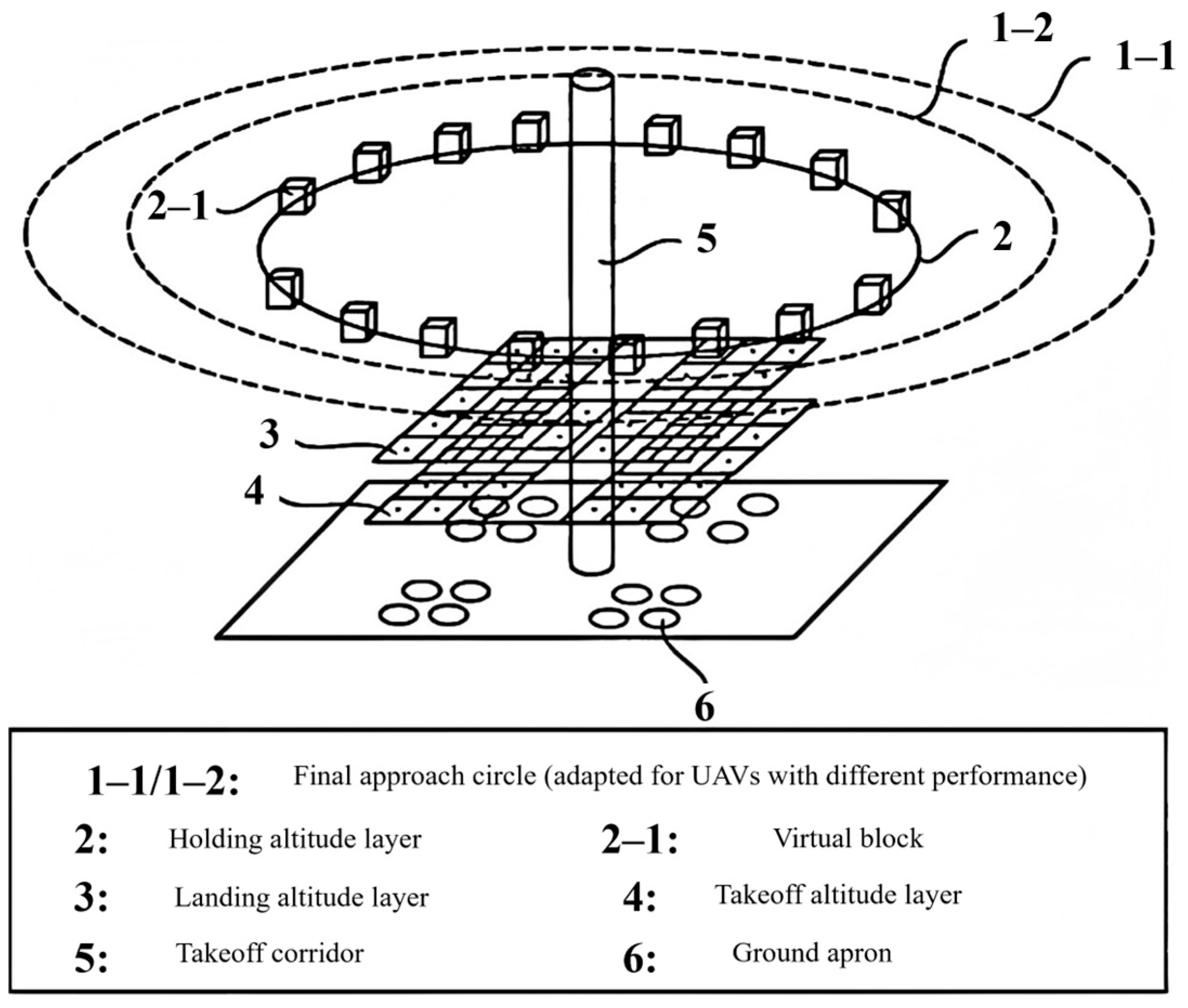
Many international organizations have explored the design of vertical takeoff and landing airports from different perspectives. The European Aviation Safety Agency (EASA) has released the world’s first vertical takeoff and landing airport design specification for different types of eVTOL drone aircraft [92]. The FAA has released engineering design guidelines for vertical takeoff and landing airports [93], and the International Organization for Standardization (ISO) has released operational standards [94]. Enterprises and individual scholars have also contributed. Uber has proposed various layout models for vertical takeoff and landing airports, emphasizing space minimization and efficiency maximization between parking and takeoff points. Vascik and Hansman [95] referred to helicopter airport design concepts and categorized vertical takeoff and landing airport areas into TLOF Pads, Gates, and Staging Stands. As shown in Figure 22, they designed the civil infrastructure of vertical takeoff and landing airports, analyzed airport capacity envelopes, and evaluated throughput and sensitivity factors. The design, separating approach points, departure points, and boarding gates and adopting traditional airport design concepts, leads to frequent taxiing and multi-stage passenger travel, reducing operational efficiency.
Overall, these studies highlight several key insights for VTOL infrastructure planning: (1) integration with existing transport and urban context is critical; (2) site selection must balance accessibility, noise, and operational efficiency; (3) global design standards provide reference, but local adaptation is necessary; and (4) layout strategies directly impact airport throughput and passenger experience.
Landing Site Communication Technology
Ground communication, navigation, and monitoring facilities are critical for UAM traffic operation management. Compared with traditional transportation aviation, UAM requires aircraft to operate in denser traffic flows and complex urban terrains. eVTOL drones’ piloting will gradually become unmanned, transforming ground communication, navigation, and monitoring services. Ground personnel will shift from interval control for pilots to fully automated guidance via ground CNS facilities and central control systems.
This transformation imposes higher requirements for key indicators, such as signal continuity, coverage effectiveness, real-time performance (communication delay), and reliability (mean time between failures) of CNS base stations. ACARS or very-high-frequency ground-to-air data links in traditional aviation have limited bandwidth (~32 kB, half-duplex) and cannot meet UAM needs due to excessive communication delay. As shown in Table 2, 5G communication technology may address these challenges [96,97]. However, 5G base stations deployed for mobile networks cannot guarantee full airspace coverage. UAM operations require targeted improvements in base station placement and antenna deployment (e.g., adjusting radiation direction, transmission power, and signal gain) to achieve comprehensive coverage of low-altitude urban airspace.
Design and Construction Technology of Machine Nest
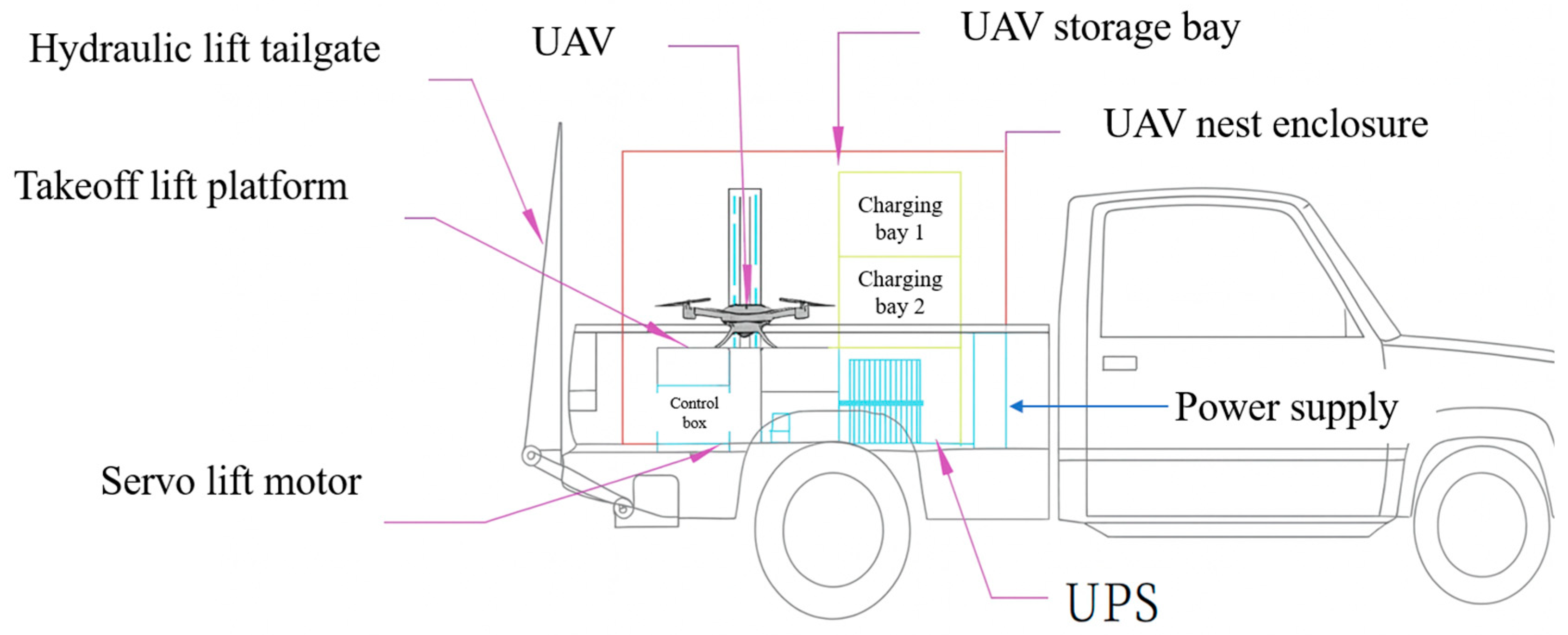
In 2014, a Chiba University research team developed a drone nest that improved drone endurance via battery replacement and charging, leading development in the field. However, practical applications remain insufficient for continuous UAV inspections. To meet endurance requirements for UAV inspection of long-distance transmission lines, UAV wireless charging technology and UAV “nest” inspection modes have emerged. The drone nest not only protects drones but also serves as a lifting platform and supports data transmission and charging functions [100]. Due to location limitations of traditional fixed nests, mobile “nest” inspection modes have emerged but only meet single-drone inspection needs. Multiple drone collaborative inspections require multiple vehicle nests, resulting in high costs and workload [101].
The vehicle-mounted multi-drone collaborative intelligent nest optimizes equipment layout within pickup trucks, ensuring reasonable installation and easy maintenance. It supports automatic takeoff and landing, multi-drone collaboration, power supply, communication, video recording, and environmental data measurement. This infrastructure ensures automatic drone operations, providing takeoff, landing, charging, and data transmission support. Figure 23 illustrates the vehicle-mounted multi-UAV collaborative intelligent inspection nest. It accommodates three high-precision drones using a drawer-style lifting platform, supports 1–3 drones for collaborative inspection, and includes a top hatch, lifting platform, drone pulling device, and centering device. Cloud servers deploy main services, with onboard routers and network cable interfaces for external access. A top hatch facilitates faster and safer drone deployment. Safety redundancy and shock absorption devices ensure efficiency and stability of mobile outdoor operations. Relevant technical parameters are shown in Table 3.

2.3.2. Progress of Urban Air Mobility Management System Infrastructure

At present, research on the infrastructure of urban air mobility management systems, both domestically and internationally, is still in its infancy.
According to the existing airspace classification, the airspace used by UAM falls under Class B, C, and D uncontrolled airspace or procedural controlled airspace, which is highly coupled with urban terrain and spatial constraints, and may operate under unmanned or remote-controlled driving. In the long run, traffic density will far exceed the airspace capacity of existing transportation aviation under instrument flight rules (IFRs). If interval control services are provided by controllers as in traditional civil aviation, the workload of controllers would be excessive, and they may even be unable to complete all control tasks. Therefore, it is crucial to transition from unregulated or extensive manual program control to collaborative, refined, and automated management and path planning using big data [102,103], conduct collaborative monitoring and control of air and ground, and develop reliable and robust UAM control systems [104,105,106].
For UAM control systems, Dai et al. [107] proposed a conflict-free path planning method based on four-dimensional airspace management, called AirMatrix. This method utilizes the A algorithm for path planning and considers conflict resolution between static and dynamic obstacles, making it suitable for high-density urban air mobility environments. NASA suggests that a third-party operating platform can be established to manage UAM and schedule vehicles [108]. Using the highly autonomous AutoResolver algorithm, eVTOL drone aircraft can be integrated into the urban transportation network for seamless multimodal connections. The departure and arrival times of eVTOL drones aircraft across the network can be uniformly scheduled, and trajectory management and interval maintenance services can be provided. Rothfeld et al. [109] proposed an improved multi-agent UAM flow simulation using MATSim software, which considers eVTOL drone characteristics and the impact of changes in dedicated eVTOL drone infrastructure locations. It can analyze and model urban transportation performance within the system scope and re-plan eVTOL drone routes based on road conditions after analysis. The construction of the Unmanned Aircraft Traffic Management Information Service System (UTMISS) in China’s civil aviation sector has simplified airspace and flight plan application processes, improved operational efficiency, and created conditions for China to further strengthen drone control.
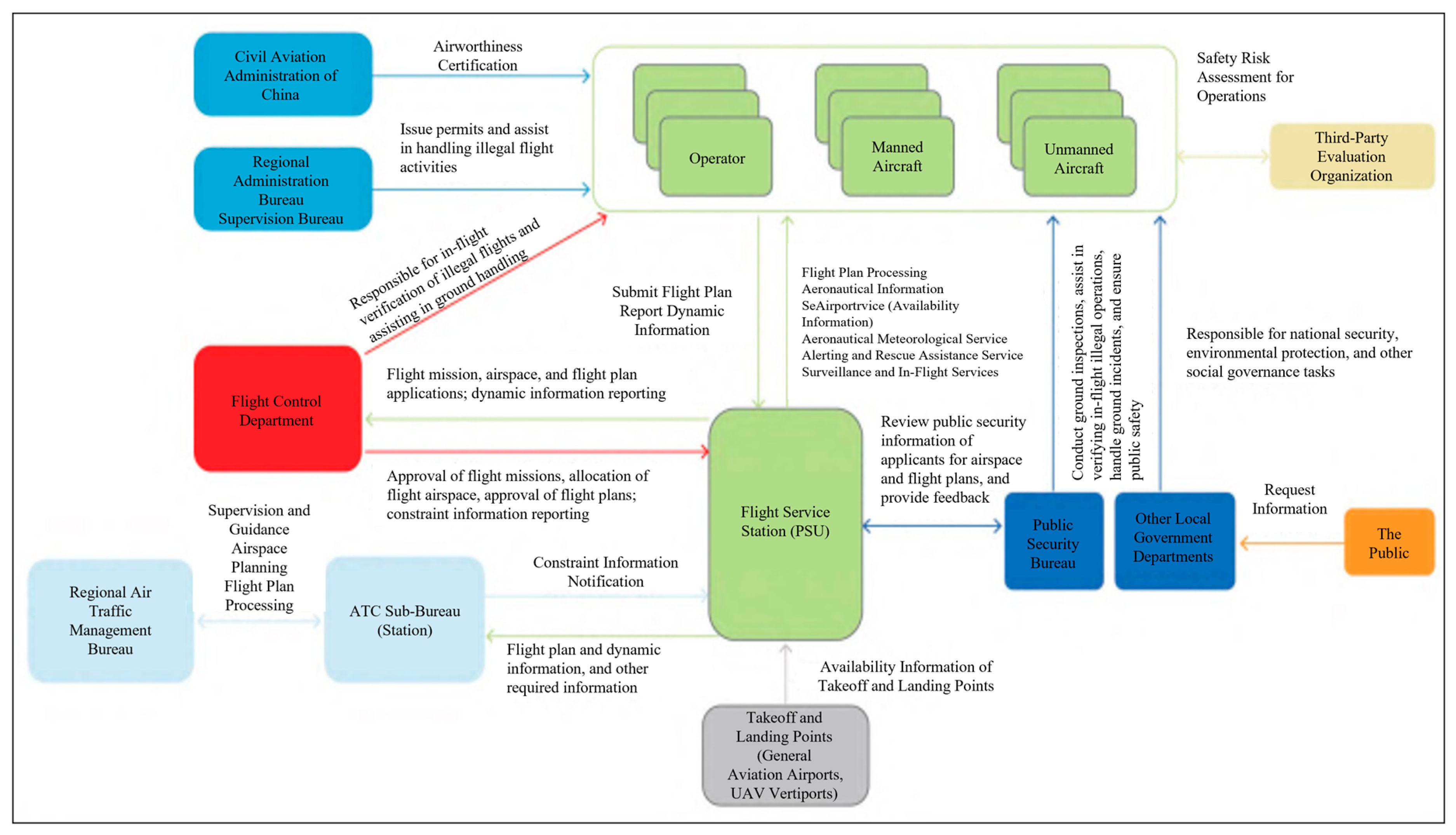
Drawing on the UAM operational architecture proposed by the Federal Aviation Administration (FAA) of the United States, and considering the current development status and underlying conditions of China’s UAM, the UAM operational system framework is shown in Figure 24, which accounts for the airspace management mechanism, diversity of airspace usage requirements, and balance with the traditional civil aviation industry. UAM stakeholders include flight control departments, civil aviation authorities, air mobility control bureaus, local governments, operators, and flight service stations. Each entity performs its duties and coordinates with others to ensure the normal and efficient operation of the UAM system.

3. Low-Altitude Economic Policy Advancement and Influence of Urban Air Mobility

To theoretically contextualize the interplay between technology and policy, our analysis is guided by the framework of ‘legitimacy as social infrastructure’ [110,111]. This perspective posits that the successful adoption of disruptive technologies like UAM depends on their integration into a robust fabric of relationships (e.g., policy-driven industry clusters), narratives (e.g., strategic visions and standards), and materialities (e.g., physical infrastructure and eVTOL hardware). The following analysis demonstrates that Shenzhen’s low-altitude policies systematically construct this social infrastructure, trying to address specific technological bottlenecks identified in Section 2, thereby granting the UAM ecosystem the legitimacy required for large-scale urban integration.

3.1. Low-Altitude Economic Policies for Urban Air Mobility

3.1.1. Framework of Shenzhen’s Low-Altitude Economic Policy System

Starting from the end of 2022, Shenzhen has gradually been establishing a multi-level and comprehensive low-altitude economic policy system, covering city-level comprehensive planning, special field norms, district-level supporting measures, and regulatory approvals, forming a policy promotion logic of top-level design, special implementation, and regional refinement. These official documents and public communications play a critical role in shaping a unifying narrative of technological progress and urban innovation, aligning public perception with strategic policy goals.
The specific policy release situation is shown in Table 4.

3.1.2. Progress of Policy Release in Core Areas

Aircraft Development and Support
Shenzhen is building a development support model of “policy support + standard specifications” around core aircraft such as eVTOL drones. At the support level, Longhua District provides direct support to enterprises’ technological breakthroughs through district-level policies, reducing research and innovation costs; at the normative level, the “Shenzhen Special Economic Zone Low-altitude Economic Industry Promotion Regulations” provide institutional guarantees for aircraft activities from the perspective of flight services. The manufacturing and access system in the “Shenzhen Low-altitude Economic Standard System Construction Guidelines (v1.0)” further clarifies aircraft manufacturing standards and market access norms, forming a full-process support system of “research, development, and application access.”
Low-Altitude Infrastructure Construction
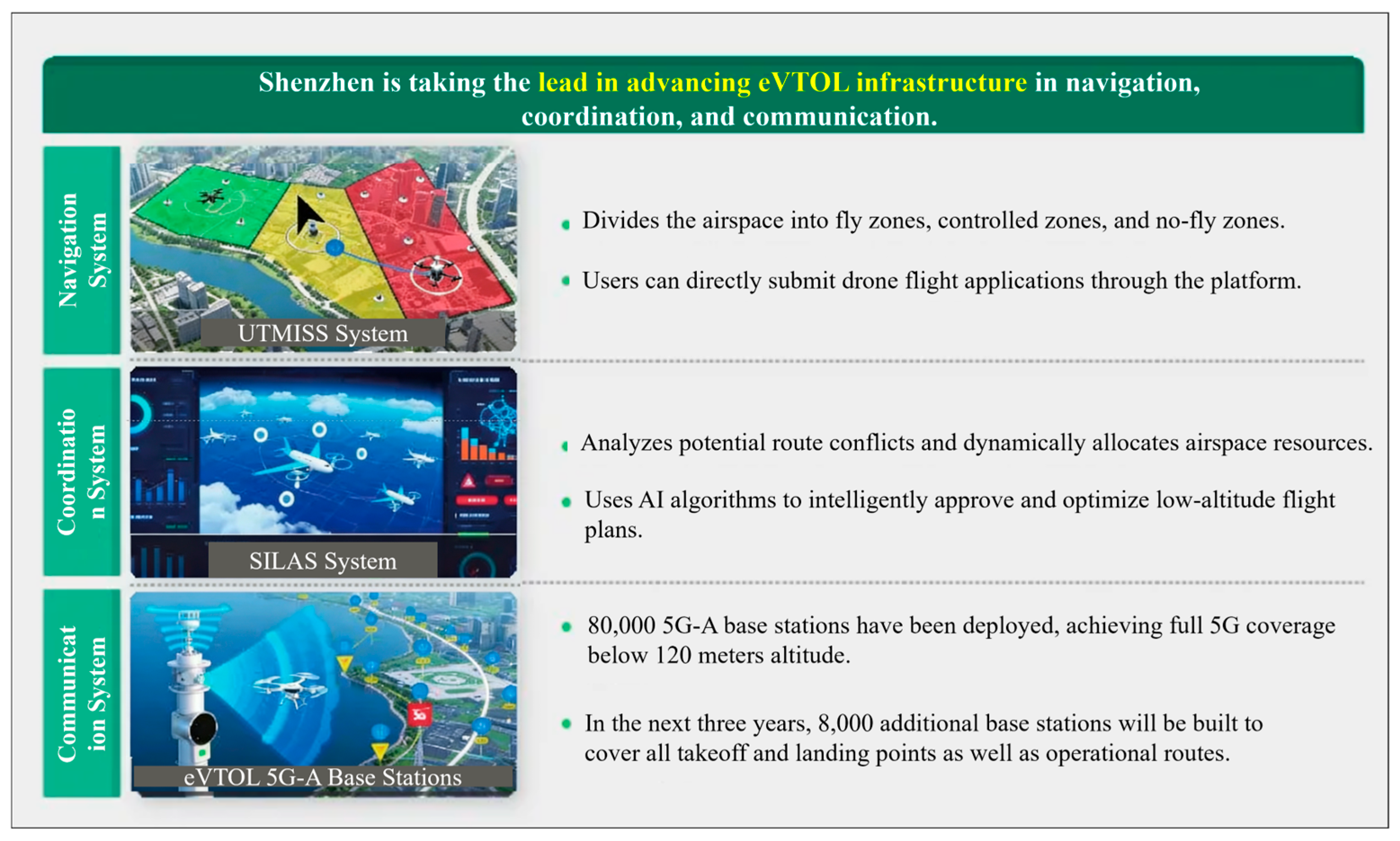
Shenzhen is promoting infrastructure construction with a “quantitative goal + standard framework” approach. On the one hand, the “Implementation Plan for Innovative Development of Low-altitude Economic Industries in Shenzhen (2023–2025)” sets long-term goals, requiring the improvement of heterogeneous, high-frequency, and high-capacity low-altitude intelligent fusion flight infrastructure by 2025; on the other hand, through the “Shenzhen Low-altitude Infrastructure High-Quality Construction Plan (2024–2026)” and the “Shenzhen Low-altitude Takeoff and Landing Facility High-Quality Construction Plan (2024–2025),” quantitative indicators for the short and medium term are clearly defined. It is planned to build more than 1000 takeoff and landing platforms and more than 300 air routes by the end of 2025 [116] and take the lead in promoting infrastructure construction in navigation, coordination, and communication fields, as shown in Figure 25.
This ambitious roadmap is already being substantiated by tangible progress; for instance, by the end of 2024, Shenzhen had already established 249 operational low-altitude takeoff and landing points and opened 207 UAV routes [116], forming a foundational network that validates the feasibility of its larger-scale goals.
At the same time, the “Guidelines for the Construction of Low-altitude Economic Standard System in Shenzhen (v1.0)” include low-altitude flight physical infrastructure in the first-level subsystem, providing unified standards for facility construction. Yantian District will rely more on regional resources and expand scenario applications in conjunction with the Maluan Mountain Flight Support Base, achieving a coordinated promotion of “standard-construction scenario integration.”
The large-scale deployment of this physical and digital infrastructure is consolidating the material foundation for safe and reliable UAM operations, directly translating policy commitments into tangible assets.
Low-Altitude Economic Supervision Mechanism
Shenzhen will establish a regulatory promotion path of “strategic attention, institutional design, pilot breakthrough.” In 2023, the low-altitude economy was included in the government work report, laying the foundation for regulatory work at the strategic level. In 2024, the safety management chapter of the “Shenzhen Special Economic Zone Low-altitude Economic Industry Promotion Regulations” will be improved to enhance system design, and with the support of the Air Force’s UAV urban flight pilot program, a military–civilian collaborative operation mechanism will be established to solve airspace management issues. In the future, airworthiness management, flight approval, and other aspects will be further optimized, continuously improving the full-cycle supervision system of “pre-standardization, in-process collaboration, and post-optimization.”
Cultivation of Low-Altitude Economic Industry Chain
Shenzhen adopts the industrial chain cultivation model of “city-level coordination + district-level implementation.” At the city level, policies such as the “Action Plan for Cultivating and Developing Low-altitude Economy and Aerospace Industry Clusters in Shenzhen (2024–2025)” are implemented to coordinate industrial chain development from the perspectives of industrial application and technological innovation. At the district level, represented by Longhua District and Yantian District, Longhua District has created an industrial pattern centered on the Shenzhen Southern Airlines Low-altitude Intelligent Connected Industry Technology Innovation Center through enterprise settlement support, technological research and development support, and 27 construction projects with a total investment of 2.16 billion yuan. Yantian District has expanded its industrial chain based on project chains, promoted the growth of characteristic industrial clusters, and formed a joint force for industrial chain development with “city-level direction and district-level strong implementation.”
This policy-driven industrial agglomeration is fundamentally constructing the relational fabric of the UAM ecosystem, fostering trusted collaboration and reducing technical risks across the supply chain.
The development of Shenzhen’s low-altitude economy has formed distinct characteristics of “policy systematization, field synergy, and hierarchical promotion.” By constructing a policy framework covering multiple types and levels, it provides precise support for the four core areas of aircraft research and development, infrastructure, regulatory mechanisms, and industrial chain cultivation. From a development logic perspective, Shenzhen not only clarifies long-term goals and unified standards through city-level policies, but also relies on district-level policies to achieve region-specific implementation. At the same time, it promotes the transformation of policies from “framework design” to “practical application” through quantitative indicators and pilot breakthroughs, laying a solid foundation for high-quality low-altitude economy development and providing a reference paradigm for coordinated promotion of “policy–industry scenario integration” for low-altitude economy development in other Chinese cities.

3.2. Impact of Economic Policies on Low-Altitude Aircraft Technology and Industry Status

3.2.1. The Incubation Effect of UAM Policies on Enterprises

The UAM policy takes “technology foundation–talent accumulation–industry energy gathering–demonstration guidance” as its logical mainline, providing full lifecycle incubation support for low-altitude aircraft enterprises. Through targeted empowerment of leading enterprises and radiation-driven industrial ecology, it accelerates the leap of enterprises in the UAM field from technology accumulation to commercial operation. The specific impact dimensions and practical manifestations are as follows:
Multidimensional Incubation Support Driven by Policies
The UAM policy provides precise support to enterprises from four dimensions by clarifying the direction of technological development and improving the industrial supporting environment. The specific content is shown in Table 5.
The effectiveness of this incubation model is quantifiably demonstrated by the market performance of its beneficiaries. For instance, under this supportive policy environment, DJI has secured approximately 80% of the global consumer drone market share, with annual revenue surpassing RMB 50 billion and cumulative consumer drone shipments exceeding 10 million units as of 2022, solidifying its position as a global industry leader cultivated by the ecosystem. The huge production and sales scale provides a mature manufacturing system and supply chain support for the UAM industry. The radiation effect on the UAM industry: DJI’s technological accumulation (such as flight control, imaging, and battery technology) provides direct technical references for the research and development of UAM aircraft. Its global market layout attracts capital and talent to the low-altitude field, indirectly reserving funds and talent resources for UAM enterprises, forming a virtuous pattern of “leading enterprises driving overall industry development.”

3.2.2. UAM Policy Promotes the Updating and Iteration of Technological Products

The UAM policy clarifies technical standards, expands application scenarios, and provides compliance guidance to direct enterprise technology product iteration, promoting enterprises to accelerate core technology breakthroughs and product form innovation based on policy requirements (such as airspace regulatory rules and safety standards) and market demand. The correlation between the technological product iteration results of different manufacturers and policy guidance background is as follows:
Corresponding Relationship Between Policy Guidance and Enterprise Technology Product Iteration
The UAM policies of various countries and regions (such as airspace usage rules and industrial support policies) directly affect the technological research and development directions of enterprises. By adjusting product technical parameters and enriching product categories, enterprises can achieve adaptation to policy requirements. The specific corresponding relationship is shown in Table 6.
Supporting Achievements of Technological Iteration: Financing and Industrial Scale
The policy’s promotion of technological product iteration further drives capital investment and industrial scale expansion:
Financing aspect: The policy’s focus on technological innovation is validated by commercial confidence. EHang, for example, secured a single strategic investment of over USD 22 million in 2024, reflecting strong market belief in its policy-aligned development path. Further validating this approach, the company has accumulated numerous patents and its flagship EH216-S model has received over 1000-unit orders from customers worldwide, indicating successful market acceptance.
Industry scale: Driven by both policy and technology, the eVTOL drone industry has grown rapidly. In 2023, the eVTOL drone industry in China reached 980 million yuan, a year-on-year increase of 77.3%. It is expected to exceed 9.5 billion yuan by 2026, demonstrating the driving effect of policy-guided technological iteration on industry scale.
Infrastructure Support for Takeoff and Landing Sites Under Policy Guidance
As the core infrastructure for low-altitude aircraft operations, the construction scale and layout of takeoff and landing sites are directly guided by local UAM policies. Various regions have issued special plans to clarify the construction goals of takeoff and landing sites, providing scenario support for the deployment of technical products. At present, Shenzhen has built 249 low-altitude takeoff and landing points and opened 207 UAV routes; the High-Quality Construction Plan for Low-altitude Takeoff and Landing Facilities in Shenzhen (2024–2025) specifies that by the end of 2025, more than 1000 takeoff and landing sites are expected, forming a low-altitude transportation network covering the entire city [116].
These takeoff and landing site plans are closely linked with policies, not only providing application scenarios for low-altitude aircraft technology products, but also promoting enterprises to optimize takeoff and landing performance (such as vertical takeoff and landing efficiency and site adaptability) based on the scale and function of the sites, forming a two-way promotion mechanism of “infrastructure construction ↔ technology product iteration.”

3.2.3. Policy Driven Regulatory Situation

Policy Driven Regulatory Policies Are Increasingly Improving
The national and local governments have introduced a series of regulatory policies targeting the low-altitude economy. For example, the Shenzhen Special Economic Zone Low-altitude Economic Industry Promotion Regulations in Shenzhen introduced institutional designs for the safety supervision of low-altitude economic activities. The Air Force announced its support for low-altitude reform in five provinces and the pilot of unmanned aerial vehicle urban flight in Shenzhen, establishing a military–civil collaborative operation mechanism. Regulatory policies cover aspects such as airworthiness management of aircraft, approval of flight activities, and assurance of flight safety, ensuring the healthy and orderly development of the low-altitude economy.
The Construction of Regulatory Standards Continues to Strengthen
Efforts have been made to sort out and construct the UAM regulatory framework, forming a complete regulatory system covering operational management, business management, aviation safety, and security. Supervision is continuously improved, with a focus on standardizing rules and standards such as registration, airworthiness management, personnel qualifications, airspace management, air mobility management, and information exchange, thereby enhancing comprehensive management and service capabilities. Taking into account air defense safety, civil aviation operation safety, and public safety, the responsibilities and obligations of each management entity are clarified. Local governments and industry associations are actively guided to establish supporting management systems and promote industry self-discipline. A security management system has been built. Efficiency analysis and robustness research on UAM aircraft systems are conducted based on the required safety level, verifying that the actual operational safety level matches the target safety level. UAM aviation accident investigation and accident symptom standards corresponding to operational risks are established, classified management is implemented, and operational entities are encouraged to establish safety management systems.
(1)
Layout of New Infrastructure Construction
Leading the way in the layout of new infrastructure such as 5G, artificial intelligence, and blockchain, Shenzhen is promoting the construction of facilities such as general airports, water airports, and vertical take-off and landing points. Cooperation with key domestic logistics enterprises is encouraged to build unmanned aerial vehicle take-off and landing points, meeting the functional needs of take-off and landing, alternate landing, parking, charging, transportation, and operation.
(2)
Promotion of Low-Altitude Air Route Planning
In coordination with the military and the Civil Aviation Administration of South China, research on low-altitude air route planning is carried out, focusing on the demand for UAM passenger and cargo transportation. Low-altitude aerial maps are drawn, the layout of the city’s air route network is improved, and the utilization of urban and regional low-altitude airspace resources is coordinated.
(3)
Improvement of Airspace Utilization Efficiency
Digital and network-based airspace delineation and management are carried out. Airspace classification and zoning operation rules are established to meet the diverse and safe operational needs of UAM aircraft. Risk assessments of operational environment safety are conducted to gradually achieve safe, efficient, high-volume, and sustainable use of airspace.

3.2.4. UAM Policy and Commercialization Prospects and Model Insights

According to the White Paper on China’s Manned eVTOL drones Industry 2025 released by Boston Consulting Group [126], China is expected to become the world’s largest manned eVTOL drones market, with a projected market size of tens of billions of yuan by 2030. The commercialization path will present a clear trend of “from bureau to surface” and “from goods to people”: Application scenarios: In the short term (2025–2028), specific scenarios such as high-end tourism, airport transfers, and intercity express lines will be the first to achieve commercial breakthroughs due to their relatively simple airspace environments and high customer willingness to pay. In the medium to long term (after 2028), urban commuting (UAM) will become the core scenario, but its implementation depends on the maturity of urban airspace management capabilities. Business models: The main business models are the “automobile model” (selling aircraft) and the “aviation model” (providing transportation services). At present, companies such as EHang tend to build integrated ecosystems covering manufacturing, operation, and service, whereas traditional automobile or technology companies may focus more on aircraft manufacturing itself. The policy system in Shenzhen provides differentiated support for innovative enterprises pursuing these two models.
Cost objectives: To achieve large-scale adoption, the unit seat-kilometer cost needs to be comparable to ride-hailing services. This not only relies on cost reductions brought about by technological progress but also on the scale effect and operational efficiency improvements of infrastructure driven by policies. Shenzhen’s pioneering efforts in standardizing take-off and landing network density and charging/swapping facilities will play a key role in reducing total cost of ownership (TCO) throughout the entire lifecycle. The policy orientation of Shenzhen is highly consistent with the White Paper [112,125], indicating that Shenzhen’s exploration in cultivating application scenarios and innovating business models not only has local significance but also provides direction for the commercialization of the entire Chinese eVTOL drone industry.
The above summaries are mainly based on interpretive conclusions.
Then what is the broader significance of this policy-driven, city-level strategy? The novelty of Shenzhen’s approach, when compared with international standards like those of the FAA and EASA, lies not in a single policy but in its integrated, city-level, and development-oriented strategy. While the FAA and EASA primarily focus on the incremental extension of existing aviation safety frameworks to UAM operations, Shenzhen is implementing a proactive industrial policy that tightly couples infrastructure deployment (e.g., the rapid construction of vertiports) with ecosystem cultivation and large-scale scenario testing. This model, driven by municipal-level “Several Measures” and specialized regulations, prioritizes market creation and technological iteration, particularly for unmanned systems, representing a distinct pathway distinct from the more cautious, regulation-first approaches seen elsewhere.

4. Outlook and Suggestions for Urban Air Mobility in Shenzhen

4.1. Efficient Takeoff and Landing/Endurance Design

Efficient takeoff and landing, as well as endurance, are the core bottlenecks hindering the large-scale commercial application of eVTOL drones. Breakthroughs need to be made in three areas: power system innovation, structural optimization, and energy management, combined with Shenzhen’s industrial foundation and policy guidance, with a focus on promoting the following technological directions.
In terms of distributed power design, as a key technology to improve the aerodynamic efficiency and takeoff and landing safety of eVTOL drones, it is necessary to further overcome the problem of aerodynamic–propulsion coupling. Currently, practical experience has been accumulated in the distributed power layout of multi-rotor eVTOL drones, but aircraft models combining fixed wings and distributed power still face problems such as airflow interference and uneven thrust distribution. Efforts should focus on optimizing the layout of the wingtip propellers, drawing on the optimization results of existing distributed propeller layouts. By adjusting propeller spacing, rotation direction, and speed, wing drag can be reduced by more than 10%. At the same time, the joint application of the multiple reference frame method (MRF) and the sliding grid method should be promoted to improve the numerical simulation accuracy of aerodynamic–propulsion coupling phenomena, thereby providing more reliable technical support for aircraft design. Overall, the new concept and schematic of the proposed distributed power propulsion system are shown in Figure 26.
The design of hybrid electric vehicles is a practical solution to the short range of eVTOL drones, which requires a balance between energy efficiency and safety. Pure electric solutions will still dominate the market before 2028, but hybrid solutions have important value in improving range and accelerating market introduction. Shenzhen can support enterprises in conducting parallel research and development of various technological routes, and take the lead in formulating safety certification standards for hybrid systems, thereby gaining greater influence in industry discourse. At present, pure electric eVTOL drones are limited by battery energy density and have a range of less than 30 min, making it difficult to meet the demand for cross-regional travel in cities. Shenzhen can learn from the energy supply model of “unmanned aerial vehicles + hangars” proposed by Universal Aircraft Technology to promote the adaptive application of hybrid systems in the eVTOL drones field. Focus should be placed on developing miniaturized and high-power-density range extenders, and collaboration should be established with local battery companies such as BYD and Xinwangda to develop high-rate power batteries compatible with hybrid systems, achieving efficient energy conversion from fuel-based power generation to electric drive and increasing battery endurance to over 1 h. At the same time, it is necessary to establish safety assessment standards for hybrid systems, introduce Functional Hazard Assessment (FHA) methods to address risk points such as fuel storage and battery thermal management, and ensure that the power system can continue to operate stably in the event of a fault. Given the current situation, the composition diagram of the hybrid power system in the next 5–10 years is shown in Figure 27.
The self-rotating rotor and multi-rotor backup designs provide safety redundancy for emergency takeoff and landing for eVTOL drones, which is an important supplementary technology to improve reliability. Autogyro technology generates lift through the free rotation of the rotor, enabling smooth gliding and landing in the event of a power failure, significantly reducing the risk of a crash. In the future, the integrated design of autogyros and multi-rotors can be carried out (its concept is shown in Figure 28), focusing on breakthroughs in key technologies such as rotor folding mechanisms and speed control algorithms, so that the aircraft can retract the rotor during regular flight to reduce resistance, and rapidly deploy it to achieve autorotation landing in emergencies. In addition, it is necessary to establish a testing platform for self-rotating rotor performance to simulate emergency landing scenarios at different heights and wind speeds, thereby verifying the reliability of the technology. In terms of infrastructure support, 10 pilot sites can be selected from the 249 low-altitude takeoff and landing points already built in Shenzhen to install self-rotating rotor emergency landing guidance devices, providing scenario-based support for technical verification.
The design of redundant backup systems runs through the entire process of efficient takeoff, landing, and endurance, and requires the construction of a guarantee system at three levels: hardware redundancy, control redundancy, and energy redundancy. At the hardware level, redundant layouts with multiple motors and rotors should be promoted, taking reference from the six-motor design of the Joby Aviation S4 model, to ensure that flight attitude can still be maintained even after a single motor fails. At the control level, a redundant flight control system based on artificial intelligence should be developed, combined with real-time monitoring data from the Shenzhen SILAS system, to achieve automatic fault detection and control reconfiguration, such as adjusting yaw channel anomalies through differential thrust to improve flight stability in complex environments. At the energy level, a dual battery pack with an independent power supply design should be adopted, combined with a battery Prognostics and Health Management (PHM) system, to provide real-time warnings of risks such as battery degradation and short circuits, thereby avoiding accidents caused by energy failures. It is recommended to include redundant backup design in eVTOL drone airworthiness mandatory requirements and provide airworthiness certification green channels for aircraft models that meet safety standards above the “three redundancies” level to accelerate the adoption of safety technologies.

4.2. Complex Environment Application Technology

As a high-density megacity, Shenzhen’s low-altitude environment presents the characteristics of dense buildings, strong electromagnetic interference, and highly variable weather. It is necessary to focus on breakthroughs in low-altitude weather perception and autonomous obstacle avoidance technologies, and build a flight support system that adapts to complex scenarios.
Low-altitude meteorological monitoring technology needs to be upgraded from “extensive warning” to “refined perception” to address the impact of urban microclimates on flight. In the low-altitude transportation network currently built in Shenzhen, meteorological data mainly relies on traditional airport weather stations, which are insufficient to capture micro-meteorological phenomena such as gusts, wind shear, and inversion layers between buildings, making eVTOL drone operations susceptible to airflow disturbances during takeoff and landing. In the future, a low-altitude meteorological monitoring network that integrates space, air, and ground should be established: micro-meteorological sensors should be deployed on the ground based on 5G-A base stations to collect real-time data on wind speed, temperature, and humidity in airspace below 100 m; UAVs equipped with weather detection modules should be used to conduct dynamic aerial patrols; and high-resolution satellite data should be accessed to achieve large-scale meteorological trend prediction. At the same time, a low-altitude meteorological prediction model based on machine learning should be developed, combining historical meteorological data and real-time monitoring information in Shenzhen, to provide warnings of sudden micro-meteorological events up to 15 min in advance. For example, in response to the frequent typhoons in Shenzhen during summer, a dynamic division mechanism for low-altitude flight no-fly zones under the influence of typhoon peripheral circulation should be established.
Autonomous obstacle-avoidance flight technology needs to overcome the challenges of multi-obstacle recognition and dynamic path reconstruction to improve flight safety in complex environments. Multiple obstacles such as high-rise buildings, transmission lines, and birds exist in Shenzhen’s low-altitude airspace. Traditional obstacle avoidance solutions based on a single sensor are prone to missed or false detections. In the future, the application of multi-sensor fusion technology should be promoted, and collaboration should be established with companies such as Huawei and DJI to develop a multimodal perception system consisting of LiDAR, visual cameras, and ultrasonic sensors. LiDAR can achieve long-distance obstacle detection (≥200 m), visual cameras can recognize obstacle types, and ultrasonic sensors can ensure close-range obstacle avoidance (≤10 m), thereby building a comprehensive perception barrier. In terms of path-planning algorithms, the dynamic path-planning model based on the Ripple Diffusion Algorithm (RSA) should be optimized, and combined with real-time air-traffic data and obstacle information to achieve millisecond-level path reconstruction. For example, when a sudden temporary no-fly zone appears, the algorithm can generate alternative routes within 0.5 s. In addition, a low-altitude obstacle database for Shenzhen should be established, with regular updates of information such as high-rise buildings and temporary construction zones, providing data support for autonomous obstacle avoidance. It is suggested that Shenzhen rely on the Unmanned Aerial Vehicle Integrated Supervision Service Platform (UOM) to build testing scenarios for autonomous obstacle-avoidance technology, and open a shared obstacle database for enterprises that pass the tests, aiming to achieve algorithm accuracy above 99% in the future.
Adaptation technology for complex electromagnetic environments is fundamental to ensuring stable eVTOL drone communication and navigation, and it is necessary to address the impact of urban electromagnetic interference on flight control. As a major hub of the electronic information industry, Shenzhen has multiple electromagnetic interference sources such as mobile phone base stations, broadcasting towers, and industrial equipment in low airspace, which can easily cause inaccurate eVTOL drone navigation signals and communication interruptions. In the future, the focus should be on developing anti-interference navigation systems, adopting a multi-source fusion navigation solution combining GNSS, IMU, and visual odometry. When GNSS signals are interfered with, continuous positioning can be achieved through IMU and visual odometry, with positioning accuracy maintained within 1 m. At the same time, frequency-hopping communication technology should be developed to enhance the anti-interference capability of airborne communication systems, ensuring that the communication interruption time with the ground control center does not exceed 1 s.

4.3. Airworthiness and Regulatory Policy Trends

As a national pilot for low-altitude economic reform, Shenzhen’s airworthiness and regulatory policies will show a development trend of “standards first, coordinated supervision, and digital empowerment”, providing a demonstration for the governance of the low-altitude economy nationwide.
In terms of airworthiness policy, the transition should move from “single-model certification” to “classification-and-grading certification” to meet the diversified development needs of eVTOL drone technology. Currently, Shenzhen has promoted Yihang EH216-S (Shenzhen, China) to obtain the world’s first eVTOL drones “three certificates”, but airworthiness standards are still based on traditional aircraft, making it difficult to cover new technological features such as distributed propulsion and hybrid systems. In the future, in collaboration with the Airworthiness Certification Center of the Civil Aviation Administration of China, a specialized airworthiness system for eVTOL drones should be established: eVTOL drones should be classified by “manned/cargo”, “pure-electric/hybrid”, and “manned/unmanned”, and stricter safety standards should be developed for manned eVTOL drones, such as requiring power system redundancy to reach “three redundancies” or above and an emergency escape system failure probability ≤ 10−9 per flight hour; for cargo eVTOL drones, weight restrictions can be appropriately relaxed, with a focus on assessing load capacity and endurance stability. At the same time, the concept of risk-based airworthiness certification should be introduced, and a certification path of “small-scale verification with gradual promotion” should be adopted for new technologies, such as allowing hybrid eVTOL drones to conduct trial operations in sparsely populated areas (e.g., Shenzhen Bay), accumulate flight data, and then expand their operational scope. It is expected that Shenzhen will introduce the “Implementation Rules for eVTOL drones Airworthiness Certification” in 2025–2026, clarifying airworthiness requirements and testing methods for various aircraft models. By 2027, the eVTOL drone airworthiness certification process is expected to be standardized, and the certification period shortened from the current 2–3 years to within 1 year.
In terms of regulatory mechanisms, a “military–civil coordination and full-process supervision” system will be established to address airspace management. Currently, Shenzhen has established a military–civil collaborative operation mechanism, but there remain cumbersome processes in dynamic airspace allocation, flight-plan approval, and other aspects. In the future, the collaborative mechanism should be further optimized: in airspace management, promote grid-based division of low-altitude airspace, partitioning Shenzhen’s low-altitude area into “core control areas” (e.g., Futian CBD), “restricted-open areas” (e.g., Longhua Industrial Park), and “free-flight areas” (e.g., the eastern sea area), with differentiated control measures. Core control areas would require flight-plan submission 24 h in advance, while free-flight areas could permit real-time reporting of flight dynamics. In terms of the approval process, rely on the UTMISS to achieve one-stop processing of flight plans by integrating approval authorities across civil aviation, air-mobility control, public security, and other departments, and open a “green channel” for routine flight plans to be approved within one hour; special flight plans (e.g., emergency rescue) should achieve instant approval. Simultaneously, establish a full-process supervision chain of “pre-warning, in-process monitoring, and post-traceability”, use the SILAS system to monitor aircraft trajectories in real time, automatically warn of abnormal behaviors such as route deviation and altitude violations, and promote the proportion of suitable airspace for drones below 120 m in the city to exceed 75%.
In terms of digital regulatory technology, promote the construction of a “space–ground integrated” regulatory platform and enhance intelligent regulation. The current Shenzhen UOM platform has achieved remote identification of UAVs and ADS-B data access, but shortcomings remain in multi-source data fusion and intelligent analysis capabilities. In the future, strengthen platform empowerment by integrating 5G-A sensing data, improving low-altitude target-detection accuracy, and achieving effective recognition of “low-speed, small” aircraft; develop a low-altitude traffic simulation system based on digital twins to simulate airspace operational status under different traffic flows, providing decision support for airspace planning; use blockchain technology to implement flight-data authentication, ensuring that flight plans, trajectory data, and other records are tamper-proof and thus providing reliable evidence for accident investigations. By the end of 2024, Shenzhen is expected to complete the UOM platform upgrade, adding functions such as “airspace capacity assessment” and “flight-conflict warning”; by 2025, data interconnection with low-altitude supervision platforms in other Guangdong–Hong Kong–Macao Greater Bay Area cities should be achieved, promoting collaborative regional supervision of low-altitude traffic.

4.4. Suggestions for the Development of Urban Air Mobility in Shenzhen

To promote the transition of Shenzhen’s urban air mobility from “pilot exploration” to “large-scale operation”, differentiated policies need to be formulated across four dimensions: technology research and development, infrastructure, industrial ecology, and regional coordination, forming a virtuous cycle of “technological breakthroughs → scenario applications → industrial growth.”
In terms of technology R&D support, establish a dual-track funding mechanism of “dedicated funding + achievement translation” to accelerate technology deployment. Establish the “Shenzhen Low-altitude Economic Technology R&D Special Fund”, allocate annual funding, and focus on supporting R&D of core technologies such as distributed propulsion, hybrid systems, and autonomous obstacle avoidance. Provide 50% matching funds for national-level R&D projects led by enterprises; establish a collaborative innovation platform for industry–academia–research–application led by Shenzhen Bay Laboratory in collaboration with Tsinghua University Shenzhen International Graduate School, DJI, Yihang, and other entities to form the “Urban Air Mobility Technology Innovation Alliance.” Build common technology platforms (e.g., wind-tunnel laboratories and electromagnetic-compatibility testing centers) to reduce R&D costs for enterprises. The platform should be open and shared to SMEs, with fees not exceeding 70% of market price; promote technology transfer and reward localization projects for key eVTOL drone components. Enterprises that overcome bottlenecks such as high-power-density motors and long-life batteries may receive an additional three years of tax reduction and exemption benefits.
In terms of infrastructure construction, implement a “density enhancement + functional improvement” program to build a full-coverage low-altitude transportation network. Accelerate construction of take-off and landing points according to the target of “coverage: 1 km for core business districts and 3 km for key areas”, and complete more than 1000 take-off and landing points by the end of 2025 [116]. Prioritize layouts around transport hubs and public venues such as Shenzhen North Station, Bao’an Airport, and Shenzhen Bay Sports Center. Construction of take-off and landing points can adopt a “government subsidy + social investment” model, providing a 30% construction subsidy for sites built by social capital. At the same time, open space resources such as building rooftops and parking lots and simplify approval procedures for site construction; improve CNS facilities, promote integrated deployment of 5G-A base stations and low-altitude communication stations, achieve >95% low-altitude communication coverage in key Shenzhen areas by 2024 and full coverage by 2025 [117]; construct a network of nests and build multiple UAV collaborative intelligent nests at take-off and landing points to support automatic battery swapping and data transmission. Nest construction should be included in urban infrastructure planning, and reserved nest space should be required for newly built residential communities and commercial complexes.
In cultivating the industrial ecology, aim to create a pattern of “leading enterprises + SME collaboration” to enhance competitiveness. Cultivate leading firms and select 2–3 companies with core technologies (e.g., DJI and Yihang) as “chain owners,” provide policy support such as land and funding, and support their construction of global R&D centers and production bases; support SMEs via a “Low-altitude Economy SME Cultivation Plan,” offering three-year rent reductions and entrepreneurship guarantee loans for firms settled in industrial parks. Focus on core scenarios and create demonstration benchmarks: concentrate resources on commercial-potential scenarios (e.g., Shenzhen–Zhuhai intercity tourism and Bao’an Airport–Futian CBD high-end business links) to establish nationally or globally recognized benchmark routes and drive ecosystem maturity through demonstration effects. Promote expansion of application scenarios (e.g., drone logistics, emergency rescue), such as container inspection at Yantian Port and regular mountain-rescue drone patrols in Dapeng New Area, and provide operational subsidies for scenario pilots.
In terms of regional coordinated development, deepen cooperation within the Guangdong–Hong Kong–Macao Greater Bay Area to create a low-altitude economic community, promote coordinated airspace management, and jointly build the “Greater Bay Area Low-altitude Airspace Coordinated Management Platform” with cities such as Guangzhou and Zhuhai to enable intercity airspace planning and flight-plan approval. By 2025, complete planning of the Greater Bay Area low-altitude air-route network and open cross-city low-altitude routes (e.g., Shenzhen–Guangzhou and Shenzhen–Zhuhai); promote industrial synergy by collaborating with Dongguan and Huizhou to build the “Greater Bay Area Low-altitude Economic Industrial Corridor”, focusing on eVTOL drones’ R&D and design in Shenzhen and component manufacturing in Dongguan and Huizhou to form a complete chain of “R&D → production → assembly,” and incentivize cross-city industrial cooperation. Promote mutual recognition of standards by collaborating with the Greater Bay Area Standardization Research Center to lead construction of a standards and data community, jointly promote mutual recognition of eVTOL drone airworthiness certification, unify low-altitude communication protocols, and share airspace data to reduce cross-regional institutional costs for enterprises, making the Greater Bay Area an exemplary region for eVTOL drones commercialization.
Through the above policy measures, it is expected that by 2027 Shenzhen’s urban air mobility will form a development pattern of “independent and controllable technology, complete infrastructure, mature industrial ecology, and efficient regional coordination.” The first batch of eVTOL drone aircraft is expected to pass airworthiness certification and enter the commercial application window. While future developments will depend on technological, regulatory, and market dynamics, these advancements indicate that Shenzhen has the potential to evolve into a leading example of urban air mobility development.

5. Conclusions

This article takes Shenzhen as a research case to systematically review the technological challenges, policy support, and practical progress of urban air mobility (UAM) development. Based on this analysis, key findings, contributions, and implications for future UAM development are summarized below.
Key findings: eVTOL drones face multidimensional technological bottlenecks and require targeted breakthroughs. In terms of endurance, pure-electric models generally last less than 30 min, and there remains room for improvement in distributed-propulsion aerodynamic efficiency. Optimizing wingtip propellers can reduce wing drag by over 6%. Regarding safety, multi-sensor fusion obstacle-avoidance technology still requires enhancement, as obstacle-recognition accuracy in complex urban environments has not yet reached the 99% target. Redundancy design needs to cover power, control, and energy systems to ensure flight reliability. At the regulatory level, Shenzhen has developed a multi-tiered policy framework and operational infrastructure, achieving notable progress in route development, takeoff/landing points, and eVTOL certification. Efficient coordination between infrastructure and regulation, exemplified by the SILAS system and 5G-A deployment, has significantly improved operational efficiency and coverage.
Contributions: This manuscript provides a systematic integration of technological, policy, and infrastructure perspectives for UAM development, highlighting the interplay between eVTOL drone performance, regulatory innovation, and urban planning. By quantifying technical gaps (e.g., endurance, obstacle-avoidance accuracy) and linking them to regulatory and policy mechanisms, it offers a practical reference for cities aiming to implement large-scale low-altitude air mobility.
Implications for future UAM development: The study suggests that coordinated technological innovation, policy support, and infrastructure deployment are crucial for scaling urban air mobility. Shenzhen’s experience demonstrates that targeted investment in battery performance, flight control redundancy, and low-altitude supervision systems can accelerate commercialization while ensuring safety. Quantitative targets, such as shortening the eVTOL airworthiness certification cycle to within one year and achieving >1000 commercial sorties per day by 2027, trying hard to provide benchmarks for other cities.

Author Contributions

J.X.: Original draft writing, Project Administration. Led the overall research design, wrote major parts of the manuscript; C.G.: Contributed to the collection and analysis of technical data, and assisted in the preparation of tables and figures; Y.W.: Supported the technical validation and policy analysis in Section 2 and Section 3, and reviewed the manuscript; J.Z.: Investigation, Data Analysis, Assisted in data processing and technical investigations in Section 2 and Section 3; W.G.: Supervision, Writing—Review and Editing, Validation. Provided critical guidance throughout the research, contributed to the policy and outlook sections. All authors have read and agreed to the published version of the manuscript.

Funding

This research was funded by the Grant National Natural Science Foundation of China: U2141252, U2141249, 11902018; Aeronautical Science Foundation of China: 2019ZA051001, GANWEI action plan project (WZ2024-2-14), Hainan key research and development program (ZDYF2025SHFZ059), 2025 China University Industry-University-Research Innovation Fund–Smart Education Joint In-novation Project 2025ZJ007.

Data Availability Statement

The original contributions presented in the study are included in the article. Further inquiries can be directed to the corresponding authors.

Conflicts of Interest

The authors declare no conflicts of interest.

References

  1. Gipson, L. NASA Embraces Urban Air Mobility, Calls for Market Study; NASA: Washington, DC, USA, 2017; Volume 7.
  2. Zhang, H. Development trends and application scenarios of eVTOL aircraft. Air Transp. Bus. 2022, 22–28. [Google Scholar]
  3. Li, C.; Qu, W.; Li, Y.; Haung, L.; Wei, P. Overview of traffic management of urban air mobility (UAM) with eVTOL aircraft. J. Traffic Transp. Eng. 2020, 20, 35–54. [Google Scholar]
  4. Yu, S.; Chen, X. Key technological innovations and challenges in urban air mobility. Acta Aeronaut. Astronaut. Sin. 2024, 45, 730657. [Google Scholar]
  5. Jia, S.; Yao, Y. Toward a Future Legal Regulatory Framework for Urban Air Mobility. J. Beijing Univ. Aeronaut. Astronaut. (Soc. Sci. Ed.) 2025, 38, 63–70. [Google Scholar]
  6. Miao, Y.; Fan, X.; Li, D.; Sun, W.; Huang, L. Review of Research Progress on Electric Propulsion Systems for eVTOL Aircraft. Acta Aeronaut. Astronaut. Sin. 2025, 1–32. [Google Scholar]
  7. Wang, J.; Bao, D.; Zhou, J.; Shang, J.; Zhang, Z. Research Status and Prospects of Low-altitude Airspace Planning. Acta Aeronaut. Astronaut. Sin. 2025, 46, 82–107. [Google Scholar]
  8. Dou, S.; Zhang, S.; Ding, D. From Low-altitude Management to Low-altitude Governance: Policy Evolution, Research Context, and Forward-looking Trends. J. Xinjiang Normal Univ. (Philos. Soc. Sci. Ed.) 2025, 1–15. [Google Scholar]
  9. Gao, Z.; Xu, B. Legalization Path for High-quality Development of the Low-altitude Economy. Jiangsu Soc. Sci. 2025, 1–10. [Google Scholar]
  10. Zhang, X.; Huang, W. Global Trends, China’s Status, and Promotion Strategies for Low-altitude Economy Development. Econ. Rev. 2024, 53–62. [Google Scholar]
  11. Deng, B.; Xu, J.; Yuan, X.; Yu, S. Active disturbance rejection flight control and simulation of unmanned quad tilt rotor eVTOL drones based on adaptive neural network. Drones 2024, 8, 560. [Google Scholar] [CrossRef]
  12. Schoser, J.; Cuadrat-Grzybowski, M.; Castro, S.G. Preliminary control and stability analysis of a long-range eVTOL drones aircraft. In Proceedings of the AIAA SCITECH 2022 Forum, San Diego, CA, USA, 3–7 January 2022; p. 1029. [Google Scholar]
  13. Yılmaz, E.; German, B.J. Control allocation optimization for an over-actuated tandem tiltwing eVTOL drones aircraft considering aerodynamic interactions. Aerosp. Sci. Technol. 2024, 155, 109595. [Google Scholar] [CrossRef]
  14. Gai, W.; Wang, H. Closed-loop dynamic control allocation for aircraft with multiple actuators. Chin. J. Aeronaut. 2013, 26, 676–686. [Google Scholar] [CrossRef]
  15. Li, J.; Sheng, H.; Liu, S.; Chen, Q.; Zhang, H. Adaptive fault-tolerant control of distributed electric propulsion aircraft based on multivariable model predictive control. Expert Syst. Appl. 2024, 255, 124539. [Google Scholar] [CrossRef]
  16. Lin, P.; Chen, S.; Liu, C. Model predictive control-based trajectory planning for quadrotors with state and input constraints. In Proceedings of the 2016 16th International Conference on Control, Automation and Systems (ICCAS), Gyeongju, Republic of Korea, 16–19 October 2016; pp. 1618–1623. [Google Scholar]
  17. Chen, Y.; Yu, J.; Mei, Y.; Wang, Y.; Su, X. Modified central force optimization (MCFO) algorithm for 3D UAV path planning. Neurocomputing 2016, 171, 878–888. [Google Scholar] [CrossRef]
  18. CCID Research Institute. China Low-Altitude Economy Application Scenarios Research Report; CCID: Beijing, China, 2025. [Google Scholar]
  19. Minervino, M.; Andreutti, G.; Russo, L.; Tognaccini, R. Drag reduction by wingtip-mounted propellers in distributed propulsion configurations. Fluids 2022, 7, 212. [Google Scholar] [CrossRef]
  20. De Vries, R.; Brown, M.; Vos, R. Preliminary sizing method for hybrid-electric distributed-propulsion aircraft. J. Aircr. 2019, 56, 2172–2188. [Google Scholar]
  21. Wang, K.; Zhu, X.; Zhou, Z.; Wang, H. Aerodynamic effects of low Reynolds number distributed propeller slipstream. Acta Aeronaut. Astronaut. Sin. 2016, 37, 2669–2678. [Google Scholar]
  22. Liang, L.; Zhong, B.; Jiang, S.; Zhang, J.; Wang, G. Research on the influence of distributed ducted fans on the aerodynamic characteristics of BWB unmanned aerial vehicles. Aerosp. Sci. Technol. 2023, 34, 25–37. [Google Scholar]
  23. Xu, D.; Xu, X.; Xia, J.; Zhou, Z. Pneumatic propulsion coupling characteristics of distributed electric propulsion system. J. Aerosp. Power 2024, 39, 188–203. [Google Scholar]
  24. Bontempo, R.; Cardone, M.; Manna, M.; Vorraro, G. Ducted propeller flow analysis by means of a generalized actuator disk model. Energy Procedia 2014, 45, 1107–1115. [Google Scholar] [CrossRef]
  25. Zhu, W.; Morandini, M.; Li, S. Viscous vortex particle method coupling with computational structural dynamics for rotor comprehensive analysis. Appl. Sci. 2021, 11, 3149. [Google Scholar] [CrossRef]
  26. Kewalramani, P. Modelling of Rotor Wake using Viscous Vortex Particle Method. arXiv 2023, arXiv:2310.09587. [Google Scholar] [CrossRef]
  27. Franzke, R.; Sebben, S.; Bark, T.; Willeson, E.; Broniewicz, A. Evaluation of the multiple reference frame approach for the modelling of an axial cooling fan. Energies 2019, 12, 2934. [Google Scholar] [CrossRef]
  28. Wang, A.; Xiao, Z.; Ghazialam, H. Evaluation of the Multiple Reference Frame (MRF) model in a truck fan simulation. In SAE Technical Paper; SAE International: Warrendale, PA, USA, 2005. [Google Scholar]
  29. Rao, C.; Zhang, T.; Wei, C.; Liu, Y. A mechanism of distributed electric aircraft propeller slip influence. Acta Aeronaut. Astronaut. Sin. 2021, 42, 157–167. [Google Scholar]
  30. Ren, S.; Gao, A.; Zhang, Y.; Han, W. Finite element analysis and topology optimization of the folding mechanism of a hexacopter crop protection unmanned aerial vehicle. J. Chin. Agric. Mech. 2021, 42, 53–58+194. [Google Scholar]
  31. Yao, Z.; Gong, P.; Ji, S. Lightweight design of multi habitat unmanned aerial vehicle fuselage structure based on topology optimization. Mech. Des. 2024, 41, 58–65. [Google Scholar]
  32. Xie, B.; Wu, X.; Liu, L.; Zhang, Y. Topological Design of a Hinger Bracket Based on Additive Manufacturing. Materials 2023, 16, 4061. [Google Scholar] [CrossRef]
  33. Klippstein, H.; Hassanin, H.; Diaz De Cerio Sanchez, A.; Zweiri, Z.; Seneviratne, L. Additive manufacturing of porous structures for unmanned aerial vehicles applications. Adv. Eng. Mater. 2018, 20, 1800290. [Google Scholar] [CrossRef]
  34. Keuter, R.J.; Kirsch, B.; Friedrichs, J.; Ponick, B. Design Decisions for a Powertrain Combination of Electric Motor and Propeller for an Electric Aircraft. IEEE Access 2023, 11, 79144–79155. [Google Scholar] [CrossRef]
  35. Zhang, W. Research on Optimization and Verification Technology of Efficient Propeller Design for Dynamic Glider. Master’s Thesis, Shenyang Aerospace University, Shenyang, China, 2022. [Google Scholar]
  36. Alba-Maestre, J.; Prud’homme van Reine, K.; Sinnige, T.; Castro, S.G.P. Preliminary propulsion and power system design of a tandem-wing long-range eVTOL drones aircraft. Appl. Sci. 2021, 11, 11083. [Google Scholar] [CrossRef]
  37. Zhou, W.; Ning, Z.; Li, H.; Hu, H. An experimental investigation on rotor-to-rotor interactions of small UAV propellers. In Proceedings of the 35th AIAA Applied Aerodynamics Conference, Denver, CO, USA, 5–9 June 2017; p. 3744. [Google Scholar]
  38. Zhu, B.; Yang, X.; Zong, J.; Deng, X. Distributed hybrid electric propulsion aircraft technology. Acta Aeronaut. Astronaut. Sin. 2022, 43, 48–64. [Google Scholar]
  39. Wang, G.; Hu, Y.; Song, B.; Tan, C. Optimization design and flight time evaluation of electric unmanned aerial vehicle power system. J. Aerosp. Power 2015, 30, 1834–1840. [Google Scholar]
  40. Frederick, Z.J.; Hallock, T.J.; Ozoroski, T.A.; Chapman, J.W.; Kuhnle, C.A.; Frederic, P.C. Design Exploration of a Mild Hybrid Electrified Aircraft Propulsion Concept. In Proceedings of the AIAA AVIATION 2023 Forum, San Diego, CA, USA, 12–16 June 2023; p. 4226. [Google Scholar]
  41. Liu, L.; Du, M.; Zhang, X.; Zhang, C.; Xu, G.; Wang, Z. Conceptual design and energy management strategy for UAV with hybrid solar and hydrogen energy. Acta Aeronaut. Astronaut. Sin. 2016, 37, 144–162. [Google Scholar]
  42. Wang, Y.; Qi, X.; Wang, P. EvaTOL aircraft level safety mitigation measures and effect analysis. Civ. Aircr. Des. Res. 2024, 1, 114–120. [Google Scholar]
  43. Dixit, M. Balancing battery safety and performance for electric vertical takeoff and landing aircrafts. Device 2023, 1, 100006. [Google Scholar] [CrossRef]
  44. Zhuang, D. Characteristics of lithium batteries in multi-rotor unmanned aerial vehicle applications. Electron. Technol. Softw. Eng. 2018, 15, 78–80. [Google Scholar]
  45. Liu, T.; Yang, X.G.; Ge, S.; Leng, Y.; Wang, C. Ultrafast charging of energy-dense lithium-ion batteries for urban air mobility. ETransportation 2021, 7, 100103. [Google Scholar] [CrossRef]
  46. Ningappa, N.G.; Vishweswariah, K.; Ahmed, S.; Mohamed, D.B.; Kumar, M.R.A.; Zaghib, K. Sustainable propulsion and advanced energy-storage systems for net-zero aviation. Energy Environ. Sci. 2025, 18, 9786–9838. [Google Scholar] [CrossRef]
  47. Fresk, E.; Nikolakopoulos, G.; Gustafsson, T. A generalized reduced-complexity inertial navigation system for unmanned aerial vehicles. IEEE Trans. Control Syst. Technol. 2016, 25, 192–207. [Google Scholar] [CrossRef]
  48. Cordeiro, T.F.K.; da Costa, J.P.L.C.; Liu, K.; João, P.L.C.C.; Liu, K.; Borges, G.A. Kalman-based attitude estimation for an UAV via an antenna array. In Proceedings of the 2014 8th International Conference on Signal Processing and Communication Systems (ICSPCS), Gold Coast, Australia, 15–17 December 2014; pp. 1–10. [Google Scholar]
  49. Wu, J.; Zhou, Z.; Chen, J.; Fourati, H.; Li, R. Fast complementary filter for attitude estimation using low-cost MARG sensors. IEEE Sens. J. 2016, 16, 6997–7007. [Google Scholar] [CrossRef]
  50. Hu, Q.; Huang, S.; Chen, X.; Zhang, N.; Su, Q. Research on Redundant Strapdown Inertial Navigation Information Fusion of eVTOL drones Aircraft. J. South China Univ. Technol. (Nat. Sci. Ed.) 2024, 52, 1–8. [Google Scholar]
  51. Su, J.; Huang, H.; Zhang, H.; Wang, Y.; Wang, F. eVTOL drones performance analysis: A review from control perspectives. IEEE Trans. Intell. Veh. 2024, 9, 4877–4889. [Google Scholar]
  52. Ijaz, S.; Yan, L.; Hamayun, M.T.; Shi, C. Active fault tolerant control scheme for aircraft with dissimilar redundant actuation system subject to hydraulic failure. J. Franklin Inst. 2019, 356, 1302–1332. [Google Scholar] [CrossRef]
  53. Lei, W.; Lixin, W. Reconfigurable flight control design for combat flying wing with multiple control surfaces. Chin. J. Aeronaut. 2012, 25, 493–499. [Google Scholar] [CrossRef]
  54. Huang, Y.; Wang, G.; Wang, R.; Wei, Z.; Liu, Z.; Yan, Y. Architectural design space exploration of complex engineered systems with management constraints and preferences. J. Eng. Des. 2024, 35, 743–774. [Google Scholar] [CrossRef]
  55. Wang, Y.; Wang, Z. Model free adaptive fault-tolerant tracking control for a class of discrete-time systems. Neurocomputing 2020, 412, 143–151. [Google Scholar]
  56. Ramasamy, S.; Sabatini, R.; Gardi, A.; Liu, J. LIDAR obstacle warning and avoidance system for unmanned aerial vehicle sense-and-avoid. Aerosp. Sci. Technol. 2016, 55, 344–358. [Google Scholar] [CrossRef]
  57. Sasongko, R.A.; Rawikara, S.S.; Tampubolon, H.J. UAV obstacle avoidance algorithm based on ellipsoid geometry. J. Intell. Robot. Syst. 2017, 88, 567–581. [Google Scholar] [CrossRef]
  58. Huang, Y.; Tao, J.; Sun, G.; Zhang, H.; Hu, Y. A prognostic and health management framework for aero-engines based on a dynamic probability model and LSTM network. Aerospace 2022, 9, 316. [Google Scholar] [CrossRef]
  59. Ranasinghe, K.; Sabatini, R.; Gardi, A.; Bijjahalli, S.; Kapoor, R.; Fahey, T.; Thangavel, K. Advances in Integrated System Health Management for mission-essential and safety-critical aerospace applications. Prog. Aerosp. Sci. 2022, 128, 100758. [Google Scholar] [CrossRef]
  60. Fu, S.; Avdelidis, N.P. Prognostic and health management of critical aircraft systems and components: An overview. Sensors 2023, 23, 8124. [Google Scholar] [CrossRef]
  61. Monisha, M.; Blessed Prince, P. Predictive maintenance of aircraft components based on sensor data-driven approach: A review. Int. J. Res. Appl. Sci. Eng. Technol. 2023, 11, 1234–1245. [Google Scholar] [CrossRef]
  62. Wu, X.; Wang, F.; Qi, S. Preliminary analysis of airworthiness requirements standards for unmanned aerial vehicle systems. Flight Dyn. 2018, 36, 83–86. [Google Scholar]
  63. Qi, S.; Liu, C. Interpretation and Reflection on NATO STANAG 4703 “Airworthiness Requirements for Light Unmanned Aerial Vehicle Systems”. Aviat. Stand. Qual. 2017, 4, 48–51. [Google Scholar]
  64. Liao, H. Research on the regulatory system of unmanned aerial vehicles for the low-altitude economy industry: Based on the experience of the United States. China Circ. Econ. 2025, 39, 16–29. [Google Scholar]
  65. Liu, L. Research on Safety Supervision and Risk Control Strategies in Low-altitude Economy. Civ. Aviat. Manag. 2024, 6, 84–88. [Google Scholar]
  66. Liao, X.; Qu, W.; Xu, C.; He, H.; Wang, J. A review of research on low-altitude public air routes for urban air traffic and its new infrastructure. Acta Aeronaut. Astronaut. Sin. 2023, 44, 6–34. [Google Scholar]
  67. Yu, R. Research on Airspace Management and Safety Supervision in Low-altitude Economy. J. Chengdu Aviat. Vocat. Tech. Coll. 2024, 40, 75–80. [Google Scholar]
  68. Ren, P.; Lu, Y. Research on the Design Method of Airspace Situation Monitoring System Based on ADS-B. China Equip. Eng. 2021, 22, 105–107. [Google Scholar]
  69. Su, Z.; Deng, S.; Zheng, L.; Yang, Y.; Ji, J. Design and Implementation of Command and Operation Management Terminal Software Based on 1090ES ADS-B Aircraft. In Proceedings of the 9th China Command and Control Conference, Beijing, China, 5–7 July 2021; p. 7. [Google Scholar]
  70. Liu, Y. Research on Aircraft Operation Safety Supervision Technology Based on ADS-B/5G. Master’s Thesis, Shenyang Aerospace University, Shenyang, China, 2023. [Google Scholar]
  71. Tang, Y.; Wang, Z.; Xie, Z.; Liu, J. Unmanned Aerial Vehicle Air Control Technology Based on Modern Communication Networks. Digit. Technol. Appl. 2022, 40, 16–18+35. [Google Scholar]
  72. Li, D.; Ning, J.; Liu, H. Modeling and Simulation of the Space-Earth Link of Satellite-Based ADS-B System. J. Civ. Aviat. Univ. China 2024, 42, 37–42+63. [Google Scholar]
  73. Wu, Z.; Zhang, Y. Integrated Network Design and Demand Forecast for On-Demand Urban Air Mobility. Engineering 2021, 7, 473–487. [Google Scholar] [CrossRef]
  74. Zhang, H.; Li, S.; Yi, J.; Zhong, G. A review of research on urban low-altitude route planning. J. Nanjing Univ. Aeronaut. Astronaut. 2021, 53, 827–838. [Google Scholar]
  75. Xu, C.; Ye, H.; Yue, H.; Tan, X.; Liao, X. Theoretical System and Technical Path for Iterative Construction of Low-altitude UAV Route Network in Urbanization Regions. J. Geogr. 2020, 75, 917–930. [Google Scholar]
  76. Zhang, N.; Li, H.; Xia, L.; Zhou, H.; Liu, C. Design and Implementation of Xinjiang Civil Aviation Air Traffic Control System Based on Remote Sensing and GIS. Cent. Asia Inf. 2010, S1, 57–58. [Google Scholar]
  77. Wang, K.; Lv, D.; Qu, X. Urban Air Traffic: Reshaping the Future of Urban Transportation. Transp. Constr. Manag. 2023, 1, 56–59. [Google Scholar]
  78. Zhou, H.; Zhao, F.; Hu, X. Optimization of Vertical Takeoff and Landing Aircraft Paths in Urban Air Traffic Dynamic Airspace. J. Transp. Syst. Eng. Inf. Technol. 2024, 24, 295–308. [Google Scholar]
  79. Tang, Y.; Xu, Y. Incorporating Optimization in Strategic Conflict Resolution for UAS Traffic Management. IEEE Trans. Intell. Transp. Syst. 2023, 24, 12393–12405. [Google Scholar] [CrossRef]
  80. Tian, W.; Wang, C.; Dou, S.; Li, Z. Application of JBPM in Emergency Dispatch Management of Unmanned Aerial Vehicle Remote Sensing Network. Aerosp. Return Remote Sens. 2016, 37, 102–110. [Google Scholar]
  81. Wei, Z.; Wang, J. Assessment method for hazardous areas in the wake of urban air traffic drone swarms. Flight Dyn. 2024, 42, 42–48. [Google Scholar]
  82. Xie, H.; Han, S.; Yin, J.; Ji, X.; Yang, Y. Collaborative deduction and optimization allocation method for urban low-altitude unmanned aerial vehicle flight plan. Acta Aeronaut. Astronaut. Sin. 2024, 45, 269–291. [Google Scholar]
  83. Liu, D.; Jiang, B.; Zheng, Y.; Li, C. Urban air mobility Airspace Architecture and Trajectory Planning Method. Sci. Ind. 2023, 23, 268–273. [Google Scholar]
  84. Zhong, G.; Hua, J.; Du, S.; Liu, Y.; Liu, B. Research on Optimization and Scheduling of Urban Low-altitude Flight Plans Based on Complex Networks. J. Aeronaut. 2024. [Google Scholar]
  85. Holden, J.; Goel, N. Fast-Forwarding to a Future of On-Demand Urban Air Transportation; Uber Elevate: San Francisco, CA, USA, 2016. [Google Scholar]
  86. Guo, T.; Wu, H.; Zame, S.I.; Antoniou, C. Data-driven vertiport siting: A comparative analysis of clustering methods for Urban Air Mobility. J. Urban Mobil. 2025, 7, 100117. [Google Scholar] [CrossRef]
  87. Lu, Y.; Zeng, W.; Wei, W.; Wu, W.; Jiang, H. Vertiport Location Selection and Optimization for Urban Air Mobility in Complex Urban Scenes. Aerospace 2025, 12, 709. [Google Scholar] [CrossRef]
  88. Yan, Y.; Wang, K.; Qu, X. Urban air mobility (UAM) and ground transportation integration: A survey. Front. Eng. Manag. 2024, 11, 734–758. [Google Scholar] [CrossRef]
  89. Fadhil, D.N. A GIS-Based Analysis for Selecting Ground Infrastructure Locations for Urban Air Mobility. Master’s Thesis, Technical University of Munich, Munich, Germany, 2018; p. 31. [Google Scholar]
  90. Rothfeld, R.L. Agent-Based Modelling and Simulation of Urban Air Mobility Operation. Ph.D. Thesis, Technische Universität München, Munich, Germany, 2021. [Google Scholar]
  91. Qu, W. Research on Urban Air Traffic (UAM) Flow Demand Forecasting Based on Four Stage Method. Master’s Thesis, Civil Aviation Flight University of China, Guanghan, China, 2021. [Google Scholar]
  92. European Union Aviation Safety Agency. Prototype Technical Specifications for the Design of VFR Vertiports for Operation with Manned VTOL-Capable Aircraft Certified in the Enhanced Category (PTS-VPT-DSN); EASA: Cologne, Germany, 2022; Available online: https://www.easa.europa.eu/downloads/136259/en (accessed on 9 September 2025).
  93. Federal Aviation Administration. Engineering Brief No. 105A, Vertiport Design, Supplemental Guidance to Advisory Circular 150/5390-2D, Heliport Design; FAA: Washington, DC, USA, 2024. Available online: https://www.faa.gov/regulations_policies (accessed on 9 September 2025).
  94. ISO 5491:2023; Vertiports—Infrastructure and Equipment for Vertical Take-Off and Landing (VTOL) of Electrically Powered Cargo Unmanned Aircraft Systems (UAS). (International Organization for Standardization) ISO: Geneva, Switzerland, 2023.
  95. Vascik, P.D.; Hansman, R.J. Development of Vertiport Capacity Envelopes and Analysis of Their Sensitivity to Topological and Operational Factors. In Proceedings of the AIAA Scitech 2019 Forum, San Diego, CA, USA, 7–11 January 2019; p. 0526. [Google Scholar]
  96. Ullah, M.A.; Kramar, V.; Kaariaho, V.A.; Semkin, V.; Brilhante, D.; Alshaer, H.; Cleary, C.; Geraci, G. 5G Integrated Communications, Navigation, and Surveillance: A Vision and Future Research Perspectives. In Proceedings of the 2025 Integrated Communications, Navigation and Surveillance Conference (ICNS), Herndon, VA, USA, 21–23 April 2025; pp. 1–13. [Google Scholar]
  97. Naeem, F.; Gollnick, V.; Schmitt, C. 5G-Enabled Architectural Imperatives and Guidance for Urban Air Mobility: Enhancing Communication, Navigation, and Surveillance. In Proceedings of the AIAA AVIATION FORUM and ASCEND 2024, Las Vegas, NV, USA, 12–16 August 2024; p. 3783. [Google Scholar]
  98. Hosseini, N.; Jamal, H.; Haque, J.; Magesacher, T.; Matolak, D.W. UAV command and control, navigation and surveillance: A review of potential 5G and satellite systems. In Proceedings of the 2019 IEEE Aerospace Conference, Big Sky, MT, USA, 2–9 March 2019; pp. 1–10. [Google Scholar]
  99. Häckel, T.; Von Roenn, L.; Juchmann, N.; Fay, A.; Akkermans, R.; Tiedemann, T.; Schmidt, T.C. Coordinating cooperative perception in urban air mobility for enhanced environmental awareness. arXiv 2024, arXiv:2405.03290. [Google Scholar] [CrossRef]
  100. Zhao, F.; Mo, W.; Hu, Y.; Tan, Y.; Chen, G.; An, K. Efficiently Optimizing Drone Nest Deployment for Transmission Line Inspection Based on Heuristic Algorithm. In Proceedings of the 2023 China Automation Congress (CAC), Chongqing, China, 17–19 November 2023; pp. 9326–9331. [Google Scholar]
  101. Li, J.; Liu, H.; Lai, K.K.; Ram, B. Vehicle and UAV Collaborative Delivery Path Optimization Model. Mathematics 2022, 10, 3744. [Google Scholar] [CrossRef]
  102. Tang, H.; Zhang, Y.; Mohmoodian, V.; Charkhgard, H. Automated Flight Planning of High-Density Urban Air Mobility. Transp. Res. Part C Emerg. Technol. 2021, 131, 103324. [Google Scholar] [CrossRef]
  103. Tang, H.; Lee, S.; Abramson, M.; Phillips, J.D. Analysis of Conflicts among Urban Air Mobility Aircraft and with Traditional Aircraft. In Proceedings of the 2022 IEEE/AIAA 41st Digital Avionics Systems Conference (DASC), Portsmouth, VA, USA, 18–22 September 2022; pp. 1–10. [Google Scholar]
  104. Brunelli, M.; Ditta, C.C.; Postorino, M.N. New Infrastructures for Urban Air Mobility Systems: A Systematic Review on Vertiport Location and Capacity. J. Air Transp. Manag. 2023, 112, 102460. [Google Scholar] [CrossRef]
  105. Lascara, B.; Spencer, T.; DeGarmo, M.; Maroney, D.; Niles, R.; Vempati, L. Urban Air Mobility Airspace Integration Concepts; The MITRE Corporation: McLean, VA, USA, 2019; Available online: https://www.mitre.org/sites/default/files/publications/pr-19-00667-9-urban-air-mobility-airspace-integration.pdf (accessed on 9 September 2025).
  106. Federal Aviation Administration. Airspace Classification—ASPMHelp. Available online: https://aspm.faa.gov/aspmhelp/index/Airspace_Classification.html (accessed on 9 September 2025).
  107. Dai, W.; Pang, B.; Low, K.H. Conflict-Free Four-Dimensional Path Planning for Urban Air Mobility Considering Airspace Occupancy. Aerosp. Sci. Technol. 2021, 119, 107154. [Google Scholar] [CrossRef]
  108. Bosson, C.; Lauderdale, T.A. Simulation Evaluations of an Autonomous Urban Air Mobility Network Management and Separation Service. In Proceedings of the 2018 Aviation Technology, Integration, and Operations Conference, Atlanta, GA, USA, 25–29 June 2018; p. 3365. [Google Scholar]
  109. Rothfeld, R.; Balac, M.; Ploetner, K.O.; Antoniou, C. Agent-Based Simulation of Urban Air Mobility. In Proceedings of the 2018 Modeling and Simulation Technologies Conference, Atlanta, GA, USA, 25–29 June 2018; p. 3891. [Google Scholar]
  110. Suchman, M.C. Managing legitimacy: Strategic and institutional approaches. Acad. Manag. Rev. 1995, 20, 571–610. [Google Scholar] [CrossRef]
  111. Edwards, P.N. Infrastructure and modernity: Force, time, and social organization in the history of sociotechnical systems. In Modernity and Technology; Misa, T.J., Brey, P., Feenberg, A., Eds.; MIT Press: Cambridge, MA, USA, 2003; pp. 185–225. [Google Scholar]
  112. Shenfu Office. Implementation Plan for Innovative Development of Low-Altitude Economy Industry (2022–2025); Shenfu Office Document No. 130; Shenfu Office: Shenyang, China, 2022.
  113. Shenzhen Stock Exchange. Several Measures to Support High Quality Development of Low-Altitude Economy in Shenzhen; Shenzhen Stock Exchange Regulation No. 12; Shenzhen Stock Exchange: Shenzhen, China, 2023. [Google Scholar]
  114. Standing Committee of the Shenzhen Municipal People’s Congress. Regulations on the Promotion of Low-Altitude Economic Industries in Shenzhen Special Economic Zone; Standing Committee of the Shenzhen Municipal People’s Congress: Shenzhen, China, 2024. [Google Scholar]
  115. Civil Aviation Administration of China. Reply on Supporting Shenzhen to Create a National Low-Altitude Economic Industry Comprehensive Demonstration Zone; CAAC: Beijing, China, 2024. [Google Scholar]
  116. Shenzhen Development and Reform Commission. High-Quality Construction Plan for Low-Altitude Takeoff and Landing Facilities in Shenzhen (2024–2025); SZDRC: Shenzhen, China, 2024. [Google Scholar]
  117. Shenzhen Development and Reform Commission. Shenzhen Low-Altitude Infrastructure High Quality Construction Plan (2024–2026); SZDRC: Shenzhen, China, 2025. [Google Scholar]
  118. Shenzhen Market Supervision Administration; Shenzhen Transportation Bureau. Guidelines for the Construction of Low-Altitude Economic Standard System in Shenzhen (v1.0); Shenzhen Market Supervision Administration: Shenzhen, China, 2024. [Google Scholar]
  119. The People’s Government of Longhua District, Shenzhen. Measures to Promote High Quality Development of Low-Altitude Economy Industry in Longhua District; Shenlong Huafu Ban Gui [2023] No. 6; Longhua District Government: Shenzhen, China, 2023.
  120. The People’s Government of Longhua District, Shenzhen. Construction Plan for Longhua District Low-Altitude Economic Experimental Zone in 2024; Shenlong Huafu Letter [2024] No. 3; Longhua District Government: Shenzhen, China, 2024.
  121. The People’s Government of Dapeng New Area, Shenzhen. Several Measures to Promote High Quality Development of Low-Altitude Economy Industry in Dapeng New Area, Shenzhen; Shen Peng Ban Gui [2025] No. 1; Dapeng New Area Government: Shenzhen, China, 2025.
  122. The People’s Government of Longgang District, Shenzhen. Measures for Promoting the Development of Low-Altitude Economy Industry in Longgang District; Shenlong Gongxin Gui [2023] No. 14; Longgang District Government: Shenzhen, China, 2023.
  123. The People’s Government of Longgang District, Shenzhen. Implementation Rules for Supporting the Development of Low-Altitude Economic Industries with Special Funds for Industrial and Information Industry Development in Longgang District; Shenlong Gongxin Gui [2024] No. 4; Longgang District Government: Shenzhen, China, 2024.
  124. The People’s Government of Futian District, Shenzhen. Several Measures to Support High Quality Development of Low-Altitude Economy in Futian District, Shenzhen (Trial); Shenzhen Stock Exchange Futian Regulation [2024] No. 1; Futian District Government: Shenzhen, China, 2024.
  125. The People’s Government of Nanshan District, Shenzhen. Special Support Measures for Promoting Low-Altitude Economic Development in Nanshan District; Nanshan District Government: Shenzhen, China, 2024. [Google Scholar]
  126. Boston Consulting Group (BCG). White Paper on China’s Manned eVTOL drones Industry 2025; BCG: Boston, MA, USA, 2025. [Google Scholar]
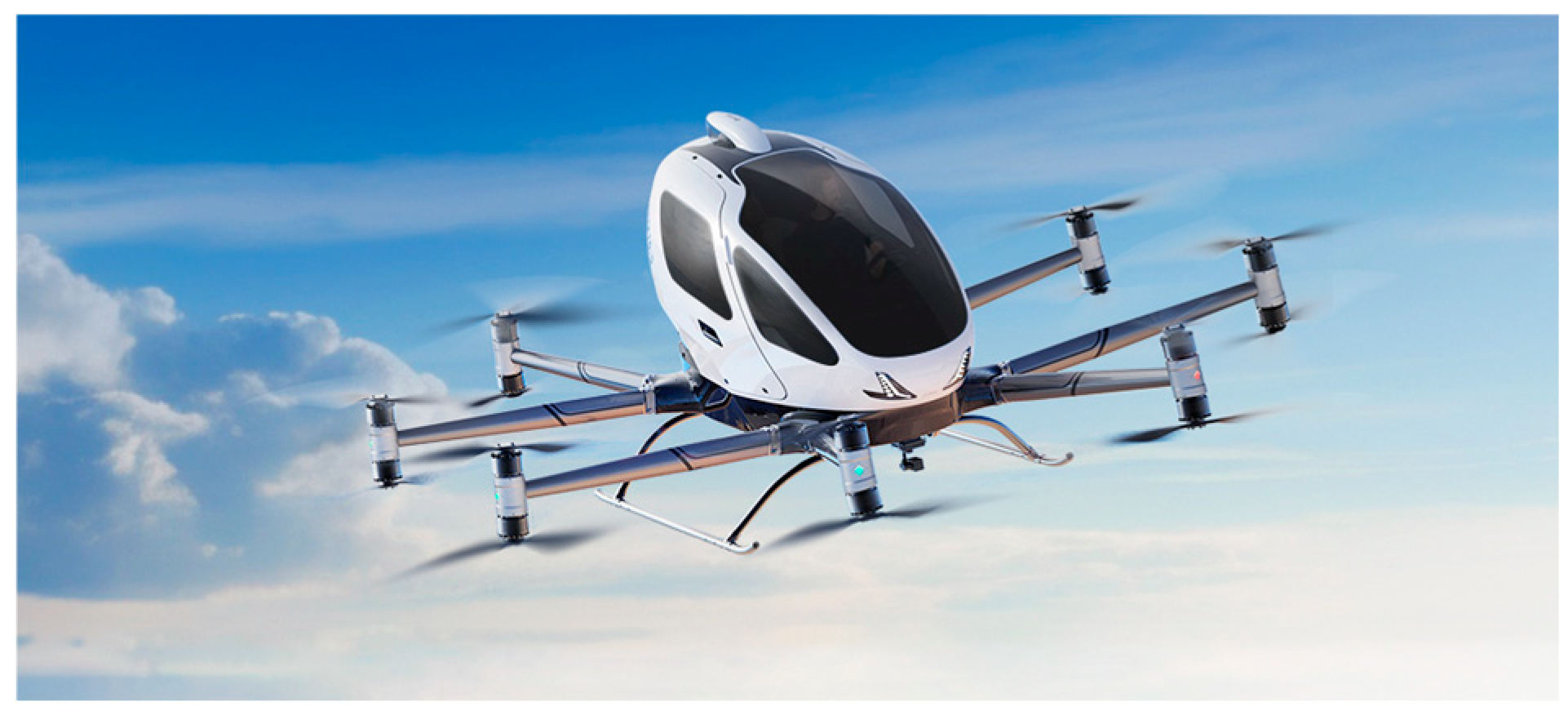
Figure 1. EHang EH216-S [18].
Drones 09 00842 g001
Figure 2. Kitty Hawk Cora [18].
Drones 09 00842 g002
Figure 3. Joby Aviation S4 (verification machine) [18].
Drones 09 00842 g003
Figure 4. Surface pressure coefficient at 0° AoA for different configurations [21].
Drones 09 00842 g004
Figure 5. Aerodynamic forces vs. lift-augmentation duct deflection for different configurations [23].
Drones 09 00842 g005
Figure 6. Flow velocity field around the propeller [29].
Drones 09 00842 g006
Figure 7. Upper and lower supports before and after topology optimization [31].
Drones 09 00842 g007
Figure 8. Structural comparison and optimized stress distribution [33].
Drones 09 00842 g008
Figure 9. Time-averaged propeller efficiency during reference mission [34].
Drones 09 00842 g009
Figure 10. Rotor PIV results: single rotor (left) vs. dual rotors ((right), L = 0.05D) [37].
Drones 09 00842 g010
Figure 11. Two operation modes of hybrid-electric propulsion system [38].
Drones 09 00842 g011
Figure 12. Topology of hybrid-electric propulsion system [40].
Drones 09 00842 g012
Figure 13. Fuzzy control principle of hybrid system.
Drones 09 00842 g013
Figure 14. Multi-objective optimization with flight history data model matching.
Drones 09 00842 g014
Figure 15. Integrated navigation architecture [45].
Drones 09 00842 g015
Figure 16. Low-altitude safety supervision framework [65].
Drones 09 00842 g016
Figure 17. Command and operation management terminal for 1090ES ADS-B aircraft [69].
Drones 09 00842 g017
Figure 18. Integrated regulatory architecture of Shenzhen’s UAM system based on ADS-B, MLAT, and 5G.
Drones 09 00842 g018
Figure 19. Application of remote sensing in airspace management [75].
Drones 09 00842 g019
Figure 20. RSA-DWRN algorithm for dynamic airspace [78].
Drones 09 00842 g020
Figure 21. Flight plan optimization and scheduling model [84].
Drones 09 00842 g021
Figure 22. Civil infrastructure of takeoff and landing sites [95].
Drones 09 00842 g022
Figure 23. Vehicle-mounted multi-UAV cooperative inspection nest.
Drones 09 00842 g023
Figure 24. UAM operations management framework.
Drones 09 00842 g024
Figure 25. Progress of eVTOL drone Construction in Navigation, Coordination, and Communication Fields in Shenzhen.
Drones 09 00842 g025
Figure 26. The new aircraft idea of the distributed power propulsion system.
Drones 09 00842 g026
Figure 27. The hybrid power system in the next 5–10 years.
Drones 09 00842 g027
Figure 28. The integration design idea of autogyro and multi-rotor.
Drones 09 00842 g028
Table 1. Technical requirements of the regulatory system.
Airworthiness requirementsAirworthiness standards
Onboard equipment requirements
Maintenance and support requirements
Infrastructure requirements of regulatory systemGround surveillance facilities
Air Mobility management automation system
Flight service system
Data communication network
Information platform
Table 2. Comparison of Communication, Navigation, and Surveillance Equipment for Commercial Aviation and UAM [96,98,99].
Transport ModeCommercial AviationUrban Air Mobility (UAM)
Communication ServicesVHF ground transmitters provide VHF air-to-ground voice communication; ACARS VHF air-to-ground data link5G communication network provided by ground base stations (digital signals); onboard Ad Hoc network
Navigation ServicesVOR/DME/NDB navigation stations provide radio navigation; ILS provides landing guidance; GNSS/IMU provides integrated navigationGNSS/IMU integrated navigation; high-resolution 3D elevation maps of urban airspace; positioning and path planning services based on communication base stations; online visual recognition-assisted positioning
Surveillance ServicesPrimary radar, secondary radar surveillance; ADS-BCentralized cooperative surveillance via ground 5G communication link; air-to-air surveillance via onboard Ad Hoc network
Control ServicesRadar control commanded by air mobility controllers; procedural control (airways, approaches, airport areas, etc.)Autonomous flight or coordinated scheduling underground control center instructions; human operators responsible for monitoring and emergency handling
Flight Information ServicesATS automatic information broadcasting; information includes local airport and en-route meteorological conditionsFull airspace traffic information; VTOL airport parking slot status; detailed urban airspace meteorological information; wake turbulence information along flight routes
Alert ServicesWhen aircraft are in emergency, the control unit issues airspace alerts; alerts based on secondary transponder codesFull-airspace alerts via 5G network; onboard devices actively broadcast when autonomous aircraft encounter malfunctions
Table 3. Technical Specifications of Vehicle-Mounted Multi-UAV Cooperative Intelligent Nest.
ItemParameter
Dimensions (closed)1020 mm × 1020 mm × 1345 mm
Dimensions (deployed)1836 mm × 1020 mm × 1246 mm
Effective landing platform size760 mm × 760 mm
Product weight≤560 kg
Standby operating power≤500 W
Peak operating power≤3000 W
Power supply requirementsAC 220 V, 16 A
Maximum effective signal range6 km (SRRC/unobstructed)
Battery swap time<120 s
UPS endurance4 h (without battery charging)
Operating temperature−5 to 45 °C
Operating humidity≤85% RH (non-condensing)
Table 4. Publication of Low-Altitude Economy Policies in Shenzhen.
Policy TypeRelease DatePolicy TitleCore Functions
City-Level Comprehensive PoliciesEnd of 2022Implementation Plan for Innovative Development of Low-Altitude Economy Industry (2022–2025) [112]Defines overall development direction and objectives of low-altitude economy for 2022–2025
8 December 2023Several Measures to Support High-Quality Development of Low-Altitude Economy in Shenzhen [113]Provides multidimensional policy support to promote high-quality development of the low-altitude economy
Early 2024Regulations on the Promotion of Low-Altitude Economic Industries in Shenzhen Special Economic Zone [114]Standardizes low-altitude economic activities in regulatory form, covering flight services, safety management, and other core areas
Regulatory PoliciesMarch 2024Reply of the Civil Aviation Administration of China on Supporting Shenzhen to Create a National Low-Altitude Economic Industry Comprehensive Demonstration Zone [115]Grants Shenzhen pilot status for regulatory innovation in low-altitude economy and promotes breakthroughs in regulatory mechanisms
Infrastructure-Specific Policies2 August 2024High-Quality Construction Plan for Low-Altitude Takeoff and Landing Facilities in Shenzhen (2024–2025) [116]Focuses on construction of takeoff and landing facilities, specifying quantitative targets and implementation paths
31 July 2025Shenzhen Low-Altitude Infrastructure High-Quality Construction Plan (2024–2026) [117]Accelerates deployment of low-altitude takeoff/landing, information, and innovation infrastructure; establishes global low-altitude economy HQ R&D center, high-end manufacturing center, full-scenario demonstration and verification center, and one-stop solution supply center; aims to build Shenzhen as the “World’s No.1 Low-Altitude Economy City”
Standards and Norms Policies25 December 2024Guidelines for the Construction of Low-Altitude Economic Standard System in Shenzhen (v1.0) [118]Introduces the “Four Networks”—Facility Network, Airspace Network, Air Route Network, Service Network; builds eight primary subsystems and unifies the low-altitude economic standard framework
District-Level Comprehensive PoliciesMarch 2024Measures to Promote High-Quality Development of Low-Altitude Economy Industry in Longhua District [119]Details regional low-altitude economy construction tasks and specifies project investment and implementation plans
15 October 2023Construction Plan for Longhua District Low-Altitude Economic Experimental Zone in 2024 [120]Provides specific support for regional enterprises, including settlement incentives and technology development
20 Mar 2025Several Measures to Promote High-Quality Development of Low-Altitude Economy Industry in Dapeng New District, Shenzhen [121]Enhances industrial support environment, expands low-altitude flight applications, cultivates enterprises along the low-altitude economy chain, and encourages technological innovation
9 May 2024Measures for Promoting the Development of Low-Altitude Economy Industry in Longgang District [122]Quantifies subsidies and incentives, mainly using an approval-based review process, and strengthens fund supervision
22 December 2023Implementation Rules for Supporting the Development of Low-Altitude Economic Industries with Special Funds for Industrial and Information Industry Development in Longgang District, Shenzhen [123]Supports establishment of advanced low-altitude technology platforms, promotes settlement of complete aircraft development projects, supports manned low-altitude air routes, and UAV comprehensive test base operations
1 November 2024Several Measures to Support High-Quality Development of Low-Altitude Economy in Futian District, Shenzhen (Trial) [124]Supports infrastructure construction (e.g., takeoff/landing sites, charging/swapping stations), expands application scenarios (e.g., logistics, manned transport), promotes industrial agglomeration (e.g., specialized building support), and provides detailed certification and operation subsidy standards
8 April 2024Special Support Measures for Promoting Low-Altitude Economic Development in Nanshan District [125]Focuses on attracting large enterprises and cultivating new industries such as Urban Air Mobility (UAM); provides substantial financial support, with maximum rewards up to 100 million RMB
Table 5. Multi-Dimensional Enterprise Incubation under Shenzhen Policy Support.
Influence DimensionMechanisms and Content
Contribution to Technology ReservePolicies encourage core technology R&D, guiding enterprises to focus on key areas such as flight control, gimbal systems, and video transmission, forming reusable technological outcomes. Leading companies such as DJI have accumulated flight control stability and long-range video transmission technologies that can be directly applied to UAM aircraft’s autonomous driving systems and real-time monitoring modules, addressing critical technical challenges in flight safety and precise control, thus laying the foundation for UAM technology deployment.
Talent Training and SupplyPolicies, through industrial support, encourage enterprises to expand R&D and production scale, indirectly promoting professional talent development. Under favorable policy conditions, leading enterprises establish full-chain talent cultivation systems covering R&D, production, testing, and operations. The resulting talent pool, equipped with expertise in aircraft design and airspace management, can quickly adapt to UAM technology development and industry operations, injecting innovative capabilities into UAM enterprises.
Industrial Agglomeration EffectPolicies guide upstream and downstream enterprise clustering by planning industrial parks and providing supporting services. Under policy support, leading companies such as DJI form industry cores that attract component suppliers (e.g., battery and sensor manufacturers), software developers (e.g., flight control system providers), and application service providers (e.g., low-altitude logistics operators), establishing a complete “R&D–production–application” industrial chain, This policy-induced clustering has materialized into a robust industrial chain ecosystem, which now encompasses over 1500 specialized enterprises in Shenzhen. The density and maturity of this ecosystem are further evidenced by an occupancy rate exceeding 95% in dedicated low-altitude industrial parks and the completion of tens of thousands of hours of UAS flight tests in the region. This vibrant agglomeration reduces collaboration costs and technical challenges for UAM enterprises, creating a self-reinforcing innovation cluster.
Demonstration and Leading EffectPolicies enhance the demonstration effect of leading enterprises by recognizing outstanding companies and promoting successful cases. DJI’s commercial model in the UAV sector (e.g., “technology R&D + scenario expansion + global marketing”) and its technological innovation path (e.g., iterative upgrading of core components) provide a replicable development paradigm for UAM companies, helping them avoid trial-and-error risks in technology selection and market promotion, thereby shortening commercialization timelines.
Table 6. Policy Guidance and Enterprise Technology/Product Iteration in Shenzhen.
ManufacturerPolicy Guidance BackgroundTechnological/Product Iteration Achievements
DJI, Shenzhen, ChinaRequired to comply with national aviation regulatory policies (e.g., European UAV regulations limiting flight zones, changes in U.S. airspace usage rules); policies require enterprises to optimize product compliance based on “geospatial UAV data from national aviation authorities.”Technical Level: Removed GEO system flight area restrictions to increase flight freedom within regulatory compliance, addressing users’ core pain point of “restricted flight zones.” Product Level: Launched “DJI Flip All-in-One Vlog UAV” to fill entry-level consumer drone market gaps, and released “O4 Video Transmission and Camera Modules” (advanced high-speed FPV modules), completing a full consumer drone product matrix from entry-level to flagship, enabling comprehensive scenario coverage.
Puzhou Aircraft Technology, Puzhou, ChinaDomestic policies position the low-altitude economy as a key form of new productive capacity, encouraging low-altitude applications (e.g., logistics, inspection) and technological innovation, with requirements for safe and efficient operations.Product System: Released lightweight quadrotor S200 series, K02 small automatic battery-swapping hangar, and K03 lightweight automatic charging hangar, forming an integrated “UAV + hangar” operational solution. Core Technology: S200 series supports edge computing during flight and dual-edge computation; ensures operation continuity in no-signal areas via satellite short-message communication; uses national cryptography-level encryption for data security; upgraded imaging and gimbal configurations for multi-scenario operations. Hangar Functionality: K02 and K03 enable rapid jump-flight operations for high-frequency, high-safety missions, meeting policy-driven low-altitude efficient application scenarios.
Datuo Intelligent Aviation, Shenzhen, ChinaPolicies promote technological innovation in aviation, encouraging enterprises to overcome communication technology bottlenecks to meet high-efficiency, long-range communication needs of low-altitude aircraft.Technical Breakthrough: Obtained patent for “a type of antenna” capable of stable operation across a broader frequency range, enhancing signal stability and reliability, addressing UAV operation and aviation monitoring communication gaps. R&D Approach: Applied Generative Adversarial Network (GAN) models in antenna design, optimizing product performance via AI, reflecting the policy-driven path of “technology innovation driving industrial upgrading.”
EHang, Shenzhen, ChinaGlobal low-altitude economy policies facilitate eVTOL drone commercialization; domestic policies provide airworthiness certification and industrial support funds, encouraging enterprises to overcome eVTOL drone technology bottlenecks and start commercialization.Product Certification: The EH216-S eVTOL drones obtained Type Certificate (TC), Airworthiness Certificate (AC), and Production Certificate (PC) in April 2024, becoming the world’s first eVTOL drones to complete all three certifications, confirming its technology meets commercial safety standards. Product Advantages: Compact, unmanned, integrated air-ground operations with cost-effectiveness, suitable for urban low-altitude mobility; orders and market demand continue to grow. Technology Iteration: From EHang 105 to EH216-S, achieved significant improvements in autonomous flight, safety, and reliability, guiding industry eVTOL drones R&D focus toward “safety and commercialization.”
Disclaimer/Publisher’s Note: The statements, opinions and data contained in all publications are solely those of the individual author(s) and contributor(s) and not of MDPI and/or the editor(s). MDPI and/or the editor(s) disclaim responsibility for any injury to people or property resulting from any ideas, methods, instructions or products referred to in the content.