


At national and international level, mixed complex fertilizers are obtained using physical mixing of different sources of macroelements and/or microelements, which are grinded and granulated together using different granulation technologies, such as, for example, on a fluidized bed [1,2] or a pan or drum granulator [1,2]. The main macroelements present in commercial fertilizers are N, P2O5, and K2O, and these macroelements can be supplied using many sources [3]. In order to improve the absorption of nutrients by plants, granulated fertilizers can be coated with different chemical or bio-based materials, thus creating a slow release of nutrients, in accordance with plant absorption capability [4]. For these purposes, were used some biodegradable coating materials, consisting in fractions of keratin hydrolysates, in order to delay macroelements leaching in soil and also as an important source of biostimulating material for plants.
There are many sources for biodegradable coating materials, however including huge amounts of feathers and wool that remain after primary processing og raw materials [5].
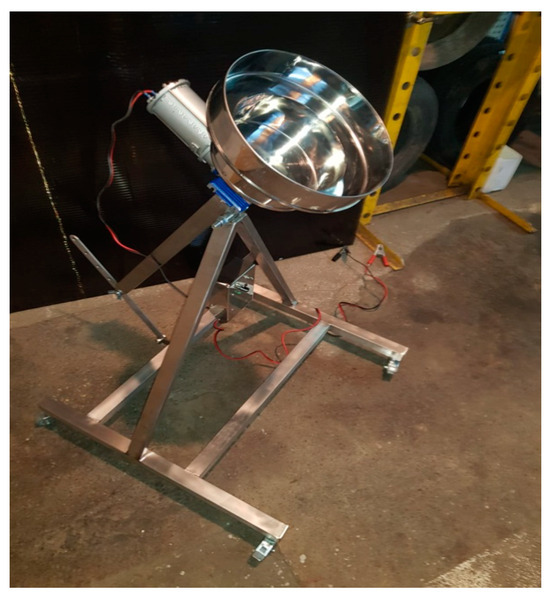
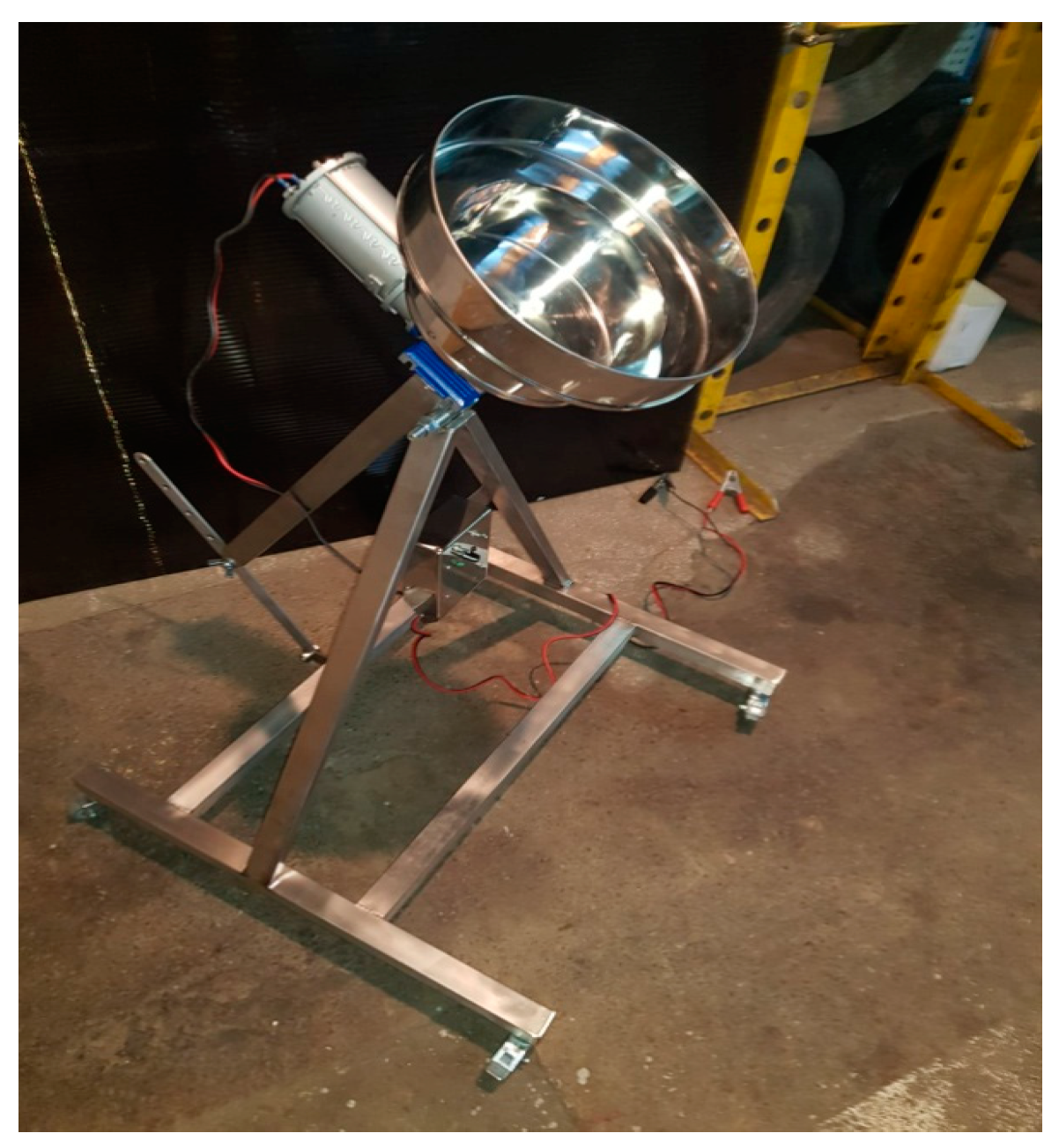
I. Granulation: Some usual NPK formulations were prepared using a pan (disc) granulator (Figure 1). As raw materials were used urea (N source), monoammonium phosphate (N and P source) and potassium sulfate or chloride (K source). As a binder, several substances were tested, based on raw materials water solutions and also includind small amounts of PVA (polyvinylic alcohol) or HEC (hydroxiethyl cellulose) solution, a polysaccharide solution etc.
Figure 1.
Disc granulator.
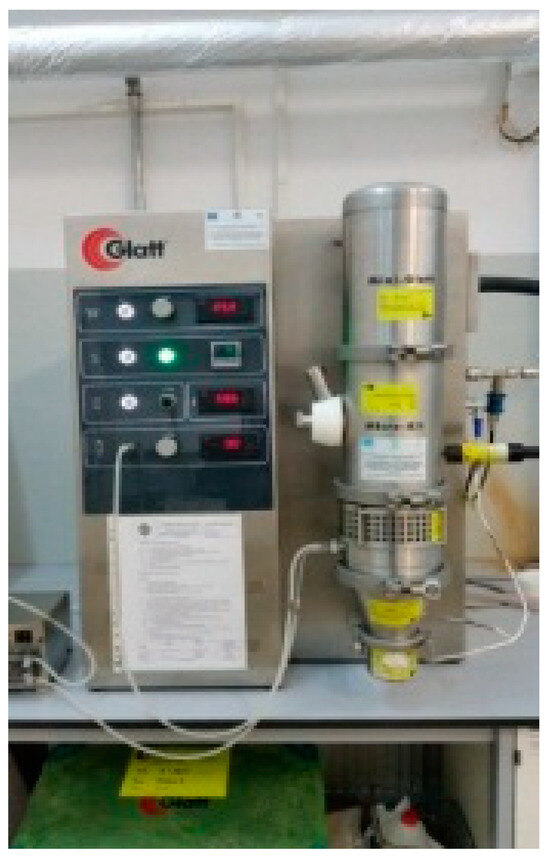
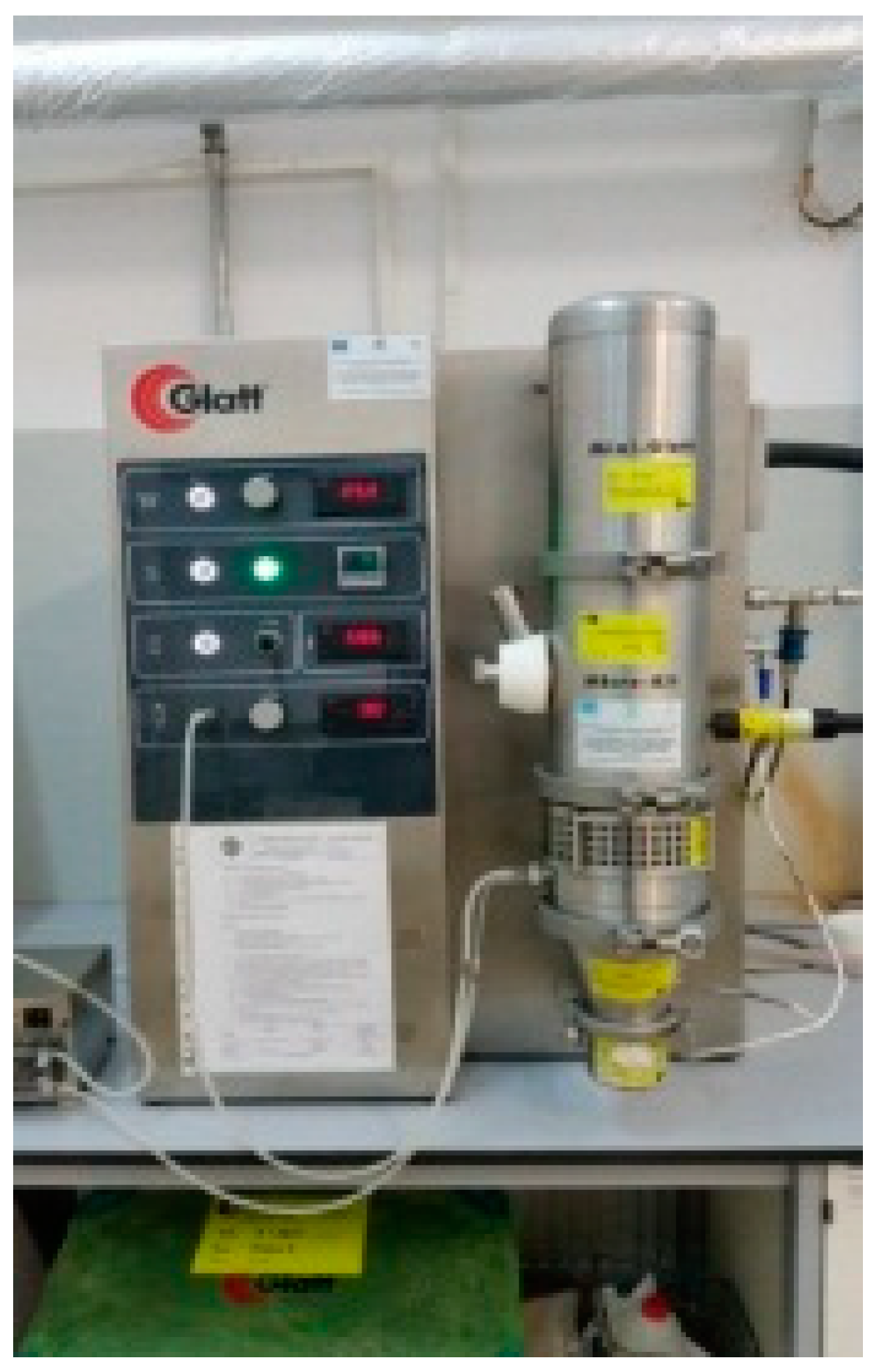
II. Coating: The coating of NPK granules was made on the same rotating pan granulator, using an aqueous solution containing a keratin hydrolysate solution and small amounts of PVA. This hydrolysate was previously obtained mainly from poultry feathers. Analogously, the NPK formulations were also coated with the same keratin hydrolysate by using a lab-scale fluidized bed granulator (the Würster method) (Figure 2).
Figure 2.
Fluidized bed granulator.
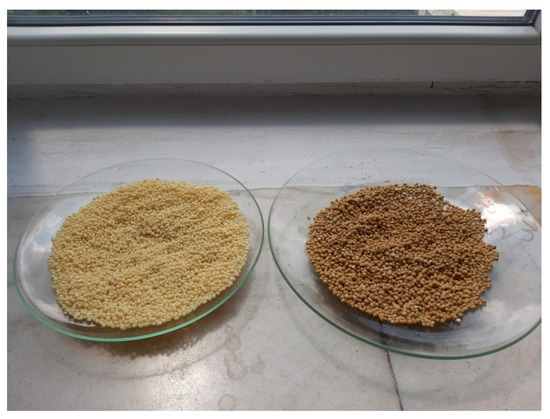
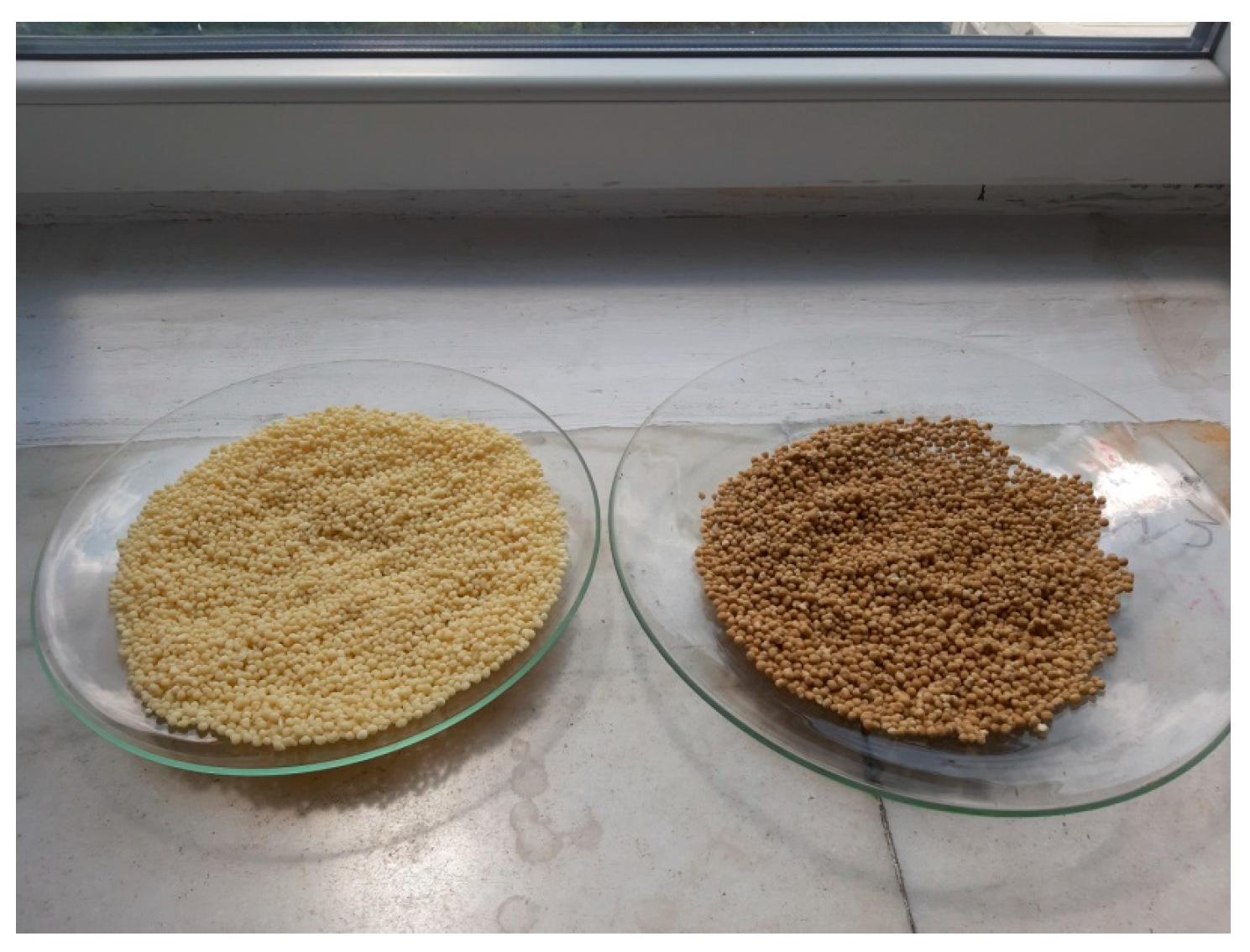
Granules with a 2–4 mm average diameter were obtained for three NPK formulations using a rotating pan granulator, operated at various working parameters (rotation speed, inclination to the horizontal axis, granulation time). After drying at room temperature, the granules were coated using two coating equipments. The coating, in both cases, was uniform (Figure 3). The SEM analysis showed that a compact and uniform coating layer was obtained for both methods.
Figure 3.
NPK granules before and after coating.
Complexe NPK fertilizer compositions were successfully granulated using a lab scale rotating pan granulator, and the main fraction of granules having a 2–4 mm diameter was coated with an aqueous solution containing a keratin hydrolysate solution, using two coating equipments, a rotating pan granulator and using a GLATT fluidized bed granulator. The differences between the 2 methods rely on the different working parameters. For the method using the fluidized bed granulator, raw material losses was observed, that can be diminished by adjusting the working parameters
Acknowledgments
The work on this paper was supported by the Government of Romania, Ministry of Research and Innovation, Project SECVENT, POC ID P_40_352/Cod SMIS 105684, contract No. 2040/31.10.2017, “Obtaining of NPK fertilizers coated with keratin-based products” and by the MCI Core Programme in the frame of projects PN.19.23.01.01.
References
- Irfan, S.A.; Razali, R.; KuShaari, K.; Mansor, N.; Azeem, B.; Versypt, A.N.F. A review of mathematical modeling and simulation of controlled-release fertilizers. J. Control. Release 2018, 271, 45–54. [Google Scholar] [CrossRef] [Scilit] [PubMed]
- Srivastava, S.; Mishra, G. Fluid bed technology: overview and parameters for process selection. Int. J. Pharm. Sci. Drug Rese. 2010, 2, 236–246. [Google Scholar]
- World Fertilizertrends and Outlook to 2020. Available online: http://www.fao.org/3/a-i6895e.pdf (accessed on 9 January 2019).
- Qi, T.; Lü, S.; Li, T.; Chen, J.; Huang, M.; Ji, Y.; Zhang, S.-F.; Liu, M. A multielement compound fertilizer used polydopamine and sodium carboxymethyl starch matrices as coatings. Int. J. Boil. Macromol. 2019, 124, 582–590. [Google Scholar] [CrossRef] [Scilit] [PubMed]
- Tanmay, P.; Mandal, A.; Mondal, K.C. Waste to Value Aided Fertilizer: An Alternative Cleaning Technique for Poultry Feathers Waste Disposal. Ann. Microbiol. Immunol. 2018, 1, 1006. Available online: http://www.remedypublications.com/annals-of-microbiology-and-immunology/articles/pdfs_folder/ami-v1-id1006.pdf (accessed on 9 January 2019).
Publisher’s Note: MDPI stays neutral with regard to jurisdictional claims in published maps and institutional affiliations. |
© 2019 by the authors. Licensee MDPI, Basel, Switzerland. This article is an open access article distributed under the terms and conditions of the Creative Commons Attribution (CC BY) license (http://creativecommons.org/licenses/by/4.0/).