


Abstract
This study examines the leadership skills of business executives and the skills considered important for employees in the tourism and cultural sectors in Crete, Greece. The findings show that the sample is concentrated mainly in Heraklion and Chania, where there is a strong presence of hospitality and food service businesses. The most important leadership skills identified are professional competence, integrity, and problem-solving, while for employees, the most significant skills are communication, collaboration, responsibility, and professionalism. Overall, the findings indicate that the effective operation of businesses depends both on high-quality leadership and on the strong soft skills of their human resources.
1. Introduction
Leadership and human resource management are two particularly important functions in modern organizations, as they are directly linked to employee guidance, work organization, and the achievement of an organization’s goals [1,2,3]. At the same time, employees’ skills, both technical and interpersonal, have a substantial impact on performance, collaboration, and adaptation to the demands of the contemporary work environment [4,5].
This article has two main objectives. First, it presents a theoretical framework of leadership and human resource management, with particular emphasis on the leadership skills of human resource managers and the skills of employees. Second, it presents the findings of empirical research conducted in the tourism and cultural sectors across the prefectures of Crete, Greece. More specifically, the study investigates, on the one hand, the leadership skills that business representatives believe they possess and, on the other hand, the skills considered important in the recruitment and retention of employees in the tourism and cultural sectors across the prefectures of Crete, Greece.
Based on the above objectives, the present study is guided by the following research questions:
RQ1: Which leadership skills do business representatives in the tourism and cultural sectors of Crete consider most characteristic of their managerial profile?
RQ2: Which employee skills are considered most important for recruitment and retention in tourism and cultural enterprises in Crete?
RQ3: To what extent do businesses in these sectors in Crete emphasize soft skills compared with formal qualifications and technical skills?
In addition to these research questions, the study formulates the following research hypotheses:
H1.
Business representatives in the tourism and cultural sectors of Crete consider key leadership skills, such as professional competence, integrity, and problem-solving ability, to be central elements of effective management.
H2.
Tourism and cultural enterprises in Crete place high importance on soft skills, such as communication, collaboration, and professionalism, when recruiting and retaining employees.
The above research questions and hypotheses were developed to connect the theoretical discussion on leadership and employee skills with the empirical investigation conducted in the Cretan business context.
1.1. Leadership Skills of Human Resource Management Executives: A Brief Literature Review
The table below outlines the key leadership skills required for human resource management executives in contemporary organizations. Bourantas (2002) [6], as well as related lectures delivered by the same author, provides a detailed discussion of the skills that characterize an effective leader. The present study includes the most significant of these skills (see Table 1). Most of them were used as a core instrument in our primary empirical research, which was conducted among human resource management leaders in the tourism sector in the prefectures of Crete (see Section 3, Empirical Research Findings).
Table 1.
Leadership Skills Identified in the Literature.
1.2. Hard and Soft Skills of Employees: A Brief Literature Review
An important way of classifying skills is to distinguish between (a) hard skills, also referred to as vertical skills, and (b) soft skills, also referred to as horizontal or social and communication skills.
Hard skills refer to the technical, specialized, and measurable abilities that enable an individual to perform a specific job effectively. They are usually acquired through education, training, and professional experience, and are associated with the application of knowledge to achieve specific professional goals [4,5,13]. Examples of hard skills include speaking foreign languages, computer literacy, the use of software applications, and other forms of technical expertise. By contrast, degrees and certifications do not constitute skills per se; rather, they represent formal qualifications or evidence of the possession of specific knowledge and skills. Hard skills are mainly linked to cognitive functions such as analysis, logical reasoning, and technical problem-solving, and for this reason, they are often associated with Intelligence Quotient (IQ) [14].
Soft skills, on the other hand, refer to personal, social, and communicative attributes, such as communication, collaboration, empathy, and adaptability, which enhance an individual’s effective interaction within the workplace [4,5,13]. Their connection with emotional intelligence is particularly strong, since emotional intelligence includes the ability to perceive, understand, and manage one’s own emotions as well as those of others [9,15]. See Table 2.
Table 2.
Hard and Soft Skills of Employees.
These skills, both hard and soft, constituted a core dimension in the formulation of the questions used in the primary empirical research conducted with human resource management executives in the tourism sector in Crete. The purpose was to investigate the skills that, according to their views, employees should possess in order to be recruited. The above discussion suggests that the two categories of skills are complementary and equally important for an individual’s professional effectiveness [4,5,15], a conclusion that is further reinforced by the findings of our empirical research (see Section 3).
2. Methodology
Within the framework of the present study, primary quantitative research was conducted during 2024–2025 using a structured questionnaire as the main data collection instrument. The research design was developed in line with the research questions and hypotheses presented in the Introduction, which guided the construction of the questionnaire and the analysis of the empirical findings. A quantitative questionnaire-based design was considered appropriate, as the aim of the study was to record and compare the perceptions of a relatively large number of business representatives across different prefectures and sectors of activity in Crete.
The questionnaire included closed-ended questions, both single-choice and multiple-choice, as well as one open-ended question. Before its final distribution, a pilot application was carried out with a limited number of businesses in order to test the clarity of the questions and the functionality of the instrument. To enhance the content validity of the questionnaire, its items were developed based on the theoretical framework presented in the literature review and were designed to capture key dimensions of leadership competencies, as well as employees’ hard and soft skills. In terms of reliability, the use of a structured questionnaire with standardized questions ensured consistency in the way data were collected from all participating businesses.
The questionnaire was distributed electronically via Google Forms and was addressed to tourism and cultural enterprises across the four prefectures of Crete. The sampling frame was defined using official professional and institutional directories from the local Chambers of Commerce, where lists of registered businesses were available. From the list of registered businesses included in the sampling frame, 500 businesses were randomly selected and invited to participate in the survey.
A total of 287 businesses responded and constituted the final sample of the study, corresponding to a response rate of 57.4%. This response rate indicates a satisfactory level of participation. The final composition of the sample also shows satisfactory dispersion across prefectures and sectors of activity, allowing useful conclusions to be drawn regarding the businesses that participated in the study.
Although the initial selection of businesses was based on random sampling, which strengthens the likelihood of representativeness, the final sample was ultimately formed by the businesses that responded to the questionnaire. Therefore, the possibility of non-response bias cannot be excluded. This limitation should be taken into account when interpreting the findings, as it may restrict the extent to which the results can be fully generalized to the wider population of tourism and cultural enterprises in Crete.
Participation was voluntary, and respondents were informed in advance about the purpose of the study. The questionnaire was completed anonymously, and no personal data allowing the identification of participants were collected. The principles of confidentiality and personal data protection (GDPR) were observed throughout all stages of the research.
3. Results and Discussion of the Empirical Quantitative Research
3.1. Geographical Distribution
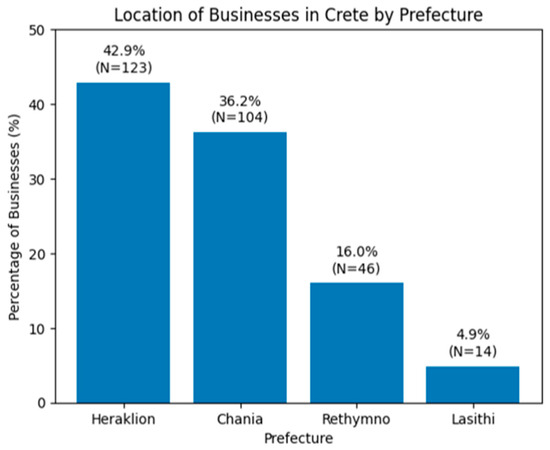
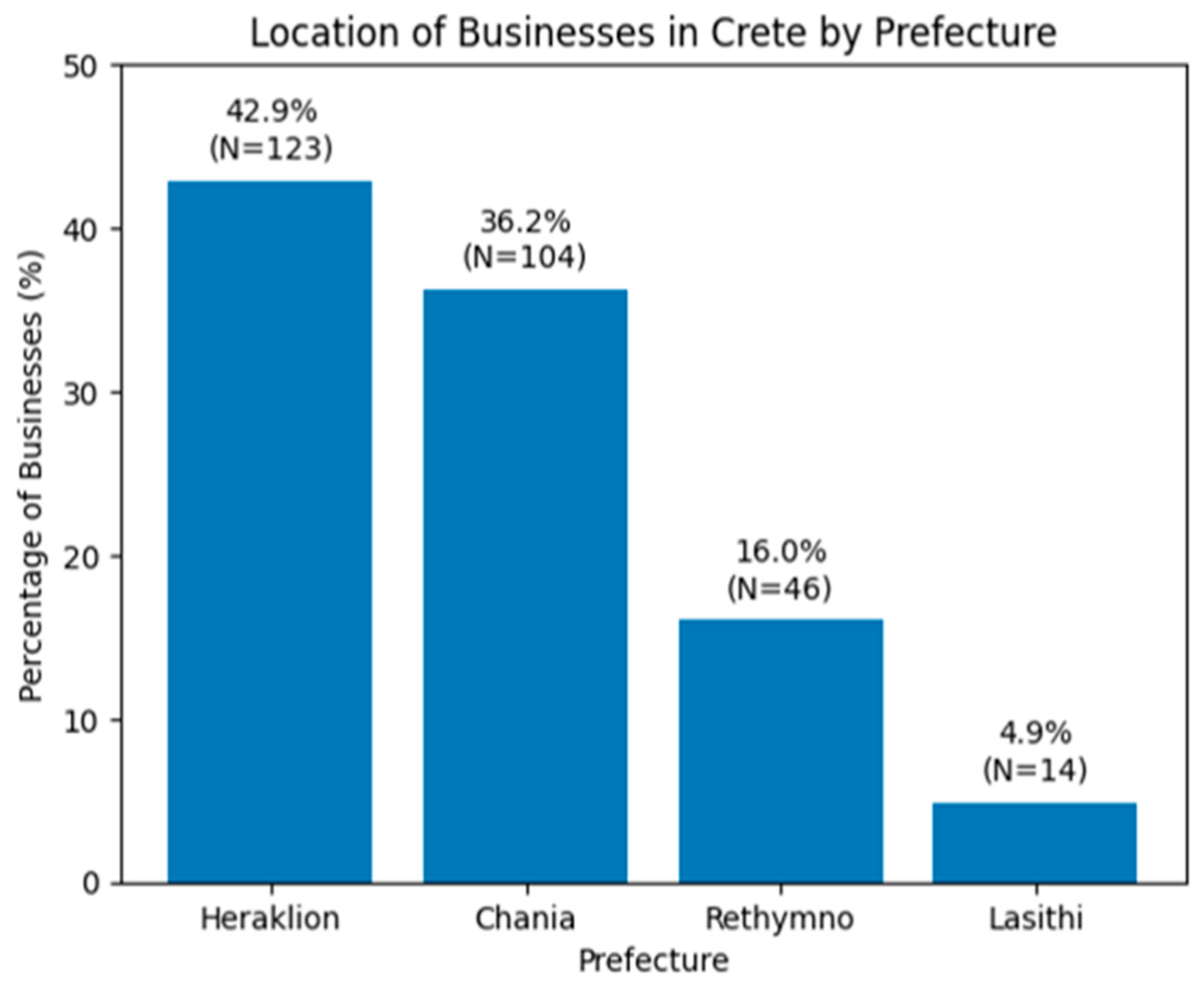
In response to the question addressed to business representatives regarding the prefecture in which their business operates, the highest proportion was recorded in Heraklion (42.9%, n = 123 businesses), followed by Chania (36.2%, n = 104), Rethymno (16.0%, n = 46), and Lasithi (4.9%, n = 14 businesses). Therefore, the tourism and cultural enterprises in the sample are mainly located in the prefectures of Heraklion and Chania. Table 3 and Figure 1 present the results in detail.
Table 3.
Location of Businesses in Crete by Prefecture.
Figure 1.
Location of Businesses in Crete by Prefecture.
3.2. Type of Business
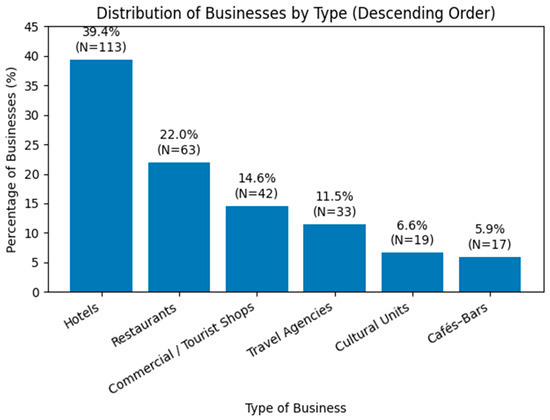
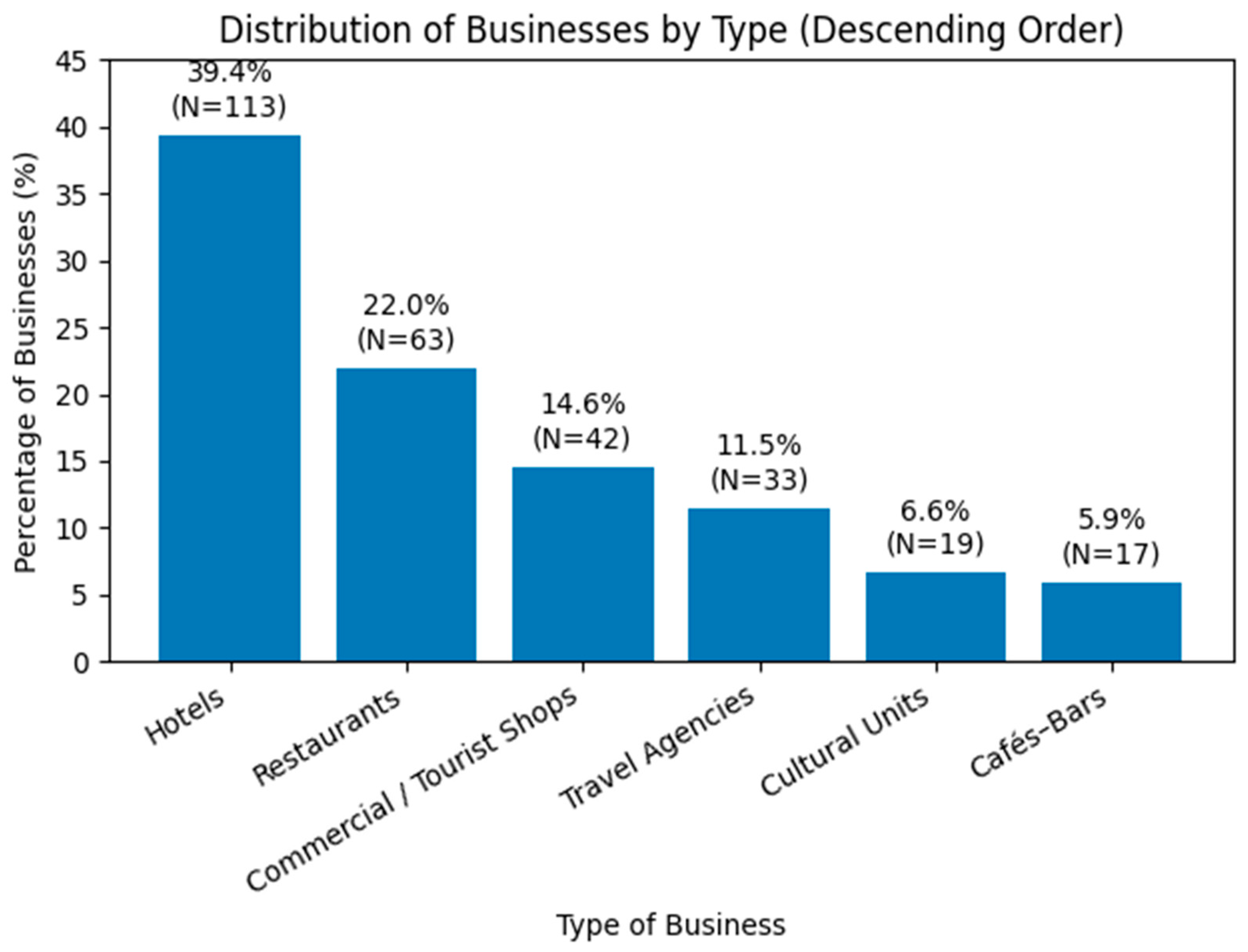
In response to the question addressed to business representatives about the type of business they operate, the highest percentage was recorded for hotel units (39.4%, n = 113). These were followed by restaurants (22.0%, n = 63), commercial-tourism retail stores (14.6%, n = 42), and travel agencies (11.5%, n = 33). Lower percentages were recorded for cultural units (6.6%, n = 19) and cafés/bars (5.9%, n = 17). Overall, the sample shows a greater concentration of businesses directly associated with hospitality, food service, and tourism services. See Table 4 and Figure 2 for a detailed presentation of the results.
Table 4.
Type of businesses.
Figure 2.
Distribution of Businesses by Type.
3.3. Leadership Skills of Business Representatives
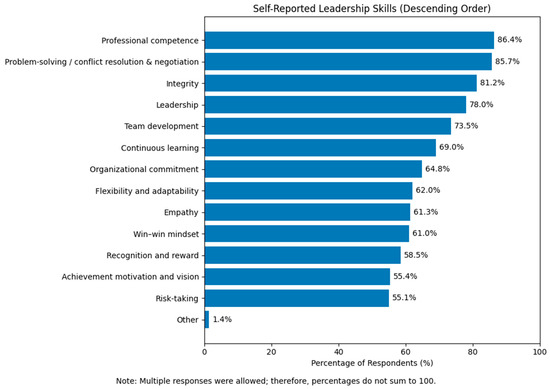
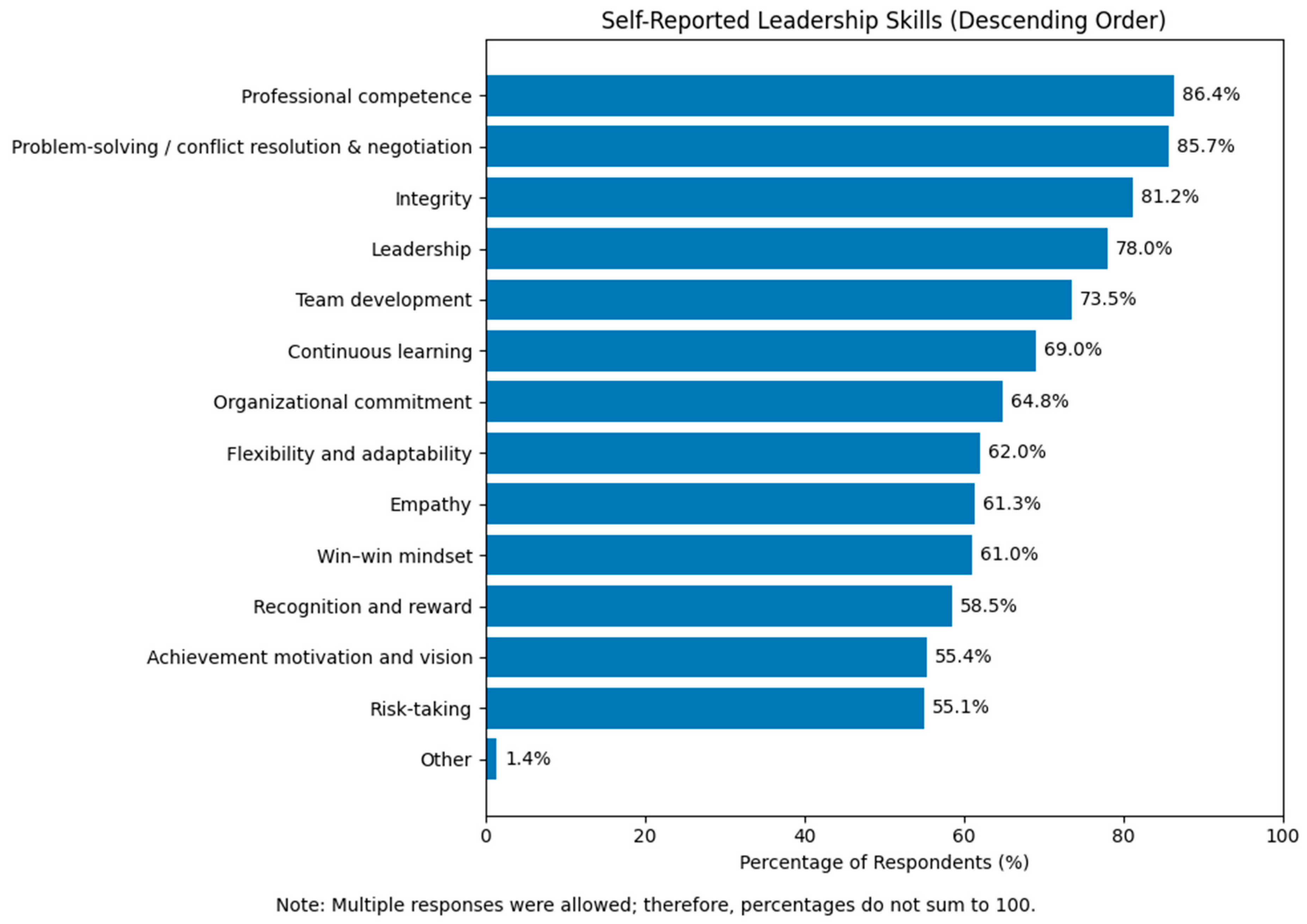
In response to the question addressed to business representatives regarding the leadership skills they believe characterize them, the highest percentages were recorded for professional competence (86.4%, n = 248), problem-solving/conflict resolution and negotiation (85.7%, n = 246), and integrity (81.2%, n = 233). High percentages were also reported for leadership, with an emphasis on guiding and inspiring others (78.0%, n = 224), promoting teamwork (73.5%, n = 211), and continuous learning (69.0%, n = 198). These were followed by organizational commitment (64.8%, n = 186), flexibility and adaptability (62.0%, n = 178), empathy (61.3%, n = 176), a win–win mindset (61.0%, n = 175), recognition and reward (58.5%, n = 168), achievement motivation, vision, and inspiration (55.4%, n = 159), and risk-taking (55.1%, n = 158).
The findings indicate that business representatives consider professional competence, problem-solving, conflict resolution, integrity, and the ability to lead to be the most important leadership skills. At the same time, particular emphasis is placed on teamwork, continuous learning, and organizational commitment. See Table 5 and Figure 3 for a detailed presentation of the results.
Table 5.
Leadership Skills Identified through Primary Empirical Research.
Figure 3.
Self-Reported Leadership Skills.
3.4. Employee Skills
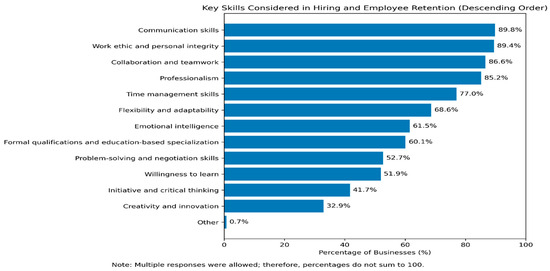
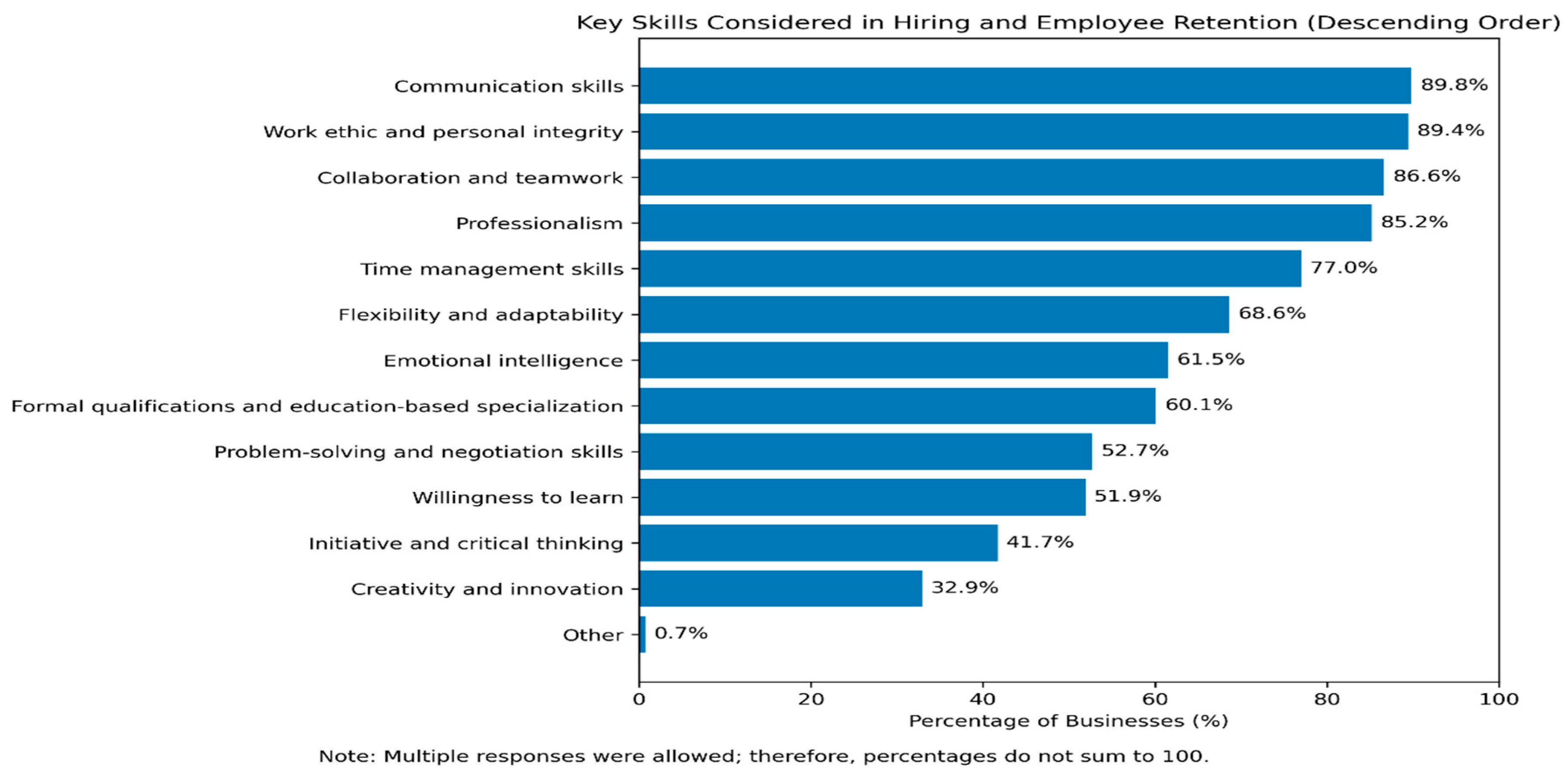
In response to the question addressed to business representatives regarding the skills of prospective employees taken into account for their recruitment and retention within the business, the highest frequencies were recorded for communication skills (89.8%, n = 254), courtesy, responsibility, integrity, and, more broadly, characteristics associated with work ethic (89.4%, n = 253), collaboration/teamwork (86.6%, n = 245), and professionalism (85.2%, n = 241). High percentages were also recorded for time management (77.0%, n = 218) and flexibility/adaptability (68.6%, n = 194). These were followed by emotional intelligence (61.5%, n = 174), formal qualifications and specialization through education (60.1%, n = 170), problem-solving/negotiation (52.7%, n = 149), and willingness to learn (51.9%, n = 147). Lower percentages were recorded for initiative and critical thinking (41.7%, n = 118), creativity/innovation (32.9%, n = 93), and the category “Other” (0.7%, n = 2).
The findings indicate that businesses attach greater importance to horizontal and interpersonal skills (soft skills), as well as to characteristics related to professional conduct, without, however, overlooking formal educational qualifications and specialized skills (hard skills). See Table 6 and Figure 4 for a detailed presentation of the results.
Table 6.
Employee skills Identified through Primary Empirical Research.
Figure 4.
Key Skills Considered in Hiring and Employee Retention.
4. Discussion
The findings indicate that, within the tourism and cultural sectors, considerable importance is attached both to employees’ soft skills and to the leadership competencies of business representatives. Communication, collaboration, professionalism, and problem-solving appear to be critical factors for the smooth operation of businesses, the quality of the services provided, and their overall competitiveness.
These findings are consistent with recent empirical research in tourism, hospitality, and broader skills development literature. Previous studies have shown that soft skills such as communication, teamwork, professionalism, and emotional intelligence are particularly important in service-oriented environments, where employees interact directly with customers and shape the overall service experience [16,17].
The present findings also support the view that effective leadership in tourism-related businesses requires more than technical knowledge. Managers are expected to combine professional competence with interpersonal and organizational skills, including problem-solving, adaptability, integrity, and the ability to coordinate and motivate employees [18,19]. This is particularly relevant in tourism and cultural activities, where daily operations depend heavily on human interaction, teamwork, and the ability to respond to changing customer needs.
More recent work on hard and soft skills also confirms that these categories of skills should not be treated as separate or competing dimensions, but rather as complementary elements of professional effectiveness [13]. Overall, the empirical literature supports the conclusion that the interaction between leadership competencies and employees’ soft skills plays an important role in organizational performance, especially in sectors where the quality of the service provided depends strongly on human interaction.
5. Conclusions
The present study found that the tourism and cultural enterprises included in the sample are mainly located in Heraklion and Chania and are primarily active in the hotel and food service sectors. At the same time, it was found that, when evaluating prospective employees, businesses place increased importance on soft skills such as communication, collaboration, responsibility, work ethic, and professionalism, without overlooking formal qualifications and specialized knowledge.
In addition, business representatives identified professional competence, integrity, problem solving, and the ability to coordinate and support the team as core elements of their leadership profile. These findings indicate that, in the contemporary tourism and cultural sectors, effectiveness is not determined solely by technical expertise, but also by the ability of both employees and managers to communicate effectively, adapt to changing conditions, and foster teamwork.
Overall, the findings address the research questions of the study and support the proposed research hypotheses. They show that business representatives attach particular importance to professional competence, integrity, problem-solving, and team coordination as key leadership skills while also placing strong emphasis on employees’ soft skills, especially communication, collaboration, responsibility, work ethic, and professionalism. In this sense, both hypotheses are supported by the empirical evidence.
From a practical perspective, the results highlight the need for tourism and cultural enterprises to invest more systematically in the development of soft skills and leadership competencies. Training initiatives focusing on communication, teamwork, and problem-solving could contribute to improved service quality and organizational performance. At the same time, the relatively lower emphasis placed on creativity and innovation may reflect a more traditional approach to skills development, which could limit the ability of businesses to respond to evolving market demands.
Furthermore, the findings contribute to the existing literature by providing empirical evidence from a regional context and by highlighting the importance of human-centered competencies in service-oriented sectors such as tourism and culture. However, the study presents certain limitations, particularly with regard to its geographical focus and the use of self-reported data.
Finally, future research could extend the analysis to other regions of Greece and to different sectors of economic activity in order to examine whether the observed patterns are consistent across different contexts. Further research could also incorporate the perspectives of employees, providing a more comprehensive understanding of the role of skills and leadership in organizational effectiveness.
Author Contributions
Conceptualization, R.E. and Z.K.; methodology, R.E. and Z.K.; software, R.E. and Z.K.; validation, R.E. and Z.K.; formal analysis, R.E. and Z.K.; investigation, R.E. and Z.K.; resources, R.E. and Z.K.; data curation, R.E. and Z.K.; writing—original draft preparation, R.E. and Z.K.; writing—review and editing, R.E. and Z.K.; visualization, R.E. and Z.K.; supervision, R.E. and Z.K.; project administration, R.E. and Z.K.; All authors have read and agreed to the published version of the manuscript.
Funding
This research received no external funding.
Institutional Review Board Statement
Ethical review and approval were not required for this study in accordance with institutional requirements.
Informed Consent Statement
Informed consent was obtained from all subjects involved in the study.
Data Availability Statement
The data presented in this study are available on request from the corresponding author due to restrictions, as they form part of an ongoing postdoctoral research project and planned future publication.
Acknowledgments
The authors would like to express their sincere gratitude to the businesses in the tourism and cultural sectors that agreed to participate in this study.
Conflicts of Interest
The authors declare no conflicts of interest.
References
- CIPD. Strategic Human Resource Management. Factsheet, 25 August 2025. Available online: https://www.cipd.org/uk/knowledge/factsheets/strategic-hrm-factsheet/ (accessed on 1 March 2026).
- Dessler, G. Human Resource Management, 17th ed.; Bloomsbury Publishing: Pearson, GA, USA, 2023. [Google Scholar]
- Northouse, P.G. Leadership: Theory and Practice, 10th ed.; SAGE Publications, Inc.: Thousand Oaks, CA, USA, 2025. [Google Scholar]
- OECD. OECD Skills Strategy 2019: Skills to Shape a Better Future; OECD Publishing: Paris, France, 2019. [Google Scholar] [CrossRef] [Scilit]
- OECD. Skills for 2030 [Concept note]. In OECD Future of Education and Skills 2030; OECD Publishing: Paris, France, 2019. [Google Scholar]
- Bourantas, D.K. Manatzment: Theoritiko Ypovathro, Sygchrones Praktikes [Management: Theoretical Background, Contemporary Practices]; Benou Publications: Athens, Greece, 2002. [Google Scholar]
- Bourantas, D.K. Igesia: O Dromos tis Diarkous Epitychias [Leadership: The Road to Enduring Success]; Benou Publications: Athens, Greece, 2005. [Google Scholar]
- Bourantas, D.K. Igesia: O Dromos tis Diarkous Epitychias [Leadership: The Road to Enduring Success] (Revised Edition); Benou Publications: Athens, Greece, 2025. [Google Scholar]
- Krasadaki, E.; Zopounidis, K.; Triantari, S.A. Koinonikes-Epikoinoniakes kai Psifiakes Dexiotites Stin Ekpaidefsi kai Stin Ergasia ton 21o Aiona [Social/Communication and Digital Skills in Education and Work in the 21st Century]; Klidarithmos: Athens, Greece, 2023. [Google Scholar]
- Nickson, D. Human Resource Management for the Hospitality and Tourism Industries, 2nd ed.; Routledge: Oxfordshire, UK, 2013. [Google Scholar]
- Papalexandri, N.A.; Bourantas, D.K. Dioikisi Anthropinou Dynamikou: Politikes kai Praktikes sti Syngchroni Epochi [Human Resource Management: Policies and Practices in the Contemporary Era]; Benou Publications: Athens, Greece, 2023. [Google Scholar]
- Rompoti, E. La leadership del Dirigente Scolastico Nella Gestione Delle Risorse Umane e dei Rapporti di Lavoro [The Leadership of the School Principal in the Management of Human Resources and Employment Relations]; ADAPT University Press: Modena, Italy, 2026. [Google Scholar]
- Lamri, J.; Lubart, T. Reconciling hard skills and soft skills in a common framework: The generic skills component approach. J. Intell. 2023, 11, 107. [Google Scholar] [CrossRef] [Scilit] [PubMed]
- American Psychological Association. IQ. In APA Dictionary of Psychology; American Psychological Association: Washington, DC, USA, 2018. [Google Scholar]
- Goleman, D. Emotional Intelligence: Why It Can Matter More than IQ for Character, Health and Lifelong Achievement; Bantam Books: New York, NY, USA, 1995. [Google Scholar]
- Sisson, L.G.; Adams, A.R. Essential hospitality management competencies: The importance of soft skills. J. Hosp. Tour. Educ. 2013, 25, 131–145. [Google Scholar] [CrossRef] [Scilit]
- Succi, C.; Canovi, M. Soft skills to enhance graduate employability: Comparing students and employers’ perceptions. Stud. High. Educ. 2020, 45, 1834–1847. [Google Scholar] [CrossRef] [Scilit]
- Baum, T. Human resources in tourism: Still waiting for change? Tour. Manag. 2007, 28, 1383–1399. [Google Scholar] [CrossRef] [Scilit]
- Brownell, J. Leading on land and sea: Competencies and context. Int. J. Hosp. Manag. 2008, 27, 137–150. [Google Scholar] [CrossRef] [Scilit]

Disclaimer/Publisher’s Note: The statements, opinions and data contained in all publications are solely those of the individual author(s) and contributor(s) and not of MDPI and/or the editor(s). MDPI and/or the editor(s) disclaim responsibility for any injury to people or property resulting from any ideas, methods, instructions or products referred to in the content. |
© 2026 by the authors. Licensee MDPI, Basel, Switzerland. This article is an open access article distributed under the terms and conditions of the Creative Commons Attribution (CC BY) license.