


Abstract
Livestock manure management remains a significant environmental challenge due to nutrient losses that may contribute to soil and water contamination. This study investigated nitrogen and phosphorus transformations, as well as organic matter stabilisation, in poultry manure subjected to microbial inoculation under controlled laboratory conditions (EI) and long-term field storage (EII). In the laboratory experiment, chicken and turkey manure were treated with denitrifying bacteria, conditioning bacteria, or their combination. The results indicate treatment-dependent differences in ammonium accumulation and nitrate formation in leachates, with the combined microbial inoculum suggesting reduced nutrient mobility compared with the untreated controls. In the field experiment, temporal changes in nitrogen fractions revealed an initial phase of intensive mineralisation, followed by gradual stabilisation of nitrogen forms. Phosphorus concentrations (total phosphorus—Ptot and orthophosphate—PO43−) decreased over time, suggesting reduced potential for leaching, although the underlying mechanisms likely include immobilisation and redistribution within the manure matrix. Differences in nutrient dynamics between chicken and turkey manure were observed. A humification stabilisation index (HSI) was applied to describe changes in organic matter quality during manure storage, indicating progressive transformation towards more stable forms. However, due to the limited replication and the lack of continuous monitoring of key process parameters, the results should be interpreted as indicative rather than conclusive. Overall, the study suggests that microbial inoculation may influence nutrient transformations and support manure stabilisation processes, highlighting its potential as a complementary strategy in environmentally oriented manure management strategies.
1. Introduction
Intensification of agricultural production has significantly increased pressure on natural biogeochemical cycles, particularly those related to nitrogen and phosphorus. Growing demand for food and animal products has led to higher inputs of nutrients into agricultural systems, resulting in increased risks of environmental contamination. Disruptions in nutrient cycling, especially in relation to water quality and ecosystem functioning, remain a major challenge despite the implementation of various mitigation strategies [1,2]. Therefore, improving nutrient management in agricultural systems is essential for reducing environmental impacts while maintaining production efficiency.
The expansion and intensification of livestock production have led to a substantial increase in the generation of animal manure worldwide. Large-scale production systems concentrate significant amounts of organic waste in relatively small areas, which may result in elevated risks of nutrient losses and environmental contamination. In particular, poultry production is associated with high nutrient loads, making manure management a critical component of sustainable agricultural systems. Without appropriate handling and stabilisation, manure can become a significant source of nitrogen and phosphorus emissions to soil, water, and air.
The environmental risks associated with manure management have led to the development of regulatory frameworks aimed at reducing nutrient losses from agricultural systems. In the European Union, policies such as the Nitrates Directive emphasise the need for appropriate storage and handling of animal manure to limit nitrogen and phosphorus emissions to the environment. These regulations highlight the importance of improving manure management practices, particularly in regions with intensive livestock production.
The intensification of livestock production has significantly increased the generation of manure and associated environmental risks. Improper storage and handling of manure may lead to the contamination of soil and water systems [3]. Leachates generated during manure storage can contain high concentrations of nitrogen and phosphorus compounds, which may migrate through soil profiles and reach surface and groundwater. To mitigate these risks, manure storage systems are required to meet specific technical and environmental standards, including impermeable surfaces and leachate collection systems. However, in practice, such requirements are not always fully implemented, and nutrient losses from manure storage remain a persistent environmental concern [3,4,5,6,7,8,9]. Elevated nitrate concentrations reaching 1860 mg NO3·dm−3 have been reported in wells located near intensive livestock production areas and manure storage facilities in the Orla River catchment (Barycz Basin) in Poland [8], demonstrating the environmental risk associated with insufficient containment infrastructure.
Manure storage systems are required to meet the structural and environmental standards aimed at minimising nutrient losses and environmental contamination. Typically, solid manure is stored on impermeable surfaces equipped with leachate collection systems, while liquid manure is retained in sealed tanks to limit emissions and leakage [8,9]. However, in practice, many agricultural systems do not fully comply with these requirements, which may result in an increased risk of nutrient losses and environmental pollution. This highlights the need for improved manure management strategies that enhance nutrient retention and reduce environmental impacts.
Poultry manure represents one of the most concentrated organic wastes generated in animal production systems. It is characterised by high contents of nitrogen, phosphorus, potassium, and a range of trace elements, making it a valuable fertiliser but also a potential source of environmental pollution if not properly managed. The composition of poultry manure may vary depending on production systems, diet, and the presence of bedding materials, which influence its physical and chemical properties [10].
Due to its high nutrient content, improper handling and the application of poultry manure may result in nutrient leaching, greenhouse gas emissions, and the spread of pathogens to soil and water systems [11]. Poultry manure may consist of excreta combined with bedding materials such as straw, wood shavings, or other organic substrates, as well as feathers and residual feed [12,13]. During biological transformation, organic nitrogen compounds, including proteins and urea, are mineralised to ammonium, which may subsequently be lost through volatilisation or further transformed into other nitrogen forms [14]. These processes play a key role in determining nitrogen availability and the risk of environmental losses during manure storage.
Improving manure management strategies is essential for reducing nutrient losses, pathogen risks, greenhouse gas emissions, and odour nuisances [15]. Biological stabilisation processes play a key role in transforming organic matter, leading to the formation of humic and fulvic substances that contribute to improved soil properties, including structure, water retention capacity, and nutrient availability [16]. Fulvic acids can form complexes with nutrients, enhancing their mobility and potential uptake by plants [17,18].
Microbial activity plays a central role in the transformation and stabilisation of organic matter in manure. In particular, lactic acid bacteria such as Lactobacillus spp. may influence fermentation processes, affect nitrogen transformations, and contribute to the preservation of organic material. These microorganisms can modify the availability of nitrogen forms and potentially reduce nutrient losses during manure storage [19,20].
At the same time, shifts in microbial community composition, including changes in populations of bacteria such as Clostridium spp., may influence the decomposition of organic matter and the overall stability of the system [21,22]. Therefore, managing microbial processes represents an important aspect of improving manure treatment and storage strategies.
Despite growing interest in manure management, there is still limited understanding of nutrient transformations and organic matter stabilisation under less controlled storage conditions, which are common in agricultural practice. In particular, the role of microbial inoculation in influencing nitrogen and phosphorus dynamics during manure storage remains insufficiently explored.
Therefore, the aim of this study was to: (1) evaluate the effect of selected microbial inoculants on nitrogen and phosphorus transformations in poultry manure; (2) assess changes related to organic matter stabilisation; and (3) analyse the potential of these treatments to reduce nutrient losses under laboratory and field conditions.
2. Materials and Methods
The research work was carried out in two stages: EI—an indoor experiment, and EII—an in situ experiment. The experiment was carried out using chicken and turkey manure. The first stage of research was conducted between 1 March and 8 June 2022 (11 weeks). The second stage covered the period between 1 September 2022 and 6 June 2023 (42 weeks). The study applied selected microbial preparations designed to influence nutrient transformations and organic matter stabilisation in poultry manure. The compositions included bacterial groups involved in nitrogen cycling and organic matter decomposition, selected based on the literature data and previous experimental experience [23].
Temperature conditions during the experiments were not actively controlled and varied depending on ambient conditions. During the laboratory stage (EI), temperatures ranged from approximately 0 to 27 °C. In the field experiment (EII), a wider range of variation was observed, with temperatures ranging from approximately −5 to 27 °C.
In addition, ambient air humidity during the experimental period ranged from approximately 38 to 80%, reflecting changing environmental conditions during manure storage. Air humidity was monitored under field conditions (EII) to characterise environmental variability affecting manure storage. In the laboratory experiment (EI), manure was placed in enclosed column systems, and therefore ambient air humidity was not considered a controlling factor.
2.1. Experiment with Columns—Stage I (EI)
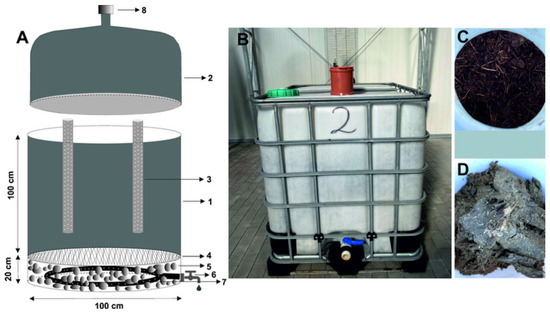
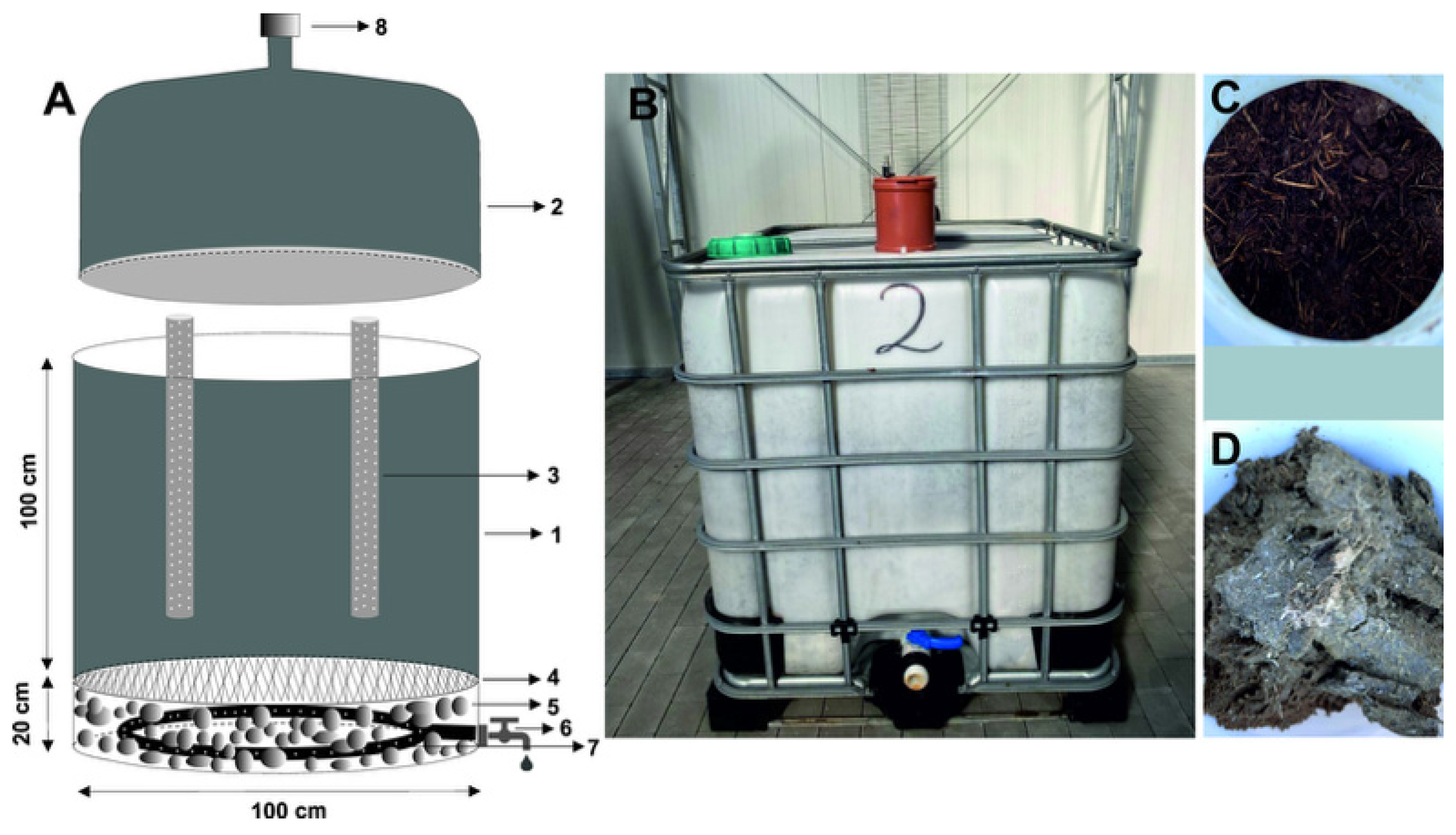
The laboratory experiment (EI) was designed to evaluate the effects of selected microbial compositions on nutrient transformations in poultry manure under semi-controlled conditions. The study included both chicken and turkey manure obtained from large-scale animal farms in the Warmian-Masurian Voivodeship. The manure was placed in column systems equipped with static chambers, allowing for the collection of leachates and gas samples. A total of eight experimental columns were established including control and treatment variants with different microbial inoculants (Figure 1 and Figure S1). The experiment was conducted under non-heated indoor conditions, where the temperature varied depending on ambient environmental conditions. The experimental setup was developed based on previous laboratory experience and approaches commonly applied in manure storage and leachate studies.
Figure 1.
Scheme of a column with a static chamber: (A) 1—column filled with bird droppings; 2—static chamber accumulating gases; 3—perforated PVC pipes placed in the manure, facilitating the migration of gases towards the static chamber; 4—non-woven fabric retaining suspension from leachate; 5—drainage from pebbles; 6—drain valve for collecting leachate samples; 7—leachate collection system; 8—chimney with a valve enabling gas sampling; (B) prepared control column with installed chimney; (C) structure of chicken manure; (D) structure of turkey manure.
The experiment was conducted using PVC column systems designed to simulate manure storage conditions. Each column was equipped with a drainage layer at the bottom, allowing for the collection of leachate samples, and fitted with a valve for sample extraction. A separation layer was used to prevent the migration of solid particles into the drainage system. To facilitate gas exchange between the manure and the headspace, perforated vertical pipes were installed within each column. The upper part of the system consisted of a static chamber used for gas accumulation and sampling. Each column was filled with approximately 0.8 t of poultry manure. A schematic representation of the experimental setup is presented in Figure 1. The structural elements and stages of column construction are shown in Figure S2.
2.2. Bacterial Preparations and Their Application in Columns
2.2.1. Origin and Characteristics of Microbial Strains
Microbiological preparations used in this study were based on previously published research focused on gaseous emissions from poultry manure [23]. The present study extends the previous experiment by evaluating nutrient transformations and organic matter stabilisation using the same experimental approach and microbial compositions.
Two functional groups of microorganisms were applied. The first group consisted of denitrifying bacteria (Pseudomonas fluorescens, Pseudomonas putida, and Bacillus licheniformis), selected for their role in nitrogen transformations. The second group included conditioning bacteria (Lactobacillus fermentum, Lactobacillus plantarum, and Pediococcus sp.), intended to support fermentation processes and organic matter stabilisation. The microbial preparations were obtained from a commercial partner (APRS S.A., Nielbark, Poland). Detailed procedures of strain cultivation, inoculum preparation, and microbiological verification are described in Kupiec [23], while the composition, concentration, and application of the preparations are presented in the following sections. Only elements relevant to the present study are outlined below.
2.2.2. Liquid Denitrifying Bacterial Preparation
The liquid microbial preparation consisted of a consortium of denitrifying bacteria (Pseudomonas fluorescens, Pseudomonas putida, and Bacillus licheniformis). The preparation contained approximately 109 CFU·mL−1 and was applied directly to manure during column preparation. Detailed procedures of cultivation and inoculum preparation are described in Kupiec [23], while the application scheme and dosing are provided in Section 2.2.4.
2.2.3. Powder Preparation from Conditioning Bacteria
The conditioning preparation consisted of spray-dried bacterial biomass containing Lactobacillus fermentum, Lactobacillus plantarum, and Pediococcus sp. The dried product contained approximately 3.5 × 10¹⁰ CFU·g−1 and was applied directly to manure to support microbial conditioning processes. The detailed procedure of preparation and spray drying has previously been described [23], while the application scheme and dosing are provided in Section 2.2.4.
During the second stage of the experiment (EII), the preparation of the dried conditioning bacterial strains followed the same technological approach as applied in the first experimental stage. The obtained microbial composition was subsequently used under in situ conditions, where two manure piles arranged in field heaps were investigated using measurement chambers installed directly on the piles. The manure was inoculated with a combined preparation consisting of liquid bacterial culture and dried conditioning bacteria at three time points, corresponding to weeks 1, 13, and 23 of the experiment. In all applications, experimental repeatability was maintained with respect to both manure mass and the applied microbial abundance. The characteristics of individual strain cultures and the composition of microorganisms used in the dried preparation are summarised in the work of Kupiec [23].
2.2.4. Application of Preparations in Columns with Manure—EI
The preparation of experimental columns began in early March 2022. Eight columns were established, each containing 0.8 t of poultry manure. Columns 1 and 5 served as controls and contained manure without bacterial addition.
Columns 1–4 contained chicken manure, whereas columns 5–8 contained turkey manure; therefore, the column pairs represented analogous treatment variants applied to different manure types rather than experimental replicates.
Columns 2 and 6 were inoculated with a liquid denitrifying bacterial culture (Pseudomonas fluorescens, Pseudomonas putida, Bacillus licheniformis) prepared in a production bioreactor. Manure was applied in three layers (0.27 t each), and each layer was treated with 13.33 L of liquid culture, resulting in a total application of 40 L per column. The preparation was applied using a measuring tank and pipe to ensure uniform distribution.
Columns 3 and 7 contained manure arranged in three layers (0.27 t each), with 0.82 kg of dried conditioning bacterial preparation (Lactobacillus fermentum, Lactobacillus plantarum, Pediococcus sp.) applied after each layer. The preparation was distributed evenly within the column, resulting in a total dose of 2.46 kg per column.
Columns 4 and 8 were treated with a combined microbiological composition consisting of both denitrifying and conditioning microorganisms (Pseudomonas fluorescens, Pseudomonas putida, Bacillus licheniformis, Lactobacillus fermentum, Lactobacillus plantarum, and Pediococcus sp.). Each manure layer received 6.67 L of liquid denitrifying culture and 0.41 kg of dried preparation, resulting in total doses of 40 L of liquid culture and 1.23 kg of dried preparation per column.
The application scheme and microbial doses were developed based on previous experimental studies concerning the microbial treatment of animal manure under storage conditions [8].
2.2.5. Preparation of Static Chambers Under Field Conditions and Application of the Microbiological Preparation—EII
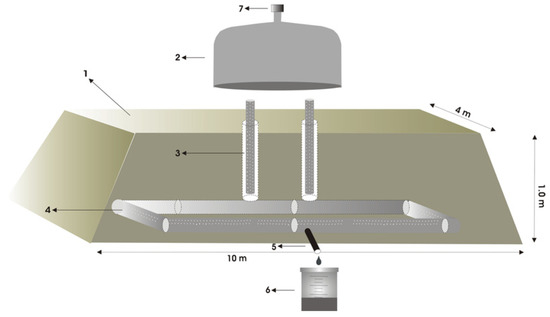
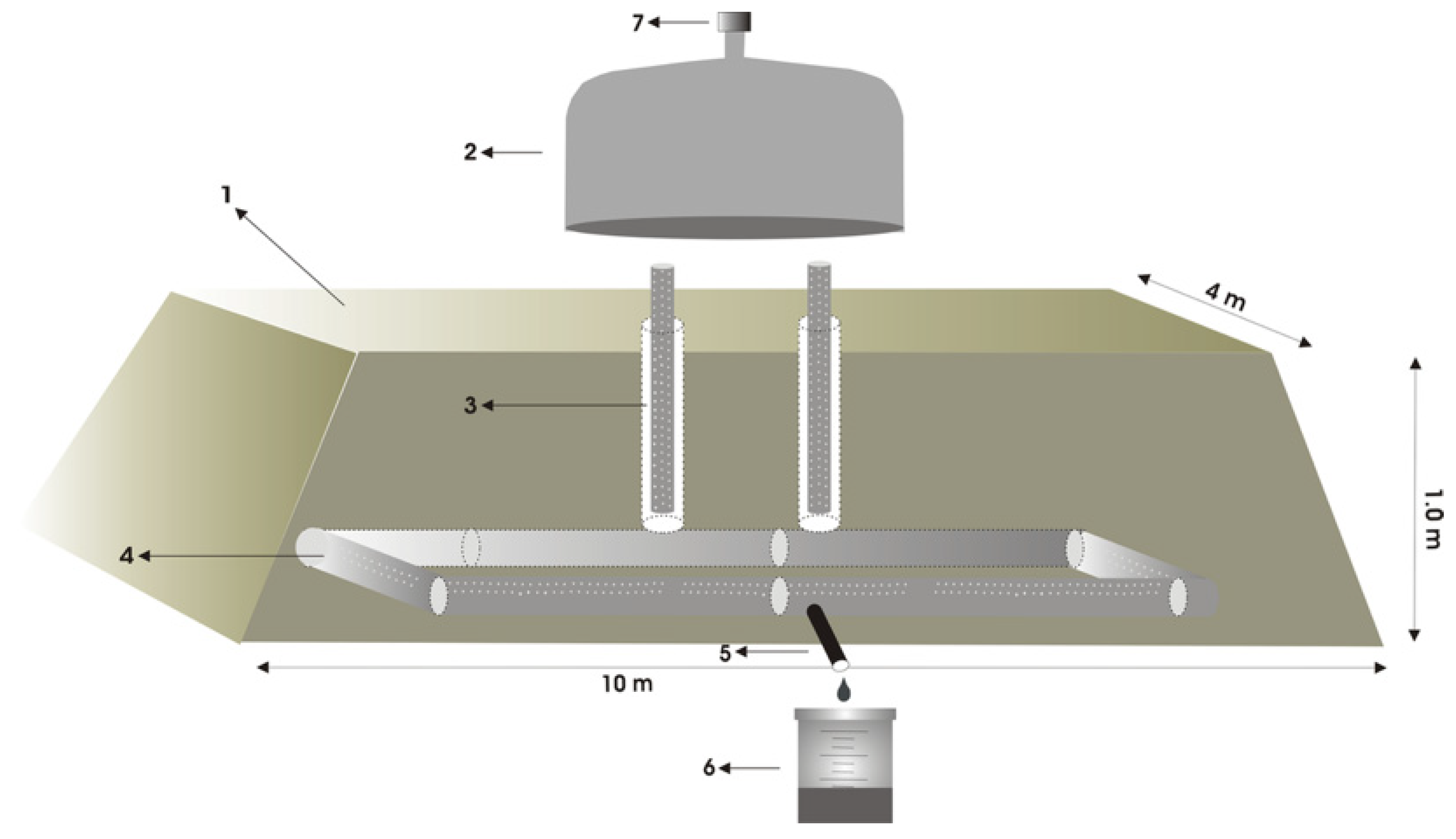
Monitoring of nutrient-related parameters under field conditions (EII) was conducted using static chambers installed on manure piles. The piles consisted of different manure types (chicken and turkey manure) and were therefore treated as separate experimental systems rather than field replicates. The static chamber system was originally developed by the authors based on methodological approaches commonly applied in environmental gas emission studies [24,25]. A total of 14 tons of poultry manure obtained from large-scale poultry farms was used to form two piles directly on the ground: pile 1—chicken manure, and pile 2—turkey manure (Figure 2).
Figure 2.
Schematic diagram and parameters of the manure pile with a static chamber installed on its surface and a leachate collection system: 1—manure pile; 2—static chamber for gas accumulation; 3—perforated PVC pipes placed in the manure to facilitate gas migration towards the static chamber; 4—leachate collection system; 5—drainage valve for leachate discharge; 6—vessel for collecting leachate samples; 7—chimney with valve. Source: Own elaboration.
Static PVC chambers with a square base (1 m × 1 m) were installed on the manure surface to enable gas sampling. To facilitate gas exchange between the manure and the chamber headspace, perforated PVC pipes were placed vertically within each chamber.
Under in situ conditions, manure was inoculated with the microbial composition that showed the highest effectiveness in Stage I, consisting of a combination of liquid denitrifying bacteria and dried conditioning bacteria. The application was performed at three time points (weeks 1, 13, and 23), maintaining consistent application conditions in terms of manure mass and microbial dose.
2.3. Experimental Scheme Under Laboratory and In Situ Conditions
The experimental scheme applied under laboratory (EI) and in situ (EII) conditions included the analysis of physico-chemical and microbiological parameters of poultry manure and its leachate. The same groups of variables were monitored in both stages, with adjustments to sampling frequency and analytical scope depending on the experimental conditions. This approach enabled the evaluation of nutrient transformations and organic matter stabilisation under both semi-controlled and field conditions.
2.3.1. Physico-Chemical Analyses of Manure and Its Leachate
The aim of the analyses was to evaluate changes in the chemical composition of poultry manure and its leachate under the influence of applied microbial preparations. In Stage I (EI), physico-chemical analyses were performed on homogenised manure samples collected at the beginning and at the end of the experiment (weeks 1 and 11) from all eight experimental columns. Moisture content was determined using the gravimetric drying method in triplicate.
Leachate samples were collected when sufficient volume was available for analysis. Both manure and leachate samples were analysed for nitrogen and phosphorus fractions including ammonium (NH4+), nitrate (NO3−), nitrite (NO2−), total nitrogen (Ntot), phosphate (PO43−), and total phosphorus (Ptot):
Ammonium (NH4+) was determined using a distillation method followed by titration. Nitrate (NO3−) and nitrite (NO2−) were determined using standard spectrophotometric methods based on colourimetric reactions. Total nitrogen (Ntot) was determined by the Kjeldahl method following mineralisation in sulfuric acid. Phosphate (PO43−) and total phosphorus (Ptot) were determined spectrophotometrically, with prior mineralisation for total phosphorus.
In Stage II (EII), the same analytical parameters were determined for manure and leachate samples under field conditions. Moisture content was measured at six time points (weeks 1, 5, 15, 23, 31, and 42). Chemical analyses of manure (NH4+, NO3−, NO2−, Ntot) were performed in weeks 1, 15, and 42. For both manure types, concentrations were expressed on both fresh and dry matter basis.
Phosphate (PO43−) and total phosphorus (Ptot) were determined in weeks 1, 5, 15, 23, 31, and 42. For total phosphorus, extracts were prepared from 5 g of homogenised sample mixed with 200 mL of distilled water and shaken for 24 h. Samples were not filtered prior to analysis to avoid the loss of phosphorus associated with suspended organic matter. After mineralisation, total phosphorus was determined spectrophotometrically. Orthophosphate (PO43−) was determined in non-mineralised extracts using the same extraction procedure.
Leachate samples in Stage II (EII) were analysed for nitrogen and phosphorus compounds when available. Due to limited leachate volume in week 42, only phosphorus compounds were determined. Analytical procedures were consistent with those applied in Stage I.
Analytical procedures were performed according to standard methods commonly used in environmental analysis, including Kjeldahl digestion and colourimetric spectrophotometric techniques, in accordance with established laboratory protocols [26].
2.3.2. Physico-Chemical Analysis of Precipitation
Due to the potential influence of atmospheric conditions on the manure piles under in situ conditions (EII), precipitation samples were also analysed to account for possible external inputs of nutrients. Precipitation was collected into sterile containers in the village of Nielbark (Warmian-Masurian Voivodeship, Poland). Samples were collected on three occasions (17 September 2022, 1 December 2022, and 1 March 2023). Physico-chemical analyses included measurements of pH and electrical conductivity as well as the determination of nitrogen forms (NH4+–N, NO3−–N, NO2−–N) and total nitrogen (Ntot). All analyses were conducted using standard laboratory procedures commonly applied in environmental studies.
2.3.3. Research on the Number of Microorganisms in Manure
Microbiological analyses were performed on solid manure samples (chicken and turkey). In Stage I (EI), the abundance of coliform bacteria and lactic acid bacteria (Lactobacillus spp.) was determined in weeks 1 and 11. Additionally, selected bacterial groups associated with organic matter transformation (Bacillus spp. and Clostridium spp.) were analysed in chicken manure, both with and without microbial inoculation.
For analysis, 10 g of fresh homogenised manure was suspended in 90 mL of sterile 0.85% NaCl solution to obtain the initial dilution (10−1). Serial tenfold dilutions were prepared up to 10−12 under aseptic conditions.
Coliform bacteria counts were determined using the surface plate method on Chromocult Coliform Agar (CCA; Merck) and incubated at 37 °C for 48 h. Pink colonies were classified as coliform bacteria. Lactic acid bacteria were enumerated on MRS agar (Merck), Bacillus spp. on TSA agar (Merck), and Clostridium spp. on Clostridial Agar (HiMedia). Plates were incubated at 37 °C for 48 h. Prior to plating, samples for Bacillus spp. were heat-treated at 80 °C for 15 min to select spore-forming bacteria. Clostridium spp. were cultured under anaerobic conditions using the Anaerocult system (Merck).
In Stage II, the abundance of Lactobacillus spp., Bacillus spp., and Clostridium spp. was determined in chicken manure (Pile 1) in weeks 1, 15, and 42 of the experiment using the same procedure as described for Stage I.
Additionally, quantitative analyses of Salmonella spp. and coliform bacteria were performed. Samples were collected monthly (weeks 1, 5, 10, 15, 19, 23, 27, 31, 36, and 42). One gram of homogenised manure was suspended in 9 mL of sterile 0.9% NaCl solution and serially diluted (10−4–10−10 or 10−5–10−9 depending on the microbial group). The pour plate method was applied using chromogenic agar (for coliform bacteria and Salmonella spp.) and MRS agar (for lactic acid bacteria). Plates were incubated at 37 °C for 24 h (chromogenic medium) or at 30 °C for 48 h (MRS medium). All analyses were performed in duplicate using standard microbiological methods [27].
2.3.4. Microbiological Analyses of Leachate
Microbiological analyses of leachate were conducted only during Stage I (EI). Samples were collected from columns containing chicken manure (Nos. 1–4) in weeks 3 and 8, and additionally in week 11 for selected parameters.
For analysis, 10 mL of leachate was diluted in 90 mL of sterile 0.85% NaCl solution to obtain the initial dilution (10−1). Serial tenfold dilutions were prepared up to 10−12 under aseptic conditions.
The abundance of Escherichia coli and total coliform bacteria was determined using the surface plate method on Chromocult Coliform Agar (CCA; Merck), with incubation at 37 °C for 48 h. Colonies exhibiting characteristic enzymatic activity were classified accordingly. Lactic acid bacteria (Lactobacillus spp.) were enumerated on MRS agar under the same incubation conditions. Due to insufficient leachate volume obtained during Stage II (EII), microbiological analyses of the liquid phase were not performed.
2.3.5. Research on the Humus-Forming Properties of Poultry Manure
The humus-forming properties of poultry manure were assessed by determining humic substances (HSs) and humic acids (HAs) in chicken manure samples (columns 1–4) at the beginning and end of Stage I (weeks 1 and 11). Humic substances were extracted from dried and homogenised samples using 0.1 M NaOH. After centrifugation, fulvic acids were separated from humic acids by acidification (pH ≈ 1.0), resulting in the precipitation of humic acids. The concentrations of organic carbon in the humic acid (HA) and fulvic acid (FA) fractions were determined using a TOC analyser (TC–IC method) [28].
In Stage II (EII), the analysis of humus-forming properties was performed for chicken manure (Pile 1) in weeks 1, 15, and 42, as this experimental system provided the most complete dataset for evaluating organic matter stabilisation processes. The analytical procedure was consistent with that applied in Stage I.
2.4. Analysis of the Organic Matter Stabilisation Process
During manure storage, nitrogen mineralisation and humification processes occur simultaneously. To evaluate the stabilisation of organic matter, a humification stabilisation index (HSI) was developed, combining the content of humic substances and total nitrogen in the analysed samples.
where:
- HS—humic substances (mg C·g−1 OM);
- Ntot—total nitrogen (g·kg−1 DM).
The HSI is an empirical indicator proposed to describe the degree of organic matter stabilisation. The proposed classification thresholds were based on the observed distribution of HSI values and temporal changes in manure properties during the experiment. For interpretative purposes, values below 0.7 may be considered as indicating low stabilisation, values between 0.7 and 1.0 as moderate stabilisation, and values above 1.0 as relatively high stabilisation.
To assess temporal changes, the relative change (Δ%) was calculated for NH4+, total nitrogen (Ntot), and humic substances (HSs) in chicken manure during Stage II (EII). The calculations were made based on the formula:
where:
- X0—initial value;
- Xt—value at a given sampling time.
2.5. Statistical Analysis of Nitrogen Transformation and Humification Processes
Relationships between nitrogen transformations, microbial activity, and organic matter humification during manure storage under in situ conditions (EII) were assessed using Spearman’s rank correlation (ρ). The analysis included ammonium (NH4+), total nitrogen (Ntot), moisture content, humic substances (HSs) and the humification stabilisation index (HSI). Due to the limited number of sampling time points included in the analysis (n = 3) and the non-linear nature of the processes, correlations were calculated for selected time points (weeks 1, 15 and 42). Statistical analysis was performed using data from the chicken manure pile, which provided the most complete dataset. The results were interpreted as indicative trends rather than statistically robust relationships.
3. Results and Discussion
3.1. Physico-Chemical Parameters of Manure
The initial moisture content of both chicken and turkey manure exceeded 50% (Table S1). During Stage I (EI), moisture changes were primarily influenced by the applied treatments. Columns inoculated with liquid bacterial cultures showed higher moisture content during the experiment compared with the control variants, which was associated with the application of liquid inoculum and differences in leachate formation (Table S1). These changes were mainly related to the addition of liquid inoculum and the formation of leachates, rather than to intrinsic microbial activity within the column system.
This suggests that under semi-controlled conditions, physical processes such as liquid addition and drainage play a dominant role in moisture dynamics. Similar observations have been reported in manure storage studies, where microbial effects on moisture redistribution are secondary to physical factors [28,29,30,31].
Table 1 and Table 2 present the chemical composition of chicken and turkey manure in Stage I (EI). Initial samples were collected prior to inoculation, and subsequent samples were taken after 11 weeks from all experimental columns. Substantial differences between chicken and turkey manure were observed, particularly in ammonium, total nitrogen, and total phosphorus content, in both fresh and dry matter.
Table 1.
Chemical parameters for chicken manure (EI).
Table 2.
Chemical parameters for turkey manure (EI).
The nitrogen content observed in the analysed manure (2.0–3.7% DM) fell within the range commonly reported in the literature (1.6–5% DM) [28,29,30,31]. This indicates that the studied materials are representative of typical poultry manure used in environmental and agricultural applications.
In chicken manure, the initial total nitrogen content (control) was 2.26%, and after 11 weeks, it ranged from 1.96% to 2.22% across treatments (Table 1), indicating only minor changes. A slight decrease was observed in the treatment with conditioning bacteria. In turkey manure, the initial nitrogen content was higher (3.67%) and ranged from 3.15% to 3.57% after 11 weeks (Table 2). Despite differences in absolute values, similar temporal patterns were observed in both manure types.
The relatively small changes in total nitrogen suggest limited nitrogen losses during storage under controlled conditions. This may indicate reduced volatilisation or leaching compared with open systems, where nitrogen dynamics are typically more pronounced [28,29,30,31].
Different trends were noted for phosphorus content in chicken and turkey manure. In chicken manure, total phosphorus increased slightly in all treatments, with the highest increase observed in the control. In contrast, turkey manure showed both increases and decreases depending on the treatment, with the largest decrease observed in the combined microbial treatment (Table 2). These differences may be associated with leaching processes and variability in manure structure and composition.
These differences may reflect differences in phosphorus mobility and retention, which are influenced by manure structure and moisture conditions. Previous studies have shown that phosphorus can be partially transferred to the liquid phase during storage, depending on environmental factors [28,29,30,31].
At the beginning of Stage II (EII), higher moisture content was recorded for turkey manure (43.4%) than for chicken manure (35.4%) (Table S2). Moisture remained relatively stable during the first three months, followed by a temporary increase associated with the application of microbial preparations. Subsequently, a significant decrease was observed, with final values of 14.84% for chicken manure and 12.67% for turkey manure, indicating progressive drying and stabilisation of the material.
The observed drying trend likely reduced microbial activity over time, contributing to slower transformation processes in later stages of the experiment. Similar moisture-related limitations have been reported in field-based manure storage systems [28,29,30,31].
In Stage II (EII), dynamic changes in nitrogen compounds occurred during manure storage (Table 3). Ammonium concentrations increased markedly during the middle phase of the experiment (week 15), indicating intensive mineralisation, followed by a decrease towards the final stage. Nitrite concentrations showed a decreasing trend over time, while total nitrogen increased during the initial phase and declined towards the end of the experiment. These patterns indicate the ongoing transformation and partial stabilisation of nitrogen forms during manure storage, consistent with nitrification and nitrogen loss processes. This pattern is characteristic of nitrogen mineralisation followed by subsequent transformation processes such as nitrification or nitrogen losses. Similar dynamics have been widely reported in manure systems under field conditions [28,29,30,31].
Table 3.
Chemical characterisation of the dynamics of changes in manure (EII).
Comparable nitrogen dynamics were identified in turkey manure during Stage II (EII), indicating comparable transformation processes. Ammonium concentrations increased during the middle phase and decreased towards the end of the experiment. Total nitrogen also increased initially and declined in the final stage, indicating ongoing transformation and stabilisation processes.
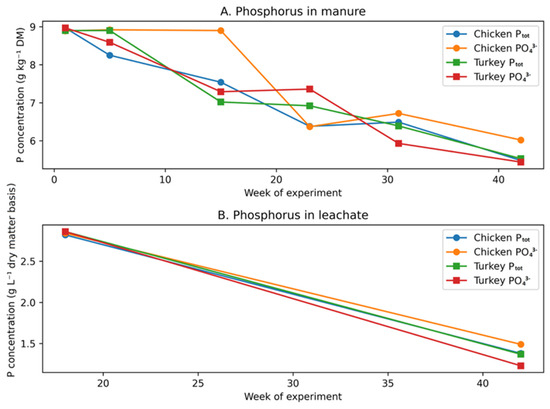
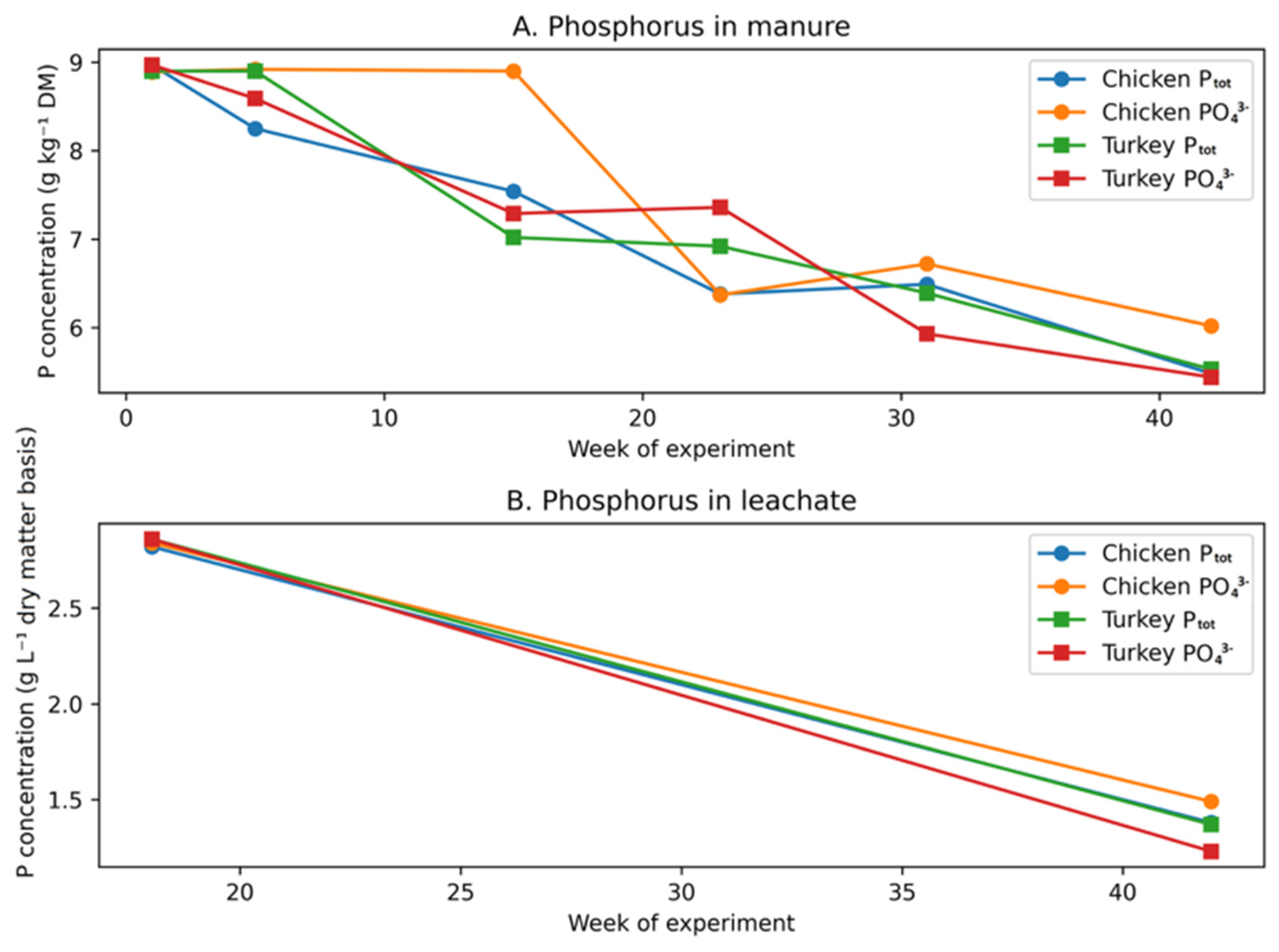
Phosphorus compounds showed a consistent decreasing trend during manure storage in both manure types. The average reduction reached 38.9% for total phosphorus and 32.3% for orthophosphates in chicken manure, and 37.9% and 39.4%, respectively, in turkey manure (Table S3; Figure 3). These changes are likely associated with phosphorus redistribution and progressive stabilisation within the manure matrix, resulting in reduced phosphorus mobility during storage. The decrease in phosphorus concentrations suggests reduced leaching intensity and progressive stabilisation within the manure matrix. Similar trends have been observed during manure maturation, where phosphorus becomes less mobile over time [28,29,30,31].
Figure 3.
Concentrations of total phosphorus (Ptot) and orthophosphate (PO43−) in manure leachate expressed on a dry matter basis.
3.2. Chemical Parameters of Manure Leachate
The analysed leachate samples showed substantial differences between treatments (Table 4). In the third week, nitrate concentrations were markedly higher in the liquid culture treatment (column 2), reaching 26 mg·L−1 compared to <0.015 mg·L−1 in the control. At the same time, ammonium concentrations were lower, while higher concentrations of total phosphorus and phosphate ions were observed in inoculated columns. The combined treatment (column 4) exhibited the highest nitrate concentrations and elevated phosphate levels, whereas nitrite concentrations were lower compared to both the control and the liquid culture treatment.
Table 4.
Results of chemical analyses of leachate from column nos. 1–4 with chicken manure (EI).
In the eighth week, leachate was present only in columns 2 and 4 (Table 4). In column 2, ammonium concentrations remained lower than in the control but increased slightly compared to the earlier sampling, while nitrate concentrations decreased markedly (by approximately 22 mg·L−1).
In column 4, similar trends were observed. Ammonium concentrations increased compared to the third week but remained slightly lower than in the control. Nitrate concentrations showed a substantial decrease (by approximately 40 mg·L−1), while total nitrogen and phosphorus compounds increased compared to the earlier sampling. No leachate was observed in columns 1 and 3 at this stage of the experiment.
The observed changes in nitrogen forms in leachate are consistent with processes of nitrogen transformation, including mineralisation and nitrification, which influence nitrogen redistribution between ammonium and nitrate forms.
The amount of leachate generated from both manure piles during Stage II (EII) was relatively small, likely due to the lower moisture content and increased evaporation. Despite this, clear differences in nitrogen composition were observed (Table 5). Leachate from chicken manure was considerably more concentrated, with total nitrogen reaching 1950 mg·L−1, which was approximately 43 times higher than in turkey manure leachate. In both manure types, phosphorus concentrations in the leachate decreased over time. By week 42, reductions relative to week 18 reached 51.1% (Ptot) and 47.5% (PO43−) for chicken manure and 52.1% (Ptot) and 57.0% (PO43−) for turkey manure (Table S4; Figure 3).
Table 5.
Results of the analyses of nitrogen compounds in the leachate from the analysed piles (EII).
The higher nitrogen concentrations in chicken manure leachate indicate more intensive nitrogen release and lower retention capacity compared to turkey manure. Such differences may be related to manure composition and structure, which influence water movement and nutrient mobility. Similar variability in leachate composition has been reported in manure storage systems under field conditions [32].
3.3. Microbiological Characteristics of Manure
In Stage I (EI), the abundance of Bacillus spp. in chicken manure decreased in all treatments compared to the initial measurements. The largest reductions were observed in the control and combined treatment, while in the remaining variants, the bacterial counts were lower by approximately one order of magnitude. In contrast, Clostridium spp. showed an increase in most columns, with the highest increase recorded in column 2 (Table S5). The decrease in Bacillus spp. and the simultaneous increase in Clostridium spp. may indicate a shift towards more anaerobic conditions during manure storage. Similar changes in microbial communities have been reported in manure systems, where oxygen availability strongly influences bacterial composition.
Initial microbiological analyses showed a higher abundance of coliform bacteria in turkey manure compared to chicken manure (Table S6). Chicken manure was characterised by bacterial counts lower by approximately one order of magnitude. A comparable pattern was noted for Lactobacillus spp., with a higher initial abundance in turkey manure (Table S7). The higher initial abundance of microorganisms in turkey manure may be related to differences in manure composition and moisture content, which can influence microbial growth conditions. Such variability between manure types has been reported in previous studies on poultry waste.
In the 11th week of the experiment, a decrease in coliform bacteria was observed in both manure types. In chicken manure, the reduction reached approximately one order of magnitude, while in turkey manure, it reached two orders of magnitude. The greatest decrease occurred in the combined treatment (column 4). A similar trend was observed for Lactobacillus spp. In the control and liquid culture treatments, bacterial abundance decreased by approximately two orders of magnitude, whereas the smallest reduction was recorded in the combined treatment. The presence of additional microorganisms from environmental and poultry microbiota was also observed in both manure types.
The observed reduction in microbial abundance may be related to unfavourable environmental conditions during storage, such as decreasing moisture and limited nutrient availability. The smaller decrease in the combined treatment may indicate that the applied microbial composition may have partially stabilised selected bacterial groups.
Columns treated with liquid microbial preparations (columns 2 and 4) showed a higher abundance of denitrifying bacteria (by approximately one order of magnitude). In contrast, columns containing dried bacterial preparations (columns 3 and 4) showed a higher abundance of conditioning bacteria, with increases of one to two orders of magnitude depending on the treatment. No significant changes in the abundance of these bacterial groups were observed during the experiment.
The relatively stable abundance of introduced bacterial groups suggests that the applied microbial preparations were able to persist under the experimental conditions. However, the lack of significant growth indicates limited competitive advantage over native microbiota during manure storage.
In Stage II (EII), an increase in the abundance of Bacillus was observed in chicken manure, from 5.7 × 10⁵ to 2.32 × 10⁶ CFU·g−1 FM. A similar trend was noted for Clostridium spp., whose numbers increased from 1.7 × 10⁴ to 2.1 × 10⁴ CFU·g−1 FM (Table S8). The increase in Bacillus and Clostridium spp. suggests ongoing microbial activity during manure maturation including both aerobic and anaerobic processes. Such coexistence of microbial groups is typical for heterogeneous manure systems under field conditions.
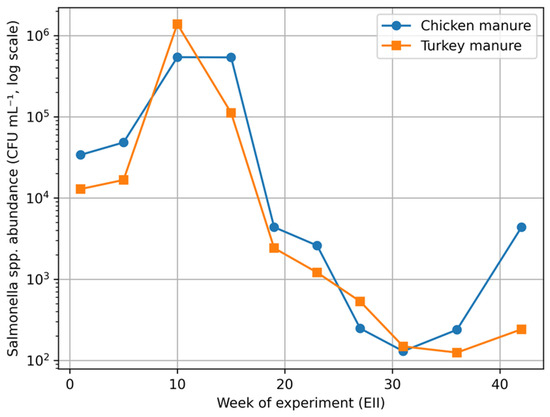
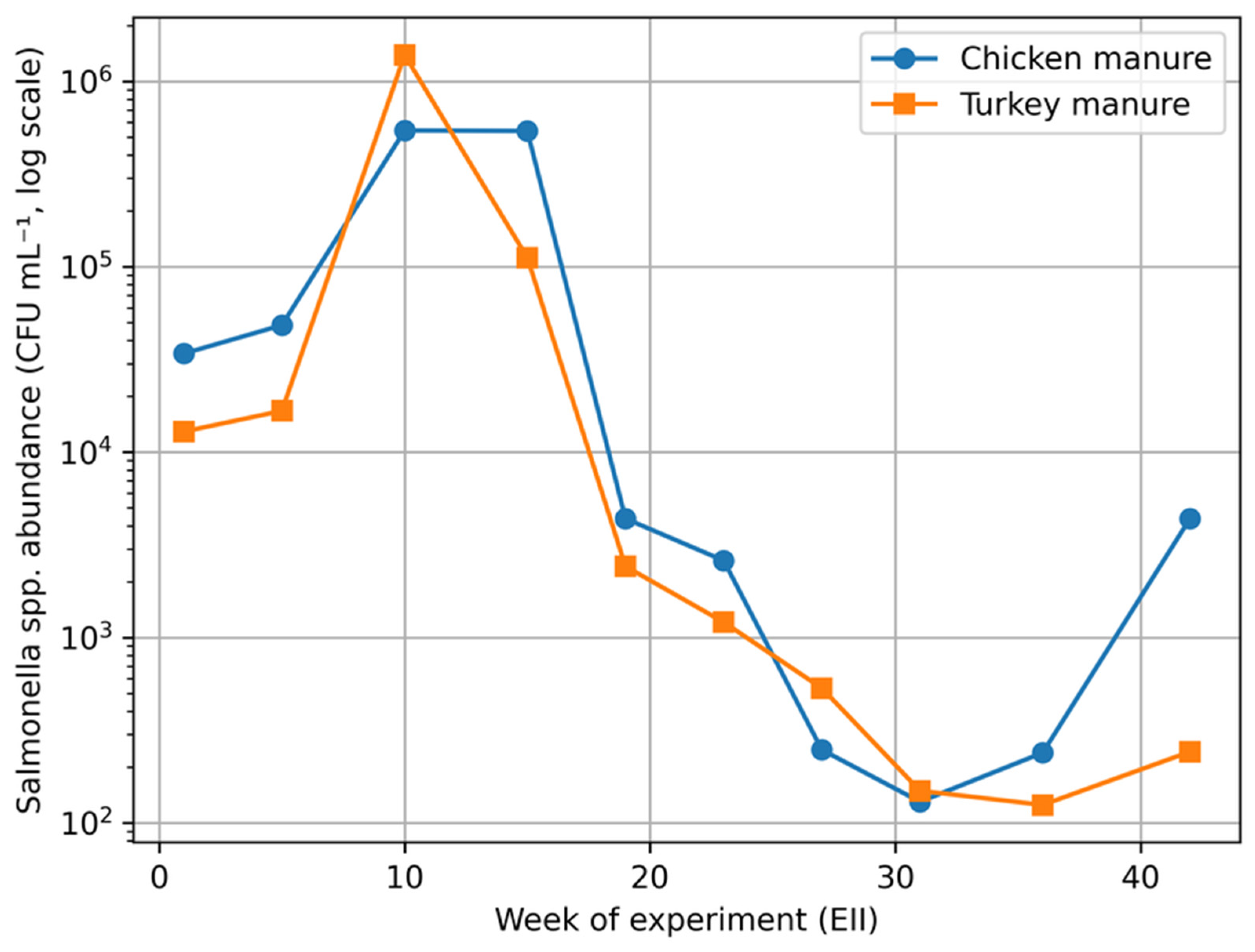
No Escherichia coli were detected in either manure type. At the beginning of the experiment (week 1), Salmonella spp. abundance was approximately 104 CFU·mL−1 in both manure piles. After two months (week 10), bacterial numbers increased to 105 CFU·mL−1 in chicken manure and 106 CFU·mL−1 in turkey manure, followed by a gradual decline from week 19 onwards (Figure 4). The initial increase in Salmonella spp. may indicate favourable growth conditions during the early phase of manure storage, while the subsequent decline suggests progressive environmental limitation or microbial competition. Similar patterns have been reported for pathogenic bacteria in manure systems under changing environmental conditions.
Figure 4.
Dynamics of changes in the number of Salmonella spp. on chromogenic agar for brood (EII).
A substantial decrease in coliform bacteria was observed in both manure types during Stage II (EII). In chicken manure, abundance declined from 3.37 × 10⁸ to 7.40 × 10² CFU·mL−1, while in turkey manure it decreased from 2.25 × 10⁹ to 4.30 × 10³ CFU·mL−1 (Table 6). Initial microbial abundance was higher in turkey manure, whereas chicken manure showed values approximately one order of magnitude lower. The significant reduction in coliform bacteria indicates unfavourable conditions for their survival during prolonged manure storage. This may be associated with decreasing moisture, nutrient depletion, and increased competition within the microbial community.
Table 6.
Total count of coliforms on nutrient agar in the manure (EII).
A substantial decrease in Lactobacillus spp. was also observed in both manure types. In chicken manure, abundance declined from 3.20 × 10⁸ to 2.92 × 10² CFU·mL−1, while in turkey manure, the abundance decreased from 1.38 × 10⁸ to 3.80 × 10² CFU·mL−1 (Table 7). Despite repeated inoculation, microbial abundance decreased by approximately six orders of magnitude over the experimental period. The decline in Lactobacillus spp. suggests limited long-term persistence of the introduced microorganisms under field conditions, likely due to competition with native microbiota and environmental constraints.
Table 7.
The number of Lactobacillus spp. microorganisms on MRS agar in the manure (EII).
3.4. Microbiological Characteristics of Manure Leachates
Microbiological analyses of chicken manure leachate (Stage I, EI) were conducted only for samples in which leachate was present. In the third week, Escherichia coli was detected in the control sample at 190 CFU·g−1 FM, whereas in week 8, no E. coli was detected in any sample.
Leachate collected in week 8 from columns 2 and 4 showed differences in microbial abundance. The number of coliform bacteria and Lactobacillus spp. was approximately two orders of magnitude higher in column 4 compared to column 2 (Table 8). The absence of E. coli in later stages suggests unfavourable conditions for its survival in leachate over time. Higher microbial abundance in the combined treatment may indicate that mixed microbial preparations influenced microbial persistence in the liquid phase.
Table 8.
Microbial counts obtained for chicken manure leachate (EI).
3.5. Physico-Chemical Characteristics of Precipitation
According to the classification by Jansen et al. [33], the measured pH values fell within the normal range, while electrical conductivity indicated low to slightly elevated mineral content (Table S9). Nitrogen analyses showed that ammonium concentrations were generally low, whereas nitrate and nitrite concentrations corresponded to elevated levels within the applied classification system.
Total precipitation during the study period amounted to approximately 495 mm (data from the Lubawa meteorological station 259190120, Institute of Meteorology and Water Management—National Research Institute), resulting in an estimated input of 0.252 kg of nitrogen per manure pile.
Elevated concentrations of oxidised nitrogen forms indicate that atmospheric deposition may contribute to external nitrogen inputs; however, its overall contribution appears minor compared to internal nitrogen transformations occurring within the manure.
3.6. Characteristics of the Humus-Forming Properties of Manure
Increased concentrations of humic substances (HSs) and humic acids (HAs) were recorded in chicken manure treated with microbial preparations compared to the control (Table 9). The highest increases were recorded in selected treatments, indicating enhanced humification processes in inoculated variants. The increase in humic fractions indicates enhanced transformation of organic matter towards more stabilised forms under the influence of microbial activity. Similar effects of microbial activity on humification processes have been reported in studies on organic waste stabilisation [34,35].
Table 9.
Concentration of humic substances (HSs) and humic acids (HAs) in chicken manure samples (EI).
In Stage II (EII), humic substances increased during the initial phase of the experiment, followed by a decline towards the final stage. A similar pattern was observed for humic acids, which decreased by 36.2% relative to initial values by the end of the experiment (Table 10).
Table 10.
Concentration of humic substances (HSs) and humic acids (HAs) in chicken manure samples (EII).
The initial increase in humic fractions reflects active humification during early stages of manure transformation, whereas the subsequent decrease may indicate the further mineralisation or transformation of organic compounds under field conditions, as reported in previous studies on manure composting and stabilisation [36,37].
3.7. The Course of the Organic Matter Stabilisation Process
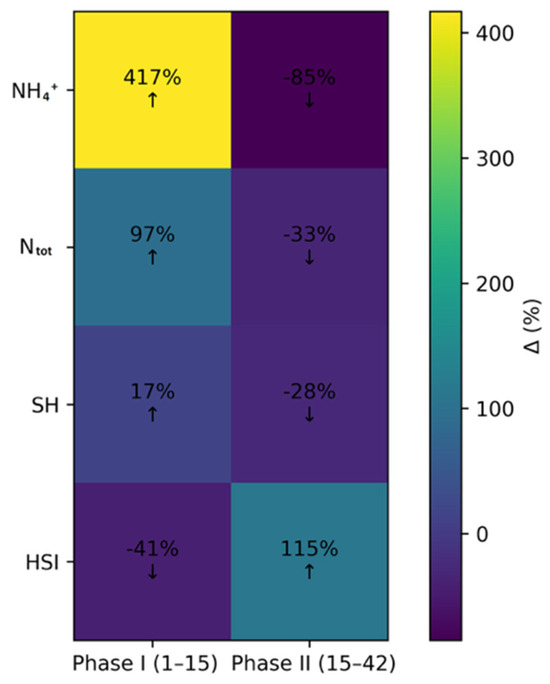
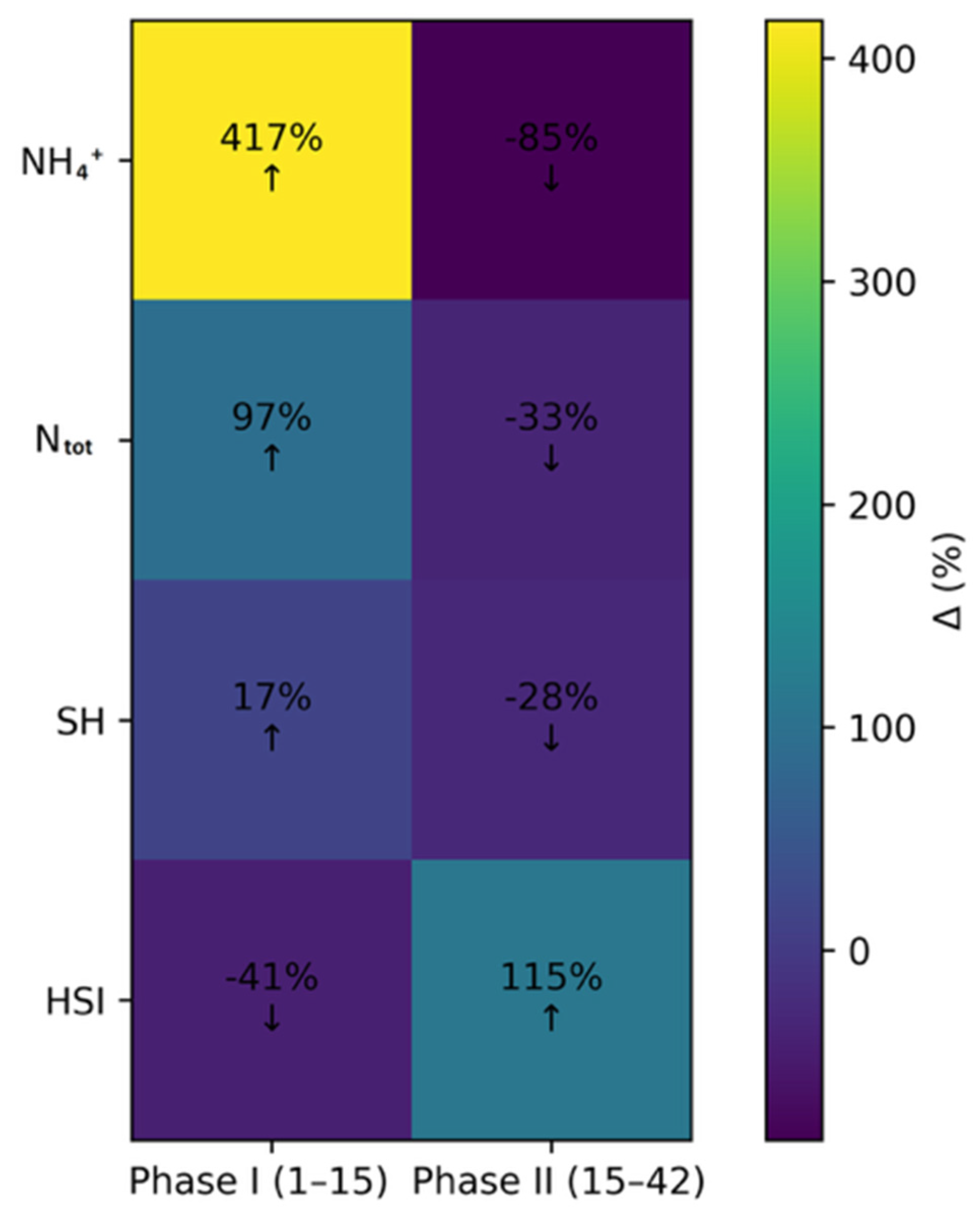
The HSI reflects the dynamics of organic matter transformation during manure stabilisation. In Phase I (weeks 1–15), a rapid decrease in HSI was observed together with a substantial increase in total nitrogen (Ntot) and NH4+, indicating intensive ammonification and nitrogen mineralisation. The increase in Ntot was primarily associated with nitrogen concentration resulting from carbon decomposition.
In Phase II (weeks 15–42), HSI increased to values higher than those recorded at the beginning of the experiment, while NH4+ and Ntot decreased (Table 11). This indicates a transition to the stabilisation phase, characterised by nitrogen immobilisation within humic structures, and the progressive maturation of the material.
Table 11.
Calculated values of the humification stability index (HSI) during chicken manure stabilisation in the in situ experiment (EII).
The observed two-phase pattern is characteristic of organic matter transformation processes, where initial mineralisation is followed by stabilisation and humification. Comparable transformation patterns have been reported during manure stabilisation and organic waste ageing processes.
3.8. Nitrogen Transformation and Humification Processes
During the initial phase of manure transformation, intensive ammonification was observed, leading to an increase in NH4+ concentration. This was followed by a decrease in NH4+, likely associated with ammonia volatilisation and nitrification processes. A similar pattern was observed for total nitrogen, which increased during the middle phase and declined in the final stage.
The formation of humic substances occurred primarily during the early stage, indicating simultaneous mineralisation and humification. In the later phase, stabilisation processes dominated, leading to a reduction in readily available nitrogen forms (Figure 5).
Figure 5.
Changes in ammonium nitrogen (NH4), total nitrogen (Ntot), and humic substances (HSs) during manure transformation under in situ conditions (EII): ↑—increase; ↓—decrease.
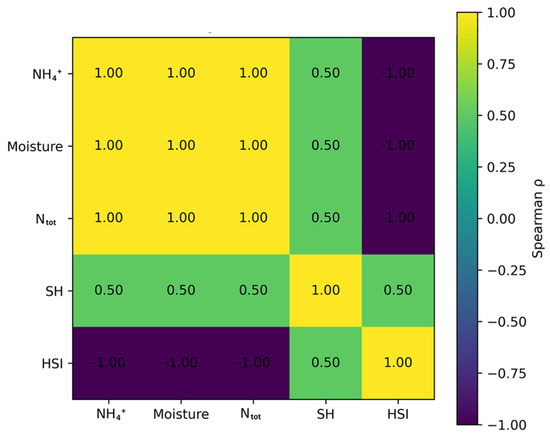
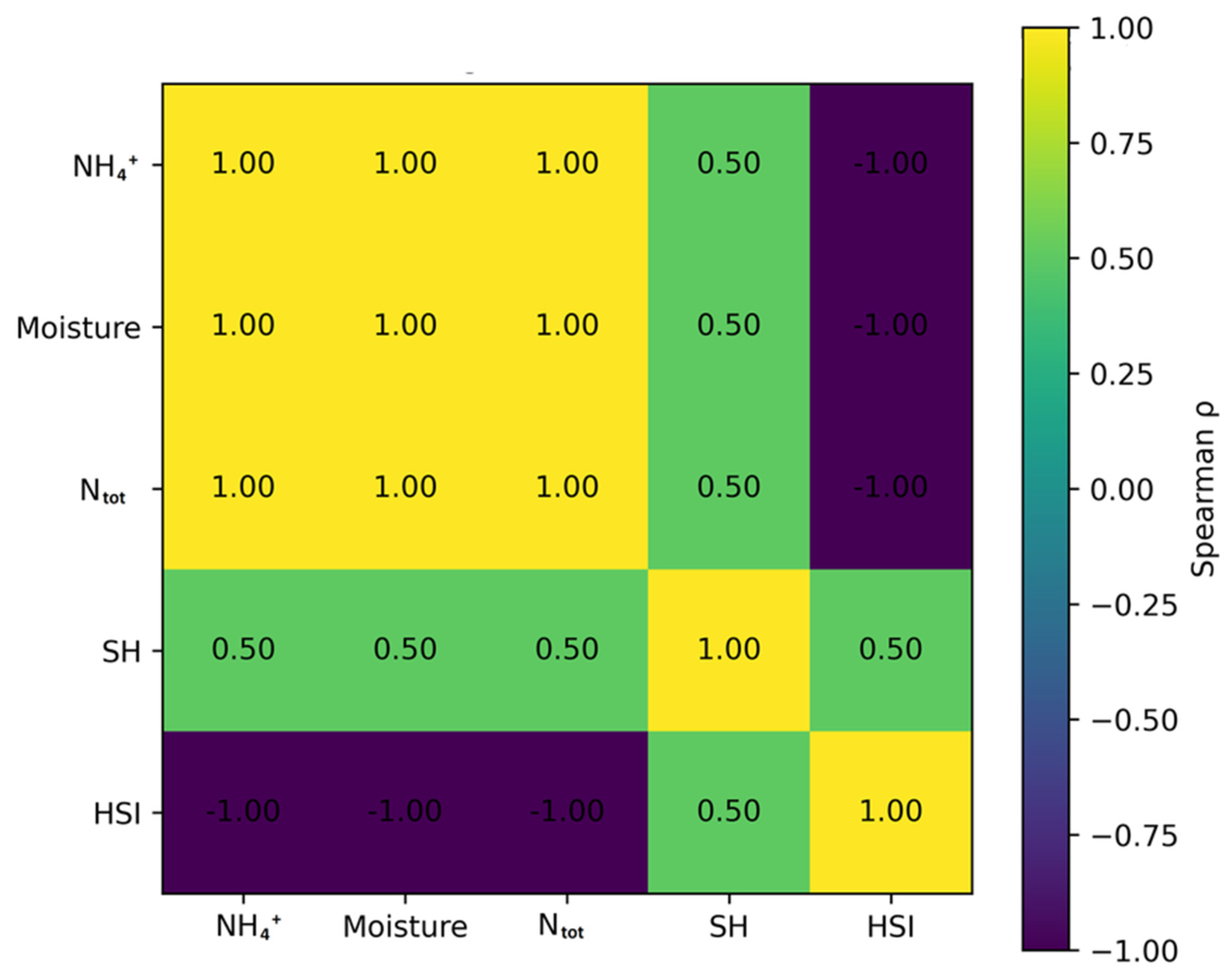
A strong positive correlation between NH4+ and moisture (ρ = +1.00) indicates that higher moisture levels promote ammonification processes. In contrast, a strong negative correlation between NH4+ and HSI (ρ = −1.00) and between Ntot and HSI (ρ = −1.00) suggests that increasing stabilisation of organic matter is associated with a decline in reactive nitrogen forms. Moderate positive correlations between HS and both NH4+ and Ntot (ρ ≈ 0.5) indicate that humification and mineralisation occurred simultaneously during the initial stage of manure transformation (Figure 6).
Figure 6.
Correlation matrix between nitrogen parameters, moisture, and humification indices in chicken manure during the in situ experiment (EII).
These relationships confirm the coupling between nitrogen transformations and organic matter stabilisation. The results indicate that nitrogen is progressively incorporated into more stable organic structures, reducing its mobility and potential environmental losses.
Overall, the results indicate that the applied microbiological composition not only reduces mineral nitrogen concentrations but also promotes nitrogen retention within stable organic structures. This suggests improved nitrogen retention and a reduced potential for nutrient losses under field conditions.
4. Conclusions
This study demonstrates that microbiological inoculation significantly modifies nitrogen transformation pathways in poultry manure under both controlled (EI) and field (EII) conditions. The application of combined microbial preparations influenced ammonium dynamics and nitrogen mobility, indicating active modulation of nitrogen processes during manure storage.
The in situ experiment revealed a two-phase pattern of nitrogen transformation, with an initial stage dominated by ammonification and mineralisation, followed by a stabilisation phase characterised by decreasing ammonium concentrations and progressive nitrogen immobilisation. These results confirm that nitrogen dynamics during manure storage are non-linear processes and strongly controlled by microbial activity and environmental conditions.
Significant differences in leachate composition between chicken and turkey manure highlight the role of substrate properties in regulating nitrogen losses. Higher nitrogen concentrations in chicken manure leachate indicate a greater risk of short-term nitrogen export.
The humification stabilisation index (HSI) proved to be an effective indicator of the transition between mineralisation to stabilisation, linking nitrogen dynamics with organic matter transformation.
Overall, the findings demonstrate that targeted microbial inoculation can enhance nitrogen retention within stable organic structures, thereby reducing potential environmental losses. These findings support the use of microbial consortia as a strategy for improving manure management. Further research should focus on nitrogen fluxes and validate the applicability of the HSI under different environmental conditions.
Supplementary Materials
The following supporting information can be downloaded at: https://www.mdpi.com/article/10.3390/nitrogen7020062/s1, Figure S1. Scheme of a column experiment—EI; Figure S2. Structural elements of columns with a static chamber: A—tanks used as columns; B—tap for collecting leachate; C—pebbles used as drainage at the bottom of the column; D—perforated PVC pipe placed in the manure to facilitate the flow of gases; E—agrotextile covering the drainage; F—chimney with a valve for gas intake; Table S1. Results of testing the moisture content of chicken and turkey manure (EI); Table S2. Dynamics of changes in humidity of chicken and turkey manure (EII); Table S3. Changes in the content of phosphorus compounds in manure (EII); Table S4. Changes in the content of phosphorus compounds in the analysed samples of manure leachate (EII); Table S5. Number of tested groups of microorganisms in chicken manure (EI); Table S6. Results of the total number of Coliform microorganisms on nutrient agar for the tested manures (EI); Table S7. Results of the number of Lactobacillus spp. microorganisms on MRS agar for the tested manures (EI); Table S8. Results of microbiological analysis in chicken manure (EII); Table S9. Physico-chemical results of atmospheric precipitation (EII).
Funding
An innovative research and development project under the Regional Program Operational Program of the Warmian-Masurian Voivodeship for 2014–2020 co-financed by the European Regional Development Fund no. RPW M.01.02.01-28-0020/19-00; 2020–2023 entitled “R&D work to develop a stable and effective microbiological composition limiting the supply of nutrients for water and conditioning manure”.
Data Availability Statement
The data that support the findings of this study are available from the corresponding author upon reasonable request.
Acknowledgments
The authors would like to express their gratitude to Mikronatura Środowisko Sp. z o.o. and the Research and Development Centre in Nielbark for their valuable cooperation and support.
Conflicts of Interest
The author declares no conflicts of interest.
References
- IPCC. Managing the Risks of Extreme Events and Disasters to Advance Climate Change Adaptation; Field, C.B., Barros, V., Stocker, T.F., Qin, D., Dokken, D.J., Ebi, K.L., Mastrandrea, M.D., Mach, K.J., Plattner, G.-K., Allen, S.K., et al., Eds.; A Special Report of Working Groups I and II of the Intergovernmental Panel on Climate Change; Cambridge University Press: Cambridge, UK; New York, NY, USA, 2012; p. 582. [Google Scholar]
- IEMed. Socioeconomic Impacts of Climate Change in the Mediterranean; Apprioual, A., Ibáñez, M., Eds.; Policy Study n. 6; European Institute of the Mediterranean: Barcelona, Spain, 2021; Available online: https://www.iemed.org/wp-content/uploads/2021/11/Policy-Study-6-PRIMA_IEMed.pdf (accessed on 20 March 2022).
- Cattaneo, M.; Tayà, C.; Burgos, L.; Morey, L.; Noguerol, J.; Provolo, G.; Cerrillo, M.; Bonmatí, A. Assessing Ammonia and Greenhouse Gas Emissions from Livestock Manure Storage: Comparison of Measurements with Dynamic and Static Chambers. Sustainability 2023, 15, 15987. [Google Scholar] [CrossRef] [Scilit]
- Council Directive (91/676/EEC) of 12 December 1991 Concerning the Protection of Waters Against Pollution Caused by Nitrates from Agricultural Sources. Official Journal L 375, 31/12/1991, P. 0001–0008. Available online: https://www.lexaris.eu/book/version/documentflat/head/2119733 (accessed on 20 March 2022).
- Dobkowski, A.; Woliński, J. Urządzenia do Przechowywania Obornika i Gnojówki; Materiały informacyjne. No. 34; IMUZ: Falenty, Poland, 1999. [Google Scholar]
- Ali, B.; Shah, G.A.; Traore, B.; Shah, S.A.A.; Shah, S.U.; Al-Solaimani, S.G.M.; Hussain, Q.; Ali, N.; Shahzad, K.; Shahzad, T.; et al. Manure storage operations mitigate nutrient losses and their products can sustain soil fertility and enhance wheat productivity. J. Environ. Manag. 2019, 241, 468–478. [Google Scholar] [CrossRef] [Scilit] [PubMed]
- Kuszelewski, L. Racjonalna gospodarska odchodami zwierzęcymi pod katem ograniczenia strat azotu. In Rolnictwo Polskie i Ochrona Jakości Wody; Edukacyjne, Z., Sapek, B., Eds.; IMUZ: Falenty, Poland, 1997; pp. 17–29. [Google Scholar]
- Kupiec, J.M.; Bednarek, A.; Szklarek, S. Raport Końcowy Projektu nr RPWP.01.02.00-30-0010/17-00: Rozwój i Optymalizacja Innowacyjnej Metody Redukcji Istotnych Zanieczyszczeń Punktowych Rozproszonych Oraz Obszarowych na Terenach Wiejskich; Final Project Report; Mikronatura Środowisko: Poznań, Poland, 2020. [Google Scholar]
- Kupiec, J.M. Identification of potential hazardous farms in nitrate vulnerable water catchments based on the rapid identification system. Pol. J. Environ. Stud. 2019, 28, 1233–1240. [Google Scholar] [CrossRef] [Scilit]
- Utnik-Banaś, K.; Krawczyk, J. Produkcja drobiarska w aspekcie podstawowych założeń biogospodarki. Rocz. (Ann.) 2016, 18, 278–283. Available online: https://rnseria.com/article/123947/pl (accessed on 15 December 2025).
- Islam, A.; Islam, M.; Sayeed, M.A.; Ali, T.; Islam, S.; Islam, K.S.; Khan, M.A.; Khan, A.K.M.D.; Hasan, M.M.; Noman, M.Z.I.; et al. Assessment of biosecurity practices and risk factors for avian influenza outbreaks in commercial poultry farms in Bangladesh. Sci. Rep. 2025, 15, 39052. [Google Scholar] [CrossRef] [Scilit]
- Molaey, R.; Bayrakdar, A.; Sürmeli, R.Ö.; Çalli, B. Anaerobic Digestion of Chicken Manure: Mitigating Process Inhibition at High Ammonia Concentrations by Selenium Supplementation. BMSBEO 2018, 108, 439–446. [Google Scholar] [CrossRef] [Scilit]
- Mitchell, C.C.; Donald, J.O. The Value and Use of Poultry Manures as Fertilizer; Alabama Cooperative Extension System, Circular ANR-244; Alabama A&M University: Auburn, AL, USA; Auburn University: Auburn, AL, USA, 1999; Available online: https://www.aces.edu/ (accessed on 20 March 2022).
- Sun, C.; Cao, W.; Banks, C.J.; Heaven, S.; Liu, R. Biogas Production from Undiluted Chicken Manure and Maize Silage: A Study of Ammonia Inhibition in High Solids Anaerobic Digestion. Bioresour. Technol. 2016, 218, 1215–1223. [Google Scholar] [CrossRef] [Scilit]
- Millner, P.D. Chapter 4—Manure Management. In The Produce Contamination Problem, 2nd ed.; Matthews, K.R., Sapers, G.M., Gerba, C.P., Eds.; Academic Press: Cambridge, MA, USA, 2014; pp. 85–106. [Google Scholar] [CrossRef] [Scilit]
- Santos, A.; Bertoli, A.C.; Borges, A.P.; Gomes, R.A.; Garcia, J.S.; Trevisan, M.G. New Organomineral Complex from Humic Substances Extracted from Poultry Wastes: Synthesis, Characterization and Controlled Release Study. J. Braz. Chem. Soc. 2018, 29, 140–150. [Google Scholar] [CrossRef] [Scilit]
- Wang, Z.; Yao, Y.; Yang, Y. Fulvic acid-like substance-Ca(II) complexes improved the utilization of calcium in rice: Chelating and absorption mechanism. Ecotoxicol. Environ. Saf. 2022, 237, 113502. [Google Scholar] [CrossRef] [Scilit]
- Kumar Sootahar, M.; Zeng, X.; Wang, Y.; Su, S.; Soothar, P.; Bai, L.; Kumar, M.; Zhang, Y.; Mustafa, A.; Ye, N. The Short-Term Effects of Mineral- and Plant-Derived Fulvic Acids on Some Selected Soil Properties: Improvement in the Growth, Yield, and Mineral Nutritional Status of Wheat (Triticum aestivum L.) under Soils of Contrasting Textures. Plants 2020, 9, 205. [Google Scholar] [CrossRef] [Scilit] [PubMed]
- Zhou, S.P.; Zhou, H.Y.; Xia, S.N.; Ying, J.M.; Ke, X.; Zou, S.P.; Xue, Y.P.; Zheng, Y.G. Efficient bio-degradation of food waste through improving the microbial community compositions by newly isolated Bacillus strains. Bioresour. Technol. 2021, 321, 124451. [Google Scholar] [CrossRef] [Scilit]
- Etesami, H.; Jeong, B.R.; Glick, B.R. Potential use of Bacillus spp. as an effective biostimulant against abiotic stresses in crops—A review. Curr. Res. Biotechnol. 2023, 5, 100128. [Google Scholar] [CrossRef] [Scilit]
- Mezoff, E.A.; Cohen, M.B. Acid suppression and the risk of Clostridium difficile infection. J. Pediatr. 2013, 163, 627–630. [Google Scholar] [CrossRef] [Scilit]
- Guo, P.; Zhang, K.; Ma, X.; He, P. Clostridium species as probiotics: Potentials and challenges. J. Anim. Sci. Biotechnol. 2020, 11, 24. [Google Scholar] [CrossRef] [Scilit] [PubMed]
- Kupiec, J.M. Microbial mitigation of greenhouse gas and odour emissions from poultry manure: Implications for sustainable environmental management. J. Water Land Dev. 2025, 67, 128–137. [Google Scholar] [CrossRef] [Scilit]
- Collier, S.M.; Ruark, M.D.; Oates, L.G.; Jokela, W.E.; Dell, C.J. Measurement of Greenhouse Gas Flux from Agricultural Soils Using Static Chambers. J. Vis. Exp. 2014, 90, e52110. [Google Scholar] [CrossRef] [Scilit]
- Andersen, J.K.; Boldrin, A.; Samuelsson, J.; Christensen, T.H.; Scheutz, C. Quantification of greenhouse gas emissions from windrow composting of garden waste. Waste Manag. 2010, 39, 713–724. [Google Scholar] [CrossRef] [Scilit] [PubMed]
- APHA; AWWA; WEF. Standard Methods for the Examination of Water and Wastewater, 23rd ed.; American Public Health Association: Washington, DC, USA, 2017. [Google Scholar]
- Atlas, R.M. Handbook of Microbiological Media, 4th ed.; CRC Press: Boca Raton, FL, USA, 2010; 2040p. [Google Scholar] [CrossRef] [Scilit]
- Prakash, Y.; Das, P. Nitrogen content of chicken feces and its relation with feed content in poultry farming—A step towards managing atmospheric ammonia. Ann. Food Sci. Technol. 2021, 22, 240–246. [Google Scholar]
- Amanullah, M.M.; Somasundaram, E.; Vaiyapuri, K.; Sathyamoorthi, K. Poultry manure to crops: A review. Agric. Rev. 2007, 28, 216–222. [Google Scholar]
- Balasubramani, R.; Hupenyu, A.M.; Pearson, N.S.M.; Sibongiseni, S. Assessment of nutrient quality, heavy metals and phytotoxic properties of chicken manure on selected commercial vegetable crops. Heliyon 2017, 3, e00493. [Google Scholar] [CrossRef] [Scilit]
- Amanullah, M.M.; Sekar, S.; Muthukrishnan, P. Prospects and Potential of Poultry Manure. Asian J. Plant Sci. 2010, 9, 172–182. [Google Scholar] [CrossRef] [Scilit]
- Elrashidi, M.A.; Baligar, V.C.; Korcak, R.F.; Persaud, N.; Ritchey, K.D. Chemical composition of leachate of dairy manure mixed with fluidized bed combustion residue. J. Environ. Qual. 1999, 28, 1243–1251. [Google Scholar] [CrossRef] [Scilit]
- Jansen, W.; Keller, H.M.; Kloeti, P.; Stumm, W. Classification of precipitation according to pH and specific electrical conductivity. In Acidic Deposition: Proceedings of the International Conference on Acidic Deposition; Haines, H.H., Legge, A.H., Eds.; Environment Canada: Gatineau, QC, Canada, 1988; pp. 65–72. [Google Scholar]
- Zhang, W.; Yu, C.; Wang, X.; Yin, S.; Chang, X. Additives improved saprotrophic fungi for formation of humic acids in chicken manure and corn stover mix composting. Bioresour. Technol. 2022, 346, 126626. [Google Scholar] [CrossRef] [Scilit] [PubMed]
- Zhang, L.; Cao, Y.B.; Wang, W.S.; Zhang, X.Y.; Wang, X.; Yao, P.Q.; Liu, S.; Wang, H.; Ma, L. Effect of chicken manure addition on humification of vegetable waste in composting process. Chin. J. Eco-Agric. 2022, 30, 258−267. [Google Scholar] [CrossRef]
- Banaszkiewicz, T.; Wysmyk, J. Ekologiczny aspekt wykorzystania substratów rolniczych. Eur. Reg. 2015, 23, 21–34. Available online: https://wnus.usz.edu.pl/er/pl/issue/118/article/1159/ (accessed on 10 September 2025). [CrossRef] [Scilit]
- Zheng, G.; Liu, C.; Deng, Z.; Wei, Z.; Zhao, Y.; Qi, H.; Xie, X.; Wu, D.; Zhang, Z.; Yang, H. Identifying the role of exogenous amino acids in catalyzing lignocellulosic biomass into humus during straw composting. Bioresour. Technol. 2021, 340, 125639. [Google Scholar] [CrossRef] [Scilit]

Disclaimer/Publisher’s Note: The statements, opinions and data contained in all publications are solely those of the individual author(s) and contributor(s) and not of MDPI and/or the editor(s). MDPI and/or the editor(s) disclaim responsibility for any injury to people or property resulting from any ideas, methods, instructions or products referred to in the content. |
© 2026 by the author. Licensee MDPI, Basel, Switzerland. This article is an open access article distributed under the terms and conditions of the Creative Commons Attribution (CC BY) license.