


Abstract
Mineral fertilization is crucial for maximizing wheat yield, ensuring optimal nitrogen and phosphorus supply according to plant development, pedoclimatic conditions, and previous crops, with a balanced N:P ratio being decisive for productivity. This study, conducted at ARDS Turda during 2020/2021–2024/2025, evaluated the long-term effects of nitrogen and phosphorus fertilization on the yield, grain protein content, and foliar disease incidence of winter wheat grown after maize and soybean. The experimental design was polyfactory, in randomized blocks, including 25 variants and 6 repetitions, according to the uninterrupted protocol used since 1967, winter wheat being cultivated after maize for grain and soybean. Phosphorus (0–160 kg P2O5 ha−1) was applied in autumn, while nitrogen (0–160 kg N ha−1 after maize and 0–120 kg N ha−1 after soybean) was split 50% in autumn and 50% in spring. Results indicate that wheat yield is strongly influenced by nitrogen–phosphorus interactions and climatic conditions, with nitrogen increasing yield by 450–2700 kg·ha−1 and maximum yields of 7600–7828 kg·ha−1 achieved at N120 with higher phosphorus rates. Grain protein content (14.96%) was high at N120 dose, while foliar disease incidence and severity were low at minimal fertilization and rose with intensified mineral nutrition.
1. Introduction
Food security is and will be a global concern due to rapid population growth and low agricultural productivity. Globally, demographic pressure reduces the area of fertile land, in particular by transferring it to other uses (construction, roads, etc), so that more food will be needed in the future [1,2], but with limited soil resources. Understanding the impacts of climate change on agricultural production is essential for addressing the pressing issue of long-term food security on available land [3]. This challenge can be tackled through the adoption of new technologies [4] and sustainable agricultural practices, such as crop rotation, enhancing soil fertility [5,6,7], soil conservation [8,9], and developing climate-resilient crop varieties [10]. Locally adapted nutrient management strategies, including nitrogen–phosphorus fertilization and crop rotation, can significantly contribute to reducing production losses. Among these, efficient fertilizer management plays a key role [11,12], but this can vary depending on the environmental conditions during the growing season.
As the most cultivated and third-largest cereal in global yield, autumn wheat (Triticum aestivum L.) plays a significant role in global food security, with wheat grains serving as an excellent source of carbohydrates, fiber, and protein in the human diet [3]. The wheat cultivation system faces various limitations and difficulties, and the sustainability of the crop will be related to its ability to respond to biotic and abiotic stresses imposed by climate change [13]. Beyond natural resource management, chemical fertilizers are crucial to improving wheat production by providing the essential nutrients needed for plant development [14]. Fertilization can lead to higher production costs [15]; however, applying the appropriate amounts of fertilizer at optimal times has been shown to enhance both the quality and yield of wheat [16,17]. This improvement in production often offsets the initial investment in fertilizers, making their use more justifiable. Fertilization could improve the response of crops to long-term climate change to a certain extent and reduce the sensitivity of agricultural production to their effects [18]. The intake of nitrogen (N) and phosphorus (P) plays an important role in plant development and grain formation [19]. Nitrogen fertilization is one of the most crucial factors for wheat cultivation. It is needed in greater amounts than any other nutrient [20], making it a key element that supports various physiological processes in plants and is critical for wheat development [14,21,22,23]. Nitrogen influences rooting, spike formation, and grain filling, and it improves grain quality [24], ultimately contributing to higher production levels [25,26,27,28].
Phosphorus (P) plays a vital role in the growth and development of wheat [29], serving as an essential nutrient for numerous plant components that facilitate various biochemical processes within the plant, and is crucial for photosynthesis, energy storage, and transfer in plant cells, among other functions [30].
Of all the macroelements, nitrogen and phosphorus most influence the growth and development of plants; they interact with each other, so that nitrogen enhances the absorption and use of phosphorus in plants, and the application of a suitable level of fertilizer with P significantly potentiates the effect of applying nitrogen doses [31,32]. Instead, the effect of nitrogen may decrease significantly in the absence of phosphorus [33], and excess phosphorus can inhibit nitrogen absorption [34]. Therefore, the balanced application of nitrogen and phosphorus is considered a key and manageable measure for increasing wheat yield [35].
While previous studies have primarily focused on the individual effects of nitrogen or phosphorus fertilization, their interactive impacts under long-term field conditions remain insufficiently explored. This study contributes novel evidence by examining nitrogen–phosphorus interactions within a crop rotation system and by linking these interactions to yield, grain quality, and disease severity responses across multiple growing seasons. To our knowledge, this is one of the few long-term field studies that simultaneously evaluates nitrogen–phosphorus interactions, crop rotation effects, and disease severity responses in winter wheat under variable climatic conditions.
In the absence of precise information, farmers in many regions of the world tend to apply nitrogen in high quantities to increase their production [36], even though their excessive application may lead to environmental problems [37], such as nitrate leaching and increased greenhouse gas emissions [38]. One of the major challenges in agricultural production is to ensure stable growth while reducing the negative environmental impacts of fertilizers.
In this context, identifying agronomic alternatives that ensure the nitrogen needs of plants without increasing pressure on the environment becomes essential for sustainable agriculture. Leguminous plants have a symbiotic association with bacteria of the genus Rhizobium, which are known for their ability to fix atmospheric nitrogen [39]. This relationship is viewed as a strategy to reduce the use of fertilizers, as well as to control diseases and pests [40,41].
The yield and quality of the grains are also generally threatened by foliar diseases [42,43], particularly when associated with different nitrogen doses. It is becoming important to monitor diseases in crops where N and P fertilization is used. Globally, the yield losses caused by wheat diseases range from 10 to 28% [44]. According to some authors, plants that are well fed with N are highly susceptible to attack by pathogens such as Blumeria graminis f. sp. tritici (wheat powdery) and Puccina triticina (leaf rust) [45].
The present study aims to collect and analyze additional data on the influence of the preceding crops and variable doses of nitrogen and phosphorus on the yield and quality of the wheat crop, starting from the hypothesis that the application of alternative nitrogen management strategies can lead to the optimization of productive performance, while reducing the negative impact on the environment. To verify the formulated hypothesis, the paper proposes the following objectives: (i) evaluating the influence of the preceding crop on the yield, protein content and disease severity in winter wheat, (ii) determining the effect of different levels of nitrogen and phosphorus fertilization on the yield, protein content and disease severity in winter wheat.
2. Materials and Methods
2.1. Biological Materials
The biological material is represented by the Andrada autumn wheat variety, created at Agricultural Research and Development Station Turda, that has a vegetation period of about 267 days [46] and, since its registration in 2012, is the predominant variety grown in the central and north-western regions of Romania.
2.2. Research Method
The study was conducted in the framework of long-term experiments with fertilizers from the Agricultural Research and Development Station (ARDS), Turda (Romania) (longitude 23°47′, latitude 46°35′, altitude 427 m), during 2020/2021–2024/2025. The experimental design was polyfactory, in randomized blocks, including 25 variants and 6 repetitions, according to the uninterrupted protocol used since 1967, winter wheat being cultivated after maize for grain and soybean (Supplementary Files Figures S1 and S2). Plant debris from the previous crop was collected and removed from the experimental area, in order to eliminate their influence on the wheat crop. Fertilization of the preceding crops was the same for phosphorus (0, 40, 80, 120, 160 kg P ha−1) and with doses of 0, 25, 50, 75 and 100 kg N ha−1 for soybean and 0, 50, 100, 150, 200 kg N ha−1 for maize.
The soil type is clay illuvial chernozem, similar to para rendzina cambic chernozem. It has a neutral to weakly alkaline pH, promoting plant growth, and high humus content. Phosphorus levels are well-managed but there is decrease in deeper horizons, while the potassium supply is strong. Horizons Ap and Bv feature fine textures with a weak alkaline reaction (pH 8.24–8.25) and high humus content (4.44–4.08%). Deeper horizons show significant calcium carbonate accumulations (11.85% in Cca and 24.40% in Cpr), with nutrient availability decreasing at depth, notably for phosphorus (43 ppm in Ap to 5.4 ppm in Cpr) and potassium (276 ppm to 122 ppm). The soil has a clay content between 33.45% and 53% [47,48].
Phosphate fertilization has been applied in autumn in the form of concentrated superphosphate (35% P2O5) in five doses: 0, 40, 80, 120, and 160 kg P2O5 ha−1. Nitrogen fertilization was executed with ammonium nitrate (34.4% N), fractionated 50% in autumn and 50% in spring, in differentiated doses according to the preceding plant: 0, 40, 80, 120, 160 kg N ha−1 for wheat cultivated after maize; 0, 30, 60, 90, 120 kg N ha−1 for wheat cultivated after soybean.
Phytosanitary assessments were conducted during two key growth stages of wheat: straw elongation (BBCH 30–39) and milk ripeness (BBCH 71–77). At both phenological stages, assessments were limited to green, physiologically active leaves; at stem elongation this comprised all leaves on the main shoot, whereas at milk ripeness only the upper green leaves remained and were therefore evaluated. To assess foliar diseases, we analyzed 100 plants for each experimental variant. Both the incidence and severity of the diseases were determined according to the standards set by the European and Mediterranean Plant Protection Organization [49]. The severity was estimated using the Saari and Prescott scale [50].
The experimental plot area was 48 m2 (4 m × 12 m), and before harvesting, front and side removals were carried out to reduce the edge effect, resulting in a harvestable plot with an area of 15 m2. The experimental plots were harvested using the Wintersteiger Plot Combine (Wintersteiger Holding AG, Wintersteigerstrasse 1, A-4910 Ried im Innkreis, Österreic, Austria). After harvesting and weighing the grains of each variant, samples were taken to determine grain moisture, using the laboratory humidometer Granomat PERTEN. Based on the measured humidity, the wheat grain yield was calculated, then recalculated to the standard STAS humidity (14%) [51].
The protein content of wheat grains was determined using a NIR TANGO spectrophotometer (Nir Tango-Bruker Optik GMBH, Germany, and a Gerhardt Analytical Systems device-Gerhardt Koenigswinter, Germany).
2.3. Technology Used in the Experimental Site
After harvesting the preceding crops (last ten-days’ period of September for soybeans and first ten-days’ period of October for maize), plant residues were removed. Soil cultivation was performed using a plow (Kuhn Master 125 T, Kuhn Farm Machinery, Hamburg, Germany) to a depth of 28 cm, followed by seedbed preparation with a rotary harrow (Kuhn HRB 403 D, Kuhn Farm Machinery, Hamburg, Germany).
The seeding was executed in the third ten-days’ period of October (each experimental year), at a density of 550 germinable grains/m2 and with a distance between rows of 18 cm, with the seed drill Directa-400 (MASCHIO GASPARDO S.p.A. Sede legale—Direzione Generale—Production unit Via Marcello, 73—35011 Campodarsego (PD)—Italy)
Control of monocotyledonous and dicotyledonous weeds in wheat culture was realized by systemic herbicide treatments based on piroxulam and florasulam (260 g ha−1), associated with an adjuvant of 0.6 L ha−1 [52].
For effective vegetation control and protection of wheat crop against diseases, the treatments were applied at two essential phenological moments: the botting stage and the beginning of flowering, using at the first treatment 0.8 L ha−1 product based on 4% proquinazide + 16% tebuconazole + 32% prochloraz, with wide spectrum of disease control (www.corteva.com, accessed on 9 December 2025) and at the second treatment 0.8 L ha−1 product based on prothioconazole 175 g L−1 + trifloxystrobin 150 g L−1 [53].
2.4. Statistical Analysis
Data on yield, quality, and foliar diseases were collected annually according to standard methodology. Statistical analysis was performed using a factorial ANOVA [54], with nitrogen (N) and phosphorus (P) fertilization rates, crop rotation system (wheat cultivated after maize and soybean), and year included as factors. Interactions between factors were also tested. Mean comparisons were conducted using the Least Significant Difference (LSD) test at a significance level of p ≤ 0.001, and the statistical program Past 4.
2.5. Weather Characteristics
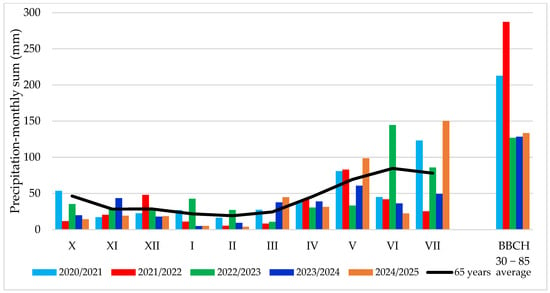
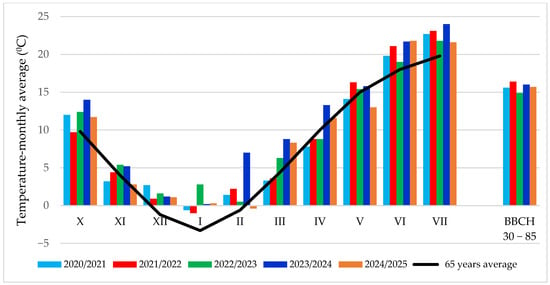
Average temperatures and rainfall over the five agricultural years, 2020/2021–2024/2025 (October 2020–July 2025), and the 65-year multiannual average are shown in Figure 1 and Figure 2 [55,56].
Figure 1.
Monthly precipitation regime at ARDS Turda during the period October 2020–July 2025, compared with the 65-year average, including cumulative precipitation for the BBCH 30–85 growth stages of wheat (straw elongation–soft waxy maturity).
Figure 2.
Monthly average air temperature at ARDS Turda during the period October 2020–July 2025, compared with the 65-year average, including mean temperature for the BBCH 30–85 growth stages of wheat (straw elongation–soft waxy maturity).
The average monthly temperatures in the research period were higher than the multiannual average, except for the first three years of study in April and the last year for May, for which the values were lower than normal.
The rainfall regime during the study period varied significantly, showing considerable differences from one month to another. Additionally, there were notable inconsistencies. The lack of rainfall during crucial periods of crop development, combined with high temperatures, negatively impacted the growth phases in certain years, particularly by shortening them.
3. Results
3.1. Effect of Fertilizer Doses on Wheat Grain Yield
The results obtained from the analysis of the interaction between factors N and P highlight a progressive increase in wheat yield with increasing nitrogen and phosphorus application rates, with the differences among treatments being statistically significant at a probability level of p ≤ 0.001 (Table 1).
Table 1.
Effect of nitrogen × phosphorus interaction on wheat grain yield following soybean and maize.
Even though lower fertilization levels were applied to wheat grown after soybean, yields were higher compared to wheat grown after maize, with the largest difference observed in the unfertilized treatment (1952 kg·ha−1), and decreasing as nitrogen and phosphorus rates increased, reaching 560 kg·ha−1 in the treatment with the highest N and P doses.
The interaction between nitrogen application rates and the climatic conditions over the five years of study indicates that, although there was variability in temperatures and precipitation during the wheat growing season, the application of mineral nitrogen fertilization led to higher yields in both rotation systems at each fertilization level, with differences being evident both among N rates and between study years (Table 2).
Table 2.
Effect of nitrogen × year interaction on wheat grain yield following soybean and maize.
The differences between nitrogen application rates were greater for wheat cultivated after maize, especially between the first N level and the unfertilized treatment, with values ranging from 1246 to 1923 kg ha−1, compared to 453–1216 kg ha−1 for wheat cultivated after soybean. As the N rates increased, the yield increments relative to the previous fertilization level progressively decreased.
The results indicate that, in interaction with the climatic factor, phosphorus fertilization does not have the same impact on yield as nitrogen fertilization. The yield differences, statistically significant at p ≤ 0.001, ranged from 429 to 929 kg·ha−1 for wheat cultivated after soybean and from 394 to 1004 kg·ha−1 for wheat cultivated after maize, corresponding to the comparison between the first P fertilization level and the unfertilized treatment (Table 3).
Table 3.
Effect of phosphorus × year interaction on wheat grain yield following soybean and maize.
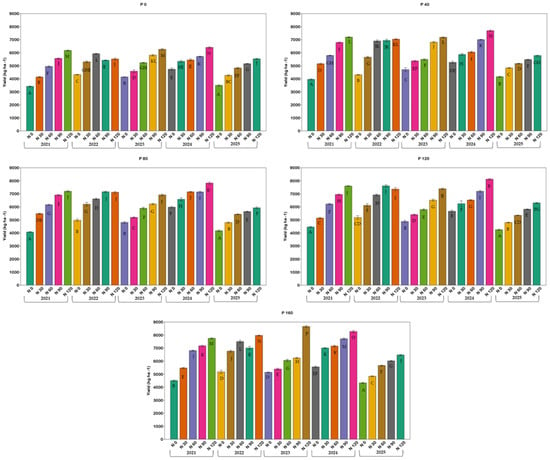
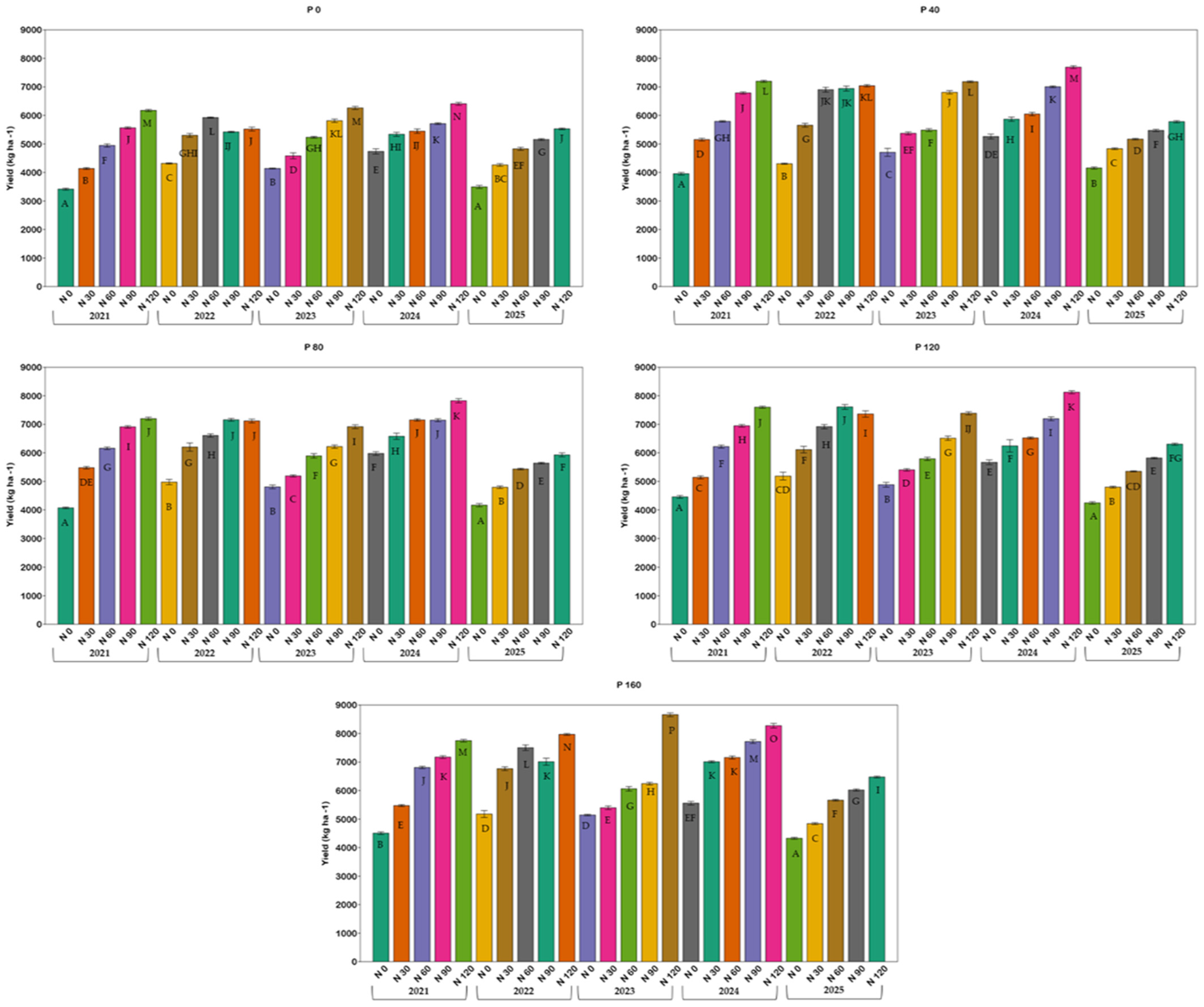
The yield results of nitrogen and phosphorus fertilization levels in interaction with climatic conditions are shown in Figure 3 and Figure 4. For wheat cultivated after soybean (Figure 3), yield increases ranging from 450 to 2700 kg·ha−1 were observed for the variant without phosphorus fertilization, the biggest differences being recorded in the climatic conditions of 2021, when applying the maximum nitrogen dose (N120), with 81% more than the variant without N fertilization.
Figure 3.
Effect of phosphorus (P) and nitrogen (N) fertilization level in the five years of study (2021–2025) on wheat yield in wheat cultivated after soybean. N0, N30, N60, N90, and N120 represent 0, 30, 60, 90, and 120 kg N ha−1, respectively, while P0, P40, P80, P120, and P160 represent 0, 40, 80, 120, and 160 kg P ha−1, respectively. Error bars represent the standard error of the mean. Different letters indicate significant differences among treatments according to the Duncan test (p < 0.05).
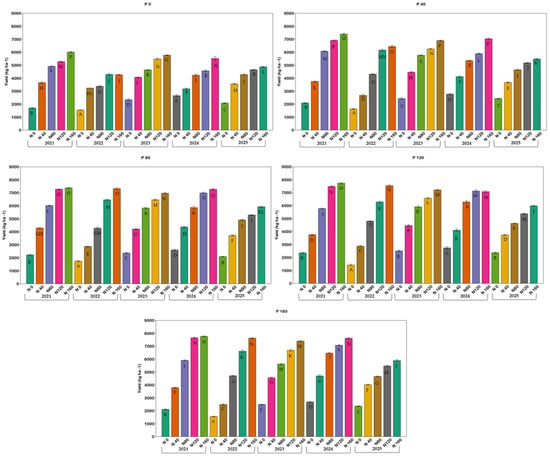
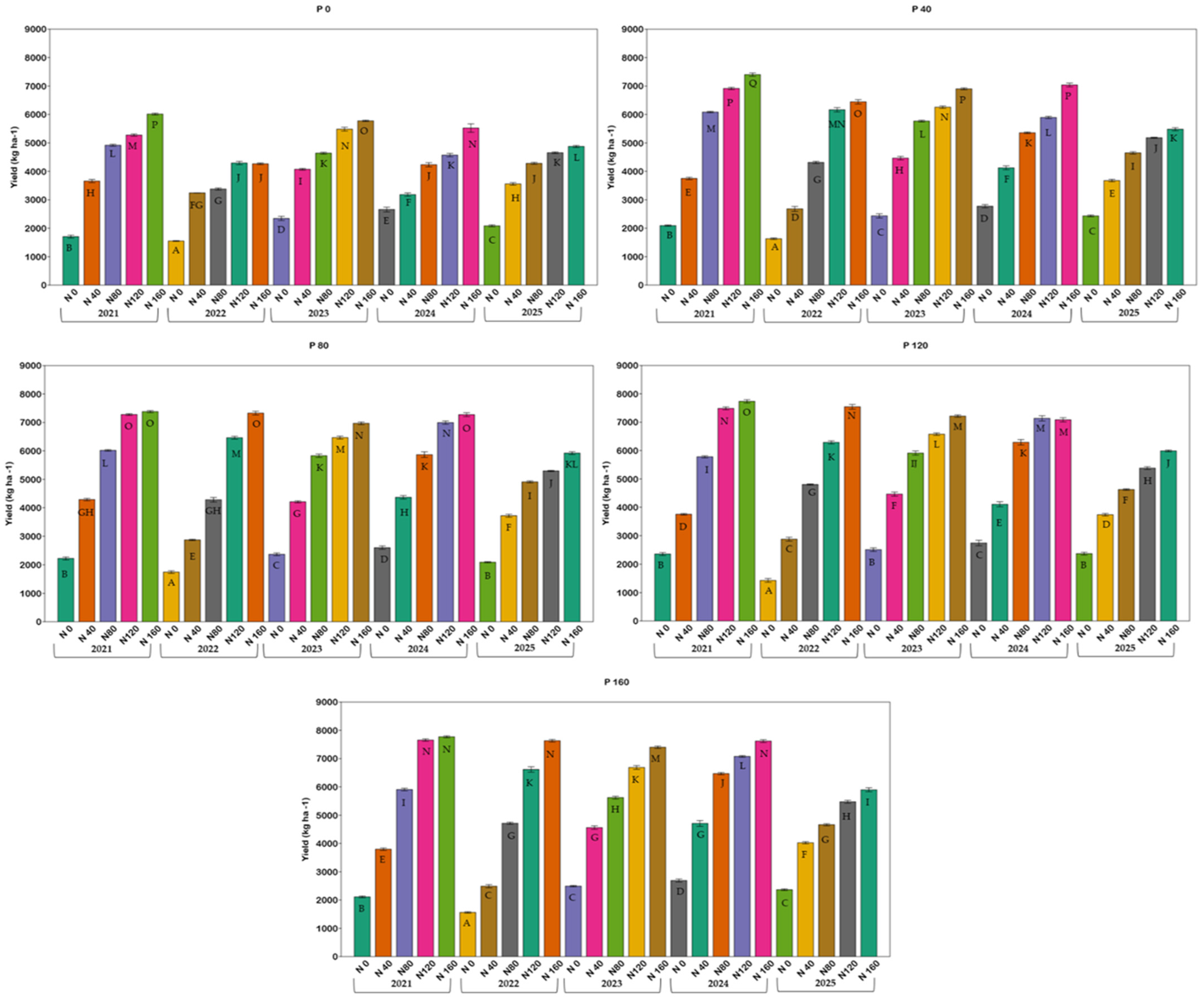
Figure 4.
Effect of phosphorus (P) and nitrogen (N) fertilization level in the five years of study (2021–2025) on wheat yield in wheat cultivated after maize. N0, N40, N80, N120, and N160 represent 0, 30, 60, 90, and 120 kg N ha−1, respectively, while P0, P40, P80, P120, and P160 represent 0, 40, 80, 120, and 160 kg P ha−1, respectively. Error bars represent the standard error of the mean. Different letters indicate significant differences among treatments according to the Duncan test (p < 0.05).
In the P40 variant, the most significant increases in yield compared to the N-fertilizer variant were also achieved in 2021 (82%), when applying the highest nitrogen dose (6174 kg·ha−1), highlighting that the optimal interaction between phosphorus and nitrogen levels, combined with favorable climatic conditions, contributes to maximizing the yield of wheat sown after soybean. The highest yields were recorded in 2024 (5261–7693 kg·ha−1) for all five fertilization levels, the difference between nitrogen doses being lower in this case. In 2022 and 2025, years when drought prevailed in June, the yield differences caused by the application of different nitrogen doses on an agrofond of P40 are no longer as obvious.
When applying different doses of nitrogen to an agrofond of P80, the differences in yield between variants were found to be smaller and more uniform over the five years of study (31–77%). The highest yield (7828 kg·ha−1) was recorded in 2024, with the N120 dose. Thus, the P80 level seems to provide optimal nutritional support for plant development, reducing the negative impact of climatic factors and allowing for more stable and predictable yields in the long run.
The same trend of yield stability can also be observed when applying a phosphorus dose of 120 kg·ha−1; however, the yield differences due to the application of different nitrogen doses are slightly lower than in the other phosphorus fertilization variants. The yield results, ranging from 4457 kg·ha−1 (at the unfertilized N and P variant) to 7600 kg·ha−1 (fertilization variant N120 and P0), indicate that in a year with the appropriate rainfall regime during the development of wheat, additional nitrogen fertilization can lead to additional yield increases by more than 3100 kg·ha−1. However, a high level of phosphorus can maximize the efficiency of nitrogen use and decrease the variability of plant response. It is worth noting that in the P80–120 variants, at the application of the N90 dose for wheat cultivated after soybean, the highest yields were determined in 2022, when drought and high temperatures prevailed in the reproductive period.
The application of the maximum phosphorus dose (160 kg·ha−1) ensures the highest wheat yields, even in variants without nitrogen fertilization (4328–5558 kg·ha−1). Differences in nitrogen doses applied to this agrofond were not as high as for the other phosphorus doses, except in 2023, when between N90 and N120 there was an increase in yield of more than 2400 kg·ha−1 for the maximum N dose.
The same trend in yield growth has been observed in wheat cultivated after maize (Figure 4), but the differences between all levels of N fertilization are much greater than in wheat cultivated after soybean. The increase in nitrogen doses on the P0 agrofond resulted in yields ranging from 3659 (115%) to N40 and 6014 kg·ha−1 (253%) to N160, with yields being much lower than for wheat cultivated after soybean, especially for the non-fertilized N variant, where yield was only 1705 kg·ha−1.
In the P40 agrofond, wheat yield moderately increased, reaching 7403 kg·ha−1 at the N160 nitrogen dose in 2021. However, yield differences from the phosphorus-free variant are relatively small, ranging from 600 kg·ha−1 in 2025 to 2200 kg·ha−1 in 2022. These variations are closely related to the specific climatic conditions of each year of study, which highlights that environmental factors strongly influence the level of wheat yield.
In the case of wheat cultivated after soybean, the differences in yield across various nitrogen doses for each phosphorus level ranged from 30% to 80%. However, in the wheat cultivated after maize, these differences are significantly greater for all phosphorus doses examined, varying from 50% to 427%. This fact highlights a much more pronounced reaction of the wheat crop to nitrogen fertilization under the conditions of succession after maize, compared to the cultivated after soybean.
By applying 80 kg·ha−1 P, wheat yield can be improved, and the effect of climatic conditions is not as obvious as that of lower doses, which means that phosphorus intake can overcome the lack of favorable environmental conditions and support nitrogen intake in increasing wheat yield. The use of nitrogen doses is more clear in years with adverse climatic conditions, such as 2022, where the increase in yield following the application of the maximum N dose was 320%.
Although it is proven that N contributes the most to the achievement of wheat yield, phosphorus in medium to large quantities can contribute to yield by intensifying the effect of nitrogen fertilization presented in Figure 4, where at high doses of phosphorus the output per nitrogen dose is higher, the differences between the unfertilized nitrogen variant and the one with fertilization of 160 kg·ha−1 reaching up to over 6072 kg·ha−1. For levels 80–160 kg·ha−1 P, the differences between the years of research are quite small, except for 2025, in which the lowest yields were obtained, but at which the difference between doses of nitrogen was not as obvious.
3.2. Effect of Fertilizer Doses on Protein Content
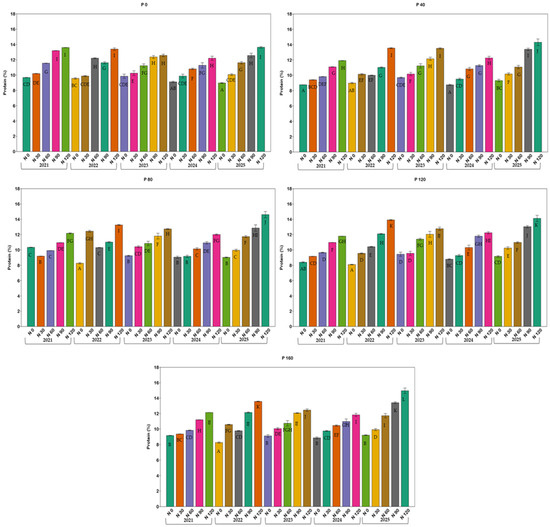
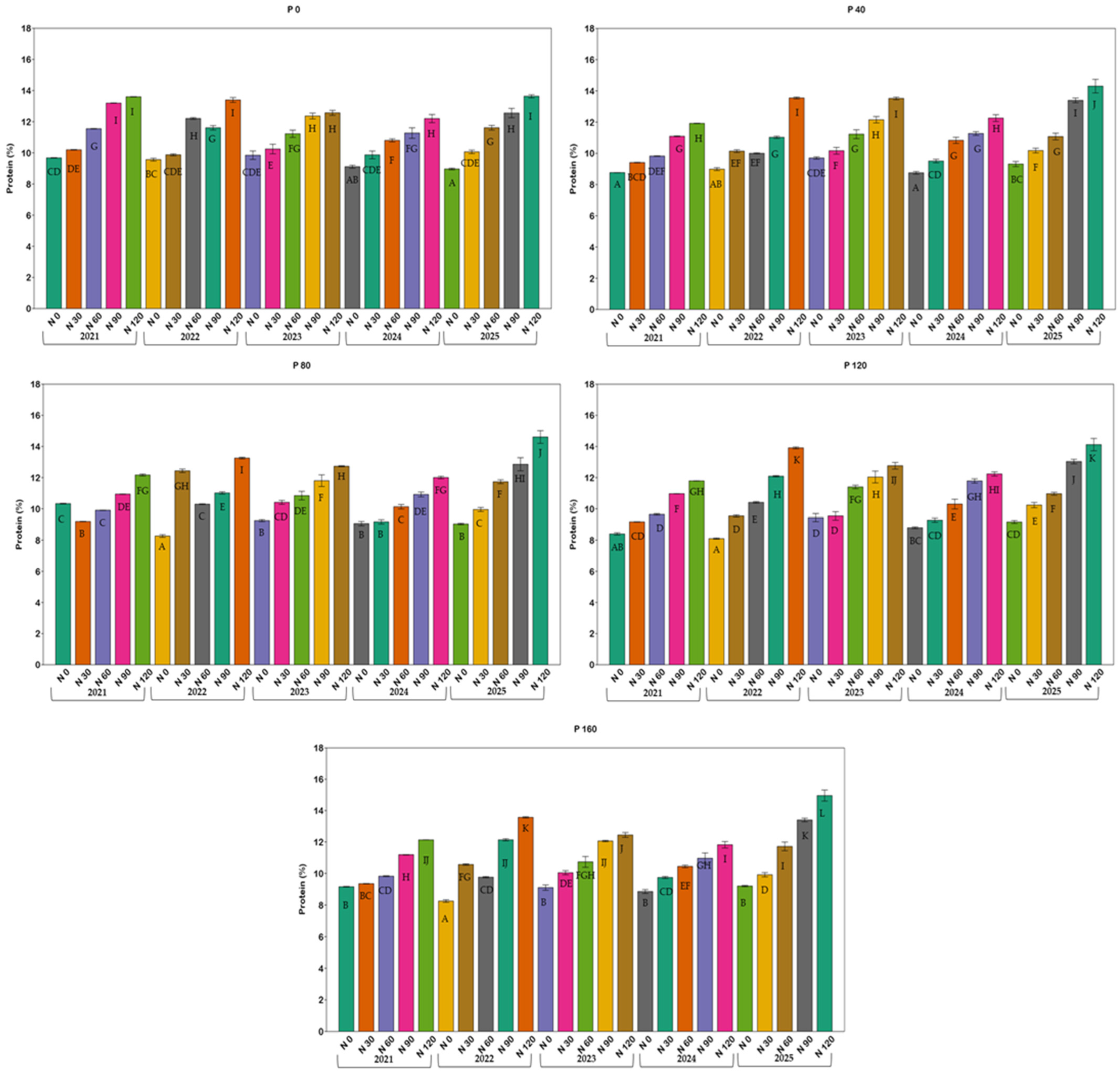
Figure 5 and Figure 6 present the results on the protein content of wheat grains cultivated after soybean and maize, depending on different doses of nitrogen and phosphorus, during the five years of experimentation. The analysis of the data presented in Figure 5 shows an increase in protein content with the increase in the applied nitrogen dose, confirming the decisive role of this element in protein synthesis. These results underline the interaction between technological and climatic factors in determining the quality of wheat grains. The application of different doses of phosphorus did not have a major influence on the accumulation of proteins in the wheat grain, the differences between the phosphorus fertilized variants being generally reduced. However, a distinct effect is noted in the control variant, without phosphorus fertilization, where the level of protein content is constantly lower compared to the fertilized variants. In this situation, the protein content varies between 8.96% when nitrogen is not applied (N0) and 13.63% at the maximum nitrogen dose (N120), values below those obtained in phosphorus variants. In the presence of phosphate fertilization, even if lower protein content is recorded at reduced nitrogen doses, increasing the nitrogen dose to N120 leads to higher protein accumulation, reaching up to 14.96%. These results indicate that phosphorus does not directly increase the protein content but plays an important role in supporting the efficiency of nitrogen fertilization and the superior valorization of nitrogen in the protein synthesis process.
Figure 5.
Effect of phosphorus (P) and nitrogen (N) fertilization level in the five years of study (2021–2025) on wheat protein content in wheat cultivated after soybean. N0, N30, N60, N90, and N120 represent 0, 30, 60, 90, and 120 kg N ha−1, respectively, while P0, P40, P80, P120, and P160 represent 0, 40, 80, 120, and 160 kg P ha−1, respectively. Error bars represent the standard error of the mean. Different letters indicate significant differences among treatments according to the Duncan test (p < 0.05).
Figure 6.
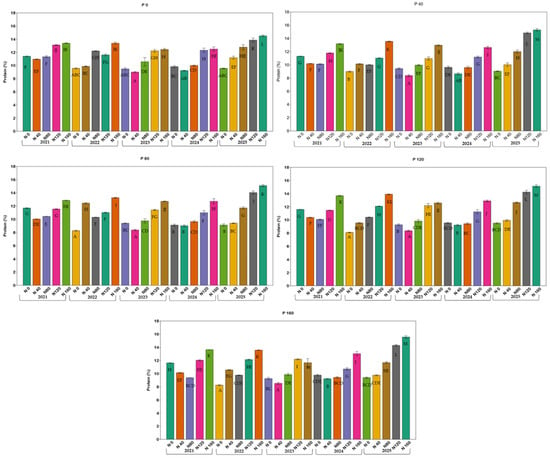
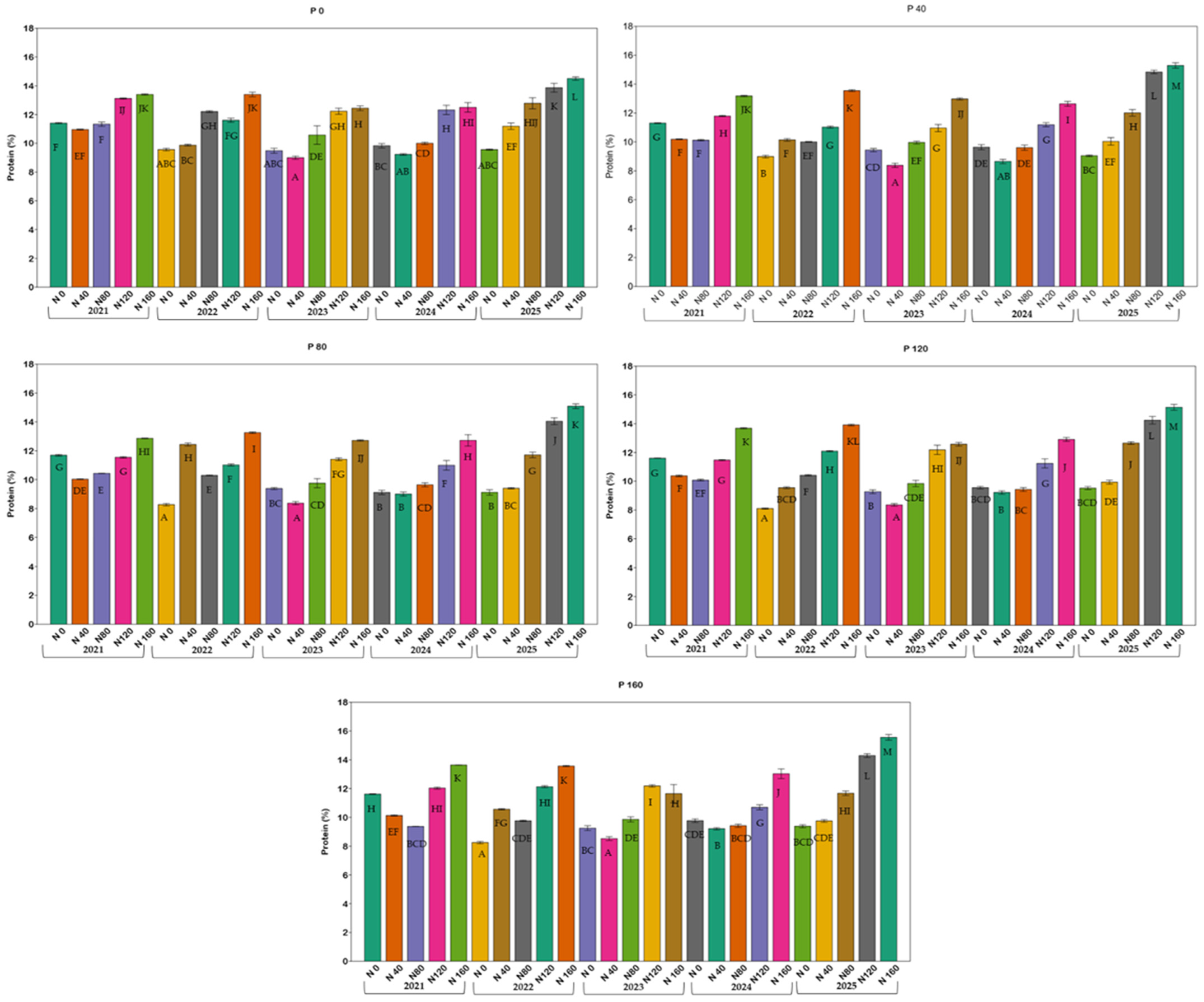
Effect of phosphorus (P) and nitrogen (N) fertilization level in the five years of study (2021–2025) on wheat protein content in wheat cultivated after maize. N0, N40, N80, N120, and N160 represent 0, 30, 60, 90, and 120 kg N ha−1, respectively, while P0, P40, P80, P120, and P160 represent 0, 40, 80, 120, and 160 kg P ha−1, respectively. Error bars represent the standard error of the mean. Different letters indicate significant differences among treatments according to the Duncan test (p < 0.05).
A similar situation is observed in Figure 6, where variations in the protein content of wheat grains are mainly determined by the nitrogen doses applied and the climatic conditions recorded during the five years of study. However, the analysis of the data also highlights the influence of phosphorus fertilization, particularly in the case of wheat cultivated after maize, on the quality of the grains. The results show that applying higher doses of phosphorus (P120–160) may paradoxically lead to lower protein levels when nitrogen doses are reduced. By contrast, low and medium doses of phosphorus seem to support nitrogen use more effectively, favoring the accumulation of higher protein percentages in grains. These observations suggest that the interaction between nitrogen and phosphorus is essential for optimizing the quality of grains, and fertilization management must be adapted to both nitrogen and phosphorus requirements in the soil to achieve a balance between yield and wheat protein content.
In the case of wheat cultivated after maize, where the nitrogen doses are higher compared to those applied to wheat cultivated after soybean, it is noted that the percentage of protein in grains is superior for all experimental variants. Supplemental nitrogen is highly beneficial for plants as it plays a crucial role in protein synthesis, although this process may come at the cost of yield. Climate conditions in 2025 also significantly favored protein accumulation, with the percentage consistently exceeding 15% when applying the maximum nitrogen dose (N120), highlighting the importance of the interaction between fertilization and climatic factors in determining the quality of wheat grains.
3.3. Effect of Fertilizer Doses on Disease Severity
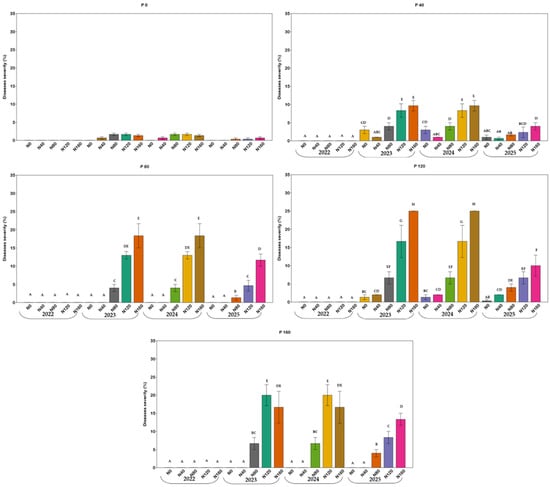
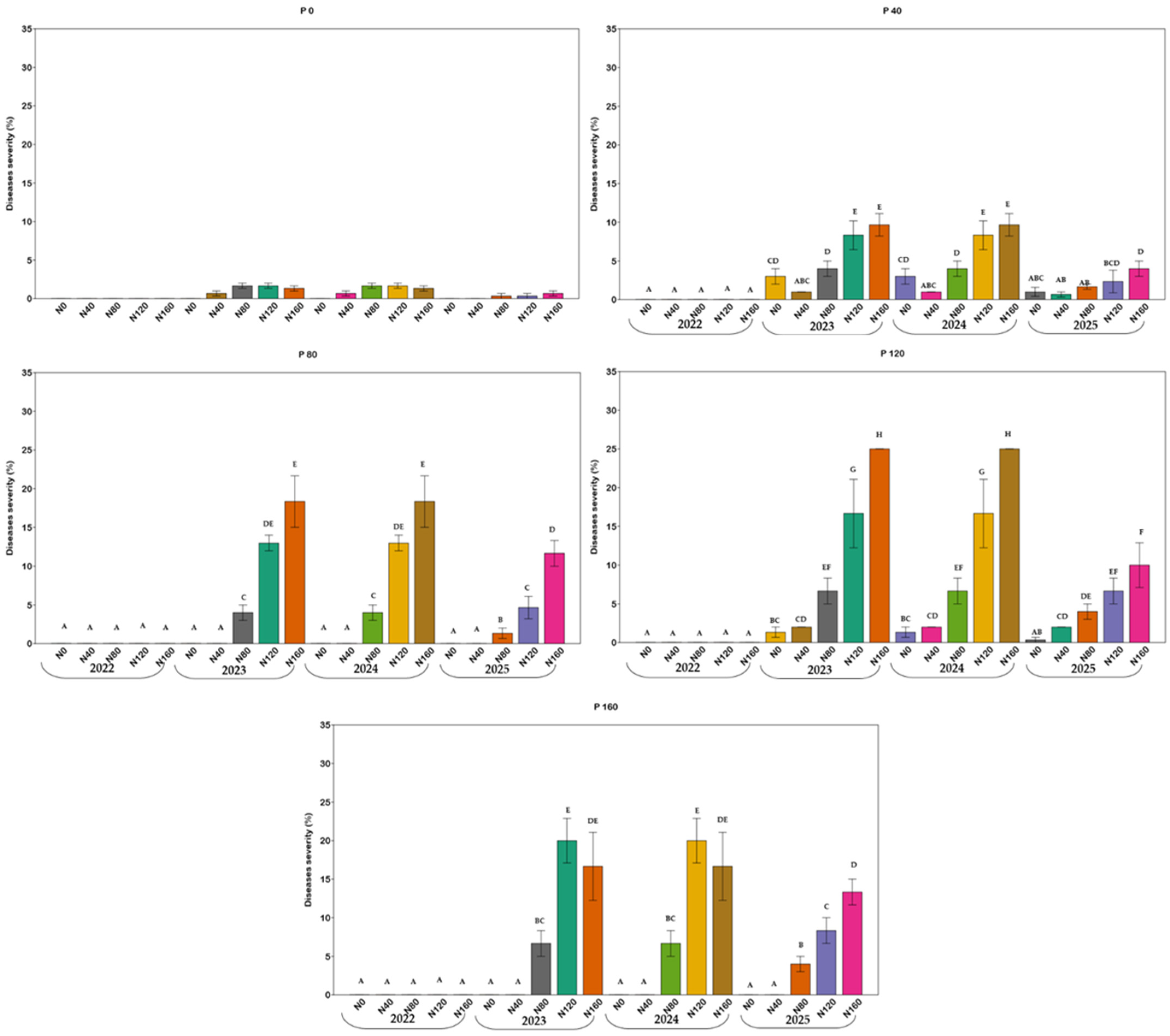
All foliar diseases were evaluated. Zymoseptoria tritici was the most prevalent and severe disease. During the first evaluation, wheat leaves were mostly symptom-free, with only occasional symptoms of Blumeria graminis and Zymoseptoria tritici. Consequently, the results presented below correspond to the second assessment. As disease incidence was close to 100%, only disease severity is presented and discussed.
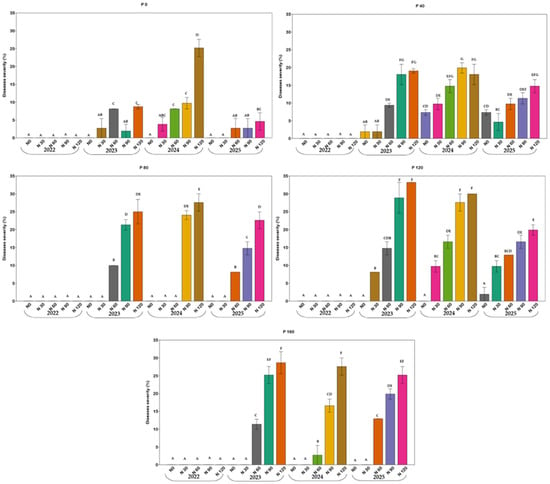
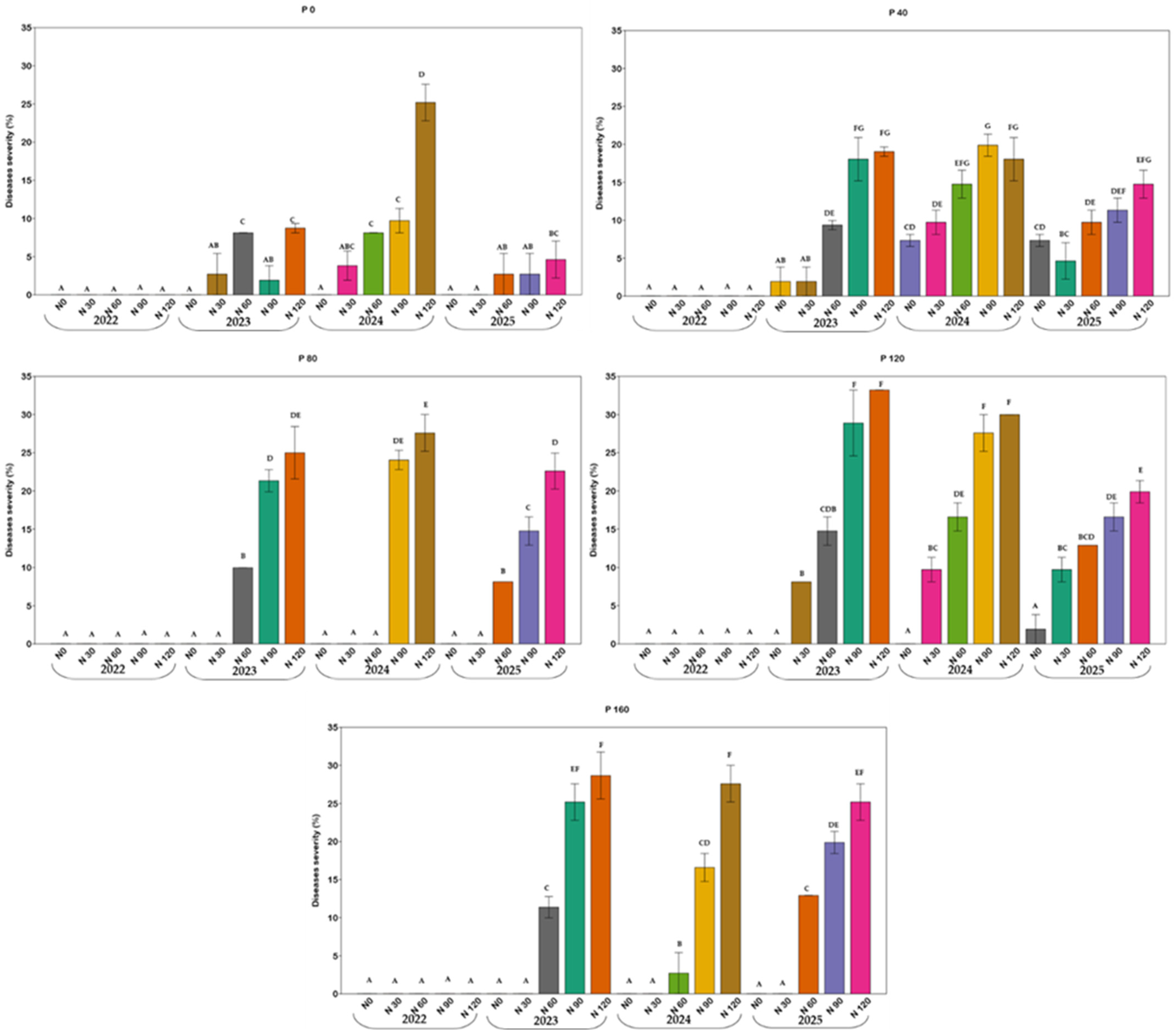
Figure 7 and Figure 8 illustrate the severity of Zymoseptoria tritici on wheat cultivated after soybean under different nitrogen and phosphorus fertilization levels across five growing seasons (2022–2025). Disease severity varied significantly depending on fertilization regime and climatic conditions, highlighting a strong interaction between nutrient availability and environmental factors. In 2022, the disease was absent for all experimental variants. In the period 2023–2025, the severity of the disease increased progressively with increasing doses of nitrogen, regardless of the phosphorus level. At low nitrogen doses (N0-N40), the severity values remained low, while significant increases were observed at N ≥ 60–80 kg·ha−1, the effect being amplified by higher doses of phosphorus. At the P0 level, the severity of the disease remained relatively reduced even at high doses of nitrogen. At P40-P80, disease severity increased significantly to N80-N160, especially in 2023 and 2024. The highest disease severity values were recorded at P120-P160, in combination with N120-N160, frequently exceeding 20%. The interaction between N and P was significant in years with high phytosanitary pressure, and the variability between years was clear, with the highest severity values typically recorded in 2023 and 2024.
Figure 7.
Effect of phosphorus (P) and nitrogen (N) fertilization level in the five years of study (2022–2025) on disease severity of wheat cultivated after soybean. N0, N30, N60, N90, and N120 represent 0, 30, 60, 90, and 120 kg N ha−1, respectively, while P0, P40, P80, P120, and P160 represent 0, 40, 80, 120, and 160 kg P ha−1, respectively. Error bars represent the standard error of the mean. Different letters indicate significant differences among treatments according to the Duncan test (p < 0.05).
Figure 8.
Effect of phosphorus (P) and nitrogen (N) fertilization level in the five years of study (2022–2025) on disease severity of wheat cultivated after maize. N0, N40, N80, N120, and N160 represent 0, 30, 60, 90, and 120 kg N ha−1, respectively, while P0, P40, P80, P120, and P160 represent 0, 40, 80, 120, and 160 kg P ha−1, respectively. Error bars represent the standard error of the mean. Different letters indicate significant differences among treatments according to the Duncan test (p < 0.05).
4. Discussion
The climatic conditions (temperature and precipitation) of the wheat vegetation period contribute a very high percentage to the achievement of wheat yield, both directly by providing the necessary heat and water, and indirectly by supporting the absorption of nutrients from the soil, as [57,58] state, which indicated a reduction in yield by 50% in the case of an increase in the average temperature of the vegetation period by 2 °C. In the study area, the increase in temperatures is more pronounced during the winter season (as shown in Figure 2), a period that is essential for wheat vernalization, and elevated temperatures may adversely affect physiological processes, leading to yield reductions.
The yield increases obtained by applying different nitrogen doses were evident for all five levels of phosphorus fertilization, suggesting a consistent positive effect of nitrogen on crop, the results being similar to those achieved by Soofizada et al. [59], who observed an increase in yield concurrently with the nitrogen rate from 9.11% (N65) to 18.28% (N120). This interaction indicates that the response of plants to nitrogen is dependent on the level of phosphorus applied, and adequate nitrogen intake contributes significantly to the improvement of yield. This suggests that high nitrogen supply can partially compensate for the limitations caused by a lack of phosphorus, stimulating vegetative development and the grain formation. The interrelationship between N and P in the formation of agricultural production, with better capitalization of N associated with doses of P, was confirmed by studies conducted by Agapie et al. [60]. The results indicate that optimizing both nutrients is crucial to maximizing fertilization production and efficiency under the experiment’s conditions.
The results obtained indicate that unilateral nitrogen application may lead to an increase in wheat yield in proportion to the administered fertilizer dose, with the increase in yield being determined by the amount of nitrogen administered, as Agapie et al. [61] states, which obtained an increase from 573 kg·ha−1 in the fertilized variant N30 kg/ha−1 to 1016 kg·ha−1, in the variant fertilized with N120 kg·ha−1.
The yields obtained from the application of 40 kg·ha−1 P were relatively close, suggesting that climatic factors played a major role in limiting the response of plants to additional nitrogen intake. Under these conditions, the positive effect of higher nitrogen doses was diminished, and the final yield was influenced more by the heat and water regime of the respective years than by fertilization, highlighting the interdependence between nutrients and environmental conditions in determining yield. High phosphorus can contribute to an optimal nutritional balance, promoting the uniform development of culture, reducing the impact of climatic factors on yield. The results suggest that both high levels of phosphorus and proper nitrogen management are essential for achieving stable and predictable long-term yields; instead, Soofizada et al. [59] suggest that the distribution of 50 kg·ha−1 P2O5 is sufficient, and that this can be considered an appropriate rate.
On the P160 agrofond, differences in yield between nitrogen doses were generally lower compared to those seen at lower phosphorus levels, indicating that high P intake contributed to stabilizing crop response to nitrogen. The results obtained by Lupu et al. [62] show a variation in the yield increase when applying phosphorus fertilizers ranging from 351 kg·ha−1 (P40) to 1141 kg·ha−1 (P160); however, authors such as Ullah et al. [63] state that it is crucial to use fertilizers wisely to avoid potential environmental impacts and ensure sustainable agricultural practices.
According to the results obtained in 2023, between high nitrogen doses there was an increase in yield of over 3500 kg·ha−1, highlighting that under favorable climatic conditions (higher amount of precipitation in June and July) and with an optimal phosphorus intake, the response of wheat to nitrogen can be much more pronounced. This suggests that a high supply of phosphorus contributes to the stabilization of plant response to nitrogen and ensures greater consistency of yield, regardless of variations in environmental conditions. These results underline the importance of combining high phosphorus levels with appropriate nitrogen doses to maximize wheat yield and achieve the productive potential of the crop. Hao et al. [64] showed in their studies that fertilization contributed to the significant increase in wheat yield by 36.95–59.54% compared to the unfertilized nitrogen variant. Our results are also consistent with those obtained by Kostic et al. [65] and Soofizada et al. [59] who achieved a significant increase in yield with the increase in N application rates. Authors such as Mandic et al. [16] concluded based on their results that by increasing the nitrogen level (200 kg·ha−1), the highest wheat yield is obtained. Following the studies carried out Chiper et al. [66] hypothesized that yield levels and differences between them are predominantly higher in nitrogen than those due to phosphorus, with yield increases ranging from 600 to 700 kg·ha−1.
The preceding plant has a particularly important role, the effect of soybean in achieving high yields, while the use of moderate doses of nitrogen can lead to the achievement of high wheat yield with lower costs. Similar results were obtained by Deac et al. [67,68] which following the analysis of the interaction between the preceding plant and the nitrogen doses on wheat yield, and they observed that the highest yields were recorded for wheat cultivated soybean, compared to wheat cultivated after maize, on all levels of fertilization, which is explained by the nitrogen intake brought by the plant rotation cultivating system. In the case of wheat cultivation after maize, the role of nitrogen is significantly higher compared to that applied to wheat cultivated after soybean, with a yield increase of 1494 kg·ha−1, compared to the variant where the preceding plant was maize [69]. In years characterized by reduced precipitation in May–June, phosphorus ensures better root system development and more efficient nitrogen utilization, helping to maintain the physiological processes essential for the formation and filling of grains.
Protein percentage values are generally influenced by both nitrogen fertilization and variations in climatic conditions in the five years of study that influenced the uptake and nutrient utilization by plants. The results obtained in our study on wheat grain content in protein are consistent with studies such as those of An et al. [70], which mention an increase of over 25% in the protein content of Landolfi et al. [71], who obtained an increase of 15–18% when applying 80–160 kg·ha−1, respectively. Mor et al. [72] said that by applying of 120–160 kg·ha−1 a 12% increase in protein content was obtained following the application of N fertilizers. Some authors [73] state that protein content can be improved (4–11%) by applying phosphorus fertilization, instead of Agapie et al. [74]. In addition, the effect of N fertilization proved to be more effective for quality parameters compared to P distribution.
The results demonstrate a clear and consistent increase in disease severity with increasing nitrogen rates, an effect that was significantly amplified by higher phosphorus doses (Figure 7 and Figure 8). This pattern confirms the well-documented role of nitrogen in increasing plant susceptibility through excessive vegetative growth, increasing tissue succulence and the formation of dense canopies, which promote higher humidity and prolonged leaf susceptibility, creating a microclimate favorable for pathogen development [75,76]. The significant N × P interaction observed in years with measurable phytosanitary pressure indicates a synergistic effect, with phosphorus improving nitrogen uptake and utilization and indirectly favoring the development of the disease under high fertilization conditions [77,78].
The absence of disease symptoms in 2022 highlights the decisive role of environmental conditions, while the pronounced treatment effects recorded during 2023–2025 indicate that nutrition-induced susceptibility becomes evident only under favorable climatic conditions. In addition, wheat cultivated following soybean likely benefited from increased background nitrogen availability through biological fixation, further amplifying the response to mineral nitrogen fertilization and resulting in greater disease severity at medium and high nitrogen doses [79]. Similar trends were reported by Leitch and Jenkins [80], who observed an average increase of 11.1% in post-anthesis disease severity per 100 kg·ha−1 N applied, corresponding to a potential yield loss of approximately 5%. The consistently lower severity of disease observed at P0, even at high doses of nitrogen, supports the hypothesis that phosphorus modulates the magnitude of nitrogen effect on plant susceptibility without being a primary trigger for disease. Overall, the positive relationship between nitrogen dose and disease severity, amplified by elevated phosphorus levels, can be attributed to excessive vegetative growth, increased leaf area, prolonged leaf susceptibility, and higher canopy humidity.
These findings align with recent studies that emphasize the complex role of nutrient management in cereal crops. For instance, research on autumn wheat in rotation systems has shown that the combined application of nitrogen and phosphorus fertilizers significantly affects nutrient absorption, their efficiency of use, and vegetative development, particularly under varying climatic conditions [59,81]. From a sustainability perspective, increased fertilizer inputs may indirectly result in higher pesticide consumption, as elevated disease pressure often requires more frequent fungicide applications. This not only increases production costs but also negatively affects the environmental sustainability of wheat cultivation, emphasizing the importance of optimized nutrient management.
Recent studies have also shown that integrated nutrition and disease management strategies can reduce yield losses by reducing the severity of diseases, emphasizing the importance of balanced fertilization. Ref. [82] found that under balanced nitrogen use conditions with an adequate level of fungicide protection, the yield of wheat grains can increase by 35%. Instead, according to a study, without adequate protection, natural infections can reduce yield by up to 53% [83]. The interaction between nitrogen fertilization and disease progression has also been analyzed in combination with other technological measures, such as the application of fungicides, confirming that high nitrogen doses may favor the development of foliar diseases under conditions of increased fertility [42].
According to studies by Leitch and Jenkins [80], the severity of post-anthesis diseases increased with higher nitrogen doses, by an average of 11.1% for each 100 kg·ha−1 of applied N, corresponding to a potential yield loss of about 5% per 100 kg·ha−1 N. The consistently low disease severity observed under zero-phosphorus conditions suggests that phosphorus does not act as a primary trigger for disease development but rather modulates the effect of nitrogen on plant susceptibility.
This study is based on a long-term fertilization experiment (58 years) with constant N and P application rates. However, the interpretation of the results is limited by the availability of yield and disease severity data only for the last four years, making crop productivity and phytosanitary responses dependent on the climatic conditions and disease pressure specific to this period. Future research should correlate crop performance with soil fertility and plant nutritional indicators, while integrating agronomic and economic efficiency assessments to identify fertilization rates that are both sustainable and economically viable.
5. Conclusions
Disease severity increased with nitrogen rate, an effect intensified under high phosphorus levels. Excess nitrogen creates favorable conditions for pathogens, while phosphorus amplifies plant susceptibility when fertilization is unbalanced.
Balanced N–P fertilization is essential for maximizing and stabilizing wheat yield. Nitrogen applied at 80–160 kg·ha−1 on a well-supplied phosphorus background significantly increased yield, even under less favorable environmental conditions.
Phosphorus availability plays a crucial role in nitrogen uptake and utilization. Insufficient phosphorus reduced nitrogen use efficiency and limited the yield potential of the wheat cultivar.
Crop rotation effects were significant, with soybean as a preceding crop enhancing wheat yield at lower nitrogen rates compared to maize, due to residual nitrogen from biological fixation.
Nitrogen fertilization increased grain protein content, but responses depended on pedoclimatic conditions, cultivar potential, and the N–P balance, highlighting the need for rational nitrogen management to optimize both yield and quality.
Higher nitrogen rates increased disease severity, particularly under high phosphorus supply, indicating that unbalanced fertilization can enhance plant susceptibility to pathogens.
Supplementary Materials
The following supporting information can be downloaded at: https://www.mdpi.com/article/10.3390/nitrogen7010021/s1, Figure S1: Experimental design with the different variants and replications for each year, wheat grown after soybean; Figure S2: Experimental design with the different variants and replications for each year, wheat grown after maize.
Author Contributions
Conceptualization, A.Ș. and O.A.C.; methodology, F.C.; software, L.Ș.; validation, A.P. and A.-M.V.; formal analysis, F.C. and M.B.; investigation, O.A.C. and A.-M.V.; resources, A.Ș. and O.A.C.; data curation, F.C. and L.Ș.; writing—original draft preparation, A.Ș. and F.C.; writing—review and editing, A.P. and L.Ș.; visualization, A.P.; supervision, M.B. and A.-M.V.; project administration, O.A.C.; funding acquisition, A.Ș. All authors have read and agreed to the published version of the manuscript.
Funding
This research did not receive external funding.
Data Availability Statement
All original contributions of this study are contained in the article. For any further information, please contact the corresponding authors.
Acknowledgments
We would like to thank the Agricultural Research and Development Station Turda for the support and facilities provided, which were essential during this research.
Conflicts of Interest
The authors declare no conflicts of interest.
References
- Hussain, K.; Hakki, E.E.; Ilyas, A.; Gezgin, S.; Kamran, M.A. Role of Nitrogen Fertilization and Sowing Date in Productivity and Climate Change Adaptation Forecast in Rice–Wheat Cropping System. Nitrogen 2024, 5, 977–991. [Google Scholar] [CrossRef] [Scilit]
- Walsh, O.; Raun, W.; Klatt, A.; Solie, J. Effect of Delayed Nitrogen Fertilization on Maize (Zea mays L.) Grain Yields and Nitrogen Use Efficiency. J. Plant Nutr. 2012, 35, 538–555. [Google Scholar] [CrossRef] [Scilit]
- Rebouh, N.Y.; Khugaev, C.V.; Utkina, A.O.; Isaev, K.V.; Mohamed, E.S.; Kucher, D.E. Contribution of Eco-Friendly Agricultural Practices in Improving and Stabilizing Wheat Crop Yield: A Review. Agronomy 2023, 13, 2400. [Google Scholar] [CrossRef] [Scilit]
- Niță, S.; Niță, L.; Imbrea, F.; Hînda, I.A.; Bătrîna, Ș.; Botoș, L. Study of Quantitative and Qualitative Indicators in Wheat. Sci. Pap. Ser. A. Agron. 2024, 67, 581–586. [Google Scholar]
- Zargar, M.; Rebouh, N.; Пакина, E.; Gadzhikurbanov, A.; Lyashko, M.; Ortskhanov, B. Impact of Climate Change on Cereal Production in the Highlands of Eastern Algeria. Res. Crops 2017, 18, 575. [Google Scholar] [CrossRef] [Scilit]
- Ceclan, O.; Popa, A.; Simon, A.; Chetan, F.; Marius, B. The Influence of Mineral Fertilization and Rotation in Winter Wheat (Triticum aestivum) Crop. Life Sci. Sustain. Dev. 2024, 5, 72–77. [Google Scholar] [CrossRef] [Scilit]
- Zhang, H.; Zhai, H.; Zan, R.; Tian, Y.; Ma, X.; Ji, H.; Zhang, D. Balanced Fertilization Improves Crop Production and Soil Organic Carbon Sequestration in a Wheat–Maize Planting System in the North China Plain. Plants 2025, 14, 838. [Google Scholar] [CrossRef] [Scilit]
- De Vita, P.; Di Paolo, E.; Fecondo, G.; Di Fonzo, N.; Pisante, M. No-Tillage and Conventional Tillage Effects on Durum Wheat Yield, Grain Quality and Soil Moisture Content in Southern Italy. Soil Tillage Res. 2007, 92, 69–78. [Google Scholar] [CrossRef] [Scilit]
- Cheţan, F.; Rusu, T.; Călugăr, R.E.; Chețan, C.; Şimon, A.; Ceclan, A.; Bărdaș, M.; Mintaș, O.S. Research on the Interdependence Linkages Between Soil Tillage Systems and Climate Factors on Maize Crop. Land 2022, 11, 1731. [Google Scholar] [CrossRef] [Scilit]
- Challinor, A.J.; Koehler, A.-K.; Ramirez-Villegas, J.; Whitfield, S.; Das, B. Current Warming Will Reduce Yields Unless Maize Breeding and Seed Systems Adapt Immediately. Nat. Clim. Change 2016, 6, 954–958. [Google Scholar] [CrossRef] [Scilit]
- Rosculete, E.; Paunescu, R.A.; Rosculete, C.A.; Paunescu, G.; Bonciu, E.; Olaru, A.L.; Murtaza, D.F. Nitrogen Management of Variety Screening of Winter Wheat Cultivated on Chernozem Soil for Yield Optimization. Plants 2025, 14, 3580. [Google Scholar] [CrossRef] [Scilit]
- Ali, I.; Khan, A.; Munsif, F.; He, L.; Khan, A.; Ullah, S.; Saeed, W.; Iqbal, A.; Adnan, M.; Jiang, L. Optimizing Rates and Application Time of Potassium Fertilizer for Improving Growth, Grain Nutrients Content and Yield of Wheat Crop. Open Agric. 2019, 4, 500–508. [Google Scholar] [CrossRef] [Scilit]
- Muntean, L.; Berindean, I.; Racz, I.; Ona, A. Challenges in Wheat Breeding in the 21st Century. In Triticum—The Pillar of Global Food Security; IntechOpen: Cluj-Napoca, Romania, 2025. [Google Scholar]
- Ahanger, M.A.; Qin, C.; Begum, N.; Maodong, Q.; Dong, X.X.; El-Esawi, M.; El-Sheikh, M.A.; Alatar, A.A.; Zhang, L. Nitrogen Availability Prevents Oxidative Effects of Salinity on Wheat Growth and Photosynthesis by Up-Regulating the Antioxidants and Osmolytes Metabolism, and Secondary Metabolite Accumulation. BMC Plant Biol. 2019, 19, 479. [Google Scholar] [CrossRef] [Scilit] [PubMed]
- Vos, R.; Glauber, J.; Hebebrand, C.; Rice, B. Global Shocks to Fertilizer Markets: Impacts on Prices, Demand and Farm Profitability. Food Policy 2025, 133, 102790. [Google Scholar] [CrossRef] [Scilit]
- Mandić, V.; Krnjaja, V.; Tomic, Z.; Bijelić, Z.; Simic, A.; Muslic, D.; Gogić, M. Nitrogen Fertilizer Influence on Wheat Yield and Use Efficiency Under Different Environmental Conditions. Chil. J. Agric. Res. 2015, 75, 92–97. [Google Scholar] [CrossRef] [Scilit]
- Tabak, M.; Lepiarczyk, A.; Filipek-Mazur, B.; Lisowska, A. Efficiency of Nitrogen Fertilization of Winter Wheat Depending on Sulfur Fertilization. Agronomy 2020, 10, 1304. [Google Scholar] [CrossRef] [Scilit]
- Zhang, R.; Yang, Y.; Dang, T.; Zhu, Y.; Huang, M. Responses of Wheat Yield Under Different Fertilization Treatments to Climate Change Based on a 35-Year In Situ Experiment. Agriculture 2022, 12, 1498. [Google Scholar] [CrossRef] [Scilit]
- Mussarat, M.; Shair, M.; Muhammad, D.; Mian, I.A.; Khan, S.; Adnan, M.; Fahad, S.; Dessoky, E.S.; EL Sabagh, A.; Zia, A.; et al. Accentuating the Role of Nitrogen to Phosphorus Ratio on the Growth and Yield of Wheat Crop. Sustainability 2021, 13, 2253. [Google Scholar] [CrossRef] [Scilit]
- Chen, Y.; Zhang, P.; Wang, L.; Ma, G.; Li, Z.; Wang, C. Interaction of Nitrogen and Phosphorus on Wheat Yield, N Use Efficiency and Soil Nitrate Nitrogen Distribution in the North China Plain. Int. J. Plant Prod. 2020, 14, 415–426. [Google Scholar] [CrossRef] [Scilit]
- Ali, M.M.A. Stability Analysis of Bread Wheat Genotypes Under Different Nitrogen Fertilizer Levels. J. Plant Prod. 2017, 8, 261–275. [Google Scholar] [CrossRef] [Scilit]
- Govindasamy, P.; Muthusamy, S.; Bagavathiannan, M.; Mowrer, J.; Jagannadham, P.T.K.; Maity, A.; Halli, H.M.; Sujayananad, G.K.; Vadivel, R.; Das, T.K.; et al. Nitrogen Use Efficiency—A Key to Enhance Crop Productivity Under a Changing Climate. Front. Plant Sci. 2023, 14, 1121073. [Google Scholar] [CrossRef] [Scilit]
- Demirel, S.; Nur, A. Investigation of the Wheat Production Dynamics Under Climate Change via Machine Learning Models. Sustainability 2025, 17, 1832. [Google Scholar] [CrossRef] [Scilit]
- Kubar, M.S.; Alshallash, K.S.; Asghar, M.A.; Feng, M.; Raza, A.; Wang, C.; Saleem, K.; Ullah, A.; Yang, W.; Kubar, K.A.; et al. Improving Winter Wheat Photosynthesis, Nitrogen Use Efficiency, and Yield by Optimizing Nitrogen Fertilization. Life 2022, 12, 1478. [Google Scholar] [CrossRef] [Scilit] [PubMed]
- Fradgley, N.; Bentley, A.; Swarbreck, S. Defining the Physiological Determinants of Low Nitrogen Requirement in Wheat. Biochem. Soc. Trans. 2021, 49, 609–616. [Google Scholar] [CrossRef] [Scilit] [PubMed]
- Pan, W.; Kidwell, K.; Mccracken, V.; Bolton, R.; Allen, M. Economically Optimal Wheat Yield, Protein and Nitrogen Use Component Responses to Varying N Supply and Genotype. Front. Plant Sci. 2020, 10, 1790. [Google Scholar] [CrossRef] [Scilit] [PubMed]
- Wang, Y.; Wang, D.; Shi, P.; Omasa, K. Estimating Rice Chlorophyll Content and Leaf Nitrogen Concentration with a Digital Still Color Camera Under Natural Light. Plant Methods 2014, 10, 36. [Google Scholar] [CrossRef] [Scilit]
- Shi, H.; Hou, L.; Xu, X.; Zhu, Y.; Zhai, B.; Liu, Z. Effects of Different Rates of Nitrogen Fertilizer on Apple Yield, Fruit Quality, and Dynamics of Soil Moisture and Nitrate in Soil of Rainfed Apple Orchards on the Loess Plateau, China. Eur. J. Agron. 2023, 150, 126950. [Google Scholar] [CrossRef] [Scilit]
- Chen, X.-X.; Zhang, W.; Liang, X.-Y.; Liu, Y.-M.; Xu, S.-J.; Zhao, Q.-Y.; Du, Y.-F.; Zhang, L.; Chen, X.-P.; Zou, C.-Q. Physiological and Developmental Traits Associated with the Grain Yield of Winter Wheat as Affected by Phosphorus Fertilizer Management. Sci. Rep. 2019, 9, 16580. [Google Scholar] [CrossRef] [Scilit]
- Gupta, D.K.; Chatterjee, S.; Datta, S.; Veer, V.; Walther, C. Role of Phosphate Fertilizers in Heavy Metal Uptake and Detoxification of Toxic Metals. Chemosphere 2014, 108, 134–144. [Google Scholar] [CrossRef] [Scilit]
- Terzic, D.; Rajicic, V.; Jevtic, S.; Popovic, V.; Jevtic, A.; Mijajlovic, J. Effect of Long Term Fertilization on Grain Yield and Yield Components of Winter Triticale. J. Anim. Plant Sci. 2018, 28, 830–836. [Google Scholar]
- Constantinescu, M.; Rodino, S.; Butu, A.; Butu, M.; Ioana, T.; Popa, M.; Chetroiu, R.; Sima, N. Nitrogen Management Trends for Agricultural and Environmental Science. Romanian Agric. Res. 2023, 40, 417–428. [Google Scholar] [CrossRef] [Scilit]
- Gudžić, N.; Šekularac, G.; Djikić, A.; Djekić, V.; Aksić, M.; Gudžić, S. The Impact of the Long—Term Fertilisation with Mineral Fertilisers on the Chemical Properties of Vertisol (Central Serbia). Appl. Ecol. Environ. Res. 2019, 17, 12385–12396. [Google Scholar] [CrossRef] [Scilit]
- Wang, H.; Ren, H.; Han, K.; He, Q.; Zhang, L.; Zhao, Y.; Liu, Y.; Zhang, J.; Zhao, B.; Ren, B.; et al. Sustainable Improvement Strategies for Summer Maize Yield, Nitrogen Use Efficiency and Greenhouse Gas Emission Intensity in the North China Plain. Eur. J. Agron. 2023, 143, 126712. [Google Scholar] [CrossRef] [Scilit]
- Yan, S.; Wu, Y.; Fan, J.; Zhang, F.; Zheng, J.; Qiang, S.; Xiang, Y.; Zou, H.; Wu, L. Dynamic Change and Accumulation of Grain Macronutrient (N, P and K) Concentrations in Winter Wheat Under Different Drip Fertigation Regimes. Field Crops Res. 2020, 250, 107767. [Google Scholar] [CrossRef] [Scilit]
- Liu, C.-W.; Sung, Y.; Chen, B.-C.; Lai, H.-Y. Effects of Nitrogen Fertilizers on the Growth and Nitrate Content of Lettuce (Lactuca sativa L.). Int. J. Environ. Res. Public Health 2014, 11, 4427–4440. [Google Scholar] [CrossRef] [Scilit]
- Zhao, S.; He, P.; Qiu, S.; Jia, L.; Liu, M.; Jin, J.; Johnston, A.M. Long-Term Effects of Potassium Fertilization and Straw Return on Soil Potassium Levels and Crop Yields in North-Central China. Field Crops Res. 2014, 169, 116–122. [Google Scholar] [CrossRef] [Scilit]
- Ladha, J.; Pathak, D.S.; Krupnik, T.; Six, J.; Kessel, C. Efficiency of Fertilizer Nitrogen in Cereal Production: Retrospects and Prospects. Adv. Agron. 2005, 87, 85–156. [Google Scholar] [CrossRef] [Scilit]
- Shah, F.; Wu, W. Soil and Crop Management Strategies to Ensure Higher Crop Productivity within Sustainable Environments. Sustainability 2019, 11, 1485. [Google Scholar] [CrossRef] [Scilit]
- Toleikiene, M.; Skipityte, R.; Bariseviciute, R.; Martins, J.T.; Rasmussen, J. The Effects of Legume-Cereal Intercropping on the Symbiotically Fixed N2 in Soybean, N Accumulation, and C Allocation. Plants 2025, 14, 1009. [Google Scholar] [CrossRef] [Scilit]
- Al-Musawi, Z.K.; Vona, V.; Kulmány, I.M. Utilizing Different Crop Rotation Systems for Agricultural and Environmental Sustainability: A Review. Agronomy 2025, 15, 1966. [Google Scholar] [CrossRef] [Scilit]
- Schierenbeck, M.; Fleitas, M.C.; Simón, M.R. The Interaction of Fungicide and Nitrogen for Aboveground Biomass from Flag Leaf Emergence and Grain Yield Generation under Tan Spot Infection in Wheat. Plants 2023, 12, 212. [Google Scholar] [CrossRef] [Scilit]
- Ishikawa, S.; Hare, M.; Kettlewell, P. Effects of Strobilurin Fungicide Programmes and Fertilizer Nitrogen Rates on Winter Wheat: Severity of Septoria Tritici, Leaf Senescence and Yield. J. Agric. Sci. 2012, 150, 411–426. [Google Scholar] [CrossRef] [Scilit]
- Figueroa, M.; Hammond-Kosack, K.E.; Solomon, P.S. A Review of Wheat Diseases-a Field Perspective. Mol. Plant Pathol. 2018, 19, 1523–1536. [Google Scholar] [CrossRef] [Scilit]
- Szczepaniak, W.; Nowicki, B.; Bełka, D.; Kazimierowicz, A.; Kulwicki, M.; Grzebisz, W. Effect of Foliar Application of Micronutrients and Fungicides on the Nitrogen Use Efficiency in Winter Wheat. Agronomy 2022, 12, 257. [Google Scholar] [CrossRef] [Scilit]
- Catalog Oficial—ISTIS. 2025. Available online: https://Istis.Ro/En/Catalog-Oficial/ (accessed on 9 December 2025).
- Ceclan, A.; Simon, A.; Russu, F.; Bardas, M.; Chetan, F.; Popa, A. The Influence of N and P Fertilization on Winter Wheat Yield. Life Sci. Sustain. Dev. 2022, 3, 54–59. [Google Scholar] [CrossRef] [Scilit]
- Rusu, M.; Mihai, M.; Mihai, V.C.; Moldovan, L.; Ceclan, O.A.; Toader, C. Areas of Agrochemical Deepening Resulting from Long-Term Experiments with Fertilizers—Synthesis Following 20 Years of Annual and Stationary Fertilization. Agriculture 2023, 13, 1503. [Google Scholar] [CrossRef] [Scilit]
- European and Mediterranean Plant Protection Organization (EPPO). Available online: https://www.eppo.int/ (accessed on 9 December 2025).
- Eyal, Z.; Scharen, A.L.; Prescott, J.M.; van Ginkel, M. The Septoria Diseases of Wheat: Concepts and Methods of Disease Management; CIMMYT: Texcoco, Mexico, 1987. [Google Scholar]
- Toncea, I.; Cană, L.; Stan, O. The Mixtures of Genotypes—A Quantitative and Qualitative Stability Factor of Organic Winter Wheat I. the Mixture of Genotypes—A Stability Factor of Yield of the Organic Winter Wheat. INCDA Fundulea 2017, LXXXV, 109–123. [Google Scholar]
- Corteva Agriscience Romania S.R.L. Șoseaua București-Ploiești Nr. 42-44, Băneasa Business & Technology Park, Clădirea B, Etaj 2. Sector 1, București, România. Available online: https://www.corteva.com (accessed on 9 December 2025).
- Bayer SRL, Șos. București—Ploiești nr. 1A, Clădirea B, Etajul 1, Sector 1, 013681 București, România. Available online: https://www.cropscience.bayer.ro/ (accessed on 9 December 2025).
- Poly Fact. ANOVA and Duncan’s Test PC Program for Variant Analyses Made for Completely Randomized Polyfactorial Experiences; USAMV: Cluj, Napoca, 2015. [Google Scholar]
- Șimon, A. Climate Trends in Turda. Transylvanian Agriculture, Field Plant Culture Information Bulletin No. 41. 2024, pp. 9–16. Available online: https://scdaturda.ro/revista-agricultura-transilvana-nr-41-septembrie-2024 (accessed on 29 November 2025).
- Turda Weather Station (Longitude 23′47′, Latitude 46′35′, Altitude 427 m). Northern Transylvania Re-gional Meteorological Center Cluj. Available online: https://www.meteoromania.ro/ (accessed on 29 November 2025).
- Asseng, S.; Foster, I.; Turner, N.C. The Impact of Temperature Variability on Wheat Yields. Glob. Change Biol. 2011, 17, 997–1012. [Google Scholar] [CrossRef] [Scilit]
- Elahi, I.; Saeed, U.; Wadood, A.; Abbas, A.; Nawaz, H.; Jabbar, S.; Elahi, I.; Saeed, U.; Wadood, A.; Abbas, A.; et al. Effect of Climate Change on Wheat Productivity. In Wheat—Recent Advances; IntechOpen: London, UK, 2022; Volume 1, pp. 1–14. [Google Scholar]
- Soofizada, Q.; Pescatore, A.; Atefi, R.; Grassi, C.; Orlandini, S.; Napoli, M. Evaluation of Nitrogen and Phosphorus Responses on Yield, Quality and Economic Advantage of Winter Wheat (Triticum aestivum L.) Under Four Different Agro-Climatic Zones in Afghanistan. Agronomy 2023, 13, 345. [Google Scholar] [CrossRef] [Scilit]
- Agapie, A.L.; Horablaga, N.M.; Bostan, C.; Popa, L.-D.; Istrate-Schiller, C.-M.; Rechițean, D.; Sala, F. The Dynamics of Nitrogen Valorification in Wheat Crop Under the Influence of the Used Agrofound. Romanian Agric. Res. 2023, 40, 335–347. [Google Scholar] [CrossRef] [Scilit]
- Agapie, A.L.; Horablaga, M.; Suba, D.; Suba, T. Influence of the Long-Term Fertilization on the Wheat Yield, in Period 1996–2018, at ARDS Lovrin. Lucr. Ştiinţifice 2018, 61, 189–192. [Google Scholar]
- Lupu, C.; Marzan, O.; Naie, M.; Bostan, D.M. The Effect of Long-Term Fertilization on the Productions Obtained from Wheat under the Conditions at A.R.D.S. Secuieni, Neamţ. Acta Agric. Romanica 2020, 2, 6–13. [Google Scholar]
- Ullah, B.; Lou, H.; Arif, M.; Zhang, S.; Khan, H.A.; Sadozai, K.N.; Khan, M.; Anjum, M.M. Optimizing NPK Fertilization for Enhanced Performance of Chinese Wheat Hybrids under Agro-Climatic Condition of Peshawar Valley. Agronomy 2024, 14, 1904. [Google Scholar] [CrossRef] [Scilit]
- Hao, R.; Mu, J.; Xie, X.; Ha, Q.; Wang, Y.; Zhai, W.; Wu, P.; Ren, A.; Gao, Z.; Guo, R.; et al. Alteration of Nitrogen Fertilizer Forms Optimizes Nitrogen Balance in Drip-Irrigated Winter Wheat Systems of Northern China by Reducing Gaseous Nitrogen Losses. Agriculture 2025, 15, 2164. [Google Scholar] [CrossRef] [Scilit]
- Kostić, M.M.; Tagarakis, A.C.; Ljubičić, N.; Blagojević, D.; Radulović, M.; Ivošević, B.; Rakić, D. The Effect of N Fertilizer Application Timing on Wheat Yield on Chernozem Soil. Agronomy 2021, 11, 1413. [Google Scholar] [CrossRef] [Scilit]
- Chiper (Petrea), B.-M.; Olaru, M.; Turcu (Leonte), C.-L.; Ionașcu, R.-P.; Băeșu, B.; Brumă, I.S.; Ailincăi, C. Long-Term Experiences with Fertilizers on Wheat and Maize Crops in the Pedoclimatic Conditions of the Bârlad Plateau. Romanian Agric. Res. 2024, 41, 445–456. [Google Scholar] [CrossRef] [Scilit]
- Deac, V.; Rotar, I.; Vidican, R.; Ignea, M.; Mălinaș, A. The Influence of Precursory Plant on Winter Wheat Production from Long-Term Experiences. Bull. Univ. Agric. Sci. Vet. Med. Cluj-Napoca Agric. 2015, 72, 74–78. [Google Scholar] [CrossRef] [Scilit]
- Deac, V.; Russu, F.; Simon, A.; Chetan, F.; Bardas, M.; Oltean, V.; Popa, A. Fertilizarea minerală—Un factor de echilibru în formarea producţiilor de grâu. Acta Agric. Romanica 2020, 2, 14–24. [Google Scholar]
- Deac, V. Influenţa Plantei Premergătoare Asupra Producţiei Grâului De Toamnă În Experienţe De Lungă Durată, La S.C.D.A. Turda. INCDA Fundulea Agroteh. Cult. 2015, LXXXIII, 107–114. [Google Scholar]
- An, H.-Y.; Han, J.-J.; He, Q.-N.; Zhu, Y.-L.; Wu, P.; Wang, Y.-C.; Gao, Z.-Q.; Du, T.-Q.; Xue, J.-F. Influence of Nitrogen Application Rate on Wheat Grain Protein Content and Composition in China: A Meta-Analysis. Agronomy 2024, 14, 1164. [Google Scholar] [CrossRef] [Scilit]
- Landolfi, V.; D’Auria, G.; Nicolai, M.A.; Nitride, C.; Blandino, M.; Ferranti, P. The Effect of Nitrogen Fertilization on the Expression of Protein in Wheat and Tritordeum Varieties Using a Proteomic Approach. Food Res. Int. 2021, 148, 110617. [Google Scholar] [CrossRef] [Scilit]
- Mor, V.B.; Patel, A.M.; Chaudhary, A.N. Performance of Bread Wheat (Triticum aestivum) Under Different Nitrogen Levels and Its Split Application under North Gujarat Condition. Indian J. Agron. 2019, 64, 482–488. [Google Scholar] [CrossRef] [Scilit]
- Malik, R.; Scanlan, C.; van Burgel, A.; Singh, B. Wheat Response to Foliar-Applied Phosphorus Is Determined by Soil Phosphorus Buffering. Agronomy 2024, 14, 1630. [Google Scholar] [CrossRef] [Scilit]
- Agapie, A.L.; Horablaga, M.N.; Gorinoiu, G.; Horablaga, A.; Herbei, M.V.; Sala, F. Variation of Protein and Protein Fraction Content in Wheat in Relation to NPK Mineral Fertilization. Agronomy 2025, 15, 2076. [Google Scholar] [CrossRef] [Scilit]
- Walters, D.R.; Bingham, I.J. Influence of Nutrition on Disease Development Caused by Fungal Pathogens: Implications for Plant Disease Control. Ann. Appl. Biol. 2007, 151, 307–324. [Google Scholar] [CrossRef] [Scilit]
- Dordas, C. Role of Nutrients in Controlling Plant Diseases in Sustainable Agriculture. A Review. Agron. Sustain. Dev. 2008, 28, 33–46. [Google Scholar] [CrossRef] [Scilit]
- Veresoglou, S.D.; Barto, E.K.; Menexes, G.; Rillig, M.C. Fertilization Affects Severity of Disease Caused by Fungal Plant Pathogens. Plant Pathol. 2013, 62, 961–969. [Google Scholar] [CrossRef] [Scilit]
- Fageria, N.K.; Baligar, V.C. Enhancing Nitrogen Use Efficiency in Crop Plants. In Advances in Agronomy; Academic Press: Cambridge, MA, USA, 2005; Volume 88, pp. 97–185. [Google Scholar]
- Jensen, E.S.; Peoples, M.B.; Boddey, R.M.; Gresshoff, P.M.; Hauggaard-Nielsen, H.; Alves, B.J.; Morrison, M.J. Legumes for Mitigation of Climate Change and the Provision of Feedstock for Biofuels and Biorefineries. A Review. Agron. Sustain. Dev. 2012, 32, 329–364. [Google Scholar] [CrossRef] [Scilit]
- Leitch, M.H.; Jenkins, P.D. Influence of Nitrogen on the Development of Septoria Epidemics in Winter Wheat. J. Agric. Sci. 1995, 124, 361–368. [Google Scholar] [CrossRef] [Scilit]
- Müller, B.; Herrmann, M.N.; Lewandowski, I.; Müller, T.; Hartung, J.; Bauerle, A. The Effect of Biobased N and P Fertilizers in a Winter Wheat–Ryegrass Crop Rotation. Agronomy 2024, 14, 2424. [Google Scholar] [CrossRef] [Scilit]
- Qiao, O.; Liu, B.; Liu, E.; Han, R.; Li, H.; Bai, H.; Chen, D.; Che, H.; Zhang, Y.; Liu, X.; et al. Integrated Foliar Spraying Effectively Reduces Wheat Yield Losses Caused by Hot–Dry–Windy Events: Insights from High-Yield and Stable-Yield Winter Wheat Regions in China. Agronomy 2025, 15, 1330. [Google Scholar] [CrossRef] [Scilit]
- Bhathal, J.S.; Loughman, R.; Speijers, J. Yield Reduction in Wheat in Relation to Leaf Disease From Yellow (Tan) Spot and Septoria Nodorum Blotch. Eur. J. Plant Pathol. 2003, 109, 435–443. [Google Scholar] [CrossRef] [Scilit]

Disclaimer/Publisher’s Note: The statements, opinions and data contained in all publications are solely those of the individual author(s) and contributor(s) and not of MDPI and/or the editor(s). MDPI and/or the editor(s) disclaim responsibility for any injury to people or property resulting from any ideas, methods, instructions or products referred to in the content. |
© 2026 by the authors. Licensee MDPI, Basel, Switzerland. This article is an open access article distributed under the terms and conditions of the Creative Commons Attribution (CC BY) license.