


Abstract
Artificial Intelligence (AI) is increasingly embedded in public governance, raising new challenges for anticipating its societal implications while safeguarding democratic accountability within expanding computational infrastructures. This article examines how anticipatory AI governance can be operationalised in the age of supercomputing through a mixed-methods, multistakeholder study conducted in the Basque Country (Spain). The empirical focus is Gipuzkoa, a devolved historical territory with fiscal autonomy and a rapidly developing advanced-computing ecosystem centred in Donostia–San Sebastián, where regional initiatives are positioning the territory within Europe’s emerging high-performance and quantum computing landscape. The study combines participatory action research involving six civil society organisations, seven provincial directorates, and eleven municipalities with an online citizen survey (N = 911). The findings indicate that anticipatory AI governance is supported through four interrelated governance mechanisms: institutional coordination across administrative levels, multistakeholder participation, territorial public capability, and the strategic embedding of advanced computational infrastructures. Rather than evaluating the governance of supercomputing technologies themselves, the analysis examines governance perceptions, institutional practices, and democratic arrangements associated with these infrastructures. The article’s contribution lies in integrating anticipatory AI governance, territorial governance, and advanced computational infrastructures within a devolved city-regional setting, offering evidence-informed insights for regions seeking to strengthen democratic capacity alongside technological innovation.
1. Introduction
Artificial Intelligence (AI) is increasingly embedded in public governance, shaping decision-making, service delivery, and state–citizen interaction across sectors such as welfare, education, health, and urban management [1,2,3,4]. This transformation is not merely technical; it reconfigures institutional authority, accountability, and legitimacy, raising urgent questions about how public administrations can adopt AI in democratically accountable, socially legitimate, and territorially inclusive ways [5,6,7,8]. While AI can enhance administrative efficiency, predictive capacity, and public problem-solving [2,4,9], research also highlights significant risks related to opacity, bias, due-process failures, and weakened democratic oversight [5,6,10,11]. Cases such as Robodebt in Australia and SyRI in the Netherlands illustrate how poorly governed automation can undermine rights protections and public trust [5,7,12,13].
These concerns have intensified with the expansion of generative AI and advanced computational infrastructures, including high-performance and quantum computing systems [14,15,16,17]. In Europe, debates surrounding AI increasingly intersect with agendas on digital sovereignty, digital public infrastructure, and strategic competitiveness [14,18,19,20,21]. As supercomputing expands the scale and reach of AI systems, governance challenges become more urgent, particularly regarding how technological infrastructures are aligned with democratic accountability and public value.
This article approaches these issues through the concept of anticipatory AI governance, understood as the institutional capacity to govern under uncertainty through foresight, experimentation, reflexivity, and iterative learning [22,23]. Rather than reacting to harms after deployment, anticipatory governance seeks to shape technological trajectories proactively in ways that preserve public trust and democratic legitimacy [6,9,24]. Drawing on mission-oriented and market-shaping theories of the state, the article argues that AI governance should be understood not simply as compliance or ethical oversight, but as a question of institutional capability and public-sector capacity [17,25,26] (Figure 1).
Figure 1.
Gipuzkoa Province as a Devolved Territorial Setting. (Basque Country, Spain).
The article further argues that AI governance is territorially uneven. Although AI is often discussed at national or global scales, its implementation and social effects are negotiated locally through regional institutions, civic infrastructures, and administrative capacities [12,13,27,28]. In this context, the Basque Country—particularly Gipuzkoa—offers a distinctive case due to its devolved governance structure, fiscal autonomy, and growing supercomputing ecosystem centred on Donostia–San Sebastián, including IBM Quantum System Two [15,29,30] (Figure 2; https://www.basquequantum.eus/en/news/basque-country-establishes-itself-leading-international-hub-quantum-computing, accessed on 1 March 2026). This combination of territorial governance and advanced computational infrastructure makes Gipuzkoa a particularly relevant setting for examining anticipatory AI governance at the subnational scale.
Figure 2.
IBM Quantum System Two at the IBM-Euskadi Quantum Computational Centre, Donostia-San Sebastián (Basque Country, Spain). [30] Source: IBM, 2025. Available online: https://newsroom.ibm.com/2025-10-14-the-basque-government-and-ibm-inaugurate-europes-first-ibm-quantum-system-two-in-donostia-san-sebastian (accessed on 1 March 2026).
The article emphasises that supercomputing infrastructures do not automatically generate social value [24]. Their legitimacy depends on whether institutions connect technological capacity with democratic participation, public-interest data governance, and inclusive policy design. Consequently, digital inclusion is framed not merely as access or connectivity, but also as participation, intelligibility, contestability, and the capacity of citizens to understand and challenge algorithmic systems [27,31,32]. Anticipatory AI governance and digital inclusion are therefore presented as mutually constitutive dimensions of democratic digital transformation [33].
Methodologically, the study adopts a mixed-methods multistakeholder design combining action research with a citizen online survey [34,35,36]. The empirical research, conducted in Gipuzkoa between 2025 and 2026, involved six civil society organisations, seven provincial directorates, eleven municipalities, and a citizen survey (N = 911). This design enables the analysis to connect institutional experimentation with broader societal perceptions of AI governance.
This study adopts a convergent mixed-methods design in which qualitative action research and quantitative survey evidence were collected during the same period, analysed independently, and subsequently integrated to generate complementary explanations of anticipatory AI governance. Rather than using qualitative and quantitative evidence as parallel sources of information, the study combines them to explain how institutional governance practices relate to broader societal perceptions of AI, thereby producing analytical insights that neither approach could generate independently.
The qualitative strand addresses the question of how anticipatory AI governance is constructed institutionally through organisational practices, stakeholder interactions, and policy experimentation. The quantitative strand addresses a complementary question: whether these institutional dynamics are reflected in citizens’ perceptions of AI adoption, trust, legitimacy, and digital inclusion. Integration of these two strands allows institutional processes to be interpreted alongside societal outcomes.
Integration occurred at three stages. First, the Digital Inclusion and Generative AI Decalogue informed both stakeholder discussions and the interpretation of survey variables. Second, qualitative themes concerning digital inclusion, institutional capability, and governance challenges guided interpretation of survey findings. Third, both strands were brought together in the Discussion through thematic comparison, allowing institutional mechanisms identified qualitatively to be examined against citizen perceptions observed quantitatively.
The article addresses the following research question: how can city-regional governments operationalise anticipatory AI governance in the age of supercomputing through a mixed-methods multistakeholder framework while safeguarding democratic accountability and digital inclusion? In response, the article contributes conceptually by linking anticipatory governance and digital inclusion as forms of territorial public capability [22,25,26]; empirically by analysing a devolved city-regional case shaped by advanced computational infrastructures [15,29,30]; and methodologically by demonstrating the value of mixed-methods multistakeholder analysis for understanding the social impact of supercomputing [34,35,36].
The central argument advanced is that city-regional administrations can function as laboratories for anticipatory AI governance when policy experimentation is combined with empirical evidence, multistakeholder engagement, and advanced computational infrastructures. In such contexts, the governance of supercomputing should not be treated as a secondary externality, but as a democratic and territorial governance challenge requiring transparency, accountability, digital inclusion, and public-interest institutional design [24,37,38].
Here are three analytical propositions:
Proposition 1.
Anticipatory AI governance depends primarily on territorial institutional capability rather than regulatory compliance alone.
This proposition draws on anticipatory governance scholarship together with mission-oriented theories of the state, suggesting that successful AI governance depends on the organisational capacities of territorial institutions to coordinate, learn, and adapt under conditions of uncertainty.
Proposition 2.
Mixed-methods multistakeholder research provides a more comprehensive understanding of anticipatory AI governance than single-method approaches.
Because AI governance unfolds simultaneously across public institutions, civil society, municipalities, and citizens, integrating qualitative and quantitative evidence allows governance mechanisms to become visible that would remain hidden using either approach independently.
Proposition 3.
Advanced computational infrastructures transform AI governance by making computational capacity itself an object of democratic governance.
The expansion of high-performance and quantum computing changes the governance challenge from regulating isolated AI applications towards governing the infrastructures that enable large-scale AI development, raising new questions concerning territorial capability, democratic accountability, and digital sovereignty.
These three propositions reposition the paper as theory-building rather than descriptive.
Rather than treating Gipuzkoa simply as a successful governance initiative, this article uses the case analytically to identify the institutional mechanisms through which anticipatory AI governance becomes operational in a devolved city-regional context. The objective is therefore not to evaluate a single policy programme, but to contribute to broader debates on territorial AI governance by identifying transferable governance mechanisms that may inform comparable subnational contexts.
The remainder of the article is organised as follows. Section 2 reviews the literature on anticipatory AI governance, mixed-methods research, and the social impact of AI and supercomputing. Section 3 outlines the mixed-methods research design, combining action research with a citizen online survey. Section 4 presents the empirical findings from civil society organisations, provincial directorates, municipalities, and citizens. Section 5 discusses the implications for anticipatory AI governance at the city-regional scale and concludes by summarising the main contributions, limitations, and future research directions.
2. Literature Review
Despite rapid advances in AI governance scholarship, three important gaps remain. First, anticipatory governance has rarely been examined empirically within devolved city-regional contexts. Second, governance research has paid limited attention to how advanced computational infrastructures reshape institutional capacity and democratic accountability. Third, few studies integrate organisational processes and citizen perceptions within a single analytical framework. Addressing these three gaps constitutes the principal contribution of this article.
This section develops the analytical framework of the article by connecting three literatures that are often discussed in parallel rather than in combination: (i) anticipatory AI governance, (ii) mixed-methods multistakeholder research, and (iii) the social impact of AI and supercomputing. The purpose is not to repeat the general problem statement already set out in the Introduction, but to clarify the conceptual terrain within which the article is positioned and to identify the specific gap it addresses. The central claim is that anticipatory AI governance in the age of supercomputing cannot be understood only through ethical principles, legal safeguards, or innovation strategies. It must also be approached as a territorial and institutional process in which public administrations, infrastructures, organised stakeholders, and citizens interact under conditions of uncertainty, asymmetrical capability, and uneven exposure to risk.
Three propositions organise the review. First, anticipatory AI governance is best understood as a public capability for acting under uncertainty, rather than as a rhetorical commitment to future-oriented thinking [14,15,17,18]. Secondly, that capability cannot be adequately studied through a single methodological lens because AI governance unfolds across heterogeneous sites: policy design, administrative practice, civic mobilisation, territorial implementation, and public perception [21,33,34]. Thirdly, the social impact of AI and supercomputing is not an external consequence to be assessed only after deployment. It is the substantive field in which questions of rights, inclusion, labour, sovereignty, infrastructure, sustainability, and democratic legitimacy are negotiated [24,25,26,27,28,29,36,37,38]. Taken together, these literatures justify the article’s decision to examine anticipatory AI governance through a mixed-methods multistakeholder framework in a devolved city-regional setting.
2.1. Anticipatory AI Governance
Recent scholarship on AI governance has increasingly moved from general ethical concern toward more operational questions about institutional design, administrative capacity, implementation, and public legitimacy [1,2,3,4,9,11]. This shift is significant because public-sector AI differs from many private-sector applications in one decisive respect: it frequently intervenes in domains where decisions affect rights, duties, eligibility, recognition, and access to public services. As a result, public AI governance cannot be reduced to technical performance, innovation rhetoric, or compliance checklists. It must also address accountability, contestability, human oversight, and the conditions under which institutional authority remains democratically legitimate [6,9,11,31].
Within this field, anticipatory governance provides a particularly useful lens because it foregrounds the problem of acting before institutional failure becomes visible. Anticipatory governance has been defined as the ability to govern under uncertainty by embedding foresight, experimentation, reflexivity, and iterative learning into public decision-making [14,15]. Rather than treating technological change as an exogenous force to which institutions merely respond, it treats public institutions as actors capable of preparing for, shaping, and revising socio-technical trajectories. This is especially pertinent in the AI domain, where systems evolve rapidly, infrastructures are increasingly complex, and the societal effects of deployment often become apparent only once routines and dependencies have already hardened [25,26,27,28,29].
For this reason, anticipatory AI governance should be seen not as a specialized subfield of ethics, but as a mode of institutional organisation. Its focus lies less on enumerating principles than on asking whether public institutions possess the capacities needed to steer technological adoption in the public interest. These capacities include strategic foresight, internal coordination, regulatory interpretation, procurement judgement, stakeholder engagement, and the ability to revise or halt deployments when harms, uncertainties, or legitimacy deficits become evident [17,18,19,29]. In that sense, anticipation is linked directly to state capacity.
Mission-oriented and market-shaping theories of the state reinforce this argument. Mazzucato’s work challenged the view that the state should be seen only as a corrective actor intervening after markets fail, instead highlighting its role in direction-setting, coordination, and public-value creation [17]. Mazzucato and Kattel extend this line of thought by showing that public-sector capacities and capabilities are essential when innovation trajectories are uncertain and socially consequential [18]. AI governance, from this perspective, is not only about limiting harmful uses of technology. It is about whether public institutions can shape the trajectories of AI adoption in ways that align with inclusion, accountability, and democratic legitimacy. This is particularly relevant in contexts where the pressure to adopt AI is driven by competitiveness agendas, vendor logics, or technological prestige rather than by clearly articulated public purposes [18,19,25].
At the same time, anticipatory governance should not be treated as normatively unproblematic. A critical literature warns that anticipatory practices may drift into technocratic managerialism if they are not anchored in public deliberation and democratic accountability [16,22,35]. Coeckelbergh and Sætra describe the tension between technocracy and democracy in AI-mediated governance, arguing that reliance on AI may weaken human agency when political judgement is displaced by computational authority [39]. Cugurullo’s notion of “AIdeology” similarly shows how AI can be framed as inevitable, progressive, and solutionist in ways that depoliticise infrastructure choices and narrow the range of imaginable alternatives [35]. In parallel, work on anticipatory urban governance suggests that generative AI may begin to function as an “oracle”, encouraging forms of decision-making that appear neutral or intelligent while obscuring underlying political assumptions [40]. This critical strand is important because it reminds us that anticipation must not be confused with neutral foresight; it is always shaped by who anticipates, with what tools, for whose benefit, and under what institutional conditions [41].
Another major debate concerns scale. Much of the most visible AI governance literature focuses on national strategies, supranational frameworks, or global debates. Yet public AI is often operationalised at subnational and municipal levels, where administrative capacity, citizen trust, and territorial inequalities differ substantially [12,13,31,42,43,44,45,46]. The significance of these territorial scales is not merely practical. It is analytical. Regional and municipal institutions mediate how AI enters public services, how infrastructures are organised, how civic actors are engaged, and how risks are distributed across populations [12,13]. Recent work on municipal AI governance underscores that durable governance arrangements must be built “from the ground up,” through organisational learning, cross-departmental coordination, and context-sensitive oversight [46]. This is especially important for the present article because Gipuzkoa is not simply a locality but a devolved historical territory with distinctive fiscal powers, institutional capacity, and innovation infrastructures [29]. Anticipatory AI governance in such a setting is therefore neither exclusively local nor national; it is territorial and multi-scalar.
Territorial public capability is defined here as the capacity of devolved public institutions to mobilise institutional coordination, democratic participation, advanced computational infrastructures, and organisational learning in order to anticipate and govern AI-related societal change. Unlike state capacity, which primarily concerns administrative competence, territorial public capability emphasises place-based institutional coordination across multiple governance scales. Unlike territorial innovation systems, which focus on economic competitiveness, territorial public capability foregrounds democratic accountability, digital inclusion, and public value. It therefore provides the conceptual bridge linking anticipatory governance with regional innovation and digital democracy.
Collectively, this literature suggests that anticipatory AI governance should be analysed less as a normative aspiration than as an institutional capability whose effectiveness depends on organisational capacity, territorial context, and democratic legitimacy. This proposition guides the empirical analysis that follows.
Taken together, these perspectives suggest that anticipatory AI governance should be understood less as a normative aspiration than as a territorially embedded institutional capability. The literature therefore shifts attention from ethical principles towards organisational capacities, from technological adoption towards democratic legitimacy, and from national regulation towards multi-level territorial governance. This conceptual synthesis provides the basis for the empirical analysis developed later in the article.
2.2. Mixed-Methods to Shed Light on AI’s and Supercomputing’s Social Impact
If anticipatory AI governance is a problem of governing uncertainty, then the question of method becomes central rather than peripheral. One of the main limitations in the existing literature is that AI governance is often studied through segmented lenses: some studies focus on law and regulation, others on public-sector implementation, others on citizen attitudes, and still others on technical risk. These approaches all generate valuable insights, but they often isolate dimensions of a phenomenon that is, in practice, distributed across multiple institutional and social locations. A key premise of this article is therefore that AI governance cannot be adequately understood through a single methodological register.
Mixed-methods research offers an especially appropriate response to this challenge. Creswell and Plano Clark define mixed methods as the systematic integration of qualitative and quantitative evidence in order to provide a fuller understanding of a research problem than either approach could yield independently [33]. Tashakkori and Teddlie similarly argue that mixed-methods designs are particularly useful where social processes are complex, multi-layered, and resistant to single-mode explanation [34]. AI governance clearly fits this description. It involves formal institutions and informal practices, administrative routines and public narratives, measurable attitudes and situated experiences. Its effects are dispersed, and the meanings attached to them vary by actor and level.
The methodological issue at stake is therefore not simply that “more methods” provide more data. Rather, different methods make different dimensions of the governance problem visible:
Qualitative inquiry is especially useful for tracing organisational processes, identifying coordination problems, understanding how actors frame risks and opportunities, and documenting how policy innovation is negotiated in practice. In this article, action research is used to examine how stakeholders address the intertwined challenges of AI and supercomputing particularly from the operational perspective of digital inclusion and Generative AI through four analytical blocks: (i) digital divide, (ii) algorithmic bias, (iii) data divide, and (iv) digital futures. This qualitative strand produced a Digital Inclusion and Generative AI Decalogue, co-developed between March and July 2025 with six NGOs stemming from the NGO network Aniztasunaren Sarea, whose member organisations work with structurally excluded groups across Gipuzkoa, including migrants, women, people with disabilities, Roma communities, and asylum seekers [23] (Figure 3). Structured around ten dimensions, the Decalogue is applied as an analytical tool to six civil society organisations/NGOs, seven directorates within the Gipuzkoa Provincial Council, and eleven municipalities (ElkarBizi network). It functions simultaneously as a diagnostic instrument and as a roadmap for action research, making visible how stakeholders perceive access barriers, algorithmic discrimination, data governance, statistical invisibility, digital-rights gaps, and the collective imagination of just digital futures. In this sense, the Decalogue embeds civil society knowledge into the empirical design of the study and provides a territorially grounded framework for analysing anticipatory AI governance in practice [24].
Figure 3.
Six NGOs Aniztasunaren Sarea (Diversity Network) Workshop Co-Producing the Digital Inclusion & Generative AI Decalogue. Source: [23].
Quantitative inquiry is valuable for mapping how perceptions, concerns, trust, and expectations are distributed across a broader population. The online survey conducted with 911 citizens in Gipuzkoa was designed to assess how AI is being integrated into daily life and how its social implications are perceived across the territory. The results indicate both widespread uptake and conditional legitimacy. While 74% of respondents report having used some form of AI tool, and 62% of users do so at least once a week, this diffusion is accompanied by notable concerns regarding dependency, privacy, and data protection, particularly in public-sector applications. The survey also reveals significant age-based disparities, with usage highest among younger respondents and considerably lower among older groups, suggesting that the key divide is less attitudinal than practical, namely unequal digital capability. In the public-administration domain, respondents generally support the use of AI for automating repetitive tasks and document management but show a clear preference for maintaining human interaction in consequential procedures. The survey therefore complements the action-research component by providing population-level evidence that AI in Gipuzkoa is perceived not as a technology to be rejected, but as one whose legitimacy depends on transparency, safeguards, sustainability, and the preservation of human-centred public services.
A mixed-methods design becomes analytically powerful when these two forms of evidence are not merely juxtaposed but integrated around a common problem: how anticipatory AI governance can be operationalised in a territorially grounded manner that connects institutional experimentation with societal perceptions and lived experiences. In this study, the qualitative strand captures the organisational and participatory dynamics through which public institutions, civil society organisations, and municipalities negotiate the challenges of digital inclusion, data governance, and algorithmic accountability. The quantitative strand, by contrast, provides a broader societal perspective, revealing how citizens perceive AI adoption, its opportunities, and its risks across the territory. When analysed together, these two sources of evidence allow the research to bridge micro-level governance processes with macro-level social attitudes. This integration makes it possible to identify both institutional capacity gaps and societal expectations regarding AI and supercomputing infrastructures. Consequently, the mixed-methods approach does not merely triangulate data; it enables a multi-scalar understanding of AI’s and supercomputing’s social impact, linking participatory governance processes, public policy experimentation, and citizen perceptions within a single analytical framework.
Action research provides access to institutional learning, stakeholder negotiation, and governance experimentation that cannot be captured through survey evidence alone. It therefore complements quantitative evidence by revealing the organisational mechanisms through which anticipatory governance emerges.
This integrated methodological approach enables the identification of governance mechanisms rather than merely describing governance outcomes.
Action research is particularly well suited to the study of anticipatory AI governance because it treats inquiry as part of an iterative process of problem-solving, reflection, and institutional change [21]. Lewin’s classic formulation remains relevant precisely because governance innovation is rarely a stable or finished object. Public institutions experimenting with AI are learning in real time, revising organisational practices, and encountering new tensions as technologies, regulations, and public expectations evolve [21]. Action research is therefore especially appropriate where the goal is not only to observe governance, but to understand how governance capacity is built through interaction, feedback, and institutional learning.
However, action research on its own can also be limited. One of its risks is that it may privilege organised institutional and stakeholder perspectives while leaving aside wider societal patterns of concern, expectation, or uncertainty. This matters in AI governance because many of the most significant legitimacy questions concern how citizens perceive and experience digital transformation, not only how institutions design it. For this reason, the combination of action research with citizen online survey evidence is analytically important. It allows the researcher to connect institutional process with societal perception, thereby moving beyond elite or organisational perspectives alone [33,34,47].
The multistakeholder dimension further strengthens this design. In the present article, the mixed-methods framework is organised around four interrelated perspectives: civil society organisations and NGOs, institutional departments within the Provincial Council, municipalities across the territory, and citizens as the broader public affected by AI-driven governance. This architecture reflects the governance problem itself that was initially reflected in the II Diversity Plan of the Directorate of Human Rights and Democratic Culture of the Provincial Council of Gipuzkoa. Civil society organisations may identify exclusion, vulnerability, and rights-based concerns that are invisible in formal policy discourse. Institutional departments reveal how responsibilities are distributed within the administration, where capacity gaps emerge, and how different units frame AI as opportunity, risk, or both. Municipalities illuminate territorial unevenness in implementation and capability. Citizens provide a wider picture of perception, trust, uncertainty, and acceptance. These are not redundant viewpoints. They are complementary ways of knowing the same socio-technical transformation [48,49,50,51].
This multistakeholder orientation is supported by the literature on co-production and participatory governance. Ostrom’s work demonstrated that public value is often generated through interaction between institutions and the publics affected by policy, rather than through top-down provision alone [52]. More recent work on civic and participatory AI extends that insight by suggesting that AI governance acquires legitimacy when citizens and affected groups are not merely consulted ex post, but are included in defining what counts as harm, fairness, acceptable risk, or trustworthy use [51,52]. This is especially important because many harms associated with AI—statistical invisibility, accessibility barriers, discriminatory profiling, or interpretive opacity—are often first experienced and articulated outside formal institutional settings.
The multistakeholder framework thus serves both an epistemic and a democratic function. Epistemically, it widens the range of evidence available to the researcher and reveals mismatches between institutional narratives and lived realities. Democratically, it aligns the research design with the underlying claim of anticipatory governance: that governing emerging technologies requires reflexivity, participation, and plural forms of knowledge. In this sense, mixed-methods multistakeholder research is not only a methodological preference. It is an epistemic infrastructure for studying anticipatory governance in practice.
This is especially relevant in the age of supercomputing [53,54]. Computational infrastructures may be highly visible as symbols of innovation, regional ambition, or technological sovereignty, while their social implications remain unevenly distributed and only partially legible within official discourse. A mixed-methods multistakeholder design allows these uneven effects to be traced across institutions, territories, and publics. It therefore provides the empirical basis for assessing whether anticipatory AI governance is being enacted as a genuinely inclusive and democratic public capability, rather than simply as a strategic or administrative discourse.
Consequently, the purpose of the mixed-methods design is not methodological triangulation alone, but the identification of governance mechanisms that emerge only when institutional processes and citizen perceptions are analysed together.
2.3. AI’s and Supercomputing’s Social Impact
The third strand of the literature concerns the substantive terrain on which the previous two debates converge: the social impact of AI and the computational infrastructures that sustain it. Policy discourse frequently frames AI and supercomputing in terms of innovation, productivity, competitiveness, or strategic leadership [25,26,27,28,29]. These are undeniably important dimensions, especially in regional development and industrial policy. Yet they do not exhaust the matter. A growing body of scholarship argues that the effects of AI are fundamentally social and political because they reshape rights, labour, infrastructure, governance capacity, and the conditions of democratic life [24,36,37,38].
At the most immediate level, social impact concerns bias, discrimination, opacity, and unequal exposure to harm. Research in law, ethics, and governance has shown that harms associated with AI do not arise only from flawed models. They also arise from the institutional contexts in which those models are deployed: settings where accountability is fragmented, data are incomplete, redress mechanisms are weak, or affected groups are underrepresented [42,43,44,45]. In public-sector contexts, such failures are especially consequential because they may affect welfare allocation, legal recognition, eligibility, risk classification, or access to services. This means that questions of fairness, intelligibility, privacy, and contestability are not peripheral to social impact; they are central to it.
A second strand of the literature shifts attention from discrete systems to the infrastructures that make AI possible. The growing interest in digital public infrastructure is particularly important here. This literature treats digital infrastructures not as neutral technical backdrops, but as foundational arrangements through which identity, interoperability, data exchange, and service delivery are organised [53,54]. AI systems rely on these infrastructures for their operation, and their governability depends in large part on whether those infrastructures are publicly oriented, transparent, and institutionally governable. If the infrastructural layer is fragmented, externally controlled, or weakly regulated, then even apparently well-designed AI systems may generate exclusion, opacity, or dependency.
This infrastructural perspective connects directly to debates on data governance and sovereignty. Data commons scholarship argues that the central issue is not only how data are used, but who controls access, reuse, and governance arrangements [55]. The indigenous data sovereignty literature extends this argument by showing that data governance is collective, historical, and political, not merely technical or individualised [56]. More broadly, work on digital sovereignty suggests that public institutions must grapple with dependencies in compute, cloud, standards, and platforms if they are to retain meaningful autonomy in the governance of AI. These questions become especially important in the age of supercomputing, where advanced compute capacity may promise local opportunity while simultaneously deepening infrastructural concentration and external dependence.
Supercomputing intensifies the social impact question precisely because it expands capability. High-performance and quantum infrastructures increase the scale, speed, and range of tasks that AI systems can perform. They may enhance scientific research, simulation, optimisation, and sophisticated public services. Yet they also raise questions about who benefits, who participates, what capacities are built locally, and under what conditions advanced compute becomes publicly accountable [26,27,57,58]. In other words, supercomputing is not a neutral technological upgrade. It is an infrastructural condition that may either widen or narrow democratic and territorial capacity, depending on how it is governed.
Emerging scholarship increasingly treats high-performance computing infrastructures as objects of governance rather than merely enabling technologies. Beyond technical performance, HPC ecosystems raise questions concerning public investment, strategic dependence, computational sovereignty, institutional capability, energy governance, and democratic accountability. Consequently, governance shifts from regulating individual AI applications towards governing the infrastructures that determine who can develop, access, and deploy advanced AI systems.
A third literature situates AI within broader political economy. AI and advanced computing are reshaping labour markets, skill needs, industrial trajectories, and regional development pathways [57,58,59,60,61,62,63]. The language of creative destruction remains useful insofar as it captures the disruptive and generative dynamics of innovation [57,58]. Yet the relevant question for public governance is not only whether disruption occurs, but how it is distributed and governed. Recent work on labour-market effects and skill mismatches suggests that the benefits of AI are unlikely to be evenly shared unless they are accompanied by reskilling, public investment, and inclusion-oriented territorial strategies [59,60,61,62]. In devolved settings such as Gipuzkoa, where institutional capacity is relatively strong but municipal and social conditions remain uneven, these political-economic questions are inseparable from the governance of AI and supercomputing [60].
A fourth and increasingly important strand concerns environmental sustainability and democratic life. AI systems are material- and energy-intensive; they rely on extractive infrastructures and may generate rebound effects that complicate simplistic efficiency narratives [64,65,66]. Recent work on AI’s environmental footprint, sustainability trade-offs, and ecotechnopolitical consequences suggests that governance must address not only what AI enables, but what it consumes and displaces [36,64,65,66]. At the same time, democratic scholarship emphasises that digital transformation affects trust, participation, legitimacy, and the capacity of publics to influence collective futures [38]. In this sense, social impact is not reducible to immediate service outcomes or innovation indicators. It includes longer-term effects on justice, accountability, social cohesion, and democratic agency.
Taken together, these literatures suggest that AI’s and supercomputing’s social impact is multi-dimensional [67,68,69]. It includes immediate harms related to rights, opacity, and exclusion; infrastructural issues related to data governance and public capacity; political-economic effects on labour and territorial development; and ecological and democratic consequences that unfold over longer timescales. This broader understanding of social impact is crucial for the present article because it explains why anticipatory AI governance cannot be separated from mixed-methods multistakeholder analysis. If the effects of AI and supercomputing are distributed across institutions, territories, and publics, then the assessment of those effects must also be distributed across corresponding forms of evidence and participation [70,71,72,73,74,75].
In sum, this section has established the conceptual architecture for the remainder of the article. Anticipatory AI governance provides the institutional lens through which future-oriented public capacity can be understood. Mixed-methods multistakeholder research provides the epistemic strategy required to examine that capacity across actors and scales. The literature on AI’s and supercomputing’s social impact specifies the substantive field in which these questions matter. The following section translates this framework into a research design capable of examining how anticipatory AI governance is operationalised in practice.
The contribution of this article does not lie simply in examining AI governance within a territory that hosts advanced computational infrastructure. Rather, it argues that the emergence of supercomputing changes the object of governance itself. Earlier debates focused primarily on governing algorithms, data, and automated decisions. In contrast, the age of supercomputing requires governance institutions to consider computational capacity as a strategic public resource.
Three governance transformations are especially significant.
First, increased computational capacity dramatically expands the scale and speed at which AI models can be developed, trained, and deployed. Governance therefore shifts from regulating individual applications toward governing infrastructures that enable continual model development.
Second, supercomputing introduces new dependencies concerning access to computational resources, specialised expertise, energy systems, and strategic partnerships. Consequently, questions of public procurement, institutional capability, and digital sovereignty become central components of democratic AI governance.
Third, the concentration of computational infrastructure creates new territorial asymmetries. Regions possessing advanced computing capabilities become sites where innovation, public services, industrial policy, and democratic accountability increasingly intersect. Governing AI therefore becomes inseparable from governing computational infrastructures themselves.
Accordingly, this article argues that anticipatory AI governance in the age of supercomputing requires institutions not merely to regulate AI applications but to develop governance capacities capable of steering computational infrastructures in the public interest.
Taken together, these three strands of literature suggest that anticipatory AI governance should be understood as a territorially embedded institutional capability that depends simultaneously on organisational capacity, democratic participation, and advanced computational infrastructures. This synthesis also explains why neither governance theory, territorial innovation research, nor AI ethics alone is sufficient to understand AI governance in devolved city-regional settings. Instead, an integrated conceptual framework is required, linking territorial public capability with mixed-methods multistakeholder evidence. The empirical analysis that follows operationalises this framework through the Gipuzkoa case.
3. Mixed Methods and Results: Qualitative Action Research and Quantitative Online Survey
Participants were selected through purposive sampling to capture the principal institutional actors responsible for AI governance, digital inclusion, and public innovation within Gipuzkoa. Selection prioritised organisations directly engaged in policy design, service delivery, democratic participation, and territorial governance. Municipalities were chosen to ensure variation in population size, administrative capacity, and geographical distribution across the province.
Potential participants were invited directly by the Provincial Council through existing institutional collaboration networks developed during the preparation of the Digital Inclusion Strategy. Participation was voluntary. All organisations were informed about the objectives of the research prior to participation and provided consent to contribute to the workshops and associated analytical activities.
Each workshop followed a common discussion protocol exploring opportunities, risks, institutional capacity, digital inclusion, and governance priorities related to AI adoption. Facilitators documented discussions using structured field notes that subsequently informed qualitative coding.
Qualitative analysis followed an iterative thematic analysis. Initial open coding identified recurrent governance issues discussed across stakeholder groups. Codes were subsequently grouped into broader analytical categories corresponding to institutional coordination, democratic participation, digital inclusion, territorial capability, and governance challenges. Coding was conducted manually through repeated comparison across workshop materials rather than automated text analysis because the emphasis lay on institutional interpretation rather than linguistic frequency.
Here are the methodological specifications of the process:
Number of workshops conducted: The qualitative component comprised 3 structured participatory workshops conducted between March 2025 and February 2026 as part of the Gipuzkoa Digital Inclusion Strategy.
Participant numbers across stakeholder groups: The action research involved representatives from six civil society organisations (NGOs), seven provincial directorates, and eleven municipalities, selected through purposive sampling to capture complementary perspectives on AI governance, digital inclusion, and territorial innovation.
Procedures used to facilitate and document discussions: All workshops followed a common discussion protocol based on the Digital Inclusion and Generative AI Decalogue. Discussions were facilitated by members of the research team and documented through structured field notes, facilitator observations, workshop materials, and collaboratively produced outputs.
Qualitative coding and thematic analysis procedures: Qualitative analysis followed an iterative thematic analysis. Initial open coding identified recurrent governance issues, which were subsequently organised into higher-order analytical themes relating to institutional capability, democratic participation, digital inclusion, territorial public capability, algorithmic accountability, and governance of advanced computational infrastructures.
Measures adopted to enhance analytical validity and consistency: Analytical validity was strengthened through methodological triangulation, involving continuous comparison of themes across stakeholder groups, documentary evidence, and quantitative survey findings to ensure the consistency and credibility of the interpretations.
Online survey design, sampling, and analytical approach: The quantitative component consisted of an online survey of 911 residents of Gipuzkoa, administered bilingually (Basque and Spanish) with technical support from Ikerfel. Recruitment sought broad territorial and demographic coverage through voluntary and anonymous participation. The survey employed an exploratory analytical approach based on descriptive statistics, frequencies, percentages, and cross-tabulations, with no inferential statistical modelling, reflecting its role in complementing the qualitative findings within a convergent mixed-methods design.
This article adopts a mixed-methods design, combining qualitative action research with a quantitative online survey, in order to examine how anticipatory AI governance can be operationalised in a city-regional setting shaped by supercomputing, digital inclusion challenges, and multilevel public governance (Table 1). The choice of method follows directly from the research question. If the social impact of AI and supercomputing emerges through the interaction between infrastructures, institutions, organised stakeholders, and citizens, then no single source of evidence is sufficient to capture the phenomenon in full. A mixed-methods design is therefore used to connect organisational processes and policy experimentation with wider societal perceptions and everyday experiences [21,33,34].
Table 1.
Mixed Methods: Multistakeholder Framework.
The qualitative component focuses on action research conducted between 2025 and 2026 in Gipuzkoa and linked to the Digital Inclusion Strategy stemming from an International Summer School [23] (https://www.uik.eus/en/activity/digital-inclusion-generative-artificial-intelligence-gipuzkoa-socially-cohesive-digitally, accessed on 16 July 2025) promoted by the Human Rights and Democratic Culture Directorate of the Provincial Council. This strand examines how three stakeholder groups—civil society organisations/NGOs, provincial directorates, and municipalities—interpret and negotiate the challenges posed by digital inclusion and Generative AI. The quantitative component complements this perspective through an online survey of 911 citizens in Gipuzkoa (technically assisted through the company Ikerfel), designed to assess how AI is being incorporated into daily life and how its opportunities, risks, and acceptable uses are perceived across the territory. Together, both strands allow the study to connect institutional experimentation with broader public attitudes, thereby offering a multi-scalar analysis of anticipatory AI governance in practice.
3.1. Qualitative: Action Research with Three Stakeholder Groups Through an Analytical Decalogue
Action research was selected because the object of analysis—anticipatory AI governance—is not a stable institutional arrangement but an evolving governance process in which public administrations, civil society organisations, and territorial actors experiment with new policy responses under conditions of uncertainty. Action research is particularly suitable in such contexts because it combines inquiry with institutional learning and participatory problem-solving, allowing researchers and stakeholders to co-produce knowledge through iterative engagement [22].
The action research process was organised around three stakeholder groups that reflect different governance levels and perspectives within the territory:
- (1)
- Six civil society organisations and NGOs connected to the Aniztasunaren Sarea network;
- (2)
- Seven directorates within the Provincial Council of Gipuzkoa;
- (3)
- Eleven municipal administrations (Elkar Bizi network) across the territory.To structure the qualitative analysis across these groups, the project co-produced an analytical Decalogue on Digital Inclusion and Generative AI with six NGOs. The Decalogue was co-produced through workshops and consultations conducted between March and July 2025 and served as the principal analytical framework for examining how stakeholders perceive and respond to the governance challenges associated with AI, data infrastructures, and digital inclusion. The decalogue was presented at the International Summer School, which took place on 15–16 July 2025, with the active participation of representatives of the six NGOs (Figure 4).Figure 4. The Decalogue Culminated with the UIK Summer School on Digital Inclusion & Generative AI. Source: [23].
The Decalogue organises the analysis into four thematic blocks (Table 2):
Table 2.
Decalogue: Description.
- 1. Digital Divide;
- 2. Algorithmic Bias;
- 3. Data Divide;
- 4. Digital Futures.
Across these thematic blocks, ten analytical dimensions were identified that capture key aspects of digital inclusion and AI governance in territorial contexts. These dimensions include barriers to access, digital literacy and autonomy, device dependency and connectivity conditions, experiences of algorithmic discrimination, representation in digital environments, patterns of generative AI use and perception, data governance and control, statistical invisibility in datasets, incidents related to digital rights and governance gaps, and collective visions of inclusive digital futures.
Conceptually, the Decalogue aligns with emerging debates in AI governance and digital policy that emphasize the need to democratize AI ecosystems, address systemic bias embedded in algorithmic systems, and strengthen participatory oversight mechanisms within digital governance infrastructures [76,77,78,79,80,81,82]. These discussions increasingly stress the importance of developing governance frameworks capable of addressing algorithmic power asymmetries, ethical risks, and accountability challenges associated with the rapid deployment of artificial intelligence across public and institutional contexts [83,84,85,86,87,88,89,90].
The framework also connects with broader debates on digital sovereignty, digital public infrastructure, and inclusive innovation systems. These perspectives emphasize that data infrastructures and algorithmic systems should be governed in ways that safeguard the public interest, reinforce democratic accountability, and promote socially inclusive technological development across territories and institutions [91,92,93,94,95,96,97,98,99,100]. In this context, governments and public institutions face the growing challenge of shaping AI ecosystems and digital infrastructures capable of supporting equitable participation in the digital economy while addressing structural inequalities in access, representation, and technological capability [101,102,103,104,105,106,107,108,109,110].
Within the research design, the Decalogue performs a dual function (Figure 5). First, it operates as a diagnostic instrument, enabling the identification of structural gaps and inequalities in digital inclusion and AI governance. Second, it acts as a roadmap for action research, guiding institutional dialogue and policy experimentation across stakeholder groups [111,112,113,114,115,116,117,118].
Figure 5.
Decalogue.
Through this dual role, the framework allows the research to translate dispersed stakeholder insights into a structured analytical matrix while maintaining the participatory and iterative character of the action research process.
The following subsections describe how the Decalogue was applied across the three stakeholder groups participating in the action research.
3.1.1. Six Civil Society Organizations/NGOs
The first stakeholder group consisted of six civil society organisations connected to Aniztasunaren Sarea (Diversity Network in Basque), a network representing organisations working with structurally excluded communities across Gipuzkoa. These communities include migrants, refugees, women in vulnerable contexts, people with disabilities, Roma communities, and transnational migrant networks.
The collaboration with Aniztasunaren Sarea constituted a central stage of the action research process. Through workshops and consultations conducted between March and July 2025, participants contributed experiential knowledge regarding how digital governance systems affect everyday interactions with public services and digital infrastructures. Figure 3 illustrated one of the preparatory workshops conducted with civil society organisations representing vulnerable communities. Through this participatory process, the project co-produced the Digital Inclusion and Generative AI Decalogue, which identifies ten key policy dimensions for addressing algorithmic risks, data governance challenges, and digital inequalities in territorial governance contexts.
The co-production of this framework draws on traditions of participatory governance and collaborative public innovation, where policy knowledge emerges through interaction between institutions and civil society actors rather than through top-down policy design. This approach is consistent with scholarship on co-production and participatory governance, which emphasises the importance of incorporating the lived experiences of affected communities into public policy design [111]. Figure 5 presented the conceptual structure of the Decalogue.
The six participating organisations—Jatorkin, AgiFugi, BidezBide, Elkartu, Haurralde, and Emigrados Sin Fronteras—contributed insights across the four thematic blocks of the Decalogue. Their contributions highlighted how digital inclusion challenges intersect with language barriers, legal status, accessibility constraints, gender inequalities, and structural forms of social exclusion. Across organisations, digital inclusion was framed not simply as a technical question of connectivity but as a structural governance challenge linked to institutional accessibility, representation, and rights protection. Participants reported persistent barriers related to language accessibility, device dependency, and the need for digital literacy support. They also identified experiences of algorithmic discrimination, particularly in automated administrative processes and digital platforms.
At the data governance level, civil society organisations emphasised concerns regarding statistical invisibility and the absence of vulnerable communities in official datasets used for public policy design. Participants also raised concerns regarding the governance of sensitive data, including migration status and biometric information. Despite identifying multiple governance challenges, organisations also articulated normative visions for inclusive digital futures, including multilingual public services, universal accessibility standards, feminist digital infrastructures, and community-centred digital ecosystems.
Table 3 summarises the application of the Decalogue framework to the six civil society organisations.
Table 3.
Six CSO/NGOs: Decalogue.
3.1.2. Seven Directorates with the Provincial Council of Gipuzkoa
The second stakeholder group consisted of seven directorates within the Provincial Council of Gipuzkoa, representing different policy domains including taxation, mobility and infrastructure, open governance, environmental governance, gender equality, and administrative modernisation.
Compared to civil society organisations, institutional actors framed digital inclusion and AI governance primarily in terms of administrative capability, service design, and governance frameworks.
Across directorates, digital inclusion was understood as a question of institutional accessibility. Officials emphasised the need to simplify administrative procedures, improve multilingual digital interfaces, and develop assistance tools enabling citizens to navigate complex bureaucratic systems.
Directorates also demonstrated strong awareness of potential risks associated with algorithmic decision-making systems. In policy areas such as taxation and mobility management, institutional actors highlighted the importance of preventing discriminatory outcomes in automated classification systems and emphasised governance instruments such as algorithmic impact assessments, ethical audits, and human oversight mechanisms.
Data governance emerged as another central concern. Several departments emphasised the need for clearer frameworks regulating data ownership, access permissions, and institutional accountability. Concerns were also raised regarding incomplete datasets and territorial blind spots that may undermine evidence-based policymaking.
Finally, directorates articulated visions of digital transformation grounded in institutional responsibility and democratic accountability. Examples included the development of ethical AI governance frameworks, transparency mechanisms for AI-assisted decision-making, and sustainability-oriented digital innovation strategies.
Table 4 summarises the application of the Decalogue framework across the seven directorates.
Table 4.
Seven Directorates: Decalogue.
Across the seven provincial directorates, discussions increasingly connected AI governance with the strategic implications of Gipuzkoa’s emerging supercomputing ecosystem. Participants emphasised that advanced computational infrastructures require new forms of institutional preparedness extending beyond technological deployment to include organisational capability, cross-departmental coordination, ethical oversight, and public-sector expertise. Rather than viewing supercomputing solely as a technical asset, stakeholders framed it as a strategic public infrastructure whose governance would influence future policy capacity, digital sovereignty, and democratic accountability across the territory.
3.1.3. Eleven Municipalities
The third stakeholder group consisted of eleven municipalities across Gipuzkoa, providing insights into how digital inclusion and AI governance challenges are experienced at the local level.
Municipal administrations represent the territorial implementation layer of anticipatory AI governance. Compared to provincial institutions, municipal actors frequently operate under conditions of limited administrative resources and uneven digital infrastructure.
Evidence collected through the action research indicates that municipalities consistently encounter digital inclusion challenges related to generational digital divides, limited digital literacy, and reliance on shared community infrastructures such as libraries and civic centres. These infrastructures often function as essential access points for citizens navigating digital public services.
Municipal actors reported more limited direct experience with algorithmic decision systems but expressed concerns regarding discriminatory narratives in digital environments, online hate speech, and the potential for automated administrative procedures to reinforce existing social inequalities.
Data governance challenges were also highlighted at the municipal level. Several municipalities reported limited institutional capacity for managing complex data governance frameworks and emphasised the need for coordination with provincial and regional administrations. Despite these constraints, municipal actors articulated visions of inclusive digital futures centred on citizen empowerment, digital literacy initiatives, and improved digital rights awareness (Figure 6).
Figure 6.
Eleven Municipalities co-producing the Decalogue. Source: [23].
Table 5 summarises the application of the Decalogue framework across the eleven participating municipalities.
Table 5.
Eleven Municipalities: Decalogue.
Taken together, the three stakeholder perspectives demonstrate that anticipatory AI governance in Gipuzkoa emerges through multi-level institutional interaction. Civil society organisations contribute experiential knowledge regarding digital exclusion and algorithmic harms, provincial directorates provide governance capacity and policy frameworks, and municipalities highlight territorial implementation challenges and socio-spatial inequalities.
Municipal discussions further demonstrated that the emergence of advanced computational infrastructures raises governance challenges that extend well beyond metropolitan innovation ecosystems. Participants consistently argued that the benefits of supercomputing should be translated into territorially inclusive public services, digital capacity-building, and equitable access across municipalities of different sizes. This reinforced concerns that computational infrastructures must be accompanied by governance arrangements capable of avoiding new territorial inequalities.
The Decalogue framework enables these perspectives to be analysed through a common analytical structure while preserving their institutional diversity. Within the action research design, the framework therefore functions as a territorial analytical grammar of digital inclusion and AI governance, supporting the development of a Science-for-Policy approach to anticipatory AI governance in the age of supercomputing.
3.2. Quantitative: Online Survey with Citizens (N = 911)
The citizen survey employed an online questionnaire administered to residents of Gipuzkoa. The questionnaire combined socio-demographic variables with measures of AI awareness, institutional trust, digital inclusion, perceived risks, and governance preferences. Responses were analysed using descriptive statistics together with exploratory comparisons across demographic groups. Because the study aimed to identify governance patterns rather than causal relationships, no inferential modelling was undertaken.
The survey was designed to characterise governance perceptions across the population rather than test causal hypotheses. Consequently, descriptive statistics were appropriate because the purpose was to complement institutional findings with population-level evidence concerning legitimacy, trust, and inclusion.
Descriptive statistics (frequencies, percentages, and cross-tabulations by selected socio-demographic variables) were employed because the objective of the survey was exploratory rather than inferential. No multivariate or causal statistical models were estimated, as the quantitative strand was designed to complement the qualitative analysis rather than test hypotheses statistically.
The quantitative component of the research consisted of an online survey conducted among residents of Gipuzkoa in order to assess how AI is being incorporated into everyday life and how its societal implications are perceived across the territory [119,120]. The survey complements the qualitative action research by providing population-level evidence on citizens’ experiences, attitudes, and expectations regarding AI governance.
The questionnaire was designed collaboratively by the research team and implemented with technical support from the survey research company Ikerfel. It was administered online during 27 January–5 February 2026 and collected responses from 911 residents of Gipuzkoa. Participation was voluntary and anonymous, and respondents were able to complete the questionnaire in Basque and Spanish, ensuring linguistic accessibility across the territory (Appendix A). The average completion time was approximately fifteen minutes.
The survey instrument was structured around a set of thematic dimensions corresponding to the broader analytical framework of the decalogue (Figure 5) research, namely digital inclusion, social impact, governance expectations, and institutional trust regarding AI systems. The questionnaire contained both closed-ended and Likert-scale questions, allowing the measurement of frequencies, attitudes, and perceptions across multiple domains of social life.
The survey instrument was designed so that its items could be analytically correlated with the ten dimensions of the Decalogue introduced above. In methodological terms, the questionnaire did not reproduce the Decalogue verbatim, but operationalised its core concerns through a set of survey items covering AI use, knowledge, privacy, wellbeing, gender, youth, data sharing, public-sector automation, community uses, and environmental sustainability. The questionnaire explicitly included items on: personal and professional use of AI (Q4–Q9), knowledge of AI (Q10), privacy and data protection (Q11–Q12), wellbeing and dependency (Q13–Q16), everyday effects (Q21–Q23), gender gaps (Q24–Q28), youth autonomy and life projects (Q29–Q32), data sharing and ethical responsibility (Q33–Q35), community uses of AI (Q36–Q37), sustainability and data centres (Q38–Q39), and public-administration automation and chatbots (Q40–Q43).
This correlation between questionnaire items and Decalogue dimensions allows the survey to be interpreted not merely as a descriptive opinion poll, but as a quantitative operationalisation of the article’s broader analytical framework. Thus, the citizen survey provides the population-level counterpart to the action research undertaken with civil society organisations, provincial directorates, and municipalities. In doing so, it helps assess whether the social conditions required for anticipatory AI governance—digital inclusion, trust, accountability, data stewardship, and civic legitimacy—are present across the territory. The broad headline figures publicly reported in the Berria newspaper article are consistent with this interpretation: AI is already widely used in Gipuzkoa, but its social acceptance is conditional on transparency, privacy, sustainability, and meaningful human oversight.
From the perspective of the Decalogue, the first block, Digital Divide, reveals a mixed picture. On the one hand, uptake is high and AI is already used for learning or study by 47.4% of respondents, for work by 46.8%, for shopping and services by 39.8%, and for health and wellbeing tracking by 32.3%. On the other hand, only 46.3% report that they know well or understand in depth what AI is, which suggests that diffusion is broader than critical literacy. This finding is reinforced by the marked age gradient noted above. Therefore, quantitatively, digital inclusion in Gipuzkoa cannot be reduced to access alone; it also concerns the uneven distribution of the cognitive and practical capacities required to use AI meaningfully, safely, and autonomously. This is fully consistent with the questionnaire’s focus on AI use, familiarity, and everyday effects.
The second block, Algorithmic Bias, shows that citizens perceive clear risks even while recognising usefulness. In the survey database, 71.8% agree or strongly agree that AI can create privacy risks because personal data may be used without users clearly knowing how or by whom. Likewise, 43.0% perceive a high or very high dependency risk in AI use among people around them, close to the 44%. In the specific case of public administration, 46.8% identify lack of transparency and discrimination in automated decisions as a concrete risk, while 35.3% identify exclusion through the digitalisation of bureaucracy. These results indicate that the social impact of AI is not interpreted only through efficiency gains, but also through concerns about opacity, asymmetry, and unequal exposure to harm.
The third block, Data Divide, is equally significant. Only 4.0% of respondents say they would share personal data in any case for research or social benefit, whereas 47.5% would do so only under conditional arrangements—either if privacy were guaranteed or if the data were anonymised—and 32.5% would not share their data. In parallel, 53.7% believe governments should guarantee the ethical development of AI, and 38.2% assign that responsibility to universities and research centres. These findings suggest that citizens do not reject data use per se, but they strongly condition it on institutional safeguards, privacy guarantees, and public-interest governance. In this sense, the survey confirms that data governance is a central component of anticipatory AI governance and not a secondary technical matter.
The fourth block, Digital Futures, reveals conditional openness rather than technophobic resistance. In the survey database, 63.7% consider it acceptable to automate document and administrative procedures, and 57.9% support automation in fiscal and tax management. Yet 59.9% say they still prefer face-to-face attention in public services, while only a very small minority consider chatbots superior; it reports that 61% prioritise in-person attention. This indicates that the preferred model is not one of full substitution, but of selective, bounded, and accountable automation combined with human presence. At the same time, 55.9% support specific measures to reconcile AI development with environmental sustainability, and 51.6% support stricter sustainability criteria given the environmental impact of data centres. These results are especially important for the present article because they show that the social legitimacy of AI in Gipuzkoa is tied not only to efficiency and usability, but also to ecological and democratic conditions [64].
Taken together, the survey provides a quantitative answer to the article’s research question. If anticipatory AI governance in the age of supercomputing is to be operationalised at the city-regional scale, it cannot be based solely on advanced compute capacity or technological leadership. The citizen data show that the social impact of AI—and by extension of the supercomputing infrastructures that enable it—is mediated by four conditions: first, whether citizens possess the skills and confidence to use AI autonomously; second, whether systems are transparent and contestable; third, whether data governance is publicly trusted and privacy-preserving; and fourth, whether public-sector automation remains human-centred, territorially inclusive, and environmentally accountable. Supercomputing’s social impact should therefore be interpreted not as an external effect to be measured after deployment, but as a prior governance challenge whose legitimacy depends on institutional safeguards and civic trust. This is precisely where the survey complements the qualitative action research: together, they show that the governance of advanced computational infrastructures must be socially grounded if it is to remain democratically legitimate (Table 6 and Table 7).
Table 6.
Online Survey: Methodological Correlation between the Questionnaire and the Decalogue.
Table 7.
Broad Quantitative Results of the Citizen Survey Organized through the Decalogue.
The findings provide several insights into how anticipatory AI governance may function in territorially grounded institutional environments.
First, the results reveal a structural distinction between technological adoption and digital autonomy. AI is already widely embedded in everyday life in Gipuzkoa, with approximately three-quarters of respondents reporting that they use or have used AI tools. However, only around half of respondents report a good or deep understanding of AI. This gap indicates that the diffusion of AI technologies does not necessarily translate into critical digital literacy or autonomous use. From a governance perspective, digital inclusion must therefore be understood not merely as access to technological tools but as the capacity to interpret, evaluate, and interact with algorithmic systems in meaningful ways.
Second, the study identifies a significant generational digital divide. AI use among respondents aged 16–34 reaches nearly ninety percent, while adoption among individuals aged 55 and above remains substantially lower. This finding suggests that the principal divide is not primarily ideological or attitudinal but practical and capability-based. In increasingly automated administrative environments, such disparities may translate into unequal access to public services and digital opportunities. Anticipatory AI governance must therefore incorporate targeted policies addressing age-based inequalities in digital skills and technological familiarity.
Third, the results highlight ambivalent public perceptions of administrative digitalisation. While citizens broadly support the automation of repetitive tasks in public administration, a majority still prefer face-to-face interactions when dealing with public services. At the same time, a substantial proportion of respondents believe that the digitalisation of bureaucracy may exclude certain groups. This combination of conditional acceptance and cautious scepticism indicates that citizens favour a hybrid governance model in which AI augments administrative capacity without replacing human interaction in sensitive or consequential procedures.
Fourth, the findings demonstrate that citizens simultaneously adopt AI technologies and express concern about their risks. Large majorities perceive potential threats to privacy and data protection associated with AI systems. Similarly, many respondents identify the lack of transparency and possible discrimination in automated decision-making as significant governance challenges. These results suggest that the legitimacy of AI adoption depends strongly on institutional safeguards, including transparency mechanisms, algorithmic accountability frameworks, and accessible channels for contesting automated decisions.
Fifth, data governance emerges as a central condition for public trust. Only a small minority of respondents would share personal data without restrictions, whereas most would do so only under conditions of strong privacy guarantees or anonymisation. At the same time, more than half believe that governments should play a leading role in ensuring the ethical development of AI systems. This finding indicates that citizens do not reject data use in principle but demand clear institutional frameworks governing how data are collected, processed, and reused.
Sixth, the survey highlights emerging concerns about the broader societal implications of AI infrastructures. Respondents express significant awareness of environmental sustainability issues related to data centres and computational infrastructures. Many support stricter sustainability criteria for AI development and measures designed to reconcile technological innovation with environmental protection. This finding is particularly relevant in the context of supercomputing ecosystems, where the environmental footprint of advanced computational infrastructures increasingly forms part of public debate.
Seventh, territorial differences observed across the nine counties of Gipuzkoa suggest that digital transformation is unevenly distributed across the region. Urban and metropolitan areas demonstrate slightly higher levels of AI use, digital literacy, and experimentation with automated services, whereas rural or peripheral areas display somewhat lower indicators across these dimensions. These patterns reinforce the importance of place-based policy approaches when designing digital inclusion strategies and AI governance frameworks.
Taken together, these findings support the central argument of the article: city-regional administrations can function as laboratories for anticipatory AI governance when policy experimentation is combined with empirical evidence, civic participation, and advanced computational infrastructures. In the case of Gipuzkoa, the coexistence of a devolved governance framework, a dense civic ecosystem, and an emerging supercomputing landscape provides a distinctive institutional environment in which to test such governance approaches.
The study also demonstrates the analytical value of mixed-methods multistakeholder research. Action research with civil society organisations, provincial directorates, and municipalities made it possible to identify institutional capacity gaps and governance challenges that might otherwise remain invisible. The citizen survey, in turn, revealed how AI adoption and its perceived risks are distributed across the wider population. When analysed together, these two forms of evidence provide a multi-scalar perspective linking institutional experimentation, territorial governance dynamics, and societal perceptions of AI.
From a policy perspective, the results suggest that the social legitimacy of AI and supercomputing infrastructures depends on four interrelated conditions.
First, digital inclusion must be strengthened through investments in digital literacy, algorithmic awareness, and community-based learning infrastructures. Second, algorithmic governance frameworks must ensure transparency, human oversight, and mechanisms for contesting automated decisions. Third, data governance must prioritise privacy protection, institutional accountability, and public-interest data stewardship. Fourth, the deployment of AI within public administration should maintain human-centred service design while ensuring environmental sustainability and territorial inclusiveness.
The Gipuzkoa case therefore illustrates how anticipatory AI governance can be operationalised through a territorially grounded governance architecture that connects technological infrastructures with democratic accountability and social inclusion. Rather than treating the societal implications of supercomputing as external effects to be addressed after deployment, the study shows that these implications must be integrated into governance frameworks from the outset.
Several limitations should be acknowledged. First, the study focuses on a single city-regional territory, which limits the generalisability of the findings to other governance contexts. Second, the citizen survey captures perceptions at a specific moment in time, whereas attitudes toward AI may evolve rapidly as technologies and public policies change. Third, although the mixed-methods design captures multiple stakeholder perspectives, future research could expand the analysis to include private-sector actors and technological developers within the regional AI ecosystem.
Future research could therefore explore comparative analyses across regions hosting advanced computational infrastructures, examine longitudinal changes in citizen perceptions of AI governance, and investigate how anticipatory governance frameworks interact with emerging regulatory regimes such as the European AI Act.
Despite these limitations, the study contributes to ongoing debates on the governance of AI and supercomputing by demonstrating that anticipatory AI governance is not merely a normative aspiration but a practical institutional challenge. Addressing this challenge requires integrating technological innovation with civic participation, data governance frameworks, and territorially grounded public policy experimentation. In this sense, anticipatory AI governance emerges as a crucial public capability for navigating the democratic, social, and environmental implications of artificial intelligence in the age of supercomputing.
The qualitative evidence identifies language barriers, digital exclusion, and algorithmic invisibility as governance challenges experienced by vulnerable groups. These institutional observations are reinforced by the survey findings, which reveal substantial differences in AI literacy and persistent concerns regarding transparency and privacy. Together, these findings suggest that anticipatory AI governance requires capability-building alongside technological deployment.
Taken together, the qualitative and quantitative findings generate three meta-inferences. First, anticipatory AI governance depends on institutional capability rather than technological deployment alone. Second, citizen trust is shaped by the alignment between administrative practices and governance safeguards. Third, territorial governance mediates both AI adoption and perceptions of legitimacy.
The qualitative strand examined how anticipatory AI governance is constructed through institutional practices, stakeholder interactions, and policy experimentation involving civil society organisations, provincial directorates, and municipalities. In contrast, the quantitative citizen survey examined whether these institutional dynamics are reflected in broader societal perceptions regarding AI adoption, trust, legitimacy, transparency, and digital inclusion.
Integration occurred at three stages. First, the Digital Inclusion and Generative AI Decalogue provided a common analytical framework that informed stakeholder discussions and guided interpretation of survey variables concerning digital inclusion, algorithmic accountability, and public trust. Second, qualitative themes emerging from the action-research process informed the interpretation of quantitative findings by identifying institutional mechanisms underlying citizen perceptions. Third, both strands were integrated in the Discussion through thematic comparison, allowing institutional processes identified qualitatively to be examined alongside population-level evidence.
Rather than treating qualitative and quantitative evidence as parallel empirical exercises, this approach produces integrated meta-inferences regarding the operationalisation of anticipatory AI governance in a devolved city-regional context characterised by advanced computational infrastructures (Table 8).
Table 8.
Integrated Interpretation.
Integration was achieved through the development of meta-inferences that combined organisational evidence generated through action research with population-level evidence obtained from the citizen survey. Table 8 presents this joint display.
Taken together, the convergent mixed-methods design enables the study to generate meta-inferences concerning anticipatory AI governance that neither the qualitative nor the quantitative strand could have produced independently. Rather than simply triangulating evidence, the integration of organisational processes and citizen perceptions provides a multi-scalar explanation of how territorial public capability emerges in the governance of AI and advanced computational infrastructures.
Although citizens rarely referred explicitly to supercomputing infrastructures, their responses concerning transparency, privacy, sustainability, and public oversight provide indirect evidence of the governance conditions required for the social legitimacy of advanced computational infrastructures. Public acceptance therefore depends not only on technological performance but also on institutional safeguards capable of ensuring that the computational capacity underpinning AI systems remains democratically accountable and aligned with the public interest.
4. Discussion: Digital Inclusion Index and AI Governance Perception Index
To complement the qualitative and quantitative findings, this study develops two exploratory governance indices. These indices are not intended as validated measurement instruments or predictive models; rather, they function as heuristic analytical tools that help organise and interpret the empirical evidence generated through the mixed-methods design. Their principal contribution lies in supporting institutional reflection and facilitating future comparative research on anticipatory AI governance.
The empirical findings demonstrate that the governance implications of advanced computational infrastructures extend well beyond technical questions concerning computational performance. Across stakeholder groups, the emergence of the Basque supercomputing and quantum ecosystem reshaped institutional discussions regarding organisational preparedness, democratic accountability, territorial capability, digital sovereignty, and long-term public innovation. Rather than functioning merely as technological background, supercomputing became an organising principle through which stakeholders interpreted the future governance of AI within Gipuzkoa.
One of the principal empirical contributions of the Gipuzkoa case concerns the governance implications of advanced computational infrastructures. The arrival of IBM Quantum System Two and the consolidation of the Basque supercomputing ecosystem prompted stakeholders to move beyond debates centred exclusively on AI applications towards broader questions concerning who governs computational infrastructures, who benefits from their deployment, and how public institutions can ensure that increased computational capacity generates public value. In this respect, supercomputing became a catalyst for institutional reflection on democratic accountability, territorial innovation, and digital sovereignty rather than simply a technological investment.
The empirical findings provide consistent support for the three analytical propositions advanced in the literature review, while also refining their interpretation. Rather than functioning as independent hypotheses, the propositions together explain how anticipatory AI governance becomes operational in a devolved city-regional context shaped by advanced computational infrastructures.
First, the findings support the proposition that anticipatory AI governance depends primarily on territorial institutional capability rather than regulatory compliance alone. Across the four stakeholder groups, governance capacity emerged through institutional coordination, organisational learning, multilevel collaboration, and continuous engagement with civil society rather than through the application of formal regulatory frameworks alone. Civil society organisations contributed experiential knowledge regarding digital exclusion, algorithmic bias, and statistical invisibility; provincial directorates emphasised organisational capabilities such as ethical oversight, impact assessment, and interdepartmental coordination; municipalities highlighted the territorial unevenness of implementation capacity and the continuing importance of local public infrastructures. Together, these findings suggest that anticipatory AI governance is best understood as a territorially embedded public capability that enables institutions to anticipate, negotiate, and respond to emerging technological challenges under conditions of uncertainty.
Secondly, the findings reinforce the proposition that mixed-methods multistakeholder research provides a more comprehensive understanding of anticipatory AI governance than single-method approaches. The action-research process revealed how governance capabilities are constructed through dialogue, experimentation, and institutional learning, while the citizen survey demonstrated how these governance arrangements are perceived in terms of trust, legitimacy, transparency, and digital inclusion. Importantly, neither strand alone would have captured the relationship between institutional practices and wider societal expectations. The convergence between qualitative and quantitative evidence therefore demonstrates that anticipatory AI governance is simultaneously an organisational, political, and societal process, requiring analytical approaches capable of connecting institutional behaviour with citizen perceptions across multiple governance scales.
Finally, the findings extend the third proposition by showing that advanced computational infrastructures transform AI governance by making computational capacity itself an object of democratic governance. The emergence of the Basque supercomputing and quantum ecosystem, including IBM Quantum System Two, did not simply provide the technological backdrop for the study; rather, it reshaped the governance agenda itself. Stakeholders consistently linked advanced computational infrastructures with questions of institutional preparedness, digital sovereignty, democratic accountability, public-interest data governance, and territorial innovation. The evidence therefore suggests that the governance challenge extends beyond regulating individual AI applications towards governing the infrastructures that enable their development, deployment, and long-term societal impact. In this respect, the Gipuzkoa case illustrates how supercomputing becomes a strategic public capability whose legitimacy depends upon democratic oversight, territorial inclusion, and institutional capacity rather than technological performance alone.
Taken together, these three propositions provide a coherent analytical explanation of anticipatory AI governance. They demonstrate that effective governance in the age of supercomputing emerges from the interaction between territorial institutional capability, multistakeholder participation, and advanced computational infrastructures, rather than from technological innovation or regulatory intervention considered independently. The Gipuzkoa case therefore contributes not only an empirical illustration of AI governance in practice but also a transferable analytical framework for understanding how city-regional governments can align computational innovation with democratic accountability, public value, and digital inclusion.
The principal contribution of this study is not the proposal of a new governance model for supercomputing, but the demonstration that anticipatory AI governance can be operationalised through territorial public capability, where advanced computational infrastructures, democratic institutions, and civic participation are jointly configured. In this sense, the governance challenge of supercomputing lies less in governing computation itself than in governing the institutional conditions through which computational power becomes democratically legitimate.
The principal contribution of the mixed-methods design lies in the integration of institutional and societal perspectives on anticipatory AI governance. The qualitative findings explain how governance capabilities are developed through multistakeholder collaboration, institutional coordination, and policy experimentation, whereas the quantitative survey demonstrates how these governance arrangements are perceived by citizens in terms of trust, legitimacy, digital inclusion, and AI adoption.
Taken together, both strands generate three integrated analytical inferences.
First, anticipatory AI governance depends primarily on institutional capability rather than technological deployment alone. The action-research process demonstrates that public administrations require coordination mechanisms, stakeholder participation, and organisational learning, while the citizen survey confirms that public trust depends upon transparency, accountability, and inclusive governance arrangements.
Second, digital inclusion constitutes both an institutional practice and a societal outcome. Civil society organisations identified barriers associated with language, accessibility, algorithmic bias, and statistical invisibility, whereas survey respondents expressed concerns regarding privacy, transparency, and unequal access to AI-enabled services. These complementary findings indicate that digital inclusion must be embedded throughout AI governance rather than treated as a downstream policy objective.
Third, advanced computational infrastructures generate democratic governance challenges that extend beyond technological innovation. Institutional stakeholders viewed supercomputing as requiring new governance capacities, while citizens evaluated these developments primarily through questions of legitimacy, fairness, and accountability. Consequently, the operationalisation of anticipatory AI governance depends upon simultaneously strengthening institutional capability and maintaining democratic legitimacy.
These integrated findings demonstrate that anticipatory AI governance emerges through the interaction between institutions and citizens rather than through either administrative reform or technological deployment considered in isolation.
This article examined how city-regional governments can operationalise anticipatory AI governance in the age of supercomputing through a mixed-methods multistakeholder framework involving civil society organisations, institutional departments, municipalities, and citizens. The evidence from Gipuzkoa suggests that anticipatory AI governance is best understood not as a purely regulatory or technological exercise, but as a territorial public capability that links advanced computational infrastructures, institutional learning, participatory governance, and digital inclusion. This interpretation is consistent with the growing literature on AI in public governance, which argues that the introduction of AI into public administration generates both opportunities for service innovation and risks related to opacity, accountability, and democratic legitimacy [1,2,3,4,31,67,68].
The mixed-methods evidence indicates that anticipatory AI governance is operationalised through four interrelated institutional mechanisms that together constitute the principal analytical contribution of this article. These mechanisms comprise: (i) institutional coordination across levels of government and civil society; (ii) multistakeholder participation as a process of governance co-production; (iii) territorial public capability enabling the alignment of digital infrastructures with local needs; and (iv) democratic experimentation through iterative learning, participatory governance, and anticipatory institutional adaptation. Rather than functioning independently, these mechanisms reinforce one another and explain how anticipatory AI governance becomes institutionally embedded within a devolved city-regional context.
The findings support the working hypothesis of the article. In the Gipuzkoa case, anticipatory AI governance is operationalised through the interaction of four governance arenas: civil society organisations, provincial institutions, municipalities, and citizens. This multistakeholder configuration matters because each actor identifies different but complementary dimensions of AI governance. Civil society organisations foregrounded language barriers, precarious connectivity, algorithmic exclusion, and statistical invisibility affecting migrants, women, disabled users, and other structurally marginalised groups. Municipalities revealed the territorial unevenness of digital infrastructures, the continued centrality of shared public spaces such as libraries and civic centres, and the limited local capacity to respond to digital rights incidents. Provincial directorates framed AI governance more in terms of institutional capability, including impact assessments, ethical oversight, data governance, and trustworthy chatbot design. These findings align with work emphasising co-production and action research as ways to generate policy-relevant knowledge under conditions of uncertainty [21,33,34,52,110]. Taken together, these findings indicate that civil society contributes not simply stakeholder perspectives but institutional intelligence regarding forms of exclusion that remain largely invisible within conventional administrative processes. This suggests that territorial proximity enables municipalities to detect governance challenges that would remain obscured within centralised AI governance arrangements. The evidence therefore indicates that anticipatory AI governance depends upon administrative capability as much as technological capability.
The citizen survey complements these qualitative findings by showing that AI is already socially embedded across Gipuzkoa, but that its legitimacy remains conditional. According to the survey, 72.7% of respondents reported using or having used AI tools, and 62.2% of AI users stated that they use them at least weekly. Yet only 46.3% reported good or deep knowledge of AI, indicating a substantial gap between adoption and understanding. This pattern is consistent with research showing that public-sector AI adoption often advances more rapidly than institutional and civic capacity to interpret, scrutinise, and govern it [1,2,9,31]. It also supports the argument that digital inclusion in AI-mediated environments cannot be reduced to access alone, but must include cognitive autonomy, critical literacy, and the ability to challenge or contest algorithmically mediated outcomes [23,24,31]. This gap between adoption and literacy suggests that anticipatory AI governance should be understood as a capability-building challenge rather than simply a technology adoption challenge.
A particularly important result concerns the age gradient. AI use reaches 89.1% among respondents aged 16–34, but only 52.4% among those aged 55 and over. This generational gap suggests that the principal divide is not simply attitudinal, but practical and capability-based. In the context of increasingly digitalised public services, such disparities may produce indirect forms of exclusion, especially where administrative systems presume familiarity with chatbots, automated forms, or AI-assisted interfaces. This finding is consistent with broader work on digital public infrastructure and digital government, which stresses that inclusive service design must address unequal capability across populations rather than assuming uniform uptake [53,54,70,96].
The survey also indicates that the public acceptance of AI is shaped by a strong demand for safeguards. On the one hand, citizens appear open to bounded automation: 63.7% support automating documents and administrative procedures, and 42.3% have already used an automated chatbot to communicate with an administration. On the other hand, 59.9% still prefer face-to-face attention in public services, 71.8% agree that AI creates privacy risks, 35.3% identify exclusion through digitalised bureaucracy as a public-sector risk, and 46.8% identify lack of transparency or discrimination in automated decisions. These results echo previous studies showing that the legitimacy of AI in public administration depends on transparency, contestability, and meaningful human oversight [6,8,11,28,31,42,46]. They also resonate with the lessons of Robodebt and SyRI, where automation without adequate accountability or rights protection led to severe democratic and legal harms [5,7,11].
This finding complements the municipalities’ emphasis on maintaining libraries, civic centres, and assisted public services as critical infrastructures for digital inclusion. Rather than representing resistance to AI, the survey suggests citizen support for hybrid governance arrangements already identified qualitatively by municipal actors.
The mixed-methods findings therefore suggest that anticipatory AI governance requires more than ethics principles or general regulatory commitments. In line with anticipatory governance scholarship, it requires institutions capable of acting under uncertainty through foresight, experimentation, reflexivity, and iterative learning [14,15,47]. In this sense, the Gipuzkoa case supports an institutional interpretation of anticipatory governance similar to that proposed in mission-oriented and market-shaping approaches, where public administrations are expected not merely to regulate after harms arise, but to shape socio-technical trajectories in advance [16,17]. This is especially relevant in contexts where AI development is linked to supercomputing and quantum infrastructures because the scale and strategic significance of those infrastructures may otherwise encourage a narrow competitiveness logic detached from democratic accountability [25,26,27,28,40,63,77].
A distinctive contribution of this article is to connect these governance dynamics with an emerging supercomputing ecosystem. The Basque Country is positioning itself within Europe’s advanced computing landscape through initiatives such as the IBM Quantum System Two in Donostia–San Sebastián [30]. However, the present findings indicate that advanced computational capacity does not automatically generate public value. Rather, its legitimacy depends on whether institutional actors can connect infrastructure development with digital inclusion, public-interest data governance, and trustworthy administrative experimentation. This argument is consistent with recent work on digital public infrastructure and AI sovereignty, which stresses that compute, data, and governance capacity must be aligned if AI ecosystems are to remain democratically governable [40,41,53,54,63,70,92,93]. The Gipuzkoa case therefore suggests that supercomputing reshapes AI governance because computational infrastructures themselves become objects of democratic governance, requiring institutions to govern not only algorithms but also compute capacity, data resources, and public legitimacy.
The territorial dimension of the findings is especially important. Building on the county-level analysis, two exploratory composite indicators were derived from the survey: a Digital Inclusion Index and an AI Governance Perception Index. To examine whether anticipatory AI governance also exhibits territorial variation, two exploratory composite indicators were developed. Rather than serving as inferential statistical measures, these indices provide an analytical lens through which spatial differences in digital capability and governance perceptions can be interpreted.
The Digital Inclusion Index was constructed by averaging six county-level indicators associated with access, literacy, and everyday use: Q4 (AI use), Q10 (good or deep AI knowledge), Q7 (AI for learning/study), Q9 (AI for work), Q5 (weekly AI use), and Q40 (administrative chatbot use). The AI Governance Perception Index was constructed by averaging seven county-level indicators associated with rights, trust, and accountability: Q11 (privacy risks), Q35 (bureaucratic exclusion), Q35 (lack of transparency/discrimination), Q33 (conditional data sharing), Q33 (refusal to share personal data), Q34 (government responsibility for ethical AI), and Q41 (preference for face-to-face public service). These indicators are analytically derived from the questionnaire items and should therefore be interpreted as exploratory composite measures rather than validated scales (Table 9).
Table 9.
Digital Inclusion Index and AI Governance Perception Index.
The proposed indices should be interpreted as exploratory analytical instruments rather than validated empirical scales. Their purpose is not to provide definitive measurements of governance performance but to synthesise diverse qualitative and quantitative evidence within a coherent analytical framework. Future research should assess their reliability, construct validity, and applicability across different territorial and institutional contexts before considering broader comparative use.
A further limitation concerns the exploratory nature of the governance indices developed in this study. Although they provide a useful framework for integrating evidence from multiple stakeholder groups and the citizen survey, they have not been subjected to formal statistical or psychometric validation. Consequently, the indices should be understood as heuristic tools supporting interpretation rather than definitive measures of anticipatory AI governance. Future studies should examine their reliability and validity across different territorial settings and governance contexts.
The county results show a modest but meaningful territorial differentiation. For the Digital Inclusion Index, Donostialdea records the highest value (57.6), followed by Oarsoaldea (54.6), Debagoiena (54.2), Goierri (53.9), Bidasoa-Oiartzun (53.5), Tolosaldea (53.4), Urola Garaia (53.0), Urola Kosta (52.8), and Debabarrena (52.3). For the AI Governance Perception Index, Donostialdea again scores highest (50.1), followed by Oarsoaldea and Debagoiena (49.6), Goierri (49.4), Tolosaldea (49.3), Urola Garaia (49.2), Bidasoa-Oiartzun and Urola Kosta (49.1), and Debabarrena (49.0). Although the differences are not large, they suggest that AI uptake, literacy, and governance concerns are not distributed uniformly across the territory. This reinforces the argument that AI governance is territorially mediated and that city-regional administrations must address not only institutional capacity but also spatially uneven social conditions [12,13,23,29] (Table 10).
Table 10.
Digital Inclusion Index and AI Governance Perception Index by Gipuzkoa’s Counties.
From this perspective, the Gipuzkoa case offers a useful complement to other supercomputing and advanced-compute ecosystems worldwide. Barcelona combines the Barcelona Supercomputing Center with a broader digital rights and urban governance agenda, illustrating how advanced computing infrastructures can be connected with municipal democratic innovation and citizen-oriented digital policies [13,98]. Finland’s LUMI supercomputer represents another governance model in which high-performance computing is integrated with regional development strategies and environmental sustainability considerations, highlighting the growing relevance of AI’s dual environmental and social footprint [36,64,65,66]. In contrast, the Frontier supercomputer at Oak Ridge National Laboratory in the United States exemplifies a more centralised and state-driven governance model in which advanced computational infrastructures are embedded primarily within national research, defence, and technological competitiveness strategies. Compared with these cases, Gipuzkoa illustrates a more explicitly city-regional and multistakeholder pathway, where supercomputing capacity is embedded within a devolved governance system characterised by civic participation, territorial experimentation, and digital inclusion concerns [20,23,29,111].
The results of the online citizen survey reinforce this distinctive governance configuration. While supercomputing infrastructures are often discussed primarily in terms of technological capacity or national competitiveness, the Gipuzkoa case highlights the importance of societal adoption and governance perceptions at the territorial level. The survey shows that 72.7% of respondents have used AI tools, with 62.2% of AI users reporting at least weekly use, suggesting that AI technologies are already deeply embedded in everyday life across the territory. This level of adoption is broadly comparable to trends observed in other advanced digital ecosystems where AI tools have rapidly diffused through cloud services, generative AI applications, and platform-based infrastructures [1,4]. However, the Gipuzkoa survey also reveals an important capability gap: only 46.3% of respondents report good or deep knowledge of AI, indicating that technological adoption is advancing more rapidly than algorithmic literacy. Such disparities highlight the importance of governance approaches that combine technological innovation with digital capability-building, a concern also raised in recent debates on responsible AI governance in public administration [31,68].
Public perceptions of governance risks further differentiate the Gipuzkoa case. A large majority of respondents (71.8%) agree that AI may create privacy risks, while 46.8% identify potential lack of transparency or discrimination in automated decisions, reflecting concerns similar to those observed in international debates on algorithmic governance and automated public decision-making [6,8,31]. At the same time, the results reveal a pragmatic attitude toward administrative automation: 63.7% of respondents support the automation of administrative procedures, yet 59.9% still prefer face-to-face interaction with public services. This preference for hybrid governance models contrasts with more technocratic approaches observed in some centralised AI governance environments and instead aligns with emerging models of human-centred digital public infrastructure, where automation is designed to augment rather than replace human oversight [53,54,70].
The territorial analysis further reinforces these findings. The Digital Inclusion Index and the AI Governance Perception Index show modest variation across Gipuzkoa’s counties, suggesting that while digital capabilities remain somewhat concentrated in the metropolitan innovation ecosystem of Donostialdea, governance perceptions and concerns about privacy, transparency, and accountability are broadly shared across the territory. This pattern contrasts with many large national AI ecosystems, where technological innovation tends to be geographically concentrated while public awareness remains uneven. In the Gipuzkoa case, the relatively homogeneous distribution of governance concerns indicates that public debate about AI and algorithmic governance is diffusing widely across the territory, reinforcing the argument that city-regional institutions can function as effective arenas for anticipatory AI governance.
Taken together, the comparison suggests that the Gipuzkoa model represents a territorial governance approach to supercomputing ecosystems, in which advanced computational infrastructures are embedded within participatory governance processes, local institutional experimentation, and citizen-centred digital inclusion strategies. While national-scale supercomputing initiatives often emphasise technological competitiveness and geopolitical positioning, the Gipuzkoa experience highlights the importance of aligning compute capacity with democratic accountability, civic trust, and territorial policy innovation.
The discussion also highlights several broader implications for the literature. First, the findings reinforce calls to move beyond abstract AI ethics toward practical governance capacities in public administration [6,9,18,42,68]. Secondly, they support recent arguments that public-sector AI should be analysed through the lens of digital public infrastructure, data sovereignty, and institutional capability rather than as a set of isolated applications [53,54,55,70,75,94]. Thirdly, the study contributes to territorial innovation debates by showing that the social impact of AI and supercomputing is mediated through regional institutions, local implementation settings, and civic infrastructures [12,13,29,60,107]. Finally, the results speak to wider democratic concerns, since the legitimacy of AI in government depends on whether citizens can trust the institutions deploying it and whether they retain meaningful routes for understanding and contesting automated systems [38,49,50,83,104].
These findings suggest four practical implications. First, digital inclusion policies must go beyond connectivity and focus on algorithmic literacy, multilingual support, accessibility, and assisted navigation of digital public services. Secondly, public administrations need hybrid service models in which AI augments administrative capacity without displacing human interaction in high-stakes or sensitive settings. Thirdly, public-interest data governance must become a central part of AI strategy, including clear rules for data access, reuse, privacy, and accountability. Fourthly, advanced computational infrastructures such as supercomputing and quantum systems should be governed not only as innovation assets but as socio-technical infrastructures whose legitimacy depends on democratic oversight, environmental responsibility, and territorial inclusion [16,17,18,25,26,27,28,36,64].
Several limitations remain. The study focuses on a single territorial case, and the composite indices introduced here are exploratory. The survey captures perceptions at a particular moment in time, and those perceptions may evolve rapidly as Generative AI becomes more embedded in daily life and public administration. Future research should therefore compare multiple supercomputing territories, refine and validate territorial AI governance indices, and examine longitudinal changes in civic trust, institutional capacity, and the environmental and distributive consequences of AI infrastructures [36,37,61,62,67,69]. Comparative work with other city-regional and national supercomputing ecosystems would be particularly valuable for identifying which governance arrangements most effectively align compute capacity, digital inclusion, and democratic accountability.
Overall, the evidence presented in this article demonstrates that anticipatory AI governance is best understood as an institutional capability emerging from the interaction of territorial public capability, multistakeholder participation, democratic experimentation, and advanced computational infrastructures. Rather than treating the Gipuzkoa experience simply as an example of good practice, the study identifies governance mechanisms that may be transferable to other devolved and city-regional contexts seeking to embed AI and supercomputing within democratic institutions. The principal contribution of the article therefore lies not in advocating anticipatory AI governance, but in explaining how it becomes operational through specific institutional arrangements that can inform future comparative research.
The principal implication of this study is that supercomputing changes the governance problem itself. Previous AI governance scholarship has largely concentrated on algorithms, automated decisions, ethical principles, and regulatory frameworks. Our findings suggest that, in the age of advanced computational infrastructures, governance must additionally address the institutions responsible for developing, operating, financing, and democratically legitimising computational capacity.
This shift has three implications. First, compute becomes a strategic public capability rather than a neutral technological resource. Second, anticipatory governance requires institutional capacities capable of governing infrastructures before technological lock-in occurs. Third, territorial governments become increasingly important because advanced computational infrastructures are embedded within specific regional innovation systems rather than distributed evenly across national territories.
The Gipuzkoa case therefore illustrates not simply how AI can be governed locally, but how devolved public institutions can govern computational infrastructures as strategic public assets while maintaining democratic accountability and digital inclusion.
The theoretical contribution of this article is to reconceptualise anticipatory AI governance as infrastructure governance. In the age of supercomputing, the central governance challenge is no longer confined to regulating AI applications but extends to governing the computational infrastructures that shape AI development, territorial innovation, and democratic accountability.
Our empirical findings demonstrate that compute itself becomes a strategic public capability requiring new institutional coordination, democratic oversight, and territorial policy design.
5. Conclusions
This study contributes to anticipatory AI governance scholarship by demonstrating that the institutional governance of advanced computational infrastructures depends on the interaction of territorial capability, multistakeholder participation, and democratic accountability. The Gipuzkoa case therefore functions not merely as an example of good practice but as an analytical case through which broader governance mechanisms become visible.
This study has several limitations that should be acknowledged. First, the empirical analysis focuses on a single devolved city-regional case, limiting the immediate generalisability of the findings. Second, the citizen survey provides a cross-sectional assessment of public perceptions rather than longitudinal evidence of governance change. Third, the proposed governance indicators are exploratory and should be interpreted as heuristic instruments designed to support institutional reflection rather than validated comparative measures. Finally, although the study is situated within an emerging supercomputing ecosystem, it examines the governance implications of advanced computational infrastructures rather than the internal governance of supercomputing technologies themselves.
The policy implications emerging from this study are grounded in the empirical evidence generated through the mixed-methods analysis. The findings indicate that anticipatory AI governance is strengthened when institutional coordination, multistakeholder participation, territorial public capability, and digital inclusion are developed simultaneously. Accordingly, public administrations seeking to embed advanced computational infrastructures within democratic governance should prioritise organisational capability-building alongside technological investment.
Rather than examining the technical governance of supercomputing systems themselves, this article demonstrates how the emergence of advanced computational infrastructures reshapes the institutional context within which anticipatory AI governance is developed. The Gipuzkoa case illustrates that supercomputing influences governance by increasing the strategic importance of territorial capability, institutional coordination, digital sovereignty, and democratic accountability.
The indices should be understood as heuristic governance readiness instruments whose principal contribution lies in supporting comparative institutional learning rather than providing definitive empirical measurement.
This article examined how city-regional governments can operationalise anticipatory AI governance in the age of supercomputing through a mixed-methods multistakeholder framework involving civil society organisations, institutional departments, municipalities, and citizens. Using Gipuzkoa (Basque Country, Spain) as an empirical case, the study combined qualitative action research with stakeholder groups and a citizen survey (N = 911) to analyse how advanced computational infrastructures intersect with digital inclusion, democratic accountability, and public perceptions of artificial intelligence.
Beyond its policy relevance, the article contributes methodologically and conceptually to emerging research on AI governance. Methodologically, the study operationalises anticipatory AI governance through a mixed-methods multistakeholder framework integrating qualitative action research, territorial governance analysis, and citizen-level survey evidence within a single analytical design. This approach connects institutional experimentation, civic participation, and public perceptions across multiple governance scales, thereby addressing the fragmentation that frequently characterises AI governance research. Conceptually, the article advances anticipatory AI governance as a form of territorial public capability, demonstrating that the governance of AI and supercomputing infrastructures depends not only on regulatory compliance or technological deployment, but also on institutional coordination, democratic accountability, digital inclusion, and socially grounded legitimacy [14,15,16,17,31].
Despite rapid advances in AI governance research, three important gaps remain. First, limited attention has been devoted to anticipatory governance at the city-regional scale. Second, the governance implications of supercomputing infrastructures remain underexplored beyond technological and innovation policy perspectives. Third, little research combines institutional action research with citizen evidence to examine how anticipatory AI governance operates in practice.
The findings provide a clear answer to the research question. Anticipatory AI governance can be operationalised at the city-regional scale when institutional experimentation, civic participation, and empirical evidence are combined within a territorially grounded governance architecture. In the Gipuzkoa case, this architecture emerges through the interaction of four governance arenas: civil society organisations identifying digital exclusion and algorithmic harms, provincial institutions developing governance frameworks and administrative capacities, municipalities mediating territorial implementation, and citizens expressing conditional acceptance of AI technologies. The results therefore suggest that AI governance should be understood not merely as a regulatory exercise, but as a broader institutional capability linking infrastructure development, public policy experimentation, and civic legitimacy [14,15,16,17,31].
The study also reveals a structural distinction between technological diffusion and digital autonomy. Although AI adoption is already widespread, less than half of respondents report a good or deep understanding of how these systems function. This gap suggests that technological uptake is advancing more rapidly than algorithmic literacy and reinforces the argument that digital inclusion must encompass not only access, but also cognitive capacity, critical awareness, and the ability to contest algorithmic decisions [23,31]. The strong generational gradient observed in the survey further confirms that unequal digital capabilities may translate into unequal access to public services in increasingly automated administrative environments.
At the same time, the findings demonstrate that public acceptance of AI remains strongly conditioned by governance safeguards. Citizens broadly support bounded forms of automation in public administration, particularly for routine administrative tasks, while continuing to prioritise face-to-face interaction in consequential procedures. Concerns regarding privacy, transparency, and algorithmic discrimination remain widespread, confirming previous research that the legitimacy of AI in public administration depends on human oversight, institutional accountability, and accessible mechanisms for contesting automated decisions [6,8,11].
The territorial analysis reinforces this interpretation. The Digital Inclusion Index and the AI Governance Perception Index reveal modest but meaningful spatial variation across Gipuzkoa’s counties, suggesting that AI governance is mediated by territorial institutional capacities and local social conditions rather than by technological infrastructures alone [12,13,29]. The comparison with other advanced-compute ecosystems further highlights the distinctive character of the Gipuzkoa model. Whereas some initiatives prioritise technological competitiveness or national-scale infrastructures, the Gipuzkoa case illustrates a city-regional pathway in which advanced computational infrastructures are embedded within devolved governance systems characterised by civic participation, policy experimentation, and territorial digital inclusion strategies [20,23,29].
Several policy implications emerge from the findings. First, digital inclusion strategies should move beyond connectivity and incorporate algorithmic literacy, multilingual accessibility, and assisted navigation of digital public services. Second, hybrid service models are required in which AI augments administrative capacity while preserving human oversight in sensitive or consequential decisions. Third, data governance frameworks must prioritise privacy, accountability, and public-interest stewardship in order to sustain citizen trust. Finally, supercomputing infrastructures should be governed as socio-technical systems whose legitimacy depends on democratic oversight, territorial inclusion, and environmental sustainability rather than on technological competitiveness alone [36,64,65,66].
This study nevertheless presents several limitations. The analysis focuses on a single territorial case, limiting broader generalisability. The Digital Inclusion Index and AI Governance Perception Index should therefore be interpreted as exploratory analytical tools rather than validated measurement scales. Moreover, citizen perceptions of AI governance may evolve rapidly as generative AI systems become more deeply embedded in public services and everyday life.
Future research should therefore pursue comparative and longitudinal approaches. Comparative studies across territories hosting advanced computational infrastructures would allow researchers to examine how different governance models shape the social impact of AI and supercomputing. Longitudinal studies could analyse how public perceptions evolve alongside regulatory frameworks, technological capabilities, and institutional practices. Further work is also needed to refine territorial AI governance indicators capable of measuring the relationship between digital inclusion, institutional capacity, and democratic legitimacy in AI-mediated governance systems.
Future research should extend this work in four directions. First, comparative studies across different city-regional and devolved governance systems would enable assessment of the transferability of the proposed governance mechanisms. Second, longitudinal research could examine how anticipatory AI governance evolves as advanced computational infrastructures mature. Third, the exploratory governance indicators developed here should be refined and validated across multiple territorial contexts. Finally, future studies should investigate more directly the governance of high-performance and quantum computing infrastructures, including their implications for democratic accountability, digital sovereignty, and public value creation.
Beyond the Basque Country, the article advances research on anticipatory AI governance by conceptualising territorial public capability as the institutional mechanism through which advanced computational infrastructures can be democratically governed. Rather than viewing supercomputing simply as technological capacity, the study demonstrates that its public value depends upon governance arrangements capable of integrating institutional coordination, civic participation, and evidence-based policy learning. These findings provide a conceptual framework that can inform future comparative research on AI governance in other devolved and city-regional settings.
The exploratory governance indicators developed in this study provide heuristic tools for supporting institutional reflection and comparative policy learning. Their principal contribution lies not in producing definitive measurements of governance performance but in making visible the multiple dimensions through which anticipatory AI governance can be operationalised in city-regional contexts. When interpreted alongside the qualitative findings, they offer an integrated framework for assessing governance readiness while providing a foundation for future comparative refinement and validation.
In conclusion, the Gipuzkoa case demonstrates that anticipatory AI governance is not simply a normative aspiration but a practical institutional challenge. The findings suggest that the legitimacy of advanced computational infrastructures depends on whether public institutions can align technological capability with transparency, accountability, territorial inclusion, and citizen trust [121]. When mixed-methods evidence, institutional reflexivity, and multistakeholder participation are integrated into public experimentation processes, city-regional administrations may function as laboratories for democratic AI governance. In this respect, the societal implications of supercomputing should not be treated as external effects to be evaluated after technological deployment, but as governance questions that must be addressed from the outset through public-interest data governance, civic participation, and territorially grounded democratic accountability.
The principal contribution of this article lies in demonstrating that anticipatory AI governance can be understood as a territorially embedded institutional capability emerging from the interaction of multistakeholder participation, democratic accountability, and advanced computational infrastructures. Rather than presenting supercomputing as a technological endpoint, the study conceptualises it as an evolving governance context that requires new institutional capacities to ensure that increasing computational power is aligned with democratic values and public interest.
Beyond contributing to debates on AI governance, this study demonstrates that advanced computational infrastructures reshape the institutional conditions under which AI is governed. The Gipuzkoa case suggests that regional investments in supercomputing and quantum technologies require corresponding investments in public-sector capability, democratic oversight, territorial coordination, and citizen trust. The governance challenge therefore shifts from regulating AI applications alone towards governing the infrastructures that enable their development and societal deployment.
Author Contributions
Conceptualization, I.C.; Methodology, I.C.; Software, I.C.; Validation, I.C.; Formal analysis, I.C.; Investigation, I.C.; Resources, I.C. and I.E.; Data curation, I.C.; Writing—original draft, I.C.; Writing—review and editing, I.C.; Visualization, I.C.; Supervision, I.C.; Project administration, I.C. and I.E.; Funding acquisition, I.C. and I.E. All authors have read and agreed to the published version of the manuscript.
Funding
This research was funded by (i) Gipuzkoa Province Council, Human Rights & Democratic Culture Directorate: Action Research Programme (PT10937) including xiii.1. Digital Inclusion & Generative AI International Summer School Scientific Direction, 15–16 July 2025, Donostia-St. Sebastian, Spain; xiii.2. Anticipatory AI Governance, and xiii.3. EcoTechnoPolitics (ETP); (ii) European Commission, Horizon 2020, H2020-MSCACOFUND-2020-101034228-WOLFRAM2: Ikerbasque Start Up Fund, 3021.23.EMAJ; (iii) UPV-EHU, Research Groups, IT 1541-22; (iv) Ayuda en Acci.n NGO, Innovation & Impact Unit, Research Contract: Scientific Direction and Strategic Advisory, Social Innovation Platforms in the Age of Artificial Intelligence (AI) (www.designingopportunities.org, accessed on 1 November 2025) and AI for Social Innovation. Beyond the Noise of Algorithms and Datafication Summer School Scientific Direction, 2–3 September 2024, Donostia-St. Sebastian, Spain (https://www.uik.eus/en/activity/artificial-intelligence-social-innovation-ai4si, accessed on 1 July 2024), PT10863; (v) Presidency of the Basque Government, External Affairs General Secretary, Basque Communities Abroad Direction, Scientific Direction and Strategic Advisory e-Diaspora Platform Han-Hemen (https://cordis.europa.eu/project/id/101120657, accessed on 1 November 2025), PT10859; (vi) European Commission, Horizon Europe, ENFIELD European Lighthouse to Manifest Trustworthy and Green AI, HORIZON-CL4-2022-HUMAN-02-02-101120657; SGA oc1-2024-TES-01-01, https://cordis.europa.eu/project/id/101120657 (accessed on 1 November 2025). Invited Professor at BME, Budapest University of Technology and Economics (Hungary) (https://www.tmit.bme.hu/speechlab?language=en; accessed on 1 November 2025); (vii) Gipuzkoa Province Council, Etorkizuna Eraikiz 2024: AI’s Social Impact in the Historical Province of Gipuzkoa (AI4SI). 2024-LAB2-007-01 and https://www.uik.eus/eu/jarduera/adimen-artifiziala-gizarte-berrikuntzarako-ai4si (accessed on 1 November 2025); (viii) Warsaw School of Economics SGH (Poland) by RID LEAD, Regional Excellence Initiative Programme https://rid.sgh.waw.pl/en/grants-0 (accessed on 1 November 2025); (ix) SOAM Residence Programme: Network Sovereignties (Germany) via BlockchainGov (www.soam.earth); (x) Decentralization Research Centre (Canada) (www.thedrcenter.org/fellows-and-team/igor-calzada/ (accessed on 1 November 2025)); (xi) The Learned Society of Wales (LSW) 524205; (xii) Fulbright Scholar-In-Residence (S-I-R) Award 2022-23, PS00334379 by the US–UK Fulbright Commission and IIE, US Department of State at the California State University; (xiii) the Economic and Social Research Council (ESRC) ES/S012435/1 “WISERD Civil Society: Changing Perspectives on Civic Stratification/Repair”; and (xiv) Astera Institute, Cosmik Data Cooperatives for Open Science. Views and opinions expressed are those of the authors only and do not necessarily reflect those of these institutions. None of them can be held responsible for this paper.
Institutional Review Board Statement
Not applicable.
Informed Consent Statement
Activities informing this study were conducted within the institutional premises and governance framework of the Provincial Council of Gipuzkoa, which provided the formal setting and oversight for the action research. Participation occurred within the UIK Summer School “Digital Inclusion and Generative Artificial Intelligence” held between March 2025 and 2026. All participants—including representatives from NGOs, provincial directorates, and municipalities—registered through the official programme and agreed to the institutional terms and conditions governing participation, including provisions on data protection and the ethical use of aggregated insights from academic discussions. All participants were part of the action research process. No identifiable personal data or facial recognition data are reported in this study.
Data Availability Statement
Dataset available on request from the authors.
Conflicts of Interest
The authors declare no conflicts of interest.
Appendix A
Questionnaire (Translated from Basque and Spanish into English)
Questionnaire: Social Impact of Artificial Intelligence among the Residents in Gipuzkoa
Q0. In which language would you prefer to answer this questionnaire? (Basque/Spanish)
Q1. What is your sex/gender? (Woman/Man/Other)
Q2. How old are you? (Open response)
Q3. What is the postal code of the municipality where you live?
Q4. Do you use or have you used Artificial Intelligence applications or tools personally or professionally? (Yes/No—If No, skip to Q6)
Q5. How often do you use them? (Several times a day/Daily/Several times a week/Several times a month/Occasionally)
Q6. Have you used AI to compare prices and facilitate purchases (e.g., price comparators, Amazon, Google Shopping)?
Q7. Have you used AI to learn or study (e.g., educational platforms, ChatGPT 5.5, Duolingo)?
Q8. Have you used AI for health and wellbeing monitoring (e.g., Fitbit, Apple Health)?
Q9. Have you used AI for work tasks (e.g., writing texts, creating presentations, analyzing information)?
Q10. To what extent would you say you know what Artificial Intelligence is?
Q11. AI may pose risks to privacy because personal data can be used without users knowing how or by whom. (Level of agreement)
Q12. AI can improve information protection, fraud detection, and enable more personalized services. (Level of agreement)
Q13. In your case or in your environment, do you think AI can help improve psychological wellbeing and mental health?
Q14. AI can help strengthen social relationships. (Impact scale)
Q15. AI contributes to improving self-esteem. (Impact scale)
Q16. To what extent do you see a risk of dependence on AI technologies among people around you?
Q17. AI has reduced my workload. (Work impact scale)
Q18. AI has increased my level of stress. (Work impact scale)
Q19. AI has helped me be more creative. (Work impact scale)
Q20. AI has helped me make better decisions. (Work impact scale)
Q21. How has AI influenced purchases and services in your daily life?
Q22. How has AI influenced social and digital relationships in your daily life?
Q23. How has AI influenced administrative requirements in your daily life?
Q24. In your opinion, how does AI influence gender gaps? (Reduces/No effect/Increases/Don’t know)
Q25. In the workplace, who uses AI more? (Men more/Similar/Women more/Don’t know)
Q26. In leisure activities, who uses AI more?
Q27. In education and learning, who uses AI more?
Q28. In social networks and relationships, who uses AI more?
Q29. In your opinion, AI offers more opportunities to: (Young people/All generations equally/Adults/Don’t know)
Q30. As a guidance and training tool for youth, AI is: (Useful/Neutral/Useless/Don’t know)
Q31. Do you think AI facilitates or will facilitate the economic independence of young people?
Q32. How will AI affect youth mental health and emotional wellbeing?
Q33. Would you be willing to share your personal data for research or societal benefit?
Q34. Who should ensure the ethical development of AI? (Multiple choice)
Q35. What risks do you perceive in the use of AI in public administrations? (Multiple choice)
Q36. AI can be a key tool to reinvent volunteering and strengthen community work. (Level of agreement)
Q37. It should be a priority to implement community-based AI solutions in the towns and neighborhoods of Gipuzkoa. (Level of agreement)
Q38. Given the environmental impact of data centers, should stricter energy sustainability criteria be established for AI use?
Q39. Should specific measures be adopted to reconcile AI development with environmental sustainability?
Q40. Have you ever used an automated chat assistance service to communicate with a public administration (chatbot)?
Q41. In public services, which type of attention is better? (Face-to-face/Chatbots/Combination/No difference/Don’t know)
Q42. Should document and administrative procedures management be automated in public administrations?
Q43. Should taxation and tax management be automated (calculating taxes, payments, fraud detection)?
Q44. How will AI transform the future of industries? (Multiple choice)
Q45. AI can help create digital communities connecting people with common interests. (Evaluation scale)
Q46. AI can help reduce loneliness through virtual interlocutors or support systems. (Evaluation scale)
Q47. What is the highest level of education you have completed?
Q48. What is your current level of knowledge of the Basque language (Euskera)?
Q49. What is your current employment situation?
Q50. Approximately how much time per day do you use digital devices (mobile phone, computer, tablet, smartwatch, etc.)?
Q51. Approximately which range corresponds to your monthly income?
References
- Zuiderwijk, A.; Chen, Y.-C.; Salem, F. Implications of the use of artificial intelligence in public governance: A systematic literature review and a research agenda. Gov. Inf. Q. 2021, 38, 101577. [Google Scholar] [CrossRef] [Scilit]
- Giest, S.; McBride, K.; Nikiforova, A.; Sikder, S.K. Digital and data-driven transformations in governance: A landscape review. Data Policy 2025, 7, e21. [Google Scholar] [CrossRef] [Scilit]
- Katzenbach, C.; Ulbricht, L. Algorithmic governance. Internet Policy Rev. 2019, 8. [Google Scholar] [CrossRef] [Scilit]
- Dunleavy, P.; Margetts, H. Data science, artificial intelligence and the third wave of digital era governance. Public Policy Adm. 2025, 40, 185–214. [Google Scholar] [CrossRef] [Scilit]
- Braithwaite, V. Beyond the bubble that is Robodebt: How governments that lose integrity threaten democracy. Aust. J. Soc. Issues 2020, 55, 242–259. [Google Scholar] [CrossRef] [Scilit]
- de Fine Licht, K.; Folland, A. AI in public decision-making: A philosophical and practical framework for assessing and weighing harm and benefit. Public Adm. 2025, 1–15. [Google Scholar] [CrossRef] [Scilit]
- Rinta-Kahila, T.; Someh, I.; Gillespie, N.; Indulska, M.; Gregor, S. Managing unintended consequences of algorithmic decision-making: The case of Robodebt. J. Inf. Technol. Teach. Cases 2024, 14, 165–171. [Google Scholar] [CrossRef] [Scilit]
- Burrell, J. How the machine ‘thinks’: Understanding opacity in machine learning algorithms. Big Data Soc. 2016, 3, 2053951715622512. [Google Scholar] [CrossRef] [Scilit]
- Mergel, I.; Dickinson, H.; Stenvall, J.; Gasco, M. Implementing AI in the public sector. Public Manag. Rev. 2023, 1–14. [Google Scholar] [CrossRef] [Scilit]
- Dickinson, H.; Yates, S. From external provision to technological outsourcing: Lessons for public sector automation from the outsourcing literature. Public Manag. Rev. 2023, 25, 243–261. [Google Scholar] [CrossRef] [Scilit]
- Rachovitsa, A.; Johann, N. The human rights implications of the use of AI in the digital welfare state: Lessons learned from the Dutch SyRI case. Hum. Rights Law. Rev. 2022, 22, ngac010. [Google Scholar] [CrossRef] [Scilit]
- Caragliu, A.; Del Bo, C.F. Regional institutions and the urban digital divide. Pap. Reg. Sci. 2025, 104, 100118. [Google Scholar] [CrossRef] [Scilit]
- Caragliu, A.; Mora, L.; Appio, F. AI governance, smart urban futures and territorial innovation systems. Reg. Stud. 2025, 59, 77–94. [Google Scholar]
- Fuerth, L.S.; Faber, E.M.H. Anticipatory governance: Practical upgrades. Issues Sci. Technol. 2012, 28, 44–50. [Google Scholar]
- OECD. Strategic Foresight for Better Policies: Building Effective Governance in the Face of Uncertainty; OECD Publishing: Paris, France, 2020. [Google Scholar]
- Mazzucato, M. The Entrepreneurial State: Debunking Public vs. Private Sector Myths; Anthem Press: London, UK, 2018. [Google Scholar]
- Mazzucato, M.; Kattel, R. Market-Shaping States: A New Theory of Public Sector Capacities and Capabilities; IIPP Working Paper IIPP WP 2026-03; University College London: London, UK, 2026; Available online: https://www.ucl.ac.uk/bartlett/publications/2026/jan/market-shaping-states-new-theory-public-sector-capacities-and-capabilities (accessed on 1 June 2026).
- Bolton, M.; Mintrom, M. RegTech and creating public value: Opportunities and challenges. Policy Des. Pract. 2023, 6, 266–282. [Google Scholar] [CrossRef] [Scilit]
- Diputación Foral de Gipuzkoa; Innobasque. Guía para la Creación de Iniciativas Digitales sin Brechas; Diputación Foral de Gipuzkoa: Donostia–San Sebastián, Spain, 2023.
- Calzada, I.; Eizaguirre, I. Anticipatory AI governance in practice: Data sovereignty, urban AI, and trustworthy GenAI in the Basque Country. In Proceedings of the 2025 IEEE International Conference on Agentic AI (ICA), Wuhan, China, 5–7 December 2025; IEEE: New York, NY, USA, 2025; pp. 248–251. [Google Scholar] [CrossRef] [Scilit]
- Lewin, K. Action research and minority problems. J. Soc. Issues 1946, 2, 34–46. [Google Scholar] [CrossRef] [Scilit]
- Adib-Moghaddam, A. The Myth of Good AI: A Manifesto for Critical Artificial Intelligence; AI Futures: Sydney, Australia, 2024. [Google Scholar]
- Calzada, I.; Eizaguirre, I. Digital inclusion and urban AI: Strategic roadmapping and policy challenges. Discov. Cities 2025, 2, 73. [Google Scholar] [CrossRef] [Scilit]
- Calzada, I. Datafied Democracies and AI Economies Unplugged; Springer Nature: Cham, Switzerland, 2025. [Google Scholar]
- European Commission. Apply AI Strategy: Speeding up AI Adoption in Key Sectors Across Europe; European Commission: Brussels, Belgium, 2025.
- European Commission, Joint Research Centre. Future Directions for Quantum Technology in Europe: An Analysis of Policy Questions; Publications Office of the European Union: Luxembourg, 2025. [CrossRef]
- European Commission, Directorate-General for Communications Networks, Content and Technology. Study on the Next Data Frontier: Generative AI, Regulatory Compliance and International Dimensions (No. 2024-020); Publications Office of the European Union: Luxembourg, 2025. [CrossRef]
- European Commission, Joint Research Centre. TechDispatch: Human Oversight of Automated Decision-Making; Publications Office of the European Union: Luxembourg, 2025. [CrossRef]
- Calzada, I. How do small nations cooperate? An action research framework for Wales and the Basque Country. Reg. Stud. Reg. Sci. 2024, 11, 87–102. [Google Scholar] [CrossRef] [Scilit]
- IBM; Basque Government. The Basque Government and IBM Inaugurate Europe’s First IBM Quantum System Two in Donostia/San Sebastián. IBM Newsroom 14 October 2025. Available online: https://newsroom.ibm.com/2025-10-14-the-basque-government-and-ibm-inaugurate-europes-first-ibm-quantum-system-two-in-donostia-san-sebastian (accessed on 19 October 2025).
- Kuziemski, M.; Misuraca, G. AI governance in the public sector: Three tales from the frontiers of automated decision-making in democratic settings. Telecomm. Policy 2020, 44, 101976. [Google Scholar] [CrossRef] [Scilit] [PubMed]
- Belmonte, B.; Villa, D.P.; Ardaiz, I.; Goia, N.; Valenciano, A.M. Democracy in the Digital Era: Digital Technologies and Democracy—An Analysis from the Perspective of Arantzazulab’s Laboratory Activities; Arantzazulab: Donostia–San Sebastián, Spain, 2025. [Google Scholar]
- Creswell, J.W.; Plano Clark, V.L. Designing and Conducting Mixed Methods Research, 3rd ed.; SAGE: Thousand Oaks, CA, USA, 2018. [Google Scholar]
- Tashakkori, A.; Teddlie, C. (Eds.) SAGE Handbook of Mixed Methods in Social & Behavioral Research, 2nd ed.; SAGE: Thousand Oaks, CA, USA, 2010. [Google Scholar]
- Cugurullo, F. AIdeology: Unpacking the ideology of artificial intelligence and its spaces. Antipode 2025, 58, e70065. [Google Scholar] [CrossRef] [Scilit]
- Tubaro, P. The dual footprint of artificial intelligence: Environmental and social impacts across the globe. Environ. Sci. Policy 2025, 174, 104267. [Google Scholar] [CrossRef] [Scilit]
- O’Connor, R.; Bolton, M.; Saeri, A.K.; Chan, T.; Pearson, R. Artificial intelligence and complex sustainability policy problems: Translating promise into practice. Policy Des. Pract. 2024, 7, 308–323. [Google Scholar] [CrossRef] [Scilit]
- Vasilopoulou, S.; Almeida, M.; Chiva, C.; Boda, Z.; Campos, A.S.; Falanga, R.; Stasavage, D.; Weimer, M. Future Challenges to Democracy; Publications Office of the European Union: Luxembourg, 2026. [Google Scholar]
- Coeckelbergh, M.; Sætra, H.S. Climate change and the political pathways of AI: The technocracy-democracy dilemma in light of artificial intelligence and human agency. Technol. Soc. 2023, 75, 102406. [Google Scholar] [CrossRef] [Scilit]
- Barasa, H.; Tay, P.; McBride, K.; Iosad, A.; Mökander, J. Sovereignty in the Age of AI: Strategic Choices, Structural Dependencies and the Long Game Ahead; Tony Blair Institute for Global Change: London, UK, 2026. [Google Scholar]
- Hawkins, Z.J.; Razavi, R.; Hodgman, M.; Weaver, J.; Lehdonvirta, V.; Page, M. From AI Sovereignty to AI Agency: Measuring Capability, Agency and Power: A Practical Tool for Policymakers; Tech Policy Design Institute: London, UK, 2025. [Google Scholar]
- Bolton, M. Transforming governance: Critical questions to guide public sector engagement with AI. Data Policy, 2026; forthcoming.
- Albrengues, A.; Lu, L. Weight of gender in artificial intelligence models’ implementation in the European Union non-discrimination laws. Law. Ethics Technol. 2025, 2025, 0007. [Google Scholar] [CrossRef] [Scilit]
- Tang, S.; Zhu, H. Mitigating bias in generative AI: A comprehensive framework for governance and accountability. Law. Ethics Technol. 2024, 2024, 0008. [Google Scholar] [CrossRef] [Scilit]
- Zhang, C. An environmental understanding of privacy and data protection law. Law. Ethics Technol. 2024, 2024, 0005. [Google Scholar] [CrossRef] [Scilit]
- Sieber, R.; Brandusescu, A.; van Geuns, J. Building AI Governance in Municipalities from the Ground Up; University of Toronto, School of Cities: Toronto, ON, Canada, 2026. [Google Scholar]
- Miller, R. Transforming the Future: Anticipation in the 21st Century; UNESCO Publishing: Paris, France, 2018. [Google Scholar]
- Purificato, E.; Bili, D.; Jungnickel, R.; Ruiz Serra, V.; Fabiani, J.; Abendroth Dias, K.; Fernandez Llorca, D.; Gomez, E. The Role of Artificial Intelligence in Scientific Research: A Science for Policy, European Perspective; Publications Office of the European Union: Luxembourg, 2025. [Google Scholar] [CrossRef]
- Cugurullo, F.; Xu, Y. When AIs become oracles: Generative artificial intelligence, anticipatory urban governance, and the future of cities. Policy Soc. 2025, 44, 98–115. [Google Scholar] [CrossRef] [Scilit]
- Sætra, H.S. A shallow defence of a technocracy of artificial intelligence: Examining the political harms of algorithmic governance in the domain of government. Technol. Soc. 2020, 62, 101283. [Google Scholar] [CrossRef] [Scilit] [PubMed]
- Kriebitz, A.; Hessami, A.; Watson, N.; Horzyk, A.; Shaw, P. Artificial Agency and the Ethics–Law Divide in AI Governance: A Call for a Paradigm Shift in Reconstructing Artificial Moral Agency. Law Ethics Technol. 2026, 3, 0007. [Google Scholar] [CrossRef] [Scilit]
- Ostrom, E. Crossing the great divide: Coproduction, synergy, and development. World Dev. 1996, 24, 1073–1087. [Google Scholar] [CrossRef] [Scilit]
- Eaves, D.; Rao, K. Digital Public Infrastructure: A Framework for Conceptualisation and Measurement; IIPP Working Paper 2025–01; UCL Institute for Innovation and Public Purpose: London, UK, 2025. [Google Scholar]
- OECD. Digital Public Infrastructure for Digital Governments; OECD Public Governance Policy Papers No. 68; OECD Publishing: Paris, France, 2024. [Google Scholar]
- Verhulst, S.G.; Chafetz, H.; Zahuranec, A. Data Commons in an Era of AI: Rethinking Data Access and Re-Use; SSRN. 2025. Available online: https://ssrn.com/abstract=4836354 (accessed on 19 October 2025).
- Walter, M.; Kukutai, T.; Carroll, S.R.; Rodriguez-Lonebear, D. (Eds.) Indigenous Data Sovereignty and Policy; Routledge: London, UK; New York, NY, USA, 2021. [Google Scholar]
- Aghion, P.; Antonin, C.; Bunel, S. The Power of Creative Destruction: Economic Upheaval and the Wealth of Nations; Harvard University Press: Cambridge, MA, USA, 2021. [Google Scholar]
- Akcigit, U.; Van Reenen, J. (Eds.) The Economics of Creative Destruction: New Research on Themes from Aghion and Howitt; Harvard University Press: Cambridge, MA, USA, 2023. [Google Scholar]
- Eloundou, T.; Manning, S.; Mishkin, P.; Rock, D. The labor market impact of ChatGPT: Evidence from online platforms. Sci. Adv. 2024, 10, eaaz1234. [Google Scholar]
- Albizu, M.; Estensoro, M. Mind the AI Gap: Bridging the AI Talent Mismatch in Education and Industry; Orkestra Policy Briefs 01/2026; Orkestra: Melbourne, Australia, 2026. [Google Scholar] [CrossRef] [Scilit]
- International Monetary Fund. Gen-AI: Artificial Intelligence and the Future of Work; IMF Staff Discussion Note SDN/2024/001; International Monetary Fund: Washington, DC, USA, 2024. [Google Scholar]
- Jaumotte, F.; Kim, J.; Koll, D.; Li, E.; Li, L.; Melina, G.; Song, A.; Tavares, M.M. Bridging Skill Gaps for the Future: New Jobs Creation in the AI Age; IMF Staff Discussion Note SDN/2026/001; International Monetary Fund: Washington, DC, USA, 2026. [Google Scholar]
- Velasco, L.; Adan, S.N.; Khan, M.S.; Fox, J.; Corona, R.; Adeleke, F.; Effoduh, J.O.; Eder, L.; Sharp, M.; Muhaj, D.; et al. Financing the AI Triad: Compute, Data and Algorithms. A Framework to Build Local Ecosystems; Oxford Martin AI Governance Initiative, University of Oxford: Oxford, UK, 2026. [Google Scholar]
- Calzada, I.; Eizaguirre, I. EcoTechnoPolitics: Towards planetary thinking beyond digital–green twin transitions. Societies 2026, 16, 57. [Google Scholar] [CrossRef] [Scilit]
- Vinuesa, R.; Azizpour, H.; Leite, I.; Balaam, M.; Dignum, V.; Domisch, S.; Felländer, A.; Langhans, S.D.; Tegmark, M.; Nerini, F.F. The role of artificial intelligence in achieving the Sustainable Development Goals. Nat. Commun. 2020, 11, 233. [Google Scholar] [CrossRef] [Scilit] [PubMed]
- Luccioni, A.S.; Strubell, E.; Crawford, K. From efficiency gains to rebound effects: The problem of Jevons’ paradox in AI’s polarized environmental debate. arXiv 2025. [Google Scholar] [CrossRef] [Scilit]
- Wang, C.; Yin, Y.; Hu, H. The rise of algorithmic governance and the dual revolution: Applications, challenges, and governance of artificial intelligence in public administration. Technol. Soc. 2026, 86, 103264. [Google Scholar] [CrossRef] [Scilit]
- Papagiannidis, E.; Mikalef, P.; Conboy, K. Responsible artificial intelligence governance: A review and research framework. J. Strateg. Inf. Syst. 2025, 34, 101885. [Google Scholar] [CrossRef] [Scilit]
- Raieste, A.; Solvak, M.; Velsberg, O.; McBride, K. Government Efficiency in the Age of AI: Toward Resilient and Efficient Digital Democracies; Nortal: Tallinn, Estonia, 2025. [Google Scholar]
- Ozili, P.K. Digital public infrastructure: Concepts, global efforts, benefits, challenges, and success stories. Digit. Soc. 2025, 4, 30. [Google Scholar] [CrossRef] [Scilit]
- United Nations Development Programme (UNDP). Accelerating the SDGs Through Digital Public Infrastructure: A Compendium of the Potential of Digital Public Infrastructure; UNDP: New York, NY, USA, 2023. [Google Scholar]
- Mazarr, M.J. A New Age of Nations: Power and Advantage in the AI Era; RAND Corporation: Santa Monica, CA, USA, 2026. [Google Scholar]
- Kerche, F.W.; Zook, M.; Graham, M. The silicon gaze: A typology of biases and inequality in LLMs through the lens of place. Platf. Soc. 2026, 3, 1–20. [Google Scholar] [CrossRef] [Scilit]
- Levy, H. Ethical, legal, and governance dimensions of responsible research and innovation: Global perspectives and challenges in emerging technologies. Law. Ethics Technol. 2025, 2025, 0012. [Google Scholar] [CrossRef] [Scilit]
- Calzada, I. Data sovereignties in the GenAI age: From data-opolies to data cooperatives, trust, and geopolitical governance. In Springer Proceedings on Complexity; Springer: Cham, Switzerland, 2026; Available online: https://ssrn.com/abstract=5453496 (accessed on 1 June 2026). [CrossRef]
- International Monetary Fund. Artificial Intelligence and the Future of Work: Macroeconomic Implications; IMF Staff Discussion Note; International Monetary Fund: Washington, DC, USA, 2024. [Google Scholar]
- World Economic Forum. Rethinking AI Sovereignty: Pathways to Competitiveness Through Strategic Investments; World Economic Forum: Cologny/Geneva, Switzerland, 2026. [Google Scholar]
- Calzada, I. Understanding AI Economics; Edward Elgar: Cheltenham, UK, 2026. [Google Scholar]
- Barac, M.; López Rodríguez, M.I. Geopolítica digital: Política de regulación y su importancia en inteligencia artificial en EE. UU., China y la UE. Int. Rev. Econ. Policy 2025, 7, 77–100. [Google Scholar] [CrossRef] [Scilit]
- Haider, J.; Rödl, M. Google Search and the creation of ignorance: The case of the climate crisis. Big Data Soc. 2023, 10, 1–12. [Google Scholar] [CrossRef] [Scilit]
- Chatterji, A.; Cunningham, T.; Deming, D.J.; Hitzig, Z.; Ong, C.; Shan, C.Y.; Wadman, K. How People Use ChatGPT; NBER Working Paper No. 34255; National Bureau of Economic Research: Cambridge, MA, USA, 2025; Available online: http://www.nber.org/papers/w34255 (accessed on 1 June 2026).
- Han, J.; Qiu, W.; Lichtfouse, E. ChatGPT in Scientific Research and Writing: A Beginner’s Guide; Springer: Cham, Switzerland, 2024. [Google Scholar] [CrossRef] [Scilit]
- Kennedy, B.; Yam, E.; Kikuchi, E.; Pula, I.; Fuentes, J. How Americans View AI and Its Impact on People and Society; Pew Research Center: Washington, DC, USA, 2025. [Google Scholar]
- Li, Z.; Wan, X. Ethical challenges and innovations in AI-driven predictive policing: The case of China. Law. Ethics Technol. 2025, 2025, 0005. [Google Scholar] [CrossRef] [Scilit]
- International Telecommunication Union. AI Standards for Global Impact: From Governance to Action (2025 Report); ITU Publications: Geneva, Switzerland, 2025. [Google Scholar]
- International Telecommunication Union. AI for Good Global Summit 2025: International AI Standards Exchange Report; ITU: Geneva, Switzerland, 2025. [Google Scholar]
- OECD. The OECD.AI Index: Technical Paper; OECD Publishing: Paris, France, 2026. [Google Scholar]
- OECD. Explanatory Memorandum on the Updated OECD Definition of an AI System; OECD Publishing: Paris, France, 2024; Available online: https://www.oecd.org/en/publications/explanatory-memorandum-on-the-updated-oecd-definition-of-an-ai-system_623da898-en.html (accessed on 1 June 2026).
- OECD; UNESCO. G7 Toolkit for Artificial Intelligence in the Public Sector; OECD Publishing: Paris, France, 2024. [Google Scholar]
- Barrett, A. The Multiple Streams Framework: A lens for understanding policy change. Policy Politics 2026, 54, 1–18. [Google Scholar] [CrossRef] [Scilit]
- Bolton, M. What influences public decision-makers? An Australian case study. Aust. J. Public Adm. 2024, 83, 457–474. [Google Scholar] [CrossRef] [Scilit]
- Ilves, L.; Kilian, M.; Parazzoli, S.M.; Peixoto, T.C.; Velsberg, O. The Agentic State: Rethinking Government for the Era of Agentic AI; Global Government Technology Centre: Berlin, Germany; The World Bank: Berlin, Germany, 2025. [Google Scholar]
- Ilves, L.; Kilian, M.; Peixoto, T.C.; Velsberg, O. The Agentic State: How Agentic AI Will Revamp 10 Functional Layers of Government and Public Administration; Global Government Technology Centre: Berlin, Germany, 2025. [Google Scholar]
- Calzada, I. Digital infrastructures of democracy. In Oxford Research Encyclopedia of Science, Technology, and Society; Fouché, R., Ed.; Oxford University Press: New York, NY, USA, 2026; forthcoming. [Google Scholar] [CrossRef]
- Chawla, R.; Iyer, A. Foundations of Digital Public Infrastructure; RIS: New Delhi, India, 2025. [Google Scholar]
- Clark, J.; Marin, G.; Ardic Alper, O.P.; Galicia Rabadan, G.A. Digital Public Infrastructure and Development: A World Bank Group Approach; Digital Transformation White Paper; World Bank: Washington, DC, USA, 2025; Volume 1. [Google Scholar]
- Digital Cooperation Organization (DCO). Digital Public Infrastructure: A Key Building Block for Social Inclusion and Economic Development; DCO: Riyadh, Saudi Arabia, 2024. [Google Scholar]
- Ford, C.; Dell’Aquila, M.; Grabova, O.; Muñoz, I.; Renda, A. Building the European Digital Public Infrastructure: Rationale, Options, and Roadmap; CEPS In-Depth Analysis; CEPS: Brussels, Belgium, 2025. [Google Scholar]
- Fountain, J. Public Sector Digital Infrastructure: Concepts, Measurement, and Frameworks; Working Paper No. 2025-04; UCL Institute for Innovation and Public Purpose: London, UK, 2025. [Google Scholar]
- Machen, R.; Nost, E. Thinking algorithmically: The making of hegemonic knowledge in climate governance. Trans. Inst. Br. Geogr. 2021, 46, 555–569. [Google Scholar] [CrossRef] [Scilit]
- Meneghin, G.; Stefani, S. Energy efficiency and social justice: The European challenge of the Energy Performance of Buildings Directive. Renew. Sust. Energy 2026, 2026, 0001. [Google Scholar] [CrossRef] [Scilit]
- Manor, I. What ChatGPT thinks about your country: Sentiments and frames of AI geographies. Policy Internet 2025, 17, 201–225. [Google Scholar] [CrossRef] [Scilit]
- Daly, A.; Hagendorff, T.; Hui, L.; Mann, M.; Marda, V.; Wagner, B.; Wang, W.; Witteborn, S. Artificial Intelligence Governance and Ethics: Global Perspectives; The Chinese University of Hong Kong, Faculty of Law: Hong Kong, China, 2019. [Google Scholar]
- UNESCO. Companion Document: The Guidelines for the Governance of Digital Platforms and Generative Artificial Intelligence; UNESCO: Paris, France, 2025. [Google Scholar]
- Lee-Geiller, S. Integrating Civic and Artificial Intelligence in Policymaking: Experimental Insights on Public Policy Evaluations; SSRN Working Paper No. 5063392; Yale University Institution for Social and Policy Studies: New Haven, CT, USA, 2024. [Google Scholar]
- Kasula, P.; Dedekorkut-Howes, A.; Shearer, H.; Baum, S. Social inclusion of urban villages: A systematic review of global urban planning practices. Cities 2026, 169, 106509. [Google Scholar] [CrossRef] [Scilit]
- Calzada, I. Human–AI governance through innovation systems: Digital sovereignty in the Basque Country’s healthcare system. In Springer Proceedings on Complexity; Springer: Cham, Switzerland, 2026; Available online: https://papers.ssrn.com/sol3/papers.cfm?abstract_id=5931987 (accessed on 1 June 2026).
- Fullerton, J.B. Regenerative Economics: Revolutionary Thinking for a World in Crisis; Capital Institute: Great Barrington, MA, USA, 2015. [Google Scholar]
- Dong, G. Environmental epidemiology in environmental health research: Opportunities and challenges for a new era. Int. J. Environ. Epidemiol. 2026, 2026, 0001. [Google Scholar] [CrossRef] [Scilit]
- Gaventa, J. Finding the spaces for change: A power analysis. IDS Bull. 2006, 37, 23–33. [Google Scholar] [CrossRef] [Scilit]
- Calzada, I.; Eizaguirre, I. Anticipatory AI governance in public administrations worldwide: Digital inclusion, territorial innovation, and datafied democracies. In Proceedings of the AAG 2026 Annual Meeting of the American Association of Geographers, San Francisco, CA, USA, 17–21 March 2026; Association of American Geographers: Washington, DC, USA, 2026. [Google Scholar]
- Chandola, B.; Sarma, A. (Eds.) Democratising AI: Towards Open, Decentralised AI Ecosystems; Observer Research Foundation: New Delhi, India, 2026. [Google Scholar]
- Fountain, J.E. The moon, the ghetto and artificial intelligence: Reducing systemic racism in computational algorithms. Gov. Inf. Q. 2022, 39, 101645. [Google Scholar] [CrossRef] [Scilit]
- Leone de Castris, A. AI Governance Around the World: European Union; The Alan Turing Institute: London, UK, 2025. [Google Scholar]
- Sharma, S.; Ramanathan, M.; Iyer, A.; Abraham, V. Digital Public Infrastructures: Lessons from India for a Thriving Data Economy; IE Center for the Governance of Change/iSPIRT Foundation: Madrid, Spain, 2023. [Google Scholar]
- Xu, C.; Munday, M.; Jones, C. Can an ICT satellite account help us to understand digital sovereignty? Econ. Syst. Res. 2025. [Google Scholar] [CrossRef] [Scilit]
- Hope, J.; Ludlow, P. Farewell to Westphalia: Crypto Sovereignty and Post-Nation-State Governance; Logos Press Engine: Zug, Switzerland, 2025. [Google Scholar]
- Calzada, I.; Garaikoetxea, A. Anticipating trustworthy GenAI in the public healthcare system: Co-producing human–AI governance between patients and GPs in the Basque Country through living lab assemblages. In Human-Centric AI: Harmonizing Humans and Technology; Misra, S., Traymbak, S., Chockalingam, S., Kjølerbakken, K.M., Braarud, P.Ø., Eds.; Routledge: Oxon, UK, 2026; Available online: https://papers.ssrn.com/sol3/papers.cfm?abstract_id=5932177 (accessed on 1 June 2026).
- Calzada, I.; Eizaguirre, I. Adimen Artifizialaren Gizarte Inpaktua Gipuzkoan. Berria. 7 March 2026. Available online: https://www.berria.eus/iritzia/artikuluak/adimen-artifizialaren-gizarte-inpaktua-gipuzkoan_2154966_102.html (accessed on 1 June 2026).
- Calzada, I.; Eizaguirre, I. El Impacto de la IA en la Sociedad Guipuzcoana. El Diario Vasco. 11 March 2026. Available online: https://www.diariovasco.com/opinion/igor-calzada-e-itziar-eizaguirre-impacto-ia-sociedad-guipuzcoana-20260311202400-nt.html (accessed on 15 May 2026).
- Engin, Z. Human-AI Governance (HAIG): A Trust-Utility Approach. J. Respons. Technol. 2026, 26, 100167. [Google Scholar] [CrossRef] [Scilit]
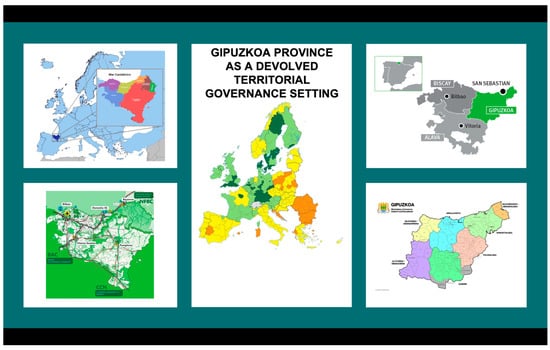
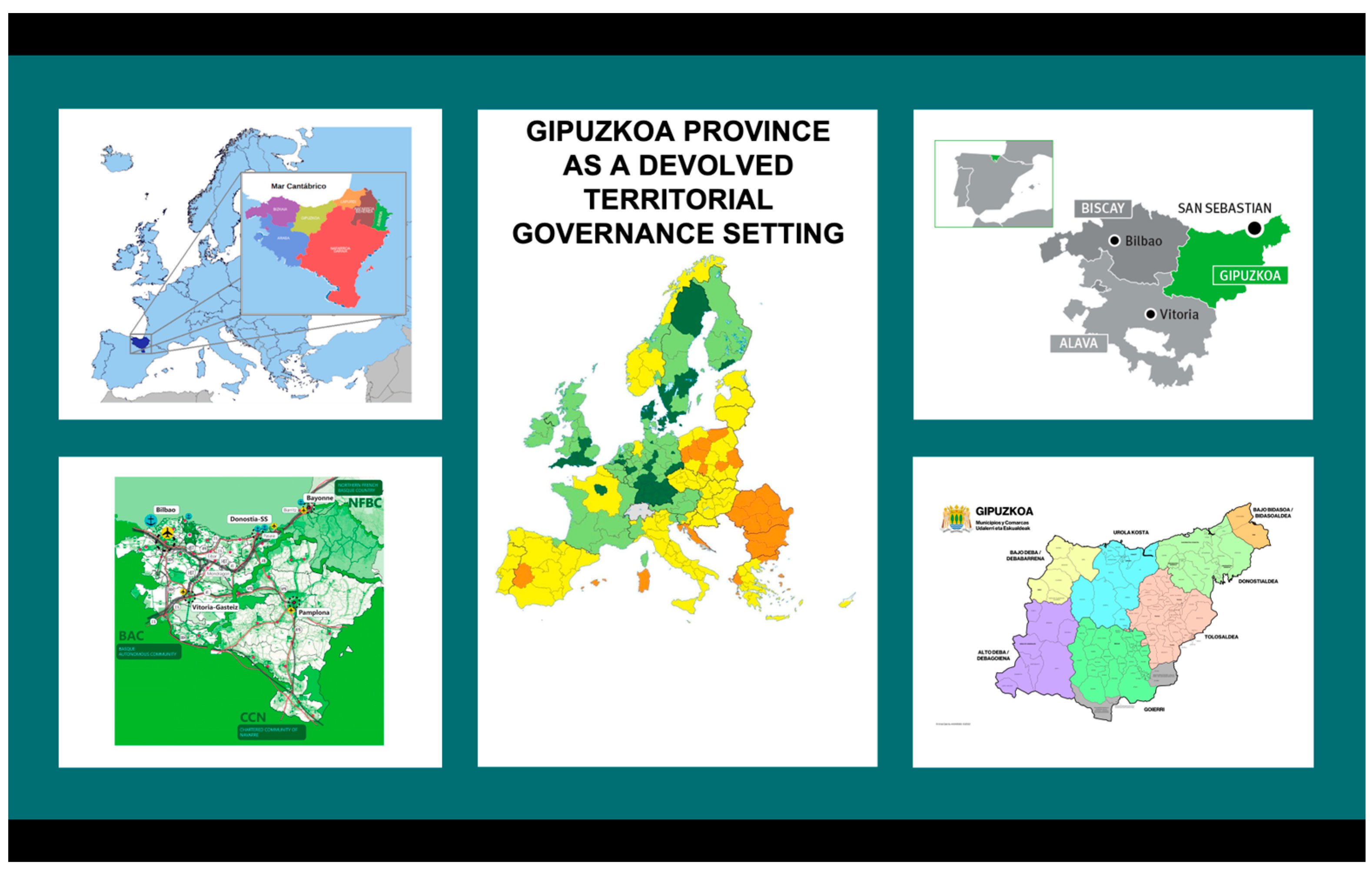


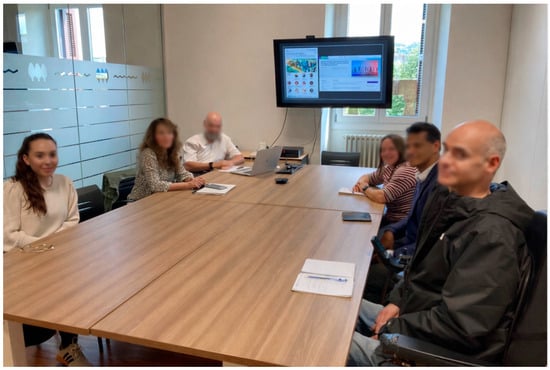
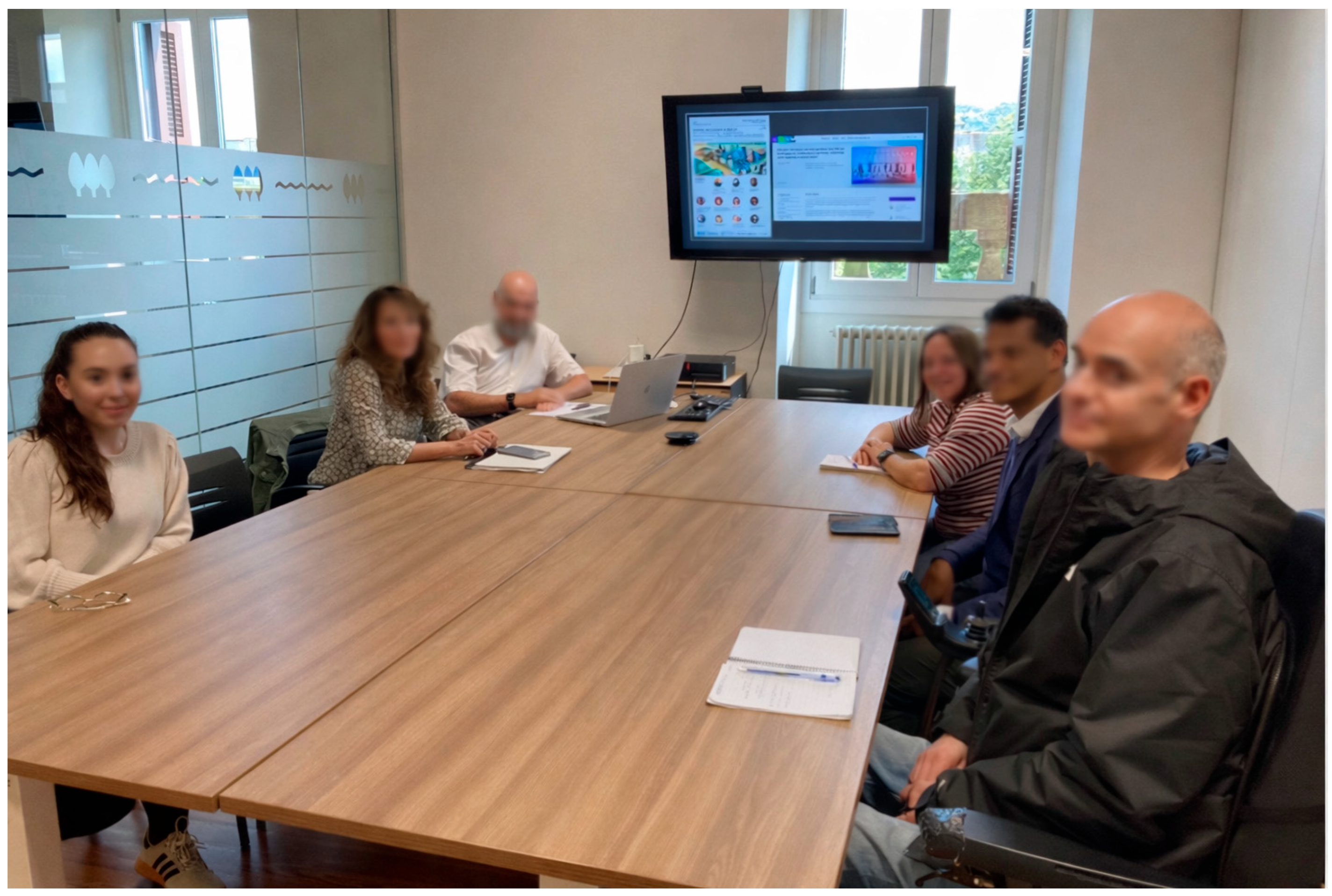


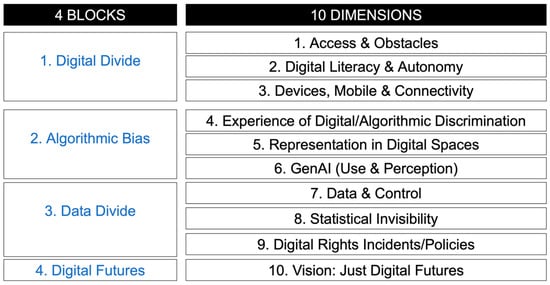
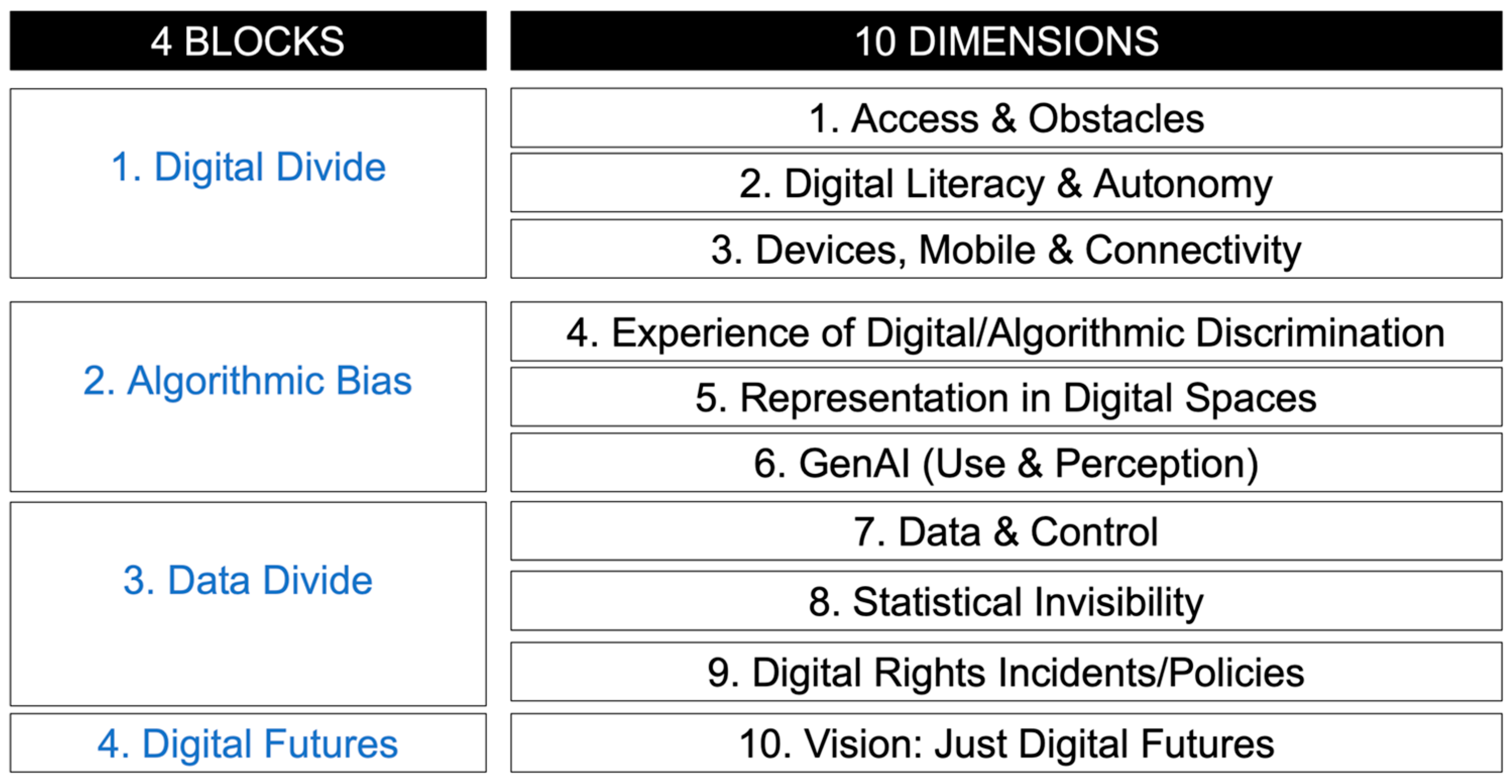

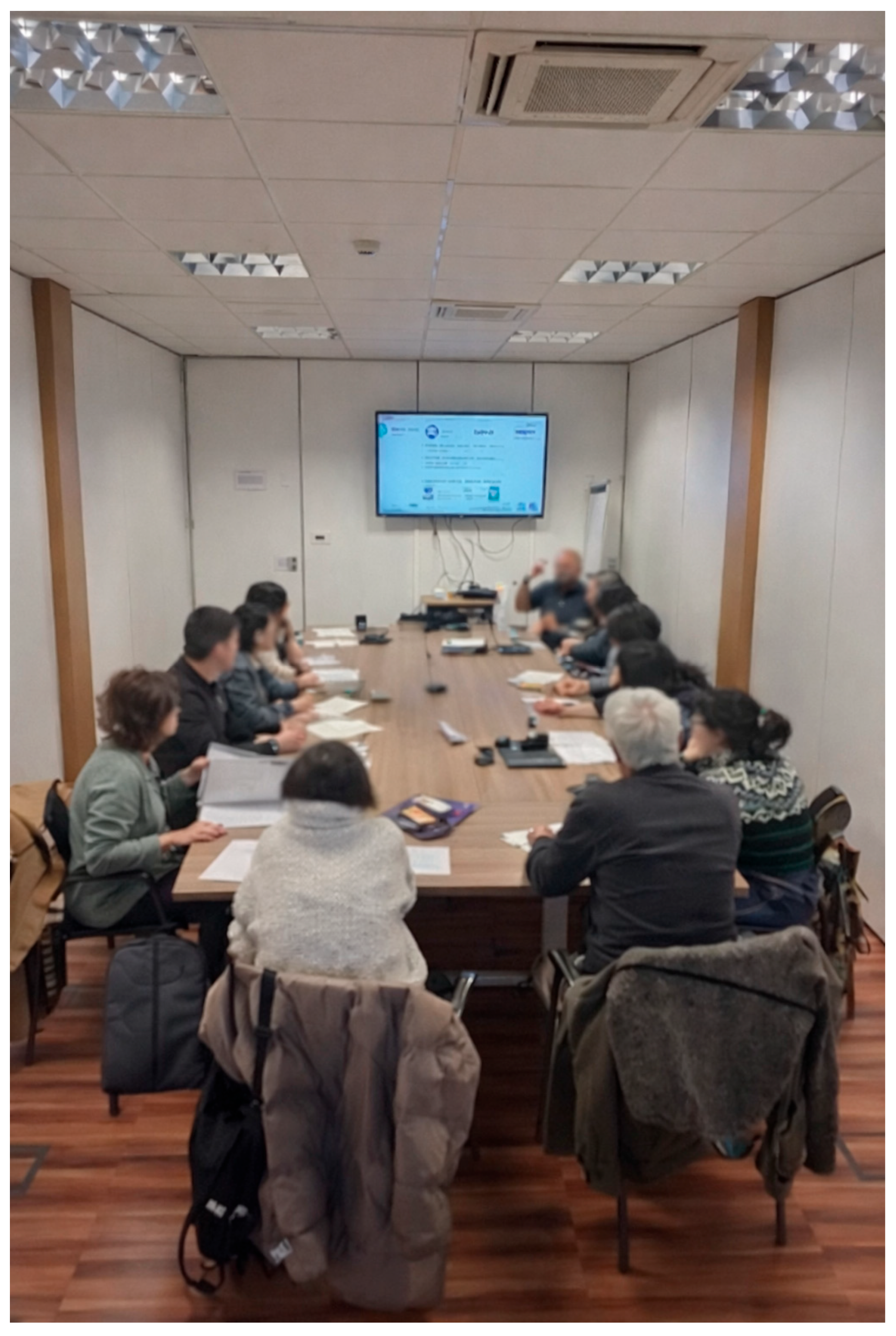

Disclaimer/Publisher’s Note: The statements, opinions and data contained in all publications are solely those of the individual author(s) and contributor(s) and not of MDPI and/or the editor(s). MDPI and/or the editor(s) disclaim responsibility for any injury to people or property resulting from any ideas, methods, instructions or products referred to in the content. |
© 2026 by the authors. Licensee MDPI, Basel, Switzerland. This article is an open access article distributed under the terms and conditions of the Creative Commons Attribution (CC BY) license.