


Abstract
Environmental health services play a critical role in communicable disease outbreaks by addressing environmental determinants of disease transmission. However, the scope, impact, and challenges of Environmental Health Practitioner (EHP)-led interventions remain insufficiently documented. Aim and objectives: This systematic review objectively assessed the role, impacts, and challenges of municipal environmental health services in outbreak response, with a focus on South Africa, to inform the standardisation and strengthening of disease surveillance and prevention. Methods: The PICO framework guided the development of search terms and research questions. PubMed, Scopus, Google Scholar, and Web of Science were searched for English-language, full-text studies published between 2010 and 2024. Studies not meeting these inclusion criteria were excluded. Screening and reporting followed PRISMA guidelines, and data were synthesised using a standardised extraction tool. Results: A total of 58 studies were included. The key EHP functions identified were water quality monitoring, vector control, food safety, waste management, and outbreak response. While South Africa demonstrated comparatively advanced systems, persistent implementation challenges remain, including the integration of environmental monitoring with disease surveillance. The findings emphasised the need for integrating environmental monitoring with disease surveillance systems and integrating WASH and climate-responsive strategies. Conclusions and recommendation: The review recommends strengthening guidelines and advancing evidence-based practice. Enhancing EHP roles within surveillance frameworks is essential for improving outbreak preparedness and public health resilience.
1. Introduction
The resurgence of communicable diseases worldwide, including COVID-19, cholera, measles, typhoid, and influenza, has underscored the importance of timely, coordinated, and multisectoral responses [1]. Consequently, these diseases have the potential to affect the role of Environmental Health Practitioners (EHPs) in disease surveillance. The World Health Organization (WHO) recognises environmental health as a critical component in the prevention and control of communicable diseases and in reducing the emergence and re-emergence of disease outbreaks. Therefore, many outbreaks originate from exposure to environmental factors [2].
In South Africa, communicable disease prevention and control are coordinated by the Department of Health across national, provincial, and municipal levels. Subsequently, the National Institute for Communicable Diseases (NICD) provides technical expertise in surveillance, epidemiology, and laboratory support, working with multiple stakeholders, including EHPs, to strengthen outbreak response systems [3].
Despite this framework, gaps remain in EHP capacity and practices. For instance, cross-sectional studies conducted in the City of Ekurhuleni and the City of Johannesburg found that fewer than half of EHPs could accurately define notifiable diseases or reporting timelines [4]. These gaps may delay detection and response efforts, highlighting the need for enhanced training and standardization of practices [5]. EHPs within Municipal Health Services play a frontline role in monitoring environmental determinants and implementing control measures. However, their contributions are often inconsistently documented and implemented [2]. Therefore, mitigating the burden of disease outbreaks requires effective surveillance, prevention, and response mechanisms.
Existing evidence suggests that challenges such as unclear protocols, limited resources, insufficient training, and weak intersectoral coordination constrain effective outbreak response, particularly in resource-limited settings. While these challenges are recognised, there is a lack of consolidated evidence on the role and impact of environmental health in outbreak contexts.
It is worth noting that, to date, no systematic synthesis has comprehensively examined the roles, impacts, and challenges of environmental health services in communicable disease outbreak response in South Africa. Addressing this gap is essential to support evidence-based policy, strengthen workforce capacity, and improve integrated surveillance-response systems at the municipal level.
This review, therefore, seeks to synthesise the existing literature on the role, contributions, and challenges of EHPs in outbreak response. It aims to inform policy alignment with frameworks such as the WHO Integrated Disease Surveillance and Response (IDSR) and the 7-1-7 approach, and to strengthen public health system resilience.
The significance of the study
The Sustainable Development Goals (SDGs), particularly SDG 3 (target 3.3), emphasise the need to end epidemics of communicable diseases by 2030 [6,7]. Achieving this target requires strong surveillance systems and effective multisectoral collaboration, including environmental health services [8].
This study provides a systematic and evidence-based synthesis of environmental health contributions to outbreak response in South Africa and the SADC region [9]. It identifies key interventions, implementation gaps, and areas for strengthening practice. By clarifying the role of EHPs, the study supports informed decision-making, policy development, and resource allocation [10].
Importantly, this review moves beyond general discussions of surveillance and collaboration by offering consolidated evidence on how environmental health interventions influence outbreak outcomes. The findings highlight practical areas for strengthening guidelines, improving coordination, and enhancing workforce capacity.
Overall, the study contributes to an improved understanding of environmental health within outbreak response systems. It supports the development of integrated, resilient, and context-specific strategies to reduce the burden of communicable diseases at local, national, and regional levels.
The following objectives were therefore considered for the attainment of the study aim:
- To assess the role and impacts of environmental health interventions in effective disease outbreak response;
- To determine the challenges and gaps in environmental health outbreak response practices and suggest areas for improvement;
- To compare environmental health outbreak response practices in South Africa with those in other contexts to identify best practices and lessons for strengthening systems.
Related research questions:
- What are the roles and impact of municipal EHPs in communicable disease outbreak response?
- What are the challenges and gaps affecting the effectiveness of environmental health outbreak response, and how can these be addressed?
- How do EHP-led outbreak response practices in South Africa compare with those in other countries?
2. Materials and Methods
2.1. Study Design
This systematic review was conducted in accordance with the Preferred Reporting Items for Systematic Reviews and Meta-Analyses (PRISMA) 2020 (Monash University, Melbourne, Australia) guidelines to ensure methodological rigor and a transparent review process [11]. The study protocol was registered in the registry of protocol.io with the access link: https://www.protocols.io/private/1D3F1B4B38FC11F1A6900A58A9FEAC02 to be removed before publication (accessed on 1 May 2026) for improved reproducibility and method.
2.2. Search Strategy
The relevant literature was sourced from several commonly used databases for the systematic review, including PubMed, Scopus, Google Scholar, and Web of Science. The search was limited to articles and grey literature published between 2010 and 2024 to identify the most relevant and recent evidence. The core search string included “environmental health,” OR environmental health practitioner, “OR municipal health services.” AND (“communicable disease” OR “disease outbreak”) AND (“outbreak response” OR disease surveillance”) AND (“South Africa”). Search terms were adapted for each database to align with the indexing requirements. The reference lists of included studies were also screened to identify additional relevant publications.
Grey literature was included to capture policy documents and practice-based evidence. Sources included Google Scholar, the University depository, and official publications from the South African Department of Health and international health organisations. Therefore, grey literature was included if it was (i) relevant to environmental health and disease outbreak response, (ii) produced by a credible institution, and (iii) provided sufficient methodological or contextual detail.
Subsequently, the inclusion and exclusion criteria were applied to select the relevant literature for the study.
2.3. Inclusion and Exclusion Criteria
The studies were selected based on the following criteria:
Inclusion criteria:
- Peer-reviewed articles and relevant grey literature published between 2010 and 2024.
- Studies addressing communicable disease outbreak response involving environmental health services or Environmental Health Practitioners (EHPs).
- Studies conducted in South Africa and studies from other regions were included where they provided comparative insights into environmental health practices and outbreak response systems.
- Full-text articles published in the English language.
Exclusion criteria:
- Studies focusing exclusively on non-communicable diseases.
- Studies that were published before 2010.
- Articles that are not available in full-text form.
- Articles written in any language other than English.
The inclusion of non-South African studies enabled comparative analysis to identify best practices and contextual differences in environmental health roles and interventions. Moreover, the Population Intervention Comparison Outcome (PICO) framework guided the development of review questions and eligibility criteria, ensuring alignment with the study objectives and systematic review standards. Subsequently, the framework supports the systematic identification, appraisal, and synthesis of evidence relevant to environmental health services (EHS) in communicable disease outbreak response in South Africa [12]. In support of the above, Table 1 outlines the components of the PICO framework, as per the given objective, for formulating review questions in line with the PRISMA guidelines [11].
Table 1.
PICO strategy.
2.4. Data Extraction and Quality Assessment
Eligible studies were screened and selected according to the inclusion criteria. Data were extracted using a standardised data extraction form to ensure consistency. Extracted variables included the author(s), year of publication, study location, study design, environmental health role, type of communicable diseases, key findings, and challenges. The extracted data were organised into thematic categories aligned with the study objectives. The retrieved data were therefore organised into relevant subject categories. Methodological quality was assessed using the Joanna Briggs Institute (JBI) critical appraisal tools appropriate to each included article’s study design. Quality assessment was conducted to evaluate the reliability, validity, and relevance of the included studies.
2.5. Data Analysis
A mixed-methods approach was used to synthesise the data. Subsequently, qualitative synthesis was undertaken using thematic analysis. Extracted data were inductively coded to identify recurring concepts related to the roles, impacts, and challenges of environmental health in outbreak response. Additionally, codes were grouped into categories and refined into overarching themes.
On the other hand, quantitative summarisation was used to describe the distribution of key variables across studies. Frequencies and percentages were calculated based on the number of studies reporting specific environmental health functions or challenges. These descriptive statistics were used to support the qualitative findings rather than to infer causal relationships, given the heterogeneity of study designs.
Lastly, a comparative analysis was conducted to examine differences between South African and international studies. This enabled the identification of best practices, contextual variations, and system-level gaps in environmental health service delivery.
3. Results
The results of the reviewed articles are presented in this section, starting with the overview of included studies, including their geographic distribution and publication trends, a synthesis of the role of environmental health in outbreak investigation in South Africa, comparative insights of environmental health involvement, challenges, and gaps in outbreak response, and the impact of environmental health in disease control.
3.1. The Overview of Included Studies
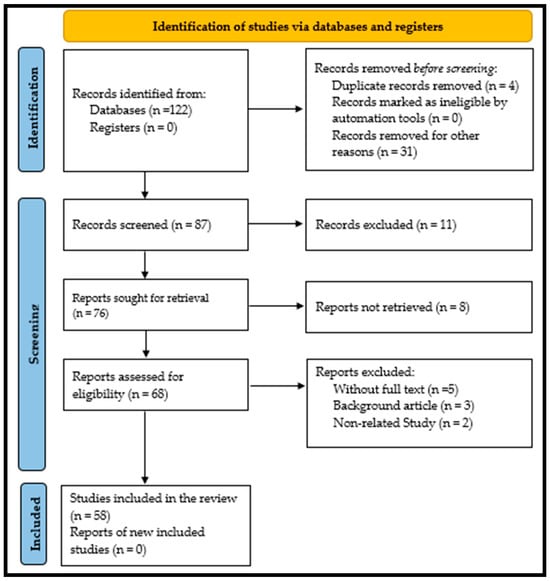
A total of 122 studies were identified, of which 58 met the inclusion criteria after screening, as illustrated in Figure 1 (PRISMA flow diagram).
Figure 1.
PRISMA 2020 [11] flow diagram for identification of articles from the databases.
3.2. Distribution of Included Studies
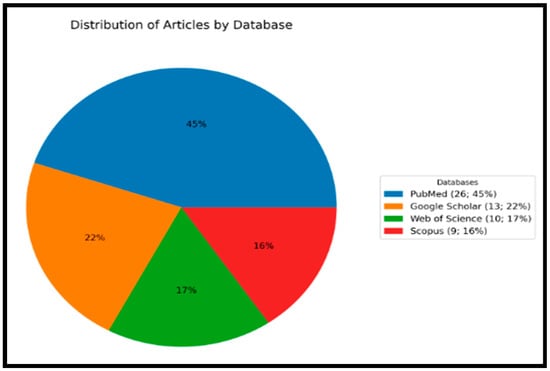
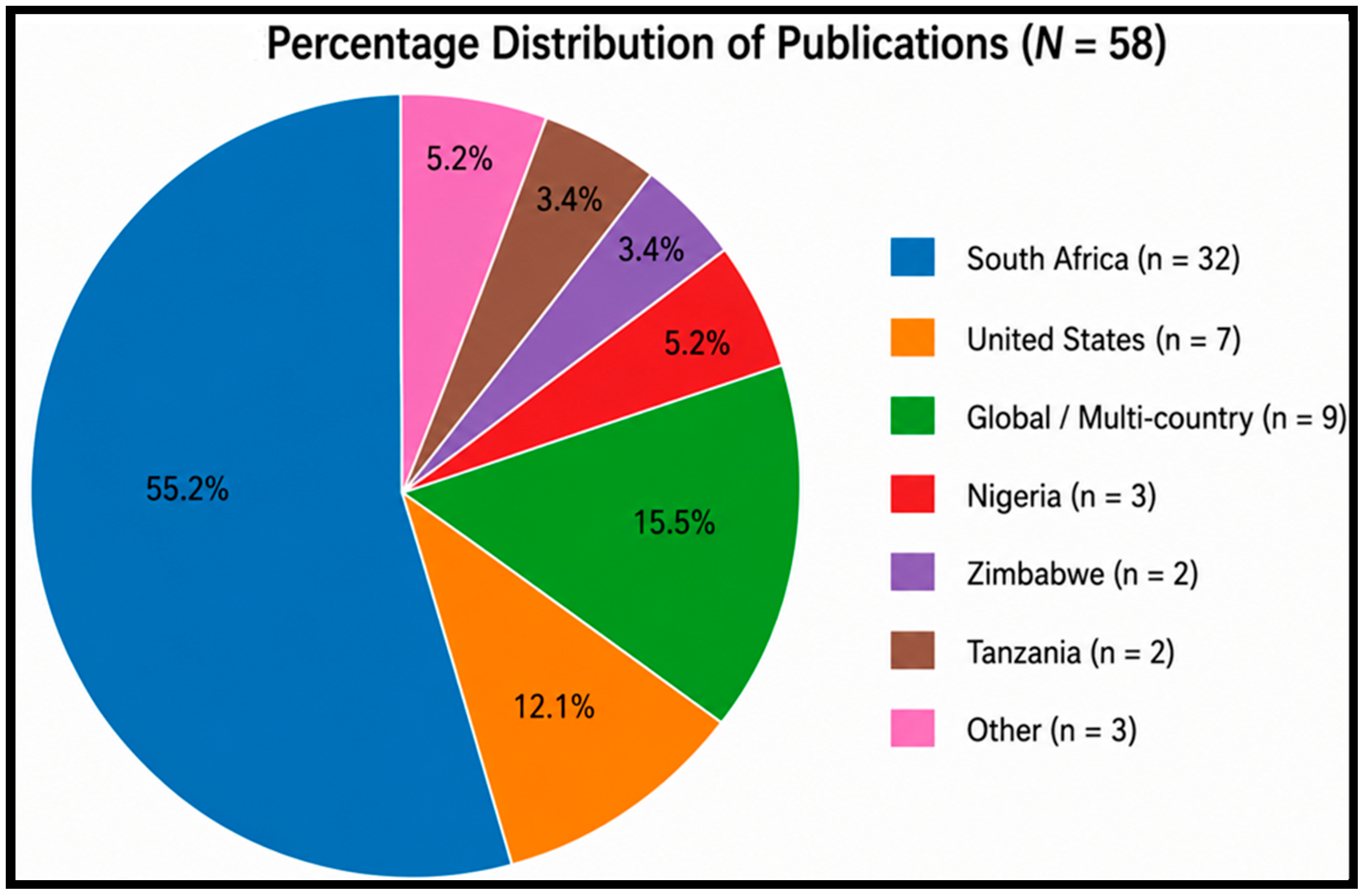
The studies covered various countries and regions, including South Africa, Sub-Saharan Africa, the United States, Nigeria, the SADC region, Korea, Zimbabwe, Tanzania, and Malawi. However, most studies were conducted in South Africa, as indicated in Figure 2. Various study types were considered in the review to gather diverse insights into the field, including case studies, cross-sectional studies, qualitative studies, guidelines, and reports.
Figure 2.
Distribution of articles per database.
3.2.1. Distribution by Database
Furthermore, various databases were considered, as indicated in Figure 2, which provides an overview of the articles included in the review per database. The majority of articles were sourced from PubMed (n = 26, 45%), indicating its dominance as the primary database for health and epidemiology research. Google Scholar contributed 22% (n = 13), reflecting its role in capturing a broader range of academic and grey literature. By comparison, the Web of Science (17%, n = 10) and Scopus (16%, n = 9) contributed smaller proportions of studies.
This distribution demonstrates reliance on established biomedical databases, with supplementary contributions from multidisciplinary and indexing platforms to ensure comprehensive coverage of the literature. Furthermore, Table S2 synthesises and standardises the core study characteristics and provides an overview of the breadth of evidence on environmental health services (EHS) in outbreak response presented by the studies included in the review. However, the review includes global and regional literature that demonstrates considerable methodological, geographical, and thematic diversity, reflecting the multifaceted nature of environmental health services (EHS) in communicable disease outbreak responses in South Africa and other countries.
3.2.2. Geographical Distribution
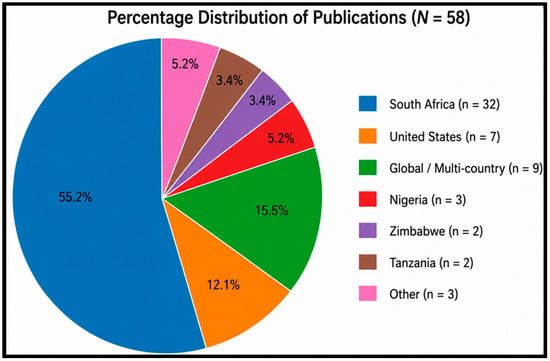
The geographic distribution of studies is summarised in Figure 3, indicating the proportional contribution of each country. The results indicated a strong geographical concentration of evidence from South Africa, which accounted for 32 studies (55.2%), reflecting the country’s extensive research output on environmental health roles in communicable diseases. Subsequently, the global or multi-country studies contributed nine studies (15.5%), highlighting growing international and comparative approaches to communicable disease surveillance. On the other hand, the United States accounted for seven studies (12.1%), primarily focusing on foodborne disease outbreaks, infection prevention and control, and strengthening surveillance systems. In contrast, Nigeria had 5.2%, while Zimbabwe and Tanzania had 3.4%, together accounting for less than 12% of the total publications. This uneven distribution underscores a significant evidence gap in other African countries, despite their high burden of environmentally driven communicable diseases.
Figure 3.
Geographic distribution of included studies per country.
Overall, the above figure demonstrates that, while SA dominates the literature, perhaps due to stronger surveillance institutions like NICD, outbreak documentation, and research capacity in the environmental health field, there remains a critical need to expand empirical research publication outputs across other African countries to support a more context-specific and holistic regionally responsive disease outbreak system.
3.2.3. Distribution by Study Design
A wide range of study designs was identified, reflecting both methodological diversity and varying levels of evidence maturity. Table 2 indicates that 18 studies (31%) were reviews. Cross-sectional studies accounted for 14 studies (24%). Observational and epidemiological studies, such as retrospective reviews, cohort studies, trend analyses, and molecular epidemiology studies, comprised approximately 15 studies (26%) and provided outbreak-specific evidence for diseases such as Listeriosis, measles, influenza, malaria, and COVID-19.
Table 2.
Distribution of included publications by study design.
Overall, the evidence base is dominated by descriptive and synthesis-oriented studies, with relatively few analytical or intervention-based studies. This suggests a need for more robust empirical and experimental research to evaluate the effectiveness of environmental health interventions.
3.3. The Roles of Environmental Health in Disease Outbreak Response in SA
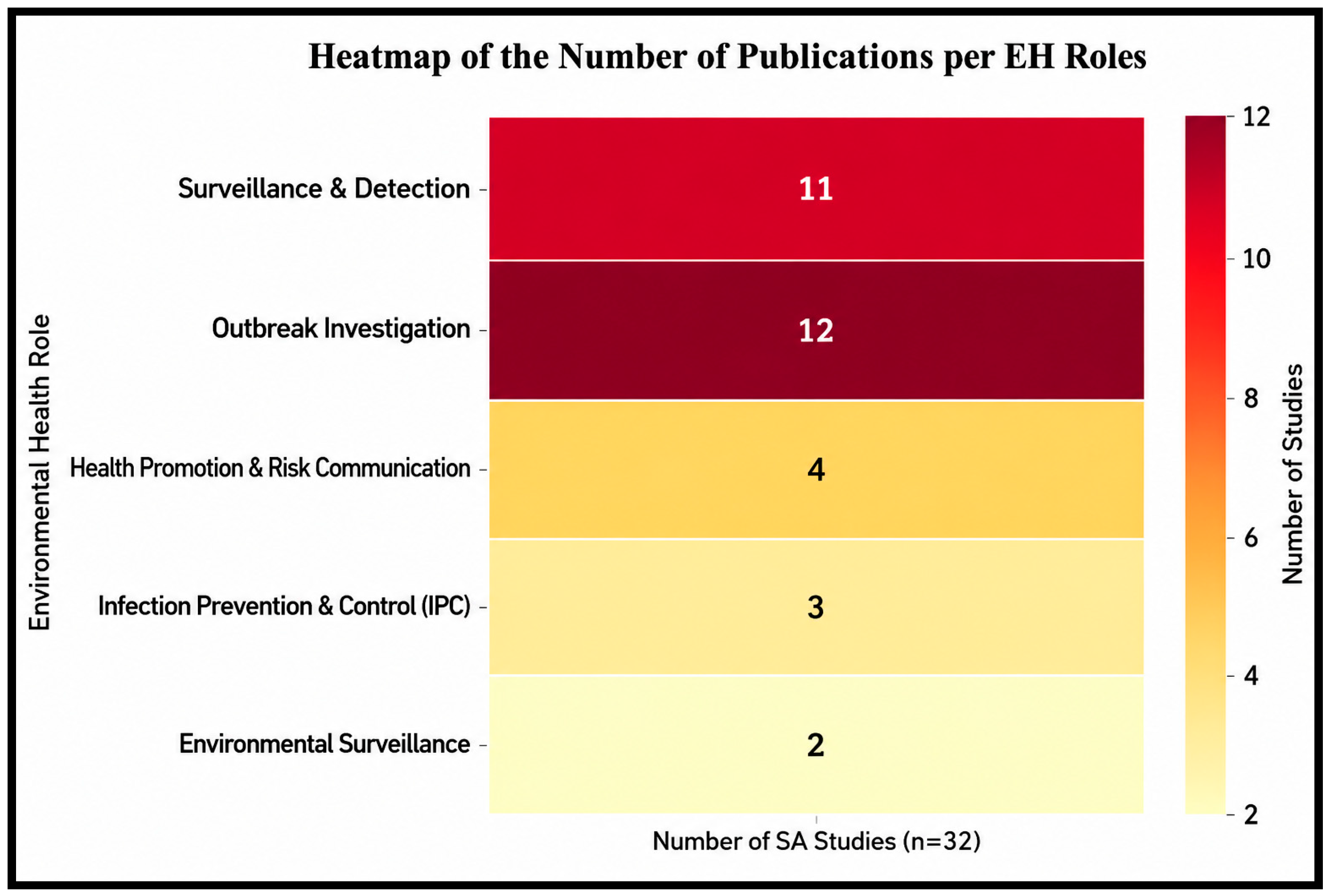
Environmental Health Practitioners were consistently identified as the frontline actors. Their roles are summarised in Table 3, and further illustrated in Figure 4.
Table 3.
The roles of Environmental Health Practitioners in outbreak response.
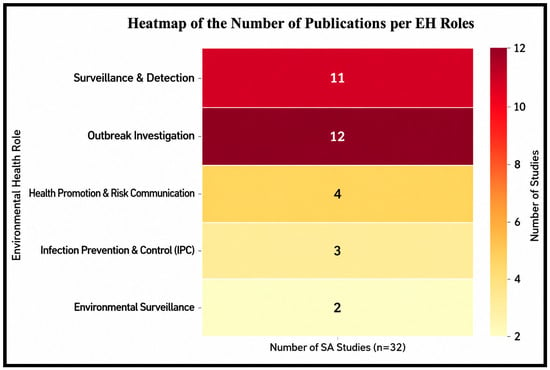
Figure 4.
Distribution of publications per EH role.
To support the results in Table 3 above, Figure 4 shows the number of publications by environmental health role.
Therefore, the mentioned roles cover the preventive, investigative, control, and restoration functions that link human, environmental, and institutional determinants of disease outbreaks. This aligns with the One Health and Integrated Disease Surveillance and Response (IDSR) approaches, which emerged as integrative frameworks that promote intersectoral collaboration among the health, animal, and environmental sectors.
In general, the studies highlighted the involvement of EHPs in water quality monitoring, sanitation, and waste management (WASH services), food safety inspections, vector control, community health education, malaria control, notifiable disease investigation, health hazard assessments, and outbreak response coordination.
The Frequency of Analysis of EH Roles
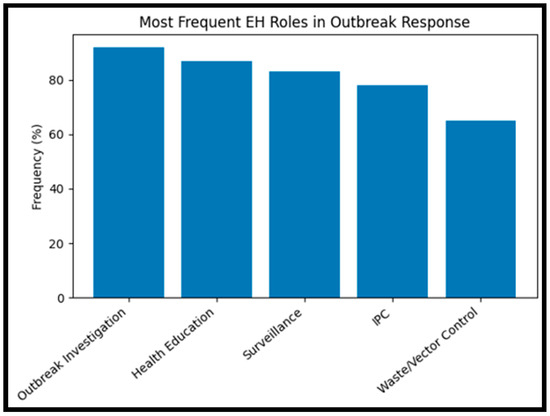
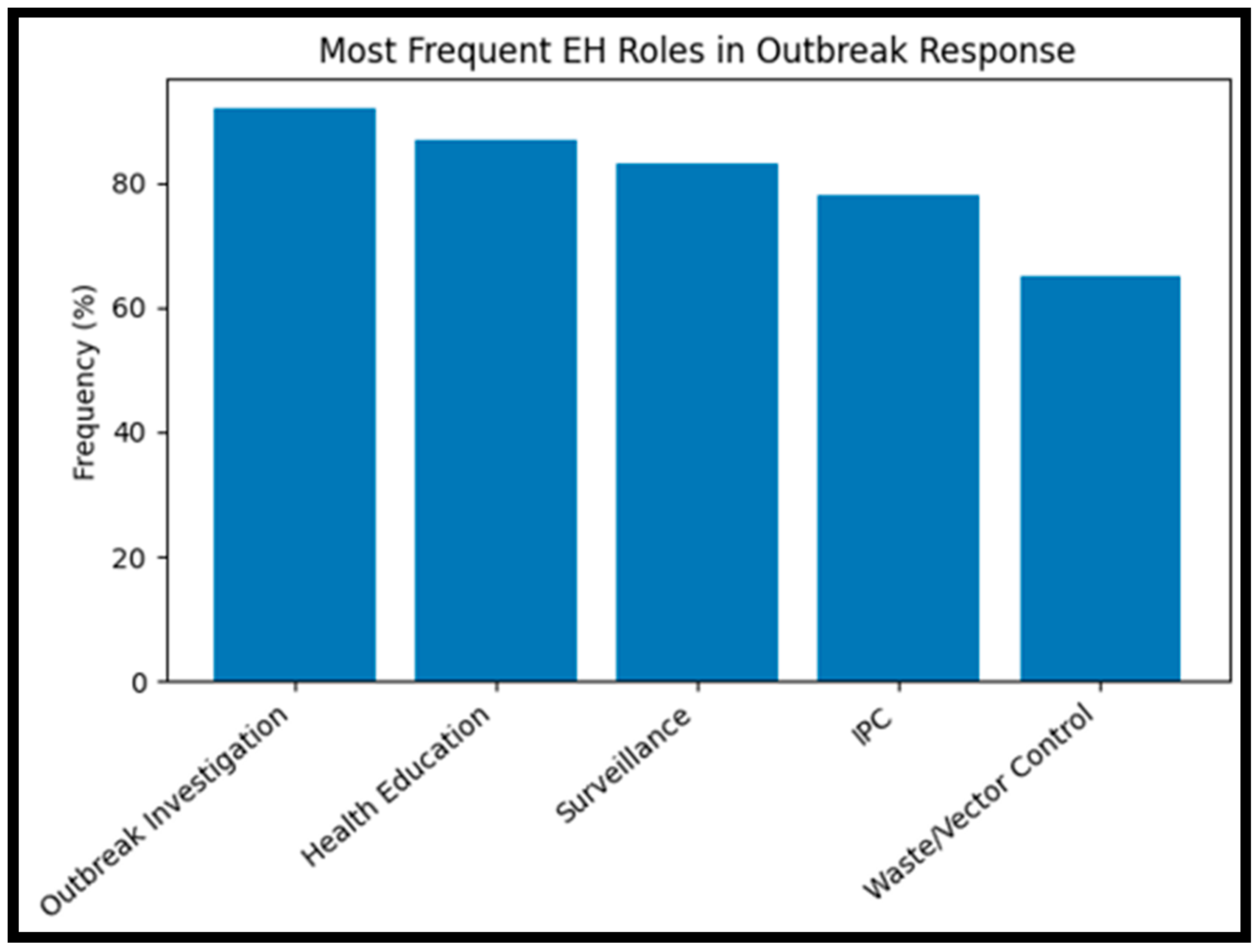
Across studies, outbreak investigation and surveillance were the most frequently reported roles (above 80%), followed by IPC and vector control above 60% (Figure 5).
Figure 5.
The most frequent EH Roles in communicable disease outbreak response.
In summary, the results on the role distributions and frequency confirmed that EH engagement is largely reactive and response-oriented, which may, however, undermine the outbreak prevention efforts.
3.4. The Impact of Environmental Health Interventions on Outbreak Response
Interventions were shown to contribute measurably to outbreak prevention and control. The impact of environmental health interventions is summarised in Table 4. Key findings include the following:
Table 4.
The impact and interventions of environmental health.
Overall, interventions were most effective in diseases with strong environmental determinants. Interventions were shown to contribute measurably to outbreak prevention and control.
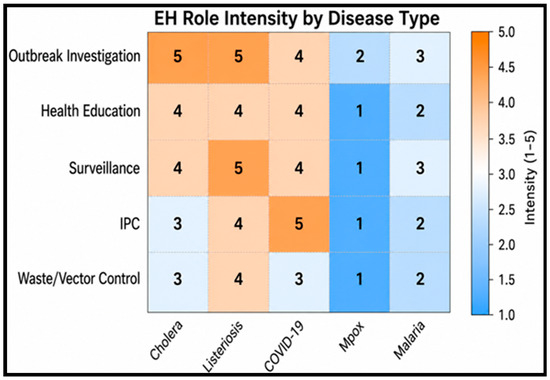
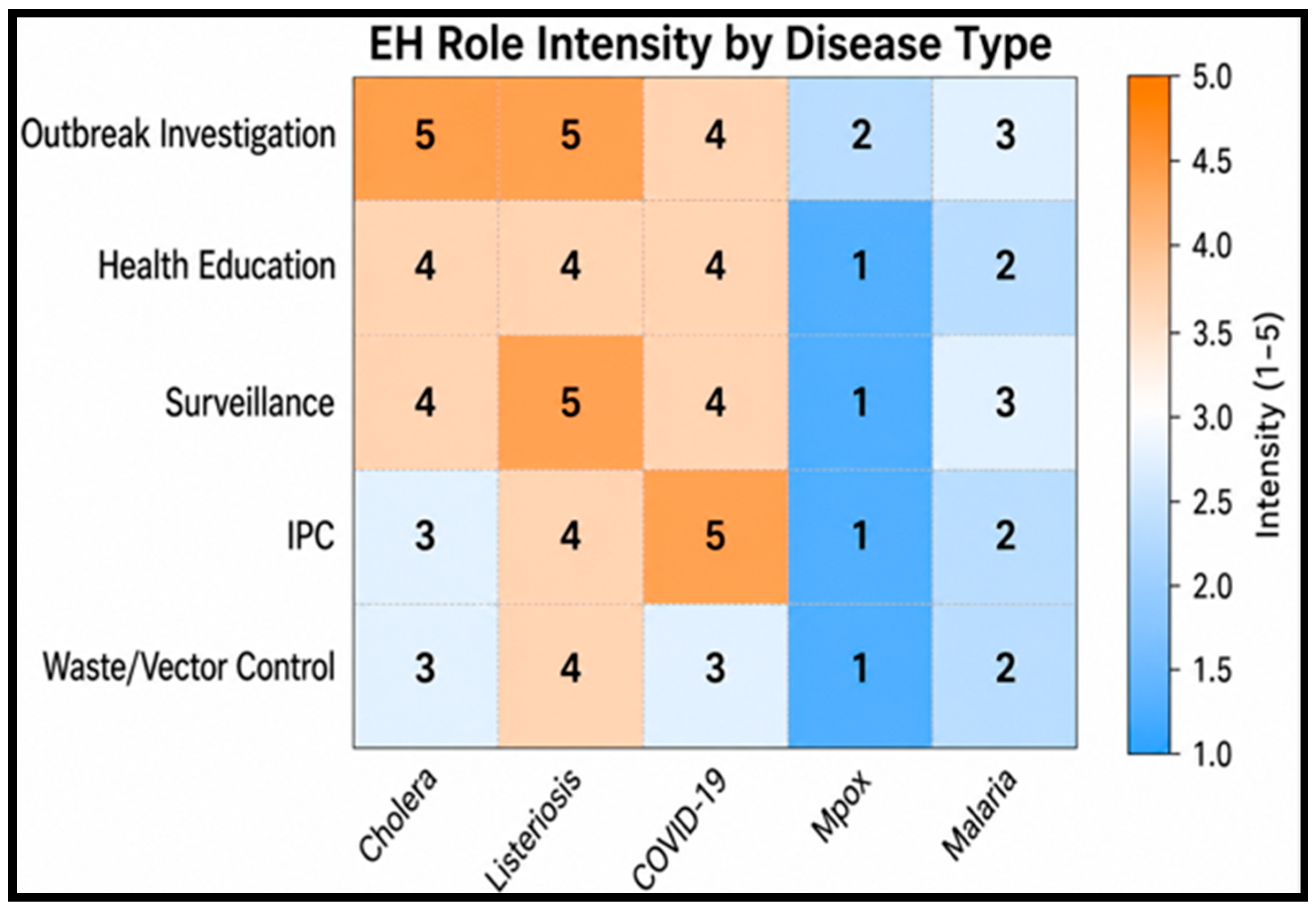
Additionally, the heatmap (Figure 6) illustrates the relative intensity (on a 1–5 scale) of EH roles reported across key disease categories, such as cholera, Listeriosis, COVID-19, Mpox, and malaria [12,13]. The higher values indicate stronger and more consistent engagement of EH in that outbreak type. Therefore, EH engagement is strongest in outbreak investigation and surveillance, particularly for Listeriosis and cholera, both of which score 5 in outbreak investigation, and for COVID-19, which scores 4. This underscores the importance of environmental source identification, environmental sampling, and intersectoral collaboration during acute outbreaks. Similarly, surveillance demonstrated strong engagement with cholera and COVID-19 (score 4) and Listeriosis (score 5), indicating active involvement in monitoring environmental risks and supporting early detection systems. Infection prevention and control (IPC) was most prominent during the COVID-19 outbreak, with a score of 5, reflecting the heightened need for environmental disinfection, waste management, ventilation, and compliance monitoring in health care and community settings.
Figure 6.
The intensity of EH role by disease type.
In contrast, Mpox disease scored lower across all roles, suggesting less involvement of EH, limited environmental or infrastructure-related interventions, and a greater reliance on clinical and epidemiological response mechanisms.
Overall, the above results demonstrated that EH contributions were more evident in outbreaks with strong environmental determinants. In contrast, diseases with predominantly person-to-person transmission or clinical management pathways showed comparatively lower EH involvement. These findings highlight the need for disease-specific role optimisation and for strengthening EH integration in emerging and re-emerging outbreaks where environmental determinants may be unrecognised.
3.5. Outbreak Response Systems
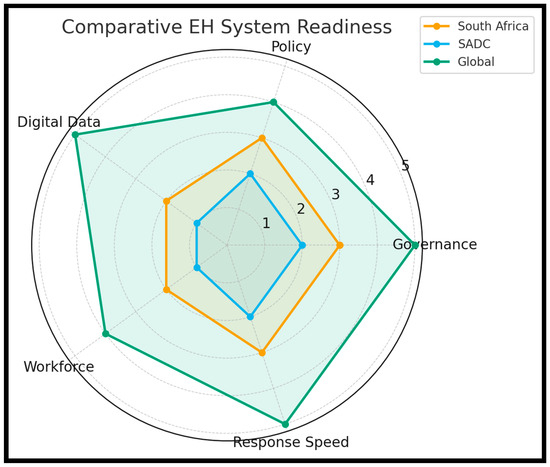
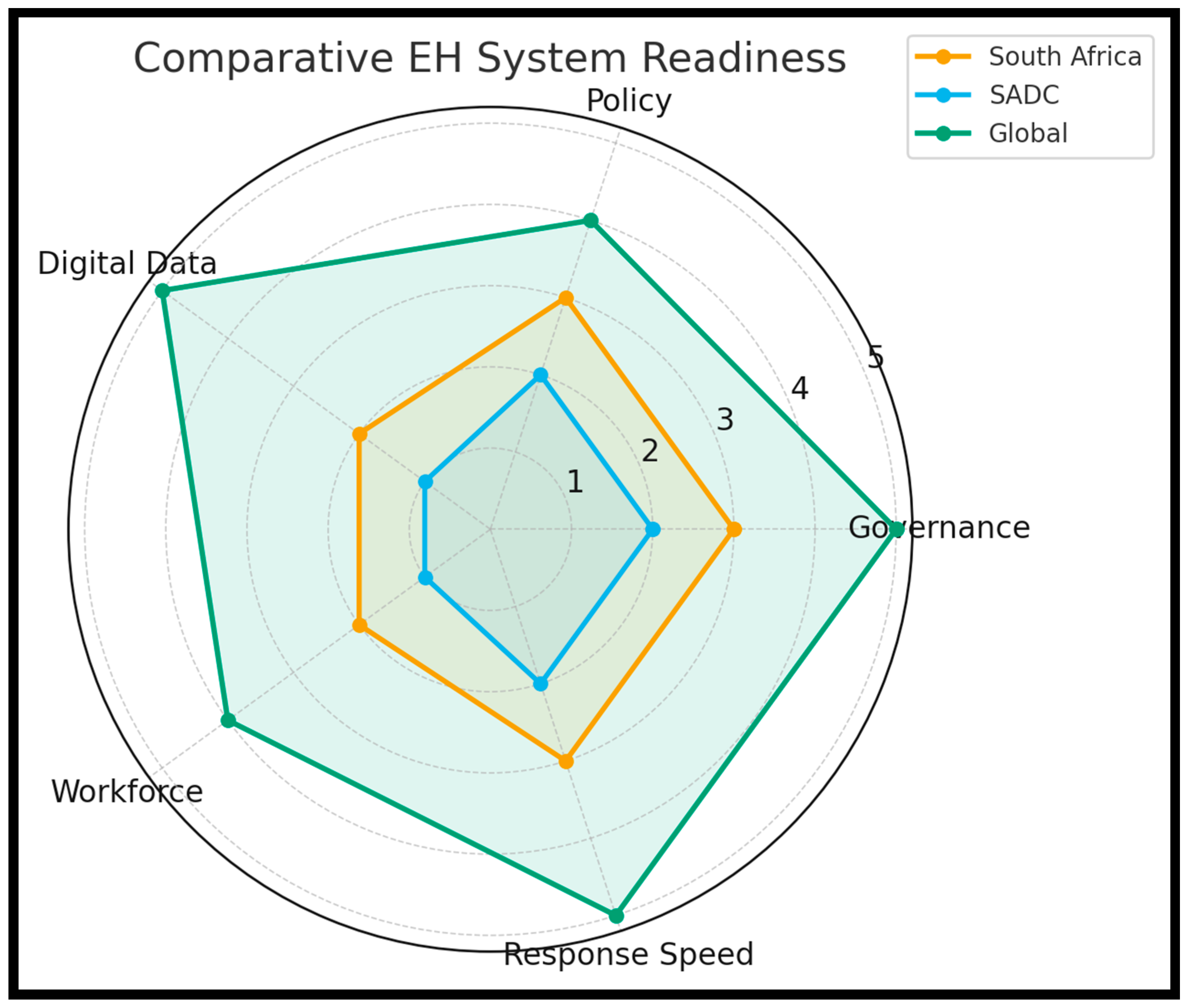
The comparison of system readiness (Figure 7) highlights regional variations. Given the several WHO frameworks developed to assist member countries in combating mortality and morbidity from communicable disease outbreaks, Principle 7-1-7 provides guidance for all nations. This principle was especially directed at developing nations for detecting, reporting, and responding to such outbreaks. Therefore, each country is expected to establish a system aligned with these frameworks and ensure its implementation at the grassroots level.
Figure 7.
Comparative environmental health system readiness across South Africa, the SADC region, and global benchmarks.
Globally, environmental health systems demonstrate high levels of readiness, particularly in governance, digital systems, and response speed. South Africa shows moderate readiness, with strengths in governance and policy alignment. However, gaps remain in digital integration and workforce capacity.
In contrast, the SADC region demonstrates lower readiness across most domains, particularly in digital infrastructure and human resources. The following Figure 7 illustrates the comparative EH systems in South Africa, SADC, and globally.
Overall, the findings indicate a gradient of preparedness, with South Africa positioned between global benchmarks and the broader SADC region. Targeted improvements in workforce capacity and digital systems are required to strengthen outbreak response.
3.6. Comparative Insights in Disease Outbreak Studies and Environmental Health
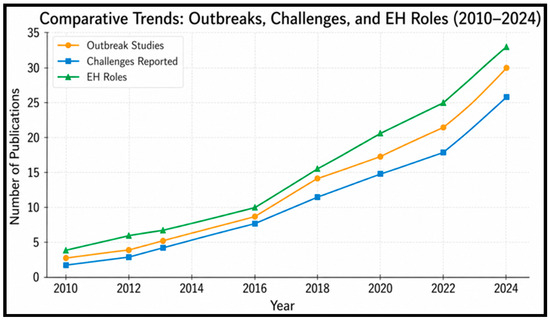
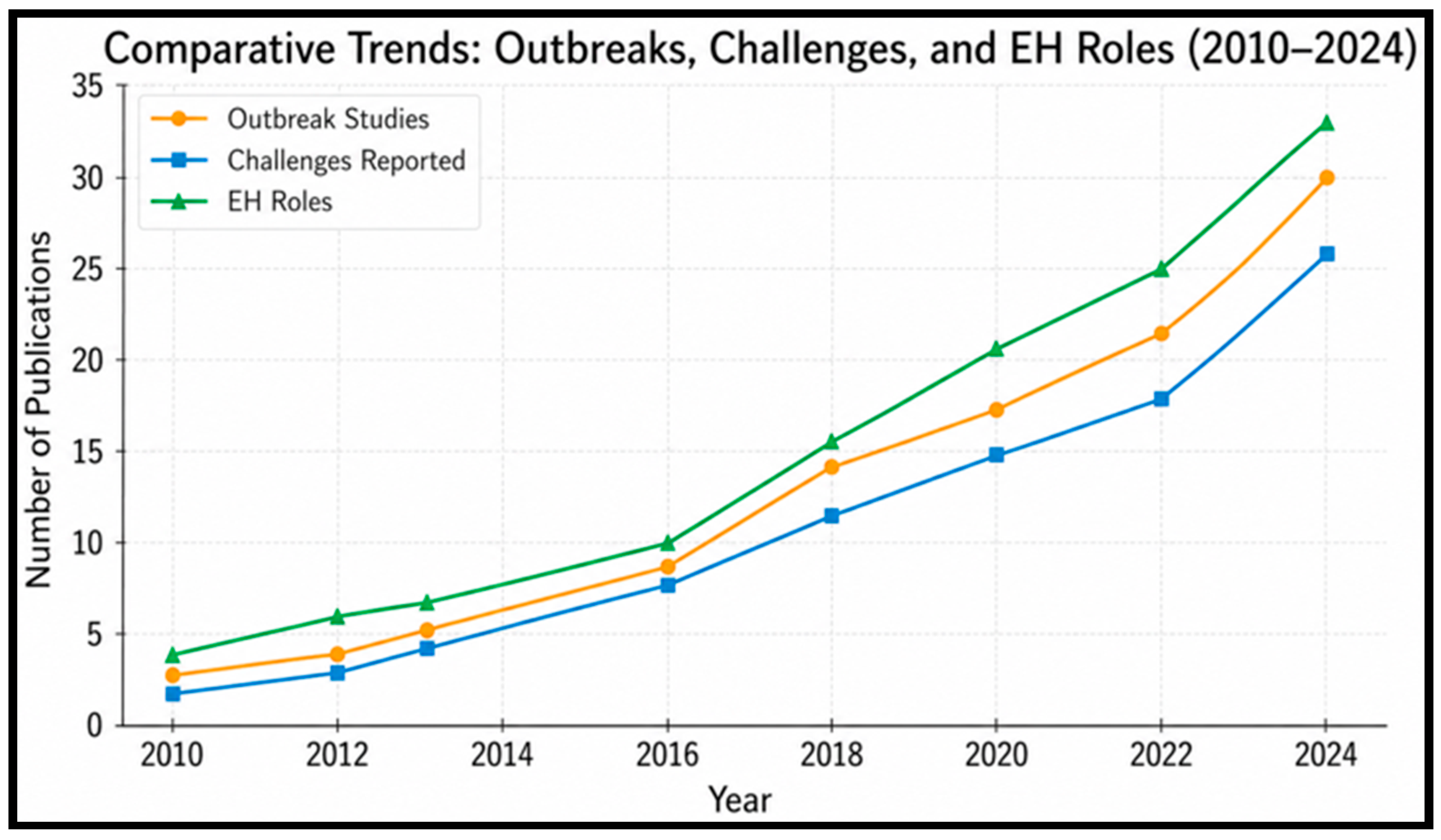
The comparative analysis of disease outbreak studies across regions highlighted substantial variations in the scope, intensity, and integration of EH roles within outbreak preparedness, detection, and response systems. Figure 8 illustrates a clear and sustained increase in publications on outbreak studies over the period 2010–2024. Therefore, this reflects a growing scholarly focus on outbreak detection, investigation, and response. Publications related to outbreaks rose steadily from low levels in 2010, then accelerated after 2016, with the steepest growth observed between 2019 and 2024. These patterns align with heightened global attention to emerging and re-emerging infectious diseases, particularly following major public health events such as Ebola outbreaks in the SADC regions and the COVID-19 pandemic. Similarly, between 2013 and 2017, a moderate increase was observed, coinciding with major outbreaks such as cholera, measles, tuberculosis, and foodborne diseases. Overall, the upward linear trend indicates that outbreak studies have increasingly become a central theme within communicable disease research, driven by the need for evidence to inform preparedness, surveillance, and rapid response mechanisms. This trend suggests a shift from sporadic outbreak-focused research toward a more systematic, sustained body of literature, underscoring the growing importance of outbreak analytics in strengthening public and environmental health systems.
Figure 8.
Comparative trends on outbreaks, along with challenges and EH roles.
Therefore, these findings suggest that strengthening environmental health systems in lower-resource settings should prioritise workforce development, integration into surveillance systems, and expansion of preventive functions such as community-based environmental monitoring.
Comparative Results of Environmental Health Roles Across Countries
Table S1 of the Supplementary Materials, as well as Figure 4, highlights regional differences in both the volumes of publications and the nature of environmental health (EH) roles reported in communicable disease outbreak responses. As previously indicated, SA accounts for the largest proportion of publications and offers the most comprehensive and diverse range of environmental health services in communicable disease prevention and control, as shown in Figure 4. Additionally, Table 5 below demonstrates variations in environmental health roles across publication volumes and supports the argument regarding inequity, fragmentation, and system maturity. Subsequently, studies from SA consistently document EH engagement across multiple functions, as illustrated earlier in Figure 2. However, the extent to which EH roles are established at the country or regional level is summarised in Table 2, reflecting a relatively well-established legislative mandate for EH practice and stronger institutional integration of EH within communicable disease surveillance and outbreak response systems [16,40]. Nevertheless, challenges exist, as highlighted in several publications in Table S2. Studies from the United States have largely highlighted EH involvement in outbreak investigation, food safety enforcement, and IPC, particularly in foodborne disease and outbreaks associated with healthcare settings (Nosocomial disease outbreaks) [14,58]. However, health promotion and routine environmental surveillance at the community level are reported less prominently, reflecting a system in which EH roles are more specialised and incident-driven rather than broadly embedded across the surveillance continuum [58]. Subsequently, the evidence from other African countries, including Nigeria, Zimbabwe, and Tanzania, is comparatively limited and indicates a narrower scope of environmental health engagement. In cases reported, environmental health roles are primarily confined to surveillance support, outbreak investigation, and selected vector or environmental control activities, with minimal documentation of sustained health promotion or integrated environmental surveillance. This restricted role profile reflects resource constraints, especially in low- and middle-income countries like those in Africa [45].
Table 5.
A Summary of comparative analysis on the role of EH by region.
Collectively, these comparative insights reinforce the need to shift from predominantly reactive environmental health involvement to a comprehensive preventive model. Therefore, broadening the environmental health role, especially in surveillance integration, early warning systems, outbreak investigation, health promotion, and risk communication, would enhance outbreak resilience across regions.
3.7. Gaps in Current Outbreak Response Systems and Areas for Improvement
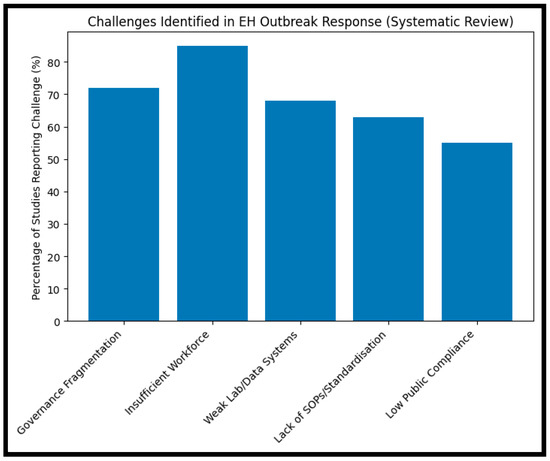
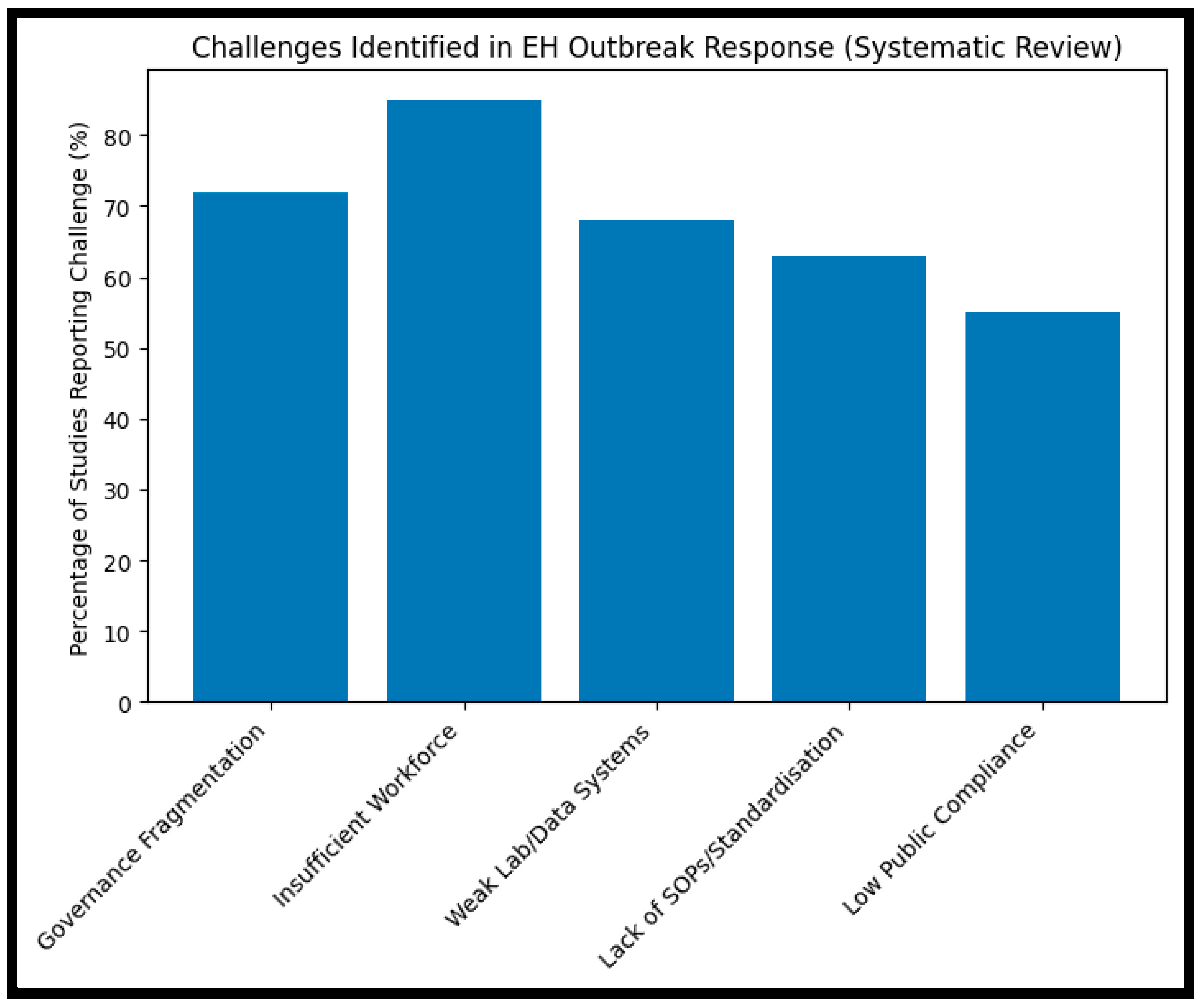
The review highlighted several interrelated systemic barriers that hinder the effectiveness of EHPs’ contributions to preventing and controlling communicable disease outbreaks in South Africa. These included an insufficient workforce, governance fragmentation, weak laboratory or data systems, lack of standardization, and low public compliance with measures for disease outbreak control, with an insufficient workforce being the most reported challenge, followed by governance fragmentation [30,40], as presented in Figure 9. However, these challenges were also reported in other African countries, such as Tanzania, Zimbabwe, and Nigeria, outside South Africa [19,57]. Therefore, these barriers also reflect structural, operational, and capacity-related challenges that compromise early detection, timely reporting, and coordinated action during outbreak events.
Figure 9.
Challenges in EH outbreak response system.
Despite the challenges identified in Figure 9, several strategies, such as the Integrated Disease Surveillance and Response (IDSR) strategy, Principle 7-1-7, and the International Health Regulation (IHR 2005), were developed by WHO to assist African countries in mitigating these challenges [60]. However, most countries, particularly low- and middle-income countries, continue to struggle to implement existing strategies [55,59].
3.8. The Challenge vs. Solution on Disease Control in South Africa
In summary, the results demonstrated that the existing literature on environmental health roles in communicable disease outbreaks is geographically concentrated, consists of temporally reactive contributions to major public health emergencies, and is methodologically skewed toward descriptive and review designs, underscoring the need for more diverse, intervention-focused, and contextually representative research, particularly across underrepresented African countries.
Subsequently, Table 6 summarises the key challenges alongside the proposed solutions identified in the literature. These include strengthening capacity through training and resource allocation, improving multisectoral collaboration, enhancing digital surveillance systems, and developing standardised policies and operational frameworks.
Table 6.
Proposed solutions by literature and future directions.
By strengthening these areas, environmental health interventions can play a more effective role in safeguarding public health and preventing disease outbreaks in South Africa and other SADC countries.
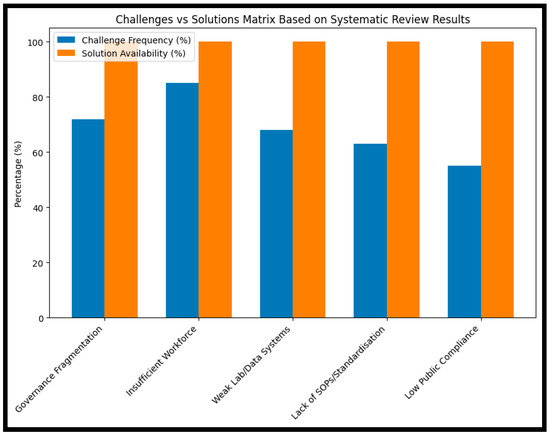
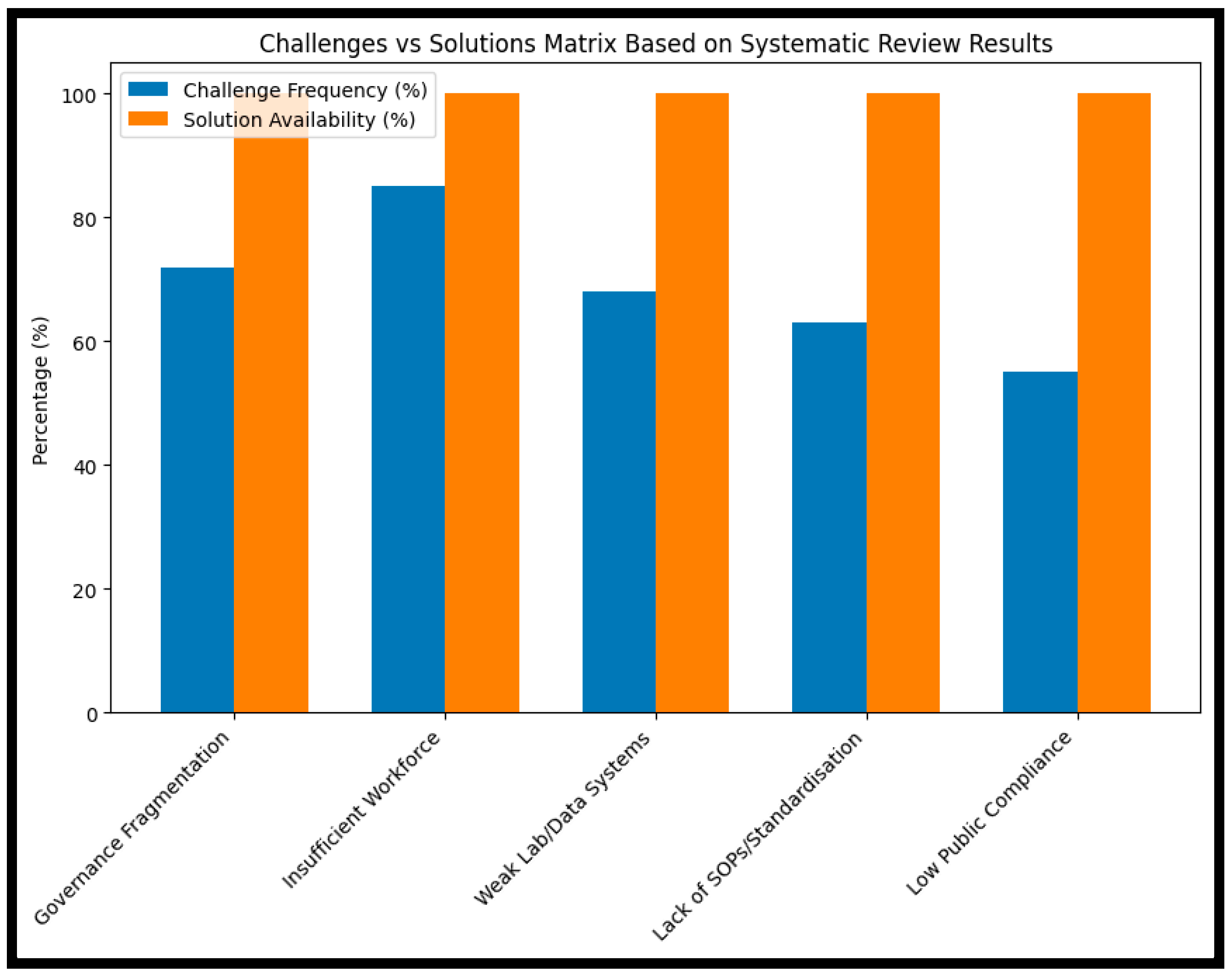
The challenge and solution matrix (Figure 10) maps the major challenges identified in the review against the availability of evidence-informed solutions. The matrix supports translating review findings into practical, relevant policy actions.
Figure 10.
The matrix of challenges and solutions.
Overall, these findings suggest that stronger institutional frameworks and integration enhance the effectiveness of environmental health systems. Expanding surveillance, strengthening workforce capacity, and improving coordination are critical for improving outbreak preparedness.
4. Discussion
4.1. Central Role of Environmental Health in Outbreak Response
This review confirms that environmental health is a core component of the prevention and control of communicable disease outbreaks. Environmental Health Practitioners (EHPs) contribute across the outbreak continuum, including surveillance, investigation, risk communication, and the implementation of control measures. These roles are closely linked to key environmental determinants such as water quality, sanitation, food safety, and vector control [2,3].
In South Africa, municipal health systems enable relatively strong engagement of environmental health services. However, this role is not fully institutionalised within national outbreak response systems. For example, the limited inclusion of environmental health stakeholders in surveillance system assessments highlights a structural gap. Strengthening formal recognition of EHPs within national frameworks is therefore essential to improve coordination and response effectiveness, as reported by Benson et al. 2016 [18].
4.2. Predominance of Reactive Rather than Preventive Approaches
The findings indicate that environmental health involvement remains largely reactive, with strong engagement during outbreak investigation and response, but limited emphasis on prevention. This reactive orientation reduces the potential of environmental health systems to serve as early warning mechanisms [12,15].
Preventive approaches such as routine environmental surveillance, wastewater monitoring, and proactive risk assessments have demonstrated the ability to detect risks before outbreaks occur [4]. Expanding these functions would strengthen early detection, reduce transmission, and improve preparedness. A shift toward prevention-oriented systems is therefore critical to reduce the frequency and severity of outbreaks.
4.3. Importance of Integrated Surveillance Systems
The study highlights persistent gaps in integrating environmental health data into epidemiological surveillance systems. Although environmental monitoring activities are widely implemented, they are often poorly linked to national reporting platforms.
This disconnects, delays detection, and limits coordinated responses. Integrated systems, such as those promoted by the Integrated Disease Surveillance and Response (IDSR) framework, enhance early warning and response capabilities, especially in resource-limited settings [42,50]. Strengthening interoperability, data-sharing protocols, and digital infrastructure is therefore essential.
Countries with stronger digital integration demonstrate more effective outbreak control. In contrast, South Africa and the broader SADC region continue to face challenges related to fragmented data systems and limited interoperability, underscoring the need for targeted investment.
4.4. Contribution of WASH and Environmental Interventions
WASH (water, sanitation, and hygiene) interventions remain among the most effective environmental health strategies. Evidence from South Africa shows measurable outcomes, including a reported 31% reduction in child diarrhea mortality over time, associated with improved compliance with water quality standards [21].
Environmental health interventions, such as food safety enforcement, waste management, and infection prevention and control (IPC), have also contributed to rapid outbreak containment, particularly for foodborne and healthcare-associated infections [6,7].
Therefore, to translate these findings into policy, WASH and environmental interventions should be systematically integrated into municipal and national environmental health frameworks. These measures include embedding WASH indicators in surveillance systems, aligning interventions with national health policies and SDG targets, strengthening regulatory enforcement and compliance monitoring, and incorporating environmental risk assessments into routine planning.
Conclusively, such integration would support scalable, evidence-based prevention strategies.
4.5. Systemic Challenges Limiting Effectiveness
Despite their importance, environmental health services face several systemic challenges, including workforce shortages, fragmented governance, inadequate funding, and limited technical capacity [46,55].
Governance fragmentation across national, provincial, and municipal levels continues to hinder coordination. This can be addressed by establishing intergovernmental coordination platforms for outbreak response, developing standardised operating procedures (SOPs) across all levels, and strengthening accountability mechanisms and communication channels.
In addition, digital limitations constrain effective monitoring and response. Practical steps for improvement include adopting Geographical Information Systems (GISs) for spatial risk mapping, implementing real-time data reporting systems, and integrating environmental and epidemiological datasets.
These measures would enhance coordination, improve decision-making, and support timely interventions.
4.6. Regional and Global Comparisons
The comparative analysis demonstrates clear differences in the maturity of environmental health systems across regions. South Africa shows relatively strong institutional capacity, while other SADC countries exhibit more limited and reactive engagement.
In contrast, high-income countries such as the United States demonstrate advanced technological capacity, particularly in food safety and in healthcare-associated outbreaks. However, these systems are often more specialised and less focused on community-level interventions.
These variations underscore the importance of context-specific strategies. Strengthening environmental health systems in Africa will require investment in capacity building, research, and locally relevant implementation models. Expanding evidence from underrepresented regions is also critical to developing adaptable and sustainable solutions.
4.7. Implications for Policy and Practice
The findings have several implications for strengthening outbreak response systems, including institutional integration, in which environmental health must be formally embedded within national surveillance and response frameworks to ensure its role is recognised and operationalised.
Secondly, workforce development, including investment in training and capacity building, is essential to address existing human resource gaps. Thirdly, multisectoral collaboration is required to strengthen coordination among the environmental, clinical, and epidemiological sectors.
On the other hand, the adoption of digital transformation tools such as GIS, digital dashboards, and integrated data systems should be prioritised. Learning from global best practices, countries such as the United States (through FoodCORE) and regions in Africa with integrated IDSR implementations demonstrate how structured surveillance systems and coordinated outbreak response mechanisms can improve outcomes. These examples offer practical models for adapting policies to the South African context.
Finally, the shift toward prevention-focused systems that prioritise environmental surveillance, early warning systems, and community engagement is essential to building resilient health systems.
5. Conclusions
Environmental health is a critical pillar of communicable disease prevention and outbreak response. This review demonstrates that Environmental Health Practitioners (EHPs) play a central role in addressing the environmental determinants of disease through surveillance, investigation, and the implementation of control measures. In South Africa, these contributions are well established but remain unevenly integrated into broader outbreak response systems.
The findings highlight the importance of adopting integrated approaches that combine environmental monitoring, water, sanitation and hygiene (WASH) interventions, and climate change adaptation strategies. Strengthening these components could significantly reduce the burden of communicable diseases, particularly in resource-constrained settings.
Despite these contributions, persistent challenges, including limited workforce capacity, fragmented governance, insufficient data integration, and inadequate resources, continue to constrain the effectiveness of environmental health systems. Addressing these gaps requires targeted strategies, including expanding and upskilling the environmental health workforce, increasing financial and infrastructural investment, strengthening intergovernmental coordination, and enhancing the adoption of digital tools such as GIS and real-time surveillance systems.
Importantly, while this review focuses on South Africa, the findings are highly relevant to other SADC and low- and middle-income countries facing similar structural and capacity constraints. Strengthening environmental health systems across these regions is essential to improving outbreak preparedness and building resilient public health systems.
Overall, this review underscores the urgent need to transition from predominantly reactive approaches to proactive, prevention-oriented environmental health systems. Advancing evidence-based strategies and strengthening the integration of EHPs within surveillance and response frameworks will be critical for enhancing outbreak preparedness, improving public health resilience, and safeguarding population health in South Africa and beyond.
Moreover, the key recommendations for this review include the following:
- Strengthen workforce capacity through targeted training, recruitment, and continuous professional development of EHPs.
- Integrate environmental health into surveillance systems by linking environmental and epidemiological data platforms.
- Enhance governance and coordination across national, provincial, and municipal levels through standardised frameworks and collaboration mechanisms.
- Invest in digital tools and infrastructure, such as GIS and real-time data systems, to improve early detection and response.
- Scale up WASH and environmental interventions and integrate them into national and municipal health strategies.
- Promote regional collaboration and knowledge sharing to support the adaptation of best practices across the SADC region and in similar contexts.
Collectively, implementing these recommendations will not only strengthen environmental health systems, enhance outbreak resilience, and support the development of proactive, integrated, and sustainable public health responses in South Africa and comparable settings, but it will also ensure the attainment of SDG 3 target 3.3.
Supplementary Materials
The following supporting information can be downloaded at: https://www.mdpi.com/article/10.3390/urbansci10050288/s1. Table S1: AMSTAR 2 checklist for quality assessment; Table S2: Studies included for the Review; Systematic Review Protocols [1,2,3,4,5,6,7,8,9,10,11,12]; PRISMA 2020 checklist [11]; PRISMA 2020 for Abstracts Checklist [11].
Author Contributions
Conceptualization, L.F.M.; methodology, L.F.M., M.M.S. and M.I.M.; formal analysis, M.M.S.; investigation, L.F.M.; resources, L.F.M.; data curation, L.F.M.; writing—original draft preparation, L.F.M.; writing—review and editing, L.F.M., M.M.S. and M.I.M., visualisation, M.M.S.; supervision, M.M.S. and M.I.M.; project administration, L.F.M.; funding acquisition, L.F.M. All authors have read and agreed to the published version of the manuscript.
Funding
This research received no external funding.
Institutional Review Board Statement
Not applicable.
Informed Consent Statement
Not applicable.
Data Availability Statement
The original contributions presented in this study are included in the article/Supplementary Materials. Further enquiries can be directed to the corresponding authors.
Acknowledgments
During the preparation of this manuscript/study, the authors used the Grammarly AI tool (Version 14.1137.0) to increase the impact of the text. The authors have reviewed and edited the output and take full responsibility for the content of this publication.
Conflicts of Interest
The authors declare no conflicts of interest.
Abbreviations
The following abbreviations are used in this manuscript:
| EH | Environmental Health |
| EHP | Environmental Health Practitioner |
| EHS | Environmental Health Services |
| IDSR | Integrated Disease Surveillance and Response |
| IHR | International Health Regulation 2005 |
| ILI | Influenza-Like Illness |
| IPC | Infection Prevention and Control |
| CDC | Communicable Disease Control |
| CDSP | Communicable Disease Surveillance and Prevention |
| GIS | Geographical Information System |
| COVID-19 | Coronavirus Disease 2019 |
| LMIC | Low–Middle-Income Countries |
| MHS | Municipal Health Services |
| ORT | Outbreak Response Team |
| NICD | National Institute for Communicable Diseases |
| PICO | Population Intervention Comparison Outcome |
| SOPs | Standard Operating Procedures |
| SDGs | Sustainable Development Goals |
| SA | South Africa |
| SADC | Southern African Development Community |
| SARI | Severe Acute Respiratory Illness |
| WASH | Water, Sanitation, and Hygiene |
| WHO | World Health Organization |
References
- Brower, J.L. The threat and response to infectious diseases (Revised). Microb. Ecol. 2018, 76, 19–36. [Google Scholar] [CrossRef] [Scilit]
- Baker, R.E.; Mahmud, A.S.; Miller, I.F.; Rajeev, M.; Rasambainarivo, F.; Rice, B.L.; Takahashi, S.; Tatem, A.J.; Wagner, C.E.; Wang, L.-F.; et al. Infectious disease in an era of global change. Nat. Rev. Microbiol. 2022, 20, 193–205. [Google Scholar] [CrossRef] [Scilit] [PubMed]
- Prüss-Ustün, A.; Wolf, J.; Corvalán, C.; Neville, T.; Bos, R.; Neira, M. Diseases due to unhealthy environments: An updated estimate of the global burden of disease attributable to environmental determinants of health. J. Public Health 2017, 39, 464–475. [Google Scholar] [CrossRef] [Scilit]
- Andrews, J.R.; Yu, A.T.; Saha, S.; Shakya, J.; Aiemjoy, K.; Horng, L.; Qamar, F.; Garrett, D.; Baker, S.; Saha, S.; et al. Environmental Surveillance as a Tool for Identifying High-risk Settings for Typhoid Transmission. Clin. Infect. Dis. Off. Publ. Infect. Dis. Soc. Am. 2020, 71, S71–S78. [Google Scholar] [CrossRef] [Scilit]
- Thompson, V.; Shirinde, J.; Mbonane, T.P. Knowledge, attitude and practices on notifiable diseases among environmental health practitioners in the City of Johannesburg: A cross-sectional study. Health SA Gesondheid 2022, 27, a1980. [Google Scholar] [CrossRef] [Scilit] [PubMed]
- Holst, M.M.; Salinas, S.; Tellier, W.T.; Wittry, B.C. Environmental Antecedents of Foodborne Illness Outbreaks, United States, 2017–2019. J. Food Prot. 2024, 87, 100293. [Google Scholar] [CrossRef] [Scilit] [PubMed] [PubMed Central]
- Grobler, L.; Mehtar, S.; Dheda, K.; Adams, S.; Babatunde, S.; van der Walt, M.; Osman, M. The epidemiology of tuberculosis in health care workers in South Africa: A systematic review. BMC Health Serv. Res. 2016, 16, 416. [Google Scholar] [CrossRef] [Scilit] [PubMed]
- Rodrigues, M.A.; Silva, M.V.; Errett, N.A.; Davis, G.; Lynch, Z.; Dhesi, S.; Hannelly, T.; Mitchell, G.; Dyjack, D.; Ross, K.E. How can Environmental Health Practitioners contribute to ensure population safety and health during the COVID-19 pandemic? Saf. Sci. 2021, 136, 105136. [Google Scholar] [CrossRef] [Scilit] [PubMed] [PubMed Central]
- Malakoane, B.; Heunis, J.C.; Chikobvu, P.; Kigozi, N.G.; Kruger, W.H. Public health system challenges in the Free State, South Africa: A situation appraisal to inform health system strengthening. BMC Health Serv. Res. 2020, 20, 58. [Google Scholar] [CrossRef] [Scilit]
- Martin, E.K.; Shearer, M.P.; Trotochaud, M.; Nuzzo, J.B. Outbreak response operations during the US measles epidemic, 2017–2019. BMC Public Health 2021, 21, 620. [Google Scholar] [CrossRef] [Scilit] [PubMed] [PubMed Central]
- Page, M.J.; McKenzie, J.E.; Bossuyt, P.M.; Boutron, I.; Hoffmann, T.C.; Mulrow, C.D.; Shamseer, L.; Tetzlaff, J.M.; Akl, E.A.; Brennan, S.E.; et al. The PRISMA 2020 statement: An updated guideline for reporting systematic reviews. BMJ 2021, 372, n71. [Google Scholar] [CrossRef] [Scilit]
- Mbazima, S.J.; Mbonane, T.P.; Masekameni, M.D. A SWOT analysis of contemporary gaps and a possible diagnostic tool for environmental health in an upper-middle income country: A case study of South Africa. Int. J. Environ. Health Res. 2022, 32, 2820–2842. [Google Scholar] [CrossRef] [Scilit]
- Shonhiwa, A.M.; Ntshoe, G.; Essel, V.; Thomas, J.; McCarthy, K. A review of foodborne disease outbreaks reported to the outbreak response unit, National Institute for Communicable Diseases, South Africa, 2013–2017. NICD Public Health Surveill. Bull. 2018, 16, 3–8. [Google Scholar] [CrossRef] [Scilit]
- Malebatja, M.F.; Mokgatle, M.M. Diarrhoea among Children Aged 5 Years and Microbial Drinking Water Quality Compliance: Trends Analysis Study in South Africa (2008–2018). Int. J. Environ. Res. Public Health 2022, 20, 598. [Google Scholar] [CrossRef] [Scilit]
- Thomas, J.; Govender, N.; McCarthy, K.M.; Erasmus, L.K.; Doyle, T.J.; Allam, M.; Ismail, A.; Ramalwa, N.; Sekwadi, P.; Ntshoe, G.; et al. Outbreak of Listeriosis in South Africa Associated with Processed Meat. N. Engl. J. Med. 2020, 382, 632–643. [Google Scholar] [CrossRef] [Scilit] [PubMed] [PubMed Central]
- Lebelo, K.; van Wyk, R. Communicable Disease Surveillance in The City of Ekurhuleni: Environmental Health Practitioners’ Perceptions. In Proceedings of the 2019 Open Innovations, Cape Town, South Africa, 2–4 October 2019; pp. 371–376. [Google Scholar] [CrossRef] [Scilit]
- Kaptchouang Tchatchouang, C.D.; Fri, J.; De Santi, M.; Brandi, G.; Schiavano, G.F.; Amagliani, G.; Ateba, C.N. Listeriosis Outbreak in South Africa: A Comparative Analysis with Previously Reported Cases Worldwide. Microorganisms 2020, 8, 135. [Google Scholar] [CrossRef] [Scilit]
- Benson, F.G.; Musekiwa, A.; Blumberg, L.; Rispel, L.C. Survey of the perceptions of key stakeholders on the attributes of the South African Notifiable Diseases Surveillance System. BMC Public Health 2016, 16, 1120. [Google Scholar] [CrossRef] [Scilit] [PubMed] [PubMed Central]
- Obasa, A.E.; Botes, M.; Palk, A.C. Collective Responsibility During a Cholera Outbreak: The Case of Hammanskraal. S. Afr. J. Bioeth. Law 2023, 16, 99–104. [Google Scholar] [CrossRef] [Scilit]
- Al-Tawfiq, J.A.; Pan, Q.; Schlagenhauf, P. Mpox outbreak in South Africa: A wake-up call for strengthening preparedness and response. New Microbes New Infect. 2024, 62, 101454. [Google Scholar] [CrossRef] [Scilit] [PubMed] [PubMed Central]
- Sartorius, B.; Cohen, C.; Chirwa, T.; Ntshoe, G.; Puren, A.; Hofman, K. Identifying high-risk areas for sporadic measles outbreaks: Lessons from South Africa. Bull. World Health Organ. 2013, 91, 174–183. [Google Scholar] [CrossRef] [Scilit]
- Ntshoe, G.M.; McAnerney, J.M.; Archer, B.N.; Smit, S.B.; Harris, B.N.; Tempia, S.; Mashele, M.; Singh, B.; Thomas, J.; Cengimbo, A.; et al. Measles outbreak in South Africa: Epidemiology of laboratory-confirmed measles cases and assessment of intervention, 2009–2011. PLoS ONE 2013, 8, e55682. [Google Scholar] [CrossRef] [Scilit] [PubMed]
- Mahomed, S.; Archary, M.; Mutevedzi, P.; Mahabeer, Y.; Govender, P.; Ntshoe, G.; Kuhn, W.; Thomas, J.; Olowolagba, A.; Blumberg, L.; et al. An isolated outbreak of diphtheria in South Africa, 2015. Epidemiol. Infect. 2017, 145, 2100–2108. [Google Scholar] [CrossRef] [Scilit]
- Kleynhans, J.; Treurnicht, F.K.; Cohen, C.; Vedan, T.; Seleka, M.; Maki, L.; von Gottberg, A.; McCarthy, K.; Ramkrishna, W.; McMorrow, M.; et al. Outbreak of Influenza A in a Boarding School in South Africa. Pan Afr. Med. J. 2019, 33, 42. [Google Scholar] [CrossRef] [Scilit] [PubMed] [PubMed Central]
- Budgell, E.; Cohen, A.L.; McAnerney, J.; Walaza, S.; Madhi, S.A.; Blumberg, L.; Dawood, H.; Kahn, K.; Tempia, S.; Venter, M.; et al. Evaluation of two influenza surveillance systems in South Africa. PLoS ONE 2015, 10, e0120226. [Google Scholar] [CrossRef] [Scilit] [PubMed] [PubMed Central]
- Giandhari, J.; Pillay, S.; Wilkinson, E.; Tegally, H.; Sinayskiy, I.; Schuld, M.; Lourenço, J.; Chimukangara, B.; Lessells, R.; Moosa, Y.; et al. Early transmission of SARS-CoV-2 in South Africa: An epidemiological and phylogenetic report. Int. J. Infect. Dis. 2021, 103, 234–241. [Google Scholar] [CrossRef] [Scilit]
- Mabona, M.; Zwane, T.; Raman, J.; Kuonza, L.; Mhlongo, B.; Phafane, P. Evaluation of the malaria case surveillance system in KwaZulu-Natal Province, South Africa, 2022: A focus on DHIS2. Malar. J. 2024, 23, 47. [Google Scholar] [CrossRef] [Scilit] [PubMed] [PubMed Central]
- Blumberg, L.; De Jong, G.; Thomas, J.; Archer, B.N.; Cengimbo, A.; Cohen, C. Outbreaks in South Africa 2004–2011, the outbreak response Unit of the NICD, and the vision of an inspired leader. S. Afr. J. Epidemiol. Infect. 2011, 26, 195–197. [Google Scholar] [CrossRef] [Scilit]
- Mbonane, T.P.; Naicker, N. Knowledge, Attitude, and Practices of Environmental Health Practitioners Conducting Food-Borne Disease Outbreak Investigation at a Local Municipality in Gauteng Province, South Africa. Health SA Gesondheid 2020, 25, a1359. [Google Scholar] [CrossRef] [Scilit] [PubMed]
- Girdler-Brown, B.V. Evaluation of the notifiable diseases surveillance system in South Africa. Int. J. Infect. Dis. 2017, 59, 139–140. [Google Scholar] [CrossRef] [Scilit] [PubMed]
- McCarthy, K.; Quan, V. Communicable diseases surveillance and outbreak investigation in South Africa. S. Afr. Health Rev. 2018, 2018, 87–98. Available online: https://journals.co.za/doi/abs/10.10520/EJC-144db1444e (accessed on 13 May 2026).
- Agenbag, M.; Human, I.; Schutte, D. Local Government Environmental Health Services: Fundamentals for Effective Municipal Service Delivery and Preventive Health Outcomes. J. New Gener. Sci. 2022, 20, 40–54. [Google Scholar] [CrossRef] [Scilit]
- Shezi, B.; Mathee, A.; Siziba, W.; Street, R.A.; Naicker, N.; Kunene, Z.; Wright, C.Y. Environmental Health Practitioners Potentially Play a Key Role in Helping Communities Adapt to Climate Change. BMC Public Health 2019, 19, 54. [Google Scholar] [CrossRef] [Scilit]
- Johnstone, S.L.; Page, N.A.; Thomas, J.; Madhi, S.A.; Mutevedzi, P.; Myburgh, N.; Herrera, C.; Groome, M.J. Diarrhoeal diseases in Soweto, South Africa, 2020: A cross-sectional community survey. BMC Public Health 2021, 21, 1431. [Google Scholar] [CrossRef] [Scilit] [PubMed] [PubMed Central]
- Lee, J.Y. Tuberculosis infection control in health-care facilities: Environmental control and personal protection. Tuberc. Respir. Dis. 2016, 79, 234–240. [Google Scholar] [CrossRef] [Scilit] [PubMed]
- Mousazadeh, M.; Naghdali, Z.; Rahimian, N.; Hashemi, M.; Paital, B.; Al-Qodah, Z.; Mukhtar, A.; Karri, R.R.; El Din Mahmoud, A.; Sillanpää, M.; et al. Management of environmental health to prevent an outbreak of COVID-19: A review. In Environmental and Health Management of Novel Coronavirus Disease (COVID-19); Academic Press: London, UK, 2021; pp. 235–267. [Google Scholar] [CrossRef] [Scilit]
- Mathee, A.; Wright, C. Environmental health in South Africa. S. Afr. Health Rev. 2013, 2013/2014, 105–116. Available online: https://journals.co.za/doi/abs/10.10520/EJC161446 (accessed on 13 May 2026).
- Govender, N.P.; Avenant, T.; Brink, A.; Chibabhai, V.; Cleghorn, J.; du Toit, B.; Govind, C.; Lewis, E.; Lowman, W.; Mahlangu, H.; et al. Federation of Infectious Diseases Societies of Southern Africa guideline: Recommendations for the detection, management and prevention of healthcare-associated Candida auris colonisation and disease in South Africa. S. Afr. J. Infect. Dis. 2019, 34, 163. [Google Scholar] [CrossRef] [Scilit] [PubMed] [PubMed Central]
- Jassat, W.; Naicker, N.; Naidoo, S.; Mathee, A. Rodent control in urban communities in Johannesburg, South Africa: From research to action. Int. J. Environ. Health Res. 2013, 23, 474–483. [Google Scholar] [CrossRef] [Scilit]
- Benedict, K.; Richardson, M.; Vallabhaneni, S.; Jackson, B.R.; Chiller, T. Emerging issues, challenges, and changing epidemiology of fungal disease outbreaks. Lancet Infect. Dis. 2017, 17, e403–e411. [Google Scholar] [CrossRef] [Scilit] [PubMed] [PubMed Central]
- Muse, E.A.; Karimuribo, E.D.; Gitao, G.C.; Misinzo, G.; Mellau, L.S.; Msoffe, P.L.; Swai, E.S.; Albano, M.O. Epidemiological investigation into the introduction and factors for spread of Peste des Petits Ruminants, southern Tanzania: Proceedings. Onderstepoort J. Vet. Res. 2012, 79, a457. [Google Scholar] [CrossRef] [Scilit] [PubMed]
- Mboera, L.E.; Mfinanga, S.G.; Karimuribo, E.D.; Rumisha, S.F.; Sindato, C. The Changing Landscape of Public Health in Sub-Saharan Africa: Control and Prevention of Communicable Diseases Needs Rethinking: Proceedings. Onderstepoort J. Vet. Res. 2014, 81, a734. [Google Scholar] [CrossRef] [Scilit]
- Mremi, I.R.; George, J.; Rumisha, S.F.; Sindato, C.; Kimera, S.I.; Mboera, L.E. Twenty years of integrated disease surveillance and response in Sub-Saharan Africa: Challenges and opportunities for effective management of infectious disease epidemics. One Health Outlook 2021, 3, 22. [Google Scholar] [CrossRef] [Scilit] [PubMed]
- Mwachui, M.A.; Crump, L.; Hartskeerl, R.; Zinsstag, J.; Hattendorf, J. Environmental and Behavioural Determinants of Leptospirosis Transmission: A Systematic Review. PLoS Neglected Trop. Dis. 2015, 9, e0003843. [Google Scholar] [CrossRef] [Scilit]
- Leventhal, A.; Ramlawi, A.; Belbiesi, A.; Sheikh, S.; Haddadin, A.; Husseini, S.; Abdeen, Z.; Cohen, D. Enhanced Surveillance for Detection and Management of Infectious Diseases: Regional Collaboration in the Middle East. Emerg. Health Threat. J. 2013, 6, 19955. [Google Scholar] [CrossRef] [Scilit]
- Musoke, D.; Namata, C.; Lubega, G.B.; Niyongabo, F.; Gonza, J.; Chidziwisano, K.; Nalinya, S.; Nuwematsiko, R.; Morse, T. The role of Environmental Health in preventing antimicrobial resistance in low-and middle-income countries. Environ. Health Prev. Med. 2021, 26, 100. [Google Scholar] [CrossRef] [Scilit]
- Musa, E.; Nia, Z.M.; Bragazzi, N.L.; Leung, D.; Lee, N.; Kong, J.D. Avian Influenza: Lessons from Past Outbreaks and an Inventory of Data Sources, Mathematical and AI Models, and Early Warning Systems for Forecasting and Hotspot Detection to Tackle Ongoing Outbreaks. Healthcare 2024, 12, 1959. [Google Scholar] [CrossRef] [Scilit] [PubMed] [PubMed Central]
- Isere, E.E.; Fatiregun, A.A.; Ajayi, I.O. An Overview of Disease Surveillance and Notification System in Nigeria and the Roles of Clinicians in Disease Outbreak Prevention and Control. Niger. Med. J. 2015, 56, 161–168. [Google Scholar] [CrossRef] [Scilit] [PubMed] [PubMed Central]
- Lafond, K.E.; Dalhatu, I.; Shinde, V.; Ekanem, E.E.; Ahmed, S.; Peebles, P.; Kudumu, M.; Bynum, M.; Salami, K.; Okeibunor, J.; et al. Notifiable disease reporting among public sector physicians in Nigeria: A cross-sectional survey to evaluate possible barriers and identify best sources of information. BMC Health Serv. Res. 2014, 14, 568. [Google Scholar] [CrossRef] [Scilit] [PubMed] [PubMed Central]
- Fall, I.S.; Rajatonirina, S.; Yahaya, A.A.; Zabulon, Y.; Nsubuga, P.; Nanyunja, M.; Wamala, J.; Njuguna, C.; Lukoya, C.O.; Alemu, W.; et al. Integrated Disease Surveillance and Response (IDSR) strategy: Current status, challenges and perspectives for the future in Africa. BMJ Glob. Health 2019, 4, e001427. [Google Scholar] [CrossRef] [Scilit]
- Liu, Q.; Deng, J.; Yan, W.; Qin, C.; Du, M.; Wang, Y.; Zhang, S.; Liu, M.; Liu, J. Burden and trends of infectious disease mortality attributed to air pollution, unsafe water, sanitation, and hygiene, and non-optimal temperature globally and in different socio-demographic index regions. Glob. Health Res. Policy 2024, 9, 23. [Google Scholar] [CrossRef] [Scilit] [PubMed]
- Tilashalski, F.P.; Sillence, E.M.; Newton, A.E.; Biggerstaff, G.K.; FoodCORE Team. Enhancing Response to Foodborne Disease Outbreaks: Findings of the Foodborne Diseases Centers for Outbreak Response Enhancement (FoodCORE), 2010–2019. J. Public Health Manag. Pract. 2022, 28, E702–E710. [Google Scholar] [CrossRef] [Scilit] [PubMed] [PubMed Central]
- Islam, M.S.; Rahman, K.M.; Sun, Y.; Qureshi, M.O.; Abdi, I.; Chughtai, A.A.; Seale, H. Current knowledge of COVID-19 and infection prevention and control strategies in healthcare settings: A global analysis. Infect. Control Hosp. Epidemiol. 2020, 41, 1196–1206. [Google Scholar] [CrossRef] [Scilit] [PubMed] [PubMed Central]
- Brown, J.; Hayashi, M.A.L.; Eisenberg, J.N.S. The Critical Role of Compliance in Delivering Health Gains from Environmental Health Interventions. Am. J. Trop. Med. Hyg. 2019, 100, 777–779. [Google Scholar] [CrossRef] [Scilit]
- Moyo, E.; Mhango, M.; Moyo, P.; Dzinamarira, T.; Chitungo, I.; Murewanhema, G. Emerging infectious disease outbreaks in Sub-Saharan Africa: Learning from the past and present to be better prepared for future outbreaks. Front. Public Health 2023, 11, 1049986. [Google Scholar] [CrossRef] [Scilit] [PubMed] [PubMed Central]
- Baccarelli, A.; Dolinoy, D.C.; Walker, C.L. A Precision Environmental Health Approach to Prevention of Human Disease. Nat. Commun. 2023, 14, 2449. [Google Scholar] [CrossRef] [Scilit]
- Chirisa, I.; Nyamadzawo, L.; Bandauko, E.; Mutsindikwa, N. The 2008/2009 cholera outbreak in Harare, Zimbabwe: Case of failure in urban environmental health and planning. Rev. Environ. Health 2015, 30, 117–124. [Google Scholar] [CrossRef] [Scilit]
- Brooks, B.W.; Gerding, J.A.; Landeen, E.; Bradley, E.; Callahan, T.; Cushing, S.; Hailu, F.; Hall, N.; Hatch, T.; Jurries, S.; et al. Environmental Health Practice Challenges and Research Needs for U.S. Health Departments. Environ. Health Perspect. 2019, 127, 125001. [Google Scholar] [CrossRef] [Scilit]
- Said, M.D.; Funke, N.; Jacobs, I.; Steyn, M.; Nienaber, S. The case of cholera preparedness, response and prevention in the SADC region: A need for proactive and multi-level communication and co-ordination. Water SA 2011, 37, 559–566. [Google Scholar] [CrossRef] [Scilit]
- World Health Organization. International Health Regulations. Available online: https://www.who.int/health-topics/international-health-regulations#tab=tab_3 (accessed on 13 May 2026).

Disclaimer/Publisher’s Note: The statements, opinions and data contained in all publications are solely those of the individual author(s) and contributor(s) and not of MDPI and/or the editor(s). MDPI and/or the editor(s) disclaim responsibility for any injury to people or property resulting from any ideas, methods, instructions or products referred to in the content. |
© 2026 by the authors. Licensee MDPI, Basel, Switzerland. This article is an open access article distributed under the terms and conditions of the Creative Commons Attribution (CC BY) license.