


Abstract
Urban green spaces (UGSs) are considered a key component of the urban ecosystem because they promote sustainable development and can improve people’s quality of life. The present study aimed to analyze human perceptions of services and disservices provided by UGSs in the city of Puerto Maldonado (southeastern Peruvian Amazon) and their relationships with socioeconomic variables. A questionnaire was designed to quantify the degree of user agreement regarding 14 services and 15 disservices provided by UGSs. Cultural and ecosystem services received the highest level of agreement. Thus, providing shade and reducing air temperature, improving air quality, beautifying the urban environment, and regulating rainwater were the four most important services of UGSs. However, the respondents perceived that the main concerns generated by UGSs were reduced visibility for drivers and damage to infrastructure. There were significant but weak associations among four socioeconomic factors and residents’ perception. Likewise, the age, education, and income level of respondents were significantly related to perceived levels of most UGS services and disservices. The findings are valuable because they provide relevant information for developing sustainable public policies for urban areas and to align them to maintain and enhance the services provided by UGSs and diminish their potential disservices.
1. Introduction
Rapid growth is considered a major challenge for many Amazonian cities [1], because rapid urbanization can cause significant social, economic, and environmental problems, such as environmental pollution, habitat fragmentation, and biodiversity loss [2,3,4]. At a global level, cities are considered the largest source of air pollution, and during 2019, such pollution caused 4.2 million deaths worldwide, with more than 80% occurring in low-income countries [5]. In this context, the urban green spaces (UGSs) are considered a key component of the urban ecosystem because they promote sustainable development and could improve the quality of life of people [6].
The UGSs are defined as private and public open spaces mainly covered by vegetation in urban areas [7], such as woodlands, microforests, parks, and green infrastructures [8]. In the urban environment, UGSs are very important due to their significant effects on human well-being [9]. Thus, the UGSs can provide many services that benefit directly or indirectly and improve the welfare of local populations who visit green spaces [10,11,12], such as ecosystem, cultural, support, regulation, and provisioning services [3,13,14]. However, despite UGSs providing many benefits for humans, they can generate potential adverse impacts on the urban environment [15], so-called disservices [16], which may also be exacerbated by climate change [17].
Recent studies highlight the importance of green spaces in urbanized environments [18] because they can provide the same ecosystem services as a natural forest, but on a smaller scale [19]. Additionally, the UGSs provide food, harbor biodiversity, promote social interaction, reduce noise pollution, regulate microclimate, and offer a range of services that promote human well-being [13,20,21]. Despite the services that UGSs provide to local populations, UGSs are under intense pressure from urbanization in rapidly growing cities [8], such as Puerto Maldonado (13 percent increase from 2020 to 2025) [22]. Although this city is known as the biodiversity capital of Peru [23] and it is surrounded by high-biodiversity forests, the UGSs are scarce and poorly studied [24]. It has been estimated that in Puerto Maldonado, the total amount of UGSs per capita is 2.2 m2 per inhabitant, lower than the optimal UGS amount per capita value suggested by the World Health Organization (9 m2 of green space per inhabitant) [25]. Beyond the simple deficit of green space, the real motivation for this study is the lack of a clear strategy for urban growth in the Amazon [26]. We are not just documenting a shortage; we are investigating how this scarcity translates into social conflicts and loss of well-being. The potential of this work lies in its ability to pinpoint exactly which services are missed most by citizens and which disservices are pushing people away from nature [27]. This data is intended specifically for local policymakers and urban designers who, until now, have lacked a site-specific evidence base to justify investments in public infrastructure [28]. Thus, the loss of UGSs could involve the loss of the services they provide [29]. Therefore, the knowledge about the ecological and social benefits of green spaces and the services they provide can help to improve the planning of these spaces [18].
The recent literature has demonstrated that the perception of services and disservices in UGSs can be affected by socioeconomic characteristics [9,30,31,32]. However, to our knowledge, studies analyzing public perception of the services and disservices of UGSs in an Amazonian context are very scarce. For example, in the Brazilian Amazon, Dos Santos et al. [33] found that Belem city (state of Pará) had far lower than ideal levels of UGS and demonstrated that the UGSs are unequally distributed (more socially vulnerable areas had a higher density of UGSs). Likewise, De Carvalho et al. [1] reported a positive relationship between income levels and UGS density in cities of the Brazilian Amazon and a disorderly urban development and poor UGS territorial planning. On the other hand, in the Peruvian Amazon, Linarez et al. [34] found an absence of well-defined local policies and a lack of maintenance of UGS in the city of Moyobamba (San Martin—Perú). In addition, the inhabitants of this Amazonian city showed a positive perception of the ecosystem services provided by the UGS, and they also expressed concern over its deterioration [34]. However, we did not find studies about services and disservices provided by UGSs in Puerto Maldonado. We found only one study on UGS [24], which reported the willingness and motivation of inhabitants of Puerto Maldonado to pay for the conservation of UGS. Alarcon-Aguirre et al. [24] reported that recreational activities were the main reasons for visiting the USGs, whereas age, education, and income had a significant influence on willingness to pay for USG conservation. Therefore, to bridge this gap, it is essential to develop multidisciplinary studies to understand citizens’ perceptions of the services and disservices provided by UGSs [18].
This goes beyond a simple ecological assessment; we believe our work offers a vital link to urban planning and social policy [35]. After all, managing a city’s green space is not just about biology; it is about the people living there. By bringing these different fields together, we can see more clearly how rapid urban growth actually touches the daily lives and well-being of those in the tropics [36]. This kind of cross-disciplinary view is exactly what’s needed to build city policies that are not just green on paper but are actually fair and inclusive for the community [37].
In this context, it becomes essential to study the human perception of the ecosystem services and disservices of urban green spaces. Therefore, quantifying the ecosystem services and understanding the disservices generated by UGSs is essential for sustainable development [7,9]. Moreover, the analysis of human perception of green space and its associated ecosystem services remains complex and consequently has been poorly studied [18], especially in the Peruvian Amazon and Madre de Dios. It is important to clarify that while our research focuses on Puerto Maldonado, this city serves as a real-world laboratory for a much larger trend. Currently, dozens of intermediate cities in the Amazon and across the tropics are struggling with the same issues: fast, messy urban growth and the loss of ecosystem benefits [38]. By studying this specific area, we are not just looking at one city; we are documenting a process that is repeating itself throughout the Global South. This allows our results to be used as a reference point for other researchers looking at similar urban–nature conflicts in developing countries [39].
The present study aimed to analyze the human perception of services and disservices provided by UGS in the city of Puerto Maldonado (southeast Peruvian Amazon) and its relationships with socioeconomic variables. Therefore, the present study is one of the first to evaluate the perception of services and disservices in UGS of the Peruvian Amazon. Thus, the present study fills a knowledge gap. On the other hand, the results of the study may be used for UGS planning and management, because understanding community perception of UGS services and disservices has important policy and cost-effectiveness implications [40]. Therefore, the study findings will serve as a strong baseline for subsequent works in an Amazonian context, providing relevant information for the sustainable development and aligning them to maintain and enhance the services provided by UGS and diminish its potential disservices.
2. Materials and Methods
2.1. Study Area
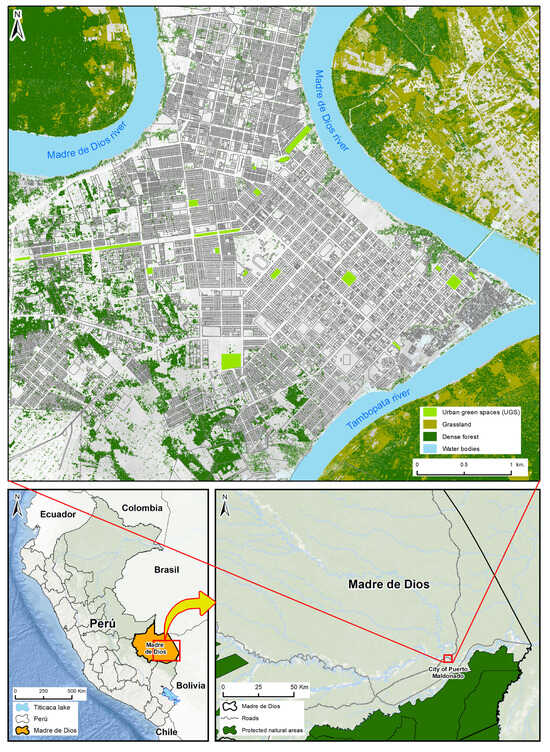
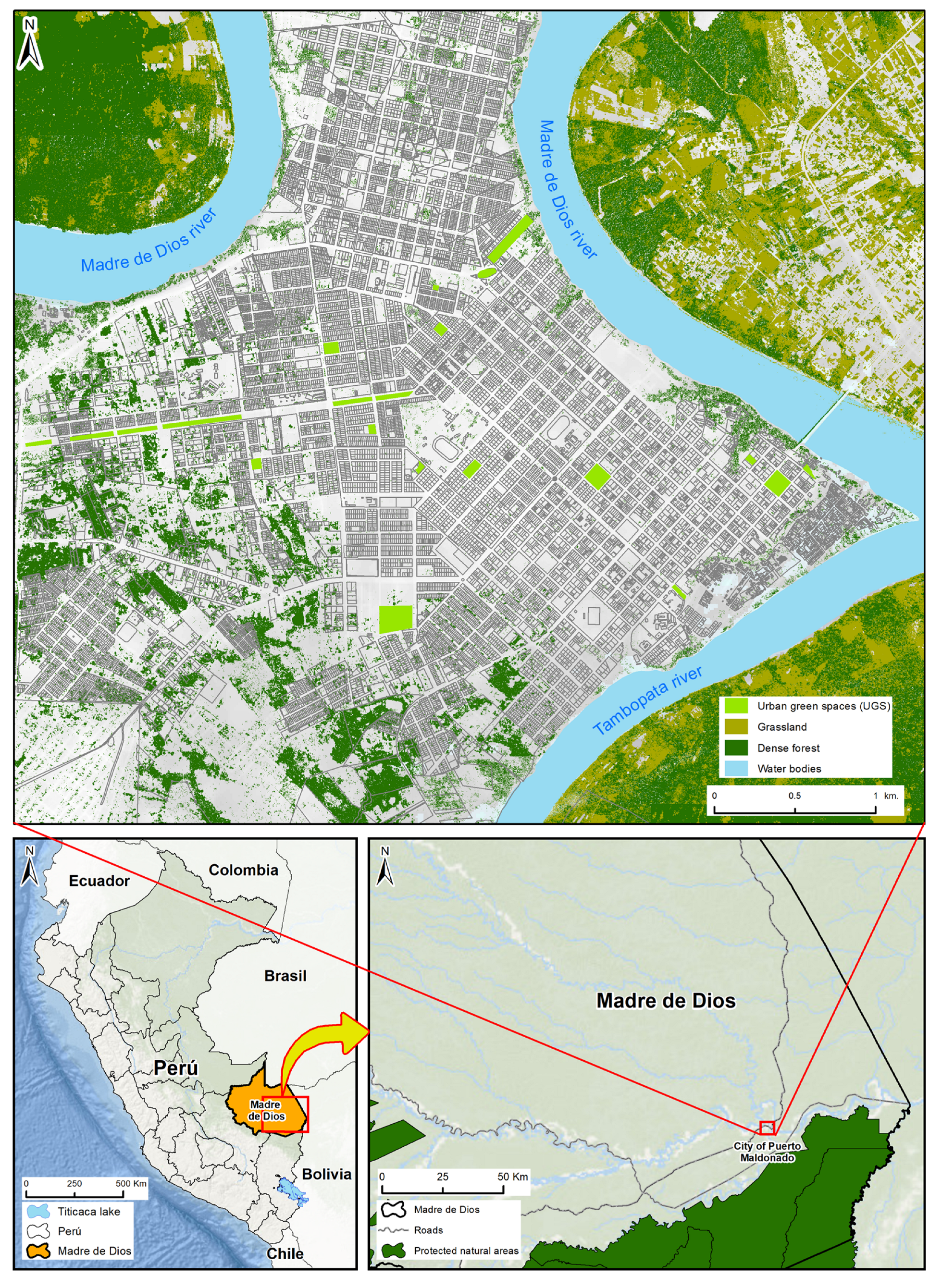
The study was conducted in Puerto Maldonado city (12°36′ S and 69°11′ W), capital of the Madre de Dios department, located on the confluence of the Tambopata and Madre de Dios rivers in the southeast Peruvian Amazon (Figure 1). Puerto Maldonado covers a geographical area of 27 km2, with an altitudinal range of 180–215 m a.s.l. It has a hot and humid climate, with annual precipitation ranging from 1400 to 3700 mm and mean temperature varying between 25 °C and 37 °C [41]. Puerto Maldonado has a population of 91,600 inhabitants (57% males, 43% females) and a high proportion of adults (61.2%) [42,43].
Figure 1.
Map of the location of the urban green spaces (UGSs) in the city of Puerto Maldonado, Madre de Dios, Peru.
The survey was conducted between October and December 2024, with a sample of 445 adults (aged 18 years or older, of both sexes) from Puerto Maldonado. The survey was applied in person via a questionnaire filled out by visitors to UGS of the study area (Figure 1). Participants did not receive any compensation or incentives for their participation.
2.2. Survey Design and Administration
To capture the specific socio-environmental dynamics of Puerto Maldonado, we avoided using a generic survey and instead developed an instrument tailored to this study. The selection of indicators was a deliberate process; we used the broad categories of ecosystem services and disservices from Opoku et al. [32] as our starting point, then integrated more localized urban metrics based on the work of Escobedo et al. [44] and Raymond et al. [45]. This resulted in a three-part survey. The Section 1 focused on the participants’ background, gathering data on age, gender, how long they had lived in the city, their education, job, and monthly income (in USD). It also tracked their visiting habits, such as the frequency and purpose of their trips to the UGSs.
The Section 2 and Section 3 asked visitors to evaluate 14 ecosystem services and 15 disservices. Services were grouped into regulating (7), cultural (4), and provisioning (3) categories, while disservices were split between public health/safety (7), human–UGS conflicts (4), and management issues (4). We used a 1–5 Likert scale for all these evaluations, where 1 meant they strongly disagreed and 5 meant they strongly agreed. Finally, to confirm this custom instrument was actually reliable, we tested its internal consistency using McDonald’s omega coefficient (ω) through the psych package in R. Across the 445 participants, the omega values ranged from 0.71 to 0.86, which confirms that our specifically prepared scale is statistically robust [46].
2.3. Data Analysis
Data entry was carried out using Microsoft Excel 365 (Microsoft Corporation, Washington, DC, USA). Descriptive statistics were used to characterize the services and disservices provided by UGS according to socioeconomic variables.
The nonparametric Kruskal–Wallis (followed by Dunn’s post hoc test) and Mann–Whitney tests were used to assess overall differences in respondents’ perceptions of the services and disservices provided by UGS across socioeconomic characteristics. The relationship between socioeconomic characteristics (ordinal scale) and different perceptions of UGS services and disservices was analyzed using Spearman’s correlation.
Statistical analysis and data visualization were carried out using both Sigmaplot (version 15, Systat Software, Inc., San Jose, CA, USA) and R (version 4.5.2, R Foundation for Statistical Computing, Vienna, Austria) in the Positron environment (version 2026, Posit Software, PBC, Boston, MA, USA). All inferential statistics were conducted at a significance level of 0.05.
3. Results
The results show that there were more females (55%) than males (45%) who participated in the study. Half of the respondents were under the age of 29, followed by 40–49 (20%) and 30–39 years (19%). Only a few respondents fell into the 45 and older age group. Most of the respondents had lived in Puerto Maldonado city for less than 15 years (46%), followed by those residing in the study area for 15–29 years (36%). With respect to education, most of the respondents had an education up to undergraduate (59%) or had completed secondary education (31%). A lesser percentage of respondents had postgraduate studies (3%). In terms of frequency and purpose of visit to UGS, the majority of respondents visit UGSs once a week or more often (35% in total). A higher percentage of respondents visit the UGSs 1–3 times a month (45%), whereas a small proportion of respondents visit the UGSs more than two times a week or almost daily. Walking, meeting friends, and relaxing were at the top on the list of visits to UGSs (54%). The majority of respondents reported that they usually visited the UGSs with friends (39%) or family (32%). On the other hand, most respondents were self-employed (47%). As for monthly income, respondents with less than 450 USD represented the largest percentage (33%), followed by those earning 750–1500 USD (32%), and those earning above 1500 USD were few (5.1%) (Table 1).
Table 1.
Socioeconomic characteristics of the respondents (n = 445).
3.1. Services and Disservices of Urban Green Spaces
Respondents showed strong agreement with many items across UGS’s services, whereas there were considerable disagreements regarding disservices from UGS. Cultural services ( = 4.12) received the highest values, followed by ecosystem services ( = 3.98) and provisioning services ( = 3.43). In contrast, the agreement of concerns about disservices was relatively lower than services from UGS, public health and safety ( = 2.89), human–UGS conflict ( = 2.98), and management and governance of UGS ( = 3.28) (Table 2).
Table 2.
Perceptions of ecosystem services and disservices provided by urban green spaces.
The “beautify the urban environment” item of cultural services was the most highly valued ( = 4.55), followed by three ecosystem services items, “shade and cool down the air temperature” ( = 4.29), “improve air quality” ( = 4.28), and “rainwater regulation” ( = 4.01), whereas two items of provisioning services were the least valued, “provide medicinal plants” ( = 2.74) and “provide useful natural products for the population” ( = 3.57) (Table 2a). On the other hand, looking at disservice items, respondents perceived that they were the most concerned about “Lack of urban signage and adequate infrastructure” ( = 3.83), followed by “Tree root damage to infrastructure” ( = 3.83) and “damage to electrical lines” ( = 3.72) (Table 2b).
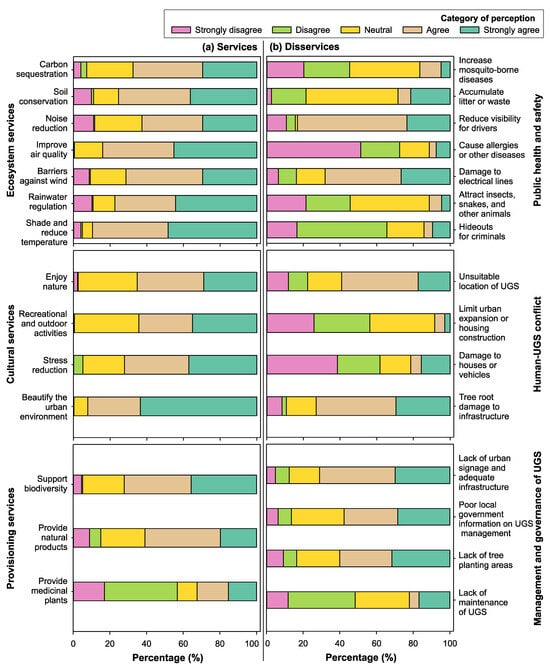
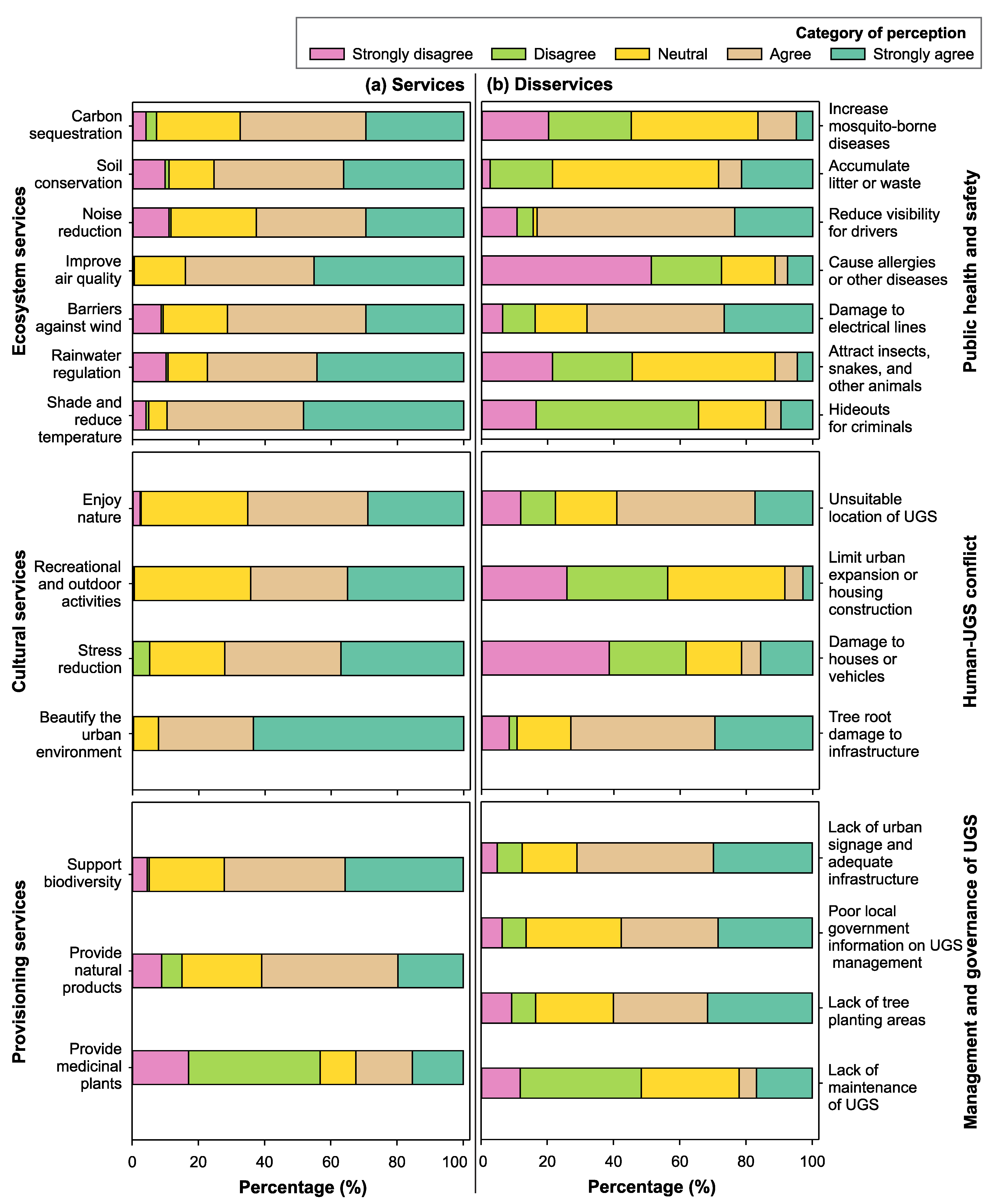
Figure 2 shows respondents’ agreement with UGS services and disservices in Puerto Maldonado. Our results showed that ecosystem and cultural services were the most commonly perceived benefits. Thus, providing shade and reducing air temperature, improving air quality, beautifying the urban environment, regulating rainwater, and conserving soil were the five most important services of UGS (>75% agree). Beautifying the urban environment and stress reduction were the most valued cultural services, while support for biodiversity was the most valued provisioning service. However, many respondents disagreed or strongly disagreed that the UGS provides useful medicinal plants for local populations, as this received the lowest level of agreement (Figure 2a).
Figure 2.
Percentages of respondents who perceived services (a) and disservices (b) of urban green spaces.
On the other hand, with regard to the responses to the disservices of UGS, the respondents perceived that the main concerns generated by UGS were: (1) reduced visibility for drivers at street intersections, (2) tree root damage to infrastructure, and (3) lack of urban signage and adequate infrastructure of UGS. Other disservices with high levels of agreement among respondents were damage to electrical lines, an unsuitable location for UGS, a lack of tree-planting areas, and poor local government information on UGS management. However, most respondents displayed a neutral or disagreeing perception toward the other concerns evaluated in this study (Figure 2b).
3.2. Relationship Between Socioeconomic Characteristics and Services and Disservices of Urban Green Spaces
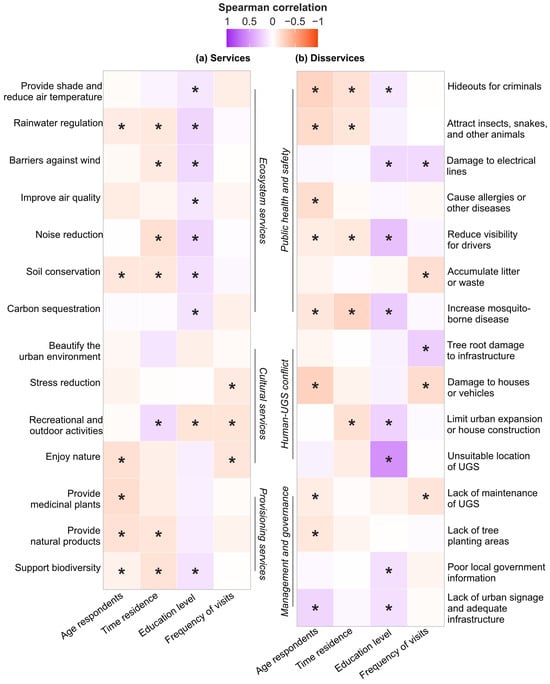
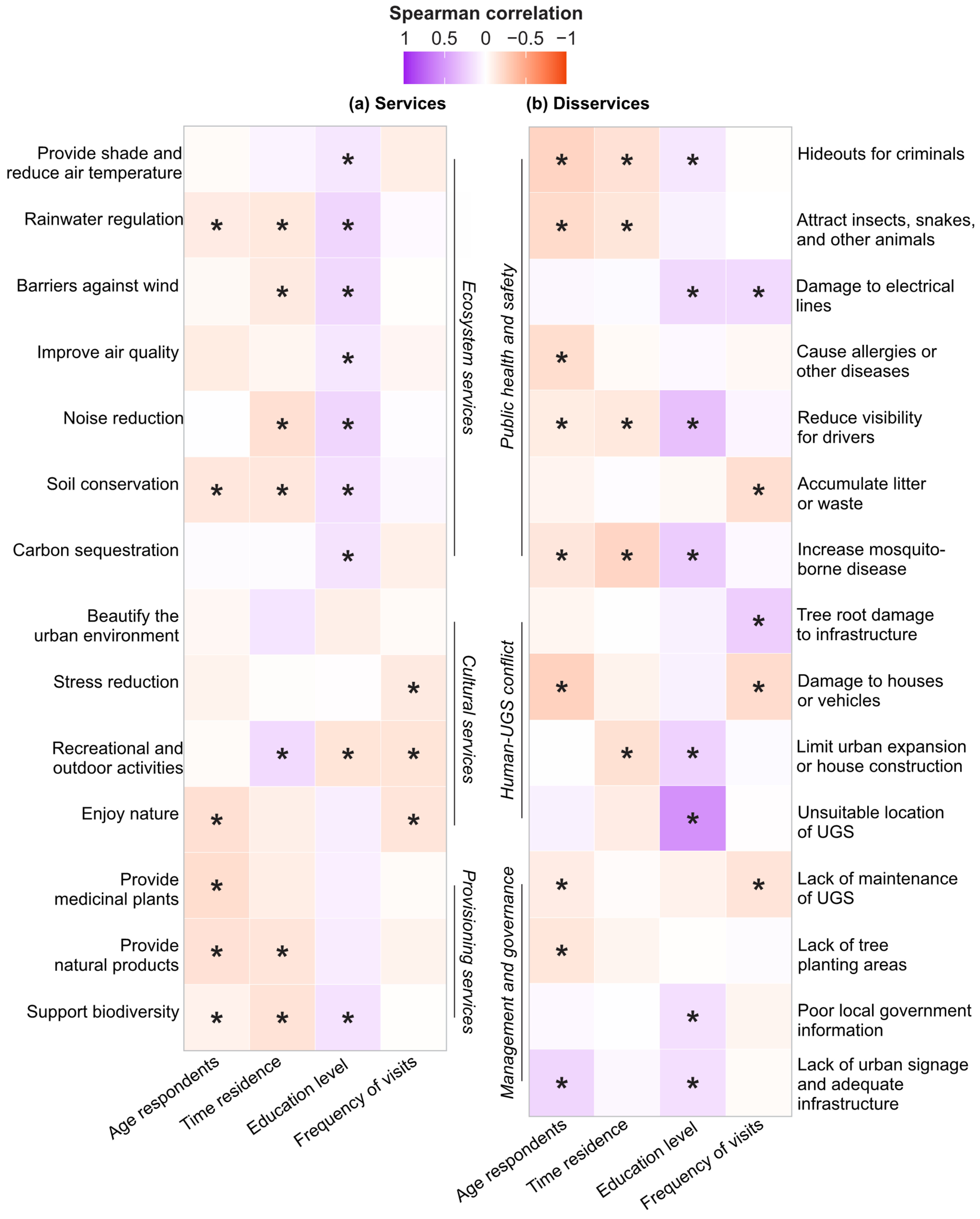
According to correlation analysis, there were significant but weak associations among four socioeconomic characteristics and residents’ perception, UGS services, and disservices (Figure 3). Age was negatively related to rainwater regulation, soil conservation, enjoying nature, and all provisioning services. Time residence in the city of respondents was negatively correlated with almost all types of ecosystem services and provisioning services but positively correlated with the service of providing spaces for recreational and outdoor activities. Education level was positively related to biodiversity support service and all types of ecosystem services but negatively correlated with the service of providing spaces for recreational and outdoor activities. Interestingly, the frequency of visits to UGSs was negatively correlated with almost all types of cultural services (stress reduction, provision of spaces for recreational and outdoor activities, and enjoying nature within the city) (Figure 3a).
Figure 3.
Spearman correlation between socioeconomic characteristics and services (a) and disservices of urban green spaces (b). * p < 0.05.
With regard to disservices, age and time residence in the city of respondents were positively correlated with almost all types of public health and safety services. Education level was positively related to damage to electrical lines, reduced visibility for drivers within street intersections, limited urban expansion or house construction, and unsuitable location of UGS. Frequency of visits was positively related to disservices of damage to electrical lines and tree root damage to infrastructure but negatively related to damage to houses or vehicles caused by fallen or broken trees, and lack of maintenance of UGS (Figure 3b).
Table 3 shows the comparison of residents’ perceived agreement of services and disservices from UGSs by four socioeconomic factors. There were no statistically significant gender differences in the level of agreement of services from UGSs (Mann–Whitney, p > 0.05). However, the level of agreement with two disservices (damage to electrical lines and infrastructure) was significantly higher in females than in males (Mann–Whitney, p < 0.05). Significant differences were found in the perceptions of agreement for each occupation category of respondents; these differences vary by the level of agreement in some services and disservices from UGSs (Kruskal–Wallis, p < 0.05). Dependent (government or private) respondents had a significantly higher level of agreement with rainwater regulation service and two disservices (unsuitable location of UGS and lack of urban signage and adequate infrastructure) than the unemployed.
Table 3.
Comparison of mean scores of residents’ perceived level of agreement of services and disservices from UGS by four socioeconomic factors.
With regard to companions to visit UGS, the level of agreement on ecosystem services of providing shade, reducing air temperature and improving air quality was significantly higher in respondents who visited the UGS with family and friends than those who visited alone or with colleagues. Respondents who visited the UGS alone valued cultural services significantly higher than those who visited with friends and colleagues. On the other hand, respondents who visit the UGS to meet friends and relax valued two ecosystem services (shade and reduce air temperature and improve air quality) and three cultural services (stress reduction, recreational activities, and enjoying nature) significantly higher than respondents who practice sports. Participants with higher monthly income were more likely to value carbon sequestration ecosystem service, while those with lower incomes were more likely to value all provisioning services (Figure 3).
4. Discussion
Previous studies have demonstrated the positive effects of exposure to UGS on the urban population [8]. However, studies demonstrating the positive effects of UGS and its public perception of services and disservices are relatively scarce in an Amazonian context. The present study examines human perceptions of the services and disservices provided by UGS and contributes to understanding how socioeconomic characteristics can affect residents’ perceptions.
4.1. Services and Disservices of Urban Green Spaces
Our results showed high heterogeneity in perceptions of UGS services and disservices. This may be linked to differences in the necessities of life [32] of the inhabitants who lived in the study area. Thus, the respondents perceive the services and disservices from UGS in distinct ways [12].
4.1.1. Perception of Services from Urban Green Spaces
Overall, most of the respondents highly valued the benefits provided by UGS. Among these, cultural and ecosystem services received the highest level of agreement. These results are in line with previous studies [31], which suggest that the UGS beautifies the urban environment and provides spaces for recreational activities, the services most valued by visitors to the UGS [11]. This highlights the importance of UGS for certain recreational and outdoor activities and its potential benefits for public health (i.e., stress reduction) [47]. Likewise, consistent with previous studies [14,31,32,48,49], ecosystem services such as improving air quality, providing shade, and regulating rainwater were ranked highest.
Most respondents in this study strongly agree that UGSs regulate rainfall and reduce temperatures in the study area, likely due to their high efficiency in mitigating the urban heat island, particularly during the dry season, and their potential to absorb and infiltrate rainwater. This is relevant, as the city of Puerto Maldonado has been experiencing severe effects of global climate change, exacerbated by unsustainable human activities (agriculture, logging, and mining). For example, temperatures have increased significantly in recent decades (0.36 °C per decade, 1970–2023), the rainfall pattern has changed, and the frequency of droughts has increased [41,50]. This highlights the importance of maintaining and enhancing these services provided by UGS for the local population, which are considered some of the most significant in studies conducted worldwide [15,31,32,48,49].
4.1.2. Perception of Disservices from Urban Green Spaces
UGSs can generate numerous disservices that are reported in recent studies [11,15,21,51]. The level of agreement with concerns generated by UGSs was lower than the level of service provided, because only 47% of the disservices were perceived as important. This finding is consistent with previous studies that reported that disservices perceptions of UGSs are usually valued less than services provided by UGSs [11,12,13]. Likewise, there were considerable disagreements regarding most public health and safety issues, and half of the human–UGS conflicts involved disservices. These concerns had the highest level of disagreement (45–65%), probably due to poorly designed urban planning of UGS, a lack of knowledge among respondents about the disservices generated by UGS [15,18,49] or regular maintenance of UGS that limits the potential risks to public health and safety [52,53]. However, in this study, the main concerns generated by UGS are public safety and damage to local infrastructure. For example, the UGS can reduce visibility for drivers at street intersections, damage electrical lines, and cause damage to infrastructure from tree roots. Therefore, the high valuation of these disservices highlights the importance of urban planning and maintenance of UGSs to minimize their negative impacts on the urban environment and local populations [18,32], because local concern over UGSs’ potential disservices may result in lack of public acceptance of UGSs, mainly trees, in their neighborhoods [47].
4.2. Relationship Between Socioeconomic Characteristics and Services and Disservices of Urban Green Spaces
Recent studies have reported that socioeconomic variables significantly affect people’s perceptions towards the services and disservices of UGSs [9,18,30,31,32]. The present study found that perception levels of services and disservices from UGSs did not vary or correlate significantly with all socioeconomic variables. This finding is consistent with previous research [32] and suggests that the perception of services and disservices from UGS varies depending on the type of ecosystem analyzed [54]. The results suggest that the level of agreement with the services and disservices provided by UGS varies across some socioeconomic factors, but inconsistently. This finding is in line with a recent study [11] that reported that including more socioeconomic variables will help explain relationships among study variables and reduce inconsistencies.
There is a strong consensus that socioeconomic variables may affect perceptions of UGS services and disservices. Thus, variables such as age, income level, education level, occupation, habitat, visiting frequency, and gender of respondents [3,10,20,54] are usually important in explaining how people perceive services/disservices provided by UGS [32]. In this study, age, education, and income level of respondents were significantly related to perceived levels of most services and disservices from UGS.
Contrary to previous studies, we found that public perceptions of services do not differ by gender. This suggests a similar appreciation of UGS services among males and females in Puerto Maldonado. This result is consistent with studies in China [6], Colombia [55] and Kenya [56], indicating that the perception of UGS services does not differ significantly by gender. However, females were more concerned about disservices generated by UGS. The agreement of all disservices was higher in females than in males, although only significantly for damage to electrical lines and infrastructure. These gender-differentiated perceptions of disservices are in line with previous studies [3,11,32].
However, we found that income had a significant effect on perception, although a high variability was observed between services and disservices. For example, the importance of carbon sequestration in the UGS was higher among higher-income individuals than among lower-income individuals. In contrast, the importance of provisioning services was higher for those with lower incomes. These results are in line with previous works [11,29] and highlight the importance of socio-demographic factors in understanding people’s perception towards UGS [32].
On the other hand, the weak correlation between socioeconomic characteristics and levels of perception of services (|rho| < 0.22) and disservices (|rho| < 0.22, with only a rho = 0.55) from UGS suggests that sociodemographic characteristics alone are insufficient to explain the complexity of respondents’ perception [51]. Therefore, future research should also consider other complementary variables (e.g., geographical locations, neighborhood, sociocultural and cognitive dimensions) for disentangling the complex relationships between human perception and services/disservices provided by UGS [3,10,30,51].
The negative relationship between the age of respondents and their perceptions of services suggests that younger adults are more engaged in urban recreational activities, interested in local entertainment, or do not have constraints such as time commitments or health limitations compared to older adults [20]. Likewise, the negative relationship between age and perceptions of disservice suggests that younger adults had stronger perceptions of concerns than older people [47]. These may be due to the fact that younger people can observe the UGS and its surroundings more closely because they have fewer family responsibilities (i.e., caring for young children) during their stay in the UGS [49].
The study additionally identifies a positive relationship between education and a range of perceived services (mainly ecosystem services) and disservices. Thus, education level positively enhanced respondents’ agreement with UGS services and disservices [57,58]. These findings are consistent with previous studies, which also demonstrate significant associations between education level and valuation of services and disservices [16,59,60]. Therefore, it is suggested that greater education would allow society to better understand the benefits and disservices provided by UGS [49]. Therefore, education is needed to raise environmental awareness about UGS services to better appreciate them as vital well-being benefits for local populations [61,62].
Instead of viewing our correlations as mere statistics, we can translate them into a framework that actually speaks to the messy reality of Amazonian urban growth [63]. When we cluster these results, three clear pathways for policy emerge. Take, for instance, what we might call a Safety-First Model. In neighborhoods where low income and education levels are the norm, residents are not just asking for trees; they are worried about UGSs becoming hotspots for crime [64]. For a city planner, this means that lighting and clear sightlines are just as important as the biology of the plants themselves [65,66].
Similarly, our data shows a younger demographic that is hungry for cultural services, pointing toward a social-learning model [67]. Here, UGSs should be treated as active community hubs, not just passive green patches. Finally, the deep concern over infrastructure damage across all socioeconomic levels suggests a need for a Resilient Maintenance Policy [68,69]. We have found that citizens are painfully aware that a UGS without a maintenance budget is a fiscal burden, not an asset. By organizing our findings this way, we shift the conversation from simple green deficits to a set of actionable values that can actually guide municipal investments [70,71].
On the other hand, we consider that our study has certain limitations that should be considered for future studies. For example, inclusion of more socioeconomic variables, geographic locations, neighborhood characteristics, and sociocultural and cognitive dimensions would provide a more refined analysis. Additionally, typical characteristics of Amazonian environments must be considered, such as the season of the year (rainy or dry) and the size and the type of UGS (parks, square green spaces, urban streets, woodlands, and microforests), because the linkage between socioeconomic characteristics and perception of services and disservices from UGS implies further limitations. Perception assessments were conducted on randomly selected UGSs that may not be representative of the types of UGSs in the study area. Another potential limitation is that certain age groups are more likely to visit some specific UGSs; thus, survey results may overrepresent aspects of specific UGSs among age groups. In addition, the study aimed to assess the perceptions of UGS services and disservices from the city of Puerto Maldonado and not to make generalizations on cities in the Peruvian Amazon. Finally, the respondents of the study were those who visited UGSs, and as a consequence, our results may be biased because we did not include people who did not visit UGSs. Another potential limitation is that our participants were those who liked UGSs and did not perceive such constraints that would prevent them from visiting UGSs. In that sense, our results are probably biased since we did not reach people who did not visit UGSs. Therefore, considering our results, we recommend: (1) a differentiated environmental education, focusing on older adults to reduce fear of negative impacts, and (2) infrastructure maintenance, due to concerns from a sector of the population, where management should prioritize deep-rooted species and preventive pruning near electrical lines.
5. Conclusions
Our results show that perceptions of the level of agreement with services and disservices from UGS may be influenced by socioeconomic characteristics. Cultural and ecosystem services received the highest level of agreement. According to respondents’ answers, the main concerns generated by UGS are related to public safety, damage to local infrastructure, and the lack of urban signage and adequate UGS infrastructure. Therefore, the high valuation of these disservices highlights the importance of urban planning and maintenance to minimize the negative impacts of UGS.
Another important finding of the study was that the age, education, and income level of respondents were significantly related to perceived levels of most services and disservices from UGS. The findings of the present study are valuable because they provide relevant information for developing sustainable public policies for urban areas and aligning them to maintain and enhance the services provided by UGS and diminish its potential disservices.
Our results suggest that managing urban nature is about much more than just environmental conservation; it is a fundamental part of urban governance. For city officials and local planners, these findings offer a practical guide for deciding where to invest in urban green infrastructure. By listening to how citizens actually feel about ‘disservices’ such as safety fears or poor maintenance, authorities can design UGSs that are effectively used by the community. This research highlights that a true solution for Amazonian cities requires a team effort between ecologists, urban designers, and social policymakers to build a city that is both green and livable. Likewise, our results can be used by local governments of the Peruvian Amazon to redesign UGSs based on the real needs of the population.
The real driver behind this research was the urgent need to move beyond simple green space metrics and understand how unplanned growth creates social friction. By providing the critical bridge between citizen concerns and environmental management, this study offers a technical baseline for new municipal ordinances. We expect the main outcome of this work to be a shift in local policy, where UGSs are no longer treated as aesthetic ornaments but as essential infrastructure for public safety and social stability. This makes our findings a direct resource for urban developers and policymakers who need evidence-based data to justify public spending in the Amazon.
Author Contributions
Conceptualization, J.G.-Q.; methodology, J.G.-Q. and G.A.-A.; software, J.G.-Q. and R.C.-R.; formal analysis, J.G.-Q. and J.C.-A.; investigation, J.G.-Q., L.F.-L., F.H.-T. and J.C.-A.; data curation, J.G.-Q. and L.F.-L.; writing—original draft preparation, J.G.-Q. and G.A.-A.; writing—review and editing, L.F.-L., F.H.-T., J.C.-A. and R.C.-R.; visualization, L.F.-L. and R.C.-R.; funding acquisition, J.G.-Q. All authors have read and agreed to the published version of the manuscript.
Funding
This research was funded by Vice Rectorate for Research of Universidad Nacional Amazonica de Madre de Dios, grant approved by resolution 267-2024-UNAMAD-VRI.
Institutional Review Board Statement
Ethical review and approval were waived for this study due to the absence of a standing Research Ethics Committee at the National Amazonian University of Madre de Dios (UNAMAD) at the time of the study. However, the research project was rigorously reviewed and approved by an external committee of four scientific peers prior to its execution, as documented in institutional resolutions (No. 266-2024-UNAMAD-VRI and No. 267-2024-UNAMAD-VRI), which serve as proof of an equivalent oversight process.
Informed Consent Statement
Informed consent was obtained from all subjects involved in the study.
Data Availability Statement
The data presented in this study are available on request from the corresponding author.
Acknowledgments
The authors would like to thank Patricia Llerena, Miguel Mijahuanca, Yuriko Escumpani, Lya Palza Apaza, Aislyn Gutiérrez, Gianella Caimachi Vargas, Marhyori Aguilar Chipa, Nay Ruth Cañari Mirano, and Nataly Carpio Mendoza for their assistance in the field. We also thank Irving Foster Brown for his suggestions and revision of the English version of the manuscript.
Conflicts of Interest
The authors declare no conflicts of interest.
Abbreviation
The following abbreviation is used in this manuscript:
| UGSs | Urban green spaces |
References
- De Carvalho, R.M.; Szlafzstein, C.F. Green Forest, Gray Cities in the Amazon. In Ecology of Tropical Cities; Springer Nature: Cham, Switzerland, 2025; Volume I, pp. 35–54. [Google Scholar] [CrossRef] [Scilit]
- Santos, Y.; Yanai, A.; Ramos, C.; Graça, P.; Veiga, J.; Correia, F.; Fearnside, P. Amazon Deforestation and Urban Expansion: Simulating Future Growth in the Manaus Metropolitan Region, Brazil. J. Environ. Manag. 2022, 304, 114279. [Google Scholar] [CrossRef] [Scilit]
- Tian, Y.; Wu, H.; Zhang, G.; Wang, L.; Zheng, D.; Li, S. Perceptions of Ecosystem Services, Disservices and Willingness-to-Pay for Urban Green Space Conservation. J. Environ. Manag. 2020, 260, 110140. [Google Scholar] [CrossRef] [Scilit] [PubMed]
- Pan, Y.; Nik Hashim, N.H.; Goh, H.C. Public Perception of Cultural Ecosystem Services in Historic Districts Based on Biterm Topic Model. Sci. Rep. 2024, 14, 11717. [Google Scholar] [CrossRef] [Scilit]
- WHO (World Health Organization). Air Pollution and Health Ambient (Outdoor) Air Pollution. Available online: https://www.who.int/news-room/fact-sheets/detail/ambient-(outdoor)-air-quality-and-health (accessed on 10 January 2026).
- Jim, C.; Chen, W. Perception and Attitude of Residents Toward Urban Green Spaces in Guangzhou (China). Environ. Manag. 2006, 38, 338–349. [Google Scholar] [CrossRef] [Scilit] [PubMed]
- Shah, A. Urban Green Spaces and an Integrative Approach to Sustainable Environment. In Urban Ecology, Strategies for Green Infrastructure and Land Use; Etingoff, K., Ed.; Apple Academic Press: Palm Bay, FL, USA, 2016; pp. 147–166. [Google Scholar]
- Stewart, N. Urban Green Space, Social Equity and Human Wellbeing. In Urban Ecology: Emerging Patterns and Social-Ecological Systems; Verma, P., Singh, P., Singh, R., Raghubanshi, A., Eds.; Elsevier: Amsterdam, The Netherlands, 2020; pp. 111–127. ISBN 9780128207307. [Google Scholar]
- Zheng, S.; Ren, Y.; Zhu, C.; Wang, X.; Zhao, M.; Wang, S.; Wang, J.; Yang, T. Quantifying Cultural Ecosystem Services in Urban Parks Using Social Media and Large Language Models: Insights for Beijing’s Garden City Initiative. Urban For. Urban Green. 2026, 117, 129263. [Google Scholar] [CrossRef] [Scilit]
- Mao, Q.; Wang, L.; Guo, Q.; Li, Y.; Liu, M.; Xu, G. Evaluating Cultural Ecosystem Services of Urban Residential Green Spaces from the Perspective of Residents’ Satisfaction with Green Space. Front. Public Health 2020, 8, 519459. [Google Scholar] [CrossRef] [Scilit] [PubMed]
- Wilhelm Stanis, S.A.; Piontek, E.; Xu, S. Perceptions of Ecosystem Services and Disservices in Urban Greenspaces: Insights from a Shrinking City. Urban For. Urban Green. 2025, 104, 128675. [Google Scholar] [CrossRef] [Scilit]
- Kičić, M.; Scheuer, S.; Korpilo, S.; Vuletić, D.; Seletković, A.; Haase, D.; Krajter, S. Relationships between Urban Green Space Types, Cultural Ecosystem Services and Disservices—A Public Participation Geographic Information System Study in Zagreb, Croatia. Sci. Total Environ. 2025, 981, 179549. [Google Scholar] [CrossRef] [Scilit]
- Sailo, R.; Sarkar, B.; Apshahana, K.; Dabral, A.; Jilen, A.; Marak, A.; Shukla, G.; Suresh, C.; Chakravarthy, S. Perceptions of Ecosystem Services and Disservices of Bamboo by Indigenous Communities in Northeast India. Adv. Bamboo Sci. 2025, 10, 100135. [Google Scholar] [CrossRef] [Scilit]
- Artmann, M.; Sartison, K. Making Green Cities, 2nd ed.; Breuste, J., Artmann, M., Ioja, C., Qureshi, S., Eds.; Cities and Nature; Springer International Publishing: Cham, Switzerland, 2023; ISBN 978-3-030-73088-8. [Google Scholar]
- Zhang, B. Perceptions of Trade-Offs Between Urban Forest Ecosystem Services and Disservices: A Case Study of Canberra, Australia. Urban For. Urban Green. 2025, 105, 128711. [Google Scholar] [CrossRef] [Scilit]
- Sharafatmandrad, M.; Khosravi, A. Plant Species Selection for Urban Green Spaces in Arid Lands: A New Approach Using Ecosystem Services and Disservices. Landsc. Ecol. Eng. 2024, 21, 47–64. [Google Scholar] [CrossRef] [Scilit]
- Souza, F.L.; Puppim de Oliveira, J.A.; Lepczyk, C.A. Editorial: Urban Ecosystem Services and Disservices in Tropical Regions. Front. Ecol. Evol. 2021, 9, 791070. [Google Scholar] [CrossRef] [Scilit]
- Bele, A.; Chakradeo, U. Public Perception of Biodiversity: A Literature Review of Its Role in Urban Green Spaces. J. Landsc. Ecol. 2021, 14, 1–28. [Google Scholar] [CrossRef] [Scilit]
- Mangone, G. Performative Microforests: Architecture and the Built Environment; Delft University of Technology: Rotterdam, The Netherlands, 2015; ISBN 9789461865427. [Google Scholar]
- Mouratidis, K.; Delclòs-Alió, X. Urban Vitality versus Urban Livability: Does Vibrancy Matter for Neighborhood Satisfaction and Neighborhood Happiness? Cities 2026, 168, 106473. [Google Scholar] [CrossRef] [Scilit]
- Su, R.; Ye, S.; Yu, L.; Wu, J.; Kang, Y.; Chen, R. Social and Ecological Factors on the Perception of Cultural Ecosystem Services and Disservices: Insights from Shanghai, China. Landsc. Urban Plan. 2025, 259, 105373. [Google Scholar] [CrossRef] [Scilit]
- INEI. Estimaciones y Proyecciones de Población Indicadores Demográficos, Por Departamento, 2020–2025; Instituto Nacional de Estadística y Informática del Perú: Lima, Peru, 2025. [Google Scholar]
- Fortier, R.; Corahua-Espinoza, T.; Swamy, V.; Feeley, K.; Gallice, G. Insights from a New 1-ha Permanent Forest Plot Reveal Differences Between Habitat Type and Similarities Between Forest Type in the Southwestern Amazon. Ecol. Evol. 2025, 15, e71476. [Google Scholar] [CrossRef] [Scilit] [PubMed]
- Alarcón-Aguirre, G.; Hurtado Lima, A.V.; Vela-Da-Fonseca, M.; Vásquez Zavaleta, T.; Zevallos Pollito, P.A.; Pareja Auquipata, V.; Canahuire-Robles, R.; Garate-Quispe, J. Willingness and Motivation of Residents to Pay for the Conservation of Urban Green Spaces: A Case Study from the City of Puerto Maldonado, Southeastern Peruvian Amazon. Trees For. People 2025, 22, 100984. [Google Scholar] [CrossRef] [Scilit]
- WHO. Indicators of Sustainable Cities in the Context of the Rio+20 UN Conference on Sustainable Development; World Health Organization: Geneva, Switzerland, 2012. [Google Scholar]
- Guzman, L.A.; Oviedo, D.; Cantillo-Garcia, V.A. Is Proximity Enough? A Critical Analysis of a 15-Minute City Considering Individual Perceptions. Cities 2024, 148, 104882. [Google Scholar] [CrossRef] [Scilit]
- Jato-Espino, D.; Capra-Ribeiro, F.; Moscardó, V.; Bartolomé del Pino, L.E.; Mayor-Vitoria, F.; Gallardo, L.O.; Carracedo, P.; Dietrich, K. A Systematic Review on the Ecosystem Services Provided by Green Infrastructure. Urban For. Urban Green. 2023, 86, 127998. [Google Scholar] [CrossRef] [Scilit]
- Dobbs, C.; Eleuterio, A.A.; Vásquez, A.; Cifuentes-Ibarra, M.; da Silva, D.; Devisscher, T.; Baptista, M.D.; Hernández-Moreno, Á.; Meléndez-Ackerman, E.; Navarro, N.M. Are We Promoting Green Cities in Latin America and the Caribbean? Exploring the Patterns and Drivers of Change for Urban Vegetation. Land Use Policy 2023, 134, 106912. [Google Scholar] [CrossRef] [Scilit]
- Camps-Calvet, M.; Langemeyer, J.; Calvet-Mir, L.; Gómez-Baggethun, E. Ecosystem Services Provided by Urban Gardens in Barcelona, Spain: Insights for Policy and Planning. Environ. Sci. Policy 2016, 62, 14–23. [Google Scholar] [CrossRef] [Scilit]
- Egea-Cariñanos, P.; Calaza-Martínez, P.; López Roche, D.; Cariñanos, P. Uses, Attitudes and Perceptions of Urban Green Spaces According to the Sociodemographic Profile: An Exploratory Analysis in Spain. Cities 2024, 150, 104996. [Google Scholar] [CrossRef] [Scilit]
- Hegetschweiler, K.; Wartmann, F.; Dubernet, I.; Fischer, C.; Hunziker, M. Urban Forest Usage and Perception of Ecosystem Services—A Comparison between Teenagers and Adults. Urban For. Urban Green. 2022, 74, 127624. [Google Scholar] [CrossRef] [Scilit]
- Opoku, P.; Kwame, E.; Mensah, H.; Akoto, D.; Weber, N. Perception of the Services and Disservices from Urban Forest and Trees in the Garden City of West Africa. Trees For. People 2024, 16, 100550. [Google Scholar] [CrossRef] [Scilit]
- Dos Santos, A.; Rodriguez, V.; Mustin, K. Urban Green Space Exposure Is Low and Unequally Distributed in an Amazonian Metropolis. Environ. Conserv. 2024, 51, 168–178. [Google Scholar] [CrossRef] [Scilit]
- Linarez, J.; Ugaz, D.J.; Arévalo, C. Narrative Exploration of Cultural Ecosystem Services in the Ravines of Moyobamba. Front. Built Environ. 2025, 11, 1524483. [Google Scholar] [CrossRef] [Scilit]
- Yang, L.; Sarker, M.N.I. Integrative Approaches to Urban Resilience: Evaluating the Efficacy of Resilience Strategies in Mitigating Climate Change Vulnerabilities. Heliyon 2024, 10, e28191. [Google Scholar] [CrossRef] [Scilit] [PubMed]
- Crossley, A.J.; Russo, A. Has the Pandemic Altered Public Perception of How Local Green Spaces Affect Quality of Life in the United Kingdom? Sustainability 2022, 14, 7946. [Google Scholar] [CrossRef] [Scilit]
- Derickson, K.; Walker, R.; Hamann, M.; Anderson, P.; Adegun, O.B.; Castillo-Castillo, A.; Guerry, A.; Keeler, B.; Llewellyn, L.; Matheney, A.; et al. The Intersection of Justice and Urban Greening: Future Directions and Opportunities for Research and Practice. Urban For. Urban Green. 2024, 95, 128279. [Google Scholar] [CrossRef] [Scilit]
- López-Sánchez, A.; Sánchez, I.; Herráez, F.; Gülçin, D.; Tang, T.; Perea, R.; Velázquez, J. Identifying Keystone Connectivity Spots under Climate Change: Implications to Conservation and Management of Riparian Systems. J. Environ. Manag. 2024, 351, 119782. [Google Scholar] [CrossRef] [Scilit]
- Martin, A.; Gomez-Baggethun, E.; Quaas, M.; Rozzi, R.; Tauro, A.; Faith, D.P.; Kumar, R.; O’Farrell, P.; Pascual, U. Plural Values of Nature Help to Understand Contested Pathways to Sustainability. One Earth 2024, 7, 806–819. [Google Scholar] [CrossRef] [Scilit]
- Lo, A.; Jim, C. Differential Community Effects on Perception and Use of Urban Greenspaces. Cities 2010, 27, 430–442. [Google Scholar] [CrossRef] [Scilit]
- Aucahuasi-Almidon, A.; Cabrera-Carranza, C.; Garate-Quispe, J. Trend Analysis and Change-Point Detection of Temperature and Rainfall in Southern Peruvian Amazon and Its Relation to Deforestation. J. Agrometeorol. 2024, 1665, 425–430. [Google Scholar] [CrossRef] [Scilit]
- BCR. Caracterización Del Departamento de Madre de Dios; Chique, V., Sanchez, J., Apaza, J., Eds.; Banco Central de Reserva de Perú: Cusco, Peru, 2024. [Google Scholar]
- CPI. Perú: Población 2025; CPI Research: Lima, Peru, 2025. [Google Scholar]
- Escobedo, F.; Kroeger, T.; Wagner, J. Urban Forests and Pollution Mitigation: Analyzing Ecosystem Services and Disservices. Environ. Pollut. 2011, 159, 2078–2087. [Google Scholar] [CrossRef] [Scilit] [PubMed]
- Raymond, C.; Frantzeskaki, N.; Kabisch, N.; Berry, P.; Breil, M.; Nita, M.; Geneletti, D.; Calfapietra, C. A Framework for Assessing and Implementing the Co-Benefits of Nature-Based Solutions in Urban Areas. Environ. Sci. Policy 2017, 77, 15–24. [Google Scholar] [CrossRef] [Scilit]
- de Camargo, A.; Sousa, T.; Guimaraes, R.; Pagotto, V.; Lima, J.; Sousa, M.; Bernardes, C. Validation of the Patient Reported Experiences and Outcomes of Safety in Primary Care Compact Form Brazil. PLoS ONE 2024, 19, e0305414. [Google Scholar] [CrossRef] [Scilit]
- Krajter Ostoić, S.; Vuletić, D.; Kičić, M. Exploring the Negative Perceptions of Tree-Based Urban Green Space. People’s Behaviour and Management Are Crucial. Urban For. Urban Green. 2024, 101, 128539. [Google Scholar] [CrossRef] [Scilit]
- Sheng, Y.; Zhen, J.; Zhang, Y.; Li, D. Spatial Differentiation in Public Perception of Peak Summer Heat Based on Microblog Big Data. PLoS ONE 2026, 21, e0337738. [Google Scholar] [CrossRef] [Scilit]
- Stępniewska, M. The Capacity of Urban Parks for Providing Regulating and Cultural Ecosystem Services versus Their Social Perception. Land Use Policy 2021, 111, 105778. [Google Scholar] [CrossRef] [Scilit]
- Martínez-Castro, D.; Takahashi, K.; Espinoza, J.-C.; Vichot-Llano, A.; Andrade, M.O.; Silva, F. Extreme Droughts in the Peruvian Amazon Region (2000–2024). Water 2025, 17, 1744. [Google Scholar] [CrossRef] [Scilit]
- Zhang, H.; Peng, L.; Qiu, Y.; Ma, Z. What Are the Differences between Ecosystem Services and Residents’ Perceptions? Insights from Perception Gap, Heterogeneity, and Cross-Level Driving Mechanisms. Appl. Geogr. 2026, 186, 103808. [Google Scholar] [CrossRef] [Scilit]
- Vargas-Hernández, J.G.; Pallagst, K.; Zdunek-Wielgołaska, J. Urban Green Spaces as a Component of an Ecosystem. In Sustainable Development and Environmental Stewardship; Springer International Publishing: Cham, Switzerland, 2023; pp. 165–198. [Google Scholar]
- Sang, Å.; Thorpert, P.; Fransson, A.-M. Planning, Designing, and Managing Green Roofs and Green Walls for Public Health—An Ecosystem Services Approach. Front. Ecol. Evol. 2022, 10, 804500. [Google Scholar] [CrossRef] [Scilit]
- Casado-Arzuaga, I.; Madariaga, I.; Onaindia, M. Perception, Demand and User Contribution to Ecosystem Services in the Bilbao Metropolitan Greenbelt. J. Environ. Manag. 2013, 129, 33–43. [Google Scholar] [CrossRef] [Scilit]
- Granobles, F.; Trilleras, J.; Romero-Duque, L.; Quijas, S. Understanding the Sociocultural Valuation of Ecosystem Services in Urban Parks: A Colombian Study Case. Urban Ecosyst. 2024, 27, 289–303. [Google Scholar] [CrossRef] [Scilit]
- Kariuki, D.; Opinde, G.; Letema, S. Patterns of Perception of Ecosystem Services Associated with Trees Outside Forests along an Urban-Rural Gradient. A Case of Murang’a Municipality, Kenya. For. Trees Livelihoods 2026, 35, 24–41. [Google Scholar] [CrossRef] [Scilit]
- Cheung, L.; Ma, A.; Wong, G.; Lo, A.; Jim, C. Perceived Benefits, Negative Impacts, and Willingness-to-Pay to Improve Urban Green Space. Geogr. Res. 2022, 60, 414–430. [Google Scholar] [CrossRef] [Scilit]
- Włodarczyk-Marciniak, R.; Krauze, K. Does Educational Profile Influence Student Perception of Ecosystem Service Provision by Blue-Green Infrastructure? Soc. Nat. Resour. 2023, 36, 840–859. [Google Scholar] [CrossRef] [Scilit]
- Camacho-Gutiérrez, A.C.; Jakstis, K.; Fischer, L.K. Biodiversity Valuation and Collective Action for Urban River Ecosystems in Bogotá. NPJ Urban Sustain. 2025, 5, 81. [Google Scholar] [CrossRef] [Scilit]
- Nandal, A.; Yadav, S.; Lal, R. Examining Stakeholder Attitudes towards Tree Ecosystem Services and Disservices in Urban Environments: Insights from Maharshi Dayanand University, Rohtak. Arboric. J. 2025, 47, 104–133. [Google Scholar] [CrossRef] [Scilit]
- Kothencz, G.; Kolcsár, R.; Cabrera-Barona, P.; Szilassi, P. Urban Green Space Perception and Its Contribution to Well-Being. Int. J. Environ. Res. Public Health 2017, 14, 766. [Google Scholar] [CrossRef] [Scilit] [PubMed]
- Unterweger, P.A.; Schrode, N.; Betz, O. Urban Nature: Perception and Acceptance of Alternative Green Space Management and the Change of Awareness after Provision of Environmental Information. A Chance for Biodiversity Protection. Urban Sci. 2017, 1, 24. [Google Scholar] [CrossRef] [Scilit]
- Guilherme, F.; Gonçalves, J.A.; Carretero, M.A.; Farinha-Marques, P. Assessment of Land Cover Trajectories as an Indicator of Urban Habitat Temporal Continuity. Landsc. Urban Plan. 2024, 242, 104932. [Google Scholar] [CrossRef] [Scilit]
- Bressane, A.; da Cunha Pinto, J.P.; de Castro Medeiros, L.C. Countering the Effects of Urban Green Gentrification through Nature-Based Solutions: A Scoping Review. Nat. Based Solut. 2024, 5, 100131. [Google Scholar] [CrossRef] [Scilit]
- Guilherme, F.; Vicente, J.R.; Carretero, M.A.; Farinha-Marques, P. Mapping Multigroup Responses to Land Cover Legacy for Urban Biodiversity Conservation. Biol. Conserv. 2024, 291, 110508. [Google Scholar] [CrossRef] [Scilit]
- Adelina, C.; Archer, D. A Situated Urban Political Ecology of Plastics Recycling in Bangkok. Cities 2024, 145, 104671. [Google Scholar] [CrossRef] [Scilit]
- Panaro, S.; Delabre, I.; Marshall, F. Cultural Ecosystem Services and Opportunities for Inclusive and Effective Nature-Based Solutions. Ecol. Econ. 2025, 230, 108525. [Google Scholar] [CrossRef] [Scilit]
- Wang, D.; Xu, P.Y.; An, B.W.; Guo, Q.P. Urban Green Infrastructure: Bridging Biodiversity Conservation and Sustainable Urban Development through Adaptive Management Approach. Front. Ecol. Evol. 2024, 12, 1440477. [Google Scholar] [CrossRef] [Scilit]
- Nassary, E.K. Exploring the Role of Nature-Based Solutions and Emerging Technologies in Advancing Circular and Sustainable Agriculture: An Opinionated Review for Environmental Resilience. Clean. Circ. Bioecon. 2025, 10, 100142. [Google Scholar] [CrossRef] [Scilit]
- Priya, U.K.; Senthil, R. Framework for Enhancing Urban Living Through Sustainable Plant Selection in Residential Green Spaces. Urban Sci. 2024, 8, 235. [Google Scholar] [CrossRef] [Scilit]
- Rambhia, M.; Volk, R.; Rismanchi, B.; Winter, S.; Schultmann, F. Prioritizing Urban Green Spaces in Resource Constrained Scenarios. Resour. Environ. Sustain. 2024, 16, 100150. [Google Scholar] [CrossRef] [Scilit]

Disclaimer/Publisher’s Note: The statements, opinions and data contained in all publications are solely those of the individual author(s) and contributor(s) and not of MDPI and/or the editor(s). MDPI and/or the editor(s) disclaim responsibility for any injury to people or property resulting from any ideas, methods, instructions or products referred to in the content. |
© 2026 by the authors. Licensee MDPI, Basel, Switzerland. This article is an open access article distributed under the terms and conditions of the Creative Commons Attribution (CC BY) license.