2. Literature Review
The management of goods in urban areas is a vital part of supply chain planning, and it is a key focus of research in urban logistics. This is because it has a growing impact on issues such as congestion, environmental damage, overloading infrastructure, and inefficient operations in cities. The flow of goods within already saturated urban infrastructures has intensified due to rapid urbanisation, the proliferation of e-commerce and rising consumer expectations for fast delivery. As a result, urban logistics systems are now seen as more than just operational parts of supply chains. They are also seen as important strategic parts that can influence things like urban sustainability, economic competitiveness, and quality of life [
15,
16,
17,
18,
19,
20,
21,
22].
Research in the early days centred on how well freight transport and logistics were performing, with a focus on financial efficiency and making operations as effective as possible. Analytical models focused on cost minimisation, improved service levels, reliable delivery times, optimised vehicle routes and coordinated inventory. The business was the main focus of performance indicators, with economic metrics such as unit transport cost, asset utilisation rates and delivery speed given top priority. These approaches contributed significantly to operational excellence. However, they often neglected broader systemic externalities. These externalities included emissions, noise pollution, landuse pressures and social equity implications [
20,
21,
22,
23,
24,
25,
26,
27,
28,
29,
30,
31,
32,
33,
34,
35,
36,
37,
38,
39,
40,
41,
42,
43,
44,
45,
46].
The way we analyse things has changed a lot in the last ten years because of increased commitments to sustainable development, new regulatory frameworks and what stakeholders expect. A multidimensional approach is increasingly being used to assess urban freight transport systems. This approach integrates economic viability, environmental responsibility and social responsibility. Climate policies, carbon emission reduction targets, low-emission zones and responsible procurement obligations have compelled logistics stakeholders to internalise environmental costs. They must now include these in their decision-making models. At the same time, growing public awareness of traffic congestion, air quality and the quality of urban life has reinforced the social dimension of logistics performance [
17,
18,
19].
This evolution has given rise to a more holistic approach to performance, in which urban freight transport is conceptualised as a sociotechnical system that is integrated into complex metropolitan ecosystems. In this new paradigm, efficiency is no longer defined solely by cost reduction. Instead, it is defined by the ability to reconcile profitability, carbon emission reduction, regulatory compliance, technological innovation and community well-being. With supply chains becoming more interconnected and digitised, it is vital that performance evaluation incorporates indicators of sustainability, resilience and governance [
21].
2.1. Sustainable and Performance-Driven Supply Chain Management (SSCM)
The foundations of sustainable supply chain management (SSCM) were established through pioneering works such as that of Carter and Rogers (2008) [
9], who demonstrated that integrating economic, environmental and social criteria can improve an organisation’s long-term resilience and value creation. This perspective was reinforced by Seuring and Müller (2008) [
42] and Ahi and Searcy (2013) [
4]. They formalised multidimensional frameworks. These link operational efficiency with environmental stewardship and social responsibility [
4,
9,
10,
11,
12,
13,
14,
15,
16,
17,
18,
19,
20,
21,
22,
23,
24,
25,
26,
27,
28,
29,
30,
31,
32,
33,
34,
35,
36,
37,
38,
39,
40,
41,
42].
Recent contributions (2021–2024) emphasise that sustainability-driven performance measurement has become indispensable in logistics systems. Contemporary studies emphasise that freight transport performance must consider:
- (i)
economic performance (cost, reliability and service level);
- (ii)
environmental performance (emissions, energy efficiency and resource use);
- (iii)
social/societal performance (public acceptance, noise and quality of life).
The application of SSCM principles to urban freight operations has been shown by Pagell and Wu (2009) to result in innovation, stakeholder collaboration and long-term strategic differentiation, thus giving the organisation a competitive advantage [
23,
24,
25,
26,
27,
28,
29,
30,
31,
32,
33,
34,
35,
36,
37,
38,
39].
2.2. City Logistics and Urban Freight Systems
The sustainability agenda has given rise to a specialised field known as urban logistics. This field is focused on the design of efficient, resilient, and low-impact freight distribution systems in urban areas. Urban freight is recognised as a systemic phenomenon. It is shaped by territorial structure, governance models, and the interactions of multiple actors. These actors include carriers, shippers, municipalities, and residents.
The collaborative governance framework for managing freight flows at the urban scale, as conceptualised by Crainic et al. (2009), is referred to as City Logistics [
15]. In their 2021 paper, Holguín-Veras and their team made the case for effective urban logistics, arguing that this is only possible through coordinated regulation, shared infrastructures and robust policy mechanisms capable of mitigating congestion while improving service levels [
26,
27,
28]. These studies emphasise the importance of considering freight transport as both an economic necessity and a key factor in urban sustainability and quality of life [
25].
2.3. Logistics Mutualisation and Collaborative Distribution
The pooling of vehicles, infrastructures, or information among multiple stakeholders, defined as logistics mutualisation, has gained substantial traction as a strategy to address growing urban congestion and environmental constraints. Research (2015–2024) shows that mutualisation allows for more efficient consolidation of flows, reduced redundancy in distribution networks, and enhanced load factors [
29,
30].
Examples of mutualisation in practice include Urban Distribution Centres (UDCs), shared micro-hubs, pick-up/drop-off points, and collaborative routing platforms. The impacts of these projects can be categorised along three sustainability dimensions:
Economic pooling: economies of scale, reduced empty mileage, improved delivery reliability;
Environmental pooling: lower emissions, optimised fleet utilisation, transition to low-emission vehicles;
Social/societal pooling: reduced noise and disturbance, better acceptance of freight activities in dense areas.
Gonzalez-Feliu and others have proposed robust methodological frameworks for evaluating scenarios, coordinating operations and designing collaborative logistics systems that align with sustainability goals [
31,
32].
2.4. Data-Driven, Smart, and Adaptive Urban Logistics
In recent years, there has been a rapid integration of data-driven and intelligent solutions into urban freight management, driven by advances in technology. Smart city initiatives, Internet of Things (IoT)-enabled tracking systems, and artificial intelligence (AI)-based decision support tools now enhance the capacity to model, predict and optimise freight flows [
40,
41].
The role of Intelligent Transportation Systems (ITS) in enabling real-time routing, fleet monitoring, dynamic capacity allocation and predictive modelling is emphasised by Anand et al. (2020) [
3] and Taniguchi et al. (2014) [
44]. Machine learning, big data analytics and digital twins were highlighted in several studies between 2021 and 2024 as being valuable in improving reliability, reducing emissions and supporting adaptive decision-making under uncertainty [
3,
44,
45].
Despite these advances, two major gaps persist:
Static datasets: Many urban freight studies rely on cross-sectional or declarative data, limiting the accuracy of performance measurement in highly dynamic environments;
Lack of adaptive feedback loops: Existing decision support systems rarely incorporate continuous learning mechanisms to update predictions or optimise operations in real time.
2.5. Positioning of the Present Study
The present research addresses these gaps. It does so by operationalising the Six Sigma DMAIC methodology. This is done in the context of urban freight transport. It also integrates it with multivariate statistical tools. These tools are used to assess, quantify, and model logistics impacts. The study’s originality lies in:
the structured and rigorous application of DMAIC to urban freight systems;
its emphasis on sustainability-driven performance indicators;
its potential extension toward AI-enhanced adaptive logistics management;
its capacity to incorporate dynamic datasets for continuous refinement of the evaluation model.
Theoretical foundations of sustainable urban logistics and actionable frameworks for improving real-world freight performance are advanced and developed by this research, which aligns methodological rigor with sustainability principles and technological advances [
33,
34,
35,
36,
37,
38,
39,
40,
41,
42,
43].
5. Methodology Adopted: DMAIC Approach
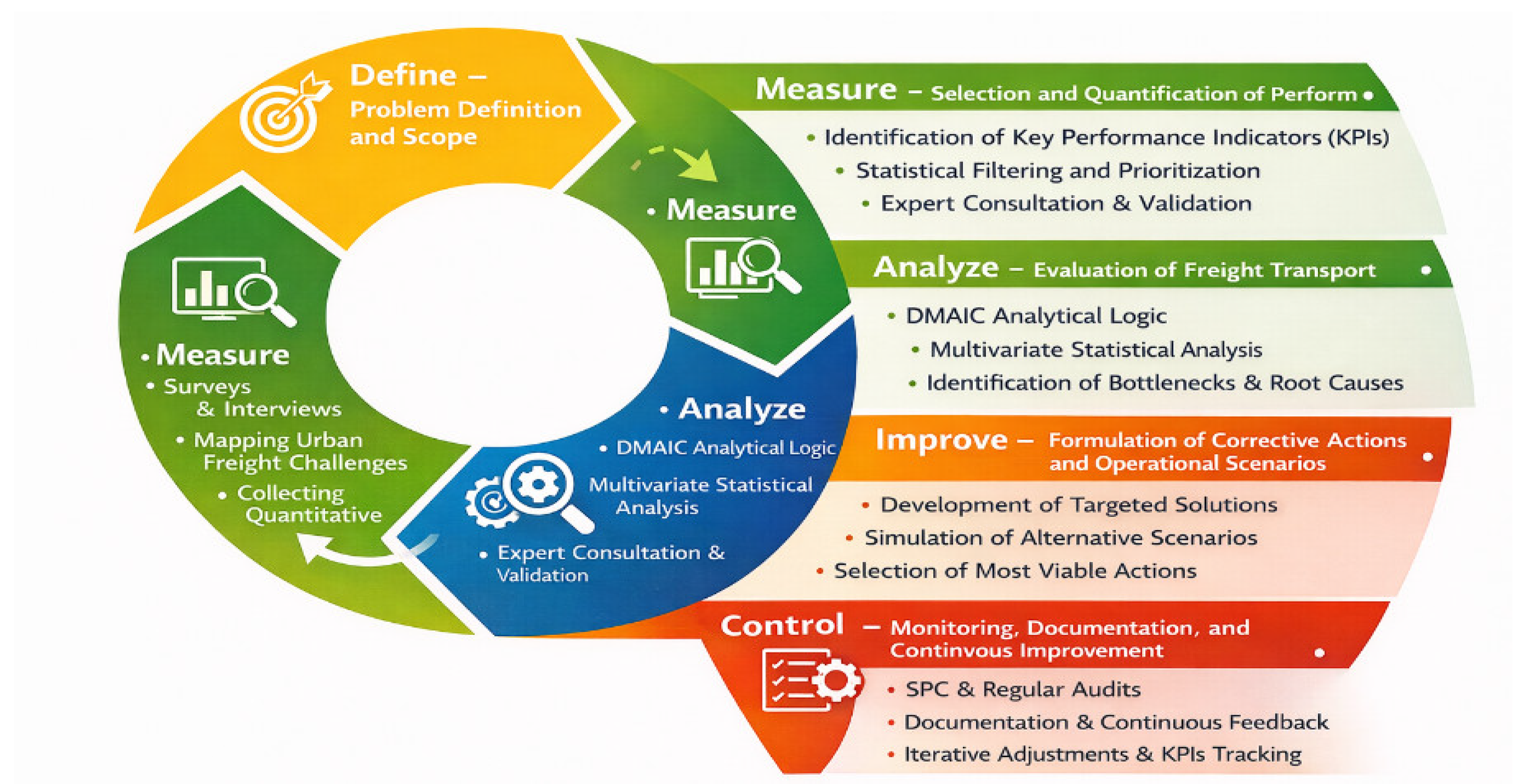
The methodological framework developed to assess the impact of freight transport on urban logistics system performance is based on the Six Sigma DMAIC approach. This process-improvement methodology provides a rigorous, data-driven and iterative structure for identifying system inefficiencies, quantifying their impact and suggesting sustainable solutions.
Figure 2 shows the full DMAIC cycle, including the Control phase, which ensures the long-term stability and continuous improvement of the proposed solutions.
The five Define, Measure, Analyse, Improve and Control stages are detailed below, along with their corresponding tasks, analytical tools and parameters.
Step 1: Define “Problem Definition and Scope”
Task Actions
❖ Identification of the core challenges affecting urban freight transport through structured interviews, stakeholder workshops, and survey questionnaires.
❖ Mapping of congestion hotspots, conflict points between freight and passenger flows, and high-frequency delivery zones using spatial data.
❖ Compilation of quantitative datasets covering traffic flows, delivery frequencies, and urban network configuration.
Key Parameters
❖ Traffic density, delivery frequency, vehicle-type distribution, road network capacity, and preliminary environmental indicators (GHG emissions, noise intensity).
Step 2: Measure “Selection and Quantification of Performance Criteria”
Tasks Actions
❖ Identification of the key performance indicators (KPIs) relevant to the economic, environmental, and social dimensions of urban logistics.
❖ Statistical filtering and prioritisation of KPIs using correlation analysis and exploratory factor analysis (EFA).
❖ Validation of the selected metrics through expert consultation (public authorities, logistics operators, and urban planners).
Key Parameters
❖ Cost per delivery, service reliability, delivery lead time, fuel consumption, emissions per tonne-kilometre, load factor, and energy efficiency.
Step 3: Analyse “Evaluation of the Impact of Freight Transport”
Tasks Actions
❖ Application of the DMAIC analytical logic to quantify the contribution of freight transport to overall system performance degradation.
❖ Examination of causal relationships between KPIs, traffic conditions, and freight operational patterns using multivariate statistical techniques.
❖ Identification of critical bottlenecks, root causes, and high-impact variables affecting urban logistics efficiency and sustainability.
Key Parameters
❖ Performance scores, congestion indices, operational efficiency ratios (e.g., load factor), delivery punctuality, stakeholder satisfaction metrics.
Step 4: Improve “Formulation of Corrective Actions and Operational Scenarios”
Tasks/Actions
❖ Development of targeted improvement strategies such as heavy-vehicle rerouting, optimised delivery time windows, consolidation schemes, and multimodal logistics hubs.
❖ Testing of alternative scenarios using simulation tools to estimate potential improvements in congestion, emissions, and delivery performance.
❖ Selection of the most viable actions based on cost–benefit analysis, feasibility assessment, and stakeholder acceptance.
Key Parameters
❖ Expected reduction in congestion, cost savings, emission reduction potential, improved delivery reliability, urban liveability gains.
Step 5: Control “Monitoring, Documentation, and Continuous Improvement”
Tasks Actions
❖ Implementation of monitoring mechanisms (dashboards, KPIs, and regular audits) to verify the long-term stability of the proposed solutions.
❖ Application of Statistical Process Control (SPC) to track performance fluctuations and detect deviations.
❖ Establishment of a feedback loop enabling iterative adjustments, ensuring that improvements remain aligned with sustainability goals and dynamic urban conditions.
Key Parameters
❖ SPC indicators, audit records, updated KPI trends, stakeholder feedback, operational compliance scores.
A comprehensive overview of the methodology adopted in this study is provided in
Table 1, which presents the full DMAIC workflow applied to urban freight transport. The table provides a comprehensive overview of the methodology, including the five stages: Define, Measure, Analyse, Improve, and Control. It also outlines the specific tasks and actions that were performed, the analytical parameters that were taken into consideration, and the expected outputs. By presenting this detailed information in a structured format, the table offers transparency regarding the procedural rigor, facilitates replication of the study and highlights how each phase contributes to enhancing the performance and sustainability of urban logistics systems. For brevity, only the key aspects are summarised in the main text, with the complete details available in
Table 1.
To identify and prioritize operational risks affecting the urban logistics system, the Failure Mode and Effects Analysis (FMEA) method was applied. This approach evaluates potential failure modes by assessing three criteria: severity (S), occurrence (O), and detection (D). These parameters allow the calculation of the Risk Priority Number (RPN), which helps determine the most critical operational issues requiring corrective actions. The detailed evaluation of failure modes and corresponding RPN values is provided in
Table A1 (
Appendix A).
5.1. Problem Definition and Scope
In order to analyse the various factors influencing freight transport and evaluate their impact on the performance of the urban logistics system, data was collected via a questionnaire administered to a sample of industrial enterprises operating in different sectors. The survey was conducted face-to-face. This was to clarify any ambiguous questions. It was also to avoid influencing respondents’ opinions. This ensured both a high response rate and the reliability of the collected data.
Before data collection, the purpose of the research was explained to participants, as were the measurement scales used. This was done to guarantee their full understanding of the questions. The importance of providing personal and sincere responses was emphasised, as these are essential to the validity and robustness of the results.
The questionnaire incorporated a set of Transport of Merchandise Variables (TMV) factors selected to capture the economic, environmental and social dimensions that are relevant when assessing the performance of urban logistics systems.
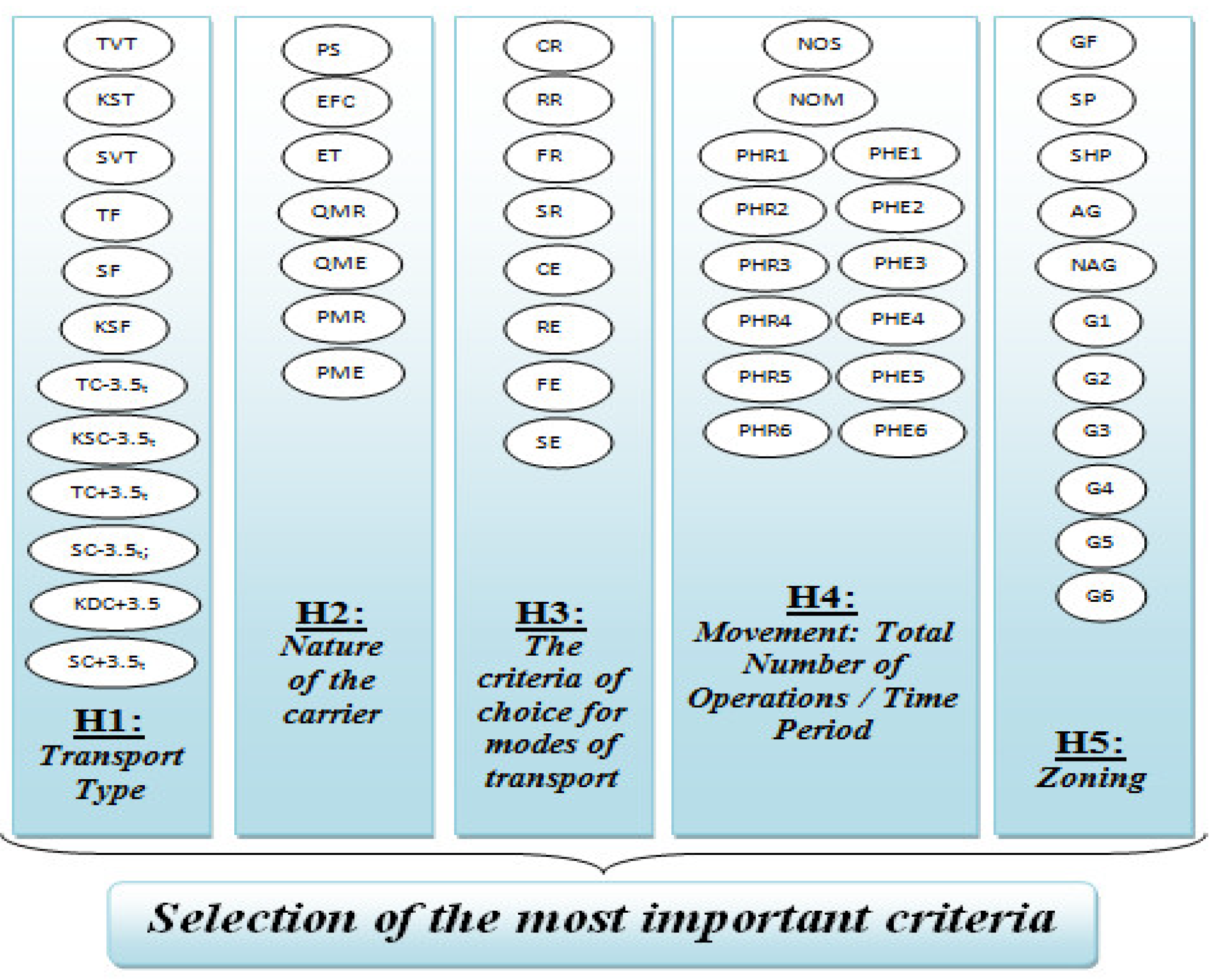
This study investigates the determinants of establishment-level transport demand through five hypotheses, operationalised as follows (see
Figure 3):
H1 «Transport Type»: TVT; KST; SVT; TF; KSF; SF; TC-3.5; KSC-3.5t; SC-3.5t; TC+3.5t; KDC+3.5t; SC+3.5t.
H2 «Nature of the carrier»: PS; EFC; ET; QMR; QME; PMR; PME.
H3 «The criteria of choice for modes of transport»: CR; RR; FR; SR; CE; RE; FE; SE.
H4 «Movement: Total Number of Operations/Time Period»: NOS; NOM; PHR1; PHR2; PHR3; PHR4; PHR5; PHR6; PHE1; PHE2; PHE3; PHE4; PHE5; PHE6.
H5 «Zoning»: GF; SP; SHP; AG; NAG; G1; G2; G3; G4; G5; G6.
H1: Transport Type: This hypothesis measures vehicle usage intensity through three metrics for each vehicle category (passenger cars, vans, trucks <3.5t, trucks ≥3.5t): the total fleet size (e.g., TVT, TF), the weekly kilometres travelled per vehicle (e.g., KST, KSF), and parking demand (e.g., SVT, SF).
H2: Nature of the Carrier: This assesses the logistics model by identifying whether transport operations are managed in-house (PS), by suppliers or customers (EFC), or by third-party carriers (ET). It also identifies the primary transport modes for inbound (QMR) and outbound (QME) logistics, and the use of multimodal solutions (PMR, PME).
H3: Choice Criteria for Transport Modes: This evaluates the relative importance of four key selection criteria for transport modes: Cost (CR, CE), Speed (RR, RE), Reliability (FR, FE), and Safety (SR, SE), analysed separately for inbound (R) and outbound (E) flows.
H4: Movement and Time Slots: This quantifies operational volume via the total number of weekly (NOS) and monthly (NOM) shipping/receiving operations. It also temporally distributes this activity across six distinct time slots for both receiving (PHR1-PHR6) and shipping (PHE1–PHE6).
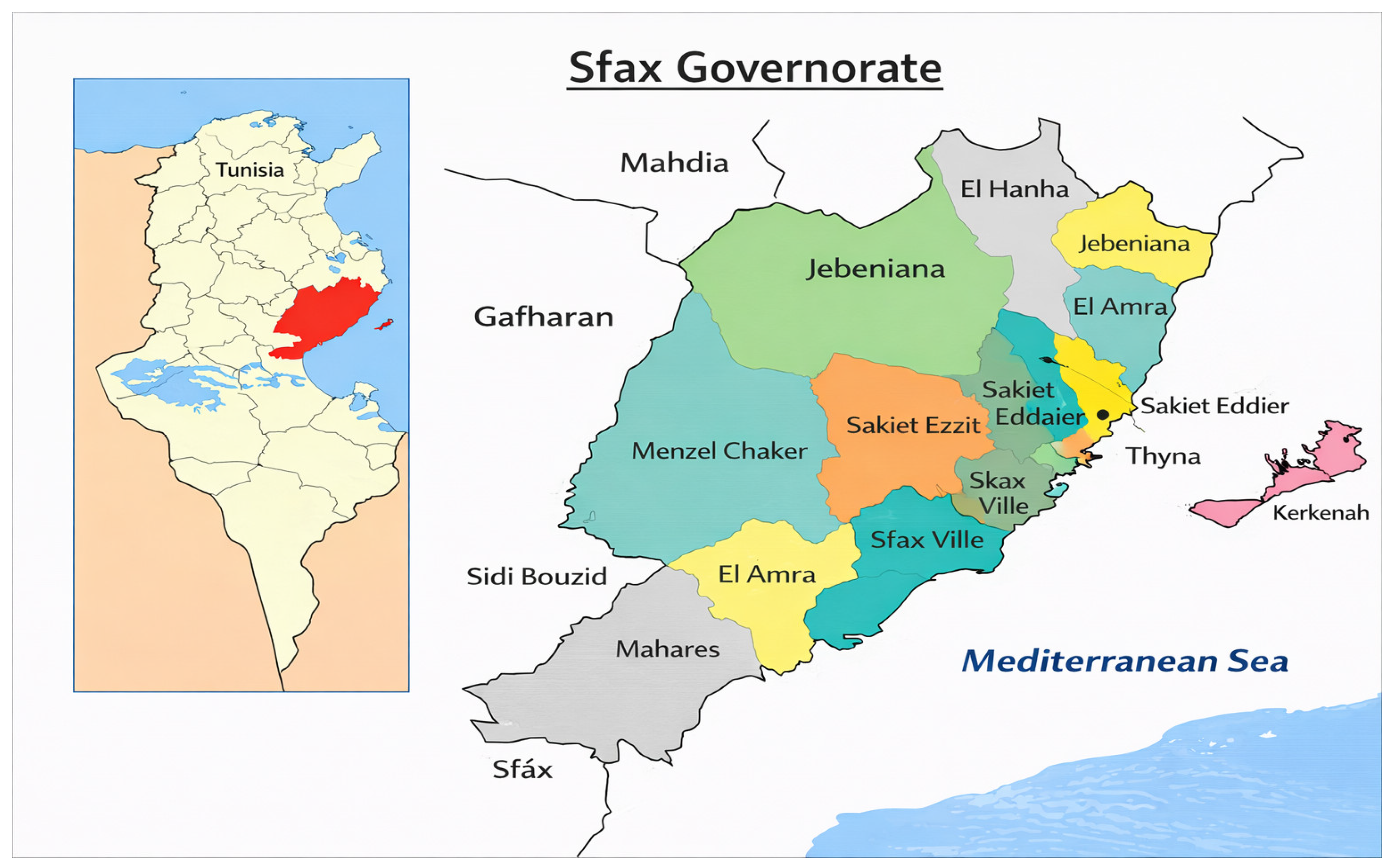
H5: Zoning: This locates the establishment within the Sfax Governorate (GF), specifying if it is in the urban core (SP) or the periphery (SHP), or in another governorate (AG). The number of partner governorates (NAG) and the six primary ones (G1-G6) are also considered to analyse geographical connectivity.
In this study, a survey was conducted on a sample of 140 freight transport operators in the city of Sfax. The questionnaire was structured around three main categories of criteria:
- (1)
Identification criteria: covering basic information about the respondent and the company;
- (2)
Company characteristics: including size, sector of activity, and logistical organisation;
- (3)
Mode of transport: detailing the types of vehicles used, operating routes, and delivery practices.
Each category was further subdivided into specific sub-criteria to capture detailed and relevant information for the analysis.
To process and analyse the collected data—particularly to examine both the problems affecting freight transport in Sfax and their impact on urban logistics performance—we employed CSPro 8.0.0 (Census and Survey Processing System). This software, widely recognised for its reliability in statistical survey data processing, was selected for its ability to manage complex questionnaire structures and ensure accurate, efficient data analysis.
5.2. Selection and Quantification of Performance Criteria
Dimensionality reduction is necessary to effectively identify the key factors influencing freight transport performance, given the large number of collected criteria. The complete set of criteria is analysed using principal component analysis (PCA).
PCA is a robust multivariate statistical technique that accounts for the multidimensional nature of datasets. In practical applications, each observation is often described by a large number of variables (p) rather than a single measure. It is necessary to analyse each variable independently, but this is not sufficient for revealing the interrelationships and dependencies among variable patterns, which often represent the most critical aspects of the analysis.
In this study, the variables correspond to behavioural criteria relating to freight transport operations. PCA reduces the initial set of variables to a smaller number of uncorrelated components, while preserving as much of the original information as possible. The most influential factors can be identified more easily with this approach, and it makes it easier to understand the links between the criteria. This improves the reliability and clarity of the analysis that follows.
- 1.
TMV factors related to the type of transport
A total of 12 items were retained to identify the indicators used for analysis. All items were measured using a two-point Likert scale, reflecting binary assessments of each criterion.
To verify the suitability of the dataset for factor analysis, Bartlett’s test of sphericity was applied. The results (p-value = 0.000) indicate a statistically significant correlation structure among variables, thereby supporting the rejection of the null hypothesis of an identity matrix. Consequently, the alternative hypothesis confirming the sphericity of the data is accepted.
Furthermore, the Kaiser–Meyer–Olkin (KMO) measure of sampling adequacy yielded a value of 0.577, which, while modest, remains within the acceptable threshold for proceeding with factor analysis. As shown in
Table 1, this result confirms that the dataset satisfies the minimum conditions of sampling adequacy required for exploratory factor analysis. Based on these results, the factor analysis was therefore carried forward.
The principal component analysis (PCA) with rotation, performed over three iterations, reduced the initial set of twelve items into two distinct factors, which together explain 68.606% of the total variance:
Factor 1 accounts for 49.718% of the variance and groups the items related to personal effectiveness. This factor includes the following variables: TVT, KST, TF, KSF, TC–3.5t, KSC–3.5t, TC+3.5t, and KDC+3.5t;
Factor 2 explains 18.888% of the variance and comprises the variables SVT, SF, SC–3.5t, and SC+3.5t.
To better characterise the dimensionality of the indicators derived from PCA, the twelve items were projected onto the first factorial plane. The graphical representation shows that all items are well aligned with their respective axes, with factor loadings above 0.4, indicating a clear and interpretable factor structure.
In terms of internal consistency, the items associated with Factors 1 and 2 demonstrate satisfactory convergence, with a Cronbach’s alpha of 0.619, which is acceptable for exploratory research in the context of social sciences.
- 2.
TMV factors related to the nature of the carrier
We first assessed the dimensionality of the measurement scale using principal component analysis (PCA). We then evaluated the reliability of the scale through Cronbach’s alpha to determine internal consistency and finally proceeded with the interpretation of the extracted axes.
For the transport criterion, the initial analysis showed that seven items presented factor loadings greater than 0.4, while three items—PS, EFC, and ET—had loadings below 0.3 and were therefore excluded from the analysis. In addition, two items—PMR and PME—were removed due to factor loadings below 0.5, in order to enhance data quality and simplify measurement.
The Kaiser–Meyer–Olkin (KMO) measure of sampling adequacy for the remaining seven items was 0.635, indicating a moderate but acceptable level for PCA. Bartlett’s test of sphericity was highly significant (
p < 0.001), confirming the presence of sufficient correlations among variables to justify the analysis. As presented in
Table 2, these results validate the adequacy of the data for conducting principal component analysis (PCA).
Based on the covariance matrix and following the Kaiser criterion (retaining factors with eigenvalues above the mean), three components were extracted, together explaining 92.027% of the total variance:
Factor 1: Operational performance (41.480% of variance): comprised of items PS, EFC, and ET;
Factor 2: Managerial and organisational features (27.360% of variance): comprised of items PMR and PME;
Factor 3: Quality and efficiency in transport execution (23.175% of variance): comprised of items QMR and QME.
All retained items exhibited satisfactory factor loadings (>0.3) on their respective axes, resulting in a clear and interpretable factor structure. From a reliability perspective, the seven-item scale demonstrated acceptable internal consistency, with a Cronbach’s alpha of 0.741.
- 3.
TMV factors related to the choice criteria for modes of transport
From the eight items initially selected for testing on this scale, four were removed due to insufficient factor loadings or redundancy. The factor analysis conducted on the remaining six items yielded a two-dimensional solution. The Kaiser–Meyer–Olkin (KMO) measure was 0.615, indicating a moderate but acceptable level of sampling adequacy. Examination of the correlation matrix and the highly significant result of Bartlett’s test of sphericity (p < 0.001) confirmed the suitability of the data for factor analysis.
The extracted solution explained 88.67% of the total variance, with all retained factors having eigenvalues greater than 1. The lowest observed factor loading was 0.50, which is above the commonly accepted threshold for practical significance. These results form the basis for the detailed factor structure presented in
Table 3.
The first factor accounts for 47.8% of the total variance and groups the four items: CR, RR, CE, and RE.
The second factor explains 40.8% of the total variance and comprises the four items FR, SR, FE, and SE.
From the perspective of internal consistency, the items within each factor show strong convergence, with a Cronbach’s α of 0.829, which is generally considered acceptable. The factor loadings for all items exceed the 0.60 threshold, indicating satisfactory item–factor relationships. Confirmatory factor analysis further validates the stability and interpretability of this factor structure.
- 4.
TMV Factors Relating to Movement: Total Number of Operations and Time Range
The dimensionality of the movement-related scale was examined through two successive exploratory factor analyses (EFAs). Prior to extraction, the suitability of the dataset for factorisation was assessed.
The Kaiser–Meyer–Olkin (KMO) measure of sampling adequacy was 0.670, indicating a moderately satisfactory level for exploratory purposes. Bartlett’s test of sphericity was highly significant (p < 0.001), rejecting the null hypothesis of sphericity and confirming that the correlation matrix is suitable for factor analysis.
The principal component analysis yielded a factor structure that explains 78.567% of the total variance, with five extracted components (eigenvalues >1 according to the Kaiser criterion). The lowest factor loading observed was 0.50, which is acceptable for practical interpretation. The detailed distribution of items across the five factors is presented in
Table 4, which outlines the structure of the scale for both the total number of operations and time range.
- 5.
Zoning factors
For the 11 items under consideration, exploratory factor analysis (EFA) revealed a four-factor solution. The Kaiser–Meyer–Olkin (KMO) measure of sampling adequacy was 0.697, indicating a satisfactory level for factor analysis. Examination of the correlation matrix, combined with the highly significant Bartlett’s test of sphericity (p < 0.001), confirmed that the data were suitable for factor extraction.
As reported in
Table 5, the total variance explained by the four extracted factors was 78.85%, with each factor meeting the Kaiser criterion (eigenvalue > 1). The lowest observed factor loading was 0.50, which meets the minimum acceptable threshold for interpretability. This factor structure suggests a well-defined multidimensional construct, providing a robust basis for subsequent interpretation and analysis.
The first factor accounted for 36.7% of the total variance and pertained to the definition of the elements of the governorate. It comprised four items: G3, G4, G5, and G6.
The second factor explained 20.6% of the total variance and was associated with location identification, grouping the three items GF, SP, and SHP.
The third factor represented 11.6% of the total variance and was related to the identification of the governorate, comprising the two items G1 and G2.
Finally, the fourth factor explained 9.837% of the total variance and corresponded to the characterisation of other governorates, grouping the two items AG and NAG.
Collectively, these four factors accounted for 78.85% of the total variance, with all factor loadings exceeding the minimum recommended threshold of 0.50, thereby confirming the stability and interpretability of the factor structure.
5.3. Evaluation of the Impact of Freight Transport
The objective of this section is to examine the relationship between freight transport factors and the dependent variable: the presence of transport-related problems within an urban logistics system. To achieve this, we employed logistic regression to identify significant factors influencing the occurrence of transport issues and to assist companies in distinguishing which factors contribute to these problems. Logistic regression is particularly suitable for studies aiming to determine whether independent variables can predict a dichotomous dependent outcome.
Specifically, we aim to model the probability P(Yi) of a transport problem occurring for each of the 140 agents, as a function of their characteristics Xi. Our research objectives are to:
- 1.
Analyse the freight transport factors associated with specific agent characteristics;
- 2.
Identify distinguishing factors between the “existence” and “absence” of transport problems in the urban logistics system;
- 3.
Predict the probability of occurrence of a transport problem in the system.
The logistic regression model to be estimated is as follows:
The logistic function is applied to model the probability of occurrence, with the cumulative logistic distribution function defined as:
As for the marginal effects of each factor of transport of goods, the elasticities βi of the model are determined by the following formula:
With:
Pr: the probability of a transport problem occurring in an urban logistics system;
1-Pr: the probability of the non-realisation of a transport problem in an urban logistics system;
βi: parameter to be estimated.
At this stage, the estimators of the parameters βi are obtained by the method of maximum likelihood (log likelihood). Therefore, we proceeded to the allocation of the predictive quality of the model, to assess the quality to predict the values 0 and 1 of a transport problem in an urban logistics system.
At this level, we set a probability threshold equal to 0.5:
Thus, under hypothesis H0, the model can be specified with a predicted probability greater than the threshold. So, the agents have a transport problem in an urban logistics system.
Table 6 shows that 15 agents out of 15 with a problem with the transport of goods were well predicted with a model prediction rate equal to 100% (correct forecasts). As for agents who do not have a transport problem in an urban logistics system, there are 14 out of 16 cases. They are also predicted with a model prediction rate equal to 93.3%. Indeed, the prediction rate of the model was equal to 15 + 125/140 = 95%. It is relatively a good model, and the choice of the logit model seems to be justified in this case.
The evaluation of the classification model demonstrates outstanding performance. It correctly identified all cases involving a transport problem (100%) and accurately predicted 95% of cases without a problem (
Table 7). These results underscore not only the model’s reliability but also its operational potential to support strategic decision-making in urban logistics.
Thus, this step validates the relevance of our methodological approach and paves the way for a more in-depth interpretation of the key factors identified in the previous analysis. The results confirm the existence of transport problems within the urban logistics system, and
Table 8 presents the detailed impact of freight transport on the system’s performance.
This study we have presented constitutes a valuable contribution to the evaluation of freight transport within urban spaces. We have highlighted key aspects of the urban logistics system and addressed the numerous ambiguities encountered in its analysis.
This article also outlines major urban logistics initiatives aimed at mitigating the impacts of urban freight transport while striving to balance sustainability with economic development. The political objectives associated with urban logistics broadly encompass:
Efficiency;
Economic viability;
Road safety;
Environmental protection;
Infrastructure development;
Urban structural planning.
5.4. Formulation of Corrective Actions and Operational Scenarios
Improving the performance, resilience and sustainability of urban logistics requires a set of integrated corrective measures that act simultaneously on operational processes, organisational frameworks and long-term strategic orientations. The proposed actions constitute a structured roadmap that is aligned with the challenges revealed during the diagnostic phase.
- A.
Strategic Workforce Reinforcement and Capacity Development
Optimising freight transport operations presupposes the availability of competent human resources capable of managing the specifics of urban logistics. Improving recruitment processes and providing continuous professional development programmes will enhance operational accuracy, reduce handling errors and enable the workforce to respond proactively to disruptions and evolving urban conditions. Investing in human capital is a strategic lever for long-term performance.
- B.
Strengthened Monitoring and Control of Freight Movements
Improved supervision of reception, dispatch and delivery activities is essential for mitigating delays, congestion and process deviations. Using advanced tools such as IoT-enabled monitoring systems, digital scheduling platforms and real-time traceability technologies will increase transparency, synchronise operations and improve the reliability and regularity of urban freight flows.
- C.
Integrated Management of Influential System Variables
The efficiency of urban logistics depends on the coordinated management of multiple interdependent variables, including regulatory constraints, vehicle types, delivery time windows and environmental limits. To reduce systemic bottlenecks and improve resource allocation across the logistics chain, a comprehensive and data-driven approach to mapping, quantifying and controlling these variables is required.
- D.
Capacity-Building and Awareness for Stakeholders
Regular training programmes and awareness initiatives targeting drivers, logistics operators, urban planners and public authorities help to standardise practices and align stakeholders around shared sustainability objectives. These efforts encourage collective engagement, reduce resistance to change and facilitate the implementation of modernised logistics strategies.
- E.
Adoption and Adaptation of International Best Practices
The challenges of urban freight are not unique to a single territory. Systematically benchmarking global experiences enables decision-makers to identify proven solutions and adapt innovative models to local circumstances, while also helping them to anticipate implementation risks. Participation in international networks, technical exchanges and collaborative workshops accelerates learning and fosters continuous improvement.
- F.
Dynamic and Predictive Performance Monitoring
A robust performance measurement system based on real-time indicators enables continuous monitoring of system efficiency and the early identification of operational discrepancies. Coupling these indicators with predictive analytics improves the ability to anticipate issues, implement timely corrective measures and maintain system resilience in the face of fluctuating demand and urban constraints.
- G.
Advanced Understanding of Urban Freight Dynamics
Sustained analytical efforts are essential in order to understand the evolving nature of urban freight issues, including last-mile delivery constraints, environmental regulations and changes in consumption patterns. Continuous research and observation provide the basis for evidence-based policymaking and the development of adaptive strategies that can respond to technological and socioeconomic changes.
- H.
Governance Renewal and Institutional Coordination
Strong and coherent governance mechanisms are required to achieve sustainable urban logistics. Enhancing decision-making efficiency can be achieved through a reconfiguration of institutional roles, such as the establishment of dedicated urban logistics units, strengthened inter-institutional coordination, or innovative public–private partnership models. Clear regulatory frameworks, targeted incentives and strategic infrastructure investments are essential for long-term system transformation.
5.5. Control—Monitoring, Documentation, and Continuous Improvement
To ensure the long-term effectiveness and sustainability of the proposed corrective actions, a rigorous control phase is required. This phase consolidates the improvements achieved and establishes mechanisms for the continuous monitoring of performance, the systematic documentation of processes and the iterative enhancement of the urban logistics system. The following components define a robust control framework:
- A.
Establishment of Structured Monitoring Mechanisms
Formal monitoring system must be implemented to track the evolution of key performance indicators (KPIs) relating to urban freight operations. KPIs covering delivery punctuality, congestion levels, environmental impact, vehicle productivity and regulatory compliance provide the empirical basis for assessing whether corrective actions generate the expected improvements. Continuous measurement ensures transparency and enables real-time operational adjustments.
- B.
Development of a Comprehensive Documentation Framework
Standardised documentation is essential for ensuring consistency, traceability and accountability in urban logistics processes. This includes operational protocols, maintenance logs, incident reports, training records and dashboards generated by digital monitoring systems. A robust documentation framework facilitates internal audits, supports data-driven decision-making and helps to embed improvements in organisational routines.
- C.
Periodic Evaluation and Verification of Improvements
Depending on the indicator, regular assessment cycles are necessary to verify the stability and effectiveness of implemented solutions. These cycles can be monthly, quarterly or annual. These evaluations help to detect deviations, emerging risks and potential inefficiencies. Verification activities may include process audits, field observations, stakeholder feedback and performance benchmarking against predefined targets and best practices.
- D.
Feedback Integration and Adaptive Governance
The control phase must incorporate structured feedback loops that enable stakeholders to report operational issues, suggest improvements and contribute to system optimisation. Feedback from drivers, logistics firms, municipal departments and citizens should be analysed systematically. This participatory approach strengthens ownership of the logistics strategy and enhances its ability to adapt to changing urban dynamics.
- E.
Continuous Improvement through Predictive and Proactive Measures
In order to ensure long-term resilience, the urban logistics system must evolve based on a logic of continuous improvement. Predictive analytics can anticipate congestion patterns, periods of peak demand, infrastructure degradation and regulatory shifts. Proactive measures based on these predictions, such as dynamic routing, adjusting delivery windows or carrying out preventive maintenance, allow the system to remain efficient and responsive.
- F.
Institutionalisation of a Control and Improvement Unit
To ensure long-term sustainability, the control function should be formalised within an organisational structure. The establishment of a dedicated ”Urban Logistics Control and Innovation Unit” would centralise monitoring activities, coordinate inter-agency communication and oversee the implementation of improvement plans. This entity would ensure continuity, strategic alignment and the long-term consolidation of operational gains.
- G.
Reporting and Communication for Transparency and Accountability
Providing regular reports to stakeholders in the form of dashboards, official reports or performance bulletins enhances transparency and reinforces trust in the logistics governance framework. Clear communication enables informed decision-making, encourages compliance among operators and establishes urban logistics as a vital part of sustainable urban development.
6. Strategic Vision
The strategic vision for freight transport in Sfax is a forward-looking framework that addresses the complex challenges of urban logistics today. Balancing economic growth with sustainability, social welfare and technological advancement, it paves the way for a resilient and efficient urban freight system. The following detailed elements constitute the pillars of this vision:
It is vital to reduce greenhouse gas emissions and air pollution in urban areas if we are to promote electric vehicles and clean fuels. Incentives such as subsidies and tax breaks, as well as dedicated charging infrastructure, are required to encourage the use of low-emission vehicles in urban freight transport alongside regulatory measures.
- B.
Logistics Efficiency
Optimising logistics chains is crucial for reducing both operational costs and environmental impact. Advanced route planning algorithms, shipment consolidation, and real-time data integration can minimise empty journeys and delivery delays. These efficiency gains translate into improved service quality for retailers and consumers, as well as increased economic competitiveness for local businesses.
- C.
Traffic Congestion Reduction
Effective congestion management is essential for urban liveability and economic vitality. Strategies such as off-peak deliveries, designated delivery zones and access restrictions during peak hours can reduce traffic congestion, lower emissions and improve traffic flow overall. Pilot projects testing these approaches can inform the wider implementation of policies.
- D.
Technology Integration
Integrating digital technologies, such as IoT sensors, GPS tracking and AI-based predictive analytics, enhances transparency and coordination across the logistics network. These innovations allow for the proactive detection of problems, adaptive scheduling and seamless communication among stakeholders, thereby improving the system’s responsiveness and resilience.
- E.
Adapted Infrastructure Development
Developing tailored infrastructure, such as strategically located urban consolidation centres, accessible loading bays and parking areas dedicated to freight vehicles, facilitates smoother freight operations. These infrastructures reduce double handling, minimise kerbside congestion and improve delivery punctuality.
- F.
Public Private Collaboration
Successful urban logistics require collaboration between multiple stakeholders. Public authorities must engage with private operators, retailers and community representatives in order to co-create policies and initiatives. Such collaboration can be formalised through public private partnerships, joint task forces and shared governance models.
- G.
Collaborative Logistical Operations
Sharing resources (such as vehicles, warehouses and personnel) among logistics providers enables economies of scale and reduces unnecessary trips. The development of collaborative platforms and marketplaces can facilitate this sharing, contributing to cost savings and environmental benefits.
- H.
Urban Planning Integration
Incorporating freight considerations into urban planning ensures that infrastructure development and land use policies support the efficient movement of goods. To prevent conflicts and maximise system performance, zoning policies, access regulations and delivery time windows must be aligned with urban logistics needs.
- I.
Road Traffic Safety
It is vital to ensure the safety of all road users, including delivery drivers, cyclists and pedestrians. Training programmes, speed limit enforcement, vehicle safety standards and infrastructure design improvements (e.g., dedicated cycle lanes) all help to reduce accidents related to freight activities.
- J.
Waste Reduction
Promoting sustainable packaging, encouraging recycling and minimising packaging waste can significantly reduce the environmental impact of freight transport. Urban logistics policies should incentivise suppliers and distributors to adopt eco-design and circular economy practices.
- K.
Community Participation
Involving local communities in decision-making processes fosters social acceptance and ensures that logistics solutions meet residents’ needs. Public consultations, participatory planning workshops and feedback mechanisms increase transparency and trust, facilitating the smooth implementation of initiatives.
- L.
Continuous Monitoring and Evaluation
Regularly assessing urban logistics performance using key indicators (e.g., delivery times, emissions and congestion levels) enables adaptive management and continuous improvement. A data-driven evaluation process supports evidence-based policymaking and helps to identify emerging challenges.
7. Policy Implications
Based on the findings of this research, several key policy recommendations have been proposed to help decision-makers in Sfax and other urban areas develop more sustainable and efficient freight transport systems.
Regulatory frameworks should encourage the adoption of low-emission and electric vehicles. Policymakers should implement financial and operational incentives, invest in charging and refuelling infrastructure, and enforce restrictive measures where appropriate. This will foster cleaner and more sustainable freight mobility.
- 2.
Enhance Stakeholder Coordination
It is essential to strengthen collaboration through public private partnerships and shared logistics platforms. Effective coordination can optimise operations, reduce redundancies and enable strategies such as shared delivery zones, staggered delivery schedules and resource pooling. This is in line with the principles of mutualisation in urban logistics.
- 3.
Integrate Freight into Urban Planning
Considerations relating to urban freight should be embedded in the design of infrastructure, zoning policies, and traffic management. Aligning freight flows with broader urban development strategies helps to ensure the safe, efficient and resilient movement of goods, while supporting sustainability and mobility objectives.
- 4.
Establish Monitoring and Evaluation Mechanisms
To evaluate policy effectiveness, continuous data collection and performance assessment are critical. Adaptive, data-driven governance enables the relevant authorities to adjust their interventions in response to traffic patterns, environmental impacts and operational performance, thereby enhancing the system’s responsiveness.
- 5.
Involve Local Communities
Involving residents in the planning process strengthens social acceptance and ensures that policies reflect the needs of the community. Inclusive approaches promote equity, minimise social disruption and contribute to sustainable urban development.
Implementing these measures can substantially improve the efficiency, sustainability and liveability of urban freight transport systems while supporting economic, environmental and social goals.
8. Limitations and Future Research
This section outlines the main limitations of this study and suggests areas for future research to expand upon our findings and overcome the challenges of urban freight transport in Sfax.
While this study has advanced our understanding of freight transport in Sfax, it is important to acknowledge several limitations. Firstly, the data were primarily collected through surveys of a specific sample of industrial and logistics stakeholders, which may limit the generalisability of the findings. Secondly, while principal component analysis and logistic regression were effective, more advanced approaches, such as machine learning, could better capture complex interactions. Thirdly, the temporal scope does not permit the long-term evaluation of corrective measures, emphasising the necessity of longitudinal studies.
Firstly, the data collection relied primarily on surveys of a specific sample of industrial and logistics stakeholders, which limited the generalisability of the findings to other economic sectors or urban contexts. Furthermore, some qualitative variables, such as residents’ perceptions and social dynamics, were not fully integrated into the analysis.
Secondly, classical statistical methods such as principal component analysis and logistic regression were effective, but more advanced, dynamic approaches, such as machine learning techniques, could better capture the complex interactions between variables.
Thirdly, the temporal scope of the study does not yet permit an assessment of the long-term effects of the proposed corrective measures. Longitudinal studies would be necessary to measure the sustained impact of urban logistics improvement strategies.
Therefore, future research could:
Expand the analysis to a broader and more diverse set of stakeholders, including retail merchants, road management authorities, and local residents;
Integrate real-time data from IoT technologies to refine the understanding of freight flows and enhance predictive modelling;
Explore the impact of emerging technological innovations, such as autonomous vehicles and blockchain, within the specific context of Sfax;
Conduct medium- and long-term impact assessments on environmental, economic, and quality-of-life indicators.
This work thus paves the way for a systemic and integrated approach to urban freight transport, essential for addressing the growing challenges of smart and sustainable cities.