


Abstract
Child disappearance poses significant challenges to child safety and family well-being, yet limited fine-grained data constrain investigations into disappearance-related vulnerabilities in routine urban environments. This study examines caregivers’ perceived spatial vulnerability to child disappearance using field survey data from four communities in Xi’an, China, purposively selected to capture differences in community types and built-environment characteristics. Based on 278 valid questionnaires concerning children aged 0–6 years, we analyze children’s daily outdoor activity duration and spatial patterns, assess caregivers’ perceived vulnerability across everyday activity spaces, and examine associated environmental factors through the framework of Crime Prevention Through Environmental Design (CPTED). Results indicate that: (1) Children spend an average of 110.9 min outdoors daily, with activity duration varying across age groups and communities. Their activities are concentrated in residential spaces on weekdays and extend to parks, squares, and shopping malls on weekends. (2) Caregivers report relatively high perceived vulnerability to child disappearance, with an overall mean score of 3.44 on a five-point scale and variations across community and individual characteristics. (3) Perceived vulnerability differs across spatial settings, with concerns associated with parks, squares, amusement parks, community roads, shopping malls, and markets. Caregivers’ concerns primarily involve child abduction, children being attracted by surrounding objects or activities, children’s visibility being obstructed by physical objects, and other concerns, including children getting lost. These concerns are associated with nine environmental and contextual factors: high pedestrian flow, multiple blind spots, unfamiliarity with the space, poor environmental quality, the presence of strangers, limited surveillance, large spatial scale, low lighting, and high spatial openness. The findings highlight how environmental characteristics interact with spatial contexts to shape caregivers’ perceptions, providing insights for child-sensitive public-space design and child-friendly community planning.
1. Introduction
Child disappearance is an important child protection and public safety concern with far-reaching social implications [1]. In addition to exposing children who go missing to potential violence, exploitation, trafficking, and other forms of harm [2,3], such incidents can cause prolonged psychological distress, disrupt daily life, and impose financial burdens on families [4]. They also pose challenges for community safety and public governance [5]. Available statistics indicate that reports of missing children are not confined to a single country or region. According to information published by the International Centre for Missing & Exploited Children (ICMEC), large numbers of children are reported missing each year worldwide. For example, approximately 370,000 children were reported missing in the United States in 2020 [6], around 320,000 children are reported missing annually in the United Kingdom [7], and large numbers of children are also reported missing in India each year [8]. Although countries differ in their definitions of “missing children,” reporting practices, and statistical systems, these figures suggest that missing children remain an important child protection concern internationally.
In China, missing children have also been a longstanding public concern. Publicly available reports and studies have documented cases of children going missing in the country. According to the White Paper on Missing Persons in China (2020), nearly 74,000 children were reported missing in China that year. However, responses to cases of missing children have primarily focused on post-incident measures, including information dissemination, search operations, rescue efforts, and emergency responses [9,10]. Comparatively little attention has been paid to identifying potential supervision difficulties in children’s routine activity environments and developing preventive measures before incidents occur. This gap highlights the need to complement responses to missing-child incidents with preventive approaches that consider the spatial characteristics of children’s routine activity environments.
Children’s safety in routine environments is a shared responsibility that extends beyond direct supervision by parents and other caregivers to include public authorities, law enforcement agencies, community governance, and child-sensitive urban planning and design [11,12]. In China, the Law of the People’s Republic of China on the Protection of Minors provides a legal framework for safeguarding children’s rights and promoting their protection by families, schools, and society. Perceived safety has long been studied in psychology, criminology, environmental behavior research, and related fields as an individual’s subjective evaluation of the safety of a particular environment [13,14]. Since the late 1960s, research in this area has increasingly linked perceived safety to concepts such as fear of crime, perceived risk, and environmental safety perceptions [15]. At the community level, perceived safety reflects residents’ subjective assessments of spatial order, stability, and potential threats [16,17]. Existing research on community safety has primarily examined safety evaluations, perceptions of safety, and environmental characteristics [18], while studies related to children have focused more on general environmental safety, traffic safety, and psychological safety [19]. Although this research provides an important foundation for understanding environmental safety perceptions, less attention has been paid to how caregivers evaluate specific routine spaces in relation to the possibility that young children may become lost, separated from their caregivers, or otherwise go missing. The environmental characteristics associated with caregivers’ perceptions of spatial vulnerability in these settings remain insufficiently explored.
This issue is particularly important for young children, whose cognitive abilities, spatial awareness, self-protection skills, and independent mobility are still developing. They therefore rely heavily on adult supervision in complex, unfamiliar, or crowded environments. Where spatially detailed data on actual child disappearance incidents are unavailable, caregivers’ perceptions can help identify everyday settings in which they may find it difficult to supervise children effectively and perceive greater spatial vulnerability. Examining caregivers’ perceptions across public and semi-public spaces can provide a micro-spatial perspective for preventive child-safety planning. This approach may also inform child-friendly community planning, public-space design, and preventive community governance.
Crime Prevention Through Environmental Design (CPTED) provides a useful framework for examining how the environmental characteristics of children’s everyday activity spaces relate to caregivers’ spatial perceptions. CPTED emphasizes that the spatial organization and management of the built environment can shape behavioral opportunities and perceptions of safety through principles such as natural surveillance, access control, territorial reinforcement, maintenance, and activity support [20]. Although CPTED was originally developed primarily for crime prevention [21], its emphasis on visibility, spatial boundaries, entrance and exit arrangements, environmental maintenance [22], and activity organization also offers a useful perspective for examining the conditions under which young children can be supervised in routine activity spaces. For example, visual obstructions may make it more difficult for caregivers to maintain visual contact with children [11]; Complex spatial layouts and entrance and exit arrangements may also complicate supervision, while inadequate lighting and poor environmental maintenance may affect caregivers’ assessments of a place’s safety [23]. This study does not use CPTED to determine whether a particular space poses a higher objective risk of child disappearance. Rather, CPTED provides a framework for organizing environmental attributes and examining how they relate to caregivers’ perceptions of spatial vulnerability to child disappearance.
This study defines caregivers’ perceived spatial vulnerability to child disappearance as their subjective assessment, while accompanying young children in routine activities, of the possibility that children may become lost, be accidentally separated from their caregivers, or experience other disappearance-related situations in specific settings. These assessments are informed by children’s behavior, supervision conditions, and the characteristics of the surrounding environment. This construct captures a specific dimension of child-safety perception rather than objectively measuring the probability of a child going missing. Unlike general perceived safety, which reflects an individual’s overall assessment of environmental safety, it focuses specifically on caregivers’ assessments of situations in which children may become lost, be accidentally separated from their caregivers, or otherwise go missing in routine activity spaces. This construct also differs from fear of crime because child disappearance may involve criminal acts, such as abduction, but may also arise from non-criminal circumstances, such as a child becoming lost or being accidentally separated from a caregiver [24]. The construct is used to compare caregivers’ perceptions across the everyday activity spaces that children use. The construct overlaps with broader notions of perceived risk but is operationally focused on caregivers’ assessments of disappearance-related situations involving young children in specific routine activity spaces. It is not intended to define a new category of objective crime risk or to estimate the actual probability of a child going missing.
This study aims to examine caregivers’ perceived spatial vulnerability to child disappearance in young children’s routine activity spaces. Specifically, it seeks to identify the types of spaces that caregivers perceive as more vulnerable, compare these perceptions across community contexts and child age groups, and describe the environmental characteristics associated with these perceptions.
2. Materials and Methods
2.1. Study Area
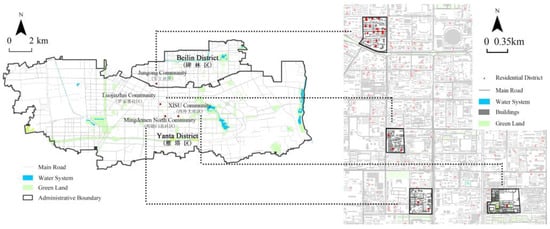
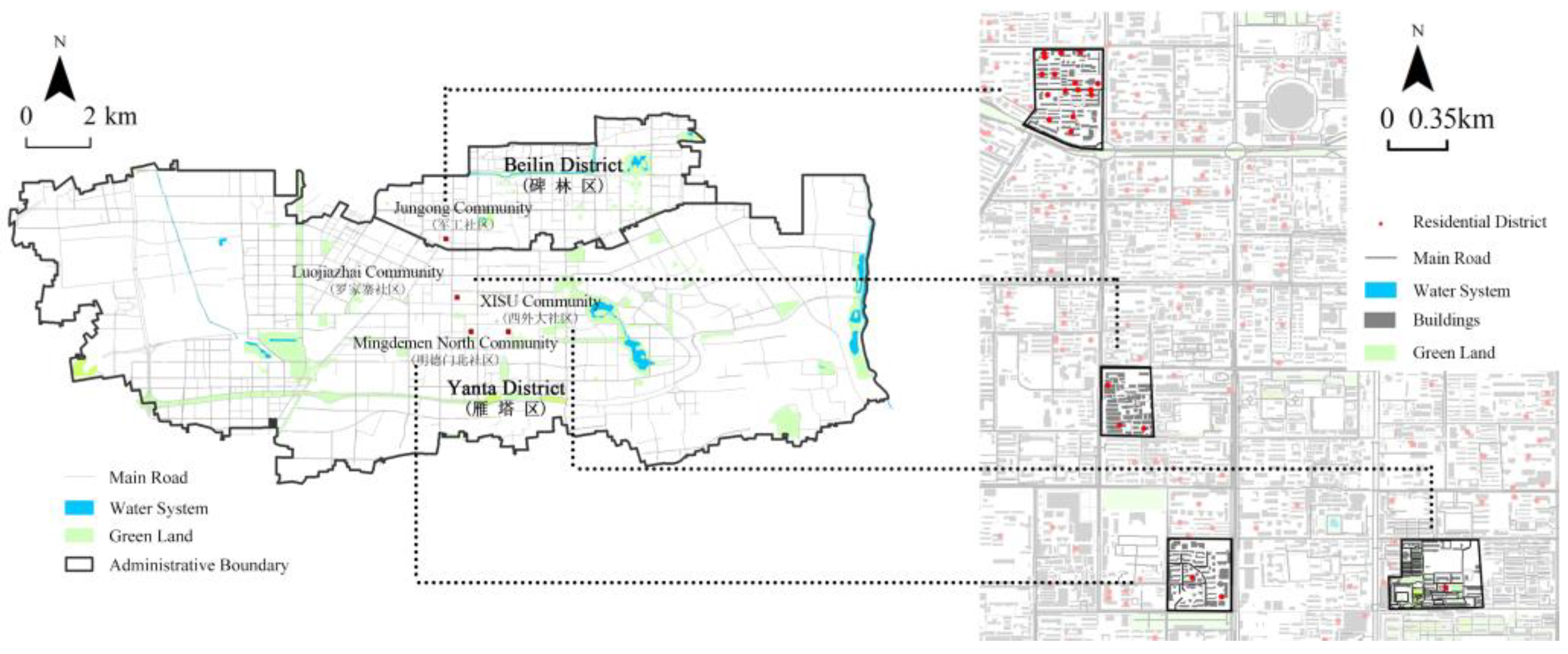
Previous studies and publicly available information have identified Xi’an as a relevant study context for research on child disappearance in western China [25,26,27]. Xi’an is a major metropolitan area with a large population and considerable socioeconomic diversity. According to China’s Seventh National Population Census, Xi’an had a permanent resident population of approximately 12.95 million, and children aged 0–14 accounted for 15.65% of the total population. On this basis, Beilin District and Yanta District were selected as the study areas, and four communities with different community types and built-environment characteristics were purposively selected for field investigation (Figure 1). The communities were not selected to achieve statistical representativeness. Rather, purposive sampling was used to capture variation in community type, built-environment characteristics, population composition, and development history, while also considering the feasibility of conducting systematic field observations and recruiting caregivers of children aged 0–6 years. The four selected communities were Jungong Community, XISU Community, Mingdemen North Community, and Luojiazhai Community, classified as traditional, work-unit, commercial, and marginal communities, respectively. Their main characteristics are summarized in Table 1.
Figure 1.
Location and spatial distribution of the four purposively selected study communities in Xi’an, China. The data presented in the figure was obtained from field surveys conducted by the authors.
Table 1.
Characteristics of the four purposively selected study communities.
The four communities differ in spatial organization, housing conditions, population composition, public facilities, and opportunities for children’s routine activities. Jungong Community is characterized by older residential compounds and relatively limited activity spaces, whereas XISU Community has stronger links to institutional and educational functions. Mingdemen North Community has a relatively recently renovated residential environment with diverse functions, while Luojiazhai Community is characterized by a high density of self-built housing, multiple entrances and exits, limited public space, and a relatively fragmented spatial structure. These contrasts provide a diverse set of routine activity environments for examining caregivers’ perceptions of spatial vulnerability across different community settings.
2.2. Research Data and Participants
Fieldwork was conducted from July to November 2022 in four communities in Xi’an, China: Jungong Community, XISU Community, Mingdemen North Community, and Luojiazhai Community. The communities were purposively selected to capture variation in spatial organization and built-environment characteristics. The target respondents were caregivers responsible for children aged 0–6 years. A non-probability sampling approach was used to recruit participants. Researchers approached potential respondents within the communities and in spaces where children engaged in routine activities, including shared public spaces and locations frequently visited by children and their caregivers. After confirming respondents’ eligibility and familiarity with the children’s routine activities and the relevant spaces, the researchers explained the study’s purpose and the questionnaire content and invited them to participate voluntarily. To avoid duplicate responses from the same household, only one caregiver per household was surveyed.
The survey was conducted on both weekdays and weekends during three time periods: 09:00–11:00, 15:00–18:00, and 19:00–21:00. Of the 290 questionnaires distributed, 278 were valid, yielding a valid response rate of 95.9%. The valid responses comprised 64 from Jungong Community, 70 from XISU Community, 76 from Mingdemen North Community, and 68 from Luojiazhai Community. The questionnaire collected information on child, caregiver, and household characteristics; children’s routine activity frequency, duration, timing, and locations; and caregivers’ perceptions of children’s spatial vulnerability to disappearance across different activity settings. Records of children’s daily activities and spatial perception assessments were collected concurrently. Field observations and environmental photographs were also obtained to document relevant characteristics of the activity spaces.
Because a non-probability sampling approach was used, the data primarily reflect the experiences and perceptions of participating caregivers and cannot be assumed to represent all caregivers of children aged 0–6 years in Xi’an. Children in this age range also differ in their developmental characteristics. Children aged 0–2 years generally have limited mobility and depend heavily on caregivers, whereas those aged 3–6 years tend to have greater independent mobility and spatial exploration abilities but may still lack mature hazard-recognition and self-protection skills. Accordingly, although the target population comprised children aged 0–6 years, subsequent analyses distinguished between children aged 0–2 and 3–6 years to account for these developmental differences. The findings are intended to describe variation in perceptions within the study sample and to examine environmental characteristics alongside field observations.
2.3. Measurement and Analytical Approach
Caregivers’ perceptions were measured using two distinct five-point rating items. The first assessed their overall concern about child disappearance during routine activities, with responses ranging from 1 (“not at all worried”) to 5 (“extremely worried”). The second item asked caregivers to rate how easily their children might become lost or separated from them in different types of routine activity spaces, based on their usual caregiving experiences. Responses ranged from 1 (“least likely to become lost”) to 5 (“most likely to become lost”).
Drawing on selected principles of Crime Prevention Through Environmental Design (CPTED), including natural surveillance, access control, territorial reinforcement, and maintenance, the study examined spatial visibility, spatial organization, environmental management, and patterns of place use. Questionnaire responses, records of children’s routine activities and activity spaces, and field observations were analyzed descriptively to examine how environmental characteristics were related to caregivers’ perceived spatial vulnerability to child disappearance.
3. Results
3.1. Spatiotemporal Patterns of Routine Activities Among Young Children
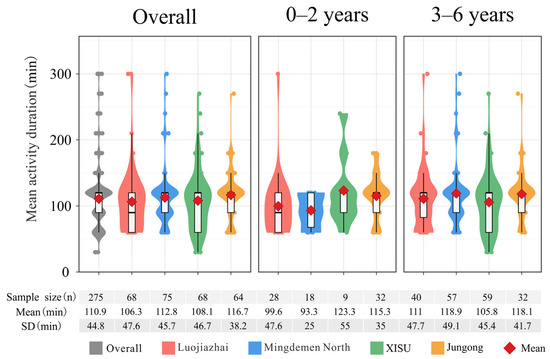
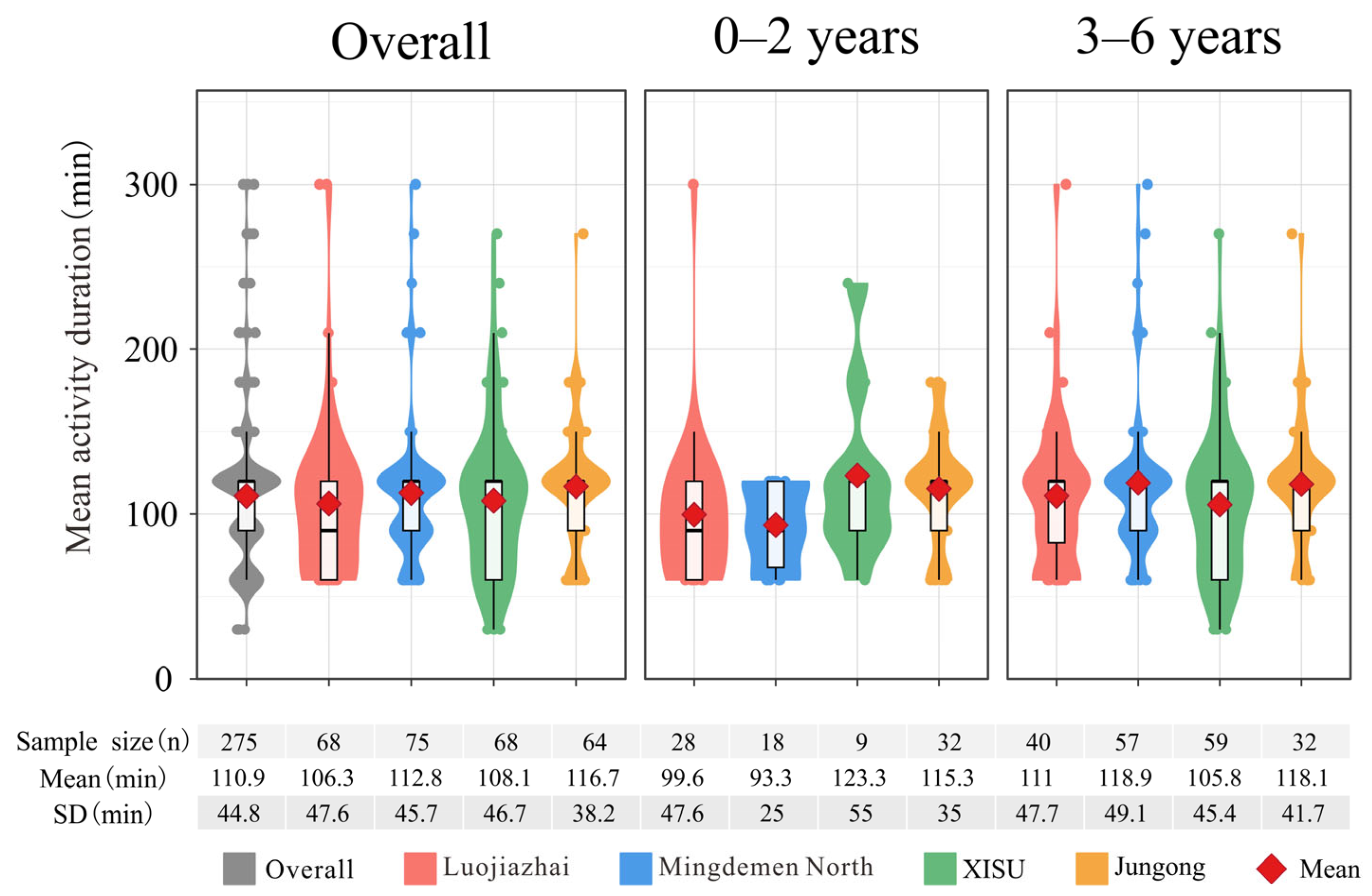
To describe patterns of outdoor activity among children aged 0–6 years, this study examined daily outdoor activity duration across the four study communities and compared the activity patterns of children aged 0–2 and 3–6 years (Figure 2).
Figure 2.
Daily outdoor activity duration among children aged 0–2 and 3–6 years across the four study communities. Source: Author’s analysis based on questionnaire data.
Across the full sample, the mean daily outdoor activity duration was 110.9 min (SD = 44.8). The community-level averages were relatively similar, ranging from 106.3 min in Luojiazhai Community to 116.7 min in Jungong Community. Mingdemen North Community recorded a mean of 112.8 min, while XISU Community recorded a mean of 108.1 min. Patterns varied by age group. Among children aged 0–2 years, the mean daily outdoor activity duration was highest in XISU Community and lowest in Mingdemen North Community, with a difference of 30.0 min between the two. Among children aged 3–6 years, Mingdemen North Community had the highest mean, whereas Luojiazhai Community had the lowest. In three of the four communities, children aged 3–6 years had longer mean daily outdoor activity durations than children aged 0–2 years; XISU Community was the exception.
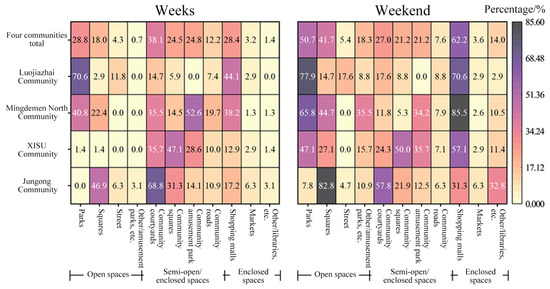
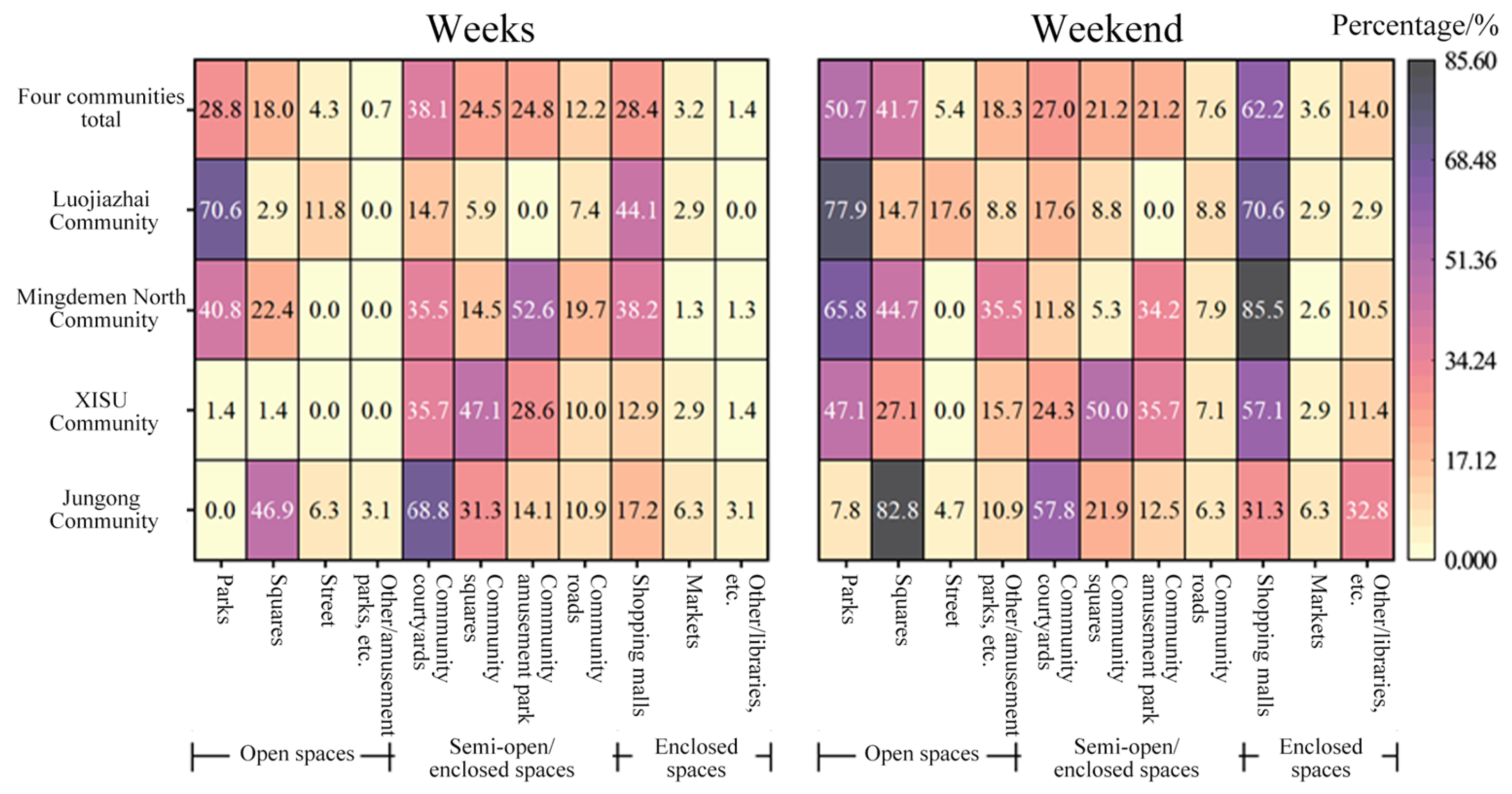
The distribution of children’s routine activity locations also varied by setting, day of the week, and community (Figure 3). Across the sample, parks, squares, residential courtyards, community squares, community playgrounds, and shopping malls were commonly reported activity destinations, whereas streets and markets were less frequently used. On weekdays, children’s routine activities were mainly concentrated within their residential communities. At weekends, activities extended more frequently to destinations outside the immediate neighborhood, including parks, squares, shopping malls, and amusement areas.
Figure 3.
Spatial distribution of routine activity locations for young children during weekdays and weekends across four community types. Source: author’s analysis based on questionnaire data.
The distribution of activity locations differed across the four communities. In Luojiazhai Community, children were more commonly reported to visit destinations outside the neighborhood, particularly parks and shopping malls, while the use of internal communal spaces was limited. This pattern may be related to the availability and quality of play facilities within the community, as well as caregivers’ safety concerns. In Mingdemen North Community, weekend activities were distributed across several types of spaces, including parks, squares, residential courtyards, community amusement park, and shopping malls. Shopping malls were a particularly common destination, visited by 85.5% of children in the community at weekends. In XISU Community, community courtyards, community squares, and community amusement park were the main activity locations on weekdays, while visits to parks, community squares, community amusement park, and shopping malls were more common at weekends. In Jungong Community, squares and community courtyards were frequently used in activity spaces. Compared with the other three communities, Jungong Community also had a higher proportion of children visiting indoor, enclosed settings, such as libraries and sports centers, at weekends.
Overall, the descriptive results show that young children’s routine activities varied across age groups, communities, and weekdays versus weekends. Activities were generally concentrated within residential communities on weekdays, while weekend activities extended to a broader range of destinations. These patterns provide a contextual basis for examining caregivers’ perceptions of spatial vulnerability across different routine activity settings.
3.2. Caregivers’ Perceived Vulnerability to Child Disappearance
3.2.1. Overall Levels of Caregivers’ Concern About Child Disappearance
Based on the questionnaire responses, this study described caregivers’ overall concern about the possibility of their children going missing during routine activities, as well as variation across the four study communities (Table 2). The mean score for the full sample was 3.44 on a five-point scale, with 1 representing “not at all worried” and 5 representing “extremely worried.” This average was above the scale midpoint of 3. At the individual-response level, 26.15% of caregivers selected level 4 and 24.77% selected level 5, indicating that a considerable proportion of respondents reported relatively high concern.
Table 2.
Overall and community-specific distributions of caregivers’ concern about child disappearance. Source: author’s analysis based on questionnaire data.
The mean scores varied across the four communities. Luojiazhai Community had the highest average score (3.72), followed by Jungong Community (3.53) and XISU Community (3.45). Mingdemen North Community had the lowest average score (3.14). In Luojiazhai Community, 34.43% of caregivers selected level 5 and a further 31.15% selected level 4. By contrast, in Mingdemen North Community, approximately 63% of respondents selected levels 1–3, indicating lower reported concern on the scale. Although the overall mean scores for Jungong Community and XISU Community were similar, Jungong Community had a larger proportion of caregivers selecting the highest response category.
3.2.2. Differences in Caregivers’ Concern About Child Disappearance Across Individual and Household Characteristics
Caregivers’ concern about child disappearance was described across three domains: child characteristics, caregiver characteristics, and household characteristics (Table 3).
Table 3.
Differences in caregivers’ perceived vulnerability according to child characteristics, guardian characteristics, and household factors. Source: author’s analysis based on questionnaire data.
At the child level, mean scores for caregivers’ perceived vulnerability were similar for boys and girls. However, children aged 3–6 years received higher mean scores than children aged 0–2 years. This difference may be related to older children’s greater mobility, curiosity, and tendency to explore their surroundings, which may pose additional challenges for caregivers supervising them during outdoor activities.
Regarding caregiver characteristics, female caregivers reported higher mean perceived-vulnerability scores than male caregivers, while scores were relatively similar across caregiver age groups. In terms of educational attainment, caregivers with primary education or below and those with an associate degree or higher reported higher mean scores than some other education groups. For duration of residence, caregivers who had lived in their communities for 3–8 years reported the lowest mean score (M = 3.26), whereas those who had lived there for more than 15 years reported the highest (M = 4.15). Caregivers who had heard about child disappearance incidents in their communities reported a mean score of 4.40, compared with 3.28 among those who had not. This descriptive difference may reflect an association between awareness of local incidents and greater concern about child disappearance, but it does not establish a causal relationship.
At the household level, caregivers from households with annual incomes below RMB 50,000 reported the highest mean score for perceived vulnerability (M = 3.55). Mean scores were relatively similar across the other income groups.
Overall, the descriptive results show variation in caregivers’ perceptions across child, caregiver, and household characteristics.
3.3. Caregivers’ Perceived Spatial Vulnerability to Child Disappearance Across Routine Activity Spaces
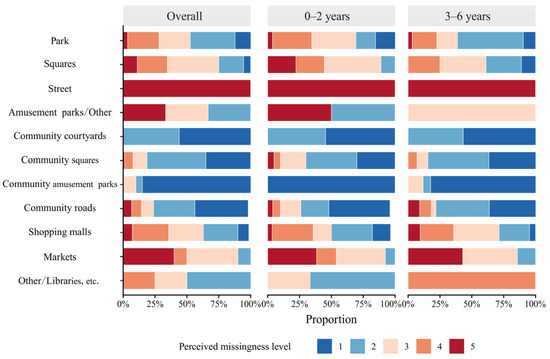
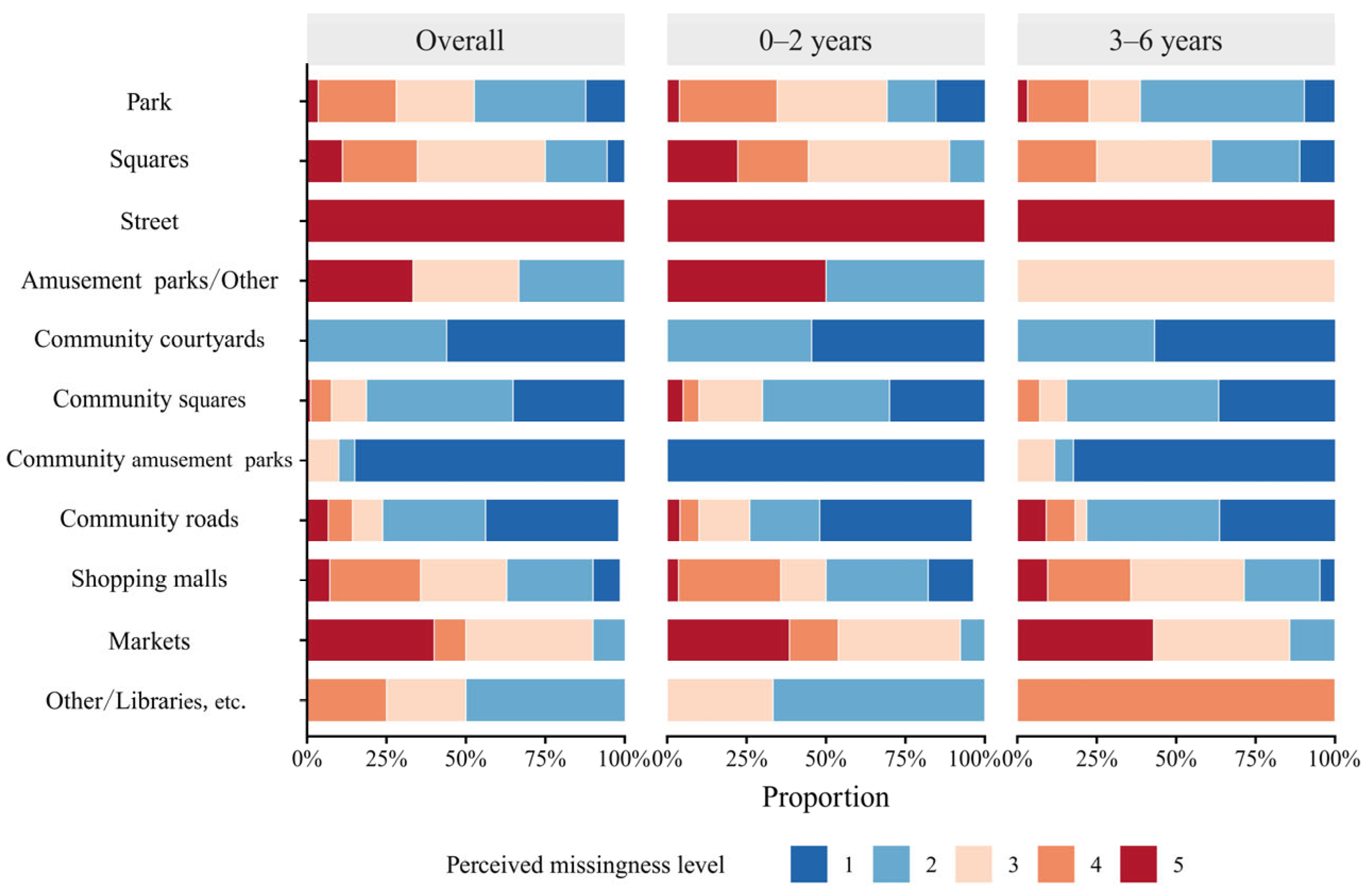
To examine differences in caregivers’ perceived spatial vulnerability to child disappearance across routine activity spaces, this study used the questionnaire’s five-point ratings for different types of activity spaces. A score of 1 indicated that caregivers perceived the likelihood of a child becoming lost or going missing in a given type of space as very low, whereas a score of 5 indicated that they perceived it as very high. These ratings reflect caregivers’ subjective evaluations of specific routine activity spaces. They are used to identify the spaces perceived as more concerning, rather than to estimate the actual probability of child disappearance. Figure 4 presents the score distributions for the overall sample and for children aged 0–2 and 3–6 years, allowing comparisons across space types and age groups.
Figure 4.
Distribution of caregivers’ perceived spatial vulnerability to child disappearance across routine activity spaces. Ratings range from 1 (perceived as least likely for a child to become lost or go missing) to 5 (perceived as most likely). The ratings reflect caregivers’ subjective perceptions rather than the actual probability of child disappearance. Source: author’s analysis based on questionnaire data.
The overall distribution shows differences in caregivers’ perceived spatial vulnerability to child disappearance across routine activity spaces. These differences may be related, in part, to children’s routine activity patterns and the contexts in which different spaces are used. As discussed above, young children’s activities are primarily concentrated in spaces such as parks, squares, community courtyards, community squares, community amusement park, and shopping malls. Against this background, caregivers’ ratings of perceived spatial vulnerability varied across activity-space types. Markets, streets, and amusement parks had relatively high proportions of ratings at the upper end of the scale. For markets, ratings were concentrated mainly at levels 3 and 5, whereas ratings for streets were concentrated almost entirely at level 5. These patterns suggest that caregivers expressed greater concern about children becoming lost or accidentally separated from them in these environments. Notably, streets and markets were less frequently reported as activity destinations yet received relatively high perceived-vulnerability ratings. This pattern suggests that ratings may reflect factors beyond the frequency of use, although the descriptive results do not establish which factors account for the differences. Streets and markets are often characterized by pedestrian movement and complex activity settings, which may present challenges for continuous supervision. Ratings for amusement parks and similar venues, by contrast, showed a degree of polarization. This pattern may reflect differences in caregivers’ assessments, but the present data do not identify the reasons for those differences. By comparison, ratings for community courtyards, community squares, and community playgrounds were more frequently concentrated at levels 1 and 2, indicating lower perceived spatial vulnerability in these settings. These spaces were frequently used for children’s routine activities on weekdays. Their familiarity to caregivers and the organization of activity areas may be relevant to how caregivers evaluate them; however, the present descriptive data does not establish whether repeated use reduces concern. Parks, squares, and shopping malls were also frequently reported destinations for children’s routine activities and family outings beyond the community on weekends. Their rating distributions were more dispersed, indicating variation in caregivers’ assessments across these settings. Such variation may be associated with differences between the settings, but the present data do not establish the contribution of specific environmental or activity-related factors.
Comparisons between the two age groups showed similarities and differences in caregivers’ ratings for children aged 0–2 and 3–6 years. In both groups, ratings for streets were highly concentrated at level 5, while ratings for streets and markets indicated concern about children becoming lost or accidentally separated from their caregivers. Ratings for community courtyards, community squares, community amusement parks, and community roads were generally concentrated at the lower end of the scale in both groups, indicating lower perceived spatial vulnerability in these settings. However, the rating distributions differed between the age groups for some space types. For parks, caregivers of children aged 0–2 years assigned relatively higher ratings overall. For amusement parks and similar venues, ratings in the 0–2-year group were concentrated at both higher and lower levels, indicating a more dispersed or polarized distribution. By contrast, ratings for children aged 3–6 years were concentrated primarily at level 3. For other spaces, including libraries, ratings for children aged 0–2 years were concentrated mainly at lower levels, whereas ratings for children aged 3–6 years were concentrated at level 4. These distributions describe differences in caregivers’ ratings between the two age groups.
3.4. Environmental Characteristics of Spaces Associated with Caregivers’ Perceived Spatial Vulnerability to Child Disappearance
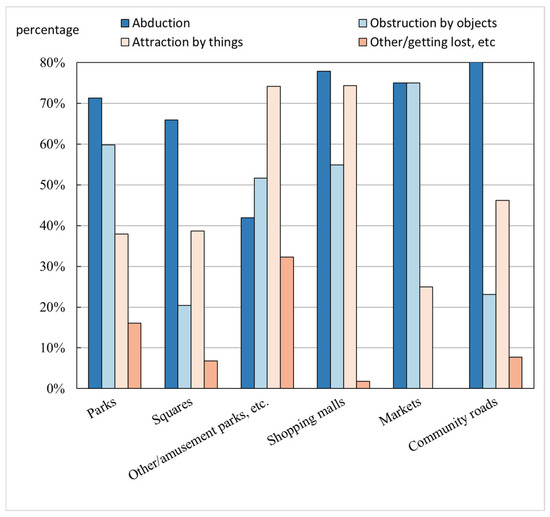
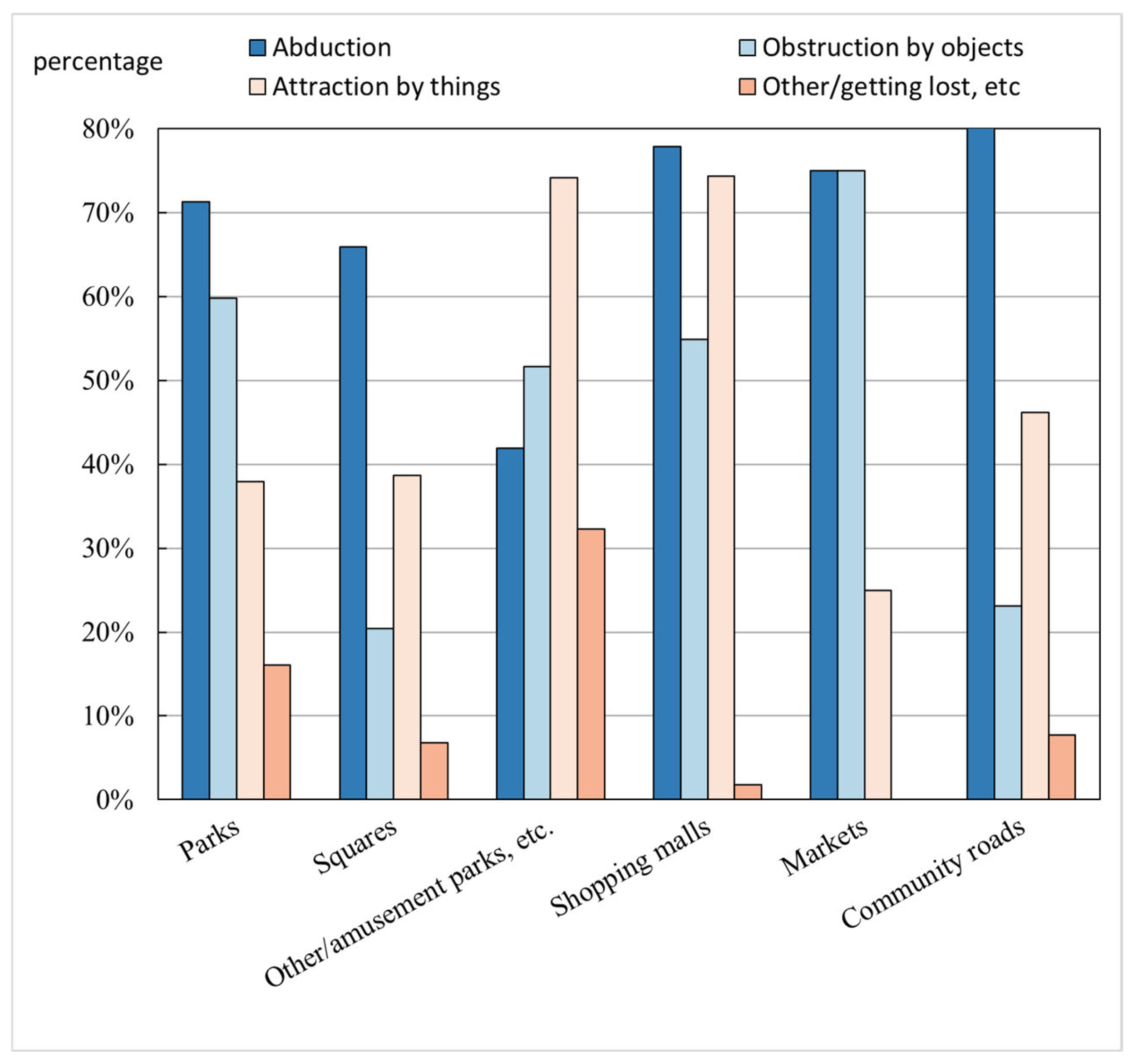
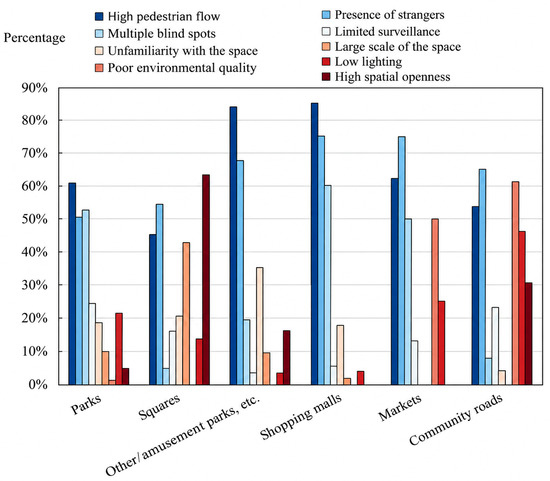
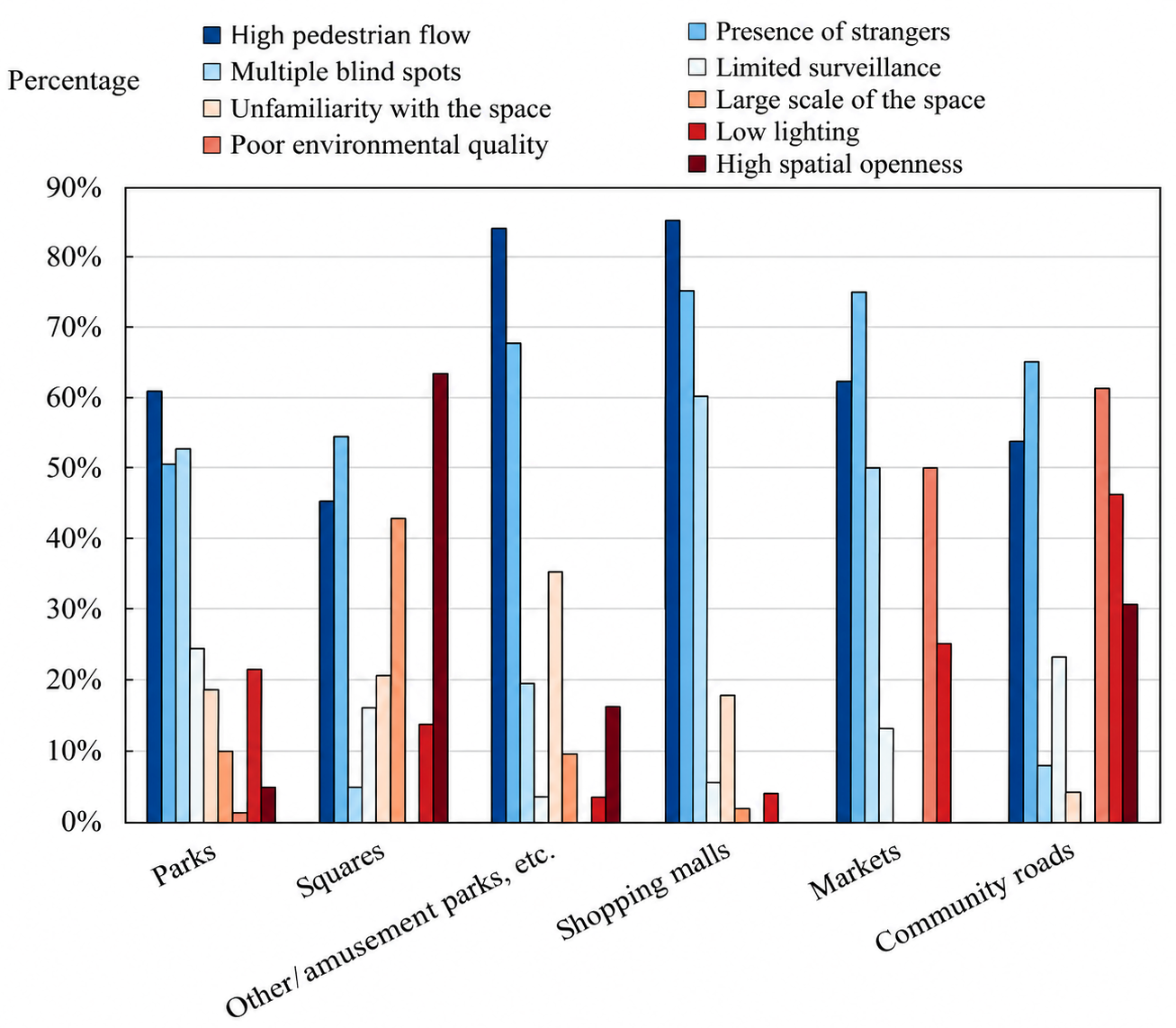
The questionnaire results for spaces rated as relatively high in perceived spatial vulnerability (Figure 5 and Figure 6) indicate that caregivers’ concerns primarily involved child abduction, children being attracted by surrounding objects or activities, children’s visibility being obstructed by physical objects, and other concerns, including children getting lost. The environmental and contextual factors identified by caregivers fell into nine categories: high pedestrian flow, multiple blind spots, unfamiliarity with the space, poor environmental quality, the presence of strangers, limited surveillance, large spatial scale, low lighting, and high spatial openness.
Figure 5.
Caregivers’ reported concerns about possible child-disappearance scenarios across different spatial contexts, including abduction, visual obstruction, distraction, and other causes. Source: author’s analysis based on questionnaire data.
Figure 6.
Environmental and contextual factors associated with caregivers’ perceived spatial vulnerability to child disappearance across different spatial contexts. Source: author’s analysis based on questionnaire data.
To further examine differences in caregivers’ perceived spatial vulnerability to child disappearance across routine activity spaces, this study draws on selected principles of Crime Prevention Through Environmental Design (CPTED) as an analytical guide and examines selected settings used for children’s routine activities, including spaces frequently mentioned by caregivers in the survey. The analysis focuses on spatial layout, visual obstructions, entrance and exit arrangements, spatial boundaries, environmental maintenance, and patterns of space use. It considers how these characteristics may relate to caregivers’ ability to monitor children’s movements and maintain visual contact with them, as well as caregivers’ subjective assessments of spatial vulnerability to child disappearance. Photographs were collected during the questionnaire fieldwork conducted from July to November 2022. On-site observations and photographs documented spatial layouts and environmental conditions in selected activity settings, providing visual material for the case analyses.
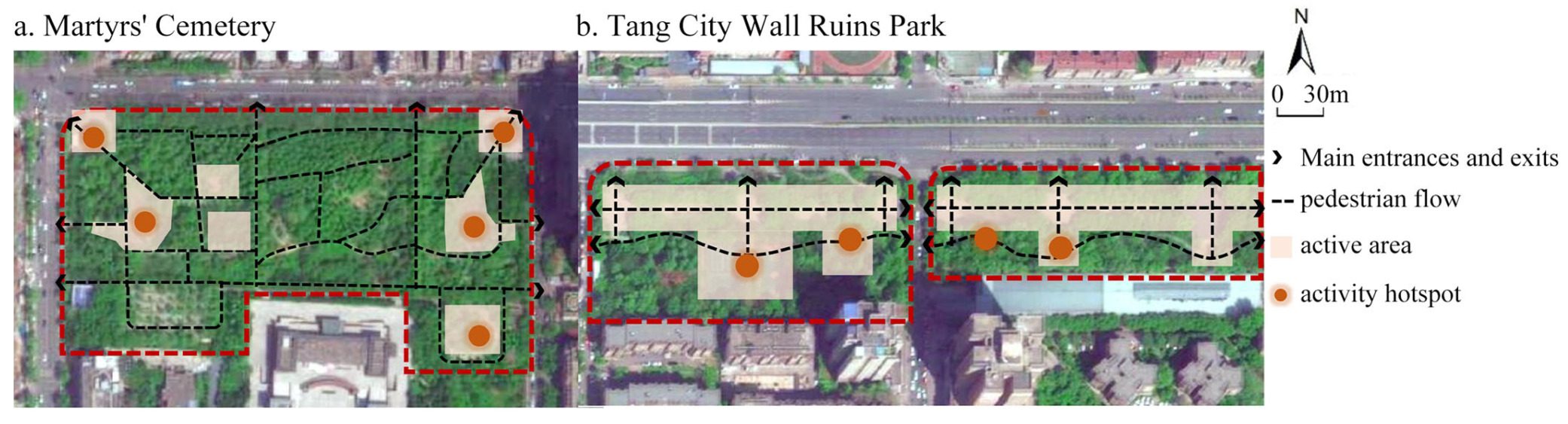
Figure 7 illustrates Martyrs’ Cemetery and Tang City Wall Ruins Park, two publicly accessible urban green spaces with multiple street-facing entrances and exits, relatively open spatial configurations, and visitors from diverse groups. Some caregivers may perceive the relatively limited control over entry and exit in these parks as making it more difficult to monitor the surrounding area and keep track of children’s whereabouts. These perceptions may be associated with concerns about accidental separation or harm from strangers. Parks may also contain layered vegetation and winding pathways. Dense vegetation and complex pathway layouts can obstruct sightlines between caregivers and children, which some caregivers may perceive as making it harder to maintain visual contact with their children.
Figure 7.
Spatial and environmental characteristics of parks perceived as vulnerable to child disappearance. Red dashed lines indicate the spatial extent of each surveyed site. Source: authors’ analysis based on remote sensing data.
A relatively large urban village is located north of Martyrs’ Cemetery. During fieldwork, some caregivers expressed concerns about public security in the surrounding area. These concerns may be relevant to how they assessed spatial vulnerability within the park, but they do not establish that the surrounding area has a higher incidence of crime or child disappearance. By contrast, Tang City Wall Ruins Park has an elongated layout along the street, a relatively narrow transverse extent, and numerous entrances and exits facing urban roads. In some sections, the boundary between the park and adjacent roads is indistinct. Caregivers may therefore pay particular attention to children’s movements near these boundaries. Such spatial characteristics may be relevant to caregivers’ subjective assessments of children becoming lost or accidentally separated from them.
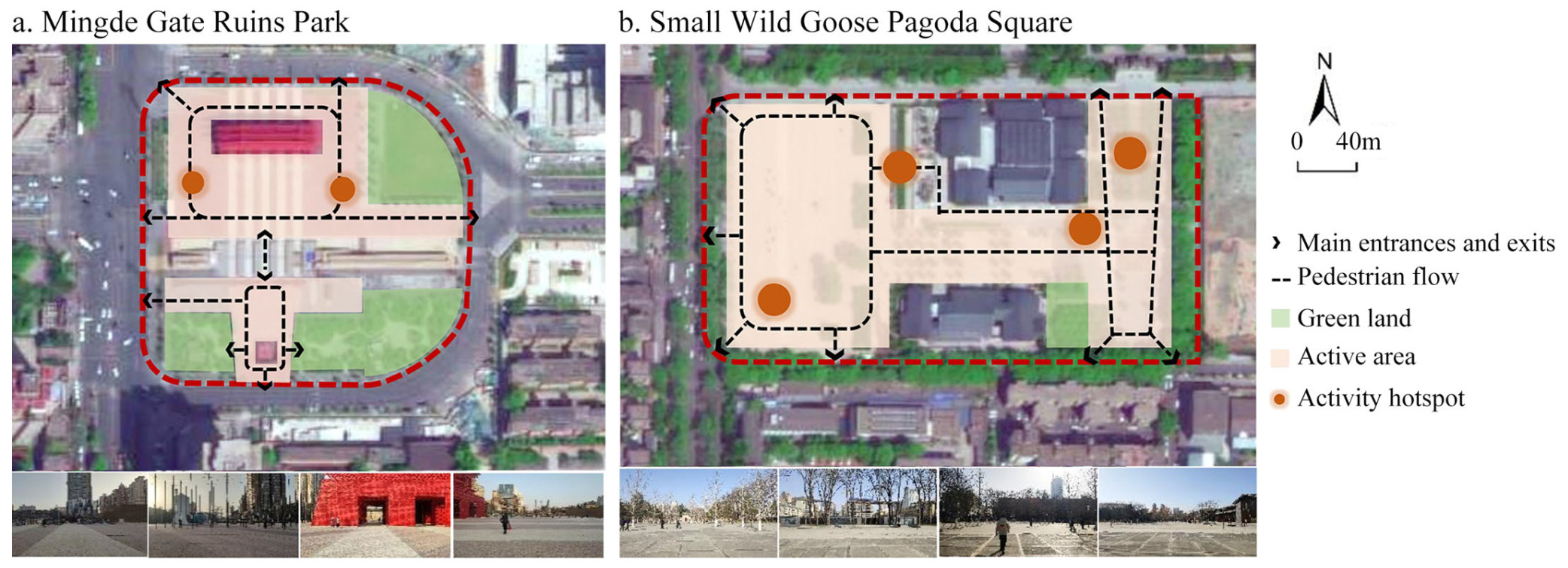
Figure 8 presents Mingdemen Gate Ruins Park and Small Wild Goose Pagoda Square as examples of public recreational spaces dominated by hard surfaces. These spaces generally have relatively simple layouts, few visual obstructions, and open sightlines, which may help caregivers observe children and maintain visual contact with them. However, these spaces may also be extensive and open, with relatively indistinct boundaries and few clearly defined subdivisions. When visitor numbers are high and pedestrian flows are dynamic, some caregivers may find it difficult to define the boundaries of children’s activity areas and may pay greater attention to unfamiliar people nearby. These perceptions may be associated with higher ratings of spatial vulnerability to child disappearance.
Figure 8.
Spatial layouts and environmental characteristics of representative squares associated with caregivers’ perceived vulnerability. Red dashed lines indicate the spatial extent of each surveyed site. The left photograph was taken on the morning of 22 September 2022, and the right photograph on the afternoon of 24 September 2022. Source: authors’ analysis based on remote sensing data and field observations.
The extensive paved areas also accommodate group activities, such as square dancing and singing, which may attract people of different ages. These activities may attract children’s attention, while the activities and surrounding crowds may also compete for caregivers’ attention. Some caregivers may consequently be concerned that children could move out of sight or become accidentally separated from them. More specifically, some caregivers at Mingdemen Gate Ruins Park expressed concerns about lighting conditions when crowds gathered in the evening. They perceived insufficient illumination as potentially making it more difficult to observe and keep track of children. Small Wild Goose Pagoda Square is adjacent to Zhuque Furniture City on its western side, where commercial activity and pedestrian movement are frequent. Some caregivers expressed particular concern about the movement of people and the presence of unfamiliar individuals in the surrounding area. These concerns may be relevant to their assessments of spatial vulnerability to child disappearance.
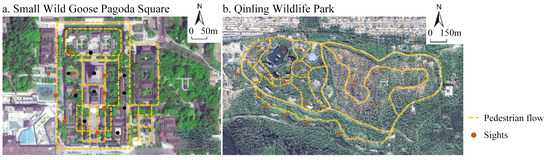
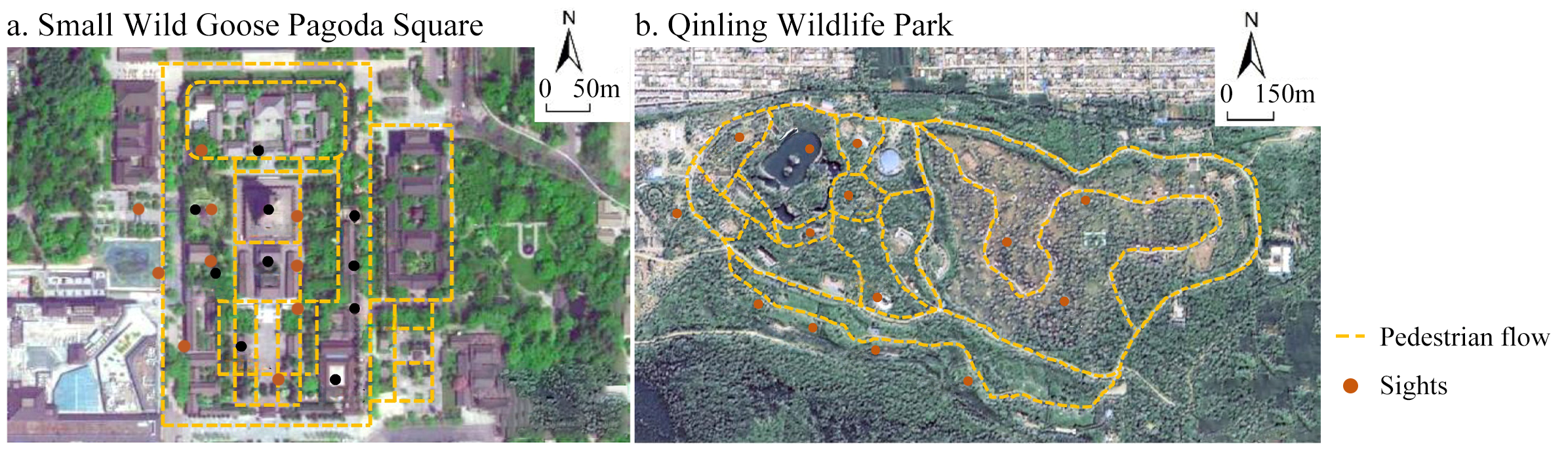
Figure 9 presents the Small Wild Goose Pagoda Square and Qinling Wildlife Park as examples of recreational destinations. These destinations may be located farther from residential communities and may be visited more frequently on weekends or public holidays, when visitor numbers can be relatively high. Compared with routine activity spaces within residential communities, these destinations may be less familiar to some caregivers. They may therefore require caregivers to pay closer attention to children’s movements and the surrounding environment. Crowded conditions may also be associated with feelings of tension or unease among some caregivers and may be relevant to their subjective assessments of spatial vulnerability to child disappearance.
Figure 9.
Representative spatial environments of amusement parks and large recreational areas perceived as vulnerable spaces. Source: authors’ analysis based on remote sensing data.
These destinations may offer a variety of recreational facilities and activities that attract young children. Some caregivers may be concerned that children could move out of sight or become accidentally separated from them while exploring or participating in activities. Although the Small Wild Goose Pagoda Square and Qinling Wildlife Park differ in location, spatial scale, function, and internal layout, both contain multiple activity areas and experience visitor movement. These environmental characteristics may make it more difficult for some caregivers to understand and navigate the spatial layout, identify children’s locations, and maintain continuous supervision. Such difficulties may, in turn, be associated with higher caregiver-perceived spatial vulnerability to child disappearance.
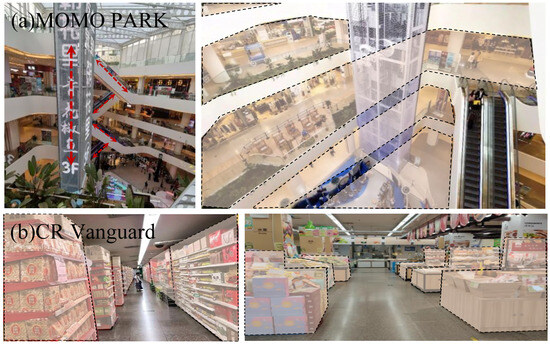
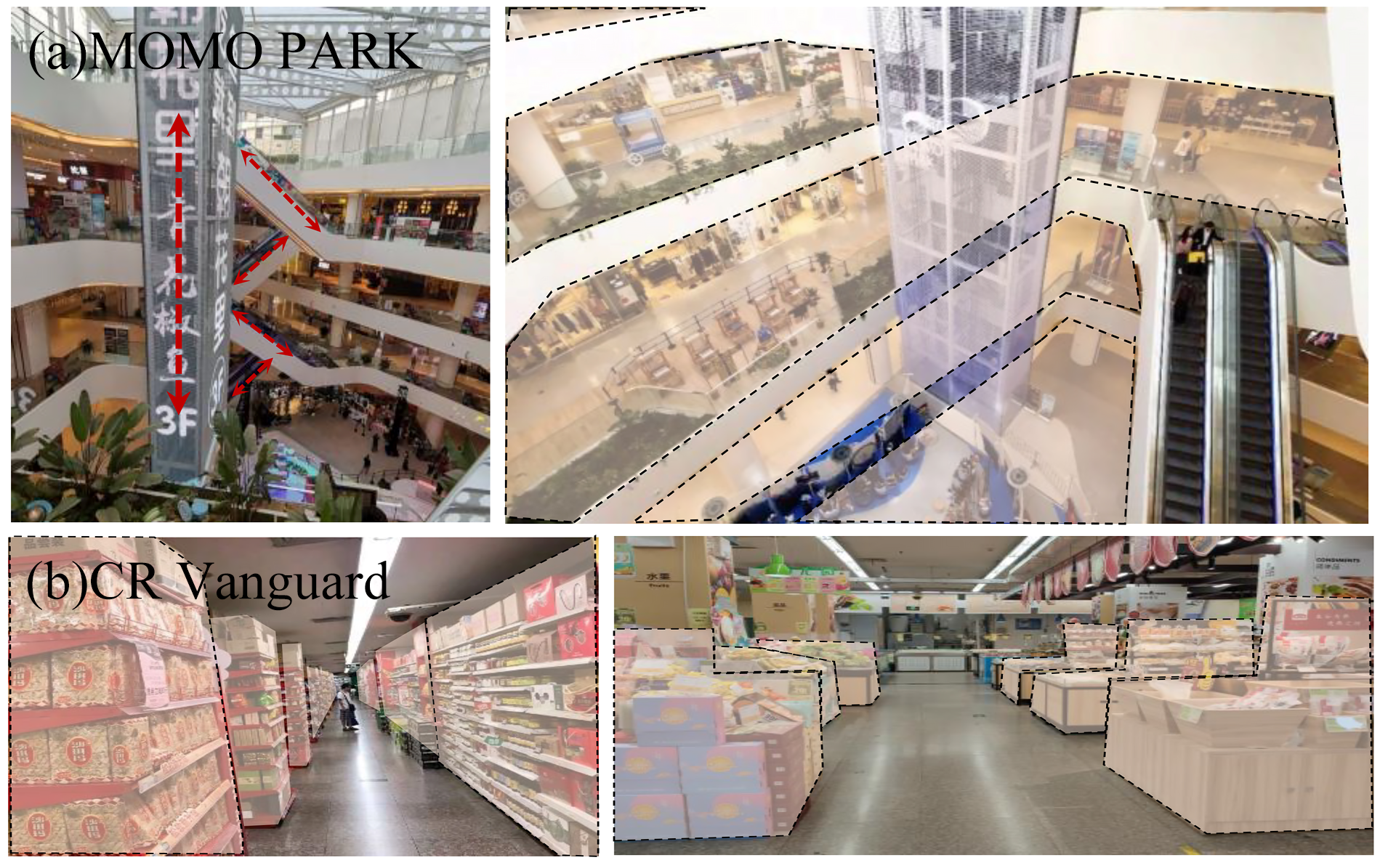
Figure 10 presents MOMO PARK (an urban shopping mall) and CR Vanguard (a supermarket chain). Both are commercial destinations visited by young children as part of their routine activities. Children may visit these venues with their caregivers on weekday evenings or weekends. Product displays and commercial activities may attract children’s attention, and crowds may obstruct caregivers’ views. These conditions may be relevant to caregivers’ concerns that children could move out of sight or become accidentally separated from them, and to their subjective assessments of spatial vulnerability to child disappearance.
Figure 10.
Representative spatial environments of commercial spaces associated with caregivers’ concerns about child disappearance. Black dashed lines highlight the visual fields of the surrounding environments. The upper photograph was taken on the morning of 27 September 2022, and the lower photograph on the afternoon of 7 October 2022. Source: photographs taken by the authors during fieldwork.
MOMO PARK is located near Jixiang Village and a metro station. It is a large, eight-storey commercial complex with a relatively complex vertical circulation system and functional layout. These features may make it more challenging for some caregivers to navigate the space and keep track of their children’s movements. By contrast, the supermarket aisles at CR Vanguard are lined with densely arranged shelves, creating numerous passageways and corners. When children crouch down, enter adjacent aisles, or move some distance away from their caregivers, shelves and other fixtures may obstruct caregivers’ lines of sight, making it more difficult to observe children’s activities promptly and potentially prompting concerns that children may temporarily move out of sight or become accidentally lost.
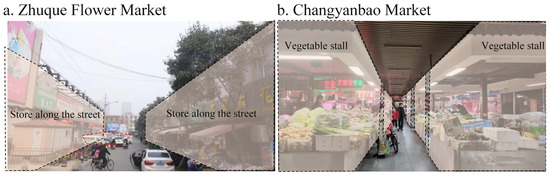
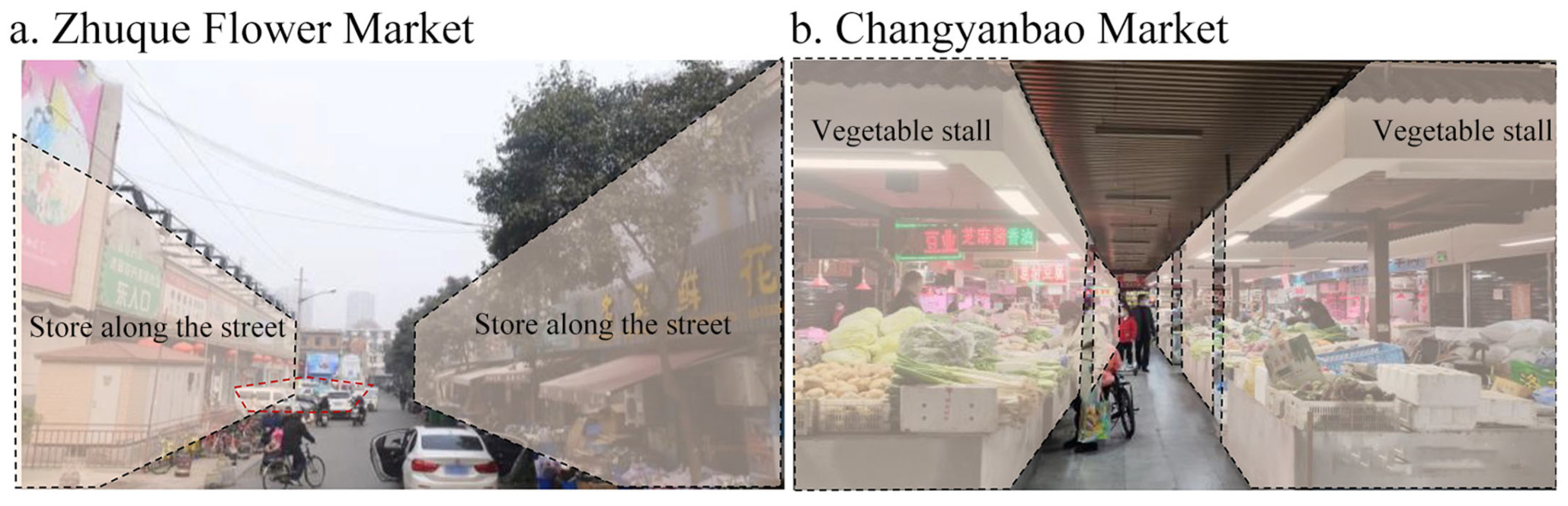
Figure 11 presents Zhuque Flower Market and Changyanbao Market, which differ in spatial organization and environmental characteristics. Zhuque Flower Market consists mainly of shops distributed along both sides of a street. Pedestrian and vehicle movement, parked vehicles, and limited surveillance-camera coverage in some areas may create localized visual obstructions that caregivers perceive as making it more difficult to maintain visual contact with children. When caregivers focus on selecting products or interacting with vendors, children may move around nearby. Parked vehicles, shop fixtures, and passing crowds may obstruct sightlines, which some caregivers may associate with concerns about children becoming lost, accidentally separated from them, or harmed by strangers.
Figure 11.
Representative market environments illustrate spatial characteristics relevant to caregivers’ perceived vulnerability to child disappearance. Red dashed lines highlight typical environmental issues. The left photograph was taken on the morning of 21 September 2022, and the right photograph on the afternoon of 21 September 2022. Source: photographs taken by the authors during fieldwork.
By contrast, Changyanbao Market specializes in agricultural products and contains numerous stalls and shops. Shoppers, vendors, and delivery personnel all use the market, and pedestrian movement may be heavy in some areas, with occasional crowding. Field investigations revealed that some caregivers were particularly alert to the diverse composition of market users and the presence of unfamiliar people moving through the market. They perceived these characteristics as potential factors shaping their assessments of spatial vulnerability to child disappearance. However, such subjective perceptions do not imply that people in particular occupations or members of mobile population groups have a greater propensity to commit crimes. In addition, some areas of the market were characterized by damp conditions, high noise levels, and densely arranged goods and fixtures. These conditions may affect visual permeability, pedestrian circulation, and caregivers’ overall assessments of the surrounding environment. From the CPTED perspectives of maintenance and natural surveillance, a well-maintained environment and clear, orderly spatial organization may contribute to a positive perception of a place. Conversely, inadequate maintenance and relatively disorganized spatial arrangements may weaken some caregivers’ perceptions of environmental safety and, in turn, be associated with higher caregiver-perceived spatial vulnerability to child disappearance.
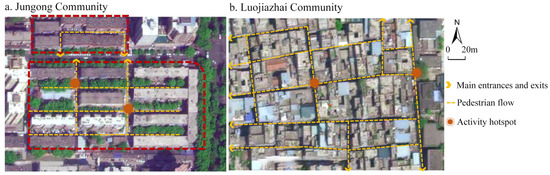
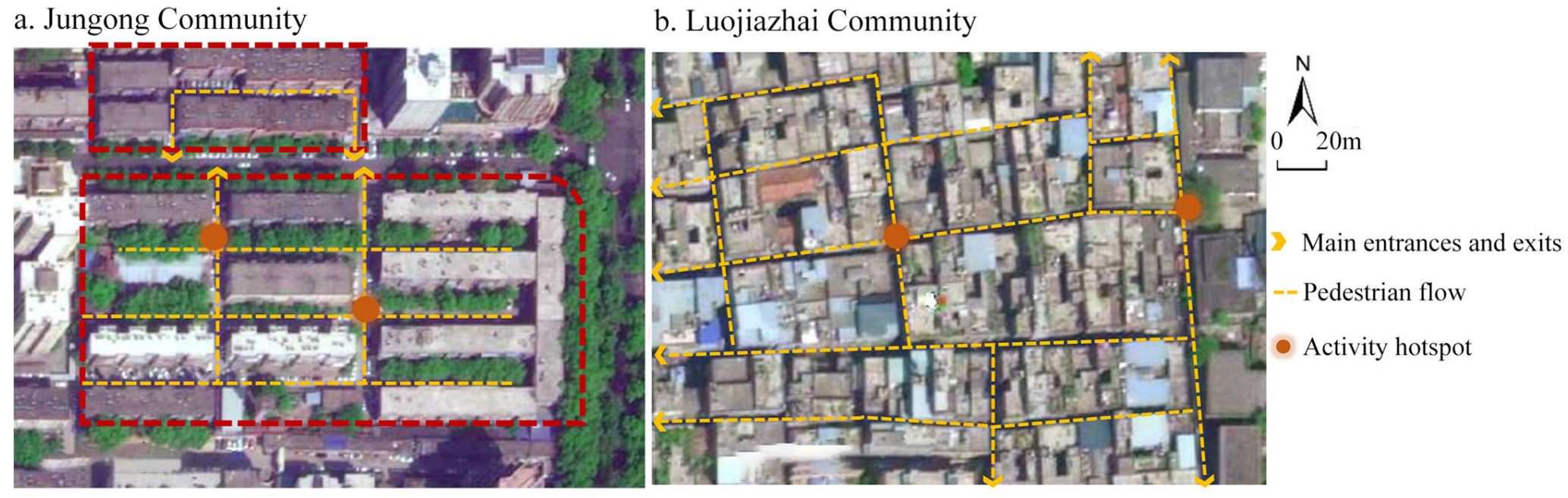
Figure 12 presents community roads in Jungong Community and Luojiazhai Community. These roads connect the communities with their surroundings and link different areas within them. Compared with recreational spaces such as community courtyards and squares, community roads may cover larger areas, accommodate more pedestrian movement, and be relatively open. Because these roads serve residents’ daily travel and connect different activity spaces, children moving along them may encounter more people and pass between different spaces. Some caregivers may therefore be concerned that children could move out of sight or become accidentally separated from them.
Figure 12.
Representative community road environments and spatial features relevant to caregivers’ perceptions of spatial vulnerability to child disappearance. Red dashed lines indicate the spatial extent of each surveyed site. Source: authors’ analysis based on remote sensing data.
Drawing on the CPTED principles of natural surveillance, access control, and maintenance, the analysis considers how road layout, visual permeability, entrance and exit arrangements, and environmental management may relate to caregivers’ ability to monitor children’s movements and their perceptions of spatial vulnerability to child disappearance. In Jungong Community, parked vehicles along some roads may create localized visual obstructions that caregivers perceive as making it more difficult to maintain visual contact with children. In Luojiazhai Community, the internal road network is relatively dense, with intersecting and interconnected alleyways and numerous corners. This layout may make it more difficult for caregivers to identify children’s locations and keep track of their movements. In addition, both communities have certain shortcomings in the maintenance of some roads, lighting conditions, and the provision of surveillance cameras. These environmental characteristics may further shape caregivers’ subjective assessments of visibility and their ability to monitor children’s activities, potentially being associated with higher caregiver-perceived spatial vulnerability to child disappearance.
4. Discussion and Limitations
4.1. Discussion
This study identifies an overlap between young children’s routine activity spaces and the spaces in which caregivers report relatively high perceived spatial vulnerability to child disappearance. Children’s routine activities are concentrated primarily in parks, squares, community courtyards, community amusement parks, and shopping malls. On weekdays, their activities are more concentrated within community communities, whereas on weekends, they extend to spaces outside the community, including parks, squares, and shopping malls. Parks, squares, recreational spaces, community roads, shopping malls, and markets are also among the types of spaces that receive relatively high perceived spatial vulnerability ratings from caregivers. These patterns suggest that assessments of child-friendly environments may benefit from considering both children’s routine use of space and caregivers’ perceptions of potential supervision difficulties. Spaces that children frequently visit and that caregivers rate as relatively vulnerable may merit further environmental assessment. By examining children’s activity patterns alongside caregivers’ spatial perceptions, this study provides a perspective on how perceived spatial vulnerability varies across children’s routine activity settings. Importantly, the overlap reflects a correspondence between children’s use of space and caregivers’ subjective assessments; it does not indicate that these places have higher actual rates of child disappearance. The study examines caregivers’ perceptions of situations such as children becoming lost or accidentally separated from their caregivers during routine activities, rather than objective risk estimated from verified child disappearance incidents. This distinction is essential for interpreting the spatial patterns discussed below.
Viewed through selected CPTED principles, caregivers’ perceptions of spatial vulnerability to child disappearance vary across activity settings and may be considered alongside environmental characteristics such as visibility, pedestrian movement, entrance and exit arrangements, spatial scale, familiarity, and maintenance conditions. The environmental features documented in this study, including visual obstructions, spatial blind spots, busy pedestrian environments, unfamiliar surroundings, and lighting or maintenance concerns, can be organized with reference to CPTED principles such as natural surveillance, access control, territorial reinforcement, and maintenance. In this study, CPTED serves as an interpretive framework for examining environmental characteristics relevant to caregivers’ perceptions and supervision experiences; it is not used to establish causal effects on perceived vulnerability or actual child disappearance. The purpose of using CPTED in this study is not to determine whether a particular space presents a higher objective risk of child disappearance, but to provide a framework for organizing environmental attributes and interpreting caregivers’ spatial perceptions. For example, vegetation, road bends, and complex spatial layouts may interrupt visual contact between caregivers and children. Multiple entrances and unclear spatial boundaries may also make it more difficult for caregivers to monitor children’s movements, while busy pedestrian environments may require greater attention to supervision [28]. These examples provide possible contextual explanations for caregivers’ ratings, rather than evidence that the identified environmental characteristics cause higher perceived vulnerability or actual child disappearance. CPTED therefore offers a way to examine the environmental context of child supervision in routine activity spaces without treating caregivers’ perceptions as direct measures of objective risk.
Patterns in caregivers’ spatial perceptions may vary across community contexts, where built-environment characteristics, facility provision, and children’s routine activity patterns differ. This study purposively selected four types of communities—traditional, work-unit, commercial, and marginal communities—to examine perceptions in settings with different development histories and spatial configurations, rather than to achieve statistical representativeness of Xi’an. For example, Luojiazhai, a marginal community, is characterized by high-density self-built housing, narrow roads, multiple entrances and exits, limited public space, and a fragmented spatial structure. Children living in this community also visit parks and shopping malls outside the community. These characteristics provide context for interpreting caregivers’ experiences of supervising children across different settings, but the present data do not establish that they cause greater perceived vulnerability. By comparison, work-unit communities and residential communities that have undergone urban renewal may differ in public-facility provision and spatial organization, offering contrasting contexts for children’s routine activities. These observations suggest that, even within the same broad space category, such as parks, roads, or amusement parks, spatial boundaries, road layouts, facility provision, and pedestrian movement may be relevant to caregivers’ supervision experiences and perceptions. The findings should not be interpreted as identifying a generalizable spatial pattern of child disappearance. Rather, they illustrate how community context can inform the interpretation of caregivers’ subjective assessments of spatial vulnerability in the four communities studied.
Considering these findings, incorporating child safety into urban planning should go beyond installing additional surveillance cameras or strengthening safety education for caregivers. Greater attention should be paid to the physical environments children use and to the everyday management of these spaces. Young children, particularly those in their early years, depend heavily on adult supervision, while their spatial cognition, hazard recognition, and capacity for independent movement are still developing. Compared with environments designed for adults in general, child-friendly spaces therefore require greater attention to continuous visibility, the legibility of activity boundaries, clear and comprehensible routes, consistent lighting, and the ease with which children and caregivers can re-establish contact if separated.
In parks and large recreational spaces, priority should be given to natural surveillance conditions and the spatial relationships between children’s activity areas and major entrances and exits [29]. Without compromising landscape quality or the openness of public spaces, vegetation height and density could be adjusted, continuous visual obstructions around key activity areas reduced, major entrances and exits made easier to identify, and sightlines between activity areas improved. In large or functionally complex venues, where children and caregivers may become temporarily separated, clearly identifiable meeting points, spatial signage, and child-friendly wayfinding facilities could help reduce difficulties in navigating unfamiliar environments [30].
For squares and other open spaces, planning should strike a balance between openness and the legibility of children’s activity areas. Excessive enclosure may undermine the public and open character of these spaces, whereas a complete absence of boundary cues may make it more difficult for caregivers to determine the extent of children’s activity areas. Flexible spatial boundaries could therefore be created through changes in paving, low landscape features, vegetation, water features, or semi-transparent structures [31]. Such measures could improve the legibility of children’s activity areas while maintaining visual permeability. For community roads, priority should be given to improving visibility at intersections, building corners, and narrow passageways, while ensuring continuous lighting and making routes commonly used by children easier to recognize and follow.
High-traffic, multifunctional environments, such as shopping malls and markets, require greater emphasis on spatial management and wayfinding systems. Challenges in these settings do not arise solely from their physical configuration; they may also be associated with visitor density, complex circulation patterns, multiple entrances and exits, and the tendency for commercial or recreational attractions to draw children’s attention. Potential measures include clearly delineating children’s activity areas, improving vertical and horizontal wayfinding systems, providing easily identifiable meeting points for caregivers and children, and improving spatial organization around major entrances and exits. These measures could make it easier for caregivers to locate children and reunite with them in complex environments [32].
Beyond physical design, children, caregivers, community managers, and public safety authorities should be incorporated into an ongoing child-safety governance framework. Planning, design, urban renewal, and routine management could incorporate assessments of children’s activity patterns and caregivers’ reported supervision concerns at different stages. Across community types, environmental assessments may focus on the activity settings that children frequently use and the spatial features that caregivers identify as relevant to supervision. Potential improvements could include reviewing visibility, entrance and exit arrangements, lighting, and routine facility maintenance, where these issues are supported by field observations. Such measures should be considered as context-specific planning options for further assessment, rather than as interventions whose effects on child disappearance have been established by this study. In this respect, CPTED provides an analytical framework for organizing environmental characteristics relevant to child supervision in routine activity spaces.
4.2. Limitations
Although this study examines caregivers’ perceptions of spatial vulnerability to child disappearance in relation to children’s routine activity spaces and their environmental characteristics, several limitations should be acknowledged.
First, the analysis is based on caregivers’ questionnaire responses, records of children’s activities, and environmental survey data. The findings therefore represent caregivers’ subjective assessments across different activity settings, rather than patterns derived from verified child disappearance incidents. Spaces receiving relatively high perceived vulnerability ratings should consequently be understood as settings in which caregivers report greater concern, not as locations where disappearance occurs more frequently. These assessments may reflect caregivers’ personal experiences, supervision practices, familiarity with particular settings, and perceptions of local safety. Future research could combine perception data with verified records of children becoming lost or going missing, relevant community safety records, and systematic environmental observations to examine how subjective assessments relate to other indicators of child safety, while protecting the privacy of children and their families.
Second, the data were collected through a cross-sectional survey conducted between July and November 2022 in four purposively selected communities in Xi’an. Although purposive sampling allowed the study to include communities with different spatial configurations and built-environment characteristics, the small number of communities and the non-probability sampling approach limit the representativeness and generalizability of the findings. The results should be interpreted in the context of Xi’an’s built environment, community governance, sociocultural setting, and children’s routine activity patterns, rather than generalized directly to all communities in Xi’an or to other cities. In addition, the cross-sectional design captures children’s activities, spatial environments, and caregivers’ perceptions during a particular period; it cannot establish causal relationships or adequately capture changes over time. Future research could include a wider range of communities and cities with different urban scales, spatial configurations, socioeconomic conditions, and governance arrangements. Longitudinal surveys and cross-regional comparisons could help assess the robustness and transferability of the findings.
Finally, CPTED was used to organize and interpret environmental characteristics, with attention to natural surveillance, access control, territorial reinforcement, and maintenance as they relate to child supervision. However, this study did not employ a comprehensive CPTED assessment instrument that had been independently validated. CPTED therefore served as an interpretive framework rather than a validated measure of perceived spatial vulnerability or actual child disappearance risk. The research design also does not allow the independent effects of specific environmental features on caregivers’ perceptions to be established, nor does it support causal inferences about actual disappearance incidents. Future studies could combine standardized environmental audits, systematic behavioral observations, children’s activity trajectories, and longitudinal perception surveys to examine the relationships between environmental attributes, supervision practices, and caregivers’ perceptions in greater detail.
5. Conclusions
Taking young children’s routine activity spaces as its point of departure, this study integrates children’s spatiotemporal activity patterns, caregivers’ spatial perception surveys, and built-environment observations to examine variations in caregivers’ perceived spatial vulnerability to child disappearance and the environmental characteristics of different activity settings. The descriptive findings show that these perceptions vary across the four community types and across groups defined by children’s ages and caregiver characteristics. Perceived spatial vulnerability also varies across activity settings with different spatial arrangements, visibility, pedestrian flows, entrance and exit configurations, levels of familiarity, and maintenance conditions. These findings highlight the value of examining children’s routine activity patterns, caregivers’ subjective assessments, and environmental characteristics together when studying perceived spatial vulnerability to child disappearance. Importantly, the measure used in this study captures caregivers’ perceptions of the possibility of children becoming lost or separated from them; it does not estimate the probability of actual disappearance incidents or represent objective spatial risk.
A key contribution of this study is its micro-spatial analytical framework, which brings together children’s routine activity patterns, caregivers’ ratings of perceived spatial vulnerability, and observations of built-environment characteristics. This approach offers a complementary way to examine perceived spatial vulnerability in settings where detailed records of child disappearance incidents are unavailable. It uses children’s activity patterns to identify the settings they regularly visit, caregivers’ ratings to describe differences in perceived vulnerability across activity settings, and on-site observations informed by selected CPTED principles to organize relevant environmental characteristics. By combining these components within a consistent analytical procedure while allowing adjustments for local spatial contexts, the framework may inform comparative research across communities. However, its applicability in other geographical and social contexts requires further assessment.
From a planning perspective, this study offers a complementary approach to examining child-friendly environments by considering children’s routine activity patterns, caregivers’ perceived supervision concerns, and observed environmental characteristics together. Rather than classifying spaces solely by their functional types, the framework can help identify activity settings for further assessment by considering how frequently children use them, how caregivers evaluate them, and what environmental features are documented through field observations. The findings from the four communities in Xi’an should not be directly generalized to other locations; instead, the analytical approach may be adapted to local contexts and evaluated further. Future research could include a wider range of communities and cities, standardized environmental audits, longitudinal surveys, and verified records of children becoming lost or going missing. These data would help assess the transferability of the framework and examine how caregivers’ subjective perceptions relate to other indicators of child safety across different spatial and social contexts.
Author Contributions
The conceptualization and design of the study were carried out by G.L. and X.S. Data collection and processing were primarily conducted by F.X. The manuscript was written by X.S., with valuable suggestions and discussions from G.L., F.X., B.L. and A.J. All authors have read and agreed to the published version of the manuscript.
Funding
The work was supported by the National Natural Science Foundation of China [No. 42271239] and the Key Project of the Natural Science Basic Research Program of Shaanxi Province (No.2026JC-QYCX-094).
Institutional Review Board Statement
The study was conducted in accordance with the Declaration of Helsinki, and the protocol was approved by the Medical Ethics Committee of Northwest University (260928108-1) on 28 June 2022.
Informed Consent Statement
Written informed consent was obtained from all participants (or their legal caregivers) prior to participation, and the consent form for participation was distributed to and signed by all participants (or their legal caregivers).
Data Availability Statement
The datasets generated and analyzed during the current study were collected through fieldwork in four purposively selected communities in Xi’an, China. The data include questionnaire responses, children’s activity records, caregivers’ spatial perception ratings, field observations, and environmental photographs. Due to ethical and privacy considerations, raw data is not publicly available. Reasonable requests for access to the data may be directed to the corresponding author.
Conflicts of Interest
The authors declare no conflicts of interest.
References
- Babuta, A.; Sidebottom, A. Missing Children: On the Extent, Patterns, and Correlates of Repeat Disappearances by Young People. Polic. J. Policy Pract. 2020, 14, 698–711. [Google Scholar] [CrossRef] [Scilit]
- Fox, N.; Miles, C.; Solymosi, R.; Kim, E.; Batista-Navarro, R. Too Risky yet Not Risky Enough: The Intersecting Characteristics, Vulnerabilities, Harm Indicators and Guardianship Issues Associated with Seriously Harmed Missing Children. Polic. Soc. 2024, 34, 641–657. [Google Scholar] [CrossRef] [Scilit]
- Sidebottom, A.; Boulton, L.; Cockbain, E.; Halford, E.; Phoenix, J. Missing Children: Risks, Repeats and Responses. Polic. Soc. 2020, 30, 1157–1170. [Google Scholar] [CrossRef] [Scilit]
- Lenferink, L.I.M.; de Keijser, J.; Wessel, I.; de Vries, D.; Boelen, P.A. Toward a Better Understanding of Psychological Symptoms in People Confronted with the Disappearance of a Loved One: A Systematic Review. Trauma Violence Abus. 2019, 20, 287–302. [Google Scholar] [CrossRef] [Scilit]
- Waring, S.; Monaghan, P.; Yates, A.; Girgiel, N.; Giles, S.; O’Brien, F. Examining What Factors Affect Inter-Agency Working in Missing Children Investigations. Polic. J. Policy Pract. 2023, 17, paad044. [Google Scholar] [CrossRef] [Scilit]
- 2020 NCIC Missing Person and Unidentified Person Statistics. Available online: https://le.fbi.gov/file-repository/2020-ncic-missing-person-and-unidentified-person-statistics.pdf/view (accessed on 19 October 2026).
- UK Missing Persons Bureau Missing Persons Data Report. (PDF). Available online: https://pdfroom.com/books/uk-missing-persons-bureau-missing-persons-data-report-20142015/jndOKWk8dRq (accessed on 19 October 2026).
- Tiwary, D. One Lakh Children Go Missing in India Every Year: Home Ministry. The Times of India, 7 August 2014.
- Griffin, T. An Empirical Examination of AMBER Alert ‘Successes’. J. Crim. Justice 2010, 38, 1053–1062. [Google Scholar] [CrossRef] [Scilit]
- Fyfe, N.R.; Stevenson, O.; Woolnough, P. Missing Persons: The Processes and Challenges of Police Investigation. Polic. Soc. 2015, 25, 409–425. [Google Scholar] [CrossRef] [Scilit]
- Marzi, I.; Demetriou, Y.; Reimers, A.K. Social and Physical Environmental Correlates of Independent Mobility in Children: A Systematic Review Taking Sex/Gender Differences into Account. Int. J. Health Geogr. 2018, 17, 24. [Google Scholar] [CrossRef] [Scilit]
- Sharmin, S.; Kamruzzaman, M. Association between the Built Environment and Children’s Independent Mobility: A Meta-Analytic Review. J. Transp. Geogr. 2017, 61, 104–117. [Google Scholar] [CrossRef] [Scilit]
- Syropoulos, S.; Leidner, B.; Mercado, E.; Li, M.; Cros, S.; Gómez, A.; Baka, A.; Chekroun, P.; Rottman, J. How Safe Are We? Introducing the Multidimensional Model of Perceived Personal Safety. Personal. Individ. Differ. 2024, 224, 112640. [Google Scholar] [CrossRef] [Scilit]
- van Rijswijk, L.; Rooks, G.; Haans, A. Safety in the Eye of the Beholder: Individual Susceptibility to Safety-Related Characteristics of Nocturnal Urban Scenes. J. Environ. Psychol. 2016, 45, 103–115. [Google Scholar] [CrossRef] [Scilit]
- Hale, C. Fear of Crime: A Review of the Literature. Int. Rev. Vict. 1996, 4, 79–150. [Google Scholar] [CrossRef] [Scilit]
- Sreetheran, M.; van den Bosch, C.C.K. A Socio-Ecological Exploration of Fear of Crime in Urban Green Spaces—A Systematic Review. Urban For. Urban Green. 2014, 13, 1–18. [Google Scholar] [CrossRef] [Scilit]
- Lorenc, T.; Petticrew, M.; Whitehead, M.; Neary, D.; Clayton, S.; Wright, K.; Thomson, H.; Cummins, S.; Sowden, A.; Renton, A. Environmental Interventions to Reduce Fear of Crime: Systematic Review of Effectiveness. Syst. Rev. 2013, 2, 30. [Google Scholar] [CrossRef] [Scilit]
- Amiour, Y.; Waygood, E.O.D.; van den Berg, P.E.W. Objective and Perceived Traffic Safety for Children: A Systematic Literature Review of Traffic and Built Environment Characteristics Related to Safe Travel. Int. J. Environ. Res. Public Health 2022, 19, 2641. [Google Scholar] [CrossRef] [Scilit]
- Marzi, I.; Reimers, A.K. Children’s Independent Mobility: Current Knowledge, Future Directions, and Public Health Implications. Int. J. Environ. Res. Public Health 2018, 15, 2441. [Google Scholar] [CrossRef] [Scilit]
- Walsh, A. Criminology: An Interdisciplinary Approach; SAGE Publications: Thousand Oaks, CA, USA, 2007. [Google Scholar]
- Hillier, D.; Saville, G. Crime Prevention through Environmental Design (CPTED): A Review and Modern Bibliography. Prop. Manag. 2005, 23, 328–356. [Google Scholar] [CrossRef] [Scilit]
- Hedayati Marzbali, M.; Abdullah, A.; Razak, N.A.; Maghsoodi Tilaki, M.J. Validating Crime Prevention through Environmental Design Construct through Checklist Using Structural Equation Modelling. Int. J. Law Crime. Justice 2012, 40, 82–99. [Google Scholar] [CrossRef] [Scilit]
- Loewen, L.J.; Steel, G.D.; Suedfeld, P. Perceived Safety from Crime in the Urban Environment. J. Environ. Psychol. 1993, 13, 323–331. [Google Scholar] [CrossRef] [Scilit]
- International Centre for Missing; Exploited Children. The Definition of “Missing”. Available online: https://www.icmec.org/global-missing-childrens-center/the-definition-of-missing/ (accessed on 26 October 2026).
- Li, G.; Xue, S.; Ma, X.; Zhou, J.; Wang, J.; Xu, T. Spatio-Temporal differentiation and comprehensive mechanism of irregular migration of children in China: Comparison be-tween child trafficking and informal adoption. Popul. Res. 2020, 44, 102–117. [Google Scholar]
- Li, G.; Wang, H.; Tan, R.; Fu, Y. Spatiotemporal characteristics and formation mechanism of child trafficking in China based on ‘successful cases’. Geogr. Res. 2017, 36, 2505–2520. [Google Scholar]
- Zhou, J.; Chen, X. Characteristics analysis of missing children in China: A discussion on establishing risk criteria for child missing. Crime. Res. 2019, 11–20. [Google Scholar] [CrossRef]
- Crowe, T.D. Crime Prevention through Environmental Design: Applications of Architectural Design and Space Management Concepts; Butterworth-Heinemann: Boston, MA, USA, 1991. [Google Scholar]
- Thani, S.K.S.O.; Hashim, N.H.M.; Ismail, W.H.W. Surveillance by Design: Assessment Using Principles of Crime Prevention through Environmental Design (CPTED) in Urban Parks. Procedia-Soc. Behav. Sci. 2016, 234, 506–514. [Google Scholar] [CrossRef] [Scilit]
- O’Neill, M.J. Effects of Signage and Floor Plan Configuration on Wayfinding Accuracy. Environ. Behav. 1991, 23, 553–574. [Google Scholar] [CrossRef] [Scilit]
- UNICEF. Shaping Urbanization for Children. A Handbook on Child-Responsive Urban Planning; UNICEF: New York, NY, USA, 2018. [Google Scholar]
- O’Neill, M.J. Effects of Familiarity and Plan Complexity on Wayfinding in Simulated Buildings. J. Environ. Psychol. 1992, 12, 319–327. [Google Scholar] [CrossRef] [Scilit]

Disclaimer/Publisher’s Note: The statements, opinions and data contained in all publications are solely those of the individual author(s) and contributor(s) and not of MDPI and/or the editor(s). MDPI and/or the editor(s) disclaim responsibility for any injury to people or property resulting from any ideas, methods, instructions or products referred to in the content. |
© 2026 by the authors. Licensee MDPI, Basel, Switzerland. This article is an open access article distributed under the terms and conditions of the Creative Commons Attribution (CC BY) license.