


Abstract
This study presents the first preliminary biopeptide profiling of three Thessalian PDO cheeses (Kaseri, Manouri, and Batzos) using HPLC-ESI-MS coupled with in silico bioactivity prediction. The three cheeses were chosen as representative Thessalian PDO cheeses made from sheep and/or goat milk, reflecting the traditional dairy practices and regional identity of this area. A total of 212 peptide masses were putatively identified (86 in Kaseri, 85 in Batzos, 41 in Manouri), mainly originating from β-casein (45%) and αs1-casein (30%), indicating region-specific proteolysis driven by processing technologies and microbial ecology. Kaseri exhibited the greatest peptidomic diversity (31 bioactive peptides), whereas Manouri exhibited the greatest frequency of bioactive peptides (34/41; 83%), dominated by DPP-IV-inhibitory peptides (44%). Batzos displayed a balanced ACE and DPP-IV-inhibitory profile typical of brine-ripened cheeses. Screening with MBPDB, BIOPEP-UWM, and PeptideRanker identified 80 known bioactive peptides and 98 uncharacterized sequences, nine common across all cheeses. Peptide length distribution showed consistent proportions of tri- and tetrapeptides (16–19% and 5–7%), with Kaseri enriched in longer sequences (≥6 aa; 60.5%). Batzos peptides, not found in databases, with high PeptideRanker scores (>0.75) suggest potential authentication markers. These preliminary findings provide a basis for further investigation of the peptide profiles and potential bioactivities of Thessalian PDO cheeses.
1. Introduction
Cheese, one of the most ancient biotechnological products of humanity, occupies a central role in global food culture and nutrition. It represents a concentrated form of milk proteins, fats, and minerals, offering a highly digestible and versatile food matrix. Worldwide cheese production exceeds 22 million tons annually [1], and the market continues to expand due to both traditional and novel product innovation. Beyond its nutritional value, cheese serves as an exceptional model for studying microbial ecology and proteolytic transformations during fermentation and ripening. In the Mediterranean basin, cheese has long been a cornerstone of rural economies and diets. Greece, in particular, has developed a wide range of Protected Designation of Origin (PDO) cheeses that are deeply intertwined with its cultural heritage [2]. PDO certification ensures that products are made in defined regions using traditional techniques, conferring authenticity and traceability [3]. Greek PDO cheeses such as Feta, Graviera, Kefalotyri, Kaseri, Manouri, and Batzos not only support local economies but also reflect the unique microbial terroir, the microbial communities and environmental factors characteristic of their geographical origin [4]. The region of Thessaly, in central Greece, is among the country’s most productive dairy regions, known for its fertile plains and mixed sheep and goat farming systems. Its PDO cheeses, particularly Kaseri, Manouri, and Batzos, represent three distinct cheese-making styles. Kaseri is a semi-hard pasta filata cheese produced mainly from sheep’s milk and characterized by an elastic texture and sweet flavor; Manouri is a soft whey cheese enriched with cream, yielding a rich, slightly acidic profile; and Batzos is a brine-ripened semi-hard cheese with a piquant taste and crumbly texture [5,6,7,8]. Batzos is a traditional whey-derived cheese made from fat-enriched whey and produced alongside butter or Manouri cheese from sheep’s or goat’s milk. Its ripening microflora is dominated by lactic acid bacteria, with clear seasonal effects on microbial counts and NSLAB composition [9]. Manouri is a Greek PDO whey cheese traditionally produced in summer, noted for its high fat content, creamy texture, and consumption in a fresh state [10]. However, its traditional manufacture allows substantial microbial growth during storage, particularly of Enterobacteriaceae, yeasts, and staphylococci, which may shorten its shelf life and compromise the product [11]. Kaseri is a traditional Greek pasta filata cheese made mainly from ewe’s milk or ewe–goat milk blends, produced through a characteristic kneading and ripening process [9]. Its microbiota is diverse (enterococci and lactobacilli), and selected starter or adjunct cultures (Streptococcus macedonicus) can help improve microbial control during manufacture and support product quality [12]. While these cheeses differ in their processing parameters, milk source, starter culture, thermal treatment, and ripening conditions, they share a common biochemical foundation: milk proteins and their derived peptides.
Milk proteins constitute approximately 3.3% of milk composition, with caseins (αs1-, αs2-, β-, κ-casein) accounting for about 80% and whey proteins (β-lactoglobulin, α-lactalbumin, serum albumin) for the remaining 20% [13]. During cheese production, these proteins undergo enzymatic hydrolysis catalyzed by rennet, starter microorganisms, and endogenous milk enzymes (notably plasmin) [14]. Hydrolysis releases a wide variety of bioactive peptides, short amino acid sequences that exert specific biological functions when absorbed in the human body [15,16,17]. Recent reviews have summarized the diversity and health-related properties of dairy-derived bioactive peptides, highlighting angiotensin-converting enzyme (ACE) inhibitors as the most extensively studied group, along with DPP-IV-inhibitory, antioxidant, antimicrobial, and immunomodulatory sequences. Systematic updates of milk peptide databases now include thousands of reported bioactive sequences, reflecting growing interest in dairy peptides as functional food ingredients [18,19,20]. Among the most studied are angiotensin-converting enzyme (ACE) inhibitory peptides, which regulate blood pressure, and dipeptidyl peptidase IV (DPP-IV) inhibitors, which influence glucose metabolism [21,22,23]. Other functional categories include antioxidant, antithrombotic, immunomodulatory, and antimicrobial peptides [24]. These compounds are increasingly recognized as natural nutraceuticals, aligning traditional dairy foods with modern health-oriented diets. The microbiota of traditional cheeses plays a central role in peptide generation. During ripening, lactic acid bacteria (LAB) such as Lactobacillus, Lactococcus, Leuconostoc, and Enterococcus species release cell-envelope proteinases and peptidases that catalyze secondary proteolysis, producing an array of small peptides [5,8,25,26]. The composition of microbial communities is influenced by local milk microbiota, traditional starter cultures, and environmental conditions. This microbial signature often determines the extent and specificity of peptide formation, making peptidomic profiling a valuable indicator of regional cheese identity. In Batzos, for instance, the presence of Enterococcus faecium and Lactiplantibacillus plantarum contributes to intense proteolytic activity during brine ripening, potentially explaining its complex peptide profile [8]. Conversely, Kaseri and Manouri typically exhibit milder proteolysis, reflecting differences in microbial ecology and moisture content [4,7]. The emergence of proteomics and peptidomics, allowing the large-scale study of proteins and peptides, has revolutionized dairy science. Peptidomic approaches are increasingly applied in the dairy sector to map peptide fingerprints, monitor ripening, and explore bioactive potential across different cheese types and processing conditions [27]. Advanced analytical tools, such as liquid chromatography coupled with mass spectrometry (LC-MS/MS), allow for precise identification of thousands of peptides in complex matrices such as in cheese texture [28]. These technologies facilitate the mapping of peptide fingerprints, enabling the characterization of bioactive sequences, ripening markers, and geographical authentication traits. Studies in recent years have used LC-MS to identify biopeptides in various cheeses including Parmigiano Reggiano [29,30,31], Gouda [22,32], and Cheddar [33,34]. However, Greek PDO cheeses remain largely unexplored, despite their complex microbial ecosystems and traditional processing methods, which favor extensive proteolysis and secondary peptide formation [35].
Despite their economic and cultural importance, the proteomic and biopeptide landscapes of Thessalian PDO cheeses remain insufficiently documented. To the best of our knowledge, this is the first study to report peptide mass fingerprints and in silico bioactivity predictions for Thessalian PDO cheeses. Previous work on Greek PDO cheeses has mainly addressed proximate composition, rheological properties, and microbial diversity, but not the mapping of peptide sequences and their predicted functional properties. These data provide a first reference preliminary peptidomic profile for Kaseri, Manouri, and Batzos, which may support future authentication efforts and the targeted investigation of bioactive peptides derived from traditional dairy products. Therefore, this study undertakes a comprehensive proteomic and peptidomic mapping of three PDO cheeses from Thessaly: Kaseri, Manouri, and Batzos. The present study could provide baseline peptide fingerprints for these PDO cheeses and highlight these cheeses as sources of bioactive peptides worthy of further study. This study aims to exploratorily screen and compare the peptide and protein profiles of Greek PDO cheeses using HPLC–ESI-MS, assess the bioactive potential of the identified peptides through in silico tools, and relate peptide diversity to production processes and microbial ecology, thereby advancing their biochemical understanding, authenticity, and functional value. The present work was designed as an exploratory assessment; therefore, the peptide sequences and associated biological activities reported here should be considered preliminary and require further analytical and functional validation.
2. Materials and Methods
2.1. Cheese Sampling and Storage
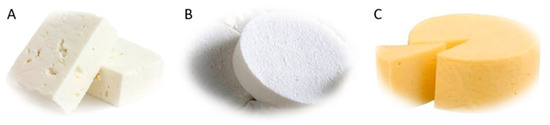
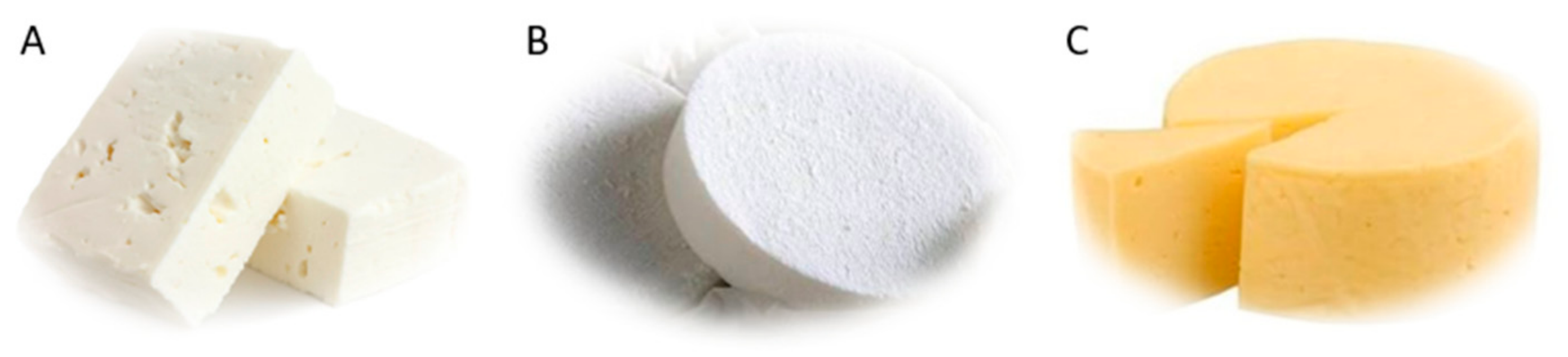
Three PDO cheeses, Kaseri, Manouri, and Batzos (Figure 1), were obtained directly from certified artisanal producers located in the Thessaly region of central Greece. All producers complied with PDO regulations as set forth by the European Commission. Sampling was performed during the peak production season (May–August 2022) to ensure representative compositional characteristics. Each cheese type was collected in triplicate (n = 3) from separate production batches to account for natural variability. The three independent production batches (n = 3) for each cheese type were analyzed separately by LC–MS and not pooled. Replicate analyses were used to assess the reproducibility of chromatographic patterns and to retain peptide masses that were consistently detected across batches of the same cheese. Samples of approximately 500 g were vacuum-sealed, transported under refrigeration (4 ± 1 °C) to the Food of Animal Origin Laboratory at the Animal Science Department of the University of Thessaly, and stored at −20 °C until analysis.
Figure 1.
PDO cheeses: (A) Batzos, (B) Manouri, (C) Kaseri.
2.2. Instrumentation
The analysis of cheese samples and the putative identification of biopeptides were carried out using high-performance liquid chromatography coupled with mass spectrometry (HPLC–MS). The analytical system consisted of an Agilent 1200 Series HPLC (Agilent Technologies, Santa Clara, CA, USA) equipped with a C18 reverse-phase column (250 mm × 4.6 mm, 5.0 μm) directly connected to an Agilent 6130 Quadrupole LC/MS detector (Agilent Technologies, Santa Clara, CA, USA). Chromatographic control, data acquisition, and processing were performed using Agilent ChemStation software (version B.04.03). All solvents and reagents were of analytical or HPLC grade. The following chemicals were used: ultrapure water (H2O), New P. Nix Power I Human Corporation, New P. Nix Power I (Human Corporation, Seoul, Republic of Korea); acetonitrile (ACN), CHEM-LAB (Zedelgem, Belgium); Trifluoroacetic acid (TFA), LABKEM (Barcelona, Spain). Two mobile phases were prepared for chromatographic separation: mobile phase A: H2O with 0.1% (v/v) TFA and mobile phase B: ACN with 0.1% (v/v) TFA.
2.3. Sample Preparation
For Kaseri and Batzos, the optimized method from Pritchard et al. [36] was applied without modification. After reaching room temperature, cheese samples were finely cut, and 25 g was accurately weighed and combined with 75 mL of water at 40 °C. The mixture was stirred for 60 min to allow protein and peptide solubilization. Due to its high fat and whey content, Manouri required optimization of sample pretreatment, so the method from [36] was used with modifications: 50:50 (w/w) sample-to-water ratio with heating at 40 °C for 60 min. All samples (Kaseri, Manouri, and Batzos) were then centrifuged at 4000 rpm for 30 min at 4 °C using a Heraeus MEGAFUGE 11R centrifuge (Thermo Scientific, Waltham, MA, USA). After removal of the upper fat layer, the supernatant was transferred to a new tube and centrifuged again under the same conditions. The clarified supernatant was filtered through a 0.45 μm syringe filter (Membrane Solutions, LLC, Washington, DC, USA), transferred into HPLC vials, and stored at −20 °C until analysis. Following chromatographic analysis, samples were kept at −20 °C for long-term preservation. Peptide extraction was performed on fresh (or thawed) cheese samples as described; the protocol was optimized and validated only for non-freeze-dried material, and its direct applicability to freeze-dried cheeses was not evaluated.
2.4. HPLC–MS Analytical Conditions
Chromatographic separation and mass detection were performed using the same Agilent 1200–6130 LC/MS system, using an ACMETM C18 column (4.6 mm × 250 mm, 5.0 μm) (Phase Analytical Technology, LLC, State College, PA, USA), with specific analytical conditions: injection volume: 5 μL; flow rate: 0.5 mL min−1; total run time: 50 min; detection wavelength: 220 nm; peak width: >0.1 min; ionization mode: API-ES (positive polarity); gas temperature: 300 °C (maximum 350 °C); mass range: m/z 100–2000. Trifluoroacetic acid (TFA) (LABKEM, Barcelona, Spain) in ultrapure water (0.1% v/v) (mobile phase A) and 0.1% v/v TFA in acetonitrile (ACN) (mobile phase B) (CHEM-LAB, Zedelgem, Belgium) in a 90:10 ratio were the two eluent solutions that were utilized. The New P. Nix Power I from Human Corporation was utilized for ultrapure water. While acknowledging the limitation of TFA-induced ion suppression in ESI-MS, TFA was utilized instead of formic acid to ensure optimal chromatographic separation of peptides, a critical prerequisite for our single-quadrupole MS methodology. The method followed was mobile phase A/B set to 100:0% from 0 to 10 min, 75:25% from 10 to 20 min, 50:50% from 20 to 30 min, 25:75% from 30 to 40 min and then back to 100:0% from 40 to 50 min. Chromatograms were visually inspected for peak quality and reproducibility. Mass-to-charge (m/z) values were recorded at peak retention times across the 100–2000 m/z range, with fragment masses also detected, as detailed in the post-analysis reports. Repeated m/z values occurring throughout the run were excluded as noise or mobile phase artifacts. Data were exported in multiple formats (TXT, XLS, CSV, DIF, PDF) for subsequent bioinformatic analysis.
2.5. Peptide Putative Identification and Bioinformatic Analysis
The mass data obtained from HPLC–MS were analyzed to tentatively assign peptide sequences and to predict their potential biological activities using open-access bioinformatics platforms. Peptide assignments were based on exact-mass matching using average mass and a mass tolerance of ±0.5 Da (average mass tolerance was used because the single quadrupole detector provides unit mass resolution and accuracy on the order of ±0.5–1.0 Da), which is consistent with the mass accuracy specifications of the single-quadrupole LC–MS system employed in this study. The parameters used in FindPept (ExPASy) were: ion type [M+H]+; mass type, average; mass tolerance, ±0.5 Da. The parameters used in Proteomics Toolkit were: mass type, average; charge state, +1; ion types, b and y, for in silico generation of theoretical fragment ions to support sequence plausibility checks. Because no MS/MS fragmentation spectra were acquired, all peptide sequences should be considered putatively or tentatively assigned rather than definitively confirmed. Bioactivity annotations were inferred from matches in the MBPDB and BIOPEP-UWM databases and from in silico predictions; they were not experimentally validated in the present study. Observed peptides were confirmed using UniProtKB protein IDs for sheep and goat milk proteins (Table 1).
Table 1.
UniProtKB accession codes for milk proteins used in peptide detection.
2.6. Data Processing and Classification
Each detected peptide mass was compared with database entries to confirm sequence identity and to assign potential bioactive properties (e.g., ACE inhibition, DPP-IV inhibition, antioxidant or antimicrobial activity). Two online databases were used to examine the potential bioactivity of the peptides identified in the cheese samples: Milk Bioactive Peptide Database (MBPDB) [37] and BIOPEP-UWM [38]. The final peptide lists were used to establish and compare the peptidomic and bioactive potential profiles among the three PDO cheeses: Kaseri, Manouri, and Batzos.
3. Results
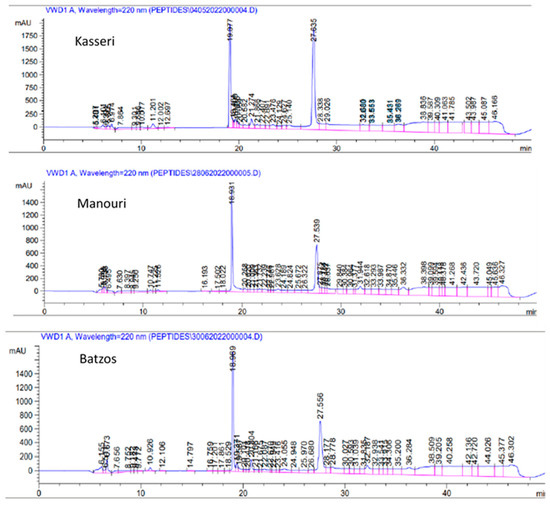
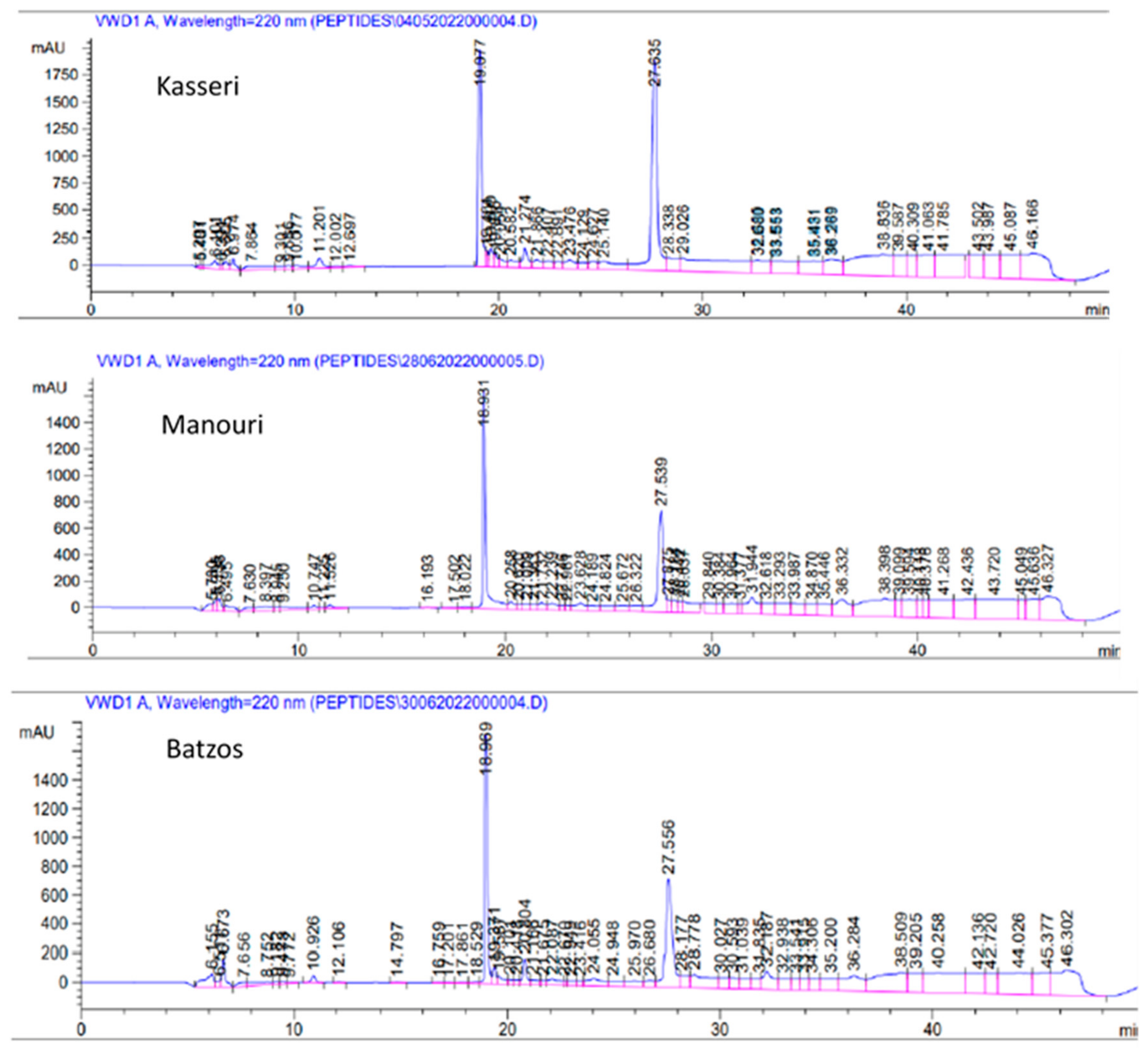
High-performance liquid chromatography coupled with mass spectrometry (HPLC-MS) analysis generated distinct chromatographic fingerprints for Kaseri, Manouri, and Batzos samples (Figure 2), with peptide elution times spanning 10–40 min. Peak patterns revealed both similarities and subtle differences among cheese types, likely attributable to variations in production processes across artisanal facilities and differences in raw milk composition.
Figure 2.
Representative HPLC chromatograms of protein extract from PDO cheeses of Thessaly.
A total of 212 unique peptide masses were observed across samples, with 86 in Kaseri, 85 in Batzos, and 41 in Manouri. Peptide sequences matched homologous regions in sheep and goat milk proteins, with many sequences shared between species. Putative peptides detected were screened for bioactivity using MBPDB and BIOPEP-UWM databases, supplemented by literature validation (Table 2). Kaseri exhibited the most diverse bioactivity profile, with 31 putative bioactive peptides and 55 peptides unreported in the literature. Among Kaseri biopeptides, 32.3% acted as DPP-IV inhibitors, 19.4% as ACE inhibitors, 13% exhibited multiple activities, and 9.7% showed antioxidant effects. Additional activities included antithrombotic (n = 2), antibacterial (n = 1), antidiabetic (n = 1), mineral binding (n = 1), PEP inhibition (n = 1), immunomodulatory (n = 1), and renin inhibition (n = 1). Manouri contained 34 previously reported bioactive peptides out of 41 total detected sequences, with seven peptides of unknown activity. Bioactivities were dominated by DPP-IV inhibitors (44%), ACE inhibitors (20.6%), and multiple activities (11.8%). Other categories included antioxidant (n = 2), stimulatory (n = 2), and single instances of antithrombotic, antibacterial, mineral binding, and DPP-III inhibition. Manouri’s whey-enriched matrix favored short, bioactive whey-derived sequences. Consistent peptides across all three replicates included SE (stimulatory), KE (DPP-IV inhibitor), YL (DPP-III and ACE inhibitor), and VPSE (activity unknown). The ACE-inhibitory VPSERY and DPP-IV inhibitors AE, IQ, alongside antioxidants YLG and LGY, were observed in two of three replicates, confirming robust biopeptide formation in this whey cheese. Batzos yielded 15 known bioactive peptides and 26 peptides of unknown activity among its 85 total peptides. Approximately one-third acted as DPP-IV inhibitors and one-third as ACE inhibitors. Additional bioactivities included stimulatory (n = 1), renin inhibition (n = 1), anxiolytic-like (n = 1), anti-amnestic (n = 1), and multiple activities (n = 1; ACE/DPP-IV inhibitor), reflecting its brine-ripened proteolytic intensity. The multifunctional peptide EK (ACE/DPP-IV inhibitor) was detected in Batzos replicates.
Table 2.
Numbers of bioactive peptides putatively identified in each Thessalian PDO cheese.
All peptides that were not previously characterized as bioactive in databases or the scientific literature were further evaluated using PeptideRanker (http://distilldeep.ucd.ie/PeptideRanker/, accessed on 26 August 2026). PeptideRanker ranks peptide sequences according to the predicted probability that they exhibit bioactive properties, thereby providing an additional in silico screening layer for potentially functional peptides that have not yet been experimentally validated or annotated. Table 3 presents peptides tentatively identified from all three cheese types (Kaseri, Manouri, and Batzos) that exceed the PeptideRanker 0.5 (http://bioware.ucd.ie/~compass/biowareweb/Server_pages/help/peptideranker/help.php, accessed on 14 May 2025) threshold in analysis, indicating a high predicted probability of bioactivity for these previously uncharacterized sequences (Table 3).
Table 3.
Peptides observed in three cheese types (Kaseri, Manouri, and Batzos) that exceed the PeptideRanker 0.5 threshold.
Five additional sequences with no previously reported bioactivity (FYPQLFRQF, QAI, QAIVQNNDSTEY, QLFRQF, THINKKIEK) appeared consistently across Batzos samples. These sequences are reported as preliminary candidate assignments because they were inferred from precursor-mass matching without experimental MS/MS confirmation. The tentative assignment of these five sequences in all Batzos samples, which are absent from reference databases, may point to distinctive enzymatic activities potentially associated with its natural microflora and brine environment. Notably, FYPQLFRQF and QLFRQF exhibited high PeptideRanker scores (>0.75), implying potential bioactivity yet to be experimentally confirmed (Table 4). Among the five novel peptides (not found in databases, based on precursor mass) detected in Batzos, none matched entries in Milk Bioactive Peptide Database (MBPDB) or BIOPEP-UWM databases (as of March 2025). These sequences, ranging from 3 to 12 amino acids, two of them rich in hydrophobic residues (Leu, Phe, Ile, Val), exhibited positive PeptideRanker bioactivity predictions.
Table 4.
PeptideRanker scores for the five novel peptide sequences detected in Batzos samples.
Nine peptides were detected in at least two cheese types—AI, KE, KHKE, NA, NP, QKEDVPSERYLGYLEQL, SE, YL, and YLG—indicating conserved proteolytic pathways across Thessalian PDO cheeses despite processing differences. An additional interesting comparison concerns the amino acid length distribution of potential bioactive peptides. Notably, tripeptide and tetrapeptide proportions relative to total observed peptides were similar across all three cheese types, ranging from 16 to 19% and 5 to 7%, respectively. Remarkably, 60.5% of Kaseri bioactive peptides contained at least six amino acids, reflecting extensive secondary proteolysis during ripening and extended maturation (Table 5).
Table 5.
Peptide percentages based on the amino acid (AA) number.
4. Discussion
The proteolytic process during cheese ripening is central to the development of texture, flavor, and bioactivity. In all three PDO cheeses from Thessaly, Kaseri, Manouri, and Batzos, proteolysis appeared to be the primary biochemical mechanism driving peptide formation. The extent of proteolysis varied considerably across the samples, consistent with potential influences of processing parameters, microbial consortia, and ripening environments on peptide generation. The more complex chromatographic profile of Batzos (Figure 1) is compatible with the hypothesis that brine ripening may favor ongoing enzymatic activity by halotolerant and psychrotrophic bacteria, leading to more sustained hydrolysis of casein fractions during storage; however, these profiles alone do not directly establish the underlying technological or microbiological mechanisms. Similar findings have been reported in other Mediterranean brined cheeses, including Feta and Teleme cheese [39,40,41]. In contrast, Kaseri, being a pasta filata-type cheese, undergoes heat-induced denaturation of whey proteins during stretching, which may limit proteolytic depth but favor the stability of specific casein fragments [42,43]. Manouri, a whey–cream cheese, displayed the mildest proteolysis due to low microbial counts and shorter maturation, which aligns with previous compositional studies [44,45]. Direct comparison with previously published cheeses is limited, as peptide profiles are shaped by milk type, technology, microbiota, and ripening conditions [46,47]; thus, the proteomic differences observed here are consistent with cheese biochemistry and suggest that traditional Greek cheeses generate distinct peptide fingerprints.
Most putatively identified peptides originated from αs1- and β-casein hydrolysis, confirming the central role of these proteins as precursors of bioactive peptides [36,37,48]. The predominance of ACE-inhibitory sequences (41% of total peptides) supports previous reports that casein hydrolysis commonly yields short peptides with angiotensin-converting enzyme (ACE)-inhibitory potential [49,50]. ACE-inhibitory peptides such as VPP and IPP, detected in Kaseri and Batzos, have been linked to blood pressure regulation through competitive inhibition of ACE, leading to vasodilation and reduced angiotensin II production. Several commercial “functional dairy products” already incorporate these peptides due to their proven efficacy [49]. The DPP-IV-inhibitory peptides observed, predominantly in Batzos, suggest antidiabetic potential by delaying incretin hormone degradation, thereby enhancing postprandial insulin secretion [51]. The antioxidant and antimicrobial sequences putatively identified (e.g., YQEPVLGPVRGPFPIIV and RPKHPHPHK) further support the concept of multifunctional dairy-derived peptides capable of oxidative stress reduction and bacterial growth inhibition [52,53,54]. These results establish that Greek PDO cheeses are not merely protein-rich foods but complex bioactive matrices with measurable functional potential.
The activity of bioactive peptides is strongly influenced by their primary structure, and more specifically, the identity of the constituent amino acids and their precise positions within the sequence [55]. A pronounced enrichment in proline-containing sequences was observed, with proline emerging as the most abundant residue among the cheese-derived peptides. Numerous peptides exhibited recurring proline-containing dipeptide motifs, including PP, PQ, QP, PL, and LP. Hydrophobic and aromatic residues, particularly phenylalanine, tyrosine, leucine, methionine, valine, and tryptophan, are frequently observed in positions adjacent to proline within peptide sequences. Quantitative structure activity relationship (QSAR) studies have consistently underscored the contribution of hydrophobic residues, particularly Pro, Trp, Leu, Ile, and Val, to diverse bioactivities, including ACE and DPP-IV inhibition [56]. As reported by Raikos and Dassios, the presence of proline at the C-terminal end could be crucial in terms of the peptide bioactivity observed [57]. Valine and proline are key residues in many antihypertensive peptides, while histidine, cysteine, proline, methionine, and aromatic amino acids have been implicated in the antioxidant activity of peptides [49]. Reported DPP-IV-inhibitory peptides typically feature hydrophobic residues (Trp, Leu, Ile, or Phe) at the N-terminus, Pro or Ala at position 2, and/or Pro at the C-terminus [58]. The comparative peptide data highlight clear distinctions among the three PDO cheeses. Kaseri exhibited the greatest peptidomic diversity, with 86 unique peptide masses detected among the three matrices analyzed (Kaseri: 86, Batzos: 85, Manouri: 41). Manouri exhibited the greatest frequency of bioactive peptides, with 34 known bioactive peptides out of 41 (83% bioactive proportion), compared to Kaseri (31/86 ≈ 36%) and Batzos (15/85 ≈ 18%). This reflects efficient generation of short, functional whey-derived sequences in its fresh, cream-enriched matrix. Kaseri’s superior peptidomic diversity (86 peptides) corresponds to extensive proteolysis in pasta filata cheeses undergoing prolonged ripening, where starter lactic acid bacteria (LAB) and non-starter microbiota drive secondary hydrolysis of caseins into diverse oligopeptides, patterns observed in other cheeses like Mozzarella [59], as both Kaseri and Mozzarella are pasta filata cheeses with similar production technology. Manouri’s exceptional percentage of bioactive peptides (83%) reflects the rapid enzymatic release of short, putative bioactive whey peptides (e.g., from β-lactoglobulin) in fresh, high-moisture whey cheeses with minimal ripening, as whey proteins are more susceptible to hydrolysis and yield higher proportions of functional sequences compared to aged curd-based varieties. These findings corroborate peptidomic studies showing whey-derived products favor antihypertensive and DPP-IV-inhibitory peptides due to accessible cleavage sites [60], while brine-ripened cheeses like Batzos exhibit balanced but lower-density peptide profiles from halotolerant proteolysis [39,61].
The five peptides unique to Batzos, FYPQLFRQF, QAI, QAIVQNNDSTEY, QLFRQF, and THINKKIEK, represent an important finding; however, LC–MS/MS sequence confirmation is requested for validation and future research. Their consistent detection across independent batches suggests they could serve as biochemical biomarkers for authenticating PDO Batzos or verifying its geographic origin. The hydrophobic composition and small size of these peptides indicate potential membrane-interacting or antimicrobial properties, though these activities require in vitro validation. The discovery of such unique sequences underscores the value of proteomics in PDO certification. Traditional analytical techniques (e.g., chemical composition, texture, sensory profiling) cannot differentiate regional variants at the molecular level, whereas peptide biomarkers provide an objective biochemical signature. This approach aligns with recent research advocating peptide-based authentication for regional cheeses [62,63]. Future studies should focus on quantifying these peptides via targeted LC–MS/MS and assessing their bioavailability during digestion. Simulated gastrointestinal assays and cell-based bioactivity tests would help confirm the functional potential of these novel sequences.
It should be noted that the microbiota and starter cultures of the cheeses examined in this study were not characterized. However, the extensive literature indicates that lactic acid bacteria (LAB) and non-starter lactic acid bacteria (NSLAB), such as Lactobacillus, Enterococcus, and related genera, strongly influence proteolysis and the release of bioactive peptides during cheese ripening. Accordingly, the differences in peptide profiles observed among Kaseri, Manouri, and Batzos are likely attributable to the combined effects of milk type, technological parameters, and microbial ecology, including the composition of starter and non-starter cultures [64,65]. In Greek traditional cheeses, non-starter lactic acid bacteria (NSLAB), including Lactobacillus, Leuconostoc, Enterococcus, and Streptococcus spp., possess extensive protease–peptidase systems responsible for secondary proteolysis. The detection of ACE- and DPP-IV-inhibitory peptides reinforces the growing evidence that traditional cheeses can be viewed as naturally functional foods. Bioactive peptides may remain latent in intact caseins but become physiologically active after digestion or fermentation, contributing to blood pressure regulation, antioxidant defense, and metabolic homeostasis. In the context of the Mediterranean diet, regular consumption of small quantities of traditional cheeses like Kaseri or Batzos could provide a natural dietary source of these health-promoting peptides. However, it is essential to consider portion size and salt content when positioning such products as functional foods for specific populations.
While the present work provides a comprehensive peptidomic mapping overview, several limitations should be acknowledged. We explicitly acknowledge that without MS/MS fragmentation data, our single-quadrupole HPLC-MS mass matching provides only hypothetical peptide assignments. Consequently, while these putative sequences highlight distinct regional proteolytic patterns, they must be interpreted with caution and require targeted structural confirmation in future studies to overcome the inherent limitations of mass comparison in complex dairy matrices. Furthermore, the present study did not include in silico simulations (e.g., molecular docking) or in vitro validation of peptide bioactivity; such experiments are planned for future work to confirm and extend the functional predictions reported; bioactivity predictions were based on sequence similarity and computational models. Quantitative proteomics (label-free or isotopic) could further validate the relative abundance of peptides. Microbial sequencing (16S rRNA) was beyond the study’s scope but would strengthen correlations between microbiota and peptide generation. In order to validate the preliminary results presented, targeted LC–MS/MS is necessary, in combination with simulated digestion, as well as bioavailability studies. Future research combining metagenomics and proteomics could provide a holistic picture of the microbial–biochemical interplay shaping PDO cheese identity. Moreover, exploring the bioavailability and physiological impact of these peptides through simulated digestion or human intervention studies would translate these findings into nutritional applications. In summary, the proteomic and biopeptidomic profiling of the three regional cheese varieties reveals a continuum of proteolytic intensity and functional diversity. These biochemical signatures reflect both traditional processing techniques and microbial terroir, highlighting how artisanal Greek cheeses combine heritage and health potential. The integration of more advanced analytical tools such as LC–MS into the study of PDO products underscores the scientific and economic importance of biochemical authentication and functional food valorization in Mediterranean dairy research.
5. Conclusions
These data provide a basis for targeted LC–MS/MS validation of candidate marker peptides and for designing in vitro assays to confirm bioactivity, which we consider key next steps to translate these findings into authentication tools and functional dairy research. Kaseri demonstrated the highest potential peptidomic diversity (86 peptides) and a broad putative bioactivity spectrum (31 bioactive peptides), while Manouri putatively exhibited exceptional frequency of bioactive peptides (83%; 34/41 bioactive peptides), and Batzos showed balanced ACE/DPP-IV inhibition characteristic of brine-ripened proteolysis. These patterns align with established dairy science principles: prolonged pasta filata ripening in Kaseri drives extensive casein hydrolysis, whey-enrichment in Manouri favors short functional sequences from β-lactoglobulin, and halotolerant microbiota in Batzos generate selective antihypertensive profiles. Nine shared peptides across cheese types underscore conserved milk protein cleavage sites, while PDO-specific marker sequences confirm regional authenticity through microbial terroir. The high proportion of uncharacterized peptides (98 total), with several exceeding the PeptideRanker 0.5 threshold, suggests untapped potential as sources of bioactive peptides with possible health-promoting effects, warranting further in vitro validation. While this peptidomic mapping study provides valuable insights into regional proteolysis, it is inherently limited by its reliance on putatively identified peptide sequences that warrant future MS/MS confirmation. Future findings could position Thessalian PDO cheeses not only as cultural heritage products but also as valuable sources of natural bioactive compounds.
Author Contributions
Conceptualization, E.M. (Eleni Malissiova) and A.M.; methodology, M.A.; software, M.K.; validation, D.Z., E.M. (Ermioni Meleti) and M.A.; formal analysis, D.Z.; investigation, M.K.; resources, E.M. (Eleni Malissiova), A.M. and P.G.; data curation, D.Z., E.M. (Ermioni Meleti) and P.G.; writing—original draft preparation, E.M. (Eleni Malissiova) and E.M. (Ermioni Meleti); writing—review and editing, P.G., M.K., D.Z., M.A. and A.M.; visualization, M.K.; supervision, E.M. (Eleni Malissiova); project administration, M.A.; funding acquisition, E.M. (Eleni Malissiova) and P.G. All authors have read and agreed to the published version of the manuscript.
Funding
The research is conducted in the operating framework of the University of Thessaly Innovation, Technology Transfer Unit and Entrepreneurship Center “One Planet Thessaly”, under the “University of Thessaly Grants for Scientific Publication Support” action and is funded by the Special Account of Research Grants of the University of Thessaly.
Data Availability Statement
The original contributions presented in this study are included in the article. Further inquiries can be directed to the corresponding author.
Acknowledgments
The artisanal cheesemakers of Thessaly are acknowledged for their collaboration and sample provision. This research was funded by the postgraduate program “Biotechnology-Quality Assessment in Nutrition and the Environment,” Department of Biochemistry and Biotechnology, University of Thessaly, Greece.
Conflicts of Interest
The authors declare no conflicts of interest.
Abbreviations
The following abbreviations are used in this manuscript:
| PDO | Protected Designation of Origin |
| ACE | Angiotensin-Converting Enzyme |
| DPP-IV | Dipeptidyl Peptidase IV DPP-IV |
| LAB | lactic acid bacteria |
| NSLAB | non-starter lactic acid bacteria |
References
- International Dairy Federation World Dairy Summit 2023 Statement. IDF—IDF Is the Leading Source of Scientific and Technical Expertise for All Stakeholders of the Dairy Chain. Available online: https://fil-idf.org/news_insights/international-dairy-federation-world-dairy-summit-2023-statement/ (accessed on 7 January 2026).
- Pappa, E.C.; Kondyli, E. Descriptive Characteristics and Cheesemaking Technology of Greek Cheeses Not Listed in the EU Geographical Indications Registers. Dairy 2023, 4, 43–67. [Google Scholar] [CrossRef] [Scilit]
- Regulation (EU) 2024/1143 of the European Parliament and of the Council of 11 April 2024 on Geographical Indications for Wine, Spirit Drinks and Agricultural Products, as Well as Traditional Specialities Guaranteed and Optional Quality Terms for Agricultural Products, Amending Regulations (EU) No 1308/2013, (EU) 2019/787 and (EU) 2019/1753 and Repealing Regulation (EU) No 1151/2012. 2024. Available online: http://data.europa.eu/eli/reg/2024/1143/oj (accessed on 21 May 2026).
- Bintsis, T. The microbiology of Kasseri cheese during the maturation. World J. Adv. Res. Rev. 2021, 10, 157–167. [Google Scholar] [CrossRef] [Scilit]
- Bintsis, T. Yeasts in different types of cheese. AIMS Microbiol. 2021, 7, 447–470. [Google Scholar] [CrossRef] [Scilit]
- Bintsis, T.; Alichanidis, E.; Uzunsoy, İ.; Özer, B.; Papademas, P.; Radulovic, Z.; Miocinovic, J. White-Brined Cheeses. In Global Cheesemaking Technology; John Wiley & Sons, Ltd.: Hoboken, NJ, USA, 2017; pp. 349–367. [Google Scholar] [CrossRef] [Scilit]
- Bintsis, T.; Kyritsi, M.A. Impact of Commercial Protective Culture on Manouri PDO Cheese. Fermentation 2025, 11, 35. [Google Scholar] [CrossRef] [Scilit]
- Psoni, L.; Tzanetakis, N.; Litopoulou-Tzanetaki, E. Characteristics of Batzos cheese made from raw, pasteurized and/or pasteurized standardized goat milk and a native culture. Food Control 2006, 17, 533–539. [Google Scholar] [CrossRef] [Scilit]
- Litopoulou-Tzanetaki, E.; Tzanetakis, N. The Microfloras of Traditional Greek Cheeses. Microbiol. Spectr. 2014, 2, 10–1128. [Google Scholar] [CrossRef] [Scilit]
- Bintsis, T.; Mantzouridou, F.T.; Lalou, S.; Alvanoudi, P.; Ordoudi, S.A.; Angelidis, A.S.; Fletouris, D. Comparative Analysis of Chemical, Microbiological, Sensory and Volatile Compound Profiles in Manouri PDO and Artisanal Manouri Cheeses: A Preliminary Study. Food Bioprocess Technol. 2024, 17, 3561–3575. [Google Scholar] [CrossRef] [Scilit]
- Lioliou, K.; Litopoulou-Tzanetaki, E.; Tzanetakis, N.; Robinson, R.K. Changes in the microflora of manouri, a traditional Greek whey cheese, during storage. Int. J. Dairy Technol. 2001, 54, 100–106. [Google Scholar] [CrossRef] [Scilit]
- Anastasiou, R.; Aktypis, A.; Georgalaki, M.; Papadelli, M.; De Vuyst, L.; Tsakalidou, E. Inhibition of Clostridium tyrobutyricum by Streptococcus macedonicus ACA-DC 198 under conditions mimicking Kasseri cheese production and ripening. Int. Dairy J. 2009, 19, 330–335. [Google Scholar] [CrossRef] [Scilit]
- Fox, P.F.; Uniacke-Lowe, T.; McSweeney, P.L.H.; O’Mahony, J.A. (Eds.) Milk Proteins. In Dairy Chemistry and Biochemistry; Springer International Publishing: Cham, Switzerland, 2015; pp. 145–239. [Google Scholar] [CrossRef] [Scilit]
- Lepilkina, O.V.; Grigorieva, A.I. Enzymatic proteolysis during the conversion of milk into cheese. Food Syst. 2023, 6, 36–45. [Google Scholar] [CrossRef] [Scilit]
- Chakrabarti, S.; Guha, S.; Majumder, K. Food-Derived Bioactive Peptides in Human Health: Challenges and Opportunities. Nutrients 2018, 10, 1738. [Google Scholar] [CrossRef] [Scilit] [PubMed]
- Korhonen, H.J. Bioactive milk proteins, peptides and lipids and other functional components derived from milk and bovine colostrum. In Functional Foods; Elsevier: Amsterdam, The Netherlands, 2011; pp. 471–511. [Google Scholar] [CrossRef] [Scilit]
- Rodríguez-Cabello, F.; Rodríguez, L.; Guzmán, F.; Carrasco, B.; Sanzana, S.; Trostchansky, A.; Palomo, I.; Fuentes, E. Bioactive Peptides from Natural Sources: Biological Functions, Therapeutic Potential and Applications. Chemosensors 2026, 14, 30. [Google Scholar] [CrossRef] [Scilit]
- Meleti, E.; Koureas, M.; Manouras, A.; Giannouli, P.; Malissiova, E. Bioactive Peptides from Dairy Products: A Systematic Review of Advances, Mechanisms, Benefits, and Functional Potential. Dairy 2025, 6, 65. [Google Scholar] [CrossRef] [Scilit]
- Nielsen, S.D.-H.; Liang, N.; Rathish, H.; Kim, B.J.; Lueangsakulthai, J.; Koh, J.; Qu, Y.; Schulz, H.-J.; Dallas, D.C. Bioactive milk peptides: An updated comprehensive overview and database. Crit. Rev. Food Sci. Nutr. 2024, 64, 11510–11529. [Google Scholar] [CrossRef] [Scilit] [PubMed]
- Li, H.; Gong, H.; Wang, J.; Mao, X. Bioactive peptides from milk proteins: Current insights into novel preparation strategies and application prospects. Crit. Rev. Food Sci. Nutr. 2026, 66, 3247–3265. [Google Scholar] [CrossRef] [Scilit] [PubMed]
- Gu, Y.; Li, X.; Qi, X.; Ma, Y.; Chan, E.C.Y. In silico identification of novel ACE and DPP-IV inhibitory peptides derived from buffalo milk proteins and evaluation of their inhibitory mechanisms. Amino Acids 2023, 55, 161–171. [Google Scholar] [CrossRef] [Scilit] [PubMed]
- Iwaniak, A.; Mogut, D.; Minkiewicz, P.; Żulewska, J.; Darewicz, M. Gouda Cheese with Modified Content of β-Casein as a Source of Peptides with ACE- and DPP-IV-Inhibiting Bioactivity: A Study Based on In Silico and In Vitro Protocol. Int. J. Mol. Sci. 2021, 22, 2949. [Google Scholar] [CrossRef] [Scilit] [PubMed]
- Iwaniak, A.; Minkiewicz, P.; Mogut, D.; Borawska-Dziadkiewicz, J.; Żulewska, J.; Darewicz, M. Bovine Milk Protein-Derived Preparations and Their Hydrolysates as Sources of ACE-Inhibitory, DPP-IV-Inhibitory, and Antioxidative Peptides Analyzed Using in Silico and in Vitro Protocols. Int. J. Mol. Sci. 2025, 26, 4323. [Google Scholar] [CrossRef] [Scilit]
- López-García, G.; Dublan-García, O.; Arizmendi-Cotero, D.; Oliván, L.M.G. Antioxidant and Antimicrobial Peptides Derived from Food Proteins. Molecules 2022, 27, 1343. [Google Scholar] [CrossRef] [Scilit]
- Aksoy, S.; Kayili, H.M.; Atakay, M.; Kirmaci, H.A.; Salih, B. Dynamics of peptides released from cow milk fermented by kefir microorganisms during fermentation and storage periods. Int. Dairy J. 2024, 155, 105970. [Google Scholar] [CrossRef] [Scilit]
- Kieliszek, M.; Pobiega, K.; Piwowarek, K.; Kot, A.M. Characteristics of the Proteolytic Enzymes Produced by Lactic Acid Bacteria. Molecules 2021, 26, 1858. [Google Scholar] [CrossRef] [Scilit] [PubMed]
- Aasem, F.; Kassem, J.M. Analytical Strategies for Separation, Purification, and Identification of Milk-Derived Bioactive Peptides Across Species: A Review. Egypt. J. Chem. 2026, 69, 251–263. [Google Scholar] [CrossRef] [Scilit]
- Capriotti, A.L.; Cavaliere, C.; Piovesana, S.; Samperi, R.; Laganà, A. Recent trends in the analysis of bioactive peptides in milk and dairy products. Anal. Bioanal. Chem. 2016, 408, 2677–2685. [Google Scholar] [CrossRef] [Scilit] [PubMed]
- Martini, S.; Conte, A.; Tagliazucchi, D. Effect of ripening and in vitro digestion on the evolution and fate of bioactive peptides in Parmigiano-Reggiano cheese. Int. Dairy J. 2020, 105, 104668. [Google Scholar] [CrossRef] [Scilit]
- Solieri, L.; Baldaccini, A.; Martini, S.; Bianchi, A.; Pizzamiglio, V.; Tagliazucchi, D. Peptide Profiling and Biological Activities of 12-Month Ripened Parmigiano Reggiano Cheese. Biology 2020, 9, 170. [Google Scholar] [CrossRef] [Scilit]
- Tagliazucchi, D.; Baldaccini, A.; Martini, S.; Bianchi, A.; Pizzamiglio, V.; Solieri, L. Cultivable non-starter lactobacilli from ripened Parmigiano Reggiano cheeses with different salt content and their potential to release anti-hypertensive peptides. Int. J. Food Microbiol. 2020, 330, 108688. [Google Scholar] [CrossRef] [Scilit] [PubMed]
- Álvarez Ramos, L.; Arrieta Baez, D.; Dávila Ortiz, G.; Carlos Ruiz Ruiz, J.; Manuel Toledo López, V. Antioxidant and antihypertensive activity of Gouda cheese at different stages of ripening. Food Chem. X 2022, 14, 100284. [Google Scholar] [CrossRef] [Scilit] [PubMed]
- Hao, L.; Li, X.; Zhao, B.; Song, X.; Zhang, Y.; Liang, Q. Enzymatic Hydrolysis Optimization of Yak Whey Protein Concentrates and Bioactivity Evaluation of the Ultrafiltered Peptide Fractions. Molecules 2024, 29, 1403. [Google Scholar] [CrossRef] [Scilit] [PubMed]
- Lu, Y.; Govindasamy-Lucey, S.; Lucey, J.A. Angiotensin-I-converting enzyme-inhibitory peptides in commercial Wisconsin Cheddar cheeses of different ages. J. Dairy Sci. 2016, 99, 41–52. [Google Scholar] [CrossRef] [Scilit] [PubMed]
- Litopoulou-Tzanetaki, E.; Tzanetakis, N. Microbiological characteristics of Greek traditional cheeses. Small Rumin. Res. 2011, 101, 17–32. [Google Scholar] [CrossRef] [Scilit]
- Pritchard, S.R.; Phillips, M.; Kailasapathy, K. Identification of bioactive peptides in commercial Cheddar cheese. Food Res. Int. 2010, 43, 1545–1548. [Google Scholar] [CrossRef] [Scilit]
- Nielsen, S.D.; Beverly, R.L.; Qu, Y.; Dallas, D.C. Milk bioactive peptide database: A comprehensive database of milk protein-derived bioactive peptides and novel visualization. Food Chem. 2017, 232, 673–682. [Google Scholar] [CrossRef] [Scilit] [PubMed]
- Minkiewicz, P.; Iwaniak, A.; Darewicz, M. BIOPEP-UWM Database of Bioactive Peptides: Current Opportunities. Int. J. Mol. Sci. 2019, 20, 5978. [Google Scholar] [CrossRef] [Scilit] [PubMed]
- Dimitrov, Z.; Chorbadjiyska, E.; Gotova, I.; Pashova, K.; Ilieva, S. Selected adjunct cultures remarkably increase the content of bioactive peptides in Bulgarian white brined cheese. Biotechnol. Biotechnol. Equip. 2015, 29, 78–83. [Google Scholar] [CrossRef] [Scilit] [PubMed]
- Kalle, A.; Lambropoulos, I.; Bourazas, K.; Roussis, I.G. Antioxidant Activity and Peptide Levels of Water-Soluble Extracts of Feta, Metsovone and Related Cheeses. Appl. Sci. 2023, 14, 265. [Google Scholar] [CrossRef] [Scilit]
- Pappa, E.C.; Robertson, J.A.; Rigby, N.M.; Mellon, F.; Kandarakis, I.; Mills, E.N.C. Application of proteomic techniques to protein and peptide profiling of Teleme cheese made from different types of milk. Int. Dairy J. 2008, 18, 605–614. [Google Scholar] [CrossRef] [Scilit]
- Gonçalves, M.C.; Cardarelli, H.R. Mozzarella Cheese Stretching: A Minireview. Food Technol. Biotechnol. 2021, 59, 82–91. [Google Scholar] [CrossRef] [Scilit] [PubMed]
- Xia, A.; Zhao, J.; Zhou, P.; Liu, X. Effects of thermal and stretching treatments on the physicochemical and functional properties of mozzarella cheese. Food Biosci. 2024, 62, 105543. [Google Scholar] [CrossRef] [Scilit]
- Alichanidis, E.; Polychroniadou, A. Characteristics of major traditional regional cheese varieties of East-Mediterranean countries: A review. Dairy Sci. Technol. 2008, 88, 495–510. [Google Scholar] [CrossRef] [Scilit]
- Bintsis, T.; Papademas, P. Sustainable Approaches in Whey Cheese Production: A Review. Dairy 2023, 4, 249–270. [Google Scholar] [CrossRef] [Scilit]
- Helal, A.; Tagliazucchi, D. Peptidomics Profile, Bioactive Peptides Identification and Biological Activities of Six Different Cheese Varieties. Biology 2023, 12, 78. [Google Scholar] [CrossRef] [Scilit] [PubMed]
- Domingues Galli, B.; Nikoloudaki, O.; Tonini, S.; Helal, A.; Di Cagno, R.; Gobbetti, M.; Tagliazucchi, D. How starter cultures affect the peptidomic profile and bioactive activities of the Asiago-PDO cheese throughout ripening. Food Res. Int. 2023, 167, 112743. [Google Scholar] [CrossRef] [Scilit] [PubMed]
- Mohanty, D.P.; Mohapatra, S.; Misra, S.; Sahu, P.S. Milk derived bioactive peptides and their impact on human health—A review. Saudi J. Biol. Sci. 2016, 23, 577–583. [Google Scholar] [CrossRef] [Scilit] [PubMed]
- Korhonen, H.; Pihlanto, A. Bioactive peptides: Production and functionality. Int. Dairy J. 2006, 16, 945–960. [Google Scholar] [CrossRef] [Scilit]
- Nongonierma, A.B.; FitzGerald, R.J. The scientific evidence for the role of milk protein-derived bioactive peptides in humans: A Review. J. Funct. Foods 2015, 17, 640–656. [Google Scholar] [CrossRef] [Scilit]
- Nongonierma, A.B.; Lalmahomed, M.; Paolella, S.; FitzGerald, R.J. Milk protein isolate (MPI) as a source of dipeptidyl peptidase IV (DPP-IV) inhibitory peptides. Food Chem. 2017, 231, 202–211. [Google Scholar] [CrossRef] [Scilit] [PubMed]
- Agoni, C.; Stavropoulos, I.; Kirwan, A.; Mysior, M.M.; Holton, T.; Kranjc, T.; Simpson, J.C.; Roche, H.M.; Shields, D.C. Cell-Penetrating Milk-Derived Peptides with a Non-Inflammatory Profile. Molecules 2023, 28, 6999. [Google Scholar] [CrossRef] [Scilit] [PubMed]
- De Lima, M.D.S.F.; Da Silva, R.A.; Da Silva, M.F.; Da Silva, P.A.B.; Costa, R.M.P.B.; Teixeira, J.A.C.; Porto, A.L.F.; Cavalcanti, M.T.H. Brazilian Kefir-Fermented Sheep’s Milk, a Source of Antimicrobial and Antioxidant Peptides. Probiotics Antimicrob. Proteins 2018, 10, 446–455. [Google Scholar] [CrossRef] [Scilit] [PubMed]
- Taha, S.; El Abd, M.; De Gobba, C.; Abdel-Hamid, M.; Khalil, E.; Hassan, D. Antioxidant and antibacterial activities of bioactive peptides in buffalo’s yoghurt fermented with different starter cultures. Food Sci. Biotechnol. 2017, 26, 1325–1332. [Google Scholar] [CrossRef] [Scilit] [PubMed]
- Karami, Z.; Akbari-adergani, B. Bioactive food derived peptides: A review on correlation between structure of bioactive peptides and their functional properties. J. Food Sci. Technol. 2019, 56, 535–547. [Google Scholar] [CrossRef] [Scilit] [PubMed]
- Nongonierma, A.B.; FitzGerald, R.J. Learnings from quantitative structure–activity relationship (QSAR) studies with respect to food protein-derived bioactive peptides: A review. RSC Adv. 2016, 6, 75400–75413. [Google Scholar] [CrossRef] [Scilit]
- Raikos, V.; Dassios, T. Health-promoting properties of bioactive peptides derived from milk proteins in infant food: A review. Dairy Sci. Technol. 2014, 94, 91–101. [Google Scholar] [CrossRef] [Scilit] [PubMed]
- Nongonierma, A.B.; Mazzocchi, C.; Paolella, S.; FitzGerald, R.J. Release of dipeptidyl peptidase IV (DPP-IV) inhibitory peptides from milk protein isolate (MPI) during enzymatic hydrolysis. Food Res. Int. 2017, 94, 79–89. [Google Scholar] [CrossRef] [Scilit] [PubMed]
- Tenore, G.C.; Ritieni, A.; Campiglia, P.; Stiuso, P.; Di Maro, S.; Sommella, E.; Pepe, G.; D’Urso, E.; Novellino, E. Antioxidant peptides from “Mozzarella di Bufala Campana DOP” after simulated gastrointestinal digestion: In vitro intestinal protection, bioavailability, and anti-haemolytic capacity. J. Funct. Foods 2015, 15, 365–375. [Google Scholar] [CrossRef] [Scilit]
- Pontonio, E.; Montemurro, M.; De Gennaro, G.V.; Miceli, V.; Rizzello, C.G. Antihypertensive Peptides from Ultrafiltration and Fermentation of the Ricotta Cheese Exhausted Whey: Design and Characterization of a Functional Ricotta Cheese. Foods 2021, 10, 2573. [Google Scholar] [CrossRef] [Scilit] [PubMed]
- Tomazou, M.; Oulas, A.; Anagnostopoulos, A.K.; Tsangaris, G.T.; Spyrou, G.M. In Silico Identification of Antimicrobial Peptides in the Proteomes of Goat and Sheep Milk and Feta Cheese. Proteomes 2019, 7, 32. [Google Scholar] [CrossRef] [Scilit] [PubMed]
- Cardoso, K.L.R.; de Jesus, J.C.; Dargère, A.F.; Capela, A.P.d.; Oliveira, T.d.F.; Carvalho, G.R.; Santos, L.S.; Faria, P.B.; Ferrão, S.P.B. Discrimination of artisanal Minas cheeses according to geographical origin using spectroscopic and chromatographic techniques associated with chemometrics. Food Chem. 2025, 484, 144466. [Google Scholar] [CrossRef] [Scilit] [PubMed]
- Rosa Silva, L.K.; Cardim de Jesus, J.; Vieira Onelli, R.R.; Conceição, D.G.; Santos, L.S.; Barbosa Ferrão, S.P. Spectroscopy (MIR), chromatography (RP-HPLC) and chemometrics applied to soluble peptides to discriminate the geographic origin of coalho cheese. Biocatal. Agric. Biotechnol. 2023, 50, 102678. [Google Scholar] [CrossRef] [Scilit]
- Gabrilyants, E.; Alibekov, R.; Tarapoulouzi, M.; Ciprovica, I.; Utebaeva, A. The effect of starter cultures on peptide profiles identified in camel milk cheese. Qual. Assur. Saf. Crops Foods 2025, 17, 217–229. [Google Scholar] [CrossRef] [Scilit]
- Baliyan, H.; Malik, T.; Kumar, S. Comparative Analysis of Proteolytic Activity and Bioactive Peptide Generation by Lactic Acid Bacteria in Fermented Whey. J. Adv. Food Sci. Technol. 2025, 12, 32–39. [Google Scholar] [CrossRef] [Scilit]

Disclaimer/Publisher’s Note: The statements, opinions and data contained in all publications are solely those of the individual author(s) and contributor(s) and not of MDPI and/or the editor(s). MDPI and/or the editor(s) disclaim responsibility for any injury to people or property resulting from any ideas, methods, instructions or products referred to in the content. |
© 2026 by the authors. Licensee MDPI, Basel, Switzerland. This article is an open access article distributed under the terms and conditions of the Creative Commons Attribution (CC BY) license.