


Abstract
The increasing use of pressure-sensitive labels (PSLs), driven by growth in the packaging sector, raises concerns regarding material consumption and end-of-life management under evolving European packaging regulations. This study investigates the biodegradation potential of sustainable PSL facestocks produced from 15% agro-industrial by-products, 40% post-consumer recycled fibers, and 45% virgin wood pulp. Their biodegradation behavior was compared with bio-based polyethylene (PE) facestocks using laboratory-scale aerobic soil burial tests conducted for up to 28 days. Biodegradation was assessed through weight loss measurements, visual evaluation, Fourier transform infrared (FTIR) spectroscopy, and fluorescence analysis. Fiber-based facestocks exhibited significant degradation, reaching approximately 50–55% weight loss after 28 days, accompanied by structural changes in the cellulose matrix and reduced fluorescence intensity. In contrast, bio-based polyethylene facestocks showed negligible weight loss and only minor spectroscopic changes, indicating high stability under the tested conditions. The results demonstrate that fiber-based samples derived from agro-industrial and recycled sources possess substantially higher biodegradation potential than bio-based polymeric alternatives. These findings support the use of fiber-based PSL facestocks in applications requiring improved environmental compatibility.
1. Introduction
Biodegradation begins when biodegradable materials encounter soil, compost piles, or environments rich in microorganisms. By using it as a food source, microorganisms like bacteria, fungi, and algae can degrade natural and synthetic polymers [1,2]. Numerous characteristics of the polymer, including its crystallinity, molecular weight, type of functional groups and substituents included in its structure, and any plasticizers or additives, all have a significant impact on its degradation. The rate of polymer biodegradation can be assessed using a wide range of conventional testing techniques. In addition to visual assessment, respirometry techniques can be used to measure the amount of carbon dioxide released when exposed to bacteria, fungi, activated sludge (either anaerobically or aerobically), compost, or soil [3]. Some techniques use weight loss measurement or change in physical properties such as tensile strength and comparison of spectroscopic (FTIR, NMR, SEM, AFM, XRD) data [2,3]. Microorganisms originating from air, water and soil, that cause the hydrolytic and oxidative degradation of cellulose, are found among fungal and bacterial genera. Cellulose biodegradation results in depolymerization of cellulose macromolecules, which is reflected in decreased molecular weight and strength, increased solubility and changed crystallinity [4,5]. Microorganisms can use paper as a food source. With additional compounds such as glue, inks, pigments, paper is a very good source of organic carbon for many heterotrophic organisms and microorganisms [6,7,8]. Anaerobic conditions can occur in landfills when major decomposition products of the paper are carbon dioxide and methane, also known as greenhouse gases (GHG), while aerobic conditions can occur in processes of composting [9].
According to the new Packaging and Packaging Waste Regulation by the European Commission [10], PSL are defined as sticky labels that, if applied to fruit and vegetables, should be compatible with the standard for composting in industrially controlled conditions in bio-waste treatment facilities and shall be compatible, when required by the Member States, with home composting standards. The term “self-adhesive” labels has changed lately since some amount of pressure is always necessary in order to achieve adhesion between the adhesive and the substrate to which the label is applied, hence materials are also called pressure-sensitive materials. Pressure-sensitive labels (PSLs) comprise three parts: the facestock, adhesive and liner. Today, it is known that sustainable types of paper can be produced completely from recycled fibers, but also a certain number of primary fibers can be added in order to improve the mechanical and optical properties of paper. It is also known that the quantity of recycled fiber can affect the characteristics of the produced paper because the recycling process results in a reduction in cellulose fiber length, as well as parts of the adhesive that could reduce the recycling rate.
Pressure-sensitive adhesives (PSAs) are widely applied in industrial labeling due to their ability to form instant bonds under light pressure. They are available as solvent-based, solvent-free, or water-based systems and can be further modified through UV or electron-beam crosslinking. Depending on the polymer composition—such as acrylates, rubber-based polymers, polyurethanes, or polysiloxanes—their adhesion performance varies. PSA bonding relies on a balance between adhesion to the substrate and internal cohesive strength, while permanent tack enables rapid bonding without external activation [11,12].
Due to the complexity of final product application and processing steps (back side adhesive coating, printing, varnishing, diecutting, label application under different application conditions (high temperature, high moisture content, curved and rough surfaces, etc.), producers tend not to exceed recycled content more than 30–40% due to technical reasons and PSL material usage, so constant quality would be secured. Should the recycled content exceed approx. 40%, constant quality would be difficult to preserve, due to the uncertainty of recycled content quality and consistency. Recycled content of fibers depends on the quality and type of fibers collected in the existing recycling stream, and in this case, the quality of agro-industrial waste fibers. Thus, it is important to say that visually, papers differ in their shade, color and visual appearance due to impurities of recycled content itself. These characteristics should not necessarily be considered a disadvantage or limitation of PSL materials, as they can be used for marketing purposes and contribute to a unique and natural label design.
A significant amount of agricultural waste is produced by the rise in agricultural productivity, initiated by constant global population growth, leading to demand for food production growth. Waste from industry and agriculture contains a variety of elements that can be extracted and used to create a wide range of commodities, one of them being cellulose [13,14]. With high cellulose content, agricultural wastes can be exploited extensively as readily available natural resources [14,15,16]. As clearly stated by the EU’s Waste Framework Directive [17], waste prevention should always be a preferred option, and sending waste to landfill should be the last method for waste disposal.
Despite increasing interest in sustainable labeling materials, the biodegradation performance of integrated PSL facestock systems derived from agro-industrial by-products remains insufficiently investigated, particularly in direct comparison with bio-based polyethylene materials. The purpose of this study was to investigate the biodegradation of different sustainable PSL facestock materials using a laboratory-scale aerobic soil burial test. Structural changes were characterized through weight loss measurements, visual evaluation, and spectroscopic analysis. In this study, pressure-sensitive label (PSL) materials were investigated, where the term PSL refers to the complete label system, including the facestock and adhesive components. Fiber-based PSL samples used in this research were produced from barley, grape, and citrus residues originating from agro-industrial waste. All PSL samples differ in their chemical and mechanical properties. As many PSLs applied to consumer products still ultimately end up in landfill environments, understanding their biodegradation behavior is of practical environmental relevance. Given the continuous growth of the PSL market (CAGR 5.4% from 2023 to 2028) [18], and increasing regulatory requirements for recycled content and sustainable materials, evaluating agro-industrial by-product papers as alternative facestock materials is essential for assessing their environmental performance.
2. Materials and Methods
2.1. Materials
Materials used in this research were self-adhesive materials that are commercially available (Table 1). PSL facestocks used in this research are produced with 15% of fibers sourced from agro-industrial by-products, 40% post-consumer recycled paper and 45% virgin wood pulp. Bio-based polymer facestock polyethylene samples, polyethylene white (PEW) and polyethylene clear (PEC) are mostly sourced from sugar cane ethanol, certified under the Bonsucro® scheme [19], which is converted in a similar way to conventional polyethylene (PE). By their usage, PEC and PEW help in reducing dependency on fossil fuels by protecting scarce resources and therefore help reduce the carbon footprint by using plant biomass. PEW, corona-treated white, bio-based polyethylene film, is stated to contain a minimum of 83% of bio-based content, whilst PEC, corona-treated clear film, has a minimum of 95% bio-based content [20,21,22,23,24,25].
Table 1.
Properties of facestock in used PSL given by the producer [20,22,23,24,25] (Avery Dennison, Oegstgeest, The Netherlands).
2.2. Methods
2.2.1. Aerobic Soil Burial Test
Laboratory soil burial experiments in aerobic conditions were conducted at room temperature, 25 ± 2 °C, by placing the PSL facestock samples (size 3 × 3 cm) horizontally in commercial soil substrate (Florasan, Osatina, Semeljci, Croatia) in 2 L volume laboratory glass containers. Samples were buried with the adhesive side down, facestock side up. The samples were buried for 14, 21 and 28 days. One sample per material and time point was used. The samples were placed uniformly within the containers. The water content of the soil was adjusted to 40% of its maximum water retention capacity [6]. The soil substrate had defined physicochemical and nutrient characteristics, including a controlled pH, as specified by the manufacturer.
2.2.2. Visual Evaluation
Samples were visually evaluated using a lighting booth X-rite Judge II (Grand Rapids, MI, USA) for the purpose of evaluating the visual changes in the tested PSL facestock samples, i.e., to provide an initial indication of microbial activity by observing visible surface changes, such as the formation of holes or cracks, fragmentation, or color alterations. Two types of illuminants, D50 and UV, were used for the observation of the samples. The Canon EOS D450 camera with 50 mm, 1/30 s at f5.6, ISO 400 (Tokyo, Japan) was used for the imaging of the samples.
2.2.3. Weight Loss Measurement
The biodegradation of the samples was assessed by measuring the weight of paper samples and prints both before and after incubation in soil containers. After retrieval, the samples were rinsed with distilled water to remove surface soil particles, then dried to a constant weight and weighed. The weight loss (w) was determined using Equation (1) and expressed as a percentage (%):
where is the initial weight of the sample, and is the final weight of the sample after degradation.
2.2.4. Fourier Transform Infrared (FTIR) Spectroscopy
The ATR spectra of the samples’ surface (PSL facestock, paper and filmic side), raw and buried, were measured using a Shimadzu FTIR IRAffinity-21 spectrometer (Shimadzu Corporation, Tokyo, Japan) with the Specac Silver Gate Evolution as a single reflection ATR sampling accessory with a ZnSe flat crystal plate (index of refraction 2.4). The IR spectra were recorded in the spectral range between 4000 and 500 cm−1 at 4 cm−1 resolution and averaged over 15 scans.
2.2.5. Fluorescence Spectroscopy
Fluorescence intensity was measured using an Ocean Optics USB2000+ spectrometer (Ocean Optics, Orlando, FL, USA) using a 30 mm wide integrating sphere under (8:di) measuring geometry with the addition of an LSM Series LED light source at 365 nm (Ocean Optics, Orlando, FL, USA). The LED light source is operated via a smart controller during the measurement. A constant current of 0.140 A was kept stable to maintain a constant excitation light source to excite fluorescence whitening agents within the samples. Fluorescence intensity was measured with OceanView software 2.0 in the spectral range between 330 and 630 nm.
3. Results and Discussion
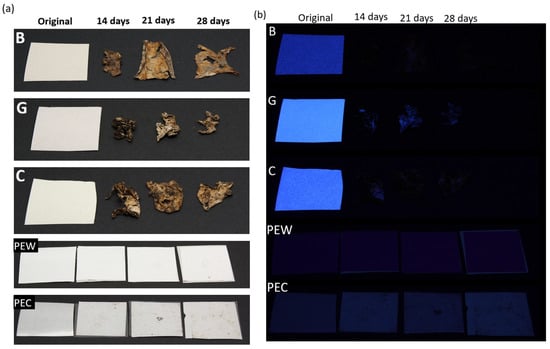
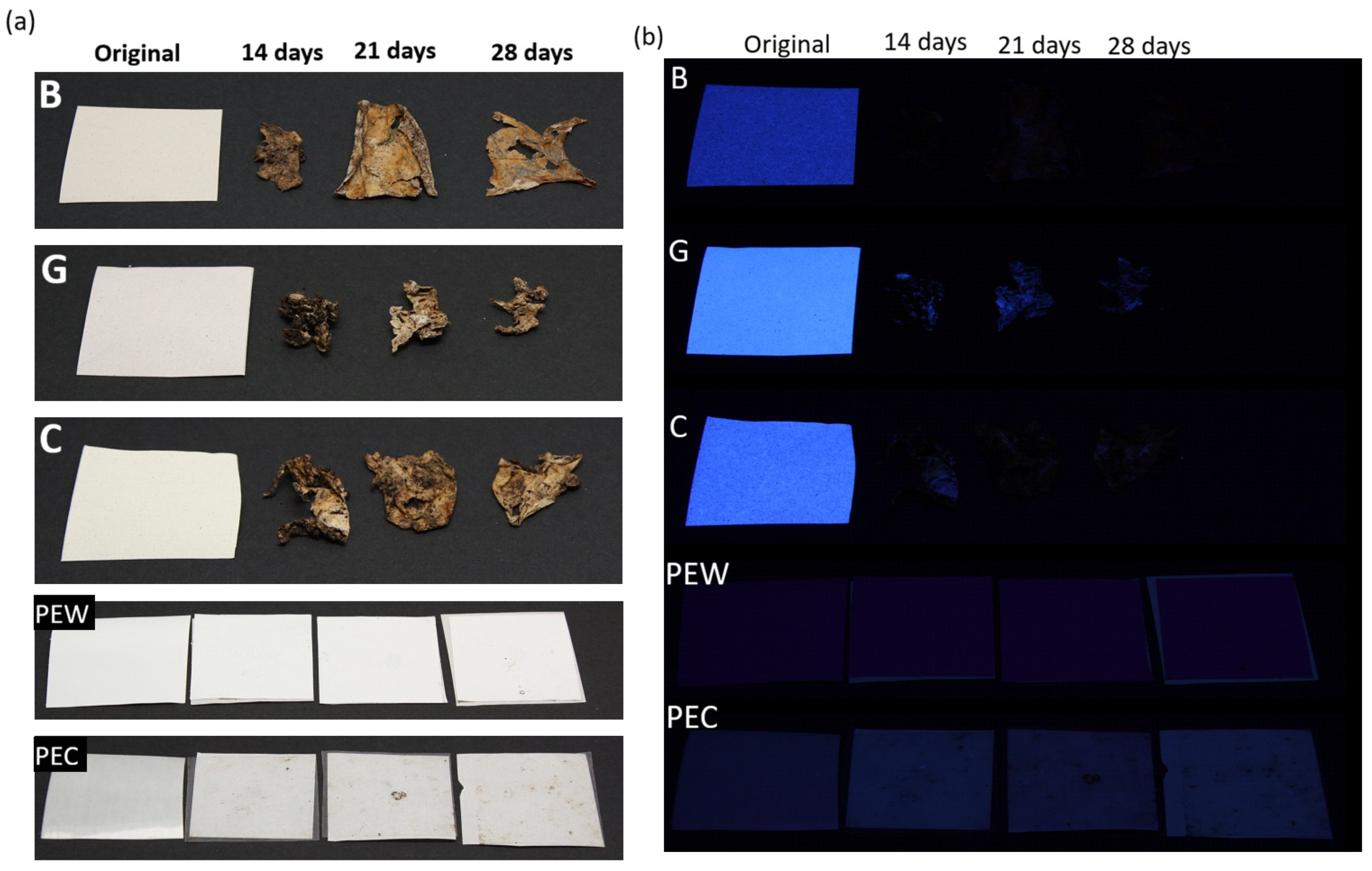
Figure 1 shows a visual assessment of the samples during the aerobic biodegradation process, with data on their appearance after 14, 21 and 28 days. Fiber-based materials containing agro-industrial wastes (B, G, and C) show a clear biodegradation progress over 28 days, while bio-based polyethylene samples (PEW and PEC) remain stable and not subject to visible biodegradation under the same conditions. Fiber-based samples (B, G, and C) show progressive degradation, with increasing fragmentation from 14 to 28 days. PEW and PEC do not show significant visual changes over 28 days. This indicates low rates or no biodegradation. Visual inspection of the fiber-based samples (B, G, and C) reveals a bluish fluorescence under UV illumination, indicating the presence of fluorescence whitening agents within the samples [26]. A pronounced decrease in blue fluorescence can be observed for all three fiber-based samples after aerobic soil burial due to the interactions of optical brighteners with surrounding materials and overall change in paper matrix [27].
Figure 1.
Visual evaluation of samples after aerobic biodegradation processes up to 28 days under (a) illuminant D50 and (b) illuminant UV.
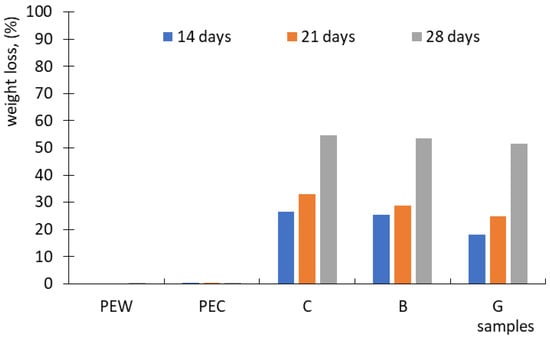
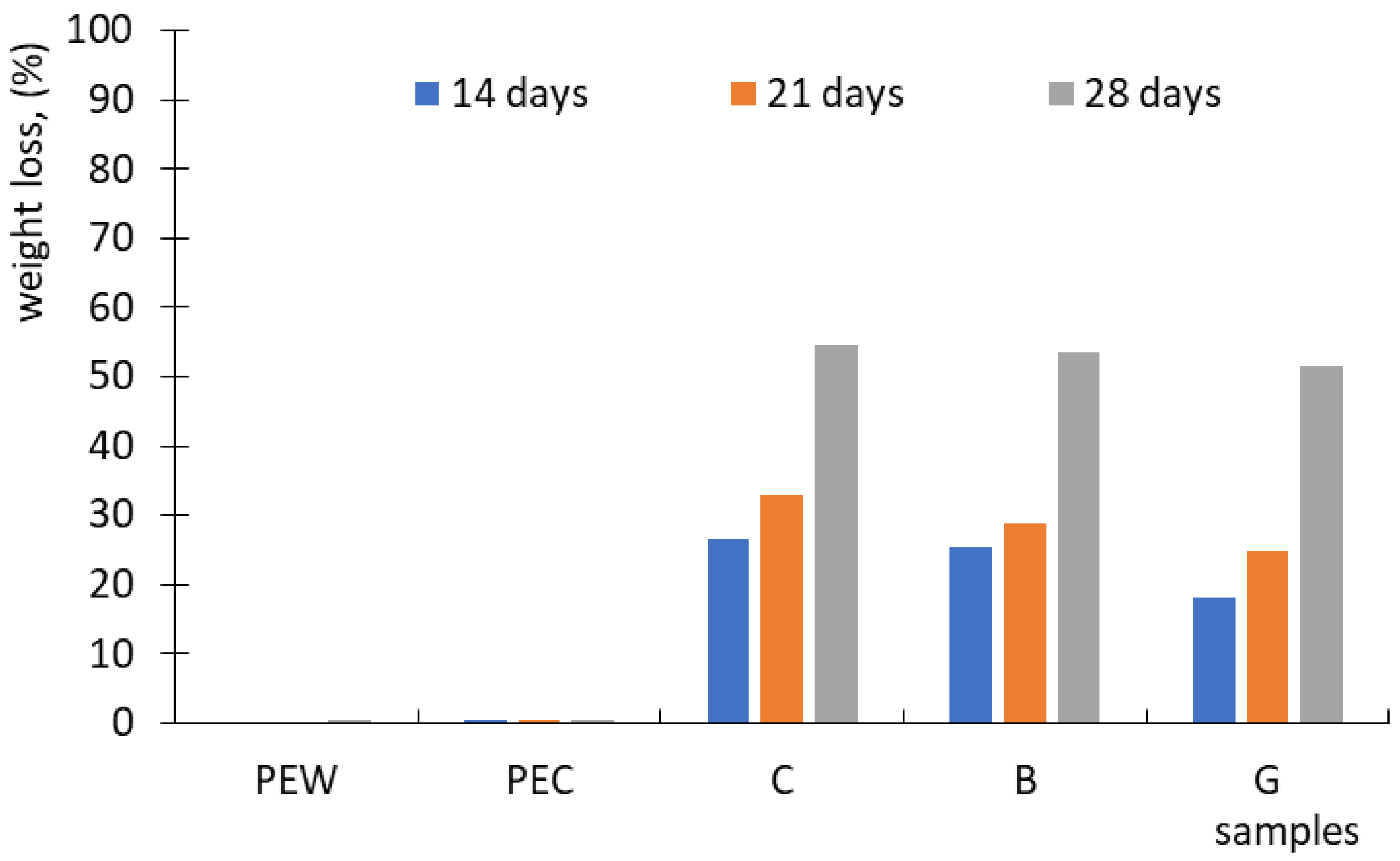
Figure 2 presents the weight loss measurements of the samples during biodegradation. PEW and PEC samples show minimal weight loss throughout the entire period studied. This confirms the visual evaluation results and indicates negligible biodegradability under the tested soil conditions, despite being bio-based. Sample B shows significant weight loss, which increases with time. After 28 days, the weight loss reaches approximately 51%. Sample G has the highest weight loss, reaching almost 55% after 28 days, suggesting a high degradability of this material. Sample C’s weight loss is lower than that of sample G, but still significant, at approximately 53% after 28 days. Samples B, G and C show slightly different degrees of biodegradability, making them effective candidates for biodegradable applications. These results indicate that the origin of fibers in agro-industrial products does not affect the biodegradation process significantly.
Figure 2.
Weight loss measurements of samples after aerobic biodegradation processes up to 28 days.
Previous studies have shown that polyethylene exhibits very limited biodegradation under aerobic soil conditions due to its chemical structure [2,6,8]. Polyethylene consists of long, non-polar hydrocarbon chains that are highly resistant to microbial attack, resulting in negligible mass loss and only minor oxidative changes even after prolonged soil exposure. This behavior is consistent with the results obtained in the present study, where PEW and PEC samples showed minimal weight loss and no significant structural degradation over 28 days.
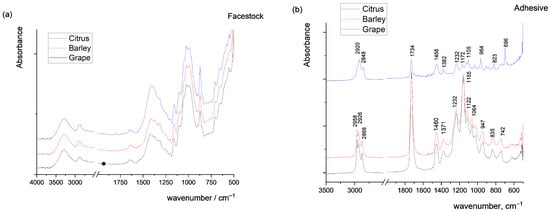
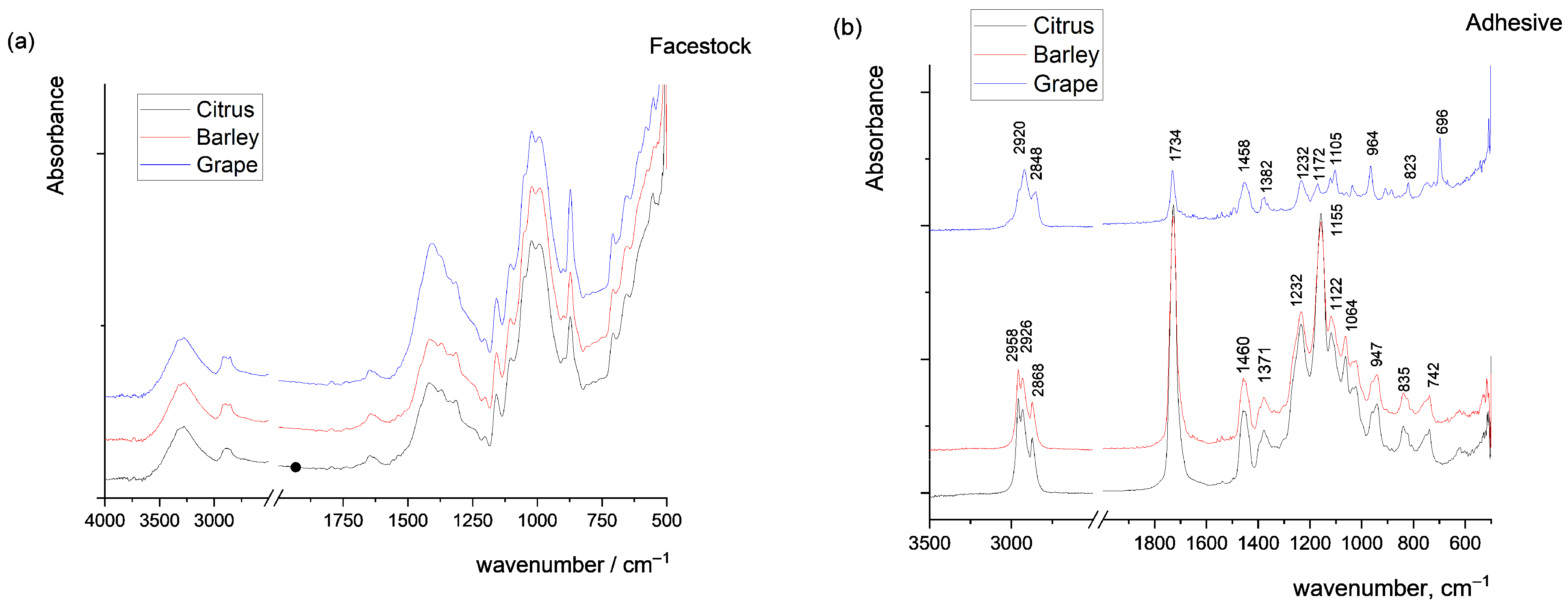
From the obtained FTIR spectra in Figure 3a, it is evident that the PSL facestock is made from cellulose fibers and additives commonly used in paper production. The spectra are distinguished by two prominent peaks at 1049 and 993 cm−1, characteristic of cellulose and consistently observed in all fiber-based samples. An absorption band, typically found at 898 cm−1 for citrus and barley-based samples and at 900 cm−1 for grape-based samples, is attributed to the C-O-C stretching at β-(1-4)-glycosidic linkages. This band is often referred to as an “amorphous” absorption band. The broadening of the band around 896 cm−1 indicates a higher proportion of disordered structures. Additionally, a band observed at 1651 cm−1 in grape-based samples, 1645 cm−1 in citrus-based samples, and 1643 cm−1 in barley-based samples is associated with the bending vibrations of adsorbed water molecules (Figure 3a). C-O stretching in cellulose/hemicellulose molecules is observed at 1103 cm−1 and a very strong band at 1022 cm−1, accompanied by two distinctive peaks at 1049 and 993 cm−1. In the fingerprint region, calcium carbonate is characterized by three absorption bands at 871 and 707 cm−1, which are associated with the CO3 and CO2 bending vibrations. The antisymmetric bridge stretching of C-O-C groups is identified by a strong band at 1157 cm−1 [28].
Figure 3.
FTIR spectra of PSL (a) facestock and (b) adhesive.
Based on the manufacturer’s information, the adhesive used on PSL made from citrus and barley agro-industrial waste is acrylate-based [20,25], while for the grape-based PSL, the adhesive used is rubber-based [23]. The FTIR spectra confirm the presence of two different adhesive chemistries (Figure 3b). This suggests that it likely contains polymers derived from acrylic monomers.
The adhesives applied to citrus- and barley-based PSLs exhibit a strong absorption band at approximately 1730 cm−1, corresponding to the stretching vibration of ester carbonyl (C=O) groups, which is characteristic of acrylate-based adhesives. Additional absorption bands observed around 2920 and 2850 cm−1 are attributed to asymmetric and symmetric C–H stretching vibrations of aliphatic chains within the polymer backbone [29]. Bands in the region between 1150 and 1250 cm−1 can be assigned to C–O–C stretching vibrations, further supporting the presence of ester functionalities typical of acrylic polymers [29]. In contrast, the adhesive used for the grape-based PSL does not exhibit a pronounced carbonyl absorption band near 1730 cm−1, indicating the absence of dominant ester functionalities. The spectrum is characterized by strong aliphatic C–H stretching bands around 2920 and 2850 cm−1 and deformation vibrations near 1450 cm−1, which are typical of hydrocarbon-based or rubber-based adhesive systems. The predominance of aliphatic vibrational modes suggests a polymer structure based primarily on non-polar hydrocarbon chains. The observed spectral differences confirm the use of two chemically distinct adhesive systems, which may influence their environmental stability and interaction with the surrounding cellulose matrix during biodegradation.
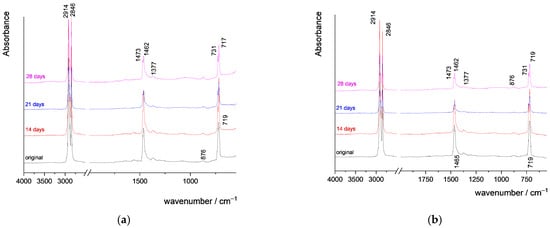
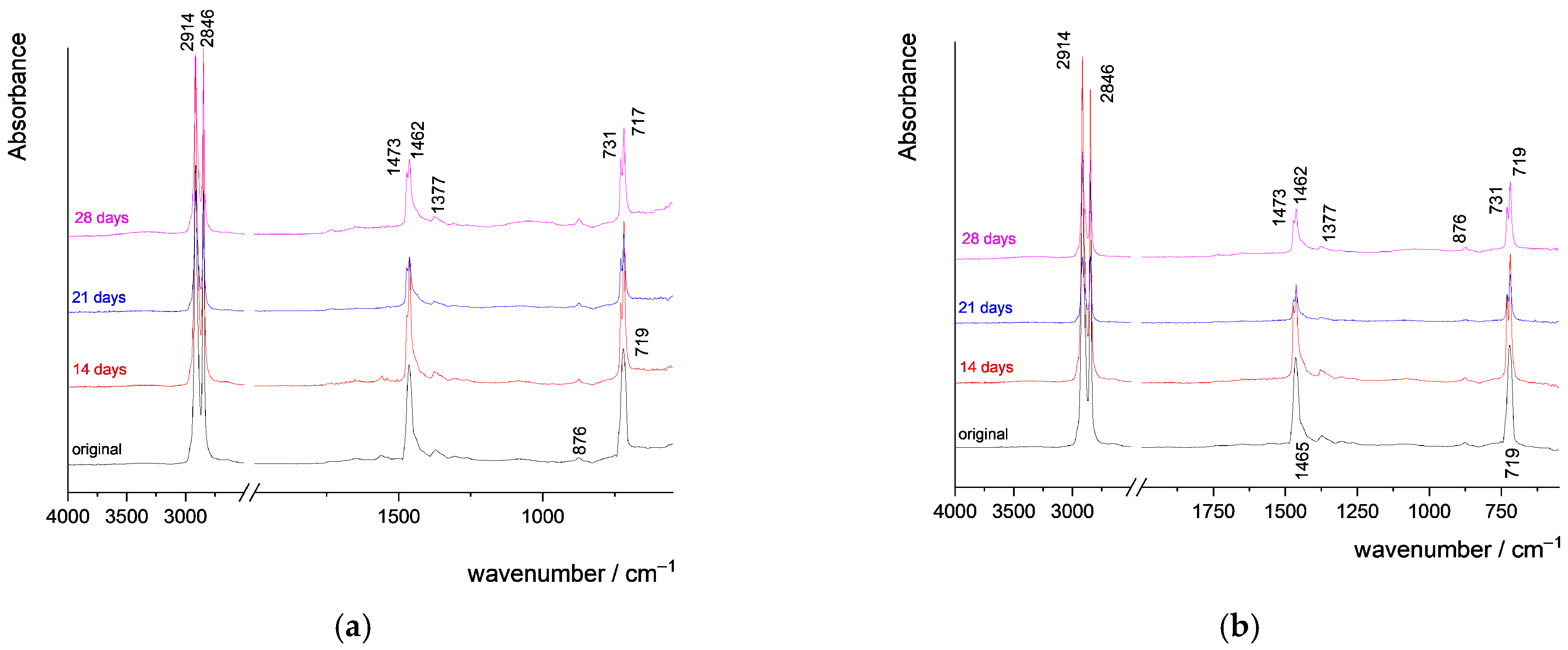
The FTIR spectra of PEW (Figure 4a) and PEC (Figure 4b) samples show characteristic bands of polyethylene at 2914 cm−1 (CH2 asymmetric stretching) and 2846 cm−1 (CH2 symmetric stretching), 1462 cm−1 (bending deformation of CH2 groups), and 719 cm−1 (CH2 rocking deformation in amorphous and crystalline domains). The weak vibrational band at 1377 cm−1 is related to CH3 symmetric deformation [30,31]. The results of FTIR spectroscopy confirm the assumption about the stability of polyethylene materials to biodegradation. During the biodegradation process, similar behavior in the degradation of both PE-based materials (PEW and PEC) is observed. The most significant changes occur in the vibrational band at 1377 cm−1, which gradually diminishes. Changes are also noted in the band at 1462 cm−1, which splits into two bands at 1462 and 1473 cm−1 during biodegradation. Similarly, the band at 719 cm−1 also splits into two bands. These spectral changes are characteristic of oxidative degradation of PE, leading to chain scission and alterations in the material’s crystallinity. However, despite these minor changes in the FTIR spectra, the results of weight loss and visual assessment confirm that these materials are highly stable under aerobic soil conditions.
Figure 4.
FTIR spectra of original samples and samples after the biodegradation process; (a) polyethylene white (PEW) and (b) polyethylene clear (PEC).
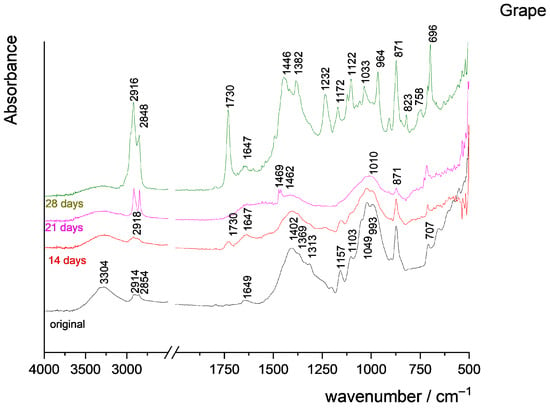
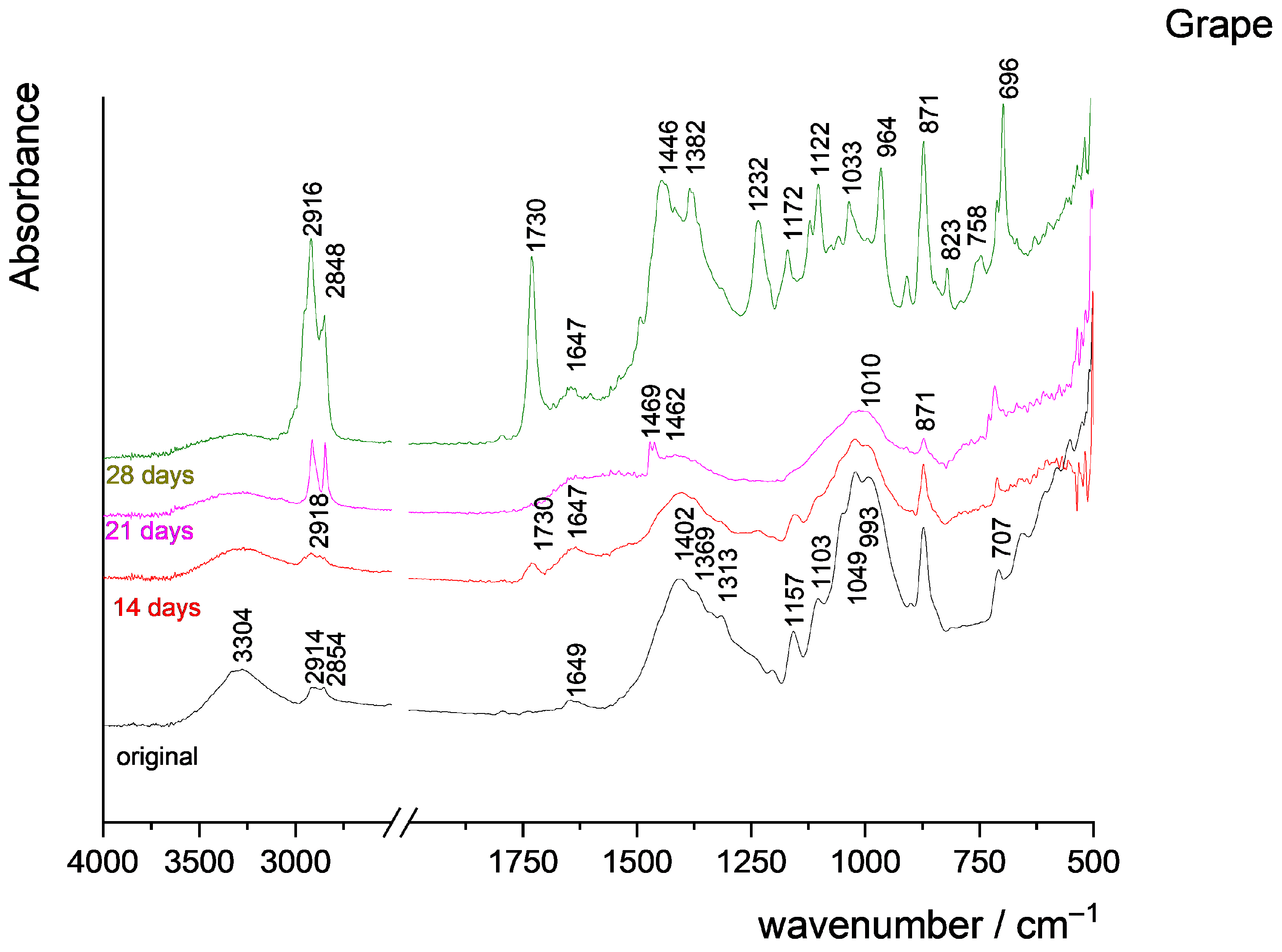
Figure 5 represents the FTIR spectra of the biodegradation process of grape-based PSL over time intervals of 14, 21, and 28 days. After 14 days, absorption bands around 1730 cm−1 begin to emerge in the spectrum, revealing the presence of adhesive located on the opposite side of the paper. In addition to the emerging absorption bands of the adhesive, characteristic bands of cellulose remain visible. These bands serve as key indicators of the paper’s structural composition, gradually diminishing as degradation progresses, further confirming the breakdown of the organic matrix. As time progresses to 21 days, the decomposition of cellulose fibers becomes even more pronounced, indicating an increasingly strong spectral response from the adhesive (in the spectral range from 2800 to 2920 cm−1, while in lower wavelength overlapping occurs). Its characteristic bands grow in intensity, while additional spectral changes emerge, testifying to the ongoing breakdown of the paper’s organic matrix. After 28 days, the spectrum unmistakably reflects the presence of adhesive, while the traces of paper gradually fade.
Figure 5.
FTIR spectra of the original sample and samples after the biodegradation process of grape-based PSL.
As the adhesive likely penetrates the fibrous network of the paper during its use, its presence remains hidden within the structure. During the biodegradation process of cellulosic material, the appearance of the adhesive spectrum was observed. As the cellulosic matrix degrades, the adhesive, which is also dispersed within the paper structure, becomes more concentrated, allowing its detection by FTIR spectroscopy.
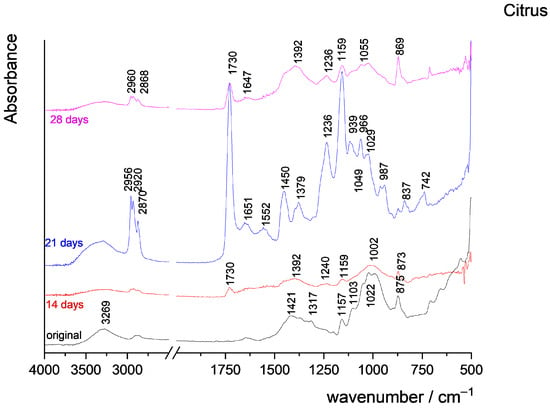
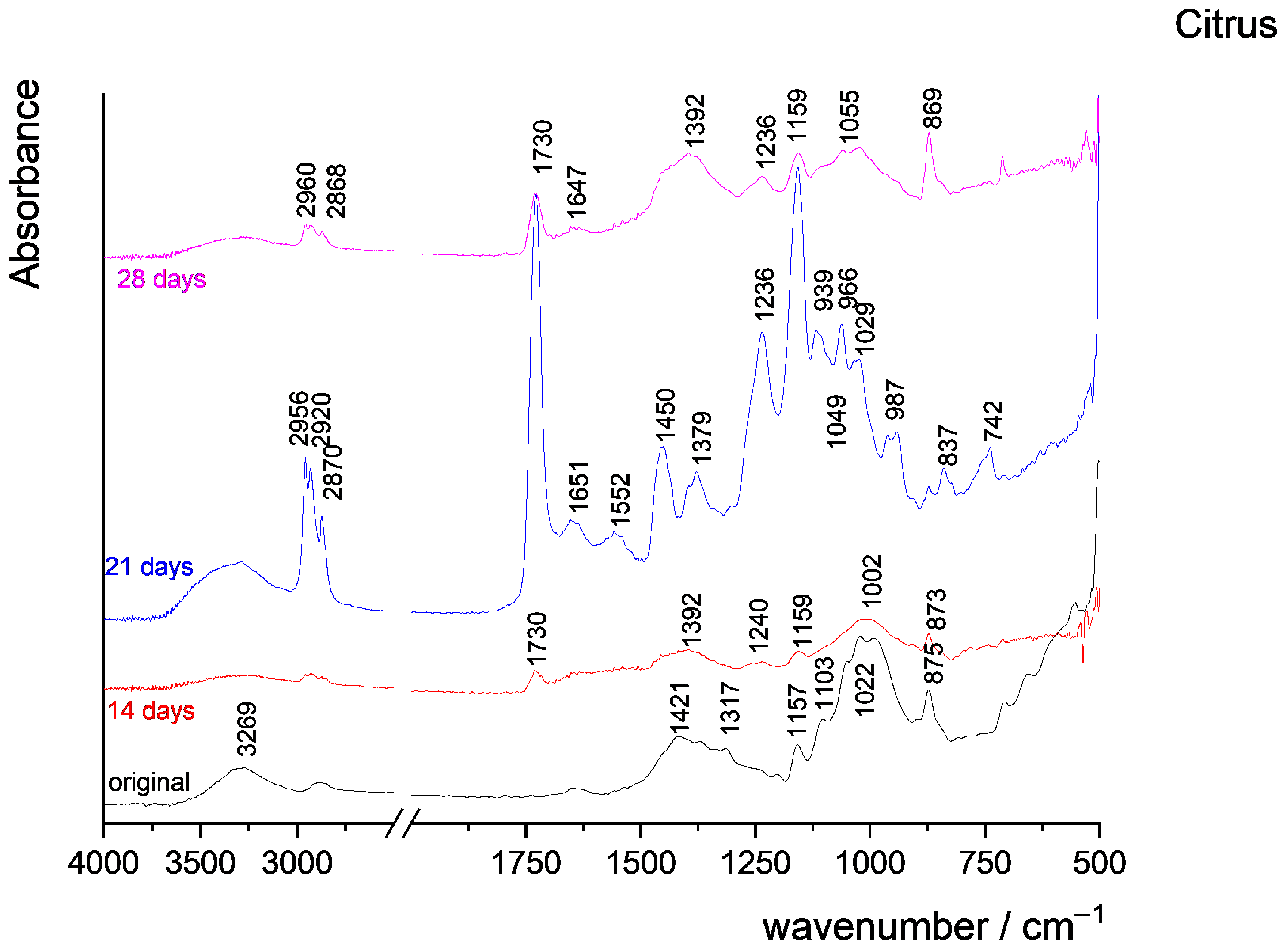
The biodegradation mechanisms are more pronounced in citrus-based PSL, as evidenced by the emergence of adhesive bands as early as 21 days. By day 28, analysis indicates the onset of biodegradation of the adhesive itself. Figure 6 (citrus-based PSL) shows a similar progressive spectral evolution during aerobic soil burial. After 14 days, the characteristic cellulose bands (around 1049, 993 and ~898 cm−1) remain clearly visible, indicating that the fibrous matrix is still structurally dominant. However, after 21 days, a more pronounced appearance of adhesive-related absorption bands can be observed, particularly in the carbonyl region around 1730 cm−1, consistent with the acrylate-based adhesive formulation. Simultaneously, a gradual decrease in the intensity of cellulose-associated bands suggests ongoing biodegradation of the fiber network. By 28 days, adhesive-related bands become more evident, while cellulose signals diminish further, indicating advanced degradation of the paper matrix and increased exposure of the adhesive layer. Compared to the grape-based sample, the spectral transition appears slightly more gradual, although the overall degradation mechanism follows the same pattern of cellulose breakdown followed by increased detectability of adhesive components.
Figure 6.
FTIR spectra of the original sample and samples after the biodegradation process of citrus-based PSL.
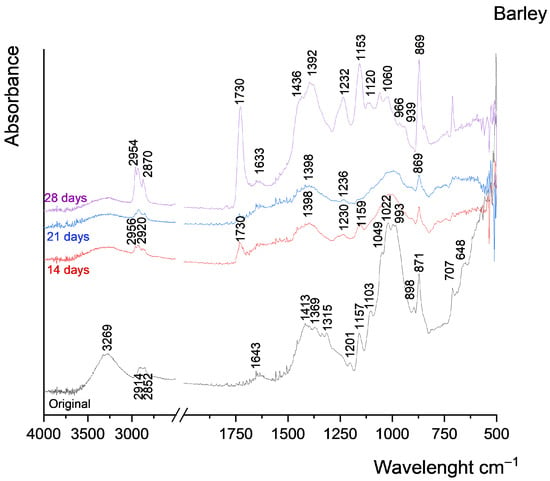
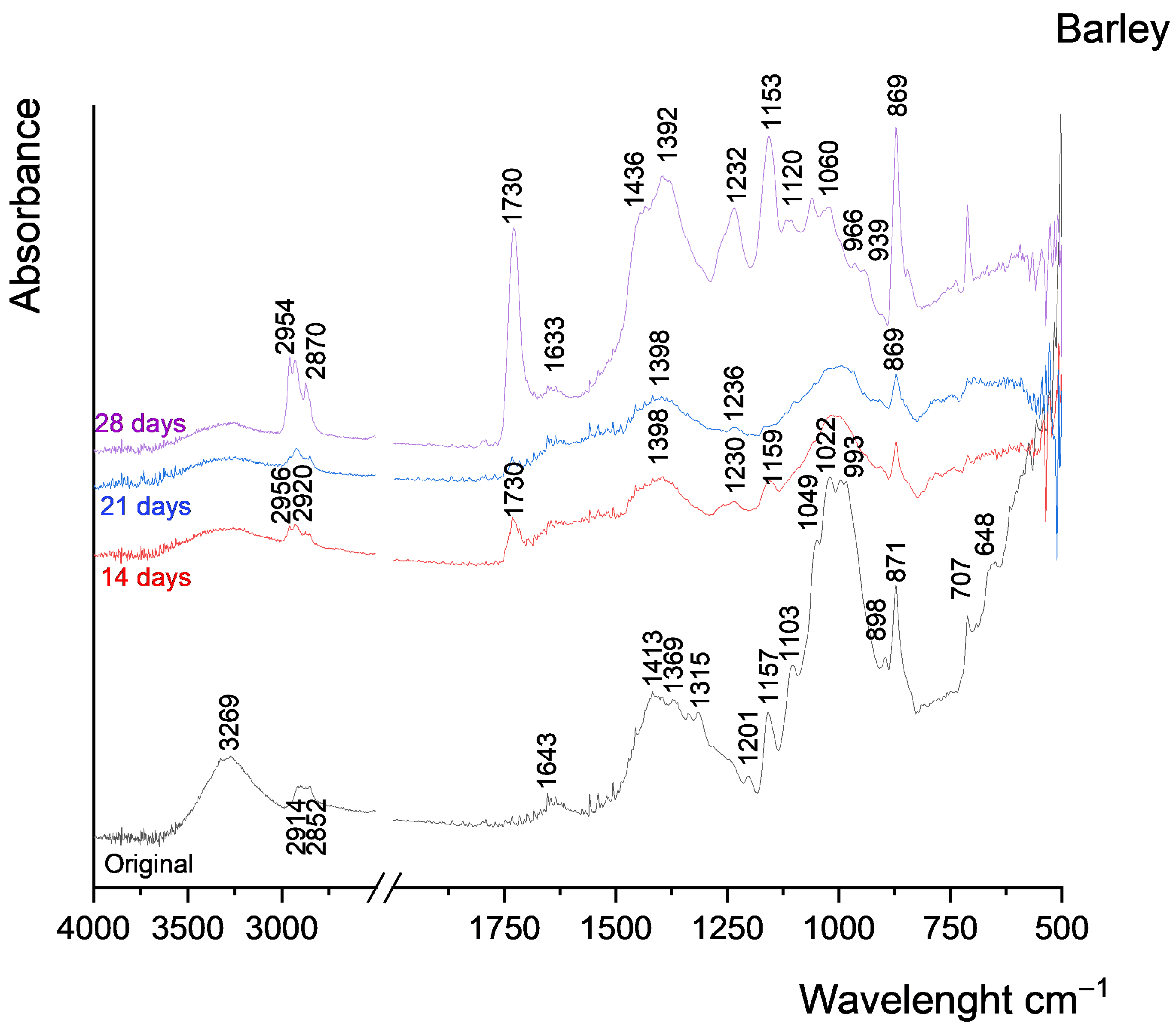
A comparable trend is observed for the barley-based PSL facestock (Figure 7). The original spectrum is dominated by cellulose-related bands characteristic of facestock materials. After 14 days of soil exposure, only moderate spectral changes are detected, suggesting initial stages of fiber degradation. At 21 days, a reduction in cellulose band intensity becomes more evident, accompanied by clearer detection of adhesive-related peaks, particularly the ester carbonyl band around 1730 cm−1. By 28 days, the adhesive contribution becomes more pronounced in the spectrum, while cellulose signals are substantially reduced, reflecting progressive degradation of the fibrous facestock matrix. The overall spectral evolution indicates that biodegradation in the barley-based sample follows the same mechanism observed for the other fiber-based PSLs, with degradation primarily governed by the breakdown of cellulose rather than direct adhesive decomposition.
Figure 7.
FTIR spectra of the original sample and samples after the biodegradation process of barley-based PSL.
The FTIR spectroscopy results are consistent with the weight loss measurements, confirming progressive degradation of the fiber-based matrix during aerobic soil burial. Although the present study does not allow precise quantification of the individual contributions of cellulose and adhesive to the total mass loss, the spectral evolution indicates that biodegradation is predominantly associated with the degradation of the cellulosic component in grape-, citrus-, and barley-based PSL facestock. Differences in adhesive chemistry may, however, contribute to minor variations in degradation behavior. Rubber-based adhesive systems can exhibit different environmental stability and biodegradation pathways compared to acrylic systems, as natural or synthetic rubber components may undergo microbial degradation in soil environments, whereas polyacrylate-based PSAs are generally reported as more resistant to aging and oxidative or UV-induced degradation [32,33,34]. Nevertheless, the overall mass loss observed in this study is most likely governed by cellulose degradation within the facestock matrix rather than by direct adhesive decomposition.
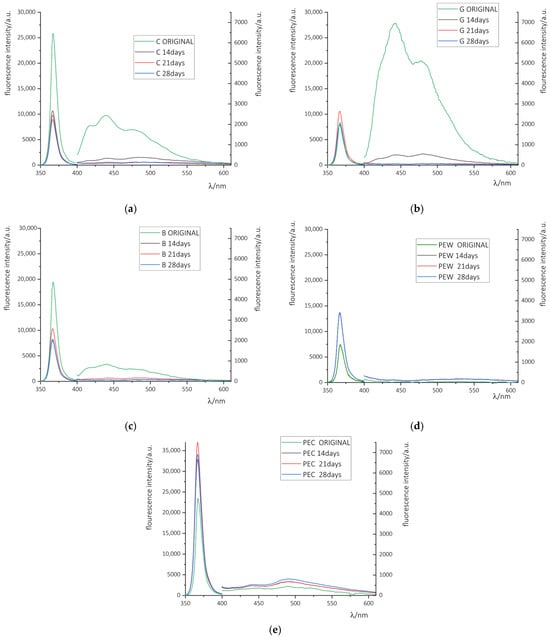
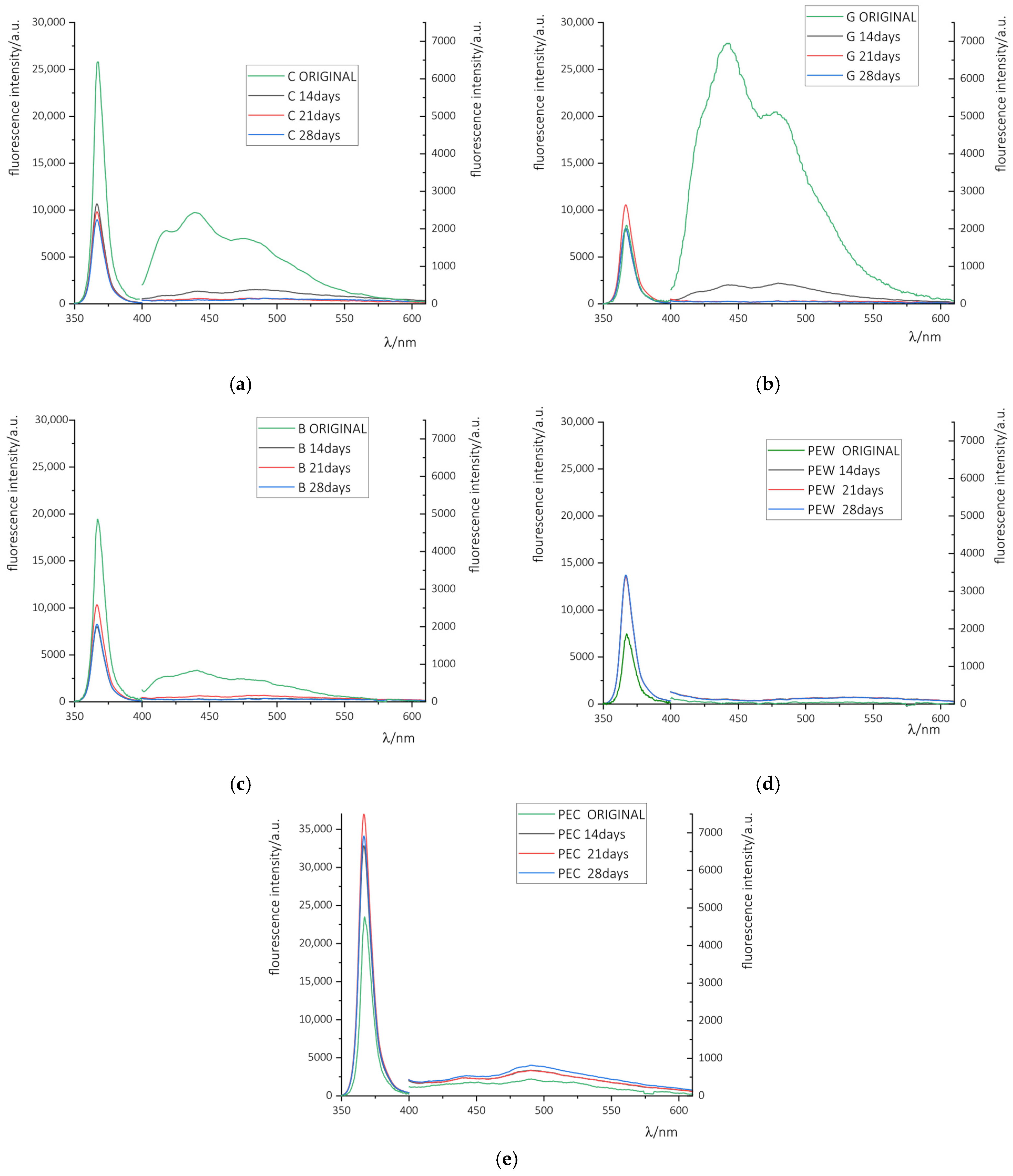
The fluorescence intensity of the investigated PSL samples is illustrated in Figure 8. Spectra corresponding to fiber-based sample materials (C, G and B) are shown in Figure 8a–c, while the fluorescence behavior of the synthetic polymer- based samples (PEW and PEC) is presented in Figure 8d,e. The spectra were analyzed by separating two wavelength intervals associated with fluorescence whitening agents, the UV excitation region between 330 and 390 nm and the visible emission region spanning from 400 to 610 nm. Due to the substantially higher signal intensity observed in the excitation region, the corresponding data are plotted using the left ordinate, whereas the emission spectra are displayed on the right ordinate of the figures.
Figure 8.
Fluorescence intensity spectra of original and treated PSL samples: (a) citrus-based, (b) grape-based, (c) barley-based, (d) PEW- and (e) PEC.
The emission fluorescence spectra of the three original fiber-based samples (G, C and B) exhibit characteristic blue-region emission associated with optical brightening agents, with maxima occurring within the 400–490 nm wavelength range [26,35].
Citrus-based PSL (Figure 8a) shows a pronounced decrease in fluorescence intensity after aerobic soil burial, with emission in the 410–490 nm range nearly disappearing after 21 days, indicating quenching and structural changes in the facestock matrix [36]. The progressive decrease and eventual disappearance of fluorescence emission in the 410–490 nm range with increasing aerobic soil burial time indicate time-dependent quenching of fluorescence whitening agents. The observed decrease in fluorescence intensity is likely associated with several processes, including quenching, adsorption onto soil particles, and possible migration of fluorescent compounds into the surrounding soil matrix; however, these mechanisms could not be experimentally distinguished within the scope of this study [36,37,38].
In contrast to the citrus-based PSL, the grape-based PSL (Figure 8b) exhibits relatively stable fluorescence after 14 days, followed by a decrease at 21 days and partial recovery after 28 days, suggesting reversible quenching and redistribution of fluorescence whitening agents. This behavior suggests the involvement of multiple processes, such as reversible quenching and redistribution of fluorescence whitening agents; however, these mechanisms remain interpretative and were not directly verified [39].
Barley-based PSL (Figure 8c) follows a similar trend to the citrus-based PSL, but with overall lower fluorescence intensity.
Remaining polyethylene-based PSL (PEW and PEC) both exhibit negligible fluorescence emission (Figure 8d,e), suggesting the absence of fluorescence whitening agents. Nevertheless, distinct behavior was observed in the excitation region. PEC-based PSL shows the highest excitation fluorescence intensity of all PSL samples, whereas PEW-based PSL shows the lowest excitation fluorescence intensity. For both samples, these values further increase after exposure to soil due to enhanced light scattering or changes in the reflectance properties of the polyethylene following environmental exposure.
It should be noted that the decrease in fluorescence intensity does not necessarily indicate chemical degradation of optical brightening agents. The decrease in fluorescence intensity may result from quenching, adsorption, or migration of fluorescent compounds into the soil matrix; however, the present study does not allow direct differentiation between these processes. Further experimental work, such as extraction-based analysis of fluorescent agents, would be required to distinguish between these mechanisms.
4. Conclusions
This study investigated the biodegradation potential of pressure-sensitive label (PSL) facestock materials produced from agro-industrial by-products and recycled fibers in comparison with bio-based polyethylene films under controlled aerobic soil burial conditions. The results clearly demonstrate significant differences in biodegradation behavior between fiber-based and polyethylene-based samples. Fiber-based PSL facestocks containing barley, grape, and citrus residues exhibited pronounced biodegradation, as confirmed by visual inspection, weight loss measurements, FTIR analysis, and fluorescence spectroscopy. After 28 days of aerobic soil burial, weight loss reached approximately 51–55%, indicating substantial degradation of the cellulose-based matrix. Spectroscopic analyses confirmed progressive structural changes in cellulose, while fluorescence measurements revealed quenching and/or migration of optical brightening agents associated with matrix degradation. Although adhesive components became more spectroscopically visible during cellulose degradation, the overall biodegradation process was predominantly governed by the fiber-based component. In contrast, bio-based polyethylene facestocks (PEW and PEC), despite their renewable origin, showed negligible weight loss and no significant visual degradation over the same period. Minor FTIR spectral changes suggested limited oxidative processes; however, these did not translate into meaningful material disintegration under aerobic soil conditions. This confirms that bio-based origin alone does not guarantee biodegradability. The findings emphasize the environmental advantage of fiber-based PSL materials over polymeric alternatives, particularly in scenarios where labels may end up in soil or landfill environments. Incorporating agro-industrial residues and recycled fibers into PSL facestock contributes to waste valorization and aligns with EU waste hierarchy principles, supporting prevention, reuse, and recycling strategies. Although the precise quantitative contribution of adhesive biodegradation to total mass loss could not be fully isolated, the results strongly indicate that cellulose degradation is the dominant mechanism driving overall material breakdown. A limitation of this study is that experiments were conducted using a single sample per material and time point; therefore, statistical variability could not be assessed. However, consistent trends observed across multiple analytical methods support the reliability of the results. Given the continuous growth of the PSL market and increasing regulatory pressure regarding packaging waste, the development and implementation of fiber-based, agro-industrial by-product facestocks represent a promising and more environmentally responsible alternative to polymer-based label materials. Although the present study focused on a 28-day period to capture early-stage biodegradation, extended incubation periods and respirometric analyses (e.g., CO2 evolution) would provide additional insight into long-term degradation kinetics and the extent of mineralization.
Author Contributions
Conceptualization, M.V.B.; methodology, M.V.B. and A.M.D.; software, A.M.D.; validation, M.V.B., K.I.I. and R.K.; formal analysis, M.V.B. and K.I.I.; investigation, A.M.D.; resources, M.V.B., K.I.I. and R.K.; data curation, A.M.D.; writing—original draft preparation, A.M.D., M.V.B. and K.I.I.; writing—review and editing, R.K.; visualization, M.V.B., K.I.I. and R.K.; supervision, M.V.B.; project administration, R.K.; funding acquisition, R.K. All authors have read and agreed to the published version of the manuscript.
Funding
This research was supported by the NextGenerationEU project: NPOO KULČAR 2025/2029 2025101.
Data Availability Statement
The original contributions presented in this study are included in the article. Further inquiries can be directed to the corresponding author.
Conflicts of Interest
The authors declare no conflicts of interest.
References
- Leja, K.; Lewandowicz, G. Polymer Biodegradation and Biodegradable Polymers—A Review. Pol. J. Environ. Stud. 2010, 19, 255–266. [Google Scholar]
- Shah, A.A.; Hasan, F.; Hameed, A.; Ahmed, S. Biological Degradation of Plastics: A Comprehensive Review. Biotechnol. Adv. 2008, 26, 246–265. [Google Scholar] [CrossRef] [Scilit] [PubMed]
- Pischedda, A.; Tosin, M.; Degli-Innocenti, F. Biodegradation of Plastics in Soil: The Effect of Temperature. Polym. Degrad. Stab. 2019, 170, 109017. [Google Scholar] [CrossRef] [Scilit]
- Tomšič, B.; Simončič, B.; Orel, B.; Vilčnik, A.; Spreizer, H. Biodegradability of Cellulose Fabric Modified by Imidazolidinone. Carbohydr. Polym. 2007, 69, 478–488. [Google Scholar] [CrossRef] [Scilit]
- Van Wyk, J.P.H.; Mohulatsi, M. Biodegradation of Waste Cellulose. J. Polym. Environ. 2003, 11, 23–28. [Google Scholar] [CrossRef] [Scilit]
- Vukoje, M.; Rožić, M.; Miljanić, S.; Pasanec Preprotić, S. Biodegradation of Thermochromic Offset Prints. Nord. Pulp Pap. Res. J. 2017, 32, 289–298. [Google Scholar] [CrossRef] [Scilit]
- Vukoje, M.; Rožić, M. Various Valorisation Routes of Paper Intended for Recycling–A Review. Cellul. Chem. Technol. 2018, 52, 515–541. [Google Scholar]
- Vukoje, M.; Miljanić, S.; Hrenović, J.; Rožić, M. Thermochromic Ink–Paper Interactions and Their Role in Biodegradation of UV Curable Prints. Cellulose 2018, 25, 6121–6138. [Google Scholar] [CrossRef] [Scilit]
- Wang, X.; De la Cruz, F.B.; Ximenes, F.; Barlaz, M.A. Decomposition and Carbon Storage of Selected Paper Products in Laboratory-Scale Landfills. Sci. Total Environ. 2015, 532, 70–79. [Google Scholar] [CrossRef] [Scilit] [PubMed]
- European Parlament European Parliament Legislative Resolution of 24 April 2024 on the Proposal for a Regulation of the European Parliament and of the Council on Packaging and Packaging Waste, Amending Regulation (EU) 2019/1020 and Directive (EU) 2019/904, and Repealing Dire. Available online: https://www.europarl.europa.eu/doceo/document/TA-9-2024-0318_EN.html (accessed on 10 November 2024).
- Droesbeke, M.A.; Aksakal, R.; Simula, A.; Asua, J.M.; Du Prez, F.E. Biobased Acrylic Pressure-Sensitive Adhesives. Prog. Polym. Sci. 2021, 117, 101396. [Google Scholar] [CrossRef] [Scilit]
- Mozelewska, K.; Czech, Z.; Bartkowiak, M.; Nowak, M.; Bednarczyk, P.; Niezgoda, P.; Kabatc, J.; Skotnicka, A. Preparation and Characterization of Acrylic Pressure-Sensitive Adhesives Crosslinked with UV Radiation-Influence of Monomer Composition on Adhesive Properties. Materials 2022, 15, 246. [Google Scholar] [CrossRef] [Scilit]
- Riseh, R.S.; Vazvani, M.G.; Hassanisaadi, M.; Thakur, V.K. Agricultural Wastes: A Practical and Potential Source for the Isolation and Preparation of Cellulose and Application in Agriculture and Different Industries. Ind. Crops Prod. 2024, 208, 117904. [Google Scholar] [CrossRef] [Scilit]
- Vallejo, M.; Cordeiro, R.; Dias, P.A.N.; Moura, C.; Henriques, M.; Seabra, I.J.; Malça, C.M.; Morouço, P. Recovery and Evaluation of Cellulose from Agroindustrial Residues of Corn, Grape, Pomegranate, Strawberry-Tree Fruit and Fava. Bioresour. Bioprocess. 2021, 8, 25. [Google Scholar] [CrossRef] [Scilit]
- Ramdhonee, A.; Jeetah, P. Production of Wrapping Paper from Banana Fibres. J. Environ. Chem. Eng. 2017, 5, 4298–4306. [Google Scholar] [CrossRef] [Scilit]
- Abd El-Sayed, E.S.; El-Sakhawy, M.; El-Sakhawy, M.A.M. Non-Wood Fibers as Raw Material for Pulp and Paper Industry. Nord. Pulp Pap. Res. J. 2020, 35, 215–230. [Google Scholar] [CrossRef] [Scilit]
- European Commission. Waste Framework Directive. Available online: https://environment.ec.europa.eu/topics/waste-and-recycling/waste-framework-directive_en (accessed on 10 November 2024).
- MarketsandMarkets Inc. Self-Adhesive Labels Market Worth $69.2 Billion by 2028. Available online: https://mailchi.mp/marketsandmarkets.com/self-adhesive-labels-market-10338091?e=c511d80e45 (accessed on 10 November 2024).
- AveryDennison. Bio-Based PE Film-A Sugar-Sweet Opportunity, Product Overview 2016, 2. Available online: https://cwp-test-origin.averydennison.com/content/dam/averydennison/lpm-responsive/na/doc/product-overviews/product/Film/sustainabiliy-and-clear-intent/po-eu-bio-based-pe.pdf (accessed on 25 April 2025).
- AveryDennison. Fasson ® RCRUSH CITRUS FSC S2030-BG45WH FSC. 2021. Available online: https://www.pds.averydennison.com/content/PDS/BT025 (accessed on 25 April 2025).
- AveryDennison. Fasson ® MC MC FSC S2000NG-BG40BR MC-Tehnical Data Sheet. 2022. Available online: https://www.pds.averydennison.com/content/PDS/BJ993?UL=1 (accessed on 25 April 2025).
- AveryDennison. Fasson ® PE85 BIOB CLEAR S692N-BG40WH FSC PE85. 2021. Available online: https://www.pds.averydennison.com/content/PDS/BD380 (accessed on 25 April 2025).
- AveryDennison. Fasson ® RCRUSH GRAPE FSC S2047N-BG45WH IMP FSC. 2021. Available online: https://www.pds.averydennison.com/content/PDS/BD733 (accessed on 25 April 2025).
- AveryDennison. Fasson ® PE85 BIOB WHITE S692N-BG40WH FSC PE85. 2021. Available online: https://www.pds.averydennison.com/content/PDS/BC449 (accessed on 25 April 2025).
- AveryDennison. Fasson ® RCRUSH BARLEY FSC S2030-BG45WH FSC. 2021. Available online: https://www.pds.averydennison.com/content/PDS/BT024 (accessed on 25 April 2025).
- Vukoje, M.; Itrić Ivanda, K.; Kulčar, R.; Marošević Dolovski, A. Spectroscopic Stability Studies of Pressure Sensitive Labels Facestock Made from Recycled Post-Consumer Waste and Agro-Industrial By-Products. Forests 2021, 12, 1703. [Google Scholar] [CrossRef] [Scilit]
- Hubbe, M.A.; Gill, R.A. Fillers for Papermaking: A Review of Their Properties, Usage Practices, and Their Mechanistic Role. BioResources 2016, 11, 2886–2963. [Google Scholar] [CrossRef] [Scilit]
- Łojewska, J.; Miśkowiec, P.; Łojewski, T.; Proniewicz, L.M. Cellulose Oxidative and Hydrolytic Degradation: In Situ FTIR Approach. Polym. Degrad. Stab. 2005, 88, 512–520. [Google Scholar] [CrossRef] [Scilit]
- Smith, B.C. Infrared Spectroscopy of Polymers X: Polyacrylates. Spectroscopy 2023, 38, 10–14. [Google Scholar] [CrossRef] [Scilit]
- Hamzah, M.; Khenfouch, M.; Rjeb, A.; Sayouri, S.; Houssaini, D.S.; Darhouri, M.; Srinivasu, V.V. Surface Chemistry Changes and Microstructure Evaluation of Low Density Nanocluster Polyethylene under Natural Weathering: A Spectroscopic Investigation. J. Phys. Conf. Ser. 2018, 984, 012010. [Google Scholar] [CrossRef] [Scilit]
- Gulmine, J.V.; Janissek, P.R.; Heise, H.M.; Akcelrud, L. Degradation Profile of Polyethylene after Artificial Accelerated Weathering. Polym. Degrad. Stab. 2003, 79, 385–397. [Google Scholar] [CrossRef] [Scilit]
- Robert Czech, Z. Pressure-Sensitive Acrylic Adhesives (PSAs): How It Began and the Present State of Art. ChemTexts 2024, 10, 6. [Google Scholar] [CrossRef] [Scilit]
- Ali Shah, A.; Hasan, F.; Shah, Z.; Kanwal, N.; Zeb, S. Biodegradation of Natural and Synthetic Rubbers: A Review. Int. Biodeterior. Biodegrad. 2013, 83, 145–157. [Google Scholar] [CrossRef] [Scilit]
- Bosco, F.; Mollea, C. Biodegradation of Natural Rubber: Microcosm Study. Water Air Soil Pollut. 2021, 232, 227. [Google Scholar] [CrossRef] [Scilit] [PubMed]
- Pauler, N. Paper Optics; AB Lorentzen & Wettre: Kista, Sweden, 2012. [Google Scholar]
- Zacharioudaki, D.E.; Fitilis, I.; Kotti, M. Review of Fluorescence Spectroscopy in Environmental Quality Applications. Molecules 2022, 27, 4801. [Google Scholar] [CrossRef] [Scilit] [PubMed]
- Plaza, C.; Brunetti, G.; Senesi, N.; Polo, A. Fluorescence Characterization of Metal Ion-Humic Acid Interactions in Soils Amended with Composted Municipal Solid Wastes. Anal. Bioanal. Chem. 2006, 386, 2133–2140. [Google Scholar] [CrossRef] [Scilit]
- Lakowicz, J.R. Principles of Fluorescence Spectroscopy, 3rd ed.; Springer: Boston, MA, USA, 2006. [Google Scholar]
- Li, M.; Wang, X.; Wang, X.; Zhang, W.; Xiu, G. Influence of Different Types of Humic Substances on the Adsorption Behavior of Perfluorooctanoic Acid in Soils: Experimental Insights and Spectral Characterization. Environ. Geochem. Health 2026, 48, 2. [Google Scholar] [CrossRef] [Scilit]

Disclaimer/Publisher’s Note: The statements, opinions and data contained in all publications are solely those of the individual author(s) and contributor(s) and not of MDPI and/or the editor(s). MDPI and/or the editor(s) disclaim responsibility for any injury to people or property resulting from any ideas, methods, instructions or products referred to in the content. |
© 2026 by the authors. Licensee MDPI, Basel, Switzerland. This article is an open access article distributed under the terms and conditions of the Creative Commons Attribution (CC BY) license.