


Abstract
Anthocleista grandiflora Gilg is an African medicinal tree used traditionally for malaria, fever, diabetes, diarrhoea and other conditions. This review critically assessed its ethnomedicinal uses, phytochemistry, pharmacological activities and safety. Studies published between 1949 and December 2024 were searched in Scopus, Web of Science, PubMed, ScienceDirect, Google Scholar and SciFinder. Taxonomy and distribution were verified using botanical databases. The bark, roots, leaves and twigs are used medicinally, particularly for malaria and fever. Species-specific isolation studies confirmed grandifloroside, methylgrandifloroside, sweroside, scopoletin, baruol, 3-deacetylmongolenin, anthocleistone, 6-ketoanthocleistone, lupenone and (+)-de-O-methyllasiodiplodin as constituents of A. grandiflora. Additional triterpenoids have been reported in conference and secondary literature, while compounds identified only through GC-MS library matching remain tentative. The strongest pharmacological finding was the activity of a twig dichloromethane extract against Plasmodium falciparum NF54, with an IC50 value of 2.12 µg/mL and selectivity index of 26. Antimicrobial, antileishmanial, antiviral, alpha-glucosidase-inhibitory, analgesic and anti-inflammatory effects were also reported, although most evidence came from preliminary laboratory studies. Safety information was limited and extract-specific. A. grandiflora contains a chemically diverse group of confirmed constituents and shows promising preclinical activities. Standardised extraction, compound-directed bioassays, pharmacokinetic studies and in vivo safety and efficacy investigations are required before clinical development.
1. Introduction
Medicinal plants remain important in African health care, particularly where access to conventional services is limited or costly. They also provide structurally diverse compounds for pharmacological research. However, long-standing use alone does not establish efficacy or safety. Botanical identity, preparation method, dose, chemical composition and experimental quality must be considered before traditional claims can guide product development or clinical use [1].
Anthocleista Afzel. ex R.Br. belongs to the tribe Potalieae in the family Gentianaceae. Earlier reports frequently placed the genus in Loganiaceae, but morphological, phytochemical and molecular evidence supports its treatment within Gentianaceae [2,3]. The genus comprises about 14–15 species distributed mainly in tropical Africa, Madagascar and nearby islands. Members are shrubs, woody climbers or trees and are recognised by their large opposite leaves, terminal inflorescences and fleshy fruits [4].
Anthocleista grandiflora Gilg is an accepted species first published in 1893. Plants of the World Online lists six heterotypic synonyms: A. insignis Galpin, A. keniensis Summerh., A. orientalis Gilg, A. pulcherrima Gilg, A. scheffleri Gilg ex G.Scheffler and A. zambesiaca Baker [5]. The species is native from Cameroon and South Sudan southwards to southern Africa and also occurs in the Comoros. It grows mainly in wet tropical environments. It is the only Anthocleista species recorded in southern Africa and is locally known as the forest fever tree because of its use against malaria and fever [6].
The 2015 genus-level review provided an important overview of Anthocleista species, but it did not resolve several problems that affect the interpretation of A. grandiflora evidence. First, ethnomedicinal uses, chemical constituents and pharmacological effects reported for other Anthocleista species cannot be transferred automatically to A. grandiflora. This is especially important because older studies placed the genus in Loganiaceae, current taxonomy places it in Gentianaceae, and A. grandiflora has several historical synonyms. Searches that do not account for these changes may omit relevant records or misassign findings. Second, earlier summaries did not consistently separate compounds confirmed by isolation and spectroscopic characterisation from qualitative screening results, GC–MS library matches, unresolved metabolomic signals or constituents detected in multi-herbal products. Third, the strength of the pharmacological evidence was not graded according to botanical authentication, extract characterisation, assay design, selectivity, mechanistic support, in vivo relevance and safety. Since 2015, additional studies have examined metabolomic profiles, enzyme inhibition, antimicrobial and antiviral activity, inflammation and preliminary safety. A new species-specific review is therefore needed to define the evidence boundary for A. grandiflora, account for its accepted taxonomy and synonyms, distinguish confirmed constituents from tentative assignments, compare traditional indications with experimental findings, and identify the most feasible research priorities. This review critically evaluates the ethnomedicinal uses, phytochemistry, pharmacological activities and safety of A. grandiflora and assesses the concordance between traditional practice and current experimental evidence.
2. Materials and Methods
Literature Search and Evidence Synthesis
This critical narrative review undertook a search of Scopus, Web of Science, PubMed, ScienceDirect, Google Scholar and SciFinder for publications dated from 1949 to December 2024. The databases were selected for complementary coverage. PubMed was used for biomedical and pharmacological studies; Scopus and Web of Science for multidisciplinary and citation-indexed literature; ScienceDirect for relevant journal articles; Google Scholar for books, theses, reports and older or less-indexed African literature; and SciFinder for compound- and chemistry-focused searching. Botanical nomenclature, synonyms, native range and ethnobotanical information were checked against Plants of the World Online, PlantZAfrica and PROTA. The main search term was “Anthocleista grandiflora” OR “Anthocleista zambesiaca”, combined with ethnobotany, traditional medicine, phytochemistry, isolated compound, pharmacology, antiplasmodial, antimicrobial, antidiabetic, anti-inflammatory, toxicity or safety. Reference lists of eligible publications were also examined.
Records were screened in stages. After duplicate removal, titles and abstracts were examined for species-specific relevance. Full texts were then reviewed to confirm botanical identity, plant part, preparation or extract, chemical or pharmacological outcome, and separate reporting of A. grandiflora data. Primary studies, ethnobotanical surveys, books, theses and authoritative botanical records were eligible. Reports were excluded when the species identity was unclear, results could not be separated from other species or herbal ingredients, claims could not be verified in the cited source, or the publication duplicated an earlier dataset. Evidence concerning another Anthocleista species was not transferred to A. grandiflora.
For each eligible source, the extracted fields included citation details, country, botanical identity, plant part, preparation, extraction solvent and conditions, chemical identification method, assay system, controls, potency, selectivity, toxicity and stated limitations. Chemical names and biological values were cross-checked against the primary reports and compared with the manuscript tables. A validated formal risk-of-bias or quality-scoring tool was not applied because the evidence comprised heterogeneous ethnobotanical, phytochemical, in vitro, animal and reference sources. Instead, studies were critically appraised according to botanical authentication, extract description, analytical confirmation, controls, assay design, selectivity and relevance of the model. Heterogeneity in plant parts, solvents, preparations, assays and endpoints prevented quantitative pooling; findings were grouped by evidence type and synthesised narratively.
A Preferred Reporting Items for Systematic Reviews and Meta-Analyses (PRISMA) flow diagram and exact screening counts could not be added because a verifiable record-level search log, duplicate count, title/abstract screening count, full-text exclusion log and final inclusion count were not available.
3. Results and Discussion
3.1. Botanical Description of A. grandiflora
Anthocleista grandiflora Gilg (Gentianaceae), commonly called the forest fever tree, is an evergreen tree usually 5–35 m tall. It has a slender, straight bole with smooth, light-grey bark. The large opposite leaves are crowded near the branch ends, while the conspicuous white flowers occur in terminal clusters and have a long tubular corolla. The fruit is a fleshy berry containing numerous small seeds. These features, together with authenticated voucher material, are important for distinguishing the species from other members of Anthocleista. Although older pharmacological papers placed the species in Loganiaceae, the currently accepted family is Gentianaceae [2,3,5,6,7].
The species has a broad African range. It occurs from Cameroon and South Sudan southwards through tropical eastern and south-central Africa to southern Africa and is also recorded in the Comoros [5,6,7]. Its habitats include moist forest, forest margins, wooded stream banks and kloofs, where it is associated with warm, moist and well-watered conditions. It is the only Anthocleista species recorded in southern Africa. This wide distribution may expose populations to differences in climate, soil, altitude and harvesting practice, but comparative studies linking geography with chemical composition are not yet available.
A. grandiflora is documented in regional ethnobotanical and medicinal-plant sources, including the Pharmacopoeia of Traditional Medicine in Venda, PROTA and PlantZAfrica [6,8,9]. However, the reviewed literature did not provide evidence of an official species monograph in a recognised national or international pharmacopoeia. Therefore, the available evidence supports its description as a plant documented in regional traditional-medicine sources, rather than as an officially recognised pharmacopoeial species. Published agronomic evidence is also limited. Available habitat information indicates that the tree favours warm and well-watered conditions, but controlled studies on propagation, domestication, cultivation, yield, harvest season and the effect of cultivation conditions on metabolite production were not found. Cultivation studies are needed to provide uniform research material and reduce pressure caused by bark and root harvesting.
3.2. Ethnomedicinal Uses of A. grandiflora
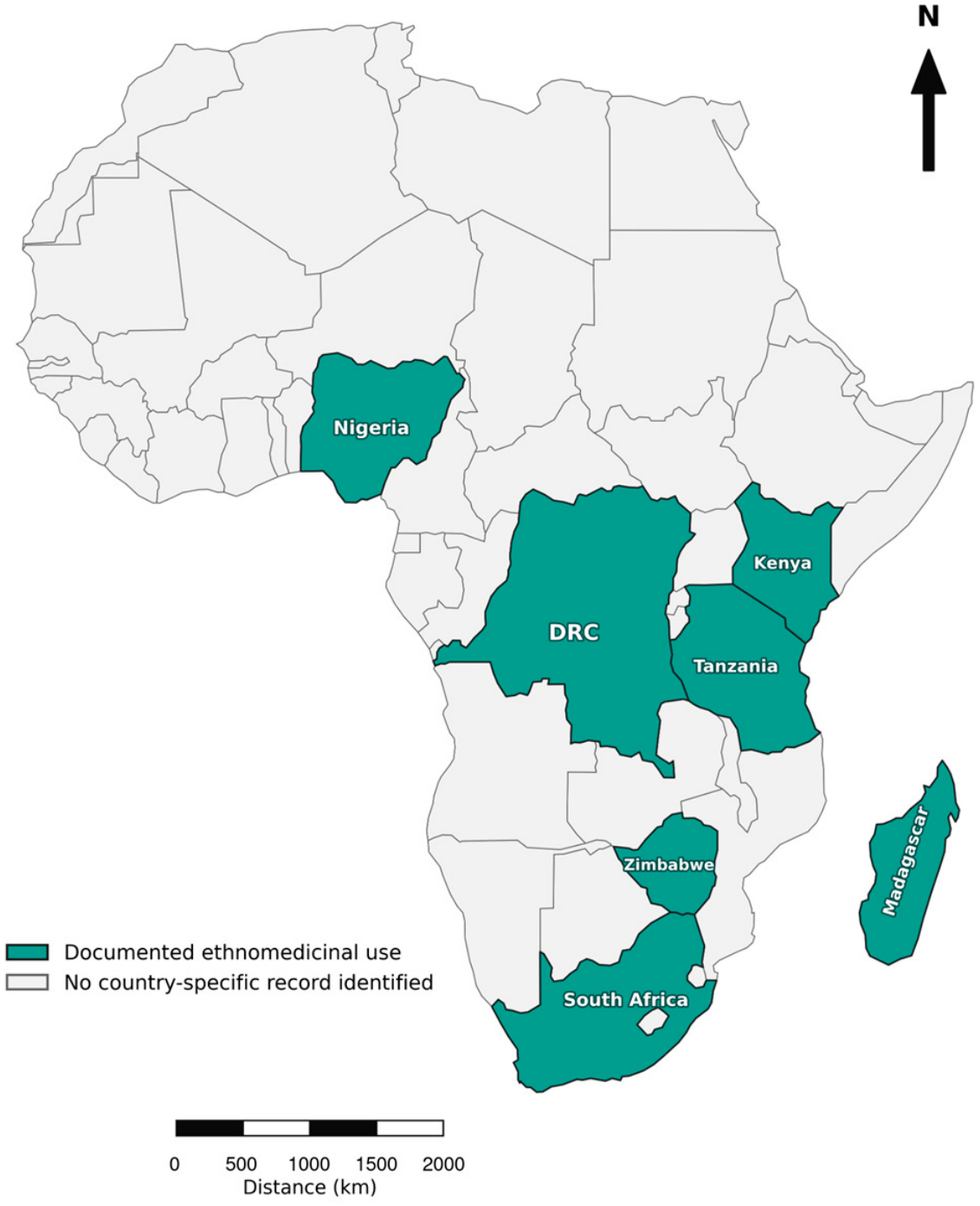
Ethnomedicinal records consistently associate A. grandiflora with malaria, fever and related symptoms. Depending on locality (Table 1), the stem bark, roots, leaves or twigs are prepared as decoctions or infusions and administered orally; additional records mention diabetes, gastrointestinal complaints, hypertension, wounds and reproductive or neurological conditions [8,9,10,11,12]. Country-specific records showed that the ethnomedicinal use of A. grandiflora has been documented in South Africa, Tanzania, Kenya, Nigeria, Madagascar, Zimbabwe and the Democratic Republic of the Congo (Figure 1). These reports establish cultural use, not clinical efficacy. Beyond its medicinal use, the plant also plays significant cultural and ethnoveterinary roles (Table 2). Several indications occur in inventories or multi-species recipes without dosage, diagnostic criteria or outcome data. The review therefore treats recurrent, species-specific records as stronger ethnomedical evidence than isolated claims, and it does not transfer uses reported for other Anthocleista species to A. grandiflora.
Figure 1.
African countries with documented ethnomedicinal use of Anthocleista grandiflora Gilg. Highlighted countries represent locations where country-specific traditional medicinal uses were identified in the reviewed literature. Countries associated only with unspecified regional reports were excluded.
The reviewed preparations are mainly decoctions or infusions made from stem bark, roots, leaves or stems and administered orally (Table 1). Other records include chewed bark, bark decoction mixed with baking soda, and leaves mixed with food for ethnoveterinary use. The most recurrent indications are malaria, fever and related symptoms. Less frequently reported uses include diabetes, diarrhoea, gastrointestinal disorders, hypertension, wounds, epilepsy, kidney complaints and venereal conditions. A. grandiflora stem bark is also included in the 14-ingredient CareVid herbal tea, but the activity of that combined preparation cannot be assigned to this species [13]. These records describe cultural use and preparation; they do not establish clinical efficacy, dose or safety.
Table 1.
Ethnomedicinal uses of Anthocleista grandiflora Gilg (Gentianaceae).
Table 2.
Other ethnobotanical uses of Anthocleista grandiflora Gilg (Gentianaceae).
3.3. Bioactive Compounds in A. grandiflora
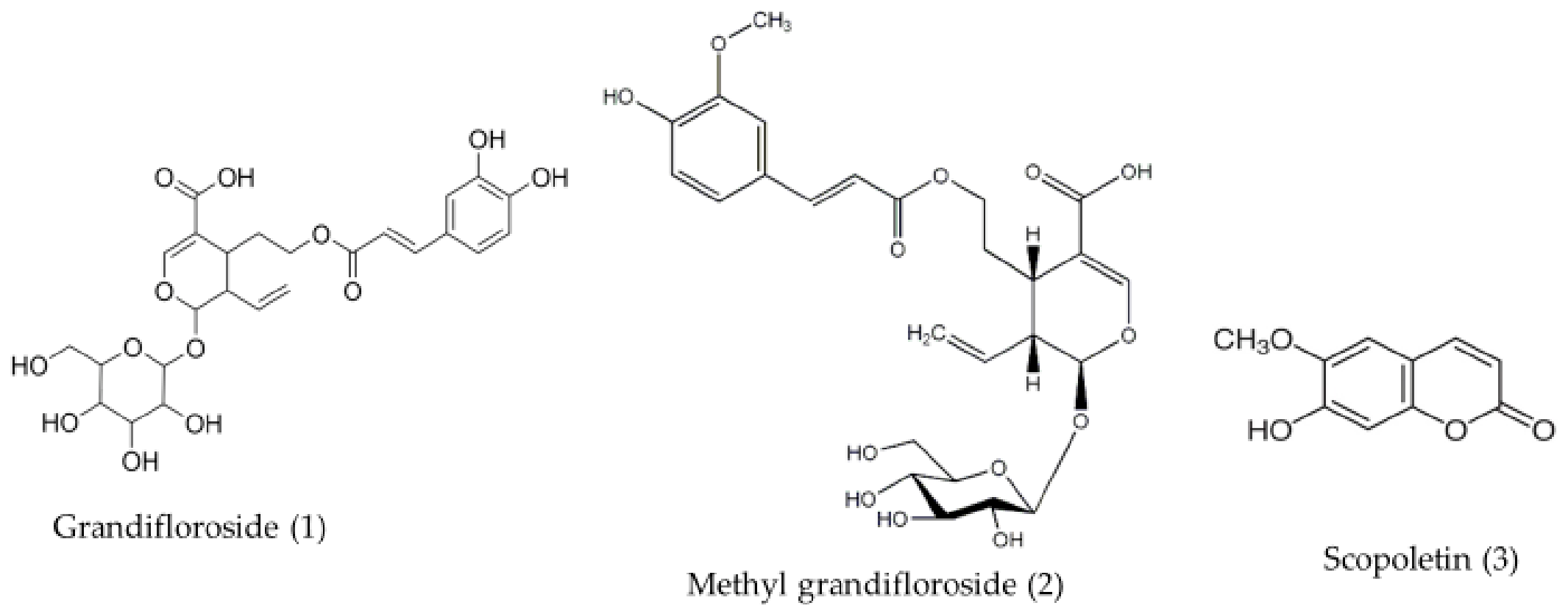
The confirmed chemistry of A. grandiflora is narrower than suggested by screening tests and database-derived lists (Table 3). Chapelle [26] isolated the iridoid glucosides grandifloroside and methyl grandifloroside, together with scopoletin, from the stem bark. Subsequent work on lipophilic stem-bark extracts yielded bauerenol, bauerenone, 6-ketobauerenone and grandiflorol, the last being an unusual bauerane-type triterpenoid [3,27]. Qualitative colour reactions have also indicated broad groups such as flavonoids, saponins, tannins, alkaloids and cardiac glycosides, but such assays are presumptive and do not identify individual molecules [28]. Sunday et al. [21] reported GC-MS library matches in a methanol wood-bark extract, with methyl palmitate and methyl oleate among the dominant peaks. As the identities were based on spectral-library comparison and no authentic standards, retention indices, purification or NMR confirmation were reported, these features are described as tentative annotations rather than confirmed bioactive compounds. Likewise, the 2019 NMR-metabolomics study profiled the crude dichloromethane twig extract but isolated compounds from other plant species, not from A. grandiflora [29]. This distinction is necessary to prevent analytical signals or compounds from multi-species studies from being mis-assigned to the species. Thus, phytochemical investigation of A. grandiflora has yielded a limited but structurally diverse group of confirmed compounds, including iridoid glucosides, a coumarin, pentacyclic triterpenoids and a resorcylic macrolide, of which selected representative structures are presented in Figure 2. The structures shown are restricted to compounds directly isolated and characterised from authenticated plant material. Tentative GC–MS annotations, experimental derivatives and compounds reported only from databases or multi-herbal formulations were excluded. These compounds have not necessarily been shown to cause the reported pharmacological activities as most biological assays used crude extracts or fractions without directly testing the isolated compounds.
Table 3.
Phytochemicals reported from A. grandiflora and certainty of identification.
Figure 2.
Chemical structures of selected compounds directly isolated and structurally characterised from authenticated Anthocleista grandiflora Gilg material: grandifloroside (1), methylgrandifloroside (2) and scopoletin (3).
The reported constituents have not been systematically quantified or independently verified across geographical locations, seasons, populations or plant parts. Most confirmed phytochemical evidence comes from a small number of isolation studies, mainly involving stem bark. Grandifloroside, methylgrandifloroside and scopoletin (Figure 2) were isolated from stem bark [26], and the reported pentacyclic triterpenoids were obtained from lipophilic stem-bark extracts [3,27]. These studies provide evidence of occurrence in the analysed samples but do not show that the compounds occur consistently in leaves, roots, twigs or wood bark, or across the geographical range of the species. Validated concentrations, occurrence frequencies and chemotype comparisons are not available. Comparative LC–MS and NMR profiling of authenticated and georeferenced samples, followed by targeted quantification with purified or authentic standards, is therefore required.
Solvent polarity and plant-part composition are likely to influence chemical recovery. Non-polar solvents such as n-hexane, petroleum ether and dichloromethane favour lipophilic constituents, including triterpenoids, fatty acids and related neutral compounds. Acetone and ethyl acetate can recover a broader range of moderately polar constituents, whereas methanol, aqueous methanol and water favour more polar metabolites, including glycosides and some phenolic compounds. This general pattern is consistent with the recovery of triterpenoids from lipophilic stem-bark extracts and iridoid glycosides from more polar preparations. Extraction sequence, solvent concentration, temperature, duration, particle size, solvent-to-material ratio, drying and storage may also alter yield and composition.
The biological results indicate that the plant part and extraction method matter, but they do not provide a complete chemical explanation. The twig dichloromethane extract was more active against P. falciparum NF54 than the corresponding 50% methanol extract [29], whereas a stem-bark dichloromethane fraction was only moderately active and its 50% methanol fraction was inactive [30]. The stem-bark acetone extract was more active in the α-glucosidase assay than the corresponding petroleum-ether extract and several root and leaf extracts [31]. Antimicrobial activity also varied among hexane, methanol, dichloromethane and aqueous bark preparations [32,33]. However, the studies did not combine standardised bioassays with quantitative chemical profiling of the same extracts. The observed differences therefore cannot be assigned to particular metabolites or metabolite classes. Organ, geographical source, season, plant age and assay design may also contribute.
3.4. Pharmacological Properties of A. grandiflora
3.4.1. Antiplasmodial Activity
The antiplasmodial evidence varies markedly with plant part, solvent and assay. Clarkson et al. [34] tested leaf extracts against chloroquine-sensitive Plasmodium falciparum D10: the water extract was weak in terms of the 50% inhibitory concentration (IC50 = 90 µg/mL), while dichloromethane (DCM) and DCM/methanol extracts were inactive at the highest tested concentration (IC50 > 100 µg/mL). Bapela et al. [30] subsequently reported only moderate activity for a stem-bark DCM fraction against NF54 (IC50 = 8.69 µg/mL; L6-cell IC50 = 55.6 µg/mL; selectivity index 6.4), whereas its 50% methanol fraction was inactive (IC50 = 450 µg/mL). In a distinct 2019 screening and metabolomics study, however, a twig DCM extract was substantially more active against NF54 (IC50 = 2.12 µg/mL; L6-cell IC50 = 55.1 µg/mL; selectivity index 26); the corresponding 50% methanol extract was weaker (IC50 = 23.8 µg/mL; selectivity index 2) [29].
Taken together, the twig DCM result is the strongest pharmacological lead for the species and supports bioassay-guided fractionation. It does not establish an antimalarial medicine: the active constituent was not isolated, the result was based on in vitro screening, and no supplied study demonstrated efficacy in an infected-animal model or in patients. The contrast between twig and stem-bark results also shows why plant part and extraction procedure must be reported and standardised rather than treating all A. grandiflora preparations as equivalent.
No species-specific mechanism was demonstrated for the antiplasmodial effect. The studies did not test haem detoxification, haemozoin formation, parasite-stage specificity or parasite proteins. These mechanisms should therefore not be assigned to A. grandiflora. The immediate need is to isolate the active constituent or constituent combination from the twig dichloromethane extract and then test relevant parasite pathways, resistance liability and activity against drug-resistant strains.
3.4.2. Antibacterial and Antifungal Activity
Evidence for antimicrobial activity comes from a small number of in vitro studies. Eloff [32] reported growth-inhibitory constituents in leaf extracts against Staphylococcus aureus, Pseudomonas aeruginosa and Bacillus subtilis, with acetone recovering more antimicrobial activity than several other solvents. More recently, Ramavhale et al. [33] examined bark extracts used traditionally for u wela. Against Neisseria gonorrhoeae, the hexane, methanol and decoction extracts each gave a minimum inhibitory concentration (MIC) of 0.02 mg/mL at 24 h. The distilled-water extract also gave 0.02 mg/mL at 24 h, while the acetone, DCM and ethyl-acetate extracts were less active (MIC 0.62–1.25 mg/mL).
Against Candida albicans, the hexane, methanol and DCM bark extracts-maintained MIC values of 0.02 mg/mL over 24–72 h. By contrast, the traditional decoction was weak (MIC = 2.5 mg/mL), and the distilled-water extract gave 0.62 mg/mL. The solvent-dependent pattern is important: strong activity of selected laboratory extracts should not be taken as proof that customary aqueous preparations will have the same effect. The study supports further bioassay-guided work, but the active constituents, selectivity toward microbial cells and in vivo relevance remain unresolved.
The antimicrobial studies measured growth inhibition but did not establish membrane disruption, cell-wall effects or a defined microbial target. Lipophilic and moderately polar constituents may contribute to activity, but this remains a hypothesis because the active molecules were not isolated and tested. Bioassay-guided fractionation, microbial-cell selectivity and target-based studies are required.
3.4.3. Antileishmanial Activity
Bapela et al. [35] evaluated separated DCM and 50% methanol fractions of the stem bark against axenically cultured Leishmania donovani amastigotes. The DCM fraction showed moderate activity (IC50 = 12.1 µg/mL) and a cytotoxicity IC50 of 55.6 µg/mL in L6 cells, giving a selectivity index of 5. The 50% methanol fraction was weaker (IC50 = 45.7 µg/mL) and less selective (selectivity index = 2). Thus, the result indicates only a preliminary lead. The activity did not meet the study’s threshold for significant antileishmanial activity (IC50 ≤ 5 µg/mL), and neither fraction reached the preferred selectivity index of at least 10.
The mechanism of the antileishmanial effect was not investigated. The moderate potency and low selectivity do not support detailed mechanistic claims at this stage. Isolation of active constituents, confirmation in an intracellular amastigote model and evaluation of host-cell selectivity should precede target studies.
3.4.4. Antiviral Activity
Mollel et al. [22] tested sequential n-hexane, ethyl-acetate and water extracts of the stem bark against respiratory syncytial virus (RSV), herpes simplex virus type 2 (HSV-2) and human parainfluenza virus type 2 (HPIV-2) in cultured cells. Activity was confined mainly to the water extract, which inhibited RSV with an IC50 of 13 µg/mL and a selectivity index of 226.9. It also inhibited HSV-2 with an IC50 of 102 µg/mL and a selectivity index greater than 49 but showed no relevant activity against HPIV-2 at 1000 µg/mL. The n-hexane and ethyl-acetate extracts were not active at non-cytotoxic concentrations. These results support further fractionation of the water extract. However, the detailed mechanism and active polysaccharide fraction reported in that study were established for Erythrina abyssinica, not for A. grandiflora, and should not be transferred to this species without direct evidence.
The antiviral assays did not establish whether the active water extract affected viral entry, replication or release. Time-of-addition, virucidal and target-based experiments were not reported for A. grandiflora. The mechanism and the active constituent class therefore remain unknown.
3.4.5. Alpha-Glucosidase Inhibitory Activity
Amoo et al. [31] compared acetone and petroleum-ether extracts of the root, stem bark and leaf using a yeast α-glucosidase assay. The stem-bark acetone extract was the most active A. grandiflora sample (IC50 = 9 ± 1 µg/mL), followed by the root acetone extract (55 ± 2 µg/mL). The leaf acetone extract was weak (933 ± 58 µg/mL). Petroleum-ether extracts gave IC50 values of 1109 ± 336, 239 ± 18 and 105 ± 16 µg/mL for the root, stem bark and leaf, respectively. Under the same assay conditions, acarbose gave an IC50 of 980 µg/mL. The marked differences among plant parts and solvents show that activity cannot be generalised to the species or to traditional bark decoctions. The active constituents were not identified, and confirmation with mammalian intestinal α-glucosidase, mechanistic studies, toxicity testing and in vivo models is still required.
The α-glucosidase assay demonstrated enzyme inhibition but did not establish competitive, non-competitive or mixed inhibition. The active constituents were not identified, and the use of yeast α-glucosidase limits direct interpretation for human intestinal enzymes. Enzyme-kinetic studies with purified constituents and mammalian intestinal α-glucosidase are required before a mechanism can be assigned.
3.4.6. Cytotoxicity and Preliminary Safety Evidence
Safety findings differ with the extraction method and test system. An 80% ethanol stem-bark extract showed 50% cytotoxic concentration (CC50) > 200 µg/mL in LLC-MK2 monkey kidney cells and 50% lethal concentration (LC50) > 1000 µg/mL in the brine-shrimp assay [36]. In contrast, the stem-bark DCM fraction used in the antiplasmodial and antileishmanial studies had an IC50 of 55.6 µg/mL in L6 cells; the 50% methanol fraction gave 70.1 µg/mL [30,35]. These values do not indicate equivalent risk because the studies used different extracts, cells and endpoints. They nevertheless show that safety cannot be inferred from a single negative screen.
A Tanzanian screening study included a methanol stem extract in a HepG2 hepatocellular carcinoma assay, but A. grandiflora was not among the 22 extracts reported with IC50 values below 80 µg/mL [18]. This should not be interpreted as proof of safety, as the paper did not report a species-specific IC50 above that screening threshold. Earlier animal observations require cautious interpretation because they used short exposure periods and limited biochemical or histological outcomes. None of the study established chronic, reproductive, developmental or genotoxic safety, pharmacokinetics, a no-observed-adverse-effect level, or a clinically acceptable dose.
3.4.7. Analgesic and Anti-Inflammatory Activity
Sunday et al. [20] assessed a methanol wood-bark extract in albino rats using a hot-plate test and carrageenan-associated paw swelling. Oral doses of 50 and 100 mg/kg produced time-dependent changes in hot-plate response and paw measurements, but the pattern was not consistently dose-dependent or consistently superior to diclofenac. Interpretation is further limited by inconsistencies in the reported group numbering, dose description, statistical statements and use of the term percentage for values presented as raw measurements. The study therefore provides preliminary evidence of analgesic and anti-inflammatory effects, but it does not establish mechanism, comparative efficacy or therapeutic dose. Claims involving cyclooxygenase, lipoxygenase or nitric-oxide synthase remain hypotheses because these targets were not measured.
The analgesic and anti-inflammatory findings do not establish inhibition of cyclooxygenase, lipoxygenase, nitric-oxide synthase, cytokines or other inflammatory mediators because these targets were not measured. Mechanistic work should begin only after the reported effects are reproduced with a chemically characterised extract and a clear dose–response relationship.
3.4.8. Evidence from a Multi-Herbal Preparation
A. grandiflora stem bark is one of 14 ingredients in CareVid, a Kenyan multi-herbal tea used as a health tonic. Methanol and 80% ethanol extracts of the combined product inhibited HIV-1 reverse transcriptase with an EC50 of 7 µg/mL, and chemical analysis detected several phenolic and other constituents [13]. However, neither the activity nor any detected metabolite can be assigned to A. grandiflora because the individual plant ingredients were not tested separately. The CareVid study should therefore be treated as contextual evidence of inclusion in a traditional formulation, not as evidence of anti-HIV activity, immune enhancement or clinical benefit for this species.
Overall, the available pharmacological evidence for A. grandiflora is largely based on in vitro investigations of crude extracts and fractions, with considerable variation in plant parts, extraction solvents, assay methods, potency and selectivity. The main pharmacological and preliminary safety findings, together with their limitations, are summarised in Table 4.
Table 4.
Summary of the pharmacological activities and safety evidence reported for A. grandiflora Gilg.
3.5. Concordance Between Traditional Uses and Experimental Evidence
The agreement between the traditional uses of A. grandiflora and the available experimental evidence is partial and depends on the medical indication (Table 5). The clearest agreement relates to malaria and fever, diabetes, and some infection-related conditions. However, this evidence remains preliminary. In most studies, the plant part, extraction solvent, concentration and experimental model differed from the preparations used in traditional practice. Biological activity observed in laboratory assays should therefore not be regarded as clinical confirmation of traditional efficacy.
Table 5.
Concordance between the traditional indications and species-specific experimental evidence for A. grandiflora.
Several factors may explain the differences between traditional claims and experimental findings. These include the plant part examined, solvent polarity, extraction conditions, administered dose, geographical origin, season of collection and biological model. Traditional disease descriptions may also cover several conditions that are classified separately in modern medicine. In contrast, laboratory studies commonly assess one microorganism, enzyme or biological target. Moreover, many investigations used concentrated organic extracts, whereas traditional remedies are mainly prepared as aqueous infusions or decoctions. Thus, the current pharmacological findings provide preliminary support for some traditional uses, but they do not establish therapeutic efficacy or clinical safety.
3.6. Ranked and Feasible Future Research Priorities
Future studies should follow a stepwise approach based on scientific importance, available evidence and practical feasibility. The most promising immediate finding is the selective antiplasmodial activity reported for the twig dichloromethane extract. Nevertheless, this activity must first be reproduced using authenticated and chemically characterised plant material.
Priority 1—Confirm and identify the antiplasmodial principle. The twig dichloromethane extract should be prepared again from authenticated plant material and tested against both drug-sensitive and drug-resistant Plasmodium falciparum strains. Cytotoxicity should be determined in appropriate mammalian cells to confirm selectivity. Bioassay-guided fractionation, followed by high-resolution mass spectrometry and one- and two-dimensional NMR analyses, should then be used to identify the active compound or combination of compounds.
Priority 2—Establish reproducible botanical and chemical reference materials. Future studies should provide voucher specimen details, collection location, plant organ, plant age, season, drying method, storage conditions, extraction yield and chemical fingerprint. An initial comparison of twig, stem bark, leaf and root samples should be undertaken before extending the investigation to different geographical locations and seasons. This will help to determine whether the reported compounds and biological activities are consistent across samples.
Priority 3—Determine the mechanisms of active extracts and isolated compounds. Mechanistic studies should be conducted only after the biological activities have been reproduced. Antiplasmodial studies should examine parasite-stage specificity, possible biochemical targets and activity against resistant strains. Enzyme-kinetic studies are needed to establish the mode of α-glucosidase inhibition. Appropriate target-based and time-of-addition experiments should also be applied to the antimicrobial and antiviral extracts. Evidence from related compounds may guide these experiments but should not be presented as a mechanism established for A. grandiflora.
Priority 4—Advance reproducible and selective preparations to in vivo evaluation. Only chemically defined compounds, active fractions or standardised extracts with confirmed selectivity should proceed to animal studies. These investigations should assess pharmacokinetics, tolerability, efficacy in relevant disease models, genotoxicity and repeated-dose toxicity. This stage should follow confirmation of botanical identity, chemical composition and repeat biological activity.
Priority 5—Evaluate traditional preparations and sustainable use. Customary aqueous infusions and decoctions should be compared with the organic extracts that have shown laboratory activity. Preparation methods, administered doses and treatment duration should be documented. Cultivation and sustainable harvesting should also be investigated because repeated removal of the bark and roots may reduce plant survival and threaten local availability.
Important challenges include variation in plant material, incomplete reporting of collection and extraction conditions, uncertain yields of active compounds, absence of reference standards, geographical and seasonal chemical variation, and the high cost of advanced spectroscopy, pharmacokinetic studies and animal experiments. A stepwise research programme will allow inactive, poorly selective or irreproducible preparations to be discontinued before resource-intensive studies are undertaken.
4. Conclusions
Anthocleista grandiflora is an important African medicinal tree traditionally used for malaria, fever, diabetes, gastrointestinal disorders and infections. Compounds isolated and structurally characterised from the species include grandifloroside, methylgrandifloroside, and scopoletin. While those identified include sweroside, baruol, 3-deacetylmongolenin, anthocleistone, 6-ketoanthocleistone, lupenone and (+)-de-O-methyllasiodiplodin. However, their concentrations, distribution among plant organs, and geographical and seasonal variation have not been established.
Experimental studies have reported antiplasmodial, antimicrobial, antiviral, antileishmanial, α-glucosidase-inhibitory, analgesic and anti-inflammatory activities. Nevertheless, most findings are based on unstandardised extracts, in vitro assays or preliminary animal experiments. The active compounds responsible for the main effects remain uncertain, no species-specific molecular mechanism has been established, and the available safety evidence is limited and extract-dependent.
The immediate research priority is to reproduce the selective antiplasmodial activity of the authenticated twig dichloromethane extract and identify the active compound or combination of compounds through bioassay-guided fractionation. Mechanistic, pharmacokinetic, in vivo efficacy and extended safety studies should follow only after the active material has been chemically defined and its activity and selectivity independently confirmed.
Funding
This research received no external funding.
Institutional Review Board Statement
Not applicable.
Informed Consent Statement
Not applicable.
Data Availability Statement
No new data were created or analysed in this study. Data sharing is not applicable to this article.
Acknowledgments
During the preparation of this manuscript/study, the author used [ChatGPT-5.6 tool] for the purposes of [English language editing for grammar and clarity]. The author has reviewed and edited the output and takes full responsibility for the content of this publication.
Conflicts of Interest
The author declares no conflicts of interest.
References
- van Wyk, A.S.; Prinsloo, G. Health, safety and quality concerns of plant-based traditional medicines and herbal remedies. S. Afr. J. Bot. 2020, 133, 54–62. [Google Scholar] [CrossRef] [Scilit]
- Backlund, M.; Oxelman, B.; Bremer, B. Phylogenetic relationships within the Gentianales based on ndhF and rbcL sequences, with particular reference to the Loganiaceae. Am. J. Bot. 2000, 87, 1029–1043. [Google Scholar] [CrossRef] [Scilit]
- Magadula, J.J.; Mulholland, D.A.; Crouch, N.R. Triterpenoids from Anthocleista grandiflora (Gentianaceae). Nat. Prod. Commun. 2008, 3, 885–889. [Google Scholar] [CrossRef] [Scilit]
- Anyanwu, G.O.; Onyeneke, C.E.; Rauf, K. Medicinal plants of the genus Anthocleista: A review of their ethnobotany, phytochemistry and pharmacology. J. Ethnopharmacol. 2015, 175, 648–667. [Google Scholar] [CrossRef] [Scilit]
- Kew Science. Plants of the World Online: Anthocleista grandiflora Gilg. Available online: http://www.plantsoftheworldonline.org/taxon/urn:lsid:ipni.org:names:545611-1 (accessed on 10 September 2025).
- Notten, A. Anthocleista grandiflora. PlantZAfrica. Available online: http://pza.sanbi.org/anthocleista-grandiflora (accessed on 10 September 2025).
- Leeuwenberg, A.J.M. Anthocleista grandiflora . Flower. Plants Afr. 1992, 52, 2080. [Google Scholar]
- Arnold, H.J.; Gulumian, M. Pharmacopoeia of traditional medicine in Venda. J. Ethnopharmacol. 1984, 12, 35–74. [Google Scholar] [CrossRef] [Scilit]
- Schmelzer, G.H. Anthocleista grandiflora Gilg. In PROTA4U; Lemmens, R.H.M.J., Louppe, D., Oteng-Amoako, A.A., Eds.; PROTA: Wageningen, The Netherlands, 2012; Available online: https://prota.prota4u.org/protav8.asp?g=pe&p=Anthocleista+grandiflora (accessed on 10 September 2025).
- Mabogo, D.E.N. The Ethnobotany of the Vhavenda. Master’s Thesis, University of Pretoria, Pretoria, South Africa, 1990. [Google Scholar]
- Neuwinger, H.D. African Traditional Medicine: A Dictionary of Plant Use and Applications; Medpharm Scientific Publishers: Stuttgart, Germany, 2000; p. 45. [Google Scholar]
- Mudau, T.E.; Olowoyo, J.O.; Amoo, S.O. Ethnobotanical assessment of medicinal plants used traditionally for treating diabetes in Vhembe District, Limpopo Province, South Africa. S. Afr. J. Bot. 2022, 146, 304–324. [Google Scholar] [CrossRef] [Scilit]
- Rotich, W.; Sadgrove, N.J.; Mas-Claret, E.; Padilla-González, G.F.; Guantai, A.; Langat, M.K. HIV-1 reverse transcriptase inhibition by major compounds in a Kenyan multi-herbal composition (CareVid): In vitro and in silico contrast. Pharmaceuticals 2021, 14, 1009. [Google Scholar] [CrossRef] [Scilit]
- Githens, T.S. Drug Plants of Africa; African Handbooks 8; University of Pennsylvania Press: Philadelphia, PA, USA, 1949. [Google Scholar]
- Hutchings, A.; Scott, A.H.; Lewis, G.; Cunningham, A.B. Zulu Medicinal Plants; University of Natal Press: Scottsville, South Africa, 1996. [Google Scholar]
- Adongo, O.S. Medicinal Plants of Chuka Community in Tharaka Nithi County, Kenya, and Some of Their Selected Essential Elements. Master’s Thesis, Kenyatta University, Nairobi, Kenya, 2013. [Google Scholar]
- Watt, J.M.; Breyer-Brandwijk, M.G. The Medicinal and Poisonous Plants of Southern and Eastern Africa; E. & S. Livingstone Ltd.: Edinburgh, UK, 1962. [Google Scholar]
- Choi, C.W.; Song, S.B.; Oh, J.S.; Kim, Y.H. Antiproliferation effects of selected Tanzania plants. Afr. J. Tradit. Complement. Altern. Med. 2015, 12, 96–102. [Google Scholar] [CrossRef] [Scilit]
- Palmer, E.; Pitman, N. Trees of Southern Africa; Balkema: Cape Town, South Africa, 1972; Volume 3, pp. 1845–1847. [Google Scholar]
- Sunday, H.G.; Abdullahi, H.S.; Chibueze, E.I.; Daba, U.I. Assessing the analgesic and anti-inflammatory effects of Anthocleista grandiflora wood bark crude extract in albino rats. Asian J. Immunol. 2023, 6, 93–101. [Google Scholar]
- Sunday, H.G.; Abdullahi, H.S.; Ashikaa, B.A.; Ejiogu, C.I.; Madu, H. Phytochemical profiling and GC-MS analysis of the methanol extract of Anthocleista grandiflora wood bark. Asian J. Res. Biochem. 2022, 11, 1–9. [Google Scholar] [CrossRef] [Scilit]
- Mollel, J.T.; Said, J.S.; Masalu, R.J.; Hannoun, C.; Mbunde, M.V.; Nondo, R.S.; Bergström, T.; Trybala, E. Anti-respiratory syncytial virus and anti-herpes simplex virus activity of six Tanzanian medicinal plants. J. Ethnopharmacol. 2022, 292, 115204. [Google Scholar] [CrossRef] [Scilit]
- Madubunyi, I.I.; Adam, K.P.; Becker, H. Anthocleistol, a new secoiridoid from Anthocleista nobilis. Z. Naturforsch. C J. Biosci. 1994, 49, 271–272. [Google Scholar] [CrossRef] [Scilit]
- Semenya, S.S.; Mokgoebo, M.J. The utilization and conservation of indigenous wild plant resources in the Limpopo Province, South Africa. In Natural Resources Management and Biological Sciences; IntechOpen: London, UK, 2020. [Google Scholar]
- Shangali, C.F.; Mabula, C.K.; Mmari, C. Biodiversity and human activities in the Udzungwa Mountain forests, Tanzania: I. Ethnobotanical survey in the Uzungwa Scarp Forest Reserve. J. East Afr. Nat. Hist. 1998, 87, 291–318. [Google Scholar] [CrossRef] [Scilit]
- Chapelle, J.P. Grandifloroside and methylgrandifloroside, new iridoid glucosides from Anthocleista grandiflora. Phytochemistry 1976, 15, 1305–1307. [Google Scholar] [CrossRef] [Scilit]
- Mulholland, D.A.; Coombes, P.H.; Magadula, J.J.; Randrianarivelojosia, M. Unusual triterpenoids from African medicinal plants. In Proceedings of the 11th NAPRECA Symposium, Antananarivo, Madagascar, 9–12 August 2005; pp. 20–26. [Google Scholar]
- Bensandy, O.O.; Augustine, U.A.; Comfort, M.C. Phytochemical screening of Anthocleista grandiflora Gilg. stem bark. Glob. J. Res. Med. Plants Indig. Med. 2012, 1, 114–122. [Google Scholar]
- Bapela, M.J.; Heyman, H.; Senejoux, F.; Meyer, J.J.M. 1H NMR-based metabolomics of antimalarial plant species traditionally used by Vha-Venda people in Limpopo Province, South Africa and isolation of antiplasmodial compounds. J. Ethnopharmacol. 2019, 228, 148–155. [Google Scholar] [CrossRef] [Scilit]
- Bapela, M.J.; Meyer, J.J.M.; Kaiser, M. In vitro antiplasmodial screening of ethnopharmacologically selected South African plant species used for the treatment of malaria. J. Ethnopharmacol. 2014, 156, 370–373. [Google Scholar] [CrossRef] [Scilit]
- Amoo, S.O.; Mudau, T.E.; Olowoyo, J.O. In vitro α-glucosidase inhibitory activity of medicinal plants used traditionally for treating diabetes in Vhembe District, South Africa. J. Herbmed. Pharmacol. 2022, 11, 513–521. [Google Scholar] [CrossRef] [Scilit]
- Eloff, J.N. The presence of antibacterial compounds in Anthocleista grandiflora (Loganiaceae). S. Afr. J. Bot. 1998, 64, 209–212. [Google Scholar] [CrossRef] [Scilit]
- Ramavhale, T.T.; Mahlo, S.M.; Eloff, J.N. Biological activity of folkloric plants used in the treatment of ‘u wela’ against pathogens. J. Med. Plants Econ. Dev. 2024, 8, 238. [Google Scholar] [CrossRef] [Scilit]
- Clarkson, C.; Maharaj, V.J.; Crouch, N.R.; Grace, O.M.; Pillay, P.; Matsabisa, M.G.; Bhagwandin, N.; Smith, P.J.; Folb, P.I. In vitro antiplasmodial activity of medicinal plants native to or naturalised in South Africa. J. Ethnopharmacol. 2004, 92, 177–191. [Google Scholar] [CrossRef]
- Bapela, M.J.; Kaiser, M.; Meyer, J.J.M. Antileishmanial activity of selected South African plant species. S. Afr. J. Bot. 2017, 108, 342–345. [Google Scholar] [CrossRef] [Scilit]
- Nondo, R.S.; Moshi, M.J.; Erasto, P.; Zofou, D.; Njouendou, A.J.; Wanji, S.; Ngemenya, M.N.; Kidukuli, A.W.; Masimba, P.J.; Titanji, V.P. Evaluation of the cytotoxic activity of extracts from medicinal plants used for the treatment of malaria in Kagera and Lindi regions, Tanzania. J. Appl. Pharm. Sci. 2015, 5, 7–12. [Google Scholar] [CrossRef] [Scilit]

Disclaimer/Publisher’s Note: The statements, opinions and data contained in all publications are solely those of the individual author(s) and contributor(s) and not of MDPI and/or the editor(s). MDPI and/or the editor(s) disclaim responsibility for any injury to people or property resulting from any ideas, methods, instructions or products referred to in the content. |
© 2026 by the author. Licensee MDPI, Basel, Switzerland. This article is an open access article distributed under the terms and conditions of the Creative Commons Attribution (CC BY) license.