


Abstract
The winemaking industry represents one of the most important sectors of the Mediterranean agrifood economy, generating large amounts of solid residues, especially grape pomace. The study aimed to evaluate during two consecutive harvest years the influence of the production system (conventional vs. organic) and cultivar on the mineral, chemical, and antioxidant composition, as well as the colorimetric properties, of grape pomaces obtained from four Vitis vinifera L. cultivars in Alentejo-Portugal. The results showed that mineral composition was significantly affected by both production system and cultivar, with organic grape pomace showing higher K and Mn contents, whereas Ca and Cu showed consistently higher content under conventional. Protein content tended to increase under organic production, while fiber and fat were overall higher in conventional, particularly in the first year. Sugars displayed strong cultivar specificity, with Arinto showing the highest concentrations (30 to 40%), and considering all cultivars, total phenolic content ranged between 4000 ando 9000 mg GAE/100 g, while antioxidant capacity varied among cultivars and years. Colorimetric parameters were essentially influenced by cultivar and harvest year rather than production system. The PCA revealed that PC1 (44.06%) represented a gradient associated with mineral and antioxidant composition, while PC2 (21.26%) reflected minor variation in color and sugars, and the hierarchical clustering distinguished Syrah and Alicante Bouschet as the cultivars most responsive to production system, whereas Aragonez and Arinto exhibited greater compositional stability across years. Overall, the findings indicate that both cultivar and management practices (organic and conventional) influence the compositional profile of grape pomace, with organic showing a tendency to enhance K, Mn, protein, and antioxidant parameters, whereas conventional practices favored higher levels of Ca, Cu, and fiber. The results provide valuable insights for the valorization of grape pomace and the development of sustainable viticultural strategies in Mediterranean environments.
1. Introduction
The winemaking industry, which has an important role on the global agricultural economy, is responsible for generating substantial quantities of solid residue, mainly in the form of grape pomace, which includes skins, seeds, stems, and residual pulp [1], during wine extraction [2].
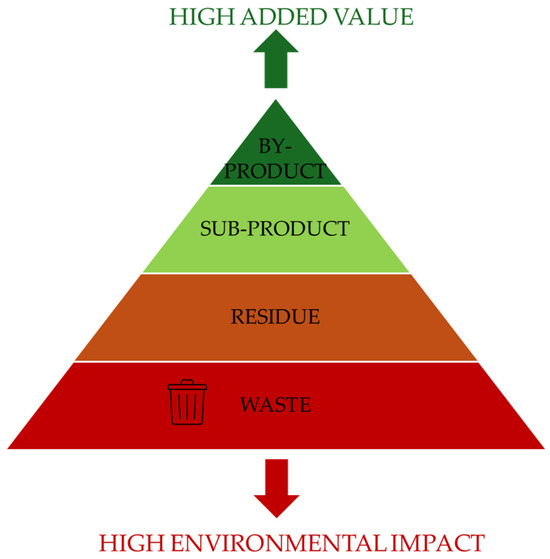
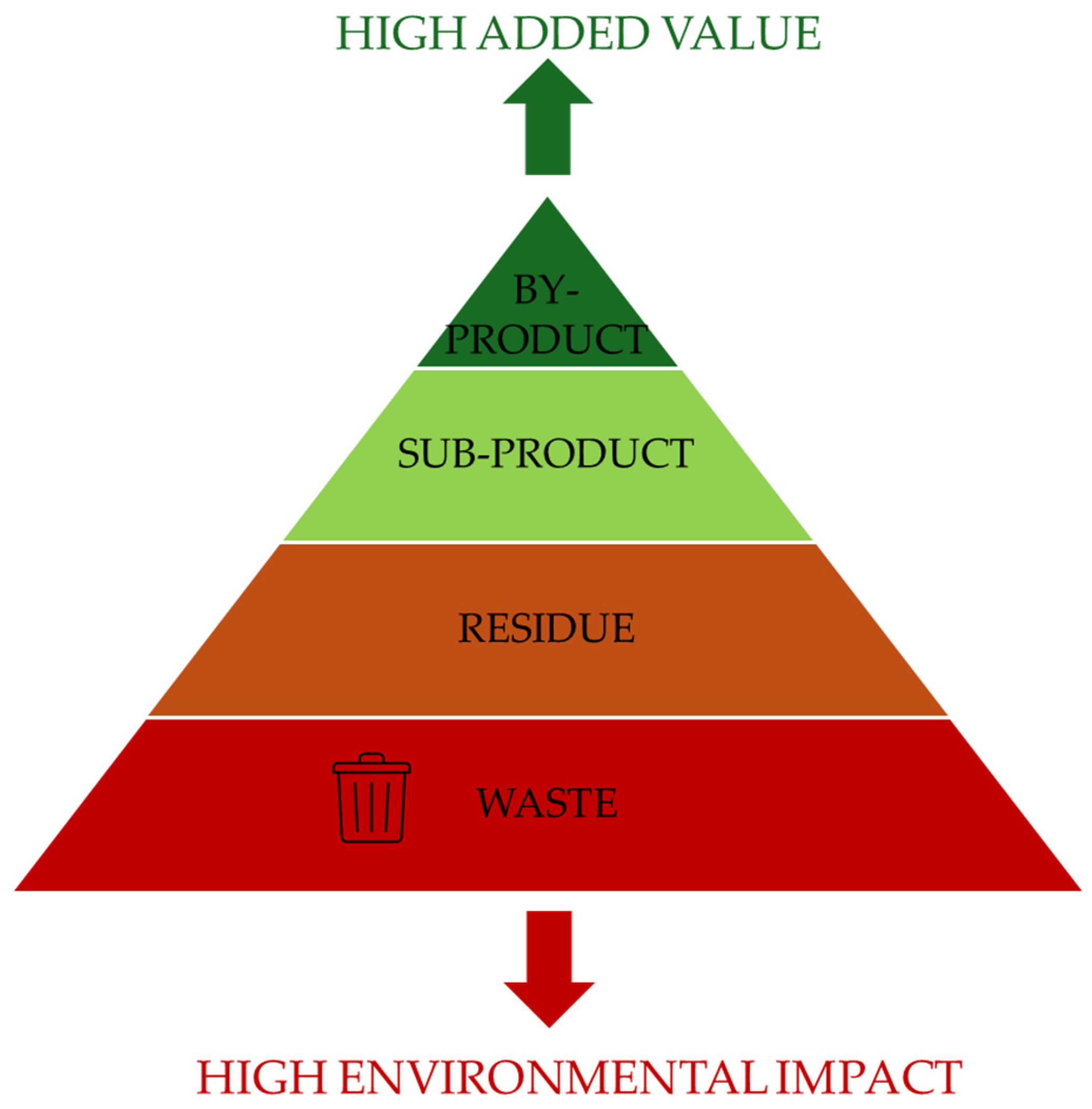
The grape pomace, being a by-product of winemaking (Figure 1), typically represents 20 to 30% of the initial grape mass, leading to significant environmental and waste management challenges [2,3]. However, in recent years, the perspective on grape pomace has shifted, and it is now widely recognized as a sustainable and abundant source of valuable bioactive compounds and essential nutrients, underscoring its potential for valorization within a circular economy framework [3].
Figure 1.
Vine making products and by-products classification (image produced considering the “Managing by-products of vitivinicultural origin” (2018) of International Organization of Vine and Wine—https://www.oiv.int/public/medias/6267/managing-viticulture-by-products-web.pdf—accessed on 15 October 2025 [4]).
Grape pomace is a highly complex matrix, being an abundant source of valuable compounds, including dietary fibers, polyphenols, minerals, sugars, and pigments [2,3], which reflect the complex biochemical composition of the grape berry, and due to the richness in functional components, it holds great promise for food, nutraceutical, cosmetic, and environmental applications [1,5]. Indeed, grape pomace contains significant amounts of certain minerals, namely K, Ca, P, Zn, Fe, and Mn, making a protentional source of these minerals [6,7] and higher concentrations of phenolic compounds, which include anthocyanins, flavan-3-ols, and phenolic acids [4], being responsible for the potent antioxidant capacity. Also, according to Bordiga et al. (2019) [1], fiber and polyphenols are the compounds most used, especially for dietary fiber supplements, biscuits, snacks, biodegradable packaging, and animal feed.
Moreover, the chemical and nutritional composition of grape pomace is highly dependent on multiple factors including grape variety, climatic conditions, soil condition, characteristics and production system, stage of ripeness, and harvesting [1,8], but generally grape pomace contains water (50 to 70%), cellulose (10 to 20%), sugars (6 to 8%), fats (2 to 4%), organic acids (1 to 2%), tannis (1 to 2%), minerals (1 to 2%), as well as other substances such as proteins, coloring substances, or vitamins [8].
In fact, grape pomace, due to their mineral content and other substances, can be used as a potential sustainable soil amendment in enhancing soil fertility, mineral content, and even soil microbial activity [9]. Recent studies have identified that different cultivars, including red varieties such as Syrah and Alicante Bouschet, vary substantially in their content of total polyphenols and anthocyanins [10,11,12], which affects directly both antioxidant properties and colorimetric parameters [11].
The agricultural management production practices have an important and decisive role in the biochemical composition of grape tissues and their by-products (i.e., grape pomace). As such, conventional viticulture typically employs synthetic fertilizers and pesticides, which can alter soil chemistry and nutrient uptake, thereby potentially affecting the accumulation of mineral elements in the grape [13] and, subsequently, the grape pomace. Thus, organic production, which avoids synthetic inputs and often promotes soil organic matter, has been linked to increased biosynthesis of secondary metabolites, such as phenols, in some grape varieties [14,15], potentially enhancing the resulting pomace’s antioxidant capacity, and additionally, organic production is associated with higher Cu and other mineral elements content due to vineyard treatments [16]. As such, the variations in these compounds are directly reflected in the final mineral content, total phenolic content, and the characteristic color of the grape pomace.
The difference between production systems can significantly influence nutrient uptake, secondary metabolism, and phenolic biosynthesis. For instance, Hasanaliyeva et al. (2021) [13] reported that, in one white grape cultivar (Vidiano), organic production led to a higher content of total antioxidants compared with conventional systems, suggesting that production system can influence the nutritional composition for some cultivars. Also, previous studies have compared organic and conventional grape production systems, reporting differences in phenolic composition, antioxidant potential, and even mineral profiles of grape tissues [13,17], but studies focusing specifically on the combined influence of cultivar and production system on the composition of grape pomace remain weak, particularly in Mediterranean regions.
In Portugal, the Alentejo region is renowned for cultivating a diverse wide range of Vitis vinifera L. varieties, including important red cultivars such as Alicante Bouschet, Aragonez, and Syrah, as well as white varieties like Arinto. Additionally, according to the Portuguese Office for Planning, Policy and General Administration, GPP (2021) [18], the residual biomass potentially generated by the Portuguese wine industry was estimated at 47 thousand tonnes of stems and 173 thousand tonnes of grape pomace.
Nevertheless, the cultivar differences are known to significantly affect the resulting grape pomace, a study carried out by Ky et al. (2014) [11] reported that grape pomace seeds from Syrah and Alicant Bouchet cultivars exhibited higher phenolic content (up to 44.5 mg GAE/g dry weight in Alicant Bouchet cultivar) and higher antioxidant capacities. Also, more recently, Karastergiou et al. (2025) [19] reported that fermented pomace seeds from both cultivars (Syrah and Alicant Bouchet) contained highest levels of flavan-3-ol monomers. For instance, Syrah and Alicante varieties can exhibit high phenolic content and superior antioxidant capacity in their seeds compared to grape pomace skins.
In this context, one critical area which requires further investigation is the influence of distinct production systems, specifically conventional versus organic farming, regarding the quality and composition of grape pomace in Mediterranean viticultural regions, such as Alentejo (Portugal), where constraints such as climatic stressors are combined with distinct management practices [7]. Therefore, addressing this gap can contribute to a deeper understanding of how sustainable viticulture influences nutrient and metabolite synthesis and the potential valorization of grape pomace as a source of nutritionally and functionally valuable compounds produced in the Mediterranean region. In this context, this study aims to evaluate the influence of production system (conventional vs. organic) and cultivar on the mineral composition (K, P, Ca, S, Fe, Cu, and Zn), protein, total fat, sugars, dietary fiber, total phenolic content, antioxidant capacity (DPPH and ORAC), and colorimetric properties (L, a* and b* parameters from CIELab system) of grape pomace obtained from four cultivars cultivated in Portugal (Alicante Bouschet, Aragonez, Arinto, and Syrah) in the Alentejo region over two consecutive harvest years. As such, this work can lead to important inputs in the selection of cultivars and sustainable cultivation practices which can maximize the nutritional and functional value (i.e., valorization within environmentally responsible production systems) of this significant winemaking by-product (grape pomace).
2. Materials and Methods
2.1. Field Conditions
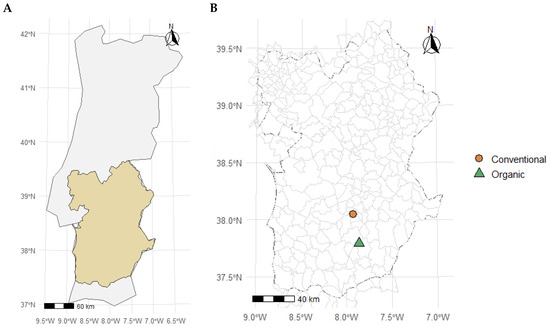
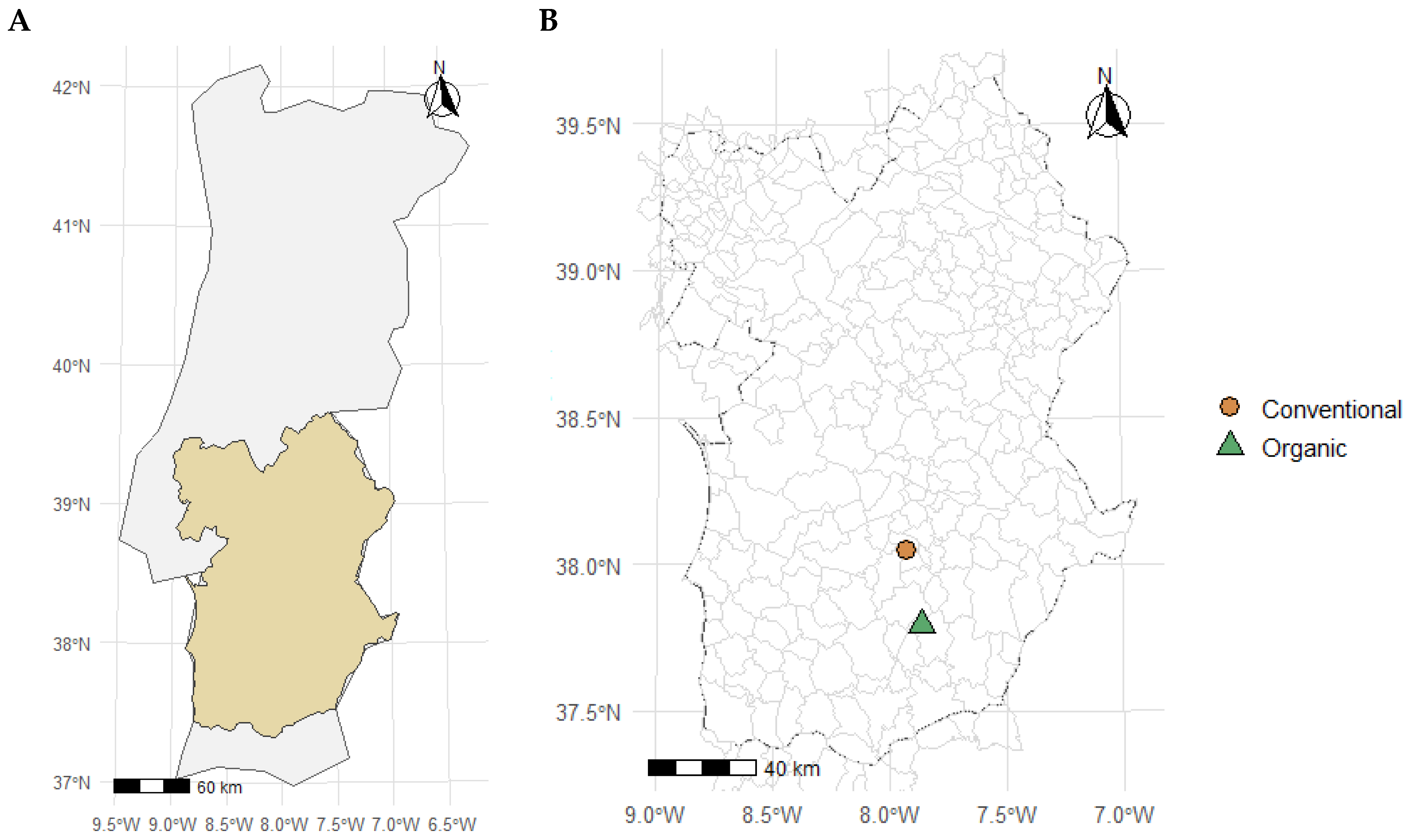
The grapes used in this study belong to the Vitis vinifera L. and were sourced from two distinct crop years, 2022 (year 1) and 2023 (year 2), with harvests being conducted both in August. The study compromises four cultivars (Alicante Bouschet, Aragonez, Arinto, and Syrah) produced in two distinct production systems: conventional and organic. The vineyards were located in the Alentejo region, Southern Portugal, and conventional production was carried out in Herdade das Fontes (Figueirinha), located in Vidigueira (Pedrógão) (GPS coordinates: 38°02′59″ N 7°55′37″ W), while the organic production was carried out in Herdade dos Lagos (HDL), located in Mértola (Vale de Açor de Cima) (GPS coordinates: 37°47′43″ N 7°51′56″ W) (Figure 2).
Figure 2.
Geographical location of the study region (Portugal, with the highlight in light brown of the NUTS II Alentejo region) (A) and the indication of the location of the two vineyards in Alentejo region—conventional and organic (B). Maps were produced in R (software version 4.4.2.) using GISCOdatasets under the ETRS89/PT-TM06 projection.
The soils from conventional production are generally characterized as clay, while the soils from organic production are characterized as loamy clay with schist. Conventional practices were applied to the cultivars considering solid fertilizers with slow release technology and foliar fertilization, considering soil and foliar analysis carried out regularly by the Herdade, with fungicides and insecticides applied depending on the level of pest and disease, and according with technical itinerary and guidelines of production. In organic practices, only organic fertilizers were utilized, including seaweed (Ascophyllum nodosum), minor corrections with micronutrients, and the application of organic matter to the soil. Also, preventative fungicides, such as copper and sulfur, were used, and plant-based substances, including Echinacea extract and Mimosa extract, were employed as a basis for disease protection, but no specific substances were utilized against insect pests. Additionally, the study cultivars did not exhibit the presence of Botrytis cinerea during the sampled campaigns.
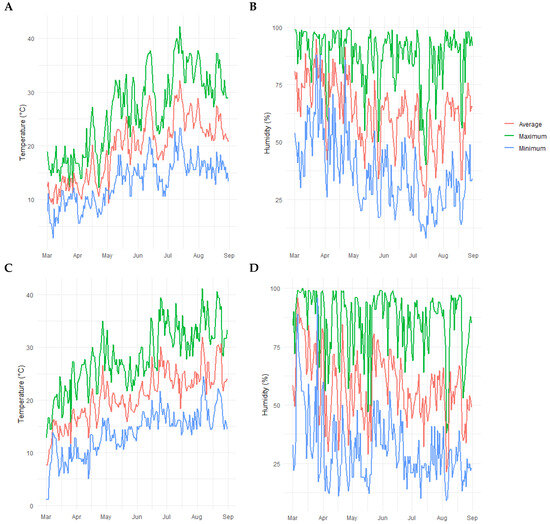
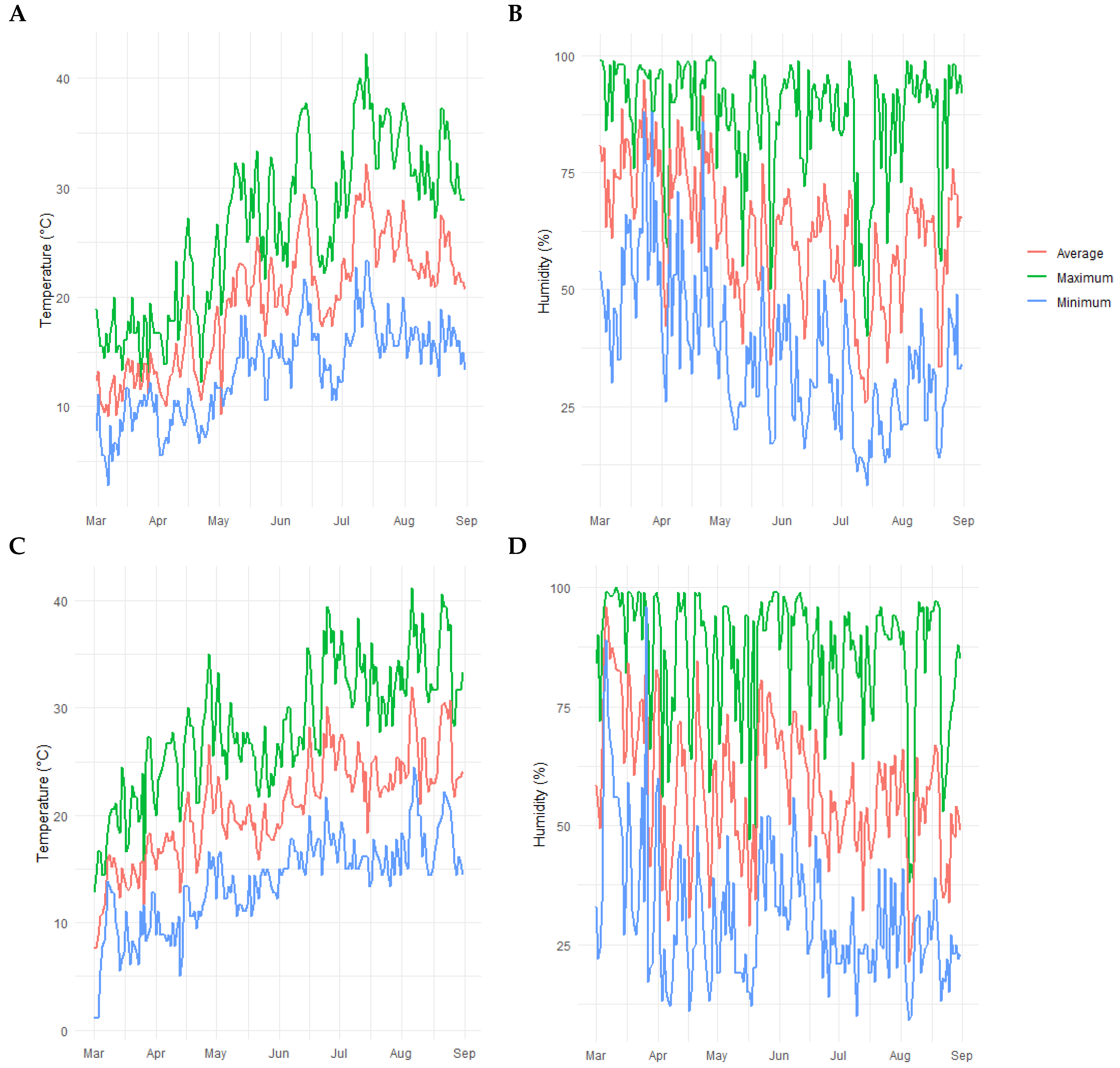
The climatic conditions (i.e., temperatures and air humidity) at the two experimental fields of grape production in 2022 and 2023 are shown in Figure 3. The precipitation varied during the 2022 production cycle (between march and august), ranging from 0 to 29.97 mm (with an average of 0.92 mm for that period), and during the 2023 cycle, from 0 to 8.89 mm (with an average of 0.34 mm for March to August).
Figure 3.
Daily range of reported temperatures (A) and air humidity (B) during 2022 between March—beginning of the vegetation grown in Alentejo region—and August—harvest, and daily range of reported temperatures (C) and air humidity (D) during 2023 also between March and August. The graphic projection was carried out by R (software version 4.4.2.) based on the data available in Wunderground online platform: https://www.wunderground.com/ (accessed on 20 September 2025) from IBEJA 9—Beja Airport/Airbase station.
2.2. Grape Pomace Preparation
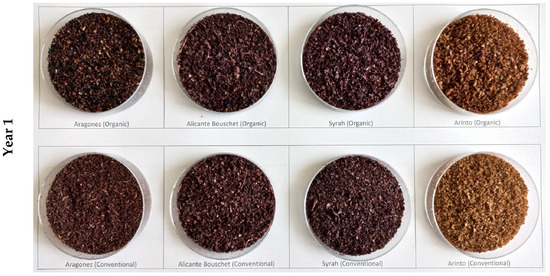
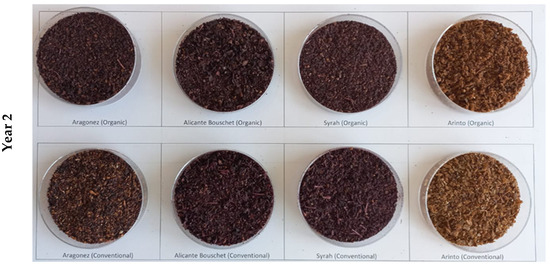
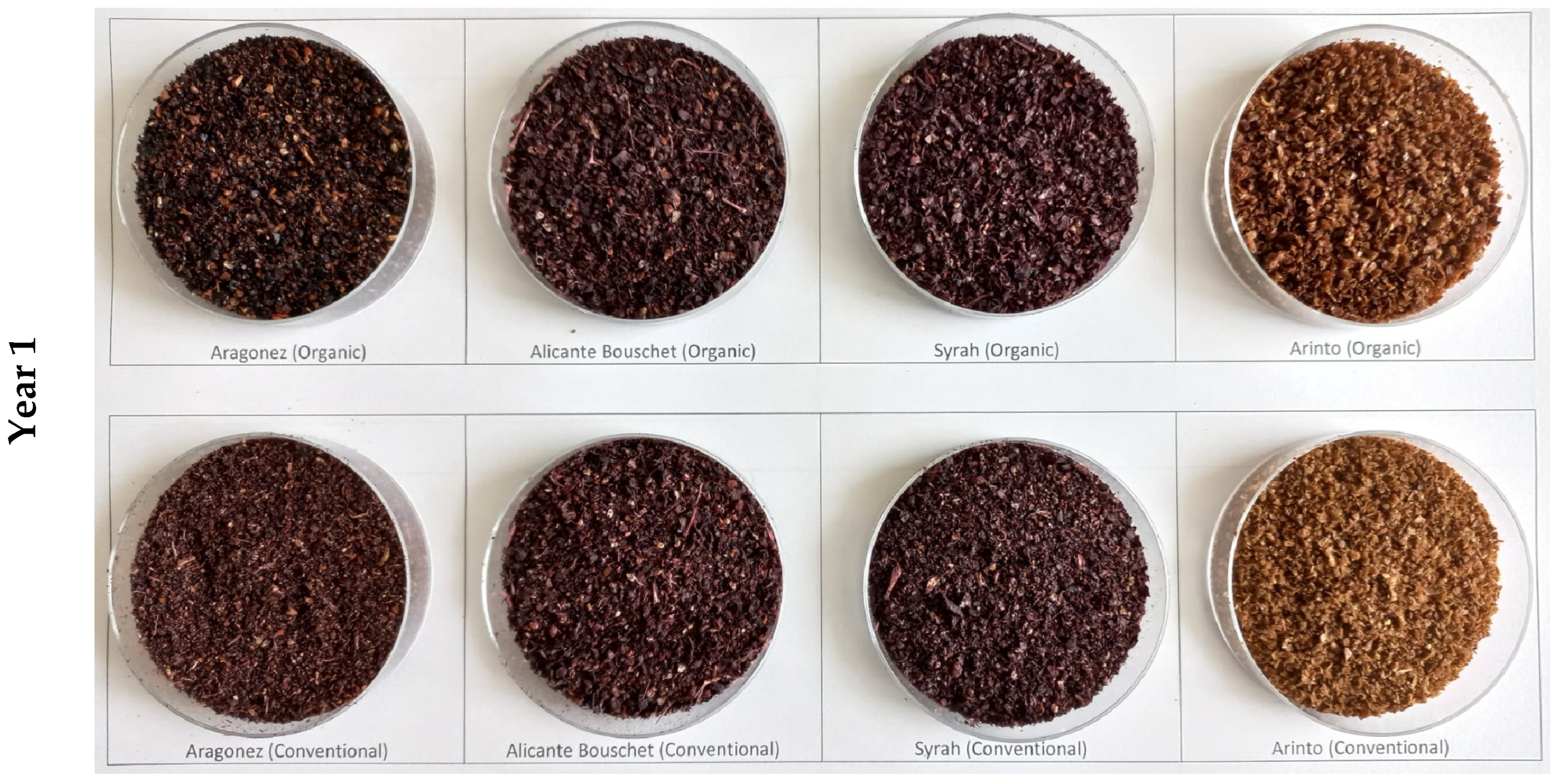
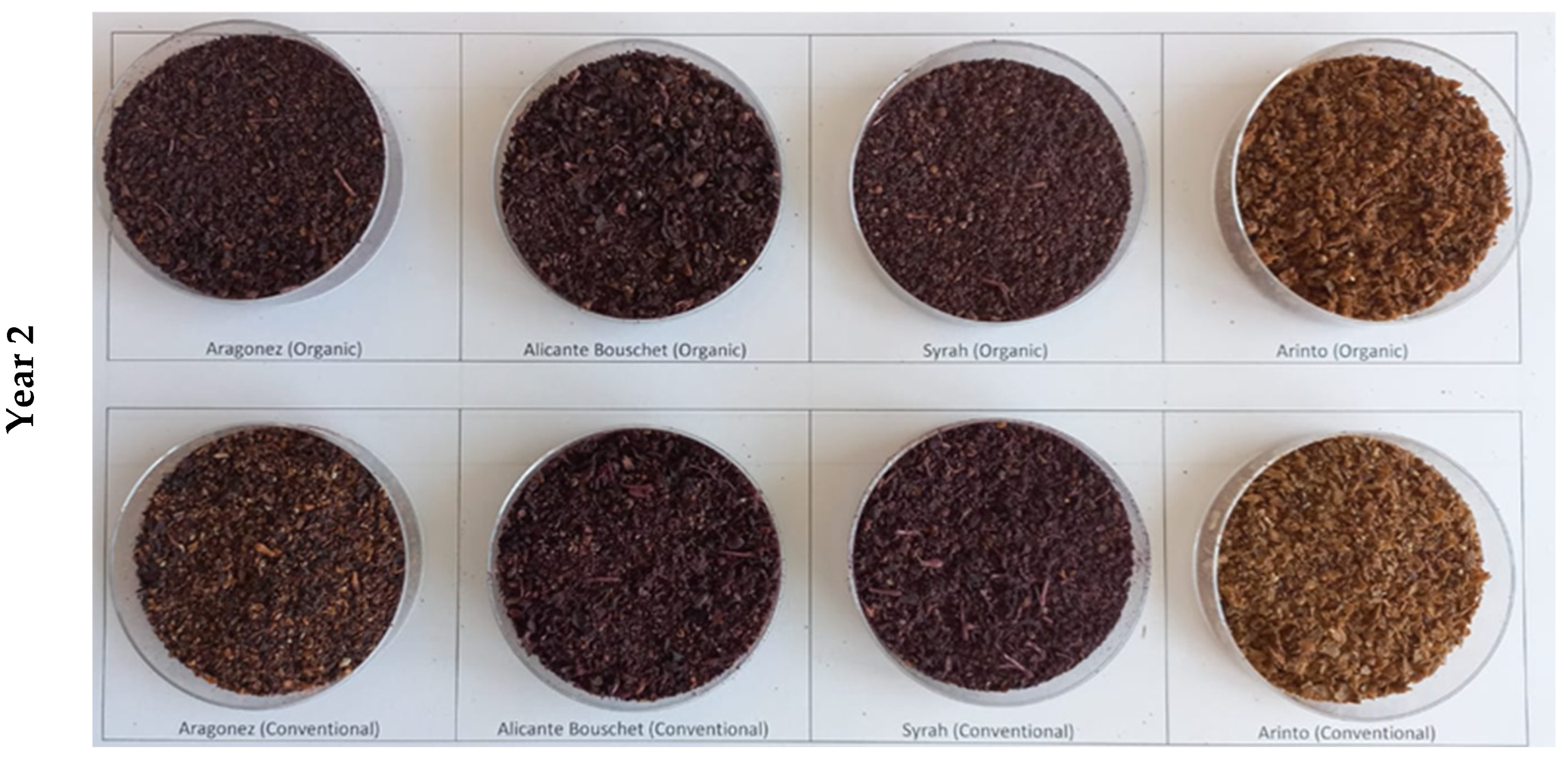
The grape pomace samples (which consists of skins, seeds, and residual pulp) were collected, following which a first drying step that was performed at 60 °C for 12 h in a coating drum (Selmi Confit, Pollenzo, Italy). For this step, the samples resulted in a moisture content ranging between 10 and 15%, and after that a second drying step was carried out in an oven (Memmert, DIN 40050 IP20, Schwabach, Germany) also at 60 °C, until the grape pomace reached a final moisture content between 5 and 8% (the duration varied from 8 to 12 h depending on the initial moisture of each sample). After drying, grape pomace was ground and sieved to obtained flour with a particle size of 600 µm. The resulting grape pomace flour (Figure 4) was stored in airtight containers, protected from light and humidity, at room temperature until further analysis.
Figure 4.
Visual aspect of grape pomace flour from the four cultivars produced under organic and conventional systems in year 1 and year 2.
2.3. Mineral Analysis
The samples were dried at 60 °C until a constant weight and, after drying, the samples were ground into a fine powder using an agate mortar and the contents of K, P, Ca, S, Fe, Cu, Zn, and Mn were quantified using an X-ray analyzer (Thermo Scientific™, Niton™ XL3t 950 He GOLDD+, Waltham, MA, USA) as described by Fernandes et al. (2022) [20].
2.4. Chemical Analysis
Protein, fat, total sugars, total dietary fiber, total phenolic content, DPPH, and ORAC were carried out as described by Freitas et al. (2025) [21]. Nevertheless, protein content was determined by Kjedahl method through digestion and distillation, while fat was carried out by Soxhlet extraction with petroleum ether. Total sugar content was quantified by gravimetric after copper oxide reduction and total dietary fiber with the Megazyme kit K-TDFR-200A. After previous preparation of the samples (methanolic extracts), total phenolic content was measured spectrophotometrically at 740 nm using Folin-Ciacalteu reagent and sodium carbonate, and antioxidant capacity was determined by DPPH (2,2-Diphenyl-1-picrylhydrazyl) assay at 517 nm after 30 min of reaction with DPPH and ORAC (Oxygen-Radical Absorbance Capacity) assay at 485 nm (excitation) and 520 nm (emission) using fluorescein as probe and 2,2′-Azobis (2-methylpropionamidine) dihydrochloride (AAPH) as a radical generator. All the chemical analysis was carried out in triplicate, and the results were expressed as indicated in the Section 3.
2.5. Color Analysis
Colorimetric analysis was measured with a Minolta CR-400 colorimeter (CIELAB system, coordinates: L* a*, and b*), according to Coelho et al. (2021) [22] and Lageiro et al. (2025) [23]. The measurements were carried out in triplicate in all the samples after being dried until constant weight.
2.6. Statistical Analysis and Hierarchical Clustering
Statistical analysis was performed using R software version 4.4.2. (GNU General Public License, Boston, MA, USA). One-way analysis of variance (ANOVA) was applied, and when significant differences were detected (p < 0.05, i.e., with 95% confidence level), Tukey’s post hoc test was performed in all the parameters analyzed to identify statistical distinct groups among the different samples. Additionally, a principal component analysis (PCA) was performed, being generally applied as the first tool to analyze multivariate data, to explore relationships among samples based on their compositional profiles, being very efficient in revealing the main contrasting regions in the plot. As such, the data from the two main principal components was plotted, considering all the different parameters analyzed. The loadings were analyzed, providing interpretation by showing positive and negative values to correlate or not with the variables. The hierarchical clustering dendrogram (Ward’s minimum variance method, Euclidean distance) was also carried out in order to detect natural groupings among the different samples. Pearson’s and Spearman’s correlation coefficients were also calculated to evaluate the relationships among the variables (Pearson’s correlation measures the strength of linear associations assuming normally distributed data, whereas Spearman’s rank correlation is less sensitive to deviations from normality and outliers).
3. Results
3.1. Mineral Content
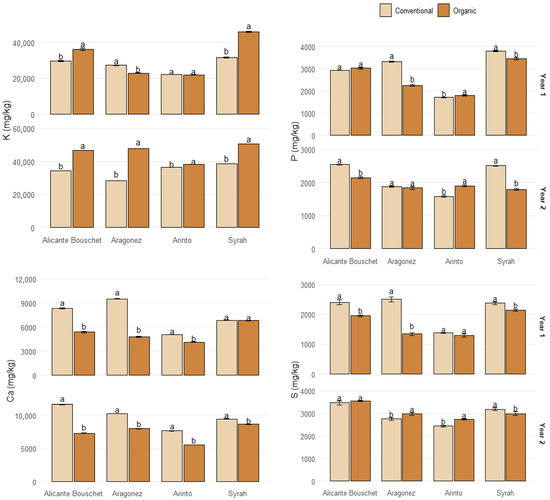
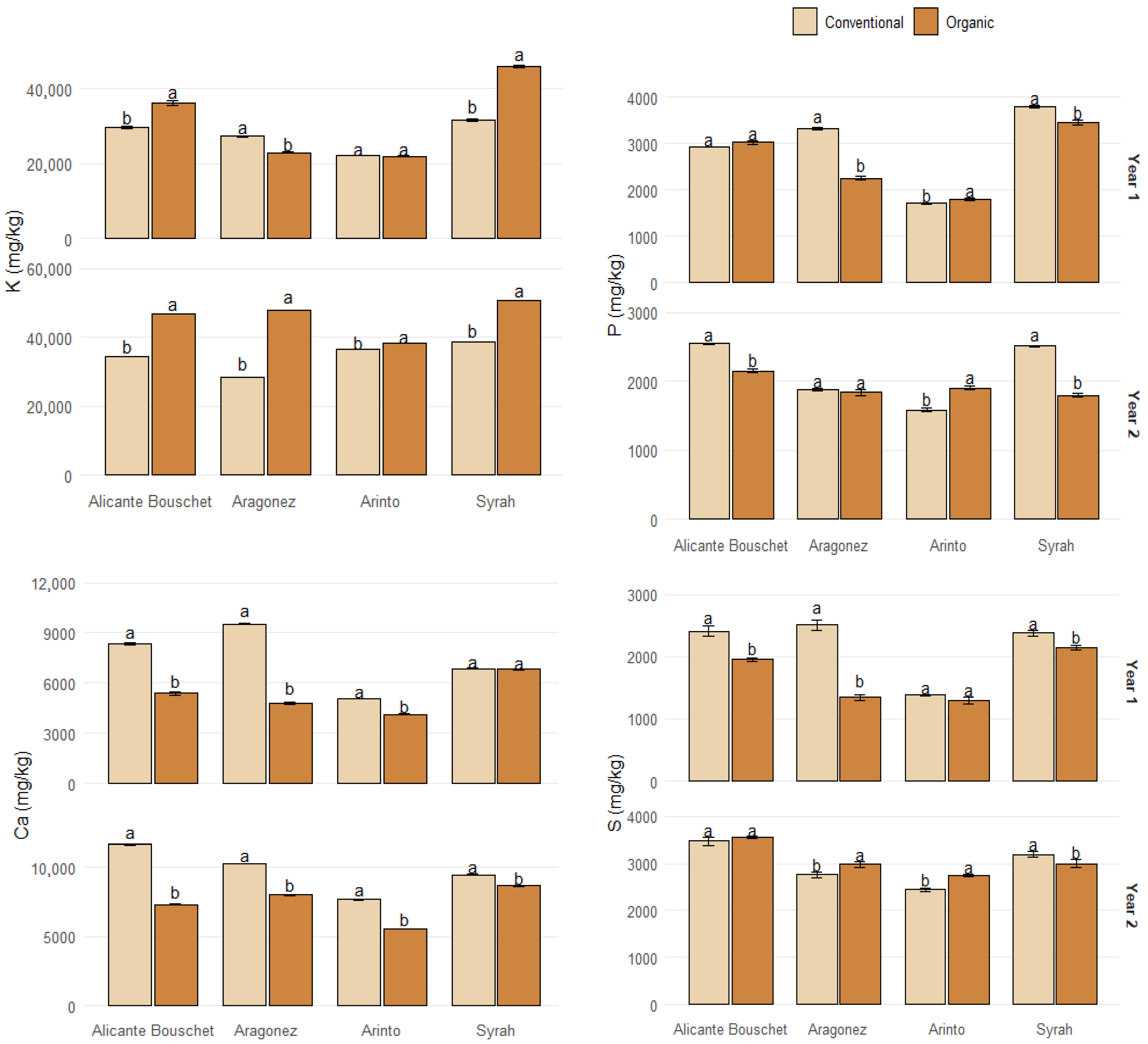
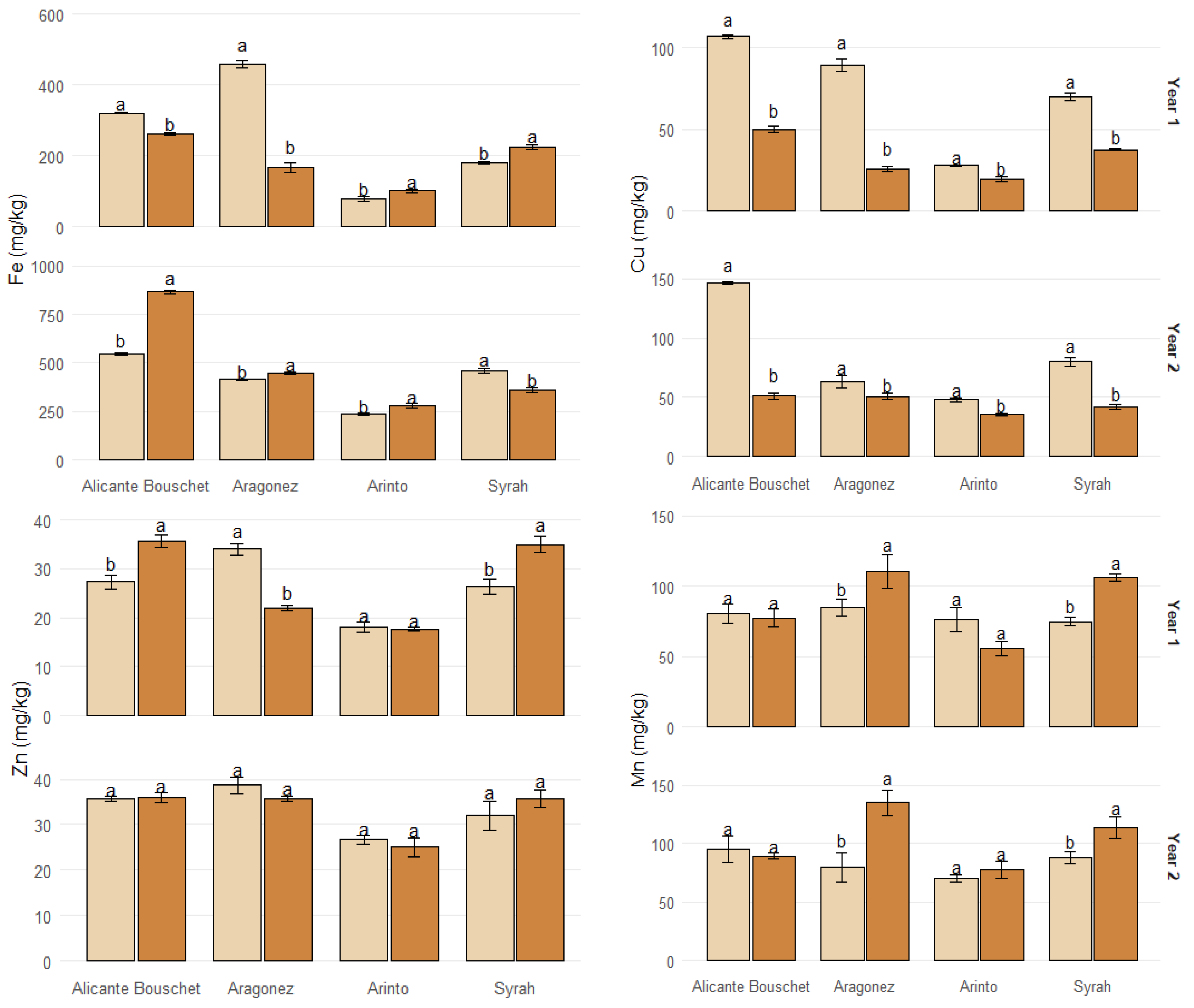
The mineral content of grape pomace of the four cultivars showed differences related to production systems (conventional and organic), cultivars (Alicante Bouschet, Aragonez, Arinto and Syrah) and years (1 and 2) (Figure 5). Across the different cultivars and the years, K showed the highest concentrations, followed by Ca, while P and S showed intermediate values, and the microelements showed a tendency of accumulation of Fe > Mn > Cu > Zn (Figure 5). Regarding K, the values in the first year ranged from approximately 20,000 to 45,000 mg·kg−1, with the organic system showing the highest K content in Alicante Bouschet and Syrah cultivars, while Arinto did not show any significant differences between production systems. On the other hand, in year 2, all cultivars produced under organic practices showed significantly higher values for K, showing greater accumulation according to the year (Figure 5).
Figure 5.
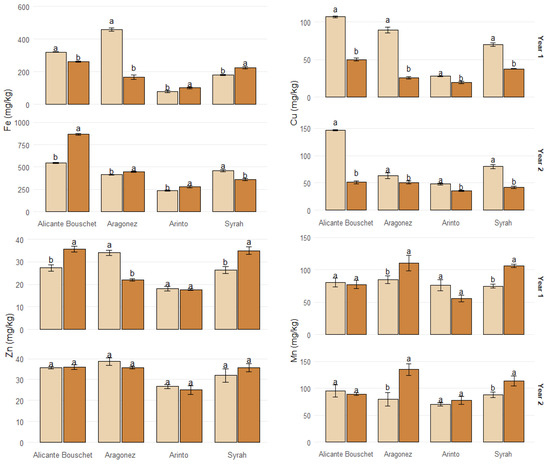
Average content of K, P, Ca, S, Fe, Cu, Zn, and Mn (mg/kg dry weight) in grape pomace from four cultivars (Alicante Bouschet, Aragonez, Arinto, and Syrah) grown under conventional and organic production systems at harvest considering Year 1 and Year 2. The bars represent mean ± SD (n = 3) and ANOVA analysis. p < 0.05 was performed for each parameter, with different letters expressing significant differences between each type of production (conventional and organic) (a, b), with a for the highest values.
Phosphorus content varied between 1500 and 3500 mg·kg−1, with Arinto in both years being the only cultivar with significantly higher content in organic production, indicating a general predominance of higher P content in conventional production system. Moreover, the differences observed in P content is dependent on cultivar and year, with a small magnitude of change (less than 500 mg·kg−1) (Figure 5).
Calcium content showed values ranging from 4000 to 10,000 mg·kg−1, with significantly higher values in both years and in all cultivars analyzed in the conventional production system (despite no significant differences observed for Syrah in year 1) (Figure 5).
Considering S content, there is a clear year and cultivar interaction, with values ranging from 1000 to 3000 mg·kg−1. Thus, in year 1 Alicante Bouschet, Aragonez, and Syrah cultivars showed a tendency of conventional > organic, while Arinto did not show significant differences between production systems. In the second year, Syrah cultivar maintained S accumulation tendency; however, in Aragonez and Arinto cultivars the tendency observed in the year 1 shifted, with organic > conventional, and Alicante Bouschet showed no significant differences between production systems (Figure 5).
Iron content varied between years and cultivars between 150 and 750 mg·kg−1, showing higher values in year 2 compared to year 1 in all cultivars. However, Arinto was the only cultivar showing higher content in organic production over conventional in the two years, while the reaming cultivars seem to be cultivar and year specific, not following a constant and uniform pattern between systems (Figure 5).
Cupper content, ranging between 40 and 120 mg·kg−1 in both years and considering all cultivars, showed in the two years for all cultivars a robust pattern: conventional > organic (Figure 5).
Interestingly, Zn content showed no significant differences among production systems in all cultivars in the second year, while in the first year it showed a cultivar-specific predisposition, with Alicante Bouschet and Syrah cultivars showing higher values in organic > conventional and only Aragonez cultivar showing a tendency of conventional > organic (Figure 5).
Despite that in some cases no significant differences were observed, Mn accumulation was, generally, higher in the organic production system. Moreover, Mn content varied between 80 and 150 mg·kg−1 among cultivars and considering both years (Figure 5).
Overall, the mineral composition of grape pomace was strongly influenced by the production system, cultivar, and year. Organic production promoted higher K and Mn contents, especially in the second year, indicating a possible cumulative effect of organic practices on nutrient availability or retention. In contrast, the conventional production system consistently resulted in greater Ca and Cu concentrations, reflecting a system-specific nutrient dynamic (Figure 5). Moreover, despite P, S, Fe, and Zn presenting a significant variation according to cultivar and year, the changes observed are generally small. Also, our data suggests that the mineral composition of grape pomace is not determined by a single factor but by the interaction between production systems and cultivar characteristics.
3.2. Protein, Fat, Total Sugars, and Total Dietary Fiber
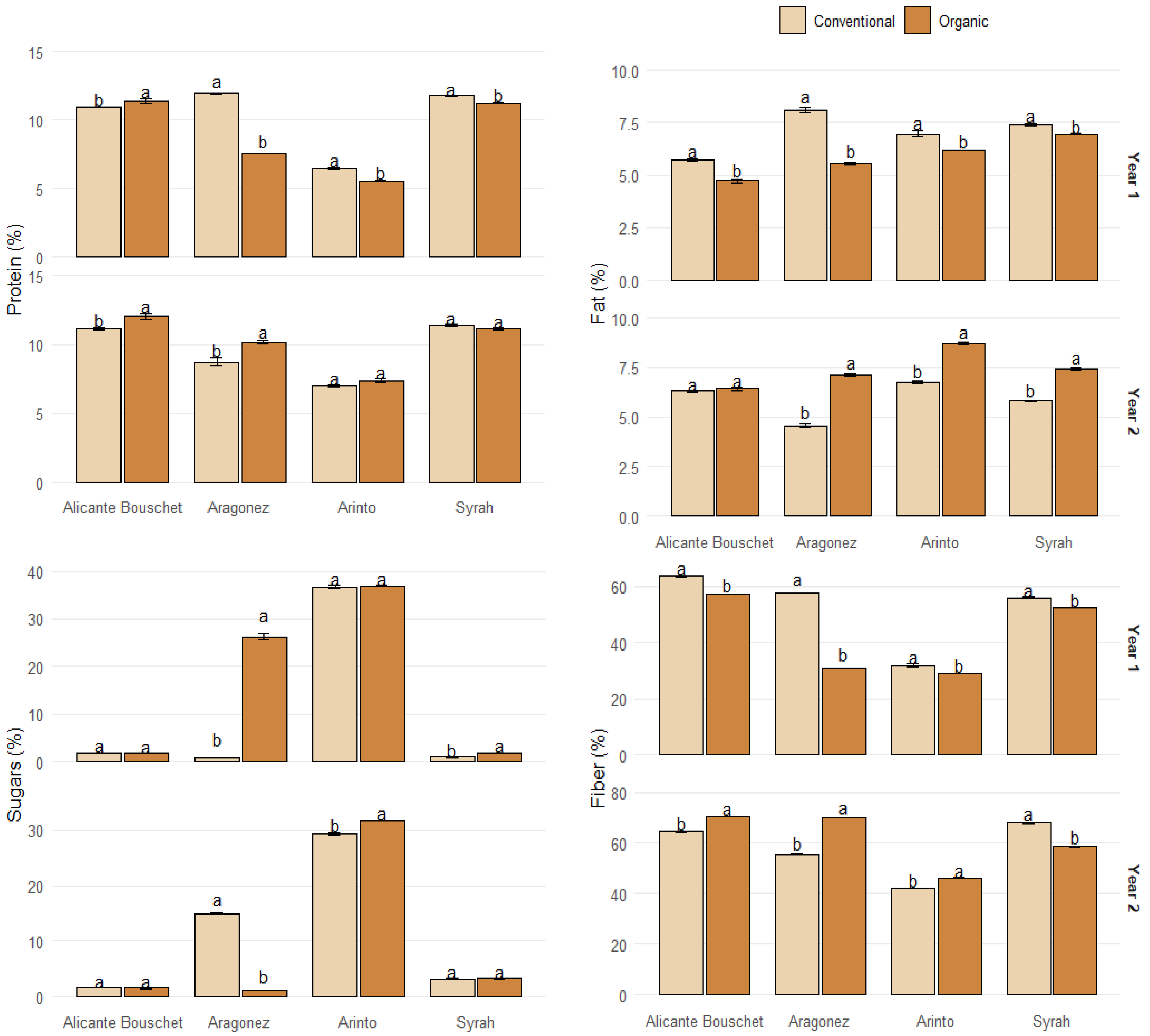
Protein, fat, total sugars, and total dietary fiber were analyzed in grape pomace from four cultivars (Alicante Bouschet, Aragonez, Arinto and Syrah) produced under two distinct systems (conventional and organic) across production years, being presented in Figure 6. Depending on cultivar, year, and production system, protein content varied between approximately 6% and 13%, with protein content in year 1 significantly higher in the organic system for Alicante Bouschet. Additionally, in year 2, the organic system showed the highest protein content for all the cultivars (except not significantly in Syrah cultivar), with the highest content obtained in Alicante Bouschet (around 11 to 12%) cultivar. Thus, in year 1, conventional > organic (except for Alicante Bouschet cultivar), and in year 2, organic > conventional (no significant difference for Syrah cultivar).
Figure 6.
Average content of protein (%), fat (%), total sugars (%) and total dietary fiber (%) in grape pomace from four cultivars (Alicante Bouschet, Aragonez, Arinto, and Syrah) grown under conventional and organic production systems at harvest considering Year 1 and Year 2. The bars represent mean ± SD (n = 3). ANOVA analysis, p < 0.05 was performed for each parameter, with different letters expressing significant differences between each type of production (conventional and organic) (a, b), with a for the highest values.
Regarding fat content, overall it varied between 4% and 8%, and Alicante Bouschet, Aragonez, and Arinto cultivars showed significantly higher content in the conventional production system compared to the organic one. On the other hand, in the second year, Alicant Bouschet showed higher values in conventional production over organic, while the remaining cultivars showed significantly higher values in organic production over conventional.
Sugar content exhibited the widest range, from approximately 1% to 35%, showing strong cultivar specificity. In both years, Arinto cultivars displayed higher sugar concentrations (up to almost 40%), followed by Aragonez, while Alicante Bouschet and Syrah remained near 1% to 3%. Indeed, within high sugar cultivars, the organic production system presented higher values, especially in Aragonez (year 1) and Arinto (year 1 and 2). For instance, this pattern suggests that cultivar metabolic characteristics have a stronger influence on sugar accumulation than production system alone, although organic production slightly enhanced sugar retention in some cultivars (Aragonez and Syrah, year 1 and Arinto in year 1 and 2).
Fiber content ranged between approximately 25% and 65%, indicating that grape pomace is very rich in fiber. All the cultivars analyzed produced under conventional practices in year 1 exhibited significantly higher fiber values compared to organic production, while in the second year, Alicante Bouschet, Aragonez, and Arinto cultivars showed a tendency of organic > conventional, whereas Syrah showed a different tendency: conventional > organic. Moreover, there was a change in tendency from year 1 to year 2 for Alicante Bouschet, Aragonez, and Arinto cultivars from higher content in conventional production to a higher content in organic.
Overall, according to the data of Figure 6, protein, fat, sugars, and fiber content is shaped by cultivar and production system, with year specification for fat and fiber. Also, the organic production system tends to increase protein (Alicante Bouschet; Aragonez and Arinto in year 2) and often sugars in high sugar cultivars (Aragonez and Arinto), while conventional production systems frequently showed higher fiber (all cultivars in year 1 and only Syrah in year 2).
The strong year × cultivar × production system interactions observed for macronutrient composition likely reflect the combined influence of climatic conditions, soil-related nutrient availability, and vine physiological responses. Differences between years, particularly in temperature and precipitation during the ripening period, may have influenced mobilization and composition at harvest. Additionally, cultivar-specific metabolic traits are known to modulate sugar accumulation, protein synthesis, and fiber development in grape tissues. Production system effects may further interact with these factors through differences in nutrient supply dynamics, soil biological activity, and vine stress responses, contributing to the variability observed in grape pomace macronutrient composition.
3.3. Total Phenolic Content, DPPH Activity, and ORAC
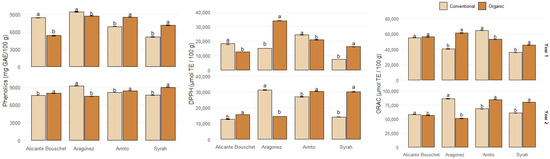
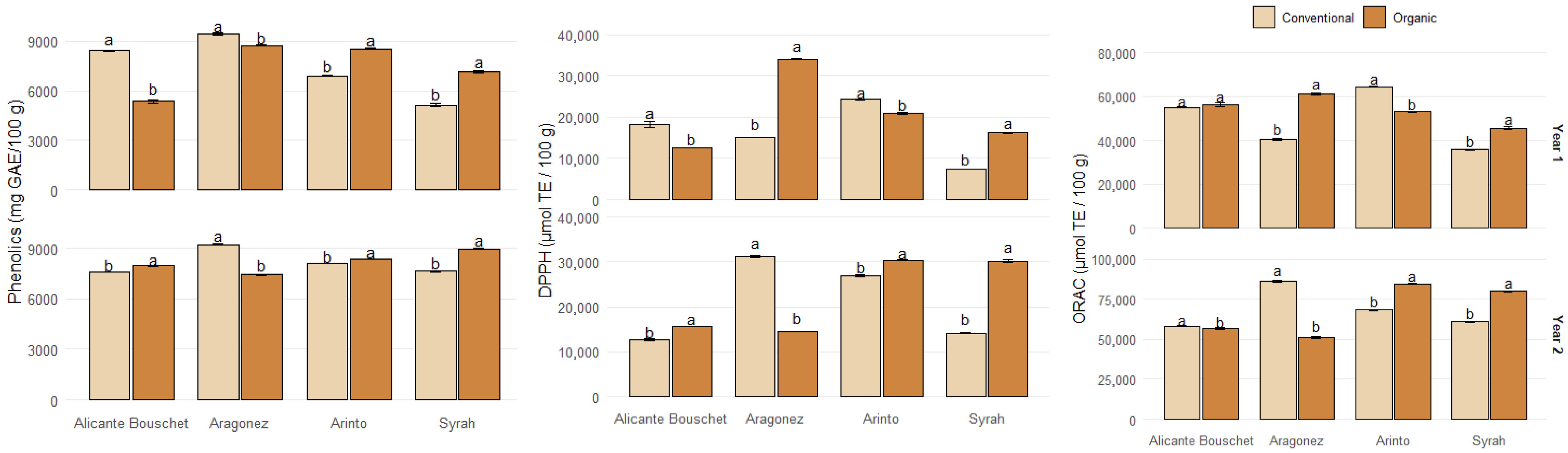
In Figure 7, the results for total phenolic content, DPPH, and ORAC in grape pomace from four cultivars under conventional and organic production across year 1 and year 2 are represented.
Figure 7.
Average content of total phenolic content (mg GAE/100 g), DPPH radical scavenging capacity (mg TE/100 G), and ORAC (oxygen radical absorbance capacity) (mg TE/100 g) in grape pomace from four cultivars (Alicante Bouschet, Aragonez, Arinto, and Syrah) grown under conventional and organic production systems at harvest considering Year 1 and Year 2. The bars represent mean ± SD (n = 3) and ANOVA analysis. p < 0.05 was performed for each parameter, with different letters expressing significant differences between each type of production (conventional and organic) (a, b), with a for the highest values.
Considering the total phenolic content, the values ranged from approximately 4000 to 9000 mg GAE/100 g, and in both years Aragonez cultivar showed higher contents, especially in conventional production relative to the remaining cultivars. Also, in year 1, Alicante Bouschet and Aragonez cultivars showed significantly higher phenolic content under conventional practices, while the Arinto and Syrah showed the opposite trend: organic > conventional. In the second year, the same tendencies were observed, except for Alicant Bouschet which presented significantly higher content in the organic production system.
The DPPH content varied from approximately 10,000 to 35,000 mg TE/100 g, considering all cultivars and both years, showing a clear difference between years and production system among cultivars. As such, only Syrah cultivar maintained the same tendency over both years, organic > conventional (despite showing higher values in the year 2), while the remaining cultivars shifted between years (i.e., Aragonez cultivar showed the highest content in year 1 in organic and in the year 2 in conventional), indicating not only a cultivar specification but also a year influence.
The ORAC content varied approximately between 25,000 and 80,000 mg TE/100 g, showing strong cultivar and year interactions, among the production system. In this context, as observed for DPPH, only Syrah maintained the tendency over both years (organic > conventional) and also showed higher values in the year 2 compared to year 1, while the remaining cultivars shifted between years.
3.4. Color Parameters
In Table 1 the colorimetric parameters (L, a* and b*) of grape pomace from four cultivars (Alicante Bouschet, Aragonez, Arinto, and Syrah) produced under conventional and organic systems for two years (1 and 2) are presented. These values represent the CIELab color coordinates, where L* expresses lightness, a* red to green component, and b* the yellow to blue component. In year 1, regarding L parameter, conventional samples were lighter in three cultivars, Alicante Bouschet, Aragonez, and Arinto, while Syrah showed no differences among production systems. Considering a* parameter (year 1), conventional production showed higher values in Alicante Bouschet and Aragonez, indicating a more red color, while Arinto showed no significant differences between production systems, and Syrah showed significantly higher values in organic production (7.3 vs. 6.9). In b* parameter (year 1), Aragonez showed significantly higher values in conventional production, while the reaming cultivars showed no significant differences. Additionally, Arinto showed the highest values of b* in both organic and conventional production systems, considering that it is a white cultivar (showing a more yellowish tons: higher b*). For Arinto, the same tendency is observed in the second year: highest value of b* compared to the remaining cultivars, independently of the production system.
Table 1.
Colorimetric analysis (CieLAB color coordinates, L, a* and b* parameters) in grape pomace from four cultivars (Alicante Bouschet, Aragonez, Arinto, and Syrah) grown under conventional and organic production systems at harvest considering Year 1 and Year 2. The mean ± SD (n = 3). ANOVA analysis, p < 0.05 was performed for each parameter, with different letters expressing significant differences between each type of production (conventional and organic) (a, b) among each cultivar, with a for the highest values.
On the other hand, L* parameter in year 2, only Syrah cultivar did not show significant differences between organic and conventional production, but overall, the values were smaller compared to year 1. Also in year 2, Alicante Bouschet cultivar exceeded significantly the a* value of conventional production (12.3 vs. 11.2), and in Aragonez it was the opposite (10.9 in organic production vs. 9.8 in conventional production), showing overall higher values compared to the year 1, indicating a more reddish color of all cultivars. For b* parameter in year 2, Alicante Bouschet and Aragonez cultivars showed the same tendency observed for a* parameter, while both Arinto and Syrah did not show significant differences between production systems.
Despite some significant differences over the two years between organic vs. conventional, it seems that colorimetric parameters are only affected by cultivar and year, indicating that the production system (organic and conventional) did not considerably alter grape pomace color but can induce small variations associated with cultivar and year.
3.5. Principal Component Analysis
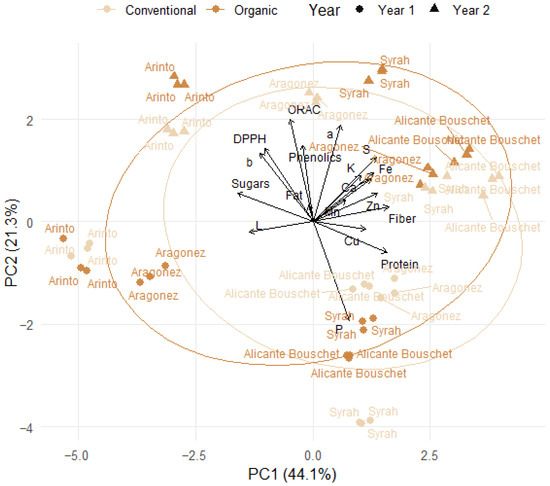
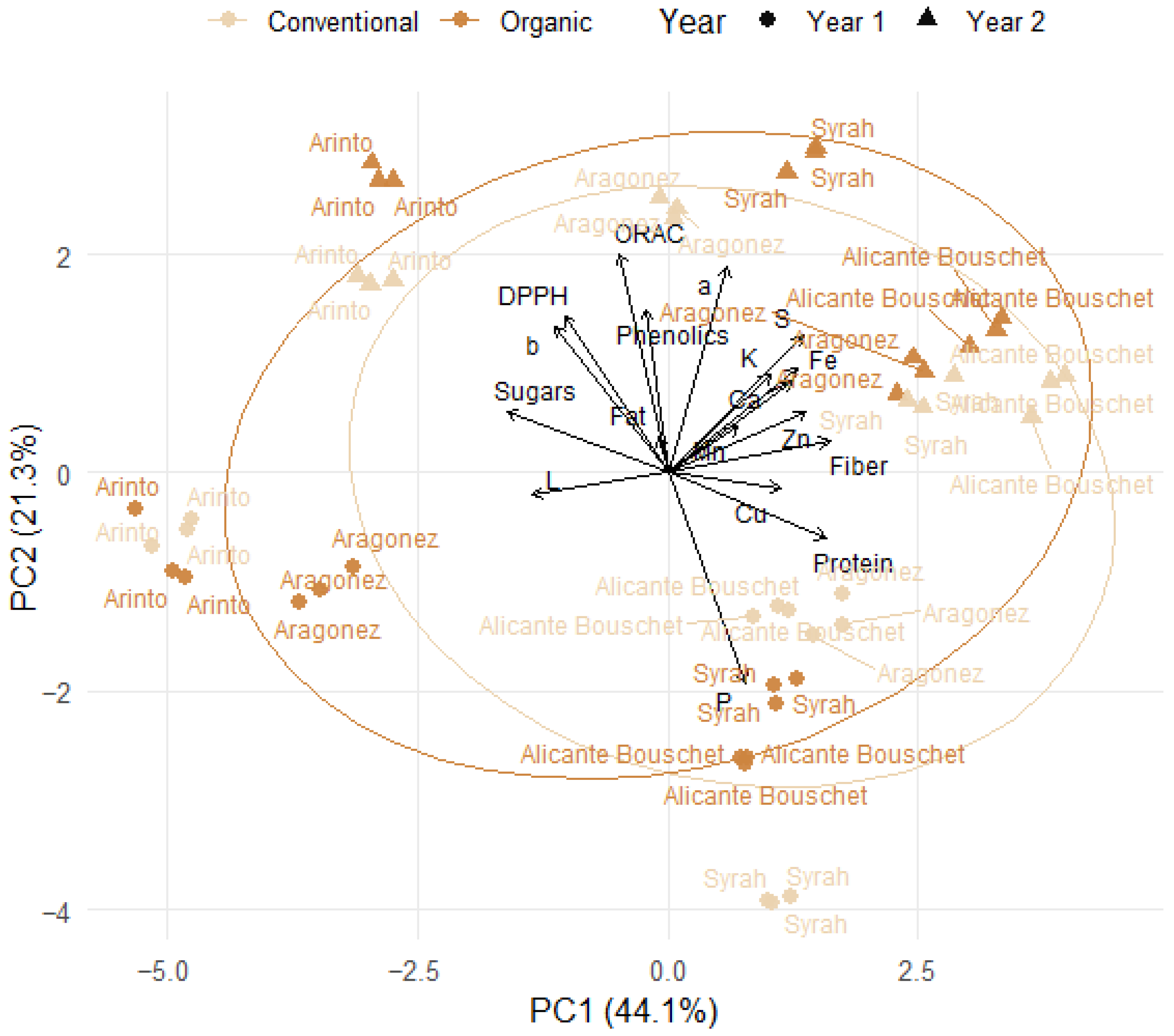
The principal component analysis (PCA) was performed using all chemical, antioxidant, and colorimetric parameters analyzed for grape pomace obtained from four cultivars grown under conventional and organic production systems during years 1 and 2. The first two principal components (PC1 and PC2) explained 44.06% and 21.26% of the total variance, respectively, together explaining 65.32% of the total variance (Figure 8). The PC3 explained an additional 8.88% of the variance of the dataset.
Figure 8.
Principal component analysis (PCA) for PC1 vs. PC2 considering the parameters analyzed in grape pomace samples from four cultivars (Alicante Bouschet, Aragonez, Arinto, and Syrah) comparing conventional and organic production systems at harvest across two harvest years (Year 1 and Year 2). The sample points are colored by production system (light brown = conventional, dark brown = organic) and shaped by year (● = Year 1, ▲ = Year 2). The variance for PC1 is 44.06% and 21.26% for PC2, with eigenvalue of 7.9307 for PC1 and 3.827 for PC2, with a total variance of PC1 and PC2 of 65.32%. The PC3 had a variance of 8.88% and eigenvalue of 1.5987.
According to the PCA biplot, samples did not cluster strictly by cultivar, production system, or year, despite the fact that a small separation between conventional and organic samples could be verified along the PC1, and despite some overlap remaining. Moreover, the PC1 represents the gradient associated mainly with the mineral elements and antioxidant composition. The PC2 showed a small proportion of variability, with the two years displaying a small overlap, which suggested limited year-to-year variation. Regarding cultivars, there is no clear cultivar-specific grouping, except for Arinto. Moreover, the ellipses obtained indicate moderate within-group dispersion, which shows that the main structure of the data was associated with the production system rather than cultivar or year of production.
Nevertheless, according to the variable vectors in the PCA biplot, parameters associated with antioxidant capacity (i.e., DPPH and ORAC), phenolics, and colorimetric parameters (only a*), were positioned in the upper and right quadrant, while sugars and L parameter were positioned oppositely, showing inverse association with the other parameters. Also, mineral elements (i.e., K, Ca, S, Fe, Cu, and Zn) and protein and fiber were grouped close together, indicating positive correlation and even similar contributions to the first axis of the biplot.
Overall, the PCA indicates that the variation in grape pomace composition was mainly structured along PC1, representing a combined axis of mineral and antioxidant parameters, with a minor variation in colorimetric and sugars (PC2).
The loadings presented in Table 2 confirm the patterns described considering Figure 8. For instance, PC1 was mainly driven by positive loadings of K, Ca, S, Fe, Cu, Zn, Protein, and Fiber, and by negative loadings of sugars and L and b* parameters, which reflects the contrast between mineral/antioxidant richness and sugar and lightness variables. Thus, PC2 was characterized by higher positive loadings of ORAC, a* parameter, and fat and by negative loadings of P and phenolics. Considering the small accounted of PC3 (8.88%), it shows a positive association with fat and K and negative with Ca, Cu, and phenolics.
Table 2.
Principal component loadings of each variable with the first three principal components (PC1, PC2, and PC3) included in the PCA of Figure 7. Positive or negative loadings indicate the direction of association between each variable and the corresponding component, with higher absolute loadings indicating a more strong contribution to the definition of that principal component.
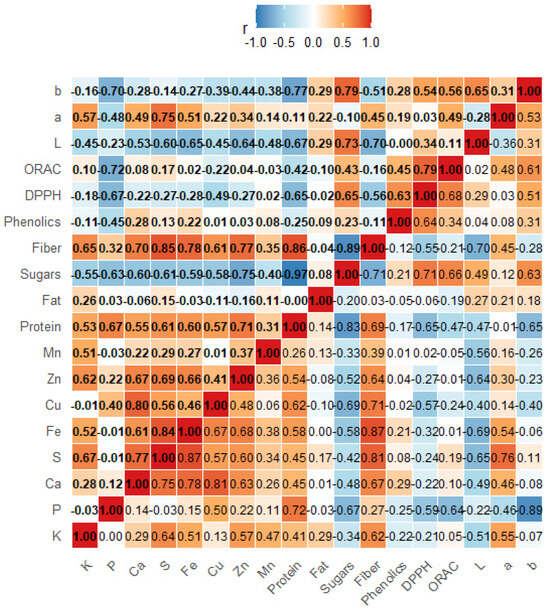
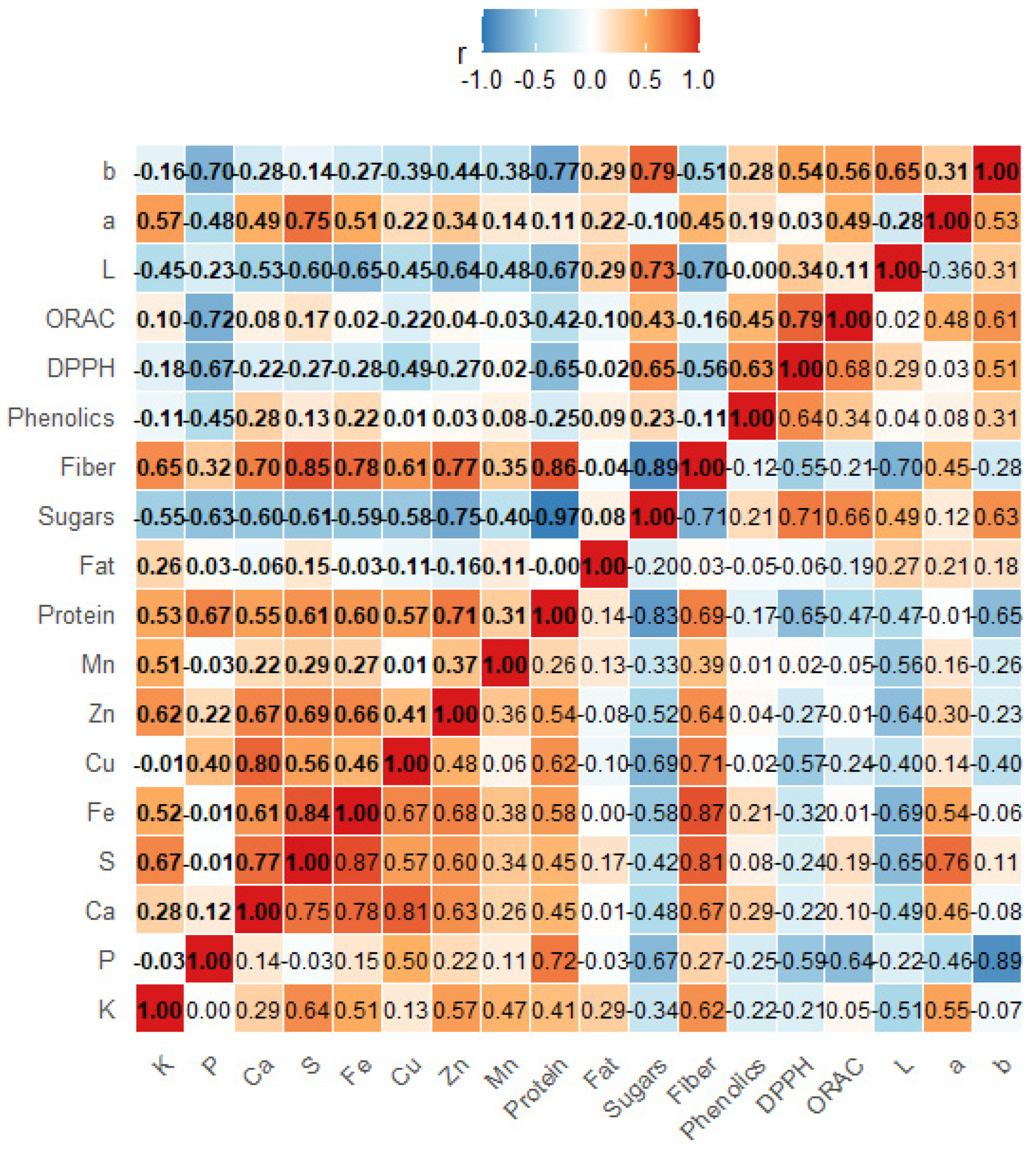
The correlation matrix (Figure 9) revealed strong positive associations among most mineral elements, especially K, Ca, S, Fe, Cu, Zn, and Mn, indicating that these mineral elements tend to vary in grape pomace. Protein and Fiber also showed high positive correlations with those mineral elements, suggesting that samples richer in that mineral elements were also higher in protein and fiber content. On the other hand, sugars and L and b* parameters showed negative correlations with most mineral elements analyzed and DPPH and ORAC, indicating an opposite compositional trend. Moreover, the a* colorimetric parameter was positive and moderately correlated with ORAC and DPPH, which reflects a consistent relationship between antioxidant capacity and color intensity in grape pomace. Regarding phenolics, it showed moderate positive correlations with Ca, Fe, and sugars.
Figure 9.
Correlation matrix (Pearson and Spearman coefficients) among the parameters analyzed in grape pomace samples. The upper triangle shows Pearson correlation coefficient, while the lower triangle displays Spearman correlation coefficient. The color gradient represents the strength of correlations (being blue: negative and red: positive).
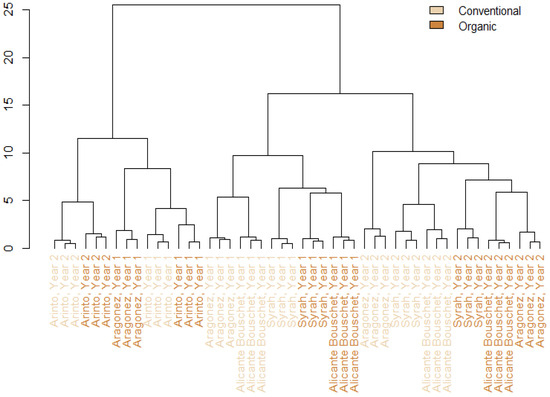
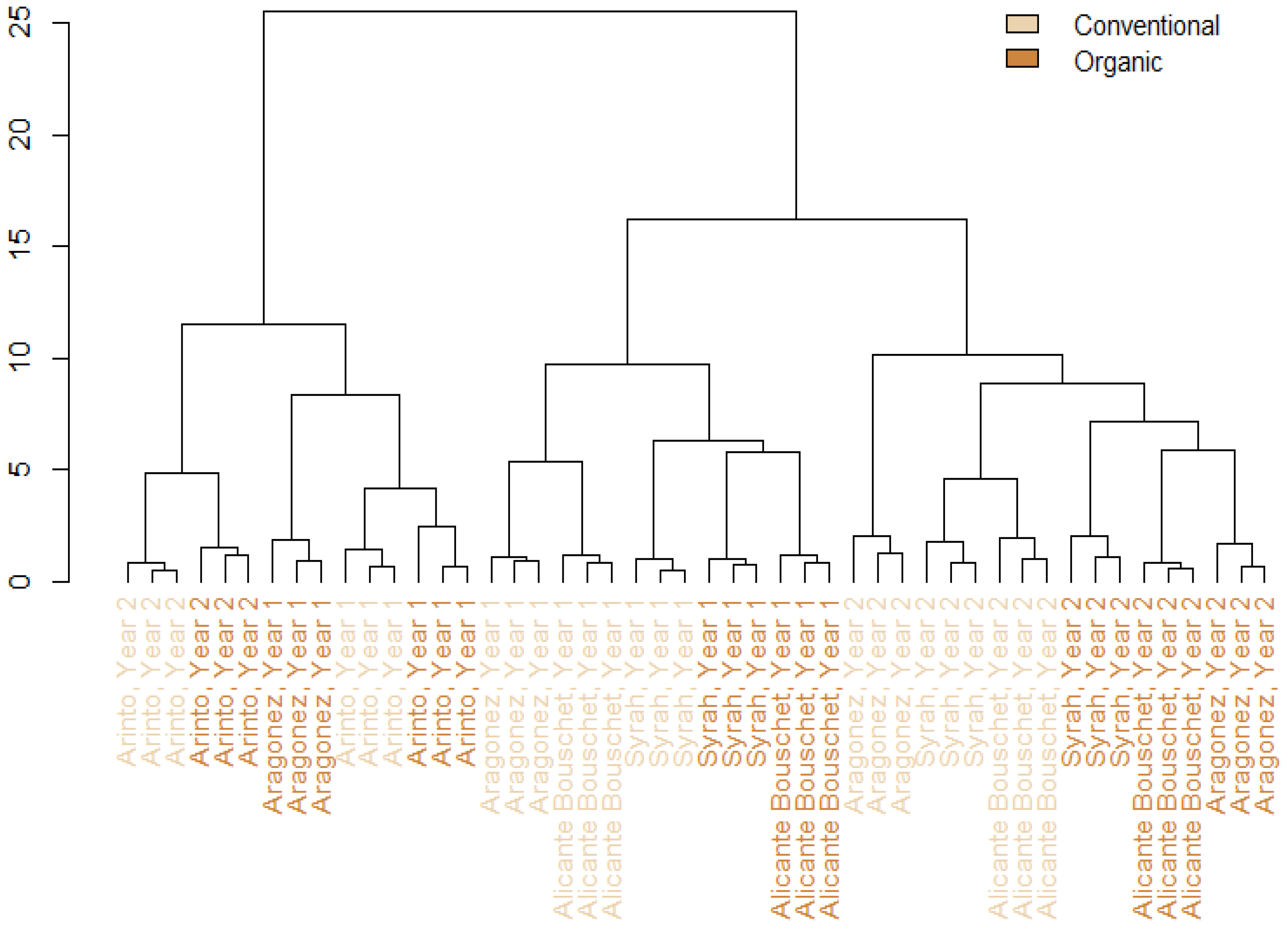
The hierarchical clustering (Ward’s D2, Euclidean distance) is shown in Figure 10, considering the grape pomace samples from the four cultivars across two production years and two systems (conventional and organic). As such, the analysis grouped samples according to the similarity of their overall multivariate profiles (i.e., mineral elements, phenolics, antioxidant capacity, and color). There are two main branches that were distinguished in the dendrogram, which cluster-grouped essentially Arinto and Aragonez samples from both years, with partial overlap between production systems, which suggests that these cultivars share similar profiles and relatively high year stability. In contrast, the right cluster contained essentially Syrah and Alicante Bouschet cultivars, showing a clear separation by production system, with organic samples of both cultivars tending to cluster together and separate from their conventional counterparts. In this context, this pattern indicated that Syrah and Alicante Bouschet were more responsive to production system management differences, especially in terms of phenolic and antioxidant parameters, which dominated in PC1 of PCA (Figure 8). Nevertheless, within cultivars, the proximity of year 1 and 2 samples of Arinto and Aragonez reflects the years’ compositional consistency, while in Syrah and Alicante Bouschet, the separation between organic and conventional samples exceeds the distance between years, which emphasizes the stronger impact of production system on these cultivars.
Figure 10.
Hierarchical clustering (dendrogram) of samples using Euclidean distance on z-scored variables—Ward.D2 (K, P, Ca, S, Fe, Cu, Zn, Mn, Protein, Fat, Sugars, Fiber, Phenolics, DPPH, ORAC, L, a, b). The labels show Cultivar, Year (for example “Aragonez, Year 1”), and label color indicates production system (light brown = conventional, dark brown = organic). Clusters reflect similarity of the multivariate profiles across all variables. Proximity of “Year 1” and “Year 2” for the same cultivar suggests inter-year stability, while large blocks of the same label color indicate separation by management.
The hierarchical clustering analysis (Figure 10) should be interpreted as complementary to the PCA results. The separation observed in the dendrogram largely reflects the same variables driving sample distribution along PC1, namely mineral elements (K, Ca, S, Fe, Cu, Zn), protein, and fiber, as indicated by the PCA loadings (Table 2). The correlation heatmap (Figure 9) further supports this pattern by showing strong positive associations among these variables, which explains their combined contribution to cluster formation. Therefore, the clustering structure is primarily driven by co-variation in mineral and macronutrient profiles rather than by isolated parameters.
4. Discussion
The composition of grape pomace varied considerably among cultivars and production systems, confirming the strong influence of both genetic and environmental factors on grape composition [1] and winemaking practices [24], which consequently influences grape pomace. Considering the mineral element content of grape pomace (Figure 5) the differences observed demonstrated that the production system has a relevant role in mineral accumulation, although the changes and variations were ultimately dependent on cultivar. For instance, K and Mn contents were consistently higher in organic grape pomace, especially in the year 2, and Ca and Cu content in all cultivars showed significantly higher under the conventional production system, being in accordance with Machado et al.’s (2024) [7] study of K, Mn, and Ca, which referred grape pomace as an excellent source of these mineral elements. Additionally, the higher Cu content in conventional production is associated with the use of Cu-based products, being the opposite to other research, which showed higher Cu content in organic production systems [16,25], being probably due to different national recommendations for organic production systems relative to fertilizers. Thus, P and S exhibited small cultivar and year-specific variations, which indicates that their accumulation is probably more driven by genotype (cultivar) [7] and environmental conditions than by the agronomic system applied (organic or conventional) [1]. Furthermore, the mineral content obtained in this study (Figure 5) showed K (20,000 to 45,000 mg·kg−1) as the most abundant element followed by Ca (4000 to 10,000 mg·kg−1), and lower levels of P (1500 to 35,000 mg·kg−1), S (1000 to 3000 mg·kg−1), Fe (150 to 750 mg·kg−1), Mn (80 to 150 mg·kg−1), Cu (40 to 120 mg·kg−1), and Zn (18 to 40 mg·kg−1). In accordancw with Guardianelli et al.’s (2025) [26] research, despite different cultivars being analyzed, our data showed similar values for K, Ca, P, and S and higher values for Fe, Mn, and Zn, while Machado et al.’s (2024) [7] study confirms that the main mineral elements of grape pomace are K and Ca. In fact, similar mineral element hierarchies have also been described in a review paper [9] that considered fresh grape pomace and not dried one. As such, it is important to consider that mineral element content in grape pomace is characterized by considerable variability, and some aspects such as viticultural practices and climatic conditions together with wine making processes are responsible for this variability in mineral composition of grape pomace [1,27]. For P and S, the relatively small differences observed between production systems, together with the absence of a consistent system-dependent pattern across cultivars and years, suggest that their accumulation may be more strongly influenced by cultivar traits and environmental conditions than by production system alone.
Nevertheless, the positive correlations observed between mineral elements, protein, and fiber (Figure 9) can indicate a biochemical linkage between minerals and plant metabolism, despite the chemical composition of grape pomace varying with processing conditions, which can affect their suitability for different applications [28]. Also, tat positive correlations (Figure 9) between mineral elements and protein and fiber contents are physiologically plausible, as mineral nutrient status is closely linked to vine metabolic activity, biomass accumulation, and cell wall development. Minerals such as Ca, K, and Mn play key roles in structural functions, enzyme activation, and carbohydrate metabolism, which may indirectly influence protein synthesis and fiber deposition in grape tissues. The observed patterns likely reflect co-variation driven by cultivar traits, production system management, and environmental conditions, rather than a direct cause–effect relationship between individual minerals and macronutrient accumulation
Additionally, the higher protein content observed in organic grape pomace during year 2 (Figure 6) is probably due to the nitrogen application and also microbial activity in organic soils, and fiber content was greater in conventional grape pomace during year 1 (Figure 6). Similarly, variations in fiber content may reflect differences in vine physiological responses and carbon allocation under contrasting management and environmental conditions, although direct evidence of microbial activity was not measured. Moreover, Spinei et al. (2021) [2] showed that grape pomace, depending on the cultivar, can present a protein content of 8% to 14% of dry weight basis and fiber until 45%; however, our data showed similar values for protein but even higher fiber (until almost 80%) (Figure 6). Similar values to the ones obtained in our research were also verified in Guardianelli et al.’s (2025) [26] research, which was carried out with two different grape pomace cultivars and showed values for protein of 10% and around 56% to 65% for fiber. Also, considering the grape pomace obtained from the “Vinhão” cultivar [7], the data showed protein content of 9.85% and total dietary fiber of 49.37%, being in fact very similar to the data obtained for the Aragonez cultivar (Figure 6).
Regarding both sugars and fat contents (Figure 6), it seems that these parameters were primarily cultivar driven, with Arinto exhibiting the highest total sugars (approximately between 28 and 40%) independent of the production system. As such, it is suggested that cultivar metabolic characteristics have a stronger influence on sugar accumulation than production system alone, although organic production slightly enhanced sugar retention in Arinto cultivar in both production years. On the other hand, fat content did not vary considerably among all cultivars, despite significant differences being observed between year 1 and year 2 and considering that in year 1 higher content of fat was observed in all cultivars in the conventional production system, and the opposite occurred in year 2 (higher content in organic production system) (Figure 6). However, overall sugar content showed values up to 26% (not considering Arinto cultivar) and fat content varied between 4 and 8% (Figure 6). As such, our data showed lower values than the “Vinhão” cultivar for fat content (3.38%) [7], similar to “Isabella” and “Cabernet” cultivars (5% to 10%) [26] and to the average chemical composition for grape pomace (4% to 10%) [1]. Overall, protein, fat, sugars, and fiber content (Figure 6) seems to be shaped by cultivar and production system, with year specification for fat and fiber, and the organic production system tends to increase protein (especially for Alicante Bouschet cultivar) and generally sugars in high sugar cultivars (Aragonez and Arinto), while conventional production systems frequently showed higher fiber (all cultivars in year 1). Although sugar and fat contents showed a strong cultivar-specific pattern, these parameters are also influenced by climatic conditions, water status, and vine stress responses, particularly under Mediterranean environments. In the context of grape pomace, sugar content mainly reflects residual pulp and glycosidically bound compounds rather than free sugars, whereas fat content is largely associated with seed proportion and seed maturity. Therefore, the observed patterns likely results from an interaction between cultivar traits, climatic conditions, and pomace composition at harvest, rather than from cultivar effects alone.
Regarding the total phenolic content and antioxidant activities (DPPH and ORAC) (Figure 7), overall, the antioxidant profile of grape pomace varied considerably among cultivars, production systems, and production year, which reveals that both genetic background and environmental conditions strongly influence the phenolic accumulation and antioxidant potential. Also, Aragonez cultivar consistently exhibited the highest total phenolic contents across both years, particularly under the conventional production system, whereas Syrah and Arinto showed higher performance under organic production, indicating a stronger responsiveness of these cultivars to organic production practices. On the other hand, across antioxidant analysis, Syrah cultivar was the most stable, maintaining the same trend (organic > conventional) for both DPPH and ORAC, with an overall increase in both in year 2, while the remaining cultivars exhibited a year dependence and influence, indicating that their antioxidant responses are more affected by seasonal variability than by the production system alone. Our data for the total phenolic content (4000 to 9000 mg GAE/100 g) were higher than the ones obtained in Machado et al.’s (2024) [7] study (35.35 mg GAE/g), as well as those obtained by Guardianelli et al. (2025) [26] (7 to 10 mg GAE/g) and by Pereira et al. (2024) [29] for Arinto grape pomace (25.9 mg GAE/g). Considering Syrah cultivar, skins and seeds of grape pomace were assessed and vary between 15 and 25 mg GAE/g DW in Karastergiou et al.’s (2025) [19] research, being lower than the ones obtained in our research (Figure 7). Also, DPPH and ORAC in Karastergiou et al. (2025) [19] for Syrah, Alicant, Grenache, and Mourvèdre cultivars showed a wide range of contents being lower than the ones obtained in our study. In this context, our data demonstrated that organic systems could stimulate phenolic biosynthesis, but the range of response is dependent on genotype and seasonal conditions. For instance, among cultivars, Syrah was the most stable, maintaining the same pattern (organic > conventional) for both antioxidant assays across years, confirming its high phenolic potential and lower sensitivity to environmental variability.
Colorimetric parameters presented in Table 1 were mainly affected by cultivar and harvest year rather than production system. For instance, Arinto (white cultivar) displayed the highest b* values (yellow), while Syrah and Alicante Bouschet presented higher a* (red), reflecting their profiles rich in anthocyanins, and although minor differences were observed between organic and conventional samples (such as higher L* in conventional Aragonez and higher a* in organic Syrah), the overall data indicate that color variation is primarily cultivar and year dependent. The associations observed between CIELab color parameters and antioxidant capacity (Figure 9) should be interpreted considering the heterogeneous nature of grape pomace, which includes skins, seeds, and residual pulp. Also, while colorimetric parameters, particularly a*, may reflect the presence of anthocyanins and other pigmented phenolic compounds predominantly located in grape skins, the contribution of non-pigmented phenolics from seeds is not directly captured by CIELab analysis. Therefore, colorimetric measurements provide an integrative and indirect indication of pigment-related antioxidant potential rather than a direct quantification of total antioxidant capacity.
The multivariate analysis (Figure 8 and Table 2) integrated all parameters, revealing that PC1 (44.06%) represented a relationship with mineral and antioxidant composition, separating organic samples (mainly Syrah) with higher phenolic and antioxidant capacity from conventional samples (mainly Aragonez and Alicante Bouschet) associated with higher mineral contents. The PC2 (21.26%) captured minor inter-annual variations, linked to small changes in color and sugar content. The correlation matrix (Figure 9) confirmed strong positive associations among total phenolics, DPPH, and ORAC. Similarly, the clustering analysis (Figure 10) validated these trends: Arinto and Aragonez clustered together across years and systems, showing high compositional stability, whereas Syrah and Alicante Bouschet formed distinct clusters by production system, confirming their stronger responsiveness to management practices according to the production system. As such, the integration of univariate (Figure 5, Figure 6 and Figure 7 and Table 1) and multivariate (Figure 8, Figure 9 and Figure 10 and Table 2) results indicate that the organic system enhances K, Mn, protein, and antioxidant parameters, particularly in Syrah and Arinto, whereas the conventional system favors Ca, Cu, and fiber, especially in Aragonez and Alicante Bouschet, and moreover, the influence of year was evident but secondary, with year 2 generally showing higher antioxidant capacity. In this context, these outcomes underline that the biochemical composition of grape pomace is the result of the interaction between production system, cultivar, and environmental conditions.
5. Conclusions
The present study demonstrates that both grape cultivar and production system (organic versus conventional) significantly influence the mineral, chemical, antioxidants, and colorimetric composition of grape pomace from four cultivars harvested in the Alentejo region of Portugal. In fact, organic production generally promotes elevated K, Mn, protein, and antioxidant parameters, while conventional practices favor higher Ca, Cu, and dietary fiber content. Moreover, seasonal variations also played an important role in these compositional traits, pointing to a complex interaction between genotype, agronomic practices, and environmental factors which influence the final quality and functional properties of the grape pomace. Among the cultivars evaluated, Syrah showed remarkable compositional stability, maintaining consistent phenolic content and antioxidant capacity across both organic and conventional systems and years, highlighting its intrinsic high phenolic potential and lower sensitivity to environmental fluctuations. In contrast, other cultivars such as Aragonez and Arinto exhibited greater compositional shifts depending on the year and production system. As such, these findings offer valuable insights for targeted valorization of grape pomace and guide sustainable viticultural practices aimed at maximizing the nutritional and functional value of this important winemaking by-product in Mediterranean climates.
Author Contributions
Conceptualization and methodology, D.F., A.R.F.C., J.D., O.A., and M.S.; formal analysis, D.F., A.R.F.C., A.C.M., and M.L.; writing—original draft preparation, D.F. and A.R.F.C.; writing—review and editing, D.F., A.R.F.C., J.D., O.A., M.L., and M.S. All authors have read and agreed to the published version of the manuscript.
Funding
The authors acknowledge the R&D Unit GEOBIOTEC—UID/04035/2025: GeoBioCiências, GeoTecnologias e GeoEngenharias: https://doi.org/10.54499/UID/04035/2025, the R&D unit MED—Mediterranean Institute for Agriculture, Environment and Development https://doi.org/10.54499/UID/05183/2025 and the Associate Laboratory CHANGE—Global Change and Sustainability Institute (https://doi.org/10.54499/LA/P/0121/2020).
Data Availability Statement
The original contributions presented in this study are included in the article. Further inquiries can be directed to the corresponding authors.
Acknowledgments
The authors would like to acknowledge the support of the company Herdade dos Lagos (Vale de Açor de Cima—Mértola—Portugal) and Herdade da Figueirinha (S. Brissos—Beja—Portugal) for the free provision of grape pomace and the company Sugar Bloom Lda. (Beja-Portugal) for the free provision of the equipment for drying the grape pomace.
Conflicts of Interest
The authors declare no conflicts of interest.
References
- Bordiga, M.; Travaglia, F.; Locatelli, M. Valorisation of grape pomace: An approach that is increasingly reaching its maturity—A review. Int. J. Food Sci. Technol. 2019, 54, 933–942. [Google Scholar] [CrossRef] [Scilit]
- Spinei, M.; Oroian, M. The Potential of Grape Pomace Varieties as a Dietary Source of Pectic Substances. Foods 2021, 10, 867. [Google Scholar] [CrossRef] [Scilit]
- Antonić, B.; Jančíková, S.; Dordević, D.; Tremlová, B. Grape Pomace Valorization: A Systematic Review and Meta-Analysis. Foods 2020, 9, 1627. [Google Scholar] [CrossRef] [Scilit]
- International Organisation of Vine and Wine. Managing By-Products of Vitivinicultural Origin. 2018. Available online: https://www.oiv.int/public/medias/6267/managing-viticulture-by-products-web.pdf (accessed on 26 October 2025).
- Vakhariya, R.R.; Mohite, S.K.; Narde, K.J. Grape Pomace as a Reliable Source of Phenolic Compounds: Polyphenol Composition and Biological Properties. J. Clin. Biomed. Sci. 2025, 15, 69–77. [Google Scholar] [CrossRef] [Scilit]
- Mohamed, I.A.; Özcan, M.M.; Al Juhaimi, F.; Babiker, E.F.E.; Ghafoor, K.; Banjanin, T.; Osman, M.A.; Gassem, M.A.; Alqah, H.A.S. Chemical composition, bioactive compounds, mineral contents, and fatty acid composition of pomace powder of different grape varieties. J. Food Process. Preserv. 2020, 44, e14539. [Google Scholar] [CrossRef] [Scilit]
- Machado, A.R.; Voss, G.B.; Machado, M.; Paiva, J.A.; Nunes, J.; Pintado, M. Chemical characterization of the cultivar ‘Vinhão’ (Vitis vinifera L.) grape pomace towards its circular valorisation and its health benefits. Meas. Food 2024, 15, 100175. [Google Scholar] [CrossRef] [Scilit]
- Caponio, G.R.; Minervini, F.; Tamma, G.; Gambacorta, G.; De Angelis, M. Promising Application of Grape Pomace and Its Agri-Food Valorization: Source of Bioactive Molecules with Beneficial Effects. Sustainability 2023, 15, 9075. [Google Scholar] [CrossRef] [Scilit]
- Buchmann, C.; Korz, S.; Moraru, A.; Richling, E.; Sadzik, S.; Scharfenberger-Schmeer, M.; Muñoz, K. From winery by-product to soil improver?—A comprehensive review of grape pomace in agriculture and its effects on soil properties and functions. Sci. Total Environ. 2025, 982, 179611. [Google Scholar] [CrossRef] [Scilit] [PubMed]
- Rasines-Perea, Z.; Ky, I.; Cros, G.; Crozier, A.; Teissedre, P.-L. Grape Pomace: Antioxidant Activity, Potential Effect Against Hypertension and Metabolites Characterization after Intake. Diseases 2018, 6, 60. [Google Scholar] [CrossRef] [Scilit] [PubMed]
- Ky, I.; Lorrain, B.; Kolbas, N.; Crozier, A.; Teissedre, P.-L. Wine by-Products: Phenolic Characterization and Antioxidant Activity Evaluation of Grapes and Grape Pomaces from Six Different French Grape Varieties. Molecules 2014, 19, 482–506. [Google Scholar] [CrossRef] [Scilit]
- Ky, I.; Teissedre, P.-L. Characterisation of Mediterranean Grape Pomace Seed and Skin Extracts: Polyphenolic Content and Antioxidant Activity. Molecules 2015, 20, 2190–2207. [Google Scholar] [CrossRef] [Scilit]
- Hasanaliyeva, G.; Chatzidimitrou, E.; Wang, J.; Baranski, M.; Volakakis, N.; Pakos, P.; Seal, C.; Rosa, E.A.S.; Markellou, E.; Iversen, P.O.; et al. Effect of Organic and Conventional Production Methods on Fruit Yield and Nutritional Quality Parameters in Three Traditional Cretan Grape Varieties: Results from a Farm Survey. Foods 2021, 10, 476. [Google Scholar] [CrossRef] [Scilit]
- Mulero, J.; Pardo, F.; Zafrilla, P. Antioxidant activity and phenolic composition of organic and conventional grapes and wines. J. Food Compos. Anal. 2010, 23, 569–574. [Google Scholar] [CrossRef] [Scilit]
- Macías-Gallardo, F.; Quiñones-Muñoz, T.A.; Miranda-Avilés, R.; Ramírez-Santoyo, L.F.; Zanor, G.A.; Ozuna, C. Impact of Organic Agriculture on the Quality of Grapes (Syrah and Tempranillo) Harvested in Guanajuato, Mexico: Relationship Between Soil Elemental Profile and Grape Bioactive Properties. Agriculture 2025, 15, 169. [Google Scholar] [CrossRef] [Scilit]
- Ochmian, I.; Malinowski, R. Effect of Multi-Year Protection of Grapevines with Copper Pesticides on the Content of Heavy Metals in Soil, Leaves, and Fruit. Agronomy 2024, 14, 1677. [Google Scholar] [CrossRef] [Scilit]
- Beres, C.; Costa, G.N.S.; Cabezudo, I.; da Silva-James, N.K.; Teles, A.S.C.; Cruz, A.P.G.; Mellinger-Silva, C.; Tonon, R.V.; Cabral, L.M.C.; Freitas, S.P. Towards integral utilization of grape pomace from winemaking process: A review. Waste Manag. 2017, 68, 581–594. [Google Scholar] [CrossRef] [Scilit]
- GPP (Gabinete de Planeamento, Políticas e Administração Geral). Anexo I—Linhas estratégicas dos sectores de produção primária no contexto do desenvolvimento da estratégia nacional para a Bioeconomia Sustentável 2030. In Caderno Sectorial Agricultural & Pecuária; GPP: Lisbon, Portugal, 2021. Available online: https://www.gpp.pt/images/Destaques/Noticia/Bioeconomia/BioEconomia-AnexoI-Impressao.pdf?utm_source=chatgpt.com (accessed on 20 October 2025).
- Karastergiou, A.; Gancel, A.L.; Jourdes, M.; Teissedre, P.L. Transforming winemaking waste: Grape pomace as a sustainable source of bioactive compounds: This is an original research article submitted in cooperation with Macrowine 2025. OENO One 2025, 59, 9202. [Google Scholar] [CrossRef] [Scilit]
- Fernandes, J.; Reboredo, F.H.; Luis, I.; Silva, M.M.; Simões, M.M.; Lidon, F.C.; Ramalho, J.C. Elemental Composition of Commercial Herbal Tea Plants and Respective Infusions. Plants 2022, 11, 1412. [Google Scholar] [CrossRef] [Scilit] [PubMed]
- Freitas, D.; Coelho, A.R.F.; Dias, J.; Floro, M.; Marques, A.C.; Ribeiro, C.; Simões, M.; Amaral, O. Valorization of Grape Pomace Through Integration in Chocolate: A Functional Strategy to Enhance Antioxidants and Fiber Content. Sci 2025, 7, 125. [Google Scholar] [CrossRef] [Scilit]
- Coelho, A.R.F.; Pessoa, C.C.; Marques, A.C.; Luís, I.C.; Daccak, D.; Silva, M.M.; Simões, M.; Reboredo, F.H.; Pessoa, M.F.; Legoinha, P.; et al. Natural Mineral Enrichment in Solanum tuberosum L. cv. Agria: Accumulation of Ca and Interaction with Other Nutrients by XRF Analysis. Biol. Life Sci. Forum 2021, 4, 77. [Google Scholar]
- Lageiro, M.; Fernandes, J.; Marques, A.C.; Simões, M.; Coelho, A.R.F. Nutritional Characterization of Fruits from Three African Plant Species: Dialium guineense Willd, Parkia biglobosa Jacq. and Andansonia digitata L. Plants 2025, 14, 2344. [Google Scholar] [CrossRef] [Scilit]
- Roullier-Gall, C.; Boutegrabet, L.; Gougeon, R.D.; Schmitt-Kopplin, P. A grape and wine chemodiversity comparison of different appellations in Burgundy: Vintage vs terroir effects. Food Chem. 2014, 152, 100–107. [Google Scholar] [CrossRef] [Scilit]
- Colautti, A.; Civilini, M.; Contin, M.; Celotti, E.; Iacumin, L. Organic vs. conventional: Impact of cultivation treatments on the soil microbiota in the vineyard. Front. Microbiol. 2023, 14, 1242267. [Google Scholar] [CrossRef] [Scilit] [PubMed]
- Guardianelli, L.M.; Salinas, M.V.; Puppo, M.C.; Hidalgo, A.; Pasini, G. Nutritional and Antioxidant Valorization of Grape Pomace from Argentinian Vino De La Costa and Italian Cabernet Wines. Foods 2025, 14, 2386. [Google Scholar] [CrossRef] [Scilit] [PubMed]
- Lachman, J.; Hejtmankova, A.; Hejtmankova, K.; Horníčková, Š.; Pivec, V.; Skala, O.; Dědina, M.; Přibyl, J. Towards complex utilisation of winemaking residues: Characterization of grape seeds by total phenols, tocols and essential elements content as a by-product of winemaking. Ind. Crops Prod. 2013, 49, 445–453. [Google Scholar] [CrossRef] [Scilit]
- Maggiolino, A.; Greco, R.; Blando, F.; Tsiplakou, E.; Casalino, E.; De Palo, P. Nutritional, phenolic and in vitro digestion characteristics of dried grape pomace processed with different micronization/air-classification protocols. Ital. J. Anim. Sci. 2025, 24, 393–410. [Google Scholar] [CrossRef] [Scilit]
- Pereira, P.; Palma, M.L.; Palma, C.; Borges, C.; Maurício, E.; Fernando, A.L.; Duarte, M.P.; Lageiro, M.; Fernandes, A.; Mateus, N.; et al. Exploring the Benefits of Nutritional and Chemical Characteristics of Touriga Nacional and Arinto Varieties (Vitis vinifera L.). Foods 2024, 13, 1535. [Google Scholar] [CrossRef] [Scilit]

Disclaimer/Publisher’s Note: The statements, opinions and data contained in all publications are solely those of the individual author(s) and contributor(s) and not of MDPI and/or the editor(s). MDPI and/or the editor(s) disclaim responsibility for any injury to people or property resulting from any ideas, methods, instructions or products referred to in the content. |
© 2026 by the authors. Licensee MDPI, Basel, Switzerland. This article is an open access article distributed under the terms and conditions of the Creative Commons Attribution (CC BY) license.