


Abstract
The environmental burden associated with Portland cement production, particularly its energy consumption and carbon emissions, has increased interest in concrete incorporating recycled waste materials. This study evaluates the effects of recycled waste glass (WG) replacement and the use of magnetized water (MW) on the mechanical and microstructural properties of structural concrete. A unified experimental framework was established to compare WG as a partial replacement for cement using waste glass powder (WGP), fine aggregate using fine waste glass aggregate (FWGA), coarse aggregate using coarse waste glass aggregate (CWGA), and, in a hybrid mixture, all three constituents under identical mixture proportions and curing conditions using tap water (TW) or MW. Twenty-two mixes were prepared using 450 kg/m3 ordinary Portland cement and 5% silica fume (SF), with WG replacement levels of 10%, 20%, and 30%. Compressive strength was measured at 7, 28, and 120 days, while tensile and flexural strengths were measured at 28 days. Increasing WGP replacement from 10% to 30% progressively reduced compressive, tensile, and flexural strengths, whereas WG aggregate replacement improved compressive strength up to 20%. At 120 days, compressive strength reached 57.1–59.1 MPa with TW and 58.8–61.5 MPa with MW, representing improvements of 17–21% over the control mix. The use of MW improved compressive strength by 3–16% and increased the compressive–tensile strength correlation from R2 = 0.535 to 0.821.
1. Introduction
In present-day construction, sustainability has become a key principle. It focuses on efficient resource use by recycling and reusing finite materials and responsibly managing renewable resources to minimize environmental impacts [1,2,3]. Sustainable concrete has been recognized as an effective means of reducing the environmental impact of the construction industry by utilizing recycled waste materials, industrial by-products, and eco-friendly mineral additives that reduce cement consumption, conserve natural resources, and increase resource efficiency without compromising engineering performance [1,2,4]. Different types of materials such as fly ash, blast furnace slag, recycled concrete aggregate, recycled asphalt pavement, recycled glass, bottom ash, steel slag, ceramics, ferroalloy waste, polyethylene, rice husk ash, eggshell powder, neem leaf powder, and styrene-butadiene-styrene polymer waste are used in sustainable concrete, which helps in waste minimization, reduction of carbon emissions, better durability, and sustainability [2,3,5,6,7,8]. However, the successful implementation of these materials relies on a compromise between mechanical properties, longevity, ecological benefits, economic viability, and product quality rather than a mere replacement of traditional components. Therefore, selecting the best sustainable concrete mixture has become a multi-criteria decision-making process, and models such as the Sustainable Concrete Selection Decision Making Model (SCSDMM) have been developed to evaluate sustainable mixtures in terms of engineering performance, durability, and environmental impact [1,3,9].
Recycled WG has attracted considerable attention as a sustainable material due to its potential as a supplementary cementitious material and aggregate replacement, offering a dual capacity to reduce environmental impacts associated with cement production and landfill disposal [10,11,12]. However, its utilization in concrete exhibits distinct technical trade-offs. On the one hand, key advantages include late-age pozzolanic reactivity, where amorphous silica reacts with free lime (Ca(OH)2) to yield secondary calcium-silicate-hydrate (C–S–H) gel, refining microstructural pore networks and lowering permeability [10,13,14,15,16,17]. Additionally, aggregate substitution conserves primary natural resources and mitigates the embodied carbon footprint [13,14,15,18,19,20,21]. On the other hand, primary disadvantages center on early-age mechanical deficits caused by low initial dissolution rates [22] and a weakened Interfacial Transition Zone (ITZ) stemming from the smooth, non-porous surface morphology of glass aggregates [23,24]. Furthermore, high reactive silica content presents a risk of Alkali-Silica Reaction (ASR) expansion and micro-cracking, requiring mitigation strategies such as fine grinding or optimized matrix modifications [14,25,26,27,28,29,30,31].
Researchers have extensively investigated incorporating WG as a sustainable constituent in cementitious composites, focusing on cement binder replacement versus aggregate substitution. Regarding binder substitution, Zeybek et al. [32] demonstrated that sole Portland cement (PC) replacement (0–50% WGP) reduced compressive strength by 3–37% and 50-day tensile and flexural strengths by up to 34% and 38%, whereas a hybrid aggregate–PC substitution optimized performance at a 10% replacement level (enhancing tensile and flexural strengths by 5%). In alignment with binder optimization, Ahmad et al. [33] established 20% WG as the optimal binder substitution, yielding a 15% enhancement in compressive strength over baseline levels, beyond which (30%) mechanical degradation occurred due to workability loss, matrix dilution, and porosity increase. Aliabdo et al. corroborated lower replacement levels [34], who recorded reduced void ratios and elevated compressive and tensile strengths at 25% WGP, matching peak compressive capacity thresholds observed by Giannopoulou et al. [35]. Similarly, Elaqra et al. [36] noted maximum 28-day compressive strength and improved workability at a 20% WGP inclusion level. Minor performance gains at lower dosages were also documented by Khatib et al. [37] (1.2% strength gain at 10% WGP) and Tejaswi et al. [38] (1.5% strength gain at 10% WGP), whereas Madandoust and Ghavidel [39] observed that while control mixes maintained superior baseline strength, WGP mixes exhibited steady, continuous strength development over curing age.
Conversely, utilizing WG as a coarse aggregate replacement presents distinct mechanical challenges. Oan and Elrefaei [40] reported that replacing coarse aggregate with WG (10–30%) improved fresh mix workability owing to non-absorptive particle surfaces, identifying 10% as the optimum dosage (8.4% increase in 7-day compressive strength and a minor 2.9% drop at 28 days). However, coarse WG substitution severely impaired indirect tensile performance—dropping splitting tensile strength by 26% and 37% at 10% and 30% replacements, respectively—due to smooth surface bonding deficits and excess free water in the matrix.
The mechanical performance of recycled glass in concrete mainly depends on replacement form, dosage, particle fineness, and curing conditions. In general, finely ground WG provides the best compressive and flexural strength when used as a cement replacement. The optimum replacement ratios in the range of 10–20% are reported in most experimental and review studies, while ratios above 20–30% may reduce compressive and flexural strength due to increased porosity and reduced flowability [29,30,31,41]. The improvement is highly dependent on the fineness of the particles, with ultra-fine glass (<0.7 μm) and finely ground glass (~20 μm) improving hydration and late-age strength, while coarser particles (~40 μm) decrease compressive strength [42]. Although split tensile strength might be improved owing to better ITZ bonding, higher replacement levels are still detrimental to overall mechanical performance, highlighting the significance of optimizing the glass content [32,41,43].
The effectiveness of recycled glass also depends on its use as aggregate. In general, the best performance of waste glass sand (WGS) is achieved at replacement levels of around 10–20%, with improvements in compressive, splitting tensile and flexural strengths and reductions in water absorption. Even greater improvements have been reported in ultra-high-performance concrete due to better particle packing [23,44,45,46,47]. Conversely, crushed waste glass (CWG) as coarse aggregate generally gives the least performance due to a weaker and more porous ITZ that reduces compressive, tensile, and flexural strengths at replacement levels above 20%, with limited levels of replacement (10–20%) still comparable to conventional concrete [23,24].
One of the most promising utilization routes of WGP from the engineering and environmental points of view is that it improves the performance of concrete, reduces clinker consumption, diverts glass waste from landfills, and reduces greenhouse gas emissions [13,42,48]. Furthermore, life-cycle assessment has shown that the use of 20% ground glass pozzolan (GGP) causes a reduction in both CO2 emissions and energy consumption, while the replacement of aggregates also saves natural sand and stone but requires more rigorous control of ITZ quality and alkali–silica reaction (ASR) [13,45,49]. The overall evidence suggests that WGP at 10–20% cement replacement gives the most dependable engineering performance, WGS at similar replacement levels offers a practical option for fine aggregate, and CWG should generally be limited to 10–20% unless other measures are taken to enhance bond characteristics and counter ASR [32,42,45].
Magnetized water (MW) technology has been recognized as an effective means to improve fresh, mechanical, and microstructural properties of cementitious composites, but long-term durability data are scarce, and the extent of improvement depends on magnetization parameters and mix composition [50,51,52,53]. Several studies have demonstrated that MW can significantly improve the workability of concrete with a slump increase of 11–42.7% and a decrease in the demand for superplasticizer up to 45% due to magnetic treatment, which reduces the size of water clusters and surface tension, thus increasing the dispersion of particles and penetration of water into the cement grains [50,52,54,55,56]. Therefore, the hydration acceleration is promoted, and the compressive strength is enhanced by approximately 10.85–25%, along with the respective splitting tensile and flexural strength up to 14.7% and 12.8%, respectively, particularly at early curing age [54,57,58].
The positive effects of MW are closely correlated to the microstructural refinement. Magnetic treatment changes water molecular clusters from about 13 molecules to 5–6 molecules, promoting deeper cement hydration and the formation of more calcium silicate hydrate (C–S–H) by decreasing calcium hydroxide (CH) content [50,56,57,59]. The concrete with MW treatment has a denser cement matrix with fewer pores and microcracks, sharper hydration-product peaks, more uniformly distributed CH crystals, and a compact C–S–H network, as shown in SEM, EDX, XRD, and FTIR analysis, which results in better paste–aggregate bonding and a refined interfacial transition zone (ITZ) [52,58,60,61,62,63,64]. The microstructural improvements (reduced porosity, increased matrix homogeneity, and decreased Ca/Si ratio) indicate a higher degree of hydration and structural compactness, which in turn improves the engineering performance of MW concrete [57,62,65,66].
Research Significance
Previous studies have largely focused on the use of WGP as a supplementary cementitious material [67,68] or WG as a partial replacement for fine [69,70] or coarse aggregates [71,72] and these applications have generally been investigated separately. In contrast, limited attention has been given to systematically comparing cement, fine-aggregate, coarse-aggregate, and combined WG replacement strategies under identical mixture proportions and curing conditions. The selected replacement levels of 10%, 20%, and 30% fall within the range commonly investigated in previous WG concrete studies [18,32,40,73,74] and provide a progressive basis for assessing the effect of increasing WG incorporation and identifying a suitable replacement level for each application. Furthermore, although magnetized water has been investigated in cement-based materials and in combination with other waste materials [75] its systematic application across different WG replacement strategies remains limited. Therefore, the present study establishes a unified experimental framework to compare WG as a partial replacement for cement, fine aggregate, coarse aggregate, and, in a hybrid mixture, all three components, with each configuration produced using both tap and magnetized water. This approach enables evaluation of the effects of WG incorporation and water magnetization, individually and in combination, under consistent experimental conditions.
2. Experimental Work
2.1. Experimental Outline
This study investigates the effects of mix constituents, casting methods, magnetic water application, and different ratios of recycled glass waste on concrete performance. Twenty-two concrete mixtures were designed using WG as a partial replacement for cement, fine aggregates, and coarse aggregates at 10%, 20%, and 30% replacement levels, and a hybrid mixture at 20% simultaneous replacement of all three components. We conducted comprehensive evaluations at curing ages of 7, 28, and 120 days. Additionally, we compared results from mixtures prepared with tap water (TW) and magnetic water (MW), as shown in Figure 1.
Figure 1.
Outline of the experimental work.
2.2. Materials
Portland Cement (PC) (CEM I 52.5 N) was used as the main cementing material in all concrete mixes, and it met the Egyptian standard specification (ESS 4756-1/2022) [76]. The laboratory tests showed that the cement met the requirements of the relevant standard. Table 1 shows the physical properties of the constituent materials, and Table 2 shows the chemical compositions of cement and WG. The cement exhibited an initial setting time of 75 min, a final setting time of 265 min, and a compressive strength of 57.2 MPa at 28 days. All mixtures had a constant water/cement ratio of 0.40 throughout the experimental program. The mixing water used was either tap water or magnetized water. We used Sika silica fume (SF) at 5% of the cement weight. Sika ViscoCrete-3425 (Sika company, El-Obour city, Egypt), a polycarboxylate-based high-range water-reducing admixture, SP, was used at 0.5% of cementitious materials to maintain constant workability.
Table 1.
Physical properties of the constituent materials used in the concrete mixtures.
Table 2.
Chemical composition (wt.%) of ordinary Portland cement and WG.
The WG used in this study was sourced from discarded glass generated during window and door manufacturing, local glass-processing activities, and other post-use waste streams. The collected glass waste was manually sorted to remove impurities and foreign materials, then washed and oven-dried before being crushed and sieved to obtain the required particle-size fractions for use in concrete. Figure 2 shows the used WGP for partial replacement of cement and FWGA and CWGA for partial replacement of natural fine and coarse aggregates, respectively. The chemical compositions of cement and WG were also analyzed to determine their oxide contents and possible pozzolanic activity, as shown in Table 2. A detailed particle size distribution (PSD) was not determined for the WGP or PC; therefore, the reported Blaine fineness and 75 μm sieve-passing criterion do not represent a complete PSD characterization. In addition, the amorphous silica content of WGP was not directly quantified, and the reported SiO2 content represents total silica rather than the amorphous fraction. Consider these limitations when interpreting the effects of WGP fineness and reactivity on strength development.
Figure 2.
WG used in this study.
The fine aggregate was a natural siliceous sand, and the coarse aggregate was dolomite. Prior to mixing, the dolomite aggregate was washed and air-dried for 24 h to remove any fines adhering to the aggregate. The Egyptian Standard Specification (ESS 1109/2021) [77]. was satisfied for both aggregates. The specific gravity of natural fine aggregate was 2.62, bulk density was 1.52 t/m3, fineness modulus was 2.90, and water absorption was 1.85%. 0.62% of the material passed the 75 μm (No. 200) sieve, which is less than the maximum allowable limit of 3% specified in ESS 1109/2021 [77]. The specific gravity, bulk density, Los Angeles abrasion value, aggregate impact value, crushing value, water absorption, and clay and fine dust content of natural coarse dolomite aggregate (NMAS: 10 mm) were 2.68, 1.36 t/m3, 20%, 18.2%, 28.5%, 1.20%, and 1.2%, respectively. All measured physical and mechanical properties met the same standard requirements. The particle size distributions of the natural fine and coarse aggregates are shown in Table 3 and are within the grading limits specified in ESS 1109/2021 [77].
Table 3.
Particle size distribution of the fine and coarse aggregates.
SF was provided by Sika Egypt and met the requirements of ASTM C1240-20 [78]. The SF used had a specific surface area of approximately 17,000 cm2/g, an average particle size of 8.0 μm and a specific gravity of 2.25, as provided in the technical data sheet from the manufacturer. The experimental program was carried out at a constant replacement level of 5% by weight of the reference cement, with the aim of improving the densification of the matrix and reducing the effect of SF on the variables studied, so as to have a more reliable evaluation of the individual effects of WGP and magnetized water. To achieve the required workability of the concrete mixtures, a high-range water-reducing admixture, Sika ViscoCrete-3425 (SP), was used and supplied by Sika Egypt. The admixture conforms to ASTM C-494-2020 [79] requirements for Type F and Type G water-reducing admixtures. According to the manufacturer, it is a clear liquid with a density of 1.08 kg/L, a pH of 4.0, and a solid content of approximately 40% by weight.
The mixing water used during the study was either tap water (TW) or magnetized water (MW). We prepared magnetized water by circulating tap water through two permanent magnets with magnetic field strengths of 1.6 T and 1.4 T, respectively, for 150 cycles, as shown in Figure 3. Delta Water Magnetic Processing Company (Cairo, Egypt) supplied the magnets, manufactured using Japanese technology. They operate without an external power source, using only their permanent magnetic field. The magnet housings were made of high-grade stainless steel to withstand corrosion and environmental effects. The entire magnetization process took approximately 125 min (2.08 h), and each magnetization cycle lasted ~50 s. Previous studies have used the same permanent magnet system, but with different magnetization sequences and cycle numbers for concrete mixing water. In their report, they say the best concrete performance was obtained when the water was first passed through the 1.6 T magnet and then through the 1.4 T magnet for a total of 150 cycles [80,81]. Previous studies also indicated that there is no significant improvement in water properties and concrete performance when the number of magnetization cycles exceeds 150 [82]. The same magnetization sequence and 150 cycles in total were therefore used in the present study as well. The water magnetizing system included a 0.5 HP water pump to maintain constant flow, a water storage tank, connecting pipes, two permanent magnets, and a series of control valves, as shown in Figure 3; the operating parameters are summarized in Table 4. During this magnetization process, valves 1, 4, 6, and 7 were kept open. Valves 2, 3, 5, and 8 were closed to keep the required water circulation path. Table 5 summarizes the above. The water retained the magnetization for no more than 1 h [57]. We used the magnetized water immediately after treatment to minimize any loss of magnetic effect, and we kept the mixing duration well within the reported effective period. Table 6 summarizes the measured physical properties of tap water (TW) and magnetized water (MW). The results are in good agreement with the recent literature reporting similar physicochemical changes in magnetically treated water, especially the increase in pH and TDS with a decrease in surface tension [83,84].
Figure 3.
Water magnetization system used in the experimental program.
Table 4.
Operating parameters of the magnetized water preparation system.
Table 5.
Valve system during magnetization methods.
Table 6.
Physical properties of tap water (TW) and magnetized water (MW).
2.3. Mix Details
The experimental program consists of 22 concrete mixtures to study the effect of three main variables on the performance of sustainable concrete, as shown in Table 7. The first variable was the type of mixing water: tap water (TW) and magnetized water (MW). The second variable was the type of WG used in the concrete: WGP as a partial replacement for cement, FWGA as a partial replacement for natural fine aggregate, and CWGA as a partial replacement for natural coarse aggregate. The third variable was the replacement level. We studied this at 0%, 10%, 20%, and 30% for each individual WG application. In addition, a replacement mixture consisting of 20% WGP, 20% FWGA, and 20% CWGA was also prepared to investigate the synergistic effect of replacing cement, fine aggregate, and coarse aggregate simultaneously with WG materials. We prepared 22 concrete mixtures; each mixture was made in two ways (using TW and MW). The reference cement content was constant at 450 kg/m3 before the replacement during the experimental program. The water-to-cement ratio was maintained at 0.40, and the dolomite-to-sand ratio was 2:1 by weight. All mixtures had constant SF and SP dosages of 5% and 0.5% by weight of the reference cement, respectively. All other mixture proportions, mixing procedures, and curing conditions were maintained constant so that any differences in concrete performance could be attributed only to the variables investigated.
Table 7.
Mix proportions in the experimental program.
2.4. Mixing, Casting, and Curing Procedure
All concrete mixes were batched in a horizontal pan mixer. Initially, the measured quantities of cement, WGP, natural or recycled fine aggregate, and natural or recycled coarse aggregate were dry-mixed for about 2 min. After this, SF was added, and the dry mixing continued for another 2 min to ensure uniform dispersion of SF in the mixture. Then, the mixing water (TW or MW) with the required dosage of SP was added gradually, and mixing was continued for approximately 4 min to obtain a homogeneous concrete mixture (). Then, the fresh concrete was cast in molds in three equal layers in accordance with ASTM C192/C192M [11], and each layer was compacted for about 30 s using a vibrating table to ensure proper consolidation and remove trapped air. The specimens were covered and left in the molds for 24 h after casting before removal. After demolding, all specimens were fully immersed in tap water at room temperature until the specified testing ages of 7, 28, and 120 days. The 120-day curing period was selected to evaluate the medium- to long-term performance of the concrete mixtures after adequate development of cement hydration and pozzolanic reactions of SF and WGP, thus providing a reliable basis for mechanical, durability, and microstructural evaluations. Figure 4 shows the prepared concrete specimens. It should be noted that fresh concrete properties, including workability, air content, and fresh density, were not measured as part of the present experimental program. Accordingly, the potential contribution of variations in fresh-state properties to the measured hardened properties could not be quantitatively determined within the scope of this study.
Figure 4.
The prepared concrete specimens.
2.5. Hardened Concrete Tests
2.5.1. Compressive Strength Test
The compressive strength of all concrete mixtures was determined at curing ages of 7, 28, and 120 days in accordance with BS EN 12390-3:2019 [85]. For each mixture and testing age, three cube specimens (100 × 100 × 100 mm) were tested, and the average value was reported as the compressive strength. The tests were carried out in the Concrete Laboratory, Faculty of Engineering, Zagazig University, using a hydraulic compression testing machine with a maximum capacity of 2000 kN and a load resolution of 5 kN.
2.5.2. Indirect Tensile Strength Test
The concrete mixtures’ splitting tensile strength was determined at a curing age of 28 days as per BS EN 12390-6:2023 [86]. Three cylindrical specimens (150 mm in diameter × 300 mm in height) were tested for each mixture and testing age, and the average value was reported as the splitting tensile strength.
2.5.3. Flexural Strength Test
The flexural strength of the concrete mixes was determined at the curing age of 28 days by the three-point bending test in accordance with BS EN 12390-5:2019 [14]. For each mixture and testing age, three beam specimens (100 × 100 × 500 mm) were tested, and the average value was reported as the flexural strength. The tests were performed at the Concrete Laboratory, Faculty of Engineering, Zagazig University, using a hydraulic flexure testing machine with a maximum capacity of 300 kN. The specimens were subjected to a constant load rate of 5 N/cm2/s until failure.
2.5.4. Scanning Electron Microscope (SEM), and Energy-Dispersive X-Ray Spectroscopy (EDS)
The microstructural characteristics of eight selected concrete mixtures (N1, N3, N6, N9, G1, G3, G6, and G9) were investigated after 120 days of curing using scanning electron microscopy (SEM) and energy-dispersive X-ray spectroscopy (EDS). The analyses were conducted at the Faculty of Agriculture, Mansoura University, Egypt, using a JEOL JSM-6510LV scanning electron microscope, JEOL Ltd., Tokyo (Akishima), Japan, with a maximum magnification of 300,000×. SEM observations were performed at magnifications of 1000×, 2000×, 4000×, and 7000×. Representative specimens were extracted from the inner core of the concrete cubes after the compressive strength test to minimize the influence of surface effects. The collected samples were oven-dried at 70 °C until a constant mass was achieved, mounted on aluminum stubs using conductive carbon adhesive, and subsequently coated with a thin layer of gold using a sputter coater to enhance surface conductivity and image quality. Elemental analysis was carried out using an Oxford X-Max 20 energy-dispersive X-ray spectroscopy (EDS) detector attached to the SEM system, Oxford Instruments Nano Analysis, High Wycombe, United Kingdom, to determine the elemental composition of the observed microstructural features.
3. Results and Discussion
3.1. Compressive Strength Results
The compressive-strength results are summarized in Table 8 and graphically presented in Figure 5, Figure 6 and Figure 7, illustrating the effects of WG replacement ratio, WG form, and mixing water type on strength development at different curing ages. Figure 5 shows the effect of WG replacement ratio on the compressive strength of concrete prepared with tap water at 7, 28, and 120 days. The results show that strength development depended on both the form of WG and the replacement level [87,88,89]. For the WGP mixtures, increasing the replacement ratio consistently reduced the compressive strength at all ages. At 120 days, the strength decreased from 48.7 MPa for the control mixture (N1) to 46.6, 45.2, and 43.1 MPa for 10%, 20%, and 30% WGP replacement, respectively. This trend is consistent with studies showing that compressive strength decreases as glass-powder cement replacement increases, because higher replacement progressively lowers the effective cement content available to sustain normal hydration [32,90,91]. Although finely ground WG can exhibit pozzolanic activity, its reaction is generally slower than Portland cement hydration. Thus, cement dilution may dominate at 28 days, while the pozzolanic contribution may become more relevant at later ages [92,93]. In this study, WGP mixtures continued to gain strength up to 120 days but remained below the control, suggesting that the delayed pozzolanic contribution was insufficient to offset the reduction in cement content. The relatively high Blaine fineness of WGP (5100 cm2/g) may have facilitated this reaction; however, its contribution cannot be quantitatively assessed because the amorphous silica content and detailed particle-size distribution were not directly characterized range [87,94,95].
Table 8.
Compressive strength results and statistical parameters of WG concrete mixtures prepared with tap and magnetized water.
Figure 5.
Effect of WG replacement ratio on the compressive strength of concrete prepared with tap water (TW) at 7, 28, and 120 days: (A) WGP, (B) CWGA, and (C) FWGA.
Figure 6.
Effect of WG replacement ratio on the compressive strength of concrete prepared with magnetic water (MW) at 7, 28, and 120 days: (A) WGP, (B) CWGA, and (C) FWGA.
Figure 7.
Effect of 20% WG replacement in different forms on the compressive strength of concrete at 7, 28, and 120 days using (A) tap water (TW) and (B) magnetized water (MW).
However, substituting the natural aggregate with WG produced a different response. The optimum replacement level was 20% for both CWGA and FWGA, with 120-day compressive strengths of 57.1 MPa (N6) and 59.1 MPa (N9) compared to 48.7 MPa for the control. This is in accordance with the results of studies stating that the right amount of glass aggregate can increase the compressive strength due to the improvement of the particle arrangement and the betterment of the aggregate system, as long as the replacement is not too much [23,87,88]. The compressive strength decreased to 42.8 MPa for CWGA and 52.3 MPa for FWGA when the replacement level was increased to 30%. This decrease is in accordance with previous results that an excess of glass aggregate can affect the packing and weaken the interfacial transition zone, which favors the formation of cracks and reduces the compressive strength [23,89,96]. The higher strength observed with FWGA over CWGA at 20% replacement is also consistent with the microstructural observations that smaller glass particles bond better with cement paste and can contribute more favorably to particle-size distribution than larger glass particles [23,87,97]. Generally, the results of Figure 5 show that the best replacement level of the aggregate-based WG mixtures was 20%; however, the increase in the WGP content caused a gradual loss in compressive strength [23,90,98].
Figure 6 presents the corresponding results for concrete prepared with magnetized water. The same general dependence on WG type and replacement ratio was observed, although the strength values were generally higher than those obtained with tap water. For WGP, the 120-day compressive strength decreased from 51.8 MPa for the control mixture (G1) to 49.8, 48.2, and 45.4 MPa with 10%, 20%, and 30% replacement, respectively. Thus, the use of magnetized water did not change the downward trend associated with increasing cement replacement by WGP. This behavior remains consistent with the basic dilution effect of replacing cement, which several studies identify as the main reason for declining compressive strength at higher glass-powder contents even when glass powder retains some pozzolanic reactivity [90,98,99].
In contrast, the aggregate-replacement mixtures again showed a clear optimum at 20% replacement. The 120-day compressive strength reached 58.8 MPa for G6 containing 20% CWGA and 61.5 MPa for G9 containing 20% FWGA. Increasing the replacement level to 30% reduced the strength to 46.8 MPa and 54.6 MPa for CWGA and FWGA, respectively. This drop beyond 20% agrees with studies showing that glass aggregate improves concrete only up to an optimum level, after which unfavorable interface conditions, higher defect sensitivity, or less efficient aggregate structure begin to dominate [87,100,101]. The higher strength obtained with FWGA than with CWGA at the optimum replacement level is consistent with evidence that finer or smaller glass fractions can perform better than coarser ones because particle size distribution and interface quality strongly influence crack propagation and load transfer [96,97,101]. Thus, similar to the tap-water mixtures, the results obtained with magnetized water identify 20% aggregate replacement as the most favorable level, with FWGA providing the highest compressive strength [23,87,88].
A comparison between Figure 5 and Figure 6 shows that, in general, magnetized water led to higher compressive strength and the same overall response to WG replacement. The control strength increased to 51.8 MPa with magnetized water (G1) from 48.7 MPa with tap water (N1) at 120 days. Similar improvement was observed for the optimum aggregate replacement mixtures, where the strength of the 20% CWGA mixture increased from 57.1 MPa with tap water to 58.8 MPa with magnetized water, and that of the 20% FWGA mixture increased from 59.1 MPa to 61.5 MPa. The improved strengths obtained with magnetized water are in accordance with studies indicating that hydration is accelerated, cement particle dispersion is improved, C-S-H formation is enhanced, and a denser matrix with fewer voids is produced [58,63,102]. However, the extent of improvement was not the same for all mixtures. This is reasonable as the response of concrete depends not only on the mixing water but also on the replacement level, particle size distribution, and interfacial characteristics of the incorporated glass [52,89,96]. Significantly, the general replacement-ratio effect observed with tap water was not affected by magnetized water. As the replacement level increased, WGP continued to show a gradual reduction in strength, whereas both CWGA and FWGA showed their highest strengths at 20% replacement [23,88,90]. The highest 120-day compressive strength of 61.5 MPa was obtained by G9, which contained 20% FWGA and was prepared with magnetized water, followed by G6 with 20% CWGA at 58.8 MPa among all the investigated mixtures. The overall compressive-strength response was controlled by the combined influence of WG form, replacement ratio, and mixing-water type [1,3,13,18].
Figure 7 presents the comparison of the compressive strength development of concrete mixtures containing 20% WG in different forms under the influence of tap water (TW) and magnetized water (MW) at 7, 28, and 120 days. The mixture composition had the greatest effect on compressive strength. There was a significant difference in WGP, CWGA, FWGA, and the mixture with replacement. For both waters, FWGA gave the highest strength of 59.1 MPa with TW and 61.5 MPa with MW at 120 days. This is due to the angular nature of fine glass particles, which helps in a more effective cement paste and reduces microscopic voids [103]. In terms of strength, the CWGA was followed by FWGA, because the smooth surface and unimodal size distribution of large glass pieces weaken the interfacial bond strength and increase the pore volume [104,105]. The lowest strength was shown by WGP, as the substitution of cement by 20% WGP is generally higher than the optimum dose, which resulted in a reduction in the compressive strength due to the dilution of cementitious components [48,106,107]. The overall mixture resulted in an intermediate performance because the mechanical properties increase up to a certain point, then decrease due to workability issues because of the combined constituents [107].
The compressive strength results showed good consistency, as reflected by the low SD and CV values presented in Table 7 [85]. The SD values ranged from 0.584 to 1.727 MPa, while the CV values ranged from 1.851% to 3.604%, indicating very low relative variability and good consistency among replicate specimens [108,109,110,111]. The somewhat higher variability observed in some mixtures remains within the expected variation associated with material characteristics and production uniformity [112]. Overall, the relatively low variability supports the consistency of the measured compressive-strength results [109,113]. No outliers were excluded from the analysis; all three specimens for each mixture and testing age were retained, and the reported values represent their average strength.
3.2. Failure Modes of Concrete Compression Specimens
The representative failure modes of selected concrete mixtures (N1, N3, N6, N9, G1, G3, G6, and G9) after curing for 120 days and compressive strength testing are shown in Figure 8. The observed failure patterns were cross-checked with the typical compressive failure patterns specified in the applicable testing standard. All specimens failed in the typical brittle manner expected for normal-weight concrete under uniaxial compression, with axial splitting accompanied by inclined shear cracks, which is in good agreement with the failure modes reported in previous studies [32,114,115]. The control specimens (N1 and G1) presented more well-defined vertical cracks with evident surface spalling. In contrast, the mixtures with 20% of CWGA (N6 and G6) and 20% of FWGA (N9 and G9) showed less severe cracking and were more intact after failure. The cracks were generally fewer and more localized, indicating better resistance to crack development during compressive loading, in accordance with observations reported in the literature for concrete containing moderate amounts of WG [88,114,115]. The failure modes closely paralleled the measured compressive strengths. The mixtures containing 20% FWGA (N9 and G9) exhibited the least damage after failure, consistent with their higher compressive strengths of 59.1 and 61.5 MPa, respectively. The 20% CWGA mixtures (N6 and G6) showed similar behavior with limited crack development and obtained compressive strengths of 57.1 and 58.8 MPa, respectively. In contrast, the WGP mixtures (N3 and G3) that exhibited lower compressive strengths due to partial cement replacement showed more prominent cracking and localized surface damage than the aggregate replacement mixtures [90,114,116]. The same trend was observed when comparing the mixing water types. At the same replacement level, the specimens prepared with magnetized water generally exhibited more intactness after failure compared to those mixed with tap water, reflecting the improvement in compressive strength achieved by using magnetized water [51,117,118]. Although the cracking severity differed among the mixtures, all specimens failed in the same brittle compression mode. This demonstrates that the inclusion of WG and magnetized water affected the degree of cracking and load-carrying capacity, not the fundamental failure mechanism of concrete [32,114,115]. Overall, the observed fracture patterns were generally consistent with the satisfactory failure configuration specified for cube specimens in BS EN 12390-3:2019 [119], with cracking developing predominantly on the exposed faces and no fundamentally different or anomalous failure pattern observed among the tested specimens. This observation is in line with previous studies, which indicate that the conventional compressive failure pattern is preserved while improving the concrete condition after failure at the optimum replacement level of WG [23,88,120]. Furthermore, the slightly improved post-failure condition of the magnetized water mixtures is consistent with earlier studies, which demonstrated that magnetized water improves the compressive performance without altering the characteristic failure mode [51,81,121].
Figure 8.
Typical failure modes of selected concrete specimens after the compressive strength test at 120 days of curing.
3.3. Analysis of 28-Day Indirect Tensile Strength of Concrete Incorporating WG for Normal and Magnetic Mixing Water
Figure 9, Figure 10 and Figure 11 show that the 28-day tensile-strength response was strongly influenced by the WG form and replacement ratio, while the effect of mixing-water type varied depending on the WG form and replacement level. Under both tap water (TW) and magnetized water (MW), the WGP mixtures showed a progressive decline in tensile strength as the replacement level increased, indicating that the reduction in effective cementitious content became more influential than any pozzolanic benefit at higher dosages [32,95,99,106,122]. This interpretation is consistent with the reported optimum range for WGP, which commonly lies at low-to-moderate replacement levels before tensile-related performance starts to deteriorate as cement substitution becomes excessive [32,88,95,99,106,122]. The decline at higher WGP contents remains compatible with the known pozzolanic reactivity of finely ground glass, but suggests that, in the present mixtures, the beneficial filler and reaction effects were insufficient to offset cement dilution at elevated replacement ratios [32,95,106,122].
Figure 9.
Effect of WG replacement ratio on the tensile strength of concrete prepared with tap water (TW) at the age of 28 days: (A) WGP, (B) CWGA, and (C) FWGA.
Figure 10.
Effect of WG replacement ratio on the tensile strength of concrete prepared with magnetic water (MW) at the age of 28 days: (A) WGP, (B) CWGA, and (C) FWGA.
Figure 11.
Effect of 20% WG replacement in different forms on the tensile strength of concrete at 28 days using (A) tap water (TW) and (B) magnetized water (MW).
In contrast, the aggregate-based mixtures generally exhibited their highest tensile strength at the 20% replacement level, followed by a reduction at 30%, particularly for CWGA. This rise-then-fall pattern is consistent with studies showing that WG used as aggregate can improve the splitting tensile strength at moderate dosages, but loses effectiveness when the replacement level becomes too high [23,32,88,100,105,123,124]. The improved performance of CWGA and FWGA at moderate replacement can be attributed to the improved particle packing and more efficient stress transfer via the aggregate skeleton, while the later drop at higher replacement levels is possibly due to the weaker interfacial conditions and less efficient internal load transfer [23,88,123,124,125]. These mechanisms are in line with microstructural evidence that moderate glass incorporation can densify the matrix and improve bonding, while excessive or poorly balanced glass content may lead to voids, delamination, or crack-prone interfaces [23,32,60,81,106,123,125].
The comparison between Figure 9 and Figure 10 indicates that the effect of MW on tensile strength depended on the WG form and replacement level, while the overall influence of WG form remained evident. This agrees with a broad body of evidence showing that MW increases splitting tensile strength relative to tap water in selected mixtures through enhanced hydration, denser microstructure, and improved internal bonding [56,60,81,118,121,126]. In the present results, MW was particularly beneficial for the aggregate-based mixtures at their favorable replacement levels, which supports the view that water magnetization acts as a supplementary enhancer of matrix development rather than a primary variable controlling tensile behavior [56,60,118,126]. The associated microstructural explanation is also consistent with prior findings that MW promotes greater formation of hydration products and a denser cementitious matrix with fewer voids and microcracks [60,81].
Figure 11 confirms that, at the selected 20% replacement level, the form of WG had a more pronounced influence on tensile strength than the mixing-water condition. Under both TW and MW, CWGA and FWGA outperformed WGP, while the combined mixture remained intermediate, indicating that using WG as aggregate was more beneficial to tensile resistance than using it as a cement replacement under the investigated conditions [32,88]. The intermediate response of the combined mixture suggests that combining waste glass forms did not generate a synergistic tensile-strength benefit, which is consistent with reports that mixed glass systems improve mechanical performance only up to a limited level before workability loss and less favorable internal structure begin to offset any potential advantage [32,100,105]. Overall, the tensile-strength results demonstrate that WG form was the dominant factor, replacement ratio determined the optimum range, and magnetized water provided an additional but secondary improvement in performance [23,32,88,126]. A detailed quantitative comparison of these results with previous studies, including reported strength values and percentage improvements, is provided in Section 3.5.
Statistical analysis of the tensile strength results showed high experimental precision, as evidenced by low standard deviation values (0.052–0.151 MPa) and coefficient of variation ranges (1.80–3.66%), as shown in Table 9. The low values of COV indicate very good repeatability of the test and low scatter [104]. The relatively higher COV values observed in some mixtures may reflect minor variations in glass-particle distribution, specimen preparation, and local interfacial conditions [104,127]. The consistently low COV values confirm the good repeatability and reliability of the measured tensile-strength results [128].
Table 9.
Indirect tensile strength results and statistical parameters of WG concrete mixtures prepared with tap and magnetized water at the age of 28 days.
3.4. Analysis of 28-Day Flexural Strength of Concrete Incorporating WG for Normal and Magnetic Mixing Water
Figure 12, Figure 13 and Figure 14 show that the WG replacement ratio, form, and mixing-water conditioning had a significant control over the flexural strength. The flexural response was strongly influenced by the WG form and replacement level. With increasing WGP content as a cement replacement, the flexural strength gradually decreased from 12.0 MPa for the control mixture to 10.7, 10.6, and 8.9 MPa for 10%, 20%, and 30% replacement levels, respectively, using tap water (TW). The dilution effect of clinker components is the main reason for this strength decay, which decreases the formation of calcium silicate hydrate (C-S-H) gel and deteriorates the matrix cohesion [129]. Conversely, CWGA (CWGA) showed the best flexural performance at 20% substitution with a value of 11.60 MPa, while FWGA had a relatively constant flexural strength between 10.7 and 10.9 MPa for all replacement percentages. This superior mechanical resilience of the aggregate-based forms, especially at the 20% threshold, can be ascribed to the high rigidity of the glass particles, improved mechanical interlock, and localized crack-bridging behavior [130]. For CWGA, increasing the replacement level beyond 20% reduced the flexural strength, which may be associated with less favorable particle packing and increased local stress concentrations at the ITZ [131,132].
Figure 12.
Effect of WG replacement ratio on the flexural strength of concrete prepared with tap water (TW) at the age of 28 days: (A) WGP, (B) CWGA, and (C) FWGA.
Figure 13.
Effect of WG replacement ratio on the flexural strength of concrete prepared with magnetic water (MW) at the age of 28 days: (A) WGP, (B) CWGA, and (C) FWGA.
Figure 14.
Effect of 20% WG replacement in different forms on the flexural strength of concrete at the age of 28 days using (A) tap water (TW) and (B) magnetized water (MW).
The addition of magnetized water generally preserved the overall trends of flexural strength development, but its effect varied with the WG form and replacement level. The flexural strengths of WGP, CWGA, and FWGA were 10.6, 11.6, and 10.9 MPa with TW and 10.3, 11.9, and 11.4 MPa with MW at the optimum replacement level of 20%, respectively. MW increased the flexural strength of the aggregate-based and combined mixtures, whereas a slight reduction was observed for WGP, indicating that the response to magnetic treatment depends on the form and role of the incorporated WG [66]. The observed improvement may be associated with enhanced hydration, improved particle dispersion, and microstructural densification induced by magnetic-water treatment, which may contribute to a stronger glass–cement matrix interface and improved resistance to microcrack initiation and propagation [60].
Figure 13 clearly shows the comparative effect of glass form at the optimum replacement ratio of 20%. Under TW, the maximum flexural capacity (11.6 MPa) was obtained by Under TW, the maximum flexural strength (11.60 MPa) was obtained by CWGA, followed by FWGA (10.86 MPa), the combined mixture (10.61 MPa), and WGP (10.57 MPa). After applying MW, CWGA and FWGA increased further to 11.9 and 11.4 MPa, respectively, whereas the hybrid mixture reached 11.3 MPa. The results show that the multi-scale glass hybrid did not produce performance synergy over the individual aggregate replacements. The highest flexural strength (11.9 MPa) was obtained for the 20% CWGA mixture with MW, indicating that this combination provided the most favorable flexural performance among the investigated mixtures [32].
The SD values ranged from 0.245 to 0.320 MPa, and the corresponding COV values were relatively low, ranging from 2.09% to 3.54%, as shown in Table 10. These values indicate good repeatability and consistency of the measurements of flexural strength [104]. The highest COV was recorded for the 30% WGP mixture with MW (3.54%), while the remaining mixtures exhibited COV values below 3.2%, indicating generally low experimental scatter. Overall, the low SD and COV values indicate good repeatability and consistency of the flexural strength measurements for both TW and MW mixtures [133].
Table 10.
Flexural strength results and statistical parameters of WG concrete mixtures prepared with tap and magnetized water at the age of 28 days.
3.5. Comparative Analysis and Optimal Performance Identification for Mechanical Properties
The mechanical performance in the present study generally aligns with trends reported in previous investigations, as shown in Table 11. At 120 days, the MW control reached 51.80 MPa compared with 48.70 MPa for the TW control, corresponding to a 6.36% improvement, which is consistent with the enhancements reported by Kaspa and Reddy [134] and Ngene et al. [135]. The beneficial effect of combining MW with WG aggregate also agrees with the 25–30% improvement reported by Ngene et al. [136]. In the present study, 20% CWGA and FWGA produced the highest compressive strengths, reaching 57.10 and 59.10 MPa with TW and 58.80 and 61.50 MPa with MW, respectively. These results indicate that the 20% replacement level generally provided the most favorable performance for the aggregate-based WG mixtures, with G9 (20% FWGA, MW) achieving the maximum compressive strength of 61.50 MPa. The 26.28% improvement obtained for 20% FWGA with MW is comparable to the 25% improvement reported by Ani et al. [137], while Ahmed [138] reported a similar 22% improvement using glass nanopowder with MW. Conversely, increasing WGP replacement to 30% reduced the 120-day compressive strength to 43.10 MPa with TW and 45.40 MPa with MW, which is consistent with Gomaa et al. [139], who identified 17.5% WGP as an optimum level, and Sedaghatdoost et al. [140], who reported optimum performance at 10% WGP. The continuous reduction in strength with increasing WGP replacement may be attributed to changes in particle packing, workability, and the interfacial transition zone, together with the relatively limited pozzolanic contribution of WG at the investigated replacement levels [91]. Overall, these findings suggest that WG was more effective when used as an aggregate replacement than as a partial cement replacement under the conditions investigated. Furthermore, the generally higher strengths obtained with MW indicate that magnetized water enhanced the compressive performance of the corresponding mixtures; however, the mechanisms responsible for this improvement remain insufficiently understood and warrant further microstructural investigation.
Table 11.
Comparative summary of the mechanical performance of the present study and selected previous studies.
A similar trend was observed in tensile strength at 28 days, where MW increased the control strength from 4.31 to 4.54 MPa, corresponding to a 5.3% improvement, compared with the 7% and 12.91% increases reported by Ngene et al. [135] and Kaspa and Reddy [134], respectively. At 20% replacement, the 20% CWGA and FWGA mixes with MW achieved 4.61 and 4.53 MPa, respectively, remaining comparable with the MW control. In contrast, 30% WGP resulted in a marked reduction to 3.10 MPa with TW and 2.66 MPa with MW. This behavior is consistent with Zeybek et al. [23], who reported improved splitting tensile strength with fine-glass aggregate replacement but reduced performance with coarse-glass aggregate, while the adverse effect of higher WGP contents beyond the optimum level has also been reported in [106].
The flexural strength results followed a comparable pattern, with the control strength increasing from 12.00 MPa with TW to 12.40 MPa with MW, corresponding to a 3.3% improvement. At 20% CWGA, the flexural strength reached 11.60 and 11.90 MPa with TW and MW, respectively, whereas 20% FWGA resulted in 12.00 and 11.40 MPa, respectively. Increasing WGP replacement to 30% reduced the values to 8.93 MPa with TW and 8.76 MPa with MW. These trends can be compared with the findings of Gomaa et al. [139], who reported 5.6 MPa at 17.5% WGP replacement; Ani et al. [137], who reported an approximately 22% increase with 20% WGP; and Zeybek et al. [23], who reported a 6.3% increase at 20% fine-aggregate replacement. The differences in absolute strength values are expected because of variations in mixture proportions, specimen characteristics, and testing conditions; therefore, the comparison primarily indicates consistency in the observed trends rather than direct numerical equivalence.
3.6. Analysis of the 28-Day Strength Ratio of Concrete Incorporating WG for Normal and Magnetic Mixing Water
Figure 15 and Figure 16 present the correlation between the 28-day compressive strength (Fcu) and the corresponding indirect tensile (Ft) and flexural (Ff) strengths for all WG mixes, separated by mixing-water type. In every case, a positive linear trend was observed, confirming that the tensile and flexural capacities of the glass-modified concrete increase with compressive strength, as is well established for conventional and pozzolan-modified concrete [141,142]. More revealing, however, is how the slope and goodness of fit change when magnetic water replaces conventional tap water.
Figure 15.
Correlation between tensile strength (Ft) and compressive strength (Fcu) of WG concrete at 28 days under (A) tap water and (B) magnetized water.
Figure 16.
Correlation between flexural strength (Ff) and compressive strength (Fcu) of WG concrete at 28 days under (A) tap water and (B) magnetized water.
For the tensile response (Figure 15), the tap-water mixes followed the equation Ft = 0.0625 Fcu + 1.0554, with a moderate coefficient of determination (R2 = 0.535). Switching to magnetic water more than doubled the slope, to Ft = 0.1416 Fcu − 2.5916, and raised the fit sharply to R2 = 0.821. A steeper slope means that each additional unit of compressive strength was translated into a larger tensile gain, while the much higher R2 indicates considerably less scatter about the regression line. Taken together, these features point to a more homogeneous matrix and a stronger, more consistent interfacial transition zone when magnetic water is used, consistent with reports that magnetic treatment lowers surface tension, improves cement-particle dispersion, and promotes more complete hydration [143,144]. The negative intercept of the magnetic fit simply reflects the steeper regression and should not be interpreted as a physical strength threshold. The regression equations provide empirical relationships that can be used to estimate the corresponding tensile or flexural strength from the measured compressive strength within the range of the mixtures investigated.
A similar, though weaker, pattern is seen for the flexural strength (Figure 16). The tap-water data gave Ff = 0.1064 Fcu + 6.0386 with a low R2 of 0.371, the poorest correlation in the study, whereas magnetic water produced Ff = 0.1664 Fcu + 3.1555 with R2 = 0.526. The consistently lower R2 values for flexure, relative to tension, are to be expected: flexural strength is governed by the weakest surface flaw and by the paste–aggregate interface, so it is inherently more sensitive to local defects and to the smoother, poorly bonded glass particles that appear at the 30% replacement level [145]. Even so, magnetic water again increased both the slope and the fit, reinforcing the view that it densifies the microstructure and improves stress transfer across the matrix.
The practical significance of these correlations is that the higher slopes obtained with magnetized water indicate that its beneficial effect was not limited to compressive strength but was also reflected in the tensile and flexural strength responses. This finding provides additional evidence of the consistent mechanical improvement associated with magnetized water across the investigated strength parameters. Second, the marked rise in R2 under magnetic mixing from 0.535 to 0.821 in tension and from 0.371 to 0.526 in flexure means that compressive strength becomes a far more reliable predictor of the derived strengths. This tighter coupling is attractive for quality control, since a single compressive test can then estimate tensile and flexural performance with greater confidence.
Overall, Figure 15 and Figure 16 demonstrate that magnetic water does not merely raise the absolute strengths but also strengthens and stabilizes the fundamental relationships among the mechanical properties of WG concrete. The improved slopes and correlation coefficients are consistent with a denser, better-hydrated C-S-H matrix and a refined pore structure [146], and they support the use of magnetic water together with a moderate (about 20%) aggregate replacement as a robust route to more sustainable concrete [147].
3.7. Scanning Electron Microscope (SEM) of Selected WG Concrete Mixtures
In this work, eight mixes were selected for microstructural analysis, along with their 120-day compressive strength (Fcu; the same specimen age used for SEM imaging) and their 28-day splitting-tensile (Ft) and flexural (Ff) strengths, as reported in Table 12. We interpreted the SEM micrographs primarily based on morphological features, and used the EDS analysis presented in the subsequent section to provide supporting elemental evidence for the observed hydration products.
Table 12.
Mixes selected for SEM examination and their corresponding mechanical results.
The tap-water control (N1) displayed a heterogeneous, loosely interlocked microstructure, with angular hydration clumps of markedly different sizes separated by open, dark-contrast macro-voids, and a honeycombed, perforated relict particle visible at higher magnification, consistent with a partially hydrated clinker grain or porous paste fragment as shown in Figure 17. The absence of a continuous binding gel phase between adjacent particles is consistent with N1 recording the lowest 120-day compressive strength (48.7 MPa) and splitting-tensile strength (4.31 MPa) among the eight mixtures examined. By contrast, the magnetized water control (G1, Figure 18) showed a visibly finer, more homogeneous, and more tightly interlocked particulate matrix, with substantially less open macro-porosity and small, closely spaced equant crystals occupying many grain-boundary contacts, as shown in Figure 17. This qualitative densification mirrors the 6.4% higher 120-day compressive strength and 5.3% higher splitting-tensile strength recorded for G1 relative to N1, and is consistent with reports that magnetic treatment lowers the surface tension of the mixing water and increases ionic mobility, promoting more complete and more finely dispersed cement hydration and, in several studies, measurably smaller portlandite crystals [50,66].
Figure 17.
SEM micrographs of Mix N1 (tap water, control, 0% WG) at 120 days: (A) 1000×, (B) 2000×, (C) 4000×, (D) 7000×.
Figure 18.
SEM micrographs of Mix G1 (magnetized water, control, 0% WG) at 120 days: (A) 1000×, (B) 2000×, (C) 4000×, (D) 7000×.
At 20% cement replacement with tap water (N3, Figure 19), high-magnification imaging (panels C, D) reveals large, well-faceted, blade/plate-like crystals several micrometers across, stacked in a layered, book-like arrangement, rather than embedded within a continuous binding gel. This morphology, which is far less prominent in the aggregate-replacement mixes discussed below, is compatible with coarse portlandite (Ca(OH)2) growth into open pore space; however, the morphology alone cannot provide definitive phase identification. The corresponding EDS results presented in the subsequent section provide supporting elemental evidence for this interpretation. The coarse, discontinuous character of these crystals, rather than a fine, interlocking C-S-H network, is consistent with the comparatively low 28-day mechanical performance already reported for N3 (splitting tensile 3.14 MPa; flexural strength 10.57 MPa, the lowest values recorded among all mixes at that age).
Figure 19.
SEM micrographs of Mix N3 (tap water, 20% cement replacement) at 120 days: (A) 1000×, (B) 2000×, (C) 4000×, (D) 7000×.
The magnetized-water counterpart (G3, Figure 20) shows a markedly different microstructure at the same replacement level: the entire field of view at 1000×–2000× is covered by dense, uniformly distributed cauliflower-type nodular clusters, and at 7000× (panel D) these resolve into well-crystallized, radiating, flower-like (rosette) assemblies of platy sub-crystals. Radiating, multiply nucleated hydration morphologies of this kind have been associated in the recent literature with a higher density of nucleation sites and a more branched, interconnected C-S-H network, both in glass-modified systems generally [23,32] and, independently, under magnetized-water curing [57,60]. Interestingly, this more extensively developed 120-day microstructure does not correspond to a tensile/flexural advantage for G3 at 28 days the manuscript reports slightly lower splitting-tensile and flexural strengths for G3 than for N3 at every cement-replacement level (e.g., 2.86 vs. 3.14 MPa at 20%) but it is consistent with G3 overtaking N3 in 120-day compressive strength (48.2 vs. 45.2 MPa, a 6.6% gain).
Figure 20.
SEM micrographs of Mix G3 (magnetized water, 20% cement replacement) at 120 days: (A) 1000×, (B) 2000×, (C) 4000×, (D) 7000×.
In the tap-water coarse-aggregate mix (N6, Figure 21), panel B shows a smooth, angular WG particle with a shallow surface pit filled by a cluster of small, densely packed, blocky hydration-product grains, direct visual evidence of a pozzolanic reaction rim developing at the glass–paste interface. At higher magnification (panels C, D), these reaction products resolve into bright, cauliflower-shaped clusters of a scale (roughly 1–2 µm) typical of secondary C-S-H gel. This interfacial reinforcement is consistent with N6 achieving the highest 120-day compressive strength among all tap-water mixes examined here (59.1 MPa, a 21% gain over the N1 control) together with a competitive splitting-tensile strength (4.22 MPa).
Figure 21.
SEM micrographs of Mix N6 (tap water, 20% coarse-aggregate replacement) at 120 days: (A) 1000×, (B) 2000×, (C) 4000×, (D) 7000×.
The magnetized-water mix (G6, Figure 22) shows the same interfacial reaction mechanism but developed further: the hydration-product clusters at the glass-particle boundary are larger, more coalesced, and form a more continuous coating (panels C, D) than the more scattered, discrete clusters seen in N6. This more extensively developed interfacial transition zone (ITZ) is consistent with G6 recording the joint-highest 120-day compressive strength in the entire experimental matrix (61.5 MPa) together with the highest splitting-tensile (4.61 MPa) and flexural (11.90 MPa) strengths recorded for any mix at 28 days, in agreement with recent work showing that a denser, better-bonded ITZ is a primary strengthening mechanism in waste-glass-aggregate concretes [23,101].
Figure 22.
SEM micrographs of Mix G6 (magnetized water, 20% coarse-aggregate replacement) at 120 days: (A) 1000×, (B) 2000×, (C) 4000×, (D) 7000×.
The tap-water fine-aggregate mix (N9, Figure 23) shows the most homogeneous, lowest-porosity matrix among all the tap-water mixes examined: panel A reveals a continuous mosaic of tightly interlocked, angular grains with minimal open porosity, and panels C and D show fine, densely clustered granular hydration products filling a shallow cavity on a rounded fine-glass particle, together with short fibrillar (whisker-like) growths bridging the boundary between the glass particle and the surrounding paste. This ITZ reinforcement, combined with the low bulk porosity, is consistent with N9 matching N6 as the highest-performing tap-water mix (59.1 MPa at 120 days) and recording a competitive splitting-tensile strength (4.12 MPa).
Figure 23.
SEM micrographs of Mix N9 (tap water, 20% fine-aggregate replacement) at 120 days: (A) 1000×, (B) 2000×, (C) 4000×, (D) 7000×.
The magnetized-water mix (G9, Figure 24) shows the densest matrix and the most extensively developed interfacial bonding observed across the entire set of eight mixes: panel C shows a dense, radiating network of fibrous/needle-like hydration products bridging pore spaces and spanning between adjacent particles, a morphology consistent with a fibrillar (Type I) C-S-H growth habit reported to enhance pore-bridging and micromechanical interlocking [32,60]. This most fully developed microstructure corresponds to G9 achieving, jointly with G6, the highest 120-day compressive strength recorded in the study (61.5 MPa), together with the second-highest splitting tensile strength (4.53 MPa) and a high flexural strength (11.40 MPa) at 28 days. The higher specific surface area of the fine glass fraction relative to the coarse fraction used provides substantially more nucleation area per unit volume, which plausibly explains why the fine-aggregate route produces the most continuously bonded ITZ of all three substitution strategies examined [87,97].
Figure 24.
SEM micrographs of Mix G9 (magnetized water, 20% fine-aggregate replacement) at 120 days: (A) 1000×, (B) 2000×, (C) 4000×, (D) 5000×.
3.8. Quantitative SEM Analysis Using ImageJ
A quantitative analysis of microstructure was done using the software ImageJ, as illustrated in Table 13 and Figure 25, along with a qualitative analysis by SEM. Four SEM micrographs were selected for each concrete mixture. This software is based on source code from OpenJDK (http://openjdk.java.net/) and licensed under the GNU General Pub license version 2 (GPLv2). The images were converted to black and white and thresholded to distinguish between solid hydration products and pores. The amount of solid was determined using the Area Fraction tool. The void area percentage was calculated from the difference between the total image area and the measured solid area. The average value of the four images was considered representative of each mixture and used to evaluate the relative compactness of the observed microstructure. The ImageJ analysis confirmed that the internal pore structure was greatly influenced by the replacement of different concrete constituents by 20% WG. The control mix (N1) showed the highest average void area (17.20%) for mixtures prepared with TW (N series). The void area was 13.92% when 20% of cement was replaced by WGP (N3) and 14.83% when 20% of coarse aggregate was replaced (N6). The minimum void content in the TW mixtures was obtained when 20% of the fine aggregate was replaced (N9), which was 13.74%. The results show that all replacement strategies resulted in better microstructural compactness than the control mix, but the degree of improvement differed for each replaced constituent.
Table 13.
Quantitative analysis of SEM- void area (%) for different concrete mixes using the ImageJ program.
Figure 25.
SEM micrographs utilized for the quantitative analysis of void area percentages using ImageJ software in selected concrete mixtures at 120 days; (A) 1000×, (B) 2000×, (C) 4000×, and (D) 7000×; 5000×.
The control mix (G1) of the mixes prepared with MW (G series) had a void area of 13.62%. G3 (20% cement replacement) and G6 (20% coarse aggregate replacement) had void area percentages of 19.81% and 19.03%, respectively. Alternatively, 20% replacement of fine aggregate (G9) resulted in the lowest void area (11.856%) compared to all the mixes observed, indicating the formation of the tightest microstructure. The result indicates that using WG to replace the fine aggregate was more effective in improving particle packing and reducing internal pores than other replacement methods. A linear regression analysis between the mean void area and the 120 day compressive strength yielded Fcu = −0.5831 (Void Area) + 62.55, with R2 = 0.0709, indicating a weak linear relationship. The comparison of the ImageJ results with the compressive strength values revealed that there is no direct linear dependence between void area and compressive strength. Mixes N3 and N6 had smaller percentages of void area compared to the control mixture; however, their compressive strength was not higher than that of mix N9. Thus, compressive strength is affected not only by the void percentage but also by other structural parameters, including pore size, quality of the interfacial transition zone (ITZ), extent of cement hydration, and continuity of the hydration products. Therefore, the void area can be regarded as one of the microstructural parameters of concrete [65].
Comparison of the TW and MW mixtures further emphasizes the beneficial effect of magnetized water. The mix with 20% WG as fine aggregate replacement (G9) reached the lowest void area and the highest compressive strength, which means that the combination of magnetized water and WG as fine aggregate can greatly improve the compactness of the cement matrix and improve the mechanical performance. In general, the quantitative analysis by means of ImageJ successfully supported the SEM observations and provided valuable insight into the influence of different WG replacement strategies on the concrete microstructure [23].
3.9. Correlation of SEM Microstructure Characteristics with the Mechanical Performance
The SEM observations directly visualize why the aggregate-replacement routes outperformed the cement-replacement route in this study. In N6/G6 and N9/G9, the full complement of Portland cement remains available for primary hydration because the WG substitutes an inert aggregate rather than clinker; in addition, the glass-particle surfaces act as internal nucleation sites for a secondary pozzolanic reaction, visible as reaction rims and cauliflower/fibrillar hydration products filling surface pits and cavities on the glass particles. This dual mechanism undiminished primary cement hydration plus an actively reinforced ITZ explains why both the fine- and coarse-aggregate routes reach 120-day compressive strengths of 59.1–61.5 MPa, roughly 21% above the control, in agreement with ITZ-based explanations reported for other waste-glass-aggregate concretes [23,96]. In the cement-replacement mixes (N3/G3), part of the clinker is removed and replaced by a comparatively slow-reacting pozzolan; even at 120 days, the SEM shows either large, discrete crystalline features (N3) or a still visibly clustered, incompletely continuous gel network (G3), rather than the fully continuous, densely packed matrix seen in the aggregate-replacement mixes at the same age. This directly visualizes the delayed strength-development mechanism already inferred mechanically in Section 3.1 of the manuscript, whereby part of the strength deficit caused by clinker dilution is progressively but not completely recovered through the pozzolanic reaction of the glass powder with portlandite [13,32,94].
The most homogeneous, lowest-porosity matrices among the eight mixes examined were those of the fine-aggregate-replacement family (N9, G9), which also achieved the joint-highest 120-day compressive strengths in the entire experimental matrix. The higher specific surface area of the fine glass fraction provides substantially more nucleation area per unit volume than the coarser fraction used in the coarse-aggregate mixes, promoting a larger number of smaller, more closely spaced reaction sites and, in turn, a more continuously bonded ITZ. This is consistent with the general view in the recent literature that finer SCM or aggregate replacements densify the ITZ more effectively than coarser fractions of the same material, and that this densification is a principal driver of the mechanical gains reported for FWGA substitution [87,97,101].
Across every replacement family examined, the magnetized-water mixes displayed a visibly finer and more continuous microstructure than their tap-water counterparts, and at 20% cement and coarse-aggregate replacement, a distinctly more extensively branched hydration-product morphology (flower-like clusters in G3; larger, coalesced cauliflower clusters in G6). This is consistent with reports that magnetic treatment reduces the surface tension and increases the ionic mobility of the mixing water, promoting more uniform cement-particle dispersion and a higher degree of hydration, and that this can produce a visible shift from coarse, granular hydration products toward a denser, more flocculated or fibrous C-S-H network [56,66]. A comparable densification mechanism, using a similar magnetized-water preparation approach, has also been reported to benefit non-Portland binder systems, including geopolymer and calcined-marble-powder composites investigated in part by members of this research group, supporting the generality of the effect across different cementitious systems [80,148].
This qualitative densification offers a plausible microstructural explanation for the improved statistical correlation between compressive and tensile/flexural strength reported for the magnetized-water mixes in Section 3.5 of the manuscript, where the coefficient of determination (R2) for the Ft–Fcu relationship rose from 0.535 (tap water) to 0.821 (magnetized water), and for the Ff–Fcu relationship from 0.371 to 0.526. A more homogeneous, continuously bonded microstructure, of the kind observed here in G1, G6 and G9, would be expected to translate compressive capacity into tensile and flexural capacity more consistently, reducing the scatter associated with locally weak zones or poorly bonded ITZ defects that are visibly more prevalent in the coarser, more heterogeneous tap-water microstructures, particularly N1 and N3.
The findings align with previous studies indicating 20% WGP as an optimal substitute for cement. However, while previous research reported strength gains with gypsum, the current mixes showed a strength deficit, likely due to competing reactions with added SF, highlighting the sensitivity of performance to binder systems [32].
The one notable departure from this general densification strength relationship is the cement-replacement route at 28 days, where the manuscript reports slightly lower splitting-tensile and flexural strengths for magnetized-water mixes than for tap-water mixes at every replacement level. The 120-day SEM specimens examined here, however, show G3 developing a substantially more extensive rosette-type hydration-product network than N3, mirrored by G3 recording a higher 120-day compressive strength than N3 (48.2 vs. 45.2 MPa). Read together with the manuscript’s own hydration-timing hypothesis that magnetized water accelerates early hydration of the reduced clinker fraction before the slower pozzolanic reaction of the glass powder can contribute, the microstructural evidence suggests that the early-age (28-day) tensile/flexural penalty associated with magnetized water in the cement-replacement route is a transient effect of reaction timing rather than a permanent deficiency, and that it is progressively offset as the pozzolanic reaction advances toward 120 days. Ahmad et al. [149] reported sustainable concrete strength ratios that differ from those in the current study, which showed lower tensile but higher flexural strengths with WG aggregates. This suggests that microstructural densification affects mechanical performance, emphasizing the need for formulation-dependent strategies in WG replacement in concrete.
3.10. EDX (EDS) Elemental Analysis of Selected WG Concrete Mixtures
Point/area EDS spectra were acquired on the same eight 120-day specimens examined by SEM in Section 3.7 of the manuscript (N1, N3, N6, N9, G1, G3, G6, G9), using the Oxford X-Max 20 EDS detector coupled to the JEOL JSM-6510LV SEM described in Section 2.5.4. The spectra identify the constituent elements present at each analysis point (O, Mg, Al, Si, K, Ca, Fe, and, in one case, Mn) and their relative peak intensities under a fixed instrument display scale (Full Scale = 2214 counts for all eight spectra, which allows relative peak heights to be compared meaningfully across mixtures). Across the eight 120-day specimens, relative Ca/Si peak-height comparisons under the fixed instrument display scale (Full Scale = 2214 counts) reveal a consistent trend: magnetized-water (MW) specimens (G1, G3, G6, G9) generally show a higher, more calcium-dominated Ca/Si signature than their tap-water (TW) counterparts (N1, N3, N6, N9), except for the coarse-aggregate pair (N6/G6), where both Ca and Si peaks intensify comparably as detailed in Figure 26.
Figure 26.
EDX micrographs employed for the quantitative characterization of elemental composition in the chosen mixtures.
The control mix G1 shows the most Ca-dominated spectrum of the set, with the Ca peak nearly saturating the display and only a minor, unresolved Si contribution consistent with a dense, well-hydrated local phase and with reports that magnetized water promotes more complete, uniformly distributed cement hydration [49,54]. N1, by contrast, shows a lower and more scattered Ca/Si ratio, with Fe, Mg, Al, Si, and K peaks all appreciable, reflecting the heterogeneous, loosely interlocked matrix reported in the SEM discussion. The fine-aggregate mixes follow the same pattern: G9 records the second-highest apparent Ca/Si ratio of the set alongside the lowest ImageJ-derived void area (11.90%), reinforcing magnetized water combined with FWGA as the most effective densification route among the three replacement strategies studied [60,87].
The cement-replacement pair (N3/G3) departs from this trend and provides the most diagnostically useful Ca/Si contrast in the data set. N3 shows an unusually low apparent Ca/Si ratio, with Si and Al peaks reaching near full-scale intensity and exceeding the Ca/O/K cluster, a signature most consistent with a silica- and alumina-rich residue at the analysis point, plausibly an incompletely dissolved waste-glass-powder particle rather than a purely calcium-based crystalline phase, in agreement with reports that WG, despite its reactive silica content, dissolves and reacts more slowly than conventional pozzolans [13,94]. G3 shows a comparatively higher Ca/Si ratio than N3, with a taller secondary Ca peak and smaller O, Fe, Al, Si, and Mg signals, consistent with more advanced pozzolanic consumption of portlandite by the glass powder under magnetized-water curing [57]. The single Mn peak resolved only in G6 is judged a local trace impurity rather than a systematic feature and does not alter this Ca/Si pattern. Because these are single-point, non-ZAF-calibrated spectra rather than area-averaged, standardized analyses, the Ca/Si trends reported here should be read as approximate, semi-quantitative indicators of local hydration-product chemistry [141,146].
4. Conclusions
This study established a unified experimental framework to evaluate WG incorporation through cement, fine aggregate, coarse aggregate, and combined replacement routes using tap and magnetized water under identical conditions. The main novelty lies in the systematic comparison of these replacement strategies together with the effect of water magnetization on the resulting mechanical and microstructural performance. The principal findings are as follows:
- Magnetized water increased the 120-day compressive strength of the control from 48.70 to 51.80 MPa, corresponding to a 6.36% improvement.
- Increasing WGP replacement from 10% to 30% reduced the 120-day compressive strength from 46.60 to 43.10 MPa with tap water and from 49.80 to 45.40 MPa with magnetized water, confirming the unfavorable effect of higher WGP replacement under the investigated conditions.
- WG aggregate replacement produced higher compressive strengths than WGP replacement, with 20% CWGA and FWGA reaching 57.10 and 59.10 MPa with tap water and 58.80 and 61.50 MPa with magnetized water, respectively. The maximum strength of 61.50 MPa was obtained for 20% FWGA with magnetized water.
- At 28 days, 20% CWGA and FWGA with magnetized water achieved tensile strengths of 4.61 and 4.53 MPa, respectively, whereas 30% WGP reduced tensile strength to 3.10 and 2.66 MPa with tap and magnetized water. The corresponding flexural strengths were 11.90 and 11.40 MPa for 20% CWGA and FWGA, compared with 8.93 and 8.76 MPa for 30% WGP.
- Magnetized water increased compressive strength by approximately 3–16% across the investigated mixtures and enhanced the compressive–tensile and compressive–flexural correlations from R2 = 0.535 to 0.821 and from R2 = 0.371 to 0.526, respectively.
- SEM/EDS and ImageJ analyses revealed a denser hydration-product network and improved interfacial bonding in the magnetized water mixtures, providing microstructural evidence consistent with their generally higher mechanical performance.
- The maximum compressive strength of 61.50 MPa demonstrates the mechanical potential of the investigated mixtures for structural concrete applications requiring comparable compressive-strength levels. However, the observed tendency toward brittle failure and the absence of comprehensive durability and field-scale performance data prevent any direct recommendation for practical or field application.
- Further research should examine WG replacement levels below 20%, together with long-term durability, alkali–silica reaction, freeze–thaw and chloride resistance, structural-scale behavior, and quantitative environmental, energy, and economic assessments to establish the broader technical and sustainability implications of the proposed approach.
5. Limitations and Future Work
Although using WG as a partial substitute for conventional cement and aggregate constituents adds a resource-utilization aspect to the investigated approach, the present study did not quantify its environmental or economic implications. In addition, the study evaluated MW primarily in terms of its effects on mechanical and microstructural performance, without assessing the energy consumption, environmental burden, or economic cost associated with the magnetization process. Therefore, the present results should not be interpreted as quantitative evidence of environmental superiority, economic benefit, or large-scale feasibility. Future studies should incorporate life-cycle, energy, environmental, and economic assessments, together with scale-up investigations, to establish the broader sustainability and practical feasibility of the proposed approach.
Author Contributions
Conceptualization, S.S.E.A., M.K.B. and M.A.R.E.; Methodology, S.S.E.A., M.K.B., E.A. and M.A.R.E.; Validation, S.S.E.A., M.K.B., E.A., A.A. and M.A.R.E.; Formal analysis, S.S.E.A., M.K.B., E.A., A.A., E.-S.M.Y. and M.A.R.E.; Investigation, S.S.E.A., M.K.B., E.A. and M.A.R.E.; Data curation, S.S.E.A., E.A., E.-S.M.Y. and M.A.R.E.; Writing—original draft, S.S.E.A., M.K.B., E.A., A.A., E.-S.M.Y. and M.A.R.E.; Writing—review and editing, S.S.E.A., M.K.B., E.A., A.A., E.-S.M.Y. and M.A.R.E. All authors have read and agreed to the published version of the manuscript.
Funding
This research received no external funding.
Institutional Review Board Statement
Not applicable.
Informed Consent Statement
Consent was obtained from all individual participants included in this study. All the authors agree that the article will be published after acceptance.
Data Availability Statement
All data are reported in this manuscript.
Conflicts of Interest
The authors declare no conflicts of interest.
References
- Al Shouny, A.; Issa, U.H.; Miky, Y.; Sharaky, I.A. Evaluating and Selecting the Best Sustainable Concrete Mixes Based on Recycled Waste Materials. Case Stud. Constr. Mater. 2023, 19, e02382. [Google Scholar] [CrossRef] [Scilit]
- Ahmad, S.S.E.; Graf, A.A.A.; Bneni, M.K. Mechanical Performance of Sustainable Concrete Containing Industrial Waste Admixtures of SF, FA, CCI, and Crushed Quartz at Different Water–Binder Ratios. Sci. Rep. 2026, 16, 3055. [Google Scholar] [CrossRef] [Scilit] [PubMed]
- Fawzy, A.; Elshami, A.; Ahmad, S. Investigating the Effects of Recycled Aggregate and Mineral Admixtures on the Mechanical Properties and Performance of Concrete. Materials 2023, 16, 5134. [Google Scholar] [CrossRef] [Scilit] [PubMed]
- Essam, O.; Elmahdy, M.A.; Elmenshawy, Y.; Elshami, A.A.; Ahmad, S.S.; Aboubakr, A. Experimental Investigation on the Recycling of Medical Waste for Sustainable Fiber-Reinforced Concrete Production. Case Stud. Constr. Mater. 2025, 22, e04675. [Google Scholar] [CrossRef] [Scilit]
- Guzmán, A.; Ávila, Y.; Abellán-García, J.; Castro, A.; Molinares, M. Comprehensive Evaluation for Mortars and Concretes Incorporating. In Reusable and Sustainable Building Materials in Modern Architecture; IGI Global Scientific Publishing: Hershey, PA, USA, 2019. [Google Scholar]
- Van Toan, P.; Van Thang, P. A Review of Eco-Friendly Materials in Concrete. J. Sci. Technol. Civ. Eng. 2025, 84, 69–76. [Google Scholar] [CrossRef] [Scilit]
- Ahmad, S.S.; Elshirbeny, A.M.; Elshami, A.A.; Aboubakr, A.; El-Sadany, R.A.; Elmahdy, M.A. Evaluation of the Mechanical Performance and Carbon Sequestration in Ferro-Rock Sustainable Concrete Through Partial Cement Replacement and Controlled CO2 Curing. Sustainability 2025, 18, 5676. [Google Scholar] [CrossRef] [Scilit]
- Ahmad, S.S.E.; Bneni, M.K.; Akrah, M.W.; Salem, M.S.; Beediq, M.M. Impact of Using Recycled Plastic Particles as a Partial Replacement of Aggregates on the Mechanical Performance of the Eco-Friendly Concrete. Sci. Rep. 2026, 16, 18693. [Google Scholar] [CrossRef] [Scilit] [PubMed]
- Hamoda, A.; Ahmed, M.; Abadel, A.A.; Saad, A.G.; Shahin, R.I.; Baktheer, A. Performance of Axially Compressed Reinforced Concrete Walls with Openings Strengthened Using Glass Fiber and Welded Wire Mesh Reinforced Engineered Cementitious Composites. Int. J. Concr. Struct. Mater. 2026, 20, 4. [Google Scholar] [CrossRef] [Scilit]
- Carrillo, J.; Ramirez, J.; Lizarazo-Marriaga, J. Modulus of Elasticity and Poisson’s Ratio of Fiber-Reinforced Concrete in Colombia from Ultrasonic Pulse Velocities. J. Build. Eng. 2019, 23, 18–26. [Google Scholar] [CrossRef] [Scilit]
- Mahajan, L.S.; Bhagat, S.R. Utilization of Pozzolanic Material and Waste Glass Powder in Concrete. In Recent Trends in Construction Technology and Management; Ranadive, M.S., Das, B.B., Mehta, Y.A., Gupta, R., Eds.; Springer: Singapore, 2023. [Google Scholar]
- Auechalitanukul, C.; Jornsanoh, P.; McCuiston, R.; Sooksamran, J.; Leecharoen, S.; Withaisong, C. Creation of a Pozzolanic Material from Waste Calcium Hydroxide and Recycled Glass Powder. Suranaree J. Sci. Technol. 2023, 30, 010221. [Google Scholar] [CrossRef] [Scilit]
- Poudel, S.; Bhetuwal, U.; Kharel, P.; Khatiwada, S.; Kc, D.; Dhital, S.; Lamichhane, B.; Yadav, S.K.; Suman, S. Waste Glass as Partial Cement Replacement in Sustainable Concrete: Mechanical and Fresh Properties Review. Buildings 2025, 15, 857. [Google Scholar] [CrossRef] [Scilit]
- Ramírez-Arellanes, S.; Montejo-Alvaro, F.; Cruz-Martínez, H.; Rojas-Chávez, H.; Mendoza-Rangel, J.M.; Franco-Luján, V.A. Pozzolanic Assessment of Recycled Waste Glass for Use as a Supplementary Cementitious Material. Constr. Mater. 2025, 5, 59. [Google Scholar] [CrossRef] [Scilit]
- Al-Hellali, N.; Bengtsson, M.; Nagy, A.; Sadagopan, M. Glass Waste as a Supplementary Cementitious Material in Climate-Reduced Concrete—A Review. Nord. Concr. Res. 2025, 72, 167–181. [Google Scholar] [CrossRef] [Scilit]
- Carsana, M.; Frassoni, M.; Bertolini, L. Comparison of Ground Waste Glass with Other Supplementary Cementitious Materials. Cem. Concr. Compos. 2014, 45, 39–45. [Google Scholar] [CrossRef] [Scilit]
- Mahmood, A.H.; Afroz, S.; Kashani, A.; Kim, T.; Foster, S.J. The Efficiency of Recycled Glass Powder in Mitigating the Alkali–Silica Reaction Induced by Recycled Glass Aggregate in Cementitious Mortars. Mater. Struct. 2022, 55, 156. [Google Scholar] [CrossRef] [Scilit]
- Harrison, E.; Berenjian, A.; Seifan, M. Recycling of Waste Glass as Aggregate in Cement-Based Materials. Environ. Sci. Ecotechnol. 2020, 4, 100064. [Google Scholar] [CrossRef] [Scilit] [PubMed]
- Oyetunji, O.E.; Unamba, K.U.; Adukwu, O.J.; Uvala, D.U.; Joseph, J. Investigating the Use of Recycled Glass in Concrete Production. J. Mater. Eng. Struct. Comput. 2024, 3, 55–66. [Google Scholar] [CrossRef]
- Merdaci, S.; Ikhlef, N.; Hadj, M.A. Valorization of Glass Waste into Glass Powder in the Manufacture of Concrete. Vojnoteh. Glas. 2025, 73, 1141–1155. [Google Scholar] [CrossRef] [Scilit]
- Ahmad, S.A.; Ahmed, H.U.; Rafiq, S.K.; Mahmood, K.O.F.; Rostam, K.J.; Jafer, F.S. A Comprehensive Exploration on the Effect of Waste Glass Powder as a Partial Replacement of Cement in Mortar: A Review, Analysis, and Modeling Investigation. Arab. J. Sci. Eng. 2024, 49, 5721–5748. [Google Scholar] [CrossRef] [Scilit]
- Kotwa, A.; Jasińska, I. Use of Waste Products in the Form of Dust and Glass Flour in Mortars. Econ. Environ. 2025, 93, 1107. [Google Scholar] [CrossRef] [Scilit]
- Çelik, A.I.; Özkılıç, Y.O.; Zeybek, Ö.; Karalar, M.; Qaidi, S.; Ahmad, J.; Burduhos-Nergis, D.D.; Bejinariu, C. Mechanical Behavior of Crushed Waste Glass as Replacement of Aggregates. Materials 2022, 15, 8093. [Google Scholar] [CrossRef] [Scilit] [PubMed]
- Kuri, J.C.; Hosan, A.; Shaikh, F.U.A.; Biswas, W.K. The Effect of Recycled Waste Glass as a Coarse Aggregate on the Properties of Portland Cement Concrete and Geopolymer Concrete. Buildings 2023, 13, 586. [Google Scholar] [CrossRef] [Scilit]
- Matos, A.M.; Sousa-Coutinho, J. Feasibility of Non-Remanufactured Waste Bottle Glass as Supplementary Cementitious Material. Appl. Sci. 2024, 14, 2004. [Google Scholar] [CrossRef] [Scilit]
- Federico, L.M.; Chidiac, S.E. Waste Glass as a Supplementary Cementitious Material in Concrete—Critical Review of Treatment Methods. Cem. Concr. Compos. 2009, 31, 606–610. [Google Scholar] [CrossRef] [Scilit]
- Shaik, S.B. Utilization of Crushed and Powdered Waste Glass in Cementitious Composites: From Microstructure to Service Life. Saudi J. Civ. Eng. 2025, 9, 302–312. [Google Scholar] [CrossRef] [Scilit]
- Jin, W.H.; Meyer, C.; Baxter, S. Glascrete—Concrete with Glass Aggregate. ACI Mater. J. 2000, 97, 208–213. [Google Scholar] [CrossRef] [Scilit] [PubMed]
- Shin, C.J.; Sonntag, V. Using Recovered Glass as Construction Aggregate Feedstock. Transp. Res. Rec. 1994, 1437, 8–18. [Google Scholar]
- Ogundairo, T.; Adegoke, D.; Akinwumi, I.; Olofinnade, O. Sustainable Use of Recycled Waste Glass as an Alternative Material for Building Construction—A Review. IOP Conf. Ser. Mater. Sci. Eng. 2019, 640, 012073. [Google Scholar] [CrossRef] [Scilit]
- Schouenborg, B. Standardization in Europe: Still Some Barriers to Overcome Before a Routine Use of Recycled Aggregates and Aggregates from Secondary Sources Can Be Achieved? In Proceedings of the 7th International Conference on the Bearing Capacity of Roads, Railways and Airfields, Trondheim, Norway, 25–27 June 2005. [Google Scholar]
- Zeybek, Ö.; Özkılıç, Y.O.; Karalar, M.; Çelik, A.I.; Qaidi, S.; Ahmad, J.; Burduhos-Nergis, D.D.; Burduhos-Nergis, D.P. Influence of Replacing Cement with Waste Glass on Mechanical Properties of Concrete. Materials 2022, 15, 7513. [Google Scholar] [CrossRef] [Scilit] [PubMed]
- Ahmad, J.; Zhou, Z.; Usanova, K.I.; Vatin, N.I.; El-Shorbagy, M.A. A Step towards Concrete with Partial Substitution of Waste Glass (WG) in Concrete: A Review. Materials 2022, 15, 2525. [Google Scholar] [CrossRef] [Scilit] [PubMed]
- Aliabdo, A.A.; Abd Elmoaty, A.M.; Aboshama, A.Y. Utilization of Waste Glass Powder in the Production of Cement and Concrete. Constr. Build. Mater. 2016, 124, 866–877. [Google Scholar] [CrossRef] [Scilit]
- Giannopoulou, I.; Dimas, D.; Maragkos, I.; Panias, D. Utilization of Metallurgical Solid By-Products for the Development of Inorganic Polymeric Construction Materials. Glob. NEST J. 2009, 11, 127–136. [Google Scholar] [CrossRef] [Scilit][Green Version]
- Elaqra, H.A.; Haloub, M.A.A.; Rustom, R.N. Effect of New Mixing Method of Glass Powder as Cement Replacement on Mechanical Behavior of Concrete. Constr. Build. Mater. 2019, 203, 75–82. [Google Scholar] [CrossRef] [Scilit]
- Khatib, J.M.; Negim, E.M.; Sohl, H.S.; Chileshe, N. Glass Powder Utilisation in Concrete Production. Eur. J. Appl. Sci. 2012, 4, 173–176. [Google Scholar]
- Vidya, B.; Tejaswi, S.S.; Rao, R.C.; Renuka, J. Experimental Investigation of Waste Glass Powder as Partial Replacement of Cement and Sand in Concrete. IUP J. Struct. Eng. 2015, 8, 14–22. [Google Scholar]
- Madandoust, R.; Ghavidel, R. Mechanical Properties of Concrete Containing Waste Glass Powder and Rice Husk Ash. Biosyst. Eng. 2013, 116, 113–119. [Google Scholar] [CrossRef] [Scilit]
- Oan, A.F.; Elrefaei, A.E. Using Glass Wastes as Partial Replacement of Coarse Aggregates in Concrete. Key Eng. Mater. 2022, 921, 207–215. [Google Scholar] [CrossRef] [Scilit]
- Semmana, O.; Rihan, M.; Barrie, Z.M.; Daniel, C.; Abdalla, T. A Systematic Review of the Strength, Durability, and Microstructure Properties of Concrete Incorporating Glass Powder. Eng. Rep. 2025, 7, e70002. [Google Scholar] [CrossRef] [Scilit]
- Zhou, C.; Li, M.; Nguyen, Q.D.; Lin, X.; Castel, A.; Pang, Y.; Deng, Z.; Shi, T.; Mai, C. Application of Waste Glass Powder for Sustainable Concrete: Design, Performance, Perspective. Materials 2025, 18, 734. [Google Scholar] [CrossRef] [Scilit] [PubMed]
- Sivapriya, S.V.; Hariraj, M.J.; Rajarajan, T.; Vishnu Kumar, S. Effect of Discarded Smooth and Rough Glass Waste on Mechanical Properties of Cement Concrete. Rev. Constr. 2024, 23, 522–537. [Google Scholar] [CrossRef] [Scilit]
- Mansour, M.A.; Bin Ismail, M.H.; Latif, Q.B.A.I.; Alshalif, A.F.; Milad, A.; Al Bargi, W.A. A Systematic Review of the Concrete Durability Incorporating Recycled Glass. Sustainability 2023, 15, 3568. [Google Scholar] [CrossRef] [Scilit]
- Malik, A.A.; Singh, E.B. Exploring Waste Glass as Fine Aggregate Replacement in Concrete Block. Int. J. Res. Appl. Sci. Eng. Technol. 2025, 13, 2060–2067. [Google Scholar] [CrossRef] [Scilit]
- Zebilila, M.D.H.; Mustapha, Z.; Kikaa, M.L.; Adu, T.F.; Osei, D.Y.; Theophilus; Turkson, M.F. Sustainable Concrete Production Using Waste Glass Powder as a Partial Replacement of Fine Aggregate. Indones. J. Constr. Eng. Sustain. Dev. 2024, 7, 22–29. [Google Scholar] [CrossRef] [Scilit]
- Qaidi, S.; Najm, H.M.; Abed, S.M.; Özkılıç, Y.O.; Al Dughaishi, H.; Alosta, M.; Sabri, M.M.S.; Alkhatib, F.; Milad, A. Concrete Containing Waste Glass as an Environmentally Friendly Aggregate: A Review on Fresh and Mechanical Characteristics. Materials 2022, 15, 6222. [Google Scholar] [CrossRef] [Scilit] [PubMed]
- Sivasuriyan, A.; Koda, E. Incorporation of Waste Glass Powder in the Sustainable Development of Concrete. Materials 2025, 18, 3223. [Google Scholar] [CrossRef] [Scilit] [PubMed]
- Gholampour, A.; Memarzadeh, A.; Nematzadeh, M.; Kiamahalleh, M.V.; Ngo, T.D. Concrete Containing Recycled Concrete Coarse Aggregate and Crushed Glass Sand: Mitigating the Effect of Alkali–Silica Reaction. Struct. Concr. 2024, 25, 3682–3702. [Google Scholar] [CrossRef] [Scilit]
- Ramalingam, M.; Narayanan, K.; Masilamani, A.; Kathirvel, P.; Murali, G.; Vatin, N.I. Influence of Magnetic Water on Concrete Properties with Different Magnetic Field Exposure Times. Materials 2022, 15, 4291. [Google Scholar] [CrossRef] [Scilit] [PubMed]
- Ovi, M.H.; Bintu, B.O.; Chowdhury, S.R.; Sarker, B. Enhancing Concrete Performance: A Comprehensive Review of Magnetic-Field Treated Water Mixtures. Adv. Civ. Eng. 2026, 2026, 6282823. [Google Scholar] [CrossRef] [Scilit]
- Elshami, A.; Essam, N.; Yousry, E.-S.M. Improvement of Hydration Products for Self-Compacting Concrete by Using Magnetized Water. Frat. Integrità Strutt. 2022, 16, 352–371. [Google Scholar] [CrossRef] [Scilit]
- Sevim, O.; Demir, İ.; Alakara, E.H.; Guzelkucuk, S.; Bayer, İ.R. The Effect of Magnetized Water on the Fresh and Hardened Properties of Slag/Fly Ash-Based Cementitious Composites. Buildings 2023, 13, 271. [Google Scholar] [CrossRef] [Scilit]
- Abbas, Z.K.; Al-Baghdadi, H.A.; Ibrahim, E.M. Concrete Strength Development by Using Magnetized Water in Normal and Self-Compacted Concrete. J. Mech. Behav. Mater. 2022, 31, 564–572. [Google Scholar] [CrossRef] [Scilit]
- Deng, C.; Li, L.; Hu, H.; Xu, Z.; Zhou, Y.; Yin, Q.; Chen, J. Effect of Magnetized Water on the Fundamental Grouting Properties of Cement Grout under Varying Magnetization Conditions. Sci. Rep. 2025, 15, 700. [Google Scholar] [CrossRef] [Scilit] [PubMed]
- Ghorbani, S.; Sharifi, S.; Rokhsarpour, H.; Shoja, S.; Gholizadeh, M.; Rahmatabad, M.A.D.; de Brito, J. Effect of Magnetized Mixing Water on the Fresh and Hardened State Properties of Steel Fibre Reinforced Self-Compacting Concrete. Constr. Build. Mater. 2020, 248, 118660. [Google Scholar] [CrossRef] [Scilit]
- Ramalingam, M.; Narayanan, K.; Arunvivek, G.K.; Kumar, P.; Sahu, A.; Olaiya, B.C. Impact of Magnetic Water Treatment on the Properties of High-Performance Concrete. Sci. Rep. 2025, 15, 44175. [Google Scholar] [CrossRef] [Scilit] [PubMed]
- Ramesh, M.; Narayanan, K. Evaluating the Mechanical Properties of Magnetized Water Concrete and Quantification of the Hydrated Products by XRD and SEM in Function of Stoppage Hydration Techniques. Multiscale Multidiscip. Model. Exp. Des. 2024, 7, 6171–6190. [Google Scholar] [CrossRef] [Scilit]
- Keshta, M.M.; Elshikh, M.M.Y.; Youssf, O. Sustainable Production of High Strength Fiber Reinforced Mortars Using Volcanic Ash and Magnetized Water Treatment Technology. Sci. Rep. 2025, 15, 20646. [Google Scholar] [CrossRef] [Scilit] [PubMed]
- Ramalingam, M.; Narayanan, K.; Arunvivek, G.K.; Kumar, P.; Rout, M.K.D.; Sembeta, R.Y. Enhancing Sustainability in RC Beams with Magnetically Treated Mixing Water for Improved Flexural Performance. Sci. Rep. 2025, 15, 34603. [Google Scholar] [CrossRef] [Scilit] [PubMed]
- Malathy, R.; Narayanan, K.; Mayakrishnan, P. Performance of Prestressed Concrete Beams Using Magnetic Water for Concrete Mixing. J. Adhes. Sci. Technol. 2022, 36, 666–684. [Google Scholar] [CrossRef] [Scilit]
- Elkazzaz, A.; Elshikh, M.M.Y.; Elemam, W.E. Enhancing Foam Concrete Performance: The Role of Magnetized Water on Workability, Strength, and Microstructure Properties. Mansoura Eng. J. 2026, 51, 9. [Google Scholar] [CrossRef] [Scilit]
- Alshirah, M.; Zahid, M.Z.A.B.M.; Bin Abu Bakar, B.H.; Jaafar, Z.F.B.M. Performance of Self-Compacting Concrete Mixed and Cured with Magnetized Water. Appl. Sci. Sustain. Eng. Technol. 2026, 8, 02601012. [Google Scholar] [CrossRef] [Scilit]
- Elkerany, A.M.; Elshikh, M.M.Y.; Elshami, A.A.; Youssf, O. Effect of Water Magnetization Technique on the Properties of Metakaolin-Based Sustainable Concrete. Constr. Mater. 2023, 3, 434–448. [Google Scholar] [CrossRef] [Scilit]
- Gao, X.; Liu, Q.-F.; Cai, Y.; Tong, L.-Y.; Peng, Z.; Xiong, Q.X.; De Schutter, G. A New Model for Investigating the Formation of Interfacial Transition Zone in Cement-Based Materials. Cem. Concr. Res. 2025, 187, 107675. [Google Scholar] [CrossRef] [Scilit]
- Guelmine, L. Effect of Magnetic Treatment of Mixing Water on the Behavior of Cement-Based Materials: A Review. Mater. Sci. 2023, 41, 27–43. [Google Scholar] [CrossRef] [Scilit]
- Jiang, X.; Xiao, R.; Bai, Y.; Huang, B.; Ma, Y. Influence of Waste Glass Powder as a Supplementary Cementitious Material (SCM) on Physical and Mechanical Properties of Cement Paste under High Temperatures. J. Clean. Prod. 2022, 340, 130778. [Google Scholar] [CrossRef] [Scilit]
- Lee, H.; Hanif, A.; Usman, M.; Sim, J.; Oh, H. Performance Evaluation of Concrete Incorporating Glass Powder and Glass Sludge Wastes as Supplementary Cementing Material. J. Clean. Prod. 2018, 170, 683–693. [Google Scholar] [CrossRef] [Scilit]
- Ali, E.E.; Al-Tersawy, S.H. Recycled Glass as a Partial Replacement for Fine Aggregate in Self Compacting Concrete. Constr. Build. Mater. 2012, 35, 785–791. [Google Scholar] [CrossRef] [Scilit]
- Subhani, M.; Ali, S.; Allan, R.; Grace, A.; Rahman, M. Physical and Mechanical Properties of Self-Compacting Geopolymer Concrete with Waste Glass as Partial Replacement of Fine Aggregate. Constr. Build. Mater. 2024, 437, 136956. [Google Scholar] [CrossRef] [Scilit]
- Omoding, N.; Cunningham, L.S.; Lane-Serff, G.F. Effect of Using Recycled Waste Glass Coarse Aggregates on the Hydrodynamic Abrasion Resistance of Concrete. Constr. Build. Mater. 2021, 268, 121177. [Google Scholar] [CrossRef] [Scilit]
- Srivastava, V.; Gautam, S.P.; Agarwal, V.C.; Mehta, P.K. Glass Wastes as Coarse Aggregate in Concrete. J. Environ. Nanotechnol. 2014, 3, 67–71. [Google Scholar] [CrossRef] [Scilit]
- Ismail, Z.Z.; Al-Hashmi, E.A. Recycling of Waste Glass as a Partial Replacement for Fine Aggregate in Concrete. Waste Manag. 2009, 29, 655–659. [Google Scholar] [CrossRef] [Scilit] [PubMed]
- Khan, M.N.N.; Saha, A.K.; Sarker, P.K. Reuse of Waste Glass as a Supplementary Binder and Aggregate for Sustainable Cement-Based Construction Materials: A Review. J. Build. Eng. 2020, 28, 101052. [Google Scholar] [CrossRef] [Scilit]
- Ahmad, S.S.E.; Soliman, M.; Elmenshawy, Y.; Elmahdy, M.A.R. Burnt and Unburnt Ceramic Waste Powder with Magnetized Water for Durable and Sustainable Concrete. Sustainability 2026, 18, 8184. [Google Scholar] [CrossRef] [Scilit]
- ESS 4756-1/2022; Ordinary Portland Cement—Part 1: Composition, Specifications, and Conformity Criteria. EOS: Cairo, Egypt, 2022.
- ESS 1109/2021; Egyptian Standard Specification, Aggregates for Concrete. EOS: Cairo, Egypt, 2021.
- ASTM C1240-20; Standard Specification for Silica Fume Used in Cementitious Mixtures. ASTM International: West Conshohocken, PA, USA, 2020.
- ASTM C494/C494M-20; Standard Specification for Chemical Admixtures for Concrete. ASTM International: West Conshohocken, PA, USA, 2020.
- Khattab, S.A.; Elshikh, M.M.Y.; Elemam, W.E.; Elshami, A.A.; Youssf, O. Effect of Magnetized Water-Based Alkaline Activator on Geopolymer Concrete Mechanical Performance and Durability. Sustainability 2023, 15, 16315. [Google Scholar] [CrossRef] [Scilit]
- Ahmed, A.S.; Elshikh, M.M.Y.; Elemam, W.E.; Youssf, O. Influence of Mixing-Water Magnetization Method on the Performance of Silica Fume Concrete. Buildings 2023, 13, 44. [Google Scholar] [CrossRef] [Scilit]
- Jouzdani, B.E.; Reisi, M. Effect of Magnetized Water Characteristics on Fresh and Hardened Properties of Self-Compacting Concrete. Constr. Build. Mater. 2020, 242, 118196. [Google Scholar] [CrossRef] [Scilit]
- Abdelsalam, H.; Mostafa, H.; El-Ansary, M.; Awad, M.; Sultan, W. Magnetization Treatment Effect on Some Physical and Biological Characteristics of Saline Irrigation Water. Sci. Rep. 2025, 15, 19803. [Google Scholar] [CrossRef] [Scilit] [PubMed]
- Jawad, S.I.; Karkush, M.; Kaliakin, V.N. Alteration of Physicochemical Properties of Tap Water Passing through Different Intensities of Magnetic Field. J. Mech. Behav. Mater. 2023, 32, 20220246. [Google Scholar] [CrossRef] [Scilit]
- BS EN 12390-3:2019; Testing Hardened Concrete—Part 3: Compressive Strength of Test Specimens. BSI: London, UK, 2019.
- BS EN 12390-6:2023; Testing Hardened Concrete—Part 6: Tensile Splitting Strength of Test Specimens. BSI: London, UK, 2023.
- Tong, G.; Pang, J.; Shen, J.; Tang, B.; Jiang, Z.; Li, B.; Huang, J.; Zou, J.; Wang, H. Response Tests on the Effects of Particle Size of Waste Glass Sand and Glass Powder on the Mechanical and Durability Performance of Concrete. Sci. Rep. 2024, 14, 25445. [Google Scholar] [CrossRef] [Scilit] [PubMed]
- Bhat, K.R.; Dumre, G.; Gyawali, T.R. Transforming Waste into Strength: Evaluating Properties of Concrete with Waste Glass Substitution. Clean. Waste Syst. 2024, 9, 100179. [Google Scholar] [CrossRef] [Scilit]
- Lu, C.; Yu, Q.; Wei, J.; Niu, Y.; Zhang, Y.; Lin, C.; Chen, P.; Shi, C.; Yang, P. Influence of Interface Transition Zones (ITZ) and Pore Structure on the Compressive Strength of Recycled Aggregate Concrete. Constr. Build. Mater. 2024, 456, 139299. [Google Scholar] [CrossRef] [Scilit]
- Omer, B.; Saeed, J. Effect of Water to Binder Ratio and Particle Size Distribution of Waste Glass Powder on the Compressive Strength and Modulus of Elasticity of Normal-Strength Concrete. Eur. J. Environ. Civ. Eng. 2022, 26, 5300–5321. [Google Scholar] [CrossRef] [Scilit]
- Ahmad, D.A.; Al Goody, A.Y.; Mahmood, H.F.; Ahmad, M.R.J.; Ahmad, S.A.; Ebrahim, A.H.; Ahmad, M.N.; Ramadan, Z.S. Effect of Waste Glass Powder as Partial Cement Replacement on Fresh Properties, Mechanical Strength, Bond, Water Penetration and Thermal Conductivity of Normal Concrete. Multiscale Multidiscip. Model. Exp. Des. 2024, 8, 13. [Google Scholar] [CrossRef] [Scilit]
- Barbhuiya, S.; Kanavaris, F.; Ashish, D.K.; Tu, W.; Das, B.B.; Adak, D. Ground Waste Glass as a Supplementary Cementitious Material for Concrete: Sustainable Utilization, Material Performance and Environmental Considerations. J. Sustain. Cem.-Based Mater. 2025, 14, 1221–1249. [Google Scholar] [CrossRef] [Scilit]
- Jochem, L.F.; Casagrande, C.A.; Onghero, L.; Venâncio, C.; Gleize, P.J.P. Effect of Partial Replacement of the Cement by Glass Waste on Cementitious Pastes. Constr. Build. Mater. 2021, 273, 121704. [Google Scholar] [CrossRef] [Scilit]
- Islam, G.M.S.; Rahman, M.H.; Kazi, N. Waste Glass Powder as Partial Replacement of Cement for Sustainable Concrete Practice. Int. J. Sustain. Built Environ. 2017, 6, 37–44. [Google Scholar] [CrossRef] [Scilit]
- Safi, H.U.; Behsoodi, M.M.; Sharifi, M. A Comparative Analysis of Compressive and Flexural Strength in Concrete with Partial Cement Replacement Using Waste Glass Powder. Indones. J. Mater. Res. 2024, 2, 16–22. [Google Scholar] [CrossRef] [Scilit]
- Yang, L.; Li, K.; Hu, X.; Peng, Z.; Liu, Q.-f.; Shi, C. Mesoscopic Discrete Modeling of Compression and Fracture Behavior of Concrete: Effects of Aggregate Size Distribution and Interface Transition Zone. Cem. Concr. Compos. 2024, 147, 105411. [Google Scholar] [CrossRef] [Scilit]
- Kirane, S.; Melais, F.Z.; Arabi, N.; Belmokretar, K.; Idir, R.; Dorbani, K.; Draghmia, D. Effects of Aggregate Size and Glass Powder Fineness on the Performance and Durability of Self-Compacting Concrete with Recycled Laminated Glass. Environ. Sci. Pollut. Res. 2025, 32, 23029–23053. [Google Scholar] [CrossRef] [Scilit] [PubMed]
- Ishaq, M.B.; Mohammed, A.S.; Mohammed, A.A. Influence of Waste Glass Powder Particle Size Gradation on the Mechanical Properties and Workability of Sustainable Green Concrete. Struct. Concr. 2025, 26, 7752–7776. [Google Scholar] [CrossRef] [Scilit]
- Ibrahim, K.I.M. Recycled Waste Glass Powder as a Partial Replacement of Cement in Concrete Containing Silica Fume and Fly Ash. Case Stud. Constr. Mater. 2021, 15, e00630. [Google Scholar] [CrossRef] [Scilit]
- Legese, A.M.; Mitiku, D.; Feyessa, F.F.; Urgessa, G.; Boru, Y.T. Experimental Study on the Suitability of Waste Plastics and Glass as Partial Replacement of Fine Aggregate in Concrete Production. Constr. Mater. 2024, 4, 581–596. [Google Scholar] [CrossRef] [Scilit]
- Wang, Y.; Zhang, W.; Wang, J.; Huang, R.; Lou, G.; Luo, S. Effects of Coarse Aggregate Size on Thickness and Micro-Properties of ITZ and the Mechanical Properties of Concrete. Cem. Concr. Compos. 2024, 154, 105777. [Google Scholar] [CrossRef] [Scilit]
- Keshta, M.M.; Hwalla, J.; El-Hassan, H.; El Maaddawy, T. Optimizing the Water Magnetization Process in Cementitious Concrete: A Novel Static Approach. Constr. Build. Mater. 2026, 520, 146079. [Google Scholar] [CrossRef] [Scilit]
- Meggabi, T.; Hareru, W.K.; Mulugeta, D. Prediction of Compressive Strength of Normal Concrete with Partial Replacement of Sand by Waste Glass Using Fuzzy Model. Int. J. Sustain. Constr. Eng. Technol. 2022, 13, 135–146. [Google Scholar] [CrossRef] [Scilit]
- Diao, Y.; Chen, L.; Huang, Y. Experimental Study on Mechanical Properties of Concrete Containing Waste Glass and Its Application on Concrete-Filled Steel Tubular Columns. Processes 2023, 11, 975. [Google Scholar] [CrossRef] [Scilit]
- Mohammed, A.J.; Hassan, M.S.; Al-Quraishi, H. Modelling the Synergistic Effect of Waste Glass and Inert Slag Aggregate on Ultrahigh-Performance Concrete Tensile Strength. Innov. Infrastruct. Solut. 2024, 9, 192. [Google Scholar] [CrossRef] [Scilit]
- Muhedin, D.A.; Ibrahim, R.K. Effect of Waste Glass Powder as Partial Replacement of Cement & Sand in Concrete. Case Stud. Constr. Mater. 2023, 19, e02512. [Google Scholar] [CrossRef] [Scilit]
- Leal, R.B.; Morais, C.R.d.S.; Santos, K.D.S. Assessing the Impact of Waste Glass and Metakaolin on the Durability and Mechanical Strength Properties of Concrete. Matéria 2024, 29, e20240103. [Google Scholar] [CrossRef] [Scilit]
- Boukendakdji, M. Strength Quality Control for Ready Mixed Concrete. Int. J. Adv. Appl. Sci. 2017, 4, 139–143. [Google Scholar] [CrossRef] [Scilit]
- Kainz, C.; Braml, T. Influence of the Sample Size and Evaluation Method on the Component-Specific Coefficient of Variation of Concrete Compression Strength. Struct. Concr. 2025, 26, 5469–5481. [Google Scholar] [CrossRef] [Scilit]
- Hover, K.C. Observed Variability in Cylinder and Core Strength from FHWA Highway Materials Engineering Course. Transp. Res. Rec. 2014, 2441, 72–80. [Google Scholar] [CrossRef] [Scilit]
- Halstead, P. The Significance of Concrete Cube Tests. Mag. Concr. Res. 1969, 21, 187–194. [Google Scholar] [CrossRef] [Scilit]
- Aichouni, M.; Messaoudene, N.A.; Touahmia, M.; Al-Ghonamy, A. Statistical Analysis of Concrete Strength Variability for Quality Assessment: Case Study of a Saudi Construction Project. Int. J. Adv. Appl. Sci. 2017, 4, 101–109. [Google Scholar] [CrossRef] [Scilit][Green Version]
- Singal, A. Usefulness of the Coefficient of Variation for the Quality Control and Economical Production of Concrete. Indian Concr. J. 1972, 46, 191–195. [Google Scholar]
- Pournoori, P.; Davarpanah, A.T.Q.; Rajaee, A.; Ghodratnama, M.; Abrishami, S.; Masoodi, A.R. Experimental Exploration of Fracture Behavior (Pure Mode III) in Eco-Friendly Steel Fiber-Reinforced Self-Compacting Concrete with Waste Tempered Glass as Coarse Aggregates. Sci. Rep. 2024, 14, 9043. [Google Scholar] [CrossRef] [Scilit] [PubMed]
- Chen, Y.; Wang, S.; Liang, X.; Ye, P. Microscopic Mechanism Analysis and Failure Criterion Study of Glass Fiber Recycled Concrete under Three-Dimensional Compressive Stress State. Struct. Concr. 2024, 25, 850–868. [Google Scholar] [CrossRef] [Scilit]
- He, S.-Y.; Diao, Y.; He, H.-Z.; Wang, J.; Yang, Y.; Li, L. Flexural Performance in Concrete-Filled Steel Tubes with Waste Glass Aggregate: Role of Replacement Ratios and Structural Enhancements. Constr. Build. Mater. 2025, 463, 140083. [Google Scholar] [CrossRef] [Scilit]
- Wei, H.; Wang, Y.; Luo, J. Influence of Magnetic Water on Early-Age Shrinkage Cracking of Concrete. Constr. Build. Mater. 2017, 147, 91–100. [Google Scholar] [CrossRef] [Scilit]
- Ghorbani, S.; Ghorbani, S.; Tao, Z.; de Brito, J.; Tavakkolizadeh, M. Effect of Magnetized Water on Foam Stability and Compressive Strength of Foam Concrete. Constr. Build. Mater. 2019, 197, 280–290. [Google Scholar] [CrossRef] [Scilit]
- Pedram, M.; Taylor, S.; Kwasny, J.; Sonebi, M.; Robinson, W.; Bean, K. Toward Green Precast Concrete Production with BFRPmf: Latest Insights on the Effect of Fibre Dosage on Fresh and Hardened Properties. In Proceedings of the Civil Engineering Research in Ireland Conference 2024; Finnegan, W., Hajdukiewicz, M., Eds.; Civil Engineering Research Association of Ireland: Galway, Ireland, 2024. [Google Scholar]
- Yehia, S.A.; Shahin, R.I.; Fayed, S. Compressive Behavior of Eco-Friendly Concrete Containing Glass Waste and Recycled Concrete Aggregate Using Experimental Investigation and Machine Learning Techniques. Constr. Build. Mater. 2024, 436, 137002. [Google Scholar] [CrossRef] [Scilit]
- Ibrahim, E.; Abbas, Z. Effect of Magnetic Water on Strength Properties of Concrete. IOP Conf. Ser. Mater. Sci. Eng. 2021, 1067, 012002. [Google Scholar] [CrossRef] [Scilit]
- Ubeid, H.S.; Hama, S.M.; Mahmoud, A.S. Mechanical Properties, Energy Impact Capacity and Bond Resistance of Concrete Incorporating Waste Glass Powder. IOP Conf. Ser. Mater. Sci. Eng. 2020, 745, 012111. [Google Scholar] [CrossRef] [Scilit]
- Al-Awabdeh, F.W.; Al-Kheetan, M.J.; Jweihan, Y.S.; Al-Hamaiedeh, H.; Ghaffar, S.H. Comprehensive Investigation of Recycled Waste Glass in Concrete Using Silane Treatment for Performance Improvement. Results Eng. 2022, 16, 100790. [Google Scholar] [CrossRef] [Scilit]
- Tatanka, I.M.; Bali, I.; Sudjatmiko, E. Mechanical Properties of Concrete with Recycled Bottle Glass Powder Substitute. Presunive Civ. Eng. J. 2024, 2, 1–7. [Google Scholar] [CrossRef] [Scilit]
- Shetty, P.P.; Rao, A.U.; Pai, B.; Kamath, M.V. Performance of High-Strength Concrete with the Effects of Seashell Powder as Binder Replacement and Waste Glass Powder as Fine Aggregate. J. Compos. Sci. 2023, 7, 92. [Google Scholar] [CrossRef] [Scilit]
- Hatem, W.A.; Rashid, F.L.; Al-Obaidi, M.A.; Dulaimi, A.; Mydin, A.O. A Bibliometric Analysis and Comprehensive Review of Magnetized Water Effects on Concrete Properties. Asian J. Civ. Eng. 2024, 25, 5017–5032. [Google Scholar] [CrossRef] [Scilit]
- Yu, S.; Jing, J.; Zhao, Y.; Sun, Y.; Zhao, Q.; Li, X. Study on the Influence of Waste Glass Powder Particle Size and Content on Bond-Slip Performance of Reinforced Concrete. AIMS Mater. Sci. 2025, 12, 1. [Google Scholar] [CrossRef] [Scilit]
- Aldabagh, S. Regression Analysis of Shear and Tensile Strength in Sustainable Concrete with Recycled Ceramic and Glass. Mansoura J. Eng. Sci. 2025, 4, 260–271. [Google Scholar] [CrossRef]
- Tamanna, N.; Tuladhar, R. Sustainable Use of Recycled Glass Powder as Cement Replacement in Concrete. Open Waste Manag. J. 2020, 13, 1–13. [Google Scholar] [CrossRef] [Scilit]
- Liang, K.; Su, R.K.L.; Pan, W.; Ye, H. Mechanical Behavior of Fiber-Reinforced Ultra-High-Performance Lightweight Concrete with Expanded Glass Aggregate. J. Build. Eng. 2026, 120, 115569. [Google Scholar] [CrossRef] [Scilit]
- Thakur, S.; Jhakal, U.; Anand, P.; Bhowmik, P.N. Synergistic Use of Recycled Aggregates and Waste Glass Powder for Sustainable Concrete: Mechanical Properties, Durability Performance, and Microstructural Insights. Asian J. Civ. Eng. 2025, 26, 5251–5273. [Google Scholar] [CrossRef] [Scilit]
- Zhao, H. Properties of Interfacial Transition Zones in Recycled Aggregate/Waste Glass Concrete and Its Influence on the Mechanical Properties under Complicated Stress States. Ph.D. Thesis, University of Technology Sydney, Sydney, Australia, 2024. [Google Scholar]
- Drzymała, T.; Zegardło, B.; Tofilo, P. Properties of Concrete Containing Recycled Glass Aggregates Produced of Exploded Lighting Materials. Materials 2020, 13, 226. [Google Scholar] [CrossRef] [Scilit] [PubMed]
- Kaspa, M.; Prasad Reddy, V.L.D. Experimental Analysis on the Sustainable Effects of Magnetic Water in Self-Compacting Concrete with Partial Replacement of Constituent Materials. In Proceedings of the IABSE Congress New Delhi 2023: Engineering for Sustainable Development, New Delhi, India, 20–22 September 2023; pp. 293–302. [Google Scholar]
- Ngene, B.; Bamigboye, G.; Agomo, C.H.; Eneh, K.; Olajide, O. Magnetic Field Treated Water Influence on Structural Concrete Elements: Environmental Issues of Concern. In Interdependence Between Structural Engineering and Construction Management; Ozevin, D., Ataei, H., Modares, M., Gurgun, A., Yazdani, S., Singh, A., Eds.; ISEC Press: Chicago, IL, USA, 2019. [Google Scholar]
- Ngene, B.U.; Olofinnade, O.M.; Agomo, C.E. Effect of Magnetized Water on the Mechanical Properties of Concrete Containing Recycled Waste Glass Aggregate. Int. J. Eng. Res. Afr. 2019, 41, 103–114. [Google Scholar] [CrossRef] [Scilit]
- Ani, F.M.; Hossain, M.A.; Shahril, R.N. Recycling of Glass Waste on the Concrete Properties as a Partial Binding Material Substitute. Eur. J. Eng. Technol. Res. 2022, 7, 138–142. [Google Scholar] [CrossRef] [Scilit]
- Ahmed, H. Mechanical Behavior, Microstructure, and Chloride-Penetration Resistance of Glass Waste Nanopowder Magnetic Concrete. J. Constr. Eng. Manag. 2023, 149, 04022152. [Google Scholar] [CrossRef] [Scilit]
- Gomaa, A.M.; Yasser, A.; Mohamed, M.; Khaled, A.; Lotfy, A.; Hamdy, K.; Samy, K.; Hafez, K. Enhancing Concrete Performance and Sustainability Using Waste Glass Powder as a Cement Substitute. Adv. Sci. Technol. J. 2025, 2, 1–14. [Google Scholar] [CrossRef] [Scilit]
- Sedaghatdoost, A.; Behfarnia, K.; Moosaei, H.; Bayati, M.; Vaezi, M.S. Investigation on the Mechanical Properties and Microstructure of Eco-Friendly Mortar Containing WGP at Elevated Temperature. Int. J. Concr. Struct. Mater. 2021, 15, 1. [Google Scholar] [CrossRef] [Scilit]
- Shi, C.; Wu, Y.; Riefler, C.; Wang, H. Characteristics and Pozzolanic Reactivity of Glass Powders. Cem. Concr. Res. 2005, 35, 987–993. [Google Scholar] [CrossRef] [Scilit]
- Schwarz, N.; Cam, H.; Neithalath, N. Influence of a Fine Glass Powder on the Durability Characteristics of Concrete and Its Comparison to Fly Ash. Cem. Concr. Compos. 2008, 30, 486–496. [Google Scholar] [CrossRef] [Scilit]
- Parsons, S.; Judd, S.; Stephenson, T.; Udol, S.; Wang, B. Magnetically Augmented Water Treatment. Process Saf. Environ. Prot. 1997, 75, 98–104. [Google Scholar] [CrossRef] [Scilit]
- Hussein, D.H.; Abbas, Z.K. The Efficiency of Using Magnetized Water in Concrete: A Review. J. Eng. 2024, 30, 65–75. [Google Scholar] [CrossRef] [Scilit]
- Sobuz, H.R.; Saha, A.; Akid, A.S.M.; Vincent, T.; Tam, V.W.Y.; Yalçınkaya, Ç.; Mujahid, R.; Sutan, N.M. Performance of Self-Compacting Concrete Incorporating Waste Glass as Coarse Aggregate. J. Sustain. Cem. Mater. 2023, 12, 527–541. [Google Scholar] [CrossRef] [Scilit]
- Vaitkevičius, V.; Šerelis, E.; Hilbig, H. The Effect of Glass Powder on the Microstructure of Ultra High Performance Concrete. Constr. Build. Mater. 2014, 68, 102–109. [Google Scholar] [CrossRef] [Scilit]
- Lu, L. Optimal Replacement Ratio of Recycled Concrete Aggregate Balancing Mechanical Performance with Sustainability: A Review. Buildings 2024, 14, 2204. [Google Scholar] [CrossRef] [Scilit]
- Elkerany, A.M.; Keshta, M.M.; Elshikh, M.M.Y.; Elshami, A.A.; Youssf, O. Characteristics of Sustainable Concrete Containing Metakaolin and Magnetized Water. Buildings 2023, 13, 1430. [Google Scholar] [CrossRef] [Scilit]
- Ahmad, S.S.E.; Ahmed, S.A.; Elshami, A.A.; Elmenshawy, Y. The Impact of Recycled Glass and Demolition Sand on Delayed Ettringite Formation and Mechanical Performance of Sustainable Concrete. Infrastructures 2026, 11, 68. [Google Scholar] [CrossRef] [Scilit]
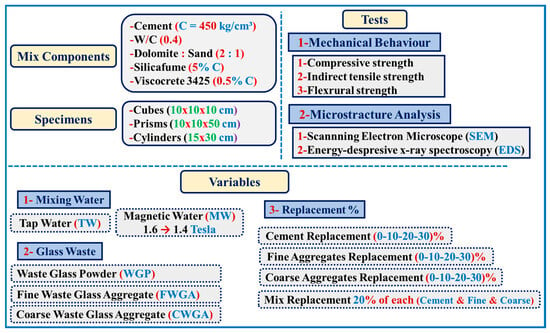
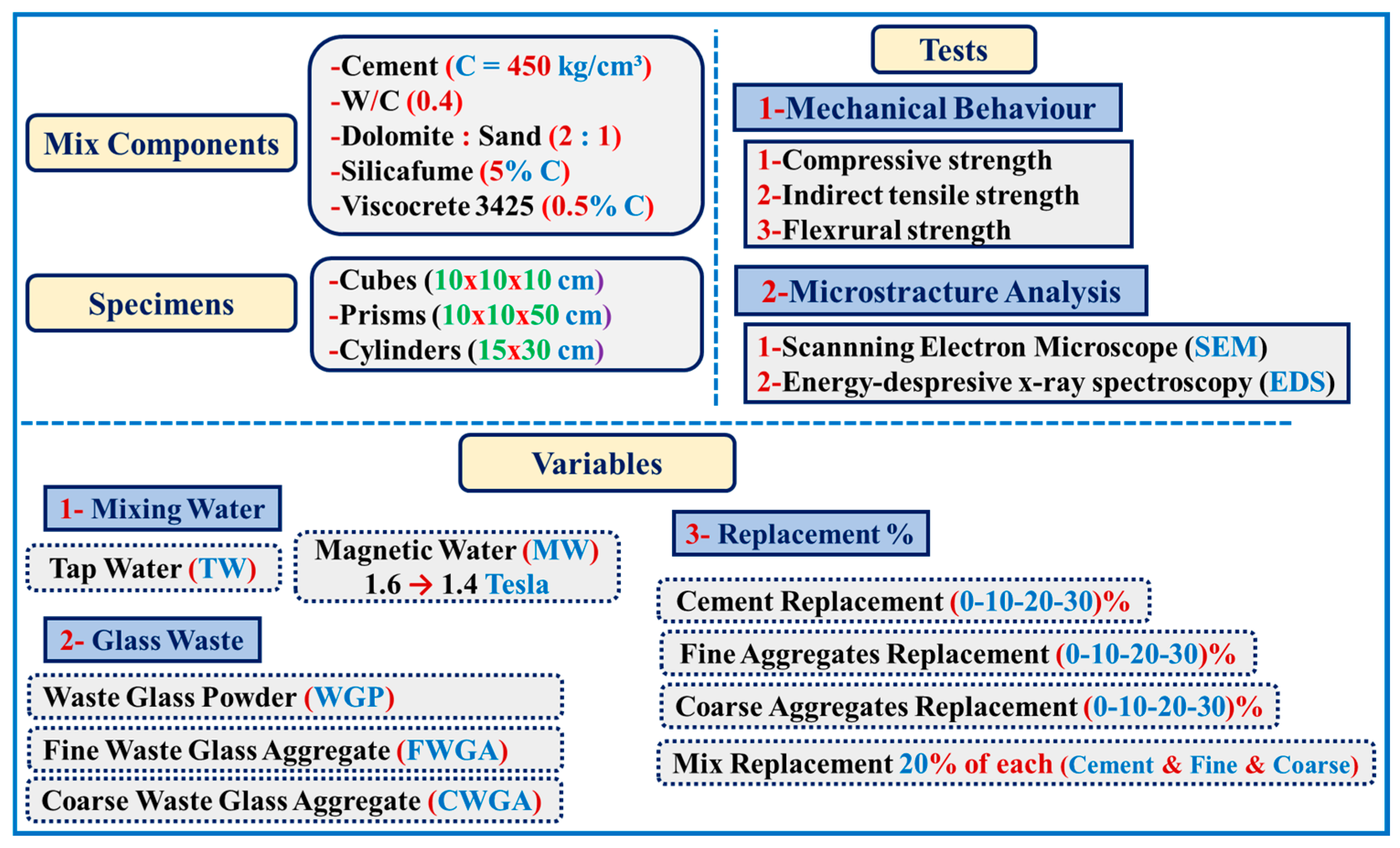
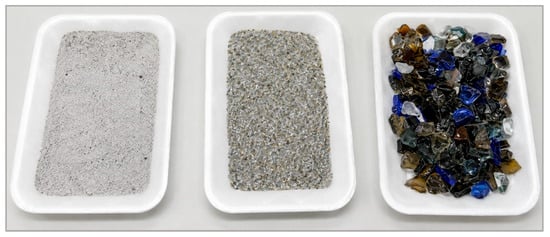
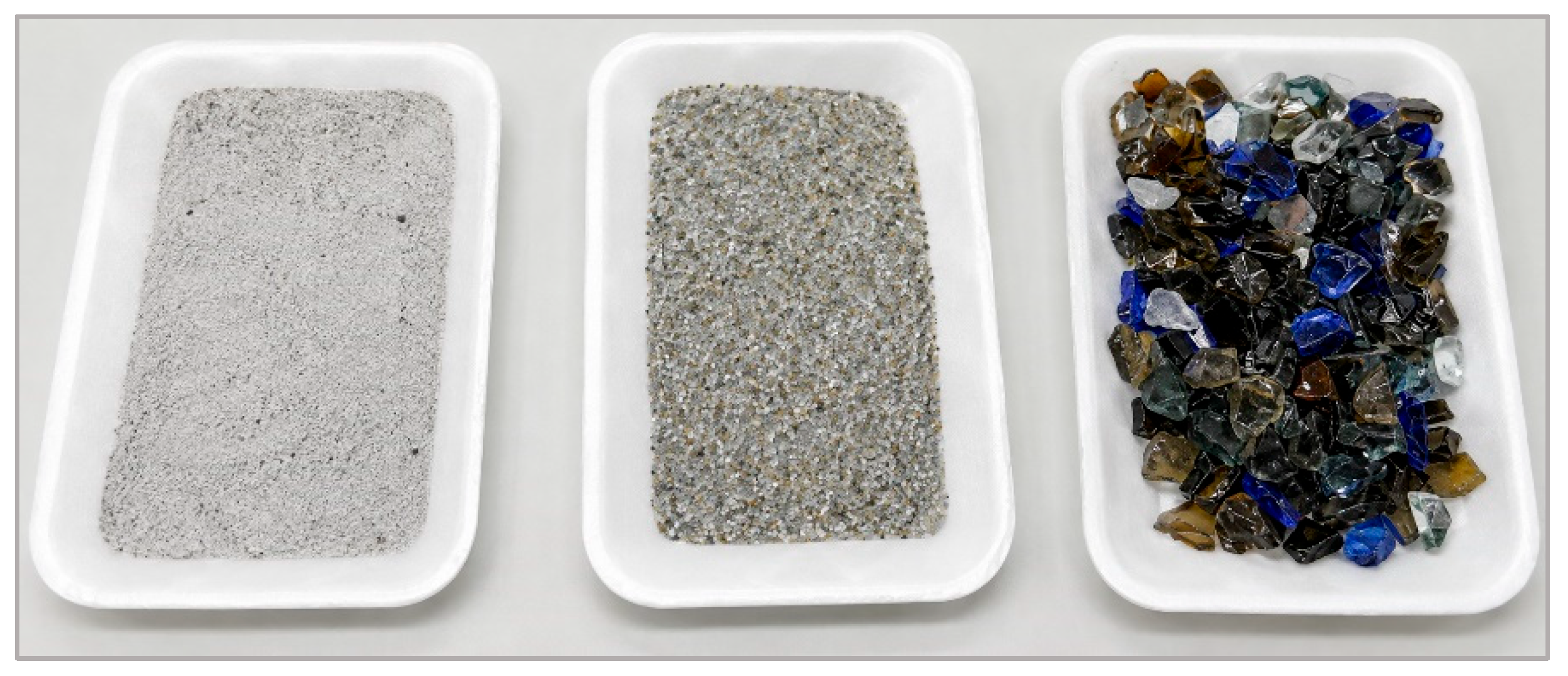
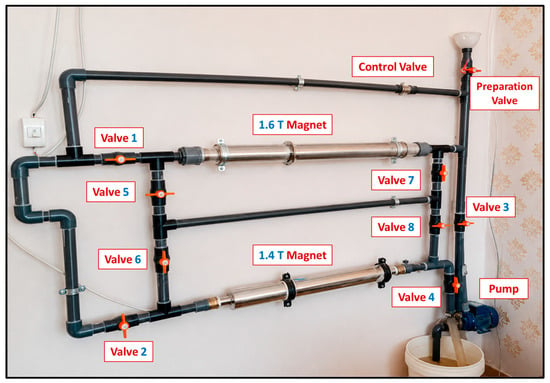
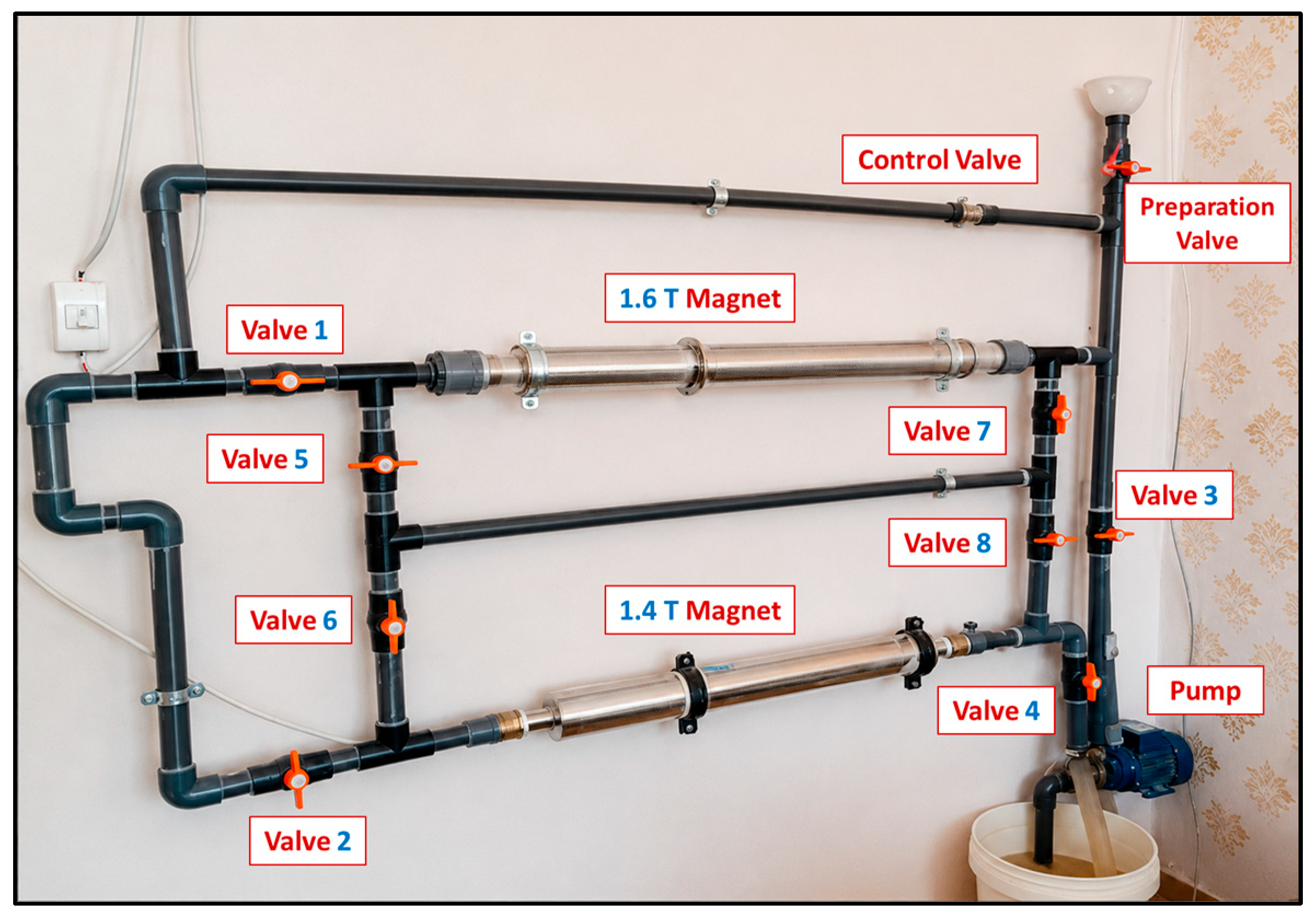
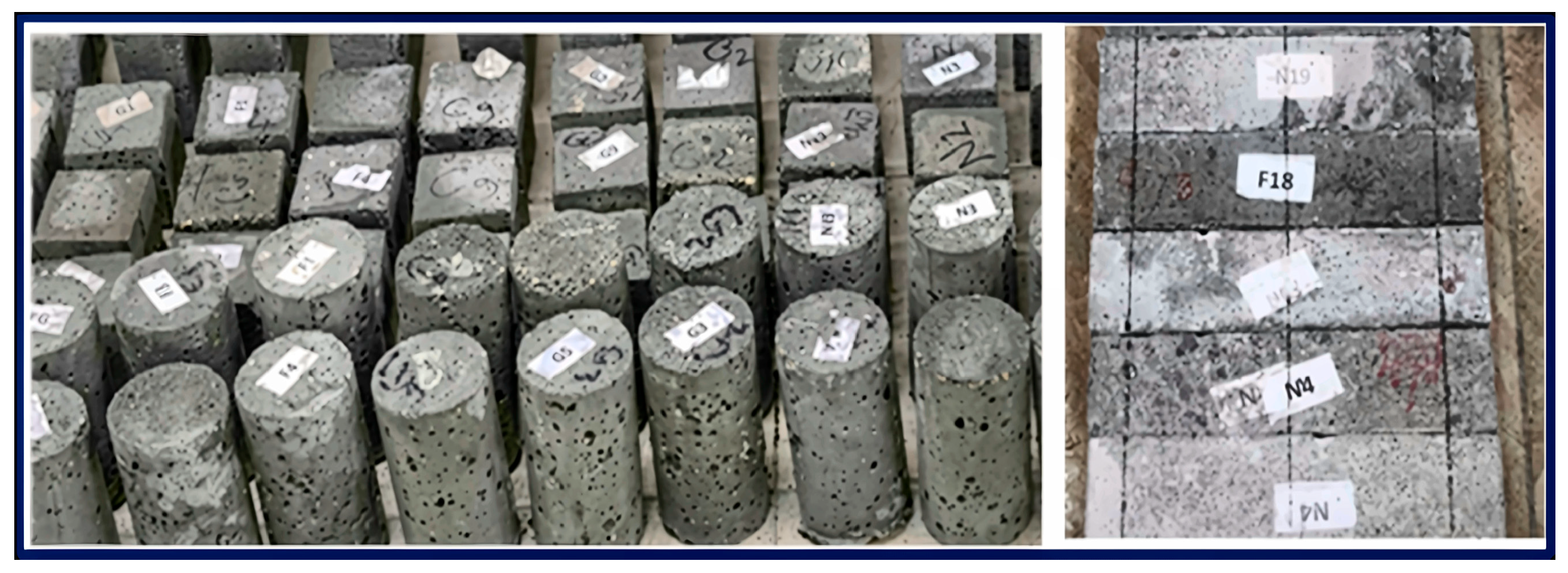
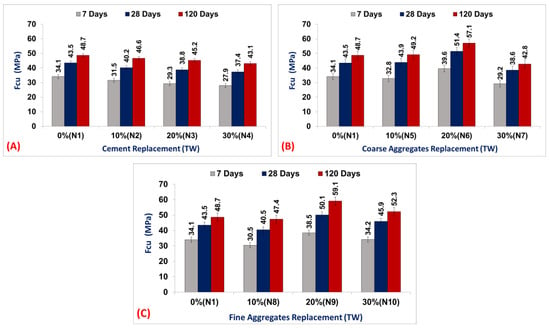
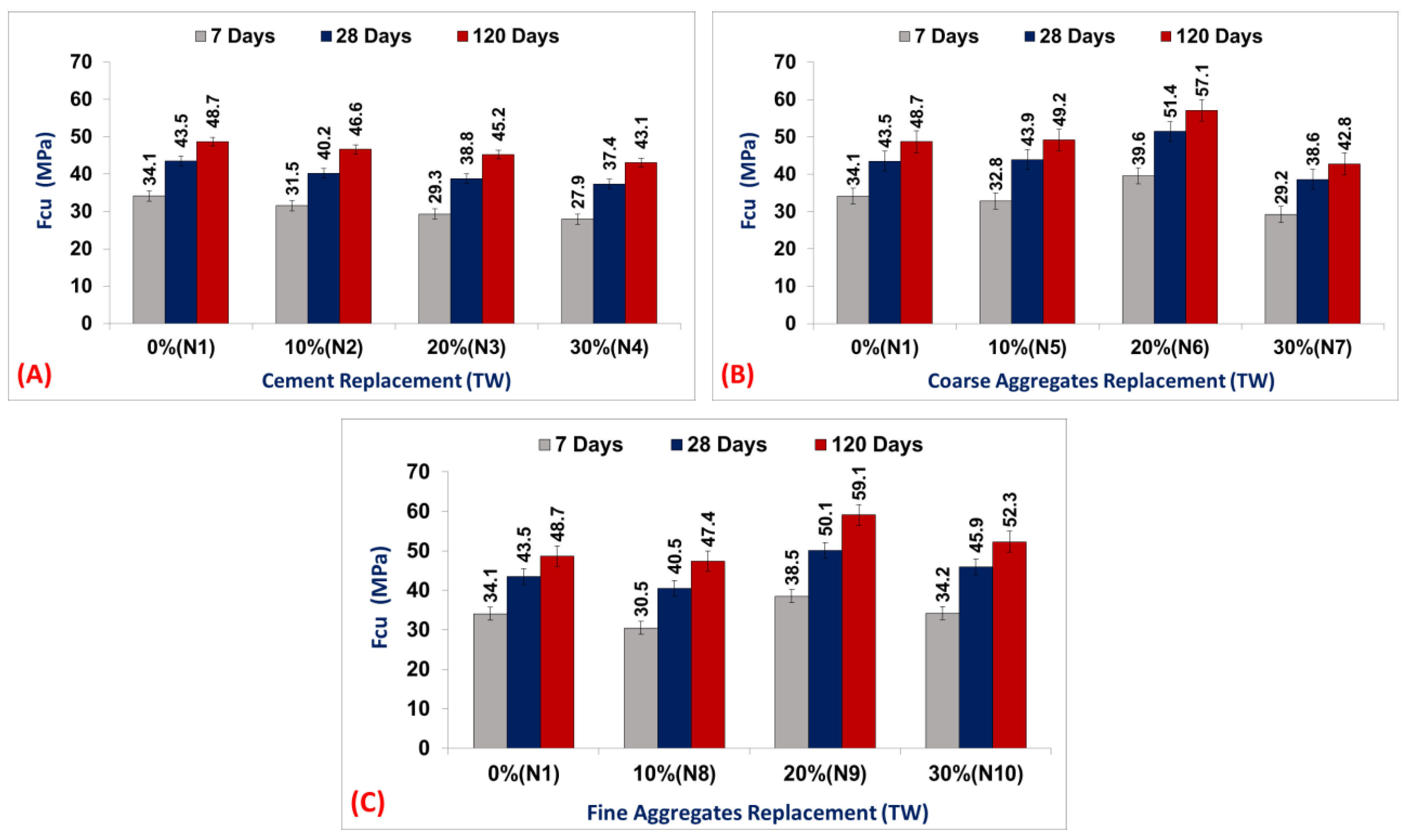
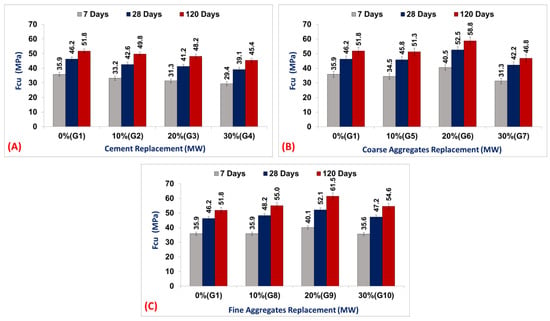
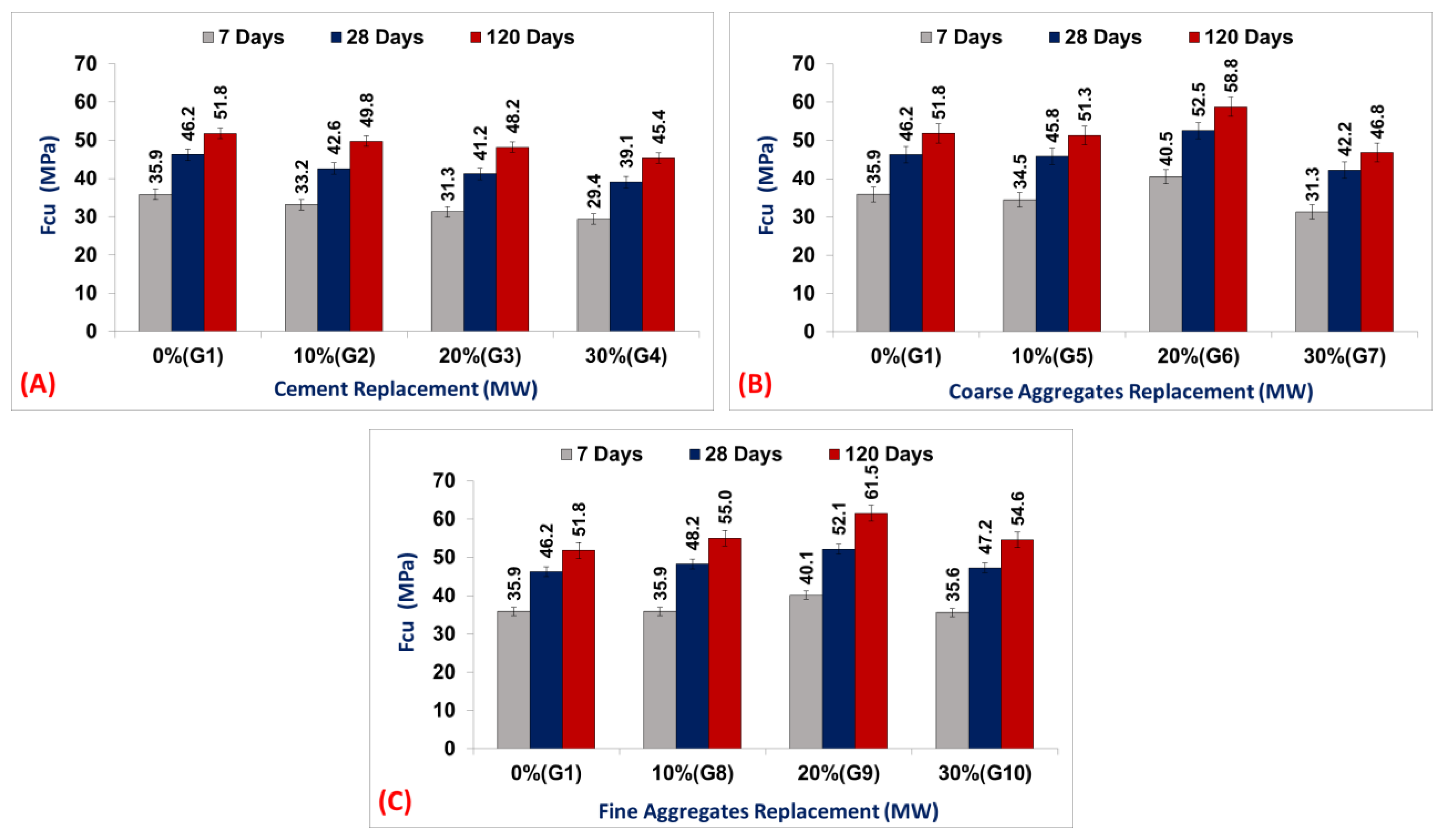
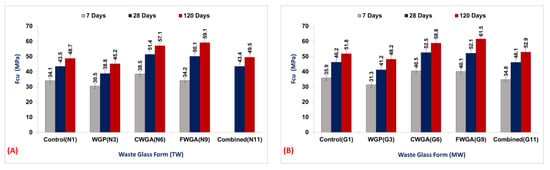
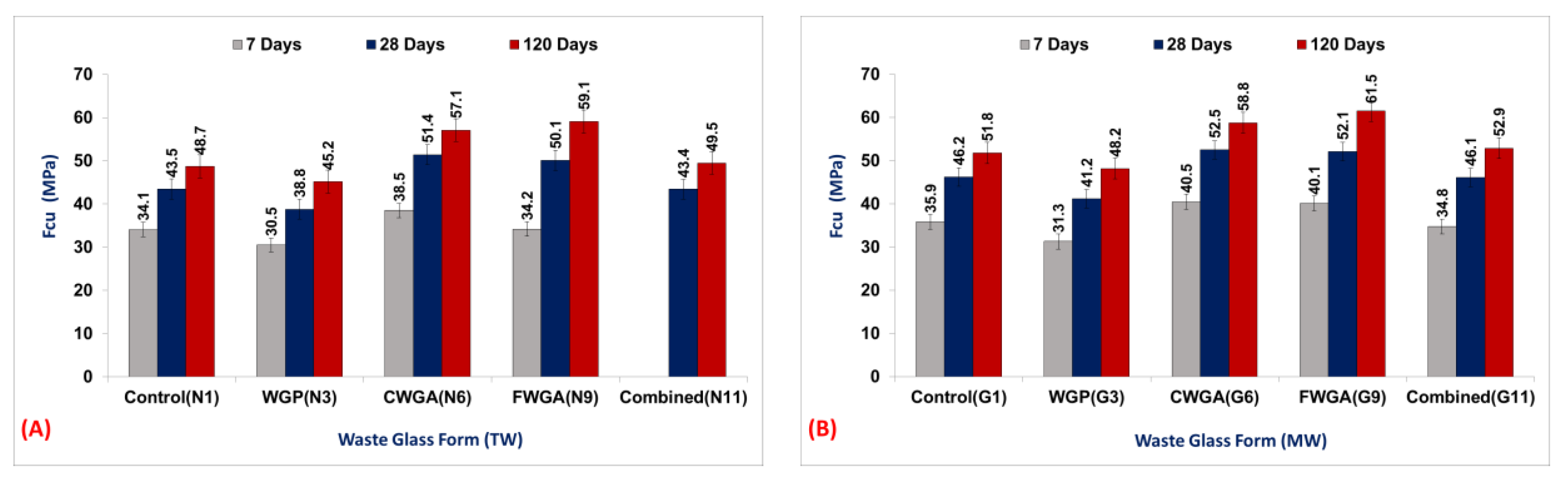
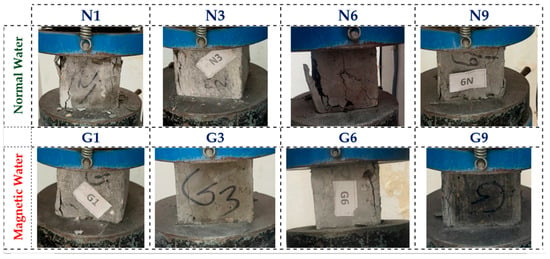
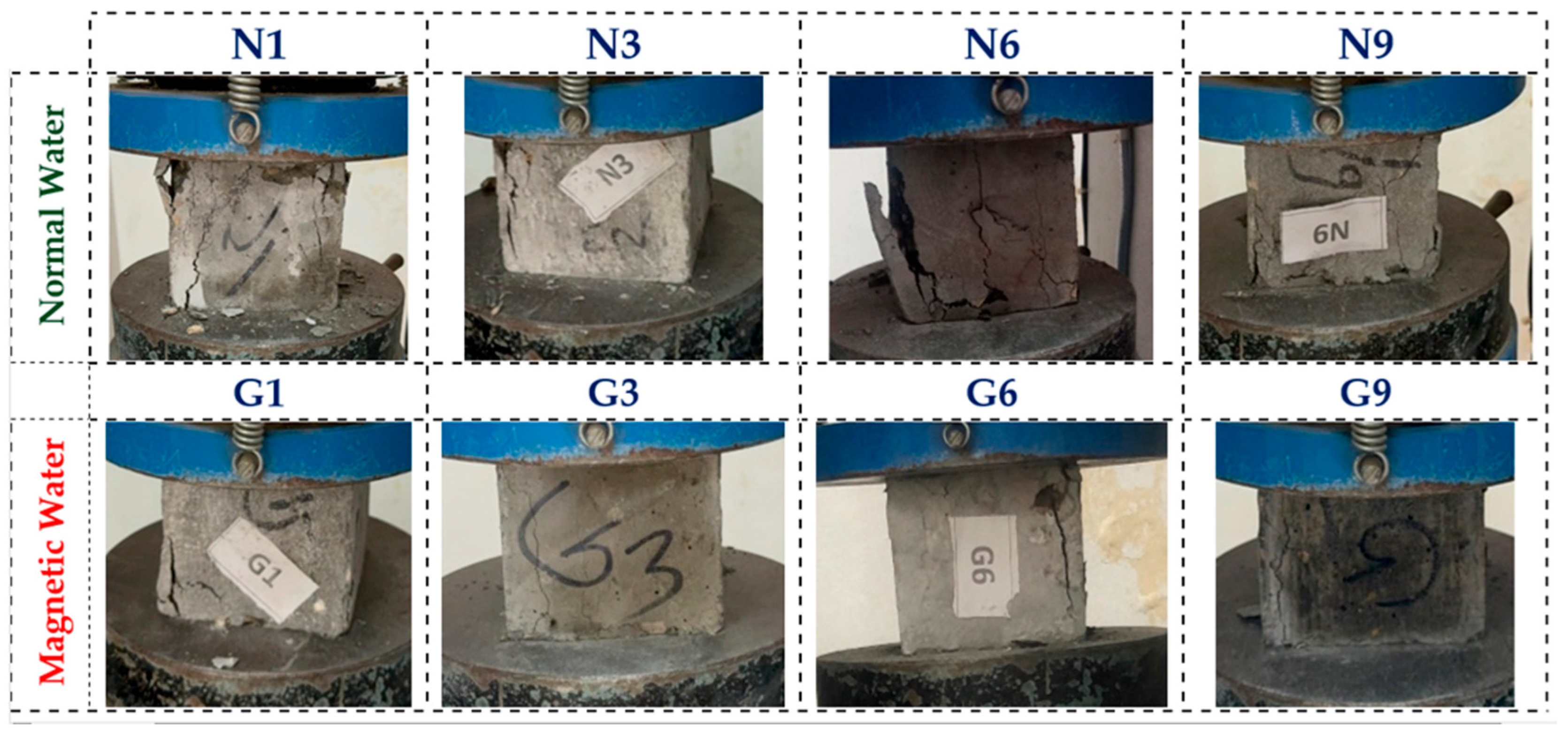
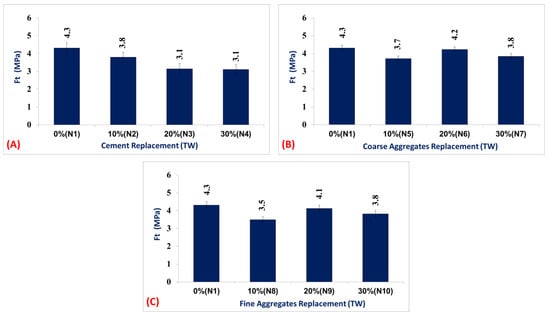
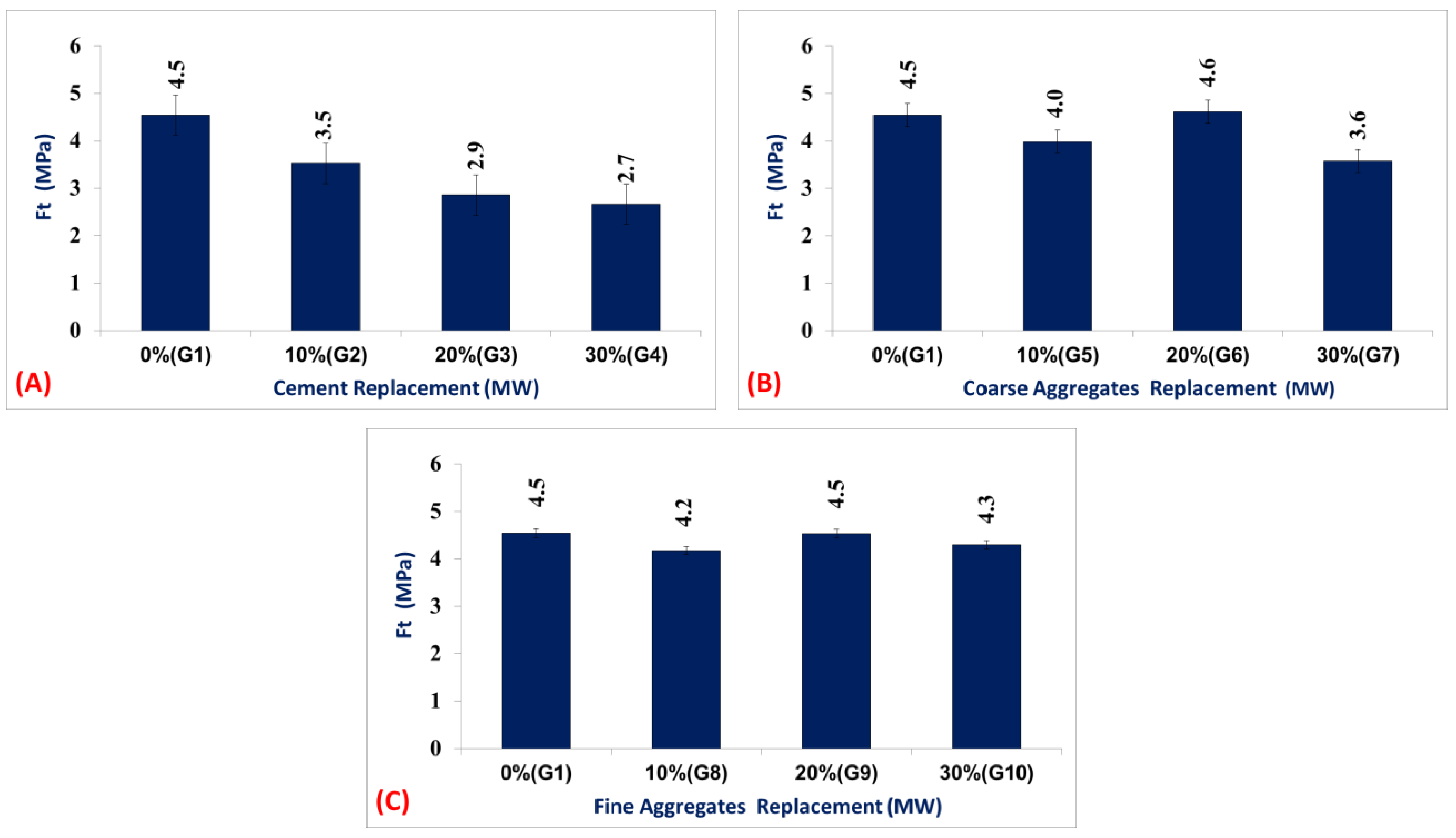
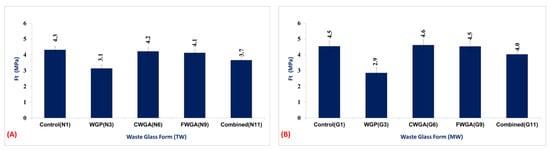
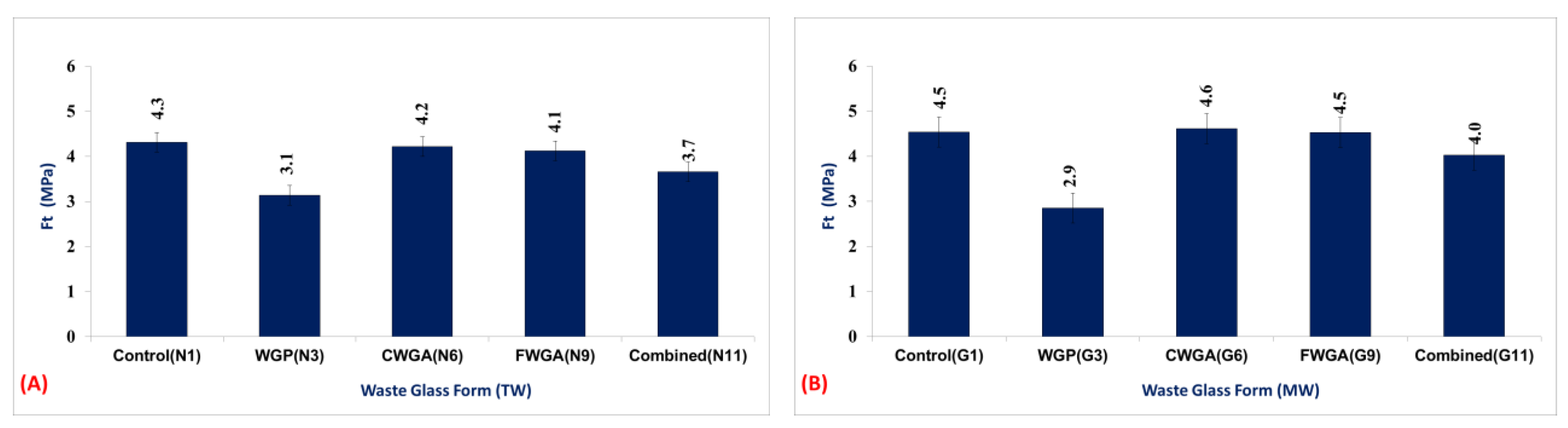
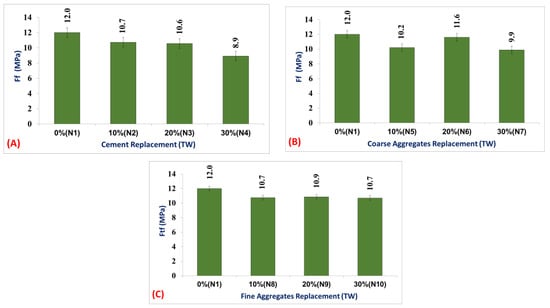
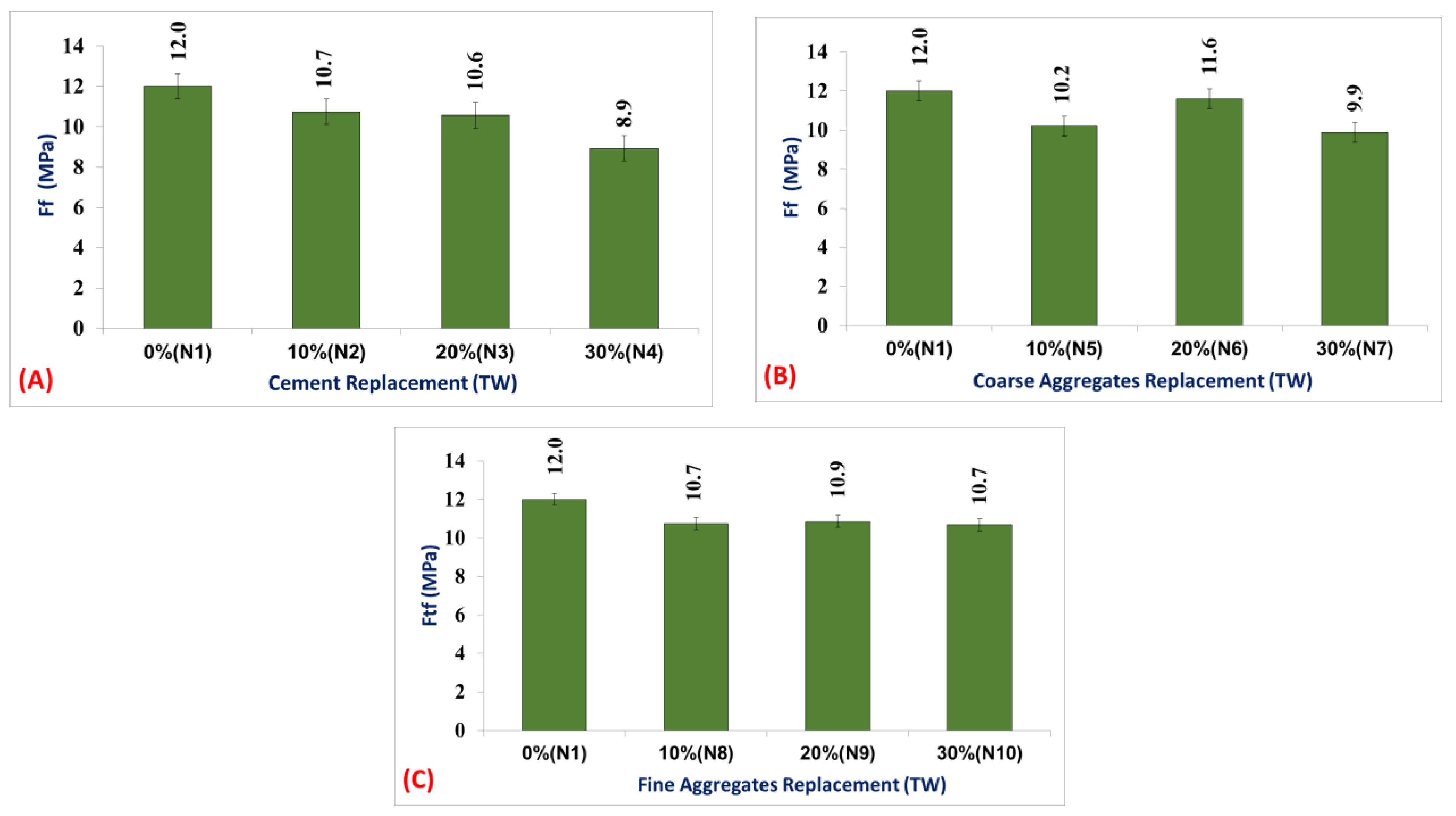
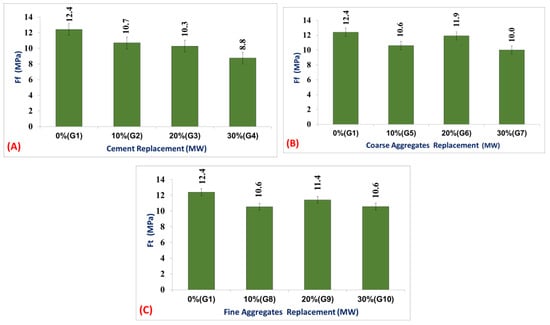
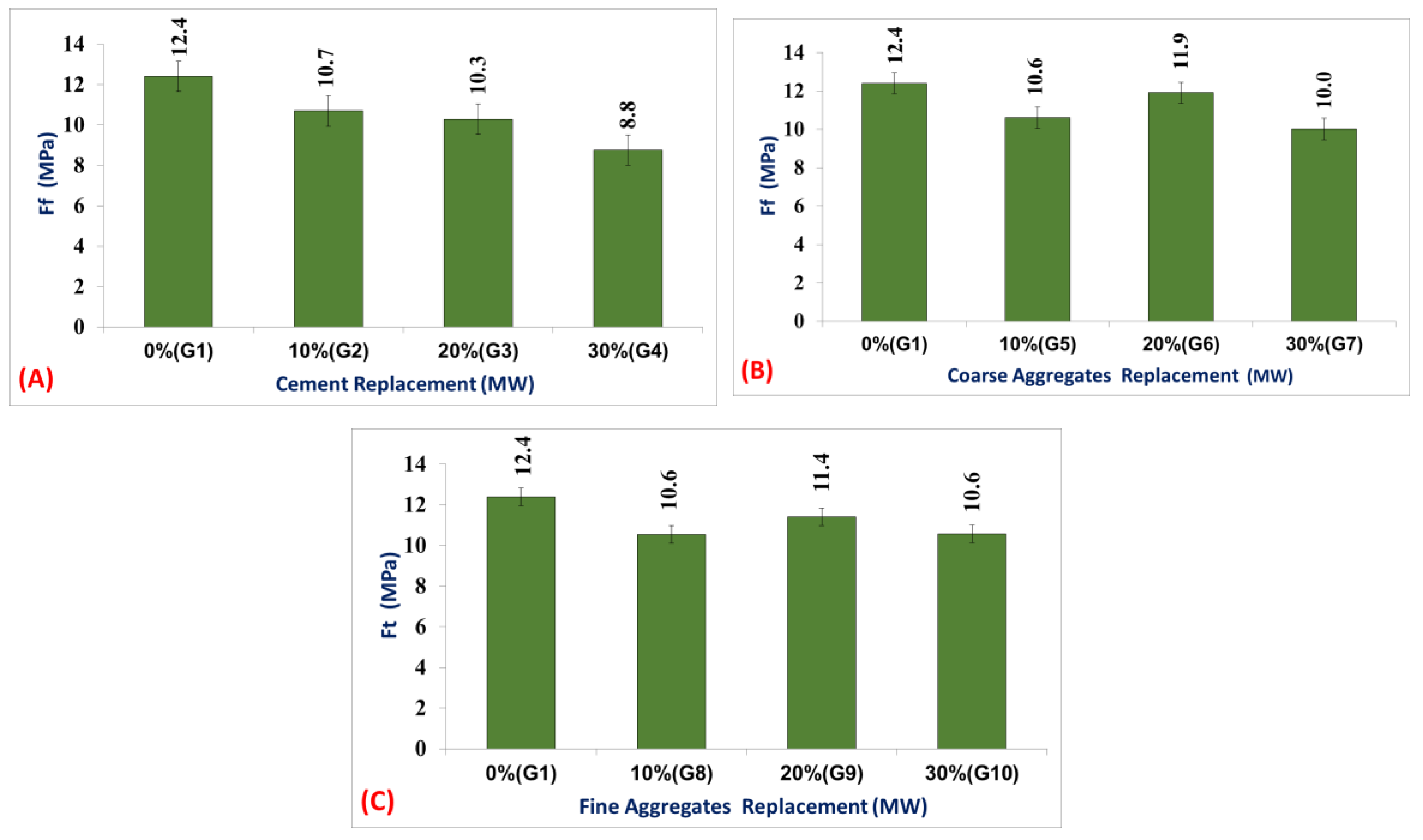
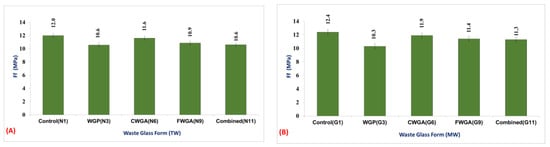
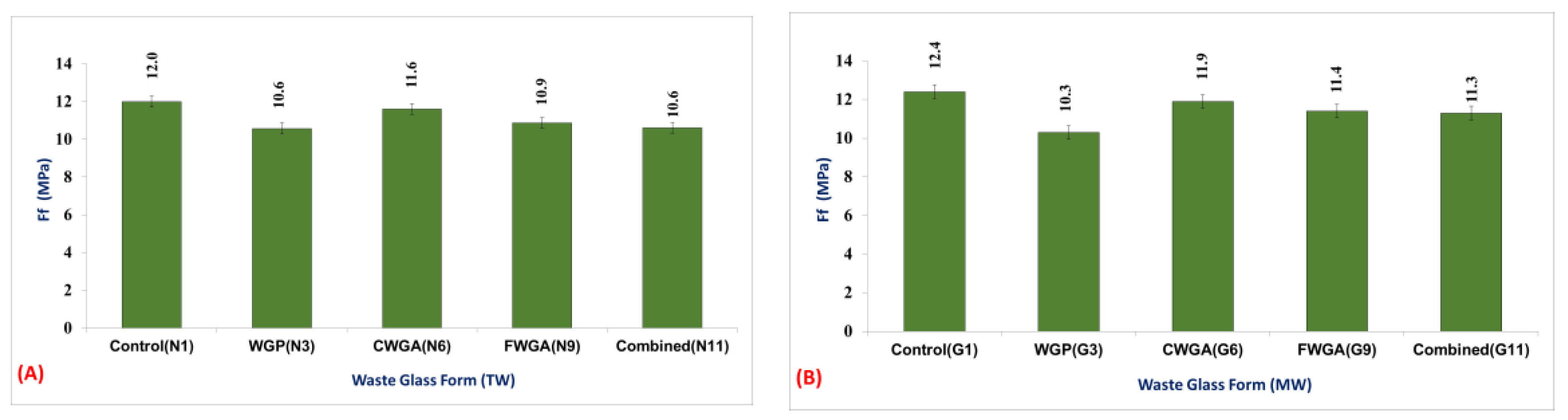
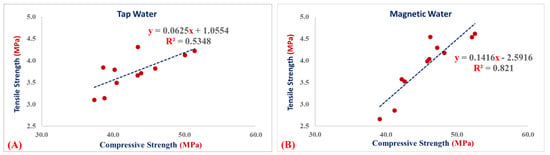
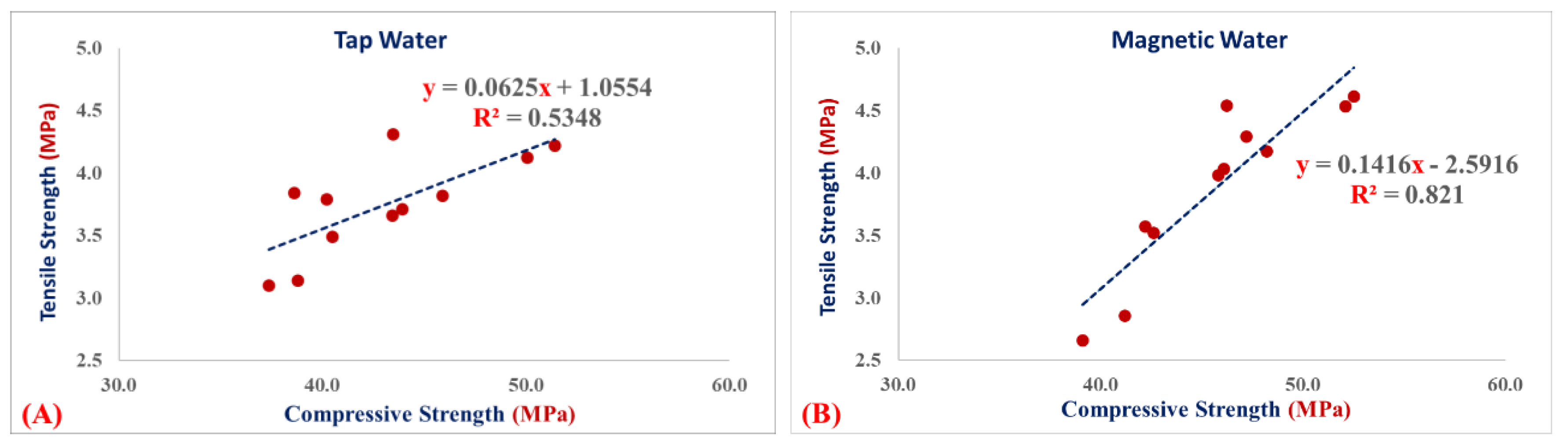
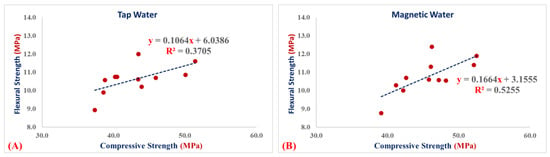
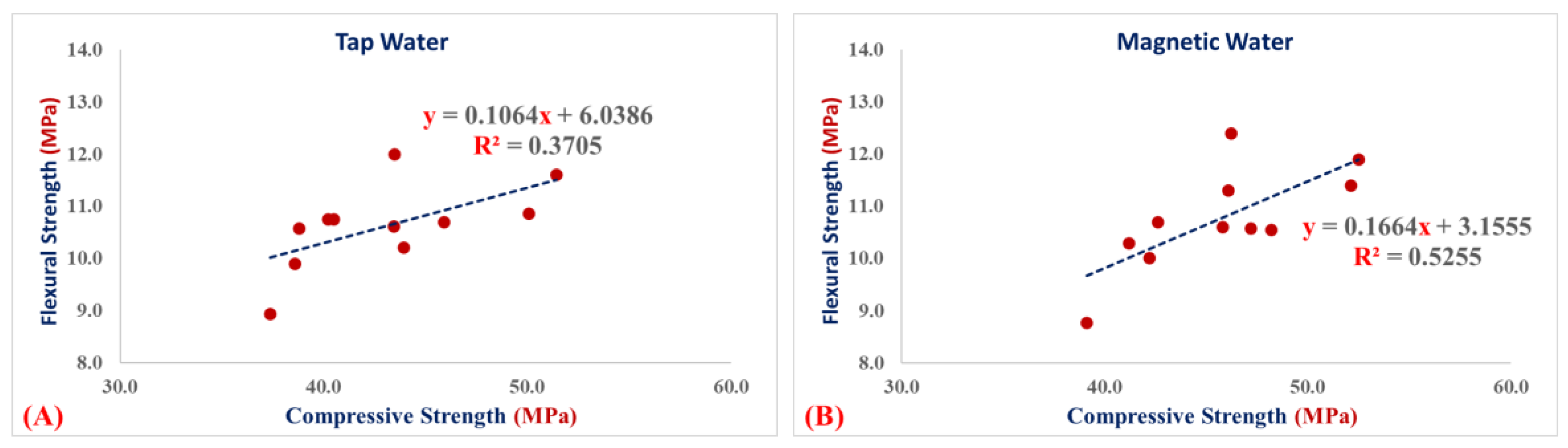
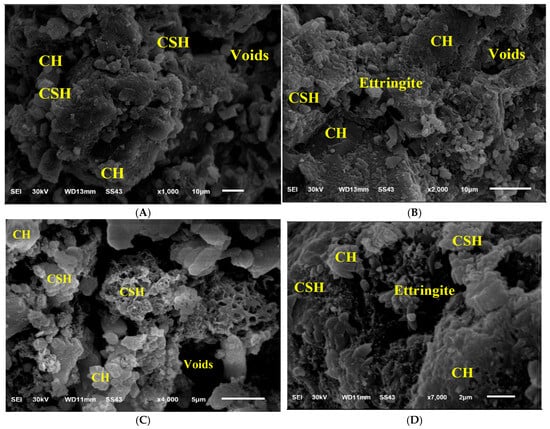
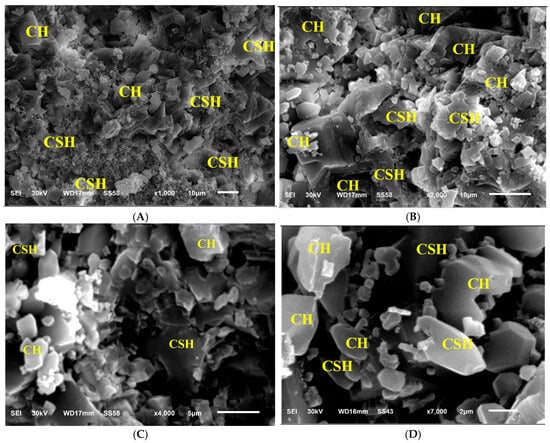
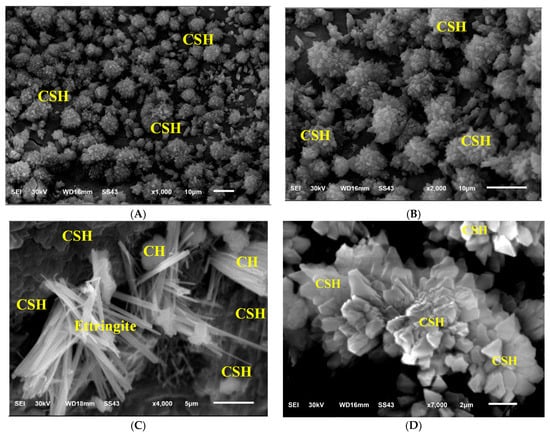
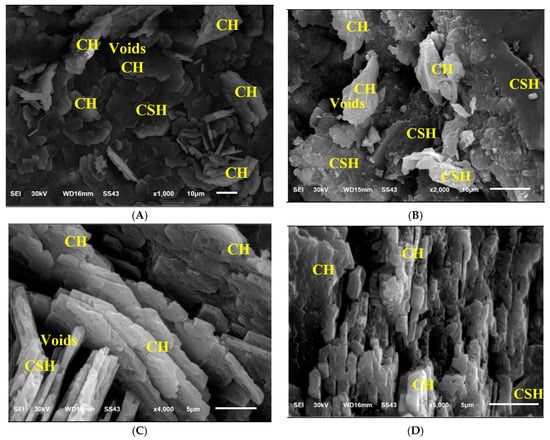
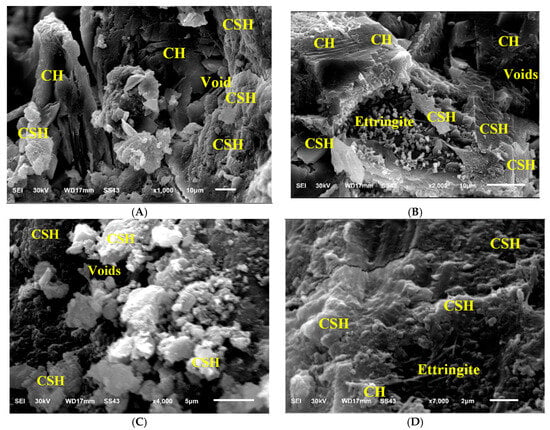
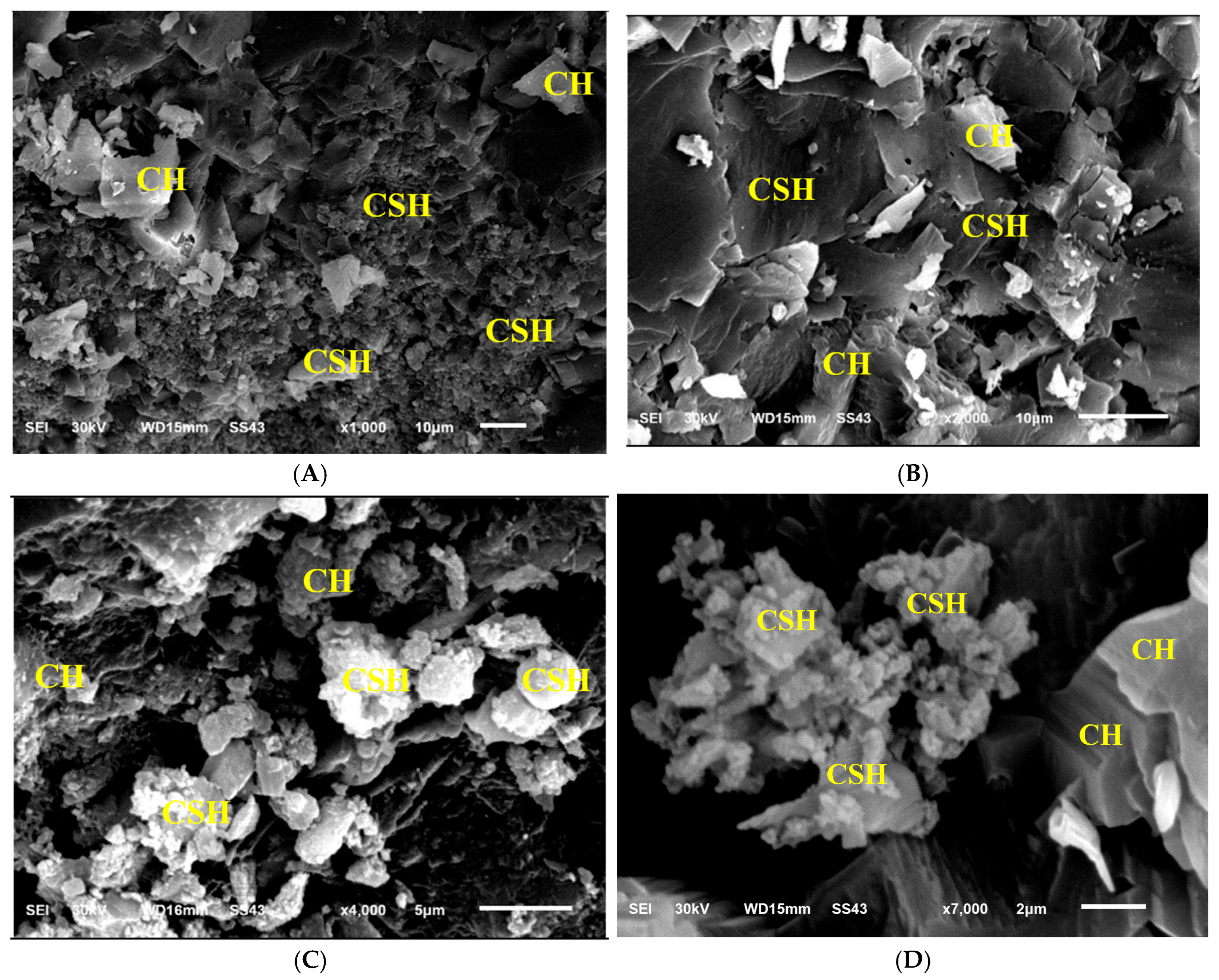
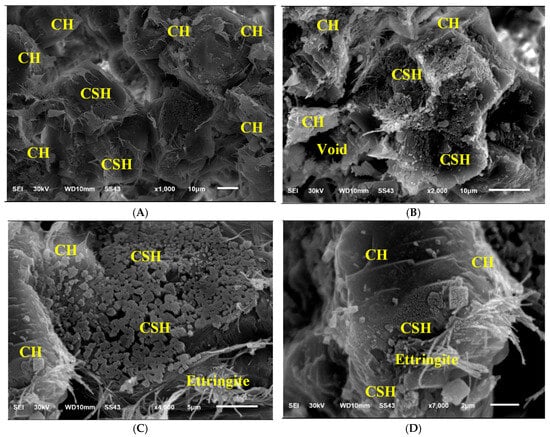
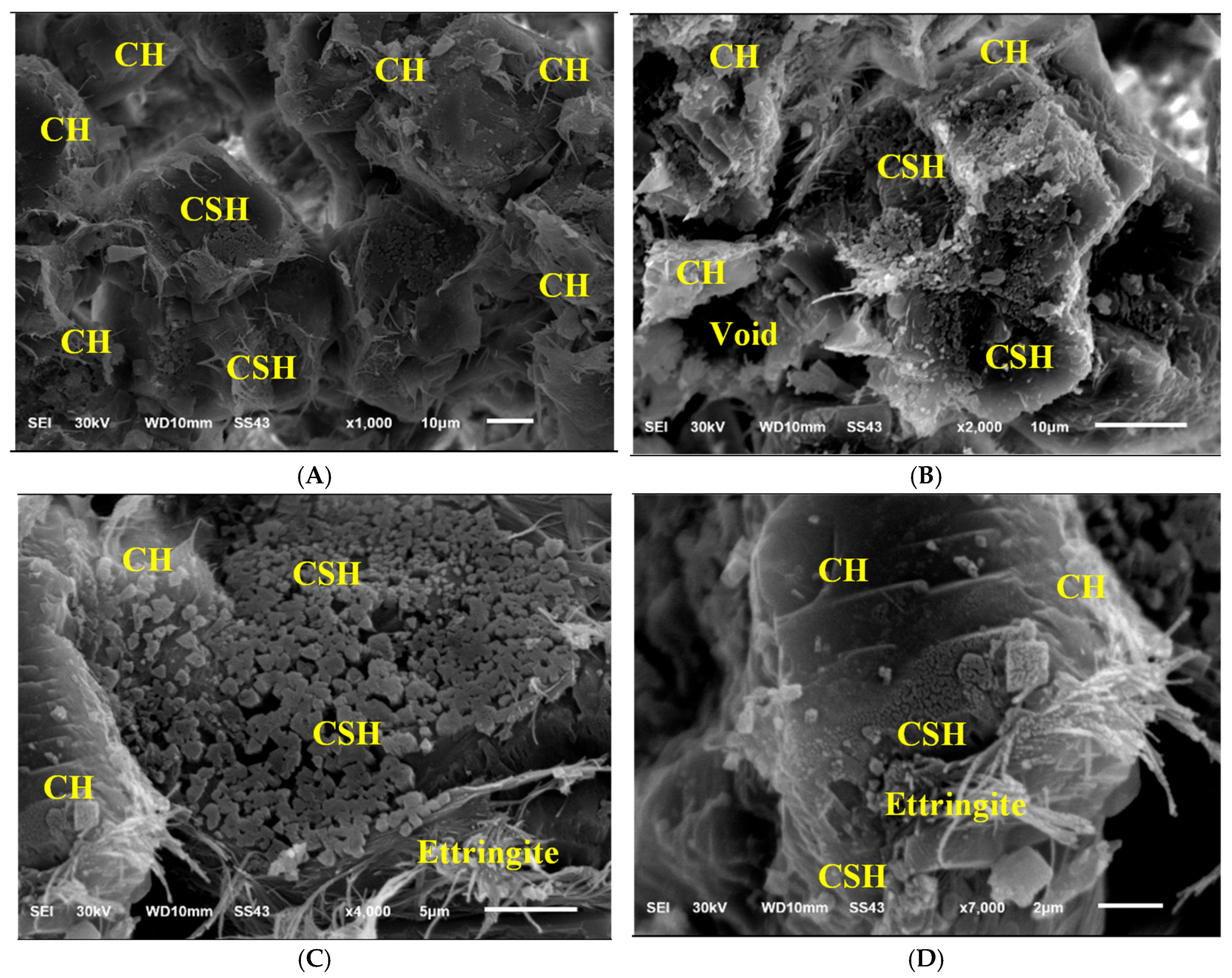
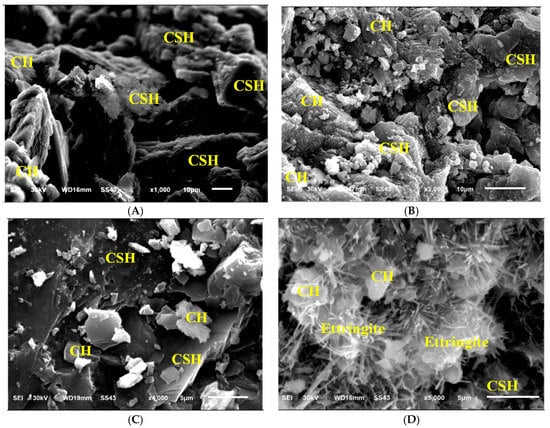
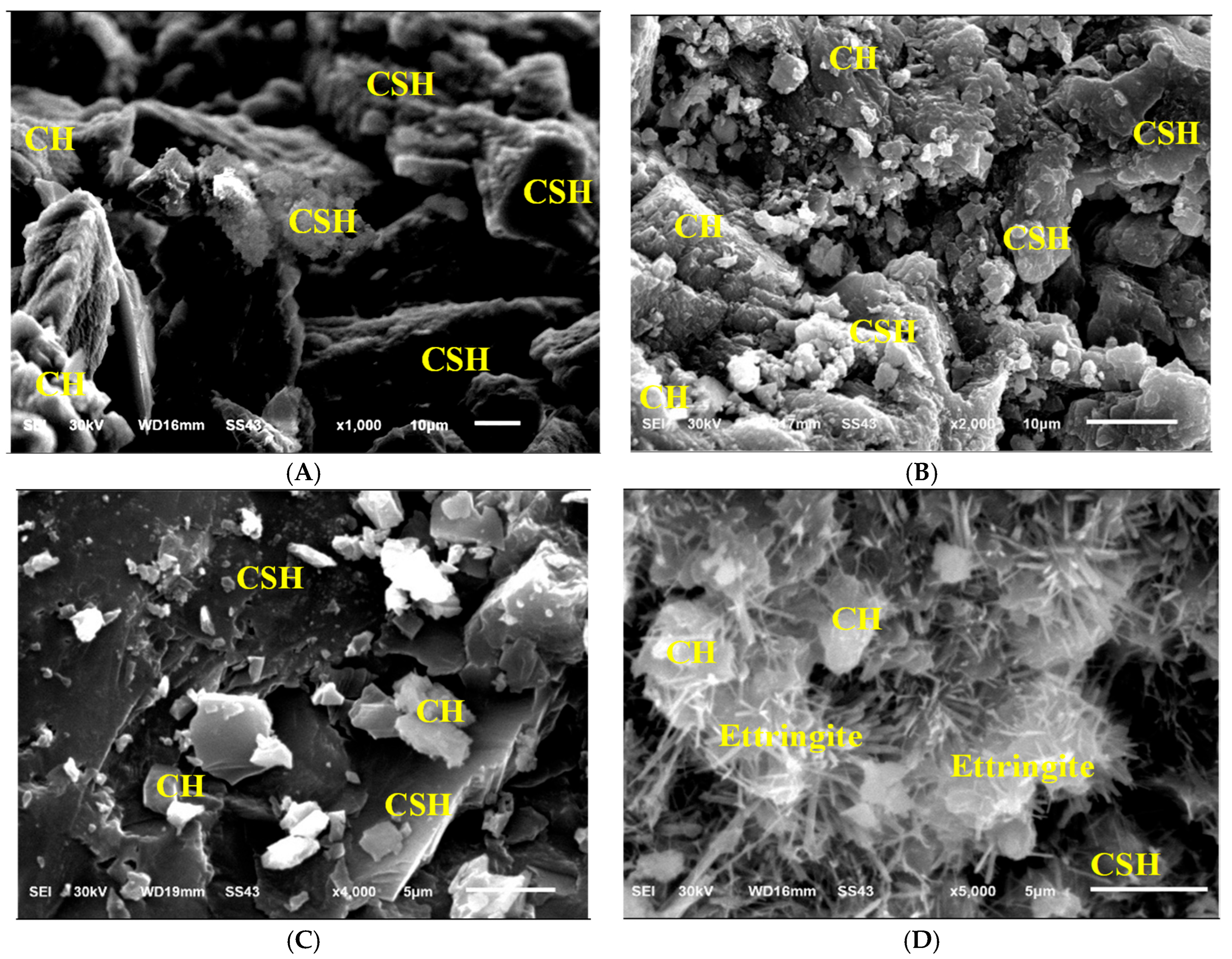
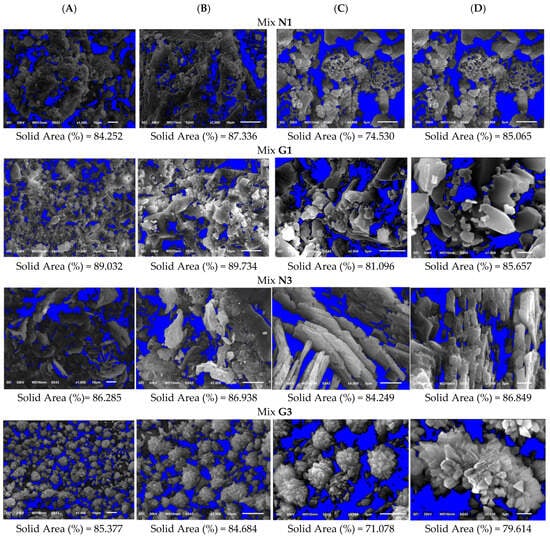
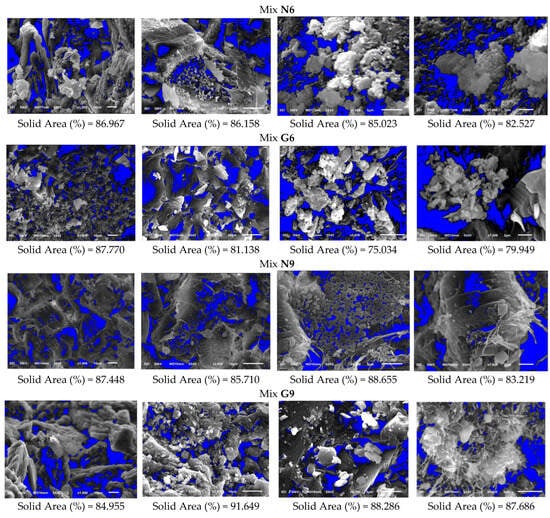
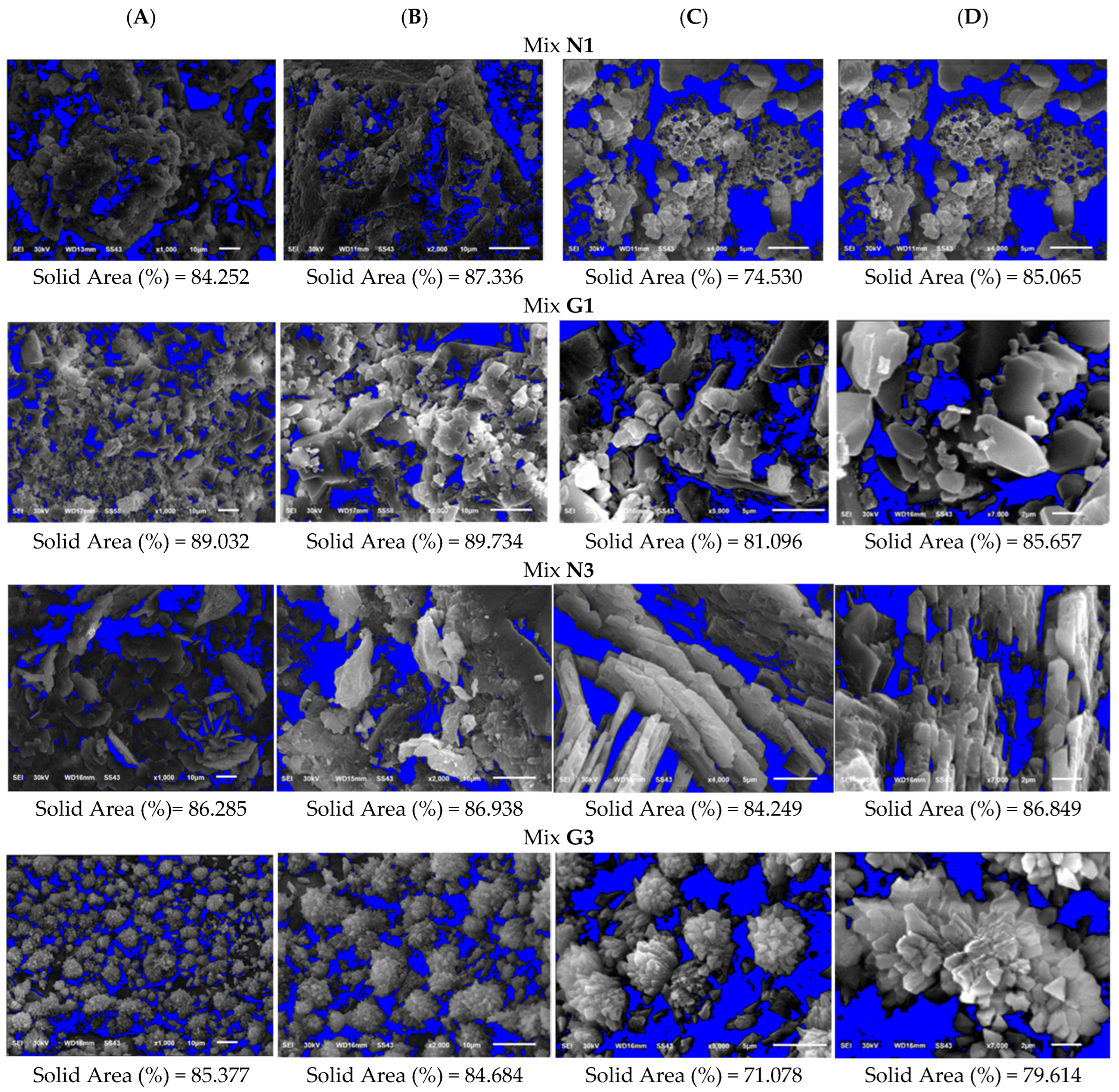
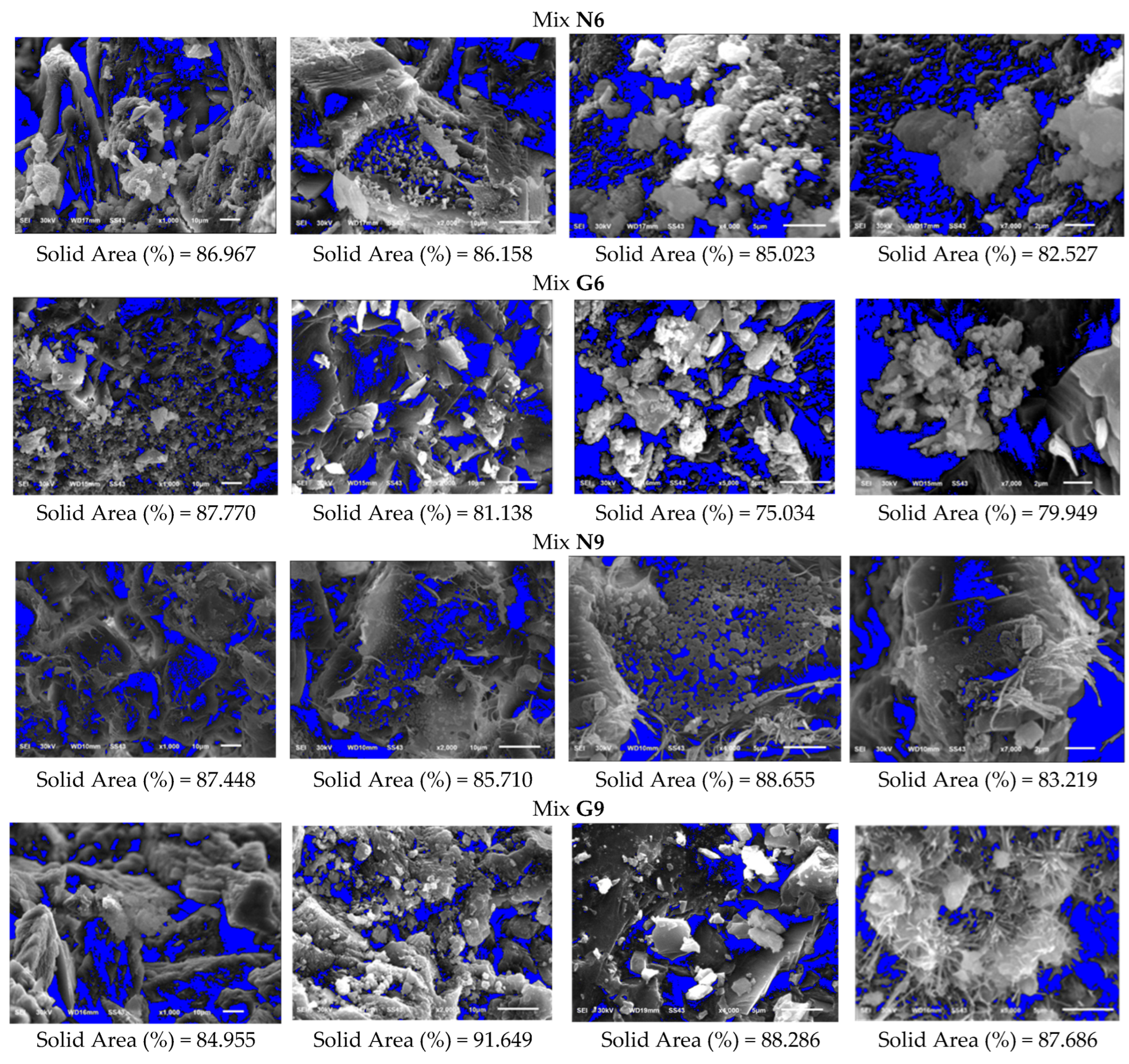
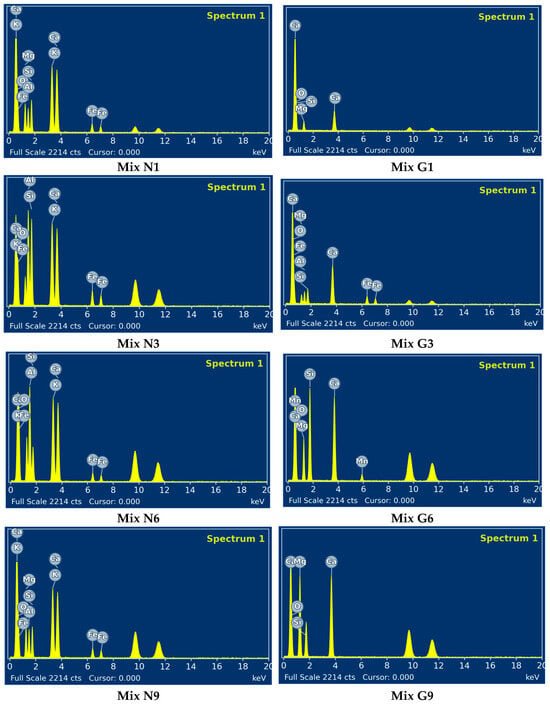
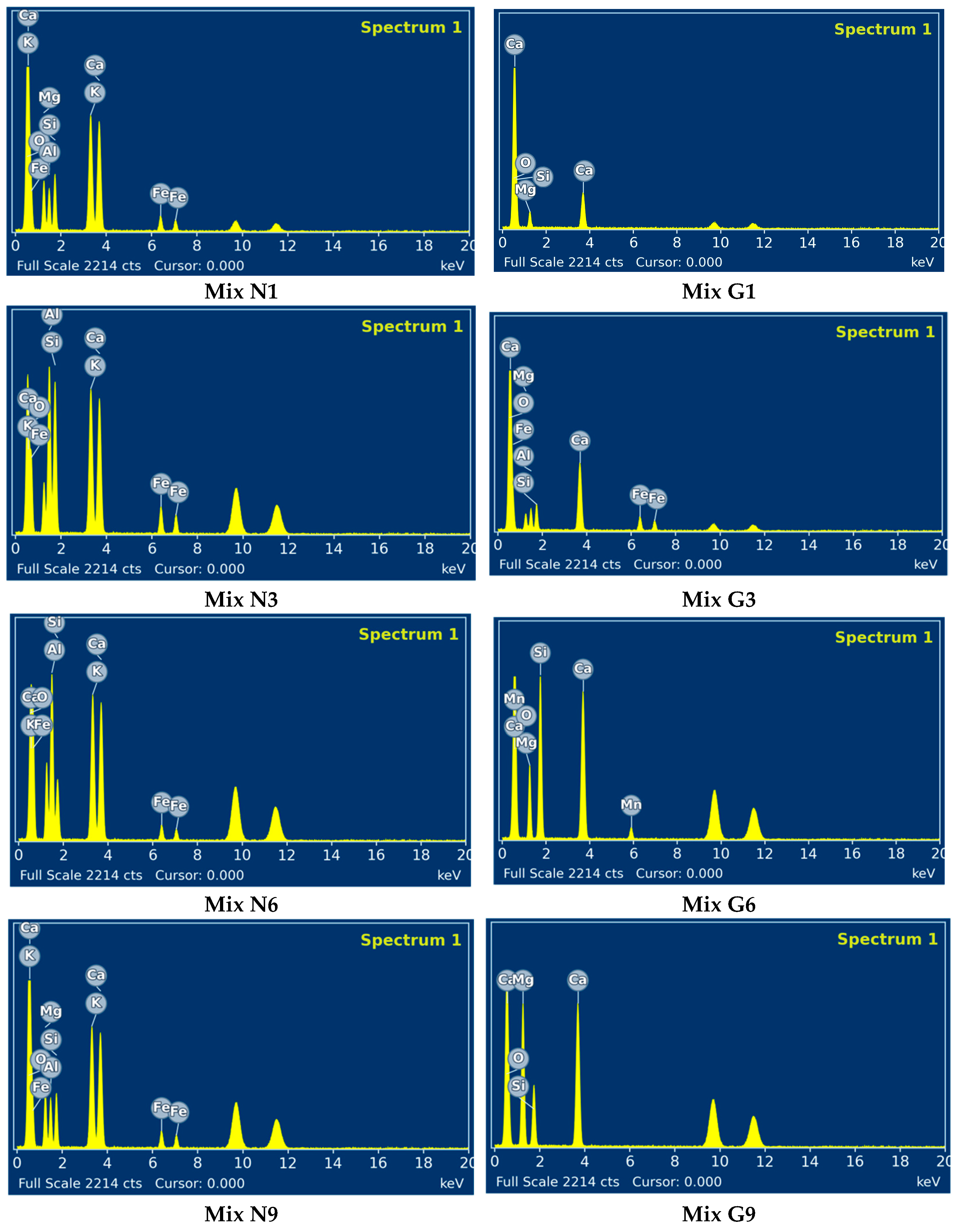

Disclaimer/Publisher’s Note: The statements, opinions and data contained in all publications are solely those of the individual author(s) and contributor(s) and not of MDPI and/or the editor(s). MDPI and/or the editor(s) disclaim responsibility for any injury to people or property resulting from any ideas, methods, instructions or products referred to in the content. |
© 2026 by the authors. Licensee MDPI, Basel, Switzerland. This article is an open access article distributed under the terms and conditions of the Creative Commons Attribution (CC BY) license.