


Abstract
The development of 4D-printing technology enables the fabrication of smart structures capable of transforming in response to external stimuli, offering potential for future minimally invasive biomedical applications. This study explores a direct 4D-printing approach for producing thermally actuated polylactic acid (PLA) components, focusing on self-expanding vascular stent prototypes. Unlike conventional 4D printing, which typically requires a separate post-printing programming step (e.g., heating, mechanical loading, cooling, and unloading), direct 4D printing embeds the programming phase directly into the layer-wise printing process by controlling the adjustment of process parameters, so that components are ready for shape transformation immediately after fabrication. A systematic experimental workflow was applied by combining a problem-solving methodology with action research and structured experimentation to identify and optimize the key parameters governing shape-shifting behavior. Bilayer plate structures were fabricated via fused filament fabrication (FFF) using multiple PLA material combinations and were thermally actuated under controlled conditions to characterize the influence of printing speed, printing temperature, and infill pattern on the magnitude and directionality of deformation. Building on these results, three functional demonstrators were developed, culminating in a grid-based cylindrical prototype that achieved approximately 5.8% radial expansion upon actuation at temperatures above 80 °C. Overall, the results suggest the fundamental technological feasibility of direct 4D printing as a manufacturing route for thermally actuated components, serving as a foundational proof-of-concept for future patient-specific, self-deploying medical devices.
1. Introduction
4D printing is an extension of additive manufacturing in which printed structures incorporate smart materials that change shape or functional properties over time in response to external stimuli such as temperature, moisture, pH, magnetic or electric fields, or chemical agents [1,2,3,4,5,6]. In this context, the fourth dimension denotes time, as the programmed transformation of a three-dimensional object is realized only after fabrication during a defined actuation period [1]. By combining suitable shape-morphing materials with appropriate printing strategies, 4D-printed structures can exhibit self-assembly, self-adaptation, and, in combination with tailored material systems, even self-healing behavior [5,7,8,9], which has been demonstrated for several shape memory polymer systems [4,10,11,12,13].
A particularly promising route is direct 4D printing, in which the thermomechanical programming of the shape memory polymer is integrated directly into the layer-wise printing process [14]. Instead of a separate post-printing training step involving heating, mechanical loading, cooling, and unloading, direct 4D printing defines the programmed shape solely via printing parameters, such as temperature history, deposition path, and process-induced pre-strain, so that components are ready for actuation immediately after printing [14,15]. This approach simplifies the manufacturing workflow, eliminates dedicated programming equipment, and reduces production cost, while still allowing precise control over actuation mode and amplitude through the choice of process parameters [12,16].
Polylactic acid (PLA) is especially well suited as a base material for such direct 4D-printed systems [17]. PLA is a bio-sourced, biodegradable thermoplastic produced from lactic acid, widely used as filament in fused filament fabrication (FFF) and belonging to the class of shape memory polymers [18]. It combines good printability with a relatively low glass-transition temperature ( around 60 °C (depending on grade), enabling thermally triggered shape recovery at temperatures approaching physiologically relevant levels [9]. PLA and its copolymers are clinically established as biocompatible and bioresorbable materials and have been used for decades in resorbable fixation devices, tissue-engineering scaffolds, and vascular implants [19,20,21]. PLA-based composites and blends further expand the property window, for example by reinforcing with hydroxyapatite for bone applications or by tailoring stiffness and degradation kinetics for cardiovascular devices [9,21,22,23,24].
Vascular stents illustrate the application potential of direct 4D printing in a particularly compelling way. Conventional metallic stents, typically made from stainless steel or shape memory alloys such as Nitinol, provide excellent radial support but are permanently left in the vessel, can interfere with X-ray and MRI imaging, and may contribute to late in-stent restenosis and thrombosis [25]. Bioresorbable polymeric stents based on PLA and related lactic acid polymers were developed to address these limitations, offering transient scaffolding that gradually degrades and permits late vessel remodeling while avoiding long-term imaging artifacts [25]. Commercial devices such as the Igaki-Tamai [26] and DESolve [27] stents demonstrate that PLA-based bioresorbable vascular scaffolds can achieve clinically relevant radial strength and pronounced shape memory-based self-expansion, although balloon-assisted deployment is still typically required [25,26,27,28]. Direct 4D printing creates the opportunity to move from balloon-expanded, pre-crimped scaffolds to fully self-deploying designs that are printed in a compact configuration and expand autonomously upon thermal triggering [29], potentially enabling less invasive procedures and more patient-specific devices at the point-of-care.
From a materials perspective, 4D printing is based on smart materials that can sense and respond to environmental changes through controlled variations in their properties. Within this class, shape memory materials (SMM) include shape memory alloys (SMA), shape memory ceramics (SMC), and shape memory polymers (SMP), all of which can memorize a permanent shape, be programmed into one or more temporary shapes, and recover their original configuration under suitable external stimuli [5]. While SMAs are widely used in clinical practice, they are limited by a narrow deformation range of up to 8%. In contrast, SMPs offer significantly higher recoverable strains of up to 1100% [30,31], providing greater design freedom for complex geometric transformations. Shape memory polymers can be activated thermally, by light, electric fields, moisture, pH, or magnetic fields, enabling a broad range of actuation concepts and combinations [5,32]. When integrated with additive manufacturing, the programming and actuation stages become design variables, allowing the temporal evolution of a component to be engineered alongside its static geometry [2,6].
For thermally actuated SMPs such as PLA, three distinct programming zones are distinguished based on the deformation temperature relative to the glass transition: hot programming above uses entropic elasticity for shape fixation, warm programming within the transition region utilizes a mix of entropic and energetic forces, and cold programming below requires loading beyond the yielding point to store internal energy that serves as the driving force for shape recovery upon subsequent heating [33]. Building on these distinct thermomechanical programming mechanisms of shape memory polymers, direct 4D printing translates such material behavior into a manufacturing context, where the required internal strains are no longer introduced in a separate step but are inherently generated during the layer-wise deposition process [14].
Direct 4D printing via FFF can be understood as programming by controlling the strain mismatch within and between printed layers [34,35,36]. In bilayer structures, differences in the prestrain between an active and passive layer arise from the thermal and mechanical history of the extruded filaments: the filament leaving a hot nozzle solidifies while shrinking along the print direction and builds up residual stresses associated with the deposition pattern and interlayer bonding [37]. When reheated above , these stored stresses relax toward a stress-free state, inducing anisotropic shrinkage along the printing direction and transverse expansion due to Poisson’s effect [35]. By varying printing speed, nozzle and bed temperature, slicing strategy, infill pattern (e.g., concentric vs. rectilinear), and layer arrangement, the magnitude and orientation of these internal strains can be tuned to obtain bending, twisting, or in-plane contraction as required [35,36,37,38,39,40]. Single-material bilayers exploit only process-induced pre-strain, while multi-material bilayers combine differences in thermomechanical properties (e.g., glass-transition temperature, modulus, coefficient of thermal expansion) with process-induced residual stress, at the expense of potentially more complex adhesion behavior [36,37].
In the context of vascular stents, direct 4D-printed PLA structures therefore occupy a distinct position between conventional SMA stents and existing polymeric bioresorbable scaffolds. SMA stents made from Nitinol provide excellent fatigue resistance and low actuation temperatures but remain permanently implanted and are not bioresorbable [25,28]. Polymer-based stents such as Igaki-Tamai and DESolve can be resorbed and rely on PLA’s shape memory effect for self-expansion, yet they still require mechanical balloon deployment and are produced by relatively specialized manufacturing routes [25,26,27]. Direct 4D printing with PLA, in contrast, enables low-cost, distributed fabrication of patient-specific, thermally self-deploying stents on standard FFF printers, potentially in hospital or regional manufacturing centers, while leveraging the well-studied biocompatibility and degradation behavior of PLA-based vascular scaffolds.
To advance this vision, this study aims to demonstrate the potential of direct 4D printing for developing biomedical components capable of self-expansion through thermally activated shape transformation. Specifically, a systematic experimental workflow was applied to design and fabricate PLA components using direct 4D-printing principles, culminating in the development of a cylindrical demonstrator for vascular stent applications. The investigation focuses on characterizing how printing parameters—including printing speed, temperature, infill pattern, and material selection—influence the shape-shifting behavior of PLA bilayer structures. Through iterative experimental refinement, functional demonstrators progressing from simple geometric configurations to complex cylindrical geometries were developed and tested. The ultimate objective is to evaluate the technological feasibility of direct 4D printing as a potential manufacturing approach for customizable, minimally invasive biomedical devices while identifying critical parameters and remaining challenges for clinical translation.
2. Methods and Materials
2.1. Research Methodology
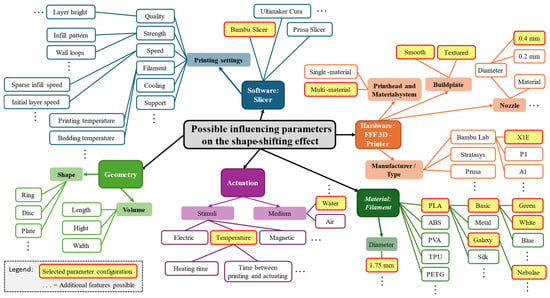
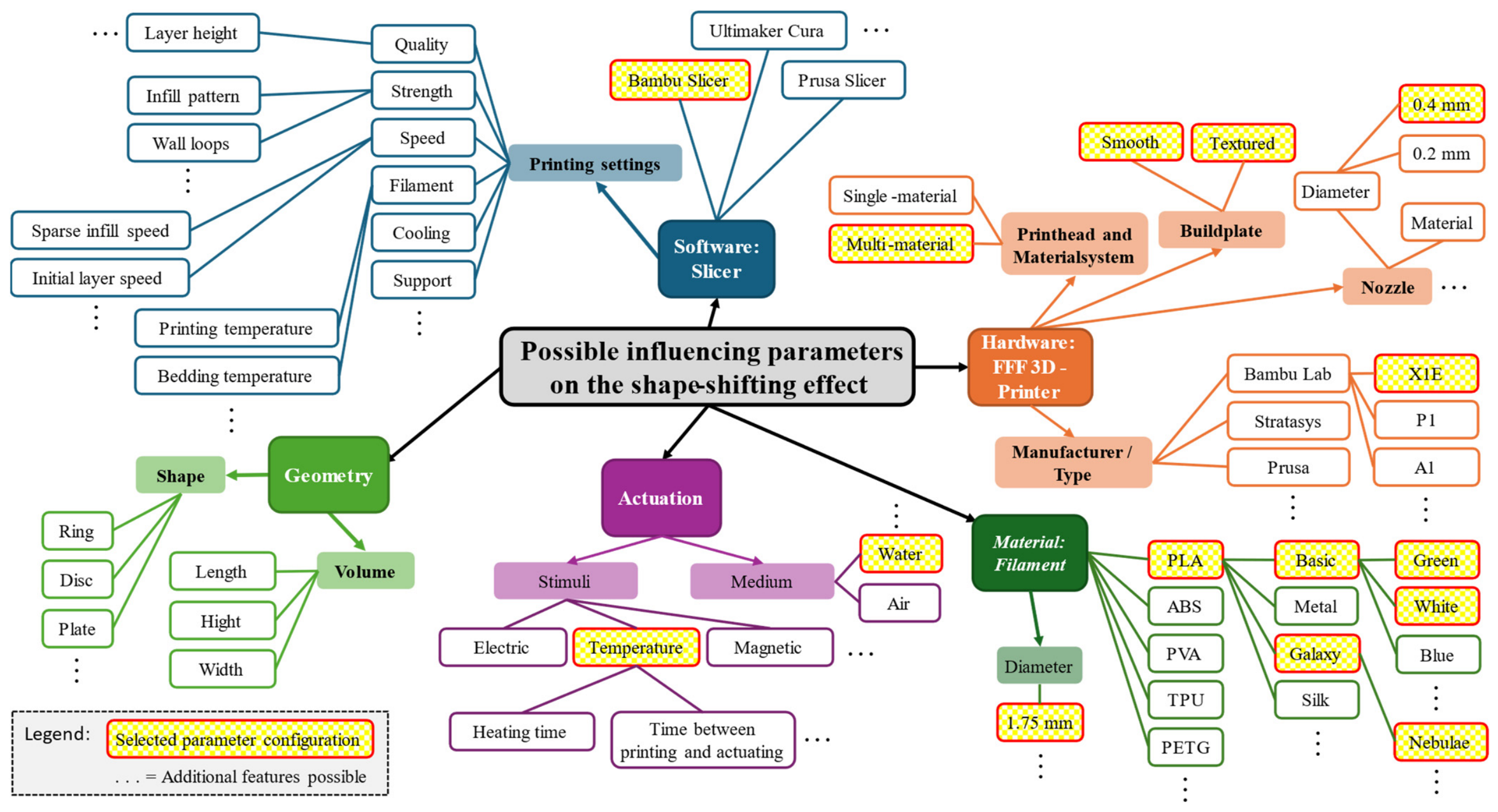
A combined methodological approach was adopted, integrating the SPALTEN problem-solving framework—with its seven iterative modules (situation analysis, problem containment, alternative solutions, selection of solutions, consequences analysis, make decision, recapitulate and learn)—and action research to ensure a systematically structured procedure. SPALTEN, grounded in systems engineering, offers a versatile tool for diverse problem complexities, minimizing effort and time while optimizing solutions and safety by extending VDI 2221’s core process (problem analysis, formulation, synthesis, analysis, evaluation, decision) with implementation and learning modules [41]; it facilitated identification and investigation of relevant parameters defined by the objective of direct 4D printing of thermally actuated, self-expanding PLA structures. Concurrently, action research enabled practice-oriented cycles of planning, execution (printing and actuation), observation, and reflection, leveraging the rapid prototyping advantages of 3D printing for quick and high-iteration workflows. Figure 1 summarizes the key influencing parameters relevant to this study and the specific variants selected herein, which are categorized into slicer software, 3D printer, material, geometry and actuation.
Figure 1.
Result of the situation analysis, showing possible parameter variations and selected parameter configurations.
2.2. Material Selection and Characterization
Original PLA materials from Bambu Lab were selected for the entire production process: PLA Basic Green and White and PLA Galaxy Nebulae. Technical specification comparison revealed that PLA Galaxy possesses a lower glass-transition temperature ( 52 °C) compared to PLA Basic ( 60 °C) and significantly reduced Young’s modulus ( 1320 MPa versus 2060 MPa in Z-axis and 1540 MPa versus 2580 MPa in X-Y-axis) [42,43]. These material property differences enabled investigation of material composition effects on shape transformation.
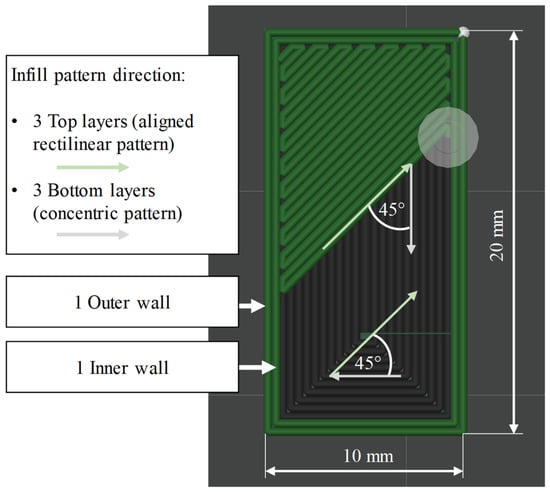
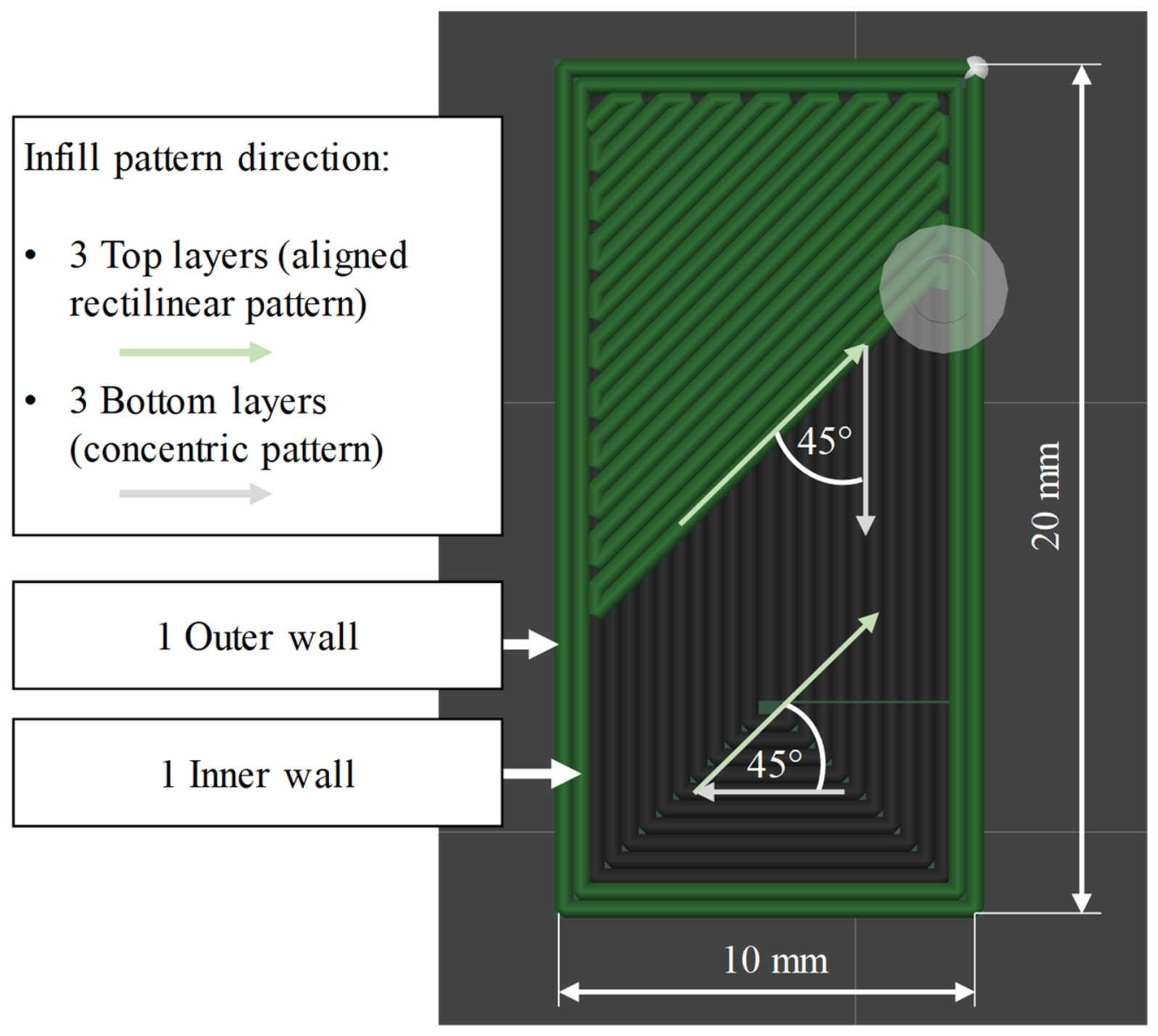
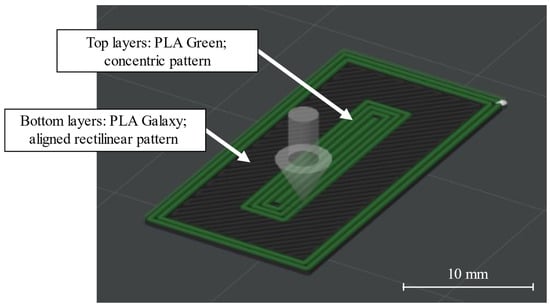
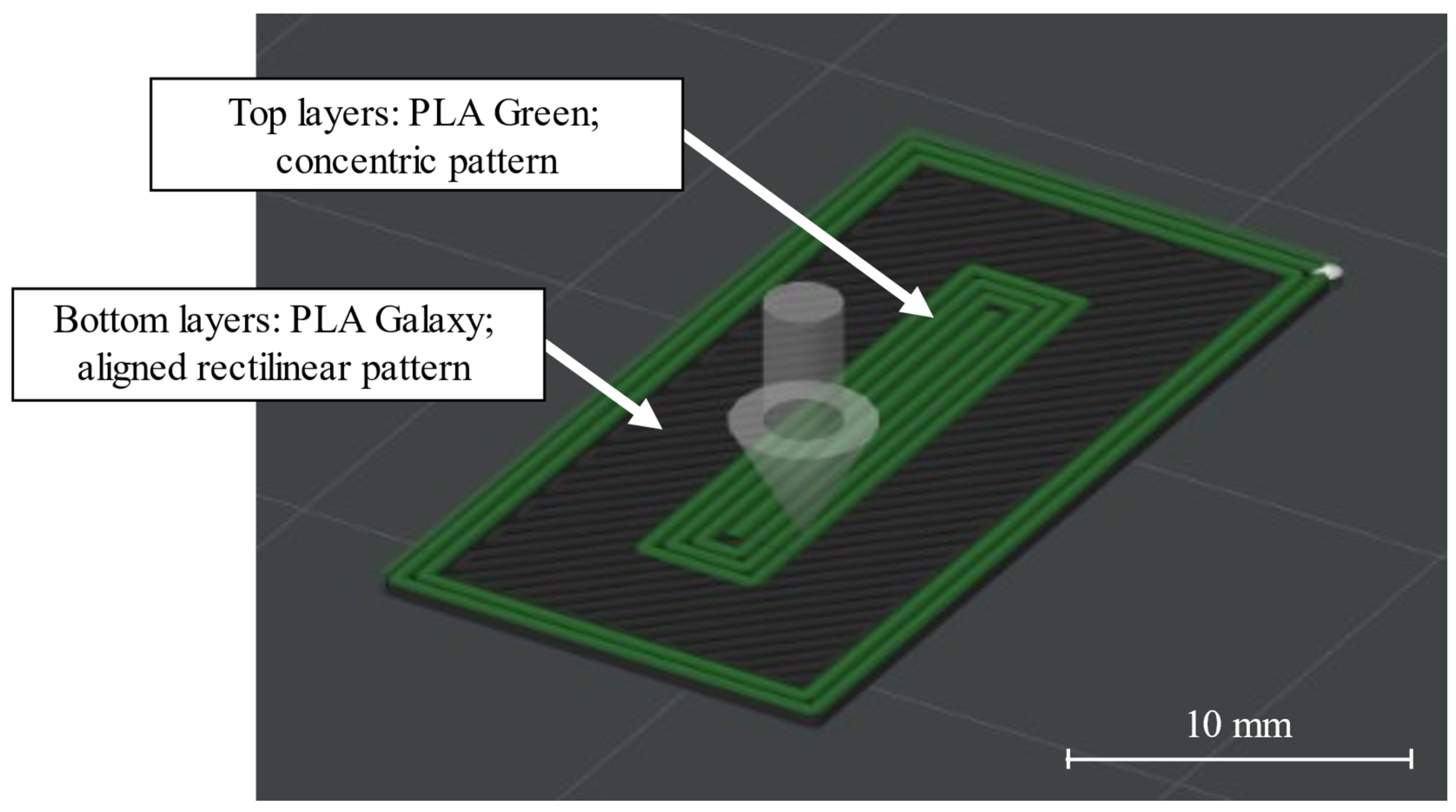
Bilayer plate specimens with dimensions of 20 × 10 mm and a total thickness of 0.6 mm served as primary test specimens for material characterization. Each specimen comprised six layers with a layer height of 0.1 mm and a line width of 0.42 mm, consisting of three bottom layers and three top layers, corresponding to a thickness ratio of 1:1. For the bottom layers, a concentric infill pattern was selected, while the top layers were printed with an aligned rectilinear infill pattern, as illustrated in Figure 2, resulting in a 45° angular orientation of the print line alignment.
Figure 2.
Infill pattern of the bilayer plate specimens.
2.3. Printing Parameters and Actuation Conditions
Specimens were prepared and sliced using Bambu Studio (version 1.10, Bambu Lab, Shenzhen, China). A Bambu Lab X1E 3D printer with a 0.4 mm nozzle diameter and either a smooth or textured build plate was selected as the fabrication platform. Slicer settings identified as critical for shape-shifting behavior included infill pattern (concentric versus rectilinear), printing speed (50–250 mm/s), printing temperature (190–230 °C), and build plate temperature (35–45 °C).
Thermal actuation was conducted in a water bath at controlled temperatures above ranging from 65 °C to 85 °C for a duration of 40 s, with thermal monitoring performed using a digital thermometer and subsequent geometric measurements conducted with a digital caliper. Following actuation, specimens were allowed to cool to room temperature in ambient air before dimensional data were recorded.
2.4. Demonstrator Development
Following the preliminary investigation of the bilayer plates, three functional demonstrators were progressively developed through a series of parallel demonstrator and support studies. For the fabrication of the demonstrators, Bambu Lab PVA, a water-soluble support material, was additionally employed to enable reliable printing of overhanging and intricate features. The initial ring demonstrator consisted of ten bilayer sections separated by small retention rings. The subsequent wave spring demonstrator employed linear bilayer plates stacked to enable axial expansion. The final grid demonstrator integrated thermomechanical preforming with direct 4D printing to achieve radial expansion consistent with vascular-stent-deployment mechanics.
3. Results
3.1. Material Characterization Studies
3.1.1. Material Combination and Activation Temperature Effects
Preliminary investigations were conducted on four material combinations, as detailed in Table 1. All samples were printed on a textured plate utilizing the original slicer settings (Bambu Studio slicer preset: 0.12 mm High Quality @BBL X1C) with minor modifications and were actuated at a temperature exceeding 80 °C for approximately 40 s. The main printing parameters are listed in Table 2.
Table 1.
Printing pattern and material combinations of the first printed bilayer plates (n = 1 per combination).
Table 2.
Initial set of main printing parameters.
In the following, the materials are abbreviated as follows whenever appropriate: PLA Basic Green as Green, PLA Basic White as White, and PLA Galaxy Nebulae as Galaxy; a material combination is correspondingly denoted, for example, as Galaxy–Green.
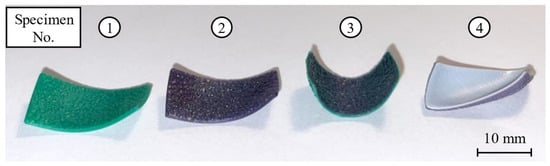
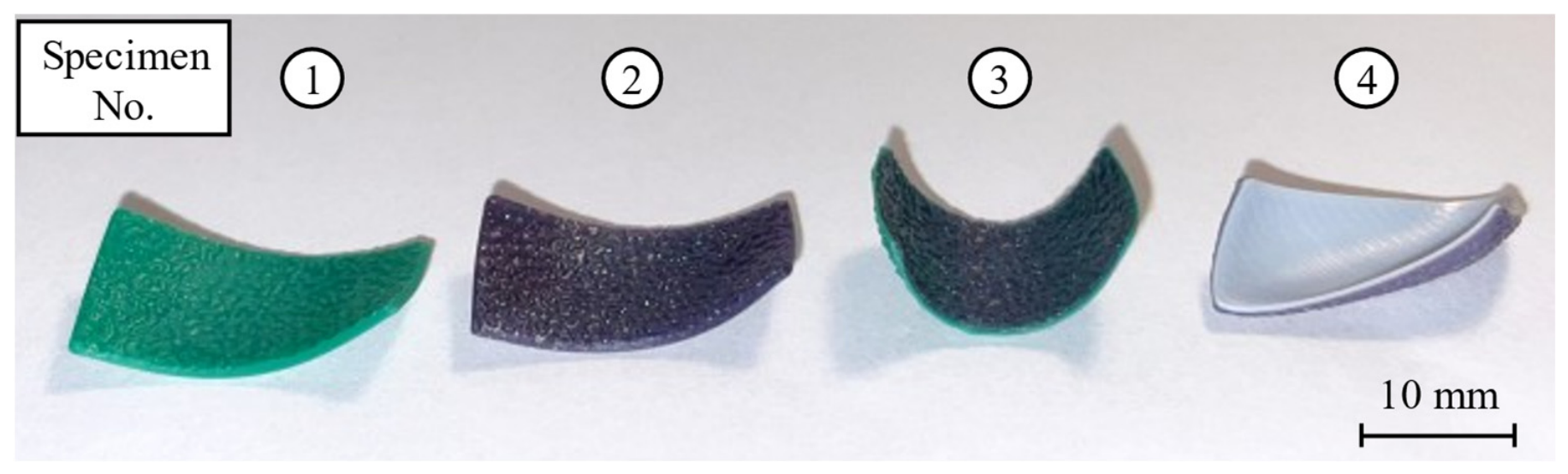
The investigation demonstrated pronounced shape-shifting behavior in all samples upon thermal actuation above 80 °C, as shown in Figure 3. Single-material bilayer plates (PLA Basic Green or PLA Galaxy only) exhibited consistent deformation with concave bending on the concentric-pattern side and additional twisting. The Galaxy–Green material combination produced symmetrical bending with concave geometry on the concentric-pattern side. In contrast, Galaxy–White combinations exhibited more pronounced twisting than single-material plates, with concave bending reversed to the rectilinear-pattern side.
Figure 3.
Shape-shifting behavior of the first printed bilayer plates (numbering as in Table 1).
In a subsequent study, the reproducibility of the deformation effects observed in the preliminary study, as well as the identification of suitable actuation conditions, were examined. For this purpose, slicer parameters were refined to reduce potential interference with the shape-shifting response, and new bilayer specimens were fabricated.
Two material pairings were selected for evaluation: PLA Galaxy Nebulae, characterized by a lower glass-transition temperature, printed as the bottom layers with a concentric infill pattern, whereas PLA Basic (Green or White) was printed as the top layers with a rectilinear pattern. The samples were subjected to thermal activation at three set temperatures (65 °C, 75 °C, and 85 °C) for 40 s each, enabling the assessment of temperature-dependent and material-specific deformation behavior as well as the reproducibility of actuation.
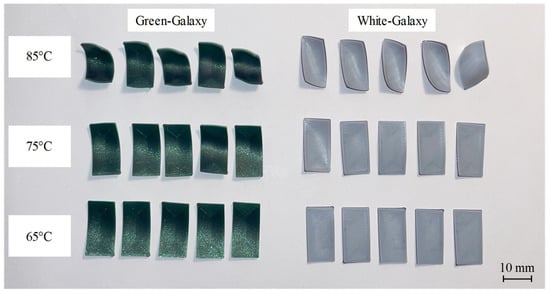
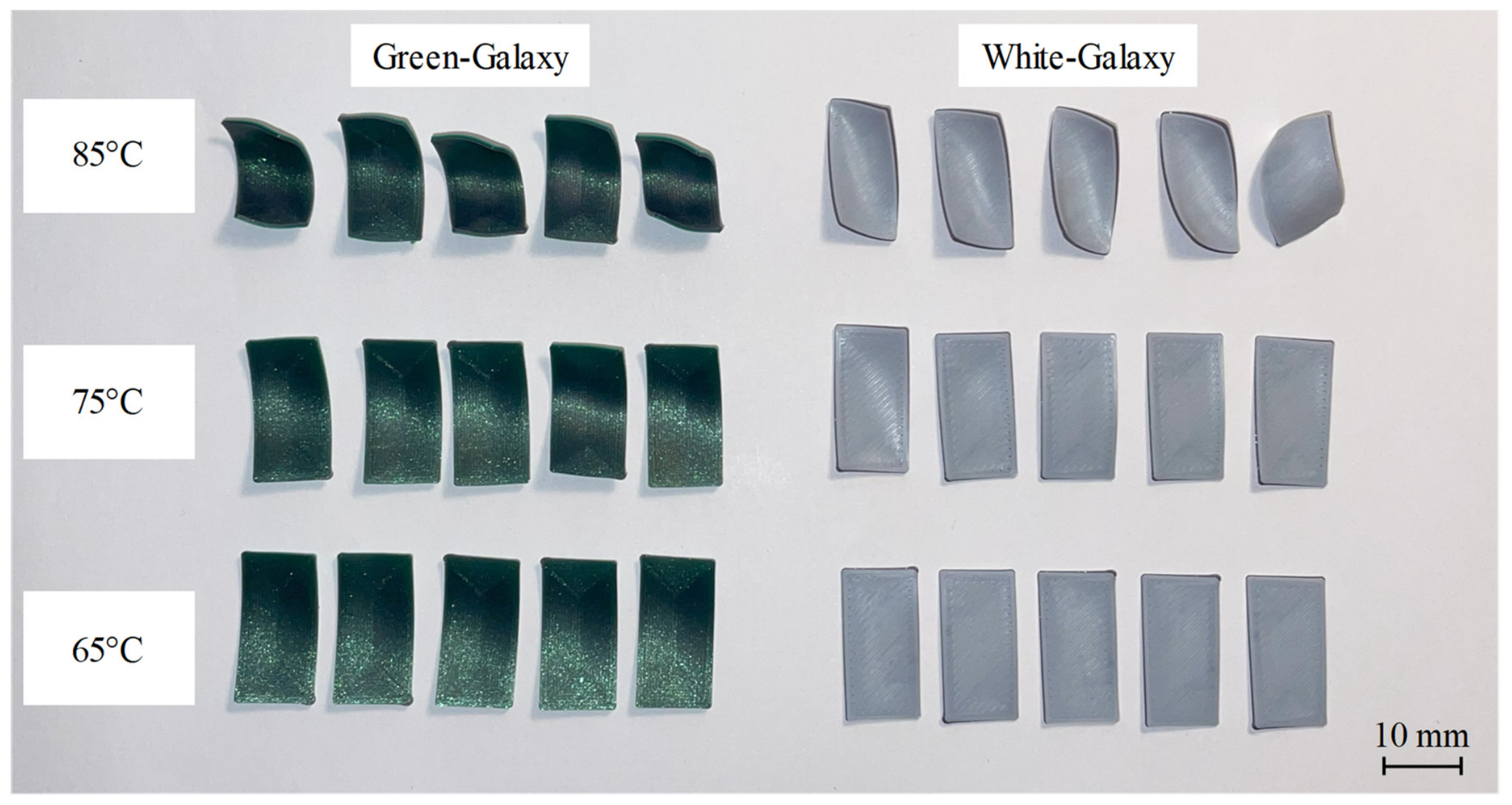
PLA Galaxy–Green exhibited a shift in its structural configuration across all examined temperatures, displaying a progressive increase in bending magnitude with rising temperature. However, this shift was accompanied by asymmetric bending and additional twisting, as illustrated in Figure 4. In contrast, PLA Galaxy–White showed only minor deformation at lower actuation temperatures; significant bending and twisting occurred at 85 °C, though the curvature direction remained inconsistent.
Figure 4.
Bilayer plates after actuation temperature test (n = 5 per combination).
Subsequent reproducibility studies (n = 20) confirmed that for the Galaxy–Green material combination, the primary deformation modes (bending and twisting) were achieved in 100% of the tested specimens, demonstrating robust functional consistency. Notably, all investigated samples exhibited an identical direction of shape transformation, with the only observed variance being in the intensity of the deformation. This variance was attributed to minor temperature fluctuations during the manual thermal activation process, which remained within the established functional window between 80 °C and 85 °C.
3.1.2. Printing Pattern Influence
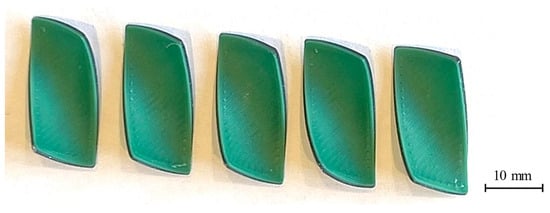
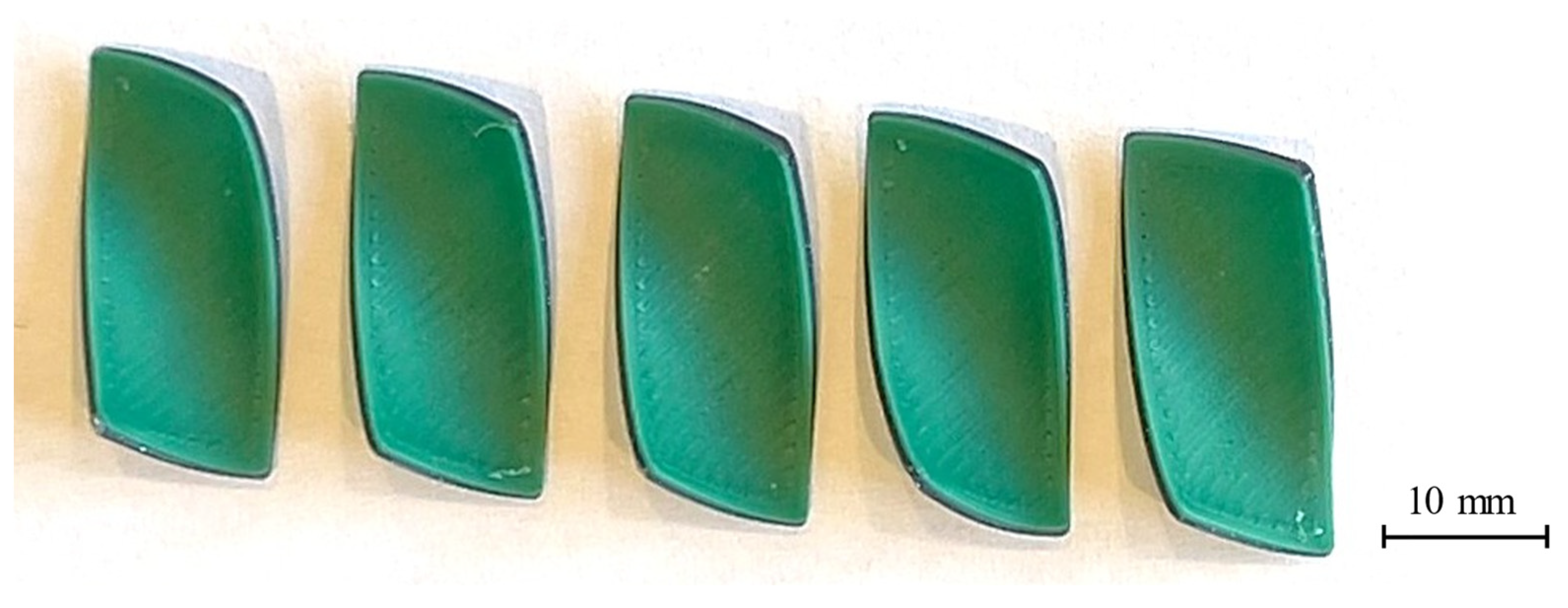
Previous investigations of Galaxy–Green specimens had consistently revealed concave deformation on the side featuring the concentric infill pattern. To verify whether this behavior was determined by geometry rather than material composition, pattern-swapping experiments were conducted to directly assess whether infill geometry exerts greater influence on shape-shifting than material properties. Five Galaxy–Green plates were fabricated with reversed pattern assignments, as shown in Figure 5, with the Galaxy layer printed using an aligned rectilinear pattern and the Green layer using a concentric pattern.
Figure 5.
Bilayer plate specimen with swapped infill patterns.
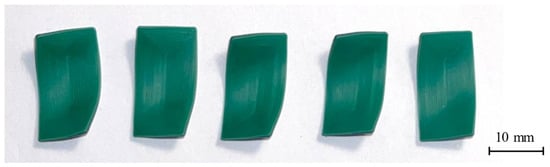
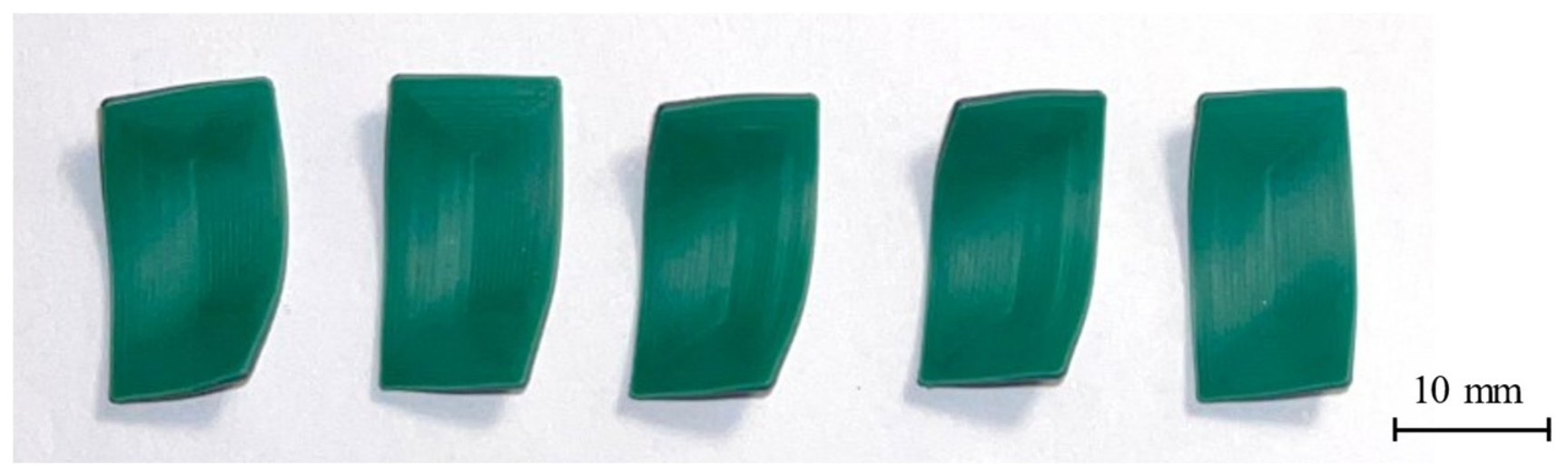
The newly prepared samples also exhibited concavity on the concentric-pattern side, as shown in Figure 6, consistent with the behavior observed in the previously investigated original samples. This indicates that, within the investigated configuration, printing pattern geometry acts as the primary determinant for the directionality of shape transformation. The 100% consistent reversal of concavity observed across all specimens in the pattern-swap series (n = 5) provides mechanistic evidence that for these PLA material pairings, the geometric layout dictates the orientation of the resulting deformation. The magnitude of bending and twisting remained comparable to that observed in the standard pattern assignments, indicating that while pattern geometry primarily governs deformation directionality, material thermal properties mainly modulate the deformation magnitude.
Figure 6.
Bilayer plates with swapped printing patterns (n = 5).
3.1.3. Printing Speed Effects
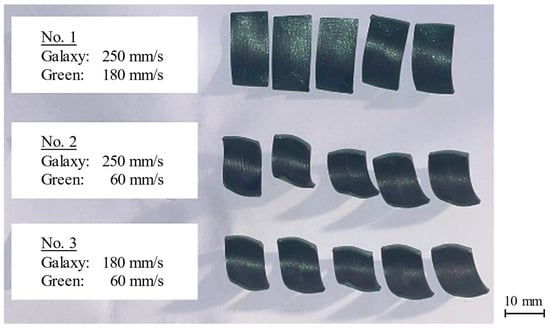
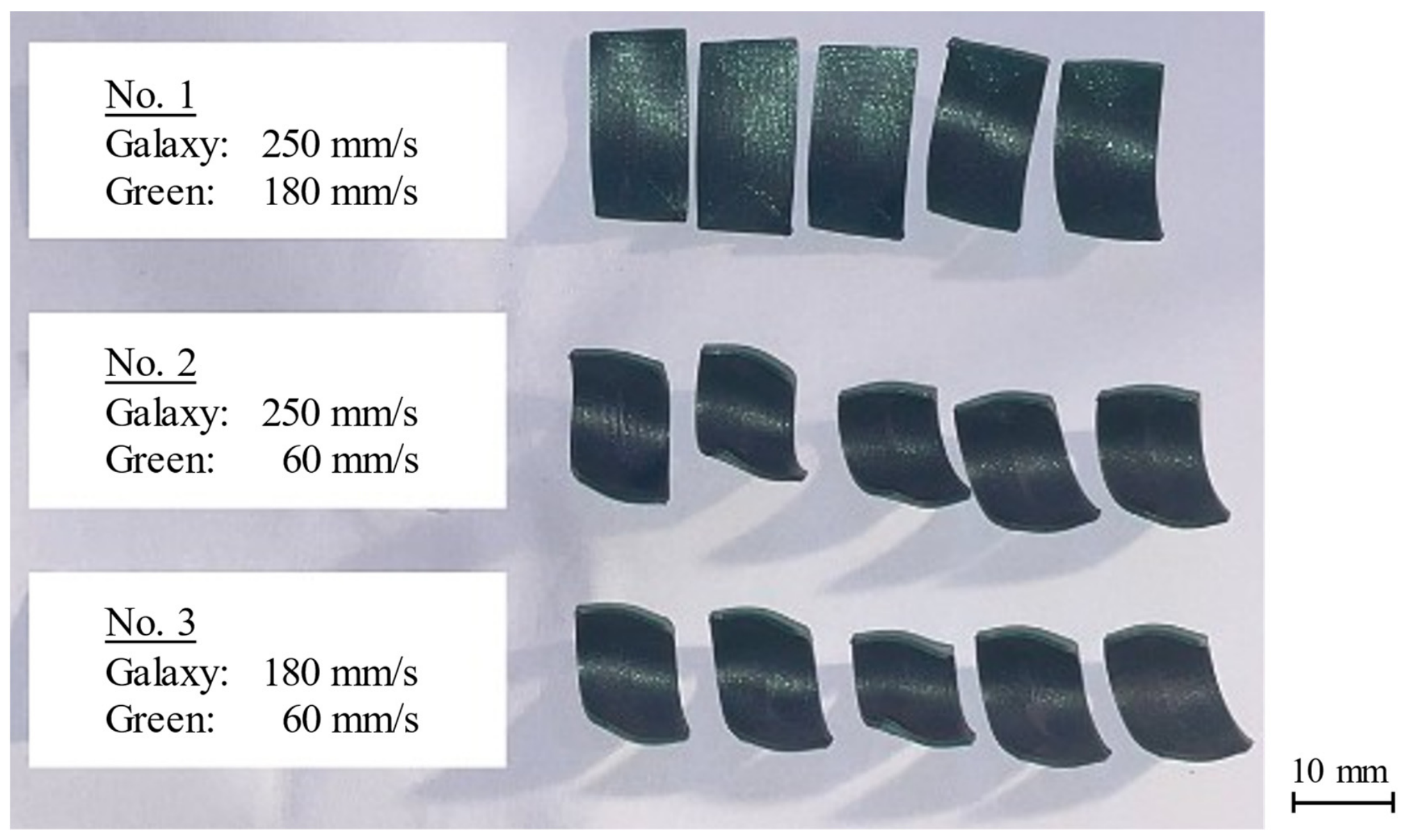
In a subsequent experiment, the influence of printing speed on the shape-shifting response of the bilayer specimens was investigated. Theoretically, higher printing speeds should induce greater pre-strain within the extruded filament, which is why layer-specific speeds were selected. Three printing speed combinations were defined for further investigation as summarised in Table 3.
Table 3.
Combinations of printing speeds.
The experiment revealed that greater differences in printing speeds between layers led to significantly more intense bending and twisting. As Figure 7 shows, combination No. 2 (250 mm/s + 60 mm/s) generated the most pronounced shape transformation. This is consistent with the observation that the magnitude of pre-strain and the intensity of actuated deformation appear to be linked to the printing speed differential, a phenomenon supported by the literature indicating that higher extrusion speeds increase molecular stretching and stored residual stresses [15,37].
Figure 7.
Effect of different printing speeds on actuation (n = 5 per combination).
3.1.4. Printing Temperature Effects
To examine the effect of printing temperature on the actuation response, an additional study was carried out based on the assumption that lower printing temperatures promote higher pre-strain in the extruded filament [35,44]. For the bottom layers (PLA Galaxy), the maximum recommended printing temperature of 230 °C was selected, whereas for the top layers (PLA Basic Green), the minimum recommended printing temperature of 190 °C was applied, thereby creating a pronounced temperature contrast between the two layers. This configuration was deliberately chosen to determine whether printing temperature or the thermo-mechanical material properties exert the dominant influence on the resulting shape-shifting behavior.
The results revealed that the bilayer plates deformed concavely toward the top-layer side (Figure 8), which was printed with the aligned rectilinear infill pattern. Notably, the direction of concavity differed from that of bilayer plates printed without an inter-layer temperature difference but actuated under identical conditions, indicating a reversal of the deformation tendency. These observations suggest that the temperature difference between the layers has a substantial impact on the shape-shifting behavior and can even invert the deformation concavity, suggesting that printing temperature acts as a primary factor, appearing to outweigh intrinsic thermo-mechanical material properties in this specific context.
Figure 8.
Visual validation of printing temperature effect (n = 5).
3.1.5. Build Plate Temperature
To complete the parametric investigation, the build plate temperature was evaluated. The specimens were printed at a build plate temperature of 35 °C, based on the hypothesis that a cooler build plate would induce higher pre-strain in the bottom layers; however, comparative analysis with samples printed at the manufacturer-recommended build plate temperature of 45 °C revealed no significant differences in deformation behavior. These findings indicate that build plate temperature exerts negligible influence on the shape-shifting response of the bilayer specimens.
3.2. Demonstrator Development and Evolution
3.2.1. Ring Demonstrator
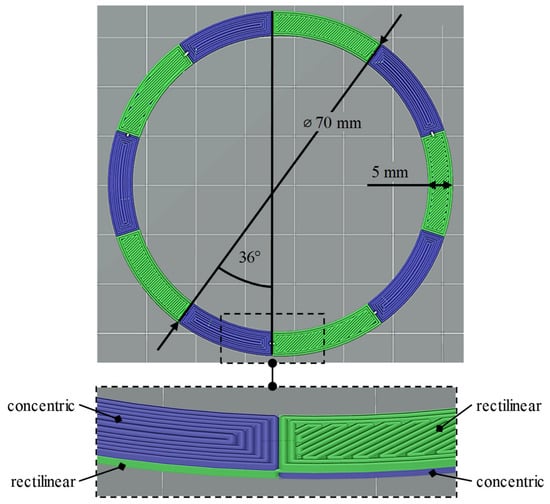
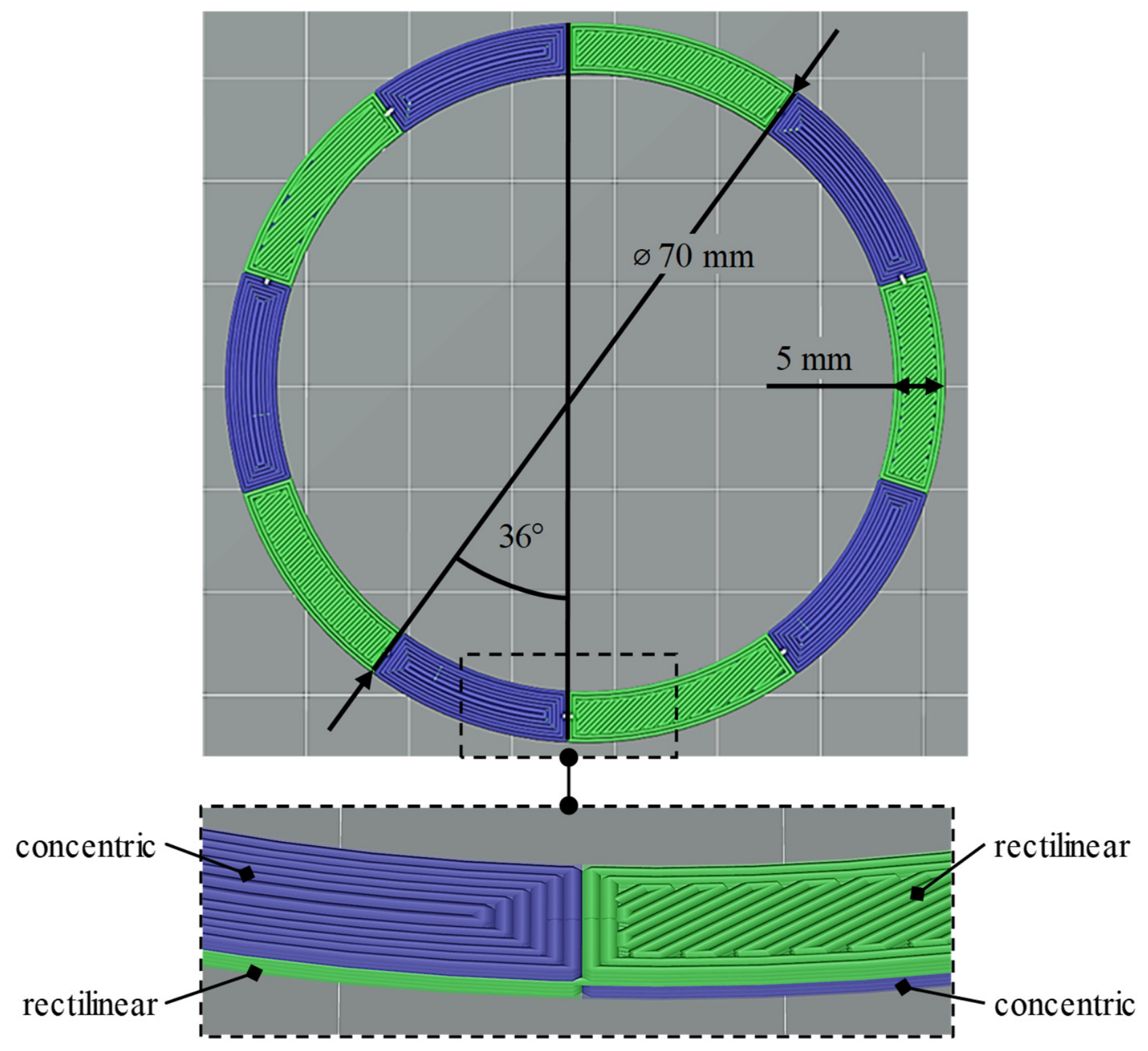
The ring demonstrator was designed with a diameter of 70 mm, a ring width of 5 mm, and a total height of 0.7 mm. The structure consisted of ten 36° bilayer sectors, where adjacent sectors featured a reverse assignment of infill patterns between the upper and lower halves to enable wave-like deformation. For the fabrication, combinations of PLA Basic White or Green and PLA Galaxy Nebulae were utilized, with the Galaxy sectors employing a concentric infill and the Basic material sectors utilizing an aligned rectilinear infill. Figure 9 shows the ring dimensions, the subdivision into individual ring segments, and the infill patterns. As can also be seen from the figure, the Galaxy sectors could be sliced consistently with the same infill orientation, whereas the rectilinear infill in the Green sectors produced segment-specific orientations in each section. The main printing parameters are shown in Table 4.
Figure 9.
Design dimensions and segment subdivision of the first ring demonstrator showing alternating infill patterns (concentric for Galaxy sectors, rectilinear for White/Green sectors).
Table 4.
Main printing parameters of the ring demonstrator.
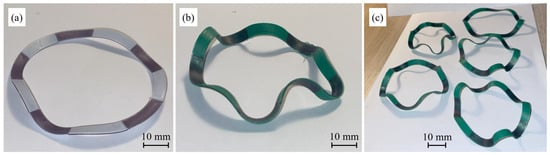
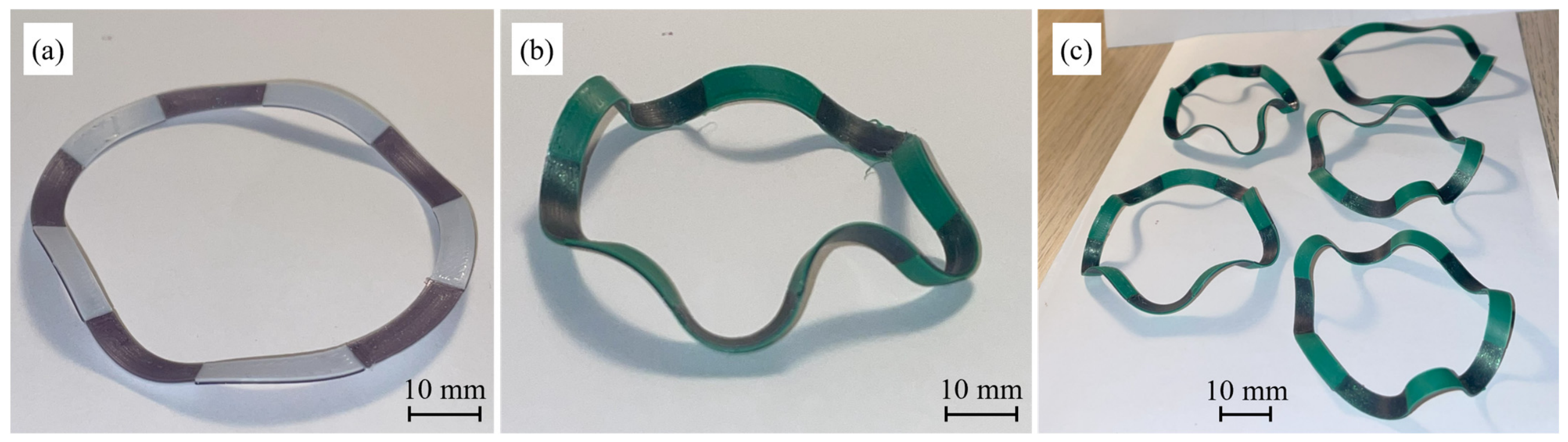
Upon thermal actuation, the bilayer sections showed clear bending that created irregular wave-like deformations and uneven ring expansion (Figure 10). The Galaxy–Green demonstrator exhibited a noticeably stronger shape-shifting effect than the Galaxy–White variant (Figure 10a,b), consistent with the superior actuation response previously observed for this material combination in the supporting bilayer plate studies. Consequently, the Galaxy–White combination was excluded from further investigation, and subsequent efforts focused on refining the Galaxy–Green ring design and assessing the reproducibility of the ring wave.
Figure 10.
Actuated ring demonstrators: (a) and (b) comparison of Galaxy–White and Galaxy–Green (n = 1 per combination), (c) reproducibility test (n = 5).
Reproducibility tests showed that almost all Galaxy–Green ring specimens (n = 5) displayed comparable deformation behavior, confirming a robust and repeatable shape-shifting effect for this configuration (Figure 10c). Following this verification, the cause of the remaining uneven deformation was examined in more detail. The irregular deformation leads to an elongated ring contour because certain bilayer segments deform more strongly than others. This effect was traced back to the printing angle configuration: in the aligned rectilinear infill, the printing lines do not consistently maintain a 45° orientation relative to the concentric infill areas, as shown in Figure 9, in contrast to the bilayer plates used in the supporting studies (see Figure 2). As a result, the overlap angle between infill patterns varies locally, producing non-uniform pre-strain and ultimately causing the uneven ring shape.
However, the ring demonstrators successfully proved the bilayer actuation concept works, but revealed limitations for creating the controlled cylindrical expansion needed for vascular stent applications.
3.2.2. Wave Spring Demonstrator
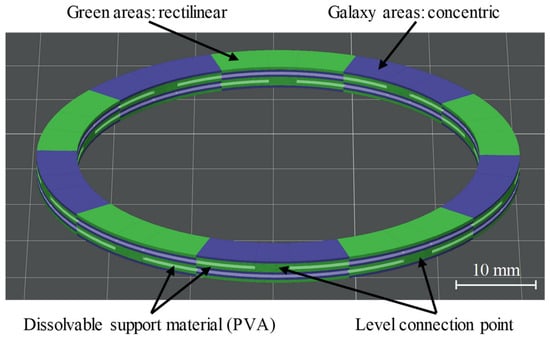
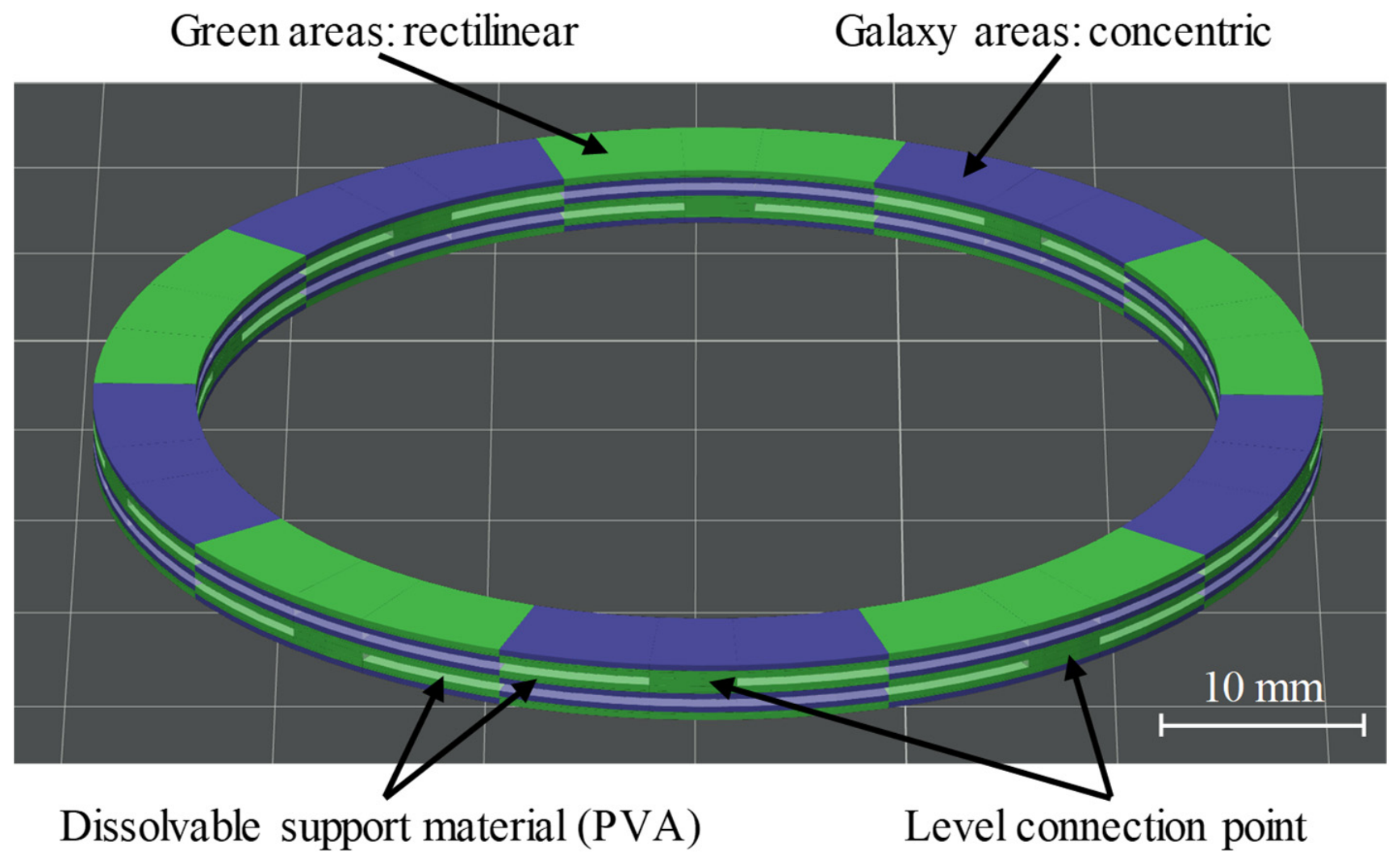
In the next step, a multi-level demonstrator was fabricated by stacking three ring geometries to form a spring wave structure, with each ring level separated by Bambu Lab PVA water-soluble support material, as illustrated in Figure 11. The experimental procedure is closely based on the work of Chapuis and Shea [44]. The resulting structure exhibits an outer diameter of 60 mm, width of 5 mm, and total height of 2.9 mm. The ring levels are connected at only five discrete points where the green material sides overlap, using PLA Green with a connection height of 0.4 mm, identical to the spacing between adjacent rings. Table 5 shows the main printing parameters.
Figure 11.
Structure of the wave spring demonstrator.
Table 5.
Main printing parameters of the wave spring demonstrator.
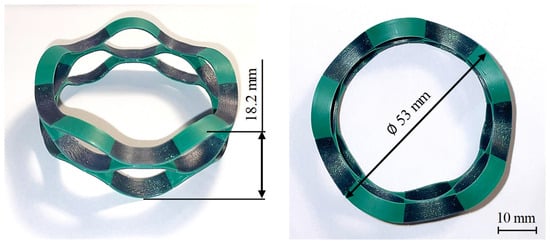
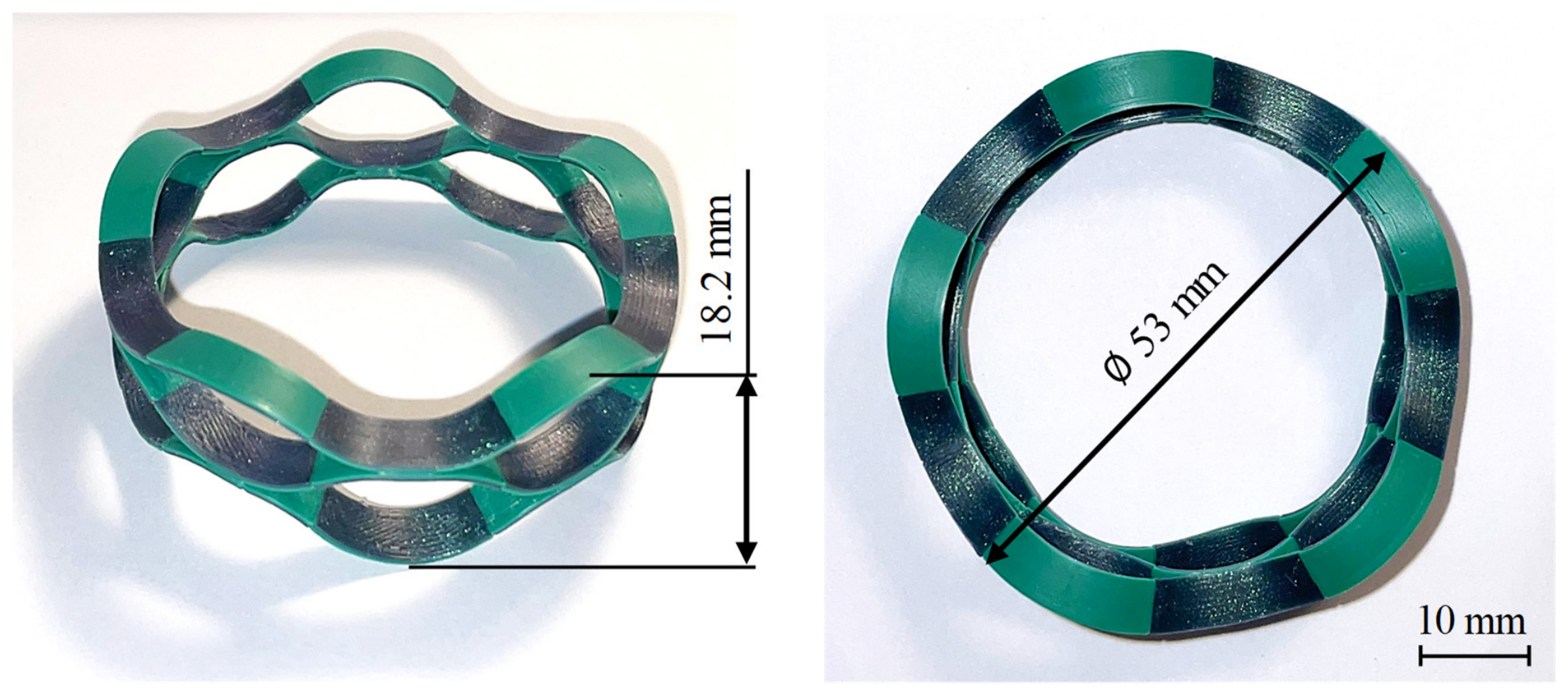
Remarkably, the stacked ring configuration demonstrated structural stability after actuation, maintaining a uniform ring shape when viewed from above (Figure 12). The inter-level connections appear to resist both shrinkage and elongation forces, producing a self-correcting effect within the spring wave structure. Post-actuation measurements revealed an average height of 18.2 mm (from 2.9 mm initial) and outer diameter reduction from 60 mm to approximately 53 mm, corresponding to a 526% height increase and nearly 12% diameter contraction.
Figure 12.
Actuated wave spring demonstrator (n = 1): top view (left), side view (right).
Wave spring geometries effectively demonstrated the capability to achieve controlled three-dimensional deformation through direct 4D printing, but the inverse relationship between axial and radial dimensions (expansion in one direction coupled with contraction in another) proved unsuitable for vascular stent applications requiring preferential radial expansion.
3.2.3. Grid Demonstrator
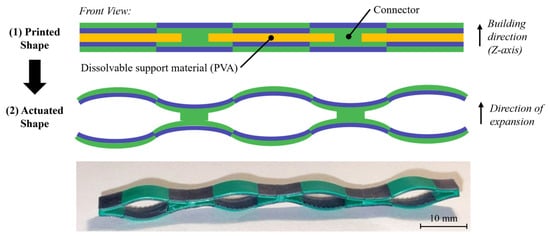
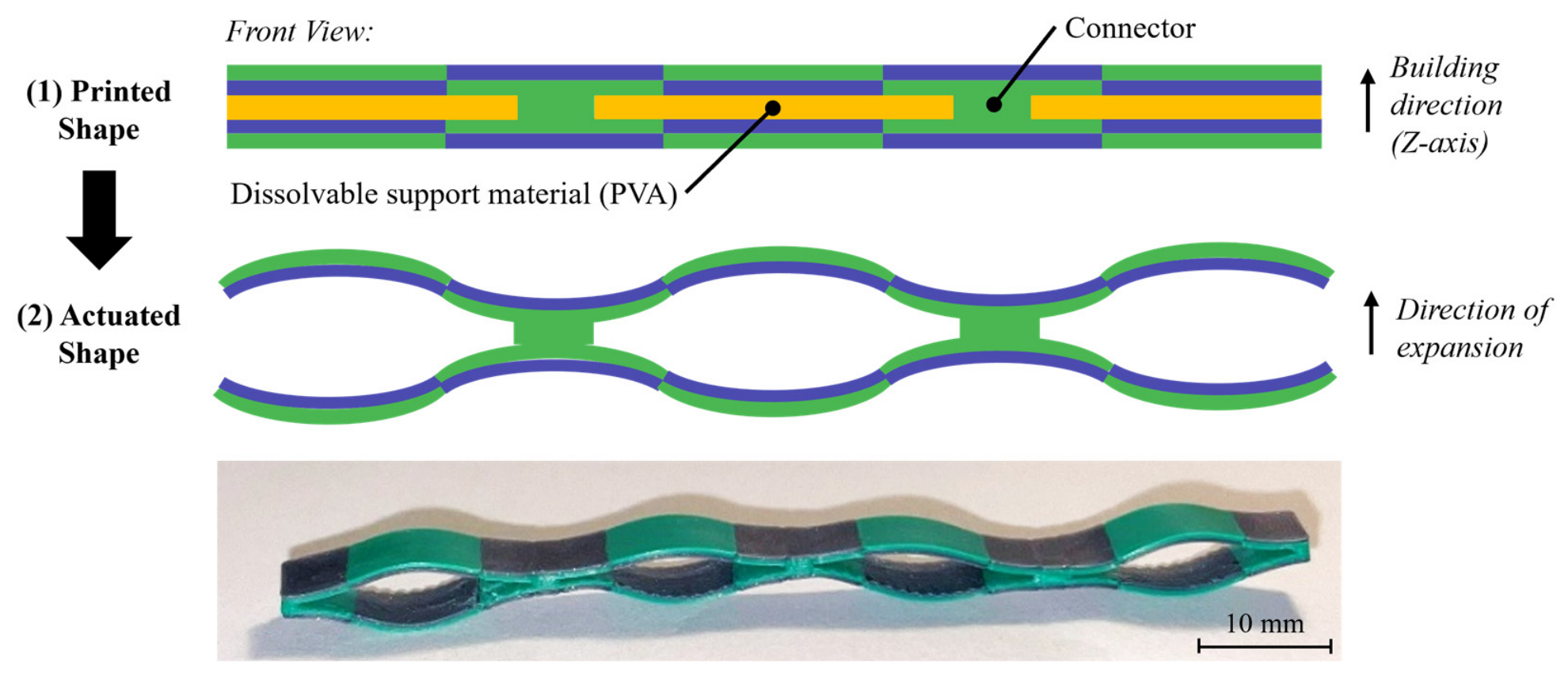
To achieve expansion in the radial rather than the axial direction, a different approach was investigated in the next step. Instead of relying on ring geometries, a new demonstrator concept based on linear plates was introduced, in which multiple bilayer plates are arranged to generate a wave-like effect after actuation. The first demonstrator consists of two stacked levels. This configuration enables expansion in the build-layer direction of the 3D printing process, as illustrated in Figure 13, and thus directly addresses the previously observed limitation in expansion direction. For this approach, the same printing parameters as for the wave spring were used; see Table 5.
Figure 13.
Schematic setup and operating principle of the linear plate demonstrator, showing the arrangement of bilayer plates and the resulting expansion direction after thermal actuation (n = 1).
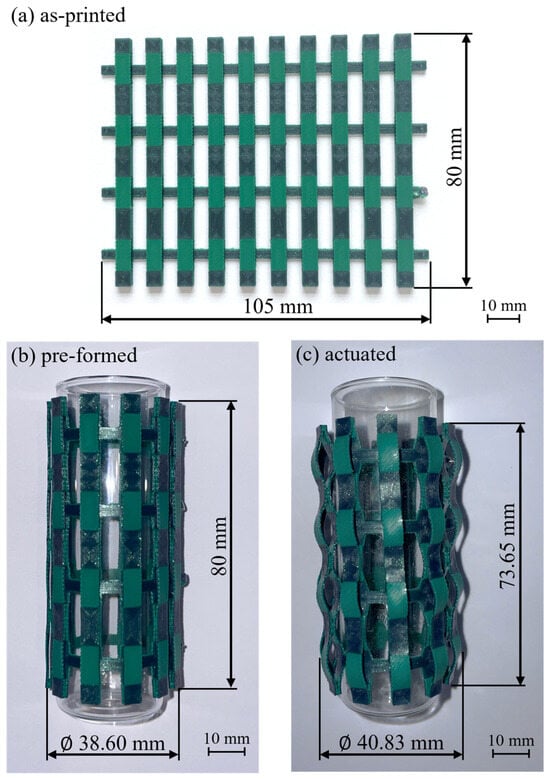
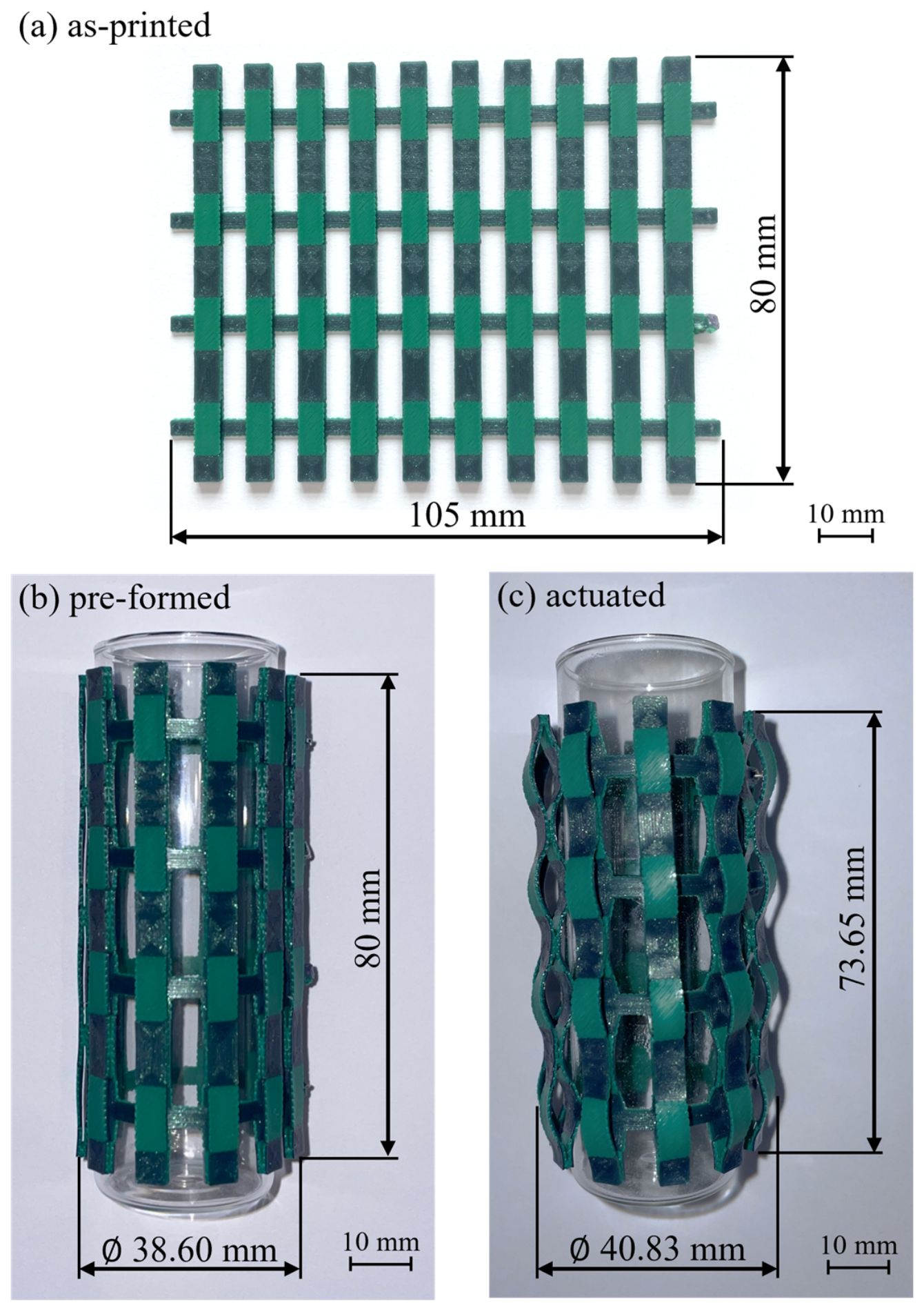
The final demonstrator, shown in Figure 14a, consists of a grid structure composed of ten linear plates interconnected by bilayer elements. The initial concept was to use identical bilayer plates at the connection points and within the linear plates so that bending at the joints would drive the structure into a cylindrical shape while simultaneously increasing its diameter during actuation. However, the bending effect at the connections proved too weak to generate the desired cylindrical geometry.
Figure 14.
Different states of the Grid Demonstrator (n = 1): (a) as-printed, (b) pre-formed, (c) actuated.
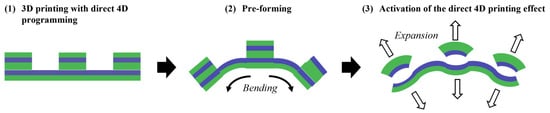
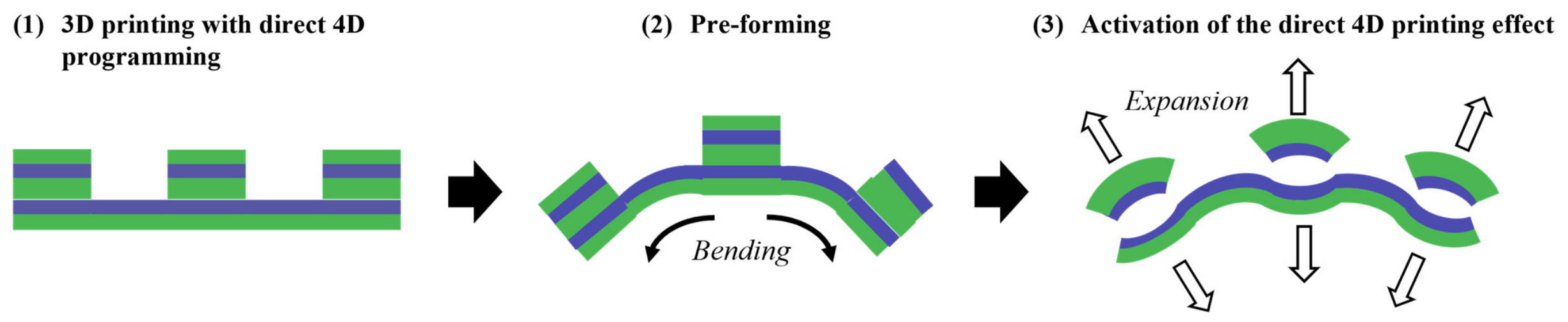
To overcome this limitation, a combined programming strategy was implemented, integrating conventional thermomechanical training with direct 4D-printing effects, as outlined in Figure 15. In the first step, the grid was manufactured using the direct 4D-printing approach, with the actuation behavior pre-programmed via the printing parameters. In the second step, thermomechanical preforming was performed by mechanically loading the grid while heating it to a temperature between 50 °C and 60 °C around the glass-transition temperature of the PLA materials in order to form it into a cylindrical shape without unintentionally activating the direct 4D effect. The grid was then wrapped around a glass cylinder with a diameter of 35 mm, secured at the ends with a metal wire, and fixed in this cylindrical configuration, resulting in the state shown in Figure 14b, in which no deformation of the bilayer plates is yet visible.
Figure 15.
Programming and operating principle of the grid demonstrator.
After these preparation steps, the component was actuated at temperatures above 80 °C to activate the direct 4D-printing effect pre-programmed into the linear plates. Although such actuation would normally restore the original flat printed shape, this was prevented by securing the open ends of the grid. The result was clear radial expansion, as shown in Figure 14c. Linear plate length decreased by ~8% (from 80 mm), and demonstrator diameter increased by ~5.8% (from 38.6 mm), confirming the feasibility of cylindrical expansion through combined programming.
The integrated strategy of direct programming during printing, followed by thermomechanical preforming and final thermal actuation, successfully achieved the target cylindrical geometry with controlled radial expansion in the grid demonstrator. However, the expansion magnitude remained modest relative to initial objectives and could be enhanced through greater structural complexity (e.g., additional stacked levels) or optimized geometric designs.
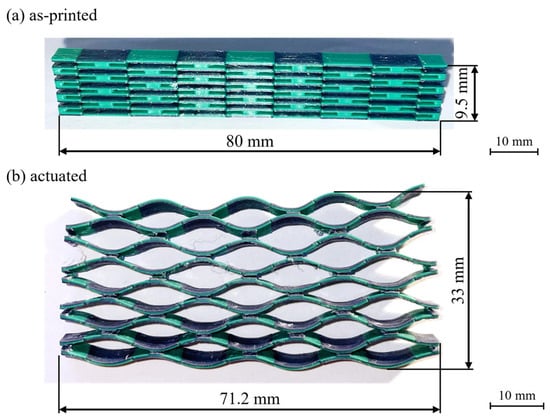
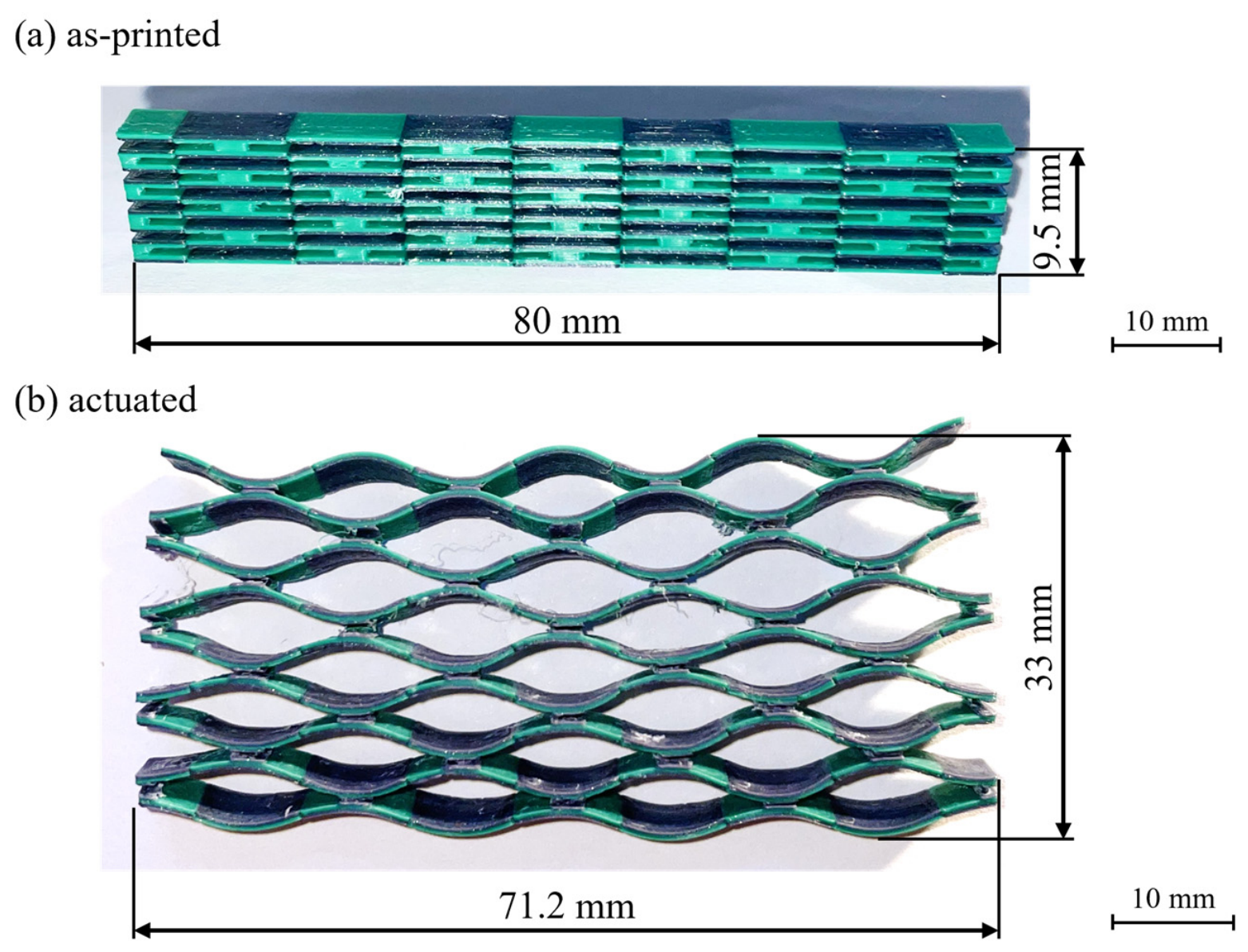
Applying this principle, a stacked linear-plate structure was developed, comprising nine levels separated by PVA supports, as depicted in the frontal view of Figure 16. The as-printed demonstrator measured 9.5 mm in height, expanding to an average of 33 mm post-actuation—a 248% height increase—while its initial 80 mm length contracted by 11%.
Figure 16.
Demonstrator consisting of 9 stacked linear plates (n = 1): (a) as-printed, (b) actuated.
The next logical approach, which has not yet been implemented, would be to combine the two approaches presented above into a single concept integrating the grid structure with stacked linear plates.
4. Discussion
4.1. Direct 4D Printing as a Potential Technological Route for Biomedical Manufacturing
The results provide evidence that direct 4D printing with thermally actuated PLA components constitutes a potential manufacturing approach for customized biomedical devices. The technique combines the geometric flexibility of additive manufacturing with the functional properties of shape memory polymers, enabling creation of components capable of autonomous shape transformation in response to thermal triggers. Compared to conventional metallic or SMA-based stents, PLA-based direct 4D printing offers distinct advantages: absence of imaging interference [25,45], biocompatibility and biodegradability [21,29], substantial cost reduction [12], and capacity for patient-specific customization through parametric printing modifications.
4.2. Key Parameter Influences on Shape-Shifting Behavior
The systematic investigation identified printing pattern, printing speed, and printing temperature as the primary factors controlling shape-transformation characteristics. Printing pattern geometry determines the orientation of internal stress distributions and thus the directionality of shape transformation (bending versus twisting), while printing speed and temperature magnitude influence the intensity of pre-strain accumulation and resulting deformation magnitude. These findings align with theoretical predictions regarding stress-mismatch mechanisms in bilayer actuators and validate the hypothesis that direct programming through parameter manipulation enables precise control over shape transformation without requiring separate post-processing.
The prominent influence of printing pattern over material thermal properties in determining deformation directionality represents an important mechanistic insight for PLA–PLA bilayer structures: geometric stress distribution patterns imprinted during manufacturing exert greater influence than inherent material property differences. Notably, our investigation was limited to PLA–PLA bilayers, warranting validation across diverse material combinations. This finding suggests that controlled parameter optimization of printing geometry may offer a more efficient path toward enhanced actuation performance than materials innovation alone, though further comparative studies are needed to substantiate this claim.
4.3. Demonstrator Geometry and Expansion Performance
Progressive demonstrator development revealed that achieving controlled three-dimensional shape transformation in cylindrical geometries suitable for vascular applications requires the integration of multiple design strategies. The primary dimensional changes across all demonstrators are summarized in Table 6. The final grid demonstrator validated the successful integration of thermomechanical preforming and direct 4D printing, although achieving radial expansion through pure direct 4D printing alone remains geometrically and mechanistically challenging. The modest expansion achieved (+5.8%) serves as a foundational proof-of-concept validation rather than clinical-equivalent performance. Compared to 4D-printed PLA stents with optimized negative Poisson’s ratio (NPR) geometries, which have shown expansion increases of up to 36%, the 5.8% expansion of the current grid prototype is limited but serves to validate the underlying process-integrated programming route.
Table 6.
Dimensional changes across demonstrators.
Notably, the reported 5.8% radial expansion represents a global assembly metric that is mathematically constrained by the initial setup. The initial total diameter of 38.6 mm was largely defined by the underlying glass tube, which remained dimensionally stable throughout thermal activation. In contrast, the active 2-stack grid element itself (see linear plate demonstrator, Figure 13) exhibited a significant local expansion of approximately 62%, increasing in height from 1.8 mm to 2.92 mm. Because the total diameter is the sum of the constant inner support and the expanding outer layers, the large initial radius mathematically ‘dilutes’ the relative expansion percentage of the total assembly. Consequently, if a smaller initial diameter had been utilized for the support volume, the assembly would have exhibited a relative total expansion much closer to the inherent 62% capability of the process-integrated programming.
Expansion performance could potentially be enhanced through several approaches:
- Increased demonstrator complexity with additional stacked levels to amplify cumulative expansion effects,
- optimization of linear plate geometry and connection element design to maximize expansion efficiency,
- investigation of alternative printing strategies such as 5-axis printing on curved surfaces to achieve native cylindrical printing, or
- hybrid strategies combining direct 4D printing with conventional thermomechanical preforming to achieve optimal expansion characteristics.
4.4. Practical Challenges and Clinical Translation Pathways
Several significant challenges remain for clinical translation of PLA-based direct 4D-printing stents. The size of medical 3D-printed components must be reduced to meet clinical requirements for minimally invasive procedures and precise vascular applications, presenting a significant challenge for the FFF printing process due to resolution limitations. Resolution enhancements could be achieved by utilizing smaller nozzle diameters such as 0.1 mm or 0.2 mm, which can significantly enhance printing precision and allow for the fabrication of finer structural features. Biocompatibility and biofunctionality require comprehensive evaluation beyond basic material properties, including toxicology studies, inflammatory response assessment, and long-term biodegradation characterization [45,46]. The actuation temperature (approximately 80 °C for the current formulation) substantially exceeds physiological temperatures, requiring either material modification through chemical doping or alternative trigger mechanisms such as magnetic or light-based activation incompatible with biological tissue. Furthermore, critical clinical performance indicators—such as radial force, recoil, fatigue resistance, and flow compatibility—were not evaluated in this study and remain essential requirements for future development iterations.
However, some limitations primarily apply to permanently implantable stents. The demonstrated mechanism enables intraoperative or temporary applications, where thermal actuation occurs under controlled surgical conditions before device removal, substantially mitigating biocompatibility, degradation, and temperature concerns.
Material modification through chemical alteration of PLA properties represents a promising avenue for reducing actuation temperature toward more clinically acceptable ranges [25,31]. Cross-linking, plasticizer incorporation, or copolymer development could potentially lower values to enable actuation at physiological or near-physiological temperatures [9,18,32]. However, such modifications would also necessitate adaptation of the additive manufacturing process to maintain printability and shape memory performance, while carrying inherent risks of altered biocompatibility and biodegradation kinetics requiring thorough re-evaluation.
Alternative preforming and actuation mechanisms could circumvent heating limitations. Magnetic actuation incorporating ferromagnetic particles could enable remote triggering without bulk heating, though biocompatibility of magnetite nanoparticles requires careful evaluation. Light-based triggering through incorporated photosensitive materials represents another possibility, though practical clinical implementation faces substantial challenges regarding light penetration through biological tissue.
Regulatory pathway navigation represents another critical consideration. Medical device classification, biocompatibility testing requirements, and clinical trial design would follow substantially different trajectories than conventional metallic stents, given the biodegradable and thermally actuated nature of PLA devices. Early engagement with regulatory authorities (FDA, CE, equivalent bodies) during development would streamline eventual commercialization.
5. Conclusions
This study presents a technological proof-of-concept regarding the potential of direct 4D printing with thermally actuated PLA components for creating customizable, self-deploying biomedical devices. Through systematic application of the SPALTEN problem-solving methodology and action research, critical parameters governing shape transformation were identified and optimized. Printing speed, pattern geometry, and temperature were identified as primary factors controlling both the directionality and magnitude of actuation behavior. The final grid demonstrator achieved approximately 5.8% radial expansion upon thermal actuation, providing evidence for the mechanistic feasibility of achieving cylindrical expansion through direct 4D-printing strategies.
However, further investigation is needed to reduce the size of medical 3D-printed components, optimize material properties, reduce actuation temperatures toward physiological ranges, and develop clinical translation pathways. Potential future directions include chemical modification of PLA to lower the glass-transition temperature, investigation of alternative trigger mechanisms (magnetic, light-based) incompatible with thermal-activation limitations, exploration of 5-axis printing on cylindrical surfaces for native stent geometry fabrication, and comprehensive biocompatibility and biodegradation studies required for regulatory approval.
The convergence of additive manufacturing capabilities with smart material properties through direct 4D printing opens genuinely novel possibilities for patient-specific, functionally optimized medical devices. While substantial development remains before clinical implementation, the fundamental technological and mechanistic feasibility has been explored, providing a foundation for future development.
Author Contributions
Conceptualization, S.J. and S.S. (Steffen Schrock); methodology, S.J., S.S. (Steffen Schrock) and S.S. (Sabina Stanar); software, validation, formal analysis and investigation, S.S. (Sabina Stanar); resources, S.S. (Steffen Schrock); data curation and visualization, S.S. (Steffen Schrock) and S.S. (Sabina Stanar); writing—original draft preparation, S.S. (Sabina Stanar); writing—review and editing, S.J., S.S. (Steffen Schrock), S.S. (Sabina Stanar) and D.V.; supervision and project administration, S.J. and D.V. All authors have read and agreed to the published version of the manuscript.
Funding
This research received no external funding. The APC was funded by the Open Access Publication Fund of the Offenburg University of Applied Sciences.
Data Availability Statement
Data available on request from the authors.
Acknowledgments
During the preparation of this manuscript, the authors used NotebookLM (Google, Mountain View, CA, USA; accessed between February 2026 and August 2026) for the purposes of improving spelling and grammar. The authors have reviewed and edited the output and take full responsibility for the content of this publication.
Conflicts of Interest
The authors declare no conflicts of interest.
Abbreviations
The following abbreviations are used in this manuscript:
| 4D | Four-dimensional |
| PLA | Polylactic acid |
| FFF | Fused filament fabrication |
| SMP | Shape memory polymers |
| SMM | Shape memory materials |
| SMA | Shape memory alloys |
| SMC | Shape memory ceramics |
| Tg | Glass transition temperature |
| MRI | Magnetic resonance imaging |
| SPALTEN | Situation analysis, problem containment, alternative solutions, selection of solutions, consequences analysis, make decision, recapitulate and learn |
| PVA | Polyvinyl alcohol |
| FDA | Food and Drug Administration |
| CE | Conformité Européenne |
References
- Tibbits, S. 4D Printing: Multi-Material Shape Change. Archit. Des. 2014, 84, 116–121. [Google Scholar] [CrossRef] [Scilit]
- Momeni, F.; Hassani, N.S.M.M.; Liu, X.; Ni, J. A review of 4D printing. Mater. Des. 2017, 122, 42–79. [Google Scholar] [CrossRef] [Scilit]
- Chen, J.; Virrueta, C.; Zhang, S.; Mao, C.; Wang, J. 4D printing: The spotlight for 3D printed smart materials. Mater. Today 2024, 77, 66–91. [Google Scholar] [CrossRef] [Scilit]
- Yousefi, M.A.; Rahmatabadi, D.; Ahmadi, M.; Bayati, A.; Baniassadi, M.; Laachachi, A.; Silberschmidt, V.V.; George, D.; Baghani, M. 4D printing for minimally invasive biomedical applications: Programmable smart materials for deployable devices, drug delivery, and tissue regeneration. Mater. Des. 2026, 263, 115555. [Google Scholar] [CrossRef] [Scilit]
- Hu, J.; Zhu, Y.; Huang, H.; Lu, J. Recent advances in shape–memory polymers: Structure, mechanism, functionality, modeling and applications. Prog. Polym. Sci. 2012, 37, 1720–1763. [Google Scholar] [CrossRef] [Scilit]
- Ge, Q.; Qi, H.J.; Dunn, M.L. Active materials by four-dimension printing. Appl. Phys. Lett. 2013, 103, 131901. [Google Scholar] [CrossRef] [Scilit]
- Hager, M.D.; Greil, P.; Leyens, C.; van der Zwaag, S.; Schubert, U.S. Self-healing materials. Adv. Mater. 2010, 22, 5424–5430. [Google Scholar] [CrossRef] [Scilit] [PubMed]
- White, S.R.; Sottos, N.R.; Geubelle, P.H.; Moore, J.S.; Kessler, M.R.; Sriram, S.R.; Brown, E.N.; Viswanathan, S. Autonomic healing of polymer composites. Nature 2001, 409, 794–797. [Google Scholar] [CrossRef] [Scilit] [PubMed]
- Senatov, F.S.; Niaza, K.V.; Zadorozhnyy, M.Y.; Maksimkin, A.V.; Kaloshkin, S.D.; Estrin, Y.Z. Mechanical properties and shape memory effect of 3D-printed PLA-based porous scaffolds. J. Mech. Behav. Biomed. Mater. 2016, 57, 139–148. [Google Scholar] [CrossRef] [Scilit] [PubMed]
- Zhang, Z.; Demir, K.G.; Gu, G.X. Developments in 4D-printing: A review on current smart materials, technologies, and applications. Int. J. Smart Nano Mater. 2019, 10, 205–224. [Google Scholar] [CrossRef] [Scilit]
- Kuang, X.; Roach, D.J.; Wu, J.; Hamel, C.M.; Ding, Z.; Wang, T.; Dunn, M.L.; Qi, H.J. Advances in 4D Printing: Materials and Applications. Adv. Funct. Mater. 2019, 29, 1805290. [Google Scholar] [CrossRef] [Scilit]
- Ding, Z.; Weeger, O.; Qi, H.J.; Dunn, M.L. 4D rods: 3D structures via programmable 1D composite rods. Mater. Des. 2018, 137, 256–265. [Google Scholar] [CrossRef] [Scilit]
- Yang, Y.; Chen, Y.; Wei, Y.; Li, Y. 3D printing of shape memory polymer for functional part fabrication. Int. J. Adv. Manuf. Technol. 2016, 84, 2079–2095. [Google Scholar] [CrossRef] [Scilit]
- Ding, Z.; Yuan, C.; Peng, X.; Wang, T.; Qi, H.J.; Dunn, M.L. Direct 4D printing via active composite materials. Sci. Adv. 2017, 3, e1602890. [Google Scholar] [CrossRef] [Scilit] [PubMed]
- Alshebly, Y.S.; Nafea, M.; Almurib, H.A.F.; Sultan Mohamed Ali, M.; Mohd Faudzi, A.A.; Tan, M.T.T. Development of 4D Printed PLA Actuators with an Induced Internal Strain Upon Printing. In 2021 IEEE International Conference on Automatic Control & Intelligent Systems (I2CACIS), Shah Alam, Malaysia, 26 June 2021; IEEE: New York, NY, USA, 2021; pp. 41–45. [Google Scholar]
- Mao, Y.; Yu, K.; Isakov, M.S.; Wu, J.; Dunn, M.L.; Jerry Qi, H. Sequential Self-Folding Structures by 3D Printed Digital Shape Memory Polymers. Sci. Rep. 2015, 5, 13616. [Google Scholar] [CrossRef] [Scilit] [PubMed]
- Rahmatabadi, D.; Khajepour, M.; Bayati, A.; Mirasadi, K.; Amin Yousefi, M.; Shegeft, A.; Ghasemi, I.; Baniassadi, M.; Abrinia, K.; Bodaghi, M.; et al. Advancing sustainable shape memory polymers through 4D printing of polylactic acid-polybutylene adipate terephthalate blends. Eur. Polym. J. 2024, 216, 113289. [Google Scholar] [CrossRef] [Scilit]
- Mehrpouya, M.; Vahabi, H.; Janbaz, S.; Darafsheh, A.; Mazur, T.R.; Ramakrishna, S. 4D printing of shape memory polylactic acid (PLA). Polymer 2021, 230, 124080. [Google Scholar] [CrossRef] [Scilit]
- Farah, S.; Anderson, D.G.; Langer, R. Physical and mechanical properties of PLA, and their functions in widespread applications—A comprehensive review. Adv. Drug Deliv. Rev. 2016, 107, 367–392. [Google Scholar] [CrossRef] [Scilit] [PubMed]
- Middleton, J.C.; Tipton, A.J. Synthetic biodegradable polymers as orthopedic devices. Biomaterials 2000, 21, 2335–2346. [Google Scholar] [CrossRef] [Scilit] [PubMed]
- Hussain, M.; Khan, S.M.; Shafiq, M.; Abbas, N. A review on PLA-based biodegradable materials for biomedical applications. Giant 2024, 18, 100261. [Google Scholar] [CrossRef] [Scilit]
- Hatami, H.; Almahmeed, W.; Kesharwani, P.; Sahebkar, A. Exploring the potential of 3D and 4D printing in advancing stent manufacturing for cardiovascular diseases. Eur. Polym. J. 2024, 212, 113035. [Google Scholar] [CrossRef] [Scilit]
- Rezwan, K.; Chen, Q.Z.; Blaker, J.J.; Boccaccini, A.R. Biodegradable and bioactive porous polymer/inorganic composite scaffolds for bone tissue engineering. Biomaterials 2006, 27, 3413–3431. [Google Scholar] [CrossRef] [Scilit] [PubMed]
- Zhang, W.; Zhang, F.; Lan, X.; Leng, J.; Wu, A.S.; Bryson, T.M.; Cotton, C.; Gu, B.; Sun, B.; Chou, T.-W. Shape memory behavior and recovery force of 4D printed textile functional composites. Compos. Sci. Technol. 2018, 160, 224–230. [Google Scholar] [CrossRef] [Scilit]
- Holman, H.; Kavarana, M.N.; Rajab, T.K. Smart materials in cardiovascular implants: Shape memory alloys and shape memory polymers. Artif. Organs 2021, 45, 454–463. [Google Scholar] [CrossRef] [Scilit] [PubMed]
- Nishio, S.; Kosuga, K.; Igaki, K.; Okada, M.; Kyo, E.; Tsuji, T.; Takeuchi, E.; Inuzuka, Y.; Takeda, S.; Hata, T.; et al. Long-Term (10 Years) clinical outcomes of first-in-human biodegradable poly-l-lactic acid coronary stents: Igaki-Tamai stents. Circulation 2012, 125, 2343–2353. [Google Scholar] [CrossRef] [Scilit] [PubMed]
- Mattesini, A.; Bartolini, S.; Sorini Dini, C.; Valente, S.; Parodi, G.; Stolcova, M.; Meucci, F.; Di Mario, C. The DESolve novolimus bioresorbable Scaffold: From bench to bedside. J. Thorac. Dis. 2017, 9, S950–S958. [Google Scholar] [CrossRef] [Scilit] [PubMed]
- Iqbal, J.; Gunn, J.; Serruys, P.W. Coronary stents: Historical development, current status and future directions. Br. Med. Bull. 2013, 106, 193–211. [Google Scholar] [CrossRef] [Scilit] [PubMed]
- Wu, Z.; Zhao, J.; Wu, W.; Wang, P.; Wang, B.; Li, G.; Zhang, S. Radial Compressive Property and the Proof-of-Concept Study for Realizing Self-expansion of 3D Printing Polylactic Acid Vascular Stents with Negative Poisson’s Ratio Structure. Materials 2018, 11, 1357. [Google Scholar] [CrossRef] [Scilit] [PubMed]
- Lendlein, A.; Kelch, S. Shape-memory polymers. Angew. Chem. Int. Ed. Engl. 2002, 41, 2035–2057. [Google Scholar] [CrossRef] [Scilit]
- Small, W.; Singhal, P.; Wilson, T.S.; Maitland, D.J. Biomedical applications of thermally activated shape memory polymers. J. Mater. Chem. 2010, 20, 3356–3366. [Google Scholar] [CrossRef] [Scilit] [PubMed]
- Behl, M.; Lendlein, A. Shape-memory polymers. Mater. Today 2007, 10, 20–28. [Google Scholar] [CrossRef] [Scilit]
- Li, G.; Wang, A. Cold, warm, and hot programming of shape memory polymers. J. Polym. Sci. Part B Polym. Phys. 2016, 54, 1319–1339. [Google Scholar] [CrossRef] [Scilit]
- Nezhad, I.S.; Golzar, M.; Behravesh, A.h.; Zare, S. Comprehensive study on shape shifting behaviors in FDM-based 4D printing of bilayer structures. Int. J. Adv. Manuf. Technol. 2022, 120, 959–974. [Google Scholar] [CrossRef] [Scilit]
- Zou, B.; Song, C.; He, Z.; Ju, J. Encoding of direct 4D printing of isotropic single-material system for double-curvature and multimodal morphing. Extrem. Mech. Lett. 2022, 54, 101779. [Google Scholar] [CrossRef] [Scilit]
- Zhang, J.; Ji, D.; Yang, X.; Zhou, X.; Yin, Z. 4D printing of bilayer structures with programmable shape-shifting behavior. J. Mater. Sci. 2022, 57, 21309–21323. [Google Scholar] [CrossRef] [Scilit]
- Kačergis, L.; Mitkus, R.; Sinapius, M. Influence of fused deposition modeling process parameters on the transformation of 4D printed morphing structures. Smart Mater. Struct. 2019, 28, 105042. [Google Scholar] [CrossRef] [Scilit]
- Mehrpouya, M.; Azizi, A.; Janbaz, S.; Gisario, A. Investigation on the Functionality of Thermoresponsive Origami Structures. Adv. Eng. Mater. 2020, 22, 2000296. [Google Scholar] [CrossRef] [Scilit]
- Alshebly, Y.S.; Nafea, M. Control of 4D Printed Actuators Twisting Behavior via Printing Direction. In 2022 IEEE 20th Student Conference on Research and Development (SCOReD), Bangi, Malaysia, 8–9 November 2022; IEEE: New York, NY, USA, 2022; pp. 163–167. [Google Scholar]
- Ahmed, A.; Arya, S.; Gupta, V.; Furukawa, H.; Khosla, A. 4D printing: Fundamentals, materials, applications and challenges. Polymer 2021, 228, 123926. [Google Scholar] [CrossRef] [Scilit]
- Albers, A.; Reiss, N.; Bursac, N.; Breitschuh, J. 15 Years of SPALTEN Problem Solving Methodology in Product Development. In DS 85-1: Proceedings of NordDesign 2016, Volume 1, Trondheim, Norway, 10–12 August 2016; Boks, C., Sigurjonsson, J., Steinert, M., Vis, C., Wulvik, A., Eds.; The Design Society: Glasgow, UK, 2016; pp. 411–420. [Google Scholar]
- Bambu Lab. PLA Basic, Technical Data Sheet V3.0. Available online: https://store.bblcdn.com/s1/default/58b85d0f3db94878854a28fdb8a0006e/Bambu_PLA_Basic_Technical_Data_Sheet.pdf (accessed on 12 August 2026).
- Bambu Lab. PLA Galaxy, Technical Data Sheet V1.0. Available online: https://store.bblcdn.com/8f0b6b2741e3498689c2c7706374c482.pdf (accessed on 12 August 2026).
- Chapuis, J.N.; Shea, K. Redeployable, 4D printed wave spring actuators. Mater. Des. 2023, 232, 112163. [Google Scholar] [CrossRef] [Scilit]
- Vert, M. After soft tissues, bone, drug delivery and packaging, PLA aims at blood. Eur. Polym. J. 2015, 68, 516–525. [Google Scholar] [CrossRef] [Scilit]
- Ramot, Y.; Haim-Zada, M.; Domb, A.J.; Nyska, A. Biocompatibility and safety of PLA and its copolymers. Adv. Drug Deliv. Rev. 2016, 107, 153–162. [Google Scholar] [CrossRef] [Scilit] [PubMed]

Disclaimer/Publisher’s Note: The statements, opinions and data contained in all publications are solely those of the individual author(s) and contributor(s) and not of MDPI and/or the editor(s). MDPI and/or the editor(s) disclaim responsibility for any injury to people or property resulting from any ideas, methods, instructions or products referred to in the content. |
© 2026 by the authors. Licensee MDPI, Basel, Switzerland. This article is an open access article distributed under the terms and conditions of the Creative Commons Attribution (CC BY) license.