You are currently viewing a new version of our website. To view the old version click .

Vision

Vision is an international, peer-reviewed, open access journal on vision published quarterly online by MDPI.

Indexed in PubMed | Quartile Ranking JCR - Q3 (Psychology, Experimental | Ophthalmology)

All Articles (575)

The aim of this study was to evaluate the performance and safety of T2769 (Thealoz® Total), a preservative-free eye drop combining 0.15% sodium hyaluronate, 3% trehalose, and 2.45% N-acetylaspartyl-glutamate (NAAGA), in contact lens wearers with dry eye symptoms and discomfort. This prospective, single-arm investigation enrolled 34 adult contact lens wearers with Ocular Surface Disease Index (OSDI) scores ≥ 18 and Contact Lens Dry Eye Questionnaire-8 (CLDEQ-8) scores ≥ 12. Patients instilled one drop of T2769 three to six times daily for 36 days. Performance assessments included CLDEQ-8, ocular discomfort and symptoms, OSDI, soothing sensation, and ocular signs. Safety assessments included adverse events (AEs), far BCVA, and ocular tolerance. CLDEQ-8 improved from the baseline at Day 36 (−12.6 ± 5.0; p < 0.001) and as early as D15, with similar improvements in ocular discomfort, OSDI, and total symptom score. Soothing sensation was judged important by 79.4% of patients at D36. Ocular surface staining, tear break-up time, and the Schirmer test improved at D15 and D36, while conjunctival hyperaemia improved in 82.4% of patients at D36. Two non-serious treatment-related AEs (photophobia and blurred vision) occurred in one patient. BCVA was unchanged, and tolerance was rated very satisfactory/satisfactory. In conclusion, T2769 was safe and effective for reducing contact lens-associated dry eyes and discomfort.

22 December 2025

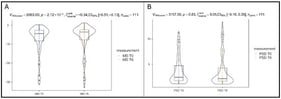
CLDEQ-8 total score at baseline (D1) and D36. Statistical comparisons are performed for changes from D1. The whiskers of the boxplot present the minimum and maximum values. Individual data points at each visit are shown as dots; mean values are indicated by a rhombus symbol, and whiskers represent the minimum and maximum values. Abbreviation: CLDEQ-8 = Contact Lens Dry Eye Questionnaire-8.

Background/Objectives: Early detection and timely treatment of amblyopia require reliable visual acuity testing in toddlers; however, conventional Landolt ring charts often show poor testability in 2–3-year-old children. Therefore, we aimed to verify the practicality of a new Child-Friendly Minimum-Separable (CFMS) chart for 2–3-year-old children by comparing cooperation rates with the standard Landolt ring visual acuity chart. Methods: A prospective pilot study was conducted on 20 children aged 2 years (30.6 ± 3.2 months) and 20 children aged 3 years (41.8 ± 3.9 months). Right-eye visual acuity was tested in random order using the Landolt ring (four options, 3/5 considered correct) and the CFMS chart (two options, 3/3 considered correct). Test cooperation rates and visual acuity were analyzed. Results: In the 2-year-olds, the cooperation rate was 15% and 75% for the Landolt ring and CFMS chart, respectively (p = 0.0005). Twelve children refused to cooperate with the Landolt ring but cooperated with the CFMS chart; the reverse did not occur. In the 3-year-olds, the cooperation rate was 60% and 90% for the Landolt ring and CFMS chart, respectively (p = 0.031); six children cooperated only with the CFMS chart. The odds ratio for cooperation per additional month of age was 1.34 (95% confidence interval [CI]: 1.12–1.59; p = 0.001) and 1.24 (95% CI: 1.03–1.50; p = 0.026) for the Landolt ring and CFMS chart, respectively. Conclusions: Compared to the Landolt ring, the CFMS chart significantly improves cooperation rates for visual acuity testing in 2−3-year-old children, especially among 2-year-olds.

17 December 2025

Example of Child-Friendly Minimum-Separable Chart optotypes. The optotype on the left (red border) has gaps similar to those used in the Landolt ring, and it appears to be partially eaten. The optotype on the right (blue border) has no gaps, and it appears not to have been eaten.

Impact of Simulated Astigmatism on Visual Acuity, Stereopsis, and Reading in Young Adults

  • Chow Wang Ming Shato,
  • Ricardo Noguera Louzada and
  • Pedro Lucas Machado Magalhães
  • + 6 authors

This study investigated the functional visual impact of simulated astigmatic blur using cylindrical powers of 0.50 D, 1.00 D, and 2.00 D, applied in against-the-rule (ATR), with-the-rule (WTR), and oblique (OBL) axes, in adults aged 18 to 35 years with no known ocular disease. Forty-five young adults were randomly divided into three groups (n = 15). Binocular best-corrected visual acuity (distance and near) was recorded in logMAR using the ETDRS acuity chart at 5 m and 40 cm, supported by acuity optotypes displayed in a Bailey–Lovie chart format. Depth-fusion and disparity discrimination were measured using polarized stereopsis thresholds with the Randot® Stereo Test from Stereo Optical Company, Inc. Reading performance was quantified as a continuous binocular rate metric (words per minute) using the validated Portuguese digital reading curve provided by the MNREAD iPad App by Precision Vision at 40 cm. The results were preserved verbatim as follows: Distance and near BCVA were significantly affected by ATR astigmatisms (−0.50 + 1.00 90°, −1.00 + 2.00 90°), WTR astigmatisms (−0.25 + 0.50 180°, −0.50 + 1.00 180°, −1.00 + 2.00 180°), and OBL astigmatisms (OD: −0.25 + 0.50 45°, OS: −0.25 + 0.50 135°; OD: −0.50 + 1.00 45°, OS: −0.50 + 1.00 135°; OD: −1.00 + 2.00 45°, OS: −1.00 + 2.00 135°). Stereopsis was significantly influenced by high-power OBL astigmatism (−1.00 + 2.00). Reading rate was also negatively impacted by OBL astigmatisms ≥1.00 D. Simulated astigmatism of different powers and axes reduced high-contrast distance and near BCVA, stereopsis, and reading speed in adults aged 18–35 years. Higher-power astigmatism, particularly along oblique axes, caused the most significant functional impairment.

16 December 2025

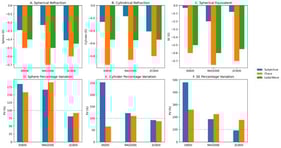
Boxplot shows the lower limit, 1st quartile, median, 3rd quartile, upper limit, and outliers of the measures for the three groups (ATR—against-the-rule astigmatism; WTR—with-the-rule astigmatism; OBL—oblique astigmatism) with different powers of simulated astigmatism on distance BCVA (logMAR) compared to the baseline. BCVA—best correct visual acuity; DS—diopters sphere; DC—diopters cylinder.

Curcumin-Based Supplement for Vitreous Floaters Post-Nd:YAG Capsulotomy: A Pilot Study

  • Alex Malandrini,
  • Giovanni Rubegni and
  • Davide Marini
  • + 2 authors

Background: To evaluate the short-term effects of a dietary supplement containing curcumin, bromelain, glucosamine, chondroitin sulphate, sodium hyaluronate, type II collagen, and vitamin C on symptomatic vitreous floaters (SVFs) following Nd:YAG laser capsulotomy. Methods: Forty eyes with SVFs on the first postoperative day were randomized into a control group (standard topical therapy, n = 20) and a treatment group (oral supplement plus standard therapy, n = 20). Outcomes included best-corrected visual acuity (BCVA), contrast sensitivity (CS), and subjective scores from a non-standardized questionnaire on floater perception (QS1), interference with daily activities (QS2), and foreign body sensation (QS3). Objective evaluation was performed using two novel ultrasound-based methods: mean number of vitreous peaks (MVP) from A-scans and mean grey intensity (MGI) from B-scan images processed with ImageJ. Results: At 2 months, the treatment group showed greater improvement in CS (Δ = 0.26 LogCS, CI, 0.14–0.38; p < 0.01), QS1 (Δ = 1.10; 95% CI, 0.60–1.60; p < 0.01), QS2 (Δ = 0.90; 95% CI, 0.40–1.40; p < 0.01), QS3 (Δ = 0.90; 95% CI, 0.44–1.36; p < 0.01), MVP (Δ = 1.10; 95% CI, 0.60–1.60; p < 0.01), and MGI (Δ = 12.89 units; 95% CI, 7.84–17.93; p < 0.01). BCVA was comparable between groups (p = 0.478). Conclusions: Short-term dietary supplementation with vitreous-specific nutrients is well tolerated and associated with improvements in reducing SVFs and foreign body sensations after Nd:YAG capsulotomy and may represent a promising non-invasive therapeutic option.

16 December 2025

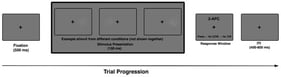
Study protocol and timeline.

News & Conferences

Issues

Open for Submission

Editor's Choice

Reprints of Collections

Visual Mental Imagery System
Reprint

Visual Mental Imagery System

How We Image the World
Editors: David F. Marks
Eye Movements and Visual Cognition
Reprint

Eye Movements and Visual Cognition

Editors: Raymond M. Klein, Simon P. Liversedge

Get Alerted

Add your email address to receive forthcoming issues of this journal.

XFacebookLinkedIn
Vision - ISSN 2411-5150