


Abstract
Background and Objectives: This exploratory observational repeated-measures study investigated changes in salivary antioxidant capacity (SAT) in two independent cohorts under distinct real-life conditions: during academic examination periods in university students and following acute exercise in recreational runners. Methods: Nineteen dental students were assessed during an examination period and again during the regular academic term, while 20 recreational runners were assessed before and after participation in a 5, 10, or 21 km running event. SAT was measured using the Salivary Antioxidant Test on a FRAS 5 system, and lifestyle-, sleep-, and physical activity-related variables were examined as secondary exploratory factors. Results: In university students, no statistically significant difference in SAT was detected between the examination period and the regular academic term (Wilcoxon signed-rank test, p = 0.966), with nearly identical median values (867 and 870 μmol/L, respectively). In recreational runners, SAT increased after exercise in 14 of 20 participants, with a median within-participant change of +241.5 μmol/L; however, the overall pre- to post-exercise difference did not reach statistical significance (Wilcoxon signed-rank test, W = 53.0, exact two-sided p = 0.053), and substantial inter-individual variability was observed. Exploratory analyses suggested associations between SAT and selected physical activity, lifestyle-related, and questionnaire-derived variables. However, no statistically significant association was detected between early awakening and SAT during the examination period (Spearman’s ρ = −0.019, p = 0.940). These exploratory findings should be interpreted cautiously because of the small sample sizes and multiple comparisons. Conclusions: Overall, the findings indicate that SAT may vary across academic and exercise-related measurement conditions, though the present data do not establish the underlying physiological mechanisms or the independent effects of psychological stress or habitual physical activity. Larger, adequately powered studies using more standardised conditions and complementary oxidative, inflammatory, and neuroendocrine biomarkers are required to determine the potential utility of SAT for repeated non-invasive monitoring.
1. Introduction
Stress is a complex physiological and psychological response triggered by internal or external stressors. Although the stress response primarily serves adaptive and survival-related functions, prolonged or repeated activation may negatively affect physical and mental health [1]. University students represent a population particularly vulnerable to stress, as academic workload, examination periods, financial pressure, and lifestyle imbalance frequently coexist during higher education studies. Examination periods are widely recognised as one of the most intense short-term psychological stressors among university students and are associated with increased anxiety, sleep disturbances, emotional exhaustion, impaired cognitive performance, and altered physiological regulation [2].
One important physiological consequence of stress is the development of oxidative imbalance. Oxidative stress occurs when the production of reactive oxygen species (ROS) exceeds the antioxidant defence capacity of the organism. ROS are highly reactive molecules generated mainly during mitochondrial aerobic metabolism and inflammatory processes. Under physiological conditions, ROS participate in cell signalling, apoptosis, immune defence, and adaptive cellular mechanisms. However, excessive ROS accumulation may contribute to lipid peroxidation, protein oxidation, DNA damage, and chronic inflammation [3]. Psychological stress is known to activate the sympathetic nervous system and the hypothalamic–pituitary–adrenal (HPA) axis, resulting in neuroendocrine responses that may influence redox homeostasis and antioxidant defence mechanisms [4]. However, the involvement of cortisol, catecholamines, and ROS represents a potential mechanistic pathway and cannot be directly inferred from salivary antioxidant capacity alone.
Stress may occur in acute, episodic, or chronic forms depending on its duration and frequency. Acute stress generally induces short-term adaptive physiological responses, whereas chronic stress is associated with adverse health outcomes including cardiovascular disease, anxiety, depression, immune dysfunction, and metabolic disorders. Nevertheless, moderate stress exposure, often referred to as “eustress”, may positively influence motivation, cognitive function, and adaptive performance [5]. In academic environments, examination-induced stress has been associated with measurable changes in cortisol secretion, antioxidant activity, inflammatory markers, and neurophysiological parameters. Recent studies have demonstrated that university students exposed to examination stress exhibit altered salivary total antioxidant capacity (TAC), suggesting that oxidative stress responses can be detected using non-invasive biomarkers [6,7].
Physical activity may influence redox homeostasis differently depending on whether acute exercise responses, chronic adaptations to regular training, or resting antioxidant status are considered. Acute exercise may transiently increase ROS production and alter antioxidant capacity as part of the immediate physiological response to exercise. In contrast, repeated exercise over time may be associated with chronic adaptations of endogenous antioxidant defence systems [8,9]. Resting antioxidant capacity represents a distinct measure that may reflect habitual training status as well as several other physiological and lifestyle-related factors. Therefore, acute exercise-induced changes in antioxidant capacity should not be interpreted as direct evidence of chronic training adaptation. Previous studies using salivary antioxidant markers have also demonstrated changes during acute exercise. [10]. observed a progressive increase in several salivary antioxidant markers, including ferric reducing ability of saliva (FRAS), during repeated competitive exercise in a one-day tennis tournament. These findings indicate that salivary antioxidant parameters may change dynamically during acute physical exertion, although the physiological significance of such changes requires cautious interpretation.
According to the cross-stress adaptation hypothesis, repeated exposure to exercise-induced physiological stress may improve the organism’s tolerance to other stressors, including psychological challenges. Exercise-mediated activation of the HPA axis may therefore contribute not only to physical adaptation but also to improved emotional regulation and reduced sensitivity to stress.
Aerobic exercise, particularly recreational running, has gained increasing importance as a non-pharmacological intervention for stress management and health promotion. Regular runners frequently demonstrate improved cardiovascular fitness, better autonomic regulation, lower resting stress levels, and more efficient antioxidant responses compared to sedentary individuals [11]. Physical activity has also been associated with improved sleep quality, enhanced mood state, and reduced anxiety symptoms, all of which are closely related to oxidative balance and mental well-being. However, the relationship between exercise and antioxidant status is complex. Elevated antioxidant capacity may reflect either improved physiological adaptation or a compensatory response to increased oxidative load induced by intense physical activity [9].
The assessment of oxidative stress biomarkers has become increasingly important in psychophysiological and sports science research. Although blood-based biomarkers remain widely used, saliva has emerged as a reliable and patient-friendly diagnostic fluid. Saliva collection is non-invasive, painless, inexpensive, and suitable for repeated measurements under both laboratory and field conditions. Compared to blood sampling, saliva collection causes minimal discomfort and may improve participant adherence during repeated monitoring protocols [12]. Saliva contains numerous biologically relevant components including enzymes, hormones, proteins, electrolytes, immunological markers, and antioxidants, making it suitable for the assessment of both oral and systemic physiological processes [13].
Salivary antioxidant capacity reflects the balance between oxidant production and antioxidant defence mechanisms. Antioxidants such as uric acid, glutathione, albumin, and ascorbic acid play a major protective role against ROS-mediated tissue damage. Uric acid alone contributes approximately 70–85% of total salivary antioxidant capacity, highlighting the importance of TAC assessment in oxidative stress research [14]. Changes in salivary antioxidant status have been associated with inflammatory diseases, smoking, periodontal disorders, systemic illnesses, psychological stress, and physical exertion. Importantly, elevated TAC values do not necessarily indicate improved physiological condition, as increased antioxidant activity may also represent a compensatory adaptive response to elevated oxidative stress levels [6,9].
Several analytical methods are available for evaluating antioxidant status, including total antioxidant capacity (TAC), ferric reducing antioxidant power (FRAP), cupric ion reducing antioxidant capacity (CUPRAC), and DPPH-based assays. Spectrophotometric TAC analysis provides a rapid and reproducible approach for assessing overall antioxidant defence capacity in saliva samples. Since ROS molecules have extremely short half-lives and rapidly react with surrounding biomolecules, indirect measurement through antioxidant biomarkers represents a practical approach for oxidative stress assessment [3].
Although previous studies have examined salivary antioxidant responses in relation to academic examination periods and physical exercise, evidence regarding within-participant changes in SAT under these distinct real-life conditions remains limited. Furthermore, the interpretation of changes in antioxidant capacity remains inconsistent in the literature, particularly regarding whether elevated antioxidant capacity reflects enhanced antioxidant defence or a compensatory response to increased oxidative load.
Therefore, the primary objectives of the present study were to investigate changes in salivary antioxidant capacity (SAT) in university students between the examination period and the regular academic term, and in recreational runners before and after a running event. We hypothesised that SAT would differ between the two measurement conditions within each cohort. Associations between SAT and lifestyle-, sleep-, physical activity-, and questionnaire-related variables were considered secondary exploratory analyses within the respective cohorts.
2. Materials and Methods
2.1. Study Design
The present study was designed as an observational repeated-measures study involving two independent cohorts. A convenience sampling approach was used to investigate changes in salivary antioxidant capacity under different conditions: university students were assessed during the examination period and the regular academic term, while recreational runners were assessed before and after a running event. Additionally, potential associations between salivary antioxidant parameters, sleep quality, physical activity, and selected lifestyle-related factors were examined. The study was conducted in accordance with the Declaration of Helsinki and approved by the Ethics Committee of the University of Pécs (approval no. 7524-PTE 2023). All participants provided written informed consent prior to participation. The study was conducted and reported in accordance with the Strengthening the Reporting of Observational Studies in Epidemiology (STROBE) guidelines [15].
2.2. Student Sampling
Nineteen fourth-year dental students (4 males and 15 females) aged 22–27 years participated in the study. Participants were recruited on a voluntary basis from the same academic cohort. Exclusion criteria included acute or chronic illness, regular medication use, and the presence of oral inflammatory lesions within two weeks prior to saliva collection.
Participants completed a self-administered questionnaire assessing demographic characteristics and selected lifestyle-related factors. Self-reported daily coffee consumption was recorded as the number of cups consumed per day. For the analysis of coffee consumption and SAT during the regular academic term, questionnaire responses associated with that academic period were used. Only questionnaire variables included in the present analyses are reported in the manuscript. Selected self-reported data on smoking, energy drink consumption, and physical activity were available for exploratory correlation analyses. However, these variables were not collected in sufficient detail to provide a comprehensive characterisation of participants’ habitual lifestyle and physical activity patterns. The study population consisted of generally healthy young adults who were not recruited on the basis of athletic or training status.
Sleep-related characteristics were assessed using selected self-reported questions concerning sleep onset, nocturnal awakening, early awakening, sleep duration, subjective sleep quality, and daytime functioning. These questions were analysed individually as exploratory variables. As the complete Pittsburgh Sleep Quality Index (PSQI) was not administered, neither a global PSQI score nor component scores were calculated. Selected items from the 36-Item Short Form Health Survey (SF-36) were administered to assess aspects of health-related quality of life. The present exploratory analysis included an item from the Role Emotional domain concerning whether emotional problems had caused participants to reduce the time spent studying or performing other daily activities during the preceding four weeks. As the complete SF-36 questionnaire was not administered, no domain or summary scores were calculated. The selected item was analysed individually as an exploratory variable.
Saliva samples were collected during the examination period immediately before a scheduled morning examination between 7:00 and 9:00 a.m. Participants were instructed to refrain from food intake, coffee, energy drinks, smoking, and oral hygiene procedures for at least two hours prior to saliva collection in order to minimise potential acute influences on salivary composition. Previous research has demonstrated that salivary antioxidant markers may be influenced by external and pre-analytical factors, including time of day, tooth-brushing, and ascorbic acid intake [16].
A second saliva sample was collected from the same participants approximately two months later during the regular academic term using the same sampling timeframe and pre-analytical protocol.
2.3. Recreational Runner Sampling
The athlete group consisted of twenty recreational runners (10 males and 10 females, aged 41–65 years) participating in an organised recreational running event in Hungary. Participants were eligible for inclusion if they were adults participating in the event, provided written informed consent, and agreed to undergo saliva sampling before and after the race. No predefined health-related exclusion criteria were applied. The running event was conducted in Baja, Hungary, in April 2024, under mild spring weather conditions. Environmental conditions, including ambient temperature and relative humidity, were not directly recorded as part of the study protocol. Participants completed one of three race distances: 5 km (n = 4; 1 male and 3 females), 10 km (n = 8; 4 males and 4 females), or 21 km (n = 8; 5 males and 3 females). The mean distances recorded by the Polar monitoring system were 4.92 km, 10.35 km, and 21.07 km, respectively.
Exercise load was objectively monitored using the Polar Team Pro system (version 2.0.15, Polar Electro Oy, Kempele, Finland) throughout the event. Because recording was initiated and terminated simultaneously for all participants, total recording duration was not considered equivalent to individual race time. Heart-rate-derived and workload-related parameters were therefore used to characterise exercise load. Mean Polar Cardio Load values were 212.5 ± 7.0, 255.8 ± 85.1, and 434.6 ± 94.5 for the 5 km, 10 km, and 21 km groups, respectively.
As the primary aim was to investigate within-participant changes in SAT before and after exercise rather than differences between race-distance subgroups, participants were analysed as a single recreational runner cohort in the primary analysis. Race distance and exercise-load heterogeneity were additionally considered in exploratory analyses and in the interpretation of the findings.
The pre-exercise saliva sample was collected from all participants before the start of the race, between 9:00 and 10:00 a.m. The post-exercise sample was collected immediately after each participant crossed the finish line. Although post-exercise sampling was performed as soon as possible after finishing, the exact time interval between crossing the finish line and saliva collection was not recorded and was therefore not formally standardised. Participants were instructed to consume only water for hydration during the race; however, adherence to this instruction and the possible consumption of gels, food, or other beverages during the race were not systematically recorded.
Participants were instructed to avoid smoking, coffee consumption, energy drinks, food intake, and oral hygiene procedures for at least two hours before sampling.
2.4. Saliva Sampling Procedure
Saliva samples were collected using sterile saliva-collecting cotton swabs under standardised non-invasive conditions. Participants held the cotton swab in the oral cavity without chewing for one minute, after which the swab was placed into a sterile collection tube. SAT analysis was performed on-site immediately after sample collection using fresh samples and the Free Radical Analytical System 5; H&D srl, Parma, Italy; therefore, samples were not frozen or subjected to freeze–thaw cycles before SAT measurement. The remaining samples were subsequently stored at −20 °C for potential additional analyses but were not used for the SAT measurements reported in the present study. The same sampling and pre-analytical procedure were applied to all student and recreational runner samples.
2.5. Laboratory Measurements and SAT Analysis
Laboratory analyses were performed using the FRAS 5 (Free Radical Analytical System 5) portable photometric analyser. The device integrates a photometric reader and microcentrifuge and is designed for the assessment of oxidative stress and antioxidant status from biological samples. The system allows the determination of oxidative stress-related biomarkers through colorimetric methods, including the d-ROMs (Derivatives of Reactive Oxygen Metabolites), PAT (Plasma Antioxidant Test), and SAT (Salivary Antioxidant Test) protocols.
Salivary antioxidant capacity was determined using the Salivary Antioxidant Test (SAT) on a FRAS 5 system (Free Radical Analytical System; H&D srl, Parma, Italy). The measurements were completed within approximately one minute, according to the manufacturer’s protocol. The SAT is a photometric assay based on the reduction in Fe3+ to Fe2+ by antioxidant compounds present in saliva, resulting in a measurable change in absorbance, as previously described for the FRAS 5/SAT system [17]. According to analytical specifications provided directly by the manufacturer, 1 U Cor corresponds to the antioxidant capacity of 1 μmol/L vitamin C × 1.40. The assay is linear within a vitamin C concentration range of 300–7000 μmol/L (approximately 200–5000 U Cor), and the reported intra-assay and inter-assay coefficients of variation are <5.5%.
Values outside the stated linear range were retained in the primary analysis to preserve the complete paired dataset. A sensitivity analysis was additionally performed excluding measurements outside the validated linear range of the assay.
According to the manufacturer, the reported SAT ranges (Table 1) represent manufacturer-provided reference intervals for the interpretation of the assay and should not be considered clinically validated cut-off values for the present study population. Values outside these reference intervals therefore do not, by themselves, indicate oxidative stress, inflammation, or a specific pathological condition.
Table 1.
SAT reference values.
For the analytical procedure, 40 μL of R2 reagent was added to the SAT R1 reagent cuvette and homogenised for approximately 10 s. After the initial absorbance reading, 10 μL of saliva was added to the reaction mixture, followed by repeated homogenisation and a second absorbance reading. Results were automatically calculated by the FRAS 5 system and expressed in U Cor and μmol/L according to the manufacturer’s calibration system.
2.6. Statistical Analysis
Descriptive statistics were calculated for all measured variables. The primary analyses focused on within-participant changes in SAT between the examination period and the regular academic term in students and between pre- and post-exercise measurements in recreational runners. As both comparisons involved repeated measurements obtained from the same individuals, paired statistical procedures were used. Normality was assessed with particular attention to the distribution of intra-individual differences using the Shapiro–Wilk test together with visual inspection of Q–Q plots. The Shapiro–Wilk test indicated significant deviations from normality in the distributions of paired differences in both cohorts (students: W = 0.570, p < 0.001; recreational runners: W = 0.732, p < 0.001). Consequently, the Wilcoxon signed-rank test was employed for all pairwise comparisons: to evaluate pre- versus post-exercise changes in the recreational runner cohort, and to assess differences between the examination-period and the regular academic term within the student cohort.
Associations between SAT and demographic, physical activity, sleep-related, and lifestyle variables were examined as secondary exploratory analyses within each cohort. In recreational runners, questionnaire-derived variables were assessed in relation to pre- and post-exercise SAT values. In university students, questionnaire-derived variables were assessed in relation to SAT values obtained during the corresponding academic measurement period. Spearman’s rank correlation coefficient (ρ) was used to examine associations between SAT and the questionnaire-derived variables, as documented in the supplementary correlation analyses. Specifically, the association between daily coffee consumption and SAT during the regular academic term was assessed using Spearman’s rank correlation. A post hoc sensitivity analysis was performed after excluding the participant reporting four cups of coffee per day. Comparisons between independent groups, such as male and female participants, were performed using appropriate independent-samples tests according to data distribution.
Given the small sample sizes and the number of correlation analyses performed, these secondary analyses were considered exploratory and hypothesis-generating. No formal adjustment for multiple comparisons was applied; therefore, nominal p-values from these analyses were interpreted cautiously because of the increased risk of Type I error. Statistical significance for the primary analyses was set at p < 0.05. Effect sizes and 95% confidence intervals were reported for the primary within-participant comparisons where appropriate. For the Wilcoxon signed-rank test, the Hodges–Lehmann estimator of the paired location shift was calculated as the median of the Walsh averages of the non-zero paired differences, with exact 95% confidence intervals obtained by inversion of the signed-rank distribution. The paired rank-biserial correlation was calculated as (W+ − W−)/(W+ + W−), where W+ and W− represent the sums of positive and negative signed ranks, respectively. Zero differences were excluded from the signed-rank calculations. Statistical analyses were performed using SPSS Statistics (version 29.0; IBM Corp., Armonk, NY, USA). The Hodges–Lehmann estimation, exact confidence interval, and verification of the Wilcoxon signed-rank test were additionally performed using Python (version 3.13.5) and SciPy (version 1.17.0).
3. Results
3.1. Runners
The recreational runner cohort consisted of 20 participants (10 males and 10 females) aged 41–65 years. Four participants completed the 5 km distance (1 male and 3 females), eight completed the 10 km distance (4 males and 4 females), and eight completed the 21 km distance (5 males and 3 females). All participants provided saliva samples before and after the running event and completed questionnaires assessing demographic characteristics, alcohol consumption, lifestyle habits, and physical activity patterns.
Descriptive analyses included demographic characteristics, alcohol consumption habits, and pre- and post-run SAT values. Spearman’s rank correlation analysis was used to investigate associations involving non-normally distributed or ordinal variables. No significant association was identified between SAT values and either age or sex (p ≥ 0.05). Among the pre-run measurements, only participant No. 5 had a SAT value exceeding the upper reference interval provided by the manufacturer (>2500 μmol/L). However, the clinical or physiological significance of values exceeding this manufacturer-provided reference interval cannot be determined from SAT measurements alone.
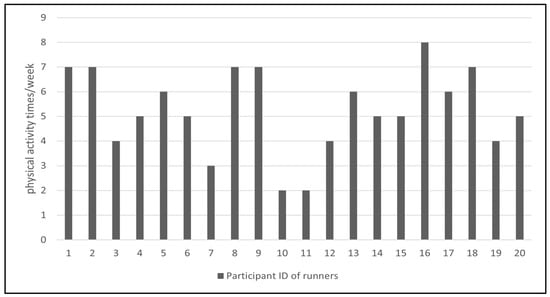
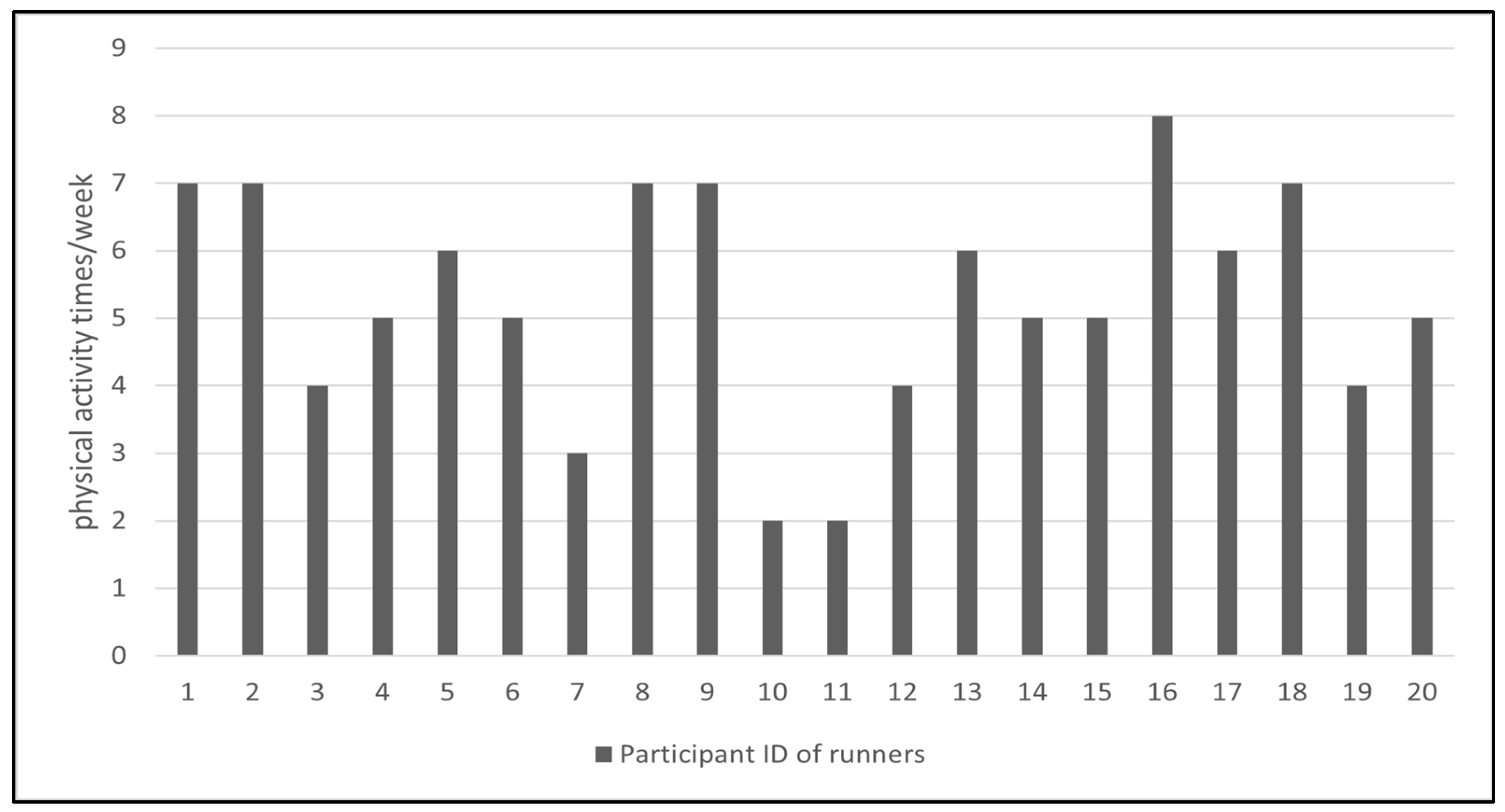
Figure 1 presents the self-reported weekly exercise frequency of the recreational runners. Participants reported engaging in physical activity between 2 and 8 times per week, with most participants exercising 4–7 times weekly. A positive association was observed between weekly exercise frequency and pre-run SAT (Spearman’s ρ = 0.577, p = 0.008). Participants reporting more frequent weekly exercise generally showed higher pre-run SAT values. As this analysis was exploratory and observational, the association should not be interpreted as evidence that exercise frequency caused an adaptation in antioxidant capacity.
Figure 1.
Self-reported weekly exercise frequency of recreational runners.
In the exploratory correlation analyses, a negative association was observed between weekly alcohol consumption and post-exercise SAT (Spearman’s ρ = −0.507, p = 0.023). Approximately half of the participants reported no alcohol consumption, while the remaining participants consumed alcohol once or twice weekly, mainly in social contexts. Participants reporting more frequent alcohol consumption tended to show lower post-exercise SAT values. Given the small sample size and the number of exploratory correlations examined, this association should be interpreted cautiously.
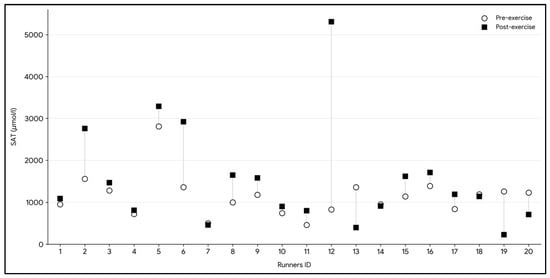
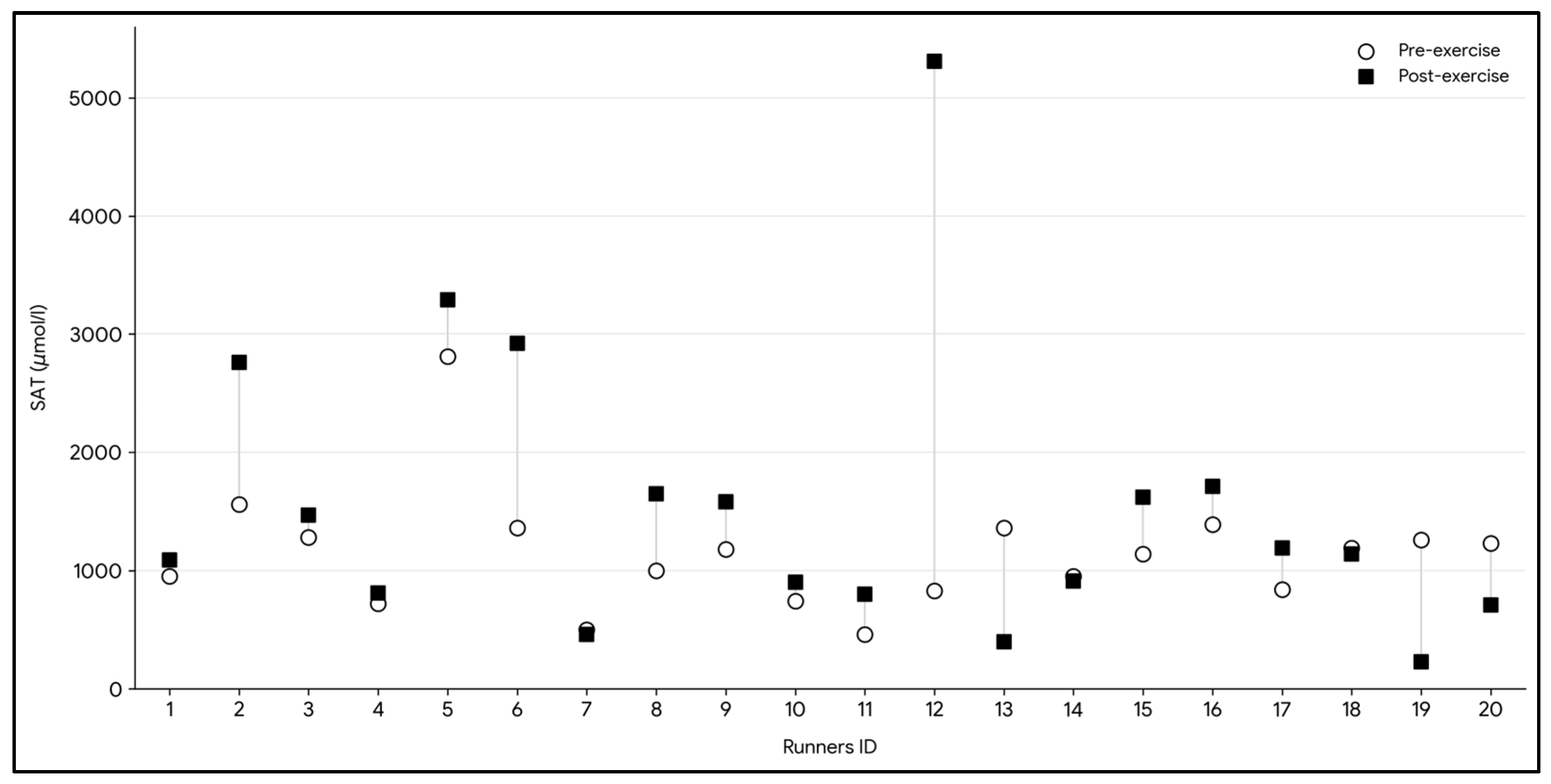
Figure 2 depicts the individual pre- and post-run SAT values of the recreational runners.
Figure 2.
Individual pre- and post-run salivary antioxidant capacity (SAT) values in recreational runners.
SAT values increased after exercise in the majority of participants (14 of 20), although considerable inter-individual variability was observed. The median within-participant change was +241.5 μmol/L. The distribution of paired differences deviated significantly from normality (Shapiro–Wilk W = 0.732, p < 0.001). The primary Wilcoxon signed-rank analysis including all 20 runners showed no statistically significant pre-to-post exercise difference in SAT (W = 53.0, exact two-sided p = 0.053; paired rank-biserial correlation = 0.495). The Hodges–Lehmann estimate of the paired location shift was +245.5 μmol/L (exact 95% CI: −27.0 to +561.0 μmol/L).
One post-exercise SAT measurement (participant No. 19 in Figure 2; original participant ID 25: 227 μmol/L) fell below the assay’s stated lower linear limit of 300 μmol/L. A post hoc sensitivity analysis excluding this participant (n = 19) showed a median paired increase of +307.0 μmol/L (IQR: 24.5–473.5 μmol/L), with a statistically significant Wilcoxon signed-rank result (W = 36.0, exact two-sided p = 0.016; paired rank-biserial correlation = 0.621). However, the excluded participant also exhibited the largest observed decrease in SAT (−1045 μmol/L). Consequently, the change in statistical significance following exclusion was highly sensitive to this influential observation and should not be interpreted as confirmatory evidence of an exercise-related increase in SAT. The largest observed individual increase was +4473 μmol/L, resulting in a post-exercise SAT value of 5314 μmol/L. The physiological significance of such individual values cannot be determined from SAT measurements alone.
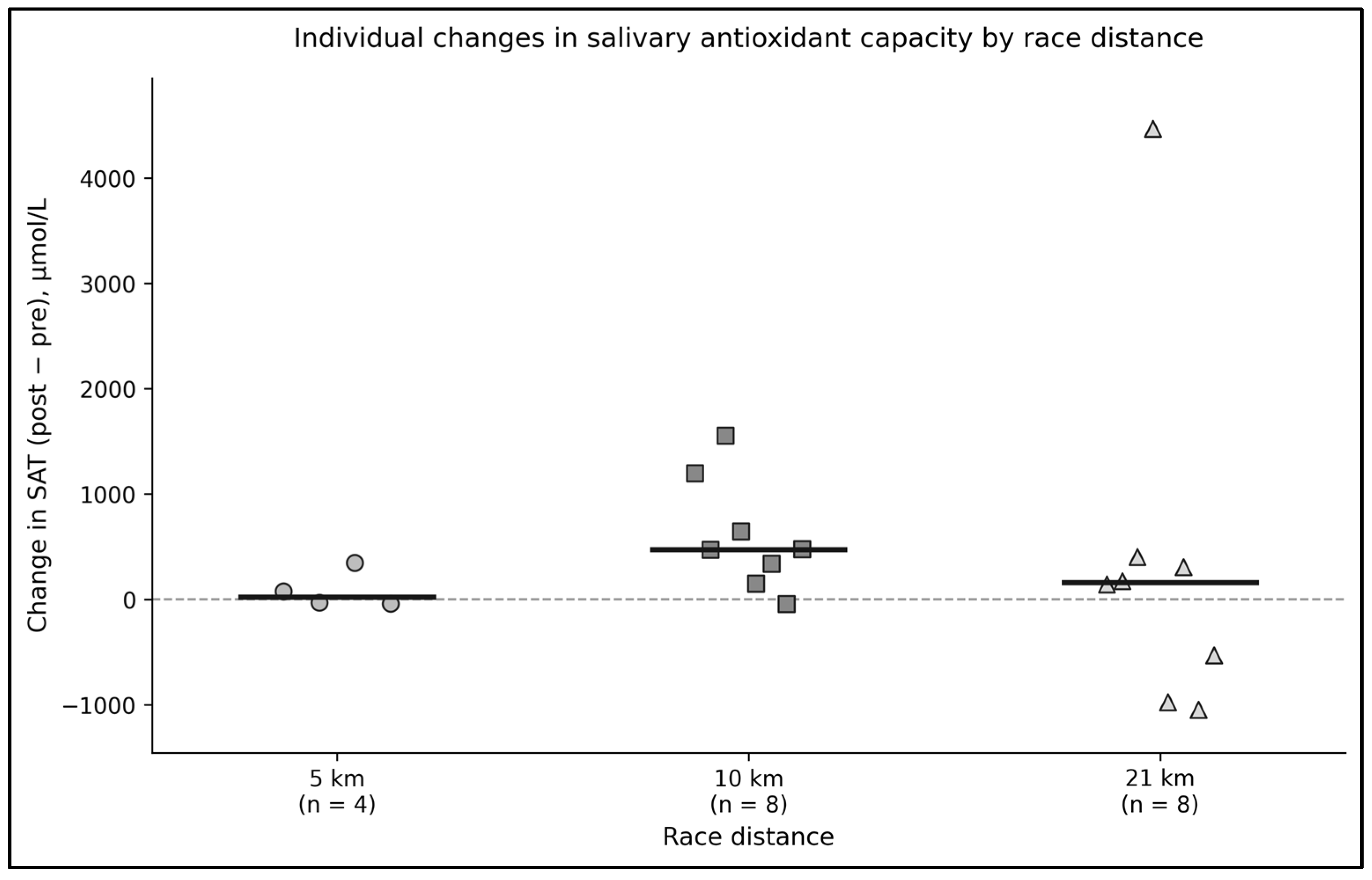
When participants were descriptively stratified according to race distance, differences in the pattern of pre-to-post changes in SAT were observed. The median change in SAT (post-exercise minus pre-exercise) was +24.5 μmol/L in the 5 km group (n = 4), +473.5 μmol/L in the 10 km group (n = 8), and +161.0 μmol/L in the 21 km group (n = 8). Considerable inter-individual variability was observed, particularly in the 21 km group, which included both the largest increase (+4473 μmol/L) and the largest decrease (−1045 μmol/L). Given the small subgroup sizes, these distance-specific findings were considered exploratory and were not interpreted as evidence of a dose–response relationship (Figure 3).
Figure 3.
Individual changes in salivary antioxidant capacity (SAT) from pre- to post-exercise according to race distance.
3.2. Students
The primary analysis compared salivary antioxidant capacity (SAT) between the examination period and the regular academic term in 19 university students. Descriptive statistics and the results of the paired comparison, including the effect size and 95% confidence interval (CI), are presented in Table 2.
Table 2.
Comparison of salivary antioxidant capacity (SAT) between the examination period and the regular academic term in university students (N = 19).
Table 2 summarises SAT measurements during the examination period and the regular academic term in 19 students. Normality was assessed using the within-participant differences between the two periods. The Shapiro–Wilk test indicated a significant deviation from normality (W = 0.570, p < 0.001). Accordingly, the Wilcoxon signed-rank test was used for the paired comparison and indicated no statistically significant difference between the two periods (W = 84.0, exact two-sided p = 0.966). The Hodges–Lehmann estimate of the paired location shift was +23.5 μmol/L (exact 95% CI: −423.0 to +333.0 μmol/L; regular academic term minus examination period). The paired rank-biserial correlation was 0.018, indicating a negligible effect size. One participant had identical SAT values in both periods; therefore, the signed-rank analysis was based on 18 non-zero paired differences.
One examination-period SAT measurement (participant 7: 7720 μmol/L) exceeded the upper limit of the assay’s stated linear range (7000 μmol/L). A post hoc sensitivity analysis excluding this participant (n = 18) showed no statistically significant difference between the two academic periods (Wilcoxon signed-rank test, W = 66.0, two-sided p = 0.619; paired rank-biserial correlation = 0.137). Thus, the conclusion of the primary analysis remained unchanged.
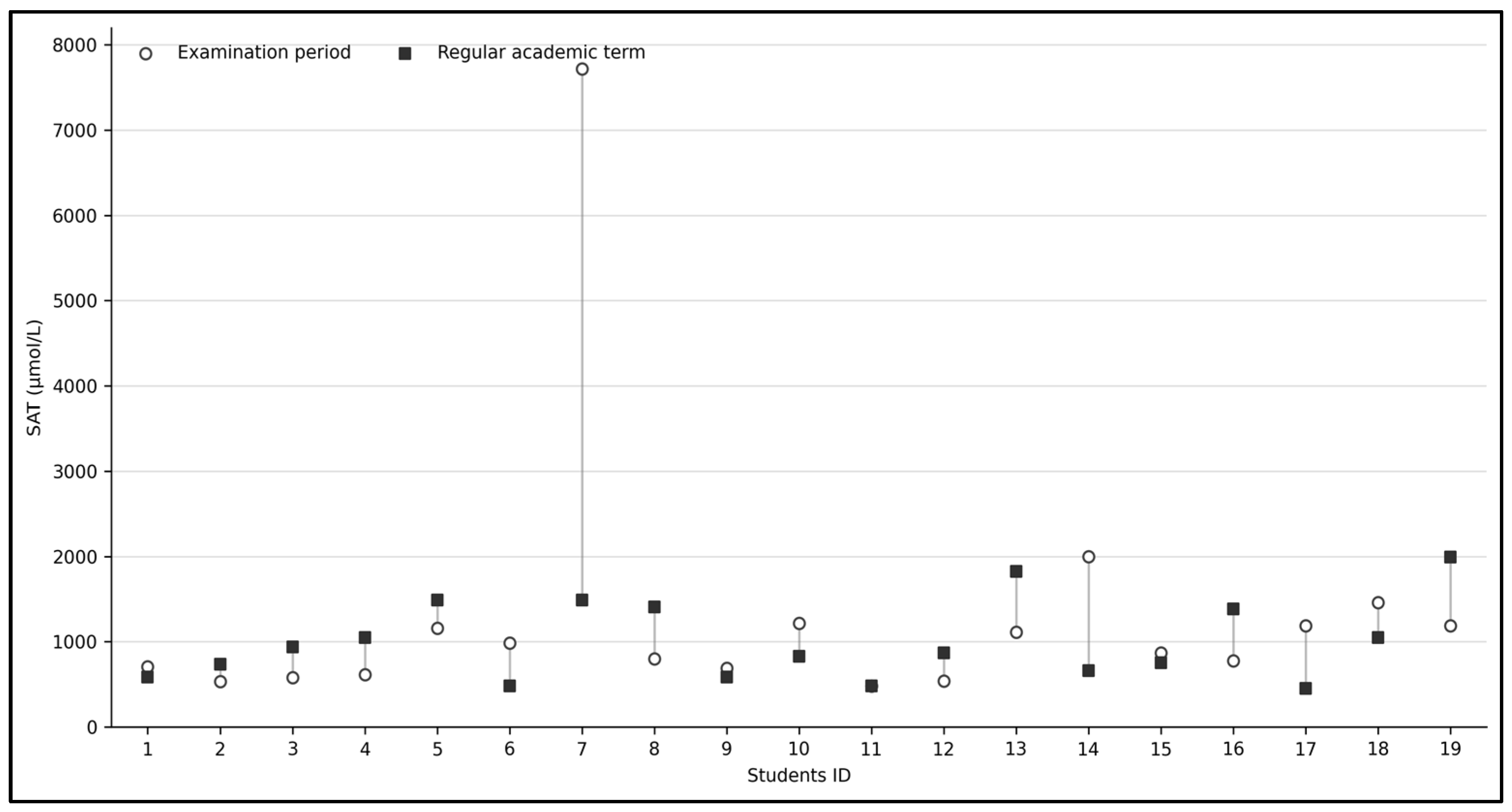
In addition to the primary paired comparison, exploratory analyses examined associations between selected questionnaire-derived characteristics and SAT in university students. All 19 students provided paired SAT measurements during the examination period and the regular academic term. Figure 4 illustrates the individual SAT values and within-participant differences between the two measurement periods.
Figure 4.
Individual paired SAT values of 19 students during examination and regular academic periods.
During the regular academic term, six students reported consuming no coffee, five reported one cup per day, seven reported two cups per day, and one reported four cups per day. Given the discrete distribution of coffee consumption, Spearman’s rank correlation was used to examine its association with SAT measured during the same academic period. The analysis indicated a negative but statistically non-significant association (ρ = −0.442, two-sided p = 0.058, n = 19). A sensitivity analysis excluding the participant reporting four cups per day yielded a weaker, non-significant association (ρ = −0.338, two-sided p = 0.170, n = 18). These findings do not provide sufficient evidence of an association between daily coffee consumption and SAT in this sample. The study additionally examined students’ sleep characteristics, particularly the frequency of waking earlier than intended.
Early awakening was examined as an exploratory sleep-related variable. As shown in Table 3, 12 participants (63.16%) reported no early awakening, six (31.58%) reported some degree of early awakening, and one (5.26%) reported considerably earlier awakening. Spearman’s rank correlation analysis revealed no statistically significant association between early awakening and SAT measured during the examination period (ρ = −0.019, p = 0.940, n = 19). These findings should be interpreted cautiously given the small sample size and the exploratory nature of the analysis.
Table 3.
Distribution of early awakening frequency among university students.
No significant difference in examination-period SAT was observed between male and female students (Mann–Whitney U-test, p = 0.885). However, given the markedly unequal sex distribution (4 males and 15 females) and the resulting low statistical power for sex-based comparisons, this finding should not be interpreted as evidence of similar SAT responses between sexes. The absence of a statistically significant difference therefore remains subject to considerable uncertainty.
Exploratory analyses were also performed to examine associations between lifestyle- and questionnaire-related variables and SAT during the examination period. A positive association was observed between examination-period SAT and the questionnaire item assessing whether psychological problems had reduced the time available for studying or other daily activities during the previous four weeks (Spearman’s ρ = 0.510, p = 0.026). Students reporting greater psychological burden and reduced study-related functioning tended to have higher SAT values during the examination period. Given the small sample size and the number of exploratory associations examined, this finding should be interpreted cautiously.
4. Discussion
The present study investigated changes in salivary antioxidant capacity under two distinct real-life measurement conditions: during an examination period compared with the regular academic term in university students, and before and after a running event in recreational runners. In the student cohort, no statistically significant difference in SAT was detected between the two academic periods. Similarly, the primary analysis in recreational runners did not demonstrate a statistically significant overall pre-to-post exercise difference, although considerable individual variability was observed. These findings do not establish a consistent change in SAT associated with either measurement condition.
In university students, median SAT values were nearly identical during the examination period and the regular academic term (867 and 870 μmol/L, respectively). Although the mean SAT value was higher during examinations, this difference was strongly influenced by an extreme observation and was not supported by the paired non-parametric analysis. Previous research has suggested that examination-related stress may be associated with changes in salivary antioxidant capacity [7]. However, the present findings do not provide statistical evidence of such a difference. Importantly, the examination-period samples were consistently collected first, followed by the regular-term samples approximately two months later. Therefore, measurement order, potential seasonal influences, and changes in sleep, diet, physical activity, and academic workload were confounded with the academic measurement period. This design does not allow the independent effect of examination-related stress on SAT to be isolated. Furthermore, as cortisol, catecholamines, reactive oxygen species, and markers of oxidative damage were not directly assessed, the underlying physiological mechanisms cannot be determined from these data.
Exploratory analyses identified an association between examination-period SAT and the questionnaire item assessing whether psychological problems had reduced the time available for studying or other daily activities during the previous four weeks. Students reporting greater interference of psychological problems with studying or other daily activities tended to have higher SAT values during the examination period. However, this questionnaire item was not derived from a validated perceived-stress scale and should therefore not be interpreted as a direct measure of psychological stress. Previous research using psychological and salivary measures has also highlighted the complexity of the relationship between subjective psychological responses and salivary antioxidant markers [7]. Given the small sample size, the absence of a validated perceived-stress measure, and the exploratory nature of the questionnaire-related analyses, the present association should be interpreted cautiously.
Participants exercising more frequently generally had higher pre-run SAT values. This association may be consistent with differences in resting antioxidant status related to habitual physical activity; however, it does not demonstrate chronic training adaptation. Given the observational design and the small sample size, other demographic, physiological, and lifestyle-related factors may also have contributed to the observed association. Therefore, the relationship between exercise frequency and pre-run SAT should be regarded as exploratory rather than as evidence of a causal effect of habitual physical activity on antioxidant capacity. Acute changes in salivary antioxidant markers during exercise have also been reported previously [10]. observed progressive increases in FRAS and other salivary antioxidant markers during repeated competitive exercise. Although these findings support the observation that salivary antioxidant parameters can change during physical exertion, such changes should not be interpreted as direct evidence of oxidative damage or chronic training adaptation. Importantly, the post-exercise SAT values may also reflect changes in saliva concentration rather than alterations in systemic redox balance. Exercise-related dehydration and reduced salivary flow may increase the concentration of salivary constituents, including uric acid, which is a major contributor to total salivary antioxidant capacity. Consequently, higher post-exercise SAT concentrations may arise from reduced saliva volume or altered salivary composition without a corresponding increase in antioxidant defence. As hydration status and salivary flow rate were not measured, the present study cannot distinguish between concentration-related effects and changes in antioxidant activity associated with exercise.
Exploratory stratification by race distance showed different patterns of SAT change across the 5, 10, and 21 km groups. However, substantial interindividual variability and the small and unequal subgroup sizes limit the interpretation of these differences. Therefore, the present findings should not be considered evidence of a dose–response relationship between running distance or exercise load and changes in SAT.
Exploratory analyses examined associations between SAT and selected lifestyle-related and questionnaire-derived variables, including alcohol consumption and coffee intake. The negative association between daily coffee consumption and SAT during the regular academic term did not reach statistical significance using Spearman’s rank correlation (ρ = −0.442, p = 0.058), and the association was further attenuated after excluding the participant reporting the highest coffee consumption (ρ = −0.338, p = 0.170). Furthermore, no statistically significant association was detected between early awakening and examination-period SAT (Spearman’s ρ = −0.019, p = 0.940). Given the small sample sizes, multiple exploratory analyses, and absence of multivariable adjustment for potential confounding factors, these findings should be considered hypothesis-generating rather than evidence of independent relationships.
From an exploratory perspective, the observed changes in SAT under different measurement conditions suggest that salivary antioxidant assessment may warrant further investigation as a non-invasive marker of physiological responses to psychological and physical stressors. However, the present study was not designed to evaluate diagnostic performance or clinical utility, and further research is required before applications in stress or exercise monitoring can be established. The methodological feasibility of repeated saliva-based biomarker assessment in sports settings has also been demonstrated for biomarkers representing other physiological pathways [18]. for example, performed repeated measurements of salivary Orexin-A in trained female volleyball players, supporting the practical applicability of standardised, non-invasive saliva sampling for monitoring acute physiological changes in athletes. Although Orexin-A and antioxidant capacity represent distinct biological pathways, this study provides complementary methodological evidence for the use of saliva as a matrix for repeated biomarker assessment in sports settings.
Limitations
Several limitations of the present study should be acknowledged. First, the relatively small sample sizes limit statistical power and the generalizability of the findings. No a priori sample size calculation was performed. Furthermore, participants were recruited on a voluntary basis using convenience sampling, which may have introduced selection bias and further limits the generalizability of the findings. In the student cohort, the markedly unequal sex distribution (4 males and 15 females) resulted in low statistical power for sex-based comparisons. Furthermore, the student and recreational runner cohorts differed substantially in age, sex distribution, training status, and measurement context. Consequently, direct comparisons of SAT values between the two cohorts were not performed, and the findings were interpreted separately within each cohort. The runner cohort was also heterogeneous with respect to race distance and exercise load, as participants completed 5 km, 10 km, or 21 km events.
Second, the student cohort was assessed in a fixed chronological order, with examination-period samples collected first and regular-term samples collected approximately two months later. Consequently, measurement order and potential seasonal effects were inseparable from the academic measurement condition. Changes in sleep, dietary habits, physical activity, and academic workload between the two time points may also have influenced SAT values. The absence of counterbalancing or a comparison group limits the ability to attribute any observed differences specifically to examination-related stress. In addition, psychological stress was not directly assessed using a specific validated perceived-stress scale. Examination-period measurements and questionnaire-derived variables should therefore not be interpreted as direct quantitative measures of psychological stress. Similarly, direct markers of ROS production, oxidative damage, inflammatory responses, or neuroendocrine stress responses were not assessed. Consequently, changes in SAT cannot establish the underlying oxidative, inflammatory, or neuroendocrine mechanisms.
Third, potentially relevant factors such as dietary habits, hydration, sleep, caffeine and alcohol consumption, and recent physical activity could not be fully controlled. Importantly, hydration status and salivary flow rate were not measured, preventing differentiation between genuine changes in salivary antioxidant activity and concentration-related changes caused by reduced salivary secretion following exercise. Salivary pH, oral microbiome composition, and detailed periodontal or dental indices were also not assessed. Previous research has similarly indicated that salivary total antioxidant capacity may be influenced by demographic, dietary, lifestyle-related, and oral health factors, which should be considered when interpreting salivary antioxidant measurements [19].
Finally, several secondary correlation analyses were performed in small samples without adjustment for multiple comparisons. These analyses were exploratory and may therefore be affected by an increased risk of Type I error. The findings should be interpreted as hypothesis-generating and require confirmation in larger, adequately powered studies. In addition, previous research has demonstrated considerable intra- and inter-individual variability in salivary antioxidant markers, including TAC and FRAS, among healthy individuals, which may complicate the interpretation of individual salivary antioxidant measurements [20].
An additional analytical limitation concerns measurements outside the stated linear range of the SAT assay. One examination-period measurement in the student cohort exceeded the upper limit, whereas one post-exercise measurement in the runner cohort fell below the lower limit. Although sensitivity analyses excluding these observations were conducted, these analyses were post hoc and should be interpreted cautiously. In particular, excluding the runner with the largest negative SAT change shifted the result from non-significant to statistically significant, highlighting the sensitivity of the findings to individual observations. Therefore, conclusions are based on the complete-cohort primary analyses.
5. Conclusions
This study examined salivary antioxidant capacity under two distinct measurement conditions in university students and recreational runners. No statistically significant difference in SAT was detected between the examination period and the regular academic term in students. Similarly, the primary analysis of recreational runners did not reveal a statistically significant overall pre-to-post exercise difference, despite considerable inter-individual variability. Exploratory analyses suggested associations between SAT and selected physical activity and questionnaire-derived variables, although these findings require cautious interpretation due to the small sample sizes and multiple comparisons. No statistically significant association was detected between early awakening and SAT during the examination period.
Overall, the results do not provide sufficient evidence of systematic changes in SAT under the investigated academic or exercise-related conditions. The small sample sizes, multiple exploratory analyses, observational design, and methodological limitations restrict the strength and generalizability of the conclusions. Further studies with larger samples, standardised measurement protocols, and complementary physiological biomarkers are needed to clarify the potential utility of salivary antioxidant assessment.
Supplementary Materials
The following supporting information can be downloaded at https://www.mdpi.com/article/10.3390/jfmk11040480/s1, Table S1. Exploratory Spearman rank correlation analyses between questionnaire-derived variables and salivary antioxidant capacity in university students and recreational runners.
Author Contributions
The Institute of Physiotherapy and Sports Science at the Faculty of Health Sciences developed and designed the framework for the study. Conceptualization, B.C. and S.S.; methodology, B.C. and S.S.; formal analysis, Z.P. and B.C.; investigation, B.C., S.S., K.M.T. and Z.G.; resources, B.C. and T.M.; data curation, B.C. and Z.P.; writing—original draft preparation, B.C.; writing—review and editing, B.C., M.L. and V.P.; visualization, B.C. and Z.P.; validation, K.M.T. and Z.G.; supervision, B.C. and T.M.; project administration, B.C. and V.P. All authors have read and agreed to the published version of the manuscript.
Funding
The research was funded by the University of Pécs and the Rector’s Scientific Grant of the University of Pécs. The research was funded and supported by the Thematic Excellence Program 2020—Institutional Excellence Sub-programme of the Ministry for Innovation and Technology in Hungary, within the framework of the 3. thematic programme (TKP2021-EGA-10) of the University of Pécs.
Institutional Review Board Statement
The study was conducted in accordance with the Declaration of Helsinki and approved by the Ethics Committee of the University of Pécs, Hungary (approval no. 7524-PTE 2023. date: 15 December 2023).
Informed Consent Statement
Informed consent was obtained from all subjects involved in the study.
Data Availability Statement
The data supporting the findings of this study are partially presented in the article. The complete individual-level dataset is not included in the manuscript or its Supplementary Materials.
Acknowledgments
The authors thank the University of Pécs for helping to conduct this research. We also thank the University of Pécs Faculty of Health Sciences Institute of Physiotherapy and Sport Science for helping to conduct this research.
Conflicts of Interest
The authors declare no conflicts of interest. The funders had no role in the design of the study; in the collection, analyses, or interpretation of data; in the writing of the manuscript; or in the decision to publish the results.
Abbreviations
The following abbreviations are used in this manuscript:
| CAT | Catalase |
| CUPRAC | Cupric Ion Reducing Antioxidant Capacity |
| DPPH | 2,2-Diphenyl-1-picrylhydrazyl |
| FRAP | Ferric Reducing Antioxidant Power |
| HPA | Hypothalamic–Pituitary–Adrenal |
| PAT | Plasma Antioxidant Test |
| PSQI | Pittsburgh Sleep Quality Index |
| ROS | Reactive Oxygen Species |
| SAT | Salivary Antioxidant Test |
| SOD | Superoxide Dismutase |
| TAC | Total Antioxidant Capacity |
| U.CARR | Carratelli Unit |
References
- Chu, B.; Marwaha, K.; Sanvictores, T.; Awosika, A.O.; Ayers, D. Physiology, Stress Reaction. In StatPearls; StatPearls Publishing: Treasure Island, FL, USA, 2024. [Google Scholar]
- Bouloukaki, I.; Tsiligianni, I.; Stathakis, G.; Fanaridis, M.; Koloi, A.; Bakiri, E.; Moudatsaki, M.; Pouladaki, E.; Schiza, S. Sleep Quality and Fatigue during Exam Periods in University Students: Prevalence and Associated Factors. Healthcare 2023, 11, 2389. [Google Scholar] [CrossRef] [Scilit] [PubMed]
- Migdal, C.; Serres, M. Reactive Oxygen Species and Oxidative Stress. Médecine/Sciences 2011, 27, 405–412. [Google Scholar] [CrossRef] [PubMed]
- Agorastos, A.; Chrousos, G.P. The Neuroendocrinology of Stress: The Stress-Related Continuum of Chronic Disease Development. Mol. Psychiatry 2022, 27, 502–513. [Google Scholar] [CrossRef] [Scilit] [PubMed]
- Jomova, K.; Raptova, R.; Alomar, S.Y.; Alwasel, S.H.; Nepovimova, E.; Kuca, K.; Valko, M. Reactive Oxygen Species, Toxicity, Oxidative Stress, and Antioxidants: Chronic Diseases and Aging. Arch. Toxicol. 2023, 97, 2499–2574. [Google Scholar] [CrossRef] [Scilit] [PubMed]
- Schwarz, C.; Balean, O.; Dumitrescu, R.; Ciordaș, P.D.; Marian, C.; Georgescu, M.; Bolchiș, V.; Sava-Roșianu, R.; Frățilă, A.D.; Alexa, I.; et al. Total Antioxidant Capacity of Saliva and Its Correlation with pH Levels among Dental Students under Different Stressful Conditions. Diagnostics 2023, 13, 3648. [Google Scholar] [CrossRef] [Scilit] [PubMed]
- Bolos, O.; Bolchiș, V.; Dumitrescu, R.; Alexa, V.T.; Buzatu, B.L.R.; Marcu, A.; Marian, C.; Ciordaș, P.D.; Jumanca, D.; Galușcan, A.; et al. Salivary Cortisol and Total Antioxidant Capacity as Biomarkers of Academic Stress in Dental Students. Medicina 2024, 60, 1972. [Google Scholar] [CrossRef] [Scilit] [PubMed]
- Powers, S.K.; Deminice, R.; Ozdemir, M.; Yoshihara, T.; Bomkamp, M.P.; Hyatt, H. Exercise-Induced Oxidative Stress: Friend or Foe? J. Sport Health Sci. 2020, 9, 415–425. [Google Scholar] [CrossRef] [Scilit] [PubMed]
- Alves, R.C.C.; Ferreira, R.O.; Frazão, D.R.; Né, Y.G.S.; Mendes, P.F.S.; Marañón-Vásquez, G.; Royes, L.F.F.; Fagundes, N.C.F.; Maia, L.C.; Lima, R.R. Relationship between Exercise and Salivary Oxidative Stress: A Systematic Review. Antioxidants 2022, 11, 1489. [Google Scholar] [CrossRef] [Scilit] [PubMed]
- Giménez-Egido, J.M.; Hernández-García, R.; Escribano, D.; Martínez-Subiela, S.; Torres-Luque, G.; Ortega-Toro, E.; Cerón, J.J. Changes in Markers of Oxidative Stress and α-Amylase in Saliva of Children Associated with a Tennis Competition. Int. J. Environ. Res. Public Health 2020, 17, 6269. [Google Scholar] [CrossRef] [Scilit] [PubMed]
- Iellamo, F. Acute Responses and Chronic Adaptations to Exercise in Humans: A Look from the Autonomic Nervous System Window. J. Sports Med. Phys. Fit. 2024, 64, 137–150. [Google Scholar] [CrossRef] [Scilit] [PubMed]
- Pandit, P.; Crewther, B.; Cook, C.; Punyadeera, C.; Pandey, A.K. Sensing Methods for Stress Biomarker Detection in Human Saliva: A New Frontier for Wearable Electronics and Biosensing. Mater. Adv. 2024, 5, 1147–1174. [Google Scholar] [CrossRef] [Scilit]
- Chojnowska, S.; Baran, T.; Wilińska, I.; Sienicka, P.; Cabaj-Wiater, I.; Knaś, M. Human Saliva as a Diagnostic Material. Adv. Med. Sci. 2018, 63, 185–191. [Google Scholar] [CrossRef] [Scilit] [PubMed]
- Čižmárová, B.; Tomečková, V.; Hubková, B.; Hurajtová, A.; Ohlasová, J.; Birková, A. Salivary Redox Homeostasis in Human Health and Disease. Int. J. Mol. Sci. 2022, 23, 10076. [Google Scholar] [CrossRef] [Scilit] [PubMed]
- von Elm, E.; Altman, D.G.; Egger, M.; Pocock, S.J.; Gøtzsche, P.C.; Vandenbroucke, J.P. The Strengthening the Reporting of Observational Studies in Epidemiology (STROBE) Statement: Guidelines for Reporting Observational Studies. J. Clin. Epidemiol. 2008, 61, 344–349. [Google Scholar] [CrossRef] [Scilit] [PubMed]
- Kamodyová, N.; Tóthová, L.; Celec, P. Salivary Markers of Oxidative Stress and Antioxidant Status: Influence of External Factors. Dis. Markers 2013, 34, 313–321. [Google Scholar] [CrossRef] [Scilit] [PubMed]
- Portelli, M.; Militi, A.; Cervino, G.; Lauritano, F.; Sambataro, S.; Mainardi, A.; Nucera, R. Oxidative Stress Evaluation in Patients Treated with Orthodontic Self-Ligating Multibracket Appliances: An In Vivo Case-Control Study. Open Dent. J. 2017, 11, 257–265. [Google Scholar] [CrossRef] [Scilit] [PubMed]
- Moscatelli, F.; Monda, A.; Messina, A.; Monda, M.; Monda, V.; Villano, I.; De Maria, A.; Nicola, M.; Marsala, G.; de Stefano, M.I.; et al. Evaluation of Orexin-A Salivary Levels and Its Correlation with Attention after Non-Invasive Brain Stimulation in Female Volleyball Players. Sports Med. Open 2024, 10, 32. [Google Scholar] [CrossRef] [Scilit] [PubMed]
- Peluso, I.; Raguzzini, A. Salivary and Urinary Total Antioxidant Capacity as Biomarkers of Oxidative Stress in Humans. Pathol. Res. Int. 2016, 2016, 5480267. [Google Scholar] [CrossRef] [Scilit] [PubMed]
- Lettrichová, I.; Tóthová, L.; Hodosy, J.; Behuliak, M.; Celec, P. Variability of Salivary Markers of Oxidative Stress and Antioxidant Status in Young Healthy Individuals. Redox Rep. 2016, 21, 24–30. [Google Scholar] [CrossRef] [Scilit] [PubMed]

Disclaimer/Publisher’s Note: The statements, opinions and data contained in all publications are solely those of the individual author(s) and contributor(s) and not of MDPI and/or the editor(s). MDPI and/or the editor(s) disclaim responsibility for any injury to people or property resulting from any ideas, methods, instructions or products referred to in the content. |
© 2026 by the authors. Licensee MDPI, Basel, Switzerland. This article is an open access article distributed under the terms and conditions of the Creative Commons Attribution (CC BY) license.